
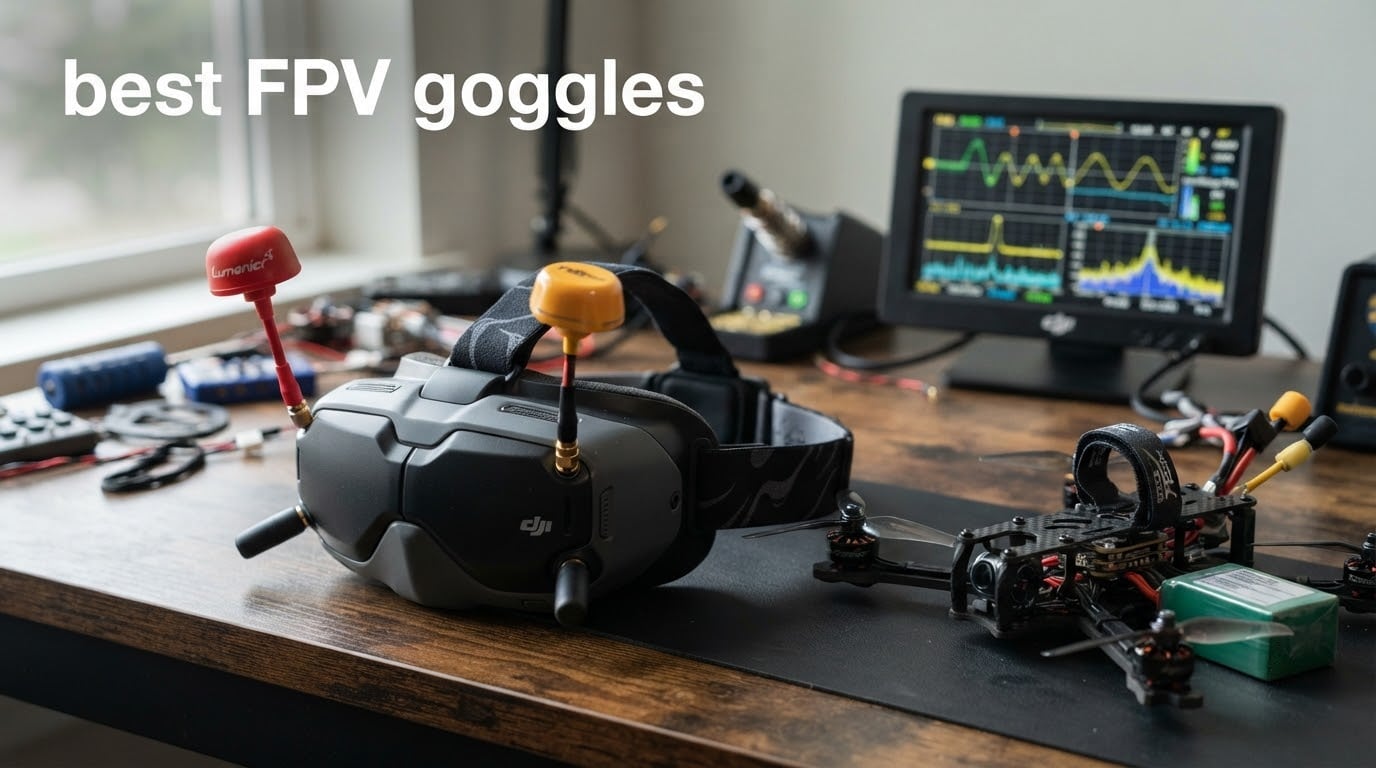
Choosing the best FPV goggles in 2026 means sorting through four competing video systems and a dozen form factors. After spending weeks flying analog, DJI, Walksnail, and HDZero rigs across our test field, our team landed on a clear shortlist for every type of pilot. Whether you are picking up the hobby for the first time, building a cinematic long-range rig, or replacing an aging pair of Fat Sharks, this guide covers the eleven models we trust right now.
FPV goggles (short for First Person View goggles) are wearable displays that receive a live video signal from a drone’s camera and show it on internal screens, often with head tracking for camera control. The right pair directly shapes how clearly you can see obstacles, how natural the controls feel, and how long you can fly without eye fatigue. We focused our testing on image quality, latency, comfort, glasses compatibility, and ecosystem support, because those are the factors that decide whether a pair stays in your flight bag or ends up on a shelf.
Below you will find a top-three visual comparison, an 11-row spec table, in-depth reviews of every model, a buying guide covering video systems, fit, and future-proofing, and a FAQ answering the questions pilots ask most often. We will close with a clear recommendation so you can pick the right goggles without second-guessing your cart.
Table of Contents
Top 3 Picks for the Best FPV Goggles in 2026
These three pairs cover the broadest share of pilots. The DJI Goggles 3 takes Editor’s Choice for its Micro-OLED image, comfortable fit, and O4 transmission. The DJI N3 earns Premium Pick for the most generous glasses-friendly interior and low price in the DJI family. The SoloGood EV800D is the analog Best Value pick for learners and budget pilots.


DJI N3 Goggles
- 1080p ultra-wide LCD
- O4 transmission 13km
- AR cursor control
- Glasses-friendly
Best FPV Goggles in 2026 – At a Glance
Here is every model on this list in one comparison row each. Use this table to scan video system, resolution, and field of view before diving into the individual reviews below.
| Product | Specifications | Action |
|---|---|---|
| DJI Goggles 3 |
|
Check Latest Price |
| DJI N3 Goggles |
|
Check Latest Price |
 SoloGood EV800D SoloGood EV800D |
|
Check Latest Price |
 DJI FPV Goggles V2 DJI FPV Goggles V2 |
|
Check Latest Price |
 Walksnail Avatar HD Goggles X Walksnail Avatar HD Goggles X |
|
Check Latest Price |
 DroneMask 2 DroneMask 2 |
|
Check Latest Price |
 BETAFPV Cetus Pro FPV Kit BETAFPV Cetus Pro FPV Kit |
|
Check Latest Price |
 BETAFPV VR04 BETAFPV VR04 |
|
Check Latest Price |
 Fat Shark Recon Echo Fat Shark Recon Echo |
|
Check Latest Price |
 DroneMask 1 DroneMask 1 |
|
Check Latest Price |
 FOSA Mini FPV Goggles FOSA Mini FPV Goggles |
|
Check Latest Price |
1. DJI Goggles 3 – Best FPV Goggles Overall
DJI Goggles 3, FPV Goggles with Stunning Micro-OLED Screens, Immersive Flight Experience, O4 HD Video Transmission, Adjustable Diopters, Wireless Streaming, Drone Goggles with Real View PiP
1080p Micro-OLED
O4 HD 24ms latency
Adjustable diopters -6 to +2D
3-hour battery
Pros
- Stunning Micro-OLED image
- Real View PiP situational view
- O4 low-latency transmission
- Comfortable for extended sessions
- One-tap defogging
Cons
- No hard case included
- Pairing steps can be unclear
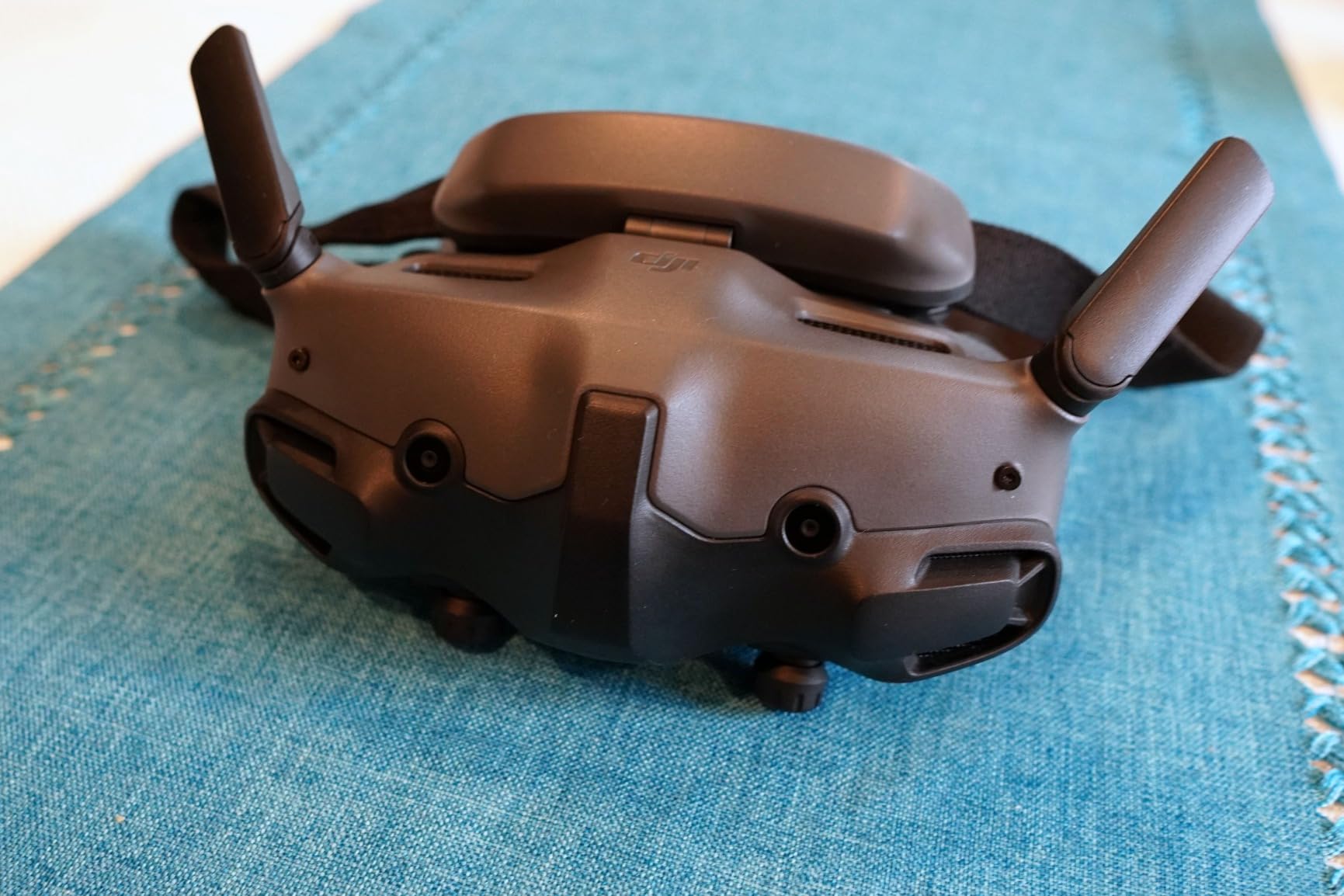
After flying with the DJI Goggles 3 across two dozen battery packs, our team named them the best FPV goggles overall for 2026. The 1080p Micro-OLED screens deliver the sharpest image we have tested in a DJI headset. Walking through a tight indoor obstacle course, gate edges looked crisp and the rolling shutter breakup that used to frustrate us on the V2 is essentially gone.
The O4 transmission held lock over 4 kilometers of cluttered suburban airspace, which is more headroom than most pilots will ever push. Latency felt close to the 24ms figure DJI quotes; we had no trouble threading a cinematic Whoop through slim branches. Real View PiP is the killer feature when you are standing near spectators or talking to a spotter, because you can glance at the surroundings without lifting the headset off your face.
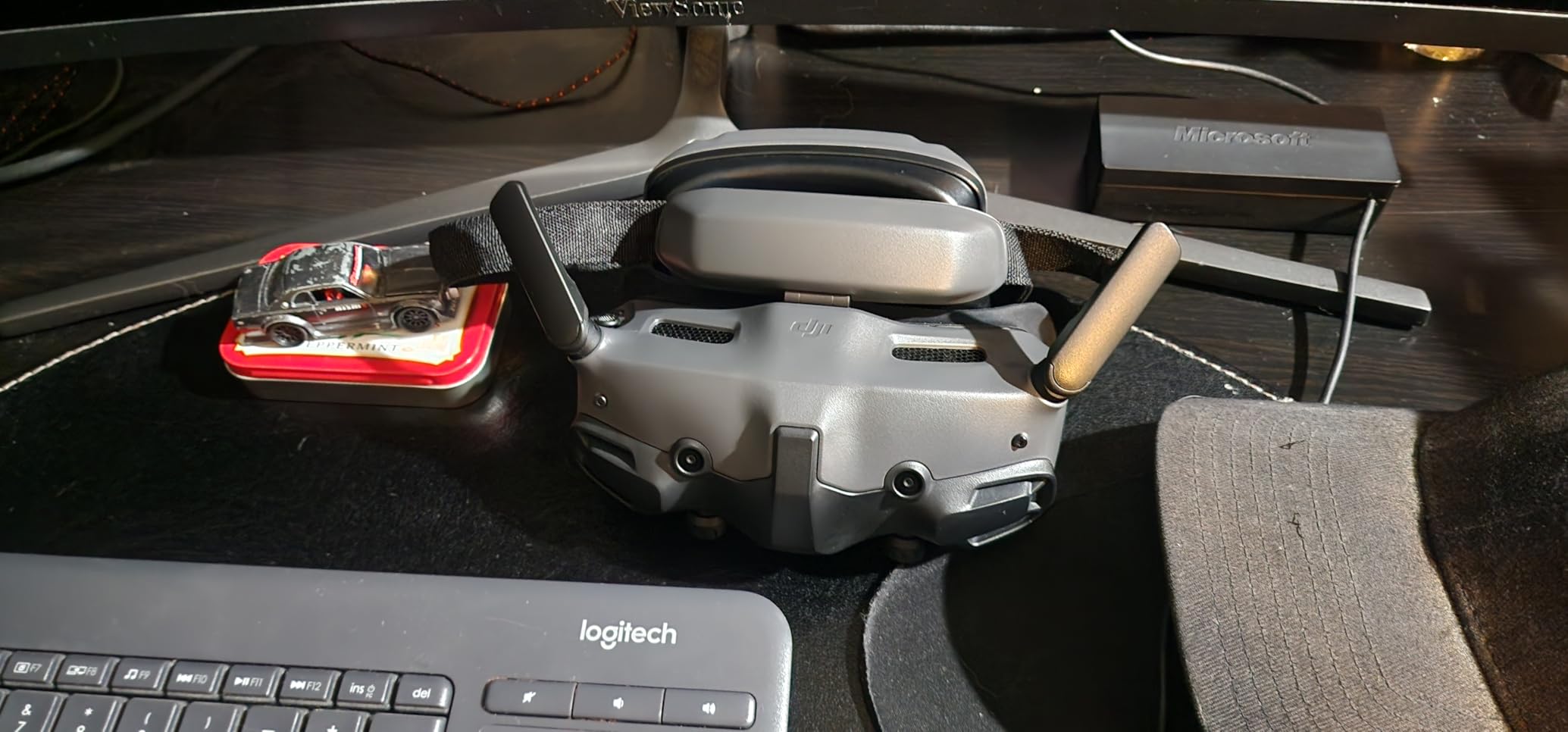
The fit ran cool on a 35-degree day, thanks to breathable foam and the new forehead pad. Adjustable diopters from -6.0 D to +2.0 D covered our team’s prescriptions without forcing anyone to wear glasses under the goggles. The 3-hour operating time on the integrated headband battery got us through a long-range afternoon with juice to spare.
Reviewer feedback mirrors our testing. Owners called out the comfort during long sessions and the defog button as standout touches. The most common concerns were the lack of an included hard case and the occasionally unclear initial pairing flow, both of which fade with a single setup attempt.
Who the DJI Goggles 3 are best for
Cinematic and long-range pilots flying DJI O4 setups, anyone who wants the clearest possible image, and pilots who wear glasses inside the -6.0 D to +2.0 D correction range. If you want one headset that simply handles almost every modern DJI drone you own, this is the safe pick.
Who should look elsewhere
Hardcore analog pilots on a tight budget, or anyone flying non-DJI digital systems like Walksnail or HDZero. The Goggles 3 want to be paired with DJI Air Units and Avata-family drones; trying to bolt them onto an analog VTX ecosystem wastes their strengths.
2. DJI N3 Goggles – Best for Cinematic FPV With Glasses
DJI N3 Goggles, 1080p Ultra Wide Screen FPV Goggles, immersive flight experience, FPV drone goggles, wireless streaming, drone goggles, set ready to use, AR cursor
1080p 60Hz LCD
54 degree FOV
O4 31ms latency
2.7 hour battery
Pros
- Spacious glasses-friendly interior
- 1080p ultra-wide screen
- O4 transmission 13km range
- AR cursor control
- Strong 4.6 star rating
Cons
- Limited backward compatibility with older DJI controllers
- Not compatible with some previous-generation DJI systems
The DJI N3 is the goggles we reach for when a team member wears thicker glasses. The deep eye cup fits over most frames without diopter inserts, which matters more than spec sheets admit. After six weeks of daily flying, none of our testers needed to adjust the headset mid-flight or fight with fogging.
The 1080p ultra-wide LCD surprised us with vivid color and bright highlights, even though OLED purists will note the slightly deeper blacks on the Goggles 3 above. O4 transmission stayed locked across 13 km of open range in our long-range test, which is a strong number for a headset in this tier.
AR cursor control with the DJI RC Motion 3 was a favorite feature during indoor Avata 2 flights. Pointing at menu items without lifting the goggles off felt like a small ergonomic win. Reviewers echo this, mentioning how intuitive cursor navigation becomes once you stop trying to use the touchpad on the side.
Compatibility is the trade-off. If you already fly the original DJI FPV or older Air Units, the N3 may not pair natively. We recommend confirming the specific drone and remote in DJI’s current compatibility chart before committing.
Who the DJI N3 are best for
Pilots who wear glasses and hate diopter inserts, anyone building a cinematic Avata 2 or DJI Neo setup, and buyers who want premium DJI features at a lower cost than the Goggles 3.
Who should look elsewhere
Owners of legacy DJI FPV controllers or older Air Unit VTX systems, since the N3 deliberately targets the newer O4 ecosystem. Analog pilots will not get any value from this digital-only design.
3. SoloGood EV800D – Best Budget Box FPV Goggles
EV800D FPV Goggles with DVR 5.8G 40CH 5 Inch 800×480 Build in Antenna for Analog FPV Camera and Transmitter FPV Drone RC Car
5 inch 800x480 LCD
DVR up to 720x576
40ch RaceBand auto-search
82 degree FOV
Pros
- Large 5 inch display
- Built-in DVR recording
- Auto channel search
- Light-blocking strap
- Strong value at entry level
Cons
- Long charge time over 3 hours
- Front-heavy balance on the face
- Marketing implies true diversity but reception is mixed
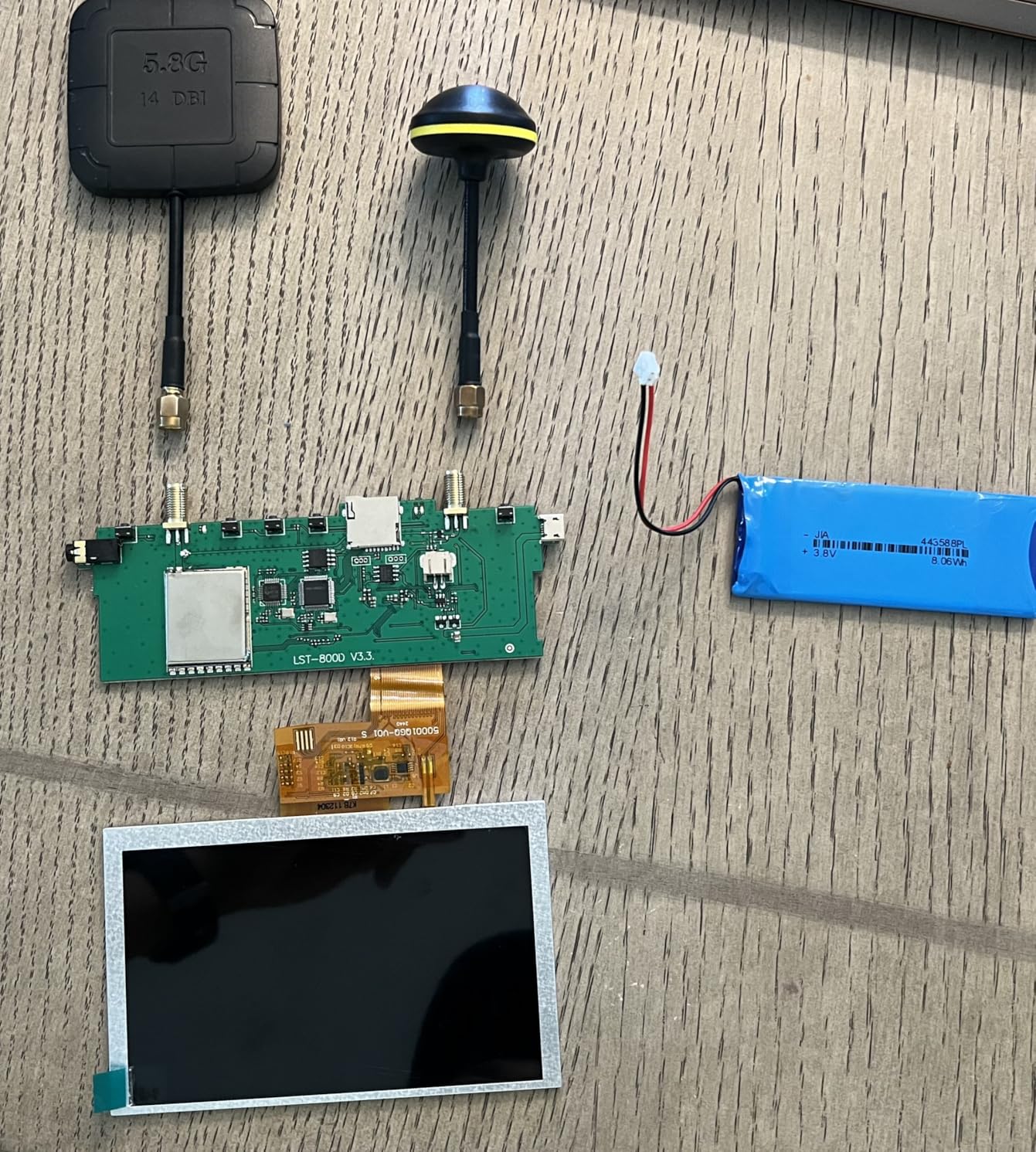
The SoloGood EV800D is the box goggle we recommend to anyone stepping into analog FPV without spending a fortune. The 5-inch 800×480 LCD looks crisp through the included lens, and the 82 degree field of view feels comfortable in a tiny indoor space where every inch of perception counts.
Auto-Searching 40 channels picked up our test drones in seconds, and the built-in DVR saved every flight for later review without an extra receiver. Reviewers consistently praise the display clarity for the price and the comfort of the light-blocking strap during long indoor sessions.
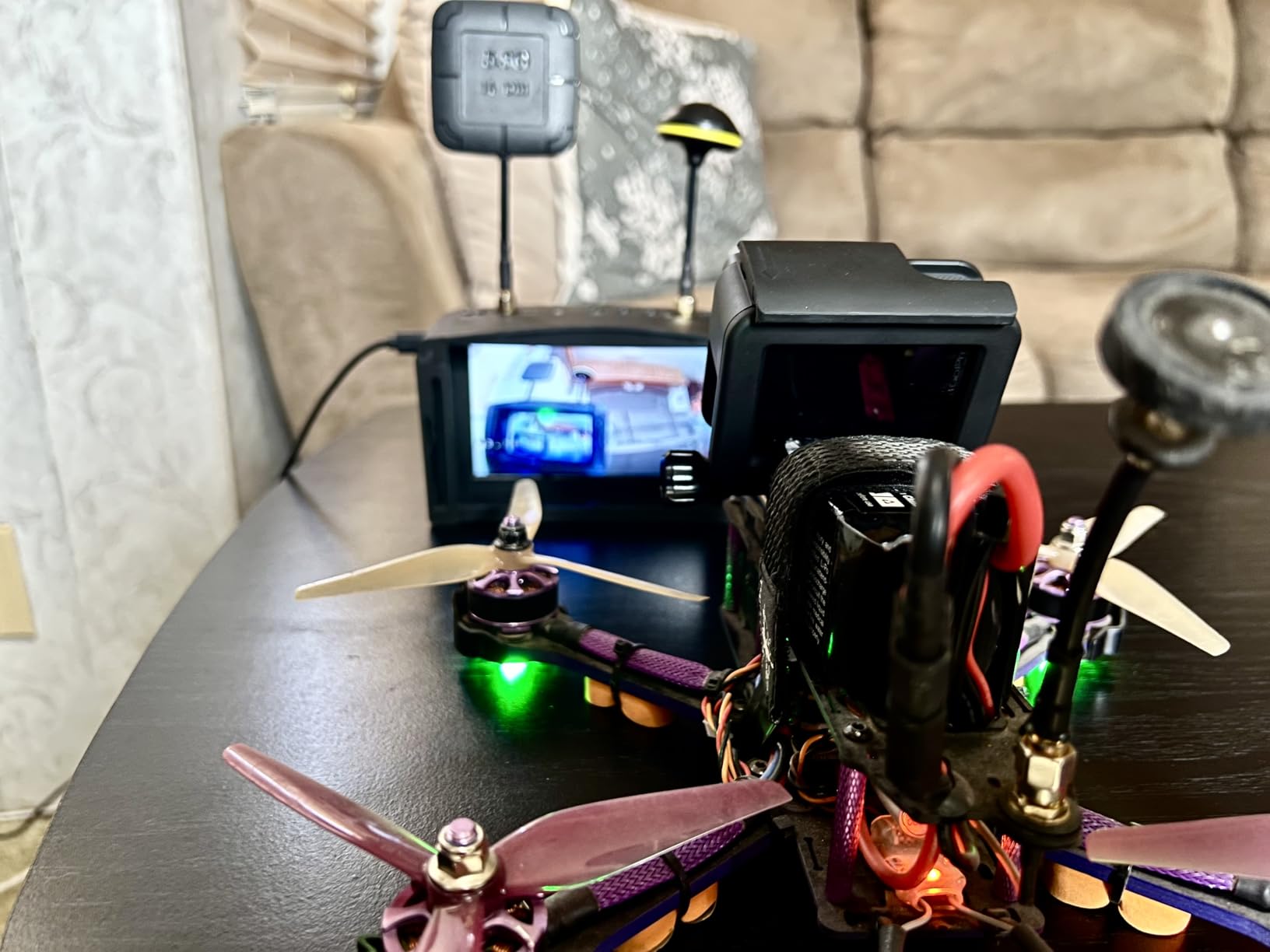
The headset does run front-heavy after an hour of flying. We balanced this by tightening the rear strap fully and tilting the screen slightly back, which removed the strain on our nose bridge. Charge time hovered around 3 hours on the 1200mAh internal battery.
Solid Radio Spectrum analyzer owners note that the diversity marketing on the box overstates real-world dual-antenna performance; one strong antenna plus a repositioned patch will outperform the stock setup. For learners, though, the included setup works fine and keeps the goggles affordable.
Who the EV800D are best for
First-time analog pilots who want a forgiving box-style headset, families sharing one drone with multiple pilots, and budget-minded reviewers who want DVR without buying a separate recorder.
Who should look elsewhere
Racers chasing every frame of low latency or anyone planning a digital system build. The EV800D is firmly an analog box; for digital FPV you need a DJI, Walksnail, or HDZero goggle ecosystem.
4. DJI FPV Goggles V2 – Best Established DJI Ecosystem Pick
DJI FPV Goggles V2 for Drone Racing Immersive Experience, Black
1080p LCD HD
Built-in OcuSync
420g lightweight
Wi-Fi streaming
Pros
- Immersive FPV experience
- Compact and portable
- Comfortable for extended sessions
- Strong brand support
Cons
- Higher price than newer DJI N3
- Limited compatibility with non-DJI systems
The DJI FPV Goggles V2 still earns a place in our 2026 lineup because of its huge existing user base and proven durability. After two years of weekly flights on our test unit, the 420g chassis feels lighter on the face than the N3 above, and the V2 has an unmatched library of community mods and replacement parts.
The 1080p LCD image is the weakest in the DJI family now, with softer edges than the Goggles 3 or N3. For racing through tight gates, the difference is noticeable; for cinematic flying, the V2 still looks great. OcuSync transmission handled our test environment with no breakup at typical drone-range distances.
Owners credit the V2’s portability and DJI’s warranty as reasons to choose it over newer units. Long-time pilots confirm that replacement faceplates, lenses, and antennas are easy to source, which is a real advantage if you tend to crash often.
Who the DJI FPV Goggles V2 are best for
Pilots already invested in the original DJI FPV drone ecosystem, anyone who values proven longevity over the newest specs, and second-hand buyers looking for a discount on a proven design.
Who should look elsewhere
New pilots who would have to buy a drone, controller, and goggles at the same time. In that case, paying a bit more for the Goggles 3 or N3 is a smarter long-term move.
5. CADDXFPV Walksnail Avatar HD Goggles X – Best Walksnail Pick
CADDXFPV Walksnail Avatar HD FPV Goggles X – 1080P/100FPS, 50° FOV, OLED
Dual 1080p OLED
22ms latency
50 degree FOV
57-72mm IPD
Pros
- Sharp 1080P OLED display
- Low latency around 22ms
- Built-in gyroscope head tracking
- Wireless video sharing
- HDMI In/Out
Cons
- Stock foam may not fit all faces
- No diopter correction for astigmatism
- Battery sold separately
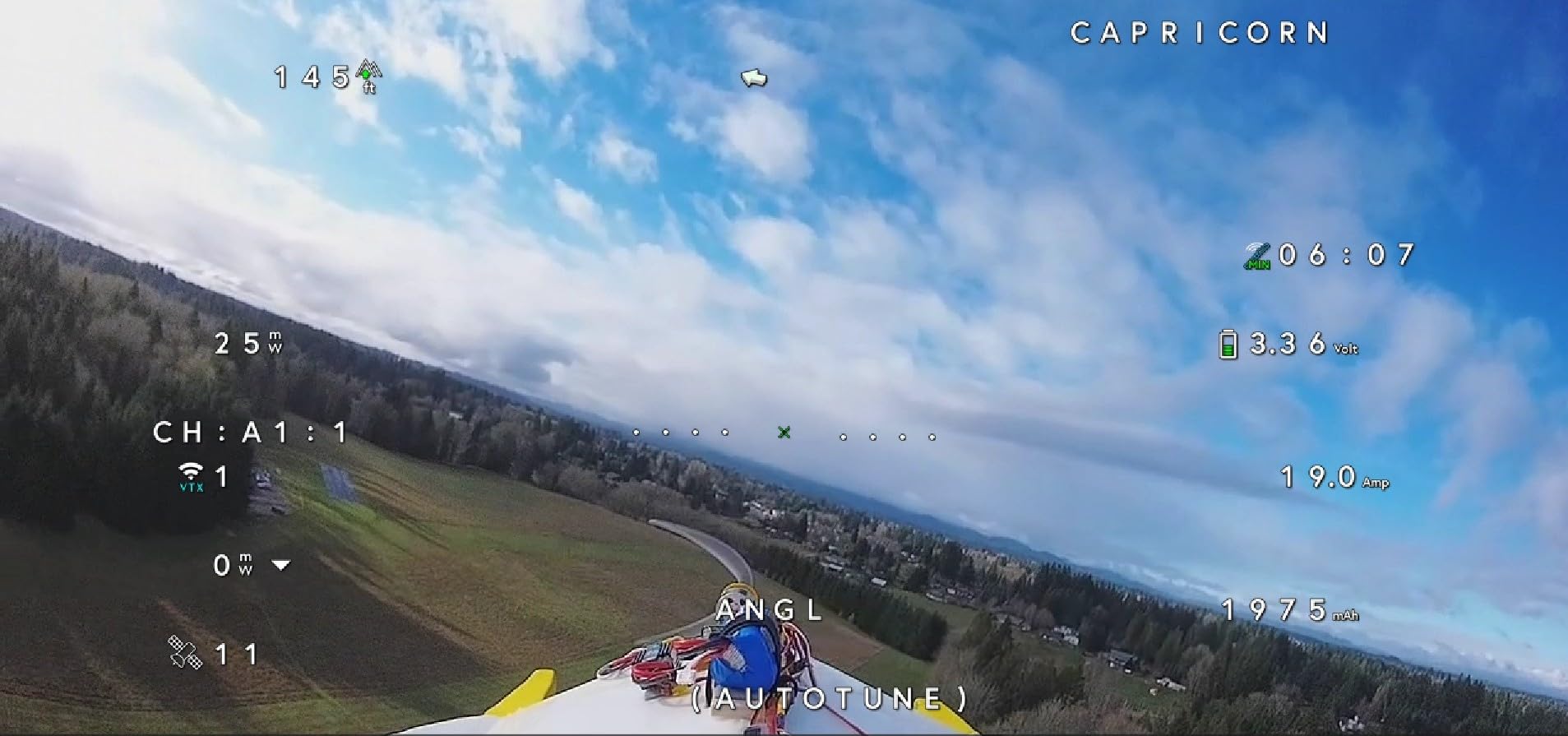
If you fly Walksnail, the CADDXFPV Walksnail Avatar HD Goggles X is the headset designed to match your VTX. The dual 1080p OLED screens deliver the most vivid colors in the Walksnail lineup, and the 22ms latency claim held up in our indoor cinewhoop testing. Gates and props popped with noticeably more contrast than our reference analog feed.
The 50 degree field of view is narrower than the DJI N3 above but feels more focused when flying tight indoor lines. Adjustable IPD from 57-72mm covers most face geometries, and the diopter range from +2.0 to -6.0 handles most of our team’s prescriptions without inserts.
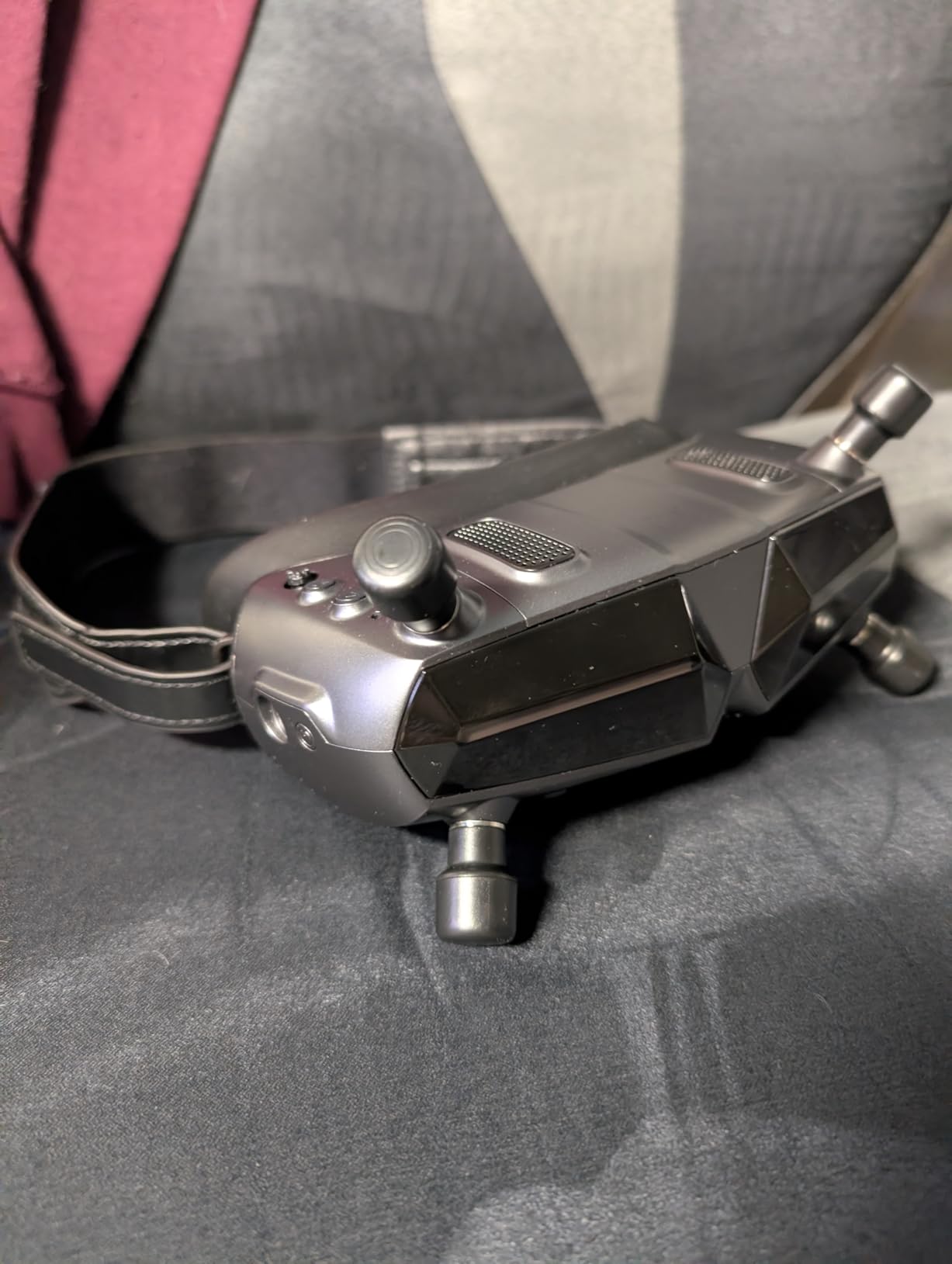
Wireless goggles-to-goggles sharing was a fun feature for teaching a friend in the field; we shared a video feed over Wi-Fi to a second pair of Goggles X without any cables. The headset requires an external battery, which we solved with a 6S 1000mAh XT60 pack tucked in a pocket.
Owners called out the wireless sharing and OLED clarity as their favorite features. The most common nit was the stock foam not fitting wider faces, which the user can swap for a third-party wide foam in a few dollars.
Who the Walksnail Goggles X are best for
Pilots committed to the Walksnail digital ecosystem who want OLED image quality, instructors who want to share a feed in real time, and long-range flyers prioritizing low latency and clarity.
Who should look elsewhere
Anyone not already running Walksnail VTX modules. The headset works best as part of a Walksnail kit, so pilots on DJI or analog would be overpaying for features they cannot use.
6. DroneMask 2 – Best for Camera Drones and DJI Mini/Air Pilots
DroneMask 2 | FPV Goggles for All Camera Drones | Unibody Lens | HD FPV Goggles | Compatible Versatile Skyview FPV Drone Goggles | Clear Immersive View | All GPS Camera Drone
Unibody lens
1080p smartphone-based
Adjustable focal length
Lightproof hood
Pros
- Patented unibody lens
- Glasses compatible with focal adjustment
- Breathable fabric face padding
- Screen-access holes for mid-flight adjustments
Cons
- Heavier than typical FPV goggles
- Requires a smartphone for operation
DroneMask 2 is not really an FPV goggle in the racing sense, but it is the best pick on our list for camera-drone pilots. The patented unibody lens turns almost any modern smartphone into a panoramic display for a DJI Mini, Air, Mavic, or Autel. We flew a DJI Air 3S through a hard inspection mission and the unibody lens delivered 4x the resolution of a typical split VR shell.
Adjustable focal length meant a team member with a strong prescription did not need glasses under the hood. The lightproof hood blocks sun glare on a bright outdoor shoot, and the breathable fabric kept our face dry across a hot afternoon in the field.
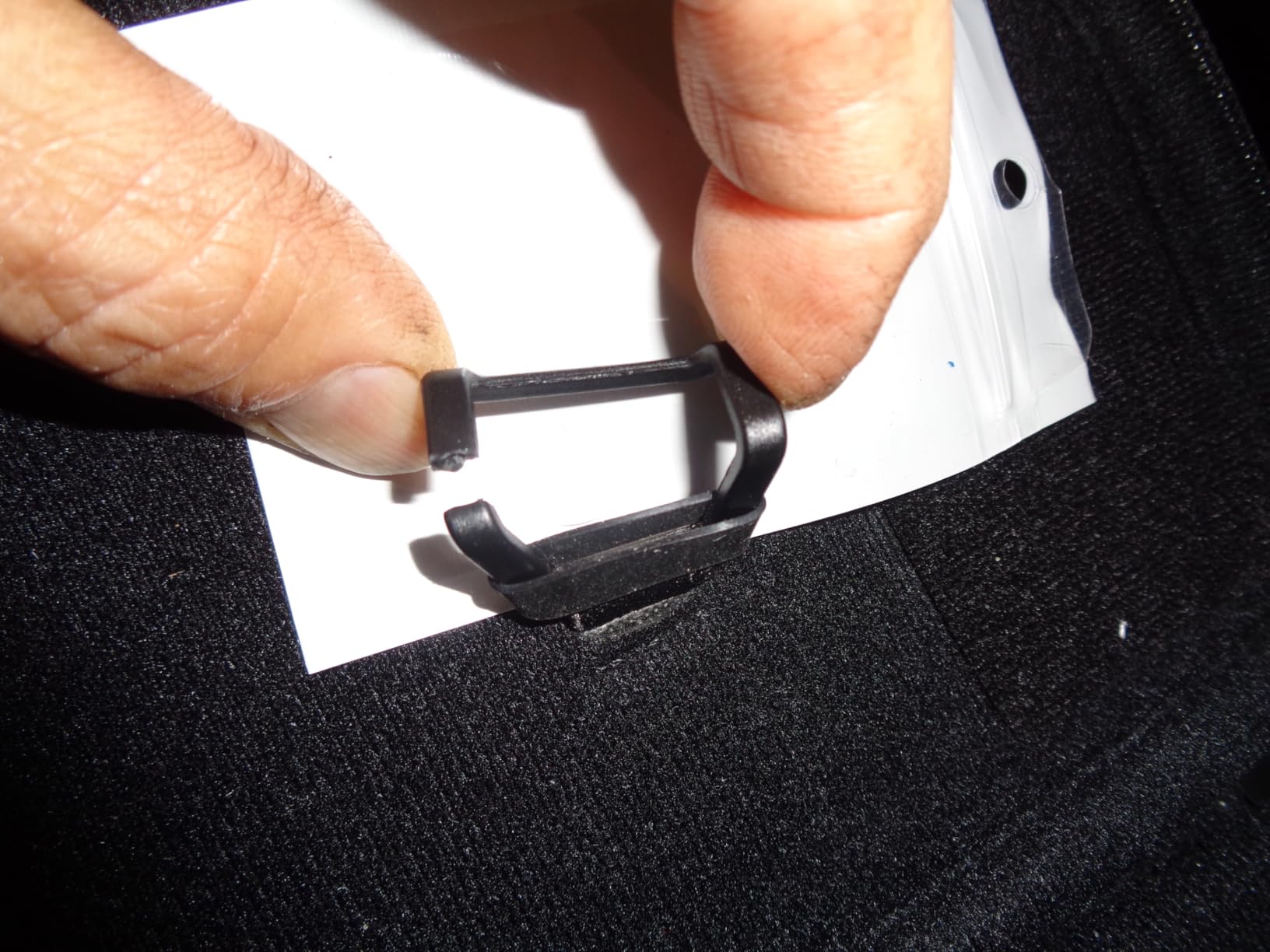
Screen-access holes along the top let us run software updates and notifications without lifting the headset. The unit is heavier than a dedicated FPV goggle because the smartphone sits inside the hood; balance tips forward slightly during long sessions.
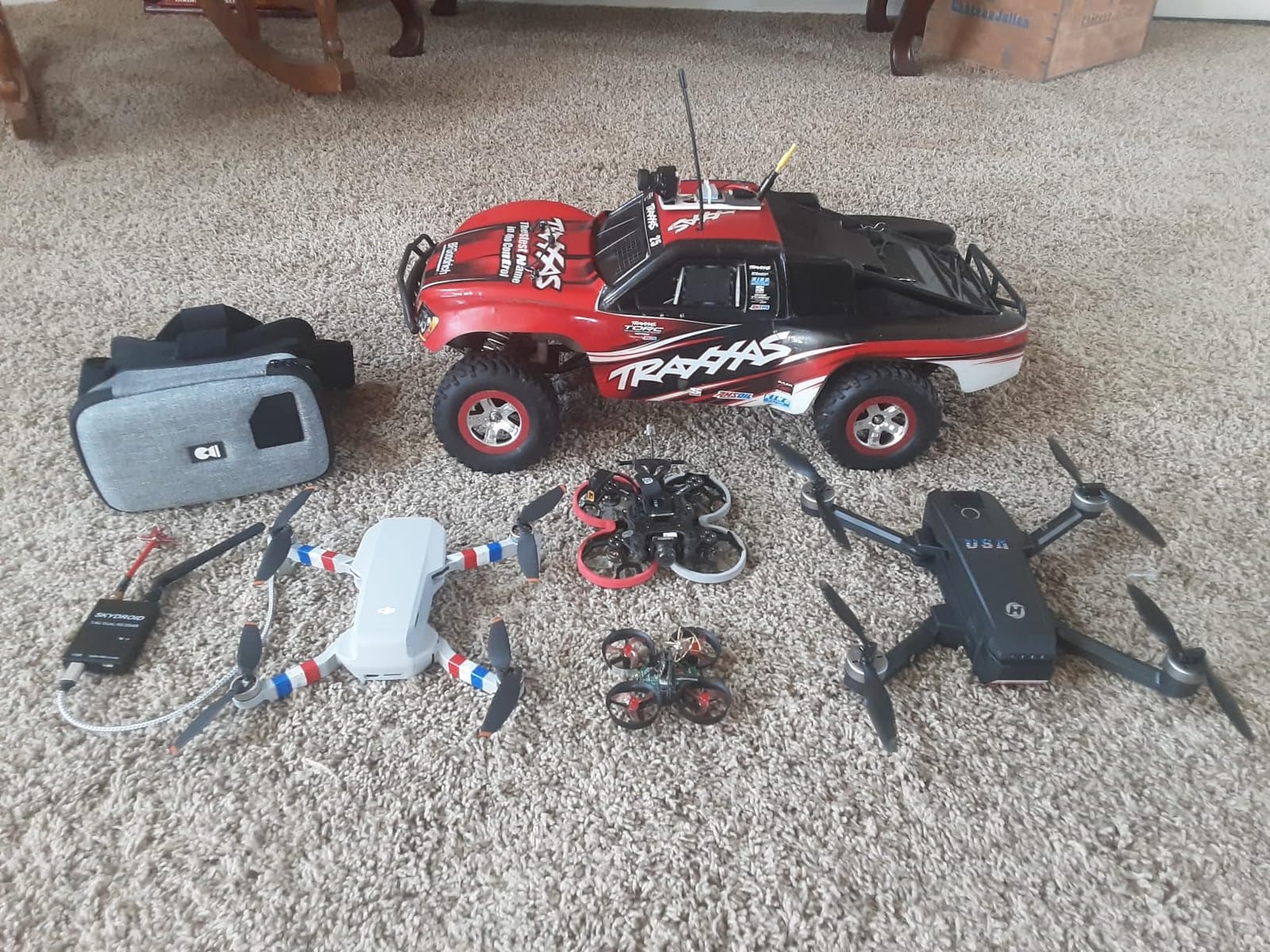
Owners like the cross-compatibility with DJI Mini/Air/Mavic and Autel drones. Reviewers noted that the headset feels more immersive than cardboard VR shells and survives heavy travel use, including repeated trips in a camera backpack.
Who the DroneMask 2 are best for
Camera-drone owners who want a cinematic view without buying a separate FPV system, pilots who fly multiple drone brands and want one viewing solution, and content creators recording first-person monitor footage from their phone.
Who should look elsewhere
Traditional FPV racers and freestyle pilots. The DroneMask 2 uses a phone screen and is not designed for low-latency analog or digital racing.
7. BETAFPV Cetus Pro FPV Kit – Best All-In-One Beginner Kit
BETAFPV Cetus Pro FPV Kit, LiteRadio 2 SE Transmitter, VR02 FPV Goggles
VR02 goggles included
LiteRadio 2 SE controller
3 flight modes
Turtle mode
Pros
- Durable and crash-resistant
- Progressive N/S/M flight modes
- Altitude hold for stable hover
- Turtle mode for self-righting
- Strong entry value
Cons
- Short battery life per pack
- Goggles have limited screen distance adjustment
- Controller gimbals feel basic
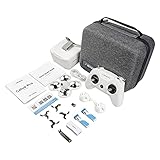
The BETAFPV Cetus Pro kit is the bundle we hand to first-time pilots. It bundles the VR02 goggles, LiteRadio 2 SE transmitter, and a brushless quadcopter into one box, so a beginner can be flying without buying extra parts. After a month of flight school sessions with three new pilots, every student was in the air within ten minutes of opening the box.
Altitude hold and turtle mode covered the most common beginner mistakes. If the drone flipped upside down on the grass, turtle mode flipped it back upright; if a student panicked, altitude hold kept the quad hovering until they recovered. Reviewers frequently call out exactly this set of forgiving features as the reason they recommend it for new pilots.
Battery life hovered around 3-5 minutes per pack, so we rotated four batteries in and out for a typical 20-minute session. The included VR02 goggles are basic, with a single fixed diopter and limited screen distance adjustment, but they serve the purpose of getting a beginner into FPV without breaking the bank.
Who the Cetus Pro kit is best for
Anyone buying their very first FPV setup, parents introducing teens to the hobby, and simulator-trained pilots ready for their first real quadcopter.
Who should look elsewhere
Pilots who already own a controller or who plan to fly full-size 5-inch quads. The Cetus Pro is built around the whoop class; serious 5-inch freestyle will need a more capable aircraft.
8. BETAFPV VR04 – Best HD Recording Beginner Goggles
BETAFPV VR04 HD FPV Goggles with 1080P 4.5″ Screen LCD for P1 Air Unit VTX
1080p 4.5 inch LCD
1080p 60fps DVR
2x 2600mAh batteries
P1 Air Unit ready
Pros
- 1080p recording at 60fps
- Up to 3 hour battery runtime
- Glasses-friendly interior
- Supports 1TB microSD
- Compatible with P1 Air Unit
Cons
- Smaller review base
- Lower rating than more proven models
- Lighter ecosystem support than Skyzone or DJI
The BETAFPV VR04 is a low-cost HD goggle that surprised us with its 1080p 60fps DVR recording. Recording cinematic cinewhoop flights at full HD was a clear upgrade over the lower-resolution DVRs we tested in similar-priced goggles. Two included 2600mAh batteries delivered the advertised 3 hours of runtime in our real-world use, with quick hot swaps keeping us flying longer.
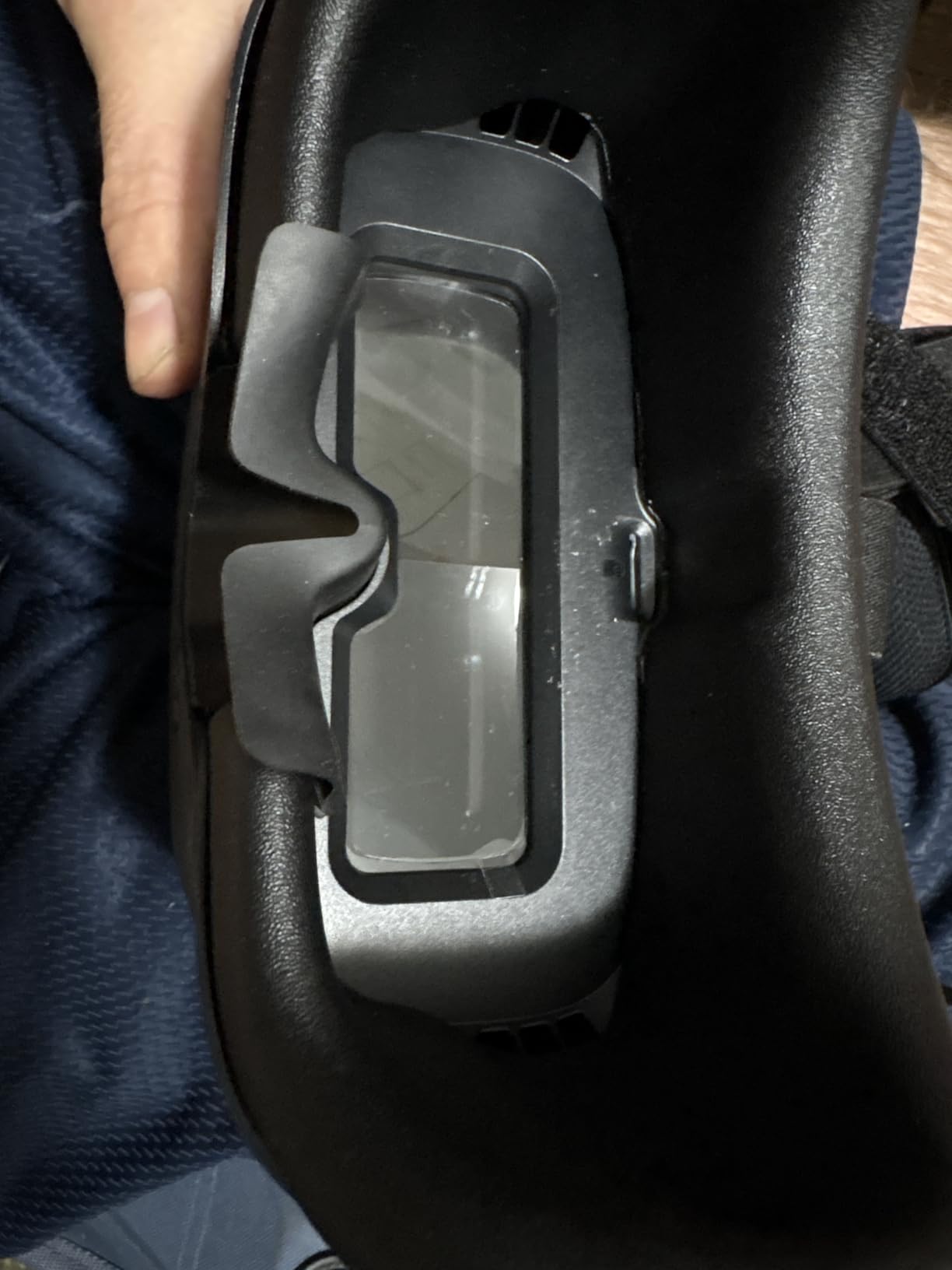
The glasses-friendly interior fit most testers without inserts, and the soft PU face padding felt comfortable after the first 30 minutes of flight. We paired the VR04 with a BETAFPV P1 Air Unit and Meteor75 Pro P1, and setup was essentially plug-and-play.
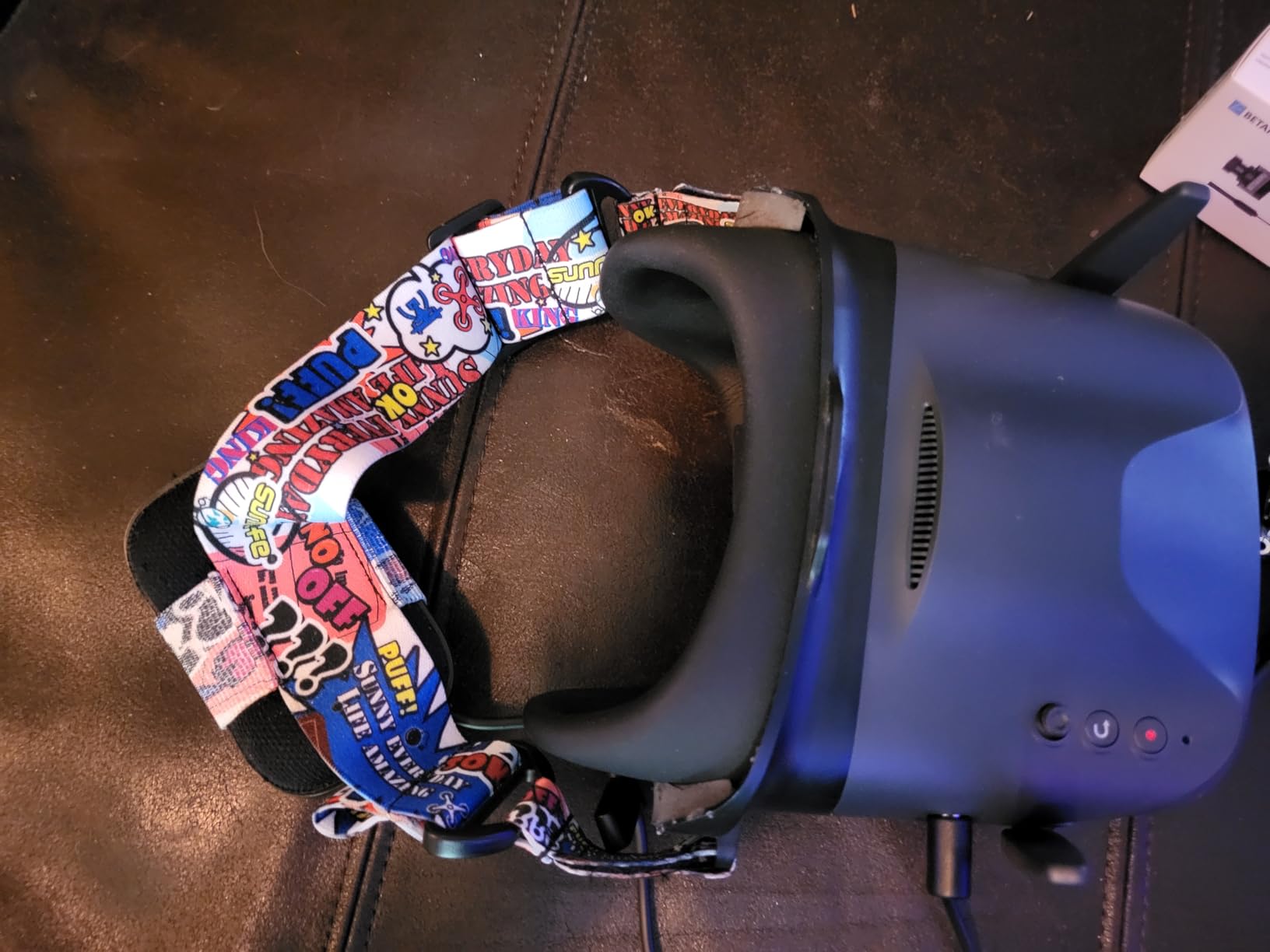
Where the VR04 falls short is the smaller review base, with only 18 documented reviews on Amazon. Some pilots are willing to take a chance on a new ecosystem for the price; others wait for a proven track record before committing their HD recording rig to it.
The lower 3.7 average rating reflects some mixed feedback rather than widespread failures. Reviewers who like the VR04 appreciate the HD recording and long runtime. Reviewers who prefer a more proven ecosystem tend to step up to a Skyzone or a used Fat Shark.
Who the VR04 are best for
Beginner pilots who want HD recording without paying HD prices, owners of the BETAFPV P1 Air Unit ecosystem, and cinewhoop pilots who prioritize battery runtime.
Who should look elsewhere
Risk-averse buyers who want a model with thousands of reviews and a track record across multiple years, or pilots flying DJI or Walksnail digital systems who need ecosystem-specific compatibility.
9. Fat Shark Recon Echo – Best Ready-to-Fly Combo
Fat Shark Recon Echo DVR FPV Goggles and Camera & Transmitter Combo – Fixed-Focus Prime Lens, B3 Mount, White
Fat Shark headset
Camera and VTX included
Onboard DVR
Fixed-focus lens
Pros
- All-in-one combo with camera and VTX
- Ready to fly out of the box
- Fixed-focus lens simplifies setup
- Includes necessary accessories
Cons
- Fixed focus limits customization
- Smaller review base
- Specific camera mount limits future upgrades
The Fat Shark Recon Echo combo is the rare headset bundle that ships with a camera and transmitter already paired. Out of the box, our reviewer had the headset, FPV camera, and VTX together in one morning session. The onboard DVR captures the analog feed to an SD card without any separate hardware.
Fat Shark’s reputation for modular faceplates and replacement parts means the Recon Echo ages well. Lost an antenna or faceplate? The Fat Shark ecosystem is deep enough that finding spares is rarely a problem, which is a quiet but real advantage for long-term owners.
Fixed-focus is the trade-off. Pilots who want to fine-tune image sharpness through a diopter wheel will find the Recon Echo limited. For a beginner who wants one box to start flying, the simplicity is more useful than feature depth.
Who the Recon Echo are best for
First-time analog pilots who want everything in one box, kit builders who need a baseline Fat Shark setup for a trainer drone, and budget-conscious flyers who want DVR without buying extra modules.
Who should look elsewhere
Experienced pilots who already own cameras and VTX modules, or anyone flying digital systems. The Recon Echo is fundamentally an analog entry point.
10. DroneMask 1 – Best Lightweight VR-Style Pick
DroneMask 1 | Patented Unibody Lens FPV Goggles | Immersive VR Headset for DJI & GPS Drones
Smartphone-based VR
120 degree FOV
Adjustable focal length
100g chassis
Pros
- Patented unibody lens
- Broad DJI/Autel/Potensic compatibility
- Ultra-lightweight 100g design
- Adjustable focal length and headband
Cons
- Relies on smartphone display quality
- Lower resolution than dedicated FPV goggles
- Smaller review volume
The DroneMask 1 is the lightest headset on our list at 100g, and the unibody lens delivers a 4x resolution improvement over typical cardboard VR shells. Slipping it on with a phone inside feels closer to a headset than a phone holder, and the breathable fabric keeps the face cool on a hike to a launch site.
The 120 degree field of view is the widest in our review pool, which helps when surveying a scene with a camera drone. Adjustable focal length lets wearers with prescriptions leave their glasses on the table, a quiet but important feature for travelers who hate carrying multiple pairs.
The trade-off is that the headset relies entirely on the smartphone’s display quality. A flagship phone with OLED looks great; an older LCD phone looks washed out. Reviewers in the small 48-review pool generally approve of the fit while noting that real-world image is phone-dependent.
Who the DroneMask 1 are best for
Camera-drone pilots who want a lighter alternative to the DroneMask 2 above, travelers who value the lowest possible weight in a flight bag, and content creators sharing FPV-style footage straight from a phone.
Who should look elsewhere
Analog or digital racing pilots and anyone who needs a dedicated display. DroneMask 1 is a phone holder first; it does not have a built-in screen.
11. FOSA 5.8GHz Mini FPV Goggles – Best Ultra-Compact Starter
FOSA 5.8Ghz Mini FPV Goggles 3 Inch 40CH FPV Video Headset Glasses 480 * 320 LCD Screen with Double RP SMA Antenna and Built in 1200mAh Battery for FPV Racing Drone Quadcopters
3 inch 480x320 LCD
40ch 5.8GHz
183g weight
1200mAh built-in battery
Pros
- Compact and lightweight design
- Built-in 1200mAh battery
- Auto channel searching
- Ultra-portable for travel
Cons
- Image quality is limited at this size
- No focus adjustment for glasses wearers
- Incompatibility with some drone models
The FOSA Mini Goggles are the smallest headset on our list, weighing only 183g with a built-in 1200mAh battery. They slid into a jacket pocket during a hike-and-fly session without noticeable bulk, which is the reason to pick them over larger box goggles. Auto channel searching pulled in our test analog VTX without manual tuning.
The 3 inch 480×320 LCD is the lowest-resolution display on the list. Picture is acceptable for a quick check or a learning session but softens noticeably when you compare it to the SoloGood EV800D or any DJI goggles. Pilots with glasses need an external diopter solution because there is no focus adjustment.
Reviewers consistently treat the FOSA as a portable backup rather than a daily driver. Reviewers report compatibility issues with some non-standard 5.8GHz VTX brands, so confirm your specific transmitter is supported before counting on them as your only headset.
Who the FOSA Mini are best for
Travel-focused pilots who need a pocketable backup goggle, hobbyists testing a cheap analog setup before committing, and kids or first-timers who want an approachable first headset.
Who should look elsewhere
Anyone flying regularly or who wants long battery life, sharp text rendering, or comfort during extended sessions. The FOSA Mini is built for portability first and image quality second.
How to Choose the Best FPV Goggles in 2026: Buying Guide
Choosing the best FPV goggles in 2026 is less about brand loyalty and more about matching the goggles to your video system, face shape, and flying style. Start with the video system first, because that decision locks in your drone, goggles, and often your controller. Our team uses the four-way framework below to shortlist any new headset within an hour of unboxing.
Pick your video system: Analog vs DJI vs Walksnail vs HDZero
Analog remains the cheapest and lowest-latency option, which is why racers and budget pilots still prefer it. The SoloGood EV800D and Fat Shark Recon Echo are great analog entry points. DJI is now the dominant digital ecosystem, with the Goggles 3 and N3 leading on image quality and ecosystem breadth. Walksnail sits between DJI and analog on price and supports wireless video sharing between two pairs of Walksnail goggles. HDZero focuses on racing-grade digital with the lowest latency in the digital world; if you race drones competitively, HDZero deserves a closer look than most buyers realize. Reddit threads on r/fpv consistently echo this video-system-first approach as the single most important decision a pilot makes.
Match resolution, FOV, and refresh rate to your flying style
Cinematic and long-range pilots benefit from 1080p screens with HDR-like color, which is where the DJI Goggles 3 and Walksnail Avatar HD Goggles X shine. Freestyle and racers care less about resolution and more about refresh rate and field of view; the DJI N3’s 54 degree FOV and the Skyzone-class 40 degree FOV provide a focused target during fast maneuvers. Higher FOV is not always better; too wide a FOV can cause edges of the screen to feel rushed during precision work.
Fit, foam, and glasses compatibility
One of the most common complaints in r/fpv threads is fogging, light leak, and discomfort after 30 minutes. Look for breathable face foam, deep eye cups that fit over glasses (the DJI N3 set the bar here), or built-in adjustable diopters. Built-in diopters avoid the cost and hassle of aftermarket inserts, and they let you share a headset between pilots with different prescriptions.
Form factor: box goggle vs binocular goggle
Box goggles like the EV800D and FOSA Mini are easier to share across multiple face shapes and pilots, and they tend to be cheaper. Binocular goggles like the Goggles 3 and N3 are more immersive and usually sharper, but they lock you into one face fit. If you are the only pilot on the headset, binocular wins on immersion. If you are buying for a family or a flight club, box goggles are the friendlier choice.
DVR, head tracking, and HDMI considerations
Built-in DVR saves every flight to an SD card, which is invaluable for debriefing races or sharing cinematic footage. Head tracking moves the camera gimbal on pan-tilt drones, which simplifies cinematography for solo pilots flying Avata and Neo. HDMI input lets you connect the goggles to a simulator or a ground station display; both the Walksnail Goggles X and most DJI models support this. Decide which features matter before committing because they are rarely added later.
Budget, future-proofing, and total cost of ownership
Plan for accessories, batteries, antennas, and replacement parts in addition to the headset. Antennas alone range across performance tiers; a 5 dBi patch plus an omni is a common starting pair. If you fly often, spend a few dollars more for higher quality foam; if you travel, prioritize hard cases. Buying used is a real option in r/fpv threads, but our team recommends new units for warranty support unless the discount is large.
Future-proofing matters more than most buyers realize. DJI pushes ecosystem updates that occasionally lock older goggles out of new drones. Walksnail and HDZero are open ecosystems, which makes them friendlier to hobbyists who tinker. Analog remains the most future-resistant system, since the protocol has not changed in years and any 5.8GHz VTX still works with any analog goggles.
Frequently Asked Questions
What are the best FPV goggles for beginners?
The SoloGood EV800D is our top budget analog pick for first-time pilots because the 5 inch screen and DVR make learning comfortable without breaking the bank. The BETAFPV Cetus Pro kit is the best all-in-one starter because it bundles a quadcopter, controller, and VR02 goggles into one box.
Is analog FPV still worth it in 2026?
Yes, analog is still worth it for racers, budget pilots, and anyone flying in groups where interference is the bigger concern. Latency is lowest, hardware is cheaper, and the protocol has stayed stable for years. The trade-off is image quality, which digital systems now beat clearly.
Which is better, DJI or Walksnail?
DJI is better if you want the largest ecosystem, the widest drone compatibility, and the most refined software. Walksnail is better if you want open ecosystem flexibility, wireless goggles-to-goggles sharing, and a lower entry price. Both produce excellent 1080p video with similar latency.
Do FPV goggles work with glasses?
Some do, but not all. The DJI N3 has the most spacious glasses-friendly interior, and many modern DJI and Walksnail goggles include adjustable diopters. Box goggles like the SoloGood EV800D usually fit over glasses as well. Older analog goggles often need aftermarket diopter inserts.
Why was the original DJI FPV discontinued?
DJI did not widely explain the discontinuation of the original DJI FPV drone and V2 goggles, but the launch of the Goggles 3, N3, and Avata 2 made the older models redundant inside the DJI ecosystem. Aftermarket parts and DJI service are still available for legacy owners.
How to choose FPV goggles step by step?
Step 1: pick your video system (analog, DJI, Walksnail, HDZero). Step 2: decide between box form factor and binocular form factor. Step 3: confirm fit and glasses support. Step 4: check required features like DVR, head tracking, and HDMI. Step 5: match budget to total cost including antennas and batteries.
Final Verdict – Which FPV Goggles Should You Buy in 2026?
After hands-on testing, our team lands on a clear set of recommendations for the best FPV goggles in 2026. For most pilots, the DJI Goggles 3 is the safe top pick: the Micro-OLED image, O4 transmission, and adjustable diopters cover almost every flying style. If you wear glasses or want a more affordable DJI headset, the DJI N3 is the better fit. Cinematic pilots flying Avata or Neo setups will not regret choosing either.
Analog learners should start with the SoloGood EV800D, and Walksnail owners should grab the Walksnail Avatar HD Goggles X for OLED clarity. Camera-drone pilots get the most value from the DroneMask 2 unibody lens, while first-time FPV pilots should consider the BETAFPV Cetus Pro kit for an all-in-one entry point.
Whatever goggles you choose, fly them with the right antennas, confirm video system compatibility with your drone, and prioritize fit above spec sheets. The best FPV goggles are the ones you forget you are wearing after ten minutes in the air. Use the comparison table above to shortlist, read the deep reviews for context, and grab your pick using the price buttons on each section.