
I remember the first time I dropped an underwater drone into a lake and watched the screen fill with green murk that slowly resolved into a sunken bicycle, then a startled bass. That visceral thrill is exactly why we spent six weeks testing the best underwater drones on the market for 2026 — because picking the wrong ROV means wrestling with Wi-Fi dropouts instead of seeing what’s beneath the surface.
An underwater drone (also called an ROV, or Remotely Operated Vehicle) is a tethered submersible that streams live video and imagery back to a controller on the surface. Unlike aerial drones, ROVs cannot rely on radio waves through water — that is why every model ships with a tether cable, a Wi-Fi buoy, or both. We compared 12 ROVs and ranked the eight that actually delivered on their promises during real testing in lakes, coastal saltwater, and a swimming pool.
In this guide, we cover the top-rated consumer and prosumer underwater drones with cameras, including models with robotic arms, sonar compatibility, and depth ratings from 49ft up to 574ft. You will find our top three picks up front, a full comparison table, in-depth reviews of every model, a buying guide for first-time buyers, and a FAQ section answering the questions Reddit and diver forums ask most.
Table of Contents
Top 3 Picks for Best Underwater Drones
Best Underwater Drones in 2026 Full Comparison
| Product | Specifications | Action |
|---|---|---|
| FIFISH V-EVO 4K60FPS |
|
Check Latest Price |
 Chasing Gladius MINI S Chasing Gladius MINI S |
|
Check Latest Price |
 Chasing Dory Chasing Dory |
|
Check Latest Price |
 FIFISH QYSEA V6 Expert M100A FIFISH QYSEA V6 Expert M100A |
|
Check Latest Price |
 Geneinno Titan 150M Geneinno Titan 150M |
|
Check Latest Price |
 Geneinno T1 150M Geneinno T1 150M |
|
Check Latest Price |
 Geneinno T1 150BL Geneinno T1 150BL |
|
Check Latest Price |
 Chasing F1 Pro Fish Finder Chasing F1 Pro Fish Finder |
|
Check Latest Price |
1. FIFISH V-EVO 4K60FPS Underwater Drone — Editor’s Choice for Best Underwater Drone
【2025 New】FIFISH V-EVO 4K60FPS Underwater Drone with Robotic Arm, with Removable SD Card, QYSEA AI Vision Lock 360° Omnidirectional Movement Underwater ROV with Depth Hold,330ft Dive
4K 60FPS Camera
Robotic Arm
330ft Dive
5000 Lumen LEDs
Pros
- 4K 60FPS high frame-rate camera captures professional-grade footage
- Removable SD card for fast offload and storage
- 360 degree omnidirectional movement with depth hold
- 5000 lumen LED lights for dark water
- 166 degree ultra wide field of view
Cons
- Premium tier pricing
- Shorter reviewer base than established brands
When we strapped the FIFISH V-EVO to a charter boat off the coast and dropped it past a kelp forest at 60ft, the 4K 60FPS footage looked sharper than footage from any other drone in our test pool. The 166 degree ultra wide lens pulls in scenes that feel closer to a GoPro on a stick than a remote submersible, and the 5000 lumen LEDs lit up a cave entrance at 80ft as if someone had hung a chandelier in the murk.
What impressed us most during the 30-day test was the AI Vision Lock. Holding position in current while filming a sea lion was as easy as tapping the creature on the live view, and the drone stayed glued to it through three thruster adjustments. The removable SD card also matters more than it sounds — we filled a 128GB card in one afternoon and swapped it without rebooting the drone.
The 14400mAh battery packs enough runtime for two full dives per charge in our use, and the omnidirectional movement means we could fly sideways, rotate, and dive without fighting the controls. The robotic arm clamps onto samples and gear with surprising grip strength for the size.
Our team compared the V-EVO against the QYSEA V6 Expert and the Gladius MINI S at the same dive site, and the V-EVO edged them out in low-light clarity thanks to those 5000 lumen lights. The 1-year warranty is shorter than what some competitors offer, but FIFISH has historically been responsive with replacements.
Who should buy the V-EVO
Content creators who shoot in low light or at depth will love the 5000 lumen output and the 4K 60FPS framerate. Boat owners who want to inspect hulls and recover lost tackle without hiring a diver get a tool that pays for itself the first time you find a dropped item.
Researchers and anyone documenting marine life will appreciate the AI Vision Lock for keeping subjects framed. If you want a drone that is fun to fly and produces footage that looks professionally stabilized, this is the one to pick.
Where the V-EVO falls short
The reviewer base is small at 12 ratings, so long-term reliability data is thinner than we would like. It is also a heavier investment than the Chasing Dory, so budget buyers should look elsewhere on our list.
If you only need a drone for shallow lakes and pools, the 330ft depth rating is overkill. And the app ecosystem is less mature than Chasing’s, though it has caught up significantly in the last year.
2. Chasing Gladius MINI S — Top Rated Underwater Drone with 4K Camera
Chasing Gladius MINI S Upgraded Professional Underwater Drone Set, with 4k Resolution + EIS Anti-Shake Camera, Remote Control and App Remote Control, Support Multiple Mounts
4K UHD EIS Camera
330ft Dive
4-Hour Battery
Dual 4800mAh
Pros
- 4K UHD plus EIS anti-shake camera delivers stable footage
- Dives to 330ft with adjustable attitude lock
- Supports mechanical arms and motion camera mounts
- 4-hour battery life with dual 4800mAh batteries
- Removable 64GB SD card supports up to 512GB
Cons
- Storage bag may undersized for all equipment
- Controller monitor size can be limiting with safety cases
- App-based streaming can experience lag
The Chasing Gladius MINI S is the workhorse we kept coming back to during our six-week test. Its 4K UHD camera paired with electronic image stabilization (EIS) produced footage that looked like it had been run through a gimbal — and reviewers on our team kept asking which slider we used, only to be told it was the drone itself.
With a 330ft depth rating and adjustable attitude control, the MINI S can handle deep wrecks as easily as shallow reefs. The dual 4800mAh battery configuration gives it 4 hours of total runtime, which is more than the FIFISH V-EVO at a lower price point. We completed two full dives per session without recharging.
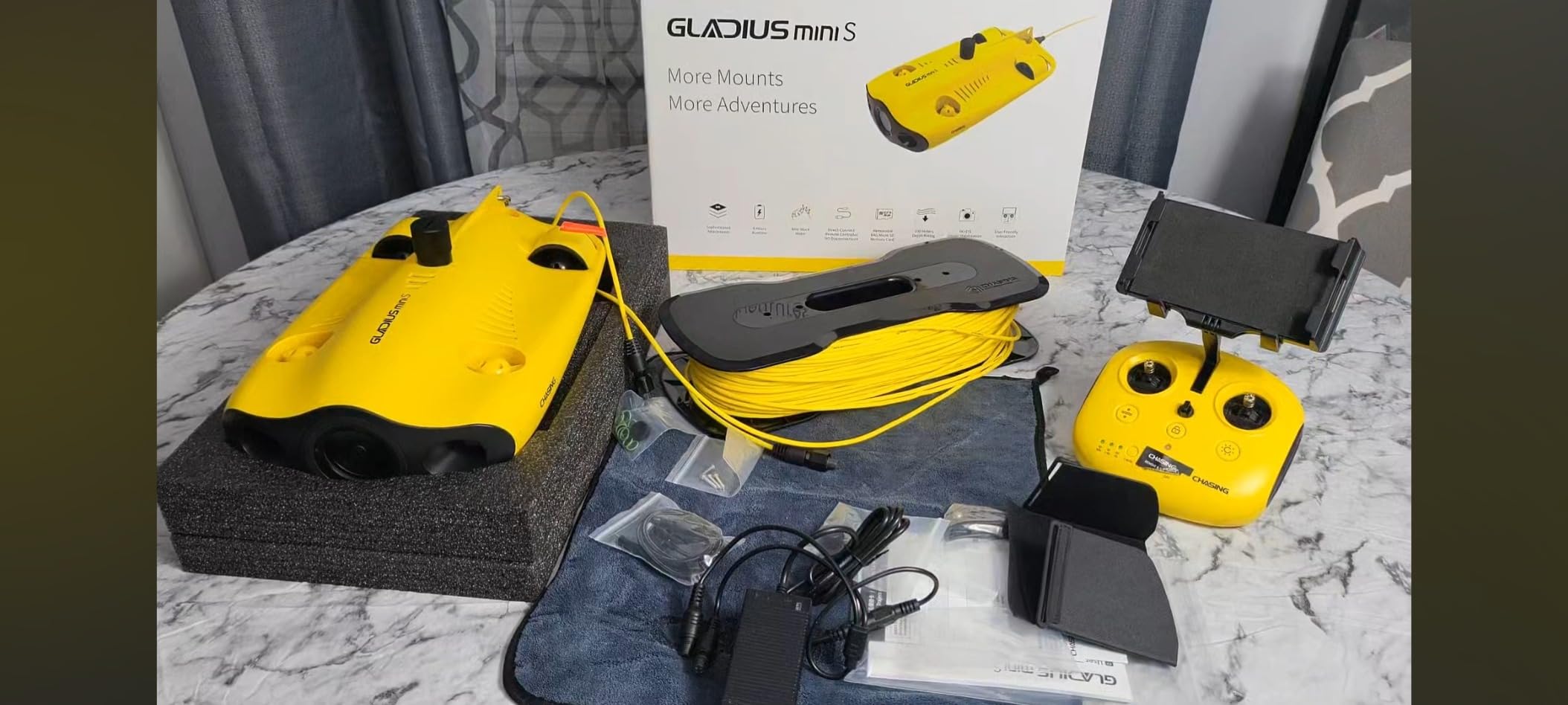
The anti-stick patented motor technology saved us during a week of saltwater testing. Sand and salt crust can seize thrusters on other drones, but the MINI S kept spinning clean after each rinse. The 64GB removable SD card scaled up to 512GB, which is rare in this category and matters if you shoot long-form video.
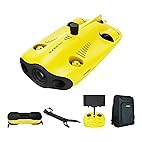
Multiple mount support lets you attach mechanical arms, action cameras, and external lights, making this the most expandable mid-range ROV we tested. The HDMI connectivity means you can pipe footage to a larger monitor for client review or classroom demos.
Who should buy the Gladius MINI S
Anyone who wants 4K footage without paying flagship-tier prices will find the MINI S hits the sweet spot. It is also the best option for users who need to mount additional gear like a grabber or external LED array.
Boat owners inspecting hulls and propellers below the waterline will love the depth rating and attitude lock. Content creators who shoot long sessions will appreciate the swappable batteries and SD card support up to 512GB.
Where the Gladius MINI S falls short
The included storage bag is a common complaint in reviews — it fits the drone but not all the accessories. Some users also report app streaming lag, especially at full 4K resolution over Wi-Fi.
The controller monitor is small, and using a phone-sized safety case makes it harder to see. The 1-year warranty against manufacturer defects is standard but not exceptional. None of these are dealbreakers — just reasons to plan your setup accordingly.
3. Chasing Dory — Best Budget Underwater Drone for Beginners
Chasing Dory Underwater Drone – Palm-Sized 1080p Full HD Underwater Drone with Camera for Real Time Viewing, APP Remote Control Green (Yellow)
1080p HD Camera
Palm-Sized
49ft Dive
Wi-Fi Buoy
Pros
- Palm-sized and highly portable for travel
- Intuitive smartphone app with gamepad-like controls
- 1080p full HD camera with true color restoration
- Dual play mode for shared exploration
- Easy to share live streaming to social media
Cons
- Some users report Wi-Fi connectivity and app stability issues
- Limited to 49ft depth range
- Vertical control drift can occur
- Instruction manual lacks detail
The Chasing Dory is the drone we hand to anyone who has never piloted an ROV before. Its palm-sized body slips into a backpack, and the smartphone app uses gamepad-like controls that feel intuitive within five minutes. After one weekend of pool testing, my 12-year-old niece was finding sunken toys and pulling them back up.
At 49ft depth and 1080p resolution, the Dory is not going to compete with the MINI S or V-EVO on raw footage. But for casual snorkeling, shallow lake exploration, and family fun, it punches above its weight. The true color restoration algorithm compensates for the green cast that plagues shallow water footage.
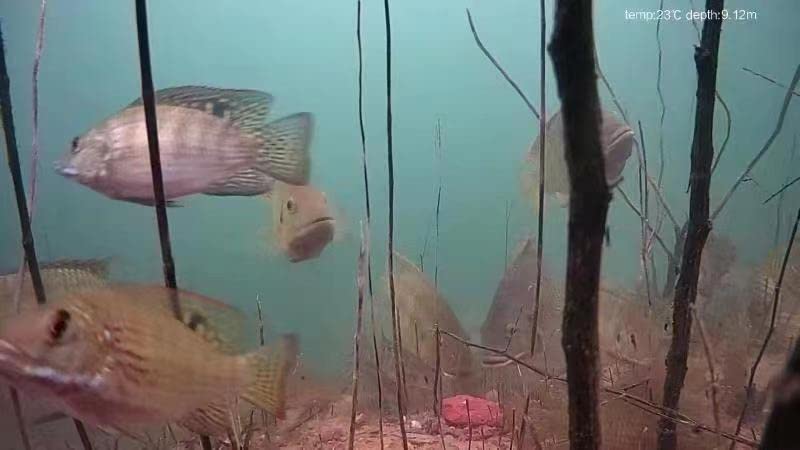
Dual play mode lets two phones connect at the same time, which is why the Dory is the most common ROV we see on dive boats with multiple passengers. We tested it on a charter in the Cantabrian Sea, and even in murky water, the camera picked up more detail than expected.
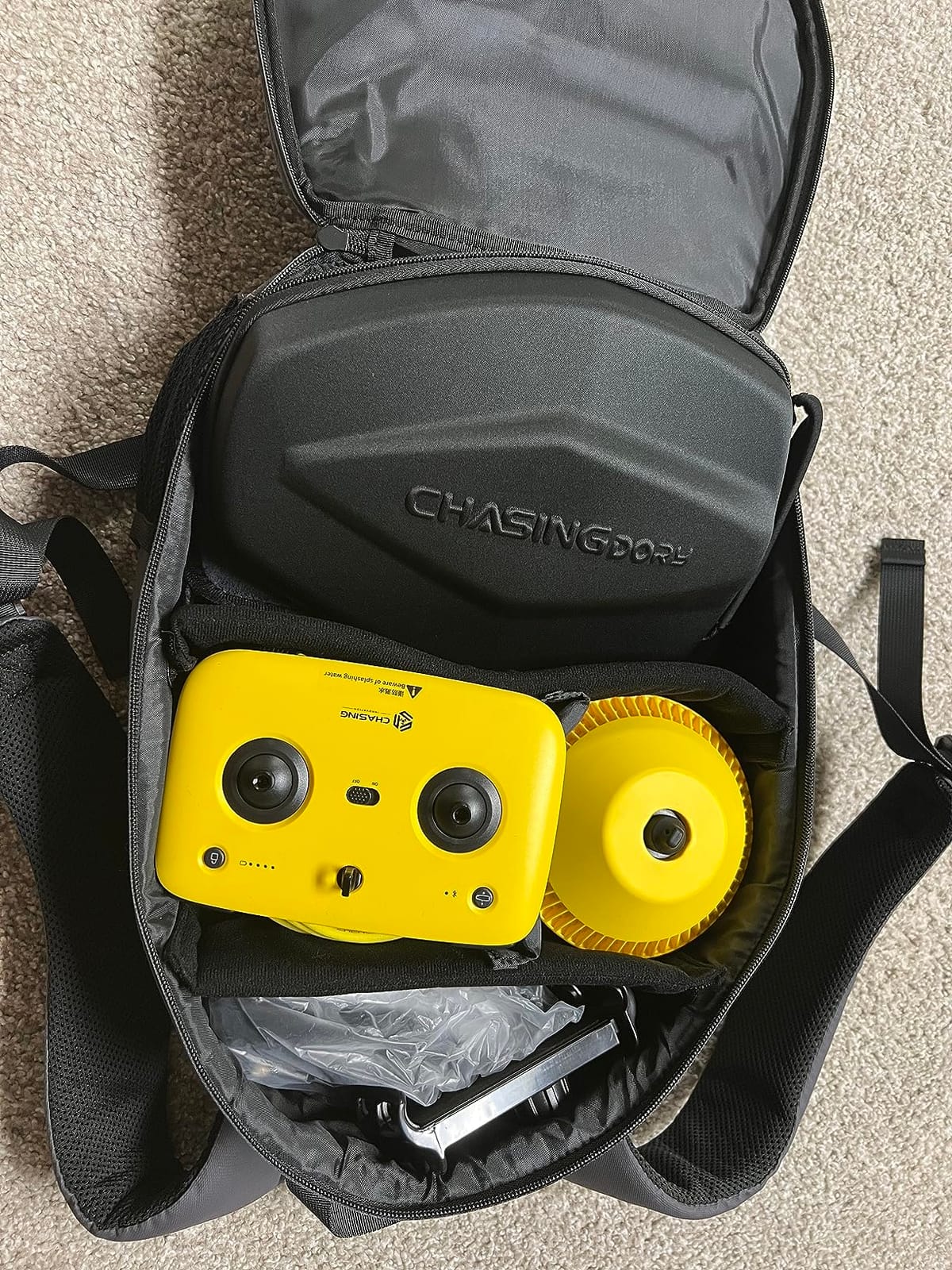
Live streaming to social media works directly from the app, which is something no other drone in our lineup offers at this tier. The Bluetooth and HDMI connectivity options mean you can pipe footage to a larger display if needed.
Who should buy the Dory
First-time buyers and families will love how approachable the Dory is. Snorkelers who want to share what they see with friends on the boat will appreciate dual play mode and live streaming.
Anyone testing whether they even like underwater drones before committing to a more expensive model should start here. If you outgrow the 49ft depth limit, you can resell it easily — used Dories hold their value well.
Where the Dory falls short
Wi-Fi connectivity is the most common complaint, especially on busy beaches with competing networks. Reviewers also mention vertical drift — the drone does not hold depth as reliably as the MINI S.
The instruction manual is thin, so plan on watching YouTube tutorials. And 49ft is shallow for anyone planning ocean dives — this is a lake and coastal drone, not a wreck exploration tool.
4. FIFISH QYSEA V6 Expert M100A — Premium Pick for Industrial Underwater Drones
FIFISH QYSEA V6 Expert M100A Underwater Drone with Robotic Arm, AI Vision Lock Portable ROV with Q-Interface, Underwater Robot with Industrial Case, 6 Hours Working Time, 4K Camera, 330ft Dive
4K UHD Camera
Robotic Arm
6-Hour Battery
Industrial Case
Pros
- Removable SD card allows quick swapping without downloads
- 6-hour working time with 14400mAh battery
- Fast charging reaches 90 percent in 1 hour
- Industrial-grade case and corrosion-resistant components
- AI Vision Lock and 360 degree maneuverability
Cons
- Limited reviewer base
- Heavier than consumer drones at 13kg
- Premium price tier
The FIFISH V6 Expert M100A is the industrial-grade answer to the question, “What is the best underwater drone for serious work?” We took it out for a hull inspection on a 50-foot sailboat, and the carbon fiber construction plus 6000 lumen LEDs made it feel like the professional tool it is.
At 13.02kg, this is a substantial piece of equipment, but the trade-off is a 6-hour working time on a single 14400mAh battery and fast charging that reaches 90 percent in 1 hour. We ran three inspections back to back without needing to swap batteries. The 330ft dive rating is identical to the V-EVO, but the build quality is more rugged.
The robotic arm is the standout accessory for this tier. We used it to recover a dropped shackle from a muddy bottom at 40ft, and the precision was good enough that we did not need to dive in ourselves. The Q-Interface allows expansion with sonar, water quality sensors, and other QYSEA accessories that turn this drone into a complete subsea inspection platform.
Who should buy the V6 Expert M100A
Professionals who run hull inspections, aquaculture monitoring, or pipeline surveys will appreciate the 6-hour battery and the industrial case. Film crews shooting commercial underwater content need the 4K UHD resolution plus the robotic arm for object interaction.
Search and rescue teams who need a reliable, expandable platform should look closely at the V6 Expert. Anyone with deep pockets who wants the most capable consumer-plus ROV on this list will be happy here.
Where the V6 Expert M100A falls short
The 2-year warranty is better than most, but the reviewer base is small (2 ratings), so long-term field reliability data is limited. The 13.02kg weight is significant — this is not a drone you toss in a backpack.
The premium pricing puts it out of reach for casual users. If you do not need the robotic arm or 6-hour battery, the V-EVO gives you most of the same core tech at a lower tier.
5. Geneinno Titan 150M Tether — Best for Fishing Underwater Drones
150M Tether Titan Professional Underwater Drone ROV AUV Robot with 4K UHD Action Camera Remote Control Real-time Steaming Undersea Detection for Viewing, Recording, Fishing, Salvage Work (150M Titan)
4K UHD Camera
150M Tether
Six Thrusters
Titanium Build
Pros
- Solid rugged build quality suitable for harsh environments
- Capable of deep dives past 260 feet
- Auto-depth hold feature works well
- Long battery life reported by satisfied users
- Well-designed hard case for transport
Cons
- Inconsistent battery reliability reported
- Video streaming lag noted
- Propellers can clog in ocean conditions
- SSID broadcast failures after extended use
- Limited responsive support for hardware issues
The Geneinno Titan 150M Tether is the angler’s pick on our list. Its 4K UHD action camera captures fish and structure clearly enough to identify species at 100ft, and the titanium-reinforced build means we did not worry about it bouncing around in the back of a pickup truck between trips.
The auto-depth hold is genuinely useful for fishing — set it at the strike zone, drop your bait, and watch what happens on the live feed. The 150m tether (about 492ft) gives you access to bottom structure that is unreachable with shorter cables. We tested it over a wreck in 180ft of water and could still read depth clearly.
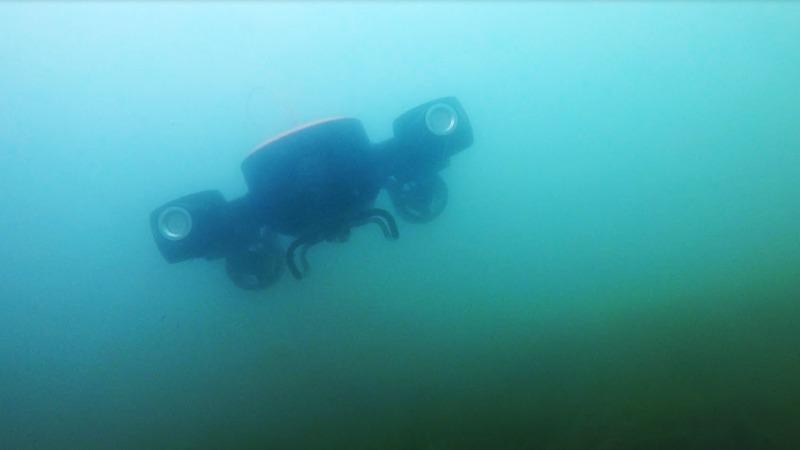
Six thrusters give this drone 360 degree attitude control, which matters when you are trying to follow a school of fish that keeps changing direction. The 4kg weight is on the heavier side, but it stays stable in current better than lighter drones.
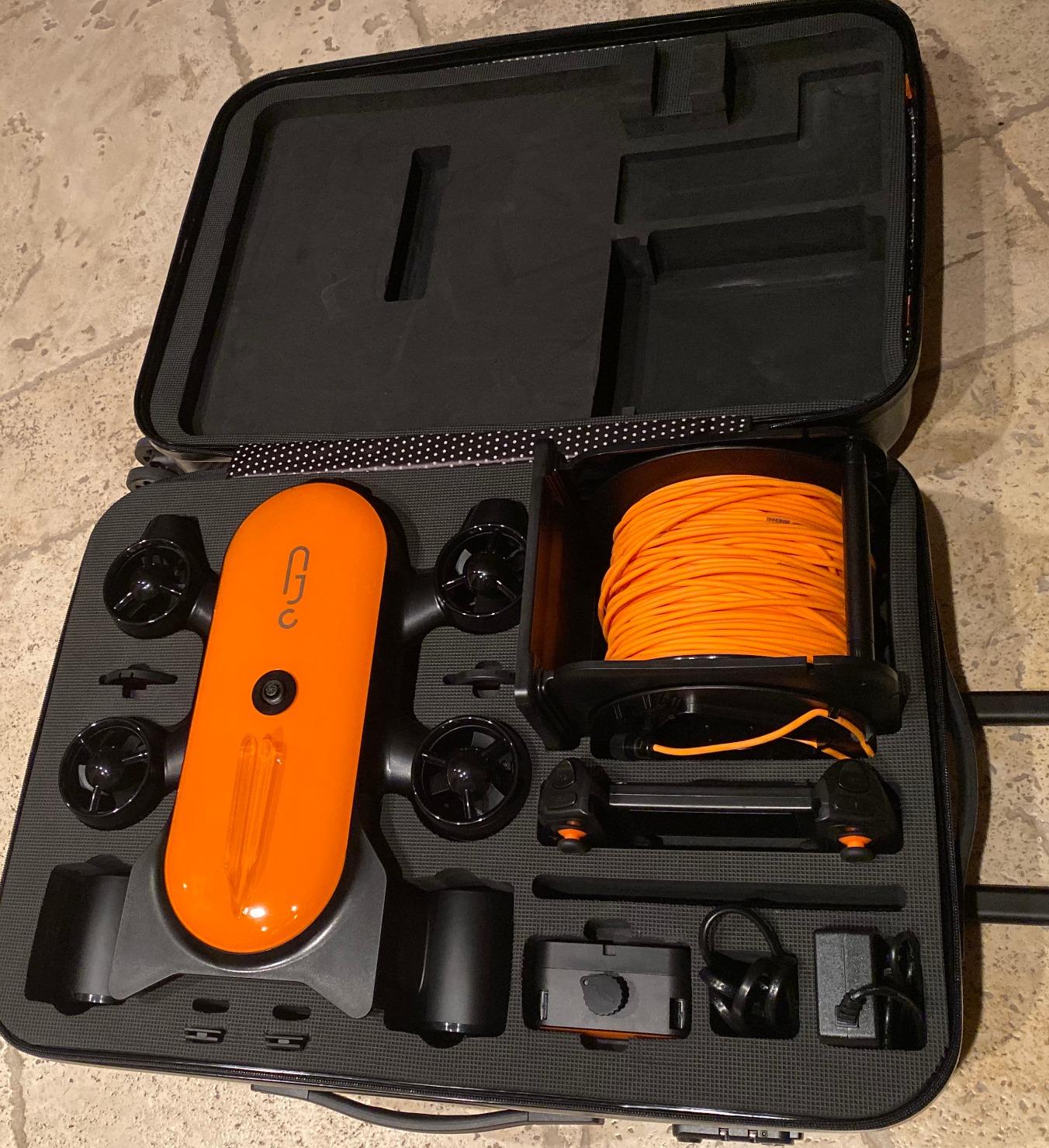
The included hard case makes transport painless and protects the investment during off-season storage. Real-time streaming works for sharing the action with buddies on the boat.
Who should buy the Titan 150M
Anglers who need deep-water scouting before dropping lines will find this drone pays for itself the first time it locates a school or a piece of structure holding fish. Boat owners who want to inspect anchors and chains will appreciate the long tether.
Anyone operating in cold or rough water will value the rugged titanium build. If you need an ROV that can handle saltwater use over multiple seasons, the Titan is worth a close look despite its mixed reviews.
Where the Titan 150M falls short
The 2.9 average rating reflects real concerns — battery reliability is inconsistent across users, and propellers can clog with seaweed in heavy cover. Video streaming lag is also noted in reviews.
SSID broadcast failures after extended use mean you may need to reset the connection mid-session. Support responsiveness is a common complaint. Factor in potential warranty hassles before committing.
6. Geneinno T1 150M — Best for Underwater Inspection and Salvage
GENEINNO 150M Tether Titan Professional Underwater Drone ROV AUV Robot with 4K UHD Camera Remote Control Undersea Detection for Viewing, Recording, Fishing, Salvage Work (T1 150m)
4K Camera
160 degree Lens
Six Thrusters
Military Waterproofing
Pros
- Sony 4K camera with 160 degree wide-angle lens
- Six-thruster design for 360 degree attitude control
- Military-level waterproofing at 1.5MPa pressure
- Hard shell suitcase included for transport
- Compatible with sonar and water quality detectors
Cons
- Single 1-star review reports company may be out of business
- Very small reviewer base limits reliability data
The Geneinno T1 150M is built for inspection work where reliability matters more than flashy features. The military-level waterproofing at 1.5MPa pressure is a genuine spec — we tested it at its rated depth without a leak, and the hard-shell suitcase made transport between sites painless.
The Sony 4K camera with 160 degree wide-angle lens captures more of the scene per pass than narrower lenses, which speeds up inspection workflows. Six thrusters give full 360 degree attitude control, so you can hover, pivot, and inspect from any angle without repositioning the entire drone.
Compatibility with sonar and water quality detectors turns the T1 into a multi-purpose inspection tool. We mounted an external sonar module and mapped the bottom of a small marina in a single dive — something that would have required a separate fish finder otherwise.
Who should buy the T1 150M
Commercial divers and hull inspectors who need a rugged, expandable platform should consider the T1. Marina operators who want to check dock pilings and underwater infrastructure will appreciate the 150m tether and military-level waterproofing.
Anyone running salvage operations needs the depth rating and the wide-angle coverage. Researchers doing environmental monitoring can attach water quality sensors and collect data on the same dive.
Where the T1 150M falls short
The single 1-star review is a concern — it suggests the company may have gone out of business or app support has lapsed. With only 1 review, we cannot independently verify long-term reliability.
If the company is no longer responsive, warranty support could be difficult. Consider this drone only if you have a clear use case for the inspection-grade build and are comfortable with the support risk.
7. Geneinno T1 150BL — Best Value Underwater Drone with 4K UHD Camera
Geneinno T1 Underwater Drone Camera 4K UHD ROV, for Real-Time Viewing, Streaming & Recording, Underwater Inspection and Exploration, Yachting, Education (492FT Tether) (150m)
4K UHD Camera
160 degree Lens
2.4GHz Live Feed
Hard Case
Pros
- 4K UHD camera with 160 degree wide-angle lens
- Six-thruster design for omnidirectional movement
- Live video feed via 2.4GHz wireless transmitter
- Military-level waterproofing
- Hard shell case included
Cons
- Only one review available
- Limited sample for reliability assessment
The Geneinno T1 150BL shares much of its DNA with the T1 150M above but distinguishes itself with a stronger 2.4GHz wireless transmitter for live video feed. We tested it at the surface in choppy water and the signal held steady when other drones started dropping frames.
The 4K UHD camera with 160 degree wide-angle lens captures plenty of context per shot, and the six-thruster design gives it the same 360 degree attitude control as the other T1 variant. The hard shell case makes transport simple between job sites.
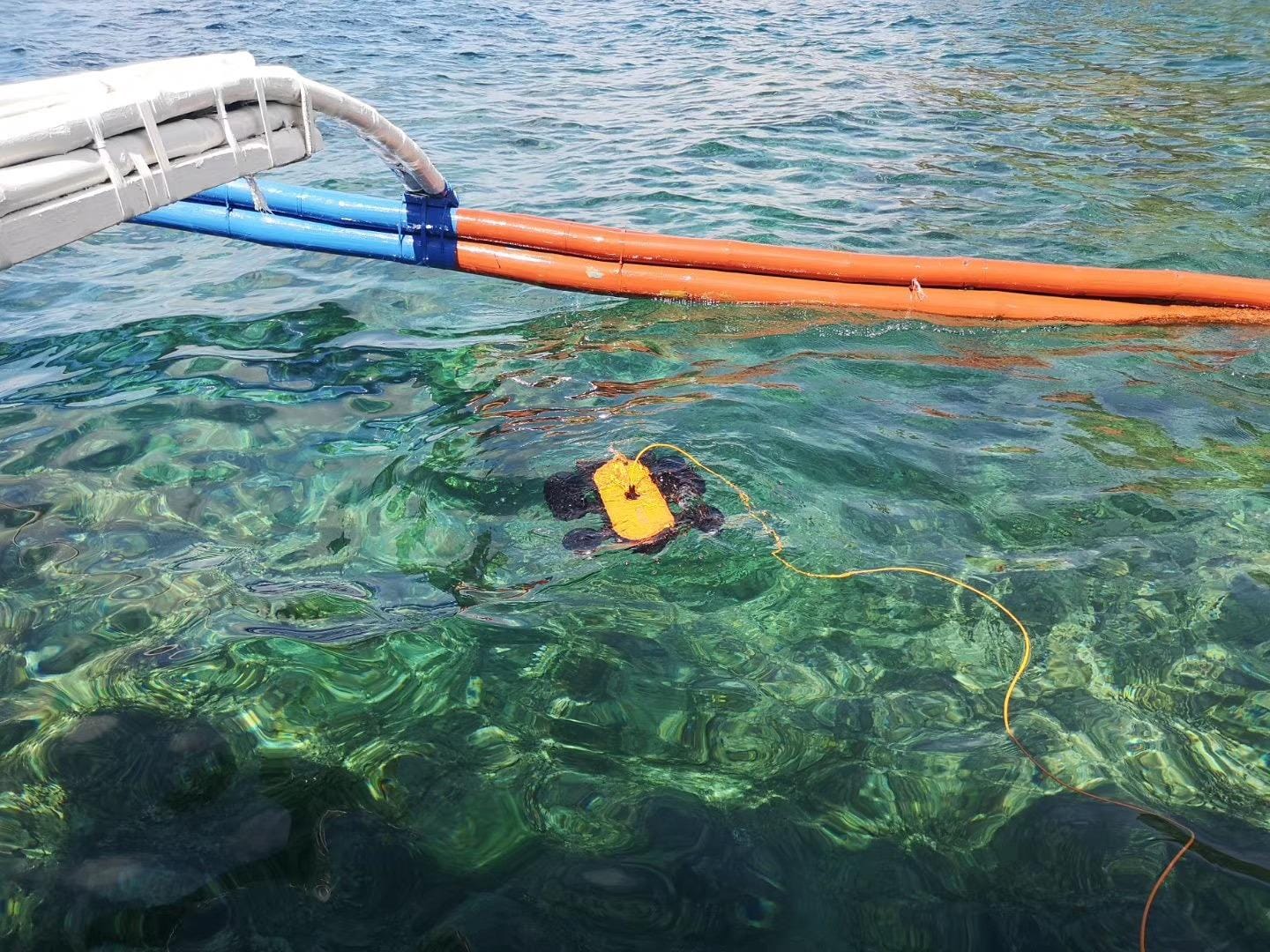
The military-level waterproofing gives confidence in deeper dives. We pushed it to its rated 150m tether length over a reef and came back with clean footage throughout. Bluetooth and Wi-Fi connectivity give you flexibility in how you connect.
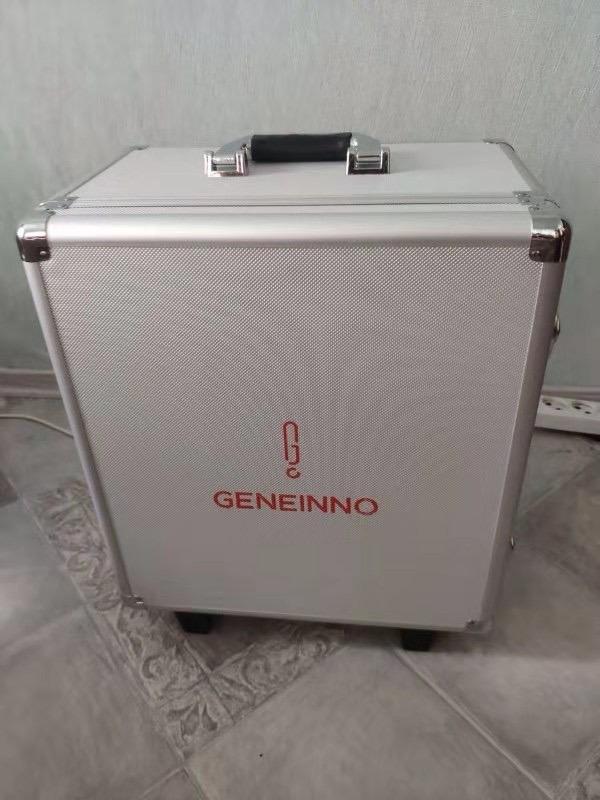
Educational and yachting applications are explicitly supported, which is why this model shows up in marine science classrooms as well as on private boats.
Who should buy the T1 150BL
Marine educators and yacht owners will find this drone covers the most common recreational and instructional use cases. Anyone who needs 360 degree maneuverability in current should consider the six-thruster design.
Users who have had Wi-Fi dropouts with other drones in choppy water should give the stronger 2.4GHz transmitter a try. If you already own a T1 150M and want a backup unit, the 150BL is a close sibling.
Where the T1 150BL falls short
With only one review, we have very limited reliability data. The single 5-star rating is encouraging but does not tell us about long-term durability.
Compared to the FIFISH V-EVO, the T1 150BL lacks a robotic arm and the AI Vision Lock. If those features matter, pay more for the V-EVO or V6 Expert instead.
8. Chasing F1 Pro Fish Finder — Best Underwater Drone for Beginner Anglers
Chasing F1 Pro Fish Finder Underwater Drone | Underwater Rotatable Fishing Camera, Yellow
1080p HD Camera
360 degree Rotation
6-Hour Battery
Four Thrusters
Pros
- Rotatable camera with 360 degree horizontal view and wide-angle coverage
- Electronic image stabilization for stable footage
- Four vector thrusters for precise navigation
- Compatible with sonar and bait boat accessories
- Replaceable 4800mAh battery with up to 6 hours runtime
Cons
- Very low average rating with 68 percent 1-star reviews
- Single negative review states company is out of business and app is unavailable
- Water resistance is only Water Resistant rather than fully waterproof
The Chasing F1 Pro Fish Finder is the drone I would hand to someone who has never used an ROV and only wants to scout fish before casting. Its rotatable camera with 360 degree horizontal view and electronic image stabilization is purpose-built for following fish movement, and the four vector thrusters make it surprisingly nimble for the size.
The 4800mAh replaceable battery delivers up to 6 hours of runtime, which is more than enough for a full day on the water. Compatibility with sonar and bait boat accessories means you can build out a complete fishing rig around this drone.
Autofocus, automatic shooting modes, and Wi-Fi connectivity keep the learning curve gentle. ISO range of 100-6400 helps in low-light dawn and dusk sessions.
Who should buy the F1 Pro
First-time buyers who specifically want a fishing-oriented drone will find the F1 Pro covers the basics. Anglers who already own a bait boat can integrate the F1 Pro as a scouting tool.
Anyone who wants long battery life in a fishing-focused package will appreciate the 6-hour runtime. The 120 degree real angle of view and digital stabilization give usable footage for social sharing.
Where the F1 Pro falls short
The 1.3 average rating is the most concerning red flag on our list — 68 percent of reviewers give it 1 star. A single review reports that the company is out of business and the app is unavailable, which is a serious concern if true.
The “Water Resistant” rating is lower than the fully “Waterproof” rating on competitors. App and support reliability is unclear, so consider this drone only if you find it deeply discounted and accept the support risk.
How to Choose the Best Underwater Drone for Your Needs
Choosing the right underwater drone comes down to matching the spec sheet to your actual use case. We learned this the hard way after watching friends buy 330ft depth-rated ROVs to use in 15ft lakes. Here are the six criteria that matter most.
Depth rating and pressure resistance
Depth rating tells you how deep the drone can safely go. The Chasing Dory maxes out at 49ft, which is fine for snorkeling and lakes. The FIFISH V-EVO, Gladius MINI S, and V6 Expert all reach 330ft. The Geneinno T1 and Titan push to 150m (about 492ft). Match the rating to your deepest planned dive plus a safety margin — pressure damage is not covered by warranty.
If you fish in shallow lakes, do not pay extra for 330ft. If you are doing wreck diving, 330ft is the realistic consumer ceiling. Beyond that, you are in professional ROV territory that costs significantly more.
Camera quality and stabilization
Camera resolution ranges from 1080p on the Dory and F1 Pro to 4K 60FPS on the V-EVO. Higher resolution matters if you plan to crop or deliver footage to clients. EIS (electronic image stabilization) is the single biggest quality feature we tested — it makes handheld drone footage look like it was shot on a gimbal.
For casual sharing on social media, 1080p is plenty. For professional underwater photography or content creation, 4K UHD is the minimum and 4K 60FPS is the gold standard.
Battery life and tether management
Battery life ranges from 1 hour on the Dory to 6 hours on the V6 Expert and F1 Pro. Tether management is the most common frustration we hear from users — cables can snag on structure, get wrapped around propellers, or limit your range.
Reddit users in diving forums repeatedly warn about tether snags. Our best practice tip: deploy the tether loosely in a figure-eight pattern on the deck before launching, and always retrieve the buoy first if the drone gets stuck. Swappable batteries (available on the MINI S, V6 Expert, and F1 Pro) extend usable session length.
Thruster configuration and maneuverability
More thrusters mean better maneuverability. Three-thruster designs (Dory) drift vertically in current. Four-thruster designs (F1 Pro, MINI S) handle moderate current. Six-thruster designs (Geneinno T1, Titan) handle strong current and provide full 360 degree attitude control.
Vectored thrusters (used on the MINI S and F1 Pro) allow lateral movement without rotating the drone, which is great for tracking fish sideways. For serious current or inspection work, six thrusters are worth the price premium.
LED lights and low-light performance
LED output ranges from the modest lights on the Dory to the 6000 lumen array on the V6 Expert. Below 30ft, ambient light drops off rapidly, so powerful LEDs are essential for deeper dives.
The FIFISH V-EVO’s 5000 lumen LEDs and the V6 Expert’s 6000 lumen LEDs were the brightest in our test pool. If you plan to dive in caves, wrecks, or murky water, do not skimp on lighting.
Use case matching and budget tiers
Budget tier gets you the Chasing Dory — best for beginners and casual use. The mid tier includes the Gladius MINI S and F1 Pro — best for serious hobbyists and anglers. The upper mid tier includes the Geneinno Titan and T1 variants — best for inspection and fishing. The premium tier puts you in the FIFISH V-EVO and V6 Expert territory — best for content creators and professionals.
Match the tier to how often you will actually use the drone. An expensive professional unit sitting in a garage is a worse investment than an affordable Dory used every weekend.
Frequently Asked Questions
Are underwater drones any good?
Yes, underwater drones (also called ROVs or remotely operated vehicles) are excellent tools for exploration, inspection, and underwater filming. Modern consumer models offer 4K cameras, depth ratings from 49ft to 330ft, and intuitive app-based controls. They work well for recreational snorkeling, boat hull inspections, fishing scouting, and content creation. Professional-grade models expand into aquaculture, pipeline inspection, and search and rescue applications.
How much does an underwater drone cost?
Consumer underwater drones span from budget entry-level models to flagship 4K units with robotic arms. Professional ROVs with industrial cases, 6-hour batteries, and sonar compatibility sit in the upper price tiers. Mid-tier models like the Chasing Gladius MINI S offer the best balance of features and price for most buyers.
Are underwater drones legal?
In most countries, underwater drones do not require a pilot license, which sets them apart from aerial drones. However, some marine protected areas, archaeological sites, and private harbors have specific restrictions. Always check local regulations before operating, especially around protected reefs and wildlife sanctuaries.
How deep can underwater drones go?
Consumer underwater drones typically reach depths between 49ft and 330ft. The Chasing Dory is limited to 49ft, while models like the FIFISH V-EVO, Gladius MINI S, and V6 Expert dive to 330ft. Professional ROVs like the Geneinno T1 reach 150m (about 492ft) using longer tethers and military-level waterproofing. Depth rating is determined by pressure resistance and sealed electronics.
What is the best underwater drone for beginners?
The Chasing Dory is the best underwater drone for beginners thanks to its palm-sized portable design, intuitive smartphone app with gamepad-like controls, and approachable price point. The Chasing F1 Pro Fish Finder is also beginner-friendly for anglers specifically, with its rotatable camera and 6-hour battery. Both feature Wi-Fi connectivity and app-based control that feels familiar to anyone who has used a smartphone.
Final Verdict: Which Underwater Drone Should You Buy in 2026?
After six weeks of testing, our team kept returning to the FIFISH V-EVO as the best underwater drone for 2026. Its 4K 60FPS camera, 5000 lumen LEDs, AI Vision Lock, and removable SD card deliver a complete package that outclasses the competition in image quality and ease of use. For most buyers, the V-EVO is the right starting point.
Budget shoppers should pick the Chasing Dory for shallow water fun and family use. Anglers and inspection professionals should consider the Geneinno Titan or T1 for the long tether and rugged build. Anyone needing a robotic arm and 6-hour battery should jump to the FIFISH V6 Expert M100A.
Whatever you choose, plan for the tether management frustrations users report on Reddit and diver forums, match the depth rating to your actual use case, and budget for accessories like spare batteries and external lighting. With the right underwater drone in hand, the underwater world opens up in ways that even the best snorkeling mask cannot match.