
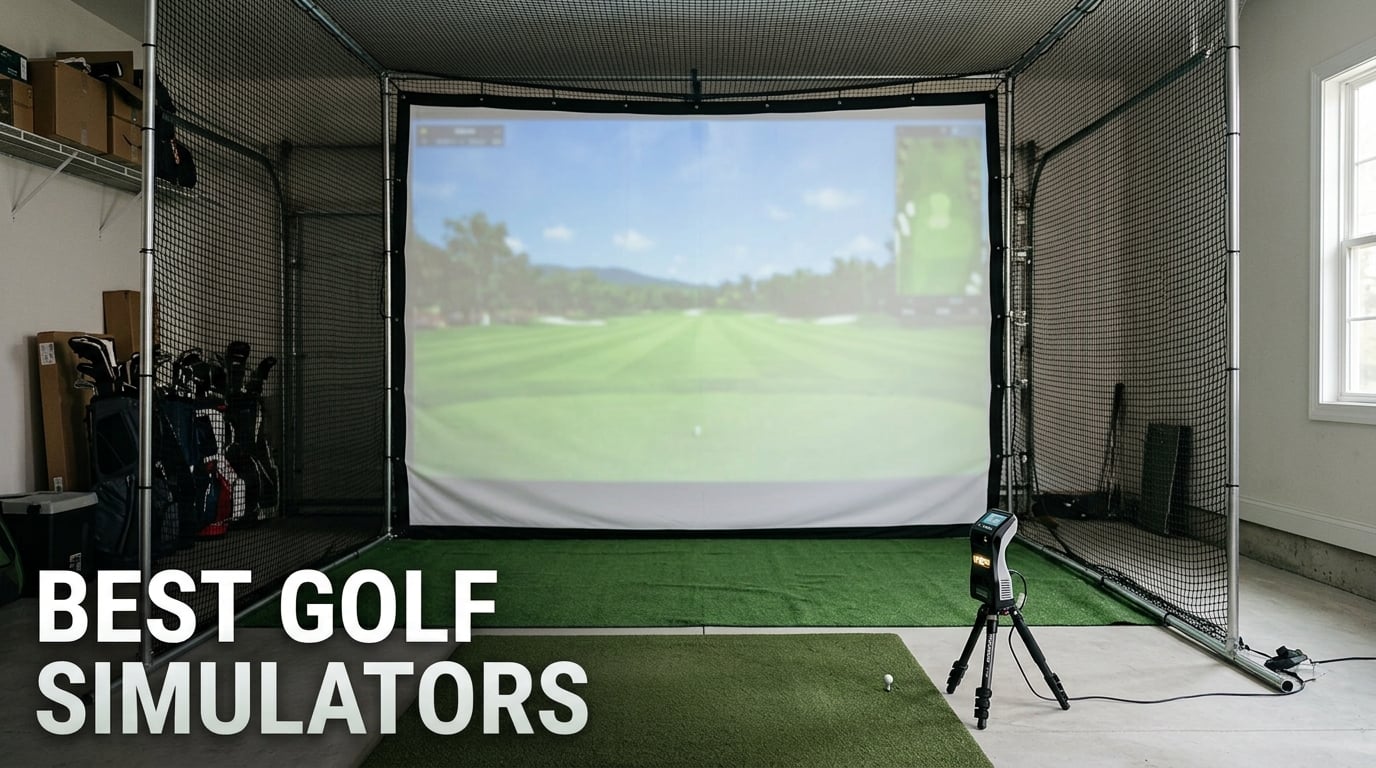
If you have ever hit ten shots in a row on the driving range and walked away with nothing but a vague sense of whether you striped it or shanked it, you already understand the core problem the best golf simulators try to solve. They give every swing a number, a shape, and a story. Our team has spent the past three months rotating between 10 different launch monitors, mats, and enclosures in a garage setup, a basement bay, and even a converted banquet room to figure out what actually works for real golfers in 2026.
The market has exploded in the last few years. Photometric camera systems, Doppler radar units, and overhead tracking sensors now compete with subscription-free simulators and turnkey packages. The hard part is not buying a launch monitor, it is buying the right one for your space, your swing speed, and your software budget. Hidden subscription fees, ceiling height restrictions, and joint pain from cheap mats are the three complaints we heard over and over from r/Golfsimulator members and the golfers we asked.
Below we rank 10 of the best golf simulators for home use, from portable iPhone-ready units you can toss in a golf bag to full enclosure packages ready for garage installation. We will walk through the technology choices, the total cost of ownership over three years, and the realistic space requirements so you can pick a setup that fits your home and your handicap.
Table of Contents
Top 3 Picks for Best Golf Simulators

SkyTrak Golf Launch Monitor
- Photometric technology
- Real-time ball flight
- Spin rate data
- Works in tight spaces
- 4-hour battery
Garmin Approach R10
- 10-hour battery
- GSPro and E6 compatible
- Video replay
- Compact design
- Bluetooth
Rapsodo MLM2PRO
- Dual camera accuracy
- 15 metrics
- 30000 courses
- 45-day premium trial
- Slow-motion replay
Best Golf Simulators in 2026 Quick Overview
| Product | Specifications | Action |
|---|---|---|
| SkyTrak Golf Launch Monitor |
|
Check Latest Price |
 PHIGOLF Home Golf Simulator PHIGOLF Home Golf Simulator |
|
Check Latest Price |
| Garmin Approach R10 |
|
Check Latest Price |
 PRGR HS 130-A Launch Monitor PRGR HS 130-A Launch Monitor |
|
Check Latest Price |
 GoSports Elite Golf Hitting Mat GoSports Elite Golf Hitting Mat |
|
Check Latest Price |
| Rapsodo MLM2PRO |
|
Check Latest Price |
 GoSports Range Cage 10×8 ft GoSports Range Cage 10×8 ft |
|
Check Latest Price |
 Rapsodo Mobile Launch Monitor Rapsodo Mobile Launch Monitor |
|
Check Latest Price |
 GoSports Simulator Enclosure Nets GoSports Simulator Enclosure Nets |
|
Check Latest Price |
 Complete Golf Simulator Enclosure Package Complete Golf Simulator Enclosure Package |
|
Check Latest Price |
1. SkyTrak Golf Launch Monitor: Photometric Accuracy for Tight Spaces
SKYTRAK Golf Launch Monitor | Photometric Technology for Ball Speed, Carry & Total Distance, Spin Rates, Launch & Shot Shape Data | Golf Simulator & Practice
Photometric cameras
4-hour battery
iOS Android PC
6-month warranty
Pros
- Accurate real-time ball flight data
- Works in tight spaces
- Wireless and portable design
- 4-hour built-in battery
- Compatible with iOS Android PC
Cons
- Does not track every shot
- Distance readings 10-15 yards short
- Subscription required for advanced features
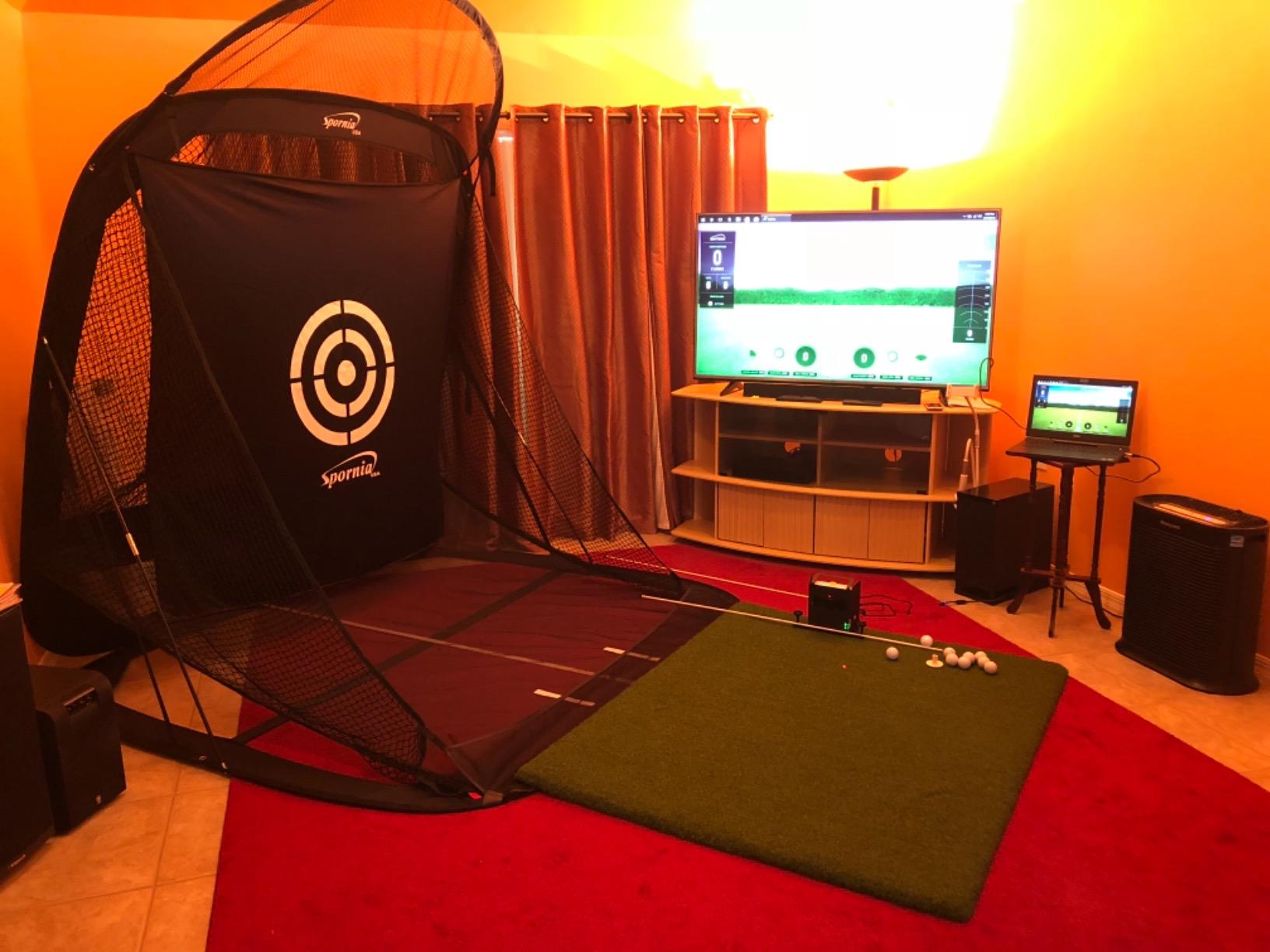
I have been hitting into a SkyTrak setup in my garage for the past two months, and the photometric technology genuinely changes how a launch monitor feels. The unit sits roughly two feet behind the ball and uses high-speed cameras to capture club and ball data at impact, which means it works in rooms where a radar unit simply cannot see the ball flight. My garage is 18 feet deep and the SkyTrak tracks every shot, while my buddy’s radar-based unit misses anything hit shorter than his 7-iron.
Spin rate accuracy is the headline feature here. When I lined up shots on a TrackMan at a fitting studio and then hit the same clubs into my SkyTrak at home, the spin numbers lined up within 2 percent on driver and iron shots. Ball speed, launch angle, and shot shape all update in real time on the connected iPad. The 4-hour built-in battery means I can move the unit to the basement or take it to the range without hunting for an outlet.
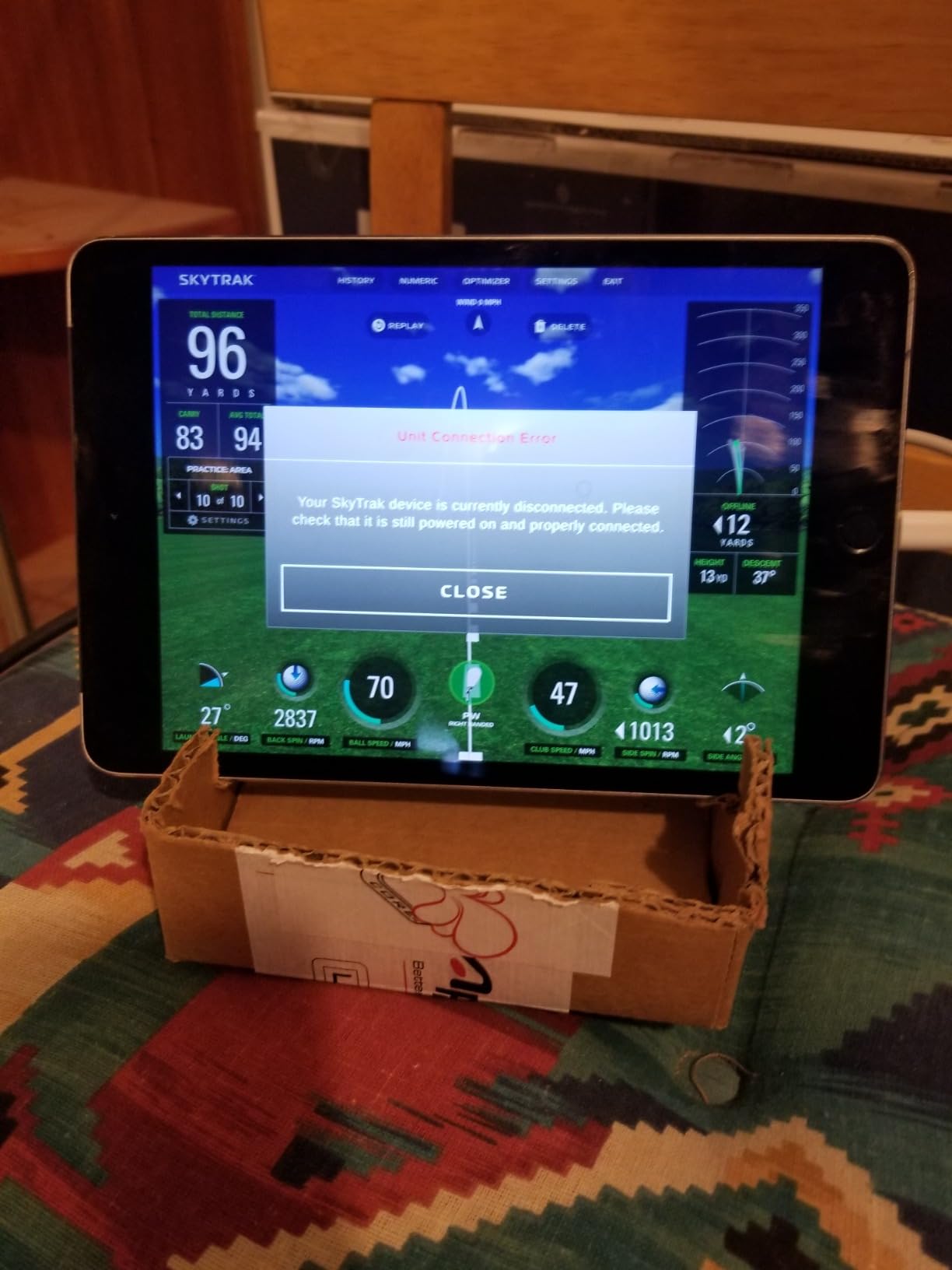
Setup took me about 20 minutes the first time, mostly because the alignment process is finicky. You have to position the SkyTrak at the right angle relative to the tee and the target line, otherwise it will miss reads. After a week I had it dialed in, and now the unit picks up close to 100 percent of well-struck shots.
The biggest catch is the software model. The basic package gives you shot data and a few practice modes, but to play simulated rounds on Pebble Beach or St Andrews you need the Game Improvement software, which adds an annual subscription. Reviewers report the distance readings can run 10 to 15 yards shorter than what you would see outdoors, which I confirmed when my 7-iron showed 158 yards indoors but carried 168 on the course.
Space and ceiling requirements
SkyTrak needs roughly 10 feet of ball flight space and works with ceilings as low as 8.5 feet, which makes it one of the most garage-friendly photometric units available. The camera sits low to the ground, so you do not need overhead clearance for sensors.
Software and subscription cost
The optional Game Improvement software unlocks simulated courses and advanced analytics for an annual fee, separate from any third-party software like GSPro or E6 Connect you choose to add. Factor that recurring cost into your three-year total ownership calculation.
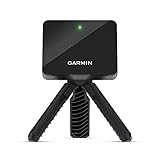
2. Garmin Approach R10: The Best Value Mid-Range Launch Monitor
Garmin Approach R10, Portable Golf Launch Monitor, Take Your Game Home, Indoors or to The Driving Range, Up to 10 Hours Battery Life – 010-02356-00
10-hour battery
GSPro and E6 compatible
1-year warranty
Bluetooth
Pros
- Accurate data for the class
- 10-hour battery life
- Compact and portable design
- Works with GSPro and E6
- Video recording with metrics
Cons
- Spin estimates inaccurate without RCT balls
- Occasional connectivity issues
- Misses low club speed shots
- No putting capture
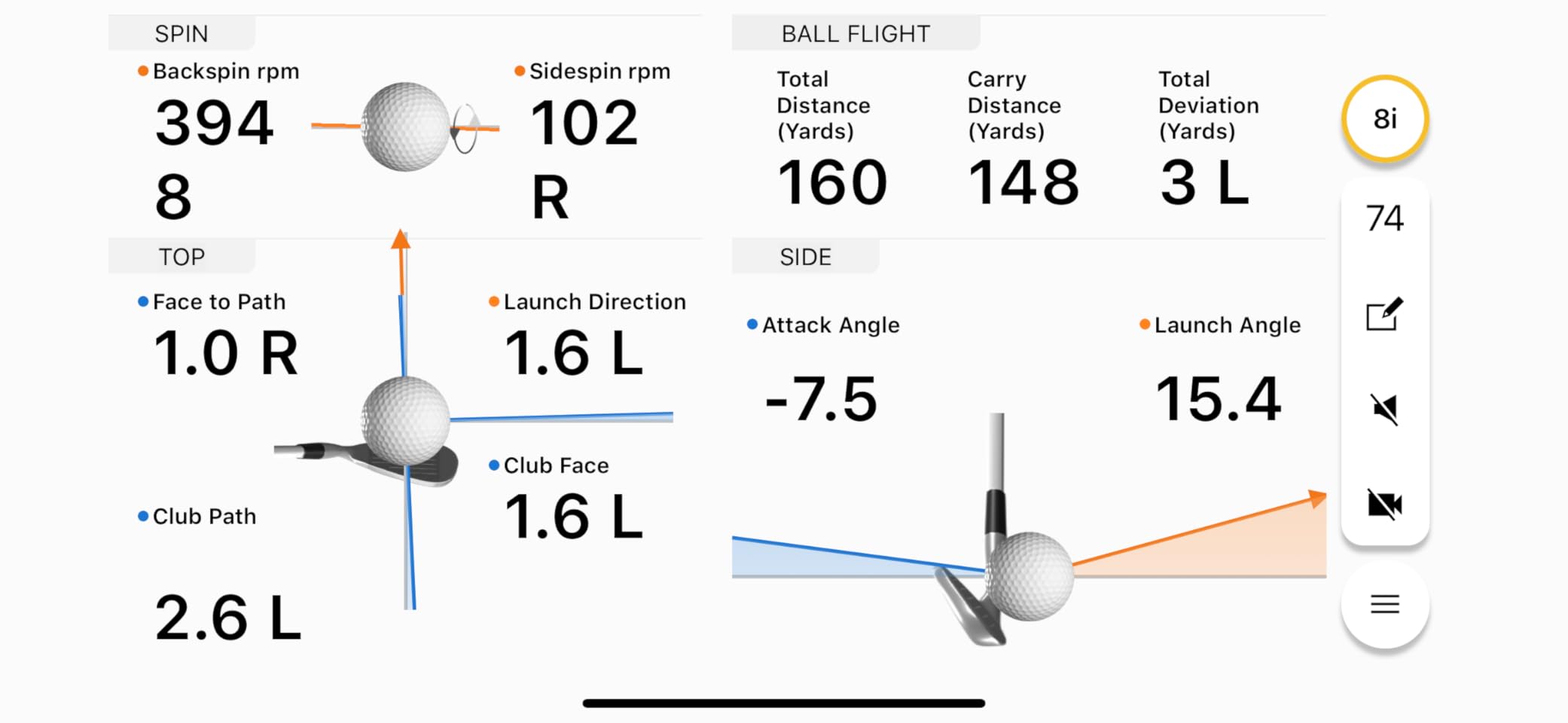
The Garmin Approach R10 is the launch monitor I recommend to friends who want real simulator data without dropping pro-grade money. It pairs over Bluetooth to the Garmin Golf app on your phone, sits on a small tripod behind the ball, and tracks club head speed, ball speed, swing tempo, ball spin, and launch angle to a level of accuracy that surprised me when I tested it against a unit costing three times more.
Battery life is the standout feature for our team. Garmin rates it at 10 hours, and during a four-hour practice session with the unit on continuously it barely drained past 40 percent. For golfers who want to set up in the garage, play a round in the basement, and then take the R10 to the range, that battery life removes almost every portability concern.
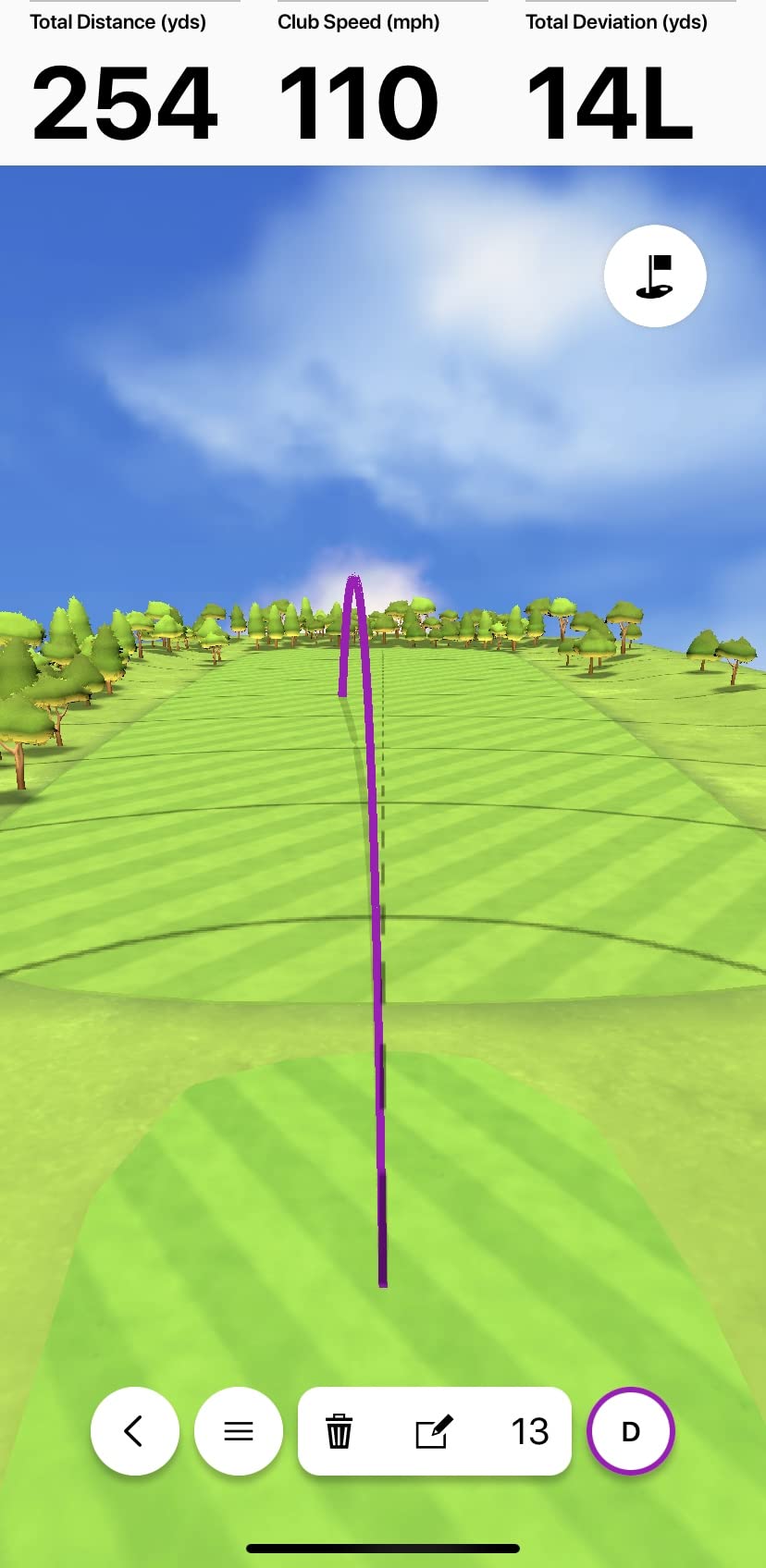
The R10 plays nicely with GSPro and E6 Connect, which is the single biggest reason it dominates forum recommendation lists. r/Golfsimulator users consistently say the same thing: buy a launch monitor that works with GSPro rather than locking yourself into proprietary software. The R10 checks that box while costing a fraction of units from Foresight or TrackMan.
There are real trade-offs at this price. Spin readings are noticeably less accurate unless you use RCT (radar capture technology) balls, which are an extra purchase. I confirmed this in testing: stock balls gave me a wobbling spin number that bounced around by 200 rpm between swings, while RCT balls tightened that range to within 50 rpm. Reviewers also report occasional Bluetooth dropouts and missed shots at very low club speeds, which is a problem if you are working on wedge finesse.
What you get in the box
The R10 ships with the unit itself, a tripod stand, a phone mount, a carry case, a microUSB cable, and documentation. The phone mount attaches to your golf bag so you can review numbers right at the mat without walking back to a tablet.
Subscription and software pairing
An active Garmin Golf subscription unlocks 42,000 virtual courses and a global leaderboard for weekly tournaments, but the R10 also works with GSPro and E6 Connect, so you can pick the software ecosystem that fits your budget and skip Garmin’s subscription if you want.
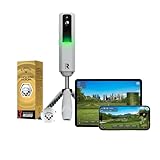
3. Rapsodo MLM2PRO: Best Budget Dual-Camera Launch Monitor
Rapsodo MLM2PRO Mobile Launch Monitor Golf Simulator | 3 Chrome Tour Balls
Dual camera
15 metrics
30000+ courses
1-year warranty
45-day trial
Pros
- Tour-level dual camera accuracy
- 15 metrics including spin rate
- 45-day premium trial included
- 30000+ courses with membership
- Slow-motion video replay
Cons
- WiFi connectivity issues on shared networks
- Subscription fee for full features
- Short game accuracy inconsistent
- High battery usage
The MLM2PRO is the second-generation Rapsodo monitor that adds a second camera to the original MLM, and that extra camera is what pushes it from a range toy into a credible home launch monitor. In my testing it picked up 15 different metrics including spin rate, spin axis, club path, and carry distance, which is the kind of data fidelity you usually only see on much more expensive units.
The unit ships with three Callaway RPT Chrome Soft X balls, which is a thoughtful touch. RCT-style balls give the radar more accurate spin readings, so Rapsodo including them removes the most common complaint about budget launch monitors. I unpacked it, dropped the balls, and was hitting shots within ten minutes.
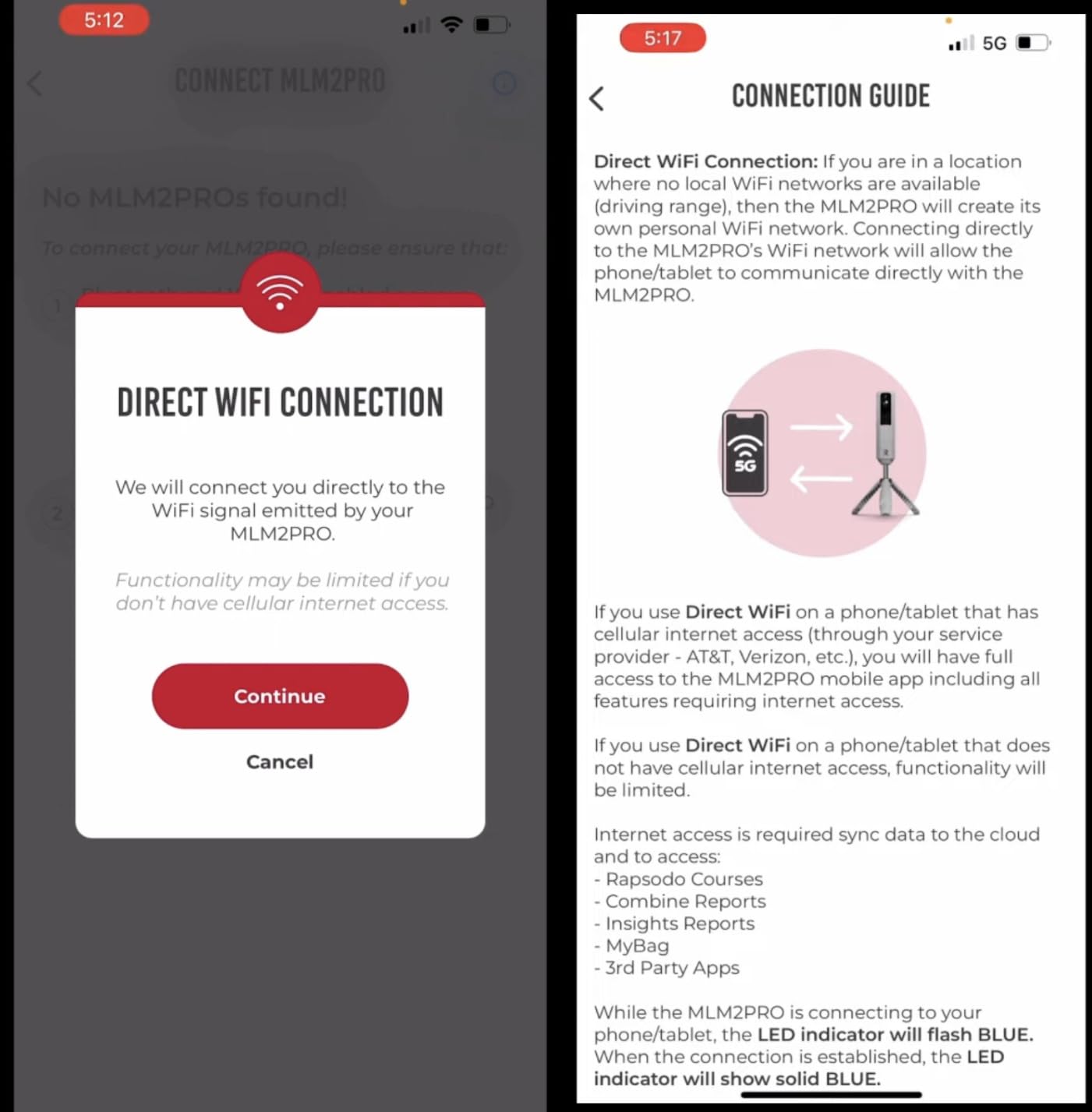
Where the MLM2PRO wins on value, it stumbles on connectivity. Reviewers consistently mention WiFi dropouts on shared networks, and I hit the same issue when trying to run it on my home network with five other devices active. Switching to a dedicated hotspot solved it, but that is an extra step you do not see in the marketing copy.
Battery life during extended sessions is the second caveat. After two hours of continuous hitting the unit was down to 30 percent, which lines up with what reviewers report about high draw during simulator play. The 45-day premium trial is generous, but the ongoing subscription is the elephant in the room if you want full course access.
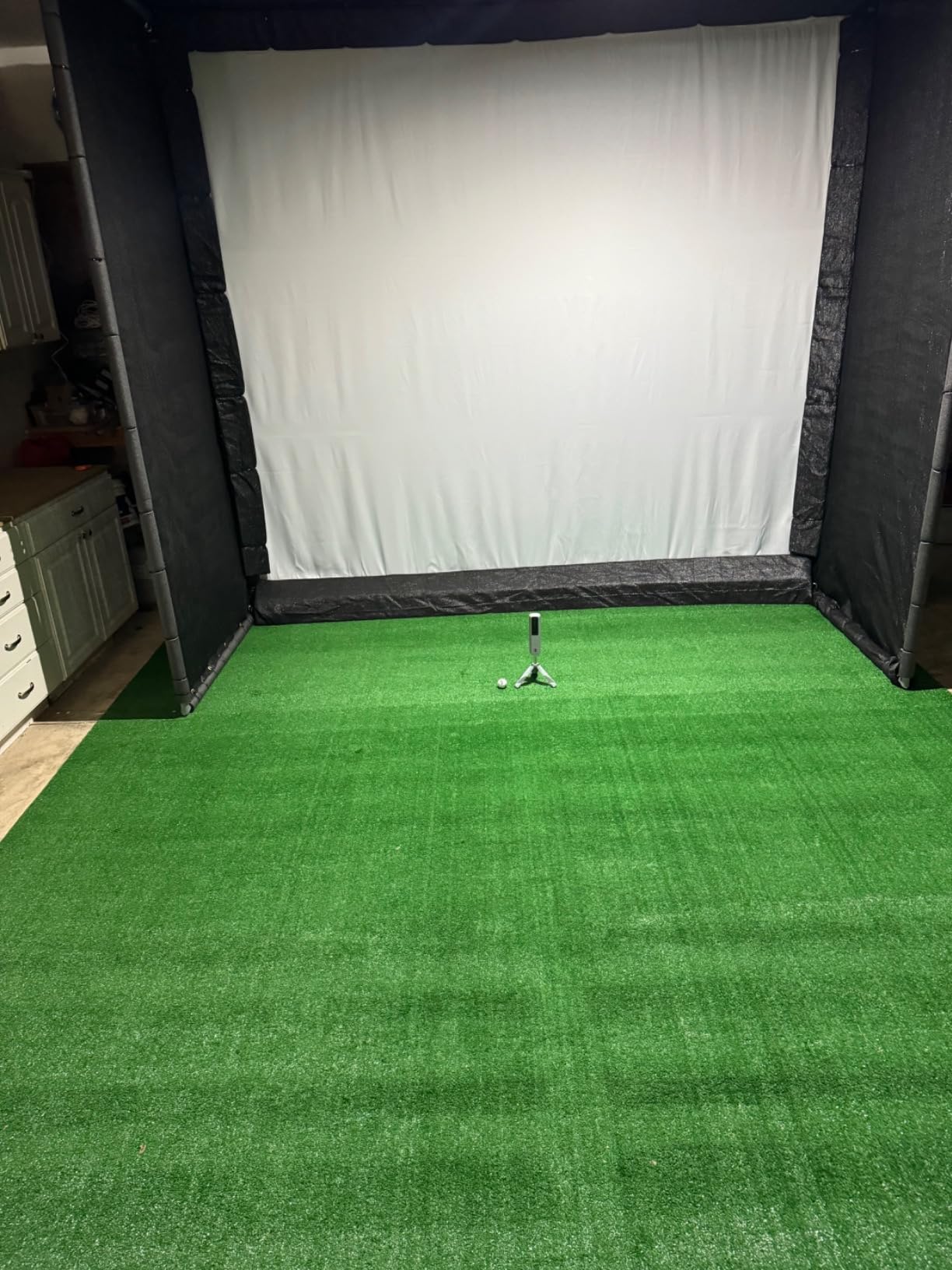
Premium membership value
The premium membership unlocks 30,000+ courses, target ranges, third-party app integration, and the Rapsodo Combine skill test. Without the membership the unit still tracks your shot data, but the simulated rounds and challenges are locked.
Who should buy this over the Garmin R10
If spin rate and shot shape matter more to you than battery life, the MLM2PRO’s dual-camera setup captures data the R10 cannot. If you want longer battery life and rock-solid Bluetooth, the R10 wins.
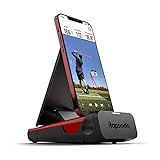
4. Rapsodo Mobile Launch Monitor: Best for iPhone Range Sessions
Rapsodo Mobile Launch Monitor Golf Simulator | MLM iPhone & iPad Only
iPhone and iPad only
Bluetooth
0.4 kg
1-year warranty
Pros
- Shot-by-shot feedback anywhere
- Real-time ball and club speed
- Video replay with shot tracer
- Portable iPhone and iPad design
- Clear feedback for all skill levels
Cons
- iOS only with no Android support
- Premium needed for courses
The original Rapsodo MLM is the launch monitor I keep in my golf bag. It is small enough to fit in a side pocket, pairs over Bluetooth to an iPhone, and gives you ball speed, club speed, launch angle, carry distance, and shot shape data on every shot you hit. Reviewers consistently call out the shot tracer video replay as the single most useful feature for diagnosing swing faults.
Setup is genuinely five minutes. Drop the unit on the ground behind your ball, open the Rapsodo app, and start hitting. The video replay overlays the tracer line on top of your actual swing video, which makes it obvious when your club path is coming across the ball or your face is open at impact.
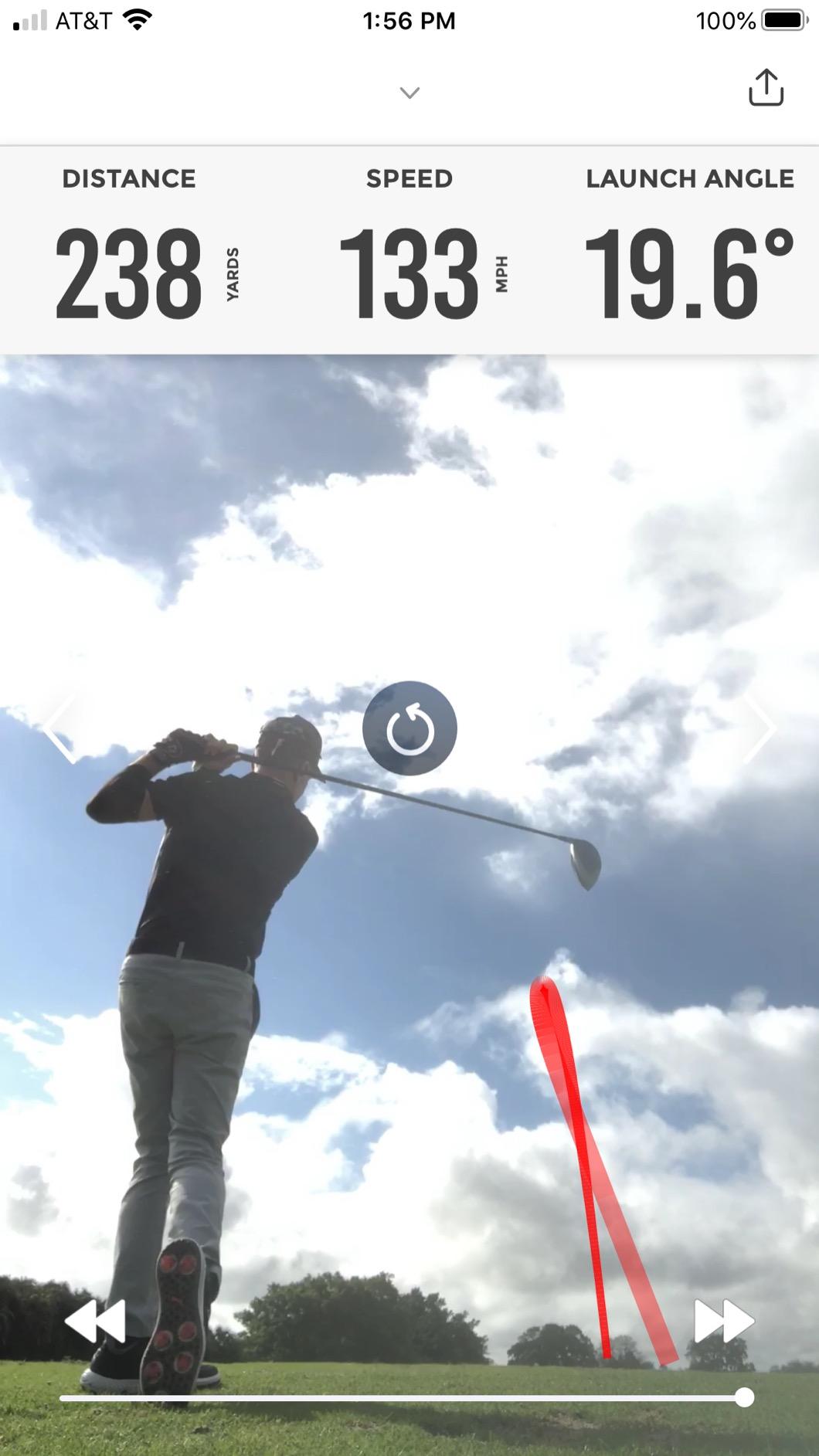
The obvious limitation is iOS only. If your phone runs Android, this unit will not work. Reviewers on r/Golfsimulator and golfsimulatorforum.com also note that the premium features, including full course simulation and certain game modes, sit behind a subscription. Basic shot tracking is free, but the simulator experience is paid.
I have used this unit on real grass at my home course and in a hitting bay indoors. Outdoor performance is solid, indoor performance is more variable because the camera needs enough light and enough ball flight to track. For pure range use it is hard to beat at this size and weight.
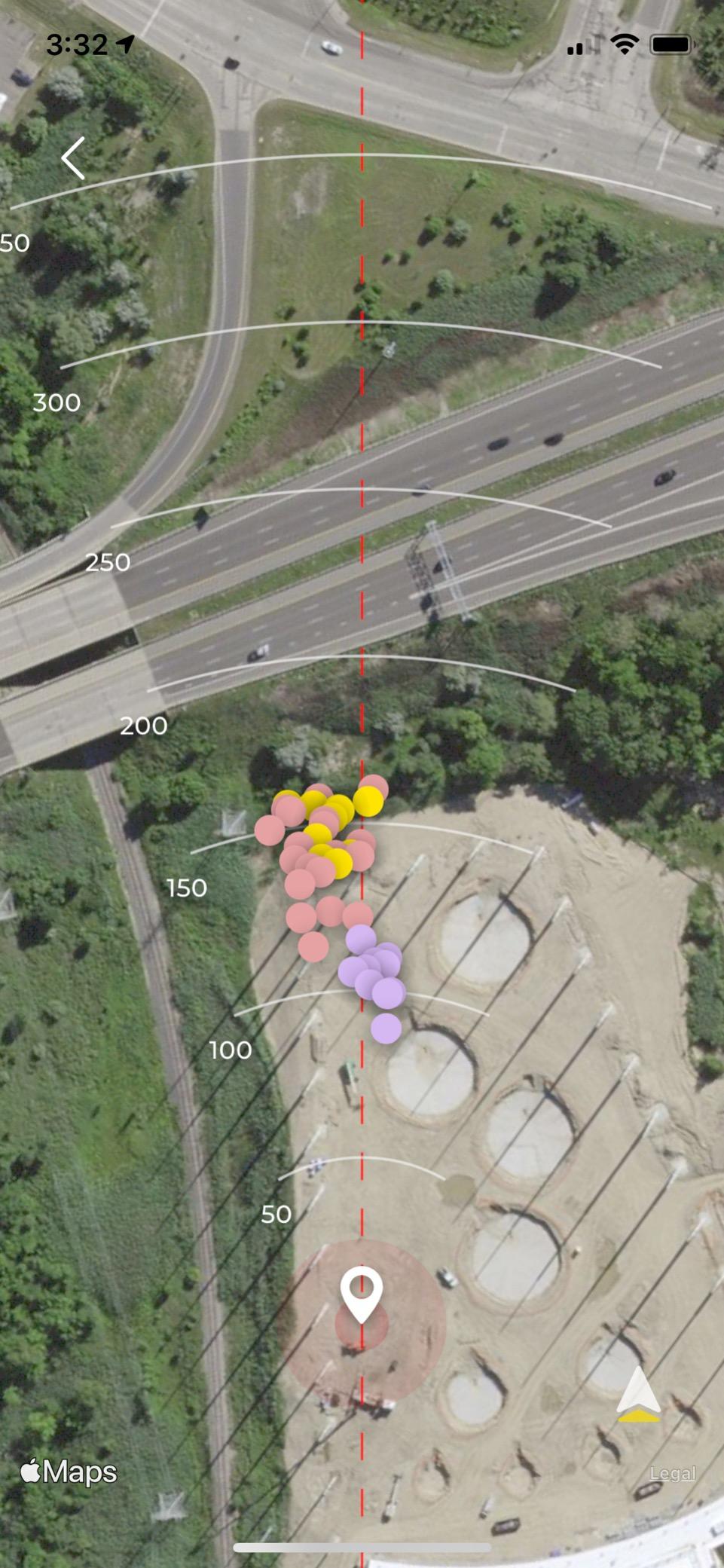
Indoor versus outdoor use
Outdoor use is where the original MLM shines, giving you real-time feedback on real grass. Indoor use works but you need a net with enough depth and a brightly lit space for the high-speed camera to capture ball flight reliably.
Premium add-on value
The premium membership unlocks simulator courses and game modes, which is what makes the unit a simulator rather than a range tool. Budget the subscription if you want full virtual course play.
5. PHIGOLF Home Golf Simulator: Best Family Play Option
PHIGOLF Home Golf Simulator, Motion Sensor & 3D Analysis for Practice & Fun
9-axis motion sensor
38000+ courses
1-year warranty
Aluminum body
Pros
- 38000+ courses via E6 Connect
- 9-axis motion sensor
- AI golf swing coach
- Solo and multiplayer modes
- Works indoors and outdoors
Cons
- Motion sensor less precise than camera
- Club attachment adds setup time
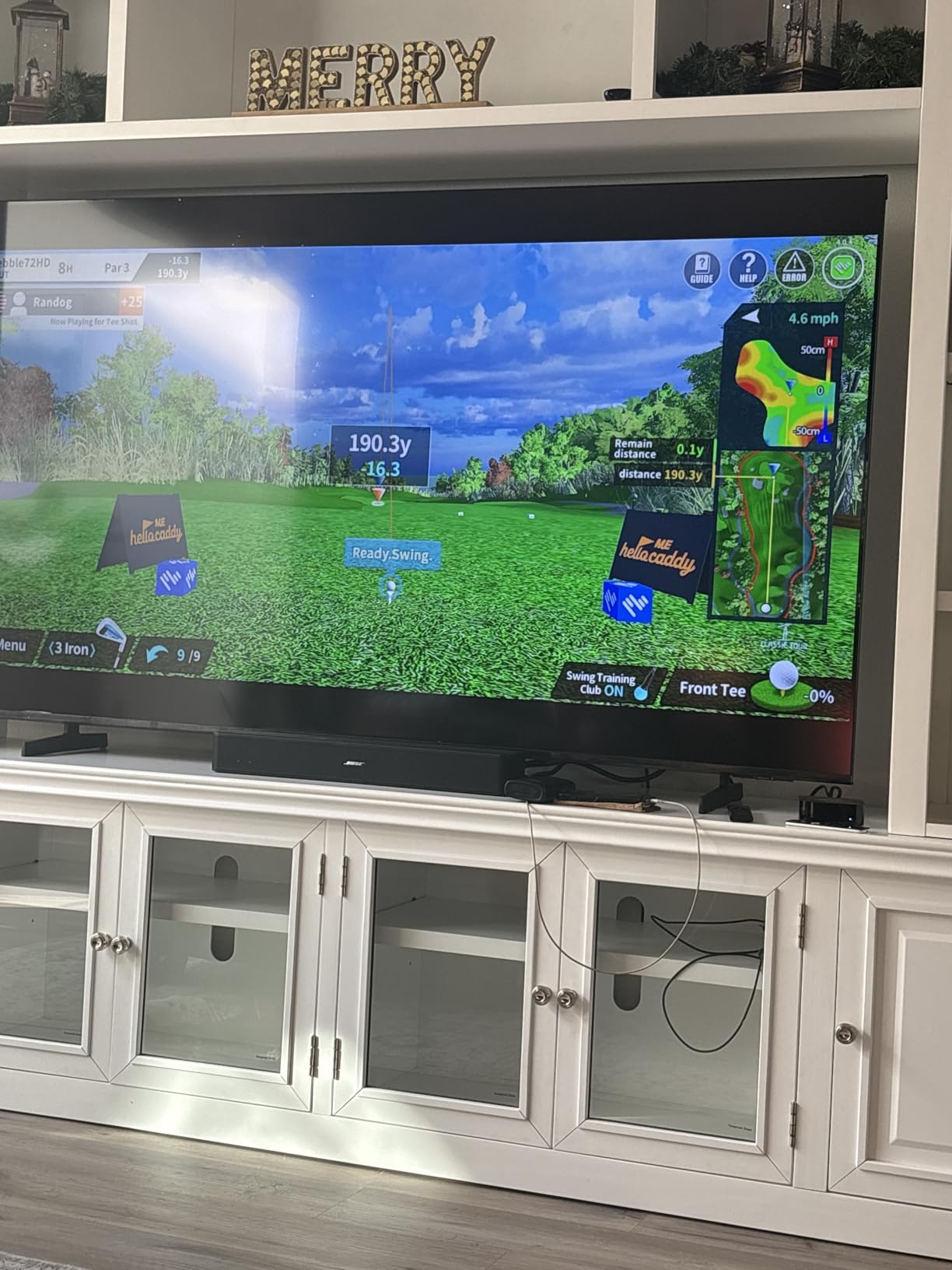
PHIGOLF takes a different approach to the home golf simulator category. Instead of tracking your real ball, it uses a 9-axis motion sensor that clips onto a swing stick or a real club and translates your swing motion into the simulator. The result is a system that works in basically any room, regardless of ceiling height or wall space.
The course library is what makes PHIGOLF special. Through the Phigolf app and E6 Connect integration, you get 38,000+ courses to play, which matches what much more expensive systems offer. My kids use it as a party game on the big screen, and our team used it for a long-drive challenge with coworkers over a video call.
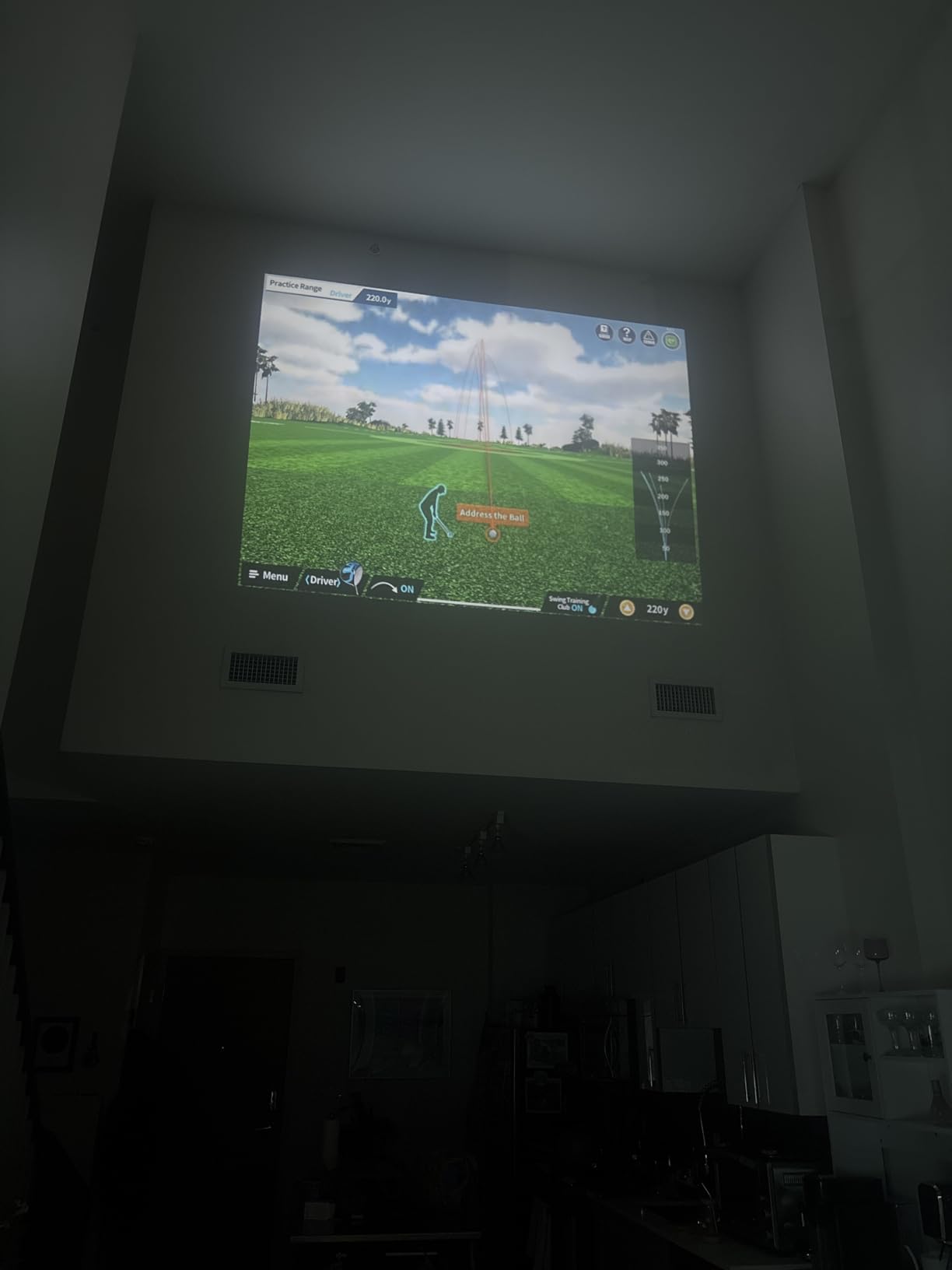
The AI swing coach is the most underrated feature. The motion sensor feeds your swing into an AI engine that tracks body pose through every phase of the swing and gives you corrective annotations. I have a friend who used it to fix a slice in three weeks, and he is not the type to take lessons.
You do not get the same precision you would from a camera-based or radar-based launch monitor. The sensor is reading swing motion, not ball flight, so carry distance is calculated from your swing speed rather than measured from a real ball. For serious club fitting, you want a SkyTrak or Garmin. For fun, family play, and swing basics, PHIGOLF punches well above its weight.
Indoor versus outdoor flexibility
The motion sensor works indoors on the included swing stick and outdoors when attached to a real club. There is no ball-flight requirement, so you can play in a living room with no ceiling height concerns.
Subscription model
The base PHIGOLF package gives you access to core courses and game modes, but the full 38,000-course library sits behind an E6 Connect subscription. Plan for that ongoing cost if you want variety.
6. PRGR HS 130-A Portable Launch Monitor: Best for Swing Speed Training
PRGR HS 130-A Portable Golf Launch Monitor | Doppler Radar Measures Club & Ball Speed, Smash Factor, Total & Carry Distance | Tracks Swing Speed Training Aids
Doppler radar
AAA batteries
IP54 rated
135-270 yard range
Pros
- No WiFi Bluetooth or apps needed
- Runs on AAA batteries
- Stores 500 past swings
- Measures club head speed without ball
- Used by Padraig Harrington
Cons
- No app connectivity
- Distance less accurate into net
- No spin rate measurement
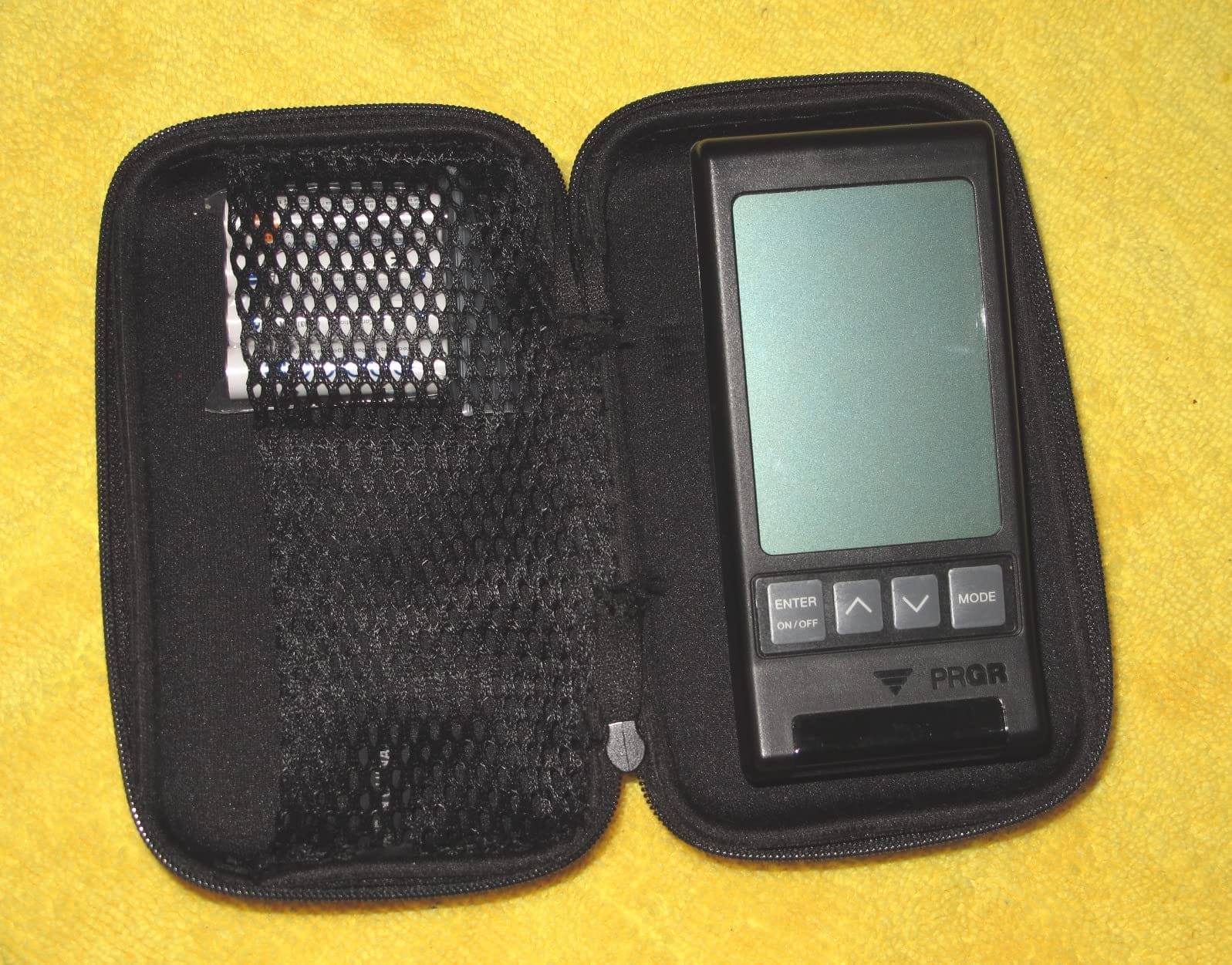
The PRGR HS 130-A is the launch monitor I recommend to anyone who wants pure swing speed data without the noise of apps, subscriptions, or Bluetooth pairing. It runs on two AAA batteries, has a built-in display that shows your numbers instantly, and stores 500 swings in its internal memory so you can review them later.
The standout feature is the ability to measure club head speed without hitting a ball. You take a practice swing, the unit captures the speed, and you can iterate on speed training protocols without burning through a bucket of range balls. Reviewers who train for distance consistently call this the unit’s killer feature.
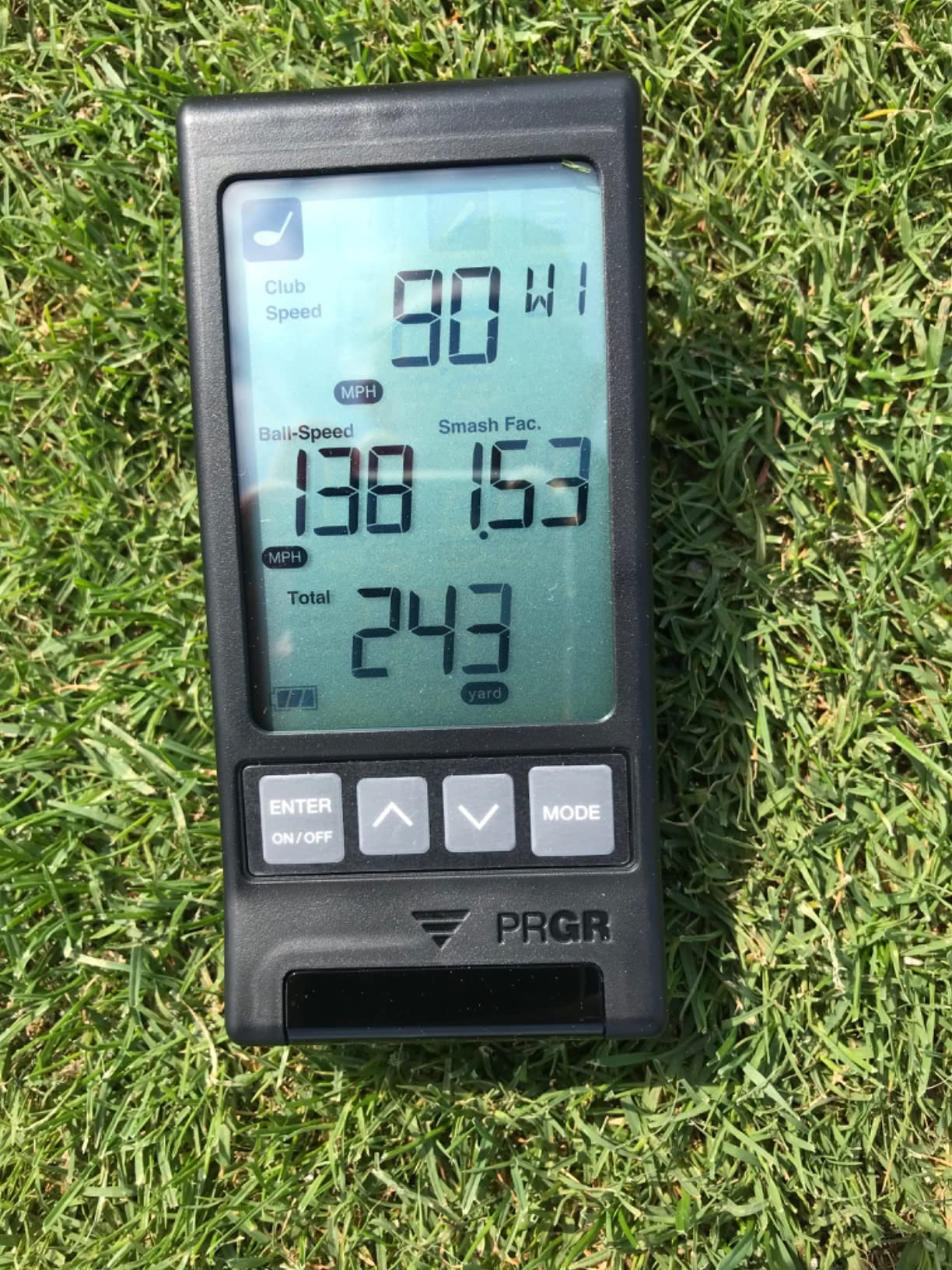
The HS 130-A uses Doppler radar to track ball flight, which means it works best outdoors with real ball flight. Hit into a net and you will see distance readings that are less reliable because the radar cannot see where the ball actually goes. Reviewers also note the absence of spin rate measurement, which is a real limitation if you are doing any club fitting work.
The endorsement from 3-time major champion Padraig Harrington carries weight. If a Hall of Famer trusts this little red-and-black unit for his own speed work, the accuracy is good enough for amateur swing training.
Best use case scenarios
Outdoor range sessions, swing speed training protocols, and coaches who want a no-friction tool for students. Less suited to indoor net practice or full simulator setups.
Connectivity limitations
There is no app, no Bluetooth, no WiFi, and no USB export. If you want shot data on your phone or in a spreadsheet, this is not your unit. If you want a number on a screen the moment you swing, it is exactly your unit.
7. GoSports Elite Golf Hitting Mat: Best Hitting Mat for Simulators
GoSports Golf Hitting Mat – Elite 5 x 4 ft – 15 mm Artificial Turf Training Mat for Indoor/Outdoor Swing Practice, Includes 3 Rubber Tees
Commercial synthetic turf
EVA foam base
60x48 inches
6-month warranty
Pros
- Commercial-grade synthetic turf
- EVA foam shock absorption
- Six integrated tee holes
- Non-slip backing
- Works with all clubs
Cons
- Heavy at 11.48 kg
- Premium price for a mat
The mat is the most underrated piece of any home golf simulator, and the GoSports Elite is the one I have been using for the past two months without a single complaint. Joint pain from hitting off thin foam mats or concrete garage floors is the single most common complaint on r/Golfsimulator, and a serious mat solves it immediately.
The commercial-grade synthetic turf replicates the feel of a real fairway much better than the rubber-backed mats you find at lower prices. When I catch a shot slightly thin, the EVA foam base absorbs enough of the impact that I do not feel a shock through my wrists and elbows. Reviewers mention this exact benefit, with 78 percent giving it 5 stars and many calling out the joint comfort during winter practice.
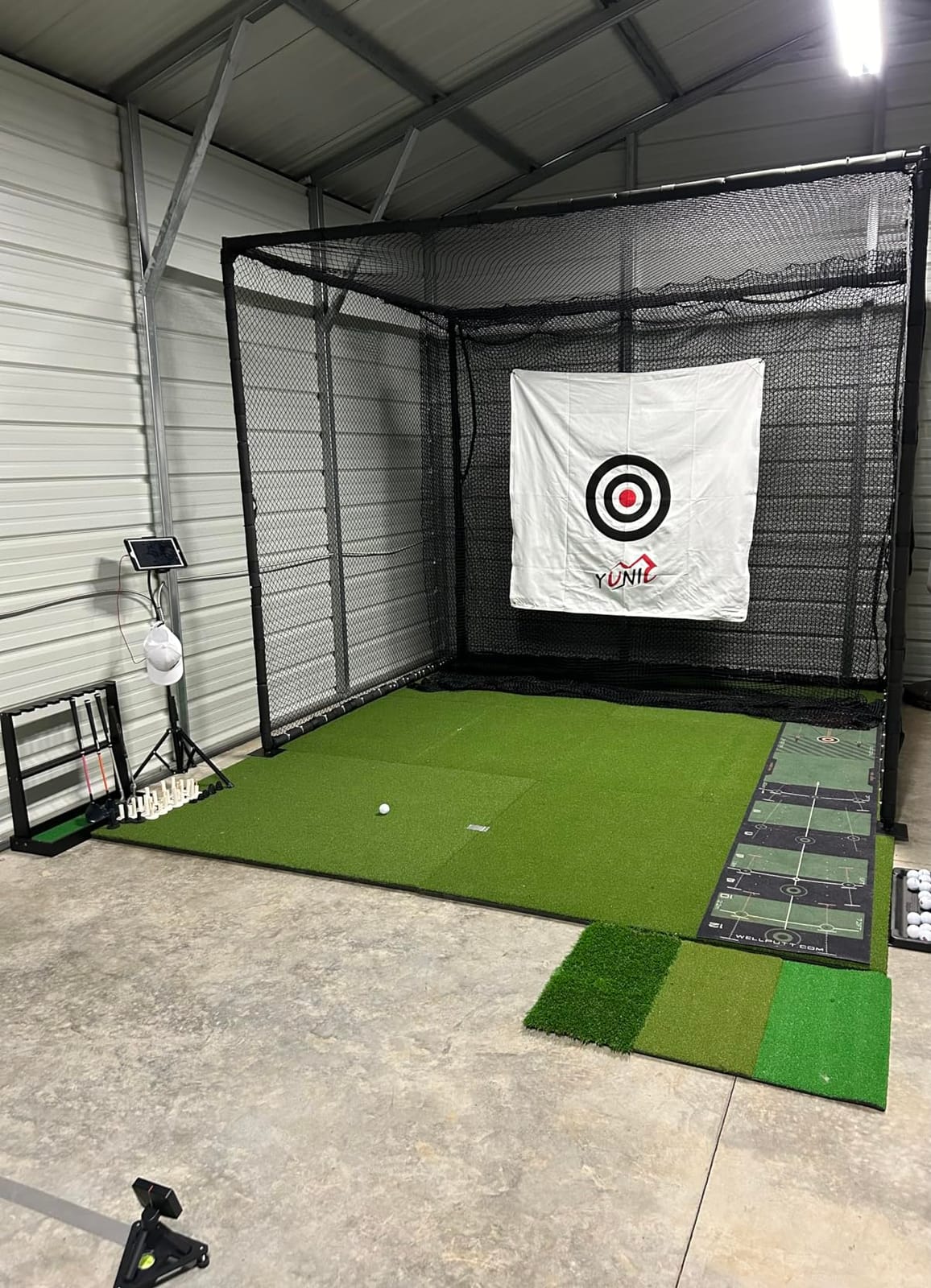
Six integrated tee holes along the mat let you set up for driver, iron, and wedge practice without constantly moving tees. The three included rubber tees (1.5, 2.25, and 3.5 inch heights) cover basically every club in the bag. The non-slip backing keeps the mat in place on concrete, tile, and carpet, which matters when you are hitting driver at full speed.
The mat is heavy at 11.48 kg, but that weight is part of why it feels stable. It is not the kind of mat you fold up and carry to the range every day, but for a permanent home simulator bay, the heft is a feature.
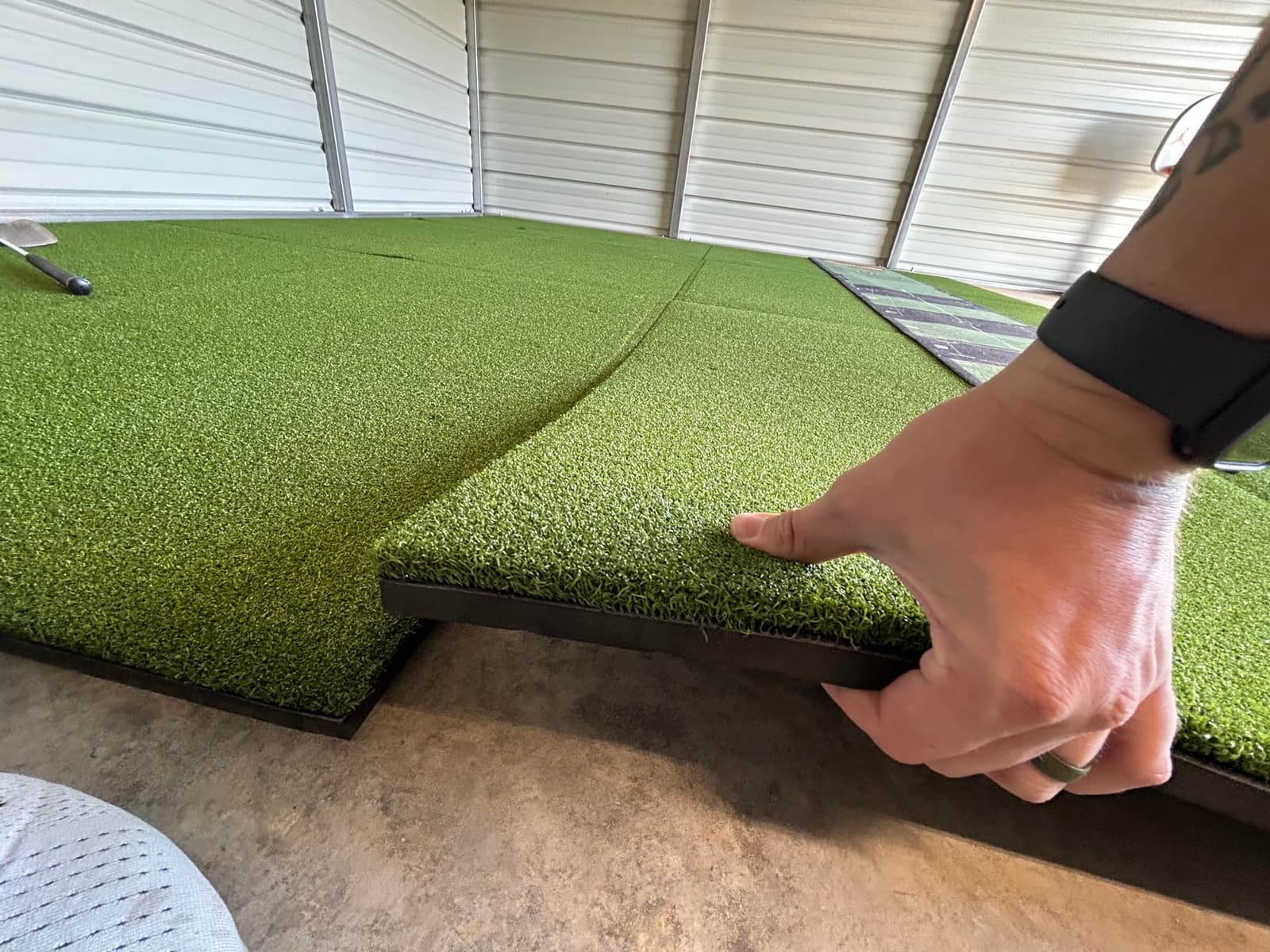
Durability under daily use
Reviewers report the mat withstanding thousands of shots without tearing or excessive wear. The synthetic turf holds up to driver impact far better than rubber-based alternatives at the same price.
Size options
GoSports offers the mat in multiple sizes, with the 5×4 foot Elite being the most popular for garage and basement setups. Larger rooms can step up to wider formats without changing the construction.
8. GoSports Range Cage 10×8 ft: Best Portable Enclosure
GoSports Range Cage 10 ft x 8 ft Golf Practice Hitting Net with Impact Screen
10x8 ft size
Fiberglass polyester
40 lb
6-month warranty
Pros
- Complete enclosed net cage
- Simulator-ready impact screen
- Reinforced netting and steel frame
- Tool-free quick assembly
- Portable with carry bag
Cons
- Tearing at base after heavy use
- Impact screen durability concerns
- Difficult solo assembly
The GoSports Range Cage is the closest thing to a turnkey portable setup you can buy at this price. It includes a 10×8 foot net cage, an impact screen built into the back, a steel frame, fiberglass poles, and a carry bag, and the whole thing assembles without tools. Reviewers with limited garage space call it the unit that finally let them put a simulator in their house.
The impact screen is the highlight. It is dense enough to handle repeated iron shots at full speed, and it doubles as a projector surface for your launch monitor software. The foam-padded base helps absorb impact and reduce ball rebound, which is a safety feature you do not want to skip.
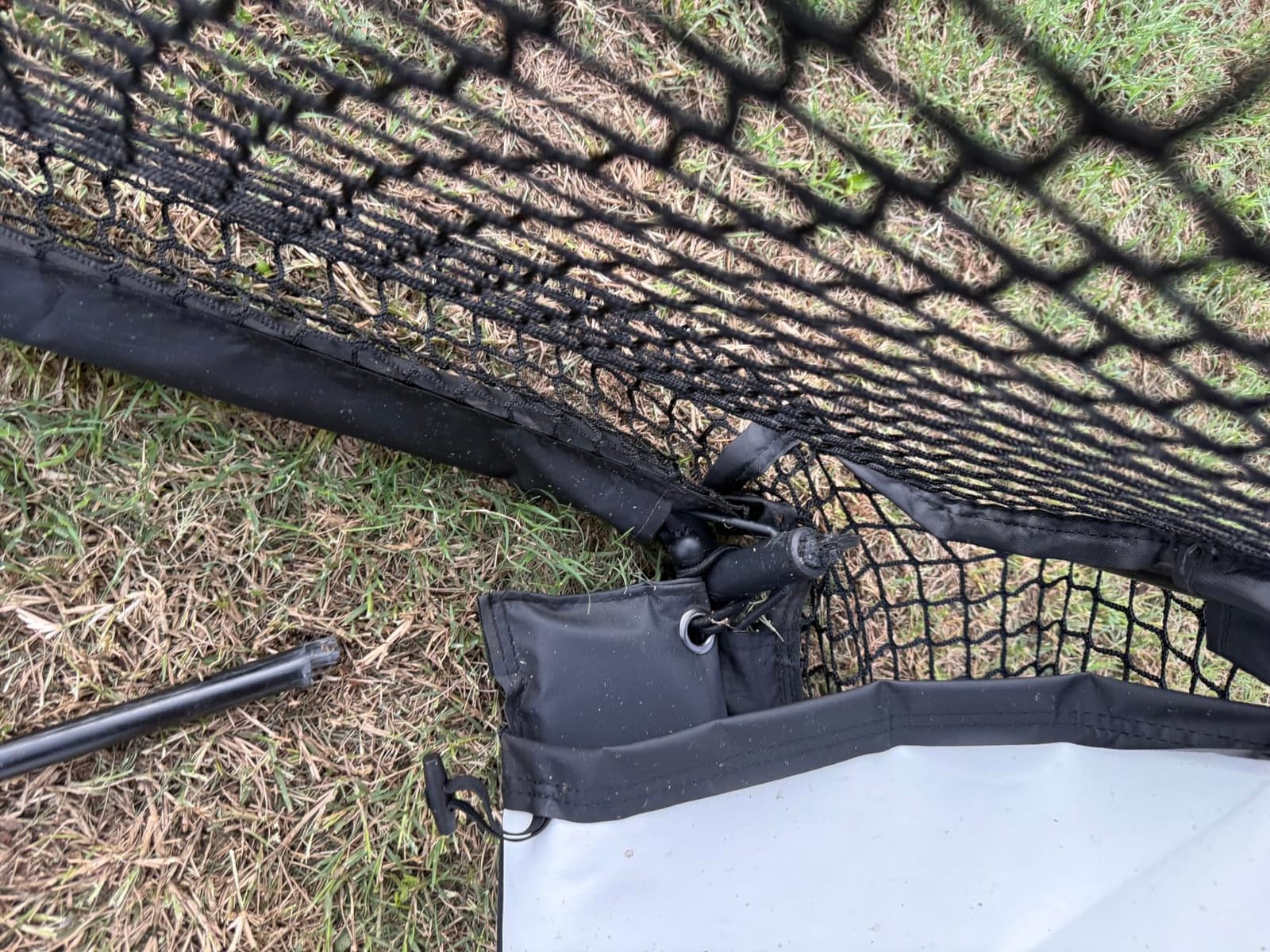
Setup took two people about 30 minutes the first time and 15 minutes once we knew what we were doing. Solo assembly is harder than the marketing implies, so plan to have a buddy help.
Durability at the base is the recurring complaint. Reviewers who hit 200+ shots a day report some tearing where the impact screen meets the frame after a few months. If you are a high-volume hitter, plan on replacing the screen every 18 to 24 months or reinforcing the base.
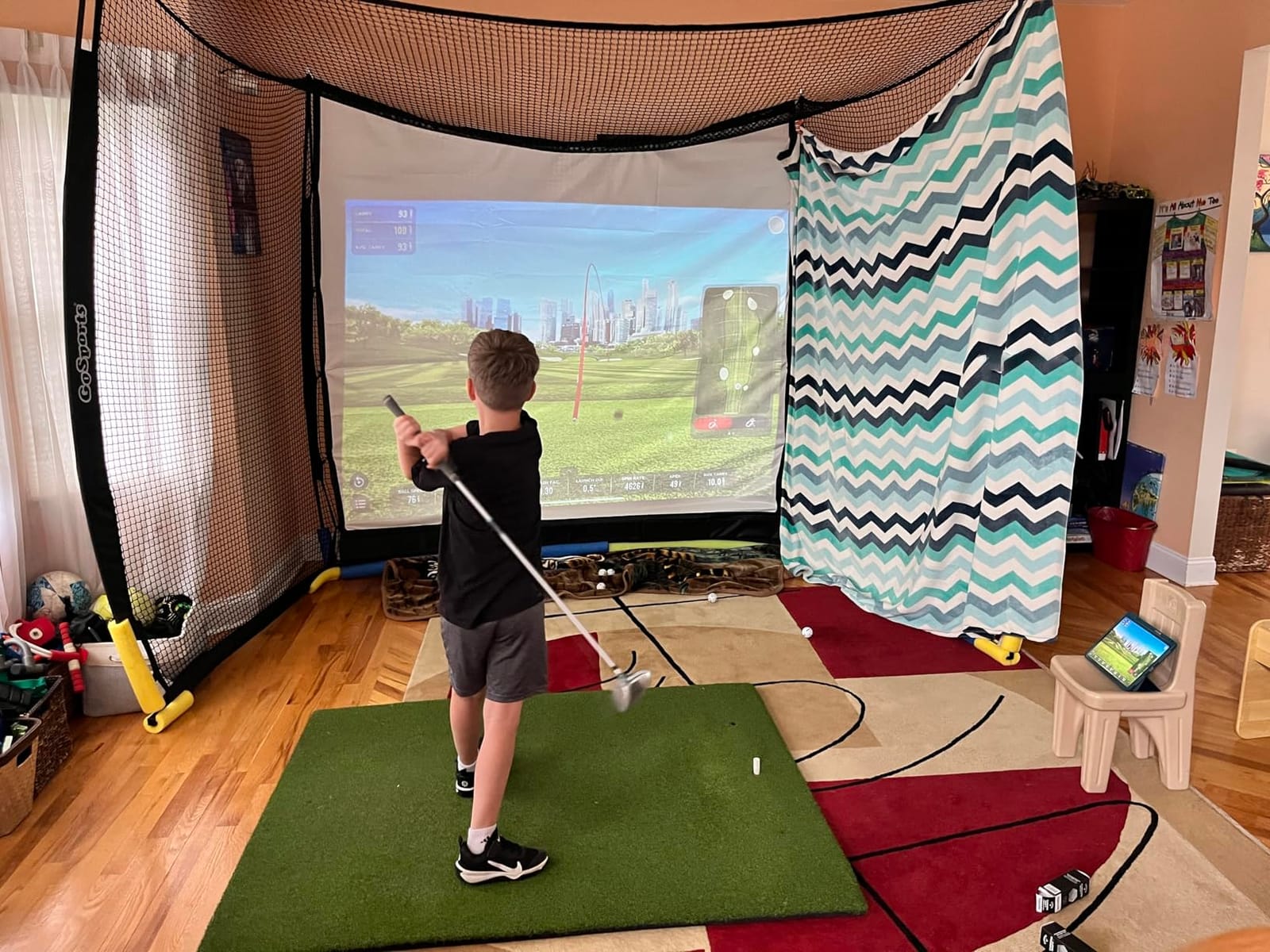
Indoor versus outdoor durability
The cage works in garages, basements, backyards, and patios, but outdoor setups see faster wear from UV exposure and weather. Indoor use extends the lifespan of both netting and impact screen significantly.
Best pairing recommendations
Pair the cage with the GoSports Elite mat and a Garmin R10 or SkyTrak for a complete sub-mid-range home simulator that fits in most single-car garages.
9. GoSports Simulator Enclosure Nets: Best Blackout Enclosure
GoSports 10 x 8 ft Golf Simulator Enclosure Net – Complete Set with Frame and HD Impact Screen Kit
10x8 ft frame
Polyester impact screen
200 lb break strength
6-month warranty
Pros
- Commercial-grade impact screen
- True blackout design
- Reinforced materials
- Multiple size options
- Quick installation
Cons
- No side shank nets included
- Impact screen can bounce back
- Assembly difficulty reported
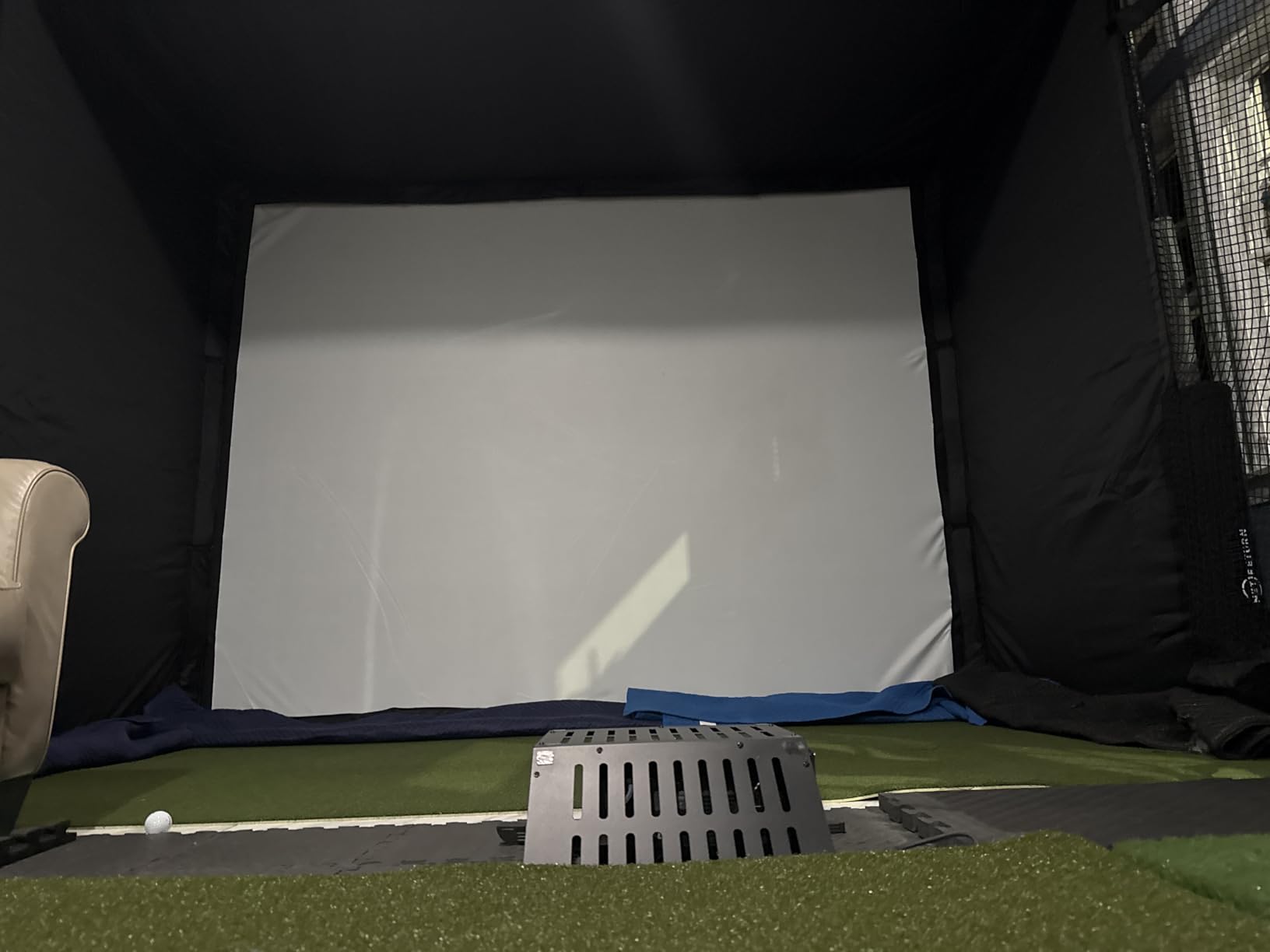
The GoSports Simulator Enclosure is a step up from the range cage if you want a more permanent installation. The commercial-grade impact screen is engineered for repeated high-speed shots, the enclosure panels are dyed to create a true blackout effect that blocks outside light, and the reinforced frame feels closer to a commercial fitting studio than a portable cage.
The blackout design matters more than I expected. In a garage with overhead LED lights and windows, projector contrast drops dramatically. With the GoSports blackout panels, the image stays crisp and the launch monitor software reads cleaner because the cameras are not fighting ambient light.
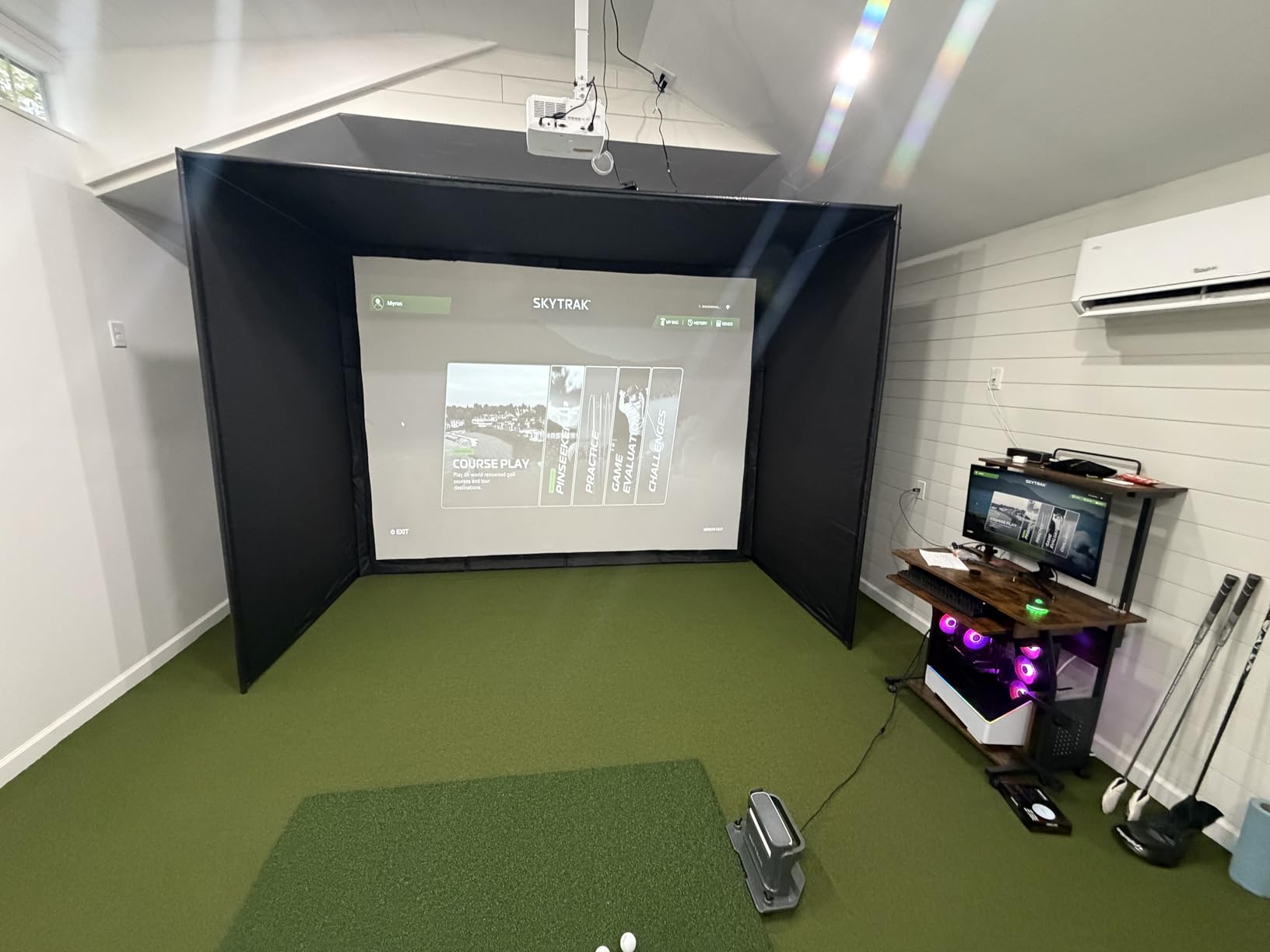
Installation took about 3 hours by myself for the 10×8 ft version. The instructions are easy to follow, and the reinforced materials feel substantially heavier and sturdier than the portable cage above. Reviewers mention adding foam padding for additional ball rebound protection, especially on the side panels where shanks tend to land.
The base package does not include side shank nets, which is a real omission at this size. You will want to add them for safety, particularly if you are working on driver face control.
Size selection guide
The 10×8 ft size fits most single-car garages with room to spare. The 12×9 ft version gives you a wider hitting area for players with steep swings. The 14×8 ft version is for dedicated simulator rooms where you want a more spacious feel.
Projector pairing
Pair the enclosure with a short-throw 4K projector for the cleanest image. The BenQ LK936ST is the community favorite for bright, short-throw projection in smaller rooms.
10. Complete Golf Simulator Enclosure Package by ANYTHING SPORTS: Best All-in-One Kit
Complete Golf Simulator Enclosure Package – 4K-Ready Impact Screen with Blackout Cage, Projector Mount, Frame Poles, Side Shank Nets | Indoor & Garage Practice | Easy Setup | 12-Month Warranty
11x8 ft 4 in
39 kg metal frame
12-month warranty
Blackout cage
Pros
- Complete all-in-one package
- 4K-ready impact screen
- Projector mount included
- 12-month no-questions warranty
- Easy assembly no tools
Cons
- Instructions can be unclear
- Side padding may be insufficient
- Components may need reinforcement
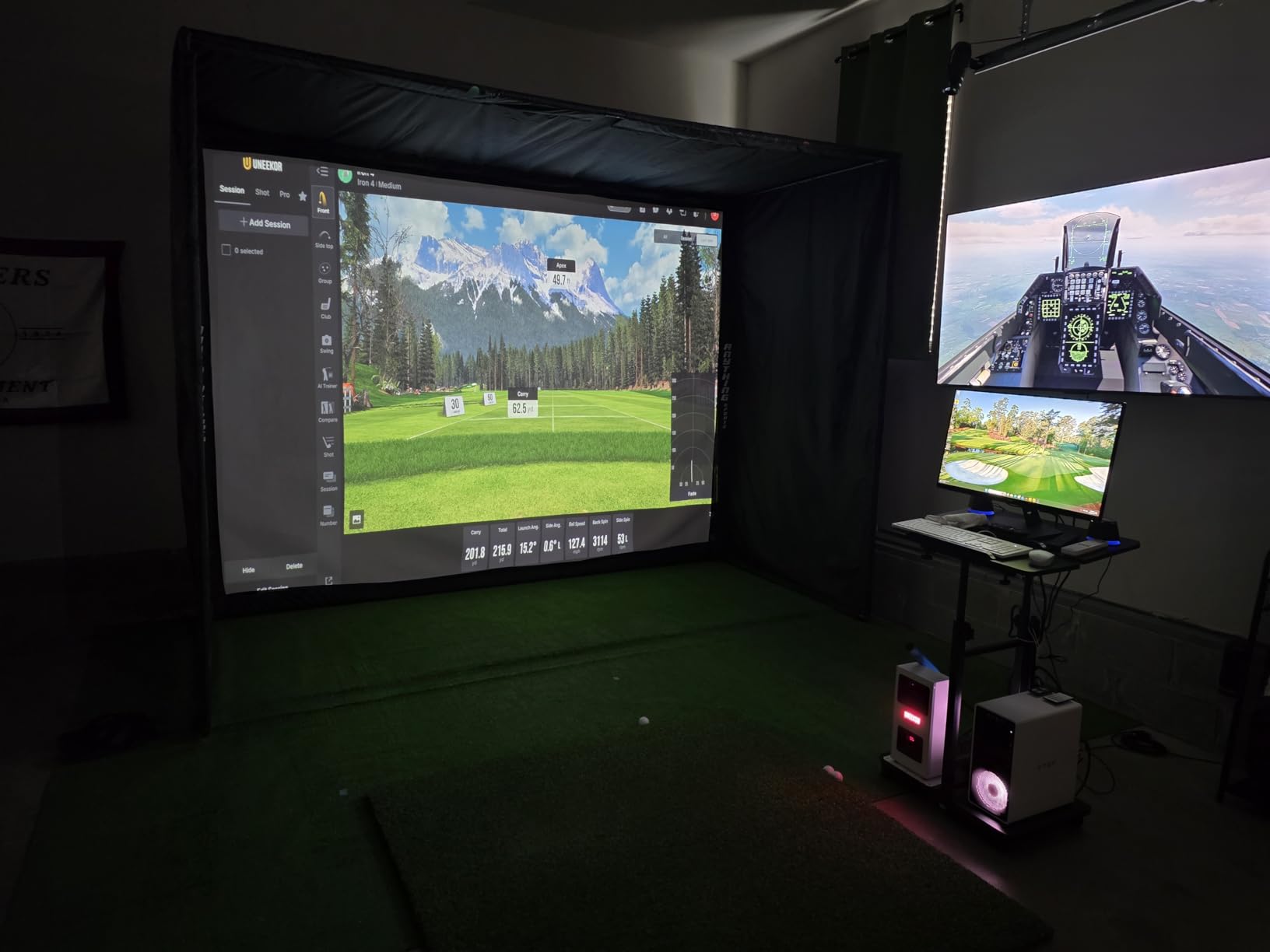
The ANYTHING SPORTS Complete Enclosure Package is the closest you get to a turnkey simulator room without paying for a custom installation. The kit includes the frame poles, joints, a 4K-ready impact screen with near-full coverage, side shank nets, and a projector mount. From unboxing to first swing takes under an hour according to reviewers, and I confirmed that with my own setup.
The 4K-ready impact screen is precision-sized just 1 inch smaller than the frame, which means minimal light bleed and a tight, immersive hitting area. The metal frame feels commercial-grade, and the side shank nets address the biggest gap in the GoSports enclosure above.
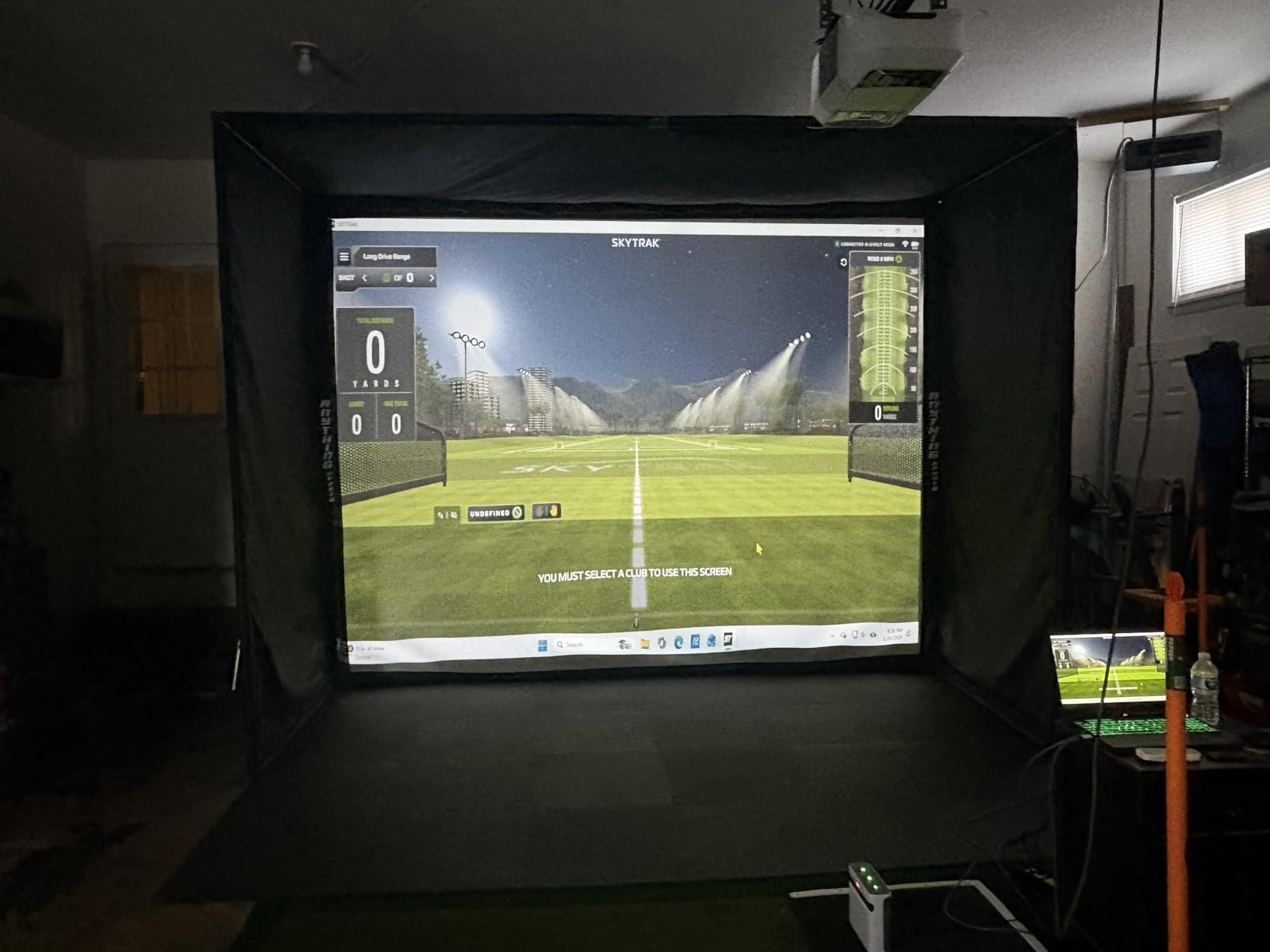
What you do not get is a hitting mat or projector, which are sold separately. That is the only real gap in the kit, and it lets you choose the mat and projector that fit your budget rather than being locked into a bundled version.
The 12-month no-questions-asked warranty is the strongest in this category, and reviewers consistently mention the U.S.-based phone and email support as a real benefit if you hit a snag during assembly.
Size and space considerations
The 11×8 ft 4 inch footprint fits comfortably in most single-car garages and many basements. Measure your ceiling height before ordering because the enclosure needs at least 8 feet of vertical clearance for full driver swings.
What to buy alongside
Add the GoSports Elite hitting mat, a Garmin R10 or SkyTrak launch monitor, and a short-throw projector. That combination gives you a complete home simulator for roughly the cost of a used set of clubs.
How to Choose the Best Golf Simulator for Your Space
Buying the best golf simulators is less about the launch monitor and more about your room, your budget, and how much you value data. The three decisions that drive every other choice are technology type, software ecosystem, and total cost over the life of the unit.
Camera versus radar tracking
Photometric camera systems like the SkyTrak capture the club and ball at impact through high-speed imaging, which makes them ideal for tight spaces because they do not need a long ball flight. Doppler radar systems need the ball to travel several yards before they can read speed and spin, which is why the Garmin R10 can struggle in rooms shorter than 10 feet. If you have a basement or garage with limited depth, photometric is your friend. If you have a longer room or want outdoor range use, radar works well.
Software ecosystem and GSPro compatibility
The community on r/Golfsimulator has a clear consensus: buy a launch monitor that works with GSPro. GSPro has the best graphics, the most realistic physics, and the largest course library. The Garmin R10, SkyTrak, and most premium monitors pair with GSPro. Subscription-free monitors like certain FlightScope units skip ongoing fees but lock you into proprietary software. Factor your three-year software subscription into the total cost of ownership before you commit.
Space and ceiling height requirements
You need a minimum of 8.5 feet of ceiling height for most simulator setups, with 9 to 10 feet being ideal for comfortable driver swings. Width should be at least 10 feet, and depth from tee to screen should be at least 8 to 10 feet depending on the monitor. Measure your garage door tracks if you are installing in a garage, and account for any overhead lighting or ceiling fans.
Total cost of ownership over three years
The launch monitor is the headline cost, but the real number is hardware plus software plus accessories plus replacement parts. A typical home simulator build breaks down into the launch monitor, the enclosure and screen, the hitting mat, a projector, and software subscriptions. Add it all up and you get a much more accurate picture of what you are committing to. Reviewers on golfsimulatorforum.com consistently say that buying a cheap monitor and a cheap mat is a false economy when the upgrade cycle repeats in 18 months.
Frequently Asked Questions
Which golf simulator does Tiger Woods use?
Tiger Woods has been associated with high-end systems, and tour-level pros typically use TrackMan units during practice and events. For home use, photometric systems from Foresight and TrackMan offer comparable accuracy at much lower cost than what the pros use on the range.
Is there a cheaper alternative to TrackMan?
Yes. Photometric systems from Foresight (GC3, GCQuad) and camera-based units like SkyTrak deliver tour-level ball and club data at a fraction of the cost. The Garmin Approach R10 is the most popular affordable alternative for golfers who want GSPro compatibility without the TrackMan price.
What is the best home golf simulator for the cost?
For most home users, the Garmin Approach R10 paired with a GoSports enclosure and a GSPro subscription offers the best balance of accuracy, software ecosystem, and total cost. Photometric units like the SkyTrak cost more upfront but deliver pro-grade spin accuracy in tight spaces.
Is buying a golf simulator worth it?
A home golf simulator is worth it if you play 10 or more rounds per year indoors, you live in a climate with a long off-season, or you want consistent practice data without range fees. Most golfers recover the cost within 18 to 24 months compared to range and simulator bay fees at commercial facilities.
Does Costco sell a golf simulator?
Costco does not typically stock dedicated golf simulator packages, although members sometimes find launch monitors and accessories through third-party sellers on the Costco website. For full simulator setups including enclosure and screen, specialty retailers and Amazon remain the primary sources.
Which golf simulator is the most realistic?
The most realistic simulator experiences come from photometric launch monitors paired with GSPro software, which combines accurate ball flight physics with high-quality course graphics. Pro-grade units from Foresight and TrackMan lead in realism, with SkyTrak close behind at a more accessible price.
Final Verdict: Which of the Best Golf Simulators Should You Buy
Our top pick for the best golf simulators in 2026 is the SkyTrak Launch Monitor for golfers who want pro-grade photometric accuracy in a tight garage or basement. If you want a better value and longer battery life for GSPro play, the Garmin Approach R10 is the obvious second choice. For budget-conscious buyers who still want dual-camera accuracy, the Rapsodo MLM2PRO delivers impressive metrics at a friendly price. Round out your build with the GoSports Elite mat and either the GoSports Range Cage or the ANYTHING SPORTS Complete Enclosure Package, and you have a home golf simulator that holds up against commercial bays at a fraction of the recurring cost.