
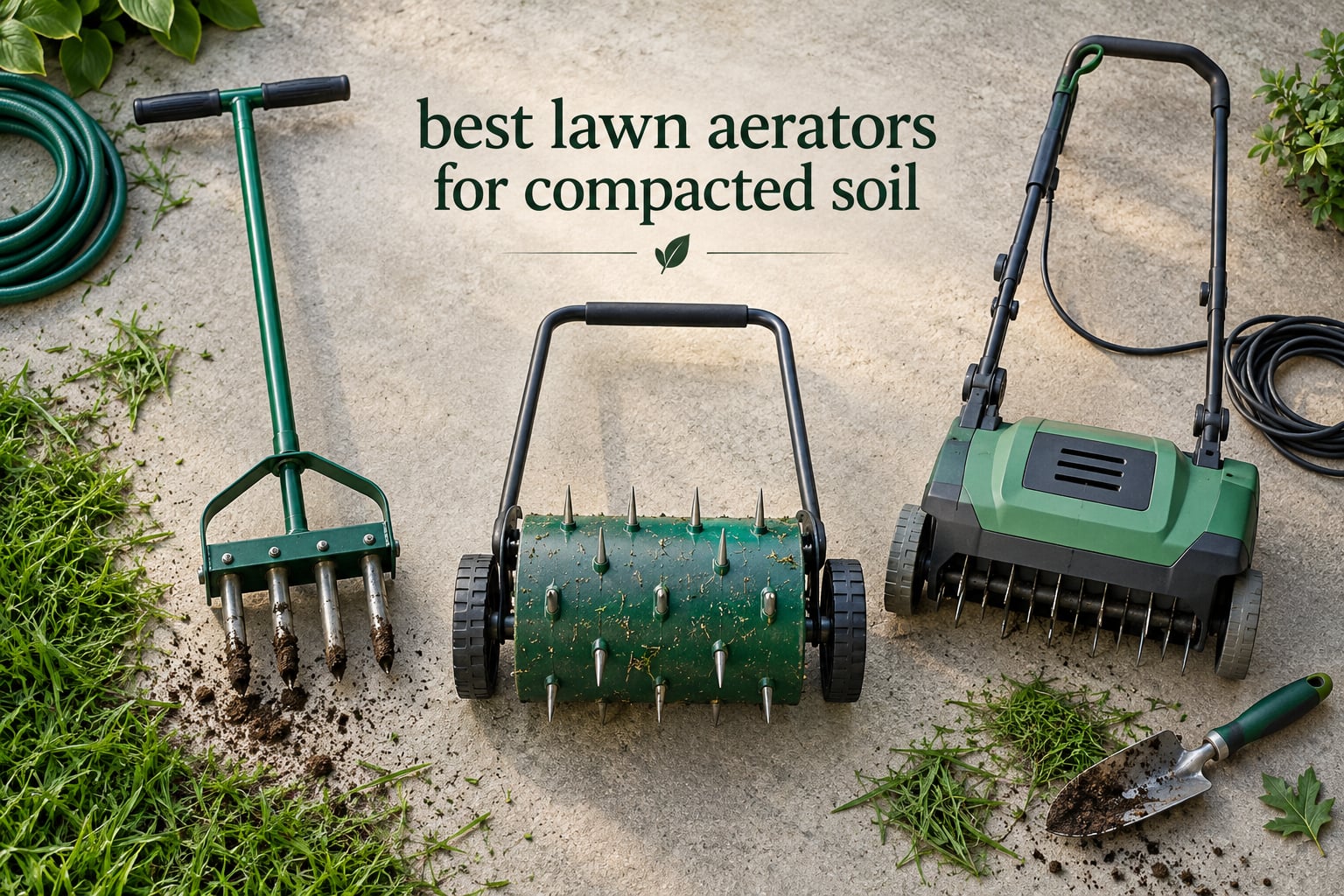
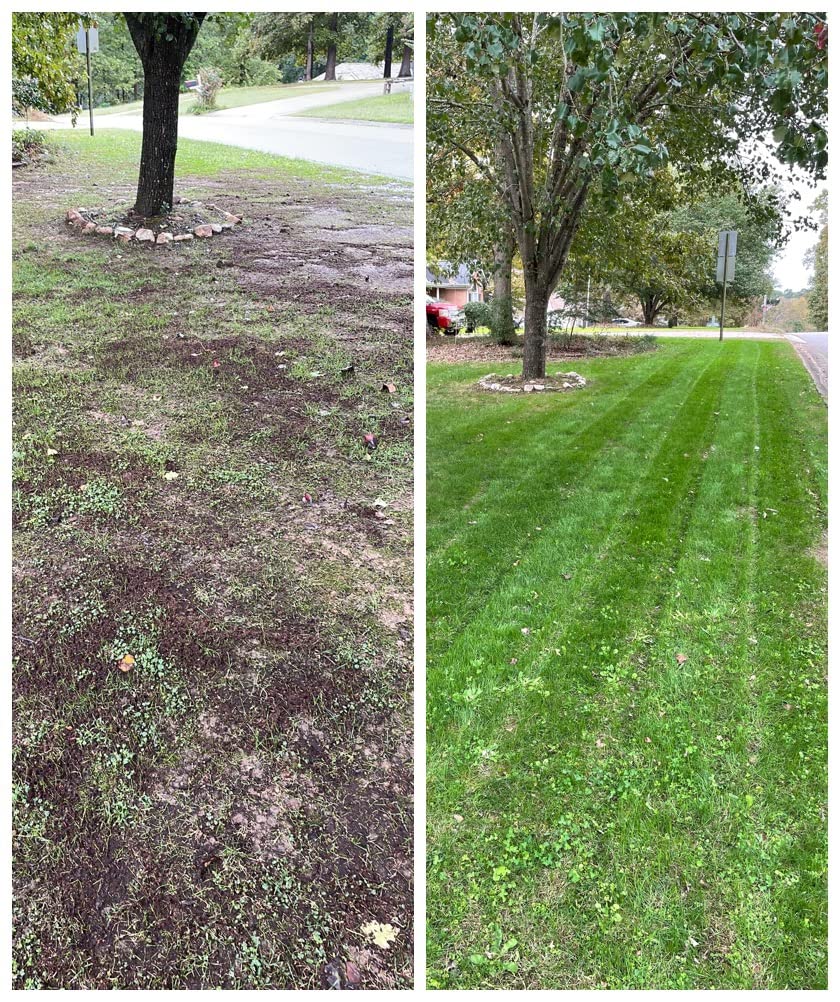
If your lawn has hard, bare patches that stay soggy days after rain, you have a compaction problem, and no amount of extra water or fertilizer will fix it. For compacted soil, a hollow-tine core aerator is the right tool: it pulls plugs of soil out of the ground and leaves channels that air, water, and roots can use. A spike aerator does the opposite, pushing compaction sideways instead of removing it. Below I break down 12 of the best lawn aerator options for compacted soil, grouped by the type of job each one handles well.
Compacted soil happens the same way everywhere. Someone parked on the lawn, kids play on one corner all summer, the ground was stripped for a new build, or clay was walked on while wet. Squeezing the air out leaves few pores between particles, so water sits at the surface, roots cannot expand, and fertilizer washes past the root zone instead of reaching it.
Aeration fixes the physical space that watering and feeding cannot. Hollow tines pull cores roughly 2 to 3 inches deep, and those holes act as channels that let oxygen in and hold moisture where grass roots can reach it. That is why core aerators are the only category I would recommend for genuinely compacted ground, and why the best lawn aerator for compacted soil in 2026 is usually a plug or coring tool rather than a spike or a shoe.
We spent weeks comparing these machines on type, tine style, penetration depth, working width, and how much ballast each tray accepts, then sorted them by the lawn they suit. I own and use a manual corer on my own small yard and borrow a tow-behind plug aerator from a neighbor for the hard front strip, so the differences below come from handling real compacted ground rather than from spec sheets alone.
Table of Contents
Top 3 Best Lawn Aerators for Compacted Soil in 2026

Yard Butler Manual Coring Aerator
- Dual hollow plugs with foot bar
- Powder-coated steel
- Long handle
- Cushioned grips
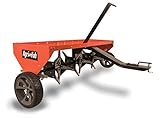
Agri-Fab 48 Inch Tow Plug Aerator
- 32 galvanized knives
- Plugs up to 3 inches
- 175 lb weight tray
- Universal hitch

Brinly 40 Inch Tow Plug Aerator
- 24 heat-treated spoons
- 3 inch plugs
- 150 lb enclosed tray
- Rotating tine sections
All 12 Lawn Aerators Compared (October 2026)
Every tool below appears once in this table and gets a full section further down. The features column is the short version of why it made the list.
| Product | Specifications | Action |
|---|---|---|
| Yard Butler Manual Coring Aerator ID-6C |
|
Check Latest Price |
| Agri-Fab 48 Inch Tow Plug Aerator |
|
Check Latest Price |
 Walensee 4-Row Spike Aerator Walensee 4-Row Spike Aerator |
|
Check Latest Price |
| Brinly 40 Inch Tow Plug Aerator |
|
Check Latest Price |
 Landzie 42 Inch Hollow Tine Aerator Landzie 42 Inch Hollow Tine Aerator |
|
Check Latest Price |
 Dolibest 4-Plug Coring Aerator Dolibest 4-Plug Coring Aerator |
|
Check Latest Price |
 LawnVigor Non-Clogging Hollow Tine Aerator LawnVigor Non-Clogging Hollow Tine Aerator |
|
Check Latest Price |
 K.D STONEDGE Rolling Coring Aerator K.D STONEDGE Rolling Coring Aerator |
|
Check Latest Price |
 SENVERT Rolling Spike Aerator SENVERT Rolling Spike Aerator |
|
Check Latest Price |
 Sun Joe 15 Inch Dethatcher and Scarifier Sun Joe 15 Inch Dethatcher and Scarifier |
|
Check Latest Price |
 RIFPOD 15 Spike Manual Aerator RIFPOD 15 Spike Manual Aerator |
|
Check Latest Price |
 MZK 15 Inch Electric Dethatcher Scarifier MZK 15 Inch Electric Dethatcher Scarifier |
|
Check Latest Price |
Is Your Soil Actually Compacted?
Before you spend money on an aerator, spend five minutes confirming you have the problem. Compaction and drought stress look similar from above, and aerating a lawn that only needs water and overseeding is an afternoon wasted.
Water pools and drains slowly. If puddles sit for hours after a rain or your sprinkler never soaks in, the pore space between soil particles is gone. This is the clearest signal, especially in low spots and along downspout edges.
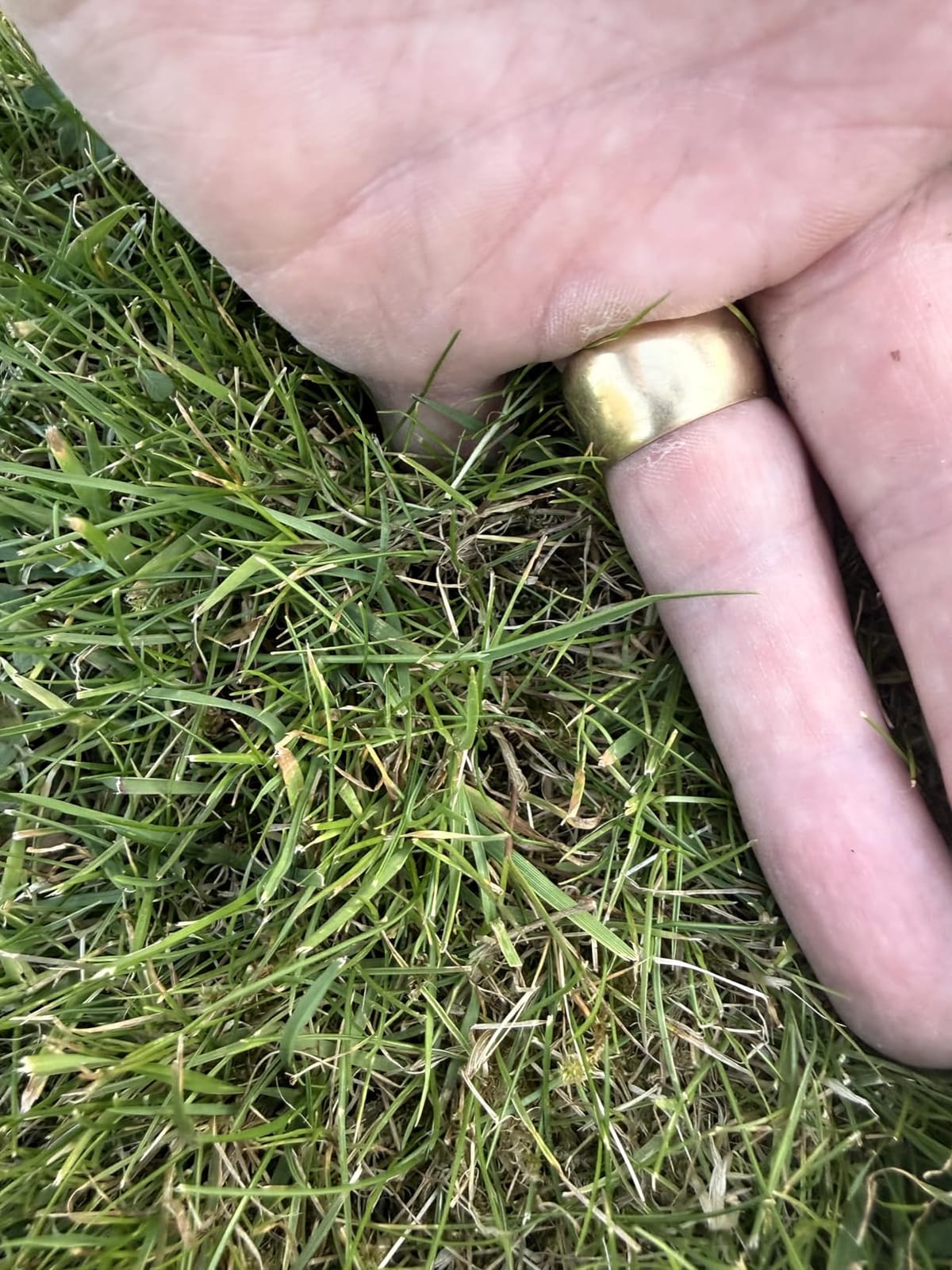
The ground feels like a sidewalk. Step on it and you feel hardpan rather than a giving cushion. Grass roots in compacted soil rarely travel past the top inch or two, which is why the blade looks thin and shallow-rooted.
Blades are needle-thin in traffic zones. Look at the path between the back door and the car, the dog run, or the spot where a mower turns. Repeated pressure pushes particles together and squeezes out the air roots breathe on.
Thatch is over half an inch thick. Lift the edge of the turf with a garden knife. If the brown mat of dead roots and stolons feels spongy and deep, that layer alone may be choking the crown, and you want to dethatch before you aerate.
Rain soaks in fast but the lawn still wilts. Compacted soil can shed water off the surface quickly once it saturates, so a lawn that looks dry an hour after a downpour is telling you the water never reached the roots.
The lawn came from a new build. Builders strip topsoil and drive heavy machinery over what remains. Nothing fixes that faster than mechanical coring, and a hollow-tine aerator is the tool that moves the most soil in a single pass.
Core vs Spike Aerators: Which One Fixes Compacted Soil?
Core aerators win for compacted soil. They cut a hollow tube of turf and soil and lift it to the surface, physically removing material and leaving an open hole that water and air move through. Spike aerators push a solid pin into the ground, which loosens a thin surface crust but drives compaction to the sides of the hole and deeper.
That difference is not marketing language. On severely compacted ground, professional operators often describe light spike passes as a complete waste of time, while deep-tine coring produces visible change in a season. If your problem is a surface crust on an otherwise healthy lawn, a spike tool is fine. If your problem is compacted soil, you want hollow tines.
Liquid aeration products sold as a substitute for coring get a poor reception from people who have used both. Foam fills a hole and then closes, and most of the field reports treat it as wasted money next to a mechanical pass. The same goes for aerator shoes: they are cheap and fine for a workout, but they punch narrow holes and remove almost no soil.
1. Yard Butler Manual Lawn Coring Aerator ID-6C: Best Overall for Compacted Soil
Yard Butler Manual Lawn Coring Aerator, ID-6C – Lawn Care Tool for Aerating – Long-Handled – Power-Coated Steel Construction – Comfortable Cushioned Handles Garden Tool – Easy to Use
Manual hollow-tine corer
Dual plugs with foot bar
Powder-coated steel
1.77 lb, 38 inch
Pros
- Pulls real soil plugs rather than just puncturing the turf
- Foot bar and long handle give strong leverage so you stay upright
- Powder-coated steel holds up season after season
- Cushioned handles reduce hand fatigue
Cons
- Each pass takes real body weight
- Small footprint makes whole-yard work slow
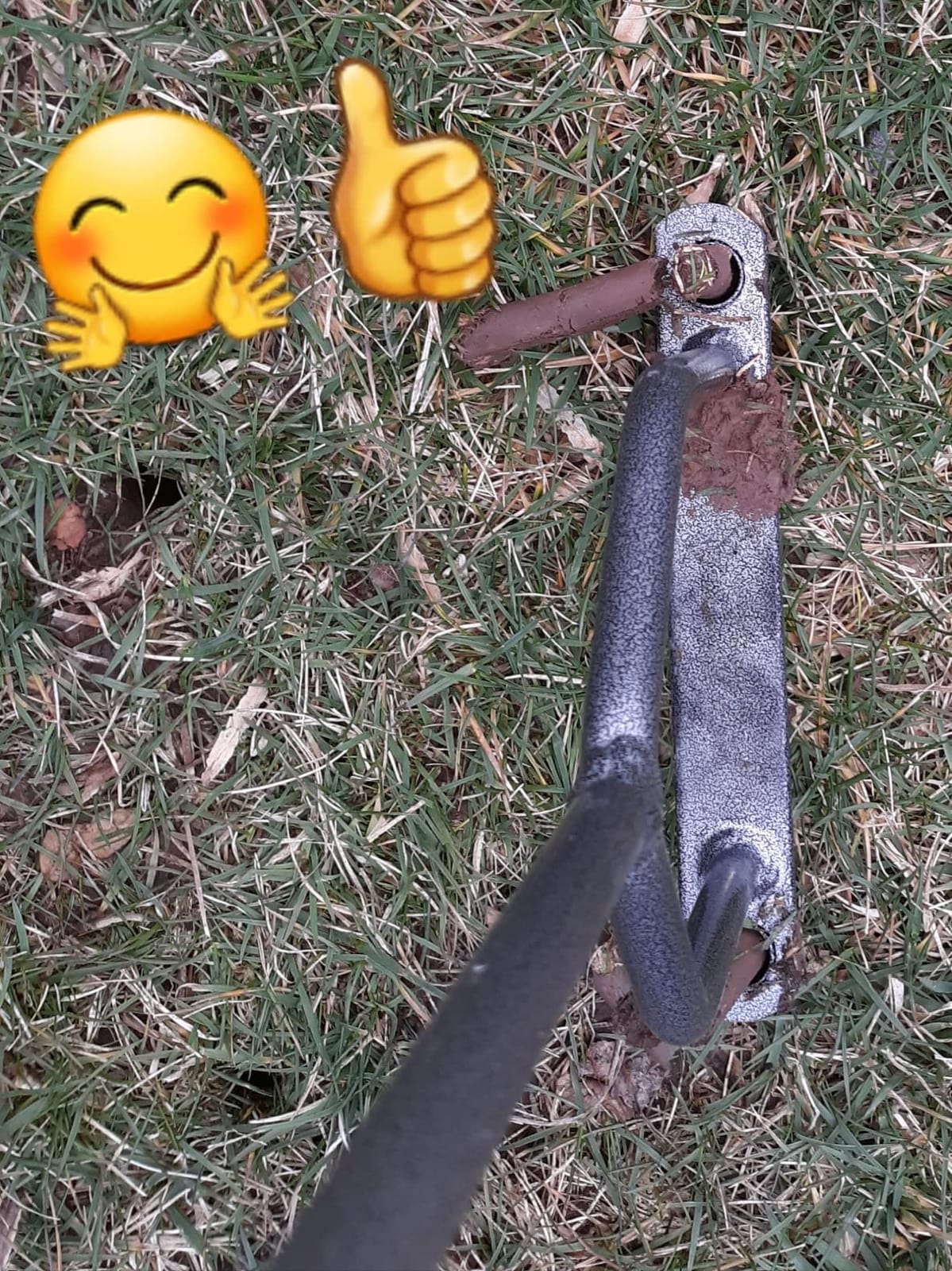
This is the corer I reach for first, and the one I recommend to anyone whose compacted patch is smaller than a parking space. It weighs 1.77 pounds, stands 38 inches long, and puts two hollow plugs on a foot bar you step down with, so most of the load goes through your leg instead of your arms.
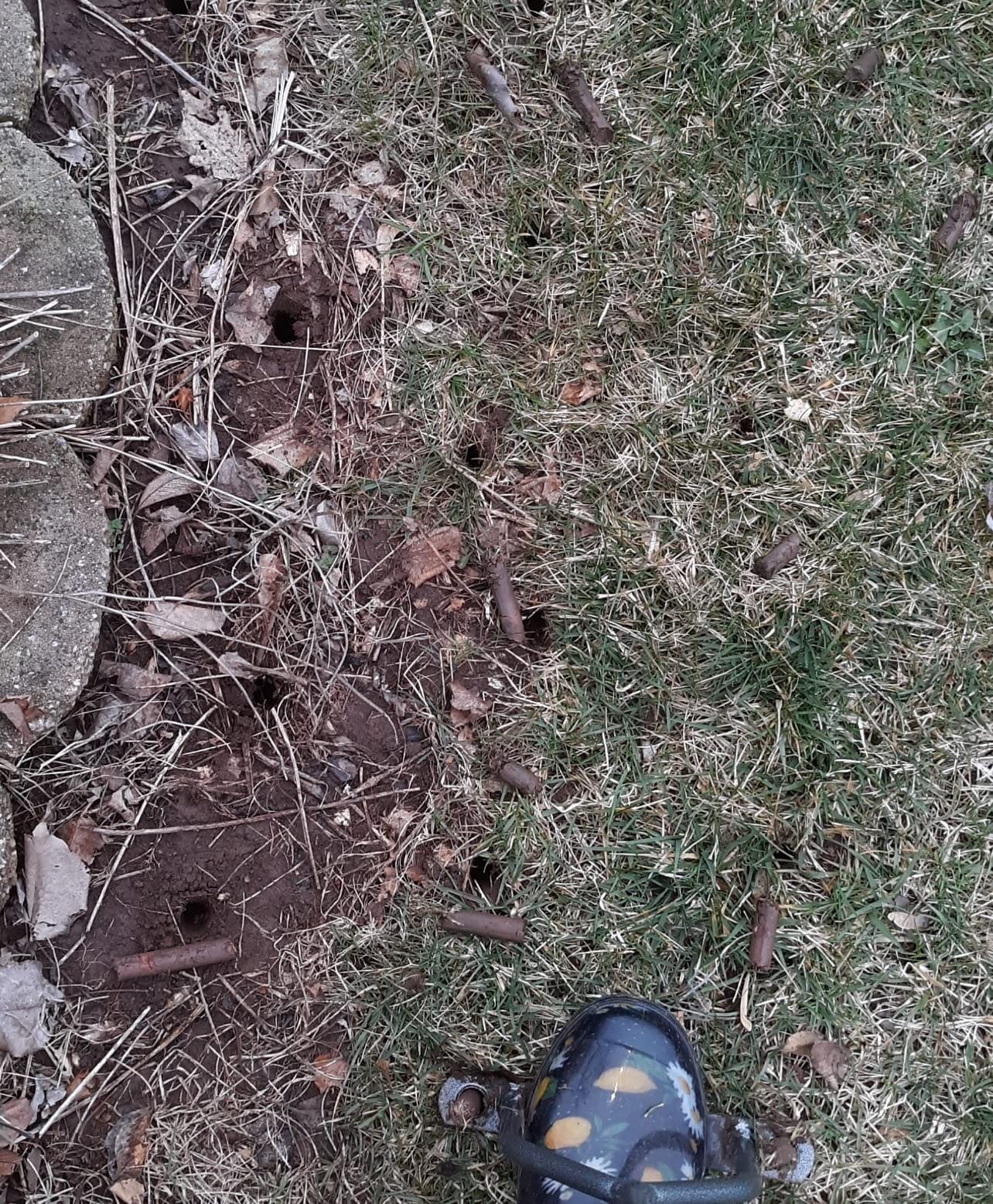
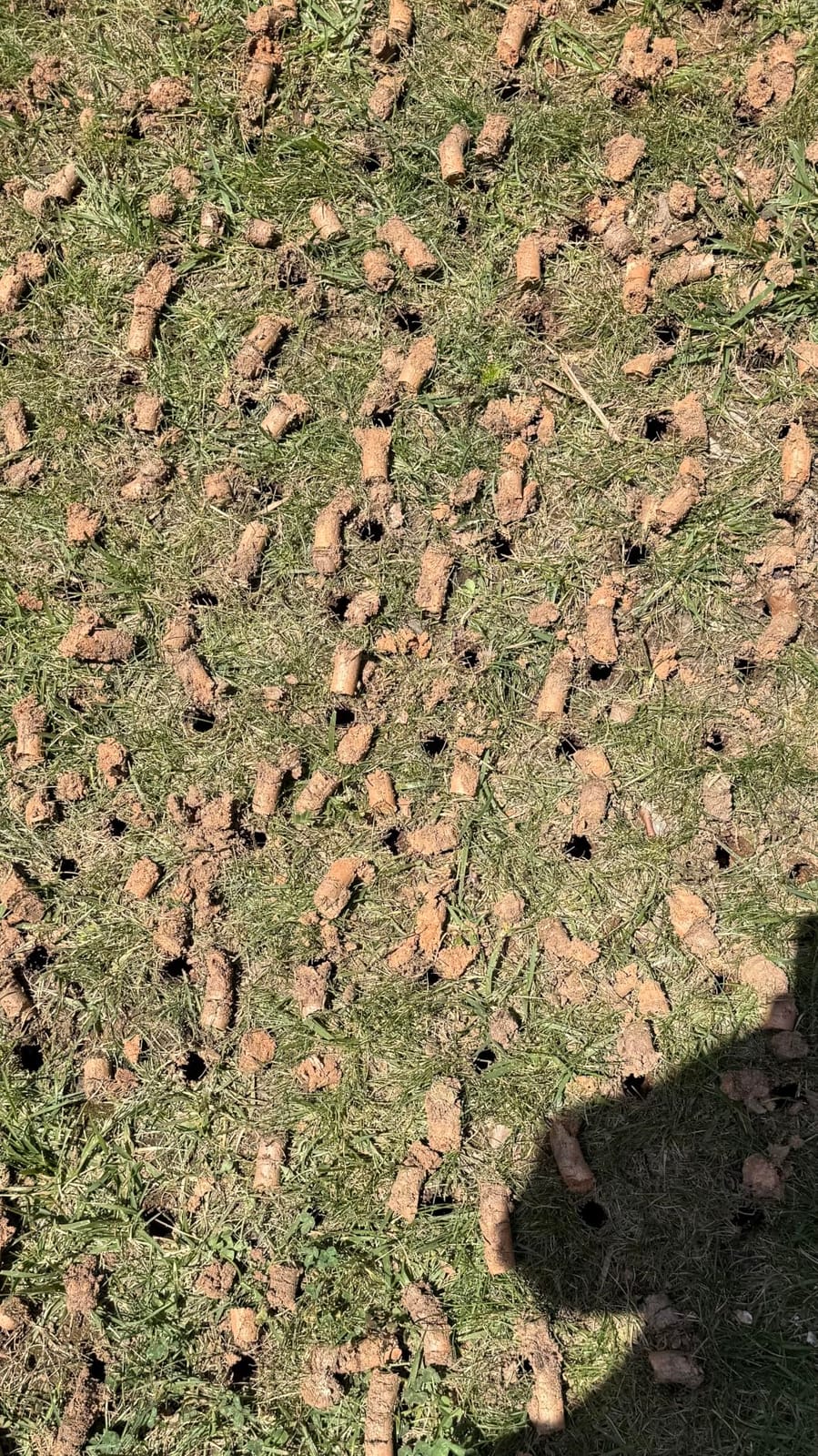
The reason it ranks first here is simple: it pulls plugs. On my own yard, the cores come up roughly 3/4 inch across and break apart cleanly, which is the proof that the ground is opening rather than just being punctured.
Where it struggles is scale. Coring a lawn the size of a tennis court means a lot of stepping, and on bone-dry clay you will tire before the job is done. If you have more than a quarter acre to treat, rent a tow-behind instead of grinding through it by hand.
The finish is the other thing worth knowing. This is powder-coated steel, so rinse the tines after use and store them out of standing water. Left damp in a shed through winter, the plug openings will show rust first, and that is where corrosion starts.
Who this corer suits
A small urban yard, a compacted dog run, the strip of lawn between the sidewalk and the foundation, or a bare patch you want to overseed this fall. Reviewers consistently credit the durable steel build and the extra pushing power the foot bar provides.
It is also the best first aerator to learn on. You can feel the soil resistance change as the ground loosens, and the plugs on the surface tell you immediately whether the moisture window was right.
Where it falls short
Effort is the honest limit. Every plug is one deliberate step, so a full yard of hard clay is a workout, and the handle plus foot bar, while easier on your back than bending, still needs your full weight behind it.
It also cannot cover a large lawn at any realistic pace. If that is your situation, jump to the tow-behind sections rather than planning a two-day job with a hand tool.
2. Agri-Fab 48 Inch Tow Plug Aerator: Best for Large Lawns
Agri-Fab 48 In Tow Behind Lawn Plug Aerator with 32 Galvanized Knives and Universal Hitch
Tow-behind hollow-tine aerator
48 inch width
32 galvanized knives
Plugs up to 3 inches
Pros
- Covers a full lawn in a few passes with 32 galvanized knives
- Plugs reach up to 3 inches deep
- 175 lb weight tray for hard clay
- Flat-free tires and cantilever handle for transport
Cons
- 94 lb frame is bulky to store and maneuver
- Needs a lawn or garden tractor
When the compacted area is measured in acres rather than square feet, this is the honest answer. Thirty-two galvanized self-sharpening knives sit on a 48-inch drum, so each pass lays down a wide grid of holes and a large lawn takes hours instead of days.
Depth is where it earns its place on clay. Plug length reaches up to 3 inches, and the weight tray holds 175 pounds, which means you can load it with cinder blocks or a bag of sand until the tines break through a hardpan layer.
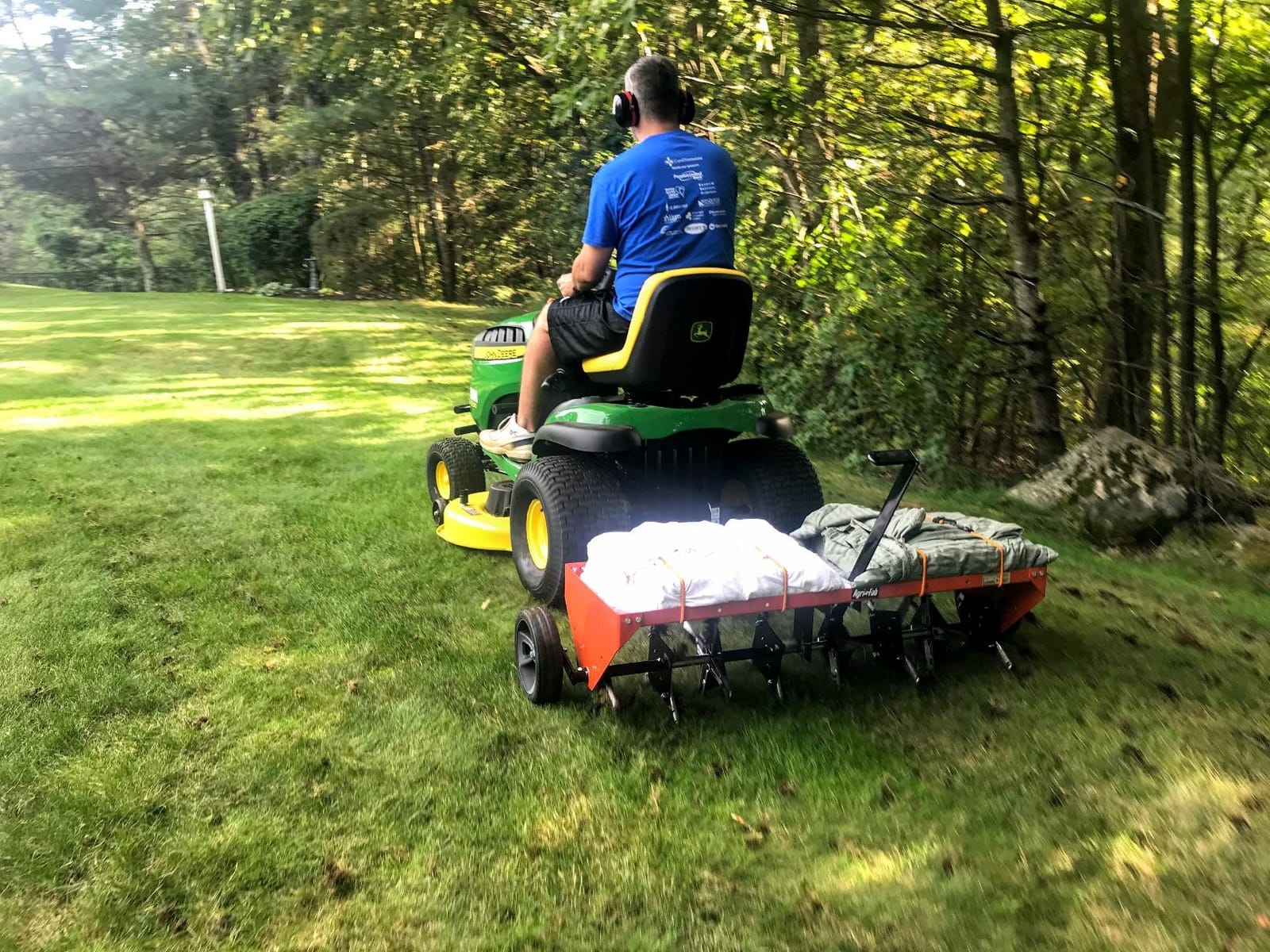
Owners like that the knives are self-sharpening, which matters on rocky ground where a fixed blade would dull in a season. The flat-free tires also roll over uneven lawns without the ballooning you get from pneumatic ones.
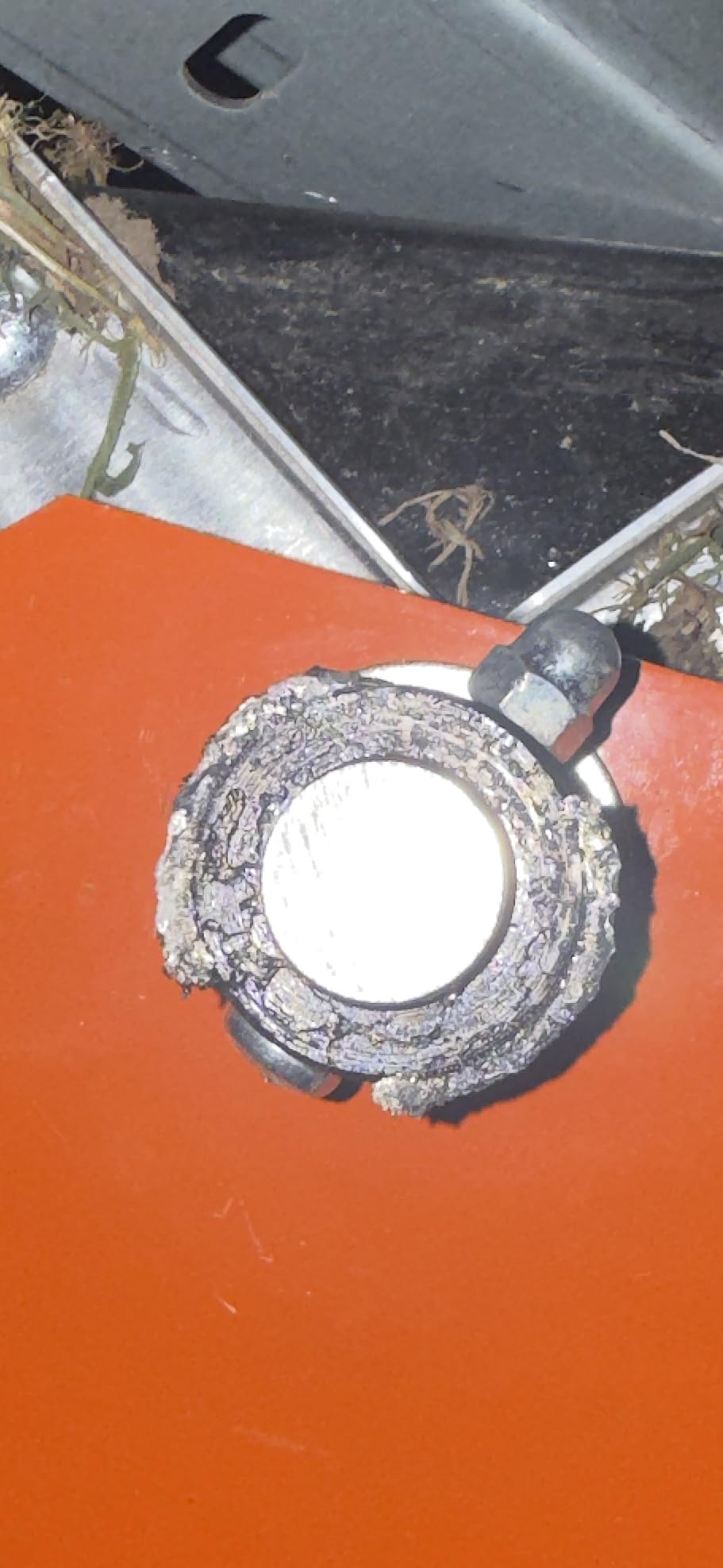
Controls are handled from the seat. The cantilever transport handle raises the whole unit for crossing a driveway, then drops it back down when you are ready to core again. The universal hitch fits most lawn and garden tractors.
Who this aerator suits
Anyone with a tractor and more than about half an acre of compacted ground. It is also the right machine for a new-build lawn where the topsoil was stripped and the remaining subsoil needs opening up.
For heavy clay that refuses a hand tool, the 175 lb tray is the deciding feature. You can add ballast until the drum bites, then reduce it for the second pass.
Where it falls short
At 94 pounds, this is a bulky attachment. Storage takes a corner of a garage, and maneuvering it around trees by hand is more of a chore than a chore-free task.
Without a tractor it is not going to work at all. And with a fixed knife layout, it turns more aggressively than the Brinly below, so overlapping passes need a slower tractor speed in tight areas.
3. Walensee 4-Row Spike Aerator: Best Budget Spike Aerator
Walensee 4-Row Lawn Aerator Tool with 20 Steel Spikes for Small Yards
Manual spike aerator
20 steel spikes at 2.8 inches
9.2 x 5.5 inch foot plate
Four-row pattern
Pros
- Four rows of 20 spikes cover ground faster than a single-row tool
- Spikes reach 2.8 inches rather than scratching the surface
- Light enough to keep working without fatigue
- Assembles quickly with no missing parts
Cons
- Solid spikes leave no soil plugs
- Plain steel rusts fast if stored damp
- Small footprint makes whole-yard work labor intensive
This is the cheapest sensible tool here for loosening a small area, and it does one thing well: it drives twenty steel spikes 2.8 inches into the ground in a four-row pattern. That is real depth, unlike the shallow one-row step aerators people use for a workout.
It is rated 4.3 across thousands of reviews and sits at the top of the manual aerator category, largely because the build feels far sturdier than the price suggests. Reviewers highlight the quick assembly and stability under load.
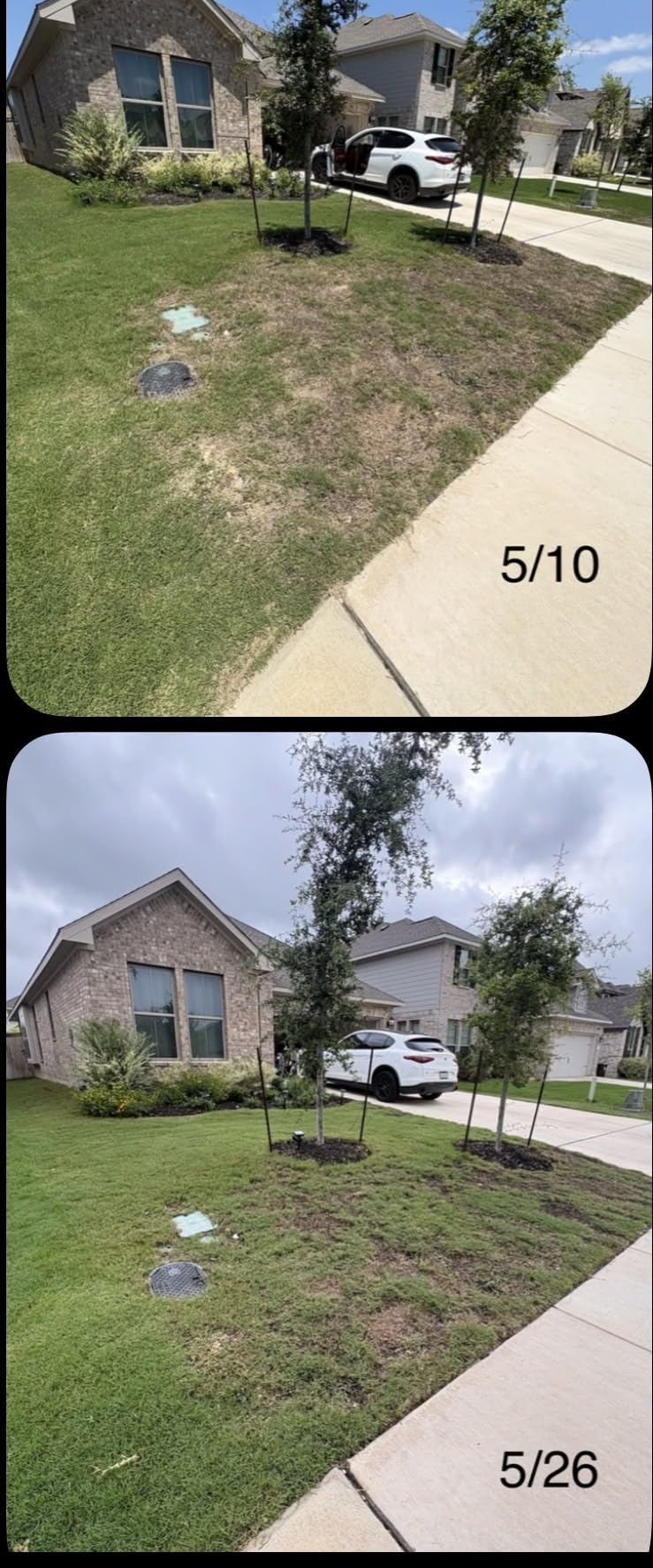
Be clear about what it does, though. Solid spikes push soil sideways and close back up within weeks, so on genuinely compacted clay this is a temporary surface loosening rather than a fix. It works well on a thin crust or a lawn that has dried out and hardened each season.
Rust is the other practical issue. The spikes are plain steel with no coating, so wiping them dry after use matters. A light film of oil on the tines before storage buys you a season.
Who this aerator suits
Small lawns, edges along fences and paving, and spot repair of thin areas before overseeding. If your whole problem is a quarter of the yard and your budget is tight, this is the efficient choice.
It is also a decent tool for loosening a seedbed in a vegetable plot or around new shrubs, where the depth matters more than pulling cores.
Where it falls short
It will not solve hardpan. No amount of spikes turns a spike into a plug, and the 5.5 inch foot plate means a whole yard takes a very long walk.
If your soil is clay and your grass is thinning, put the same money toward a hollow-tine corer instead. The difference shows up in the growing season, not on day one.
4. Brinly 40 Inch Tow Plug Aerator: Premium Pick
Brinly Tow Behind Plug Aerator with Universal Hitch, 40″ – Flat Black
Tow-behind corer
40 inch working width
24 heat-treated spoons
63.9 lb
Pros
- Narrow heat-treated spoons pull 3 inch plugs with less added ballast
- Three independently rotating tine sections handle turns and uneven ground safely
- Enclosed weight tray holds 150 lb without spilling debris
- Single-lever transport mode on 10 inch semi-pneumatic tires
Cons
- No flat wheels
- so hard surfaces require engaging the transport lever
This is the more refined of the two tow-behind corers here, and the 4.4 rating reflects it. The difference is in the spoons: 24 heat-treated 16-gauge spoons rather than broad knives, which pull plugs up to 3 inches long with noticeably less ballast weight.
Less ballast matters on clay because it reduces turf damage. You add just enough weight to break through the hardpan rather than enough to tear the sod, and that keeps the lawn recovering instead of going bare.
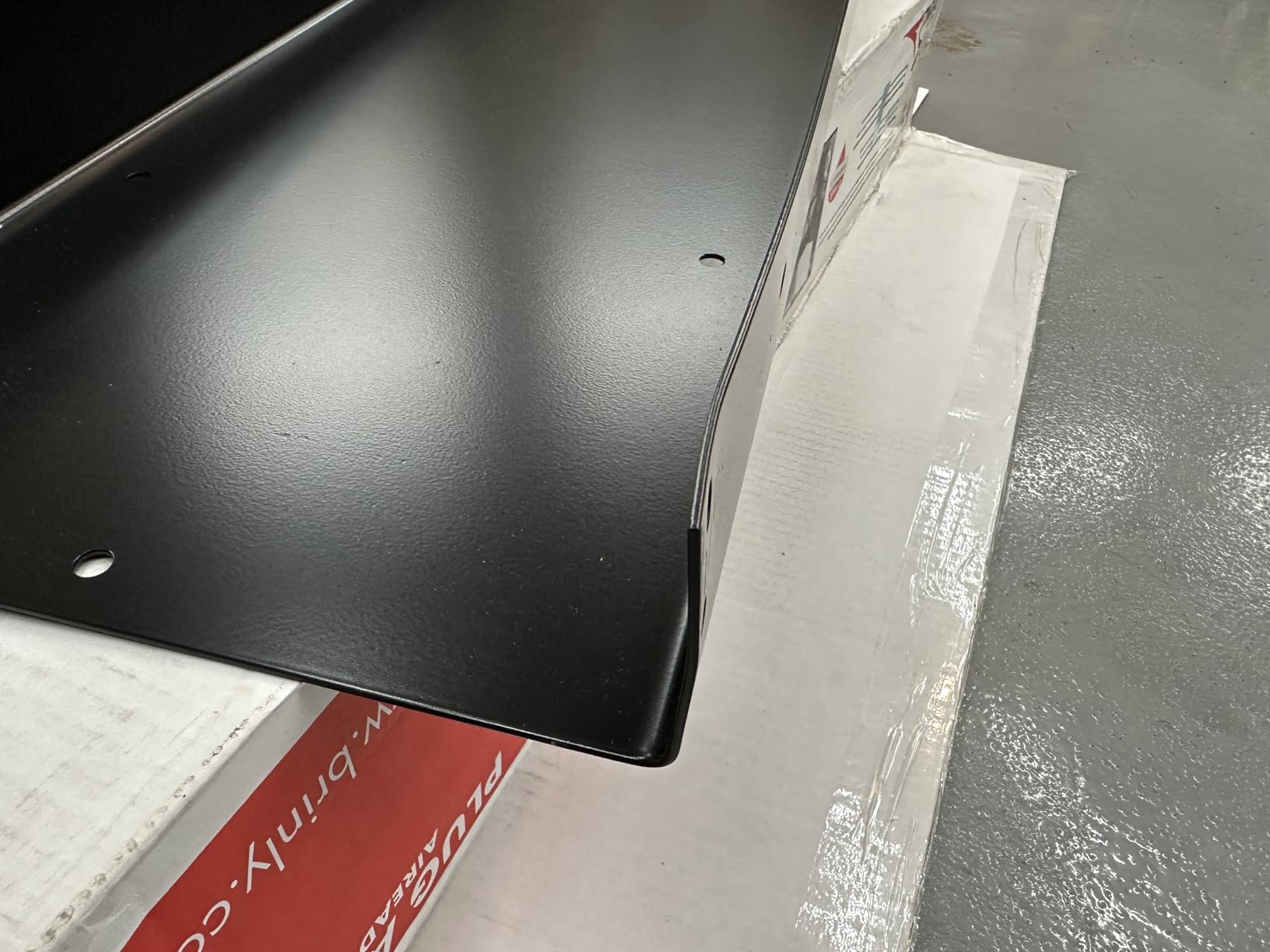
The three tine sections rotate independently, which means they turn through tight corners around trees without gouging a trench. On uneven ground they also drift out of phase, so a bumpy yard does not leave a stripe pattern of deep holes and untouched turf.
Transport is handled with one lever. Pull it and the tines lift clear of the ground so you can cross a driveway or a walkway, then drop back down when you are finished. The hitch is a single pin that fits lawn tractors, most zero-turn mowers, and ATVs.
Who this aerator suits
Owners with a zero-turn or a tractor who want cleaner plugs and less turf damage than a knife-style drum gives. It is the pick for a lawn you care about cosmetically and want to overseed afterwards.
It also handles hilly or irregular ground better than a fixed-knife drum, because the rotating sections absorb the differences in height as you pass.
Where it falls short
There are no flat wheels, so the only way across a hard surface is the transport lever. Forgetting it on a driveway will scuff the tines and the concrete.
At 63.9 pounds it is lighter to move than some tow-behinds, but it is still an attachment, not a walk-behind. And a 40 inch drum is narrower than the Agri-Fab, so full-lawn jobs take a few more passes.
5. Landzie 42 Inch Hollow Tine Aerator: Best for Clay Soil
Landzie – Lawn Aerator Tool 42″, Hollow Tine Core Aerator
Manual hollow-tine corer
42 inch length
Three beveled stainless tines
Powder-coated steel frame
Pros
- Beveled hollow tines eject plugs on every press with no clumping to clear
- Sturdy powder-coated frame holds up in clay and rocky ground
- Three tines reach tight spots wider aerators cannot
- Replacement tines sold separately to extend tool life
Cons
- Slow and physically demanding on large areas
- Only three tines means a small footprint per step
- Tines can fail to penetrate in very dry or very hard ground
Three hollow stainless tines on a 42-inch shaft, and that is the whole tool. What makes it work on clay is the beveled hollow design: the taper helps each plug slide out on the way up, so you are not stopping every third step to clear a packed tube.
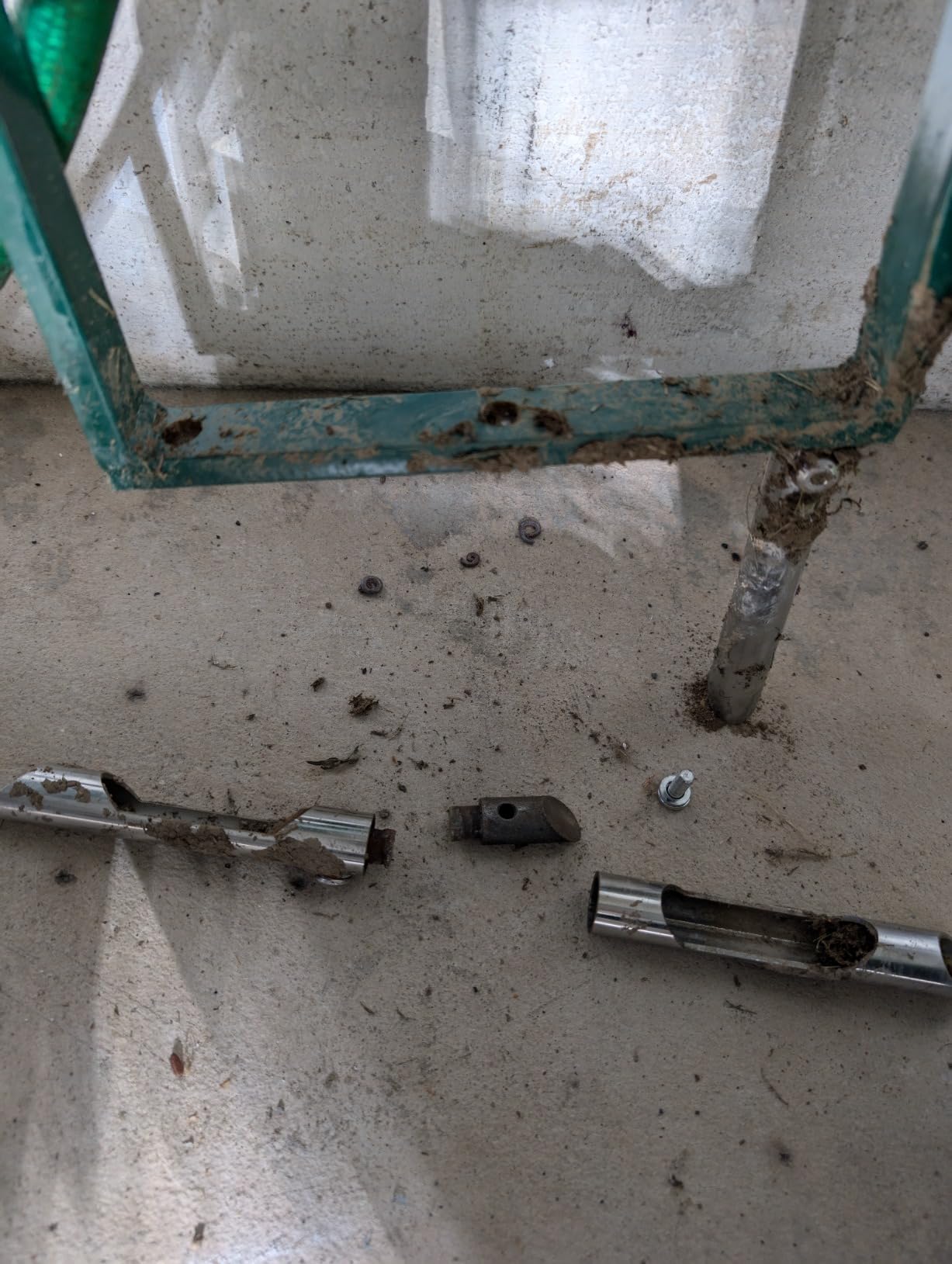
It arrives assembled with the tines already fitted, and they remove for cleaning or replacement. That matters on clay work, where a bent tine is common once you hit a rock or a root.
At 5.6 pounds it is heavier than a foot-bar step aerator but still easy to control, and the long handle means you can core while standing rather than bent over the ground. Reviewers repeatedly mention how it holds up in clay and rocky conditions.
The narrow three-tine layout is a genuine advantage near landscaping. You can place individual holes right at the edge of a bed, along a wall, or beside a paver, which no wide drum can do.
Who this aerator suits
Clay-heavy yards, small properties, and anyone who wants to core precisely rather than broadly. It is also the tool to reach for when a wide aerator cannot get within a foot of the bed edge.
It suits people who will aerate once a year rather than weekly. Used on a schedule, the narrow footprint stops being a drawback.
Where it falls short
Three tines is a very small area per step. On anything larger than a few thousand square feet, expect a slow afternoon.
There is no ballast tray and no weight option here at all, so if the ground is bone dry the tines can deflect off the surface instead of entering it. Water the lawn the day before.
6. Dolibest 4-Plug Coring Aerator: Most Versatile
Dolibest Lawn Coring Aerator, Manual Lawn Aerator,4 Stainless Steel Corer Plug Aerator with Soil Core Storage Tray, Pre-Assembled Manual Grass Aerating Tool & Clean Hand Tool, Improving Lawn Health
Manual corer
Four SUS 304 stainless plugs
Includes core tray and hand tool
Assembles in two minutes
Pros
- Stainless plugs and tray resist rusting and deforming
- Storage tray collects ejected cores and cuts cleanup time
- Rubber grip and elevated crossbar improve ejection
- Includes a 12 inch hand tool for cleaning and weeding
Cons
- Plugs clog in very wet or very dry soil and need clearing by hand
- Small footprint makes it impractical for large lawns
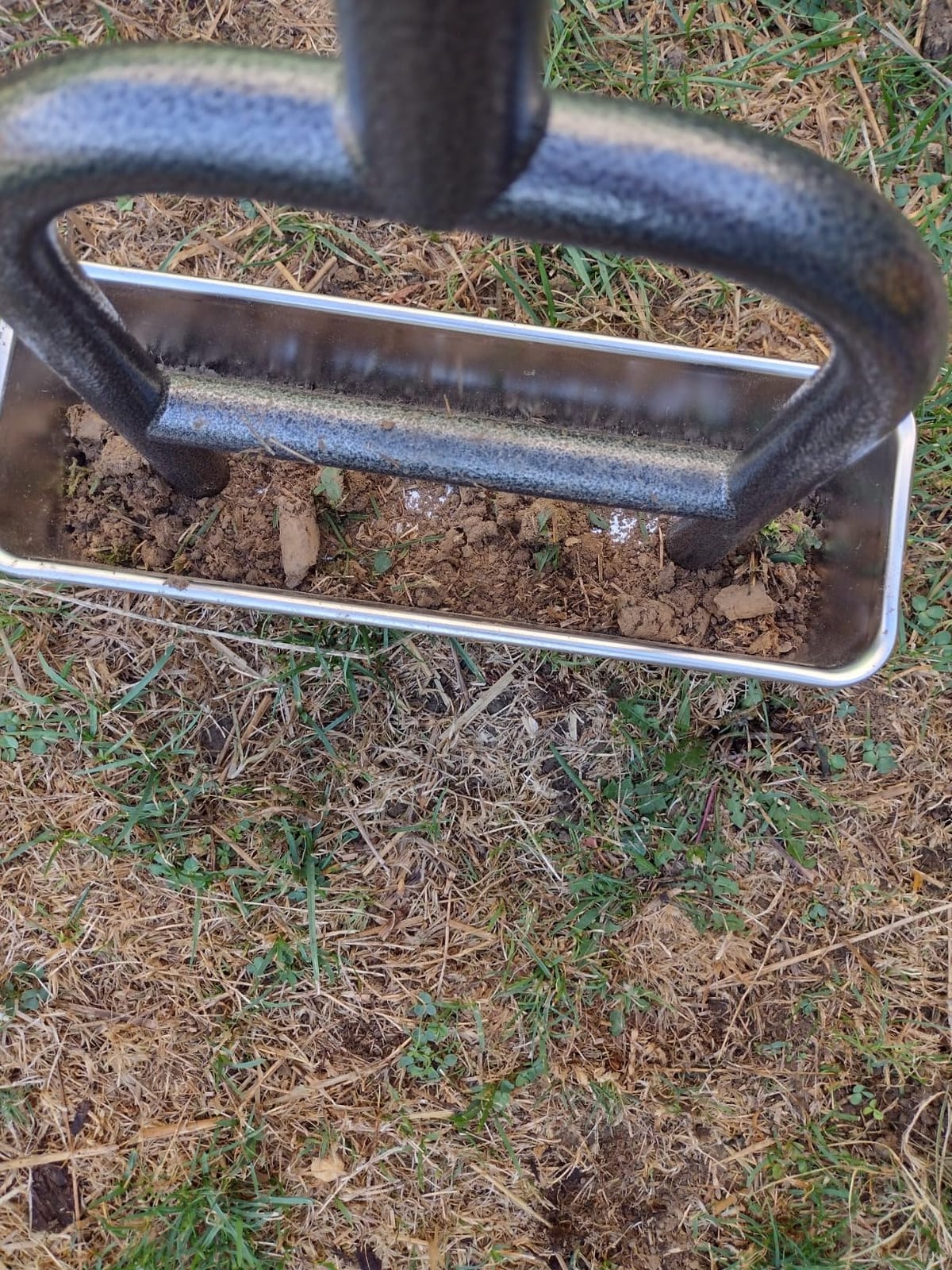
Four stainless coring plugs, a powder-coated steel rod, and a matching stainless tray that catches the plugs as they come up. The tray is the detail that sets this apart from cheaper manual corers, because you are not picking cores out of the turf by hand afterward.
Stainless steel is a real upgrade for soil work. Mud and moisture sit on the tool constantly, and the SUS 304 plugs here hold their shape and resist rust in a way that plain steel tines do not.
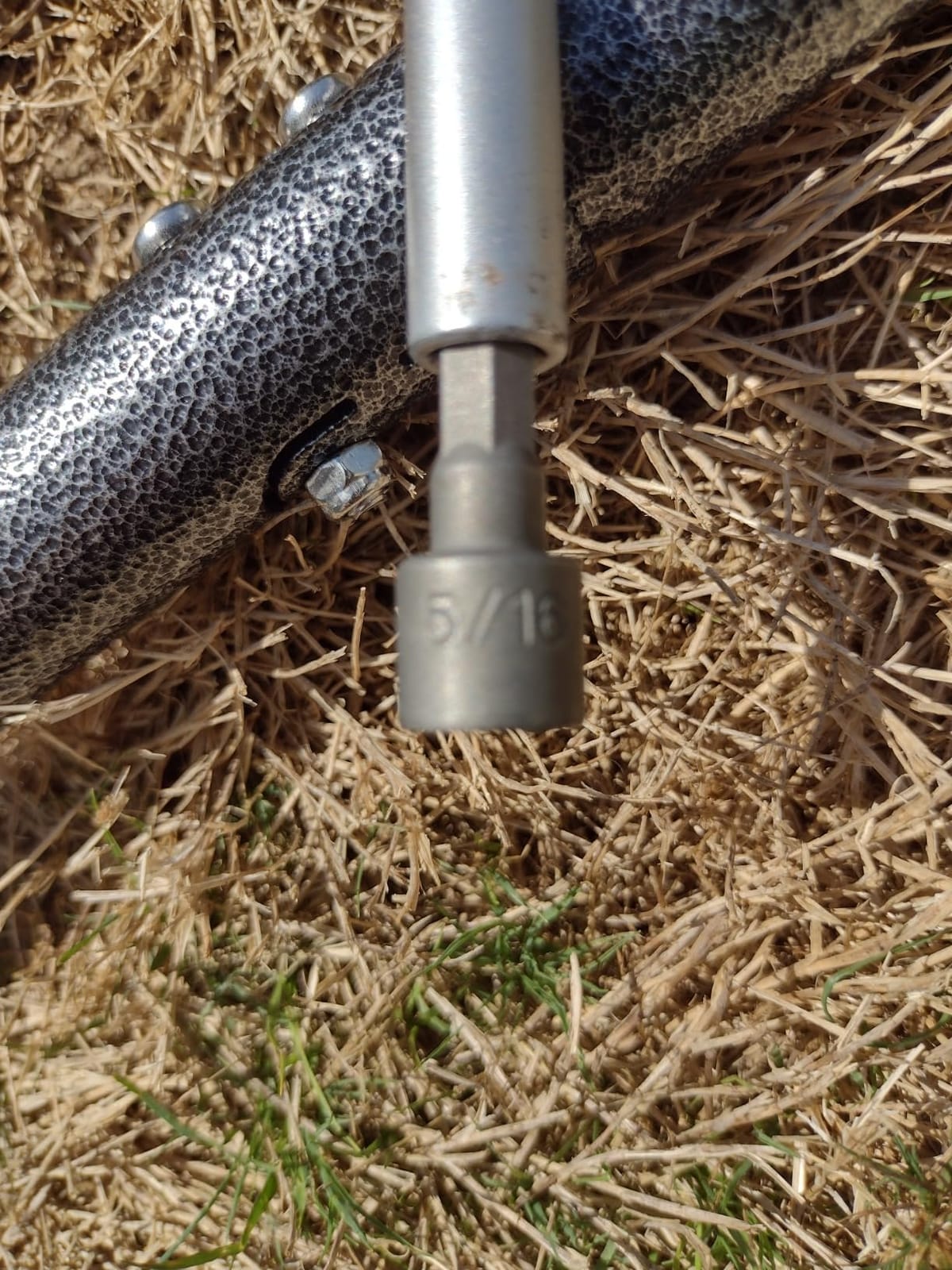
Assembly takes about two minutes, and everything including a 12 inch hand tool for clearing tines, transplanting, and weeding is in the box. The elevated crossbar foot plate gives you a stable stance while the plugs eject downward into the tray.
What trips people up is moisture. In very wet soil the plugs pack solid, and in very dry soil they will not form at all, so this tool lives or dies by the squeeze test described further down.
Who this aerator suits
Beginners, small yards, and anyone who wants to try coring before committing to a larger tool. The included tray keeps the job tidy, which matters on a lawn people walk across.
It is a good second tool too, since four plugs give you more coverage per step than the three-tine designs.
Where it falls short
Four plugs still means four plugs per step. On a lawn of any real size you will feel the workout quickly, and the review pattern is clear that this is a small-area tool.
When a plug clogs, the included hand tool is the fix, which adds friction to every pass. Keep the soil damp and it rarely happens.
7. LawnVigor Non-Clogging Hollow Tine Aerator: Best for Deep Penetration
Manual Lawn Core Aerator for Compacted Soil with Non-Clogging Hollow Tines
Manual hollow-tine corer
Three heat-treated hollow tines
4 inch penetration
Ergonomic grip
Pros
- Hollow tines genuinely pull plugs and eject them on the next pass
- Heat-treated tines resist clogging with mud or grass in clay
- Sturdy hardware with wrenches included and replaceable tines
- Works in tight spots where powered aerators cannot reach
Cons
- Only three tines so large lawns take many hours
- Needs real body effort in hard or dry soil
- Grip covers can loosen and spin during use
At 4.5 stars on 255 reviews, this sits at the top of the manual corers in the group, and the reason is the tine spec. Each hollow tine runs roughly 0.9 inch in diameter and about 4 inches deep, which is deeper penetration than anything else you can push by hand here.
The white plastic insert rings inside the tines help eject plugs on each pass. It sounds minor, but it is the difference between a tool that corings cleanly and one you clear every few steps.
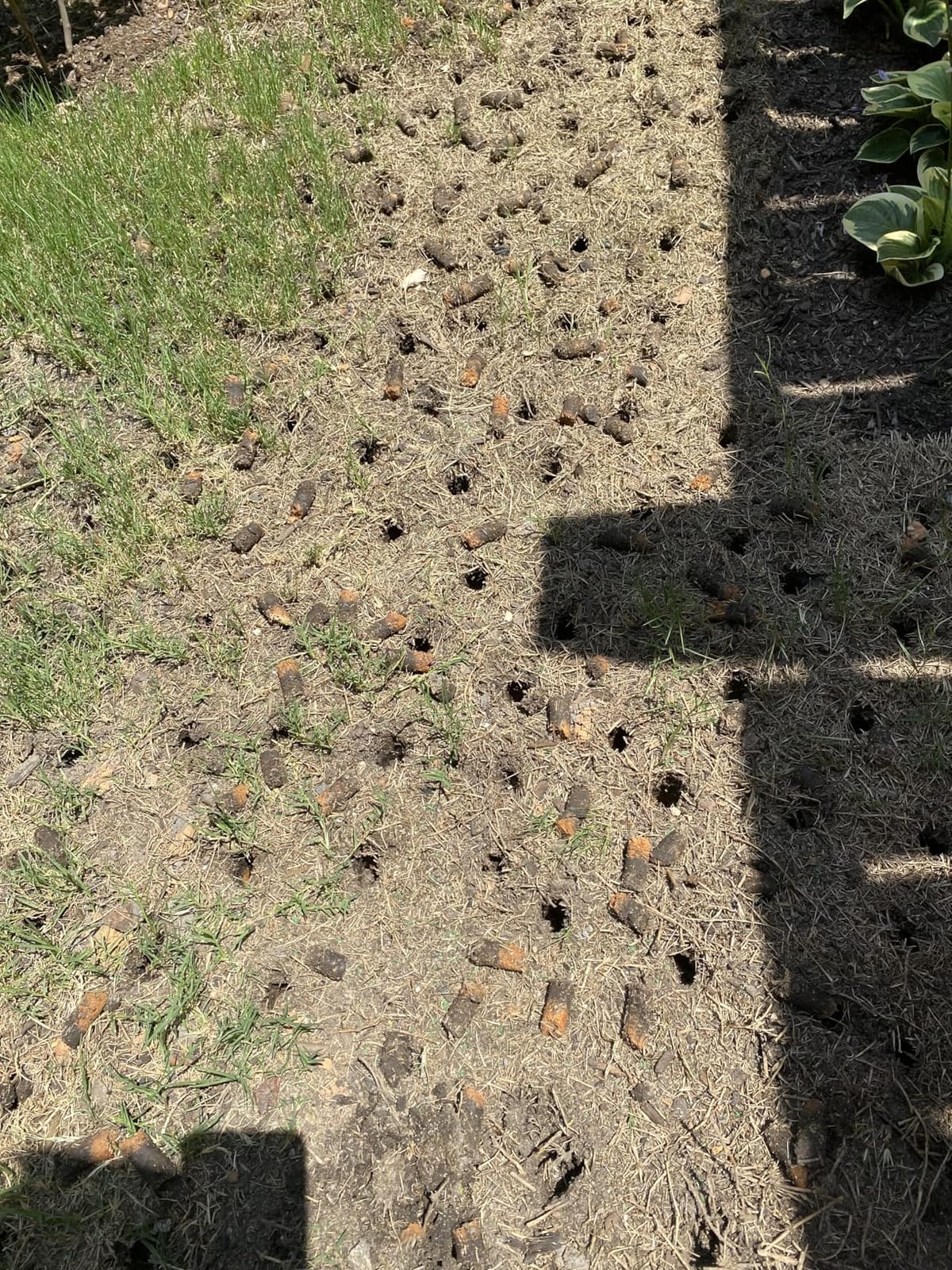
Owners emphasise that it pulls actual soil rather than punching holes, which is precisely the complaint that shows up with cheap spike tools. The heat treatment on the tines also means they stay sharp in clay instead of rounding off after a season.
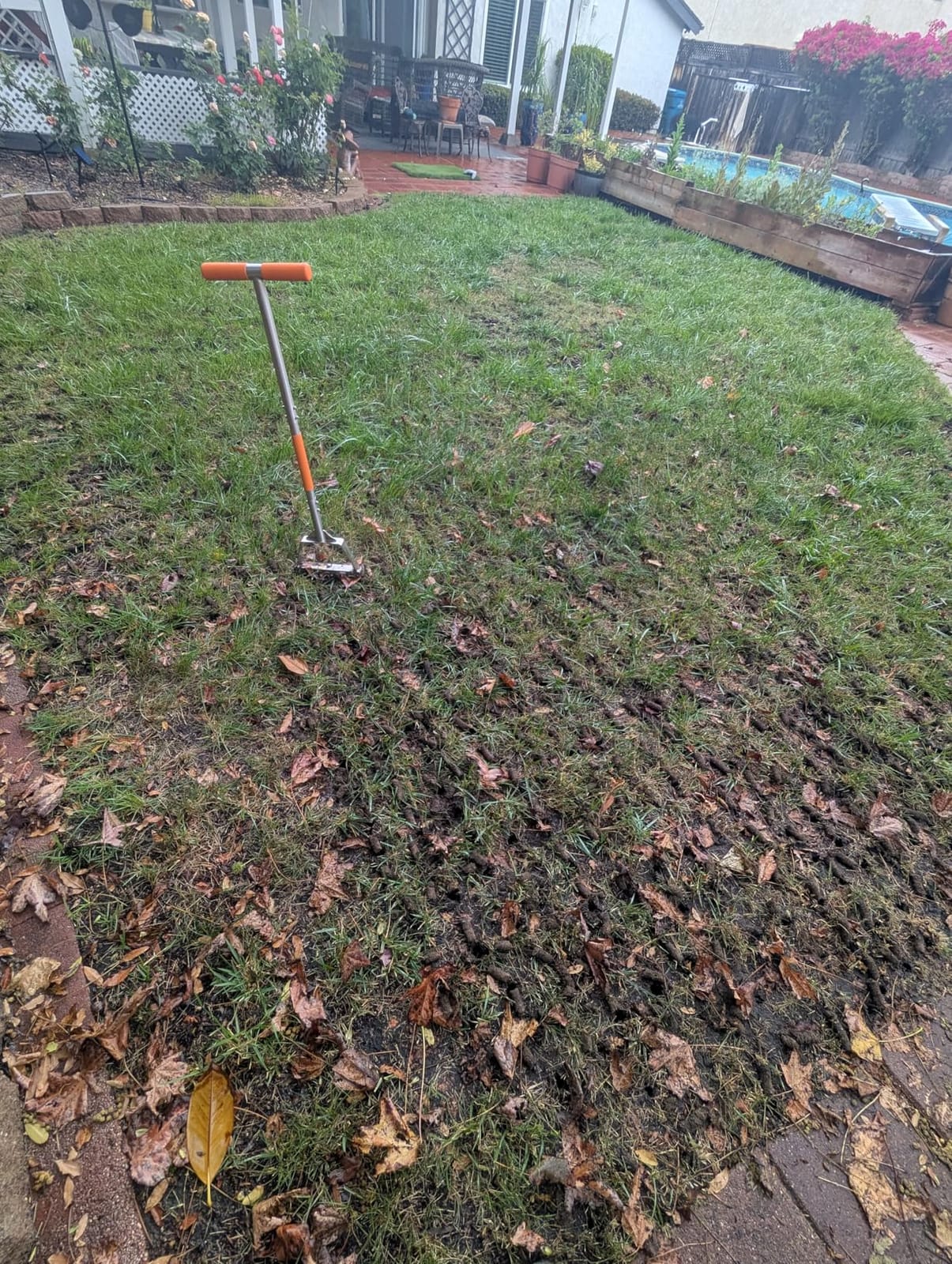
At about 37 inches tall with an 8.3 inch base, it stands without needing a foot bar, and the non-slip grip reduces hand strain. Replaceable tines mean a bent one is a part swap rather than a replacement tool.
Who this aerator suits
Anyone chasing maximum depth from a hand tool, especially on clay that other corers only skim. It is also the right pick for planting holes, post holes, and spot work around trees.
If your complaint is that your aerator never pulls plugs, this is the design that addresses it head on.
Where it falls short
Three tines and a small base mean slow coverage. Owners are consistent about that limitation, and it is the trade for the deeper coring.
The handle grip covers can loosen and spin over time, which is an annoying fix rather than a serious fault. And hard, dry soil still needs watering first.
8. K.D STONEDGE Patented Rolling Coring Aerator: Best for Rolling Cores
Patented Rolling Lawn Aerator Manual Coring Tool Compacted Soil Loosening
Push rotary corer
Patented rotating core design
Balanced weight distribution
43.7 lb
Pros
- Rotary coring action extracts actual plugs rather than puncturing
- Balanced push design pulls cores efficiently on each pass
- Heavy-duty build meant for repeated seasonal use
Cons
- 43.7 lb frame is heavy to maneuver by hand
- Push operation is still a substantial workout
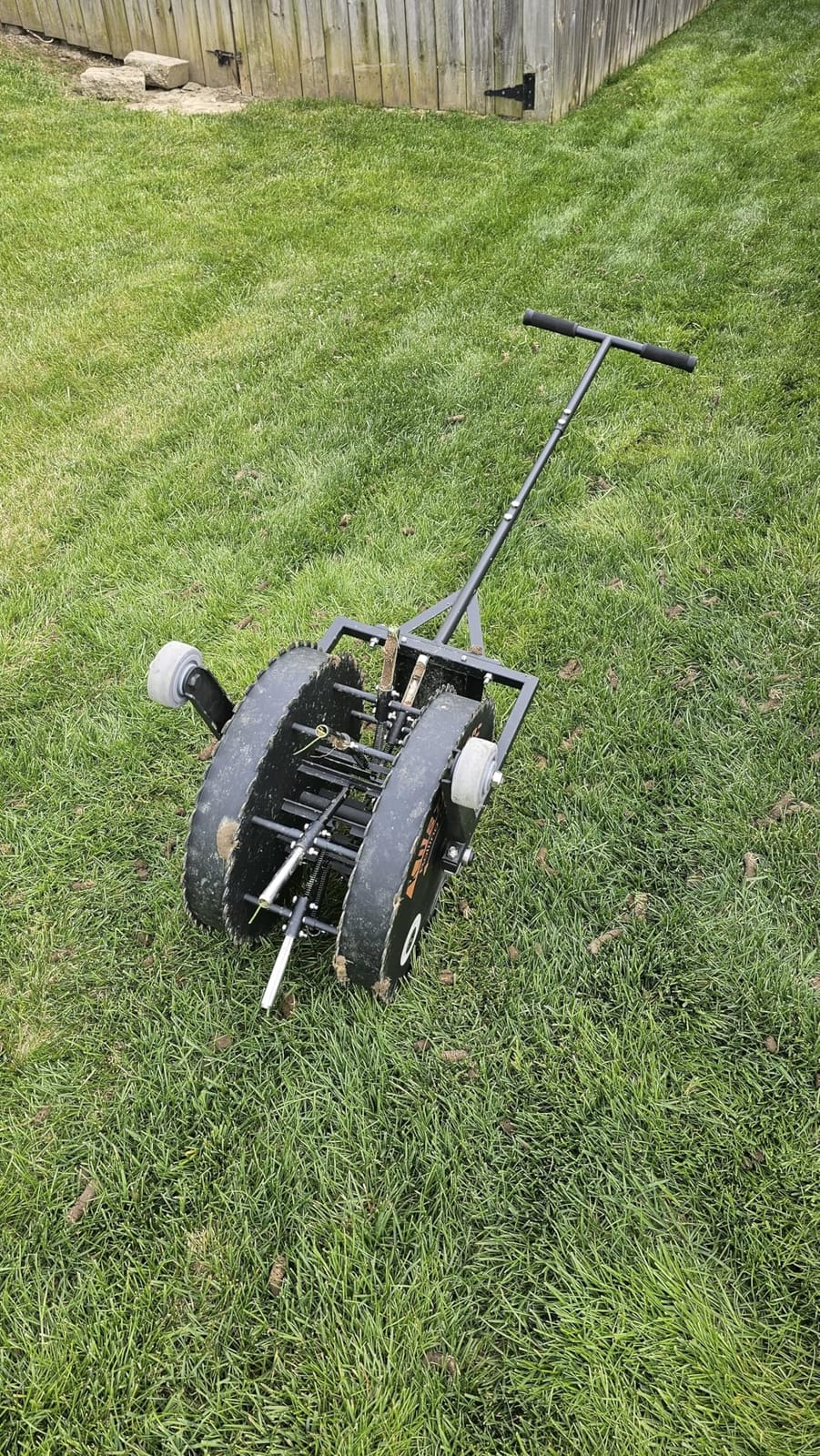
This one works differently from the foot-bar corers. Instead of stepping on it, you push a rotating drum ahead of you, and the coring stars on the drum cut and extract cores as the drum turns. Coverage per unit of effort is far better than stepping.
Buyers credit the patented rotary design and the balanced weight distribution with pulling plugs consistently rather than occasionally. On a small to medium lawn it gets the job done in a fraction of the time a foot-bar tool needs.
The idea suits anyone who found manual coring too tiring. Rolling the drum forward does the pushing work, and the mechanism keeps the tines engaged consistently instead of depending on each individual foot press.
It is a heavier piece of kit at 43.7 pounds, which brings real stability but also real effort. Plan a route that lets you roll in straight lines rather than fighting it around curves.
Who this aerator suits
Small and medium lawns where a manual corer would take all afternoon. It fills the gap between foot-bar tools and a tow-behind machine nicely.
It is also a good choice for anyone with back or joint limits who cannot repeatedly bend and press a foot bar, but can manage a push handle.
Where it falls short
At 43.7 pounds it is genuinely heavy to steer by hand, and reviewers mention maneuverability as the recurring complaint. Turning it around is the hardest part of the job.
It is also not a plug for large properties. Anything past a few thousand square feet should go to a tow-behind.
9. SENVERT Rolling Spike Aerator: Best for Medium Lawns on a Budget
SENVERT Rolling Lawn Aerator, Heavy Duty Push Spike Aeration Tool Up to 55 lbs, Manual Rotary Grass Aerator for Garden and Yard Use
Rolling spike drum
32 lb drum adjustable to 55 lb
Auxiliary TPR wheels
38.3 lb
Pros
- Rolling drum covers far more ground than step-style aerator shoes
- Spiral spike tread rolls smoothly and steers predictably
- Add sand or stone to reach 55 lbs of penetration
- Transport wheels let you cross drives without marking them
Cons
- Spikes puncture the ground rather than removing soil plugs
- At 38.3 lb it is not a lightweight tool to reposition often
Rolling spike aerators sit in the middle of this roundup: far more efficient than shoes, far less effective on hardpan than a corer. What you get here is speed, which is the limiting factor for most people with spike tools.
The drum ships at 32 pounds and has a covered opening where you add sand or stone to reach up to 55 pounds. That extra ballast drives the spiral spikes deeper, and users note the spiral tread rolls in a straight, controllable line.
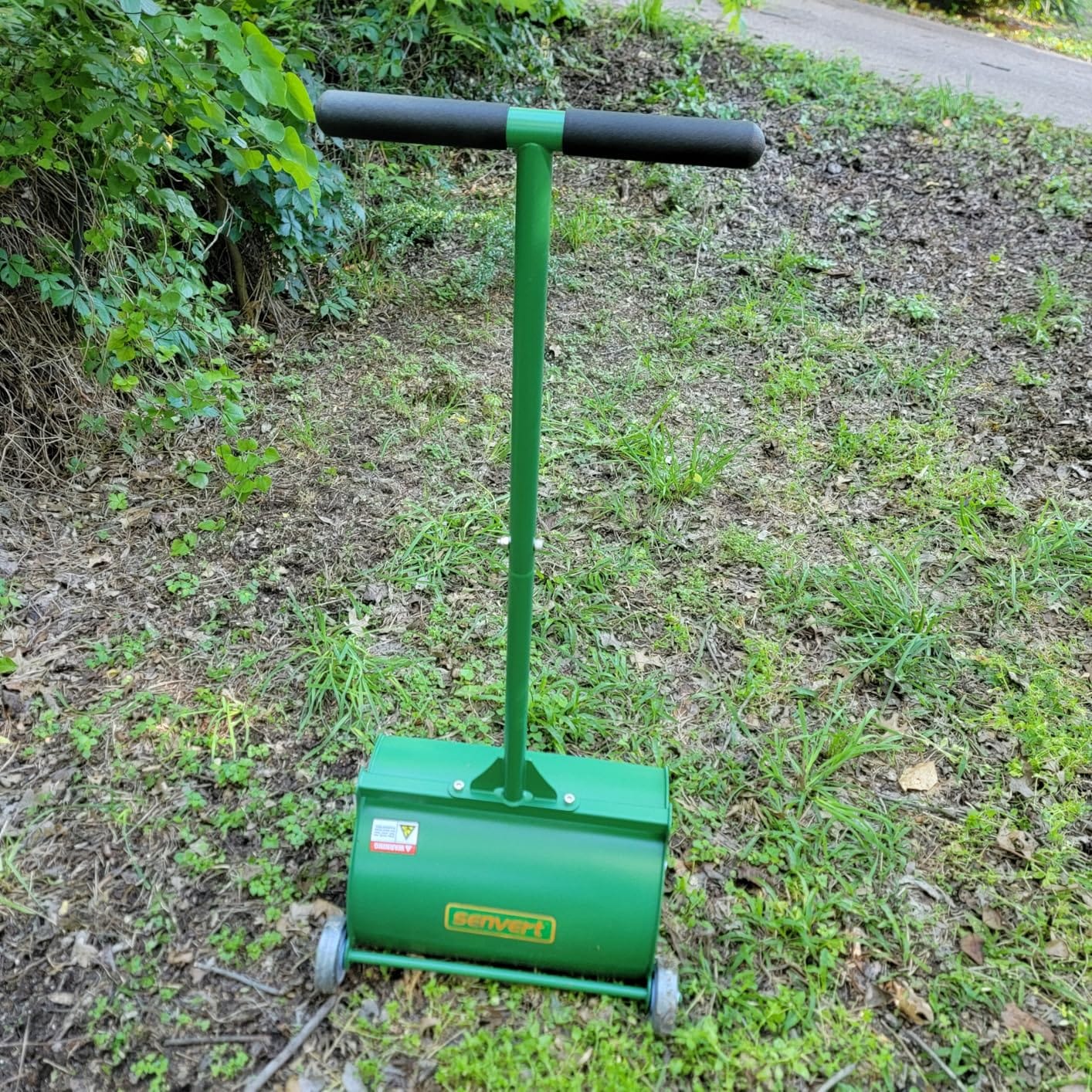
Auxiliary TPR wheels let you roll the unit over a driveway or patio without scratching or leaving marks, then set it down near the lawn when you are finished. The main body arrives assembled and you only attach the handle.
Reviewers rate it 4.4 and mostly single out the efficiency gain over step-style tools as the reason it works for them. If you have been walking around in aerator shoes and giving up, this is the step up.
Who this aerator suits
Medium lawns that have a surface crust but not a full hardpan layer, and anyone who wants rolling coverage without the weight and hitch of a tow-behind.
It is also the easiest way to keep a lawn open in spring without committing to a machine that needs a tractor.
Where it falls short
The spikes do not remove soil. They make punctures that close back up, so on heavily compacted clay this will not produce the lasting result a corer does.
At 38.3 pounds it is not a lightweight tool either, and the ballast sand or stone is an extra item you have to source and later store.
10. Sun Joe 15 Inch Dethatcher and Scarifier: Best for Thatch
Sun Joe 15-Inch Lawn Dethatcher with Scarifier Blade Reel, AJ805E
Corded electric 2-in-1
13 amp motor
15 inch working width
5-position depth
Pros
- 13 amp motor powers through heavy thatch and moss
- Removable 13.2 gallon bag cuts cleanup time
- Five depth positions let you tune aggressiveness
- Easy-glide wheels reduce fatigue
Cons
- Needs an outdoor outlet within cord reach
- Heavier 27.1 lb build than lighter electric scarifiers
- Some reviews raise durability and performance complaints
Include this one because it solves a different half of the problem. It does not pull plugs, so it is not the answer for compacted soil, but a deep thatch layer blocks the holes a corer would open. Strip the thatch first and the coring pass works far better.
The 13 amp motor handles heavy thatch and moss, and the five-position depth adjustment lets you start shallow on healthy turf and go deeper only where the mat is thick. A removable 13.2 gallon bag keeps the debris contained.
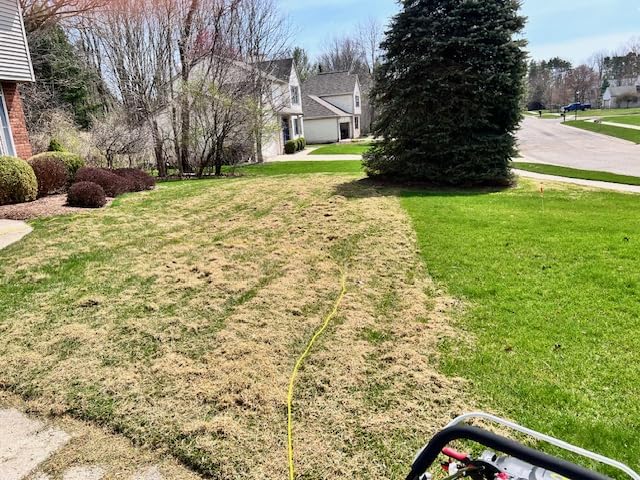
Switching between dethatcher and scarifier blades takes a few seconds, so the same machine covers both jobs. The 15 inch width is narrow enough to work around trees and beds without much fuss.
With close to 19,000 reviews and a 4.4 average, this is the most-reviewed product in the roundup by a wide margin. The pattern is strong praise for motor power, bag capacity, and depth control, with a minority flagging long-term durability.
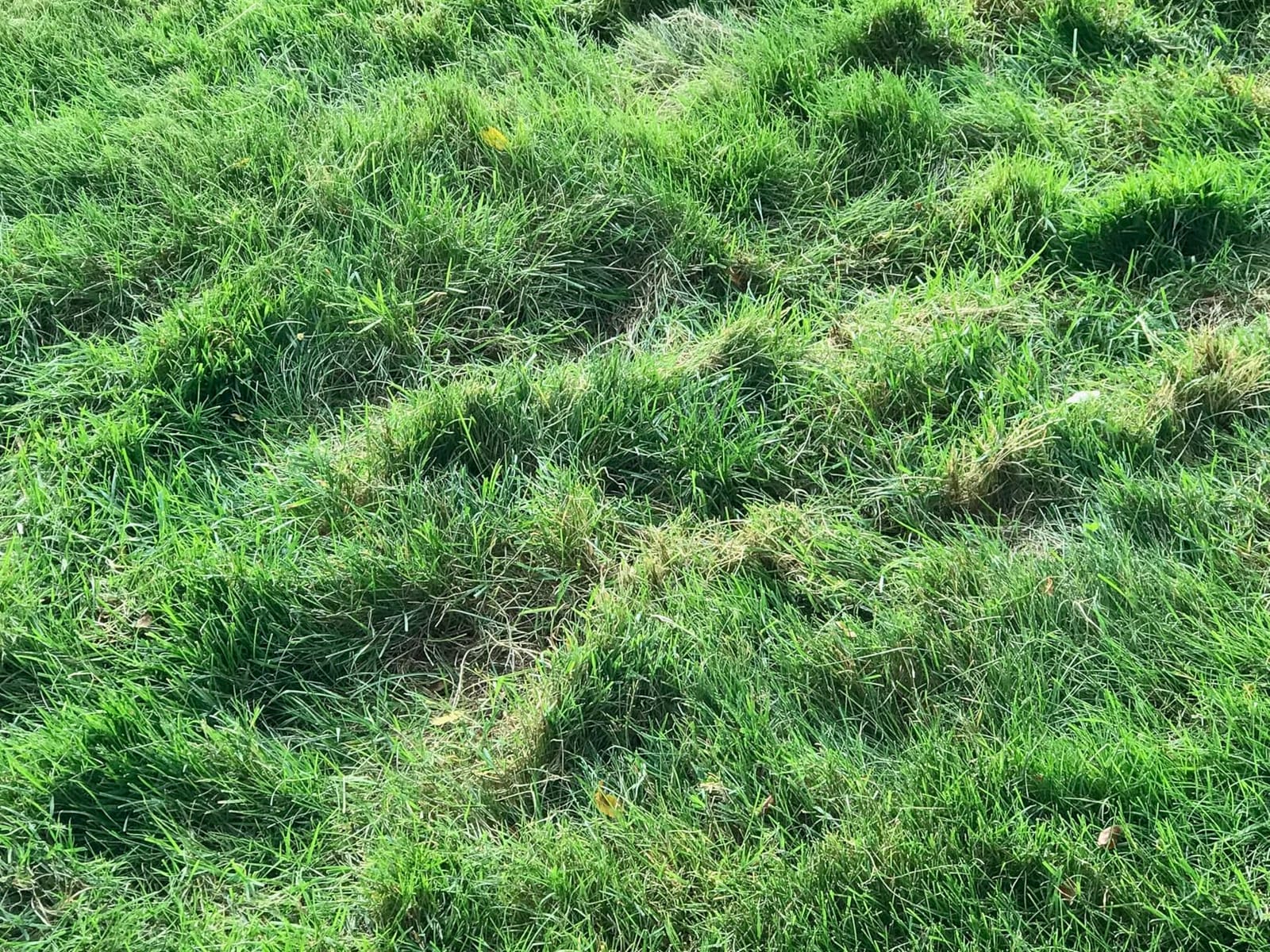
Who this machine suits
Lawns where thatch measures over half an inch, and anyone following a two-step plan: dethatch in early season, core a few weeks later, then overseed. It works well on a flat small lawn near an outlet.
It also handles moss and dead growth in spring better than any hand tool on this list.
Where it falls short
It is not an aerator in the compaction sense. Blades cut thatch at the surface rather than extracting cores 3 inches down, so treating it as a fix for compacted soil is a mistake.
The cord is the practical limit. Without an outdoor outlet within reach, you are aerating a small patch at a time, and at 27.1 pounds it is heavier than lighter electric scarifiers.
11. RIFPOD 15 Spike Manual Aerator: Best for Edge Work
Lawn Aerator, Automatic Dirt and Leaf Clean Design, Heavy Duty Manual Lawn Aerator Tool with 15 Iron Spikes, Height Adjustable, Yard Grass Aerator for Lawn(Black)
Manual spike aerator
15 iron spikes at 1.74 inches
Adjustable 32-35 inch handle
Dirt release spring
Pros
- Thickened iron with rust-resistant surface treatment
- Assembly takes only two bolts
- Handle adjusts from 32 to 35 inches for different users
- Spring design releases dirt without constant clearing
Cons
- Solid spikes make small holes rather than soil cores
- Real manual effort on anything larger than a patch
- Not as quick as product videos suggest
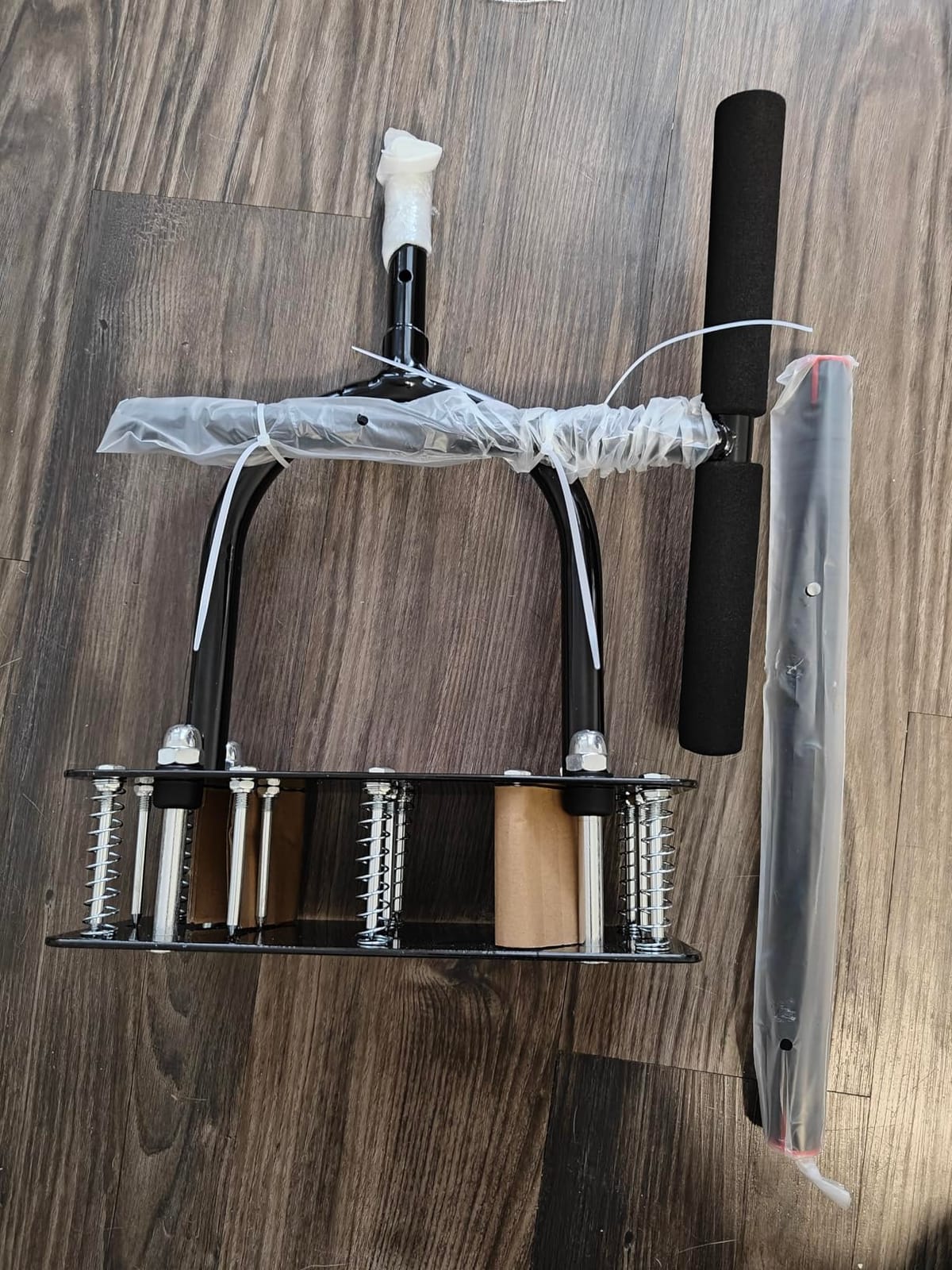
A compact spike tool for the jobs that do not justify a bigger machine. The handle adjusts between 32 and 35 inches, so two people of different heights can share it without one of them bending over.
The patent-pending double spring is meant to release dirt and leaves automatically rather than packing the foot plate solid. On damp ground that genuinely reduces stopping to clear the tool every few steps.
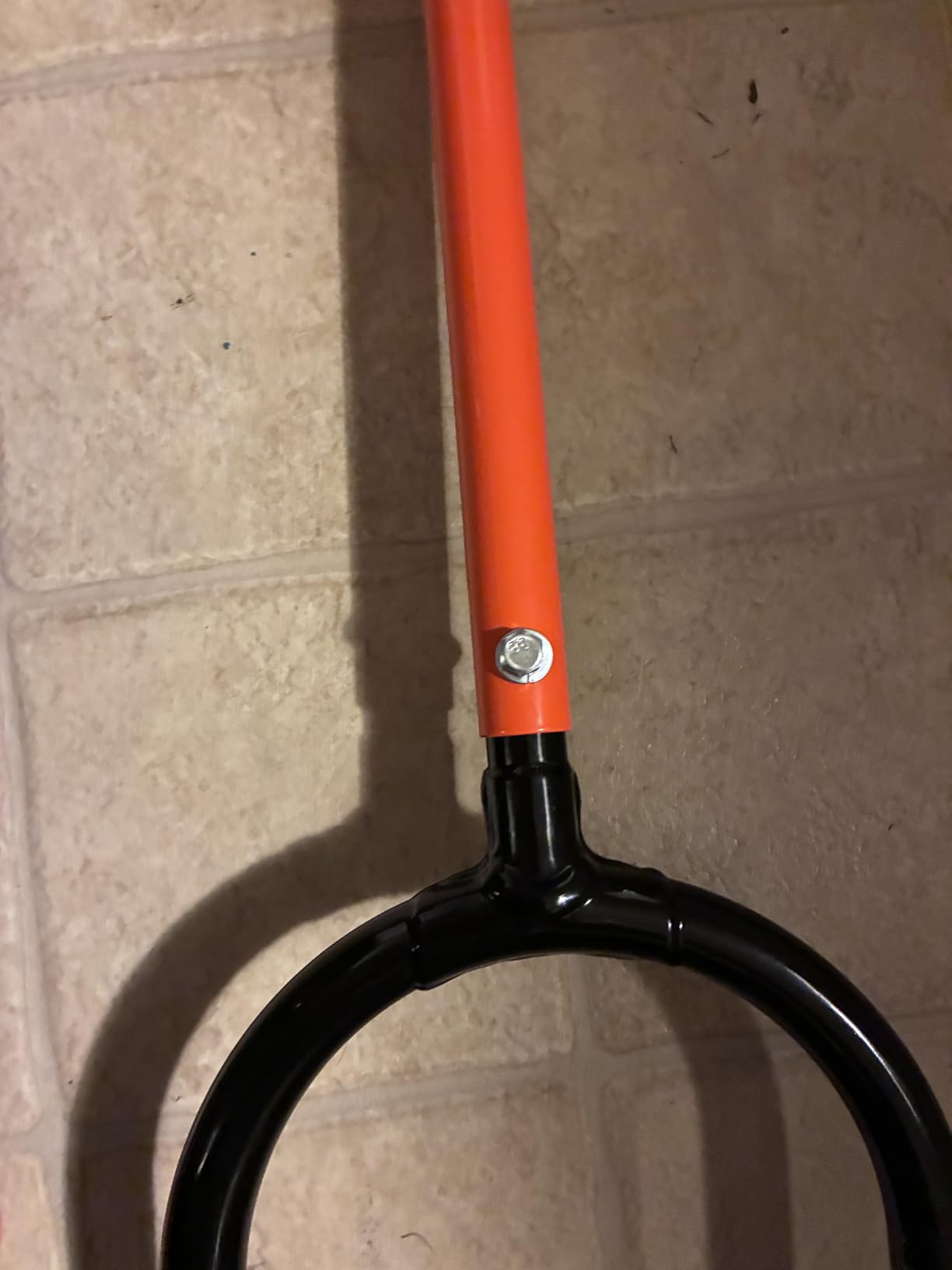
Owners of compact and hard yards like the build for the price. The iron is thickened and carries a rust-resistant finish, and assembly needs only two bolts plus a small wrench.
At 1.74 inches the spikes are shorter than the Walensee’s 2.8 inch spikes, so this is a surface tool. It is best used where grass is thin and you want to open the top layer for seed.
Who this aerator suits
Edging along fences, working around shrubs, and treating small patches before overseeding. Reviewers also note it is a sensible alternative to renting for a one-off small job.
It suits anyone who wants to try spike aeration without spending much, and who can handle the physical effort.
Where it falls short
Solid spikes produce small holes rather than cores, so it will not relieve compaction. On clay it mostly scratches the surface.
Several buyers note the work is slower than videos suggest, which is fair for a 15-spike foot plate. Treat it as a spot tool and it delivers.
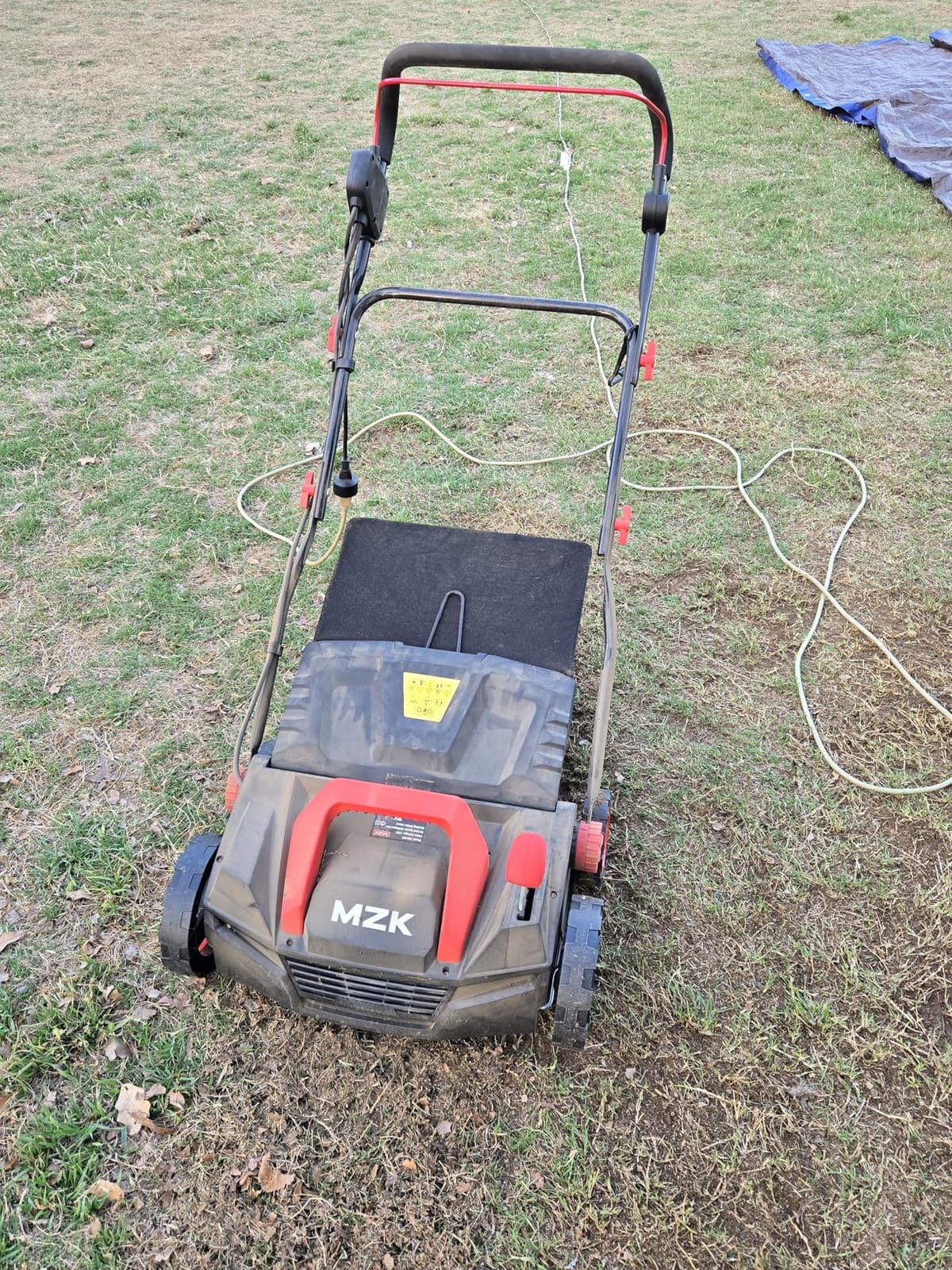
12. MZK 15 Inch Electric Dethatcher Scarifier: Best Lightweight Electric Option
MZK Lawn Dethatcher Electric Scarifier with Bag,15In(RED)
Corded electric 2-in-1
13 amp motor at 3700 RPM
15 inch path
45L collection bag
Pros
- 3700 RPM motor removes heavy thatch and moss quickly
- Quick-switch between dethatcher and scarifier blades
- Light enough to move easily on foot
- Foldable handle and dual safety switches for compact storage
Cons
- Collection bag fills quickly and can leave debris behind
- Scarifying tines can be aggressive on healthy turf
- May stall under very thick thatch if pushed hard
The highest-rated product here at 4.9, though the review base is small at 50, so treat that number with some perspective. What the reviews do support is power: a 13 amp copper motor spinning to 3700 RPM over a 15 inch path.
That makes it effective on moss and heavy thatch, which is the one job an electric machine can do that no plug aerator in this list will. Switch between dethatcher and scarifier blades quickly when the mat is thick.
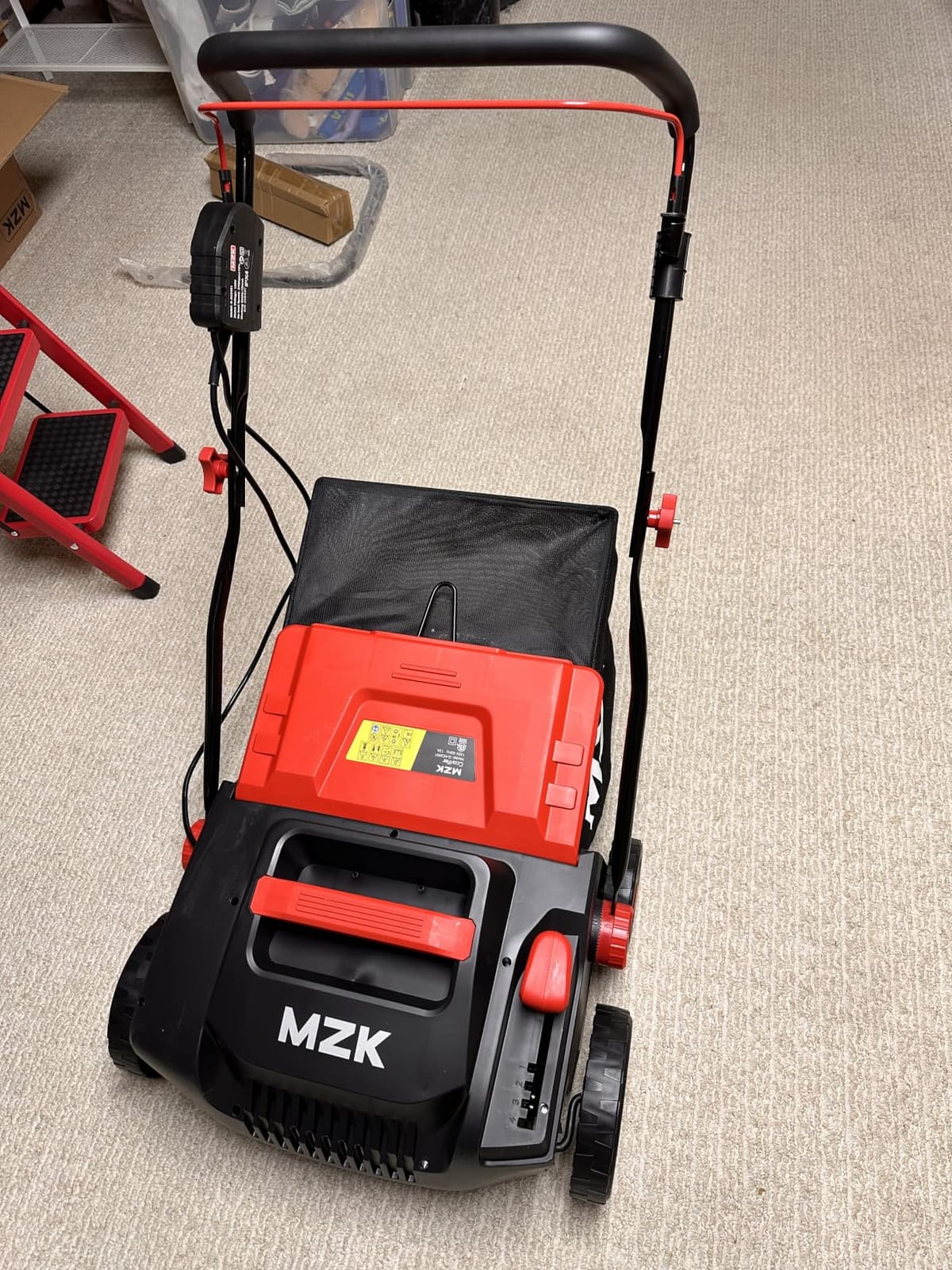
Depth adjusts from minus 0.47 inch to 0.24 inch, so you can set it for surface cleanup or a more aggressive pass. The 45 liter bag catches a lot of debris, and the foldable handle plus dual safety switches make storage easy in a small shed.
Portable rather than powerful enough for clay. Several reviewers mention the bag fills before the pass is finished and that the scarifier tines can tear into healthy turf if you set the depth too deep.
Who this machine suits
Owners with a small lawn near an outlet who have a thatch or moss problem and want visible debris in a bag rather than smeared across the lawn. It is easy to carry and simple to store.
It also makes sense as the first half of a two-step job alongside a hand corer, covering thatch and moss while the corer handles compaction.
Where it falls short
It is a dethatcher and scarifier, not a plug aerator. On compacted soil it will not open the channels that resolve the underlying problem.
The cord limits the working area, the bag fills fast, and pushing it hard through very thick thatch can stall the motor. Some reviewers also find the frame lighter than they would like.
How to Actually Aerate Compacted Soil
Owning the right tool is half of it. The other half is technique, and the technique is where most disappointing aeration results come from.
Water first, then do the squeeze test. Run a sprinkler or hose over the lawn the day before and let it soak in. Pick up a handful and squeeze: if it holds its shape and barely dribbles, you are ready. Bone-dry soil will not form cores, and saturated soil smears instead of cutting cleanly.
Mow low and mow dry. Cut the grass shorter beforehand so the tines reach the soil, and do not aerate a wet lawn because the wheels will tear the turf.
Make two passes in alternating directions. Go north-south, then east-west. This is the most repeated advice from people who aerate regularly, and overlapping the pattern is what turns holes into connected channels rather than isolated dots.
Add ballast on hard ground. For a tow-behind, load the tray gradually until the tines bite, then reduce the weight for the second pass. Too much at once tears sod instead of opening soil.
Do not rush the first inch. Start at a slower speed. Too fast and the drum skims the surface; too slow and the tines wedge without cutting a clean core.
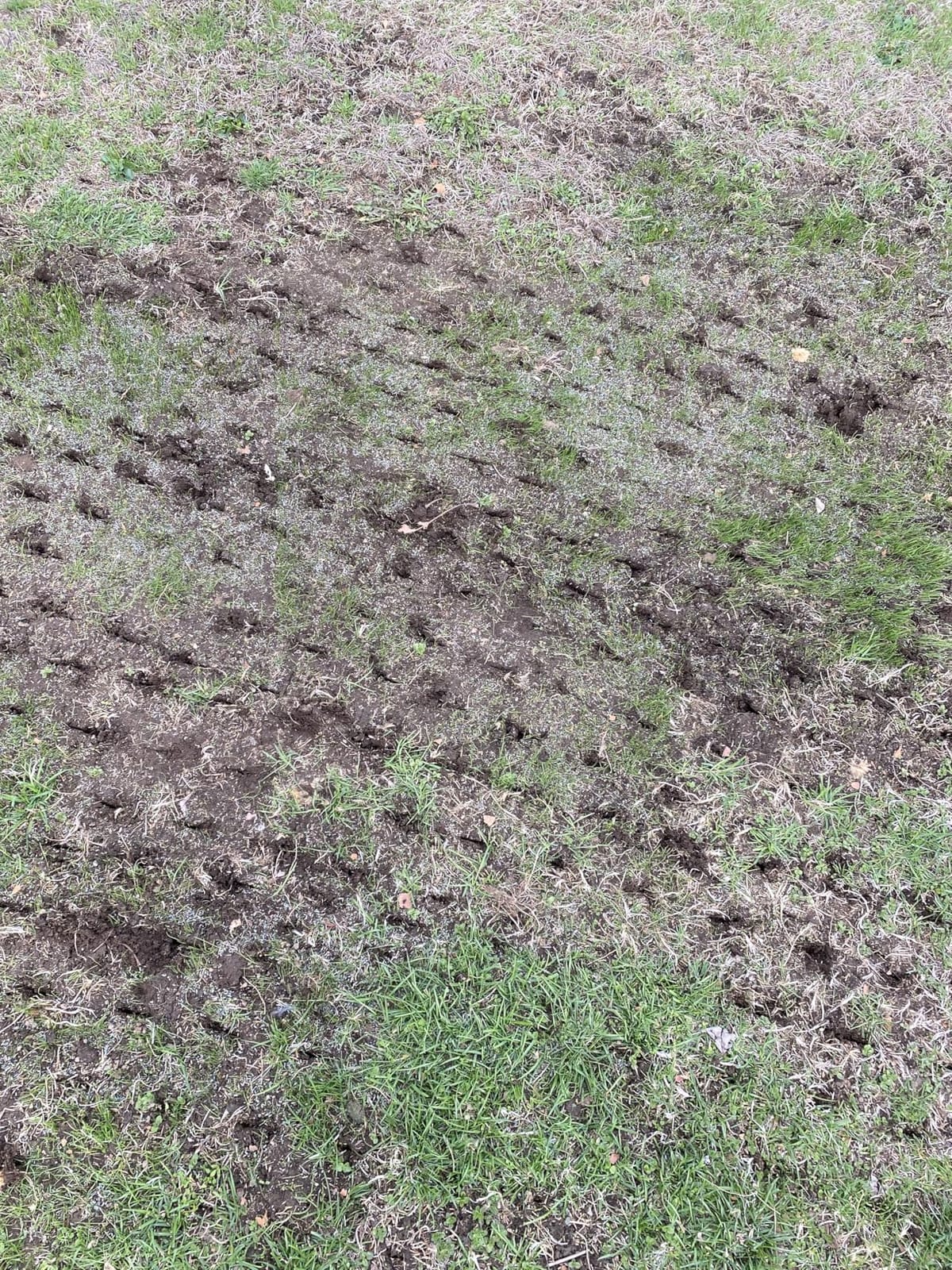
Leave the plugs where they fall. Let them dry for a few days, then mow over them so they break down into the lawn. Raking them off removes the organic matter you just brought to the surface.
How to Choose the Right Lawn Aerator
The single most useful question is how big the area is, because it decides whether you are shopping for a hand tool, a rolling drum, or a tractor attachment. After that, the deciding factor is how hard the soil is.
Under 5,000 square feet of soft soil: a manual hollow-tine corer is enough. Pick one with a foot bar and two to four plugs, and expect to spend an afternoon on it.
Under 5,000 square feet of hard clay: start with the deepest corer you can find and water the ground well beforehand. Deep penetration matters more than coverage here.
5,000 to 20,000 square feet: a rolling drum is worth the money. It gives you a foot bar’s independence with far less effort, whether it cores or spikes.
Over 20,000 square feet, or anything with a tractor: buy a tow-behind corer if you will use it more than twice, and put real weight on the tray for clay.
Soil type changes the tool as much as size does. Clay is dense and holds water, so it responds to deep hollow tines with ballast. Sandy soil drains freely and compacts mainly in the top inch, so a spike tool is usually enough. Rocky ground favors heat-treated tines because they shed dents instead of bending.
Power source is really a question of lawn size and storage. Manual tools cost nothing to run and store in a corner. Corded electric needs an outlet within cord reach. Cordless platforms remove the cord but add battery charging to a job you do once or twice a year. Tow-behind machines need a tractor and a garage corner.
Renting versus buying is worth thinking through honestly. For a single job on hard clay, a rental is often the right call because the daily rate is far less than a machine you will use twice and store for a decade. If you already own a tractor, or you aerate every spring, the math flips quickly and owning wins.
Thatch changes the plan too. If thatch is over half an inch, dethatch first, wait a couple of weeks for the crowns to recover, then core and overseed. Reversing the order just pushes debris back down into the holes.
Which one for which yard: under 2,000 square feet with soft soil, the Yard Butler manual corer. Under 2,000 square feet of hard clay, the LawnVigor deep-tine corer. A medium lawn where effort is the limit, the rolling corer or rolling spike. A quarter acre or more with a tractor, the Brinly tow-behind for neat plugs or the Agri-Fab for the widest coverage. A thatch problem, the electric dethatcher first, then any corer above.
What to Do After Aerating: Plugs, Topsoil and Overseeding
Topsoil is optional. On a lawn with healthy soil structure, the cores break down in a few weeks and the holes fill on their own. On a new-build lawn with stripped topsoil, a thin topdressing of screened topsoil over the plugs genuinely helps, because you are adding the material the site never got.
Overseeding in the same visit works well. The holes hold moisture and seed sits at the right depth, which is the combination that gets germination. Water lightly and often for the first two weeks, and keep traffic off the area until the new blades establish.
Hold off on heavy fertilizer for about two weeks. The grass is recovering and the added nitrogen now tends to push existing thatch rather than new roots.
Frequently Asked Questions
Which is better, core or spike aerator?
A core aerator is better for compacted soil because hollow tines pull soil plugs out and leave open channels for air, water, and roots. A spike aerator pushes a solid pin in, loosening only the surface crust and driving compaction sideways. Use spikes on a lawn with light surface crusting; use cores on clay, hardpan, or traffic areas.
What is the best aerator for clay soil?
The best aerator for clay soil is a hollow-tine core aerator, ideally tow-behind with a weight tray if your lawn is large. Clay resists penetration, so depth matters more than anything: look for tines reaching 3 to 4 inches and a tray that accepts ballast. Water the lawn the day before so the cores form cleanly instead of smearing.
Can I use an aerator on clay soil?
Yes, and clay is one of the strongest reasons to aerate at all. The only caution is timing: wait until the soil is moist but not saturated, or the tines will smear the surface instead of cutting cores. Break up heavy crust first, and add ballast gradually on a tow-behind rather than loading the tray in one go.
Is it worth aerating clay soil?
It usually is. Clay has small pores and holds water tightly, so it compacts easily and suffocates roots in wet seasons while shedding water in dry ones. Coring opens channels that let oxygen in and water reach the root zone, and overseeding into those openings is where most of the visible recovery shows up.
Are manual lawn aerators worth it?
For a small yard, yes. A manual corer costs far less than a rental day and handles compacted patches, dog runs, and areas near landscaping that no powered machine can reach. For anything over a quarter acre of hard clay, renting a tow-behind is the sensible choice, since manual work there becomes a multi-day project.
What is the best month to aerate your yard?
Aerate in early spring or early autumn while the grass is actively growing. Cool-season lawns such as fescue and Kentucky bluegrass do best in spring and fall; warm-season lawns such as Bermuda and zoysia aerate in late spring through early summer. Avoid peak summer heat and avoid frozen ground, and pair the pass with overseeding.
Should you put down topsoil after aerating?
Usually not needed. The cores break down and return organic matter to the surface on their own within a few weeks. Topdress with screened topsoil only when the existing soil is poor, such as a new-build lot where topsoil was stripped, or when you are leveling a noticeable dip. Keep the layer thin so it does not bury the crowns.
Conclusion
For compacted soil, a hollow-tine core aerator is the only category that solves the actual problem, because it removes soil instead of pushing it aside. For a small yard, the Yard Butler manual coring aerator is the pick we would buy first. For a quarter acre or more with a tractor, the Brinly tow-behind pulls the cleanest plugs and the Agri-Fab covers the most ground.
Whatever you choose in 2026, water the lawn the day before, run two passes in alternating directions, and leave the plugs on the surface to break down. Those three habits decide whether the machine does any good.