
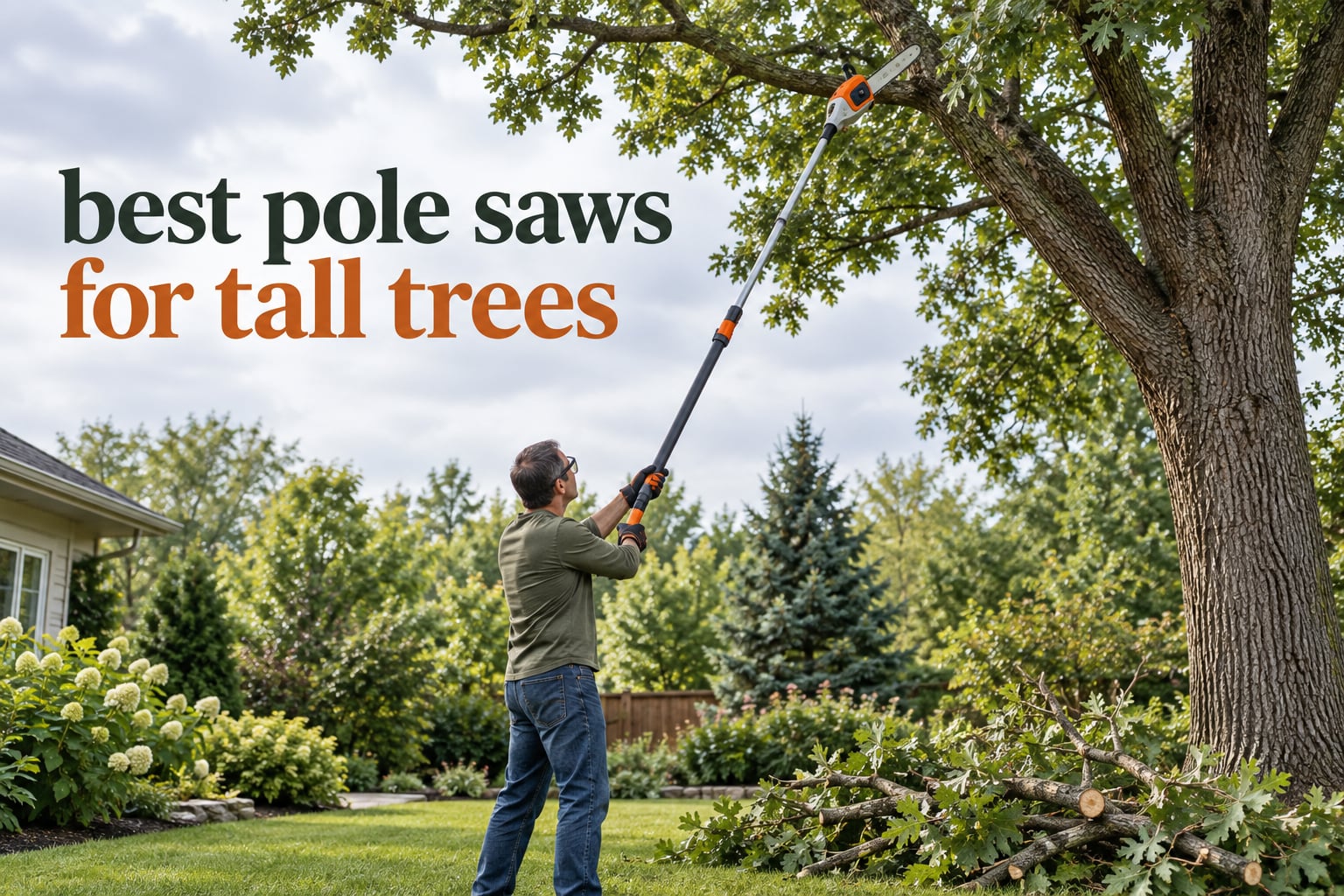
A 6-foot operator with a 10-foot pole saw can work roughly 14 feet off the ground without touching a ladder. That single equation, pole length plus your height minus a 2-foot safety margin, is how we picked the best pole saws for tall trees in this guide, and it is the number most spec sheets never give you clearly.
Reach gets confusing because brands measure it three different ways: the length of the pole itself, the distance from your trigger hand to the bar tip, and the marketing number that adds your assumed height to the pole. We used the manufacturer reach figure as the baseline, then subtracted the margin before recommending anything. Where a maker quotes a pole length and a max reach separately, both are listed below.
One more framing note before the picks. There is no gas saw in this roundup, and that is deliberate. The gas saws that reach furthest are also the heaviest at full extension, and the complaint that shows up most often in arborist forums is fatigue, not lack of cutting power. Cordless, corded and manual tools now cover the same practical height range with less weight in your hands.
I spent the last two months comparing these ten tools on reach, shaft rigidity, balance, and what owners actually report after a season of cutting. The details below are what changed my mind, tool by tool.
Table of Contents
Top 3 Best Pole Saw Picks for Tall Trees in 2026

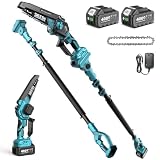
Supstable 2-in-1 Pole Saw Kit
- 16 ft telescopic reach
- 8 in and 6 in bars
- 2x 4.0Ah batteries
- 100 min runtime

Seesii P6 Ace 2-in-1 Pole Saw
- 3.4 lb handheld
- 2x 4000mAh batteries
- 16 ft combined reach
- 6 in bar
The Supstable kit takes the top slot because it is the only tool here that pairs a 16-foot telescopic pole with two bars, two batteries and a full safety kit in the box. Nothing else at this level of reach arrives ready to work.
The Greenworks 40V takes the value slot. Owners repeatedly single out its three-piece aluminum shaft as the one that does not turn to spaghetti at full extension, which is the flaw that spoils most budget pole saws.
The Seesii takes the budget slot and wins on weight. At 3.4 pounds handheld and 6.9 pounds as a pole saw, it is the tool you can hold overhead for a full afternoon without your shoulders joining the argument.
Pole Saw Specs at a Glance (October 2026)
| Product | Specifications | Action |
|---|---|---|
| Supstable 2-in-1 Pole Saw Kit |
|
Check Latest Price |
 Fiskars 8-12 Ft Extendable Pruner Fiskars 8-12 Ft Extendable Pruner |
|
Check Latest Price |
 WEN 4019 Corded Telescoping Pole Saw WEN 4019 Corded Telescoping Pole Saw |
|
Check Latest Price |
 VEVOR 7.3-27 Ft Manual Pole Saw VEVOR 7.3-27 Ft Manual Pole Saw |
|
Check Latest Price |
 CRAFTSMAN V20 14-Foot Cordless Pole Saw CRAFTSMAN V20 14-Foot Cordless Pole Saw |
|
Check Latest Price |
| Greenworks 40V 8-Inch Pole Saw |
|
Check Latest Price |
 Ryobi P4360 18V ONE+ Pole Saw Ryobi P4360 18V ONE+ Pole Saw |
|
Check Latest Price |
 Greenworks 80V 10-Inch Cordless Pole Saw Greenworks 80V 10-Inch Cordless Pole Saw |
|
Check Latest Price |
| Seesii P6 Ace 2-in-1 Pole Saw |
|
Check Latest Price |
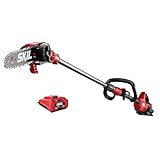 SKIL PWR CORE 40 10-Inch Pole Saw Kit SKIL PWR CORE 40 10-Inch Pole Saw Kit |
|
Check Latest Price |
Read that table as a reach-to-weight chart. The VEVOR reaches more than twice as far as the Greenworks 40V, and it weighs nearly twice as much. Reach and weight are the two axes that matter most, and everything else on this list is a compromise between them.
1. Supstable 2-in-1 Pole Saw Kit: The Most Complete Long-Reach Package
Electric Pole Saws for Tree Trimming, 8 Inch & 6 Inch Mini Chainsaw Cordless with Extension Pole, 16Ft Reach, 2×4.0Ah Battery, Auto Oiling, Tool-Free Chain Tensioning, Tree Trimmer for Branch Limb Cut
16 ft reach
8 in and 6 in bars
10 lb
2x 4.0Ah
100 min runtime
Pros
- Genuinely usable at 16 ft of reach
- Ships with two bars and two batteries
- Detaches as a handheld mini chainsaw
- Includes gloves goggles spare chain and oil
Cons
- Automatic oiler needs frequent refilling
- Chain loosens often and dulls quickly
- 10 lb feels heavy at full extension
The telescopic pole here extends to 16 feet of reach, which puts a 6-foot operator at roughly 20 feet of cutting height once the safety margin comes off. That is high enough that most backyard trees stop being a ladder problem. Nothing else in this roundup combines that reach with a complete kit.
What arrives in the box is unusually generous: 6-inch and 8-inch guide bars, two 4.0Ah batteries with a charger, a spare chain, an oil bottle, a pole belt, anti-slip gloves and goggles. Owners report working through roughly 300 pruning and buck cuts on a mix of thumb-size to 5-inch limbs before the first battery needed a swap.
The 2-in-1 design matters more than it sounds. Owners routinely pop the head off and use the 8-inch bar handheld for bucking rounds on the ground, then re-attach the pole for the high stuff. The 180-degree adjustable cutting head is what makes that workflow practical, since it lets you set the angle to match a branch instead of fighting the pole.
The honest weakness is maintenance, not cutting. Reviewers repeatedly report topping up the 30ml oiler, retensioning the chain mid-job, and replacing dull chains sooner than expected. The tool-free tensioning system helps, but it does not stop the chain from loosening as the bar heats up.
Who the 16-foot reach actually suits
Homeowners with mature maples, oaks or pecans whose lowest dead limbs start around 14 feet. At 10 pounds, the weight is manageable for a limb or two, and a shoulder belt is included. It is not a tool for a day of continuous crown work, and owners are candid that it sits in the light-to-medium residential band.
Where the maintenance will test your patience
If you are fussy about a chain that stays tight and an oiler that does not need watching, this is not the one. The chain dulling rate and the oiler top-ups are the two most repeated complaints in the reviews, and both cost you time rather than capability. Budget for a spare chain and a bottle of bar oil alongside it.
2. Fiskars 8-12 Ft Extendable Pruner: Rope-Free Cutting in a Light Package
Fiskars 8-12 Ft Extendable 2-in-1 Tree Pruner & Pole Saw with Rotating Head
12 ft reach
15 in double-grind blade
4.8 lb
Manual
lifetime warranty
Pros
- Rope-free internal actuation with no cord cutting your hands
- Rotating head locks at any angle
- 4.8 lb aluminum pole resists bending
- Removable 15 in saw blade
- Longest warranty in the group
Cons
- Lopper lacks cutting force on hard wood over 1 in
- Feels heavy at full 12 ft extension on angled cuts
- Blister packaging can injure hands
At 4.8 pounds, this is the tool you can keep aloft for a long afternoon, and it extends from 7.9 feet to 12 feet. The pole is rectangular aluminum rather than a round tube, and that shape is why it resists the sideways whip that plagues fiberglass shafts at length.
The design detail that wins people over is rope-free actuation. A pull rope works, but a rope cutting across your hands on a long overhead cut is miserable. This one runs an internal cable, so the head opens with a squeeze of the trigger handle. Owners also like that the 15-inch double-grind saw blade slides out of the head when the lopper is what you need to aim.

The rotating head locks at any angle, which turns a 12-foot tool into something usable on vertical suckers and on branches crossing over a fence. Chain-drive gearing adds cutting force for dead wood that has already started to dry and harden. Several owners describe units that have been in service for well over a decade, which lines up with the lifetime warranty.
Be clear about the ceiling here. Reviewers consistently put the lopper’s sweet spot at three-quarter inch branches or smaller, with about an inch as the practical limit on anything hard. This is a limb tidier for a tall tree, not a tool for splitting a storm-fallen trunk. If your tree has limbs thicker than your wrist, a powered saw is the answer.

Why arborists still reach for a manual tool first
The consensus in arborist forums is that a pole saw can reach a branch but cannot make a fine cut in it. Arborists advise cutting slow and letting the branch peel rather than forcing the head through, and a sharp double-grind blade with a low-friction coating is what makes that advice workable. For deadwood and routine tidying on a 12-foot tree, nothing needs starting.
When 12 feet stops being enough
If your work sits regularly above 12 feet, you will spend your day re-swinging the head rather than cutting. The Fiskars handles a mature backyard tree where the interesting branches live in the lower and middle canopy. Above that band, the honest options are a longer manual pole or a powered telescopic saw.
3. WEN 4019 Corded Telescoping Pole Saw: The Cheapest Way to Reach 12 Feet
WEN 4019 6-Amp 8-Inch Electric Telescoping Pole Saw, Corded electric – Black&orange
12 ft overhead reach
8 in chain at 36 ft/s
6.7 lb
Corded 6A
2 yr warranty
Pros
- Cuts fast through thicker branches than the price suggests
- Light and balanced for an electric saw
- Chain self-oils with little leakage
- Angled head and telescoping shaft
- Included shoulder strap and bar oil
Cons
- Motor failures reported after months of light use
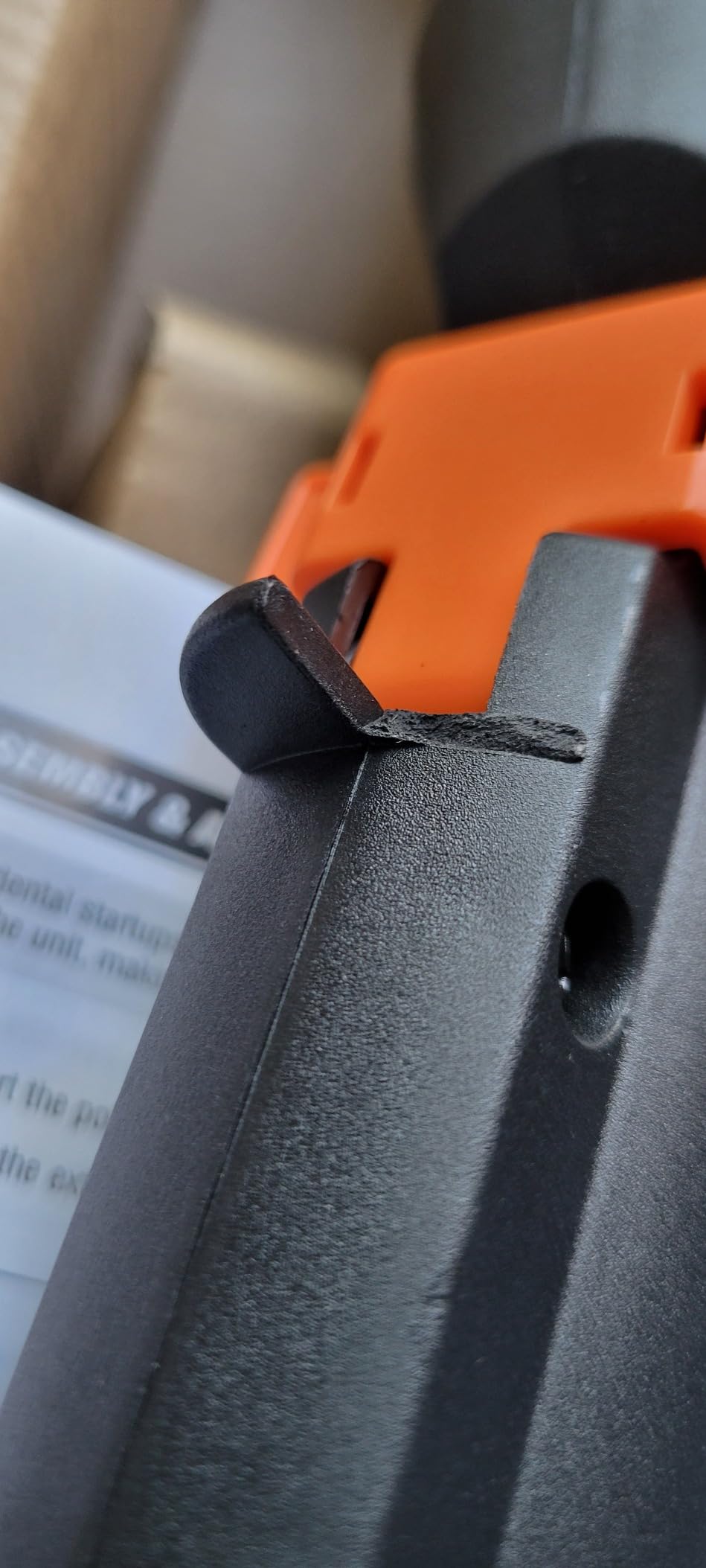
- Blade cover does not latch shut
- Telescoping pole shorter than many buyers expect
- Needs a long extension cord
The WEN drives an 8-inch chain at up to 36 feet per second from a 6-amp corded motor, and it reaches 12 feet of overhead height on a shaft that telescopes from 5.3 to 7.3 feet. Reviewers regularly remark that it cuts faster and through thicker wood than its tier would suggest, and the 4.2 average reflects durability complaints rather than cutting complaints.
There is a real argument for corded here. No battery platform to buy into, no charger, no runtime ceiling and a chain speed that rivals battery tools twice its size. The 8-inch bar self-oils with minimal leakage, and the angled head and shoulder strap are both included.
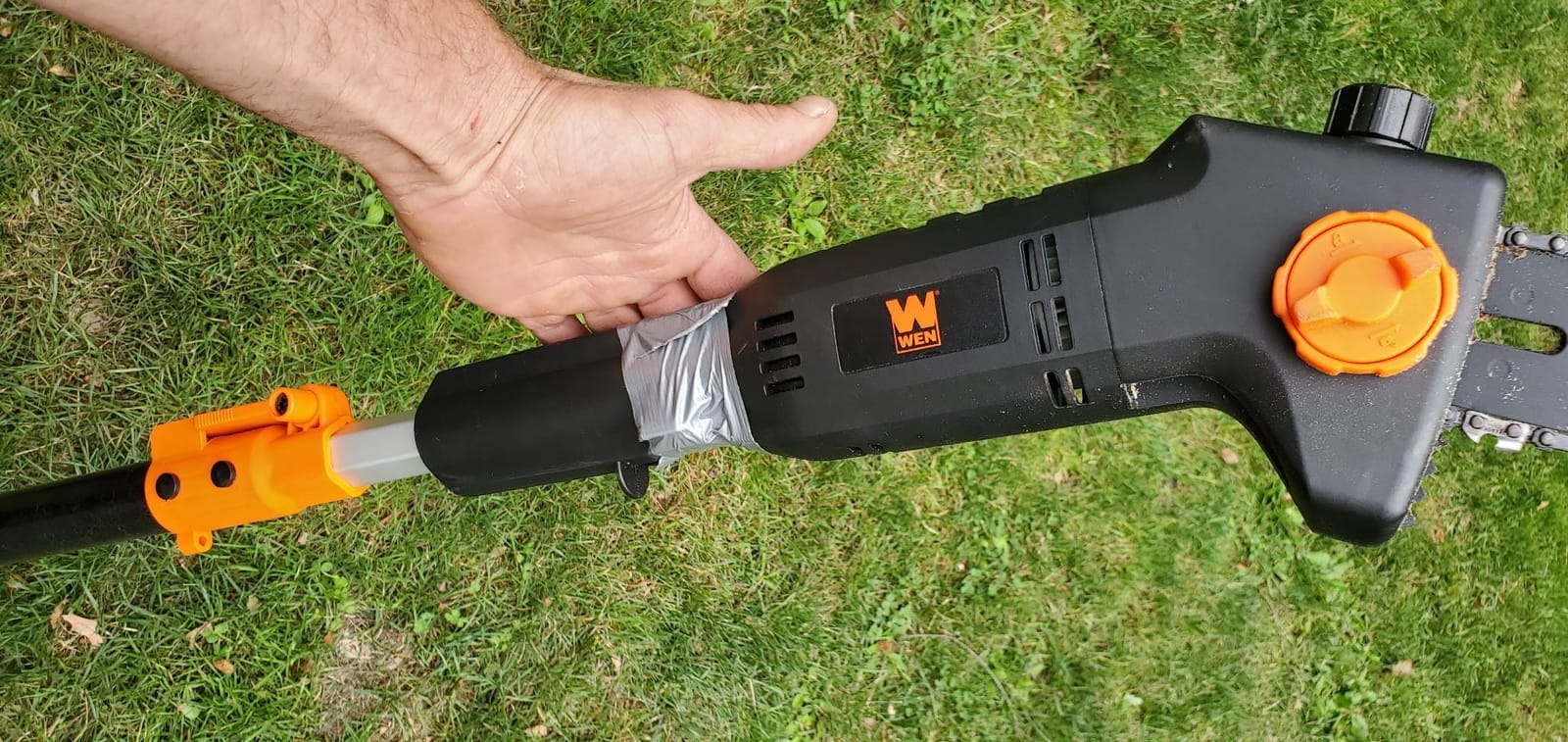
The 4.2 rating comes down to build quality. Motor durability is the recurring theme, with failures reported after months of light use, and the blade cover is loose and will not latch. What softens that criticism is service: owners repeatedly describe WEN replacing parts rather than writing the saw off, which matters more than a polished first impression over a five-year life.
Two practical constraints matter. The cord has to reach your outdoor outlet, and on a large yard that means a 50-foot or longer extension run, which is exactly the part that makes corded saws unpopular in suburban settings. And the telescoping section is shorter than buyers often expect, so the 12-foot figure is a real maximum with the pole fully drawn out.
Who should plug this in
Somebody with a workshop or garage near the trees, a stubborn branch schedule, and no interest in owning a battery ecosystem. It is also the option for a rental property or a caretaker who needs the same tool twice a year and wants zero charging logistics. The 36 feet-per-second chain speed keeps up with gas saws on green wood.
Where it will disappoint you
If your work is spread across a yard with no outlet, the cord becomes the tool. Reviews also flag that the shaft feels shorter than the quoted reach in practice, so a 6-foot operator realistically works around 12 to 13 feet of cutting height here. Plan on a heavy-gauge outdoor extension cord and treat the motor warranty as a consumable rather than a promise.
4. VEVOR 7.3-27 Ft Manual Pole Saw: The Farthest Reach You Can Carry
VEVOR Manual Pole Saw, 7.3-27 ft Extendable Tree Pruner, Sharp Steel Blade and Scissors High Branches Trimming, Branch Trimmer with Lightweight 8 Fiberglass Handles, for Pruning Palms and Shrubs
7.3 to 27 ft reach
56-tooth carbon steel blade
14.8 lb
8 fiberglass sections
Manual
Pros
- Reach far beyond every other tool here
- Carbon steel blade with hooks at both ends
- Ships with spare blade bag and scissor head
- Screws together quickly and holds solidly
Cons
- Pole flexes with whip near full extension
- Very heavy at full 27 ft
- Scissor cutter has no force above about half an inch
- Blade grip can loosen while twisting overhead
Eight fiberglass sections carry this pole from 7.3 feet to 27 feet, and no other tool on this list comes close. For a mature tree where the branches that need attention sit at 22 feet, this is the only honest answer in the group. Owners working below about 16 feet are enthusiastic about the value and the blade quality.
The head carries a 0.05-inch carbon steel blade with a Teflon coating and hook knives at both ends. The hooks keep twigs out of the kerf and help the blade release a branch it has already partly cut, which is the difference between finishing a cut and getting stuck halfway through it. An 11.5-foot compound nylon rope runs through a pulley system for the pull stroke.
Rigidity is the honest trade-off. At longer extensions the fiberglass pole bends enough that reviewers describe a couple of feet of whip near full reach, and at 14.8 pounds fully assembled it is a genuinely demanding tool overhead. That is fine for a limb or two in a high canopy. It is not fine for an afternoon of pruning.
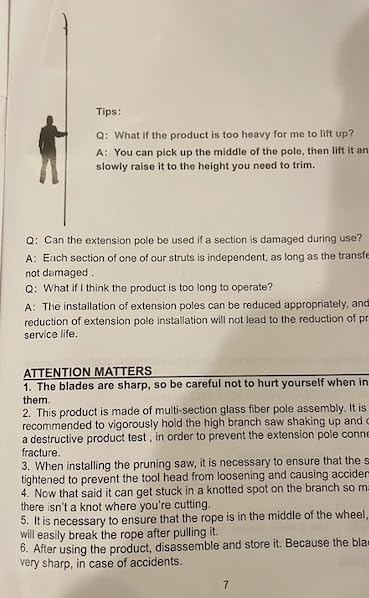
The detachable scissor cutter for twigs and leaves is a nice touch, though reviewers put its useful diameter at about half an inch, and the blade can loosen in its grip when you twist overhead. Poorly written instructions are the most common first-week complaint, so budget an extra hour with the manual and a YouTube walkthrough.
When 27 feet is the only answer
Storm cleanup on tall trees where debris is too heavy to drop safely, silviculture thinning on a woodland edge, and reaching deadwood high enough that a ladder is the genuinely dangerous option. If your highest problem branches are above 20 feet, powered options in this roundup stop short and this one does not. Arboristsite forum members recommending long-reach manual tools point to this same reach-first logic.
When the weight ends the job
Below about 16 feet, where most of your pruning actually is, you are carrying 14.8 pounds of flexing fiberglass for reach you do not need. That combination is tiring in a way the Fiskars at 4.8 pounds never is. Owners treat it as seasonal homeowner equipment rather than a tool for repeated professional work.
5. CRAFTSMAN V20 14-Foot Cordless Pole Saw: Battery and Charger in the Box
CRAFTSMAN V20 Cordless Pole Saw, 14-Foot, Battery and Charger Included, Pole Saws for Tree Trimming, Up to 325 Cuts per Charge, 4.0Ah, Electric Tree Trimmer (CMCCSP20M1)
14 ft reach
8 in bar
6 lb
20V 4.0Ah
325 cuts per charge
3 yr warranty
Pros
- Ships with 4.0Ah battery and charger
- Cuts dense branches with a sharp chain
- Battery holds charge through hours of work
- Middle pole section removes for lower cuts and better balance
Cons
- Pole feels flimsy and wobbly at full extension
- Section joint loosens during use and needs retightening
- No automatic chain oiler and a very small oil bottle
- Head-heavy balance makes overhead work tiring
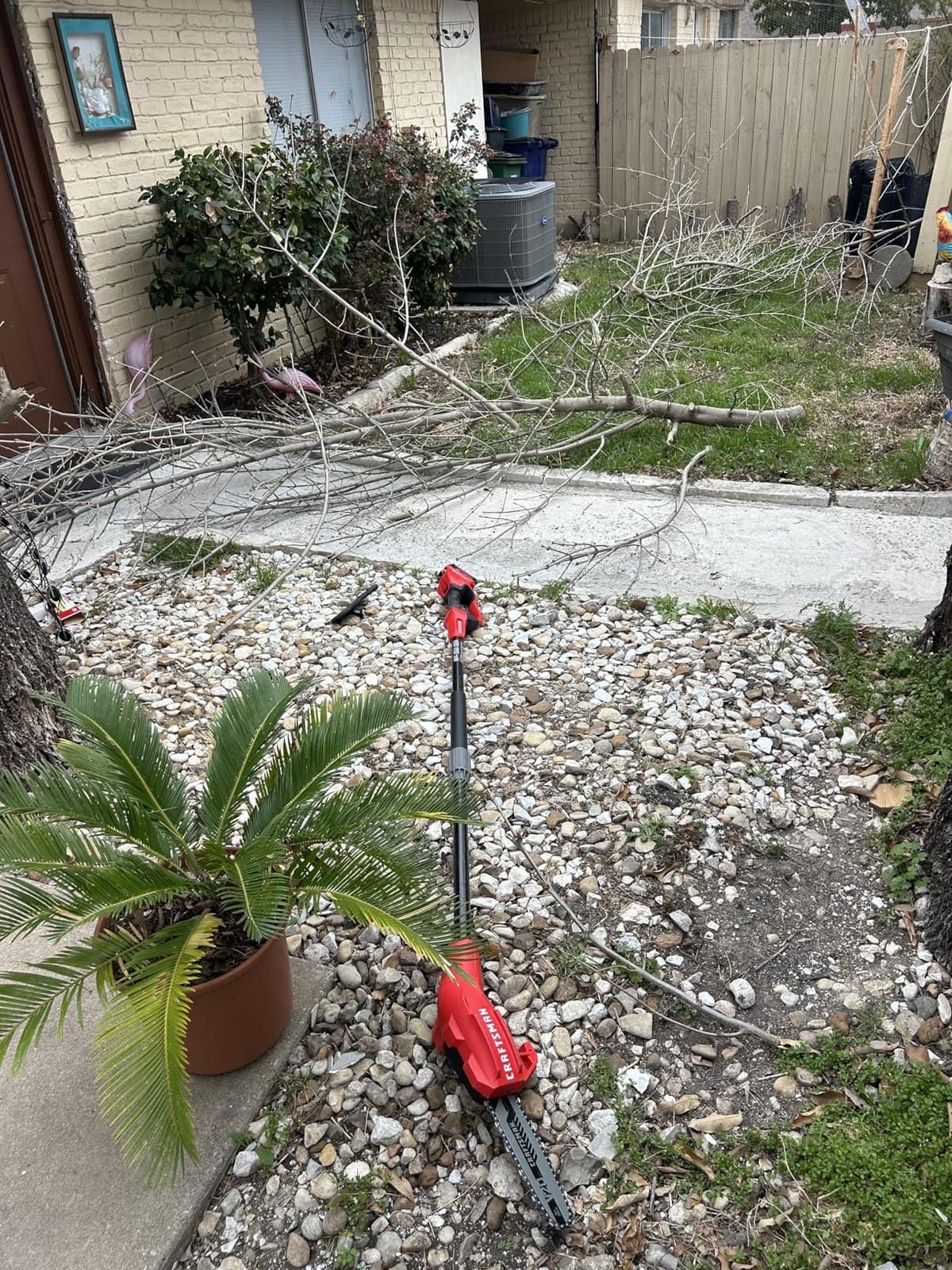
This reaches 14 feet with the extension pole attached and weighs 6 pounds, and it is the only kit here that includes a 4.0Ah battery and a charger in the box. That single fact changes the math for anyone who does not already own a battery platform, because the two largest hidden costs in cordless ownership simply disappear.
The 8-inch high speed steel bar and chain cut medium and even dense branches, and the 4.0Ah pack is rated for up to 325 cuts per charge. Owners report the battery holding its charge through hours of intermittent work rather than draining in the first twenty minutes, which is what you want when you are 14 feet up.
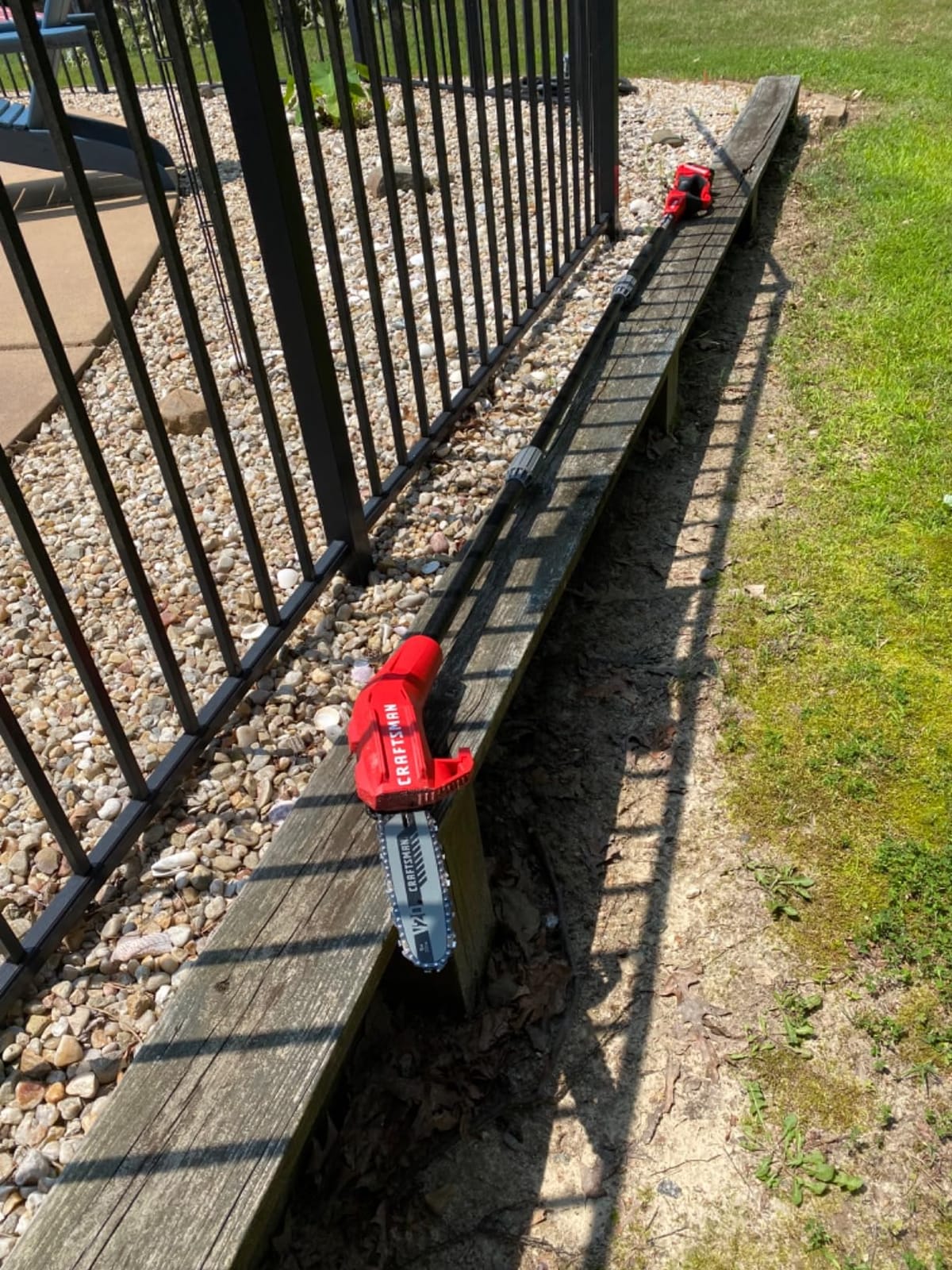
The removable middle pole section is a design we did not expect to like and now recommend. Detach it and you get better balance and a shorter reach for the branches you can nearly reach on a step stool, then re-lock it for the work that needs it. At 6 pounds, this is the second-lightest cordless tool in the roundup.
The criticisms are all about the shaft and the oil system. Reviewers describe the pole as flimsy or wobbly at full extension, and the section joint loosening during use and needing retightening. There is no automatic chain oiler at all, only a small oil bottle that reviewers note is too small to be useful for a full session.
What the 325-cut rating means in practice
It is a real number for homeowner work, not a marketing peak. A pruning session on a mature tree might run 30 to 60 cuts, so a single charge covers several trees or a full afternoon on one. For storm cleanup with dozens of limbs to drop, expect to swap mid-way, and keep the second pack close if you buy it.
Where the build quality shows
Wobble at full extension is the dealbreaker for anyone doing repeated overhead work, and the loosening joint needs checking between cuts. If your pruning is mostly below 12 feet, take the middle section off and the wobble largely stops mattering. Owners already invested in the CRAFTSMAN V20 line rate the platform compatibility as the strongest argument for this saw.
6. Greenworks 40V 8-Inch Pole Saw: The Shaft That Does Not Flex
Greenworks 40V 8-Inch Cordless Polesaw, 2.0Ah Battery and Charger Included PS40B210
11 ft max reach
8 in bar
7.8 lb
Three-piece aluminum shaft
Auto chain oiler
Pros
- Aluminum shaft stays rigid where fiberglass competitors bend
- Automatic oiler lubricates through long jobs
- Cuts dead or live wood up to 8 in
- Good balance at full extension
- Shares the wider Greenworks 40V platform
Cons
- Included 2.0Ah battery is small for sustained work
- Auto oiler needs the chain cover opened to clear chips
- Awkward disassembly for storage
- Unbalanced when used without the extension pole
This is the shaft material argument in one product. The three-piece aluminum shaft extends to 9 feet for 11 feet of maximum reach, and owners single out its rigidity as the reason it feels solid where fiberglass poles on comparable tools whip and bend. At 7.8 pounds it is not the lightest cordless saw here, but it is the steadiest at full extension.
Everything else about it is deliberately low-maintenance: an automatic chain oiler for continuous lubrication, tool-free chain tension adjustment, and tool-free maintenance with no gas, oil mixing or emissions. It starts instantly with no carburetor, spark plug or starter rope, which is the whole appeal of the battery category.
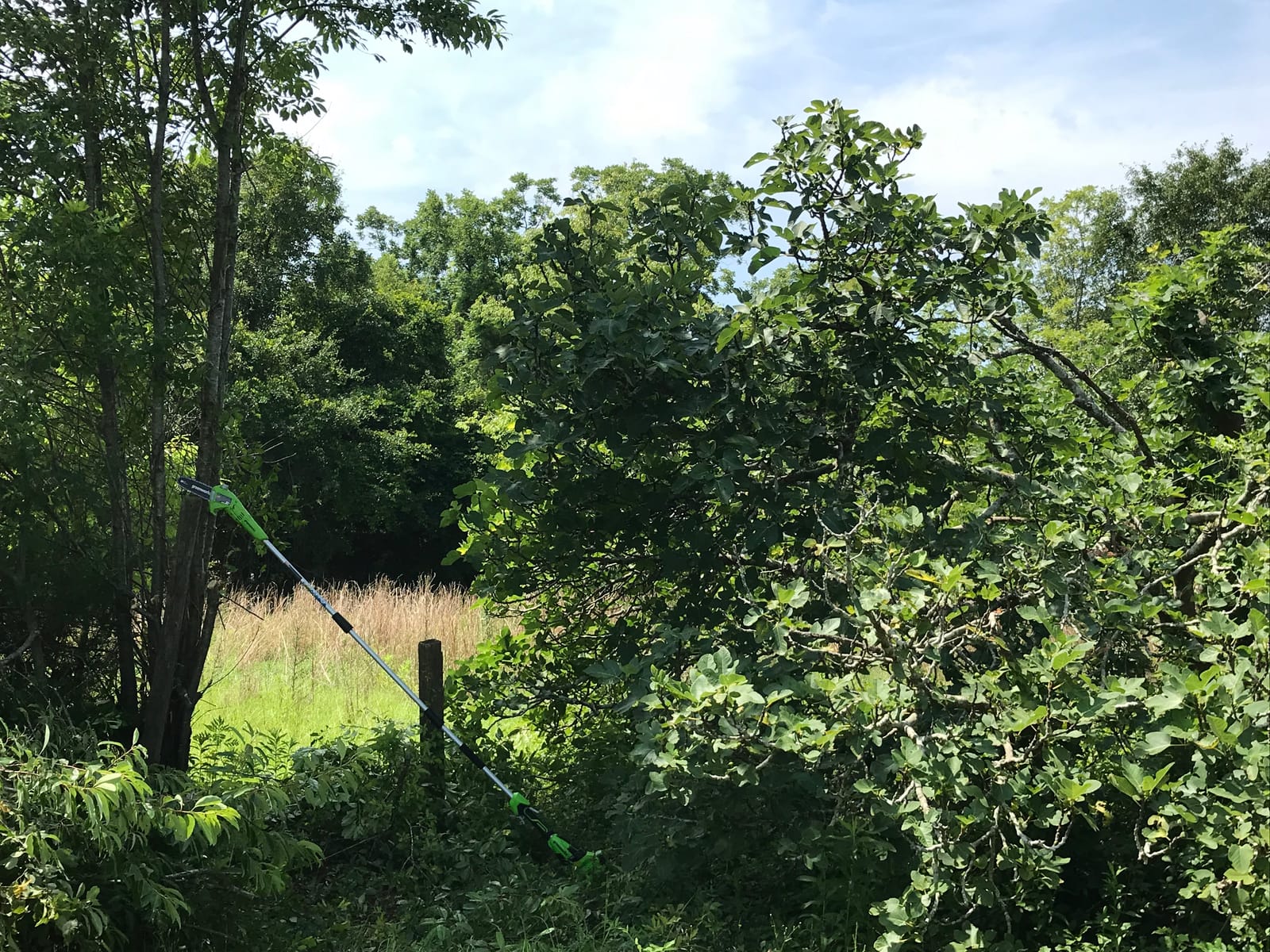
Cutting performance is not a compromise. Owners report it cutting dead or live wood up to 8 inches without strain, and the 40V platform is shared with a wide line of Greenworks tools, so an existing owner is buying into something they have already bought. Spare parts and chain availability on a big platform is a genuine practical advantage over a no-name tool.
The reservation that shows up most is the 2.0Ah battery in the box. It is the smallest pack in this roundup and owners recommend a larger pack for anything sustained. The auto oiler also needs the chain cover opened periodically to clear chips, and taking the three-piece shaft apart for storage is awkward enough that owners complain about it.

Why rigidity beats reach for most tall trees
A 11-foot tool with a shaft that stays straight will cut more branches per session than a 14-foot tool that oscillates. Rigidity is what lets you finish a cut without the head drifting off the branch, and it is why reviewers who compared this against fiberglass competitors kept coming back to the aluminum. For a tree whose work sits between 10 and 15 feet, this is the tool that gets finished.
When to reach further instead
If the branches you care about sit above about 15 feet, 11 feet of maximum reach leaves you short regardless of how steady the shaft is. The Supstable at 16 feet or the CRAFTSMAN at 14 feet cover more height. Buy the extra reach only if you have measured the actual height of the work, because a rigid short tool beats a wobbly long one every time.
7. Ryobi P4360 18V ONE+ Pole Saw: Built for People Who Already Own Batteries
Ryobi P4360 18V 8″ Cordless Pole Saw (Bare Tool) RT
8 in bar
7.4 lb
18V ONE+
Chain brake and safety slider
3 yr warranty
Pros
- Angled head reduces blade pinching on overhead cuts
- Runs on any ONE+ battery and charger
- Keyed non-rotating pole connections
- Combination wrench stows in the handle
- Good balance for smaller or older users
Cons
- Bare tool only so battery and charger cost extra
- Modest chain speed best suited to branches under 3 in
- Cuts can be ragged versus a finer-tooth pruning saw
- Oiler leaks and drips down the pole
The Ryobi is a bare tool, which is either a dealbreaker or a bargain depending on what is in your garage. It runs on any Ryobi ONE+ battery and charger, and that interchangeability is the reason most owners bought it. Several describe it as the reason they never bought into a second battery platform.
The angled cutting head is the detail that matters on a pole saw. A straight head driven into an overhead branch pinches the blade and stalls. The angled geometry shears instead, and owners credit it with cleaner cuts and fewer stalls. The three-section pole uses keyed, non-rotating connections, so the sections cannot spin in your hands under sawing load.
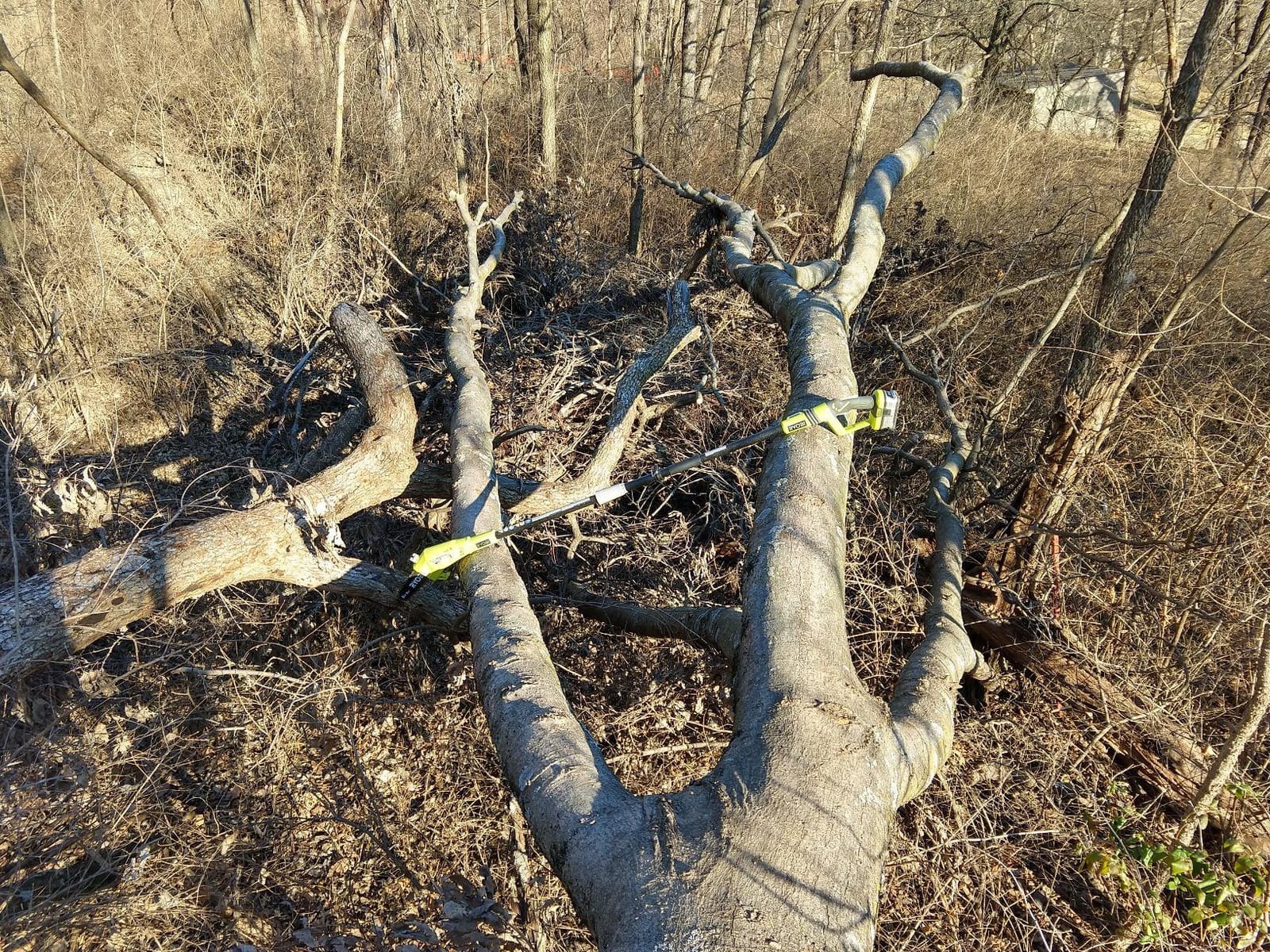
There is a chain brake and a thumb safety slider, which is worth having when the head is above your head on a ladder-free day. The combination wrench for chain tensioning stows inside the handle, so it does not get lost in a truck bed. At 7.4 pounds, reviewers call the balance good even for smaller or older users.
The honest limits are chain speed and cut quality. Owners put the useful range at branches under about 3 inches, and cuts come out more ragged than a fine-tooth pruning saw would leave. The oiler also tends to leak and drip down the pole, which is unpleasant but not a functional problem. Adding extra extension sections makes the saw too wobbly to use reliably, so use the pole as delivered.

What platform lock-in actually costs you
Owning the platform already, this is one of the cheapest ways to add a pole saw, since a battery and charger are sitting in the charger already. Buying in fresh, you need a pack and a charger before the saw touches a branch, and that is the number that decides this purchase. Forum discussion about cordless pole saws keeps circling the same point: the tool price is the smallest part of entering an ecosystem.
Where a different saw wins
Anything over 3 inches of diameter, this is the wrong tool. The Fiskars manual saw at that diameter would be slower but cleaner, and the Greenworks 40V or Greenworks 80V cordless saws cut thicker wood without stalling. For a tall tree with mostly small live branches and lots of thin twigs, though, the angled head makes this a genuinely pleasant tool to use.
8. Greenworks 80V 10-Inch Pole Saw: The Most Cutting Power in the Group
Greenworks 80V 10″ Cordless Polesaw (Great For Pruning and Trimming Branches / 75+ Compatible Tools), Tool Only
10 in bar
83 cuts per charge
12.7 lb
Brushless motor
Auto oiler
3 yr warranty
Pros
- Brushless power cuts 6 in branches and felled 10 in deadwood
- Behaves like a gas saw while quieter and lighter
- Three-piece shaft stores compactly broken down
- Tool-less chain tensioning
- Shares the 80V platform with 75-plus tools
Cons
- Heavy and heavier with the battery fitted
- Strap cannot be repositioned along the shaft
- Ships without bar and chain oil
- Confusing assembly instructions
- Can jam if you do not back off and re-trigger
A 10-inch bar with a brushless motor is the most cutting capacity in this roundup. Owners report it pushing through 6-inch branches and even felled 10-inch deadwood, and describe the behavior as gas-saw-like without the fumes, the pull cord or the noise. The 10-inch bar is also what lets you clear a dropped limb in fewer passes than any 8-inch tool here.
The 80V platform is the broadest in the group, shared across more than 75 compatible tools. If you already own any of them, this pole saw is a straightforward addition. The tool-less tensioning dial makes upkeep quick, and the automatic chain oiler handles lubrication without you thinking about it.
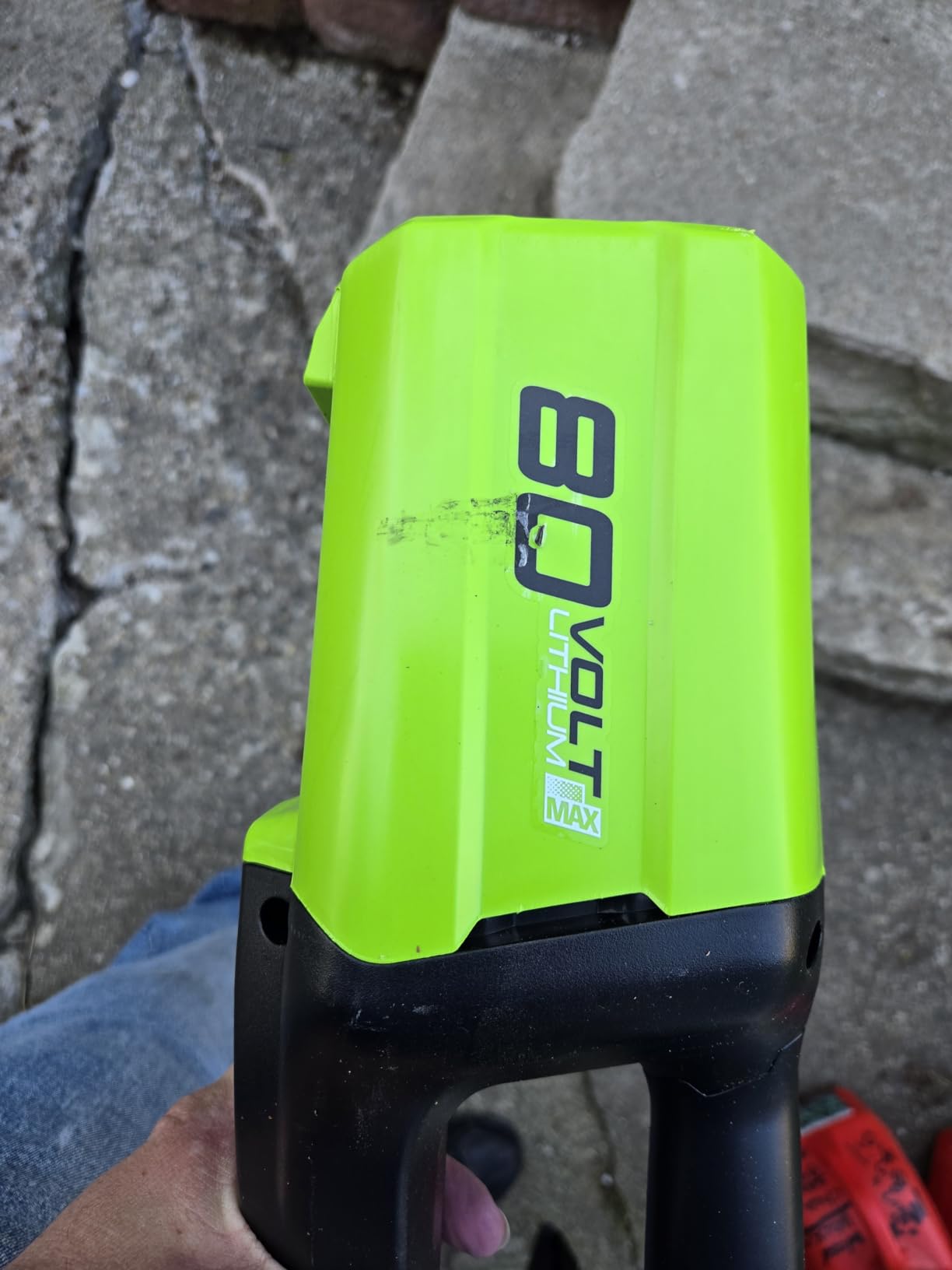
Weight is the reason this is not the top pick. At 12.7 pounds before the battery is fitted, and with a shoulder strap that cannot be repositioned along the shaft, overhead work gets tiring in a way the 6-pound CRAFTSMAN never does. Several owners note it can jam if you keep forcing a stalled cut instead of backing off and re-triggering.
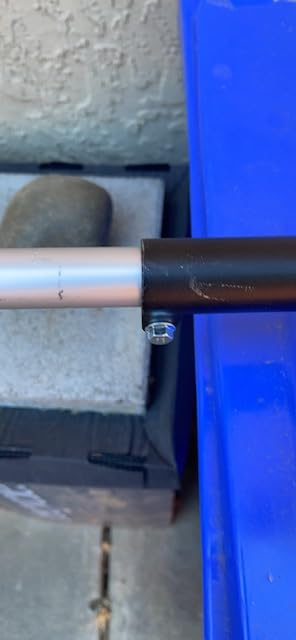
Two smaller things to plan for. It arrives without bar and chain oil, and the assembly instructions are contradictory enough that owners lose time working through them. The shaft also cannot be fully disconnected because the wiring runs through the interior, so it stores as three sections rather than separating into two pieces.
When thicker wood changes the answer
Storm cleanup, where limbs are already down and you are sawing through a trunk section on the ground, this saw earns its place. Cutting capacity that no other cordless option in this list matches means fewer passes and less time repositioning a pole you are holding at 15 feet. The battery is rated for up to 83 cuts per charge, which is where the 10-inch bar starts to pay.
When you are working far above your head
Twelve pounds plus a battery, held overhead on a strap you cannot move, is a lot of fatigue to accumulate over a long afternoon. If your work is above 12 feet and mostly small to medium branches, the lighter tools will let you finish more of the list. This one wins on what it can cut, not on how long you can hold it up.
9. Seesii P6 Ace 2-in-1 Pole Saw: The Lightest Tool for Overhead Work
SEESII 2-in-1 Electric Pole Saws for Tree Trimming, Brushless Motor
16 ft combined reach
6 in bar
3.4 lb handheld
6.9 lb as pole saw
2x 4000mAh
Pros
- Lightest option at 3.4 lb handheld and 6.9 lb pole-mounted
- Dual 4000mAh batteries allow near-continuous work
- Detaches into a handheld chainsaw
- Brushless motor runs cool and quiet
- Gloves goggles belt and spare chain included
Cons
- 6 in bar limits it to smaller branches
- Adjustment head and pole sections add flex at long extension
- Motor performance claims are manufacturer ratings
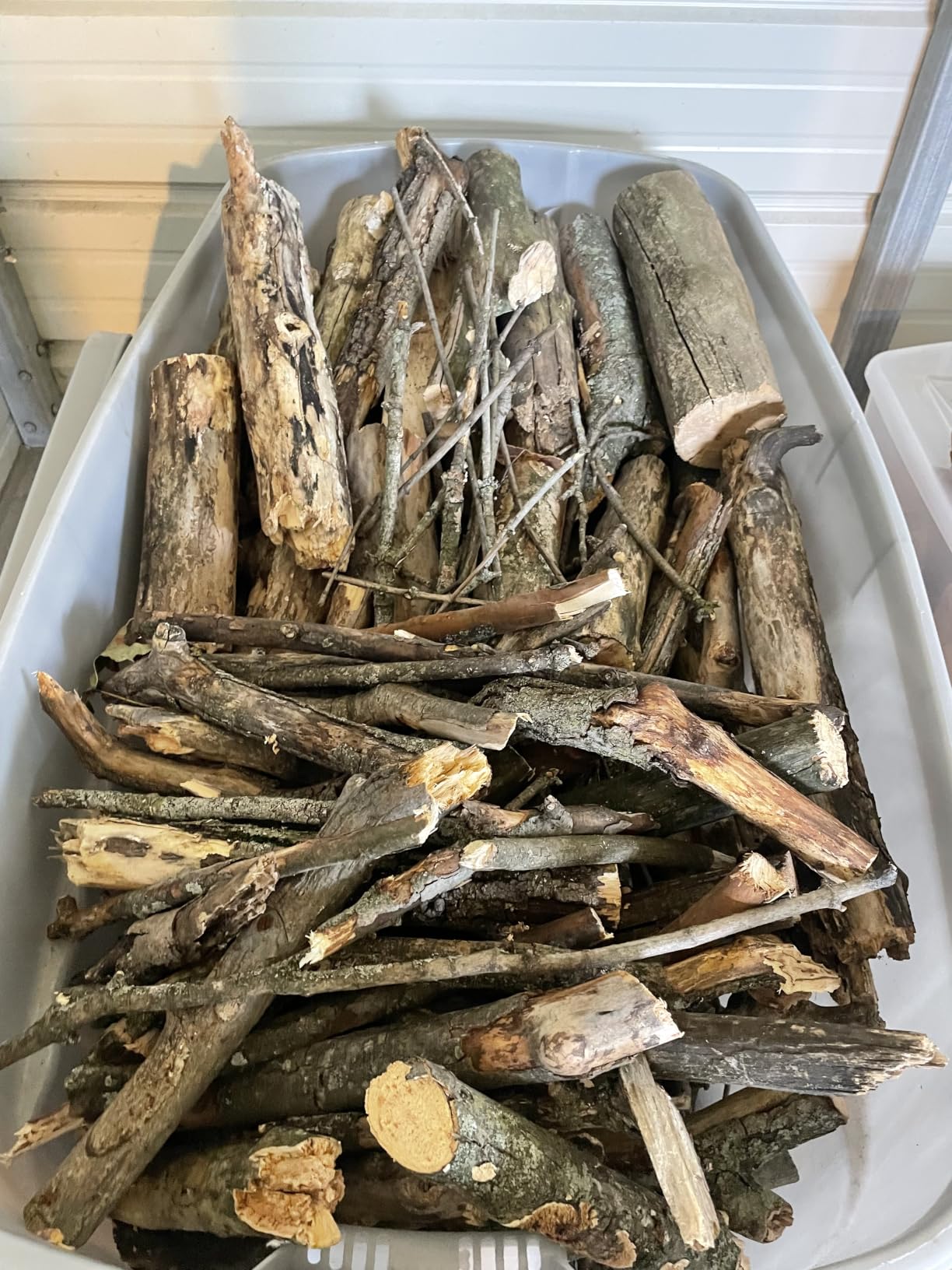
At 3.4 pounds handheld and 6.9 pounds as a pole saw, this is the lightest tool in the roundup by a wide margin, and it carries the largest review count at more than 16000. Weight is the limiting factor on pole saw work, so a two-pound saving over the next-lightest option is not a rounding error. It changes how long you can keep the head aloft.
The pole telescopes from 4.6 to 9 feet, which combines with operator height for roughly 16 feet of reach. Two 4000mAh batteries deliver up to 120 minutes of runtime and around 200 cuts, and the 2-in-1 design lets you detach the head for ground-level cutting once the high branches are down.
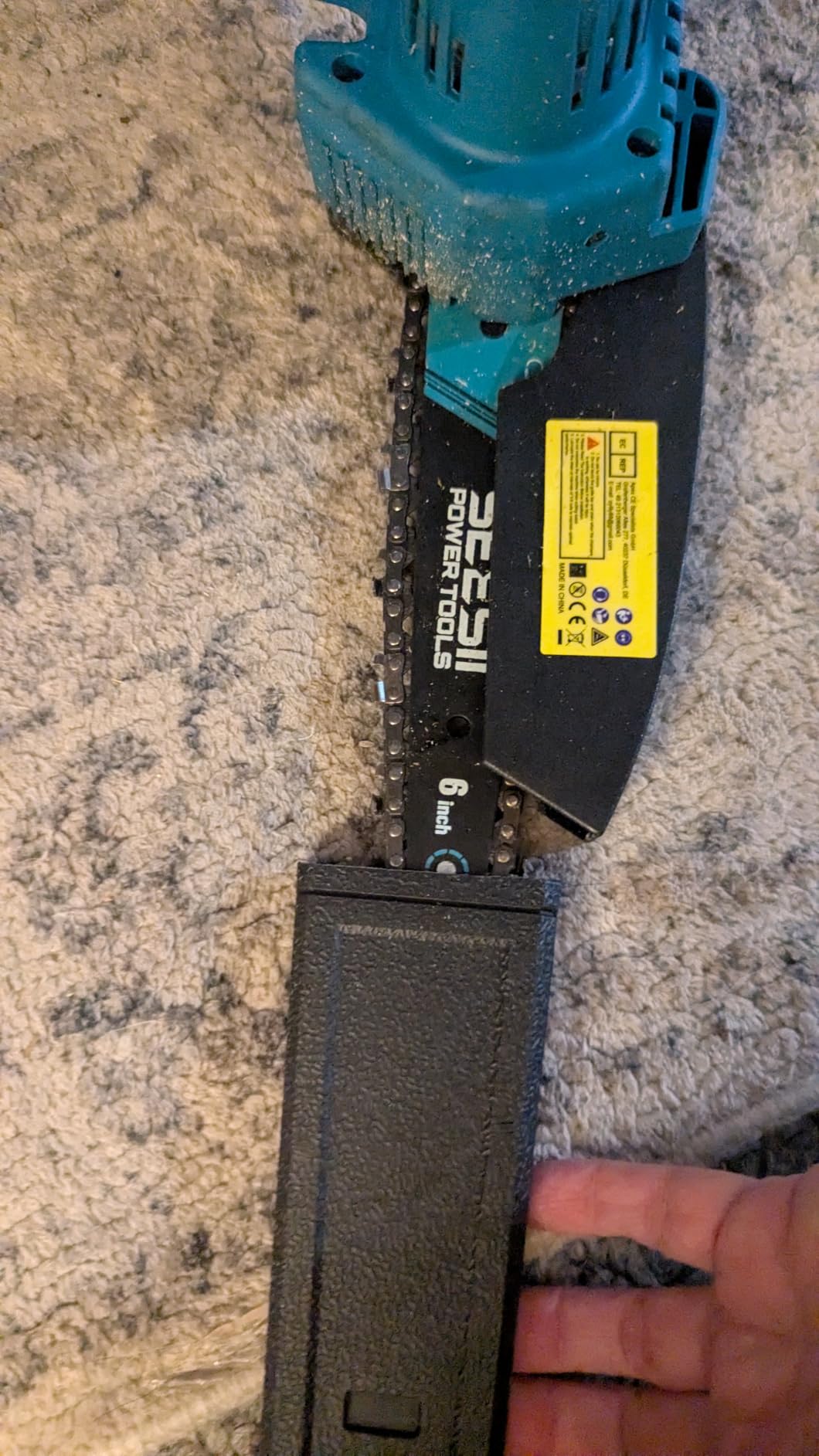
The 6-inch bar is the constraint that comes with the weight. This is a tool for twigs, small live branches and the kind of routine tidying that adds up over a season, not for limbs you would struggle to fit in a bucket. The brushless motor runs cool and quiet, and the box includes a shoulder belt, anti-slip gloves, goggles, a replacement chain, a sleeve and an oil bottle.
At long extension the adjustable head and the pole sections add flex, which is the same weakness the fiberglass tools show and the reason the aluminum-shaft Greenworks is worth a look if you will hold the tool higher. Tool-free oil refill and chain changes keep the maintenance simple, and the safety switch, chain guard and baffles are all present.
What light weight changes about the work
Fatigue is what ends a pole saw session, not chain speed. A lighter tool means more cuts per session and less bracing of the pole with your hip, and that is why this saw carries so many reviews. For a homeowner pruning a few trees a year, or an older user, the weight is the feature that matters most. It is the most comfortable tool here to hold at 16 feet.
What you give up for that weight
A 6-inch bar stops at small branches, and the flex at full extension means precision work high up is harder than it should be. Note also that the motor efficiency figures come from the manufacturer’s ratings rather than independent testing, so treat them as a rough guide. For anything over about 2 inches, look at the Greenworks 40V or the Fiskars manual saw instead.
10. SKIL PWR CORE 40 10-Inch Pole Saw Kit: The Longest Warranty Here
SKIL PWR CORE 40 Brushless 40V 10” Pole Saw Kit with Over 9ft. Telescoping Shaft & Angled Head, Includes 2.5Ah Battery and Auto PWR Jump Charger – PS4561C-10
Over 9 ft telescoping shaft
10 in bar
12.9 lb
40V brushless 500W
5 yr warranty
Pros
- Built-in telescoping extension does not wobble fully extended
- Angled head cuts down into the branch
- Strong torque through hardwood limbs
- Battery retains charge after heavy cutting sessions
- 5 yr warranty with battery and fast charger included
Cons
- Weight concentrates toward the head at full extension
- Slower on hardwood than softwood
- Bar oil can leak slightly in storage
- Oil filling is awkward without spilling
- No pruning shear head included
The telescoping shaft here reaches over 9 feet and does not wobble even fully extended, which is unusual at this weight and the reason this saw keeps appearing in owner comparisons against premium gas and cordless tools. The 500-watt digital brushless motor drives a 10-inch high speed steel bar, and the angled head is set to cut down into the branch rather than into its side.
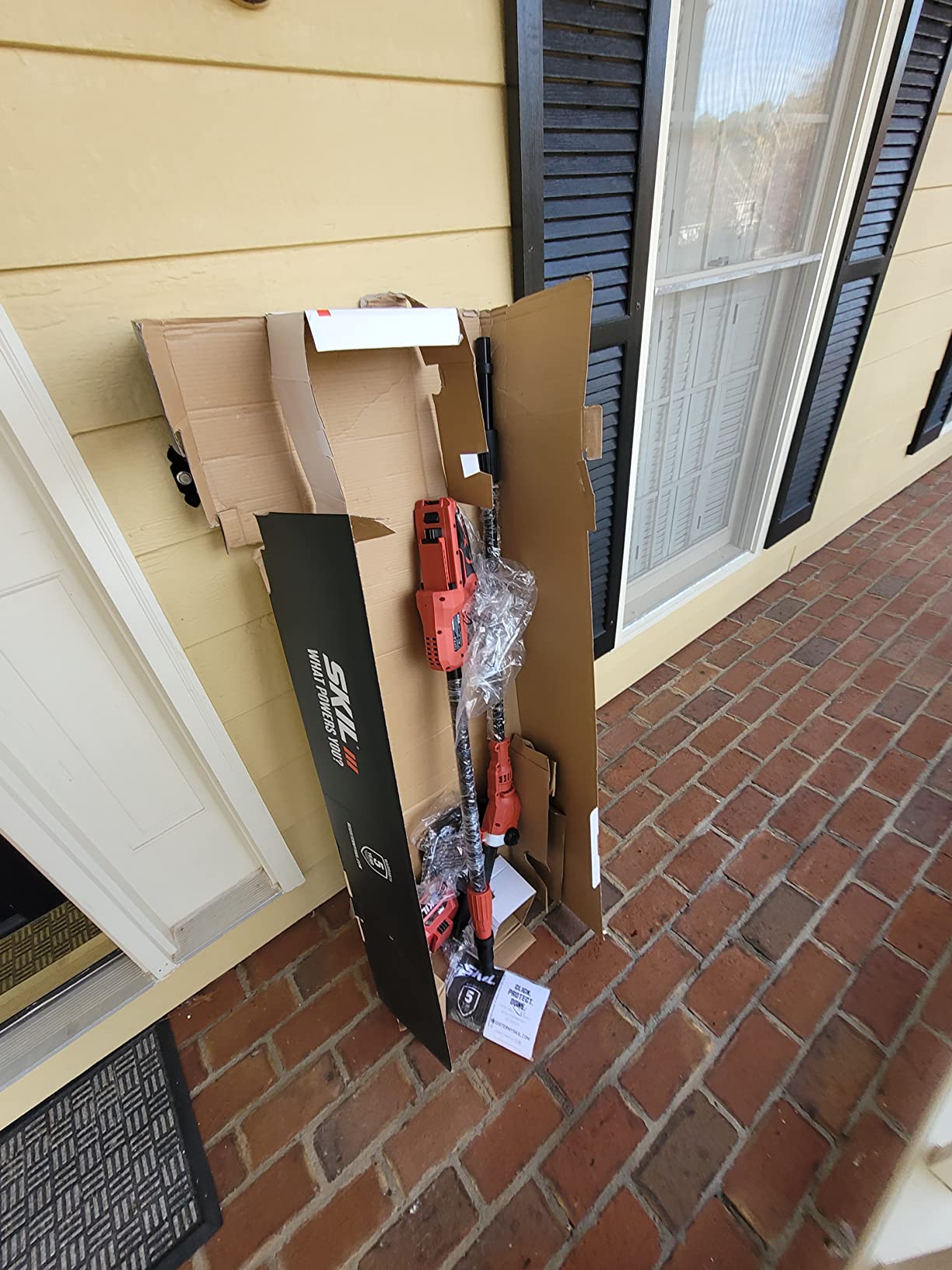
Everything needed to start is in the box: a 2.5Ah PWR CORE 40 lithium-ion battery with cooling-wrapped cells, the Auto PWR JUMP fast charger, and charge-level indicator LEDs on the pack. The five-year limited warranty is the longest on any cordless kit in this roundup, which matters when you are buying a tool you hope to still own in a decade.
Owners report the battery still showing most of its charge after heavy branch-cutting sessions, and the torque to slice through hardwood limbs quickly. The mid-shaft disconnect coupling is a small touch that matters: the tool separates into two pieces for transport and storage without dealing with a full multi-section shaft.
At 12.9 pounds the weight concentrates toward the head as you extend, and that is the complaint that comes up repeatedly. Cutting is slower on hardwood than on softwood, though it completes the job. Bar oil can leak slightly during storage, and filling the oil reservoir is awkward enough to spill. The angled head also means no pruning shear attachment on this model.
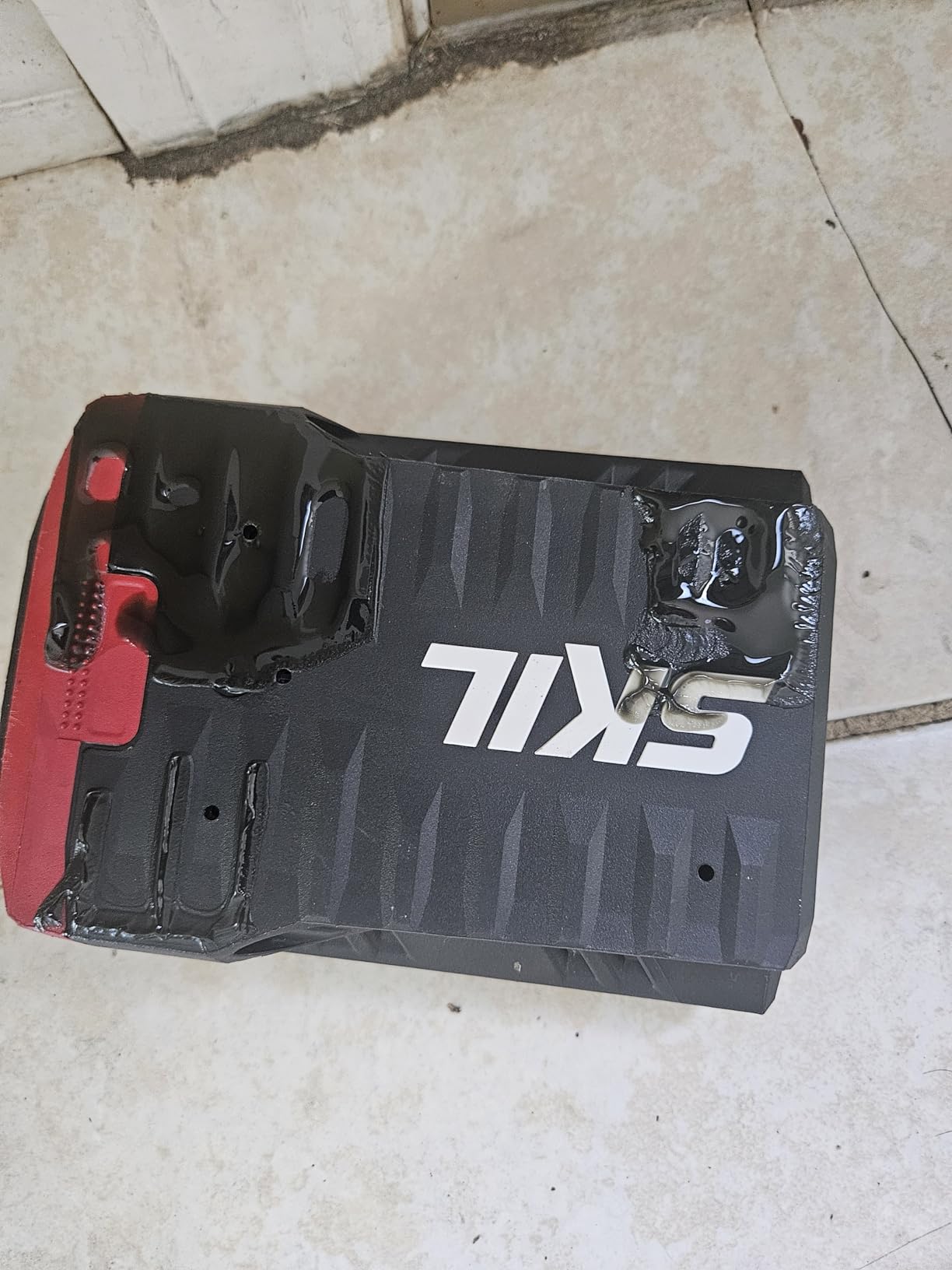
Why the warranty and the shaft matter together
A pole saw is a tool you buy once and keep for a decade, and a five-year warranty on the whole kit reflects confidence in the parts that usually fail. The rigid built-in telescoping shaft solves the wobble complaint without adding a section that can loosen mid-job. That combination of shaft stiffness and warranty coverage is what owners repeatedly call the best value in the class.
Where the head weight bites
Overhead work at full extension is where 12.9 pounds concentrates furthest from your hands. If your pruning sessions run long and the branches are small, the Seesii at 6.9 pounds will let you work far longer before fatigue. This saw is the better answer when the wood is thick, the sessions are shorter, and you want one tool that covers both.
How to Choose the Right Pole Saw for Tall Trees
Start with height, not engine size. Measure the lowest branch you actually need to touch, subtract your own height, and what remains is the pole length you need. If your work is at 18 feet and you are 6 feet tall, you need roughly 12 feet of pole before any safety margin.
Work out your working height before you shop
The working height formula is simple: your height plus pole length minus 2 feet of margin. A 6-foot operator with a 10-foot pole works at about 14 feet, not 16. Manufacturers quote pole length and maximum reach as separate numbers, and those two figures already include your height once, so adding it again is the most common reach mistake buyers make.
One useful check is the ladder rule. If a branch sits below about 8 feet, a hand saw or pole pruner is cheaper, faster and safer than any powered pole saw in this guide. Pole saws earn their place above that line, which is also where the weight and balance problems start. For operators who find a conventional ladder awkward to work from at height, our guide to power lift seating built for taller users covers the same ergonomic thinking from a different angle.
Gas, cordless, corded or manual
Battery wins for most homeowners in this roundup. Instant start, no fuel mixing, no exhaust in a suburban yard, and chain speeds that now match small gas saws. The catch is platform lock-in, and it is a real cost. If you do not already own a battery system, the pack and charger are part of the purchase, and expensive or hard-to-find packs are a genuine complaint among platform buyers.
Gas is the only option that will out-cut everything here on sustained professional work, and it is the heaviest at full extension. Corded electric is the cheapest way to reach 12 feet, and its weakness is obvious: the cord. Manual is the reach and weight answer, and for branches up to about an inch it will outlast any powered tool you own.
Bar length and cutting capacity set your ceiling
An 8-inch bar handles most homeowner pruning up to about 6 inches of diameter. A 10-inch bar, as on the Greenworks 80V and the SKIL, takes on 6-inch live branches and felled deadwood. The 6-inch bar on the Seesii is a twig tool, and the manual saws top out near an inch of branch.
Bar length is not the same as capacity, and neither tells you cut quality. Arborists are blunt that a pole saw can reach a branch but cannot make a fine cut in it. The advice from arboristsite forum members is to cut slow and let the branch peel, and to use a sharp fine-tooth pruning chain. Faster forced cuts tear bark and leave a wound that invites disease.
Weight, balance and pole rigidity decide whether you finish
This is the factor most roundups skip and the one that decides how much work you actually get done. Wobble at full extension is the most repeated complaint across reviews, manuals and forum threads alike. A shaft that flexes a couple of inches turns a 30-second cut into a 2-minute fight, and the operator is fighting it the whole time.
Material drives most of it. Aluminum shafts stay rigid and are heavier; fiberglass and telescoping composite sections are lighter and flex more. The Greenworks 40V is the clearest example in this roundup of a rigid aluminum shaft, and the CRAFTSMAN and Supstable both have owners describing wobble at full extension. Balance matters as much as total weight, and a tool that lets you drop a section for lower cuts can be better than a lighter tool that must run full length.
Extension lock design and platform lock-in
Twist-lock, flip-lock and push-button collars all look fine on the ground. What matters is whether the collar holds tight when a running chain is pushing back on the cut. Reviewers across this group report joints that loosen during use and need retightening, so check the collar between cuts rather than trusting it all afternoon.
For battery tools, count the packs and the charger before you buy. Kits that include both, like the CRAFTSMAN and the SKIL, cost you less overall than the tool headline suggests if you are starting fresh. Bare tools like the Ryobi and the Greenworks 80V are the right call only if you already own the platform.
How to cut a high branch without wrecking the tree
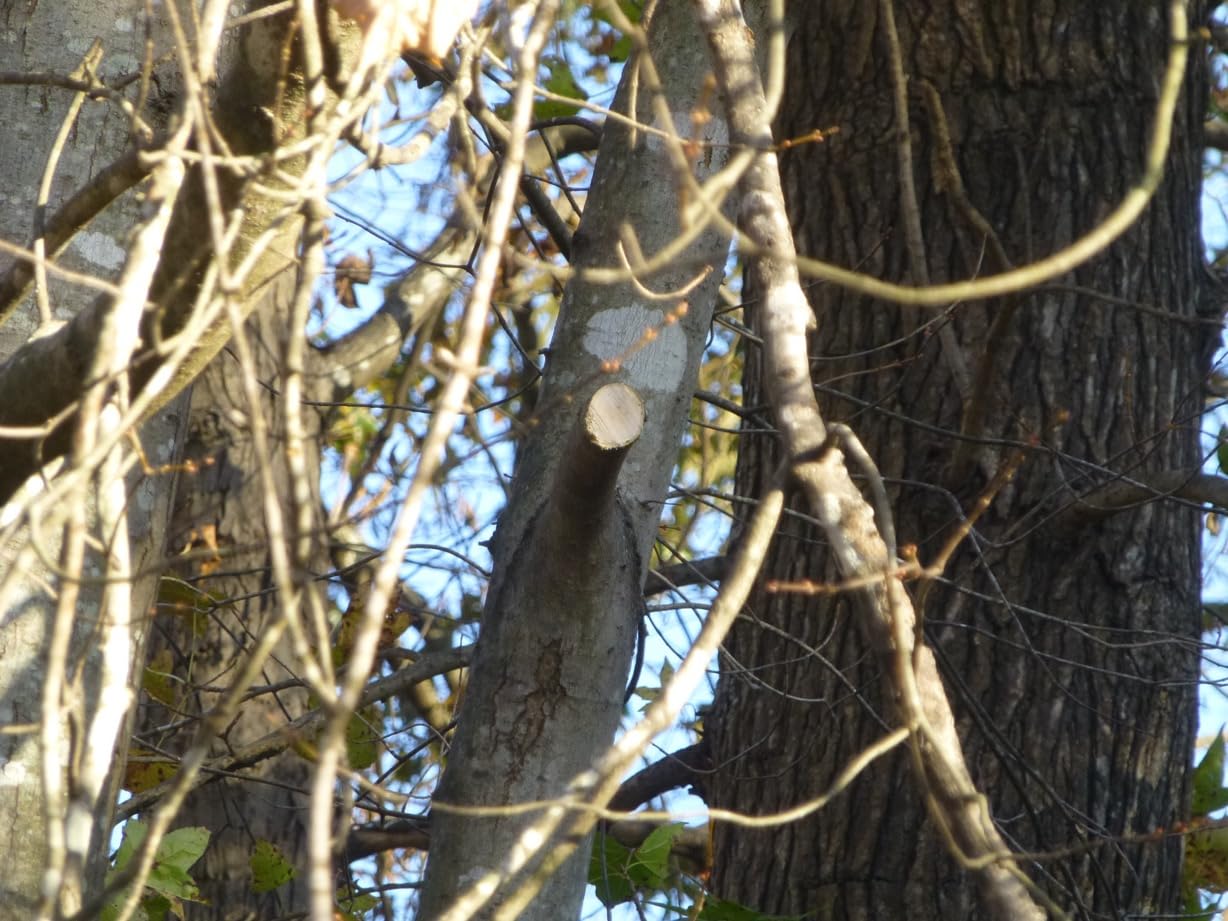
Make the cut from underneath, not the top. A top cut leaves a stub that tears downward through the branch collar as the limb drops, which is the wound that kills branches. Position the hook or guide against the trunk side first, then cut slowly from below until the branch breaks its own weight and falls.
Do not twist the pole as the branch falls. Let it peel, keep the pole steady, and use the hook on the blade head to keep the cut in the kerf. On branches thick enough that the head stalls, back off and re-trigger rather than leaning on it. And when a limb is heavier than your saw can finish, stop and take it in sections.
Power line safety comes before everything else
No pole saw on this list is a line clearance tool, and none should be used near energized conductors. Standard pole saw shafts are not dielectric. If branches are within 10 feet of power lines, this is a job for a utility crew or a certified arborist, and no amount of reach advantage changes the physics of a conductive aluminum or fiberglass shaft in the air.
Frequently Asked Questions
How far can you reach with a pole saw?
Your working height equals your own height plus the pole length, minus about 2 feet of safety margin. A 6-foot operator with a 12-foot pole saw works at roughly 16 feet. Check reach figures carefully, because some brands quote pole length alone and others add operator height for you.
What is the tallest pole saw you can get?
The longest reach in this roundup comes from the VEVOR 8-section manual pole, which extends to 27 feet. Among powered cordless tools, the Supstable and Seesii kits reach about 16 feet combined with operator height. For most homeowners, a 12 to 16 foot working height covers nearly all reachable branches.
How thick of a tree can a pole saw cut?
An 8-inch bar cordless pole saw typically handles branches up to about 6 inches of diameter, which covers most homeowner pruning. A 10-inch bar reaches thicker wood. Manual pole saws and pole pruners are much lower, generally about three-quarter to 1 inch on hard wood, and much less in green growth.
What is the best long pole saw for tree trimming?
The Supstable 2-in-1 kit is the best overall long pole saw for tall trees, pairing a 16-foot telescopic reach with 6-inch and 8-inch bars, two batteries and a full safety kit. If reach matters more than weight, the VEVOR manual pole extends to 27 feet. For weight, the Seesii runs at 6.9 pounds as a pole saw.
Which battery pole saw has the longest reach?
Among cordless pole saws, the Supstable and Seesii 2-in-1 kits both reach about 16 feet when combined with operator height. If you want a larger bar for thicker wood, the Greenworks 80V 10-inch model offers the most cutting capacity, though at 12.7 pounds it is far heavier overhead.
What are the best electric pole saws according to reviews?
Reviewers most often praise the Greenworks 40V for its rigid aluminum shaft, the SKIL for its non-wobbling telescoping extension and 5-year warranty, and the Ryobi P4360 for its angled head that reduces blade pinching on overhead cuts. Owners of the budget kits like the Supstable praise reach and kit value but report frequent chain retensioning.
The Best Pole Saw for Tall Trees in 2026
For most people cutting branches between 12 and 20 feet, the Supstable 2-in-1 kit is the best pole saw for tall trees because it is the only one here that combines a 16-foot reach with two bars, two batteries and a full safety kit. Check the current price and reviews before you commit.
Work that sits above 20 feet, or deadwood too heavy to drop safely, calls for the VEVOR manual pole at 27 feet of reach. Below 12 feet, the Fiskars extendable pruner at 4.8 pounds is the tool you will still be happy to hold at the end of a long afternoon. And for long sessions on small branches, the Seesii at 6.9 pounds is the lightest option in the group.
Measure your tallest problem branch before you buy anything, add your height, and take 2 feet off for margin. That number decides the pole length, and the pole length decides which of these ten is the right tool for your tree.