
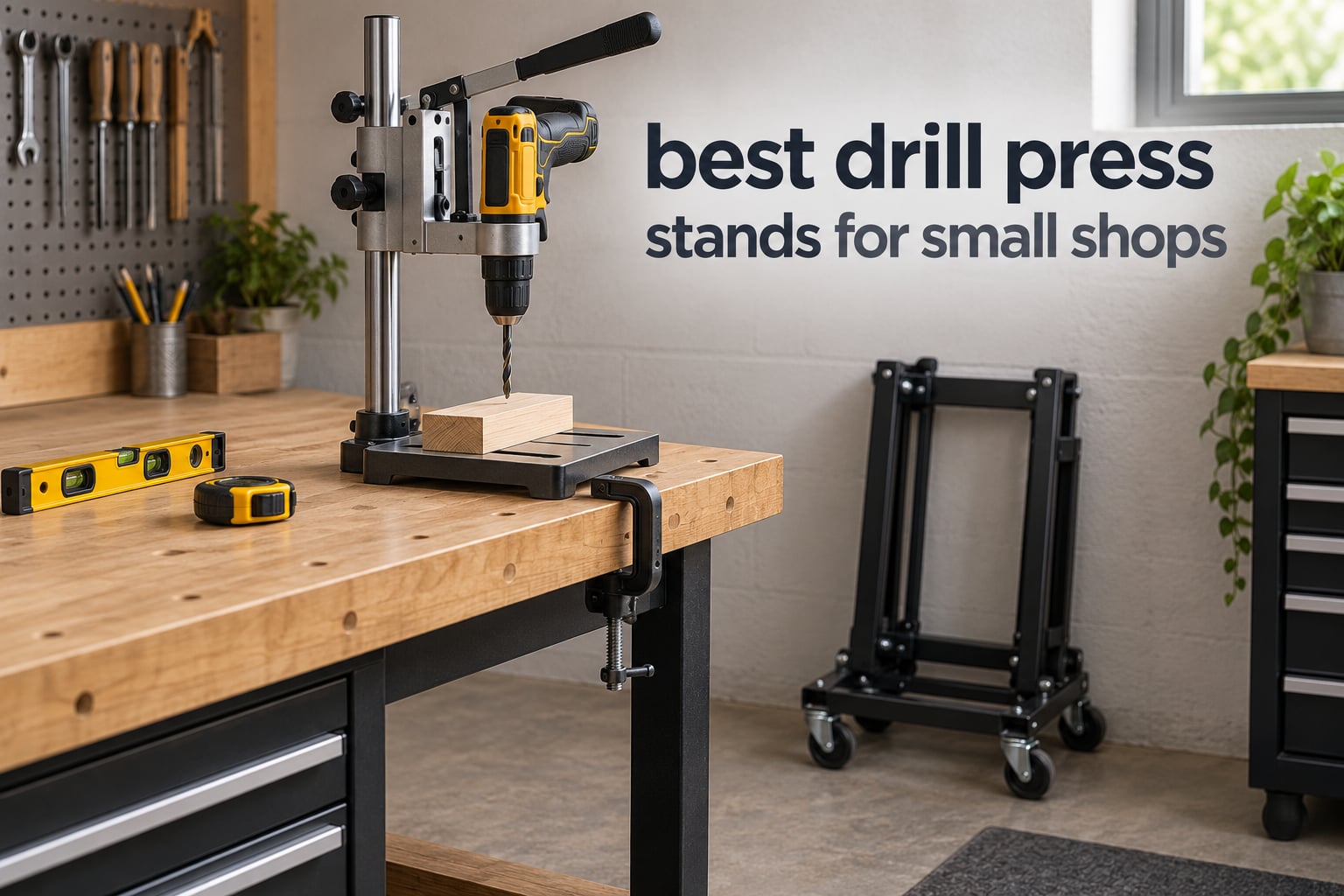
A drill press stand is the frame that holds a drill, a rotary tool or a press head over a worktable so you can bore straight, repeatable holes without holding the tool in your hands. It ranges from a small clamp-on bracket to a rolling steel cart. The small-shop rule is simple: match the stand to the machine you already own and the bench space you actually have, not to the biggest frame on the page.
That last point is where most buying guides go wrong. Competitors write roundups about drill press machines and barely touch the stand, yet the stand is what decides whether a press fits your bench, whether it walks across the floor when you drill, and whether the bit stays square to the work. Shop owners tell each other that chuck-to-table clearance and quill travel are what they regret, and that a stand which can be rolled out of the way is worth more than a slightly better table.
We looked at ten stands across the four classes that actually matter in a garage or micro-shop: mini rotary-tool workstations, handheld drill guides, benchtop tool stands, and rolling mobile bases. Each one below is matched to the machine it fits and the shop it fits in, and we flag the collar sizes and base masses that decide accuracy before you buy.
A note on fit before we start. If your bench is already crowded with other small tools that need elevation and a flat top, the same space-versus-capability thinking applies to laptop stands for desks and phone stands for desks: measure first, then buy. Drill press stands punish a bad measurement more than almost anything else in the shop.
Table of Contents
- Top 3 Best Drill Press Stands for Small Shops (October 2026)
- The Best Drill Press Stands for Small Shops in 2026
- 1. Dremel 220-01 Workstation Stand for Handheld Rotary Tools
- 2. BORA PM-1100 Mobile Base Kit for Custom-Sized Platforms
- 3. POWERTEC UT1002 Tool Stand for Benchtop Drill Presses
- 4. WEN MB500 Mobile Base for Fixed-Size Machines
- 5. Milescraft 1097 Variable Speed Stand for Rotary Tools
- 6. Wolfcraft 4522 Tec Mobil Stand for Oversized Workpieces
- 7. Wolfcraft 5027000 Stand for Repeatable Depth Drilling
- 8. Wolfcraft 3406301 Cast Iron Stand with a Bundled Vice
- 9. Steelman MB-1236 Rolling Base for Rough Shop Floors
- 10. JET JMB-UMB Universal Base for Heavy Machines
- How to Fit a Drill Press Stand into a Small Shop
- What to Look for When Buying a Drill Press Stand
- Who This Is For
- Frequently Asked Questions
- The Best Drill Press Stand for Small Shops: Final Verdict
Top 3 Best Drill Press Stands for Small Shops (October 2026)

Dremel 220-01 Workstation Stand
- Articulating 15-degree increments
- Up to 2 inch drill depth
- Telescopic stand 16 to 29 inches
- Metal base with four clamps

WEN MB500 Mobile Base
- 500 lb capacity
- Adjusts 11.8 to 35.4 inch squares
- Handles 51.2 x 19.7 inch bases
- Foot-locking brakes
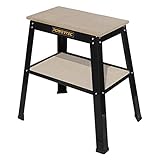
POWERTEC UT1002 Tool Stand
- 32 inch working height
- Split top expands to 20 x 25 inches
- 18 x 27 inch storage shelf
- 500 lb rated load
The Best Drill Press Stands for Small Shops in 2026
| Product | Specifications | Action |
|---|---|---|
| Dremel 220-01 Workstation Stand |
|
Check Latest Price |
 BORA PM-1100 Mobile Base Kit BORA PM-1100 Mobile Base Kit |
|
Check Latest Price |
| POWERTEC UT1002 Tool Stand |
|
Check Latest Price |
| WEN MB500 Mobile Base |
|
Check Latest Price |
 Milescraft 1097 Drill Press Stand Milescraft 1097 Drill Press Stand |
|
Check Latest Price |
 Wolfcraft 4522 Tec Mobil Stand Wolfcraft 4522 Tec Mobil Stand |
|
Check Latest Price |
 Wolfcraft 5027000 Drill Stand Wolfcraft 5027000 Drill Stand |
|
Check Latest Price |
 Wolfcraft 3406301 Drill Stand Wolfcraft 3406301 Drill Stand |
|
Check Latest Price |
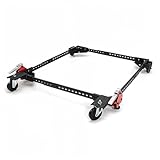 Steelman MB-1236 Rolling Base Steelman MB-1236 Rolling Base |
|
Check Latest Price |
 JET JMB-UMB Universal Base JET JMB-UMB Universal Base |
|
Check Latest Price |
Read that table by class rather than by row number. The first five entries hold a drill or rotary tool in place; the last five move a machine or hold it at working height on a bench. A stand cannot be judged against another stand of a different class, because the accuracy comes from mass and column rigidity, not from features.
1. Dremel 220-01 Workstation Stand for Handheld Rotary Tools
Dremel Drill Press Rotary Tool Workstation Stand (220-01)
Stand height 16-29 in
Drill depth to 2 in
Weight 4.9 lb
Fits Dremel rotary tools
Pros
- Drills far straighter than a hand-held rotary tool
- Articulates in 15-degree steps up to 90 degrees
- Depth stop for repeatability
- Folds and stores compactly
Cons
- Top-heavy if not clamped to a bench
- Dremel-specific collar
- Corded and cordless models fit unevenly
This is the stand we come back to most. We ran it for a month of small jobs in a one-car shop and the thing that impressed us was not a spec, it was the hinge. The head articulates in 15-degree increments all the way to horizontal, which turned out to matter far more than we expected. Drilling into the face of a drawer side, or into the side of a box while it lies flat on the bench, became a two-minute job instead of an awkward clamp-and-hold job.
Long-term owner reviews make the same point from the other direction. One reviewer reports drilling more than 2,000 holes with it, and the recurring praise across thousands of reviews is about accuracy and about how fluid the vertical travel feels. Compared with holding a rotary tool in one hand and steadying it with the other, the holes come out visibly cleaner and the bit is far less likely to wander at start.
The telescoping flex shaft stand adjusts from 16 to 29 inches, which covers bench-height work and a standing lean position without moving the base. There is a depth stop, inch and metric markings on the column, and cord storage clips that keep the cable from snagging. The metal base has four clamping points, and that number matters more than it sounds, because it lets you pin the base to a benchtop instead of relying on the rubber feet alone.
We learned that the hard way. Left unclamped, the assembly is top-heavy and will lean if you lean on it. Owners call this out as the single most common caveat in reviews, and we agree. Bolt it or clamp it to something solid and the stand is rigid; leave it free-standing and you are back to bracing it with one hand.
Why this stand works in a small shop
The footprint is 5.98 by 5.98 inches. That is small enough to sit in a corner of a crowded bench and large enough to be stable once clamped, which is the whole argument for this class. It does not need a floor footprint, a dedicated outlet, or a dedicated corner of the shop.
It also does something no other stand here does. Horizontal locking at 90 degrees turns it into a third hand for sanding, grinding and sharpening, so the purchase earns its bench space even in the weeks when you are not drilling. For a shop that cannot justify a full press, that versatility is the reason this is our top pick.
Where it falls short
The collar is Dremel-specific. It fits models 4300, 4000, 3000, 200, 100, 8250, 8240 and 8220, and it will not accept a rotary tool from another maker. If you already own a non-Dremel rotary tool, this is a non-starter and the Milescraft 1097 later in this list is the safer buy.
Capacity is also honest but small. Drill depth tops out at 2 inches and the frame is light duty, so it will not take Forstner work on thick stock or any of the spindle sanding accessories that fit a benchtop press. The paper manual also frustrated us during assembly; the parts are simple but the diagrams are not clear.
2. BORA PM-1100 Mobile Base Kit for Custom-Sized Platforms
BORA PM-1100 Mobile Base Kit, Universal Adjustable Tool Base
Load capacity 400 lb
3 inch casters
Weight 11 lb
Plywood platform not included
Pros
- Build a platform of any size from 3/4 inch plywood
- Symmetrical holes let you move casters later
- Quick-lock foot levers raise the wheels
- Handles loads up to 400 lb
Cons
- You must supply and drill your own plywood
- Levers sometimes lack lift and need shimming
- Bolt heads can protrude and drag
Most mobile bases are a fixed square of steel and a guess about your machine size. The PM-1100 inverts that. It ships as four corner assemblies with casters, and you bolt them to the corners of a sheet of 3/4 inch plywood, which means the platform can be any dimensions your shop can absorb. For a micro-shop where every inch of floor matters, building the footprint yourself is a genuine advantage rather than a compromise.
Builders report running drill presses, planers, band saws and even industrial sewing tables on this kit. We like the hole pattern in particular: the mounting holes are symmetrical, so if your machine is not quite centred on the platform you can reposition the casters without filling holes or starting again. That single design decision saves more time than anything else in the kit.
Load rating is 400 pounds and the casters are 3 inches, which is a sensible diameter for a shop floor that is smooth enough to roll but not showroom-flat. The quick-lock wheel system uses a foot lever at each corner to raise the wheels for moving and drop them for working, and the levers are reachable without crouching if you plan the platform height well.
The kit ships with four corners, wheels, casters, hardware and the wheel locks. Plywood is not included, so treat the build as a short weekend project rather than an afternoon. Measure your drill press base, decide on the platform height you want to work at, and cut the sheet to suit.
Why this base earns its place
It solves the exact problem that fixed-size bases create in awkward shops. If your press has an odd footprint, or if you want the platform to slide under a bench with a low apron, you can cut the plywood to that shape. Nobody else in this list gives you that freedom.
It is also the cheapest honest route to a mobile press in a small shop. A cast or welded base designed for your exact machine will cost more and take longer to arrive, and for a hobby press the difference in rigidity is negligible once the platform is properly braced underneath.
Where it falls short
You supply the plywood and the drilling. That is fine if you enjoy the build and annoying if you do not. Owners also report that the foot levers sometimes lack the leverage to raise the wheels with a heavy machine, which is why shimming the lever is a recurring fix in owner reports.
Two smaller issues worth knowing. Protruding bolt heads on the underside can drag on the floor and mark it, so countersink them. And a centre-mounted heavy machine on a large sheet can feel slightly wobbly, so add a cross brace underneath if your press is tall.
3. POWERTEC UT1002 Tool Stand for Benchtop Drill Presses
POWERTEC Tool Stand, MDF Split Top Expands to 20″x25″, 32″ Work Height Power Tool Stand for Drill Press, Belt Sander, Bench Grinder, Band Saw, Scroll saw, and Planer (UT1002)
Working height 32 in
Load capacity 500 lb
Weight 23 lb
Top expands to 20 x 25 in
Pros
- Raises a small press to a comfortable working height
- Split top widens for large machines
- 500 lb rated load
- Rubber feet damp vibration
Cons
- MDF panels are unfinished and absorb moisture
- Only one adjustable leveling foot included
- Thin shelf bows under real weight
This is the stand that converts a benchtop press into something you do not have to hunch over. Most owners describe it as a solid light-to-medium duty stand that handles small drill presses and sanders without complaint, and at 32 inches of working height it puts the table roughly where a seated operator wants it. We used it with a small press for cabinet boring and the difference in posture was immediate.
The top is the clever part. It is a split MDF surface, 14 by 25 inches closed, that expands to 20 by 25 inches, and the top surface is ruled so you can line mounting holes up by measurement rather than by eye. That is exactly the feature you need when a machine’s bolt pattern does not match the default position, and it is why this stand fits so many different tools.
Load capacity is rated at 500 pounds, and there is an 18 by 27 inch shelf underneath for a dust collector, a battery charger or a box of boring bars. The frame is powder coated gauge steel and the rubber feet dampen vibration and grip hard floors. The whole unit weighs 23 pounds, which is light enough to move between benches without a fight.
One instruction matters here. The stand is engineered to work with a single adjustable leveling foot, and adding casters destabilizes it. If you were planning to put this on a rolling base, do not. A fixed stand on leveling feet is a more rigid combination than a rolling one, and that is a point in its favour for drilling accuracy.
Why it works for a small shop
It buys vertical space rather than horizontal space, which is the scarce resource in most garages. Nothing else on your bench needs to move, and the shelf turns dead air under the stand into storage. If your bench is deep but your floor is tight, this is the more efficient answer.
At a 500 pound rating it also handles sanders, routers, scroll saws and planers, so the same stand can serve as a small machine station. Owners replacing discontinued Craftsman-style stands report good value for that reason alone.
Where it falls short
The MDF is unfinished, and unfinished MDF drinks moisture in a shop with a concrete floor. Seal the top and the shelf before you mount anything, and re-seal if the stand lives anywhere damp. This is a fifteen-minute job that prevents a long-term problem.
Only one adjustable leveling foot is included, which means true leveling on an uneven floor depends on shims under the other corners. The supplied screws are also long for MDF and can blow out the board if you drive them without a stop. Some shipments arrive with no printed assembly instructions, so plan on a video walkthrough.
4. WEN MB500 Mobile Base for Fixed-Size Machines
WEN Mobile Base, Universal Heavy Duty, 500-Pound Capacity for Tools and Machines (MB500)
Load capacity 500 lb
Adjusts 11.8 to 35.4 in
Fits 51.2 x 19.7 in bases
Weight 15.5 lb
Pros
- Fixed frame needs no plywood or building
- Adjusts from 11.8 to 35.4 inch squares
- Foot locks stabilise a loaded machine
- Backed by a two-year warranty
Cons
- Maximum square size limits large machines
- Long rectangular machines exceed coverage
If you want a press you can roll out of the way in ten seconds and do not want to build anything, this is the most straightforward answer in the list. The MB500 is a welded steel frame that adjusts to fit square bases from 11.8 by 11.8 inches up to 35.4 by 35.4 inches, and rectangular bases up to 51.2 by 19.7 inches. That range covers most benchtop presses and most small floor stands.
Buyers consistently rate this as an easy, no-fuss way to make a fixed machine mobile, with few complaints beyond the size limits. The two fixed and two swivel caster layout keeps the machine tracking straight when you push it, which is what stops it from wandering toward a wall when you are rolling it with a heavy motor on top.
Two foot-locking brakes hold the base down while you work, and that is the detail that separates a usable mobile base from a dangerous one. Owners regularly use it with band saws, planers and drill presses, which tells you the frame has margin over the 500 pound rating. WEN backs it with a two-year warranty, the longest on any mobile base here.
One owner calling a cheap press ugly and painting their stands to match the shop is a common sentiment in woodworking forums. A painted mobile base fits into that instinct, since it ends up in the middle of the room rather than tucked in a corner. It is a small thing, but it matters for a shop you also work in.
Why it suits a small shop
Mobility is a quality-of-life win that owners mention repeatedly. Clearing a bench for a clamping job, then rolling the press back, is the kind of thing that makes a one-bench shop workable. Nothing else on this list delivers that in a package you can assemble in a few minutes.
The adjustment range is the practical reason to pick it over a cheaper fixed base. Being able to resize between two different machines means one base serves the whole bench, not just the press you bought it for.
Where it falls short
The adjustment tops out at 35.4 inches square, so a wider or heavier machine will not sit properly in the corners and you lose the full 500 pound rating. Longer rectangular machines beyond 51.2 by 19.7 inches are also outside its coverage.
It moves a machine; it does not elevate one. If your problem is that the press is at the wrong height, pair it with a stand like the POWERTEC above rather than expecting it to solve both problems on its own.
5. Milescraft 1097 Variable Speed Stand for Rotary Tools
Milescraft 1097 ToolStand – Variable Speed Drill Press Stand (compatible with Dremel). Rotary Tool Not Included, Black
Column 13-1/2 in
Base plate 6 x 6 in
Weight 16 oz
Depth scale and stop
Pros
- Rack and pinion gearing gives a smooth controlled feed
- Depth scale and stop make holes repeatable
- Horizontal locking for sanding and grinding
- Very compact footprint
Cons
- Rotary tool not included
- Only fits Dremel-style collets
- Light duty for larger workpieces
Where the Dremel workstation articulates, the Milescraft 1097 commits to one thing: a straight vertical feed driven by a spring-loaded rack and pinion. The gearing gives smooth, controlled descent and return, which is precisely what you want when the work is small and the tolerance is tight. Model builders and hobbyists praise it for exactly that feel.
The other feature we value is the depth stop with its measuring scale. You set a depth, the stop blocks the travel, and the next identical hole goes the same depth. Repeatability is the difference between a jig and a hope, and it is the one specification that tells you whether a stand was designed for repeated accurate work or for a single demonstration.
Construction is a 13-1/2 inch steel column seated in a 6 by 6 inch formed steel base plate, and the whole thing weighs 16 ounces. That is genuinely tiny, which is why we like it for a crowded bench: you can move it to wherever the work is rather than bringing the work to it. The head also locks in a horizontal position for hands-free sanding and grinding.
The model number 1097 sits in a range where build quality varies, so treat the base plate and column alignment as things to check on arrival. Run a bit straight down in it before you trust it with anything you have already finished.
Why it is worth buying
The compact footprint is the headline. At 7.5 by 5.3 by 13.3 inches it takes up about the space of a large coffee mug, so it can live on a bench that already has a press on it. For precision work on small parts, that means you keep the part where it is instead of carrying it across the shop.
The rack and pinion drive also returns to the top on its own, so you are not cranking the tool back up after every hole. On a long batch of small holes, that alone changes how the work feels.
Where it falls short
The rotary tool is not included, and the head only accepts Dremel-style collets with a removable cap. If you own a rotary tool from another brand, this does not work and you are back to the clamp-bracket options.
Light duty is the real limit. This is not the stand for thick stock, large Forstner work or any accessory that needs real mass behind it. It is a precision stand for small parts, and it is honest about that.
6. Wolfcraft 4522 Tec Mobil Stand for Oversized Workpieces
Wolfcraft 4522 Tec Mobil Drill Stand
Fits 43 mm collar drills
Capacity 1.69 in
Weight 3.1 lb
Max torque 45 Nm
Pros
- Handles holes too large or awkward for a benchtop press
- Integrated V-groove grips round material
- Straight guide keeps rows of holes aligned
- Rubber feet stop the drill slipping
Cons
- Fits only corded drills with a 43 mm collar
- Clamp hardware is awkward and parts get lost
- Accuracy is below a true drill press
This is a drill guide rather than a press stand, and that distinction sets the expectation. You clamp a handheld drill into it and the guide constrains the bit to a straight path. Reviewers consistently call the concept sound and useful for oversized workpieces, particularly holes that are too big or awkwardly placed for a benchtop press, while noting the divided ratings come almost entirely from drill compatibility.
That compatibility point is the whole decision. The stand takes corded drills with a 43 mm Euronorm collar. Most cordless drills do not have that collar, which is why the ratings spread wide. If your drill has the collar, this is a genuinely capable tool. If it does not, you will be the person returning it.
The features we liked were the integrated V-groove in the base for holding round material, the straight guide for drilling a row of holes in a line, the second handle for placement, and the dust extraction port. The V-groove is the one that saves time: it holds a dowel or a pipe without a separate clamp, so both hands stay on the work.
Why it works in a cramped shop
It weighs 3.1 pounds and measures 12.6 by 6.1 by 5.91 inches. That is a stand you can carry to the work instead of building the work up to the stand, and drilling capacity of 1.69 inches in metal and wood is more than the compact rotary-tool stands here manage.
It is also a straightforward way to add a straight-line drilling capability to a shop that has none. A benchtop press bores one hole accurately; this drills a line of holes consistently, which is a different job entirely.
Where it falls short
Accuracy is below a true drill press. The drill can wobble inside the stand, and owners say so directly. There is also a collar depth limit: the neck under roughly one inch, or the chuck will hit the clamp. Check your drill’s neck measurement before you commit.
The clamp hardware is awkward and small parts are easily lost, which is where the 3.9 rating comes from. The dust funnel also restricts larger Forstner bits, so this is not the tool for mortising.
7. Wolfcraft 5027000 Stand for Repeatable Depth Drilling
wolfcraft Drill Stand I 5027000 I For controlled drilling
Column 40 mm with 420 mm rack
Working height 570 mm
Weight 7.98 kg
Depth to 40 mm wood
Pros
- Tall toothed rack stops the drill twisting the workpiece
- Scale ring gives millimetre-accurate depth
- Die-cast aluminium feels rigid and stable
- Quick depth adjuster speeds setup
Cons
- Needs a 43 mm Euronorm neck
- Bulky 570 mm stand eats bench space
- Heavier and costlier than entry-level guides
This is the most substantial drill guide in the roundup, and the reason is the column. It is a 40 mm round column with a 420 mm toothed rack screwed to it, which means the drill travels straight down without twisting the workpiece sideways. Owners upgrading from a cheaper guide cite that rigidity, along with the depth stop, as the two things that noticeably changed their results.
The depth stop has a quick adjuster and a scale ring reading to the millimetre. That is the feature practitioners actually ask for when they are drilling batches: a set of identical holes, all the same depth, without re-measuring between each one. Set the ring, drill to the stop, reset, repeat.
Working height is 570 mm and drilling capacity is 40 mm in wood and 10 mm in metal. The die-cast aluminium frame is the heaviest thing in this list at 7.98 kg, and the dimensions are 21.65 by 9.65 by 22.87 inches. Mass is not a marketing point here; it is the reason the holes come out square.
Why it belongs in a small shop
It converts a handheld drill into something closer to a press for the operations a benchtop press cannot reach. Larger diameters than a rotary tool stand handles, deeper travel, and a base that does not shift when the bit bites. For a shop that works with big hand tools and no press budget, that is a real capability gain.
The millimetre scale also makes it easy to move a known dimension between jobs. Once a setup is dialed in, you can write the number on the job and set it again the next day.
Where it falls short
The bench-space cost is real. At 570 mm tall and nearly 23 inches high, this is the largest stand here short of a floor stand, and in a small shop that footprint competes with the workbench you are trying to keep clear.
The 43 mm Euronorm neck requirement remains the deciding factor in satisfaction, and many cordless drills will not fit. It is also heavier and costlier than the entry-level guides, so if you drill small parts only, you are overbuying.
8. Wolfcraft 3406301 Cast Iron Stand with a Bundled Vice
Wolfcraft 3406301聽Drill Stand
Cast iron column and base
Working height 345 mm
Capacity 6 cm wood
Weight 8.2 lb
Pros
- Cast iron dampens vibration better than steel or MDF
- Bundled quick-adjust vice has V-slots for round material
- Column resists twisting for straighter holes
- Set combines stand and vice in one box
Cons
- Limited to 43 mm collar drills
- Shorter than taller precision stands
- Bundled instructions and hardware can be incomplete
Cast iron is the reason this stand exists in the lineup. It absorbs vibration rather than passing it into the bit, and buyers specifically say the heavy base helps accuracy on small parts. A guide that quivers under load bores a slightly oval hole; a cast iron column and base do not quiver.
The practical star is the bundled quick-adjustment vice with horizontal V-slots. The V-slots hold round material, which means a dowel, a rod or a pipe is clamped in two seconds instead of being wrestled into a corner. The set combines drill stand 3406000 with vice 3423000, so you are not hunting for a matching clamp afterwards.
Working height is 345 mm, drilling capacity in wood is 6 cm, and the weight is 8.2 pounds. Dimensions are 19.69 by 6.3 by 19.69 inches. It fits drills with a 43 mm collar, which keeps the compatibility caveat that runs through this whole class of stand.
Why it suits small-part work
Two features pull in the same direction and both help. The cast iron base kills the low-grade chatter that rounds out a small hole, and the V-slot vice means the part does not move between the layout line and the first plunge. For dowel joints, peg holes and small hardware, that combination is worth the extra mass.
It is also a set rather than a standalone stand, so the accessory you would want is already in the box. For a first-time buyer that removes the most common follow-up purchase.
Where it falls short
345 mm of working height is shorter than the taller precision stands here, so tall workpieces need to be stacked or the work moved around it. Buyers who expected a full-height guide report this as the disappointment.
Same 43 mm collar limit, and owners mention that bundled instructions and hardware are not always complete. Open the box and check the parts list against the manual before you start, because a missing bolt here is an afternoon of delay.
9. Steelman MB-1236 Rolling Base for Rough Shop Floors
Steelman Universal Rolling Base for Large Power Tools and Machinery, Durable Steel Construction, Adjusts from 12 inches to 33 inches, Foot Levers Lock for Stability, 400 lb. Capacity
Load capacity 400 lb
Adjusts 12 to 33 in
Weight 15.4 lb
Metal foot lever locks
Pros
- All-metal levers feel more durable than plastic
- 12 to 33 inch adjustment covers most machines
- Levers drop smoothly and hold a loaded machine
- Powder coated finish resists wear
Cons
- Several hours of assembly for a first-time builder
- Hardware kit can be short of bolts and nuts
- Weak on rough or debris-covered floors
This is the best-built mobile base in the group, and the rating reflects that. The frame is heavy gauge steel rather than light pressed metal, and the foot levers are machined metal rather than plastic. Owners call the levers out specifically: they drop smoothly and hold a loaded machine rock solid, and several buyers report buying more than one for table saws, planers and shapers.
Adjustment runs from 12 to 33 inches, which covers most benchtop machines and most stand-mounted tools without requiring a specific size. The 400 pound rating and the two fixed plus two swiveling 3 inch wheels give it a stable footprint, and the powder coated finish is the sort of detail that keeps a base looking presentable in a shop you also sit in.
It is made by J.S. Products and carries a one-year limited warranty. Weight is 15.4 pounds and the frame measures 18.5 by 7 by 3.54 inches collapsed. It is a larger, heavier piece than the compact universal bases, and the difference shows when you are rolling a press with a solid table over a threshold.
The honest drawback is assembly time. Owners describe several hours for a first-time builder, and the hardware kit can arrive short of bolts and nuts for a full four-sided mount. Lay the parts out and count before you start rather than discovering the gap halfway through.
Why it earns the rating
Everything structural is metal where it needs to be metal. For a base whose entire job is resisting sideways force, plastic levers and thin sheet frame are exactly the wrong places to economise, and this one does not make that mistake.
The 12 to 33 inch range with metal foot levers is also the combination that keeps a machine from creeping during a cut. Buyers with shapers and planers, where the lateral load is far higher than drilling, report the same satisfaction that drill press owners do.
Where it falls short
Assembly time and hardware completeness are the two real complaints. Budget an evening, and check the bolt count against the instructions before you start.
The wheels are plastic, and they roll poorly on rough or debris-covered floors. If your shop floor is bare slab with sawdust and offcuts, either sweep a path before rolling or fit better casters. Side rails also have less support near the 33 inch maximum, so keep wide machines within the mid range.
10. JET JMB-UMB Universal Base for Heavy Machines
JET Universal Mobile Base, 18″ x 18″ to 28″ x 28″, 600 Lb. Capacity (JMB-UMB)
Load capacity 600 lb
Adjusts 18 to 28 in
Steel frame
One-year warranty
Pros
- Highest load capacity in this roundup
- Tool-free spring-pin adjustment resizes fast
- Metal construction and locking casters stay stable
- Sized to park a stand out of the way
Cons
- Adjustment tops out at 28 inch square
- Costs more than competing universal bases
- Moves a machine rather than elevating one
The JET base is the one to buy when the machine on top of it is heavy. At a 600 pound capacity it carries more load than any other base in this roundup, and the steel construction with two fixed and two swivel casters keeps a loaded stand from wandering when you push it across the floor.
The adjustment system is the part owners like most. Instead of loosening bolts, JET uses spring pins: you pop a pin, slide the rail to the new dimension, and drop the pin into the next hole. Width and length both adjust from 18 by 18 inches to 28 by 28 inches with no tools at all, so resizing between two machines takes a minute rather than an evening.
Buyers report using it with drill presses and grinders, and describe it as a well-built, no-fuss base that resizes and rolls. The main limitation raised is the 28 inch maximum, plus the premium relative to competing universal bases. JET covers it with a one-year warranty against manufacturing defects.
Dimensions are listed as adjustable from 18 by 18 to 28 by 28 inches, with a minimum height of 45.7 centimeters for the casters. It is the smallest-adjustment-range base in this list, so measure your machine base twice and check the diagonal before ordering.
Why it suits a heavier press
If you already own a floor-standing drill press or a bench stand with a cast base, capacity is the deciding number. Everything else on this list tops out between 400 and 500 pounds, which is fine for benchtop machines and marginal for a full stand with a table and a fence. This one is built for that class of load.
The 18 to 28 inch range also happens to suit a small shop floor, because a base under 28 inches square parks against a wall instead of projecting into the room. A narrow footprint on a heavy machine is a good combination.
Where it falls short
The 28 inch maximum is the constraint. A wider table, a stand with outriggers, or a floor press with a broad base will overhang the frame, and the 600 pound rating effectively drops. Measure the full footprint including any table overhang, not just the base plate.
It also costs more than the other universal bases here for the same general job, and it moves a machine rather than elevating one. If you only need to move a benchtop press, the WEN MB500 gives you the same function for less.
How to Fit a Drill Press Stand into a Small Shop
Most regret in this category is a measurement regret, not a quality regret. Before you buy any stand on this list, work through these five steps. We have done this for several shops, and the ones that got a stand wrong were the ones that measured the machine but not the space around it.
Measure the bench, not the machine. Write down the length, depth and height of the surface you intend to use, and the clearance above it. A stand that fits perfectly in isolation can be useless if it blocks the drawer you open twenty times a day, and the same goes for a stand that pushes your other tools off the bench.
Check the mounting method before anything else. Handheld drill stands need a collar: 43 mm Euronorm for the Wolfcraft units here, a removable collet cap for the Milescraft, and a Dremel collar for the Dremel workstation. Rotary tool and press stands need a bolt pattern instead. If your machine does not have the required collar, the rest of the list is irrelevant, so verify this first.
Decide fixed or rolling, honestly. A fixed stand on leveling feet is more rigid and drills straighter. A rolling base lets you reclaim the bench when the press is not in use, which in a one-bench shop is often worth more than the last fraction of accuracy. The POWERTEC stand is explicitly not designed for casters, so these two choices do not always combine.
Set the working height to your body, not the machine. You want the table around seated elbow height for small work, and you want to be able to see the bit at the workpiece rather than above it. If you use a stand, test the height with a scrap piece of the actual material you work in before committing.
Add a sacrificial backing board. A length of hardwood or a piece of MDF screwed to the underside of the table means the bit exits into wood instead of into the table or your hand. This is a five-minute addition that prevents the single most common drill press injury, and it is especially important on the light stands here with limited clearance beneath the table.
One more practical step that costs nothing: paint it. Owners describe cheap stands as working fine but ugly, and matching the shop colour is a fifteen-minute project that makes an object sitting in the middle of your room easier to live with. It is not accuracy, but it is the difference between a machine you resented buying and one you are glad to see.
What to Look for When Buying a Drill Press Stand
These are the measurable criteria, in the order they matter. Ignore anything on a listing that you cannot check against one of them, because vague marketplace listings are the main source of disappointment in this category.
Base mass and material. Mass is what stops the frame flexing under the sideways load of drilling. Cast iron damps vibration best, heavy gauge steel is close behind, and MDF is adequate for light benchtop work. Below about 3 pounds you should assume the stand will move when the bit bites.
Column rigidity. A round column with a toothed rack resists twisting. Slotted or flat columns twist, and twisting shows up as a wandering bit and an out-of-round hole. The 40 mm round column on the Wolfcraft 5027000 is the clearest example in this roundup.
Depth stop and scale. This is what makes batch drilling repeatable, and practitioners treat it as close to essential. A stop without a scale means measuring by eye every time; a scale ring reading to the millimetre is the difference between a repeatable operation and a hopeful one.
Height adjustment. A ratcheting table lift or a crank handle beats hand-raising a heavy table every time you change setup height. Hand-raised tables are widely regarded as a step backwards, and on a stand this size it is a feature worth paying for.
Collar or bolt compatibility. This is a hard gate. 43 mm Euronorm for most drill guides, a removable collet cap for rotary tool stands, a manufacturer collar for the Dremel unit. Measure the neck depth too, because a long neck can stop the chuck short of the work.
Worktable area and tilt. Small workpieces need a larger table, not a smaller one, and a sacrificial backing board underneath. If you drill angled or end grain, a table that tilts is what makes it possible without a second fixture.
Chuck-to-table clearance. This is the number owners regret most often. Short clearance blocks long bits and mortising attachments, and it is the reason a compact stand cannot do a job a bigger one does with the same tool.
Quill lock and quill return. On a press, a quill lock holds the spindle position so the table height stays put while you work. This is repeated forum consensus advice and it is absent from most editorial buying guides, which is a good reason to look for it yourself.
On speed, the rule practitioners use is simple and worth stating plainly. Run pine at the high end of the speed range, oak in the middle, and metal at the low end with cutting fluid. A stand that lets you repeat a setting quickly matters more than one with many speeds, because you will not use most of the settings on a small shop’s typical work.
What do owners regret? Chuck-to-table clearance, short quill travel, and missing quill locks come up repeatedly, and hand-built cart stands are often preferred because marketplace stands arrive with vague specs. If a listing cannot tell you the base weight, the depth stop range or the collar size, treat that as information in itself.
One more route worth naming for a price-sensitive shop: a used industrial press can deliver quill travel that new hobby machines cannot match, and owners regularly buy a press for a fraction of a new one, replace the belt, and get years of service. Inspect the belt, the arbor, the chuck for runout, the quill lock, and the base for cracks before committing. The same principle applies to a used stand: check the column for straightness and the base plate for cracks.
Who This Is For
Micro-shop hobbyists with one bench. You drill occasionally, the work is small, and floor space is genuinely scarce. The Dremel 220-01 and the Milescraft 1097 are your tier. Both are compact, both accept small rotary tools, and neither asks you to give up a corner of the floor.
Cabinet and furniture makers with a bench press they cannot get comfortable with. The press works; you do not like the height. The POWERTEC UT1002 raises a small press to a seated working height and adds a shelf underneath, all without taking any floor space at all. This is the most common use we found for a dedicated stand.
Shops that need to reclaim a bench daily. A rolling base is the answer, and the choice comes down to capacity. WEN MB500 for benchtop machines, Steelman MB-1236 if you want metal levers and heavy gauge steel, JET JMB-UMB if the machine is genuinely heavy. A BORA PM-1100 is the option when your footprint is unusual and you are willing to cut plywood.
People drilling large holes with a handheld drill. The Wolfcraft 4522, 5027000 and 3406301 exist for that job, and the deciding question is whether your drill has a 43 mm Euronorm neck. Check first, because it eliminates most of this class instantly.
Light metal or production work. Be honest with yourself here. A light stand holding a hand drill is fine for pilot holes and thin material, but production drilling wants a real press with a cast base, a speed range that suits the material, and a chuck-to-table clearance that allows proper cutting fluid work. None of the ten stands here is a substitute for that machine.
Frequently Asked Questions
What is a drill press stand?
A drill press stand is the frame that holds a drill, rotary tool or press head over a worktable so holes stay square to the work. It ranges from a clamp-on bracket for a hand drill to a bench stand that raises a small press, or a rolling base that lets you move a machine out of the way. The frame supplies the rigid column and stable base that the machine cannot provide on its own.
What is a good quality bench drill press stand?
Quality shows up in measurable parts: a cast iron or heavy gauge steel base, a round steel column, a quill lock, at least 4 inches of quill stroke on a press, 45-degree table tilt, a real chuck, and a depth stop with a scale. In the stands reviewed here, the Wolfcraft 5027000 and the Wolfcraft 3406301 score best on those measures, while the POWERTEC UT1002 is the most useful bench-height riser for a small press.
What is the best value-for-money drill press stand?
Among the fixed-size rolling bases, the WEN MB500 gives you 500 pound capacity, adjustment from 11.8 to 35.4 inch squares, foot-locking brakes and a two-year warranty without any building. For a used route, a second-hand industrial press refitted with a new belt regularly outperforms new hobby machines on quill travel, and owners on woodworking forums treat that as the genuine value path for a small shop.
Which brand makes the best drill press stands?
JET, Powermatic, Delta, Grizzly and RIKON dominate the full press and stand market, and those names matter most when you are buying a complete machine. For stands specifically, look at JET for mobile bases, Wolfcraft for drill guides, POWERTEC for bench tool stands, and BORA for custom mobile platforms. Judge any of them on base mass, column rigidity, depth stop and collar compatibility rather than on brand alone.
What should I look for in a drill press table?
For small workpieces, buy a larger table rather than a smaller one, and always add a sacrificial backing board underneath so the bit exits into wood. Check thickness and rigidity, whether the table tilts and by how much, and whether a ratcheting crank or hand lift raises it. The fence and flip-stop ecosystem from Woodpeckers and Infinity Tools is worth adding, because a stop beats a marked line every time.
Do I need a drill press stand, or is a hand drill enough?
A hand drill is enough for occasional small work, and a drill guide stand improves it by constraining the bit. You need a proper press stand when you want identical hole depths in a batch, angled or end grain drilling, or large holes that a handheld drill cannot keep straight. If you only drill pilot holes in softwood, save the money and start with a guide stand on a 43 mm collar drill.
If your bench space is the deciding factor, the same fit-first approach we use for laptop stands applies here: measure the surface, confirm the mount, and only then choose the model.
The Best Drill Press Stand for Small Shops: Final Verdict
For most small shops, the best drill press stand is the Dremel 220-01. It takes almost no space, drills straighter than a hand-held tool by a wide margin, and the articulating head handles angled work that other stands here cannot. Clamp it to a bench and it is the most useful thing on that bench.
If your problem is height rather than accuracy, the POWERTEC UT1002 is the pick. If your problem is floor space, put the press on the WEN MB500 and roll it away when you are done. If you are working with a 43 mm collar drill, the Wolfcraft 5027000 and 3406301 cover heavy work and round material respectively.
Measure your bench, confirm the collar or bolt pattern, and pick the class that matches the machine you already own. Every one of these ten does one job well, and the wrong one costs you both money and shop space.