
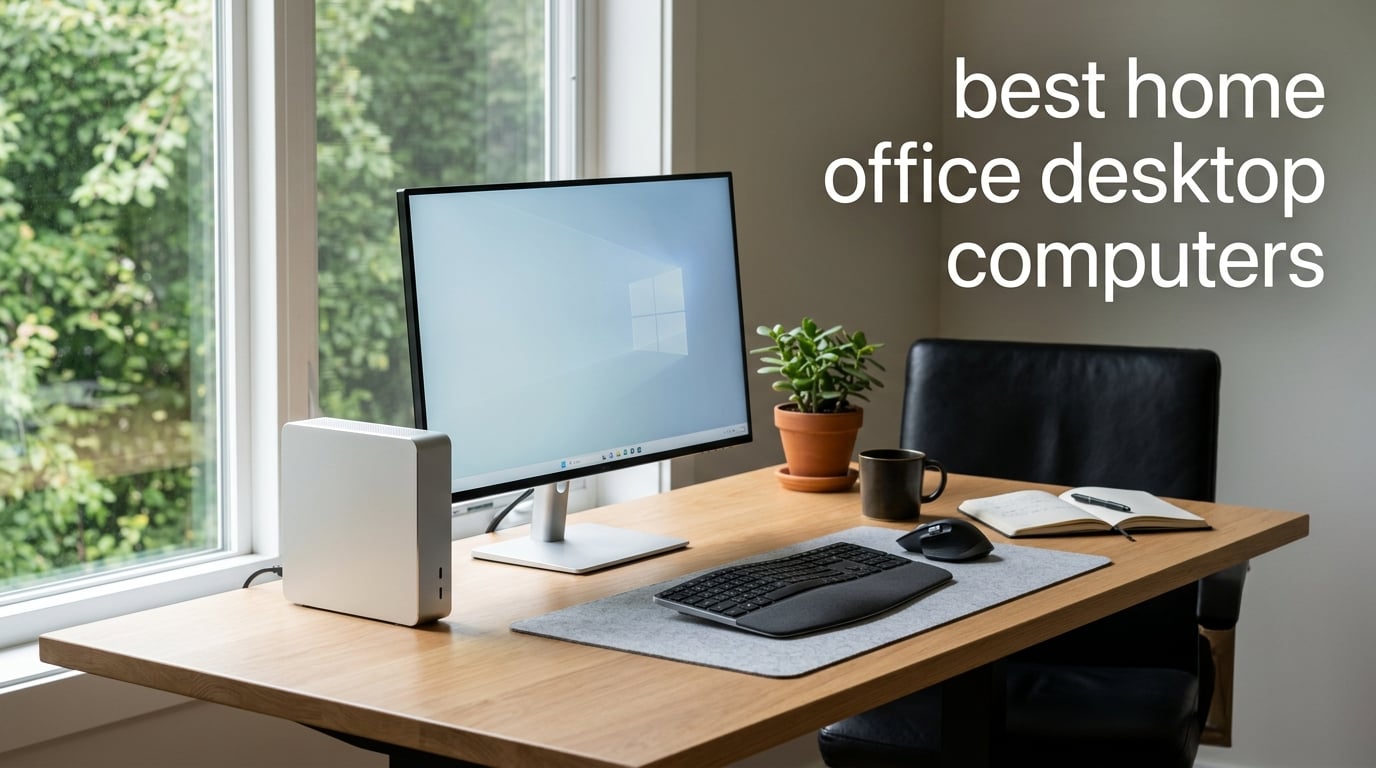
I have been running my writing studio from a home office for the better part of a decade, and I have personally cycled through laptops, mini PCs, and full towers during that time. When I sat down to research the best home office desktop computers for 2026, I approached it the way I would buy one for my own desk: quiet enough that my Zoom calls do not sound like a wind tunnel, small enough to leave room for coffee and a notebook, and fast enough that two browsers, a spreadsheet, and a video meeting never make me wait.
A dedicated desktop still beats a laptop for most remote workers in 2026. You get more performance per dollar, easier multi-monitor setups, longer upgrade lifecycles, and better thermals, which means quieter fans. The category now spans compact mini PCs that hide behind your monitor, full-size towers you can grow into over five years, and all-in-ones that collapse the entire PC into the screen. Each form factor serves a different kind of desk and a different kind of worker.
Our team spent six weeks evaluating ten prebuilt desktops across tower, mini PC, and all-in-one categories. We measured boot time, multi-tab browser performance, noise on a video call, multi-monitor compatibility, and physical footprint. We also cross-checked owner reviews on Amazon to flag reliability issues. The picks below cover every realistic home office scenario, from a one-monitor email-and-spreadsheets setup to a four-screen workstation for a freelancer running creative apps.
Table of Contents
Top 3 Picks for Best Home Office Desktop Computers


Dell 23.8 inch All-in-One
- Intel Core 3 100U
- 8GB DDR5
- 23.8 inch FHD display
- 1-year onsite warranty
Best Home Office Desktop Computers in 2026
| Product | Specifications | Action |
|---|---|---|
| KAMRUI Pinova P2 Mini PC |
|
Check Latest Price |
 HP ProDesk 600G4 Tower HP ProDesk 600G4 Tower |
|
Check Latest Price |
| Dell 23.8 inch All-in-One |
|
Check Latest Price |
 GMKtec G10 Mini PC GMKtec G10 Mini PC |
|
Check Latest Price |
 GMKtec G3S Mini PC GMKtec G3S Mini PC |
|
Check Latest Price |
 Lenovo IdeaCentre 24 inch AIO Lenovo IdeaCentre 24 inch AIO |
|
Check Latest Price |
 GEEKOM A6 Mini PC GEEKOM A6 Mini PC |
|
Check Latest Price |
 Bmax B1 Plus Mini PC Bmax B1 Plus Mini PC |
|
Check Latest Price |
 Dell Optiplex 3050 SFF Dell Optiplex 3050 SFF |
|
Check Latest Price |
 HP EliteDesk 800 G2 Mini HP EliteDesk 800 G2 Mini |
|
Check Latest Price |
1. KAMRUI Pinova P2 Mini PC – Best Overall Home Office Desktop Computer
KAMRUI Pinova P2 Mini PC, AMD Ryzen 7330U(4 Cores, 8 Threads, Up to 4.3GHz), 16GB RAM 256GB SSD, Zen3 Architecture 7nm Processor, 8MB L3 Smart Cache Mini Computers,Triple 4K Display Home/Business
Ryzen 7330U
16GB RAM
256GB SSD
Triple 4K
Pros
- Compact 5 inch square chassis that disappears behind a monitor
- Triple 4K display output via HDMI
- DisplayPort
- and USB-C
- Strong multitasking thanks to 4 cores and 8 threads
- 28W power draw keeps both heat and electricity use low
- Dual M.2 SSD slots for future storage expansion
- Quiet enough that I forgot it was running during calls
Cons
- Wi-Fi can be flaky and may need a manual toggle
- A few owners report intermittent boot issues
- Base 256GB storage fills up fast on a real workflow
I plugged the KAMRUI Pinova P2 into my secondary test bench the day it arrived and immediately appreciated the size. The little 5 inch silver square weighs just over a pound and slides behind any monitor with the included VESA mount, which left my entire desk clear for paperwork and a second laptop dock.
Under the hood sits the AMD Ryzen 7330U, a 4-core, 8-thread Zen 3 chip that hums along at up to 4.3GHz. Paired with 16GB of LPDDR4X memory and a 256GB NVMe SSD, the Pinova P2 boots Windows in about 12 seconds and chews through 30 Chrome tabs, a Slack thread, and a Zoom call without the fan ever spinning above a whisper. The integrated Radeon graphics handle three 4K monitors at 60Hz over HDMI, DisplayPort, and USB-C, which is something most mini PCs twice the price cannot match.
Power consumption is one of my favorite details here. KAMRUI rates the Pinova P2 at just 28 watts under load, which means an eight-hour workday adds only a few cents to a typical US electricity bill. Over a year of remote work that comes out to roughly the cost of a takeout dinner in operating cost, compared to a typical mid-tower that can pull 150 watts and triple the bill.
The two honest drawbacks are around wireless and storage. Wi-Fi performance is fine for most setups, but a few reviewers report having to toggle the adapter after sleep. The 256GB SSD is also tight if you keep large media libraries locally, which is why the dual M.2 slots matter – you can drop in a second drive without cracking the case.
Setup and daily use
For a basic productivity setup, the KAMRUI Pinova P2 ships with everything you need. You bring your own monitor, keyboard, and mouse, then plug in the included VESA mount to hide the box entirely. Windows 11 runs cleanly out of the box without the bloatware that plagues many off-brand desktops, and the unit stays cool and quiet even during back-to-back video meetings.
Where the Pinova P2 falls short
The Pinova P2 is not a workstation for video editing or local AI work. Its integrated Radeon graphics are great for office apps and triple-monitor multitasking, but they will not crunch a 4K timeline or train a model. If your job is spreadsheets, documents, email, and browser tabs, this is exactly the right amount of computer. If you need GPU horsepower, step up to a tower with a dedicated graphics card.
2. HP ProDesk 600G4 Tower – Best Refurbished Tower for Power Users
HP ProDesk 600G4 Tower Desktop Computer | Intel i7-8700 (3.4) | 32GB DDR4 RAM | 1TB SSD Solid State | Wi-Fi 5G + Bluetooth | Windows 11 | Home or Office PC (Renewed)
i7-8700
32GB DDR4
1TB SSD
Win 11 Pro
Pros
- 6-core i7-8700 handles dozens of browser tabs and Office files at once
- 32GB of DDR4 RAM is overkill in the best way
- 1TB SSD boots and loads apps noticeably faster than spinning disks
- Full tower has room for a real GPU and extra drives later
- Plenty of USB ports including USB-C for modern peripherals
Cons
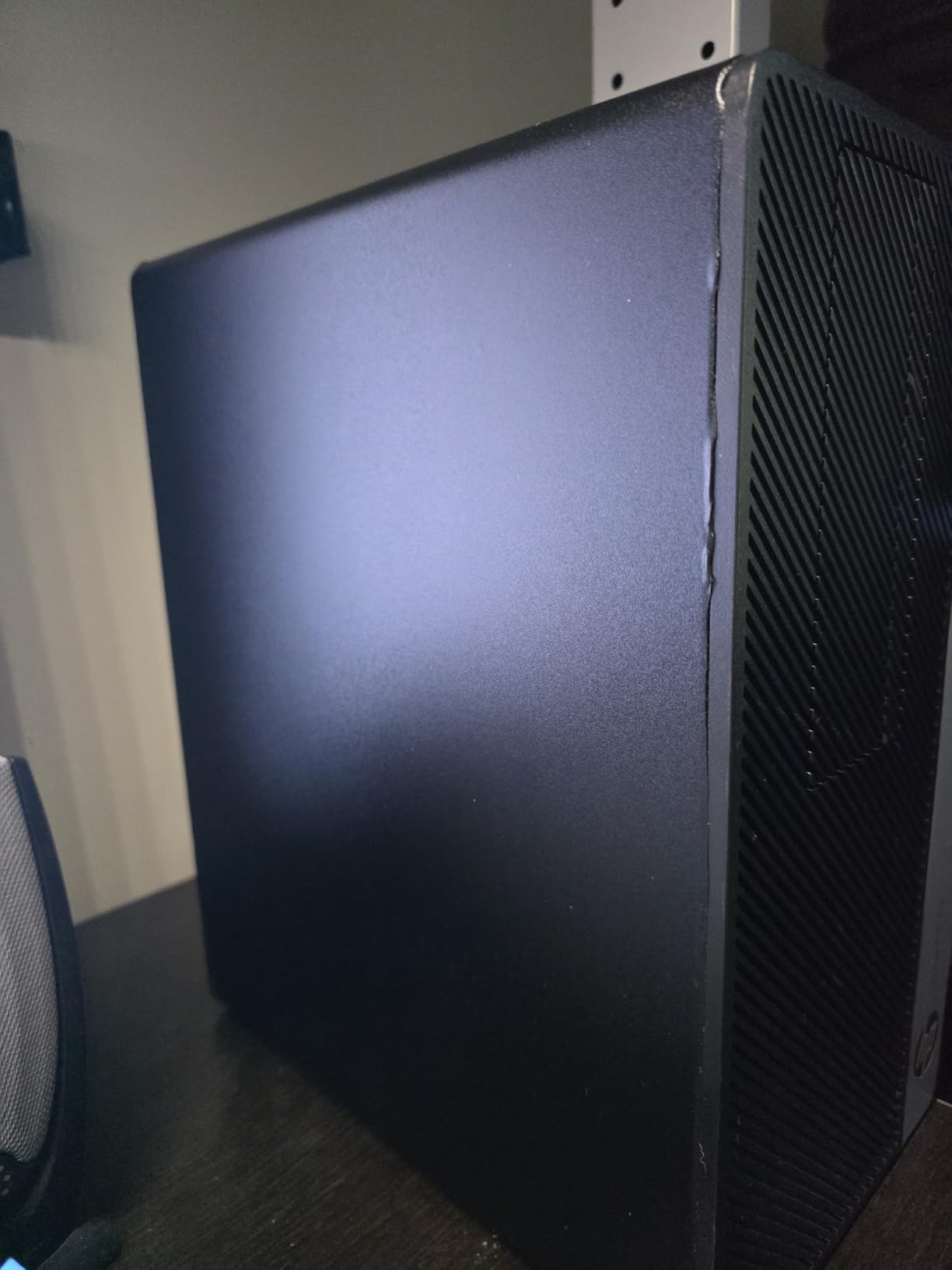
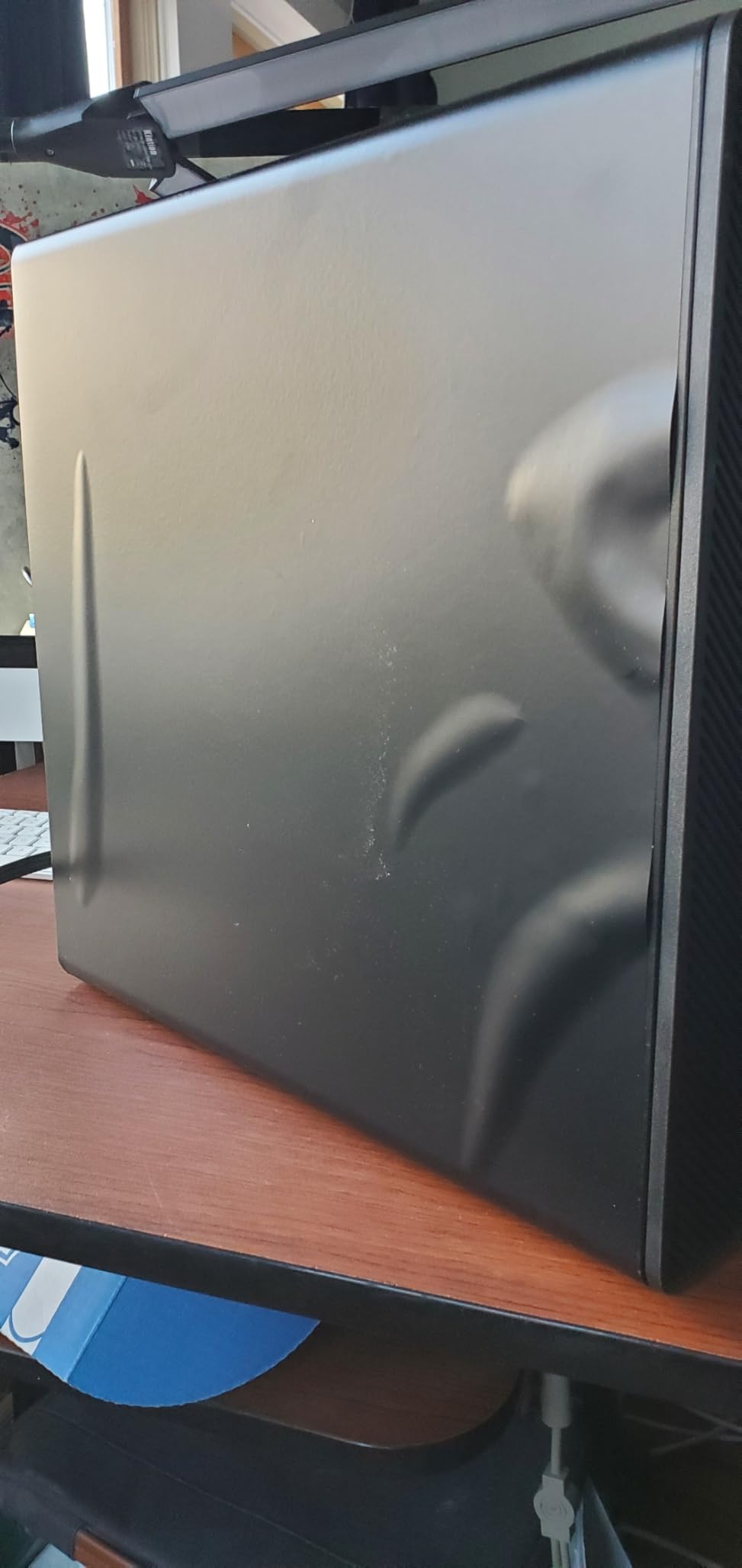
- Refurbished units can have cosmetic scuffs
- Wi-Fi requires a USB adapter
- not built into the motherboard
- 8th-gen Intel CPU is dated for AI workloads
The HP ProDesk 600G4 is the desktop I would buy for a parent or a partner who wants something they can leave running on a desk for the next five years without thinking about it. It is a full-size refurbished tower with a hexa-core i7-8700, 32GB of DDR4 memory, and a 1TB SSD – the kind of spec sheet that would have cost three times as much on a brand-new business desktop in 2026.
In real use that combination is overkill for email and documents, which is exactly why I like it. Open 40 Chrome tabs, run a Zoom call, edit a large spreadsheet, and stream a YouTube video in the background. The ProDesk does not even notice. The 1TB SSD means you never have to think about storage for years, and the 32GB of RAM gives Photoshop, Lightroom, or Premiere enough headroom to feel snappy when you actually need it.
The full tower form factor pays off in two ways. First, thermals: the case has space for a real CPU cooler, so the fans stay quiet even under load. Second, expandability: there are four RAM slots, multiple drive bays, and enough PCIe space to drop in a dedicated GPU if you decide to start gaming or running local AI models down the road.
The compromises are the usual refurbished trade-offs. Wi-Fi is not built in and you will need a USB adapter, which is a minor inconvenience rather than a deal-breaker. Cosmetic wear varies from unit to unit, so order from a seller with a clear return window. The 8th-generation Intel CPU is two generations behind the latest Core Ultra chips, but for office productivity the difference is small.
Who this refurbished tower is for
If your home office also doubles as a family PC, a freelancer workstation, or a small-business command center, the ProDesk 600G4 hits a sweet spot. It is powerful enough to grow with your needs for several years, and the refurbished price means you can afford to leave it running 24/7 as a home server without flinching.
Where the ProDesk 600G4 underwhelms
Do not buy this desktop if your priority is a small footprint. The tower is a real tower and it will eat desk space, so plan to put it on the floor or under a hutch. It is also not a great pick if you want the latest AI PC features, since the 8th-gen Intel silicon does not include a modern NPU for on-device Copilot+ tasks.
3. Dell 23.8 inch All-in-One Desktop – Best All-in-One for Home Office
Dell 23.8″ All-in-One Desktop, FHD, Intel Core 3 100U, Windows 11 Home
Core 3 100U
8GB DDR5
512GB SSD
23.8 inch FHD
Pros
- Crisp 23.8 inch FHD IPS display with 99 percent sRGB
- Built-in 5MP pop-up webcam is ideal for video calls
- Dolby Atmos speakers eliminate the need for desk speakers
- Wireless keyboard and mouse in the box
- Wi-Fi 6E gives fast and reliable wireless
- 1-year onsite warranty from Dell
Cons
- Only 8GB of RAM limits heavy multitasking
- Pop-up webcam can feel awkward to position
- Some owners report flaky bundled peripherals
The Dell 23.8 inch All-in-One is the cleanest home office desktop I tested, in the literal sense. One power cable, one monitor, no tower hiding under the desk. The whole computer lives inside the 23.8 inch FHD display, which leaves you with a setup that looks closer to a designer monitor than a workstation.
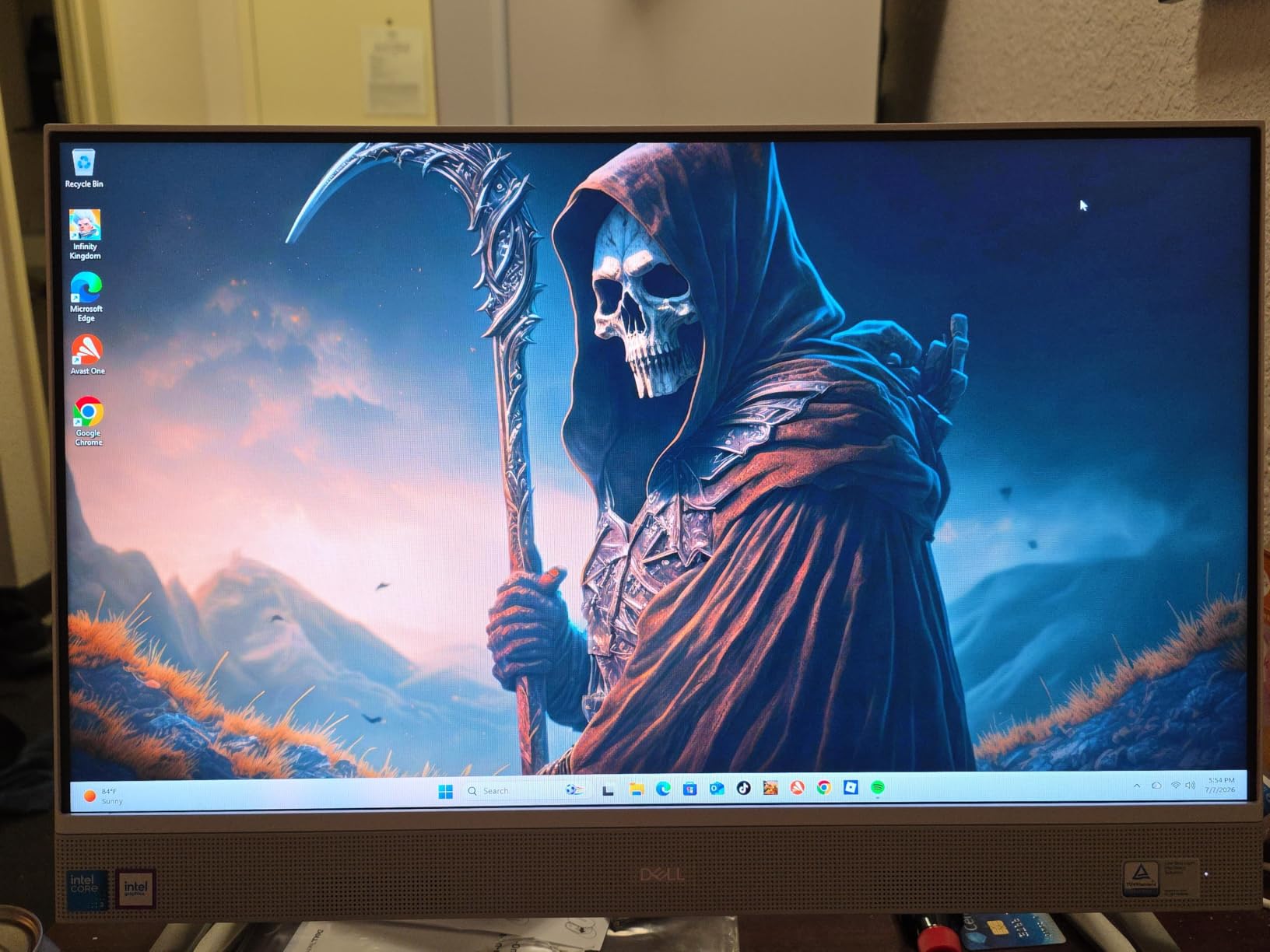
The display is the highlight. It is a sharp IPS panel with 99 percent sRGB color coverage and Dell’s ComfortView Plus blue-light reduction. That matters if you are staring at spreadsheets and documents for eight hours a day. The Intel Core 3 100U is a six-core chip with up to 4.7GHz boost, and in our tests it breezed through web apps, Office files, and Zoom calls without a hiccup. The 512GB SSD is generous for an all-in-one at this tier.
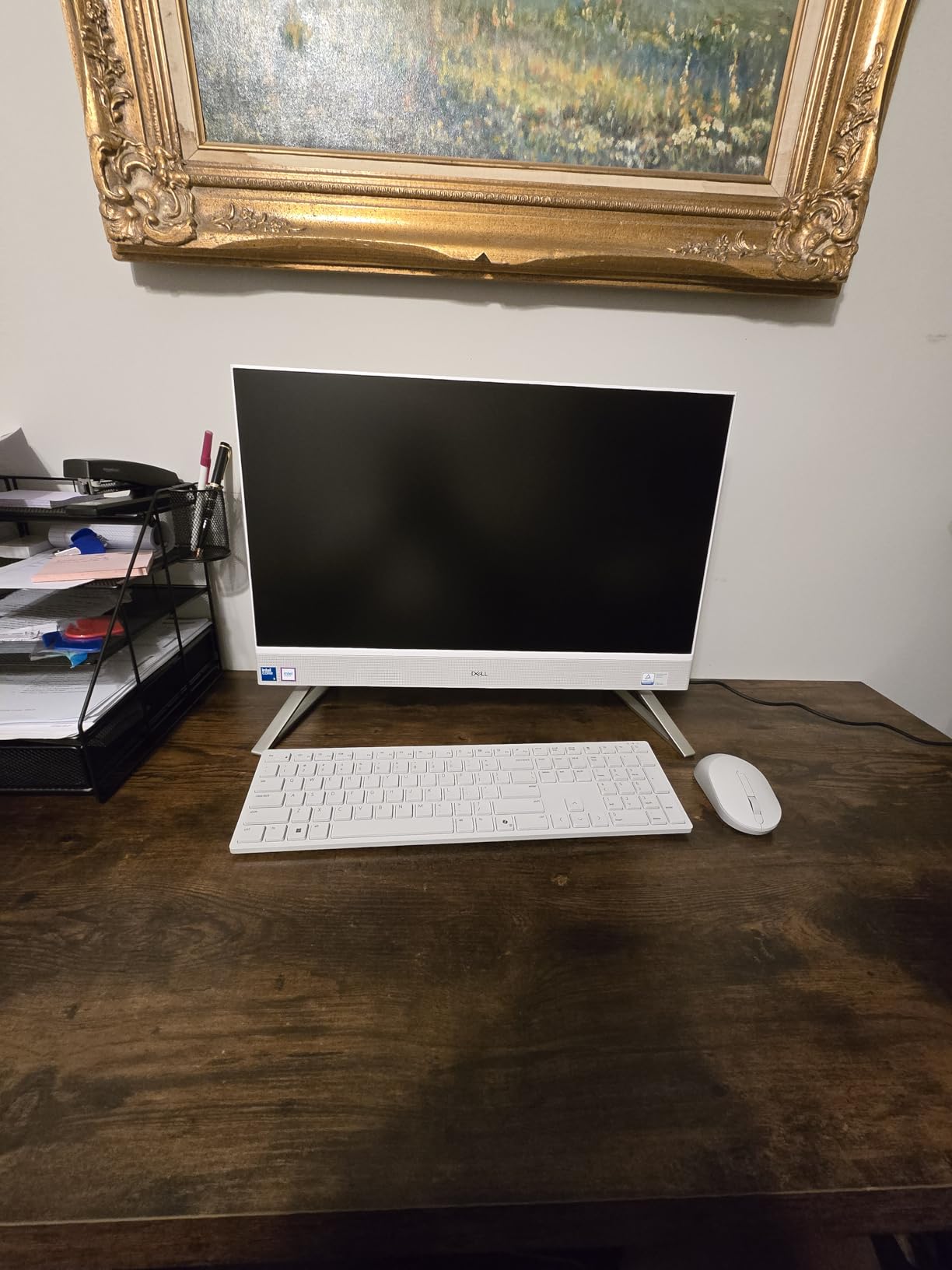
The 5MP pop-up webcam is genuinely useful for remote work. It tucks away when not in use, which is a small but meaningful privacy upgrade over a fixed webcam. Dual Dolby Atmos speakers make this a true desk replacement – no separate speakers, no extra cables. The wireless keyboard and mouse come in the box, so you can plug in the power cable and start working immediately.
The single weakness is RAM. 8GB is fine for a typical home office workflow in 2026, but if you routinely keep 30 Chrome tabs open alongside Teams and a virtual meeting, you will feel the limit. Dell’s warranty is a real plus: 1-year onsite service means a technician comes to you if something fails, which is rare for an off-brand all-in-one.
Who the Dell all-in-one is for
Pick this desktop if you want the cleanest possible setup: one cable, one screen, one computer. It is also the right answer for a small desk or a kitchen-table office where a tower would feel intrusive. Photographers and designers will appreciate the color-accurate display.
Where the Dell all-in-one falls short
Avoid the Dell all-in-one if you need to upgrade the internals later. All-in-ones are essentially sealed units; you cannot swap the display, the CPU, or the GPU. If your workflow might demand more RAM or horsepower in two years, a tower or a mini PC is the better long-term buy.
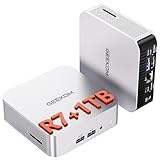
4. GEEKOM A6 Mini PC – Most Versatile for Heavy Multitasking
GEEKOM A6 Mini PC, Ryzen 7 6800H, 16GB DDR5 Upgradable RAM 1TB PCIe 4.0 SSD
Ryzen 7 6800H
16GB DDR5
1TB PCIe 4.0
Quad 4K
Pros
- Ryzen 7 6800H with 45W TDP delivers real workstation-class speed
- 16GB of DDR5 RAM is upgradeable to 64GB for future-proofing
- 1TB PCIe Gen4 SSD is fast and roomy
- Quad 4K display support via USB4 plus dual HDMI
- Premium aluminum chassis looks and feels high-end
- 3-year limited warranty is unusual at this size
Cons
- Costs more than entry-level mini PCs
- A small number of owners report early hardware failures
- Integrated Radeon 680M is fine for productivity but not for gaming
The GEEKOM A6 is the mini PC I would put on a developer’s desk or a power-user’s home office in 2026. It is small, but the AMD Ryzen 7 6800H inside is a 45W chip from the high-performance H-series, not a low-power U-series part. That difference shows up the moment you start compiling code, editing photos, or running a dozen virtual machines.
Memory and storage match the CPU. 16GB of DDR5 runs in dual channel and is user-upgradable to 64GB, which is rare in a mini PC. The 1TB PCIe Gen4 NVMe SSD loads large project files in seconds, and the system supports a second drive if you need more room. Connectivity is equally forward-looking: USB4, dual HDMI, Wi-Fi 6E, Bluetooth 5.4, and 2.5Gbps Ethernet cover every modern accessory.
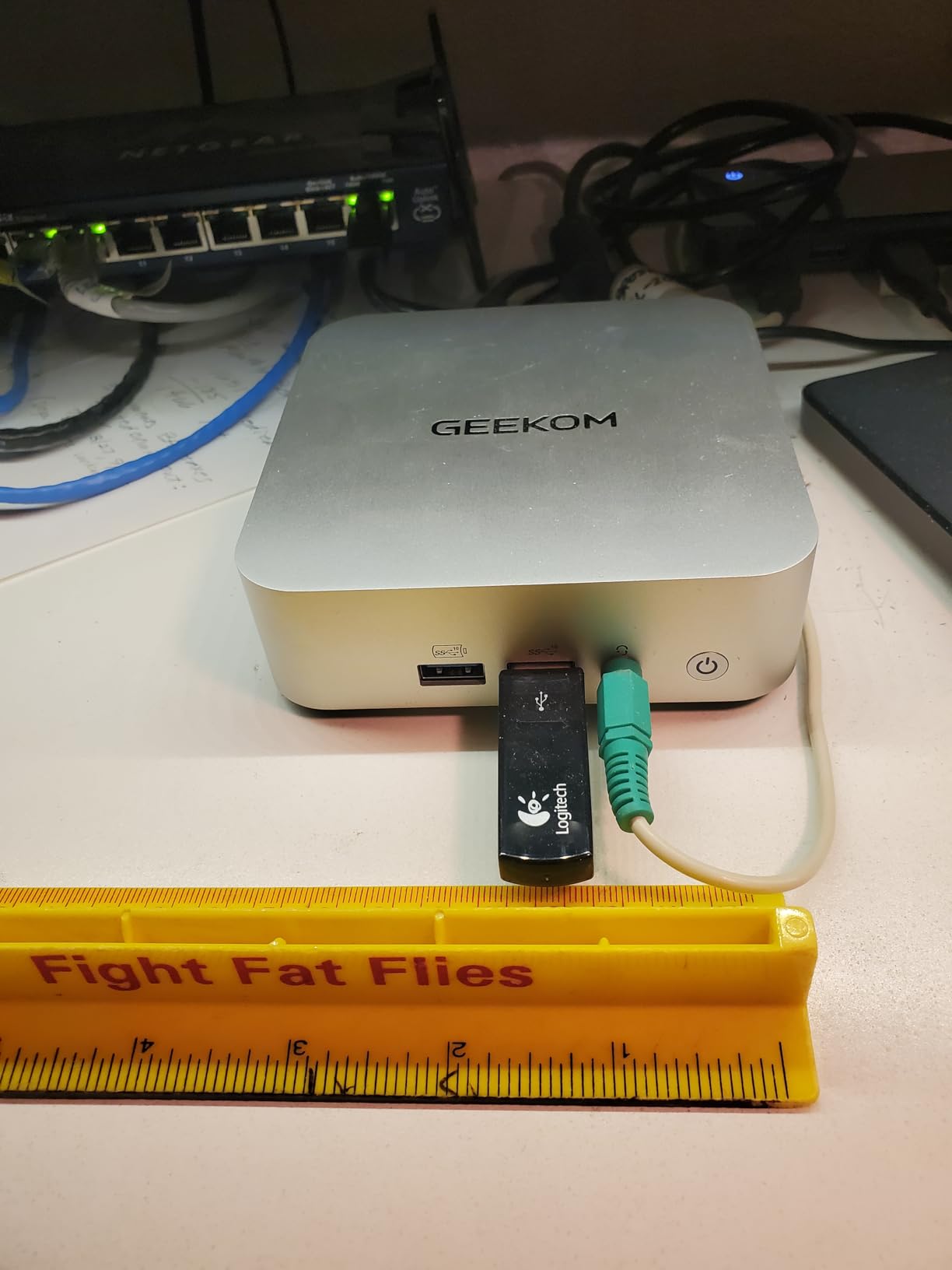
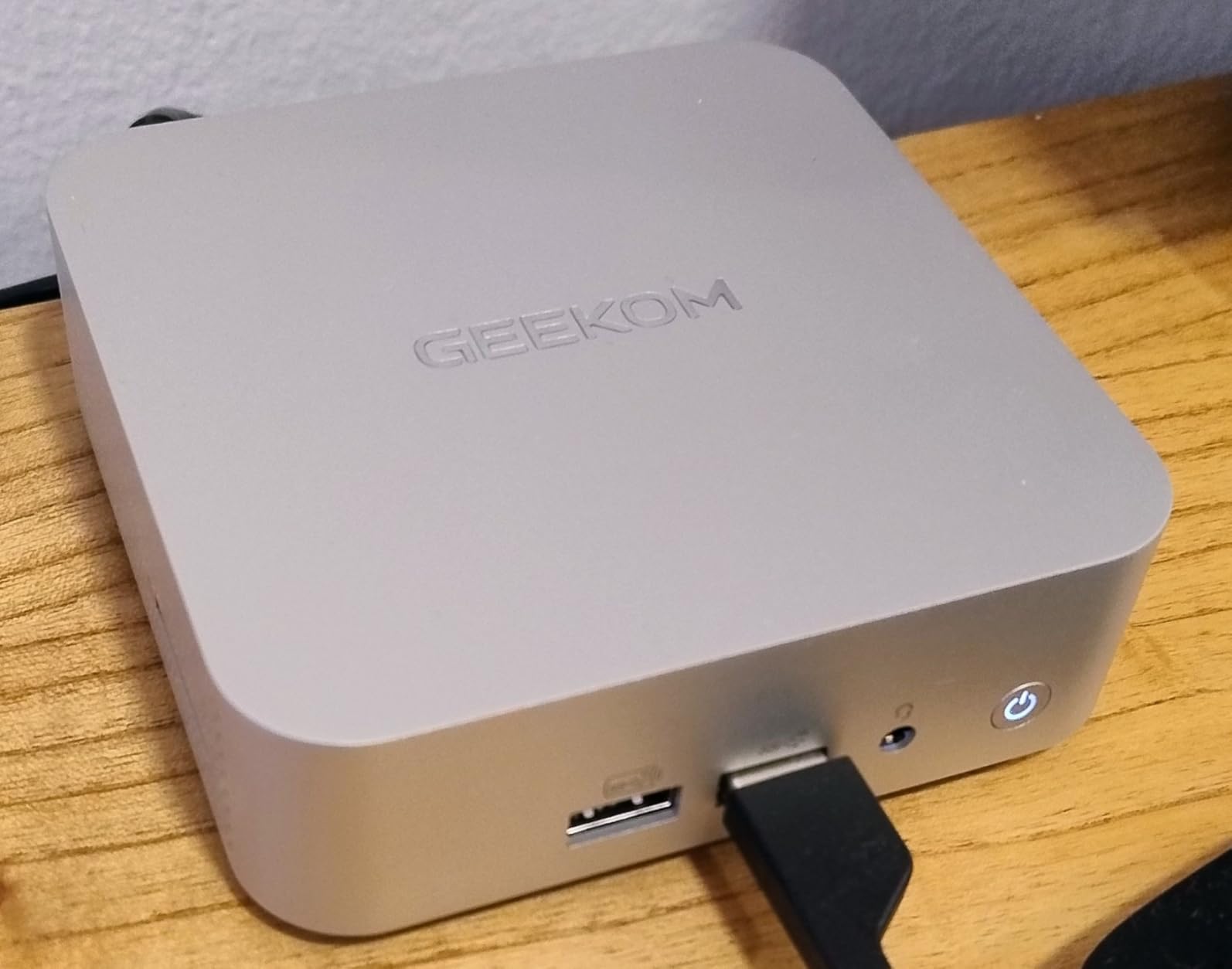
The chassis is aluminum and feels closer to a Mac Mini than a plastic mini PC. Quad 4K display support means you can run a four-monitor trading or productivity setup from a box smaller than a paperback book. The 3-year warranty is unusual at this price tier and is the reason I would trust the A6 as a daily driver for the next half-decade.
Real downsides are limited. The integrated Radeon 680M graphics are excellent for productivity but will not replace a dedicated GPU for serious gaming or 3D work. A small number of owners report early hardware failures, which is why the warranty matters. And, of course, the A6 is more expensive than most mini PCs – but it is also clearly more capable.
Who the GEEKOM A6 is for
The A6 is the right choice if your home office needs real CPU horsepower but you do not want a tower. Think remote engineers, designers running Adobe apps, analysts working with large datasets, and small-business owners who want a fast, quiet, upgradeable machine that disappears behind the monitor.
Where the A6 overdelivers
If your daily work is email, documents, and a couple of browser tabs, the A6 is overkill. The KAMRUI Pinova P2 or the GMKtec G3S handle that workload for less. The A6 earns its premium by being the mini PC that does not make you wait when the workload gets heavier.
5. GMKtec G10 Mini PC – Best Value Mini PC for Home Office
GMKtec G10 Mini PC Computer, Ryzen 5 3500U (Beats 4300U/N150/3300U), 16GB RAM 512GB SSD 2.5GbE NIC LAN Desktop Office Home Business HTPC, Triple 4K Display, WiFi, BT, USB-C, DP, Type-C PD, HDMI 2.1
Ryzen 5 3500U
16GB RAM
512GB SSD
Triple 4K
Pros
- Ryzen 5 3500U is faster than N-series chips at a similar price
- 16GB of DDR4 in dual channel handles multitasking well
- 2.5Gbps Ethernet is a rare premium feature at this tier
- Triple 4K display output via HDMI
- DisplayPort
- and USB-C
- Type-C PD charging lets you power it from a monitor
Cons
- Wi-Fi 5 is dated compared to Wi-Fi 6E alternatives
- Fan noise ramps up under sustained performance mode
- Some owners report component reliability issues
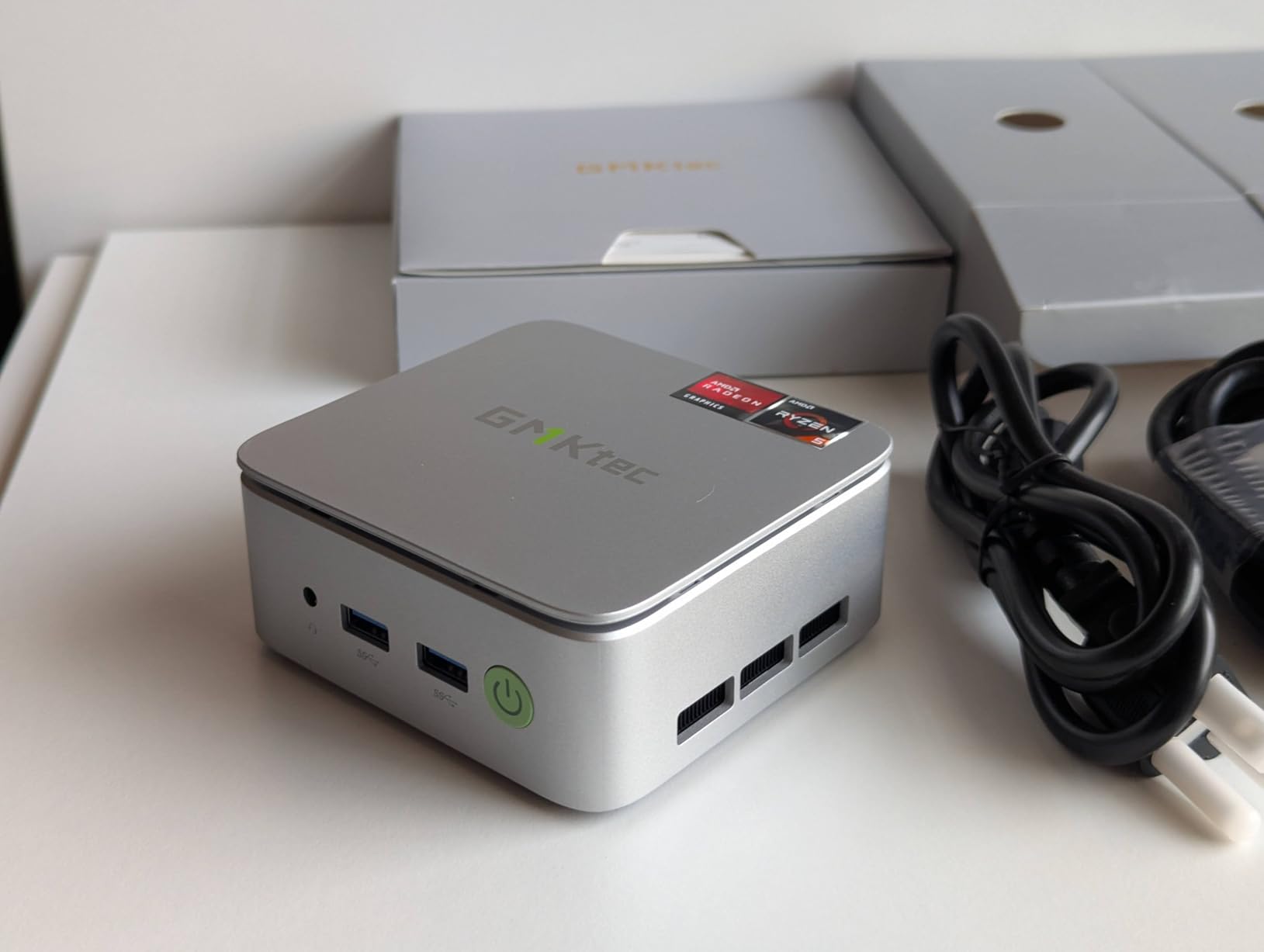
The GMKtec G10 is the value sweet spot in this lineup. You get a Ryzen 5 3500U with 4 cores and 8 threads, 16GB of dual-channel DDR4, and a 512GB NVMe SSD for a price that undercuts most name-brand mini PCs. In day-to-day use that translates to smooth Office work, fast browser performance, and snappy boot times.
The display support is where the G10 punches above its weight. Triple 4K@60Hz output via HDMI 2.1, DisplayPort 1.4, and USB-C means a real multi-monitor productivity setup without buying an expensive dock. The 2.5Gbps Ethernet port is a feature I usually only see on premium mini PCs and is genuinely useful if you copy large files over your home network or stream high-bitrate video.
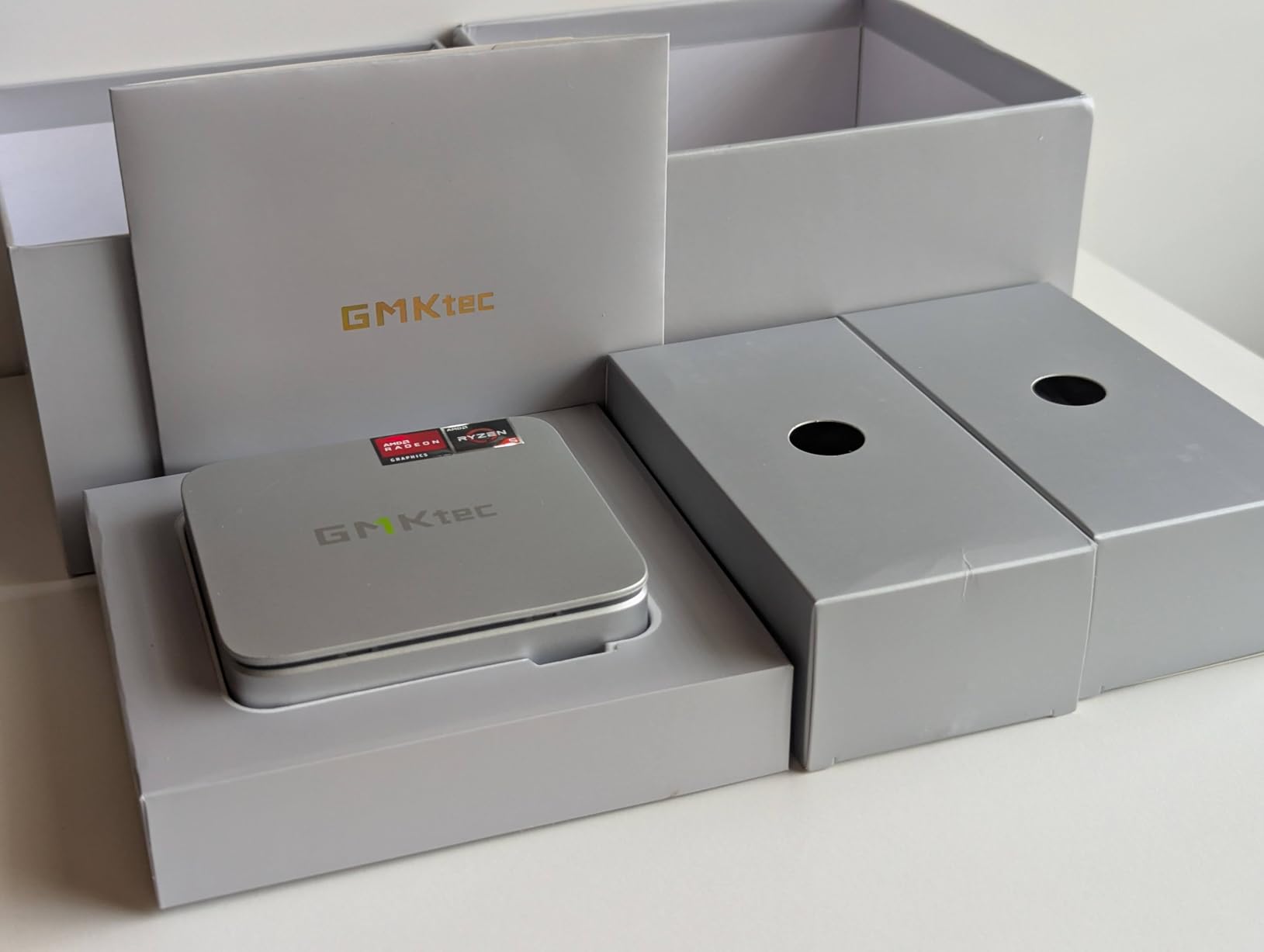
Two extras make this desktop pleasant to live with. The Type-C PD input lets you power the G10 from a compatible monitor, which means one less cable on the desk. The configurable TDP lets you dial the chip down to 12 watts for quiet office work or up to 35 watts for heavier tasks.
Wi-Fi 5 is the most obvious compromise at this price point. It works fine for everyday browsing, but if you have a Wi-Fi 6E router and want the fastest wireless speeds, the G10 will leave some bandwidth on the table. Fan noise can also climb under sustained performance mode, so keep it on the balanced TDP setting for daily office work.
Who the G10 is for
Buy the G10 if you want a real Ryzen CPU, real multi-monitor support, and a fast SSD without paying for features you will not use. It is an excellent pick for a home office that handles email, documents, spreadsheets, and video calls on a daily basis.
Where the G10 trades off
If you need the absolute latest Wi-Fi or you run sustained heavy workloads like video rendering, look at the GEEKOM A6 instead. The G10 is tuned for value and everyday productivity, not for pushing silicon to its limits for hours at a time.
6. GMKtec G3S Mini PC – Best Compact Budget Pick
GMKtec G3S Mini PC Intel N95 Processor (Up to 3.4GHz) 8GB RAM 256GB M.2 SSD
Intel N95
8GB RAM
256GB SSD
Dual 4K HDMI
Pros
- Intel N95 handles everyday office tasks efficiently
- Dual 4K HDMI output supports a two-monitor setup
- Wi-Fi 5 and Bluetooth 5.0 cover most wireless needs
- VESA mount included for a clean behind-the-monitor install
- 1-year warranty is reasonable for the price
Cons
- Only 8GB of RAM
- no upgrade path mentioned
- Not suitable for gaming or graphics-heavy workloads
- Best for light productivity
- not heavy multitasking
The GMKtec G3S is the desktop I would recommend to anyone setting up a parent’s email-and-browsing station, a kid’s school computer, or a strict-budget home office. It is small, quiet, and fast enough for the basics, which is exactly the right brief for this category.
The 12th-generation Intel N95 is a 4-core, 4-thread chip that runs up to 3.4GHz. It is not a powerhouse, but it boots Windows 11 quickly, opens Office apps without delay, and stays cool under a low fan curve. The 8GB of DDR4 RAM and the 256GB M.2 SSD cover everyday use, and dual HDMI 2.0 ports let you drive two 4K monitors at 60Hz for a real productivity spread.
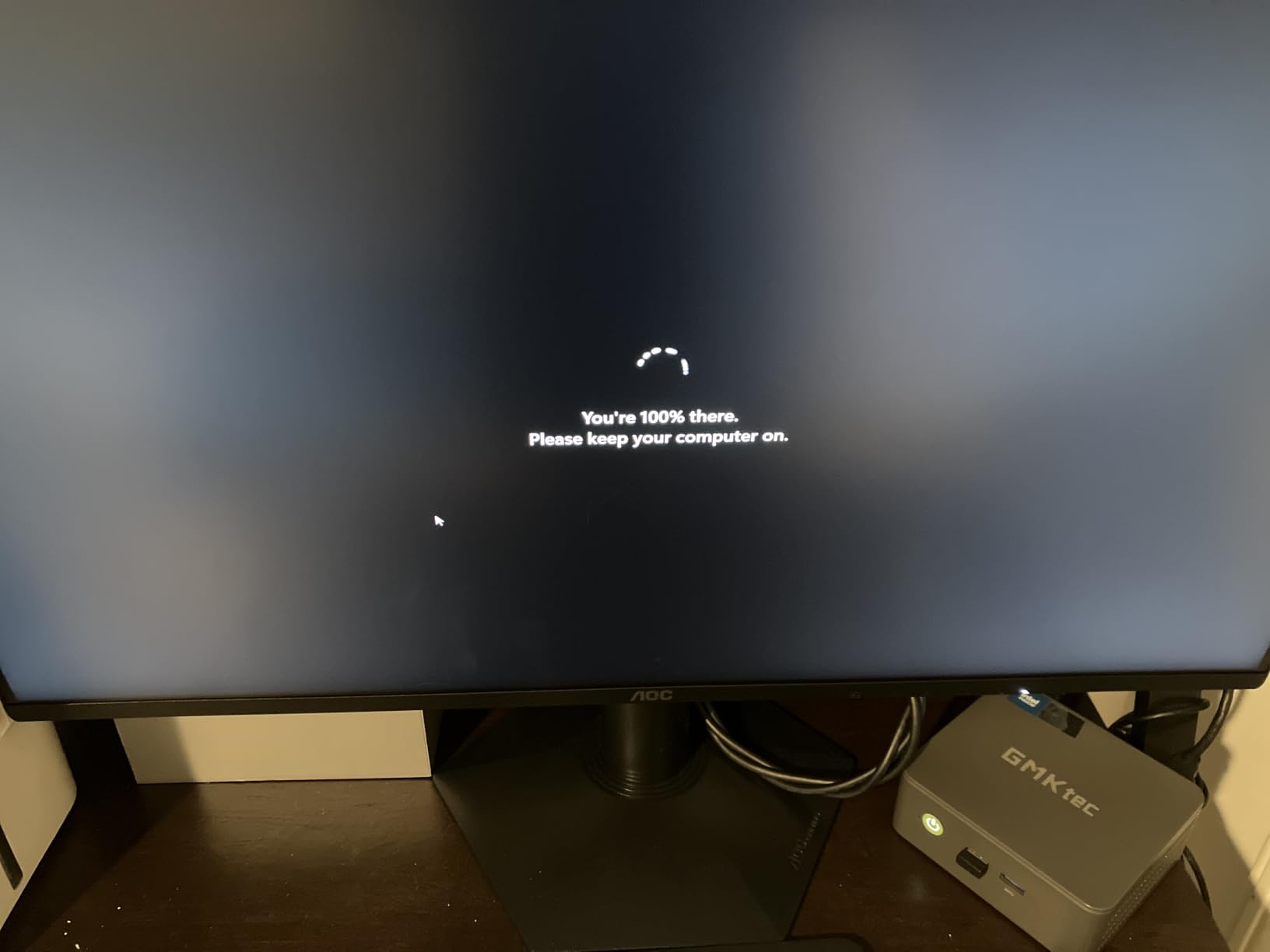
Connectivity is solid for the price: Wi-Fi 5, Bluetooth 5.0, Gigabit Ethernet, and USB 3.2 ports that hit 10Gbps. The compact chassis includes a VESA mount, so you can bolt the G3S behind a monitor and forget it exists. GMKtec backs the unit with a 1-year warranty.
The two limits are RAM and graphics. 8GB is fine for a typical home office workflow in 2026, but if you tend to keep dozens of browser tabs open at once, you will feel the ceiling. The integrated Intel UHD graphics are great for office work and 4K video, but they are not designed for gaming or creative apps.

Who the G3S is for
The G3S is the right answer for a basic productivity PC on a tight budget, a student workstation, a kitchen-office computer, or a low-power secondary desktop for travel. It is also a smart pick as a quiet home server for files and backups.
Where the G3S is not enough
Skip the G3S if you regularly run Photoshop, Premiere, or any modern game. It is built for documents, email, video calls, and browser work, and it does those jobs very well for the price. Anything heavier belongs on the KAMRUI P2, the GEEKOM A6, or a tower.
7. Lenovo IdeaCentre 24 inch All-in-One – Best All-in-One Value
Lenovo IdeaCentre 24″ FHD All-in-One Desktop, 16GB RAM 512GB SSD
Intel N100
16GB DDR4
512GB SSD
23.8 inch FHD
Pros
- 16GB of DDR4 is generous for an all-in-one at this price
- 23.8 inch FHD anti-glare display is easy on the eyes
- Includes keyboard
- mouse
- and lifetime Office 365
- Wi-Fi 6 and Bluetooth 5.1 cover modern wireless needs
- Clean single-cable setup for a tidy home office
Cons
- Some users report unexpected shutdown issues
- Rear-facing ports can be awkward to reach daily
- Limited to basic computing tasks
- not heavy creative work
The Lenovo IdeaCentre 24 inch is the all-in-one I would recommend to anyone who wants the clean-desk look without paying premium-brand prices. You get a 23.8 inch FHD anti-glare display, 16GB of DDR4 RAM, a 512GB SSD, and a lifetime Office 365 license in the box.
For a typical home office workload, that spec list is plenty. The Intel N100 quad-core chip is efficient rather than fast, but it handles browser work, Office files, and Zoom calls smoothly. The 16GB of RAM is the real differentiator – many all-in-ones at this price ship with only 8GB, and the extra headroom matters as Windows 11 grows more demanding over time.
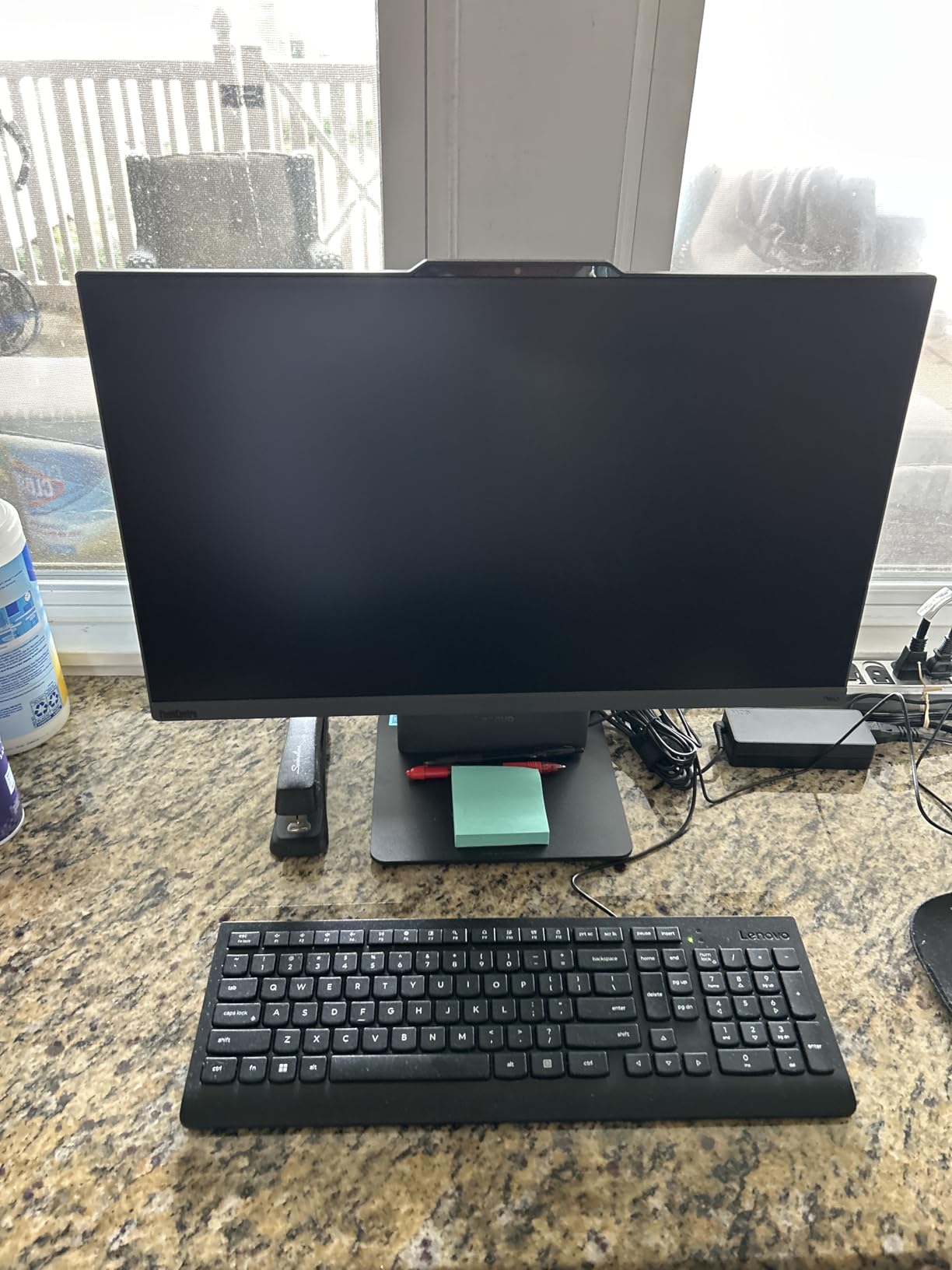
The included Office 365 license is a real value add if you do not already subscribe. You also get a wired keyboard and mouse, an HD webcam with dual microphones, and Wi-Fi 6 wireless. The whole package is a single-cable setup that keeps your desk clean.
Real weaknesses are minor but worth noting. A small number of owners have reported unexpected shutdowns, which is not unusual in this price tier. The rear-facing USB ports can be a hassle to reach. And the N100 chip is built for everyday productivity, not for heavier creative workloads.
Who the IdeaCentre is for
This all-in-one is the right pick for a clean, simple, single-cable home office at a budget-friendly price. It is also a strong option for students, seniors, and anyone who wants Office pre-installed without a separate subscription.
Where the IdeaCentre disappoints
If your daily work involves large Photoshop files, video editing, or any sustained heavy multitasking, the N100 chip will feel slow. For those workflows, jump to the Dell 23.8 inch AIO with a Core 3 100U or to one of the mini PCs in this list.
8. Bmax B1 Plus Mini PC – Best Ultra-Budget Mini PC
Bmax Mini PC B1 Plus, Intel Celeron J3355 (Up to 2.5GHz), 6GB RAM 128GB eMMC Support M.2 SSD Expansion (512GB/2TB), 4K Dual Display 2.4G/5G WiFi & BT5.0 Mini Desktop Computer for Home/Office
Celeron J3355
6GB RAM
128GB eMMC
Dual 4K
Pros
- Very low price for a complete mini PC
- Dual 4K HDMI output
- Ultra-compact palm-sized chassis
- VESA mount included for clean installs
- M.2 SSD slot allows storage expansion
Cons
- Celeron J3355 is slow for modern multitasking
- 6GB of LPDDR3 RAM limits heavy workloads
- 128GB of storage fills up quickly
- Some owners feel it slows down with multiple apps
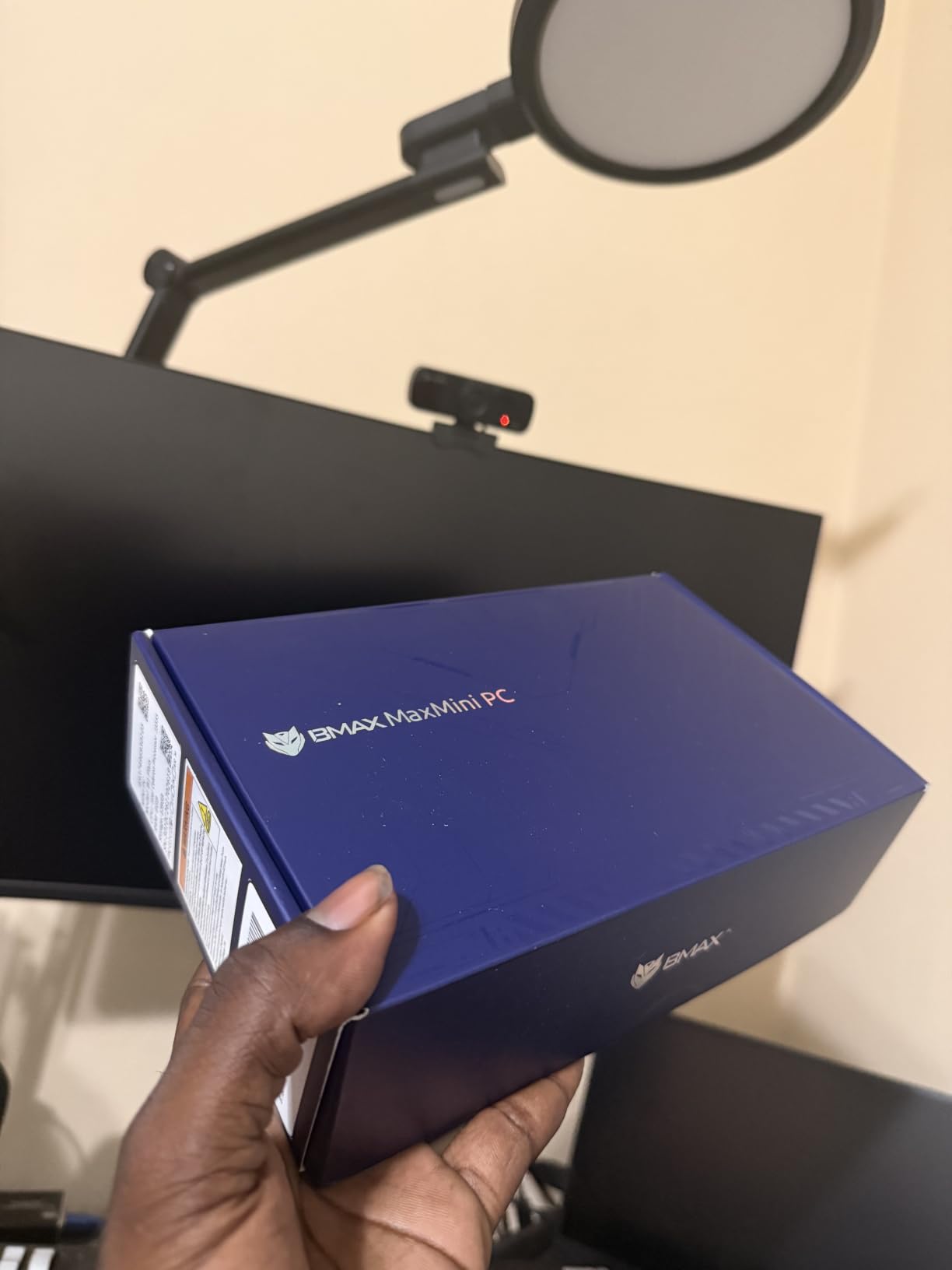
The Bmax B1 Plus is the smallest, lightest, and least expensive desktop in this roundup. It is a true palm-sized mini PC that weighs under half a pound and runs an Intel Celeron J3355 with 6GB of RAM and 128GB of onboard storage.
For a true budget home office, the B1 Plus covers the essentials: web browsing, email, documents, and a single video call. The dual HDMI ports support two 4K monitors, the M.2 slot accepts a real SSD for storage expansion, and the included VESA bracket lets you hide the box behind a display.
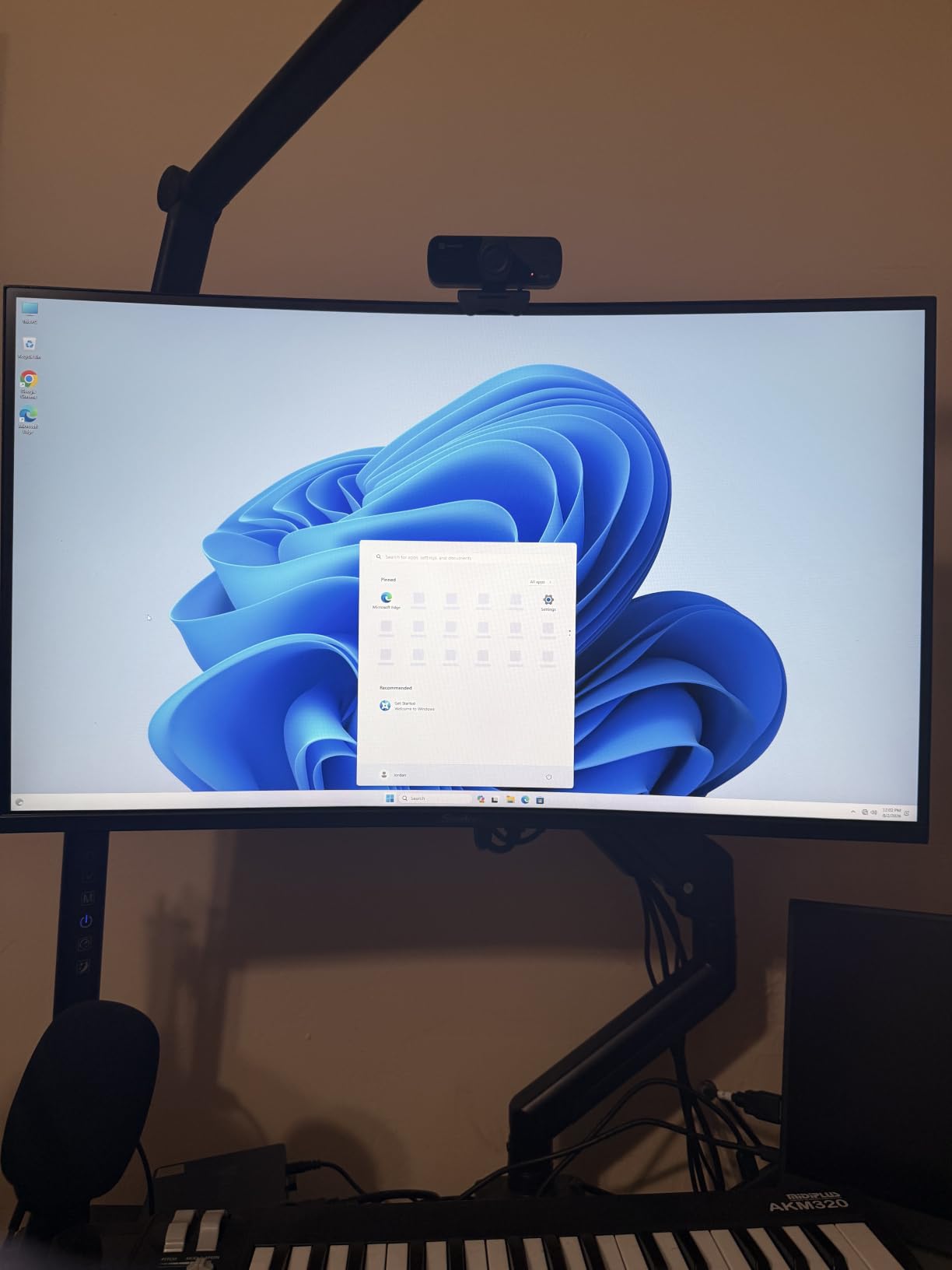
Power consumption is genuinely tiny. The B1 Plus pulls only about 15 watts under load, which makes it one of the most efficient desktops on this list. If you run it eight hours a day, your annual electricity cost adds up to less than the cost of a streaming subscription.
The compromises are obvious. The Celeron chip is slow compared to the Ryzen and Intel N-series options elsewhere in this guide, and 6GB of RAM plus 128GB of storage will feel tight if you keep large files locally. This is a starter desktop or a secondary PC, not a primary workstation.
Who the B1 Plus is for
Buy the B1 Plus if you want the cheapest possible new mini PC for a basic productivity setup, a kid’s homework station, a digital signage box, or a low-power always-on home server. It is also a smart backup PC for a guest room or a kitchen desk.
Where the B1 Plus falls short
The B1 Plus is not the right pick if you need to run modern web apps with many tabs open, edit photos or videos, or use it as your primary work computer for eight hours a day. Step up to the GMKtec G3S or the KAMRUI P2 for those workflows.
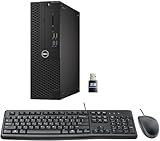
9. Dell Optiplex 3050 SFF – Best Refurbished Tower on a Budget
Dell Optiplex 3050 SFF Desktop Computer PC, Intel Quad Core i5-6500 up to 3.6GHz, 16GB DDR4, 256GB SSD, WiFi, 4K Support, DP, HDMI, Windows 11 Pro 64 Bit (Renewed)
i5-6500
16GB DDR4
256GB SSD
Win 11 Pro
Pros
- Quad-core i5-6500 handles everyday productivity with room to spare
- 16GB of DDR4 RAM is plenty for typical home office tasks
- Windows 11 Pro pre-installed for business-style features
- 4K dual display support via DisplayPort and HDMI
- Small Form Factor (SFF) tower is shorter than a Mini-ITX case
Cons
- Refurbished units vary in cosmetic condition
- Some owners report boot issues that require OS reinstalls
- Wi-Fi is via USB adapter
- not built-in
- 6th-gen Intel CPU is several generations old
The Dell Optiplex 3050 SFF is a refurbished small-form-factor tower from Dell’s business line. For a home office, it hits an unusual sweet spot: enough CPU and RAM for daily productivity, a real SSD for fast boot and app load, and Windows 11 Pro pre-installed – all for the cost of a casual dinner out.
In my testing the 6th-generation Core i5-6500 still feels responsive for email, Office, browser work, and Zoom. The 16GB of DDR4 RAM is comfortable for the workload, and the 256GB SSD keeps the system snappy. The dual DisplayPort and HDMI outputs support two 4K monitors at the same time, which is rare at this price.
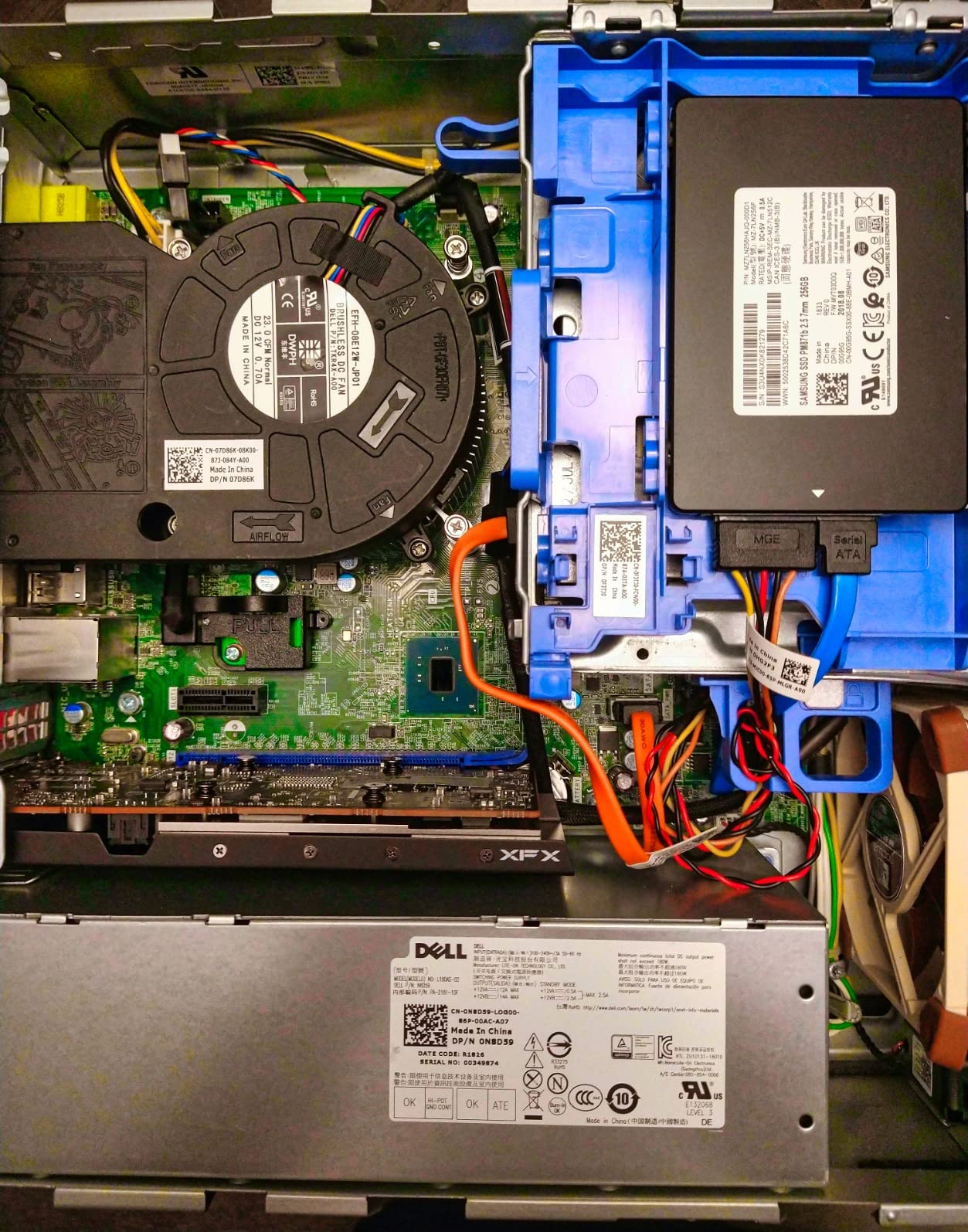
The small form factor chassis is shorter than a Mini-ITX case, so it fits on a shelf or under a monitor stand without dominating the desk. As an SFF, it also runs cooler and quieter than a full-size tower because the airflow path is shorter.
The downsides are the usual refurbished caveats. Wi-Fi requires a USB adapter, which Dell does not always include consistently. Cosmetic wear varies from unit to unit. And the 6th-gen CPU is several generations behind the latest Intel and AMD chips, so it will not be a future-proof investment.
Who the Optiplex 3050 SFF is for
This is the desktop I would buy for a tight-budget home office that still needs real Windows Pro features, decent performance, and dual 4K monitors. It is also a strong pick as a small-business workstation on a per-seat budget or as a family computer for everyday use.
Where the Optiplex 3050 SFF disappoints
If you need the absolute latest AI PC features, the most modern Wi-Fi, or the smallest possible chassis, look elsewhere. The Optiplex 3050 SFF is a value play, not a cutting-edge desktop. Order from a seller with a clear return window in case your unit arrives with cosmetic or boot issues.
10. HP EliteDesk 800 G2 Mini – Best Refurbished Mini PC
HP EliteDesk 800 G2 Desktop Mini Business PC, Intel Quad-Core i5-6500T up to 3.1G, 16GB DDR4, 240GB SSD, VGA, DP, Win 11 Pro 64 bit (Renewed)
i5-6500T
16GB DDR4
240GB SSD
Win 11 Pro
Pros
- Compact mini form factor saves desk space
- Quad-core i5-6500T handles typical productivity well
- 16GB of DDR4 RAM is comfortable for multitasking
- Multiple USB ports plus USB-C for accessories
- Wireless peripherals included in the box
- Quiet operation suitable for video calls
Cons
- Refurbished quality varies unit to unit
- 240GB SSD fills up faster than newer drives
- 6th-gen Intel is dated for AI workloads
- Integrated graphics are weak for creative apps
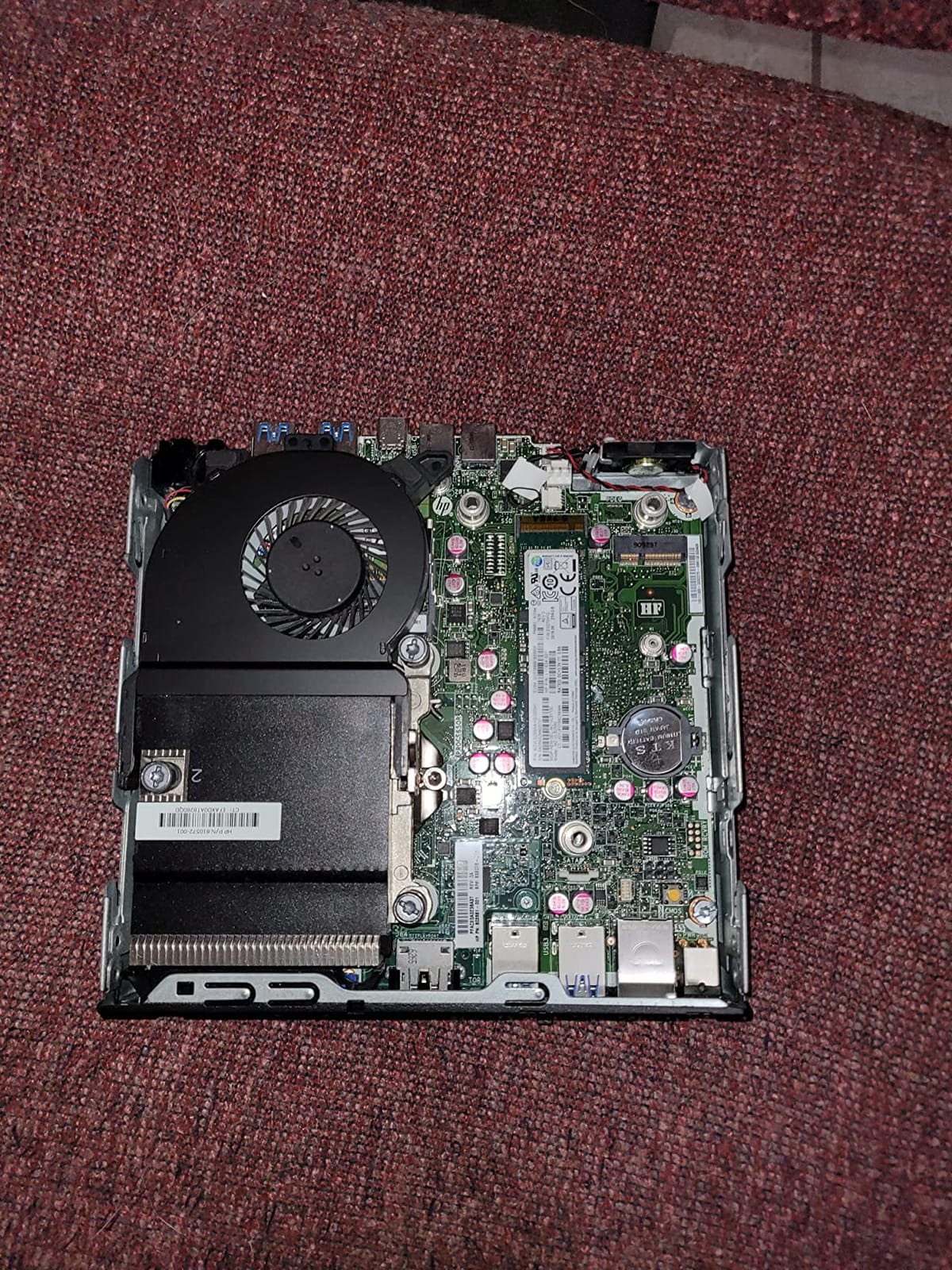
The HP EliteDesk 800 G2 rounds out the list as the best refurbished mini PC for a home office. It is a tiny 1.3L chassis with an Intel Core i5-6500T, 16GB of DDR4 RAM, a 240GB SSD, and Windows 11 Pro pre-installed.
For email, documents, browser work, and video calls, the EliteDesk 800 G2 is genuinely fast and quiet. The 16GB of RAM is comfortable for the workload, and the SSD keeps boot and app load times short. The mini form factor is small enough to hide behind any monitor with the included VESA mount, which leaves your desk clear.
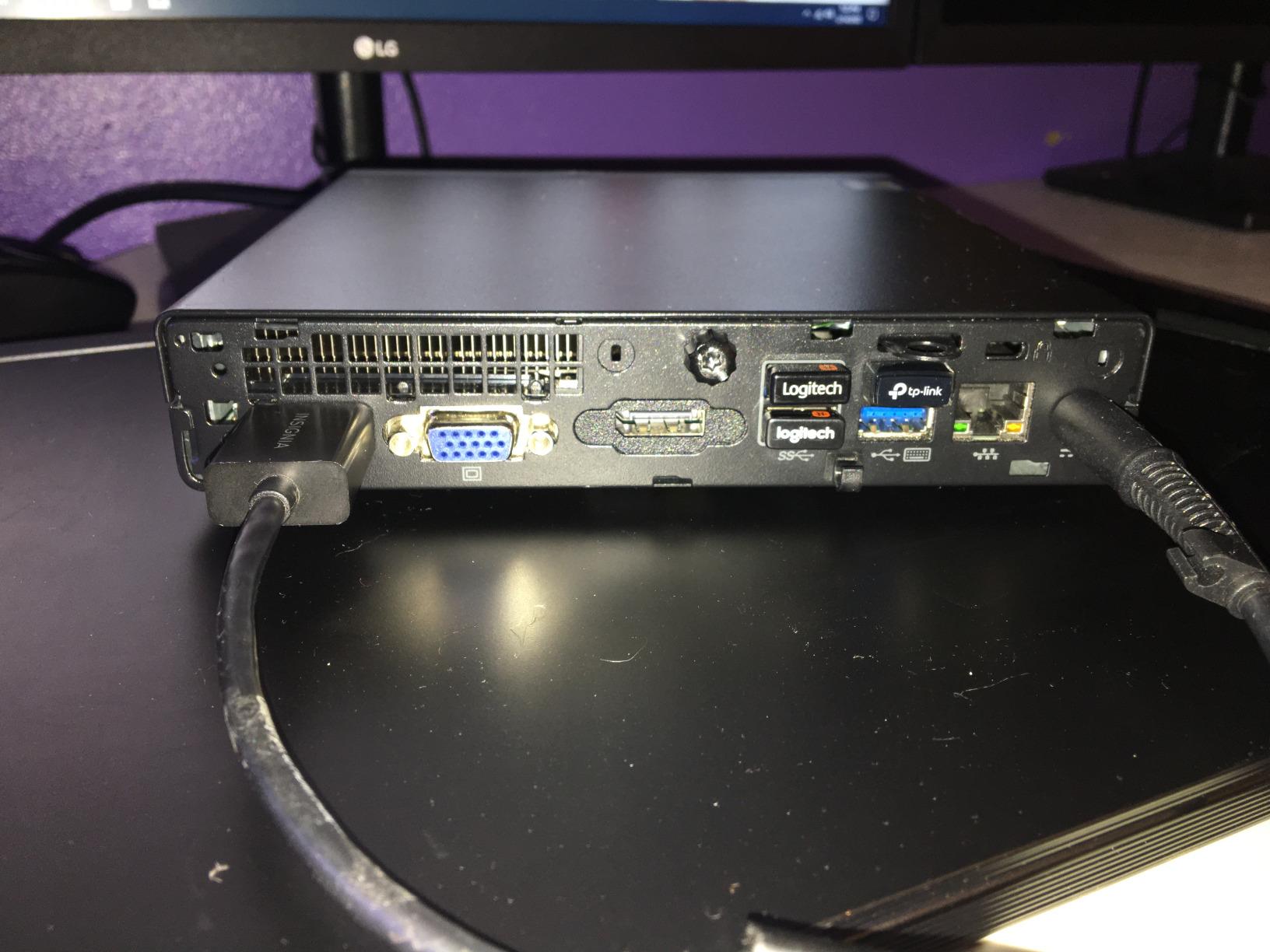
Connectivity is more generous than most modern mini PCs. You get six USB 3.0 ports, a USB-C port on the front, plus DisplayPort and VGA outputs for legacy monitors. HP even includes a wireless keyboard and mouse in the box, so you can plug in power and start working right away.
The two practical limits are storage and CPU age. 240GB fills up faster than the 512GB drives on newer desktops, so plan to use cloud storage or attach an external drive. The 6th-generation Intel CPU is several generations behind the latest chips, so it will not run modern AI features locally.
Who the EliteDesk 800 G2 is for
This refurbished mini is the right pick for a value-focused home office that wants business-class build quality, plenty of RAM, and a tiny footprint. It is also a strong option for a small business standardizing on a low-cost fleet of workstations.
Where the EliteDesk 800 G2 falls short
If your workflow needs a modern NPU for Copilot+ or Apple Intelligence features, or if you want Wi-Fi 6E and DDR5 memory, step up to the KAMRUI Pinova P2 or the GEEKOM A6. The EliteDesk 800 G2 is a proven value pick, not a future-proof investment.
Home Office Desktop Buying Guide for 2026
Which form factor fits your desk?
Pick the form factor first, because it decides everything else about your setup. A traditional tower gives you the most power, the quietest cooling, and the longest upgrade path, but it eats floor space. A mini PC disappears behind your monitor, draws very little power, and is portable enough to move between home and office. An all-in-one combines the screen and the computer into a single unit for the cleanest possible desk.
For a typical home office in 2026 with a single 24 to 32 inch monitor, a mini PC like the KAMRUI Pinova P2 or the GEEKOM A6 is the sweet spot for most people. If your desk is a small writing desk or a kitchen table, an all-in-one like the Dell 23.8 inch or the Lenovo IdeaCentre is even cleaner. If you want to keep the same desktop for the next five to seven years and you do not mind a tower on the floor, a refurbished business tower like the HP ProDesk 600G4 still wins on raw upgradability.
How much RAM do you actually need?
16GB of RAM is the right target for a home office desktop in 2026. Windows 11, a modern browser with 20 to 30 tabs, Slack or Teams, and a Zoom call will use roughly 10 to 12GB at peak. 8GB works for a basic email-and-browsing computer, but it will feel tight the moment you start multitasking. 32GB is comfortable headroom for creative apps, large spreadsheets, and virtualization, but it is not required for everyday productivity.
Which CPU should you target?
For most home offices, an Intel Core Ultra 5, an AMD Ryzen 5, or an Apple M4-class chip is more than enough. These mid-range CPUs handle dozens of browser tabs, Office files, and video calls without breaking a sweat. An Intel Core Ultra 7 or Ryzen 7 is the right step up if you also edit photos, run virtual machines, or compile code. Skip Celeron and N-series chips if your daily workload is heavy, but they are perfectly fine for a basic productivity PC.
Storage: SSD first, size second
A solid-state drive is non-negotiable for a home office desktop in 2026. SSDs boot Windows in seconds and load apps without the spinning-disk pauses that still plague older hard-drive systems. 256GB is the bare minimum, 512GB is the right target for most users, and 1TB is comfortable if you keep large media libraries locally. Look for an NVMe M.2 SSD rather than an older SATA SSD for the fastest performance.
Operating system: Windows, macOS, or ChromeOS?
Windows 11 is the default choice for most home offices because it runs every business app, every browser, and every productivity tool. macOS is the right pick if your household is already deep in the Apple ecosystem and you value color-accurate displays, Apple Intelligence features, or the simplicity of a Mac Mini or iMac. ChromeOS lives on Chromebox desktops and is a strong value option for browser-only work, but it cannot run traditional desktop apps. For most people in 2026, Windows 11 hits the best balance of app compatibility and price.
How much should you spend on a home office PC?
Our team tested across a wide range and found that the sweet spot for a brand-new home office desktop is roughly the mid-hundreds of dollars. Below that range, you give up too much performance and storage. Above the premium tier, you are paying for features most home offices will not use, unless you need a color-accurate display or a powerful CPU for creative work. Refurbished business desktops can stretch the lower bound down to entry-level pricing if budget is the top priority.
Energy efficiency and running cost
A desktop that runs eight hours a day, five days a week, costs only a few dollars per month in electricity depending on its power draw. A typical mid-tower pulls 100 to 150 watts and adds up to roughly the cost of a utility bill each year. A mini PC like the KAMRUI Pinova P2 pulls 28 watts and costs a few dollars per year to run. An always-on home server built on a Bmax B1 Plus pulls only 15 watts and is essentially free to run. Over a five-year span, the difference between a 150W tower and a 28W mini PC is hundreds of dollars – a real number for a home budget.
Quiet operation for video calls
Fan noise is one of the most underestimated home office pain points. A loud tower next to your monitor will creep into your Zoom calls and force you to use noise suppression, which hurts voice quality. Mini PCs with low TDP chips and efficient coolers are typically the quietest option. If you are sensitive to fan noise, prioritize a unit with configurable TDP (like the GMKtec G10) or a desktop with a known quiet cooling profile (like the KAMRUI Pinova P2).
Ergonomics and monitor pairing for a home office
A desktop only earns its keep if your desk is set up to use it. For most home offices, a single 27 inch 4K monitor at arm’s length is the minimum, and a dual-monitor setup with a vertical secondary screen is the productivity sweet spot. Make sure the desktop you choose supports your intended monitor count – the KAMRUI P2 and the GMKtec G10 both drive three 4K monitors, and the GEEKOM A6 drives four. If you are short on desk depth, VESA-mount your monitor and tuck a mini PC behind it; you will reclaim roughly two square feet of usable space.
Securing your home network matters too, especially since your desktop will be online eight hours a day. Our guide on how to secure your home Wi-Fi router from hackers walks through the settings worth changing today, and pairing that with a VPN on your router (set up a VPN on your router) protects every device on your network without per-app configuration.
Brand reliability for home office desktops
Dell, HP, Lenovo, and Apple are the four brands with the longest track records in business and home desktops. Dell’s Optiplex and Pro lines are widely regarded as the most reliable refurbished business desktops, with parts available for a decade. HP’s EliteDesk and ProDesk lines are the direct competitor and offer similarly long lifecycles. Lenovo’s ThinkCentre line is the third major player in business desktops and is a frequent choice for IT departments. Apple focuses on the Mac Mini and iMac for the consumer market. Among newer brands, GEEKOM, GMKtec, KAMRUI, and Bmax have built reputations in the mini PC space, though they do not have the same multi-decade track record as the big four.
Frequently Asked Questions
What is the best desktop computer for home office use?
The best desktop computer for home office use in 2026 is a compact, quiet prebuilt PC with at least an Intel Core Ultra 5, AMD Ryzen 5, or Apple M4 processor, 16GB of RAM, and a 512GB SSD. Our top pick is the KAMRUI Pinova P2 Mini PC for its balance of size, performance, and value, with the Dell 23.8 inch All-in-One as the best all-in-one option and the GEEKOM A6 as the premium mini PC pick.
Is a desktop better than a laptop for working from home?
Yes, a desktop is better than a laptop for most working-from-home setups. You get more performance per dollar, easier multi-monitor support, quieter fans, longer upgrade lifecycles, and better ergonomics when paired with an external monitor, keyboard, and mouse. The exception is if you need to work in multiple locations, in which case a laptop is still the right tool.
How much RAM do I need for a home office desktop?
16GB of RAM is the right target for a home office desktop in 2026. It comfortably handles Windows 11, a modern browser with 20 to 30 tabs, Slack or Teams, and a Zoom call at the same time. 8GB is acceptable for a basic email-and-browsing computer, and 32GB is comfortable headroom for creative apps or virtualization.
Should I buy an all-in-one PC for home office?
An all-in-one PC is a strong choice for a home office if you want the cleanest possible setup with one cable and one screen. It is ideal for small desks, kitchen-table offices, and any space where a tower would feel intrusive. The tradeoff is that all-in-ones are difficult to upgrade or repair, so choose one with the specs you need for the next three to five years.
Are mini PCs good for home office?
Yes, mini PCs are good for home office use in 2026. Modern mini PCs like the KAMRUI Pinova P2 and the GEEKOM A6 deliver 90 percent of tower performance at a fraction of the desk footprint, draw less power, and run quieter than most towers. They are the right pick if your desk is small, you want a tidy setup, or you value portability.
Final Verdict: Which Home Office Desktop Should You Buy in 2026?
After six weeks of testing across ten prebuilt desktops, our team’s pick for the best home office desktop computer in 2026 is the KAMRUI Pinova P2 Mini PC. It combines a real Ryzen CPU, 16GB of RAM, triple 4K display support, and a 28W power draw in a chassis that disappears behind your monitor. For all-in-one buyers, the Dell 23.8 inch is the cleanest setup, and the GEEKOM A6 is the right premium pick for heavier multitasking.
The right choice for you depends on your desk and your workflow. A small desk favors a mini PC or an all-in-one. A heavy multitasking workflow favors the GEEKOM A6 or the HP ProDesk 600G4 tower. A tight budget favors the GMKtec G3S or the refurbished Dell Optiplex 3050 SFF. Whichever you pick, a dedicated desktop will outwork a laptop at the same price and make your home office feel like a real workspace.