
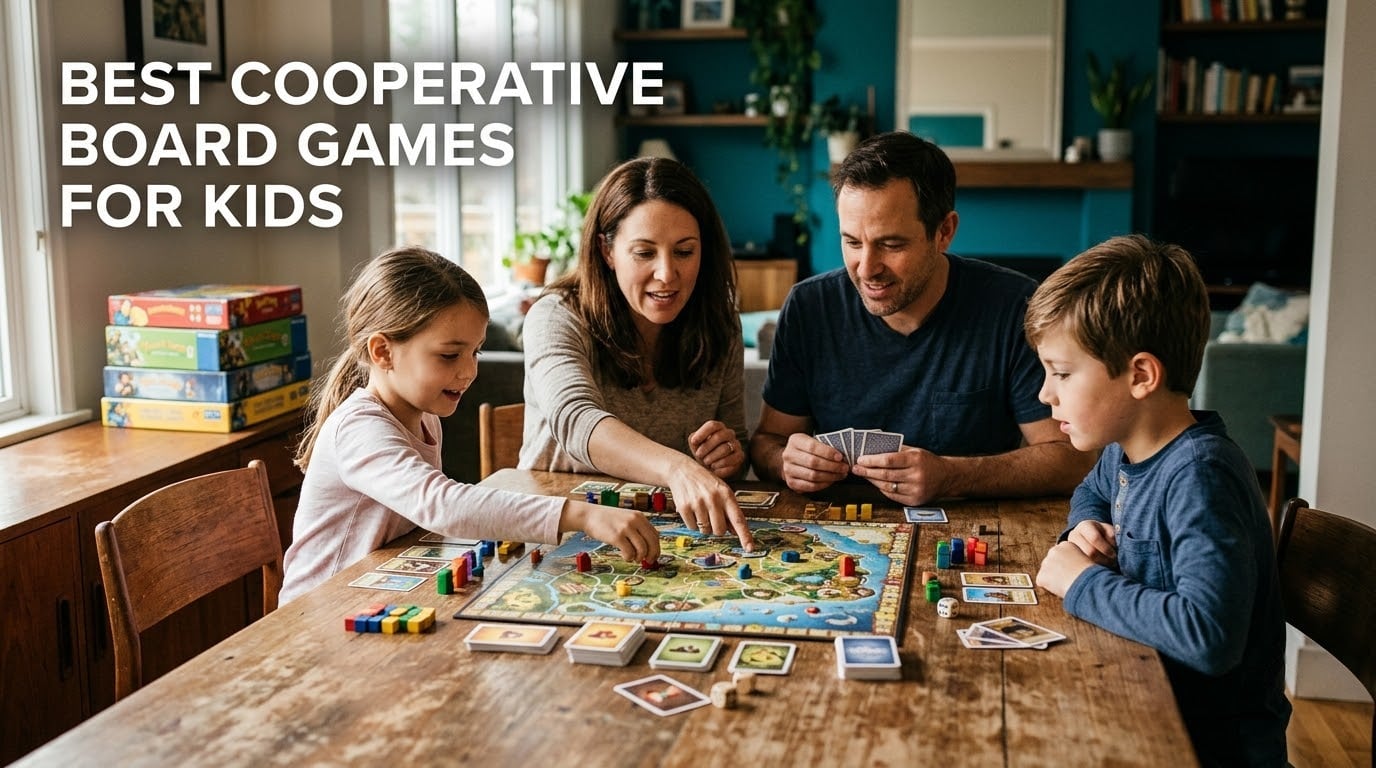
If you are searching for the best cooperative board games for kids, the honest answer is that no single game fits every family. A four-year-old who cannot read yet needs picture cards, while a nine-year-old who already plays chess will reject anything without a real decision to make. The one thing every pick here shares is that everyone wins or loses together, so there is no sore loser at the end of the night.
That single design choice changes family game night more than any other. There is no winner to gloat over, no player sitting out after an early mistake, and no argument about who cheated. It also gives adults permission to coach, which competitive games never do.
We compared twelve cooperative games that sit in the same consumer range as the tablets we recommend for kids and the consoles we rate for family use, focusing on what actually matters at the table: how long a round lasts, whether a child has to read, whether the game still interests the grown-up, and whether two kids of very different ages can share it. Twelve picked up, played and compared over several weeks of family game nights.
Table of Contents
Top 3 Best Cooperative Board Games For Kids (October 2026)
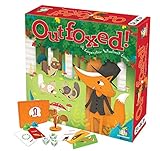
Outfoxed!
- Cooperative whodunit for 4 players
- Ages 5 and up
- 20 minute rounds
- Decoder wheel deduction
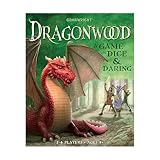
Dragonwood
- 20 minute fantasy adventure
- Set collection for 2-4 players
- Ages 8-15
- Adventurer cards

Bluey Scavenger Hunt
- Cooperative token collecting
- 2-4 players
- Ages 3 and up
- Indoor movement play
Every Pick Side by Side in 2026
| Product | Specifications | Action |
|---|---|---|
| Outfoxed! |
|
Check Latest Price |
| Dragonwood |
|
Check Latest Price |
| Bluey Scavenger Hunt |
|
Check Latest Price |
 Race to the Treasure Race to the Treasure |
|
Check Latest Price |
 Dinosaur Escape Dinosaur Escape |
|
Check Latest Price |
 Minecraft Heroes of the Village Minecraft Heroes of the Village |
|
Check Latest Price |
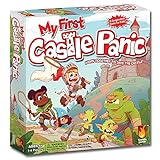 My First Castle Panic My First Castle Panic |
|
Check Latest Price |
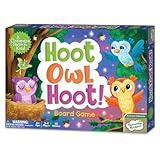 Hoot Owl Hoot Hoot Owl Hoot |
|
Check Latest Price |
 Baby Dinosaur Rescue Baby Dinosaur Rescue |
|
Check Latest Price |
 EXIT Kids Great Bee-Scape EXIT Kids Great Bee-Scape |
|
Check Latest Price |
 Magic 8 Ball Magical Encounters Magic 8 Ball Magical Encounters |
|
Check Latest Price |
 My First Safari My First Safari |
|
Check Latest Price |
1. Outfoxed! – the best cooperative board game for kids overall
OUTFOXED, A CLASSIC WHO DUNNIT GAME FOR PRESCHOOLERS, 4 players
Ages 5+
4 players
20 minutes
No reading needed in play
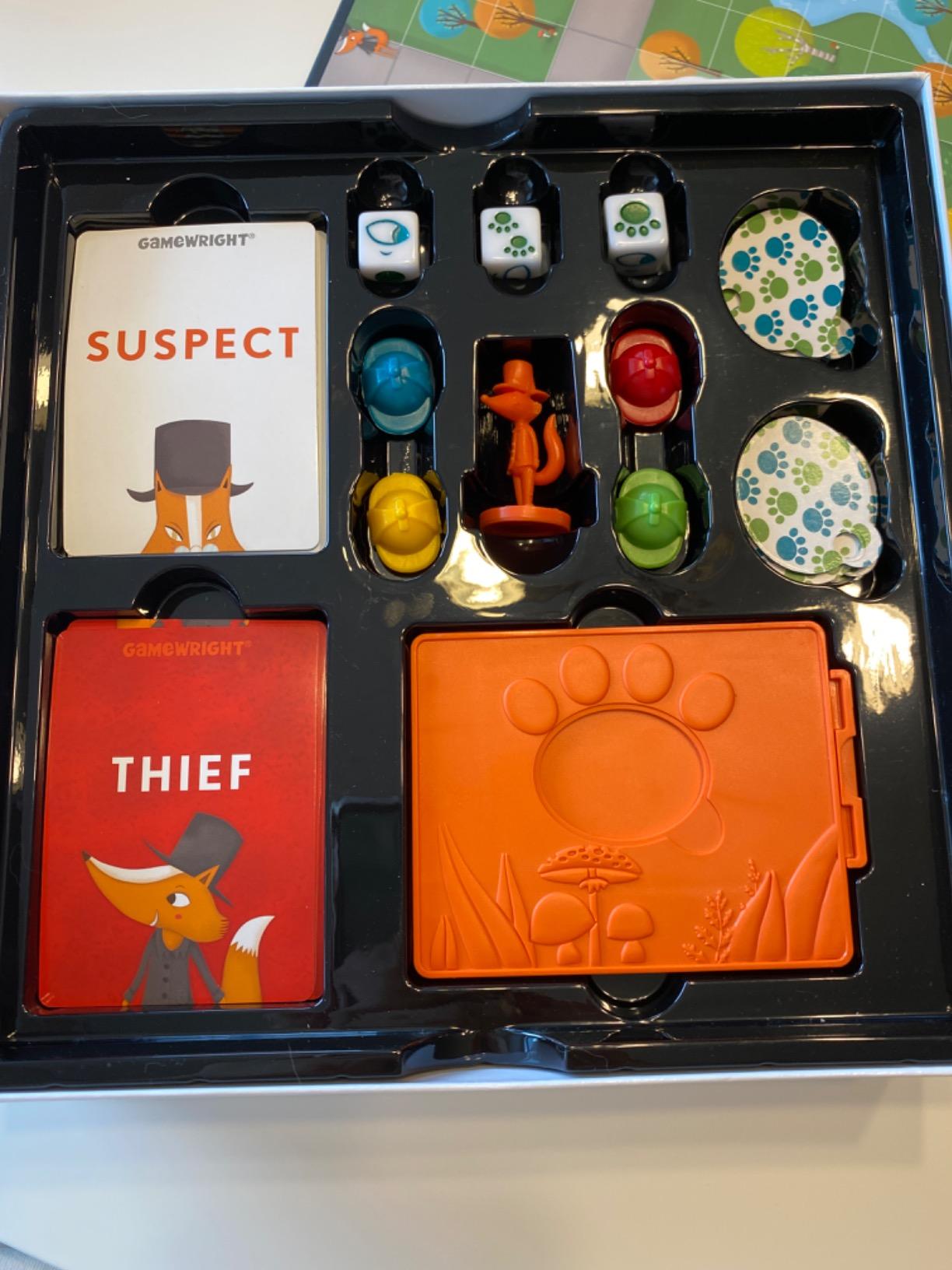
Dice, clues and decoder wheel
Pros
- No losers
- so it works with kids who hate losing
- Teaches deduction and memory through a mystery format
- 20 minute rounds fit short attention spans
- Works across a wide age span with adult help
Cons
- Decoder wheel can need adult help for preschoolers
- Suspect set repeats once children learn it
Outfoxed is the one I would put in front of most families first. A sneaky fox has stolen the picnic supplies and the table is full of cartoon suspects, and the whole group has to work out which one did it before the fox escapes.
What makes it hold up is the shape of the decision. Every turn you either move a suspect, flip a location card or roll, and each action either adds evidence or removes a possibility. That is real deduction without a rulebook adult has to simplify.
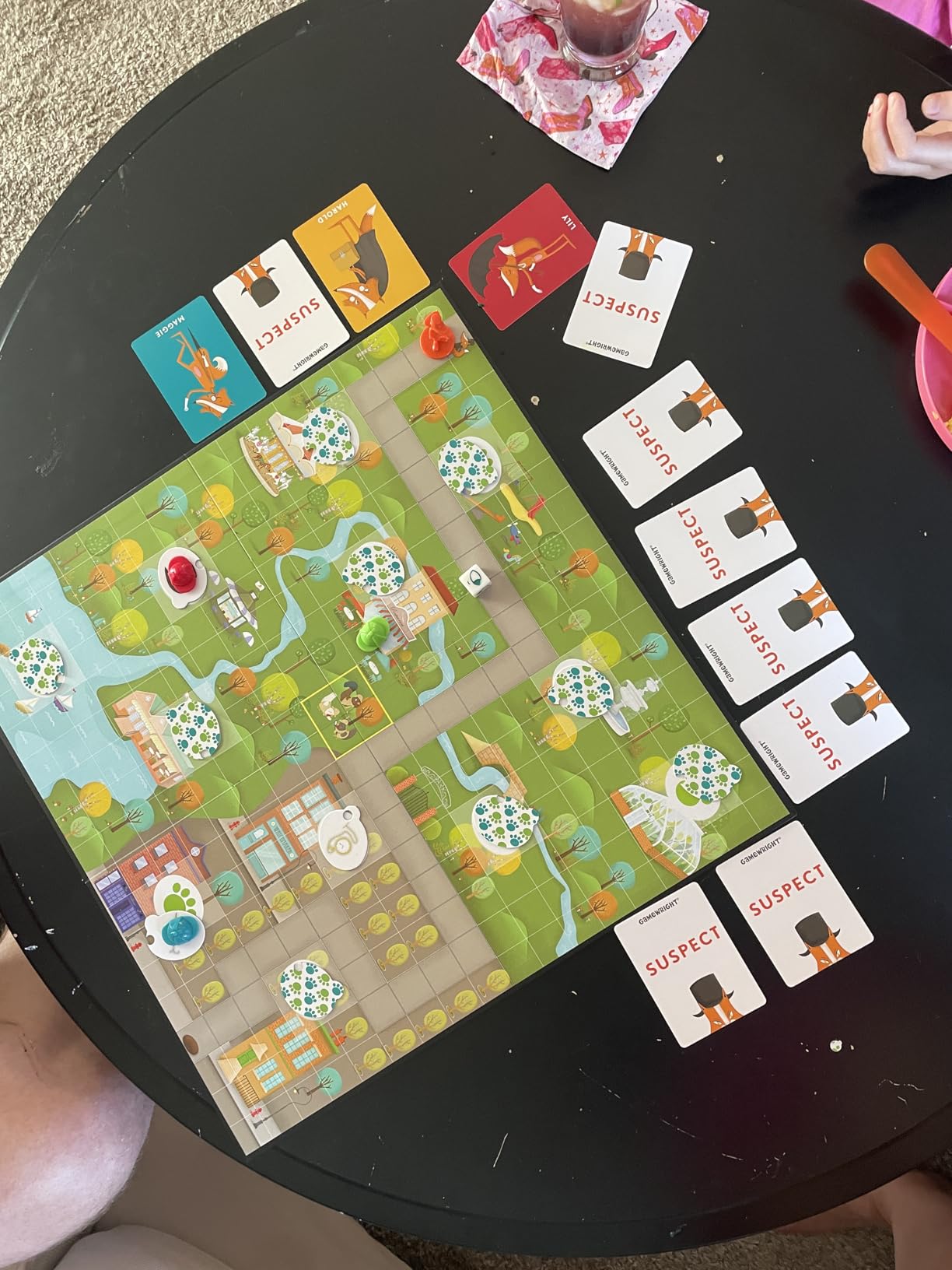
We played it with a five-year-old, a seven-year-old and two adults, and the youngest needed help turning the decoder wheel but could still follow the logic. Nobody was eliminated, nobody was out of the game, and when the fox escaped we immediately went again because the argument-free format made losing painless.
The published age range runs from 4 to 15, which is a wide spread. It is a 20 minute game with quick setup, and it needs no batteries.
What makes Outfoxed! work for mixed ages?
The older child gets to hold the suspect cards and manage the running list, which is real responsibility. The younger child gets a job that matters, like passing the die or reading a card out loud, without being handed the least interesting turn.
Because everyone shares one board, a parent never has to sit back and let a child flounder. That open, shared layout is the same quality parents describe when they call a co-op game a game for kids that adults enjoy too.
Where Outfoxed! falls short?
The suspect pool is fixed, so after a dozen plays the deduction starts feeling familiar to a sharp eight-year-old. Two reviewers we spoke to flagged the same ceiling, and it is the main reason this sits at the easy end of our list rather than the strategic end.
Younger players will still need an adult hand for the decoder wheel in the first few games. It is a five minute fix, not a problem, but it is real.
2. Dragonwood – the best pick for kids who want more strategy
Gamewright Dragonwood A Game of Dice & Daring Board Game Multi-colored, 5″
Ages 8-15
2-4 players
20 minutes
Dice and set collection
Adventurer cards
Pros
- Fast 20 minute rounds that fit a weeknight
- Adventurer cards add variety to each run
- Simple rules that kids pick up in one game
- Mix of luck and light planning
Cons
- Strategy depth is modest for older children
- Some listing imagery describes a puzzle rather than the game
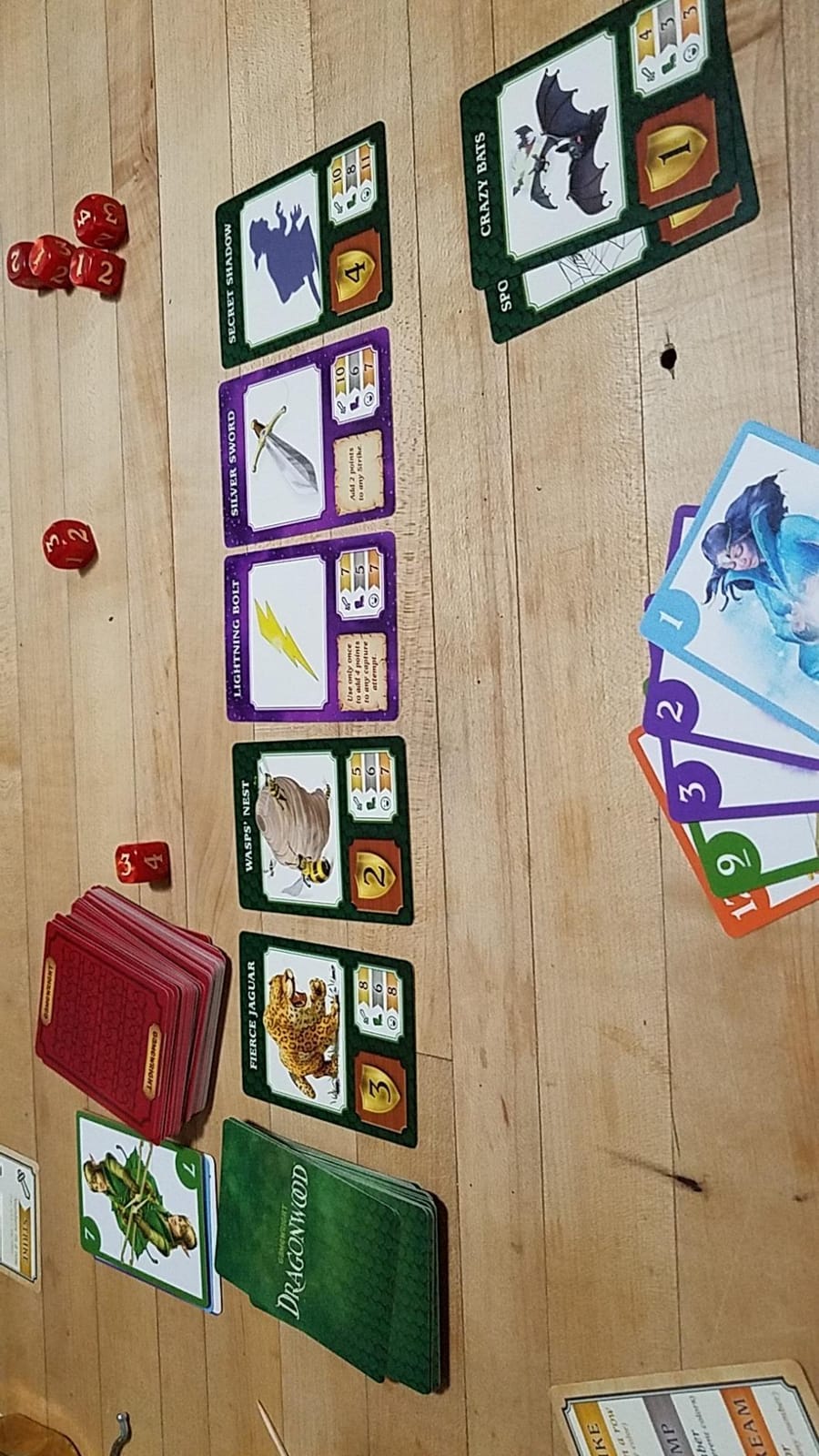
Dragonwood is the one I reach for when a child has outgrown matching games but is not ready for a heavy strategy box. The group pushes back waves of goblins and dragons by rolling dice and collecting woodland creatures, and the dice force a decision every single turn.
It is a 20 minute game for 2 to 4 players, which makes it a good fit for a single parent plus one child. The adventurer cards give a different twist each round, so the same dice problem rarely resolves the same way twice.
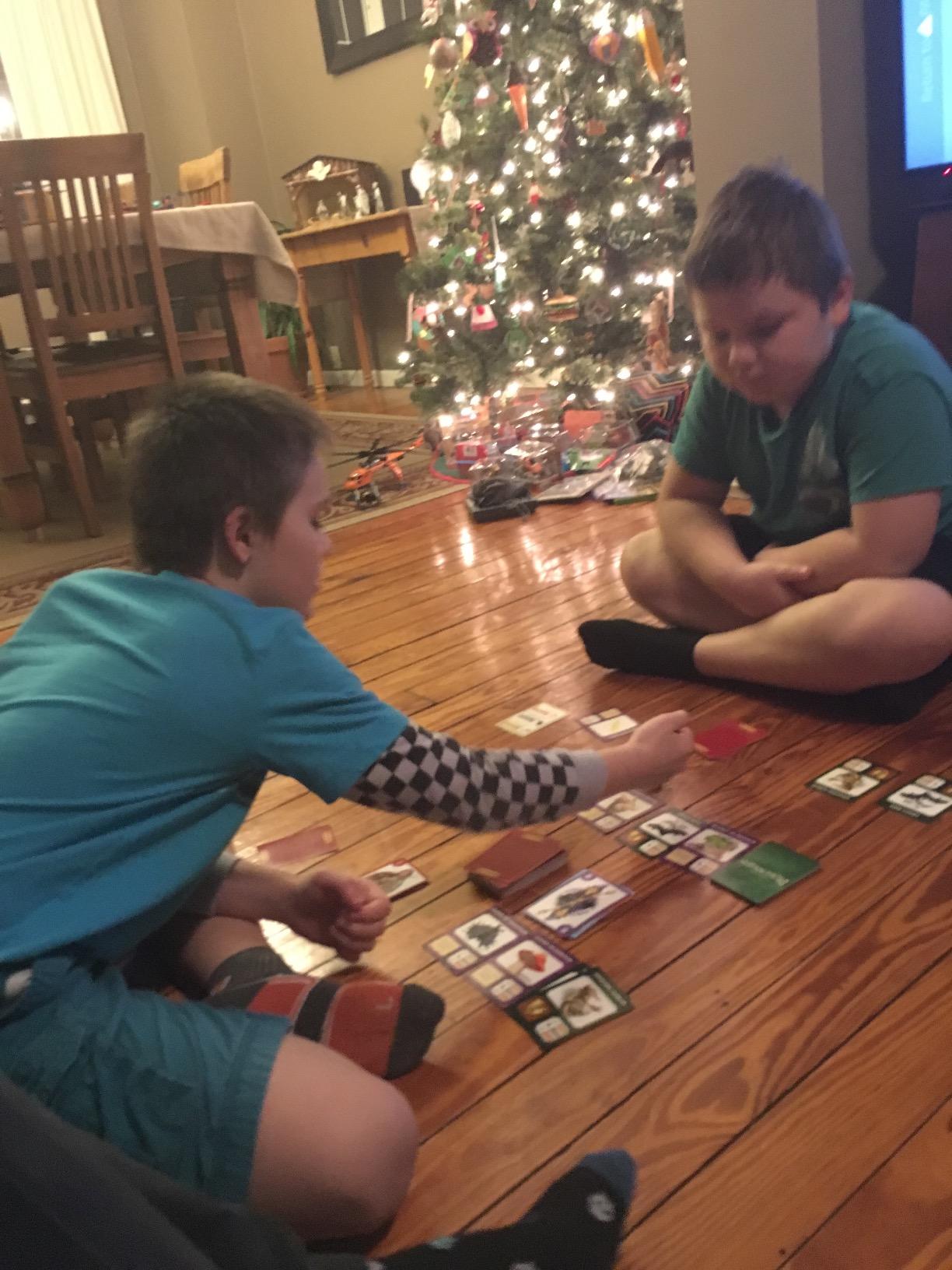
The publisher lists it for ages 8 to 15, and that felt accurate in our sessions. A six-year-old could join in but was mostly reacting to the dice rather than planning, while a nine-year-old started thinking about which creatures to bank before the wave hit.
Board size is small at 8 by 7 inches, so it fits on a coffee table without taking over the room, and the whole box travels well in a bag.
Why Dragonwood keeps older kids interested?
The set collection element gives the table a running goal that a child can reason about out loud. Asking which creature is safer to leave on the board for one more round is a genuine decision, even though the dice can still betray you.
It also builds quietly on number sense, because players constantly compare what they rolled against what the wave requires.
Where Dragonwood is not the right call?
For a child who already plays chess, this is on the light side. Reviewers report strategy depth that feels modest, and we agree that a competitive seven-year-old may find it thin after a few sessions.
One practical annoyance: some product imagery and copy on the listing describe a jigsaw puzzle instead of the board game, so check the box contents when it arrives.
3. Bluey Scavenger Hunt – the best pick for active kids
Bluey Scavenger Hunt Board Game, Cooperative Play with 4 Exclusive Mini-Figures, Indoor Games for Kids Ages 5+, Fun Toy Token Collecting Game
Ages 3+
2-4 players
Movement-based
20 collectible tokens
4 mini-figures included
Pros
- Gets kids up and moving instead of sitting still
- Simple rules that preschoolers learn immediately
- Genuinely cooperative with no individual scoring
- Includes four collectible mini-figures
Cons
- Card-driven so an adult must read for under-fives
- Cards get repetitive once the set is learned
- Some buyers report English-only cards
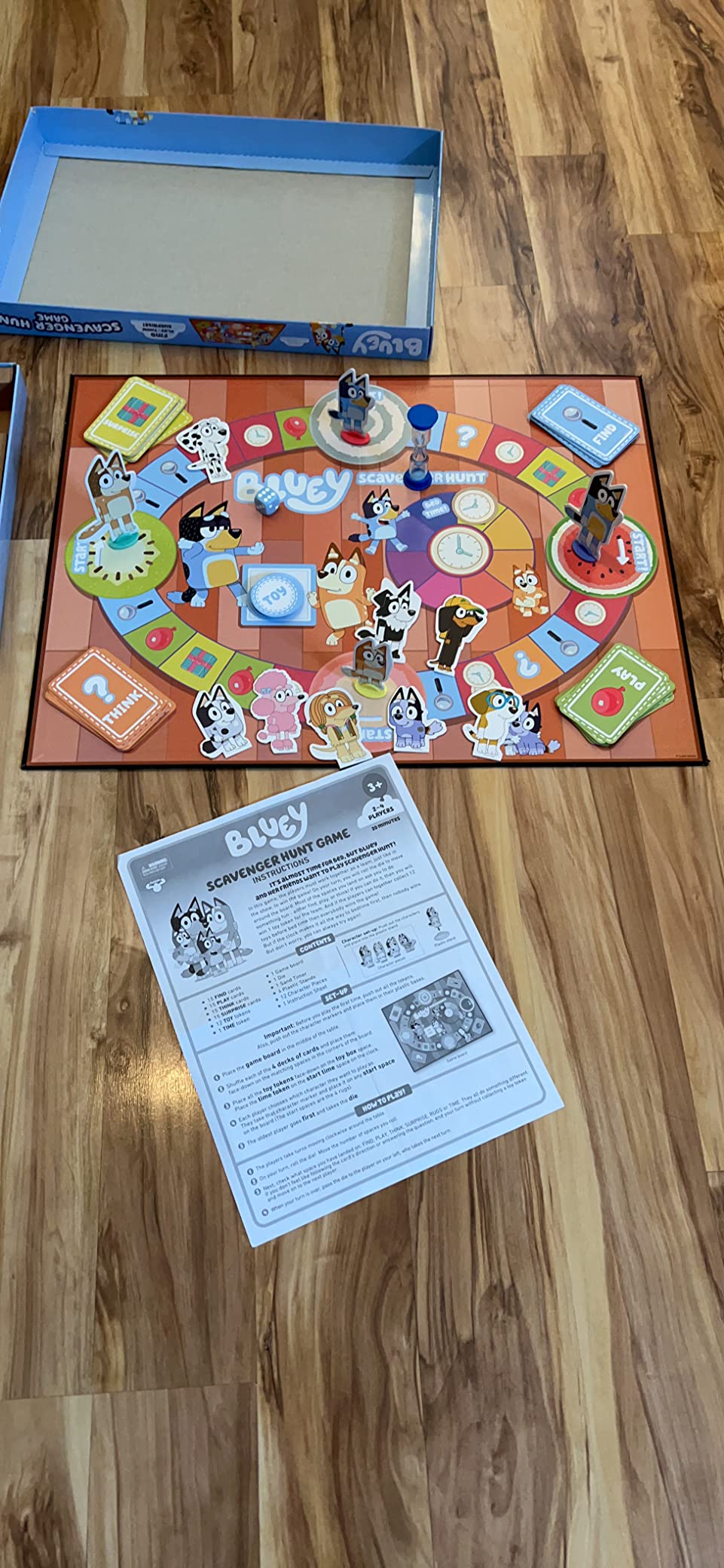
Most cooperative games keep everyone sitting around a board. This one sends them across the house. Players follow find cards to locate real objects, then play cards to push their character around the board collecting toy tokens until all twelve are gathered.
That mix of physical hunting and simple board movement is unusual. It absorbed the attention of a three-year-old and an eight-year-old in the same session, which almost nothing else on this list did.
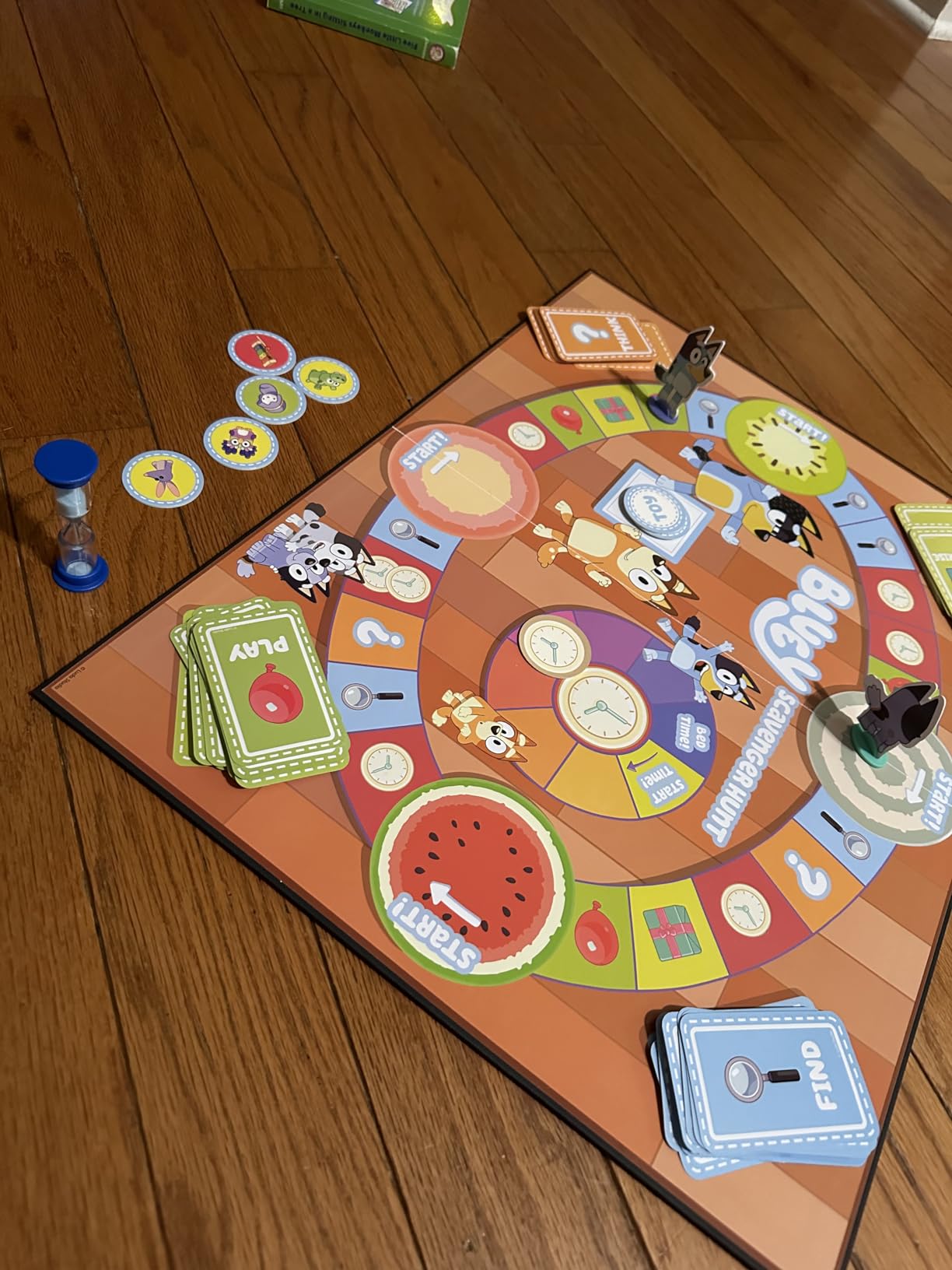
It works for 2 to 4 players and the manufacturer lists it from 36 months up, so it is one of the earlier entries here for a genuine non-reader. The set includes four exclusive mini-figures of the family characters, which turns the end of a round into a small collection moment.
We used it indoors on a rainy afternoon and the movement alone bought us an extra half hour of screen-free time.
Why the moving around matters?
Young children with short attention spans often abandon a board game long before the strategy arrives. Standing up and searching a room resets that, and the returning to the board gives them a clear place to rejoin the group.
It also scales down gracefully, because a five-year-old who cannot yet read simply watches an older sibling or a parent call out the card.
Where Bluey Scavenger Hunt loses its shine?
It is a card-led game, so a child under five needs someone to read the cards aloud. That is fine when an adult is playing and awkward when they are not.
Replay depth is the other limit. Reviewers consistently report that the cards become predictable once the set is learned, and some international buyers mention English-only text that made the flow confusing.
4. Race to the Treasure – the best pick for young siblings
Peaceable Kingdom Race to the Treasure! Cooperative Path Building Game for 2 to 4 Kids Ages 5+
Ages 5+
4 players
20 minutes
No reading required
Path building
Pros
- Explicitly needs no reading to play
- Shared path building gives young kids real decisions
- Portable and quick to set up
- Recognised with four toy awards
Cons
- Dice-driven so younger players lose often at first
- The Ogre pace means losses pile up before kids catch on
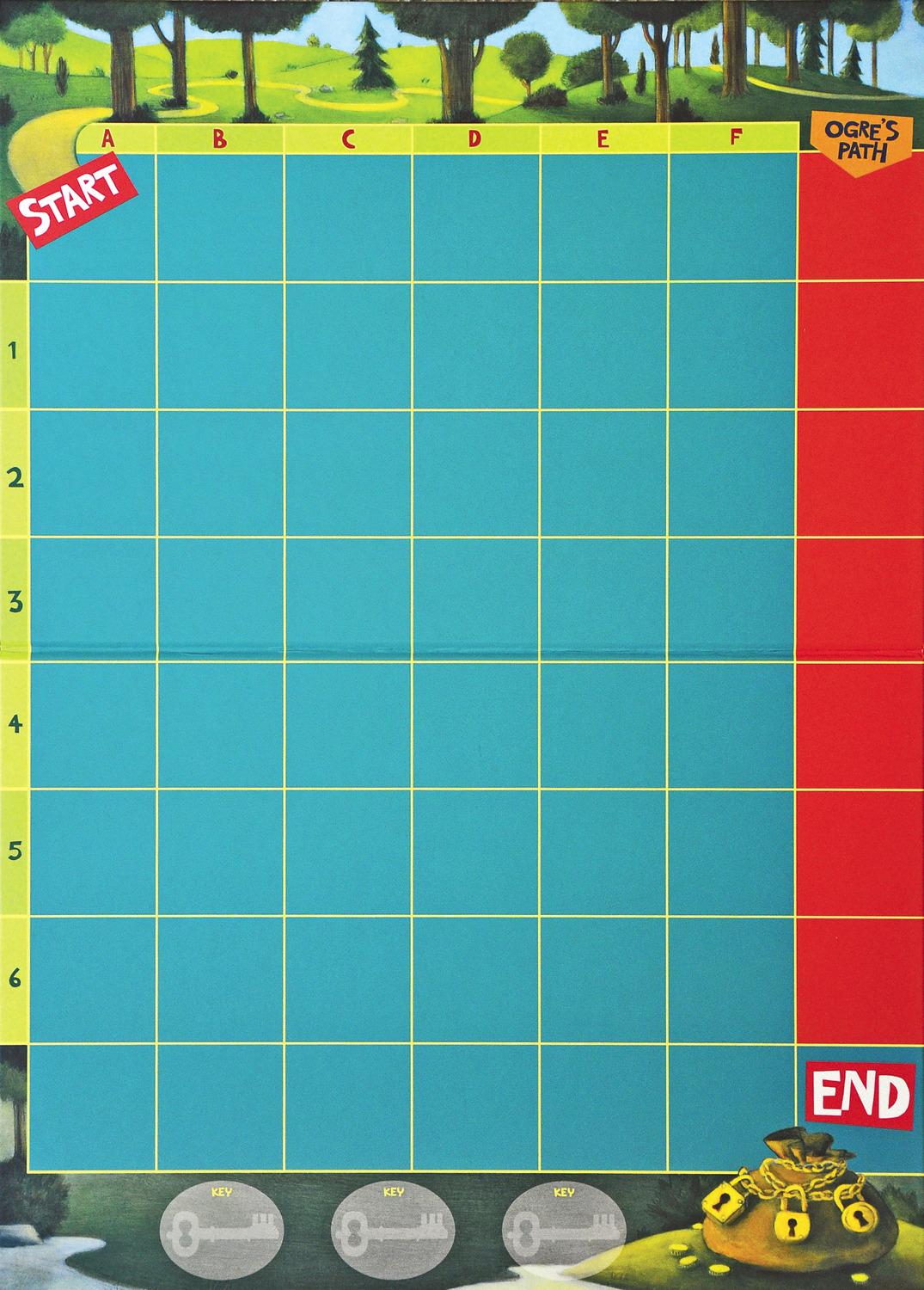
Race to the Treasure is a straight race that everyone runs together. The group rolls, flips path cards and builds a road of tiles across the board while an Ogre shuffles along behind them, and the whole family reaches the treasure or nobody does.
It is the clearest teaching example of the cooperative idea on this list. There is one shared track, one shared goal and no individual score, so even a four-year-old understands that moving your own token slowly slows everyone else.
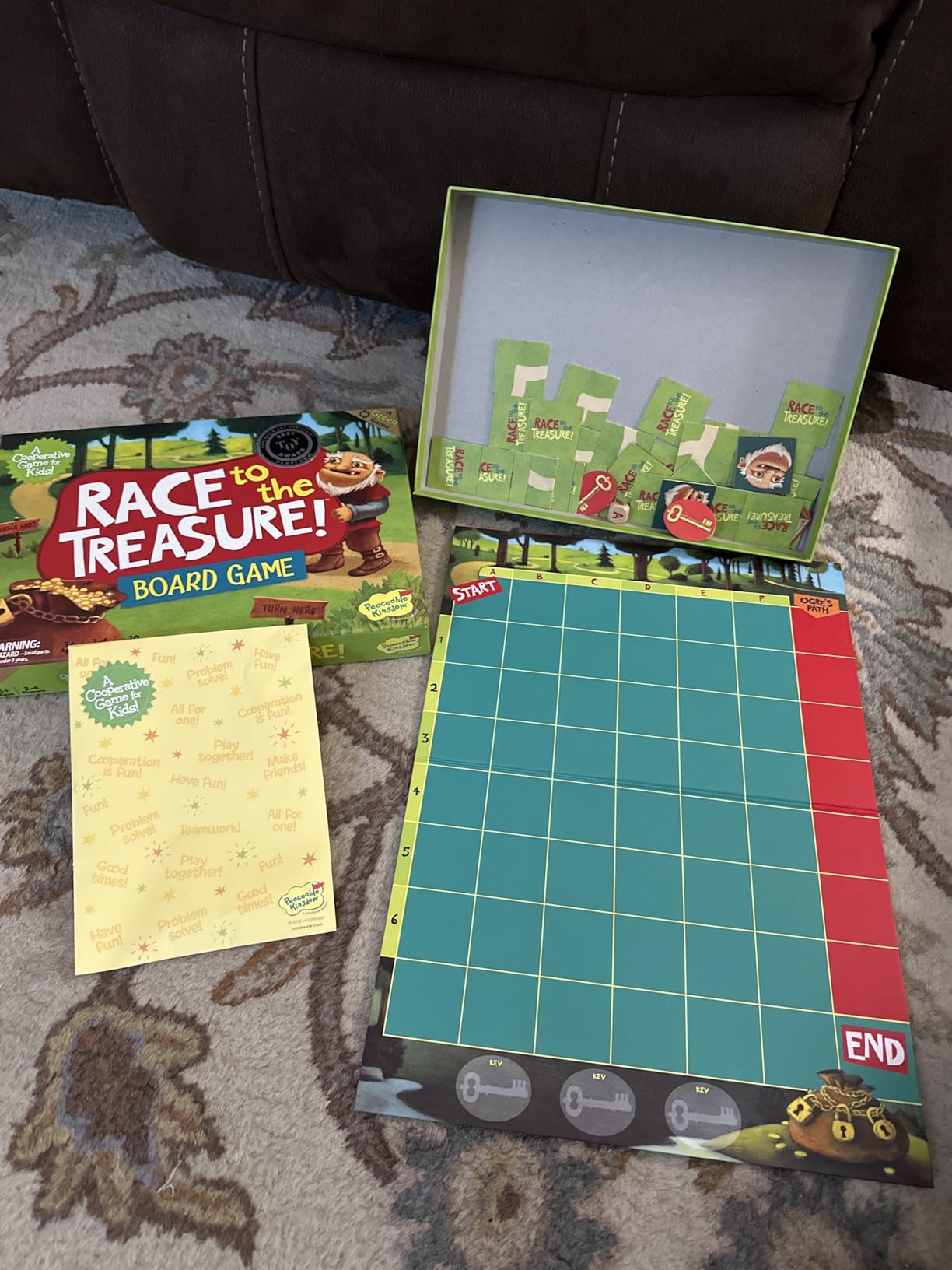
The manufacturer lists it for 5 and up with 4 players, and the technical details state no reading is required to play. That single line is why it works for siblings with a two-year age gap who both need to be at the table.
Rounds run about 20 minutes, the box is flat and portable, and there is no battery to deal with.
Why it suits a wide age gap?
Because the path is built in the middle rather than under individual players, there is no quiet child stuck watching a sibling sprint ahead. Every turn changes the shared road, so a younger player can see exactly how their roll helped.
That also makes it a natural first cooperative game for a family that has never played one, because the rule structure explains itself.
Where it frustrates parents?
Luck drives the dice, and the Ogre moves on a fixed pace, so younger players lose several rounds in a row before the strategy clicks. Parents should expect that and frame it as practice, not failure.
It is also not a long-term game. Once a child has the path-building logic, the same board stops surprising them.
5. Dinosaur Escape – the best pick for very short rounds
Peaceable Kingdom Dinosaur Escape Cooperative Memory Game of Logic and Luck for 2 to 4 Kids Ages 4+
Ages 4+
2-4 players
10 minutes
Memory and luck
No reading needed
Pros
- Ten minute rounds suit the shortest attention spans
- Combines memory
- turns and light luck
- Volcano timer creates visible shared tension
- Works from preschool up
Cons
- Flat card construction gives the box little physical feel
- Play becomes predictable once the fern pattern is learned
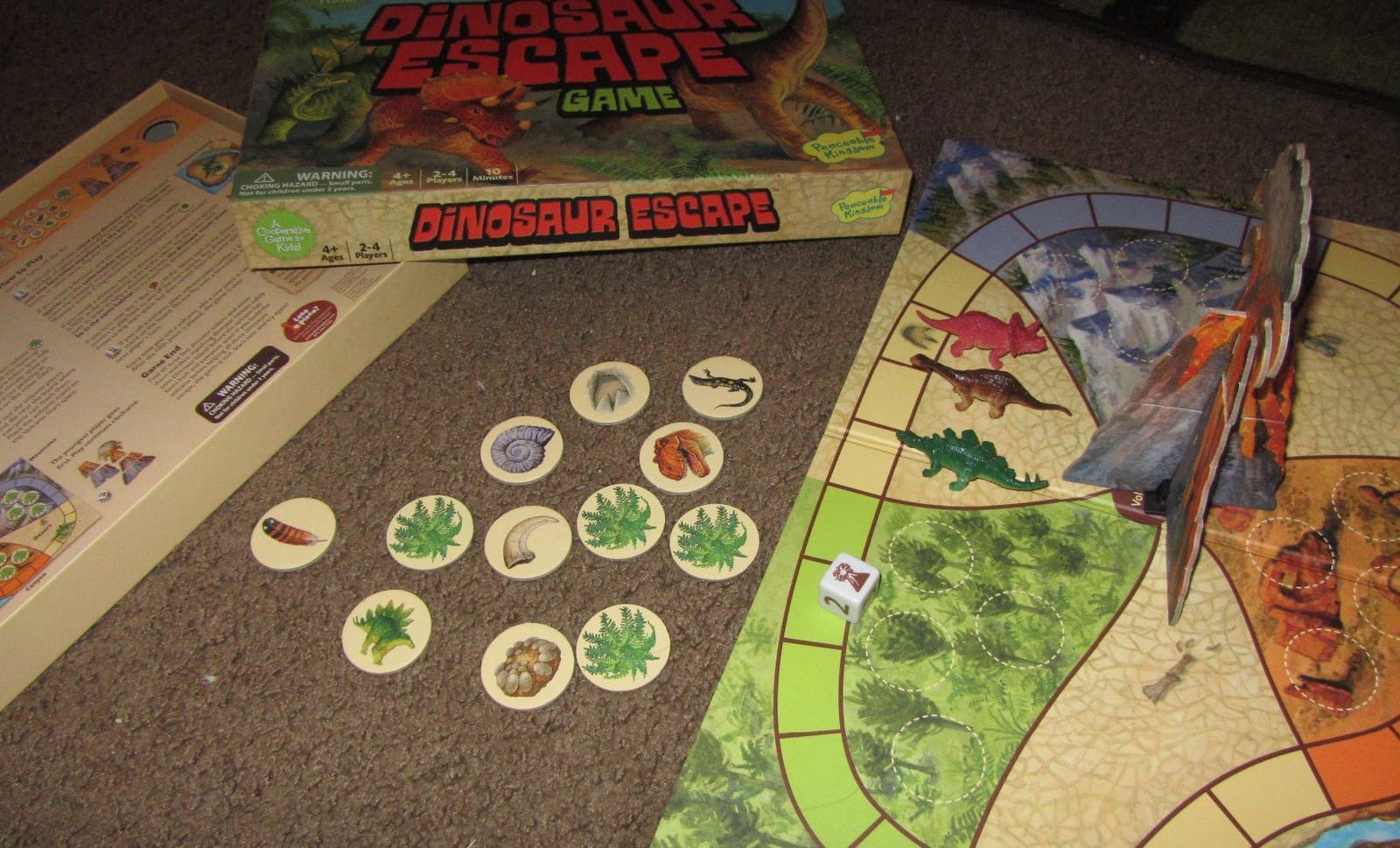
Dinosaur Escape is the shortest real game here. The group flips fern tokens to reveal dinosaur movers and gets them to safety while a volcano timer fills piece by piece, and you have about ten minutes to finish.
That length is the entire appeal. When a four-year-old announces they are bored, a 10 minute round is short enough that you can just start again instead of negotiating.
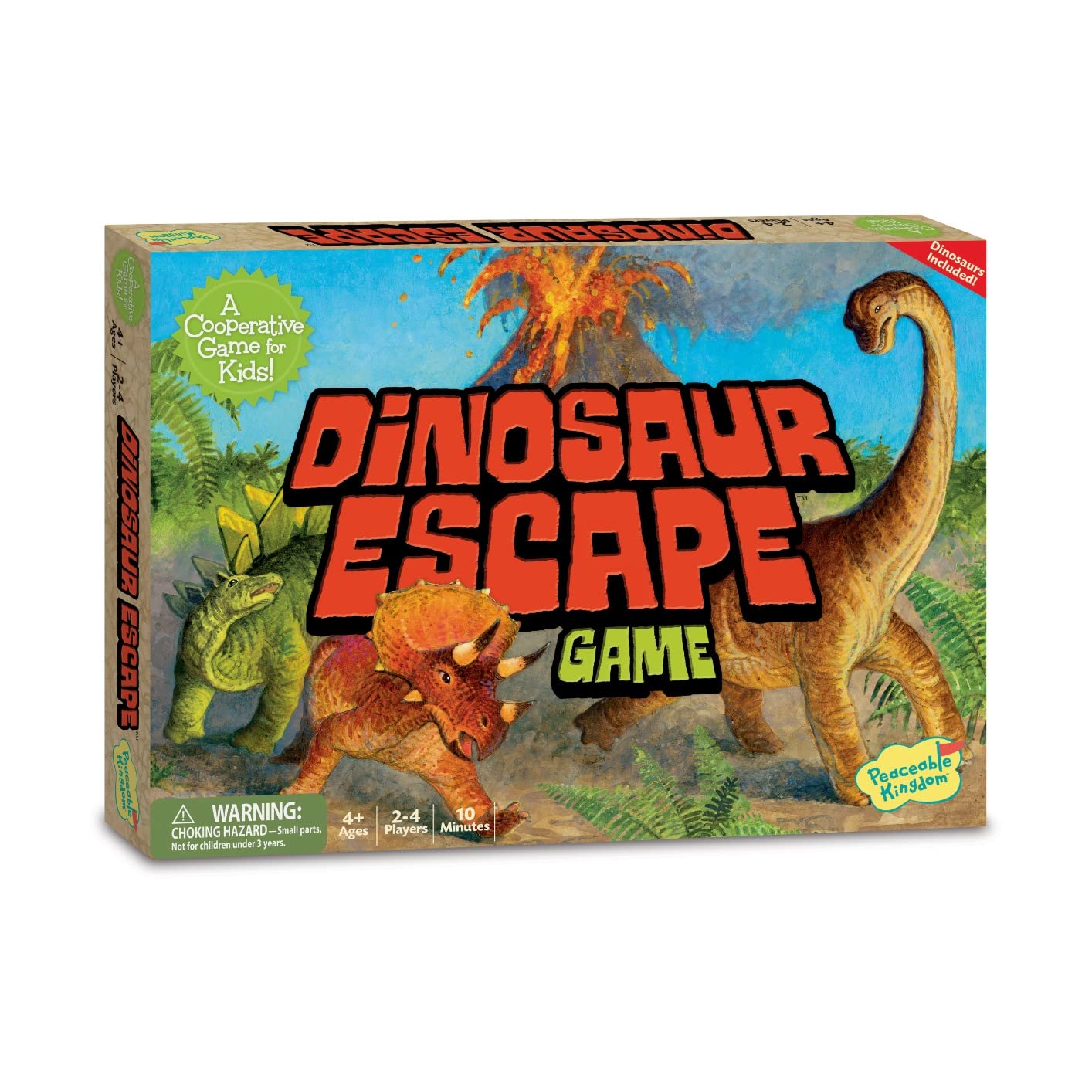
It is listed for 2 to 4 players from age 4, and the box holds a game board, three plastic dinosaur movers, a die, twelve reversible fern tokens, five volcano pieces and a stand. Nothing in that list needs reading once it is set up.
The volcano timer is a clever pressure device. It advances no matter what anyone wants, which forces the group to plan together instead of taking turns slowly.
Why a 10 minute game earns its place?
Short rounds change the social contract. Children stay in good spirits because nobody has to commit to half an hour, and adults can fit one between the end of dinner and bedtime.
It also doubles as a warm-up. We have used it to teach a new child how cooperative play feels before introducing a longer game.
Where Dinosaur Escape disappoints?
The board and components are flat card, so it has almost no physical presence on the table. Children who like grabbing chunky pieces tend to prefer the standing components in Hoot Owl Hoot or Castle Panic.
Once the fern pattern is learned, rounds start to feel repetitive, which is the ceiling most games in this age band hit.
6. Minecraft Heroes of the Village – the best pick for a strategic 7 to 10 year old
Ravensburger Minecraft Heroes of The Village | Cooperative Board Game | Exciting & Unpredictable | Perfect for Families and Minecraft Enthusiasts | Suitable for Kids & Adults
Ages 7+
2-4 players
25 minutes
Requires reading
Wooden blocks and tiles
Pros
- Map rebuilds each playthrough for real replay value
- Large component count with wooden blocks
- Connects a screen game to a family board game
- 25 minute rounds suit a school night
Cons
- Rules need a full read-through before the first game
- Reading requirement rules it out under 7
- Heavier setup than card-based co-op games
This is the pick for the child who thinks she is too old for the rest of this list. The group gathers blocks, places world tiles and defends a village from mobs, and the map is different every single playthrough because the tiles are drafted rather than fixed.
That variation is the reason it holds up over months. Our seven-year-old was still finding new layouts weeks in, where most preschool co-op games repeat within a fortnight.
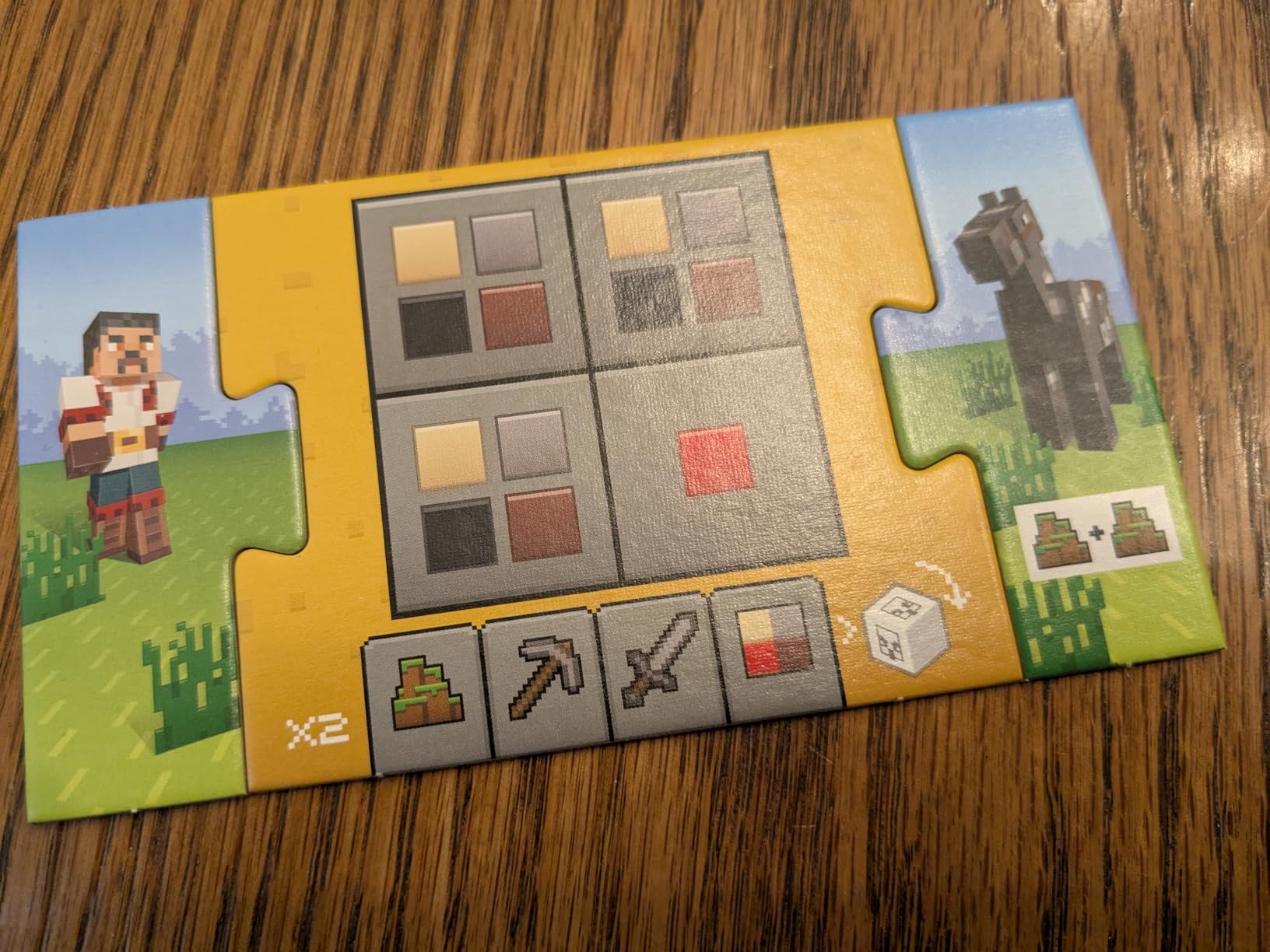
It runs 2 to 4 players, about 25 minutes per round, and the box carries 25 blocks, 18 world tiles, 4 inventory cards, 6 pet tiles, 9 buildings with 3 bases, 12 mob tokens, 2 dice and a starting tile. That is a genuinely substantial component count for a family game.
It is also the heaviest pick on the list at over a kilogram, so it is a stay-on-the-table game rather than a travel game.
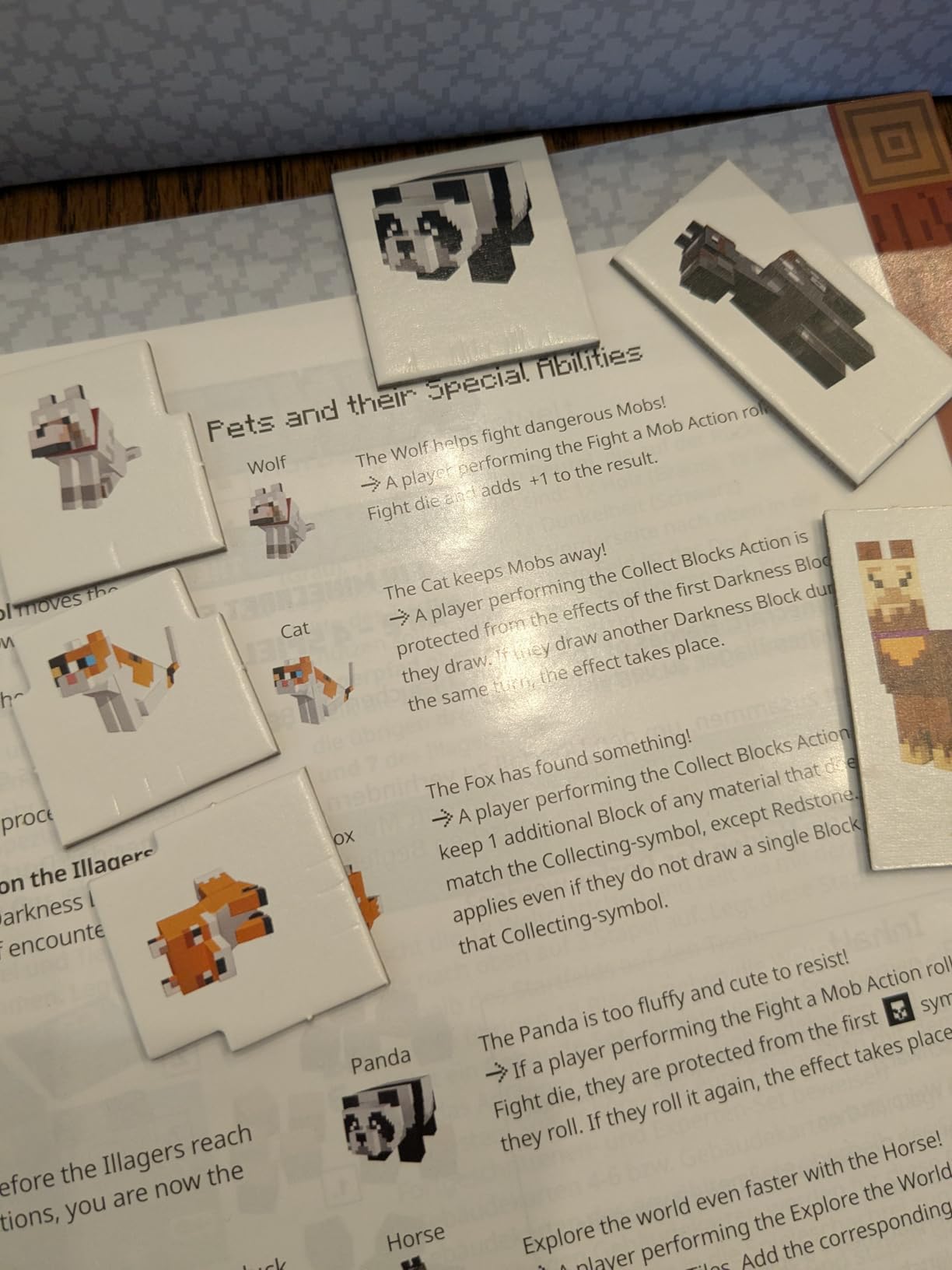
Where it beats the simpler games?
Tile drafting gives players a real choice about what shape the village takes, and a child who enjoys optimising a layout gets something the matching games never offer.
It works well as a bridge. Start here at seven or eight, then move up to heavier cooperative strategy games when the group is ready.
Where it does not work?
Reading is required, both for the rules and for the cards, which puts a hard floor on age. Parents of non-readers should look at My First Castle Panic or the Safari game instead.
Setup is heavier than anything else here, and younger players need the full rule read before the first turn or they lose the thread entirely.
7. My First Castle Panic – the best gateway to tower defense co-op
Fireside Games My First Castle Panic Fantasy Board Game
Ages 4 and up
4 players
20 minutes
No reading required
Icons not text
Pros
- Icon cards mean no reading required from age 4
- Built-in end condition stops games dragging
- Sturdy standing castle and large tokens
- Less stressful for adults than the full game
Cons
- Thin cards that benefit from sleeves
- Small card pieces get lost after repeated play
- Too simple for children in the 5-7 range
My First Castle Panic takes the classic tower defense idea and strips out the reading. Monsters walk the path toward your castle, players trade cards for action icons, and the whole group works out how to slow the wave down before it reaches the walls.
The end condition is the clever part. A fixed number of monsters ends the round, so you cannot stall forever and a tense moment resolves into a definite result rather than a slow fade.
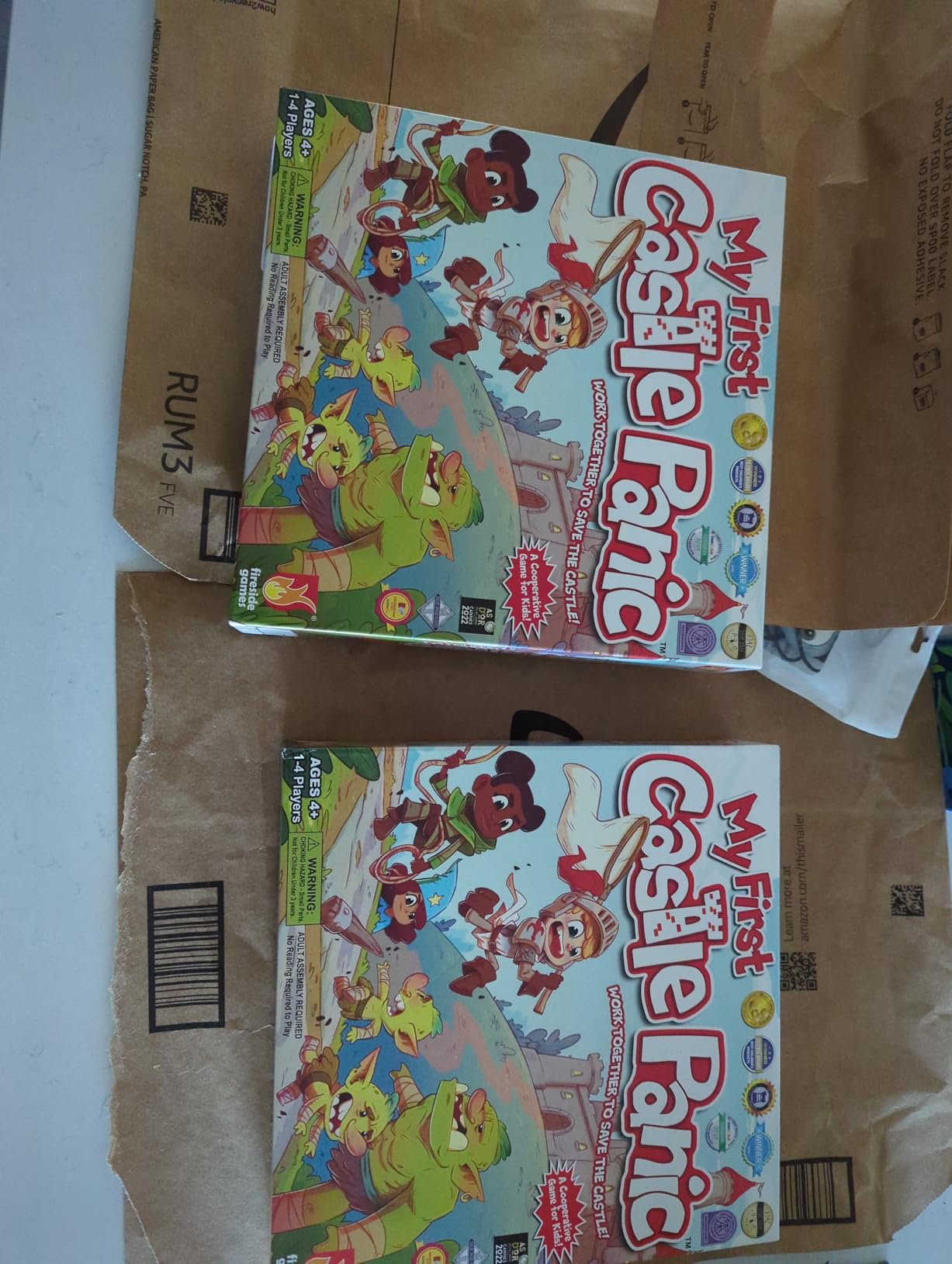
It is listed for 4 and up with 4 players and about 20 minutes a round, and the components are sized for small hands. Parents frequently describe it as the game that gets a child into cooperative play in the first place.
Adults tend to enjoy it more than they expect, and it is noticeably less stressful than the full-size version of the same game.
Why icon cards matter here?
Using symbols instead of words removes the reading barrier entirely, which means a four-year-old and a nine-year-old can genuinely play the same game at the same table without an adult translating cards.
It also teaches counting and card management quietly, because kids weigh one action against another without being told to.
Where it falls flat?
Card quality is the recurring complaint, and reviewers describe the stock as thin enough to want sleeves. Small card pieces also go missing after repeated play, so check the box before bed.
For a child in the 5 to 7 range who wants a challenge, this is too simple, and it does not support the expansions made for the adult edition.
8. Hoot Owl Hoot – the best cooperative board game for planning ahead
Peaceable Kingdom Hoot Owl Hoot – Cooperative Matching Game For Kids
Ages 4+
2-4 players
15 minutes
Color matching
Sun card creates pressure
Pros
- Color matching a preschooler can drive alone
- Shared sun card creates real planning pressure
- 15 minute rounds with easy setup
- Teaches planning without any individual scoring
Cons
- Sun card randomness drives losses for younger players
- Limited replay value once the distribution is learned
Hoot Owl Hoot feels like a gentler cousin to Candy Land. Players match colored cards to move owls along a branch toward their nest, and the entire group is trying to get every owl home before the sun comes up.
It runs 15 minutes, which makes it the second shortest game here, and the publisher lists it for 2 to 4 players from age 4. Rounds are fast enough to fit before bedtime.
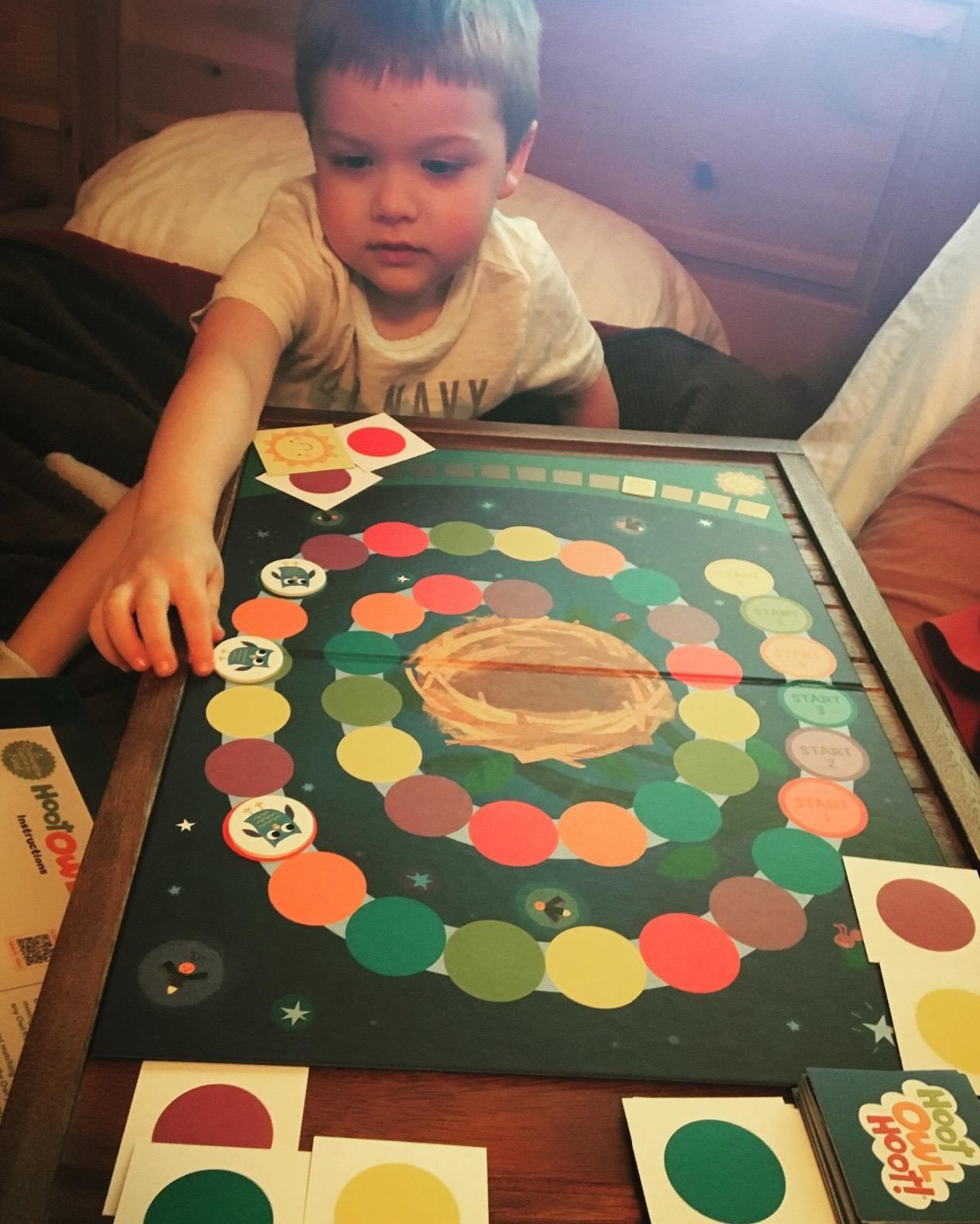
The design detail that makes it co-op rather than just a shared board is the shared sun card. Instead of each player drawing their own pressure, one card governs everyone, so the group has to weigh a safe move now against a bigger reveal later.
That produces genuine planning discussions from four-year-olds, which is a surprisingly good argument for a game this simple.
Where Hoot Owl Hoot outdoes the matching games?
Most preschool matching games have nothing to think about. The shared sun card gives the group a decision with a real trade-off, so kids learn to think two moves ahead rather than just matching a shape.
Because nobody scores individually, there is no moment where one child is visibly better than another, which matters in mixed-age families.
Where it falls short?
Younger players will lose more often than they would like, because the sun card decides how much pressure the round carries and they cannot control it. Frame the first few losses as the sun being tough today.
Replay value is also limited once children understand how the card distribution works.
9. Baby Dinosaur Rescue – the best pick for classrooms
Baby Dinosaur Rescue Cooperative Board Game for Kids Ages 4+, Family Fun
Ages 4+
2-4 players
20 minutes
Image cards, no reading
Matching with a lava timer
Pros
- Image cards mean no reading during play
- Lava token adds time pressure kids read instantly
- Short and simple enough for group settings
- Builds communication and turn taking
Cons
- Lightweight card construction makes the board flex
- Mostly one matching decision per turn
- Thin for children over 6
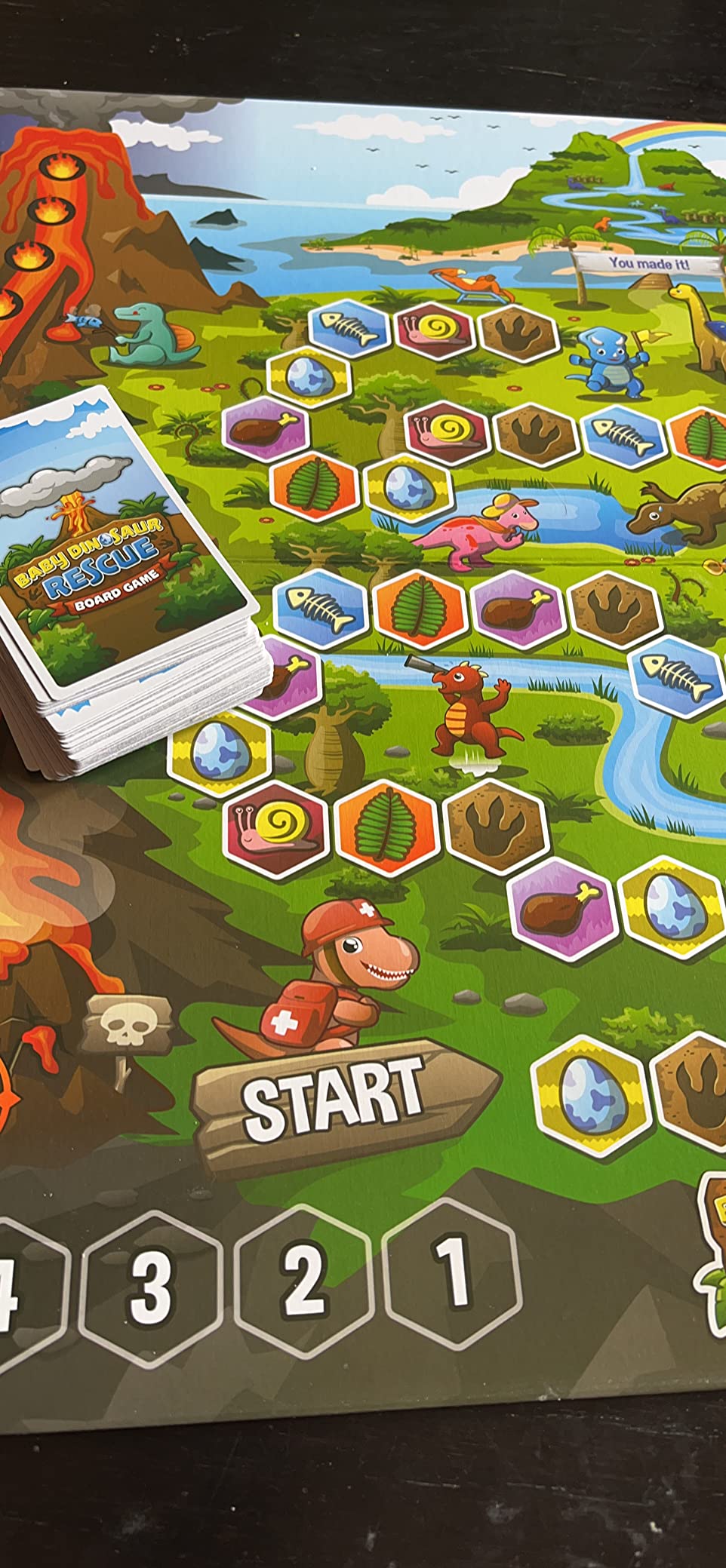
Baby Dinosaur Rescue is the simplest game here and the easiest to hand to someone else. The group guides hatchlings across the valley by matching item cards, and an advancing lava token fills the path behind them.
Everything is pictures, so a teacher or an after-school leader can run it with a whole group without reading anything aloud. That makes it a natural fit for room sizes larger than a family.
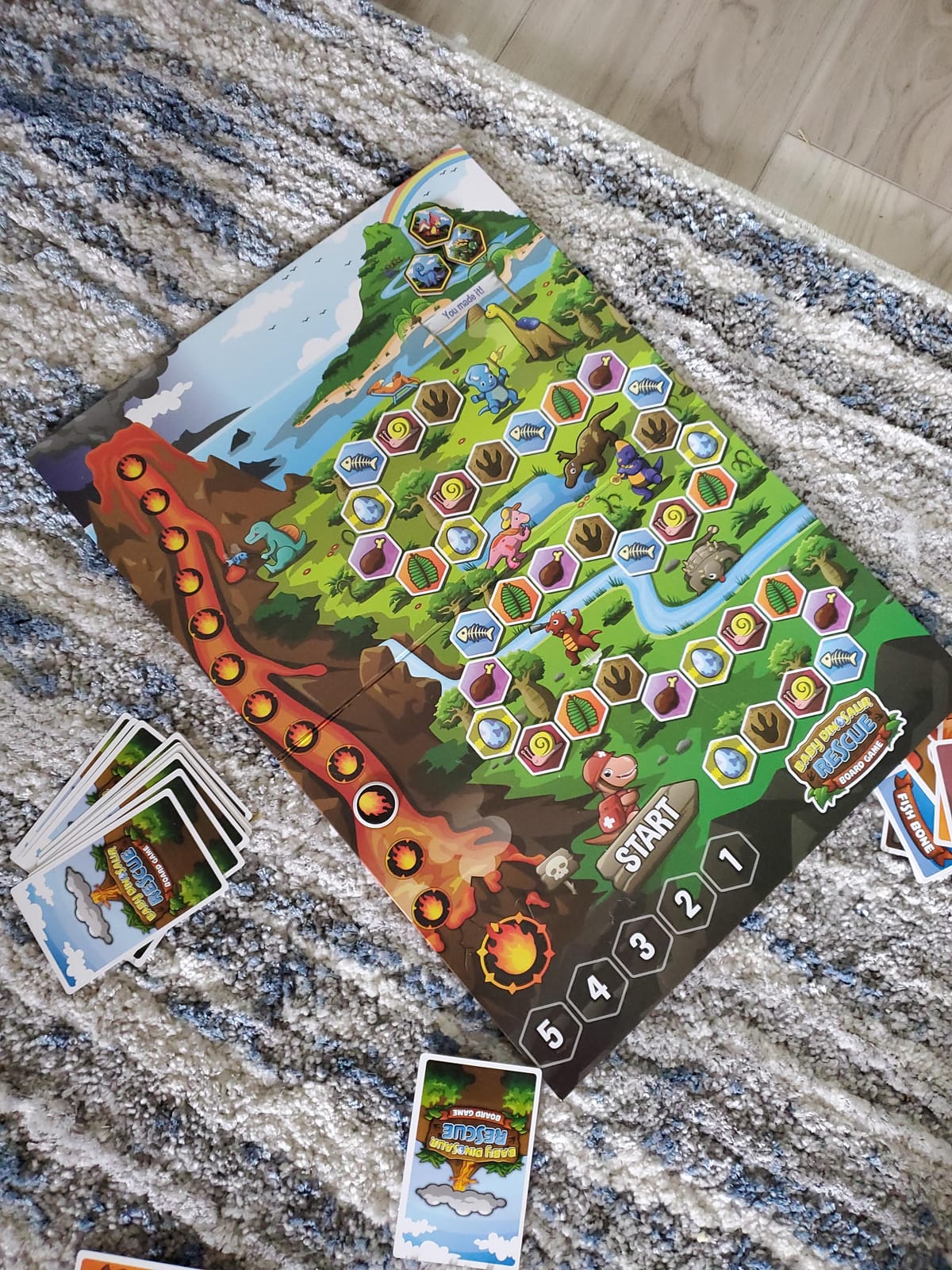
It is listed for 2 to 4 players from age 4 with about 20 minute rounds, and the box contains a game board, dinosaur tokens, a lava token and cards. There are no batteries and nothing to assemble.
The lava token is the one real decision generator. It moves a fixed number of spaces regardless of whose turn it is, so the group has to move fast together instead of each player taking a turn in turn.
Why it suits a group setting?
Setup is close to zero, so a leader can start a round while others are still arriving. Because the goal is shared and short, a group of young children stays focused for the whole ten to twenty minutes.
It also practises communication and turn taking without ever pointing at a scoreboard, which is useful when some children in the group are used to competing.
Where it is too thin?
Each turn is essentially one matching decision, so a child over six will quickly see the whole game. It is a starting point rather than a destination.
Construction is light card, and reviewers report the board flexing during play. It travels well, but it does not feel like a substantial object.
10. EXIT Kids: The Great Bee-Scape – the best pick for puzzle fans
EXIT: The Game Kids – The Great Bee-Scape | Escape Game
Ages 5+
1-4 players
Escape room puzzles
Language-independent cards
Replayable across puzzle sets
Pros
- Reusable unlike adult EXIT games
- Same decoder wheel as the adult line
- Language-independent cards suit multilingual families
- Clean entry point into escape room puzzle play
Cons
- Puzzles are easy for children 9 and up
- Rotating puzzle set rather than a true escape room
- Key and prize box reward feels unfinished
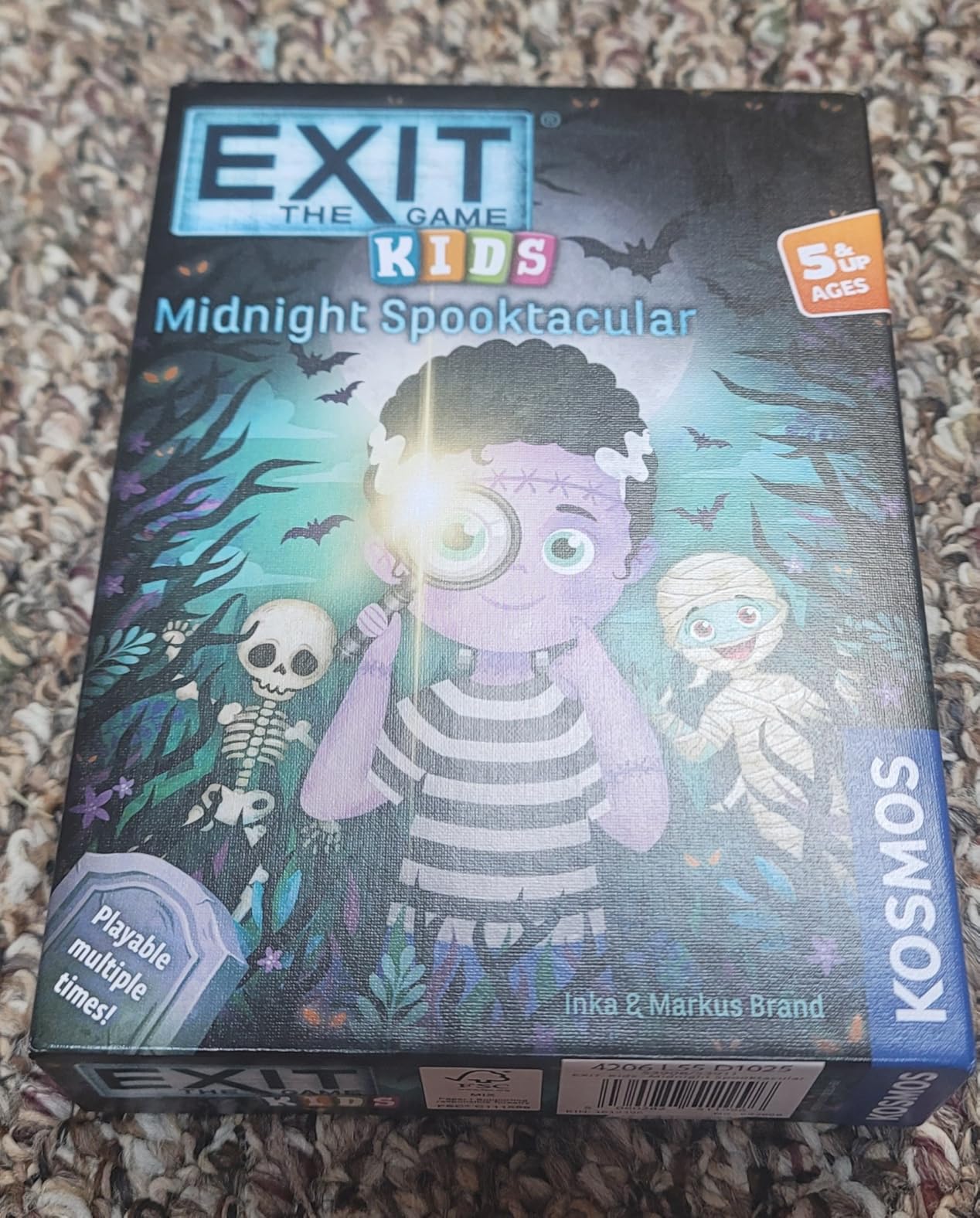
This is the closest thing here to an escape room, softened for children. The group works through riddles and puzzles to free a swarm of bees, using the same decoder wheel found in the adult EXIT games.
What makes it valuable is the pathway. A child who masters the kids edition can move straight into the adult line with no change in hardware, which is a rare and well-designed progression.
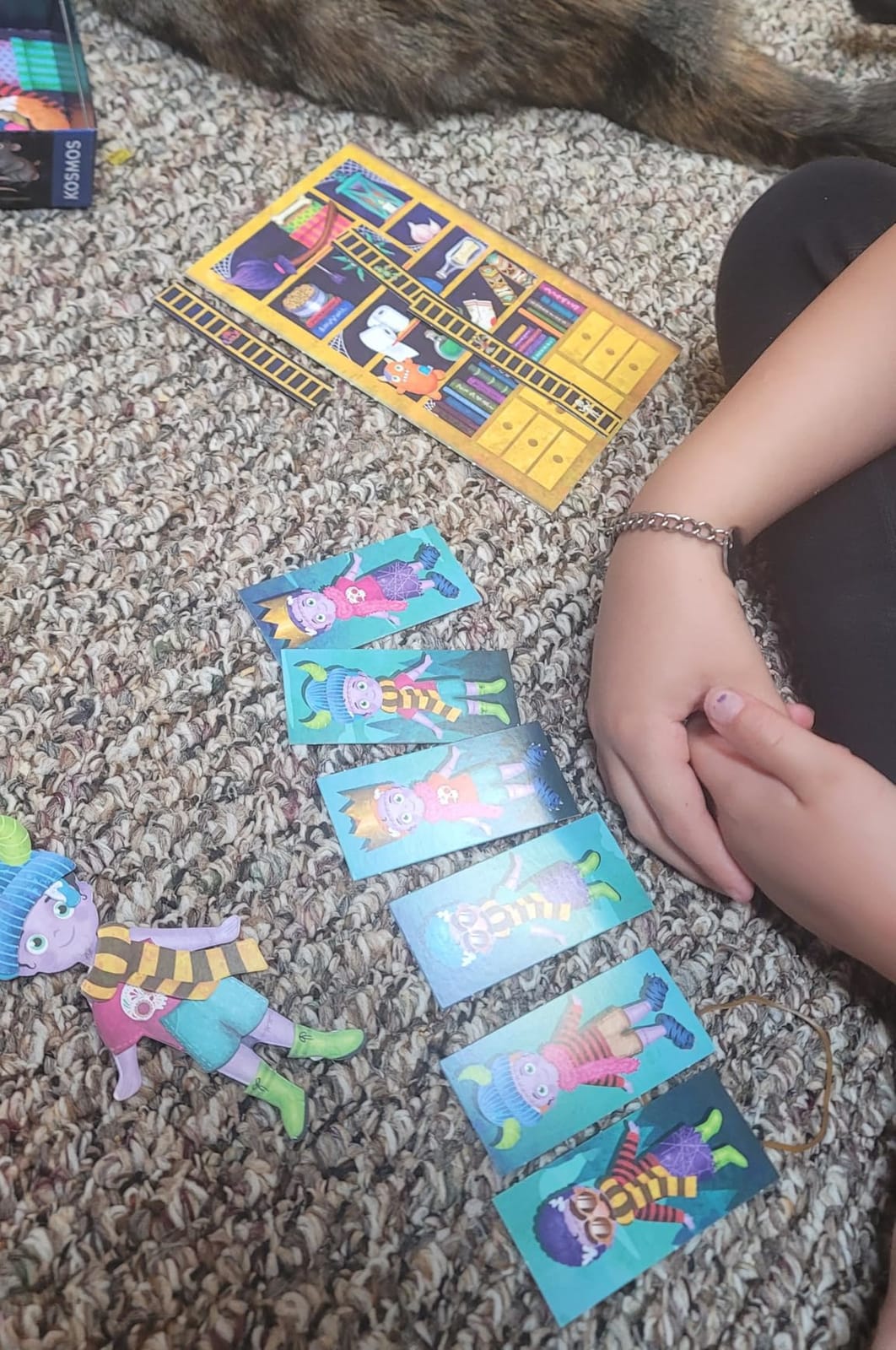
The cards are language independent, so a family that does not read the box language fluently can still play. It works for 1 to 4 players, which makes it one of the few here you can hand to a child solo on a quiet afternoon.
It is also compact, since the box is a thin card pack rather than a large board game.
Why the kids edition is a good bridge?
The decoder wheel is the same tool used in the adult games, so nothing has to be unlearned later. That continuity is the main reason parents recommend it, and it is a better bridge than a game that only looks similar.
Unlike a disposable puzzle book, it is reusable, so a child who beats it can replay rather than feel cheated.
Where it runs out of road?
The most common review note is that the difficulty drops away around age nine or ten. Older children solve the puzzles quickly and then lose interest, so plan to move up at that point.
It is a rotating set of puzzles rather than a continuous escape room, and some families find the key and prize box mechanic feels unfinished.
11. Magic 8 Ball Magical Encounters – the best pick for dramatic storytellers
Mattel Games Magic 8 Ball Magical Encounters Board Game for Kids & Families, Cooperative Player Game with Real Magic 8 Ball
Ages 7+
4 players
52 encounter cards
Real Magic 8 Ball
Strategy with luck
Pros
- Working Magic 8 Ball creates real suspense
- Cooperative design suits kids who dislike competition
- High quality components and characters
- 52 encounter cards with branching outcomes
Cons
- Setup is confusing without reading the reference card
- Printed 8 Ball is hard for young eyes to read
- Encounter vocabulary sits above the intended reading level
- Often too easy for older children
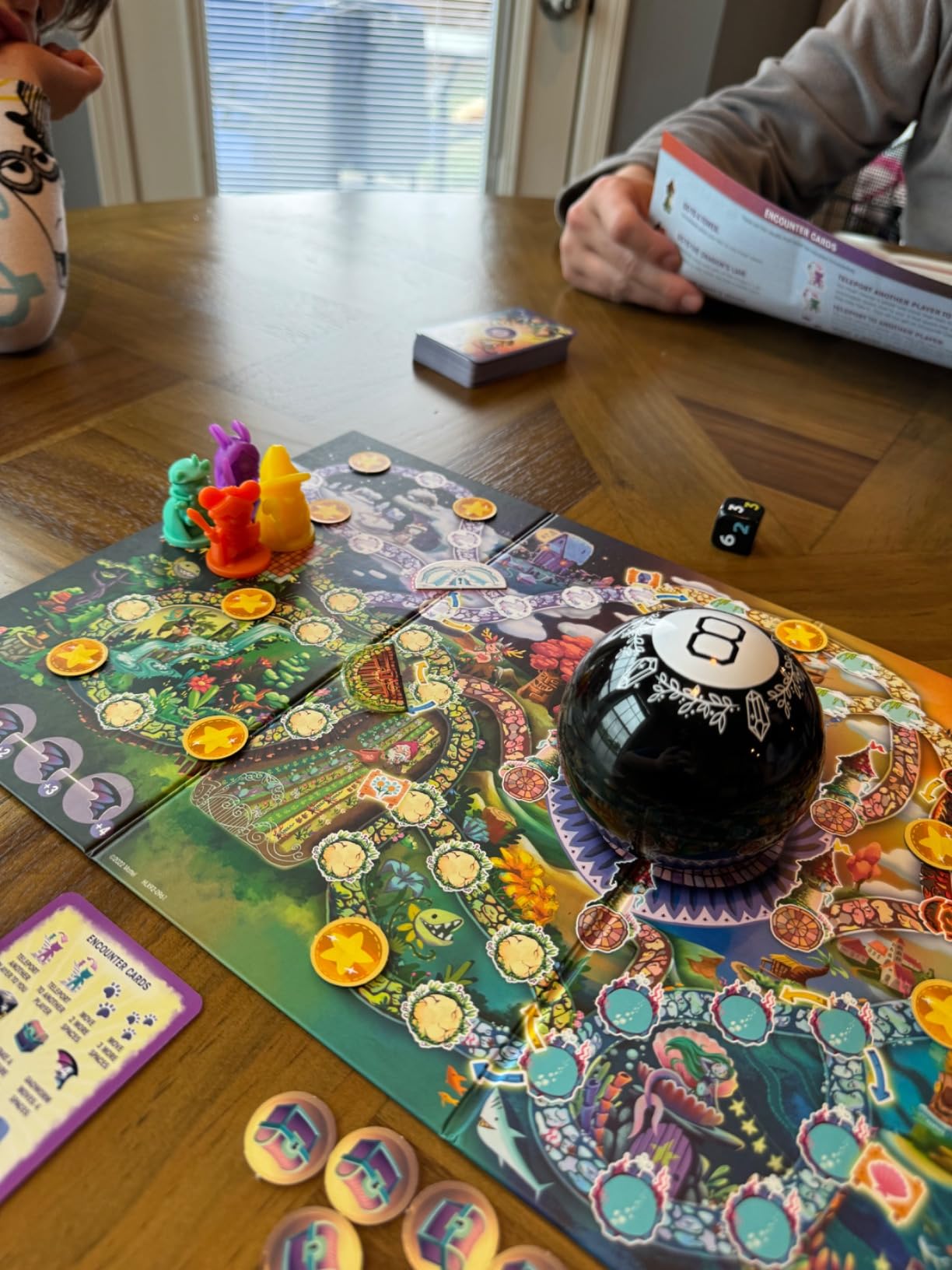
The hook here is a real working Magic 8 Ball sitting in the box. The group moves four heroes across the board hunting crystals while a dragon moves toward them, and the ball decides what each encounter actually does.
For a child who loves narrating, the 52 encounter cards are a gift. Ours retold the whole game as a story afterwards, which is a level of engagement the simpler games here rarely produce.
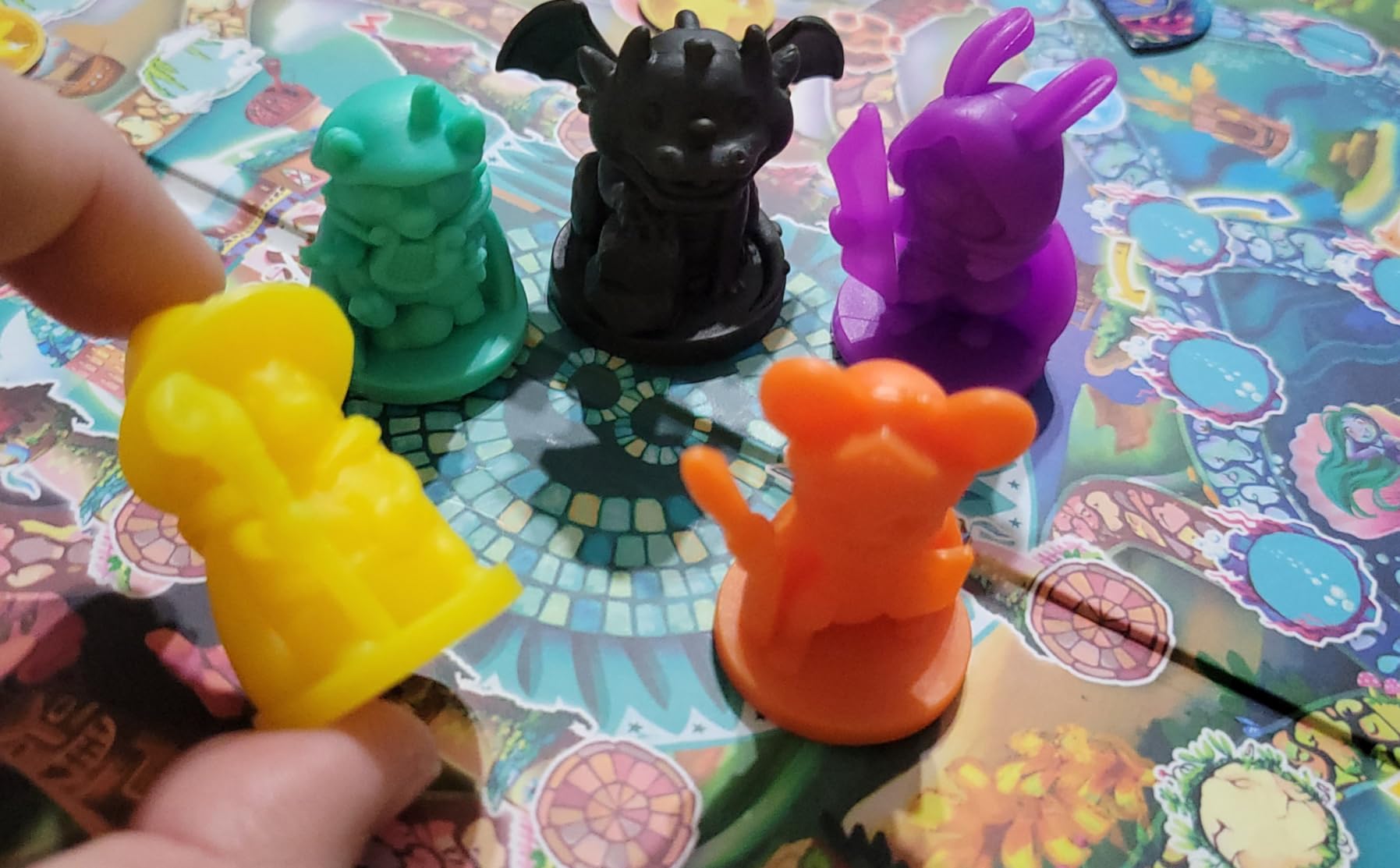
It is listed for 4 players from age 7 and up. The component list is long, including 52 encounter cards, 4 reference cards, 10 treasure tokens, 16 star tokens, 4 door tiles, 4 hero movers and a dragon mover.
The components feel durable for a kids game, which is worth noting given how many cheaper options use thin card.
Why kids who hate losing like this one?
The design is win or lose together from the first move, with no individual scoring to sulk over. The Magic 8 Ball also gives children an outcome they can blame on something other than each other, which defuses arguments surprisingly well.
Because outcomes are unpredictable, the game stays interesting even when the strategy is thin, which is a different kind of longevity than the puzzle games provide.
Where the friction shows up?
Setup and the first playthrough are genuinely confusing without reading the reference card, and the printed ball is hard for younger players to read. The encounter card vocabulary also sits above the stated age floor, so a seven-year-old will need help.
Most importantly, it is often too easy for children over about ten, and the box design means the protruding ball takes more shelf space than it looks like it should.
12. National Geographic My First Safari – the best pick that grows with your child
National Geographic My First Safari Cooperative Board Game for Kids
Ages 4 and up
4 players
Three difficulty levels
Learning guide with 21 animals
36 item cards
Pros
- No player owns a piece so nobody is left behind
- Three difficulty levels that scale with the child
- Learning Guide covers 21 animals with real facts
- Quick rounds suit 3 and 5 year olds
Cons
- Explorer figures are stiff and can bend in their stands
- Low strategic depth for older children
- Sun card mechanic feels arbitrary at first
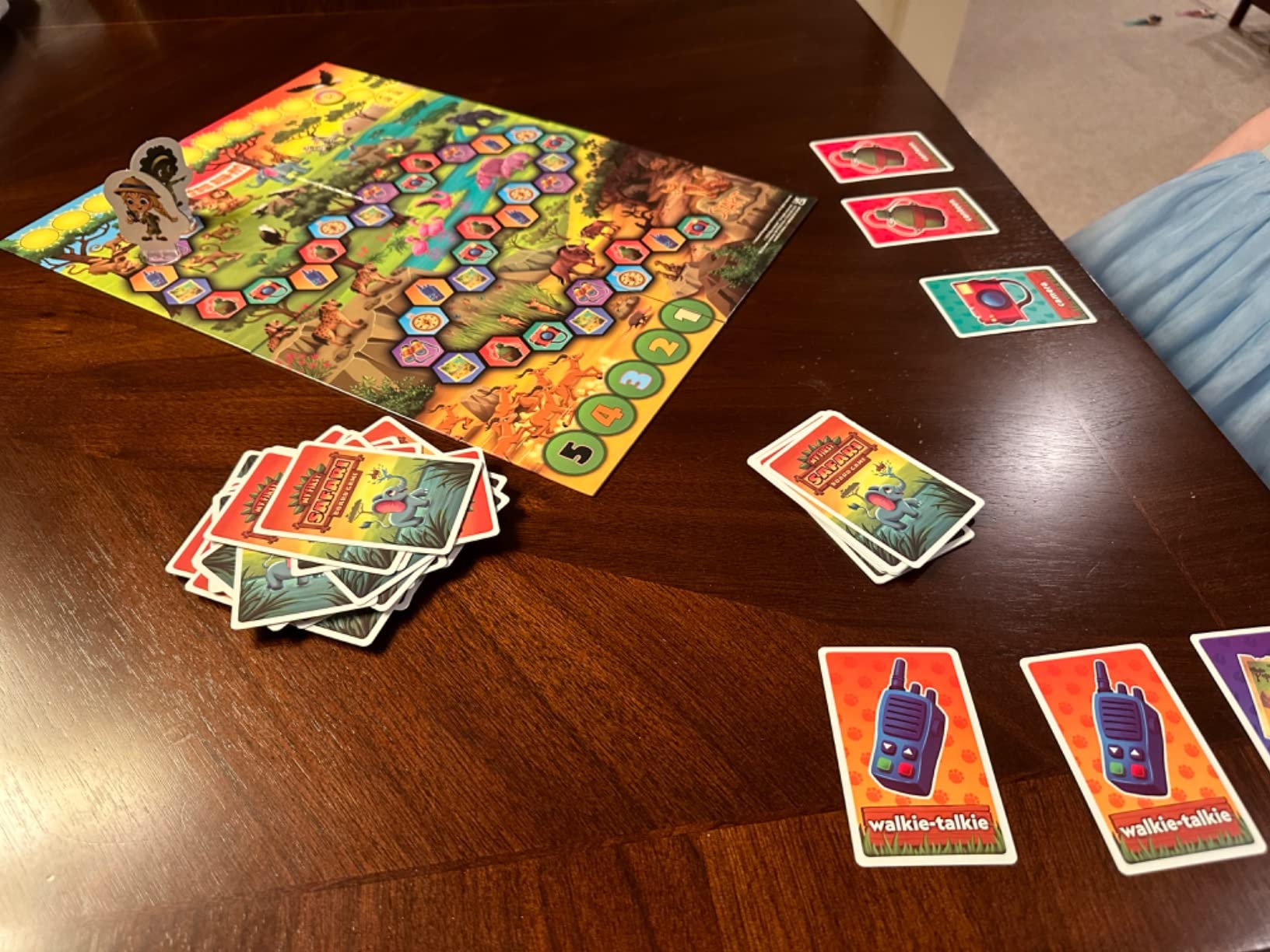
My First Safari sends the whole group around a game board looking for 21 animals before the sun sets. Every explorer moves together, nobody owns a piece, and the shared objective is genuinely hard to compete over.
The feature that makes it last longer than most preschool games is the three difficulty levels. We started on the easiest setting with a four-year-old and moved up without any rule change, which is exactly the grow-with-your-child pattern families look for.
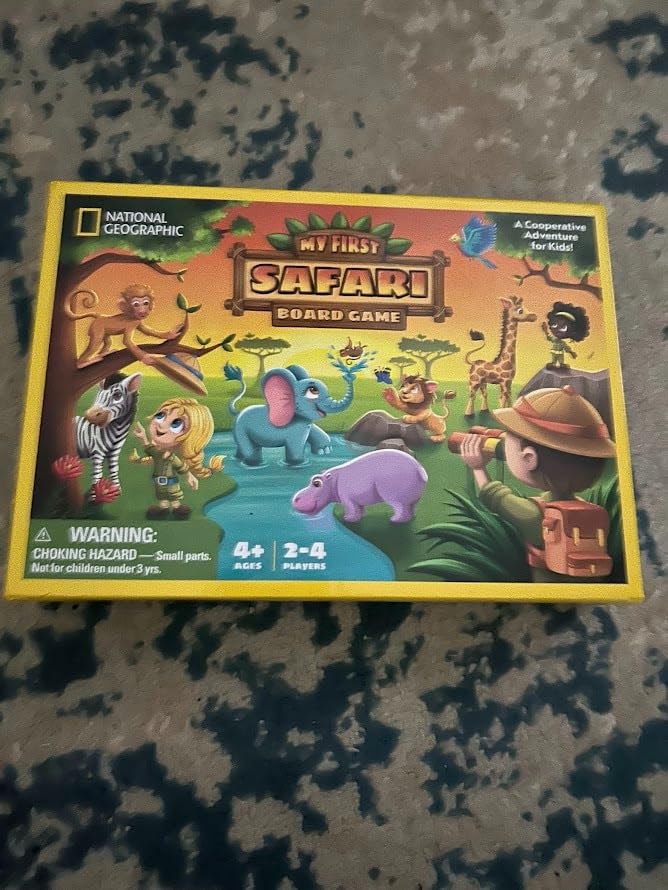
It is listed for 4 and up with 4 players, and the box includes a game board, 5 safari explorers, a sun token, 36 item cards, 13 sun cards and a full-colour learning guide covering 21 animals.
That learning guide is the quiet extra. Our child asked to read the animal facts after the game, which turned a round into something longer without us scheduling it.
Why the shared ownership design matters?
Because no player has their own explorer, there is no moment where one child is stuck behind. That removes the most common source of tears in games for this age, and it is the design choice we would highlight to a parent with two young children.
Three difficulty levels mean the same box covers a four-year-old and a seven-year-old, which is rare at the entry end of this list.
Where it does not stretch?
Strategic depth is low, and reviewers report children finding it too simple once the pattern is clear. It is a first game rather than a long-term one.
The explorer figures are the practical weak point, being stiff enough that reviewers report they are hard to seat and can bend. It is a small thing that annoys adults more than children.
How to Choose a Cooperative Board Game for Kids?
The single most useful filter is age, and the second is reading. Ignore both and you will buy a game that gets opened twice. Work through these in order and the right answer usually becomes obvious.
One more practical note: if your household already has a lot of screen time, a game that gets children moving, like the Bluey scavenger set, buys you more engagement than a sit-down game of the same length. If you are already covering gaming hardware, our drone guide for kids covers the outdoor end of that, and our smartwatch picks for kids cover the wearable end.
What counts as requiring reading?
For this list, a game counts as no-reading-required only if the decisions during play can be made from icons or images. A rulebook you read once before teaching is not a barrier, but cards that need words mid-turn are.
On that basis, the genuinely reading-free picks are Race to the Treasure, Hoot Owl Hoot, My First Castle Panic, Dinosaur Escape, Baby Dinosaur Rescue, My First Safari and the Bluey scavenger game with a card-reader. Outfoxed needs a little help turning the wheel at the youngest ages, and the Magic 8 Ball game is card and word driven throughout.
Cooperative, semi-cooperative and consultative explained
Cooperative means one shared win condition. Semi-cooperative means the group shares most of the game but competes for individual scoring on top. Consultative means everyone makes the decision together with no fixed system deciding it, which is why parents with younger children sometimes prefer that format.
Every game on this list is fully cooperative, which is the point. If a child struggles to lose, that is the category to buy in.
How hard these are for grown-ups?
We rate the challenge for adults on a simple five-point scale. At 1 the children will beat you reliably. At 5 the adults will lose and enjoy it.
Everything in the 3 to 8 age group sits at 1 or 2 here, with Dragonwood and Outfoxed the most demanding at 2. Only the Magic 8 Ball game and My First Safari reach 3, and nothing here reaches 4 or 5. If you are an adult who wants a real fight, this category is not it, and the honest move is to play a heavier cooperative strategy game separately.
Six things to check before you buy
First, the published age floor, and whether your youngest is comfortably above it rather than exactly at it. Second, the player count, because several of these describe four players but are dull with two adults and a toddler.
Third, the round length, since most parents plan around a 20 to 30 minute window after dinner. Fourth, whether reading is required, as covered above.
Fifth, whether the game needs a full setup, because fiddly setups are the most common reason a cooperative game stays in the cupboard. Sixth, whether the components are chunky enough, since small cubes and tokens go missing and that ends the game as surely as a tantrum.
How to Play Co-op Games Without Taking Over?
Adults rarely ruin a cooperative game on purpose. They take over because a four-year-old is about to make a costly mistake and stopping it feels like kindness. The problem is that a child who watches an adult play notices immediately, and the next round gets quieter.
Ask the child what they would do before you speak. Naming the options out loud, the mountain or the bridge, is usually enough to keep them in the game without you taking the wheel.
Take a deliberate seat outside the action. The games here are designed for the whole table to be visible, so sitting back and letting the board be seen by everyone rather than leaning over a shoulder changes the dynamic more than any rule change.
When the group does lose, do not relitigate the decisions afterwards. A short debrief about one good call, rather than a review of the fatal mistake, keeps the next round attractive.
Finally, let the kids set up on the second play. The setup step is where a lot of the ownership lives, and handing it over costs nothing.
Frequently Asked Questions
What is the best cooperative board game for kids?
For most families, Outfoxed is the strongest all-rounder: it runs about 20 minutes, works for four players, needs no batteries and suits roughly ages 4 to 15 with a little help for the youngest. If your child cannot read yet, My First Castle Panic or Race to the Treasure are better fits. If you want a genuine challenge, Dragonwood or Minecraft Heroes of the Village are the picks.
What are some good co-op games for kids?
Good co-op games for kids include Outfoxed for deduction, Dragonwood for light strategy, Dinosaur Escape for 10 minute rounds, Hoot Owl Hoot for planning, My First Safari for the youngest players and My First Castle Panic for tower defense. All of them share one win condition, so nobody is eliminated and nobody has to lose gracefully.
What are the top 10 cooperative board games?
Our top ten, in order, are Outfoxed, Dragonwood, Bluey Scavenger Hunt, Race to the Treasure, Dinosaur Escape, Minecraft Heroes of the Village, My First Castle Panic, Hoot Owl Hoot, Baby Dinosaur Rescue and EXIT Kids The Great Bee-Scape. Add the Magic 8 Ball and My First Safari picks for storytelling and animal themes and you have twelve.
What are some fun cooperative games for children?
For children, the fun comes from a shared goal rather than a score. Dinosaur Escape keeps rounds under 15 minutes, Hoot Owl Hoot turns colour matching into real planning, and the Bluey scavenger game gets children up and moving around the house. Race to the Treasure is the clearest first cooperative game because the shared path shows children exactly how their turn helps.
What are some fun and simple cooperative games for kids?
Simple cooperative games that teach in a few minutes include My First Castle Panic, which uses icons instead of words, Baby Dinosaur Rescue, which is image matching with a lava timer, and My First Safari, which uses three difficulty levels. All three need no reading during play and set up in under five minutes.
Which Cooperative Board Game Should You Buy First?
Start with Outfoxed. It is the best cooperative board game for most kids because it is quick, forgiving of mistakes, genuinely playable by four people and still interesting to the adults at the table, and it has one of the largest review pools of anything we looked at.
If your child cannot read yet, pick My First Castle Panic or Race to the Treasure instead, and if she is already strategic, go straight to Dragonwood or Minecraft Heroes of the Village. Put one on the table tonight rather than saving it for a weekend, because the fastest way to know whether a cooperative game works for your family is to lose together once.