

A French door refrigerator puts two side-by-side doors over the fresh food compartment and a pull-out drawer for frozen items underneath. That layout puts most of what you eat at eye level, gives you shelves wide enough for a pizza box, and keeps the freezer out of the way instead of above your head. It is the default choice right now for families of three or more, for anyone finishing a kitchen remodel, and for anyone who wants a water and ice dispenser that does not eat an entire cabinet.
This guide covers 12 French door refrigerators we compared side by side, updated for 2026. We looked at measured capacity, cabinet dimensions, cooling hardware, dispenser configuration, warranty terms, and the pattern of real complaints in each listing’s owner reviews, because the gap between a spec sheet and a decade of ownership is where most refrigerator regrets live. Prices move constantly, so every model below links to a live price check rather than a number printed in the text.
One honest note before the picks: owners on appliance repair forums describe French doors as a group as less reliable than a plain top-freezer. The electronics, the ice maker, and the extra dampers add failure points. We have included that reality rather than skipping it, and the reliability section further down names the components that actually fail.
Table of Contents
Top 3 Best French Door Refrigerators (October 2026)

KoolMore 18.5 cu. ft. Counter Depth
- Near-silent inverter compressor
- 29.5 inch counter-depth width
- 465 kWh per year

Antarctic Star 18 cu. ft. Inverter
- Inverter compressor and fast freezing
- 90 degree door opening
- Built-in automatic ice maker

GE Profile 27.6 cu. ft. 4-Door
- Convertible middle drawer
- Door-in-Door access
- External cubed and crushed ice
All 12 French Door Refrigerators Compared in 2026
This is the full field. Scan the Key Features column first, because the fastest way to narrow twelve models down to three is to rule out the ones whose depth or capacity do not match your opening.
| Product | Specifications | Action |
|---|---|---|
| KoolMore 18.5 cu. ft. Counter Depth |
|
Check Latest Price |
| GE Profile 27.6 cu. ft. 4-Door |
|
Check Latest Price |
| Antarctic Star 18 cu. ft. Inverter |
|
Check Latest Price |
 BLACK+DECKER 16 cu. ft. Compact BLACK+DECKER 16 cu. ft. Compact |
|
Check Latest Price |
 GE 22.1 cu. ft. Counter Depth GE 22.1 cu. ft. Counter Depth |
|
Check Latest Price |
 Samsung 17.5 cu. ft. Smart Counter Depth Samsung 17.5 cu. ft. Smart Counter Depth |
|
Check Latest Price |
 Bosch 800 Series 21 cu. ft. Bosch 800 Series 21 cu. ft. |
|
Check Latest Price |
 Samsung 28 cu. ft. 4-Door FlexZone Samsung 28 cu. ft. 4-Door FlexZone |
|
Check Latest Price |
 Kenmore 28.6 cu. ft. 36 inch Kenmore 28.6 cu. ft. 36 inch |
|
Check Latest Price |
 Hamilton Beach 20.3 cu. ft. Hamilton Beach 20.3 cu. ft. |
|
Check Latest Price |
 Sharp 28.9 cu. ft. Standard Depth Sharp 28.9 cu. ft. Standard Depth |
|
Check Latest Price |
 LG 29.6 cu. ft. 4-Door LG 29.6 cu. ft. 4-Door |
|
Check Latest Price |
1. KoolMore 18.5 cu. ft. Counter Depth Refrigerator – Editor’s Choice Pick for Small Kitchens
KoolMore 30-Inch and 18.5 cu. ft. Counter Depth French Door Refrigerator with Three Doors and Deep Freezer in Stainless-Steel (KM-RERFDSS-18C)
18.5 cu. ft. counter depth
29.5 in. wide x 30.1 in. deep x 66.6 in. high
465 kWh per year
Pros
- Near-silent inverter compressor
- Roomy for an 18.5 cu. ft. counter-depth body
- Even temperatures with no over-freezing
- Great value in a narrow width
Cons
- Dim interior lighting
- Flat stainless finish shows fingerprints
- No dedicated cheese or deli drawer
The KoolMore KM-RERFDSS-18C is the one I kept coming back to while comparing all twelve. At 29.5 inches wide and 30.1 inches deep it slides into openings that reject almost every other French door on this list, and owners describe the inverter compressor as effectively silent in an open kitchen. It is the highest rated model in the set, with 80 percent of its reviews at five stars and only 3 percent at one.
What surprised me was the interior volume. The 18.5 cu. ft. breaks down into a roomy fresh food section plus 5.58 cu. ft. of freezer split across two large drawers, with six door bins and two glass shelves. Several owners say they expected a small counter-depth compromise and got more usable space than their previous side-by-side.
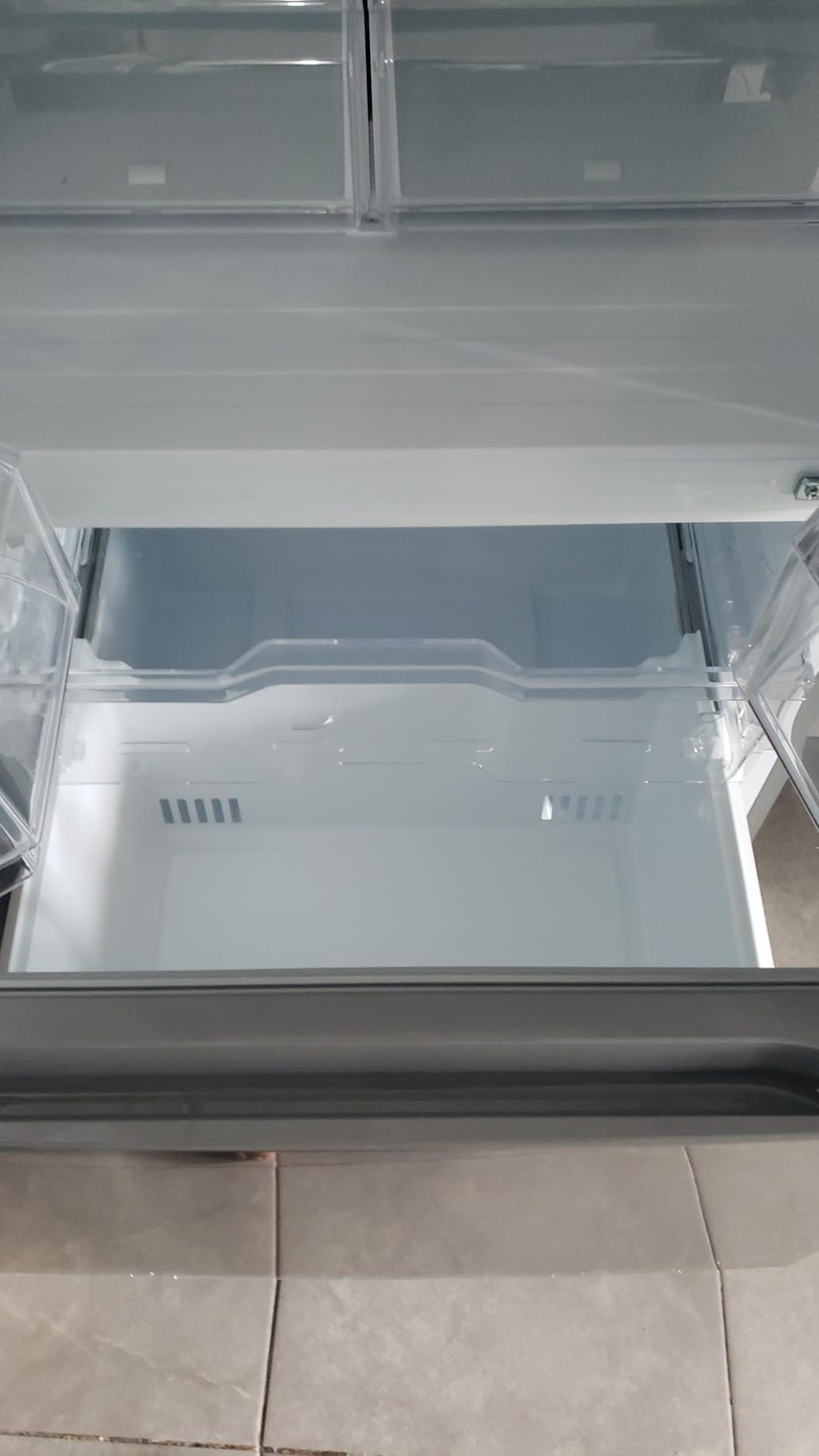
Cooling is handled by a double-flow system with digital temperature control, and owners report even temperatures at the recommended settings with no freezer over-freezing. Annual energy use is listed at 465 kWh, which is among the lower figures in this roundup, and it carries an Energy Star rating.
One owner concern does show up repeatedly: the interior lighting is dimmer than people would like, and with a fridge compartment this deep the back rows need that light. The flat stainless finish also shows fingerprints, and there is no dedicated cheese or deli drawer. None of those touch cooling or capacity.

Will this KoolMore fit a narrow opening?
It is one of the narrowest bodies in the guide at 29.5 inches across, which is well inside a standard 33 inch cabinet opening. Height is 66.6 inches, slightly shorter than most competitors, which is helpful under a low soffit. Depth of 30.1 inches leaves decent clearance to a wall behind it.
The catch is capacity. If you regularly shop for a family of five or throw a lot of frozen food, 18.5 cu. ft. will feel tight and the larger 4-door models suit you better. There is also no through-door dispenser, so you are filling an internal ice maker and pulling bottles from the door bin.
Who should look past this model?
Skip it if interior brightness matters a lot to you, if you want a through-door water dispenser, or if you are replacing a large side-by-side and need more shelf length. Owners who want the full pantry experience should read on to the GE Profile four-door.
For everyone else, especially in apartments, offices, galley kitchens, and open plans where noise travels, this is the model I would put in first and look at second.
2. GE Profile 27.6 cu. ft. 4-Door Refrigerator – Best Value for Big Families
GE Profile PVD28BYNFS 36″ 4-Door French Door Refrigerator with 27.6 cu. ft. Total Capacity in Fingerprint Resistant Stainless Steel
27.9 cu. ft. total capacity
35.63 in. deep x 36.75 in. wide x 69.88 in. high
722 kWh per year
Pros
- Convertible middle drawer with multiple settings
- Door-in-Door compartment
- External cubed and crushed ice
- App-controlled lighting and temperature
Cons
- Significant assembly and leveling effort
- Small fixed shelves on the narrow door side
- Door-in-Door runs about 5F warmer
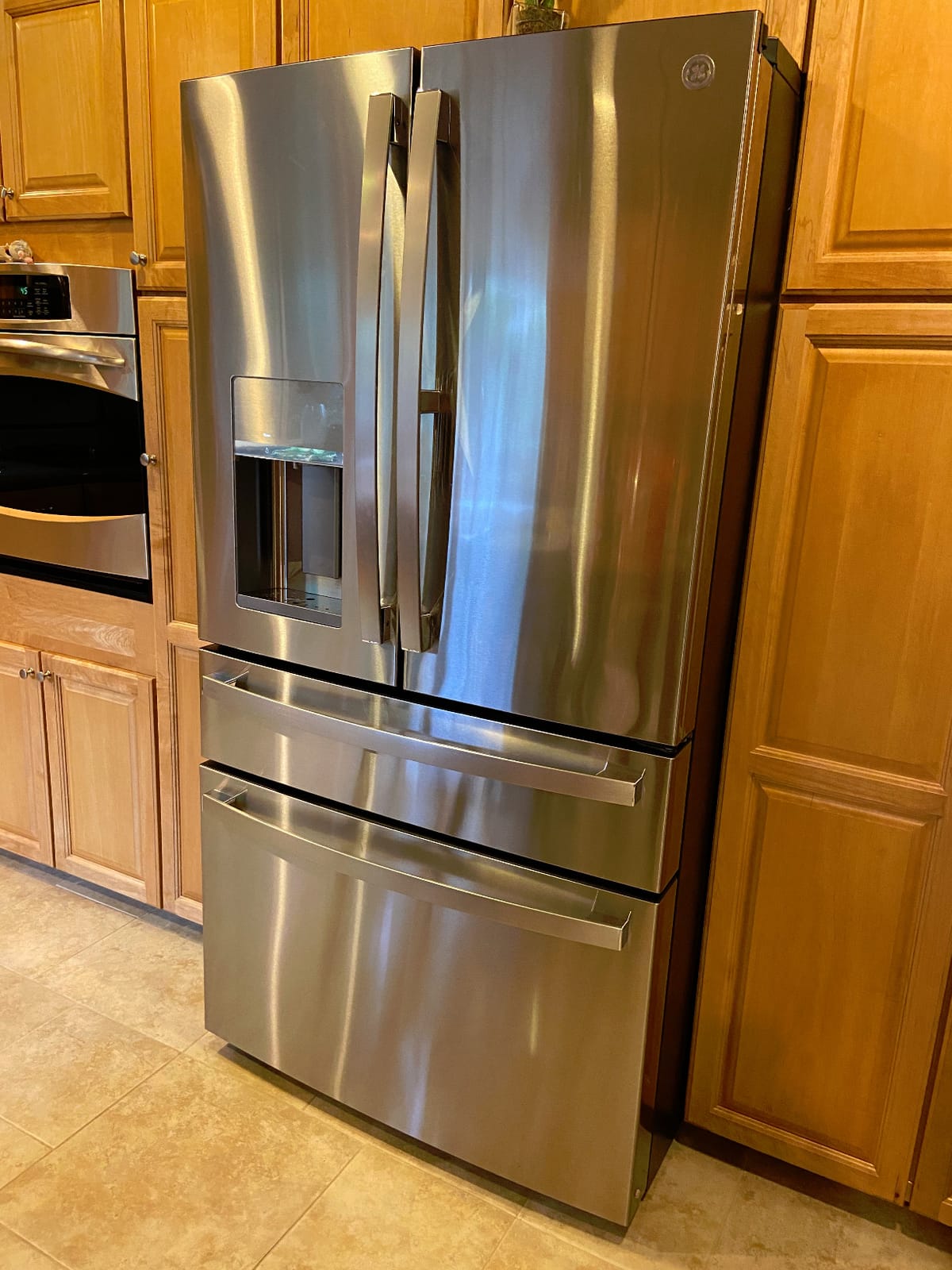
This GE Profile PVD28BYNFS is the configuration that has quietly become the default in mid-to-large kitchens: two upper doors, a convertible middle drawer, and a bottom freezer, all fed by an external dispenser that serves chilled filtered water plus cubed and crushed ice. At 27.9 cu. ft. it holds 15.7 cu. ft. of fresh food and 8.57 cu. ft. of freezer.
Owners single out the convertible middle drawer as the feature they use daily, moving it between refrigerator, meat, produce, and beverage temperature settings. The door-in-door compartment is the other favorite, keeping the things you grab constantly at arm height without dropping the temperature of the main cavity.

The cooling is handled by a Multi-Air Flow system, and the listing puts annual energy use at 722 kWh with an Energy Star qualification. Shelves are glass across four racks, with six door shelves in three sections, and there is a fingerprint resistant stainless finish. A small number of owners cite savings against big-box retailer pricing.
The honest drawbacks are physical rather than electronic. Owners report meaningful assembly time and finicky door leveling, and the fixed shelves on the narrower door side are small. The door-in-door zone also runs roughly 5F warmer than the main compartment, so it is for condiments, not for milk.
How much room do you need to install this GE Profile?
Plan for it. The body is 35.63 inches deep and 36.75 inches wide, and with the doors fully open the listed maximum depth is 48.38 inches, which is what you need to clear if an island sits in front of it. Measure the swing, not just the footprint.
A second installation point worth knowing: the ice bin is about half the size of comparable side-by-side bins. If a full party tray of ice is a normal Saturday, that is the compromise you are making for the crushed ice option.
Who should skip it?
Skip it if you have a tight alcove or a small kitchen, since this is a full-depth 36 inch body, and skip it if you want the freezer at eye level. Reviewers also mention a small number of compressor or cooling failures inside the warranty window, so the extended service plan is worth reading rather than auto-enrolling.
3. Antarctic Star 18 cu. ft. French Door with Inverter Compressor – Top Rated Compact Pick
Antarctic Star French Door Refrigerator, Auto Ice & Water Filter, VCM Stainless, Multi-Air, Fast Cooling, Inverter, LED Alarm, Energy Star, 18 Cu Ft, Silver
18 cu. ft. total
31.57 in. deep x 29.88 in. wide x 70.08 in. high
Inverter compressor
Pros
- Fast inverter cooling and freezing
- Built-in automatic ice maker with scoop
- Sharp VCM stainless finish
- Right-sized for offices and apartments
Cons
- Actual width can exceed the listing text
- Signature required at delivery on some orders
- Minimal smart feature set
The Antarctic Star BCD-513WIBMY earns its place on cooling hardware and nothing else. It runs an inverter compressor, which is the technology behind the rapid pull-down and steady temperature you feel in an open kitchen, paired with a multi-air flow system and LED shelf lighting across the interior.
It splits 12.7 cu. ft. of fresh food and 5.27 cu. ft. of freezer, with four shelves and a built-in automatic ice maker that comes with a cube tray and scoop. The VCM stainless finish resists fingerprints and smudges, which reviewers comment on often and which matters in a house with small children.
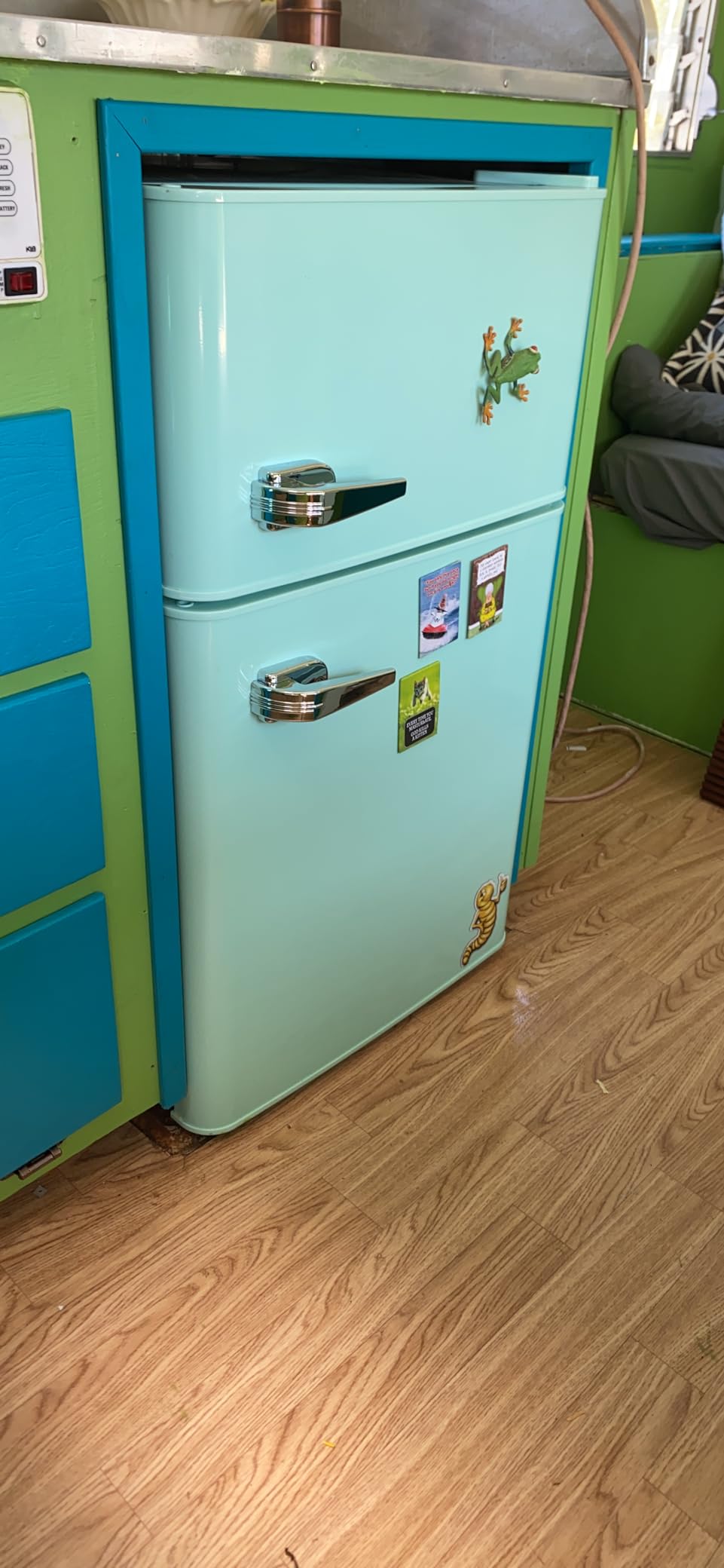
The detail that solves the most common fit complaint is mechanical: the doors open to 90 degrees, so the full drawer slides out even when the refrigerator sits tight against a side wall. That single feature separates it from most narrow competitors in this list.
Owners report solid cold and frozen performance with no temperature complaints, and 80 percent of reviews are five star. The recurring negative theme is measurement, since some buyers found the delivered width wider than the description implied. Measure your opening and check the dimensional drawing before you order, not after.
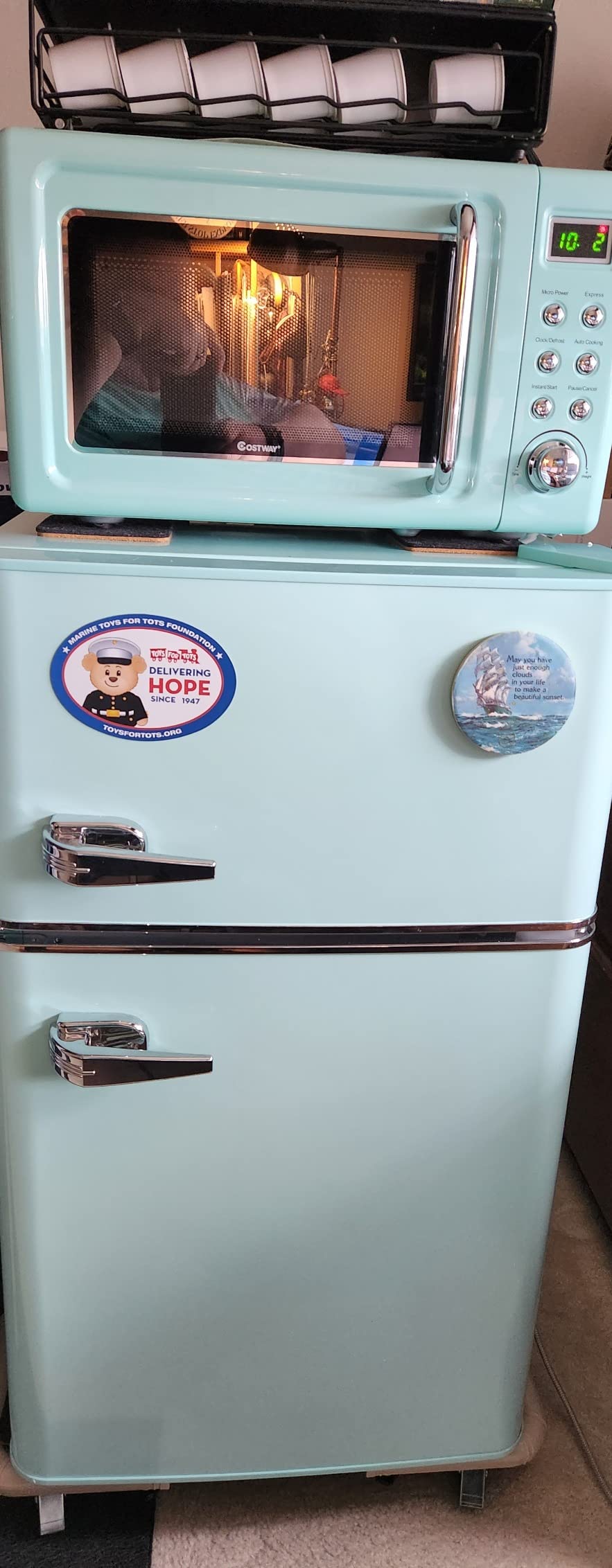
Is 18 cu. ft. enough for a family?
It is enough for two to four people who shop a few times a week. It is not enough for a household of five or more that buys a full freezer run every weekend. A useful check is whether you currently use a top-freezer section for overflow; if you do, 18 cu. ft. will feel like a downgrade.
At 29.88 inches wide it fits a standard 33 inch opening with room to spare, and 70.08 inches tall it is a normal full-height body. There is a door-open alarm on the electronic display, which is a small quality-of-life feature most buyers do not expect at this level.
What are you giving up?
You give up the connected app, the adjustable multi-zone drawer, and the polished interior lighting of the premium models. The smart feature set here is minimal, so if you want temperature alerts on your phone when you are traveling, the Samsung at number six is the alternative.
4. BLACK+DECKER 16 cu. ft. French Door Refrigerator – Budget Pick for Alcoves and Rentals
BLACK+DECKER 16 Cu. Ft. French Door Refrigerator, Built-in Ice Maker, White
16 cu. ft. total
29 in. deep x 28.3 in. wide x 69.9 in. high
193 pounds
Pros
- Fits small kitchen alcoves
- Built-in sensor ice maker
- Quiet during ice maker cycling
- Reversible door hinges
Cons
- Dim interior LED lighting
- Temperature display does not stay lit
- 13 percent of reviews are one star
At 28.3 inches wide and 29 inches deep, the BLACK+DECKER BRF1600GIMW is one of the smallest true French door refrigerators you can buy, and it is the pick when the kitchen, not the family, is the limiting factor. It weighs 193 pounds, so it is also the easiest of the twelve to move into place.
Inside you get an 11.15 cu. ft. fridge compartment and a 5.06 cu. ft. bottom freezer with a built-in sensor ice maker that produces up to 3.5 lbs. of ice per day. A digital thermostat runs separate set points for each compartment, and the hinges are reversible so you can choose left- or right-hand swing at install.
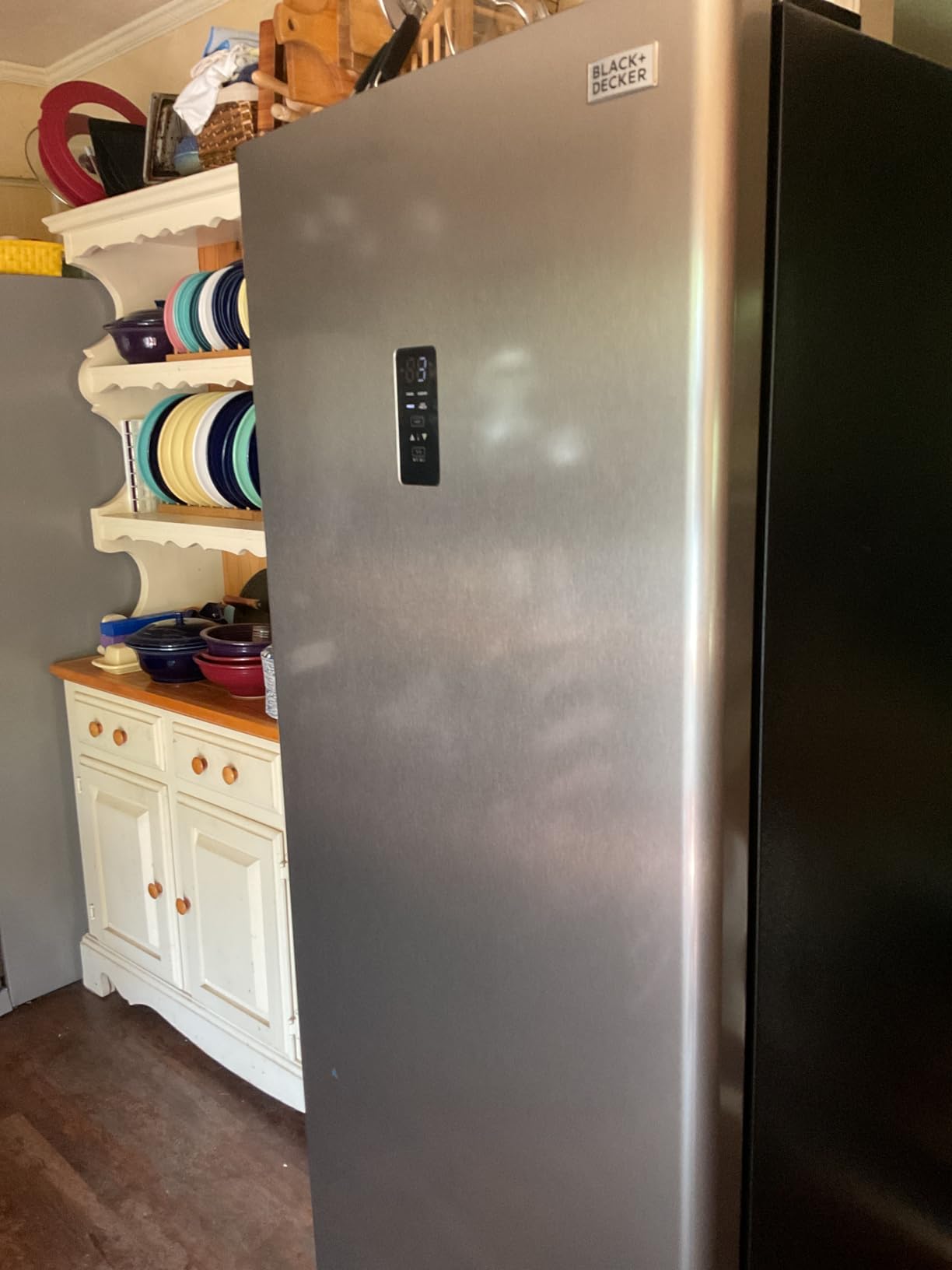
Owners consistently praise three things: how quiet it is even while the ice maker is cycling, how simple the temperature controls are, and how much room the interior gives back at this size. Several people bought more than one. Energy Star certification and a single-year manufacturer warranty round out a sensible package.
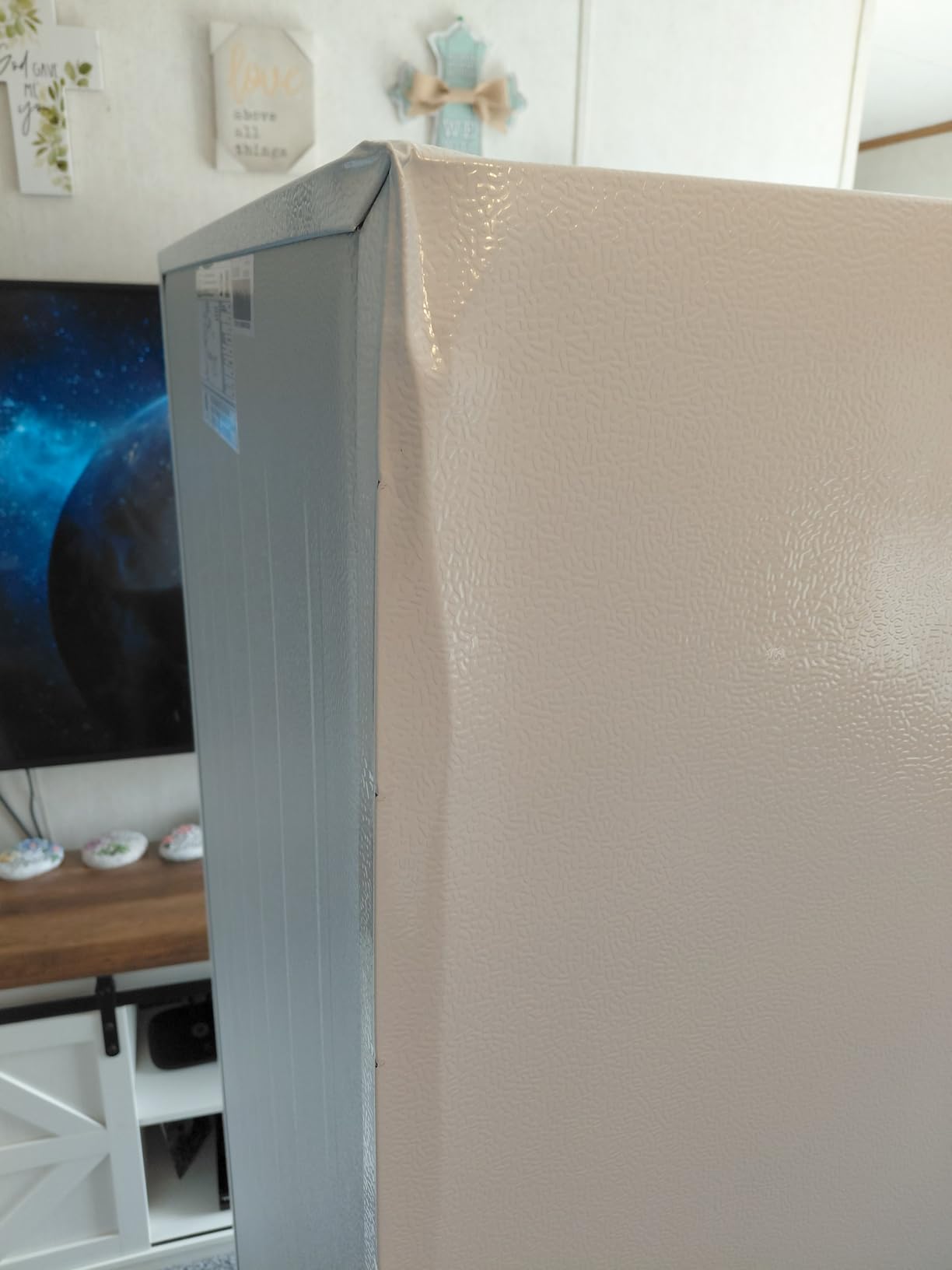
The complaints cluster on two fronts. The interior LED lighting is dim enough that items at the back of a shelf are hard to find, and the exterior temperature display does not stay lit continuously, which annoys people who glance at it mid-cook. There is also a 13 percent share of one-star reviews describing units that arrived damaged or eventually stopped cooling, with unhelpful manufacturer support.
Who is this refrigerator sized for?
One or two people, a rental unit, an office kitchen, a basement, or a first apartment where a full-depth 36 inch body simply will not go. At 69.9 inches tall and under 30 inches deep it also fits under a low soffit or beside a standard wall without pushing the doors into a walkway.
It also suits anyone who wants the French door layout and the bottom freezer but does not want to service a water line, because the ice maker here is a sensor-based internal unit rather than a plumbed through-door system.
What are the trade-offs?
You trade away shelf length, brightness, and any smart features. Three shelves means fewer large-item options, and 5.06 cu. ft. of freezer is genuinely small for a family. Given the one-star share, I would keep a paper towel and the retailer contact number handy for the first year.
5. GE 22.1 cu. ft. Counter Depth Refrigerator – Most Versatile with Showcase Lighting
GE GYE22GYNFS 36″ French Door Counter Depth Refrigerator with 22.1 cu. ft. Total Capacity Space Saving Ice Maker Showcase LED Lighting in Stainless Steel
22.1 cu. ft. total capacity
31.25 in. deep x 35.75 in. wide x 70.5 in. high
665 kWh per year
Pros
- Counter-depth body with a built-in look
- Showcase LED interior lighting
- Smudge resistant matte finish
- Rotary scroll compressor
Cons
- Only 27 reviews
- so the record is thin
- Hot gas defrost rather than fully frost free
- 10 percent one-star share in a small sample
The GE GYE22GYNFS solves the classic counter-depth trade-off, which is normally that you give up a third of your usable interior space. At 22.1 cu. ft. in a 31.25 inch deep body, you get 14.92 cu. ft. of fresh food and 7.16 cu. ft. of freezer, which is a real refrigerator rather than a fridge freezer with an ice tray.
Showcase LED lighting is the feature owners mention most, and it is the one that changes daily use: bright, even light means you see the yogurt at the back instead of moving everything out. The exterior is a fingerprint and smudge resistant matte stainless, which is the finish I would choose with young kids.
Underneath, a rotary scroll compressor and a space-saving ice maker keep annual energy consumption to a listed 665 kWh with an Energy Star qualification, and the unit is ADA compliant. A limited one-year appliance warranty applies.
The caveat here is the evidence, not the product. At only 27 reviews this is among the thinnest owner records in the roundup, so long-term reliability is less documented than the rating alone suggests. The defrost system is listed as hot gas rather than fully automatic frost free, which means slightly more manual care in the freezer over a decade.
Does counter depth really cost you space?
It costs depth, not capacity, in this case. A standard-depth body runs around 35 to 36 inches deep; this one is 31.25. What you give up is the deep staging area in front of the shelves, and the visible sides of a freestanding cabinet, which is the trade for the built-in look.
It is a three-door layout with 14.92 cu. ft. above and a 7.16 cu. ft. freezer below. Plan door swing carefully against an island, since a counter-depth body still swings wide when the crisper drawers are open.
Who should buy something else?
Buy elsewhere if you want a four-door layout with a convertible drawer, a through-door dispenser, or a connected app. And if long-term dependability is your top priority, choose a model with a deep review history rather than a 27-review listing, however good the spec sheet looks.
6. Samsung 17.5 cu. ft. Smart Counter Depth Refrigerator – Best for Connected Kitchens
Samsung 17.5 cu. ft. Smart Counter Depth 3-Door French Door Refrigerator, Stainless Steel, RF18A5101SR/AA
18 cu. ft. listed capacity
28.5 in. deep x 32.13 in. wide x 70 in. high
Twin Cooling Plus
Pros
- Wi-Fi temperature and door alerts
- Independent fridge and freezer controls
- Recessed handles
- ENERGY STAR certified
Cons
- Only three interior light strips
- Left door can need a push to latch
- Ice maker needs a long flavor purge
The Samsung RF18A5101SR/AA is the pick for anyone who wants a phone in the loop. Wi-Fi connectivity sends temperature drop and door open notifications, which is genuinely useful after a power outage or when you are away and want to know whether the door was left open.
Cooling runs on Twin Cooling Plus, which keeps the refrigerator and freezer zones on independent controls so humidity from the freezer does not migrate into the fresh food compartment and pull odors with it. Annual energy use is listed at 595 kWh with an Energy Star rating, and the flat doors with recessed handles blend well with cabinetry.
The warranty here is the best in the guide, and that is a real differentiator: one year parts and labor on the refrigerator, five years on the sealed refrigeration system, and ten years parts with five years labor on the digital inverter compressor. Owners also like the easy-gliding freezer drawer in a body this compact.
Owners report three specific hardware gripes. The interior has only three LED light strips, and some have swapped in brighter ones. The narrower door does not always latch as smoothly as their previous refrigerators. And the ice maker can take roughly two weeks to purge an initial taste.
How does the shelf layout hold up in practice?
This is the most useful thing to check before buying, and it is a limit rather than a flaw: a one-gallon pitcher will not fit on a shelf or in the door. If you store large jugs of milk or juice, the 29.6 cu. ft. LG or the 28.6 cu. ft. Kenmore give you more room to maneuver.
There are three shelves, and the counter-depth body is 28.5 inches deep, which is shallow enough to sit flush with most counters. Several owners also note a wave-like sound from the compressor cycle, so it is not the quietest model here.
Who should skip it?
Skip it if you are the kind of buyer who will forget to reconnect the app after a factory reset, or if the ice flavor purge would bother you in a household that uses ice daily. The connected features are a real convenience, but they are also one more thing that can stop working without affecting your food.
7. Bosch 800 Series 21 cu. ft. Counter Depth Refrigerator – Best Built-In Look
800 Series 36 in. 21 cu. ft. Smart Counter Depth French Door Recessed Handle Refrigerator Stainless Steel, Ice and Water
20.5 cu. ft. counter depth
Four-door configuration
External ice and water dispenser
Pros
- Premium German-brand build quality
- Recessed handles
- Easy-clean stainless finish
- External ice and water
Cons
- Highest price point in the roundup
- Only 22 reviews with a 13 percent one-star share
- Listing dimension fields are inconsistent
The Bosch B36CL80ENS is here for one reason above all: the recessed handle. On a four-door counter-depth body it makes the refrigerator read as cabinetry rather than as an appliance, which is why it appears in so many whole-home remodels. The easy-clean stainless finish resists smudging without the mirror look of polished steel.
It is also a four-door layout in a 20.5 cu. ft. counter-depth footprint, with an external dispenser serving both ice and water. Cooling comes from a dual compressor setup, and the unit is Energy Star certified with a one-year manufacturer warranty.
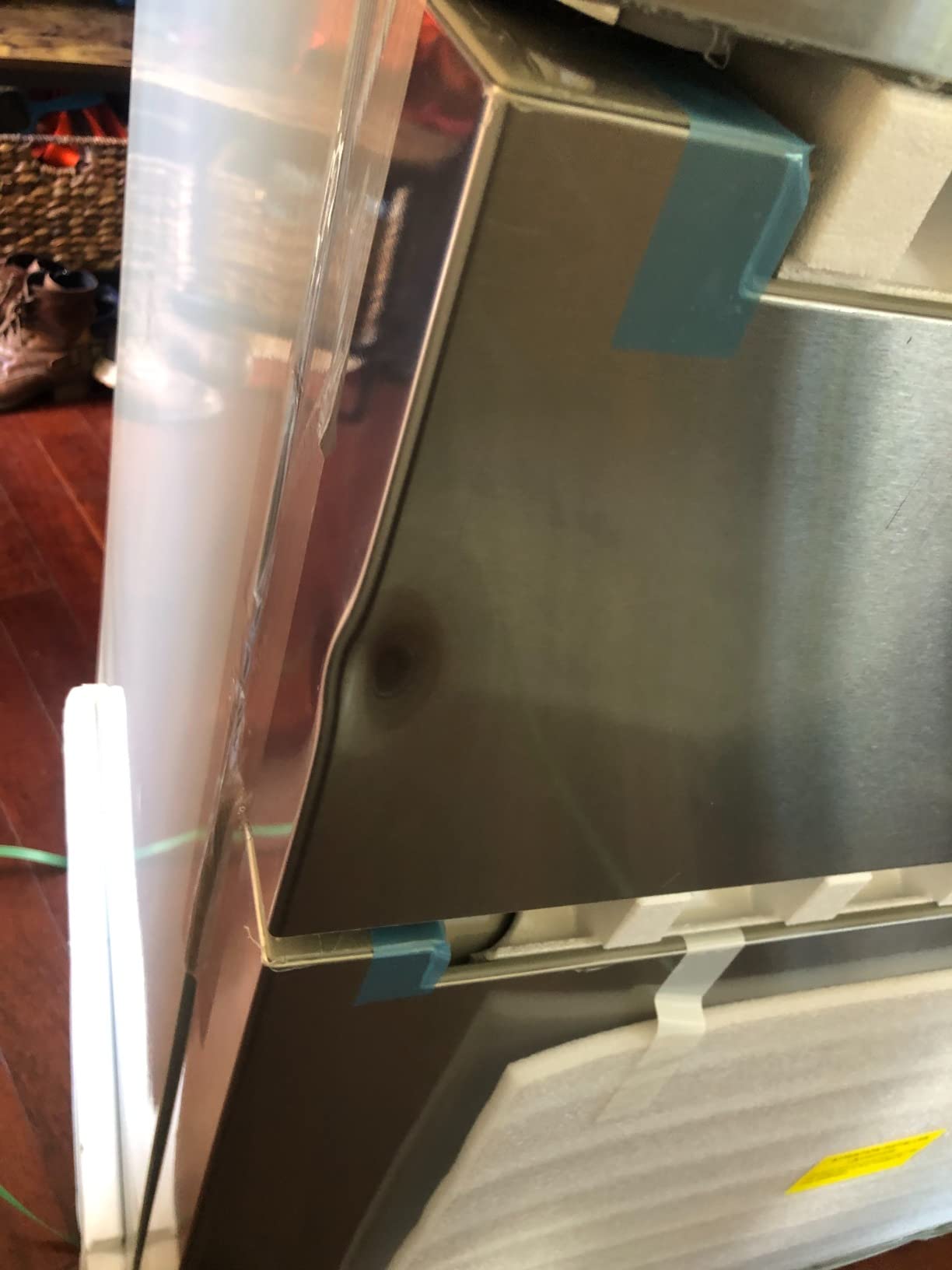
What you accept by buying here is thin evidence. There are only 22 reviews, and a 13 percent one-star share inside that small sample is the second most polarized distribution in the guide. Buyers who love the build rate it highly; a smaller group is simply dissatisfied.
There is also a practical warning. The listing for this model carries inconsistent dimension and installation-type fields, so confirm the actual width, depth, and height against your opening with the manufacturer before you commit. It is the single most important thing to verify on this pick.
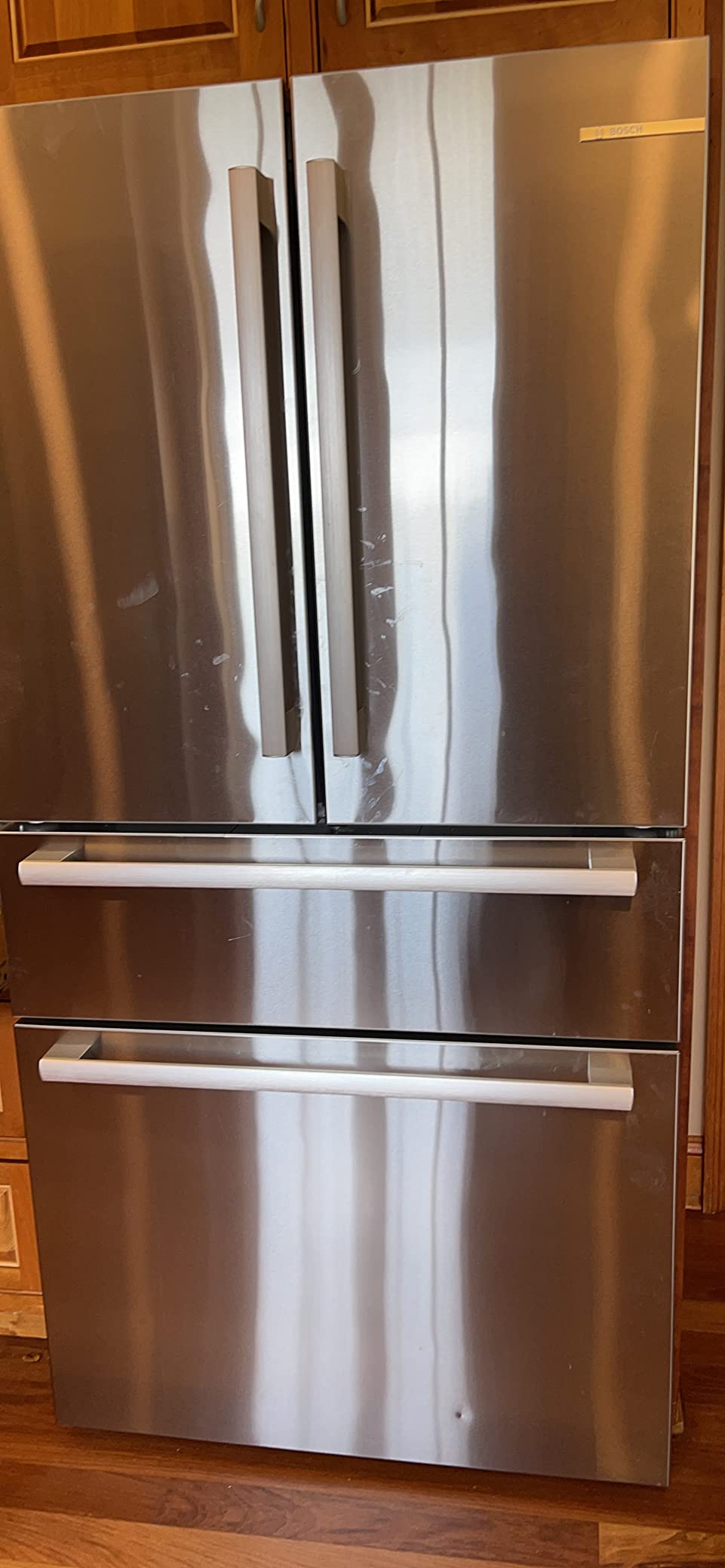
Can a Bosch 800 Series fit a normal kitchen?
It is a counter-depth body, so depth is not the obstacle. Width is what you need to confirm, because listings for this model have disagreed with each other. A standard 33 inch opening may work; a narrower alcove should not be assumed to work.
Because the doors are recessed rather than protruding, the swing is tighter than a bar-handle design, which is a genuine advantage in a galley kitchen or beside a wall.
Who should skip it?
Skip it if you need a large review history before committing, if budget is the deciding factor, or if your opening is anything under standard width. There are cheaper ways to get a flush look, and the KoolMore at number one is the quieter, better-documented alternative.
8. Samsung 28 cu. ft. 4-Door FlexZone Refrigerator – Best Convertible Drawer
Samsung 28 Cu. Ft. 4-Door French Door Smart Refrigerator with FlexZone Drawer, Stainless Steel, RF28R7201SR/AA
28 cu. ft. total capacity
29.38 in. deep x 35.75 in. wide x 70 in. high
FlexZone drawer
Pros
- FlexZone drawer with four temperature settings
- Twin Cooling keeps zones independent
- External cubed and crushed ice
- Flat doors with recessed handles
Cons
- Ice maker is the most reported defect
- Frequent clunking reported
- Exterior paint peeling reported
- 14 percent one-star share
The RF28R7201SR/AA puts a FlexZone drawer between the fresh food compartment and the freezer, with four temperature settings and an adjustable Smart Divider inside it. Owners name that drawer the best feature on the refrigerator, and it is a fair call: a drawer that runs at beverage temperature is the single most useful upgrade in this category.
Capacity is 28 cu. ft., splitting into 19.7 cu. ft. of fresh food and 8.3 cu. ft. of freezer, and Twin Cooling Plus keeps the two zones independent. The external dispenser serves chilled filtered water plus cubed and crushed ice, and SmartThings AI Energy mode tracks consumption against a monthly target.
The same three-year sealed system and ten-year compressor warranty as the Samsung at number six applies here, and annual energy use is listed at 755 kWh with an Energy Star rating. Owners like the flat door styling and the way four doors simplify access to items at the back.
Now the part that matters. Ice maker failures are the single most reported defect on this listing, sometimes requiring monthly manual defrost, and owners describe clunking noise plus ice output that drops when the refrigerator is working hard. A smaller group reports exterior paint peeling within months. The one-star share of 14 percent is the highest of any model we reviewed.
Why do FlexZone drawers matter so much?
Because a single temperature zone forces a compromise. Set the drawer at drink temperature and you gain a second fridge compartment for cans, bottles, and party trays; set it at produce or meat temperature and you have a dedicated crisper. Four settings means it changes with what you are storing rather than what the fridge was designed for.
At 35.75 inches wide and 29.38 inches deep, this body is narrower than a standard-depth unit but wider than a true counter-depth model, so it fits a 36 inch opening comfortably.
Who should pass on this one?
Pass if you rely on ice every day and cannot tolerate a service call for the maker, or if the connected features are not something you want to configure. Repair forums consistently rank the ice maker assembly as the most common French door failure point, and this listing shows that pattern in its own reviews.
9. Kenmore 28.6 cu. ft. 36 Inch French Door Refrigerator – Best for Large Households
Kenmore 28.6 cu. ft. 36″ Wide French Door Refrigerator, FPR Stainless Steel
28.6 cu. ft. total capacity
35.93 in. deep x 35.8 in. wide x 69.9 in. high
740 kWh per year
Pros
- Very large organized bins and door storage
- Water filter is easy to reach
- Door-mounted temperature gauge
- Accela Chill rapid cooling
Cons
- One report of failure under two years
- 16 percent one-star share
- Only two gallon door bins
- 337 pounds with door removal needed
Storage volume is the headline on the Kenmore 4675625, and it is not close. You get 28.6 cu. ft., split into 18.6 cu. ft. of fresh food and a full 10 cu. ft. of freezer, with humidity controlled crispers, a foldable sliding shelf, and a multi-functional snack drawer. Owners buying for five or six people describe the bins as unusually well organized.
Cooling uses dual evaporators with a Multi-Flow Air System, and Accela Chill raises fan speed for rapid pull-down after a grocery run before an inverter compressor settles into steady temperature. The dispenser provides NSF-certified filtered water and up to 3 lbs. of cubed or crushed ice per day, and the exterior is fingerprint resistant stainless.
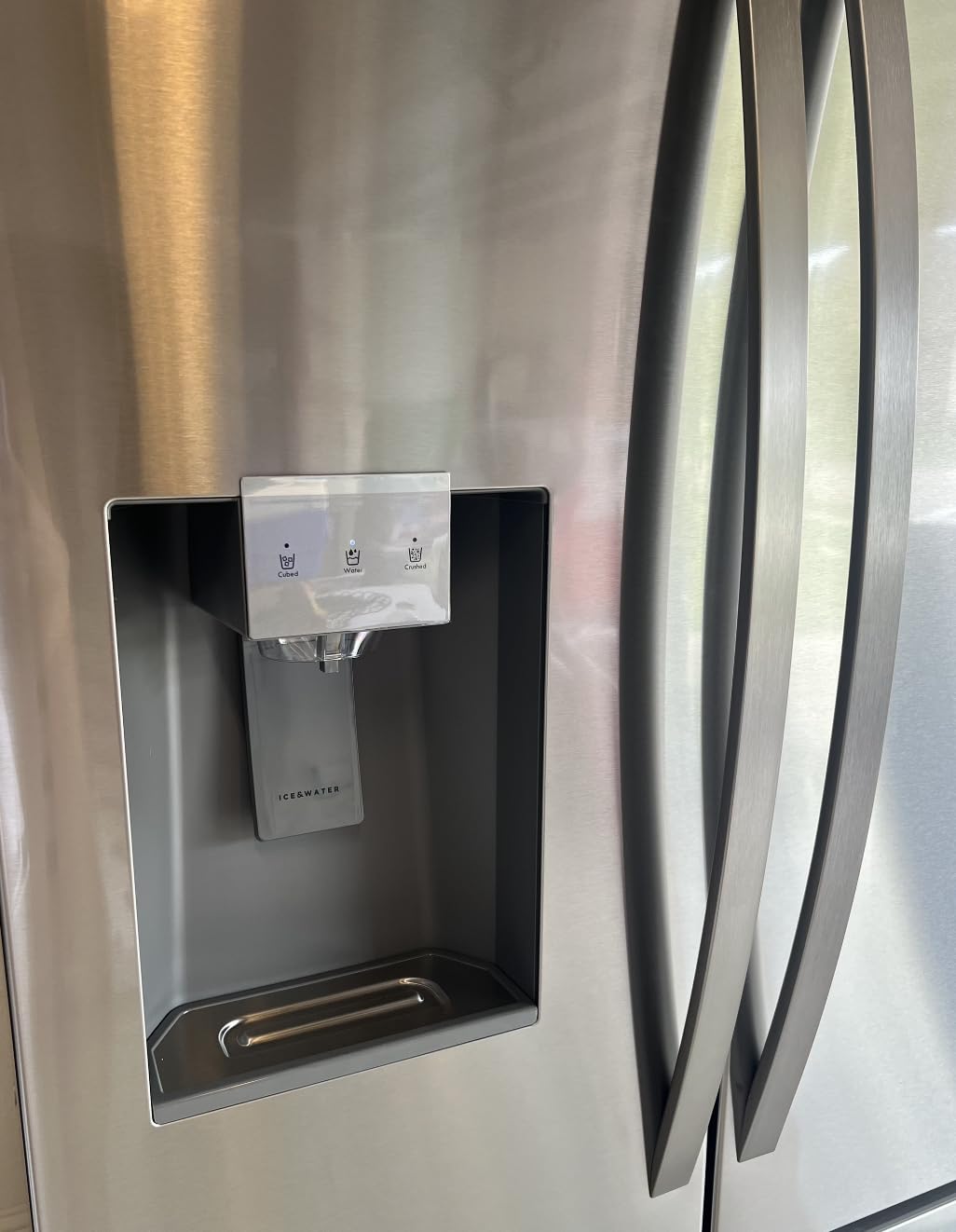
Two details owners single out are small and smart: the water filter is unusually accessible for routine changes, and the temperature gauge sits on the door where you can read it without opening anything. Setup out of the box is described as quick and straightforward, with Energy Star certification at a listed 740 kWh per year.
Against that, one detailed review reports the refrigerator failing in under two years with costly extended-warranty repair options, and the one-star share is 16 percent. At 337.3 pounds you need two people and door removal to install it, and only two gallon door bins is fewer than most refrigerators in this capacity class.
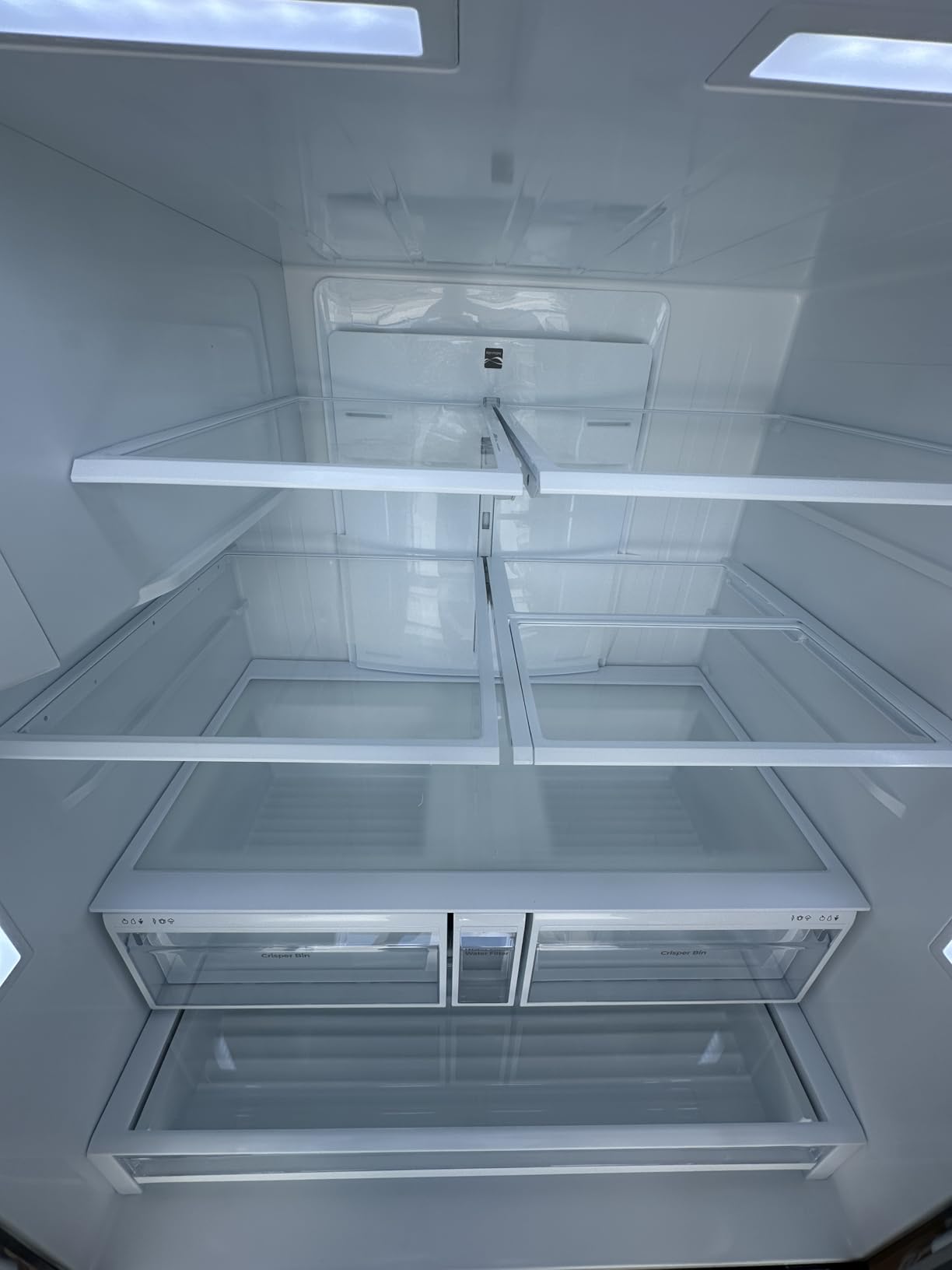
How much kitchen space does this Kenmore need?
It is 35.8 inches wide by 35.93 inches deep and 69.9 inches tall, so it wants a full 36 inch opening and a clear path from the front door to wherever the refrigerator lives. Check the stairwells and doorways in your house before you order a body this heavy.
The 10 cu. ft. freezer is the largest in this guide. For a household that freezes whole loaves, buys a half a cow, or keeps a separate frozen goods run, that volume is the reason to buy this over a 28 cu. ft. four-door.
Who should skip it?
Skip it in a small kitchen, obviously, and skip it if door-bin capacity is the deciding factor for you. Given the small review base and the specific failure report, I would buy the extended service plan from the manufacturer rather than through a third party if you choose this one.
10. Sharp 28.9 cu. ft. Standard Depth Refrigerator – Best Ice Output
Sharp SJF2955KS 28.9 cu.ft. Standard Depth 36 in. French Door Refrigerator
28.9 cu. ft. total capacity
36.1 in. deep x 35.8 in. wide x 69.9 in. high
Dual ice makers
Pros
- Dual ice makers up to 6.9 lbs. per day
- Five premium white LED interior lights
- Chill-Boost and Freezer-Boost modes
- Large 10.4 cu. ft. freezer
Cons
- Only 11 reviews
- reliability undocumented
- 12 percent one-star share
- No written owner review detail returned
The Sharp SJF2955KS is the ice answer. It carries dual ice makers producing up to 6.9 lbs. of ice per day, which is the highest output of any refrigerator in this guide, served through a door-mounted dispenser. If you host parties, run a small business, or simply go through a lot of ice, nothing else here matches it.
Beyond the ice, it is a large standard-depth refrigerator at 28.9 cu. ft., including a 10.4 cu. ft. freezer. The Advanced Cooling Plus System is backed by Chill-Boost and Freezer-Boost rapid recovery modes, and there are five premium white LED interior lights, which should solve the dim-cavity complaint that appears on several smaller models.
Booster modes matter more than most buyers realize. A refrigerator that recovers temperature quickly after you load a full grocery run protects your food and reduces compressor strain, and the fingerprint resistant exterior keeps the front of the appliance presentable.
What we cannot give you is owner history. There are 11 reviews, the smallest sample in the roundup, and no written review detail was returned for this model. Treat it as a specification purchase: the paper is strong, the evidence is thin.
Is 28.9 cu. ft. too much for a normal family?
For a family of four it is generous. For a household of six or seven doing a weekly shop, it is about right, and the large freezer is genuinely useful. For two people, you will have room you do not use, which is not a dealbreaker but is worth knowing before you commit.
The body is 36.1 inches deep and 35.8 inches wide, so it is a standard-depth model that needs a full 36 inch opening. Annual energy use is listed at 740 kWh.
Who should skip it?
Skip it if you cannot find detailed owner feedback, because with 11 reviews and no written detail, you are buying on spec alone. Anyone who values a deep, well-documented ownership record should choose a model with hundreds of reviews instead.
11. Hamilton Beach 20.3 cu. ft. Counter Depth Refrigerator – Lowest Energy Use
Hamilton Beach HBF2067 French Door Full Size Refrigerator with Freezer Drawer, 20.3 cu ft, Stainless Steel
20.3 cu. ft. total capacity
27.79 in. deep x 35.86 in. wide x 70.08 in. high
378 kWh per year
Pros
- Lowest energy use in the guide at 378 kWh
- Very quiet operation
- Counter-depth body under 30 inches deep
- Spill-proof glass shelves
Cons
- Manual defrost freezer
- Wire shelving instead of glass
- Reports of units not holding temperature
- Lowest rating in the set at 4.0
On paper, the Hamilton Beach HBF2067 has the most interesting number in this guide: 378 kWh per year, well below every other model here. If your household runs the refrigerator constantly and you care about the annual utility bill over a fifteen year life, that efficiency gap is real money.
It is also unusually shallow at 27.79 inches deep, and 20.3 cu. ft. is a generous amount of storage for that footprint, splitting into 14.48 cu. ft. of fresh food and 6.39 cu. ft. of freezer. Multi-vent technology handles the cooling, and the spill-proof glass shelves contain leaks instead of dripping onto everything below.
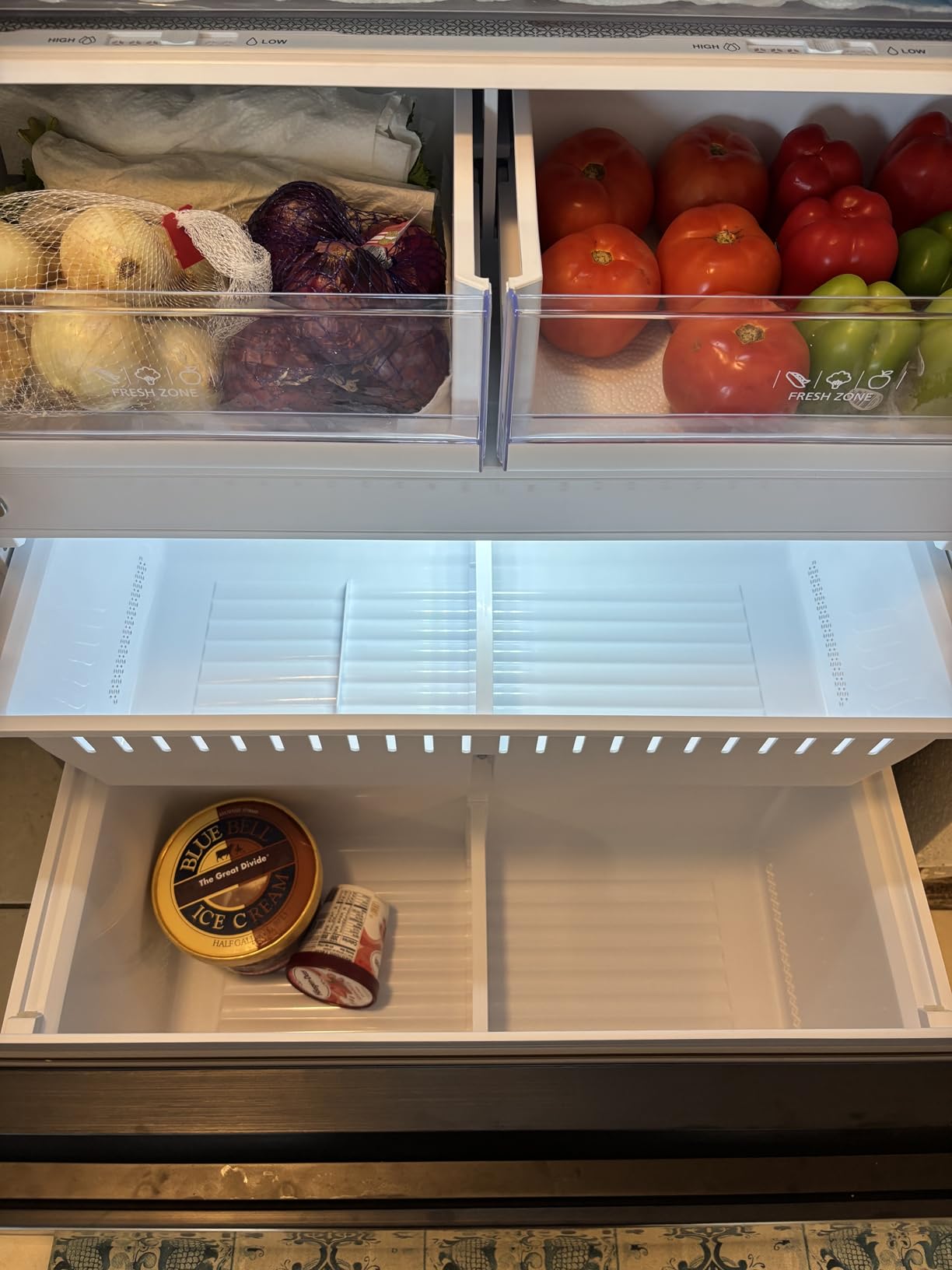
Owners also say it runs very quietly and that the finish is more attractive in person than in photos. Bright lighting in both compartments is listed as a plus, which matters more here than usual because of how few appliances at this depth bother with it.
The problems are real though, and you should hear them plainly. The freezer is manual defrost, meaning you clear ice by hand rather than relying on an automatic cycle. The shelving is wire rather than glass. And several reviews describe units that would not hold temperature, including one that would not go below 70 degrees, alongside reports that manufacturer support was unresponsive.

Is manual defrost a dealbreaker?
It depends on your freezer habit. If you buy a lot of frozen food and expect the freezer to look after itself, a manual defrost compartment is a real downgrade and adds a monthly chore. If you freeze a few items and prefer to control the process, it is a workable arrangement at a fraction of the running cost.
The shallow 27.79 inch depth is the compensating benefit, and it makes this one of the easiest full-size French doors to place against a wall or beside an existing counter run.
Who should skip it?
Skip it if temperature reliability is your first priority, because that is exactly where the reviews are negative, and this is the lowest rated model in the guide at 4.0. The efficiency and the fit are real advantages; the cooling complaints are the reason it is not higher on the list.
12. LG 29.6 cu. ft. 4-Door French Door Refrigerator – Best Large Capacity
LG LF30S8210S 29.6 Cu. Ft. Stainless 4-Door French Door Refrigerator
29.6 cu. ft. total capacity
32.25 in. deep x 35.75 in. wide x 70.25 in. high
709 kWh per year
Pros
- Largest capacity in the guide
- Convertible middle drawer
- Bright LED lighting
- Finish has held up without scratches
Cons
- Bottom freezer drawer described as flimsy
- One report of door seals failing under two years
- Wire shelving rather than glass
- 17 percent one-star share on 11 reviews
The LG LF30S8210S is the largest refrigerator we reviewed at 29.6 cu. ft., and owners make a point that the difference from a 27 cu. ft. model feels far bigger than the paper difference. It splits into 18 cu. ft. of fresh food and an 8.4 cu. ft. freezer, across a four-door layout with a middle drawer that switches between refrigerator and freezer temperatures.
That convertible middle drawer is the feature to buy for. On a refrigerator this size you can dedicate it to drinks, snacks, or overflow frozen goods rather than trying to reorganize shelves around one temperature setting. Bright LED lighting reaches the back of the cabinet, and owners report the stainless finish holding up without scratches or dents.
Cooling runs on multi-air flow with a rotary scroll compressor, and annual energy use is listed at 709 kWh with an Energy Star rating. One detailed owner review describes smooth delivery with haul-away, five months of use, and no noises, cooling issues, or mechanical problems at all.
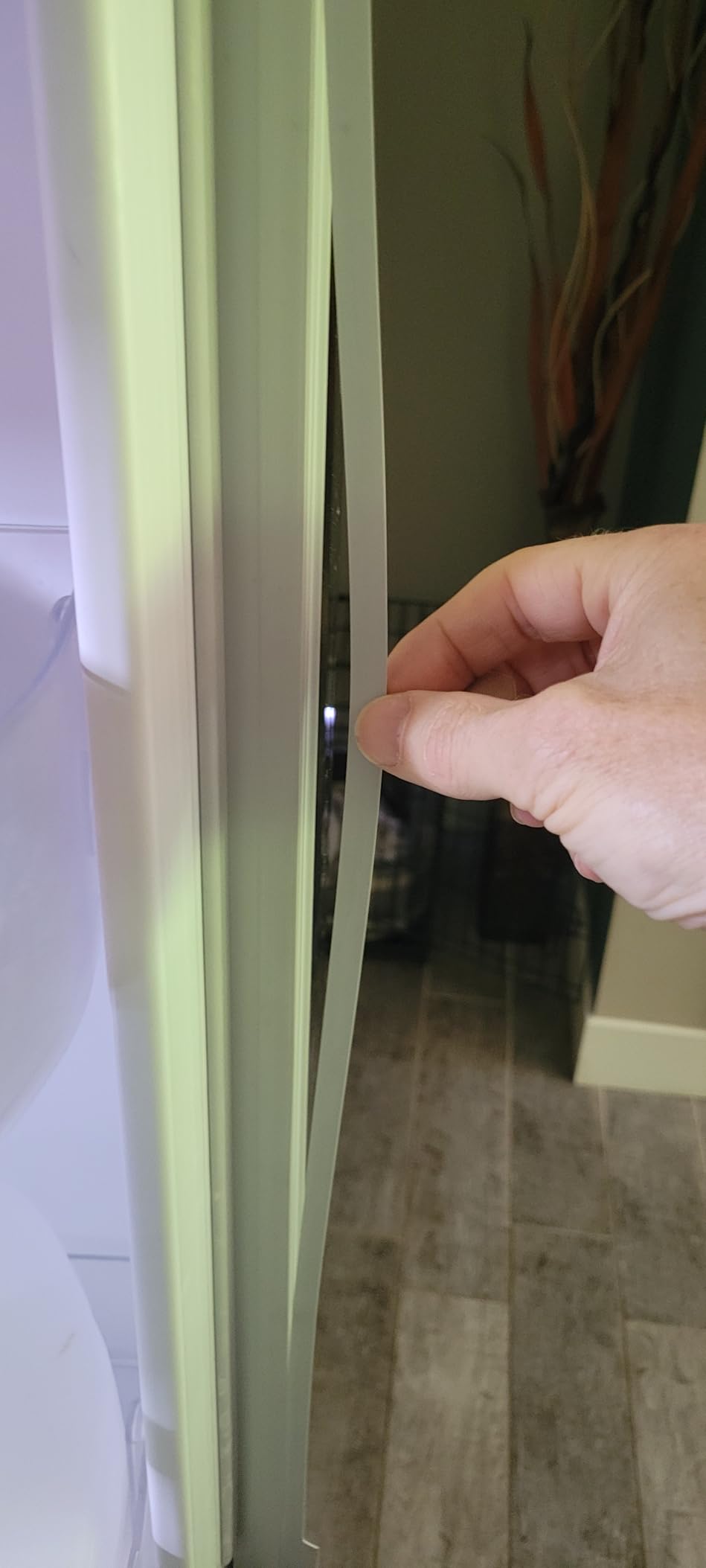
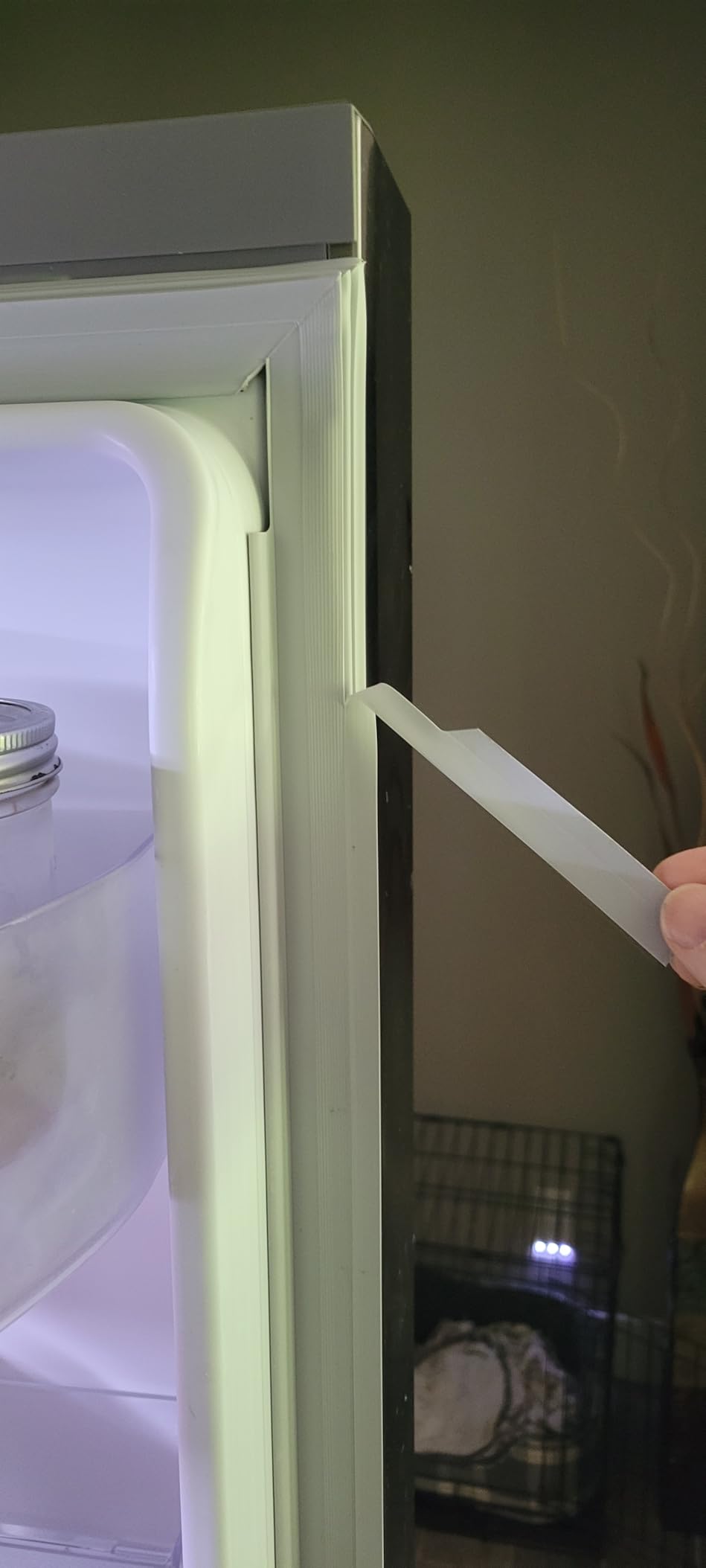
The counterweight is two specific durability complaints. The large bottom freezer drawer is described as flimsy with side to side wobble, and one owner reported door seals falling apart in under two years at more than 100 dollars each. The shelving is wire rather than glass, and the 17 percent one-star share is the highest in the guide on an 11 review sample.
Is 29.6 cu. ft. the right size for a big family?
It works well for five to seven people who shop in bulk, and it is the model to shortlist when a 27 to 28 cu. ft. four-door keeps feeling cramped. The 18 cu. ft. of fresh food plus a dedicated convertible drawer gives you the most usable organization in the group.
At 35.75 inches wide by 32.25 inches deep and 70.25 inches tall, it is narrower in depth than a standard-depth body, which helps with door swing, but it still needs a full 36 inch width. It weighs 291 pounds, so plan for a two person install.
Who should skip it?
Skip it if glass shelving is non-negotiable for you, and think twice if you have small children who will pull on the bottom freezer drawer. If you want a large body with a deep ownership record, the GE Profile at number two is the safer reference point.
How to Choose a French Door Refrigerator Without Regretting It?
Measure your opening before you fall in love with a model. It is the least glamorous step and the one that saves the most money. Get the width at the narrowest point, the depth from the wall to the nearest obstruction, and the height to the overhead cabinet. Then add an inch of clearance on each side for door swing and ventilation.
For narrow openings, a standard 33 inch cabinet gap is the number to remember. A 36 inch wide standard-depth body will not fit into one, which is the reason owners on r/kitchenremodel describe struggling to replace a side-by-side with a French door in a tight kitchen. Counter-depth bodies in the 28 to 30 inch width range, like the KoolMore, the BLACK+DECKER, and the Antarctic Star, are built for exactly that gap.
Counter depth versus standard depth is the highest impact decision after capacity. Standard-depth bodies run around 35 to 36 inches deep and hold more staging space in front of the shelves. Counter-depth bodies sit around 28 to 32 inches deep, line up flush with your counters, and leave a clear walkway, which is why they dominate whole-home remodels.
Capacity next. Count how many people eat at home and how often you shop. Two to three people are comfortable at 16 to 18 cu. ft. Four to five people want 20 to 22 cu. ft. A household of six or seven should start at 28 cu. ft., and the size jump from 27 to 29.6 cu. ft. feels bigger than the spec sheet suggests.
Cooling hardware is the difference owners notice. A single evaporator cycling between both zones is fine and cheaper. Dual evaporators, Twin Cooling Plus, double-flow systems, and inverter compressors hold each zone steadier and cost more up front and to run. For a family that cooks daily or shops in bulk, that premium buys something real.
Ice and water is a plumbing decision before it is a feature decision. A through-door dispenser needs a water line, a filter budget, and space behind the cabinet for the filter. A sensor-based internal ice maker needs no plumbing but produces less ice and sits in the freezer. If you do not have a water line and do not want to add one, filter the picks down to internal ice makers.
Smart features are the most polarizing line item. Wi-Fi temperature alerts are useful when you travel, and app-controlled lighting is nice, but connected hardware adds service points that a plain mechanical refrigerator does not have. If you are already outfitting the rest of the home with connected hardware, our guide to smart garage door openers covers the same decision framework.
Finally, consider whether you should buy this style at all. A top-freezer unit is cheaper, quieter, and more reliable over fifteen years. If your budget is tight, if there is no delivery path into the kitchen, or if mobility is a factor, a bottom freezer drawer that requires bending to the floor is a genuine daily friction point worth thinking about before you commit.
Reliability and Repairability: Where French Doors Break Down?
The honest baseline, echoed across appliance repair forums, is that French doors as a category are less reliable than top-freezer refrigerators. The style adds an ice maker, extra dampers, more sensors, and often a networked control board, and every added component is something that can fail. That does not make the style a bad choice; it makes the brand and the component quality matter more.
The ice maker assembly is the single most repeated complaint across repair communities, and it appears in the owner reviews of several models in this guide, most sharply on the Samsung four-door. Condenser fan ice buildup is the most common mechanical cause behind those failures, which is one reason a side-by-side replacement or a periodic vent clean matters. Members also report ice makers lasting years on some models and failing within a few years on others, so the brand average tells you less than the part number.
The second cluster is the evaporator fan and damper. Clicking, banging, and knocking sounds are usually a fan or damper rather than a failing compressor, and both are replaceable parts a technician can service in an afternoon. The third is the water inlet valve behind a leaking dispenser, which is also serviceable and inexpensive relative to the refrigerator.
Compressor failure sits at the bottom of that list because it is the least common and the most expensive, and because warranty terms decide the outcome. The Samsung models in this guide carry one year parts and labor, five years on the sealed refrigeration system, and ten years parts with five years labor on the digital inverter compressor. Most of the others here carry a one-year appliance warranty, which makes the extended service plan a real decision rather than an upsell to dismiss.
Door-in-door and convertible drawer hinges are the fourth failure point, and they are usually the cheapest to fix. A hinge that has lost its alignment can often be adjusted. What owners cannot adjust is the temperature differential inside a door-in-door compartment, which on the GE Profile runs roughly 5F warmer than the main cavity by design, so store condiments there rather than dairy.
There is a simple leveling fix worth knowing, because owners on DIY forums keep rediscovering it: a refrigerator that is not level produces oversized or hollow ice cubes. Before blaming the ice maker, check the front feet with a level and adjust. It costs nothing and it resolves a surprising share of complaints.
Frequently Asked Questions
Who makes the most dependable French door refrigerator?
In this roundup the strongest documented combination of rating and owner volume goes to the KoolMore 18.5 cu. ft. counter-depth model at 4.6 stars across 67 reviews, with the Antarctic Star close behind at 4.4 stars across 54. If you want a deeper brand-level record beyond this list, the GE and Samsung lines offer the longest sealed-system warranties, with Samsung covering the compressor for ten years parts and five years labor.
What brand of refrigerator has the least problems?
Within this group, the models with the smallest one-star shares are the KoolMore at 3 percent and the BLACK+DECKER at 13 percent on a much larger base of 165 reviews. Across the whole roundup, ice maker assemblies are the component owners and repair technicians name most often, followed by evaporator fan and damper noise and water inlet valves.
Why is my refrigerator ice maker making a loud noise?
Common causes are a condenser fan bearing wearing out, ice buildup around the motor, or a cabinet that is not sitting level, which makes the tray scrape as ice forms. Start by leveling the refrigerator and cleaning the condenser coils and fan area. If grinding continues once the freezer is fully defrosted, the ice maker assembly usually needs replacing.
Will a counter-depth French door refrigerator fit my kitchen opening?
It fits if your opening is at least a standard 33 inch cabinet gap. Counter-depth bodies in this guide range from 28.3 to 32.13 inches wide, and the two narrowest, the BLACK+DECKER and the KoolMore, are built for smaller alcoves. Measure the narrowest point of the opening, then add an inch of clearance on each side for door swing and airflow.
Do French door refrigerators need a water line?
Only if they have a through-door water or ice dispenser. Models with a sensor-based internal ice maker, such as the BLACK+DECKER and the Antarctic Star, need no plumbing. A through-door dispenser also means a filter replacement schedule and space behind the cabinet, and an installer may recommend replacing an old supply line before hookup.
Is a French door refrigerator better than a side-by-side?
A French door gives you wider shelves that fit pizza boxes and sheet pans, plus eye-level access to fresh food and a pull-out freezer. A side-by-side gives you a full-width freezer at every height and is easier to fit in narrow openings. French doors cost more, use more energy, and have more components that can fail.
Which French Door Refrigerator Should You Buy?
For most people, the best french door refrigerator in this roundup is the KoolMore 18.5 cu. ft. counter-depth model: the highest rating, a documented owner base, near-silent operation, and a 29.5 inch width that solves the fit problem that stops most people upgrading. Buy the GE Profile four-door if you need 27.6 cu. ft. with a convertible drawer and a door dispenser, and the LG four-door if 29.6 cu. ft. is the number your household needs.
Buy the Antarctic Star for cooling hardware and a 90 degree door opening, the BLACK+DECKER for the tightest alcove or a rental, the Sharp if ice volume is the priority, the Hamilton Beach only if you will handle manual defrost in exchange for the lowest energy draw in the guide, and the Samsung models if connected features matter enough to accept the ice maker risk that shows up in their reviews.
Before you order any of them, measure the opening, check the door swing against your island, and decide whether you want a through-door dispenser that needs a water line. Those three checks eliminate more bad purchases than any feature list. Prices change constantly, so use the buttons above to see the current figure, and check back in 2026 for the next update to this guide.