
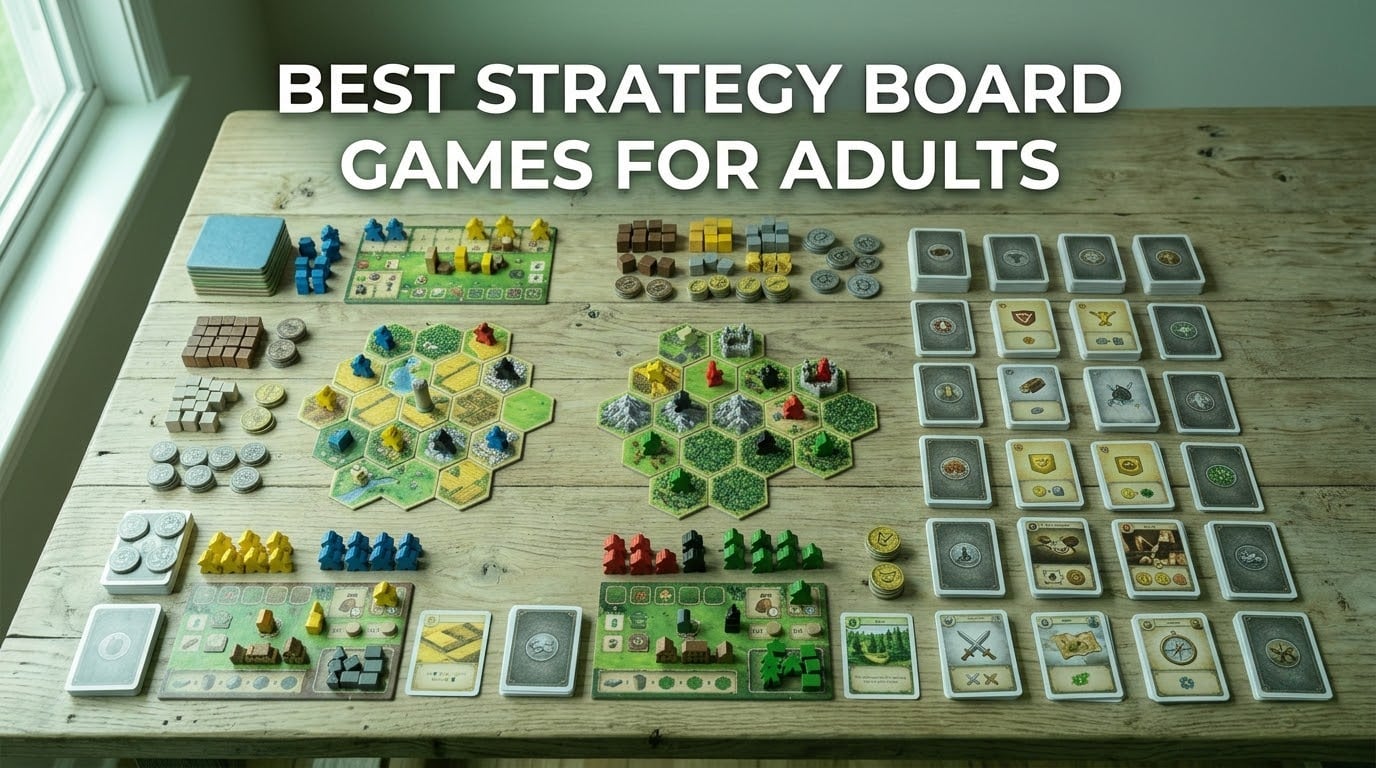
A strategy board game for adults is one where the winner is decided by planning, resource management and reading your opponent rather than by a roll of the dice. That single distinction is what separates the 12 titles below from the party games and family fillers that dominate most “best board game” lists, and it is the filter we used to build this roundup.
Ask ten adults for their pick and you will hear the same four names: Catan, Ticket to Ride, Carcassonne and Wingspan. All four are worth owning, and the version of Catan on our list deserves a place here. But every one of them is a gateway title, and gateway games only take you so far. Once your group has played a few rounds, the interesting question becomes which game rewards planning six turns ahead instead of two.
So the number one strategy game for adults right now, in our view, is Scythe if your group tolerates a long teach, and Splendor if it does not. We spent the last few months playing all 12 games below with mixed groups of two, three and five adults, logging teach time, downtime and how often a game survived a second session. What follows is ranked by strategic depth, not by popularity, and every entry includes the drawbacks.
We cross-checked every pick against BoardGameGeek community ratings, and we have flagged the complexity weight on each game so you can judge the commitment before you commit to it. Play time figures come from the manufacturers’ own box data, and the cons come from what reviewers actually say rather than from the marketing.
Table of Contents
Top 3 Best Strategy Board Games For Adults (October 2026)

Splendor
- Engine building with gems and development cards
- Three actions per turn
- 2-4 players in about 30 minutes

Wingspan
- 170 bird cards with real abilities
- Set collection and drafting
- 1-5 players with a solo automa
Carcassonne
- Tile placement and meeple claiming
- 2-5 players in about 35 minutes
- Two mini expansions in the box
All 12 Strategy Board Games Compared Side by Side in 2026
| Product | Specifications | Action |
|---|---|---|
| Splendor |
|
Check Latest Price |
| Wingspan |
|
Check Latest Price |
| Carcassonne |
|
Check Latest Price |
 Risk Risk |
|
Check Latest Price |
 Scythe Scythe |
|
Check Latest Price |
 Terraforming Mars Terraforming Mars |
|
Check Latest Price |
 7 Wonders 7 Wonders |
|
Check Latest Price |
 Spirit Island Spirit Island |
|
Check Latest Price |
 Cascadia Cascadia |
|
Check Latest Price |
 Catan 6th Edition Catan 6th Edition |
|
Check Latest Price |
 Civilization: A New Dawn Civilization: A New Dawn |
|
Check Latest Price |
 The Night Cage The Night Cage |
|
Check Latest Price |
1. Splendor – The Best Strategy Board Game for Adults Overall
Asmodee Splendor Gem Trading Strategy Board Game, 2-4 Players
2-4 players
About 30 minutes
Engine building, ages 10 and up
90 development cards
Pros
- Only three actions per turn
- Learnable in minutes
- Scales cleanly from 2 to 4 players
- Real timing decisions around reservations
Cons
- Very little direct player interaction
- Depth drops once strategies are mastered
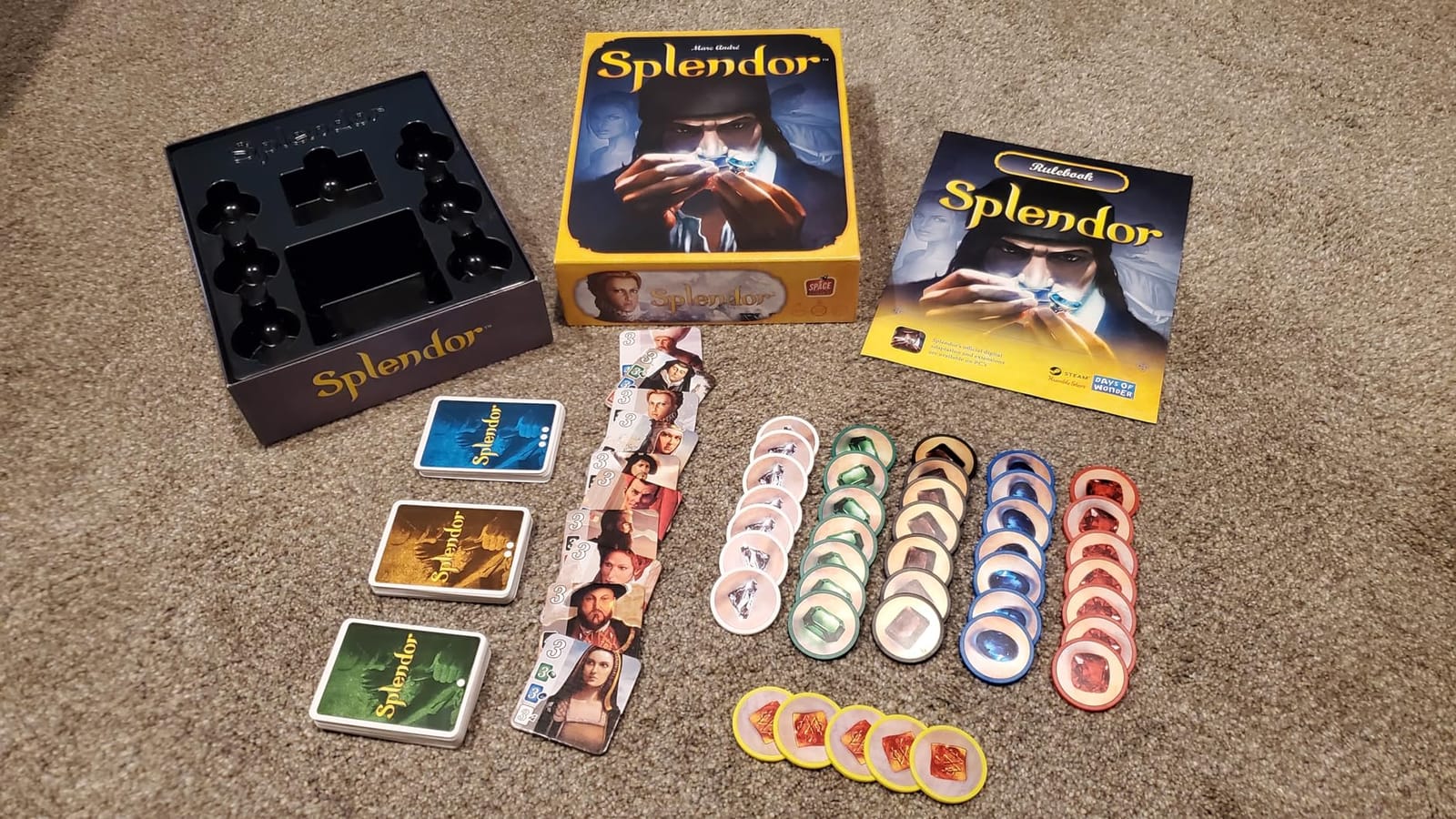
Splendor is the game I put in front of groups that claim to hate strategy games. Three actions per turn, no phases, no dice, and a box that fits in a coat pocket. You collect gem tokens, buy development cards that generate permanent income, and race to 15 prestige points through nobles.
What surprised me is how much tension hides under that calm surface. Reserving a gem card so an opponent cannot grab it is a small act of aggression, and reserving too many is a trap you set for yourself. Over a 30-minute game that produces more tension than most games manage in an hour.
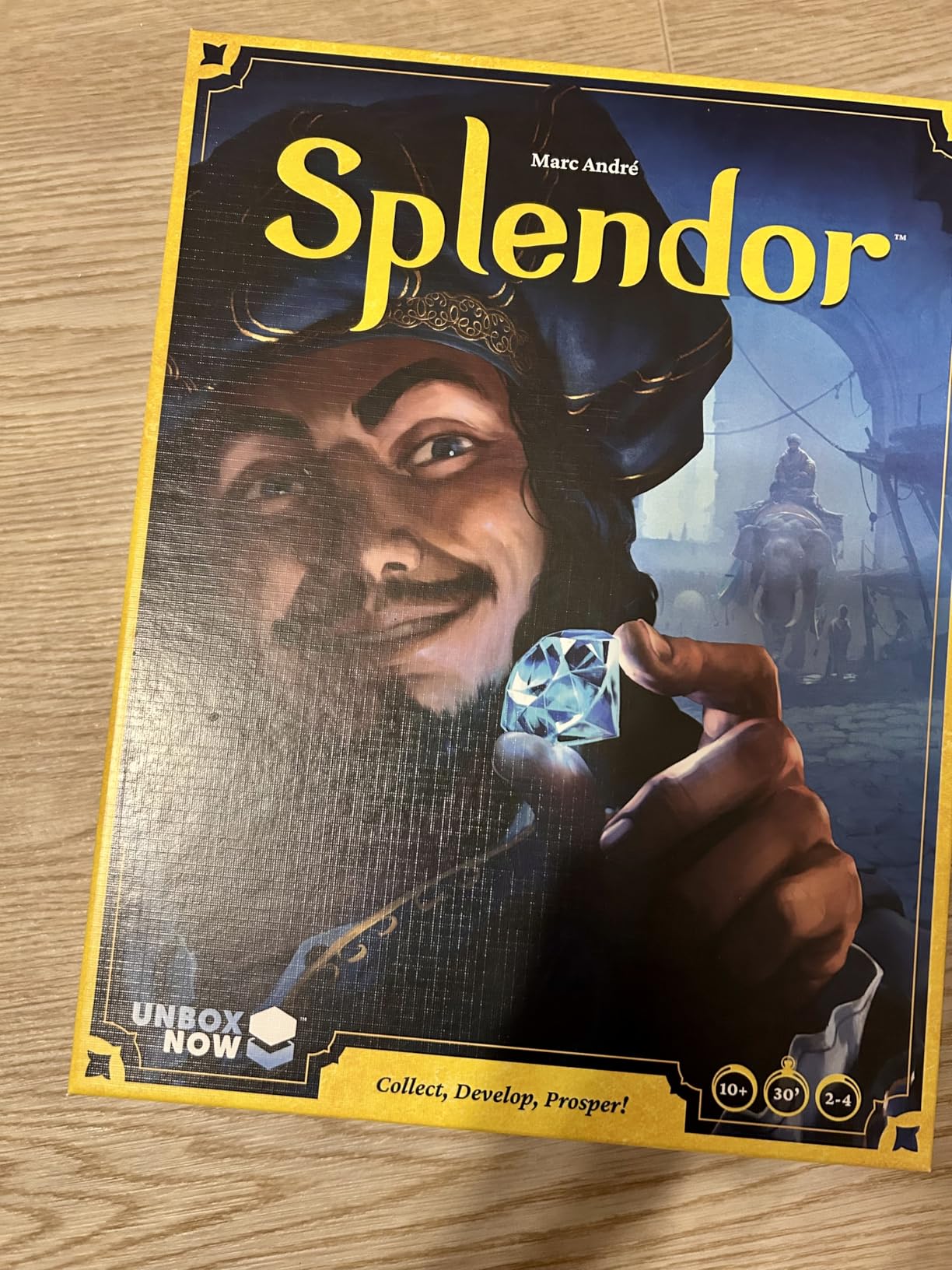
The 90 development cards are what keep it fresh. Each one is a permanent income generator, so every purchase early narrows your options later, and the best players are really deciding what kind of game they want to be playing by turn two.
At two players the tension drops noticeably because there is less to block. At four it becomes a genuinely competitive scramble. The included 40 plastic tokens and 10 noble tiles are enough for the full count without an expansion.
Who should buy Splendor first?
Buy it if your group is mixed in experience or if you have one evening rather than an afternoon. The teach is genuinely short, and the 30-minute runtime means you can fit two games into a night or one into a gap before dinner.
It is also our most reliable gift. The Renaissance gem-trading theme is adult-looking without being intimidating, and almost nobody hands back a game they finished in half an hour feeling shortchanged.
Where Splendor falls short?
It is not a confrontational game. Nobody blocks you, nobody reads your move, and you can play a full session without speaking more than a few words. If your group wants table talk, this is the wrong pick.
Experienced players also plateau. Once the standard big-noble and gold-rush lines are in your head, the decisions narrow. Our group needed roughly six plays before the novelty wore off.
2. Wingspan – Best Value for Relaxed Engine Building
Stonemaier Games: Wingspan by Elizabeth Hargrave
1-5 players
60-90 minutes
Drafting and set collection
170 bird cards
Pros
- Gorgeous production and bird artwork
- Non-confrontational and works from 1-5 players
- Hundreds of card combinations
- Real solo automa with adjustable difficulty
Cons
- Almost no direct player interaction
- Cardboard dice tower and thin plastic tray wear with use
- Moderate learning curve
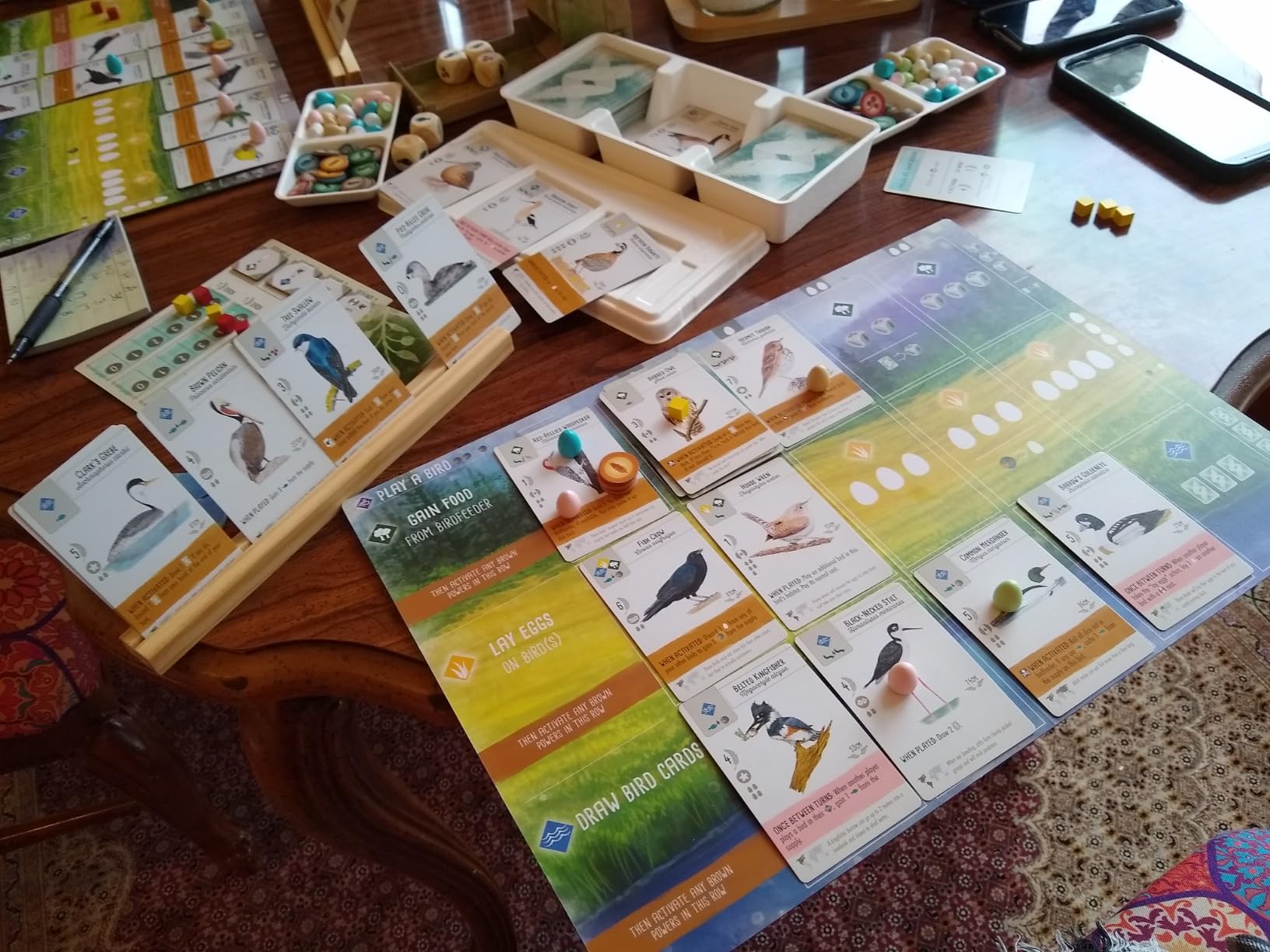
Wingspan is the calmest game on this list. You attract birds to a wildlife preserve, chain their powers into engines and complete shared and personal goals. Custom wooden dice roll through a birdfeeder tower, which sounds like a gimmick until you see how much every turn depends on those results.
The 170 bird cards each carry real, thematic abilities, which is why the same engine never plays the same way twice. Point a round toward power generation and the scoring is logarithmic, not additive, so a well-timed bird can swing a game by a dozen points.
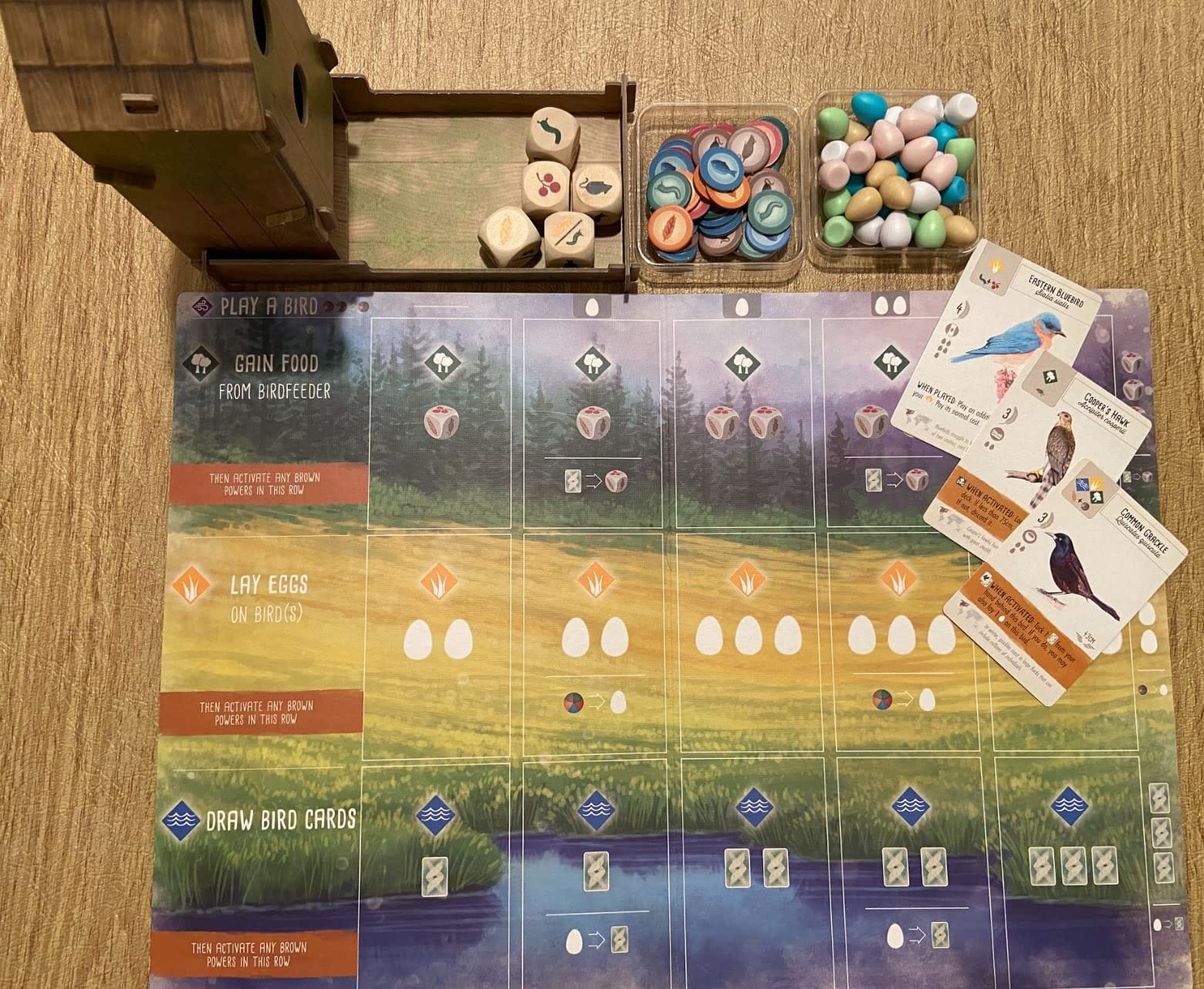
Production quality is a step above most of the hobby at this tier. The goal mat, five player mats, wooden eggs and food tokens all feel like keepsakes, and the educational bird facts on every card give you something to talk about if you want to.
The included 16 Automa solo cards are a real solo opponent rather than a timer, and the swift-start teaching guide makes the first session painless. The 2019 Kennerspiel des Jahres award was not a mistake.
Why Wingspan suits couples and solo players?
This is the pick when two adults want a game that rewards thought without raising their voices. There is no attack phase, no blocking and no score to steal, so a 70-minute session ends with everyone in roughly the same mood they started in.
It also scales honestly from one to five players, which almost nothing else here does. Solo runs are short and the automa difficulty is adjustable, so a single bad evening does not end your interest in the game.
What to watch out for?
You can complete a full game in silence. If your definition of a good session includes negotiating, bluffing or reading someone across the table, this gives you none of it.
Two components wear faster than the rest. The birdfeeder dice tower is cardboard and the token tray is thin plastic, so both are worth reinforcing before regular use. Expect a real learning curve in round one even with the swift-start guide.
3. Carcassonne – Best Budget Gateway With Tile Placement
Carcassonne Tile Placement Strategy Board Game, 2-5 Players, 35 Min
2-5 players
About 35 minutes
Tile placement
Meeple claiming
Pros
- Teaches in a few minutes yet rewards deeper play
- Works from 2 to 5 players
- Two mini expansions included from the start
- Readably painted wooden meeples
Cons
- The farmer scoring rule confuses first-time players
- Some tiles and the score track are not cleanly precut
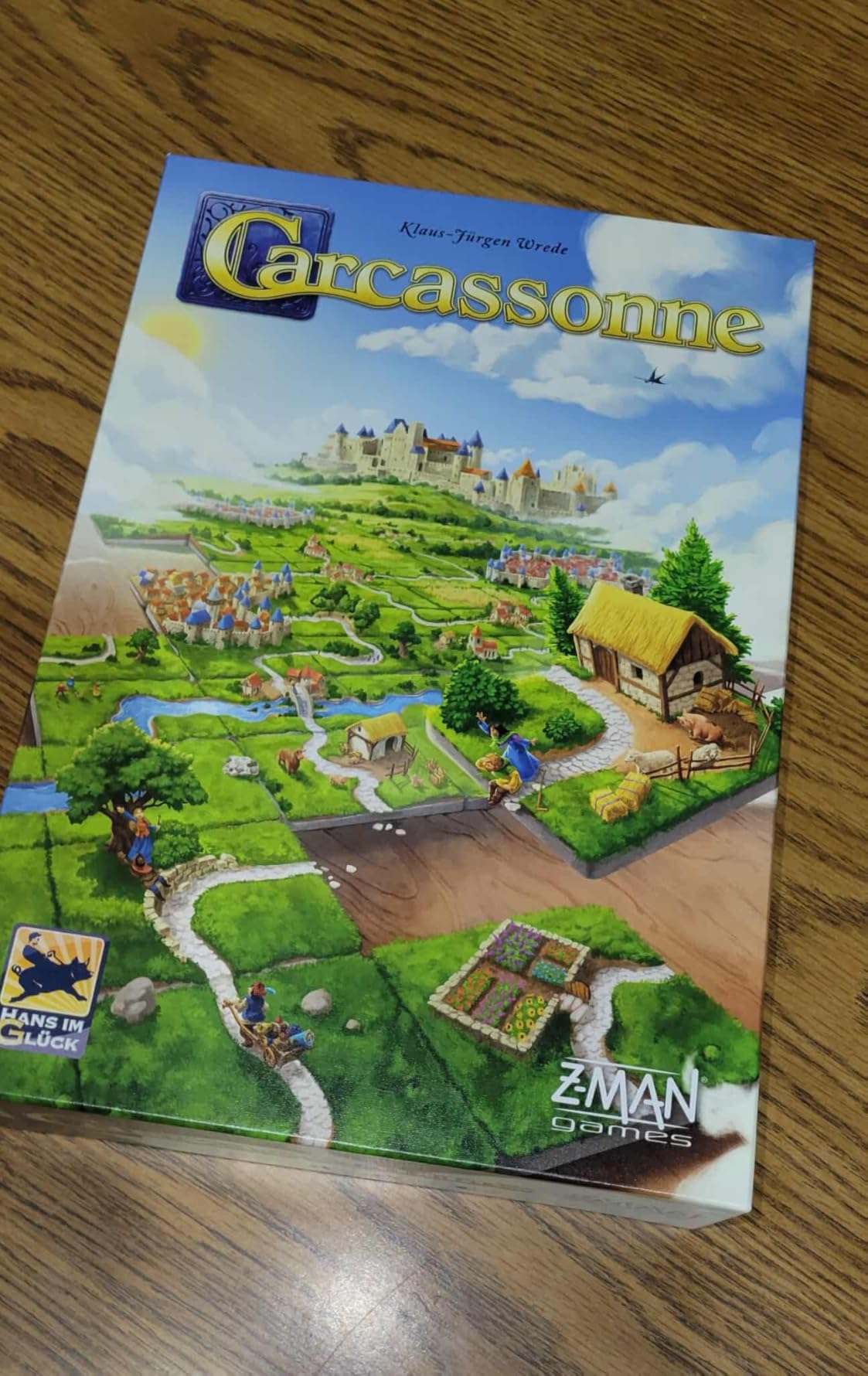
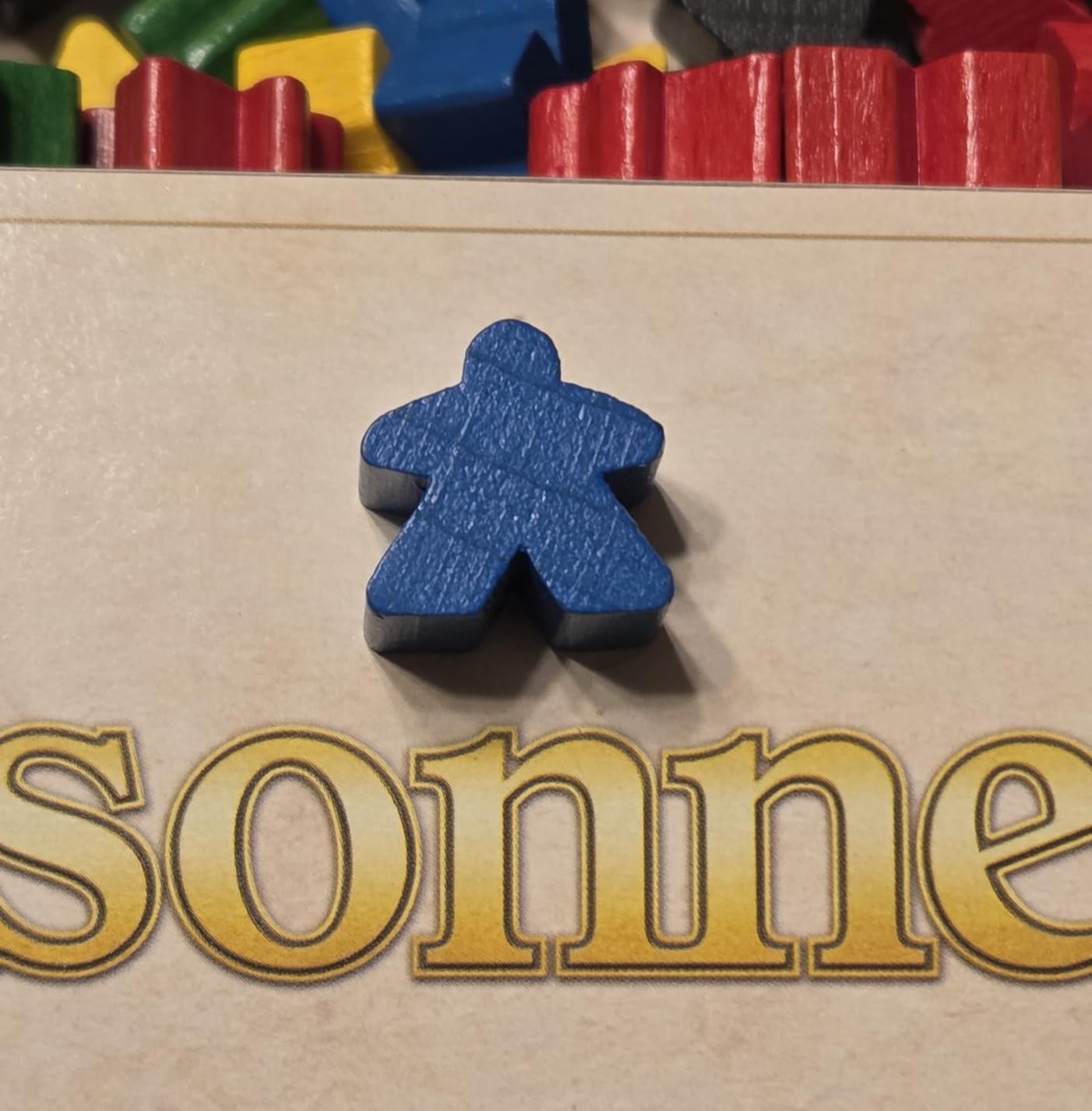
Carcassonne is still the best entry point into tile placement, and the classic edition box includes The Abbot and The River, so you are not buying a bare game. Draw a landscape tile, place it, and the board grows into cities, roads, fields and monasteries that you claim with wooden meeples.
The strategic layer is in what you complete rather than what you build. A meeple that stays on a feature scores every turn it survives, which forces you to weigh a small gain now against a large gain later. That single tension is enough to sink a whole session.
At two players the river tiles matter more, since they fragment the map and force contested borders. At five, the board fills fast and the late game turns into a scramble for the biggest unfinished project.
Downtime is minimal, which matters more than it sounds. There is never more than one tile and a placement decision between you, so a slow player is not stalling four other people. It is one of the few heavier-feeling strategy games that stays social end to end.
Best for a two-player evening
Of everything on this list, Carcassonne is the game we recommend most often for a couple or a pair of friends who do not have a regular game night. The 35-minute runtime is short, the components are compact and the whole game fits in the included tray.
It also ages well. Our group played it a dozen times before anyone suggested moving on, and the randomised tile draw means no two landscapes repeat closely enough to memorise.
Where it disappoints?
Only one rule genuinely trips people up: the farmer, who scores for every hidden field tile your meeple touches. It is one sentence in the rulebook and it takes a full round to internalise.
Build quality is the other soft spot. Several reviewers mention tiles and the score track that are not cleanly precut, so budget a few minutes with a craft knife before the first game. And at five players, hidden information gets thin enough that the map matters less than the count of meeples you have left.
4. Risk – Best for Big Groups That Want a Long War
Risk Board Game, Strategy Games for 2-5 Players, Strategy Board Games for Teens, Adults, and Family, War Games, Ages 10 and Up
2-5 players
Roughly 120 minutes
Area control, ages 10 and up
Includes 56 Risk cards
Pros
- Clear and readable rulebook
- Quality army pieces and a modern map
- Scales across several player counts
- Works for family play across generations
Cons
- Roughly a two-hour session
- Harder for children under 12
- Breakdown and diplomacy phases can spark arguments
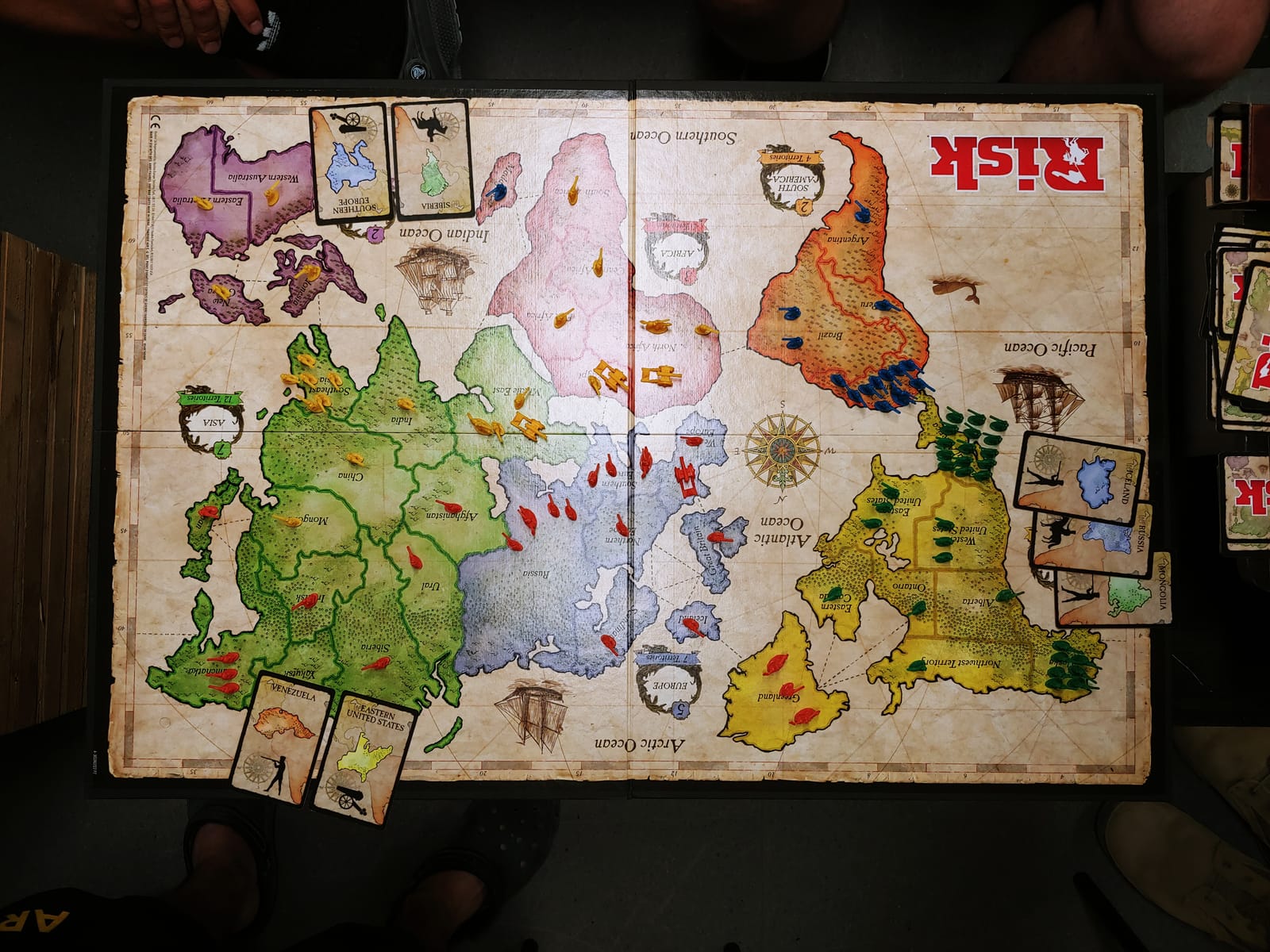
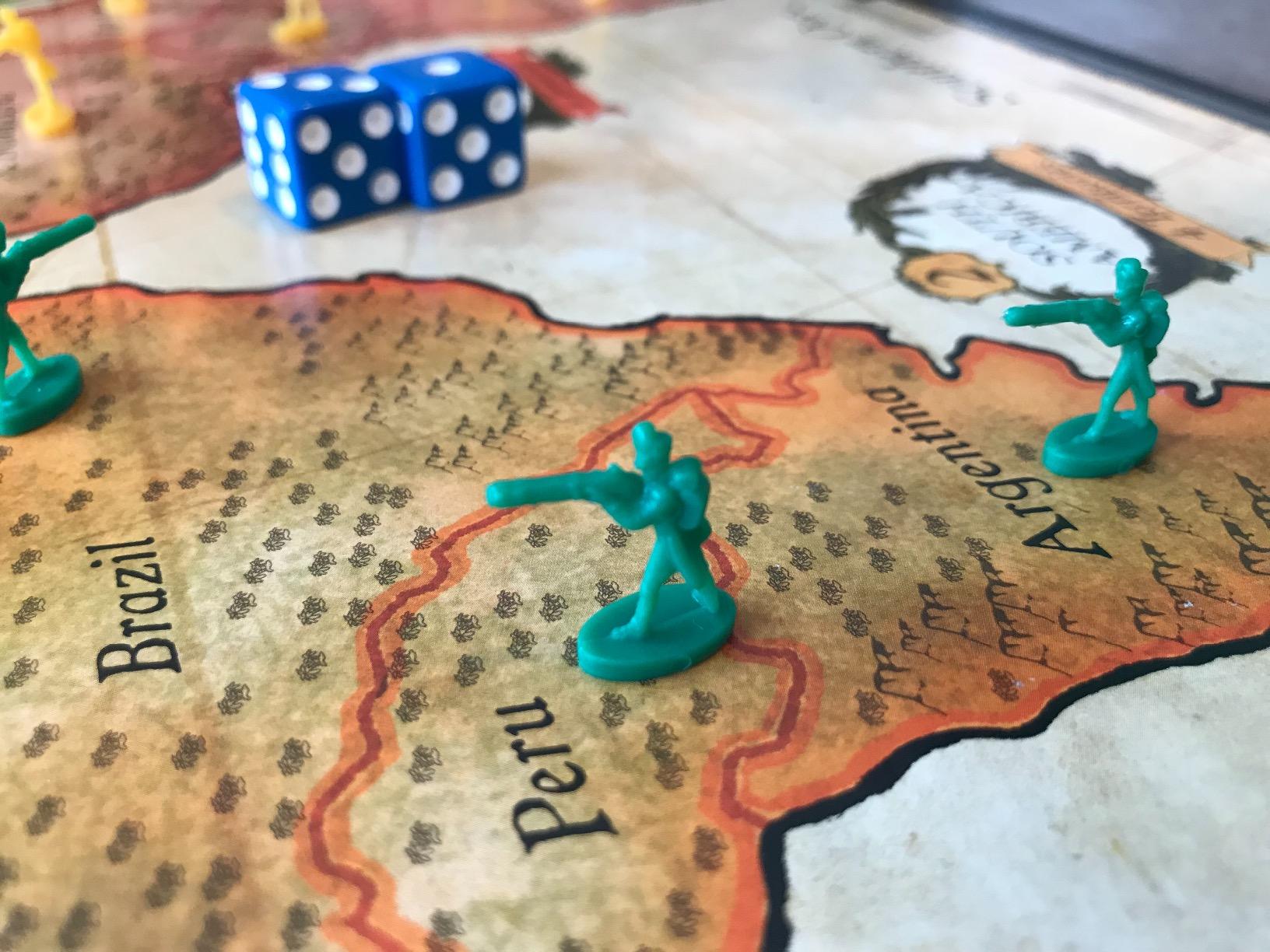
Risk is the oldest game here and the most improved. The current standard edition has a readable rulebook, plastic armies with Infantry, Cavalry and Artillery, a 56-card deck and a map designed to avoid the old dead-end choke points.
The core loop is area control with dice, and the strategic heart is reinforcement: how you place troops at the start of your turn matters far more than the attack rolls you make with them. Everything else is timing your reinforcement against what you can see your neighbours are about to do.
The dragon token is the edition’s best addition. It must be destroyed before it destroys your troops, which turns one region into a slow-moving threat nobody can ignore.
At four or five players the tension is genuine and the two-hour runtime is easy to fill. At two it drags badly, since the map is too large and the long stretches of fortified borders slow everything down. If you have exactly two players, pick something else from this list.
Who this game still works for?
Risk earns its place when you have a group that wants a genuine war, not a puzzle. The negotiations, the ganging-up and the moment someone holds the entire Asian continent for two turns are things no game on this list reproduces.
It also plays across generations. Ages 10 and up is accurate, and an older relative who knows the game from childhood can teach it in a sentence, which makes it a reliable choice for a mixed-age table.
What to be honest about?
Risk is luck-forward by design. A player can hold the strongest position and lose to three attack rolls, and that is the most common complaint we saw. Adults who bought it expecting pure strategy tend to be the ones disappointed.
The two-hour runtime is a commitment for a weeknight, and the diplomacy and breakdown phases are the flashpoints. Reviewers repeatedly report table arguments from broken alliances. Bring the right group, not everyone you know.
5. Scythe – Best for Groups That Want Deep Planning
Stonemaier Games: Scythe – A Strategy Board Game by Jamey Stegmaier
1-5 players
About 115 minutes
Engine building, no dice
5 asymmetric factions
Pros
- Deep engine building with almost no randomness
- Skill-based combat instead of dice
- Gorgeous dieselpunk art and strong components
- Outstanding automa solo mode
Cons
- Steep learning curve and a long rulebook with weak icon clarity
- Sessions of two and a half to four hours
- 6-7 player games drag
- Endgame scoring can be tedious
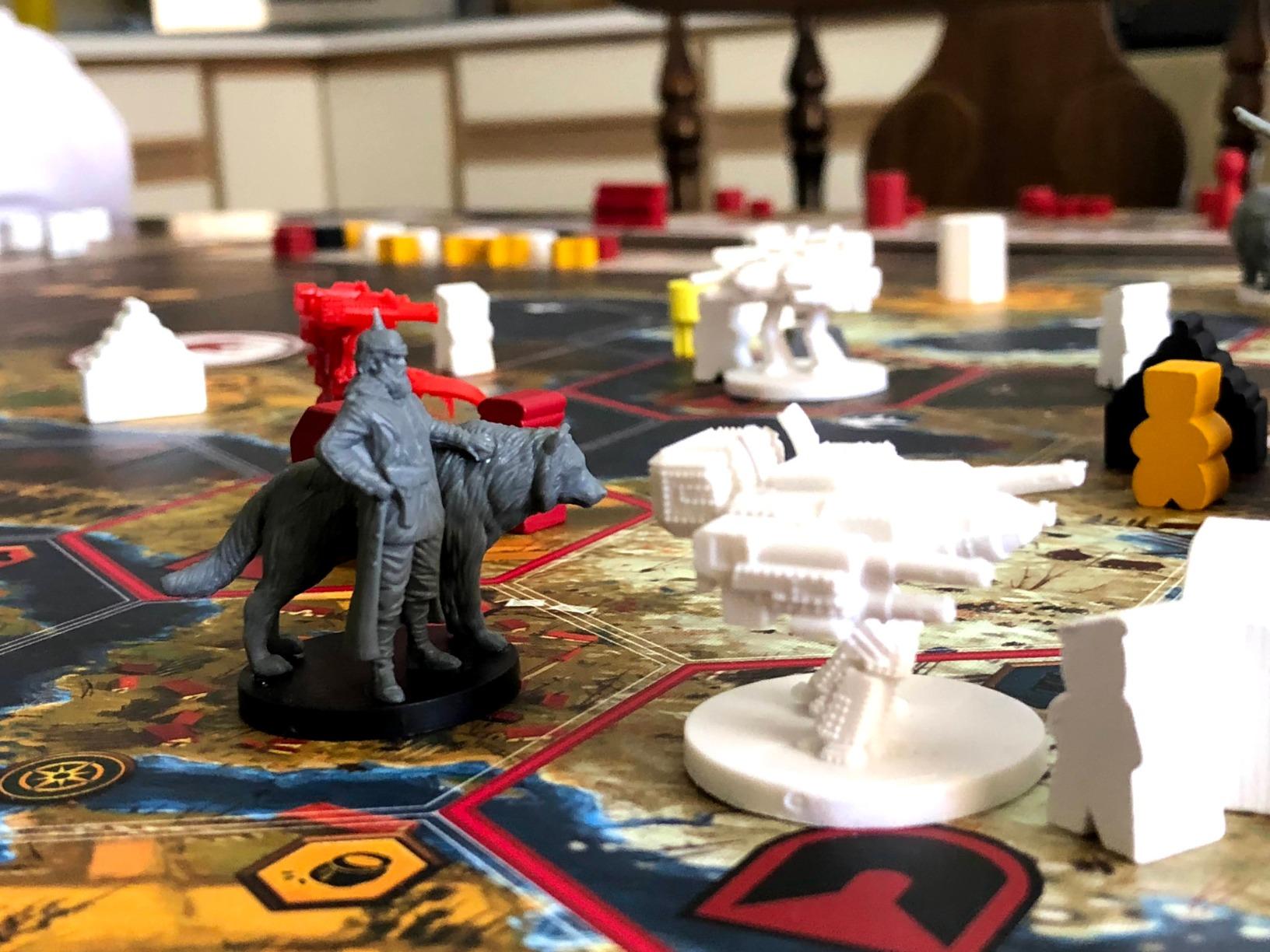
Scythe is the deepest competitive game on this list. It is an engine builder and area majority game set in an alternate 1920s Europe where the war is already over and your mechs are farming, building and racing popularity instead. There is no dice anywhere in the box.
Combat resolves through power dials and combat cards, so an attack is a math problem you can lose on purpose. With almost no randomness outside the encounter deck, every loss is legible, which is exactly what adults who dislike luck ask for.
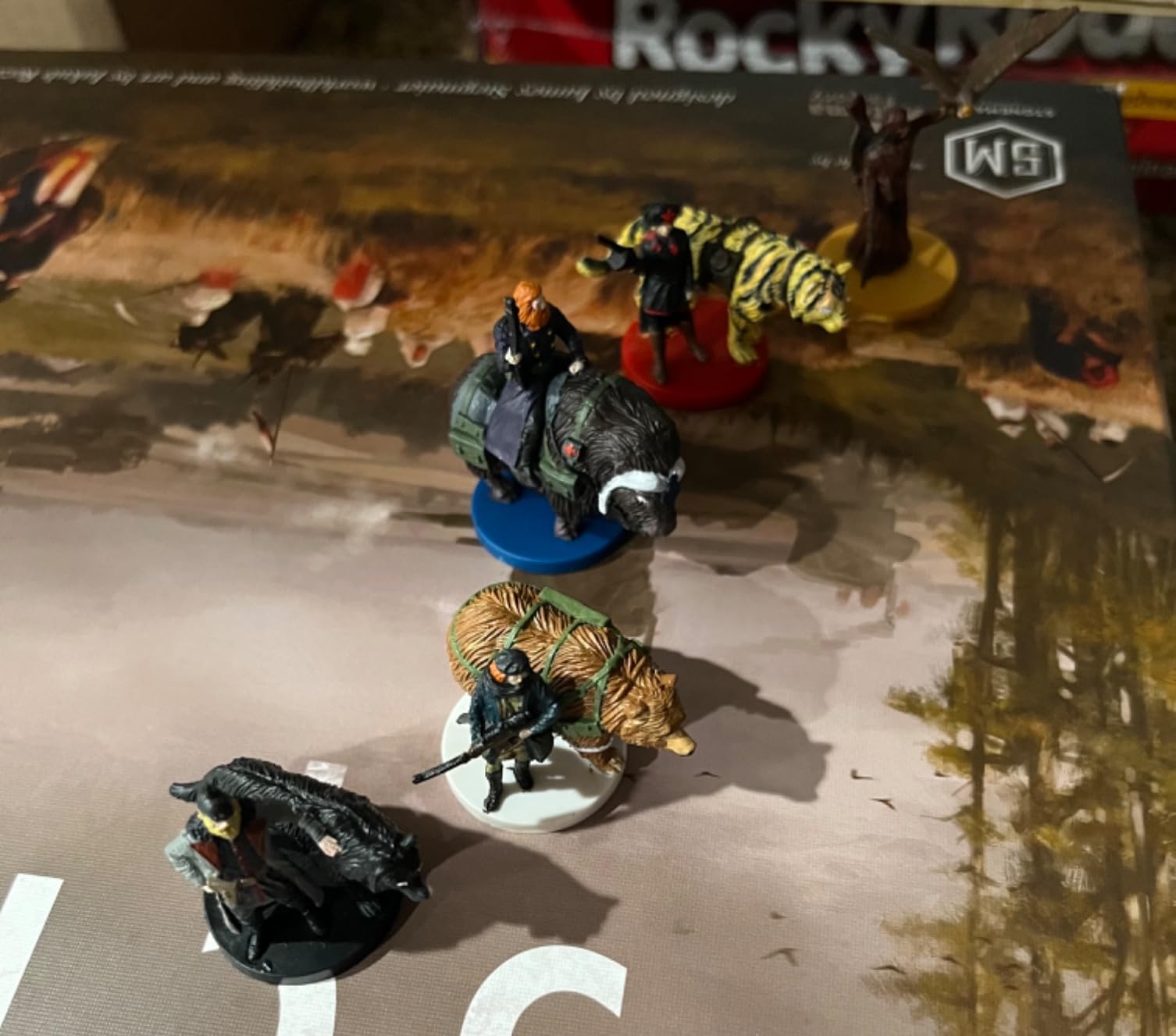
Action selection is streamlined into a single worker placement board with no rounds and no phases, so the game flows instead of stopping. Five factions and five different player boards make the starting position asymmetric, which is what keeps two consecutive games from feeling identical.
The automa solo system is widely regarded as the best in the hobby. You pick a difficulty before starting and it scales to match, and the box includes 48 workers, 42 combat cards, 23 objective cards and 28 encounter cards, which is a generous component count.
Why serious players rate Scythe highly?
The reason the ranking communities put it where they do is the ratio of decisions to downtime. The board is always live, every player keeps building, and the two hours pass quickly because there is never a stretch of waiting while someone thinks.
It is also the best solo option here for someone who wants a meaty 60 to 90 minute session rather than a filler activity. The automa opponent fights properly and never rolls a lucky break for you.
What makes it a hard sell?
This is not a casual game. The rulebook is long, the iconography is not self-explanatory, and budget 30 minutes for a first teach plus a second game to understand the combat system. Groups with no modern board game experience will bounce off it.
Play time is the other issue. Reviews consistently report sessions running two and a half to four hours, and at six or seven players the extra actions stretch that further. The endgame scoring is a short series of arithmetic tasks that some groups find tedious. Four players is the sweet spot.
6. Terraforming Mars – Best Heavy Engine Builder for Solo Play
Terraforming Mars by Stronghold Games, Strategy Board Game
1-5 players
About 120 minutes
Card-driven engine building
6 global resources
Pros
- Enormous card variety and replay value
- Science fiction theme built on real science
- Solo mode is a genuine challenge
- Shared global goals create progress
Cons
- The steepest learning curve on this list
- Paper player boards are flimsy
- Games run three to five hours at four players
- Endgame milestones can dominate the result
Terraforming Mars is the game most often described as a must-own, and the reason is variety. You pick a corporation with a unique starting power, then buy and play project cards to raise the planet’s temperature, oxygen and ocean parameters, earning victory points as you pass global thresholds.
Six resources drive everything: megacredits, steel, titanium, plants, energy and heat. They interlock in ways that produce real economy puzzles, particularly around heat, which most players underestimate in their first game and rely on heavily afterwards.
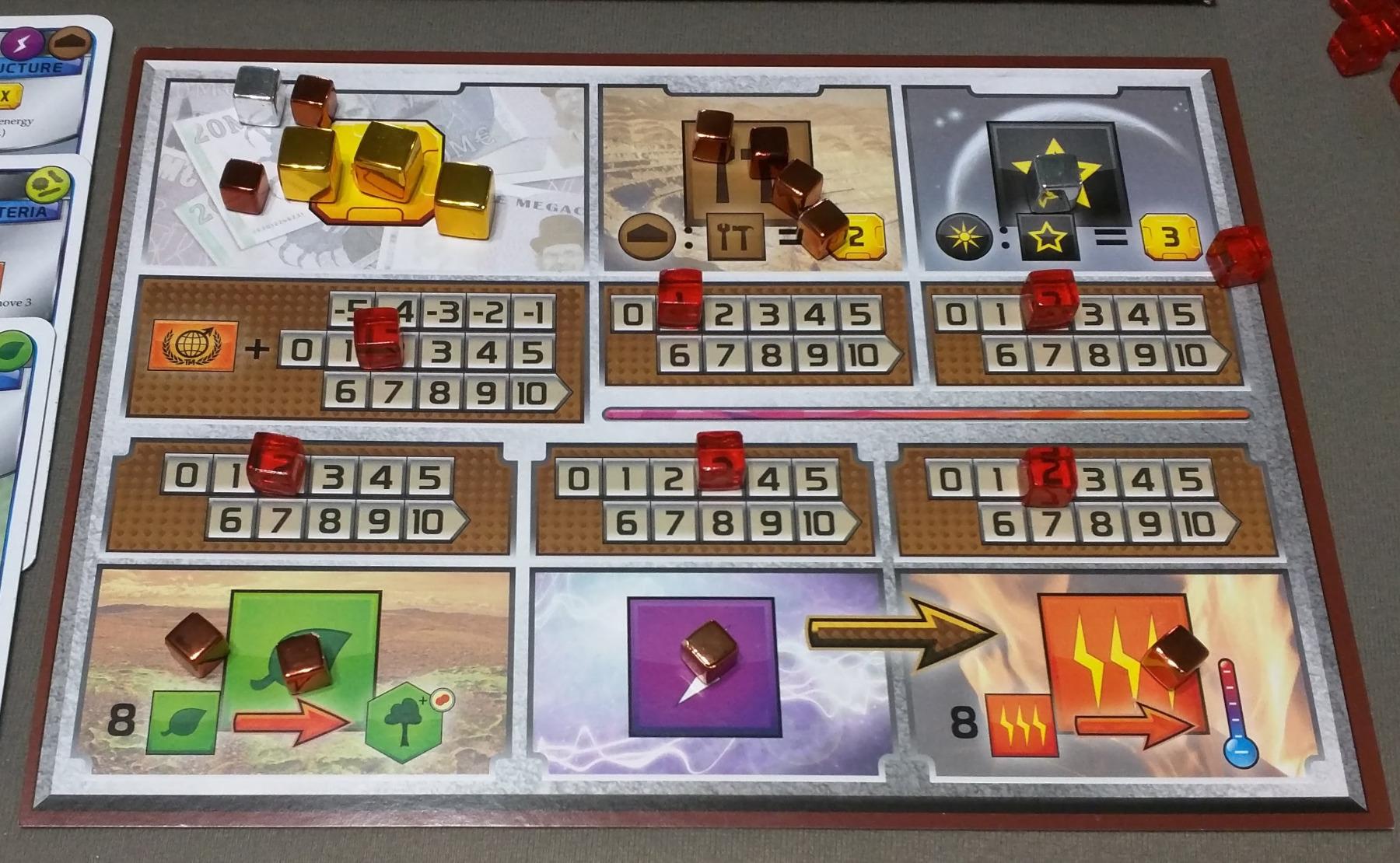
There is no direct combat, which surprises people who expect a space game. Everything is a race against the table’s shared progress, and the 20 or so milestones and awards on the board are often worth more than the cards you play, which is the game’s best twist.
Solo play is the real standout. You finish by turn 14 with all three global parameters complete, and the corporation’s green production makes it a genuine puzzle rather than a race against a score. It is one of the few games here that is arguably better alone.
Best for a weekend afternoon
Pick this when you have a whole afternoon free and a group that enjoys talking through options out loud. The decisions are dense enough that explaining your reasoning is part of the experience, and several players prefer two-handed teaching over one person lecturing.
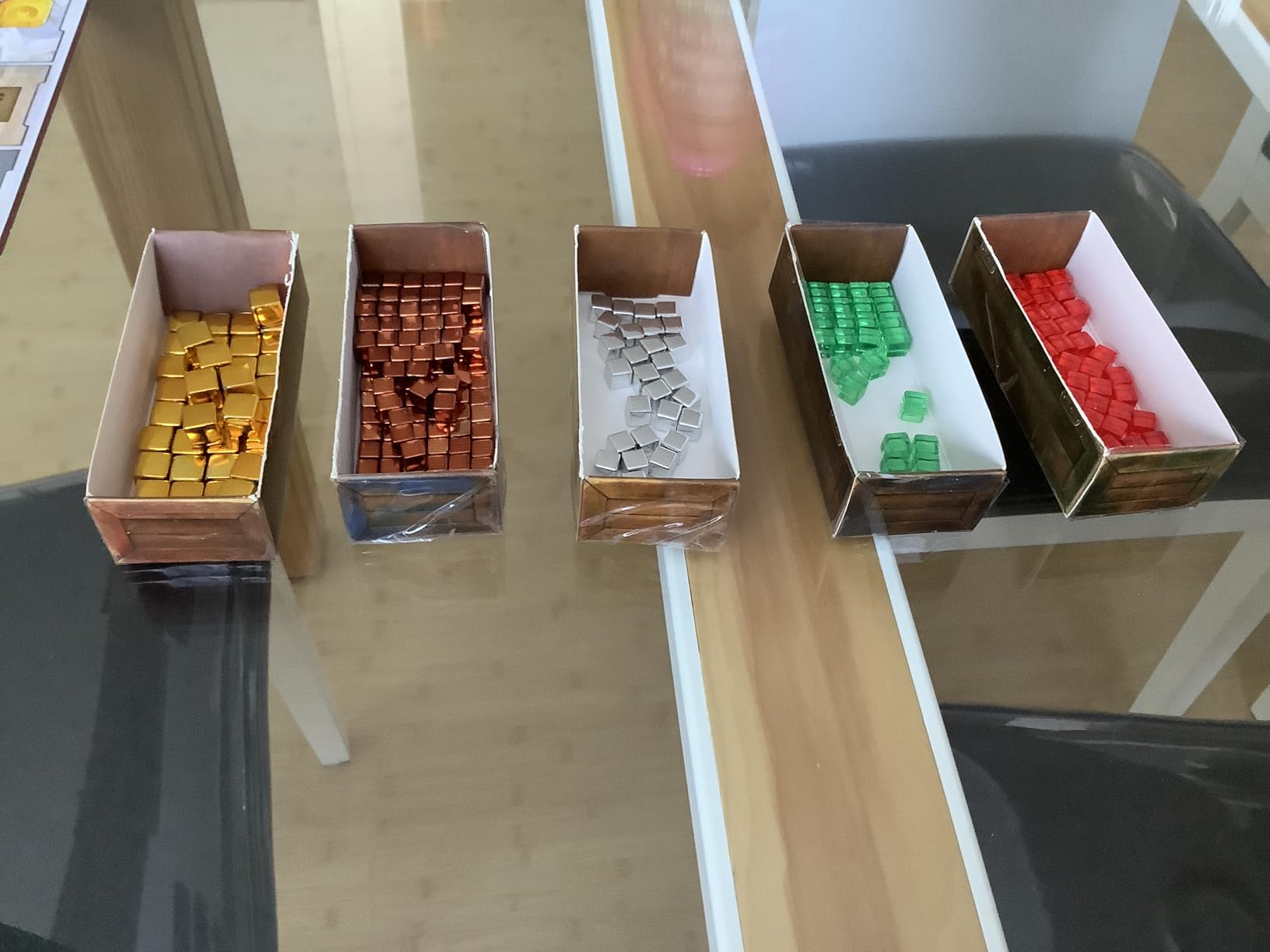
It scales to five players without breaking, and the cardboard cards, a game board, a player mat and punchboard components are all standard. Just know the first game is the longest one you will ever learn.
Where the difficulty bites?
The learning curve here is the steepest in the hobby by a wide margin. First-timers routinely lose two full games while working out the timing of standard projects and how often a corporation can realistically buy its own target cards.
Two smaller complaints recur. The paper player boards shift under the markers, so a drafting table or a mat matters. And with four players, games stretch past three hours, and endgame milestones and awards can outweigh every clever card play you made.
7. 7 Wonders – Best Fast Drafting Game for Six Players
Asmodee 7 Wonders Board Game (New Edition) – Lead Your Civilization to Prosperity, Strategy Game for Kids and Adults, Ages 10+, 3-7 Players, 30 Minute Playtime
3-7 players
About 30 minutes
Simultaneous card drafting
Wonder building
Pros
- 30 minutes flat and repeatable in one evening
- Simultaneous play keeps everyone engaged
- Many viable strategies out of the box
- Levels the playing field between experience levels
Cons
- The rulebook explains resources poorly
- Scoring takes practice to read
- Card reference sheets are terse
- New players can find it intimidating
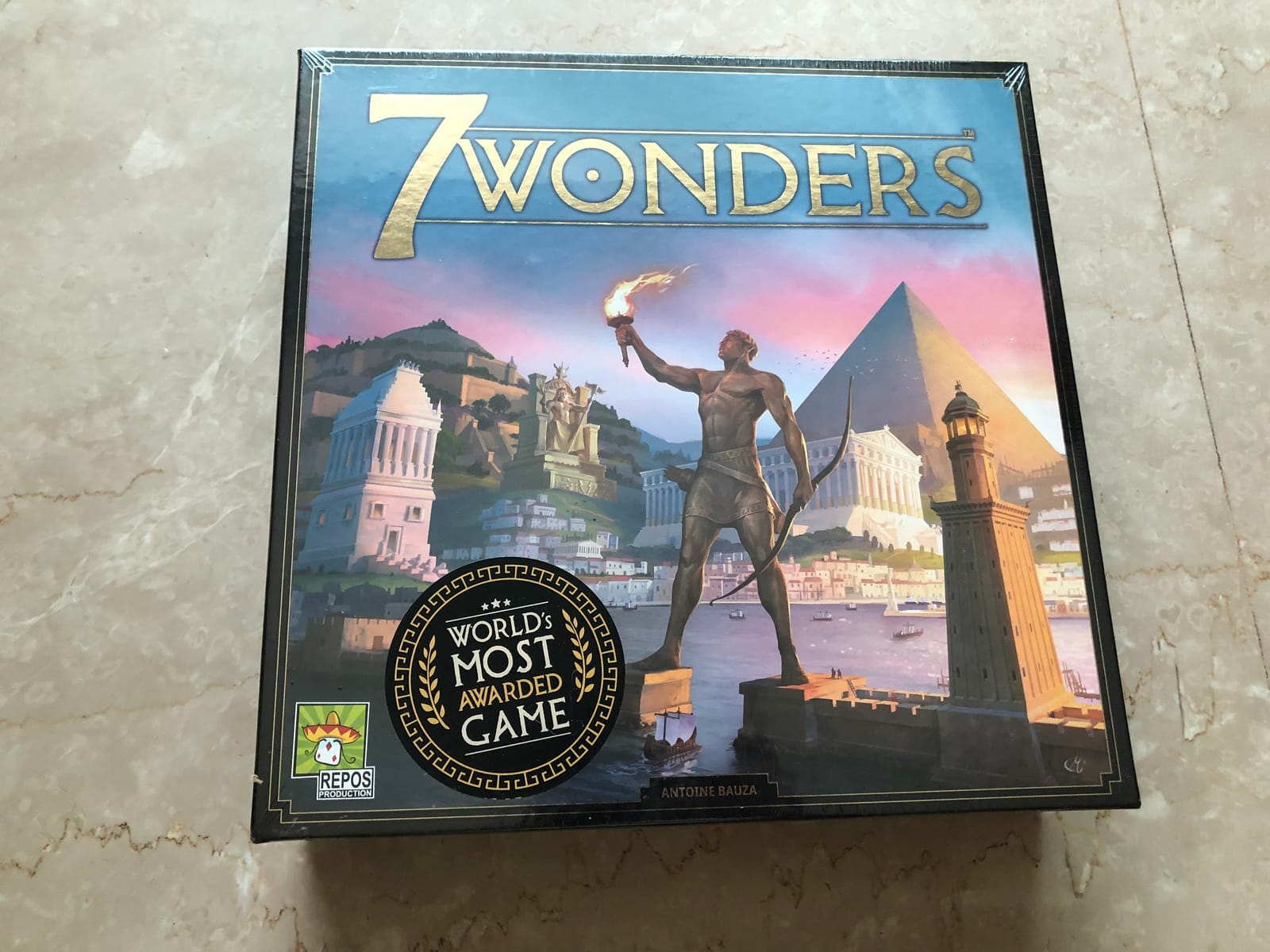
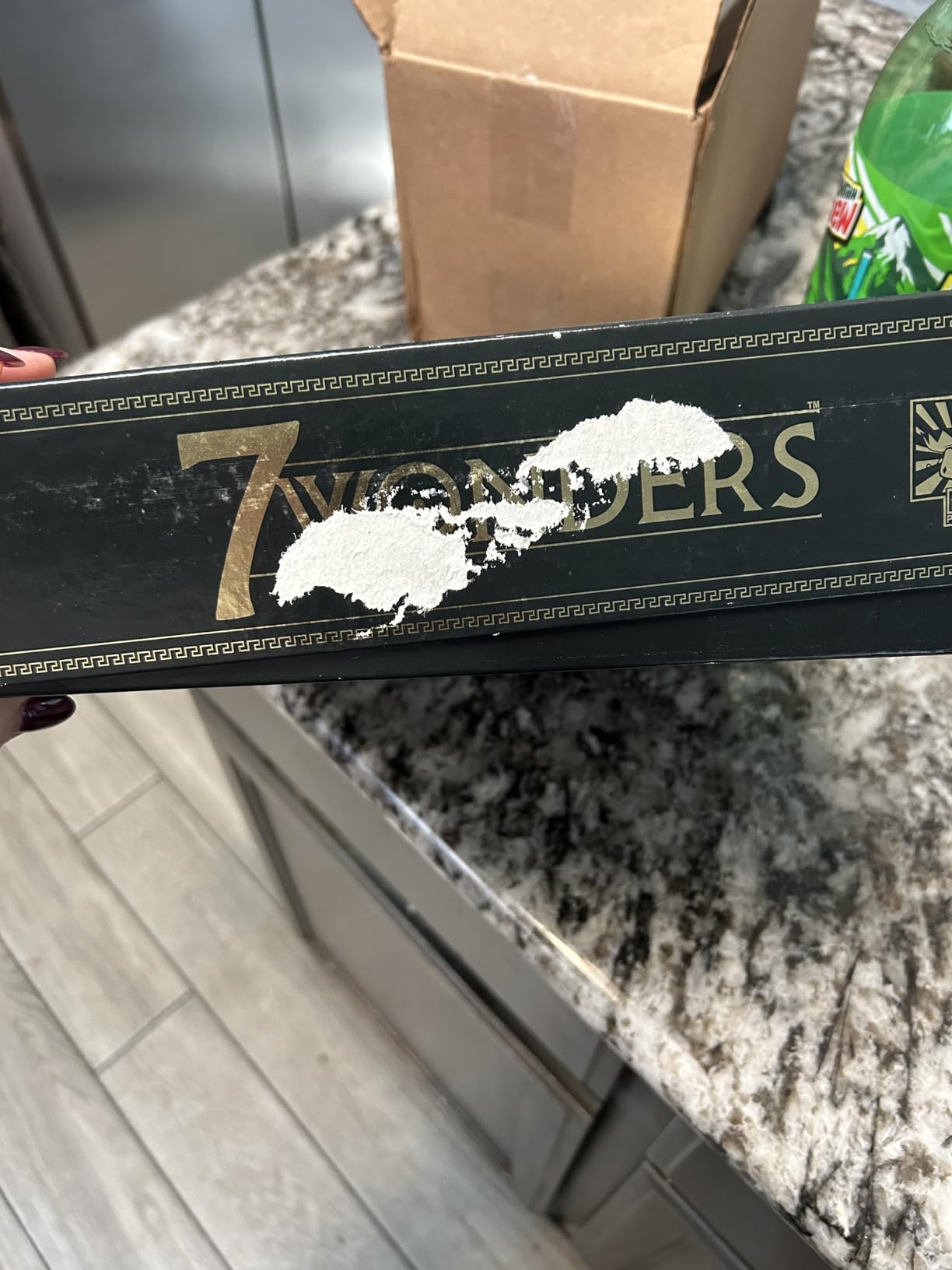
7 Wonders is the answer when six adults show up and nobody wants to leave before midnight. Three ages of six rounds, all cards played simultaneously, and everyone takes their turn at the same time. There is no downtime in a game with three to seven players, which almost nothing else here can claim.
Each turn you take a card into hand and pass one card to a neighbour, and the pass direction alternates between clockwise and counter-clockwise each age. That single wrinkle turns every draft into a calculation about what your neighbour is building.
Scoring comes from your wonder board: completed structures, sets of symbols, money and science, plus military strength compared against your two neighbours at the end of each age. Building a wonder is worth a large fixed bonus, so the big question is whether to commit early or bank resources.
The Cities, Leaders and Armada expansions exist and all three are well-regarded, but the base game already supports a full evening on its own. 148 cards, 78 coins, 48 military conflict tokens and seven player boards are a complete, solid production.
Best for groups that hate waiting
If the group is large or mixed in experience, this is the safest recommendation on the list. Simultaneous play means a slow decision costs nobody else anything, and the scoring is legible enough that a newcomer finishes a game with a respectable total instead of an education.
Thirty minutes is the honest figure. It is a three-course meal of a game rather than a session you have to clear an evening for.
What trips people up?
The resource system is the weak point. The rulebook does not sell it well, and reviewers regularly flag that you need an extra session or a reference printout to keep the trade values in your head during the first game.
Scoring also needs practice before it clicks. New players consistently undervalue symbols and overvalue coins in their first round. The printed card reference sheets are terse enough that many groups write their own cheat sheet after one play.
8. Spirit Island – Best Cooperative Strategy Game
Greater Than Games Spirit Island – Cooperative Strategy Board Game
1-4 players
90-120 minutes
Cooperative area control
8 spirits
Pros
- Extremely deep tactical puzzle with clear telegraphs
- Massive differentiation between the eight spirits
- Excellent solo mode at about 30 minutes
- Mechanics are fully thematic and balanced
Cons
- Daunting rules and heavy bookkeeping
- Can overwhelm new players for hours
- Flimsy and bulky in-box dividers
- Not suitable for casual groups
Spirit Island is the most demanding cooperative game here, and also the most satisfying. You play as an island’s spirit repelling colonising invaders, and the whole group shares one fate. Everyone wins or everyone loses, which removes table arguments almost entirely.
Each of the eight spirits plays differently. One grows its own card deck, one chews through power cards, one counters aggressively, and the growth tracks mean your spirit changes shape across a session. Four scenarios, four difficulty levels, three European adversaries and a double-sided board change the problem each time.
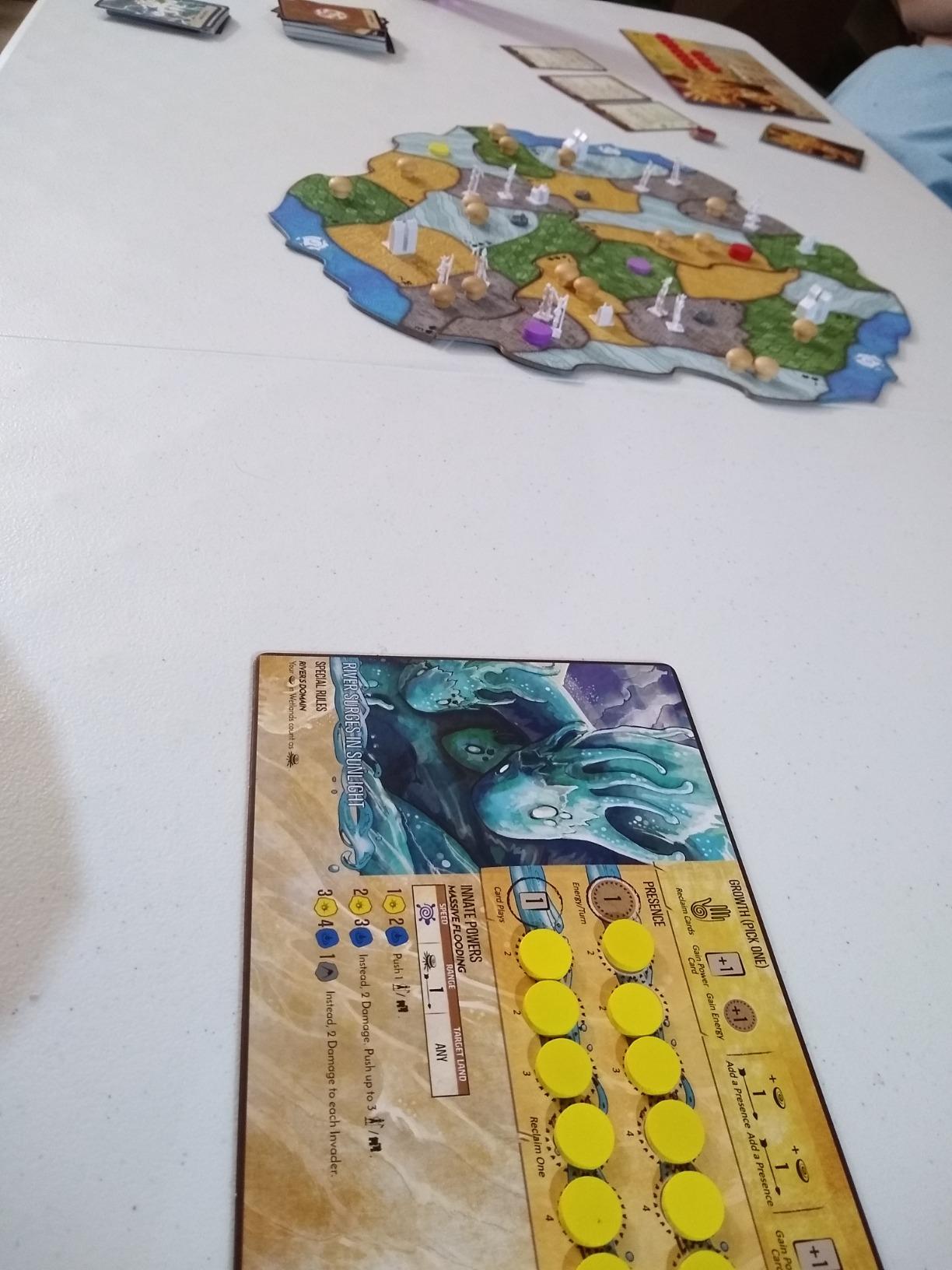
The fear card system is the best design idea in the game. Invaders telegraph their intentions one turn ahead on the board, so the cooperative tension comes from reacting to a threat you can see coming but not fully prevent.
Fast powers and slow powers are split, which is how you dodge downtime. Most turns are short and mechanical, and the think-time is shared across the table rather than spent in isolation. Branch and Claw, Jagged Earth and Horizons all add significant depth if you get there.

Why groups that avoid conflict pick this?
Nobody is going after anybody. Your group is solving a shared problem and the only opponent is the board, so it works for friends who like strategy but not trash talk, and for couples who would rather not relitigate a bad decision for two hours.
It also works solo, which is rare for a cooperative game. A full solo game runs in about half an hour and controlling two spirits gives you a bigger tactical problem than playing one.
Reasons to look elsewhere
Bookkeeping is the price. You track power, energy, spirit presence, blight and several status cards across four spirit boards, and solo play with multiple spirits multiplies that load. First-time players often need an hour of teaching before anything clicks.
The physical components are also the weak link. Reviewers point to flimsy dividers and bulky piece holders, and the game is emphatically not for casual groups or children. If your group wants a low-effort evening, pick Wingspan instead.
9. Cascadia – Best Relaxing Tile Game for Short Sessions
Cascadia, Award-Winning Cozy Nature Board Game Set in the Pacific Northwest
1-4 players
15-30 minutes
Tile-laying puzzle
Ages 10 and up
Pros
- Teaches in about two minutes
- Relaxing spatial puzzle with real decisions
- Deluxe wooden wildlife tokens
- Beautiful Pacific Northwest theme
Cons
- Scoring many ways can cause analysis paralysis
- Low conflict
- not for players wanting direct competition
Cascadia is the calmest recommendation on the list and the one we hand to people who say they are stressed by board games. You lay hexagonal habitat tiles to build a Pacific Northwest landscape and attract wildlife to your scoring cards, all inside half an hour.
The spatial problem is real. Tiles have to be placed to form a connected forest, and a second player working the same region can undo your plan or enable it. 85 habitat tiles, 100 deluxe wooden wildlife tokens, 25 nature tokens and 20 scoring cards give a lot of texture for the size of the box.
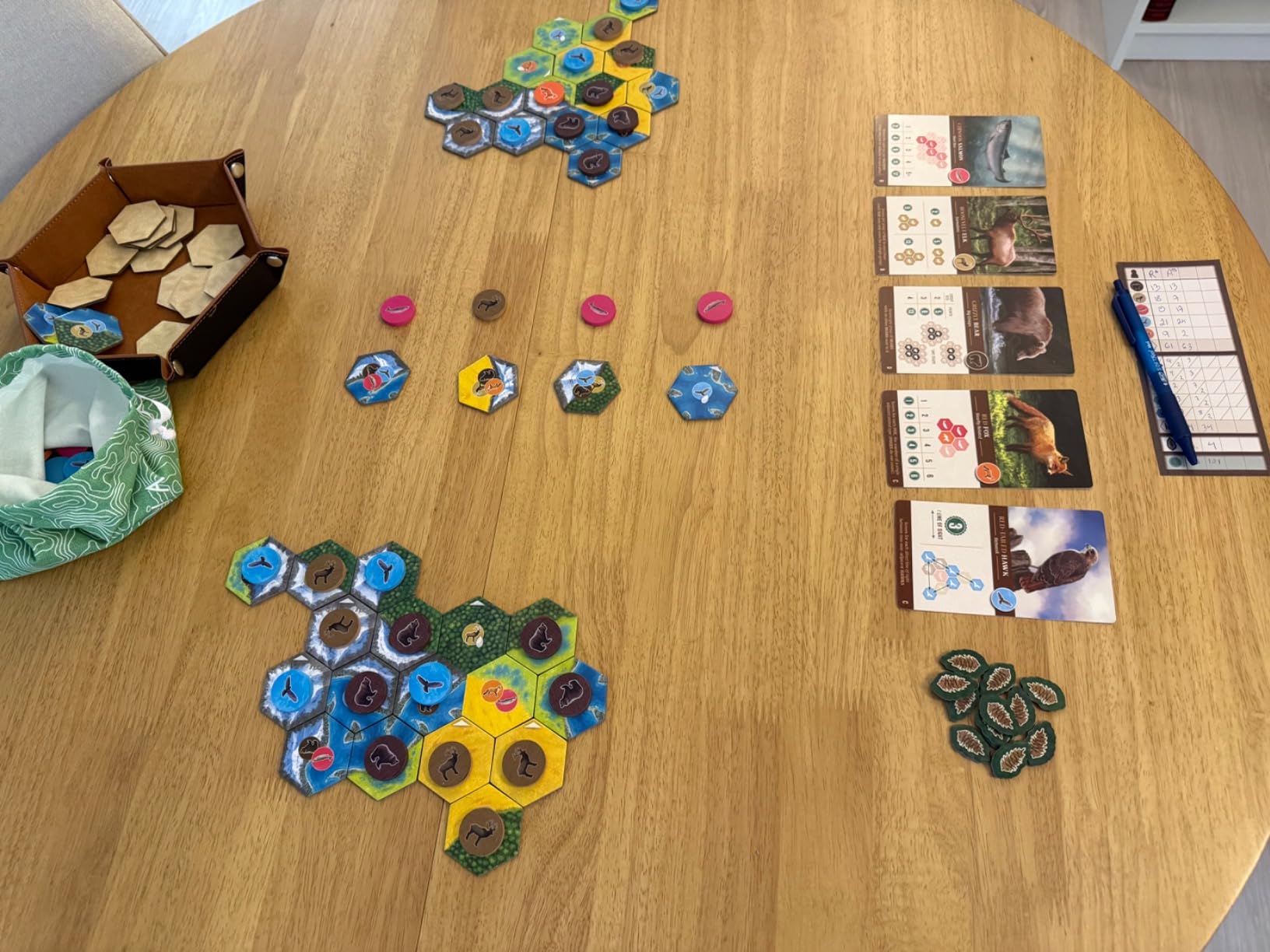
It won the 2022 Spiel des Jahres Game of the Year, which is an unusually clear signal that an easy teach does not have to mean a shallow game. The difficulty is not in the rules, it is in seeing two moves ahead on a crowded board.
A family variant scoring card is included for groups with newcomers, and the whole thing plays in 15 to 30 minutes. That makes it the most usable pick for a weeknight with two adults and no plan.
Where Cascadia earns its spot?
It is the gateway pick for adults who bounce off Catan’s hour-long runtime and want a game in the same night. Two minutes of teaching, a complete game in under half an hour and no meaningful downtime between turns.
The wooden tokens are the best in the category at this weight, and the deluxe cloth bag makes it easy to bring out and put away. It is also a good travel game, since the footprint is small.
What you give up?
Conflict is the missing ingredient. Nobody blocks you directly, and reviewers repeatedly describe it as low conflict, so a group that wants to steal, bluff or attack will be bored by the end of round two.
The other issue is scoring. There are several wildlife patterns to satisfy on each card, and new players hit a wall where they cannot tell which option is even worth pursuing. That produces analysis paralysis in exactly the relaxed players the game is meant to serve.
10. Catan 6th Edition – Best for Trading and Negotiation
CATAN Board Game (6th Edition) Trade, Build & Settle in the Classic Strategy Game for Family, Kids & Adults, Ages 10+, 3-4 Players, 60-90 Min Playtime
3-4 players
60-90 minutes
Trade and build
First to 10 points
Pros
- Balances strategy negotiation and luck without overload
- Modular hex board changes every game
- Strong social interaction through trading and blocking
- Well-made components with clear artwork
Cons
- Roughly an hour or more per session
- Instructions could be clearer for first-timers
- Not a fit for players wanting very fast play
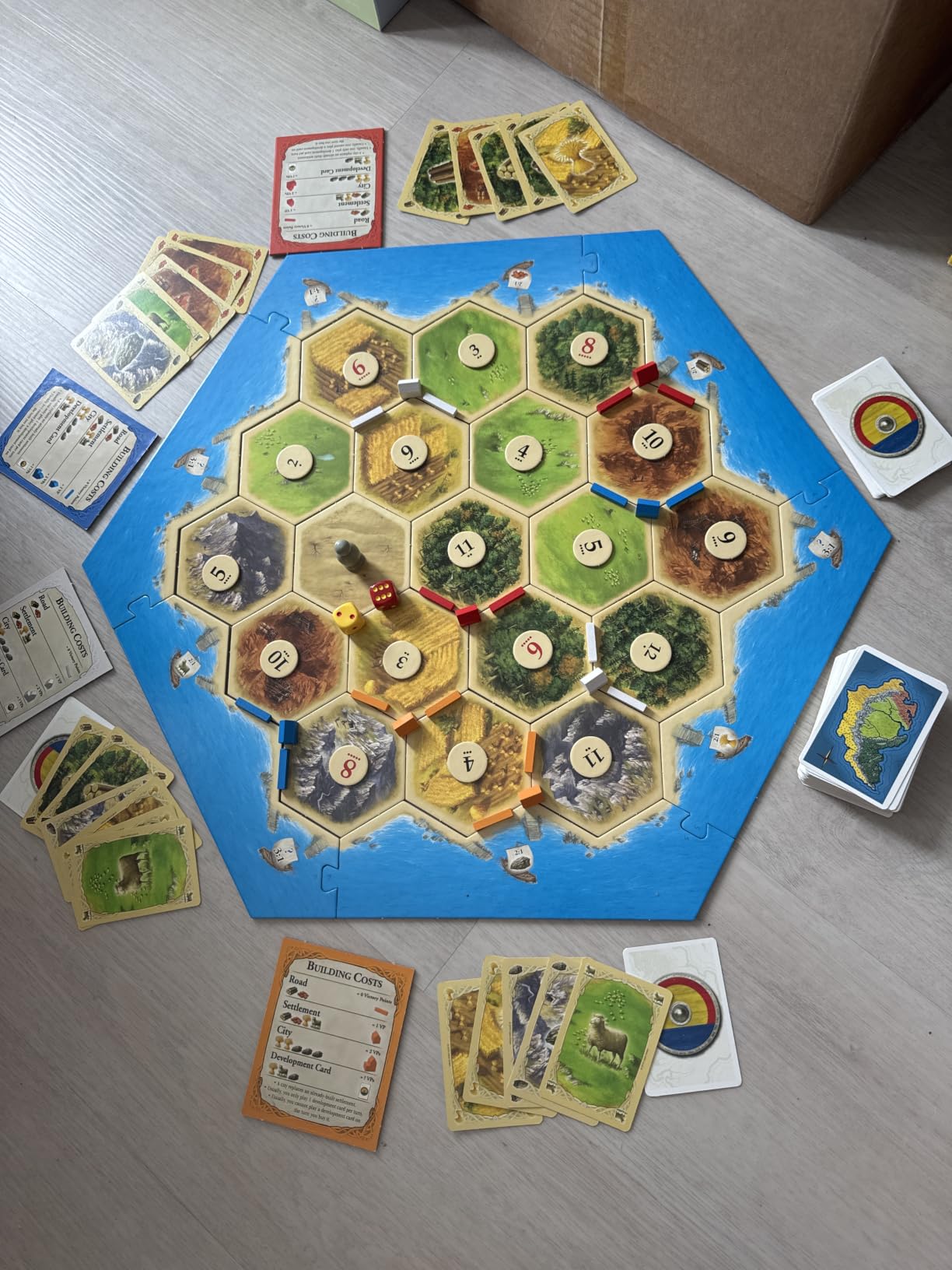
Catan 6th Edition is the game everyone already knows, and it earns its place here because the trade layer is the best social mechanic in this price and weight class. You build roads, settlements and cities on a modular hex board and pay for them by trading brick, wood, wheat, ore and sheep with the players around you.
First to 10 victory points wins, and the interesting part is that almost nothing on the board is worth much without someone else’s resources. The game forces you to be generous with a player you would rather destroy, which is a genuinely different kind of tension from the rest of this list.
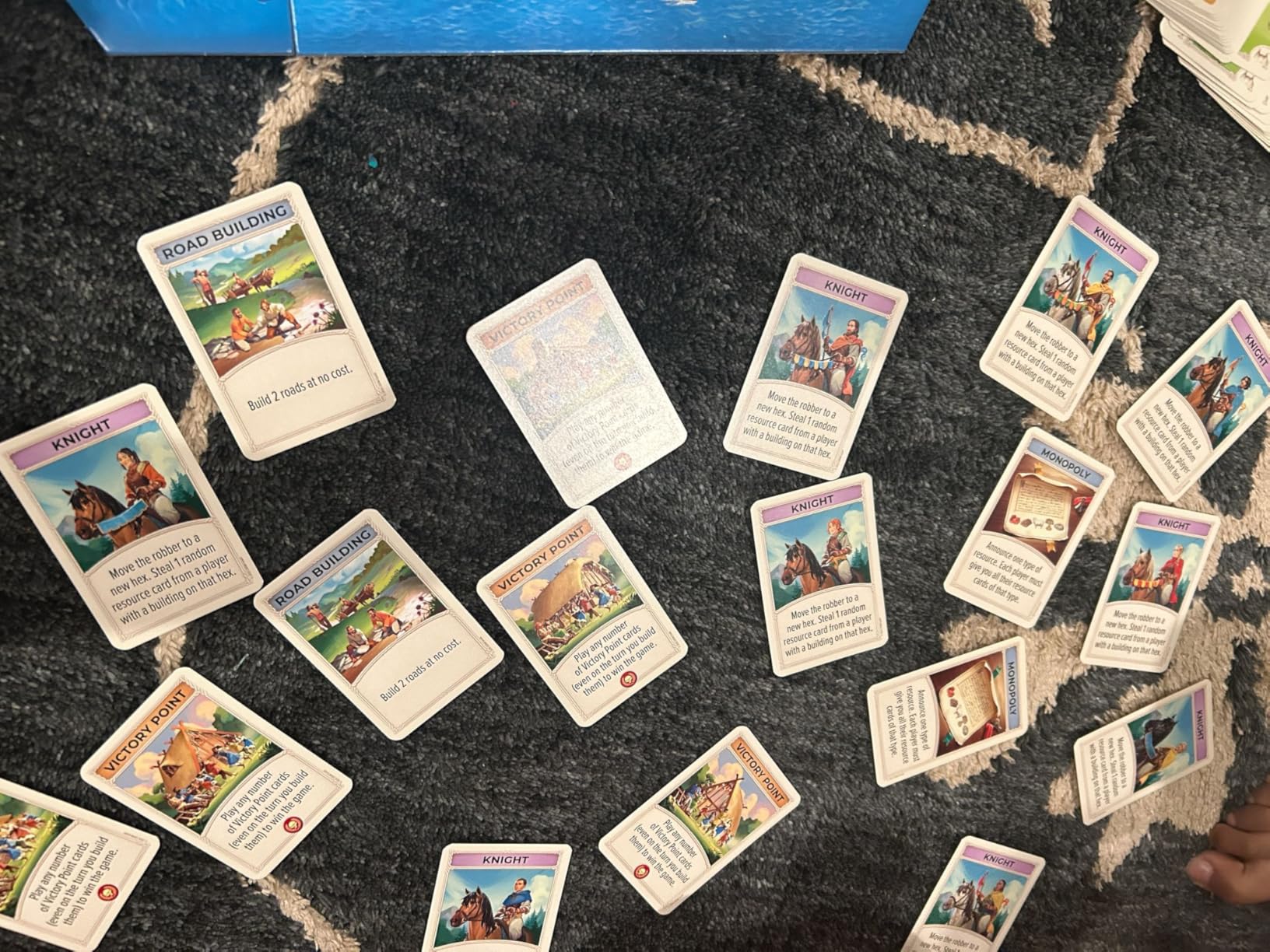
The 6th edition swaps plastic buildings for wooden roads and buildings, which is the upgrade most visible at the table. 19 terrain hexes, 18 number discs, 96 wooden player pieces, 120 cards and 2 dice is a full, well-finished set.
Our honest take is that Catan is a gateway with a ceiling. It plays a great 90-minute session and it is the easiest possible conversation starter, but after a dozen games the meta of the robber position and port maths is largely solved.
Buy it if your group is social first
This is the pick when the point of the evening is talking. Loud, competitive, back-stabbing and generous in equal measure, Catan generates more conversation per minute than anything else here. It is also the easiest game in this list to explain to somebody who has never played a modern board game.
It is a good shared gift and a good entry to the hobby for a couple, because the 60 to 90 minute runtime is predictable and the modular board keeps the first dozen games from repeating.
What the reviews keep flagging?
It is not a short game. Sixty to ninety minutes is the honest figure, and for a weeknight after work that is often more commitment than people want.
The rulebook is the other recurring criticism. Instructions could be clearer for first-time players, and the first game usually involves one person explaining the robber while everyone else waits. The 4.5 average rating reflects that: a great game held back by its weakest edition of instructions.
11. Civilization: A New Dawn – Best for a Focused 1-2 Hour Session
Asmodee Sid Meier’s Civilization: A New Dawn Board Game – Rewrite History Your Way! Strategy Game for Kids & Adults , Ages 14+, 2-4 Players, 1-2 Hour Playtime
2-4 players
1-2 hours
Ages 14+
Modular map tiles
Pros
- Streamlined but faithful to the video game
- Multiple victory paths and a new map each session
- Captures the epic scale of building a civilisation
- Good quality paper components and dials
Cons
- No real military pieces
- combat reduces to dice rolls against tiles
- Long setup and a complex rulebook
- No in-box storage for the loose tokens
Civilization: A New Dawn compresses the video game into a box and does it better than most adaptations manage. Two to four players, ages 14 and up, with 224 small cards, 55 combat cards, 49 building markers, 12 wonder markers, 20 hut markers and 24 plastic army figures on a modular map.
Each of the six civilisations grants a unique starting bonus, and there are multiple victory paths, so no single opening dominates. You buy, trade and play cards to advance technology, culture and military, and the race is to complete your victory condition cards first.
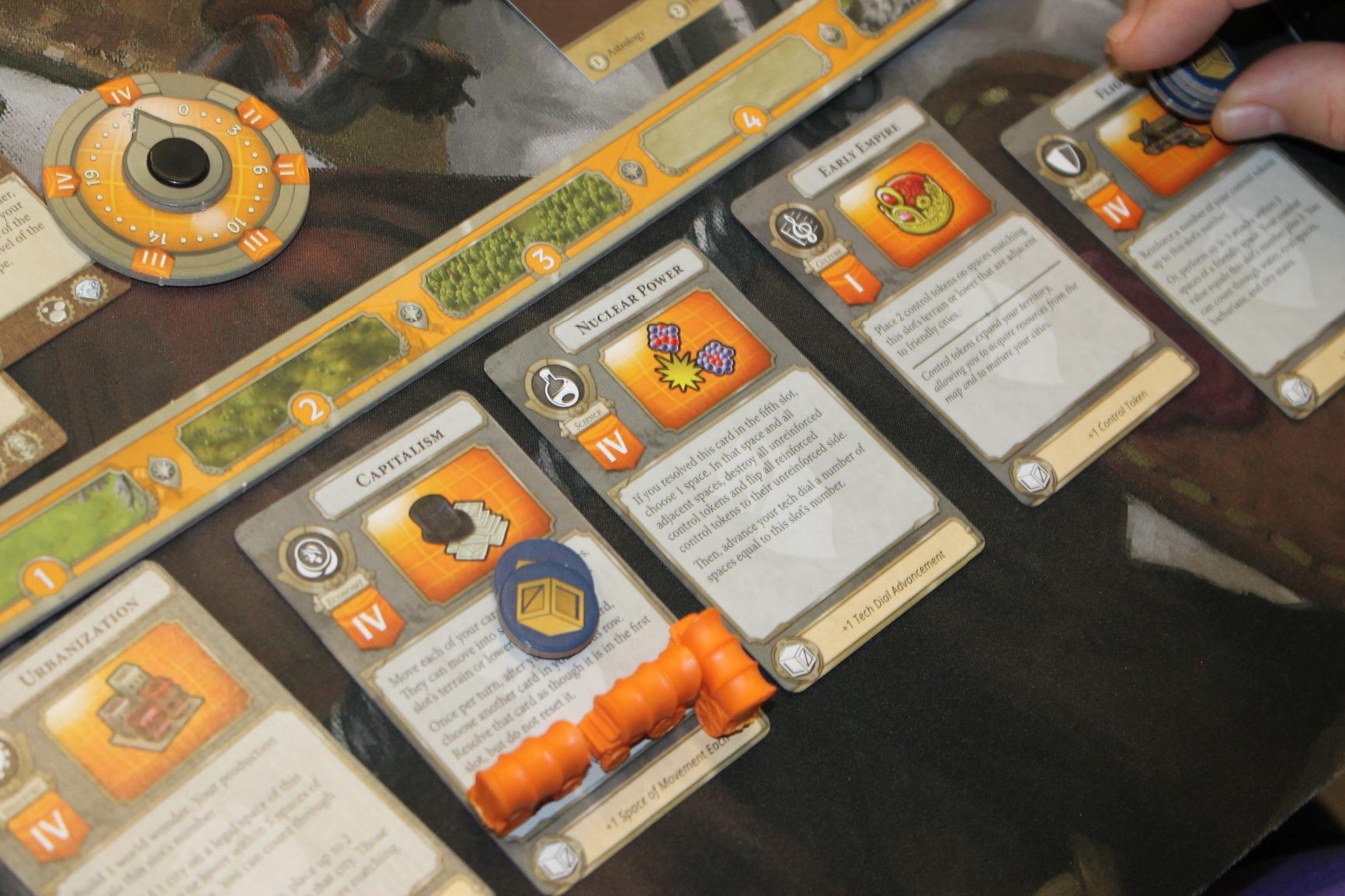
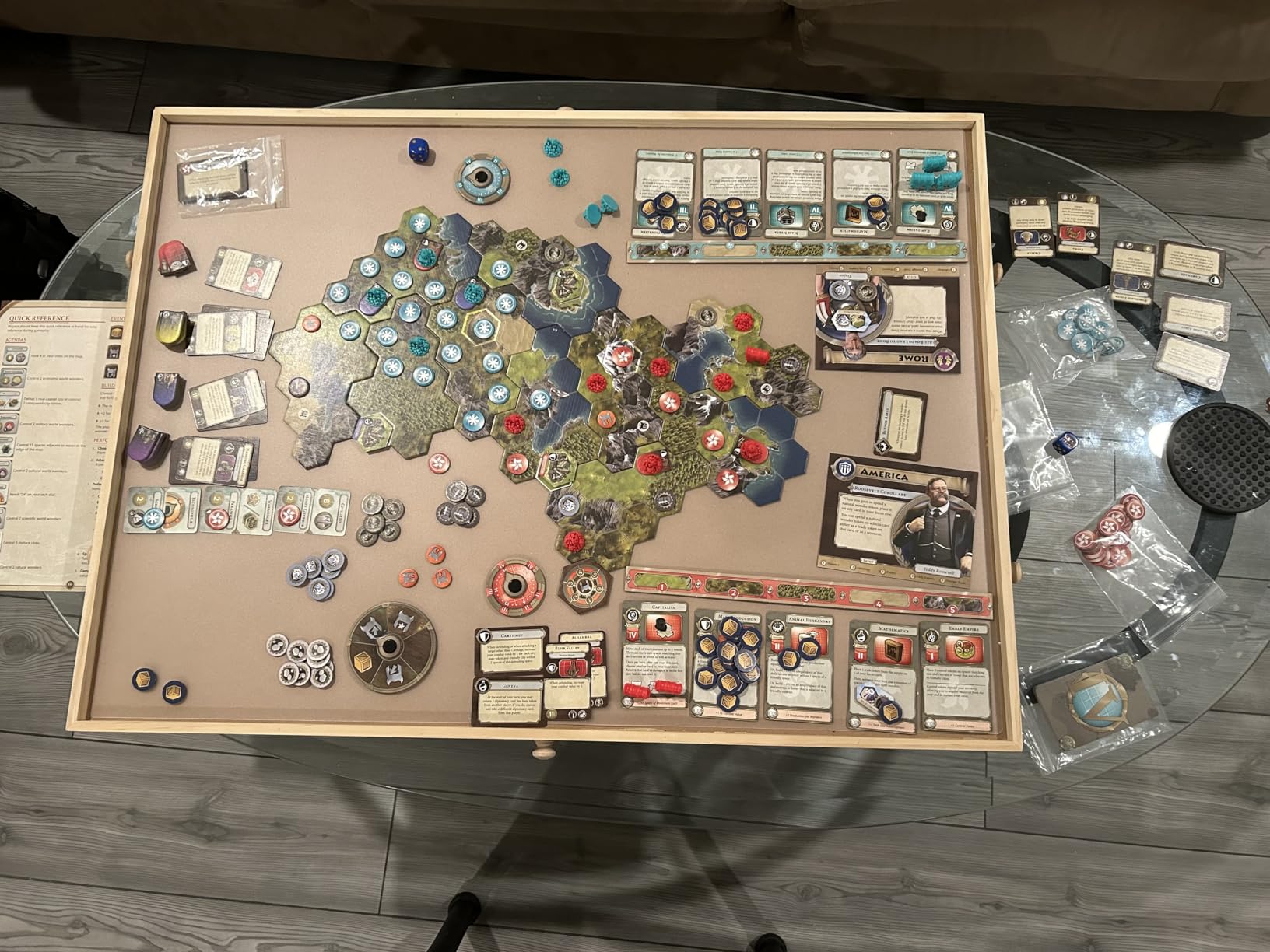
Market board and the six trade and economy dials are the best physical implementation of the video game’s economy in print. A session covers roughly a few thousand years of development in 60 to 120 minutes, and it ends decisively rather than fading out.
The map tiles reshuffle every game, which is the reason the replay value is as high as it is. Two of our sessions with the same four players produced genuinely different games, one technology-led and one culture-led.
Best for experienced strategy players
The audience is clear. The recommended age is 14, the rulebook is complex and reviewers consistently note it suits experienced strategy players rather than newcomers. If your group has already outgrown Splendor, this is a natural next step.
Two to four players is the useful range. At two you get a genuine head-to-head with card fights over map control, and the 120-minute ceiling makes it the most reliably bounded game on this list.
What to watch out for?
There is no real military. Combat is reduced to a dice roll against a tile, and that is the most common disappointment for players who remember armies in the video game. The game is about territory, not battlefields.
Setup is longer than the play for the first round, and the box has no storage solution for a large number of loose tokens, so expect a sorting routine before every session. Plan the evening around it.
12. The Night Cage – Best Cooperative Game for a Tense Evening
Smirk and Dagger The Night Cage
1-5 players
Ages 14+
Candlelit cooperative escape
Shifting maze
Pros
- Genuinely tense cooperative atmosphere
- Innovative tile-shifting maze that rewrites plans
- Adjustable difficulty plus an advanced mode
- Strong thematic presentation
Cons
- Candle management frustrates players who dislike limited light
- Smaller player counts reduce the tension
- Replays can feel repetitive once routines form
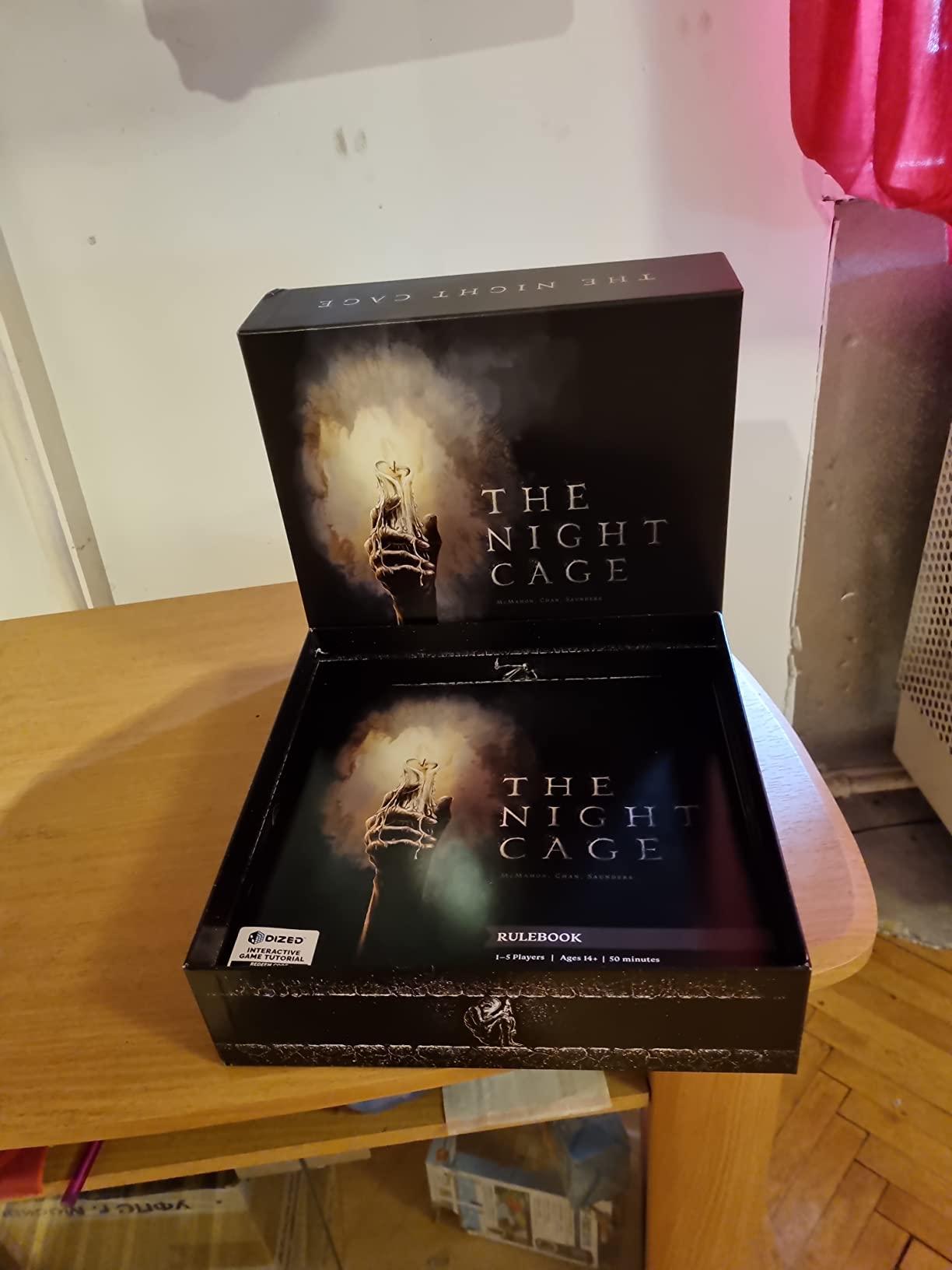
The Night Cage is the only horror entry here, and it works because the theme and the mechanics are the same thing. You escape a shifting labyrinth by candlelight, and the candle is both your vision and your clock. It comes in a compact 10.75 by 10.75 by 3 inch box, so it travels well.
The maze shifts as you move, which means any route you planned three turns ago may not exist anymore. Wax Eaters stalk the shadows, and anything left in darkness can be consumed. Your group has to agree quickly and move together.
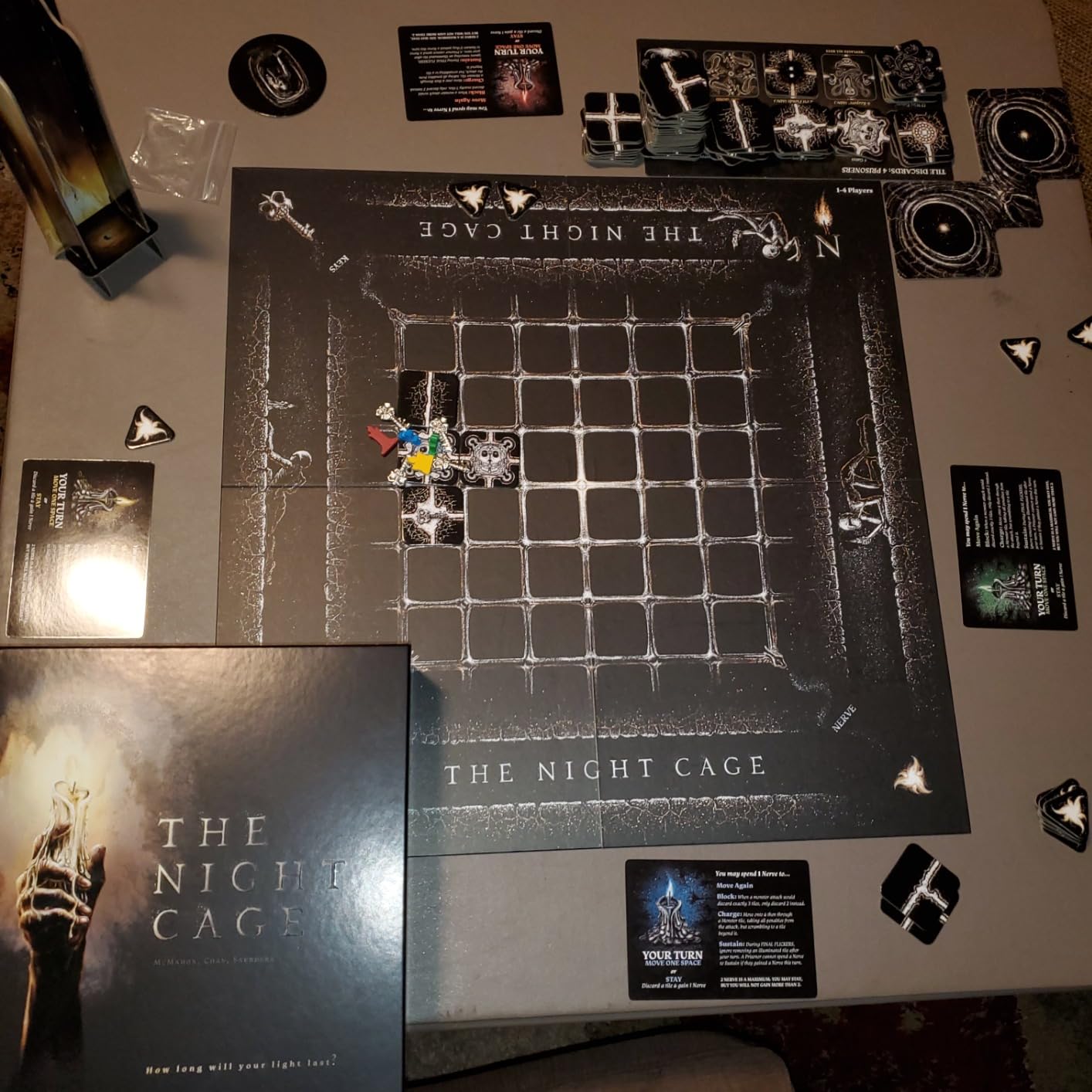
Difficulty is adjustable from the start and an Advanced Game mode adds new monsters and obstacles, so the box grows with your group rather than wearing out. The included card shuffler is a nice touch for a game where setup speed matters.
The real hook is the mood. This is the one game on the list that makes a room go quiet, and if your group enjoys communal tension rather than friendly competition it is genuinely hard to beat.
Best for groups that like atmosphere
Cooperative, tense and short, it suits a group of friends who will commit to a shared loss rather than a friendly argument. Nothing in the design rewards attacking another player, so it also works for couples and families with older teenagers.
It is a good first horror strategy game because the rules are simple and the pressure comes from the board, not from a rulebook. The learning curve is the lowest of any heavy-feeling title here.
Reasons to skip it
The candle mechanic is the point and also the complaint. Players who dislike managing a limited resource feel the strain immediately, since running low changes every move rather than just tightening the margin.
Player count works against it. At three or fewer there is less coordination to do and the tension drops, so it needs the upper end of its 1 to 5 range to land. And once a team settles into a routine for escaping, replays can start to feel repetitive.
How to Choose a Strategy Board Game for Adults?
Read the complexity weight before anything else
The number enthusiasts quote most is the BoardGameGeek community weight, a 1 to 5 scale voted by players. A 1 is a party game you can teach in a minute, a 3 is a familiar modern game, and a 4 or 5 means a long rulebook and a teach that takes real time.
Use it as a filter before anything else, because rulebook overload is the single most common reason an adult group abandons a game mid-session. On this list, Splendor and Cascadia sit near the low end, 7 Wonders and Carcassonne in the middle, and Scythe, Terraforming Mars and Spirit Island at the heavy end.
Check the real player count, not the box count
Plenty of highly rated games are built for exactly four players and fall apart at two or five. On this list, 7 Wonders is the standout because it genuinely supports three to seven, and Wingspan scales honestly from one to five.
Risk at two players and Civ at five are where the design stretches. The Night Cage loses tension below four. Know your actual headcount before you buy, because that is the mistake enthusiasts complain about most.
Decide how much luck you can stand
This is the filter nobody publishes, and it is the reason adults end up disappointed. A game marketed as strategy can be luck-dominant in practice, and feeling cheated at the table is worse than a mediocre evening.
Scythe and 7 Wonders are close to luck-free. Splendor has no dice at all. Cascadia and Wingspan have light randomness that does not decide results on its own. Risk and Catan sit at the other end, where dice can override a strong position.
Look at downtime, not just play time
Downtime is the dead time when other players wait for you to think. Long solo turns are the hidden cost of the heaviest games here, and they are why some players love Terraforming Mars and others cannot sit through it.
Games that keep the table active, like 7 Wonders with simultaneous play, Scythe’s always-on worker placement, and The Night Cage with its shared countdown, suit mixed-experience groups. Long think-time games suit a table that enjoys talking through options.
Start with a gateway game or go straight in
If nobody at the table has played a modern board game, start with Cascadia, Splendor or Carcassonne. All three teach in minutes and finish before attention drops. You will learn the shared vocabulary of drafting, area control and set collection without paying for it.
If your group already plays regularly, go straight to the heavy end. Scythe gives the deepest competitive experience with almost no luck, and Spirit Island is the best cooperative option. Just reserve an evening and expect a teach.
Frequently Asked Questions
What is the no. 1 strategy game for adults?
For most groups the answer is Splendor. It teaches in a few minutes, runs in about 30 minutes, has no dice, and still produces real timing decisions around reserving gems and buying development cards. If your group tolerates a long teach and wants deeper planning, Scythe is the strongest pick on the list.
What is the most strategic board game ever?
Scythe and Terraforming Mars are the two that come up most. Scythe is competitive engine building in an alternate 1920s Europe with almost no randomness, so a loss is always your own doing. Terraforming Mars is a card-driven engine builder with six resources, global parameters and multiple corporations, and its solo mode is arguably the best in the hobby.
What is the best gateway board game for adults?
Cascadia is the easiest entry point. It teaches in about two minutes, plays in 15 to 30 minutes, and still asks you to make real spatial decisions laying habitat tiles. Splendor and Carcassonne are the other two gateway picks, both sitting in the 30 to 35 minute range.
What are the best strategy board games for two players?
Carcassonne, Wingspan and Cascadia are the strongest two-player picks here. Carcassonne is the most interactive, Wingspan is the calmest and the most beautiful, and Cascadia is the shortest. Civ A New Dawn also works well at two if you want a focused 60 to 120 minute session with a real head-to-head.
How do I know if a strategy board game is too complex for me?
Check the community complexity weight, a 1 to 5 scale voted by players on BoardGameGeek. A weight of 1 to 2 teaches in minutes, a 3 is a familiar modern game, and anything at 4 or 5 means a long rulebook and a teach that can run past half an hour. If you dislike reading rules before playing, stay at 3 or below.
The Verdict: Which Strategy Board Game Should You Buy First in 2026?
Splendor takes the top spot because it is the only game here that works for almost any adult group on almost any evening. No dice, no long teach, a 30-minute runtime and a 4.9 average across more than 15,000 reviews. If you buy one game from this list, buy that one.
Add Wingspan if your group wants calm rather than competition, or Cascadia if you want the shortest possible session. Take Carcassonne to a two-player evening. Move up to Scythe when your group is ready for a two-hour game where losing is entirely your own fault, and to Terraforming Mars or Spirit Island when you have an afternoon free and want something meaty.
Whatever you choose, check the player count against your actual headcount, read the complexity weight before you commit, and pick the game your group will finish rather than the one with the biggest box.