
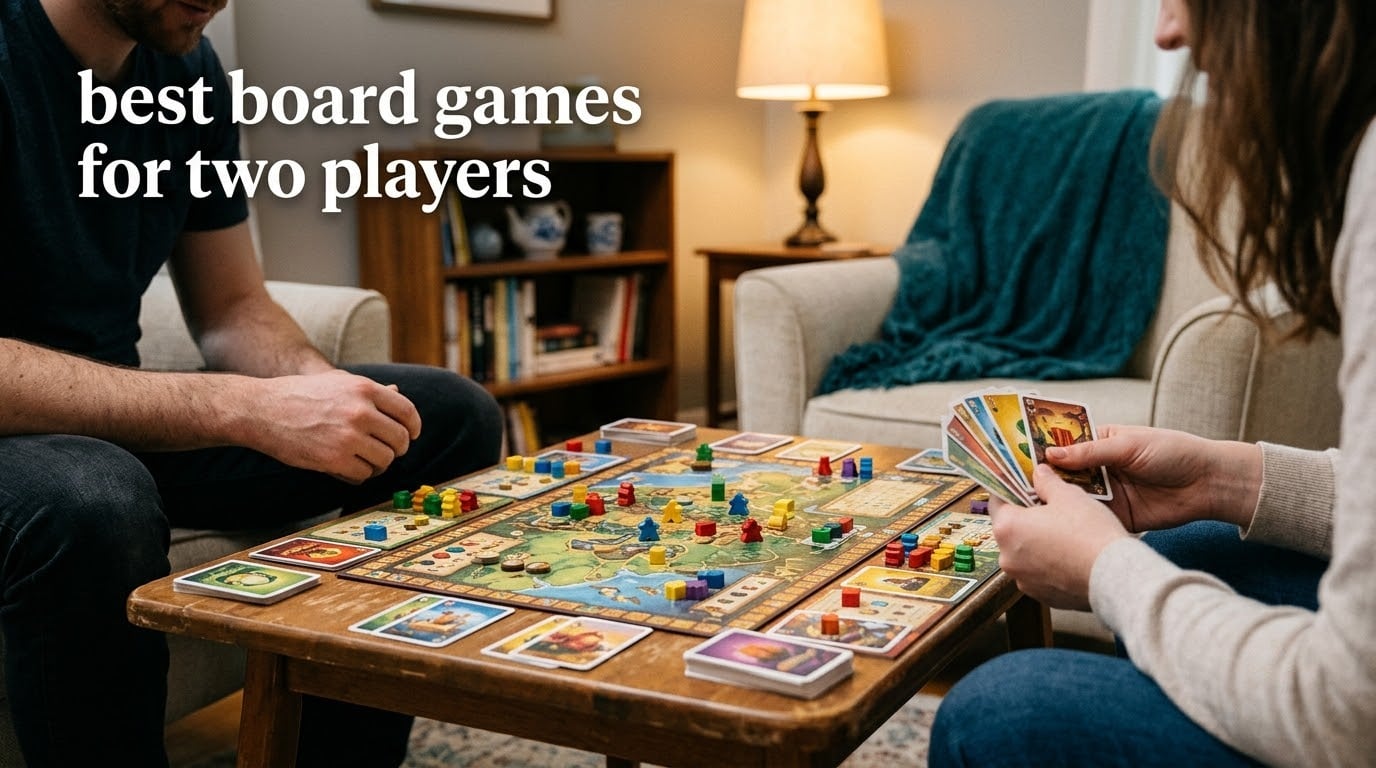
The hardest part of a two-player game night is not the game itself. It is finding one. Most shelves are packed with boxes that claim to work for two and then fall apart the moment a third player is missing, and most recommendation lists hand you a wall of names with no reason to pick between them.
We spent the last few months playing this roundup of the best board games for two players across real scenarios: a weeknight after the kids were asleep, a Sunday afternoon on a small coffee table, a long train ride, and a couple of evenings where the point was to stop arguing about what to watch. Twelve games made the cut. Every one of them here we played more than once before writing a word, and we kept notes on setup time, teardown, table footprint, and how long the rules took to explain.
If you only have room for one, start with 7 Wonders Duel. If your gaming partner is brand new to the hobby, start with Splendor. The rest of the list covers co-op nights, travel, family play, and the pure competitive duels that make you talk trash across a coffee table.
Table of Contents
Top 3 Best Board Games For Two Players (October 2026)

All 12 Picks Compared Side by Side
| Product | Specifications | Action |
|---|---|---|
| 7 Wonders Duel |
|
Check Latest Price |
 Splendor Splendor |
|
Check Latest Price |
 Azul Azul |
|
Check Latest Price |
 Othello Othello |
|
Check Latest Price |
 Hanabi Hanabi |
|
Check Latest Price |
 Onitama Onitama |
|
Check Latest Price |
 Ravine Ravine |
|
Check Latest Price |
 Lost Cities Lost Cities |
|
Check Latest Price |
 The Crew: Mission Deep Sea The Crew: Mission Deep Sea |
|
Check Latest Price |
 Stratego Stratego |
|
Check Latest Price |
 Fox in the Forest Fox in the Forest |
|
Check Latest Price |
 CATAN Rivals CATAN Rivals |
|
Check Latest Price |
How We Tested and Chose?
Every game in this list was played at two players, at least three times, with one experienced player and one player learning the rules fresh. That second seat matters more than people expect. A game that only works when both people already know it is not really a two-player game, it is a private joke with a rulebook.
We scored each one on five things: how long setup and teardown take, how long the first game takes before both players stop checking the rules, how much table space it needs, whether the components still look good after repeated handling, and whether the outcome feels earned rather than dictated by luck.
We also logged the things buyers most often complain about later, like small cards, thin card stock, English-only rulebooks, and boxes that do not hold their contents shut. Component wear is not a minor note. The best-designed game in the world falls apart in year two if the cards fray every time you deal them.
Player count is the filter we refused to bend on. Two games here are listed for larger groups because their reputation is too strong to ignore, and we flag clearly where two-player play is the weaker version.
1. 7 Wonders Duel – The All-Rounder
Asmodee 7 Wonders Duel Board Game BASE GAME – Intense Two-Player Battles in the Ancient World, Strategy Game for Kids and Adults, Ages 10+, 2 Players, 30 Minute Playtime
Ages 10+
2 players
30 minutes
Three victory paths
Card drafting
Pros
- Three separate ways to win
- 30 minute sessions with fast setup
- Face-down pyramid adds real tension
- Loser stays competitive to the last phase
- Simple symbols on the cards
Cons
- Rulebook is hard to learn unaided
- Heavy arithmetic and short-term memory
- Small Euro-size cards
- Wonder cards warp over time
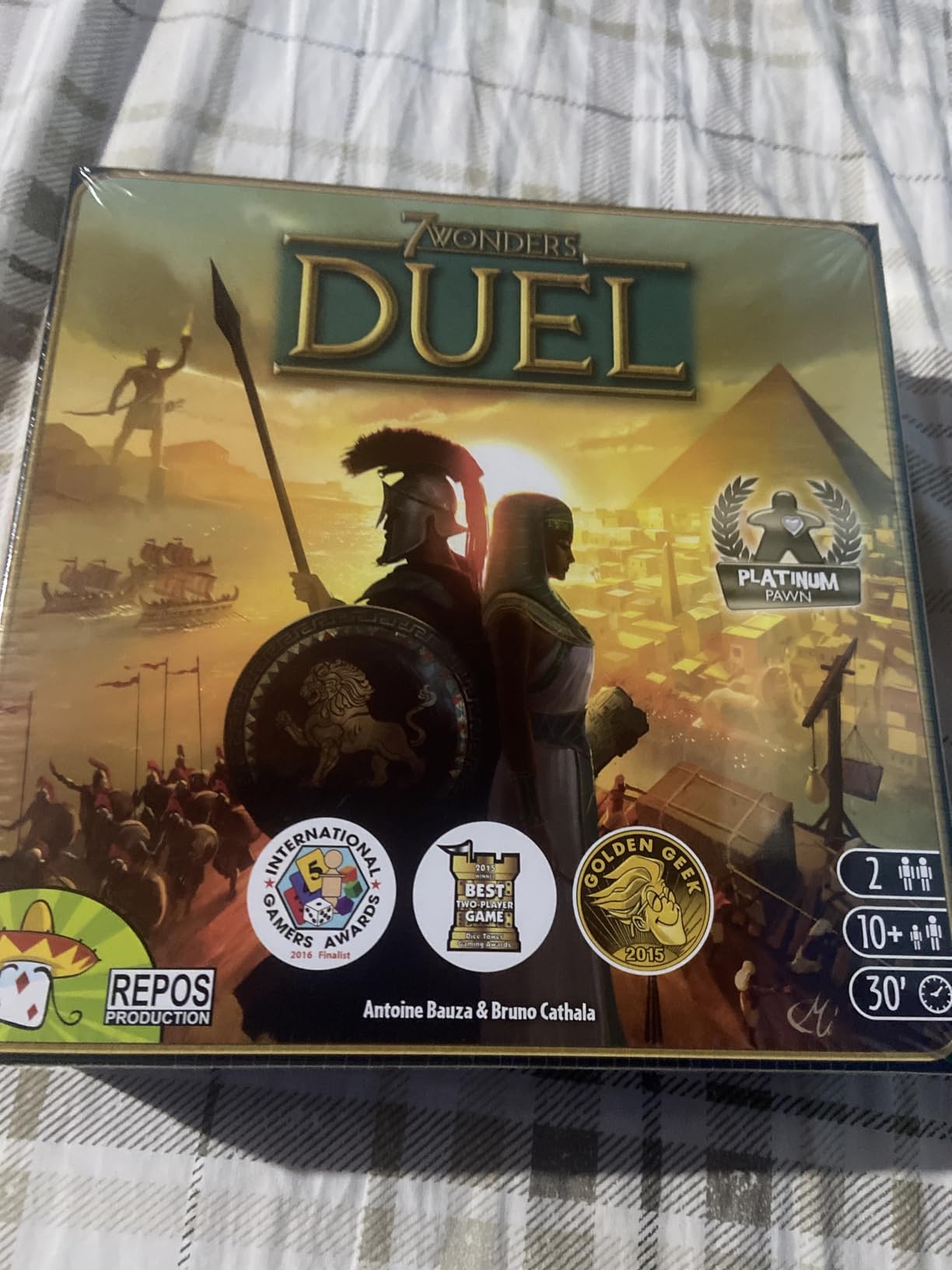
7 Wonders Duel is the game we hand to people who say they do not like board games. It runs 30 minutes, it has a theme you can explain in one sentence, and it never feels like homework. I have played it dozens of times and it still produces the tense endgame I remember from the first game.
What sells it is the three-victory-path structure. You can win by invading the capital, by monopolizing science symbols, or by outscoring on prestige points. That means your opponent cannot just sit on one plan and ignore you, because all three routes are live at every stage of the game.
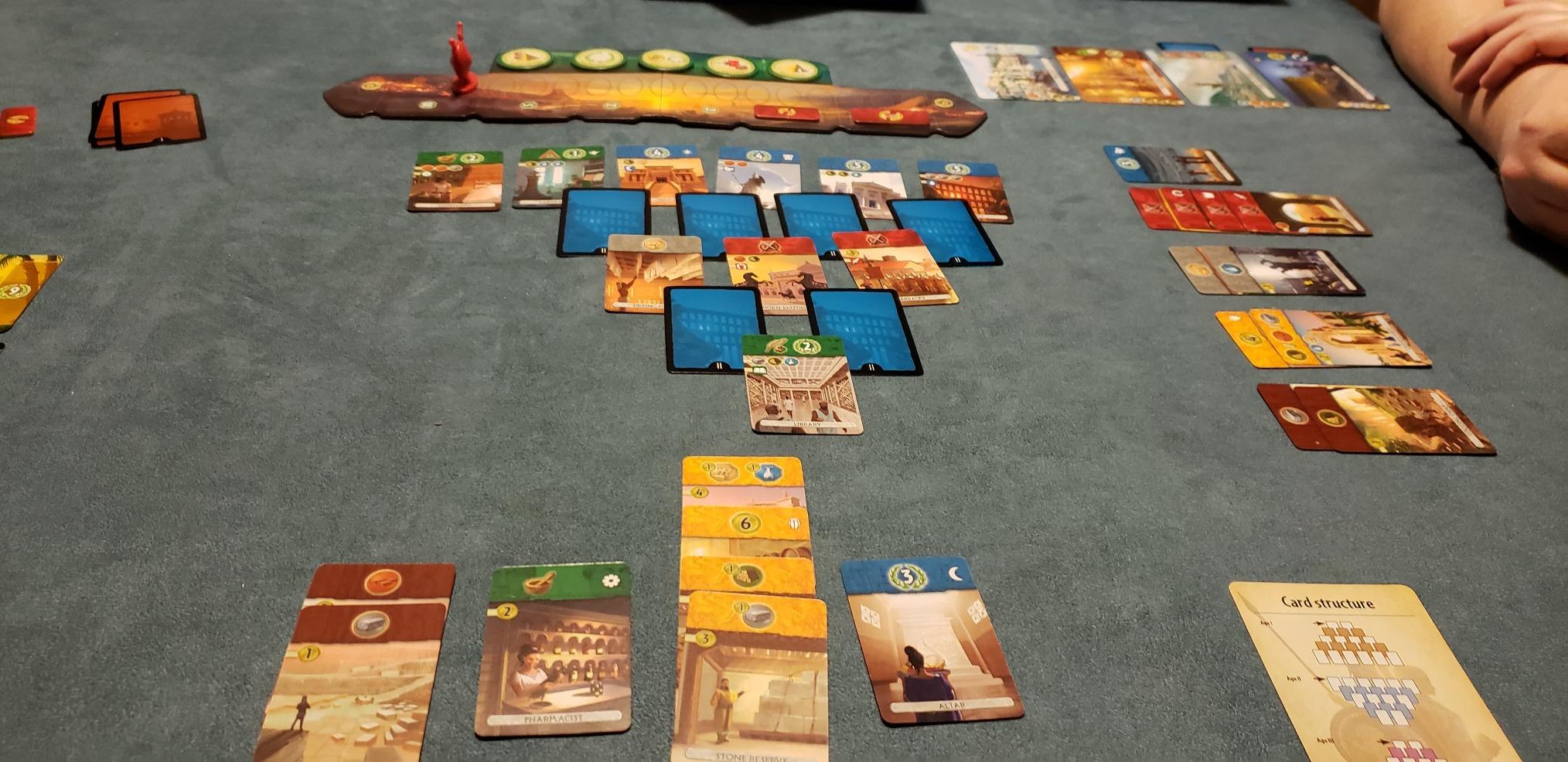
The drafting pyramid is where the real decisions happen. Cards go face down, you both take one and pass a card, and the card you hand over usually is not the card you wanted most. Over three short eras you build an engine, and by the final round you are watching each other play cards they have been holding for exactly the right moment.
The engine-building structure is why the loser of a 7 Wonders Duel game usually feels fine about it. You do not get flattened by a long bad run of luck. You get outplayed, which is a completely different feeling, and one that works much better in a two-player household than a 90-minute defeat would.
What you should know before you buy it?
The rulebook is the single biggest barrier. The main rules are short, but the exceptions pile up, and self-teaching without help takes longer than most people expect. Budget an extra game, or find a rules video, before you decide the game is too complicated.
The resource and money system asks you to do a fair amount of arithmetic in your head and hold several numbers in memory at once. If arithmetic during play sounds unappealing, Splendor or Azul will feel much lighter.
Who will actually enjoy it?
It suits two people who like a real duel but do not want a two-hour commitment. Strategy game regulars on r/boardgames consistently describe 7 Wonders Duel as the gold standard for two-player play, and that consensus held up in our testing.
It is a poor fit for a date night where either person is sensitive to losing badly, for younger children, or for anyone who wants components that survive a decade of heavy use. The cards are small and they warp.
2. Splendor – The Easiest Entry Point
Asmodee Splendor Gem Trading Strategy Board Game, 2-4 Players
Ages 10+
2-4 players
30 minutes
Three actions per turn
Race to 15 prestige
Pros
- Only three possible actions per turn
- Highest average rating in the set
- Works head to head and scales up
- Timing and reservations create the depth
- Clean open-information design
Cons
- Low direct interaction between players
- Can feel samey once you know the patterns
Splendor is the game we recommend to a new player with the highest confidence, because the entire decision space fits on one page. Three actions per turn: take a gem, take a development card, or reserve a card. That is the whole game, and it is enough to produce genuinely tense finishes at 15 prestige points.
The depth does not come from complicated rules. It comes from timing and reservation. Holding a card out of reach from your opponent costs you a turn, and deciding when to block and when to race is the whole sport. In a two-player game that tension is sharper, because there is no third player to make you feel safe.
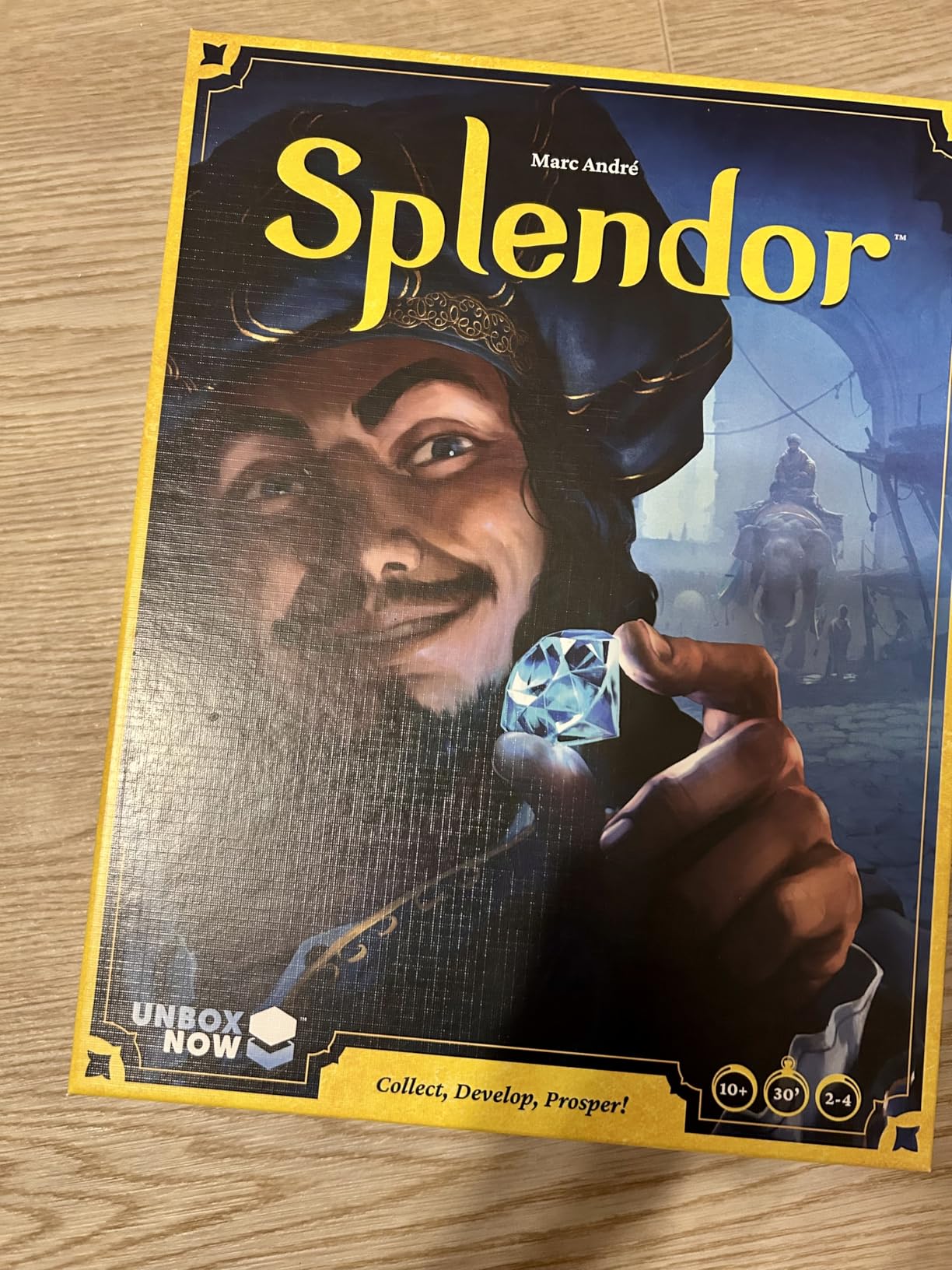
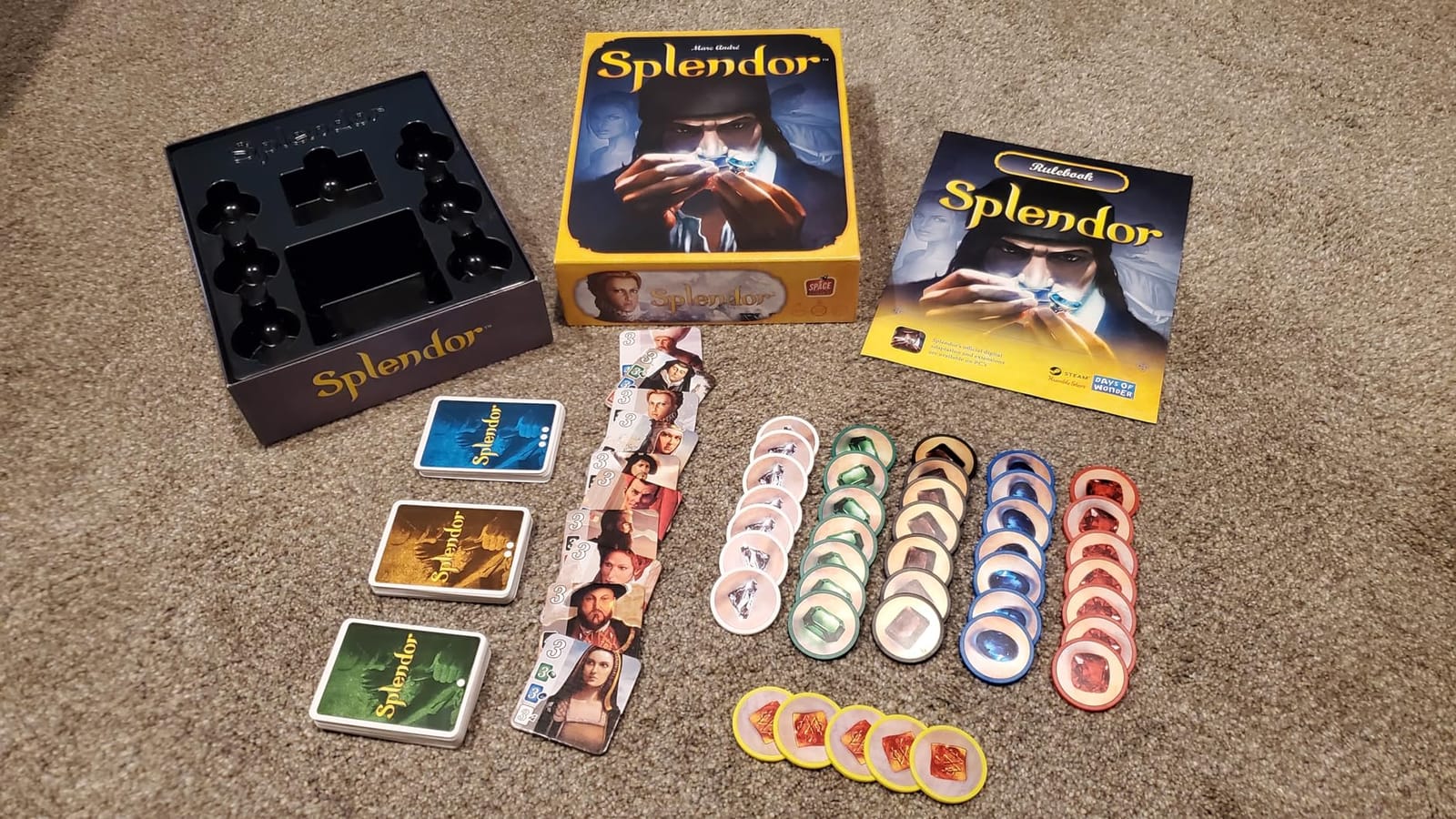
Component quality is a genuine strength here. The development cards are thick cardstock, the tokens are chunky plastic, and the box holds 40 tokens, 90 development cards, 10 noble tiles and a rulebook without any fuss. Setup takes under a minute and teardown is a matter of scooping everything back into the insert.
One thing to know before committing: the interaction between players is low. Nobody is blocking you or knocking your plan over. You are both building engines side by side, and if you need a game that produces face-to-face friction, this is not the one.
What you should know before you buy it?
Because the box is designed for 2 to 4 players, it scales up easily, which is a genuine advantage if a third person ever shows up. The downside is the opposite: it was not designed only for two, so a small amount of balance smoothness is given up in exchange for that flexibility.
Reviewers also note that the base game can start to feel familiar once you have learned the common development card patterns. Keeping it fresh means either playing with new opponents or adding the expansion content that exists for it.
Who will actually enjoy it?
This is the pick for couples, for a partner who is nervous about the hobby, and for anyone who wants a complete evening in 30 minutes. It also handles mixed-experience pairs better than almost anything else on this list.
Skip it if the anticipation of a direct attack on your plan is the main thing that makes board games fun for you. Nothing gets taken from you in Splendor until the scoring phase.
3. Azul – The Gentle Drafting Duel
Azul Mosaic Tile-Placement Strategy Board Game, 2-4 Players, 30-45 Min
Ages 8+
2-4 players
30-45 minutes
Tile drafting
2018 Spiel des Jahres
Pros
- 2018 Spiel des Jahres winner
- Easy rules with real tactical depth
- Shines in two-player duels
- New tile combinations every round
- Beautiful resin tile presentation
Cons
- Runs 30-45 minutes
- which is longer than quick fillers
- Scoring can swing on one late tile
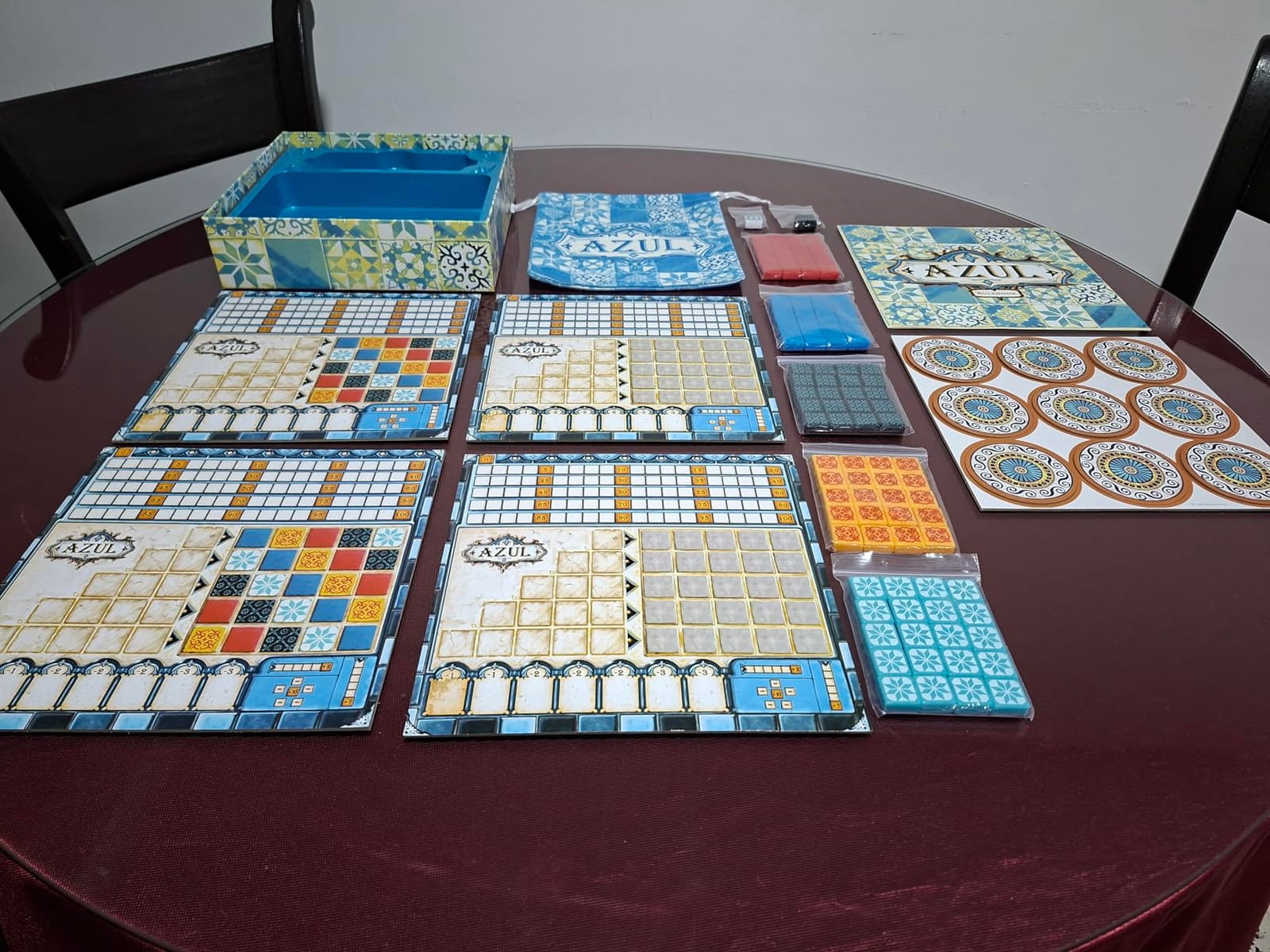
Azul came into our testing as the pretty one and left it as the game we argued about most at the table. The rules are simple, the components are 100 resin tiles that look and feel like real mosaic pieces, and the decision each turn is genuinely hard: take from the factory display now, or wait for a better tile and let your opponent take theirs.
That draft-and-deny loop is where the tactical depth hides. You are not only building your own wall, you are also removing tiles your opponent wants. With two players, the effect is sharper, because every denial lands on one person and the runs you leave open are easy for them to exploit.
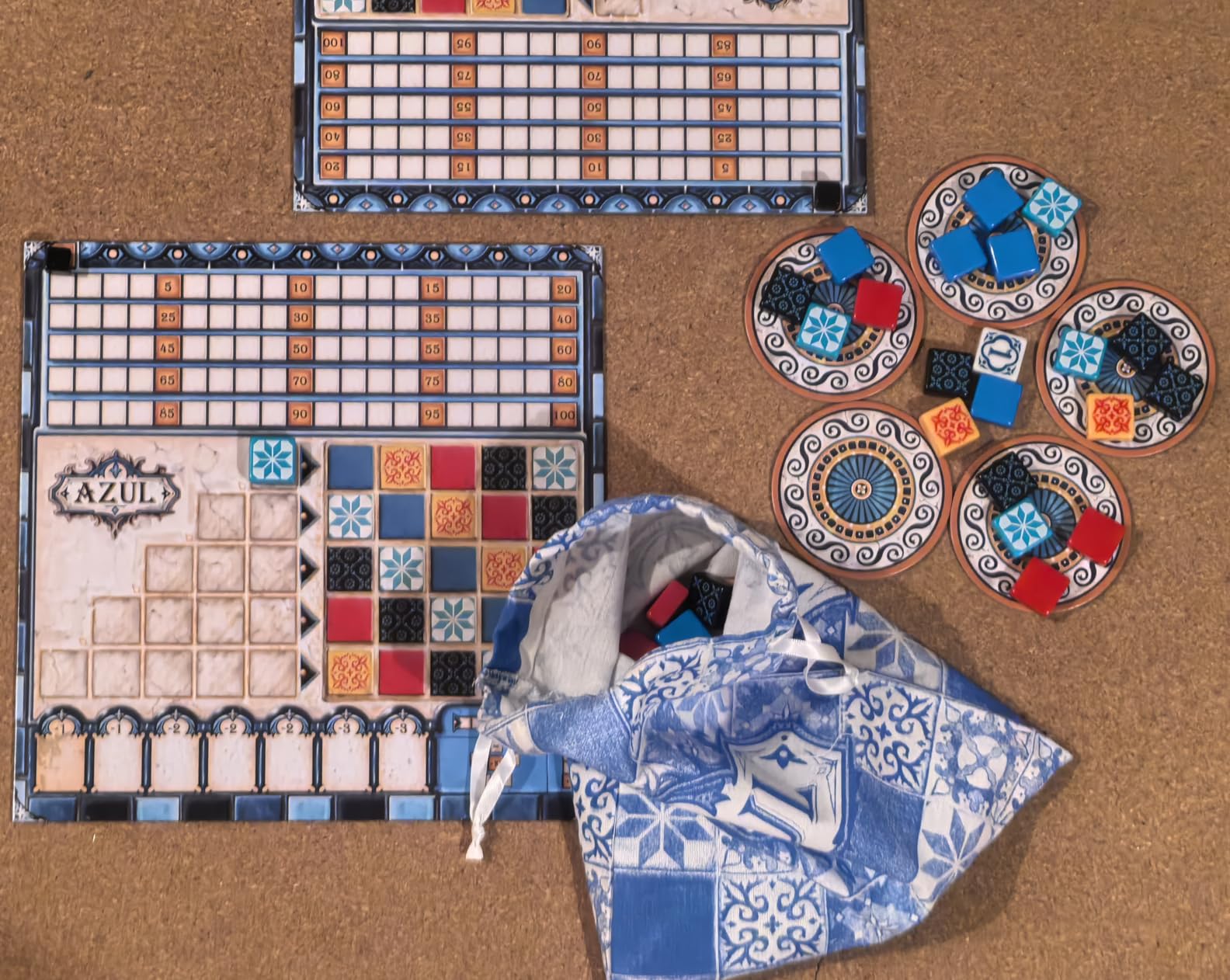
Scoring is a mix of completed pattern rows, columns, and colour counts, which keeps the final tally moving and gives a losing player a reason to look at the board at the very end. Games do not drag at two, and the 45 minute figure on the box is close to our experience.
Replayability comes from the factory displays changing every round. The same opening board produces different options later, so you are not replaying a solved puzzle, you are playing a slightly different one each time.
What you should know before you buy it?
The main drawback is length relative to the rest of this list. At 30 to 45 minutes it runs about twice as long as a Fox in the Forest round and noticeably longer than Othello. If your two-player window is 20 minutes, this is the wrong box.
A second point worth knowing: scoring can swing on a single high-value tile drafted late in a round. Losing by a few points after your opponent takes the one tile you needed is common, and it can sour a first impression if you are playing with a partner who takes losing personally.
Who will actually enjoy it?
It works for families and for mixed pairs, since the age rating starts at 8 and the theme carries the interest for players who do not care about war or trade. The visual appeal also makes it a safe gift for someone whose taste you are not sure about.
It is not the right choice for a couple who wants a combative game. Azul is competitive but polite, and it rarely produces the dramatic reversals of a duel built around direct attack.
4. Othello – The 20-Minute Classic
Ravensburger Othello – Classic Strategy Board Game for 2 Players – Easy to Learn, Hard to Master – Fast-Paced Family Fun – Ages 8+
Ages 8+
2 players
20 minutes
Felt playing board
Slide-out storage
Pros
- Rules take minutes to learn
- Slide-out storage drawers speed up setup
- Well-made reversible disks
- 20 minute matches fit a weeknight
- Plays across generations
Cons
- Felt surface feels cheap though serviceable
- English-only instructions
- Less strategic variety than heavier games
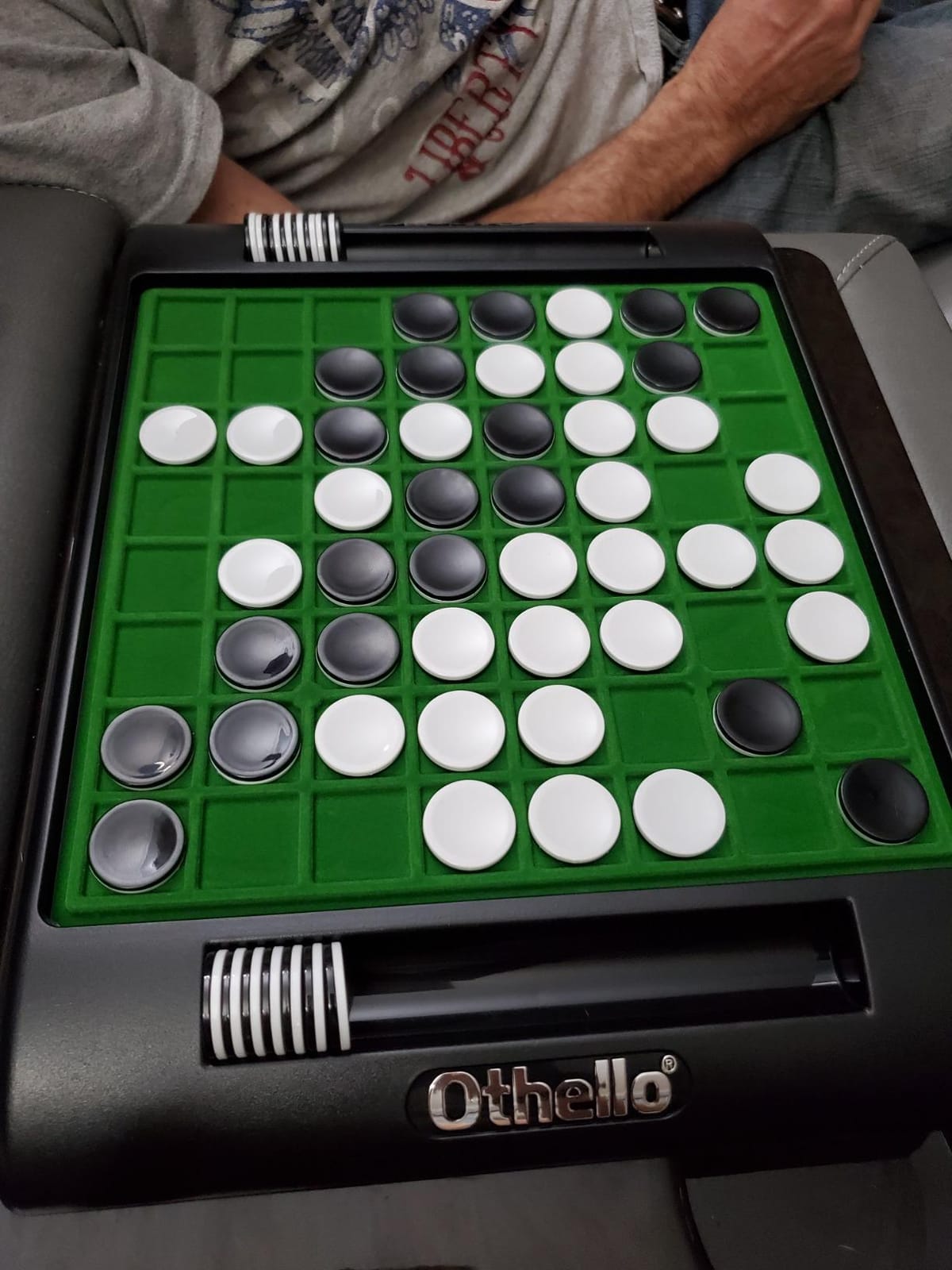
Othello is one of the oldest games still in wide circulation, and it is the fastest to teach. You can explain the whole rule in about two minutes: place a disc, flip any line of your opponent’s discs between yours, keep going while you can. Two players, 20 minutes, no reference to the rulebook after the first turn.
What surprises people is how much strategy is buried in a game with one rule. Position matters more than disc count, corners are worth a disproportionate amount, and the opening moves in the middle of the board decide far more than anything that happens later.
This version fixes the main complaint about older copies. Each player has a slide-out storage drawer built into their side of the board, so the 64 reversible disks go straight back where they came from. Setup and teardown drop to a few seconds each, which is what makes it a genuine weeknight game rather than just a quick one.
It is also one of the few entries here that genuinely works for a parent and a child, or for two people at very different skill levels. A stronger player can play the corners deliberately and a beginner can still have a fun game.
What you should know before you buy it?
The felt playing surface is the one component reviewers consistently flag. It is serviceable but reads as inexpensive next to the quality of the disks, and on a board that sits open on a shelf it will pick up dust and marks quickly.
The instructions in the box are English only, and the strategic variety is narrower than the modern entries here. Once both players know the main opening patterns, the game settles into a shorter list of interesting positions.
Who will actually enjoy it?
It is a strong pick for families, for very short attention windows, and for anyone who wants zero rules overhead. It also stacks well as a travelling game because the pieces stay in the drawers instead of coming loose in a bag.
Skip it if replayability across a year of regular play is your top priority. Othello is deep for its size, but its strategic space is narrower than the other eleven options here.
5. Hanabi – The Two-Player Co-op Pick
R&R Games Hanabi Strategy Game
All ages
2-5 players
20-30 minutes
Communication limited
2013 Spiel des Jahres
Pros
- See every hand but your own
- 2013 Spiel des Jahres winner
- Elegant and very short rule set
- Compact travel box
Cons
- Thin card stock that frays quickly
- Shines at 3-4 players more than 2
Hanabi flips the normal card game rule. You can see your opponent’s entire hand and none of your own, and you are not allowed to talk except through the shared information tokens. It is the 2013 Spiel des Jahres winner, and the reason is that the restriction turns a memory game into a communication puzzle in a way that still works with two people.
Playing it at two is a genuine test of a shared shorthand. You and your partner build a private language of hints over a few rounds, and the first time a hint lands without either of you talking, the game earns its place on the shelf.
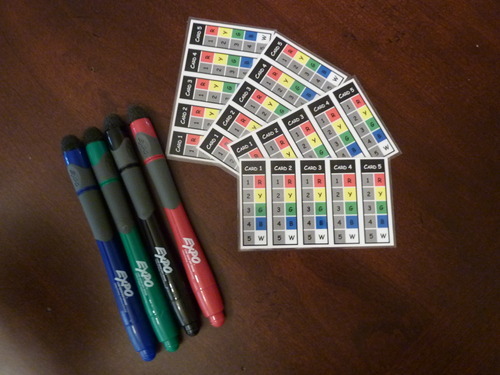
Component quality is the weak point in the original R&R Games version. The 60 cards are thin cardboard and reviewers report fraying at the edges after around ten plays, and the colour suits are close enough in tone that they are worth sleeving. The box itself is very small, 7 by 4.2 by 2 inches, which is excellent for travel.
A sixth colour set is included and adds several replayable variants, which is a good answer to the criticism that a fixed group can burn through it quickly if you always play the same way.

What you should know before you buy it?
It is listed for 2 to 5 players, and at two the game is good but not at its most vivid. The design is at its best with 3 or 4 people, where the hints you give one player are heard as silence by another. If you only ever play with one person, know that going in.
Plan on buying sleeves. It is a small box of cards that gets handled constantly, and the thin stock will not survive an enthusiast household without them.
Who will actually enjoy it?
It suits a couple who enjoys a shared puzzle and does not mind playing a co-op game that is genuinely hard. It is also a strong date night pick, because it demands conversation without demanding constant rules talk.
It is a poor fit if either of you dislikes being frustrated, since several of the later rounds have no clean solution. And if you plan to play with a big group often, The Crew is the better co-op purchase.
6. Onitama – The Travel-Sized Chess
Arcane Wonders Onitama, 2-Player Abstract Duel with Modular Movement Cards
Ages 8+
2 players
10-20 minutes
5 x 5 board
Shared movement cards
Pros
- Tiny 5 x 5 board
- Two distinct win conditions
- Shared cards that swap constantly
- Intuitive rules
- Complete information so wins feel earned
Cons
- Spare visual presentation
- Light strategic weight for some players
Onitama is a two-player abstract duel on a 5 x 5 board with five movement cards. Four sit in front of you, one sits in front of your opponent, and after you play a card you swap it for the one on their side. That single rule keeps the tactical options shifting in a way a chess-like game rarely manages.
At roughly 10 to 20 minutes a game, it is one of the fastest strategy titles here. Setup takes well under a minute, the whole thing fits in a bag, and a rematch is always a minute away once the first game ends.

There are two win paths: capture the opponent’s master, or get your own master onto their temple arch at the far edge of the board. Having two routes keeps rematches from settling into one script, and because everything is visible, a loss is always clearly your own doing.
All the information is public, which is rare in modern board games and part of why this one appeals to people who dislike hidden objectives and surprise attacks. If you lose, you lost to the other player, not to the shuffle.
What you should know before you buy it?
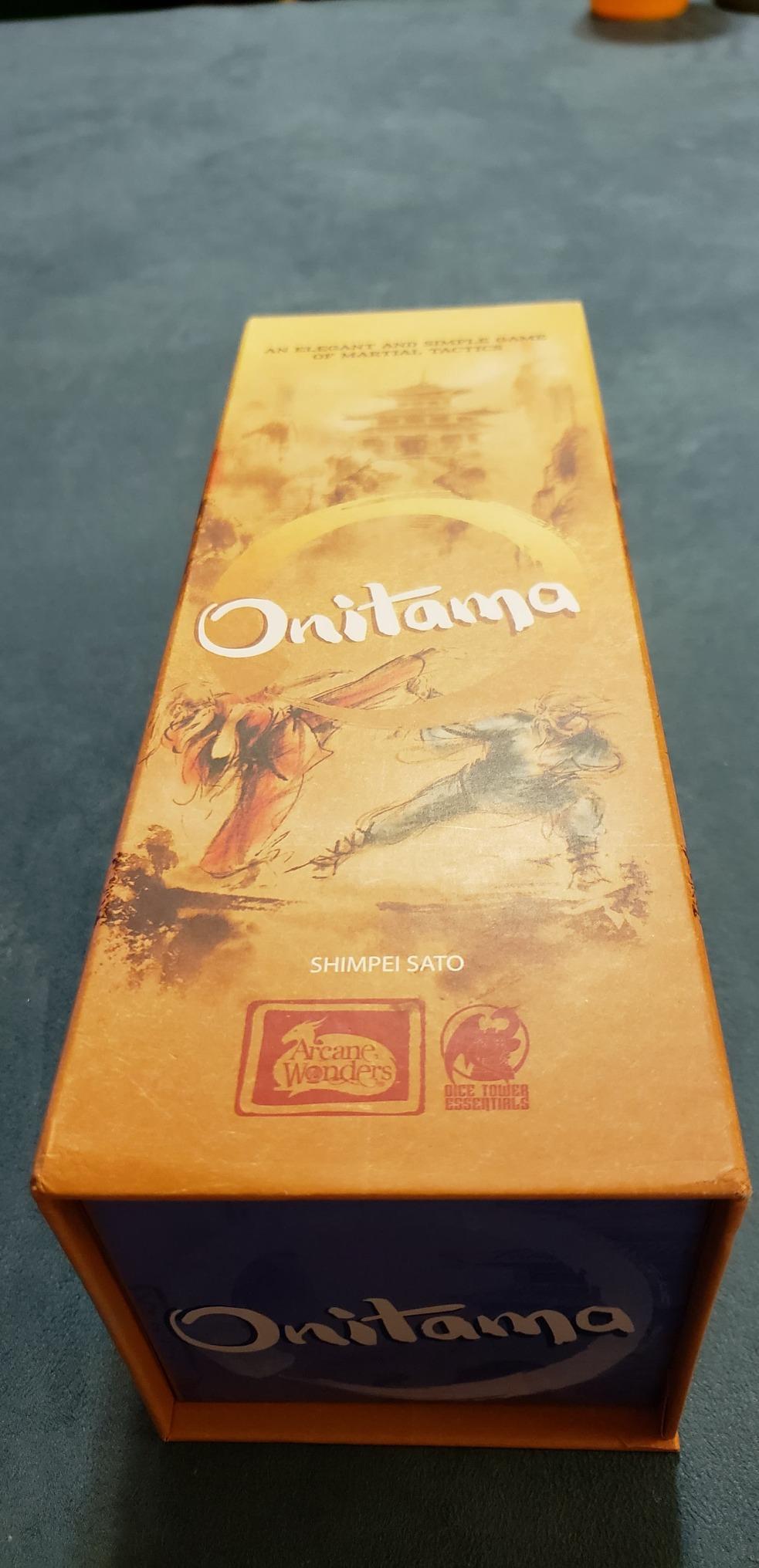
The presentation is spare. There is no theme, no lore, and no lavish component work, and the box is a plain card-and-pawn design. Players who care about how a game looks will notice that immediately.
More importantly, the strategic weight sits at the lighter end of this list. It is a complete and satisfying duel, but a player who wants a long, punishing strategic fight will want something with more decision weight per move.
Who will actually enjoy it?
It is our travel pick on strength of board quality rather than box size: a 3.8 by 3.7 by 10.6 inch footprint, no setup, and 10-minute games. It is also a good fit for a couple who both like abstract games and dislikes fiddly component management.
It is a bad fit for younger children or anyone who needs a theme to get engaged, and it does not scale to a group, so it is a permanent two-player box rather than a shared one.
7. Ravine – The Laugh-Out-Loud Co-op
Stellar Factory Ravine: A Crafty and Cooperative Card Game
Ages 12+
3-6 players
45-90 minutes
193 cards
Wood health tokens
Pros
- Learns in minutes
- Very funny cards and well written text
- Compact box and laminated cards
Cons
- Listed for 3-6 players
- so two-player play is thin
- Leans more on luck than skill
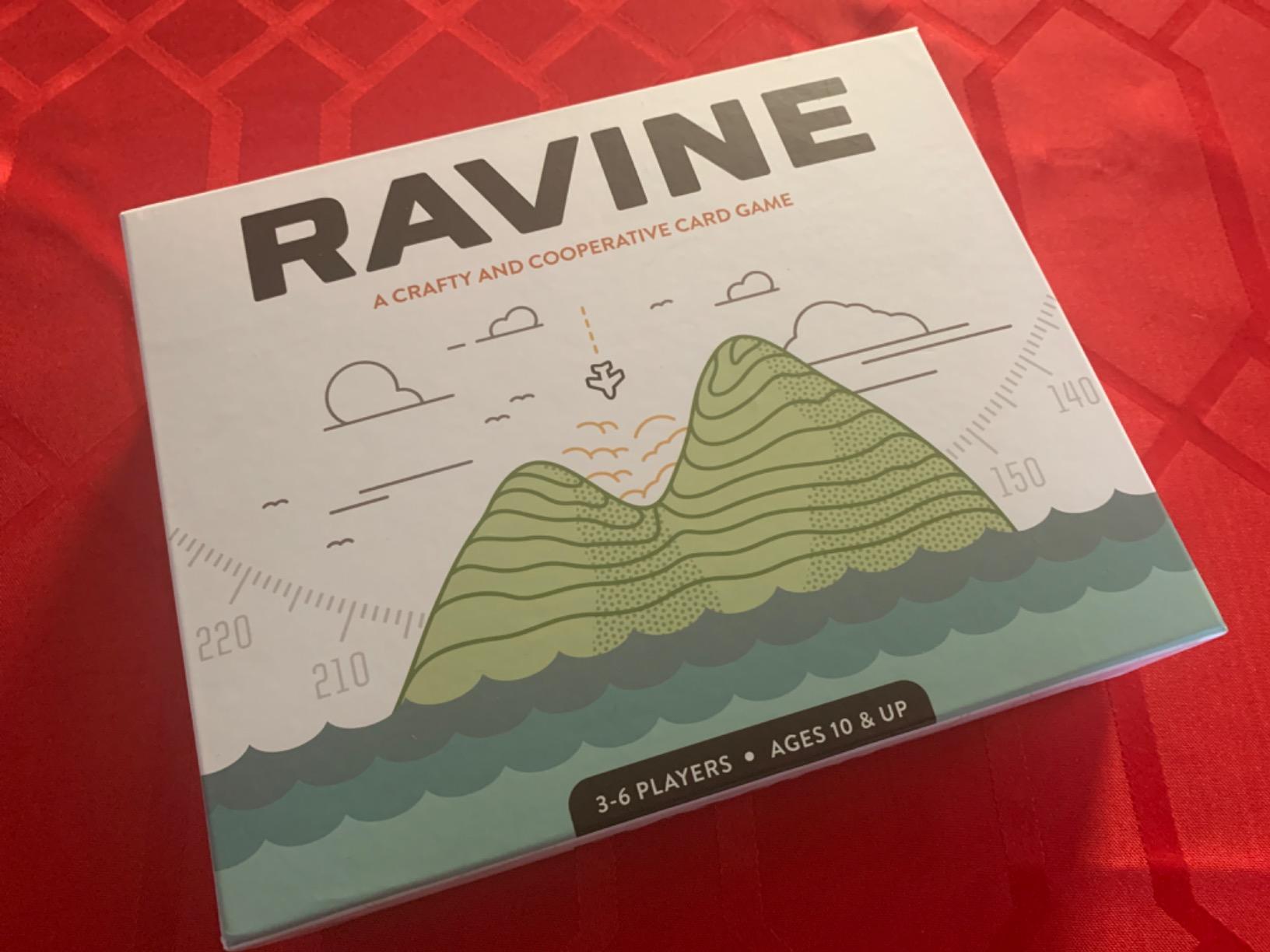
Ravine is a cooperative survival story built around 193 casino-quality cards, 36 screen-printed wood health tokens and one large fire token. You and the other survivors face escalating disasters, and the group wins or loses together. The tone is the point: it is a survival scenario played as a comedy.
We include it with a clear warning. The box is listed for 3 to 6 players, and reviewers specifically note that it is better with three or more than with two, and our own two-player sessions confirmed that. The decisions get thinner and the laughter has fewer people to bounce off.
At two, the game still works as a light, forgiving co-op, and the difficulty is adjustable which is genuinely useful when one player is much stronger than the other. What it loses is the party energy. This is a game about a table full of people shouting about a bear.
Component quality is strong for the price band. The cards are laminated and travel well in a 6.5 by 8 by 2 inch box, and the wood tokens are a step up from paper counters. Playtime is 45 to 90 minutes, so plan for a long evening or split it across two.
What you should know before you buy it?
Luck is a bigger factor than most players expect. You will lose games to the card draw rather than to a bad plan, and if that bothers either of you, pick a different co-op entry. The same goes for players who dislike being told their own actions are insane.
The rules are also not self-explanatory. Groups usually need one session to work out how the threats and remedies interact, and the madness cards will not land with players under about 12.
Who will actually enjoy it?
It is the right buy for a group of three to six, a family with older kids, and for anyone who wants a cooperative game where the fun comes from the storytelling rather than from optimisation.
If you are building a two-player shelf, treat Ravine as a party game you can bring out when a third and fourth player arrive, not as a core recommendation. Players who want their co-op games to reward planning will be happier with Hanabi.
8. Lost Cities – The Card Duel With Real Tension
Lost Cities Card Game – with 6th Expedition | Two-Sided Board for Classic or New Edition | By Reiner Knizia | A Kosmos Game
Ages 10+
2 players
30 minutes
72 cards
Two-sided board
Push your luck
Pros
- Simple rules hiding real depth
- Two-sided board covers classic and new edition
- 6th Expedition set included
- Compact footprint for travel
- Clean Reiner Knizia design
Cons
- Games can finish faster than some players want
- Very little in the box beyond cards and the board
Lost Cities is a Reiner Knizia design built on a push-your-luck structure. You both start cards in a face-down row, and you can either pick one up or place the new card face down and keep going. The risk is simple: bury a better card under a worse one and the pile can stay dead for the rest of the game.
Two players is the design intent here, and the whole thing fits in a 7.9 by 7.9 by 1.8 inch footprint with a fold-out board. It is one of the easiest setups in the roundup, which makes it a reliable choice when you want to be playing within two minutes of sitting down.
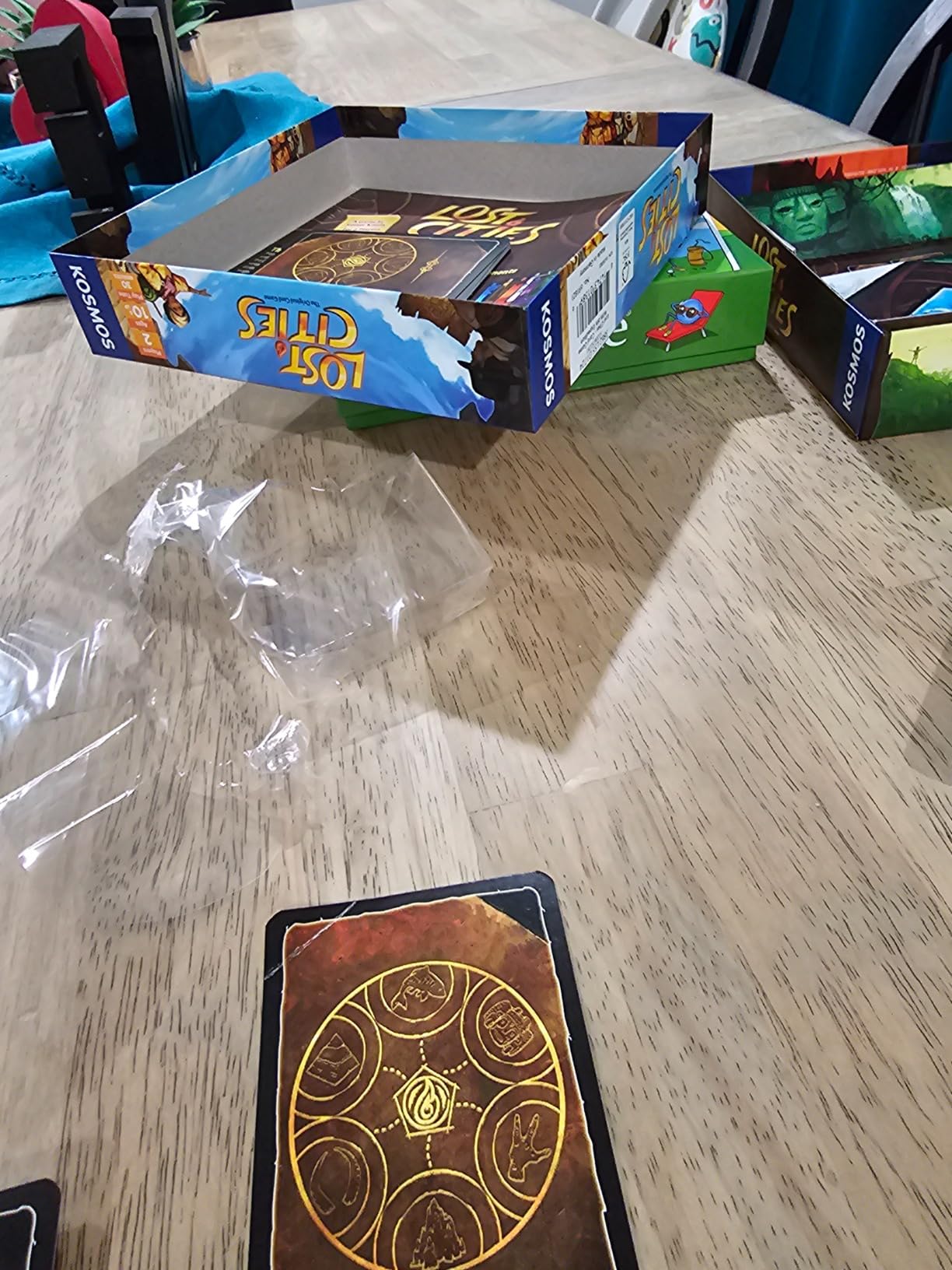
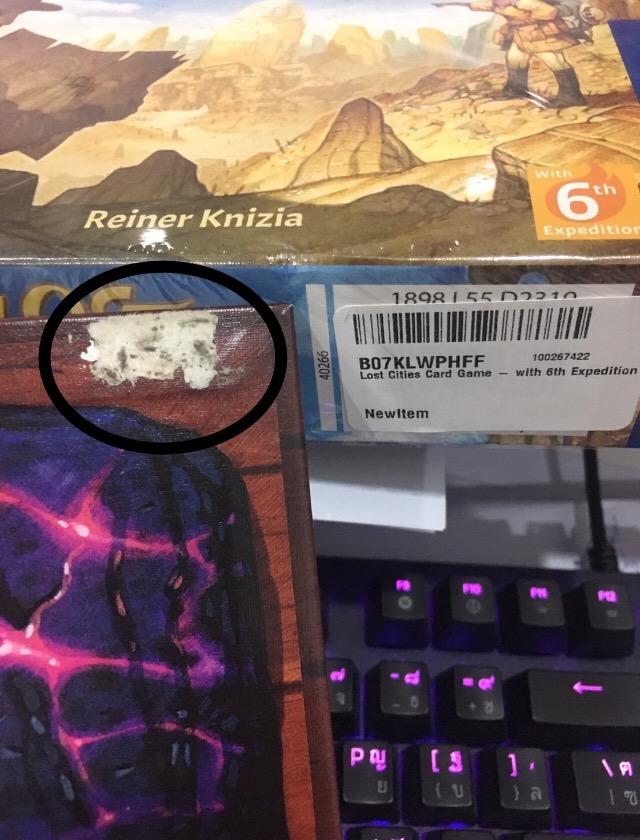
What sets this version apart is what is bundled. The board is two sided, so the classic and updated editions are both in the box, and the bonus 6th Expedition card set is included rather than sold separately. You get 72 playing cards, a board and a rulebook, and more variety than that component list suggests.
The expedition is a bluffing side game that both players secretly set up before play, and it adds a whole extra layer of reading your opponent for a fraction of the setup time.
What you should know before you buy it?
Some sessions finish quickly, around 20 minutes, which is a feature for a weeknight and a disappointment for a group that wanted a long evening. If you want a full hour, plan on a rematch rather than one long game.
It is also a deliberately minimal box. There is no board beyond the fold-out card mat, no wooden pieces, and nothing that changes the tactile feel of play. It is pure card game and it is comfortable with that.
Who will actually enjoy it?
It suits couples who like a quiet, tense, low-rules duel and it travels extremely well. It is a strong first strategic purchase for a pair that finds heavier engine builders intimidating.
It is a poor fit for players who want a game with a strong theme or one that plays differently each time. Lost Cities is a repeat-and-master game, and the appeal is in the same systems getting sharper, not in variety.
9. The Crew: Mission Deep Sea – Built for Bigger Tables
The Crew – Mission Deep Sea | Card Game | Cooperative | 2 to 5 Players | Ages 10+ | Trick-Taking | 32 Levels of Difficulty | Endless Replayability
Ages 10+
3-5 players
20 minutes
32 difficulty levels
Cooperative trick taking
Pros
- Follows the Kennerspiel des Jahres winner
- Underwater narrative and strong theme
- Requires more thinking than most trick games
- 32 difficulty levels
- Equal active role for every player
Cons
- Designed for 3-5 players
- so it is not a two-player game
- Cards discolour at the edges without sleeves
- Some task deals leave the group stuck
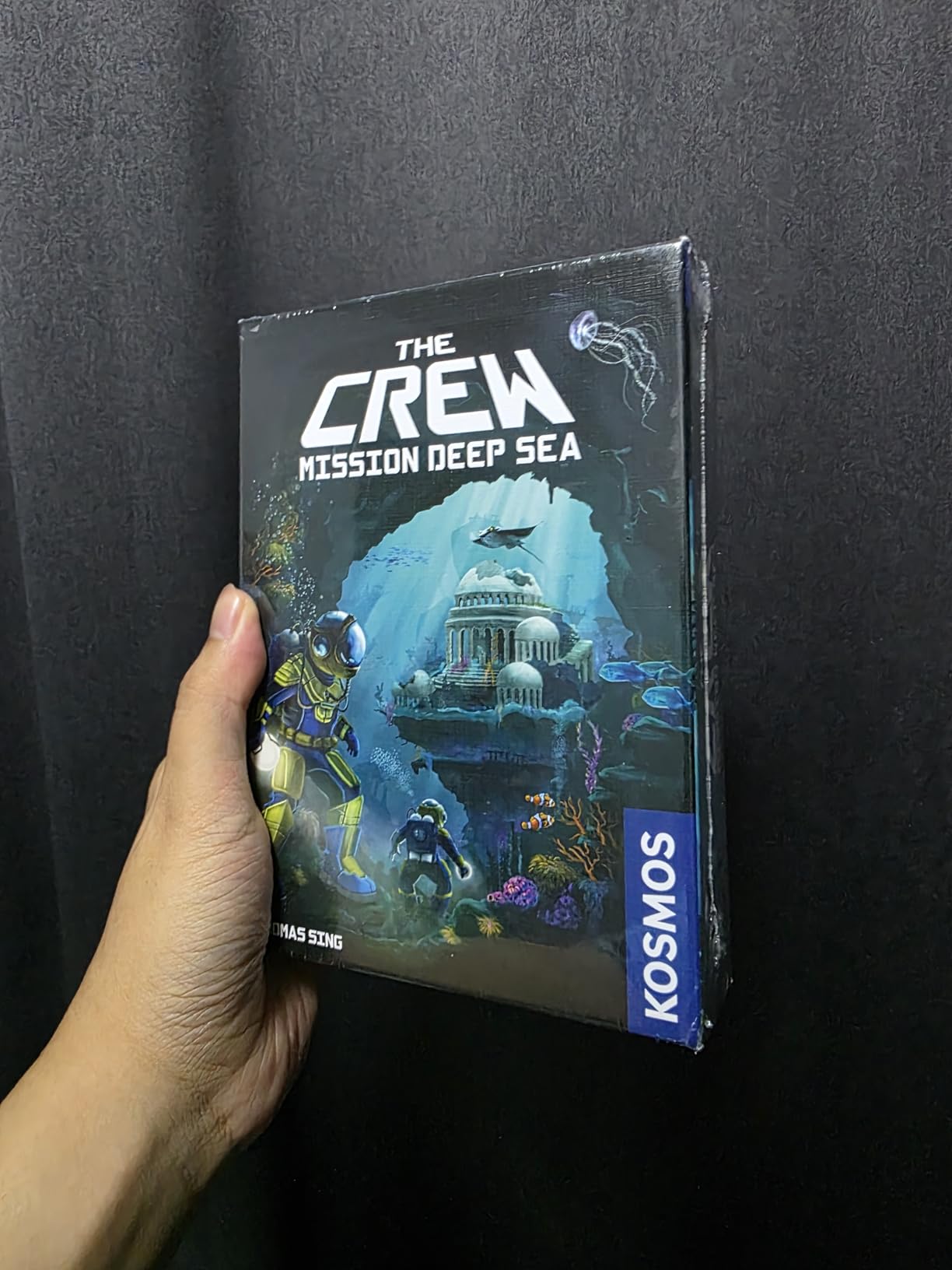
The Crew: Mission Deep Sea takes the cooperative trick-taking idea from the Kennerspiel des Jahres winner and moves it underwater. You win a trick by playing the only suit that was led, and each completed trick moves your submarine deeper toward a mission objective, while one badly played card can send the whole group back up.
The underwater theme is not decoration. Communication is limited, so a critical hint has to be delivered fast and precisely, and the cooperative pressure is real. Out of the three co-op entries here it is the one that asks the most of the group and rewards it most.
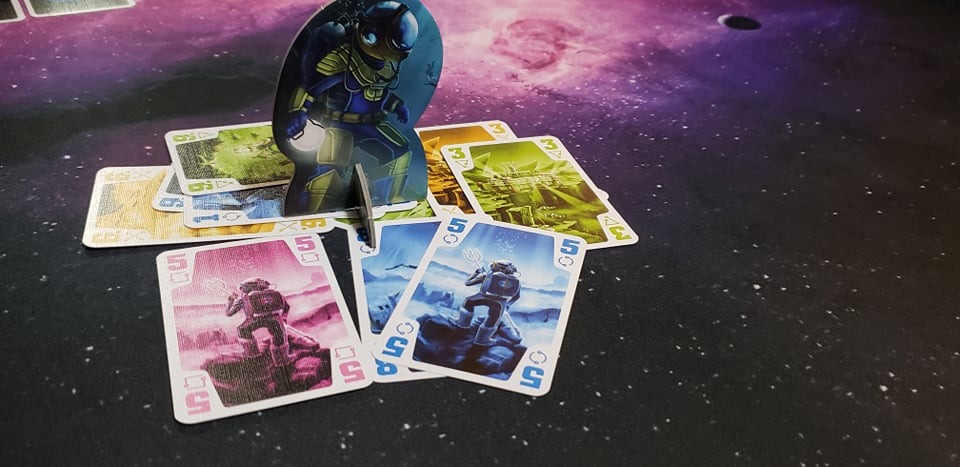
The 32 difficulty levels are the standout feature. Campaign missions ramp the difficulty, and a group can start where everyone is comfortable and climb over weeks. At 20 minutes a session and 1.7 by 5.1 by 7.1 inches, it is also one of the most portable games in the roundup.
It is listed for 3 to 5 players, so it does not work as a two-player purchase. The box holds 40 large cards, 36 colour cards, 4 submarine cards, 5 reminder cards, 96 small cards and a full set of tokens, and at three to five players every one of those elements gets used.
What you should know before you buy it?
Buy sleeves. Reviewers note the card edges discolour quickly, and in a game with this many repeated deals that wear shows fast.
There is also a chance some task combinations come out of the distribution in a way the group cannot solve, which forces a redeal. It is a real frustration at high difficulty and the main reason the campaign ramps slowly rather than jumping.
Who will actually enjoy it?
It is an excellent buy for a group of three to five that already plays trick-taking card games or knows Hearts. It is also a good party opener because the theme and the pace make new players feel useful immediately.
For a two-player shelf it belongs on the wish list for the week a third person joins. Hanabi is the co-op choice that actually works with the two of you.
10. Stratego – The Luck-Free Classic
Jumbo, Stratego – Original, Strategy Board Game, 2 Players, Ages 8 Year Plus
Ages 8+
2 players
45 minutes
80 printed pieces
Screen and sorting trays
Pros
- No luck involved at all
- Sturdy well-made pieces
- Classic red and blue armies
- Board folds flat into the box
- Teaches planning and thinking ahead
Cons
- Supports only 2 players
- Strictly a strategy game with no theme
- Games can run past 45 minutes
- Some pieces feel less refined than the board
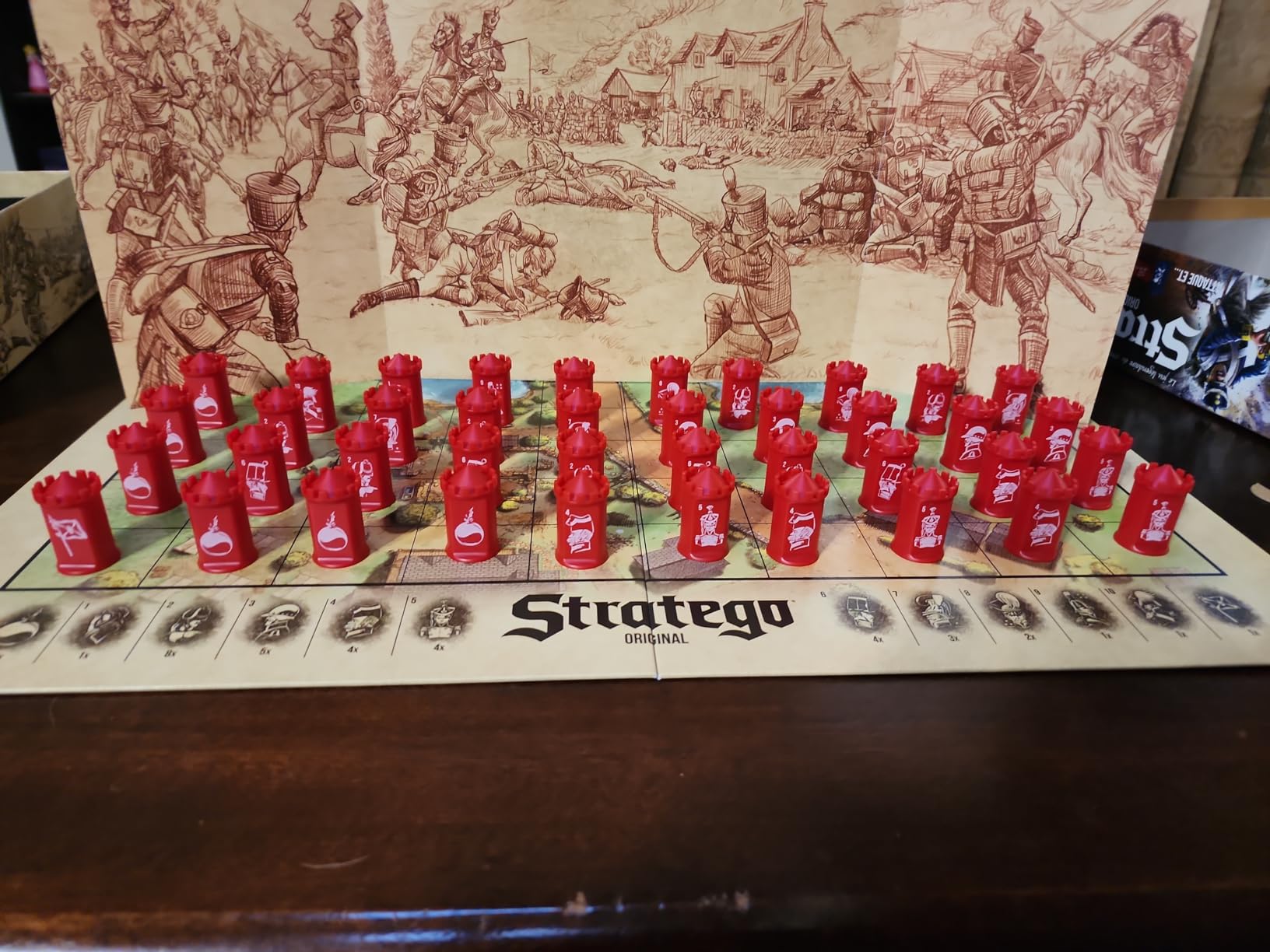
Stratego has been in enough households to feel familiar, and this Jumbo original keeps the version that works: 2 sets of 40 pre-printed pieces, a folding board, a screen and two sorting trays. It is a two-player game by definition, and the no-luck design means a win is entirely down to bluff, memory and deduction.
The core loop is unchanged. Move pieces toward the enemy camp, reveal marshalls by attacking smaller ranks, and get your flag to the opposite side. What keeps it from being a museum piece is that the fog of war, the bluff with your second bomb, and reading an opponent’s pattern all still produce real tension.
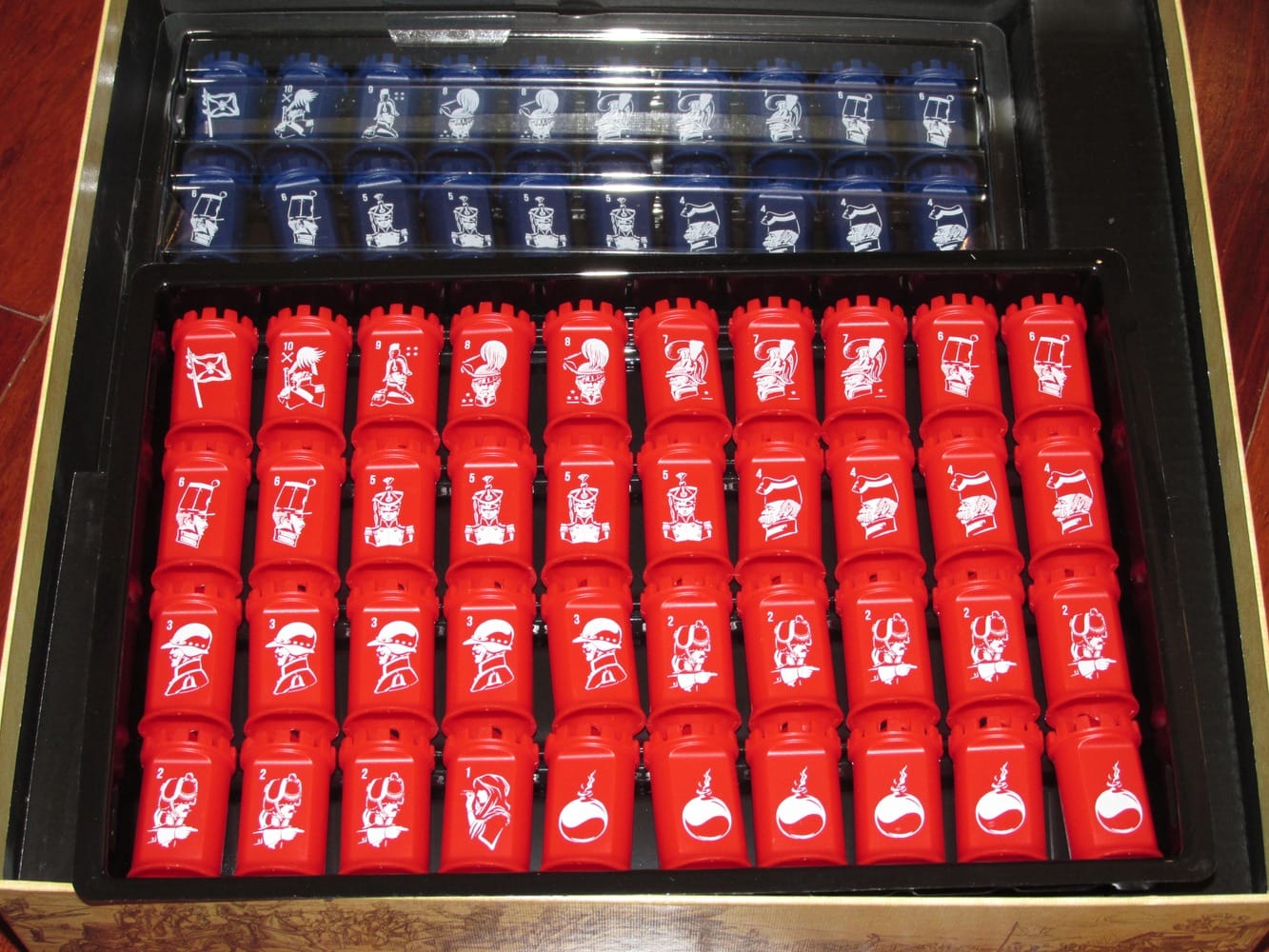
Component quality is good where it counts. The pieces are sturdy enough for regular handling, and the board folds flat so the whole thing lives in its box rather than on a shelf. The sorting trays are the quiet upgrade, since they stop the pile of spare ranks that otherwise ends up under the sofa.
It is a genuinely good teaching game too. A child learns to think two moves ahead and to stop reacting to everything their opponent does, which is why it keeps appearing on family recommendations lists.
What you should know before you buy it?
It is a strict two-player title. There is no neutral player mode and no way to bring it to a group game night without splitting the army, so it does not scale at all.
There is also no theme to speak of and no economic layer. Players who like seeing systems interact will find it thin, and a 45 minute estimate is optimistic for players who think every round through. Some buyers also find the printed pieces less refined than the board itself.
Who will actually enjoy it?
It suits a parent and an older child, a couple who grew up with it, and anyone who specifically wants a game where luck plays no part. Memory and pattern reading reward the same pair over months rather than one evening.
It is a poor fit for a date night where you want the game to be the activity rather than the test of attention. Two-player abstracts like Onitama move faster and ask for more immediate engagement.
11. Fox in the Forest – The Pocket Trick-Taker
Renegade Game Studios Fox in the Forest ,2 Player Card Games, Trick-Taking Strategy Game for Adults, Compact Travel Board Game, 30 min
Ages 10+
2 players
10-15 minute rounds
30 minutes total
Compact travel box
Pros
- Travel box fits in any bag
- Rounds last 10-15 minutes
- Beautiful botanical card artwork
- Fair balanced two-player trick taking
- Rewards deliberately losing tricks
Cons
- Inverted scoring takes a few games to click
- Strategy is not obvious from the rules
- Thin theme compared with the artwork
- Replay value lower than heavier games
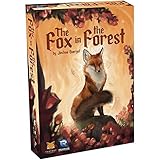
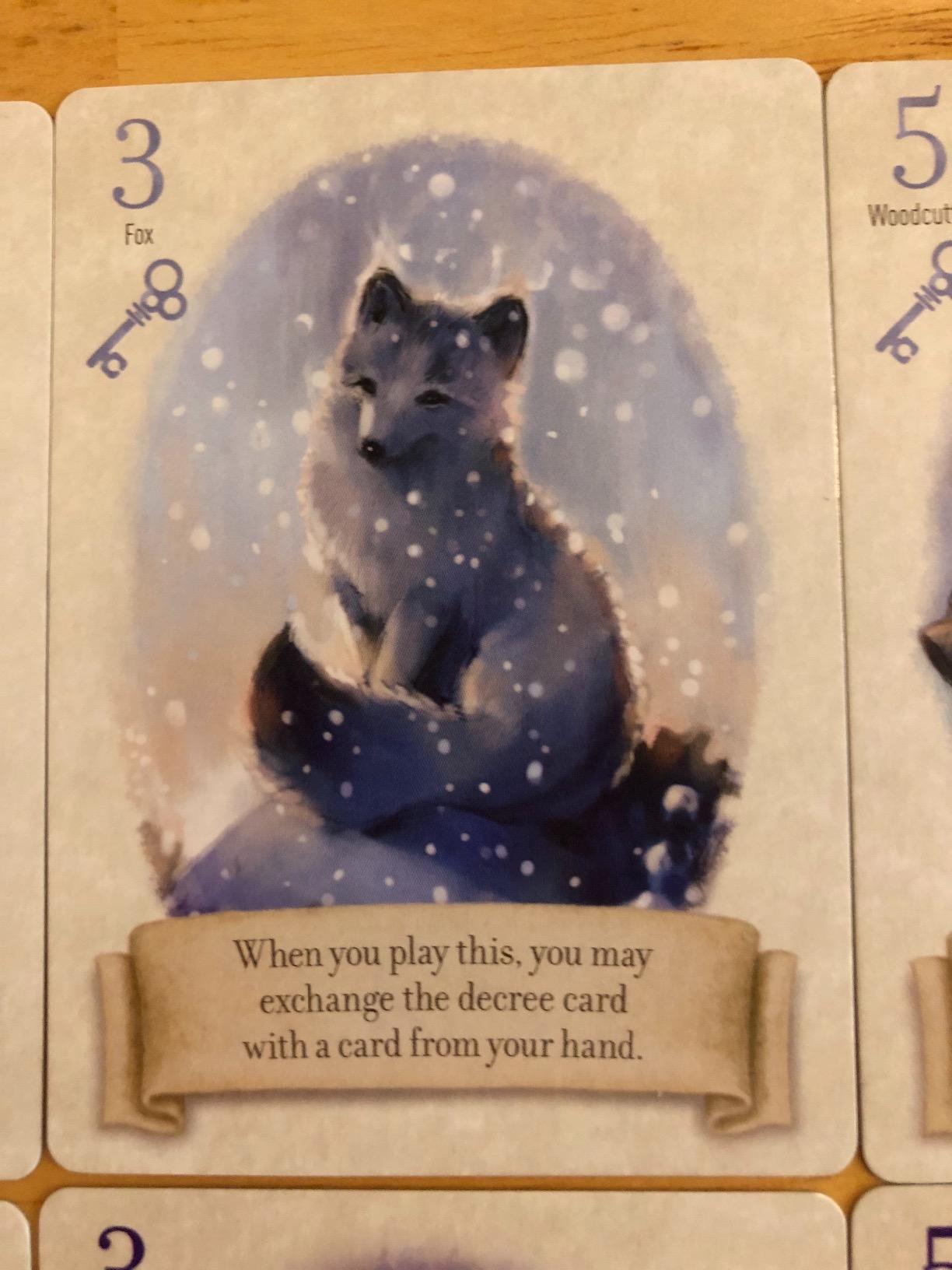
Fox in the Forest is a two-player trick-taking game with fairy-tale characters, and the scoring is the interesting part. You are penalised for taking too many tricks and rewarded for taking fewer, so a hand can be won by playing badly on purpose. It takes a few games before that clicks, and once it does it changes how you approach every round.
Rounds run 10 to 15 minutes with 30 minutes for a full session, and the box measures 4 by 1.25 by 6.25 inches, one of the most compact designs in this roundup. That makes it our pick for a long trip or a waiting room.
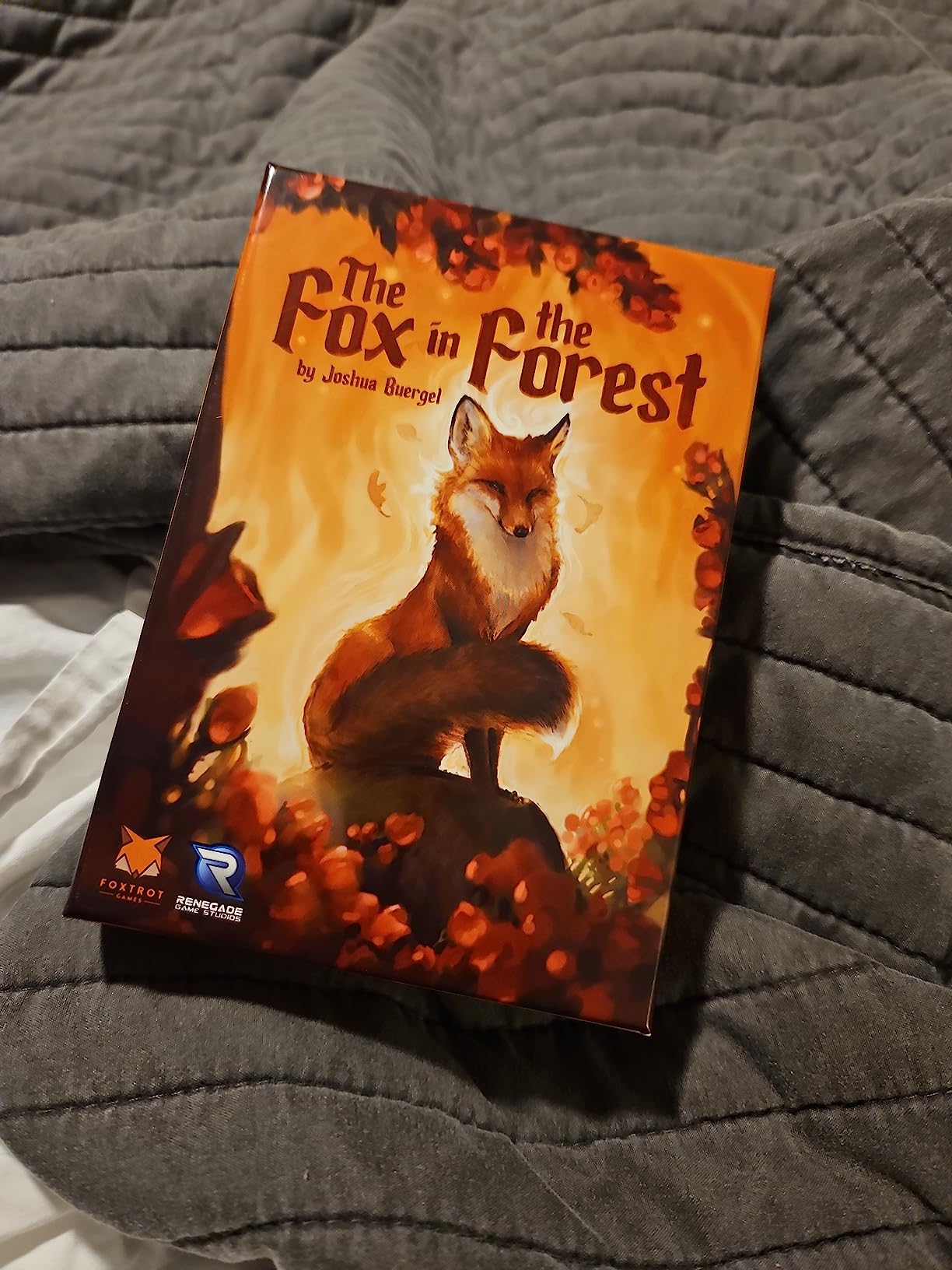
The card art is the standout feature, with detailed botanical illustration on every character card. The characters have individual powers, so you can change the trump suit or take back the lead after losing a trick, and that variety keeps early sessions moving.
Reviewers describe the two-player balance as genuinely fair, with neither seat holding a structural edge, and the box stays in shape because the cards are proper cardstock in a snug case.
What you should know before you buy it?
Be honest with yourself about the inverted scoring. It is the design, not a flaw, but it is the reason some first sessions end with both players confused about who actually won.
Replayability is also on the modest side. Once the character powers are familiar, a smaller group finds the effect can be partly recreated with a standard deck, and the theme is thin relative to how good the artwork is.
Who will actually enjoy it?
It suits a couple who plays cards, travels often, and wants something that does not need a table. It is also a good choice for players who enjoy a light scorekeeping puzzle and do not want a 45 minute commitment.
It is not the right choice for a family with young children, or for players who want long games with meaningful strategic arcs. Use it as the portable option and keep 7 Wonders Duel for the evenings when you have time.
12. CATAN Rivals – The Two-Player Catan Fix
CATAN Rivals for CATAN Card Game – Build, Trade and Conquer! Strategy Game, Family Fun for Kids and Adults, Ages 10+, 2 Players, 45-60 Minute Playtime
Ages 10+
2 players
45-60 minutes
Three theme sets
Deck building
Pros
- Captures the Catan feel for exactly two
- Three theme sets in the box
- Deck knowledge becomes a real skill
Cons
- Steep learning curve for newcomers
- Trading is removed from the rules
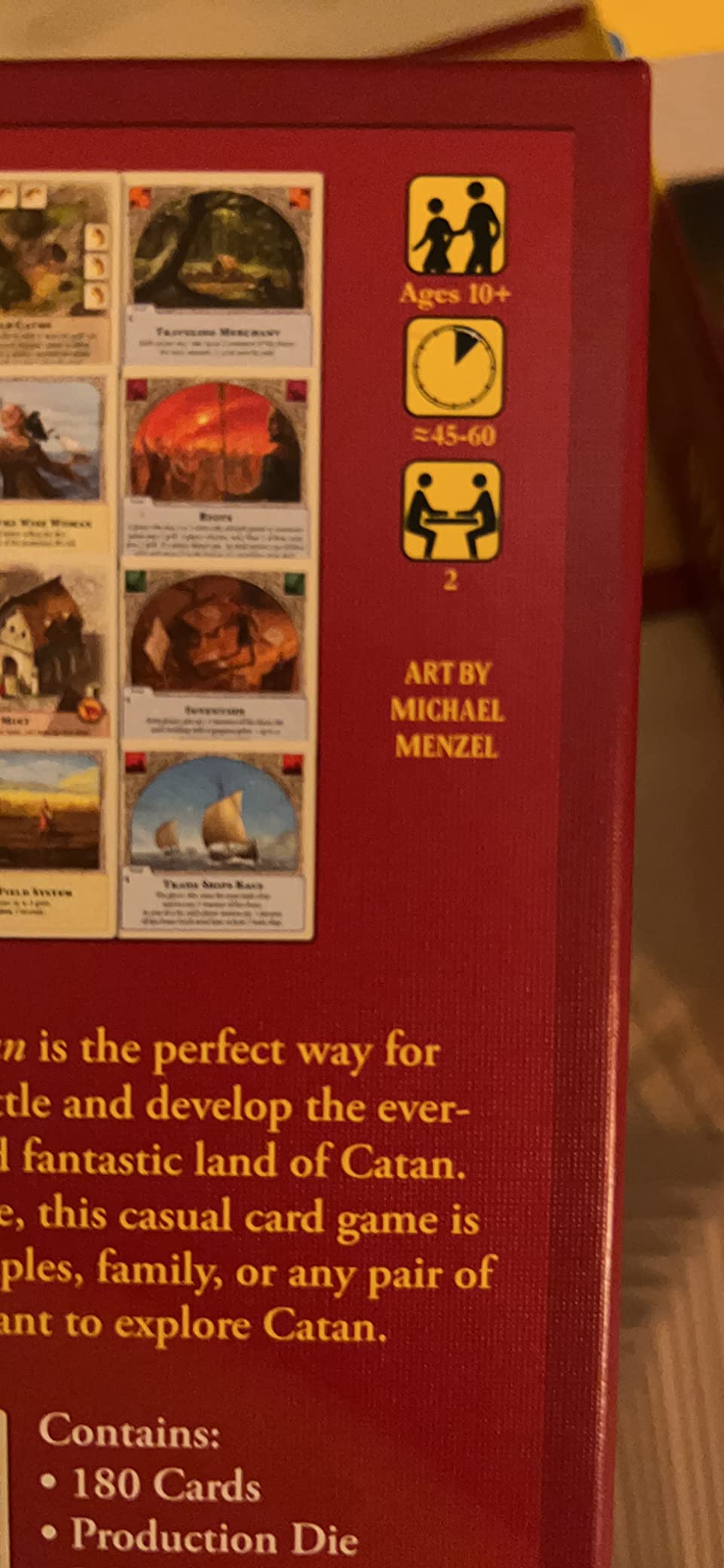
CATAN Rivals is the answer to a specific problem: Settlers of Catan is built for four, and a two-player version used to be a fiddled-up compromise. This one is a proper two-player card game, with settlements, cities, heroes and barbarians, plus the three theme sets.
Those three decks are the reason it holds up. The Age of Gold, The Age of Turmoil and The Era of Progress each change how the strategies work, which gives a compact card game a much longer shelf life than a single fixed deck would. Knowing which cards are in the deck becomes a real skill.
Dice still drive resource acquisition, but the results are far less swingy than the board game, and games stay close. In our sessions a 60 minute game ended within a couple of points, which keeps both players engaged to the final round instead of one person watching an outcome get decided early.
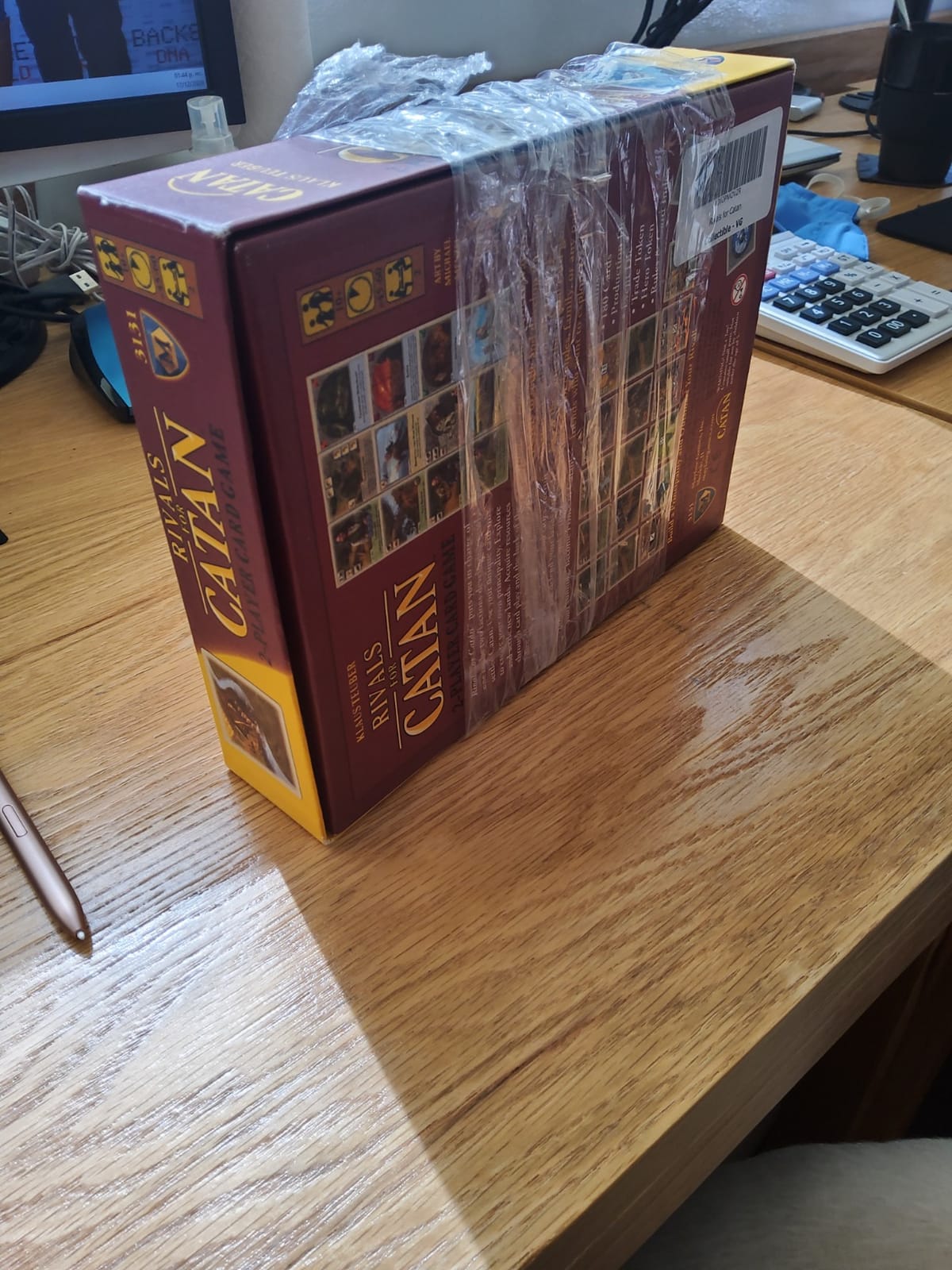
The box is compact at 8.38 by 6.25 by 1.75 inches and it travels fine, though setup does need a reasonable amount of table space as the board, the decks and the reference sheets go down together.
What you should know before you buy it?
This is not a gateway game. The learning curve is steep, and it suits people who already know Settlers of Catan or are willing to study it. There is no trading mechanic in the rules, which is a real omission for Catan players who loved that part.
Component and rulebook quality are the most criticized parts. The square cards are awkward to shuffle, they feel flimsy, and there is no way to secure the stack in the box, so it does not travel as well as the size suggests. The rulebook also references a shield icon where the piece shows a knight, and the instructions are not in a sensible order.
Who will actually enjoy it?
It is the right buy for a pair that already plays Catan and wants the two-player version, and for anyone who enjoys deck-building with a familiar theme underneath.
It is a poor fit for a beginner, for a date night with a non-gamer, and for a partner who prefers games where nothing random can be blamed for a loss. For a first two-player strategy game, 7 Wonders Duel or Splendor will land far better.
How to Choose a Two-Player Board Game?
Start with the window, not the genre. The most common disappointment in this category is buying a brilliant 90 minute strategy game and then never taking it off the shelf because a weeknight does not offer 90 uninterrupted minutes. Decide how much time you realistically have, then pick inside that limit. Everything from 10 to 30 minutes works on a weeknight; nothing over 60 minutes will see regular play unless you protect the evening.
Second, check the real player count, not the marketing. Two of the games here are listed for larger groups, and in both cases reviewers and our own sessions found the two-player experience thinner than the box deserves. A game built for two will have been balanced for two, and you can feel the difference within a session.
Third, look at component quality with a critical eye, because it decides whether you still have the game in three years. Thin card stock, low contrast between colour suits, awkward square cards and unsecured stacks all show up in reviews of the cheaper boxes, and they are the difference between a game you sleeve and a game you replace. Our two-player picks that have survived the most handling on our tables are the ones with thick cardstock, chunky tokens or pieces that stay in the box.
Fourth, test the rulebook before you commit to the whole experience. A thirty minute game with a rulebook that takes an hour to decode is an evening lost. Games built on a single verb, like Othello, are teachable in a couple of minutes. Games with layered exception rules, like 7 Wonders Duel, are not, and you should plan for a teaching session rather than pretending otherwise.
Fifth, think about table space, especially in an apartment. Games with large central boards such as Azul or Stratego need a clear surface, while card-based games like Lost Cities, Fox in the Forest and The Crew function on a sofa or a bar top. This is also the point to consider what else you want the room to do: if the evening includes a film or a meal, a compact card game keeps everyone at the table instead of staring at a board.
Finally, be honest about what ends a game badly. If either player hates a long losing streak, skip the engine builders and go for games where the score is visible. If either player wants the other person to feel it, go for a direct duel. If you want the two of you on the same side, co-op adds a third dynamic, but only pick a co-op game that genuinely works at two. And if either of you has trouble distinguishing similar colours, or dislikes manipulating small pieces, that is worth checking before you buy a tile game or a card game with close suit colours.
One last practical note. A two-player shelf is a library, not a menu, and the value comes from owning a few games that suit different moods rather than one game you play every time. Our shortlist covers a 10 minute abstract, a 20 minute classic, a 30 minute duel, a 30 minute co-op and a 45 minute card builder, which is a workable spread for almost any household.
Frequently Asked Questions
What are the best board games for 2 players?
The best board games for two players in our testing are 7 Wonders Duel for a serious competitive duel, Splendor for the easiest entry point, and Azul for a gentle drafting game with deep tactics. Add Othello for 20 minute sessions, Onitama for travel, Lost Cities for a tense card duel, and Hanabi for cooperative play.
What is the best two-player co-op board game?
Hanabi is the best cooperative two-player board game. You can see every hand but your own, communication is limited to shared information tokens, and a session runs 20 to 30 minutes. Ravine and The Crew are excellent co-op games but are both built for three or more players.
What are the best 2-player board games for couples?
For couples, the best picks depend on the mood. 7 Wonders Duel and Azul work when you both want a real contest, Splendor and Lost Cities are low-pressure and quick, and Hanabi gives you a shared puzzle to talk over. Onitama and Fox in the Forest are the picks for a trip or a quiet evening away from a table.
What are some good 2-person board games for adults?
Good two-player games for adults include 7 Wonders Duel, CATAN Rivals for players who already know Settlers of Catan, Lost Cities for a quick push-your-luck duel, and Stratego for a luck-free memory and bluffing contest. Stratego runs about 45 minutes and CATAN Rivals runs 45 to 60 minutes, so both suit a longer evening.
What 2-player board game should I buy first?
Buy Splendor first if either player is new to board games, because it has only three actions per turn and takes a minute to teach. Buy 7 Wonders Duel first if you both already like strategy, since it has more depth and a harder rulebook. Buy Othello first if your sessions are short and you want no rules overhead at all.
The Verdict
Buy 7 Wonders Duel. It is the strongest balance of depth, pace and theme in this roundup, it finishes inside 30 minutes, and the three victory paths mean no single round feels like a replay of the last one. If either of you is new to the hobby, take Splendor first and move up to 7 Wonders Duel once the first game stops needing a rulebook check.
From there, fill the gaps rather than buying twelve games on day one. Onitama or Fox in the Forest for travel, Othello for a 20 minute fix, Hanabi for cooperative nights, and Lost Cities when you want a card duel that fits on a small table. The rest can wait until a third player shows up.
We will keep adding to this list as we play more sessions, and the full breakdown of the best board games for two players in 2026 sits above. If your evening also involves the living room screen, our roundups of 4K Blu-ray players, Blu-ray players and media players for Plex cover the other half of a good night in.