
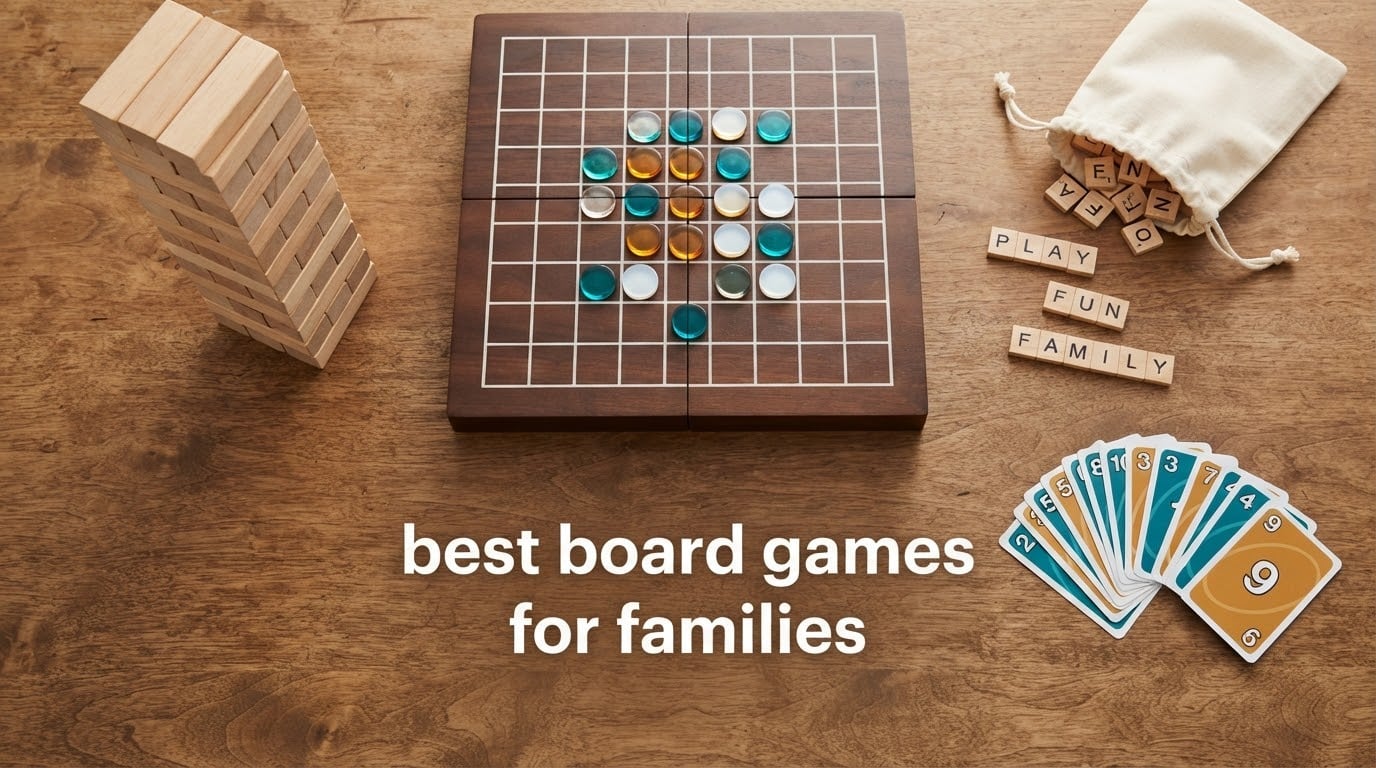
Most board games marketed to families fall into one of two failure modes. The first is the game that is technically for everyone and fun for no one, where a 12-year-old rolls their eyes and an adult starts checking email by round two. The second is the modern eurogame that takes 20 minutes to explain and leaves grandparents blinking at a rulebook. Finding the best board games for families means avoiding both traps, and it comes down to three numbers printed on the side of every box: minimum age, player count, and play time.
We played through this list repeatedly, mostly at a table with a wide age spread, because that is the situation that actually breaks games. Each pick below earns its place on how fast it teaches, how well it holds a mixed-age table, and whether players asked for a second round. We also flagged the exact family shape each game suits and the family shape it does not, because the same game can be ideal for one household and dead weight in another.
Before the individual entries, here is the short version. The best board games for families right now are the ones that teach in under two minutes, scale to a table of six or seven without leaving anyone idle, and give adults a real decision to make rather than a refereeing job. If your group hates noise, skip the shouting games. If anyone takes losing personally, move toward cooperative designs. And if the group includes one player who will not sit through a rules read, start with something that teaches in a single sentence.
Table of Contents
How We Chose the Best Board Games for Families in 2026?
We picked these games by playing them, not by reading box art. Every entry in this guide went onto a family table at least twice, usually with a spread of at least ten years between the youngest and oldest player. The recurring request, not the rating or the release year, is what moved a game up or down the list.
Four criteria decided the order. Adult engagement came first, because a family game that bored the parents got retired quietly and never resurfaced. Teach speed came second, since a game nobody can explain is a game that gets skipped at the next gathering. Third was player-count flexibility, so a game still works when a cousin cancels. Fourth was replay value, judged by whether the table asked to reset and go again rather than by any score from a review site.
Two other things shaped the list. We leaned away from designs where a child’s loss turns into an argument, because that failure ends the evening faster than a dull turn does. And we named who should skip each game, because no single title is right for every household.
Top 3 Best Board Games For Families (October 2026)
The three below are the strongest overall balance of teaching speed, age range, and replay value in this guide. Jenga takes the top spot because its rules fit in one sentence, it works from age 6 upward, and it produces genuine tension between adults rather than between a parent and a child.


UNO Card Game
- 2 to 10 players
- Ages 7 and up
- Color-blind friendly symbols
- Blank Wild cards for house rules
SKYJO earns the middle slot because it handles the widest age gap of anything here, letting an 8-year-old and a grandparent compete on equal footing in a single round. UNO takes third because it absorbs a table anywhere from 2 to 10 players without a change of rules.
All 12 Family Board Games at a Glance
Every game below lists its player count, age range, and how much explanation it needs before the first turn. Two of them, Battleship and Rummikub, cap out at lower player counts, so read the table before you commit.
| Product | Specifications | Action |
|---|---|---|
| Jenga Classic |
|
Check Latest Price |
 SKYJO SKYJO |
|
Check Latest Price |
| UNO Card Game |
|
Check Latest Price |
 Taco Cat Goat Cheese Pizza Taco Cat Goat Cheese Pizza |
|
Check Latest Price |
 SEQUENCE SEQUENCE |
|
Check Latest Price |
 Rummikub Rummikub |
|
Check Latest Price |
 Sorry! Sorry! |
|
Check Latest Price |
 Battleship with Planes Battleship with Planes |
|
Check Latest Price |
 What Do You Meme Family Edition What Do You Meme Family Edition |
|
Check Latest Price |
 Bananagrams Classic Bananagrams Classic |
|
Check Latest Price |
 Azul Azul |
|
Check Latest Price |
 Hues and Cues Hues and Cues |
|
Check Latest Price |
1. Jenga Classic: The Best Board Game for Families That Keeps Adults Engaged
Hasbro Gaming Jenga Game | The Original Wood Block Game with Genuine Hardwood Blocks | Stacking Tower | Ages 6+ | 1 or More Players | Party Games for Kids | Family Games
54 hardwood blocks
Ages 6 and up
2 or more players
Teaches instantly
Pros
- Genuine hardwood blocks that feel solid and consistent
- Trivial rules that any age picks up instantly
- Compact and genuinely portable
- Players regularly ask for one more round
Cons
- Includes a stiff paper template instead of a storage tray
- Loud when the tower collapses
The best board games for families list is topped by a game most people finished playing years ago, and that is exactly the point. Jenga has almost no rules, so nobody at the table is disadvantaged by forgetting them, and the tension is real for every age at the table.
What surprised us is how much strategy adults inject. A parent who could not be bothered with tile drafting will still spend a turn weighing whether the next block goes flat and centered or angled for the future. That is a decision, not a chore, and it is the reason grown-ups stay in the game rather than drift off to the kitchen.
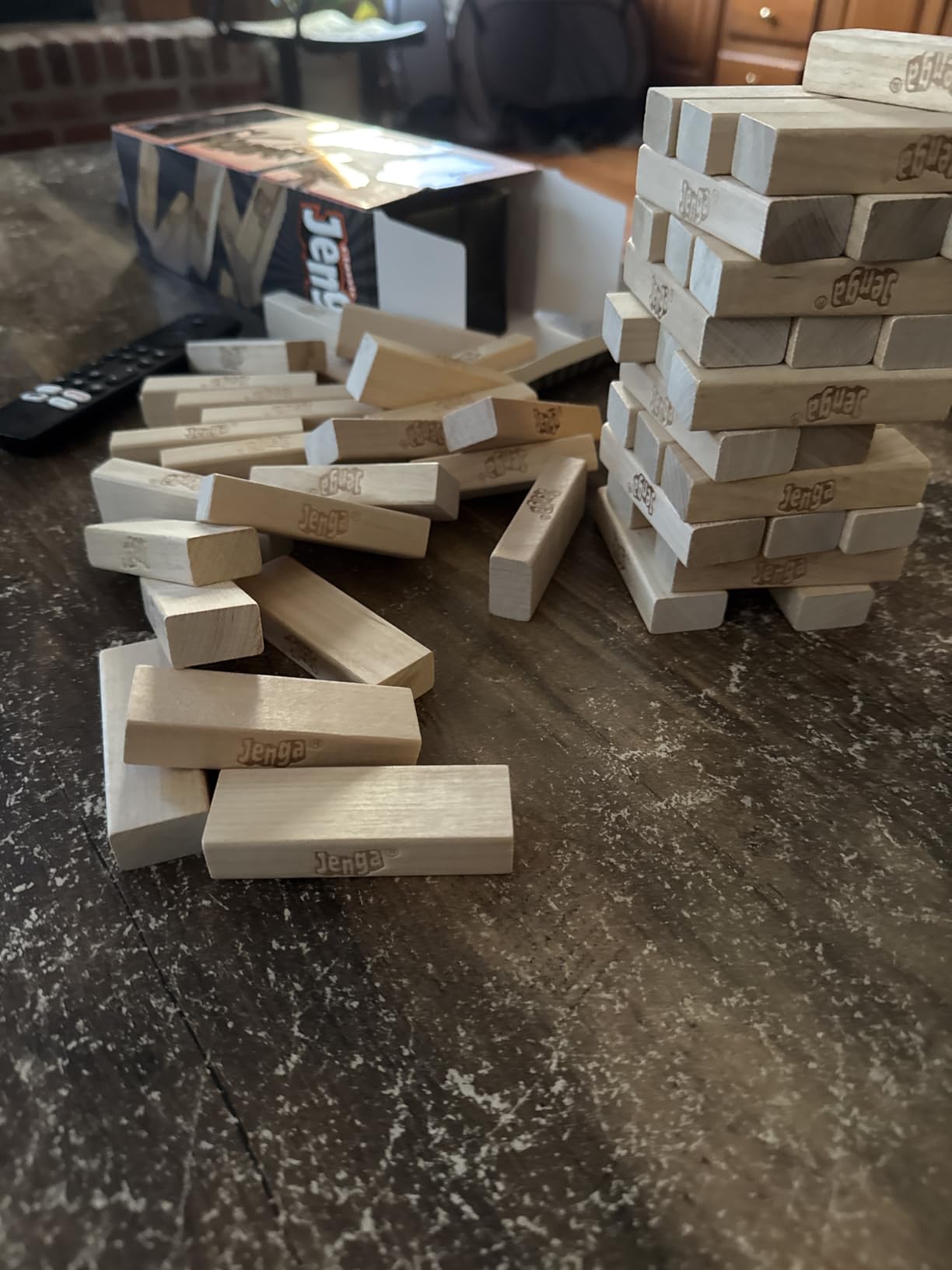
The build quality is the real differentiator. These are hardwood blocks sized consistently enough that a level stack is possible, which matters because a lumpy tower turns every round into a coin flip. The set includes 54 blocks and a stacking sleeve, and the whole thing collapses into a package you can put in a carry-on bag.
The box lists 2 or more players with no stated ceiling, so two people can play it and ten people can play it. The only variable is how long you are willing to keep removing blocks before someone drops one, and on our table this was regularly the game adults asked to finish after the others had been put away.
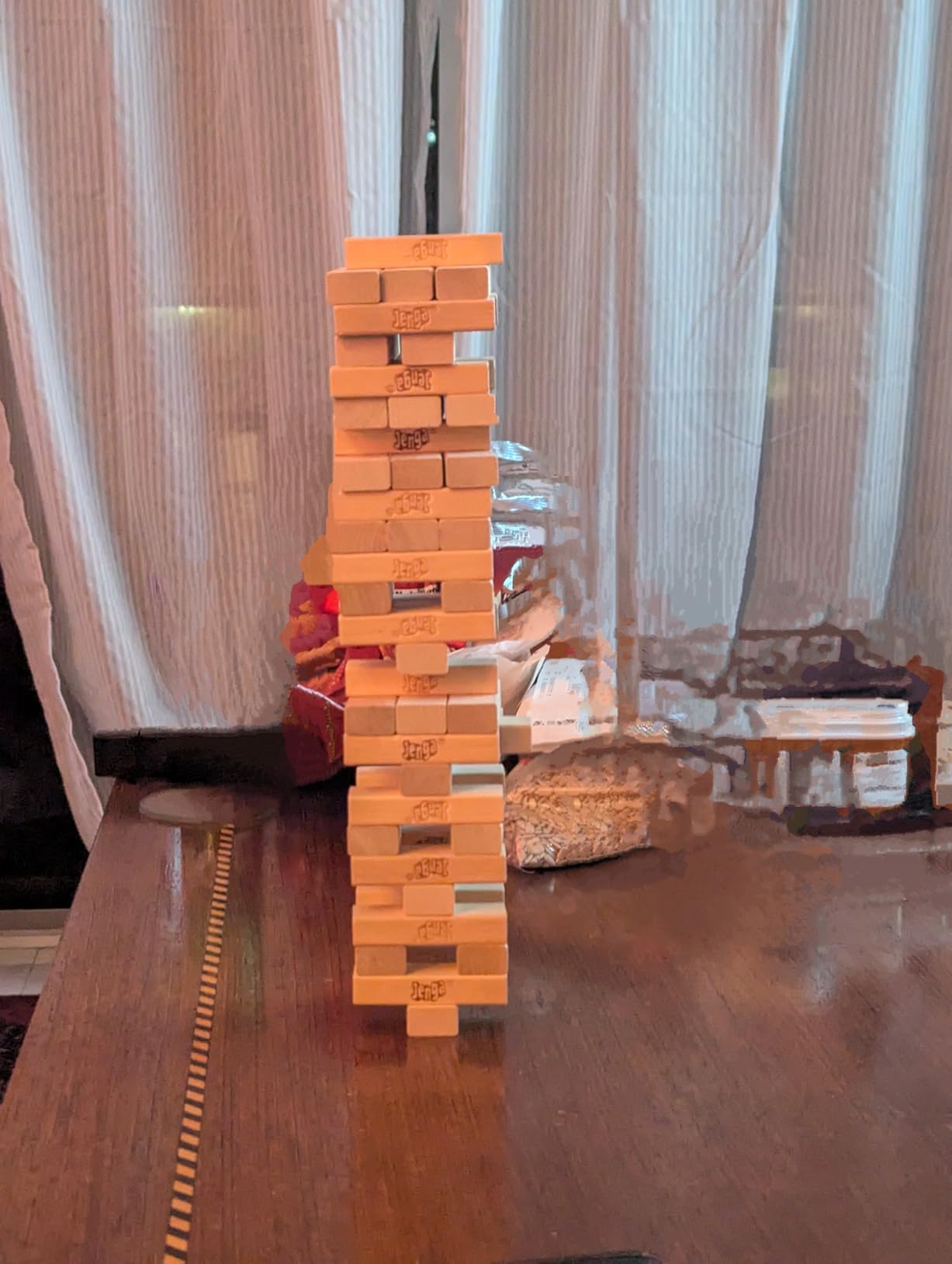
How long it takes to teach and how long a round runs?
The entire teach is one sentence: take a block from the bottom, put it on top, do not knock the tower over. Children as young as 6 grasp it immediately, and older players who dislike rules overhead have nothing to sit through. A round takes about a minute, which makes this the quickest loop in the guide.
That short loop is also its weakness in some houses. Ten minutes is shorter than many children want to sit still for, so a family with restless kids may need to run several games back to back before everyone has had a turn.
Who should skip it and when?
Skip it if your household is noise-sensitive. The collapse is loud, and it gets louder as the tower gets taller, so it wants a carpet or a rug rather than a hard dining table in a flat. It is also a poor choice for a family that wants a game with any narrative or thematic content, since the tension is entirely physical.
Do not expect it to occupy a whole evening. Jenga is a 20-minute anchor game that works best as the opener or the closer of a game night, paired with something like Rummikub or Azul that holds the table afterwards.
2. SKYJO: The Best Pick for Families With a Wide Age Gap
magilano SKYJO, Fun Card Game for Young and Least Young, Fun Game Parties in The Circle of Friends and Family.
150 cards, notepad and manual
2 to 8 players
About 30 minutes
Ages 8 and up
Pros
- Works across a wide age gap without anyone feeling outmatched
- Very short teach time
- Compact box packs for travel
- Doubles as light mental math practice
Cons
- New cards feel stiff for the first few plays
- Costs more than many comparable card games
SKYJO answers a problem this category keeps failing at, which is a 7-year-old and a 67-year-old playing the same game without either of them coasting. The scoring system punishes having too many cards, so the better player is the one who discards, not the one who hoards.
The mechanic is simple. Everyone holds cards face down, turns one at a time onto a shared pile, and the goal is to end a round holding the fewest points. A player who has already turned over all their cards cannot score, so there is a real reason to take a risk early instead of playing safe.
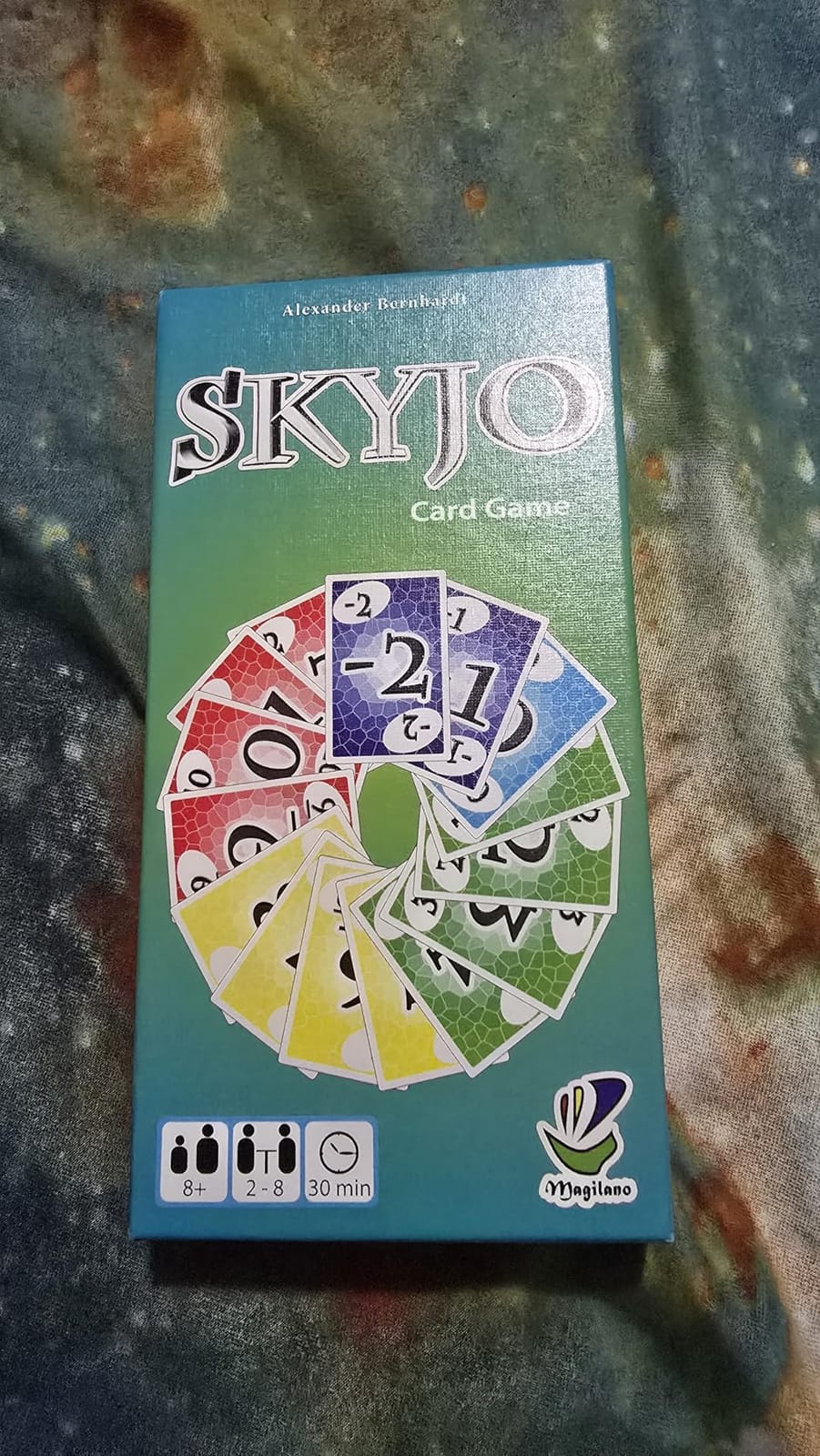
A full game runs roughly half an hour, and each round is only a slice of that, so it fits a school night. The pace is the appeal: nobody sits waiting, because the next card is always coming, and a high-value card produces a reaction from players who have not said a word all evening.
It teaches in a couple of minutes and needs no reading, since the instructions are picture-based. That matters when grandparents are at the table and nobody wants to be the one asking what the symbols mean.
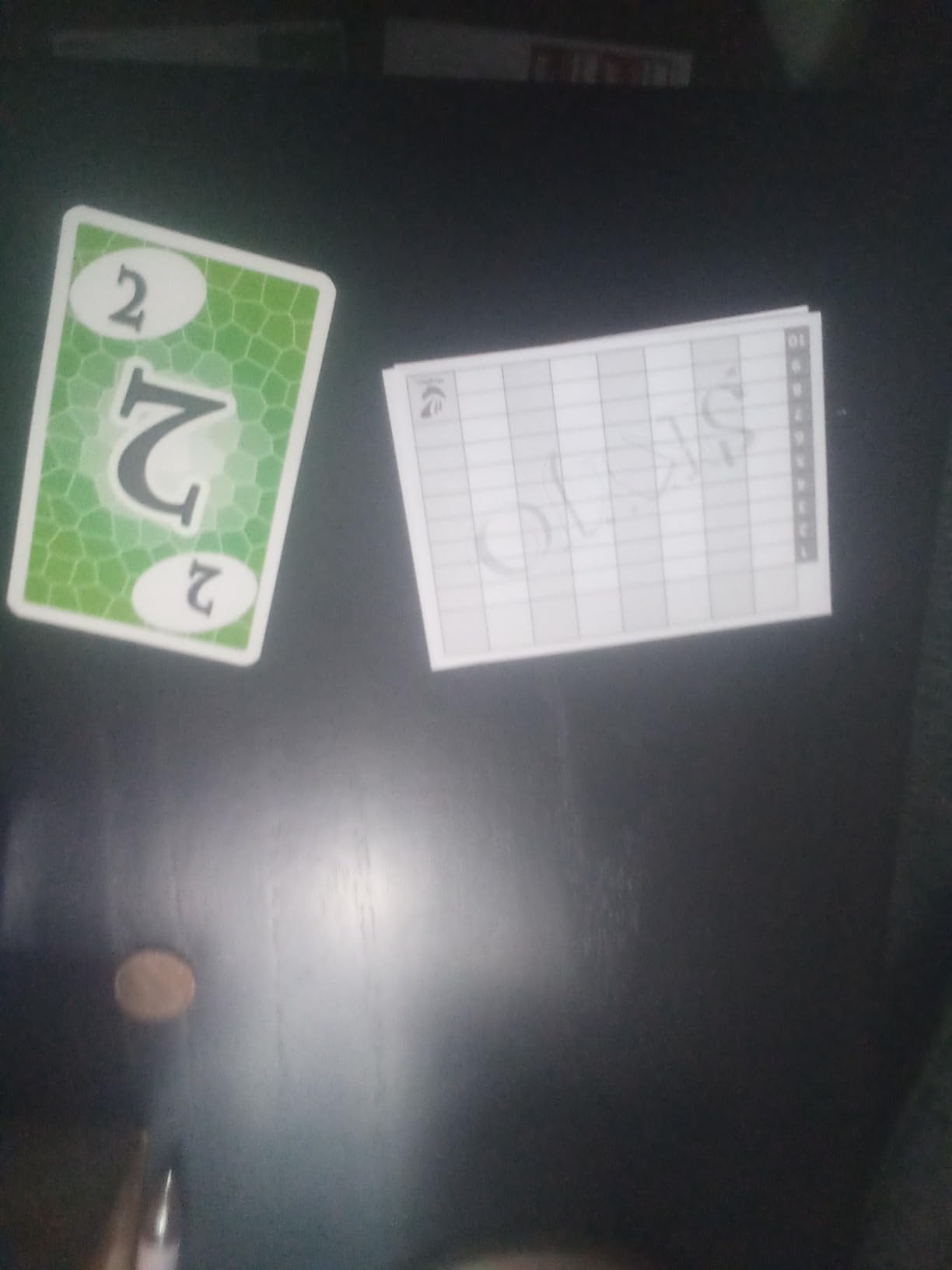
How it handles the 5-and-9 problem specifically?
This is the game we hand to a family with two kids five years apart. The five-year-old and the nine-year-old are genuinely competitive in the same way, because the discard decision is identical for both, and a run of small cards helps either child without the other feeling managed.
It also works when a fourth player joins. The included components cover 150 cards, a notepad, and a manual, and scoring runs on a simple addition at the end of each round, which quietly practices number work without turning into homework.
When it is the wrong choice?
Skip it if your group prefers games with hidden information and bluffing. SKYJO has no deception layer at all; everything is visible, so a family that lives for social deduction will find it flat after a few rounds.
Also skip it if card finish matters a great deal to you. Reviewers repeatedly note that the new cards feel stiff and need some play before they flex, and several comment that they cost more than other card games of similar scope.
3. UNO: The Best Value Game for Families Who Add Guests
Mattel Games UNO Card Game, Ages 7+, 2-10 Players
112 cards and instructions
2-10 players
Ages 7 and up
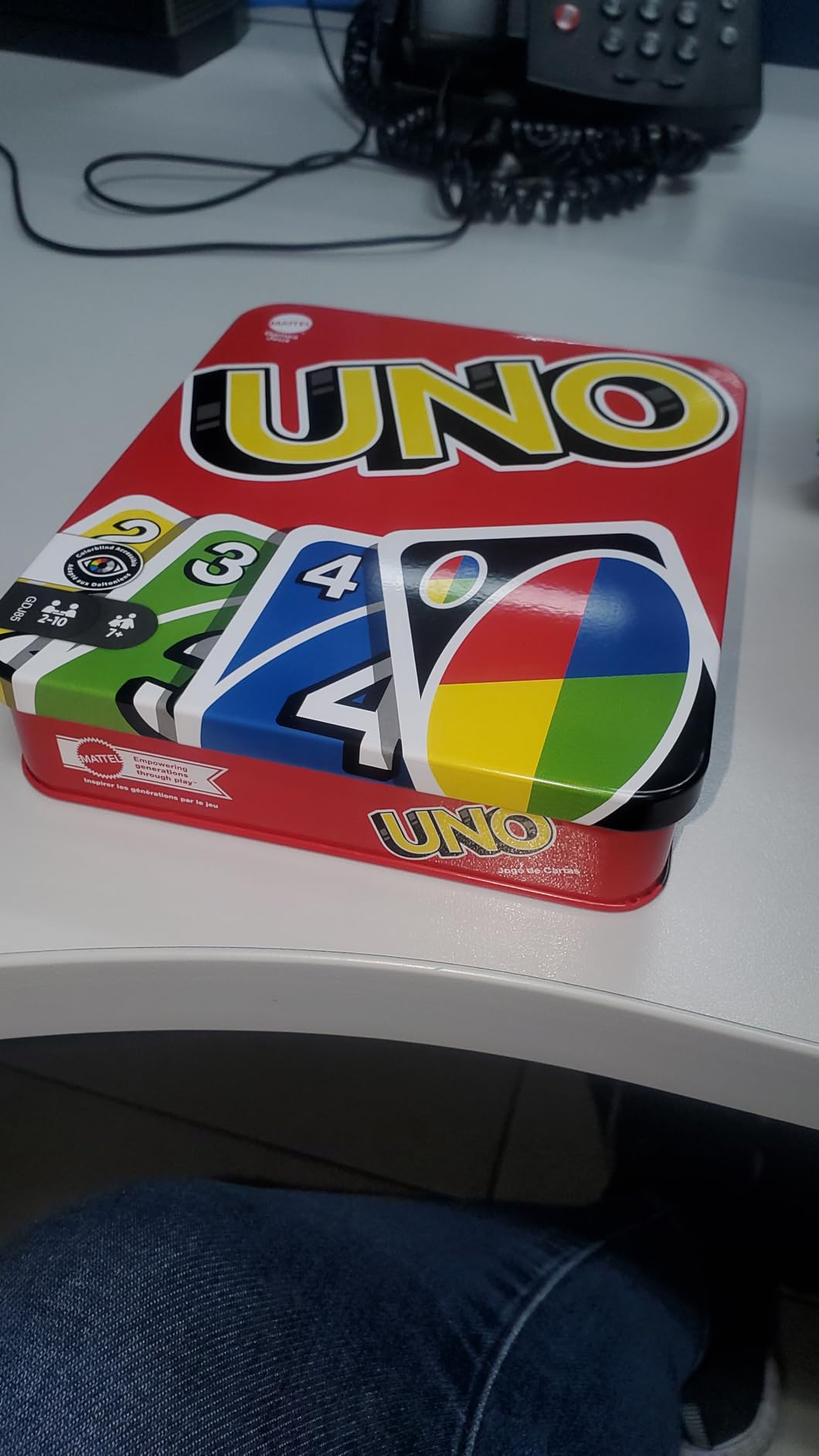
Tin packaging
Pros
- Scales from 2 to 10 players
- Action and Wild cards create sudden swings
- Color-blind friendly symbols on every card
- Three blank Wild cards let families invent house rules
Cons
- Smaller blind-spot games often end on a lucky final card
- Players can stagnate if they hoard wild cards
Few games absorb a fluctuating table size this cleanly. If three people show up, it plays. If ten people show up, it still plays, and everyone has a hand worth holding. For a family that grows and shrinks, that flexibility is worth more than depth.
The rules are the ones everyone half-remembers: match the top card by color or number, and say UNO when one card remains. It teaches in about a minute, and the first player to 500 wins. The deck includes 112 cards plus instructions, packed in a tin that survives being shoved in a bag.
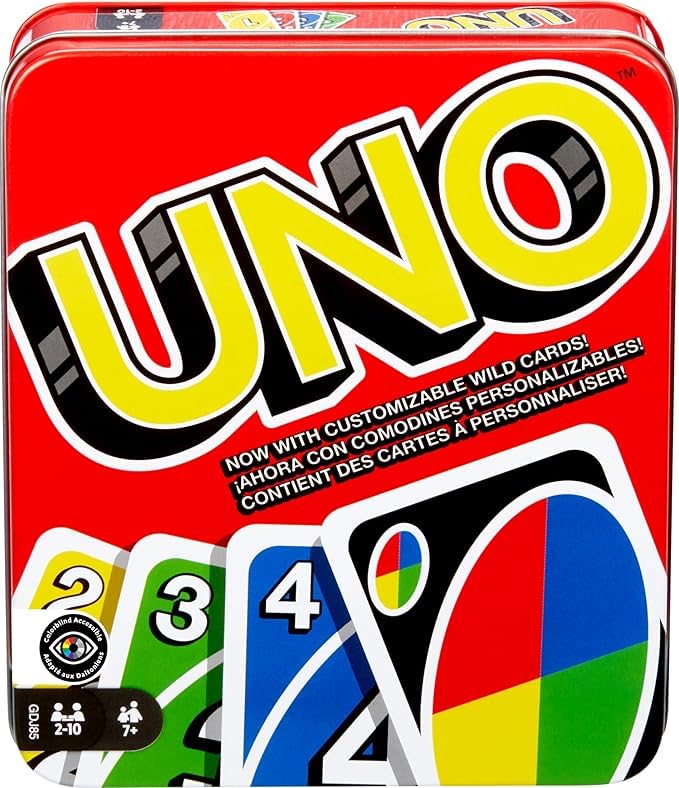
Two design choices matter more than they sound. The first is the color-blind accessibility: every card carries a graphic symbol as well as a color, so a child with color vision differences is not quietly excluded from matching. The second is the three blank Wild cards, which let a family invent their own rules for players who have learned every standard one.
Action cards are what keep it from being a pure luck-fest. Reverse and skip cards mean a strong lead can be dismantled in a single play, and that unpredictability is what adults actually respond to across a long session.
Where it fits and where it does not?
UNO fits holiday gatherings, birthday parties, and any table with a wide spread of experience. It works with two players on a quiet evening and with ten on a noisy one, and it needs no table space at all, which makes it the fallback when the dining table is covered in homework.
It is a poor fit for a group that wants a game with real decisions. The strategy sits in hand management, and a player who hoards Wild cards can stall the deck badly. In a household of older children who have moved on from it, expect to reach for something else after a few rounds.
What to know before the first game?
Plan for the pace rather than the rules. Games often end because a player draws the exact card needed, and a group that expects a clean 15 minutes gets frustrated. Setting a house limit or playing to a lower target score smooths that out.
Decide in advance whether teams are allowed. With five or more players, two-player teams turn the same deck into a much better experience, because the tension moves to the partnership instead of the individual hand.
4. Taco Cat Goat Cheese Pizza: The Best Slap-Card Game for Loud Family Rooms
Taco Cat Goat Cheese Pizza Card Game by Taco Cat Games, Age 7+, 2-8 Players
2-8 players, ages 7 and up
10-15 minute rounds
Compact card deck
Pros
- Rules take under a minute to learn
- Short rounds allow several games in one sitting
- Compact enough for road trips and vacations
- Works from young children through grandparents
Cons
- Gets loud and physical
- Animal action cards feel chaotic for calm households
- Younger players slap the table rather than the pile
This is among the quickest entries in the guide, and for a household that plays constantly it gets used more often per box than the longer games further down the list. The whole premise is a chant: players call out the cards in order, and when the spoken word matches what lands on the pile, everyone slaps it.
What makes it work is that the slap resolves the turn without anyone being designated. Nobody is out, nobody is in, and the last person to slap picks up the pile. There is no setup beyond dealing cards, which matters when the adults running the evening are also making dinner.
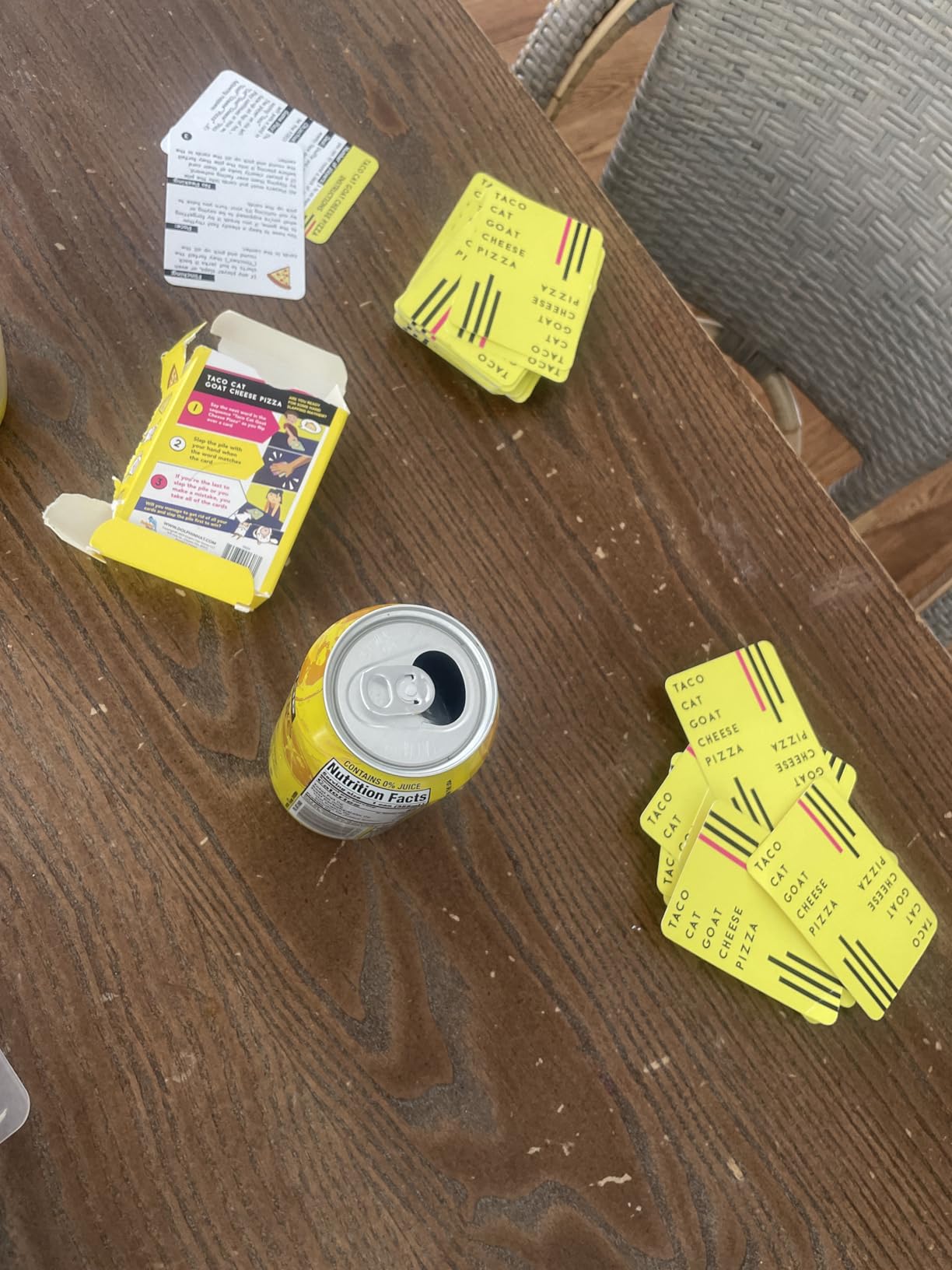
Rounds run 10 to 15 minutes, so three fits into an hour and the table gets through the deck. The manufacturer lists ages 7 and up, but the format itself works with much younger children who simply slap on anything, which is how it ends up in so many family gift lists.
The deck is small and light enough for a backpack, and it works on a picnic blanket as well as on a table. That portability is genuine, not aspirational.
How it behaves with younger children?
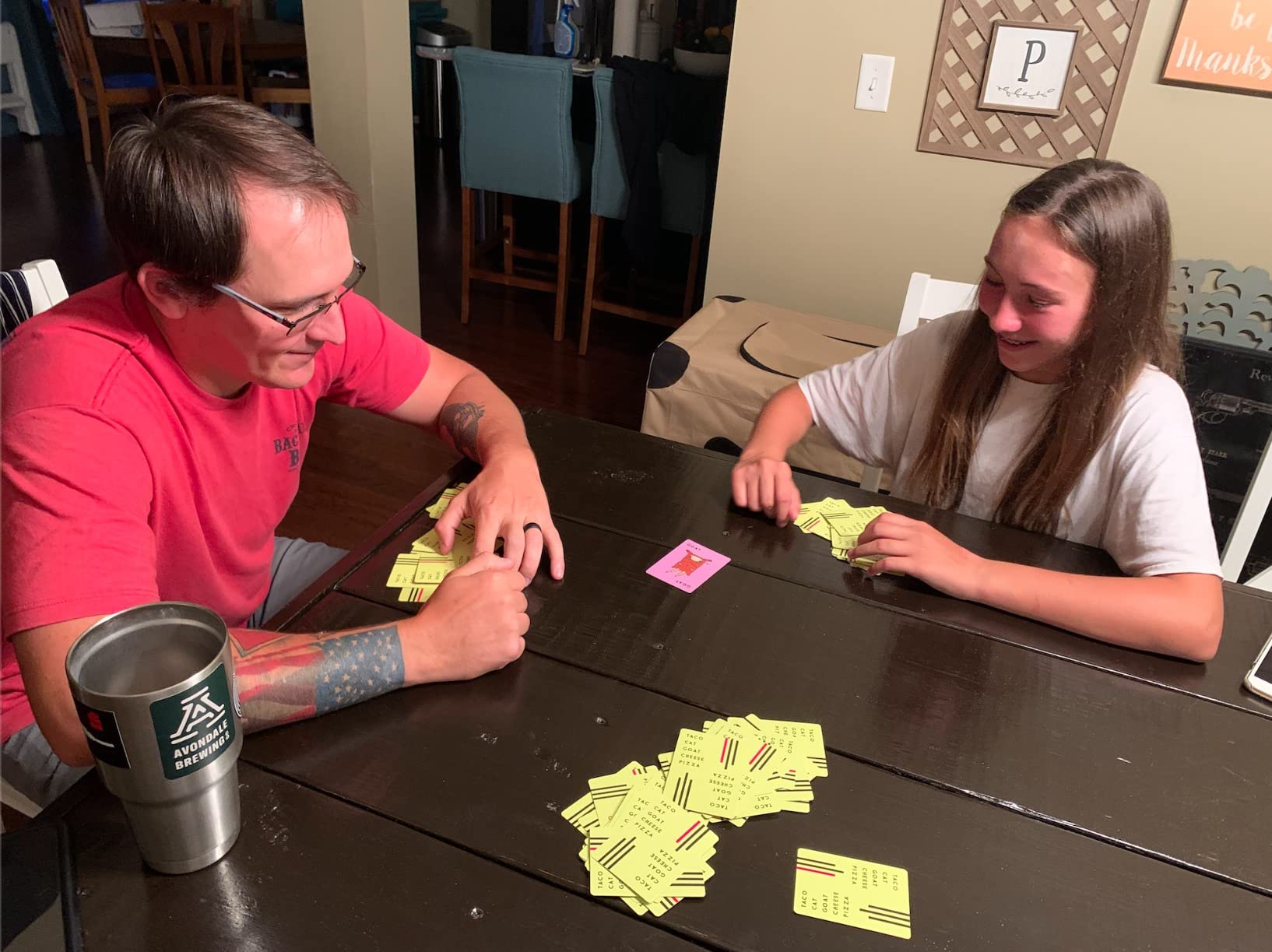
Expect volume. Slapping is the point, and younger players frequently slap the table rather than the pile, which adds a percussive element the box does not advertise. Reviewers describe the game as loud, physical, and chaotic, particularly with children under seven.
The animal action cards, including Gorilla, Groundhog, and Narwhal, exist to break the rhythm, and in a house that thrives on that, they are the best part. In a calm household they read as noise, so the same deck can be a blessing or a nuisance.
Who should pass on it?
Skip it if anyone at the table is sensitive to losing or to raised voices. The design mostly avoids direct competition, but a child who gets picked up with a big pile still reacts, and there is no cooperative structure to soften it.
Also consider the physical deck before buying. At least one reviewer reported receiving a smaller stack of cards than the listing photos suggest, so check the card count against the listing rather than the photography.
5. SEQUENCE: The Best Pick for Gatherings of Six Players or More
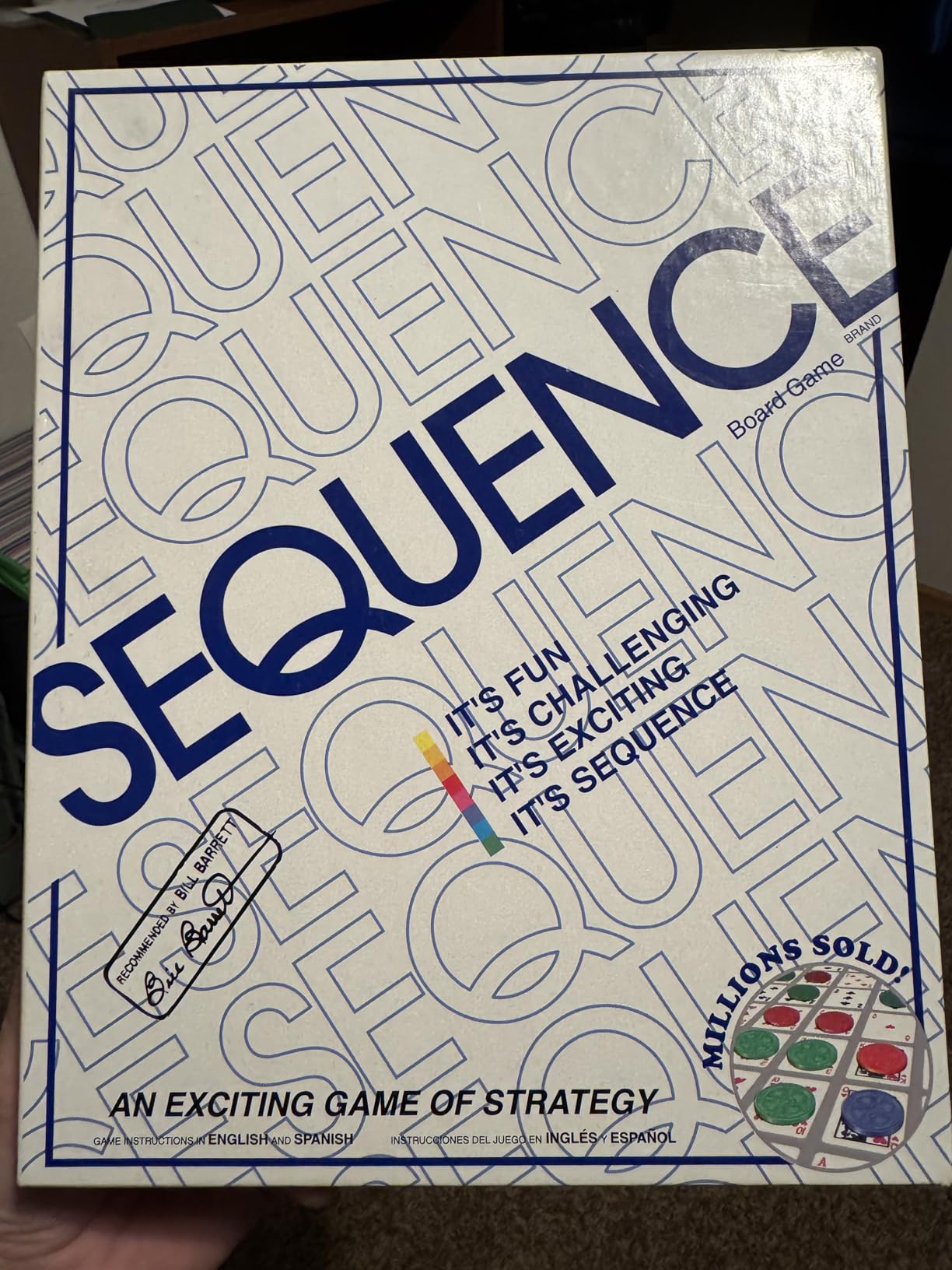
SEQUENCE- Original SEQUENCE Game with Folding Board, Cards and Chips by Jax ( Packaging may Vary ) White, 10.3″ x 8.1″ x 2.31″
2-12 players, ages 7 and up
Folding board, 135 chips, 2 card decks
Teaches in five minutes
Pros
- Scales from a two-player duel to teams of 12
- Easily learned in under five minutes
- Blocking play makes each game feel different
- Folding board stores flat and travels well
Cons
- Round chips carry a choking hazard warning
- Card and board content feels limited to seasoned players
Think of a holiday table with a grandmother, four cousins, two parents, and a teenager. SEQUENCE’s listed range runs from 2 to 12 players, and its team mode is what keeps a large group from splitting into a fast half and a bored half.
The mechanic is one sentence: play a card from your hand, place a chip on the matching space, and get five in a row. The difficulty is that every chip you take is a space an opponent cannot use, so blocking is the entire game once players stop playing purely for their own line.
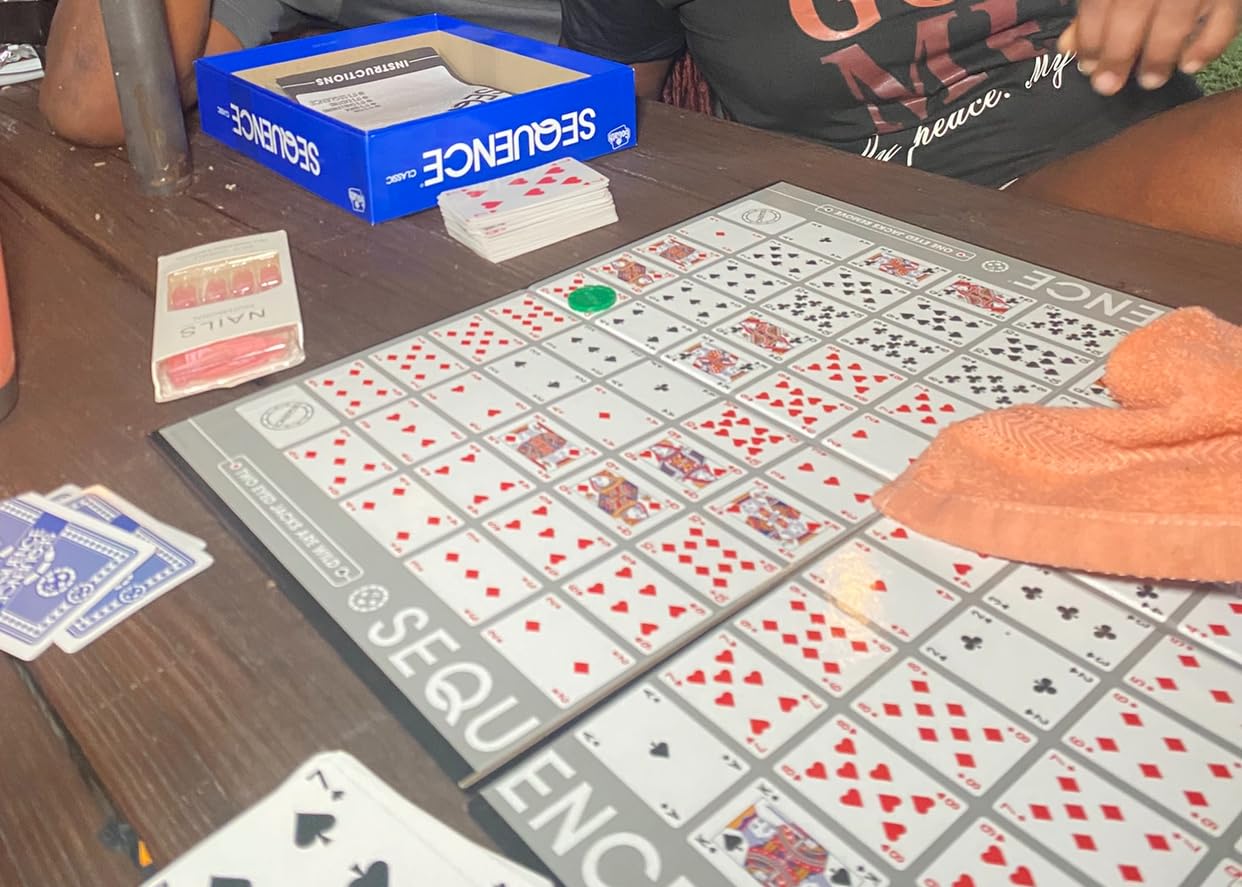
Children pick it up in minutes while adults still find decisions worth making. Reviewers describe it as easy enough for children and challenging for adults, and our own table behaved that way across every age present.
Components hold up well: a folding board measuring 19.75 by 15.25 inches when open, 135 playing chips split across three colors, two decks of cards, and instructions. The board folds flat for storage, which solves the shelf problem that stops most families buying a second game.
When to run it in teams and when not to?
Above six players, teams are close to mandatory. Two-versus-two with a partner across the table produces conversation and negotiation, which keeps eight people engaged, while eight individual players mostly talk to themselves and start drifting.
Below five players, play individuals. The blocking pressure is sharper when you can see the whole board, and a duel between a parent and a teenager makes the strategy land properly.
Safety and long-term variety
Check the components before handing it to a child under three. The listing carries a choking hazard statement for small parts, which applies to the round chips, and the same caution appears on the Sorry! entry below.
Long-term players run out of things to do. Reviewers who have owned SEQUENCE for years ask for expansion decks or additional card sets, because the base content supports dozens of games but not hundreds.
6. Rummikub: The Best Family Game for Pattern Recognition and Planning
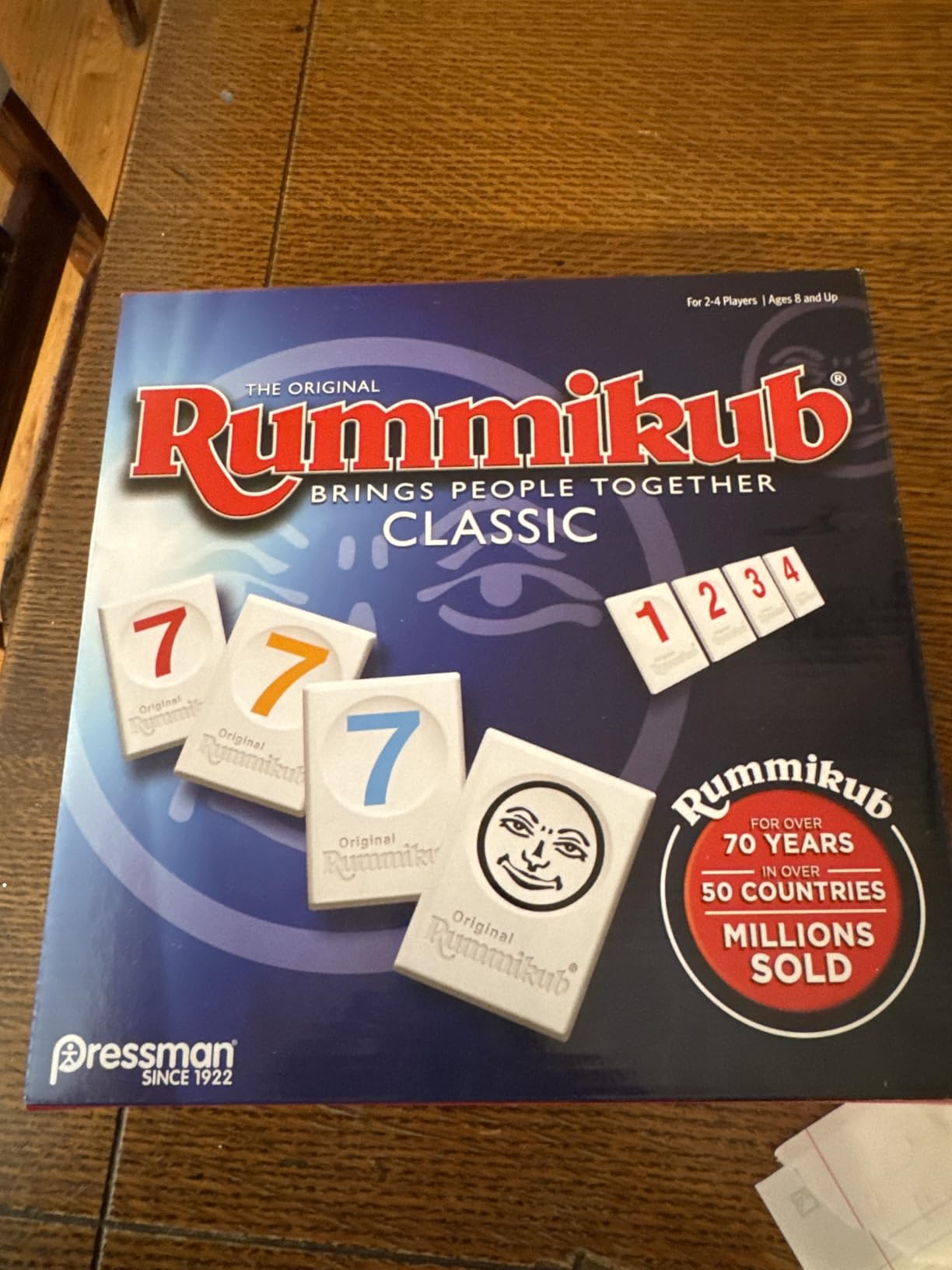
Pressman Rummikub – The Original Rummy Tile Game | Exciting Family Game of Strategy and Luck | Promotes STEM Skills | For Kids, Teens, Adults | 2-4 Players, Ages 8+
2-4 players, ages 8 and up
Numbered plastic tiles
Build runs and groups
Pros
- Mixes strategy and luck so every age competes fairly
- Quick to teach and fast rounds
- Reinforces sequencing and pattern planning
- Plays well with two adults
Cons
- Tiles must be shuffled and redealt between rounds
- Games can stall if the table plays too cautiously
Rummikub is the quietest competition in this guide. Everyone holds a rack of numbered tiles, places them in runs of consecutive values or groups of the same value, and the first player to empty their rack wins.
What makes it family-friendly is that luck decides the opening hand and skill decides everything after it. A child with bad tiles can draw their way into a playable position, and an adult with a strong hand still has to see it, which keeps the outcome legible to everyone at the table.
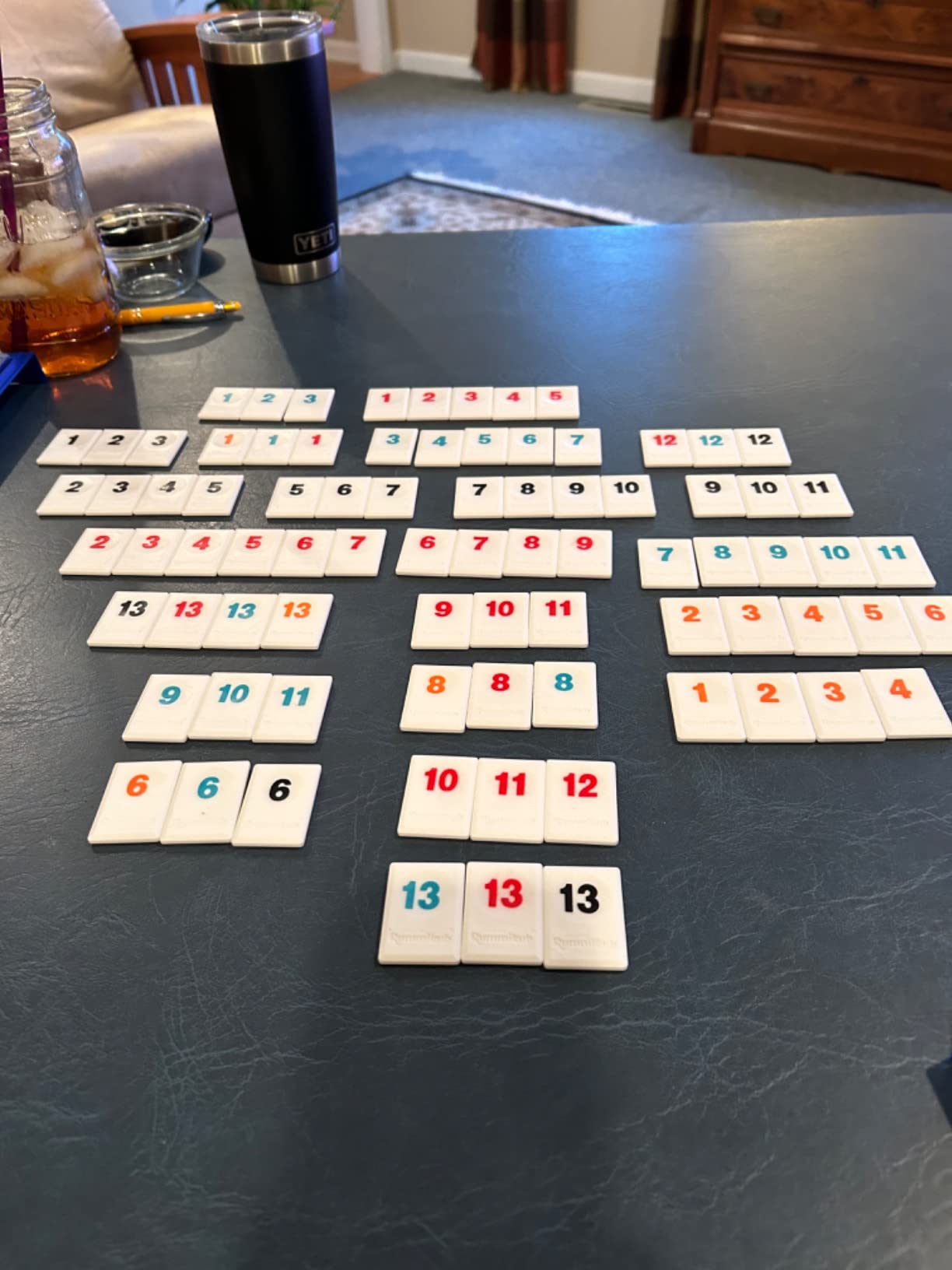
The listed player range is 2 to 4. At four players the draft pressure from the center pile is highest, and three is a serviceable compromise.
Rounds are short, but the real time cost is the reset. Tiles get returned, shuffled, and dealt between every game, and that shuffle is the one piece of tedium in an otherwise clean design. Budget a few minutes between rounds and nobody minds.
Best played with what age mix
The manufacturer lists ages 8 and up, and that is roughly right for a two-child family. A 6-year-old can handle the runs concept, but will want a hand in choosing which tile goes where, which is a legitimate way to play it as long as you accept some help.
It also works as an adult game. A parent and a teenager can finish a game on a weeknight without anyone feeling like they are supervising, and the teenager usually asks for a rematch.
When the table will not enjoy it?
Skip it if your group cannot sit still through a shuffle. There is no physical action, no shouting, and no hidden information, so the energy in the room has to come from the puzzle itself. In a rowdy household it will lose to something like Taco Cat Goat Cheese Pizza every time.
Also watch for cautious play. If the table refuses to play the tile that completes a long run, games stall and drag. A gentle house rule about using your highest possible tile prevents that without adding a real rule.
7. Sorry!: The Best Board Game for Families With Children Aged Six and Up
Sorry! Board Game for Kids Ages 6 and Up; Classic Hasbro Board Game; Each Player Gets 4 Pawns; Family Game
2-4 players, ages 6 and up
Board, 12 pawns, 45 cards
No batteries required
Pros
- Nostalgic for adults and simple for children
- Quick teach and fast setup
- Many outcomes from the cards drawn
- Compact board and box store easily
Cons
- Small pawns and cards carry a choking hazard warning
- Outcomes are heavily luck-driven
Sorry! earns its place through nostalgia and simple chance. Adults who played it as children teach it to their own kids in about a minute, and that shared memory does more for a family game night than any modern mechanism.
Each player moves four pawns around a track using a 45-card deck, aiming to get all four home first. The card options are simple: move, move back, switch, skip, and take an extra turn. You can also send an opponent’s pawn back to start, which is the source of both the fun and the friction.
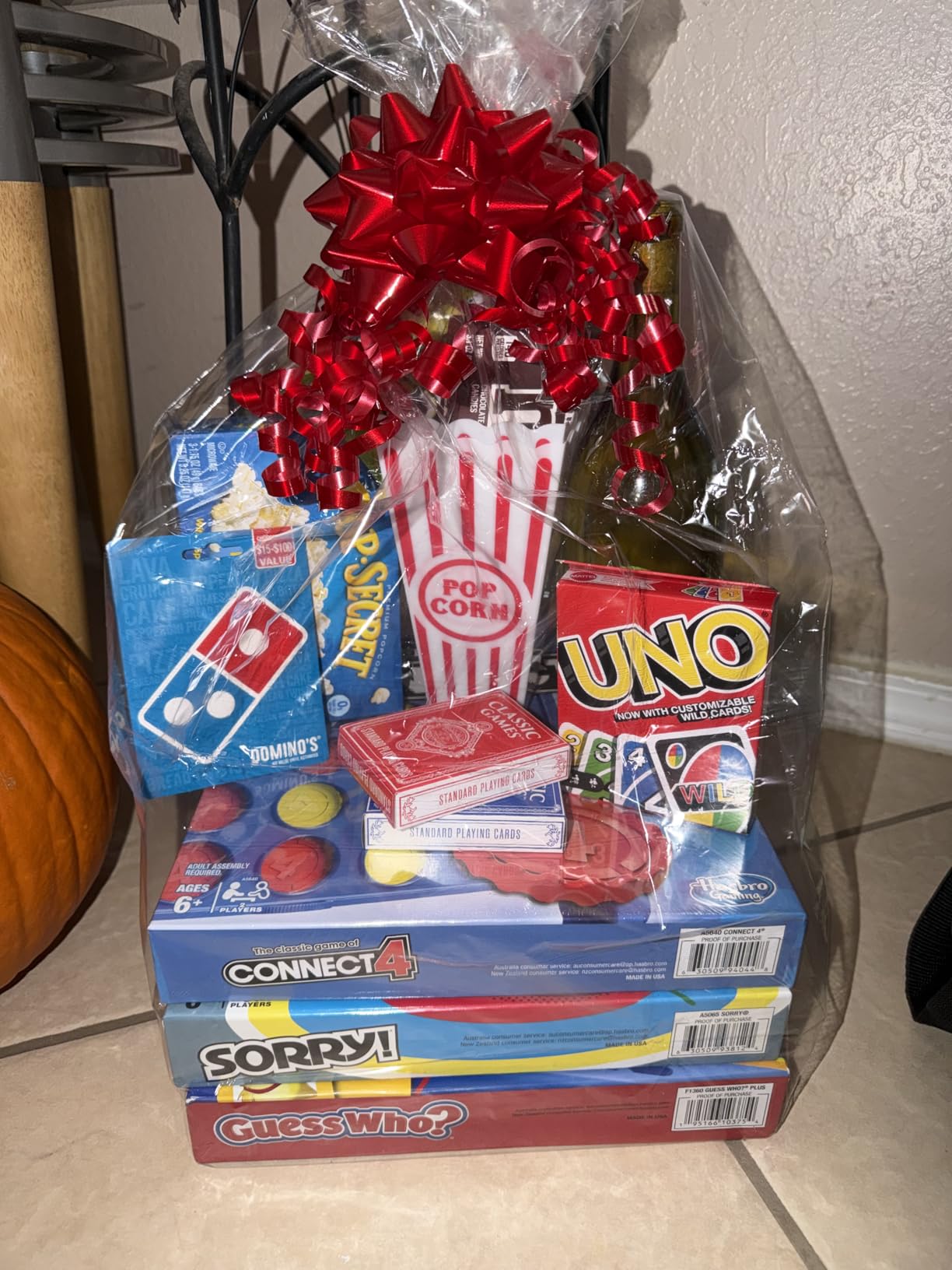
Luck dominates, and that is both the strength and the limitation. A child who draws badly recovers quickly, and nobody sits out while an adult plans five moves ahead, because the planning space here is small and shallow by design.
It is a genuinely quick game. Setup takes a couple of minutes, the box measures just over 10 inches square, and no batteries are required, which makes it a good fit for a table that has to be cleared for homework afterwards.
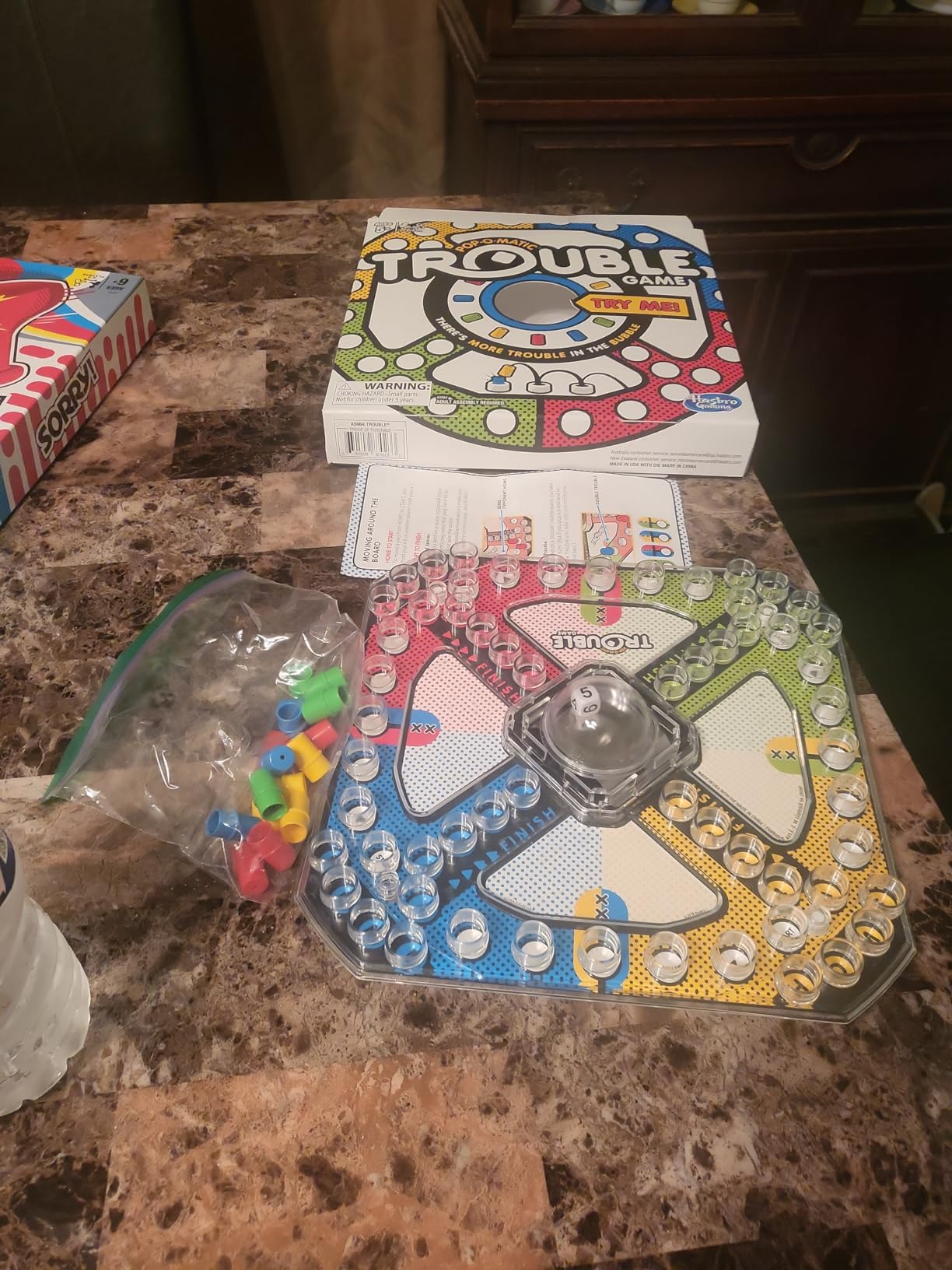
Who this suits and who it frustrates?
This is the pick for a household with a 6-year-old and two adults who want everyone smiling rather than strategizing. The recommended age is 6 and up, and the race format means a young player is competitive almost immediately.
It frustrates players who like control. Reviewers note consistently that outcomes depend more on the card drawn than on planning, so a group that enjoys a tight decision every turn will find this thin after two games. For that group, Rummikub or Azul is a better fit.
Handling the small parts
The listing carries a choking hazard statement for small parts covering the pawns and cards, so keep it away from children who still mouth objects. The board itself is plastic and durable, and there is nothing electronic to fail.
Be aware that sending a pawn back to start is the moment that causes arguments. A gentle rule of announcing the target pawn out loud before the card resolves prevents most of the disputes we saw across repeated plays, and the arguments came from the surprise rather than the rule.
8. Battleship with Planes: The Best Two-Player Game for a Quiet Evening
Hasbro Gaming Battleship with Planes Strategy Board Game for Ages 7 and Up (Amazon Exclusive)
2 players, ages 7 and up
2 portable battle cases, 10 vessels, 2 planes
168 miss pegs, 84 hit pegs
Pros
- Airplane targets add depth to the classic format
- Two portable battle cases make setup fast and travel simple
- Deduction and planning give it real substance
- Nostalgic twist for adults and kids
Cons
- Strictly a two-player game that leaves larger groups out
- Small plastic components carry a choking hazard warning
- Guessing can test patience
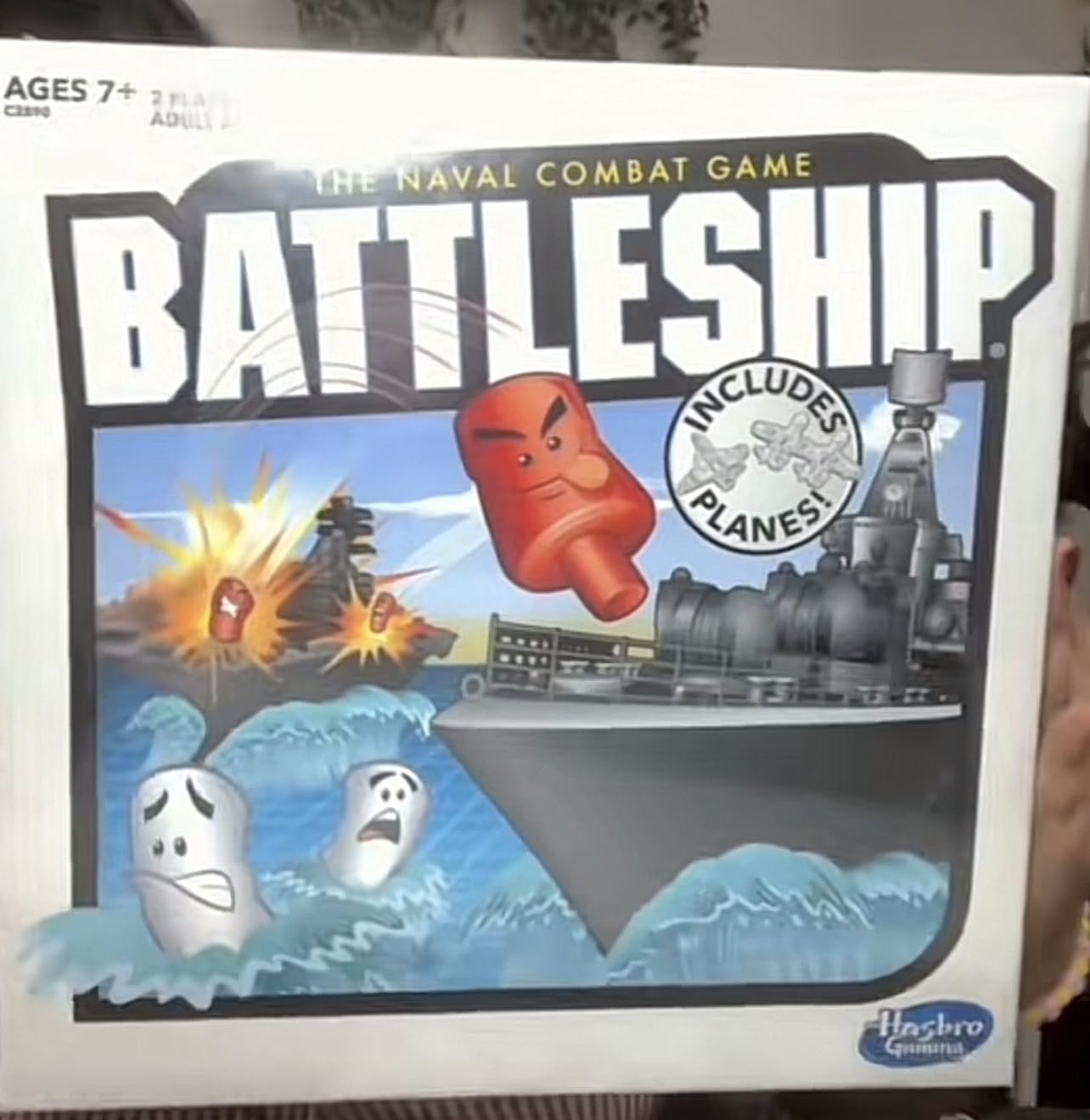
Battleship is the one pick here that is exclusively for two, so read that before you buy it for a group. The recommended age is 7 and up, and the format is a duel: place your fleet secretly, then take turns guessing the opponent’s grid.
This edition adds airplanes to the classic fleet-only original, which changes the search pattern. A grid with more target types takes longer to crack, so the endgame is less about luck than about the pattern a player has started to see.
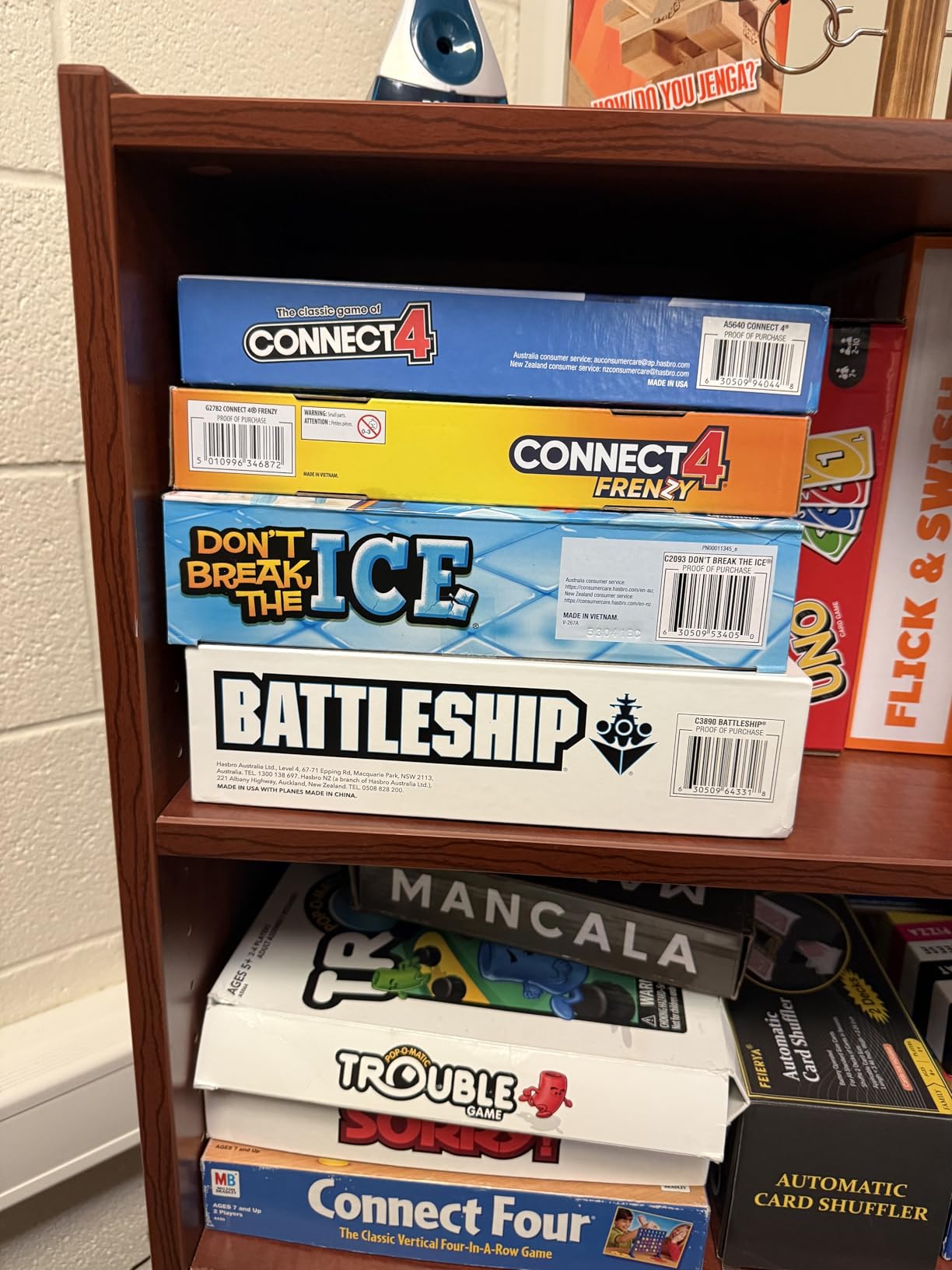
Components come in two portable battle cases that double as storage, holding 10 plastic vessels, 2 plastic planes, 84 red hit pegs, and 168 white miss pegs. That case design is genuinely useful: setup and teardown are quick, and the whole thing packs flat for a trip.
What gives it more substance than the childhood version is the deduction. Players develop a search discipline, and the best moments come from working out that a run of misses on one row only makes sense if the fleet is angled.
Why it is worth the table space it takes?
It is a screen-free evening option for a parent and a child, or for a parent and a teenager. A single round is long enough to feel like an event and short enough to finish before bedtime, and neither player is waiting on anyone else for their turn.
It also travels unusually well for a plastic board game. The two cases replace an open board entirely, so there is nothing to fold or lose, and a car journey or a wait at a restaurant works fine.
Where it breaks down?
It breaks down for groups larger than two, and no expansion fixes that. In a family of five, it becomes a two-player game watched by three, which is a quick way to end an evening early.
It also needs patience from players who dislike blind guessing. Reviewers flag that the guessing format can test players who would rather make informed board decisions, and the small plastic components carry a choking hazard warning for younger children.
9. What Do You Meme? Family Edition: The Best Pick for Teens and Adults
WHAT DO YOU MEME? Family Edition by Relatable
3 or more players, ages 8 and up
300 caption cards, 108 photo cards
Includes easel
Pros
- Intuitive and fast to learn
- Family-friendly humor for mixed-age groups
- Keeps everyone off screens and laughing
- Good component size and simple setup
Cons
- A portion of the meme cards are dull or sad rather than funny
- Cards run large and crowd the table
This is the entry to reach for when the hardest person at the table is a teenager or an adult who does not consider themselves a gamer. Nobody has to learn a mechanic. Everyone plays within a minute of the first round, and the entire game is people making each other laugh.
The format is simple: each round shows a photo card, every player picks a caption card that fits, and a rotating judge picks the combination they find funniest. The rotating judge matters more than it sounds, because the same photo produces a different winner depending on who is deciding.
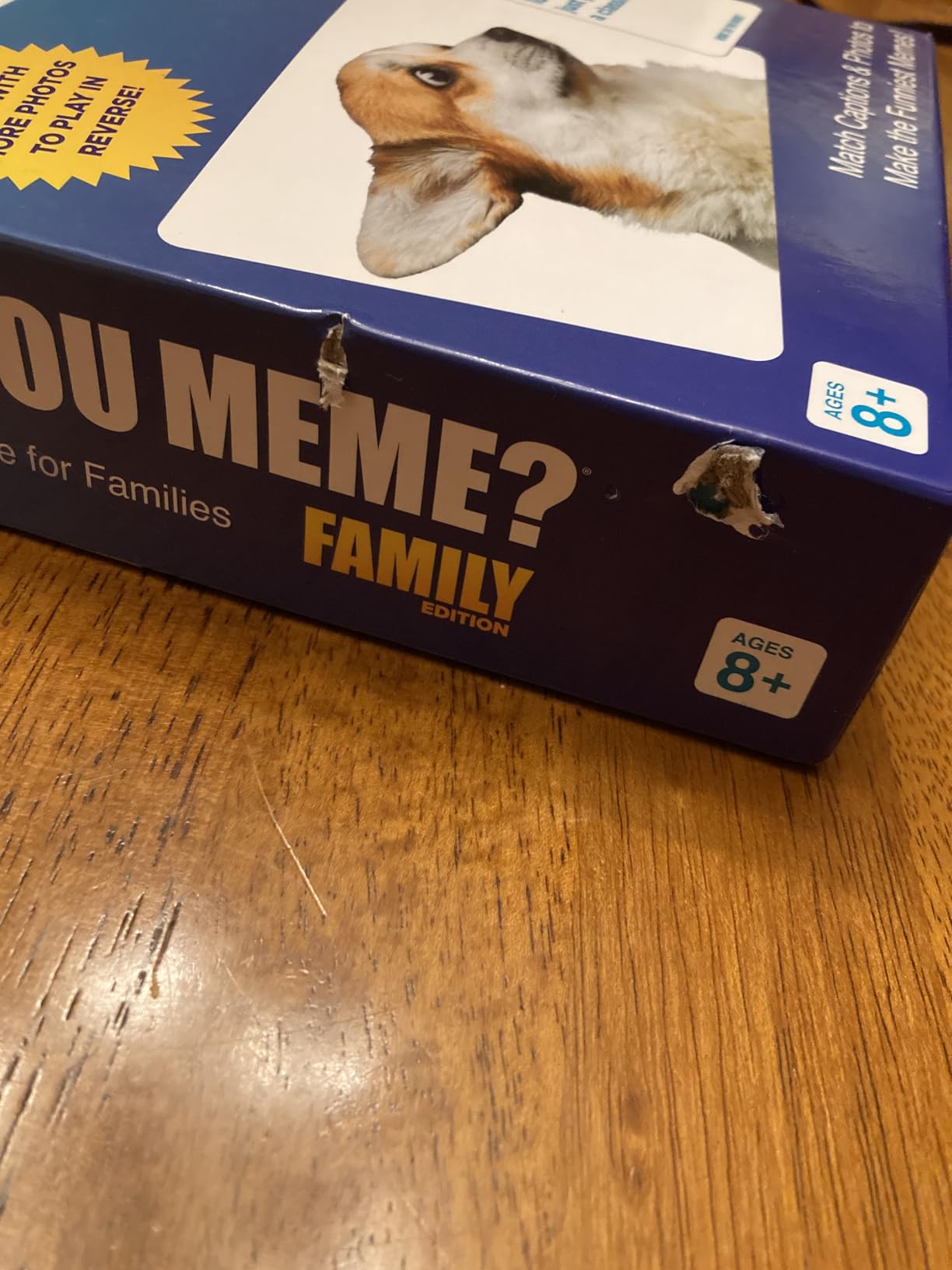
The edition includes 300 caption cards and 108 photo cards, plus an easel, and the intended player count is 3 or more. The manufacturer’s recommended age is 8 and up, and the listing describes the age range as kid, teen, and adult, which matches how it plays in practice.
It is also worth having when a game needs to go anywhere. It works on a picnic table, at a reunion, or in a waiting room, because the setup is cards on a stand and nothing else.
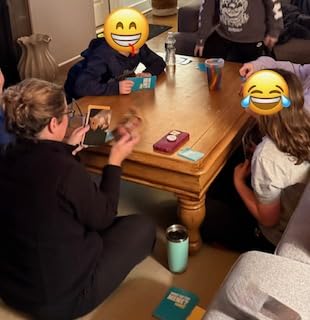
How it handles mixed ages without babying anyone?
The humor is broad enough that a 9-year-old and a grandparent can both contribute without either of them feeling talked down to. That is the whole reason it works where many party games fail, and reviewers consistently single out its suitability for family reunions and group events. The comedy comes from recognition, so the more references a player has seen, the more options they have.
Adults tend to win it, not because they are funnier, but because older players have seen more references. Expect that, and decide in advance whether it matters to you, because it can sour a table if a nine-year-old keeps finishing last.
The honest drawbacks
Skip it if your group dislikes internet humor. A portion of the caption cards are described by reviewers as dull or sad rather than funny, and the tone is not adjustable, so you cannot hand-select a cleaner deck.
Mind the table space as well. The cards are larger than a standard playing card, so on a small table the pile becomes the dominant object. This entry also holds the lowest rating in the guide at 4.6 out of 5, and the reason is consistently the card content rather than the design.
10. Bananagrams: The Best Word Game for Families on the Move
Bananagrams Classic Word Game, 144 Tiles in Banana Pouch, Travel Game
1-8 players, ages 7 and up
144 letter tiles in a pouch
About 15 minutes
Pros
- Very easy to pick up with fast-paced rounds
- Works for 1 to 8 players of mixed ages
- Banana pouch makes it genuinely portable
- Practises spelling and vocabulary without feeling like school
Cons
- Contains small pieces and is not suitable for children under 3
- Letter markings vary in legibility
Bananagrams holds the highest rating in this guide at 4.9 out of 5, and the reason is that it converts a familiar activity into a race. Everyone flips tiles from a pouch, tries to build words, and the goal is to use your entire rack while emptying the center pile.
Because a player can rearrange any of their tiles, the game tolerates different skill levels better than most word games. A child who knows short words plays a valid strategy, and an adult playing serious anagrams is not disqualified by the same rules.
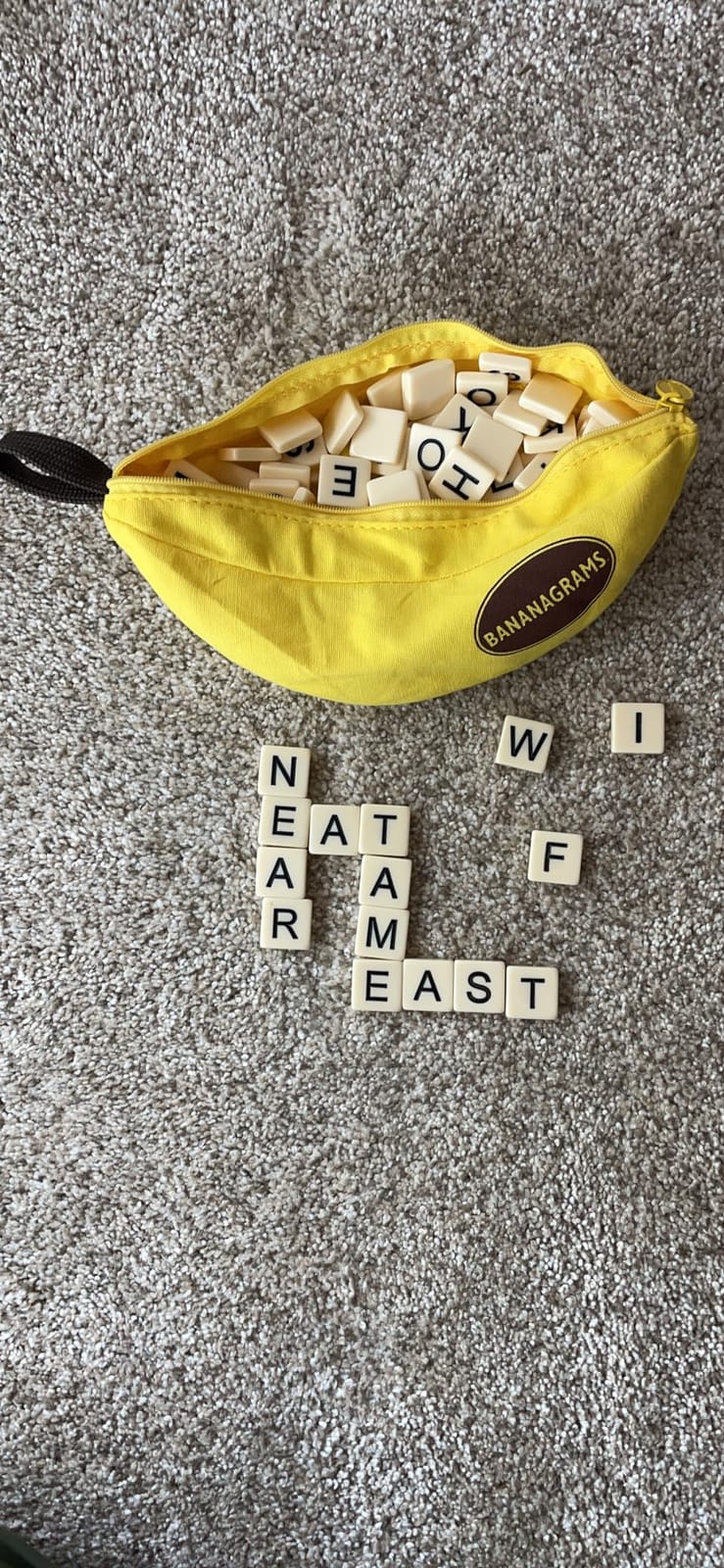
It handles up to 8 players, and rounds run about 15 minutes, so it fills a waiting room or a hotel evening without becoming an event. The 144 tiles come in a banana-shaped pouch that takes almost no space, and that shape is why the game travels well rather than merely claiming to.
It packs down to almost nothing. Nothing to fold, no board to set up, and a pouch that disappears into a side pocket.
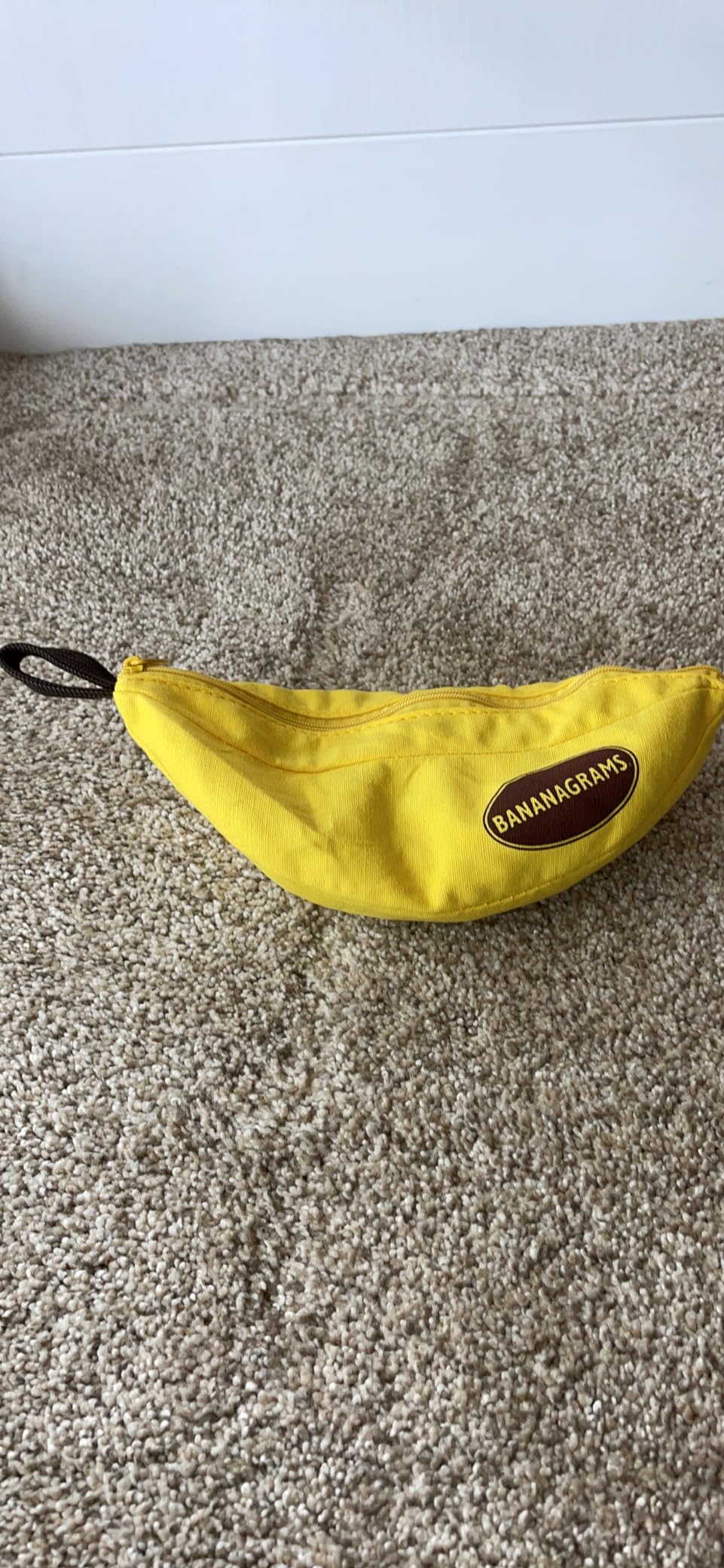
How it plays across an age spread?
The listed recommended range is 7 to 12, and that is where the game is most comfortable, sitting between a first-grader and a middle-schooler. Younger children can join by making two- and three-letter words, which is a real strategy rather than a consolation prize.
It works well as an adult game too, because the pressure to use your entire rack at once creates the kind of tense, quiet concentration that party games never produce. Families that play it on a holiday morning tend to keep it going for several sessions.
What to watch out for?
Small parts are the first thing to check. The listing states explicitly that it is not for children under 3 because of the 144 tiles, and that caution applies to any household with a toddler in the room during a family game night.
Letter legibility is the second. Reviewers note that the markings on the tiles can vary in clarity, which matters more for younger or less experienced players who are still building letter recognition. Test a few tiles out of the pouch before committing a child to a full round.
11. Azul: The Best Board Game for Families Who Want Adults to Think
Azul Mosaic Tile-Placement Strategy Board Game, 2-4 Players, 30-45 Min
2-4 players, ages 8 and up
100 resin tiles, 9 factory displays
30-45 minutes
Pros
- 2018 Spiel des Jahres winner
- Easy to learn with real tile-drafting depth
- The mosaic wall looks impressive on the table
- Shifting tiles keep repeat games fresh
Cons
- Little direct player-to-player interaction
- Small resin tiles are awkward for young children
- Can feel repetitive once strategies are known
Azul is the strategic entry in this guide, and it is the one to buy when the adults want a game that respects them. It won the 2018 Spiel des Jahres, and the reason is a balance point: the rules fit on a card, but the decisions do not stop coming.
Players draft colored resin tiles from shared factory displays and place them on their own board to complete patterns. Taking the tile you want most is often wrong, because a denial mechanic means someone else can block the next piece you needed. That tension is the entire game.
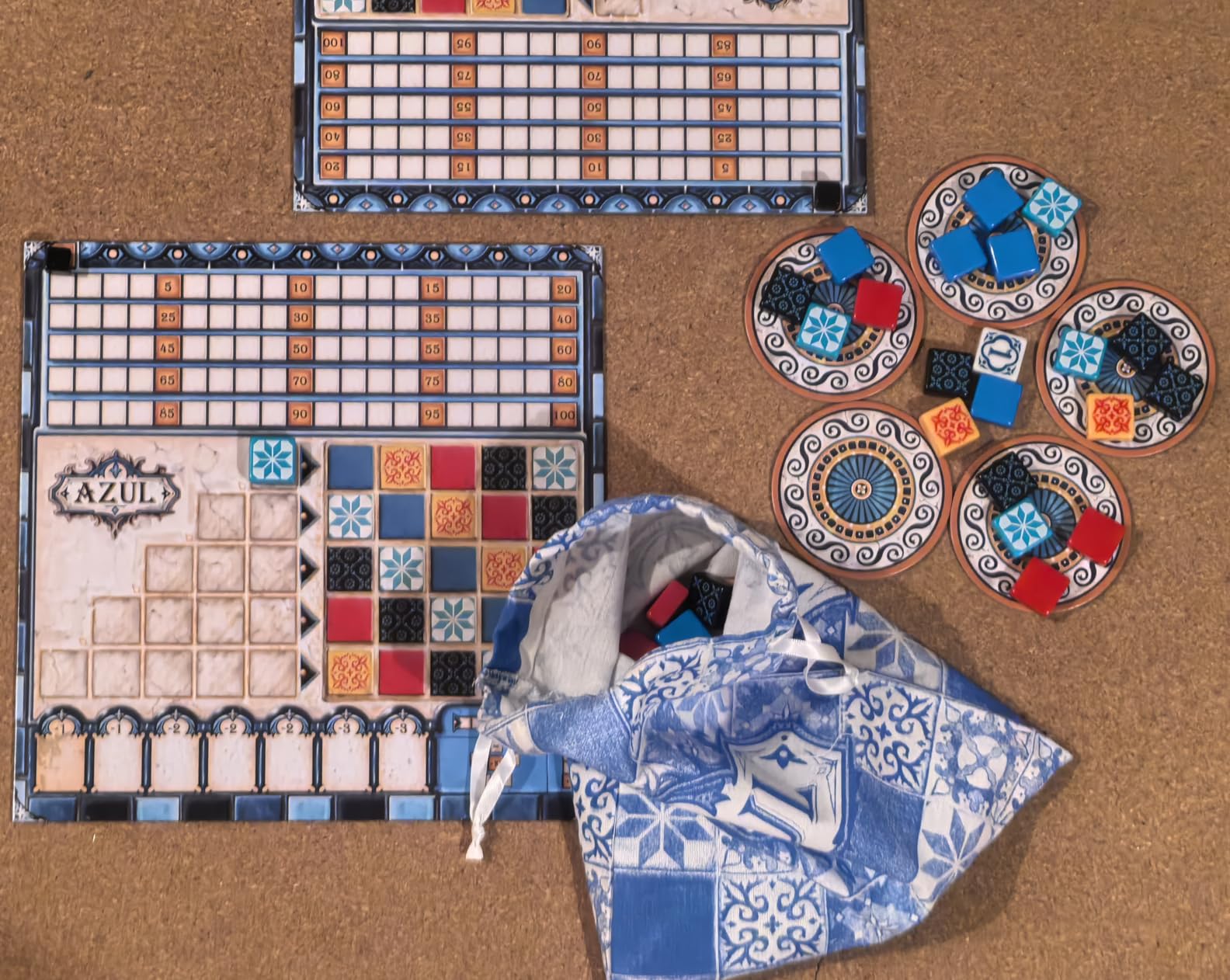
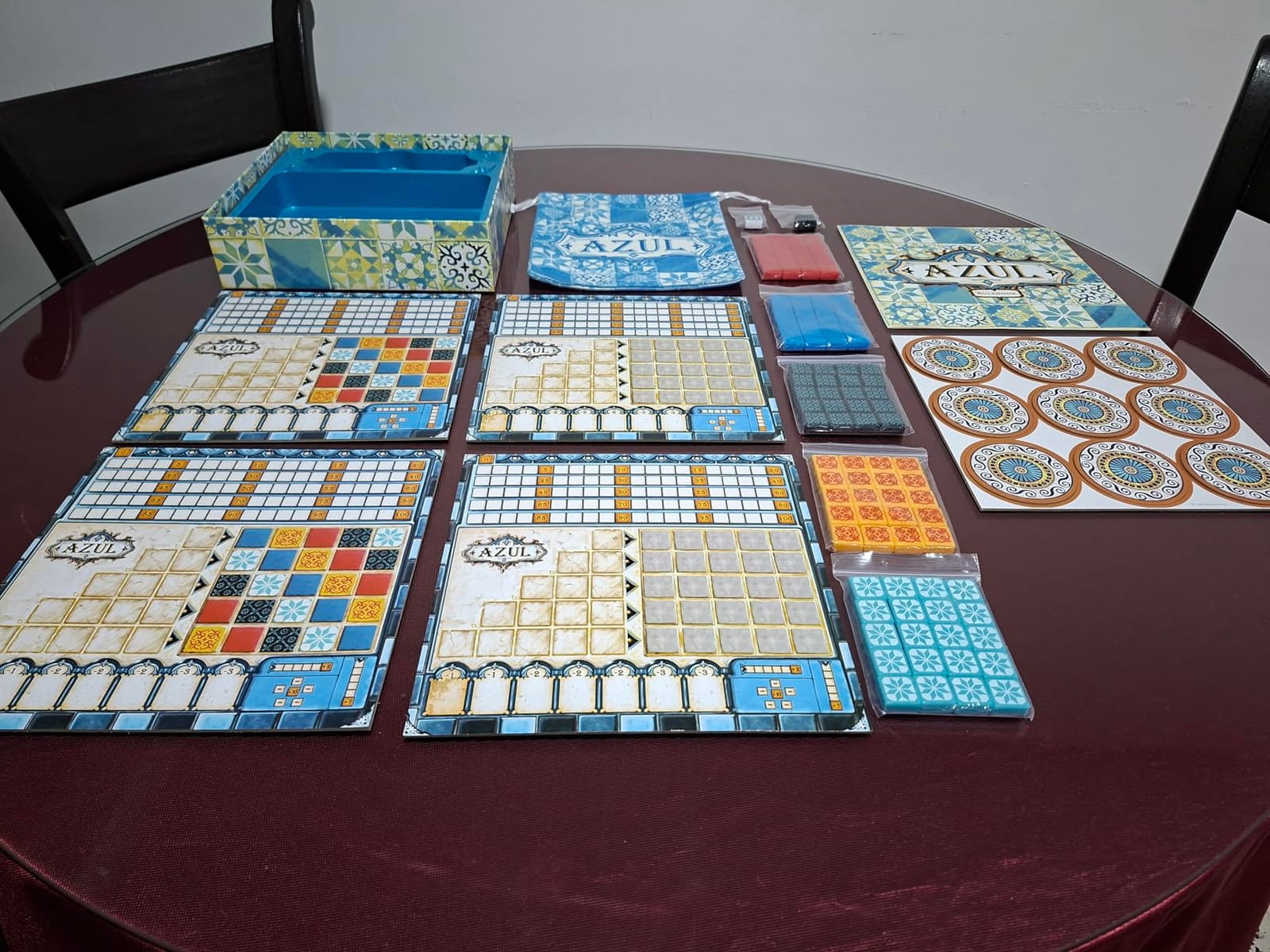
Scales from 2 to 4 players, and the draft pressure gets sharpest at four. The listed play time is 30 to 45 minutes, and the components are 100 resin tiles, 4 player boards, 9 factory displays, 4 scoring markers, a starting player marker, and a linen bag.
The visual payoff is real. Finished boards look like actual Portuguese mosaic tilework, and that display quality is part of why the game keeps getting played after the strategy stops being new to a player.
Where it fits in a family with children?
The recommended age is 8 and up, so a family of parents plus a 10-year-old is the ideal fit. A younger child can be given the job of physically placing the tiles the adult selects, which keeps them involved in something that is genuinely difficult to automate.
It also works as a two-player adult game on a weeknight, which few games in this guide manage. The 2-player version has less denial, so it plays more like a shared puzzle, and both players are usually happy with that.
Why some families bounce off it?
The biggest limitation is social. Reviewers note the light interaction compared with typical family games: there is little direct negotiation between players, and the table is quiet for long stretches. Families who want conversation, bluffing, and pointing at each other will find it flat.
Two further cautions. Small resin tiles are awkward for younger hands to handle, and once the tile distributions become familiar the strategic answers start repeating. In a household of experienced players, plan on a few sessions before it needs replacing.
12. Hues and Cues: The Best Party Game for Six or More Players
HUES and CUES – Vibrant Color Guessing Board Game for 3-10 Players Ages 8+, Connect Clues and Guess from 480 Color Squares
3-10 players, ages 8 and up
480 color squares
Board, 100 color cards, 30 pieces
Pros
- Supports a very wide player range for big gatherings
- Fast to learn and quick to set up
- 480 color squares keep every round different
- Rewards descriptive thinking rather than pure competition
Cons
- Shallow strategy where the judge's description decides the round
- Narrow hue range can make guessing frustrating
- Small components carry a choking hazard warning
Hues and Cues is built for the group that other games cannot hold. The listed range is 3 to 10 players, with a board, 100 color cards, 30 player pieces, a rulebook, and a scoring frame, and that wide player band is the reason it exists.
A player draws a colored square, then uses one or two word clues to get the rest of the table to identify the same shade from a grid of options. Hitting the correct color advances the marker, and the team that gets there first scores. The game is a description exercise with a scoring layer on top.
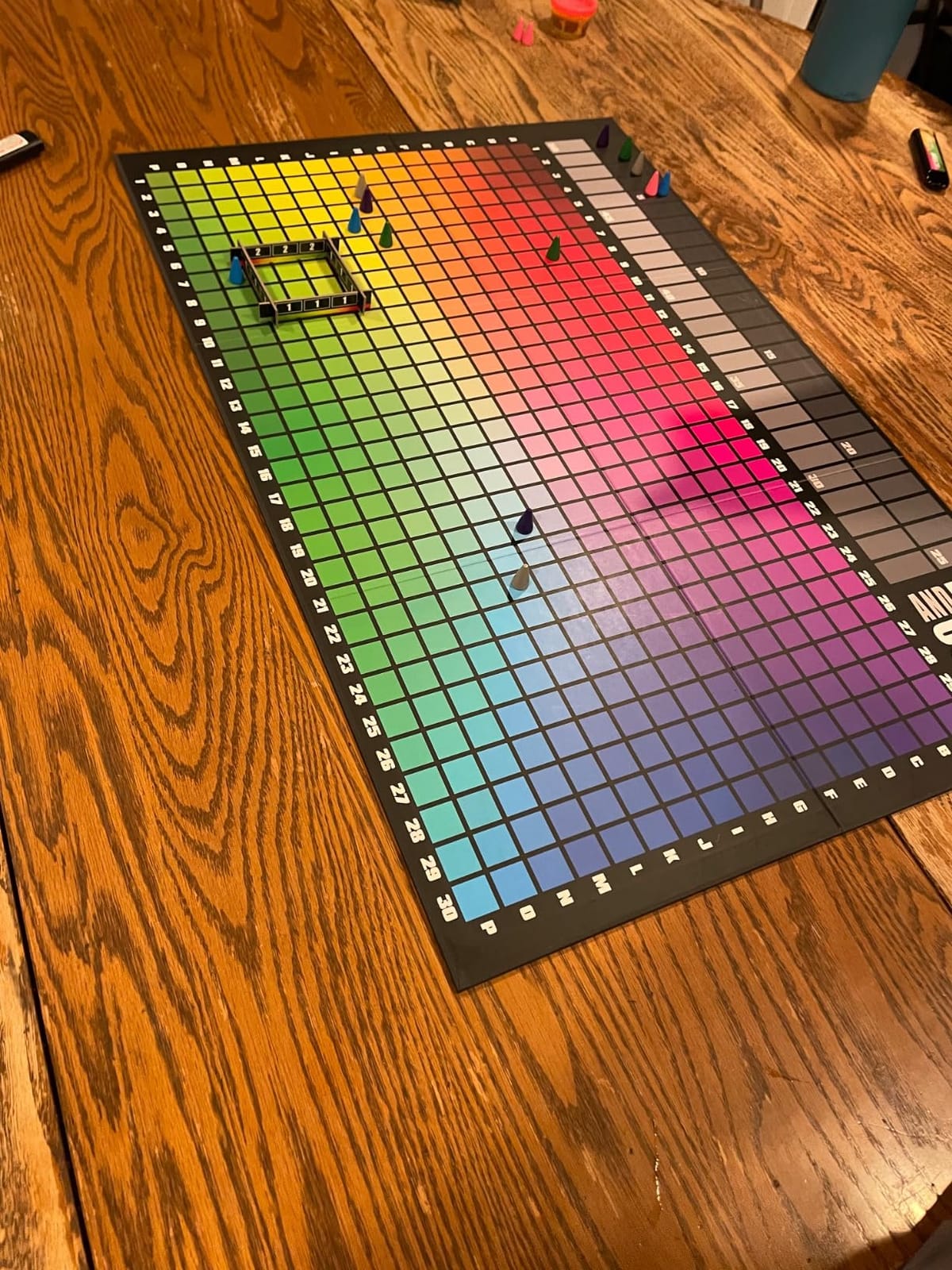
Replay value comes from the 480 squares, which is enough variety that no two rounds repeat. Play time is listed at around 30 minutes, and the recommended age is 8 and up.
It is a party game in the truest sense, since the entertainment is in the descriptions rather than the score. A player who cannot name a color has to improvise, and the improvisation is the fun. Reviewers point out that it encourages creative thinking and teamwork rather than pure competition, and that is accurate.
Why it works at a large gathering?
Ten people can play, and nobody sits out. Its sales data places it in the top five of the board games category, which tells you something about how often it gets pulled out for a big table.
The reason is structural. Every player is describing rather than waiting, so conversation never dies, and a group that has drifted into three separate conversations at the end of a long meal gets pulled back together within a round.
Where it falls short?
Skip it if the group wants depth. Reviewers describe the strategy as shallow: how well you do depends more on the quality of the description than on any decision you make, so a serious gamer will be unsatisfied.
It can also be genuinely frustrating. With 480 hues in play, the gap between a right guess and a near-miss is invisible to most people, so agree in advance that close guesses still count. Small components also carry a choking hazard warning for younger children.
How to Choose a Board Game Your Whole Family Will Finish?
Start with the age spread, not the age. A box rating describes a safety standard more often than a play level, which is why a game rated 7 and up can be too complex for a seven-year-old and far too simple for a thirteen-year-old sitting at the same table. Judge by what the youngest player can explain to the oldest after one round.
Second, count your real player range. Many disappointments come from a game that wants exactly three players being handed to a family of six. Anything from 2 to 8 or 2 to 12 gives you room, and two-player-capable games are the ones that survive when a cousin cancels.
Third, time the teach honestly. A game that teaches in under two minutes will be played by grandparents, in-laws, and anyone who walked in cold. A game with a fifteen-minute rules read needs one committed adult per table to run it, and that is a cost families underestimate. In this guide, Jenga, UNO, and Taco Cat Goat Cheese Pizza teach instantly, while Azul and Rummikub need a proper five-minute sit-down.
Fourth, decide between cooperative and competitive before you buy. A cooperative game has one shared outcome, so nobody loses and nobody accuses anybody of anything. A competitive game has a winner, which creates real stakes and, with younger players, real tears. Research on family board play has found that cooperative and competitive formats produce broadly similar prosocial behavior, so choosing co-op for its kindness does not cost you the social benefits.
Fifth, consider the space and the storage. A game that needs a cleared dining table loses to one that works in a lap or on a floor, especially when homework is spread across the same surface. Bananagrams and SKYJO pack into small bags, and Jenga and SEQUENCE collapse to nothing.
Sixth, and most overlooked, play something that involves talking. Several games in this guide are rated 4.7 or 4.8 with tens of thousands of reviews precisely because they keep a mixed-age table talking rather than optimizing. Community consensus has long named social conversation games as the most reliable way to draw in someone who claims not to enjoy games at all.
Which Game Fits Your Family’s Shape?
Match the game to the composition of your table, not to a rating. The same title that works beautifully for a parent and a 6-year-old can stall entirely in a group of six teenagers plus adults.
Two kids with a four-year age gap: SKYJO and UNO both work because neither player accumulates a meaningful advantage. Jenga works too, provided the youngest child is at least 6 and can handle a falling tower. Approach with care on Azul and Rummikub, where a reading-age difference shows up quickly in planning.
One parent plus one child: Rummikub, Battleship, and Azul all function as genuine two-player games rather than parent-and-child compromises. Jenga works when you only have a quarter hour to fill. What Do You Meme works if the child is 8 and up and comfortable with internet humor.
A gathering of six or more, including grandparents: SEQUENCE in team mode, Hues and Cues, and UNO are the three that work. All three have broad player ranges, short teaches, and a low table footprint. Skip Battleship, which is strictly two-player, and Rummikub, which caps at 4.
A table of teens and adults: Azul, What Do You Meme, and Rummikub. All three give experienced players something to think about while staying inside a 30 to 45 minute window. Jenga works as an opener, but a table of adults will finish it and want something else.
Travel, restaurants, and waiting rooms: Bananagrams and SKYJO, both of which fit in a bag and need no table. Jenga and Battleship travel as well, thanks to the compact box and the two portable battle cases. UNO needs no surface at all, which makes it the fallback for anywhere.
When someone takes losing personally: Bananagrams, Hues and Cues, and Jenga have the softest failure modes, since the outcome is either shared or a physical accident rather than a direct defeat. Sorry! and Battleship are the two in this guide most likely to produce a difficult conversation after the last round.
Frequently Asked Questions
What are the top 10 most popular family board games?
The most popular family board games right now are Jenga, SKYJO, UNO, Taco Cat Goat Cheese Pizza, SEQUENCE, Rummikub, Sorry!, What Do You Meme, Bananagrams, and Azul. All ten appear in our list with player counts, age ranges and play times, and the full guide adds Battleship and Hues and Cues to cover large gatherings.
What is the best board game to play with family?
The best board game to play with family is Jenga, because it teaches in one sentence, works from age 6 upward with two or more players, and keeps adults making real decisions rather than supervising. If your family wants more strategy, Azul is the alternative, provided the youngest player is at least 8.
What are some good board games for a whole family?
For a whole family, the strongest options are SEQUENCE for gatherings of six or more, UNO for tables that grow and shrink, and SKYJO when the age gap is wide. Hues and Cues also handles up to 10 players and pulls a large group back into one conversation.
How do you choose a board game for a family?
Choose on four numbers printed on the box: minimum age, player count, play time, and how long the rules take to explain. Then check whether the group wants a cooperative game, where nobody loses, or a competitive one, which creates real stakes. Finally confirm the game fits your table and your storage space.
Are board games good for kids and adults to play together?
Yes, and the games that work best for mixed ages share three traits: they teach quickly, the win condition is legible to the youngest player, and adults still face decisions worth making. Research on family board play has found that cooperative and competitive formats produce broadly similar prosocial behavior, so either works as long as the game is not too simple for the adults.
What board games are good for families with young kids?
For families with young children, start with Jenga at ages 6 and up, UNO at ages 7 and up, and Sorry! at ages 6 and up, since all three teach in under a minute. Taco Cat Goat Cheese Pizza suits ages 7 and up and is the fastest option for a restless room, though it is loud. Any game with small pieces, including Bananagrams and SEQUENCE, needs a check before it is handed to a child under three.
The Verdict: Which Family Game to Buy First?
Buy Jenga first. Its rules fit in a single sentence, it works with two players or a dozen, and it produces the same tension for a parent and a 13-year-old as it does for two adults. Everything else on this list is a better game in a specific situation, and none of them is better in every situation.
Add SKYJO next if your children are separated by four years or more, and Rummikub or Azul if the adults want something with real decisions in it. For a table of six, SEQUENCE in team mode solves a problem nothing else here can. Save What Do You Meme for the relative who insists they do not play games.
Whichever you choose, the test is simple: put it on the table, teach it in under two minutes, and see who asks for a second round. That is the only review that matters, and it is how the best board games for families in 2026 were ranked here.