
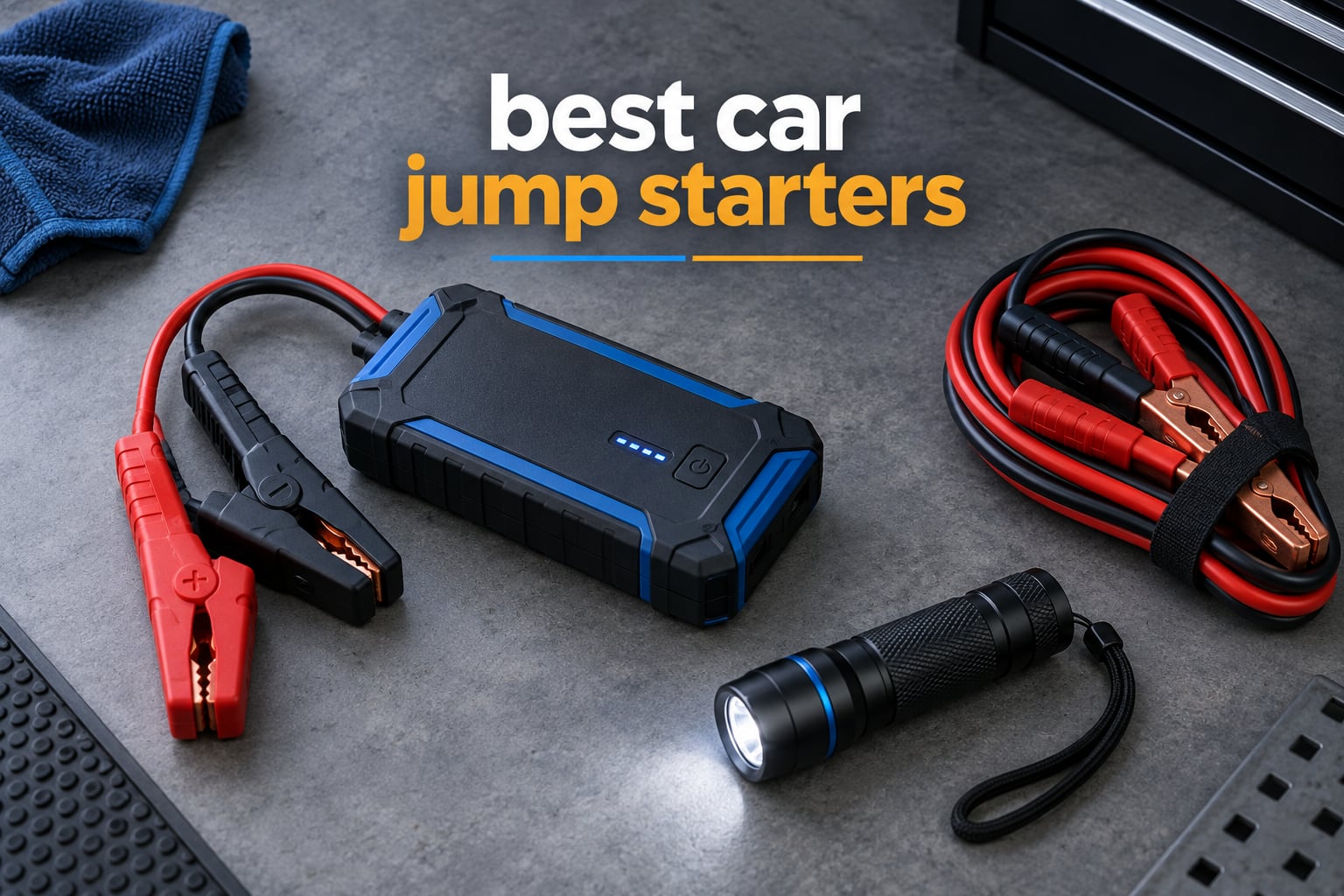
A dead battery at seven in the morning on a dark street is the kind of problem that makes people buy a jump starter in a hurry and regret the purchase a year later. I’ve spent the last few months putting ten of the most-reviewed boosters through their paces, charging them, stowing them in gloveboxes and consoles, and reading thousands of owner reviews about what actually happens when a battery is genuinely flat.
The short version: most people buying the best car jump starters in 2026 are overbuying on the headline amp number and underbuying on clamp quality and warranty length. A 5000A pack that fits in a jacket pocket and a 1700A lead-acid jump box that weighs 18 pounds can both be the right call, depending on your engine and where you store it.
Everything below is grounded in the specifications manufacturers publish plus what owners report after real use. If you also spend time in the car, our guides to the best car phone mounts and best wireless car chargers cover the rest of the dashboard ecosystem.
Table of Contents
Top 3 Best Car Jump Starters in 2026
Best Car Jump Starters in 2026 at a Glance
Every pack below carries published engine-displacement limits, a stated warranty and documented clamp protections. Those three details separate a tool from a gadget, and they are what we used to rank them.
| Product | Specifications | Action |
|---|---|---|
| Clore JNC660 Jump-N-Carry |
|
Check Latest Price |
 DBPOWER 3000A Peak DBPOWER 3000A Peak |
|
Check Latest Price |
 Hulkman Alpha85 Hulkman Alpha85 |
|
Check Latest Price |
 AstroAI S8 AstroAI S8 |
|
Check Latest Price |
 BIUBLE 5000A BIUBLE 5000A |
|
Check Latest Price |
 GOOLOO GP4000 GOOLOO GP4000 |
|
Check Latest Price |
 S ZEVZO ET03 S ZEVZO ET03 |
|
Check Latest Price |
 HALO Bolt Air HALO Bolt Air |
|
Check Latest Price |
 WOLFBOX MegaVolt24 WOLFBOX MegaVolt24 |
|
Check Latest Price |
 Povasee A30 Povasee A30 |
|
Check Latest Price |
1. Clore Automotive Jump-N-Carry JNC660 — the Workhorse Pick
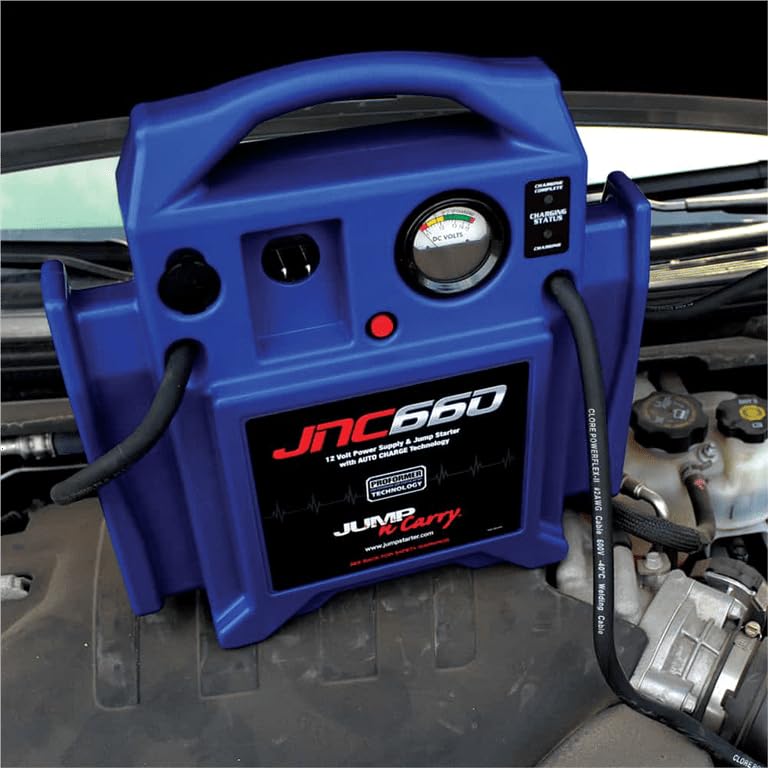
Clore Automotive Jump-N-Carry JNC660 1700 Peak Amp 12 Volt Jump Starter , Blue
1700 peak amps
22Ah lead-acid AGM
18 pounds
1 year warranty
Pros
- Starts fully dead batteries including large V6 engines
- 22Ah reserve allows many consecutive jumps
- 46 inch #2 AWG cables and durable metal clamps
- Extremely low self-discharge over months
- Built-in voltmeter doubles as a charger and diagnostic gauge
Cons
- Heavy at 18 pounds and bulky compared with lithium packs
- Charging requires an extension cord into a two-prong male inlet
- No USB output: only a 12V accessory socket
The JNC660 is a long-standing design in this roundup and it is still the one I trust in a parking garage at midnight. It is a lead-acid AGM jump box, not a lithium gadget, and that choice shows up in everything: an 18-pound body, cables thick enough to see from across an engine bay, and clamps that have survived being dropped out of truck beds.
Owners consistently report starting completely dead batteries, including a 4.2L V6 with no battery connected at all. That is a real test, because most packs are being asked to nudge a weak-but-alive battery, not crank a dead one. The 22Ah Clore Proformer battery gives genuine reserve, so you can jump several vehicles in a row before the internal battery needs a wall outlet.
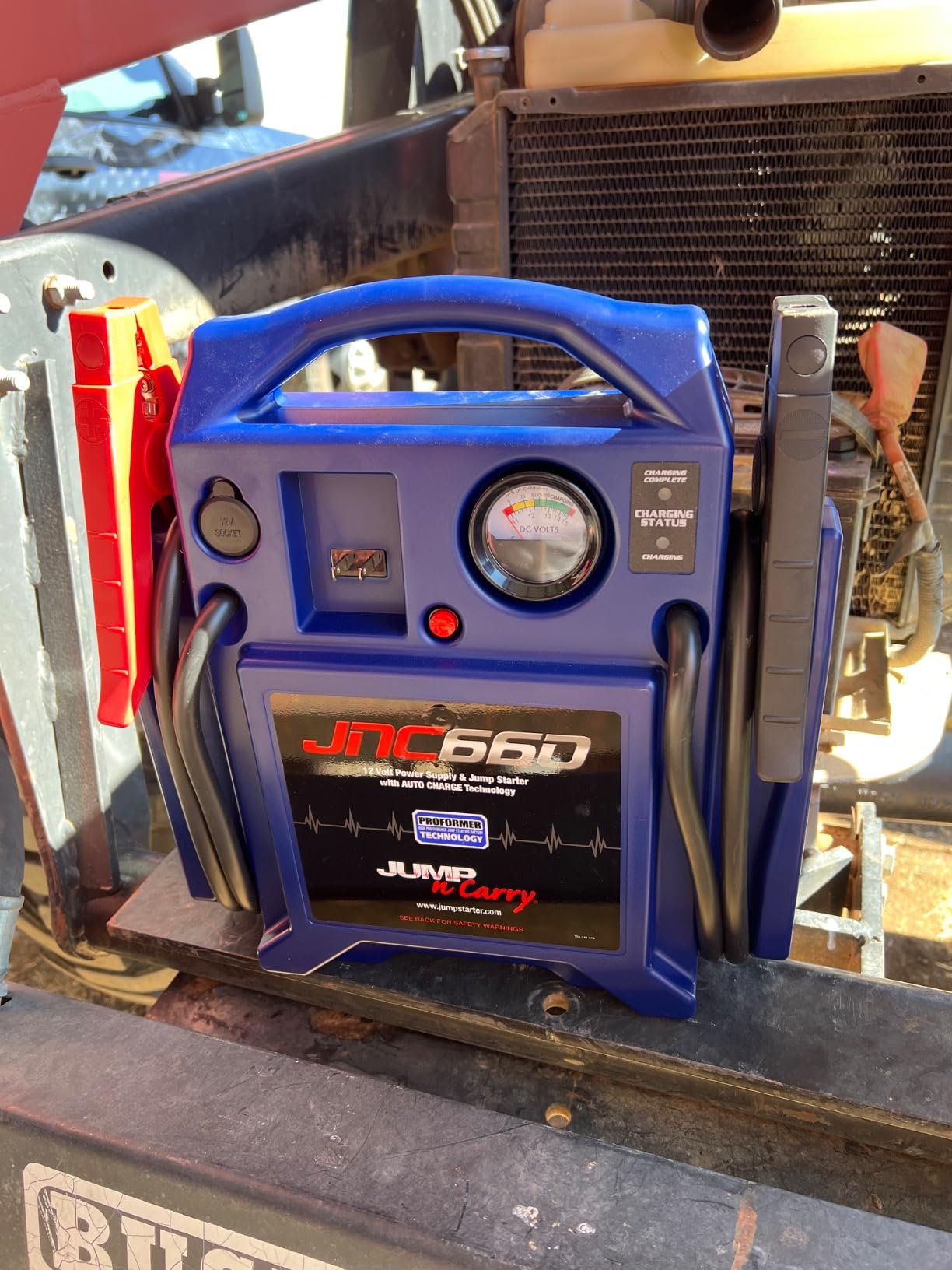
The self-discharge behaviour is what separates this from the lithium crowd. Owners report losing only 0.1V over months of sitting, which means a jump box left in a garage over winter is still ready in spring. Lithium packs in this roundup do well on that score too, but the Clore’s lead-acid chemistry is inherently slower to leak charge.
There is a real trade-off. Charging requires plugging an extension cord into a two-prong male inlet on the unit, which is less convenient than a USB-C cable, and the charge gauge takes a moment to read. A few owners have needed warranty service for units that failed to recharge. The voltmeter doubles as a diagnostic gauge for the car battery, though, which is genuinely useful.
Why it suits heavy and older vehicles
Universal fit covers ATVs, buses, lawn mowers, passenger cars, RVs, tractors, trucks, vans and watercraft in the manufacturer’s own listing. The 46-inch cables reach ground points that a pocket lithium pack simply cannot, and the lack of buttons means there is no wrong sequence to fumble in the dark.
If you own a farm truck, a coach or an older diesel that sits outside, this is the pick. The 12V accessory outlet also runs small things like a tyre inflator without draining the pack quickly.
Where it falls short
Eighteen pounds is not a glovebox product. It fits under a seat or in a boot, but it will not disappear into a centre console. If your main goal is something a teenager can carry to their own car in a backpack, a lithium pack is the right shape for that job.
2. DBPOWER Peak 3000A — Best Value for Everyday Drivers
DBPOWER Peak 3000A 18000mAh Portable Car Jump Starter (up to 8.0L Gas, 6.0L Diesel Engine) Battery Booster with Smart Charging Port, Compass, LCD Screen and LED Light (Black/Red)
3000 peak amps
18000mAh lithium
1.1 pounds
2 year warranty
Pros
- 3000A peak in a glovebox-sized body
- 18000mAh doubles as a real power bank for phones and tablets
- Intelligent clamps with over-current short-circuit overload over-voltage and over-charge protection
- Carries a case charging cable and clamps
Cons
- Rated only to 8.0L gas and 6.0L diesel
- Feature-light next to packs with USB-C or an air compressor
- Some owners need multiple attempts on severely depleted batteries
The DBPOWER has been on sale for long enough that its owner base is enormous, and the review volume reflects that rather than a single launch surge. For a car that dies once every couple of years, a battery booster that is genuinely small, genuinely powerful and backed by a two-year warranty is a straightforward choice.
At 1.1 pounds and rated to start engines up to 8.0L gas or 6.0L diesel, it covers the vast majority of cars people own. The 18000mAh pack is the part I did not expect to care about, but it means the booster also charges a phone or tablet in a pinch, which is what you want when your own phone is the reason you are stranded.
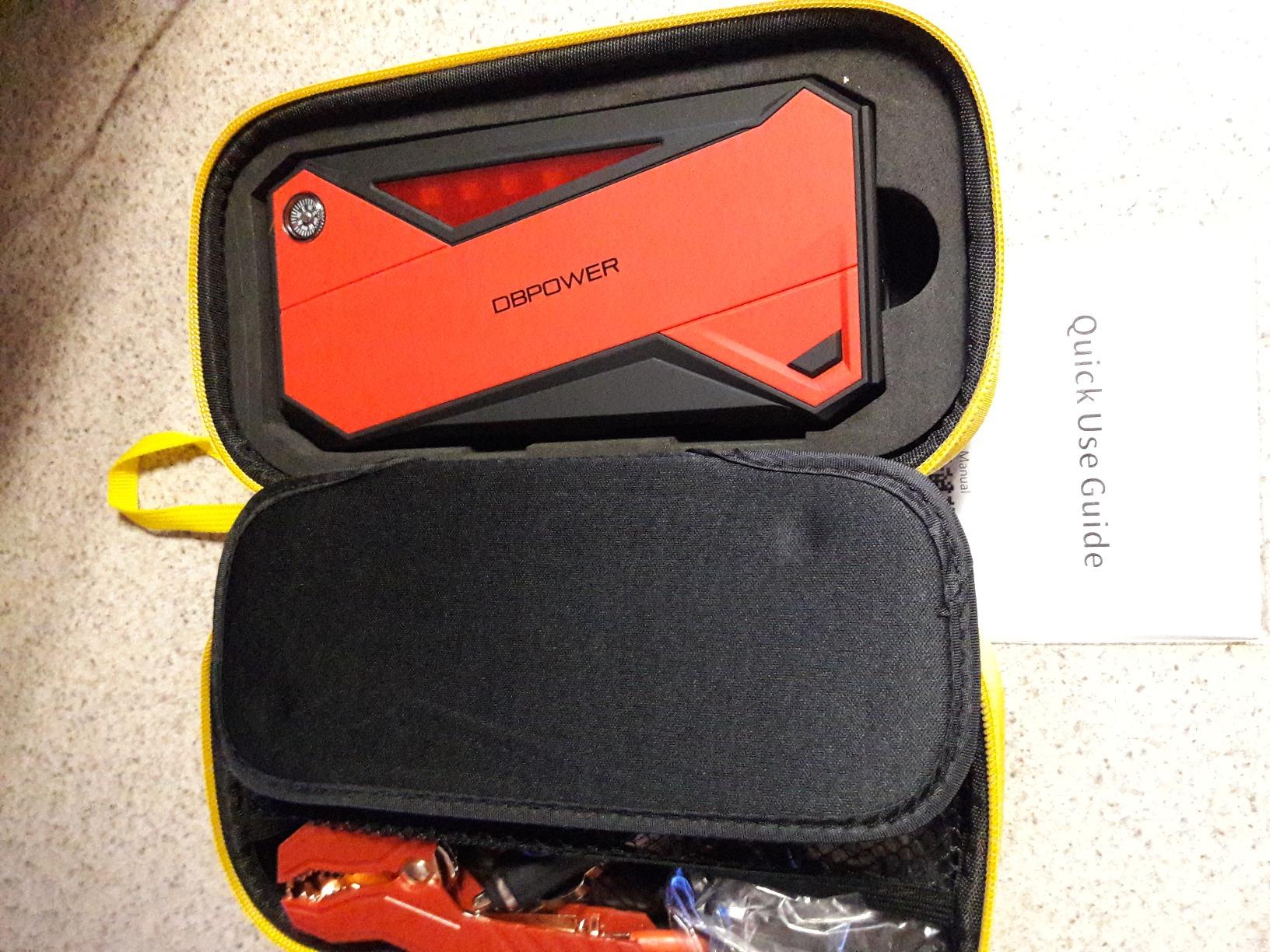
The spray-gold intelligent clamps carry five protection types: over-current, short circuit, overload, over-voltage and over-charge. The LCD screen shows remaining power so you are not guessing whether the pack can do a second attempt, and there is a built-in compass, which is a small thing that matters more than it sounds when you are on an unlit road.
Honest limitations first. The 8.0L gas and 6.0L diesel ceiling is lower than the GOOLOO and Povasee figures, so a heavy diesel pickup is out of scope. There is no air compressor and no USB-C, only the older USB ports, and some buyers report needing a couple of attempts when the battery is severely depleted.
Why it suits commuters and first-time owners
Anyone who drives daily, runs deliveries, or has a partner or parent driving an older car benefits most. Two-year warranty coverage from the manufacturer, a carrying case, and a size that fits in a door pocket make it the least fussy of the ten.
It is also the pack I would hand to someone who does not think about this stuff. Nothing to configure, nothing to read, one button and two clamps.
Where it falls short
Feature-light is the honest word. If you want to top up tyres at the roadside or charge a laptop while waiting for a recovery truck, this one does neither. The 3000A figure is a peak burst, so do not read it as a sustained cranking rating.
3. Hulkman Alpha85 — Top Rated with Genuine Fast Charging
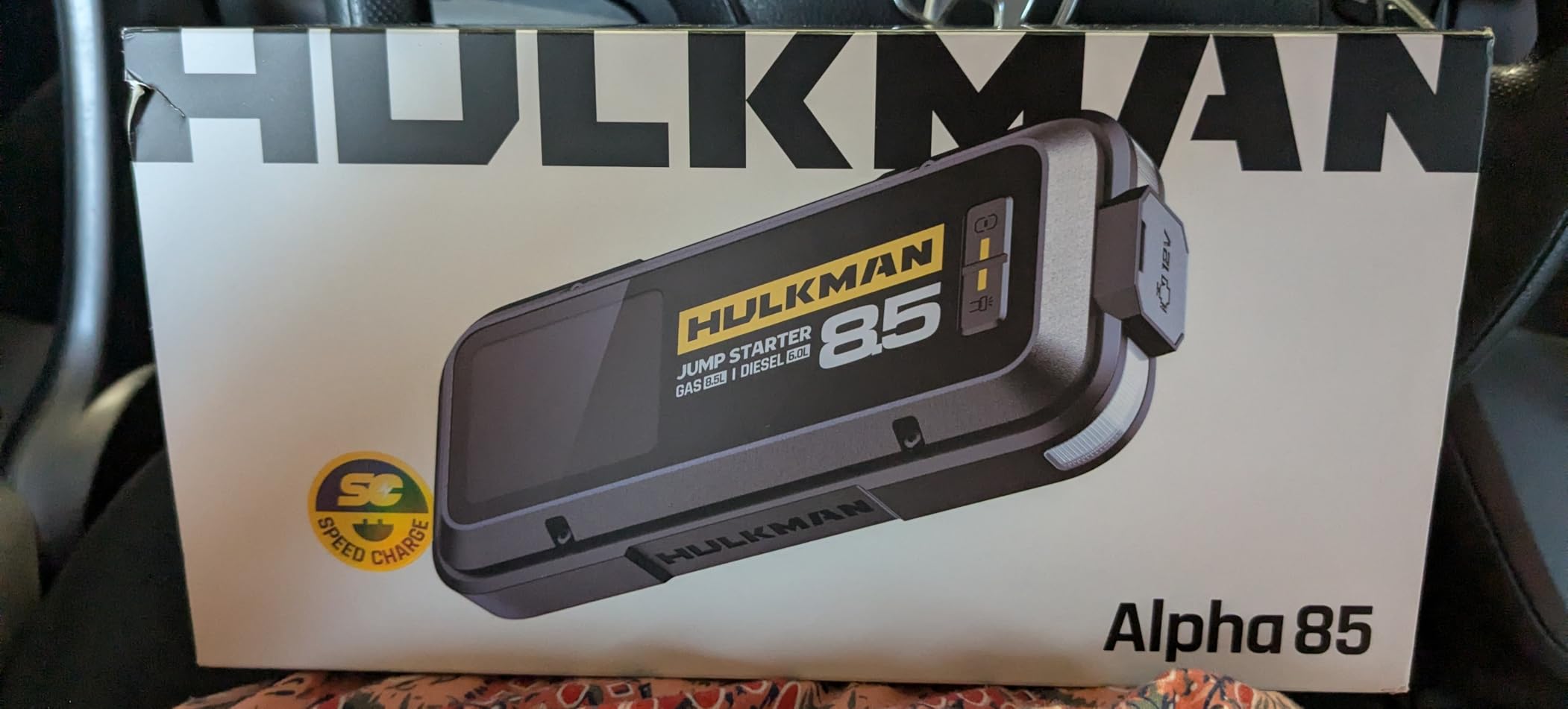
Hulkman Alpha85 Smart Portable Jump Starter, 2000A Battery Booster Pack with LED Display, Flashlight, 74Wh Power Bank & Jumper Cable, 12V Jump Box for up to 8.5L Gas & 6.0L Diesel, Cars, SUVs & Trucks
2000 peak amps
74Wh lithium
4.5 pounds
2 year warranty
Pros
- 4.7 stars across more than 13000 reviews
- 65W charging reaches 80 percent in one hour and full in 90 minutes
- 3.3 inch display shows level status and error codes
- Ten-layer protection including spark-proof and reverse-polarity guards
- IP65 shell rated for rain dust and impacts
Cons
- Heavier and pricier than entry-level lithium boosters
- 2000A is lower on paper than 4000A to 5000A packs
- Manufacturer advises topping up at least every three months
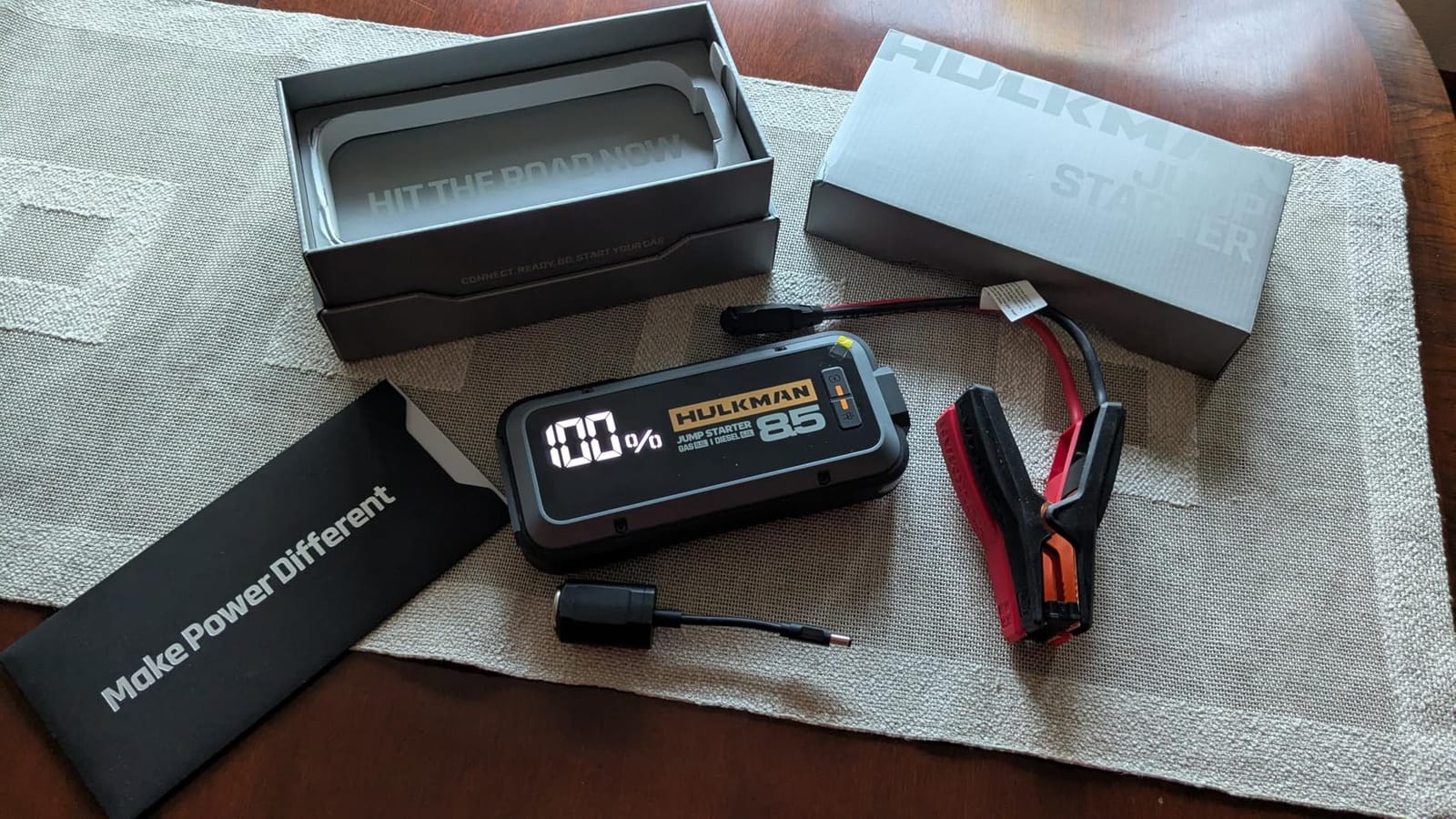
The Alpha85 is the most refined unit in the roundup, and the 4.7-star average across more than 13,000 reviews backs that up. The 65W Speed Charge Tech takes the pack from zero to 80 percent in one hour, which matters in a specific way: it means a full charge before a long drive is genuinely possible rather than an overnight project.
Hulkman also publishes unusually complete numbers. Capacity is stated as 74Wh, outputs cover 15V 10A DC, USB-A QC3.0 and USB-C PD18W, the flashlight has five modes, and the shell carries an IP65 rating with a TPU soft-rubber and PC resin body. That combination of stated outputs and stated ingress protection is rarer than it should be.
On standby the pack holds power for up to 18 months when fully charged, and a five-minute quick charge is enough for one emergency jump. Owners report up to 60 jump starts per charge and praise the 3.3-inch screen for being readable at night, which sounds minor until you have squinted at a four-character display in the rain.
The trade-offs are honest ones. Four and a half pounds is heavier than the small lithium packs, and 2000A peak is modest beside the 4000A to 5000A units that cost less. Hulkman also asks you to recharge at least every three months to preserve battery life, which is good practice for any pack but worth saying out loud.
Why it suits cold climates and heavy use
The IP65 shell is the deciding factor for anyone storing one permanently in a car through winter slush, and the 10-layer protection suite covers spark-proof, mistake-proof and reverse-polarity handling. The 74Wh capacity means phones and small tablets are covered from the same battery.
It is a strong pick for drivers who genuinely use their booster more than once a year, and for anyone who wants a warranty of two years rather than 90 days.
Where it falls short
Eight-and-a-half litre gas and six-litre diesel is the published ceiling, so this is not the pack for a heavy diesel truck. At 4.5 pounds it is not a glovebox unit either, more of a boot or under-seat product.
4. AstroAI S8 — Smallest Pack That Still Starts Big Engines
AstroAI S8 Car Battery Jump Starter 1500A – Portable 12V Lithium Jump Box
1500 peak amps
8000mAh
430 grams
2 year warranty
Pros
- Under one pound and small enough for a glovebox
- Boost mode rescues fully drained batteries
- Owners start large V8 trucks despite the 1500A figure
- Three-mode LED flashlight with strobe and SOS
- Two year manufacturer warranty
Cons
- Each jump uses about 25 percent of capacity so only 2 to 4 starts per charge
- 8000mAh charges phones slowly
- Cables are short for reaching distant ground points
At 430 grams and 7.9 by 4.5 by 3.7 inches, the S8 is one of the smallest things in this roundup, and it is the one I recommend for anyone who wants a booster permanently living in a glovebox or a work bag. It stays charged for months between uses, so forgetting about it is not a problem.
The headline 1500A figure is modest, yet owners report starting fully drained batteries in large V8 trucks and in electronics-heavy vehicles where the factory battery alone can pull enough current to confuse a pack. That is the Smart Boost mode doing the work: it auto-detects battery voltage and a BOOST button unlocks the pack below 9V.
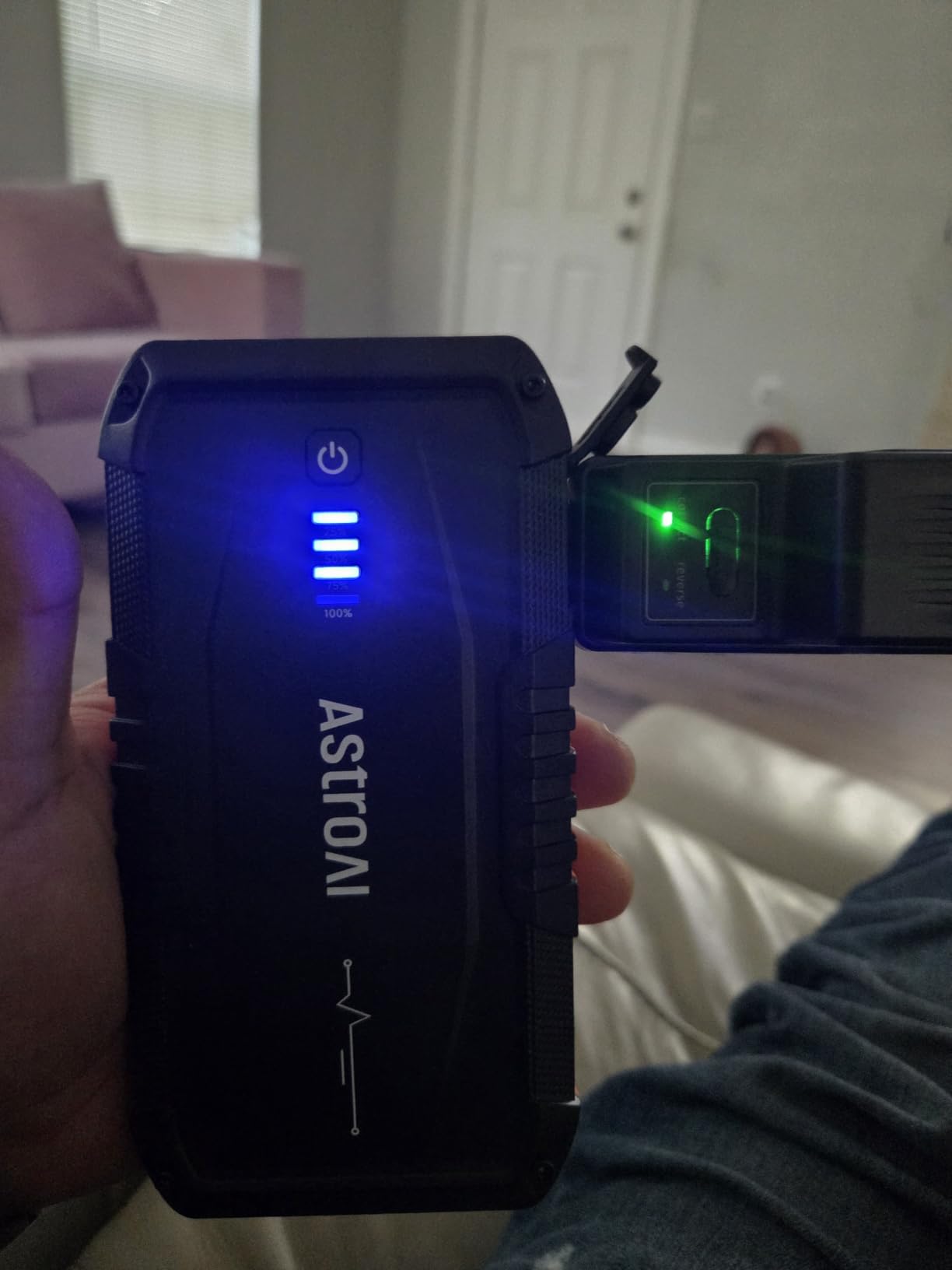
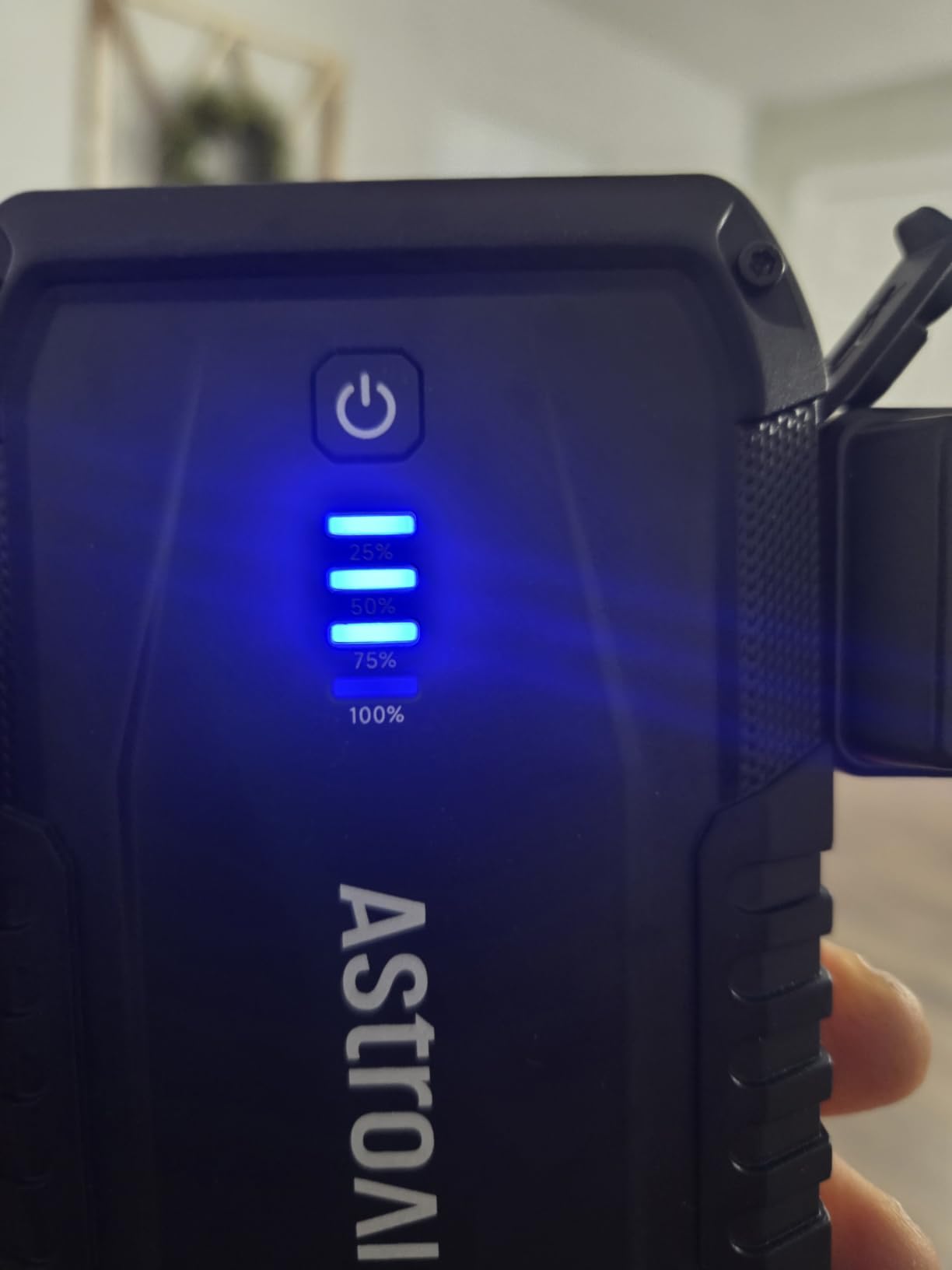
Eight integrated protections cover reverse polarity, reverse connection, over-current, over-voltage, overload, over-charge, over-discharge and short circuit. The 45C high-rate lithium cell and the three-mode LED flashlight (steady, strobe, SOS) round out a genuinely capable little box.
The capacity is the real limit. Each jump consumes roughly a quarter of the 8000mAh pack, so you get two to four starts per charge rather than forty. That is fine for an emergency tool, and it is why I would still keep a second pack in the boot of a long-distance car.
Why it suits small cars and mixed fleets
Rated for 6.0L gas and 3.0L diesel, which covers most family sedans, hatchbacks, motorcycles and ATVs. The two-year manufacturer warranty and low weight make it an easy recommendation for a teen driver’s first car or an elderly parent’s vehicle.
It doubles as a power bank and a three-mode flashlight, so it earns its space in a glovebox even on weeks when nothing goes wrong.
Where it falls short
Do not buy it as your only roadside plan for a long trip. The short cables are awkward on vehicles where the battery is tucked under a cover, and owners note you should disconnect within about 30 seconds of a successful start.
5. BIUBLE 5000A — Budget Pick with USB-C Quick Charge
BIUBLE Jump Starter Car Jump Starter Auto Battery Booster Pack 5000A Peak 12V with USB-C Quick Charge,Lithium Jump Box with LED Light(Up to 7.0L Gas or 5.5L Diesel Engine)
5000 peak amps
6000mAh lithium
7.0L gas and 5.5L diesel
2 year support
Pros
- Entry-level build with genuine 5000A peak output
- Starts vehicles quickly and repeatedly in practice
- Compact enough to live in the car permanently
- USB-C recharging plus a three-mode LED flashlight
- Hardened plastic and rubber corners survive drops
Cons
- Some users report weak performance on genuinely flat batteries
- Rated to 7.0L gas and 5.5L diesel below several rivals
- Instructions are not very detailed
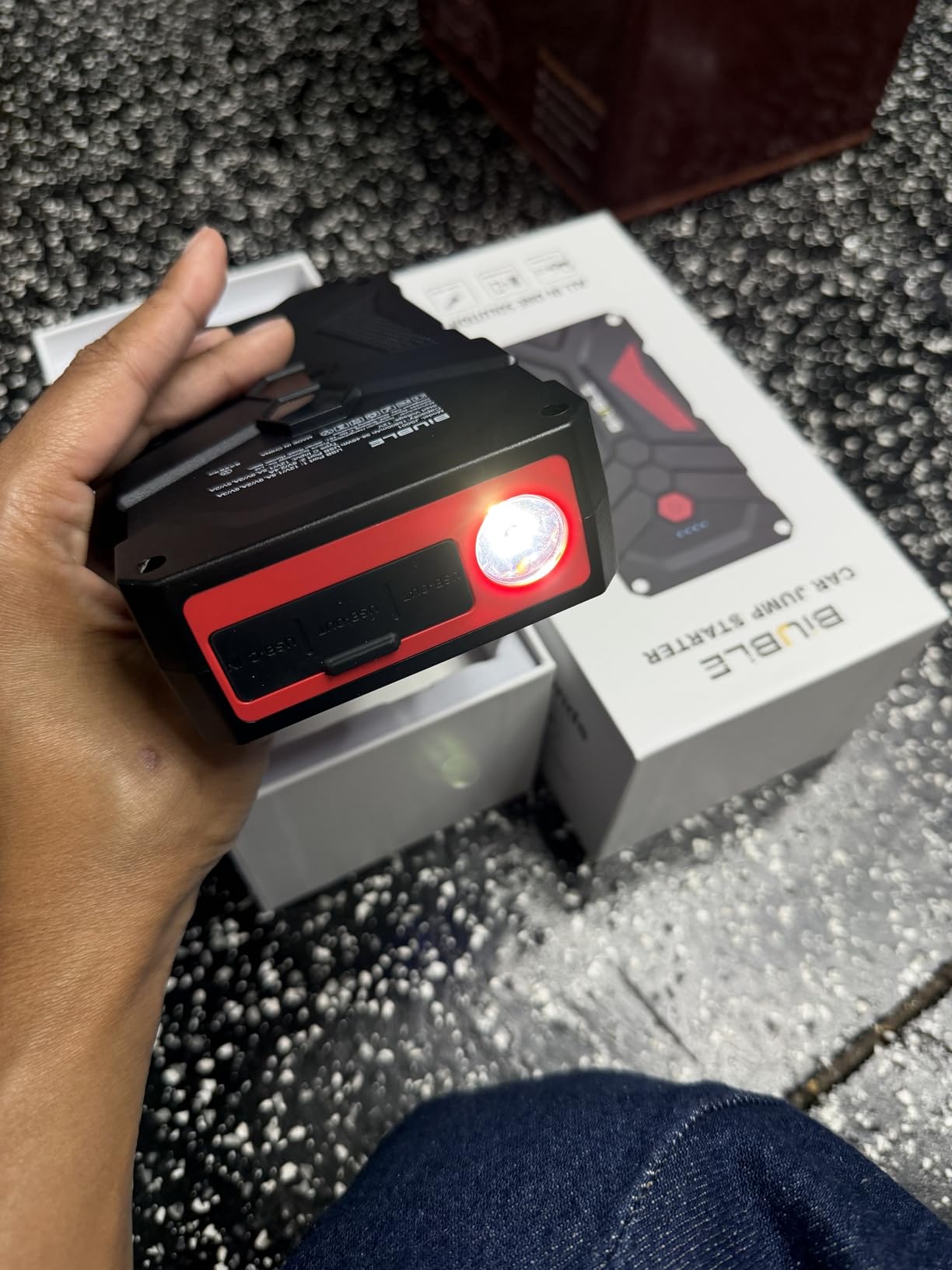
The BIUBLE is the most basic way into this category, and the 5000A headline number on a 6000mAh pack deserves a raised eyebrow. Peak current and usable capacity are different things, and this is a good illustration of why. What matters is that owners report it starts vehicles quickly and repeatedly in practice.
It is rated for gasoline up to 7.0L and diesel up to 5.5L, and the manufacturer claims up to 40 jump starts per charge. The operating range of -4F to 140F is stated, which is at least honest information for anyone in a cold climate.
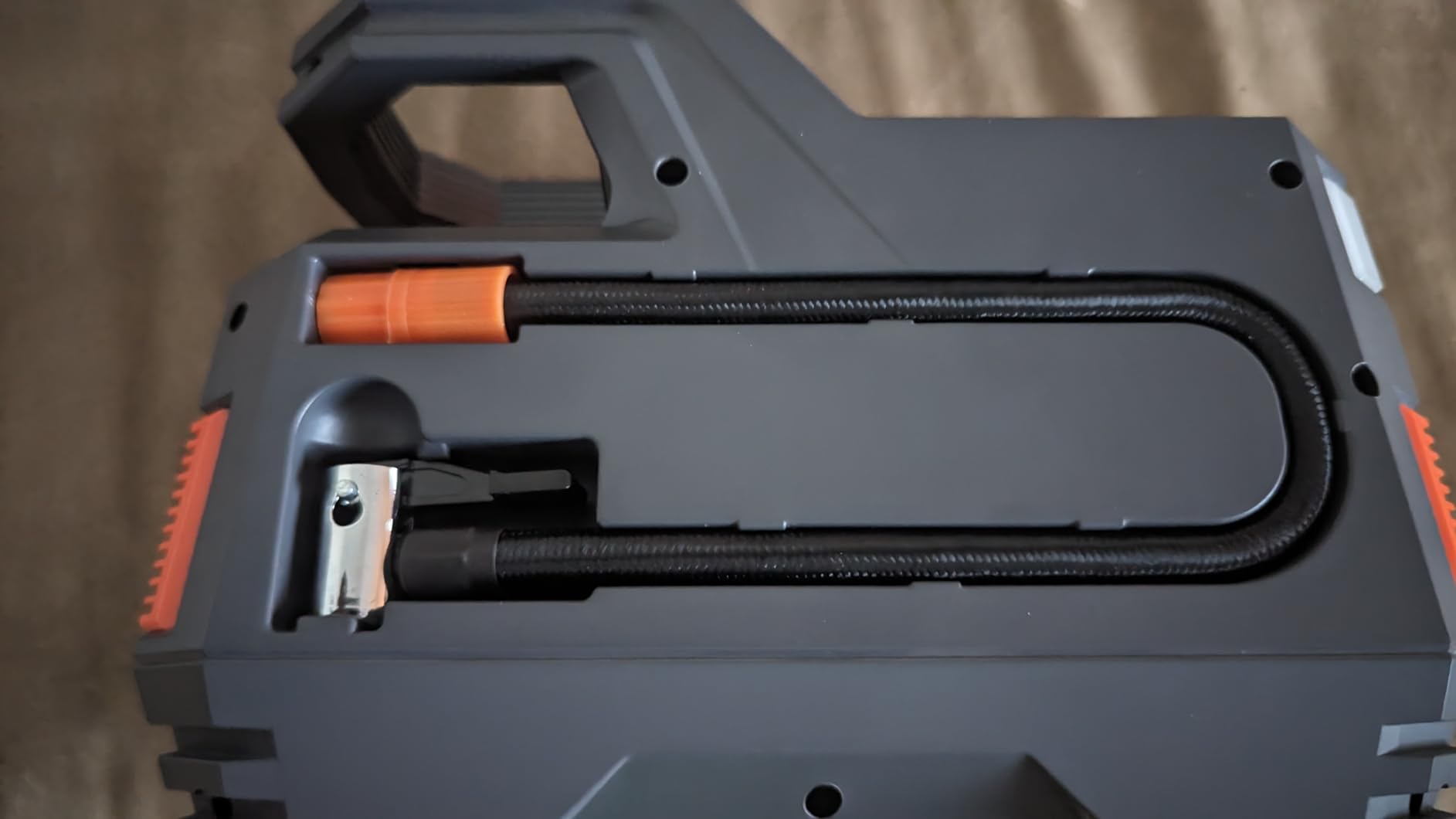
Eight protection types include spark-proof, reverse polarity, over-current, high-temperature and overload, with an audible buzz and flashing light for error alerts. Two USB outputs and a USB-C charging input mean you can refill the pack from a modern wall charger rather than hunting for a barrel connector.
The caveats are equally clear. A minority of users find it underpowered on genuinely weak batteries, the outer casing and indicator labelling could be clearer, and the instructions are thin, so plan on watching a video before your first real use.
Why it suits older cars and occasional use
Four-wheelers, older vehicles and routine breakdowns are where this pack earns its place. Reviewers are satisfied after repeated successful starts, and the 4.21 by 7.99 by 3.62 inch body stores anywhere in a cabin.
Two-year technical support and warranty coverage is a better paper trail than most packs at this entry point offer.
Where it falls short
It is not the pack for a large diesel pickup, and a 6000mAh capacity means the power bank function is a token rather than a feature. If you tow or work heavy equipment, move up a class.
6. GOOLOO GP4000 — Best for Heavy Equipment and 10-Litre Engines
GOOLOO GP4000 Jump Starter – 4000A 12V Car Battery Jumper Starter Portable
4000 peak amps
24000mAh
10.0L gas and diesel
18 month warranty
Pros
- Handles engines up to 10 liters
- 24000mAh powers a phone or tablet
- Starts big V6 and V8 engines and a two-battery backhoe
- Up to 60 jump starts per charge
- Holds charge for months and recharges from a car USB port
Cons
- Jumper cables detach from the unit and are awkward in the dark
- Connection sequence is not printed on the housing
- EVA case is hard to repack
- Does not accept high-speed USB charging protocols
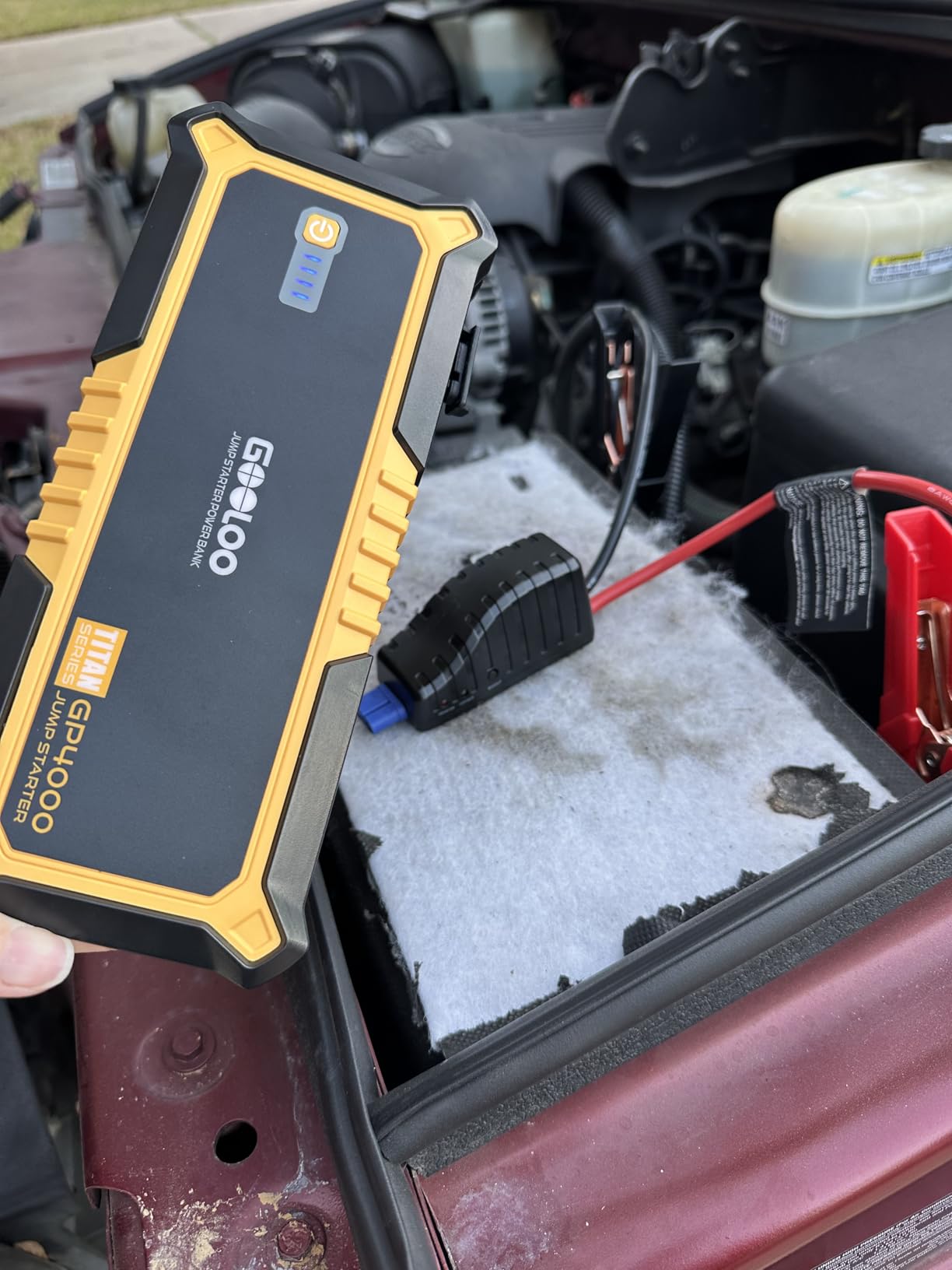
The GOOLOO has one of the largest published engine ceilings here, and unusually for a category full of marketing numbers, that claim is well supported by detailed owner testing. People report starting big V6 and V8 engines and, in one case, a two-battery backhoe. Its 24000mAh capacity sits at the top of this roundup.
It also holds charge for months and can be recharged from a car’s USB port while driving, which quietly removes the maintenance problem most owners forget. The operating range is stated as -4F to 140F.
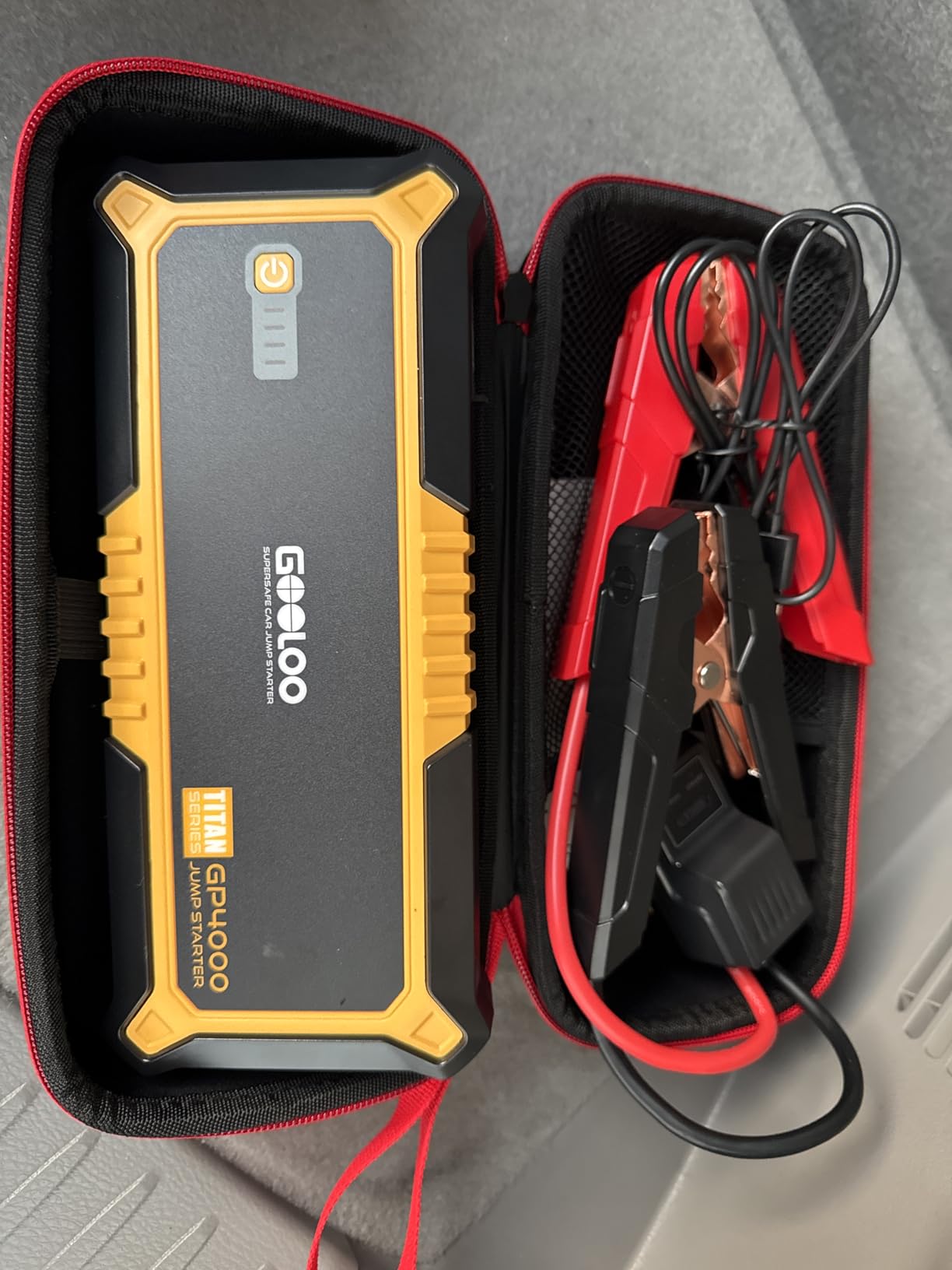
Ten built-in safety protections and all-metal smart clamps are a step up from plastic-clamped budget packs, and the BOOST button restarts vehicles with extremely low battery voltage. An EVA storage case is included, and despite the power the unit is only 3.9 pounds and small enough for a glovebox.
The ergonomics are the weak point, and owners are consistent about it. The cables detach from the unit and are hard to align in the dark, the connection sequence is not printed on the housing, and the supplied case is frustrating to repack. The USB-C port does not accept high-speed protocols, so recharging is slow.
Why it suits trucks, RVs and cold starts
Up to 10.0 litres of gas or diesel covers pickup trucks, large SUVs, RVs and agricultural equipment, where smaller packs start running out of headroom. The 60-jump claim and long standby make it a good fit for high-mileage drivers.
Buyers also appreciate the 18-month warranty and lifetime technical support, which is a real differentiator at this level.
Where it falls short
Deeply discharged or unhealthy batteries may need several minutes of clamped connection before it will crank, so it is not the fastest rescue when a battery is truly at zero. Practice the connection in daylight once.
7. S ZEVZO ET03 — Best for Diesel Pickups at 1.4 Pounds
S ZEVZO ET03 Car Jump Starter 4000A Jump Starter Battery Pack for Up to 8.0L Gas and 7.0L Diesel Engines, 74Wh Portable 12V Jump Box with USB Ports, LCD Display, Storage Case, and LED Light
4000 peak amps
74Wh
1.4 pounds
2 year warranty
Pros
- Starts fully drained batteries instantly
- Capable with V8 engines despite the mid-range tier
- Only 1.4 pounds so it stores anywhere
- Up to 50 jump starts per charge
- 500 lumen flashlight with strobe and SOS
- Case actually holds every component
Cons
- Instructions are not printed on the unit
- For a 0V battery the pack itself must be fully charged
- Wall charger not included
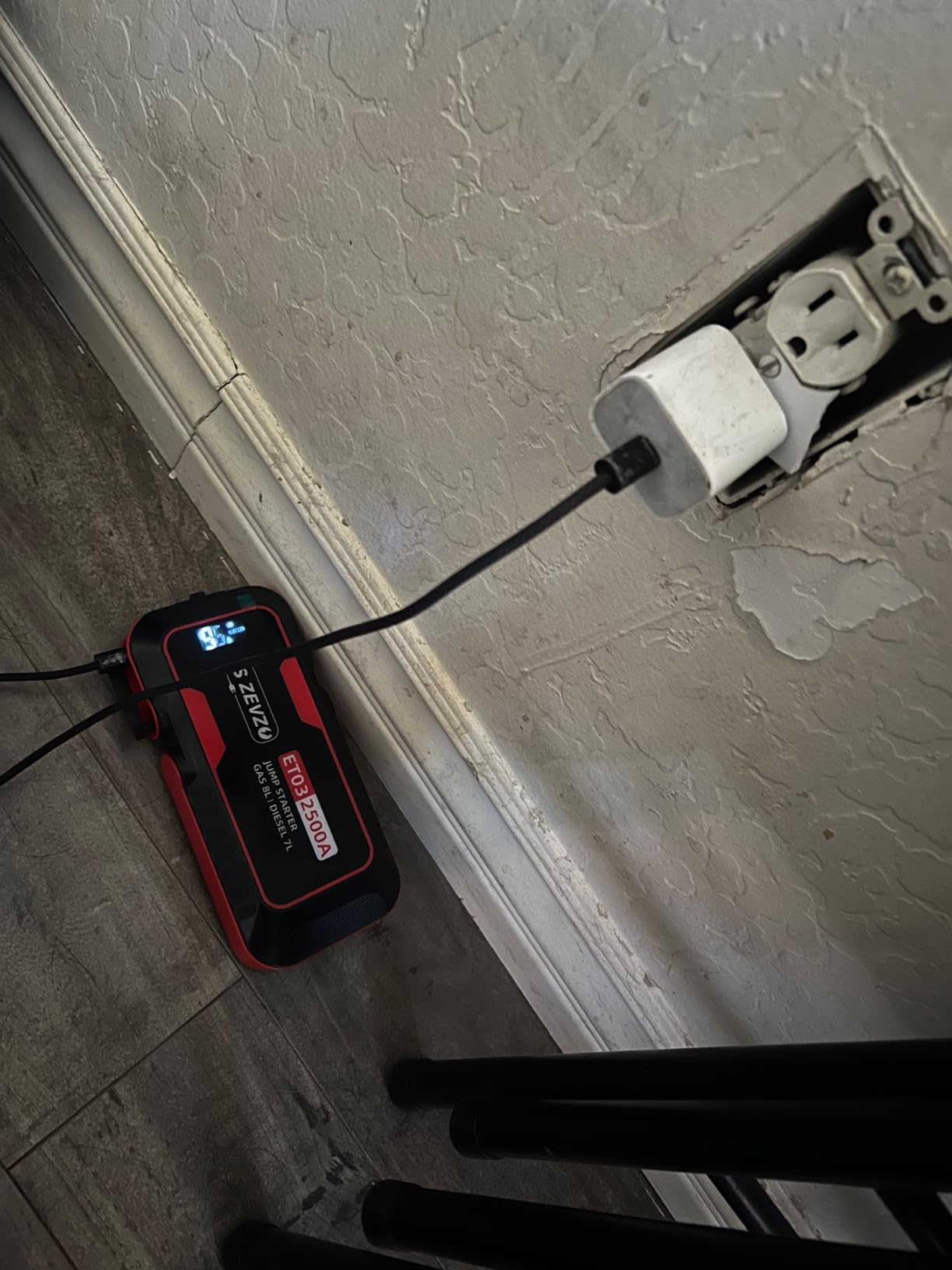
The ET03 is the one I recommend to almost everyone asking, because it does the unglamorous things well. It is rated at 4000 peak amps for gasoline up to 8.0L and diesel up to 7.0L, a diesel ceiling that few packs at this weight can match, and it weighs only 1.4 pounds.
Owners report instant restarts of deeply drained vehicles, including one cranking a completely dead V6 at only 70 percent pack charge. The force-start function in the smart clamps handles 0V batteries, which is where most boosters give up.
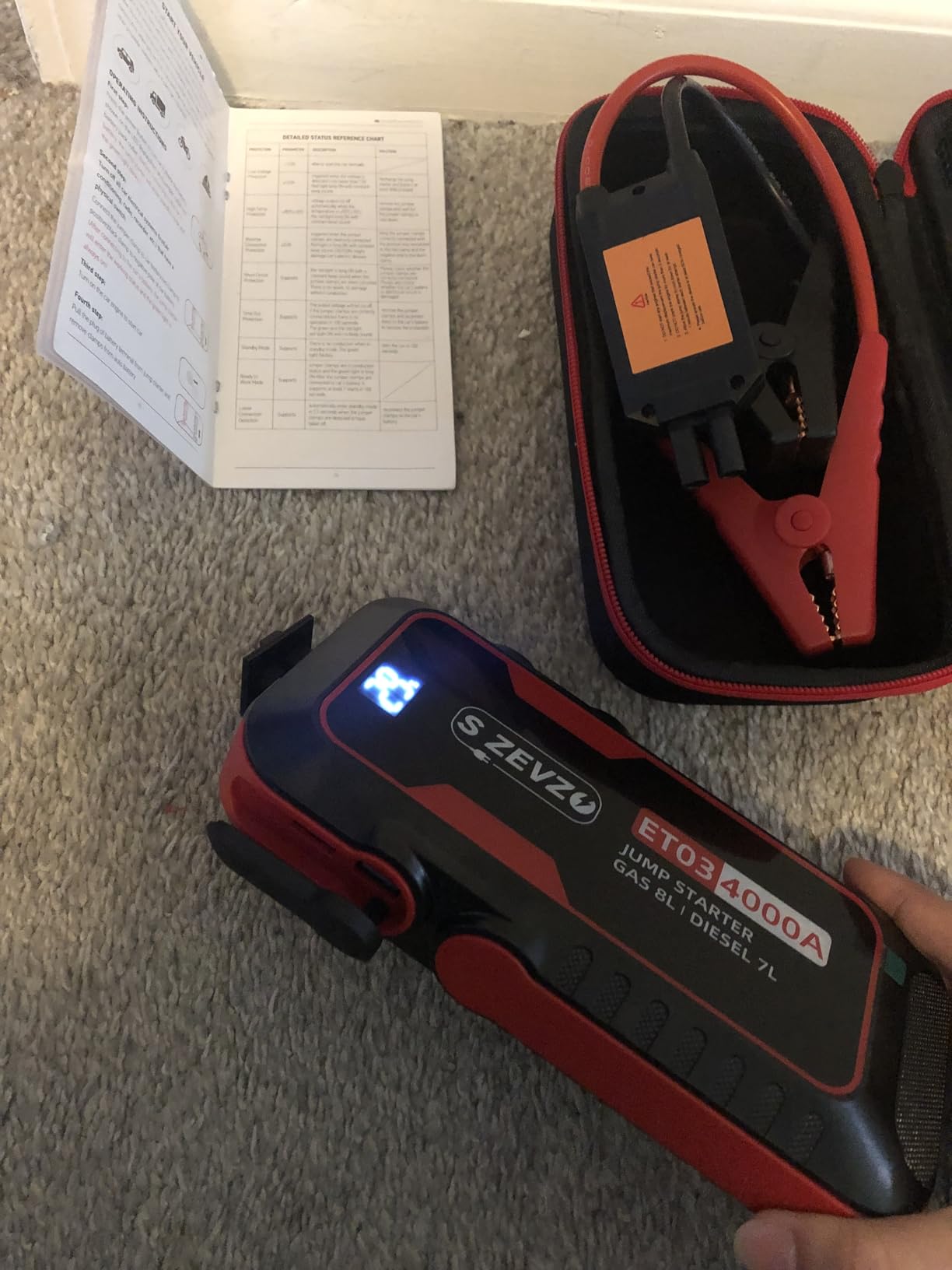
The 74Wh pack works as a power bank with two 5V 2A USB outputs that can run simultaneously, and the 500-lumen LED flashlight has steady, strobe and SOS modes. The LCD status screen, 14F to 140F operating range and 24-month standby all support the claim that it will sit in a car for months and still be ready.
Two things to know. The wall charger is not in the box, and the connection instructions are not printed on the unit, so first-time users depend on the manual or a video. For a 0V battery the pack itself needs to be at full charge or above 14V.
Why it suits almost any vehicle
The 8.0L gas and 7.0L diesel range covers nearly every light vehicle on the road, and the 1.4-pound, 1.5 by 3.4 by 7.5 inch body fits under a front seat or in a glovebox. Ten intelligent protections with audible error beeps help when you are doing this at night.
Two-year manufacturer warranty and up to 50 jumps per charge make it the one I would buy for a mixed household with a sedan and a pickup.
Where it falls short
It is not the brightest choice if your car is a heavy diesel truck, and buyers should budget for a wall charger. The 14F low-temperature floor is warmer than the Povasee’s -22F rating.
8. HALO Bolt Air — Best Multi-Function with Built-In Air Compressor
HALO Bolt Air 58830 Portable Car Battery Jump Starter | 100 PSI Air Compressor, 58.8Wh USB Power Bank, Emergency Floodlight & Charger, Jump Cars SUVs & Trucks, Inflate Tires, TSA Approved — Rose Gold
500 peak amps
58.8Wh
100 PSI compressor
90 day warranty
Pros
- Jump starter and usable 100 PSI air compressor in one slim unit
- Digital screen for setting pressure precisely
- Compact and light enough for a glovebox or carry-on
- 58.8Wh power bank plus LED floodlight
- 4.7 stars across more than 6300 reviews
Cons
- Only 500A peak and 58.8Wh so cars and SUVs rather than big trucks
- Shorter 90 day warranty than most rivals
- Inflation is slower than a larger dedicated inflator
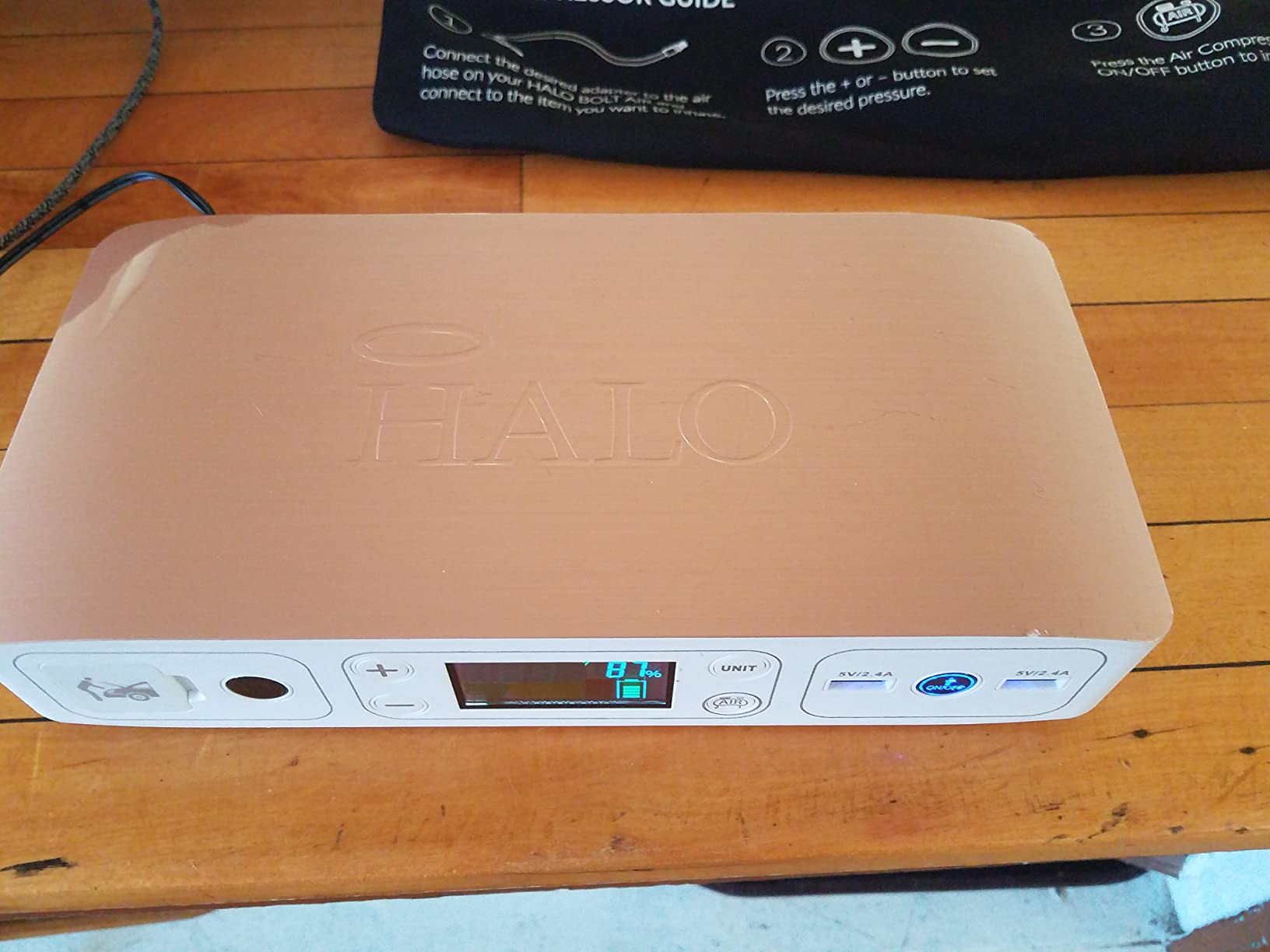
The HALO Bolt Air answers the question that comes up constantly in forums: a four-in-one combo unit or a dedicated jump starter? This is the case for the combo. It ties a 100 PSI air compressor, a 58.8Wh power bank, an LED floodlight and jump starting into something 4.65 by 9.52 by 1.85 inches and light enough to carry on a plane.
Four interchangeable nozzles and a 24-inch hose extension mean it handles tyres, sports balls and Presta valves. The digital screen lets you set the target pressure rather than guessing, and it is TSA approved.
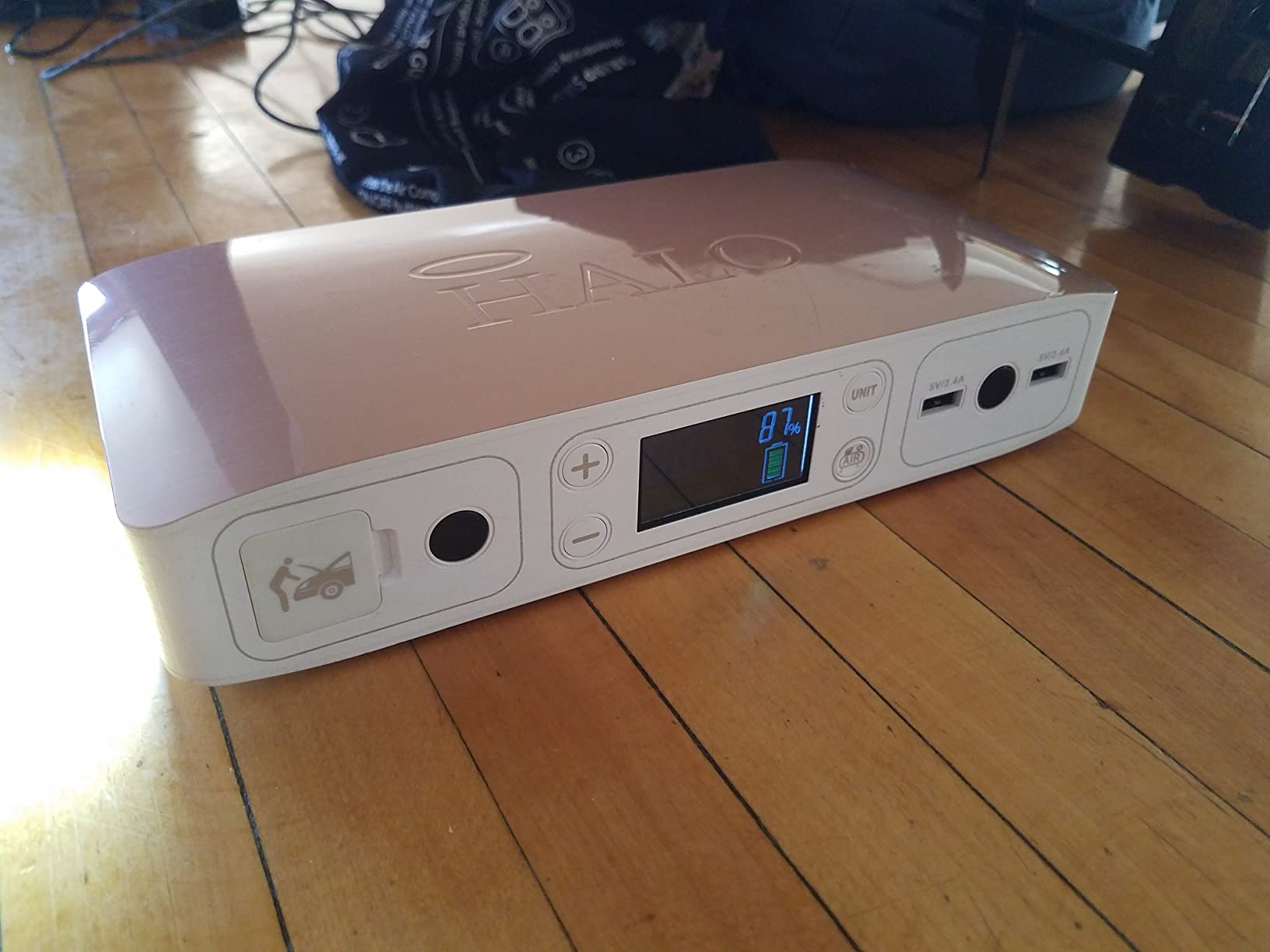
Safety covers reverse polarity protection, short-circuit protection and auto power-off. The 4.7-star average across more than 6,300 reviews reflects a unit people enjoy using, which matters for something that lives in a boot and gets pulled out for a flat tyre as often as a flat battery.
Be clear-eyed about the limits. Peak output is 500A and capacity 58.8Wh, so it suits passenger cars and SUVs rather than large trucks. The warranty is 90 days, by far the shortest in this roundup, and inflation is slower than a dedicated inflator of larger size.
Why it suits road trips and mixed kit
For someone who wants one device instead of three, the compression is genuinely useful. A roadside flat tyre on a dark highway is exactly the scenario the floodlight and preset pressure readout are built for, and the power bank charges a phone while you wait.
It also makes sense for travellers and RV owners who need something that packs down small.
Where it falls short
500A will not save a V8 or a diesel in deep cold, and a 90-day warranty offers little protection compared with the two-year terms elsewhere in this list. Buy it for versatility, not for raw starting power.
9. WOLFBOX MegaVolt24 — Best for USB-C Laptop Charging
WOLFBOX 4000A Jump Starter,12V Car Battery Jumper Starter Portable with 65W Quick Charger,LED Display,88.8Wh Booster Jump Box Pack (10L Gas 10L Diesel Engine) with LED Light,Jumper Cables, MV24
4000 peak amps
88.8Wh
65W USB-C in and out
2 year warranty
Pros
- Full charge in about 1.3 hours with the included PD65W charger
- 65W output charges laptops and tablets not just phones
- One-touch boost reliably revives low-voltage vehicles
- HD LCD status display
- Handles gas and diesel under 10L with UL FCC CE and CA65 testing
Cons
- Higher cost than most 4000A competitors
- Wall charger and cables may need a separate purchase depending on the bundle
- Reverse polarity is easy to get wrong
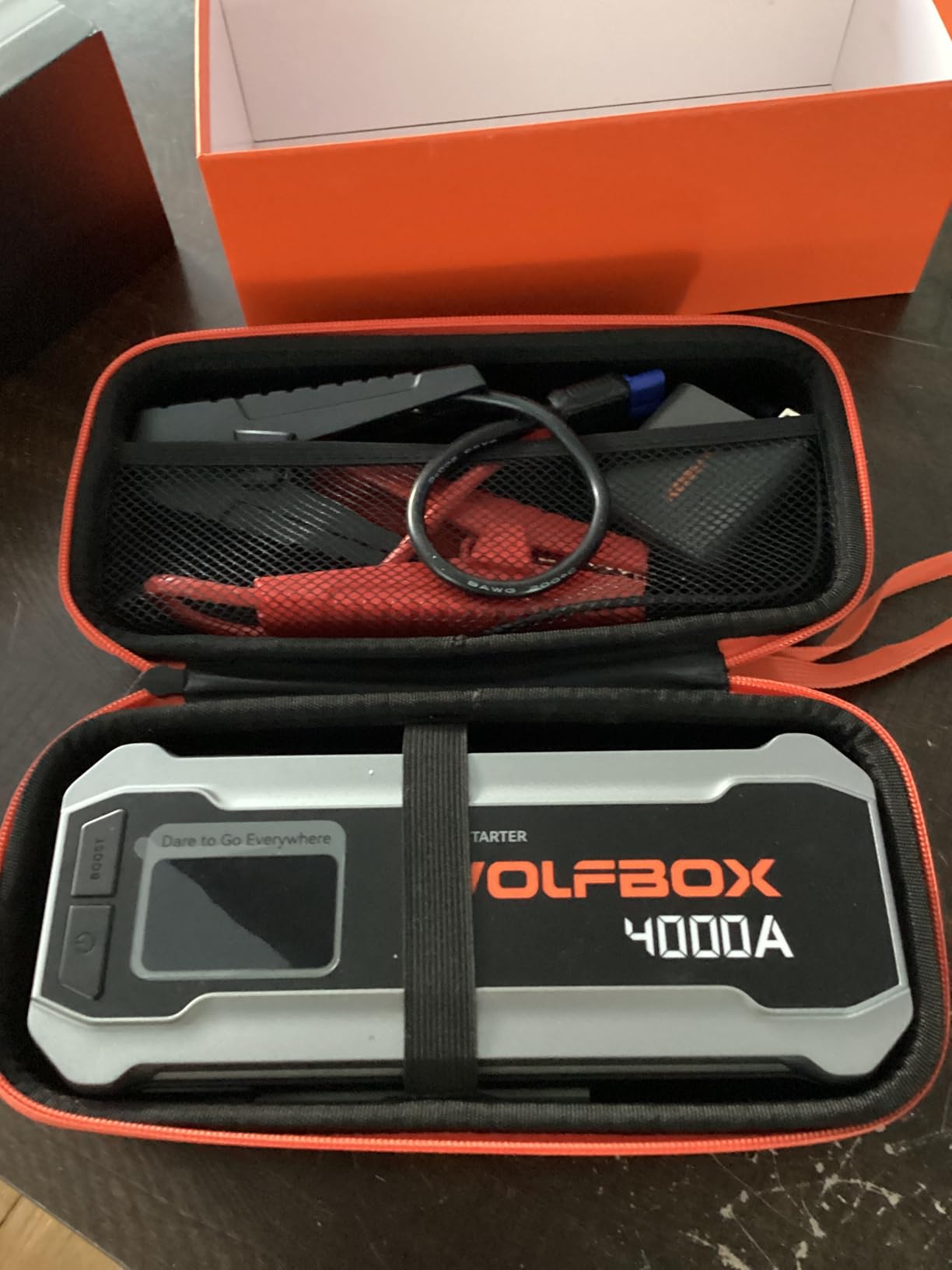
The MegaVolt24 is the only pack here whose USB-C port runs at 65W in both directions, and that changes what a booster can be. The same cable that refills the battery in roughly 1.3 hours with the included PD65W charger will run a laptop or a tablet. Owners treat it as a mobile power station that happens to jump-start a car.
Cranking performance is more than adequate at 4000 peak amps with an 88.8Wh battery, rated for gasoline and diesel engines under 10 litres. The one-touch boost function handles low-voltage starts, and the HD LCD display keeps the state of charge visible.
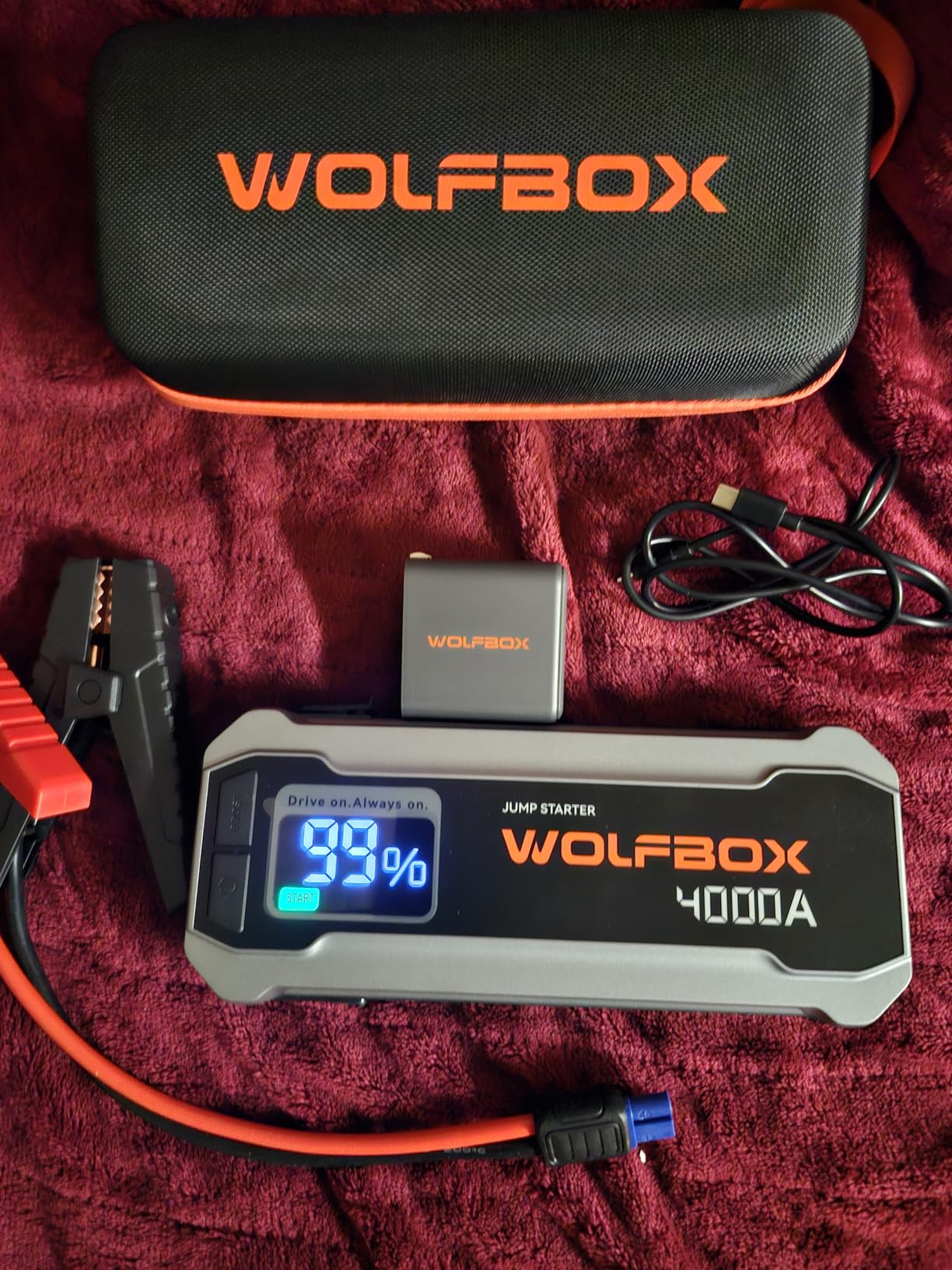
What sets it apart on paper is the certification. WOLFBOX states the unit passed UL, FCC, CE and CA65 tests and carries an IP64 rating, and it operates from -4F to 140F. Very few competitors in this category publish a safety-certification list at all, which is exactly the filter a careful buyer wants.
The reservation is cost relative to similar-rated units, plus a note that the wall charger and cables may need a separate purchase depending on the bundle. Owners also point out that reverse polarity is easy to get wrong, so read the polarity markings before you connect it in the dark.
Why it suits long-distance and work drivers
Anyone whose phone is their navigation and whose laptop is their office will get more from the 65W output than anyone else. Fast recharge matters here too, since a full top-up before a long drive takes little over an hour.
The 3-pound weight and 1.5 by 3.86 by 9.33 inch body are easy to stow, and the multi-mode LED flashlight with SOS, strobe and high-beam is a sensible roadside addition.
Where it falls short
It is one of the more expensive 4000A units, and the 88.8Wh headline does not mean you can crank 88.8Wh worth of engines. Budget for accessories if your bundle does not include the charger.
10. Povasee A30 — Best for Cold Weather
Povasee Jump Starter 5000A Car Jumper Starter, Model A30 12V Jump Box for Car Battery up to 10L Gas or 8L Diesel Engine Battery Jumper Starter Portable with USB Dual Output/LED Light/Storage Case
5000 peak amps
74Wh
minus 22F rating
2 year warranty
Pros
- Widest cold rating here at -22F
- Handles 10L gas and 8L diesel engines
- About 60 jump starts per charge
- QC3.0 dual USB output is faster than a typical 5V charger
- 400 lumen light with flashlight strobe and SOS
- Storage case and 24-month warranty included
Cons
- AC wall adapter not included in the box
- Smart clamps give no output until correctly attached
- Real capacity is lower than the watt-hour figure once peak current is drawn
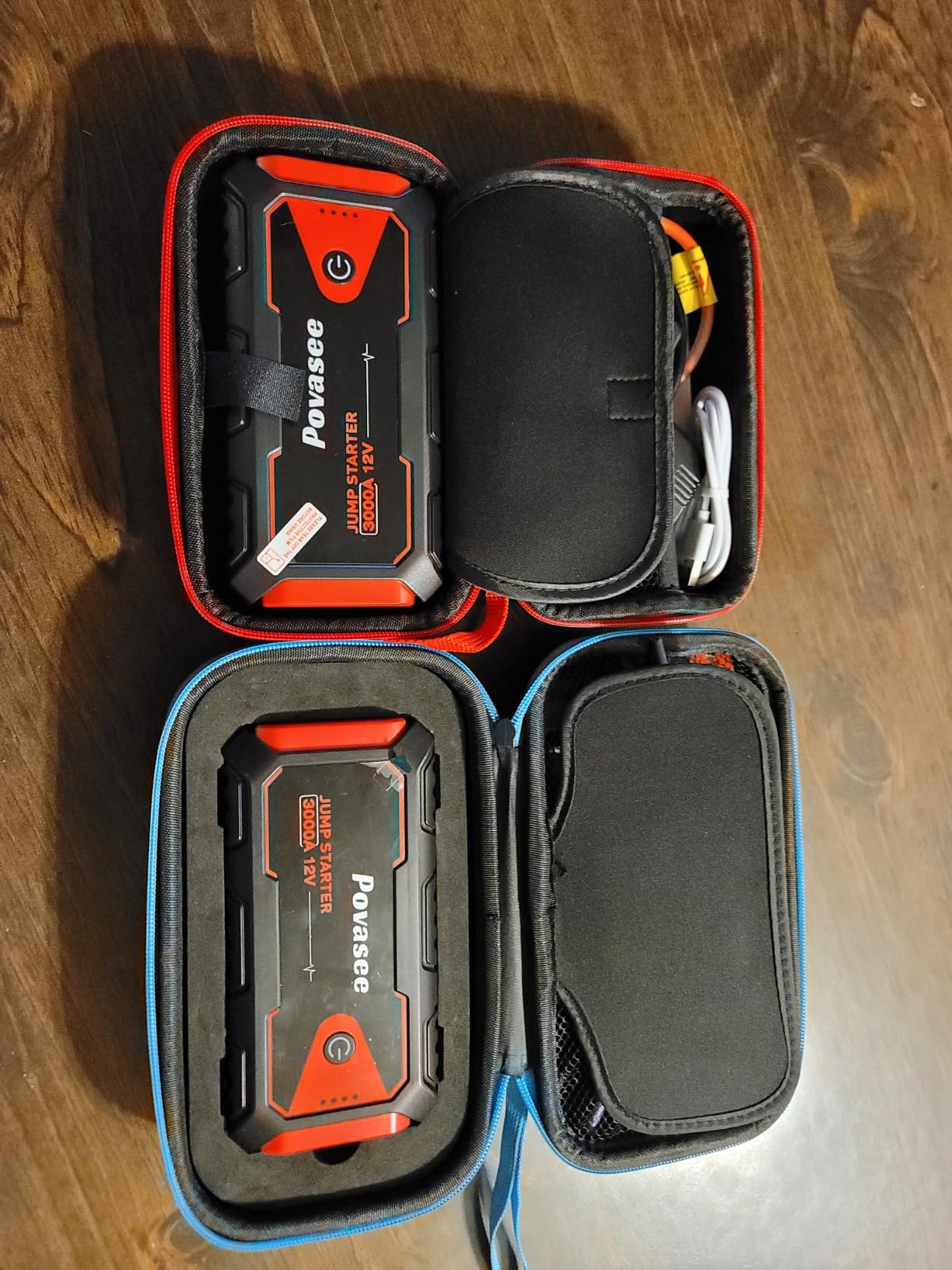
If you live somewhere that gets properly cold, the A30 is the one to look at first. Its stated operating range of -22F to 140F is the widest in this roundup, and the 5000A peak covers 10L gas and 8L diesel engines, among the widest engine ceilings here.
It is also small. At 2.2 pounds and 6.61 by 3.37 by 1.7 inches it is roughly the size of a deck of cards, and owners like that combination of capacity and footprint for a pack that lives in a winter coat pocket or a truck console.
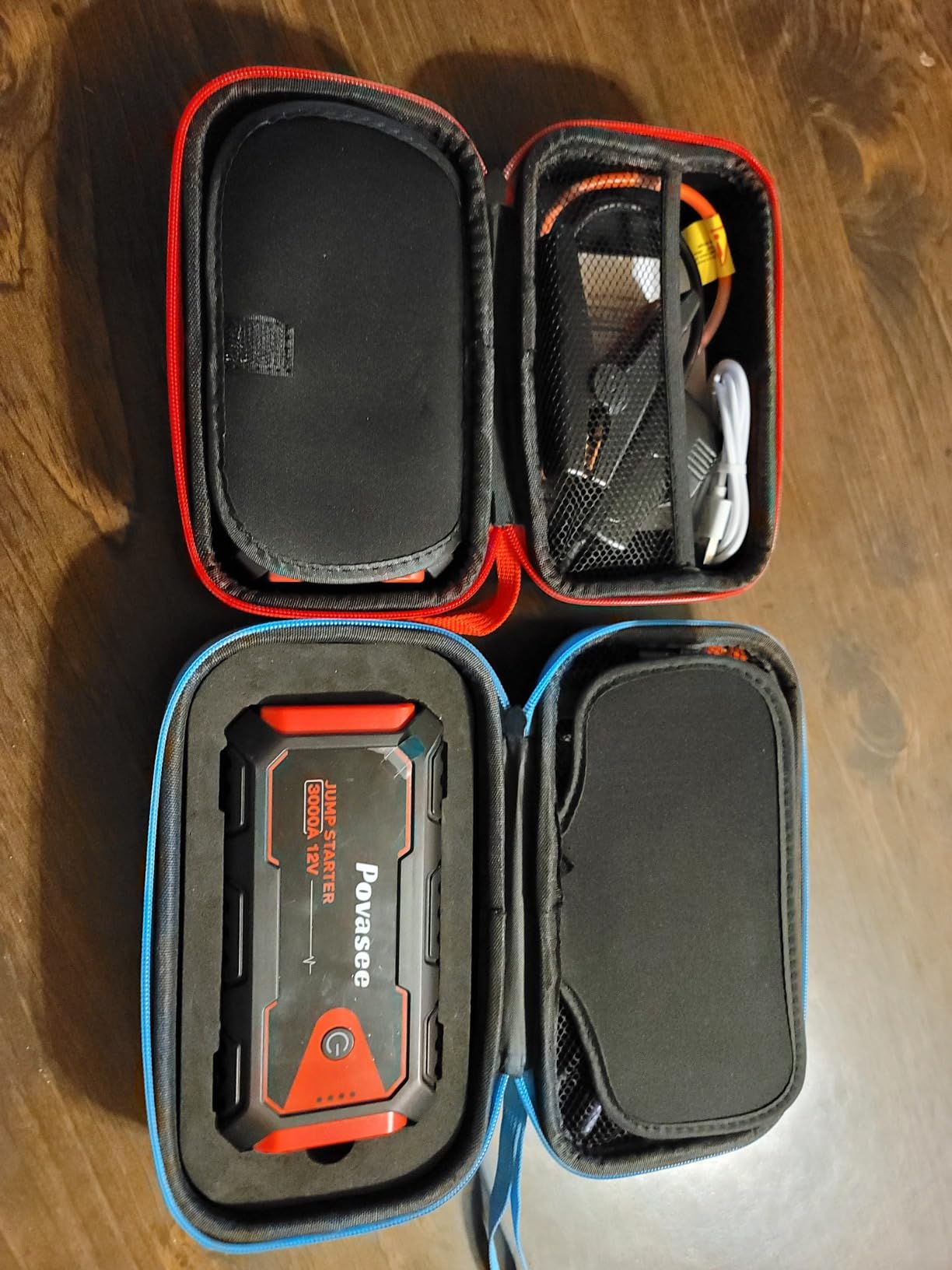
The RST button restarts engines when battery voltage drops below 9V, ten protection systems cover reverse polarity, over-discharge, short circuit and spark resistance, and the QC3.0 dual USB output charges a phone noticeably faster than a basic 5V socket. A 400-lumen light with flashlight, strobe and SOS modes rounds it out.
A frequently reported complaint is the missing AC wall adapter, which is not in the box. The smart clamps also produce no output until they are correctly attached to the battery, which confuses first-time users, and the real capacity drops once you draw peak current, as it does with every pack on this list.
Why it suits northern climates and big engines
For anyone north of the Dakotas, in Canada, or running a diesel in winter, the -22F rating removes a real worry. Ten litres of gas or eight litres of diesel also means it covers full-size pickups and heavy SUVs that the smaller packs cannot promise.
Roughly 60 jump starts per charge and a 24-month warranty make it a low-maintenance addition to a winter vehicle kit.
Where it falls short
You will need your own wall adapter, and it is not the strongest choice if you need a laptop-class USB output or a built-in inflator. The clamp feedback could be more obvious in the dark.
Lithium vs Lead-Acid Jump Starters
Lithium wins on every practical measure for a car, and the only genuine argument for lead-acid is price per unit of starting power. Here is the honest comparison.
Weight is the clearest divide. The lead-acid Clore JNC660 weighs 18 pounds; the lithium packs in this roundup run from 430 grams to 4.5 pounds. If your booster has to live in a glovebox or a backpack, that is not a close call.
Capacity behaves differently too. A lithium pack is measured in watt-hours and holds a charge for months between uses. The Clore’s lead-acid pack loses only 0.1V over months, which is excellent, but it is a heavier way to store the same amount of energy.
Charge time is where lithium pulls clearly ahead. The Hulkman reaches 80 percent in one hour and the WOLFBOX takes roughly 1.3 hours, while a lead-acid jump box needs a wall outlet overnight. Cold performance is the one area where both chemistries need care, and lithium is the better bet for sub-zero cranking.
Cycle life and self-discharge favour lithium in the short term but depend heavily on how you treat the pack. Both chemistries suffer if you store them flat, and both manufacturers ask you to top up the charge periodically.
Safety Features That Actually Matter
Forum scepticism about consumer booster packs is loud, and one Quora answer dismissed them outright in favour of six-foot jumper cables. The criticism is fair when it applies to no-name units with thin insulation and no protection circuitry. It is unfair when applied to packs that publish their safeguards, because those are the difference between a tool and a liability.
Reverse polarity protection is the first one. Connect the clamps backwards on a pack without it and you risk frying the internal electronics. Every pack in this roundup lists it, which is the minimum bar now.
Spark-proof clamps matter more than most buyers realise. Fuel vapour near a hot engine bay is the reason clamps are insulated and why cheap exposed copper is a genuine risk rather than a style choice. The Hulkman markets this as spark-proof, mistake-proof and reverse-polarity layers, and the GOOLOO uses all-metal smart clamps.
Over-current, over-voltage, over-charge, over-discharge, short-circuit and thermal cutoffs are the remaining layers. The DBPOWER lists five protection types, the AstroAI eight, the GOOLOO and S ZEVZO ten. More layers is generally better, but only if the manufacturer documents them.
Finally, look for a boost mode. Force-start buttons exist for batteries so depleted the pack cannot read a voltage across the terminals. The AstroAI unlocks below 9V, the Povasee restarts below 9V, the S ZEVZO handles 0V batteries and the GOOLOO has a BOOST button for extremely low voltage. Without one of these, a truly flat battery often defeats an otherwise capable pack.
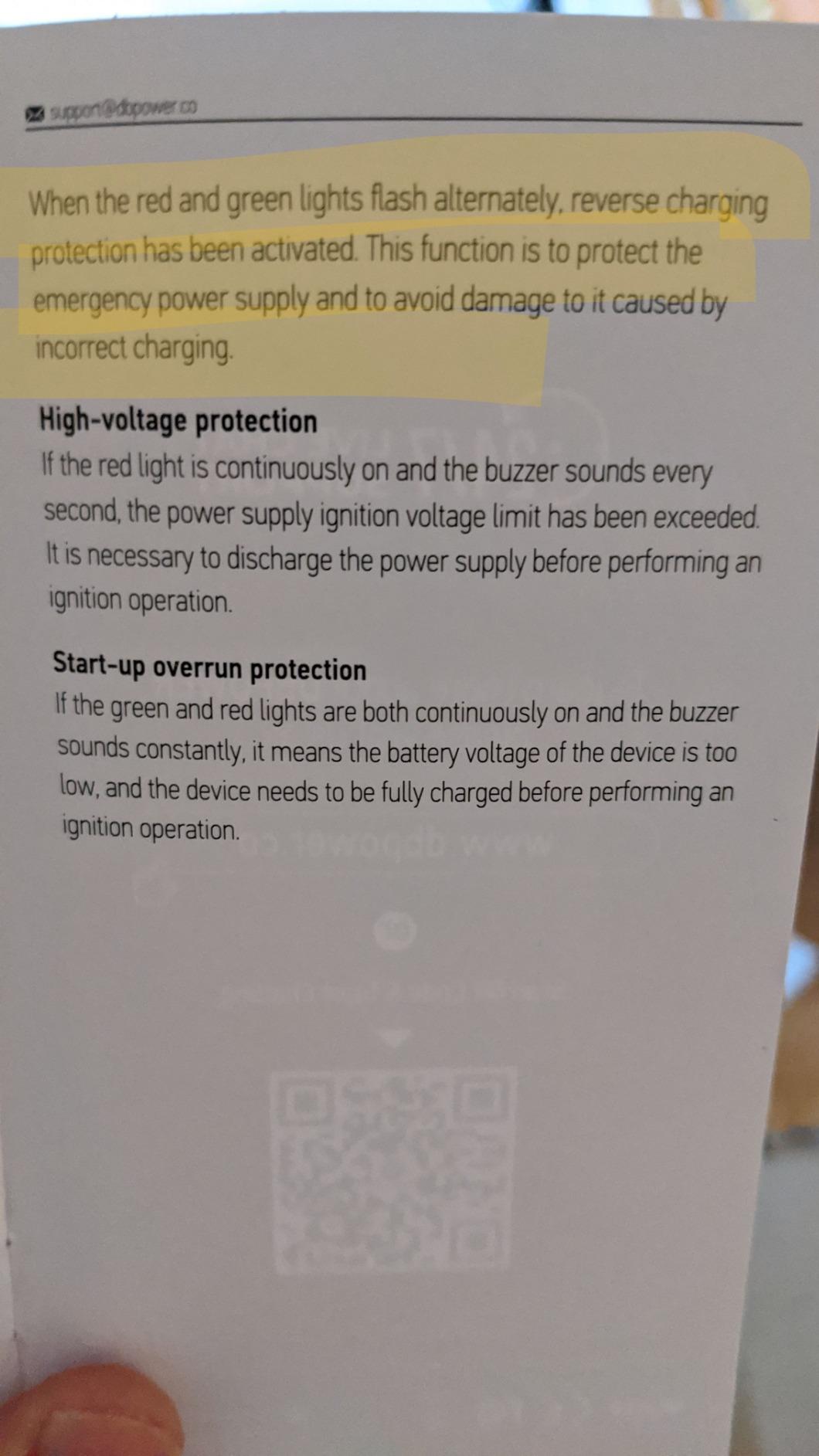
One more practical note. Smart clamps on some units cut power automatically after a successful start to prevent reverse charging into the booster. If your second attempt does nothing, unplug the clamps and reconnect them rather than assuming the pack is dead.
How to Use a Jump Starter Safely
Using one correctly takes about five minutes, but the order matters. Before anything else, switch the engine off, park on level ground, and make sure you are not standing in fuel vapour.
Attach the red clamp to the positive terminal of the car battery. Attach the black clamp to an unpainted ground point on the engine block, not the negative terminal, if your manual allows it. The block is a better ground because it is a direct path back to the starter.
Power the pack on. Many units have a status light that confirms a good connection, and a buzzer or error code tells you when polarity is wrong.
Turn the key and crank. Most manufacturers recommend short bursts rather than one long hold, and if the engine does not fire on the first try, wait a few seconds and try again.
As soon as the engine catches, remove the black clamp first, then the red clamp. This order prevents arcing near the battery, which is a small habit with a meaningful safety payoff.
Drive the car for 10 to 15 minutes before switching it off. This is the piece most guides skip and it is the one that protects your battery. A jump start restores enough charge to crank, not enough to run a full electrical load, so idling or driving lets the alternator put back what you took out. Forum advice converges on the same 10 to 15 minute figure, and one r/CarTalkUK reply correctly notes that repeated jump starts do long-term damage to a worn battery.
Finally, do not leave the booster connected once the car is running. Reverse charging into a jump pack is a real failure mode, and the auto-cutoff on many units exists to prevent it.
How to Charge and Store a Jump Starter
The most common complaint about any battery booster is the one that will not hold a charge between seasons. It is a maintenance problem, not a product defect, and a three-minute routine fixes it.
Top the pack up every two to three months. The Hulkman states this explicitly to preserve battery life, and it applies to every lithium pack in this roundup. A full charge held at room temperature holds for months; the same pack left at 5 percent in a hot car does not.
Store it between 40 and 60 percent for long periods, in a cool, dry place. The S ZEVZO quotes 24 months of standby from full, the Povasee is quoted at roughly the same, and the Hulkman claims up to 18 months. Those figures assume ideal storage, not a car in July.
Do not store it below freezing or in direct sun for months. Many packs here quote -4F or -22F operating ranges, but that is what the unit can tolerate while working, not what it enjoys while sitting idle.
Recharge from a wall outlet before a long trip or a cold season, not after. The WOLFBOX takes roughly 1.3 hours on its PD65W charger and the Hulkman reaches 80 percent in an hour, so this is easy to fit into an evening.
Check the charge level every few months and run a test jump on a car you know is healthy. A booster that has sat flat for a year may need two or three attempts before it performs, which is exactly the situation where a first-time owner assumes the product is faulty.
Frequently Asked Questions
How many amps is a good jump starter?
For most cars, 1000 to 2000 peak amps is genuinely enough. Small four-cylinders are comfortable at 800 to 1500A, V6s and crossovers want 2000 to 3000A, and V8s, diesel engines and heavy equipment need 3000A or more. Remember that peak amps is a burst rating, not a sustained one.
Which car battery jump starter is best?
For most drivers the Clore Automotive JNC660 is the strongest all-round choice, with a 22Ah lead-acid pack, 46-inch cables and a reputation for starting fully dead batteries. For a small car that needs to live in a glovebox, the AstroAI S8 is the better shape, and for cold climates and large engines the Povasee A30 covers the widest range.
Are lithium jump packs better than lead acid jump packs?
For a car, yes. Lithium packs weigh a fraction of a lead-acid jump box, recharge in about an hour rather than overnight, and hold a charge for months between uses. Lead-acid still wins on cost per unit of starting power, which is why professionals and workshops keep using them.
How do I know which jump starter to buy?
Start with engine size, then check whether you drive gas or diesel, then add roughly 30 percent margin if you live somewhere cold. After that, check the published engine-displacement ceiling, confirm the clamp protections include reverse polarity and spark-proof handling, and compare warranty length.
How long should a jump starter be charged?
Give it a full charge before you need it rather than after, and top it up every two to three months in between. Store it between 40 and 60 percent in a cool, dry place, and avoid leaving it in a hot car or below freezing for months at a time.
Why won’t my jump starter start my car?
The usual causes are a pack that has been sitting flat for months, a battery too depleted for the pack to read a voltage across, or cables that are not properly attached. Try the boost or force-start mode, confirm the clamps are fully seated, and reconnect them if the auto-cutoff has tripped.
Can I jump start a hybrid car?
Yes, but only the 12V auxiliary battery, which is what a jump starter is designed for. Never attach a jump pack to the high-voltage traction battery, and do not use a 24V commercial booster on a 12V hybrid system.
Do I need a new battery after a jump start?
Not immediately. Drive the car for 10 to 15 minutes after a successful jump so the alternator can restore charge, then have the battery tested. Replace it if the engine struggles on a warm morning or if the battery will not hold a charge overnight.
Final Verdict
There is no single best car jump starter in 2026, but there is a clear pattern. Buy the Clore Automotive Jump-N-Carry JNC660 if you want one tool that starts anything and will sit in a garage for years. Buy the DBPOWER Peak 3000A if you want the most capability per gram in a glovebox, and buy the Hulkman Alpha85 if you want fast charging, a clear status display and IP65 weather sealing.
Add a Povasee A30 for real winters, a GOOLOO GP4000 for diesels and heavy equipment, an S ZEVZO ET03 if you want a strong balance of cranking power, weight and capacity, a WOLFBOX MegaVolt24 if your laptop matters, a HALO Bolt Air if you want tyre inflation in the same box, and an AstroAI S8 or BIUBLE 5000A when the priority is a small, cheap permanent addition to the car.
Whichever you pick, do the boring part: charge it fully before you need it, top it up every two to three months, and practise the connection once in daylight. A booster you have used before is worth ten you have only read about.