
Rollers are good for training cycling, but only if your goal is technique rather than measured power. Your rear wheel spins two of three rotating drums, a belt drives the front drum, and both wheels turn freely, so the bike stays upright and your tyres load the way they do on tarmac. That makes rollers the cheapest and most portable way to practise cadence, pedal circle smoothness and bike handling. Updated for 2026, this roundup ranks the 10 best rollers for cycling drills by drum geometry, resistance, wheelbase fit and how each one holds up when you ride it hard.
We spent several weeks putting these sets through warm-up spins, cadence ladders, standing efforts and one-leg drills to separate the sets that are genuinely good for drills from the ones that are simply cheap. The short version: tapered or parabolic drums that self-centre make learning far easier, drum diameter decides how the unit feels at high rpm, and any magnetic resistance unit changes what a drill session can actually achieve. Below is the quick verdict, then the full ranking.
Table of Contents
Top 3 Best Rollers For Cycling Drills (October 2026)
Our three headline picks cover the three most common ways riders use rollers. The Tacx Antares is the safest first purchase, the Elite Arion Mag is the one to buy if your drills include intervals, and the Minoura FG220 is the set that lives in a car boot on race morning.

Tacx Antares Rollers
- Tapered self-centering drums
- Roller diameter 100-110 mm
- Folds to 31.5 inches

Elite Arion Mag Rollers
- Three magnetic resistance levels
- 220 W at 20 km/h and 520 W at 40 km/h
- Parabolic self-centering drums

Minoura FG220 Hybrid Roller
- Folds into the supplied carry bag
- Fits 930-1200 mm wheelbase
- Fixed front roller for forgiveness
All 10 Rollers Compared Side by Side in 2026
This is the master comparison no competitor publishes. Ten sets, one table, so you can match drum geometry and resistance type to the kind of drill you actually want to run.
| Product | Specifications | Action |
|---|---|---|
| Tacx Antares Rollers |
|
Check Latest Price |
| Elite Arion Mag Rollers |
|
Check Latest Price |
| Minoura FG220 Hybrid Roller |
|
Check Latest Price |
 Elite Quick-Motion Rollers Elite Quick-Motion Rollers |
|
Check Latest Price |
 Wahoo KICKR ROLLR Wahoo KICKR ROLLR |
|
Check Latest Price |
 Minoura Live Roll R800 Minoura Live Roll R800 |
|
Check Latest Price |
 Kreitler Alloy Rollers Kreitler Alloy Rollers |
|
Check Latest Price |
 CXWXC Magnetic Roller Trainer CXWXC Magnetic Roller Trainer |
|
Check Latest Price |
 Minoura LiveRoll R730 Minoura LiveRoll R730 |
|
Check Latest Price |
 DIYTUNINGS Foldable Rollers DIYTUNINGS Foldable Rollers |
|
Check Latest Price |
1. Garmin Tacx Antares Rollers – Best Overall for Self-Centering Cadence Drills
TacX Antares Indoor Retractable Bicycle Rollers
Weight: 18.7 lb
Drum diameter: 100-110 mm
Fits 26 to 29 inch wheels
Folds to 31.5 inch
Pros
- Tapered drums keep the wheel centred
- Quick folding with no tools
- Wide wheel size range
- Quiet enough for a flat with a mat
Cons
- Loud at speed with wide tyres
- No built-in resistance
- Needs real balance skill first
The Antares is the highest-volume roller in this group, and the reason is not subtle: the tapered drum profile walks your wheel back to the centre line every time you wobble. That self-centering behaviour is exactly what a first-time rider needs, and it is why we put this set at the top of the best rollers for cycling drills ranking. Instead of fighting the bike, you can concentrate on the drill itself.
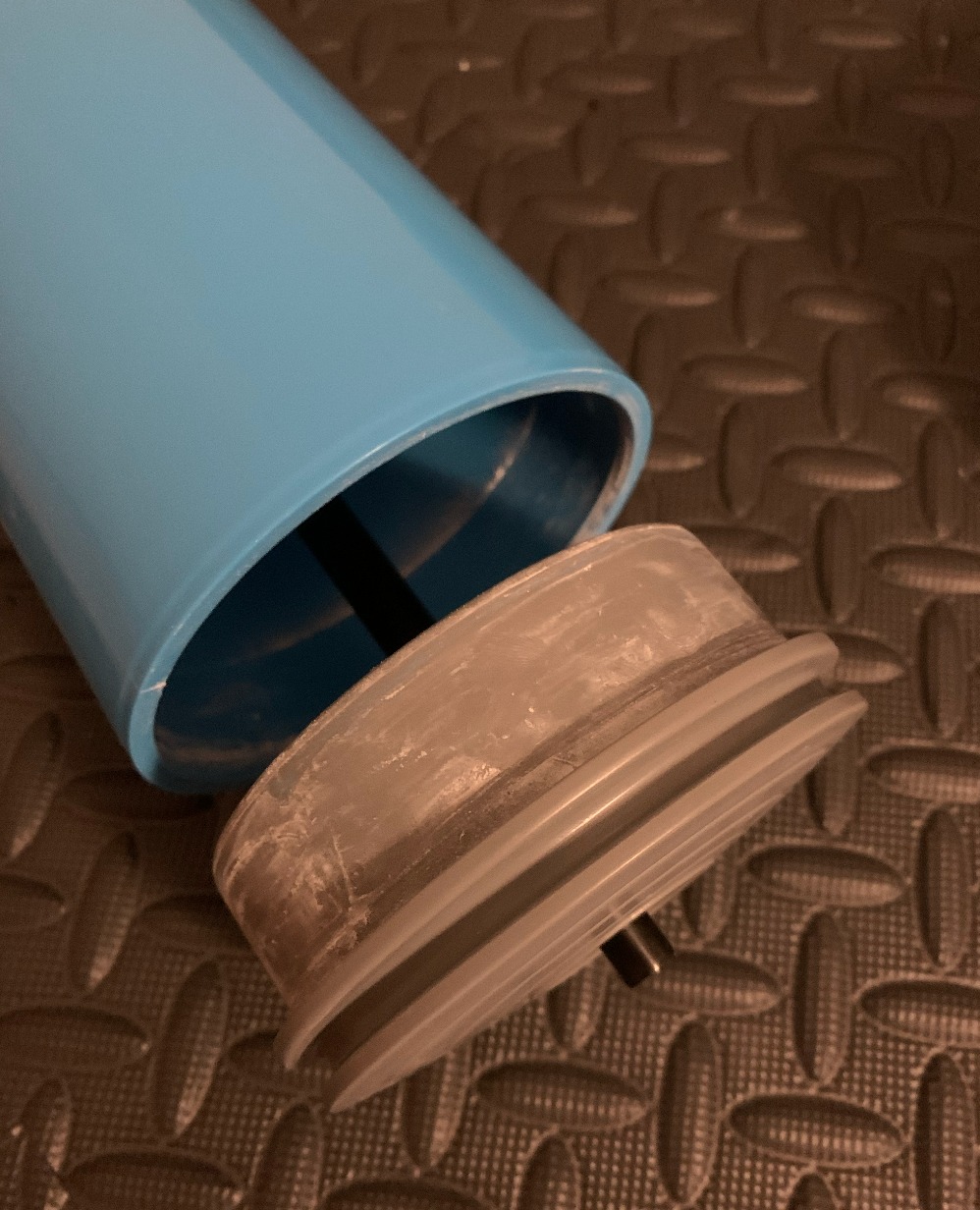
Drum diameter runs 100 to 110 mm, which is the mid-to-large end of what is available and noticeably calmer than the small-drum sets. When we ran a seated cadence ladder from 80 to 105 rpm, the front wheel tracked cleanly with no hint of skate. Set-up is genuinely tool-free, and the whole frame folds down to 31.5 by 18.5 by 5.31 inches, so it disappears against a wall.
Fit is another strength. It takes 26 to 29 inch wheels without a separate riser block, so a road bike, a gravel bike and a mountain bike can share the same frame. Bearing quality is the other thing owners consistently praise, with sealed units staying smooth over hundreds of miles of indoor use.
The honest drawback is sound. At high speed this set is louder than the bigger-drum and elastomer-coated options, particularly with wide-gauge tyres. There is also no resistance beyond your gearing, which means threshold blocks have to come from cadence and gear choice rather than an external load.
Who this roller suits?
This is the one to buy if you are learning to ride rollers at all, or if you share equipment with a partner who also spends time on the bike. The tapered drums make the first ten sessions uneventful, which is where most people give up. It also suits a rider who wants cadence and pedal-circle work rather than measured intervals, since there is no resistance unit to fight with.
Who should skip it?
Skip it if you live in a hard-working apartment block, because the noise at speed travels. It is also the wrong choice for threshold or VO2 work: without resistance, the only way to add load is to spin faster, and that is a different physiological stimulus. Riders running aero bars will find the balance harder than average here.
2. Elite Arion Mag Parabolic Rollers – Best for Magnetic Resistance Intervals
Elite Arion Mag Classic Roller – 3-Level Magnetic Resistance Indoor Bike Trainer for Smooth & Efficient Workouts – Foldable Design for Easy Storage – Compatible with Rouvy & Kinomap Training Apps
Magnetic: 3 levels
220 W at 20 km/h, 520 W at 40 km/h
Load capacity: 150 kg
Folds to 31.3 inch
Pros
- Real tunable resistance
- Parabolic drums centre the bike
- Stand up and grind safely
- Works with Rouvy and Kinomap
Cons
- Steep learning curve
- Composite frame feels less refined
- Resistance tops out for big power
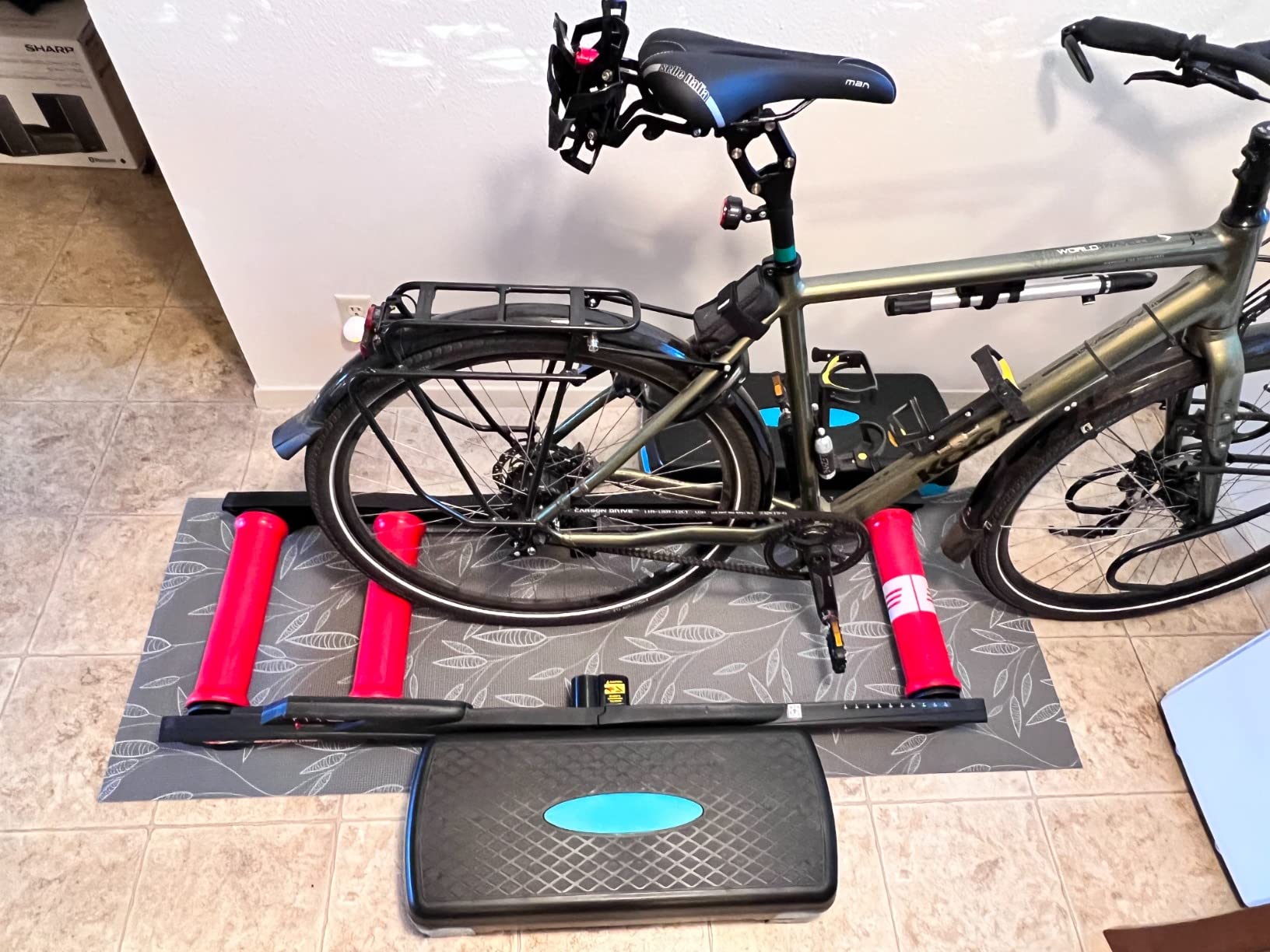
Most rollers cannot do intervals, because a bike on three free drums has nothing to push against. The Arion Mag fixes that with three manually selected magnetic resistance levels and a selector on the central drum you can reach while riding. Owners buy this set precisely for that reason, and it changes what a drill session looks like: you can hold a block at 20 minutes instead of improvising it with gearing.
The parabolic drum profile self-centres like the Antares but is shaped for higher power, and the frame is rated to 150 kg. When we stood up out of the saddle at cadence, the bike stayed planted and the front wheel held its line. Magnetic braking is also quiet, which matters more than the spec sheet suggests in a shared building.
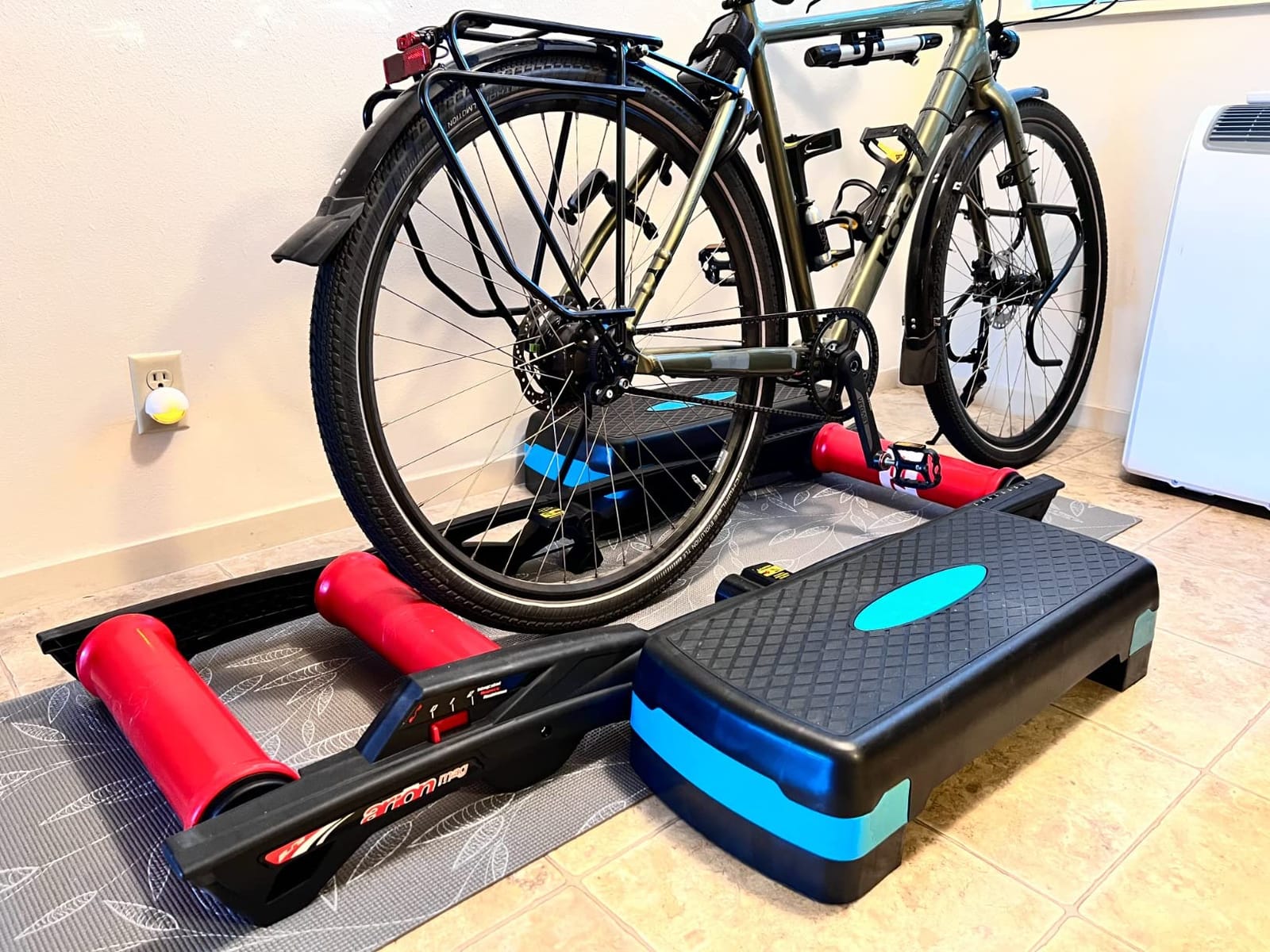
Connectivity is a bonus rather than the headline. The set works with Rouvy and Kinomap, so it can sit inside a structured session rather than being a pure analogue tool. Note that resistance levels are manual, not continuous, so intensity changes are chunky rather than fine-grained.
Two cautions. The learning curve is steeper than on a tapered plastic frame, because parabolic drums are less forgiving if you get lazy at the front end. And the resistance ceiling arrives sooner than most riders expect: the listed output is 220 W at 20 km/h and 520 W at 40 km/h, which is plenty for threshold work but limited for genuine sprint drills.
Who this roller suits?
Riders who want to do interval work indoors without buying a turbo trainer will get on well here. It is also a strong match for anyone riding Rouvy or Kinomap sessions that mix climbing and descending, since the resistance gives the terrain some shape. If your drills include threshold blocks and long efforts, this is the shortlist pick.
Who should skip it?
Absolute beginners should start somewhere gentler. The three-level system means you cannot fine-tune within a level, and the composite construction gives a slightly hollow feel compared with the machined alloy sets. If your goal is pure quietness and long daily use rather than intensity, a quieter no-resistance set will serve you better.
3. Minoura FG220 Hybrid Roller – Best for Race-Day Warm-Ups
FG220 Hybrid Roller
Frame: aluminium
Wheelbase: 930-1200 mm
Drum diameter: 79 mm
Item weight: 1 kg
Pros
- Folds into the supplied carry bag
- Very quiet for a roller set
- Forgiving fixed front roller
- Two simple resistance settings
Cons
- Limited resistance range
- Noisy with mountain bike tyres
- Less pedalling feedback
The FG220 is built around one job: getting out of a car, unfolding in a car park and warming up before a race. It folds into the carry bag it ships with, and the aluminium frame sets up quickly on the front fork mount without removing the rear wheel. The wheelbase range of 930 to 1200 mm covers road, CX and mountain bikes, which is unusually broad for a travel-minded set.
What makes it forgiving is the roller layout. The front roller is fixed while the rear spins freely, so a wobble does not propagate the way it does on three free-spinning drums. For a rider warming up before a crit, that predictability is worth more than raw intensity. Owners repeatedly single out how quiet it runs for a roller set.
There are two resistance settings, off and one magnetic level, which is enough to add a little work before the race without draining you. Drum diameter of 79 mm is on the smaller side, and reviewers note that mountain bike tyres are noticeably louder on it. The fixed front roller also removes some of the feedback that pedalling purists like.
Real-world reliability is the quiet story here. In r/cycling buying-advice threads, Minoura sets get recommended again and again as the cheap, durable way into rollers, and the FG220 is the version that folds into a bag. That is a reasonable thing to weigh against the Arion Mag if you race rather than train indoors.
Who this roller suits?
Racers who want a warm-up that survives a long drive, and riders in apartments where a trainer would dominate the living room. The quiet running and the forgiving layout suit anyone nervous about balance. It also works well as a second set alongside a trainer used for structured sessions.
Who should skip it?
Do not buy it for intervals. Resistance tops out at a single level, and reviewers use it for spinning and warm-downs rather than hard efforts. Riders chasing high-power work will find it has nothing to push against. If you never travel or race, the foldability is nice but you are paying for a feature you will not use.
4. Elite Quick-Motion Rollers – Most Versatile for Standing and Out-of-the-Saddle Work
Elite Quick-Motion Roller Trainer – Portable Bike Roller for Indoor Training – Compact Foldable Design – For Road Bike & MTB
Frame: alloy steel
Item weight: 10 kg
Three magnetic levels
Folds to 24 inch
Pros
- Floating frame absorbs position changes
- Silent magnetic drag
- Folds smaller than most rivals
- Stable enough to stand and grind
Cons
- Floating system needs a hard floor
- Belts rub if seated wrongly
- Still demands balance skill
The Quick-Motion’s defining feature is a floating frame that moves forward and back as you change position. On a fixed frame, standing up pulls the rear wheel off the drive and bogs the pedalling. Here the frame gives a little, so out-of-the-saddle work feels close to riding outdoors, which is precisely what standing drills need.
The drums are elastomer-coated, and combined with silent magnetic braking that makes this the quietest set we rode. Three manual resistance levels sit behind a central selector. It folds to 24 by 22 by 15 inches at 10 kg, which is compact for its capability, and the tool-free wheelbase adjustment handles several bikes in one household.
Compatibility covers Kinomap and Rouvy, so it can join a structured session rather than sitting outside it. Owners who also own a cheaper trainer tend to keep this one for the drills and the trainer for measured work, which is a sensible division of labour.
Two real-world gotchas. The floating system only behaves properly on a hard floor or a heavy mat, because carpet swallows the movement it depends on. And the transmission belts must sit in the correct drum grooves or they rub loudly, which is the single most common set-up mistake owners report.
Who this roller suits?
Anyone whose drills include standing work, sprints or out-of-the-saddle grinding will feel the difference immediately. Riders with more than one bike in the household benefit from the tool-free adjustment. If you need a quiet set for a flat and want intensity options, this is the one to shortlist.
Who should skip it?
It is not the choice for a carpeted room, because the floating frame loses the benefit entirely. Riders who only want gentle spinning will pay for capability they will not use. It also still asks for real balance skill, so it is not a soft landing for a total beginner.
5. Wahoo KICKR ROLLR – Best for Connected Indoor Training
Wahoo Kickr Rollr Indoor Trainer
AC powered
Five resistance settings
Load capacity: 250 lb
Item weight: 25 kg
Pros
- No batteries to manage
- Heavy rigid build stays planted
- Five resistance settings
- Runs in the Wahoo ecosystem
Cons
- Heaviest and bulkiest option
- One year warranty only
- Costs more than magnetic sets doing similar work
The KICKR ROLLR is the only mains-powered roller here, and that single fact changes the ownership experience. Nothing depends on batteries dying mid-session, and the resistance is there from the moment you plug in. Five settings give finer control than the three-level magnetic sets, and the carbon steel frame stays planted under high-power work.
If you already run Wahoo sensors or structured sessions, the ecosystem fit is the main argument. You keep your own bike, which is the point of rollers in the first place, and the resistance does not fade as the session goes on.
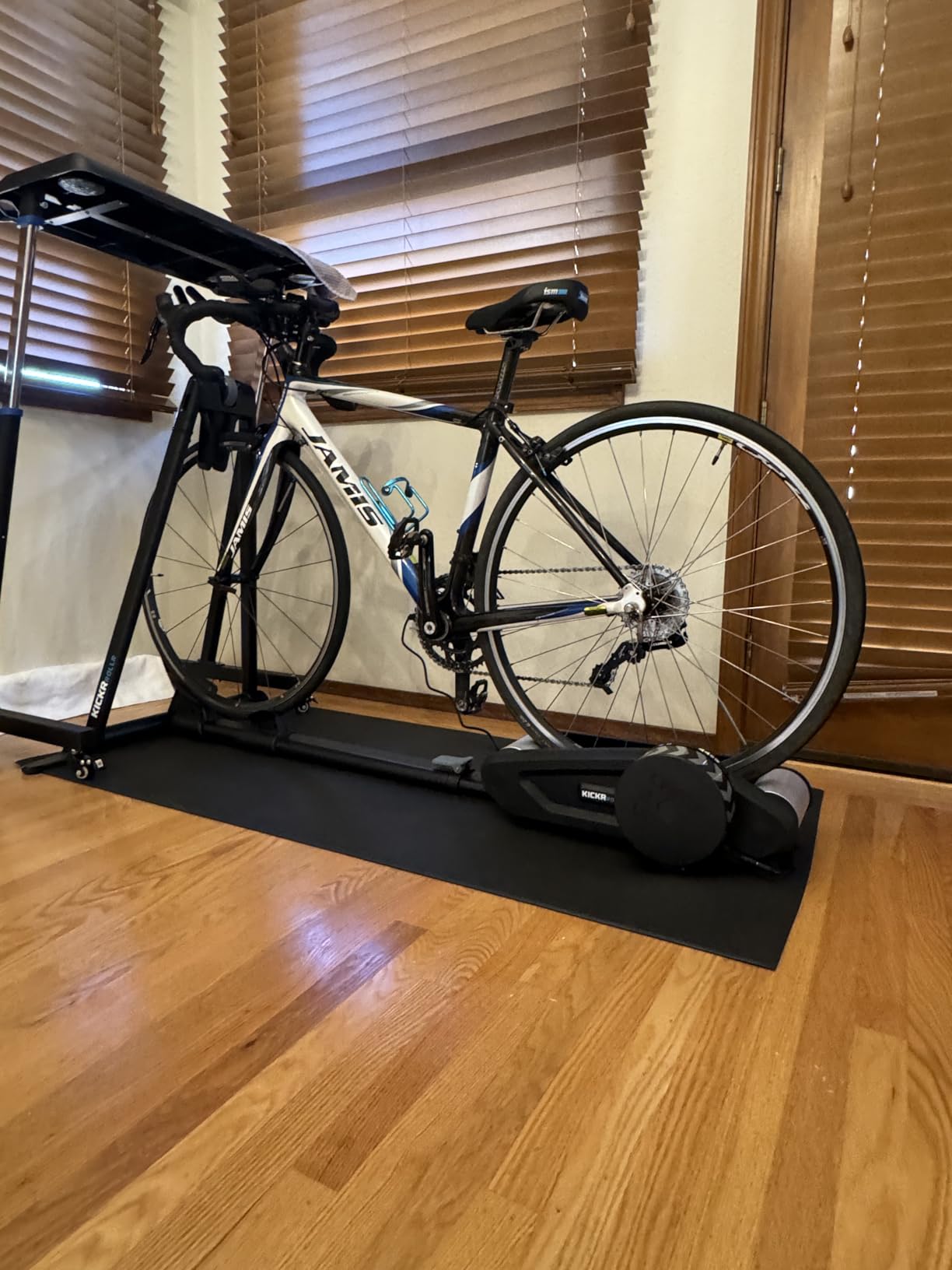
The compromises are size and weight. At 25 kg this is the heaviest roller in the roundup, and the folding storage is bulkier than the Elite or Minoura options. It is a floor-dedicated piece of kit rather than a take-it-anywhere device, and the warranty is one year against two on several Elite models.
Review scores split more widely here than anywhere else in the group, with a noticeable band of owners who feel the weight and footprint do not earn their cost. That tells us the value case is ecosystem-driven, not specification-driven.
Who this roller suits?
Riders who already train with Wahoo hardware and want a bike-in-the-house setup with dependable resistance. It handles high-power sessions well and never leaves you stranded by a flat battery. If your sessions are structured and repeatable rather than improvised, the controlled resistance suits that.
Who should skip it?
Skip it if floor space is tight or you need to carry your kit around. At 25 kg you will move it rarely and resent it. Riders on a tight budget buying their first set will find more capability than they need in a silent magnetic set that costs far less.
6. Minoura Live Roll R800 – Best for Big-Drum High-Cadence Spinning
Minoura Live Roll R800 with Foot Step Bicycle Roller Trainer, Brushed Silver
Weight: 46.3 lb
Dimensions: 22W x 6H x 52D in
Continuous wheelbase adjustment
Aluminium frame
Pros
- Large drum spins smoothly at high cadence
- Continuous wheelbase adjustment
- Adjustable front drop roller
- Six-point height adjustment
Cons
- Fixed frame with a huge footprint
- Least portable roller here
- Older design than magnetic sets
Drum diameter is the quiet hero of this roundup, and the R800 is where it matters most. The wide drum with steel covers spins smoothly and quietly at high rpm, which is what makes it a good instrument for spin drills. When we ran a seated 95 to 100 rpm spin block, the rear wheel speed stayed settled instead of hunting.
The adjustable front drop roller keeps the front wheel tracking at speed, which is the difference between a confident high-cadence session and a nervous one. Continuous wheelbase adjustment fits a wider range of bikes than stepped positions, and feet and footrest adjust at six points so riders of different heights get a consistent hip angle.
The frame is high-rigidity aluminium with alloy steel components, and the build has the settled feel of a Japanese-made workshop product. Owners rate the metal construction highly and describe the spin as smooth rather than merely functional.
The cost of that smoothness is space. This is a fixed frame that does not fold, and at 46.3 lb it is the least portable set here by a wide margin. It also predates the magnetic generation, so resistance comes from position and gearing alone.
Who this roller suits?
Riders who live in a bike room or garage and want a permanent spin station. It is the pick for spin drills and pedal-circle work where a settled high rpm matters more than portability. A fixed, height-adjustable frame also suits riders who switch between bikes regularly.
Who should skip it?
Anyone in a small flat should look elsewhere; this thing occupies a wall. It will not travel, and it is far too heavy to lift into a car regularly. Riders wanting interval intensity will find nothing to push against.
7. Kreitler Alloy Rollers – Best for Daily Use and Quiet Machined Drums
KREITLER Alloy Rollers for Indoor & Outdoor Bike Training | Premium Cycling Trainer | Quiet Ride | Medium Resistance | 3 in
Drums: 6061 alloy
Drum options: 2.25, 3 and 4.5 inch
Load capacity: 300 lb
Folds in half
Pros
- Smoothest and quietest ride here
- Sealed cartridge bearings
- Tool-free wheelbase adjustment
- Three drum diameters available
Cons
- Highest cost in the group
- Some listings ship without the frame
- Small drums wear riders out faster
The Kreitler drums are aircraft-grade 6061 alloy, CNC-turned to within two thousandths of a concentricity. That number sounds like marketing until you ride them: they are the smoothest and quietest rollers in this roundup, with no perceptible wobble even at aggressive cadence. Sealed cartridge-shield bearings are the other half of that, staying true for years of daily use.
The unusual flexibility is drum diameter. Three options at 2.25, 3 and 4.5 inches let you match resistance to your fitness and session length, because larger drums put less drag under the tyre. Pick the big drum for long steady work and the small one for short sharp drills. That is a decision most single-spec sets never let you make.
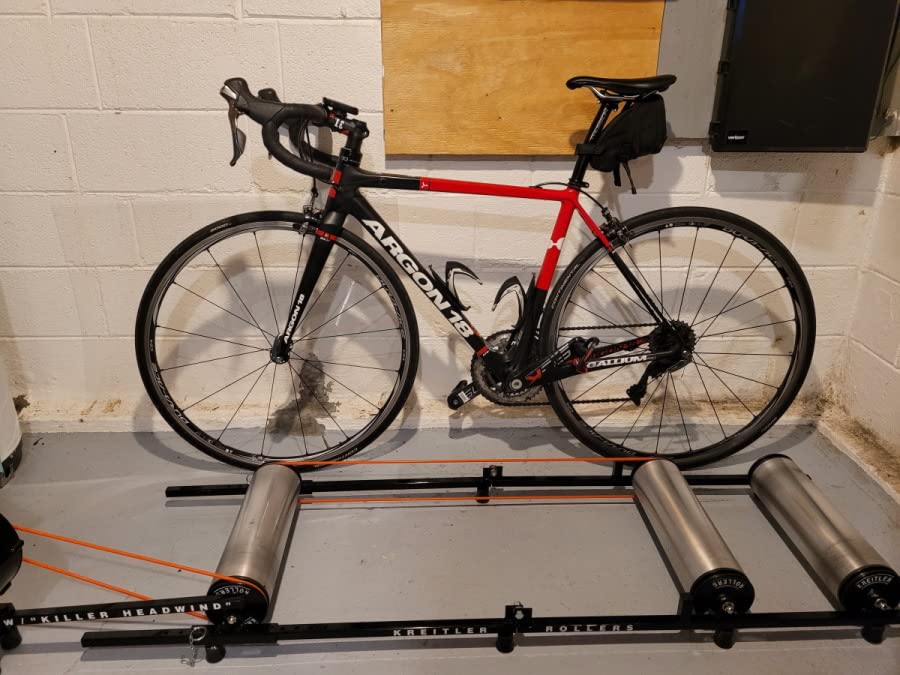
The powder-coated welded steel frame folds in half and adjusts wheelbase without tools. Load capacity is listed at 300 lb, so it holds heavier riders and bikes without complaint. In long-term ownership threads on TrainerRoad, Kreitler gets named for the same reason, alongside Minoura and the bigger flywheel sets, as equipment that survives a decade of use.
Two caveats. It is the most expensive option here, and owners generally argue the cost recycles through longevity rather than arguing against it. More practically, some listings ship the drums and belt without the frame, so check the box contents carefully before you order.
Who this roller suits?
Riders who use their bike indoors daily and want the quietest, smoothest experience money can buy. Anyone with a shared wall or a downstairs neighbour benefits most from machined alloy. The three drum diameters make it the most adaptable set for changing fitness over a season.
Who should skip it?
It is a poor first purchase if you are unsure you will ride rollers at all. Riders wanting resistance for intervals will find the free drums limiting. Also check what ships in the box, because incomplete listings are the main complaint in reviews.
8. CXWXC Magnetic Roller Trainer – Budget Pick and Fork-Mount Setups
Bike Trainer Stand Resistance Adjustable – Portable Magnetic Bicycle Roller
Fork mount for 16-29 inch wheels
Five magnetic levels
Weight: about 16.4 lb
Thru-axle adapters included
Pros
- Five quiet magnetic resistance levels
- Folds small enough for air travel
- Wide fork and thru-axle compatibility
- Arrives fully assembled
Cons
- Top resistance setting runs out
- Thru-axle fitting takes patience
- Road tyres can slip at some cadences
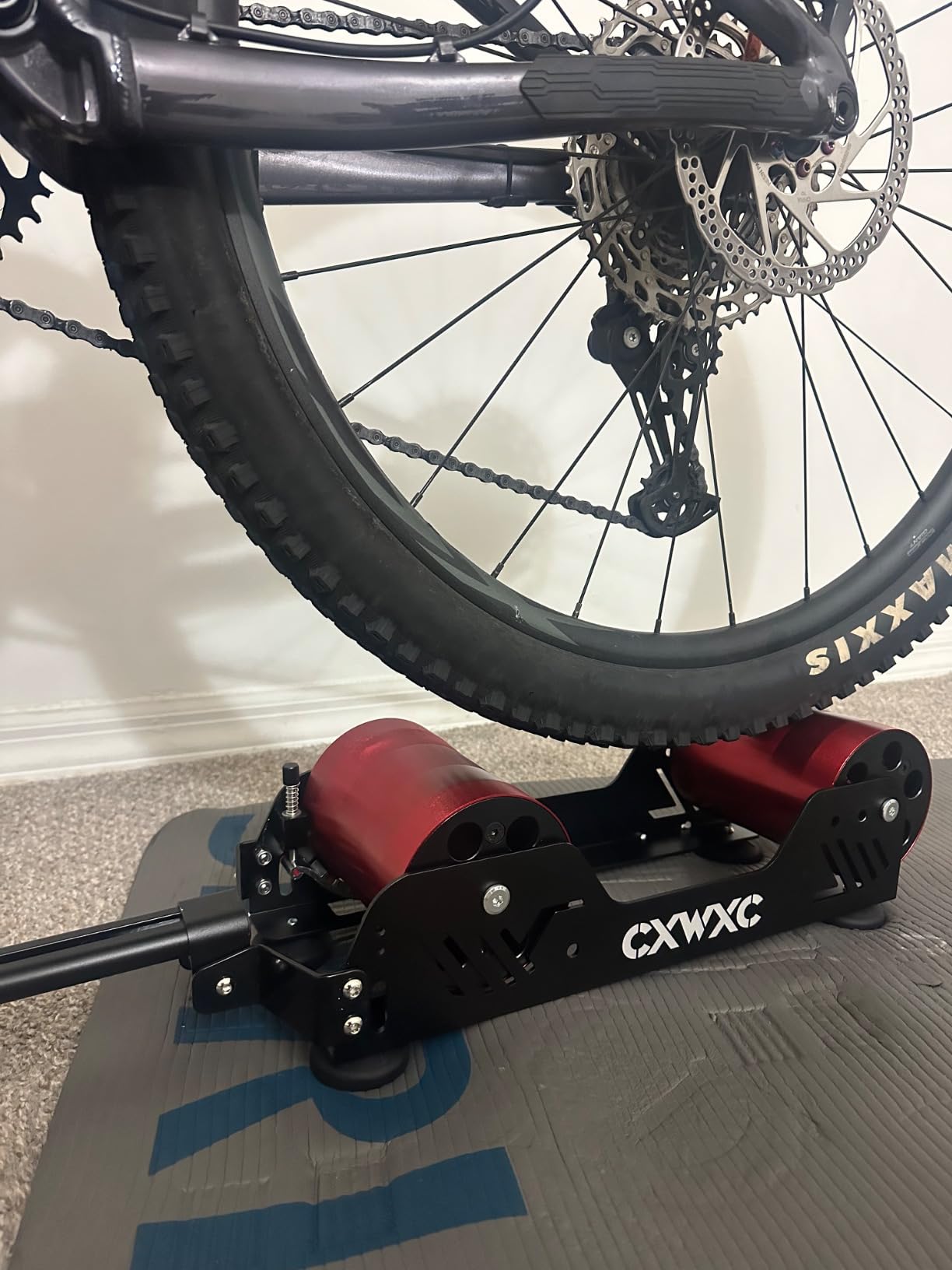
This is a fork-mount unit rather than a three-drum roller, so it behaves like a compact trainer and folds small enough for checked luggage. That makes it the most genuinely travel-capable option in the roundup. It fits 16 to 29 inch wheels through a flexible sled and a front fork mount, and the included adapters cover quick-release plus several thru-axle standards.
Five magnetic levels controlled by a rotary knob give better intensity resolution than three-level sets, and owners report smooth slip-free delivery from 50 up to 110 rpm with no slip at 320 W. Arriving fully assembled means set-up is close to instant, which is exactly what you want in a hotel room.
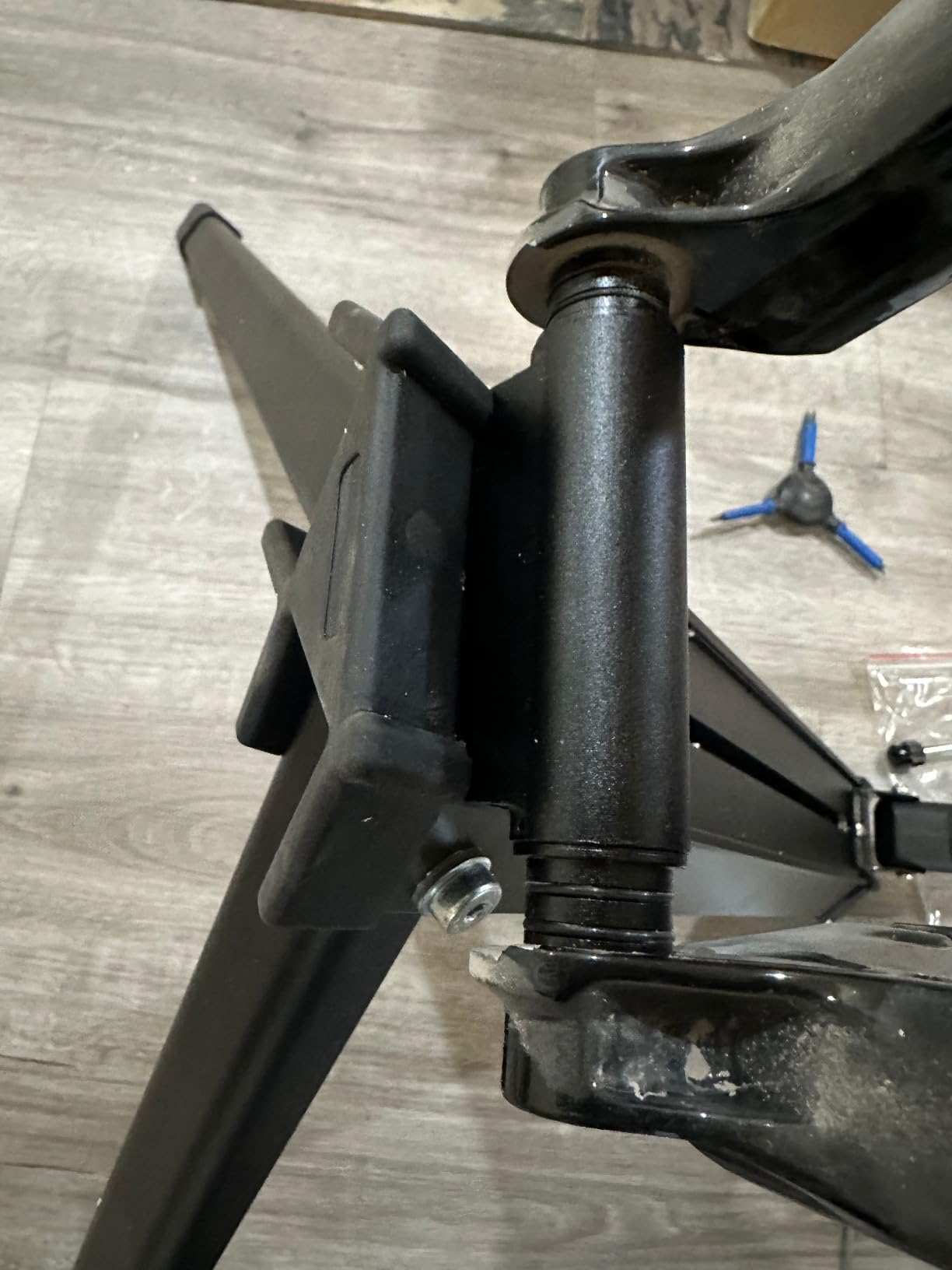
The triangular aluminium frame spreads load and protects the floor, and the whole thing folds down for storage between sessions. Verified owners pairing it with power meters and Rouvy report a quiet, predictable experience, which is why this listing has built a small but loyal following.
Weaknesses are honest ones. The top resistance setting is not enough for riders pushing very high power, and the manufacturer notes slight front-end sway during use. Thru-axle fitting needs careful alignment and patience, and some riders see road tyres slip on the rollers at particular cadences.
Who this roller suits?
Riders who travel for work or race and want a trainer-grade setup in a suitcase. It also suits households with several bike formats, given the 16 to 29 inch fit. Anyone who prefers resistance control without a noisy internal flywheel will like the magnetic braking.
Who should skip it?
Skip it if you want maximum resistance for sprint work, because the ceiling is low. Riders with thru-axle bikes should expect a fiddly first assembly. And if you ride mostly from home, a fixed roller set with no fold at all may serve you better for less.
9. Minoura LiveRoll R730 – Best for Households With More Than One Bike
R730 LiveRoll 3 Roller
Roller diameter: 3.1 inch x 16.3 in
Wheelbase: 950-1180 mm
Weight: 19.7 lb
Stored length: 34.9 inch
Pros
- Solid aluminium build
- Band moves between rear drums
- Smooth stable rolling surface
- Compact stored length
Cons
- No built-in resistance control
- One owner reported an early drum defect
- Drum bolts need a thin wrench
The R730 is a straightforward three-piece aluminium roller with one clever adjustment. A resistance band can be moved between the rear drums to change the load, which lets you tune the feel for different bikes and different days without buying another frame. Wheelbase fit runs 950 to 1180 mm, covering 24 inch and 700c bikes.
Build quality is the selling point. Owners describe the aluminium as made to last, and the rolling surface is reported as smooth and stable for winter indoor training. It includes a foot step, and the stored length of about 34.9 inches means it tucks into a car boot or a narrow cupboard.
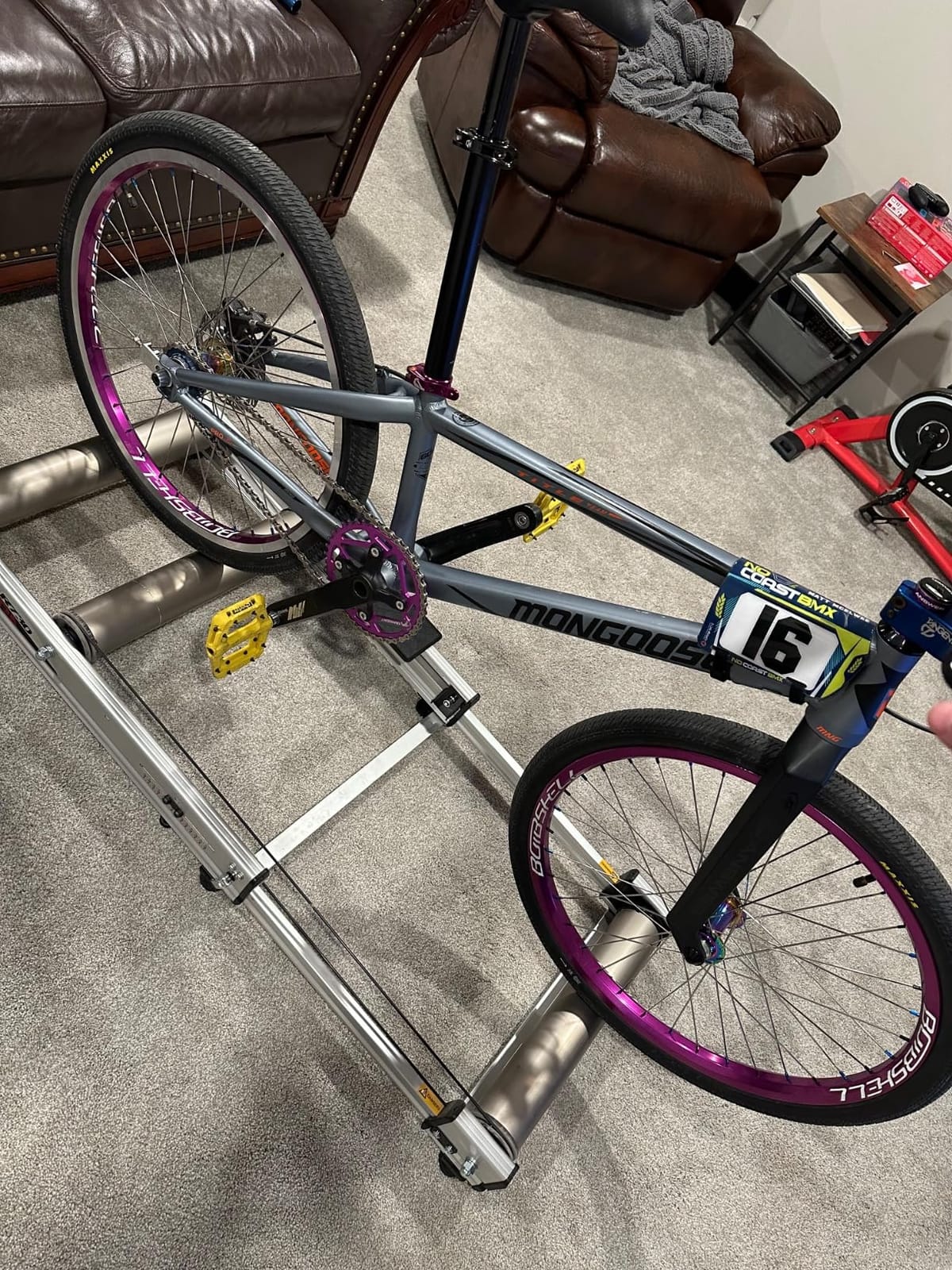
It is not a fussy machine. Feet and frame are simple, there are no electronics to fail, and the band position is the only variable you manage. For riders who want dependable, low-maintenance spinning without resistance, that simplicity is a feature.
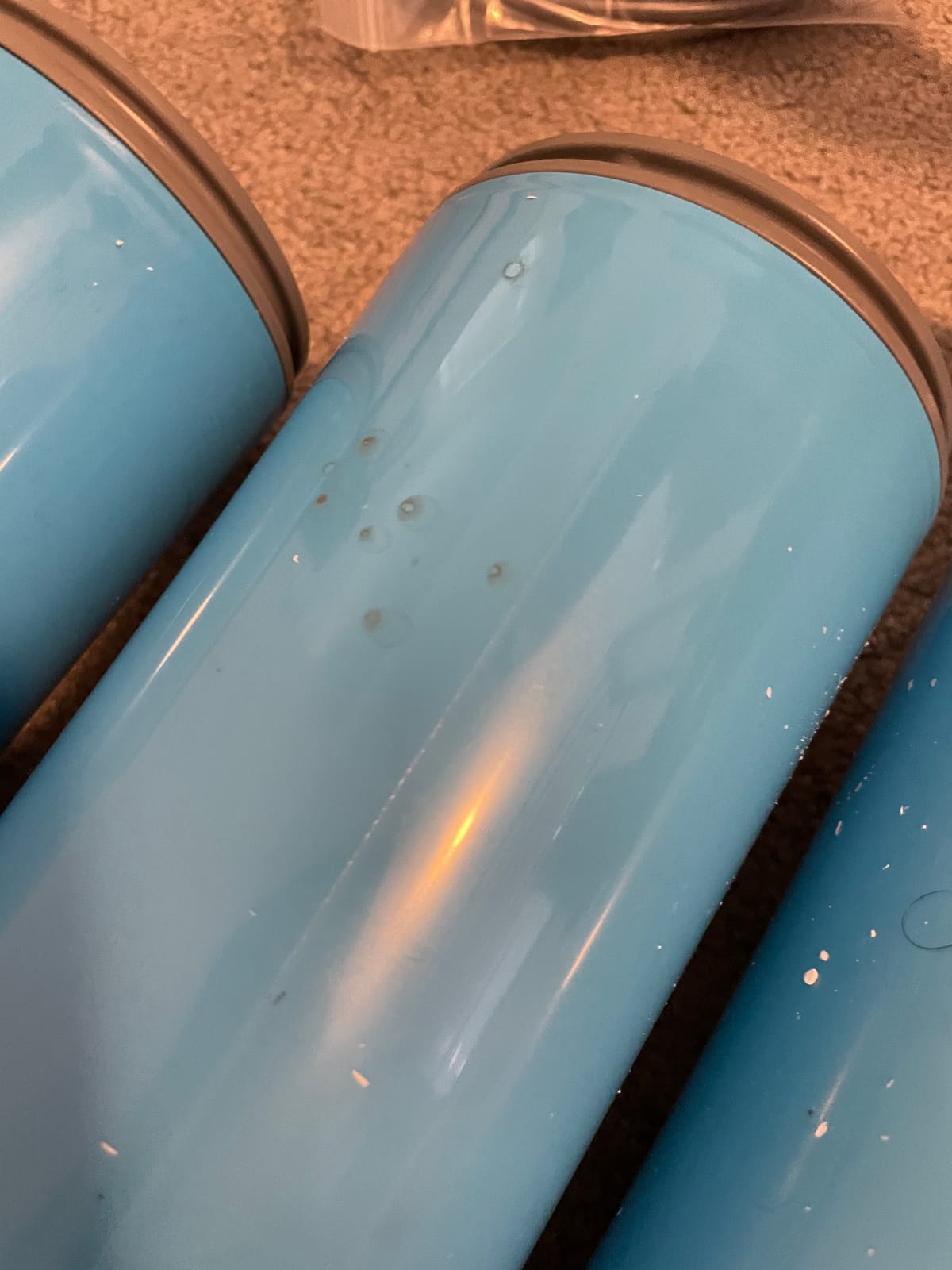
The criticisms are narrow. There is no built-in resistance beyond the band and your gearing. One owner reported an early defective drum end cap that developed play, though the seller handled it well, and the drum bolts need a thin wrench to remove, which is awkward mid-session.
Who this roller suits?
Riders who want a no-drill, reliable roller for easy indoor miles and cadence work. Families with two bikes and different wheelbases benefit from the movable band. It also suits anyone who prefers a simple object that will not need software or spares to keep working.
Who should skip it?
Not for interval work, since there is nothing to resist against. Very light or very heavy riders should note the 300 lb class load rating and check their bike-plus-rider weight. Beginners should still have a wall within reach for the first few sessions.
10. DIYTUNINGS Foldable Aluminum Rollers – Best for Travel for Small Spaces
DIYTuning Bike Rollers 700c Road Folding Bike 16-29″ Size Adjustable Trainer Stand Foldable Indoor Home Cycling Rack Mountain Bicycle Roller with Resistance for MTB Road Bike Exercise Fitness Black
Frame: aluminium alloy
Noise: under 65 dB
Wheel fit: 16-29 inch
Model: D-Bike-Black
Pros
- Tool-free fold for narrow spaces
- Quiet enough for flats
- Very wide wheel size fit
- Limited lifetime warranty
Cons
- Light frame is less rigid
- Residual play in the front roller ends
- No resistance control beyond gearing
The DIYTUNINGS set exists for one situation: a small flat where a trainer will not fit and noise matters. The triangular aluminium alloy frame folds flat with no tools, so you can set it up and put it away in seconds, and the stated noise level of under 65 dB keeps it usable in a domestic space. Wheel fit runs from 16 inch folding bikes to 29 inch wheels through the front adjustment holes.
Sealed bearings keep the rollers smooth for the price bracket, and the limited lifetime warranty is more generous than the one-year cover on much of this list. In practice it is a very good first set for cadence work and easy spinning.
The limitations follow from the light frame. Owners report residual play developing in the front roller ends, and the aluminium is less rigid under standing efforts than the steel or machined alloy sets. There is also no genuine resistance control, so gearing is the only lever you have.
The balance learning curve is real here too, and several riders describe an initial fear period before confidence arrives. That is normal for rollers of this class rather than a fault, but it is worth knowing before the first session.
Who this roller suits?
First-time buyers on a budget, renters and anyone who needs equipment that disappears into a cupboard. Wide wheel compatibility makes it a shared-household option. If you want quiet spinning, cadence work and long slow indoor miles, it does all of that cheaply.
Who should skip it?
Do not buy it for out-of-the-saddle grinding, where the light frame will move around. Riders wanting magnetic or internal resistance will find none. If you can stretch to a mid-range set with a folding steel frame, you will get noticeably more rigidity for the money.
Are Rollers Better Than a Turbo Trainer?
Rollers are not better than a turbo trainer, they are better at different things. A trainer clamps the rear wheel and creates fixed, measurable resistance, so ERG mode can hold a repeatable wattage; rollers add no fixed load at all, so a session is governed by your cadence and gear choice. If your training is about repeatable power, a trainer wins. If it is about cadence, pedal-circle smoothness and bike handling, rollers win, and they cost less and travel better.
Here is how the two compare in practice:
Resistance: rollers give you nothing to push against beyond drag and gearing, while a trainer delivers controllable watts and resistance curves.
Data: a trainer reports power directly; rollers need a wheel-speed sensor, a power meter or off-bike conversion to give you numbers.
Skill development: rollers force you to balance, so they build bike control and bunch-riding awareness. A trainer lets you relax and focus on output.
Tyres: rollers load the tyre like the road, so wear is far lower than a wheel-on trainer. Owners in r/cycling threads consistently report rollers are gentler on tyres.
Portability: a folding roller set fits in a car and a suitcase in a way a trainer never will, which is why racers warm up on them.
Cost and noise: rollers are cheaper and, with machined or elastomer-coated drums, quieter than an internal flywheel trainer.
Learning curve: rollers are harder to ride for the first few sessions. A trainer is a frame you clamp a wheel into and forget about.
The honest answer to the most-asked question on forums is that opinions are genuinely split, and serious riders often own both. Use rollers for drills and warm-ups, and a trainer for measured structured sessions. Nothing in that split suggests one category is a compromise.
One safety point belongs here, because it comes up constantly in TrainerRoad roller threads. Rollers are riskiest when you are fatigued at the end of a hard effort, and spindown time is the metric that matters: the community consensus is roughly 10 seconds for an easy stop, about 20 seconds if you work for it, and 30 seconds is unlikely on a set without a heavy flywheel. Plan your last interval with that in mind.
Cycling Drills You Can Do on Rollers
This is where the choice of roller actually matters. A drill needs a specific behaviour from the machine: a settled wheel speed for cadence work, a self-centring frame for one-leg drills, quiet running for smoothness work, and resistance for anything above threshold. Here is a six-drill session and which roller suits each one.
Seated cadence ladder, 80 to 105 rpm. Three minutes at each step with no gear changes. You want a wheel speed that does not hunt as cadence climbs, which points to larger drums or elastomer-coated ones. The Tacx Antares, the Minoura R800 and the Elite Quick-Motion all handle this cleanly.
Cadence snap, 60 to 100 rpm in five seconds. Build to a high spin then drop straight back down without touching the brake. Do it seated and hands light. Self-centring tapered or parabolic drums make this far less intimidating.
Pedal circle, 90 rpm for five minutes. Watch the knee tracking and the rise and fall of each foot. This is the single most valuable drill on rollers because the stable platform forces you to notice asymmetry you would ignore outdoors.
One-leg drills, 60 rpm for three minutes per side. The unloaded leg dangles and the balance demand rises sharply. Tapered drums help here more than any other feature, and a fixed front roller layout like the Minoura FG220 adds forgiveness.
Standing efforts, 10 seconds at a time with 90 seconds recovery. Full recovery means the pedals stop, which on a set without resistance means you slow by cadence alone. Magnetic units make these repeatable; plain roller sets make them improvisation.
Threshold blocks, 20 minutes at a steady effort. This is the drill that decides whether you need a resistance unit. Gearing can hold a rough effort, but three magnetic levels will hold it properly, and a trainer will hold it exactly.
A common mistake is adding resistance early in a session. Beginners spin at an easier gear and let the machine keep them upright, because a loaded bike at low cadence is where falls happen.
Two training-zone rules come up constantly alongside roller questions, so here they are in plain terms. The 80 percent rule says roughly 80 percent of your weekly riding should be genuinely easy, leaving room for the hard days. The 75 percent rule is the same idea with a stricter ceiling, keeping three quarters of your volume below threshold so the remaining quarter lands harder. Either way, rollers suit the easy portion because you can hold a relaxed, self-selected effort indefinitely.
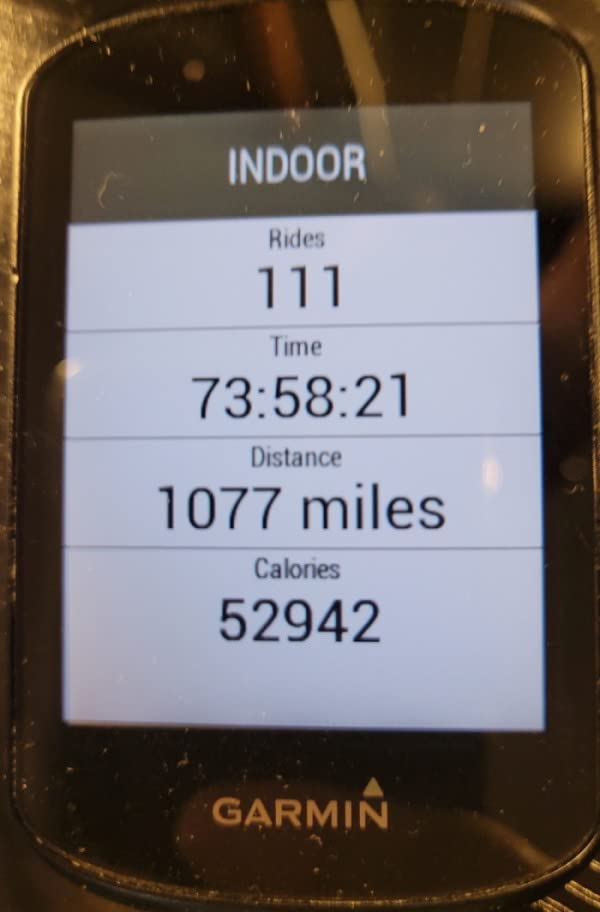
For distance and speed, rollers cannot simply be read off a computer unless they are smart. The method riders in forum threads use is an off-bike conversion: pick a wheel speed you know from outdoor riding or a trainer, hold the same cadence in the same gear on the rollers, then compare. Once you have that anchor, logs stop looking empty.
How to Ride Rollers Without Falling Off?
Nearly every fall report traces back to the same moment: the end of a hard effort, when legs are cooked and judgement is gone. A five-step progression handles the learning curve, and it is worth spending a week on each step before adding anything.
Start next to a door frame. One hand on the frame, bike barely moving, just get the pedals turning and feel the drum find your tyre.
Add twenty seconds of hands-free pedalling. Short, frequent attempts beat one long one. Failure here is cheap and instructive.
Raise the cadence gradually. Long and slow feels easier but teaches a wobbly pedal stroke. Moderate cadence seated builds a cleaner circle.
Introduce the stand or a grab pole. TrainerRoad riders widely recommend a Stander-style security pole beside the rollers for exactly this reason. It is the difference between a wobble and a fall.
Only then add standing work. Standing at a high cadence with a free front wheel is where confidence turns into competence.
Flat pedals, a lower gear than you think you need and soft hands make the first sessions much safer. Keep the rear wheel spinning during recovery rather than coasting to a stop, and stop the session before you are too tired to react.
How to Choose the Right Rollers for Your Drills?
Drum geometry decides how hard this is to learn. Tapered rollers walk the wheel back to the centre line and suit beginners. Parabolic rollers are shaped for higher power and standing work, so they suit stronger riders. Straight rollers with no taper offer the least help, so they suit only experienced riders who already have the balance. If in doubt, tapered or parabolic is the right answer.
Drum diameter decides how the unit feels. Bigger drums rotate more smoothly and quietly at high rpm, which makes them better for spin drills and long sessions. Smaller drums add natural drag, which makes them useful for short sharp efforts but tiring over time. This is why the Kreitler set is offered in three diameters and why the big-drum Minoura units feel calmer at speed.
Resistance type decides which drills are available. No resistance at all means cadence work and warm-ups only. A magnetic unit gives you threshold blocks and repeatable standing efforts in near silence. An AC-powered internal unit gives the widest range and steadiest delivery, at the cost of weight and bulk. Know which drills you want before you shop, because this is the single most consequential choice.
Wheelbase fit decides whether your bike will sit properly. Measure the distance between the front and rear axle centres, then check the stated range. Sets with continuous adjustment handle bike families better than stepped positions, and a frame that is slightly too long rattles at speed.
Material and noise decide whether the neighbours object. Machined alloy is quietest and smoothest, elastomer-coated composite is close behind, and plastic frames with small drums are loudest. Check the frame material, the drum diameter and the listed noise level before choosing anything for a flat. Sealed bearings matter more than any other spec for long-term smoothness.
Storage and transport decide whether it stays in the garage. Folding frames and included bags matter if you race, share a flat or have a narrow cupboard. A fixed frame such as the big-drum Minoura is stable and smooth but occupies its floor space permanently, which is fine if you have a room for it.
If you are buying used, check seven things. The belt, for glazing, fraying or rounded teeth, since it is a wear item with a replacement cost. The drums, run by hand for flat spots, cracks or lateral play in the ends. The bearings, spun by ear for roughness. The frame welds and paint, for stress cracks. The wheelbase range, so it fits your bike. The resistance unit, and whether it still works. And the fork stand, carry bag and original hardware, because spares are harder to find than people expect.
Forum buyers converge on one point: the gap between a folding budget set and a pro set is not obvious until you ride both. Used big-drum Minoura sets come up most often as a cheap, durable entry point, while a folding set is the easiest to check and the least likely to send you off. Buy used only if you can spin the drums and test the belt before riding.
Frequently Asked Questions
Are rollers good for training cycling?
Yes, for technique, cadence, pedal-circle smoothness and warm-ups. Rollers add no fixed resistance, so they are weaker than a turbo trainer for measured, repeatable power work. Many serious riders own both and use rollers for drills and the trainer for structured sessions.
Are rollers better than a trainer?
It depends on your goal. Rollers are better for cadence, balance, bike handling and warm-ups, and they are cheaper and far more portable. A trainer is better for repeatable, measured power because it creates fixed resistance you can control in watts. Choose rollers for drills and a trainer for structured sessions.
Are cycling rollers worth it?
They are worth it if you ride your bike indoors for technique, warm-ups and off-season miles, and if you want equipment that folds away or travels to races. They are less worth it if you need ERG-mode repeatability or live power data, because that is what a turbo trainer is for.
What is a good roller trainer for bikes?
A good set for a beginner has tapered or parabolic drums that self-centre, a drum diameter around 100 mm or more for a settled ride, and a wheelbase range that fits your bike. Add a magnetic resistance unit if you want to run intervals, and prefer larger drums if you care about quietness.
What is the 75 percent rule in cycling?
The 75 percent rule keeps about three quarters of your weekly training below threshold intensity, leaving the remaining quarter for genuinely hard work. The idea is that easy days must feel easy. Rollers suit that easy majority well because you can hold a relaxed, self-selected cadence indefinitely.
Can you do intervals on rollers?
Yes, with the right set. Standard rollers have no resistance, so intervals rely on cadence and gearing. Magnetic roller sets with three to five levels hold repeatable efforts, and AC-powered units like the Wahoo KICKR ROLLR give the steadiest delivery. Plain roller sets are better suited to warm-ups and cadence drills.
The Best Rollers for Cycling Drills in 2026
For most riders the Tacx Antares is the right first buy, because tapered self-centring drums and a 100 to 110 mm drum diameter make the learning curve short and the ride predictable. Riders whose drills include intervals should look at the Elite Arion Mag for three magnetic levels that hold a repeatable effort. Anyone who races and drives to starts wants the Minoura FG220 in the car, and riders pedalling every day will be happiest on machined alloy Kreitler drums.
Pick the drum geometry that matches your confidence, the drum diameter that matches your cadence work, and the resistance that matches the sessions you actually intend to ride. Get one of those three wrong and the set will frustrate you; get them right and the bike in your hallway becomes the easiest session of the week.