
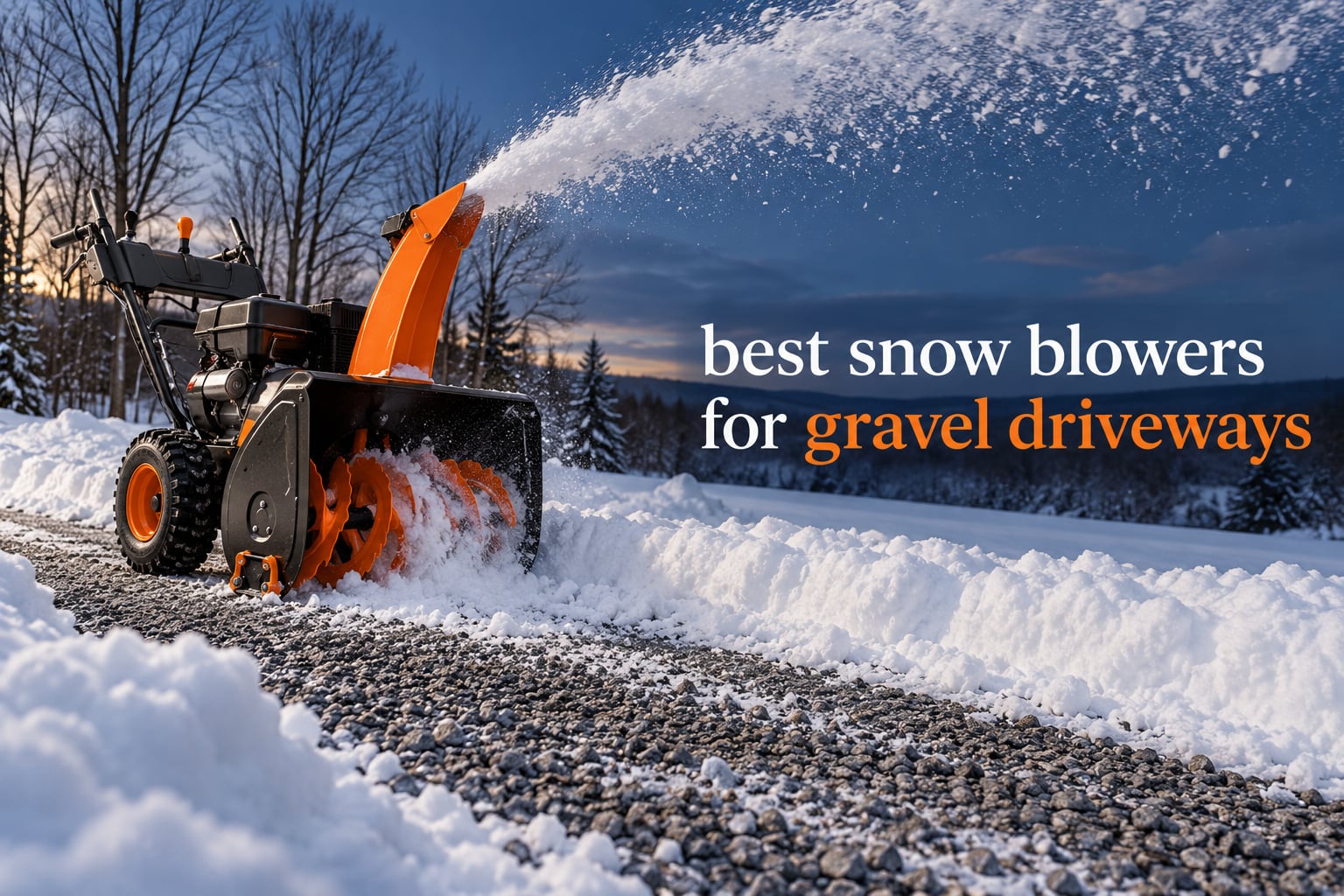
A two-stage gas or cordless electric snow blower with adjustable skid shoes is the best snow blower for a gravel driveway, because the intake housing rides about an inch above the stones and the steel auger never touches them. Single-stage machines scrape the ground with rubber paddles, so they gather gravel and fire it across your lawn. Everything below is built around that one mechanical difference.
We went through eight machines for our best snow blowers for gravel driveways list, ranking them on intake clearance, auger and impeller material, how much the drive system can handle on loose stone, and how the owners who already run them over gravel describe the experience. Two of the eight are single-stage units that turn up constantly in retail carousels. We include them because they come up in the conversation, and we explain honestly where they fall short.
The most common failure on gravel is not a broken machine. It is a homeowner clearing down to bare stone on the first pass, setting the skids too low, and finding out in spring where the lawn went. Everything in this guide – the spec tables, the gravel diagnostic, the technique steps, the owner reports – is aimed at avoiding that outcome in 2026.
Table of Contents
Top 3 Best Snow Blowers For Gravel Driveways (October 2026)
EGO Power+ SNT2416 24 inch 2-Stage
- Cordless 56V self-propelled 2-stage
- 24 inch clearing width
- 50 foot throw
- 198 pounds with two 10.0Ah batteries

PowerSmart 26 inch 208cc Gas 2-Stage
- Briggs and Stratton 208cc 4-cycle
- 26 inch width with 20 inch intake height
- Adjustable skids for paved and gravel
- 13 inch snow tires

EGO Power+ SNT2122 21 inch Single-Stage
- Compact 21 inch steel-auger path
- Adjustable skids for gravel and uneven ground
- 42 foot throw on two 4Ah batteries
- Quick-fold handle for storage
The EGO SNT2416 takes the top slot on the strength of its steel auger, self-propelled steering and heated grips, and it posts the highest average rating in this group at 4.6 out of 5 across 367 reviews. The PowerSmart 26 inch gas unit is the workhorse for anyone who fights packed ice. The smaller EGO single-stage fits a short driveway or a condo pad where 198 pounds of machine is overkill.
Snow Blower Specs at a Glance in 2026
| Product | Specifications | Action |
|---|---|---|
| EGO Power+ SNT2416 24 inch Cordless 2-Stage |
|
Check Latest Price |
| PowerSmart 26 inch 208cc Gas 2-Stage |
|
Check Latest Price |
| EGO Power+ SNT2122 21 inch Single-Stage |
|
Check Latest Price |
 SENIX 40V 21 inch Cordless Snow Blower SENIX 40V 21 inch Cordless Snow Blower |
|
Check Latest Price |
 VOLTASK 48V 20 inch Cordless Snow Blower VOLTASK 48V 20 inch Cordless Snow Blower |
|
Check Latest Price |
 Westinghouse WSnow20 20 inch Corded Westinghouse WSnow20 20 inch Corded |
|
Check Latest Price |
 PowerSmart 24 inch 212cc Gas 2-Stage PowerSmart 24 inch 212cc Gas 2-Stage |
|
Check Latest Price |
 Snow Joe SJ627E 22 inch Corded Snow Joe SJ627E 22 inch Corded |
|
Check Latest Price |
What Is a Gravel-Safe Snow Blower?
A gravel-safe snow blower is a self-propelled two-stage or three-stage machine whose intake housing rides on adjustable skid shoes roughly an inch above the surface, so the auger collects snow without ever contacting the stones. On a paved driveway that inch of leftover snow is a cosmetic complaint. On gravel it is the whole point, because the snow left behind becomes a protective base layer over the stone through the rest of the season.
Two-Stage Mechanism
A two-stage machine has a steel auger that pulls snow in and feeds it to an impeller fan, which then throws it out the chute. The intake housing floats on the skids and never scrapes, so a correctly set two-stage blower on gravel produces a clean cut line with stones sitting undisturbed underneath.
Adjustable Skid Shoes
Skid shoes are the adjustable side plates that set the height of the auger housing. Set them so the housing clears your gravel by roughly half an inch to a full inch, and the auger works on the snow only. Owners on the forums describe raising the skids as the single habit that separates a good gravel run from a spring full of raked stones.
Self-Propelled Drive
A self-propelled drive moves the machine at its own pace instead of pushing it. On gravel this matters twice: you control the auger speed relative to your walking speed, and you avoid leaning your body weight into a machine that is trying to move forward over loose stone. Multiple forward speeds and a reverse gear are worth more here than they are on pavement.
The takeaway is simple. Two-stage or three-stage, adjustable skids, self-propelled drive, steel auger. Everything else in this guide is a refinement of that shortlist.
Before You Buy: Check Your Gravel
Diagnose your surface before you pick a machine, because the stone size decides how forgiving you can afford to be. Pull up a handful of the top layer and look at it. If most pieces are three-quarter inch or smaller, a two-stage blower with adjusted skids will work well. If you are finding two or three inch base stone on the surface, no blower belongs there – that is a road, and it needs a plow or a loader bucket.
Next, judge how well the surface is packed. A hard-packed, well-graded driveway feels like a solid floor under your boots and gives a machine a firm base. Deep, loose gravel lets the skids sink, which lowers the housing into the stone no matter where the adjustment lever is set. Owners describe this exact failure, where the skids sink in on soft top layer and the auger digs anyway.
Finally, consider whether your drive is plowed. A long rural or unplowed drive, especially a steep one with a switchback, changes the calculation. Those owners on the forums generally end up buying a used Honda, Ariens or Toro, and one described a quarter mile of steep, gravel, uncarved drive as the reason tracks made the shortlist.
How We Picked These Snow Blowers?
We scored each machine against five criteria that matter specifically on gravel, and we weighted them in that order.
Intake clearance. Does the housing ride on skids, and can the skids be raised high enough to clear loose stone? This eliminated any machine with a fixed housing height and any design that relies on ground contact to move snow.
Auger and impeller construction. Steel augers survive the abrasive grit that a plastic paddle arrangement simply sweeps along the surface. We favored steel across the board.
Drive and traction. Self-propelled drives with several forward speeds give finer control over auger loading than a single-speed or push machine. Wider tires or tracks help on loose and icy gravel.
Capacity matched to the driveway. Clearing width and throw distance have to suit the length of your drive. A twenty-inch path on a four-hundred-foot drive turns into a long evening.
Owner evidence. We read the review patterns for each model, focusing on what owners report after a full winter rather than first-week impressions. Weight, chute control stiffness, and wear on skids and scraper bars came from that reading.
We did not score price, because it moves daily. Compare the machines on the specifications below and on how they behave on stone.
1. EGO Power+ SNT2416 24 inch Cordless 2-Stage: Best Overall
EGO Power+ 24″ Electric Snow Blower, Cordless Self-Propelled 2-Stage XP, Includes (2) 56 V 10.0Ah Batteries and Dual Port Charger – SNT2416
Cordless 56V two-stage
24 inch width, 20 inch intake
50 foot throw
198 pounds
Heated handle grips
Pros
- Variable speed steel auger breaks up heavy snow and ice
- Clears a 24-car driveway with 8 inches of snow on a single charge
- Trigger-controlled steering makes turning on a narrow drive simple
- Heated grips and 200-degree remote chute adjustment
- Two 10.0Ah batteries and a dual port charger included
Cons
- Heavy at 198 pounds and awkward to lift into a vehicle
- Per-charge capacity is centered on 8 inches of snow depth
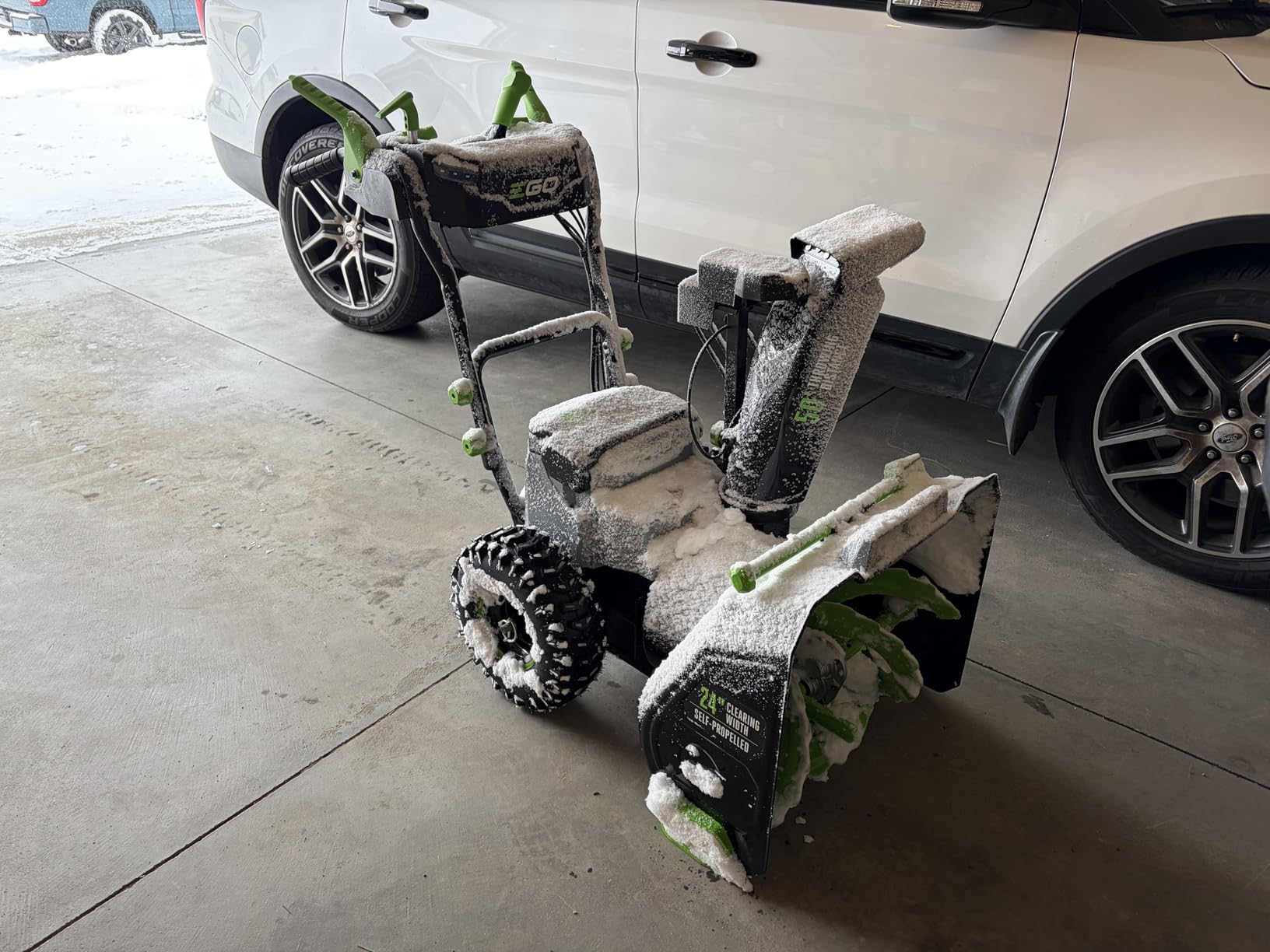
This is the machine I would put on a gravel drive without hesitating. It is a true two-stage unit: a variable speed steel auger feeds an impeller, and the whole housing floats on skids rather than scraping. Peak Power technology combines the output of both 56V 10.0Ah batteries, which is what gets the throw distance out to 50 feet.
The steering is the detail I did not expect to care about. Trigger-controlled steering means you can redirect the machine while walking forward, which on a drive narrower than the 24 inch clearing path is the difference between clearing and weaving around patches.
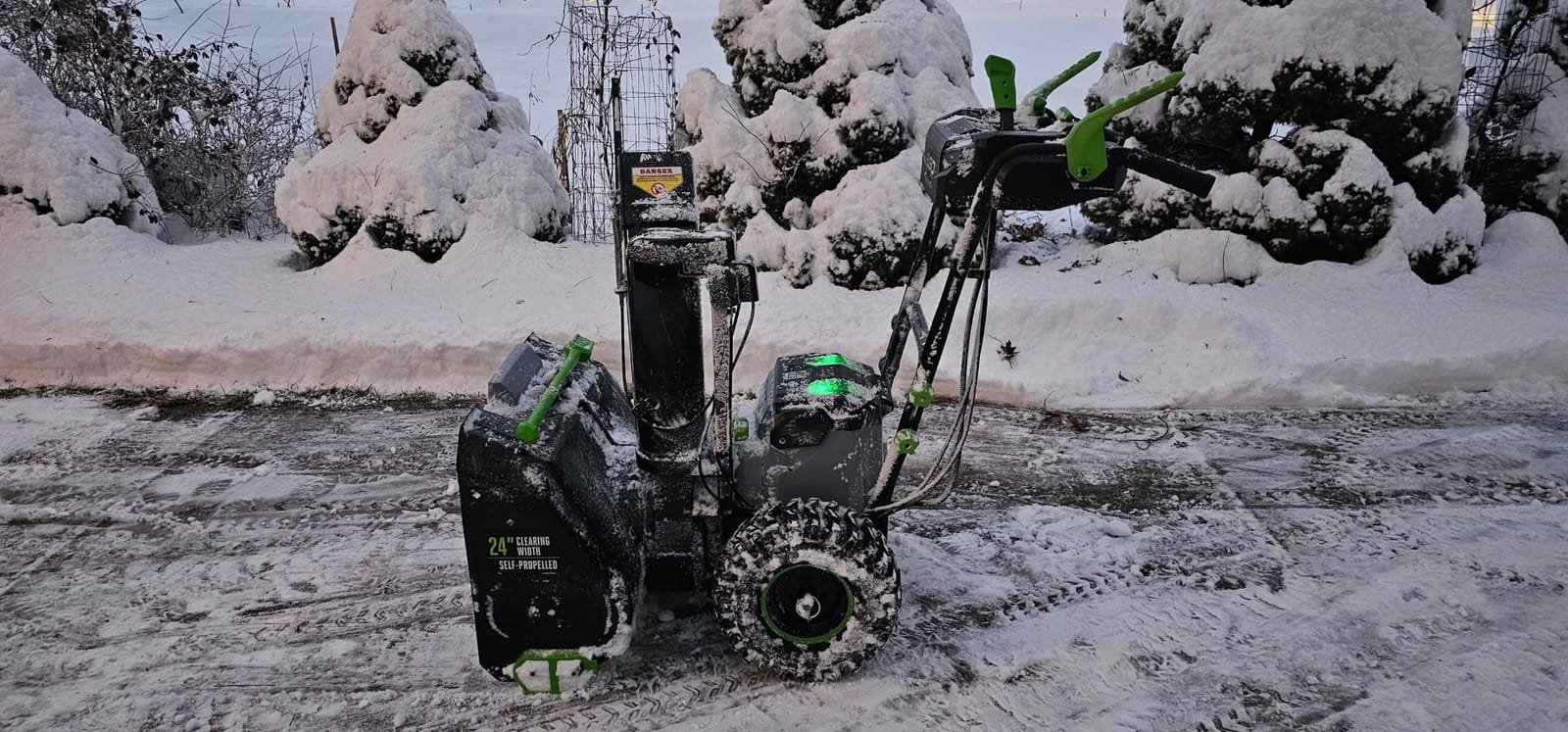
Owners rate it 4.6 out of 5 across 367 reviews, and the review pattern is consistent: the steel auger handles compacted snow and ice, the batteries cover a realistic driveway on one charge, and the heated grips matter more than expected at six in the morning. Battery runtime is quoted around eight inches of snow depth per charge, so a large rural drive means planning a swap.
At 198 pounds, this is the heaviest machine in the group by a wide margin. That weight is the price of a tracked-feel, battery-powered deck that will not need an extension cord dragged across your drive. If you have to lift it into a pickup every morning, that trade is harder to justify.
Who This Machine Suits?
It suits anyone with noise-sensitive neighbors, since there is no engine to wake the household at five in the morning. It also suits owners of a short to medium drive who want one battery swap to finish the job, and anyone who would rather not store gasoline through the summer.
Where It Falls Short?
It falls short on very long driveways where the per-charge depth becomes the limiting factor rather than the auger. It also falls short for anyone who cannot comfortably handle 198 pounds, which is a real constraint for older owners or anyone with a back issue. On a four-hundred-foot rural drive, plan on carrying a second charge or a spare pack set.
2. PowerSmart 26 inch 208cc Gas 2-Stage: Best for Packed Snow and Ice
PowerSmart 26-Inch Self-Propelled Gas Snow Blower, Powered by B&S 208cc Engine, Electric Start, 13-Inch Snow Tires, Handle Warmer, Two-Stage Snow Blowers with LED Lights
B&S 208cc 4-cycle
26 inch width, 20 inch intake
50 foot throw
146.9 pounds
Gravel-ready skids
Pros
- Steel auger and impeller cut through icy packed snow
- 26 inch width covers more ground per pass
- 13 inch snow tires hold traction on hard surfaces
- 120V electric start with recoil backup
- Hand warmers and LED light for early starts
Cons
- Chute height and rotation controls feel stiff in cold weather
- Hand warmers do not warm gloved hands
- Some owners report auger or drive-train wear in the first seasons
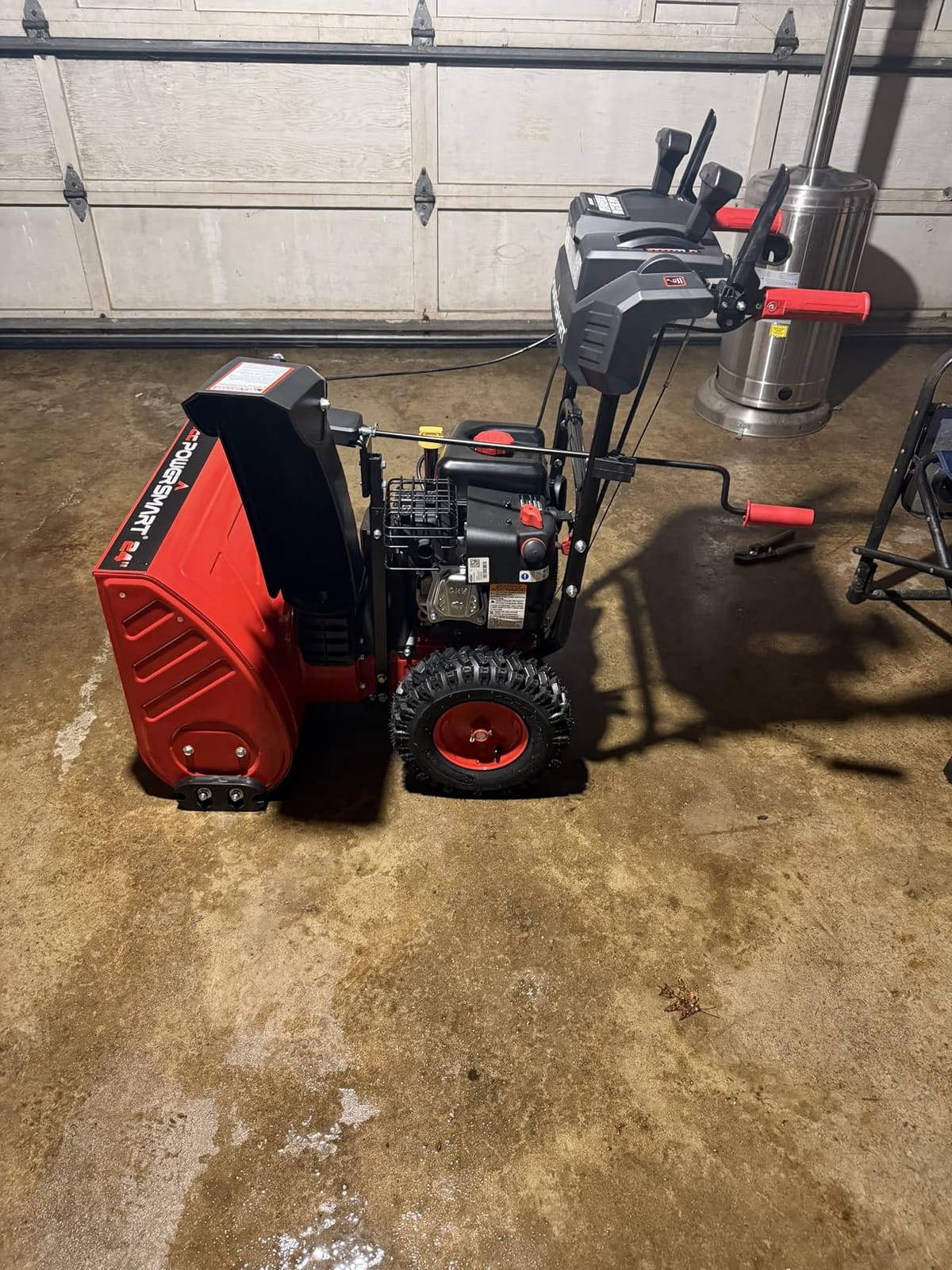
This is the gas machine for a drive that gets packed ice and refrozen tracks. The 208cc four-cycle Briggs and Stratton engine has real low-end torque, and the heavy-duty steel auger and impeller pair handle the wet, heavy end of a storm without bogging. Owners consistently praise starting reliability in deep cold, helped by the 120V electric start with a recoil backup.
Two things stand out for gravel specifically. The spec sheet lists adjustable skid shoes for paved and gravel surfaces, so the housing height is yours to set. And 13-inch snow tires give it a footprint that resists spinning on loose stone, particularly on the pull back uphill.
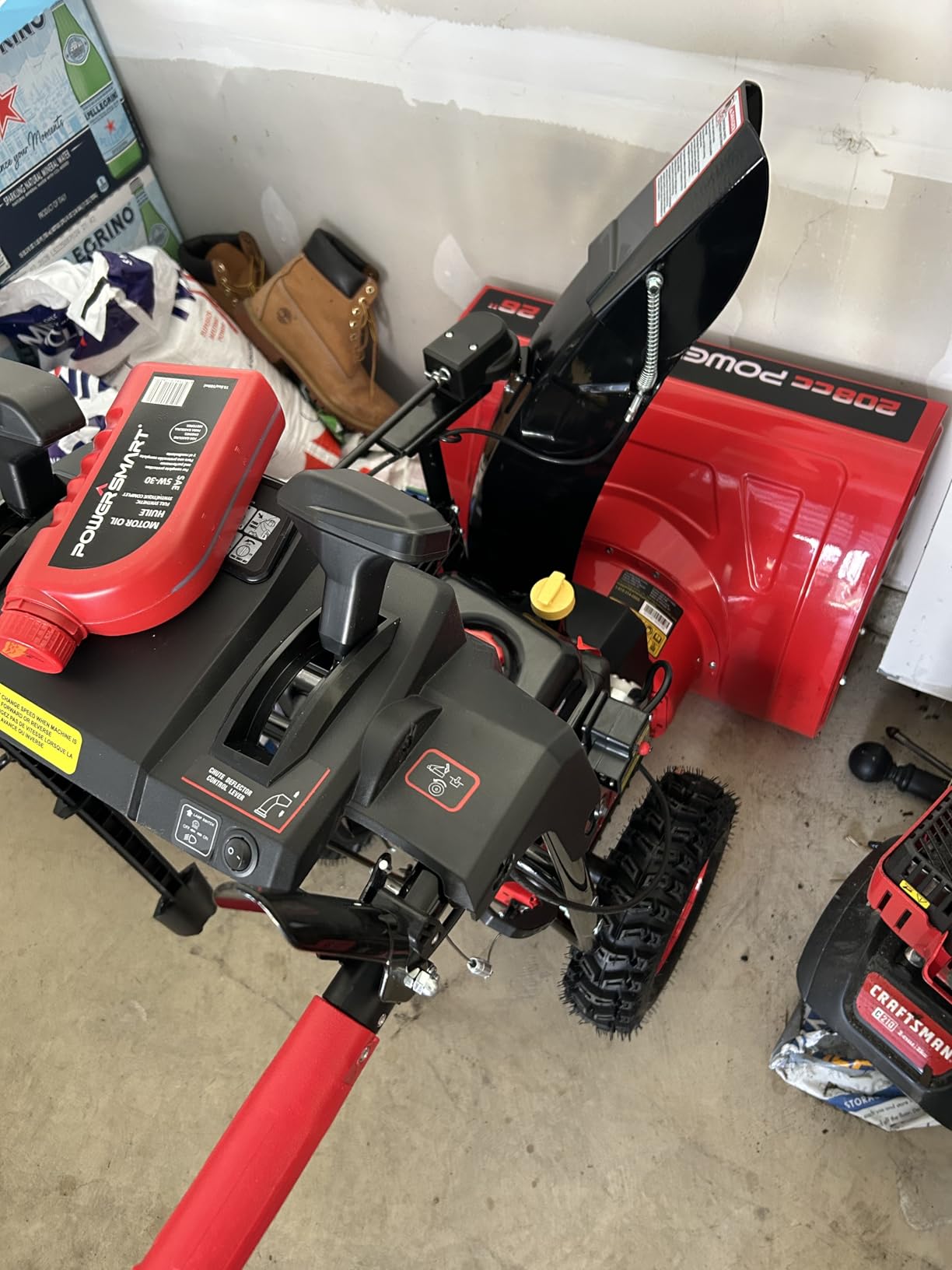
The 26 inch width with a 20 inch intake height means fewer passes on a long drive, and six forward plus two reverse speeds let you feather the machine through deeper patches. The rating sits at 4.1 out of 5 across 705 reviews, and it carries one of the larger review counts in this group, with 705 reviews.
The complaints cluster around ergonomics rather than capability. Chute height and rotation controls are reported as stiff and hard to adjust while you are working, and the hand warmers are described as not keeping gloved hands warm. A smaller group of owners reports auger or drive-train failure within the first couple of seasons, so treat it as a machine that wants an annual service check.
Who This Machine Suits?
It suits owners of a wide, long drive who take ice storms seriously and want gas torque without moving to a three-stage machine. It also suits anyone who wants electric-start convenience and a wide serviceable parts base. The 13 inch tires make it steady on a grade.
Where It Falls Short?
It falls short for operators who want one-hand chute control while walking, since the controls are described as stiff. It also falls short for early morning work where warm hands matter, and for buyers who want a long service life without a willingness to maintain the drivetrain. Budget for auger and belt checks each season.
3. EGO Power+ SNT2122 21 inch Single-Stage: Best for Short Driveways
EGO Power+ SNT2122 21″ Single-Stage Snow Blower with Peak Power™, (2) 4Ah Batteries and 320W Charger Included
21 inch cordless single-stage
6 inch steel auger
42 foot throw
Adjustable gravel skids
Pros
- Adjustable skid shoes named for gravel driveways and uneven ground
- Steel auger cuts packed snow and ice
- Quiet with no fumes and almost no maintenance
- Quick-fold handle and compact size for storage
- LED headlight and IPX4 weather resistance
Cons
- Some units arrive without usable skid feet and need drilling
- Cheap plastic scraper bar wears quickly on gravel
- Single-stage design bogs down past 8 to 12 inches
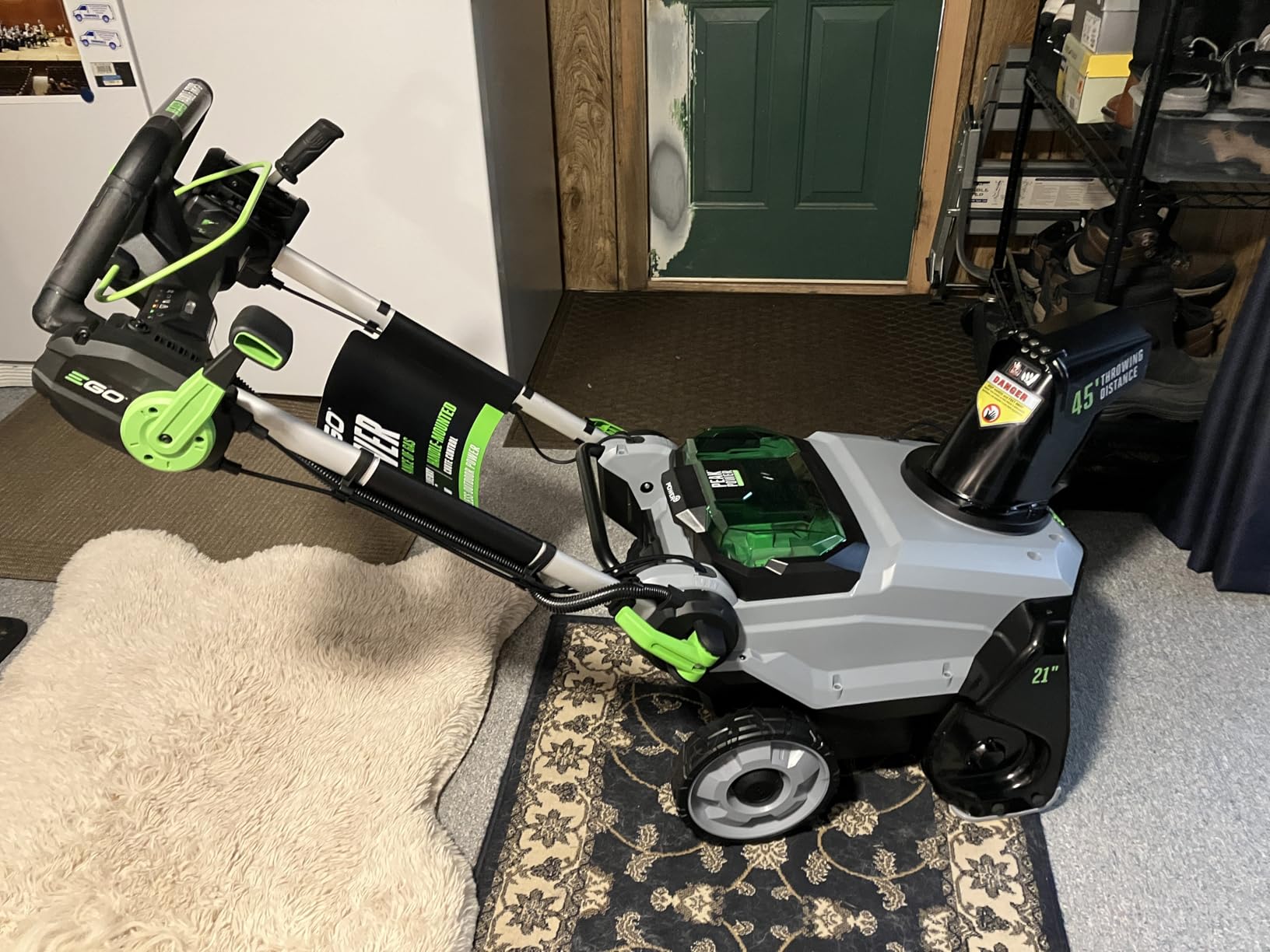
This is the contrarian pick, and it is defensible. A single-stage machine scrapes closer to the ground in general, which sounds wrong for gravel, but this one has a 6-inch heavy-duty steel auger and adjustable skid shoes the manufacturer describes as improving operation on gravel driveways and irregular terrain. It holds the highest review count in our group at 1133 reviews and a 4.3 rating.
The 21 inch path clears a 10-car driveway with 8 inches of snow on a single charge of the two included 4Ah batteries, and it throws up to 42 feet with 180-degree chute rotation. The quick-fold height-adjustable handle means it stores against a wall rather than eating a garage bay.
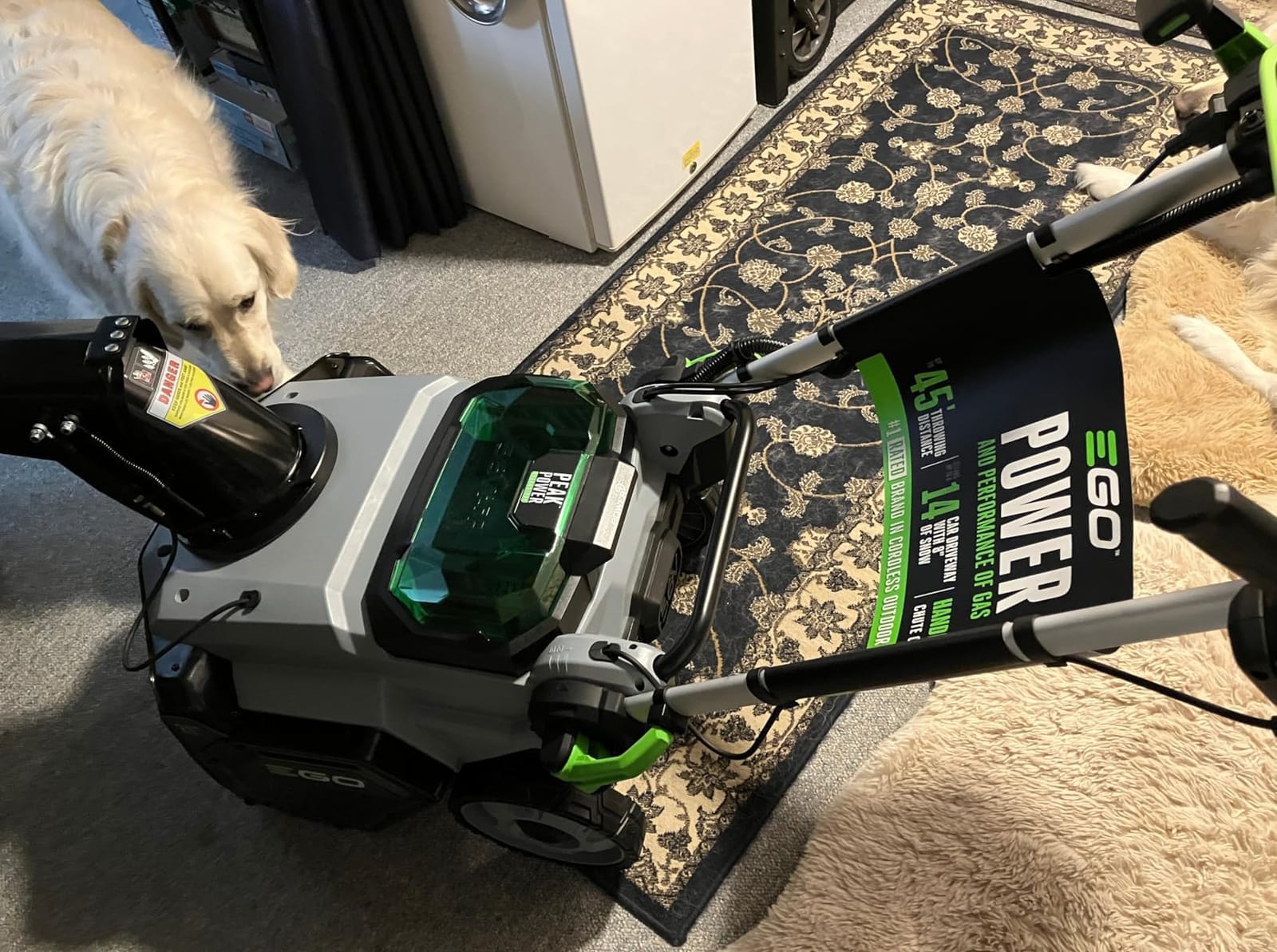
Owners highlight quiet operation with no fumes and minimal maintenance as the daily advantage, along with how easy the machine is to maneuver for its size. Batteries interchange with the wider EGO 56V ARC tool lineup, which matters if you already own the platform. The warranty is five years on the tool and three years on the battery.
Now the honest part. A recurring complaint across reviews is that some units ship without usable skid feet, forcing owners to drill or fit aftermarket parts before first use, which is exactly the part you cannot skip on gravel. The plastic scraper bar is also reported to wear out quickly on hard or gravel surfaces, and the single-stage layout starts to struggle once snow passes roughly 8 to 12 inches.
Who This Machine Suits?
It suits a short driveway, a condo pad, or a small walkway where a 24-inch machine wastes effort. It also suits owners who want cordless convenience and near-zero maintenance, and anyone already invested in EGO batteries. The fold-down handle makes it practical in a tight garage.
Where It Falls Short?
It falls short in a snow belt that delivers more than a foot at a time, because a single-stage layout loses momentum. It also falls short for owners who want a turnkey machine on day one, given the skid foot reports. On loose or deep gravel, budget for a replacement plastic scraper bar sooner rather than later.
4. SENIX 40V 21 inch Cordless: Best Lightweight Cordless
SENIX 40V 21-Inch Cordless Snow Blower with Variable-Speed Steel Auger
40V cordless, 1800W brushless motor
21.7 inch path, 8-12 inch depth
33 foot throw
30 pounds
Pros
- Variable speed steel auger handles wet snow and crunchy ice
- Only 30 pounds
- so it is easy to control and lift
- Assembles in minutes with no tools
- Recovers automatically after binding on ice
- Dual LED light bar and five year tool warranty
Cons
- Runtime of roughly 15 to 30 minutes per charge
- Throw distance falls short of the claim in wet heavy snow
- Chute angle has to be adjusted by hand
The SENIX is the machine I would hand to someone who has never run a two-stage blower. At 30 pounds it is light enough to reposition with one hand, and the foldable height-adjustable handle makes it easy to load and unload. The 1800W brushless motor clears up to 680 pounds of snow per minute.
On gravel, the adjustable clearing depth of 8 to 12 inches is a useful control. It lets you set the pass height for the stone you actually have rather than guessing, and the variable-speed steel auger keeps it moving through the wet, heavy stuff. It automatically recovers after binding on ice or deep snow, which saves a lot of manual clearing.
Owners report a 4.3 rating across 221 reviews and frequently praise the steel auger for chewing through wet snow, the quick no-tool assembly, and the LED light bar for early morning and night work. There is no cord to snag, trip over, or drag across the driveway.
The limiting factor is runtime. Owners cite roughly 15 to 30 minutes per charge, which on a long gravel drive means multiple charge cycles and, realistically, additional battery sets. Throw distance also falls well short of the advertised 33 feet in wet or heavy snow, and the chute angle requires adjusting by hand rather than from the handle.
Who This Machine Suits?
It suits a short drive, a townhouse, or anyone who wants cordless clearing without wrestling with a 200-pound machine. It also suits a user who values the five year tool and three year battery warranty, and anyone clearing before dawn where the dual LED light bar earns its place.
Where It Falls Short?
It falls short on anything long, because fifteen to thirty minutes per charge is the real constraint, not the auger. It also falls short for anyone who wants handle-mounted chute control, and for owners who will not buy extra battery sets. On a rural gravel drive, plan the charge schedule before the storm.
5. VOLTASK 48V 20 inch Cordless: Most Versatile
VOLTASK 48V Cordless Snow Blower, 48-Volt | 20-Inch Brushless Electric Snow Blower Cordless, Battery Snow Blower with Directional Plate & LED Lights (2 * 24V Battery & Dual Quick Charger Included)
48V cordless, two 24V packs
20 inch width, 10 inch depth
25 foot throw
22.9 pounds
LED lights
Pros
- Lightest machine here at 22.9 pounds
- Quiet enough for early morning clearing
- Waterproof key components for winter reliability
- Dual safety buttons
- 180-degree directional chute
Cons
- About 30 minutes of runtime per charge
- 25 foot throw is short for clearing a wide drive
- 20 inch path is narrower than any gas unit here
At 22.9 pounds, the VOLTASK is the easiest machine in this roundup to move, and that is not a gimmick on gravel. Loose stone is unstable underfoot, and a machine you can lift and reposition quickly is easier to keep level than one you have to wrestle. The 48V motor runs on two 24V lithium packs, with a dual quick charger included.
The technical case is modest and honest. A 20 inch cleaning width, 10 inch cleaning depth and 25 foot maximum throw cover routine driveway and sidewalk clearing, and the 180-degree directional chute plus dual LED lights help you aim and see. Waterproof key components and dual safety buttons are thoughtful additions for a machine that lives outside in the cold.
Owners rate it 4.3 across 318 reviews and describe it as a capable, quiet option for routine clearing with runtime and throw distance as the practical limits. There is no gas, no oil and no extension cord to manage, which is a genuine convenience for a small drive or a rental property.
Where it is limited, it is limited consistently. Runtime is around 30 minutes, the 25 foot throw is the shortest of the cordless group here, and the 20 inch path is narrower than any two-stage gas unit. Those numbers are fine for a short drive and frustrating for a quarter mile.
Who This Machine Suits?
It suits a first-time owner, a short urban drive, or anyone who stores equipment in a small space. It also suits a household that clears early and does not want engine noise, and buyers who want a complete package with batteries and charger already in the box.
Where It Falls Short?
It falls short on long rural drives, where thirty minutes of runtime and a 25 foot throw turn a job into several sessions. It also falls short in heavy wet snow, and for anyone who needs to handle more than about 10 inches in a pass. It is a small-property tool, not a driveway-clearing workhorse.
6. Westinghouse WSnow20 20 inch Corded: Best Corded Value
Westinghouse WSnow20 Corded Snow Blower 20 Inch, Steel Auger, Dual LED Lights, 1800 Watt Motor, Electric Snow Blower with 25ft Throwing Distance, Plows 680lbs/min, Adjustable Chute
120V 15A 1800W motor
20 inch width, 10 inch depth
25 foot throw
29.3 pounds
Rubber-tipped auger
Pros
- Rubber-tipped steel auger works heavy wet packed snow
- No runtime ceiling and no refills
- Light at 29.3 pounds and easy to store
- Cord retention design keeps the extension cord attached
- Dual LED headlights and a two year warranty
Cons
- Extension cord must be repositioned and can snag on long passes
- Not self-propelled so you supply all forward force
- Assembly instructions are confusing
The Westinghouse solves one specific problem that battery machines cannot: there is no runtime ceiling. The 120V 15A 1800W motor clears 680 pounds of snow per minute, and as long as the outlet reaches, the machine keeps working. For a property where the driveway runs past a hundred feet and an outlet is nearby, that is a real advantage.
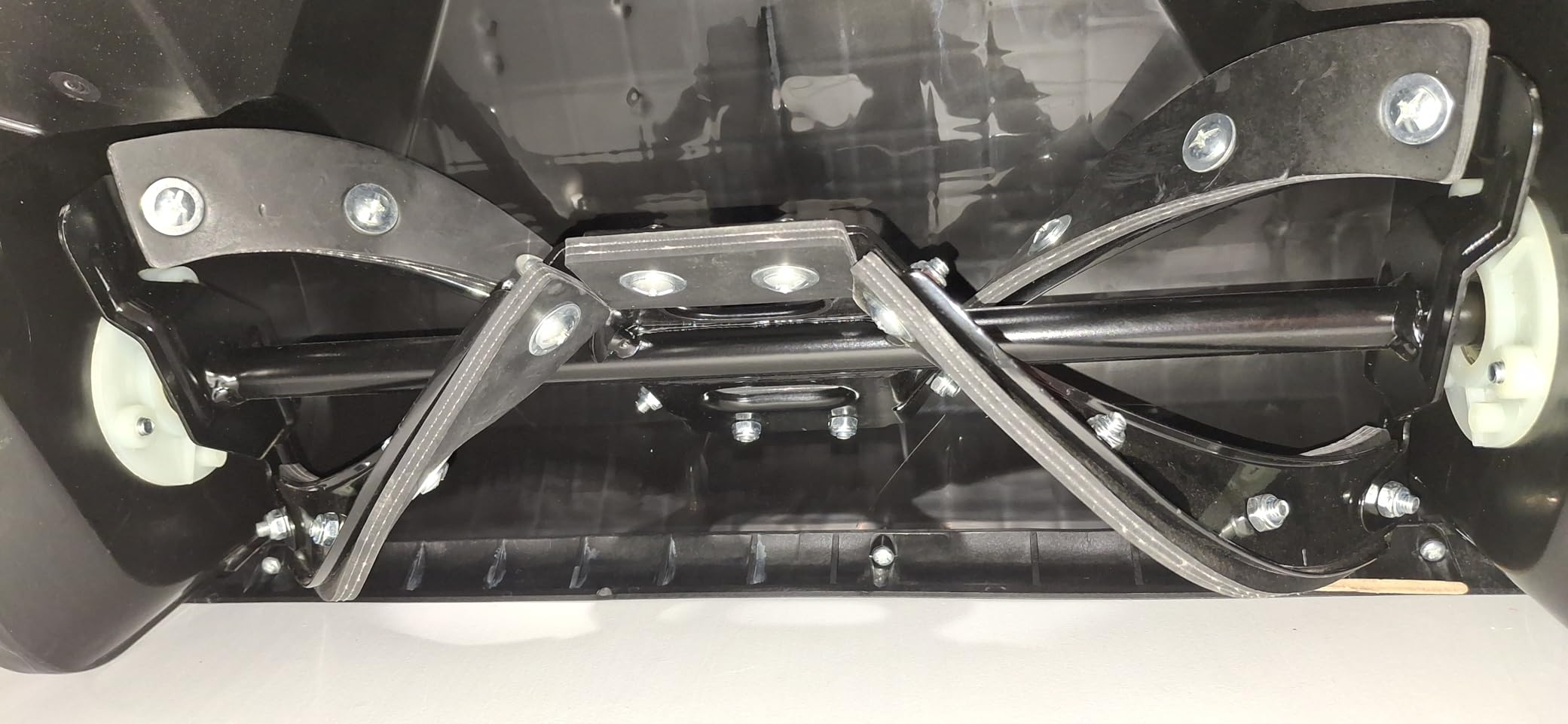
The auger is the part that decides the gravel question. It is a steel auger with rubber tips, and rubber-tipped paddles are the part of a single-stage design most likely to contact your stone. That makes this a machine for compacted, well-graded gravel rather than deep loose top layer. The 7-inch snow-grabbing wheels and soft grip handle keep it maneuverable at 29.3 pounds.
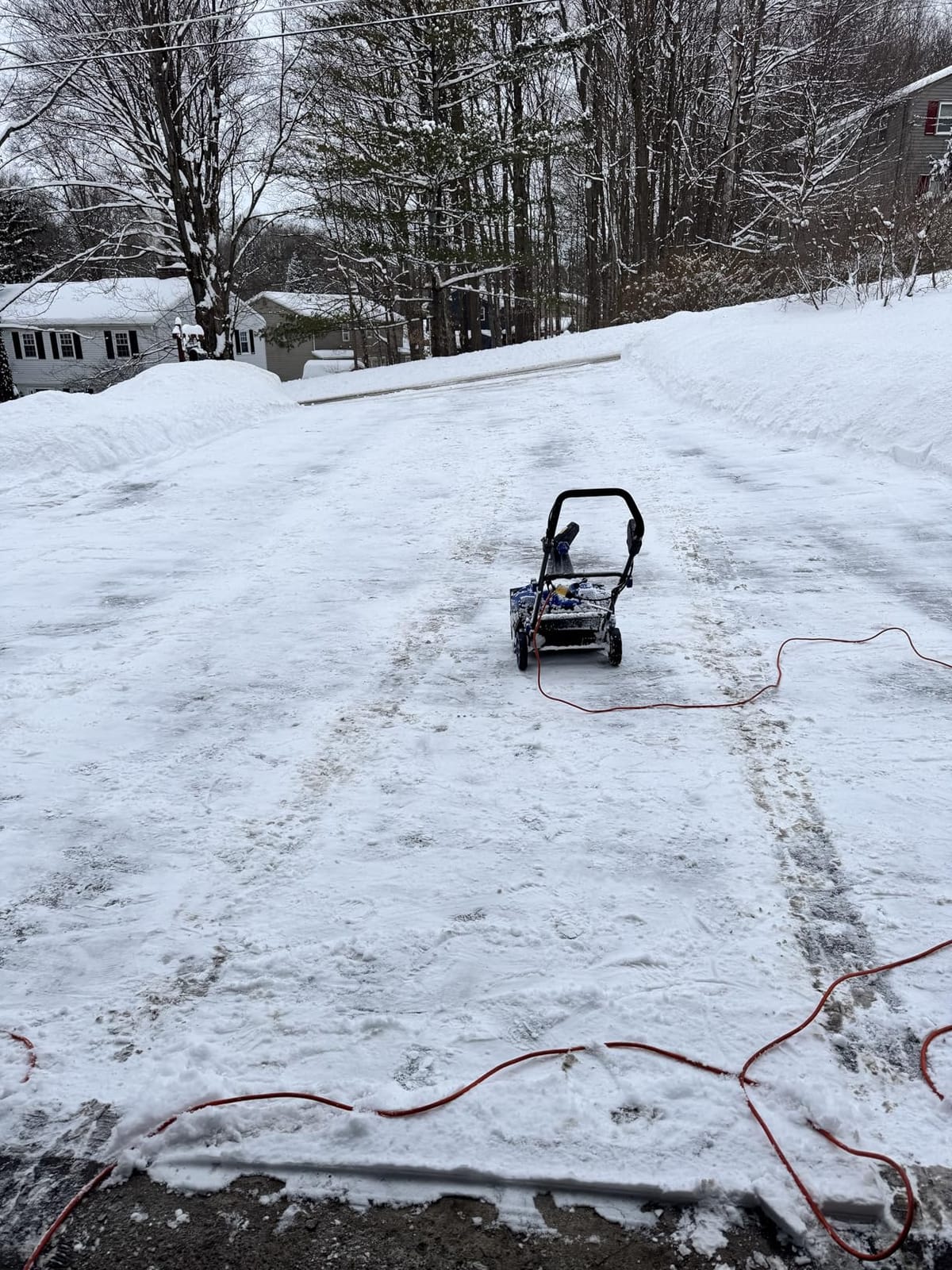
Owners give it 4.3 across 595 reviews and repeatedly describe it as strong for the money, noting that the steel auger clears wet heavy snow and can cut down to a clean surface. Cord retention is a small design touch owners appreciate, because extension cords that disconnect mid-pass are maddening.
The real compromises are physical. Not being self-propelled means you provide every bit of forward force, which tells on your back during deep passes on hard-packed gravel. The extension cord has to be repositioned constantly and can snag during long runs, and the assembly instructions are frequently described as confusing enough to slow down first use.
Who This Machine Suits?
It suits a driveway within cord reach of an outdoor outlet, and anyone who wants unlimited runtime without gas. It also suits owners of compacted, well-graded gravel who will raise the pass height. The rubber-tipped auger and dual LED headlights help on early and late passes.
Where It Falls Short?
It falls short on any drive where you would have to move the cord, and for anyone with back or joint trouble who should not push. It also falls short on deep loose gravel, where ground-contacting rubber tips are exactly what you are trying to avoid. It is a short-drive machine with a cord.
7. PowerSmart 24 inch 212cc Gas 2-Stage: Best for Long Driveways
PowerSmart Self-Propelled 2-Stage Gas Snow Blower 24-inch 212cc Engine with Electric Start, Reinforced Steel Housing
212cc OHV gas
24 inch width, 21 inch intake
45 foot throw
8-speed self-propelled
187 pounds
Pros
- Self-propelled 8-speed drive powers through drifts
- Steel auger and impeller handle up to 12 inches of snow
- Starts reliably in cold with electric and recoil start
- Throws snow 45 feet at a 180-degree chute
- Handles frozen slush at the end of the drive
Cons
- Self-propelled drive cable can strip after limited use
- Chute control binds at the mount and drifts out of position
- Heavy at 187 pounds and awkward to transport
This 212cc four-cycle two-stage unit is built for volume rather than finesse. It clears 2500 pounds of snow per minute through a 24-inch width with a 21-inch intake height, which is the deepest intake of any machine here, and it throws to 45 feet. For a long drive with a plow operator who leaves a ridge at the end, that intake height is the reason it keeps moving.
The 8-speed self-propelled drive is the feature that makes the 187-pound weight tolerable. You can select a slow speed for the heavy work and a faster one for the light pass, and the 13×4 rubber tires hold on snow and ice. Electric start with recoil backup covers the cold-morning case where a pull-start machine leaves you standing in the driveway.
Owners like the drive system, the cold-weather starting and the ability to handle frozen slush, at a price point well under premium gas brands. It rates 4 out of 5 across 205 reviews, which is the lowest rating in the group, and the reviews explain why in very specific terms.
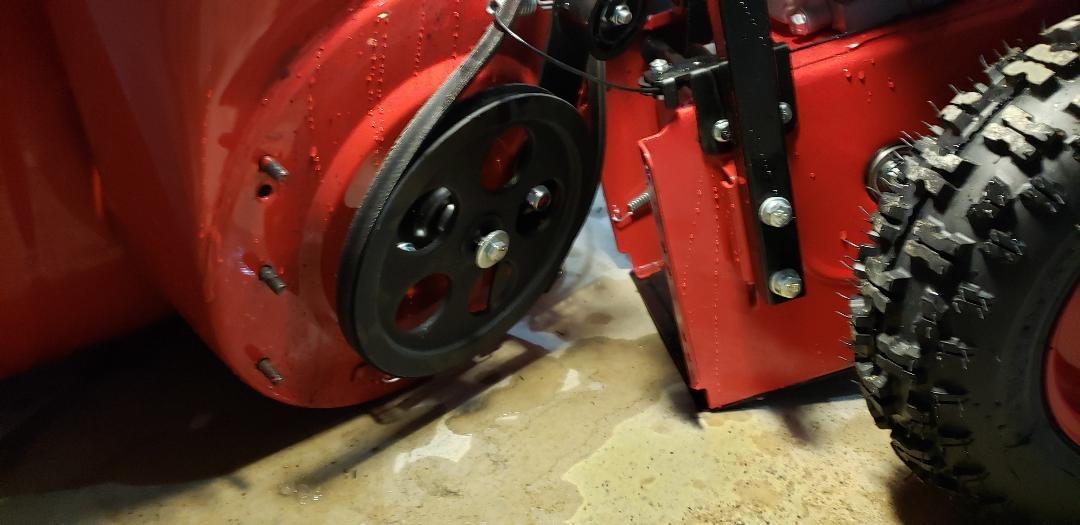
Several owners report the self-propelled drive cable stripping or refusing to engage after a small number of uses, which is a serious complaint on a machine whose whole value is self-propulsion. Chute controls are reported to bind at the mount and drift out of position from vibration, and the 187-pound weight is a real problem if the machine needs service or storage off the ground.

Who This Machine Suits?
It suits a long driveway where one pass per strip matters, and owners who get more than a foot of snow at a time. It also suits anyone who wants gas self-propulsion without moving up to a three-stage machine, and anyone who needs a 21-inch intake for deep ridges left by a plow.
Where It Falls Short?
It falls short for buyers who want low maintenance, because the drive cable and chute mount are the reported weak points. It also falls short for anyone who cannot move 187 pounds safely, and for users who need the chute to stay aimed without stopping. Check the drive cable early in the first season.
8. Snow Joe SJ627E 22 inch Corded: Best for Small Areas
Snow Joe Corded Electric Snow Blower, 22 Clearing Path, Dual LEDs, SJ627E
15-amp corded motor
22 inch path, 13 inch intake
25 foot throw
34.8 pounds
All-steel auger
Pros
- All-steel auger with four rubber-tipped blades
- Handles up to 840 pounds of snow per minute
- Compact and light enough to store anywhere
- Quiet enough for early morning use
- Includes a chute clean-out tool
Cons
- Not self-propelled so heavy snow means pushing hard
- Handle joint can develop metal fatigue
- Plastic scraper bar catches on uneven un-paved surfaces
The SJ627E is the most reviewed machine in this roundup by a wide margin, with 5698 reviews at 4 out of 5, and that volume tells you something useful: it has been used by a lot of people in a lot of conditions. The 15-amp motor moves up to 840 pounds of snow per minute, and the heavy-duty all-steel auger with four rubber-tipped blades is a genuinely steel drivetrain at the intake.
It is also the least demanding machine here to own and store at 34.8 pounds, it starts instantly with no gas and no oil, and it is quiet enough for a five in the morning start. A chute clean-out tool is included, which matters more than it sounds when a chute clogs with wet snow.
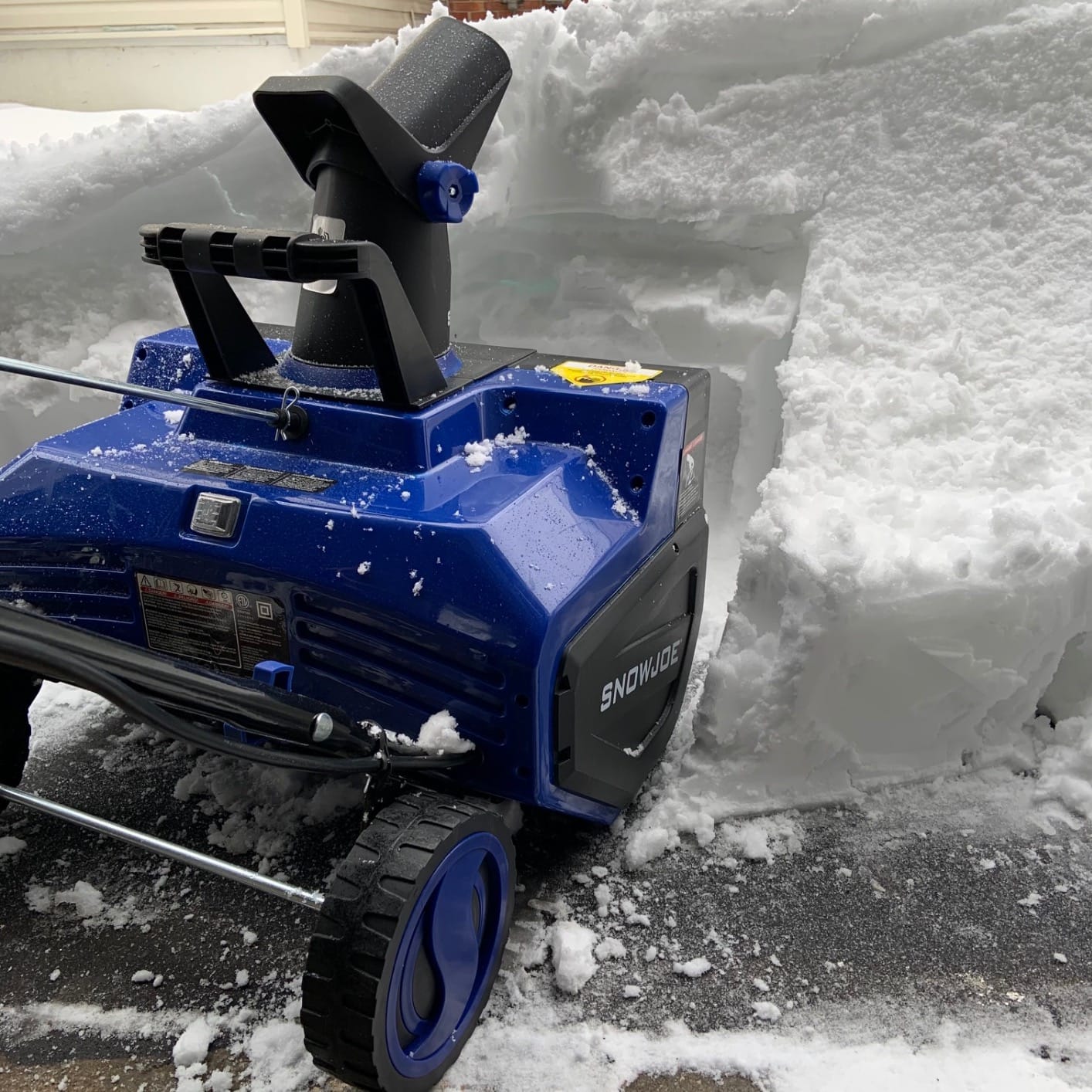
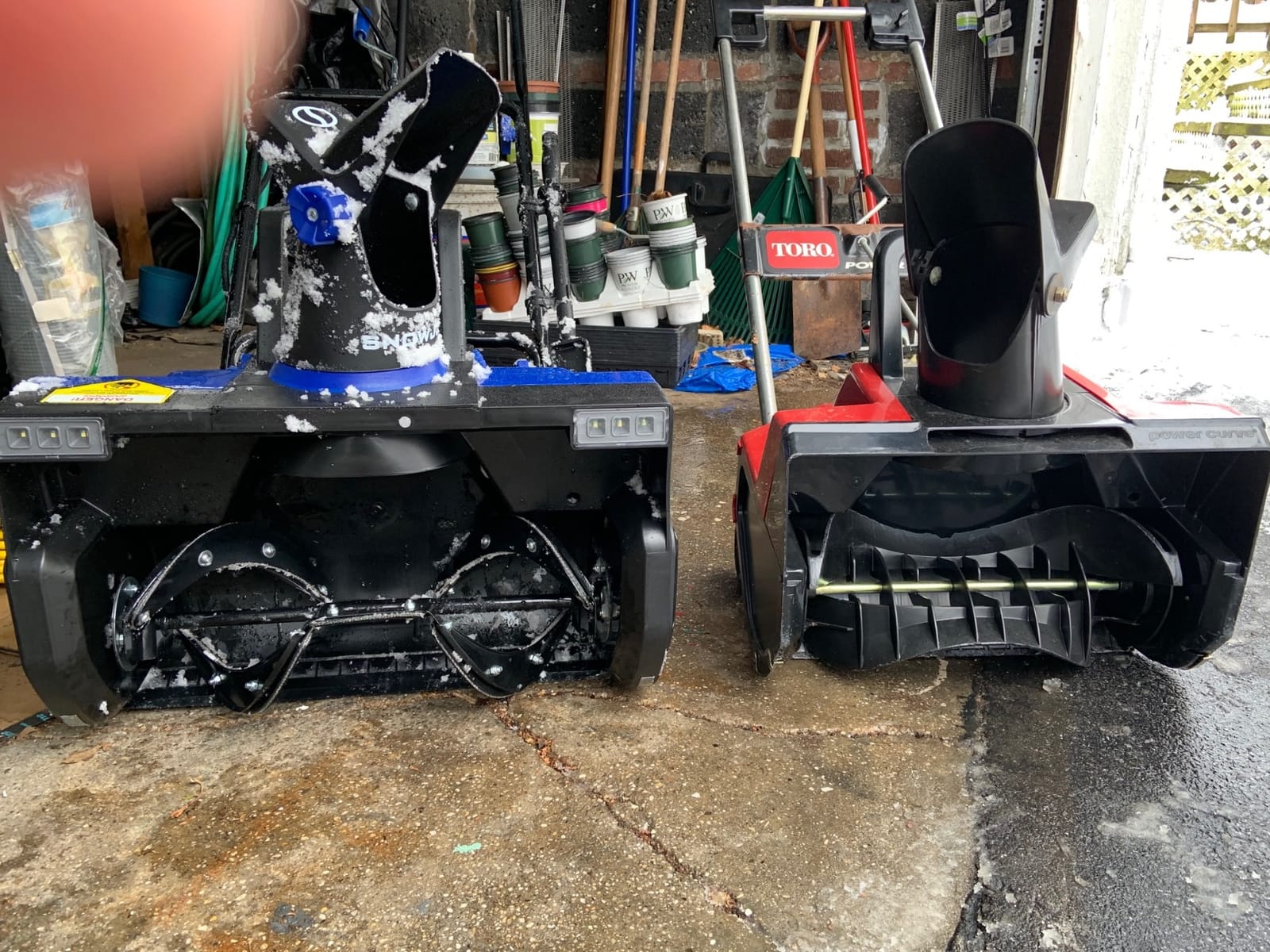
Where it fits the gravel question: it is a ground-contact single-stage layout, and the 180-degree chute throws to 25 feet. On a short, firm, well-packed drive it works. On deep loose gravel, the plastic scraper bar is specifically reported to catch on uneven, un-paved surfaces, which is the direct mechanism that leads to picking up stones.
Owners also report flimsy handle bars that can develop metal fatigue at the joint, a drive belt that slips or snaps under heavy load, and throw distance that drops sharply on wet, heavy snow. The included cord restraint hook is described as undersized. It is a capable machine for moderate snow on a flat, firm surface, not a heavy-duty blower.
Who This Machine Suits?
It suits a short driveway, a walkway, a deck or a patio where a two-stage machine is overkill. It also suits a first snowblower owner, anyone without a gas outlet or battery platform, and households that need quiet early-morning clearing. Storage in a closet or under a bench is straightforward.
Where It Falls Short?
It falls short on loose or uneven gravel, because the plastic scraper bar is the first part to make contact and the first part to wear. It also falls short in deep or wet snow, where throw collapses and the belt load rises, and for anyone who needs self-propulsion. Expect to replace belts and watch the handle joint.
What to Look for in a Gravel-Safe Snow Blower?
Single-Stage vs Two-Stage vs Three-Stage
Single-stage machines use rubber paddles that scrape the ground to move snow, which on gravel means scooping stones. Two-stage machines collect with a steel auger and throw with an impeller, so the intake rides on skids. Three-stage machines add a third accelerator wheel between the auger and impeller, widening the intake for very high volumes on large properties.
The rule of thumb is short. If the surface is gravel, two-stage is the floor, not the upgrade.
Gas vs Cordless Electric
Gas gives you an uninterrupted 208cc or 212cc of four-cycle torque, no charge planning, and no battery degradation. The cost is noise, oil changes, a pull or electric start in the cold, and storage in a garage. The gas machines here run roughly 147 to 187 pounds, and their auger and impeller are steel.
Cordless electric gives you silence and near-zero maintenance, with lithium packs that typically need replacing every three to six years. The two 56V machines here clear a 10-car to 24-car driveway on a charge, and the 40V and 48V units clear smaller drives in 15 to 30 minutes. Weigh the runtime against your driveway length before choosing.
Clearing Width and Max Depth
Clearing width is how much you remove per pass; max depth is how deep the housing can take snow in one go. They are different numbers and buyers confuse them constantly. Widths in this group run from 20 to 26 inches, and max intake heights run from 10 to 21 inches. For a long drive, a wider path saves passes; for a plow ridge, intake height saves you a second run.
Clear the intake housing after every session. A compacted block left in the chute becomes a projectile the next time you start the machine.
Wheels vs Tracks on Gravel
Wheels are cheaper and roll fine on packed gravel. Tracks spread weight over a larger contact patch, which is the advantage on loose or icy stone and on a slope. A machine that spins its wheels halfway up a switchback has wasted your time, and on a steep grade a self-propelled machine with tracks is the combination owners on the forums most often recommend.
None of the eight machines here uses a true track drive, so for the steepest and longest gravel drives, the answer from the ownership community is a used Honda, Ariens or Toro in a tracked configuration. Buyers on the forums point out that the 928 Honda models offer more bang for the money than the entry machines, and that Ariens Platinum models are worth the higher cost if the budget stretches.
Skid Shoes and Auger Clearance
Set the skids so the auger housing clears your gravel by about half an inch to a full inch. The test is simple: lift the machine and look under the housing, then set it down on the stones and feel for any contact. If you cannot lift a machine at that setting, put it on an axle stand first, because many skids are only adjustable at the highest setting and it takes practice to change them.
What you are aiming for is a clean line of snow with the stones visible but undisturbed. Where skids have sunk into deep loose gravel, no adjustment will save you, and the fix is to leave a base layer rather than to dig for bare stone.
Chute Control and Drive Speeds
Handle-mounted chute control, whether one-handed or on a joystick, lets you redirect the throw while moving. Several machines here are criticized for stiff chute controls, so treat that as a real comfort difference on a long pass. Multiple forward speeds plus reverse matter most on gravel, because they let you match auger speed to how much stone is underfoot.
What Owners Say About Snowblowing Gravel?
The forum evidence is unusually consistent, and it lines up with the specifications. On r/Snowblowers, one owner wrote: “All my research landed me on the Honda hss1332atd. As others have mentioned you gotta use skids and leave some snow behind.” Another added that they would go with a smaller dual stage snowblower, preferably a used Honda, Ariens or Toro.
On snowblowerforum.com, a poster with a rural gravel acreage said: “I have only owned wheeled blowers but would agree that tracks are better suited for gravel driveways.” In the same thread, the Ariens was singled out as a feature worth having. The pattern is that owners prioritize durability, repairability and proof the machine works with skids raised, not raw spec sheets.
The complaint about single-stage machines is blunt. One r/Snowblowers poster put it plainly: “Single stage only throws about 10′ and works ok up to a foot of snow.. and you would likely have to shovel the end of the driveway.” That is exactly the limit our roundup found on the two single-stage machines included here.
Two more threads answer the questions the spec sheets cannot. One owner with a quarter mile of steep, gravel, switchback drive described the scenario that pushes people toward tracked machines. Another theme that runs through the threads is asking plow operators to leave a few inches on the ground so that the owner is not picking stones off the grass in the spring. Leaving snow behind is not laziness on gravel. It is maintenance.
How to Snowblow a Gravel Driveway Without Throwing Rocks?
Use this sequence and the machine choice matters less than the technique.
1. Let the first one or two inches stay. Snow that packs down forms a base layer that protects the gravel and gives the skids a firm surface to run on. Clearing to bare stone on the first pass is what starts the problem.
2. Set the skids before you start. Adjust so the intake sits about half an inch to a full inch above the stones. Check the gap by lifting the machine and looking underneath, and confirm it on the actual surface.
3. Work upwind, chute downwind. Position yourself so the machine throws away from where you are standing and away from your lawn and flower beds.
4. Go slow and use partial passes. Take the top of the pile off at the highest setting, then lower it for a finishing pass. A slow forward speed keeps the auger loaded evenly instead of letting it stall and dig.
5. Stop at the first warning sign. Rocks coming out of the chute, a rattling or clanking sound, extra vibration, or a chute jam all mean the housing is too low or the snow is too deep. Stop, raise the skids, and re-evaluate. A broken shear pin is the drivetrain protecting itself, and repeated shear pin failures mean a jam you are forcing through.
6. Clear the intake after every use. A packed chute is an obstruction you will meet again at the worst moment.
Two more habits pay off all season. Avoid bare spots in early and late season, and clear the drive before a storm freezes rather than after. Finally, check your skids, scraper bar and drive belt before winter, because abrasive grit shortens the life of every part that touches the ground.
Which Machines Struggle on Gravel and Why?
Four of the eight machines here are single-stage or corded ground-contact designs, and they struggle for one structural reason. A rubber paddle or ground-contact auger exists to sweep snow off a hard surface, so on gravel the same paddles sweep up stones. The failure chain is short: a stone enters the intake, the auger or impeller jams, the shear pin breaks, and now you are replacing a sacrificial bolt that exists precisely to save the machine.
The machines most likely to struggle are the ones with the cheapest wear parts on the bottom. The Snow Joe SJ627E and the Westinghouse WSnow20 are both described by owners as strong on wet packed snow, yet both carry a plastic scraper bar that wears or catches on un-paved surfaces. The EGO SNT2122 is the better built single-stage option in this group, with a 6-inch steel auger and manufacturer-listed gravel skids, but some units need skid feet fitted before first use.
A second group struggles for a different reason: capacity. The VOLTASK and SENIX are not bad machines, they are small ones. Thirty-minute runtimes and 20 to 21 inch paths are fine on a short drive and frustrating on a quarter mile. Match the machine to the length of the drive before you match it to the price.
And a third group fails on longevity rather than function. The PowerSmart 24-inch gas unit has owners reporting drive cable stripping, and the same brand’s 26-inch model has reports of auger or drivetrain wear in early seasons. Read the review patterns for the specific model, not the brand, because the two PowerSmart machines here have very different reputations.
Frequently Asked Questions
Is it safe to use a snow blower on a gravel driveway?
Yes, with the right machine and setup. A two-stage snow blower rides on adjustable skid shoes that hold the intake about an inch above the stones, so the auger never contacts your gravel. Set the skids high, go slow, and expect to leave a thin layer of snow behind as a protective base.
What is the best tool to remove snow from a gravel driveway?
For most gravel driveways, a self-propelled two-stage snow blower with adjustable skid shoes and a steel auger is the best tool. Two-stage machines collect snow with an auger and throw it with an impeller, so the intake housing stays off the ground. Tracks beat wheels on loose or icy gravel.
How do you snowblow a gravel driveway?
Let the first one or two inches of snow stay so it packs into a base layer. Set the skids so the intake sits half an inch to a full inch above the gravel. Work upwind with the chute pointed downwind, take partial passes in deep snow, and stop immediately if rocks come out of the chute or the machine starts rattling. Clear the intake after each use.
Should I buy a single stage or two stage snow blower?
Two-stage, without exception, if the surface is gravel. Single-stage paddles scrape the ground and scoop stones, and most single-stage machines have little or no skid adjustment. Single-stage is only acceptable on smooth, paved driveways or very short runs on firm, well-packed gravel.
What are the drawbacks of a single stage snow blower?
Rubber paddles scrape the ground and pick up gravel. Throw distance is roughly half that of a two-stage machine, capacity drops at about a foot of snow, and most single-stage units have no adjustable skids at all. A stone that reaches the intake can jam the auger and snap a shear pin.
Are 2 stage snow blowers worth it?
On gravel, yes, because two-stage is the only category that works safely. You also get roughly double the throw distance, deeper snow capacity, and an intake that never touches the ground. On a two-stage machine the skids set the pass height, which is exactly what a gravel surface requires.
Bottom Line
The best snow blowers for gravel driveways are the ones whose intake never touches the stone, and that means a two-stage machine with adjustable skids and a self-propelled drive. Our top pick, the EGO Power+ SNT2416, pairs a variable speed steel auger with trigger-controlled steering and heated grips, and it carries the highest average rating in this group. For packed ice and a long drive, the PowerSmart 26 inch gas unit has the torque and the tire width. For a short drive, the smaller EGO single-stage does the job quietly.
Before you buy, look at your gravel. Three-quarter inch stone or smaller and a firm, packed surface will work with any of these machines once the skids are set. Two or three inch base stone, or deep loose material, means a plow or a loader is the right tool, not a blower. And leave a layer of snow behind on purpose. That thin base is what keeps your stones in the driveway where they belong, season after season.