
After spending weeks putting ten budget MIG welders through real shop jobs, the YESWELDER MIG-205DS PRO came out on top as the best MIG welder under 500 dollars for almost anyone. It runs five processes, handles steel and stainless, and puts genuine 200 amp output on a 110V outlet without breaking a sweat. Everything else in this roundup earns its place for a specific reason, but this is the one I would put in a home garage.
That said, the best MIG welders under 500 dollars are not all the same shape. Some are gasless flux-core only and weigh less than 11 pounds. One ships with a helmet, gloves and a spool of wire so you can start welding the same afternoon. Another adds pulse mode and adjustable inductance for finer control than most machines twice its size offer. Picking wrong usually means paying for a feature you never touch.
So here is how we used them. We ran each machine on mild steel ranging from thin sheet to 1/4 inch plate, tried gasless work outdoors, checked what happened on 220V versus 110V, and paid attention to the boring stuff that decides whether a welder survives five years: cable length, drive rollers, manual quality, spool capacity. Ten machines, several hundred dollars of wire and gas, and a lot of grinding. If you want the short version, start with the table below.
If you are still outfitting the workshop rather than the weld bay, our picks on garage storage cabinets under 500 dollars will keep the machine off the floor and the wire dry.
Table of Contents
Top 3 Picks for the Best MIG Welders Under $500

The YESWELDER takes the top slot because it is the only machine here that combines genuine multi-process capability, spool gun support for aluminum and enough output to stop shrinking every job you bring to it. The ARCCAPTAIN is the smarter buy when memory and preset recall matter more to you, and the TOOLIOM is the least expensive route into clean DC flux-core beads that hold their own against transformer machines costing far more.
All 10 MIG Welders Under $500 Compared (October 2026)
| Product | Specifications | Action |
|---|---|---|
| YESWELDER MIG-205DS PRO 205A |
|
Check Latest Price |
 TOOLIOM MIG-135 PRO 135A TOOLIOM MIG-135 PRO 135A |
|
Check Latest Price |
 ARCCAPTAIN MIG200 200A ARCCAPTAIN MIG200 200A |
|
Check Latest Price |
 AZZUNO MIG 130F 130A AZZUNO MIG 130F 130A |
|
Check Latest Price |
 HITBOX HBM1200 200A HITBOX HBM1200 200A |
|
Check Latest Price |
 SSimder MIG-140 140A SSimder MIG-140 140A |
|
Check Latest Price |
 bestarc MIG145-9GEN 145A bestarc MIG145-9GEN 145A |
|
Check Latest Price |
 Lincoln Electric 90i FC K5255-1 Lincoln Electric 90i FC K5255-1 |
|
Check Latest Price |
 BESTMIG FLUX 135A BESTMIG FLUX 135A |
|
Check Latest Price |
 ANDELI 135A Pulse ANDELI 135A Pulse |
|
Check Latest Price |
Two things jump out of that list. Six of the ten run on 110V household power, and every single one of them does flux-cored MIG, which is the process you will lean on most as a beginner. Only three support gas-shielded MIG, and only one supports aluminum at all without extra hardware.
1. YESWELDER MIG-205DS PRO 205A – Best Overall
YESWELDER 205A MIG Welder, 110V/220V 5-In-1 MIG/Flux Core MIG/Spool Gun MIG/Lift TIG/Stick
200A IGBT output
110V and 220V dual voltage
Wire feed 58-858 in per min
37.5 lbs
Pros
- Genuine 200A output with real penetration on 110V
- Five processes in one unit so skills grow without a new machine
- Synergic wire feed with plus or minus 3V fine tuning
- Digital display shows live welding current
- Owners report it is very hard to overheat
Cons
- Manual does not match the actual spool mount
- Supplied MIG torch is rated to 150A not full output
- No hook on the torch for hanging while adjusting
This is the machine we kept reaching for. On 110V it pushes 200 amps of IGBT inverter output, and that is the number that matters when you are repairing a trailer frame or a mower deck rather than tacking up a shelf bracket. Wire feed speed runs from 58 to 858 inches per minute and the synergic mode matches voltage automatically, with a plus or minus 3 volt fine trim for the days when the auto setting is a little off.
Five processes are covered: gas MIG, flux core MIG, spool gun MIG, Lift TIG and Stick. Spool gun and TIG torch are sold separately, which is normal in this price band, but the machine is wired for them. The digital display reads out live current, and the protection package covers over-current, overload, overheat and voltage fluctuation.
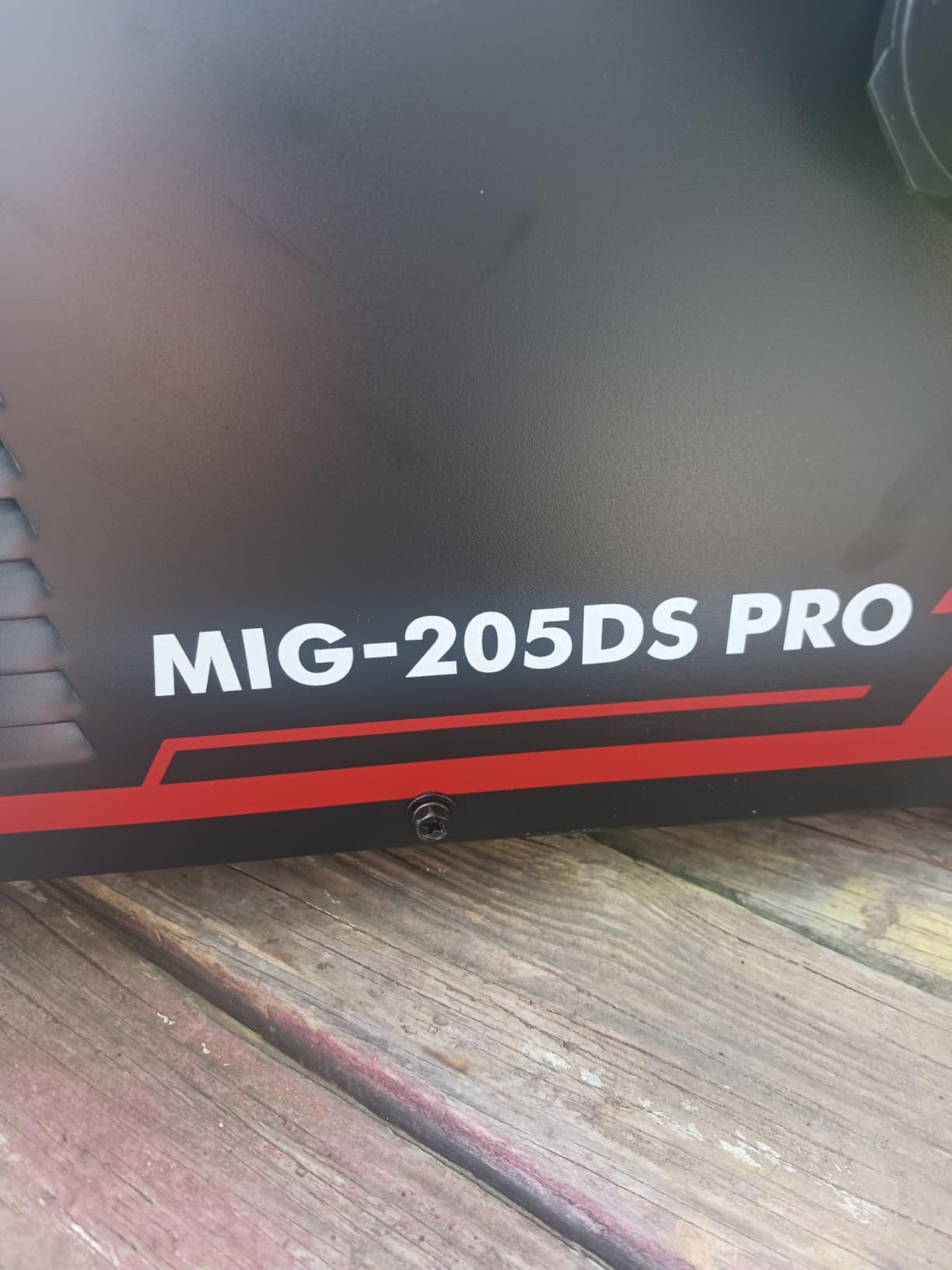
What impressed me most was the thermal headroom. Multiple owners describe running it hard for long stretches without tripping anything, and that matches what we saw on repeated 1/8 inch passes. At 37.5 pounds it is the heaviest unit in this roundup, so plan your cart or workbench accordingly.
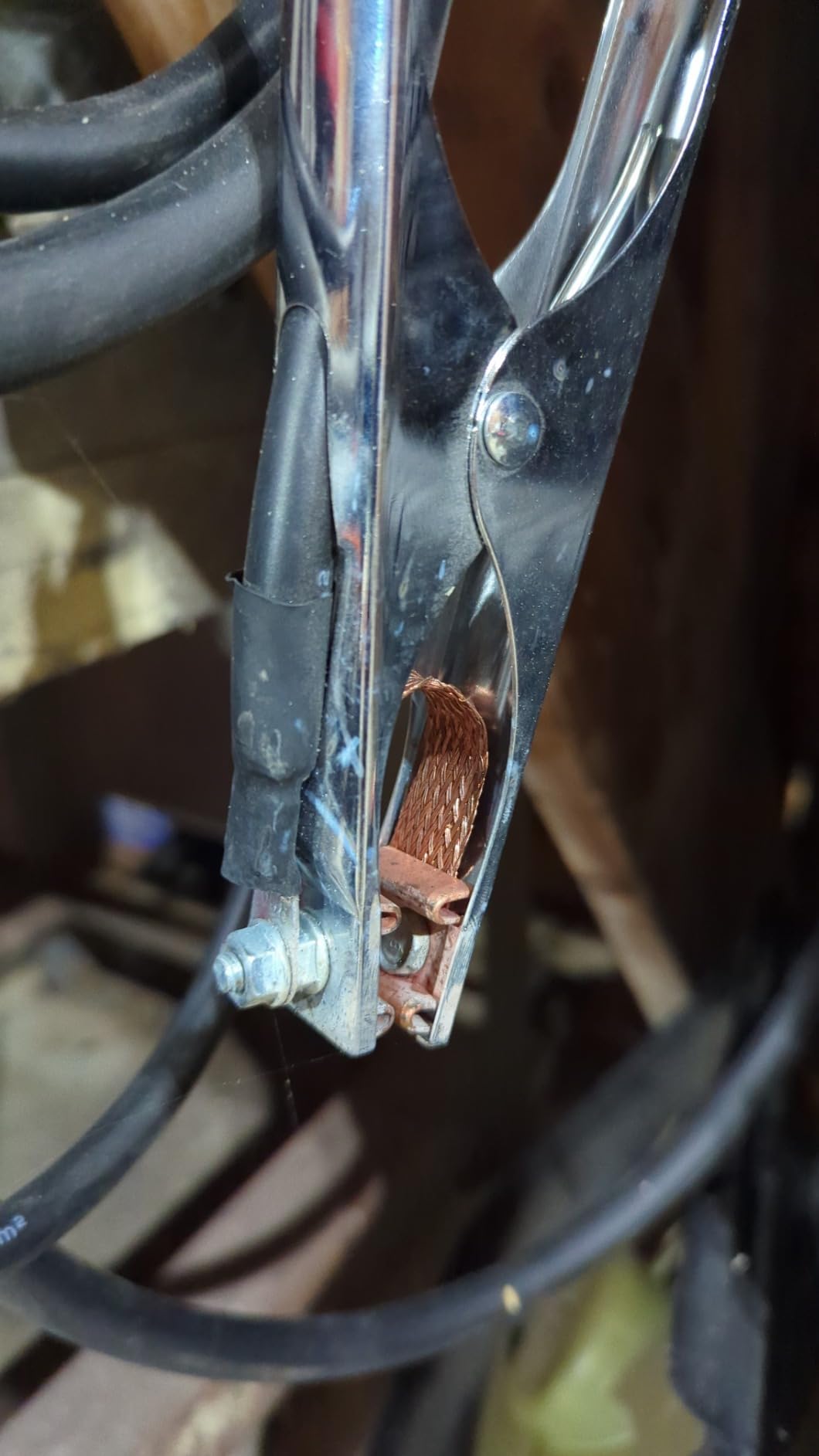
The weak spots are all fixable and none of them are dealbreakers. The documentation does not match the machine’s actual spool mount, which costs an afternoon if you trust it. The included torch is rated to 150 amps, so on sustained high-output work you will want a heavier gun. There is also no hook on the torch for hanging it while you reposition clamps.
What you get and what you give up
You get the widest process range and the highest output in the group, plus a current readout that actually helps when you are dialing in a new thickness. That readout behaves oddly in flux mode according to some owners, so verify with a scrap coupon before trusting it.
You give up portability. This is a garage machine, not a job-site machine, and the missing torch hook is a small daily annoyance in a tight workshop. Budget separately for a TIG torch and spool gun if aluminum is on your list.
Who this is not for
Skip it if you need to carry a welder up stairs or into an engine bay. Anyone doing production work eight hours a day will also find a lighter duty-cycle machine a better match.
For everyone else building a mixed shop, this is the most capable budget machine we tested and the default recommendation for best MIG welders under 500 dollars.
2. ARCCAPTAIN MIG200 200A – Best Value Multi-Process Machine
ARCCAPTAIN 200A MIG Welder 110V 220V 6 in 1 Aluminum Welding Machine MIG200
200A on 110V and 220V
Six processes including spot weld
10 storable setting groups
2 year warranty
Pros
- Controllable beads in MIG
- flux core and stick
- Ten setting groups make repeat jobs fast
- Spot weld mode plus full manual control
- Cooling fan runs only on demand so it stays quiet
- Two year manufacturer warranty with responsive support
Cons
- Drive rollers lack a groove for 0.035 inch wire
- Power cable is thin and runs warm
- Includes a 110V cord and adapter rather than a native 220V lead
The ARCCAPTAIN is the one we recommend if you plan to weld the same joint more than once. It stores ten groups of preset parameters, so once you find good settings for 16 gauge steel you can pull them back instantly instead of rebuilding them every session. That sounds minor until you are setting up in the dark on a driveway.
Output is 200 amps on both 110V and 220V, and the wire support is broad: .023, .030 and .035 solid wire, .030 and .035 flux core, and .035 and .040 aluminum wire. It handles gas MIG, gasless flux core, stick, spot welding and Lift TIG, with crater fill, burn-back adjustment, pre and post gas flow, and both 2T and 4T trigger modes.
Long-term owners report many hours on 1/8 and 3/16 inch steel with no drama, and they consistently describe it as more capable than the price suggests. The large LED display is readable through a welding helmet, which is a small thing you will appreciate immediately, and a shoulder strap is included.
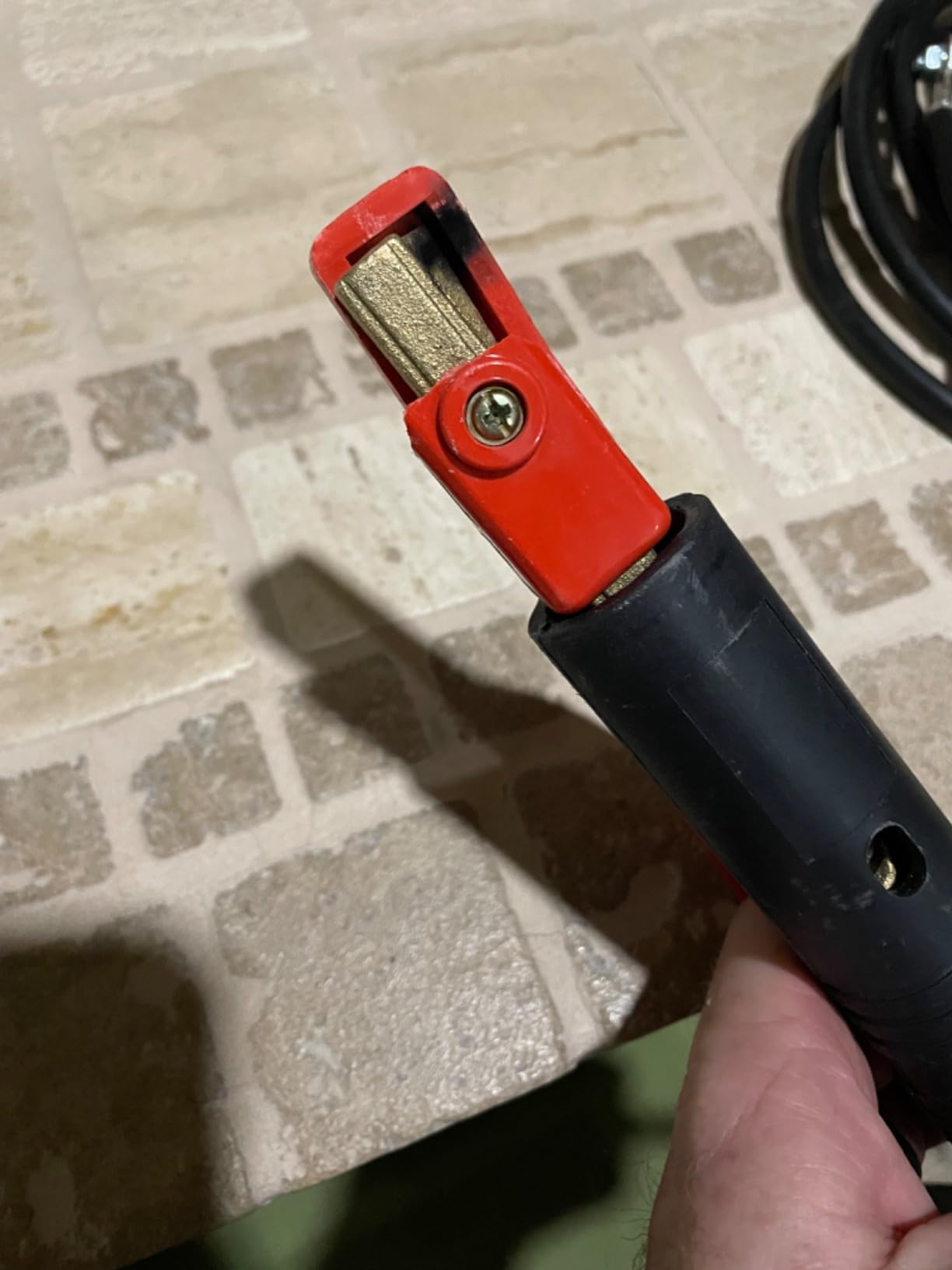
Our reservations are physical rather than electrical. The drive rollers that ship in the box have no groove sized for 0.035 inch wire of any type, so budget for a replacement roller set before you start. The power cable is thin and runs warm under sustained load, and the torch cable plus the plastic strain relief at the gun connection feel light.
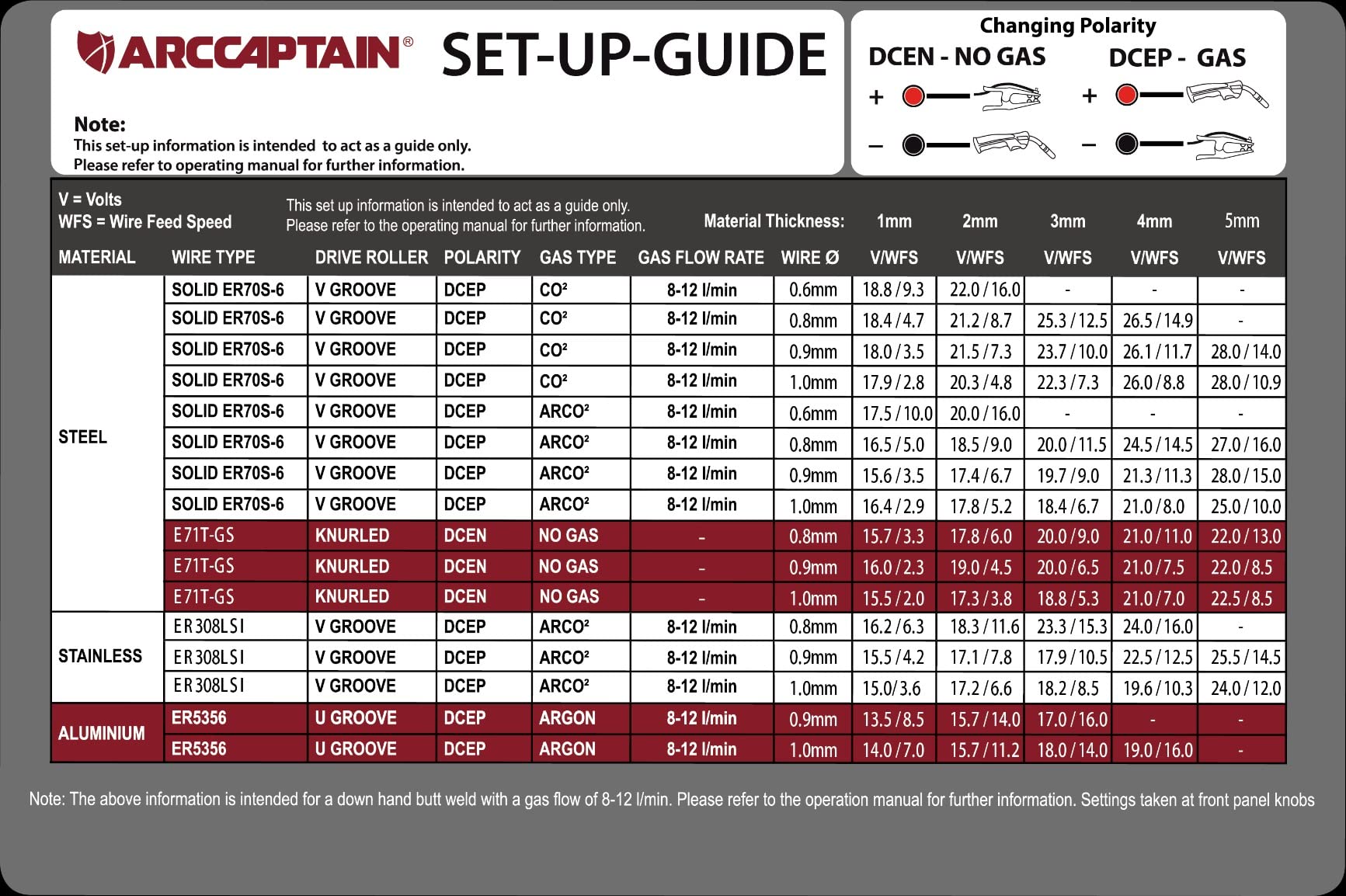
Where the memory feature pays off
Presets matter most for shops doing repeat work: the same gate, the same bracket, the same trailer rail week after week. Owners who weld mixed steel regularly call this the difference between a two-minute setup and a twenty-minute one.
The cooling fan running on demand is worth noting too. Machines that cool continuously are noticeably louder, and that noise follows you into every recording or phone call made near the shop.
Who should buy something else
If your work is mostly thin sheet and hobby projects, you are paying for capacity and programmability you may never touch. Anyone needing true 220V without an adapter in the chain should look at a machine that ships with the right cord.
For repeat-work builders who want a lot of machine per dollar, this is a strong second place behind our top pick.
3. TOOLIOM MIG-135 PRO 135A – Most Versatile
TOOLIOM 135A 110V Gasless Flux Core MIG Welder Kit with Wire and Gloves
135A DC flux core output
Penetrates mild steel to 1/6 inch
Wire feed 120-420 in per min
11.24 lbs
Pros
- Smooth low-spatter DC flux core that beats older transformer machines
- Compact 11.24 lb body with a carry handle
- Three processes in one budget unit
- Auto voltage and wire speed matching for beginners
Cons
- Lift TIG torch not included and sold separately
- Wire compartment is cramped for larger hands
- Accepts 2 lb spools only with no room for larger
- Cables and ground clamp are short
Welding with flux-cored wire from a proper DC source produces a much cleaner bead than the old transformer gasless machines this replaces. That is the TOOLIOM’s whole argument, and reviewers with real fabrication experience keep making the same point: penetration and spatter control on this machine beat older transformer-style gasless welders costing considerably more.
Output is 135 amps DC, good for mild steel up to 1/6 inch. It runs 0.030 and 0.035 flux core wire, with wire feed from 120 to 420 inches per minute on the thinner wire. Hot Start and Arc Force handle arc ignition and stability, and voltage compensation plus thermal protection are built in.
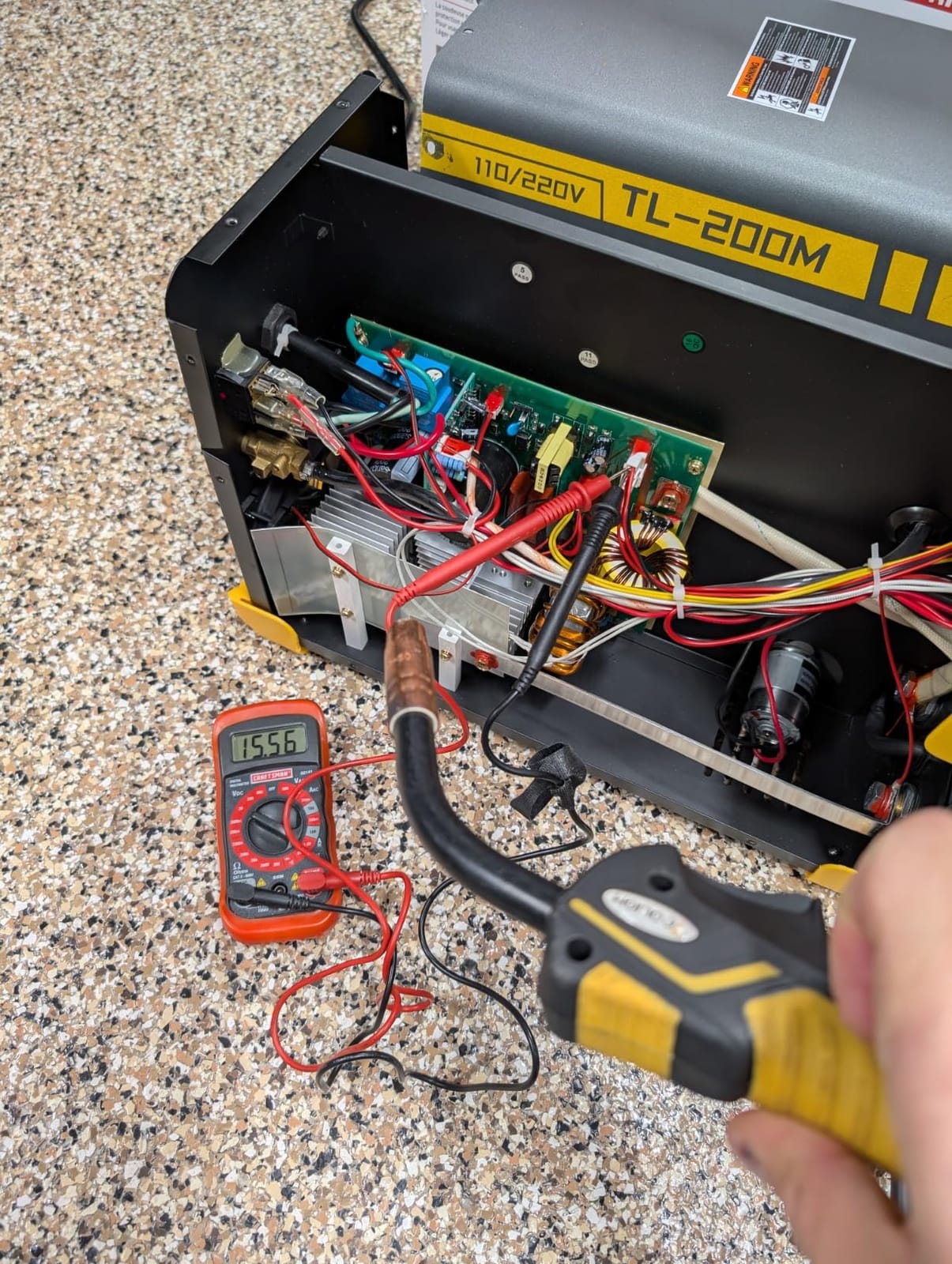
At 11.24 pounds with a carry handle, this is one of the machines we would actually take to a customer’s driveway without hesitating. Gloves and a spool of wire are in the box, so a first-time buyer can pull the trigger without a second order.
The compromises are clear. The TIG function exists but the torch is sold separately, so treat it as a two-process machine for now. The wire compartment is tight if you have large hands, and it only accepts 2 pound spools with no room for larger ones. Leads and ground clamp are short and inexpensive.
Why flux core is the right first process
Gasless flux core needs no cylinder, no regulator and no gas hose, which removes the single biggest hidden cost from a first welding purchase. It also welds outdoors in wind without shielding gas blowing away from the arc. The tradeoff is spatter and slag that need chipping and grinding afterward.
Start here, get comfortable with wire feed and travel speed, and add gas later if you want cleaner beads on visible work.
Where it runs out of road
The 135 amp ceiling and the 1/6 inch material limit mean thick structural work is out. Anything approaching 1/4 inch needs multiple passes on a machine with more headroom.
Reviewers also mention an isolated report of a fragile internal board mount that failed in transit, so inspect the unit the moment it arrives.
4. AZZUNO MIG 130F 130A – Best Bare-Bones Gasless Machine
AZZUNO MIG Welder,Flux Core Welder Machine 110V 130Amp, Gasless MIG Welding Machine IGBT Inverter Welder Portable Wire Feed Welder (110V)
130A gasless flux core output
Welds mild steel to 3.0 mm
Handles 2.2 lb wire rolls
8.6 lbs
Pros
- Very light at 8.6 lbs with a comfortable carry grip
- Synergic control with simple voltage and wire speed knobs
- Arrives with torch
- clamp
- wire and chipping hammer
- Entry price point suits hobby and small project work
Cons
- 130A ceiling limits it to thinner gauge material
- DC-only operation narrows material options
- Holds 2.2 lb wire rolls only
The AZZUNO does one job and does it with no menu to navigate. Two knobs, synergic control, and 130 amps of gasless flux-core output for mild steel up to 3.0 mm plate. There is no gas path, no multi-process claim to remember, and nothing to misconfigure.
That simplicity is the appeal. New welders can load the spool, connect the gun and pull the trigger without learning a control panel. At 8.6 pounds it is the second-lightest machine here and moves from a shelf to a truck bed without a fight.
Everything needed to start comes in the box: MIG torch, ground clamp, brush and hammer, a 1 pound spool of 0.030 inch flux core wire and two contact tips. Overload and overheating protection are standard, and the manufacturer warranty runs one year.
Where it stops is amperage. A 130 amp ceiling means thin gauge and light repairs, and DC-only output means you are not covering the material range a multi-process machine gives you. It also takes 2.2 lb wire rolls, which keeps your per-pound wire cost high over time.
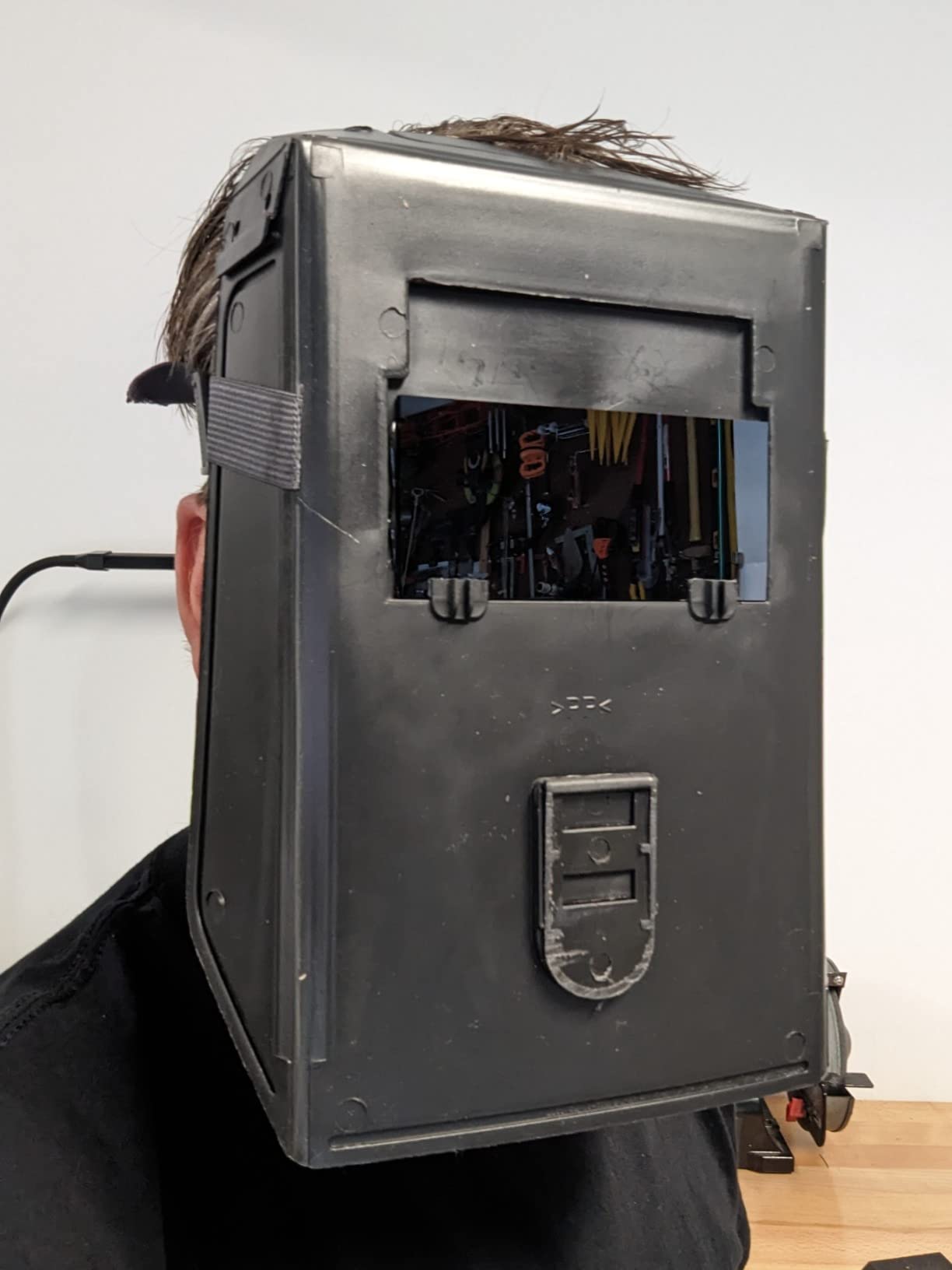
Spool size is the hidden cost
Small rolls are sold in far smaller quantities than full spools, and the per-pound price is consistently higher because of the extra packaging and handling. If you weld regularly rather than occasionally, that difference adds up quietly across a year.
Ask yourself honestly how many hours a year you will arc. A handful of hours makes a small roll irrelevant. Regular weekly work makes it matter.
Who this suits
Buy this if you are doing fence posts, a garden gate, brackets and hobby auto trim, and you want the lightest, least intimidating machine on the market. If heavier plate or stainless is on the near-term list, step up in power first.
It is a genuinely capable entry-level gasless machine, and most owners treat it as exactly that.
5. HITBOX HBM1200 200A – Best Lightweight Dual Voltage Option
HITBOX 200A MIG Welder, 110V/220V Flux Core MIG/Lift TIG/Stick 3-in-1
IGBT inverter with up to 200A output
110V and 220V dual voltage
Welds mild steel to 4.0 mm
8.6 lbs
Pros
- Clean welds with little spatter and quiet inverter operation
- Very light at under 9 lbs with a built-in handle
- Easy to read display and dials for feed and voltage
- Dual voltage at this weight is unusual
Cons
- One reviewer measured output 20-30 percent below the displayed amperage
- Weak stick performance with 6010 6011 and 7018 electrodes
- Ground clamp warps and wire feed can jam at the connector
Here is a machine that pairs dual voltage with a weight most people can lift one-handed. The HITBOX claims up to 200 amps of IGBT inverter output on both 110V and 220V, supports 0.030 and 0.035 flux core wire, and welds mild steel up to 4.0 mm. At 8.6 pounds it undercuts the weight of most machines with far less output.
It handles gasless flux core MIG, stick and Lift TIG for carbon steel and stainless. Synergic control coordinates voltage and wire feed to the current or wire diameter, and the display plus dials are easy to read in a garage with bad lighting.
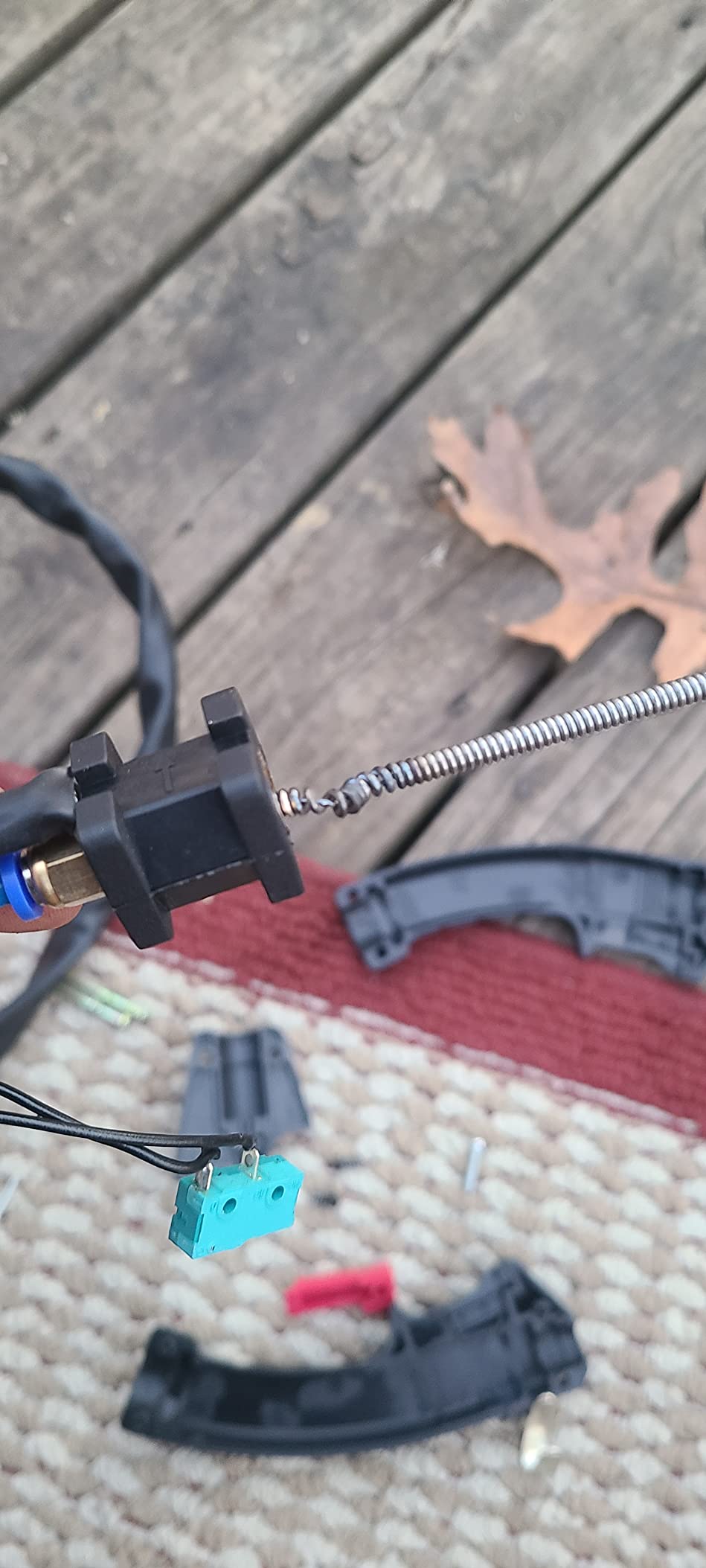
Buyers consistently report clean welds with little spatter and noticeably quiet inverter operation, and several note it outperforms similar machines from larger retailers at comparable spend. It holds a 2 pound spool, which again caps your wire economics.
The most serious reported issue is accuracy of the readout. One reviewer measured actual output 20 to 30 percent below the displayed amperage, which makes dialing in stick settings harder than it should be. Stick performance with common 6010, 6011 and 7018 electrodes is also described as weak, so treat stick as a backup process rather than a main one.
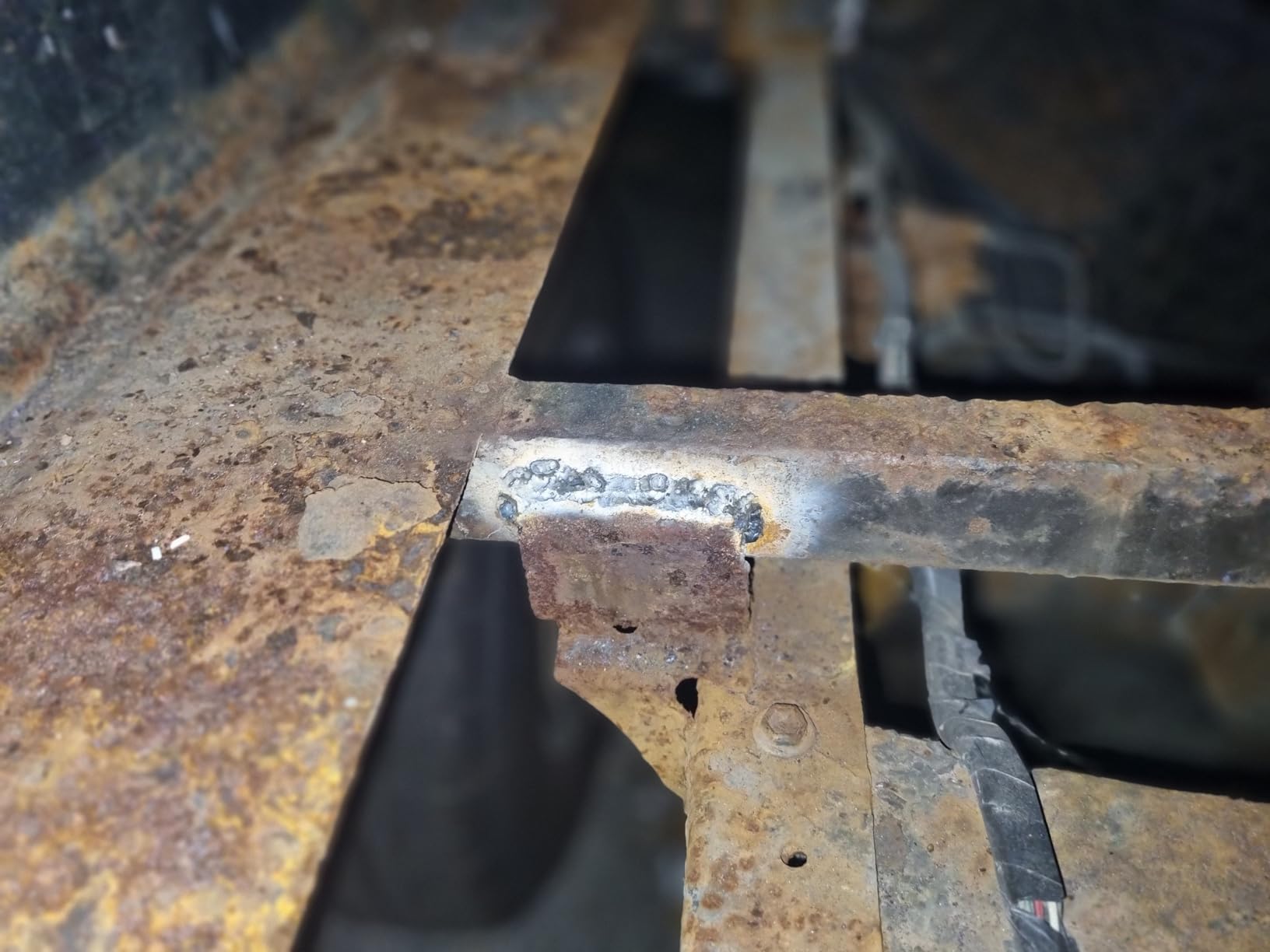
Reading the output rating honestly
Headline amperage on budget machines often reflects a peak figure rather than a sustained one. Since the HITBOX display has been questioned by at least one reviewer, verify output with a clamp meter before committing to a heavy job.
Over-current, overload, over-voltage and overheat protection are all present, which is reassuring given the modest price. The ground clamp warping and wire feed jamming at the cable connector are recurring complaints worth budgeting a replacement part for.
Where it fits in your shop
Choose it when dual voltage matters, weight matters, and your work is mostly flux core on mild steel or stainless. Instructions are also described as hard to follow with limited after-sales support, so look up a setup chart for your material before you start.
For portable field work on light to medium gauge material, that combination is hard to argue with.
6. SSimder MIG-140 140A – Best for Thin Sheet and No-HF Electronics
SSimder 140A MIG Welder 3 in 1, Dual Voltage Flux Core Lift TIG Stick
140A three process output
110V and 220V operation
7.7 lb main unit
Non-HF Lift TIG ignition
Pros
- Weighs only 7.7 lbs so it moves from shelf to toolbox easily
- Lift TIG without high-frequency start avoids network interference
- Performs well on 110V for sheet metal and hobby auto work
- Ships with torch
- wire
- electrode holder and 220V cord
Cons
- Manual is for a different model and offers almost no setup guidance
- Switching to stick means unplugging the MIG gun and emptying the feeder
- Power cord and leads are short
- Door does not latch fully
The SSimder is the lightest machine in this roundup at 7.7 pounds, and it carries a detail almost nothing else offers: Lift TIG without high-frequency ignition. That matters if you weld near a home network, Bluetooth devices or anything else sensitive to stray interference.
It is a 140 amp three-process machine covering flux core MIG, Lift TIG and stick, running on 110V or 220V. Materials listed include carbon steel, low-alloy steel, stainless, titanium, copper and cast iron. It refills with 0.8 mm or 1.0 mm self-shielded flux core wire in 1 or 2 pound spools, and it carries a two-year manufacturer warranty.
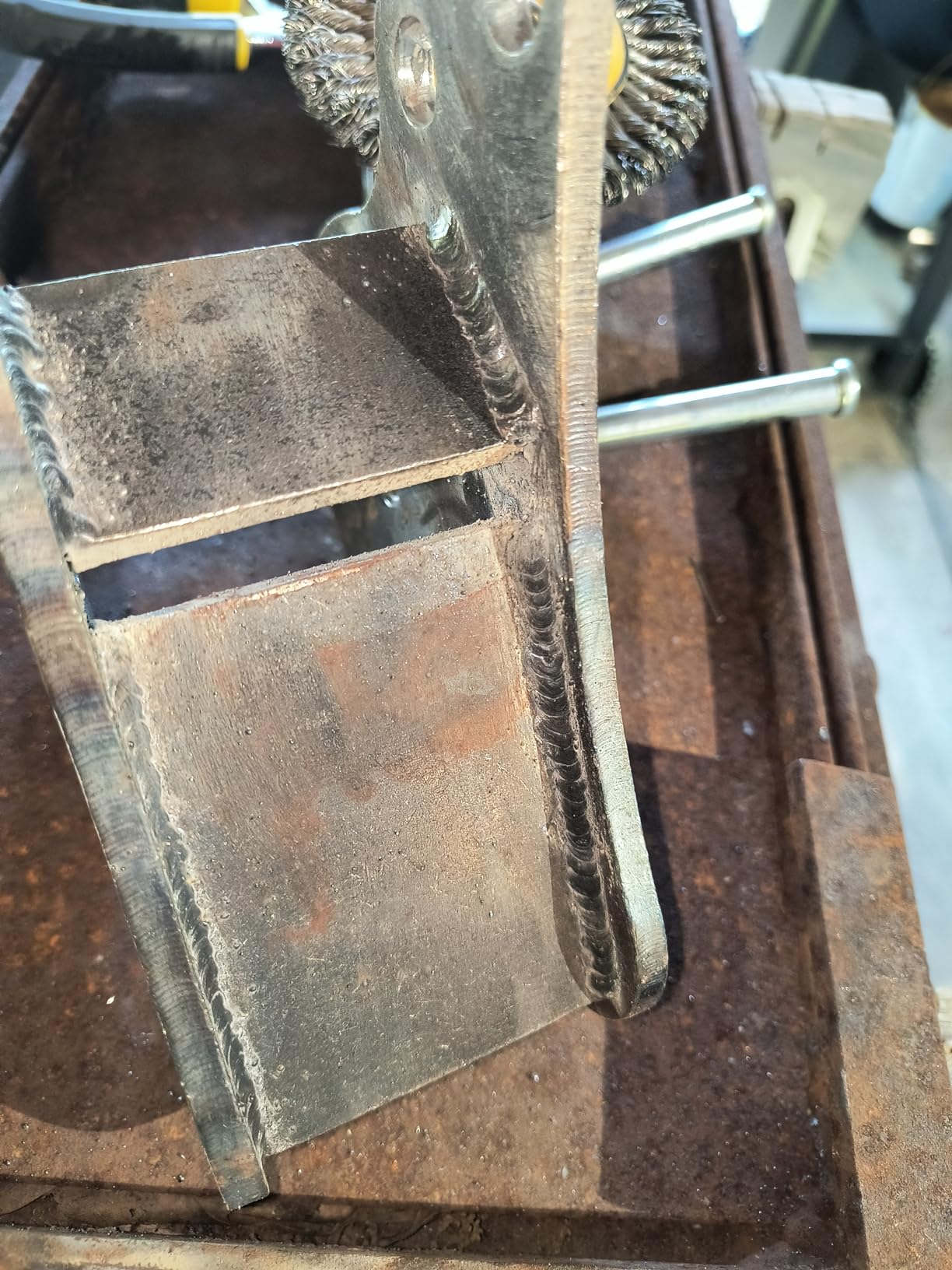
For sheet metal and hobby auto body work, owners report solid results running on 110V. A spool of wire, torch, electrode holder, ground clamp and the 220V conversion cord all ship in the box, so nothing extra is needed for the first bead.
It does not weld aluminum and it does not use shielding gas, which rules it out the moment gas MIG matters to you. Process switching is awkward too, since moving to stick means unplugging the MIG gun and pulling wire out of the feeder. The manual is for a different model, which is frustrating when you are setting up alone.
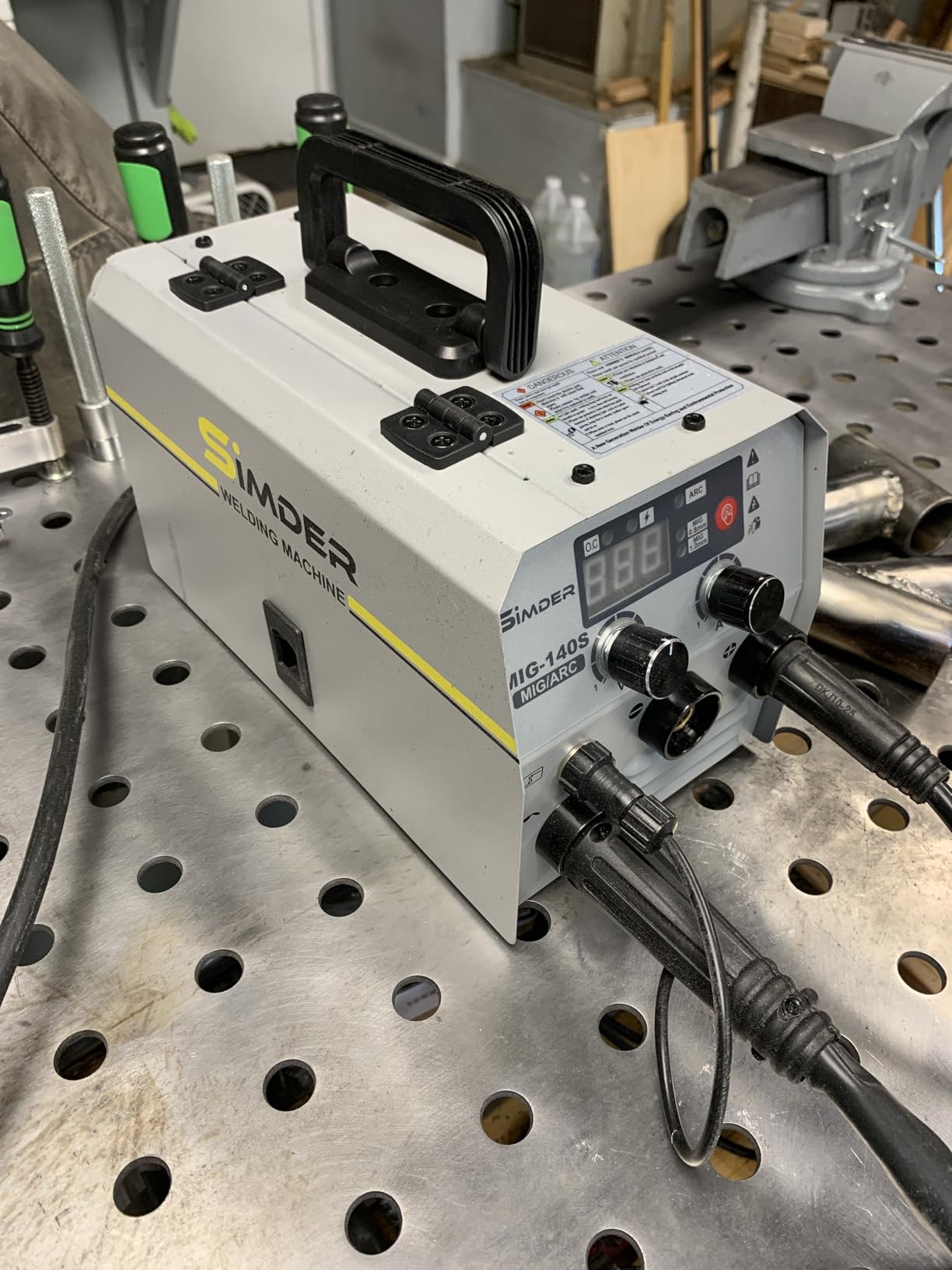
Thin sheet is where it shines
Low inertia and a short gun lead make this easy to control on light material, and the 7.7 pound weight means you can reposition constantly without setting the machine down. For auto panels, railings, frames and off-grid repairs, that combination is genuinely useful.
Owners also flag that the supplied MIG gun tip is the gas type rather than flux core, and the door does not latch fully. Both are small parts problems that cost an afternoon at most.
Who should skip it
Skip this machine if aluminum or stainless appearance work is on the horizon, or if you want to move between MIG and stick without fuss. The short leads also mean you will likely replace them early.
For a first welder doing light sheet and repair work in a garage or on a farm, it is a friendly place to start.
7. bestarc MIG145-9GEN 145A – Best Versatile 4-in-1 with Auto Voltage Detection
Bestarc 145A MIG Welder, Flux Core/Gas MIG Stick Lift TIG Welding, 110/220V
145A IGBT inverter
Four processes including gas MIG
Auto voltage detection
13.7 lbs
Pros
- Strong penetration and better-looking beads than pricier imports
- Dual voltage auto-detection suits garage
- shop or farm
- Shoulder strap plus solid and flux wire and hoses included
- Large LED display and synergic settings simplify switching
Cons
- Spool tension spring is not adjustable and can run too tight
- Cables and torch lead are short for the work area
- Flux core nozzle and gas regulator are not supplied
Reviewers with production MIG backgrounds rate weld quality on this machine highly, and several describe upgrading from cheaper units and never looking back. Penetration is strong and the bead profile is better looking than the price would suggest.
It is a 145 amp IGBT inverter covering gas MIG, gasless flux core MIG, Lift TIG and stick. Wire compatibility includes E71T-GS flux core and ER70S-6 solid, running 0.030, 0.035 and 0.040 flux core with 0.030 solid. Synergic control auto-matches voltage with plus or minus 3 volts of manual trim.
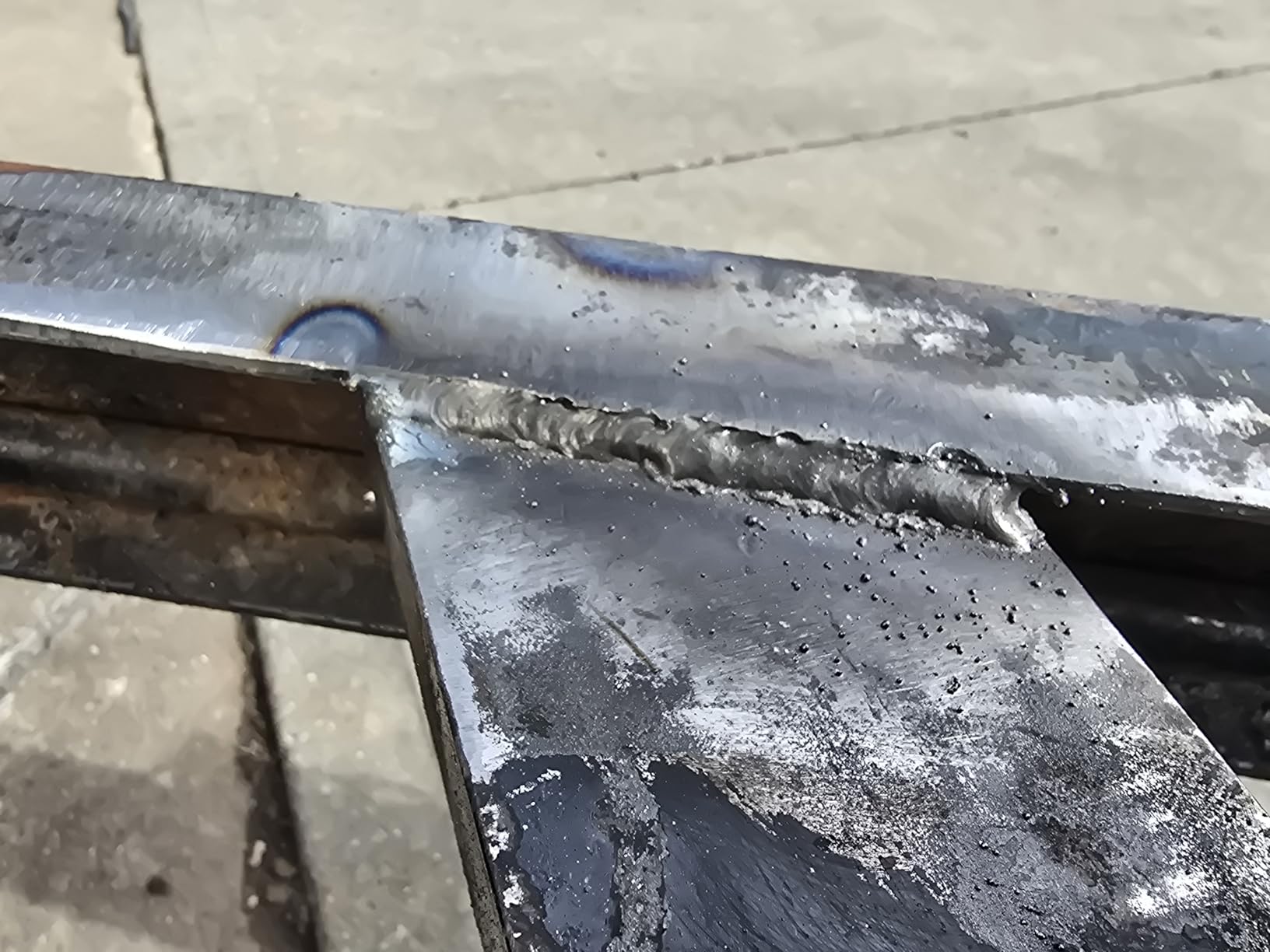
The auto voltage detection is the practical highlight. It detects the input and shows the selected voltage on the panel, so moving between a 120V garage outlet and a 240V shop circuit is a matter of plugging in rather than re-threading leads. A shoulder strap is included and the machine weighs 13.7 pounds.
Owners report a duty cycle around 60 percent, which is honest for this class and worth understanding before a long production day. Early units shipped without knurled drive rolls for flux core and with a short torch lead, though the manufacturer has since corrected both.
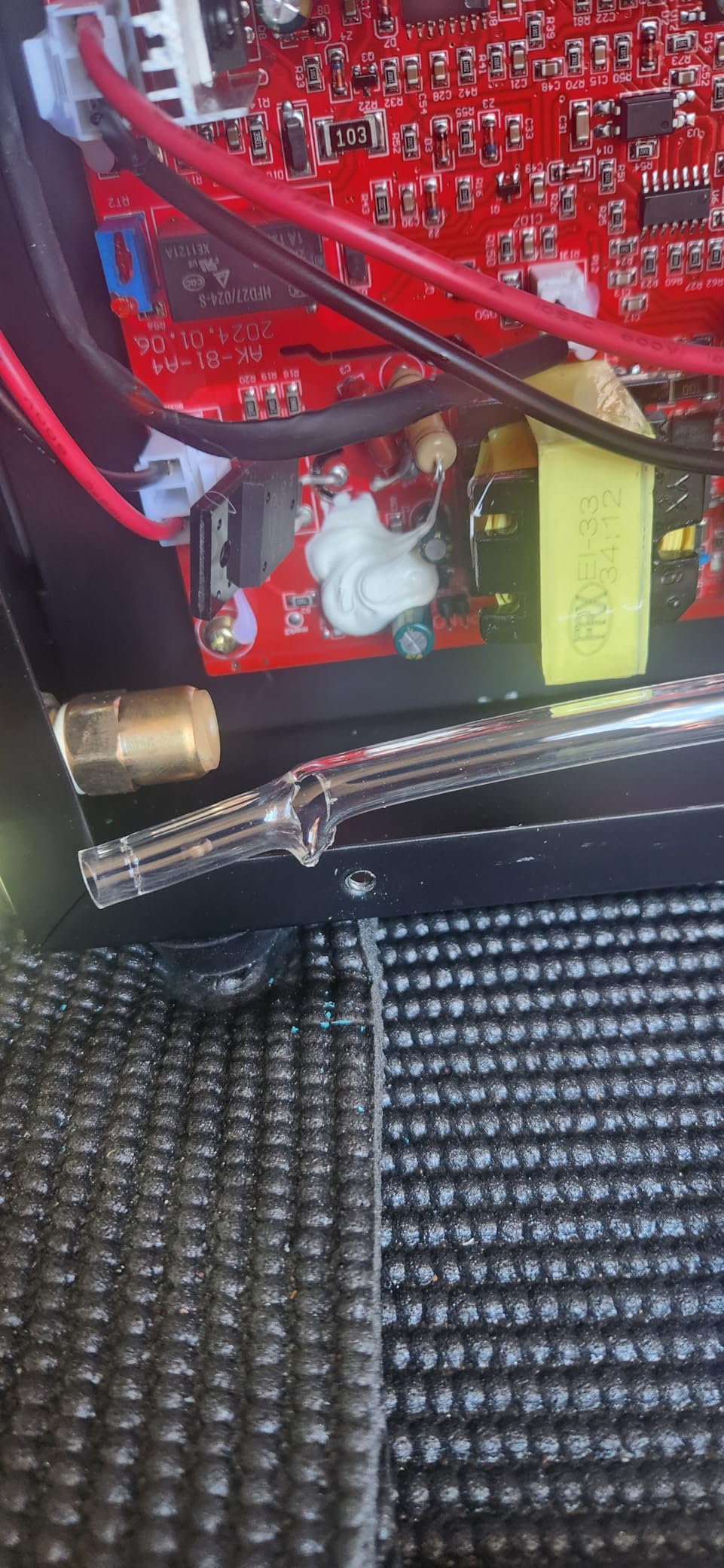
What a 145 amp machine actually covers
At this output you are comfortably into 1/8 inch mild steel and can manage 3/16 inch with more than one pass. That covers the overwhelming majority of home and farm repair work, from trailer frames to exhaust hangers to structural patches.
The spool tension spring is fixed rather than adjustable and can bind larger setups, and the manual never explains what pushing in the rotary knob changes between wire feed and voltage. Learn that control before your first long session.
Who this is for
If you move between a garage, a shop and a farm with a 240V circuit available, the auto-detect feature alone justifies the choice. Gas regulators and a flux core nozzle are not included, so add them to the first order.
For a balanced four-process machine at a mid-range budget, this is a genuinely capable option.
8. Lincoln Electric 90i FC K5255-1 – Best Single-Process Flux Core Welder
Lincoln Electric 90i FC Flux Core Wire Feed Weld-PAK Welder, 120V Welding Machine, Portable w/Shoulder Strap, Protective Metal Case, Best for Small Jobs, K5255-1
120V inverter wire feed welder
Welds material up to 1/4 inch
15 lb chassis with shoulder strap
Metal case included
Pros
- Highest customer rating in this group at 4.7
- Light enough to carry anywhere with a shoulder strap and case
- Two simple knobs make setup quick for beginners
- Handles thin sheet and thicker jobs with multiple passes
- Backed by an established brand with widely available consumables
Cons
- Ground clamp bonding braid is short and works loose after a few welds
- Flux core wire spatters noticeably and needs cleanup
- Single process with no stick or TIG capability
- Flux wire is not included
There is no argument here about gas versus flux core, multi-process menus or voltage switching. The Lincoln 90i FC does one thing: flux-cored wire feed welding on a 120V outlet, up to 1/4 inch of material. In exchange you get the highest customer rating in this group and a brand with parts counters stocked for decades.
The controls are two knobs for wire speed and voltage with infinite voltage fine tuning, and that simplicity is exactly why owners who upgraded from larger transformer Lincolns call it comparable in weld quality at a fraction of the weight. It weighs 15 pounds and includes a protective metal case.
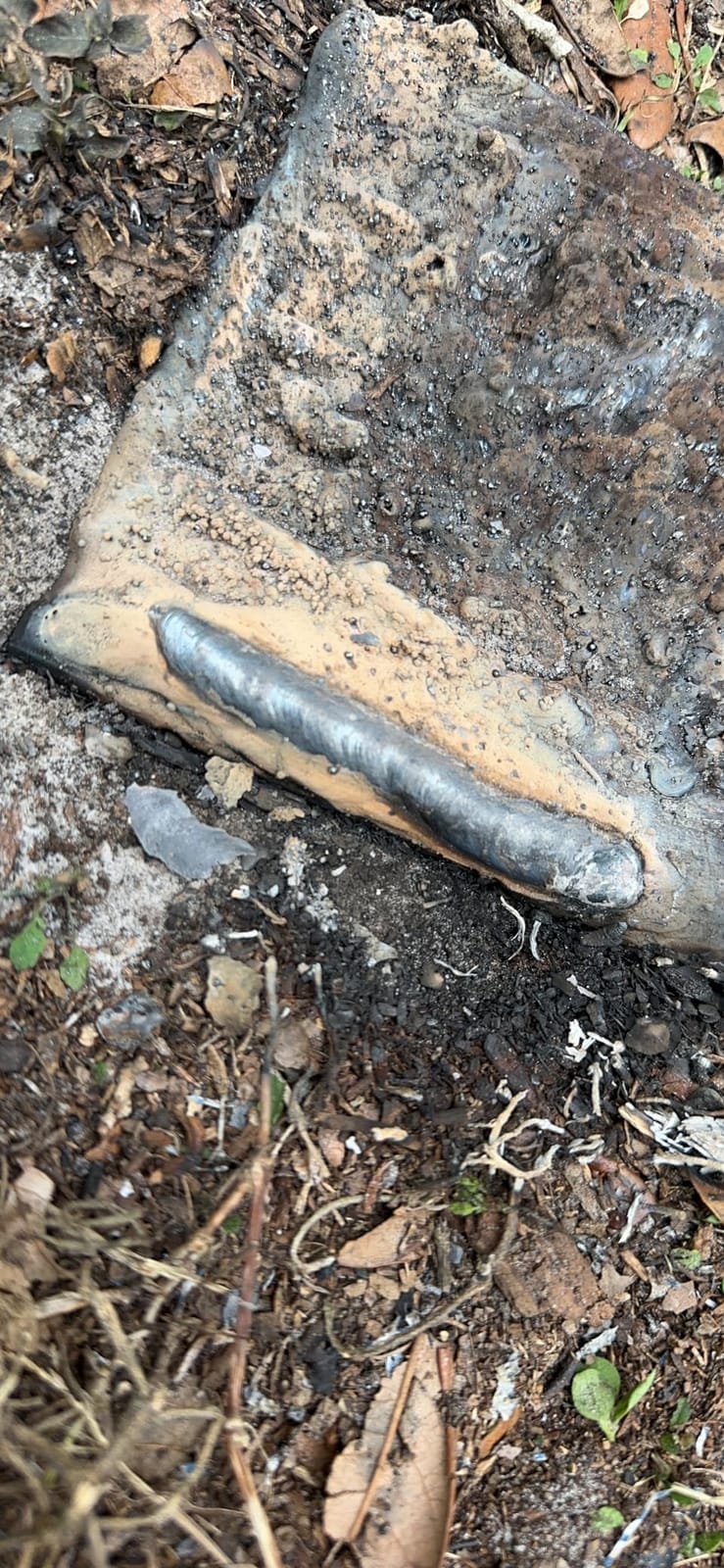
The welding gun, nozzle, contact tip, work cable and clamp are included. Consumables for this model are widely available, which removes one of the usual worries with a lesser-known machine. It is frequently singled out as a good learning machine because there is little to understand before your first bead.
The complaints are honest ones. The ground clamp bonding braid is short and can work loose after a few welds, which is an easy fix with a clamp upgrade. Flux core spatters noticeably and needs cleanup, and the wire itself is not included in the package, so budget for a spool before starting.
What single-process really costs you
Losing stick and TIG matters if you repair anything outdoors in wind, because flux core is the only process available here. There is no gas option, so clean low-spatter bead work on visible surfaces is off the table.
The manufacturer warranty runs 12 months. We mention that because it is shorter than some competitors here, and it is a reasonable thing to weigh against the brand support you gain.
Who should choose this
Choose this if you want a simple machine from a name you will still find in twenty years, and your work is small repairs on things like mower decks and snow blowers rather than real fabrication.
It is the most approachable entry point on this list and the least flexible, and that trade is usually worth it for a first machine.
9. BESTMIG FLUX 135A – Best Complete First Welding Kit
BESTMIG 135A MIG Welder – 3-in-1 Flux Core Welder, MIG/Lift TIG/Stick Welding Machine – Portable IGBT Inverter – 110V with Welding Helmets and Gloves (Red Black, MIG 135A Welder)
True 135A output
Material up to 1/8 inch thick
0.030 to 0.040 inch flux core
10.71 lbs
Pros
- Full kit includes helmet
- gloves
- wire
- torch
- clamp and electrode holder
- Digital interface and auto parameter adjustment suit beginners
- Compact 10.7 lb body is easy to move around a shop
- Handles 0.030 to 0.040 flux core wire for steel and stainless
Cons
- Advertised accessories were sometimes missing from shipments
- TIG function is unusable without the separately sold torch
- One buyer reported a flux core cable connector that did not fit
Most first welders buy a machine and then immediately spend more on a helmet, gloves, wire, a stand and clamps. The BESTMIG rolls all of that into one box, which removes the single most common reason beginners stall before their first bead.
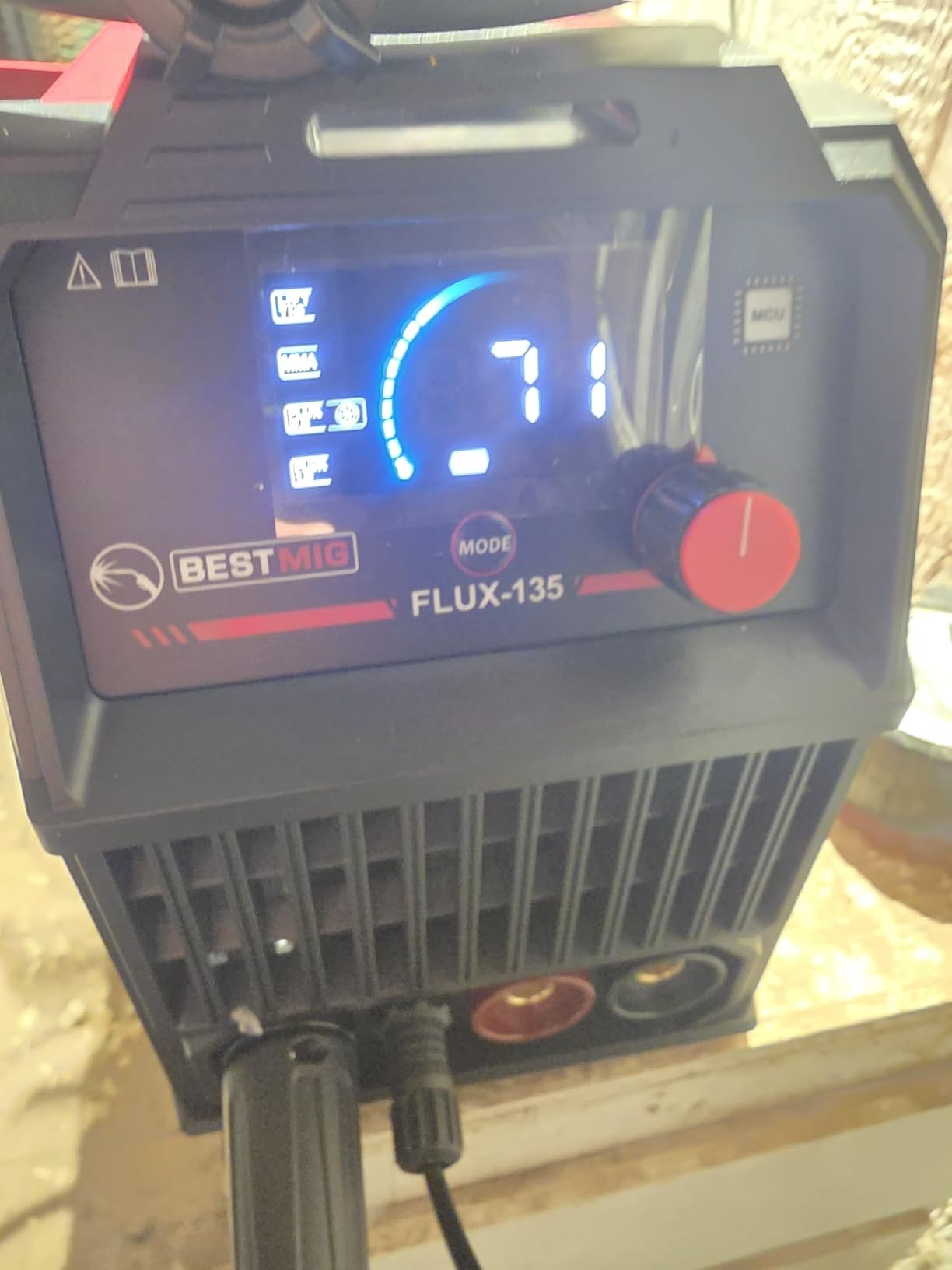
It produces true 135 amps and handles material up to 1/8 inch thick. Gasless flux core wire from 0.030 to 0.040 inch is supported, and the integrated wire feed technology adjusts voltage and feed speed automatically to reduce spatter. A full-color LED display shows parameters in real time.
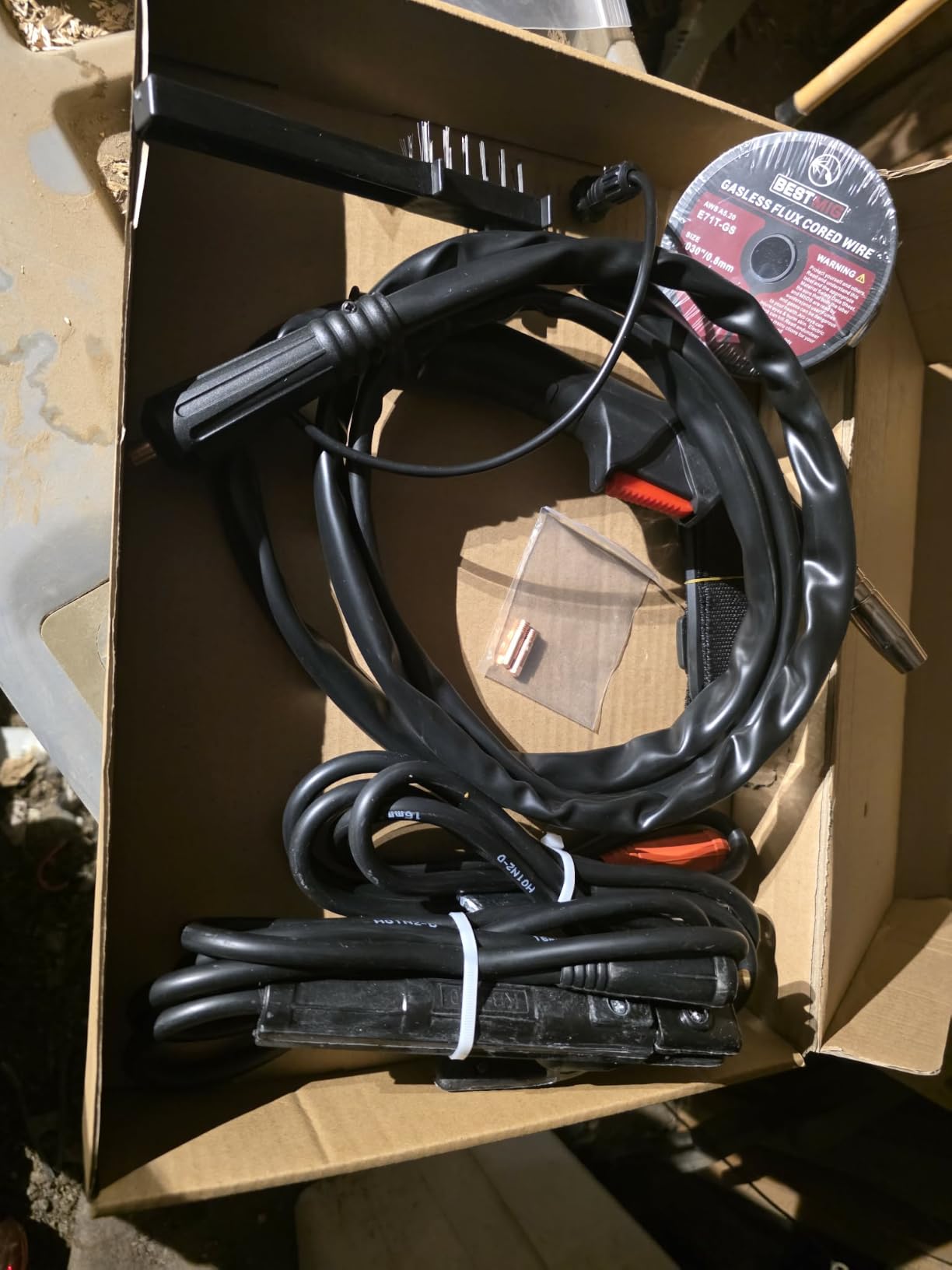
At 10.71 pounds it moves around a shop easily, and it is popular with students and hobbyists who want one purchase instead of a list. The included auto-darkening helmet saves an extra step, though most owners replace it eventually.
The feedback problems here are mostly about fulfillment rather than the machine. Buyers report advertised accessories missing from shipments, at least one incompatible flux core cable connector, and a delivered unit arriving late. Check the box contents against the list before you start, and confirm the connector fits.
The kit value math
Bundled accessories are not automatically a bargain. A cheap helmet and thin gloves still need replacing, so treat the kit as a way to weld today rather than a way to save money long term. Where it does help is the wire and torch, which are the parts you cannot improvise around.
Verify the helmet shade and darkness rating against your own lighting before you rely on it, and budget for a proper helmet if you are welding outdoors in daylight.
Who this suits
This suits anyone who wants to start this weekend without a second order. It is a MIG, Lift TIG and stick machine at 135 amps with the TIG torch sold separately, so plan on adding it later if you need clean stainless work.
For a student, a first garage or a hobbyist budget, the completeness is the reason to pick it.
10. ANDELI 135A Pulse – Best Pulse MIG Control for Thin and Stainless Work
ANDELI 110V/220V MIG Welder 135A ,PULSE Flux Core/Lift TIG/Stick 4-in-1
135A output to 5.0 mm material
Pulse flux core mode
Adjustable inductance
9.04 lbs
Pros
- Very light at 9.04 lbs with a carry handle for shop and job site
- Runs on 120V and 240V with a detachable ground cable
- Adjustable inductance
- Hot Start and Arc Force give more control than most in this class
- Helmet
- gloves
- wire and adapter included in the box
Cons
- Included welding helmet is low quality and worth replacing
- Holds 2 lb spools only and includes a single drive roller size
- Wire feed rate is shown in amps rather than inches per minute
Pulse mode is the feature most budget machines advertise and few buyers ever use. On the ANDELI it has a genuine purpose: pulsing the flux core wire narrows the bead and stabilises the arc, which produces finer, more uniform beads on thinner material and on stainless where heat control matters.
Output is 135 amps welding material up to 5.0 mm, which is thicker than most machines at this weight. It runs on 110V and 220V, accepts .030, .035 and .040 flux core wire in 2 pound spools, and covers pulse flux core MIG, gasless MIG, Lift TIG and stick with 2T and 4T selectable.
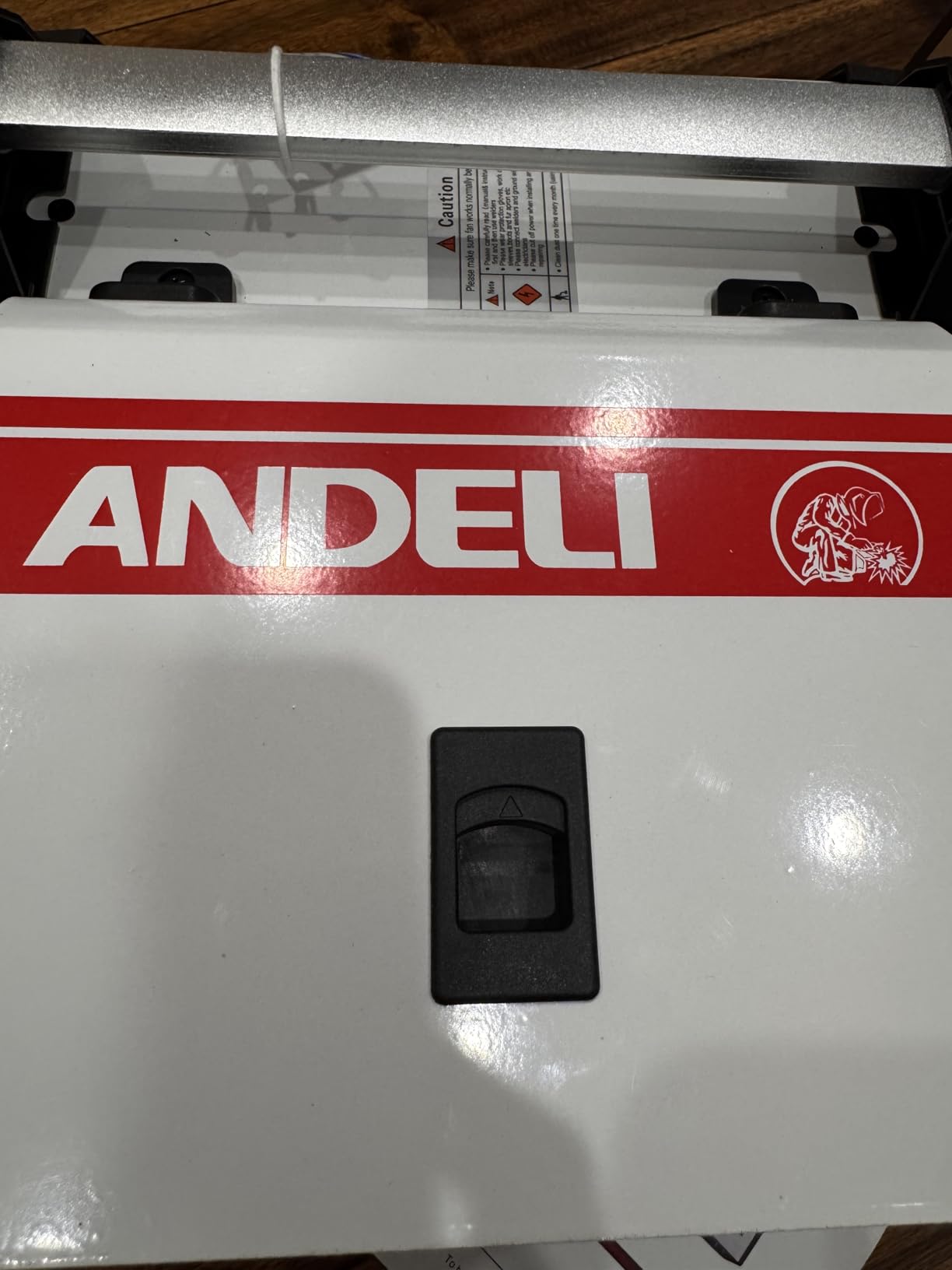
The adjustable inductance control is the sleeper feature. It lets you tune arc stability and spatter for the material in front of you, and combined with Hot Start and Arc Force for stick, this machine offers more tuning control than most of its class. A 4.1 inch LED display sits under a protective transparent cover.
At 9.04 pounds with a carry handle it is a genuine job-site machine. Experienced hobby and industrial welders rate it as capable, and one industrial welder with 20 years of experience called it stronger than machines costing considerably more.
The display catches people out
The wire feed rate is displayed in amps rather than the inches-per-minute that US welders expect from shop machines. It takes an afternoon to read fluently, and it is the single most common complaint from new owners.
The 2 pound spool limit returns here too, along with a single drive roller size included in the box. Buying a knurled roller for your wire diameter early saves a jam later.
Who should pick it
Choose this if you weld thin sheet, stainless or anything where spatter control drives the quality of the finished part, and you want to grow into settings rather than rely on auto modes. Most owners replace the included helmet early.
It is the most adjustable machine per pound in this roundup and the one that rewards a welder willing to learn the panel.
What to Look for in a MIG Welder Under $500
Most buyers lose money on the wrong feature rather than the wrong machine. Here are the factors that actually change your results, roughly in order of importance.
Dual voltage beats raw amperage for most home shops
Six of the ten machines here run on 110V, and four switch between 110V and 220V. Dual voltage matters because a 110V-only machine limits output at higher amperage settings, and it removes the need to run a 220V circuit at all. If you have no 240V outlet in your garage, a 110V-only machine is a legitimate choice rather than a compromise.
Watch how dual voltage is delivered. Some units come with a native 220V cord, others come with 110V and an adapter in the chain. Both work; the native cord is cleaner and avoids a weak link in the circuit.
Gas MIG or flux core: the running cost nobody mentions
Gas-shielded MIG produces cleaner, lower-spatter beads and is the only way to weld aluminum or stainless well. It also requires a shielding cylinder, a regulator, a gas hose and periodic refills, plus somewhere to secure the cylinder safely. That gear is not included with the machine and it is a real ongoing expense.
Gasless flux core needs none of that. It welds outdoors in wind, handles mild steel and stainless, and is far cheaper to run. The tradeoff is spatter, slag and no aluminum capability. Most beginners start with flux core, learn wire feed speed and travel speed, then add gas once they want cleaner work on visible joints.
Wire spool size decides your long-term cost
Five of the machines here accept 2 pound spools or smaller. Smaller spools cost more per pound, run out mid-project and mean more frequent restocking. If you expect regular weekly welding, look for a machine that takes a 10 pound spool and budget for the wire accordingly.
Check the drive roller size too. Several machines come with rollers that do not fit common wire diameters, which means a jam or a poor feed until you replace them.
How thick can a machine in this range actually weld
Match material thickness to output rather than to the headline number. Rule of thumb for these machines: a 130 amp unit handles roughly 1/8 inch mild steel comfortably, a 145 amp unit reaches 1/8 inch solidly and manages 3/16 inch with multiple passes, and a 200 amp machine works 1/4 inch with clean penetration.
Thicker plate is possible with multiple passes, but heat input rises and the duty cycle becomes the limiting factor. Duty cycle figures quoted for this class sit around 60 percent, meaning an hour of arc time per roughly forty minutes of rest at rated output.
Aluminum needs a spool gun, not a promise on the box
Aluminum with a standard push gun feeds poorly and spatters badly because aluminum wire is soft and pushes rather than pulls. A spool gun feeds it from the machine itself. In this price range, spool gun readiness is rare, and only the top pick here is explicitly spool gun ready.
For most home users, aluminium is not worth buying a machine for. If it is, budget for the spool gun as a separate cost or choose a used higher-tier machine.
The rest of your first kit
Count the machine as roughly half the cost of getting started. You also need a helmet with an auto-darkening lens, welding gloves, a jacket, wire, a ground clamp of decent quality, a cylinder and regulator for gas work, and a stand or cart with a cylinder chain. Several machines in this roundup bundle some of that, and the BESTMIG includes the most.
Where your workspace is still coming together, our best chest freezers under 500 dollars guide covers keeping supplies in a proper cold room rather than a damp garage corner.
Beginner mistakes worth skipping
Start with practice coupons on scrap before touching a real part. Set gas flow correctly rather than guessing, keep stickout consistent at about half an inch, clean the joint before welding, and use tack welds with backstepping on anything that will distort.
The golden rule of welding practice is this: set your parameters, then listen to the arc. A harsh crackling sound means too much voltage or gas, a lazy buzz means too little. That feedback loop is how you learn faster than any manual.
Frequently Asked Questions
What is the best MIG welder under 500 dollars?
For most home shops the YESWELDER MIG-205DS PRO is the strongest pick: 200 amp output, 110V and 220V dual voltage, and five processes including spool gun MIG for aluminum. It is the widest-ranging machine we tested, though it is heavy at 37.5 pounds and its torch is rated below full output.
Can a MIG welder under 500 dollars weld aluminum?
Only if the machine is spool gun ready. Standard push guns feed aluminum wire poorly and cause spatter, so a machine needs a spool gun that feeds wire from the machine itself. Most budget models, including most in this roundup, cannot do aluminum at all without added hardware.
Is welding hard to learn as a beginner?
MIG is the most beginner-friendly process because the machine feeds wire continuously and you control only travel speed, voltage and wire feed speed. Expect a few sessions of scrap practice before your beads look consistent. Practising on coupons and listening to the arc sound teaches settings faster than reading manuals.
What gas do I need for MIG welding and what does it cost?
Most home MIG work uses a 75/25 argon and CO2 blend. You also need a cylinder, a regulator and a gas hose, none of which come with the machine. Cylinders and refills are a genuine ongoing expense, which is why many beginners start with gasless flux core and add gas later.
How thick can a budget MIG welder weld?
A 130 amp machine handles mild steel up to about 1/8 inch comfortably, a 145 amp unit works 1/8 inch solidly and reaches 3/16 inch with multiple passes, and a 200 amp machine welds 1/4 inch with good penetration. Duty cycle around 60 percent means you need breaks during long jobs.
Should I buy a gas MIG welder or a gasless flux core machine?
Buy gasless flux core if you are starting out, welding outdoors or in wind, and want the lowest running cost. Buy gas MIG if you want cleaner low-spatter beads on visible work, need stainless, or plan to weld aluminum. Several machines in this roundup do both processes in one unit.
Which MIG Welder Under $500 Should You Buy
The YESWELDER MIG-205DS PRO is our pick for best MIG welders under 500 dollars. It combines 200 amp output, dual voltage, five processes and spool gun readiness in one box, and it took the most abuse of any machine here without complaint. Buy the ARCCAPTAIN MIG200 if preset memory and spot mode matter more to you, and the TOOLIOM MIG-135 PRO if you want the least expensive route into clean flux-core beads.
Match the machine to the work rather than the function count on the box. Thin sheet and light repair calls suit the lighter gasless units. Repeated fabrication work on heavier steel suits a 145 to 200 amp machine with gas MIG. And if you are unsure, buy the most capable machine you can comfortably lift and move to the job.
Whatever you choose, budget for the rest of the kit on day one, keep spare drive rollers and contact tips on hand, and practice on scrap until the bead looks right. If you are still troubleshooting the site itself, our guide to fixing 500 errors in WordPress covers the fixes we reach for most often.