
A fall on a sidewalk can change an older adult’s life in a way no piece of gym equipment can. That is why the best trekking poles for seniors are not a hiking accessory but a walking aid, and why we built this guide around hands, knees and balance rather than grams and grams-per-mile.
We spent the last several months reading thousands of customer reviews, comparing lock mechanisms, grip diameters and adjustment ranges, and checking every pole against the questions that actually come up from older hikers: can I adjust this with one hand, will my elbow sit at 90 degrees, and will the shaft bend or snap if I lean on it going downhill. Ten poles made the cut.
One thing up front, because it matters for safety. Trekking poles add stability and take load off the knees, but they are not a substitute for a cane or walker that a doctor or physical therapist has prescribed for full weight-bearing support. If you have had a stroke, Parkinson’s freezing, repeated falls or significant vestibular problems, ask your clinician what aid you should be using before you change it. Everything below assumes you already know that a pole is the right level of support for you.
We also keep an eye on gear that makes staying active easier, like our picks for puzzle games for seniors, since the goal is always the same: more good days on your feet. This guide was last updated in 2026.
Table of Contents
Top 3 Best Trekking Poles for Seniors (October 2026)

TrailBuddy 7075 Aluminum Poles
- One-handed lever locks
- Cork grip with padded straps
- 24.5 to 54 inch range
- 9.7 oz per pole

Foxelli Aluminum Cork Poles
- Highest rating in the group
- Flip locks with tension screw
- 9.4 oz per pole
- Disassembles to 21 inches
Cascade Mountain Tech Aluminum
- Cork grip plus EVA down grip
- Quick locks hold under load
- Tungsten carbide tips
- 26 to 54 inch range
All 10 Trekking Poles at a Glance
Every pole below folds down, adjusts with a lock rather than a fixed length, and comes with at least rubber tips. The differences that matter for an older adult are lock type, grip material, packed length and weight per pole.
| Product | Specifications | Action |
|---|---|---|
| TrailBuddy 7075 Aluminum Trekking Poles |
|
Check Latest Price |
 TheFitLife Telescopic Anti-Shock Poles TheFitLife Telescopic Anti-Shock Poles |
|
Check Latest Price |
| Cascade Mountain Tech Aluminum Poles |
|
Check Latest Price |
 Foxelli Carbon Fiber Trekking Poles Foxelli Carbon Fiber Trekking Poles |
|
Check Latest Price |
 Trekology Trek-Z Cork Grip Poles Trekology Trek-Z Cork Grip Poles |
|
Check Latest Price |
| Foxelli Aircraft Grade Aluminum Poles |
|
Check Latest Price |
 Covacure 7075 Aluminum Trekking Poles Covacure 7075 Aluminum Trekking Poles |
|
Check Latest Price |
 KINGGEAR 7075 Aluminum Trekking Poles KINGGEAR 7075 Aluminum Trekking Poles |
|
Check Latest Price |
 Hiker Hunger 100 Percent Carbon Fiber Poles Hiker Hunger 100 Percent Carbon Fiber Poles |
|
Check Latest Price |
 Hiker Hunger Foldable Aluminum Poles Hiker Hunger Foldable Aluminum Poles |
|
Check Latest Price |
1. TrailBuddy 7075 Aluminum Trekking Poles: Best Overall for Seniors
TrailBuddy Trekking Poles – Lightweight 7075 Aluminum Hiking Poles for Women, Men & Seniors – Collapsible Walking Sticks for Travel, Trails & Balance
7075 aluminum at 9.7 oz per pole
Lever locks adjustable one-handed
24.5 inch folded to 54 inch extended
5 year limited warranty
Pros
- One-handed lever locks need no twisting grip strength
- Cork grip and padded straps mold to the hand
- Very light at 9.7 oz per pole
- Wide range fits adults of most heights
- Threaded tips hold baskets in mud and snow
Cons
- 24.5 inch collapsed length is long for carry-on bags
- Cork grip will need replacing after years of daily use
The first thing I checked on these poles was the lock, because it decides whether an older adult actually uses them every day or quietly leaves them in a closet. The lever sits outside the shaft, opens with a finger and closes under load. You do not need to hold the pole in one hand and twist with the other, which is exactly the motion that many arthritic hands cannot make.
At 9.7 ounces per pole in aircraft-grade 7075 aluminum, they are light without feeling flimsy. Aluminum has a useful property for anyone who might lean on a pole going downhill: it bends before it breaks. If you plant a tip and put weight on it, the shaft flexes and gives back rather than snapping.
The adjustment range is the standout feature. They extend to 54 inches and collapse to 24.5 inches, so one pair covers an adult and a shorter adult, which matters when a son or daughter buys poles for a parent. The listing positions them explicitly for balance support, and more than 63,000 reviews back that up.
The cork grips and padded straps are what keep the hand comfortable over distance. Cork softens and shapes to the palm, and the strap spread pressure instead of digging in. Several buyers who switched from a cane say the confidence difference was immediate.

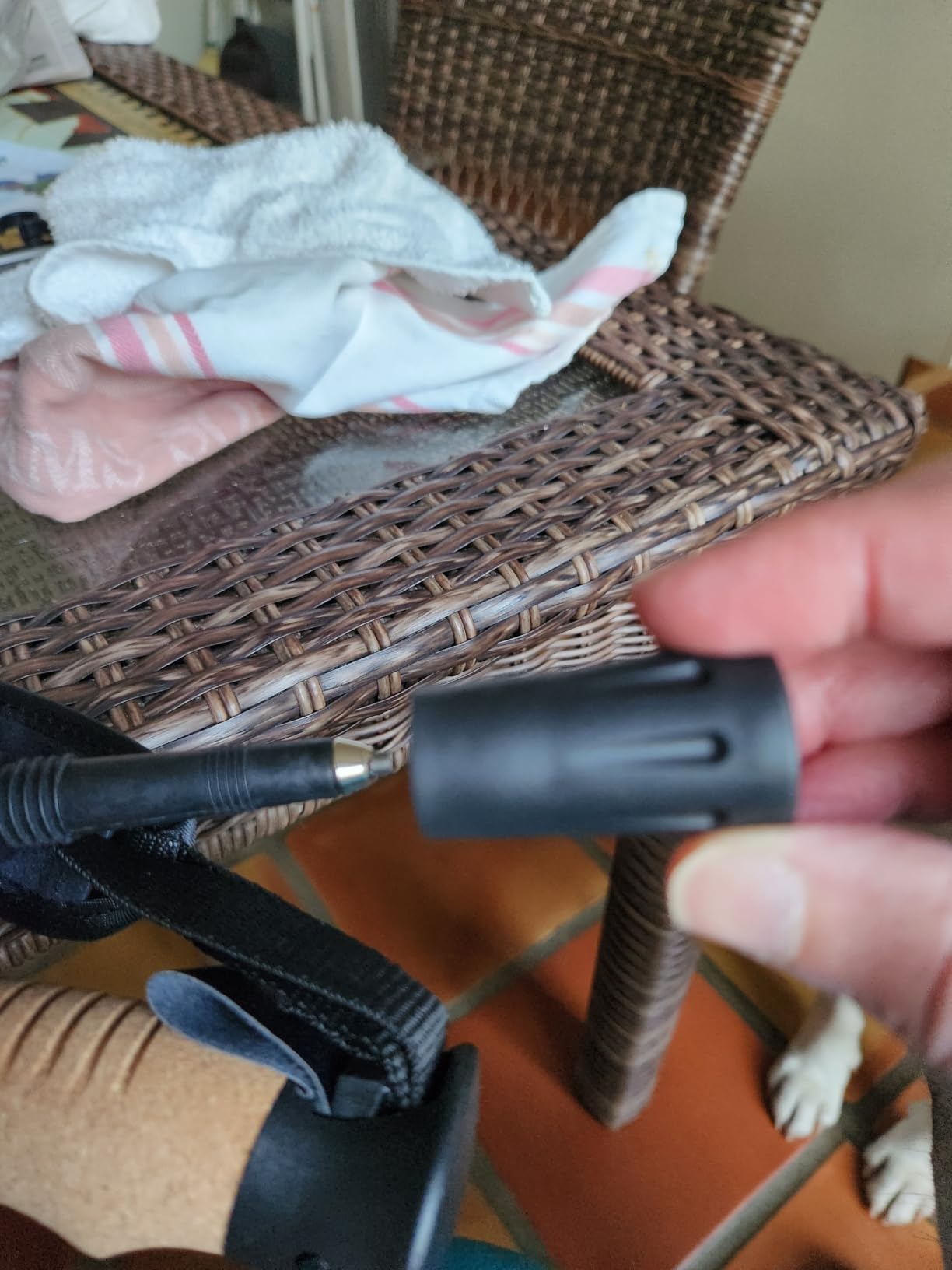
The accessories are unusually complete for this category. You get mud baskets, snow baskets and four rubber tips in the box, and the tips screw on rather than press on, so they stay attached in wet ground. A carry bag is included, and the poles also break down to 21 inches if you want them in a suitcase.
Two honest drawbacks. The 24.5 inch collapsed length is longer than the tri-fold and Z-fold designs in this roundup, so these are not the easiest poles to pack on a cruise. And a cork grip used every single day will compress and eventually need replacing, which is normal and not a fault in the pole.
For most seniors this is the pair I would start with. The lever locks, the light weight and the very wide adjustment range cover the three things that decide whether poles get used.
What to check before you buy
Work the lever lock open and closed several times before you rely on it. It should close with one finger and hold when you push down hard. If the lever feels loose when you buy it, tighten the small screw where the lock meets the shaft rather than returning it.
Set the height before your first walk, using the elbow method described in the sizing section below. A pole set too tall pushes your shoulder up and puts the load on your wrist, which is the opposite of what you want.
Who should choose something else
If you plan to travel by air and need the poles in a carry-on, the 24.5 inch collapsed length is a problem, and a tri-fold model folds shorter. If you want the absolute lightest pole and do not need a five-year warranty, the carbon fiber option further down weighs less.
If your hands cannot form a comfortable fist around a standard diameter, read the grip section before choosing anything. Handle diameter varies more between these poles than most shoppers expect.
2. TheFitLife Telescopic Anti-Shock Poles: Best Budget Pick
Telescopic Trekking Poles for Hiking, Anti-Shock Nordic Walking Sticks
9.92 oz per pole in aluminum alloy
Twist locks with no external levers
Shock-absorbing spring in each pole
Extends to 51.2 inches
Pros
- Built-in shock absorption softens trail impact
- Twist adjustment works with gloves in cold weather
- Very light at 9.92 oz per pole
- Disassembles to 21.46 inches for suitcase packing
Cons
- Narrow handle can rub larger hands
- Wrist strap digs into the back of the hand on long walks
- Rubber grip holds more moisture than cork
These are the poles to consider if your priority is durability per dollar rather than features. More than 18,000 reviews, and among the longest-lived ones in this category, with some owners reporting they have owned the same pair for 15 years.
The twist lock is the one compromise here. It has no external lever, which keeps the shaft clean and works well with gloves in cold weather, and it needs less grip than a lever. But it is a rotation, and rotation is exactly the movement some hands with arthritis avoid. Test one before you commit.
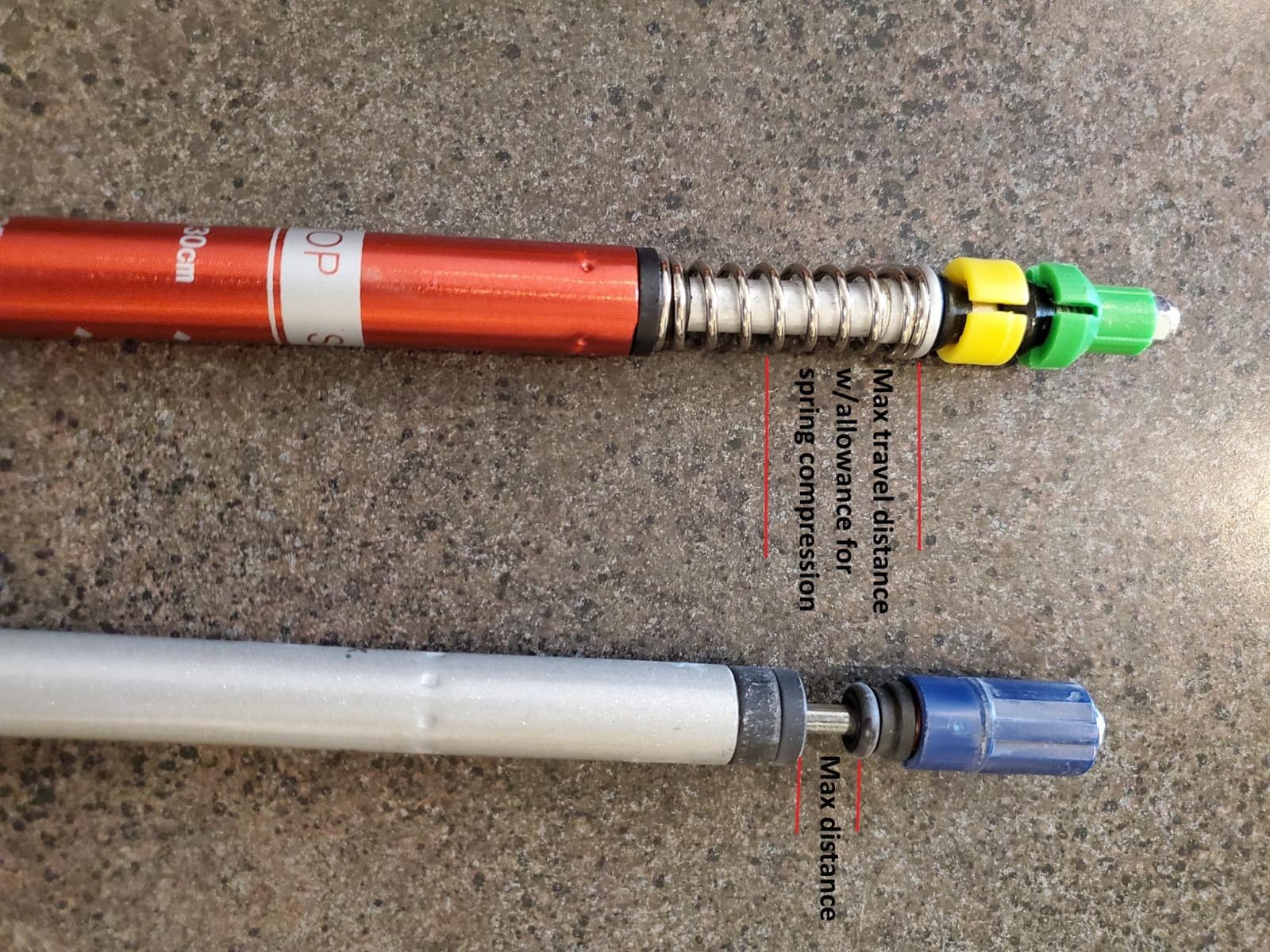
The built-in spring is unusual at this level. Instead of a rigid pole, there is a shock-absorbing spring in the lower section that compresses on hard landings and takes some of the jolt out of walking on pavement and hard rock. Reviewers who use these as a cane alternative for balance report feeling steadier than with a cane.
They extend to 51.2 inches and disassemble into three sections at 21.46 inches for packing. That is a genuine advantage for older adults who travel, since the sections fit into a suitcase far better than most poles of this length.
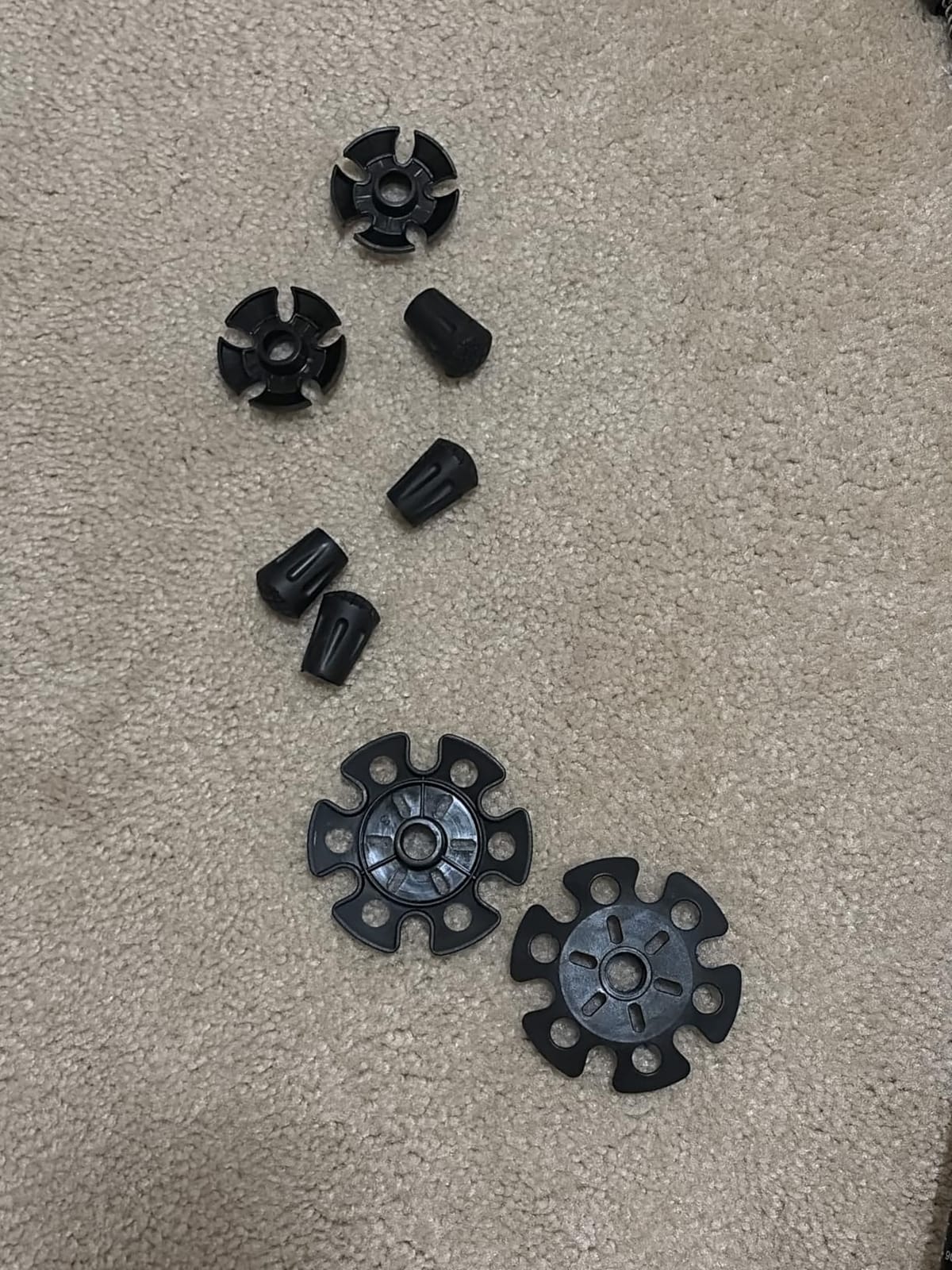
The included kit is generous: rubber tips, walking caps, mud baskets, snow baskets and a carry bag. All of it is useful if you plan to walk in anything other than dry pavement.
The handle is the reason this is not the top pick. At this diameter the grip suits smaller hands, and owners with medium to large hands report rubbing and blisters on long walks. The wrist strap is also plain, and can dig into the back of the hand over distance. Cork grips are better if you have larger hands or sweat a lot.
Weigh that against the spring, the glove-friendly adjustment and the build quality. For an older adult who walks rough ground and wants one pair that lasts, this is a genuinely strong value.
What to check before you buy
Check the handle diameter against your own hand. Wrap your fingers around it and see whether your thumb and index finger can meet comfortably without squeezing hard. If you have small hands this fits well. If you have large hands, expect contact points that will bother you after a mile.
Test the twist lock with cold or gloved hands before you need it outdoors. It should tighten smoothly without force. If a section feels like it can rotate after tightening, that is a reason to send it back.
Who should choose something else
If you cannot comfortably rotate your wrist, skip this and pick a lever-lock model. Lever locks open and close with a single finger push and no rotation at all, which is why they appear on our senior-specific shortlist more often.
If hand moisture is an issue, a cork grip manages it better. This is the main reason the rubber handle on this pole collects the most criticism in reviews.
3. Cascade Mountain Tech Aluminum Poles with Extended Down Grip: Best for Balance and Joint Support
Cascade Mountain Tech Trekking Poles, Shaft Material: Aircraft- grade 6061 Aluminum with Adjustable Locks Expandable to 54″ (Set of 2), Cork Grip, Orange, Extended Grip Material: EVA
Cork grip with extended EVA down grip
Quick locks from 26 to 54 inches
Tungsten carbide tips with baskets
10.08 oz per pole
Pros
- Two grip positions so you can push down on descents
- Quick locks hold under full body weight
- Interchangeable tips for ice mud snow and rock
- Cork absorbs vibration from uneven ground
Cons
- Some vibration at fast pace on hard surfaces
- Lower EVA grip section wears with heavy daily use
- Heavier than carbon fiber options
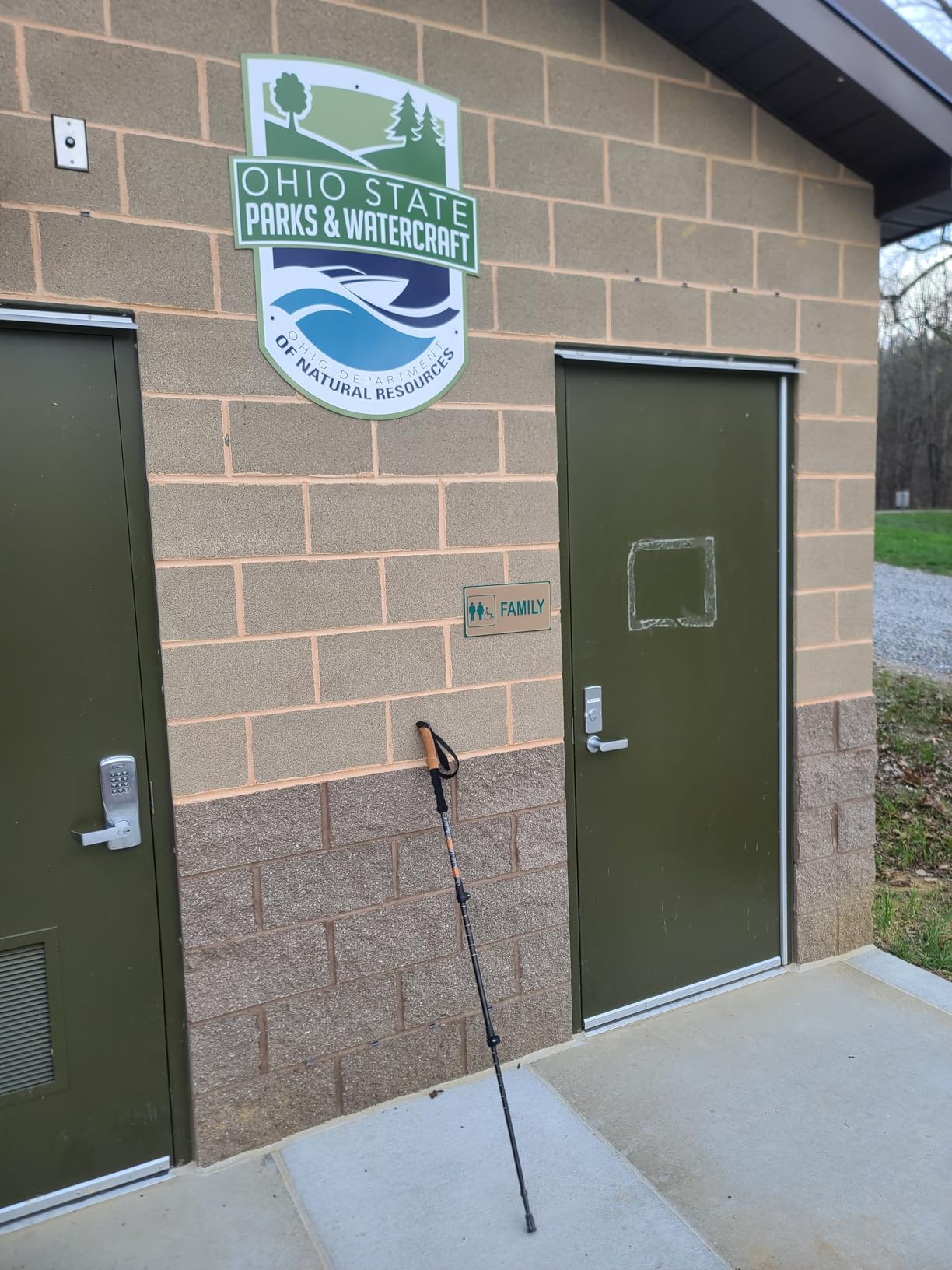
This is the pole set I would hand to someone whose knees hurt on descents. The reason is the extended down grip: a second, lower handle section that lets you change hand position on a steep drop and push down with more force and less wrist strain.
That single design choice addresses the most common complaint we found in senior forums, which is wrist and forearm pain from gripping hard through a long descent. With two positions you can move your hand down, use your stronger arm muscles and let the pole take the load instead of your wrist.
The quick locks are the other reason this scores well for balance. Reviewers report they hold firm under full body weight on steep descents, which is where a pole that slips becomes a hazard rather than a help. Adjustment runs from 26 to 54 inches, covering most adult heights on a single pair.
The cork grip also absorbs vibration from uneven ground better than foam, which is worth noticing if your knees are already sensitive. Owners report hundreds of miles on loose rock and steep grade without problems.
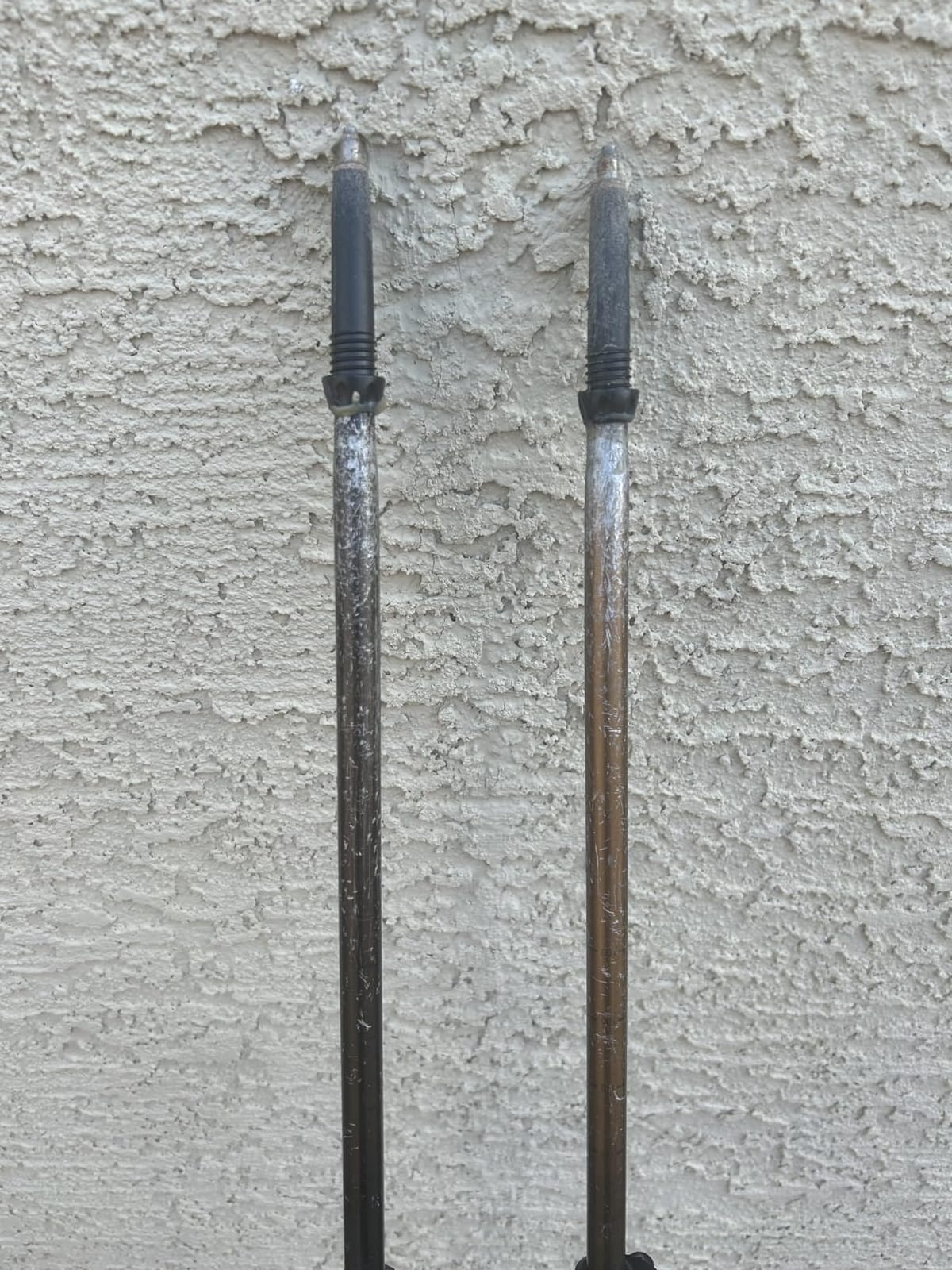
Tip options are where this one separates from cheaper sets. Tungsten carbide tips are hard and grippy on rock, and rubber snow and mud baskets plus tip covers handle softer ground. You can swap tips as conditions change rather than buying a different pole.
The honest negatives are minor and typical of aluminum. There is some vibration through the shaft at a fast pace on hard surfaces, which is normal for aluminum and much lower in carbon fiber. The lower EVA section takes wear with heavy daily use. And at 10.08 ounces per pole it is a little heavier than the lightest options here.
For joint pain and balance confidence, this is the one I would pick over a lighter carbon pole. The extra half ounce per pole buys you a second hand position that aluminum rivals in this list do not have.
What to check before you buy
Put the down grip to the test. Reach down to the EVA section and push the pole into the ground as if you were descending. If the lower grip feels slippery or too thin for your hand, this set is not the right match and you should buy a model with a cork top grip and a wider lower section.
Confirm the quick locks hold under pressure before you walk. Set your height, then lean your full body weight onto the pole with a sharp push. If the shaft slips inside the lock, tighten the lock’s tension screw and retest.
Who should choose something else
If you walk mostly on flat pavement and want the lightest possible pole for long distances, carbon fiber will feel noticeably lighter in the hand over a couple of hours. The vibration trade runs the other way, so aluminum is quieter and absorbs more.
If your hands sweat significantly, cork handles better than foam, but the down grip section is foam by design so that it can be gripped with gloves. Take both hands and decide which you would rather hold for most of the walk.
4. Foxelli Carbon Fiber Trekking Poles: Best Lightweight and for Travel
Foxelli Carbon Fiber Trekking Poles – Lightweight Collapsible Hiking Poles with Cork Grips, Quick Flip Locks & All-Terrain Accessories – Adjustable Height Hiking Sticks for Men & Women
7.6 oz per pole carbon fiber
Reinforced flip locks
Cork grip plus EVA choke-up grip
24 to 54 inch adjustment
Pros
- Lightest carbon option at 7.6 oz per pole
- Reinforced flip locks hold under heavy loads
- Cork grip plus EVA choke-up grip
- Packs to 21 inches disassembled
Cons
- Highest cost in this group
- Accessory tips and baskets are consumables
Weight is the factor that ends a lot of walks for older adults, and this is where carbon fiber earns its price. At 7.6 ounces per pole, these are the lightest in the group, and over a long paved route that difference is not theoretical. Arm fatigue is usually what ends the walk, not legs.
The build is where this model answers the usual objection to carbon fiber, which is that carbon is brittle and can snap under sideways pressure. These have reinforced high-stress zones and reinforced flip locks, and reviewers of this specific pair report the locks staying secure on steep descents rather than collapsing.
Grip comfort is handled in layers: a natural cork top grip, an EVA foam choke-up grip lower on the shaft for steep climbs, and padded straps. Cork stays dry in humidity and moulds to the palm, which matters on a long walk more than most buyers expect.
Adjustment runs 24 to 54 inches, they fold to 24 inches and they disassemble to 21 inches, which fits most carry-on bags when broken down. That is unusual for a pair this light, and it is the reason this is our travel pick.

They are marketed for joint support and for seniors, and the review pattern supports that. Buyers mention long-distance comfort and joint support as the reason they kept the pair, with 84 percent five-star ratings.
The costs here are honest ones. This is the most expensive pole in the roundup, and the accessory tips and baskets are consumables that will need replacing over years of use. If price is a real constraint, an aluminum pair will get you most of the way.
Carbon fiber is also less forgiving of lateral loading than aluminum. It bends less and gives less warning. Plant the tip properly rather than angling the pole sideways, and this becomes a non-issue for everyday walking.
Choose this pair if your walks are long, your terrain is mixed, and you want the least weight the category can offer. The reinforced locks are the part that makes me comfortable recommending carbon fiber to an older adult.

What to check before you buy
Test the flip locks hard. Open and close each one several times, then push down on the pole with your full weight at an angle. Reinforced locks should hold. This is the single most important test on any carbon pole and the reason we would skip a cheaper carbon model.
Check the adjustment range against your height before ordering. A 24 inch minimum and 54 inch maximum covers most adults, but if you are under five feet tall, make sure the shortest setting still puts your elbow near 90 degrees.
Who should choose something else
If your walking involves leaning hard on the pole, pushing off it or using it as a brace on uneven ground, aluminum is the safer material because it bends instead of snapping. Carbon fiber is better for long distances on defined paths.
If budget matters more than weight, an aluminum pair at 9.4 ounces per pole is barely heavier and will survive being dropped in a car boot. The difference only becomes obvious after several hours.
5. Trekology Trek-Z Cork Grip Poles: Best for the Shortest Packed Length
Trekology Trek-Z Cork Grip Collapsible Lightweight Hiking Trekking Poles
Tri-fold design folds to 15 inches
Cork grip with EVA lower grip
110 to 130 cm adjustment
Fits users 5 foot 2 to 6 foot 5
Pros
- Most compact design in the roundup at 15 inches folded
- Cork grip absorbs hand moisture on long walks
- Metal-capped joints hold at full extension
- Sized for users from 5 foot 2 to 6 foot 5
Cons
- Lock button needs a firm push and confuses first-time buyers
- Cork grip has slight rotational flex by design
- Must be checked as luggage rather than carried on
If you travel, want poles that fit in a day bag or a suitcase, and do not plan to lean hard on them, the tri-fold design here solves a real problem. They fold to 15 inches, which is the shortest packed length of any pole in this guide.
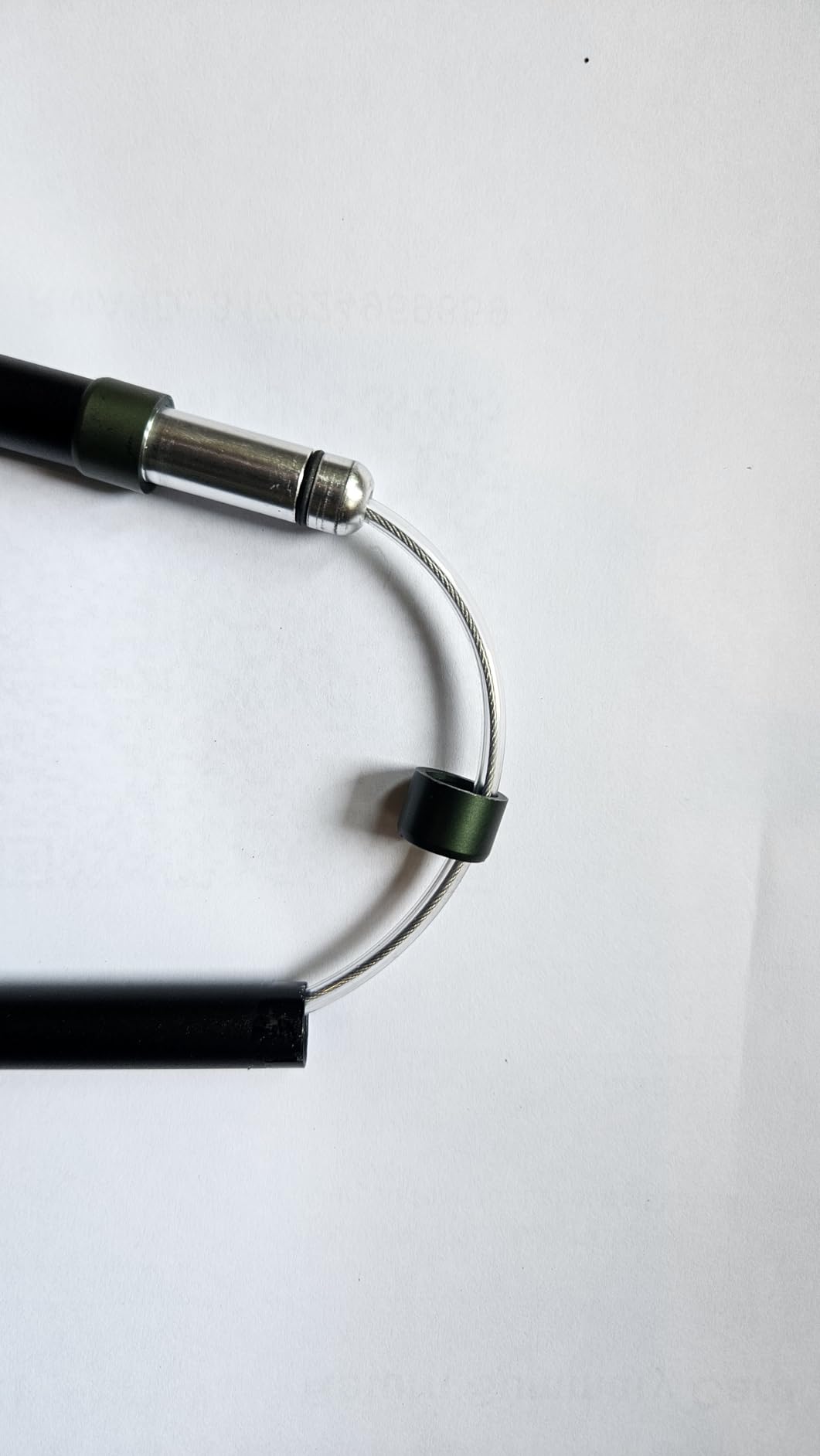
The tri-fold joint is a different mechanism from a telescoping shaft. Three sections collapse into each other rather than sliding, and the joints are capped with metal to stop them collapsing back out when the pole is extended. That design is why the folded length is so short.
Adjustment runs 110 to 130 centimeters through metal flip locks, and the manufacturer rates the fit for users from 5 foot 2 to 6 foot 5. That is a narrower range than the telescoping poles here, which matters if you are shorter than about five foot two.
Cork grip and EVA lower grip is a sensible two-texture setup. The cork handles the top hand position and stays dry; the foam lower section takes the choking grip on steep climbs.
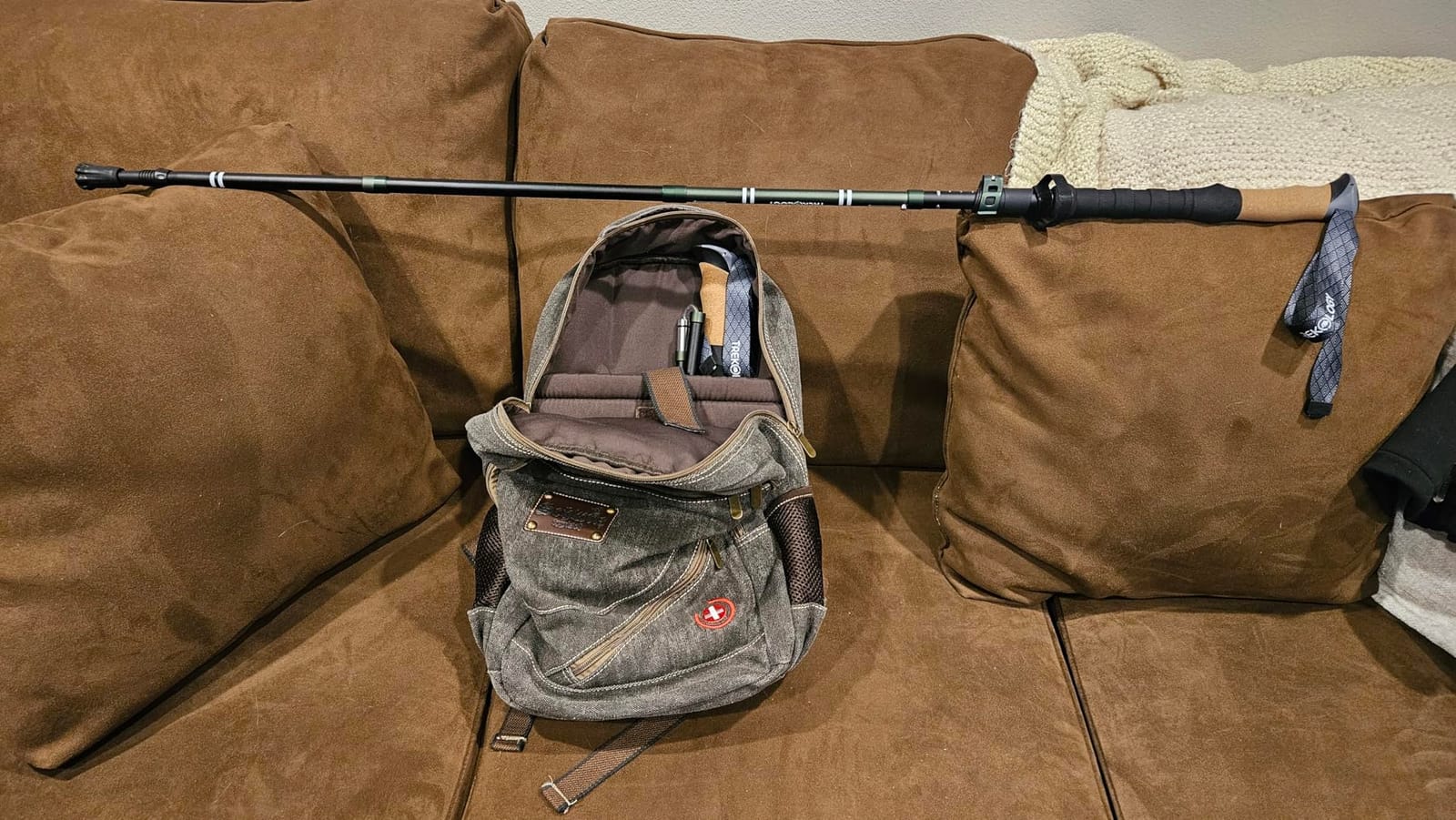
The most common confusion is the lock button. It has to be pushed until it pops out to engage, and if you do not push firmly enough you will think it is broken. Several reviewers describe mistaking this for a defect in the first week. Once you know it, it is fine.
Two more things to know. The cork grip has a slight rotational twist by design, which some buyers dislike until they get used to it. And folding poles must travel as checked luggage rather than in a cabin, which is a planning detail worth sorting before a trip.
At 11.5 ounces per pole these are the heaviest in the roundup, and they are not the choice for a fall-risk user who needs the shaft to act as a brace. For a senior who wants compact poles for travel and walks defined paths, they remain the best packed design available.
What to check before you buy
Extend and collapse each pole three or four times before walking with them. Every fold joint should latch with a positive click and stay put when you push down. If a joint feels springy or wants to fold back, do not use that pole on rough ground.
Confirm the adjustment range fits you. At 110 centimeters minimum, someone much shorter than five foot two may not be able to get the pole low enough for a 90 degree elbow.
Who should choose something else
If you walk on uneven or rocky ground and might lean on the pole, choose a telescoping aluminum pair instead. Folding joints are the least forgiving part of any pole and the first thing to fail under hard loading.
If you want the shortest packed length and also want the lightest weight, look at the covacure pair further down, which folds under 14 inches on a 7075 aluminum shaft that bends rather than snapping.
6. Foxelli Aircraft Grade Aluminum Poles: Best for Long Daily Walks
Foxelli Trekking Poles – Lightweight Collapsible Aircraft Grade Aluminum Hiking Poles with Cork Grips Quick Locks & All-Terrain Accessories – Pair of 2
9.4 oz per pole aluminum
Cork grip with extended EVA sleeve
Flip locks with tension screw
Disassembles to 21 inches
Pros
- Highest average rating in the roundup
- Cork grip stays dry and resists humidity
- Extended EVA sleeve helps on steep switchbacks
- Lightweight enough for daily use on rocky and snowy ground
Cons
- Lock tension screw needs several turns to dial in
- Mud and snow basket threads are cheap plastic
- Wrist straps are basic and unidirectional
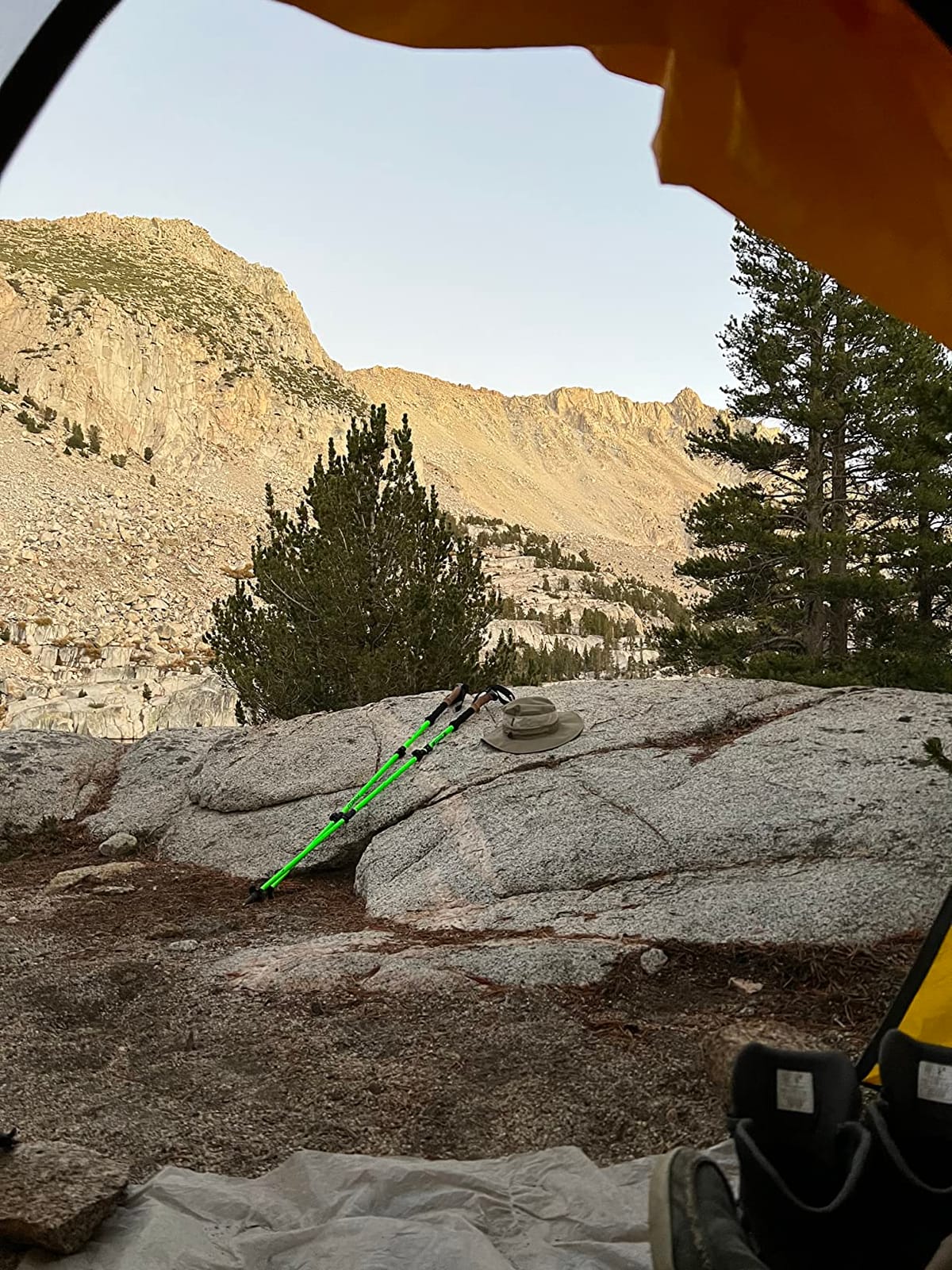
This pair carries the highest average rating in the group, and the review pattern behind it is consistent. Buyers with knee and joint problems and people recovering from surgery describe the same thing: they feel balanced again on walks they had started avoiding.
At 9.4 ounces per pole in aircraft-grade aluminum, it sits in the middle of the weight range. It is light enough for a daily pavement walk and stiff enough to be a brace on a rocky path, which is the balance most seniors want and rarely get from a carbon pole.
The cork grip is the quiet hero. Reviewers note it stays dry and does not turn slick in humidity, which is the most common grip failure in this category. An extended EVA sleeve lower down helps you switch hand position through switchbacks and steep sections.
The flip locks have an adjustable tension screw. That is a feature rather than a flaw once you understand it: set the screw so the lock clamps firmly, and the lock holds full body weight. It just needs a few turns on day one.

The box includes tungsten carbide tips plus rubber, mud and snow baskets, and the poles disassemble to 21 inches for packing. That is a full kit for someone who walks in winter as well as summer.
Two things to plan around. The lock tension screw genuinely confuses first-time buyers, so budget five minutes on day one to set it correctly. And the mud and snow basket threads are cheap plastic, which means the baskets can strip over years of use and need replacing rather than reusing.
The wrist straps are the most basic part of the design. They work, but if you have sensitive skin or walk long distances, padded straps on another model reduce chafing. Several buyers mention switching straps within a season.
For someone walking every day who wants one pair that handles pavement, gravel and winter conditions, this is the pick I would put at the top of a shortlist alongside our editor’s choice.
What to check before you buy
Set the lock tension screw before your first walk, not during it. Open the lock, turn the screw until the shaft is clamped firmly, close it, and push down with your full weight from several angles. Do this on both poles.
Pay attention to the strap. Wear the strap as intended, snug enough to hold the pole but not tight enough to feel pressure on your wrist after twenty minutes. Tight straps are the most common source of wrist pain we found in senior discussions.
Who should choose something else
If you are travelling by air, these disassemble to 21 inches but still count as poles for airline rules, so plan for checked luggage or check your carrier’s policy first.
If you want the lightest possible pole for very long distances, carbon fiber at 7.6 ounces per pole will feel noticeably lighter. If you want the safest brace under load, this aluminum pair is the better choice.
7. Covacure 7075 Aluminum Trekking Poles: Best for Shorter Users
Covacure Trekking Poles Collapsible, 7075 Aluminum Hiking Sticks, 2-Pack
7075 aluminum with anti-corrosion coating
Folds under 14 inches
EVA foam grip with wrist strap
20 cm adjustment range
Pros
- Shortest folded length here at under 14 inches
- 7075 aluminum bends rather than snapping
- EVA foam handle is sweat-absorbent and skid-resistant
- Anti-corrosion coating for wet conditions
Cons
- Shorter maximum length than most rivals
- Setup needs the tightening screw confirmed before use
- Not the lightest despite the marketing
These fold to under 14 inches on a 7075 aluminum shaft, which is an unusual combination and the reason they are worth a look for travel. Most compact poles in this category use a lower-grade metal or a folding joint that is less durable.
7075 aluminum is the alloy used in aircraft and bicycle components. Reviewers consistently value one property of it over lightness: it bends rather than snapping. If you plant a tip and put weight on it going downhill, the shaft flexes and returns.
Sizing is where you need to read carefully. This is a single-length model that adjusts from 100 to 120 centimeters, which suits adults around five foot eight and shorter. The adjustment range within that span is 20 centimeters, narrower than the telescoping poles here.
The handle is EVA foam with sweat-absorbent, skid-resistant grooves and an adjustable wrist strap. Foam is easier to grip than a bare shaft for hands that do not grip strongly, and the grooves help in wet conditions.
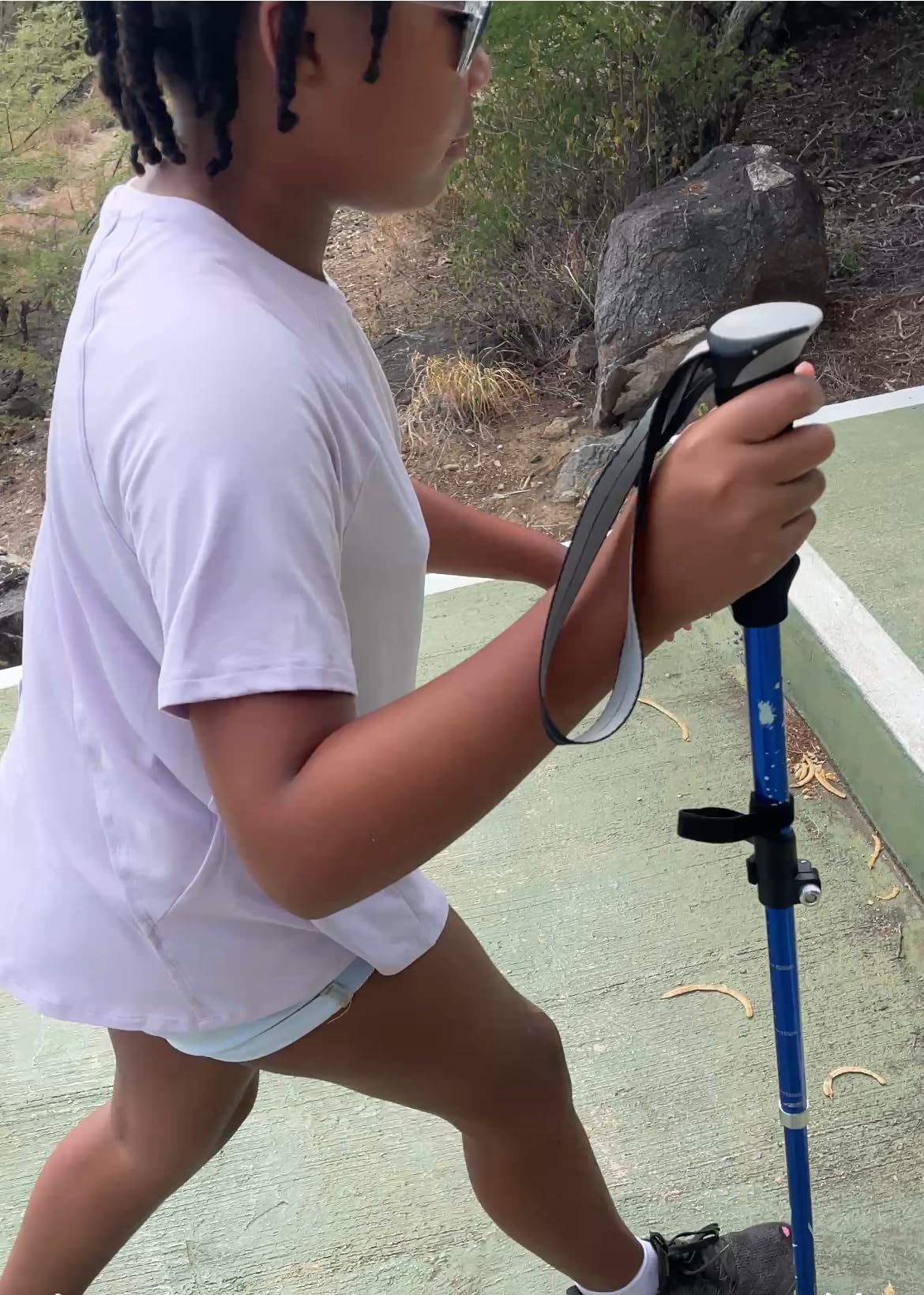
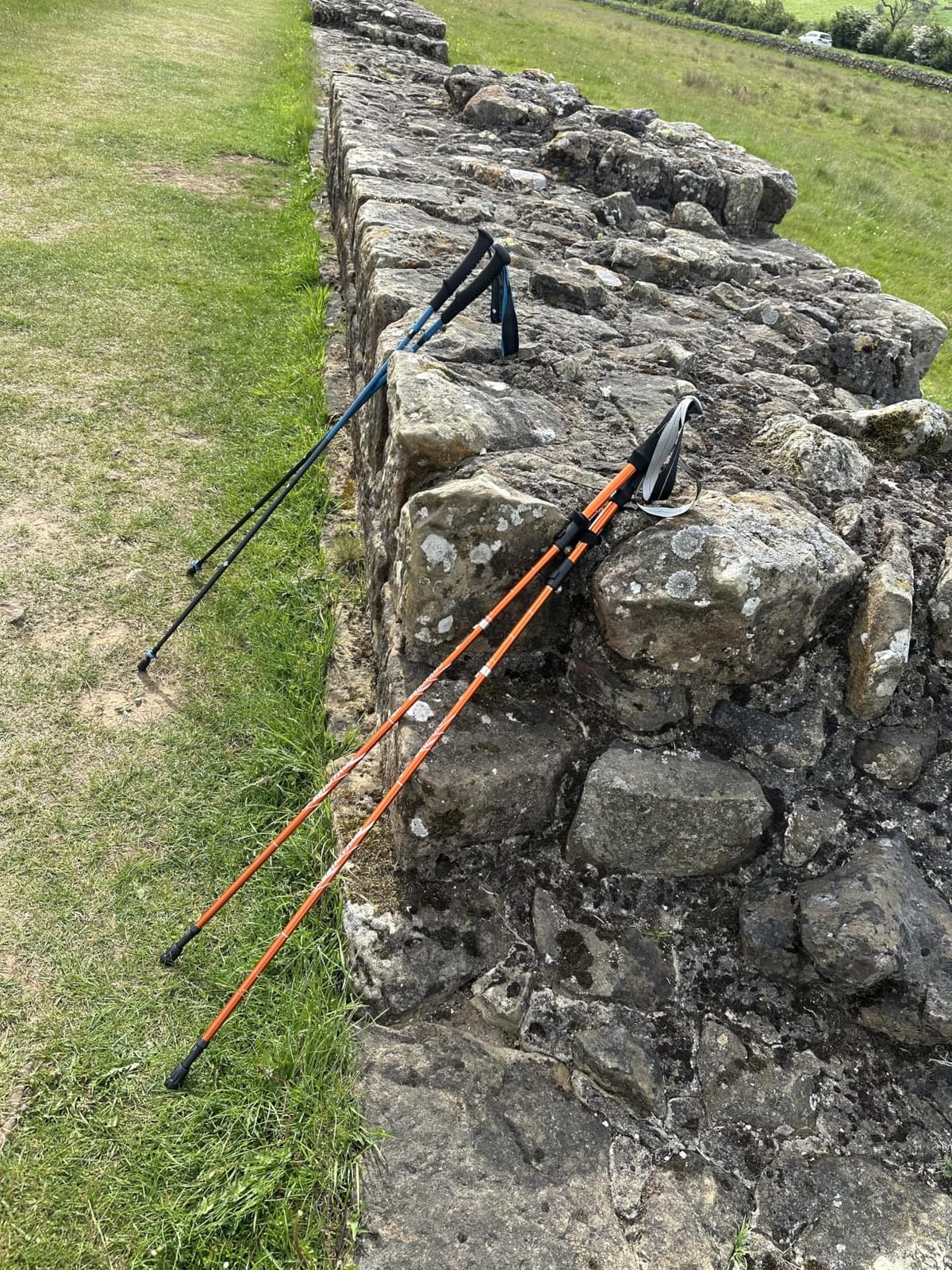
Three different rubber tip shapes are included, which is useful if you switch between pavement, mud and packed trail. The anti-corrosion coating is worth noting for anyone walking in rain or near salt-treated paths in winter.
The trade-off is length. A maximum of 120 centimeters is lower than most competitors, so a taller user should pick another pole with a higher maximum. Setup also asks you to confirm the tightening screw before use, and some buyers find that step fiddly.
For an adult under five foot eight who wants the shortest packed length and a shaft that will not snap, this is the right pick. Note that the manufacturer does not state the weight, which is unusual, so budget for the fact that foam grips add a little.
It is not the lightest option despite the marketing language, and around six percent of reviews are one star. Read the sizing note before ordering and it will serve a shorter user very well.
What to check before you buy
Confirm the maximum length will be low enough for you before anything else. At a 120 centimeter maximum, a taller user cannot get the pole low enough for a proper 90 degree elbow, which is the most common sizing mistake we see.
Follow the tightening screw step on setup. This design relies on a screw to hold the extended length, and walking before it is fully tightened is the main cause of complaints about slipping.
Who should choose something else
If you are taller than five foot eight, choose a telescoping pole with a higher maximum. The 20 centimeter adjustment range is the narrowest in this roundup and does not grow with you.
If you have larger hands or grip strongly, note that foam handles are softer and less precise than cork. A cork grip model gives you more control over the pole position, which matters on descents.
8. KINGGEAR 7075 Aluminum Trekking Poles: Best for Arthritic Hands
KINGGEAR Trekking Poles 7075 Aluminum Lightweight Hiking Sticks
7075 aluminum at 9.35 oz per pole
Quick flip locks from 25.5 to 54 inches
Cork grip with EVA base
Lifetime guarantee
Pros
- Cork grip sizing praised by senior reviewers with arthritis
- Flip locks hold firmly and do not slip under load
- Adjusts from 25.5 to 54 inches for users up to 6 foot 7
- Balanced enough to use confidently as a single pole
Cons
- Slightly heavy for a 7075 aluminum pole
- Cork grip grooves can feel rough until sanded
- Some section connectors use plastic
This is the pole pair we recommend when hand arthritis is the deciding factor. Multiple senior reviewers with arthritis single out the cork grip sizing as comfortable, and the flip locks require no twisting motion to operate at all.
The lock matters more here than anywhere else. A flip lock opens and closes with a push of the thumb. No rotation, no pinching a small catch, no two-handed operation. If your hands are stiff in the morning, this is the mechanism that will still work.
Adjustment runs 25.5 to 54 inches, which accommodates users up to about six foot seven, the highest ceiling among the aluminum telescoping poles here. For a shorter adult, that range still allows a low enough setting for the elbow test.
At 9.35 ounces per pole, this is also light enough to use one pole at a time without feeling unbalanced. Many seniors with asymmetric weakness keep a pole on one side and a cane on the other, and reviewers describe exactly that setup.

The accessory kit is the widest in the roundup: tungsten carbide tips, snow baskets, mud baskets, rubber protective tips and Nordic walking boot tips. A lifetime guarantee is included, and the brand reports serving customers since 1999.
Three complaints come up consistently. The cork grip grooves can feel rough and cause chafing until they are sanded smooth, which is a real issue for sensitive hands. Some section connectors are plastic rather than metal, so inspect them. And at 9.35 ounces a few buyers find it slightly heavy for the alloy used.
If your hands are the main concern, the fix is simple: feel the grip in a shop if you can, or expect to smooth the grooves lightly at home with fine sandpaper. That small task removes the most common complaint about this pair.
The lifetime guarantee is a genuine differentiator at this level. For a pole an older adult may keep for a decade, that matters more than any accessory in the box.

What to check before you buy
Squeeze the cork grip firmly and hold for a minute. Cork should compress and start to take the shape of your hand. If the surface feels gritty or sharp against your palm, this is not the right grip for arthritic hands, and a foam model would suit you better.
Push down hard on each flip lock at full extension, then release and check whether the shaft crept back down. If it crept, tighten the lock tension until it holds your full weight, and do not walk on it before it does.
Who should choose something else
If you want the lightest pole available, this is not it. Carbon fiber models in this guide are roughly two ounces lighter per pole, which adds up over a long day but rarely decides the purchase on its own.
If you plan to travel by air, note that these are telescoping poles and do not fold into a carry-on. Choose a tri-fold or disassembling design if cabin baggage matters to you.
9. Hiker Hunger 100 Percent Carbon Fiber Poles: Best for Tall Users and Long Reach
100% Carbon Fiber Trekking Poles by USA Brand – Ultra Strong Lightweight Collapsible Hiking Poles with Cork and EVA Foam Grips & Quick Adjustable Flip Locks
3K carbon fiber at 7.6 oz per pole
Metal flip locks
24 to 55 inch adjustment
Cork grip plus EVA foam extension
Pros
- Very light at 7.6 oz per pole
- Metal flip locks are stronger than plastic ones
- Cork grip plus EVA extension for quick grip changes
- Neoprene padded straps reduce chafing
- Longest extended length here at 55 inches
Cons
- Costs more than aluminum options
- Carbon fiber is less forgiving of sideways loading
- Higher share of one-star reviews among the top sellers
This pair extends to 55 inches, the longest reach in the roundup, which matters for taller adults who cannot get a low enough elbow angle from a standard telescoping pole. The 24 to 55 inch range also covers very short users within the same pair.
The locks here are metal rather than plastic. That is the detail that separates it from cheaper carbon poles. Metal flip locks resist the twisting load that develops when you push down hard on a descent, and reviewers consistently praise how securely they hold compared with plastic-lock designs.
Grip comfort is layered: a moisture-wicking cork top, a nonslip EVA foam extension lower down for steep climbs, and neoprene padded straps. The padded straps are the best anti-chafing option in this guide, and that matters over distance for anyone with sensitive hands.
At 7.6 ounces per pole in 3K carbon fiber, it is tied for the lightest weight we found and sits well below the aluminum options. Over a full afternoon on pavement, the difference in arm fatigue is noticeable.

The trade-off with carbon fiber is that it is less forgiving of sideways loading than aluminum. It bends less and gives less warning before failing. If you are going to use the pole as a brace, plant the tip squarely and push down rather than angling it.
The cost also sits above every aluminum option here, and around four percent of reviews are one star, a higher share than most sellers in this group. The included accessories cover the essentials: mud baskets, rubber feet, rubber tips and snow baskets.
For a tall adult who cannot get the right elbow angle from a standard pole, this is the clear answer. The 55 inch maximum is the only one in the roundup that reaches that far.

What to check before you buy
Test the metal flip locks before you rely on them, and check the grip angle in a mirror while standing. With an extended pole, your elbow should sit close to 90 degrees when the tip is planted beside your foot. If the pole is too short for your height, this is the model to look at.
Inspect the neoprene straps for fit. They should be snug enough to hold the pole through a hard plant but not tight enough to leave a mark on your wrist after an hour. Adjust them before a long walk, not during it.
Who should choose something else
If you plan to lean on the pole or use it as a partial weight-bearing brace, choose aluminum. Carbon fiber gives you less warning when a shaft is overloaded, and aluminum will flex before it fails.
If your budget is fixed, an aluminum pair at 9.4 ounces per pole handles almost every walking situation. The extra two ounces per pole is the only meaningful difference for most seniors.
10. Hiker Hunger Foldable Aluminum Poles: Best for Knee Replacement Recovery
Premium Foldable Hiking Poles by USA Brand – Adjustable, Lightweight Trekking Poles Made of Aircraft Aluminum, Metal Locks Cork EVA Grips (Cork – Black, 100-120 cm for Height: 5’9″ and Smaller)
Aircraft aluminum at 9.95 oz
Folds to about 15 inches
Metal flip locks with reinforced joints
100 to 120 cm short version
Pros
- Folds to about 15 inches for packing
- Metal flip locks with reinforced joints hold at length
- Dual cork and EVA grip setup for climbing
- Owners recovering from knee replacement report feeling balanced again
Cons
- One pole in a pair may arrive with a slipping lock
- Lock button needs upward tension to engage
- Wrist strap adjustment plug can work loose
This pair shows up repeatedly in reviews from people recovering from knee replacement surgery and joint problems. The comment is consistent: they felt balanced again and started walking further than they had before the operation.
Construction is sound. Aircraft-grade aluminum at 9.95 ounces for the short version and 10.7 ounces for the long one, with metal flip locks and reinforced joints that hold securely at full extension. The reinforced joint matters because folding designs concentrate load at the fold.
It folds to about 15 inches, so it travels compactly, and there are two length versions: 100 to 120 centimeters for users around five foot eight and under, and 115 to 135 centimeters for those around five foot nine and taller. Confirm your version before ordering.
The grip system is a cork top with an EVA foam extension below, or an all-foam version. Cork stays dry and gives you control on descents, which is the position that puts the most load through the pole.
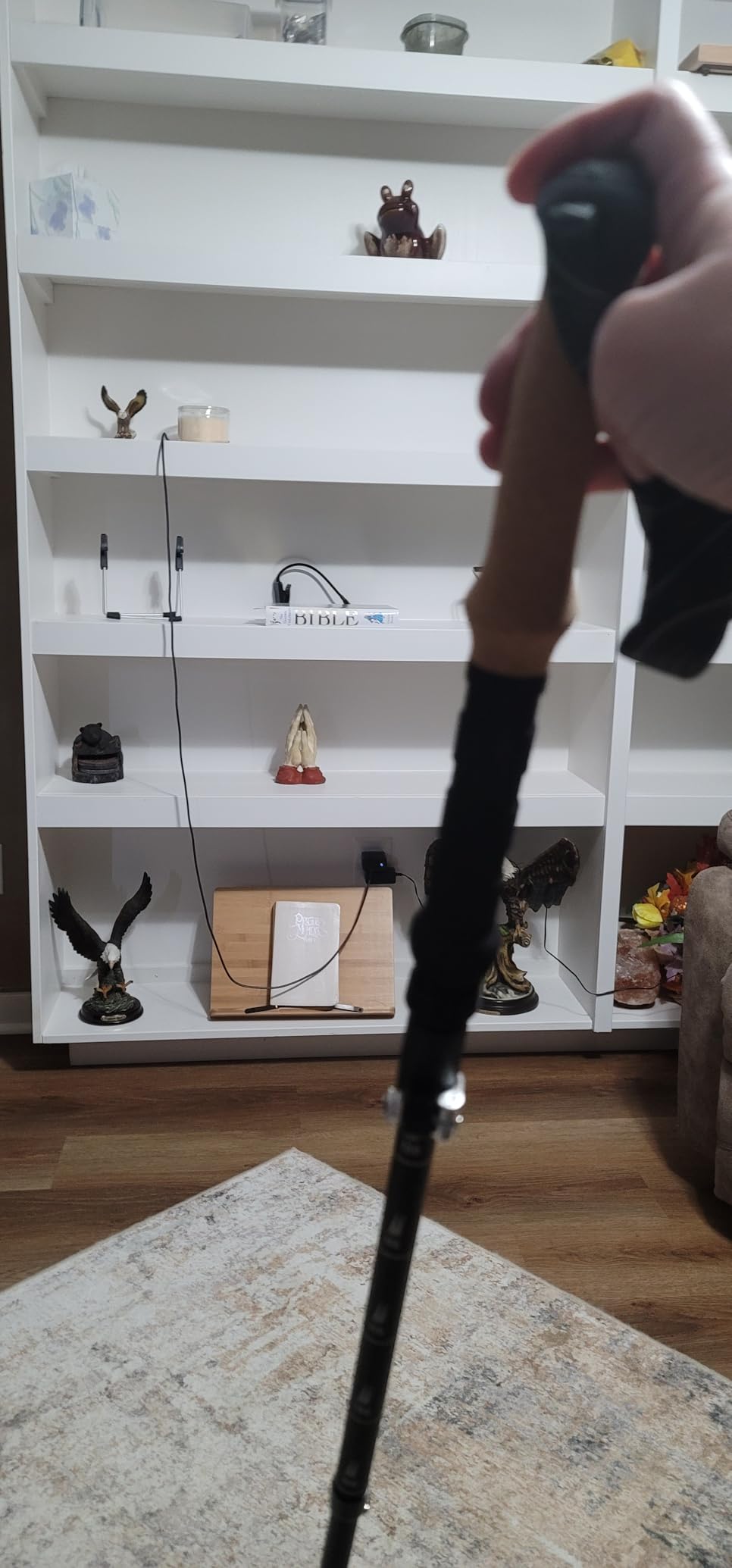
Three practical notes from the reviews. One pole in a pair has occasionally arrived with a slipping height lock, so test both poles fully before you rely on them. The lock button needs upward tension on the pole to engage, which is awkward until you get used to it. And the wrist strap adjustment plug can work loose if it is not pushed in firmly.
None of these are design flaws, but all three deserve a five-minute check on the day your poles arrive. Check the locks, test the fold joints and push the strap plugs in properly.
For someone in rehabilitation who wants compact poles that fold away in a cupboard, this is a sensible choice. The company is based in Montana and reports serving more than 250,000 customers over ten years.
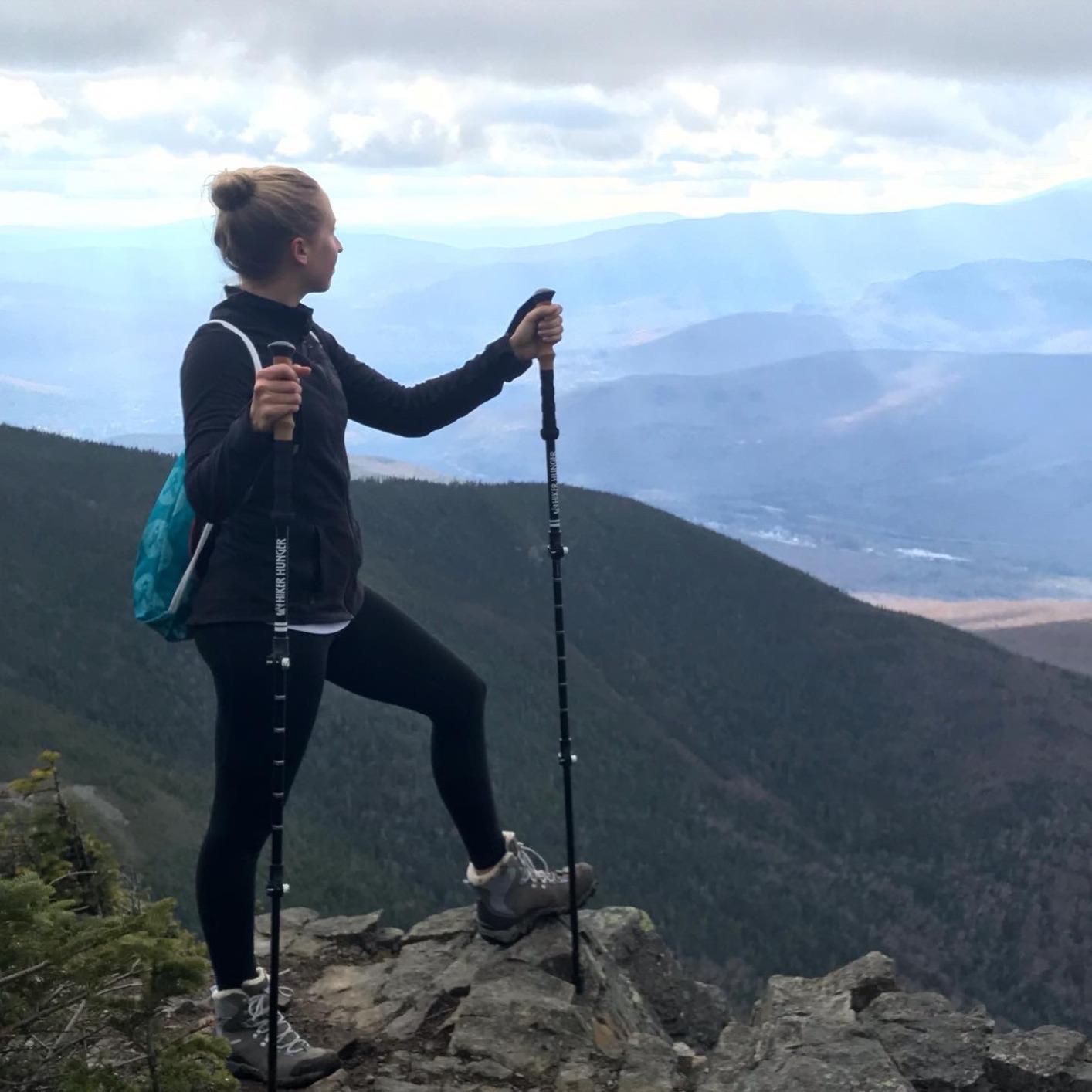
Given that it is lighter on features than the Foxelli and TrailBuddy pairs, pick it when folding size and metal locks matter most to you rather than grip layering.
What to check before you buy
Extend and fold both poles fully several times, then push down at full extension with your weight. Folding joints fail at the hinge first, so this test tells you more than any specification on the listing.
Check the grip version you received matches what you expected. Cork and EVA feel very different in the hand after twenty minutes, and you cannot easily tell from a photograph.
Who should choose something else
If your main concern is grip comfort over long distances, the Foxelli aluminum pair has a better reviewed cork grip with an extended sleeve, and a considerably larger review base to judge it by.
If you want the lightest possible pole for very long walks, a carbon fiber model at 7.6 ounces per pole will reduce arm fatigue further than anything folding in this guide.
How We Picked Trekking Poles for Seniors
We narrowed ten poles down using criteria that matter to older adults rather than criteria that matter on a mountain. Every pole here meets them. Some products with excellent specifications did not, because the lock needed two hands or the shaft could not take sideways loading.
One-handed lock operation. Lever and flip locks open and close with a thumb or finger and no rotation. Twist locks work fine with strong hands and gloves, but they demand a twisting motion that stiff joints resist. Every pick except one uses an external lever or flip lock.
Grip that suits a weak hand. Cork moulds to the palm and stays dry. Foam is easier to grip but collects moisture. What we watch for is diameter, because a handle sized for a small hand causes rubbing and blisters on a large hand and the reverse.
Weight that does not end the walk. Under 10 ounces per pole is the practical ceiling for most older adults on long routes. Above that, arm fatigue becomes the limiting factor rather than legs or lungs.
Adjustment range. A pole that cannot reach a 90 degree elbow at your height will not be used, no matter how good it is. We favoured wide ranges, and where a product comes in length versions we flagged which one to order.
A shaft that bends rather than snaps. For anyone who might load a pole sideways on uneven ground, aluminum is the safer material. Carbon fiber earns its place on long defined paths where weight matters more.
A real accessory kit. Rubber tips for pavement, snow baskets, mud baskets and a carry bag. Every pole here includes at least rubber tips, and most include the rest.
We also weighted review volume heavily. A pole with thousands of reviews tells you how it behaves after a year of daily use, which is a far better signal than a specification sheet, and it is why our editor’s choice leads this list.
How to Size Trekking Poles for Your Height
The standard is simple: stand upright on flat ground, hold the pole in your hand with the tip on the ground beside your foot, and bend your elbow. Your elbow should sit at roughly 90 degrees. If it is straighter, the pole is too long; if it is more bent, it is too short.
Then walk before you commit. Poles are set slightly longer for level walking and adjusted shorter for uphill sections, where the body leans forward, and longer for downhill, where the pole takes weight ahead of you.
As a general guide, many adults use a pole length around two thirds of their standing height, and most adjustable poles here span roughly 25 to 54 inches. That covers the large majority of adults on a single pair.
Older adults are often shorter than the charts assume, and height is only a starting point. If you have lost height through spinal compression or osteoporosis, the elbow test matters more than any table, because it accounts for your actual stance rather than an average.
Older adults also often have a stiff shoulder or a shoulder that will not reach full extension. If you cannot comfortably get your elbow past a right angle at any height setting, a pole is not the right aid and a cane with a different grip angle may serve you better.
Spend five minutes on this before your first walk. Poles set at the wrong height are the most common reason people try poles once and give up, and the fix is usually free.
Telescoping, Folding, or a Single Pole
Telescoping poles slide down to around 24 to 26 inches. They have the widest adjustment range, which makes them the best choice for a household sharing one pair, and the joints are the most forgiving. Their drawback is packed length, which matters if you travel by air.
Folding and tri-fold poles collapse to around 14 to 15 inches. They are the best choice for travel, cruises and anyone carrying poles in a day bag. The trade-off is the fold joint, which is the least forgiving part of the pole and the first thing to fail under hard loading.
Disassembling poles come apart into sections of about 21 inches, which fits most carry-on bags when broken down. Several pairs here do this as well as folding, giving you the choice of both.
A single pole is worth considering if your balance is asymmetric or one side is stronger. Using one pole on the stronger side, or one pole plus a cane on the weaker side, is a common setup among seniors and costs half as much.
Whichever design you choose, do not buy a fixed-length pole if you can avoid it. A non-adjustable pole cannot be shared, cannot be handed to a family member, and will not suit you if your posture changes.
Aluminum vs Carbon Fiber for Fall-Risk Users
This is the choice that matters most if you are ever going to lean on a pole. Aluminum flexes under load and returns to shape, giving you warning and forgiving any sideways push. Carbon fiber is lighter and stiffer, and it gives less warning before a shaft fails.
The weight difference is real but modest in this roundup. Aluminum here runs 9.35 to 10.08 ounces per pole, carbon fiber 7.6 ounces. Over an afternoon that is roughly two ounces per pole, which some older adults feel in their forearms and others do not.
On defined paths and pavement, where the tip is planted squarely and pushed down, carbon fiber is the better choice. On rocky ground, roots, gravel and any surface where a tip can catch, aluminum is safer.
The most common reported complaint about cheap carbon poles is snapping under lateral pressure. If you choose carbon, buy a model with reinforced high-stress zones and metal rather than plastic locks, and inspect the shafts regularly for visible scratches or flat spots.
There is also a middle path. An aluminum pole with a second lower grip position handles descents well and stays forgiving under load, which is the combination most seniors with knee pain actually want.
Grips and Locks for Hands with Arthritis or Weak Grip
Grip material is the part of a pole you touch thousands of times on a single long walk, so it deserves more attention than most buying guides give it. Cork moulds to the shape of your palm, absorbs sweat and stays grippy when damp. It is the most common recommendation among senior reviewers here.
Foam grips are softer and easier to hold with weak grip strength, and they absorb less shock. They collect moisture and can degrade into a slippery surface after months of daily use, which is a documented problem in this category.
Diameter matters as much as material. Grips that are too large force you to stretch for a grip you cannot make, and grips that are too small require a pinch. The most useful thing you can do is hold one in a shop, or order the pair your small-hand colleagues report fits comfortably.
On locks, external lever and flip locks open and close with one finger push and no rotation. They are the right default for hands with arthritis, a stiff wrist or reduced fine motor control. Twist locks are clean and glove-friendly but require a twisting motion.
Strap fit is the third piece. A strap that is too tight transfers load into your wrist, which is where much of the pain in our research came from. A strap that is too loose lets the pole rotate in your hand. Adjust it before a long walk, not during one.
Finally, the extended down grip or choke-up section gives you a second hand position. For anyone with sore knees, this is often worth more than any material choice on the shaft.
Trekking Poles vs a Walking Cane
This is the question senior forums ask most often, and the answer is genuinely both. A cane gives you a single point of contact on one side and is the standard prescribed aid for full weight-bearing balance support. Trekking poles give you two points of contact, keep your upper body active and take load off your joints.
A cane is simpler, lighter, fits through doors and crowds, and is what a doctor will prescribe after certain injuries. Many older adults keep using a cane even when they have recovered, because it feels safer.
Trekking poles take pressure off your knees and hips, especially on descents and long flat routes, which is why older hikers describe them as essential rather than optional. They also let you carry a bag, which a single cane cannot.
Many people use both. A pole on one side and a cane on the other works well for asymmetric weakness or post-stroke recovery, and at 9 ounces per pole several pairs in this guide stay balanced when used one at a time.
What trekking poles are not is a substitute for a medically prescribed aid. If you have had repeated falls, a stroke, Parkinson’s freezing or significant vestibular impairment, ask your clinician which aid you should be using. Poles can add to an existing plan, not replace one.
How to Walk With Trekking Poles Safely
Put the strap on from below. Slide your hand into the loop from underneath rather than over the top. Getting the strap on this way means the loop closes behind your hand, so you can let go and the pole stays with you instead of dropping.
Grip the handle, not the top of the pole. Your palm rests on the cork or foam section. If your hands get tired, move down to the lower grip section for a different hand position rather than squeezing harder.
Plant the pole, then step. The tip goes on the ground a step ahead of you, and your weight follows. This plant-then-step sequence is what makes poles reduce knee load rather than increase it.
Use two poles symmetrically on flat ground. Alternate left and right in time with your opposite foot. This keeps your upper body active and distributes effort evenly.
Shorten the poles going uphill. Lean slightly forward and shorten each pole by a few inches so your elbow stays near 90 degrees. Plant the tip ahead of you to help pull yourself up.
Lengthen the poles going downhill. This is where poles do the most good. Longer poles let you plant ahead of you and take weight before the step lands, which unloads your knees significantly on descents.
Check the locks before you start. Push down on both poles once at the trailhead. A pole that slips on a descent is worse than no pole at all, and it only takes five seconds to catch.
Winter Walking and Snow Baskets
Snow changes what you need from a pole. A tungsten carbide tip is hard and grippy but can slip on compacted ice, and a rubber tip is quiet and predictable but works poorly in deep snow. Most of the poles here include both plus removable baskets.
Snow baskets stop the pole punching down into soft snow and ending up beside your leg, which destabilises you. Mud baskets do the same job in wet ground. Both are threaded or screw on, and both wear out over time.
Cold weather changes the lock question. Twist locks are easier to operate with gloves on, because you can use the palm of your hand. Lever and flip locks need a fingertip, so bare hands or thin gloves work better.
Grip is a real winter issue. A cork grip can become cold and hard to feel, and a wet grip is a slipping grip. Foam grips insulate better in cold conditions, which is a reasonable trade against their moisture behaviour in summer.
If you walk on icy pavements regularly, a pole with a carbide tip and a rubber foot that you can switch quickly is worth the extra accessory. Every pair in this guide except one includes both tip types in the box.
Frequently Asked Questions
How tall should walking poles be for seniors?
Hold the pole with the tip on the ground beside your foot and bend your elbow to about 90 degrees. That angle is the real test, and it matters more than any chart because it accounts for your actual posture. Most adjustable poles here span 25 to 54 inches, which covers the large majority of adults on one pair. Walk a short distance afterwards and adjust slightly for your comfort.
What is the difference between walking poles and trekking poles?
The names are used interchangeably for the same basic product: an adjustable pair of shafts with grips, wrist straps and a height lock. What differs is the design. Telescoping poles slide down and adjust over the widest range. Folding and tri-fold poles collapse to about 14 to 15 inches for travel. Twist locks have no external lever, while lever and flip locks open with one finger.
Are trekking poles suitable for older people?
Yes, for the right person at the right level. Poles add a second point of contact, take load off the knees and hips on descents and reduce arm fatigue over long routes. Many physical therapists recommend them for joint pain and fall concerns. They are not a substitute for a cane or walker prescribed for full weight-bearing support after a stroke, with Parkinson’s or after repeated falls.
Should seniors use trekking poles?
Most regular older walkers benefit from them, and the main gains show up on slopes, uneven ground and long routes rather than on flat pavement for a few hundred metres. The features worth prioritising are a one-handed lever or flip lock, a cork grip sized for your hand and a shaft that bends rather than snaps. Speak to a clinician first if you have a diagnosed balance condition or a recent fall.
Are trekking poles better than a walking cane for balance?
For two-sided support, yes. A pair gives you two contact points and keeps your trunk and upper body active, while a cane gives one and is easier to carry. A cane is still the right choice if you need full weight-bearing support or have been prescribed one. Many seniors use one pole plus a cane on the weaker side, and several poles here are light enough to balance one-handed.
Do trekking poles help with knee pain?
They help most on descents, which is where knee loading peaks. By planting the tip ahead of you and taking weight through your arms before the step lands, a pole removes a meaningful share of the load from the knee joint. On flat ground the benefit is smaller. Older hikers in our research described poles as the difference between walking a route and turning back halfway.
Bottom Line: Where to Start
Start with the TrailBuddy pair if you want one set that covers everything: one-handed lever locks, a cork grip, aluminum that bends rather than snaps, and an adjustment range wide enough to share. It carries the highest rating and by far the largest review base in this roundup, which is the strongest evidence we have that it holds up after months of daily walking.
If your knees hurt on descents, go with the Cascade Mountain Tech pair and use the extended down grip. If your hands are the problem, the KINGGEAR flip locks need no twisting and the cork grip is sized well for arthritic hands. If you want the lightest pole for long days, the Foxelli carbon pair at 7.6 ounces per pole is the one.
Whatever you choose, set the height with the elbow test before your first walk, test the lock by leaning your weight on it, and keep a cane if a clinician has prescribed one. Poles work best as an addition to a good walking habit, not as a substitute for medical advice. Our picks for televisions for seniors follow the same rule: choose the tool that fits the person, and update the list in 2026 when something better appears.