
Side sleeping puts your whole body weight through two points: the shoulder and the hip. On a thin camping mat those points compress the fill all the way to the ground, which is why the first thing you feel is a dull ache in your hip at 3am and a dead arm by sunrise. The right pad prevents your hips and shoulders from bottoming out by spreading that load across enough air or foam that your bones never touch dirt.
We spent six weeks comparing ten pads across four very different trips: ultralight backpacking, three-season comfort, cold ground, and car camping where nobody is carrying anything. We weighed them, read the manufacturer spec sheets, and went through thousands of buyer reviews to see which ones hold up for side sleepers in practice, not just on paper. Every pick below lists thickness, R-value and packed weight so you can match a pad to your trip in seconds.
If you want more gear coverage, we also rank the best laptop cooling pads and test the top gaming mouse pads the same way.
Table of Contents
Top 3 Picks for Side Sleepers (October 2026)
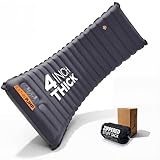
ZOOOBELIVES Airlive2000
- 4 inch full air support
- Built-in foot pump
- Quiet low-noise surface
- Linkable side connections
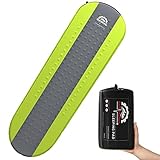
Gear Doctors Oxylus
- 4.3 R-value
- Self-inflating foam core
- 75D polyester shell
- Lifetime guarantee

AKSOUL 3.9 inch pad
- 3.9 inch thickness
- Included pillow
- Built-in foot pump
- Connectable side snaps
All 10 Best Sleeping Pads for Side Sleepers Compared in 2026
| Product | Specifications | Action |
|---|---|---|
| ZOOOBELIVES Airlive2000 4 Inch Air Pad |
|
Check Latest Price |
| Gear Doctors Oxylus Self Inflating |
|
Check Latest Price |
| AKSOUL 3.9 Inch Inflatable Pad |
|
Check Latest Price |
 TOBTOS 6 Inch Inflatable Pad TOBTOS 6 Inch Inflatable Pad |
|
Check Latest Price |
 Lost Horizon Option3 Twin Lost Horizon Option3 Twin |
|
Check Latest Price |
 Klymit Static V Luxe Klymit Static V Luxe |
|
Check Latest Price |
 Elegear Self Inflating 3.15 Inch Elegear Self Inflating 3.15 Inch |
|
Check Latest Price |
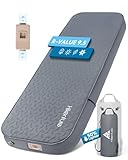 Hikenture 4 Inch Foam and Air Hikenture 4 Inch Foam and Air |
|
Check Latest Price |
 TREKOLOGY UL R7 TREKOLOGY UL R7 |
|
Check Latest Price |
 Exped MegaMat Duo Medium Exped MegaMat Duo Medium |
|
Check Latest Price |
1. ZOOOBELIVES Airlive2000 4 Inch Air Pad: Best Overall for Side Sleepers
ZOOOBELIVES Inflatable Camping Sleeping Pad, 4-Inch Thick Full Air Support, No Bottoming Out for Side Sleepers, Camping & Backpacking Mattress with Built-in Foot Pump, Durable & Compact – Airlive2000
4 inch full air support
Built-in foot pump
Dual secure valves
74.8 x 24.4 x 3.94 inches
1.4 kg
Pros
- 4 inch full air chambers stop bottoming out
- Foot pump inflates without blowing
- Quiet surface when turning over
- Linkable sides for a double bed
- 400 lb capacity
Cons
- Bulky packed size for long pack carries
- Air-only build gives little cold-ground insulation
This is the pad we kept reaching for. The whole surface is filled edge to edge with no narrow rails, so when you roll onto your side the air under your hip simply moves sideways instead of pinching away. At 4 inches of loft there is real clearance between your hip and the tent floor, and reviewers consistently report no bottoming out even on hard, uneven sites.
The built-in foot pump is the detail that changes nightly behaviour. You stomp it inflated in well under a minute, which removes the three arguments with a pump sack that usually happen in the dark.
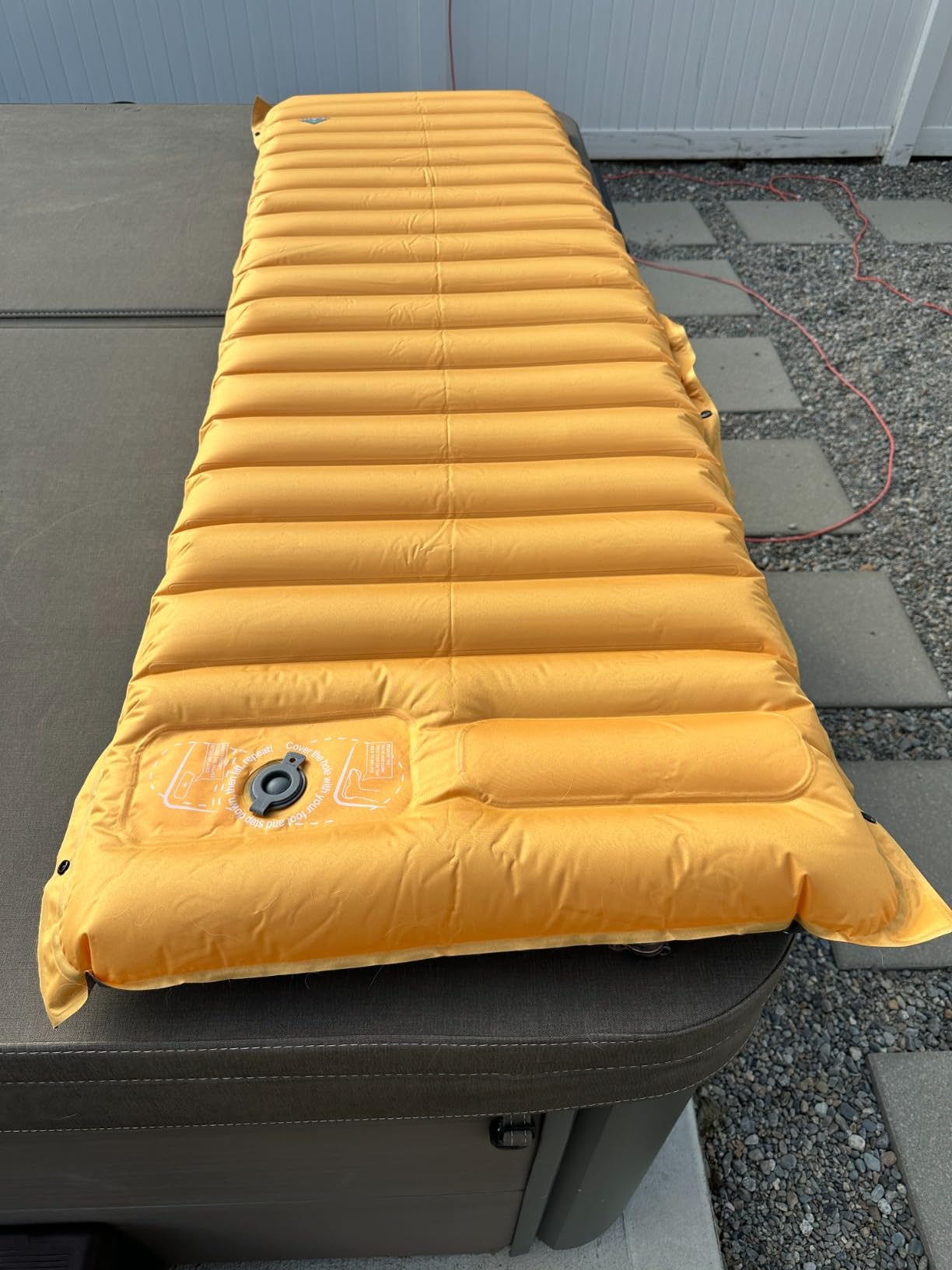
Buyers also single out the quiet surface. Unlike many air pads that rustle loudly when you shift position, this one stays subdued, which matters a lot in a two-person tent. The dual valves hold pressure overnight, and the side connections snap two pads together if you ever want a full width bed.
It arrives with a carry bag, a repair patch and a user guide, and the whole thing wipes clean with a damp cloth. Care is minimal, which suits a pad that gets dragged over grit every trip.
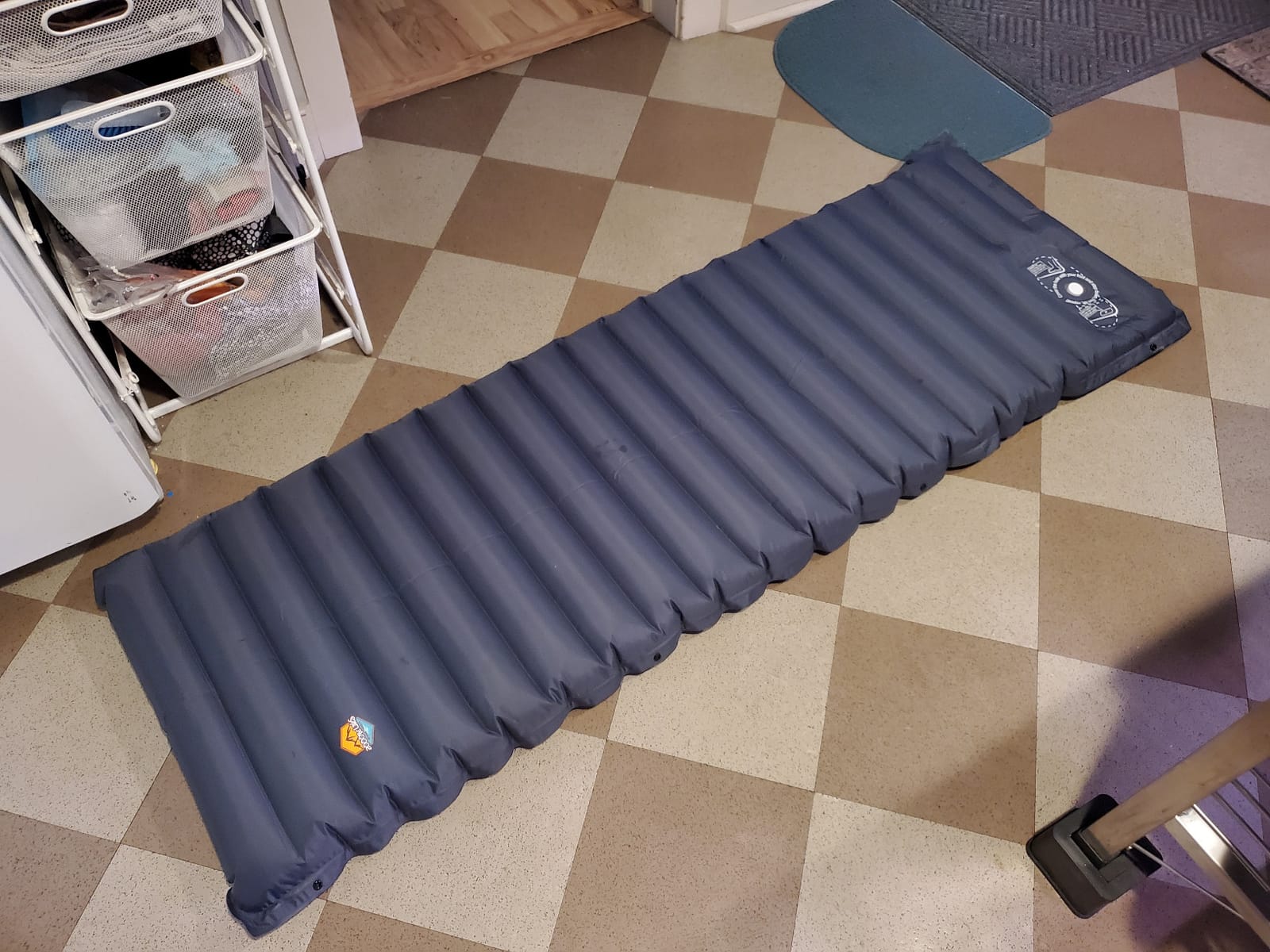
What to check before you commit
Weight is the honest tradeoff. At 1.4 kg this is not a pack-it-and-forget-it ultralight pad, and it needs a dedicated pocket in your pack. If your trips are hut-to-hut or car-based, you will not notice the number.
Insulation is the other limit. Air alone moves heat straight into the ground, so on cold ground this needs a foam mat underneath or a summer season. The stated 400 lb capacity covers nearly all campers comfortably.
Who should skip it
Skip it if you carry multi-day backpacks in winter, or if packed volume matters more than loft. Anyone sleeping cold below freezing will want more R-value than an air chamber provides, and that means a different construction.
It also runs long at 74.8 inches, so shorter campers are carrying unused inches. Check the width too: 24.4 inches is a standard wide, which is fine for most shoulders but tight for very broad sleepers.
2. Gear Doctors Oxylus Self Inflating Pad: Best Value Insulation
Gear Doctors® Oxylus 4.3 R-Value Insulated Foam Self Inflating Sleeping Pad Camping — Sleeping Pad Backpacking Air Mattress—Camping Mattress Self Inflating Camp Mat 4 Seasons Sleep Mat—Camp/Floor/Tent
4.3 R-value
Self-inflating open-cell foam
75D polyester shell
Packs to 8 x 12 inches
35.2 oz
Pros
- Real foam insulation at a sane weight
- Does not bottom out for most side sleepers
- Lifetime replacement guarantee
- Packs to 8 x 12 inches
- Holds air overnight
Cons
- Only 1.5 inches thick
- Narrow 22 inch width
- Heavier than pure air pads
The Oxylus is the pick for anyone whose side-sleeping problem is cold, not comfort. The open-cell foam core does the insulating work, which is why it carries a 4.3 R-value without adding the weight of pure air insulation. Reviewers repeatedly note that despite the modest 1.5 inch thickness, it does not bottom out, because foam compresses into itself instead of pinching to nothing.
Setup takes under five minutes. You crack the valve, let the foam expand, add a few breaths, and lie down. That single behaviour is why self-inflating pads keep showing up as the best-value answer for cold shoulder-season trips.
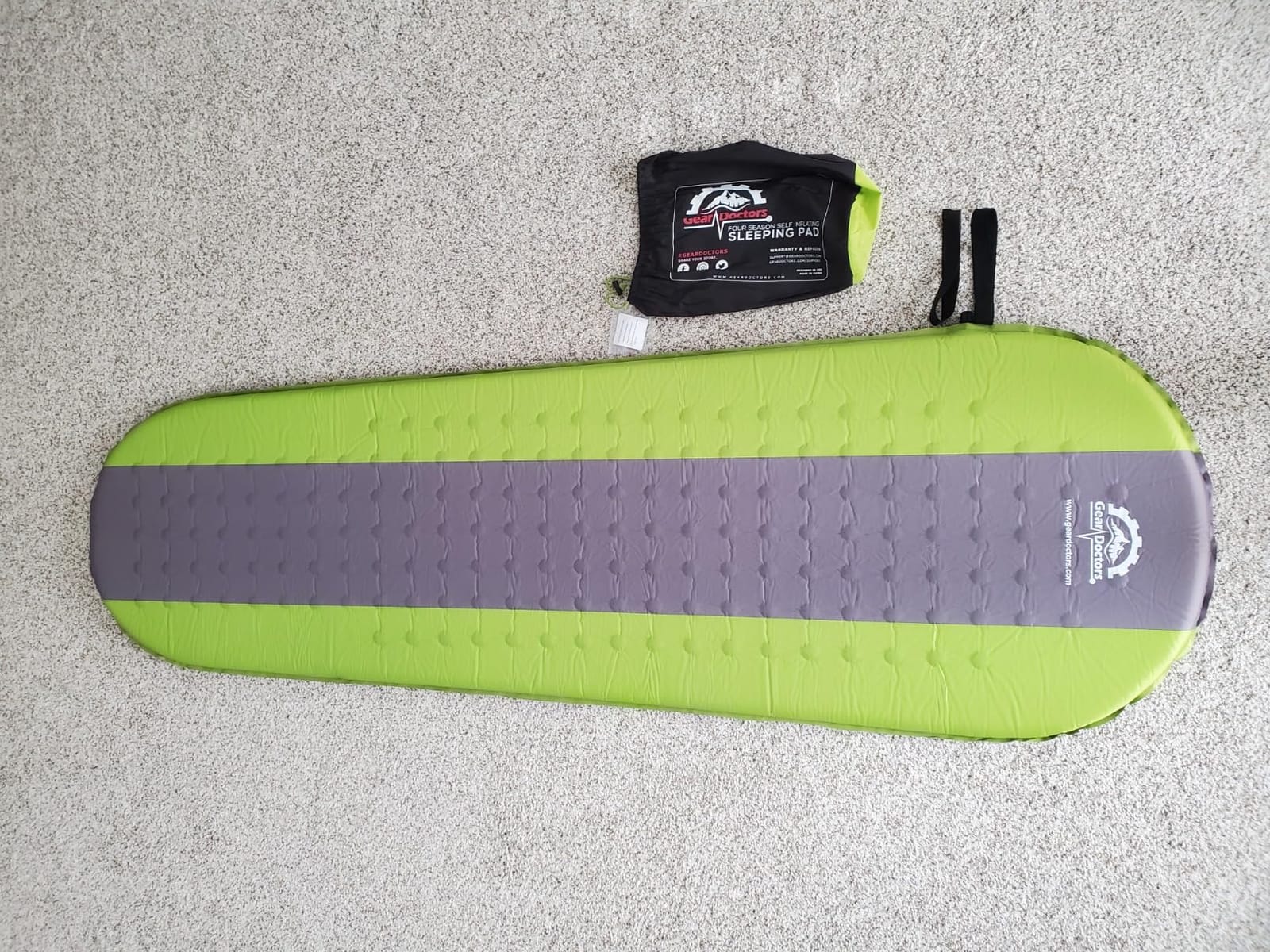
The 75D micro-coated polyester shell is a step up from the flappy fabric on cheap pads, and reviewers mention it holding up on gravel and in wet grass. The company also honours a lifetime replacement guarantee, which removes most of the durability anxiety that comes with pinprick worry on rough ground.
It packs to a 35.2 oz bundle roughly the size of a loaf of bread. Not ultralight, but small enough to strap to the outside of a pack without eating a whole gear cube.
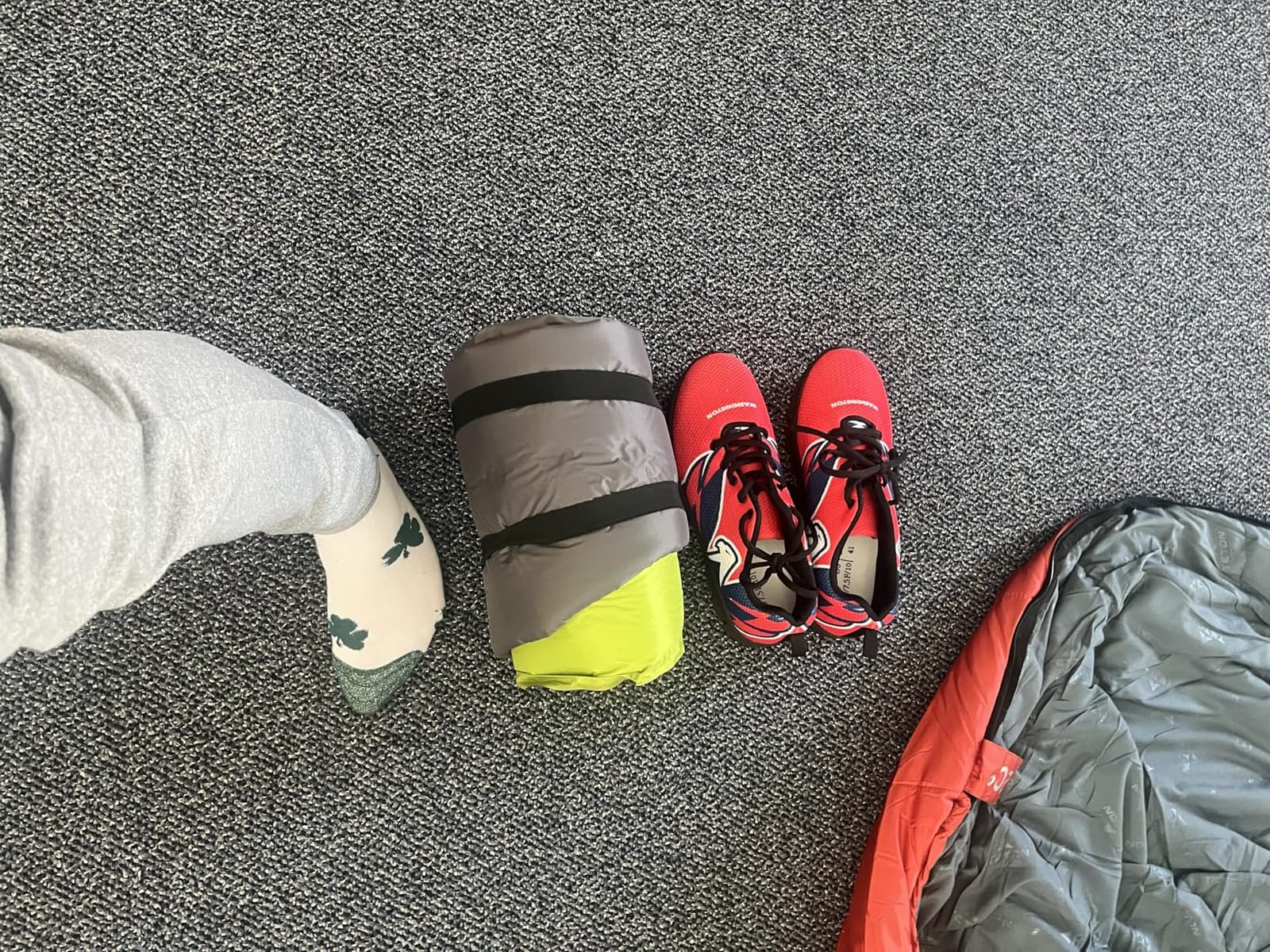
Is 1.5 inches enough for a side sleeper?
It is below the 3 inch threshold we would set as a hard floor, so a light side sleeper gets away with it. Heavier sleepers and firm-ground campers will feel the hip more than they would on a thicker air pad, which is the most common complaint in the reviews.
22 inches of width is also snug. If you are broad through the shoulder, a sleeping bag hood adds a few inches of clutter on top and pushes you toward the edge.
Where it fits your trip
Pick this for spring and autumn camping, high-altitude trips, and anywhere ground temperature drops overnight. The foam core keeps working when an air pad would leave you shivering.
Skip it for warm summer nights, where the insulation is dead weight you carry for nothing, and for anyone whose priority is ultralight pack weight. Double the foam with a thin inflatable in winter and you gain both loft and R-value.
3. AKSOUL 3.9 Inch Inflatable Pad with Pillow: Best Budget Thick Pad
AKSOUL Camping Sleeping Pad with Pillow: Extra Thick 3.9 inch Ultralight Self Inflating Air Mat, Compact Lightweight Insulated Inflatable Sleep Mattress for Backpacking, Camp, Hiking, Tent
3.9 inch thickness
77 x 27 inch inflated
Built-in foot pump
Included pillow
850 g
Pros
- 3.9 inch loft gives real ground clearance
- Foot pump inflates in under a minute
- Pillow included in the box
- 27 inch width limits rolling
- 40D nylon with TPU coating
Cons
- Little insulation for cold ground
- Side snaps add packed bulk
- Water resistant rather than waterproof
This is the cheapest route to real side-sleeper loft, and at 3.9 inches it clears the thickness bar most pads in this category fail. The 27 inch width is the second win: it is wider than most standard wide pads and stops you sliding off the edge when you flop over mid-night.
The included pillow is more useful than it sounds. With a pad this thick your head sits high off the ground, so a pillow fills the gap and stops your neck bending forward. Owners rarely buy one separately afterwards.
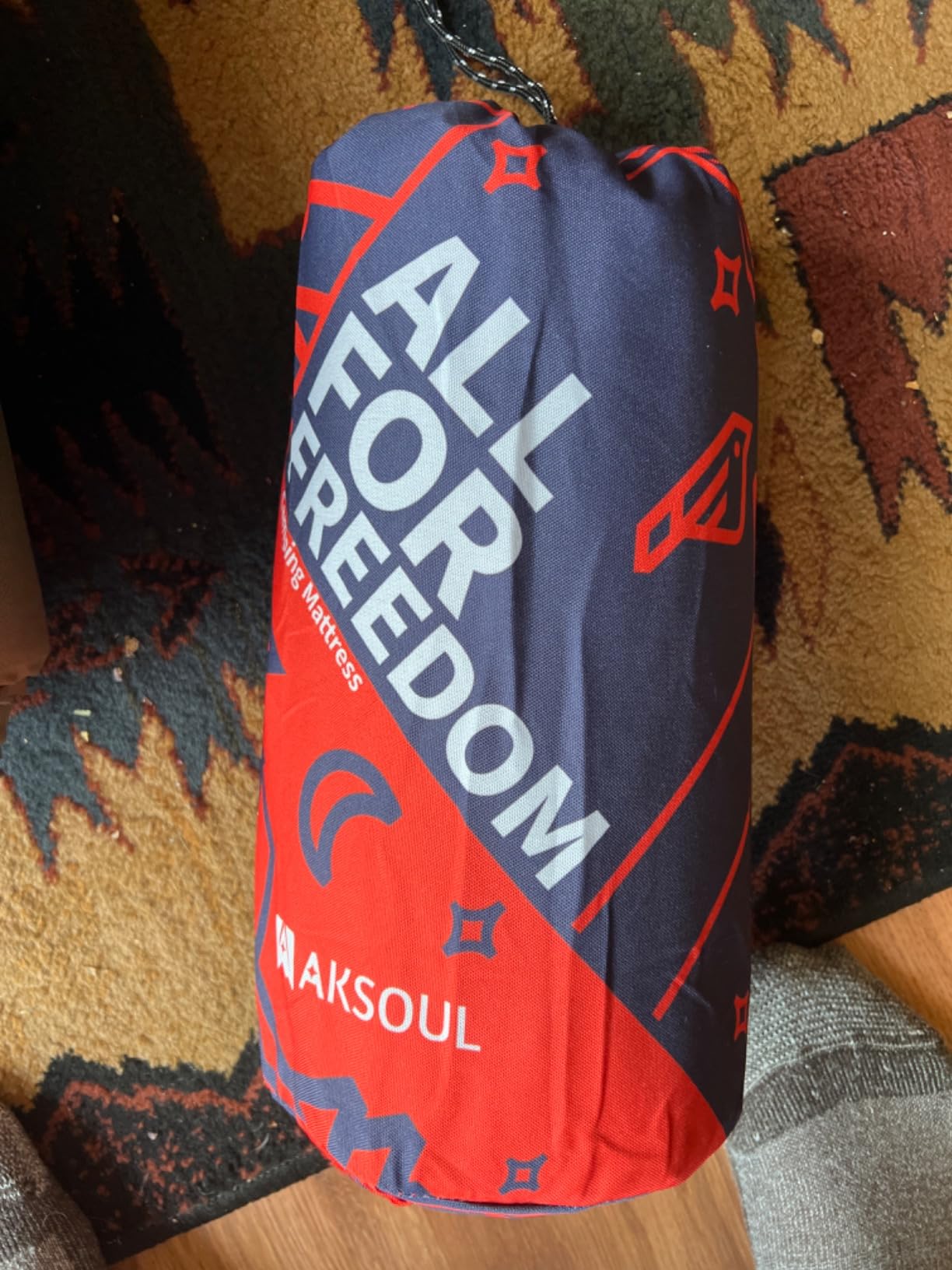
Stomping the built-in foot pump fully inflates it in 30 to 40 seconds, so there is no blowing into a valve at midnight. The snap connectors on the sides join two mats into a double bed, which is handy for couples.
Construction is 40D nylon with a TPU coating and a stated 440 lb capacity, so it handles heavier sleepers without complaint. The shell is also hand-wash friendly, which matters when the pad picks up camp dust.
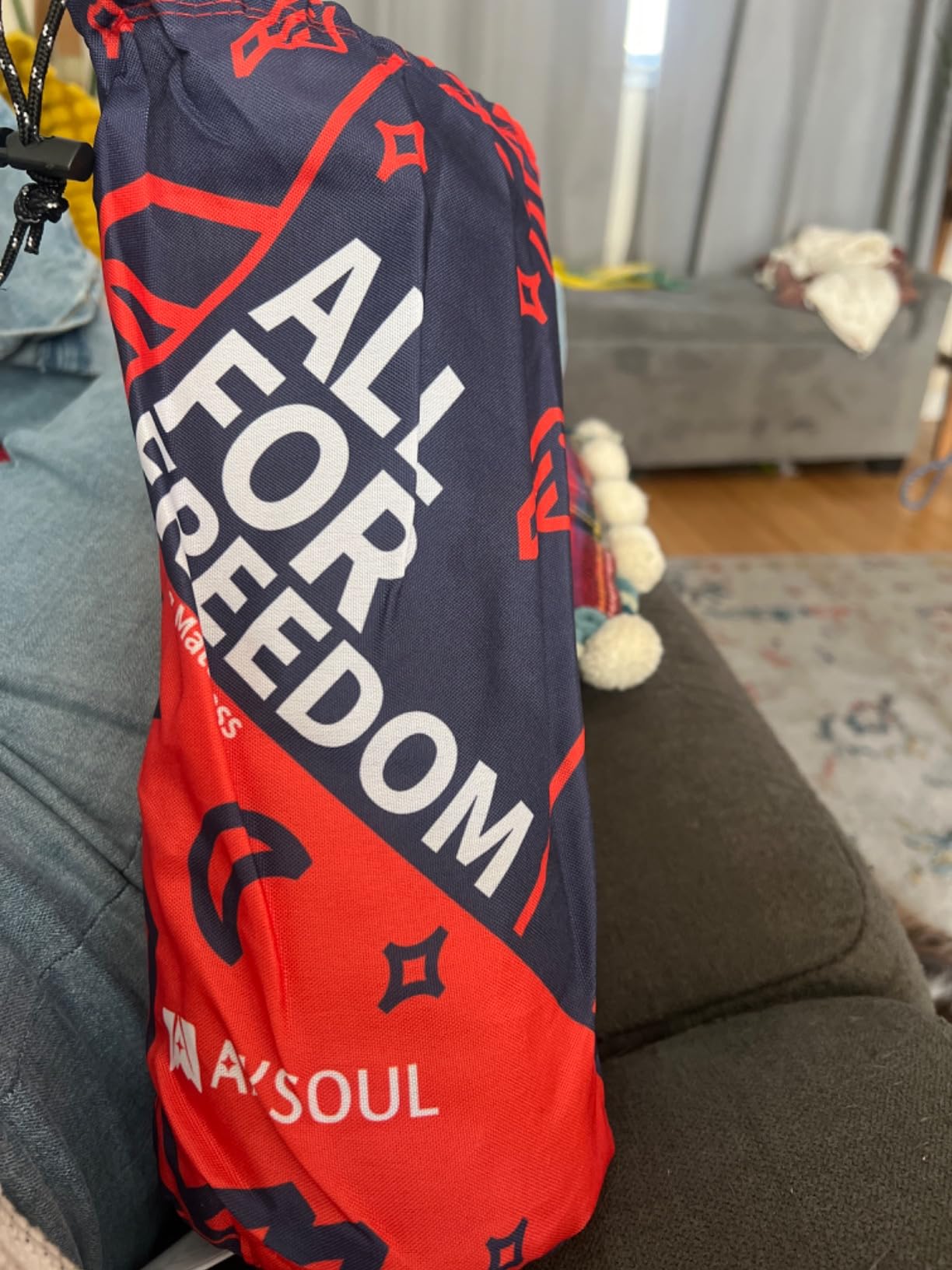
Where the thickness and width line up
At 3.9 inches and 27 inches wide this is one of the few pads here that clears both of our side-sleeper minimums without going over 1 kg. For car camping and comfort-first trips it is very hard to argue with the value.
The 850 g weight is the catch. It fits in a backpack without drama, but it is not a fastpack component if you are counting every gram.
Who should look elsewhere
Cold ground is the dealbreaker. Air chambers hold almost no insulation, and owners who tried it in cold conditions recommend sitting it on top of a foam mat. The finish is water resistant rather than fully waterproof, so keep it out of sustained rain.
Leave the side snaps off if you pack tight, since the connectors add bulk that has nowhere to go. If you want the same loft with far better cold performance, look at the TREKOLOGY later in this list.
4. TOBTOS 6 Inch Inflatable Pad: Best for Maximum Cushion
TOBTOS Inflatable Camping Sleeping Pad with Pillow, Thick 6 Inch Ultralight Sleeping Pad with Built-in Pump, Lightweight Sleeping Mat for Camping, Backpacking, Hiking, Tent (Blue)
Up to 6 inches thick
75 x 28 inch inflated
Integrated ergonomic pillow
Raised side rails
2.5 lb
Pros
- Deepest loft here
- keeps side sleepers fully off the ground
- Foot pump inflates in about a minute
- Holds air over multiple nights
- Side rails reduce rolling
Cons
- Some owners report slow leaks after months
- Nylon shell is noisy and punctures on sharp ground
- Cold to the touch in low temperatures
Six inches is an unusual amount of cushion, and it changes the feel of the night. Side sleepers describe this as one of the most comfortable pads they have used, because there is simply enough material under the hip that the ground never becomes the limiting factor.
Raised side rails run the length of the pad and act as a shallow cradle. When you roll onto your side you settle into the middle instead of sliding toward the edge, which is the single most common complaint about flat air pads.
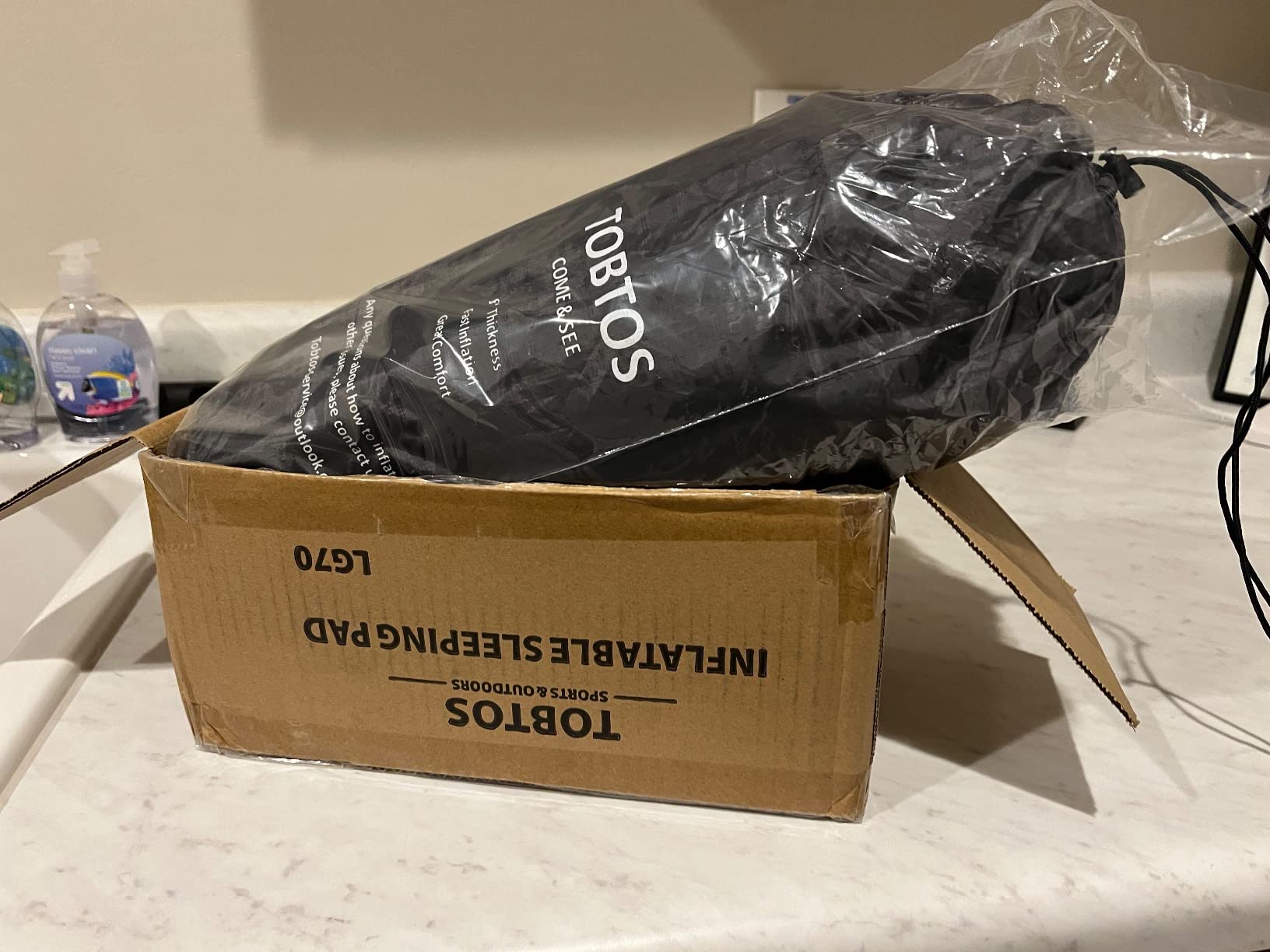
The one-piece pillow is moulded to follow the head and neck curve, so it does not shift around the way a loose pillow does. The foot pump reaches full inflation in roughly a minute with adjustable firmness, which lets you tune the loft rather than settling for one setting.
Air retention is a genuine strength here. Multi-night users report no topping up at all, and the listed 800 lb capacity is high enough that thickness never feels compromised, even with two people on it.
The honest durability picture
A 40D nylon shell with heat-sealed edges is solid for normal campsites, but reviewers do report slow leaks developing after weeks or months of use, and the nylon surface is noisy when you move. On sharp or rocky ground, take a repair patch seriously.
28 inches of width is generous. Combined with the side rails, this is the least likely pad here to put you on the floor during the night.
Where the 2.5 lb hurts
At 2.5 lb packed this is a car camping and basecamp pad. Anyone backpacking will feel it, and the air-only build feels cold to the touch in low temperatures unless you put something underneath.
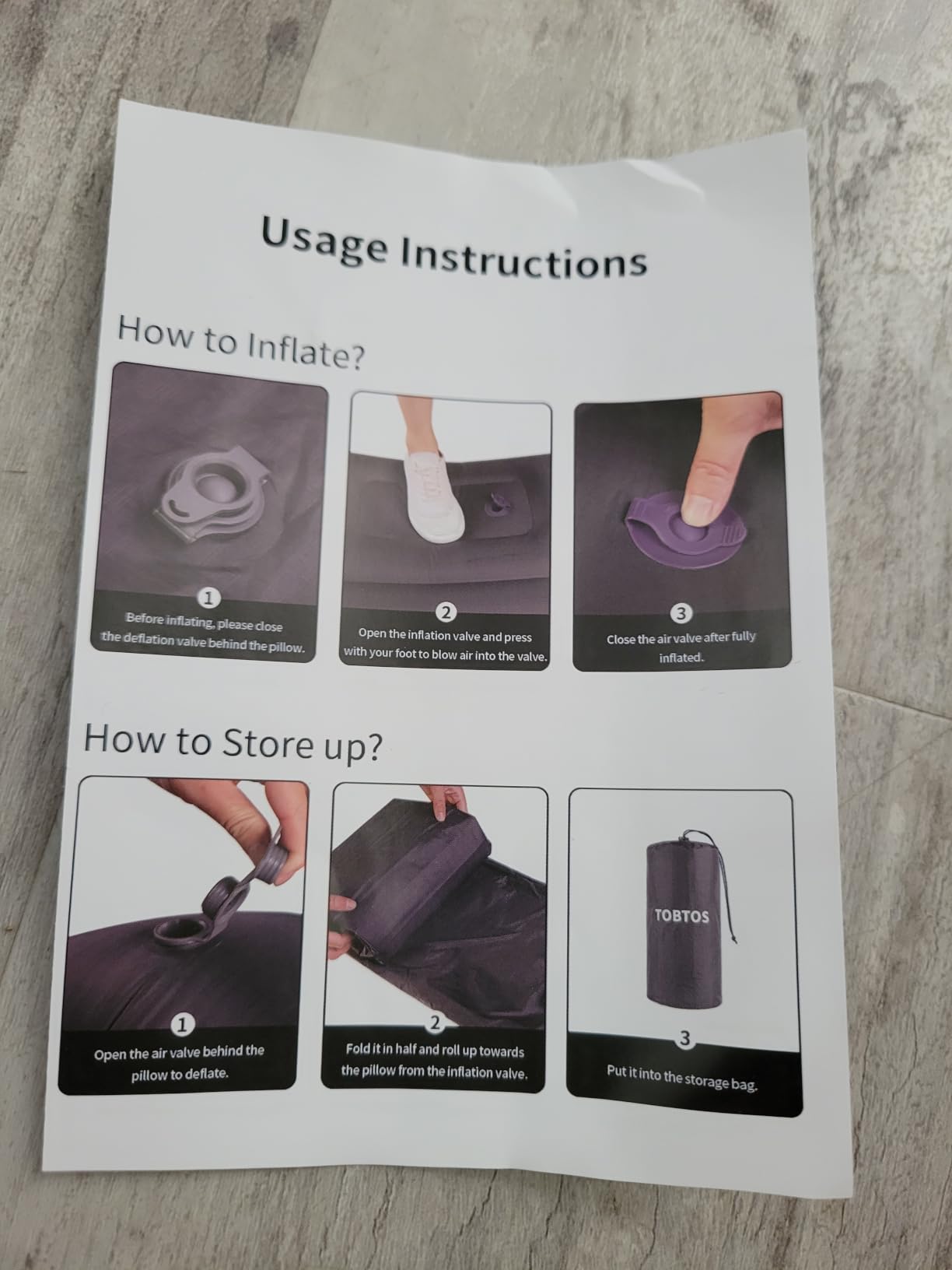
The dual valve design confuses first-time users, so budget five minutes to work out the open and close sequence. Clear instructions would fix most of the early frustration.
5. Lost Horizon Option3 Twin: Best Wide Pad for Car Camping
Lost Horizon Option3 Self-Inflating Foam Camping Mattress, Twin, 4.5″
4.5 inch thickness
8.5 lb solid foam fill
R-value 13
38 inch twin width
Adjustable firmness
Pros
- 4.5 inches of foam and air for real pressure relief
- 38 inch twin width
- Silent with no squeaking
- R-value 13 for winter
- Firmness is adjustable
Cons
- Over 11 lb and bulky
- Deflating and packing takes real effort
- Costs more than air pads of similar loft
This is the closest thing to a bed in this list. 4.5 inches of solid foam sitting under an adjustable air layer means the hip sinks into a deep cushion rather than pressing against a firm surface, which is exactly the relief most side sleepers are chasing.
The width is the standout number. At 38 inches it is effectively a twin mattress, so rolling over never brings your arm or leg near the edge. Restless sleepers who thrash around benefit more from this than from extra thickness.
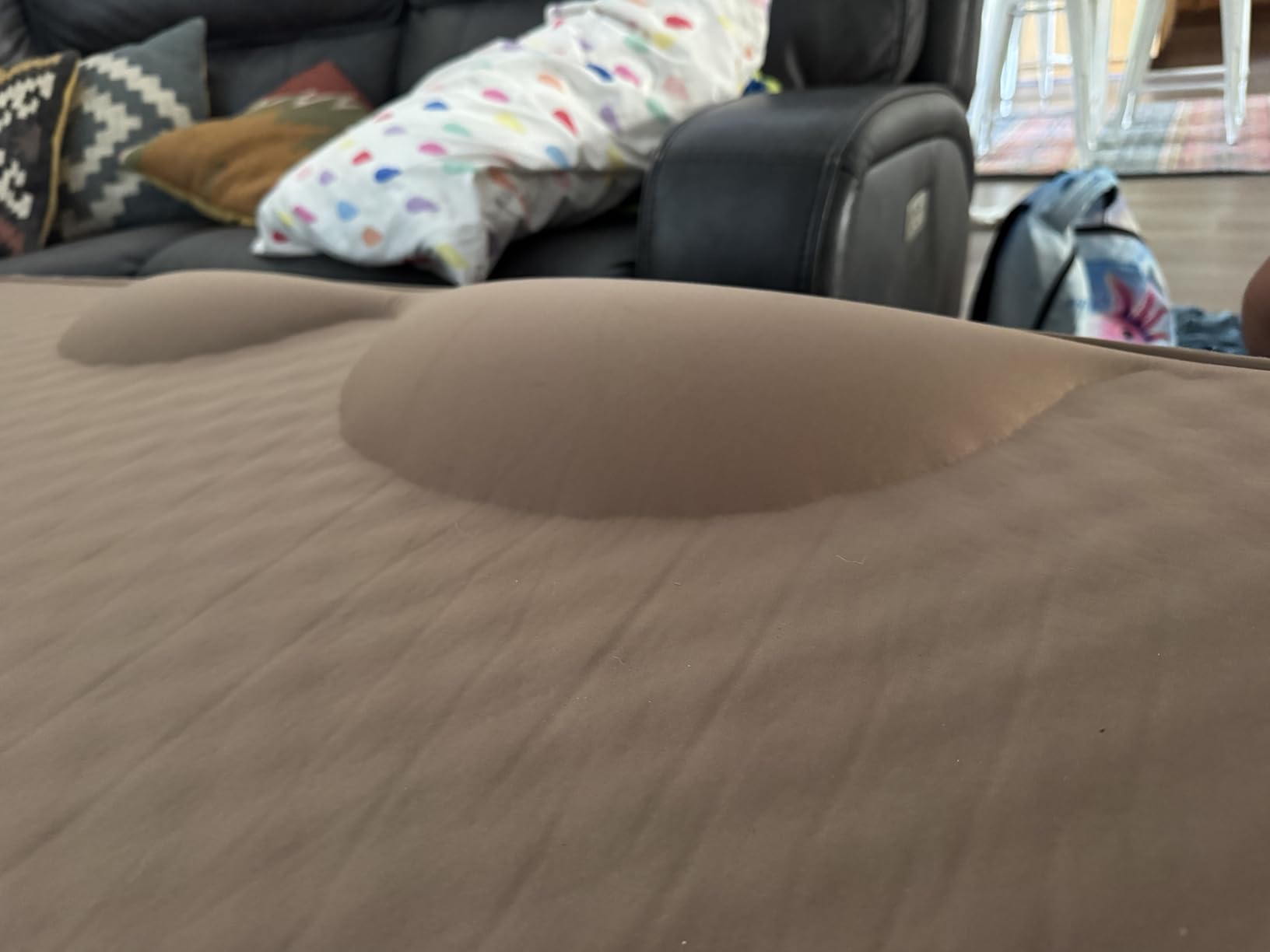
Owners describe the surface as silent. Foam and air do not squeak or rub the way all-air mattresses do, so it works in a shared tent or a van where noise matters. An R-value of 13 also makes it genuinely usable through winter.
Firmness is dialled in with the valve, so one pad can suit two people with different preferences. The listing notes up to 300 lb of capacity with the full foam fill.
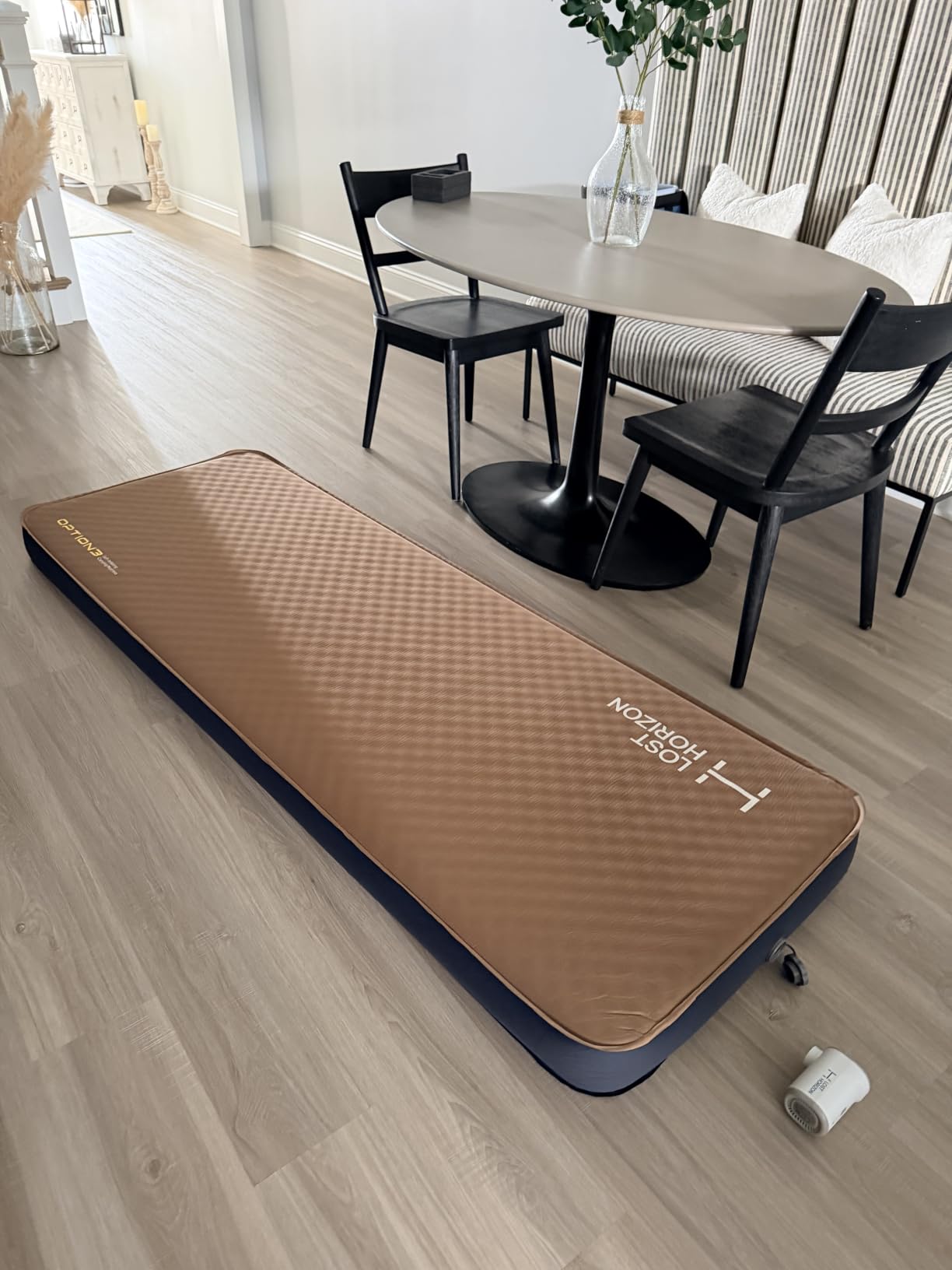
Why the width changes sleep quality
Side sleepers who feel the edge of their pad all night usually have a width problem, not a thickness problem. At 38 inches this pad removes that failure mode entirely, and it is one of the few here that also stays quiet.
Insulation is a bonus rather than the main draw. R-13 means it can go straight onto frozen ground without a foam pad underneath.
The packing problem
Be honest about the weight: 11.3 lb and a bulky roll. The manufacturer states it is not recommended for backpacking, and we agree. Deflating 8.5 lb of foam takes patience or an optional electric pump.
It also costs more than air-only pads of similar thickness, so the value case only works if you are car camping or basecamping often. For the same money in a lighter package, a foam pad plus a thick inflatable gets you most of the way.
6. Klymit Static V Luxe: Best Wide Packable Pad
Klymit Insulated Static V Luxe Inflatable Sleeping Pad | Comfortable, Lightweight, Easy to Inflate Portable Air Bed Mattress for Camping, Backpacking and Hiking — Red
76 x 30 x 3 inches inflated
V-chamber construction
Klymalite insulation
Packs to 10 x 5 inches
32 oz
Pros
- 30 inch width reduces rolling off
- V-chambers support the lower back
- Packs to 10 x 5 inches at 32 oz
- No crinkly foil noise
- Firmness is easy to adjust
Cons
- Flip valve loses air unless snapped shut
- 20 to 30 breaths to inflate
- Modest insulation for winter
- Awkward to roll back into the stuff sack
Thirty inches wide at 32 oz is the rare combination that makes this one interesting. Most wide pads are wide because they are heavy. This one gets there with V-shaped chambers that cradle the lower back and lift the hips clear of the surface.
Side sleepers rate it highly for exactly that reason. The chambers limit how much air can slosh from side to side, so the surface stays put when you roll over rather than pushing you toward the edge.
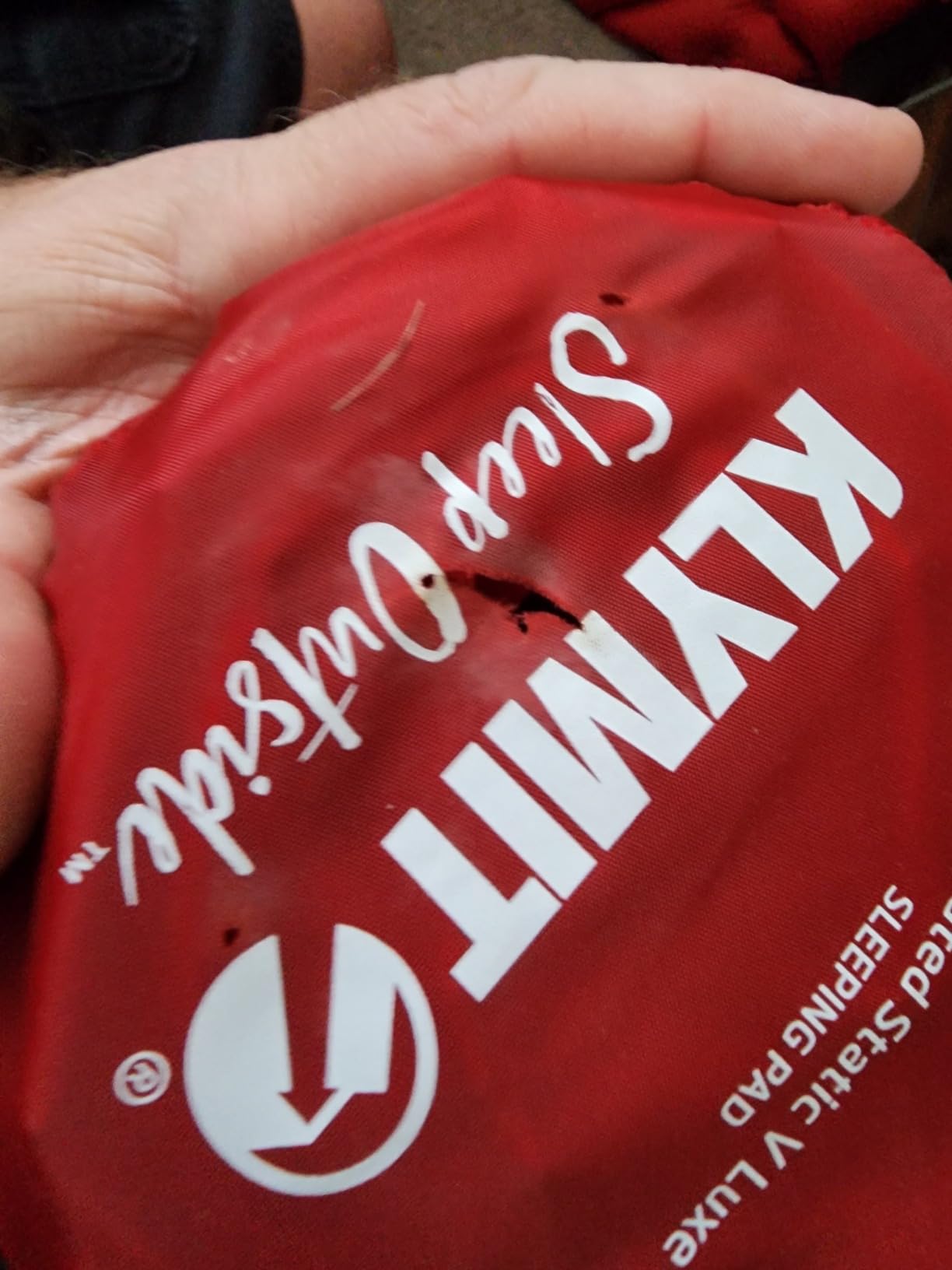
It stuffs into a 10 by 5 inch package, small enough for a motorcycle or bike setup where volume is the real constraint. Buyers also mention no crinkly foil sound when moving, which is a genuine plus in a shared tent.
The Klymalite synthetic fill carries an R-value of 5, enough for three-season trips and cold-ish nights without dragging a separate foam mat.
The valve is the whole story
This pad leaks unless you snap the black cover fully closed. It is the most common complaint in the reviews, and it is entirely a technique issue. Check the valve every time before you lie down rather than discovering it at dawn.
At 20 to 30 breaths it is tedious to fill by mouth, so budget for a pump. Once inflated, firmness is easy to tune for pressure relief.
Where 3 inches sits
Three inches of loft is the minimum we would accept for a side sleeper. Combined with 30 inches of width it works well for lighter and medium sleepers, though heavier campers will notice the hip more than they would on a 4 inch pad.
Insulation keeps it to roughly three-season use rather than deep winter, and rolling it back into the stuff sack after a trip takes longer than it should. Practice it once at home before a long trip.
7. Elegear Self Inflating 3.15 Inch Pad: Best for Quiet Winter Sleeping
Elegear Self Inflating Sleeping Pad with Pillow 26D Memory Foam 3.15″
26D high-resilience memory foam
77 x 27 inch inflated
ASTM R-value 9.5
800 lb capacity
Silent knit surface
Pros
- 26D memory foam spreads pressure far better than 19D foam
- 3.15 inch thickness clears the hip and shoulder
- 800 lb capacity with 24 hour static testing
- Silent knitted surface
- ASTM rated R-9.5 works across seasons
Cons
- 8.1 lb is car camping only
- First inflation can take up to 20 minutes
- Dual-layer valve takes practice
The reason this pad feels better than cheaper foam mats comes down to foam density. 26D high-resilience memory foam is denser and springier than the 19D foam used in most pads, so it pushes back under load instead of flattening. That is what keeps the hip elevated rather than sinking to the ground.
Foam also does not lose pressure overnight the way an air chamber can, so you are not adjusting anything at 2am. Owners report pressure relief across hips and shoulders as the main reason for the strong ratings.
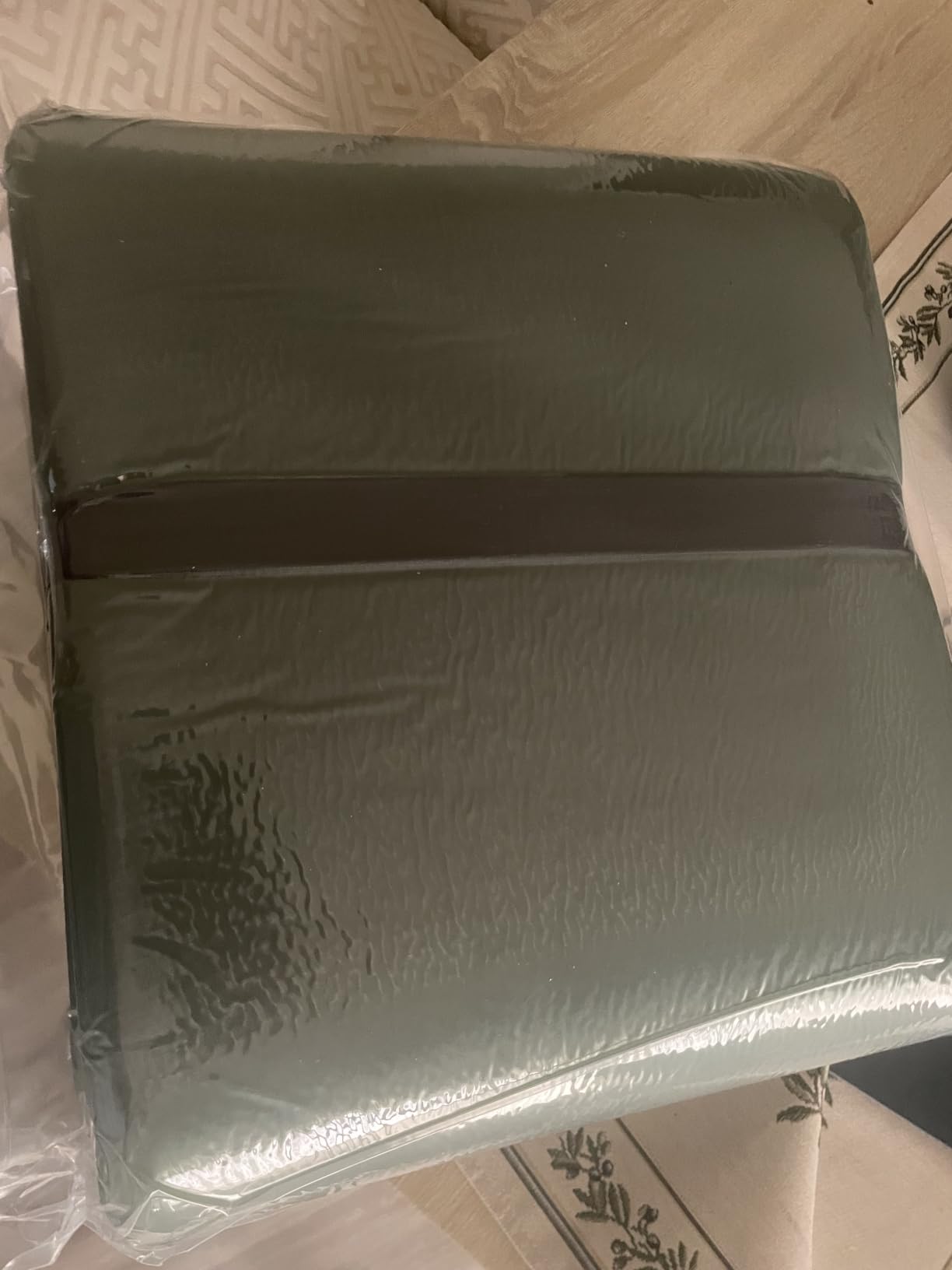
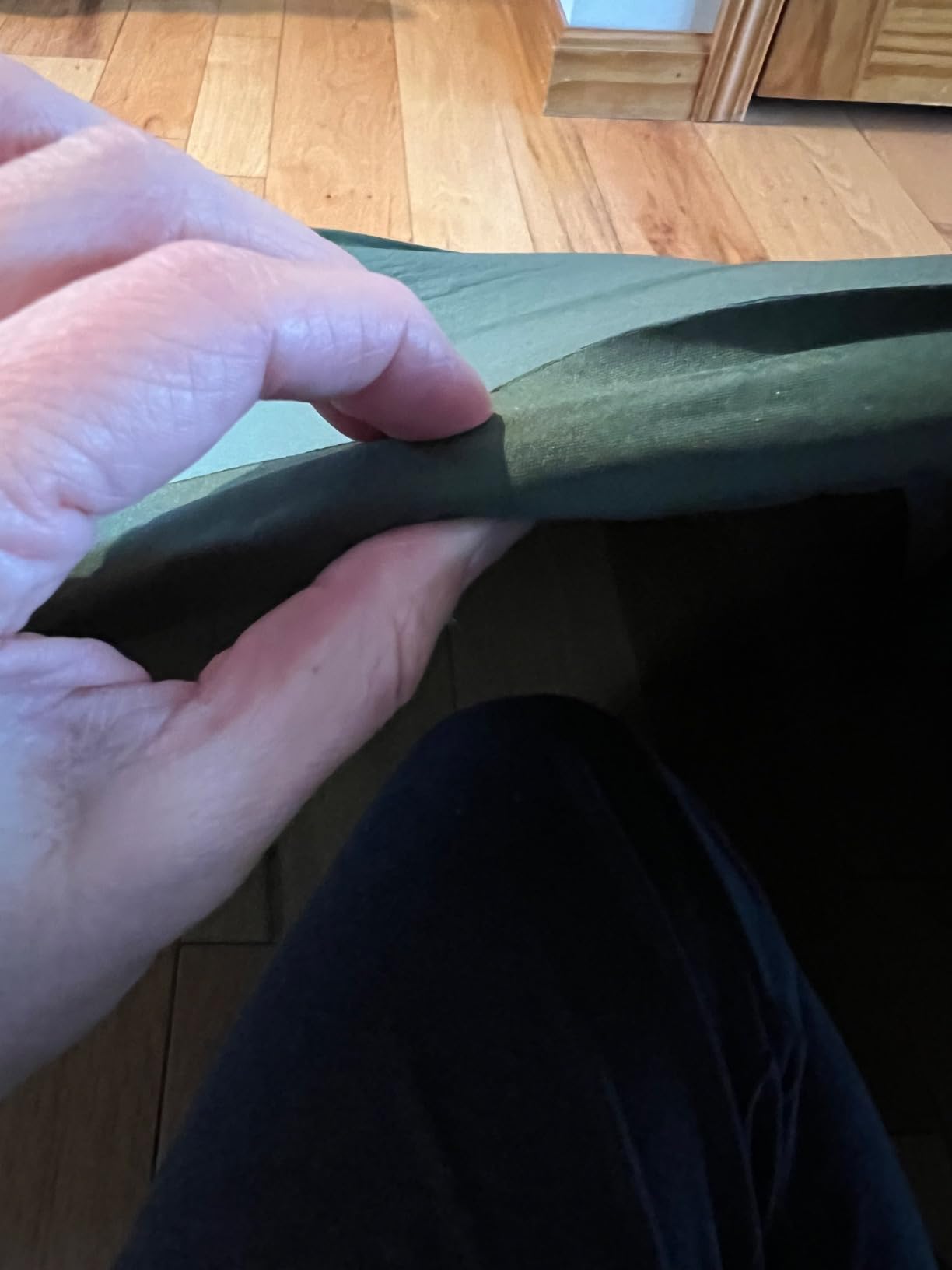
The 50D stretch knit surface over a waterproof TPU layer is genuinely silent. No crinkling, no rubbing, which is the single feature shared-tent campers ask about most.
ASTM testing backs up the numbers: an R-value of 9.5, and static pressure testing at 800 lb for 24 hours. The foam is also claimed to hold elasticity after 10,000 compressions, which is the sort of test that matters for a pad used for a decade.
Why density beats thickness
Two cheap 3 inch pads can feel completely different. A low-density foam compresses flat under the hip within weeks, while 26D foam keeps its loft. If you have owned a foam pad that went flat in the hip zone, density is what you were missing.
At 3.15 inches and 27 inches wide it clears both side-sleeper minimums, which is rare for a self-inflating pad.
Where it stops working
8.1 lb ends the backpacking discussion. Reviewers consistently frame it as a car camping or guest-bed pad, and they are right. If you need cold performance and portability, the TREKOLOGY covers both at a fraction of the weight.
The first inflation from the vacuum-packed state can take up to 20 minutes, and the dual-use valve takes a few tries to get right. Both are one-time learning costs rather than ongoing problems.
8. Hikenture 4 Inch Foam and Air Pad: Best for RV and Guest Beds
Hikenture 4″ Thick Self Inflating Sleeping Pad with Electric Pump, Single
80 x 28 x 4 inches inflated
Built-in electric pump
R-value 9.5
300 lb capacity
Adjustable firmness
Pros
- 4 inch foam fill cradles hips and shoulders
- Electric pump inflates in about 90 seconds
- Stretch-knit surface is quiet
- 28 inch width gives room to stretch
- Owners rarely need to re-inflate at night
Cons
- 5.4 lb is too heavy for multi-day walking
- Real inflated thickness runs 2.5 to 3 inches
- Electric pump battery can fail
- 80 inch length is longer than most campers need
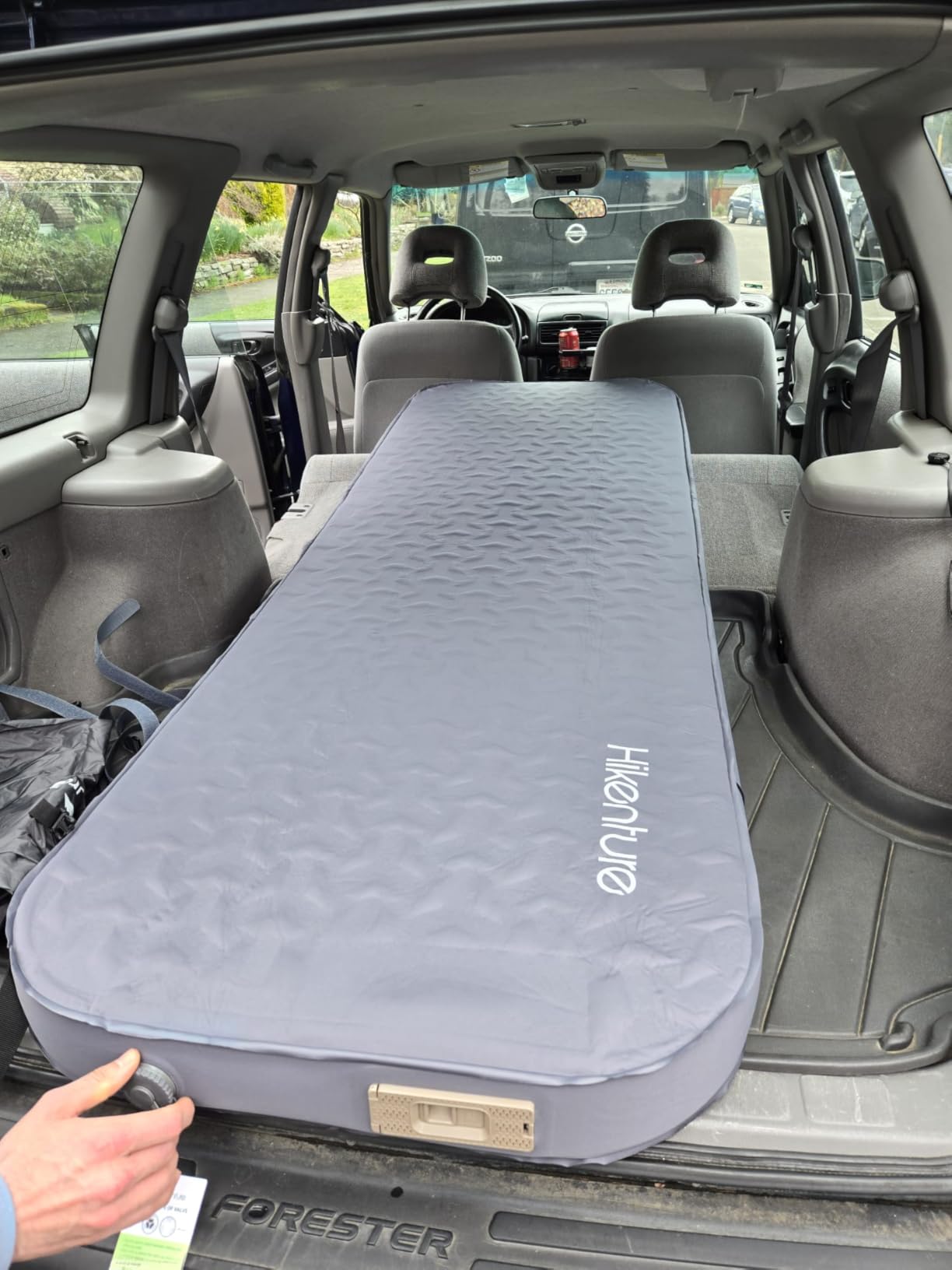
The electric pump is the feature that changes how you camp. It reaches hotel-bed firmness in about 90 seconds, then reverses to vacuum the air back out for packing. That removes the ten-minute deflation argument that ends most car camping trips.
Foam and air together give 4 inches of advertised loft that reviewers consistently say is enough for side sleepers. Reviewers report the best sleep of their camping trips, with the quiet stretch-knit surface standing out.
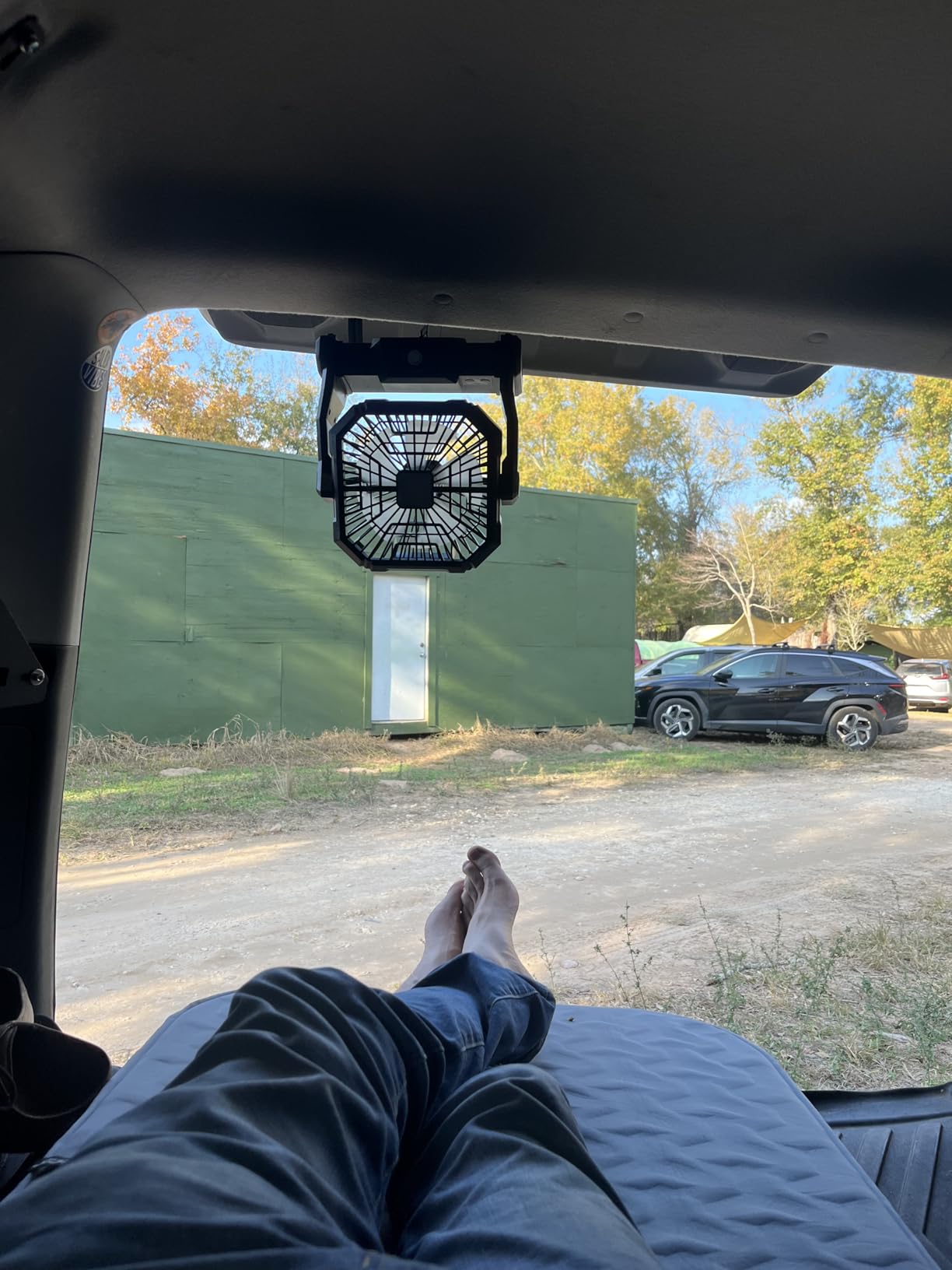
Y-structure airflow channels through the fill are claimed to lock in body heat while shedding weight, and the whole thing stuffs small enough for an airplane overhead bin. Quiet movement is confirmed in reviews.
Available in single, full and queen sizes, which makes it the most adaptable option here for hosting friends or fitting an RV floor. Capacity is rated to 300 lb.
Check the real thickness
Buyers report the inflated height landing closer to 2.5 to 3 inches rather than the advertised 4. That is still above the minimum, but if you are near the 3 inch threshold you should know the real number before you buy.
The 80 inch length suits taller campers and is wasted space for anyone under about 5 foot 9. That matters in an RV, where floor length is limited.
Which trips it fits
At 5.4 lb it is out of scope for multi-day backpacking, and the manual fallback valve only partially deflates if the pump battery dies. Carry the repair patch and know where the nearest outlet is.
For RV, van, basecamp or a spare bed in the guest room, the convenience outweighs the weight. R-value 9.5 means cold ground is not a problem.
9. TREKOLOGY UL R7 4 Inch Pad: Best Ultralight Insulated Pad
TREKOLOGY Sleeping Pad for Camping– Ultra-Lightweight, 4″ Thick Camping Mat with 7.2 R-Value for All Seasons (Blue)
70.8 x 24 x 4 inches inflated
SGS certified R-value 7.2
900 g
40D ripstop nylon
330 lb capacity
Pros
- 4 inch thickness at only 900 g
- Packs to roughly a water bottle size
- Reflective lining adds noticeable warmth
- Holds air overnight without topping up
- Below the cost of comparable insulated pads
Cons
- Reflective lining makes movement noisy
- No built-in pump so a pump sack is extra
- Short length suits sleepers up to about 5 foot 11
- Some reviewers doubt the R-7.2 claim in freezing conditions
Four inches of thickness at 900 g is unusual. Backpackers single this out because getting real side-sleeper clearance usually means carrying something twice as heavy, and this pad packs down to roughly the size of a water bottle.
The SGS-certified 7.2 R-value adds genuine cold-ground capability to an inflatable, which is the spec that makes it work below freezing. Reviewers who expected only marketing came away reporting that it held warmth better than pads costing considerably more.
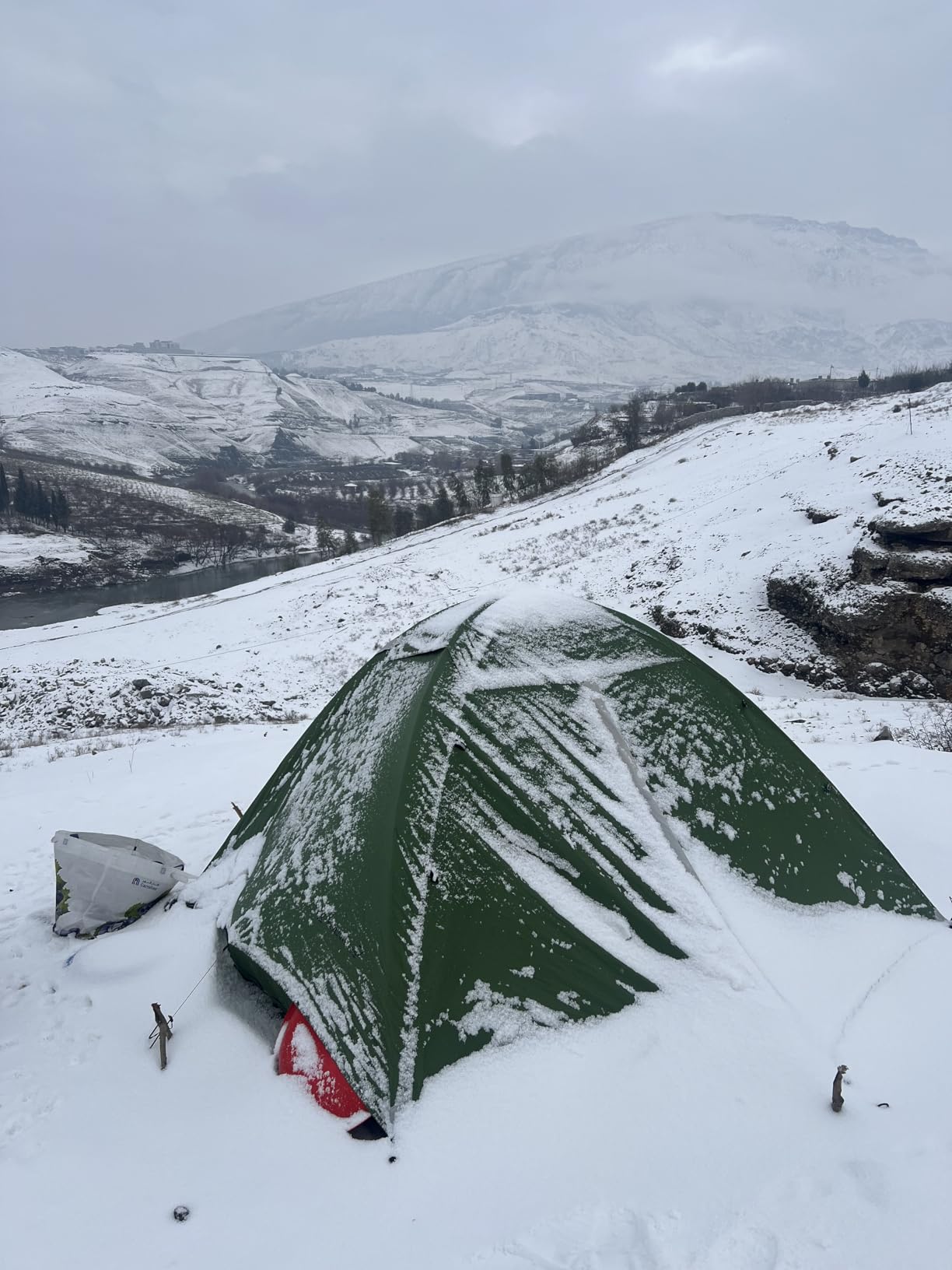
Side sleepers report staying off the ground without topping up air, and the 40D ripstop nylon with TPU coating and anti-leak valve handles rough ground without drama. Capacity is rated to 330 lb.
It comes with a one-year manufacturer warranty, which is thinner than the lifetime guarantee on the Gear Doctors, but longer than nothing for a pad that will get punctured eventually.
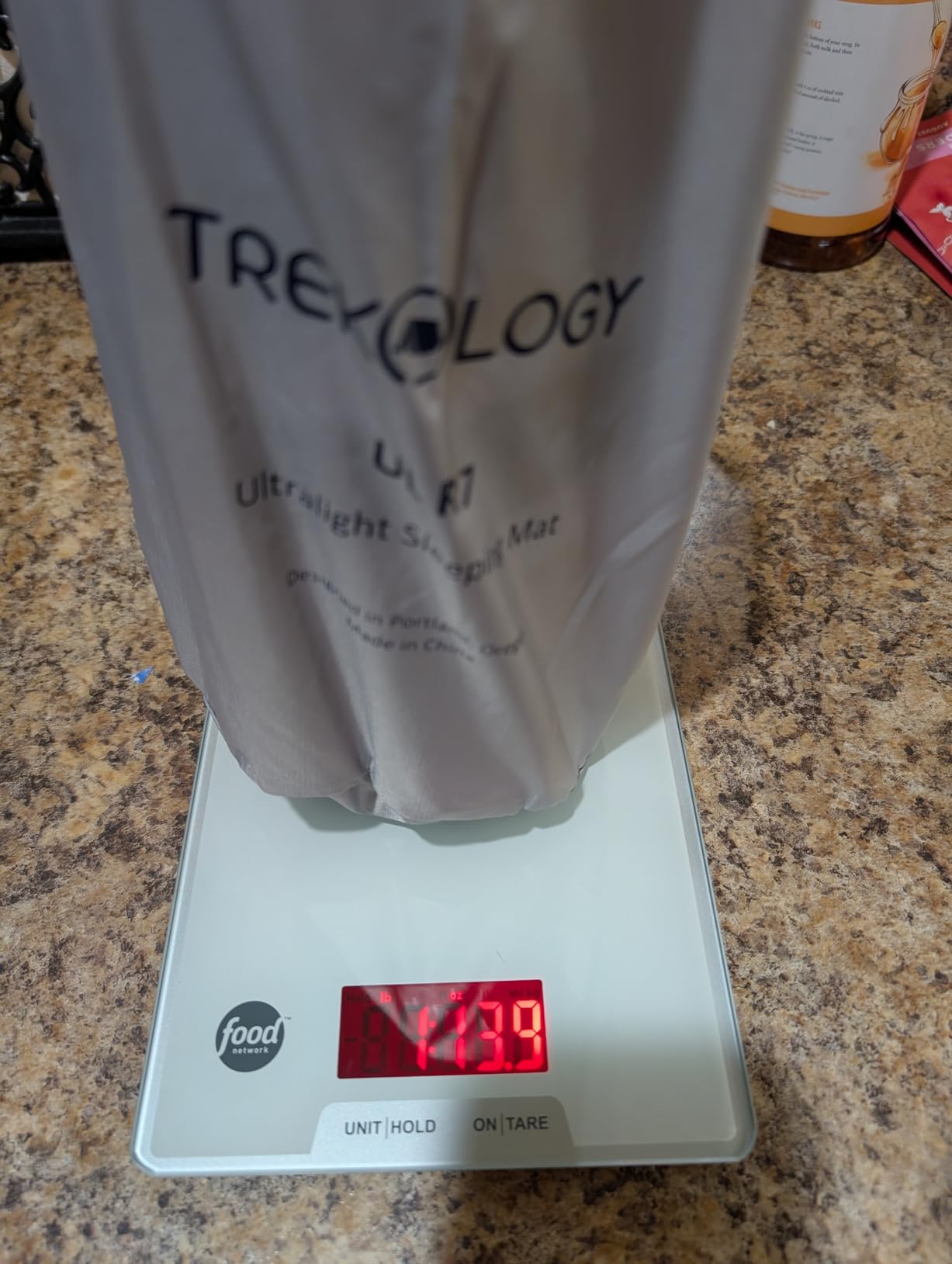
Packability is the reason to buy it
This is the pick if you carry a pad on your back and still want thick loft. At 4 inches and under 2 lb there is nothing else here that does both. Sleepers up to 5 foot 11 fit comfortably in the 70.8 inch length.
Backpackers in reviews praise the combination of thickness, weight and packed size as unusual for an insulated pad, and confirm no air loss overnight.
The compromises you accept
The reflective inner lining makes movement noisy, which is a real drawback in a shared tent. The internal foil also has to be held aside during deflation. You inflate it by mouth or with a separate pump sack, which is not included.
Some reviewers are sceptical that the certified R-7.2 holds up in genuinely freezing conditions. Treat it as a strong shoulder-season and light winter pad, and put foam underneath if you expect hard frost.
10. Exped MegaMat Duo Medium: Best for Base Camp Comfort
Exped MegaMat Sleeping Pad, Duo Medium
72 x 41.3 x 4 inches
4 inch cored open-cell foam
R-value 8.1
3D vertical sidewalls
7.4 lb
Pros
- 4 inches of cored foam feels like a home mattress
- 41.3 inch duo width
- Soft quiet stretch tricot that is not scratchy
- Top-up pump tunes firmness
- Holds firmness overnight
Cons
- 7.4 lb is not carryable on foot
- First self-inflation takes a long time
- Not water resistant so it needs shelter
- Some owners report slow leaks over months
This is the comfort ceiling. Four inches of open-cell polyurethane foam with 30 percent more coring than standard means the pad holds its shape under a hip rather than flattening, and reviewers compare the result favourably to a home mattress.
Three-dimensional vertical sidewalls remove the edge tapering found on most camping mats. Your arms and legs rarely hang off, and rolling onto your side does not slide you toward a drop-off. For side sleepers, that geometry matters as much as thickness.
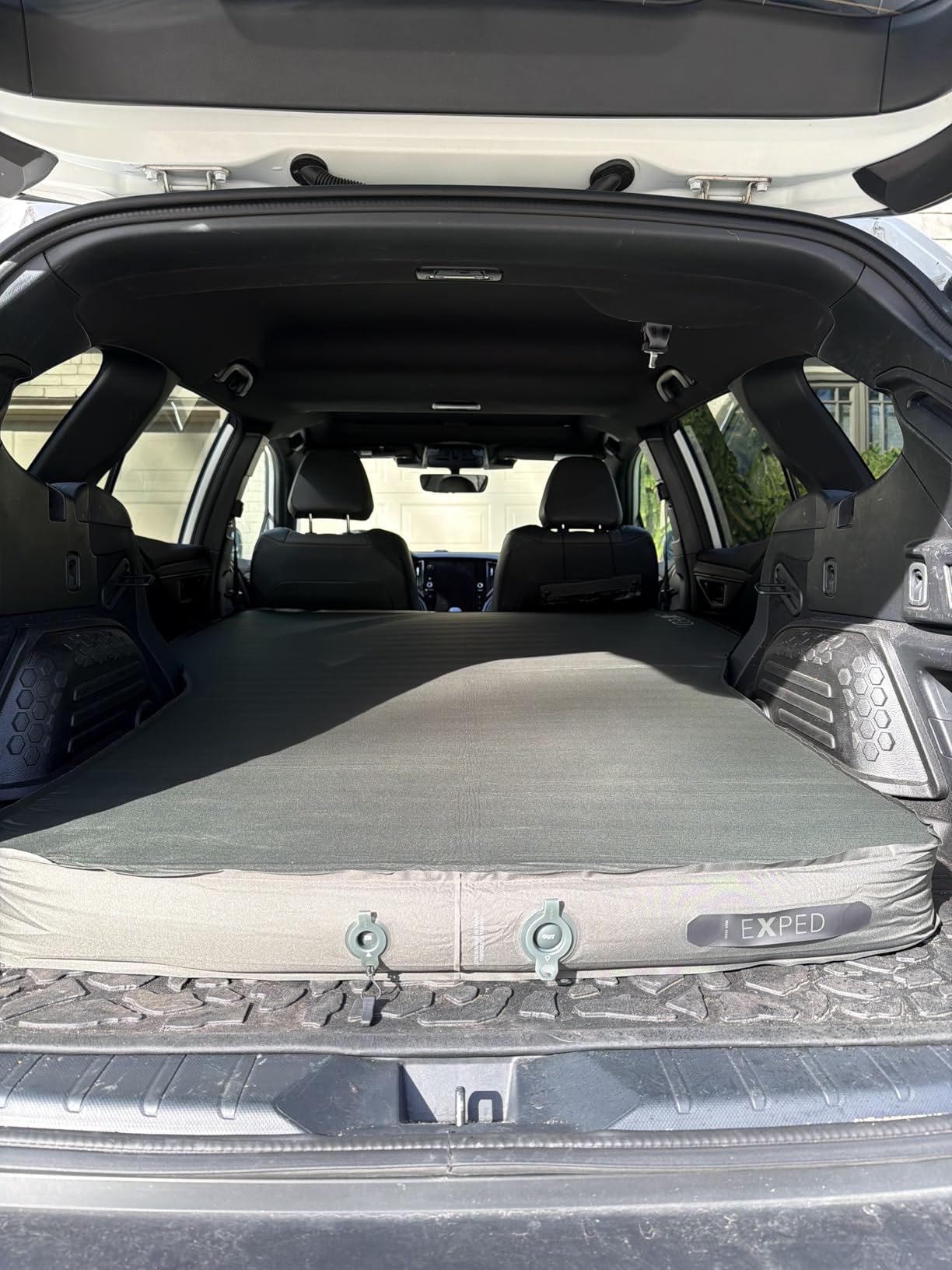
The 100 percent recycled four-way stretch tricot surface is soft and quiet against bare skin. It avoids the scratchy feel owners complain about on cheaper camping mats, and two welded side handles make it easy to lift into an SUV.
Firmness is tunable with the included top-up pump, and most owners report it holding its feel overnight without deflating. R-value 8.1 keeps cold ground at arm’s length.
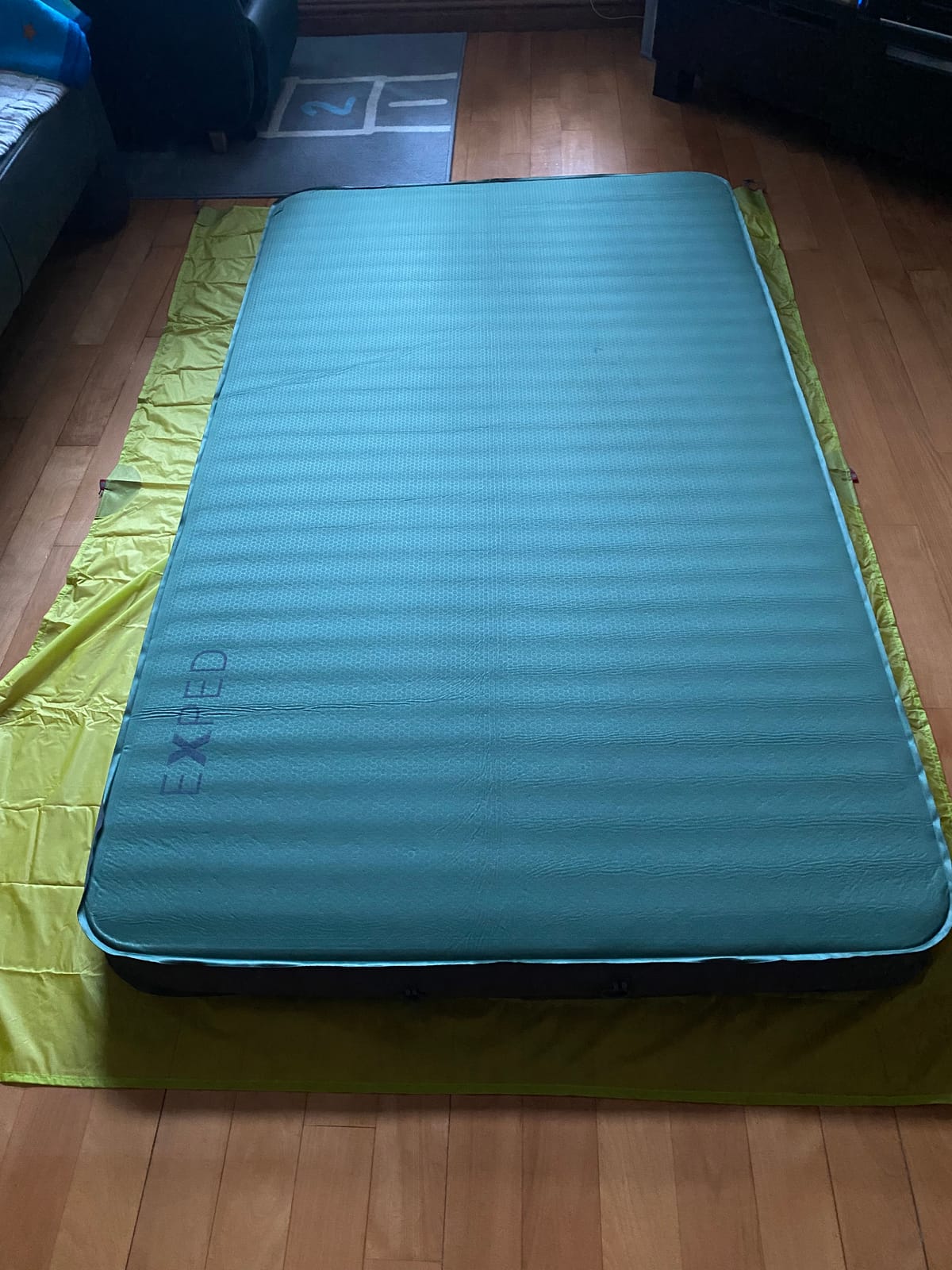
Best for couples and car campers
The 41.3 inch Duo Medium width is genuinely two-person territory. One useful detail to know before buying: on a duo pad, your partner shifting their weight makes the other side firmer. Pick a single if you are sensitive to that.
Reviewers favour it for rooftop tents, SUVs and RV setups, where bulk is not an issue and comfort is the whole point.
Why it stays in the car
At 7.4 lb it is not a walking pad, and the first self-inflation is slow, with the mini pump struggling on that volume. It is also not water resistant, so rain needs a tarp above it.
A minority of owners report slow leaks and punctures after months, so keep the included repair patch accessible. For basecamp comfort where you drive to the site, nothing here matches it.
How Thick Should a Sleeping Pad Be for Side Sleepers?
Aim for at least 3 inches (about 8 cm) of thickness, and 3.5 to 4.5 inches (9 to 11.5 cm) for real side-sleeping comfort. Treat 2.5 inches as an absolute floor. Below that, your hip compresses the fill and reaches the ground, which is what causes hip pain and restless turning through the night.
The logic is mechanical rather than preference. Lying on your side concentrates your full body weight onto the shoulder and hip, the two highest-pressure points on the pad. A thin pad has nowhere to put that load, so the surface collapses directly under you. Thicker pads with edge-to-edge air chambers or supportive side rails push the load sideways into adjacent material, keeping the spine level and the ground out of the equation.
Weight matters more than most charts suggest. A 3 inch pad works for a lighter sleeper on a soft site. A heavier sleeper, or anyone camping on firm or rocky ground, needs 4 inches or more because the same load has further to travel.
R-Value and Cold-Ground Side Sleeping
Choose R-value by the lowest ground temperature you expect, not by the month. Summer ground calls for R 1 to 2, spring and autumn for R 3 to 4, and R 5 or above for winter and freezing conditions. Side sleepers cool faster than back sleepers because all their weight compresses the insulation in one spot.
R 1 to 2: summer, warm soil and sand only
R 3 to 4: spring and autumn, most shoulder-season trips
R 5 to 7: cold ground, snow and winter camping
R 8 and above: deep winter and sub-freezing ground
R-value and thickness are separate problems. A 6 inch air pad can be cold, and a 1.5 inch foam pad can be warm, because insulation lives in the material while loft lives in the air. To get both, stack a closed-cell foam pad under a thick inflatable. R-values add, so an R 4 foam mat under an R 3.5 inflatable gives you roughly R 7.5 of ground insulation while keeping the thick surface on top.
One forum habit worth copying: dig a shallow depression under the hip area before pitching on firm ground. It gives the pad somewhere to settle and reduces the pressure spike that wakes people up.
Width, Shape and Baffle Design
Choose 25 inches or wider, and go to 30 inches or more if you are broad through the shoulder or a restless sleeper. Below 20 inches you perch on the edge of the pad all night, and users often describe it as feeling perched like a bird on a branch.
Baffle design decides whether a thick pad stays supportive when you move. Horizontal baffles spread load well but let air shift under pressure. Vertical baffles and side rails restrict that movement, and pads like the TOBTOS use raised rails to keep a side sleeper centred. Edge-to-edge air support, as on the ZOOOBELIVES, avoids the narrow-rail pinch that ruins cheaper pads.
Shape matters less than people expect. A rectangular pad with full-width sidewalls beats a tapered mummy shape for side sleepers, because tapering puts your feet and shoulders on the least supported area. Double-width or linkable setups solve the width problem for couples without buying a mattress.
What Causes Bottoming Out, and How to Stop It
Bottoming out happens when the surface under your hip or shoulder compresses fully and your body reaches the ground. It shows up as hip pain, dead-arm numbness, a stiff shoulder, and turning over repeatedly through the night. Thin pads, narrow pads, low-density foam and under-inflation are the four causes.
Choose 3.5 inches or more of loft so there is material under the hip to begin with.
Choose 25 inches or more of width so your body is not perched on the edge.
Inflate fully first, then bleed air back until your hip feels cushioned rather than sagging.
Lie on your side on the pad before bed and press your hip down hard, then let go. If the surface stays compressed, it is too soft.
Add a closed-cell foam pad underneath for insulation and a second layer of support.
One cheap field test we like: press your palm into the inflated surface and release it. The pad should rebound within a second or two. If it stays dented, the fill is not thick enough for your weight. On firm or rocky ground, add a foam mat underneath even in summer.
How to Inflate a Pad for Side-Sleeping Support
Inflate past firm, then bleed air back until your hip is cushioned but not sagging. Both failure modes are real: too soft and you bottom out, too firm and the surface shoves your shoulder up and you feel bounced rather than supported.
Lay the pad flat in the tent and smooth out every crease before inflating.
Inflate fully using the foot pump, electric pump or pump sack.
Open the valve slightly and release air until the surface feels firm but gives slightly under a hip.
Lie on your side and check that your hip is lifted clear of the tent floor.
Press down firmly and release. A fast rebound means correct pressure, a lasting dent means too soft.
Close the valve fully and confirm the cover is snapped shut on flip-valve models.
Avoid mouth inflation where you can. Moisture builds inside the pad over time and degrades the coating. A pump sack or built-in pump also gives you finer control over the final pressure.
Air Pad vs Self-Inflating vs Closed-Cell Foam
Air pads give the best thickness-to-weight ratio and the most control over firmness, so they win for side sleepers who want to tune the feel. Self-inflating pads trade some loft for far better insulation and near-zero setup time. Closed-cell foam pads are the cheapest and toughest option, and the least comfortable over a long night.
Air pad: highest loft, adjustable firmness, lightest per centimetre of thickness, poorest cold-ground insulation
Self-inflating: open or closed-cell foam plus an adjustable air layer, good R-value, fast setup, heavier and bulkier packed
Closed-cell foam: cheapest, most puncture resistant, low R-value around 2 to 3, comfortable only if the foam is thick and high-density
Foam pads have a specific failure mode worth knowing. Cheap low-density foam compresses flat in the hip area within weeks and never recovers, which is why the higher-density foams in this list are a better long-term buy. If foam is your only option, look for at least 3 inches of thickness and dense foam rather than thick soft foam.
If you also need gear that travels well, our guides to the best laptop cooling pads cover the same packability-versus-performance logic in a different category.
Durability: Denier, Seams and Repair
Denier is how heavy the shell fabric is. 20D is light and cheap but punishes easily, 40D is the sensible middle for backpacking, and 70D is what you want for rocky ground, regular car camping or sharing a pad between two people. Several picks here use 40D nylon with a TPU coating or a 75D polyester shell, all of which tolerate abrasion well.
Seams matter as much as fabric. Welded and heat-sealed seams eliminate the stitched pinhole leak path that shows up after a season of use. Every pad in this roundup includes at least a repair patch, and two include a full patch kit.
A routine worth adopting: inflate the pad indoors for an hour before a trip and listen for a hiss, then check it again the following morning. Slow leaks show up early at home instead of at 4am in the cold. Store pads loose in a dry place rather than compressed in a pack for months, since long-term compression is what voids most warranties.
Frequently Asked Questions
How thick should a sleeping pad be for side sleepers?
At least 3 inches (about 8 cm), and ideally 3.5 to 4.5 inches (9 to 11.5 cm). Treat 2.5 inches as an absolute floor, because below that your hip compresses the fill and reaches the ground, causing hip pain and restless turning through the night.
What is a good R value for a sleeping pad?
Match R-value to the coldest ground you expect. R 1 to 2 works for summer, R 3 to 4 for spring and autumn, and R 5 or higher for winter and freezing conditions. Side sleepers cool faster because all their weight compresses the insulation in one spot.
What is the best way to sleep if you’re a side sleeper?
Use a pad at least 3.5 inches thick and 25 inches wide, inflate fully, then bleed air back until your hip feels cushioned but not sagging. Lie on your side and press your hip down to test the pressure. If the surface stays dented, it is too soft, and adding a foam pad underneath adds insulation and support.
What to use instead of a sleeping pad?
A high-density closed-cell foam mat for cheap durability, a self-inflating pad for insulation with almost no setup, two linkable wide pads joined into a double bed for couples, or a regular mattress for car camping. Sleeping with a quilt instead of a sleeping bag also frees the shoulder, which removes a common source of numbness.
What is the best sleeping pad for side sleepers who are backpacking?
At 3.5 inches or more of thickness and under 20 oz, the TREKOLOGY UL R7 stands out at 4 inches and 900 g with an SGS-certified 7.2 R-value. The AKSOUL at 3.9 inches and 850 g is the lighter comfort option, though it carries little cold-ground insulation.
The Verdict: Which Sleeping Pad Should You Buy?
For most side sleepers the ZOOOBELIVES Airlive2000 is the best of these ten. Four inches of edge-to-edge air support, a quiet surface and a built-in foot pump solve bottoming out without any setup tricks, and it holds the widest range of owner ratings in the group.
Pick the Gear Doctors Oxylus if cold ground is your problem and 1.5 inches of foam will do. Pick the TREKOLOGY UL R7 if you carry the pad on your back. Pick the TOBTOS or Lost Horizon Option3 if you want the deepest cushion and you drive to camp. Every one of these gives the best sleeping pads for side sleepers at least 3 inches of loft, and that is the number that decides whether you wake up rested.