
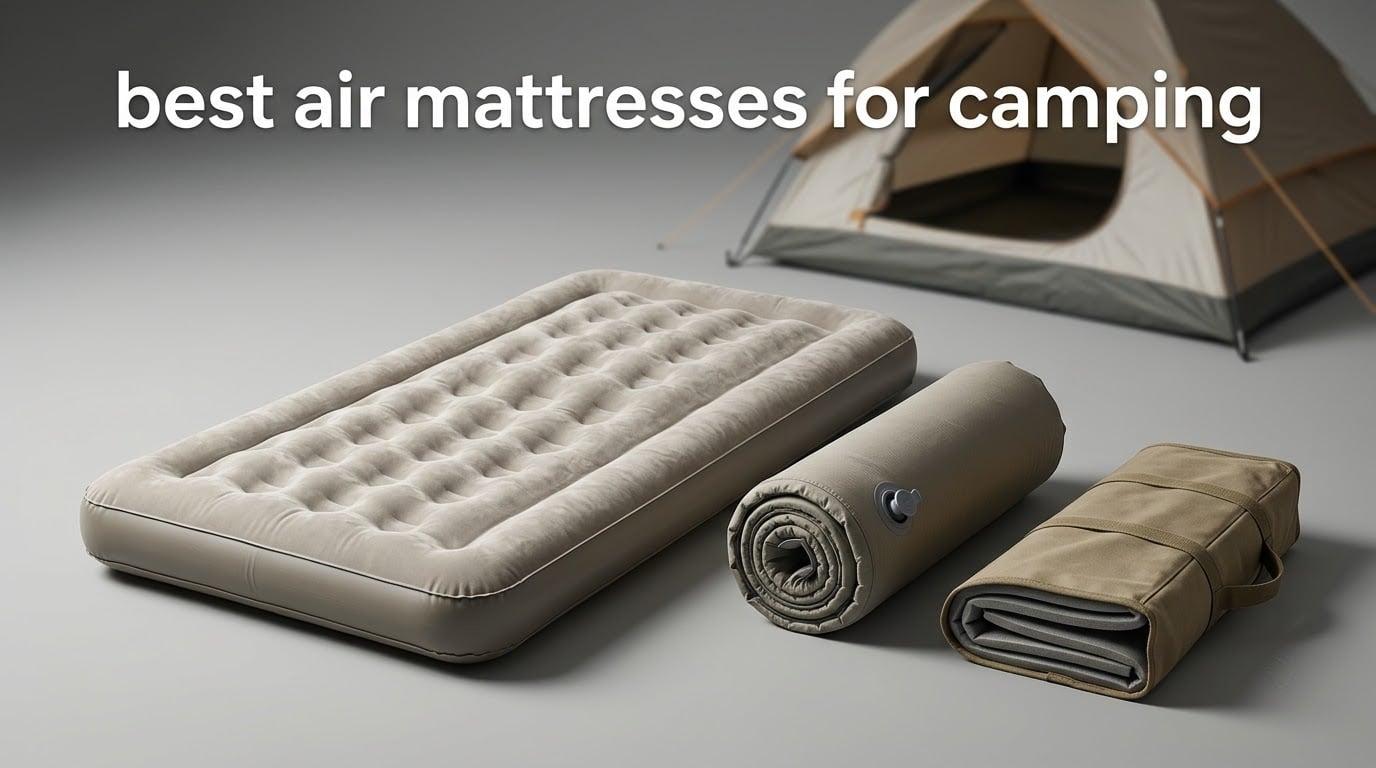
Ground is a brutal heat thief. Sleep on bare soil or a thin pad on a cold night and your body dumps warmth into the dirt within minutes, which is why so many campers wake up at 3am stiff, cold and unable to fall back asleep. The fix is not a warmer sleeping bag, it is a surface with enough trapped air between you and the ground. That is what the best air mattresses for camping solve, and picking the wrong one is the single most common reason a good night outdoors turns into a miserable one.
We spent weeks putting twelve of the most reviewed camping mattresses through their paces: queen airbeds with built-in electric pumps for car sites, thick inflatable pads for backpacking, self-inflating foam cores for shoulder-season trips, and a memory foam roll mat for anyone who has given up on valves entirely. We looked hard at thickness, R-value, packed size, pump systems, load capacity and how each one held air overnight.
What follows is a camping-only list. There are no indoor guest beds padded in for extra numbers, because a mattress that sleeps well on a bedroom floor often turns out to be a terrible tent floor. If you are outfitting the whole site, our kids walkie talkie picks for family camps cover the other half of a car-camping setup.
Table of Contents
Top 3 Best Air Mattresses for Camping in 2026

Intex Dura-Beam Queen 22in
- 22 inch high-rise
- Built-in AC pump
- 600 lb capacity
- Inflates in about 5 minutes
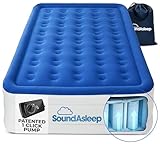
SoundAsleep Dream Series Queen
- 40 internal air coils
- 19 inch raised profile
- Built-in pump
- Waterproof flocked top
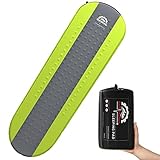
Gear Doctors Oxylus 4.3
- 4.3 R-value foam and air core
- Self-inflates on valve open
- 35.2 oz packed weight
- Polyester shell
Those three cover the widest range of trips. The Intex is the all-round answer for anyone camping out of a car. The SoundAsleep is the one that feels closest to a real bed, which matters if you are sleeping next to a partner who is sensitive to noise and movement. The Gear Doctors pad is the only one of the three with real insulation built in, which makes it the choice for cold ground.
All 12 Air Mattresses at a Glance (October 2026)
| Product | Specifications | Action |
|---|---|---|
| Intex 64417ED Dura-Beam Queen 22in |
|
Check Latest Price |
| SoundAsleep Dream Series Raised Queen |
|
Check Latest Price |
 King Koil Queen 20in Raised Airbed King Koil Queen 20in Raised Airbed |
|
Check Latest Price |
| Gear Doctors Oxylus 4.3 Insulated Pad |
|
Check Latest Price |
 VOSSER Queen 18in Built in Pump VOSSER Queen 18in Built in Pump |
|
Check Latest Price |
 ZOOOBELIVES Airlive2000 4in Pad ZOOOBELIVES Airlive2000 4in Pad |
|
Check Latest Price |
 OhGeni Queen 18in Built in Pump OhGeni Queen 18in Built in Pump |
|
Check Latest Price |
 FUN PAC Ultralight Pad with Pillow FUN PAC Ultralight Pad with Pillow |
|
Check Latest Price |
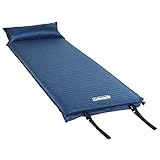 Coleman Self-Inflating Pad with Pillow Coleman Self-Inflating Pad with Pillow |
|
Check Latest Price |
 TOBTOS Double Sleeping Pad 6in TOBTOS Double Sleeping Pad 6in |
|
Check Latest Price |
 CYMULA Memory Foam Camping Mat CYMULA Memory Foam Camping Mat |
|
Check Latest Price |
 INVOKER Self-Inflating Foam Pad INVOKER Self-Inflating Foam Pad |
|
Check Latest Price |
A note on how to read that table: the queen airbeds at the top are designed to live in a tent or a vehicle and stay there for the trip. The single pads lower down are built to be carried and packed. Those are different jobs, and a queen airbed will never fit in a daypack no matter how good it is.
1. Intex 64417ED Dura-Beam Queen: Best Air Mattress for Camping Overall
Intex 64417ED 22in Queen Dura-Beam Comfort Plush High-Rise Inflatable Air Mattress with Built in Pump for Travel and Camping, 600lb Weight Capacity
80 x 60 x 22 in
600 lb capacity
Built-in 110-120V AC pump
19.4 lb deflated
Pros
- 22 inch height is easy to get in and out of
- Built-in pump fills in about 5 minutes
- Dura-Beam edges resist sagging
- Flocked top softer than plain PVC
- Holds air after initial settling
Cons
- Needs a top-off for the first two or three nights
- Surface is firmer than the plush label suggests
- Strong factory odor
- 19.4 lb is heavy to carry
The Intex Dura-Beam is the mattress we kept coming back to on every car camping trip. The 22-inch height is the headline feature and it genuinely changes the experience: sitting on the edge to pull on boots does not involve the awkward half-lying posture you get on a 10-inch bed, and getting in at midnight does not mean stepping over a wall of vinyl.
Setup is one plug and one button. The built-in AC pump fills the bed in roughly five minutes, which means you can inflate it inside the tent after a long drive and still make sunset. The Dura-Beam edge construction is worth noting for outdoor use because the reinforced perimeter is exactly where a bed gets abraded against a tent wall or a truck bed rail.
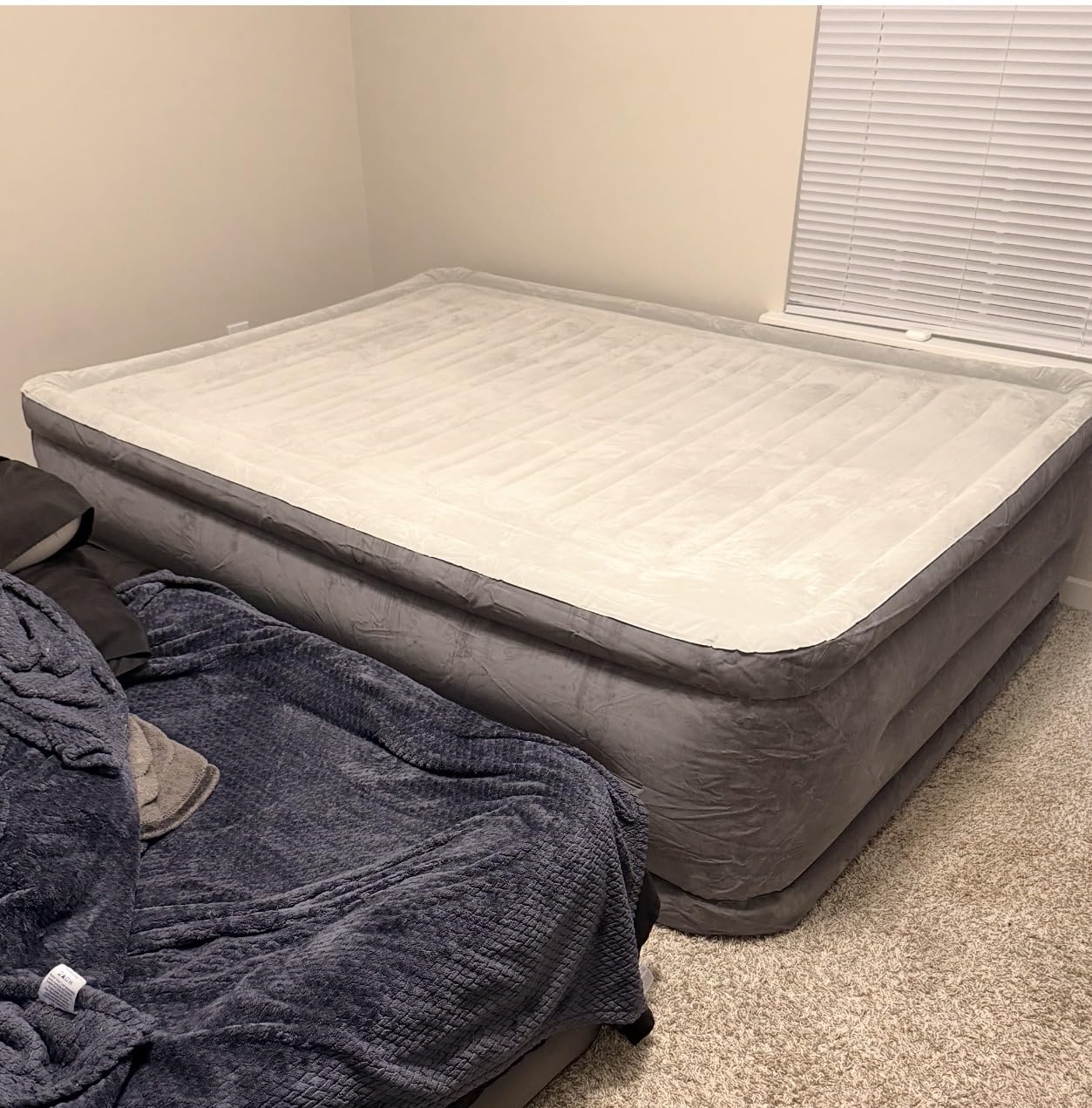
The honest wrinkle is the settling period. Owners consistently report that the material stretches during the first two or three nights and needs a top-off, and a minority describe slower air loss that requires daily pumping. That is a small price for a bed this easy to run, but plan on a thirty-second pump before bed on the first few nights. The velvety flocked top is softer than bare PVC, though it still feels firmer than a home mattress.
Specifications to note: 80 x 60 x 22 inches, 600 pounds of load capacity, water resistant, and a Fiber-Tech construction in PVC. It ships with a carry bag and a repair patch, and at 19.4 pounds deflated it is a car accessory rather than a hiking one. The raised perimeter also creates a lip that catches small items if you use the edge as a shelf.

Who the Intex Dura-Beam suits
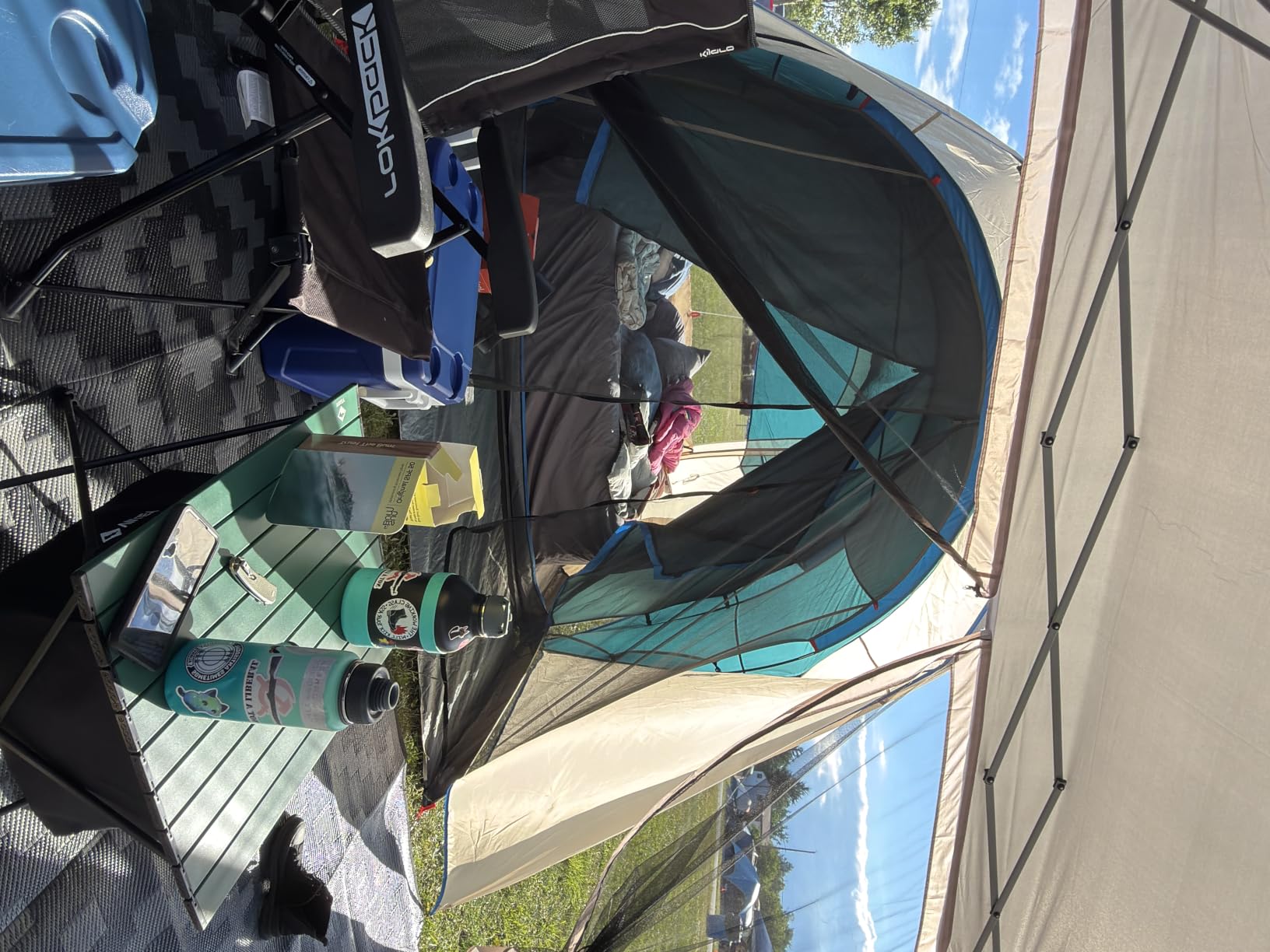
This is the pick for couples and families camping in a tent with room to spare, or for anyone sleeping in the back of an SUV on a regular basis. The queen width stops two people from fighting over space, and the 22-inch wall means you can sit up and read inside the tent without your head hitting the fly.
It also works well as a permanent spare bed at home for guests, which is where its huge review count comes from. If your campsite is a drive-in site with a car parked beside the tent, the weight is irrelevant.
Who the Intex Dura-Beam does not suit
Side sleepers who need plush cushioning should look elsewhere. Owners describe the surface as firm and rubber-like once inflated, which is stable but does not cradle a shoulder. A folding memory foam topper solves it for anyone who wants a softer feel.
It is also the wrong pick for anyone who has to carry their mattress more than a short distance from the car, and anyone expecting cold-ground insulation in freezing weather. There is no listed R-value here, so this is a warm-season and mild-shoulder-season bed.
2. SoundAsleep Dream Series Queen: Best for Bed-Like Comfort
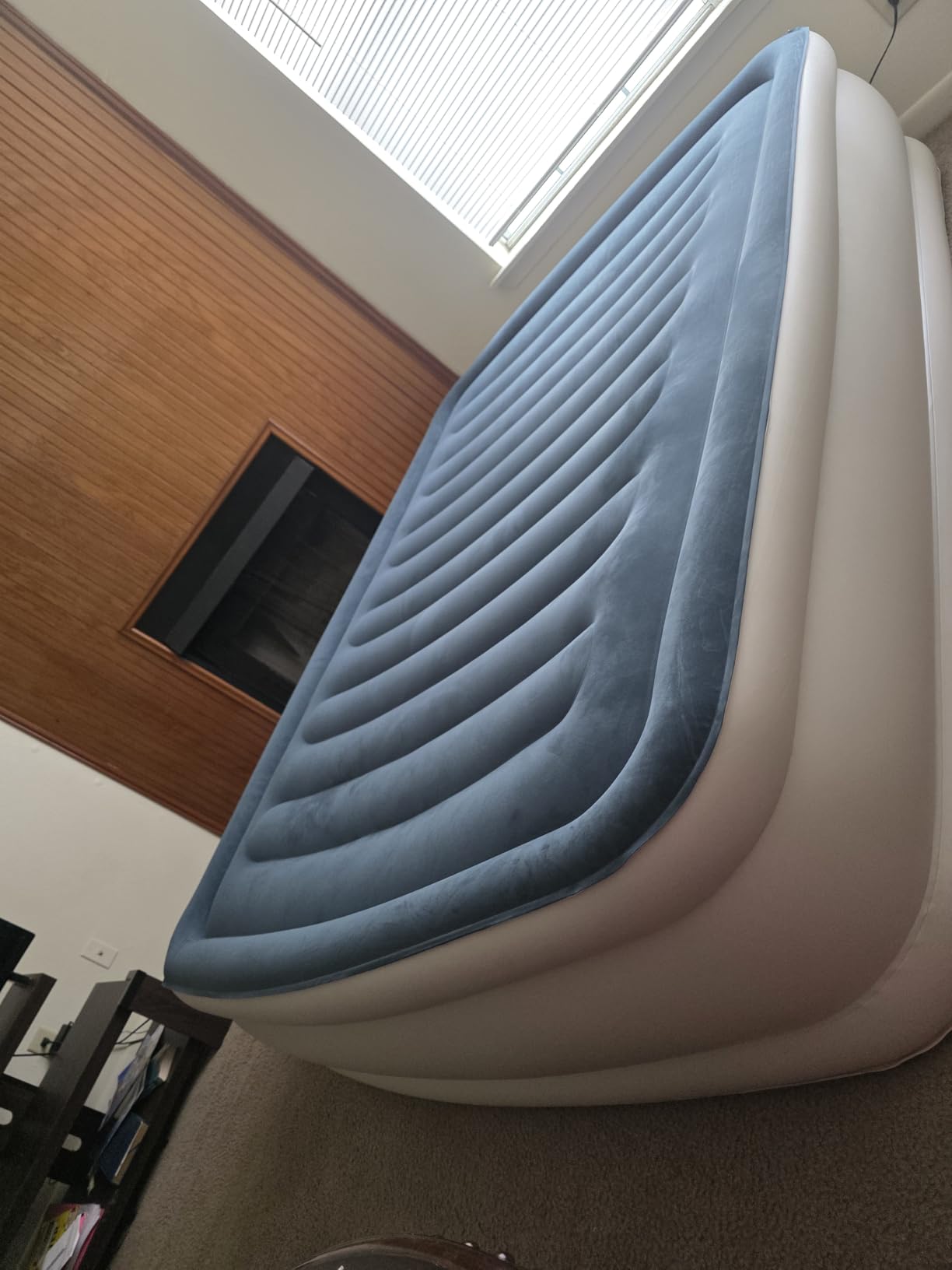
SoundAsleep Dream Series Raised Queen Air Mattress, Built-in Pump, Blue
78 x 58 x 19 in
40 internal air coils
Waterproof flocked top
600 lb capacity
Pros
- 40 internal coils keep the surface flat and stable
- Built-in pump inflates in under 4 minutes
- 19 inch profile feels close to a real bed
- Flocked top holds fitted sheets
- SureGrip base reduces sliding
Cons
- Folding it back into the carry bag is fiddly
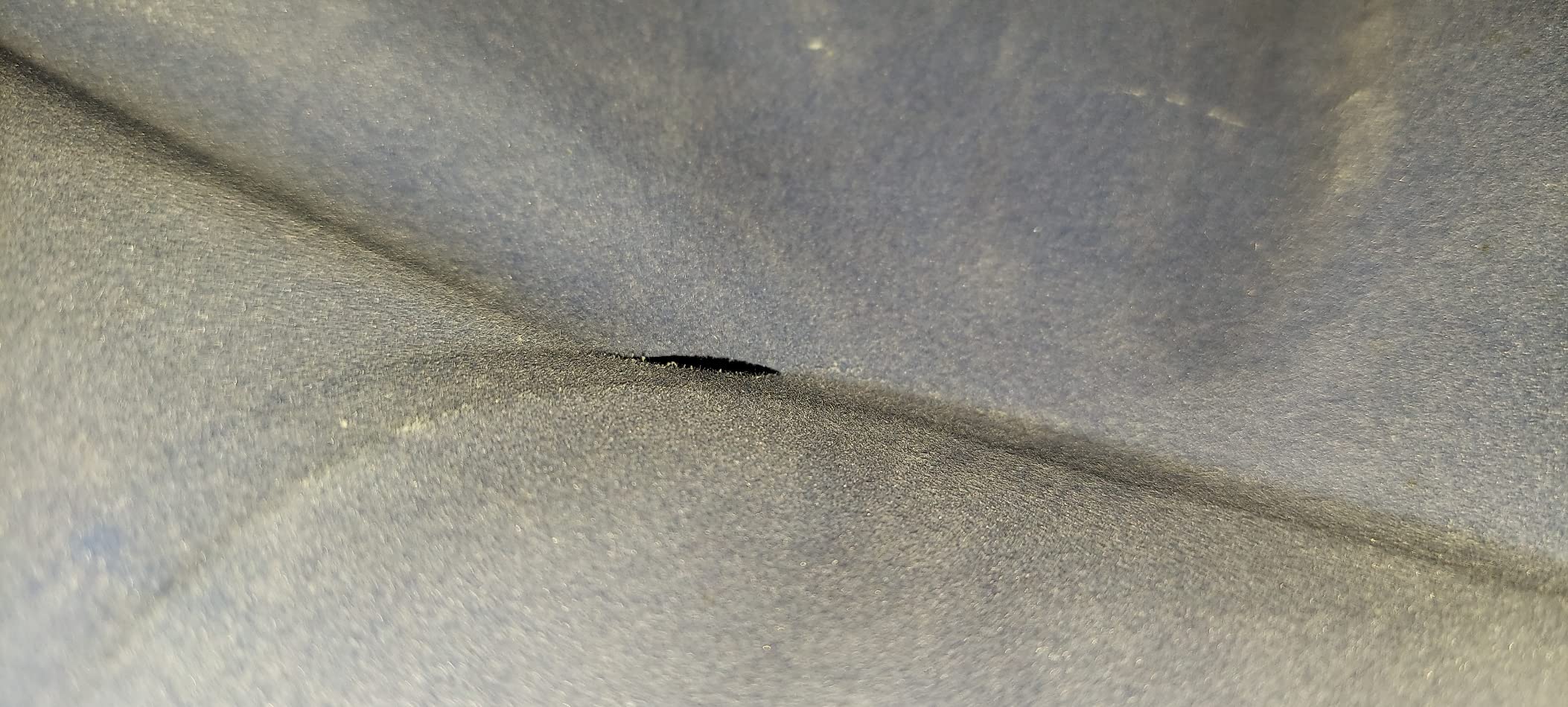
- Some units developed slow leaks after months of use
- A minority of built-in pumps have failed
- Heaviest option in this group
Most air mattresses feel like sleeping on a pool float because the surface has no internal structure, so your hips sit in a bowl. The SoundAsleep Dream Series solves that with 40 internal ComfortCoil air coils, and the difference is immediately obvious. Roll around at 2am and you move across a flat, supported surface rather than sinking into a depression.
The raised dual-chamber design puts the sleeping surface at 19 inches, close enough to a real bed that it works for car campers who want a normal night’s sleep. The waterproof flocked top grips fitted sheets, which matters more than it sounds when you are trying to keep a sheet flat on a surface that moves every time you breathe.
The SureGrip textured base is an underrated feature outdoors. Air mattresses slide across tent floors and truck beds, and this one resists that without feeling sticky. The built-in pump is a single-button design that inflates in under four minutes and deflates quickly, so packing up in the morning is a two-minute job.
Two things come up repeatedly in reviews. The first is the carry bag: getting a deflated queen mattress folded and stuffed back into its bag takes practice and some owners simply leave it in the tent until the next trip. The second is long-term durability. Most units hold air well for seasons, but a minority develop slow leaks after months of intermittent use, and a small number of built-in pumps have burned out. Customer service is repeatedly singled out for shipping replacements quickly.
Who the SoundAsleep Dream Series suits
This suits light sleepers and anyone sleeping beside a partner. A mattress that does not rustle or shift when you move is worth a great deal at 4am, and the flocked top is quiet compared with bare PVC surfaces. It is also the easiest option for two adults who want separate sides without a middle dip.
For anyone tired of pad-style sleeping and wanting something closer to a bed, this is the strongest pick in the group. It also earns its place as a home backup bed for guests.
Who the SoundAsleep Dream Series does not suit
Backpackers should skip it entirely. This is the heaviest and largest option we tested, and the queen footprint means it has to live in a vehicle. If you are carrying gear on foot, look at the lighter pads further down.
It is also a poor winter choice. There is no listed R-value, so on genuinely cold ground you are sleeping on a large, cold surface. And if your trips are short and frequent, the pump is a component that can fail even when the mattress itself is fine.
3. King Koil Queen 20in: Best for the Fastest Setup
King Koil Air Mattress Queen with Built-in Pump, 20” Raised Airbed
80 x 60 x 20 in
Inflates in about 2 minutes
Coil-beam construction
600 lb capacity
Pros
- Fastest inflation here at roughly 2 minutes
- 20 inch height is the tallest offered
- Coil-beam construction limits middle dip
- Soft flocked velvet top
- GRS-certified recycled material content
Cons
- Adjustable firmness needs experimentation
- Heavier at 7.72 kg than most rivals
- Flocked surface can feel warm in hot weather
The King Koil is the fastest bed to inflate in this group by a wide margin. Its high-speed built-in 120V pump fills the mattress in about two minutes, which is roughly half the time of most competitors. If you arrive late, in the dark, with kids to settle, that difference is real rather than a spec sheet novelty.
The coil-beam construction distributes weight across the surface and limits the middle dip that appears when two people sleep on a bed without internal support. At 20 inches tall, it is the highest profile we tested, which makes it the easiest of the queen options to sit on the edge of and get dressed from.
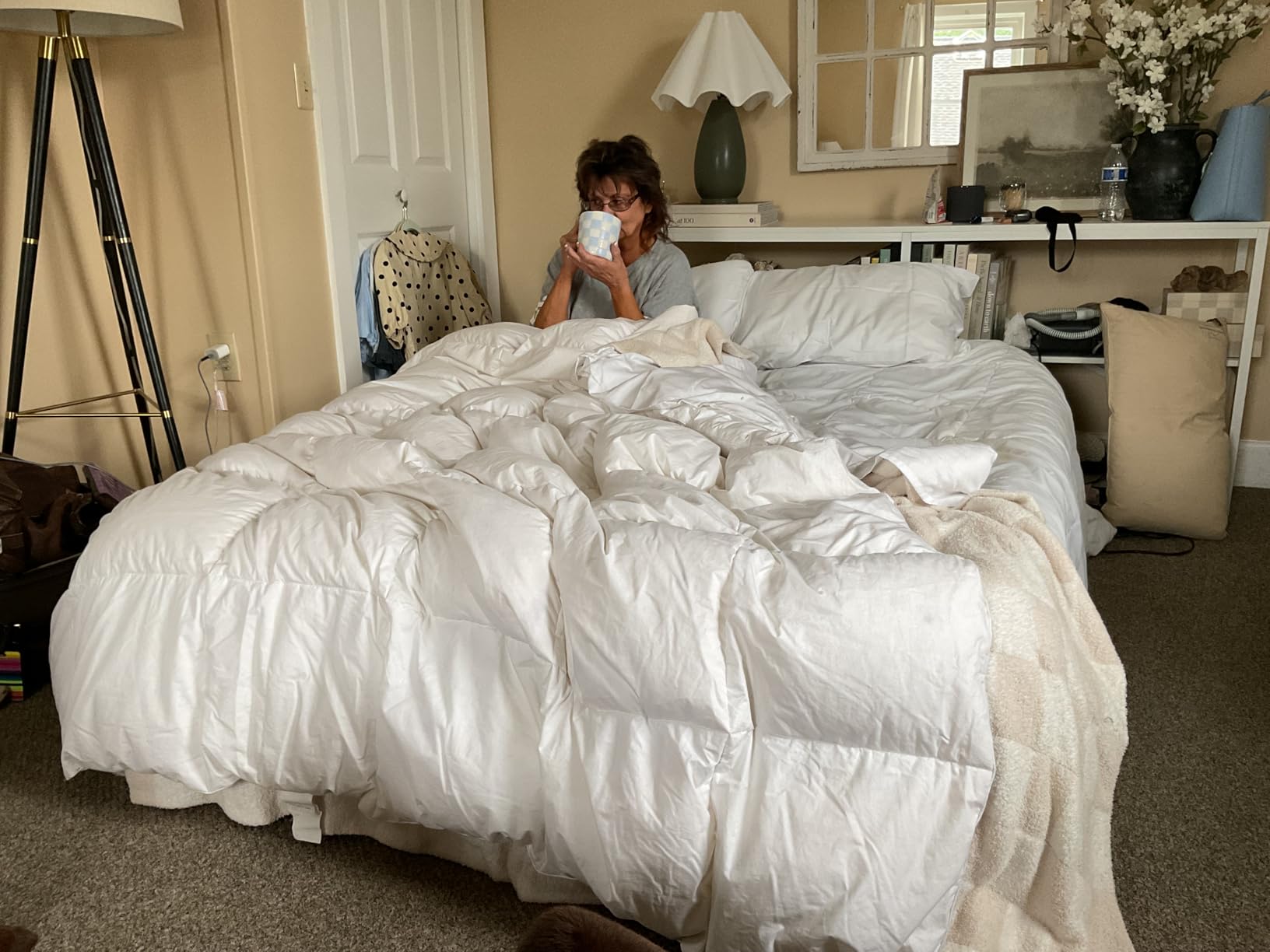
The flocked velvet surface is the softest of the queen airbeds here and feels good against bare skin on a warm night. Adjustable firmness is the feature that takes practice. Owners consistently report needing to experiment to find the sweet spot, because too much air gives you the pool float feeling and too little gives you a floor. There is no single correct setting.
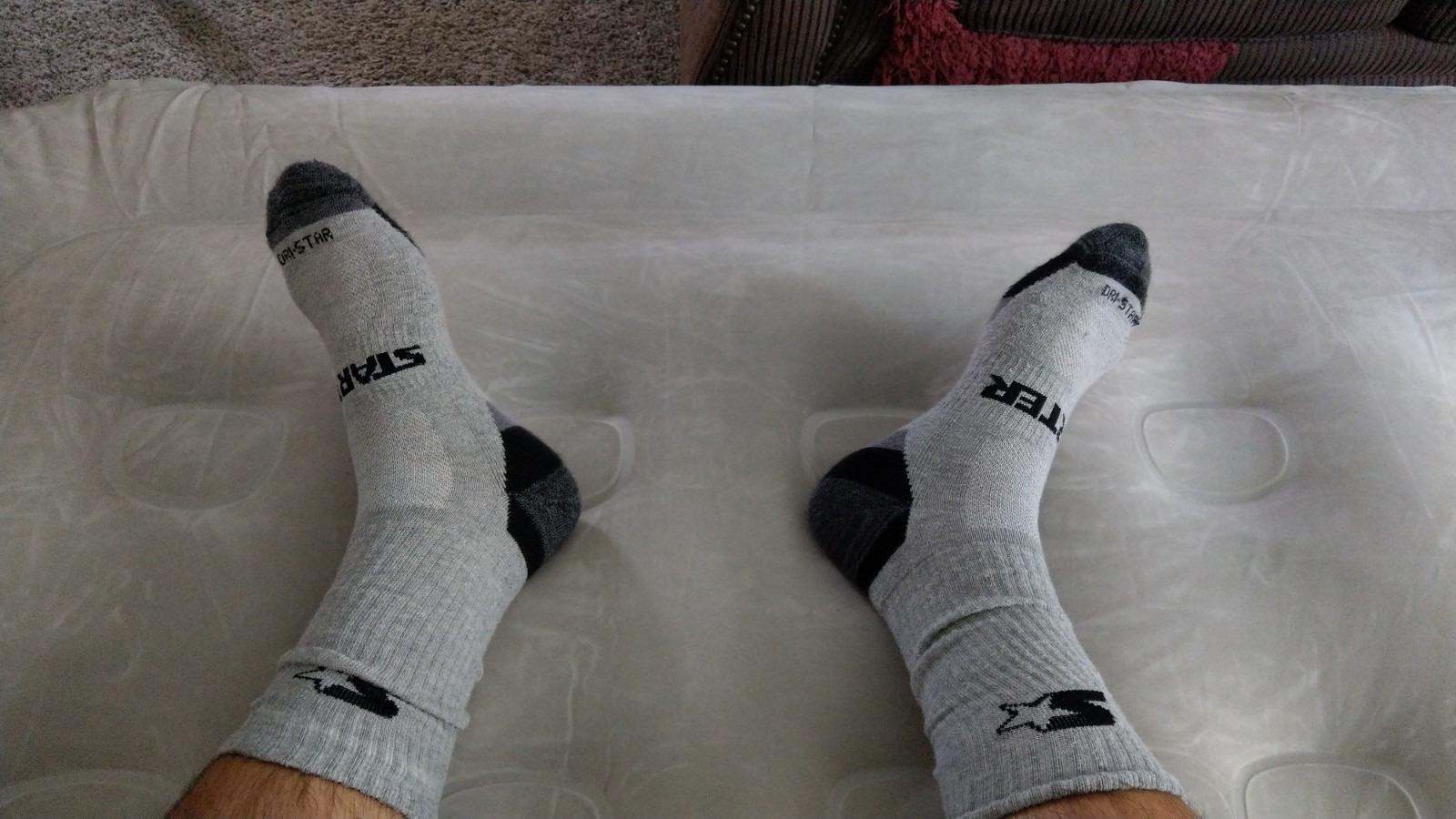
Two practical notes. At 7.72 kg deflated it is far too heavy to carry any real distance, so treat it as vehicle-mounted camping furniture. And the flocked surface traps heat, which makes it a poor match for hot summer nights in a closed tent. King Koil backs it with a one-year manufacturer warranty plus lifetime customer support, and uses at least 50 percent recycled material certified to the Global Recycled Standard.
Who the King Koil Queen suits
It is a strong pick for families and for anyone who camps in a large tent where the mattress will stay inflated for days. Setting it up once on arrival and leaving it up is the intended use, and the two-minute pump makes that practical even in poor light.
Couples will like the coil-beam support, and the 600 pound capacity is comfortable for two adults. The flocked velvet top is a real comfort advantage over bare PVC if you sleep warm.
Who the King Koil Queen does not suit
Anyone on foot will find it uncarryable. It also has no listed R-value, so it does nothing for you on cold ground. If your trips involve freezing nights, the foam-insulated pads later in this list are the better direction.
People who are not willing to fiddle with firmness will find it frustrating at first. It also runs warm, so on a hot July weekend in a tent it can be uncomfortable no matter how you set the valve.
4. Gear Doctors Oxylus 4.3: Best Value Insulated Self-Inflating Pad
Gear Doctors® Oxylus 4.3 R-Value Insulated Foam Self Inflating Sleeping Pad Camping — Sleeping Pad Backpacking Air Mattress—Camping Mattress Self Inflating Camp Mat 4 Seasons Sleep Mat—Camp/Floor/Tent
4.3 R-value hybrid core
71.97 x 22 x 1.5 in
Packs to 8 x 12 in at 35.2 oz
250 lb capacity
Pros
- Highest average rating of the group
- Open-cell foam core stops side sleepers bottoming out
- Real warmth on cold and snowy ground
- Self-inflates while you set up camp
- Lifetime replacement guarantee
Cons
- Bulky in a pack versus inflatable pads
- 22 in width is short for adults over six feet
- Thin shell can be punctured
- R-value is a claim and not ASTM-tested
This is the pad that changed our mind about self-inflating mattresses. The hybrid open-cell foam and air core does two things at once: it stops side sleepers from hitting the ground, and it holds warmth that a pure air pad cannot. Owners report sleeping comfortably in winter and snow on it, which no other pick at this weight can claim.
The self-inflation process takes about a minute of your attention. Open the valve, the open-cell foam draws air while you kick out your boots and pull the tent fly, then you add a few breaths to firm it up. That is the whole routine, and it repeats every morning in reverse. If you camp in the rain, this is a huge advantage, because there is no pump to protect from wet.
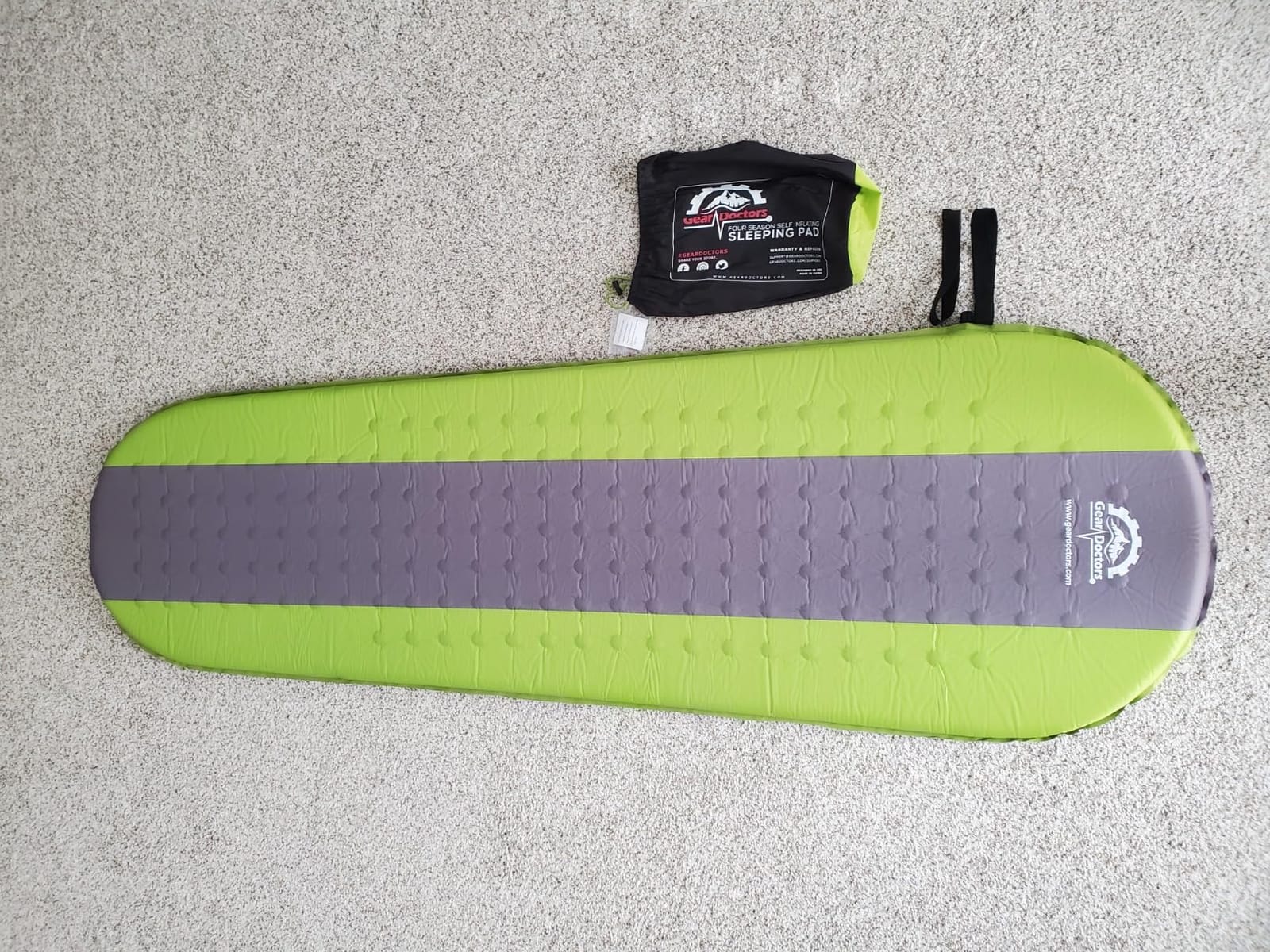
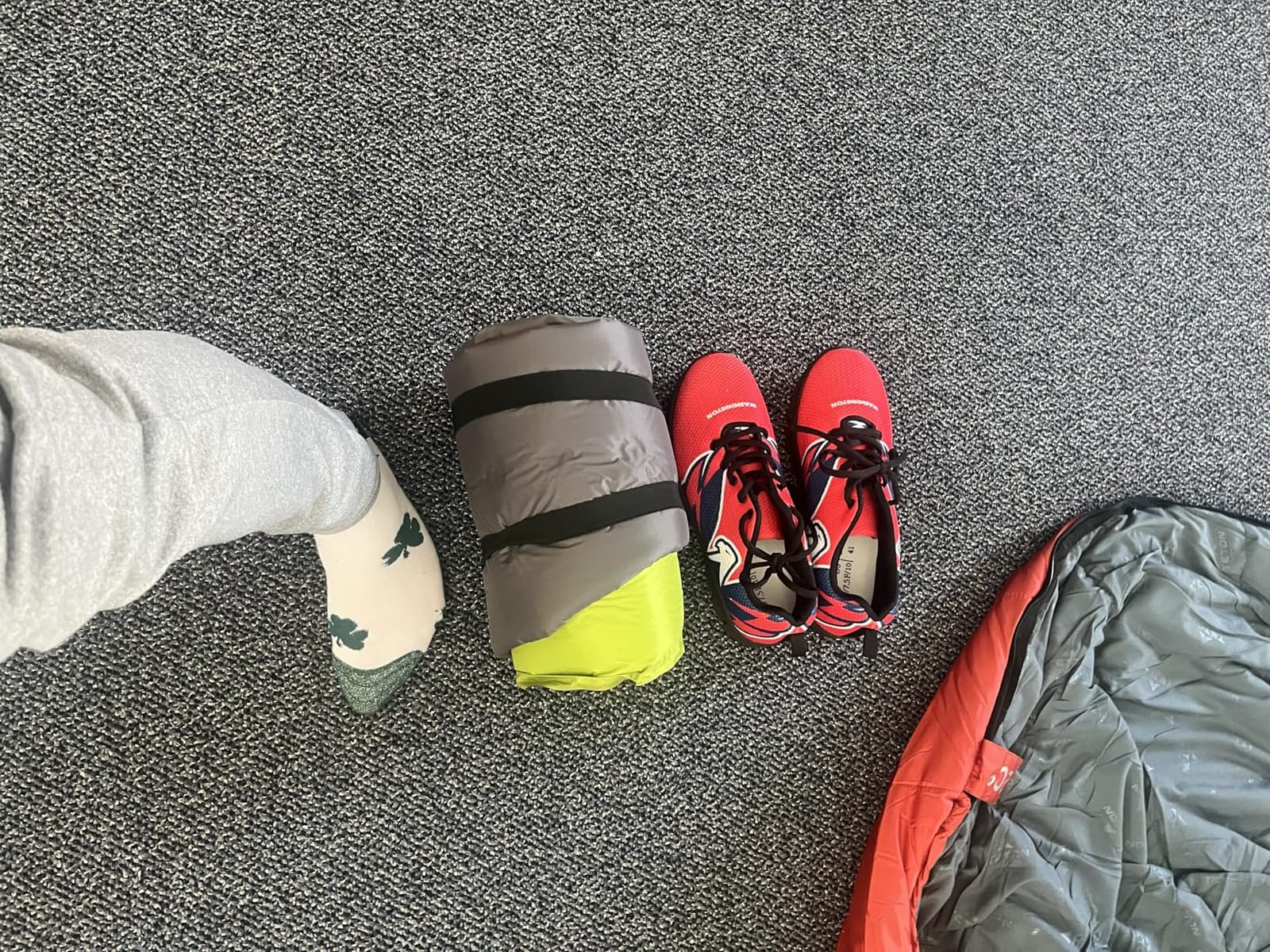
The trade is pack bulk. At 8 x 12 inches and 35.2 ounces it is light, but the foam roll occupies real volume compared with a folded air pad, so it is not a first-person ultralight choice. Several owners pair it with a lighter inflatable for backpacking and keep this one for shoulder-season and winter trips, which is a sensible compromise.
Two details worth knowing. The 4.3 R-value is a manufacturer claim and not ASTM-tested, so treat it as a strong indicator rather than a guarantee. And the 22-inch width is genuinely narrow for adults over six feet, where toes can hang off the end. The 75D micro-coated polyester shell resists abrasion and moisture and takes a wipe down easily.
Who the Gear Doctors Oxylus suits
It is built for cold ground. If your camping happens between autumn and early spring, or at altitude, this is the pad that lets you sleep comfortably rather than endure the night. The 4.3 R-value puts it well above the usual three-season range.
Side sleepers and anyone who have bottomed out on thin pads are the other core group. It also carries the highest average rating in the group, so if you want the single most well-liked option, this is it.
Who the Gear Doctors Oxylus does not suit
Taller campers should look elsewhere, because the 22-inch width and 71.97-inch length leave little room to stretch out. Anyone who needs a wide surface for two people will want a double pad.
The 250 pound capacity is also the lowest here, which rules it out for heavier sleepers or for anyone layering a second person on it. And the shell can be punctured by sharp rock, in which case you lose most of the cushioning until you patch it.
5. VOSSER Queen 18in I-Beam: Best for Heavy Sleepers and Couples
VOSSER Air Mattress Queen with Built in Pump,18” Raised Blow Up Bed,800lb
80 x 60 x 18 in
800 lb capacity
I-beam internal construction
Built-in 110V pump
Pros
- Patented I-beam construction stops rolling to the middle
- Inflates and deflates in 2-3 minutes
- Holds firmness for days with little top-off
- Flocked top stops sheets sliding
- 800 lb capacity
Cons
- One reviewer reported an internal panel bulging into a middle bump
- Some units lose a little firmness overnight
- 18.5 lb makes it heavy to move
Load capacity is the number that matters most if you or your partner are heavy, and the VOSSER carries an 800 pound rating, which is the joint highest here. That figure matters because heavier bodies push harder into the surface, and a mattress near its limit feels flat no matter how good the design is.
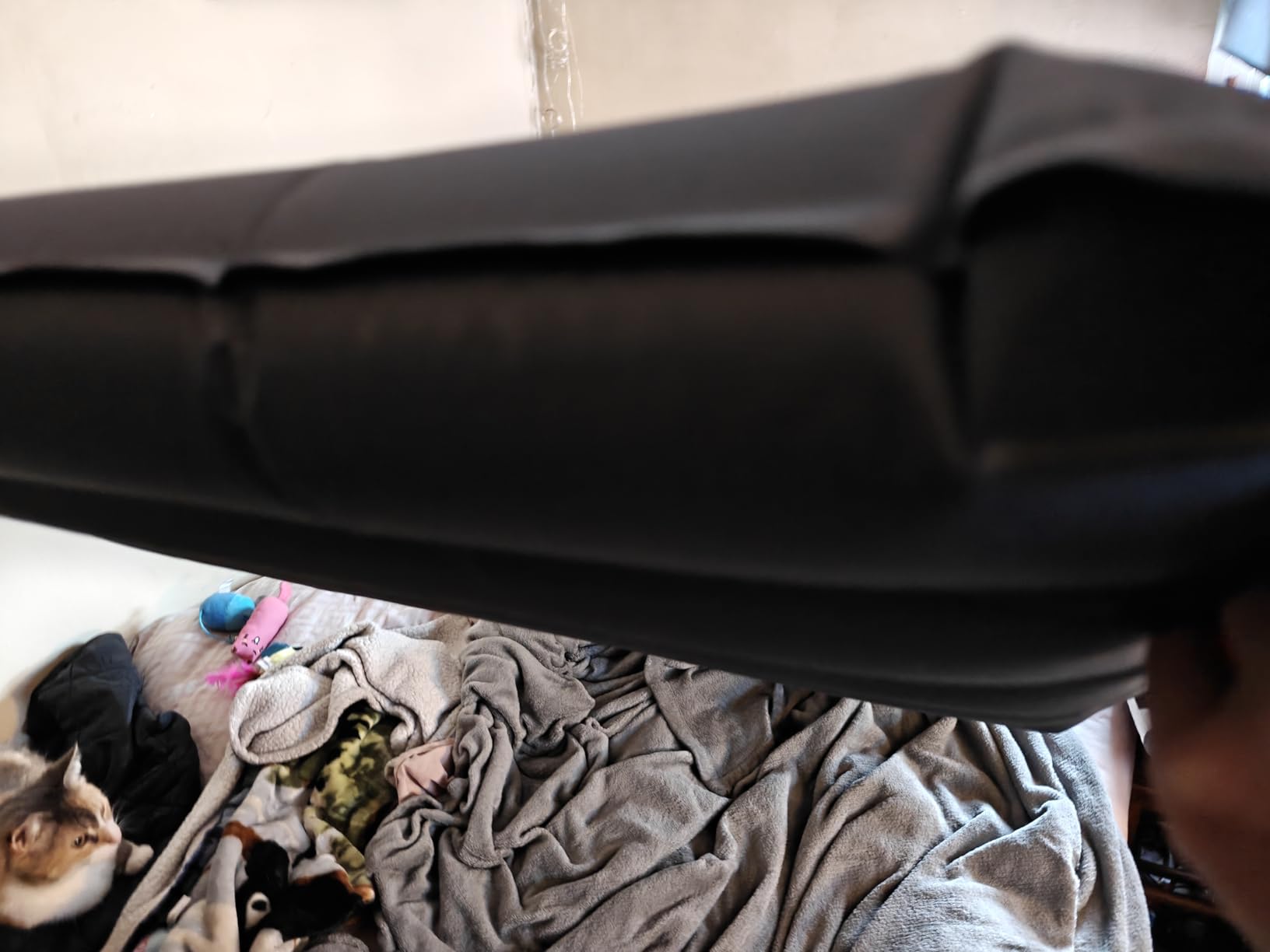
The patented I-beam internal construction is the feature that sets it apart from ordinary coil beds. Instead of a flat slab of air, the chambers are shaped to resist the taco effect, where two sleepers push the surface into a taco shape and both slide to the middle. Owners consistently report the surface stays stable with two people on it.
The PVC is stated as 40 percent thicker than standard airbed material, which is a reasonable explanation for why this one holds firmness across several nights with little or no top-off. Guests regularly describe it as more comfortable than the mattress they sleep on at home, which is high praise for an inflatable.
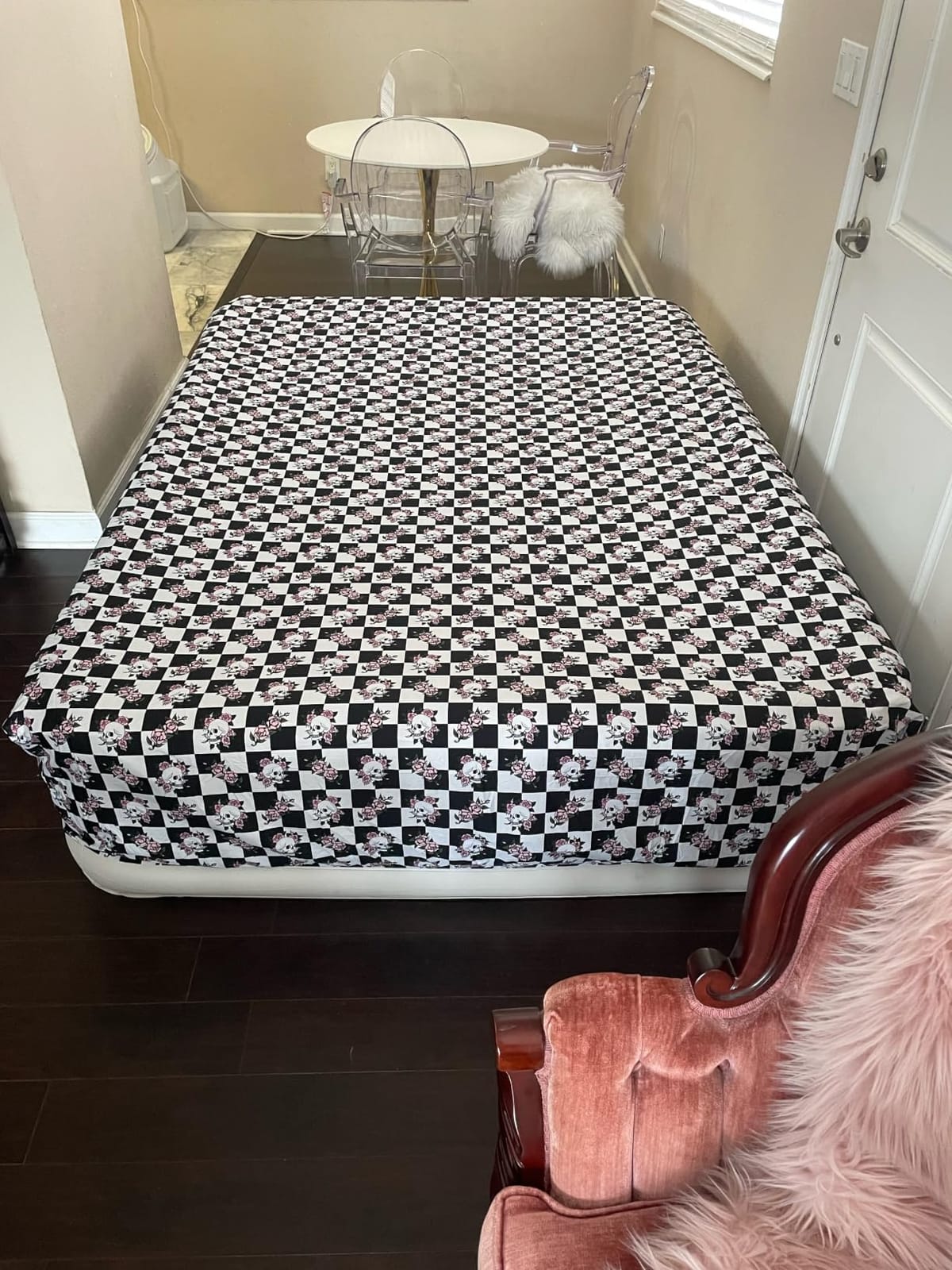
The concern we noted is a structural failure mode. One reviewer reported an internal panel popping and creating a raised bump in the middle, and reported the same fault on a replacement unit. If you get one, test the full surface while inflated before you rely on it for a trip. Standard queen sheets fit the 18-inch depth, and the flocked top grips them firmly.
Who the VOSSER Queen suits
Heavy sleepers and couples are the obvious audience. The 800 pound rating and the I-beam geometry address both comfort and stability in a way the lighter 600 pound beds do not, and the true 80 x 60 dimensions mean no cramped sleeping space.
It is also good for anyone who wants to inflate once and leave the bed up for a multi-day trip, because it does not need nightly pumping. Guests and older campers who need the 18-inch height to get in and out will find it easier than a low-profile pad.
Who the VOSSER Queen does not suit
Backpackers are out of the question at 18.5 pounds deflated. And anyone camping on cold ground should know there is no listed R-value, so this is a warm-season and mild-shoulder-season mattress despite its heavy-duty feel.
If you are a light sleeper sharing a narrow space, note that some units do deflate slightly overnight and need a brief top-off. Buy it with the repair patch in mind rather than expecting it to be maintenance free.
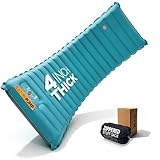
6. ZOOOBELIVES Airlive2000: Best 4-Inch Pad for Side Sleepers
ZOOOBELIVES Inflatable Camping Sleeping Pad, 4-Inch Thick Full Air Support, No Bottoming Out for Side Sleepers, Camping & Backpacking Mattress with Built-in Foot Pump, Durable & Compact – Airlive2000
74.8 x 24.41 x 3.94 in
4 in full air chambers
Built-in foot pump
2.1 lb packed
Pros
- 4 in full air chambers support hips and shoulders
- Fills in 3-5 minutes with the built-in foot pump
- Quiet surface that does not rustle
- Side snaps join two pads into a double
- Packs about the size of a large insulated tumbler
Cons
- Heavier than a typical inflatable pad
- 24 in width is narrow for larger sleepers
- Built-in pump adds bulk when packed
- Later production runs use thinner and noisier plastic
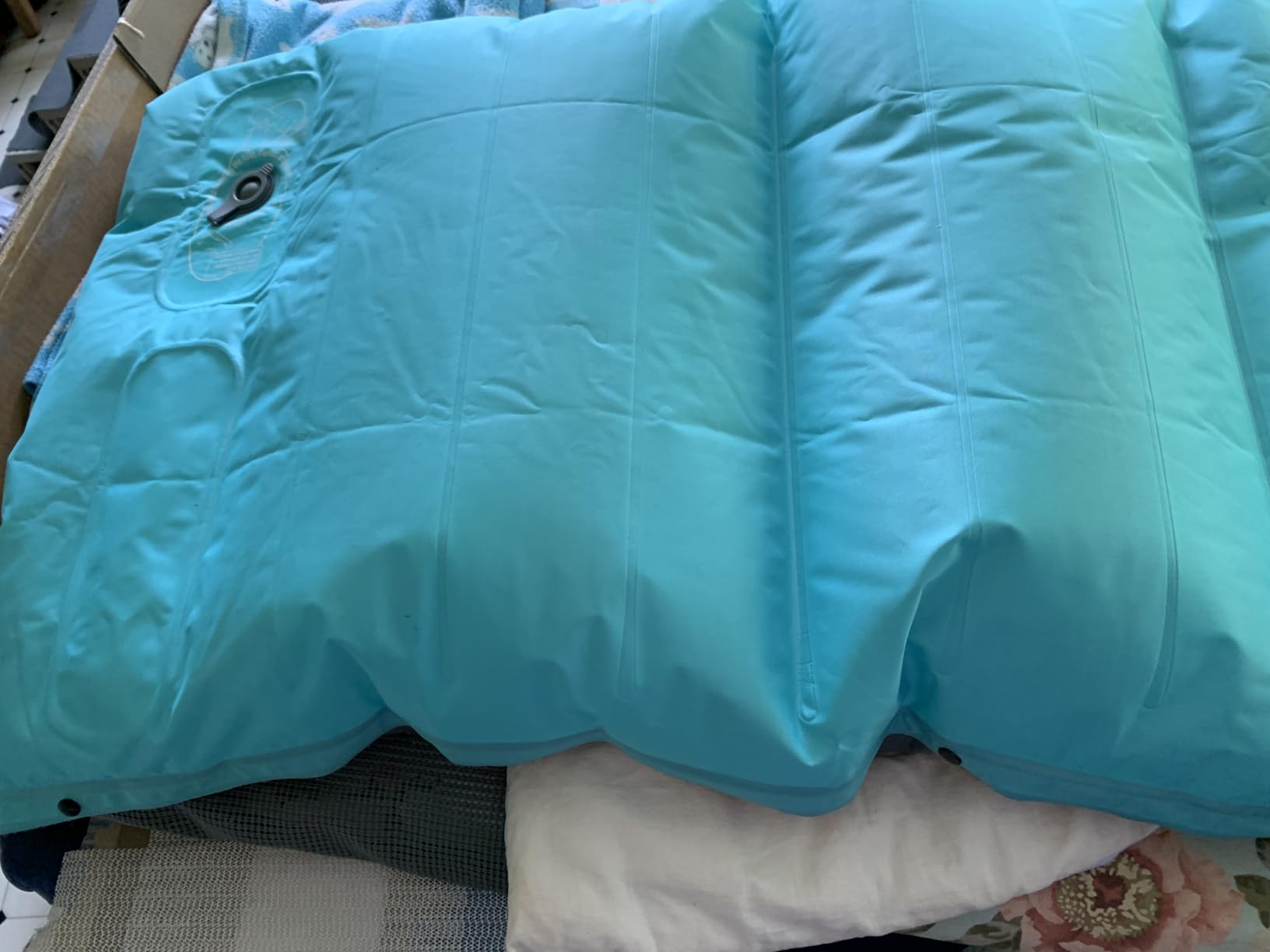
Most camping pads are 2 or 3 inches thick, and side sleepers feel every one of those missing inches through the shoulder. The Airlive2000 uses 4-inch full air chambers running edge to edge rather than segmented or honeycomb cells, so the surface stays continuous under your hip instead of pinching between walls.
The built-in foot pump with a secure non-return valve fills it in about 3 to 5 minutes with no separate pump and no car outlet. That makes it a genuine two-person-camp option: you can inflate it anywhere, including on a forest floor with no vehicle in sight. The low-noise surface material is another quiet sleeper win, since it does not rustle when you move.
The construction uses 75D polyester pongee fabric with an extruded PVC lamination over a TPU core, and the fibre reinforcement resists the stretch-related pressure loss that makes plain PVC feel flat by the second night. Side snaps let you link two pads into a double bed, which is a better answer to the two-singles-gapping-in-the-middle problem than pushing them together and hoping.
Two things to weigh. At 24 inches wide, larger sleepers hang their arms off the edge. And some buyers report receiving a later revision with thinner, noisier plastic and a storage bag that is too small, so check the current material carefully on arrival. It packs down to roughly the size of a 40 oz mug.
Who the ZOOOBELIVES Airlive2000 suits
Side sleepers are the core group, and the 4-inch profile is the direct answer to hip and shoulder pressure. At 2.1 pounds it is also light enough for casual backpacking and far more comfortable than the 1 to 2 inch pads most hikers carry.
Couples can pair two together with the side snaps for a proper double. Car campers with no access to power will like the foot pump, and anyone who values quiet over the rustle of PVC will notice the difference.
Who the ZOOOBELIVES Airlive2000 does not suit
It is not a cold-weather pad. There is no R-value insulation, so it will feel cold to the touch on chilly nights and you will want a sleeping bag rated well below the forecast low.
Larger sleepers should check the 24-inch width first, since arms hanging off means waking up with numb shoulders. At 2.1 pounds it is also heavier than a true ultralight inflatable and bulkier once the built-in pump is factored in.
7. OhGeni Queen 18in: Best Backup Bed with 800 lb Support
OhGeni Air Mattress Queen with Built in Pump, 18″ Raised Blow up Bed, 800lb
80 x 60 x 18 in
35 coil-beam support points
Built-in 110V pump
800 lb capacity
Pros
- 35 coil-beam points give a mattress-like feel
- Built-in pump fills in about 3 minutes
- Adjustable firmness from plush to supportive
- Quiet non-slip base
- Fits standard queen sheets
Cons
- Flock surface feels firmer than the plush label
- First nights need a top-off
- 16.6 lb is heavy to carry
- No cushion layer so pressure points can feel hard
The OhGeni is the pragmatic middle option of the queen airbeds. It carries the same 800 pound capacity as the VOSSER, uses 35 internal coil-beam support points to spread body weight, and inflates in about three minutes on a 110V built-in pump. Standard queen sheets fit the 18-inch depth, so you can bring your own bedding from home.
That makes it a strong secondary mattress. Most campers end up with two anyway, one for the tent and one in the vehicle or the guest room, and this fills the second role without competing with the same features as your primary.
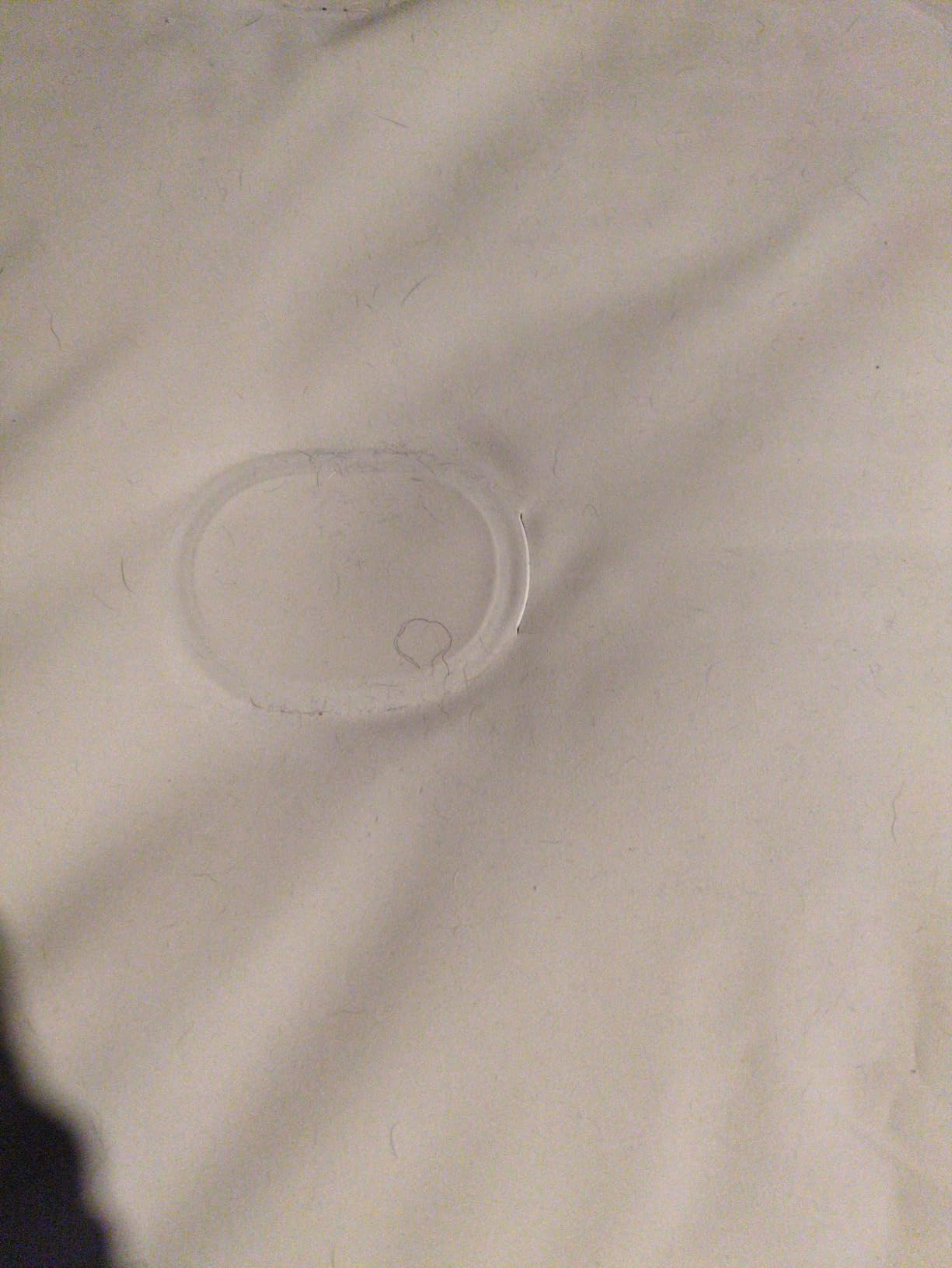
Adjustable firmness is the useful dial here. Owners like being able to move between a softer, more relaxed feel and a supportive one depending on whether they are sitting up reading or lying down asleep. The quiet, non-slip base stays where you put it, which matters on a tent floor that is not level.
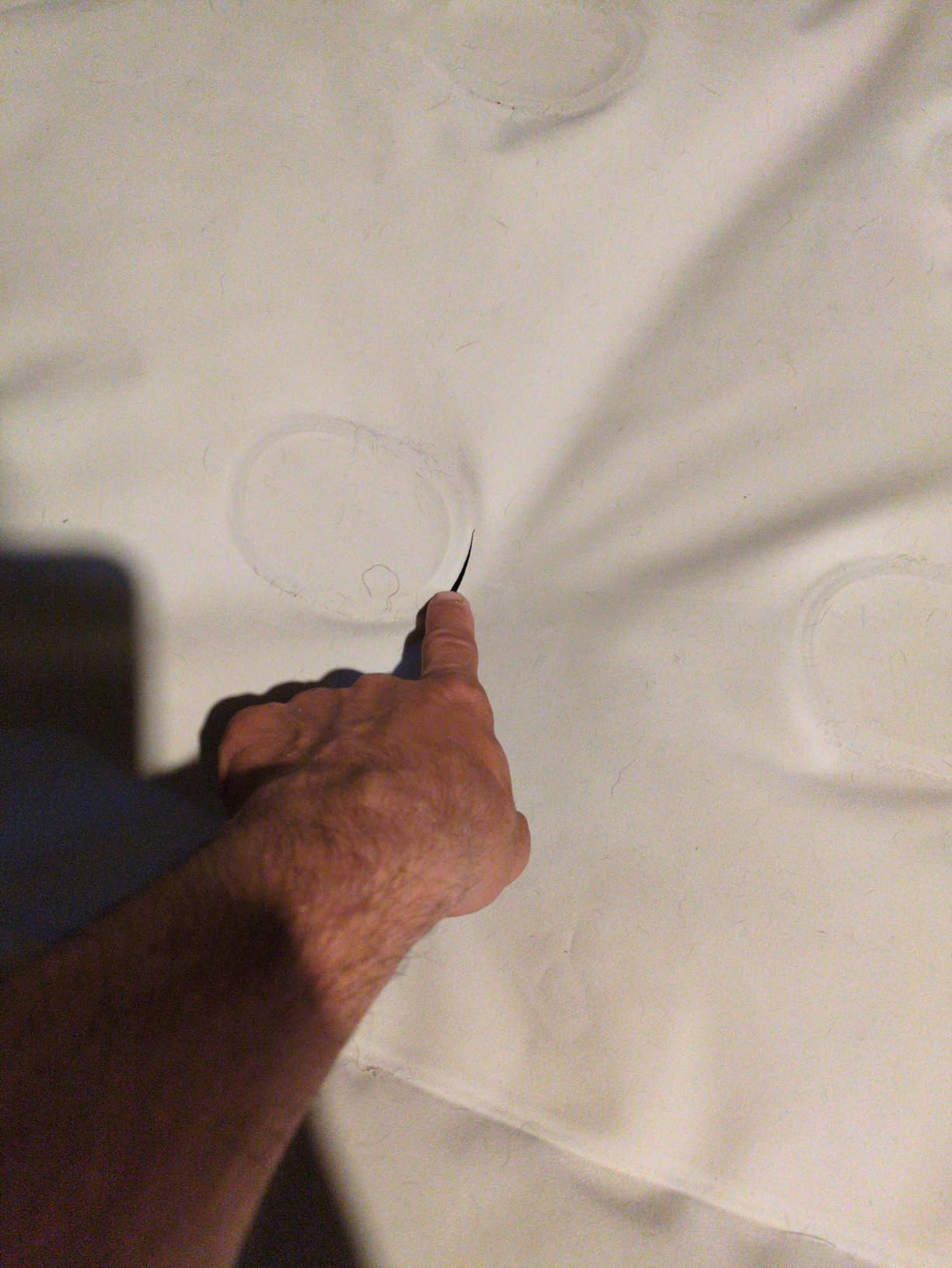
The honest criticism is that it feels firmer than the plush label suggests. There is no dedicated cushion layer, so over a long night some users feel pressure points through the surface. First-night air loss is normal as the material settles, and at 16.6 pounds deflated this is another car-camping mattress rather than a carryable one. Support is backed for ten years with a typical eight-hour response.
Who the OhGeni Queen suits
It suits anyone who needs a second or spare airbed, particularly families with a two-room tent or campers who want a bed in the vehicle as well as in the tent. The 800 pound capacity handles a combination most people underestimate.
It is also a good pick for use at home as a guest bed, since the surface is stable, the base does not slide, and standard bedding fits.
Who the OhGeni Queen does not suit
Anyone hoping for a plush hotel-bed feel will be disappointed, because the surface is firm and there is no cushioning layer. Side sleepers with pressure-sensitive shoulders should pair it with a foam topper.
It is too heavy to carry and it has no R-value, so it does not address cold ground. Be clear on that second point: an 800 pound capacity says nothing about insulation.
8. FUN PAC Ultralight Pad: Best for Backpacking and Hiking
FUN PAC Camping Sleeping Pad, Ultralight Camping Mat with Pillow, Built-in Foot Pump Inflatable Sleeping Pads Compact for Camping Backpacking Hiking Traveling Tent,Single,Green
78 x 27 x 3 in
1.5 lb packed
Built-in foot pump
Packs like a water bottle
Pros
- Inflates in 30-60 seconds from the built-in foot pump
- Lightest option here at 1.5 lb
- Packs down to about a water bottle size
- 27 in width gives room to stretch out
- Integrated pillow saves pack weight
Cons
- Only 3 in thick so less underbody support
- No R-value so it is a three-season pad at best
- Single width leaves no room to sleep two
If your trip involves walking more than a hundred yards from the car, weight and packed size decide your mattress before comfort does. At 1.5 pounds and roughly the size of a water bottle, the FUN PAC is the lightest option here by a wide margin, and it is the one we would put in a pack without thinking about it.
The built-in foot pump inflates it in 30 to 60 seconds and deflates it in about one second, so there is no separate pump to lose, no battery, and no need to reach a car socket. The integrated pillow is a nice touch that removes another item from your kit. At 27 inches wide it is roomier than most single pads, which reduces the feeling of being squeezed.
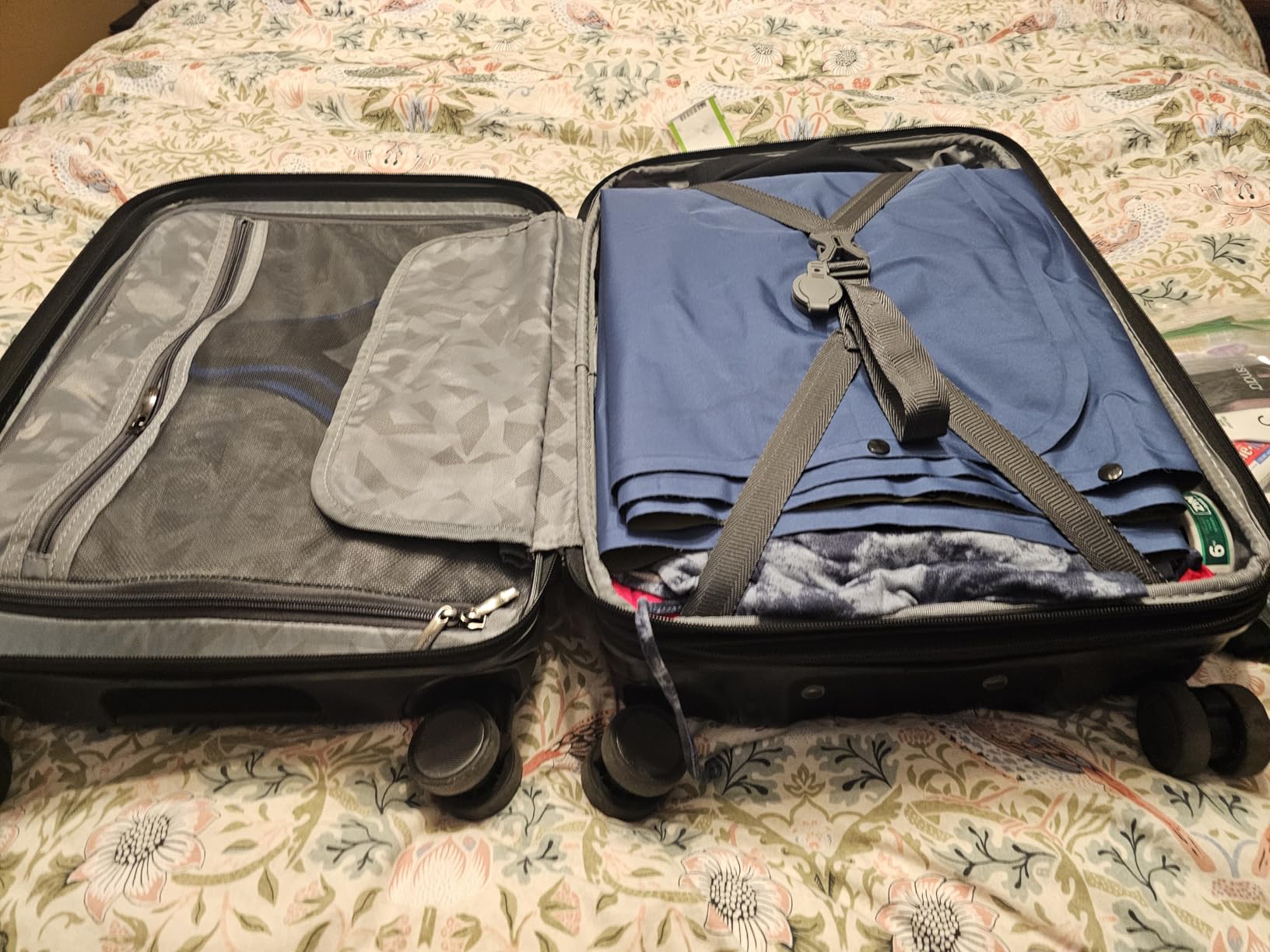
Material is 40D nylon with a TPU coating, waterproof and easy to wipe clean, and there is a two-layer upgraded valve designed to prevent leaks, which is where most ultralight pads earn their reputation problems. Side buttons let you connect two pads into a double bed if you are travelling as a pair.
The compromise is comfort. Three inches is thinner than we would like for a side sleeper, and the egg-shaped air cells create slightly uneven spots that some people find distracting when they first lie down. There is no stated R-value, which makes this a three-season pad at best. Expect to add an insulated layer underneath in real cold.
Who the FUN PAC Ultralight Pad suits
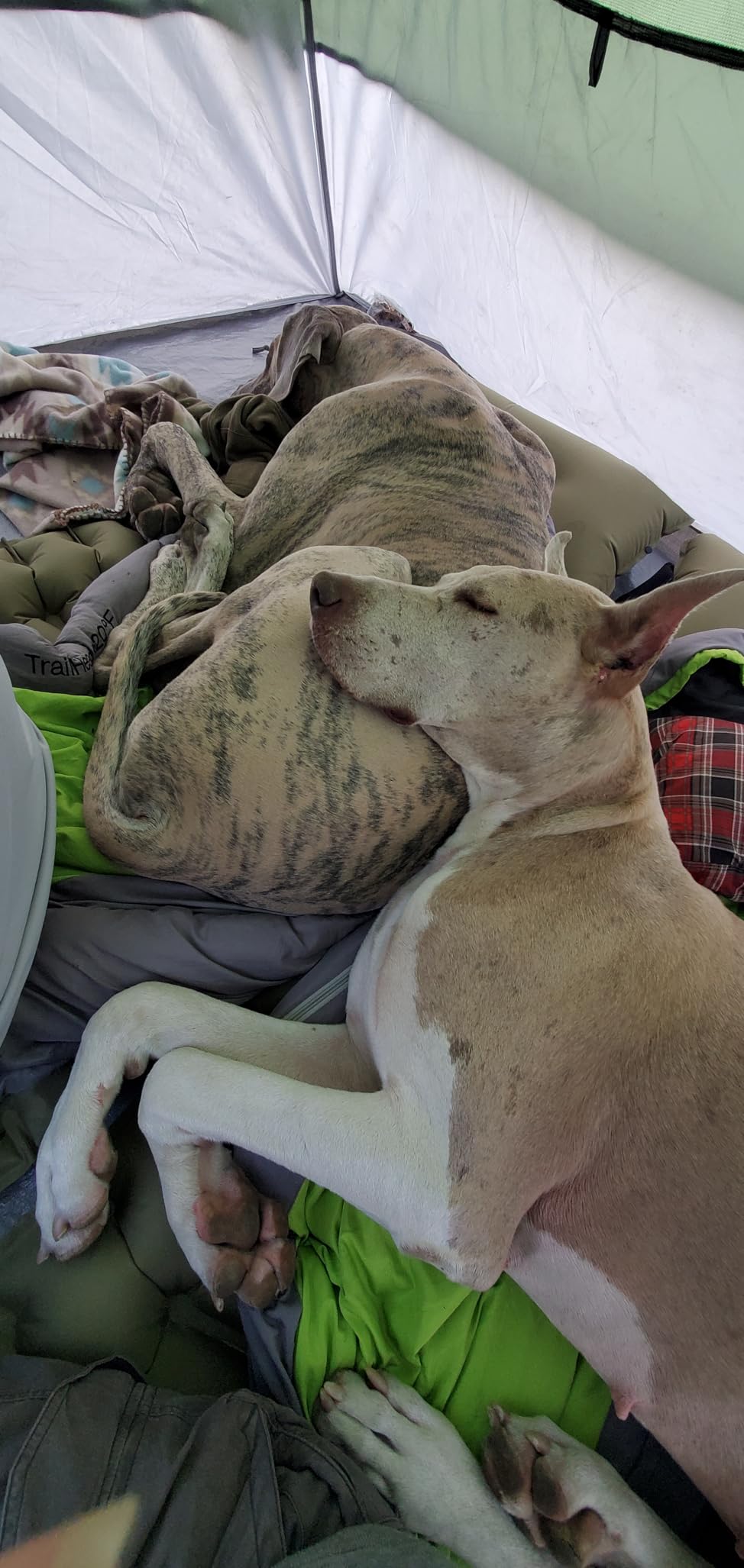
Backpackers, festival campers and anyone moving camp on foot will get the most from it. The one-minute setup means you can inflate it after dark without fumbling with a separate pump, which is when most campsite injuries happen.
It is also good for people who want a bed-like width for the price of a basic pad, and for those who will use a foam pad or sleeping bag liner underneath to make up the thickness.
Who the FUN PAC Ultralight Pad does not suit
Side sleepers should treat it as a basic pad rather than a comfort purchase. Three inches will not stop a shoulder from contacting the ground on rocky or hard terrain.
Cold weather is out of the question with no insulation, and the single width means it is strictly one person. If you plan to sleep two on it, buy two and connect them, or choose a double pad instead.
9. Coleman Self-Inflating Pad: Best for Durability and Quiet
Coleman Self-Inflating Sleeping Pad with Pillow
76 x 25 x 2.5 in
Foam and air chamber combination
No pump required
6.4 lb deflated
Pros
- Quiet surface with no squeaking or rustling
- Foam core keeps cushioning even if punctured
- Adds real warmth between sleeping bag and ground
- Long track record across many seasons
- Doubles as a floor bed at home
Cons
- Bulky at 6.4 lb so not backpacking gear
- Pillow must be blown up by mouth
- Takes 10 to 30 minutes to fully inflate
- Compression straps reported tearing at the seam
The Coleman has been in the catalogue longer than anything else here, and long-term owners report pads that have lasted 15 years. That is the defining advantage of a self-inflating foam pad: there is no air chamber to leak, so the thing that most often ends a mattress life simply does not apply.
Sound is the other quiet advantage. There is no squeaking and no rustling when you move, which matters if you share a tent with a light sleeper. Foam also adds a layer of insulation between your sleeping bag and the ground, so you can run a slightly warmer bag in shoulder season.
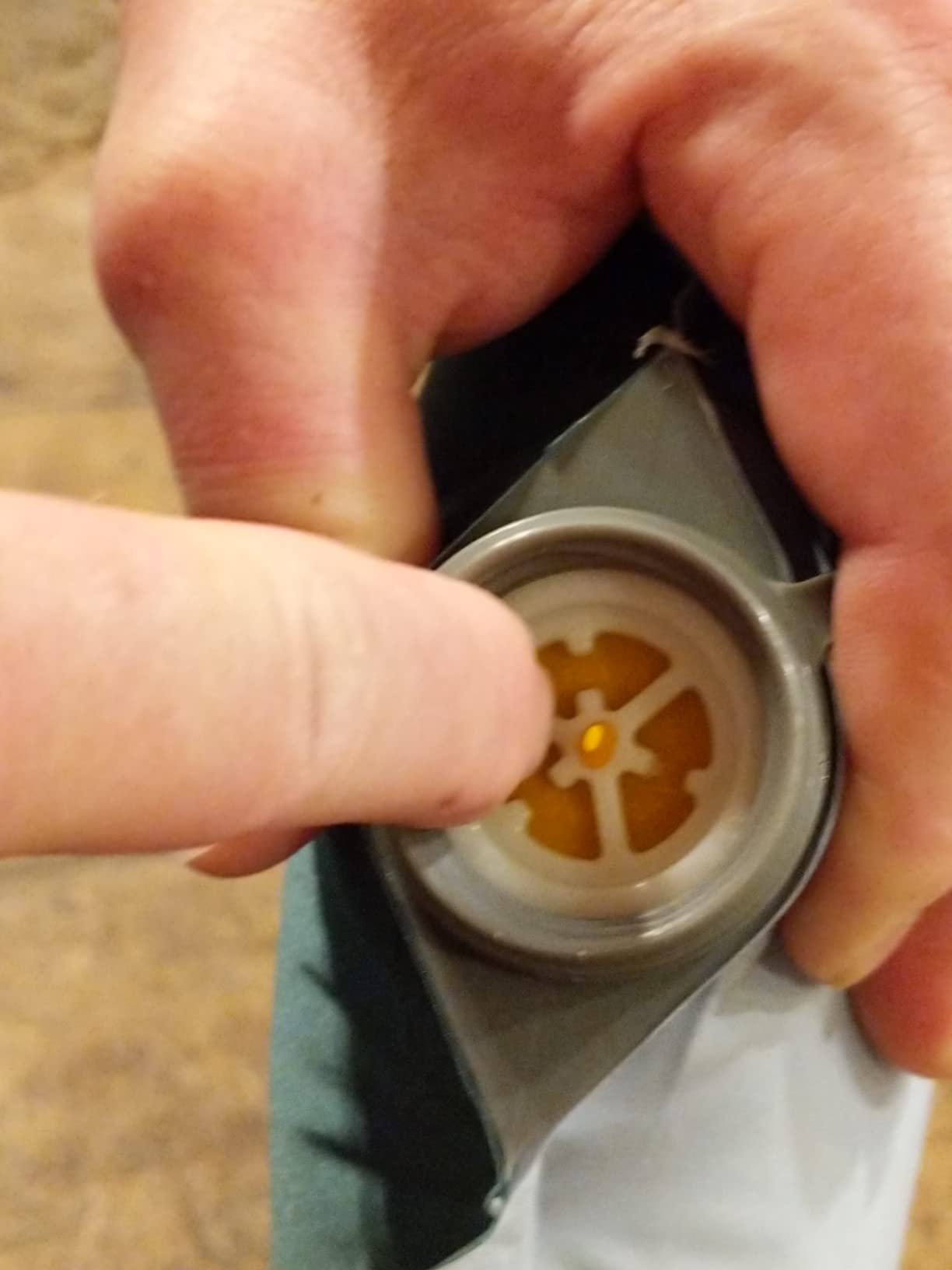
Set-up takes longer than the marketing implies. Open the valve and the foam draws air while you do something else, but owners report 10 to 30 minutes for a full inflation, plus a manual top-up. The integrated pillow inflates separately and has to be blown up by mouth, which is an extra step most people forget on the first trip.
The polyester cover is another quiet drawback: it is slippery, so a sleeping bag can slide off on uneven ground. Compression straps make packing fast but are reported to tear out of the seam. At 6.4 pounds and 76 x 25 inches, this is car camping and floor bed gear, not backpacking.
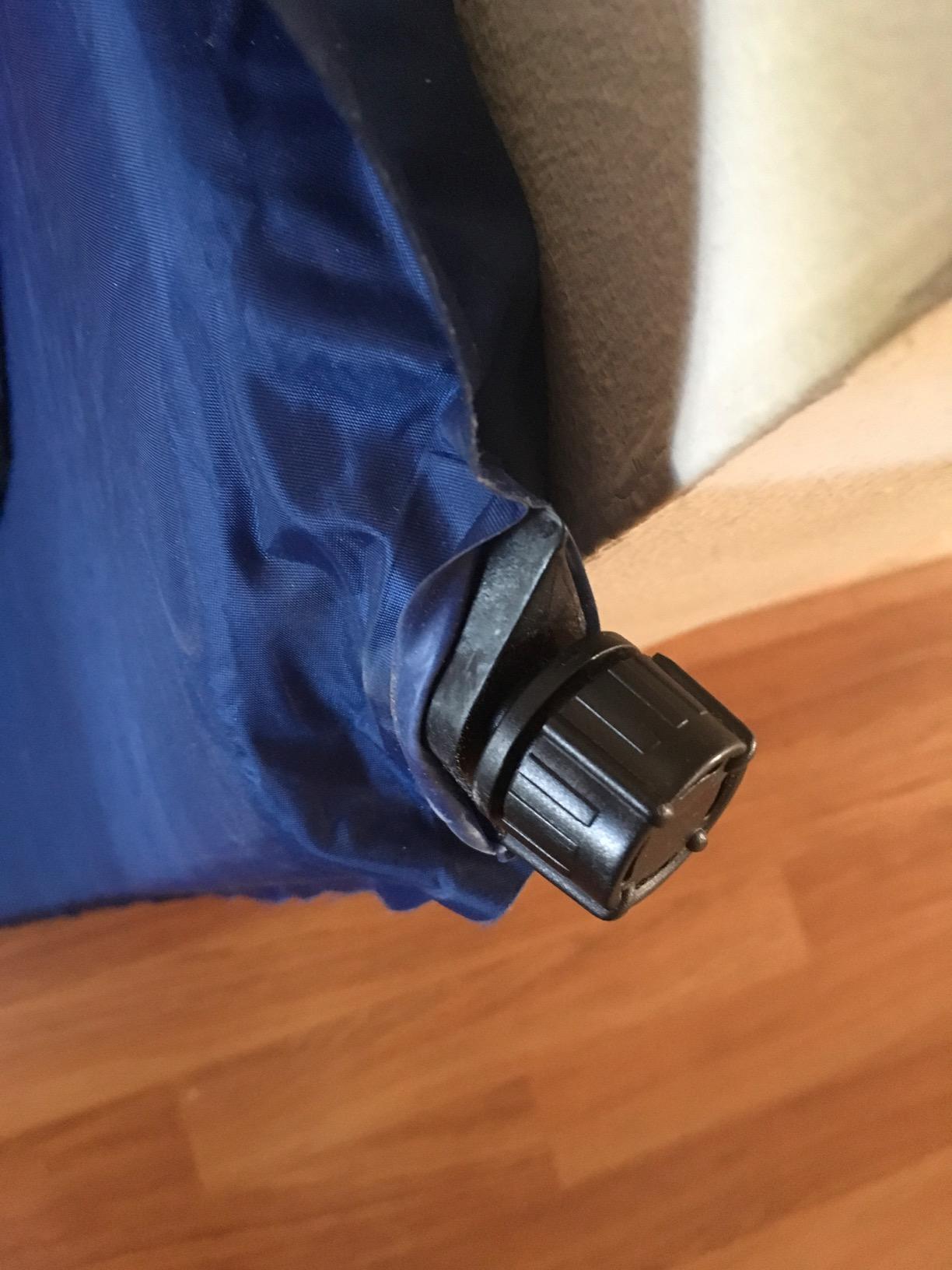
Who the Coleman Self-Inflating Pad suits
It is built for repeat campers who want one purchase to last. If you camp 20 nights a year and hate replacing gear, the durability argument outweighs everything else here, and a puncture no longer ends the trip.
It also works well as a second surface in a home guest room or as a spare bed for kids. The 300 pound capacity suits one adult or a child comfortably.
Who the Coleman Self-Inflating Pad does not suit
Backpackers should skip it. At 6.4 pounds and a bulky roll, it takes up space that ultralight hikers cannot spare, and the 25-inch width is narrow for anyone over five foot ten.
Anyone who wants instant setup will find the 10 to 30 minute inflation cycle and the mouth-inflated pillow frustrating, particularly on the first night of a trip when everyone is tired and hungry.
10. TOBTOS Double 6-Inch Pad: Best for Couples Sharing One Mat
TOBTOS Double Sleeping Pad for Camping, Extra Thick 6″ Camping Mattress 2 Person with Pillow Built-in Foot Pump, Inflatable Sleeping Mat for Camp, Backpacking, Hiking, Traveling
78.7 x 51 x 6 in
6 in thick double pad
Built-in foot pump
4.1 lb folded
Pros
- Widest and thickest pad here at 51 in by 6 in
- Fits two adults without rolling together
- Inflates in 2-3 minutes with the foot pump
- Holds firmness through the night
- Waterproof 40D nylon with TPU coating
Cons
- No R-value so it feels cold on chilly nights
- Built-in pillow is low-profile and awkward
- Foot pumping is slow for some owners
- Roughly twice the packed size of a single pad
The most common complaint from couples camping on two single pads is that they drift into each other and end up in the gap in the middle of the night. The TOBTOS solves that structurally: 78.7 x 51 inches is wide enough for two adults side by side with room to spare, and the U-shaped curve is designed specifically to stop rolling inward.
At 6 inches thick it is by far the thickest surface here, and that thickness is what makes it work for two people rather than one. Couples and side sleepers both tend to fall asleep on it rather than negotiating the surface all night.
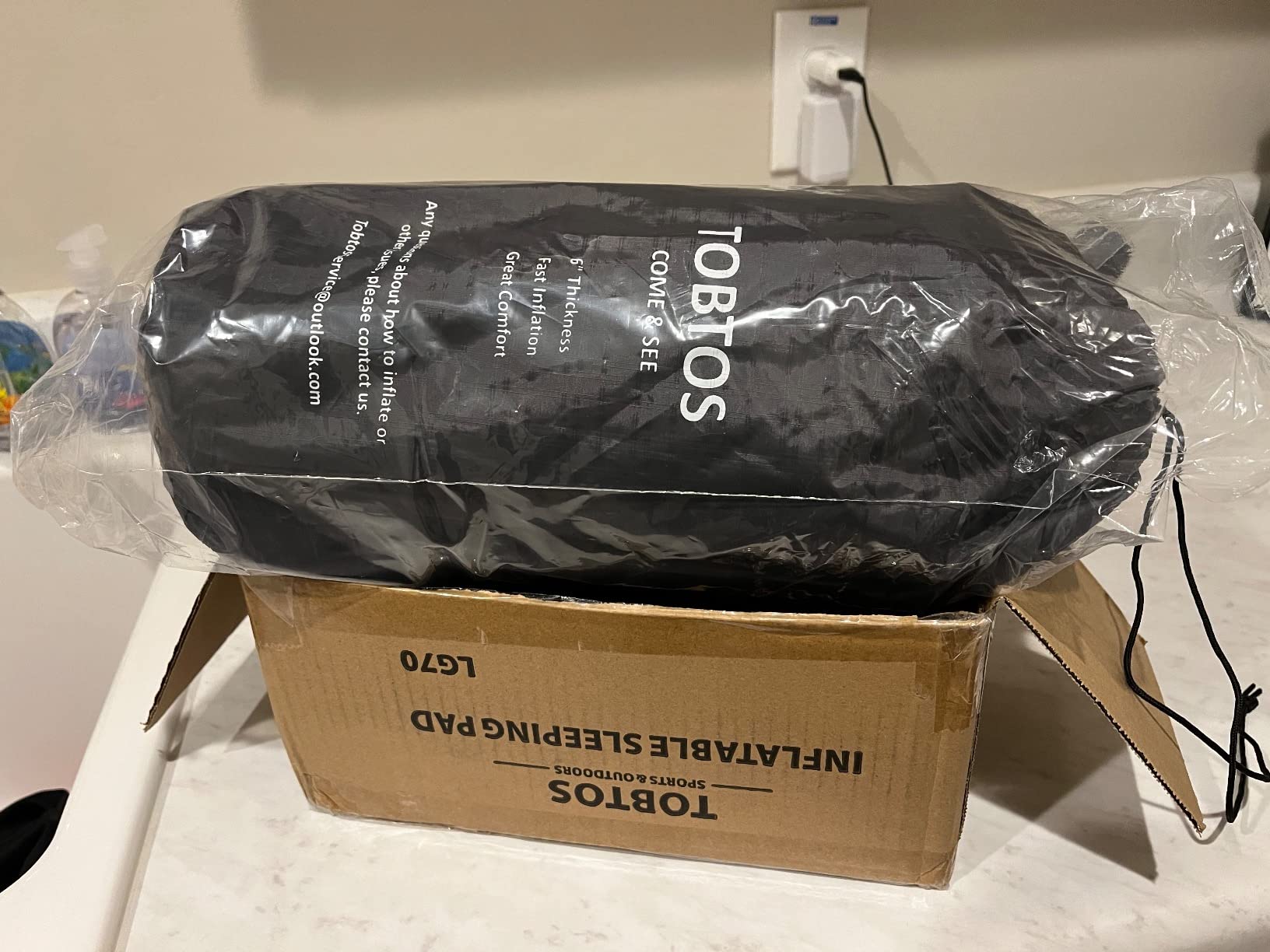
The built-in foot pump fills it in 2 to 3 minutes, which is slow going if you are pumping by foot, and some owners switch to a hand or electric pump for speed. When it holds its firmness overnight, it does so well that most owners report forgetting it is inflatable at all.
There are real trade-offs. There is no insulation value, so on a cool night the surface feels cold to the touch and you need a sleeping bag matched to the low temperature. The built-in pillow is low-profile and awkward when combined with your own pillow. One reviewer reported steady deflation and failure within a few nights, so test it before a long trip.
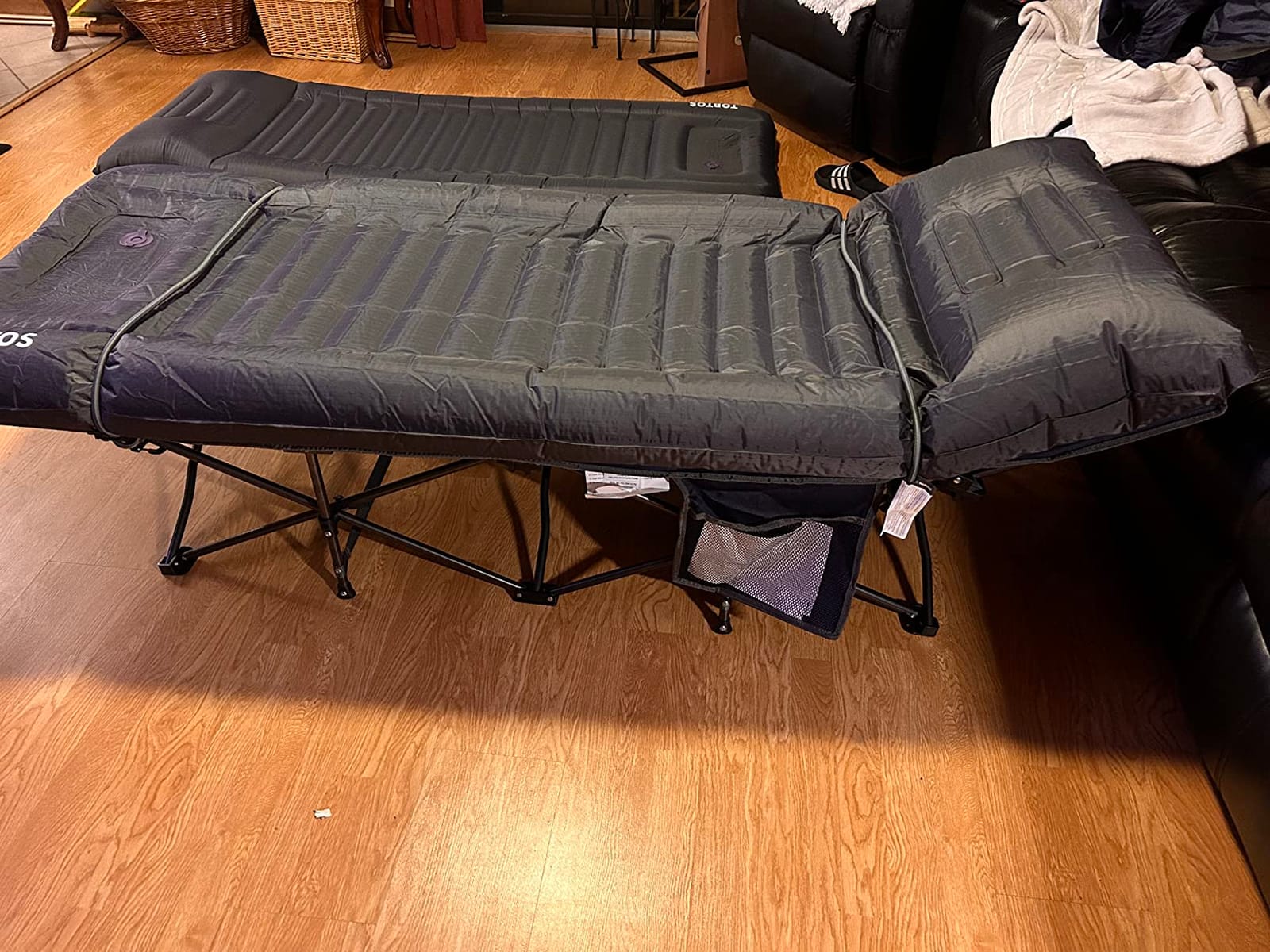
Who the TOBTOS Double Pad suits
It is made for couples and families with one child who want a single sleeping surface instead of the two-single gap problem. The 51-inch width genuinely fits two adults, which is rare at this weight.
Side sleepers get the best deal here, because 6 inches is more than enough to keep hips and shoulders off the ground. Car campers will also appreciate that it is easy to inflate anywhere with no power source.
Who the TOBTOS Double Pad does not suit
Cold weather campers should not use it as a standalone surface. With no R-value, it will conduct cold straight from the ground and the six inches of air do little to change that.
It also folds to roughly twice the packed size of a single pad, which adds real weight to a backpacking load, and anyone who already uses their own pillow will find the integrated one more hindrance than help.
11. CYMULA Memory Foam Camping Mat: Best Non-Inflatable Option
CYMULA Camping Mattress Pad Sleeping Mat, Portable Roll Up Mattress for Adults Camping, Bed Pads for Sleeping, Guest Beding for Sleepover Car Bed with Travel Bag
75 x 30 x 3 in
High-density memory foam
No pump or valve
9.5 lb rolled
Pros
- No inflation so no pump
- valve or leak to manage
- Memory foam cushions hips and shoulders
- Insulates well against cold floors
- Non-slip base grips a cot or tent floor
Cons
- Bulky when rolled at 9.5 lb
- Carry bag reported loose or too large
- May take up to 72 hours to rebound to full thickness
- Rolling it up alone is awkward
This is the recommendation for anyone who has decided they hate valves. There is no pump, no inflation step, no valve to fail and nothing to lose in the night. You roll it out and lie down. For people who moved on from inflatable pads, owners repeatedly describe it as a step up in comfort, with several saying they stop noticing they are on the ground at all.
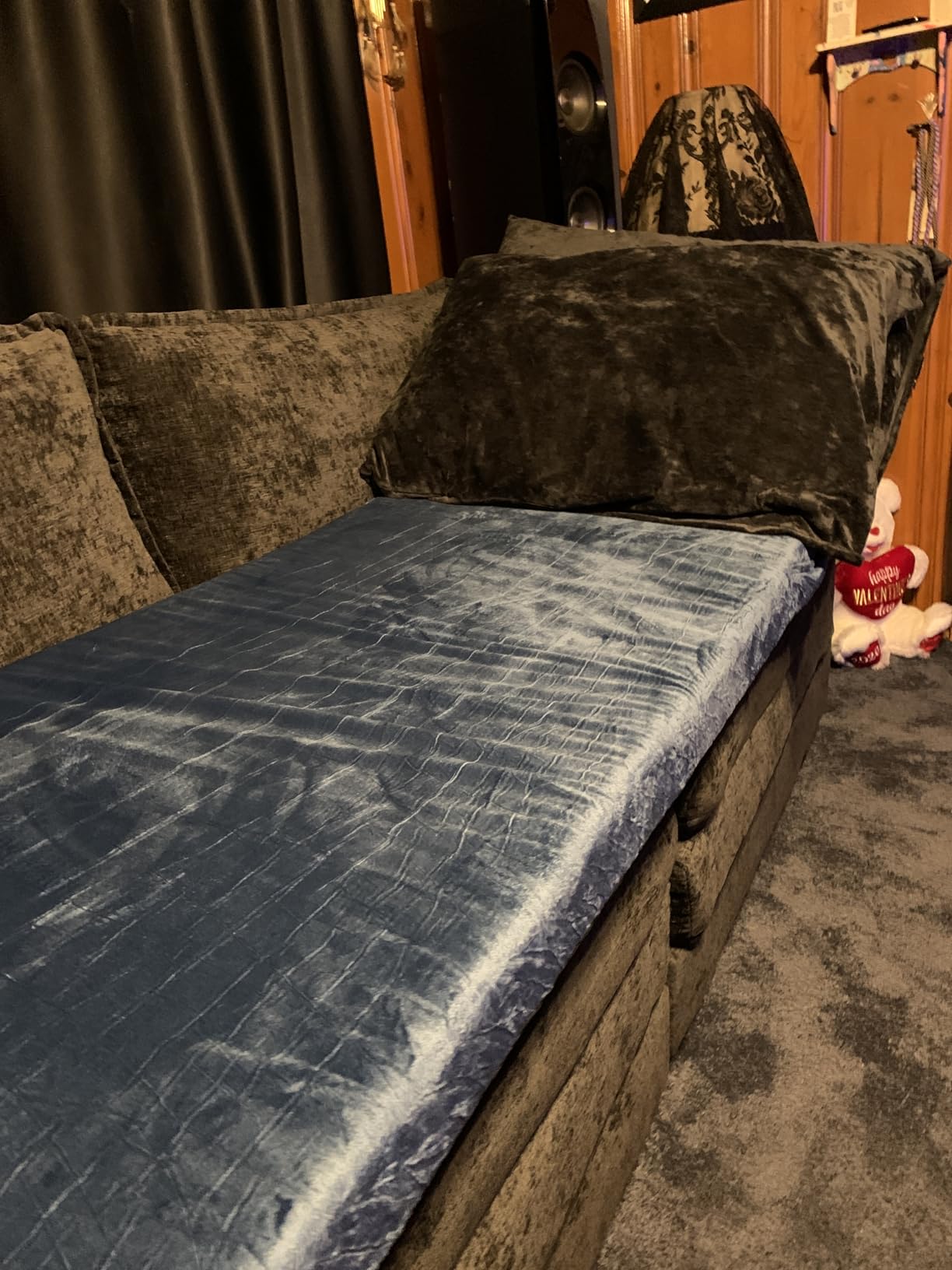
The high-density memory foam adapts to your body shape and cushions the hips and shoulders that make ground sleeping miserable. It also insulates against cold floors better than air, which is why owners report no cold drafts on hard surfaces, and the fleece cover feels comfortable against bare skin.
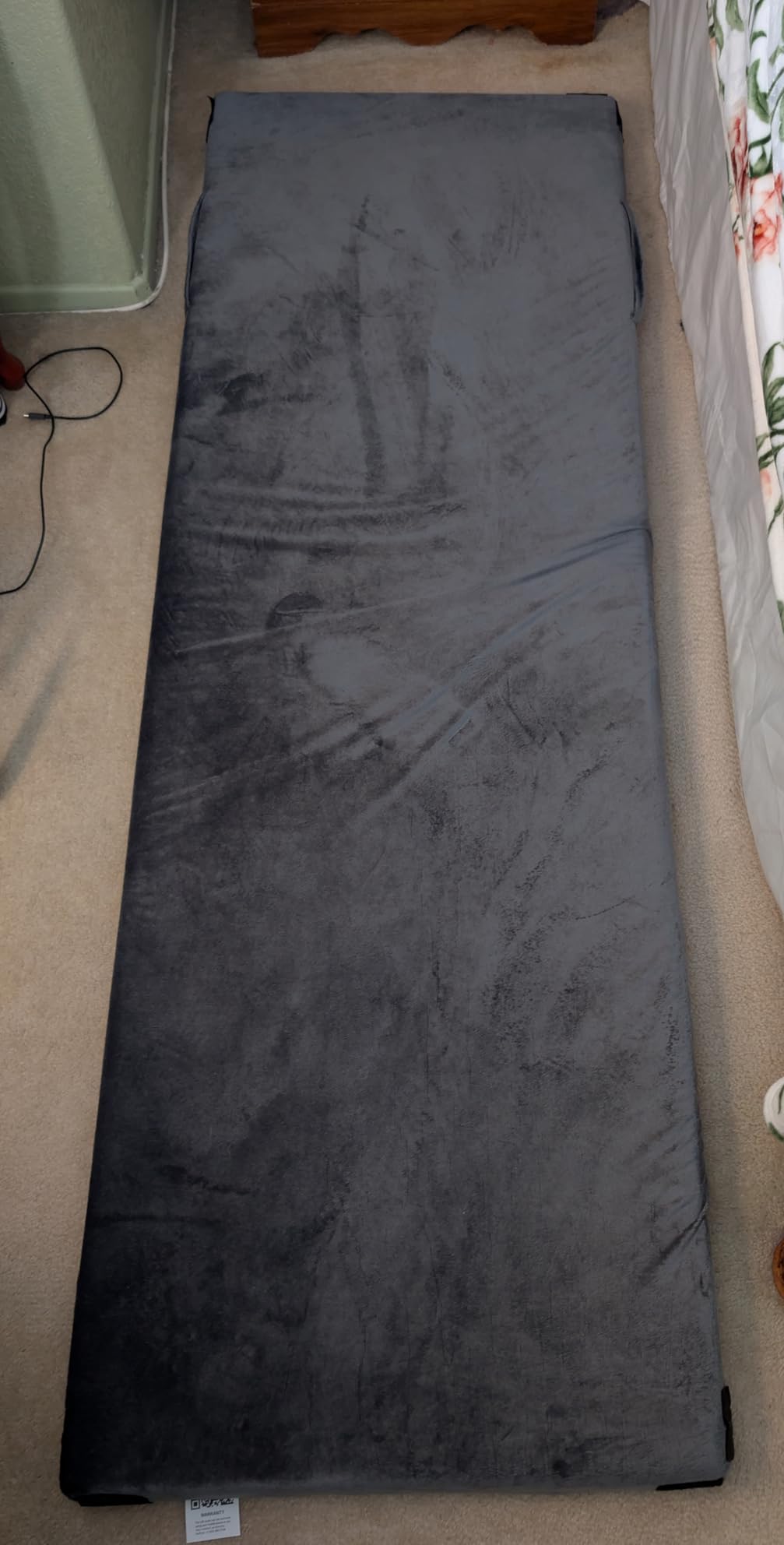
The non-slip waterproof base is genuinely useful outdoors, because it does not slide on a cot or tent floor the way air mattresses do. It doubles as a car camping mat, floor bed or guest bed, and it comes in seven sizes from 63 x 26 inches up to 60 x 80 inches so you can match it to your sleeping setup.
The trade is bulk and weight. At 9.5 pounds rolled it is the heaviest pick here, and the reported complaints centre on the packing side: a loose or oversized carry bag, and the awkwardness of rolling it up alone. It arrives vacuum-compressed, so allow 24 to 72 hours for it to rebound to its full 3 inches.
Who the CYMULA Memory Foam Mat suits
It suits car campers and anyone with a vehicle carrying their gear, because packed bulk that would ruin a backpacking trip is irrelevant when it lives in a boot or garage. Side sleepers and anyone with pressure points get real relief from the memory foam.
It is also the simplest choice for families. No pumping, no teaching kids how to work a valve, and it can double as an indoor floor bed on nights you are not camping.
Who the CYMULA Memory Foam Mat does not suit
Backpackers and anyone who carries gear on foot. At 9.5 pounds it is close to a third of a full pack before you add a tent and sleeping bag, and the roll will not fit into a small vehicle without planning.
Anyone who needs the mattress at full thickness the night it arrives should order it early. The vacuum rebound window of up to 72 hours is the single most common surprise for first-time buyers.
12. INVOKER Self-Inflating Foam Pad: Best Claimed Cold-Ground Rating
INVOKER Camping Sleeping Pad, Self-Inflating, 75 x 24 x 3.15 in, Green
77.17 x 27.56 x 3.15 in
Claimed R-8 rating
3.15 in memory foam core
Double valve system
Pros
- Comfortable for side sleepers once firmness is dialled in
- 30D knit fabric is quiet and never squeaks
- Foam breathes better than a solid air mattress
- Good cold-ground insulation for most seasons
- Ultra-wide sleeping surface
Cons
- Bulky and heavy at 6.6 lb so car camping gear
- Deflating takes repeated roll-and-kneel effort
- Carry bag is poorly stitched and reported to tear
- Self-inflation is slow and some owners add a blower
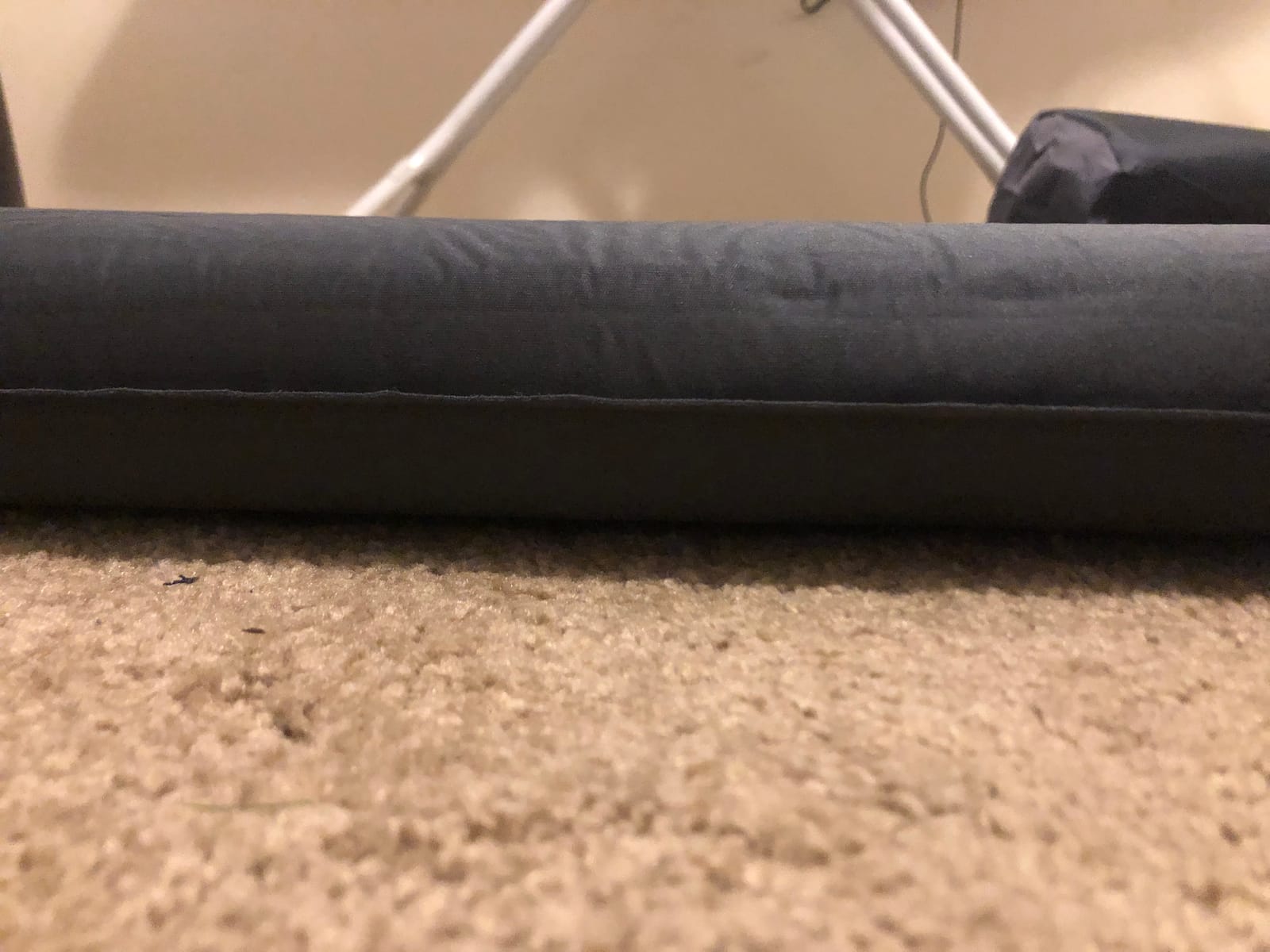
The INVOKER is the only pick here with a claimed R-8 thermal rating, which puts it in four-season territory rather than the three-season range most of the group occupies. The 3.15-inch high-resilience memory foam core does not compress under a heavier sleeper the way an air pad does, and owners using it for car camping report good insulation without needing an extra layer underneath in most seasons.
The double valve design handles both self-inflation and firmness adjustment, so you can open it, let the foam draw air, then close it down to your preferred firmness. That adjustment is what makes it workable for side sleepers, who tend to need a softer setting than the manufacturer ships it at.
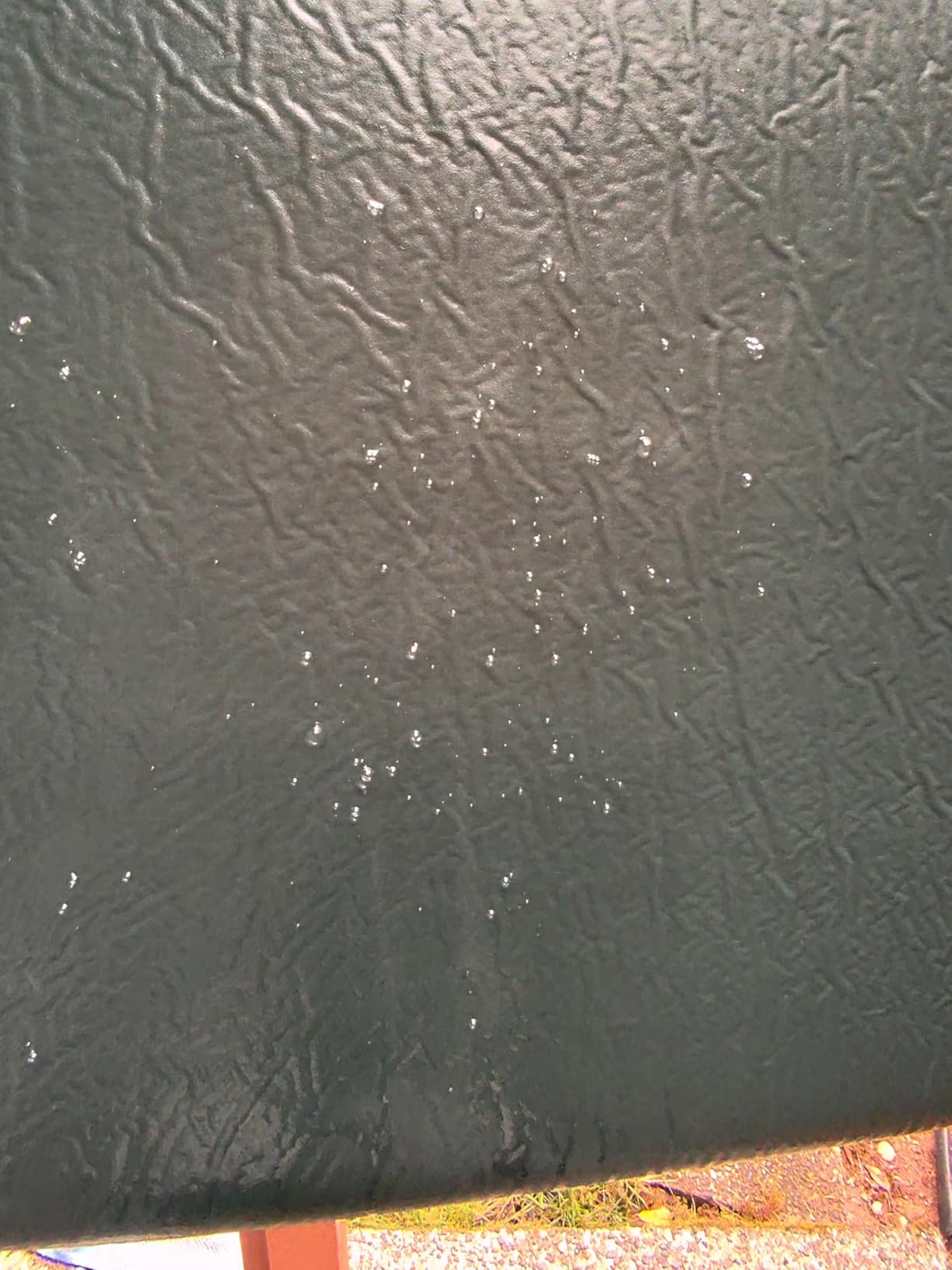
The 30D knit outer fabric over a waterproof TPU backing is quiet and does not squeak or rustle when you move, which again makes it a good partner-friendly choice. Foam also breathes better than a solid air mattress, so you stay more comfortable in warm weather than you would on vinyl.
The weak point is packing. Deflating and rolling it is a chore that takes repeated roll-and-kneel effort, and the included carry bag is the most repeated complaint in reviews, reported to split or tear at the seams. Owners replace the bag rather than risk losing the whole pad. Self-inflation is slow, and some owners top it up with a blower. At 6.6 pounds it is car camping gear.
Who the INVOKER Foam Pad suits
It suits campers heading into genuine cold, where a three-season pad leaves you awake. The claimed R-8 rating is a manufacturer figure rather than an ASTM-tested number, so treat it as guidance, but the foam core does insulate meaningfully better than air.
It is also a good choice for side sleepers and heavier sleepers, both of whom benefit from foam not bottoming out. Partner-friendly quiet and a wide surface make it pleasant for two people sharing a tent.
Who the INVOKER Foam Pad does not suit
Anyone who carries gear on foot. Six and a half pounds plus a full roll does not belong in a backpacking load, and this is a car camping or home floor bed purchase.
It is also wrong for anyone who wants quick setup and fast pack-down. Add the poor carry bag to a slow self-inflation cycle and you are looking at real friction every morning and evening of a trip.
How to Choose an Air Mattress for Camping in 2026
The most useful decision is made before you look at any brand. Decide whether your mattress is vehicle furniture or something you carry, because that single choice eliminates half the list. Queen airbeds with built-in electric pumps live in a tent or a car for the trip. Inflatable pads fold into a pack and go on your back. Trying to carry a 20-pound queen airbed is how people learn this lesson the hard way.
All-air vs self-inflating vs memory foam
All-air mattresses are pure vinyl chambers with nothing inside but air. They are the cheapest, the most compact when packed, and the least comfortable under a heavy sleeper, because there is nothing to resist compression. They also depend entirely on holding pressure, which is where the most common complaint in camping forums comes from: waking up on a half-flat pad because the surface lost firmness overnight.
Self-inflating mattresses combine open-cell foam with an air chamber. Open the valve and the foam pulls in air on its own, though in practice it stops at roughly half to 80 percent of full firmness and you finish it off with a few breaths or a pump. The foam is why they hold warmth better and do not bottom out, and why there is no leak to worry about.
Memory foam mats skip air entirely. There is no pump, no valve and no failure point, and the foam cushions and insulates at once. The cost is weight and packed bulk, which is why they suit car camping rather than walking. If you are still deciding, our air compressor picks cover the other half of a campsite power setup if you plan to inflate pads with a compressor at base camp.
Thickness and R-value: what cold ground demands
Thickness decides comfort, and R-value decides warmth. They are different problems and shoppers constantly confuse them. Thickness is how far your hips and shoulders sit from the ground. R-value is how slowly heat moves from your body into that ground.
The rule of thumb most campers arrive at: under 3 inches is thin enough that side sleepers feel the ground through the pad, 3 to 4 inches is comfortable for most sleepers, and anything above 4 inches starts to feel like a home mattress. Our 4-inch and 6-inch picks exist specifically because side sleepers ask for exactly that.
R-value follows a simple threshold that campers on forums repeat constantly: above R-3 is three-season, R-4 to R-5 handles shoulder season, and R-5 or higher is what you want when the overnight low drops below freezing. Only two picks here carry a stated R-value, the Gear Doctors pad at 4.3 and the INVOKER at a claimed 8. Every other option in this list is a warm-weather or mild-shoulder-season surface, and no amount of thickness changes that.
Matching R-value to the season
If you camp in summer above roughly 60 degrees, any of the queen airbeds will be comfortable and none of them need insulation. The deciding factor becomes height and pump convenience. For spring and autumn nights in the 40s and 50s, choose an insulated foam or hybrid pad, or add a foam pad underneath a thicker inflatable. For winter and freezing nights, you want R-5 or higher, and a sleeping bag rated well below the forecast low, because a warm mattress under a bag rated for summer will not keep you warm.
Size guide: single, double, queen and vehicle shapes
Single pads run about 24 to 27 inches wide and 72 to 78 inches long, and they suit one person. Anything under 25 inches wide is tight for anyone over five foot ten. Double pads like the TOBTOS run roughly 51 inches wide, which is enough for two adults side by side and solves the gap problem that two singles create. Queen airbeds at 80 x 60 inches are genuine beds and are for car sites, tents with room, and homes.
Vehicle-specific shapes matter more than most buyers expect. A flat queen does not fit a curved SUV footwell or a pickup bed with wheel wells. Measure the flat area you plan to sleep on, subtract the wheel arches, and buy to those numbers. If the answer comes out under 70 inches, you are looking at a double pad rather than a queen airbed.
Weight capacity for heavy sleepers
Capacity is where many campers buy wrong. Ratings in this group run from 250 pounds on the Gear Doctors pad to 800 pounds on the VOSSER and OhGeni. Comfortably stay at least 100 pounds below the stated limit, and remember that capacity is about load, not insulation or construction quality. A 250 pound pad will not feel warmer than a 600 pound pad simply because it is rated lower.
For sleepers over 200 pounds, the practical advice is to prioritize internal structure over height. I-beam and coil-beam constructions resist the middle dip, and foam cores simply do not compress to the ground. Thickness helps too, but structure matters more once you are heavier.
Brand reliability: Intex vs Coleman and the rest
Intex and Coleman dominate shopping results for a reason: both have enormous installed bases, which means parts, patches and replacement pumps are easy to source. Intex builds high-rise all-air beds with electric pumps, and Coleman leans toward foam-based self-inflating pads. For air retention specifically, the foam-based design wins because there is no chamber to lose pressure, which is the single most cited complaint about all-air beds.
The rest of the field splits into two groups. Brands like SoundAsleep and King Koil build conventional all-air queen beds focused on height and coil support, and they perform best in mild weather. Brands like Gear Doctors, INVOKER and CYMULA build foam or hybrid pads, and they are the ones to look at when the ground is cold. Judge foam pads on the claimed R-value and the shell material, since a puncture in a foam pad removes most of your cushioning.
Air mattress vs camping cot vs backpacking pad
A cot keeps you off the ground entirely, which means better airflow and no cold conduction, at the cost of bulk and a frame that can creak. An air mattress gives you better cushioning and a quieter, flatter surface. If cold ground is your main worry, a cot wins. If comfort under your hips is your main worry, an air mattress wins.
Backpacking pads sit in a third category: light, thin and designed to be carried, with insulation values that make them a different product entirely from the queen airbeds. They are covered above, but the rule is simple, do not carry a queen airbed, and do not expect a car-camping pad to fit in a daypack.
Leak Prevention, Patching and Storage
Two maintenance habits prevent most air mattress problems. First, air mattress valves are the most common failure point, so wipe the valve seat clean with a dry cloth before every use and never force it closed. Grit in the valve seat is the usual reason a valve starts to seep. Second, store mattresses deflated, folded loosely and out of direct sun, because heat and UV degrade both PVC and flocked surfaces over time.
How to field-patch a leak in five steps
Every pad on this list except one ships with a repair patch, so find it before you need it. When you find the leak, inflate the mattress and listen for the hiss or spray soapy water along the seam to spot it. Deflate it fully and clean the area with a damp cloth, then dry it. Cut the patch to roughly round, not square, because square corners lift at the tips. Press it on hard and leave the mattress folded under a weight overnight.
That last step is what most people skip and it is the difference between a patch that holds and one that peels off in the cold. On a foam-core pad, treat a puncture as urgent because you lose most of the cushioning immediately, and stop for the night on an inflatable air layer if you can.
How to handle slow overnight air loss
Slow overnight loss is normal for the first two or three nights on any new all-air mattress, because the material stretches under load and settles. Top it off each morning for the first few days and it usually stops. After that, if a bed is losing meaningful pressure every night, check the valve first, then look for a seam leak.
If you are at the end of a multi-day trip and losing air, the cheapest fix is to sleep on it slightly firmer than feels right. Firm surfaces lose less, and an under-inflated mattress is also the one that feels like a pool float. Most forum complaints about waking on a flat pad come down to a valve or a first-night settling issue rather than a failed mattress.
Frequently Asked Questions
What are the best inflatable mattresses for camping?
For most campers the best inflatable is a high-rise all-air queen with a built-in electric pump, because it is easy to inflate, stays flat with internal coil support and sleeps like a real bed. For cold ground, choose an insulated foam or hybrid self-inflating pad with an R-value of 4.3 or higher instead, and for backpacking pick a lightweight inflatable pad rather than any queen bed.
What is the most comfortable air bed for camping?
Comfort comes down to internal structure and thickness rather than brand. The most comfortable options use multiple internal air beams or coils to stop your hips sinking into a bowl, sit at 4 inches or more, and use a flocked or fabric top instead of bare PVC. Add a thin foam topper if you sleep on your side and prefer a softer surface.
Is Intex or Coleman a better air mattress?
They make different things. Intex focuses on high-rise all-air queen beds with built-in electric pumps, which are best for car camping with plenty of power. Coleman focuses on foam-based self-inflating pads, which are warmer, quieter and essentially leak-proof but much bulkier. Choose Intex for a vehicle-based camp bed and Coleman for cold ground or repeat-season durability.
What air mattress stays inflated all night?
Foam-core and hybrid self-inflating mattresses hold their firmness best because they contain an open-cell foam core that resists sinking, so there is no meaningful air loss to wake up to. Among all-air models, mattresses with thicker PVC and internal beam construction hold pressure longest. Expect a small amount of settling on the first two or three nights with any new all-air mattress.
How thick should a camping air mattress be?
At least 3 inches for most sleepers, and 4 inches or more if you sleep on your side or camp on hard or rocky ground. Below 3 inches, side sleepers feel the ground through the pad no matter how good the surface is. Thickness improves comfort but does not add warmth, so cold ground requires a separate R-value above 3 for three-season trips.
The Best Air Mattresses for Camping in 2026
After testing all twelve, the Intex Dura-Beam Queen remains our pick for the best air mattresses for camping because it does the least nothing well: 22 inches of height, a built-in pump, a queen surface and a 600 pound rating in one package. If you want the most bed-like feel, the SoundAsleep Dream Series wins on internal coil support and quietness. For cold ground, the Gear Doctors Oxylus at 4.3 R-value is the only pad here with real insulation at a carryable weight.
Everyone else on this list has a specific job. Side sleepers want the ZOOOBELIVES at 4 inches or the TOBTOS double at 6 inches. Heavy sleepers want the VOSSER or OhGeni at 800 pounds. Backpackers want the FUN PAC at 1.5 pounds. People done with valves want the CYMULA memory foam. Pick the one that matches your ground and your pack, top it off on night one, and check the valve before you crawl in. Our quiet air compressor guide covers base-camp inflation if you plan to run a pump at the site.