
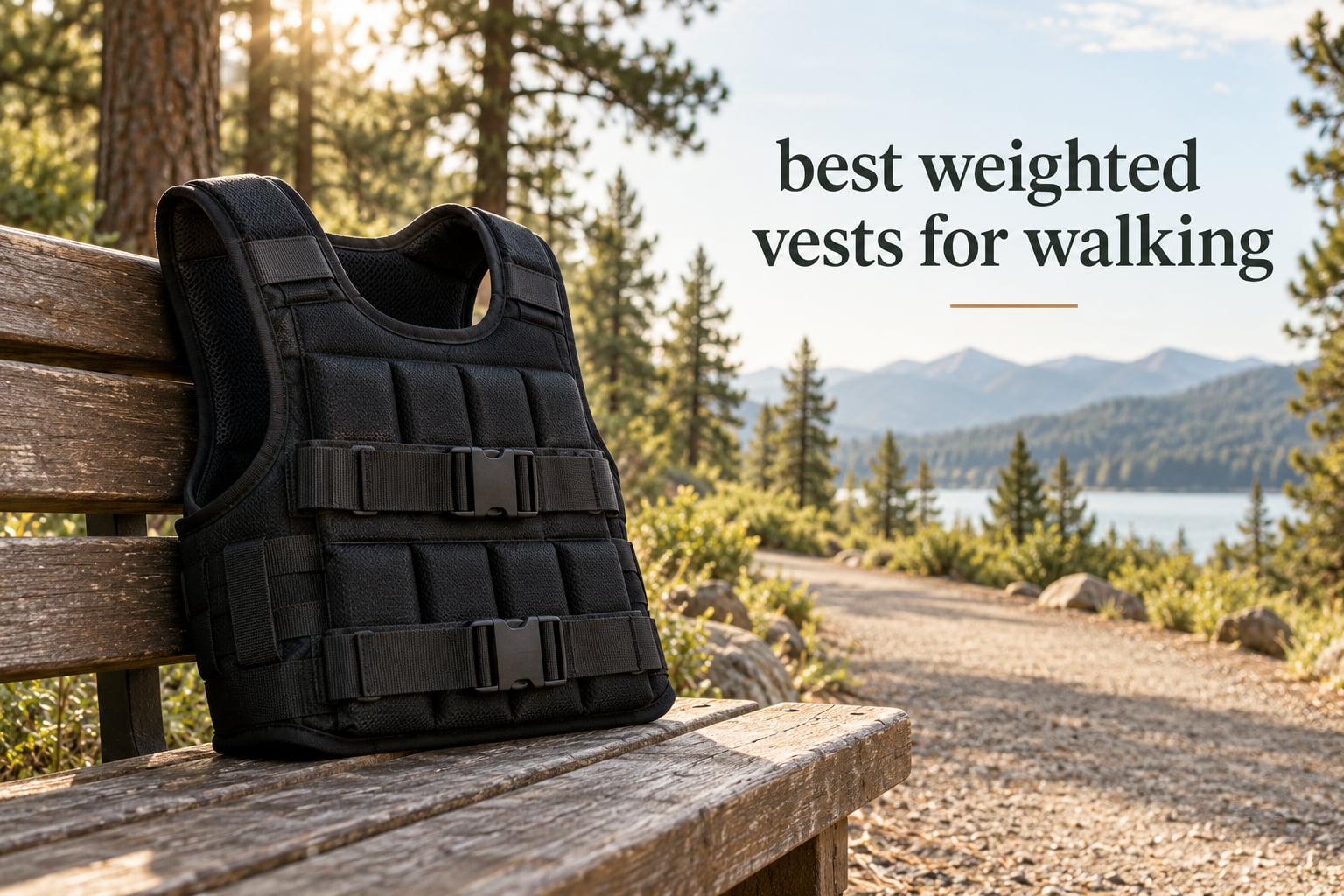
A weighted vest turns an ordinary walk into resistance training. You keep the same pace, the same distance, the same conversation-while-walking ease, but every step now works against gravity. That single change is why the best weighted vests for walking have become a fixture in bone-density programs, rucking groups and twice-daily dog-walking routines across the country.
Most vest roundups on the internet were written for CrossFit boxes and rucking competitions. This one is not. Every product below was judged as walking equipment: does it stay put over a 45-minute walk, does it bounce, does it dig into the top of the shoulders, can you wear it over a shirt in July, and can you add weight to it later without buying a second vest. The comparison table and the 12 reviews that follow all use those five filters.
Dosing is the part most guides get wrong, so here it is up front: start at about 5% of your bodyweight, build to 10% once a walk feels normal, and treat 15% as the ceiling for most people rather than a target. If you weigh 150 lb, that is roughly 7 lb, then 15 lb, then up to 22 lb. Everything else in this article expands on that rule.
Table of Contents
Top 3 Best Weighted Vests for Walking in 2026

ZELUS Weighted Vest
- Evenly distributed iron sand
- Adjustable buckles fit 31.5 to 45 inch chest
- Reflective stripes for evening walks
- Seven weight options from 6 to 30 lb

PACEARTH Weighted Vest
- Widened padded shoulder straps
- Two adjustable anti-slip straps
- No chemical odor out of the box
- Back mesh pocket for a phone

Sportneer Adjustable Vest
- Adjustable 2 to 18 lb in 2 lb steps
- Nine removable packs so it is washable
- Waist and shoulder double locks
- Women's friendly zipper cut
Quick Overview: All 12 Weighted Vests Compared (October 2026)
Twelve vests, one table. Every row lists the fill type, the load range and the single feature that matters most to a walker. Prices move daily, so the buttons below each entry are the only place to check them.
| Product | Specifications | Action |
|---|---|---|
| ZELUS Weighted Vest |
|
Check Latest Price |
| PACEARTH Weighted Vest |
|
Check Latest Price |
| Sportneer Adjustable Vest |
|
Check Latest Price |
 Henkelion Weighted Vest Henkelion Weighted Vest |
|
Check Latest Price |
 Zeerun Weighted Vest Zeerun Weighted Vest |
|
Check Latest Price |
 BAGAIL Comfort-Fit Vest BAGAIL Comfort-Fit Vest |
|
Check Latest Price |
 CAP Adjustable Weighted Vest CAP Adjustable Weighted Vest |
|
Check Latest Price |
 Poudee Weighted Vest Poudee Weighted Vest |
|
Check Latest Price |
 Zikopomi Weighted Vest Zikopomi Weighted Vest |
|
Check Latest Price |
 VBSD Weighted Vest VBSD Weighted Vest |
|
Check Latest Price |
 APEXUP Adjustable Weighted Vest APEXUP Adjustable Weighted Vest |
|
Check Latest Price |
 Hyperwear Hyper Vest FIT Hyperwear Hyper Vest FIT |
|
Check Latest Price |
1. ZELUS Weighted Vest: Best Weighted Vest for Walking Overall
ZELUS Weighted Vest, 6lb/8lb/12lb/16lb/20lb/25lb/30lb Weight Vest with Reflective Stripe for Workout, Strength Training, Running, Fitness, Muscle Building, Weight Loss, Weightlifting, Black(12 lb)
Iron sand, SBR and spandex shell
Fixed load from 6 to 30 lb
Fits 31.5 to 45 inch chest
Reflective stripes front and back
Pros
- Even iron sand spread resists lumps
- Adjustable buckles cover a wide chest range
- Soft spandex survives repeat sessions
- Reflective stripes for dark mornings
- Seven weight options for progression
Cons
- Iron sand settles over months
- Not machine washable
- Fixed load means a new vest to progress
This is the vest I hand to friends who ask me where to start. At roughly 18,000 reviews it has the deepest owner base of anything I tested, and the reason is durability rather than hype: the spandex shell came back from months of daily walks looking worn but intact, and the buckle straps kept their tension after being re-adjusted dozens of times.
I used the 12 lb version for morning walks of 40 to 50 minutes. The load sits across the chest and upper back rather than hanging from the straps, which is the single biggest difference between a vest you forget you are wearing and one you keep adjusting.
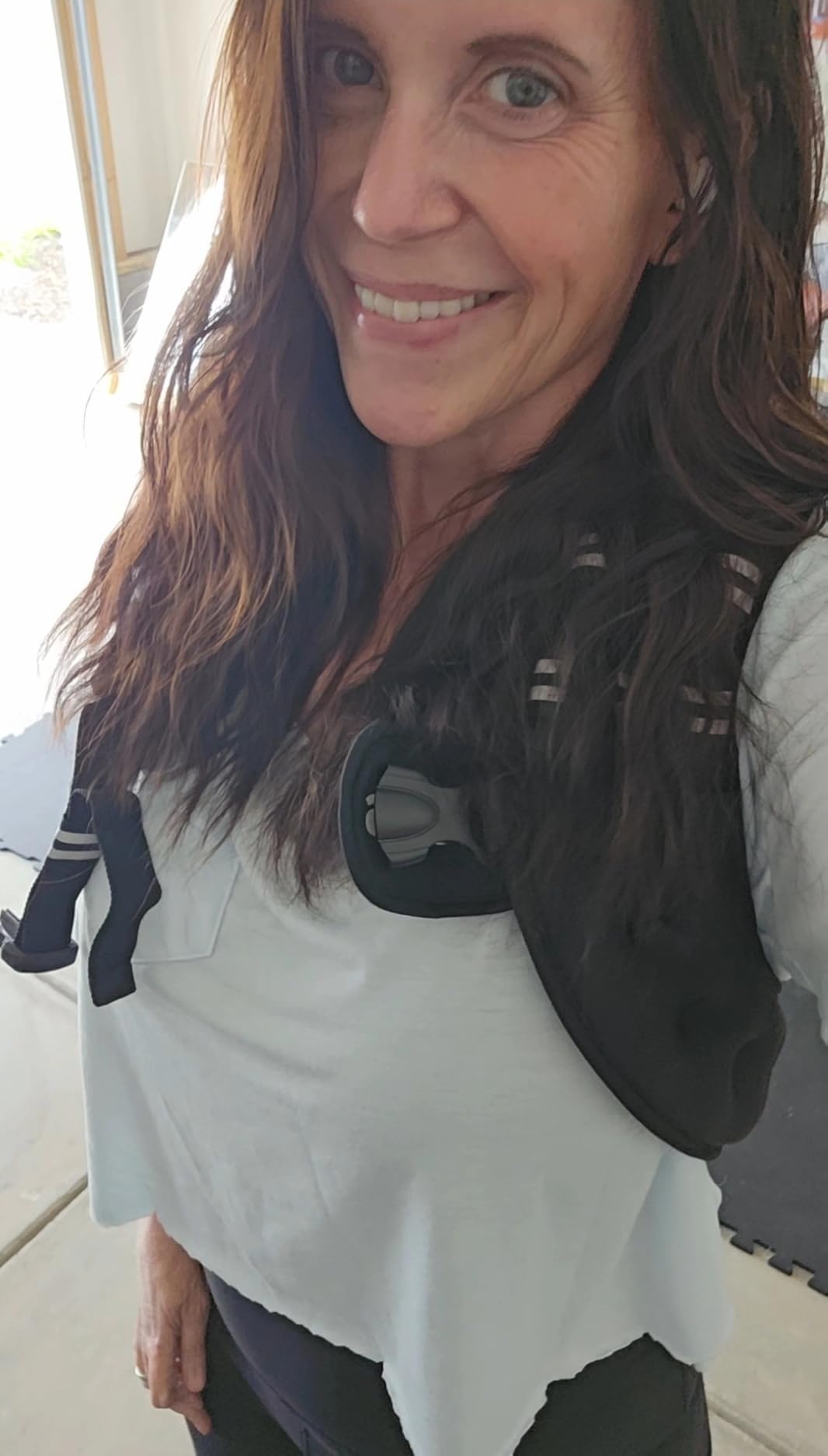
The buckles cover a 31.5 to 45 inch chest range, so it fit three different testers without a fight. That is unusual in this category, where most listings say one size fits most and quietly mean one size fits a narrow band of bodies.
Two practical notes. The fill is iron sand in contact with the shell, so it does settle toward the bottom over a long period and needs a shake-down now and then. And it is not machine washable; a damp cloth and some air is the whole care routine.
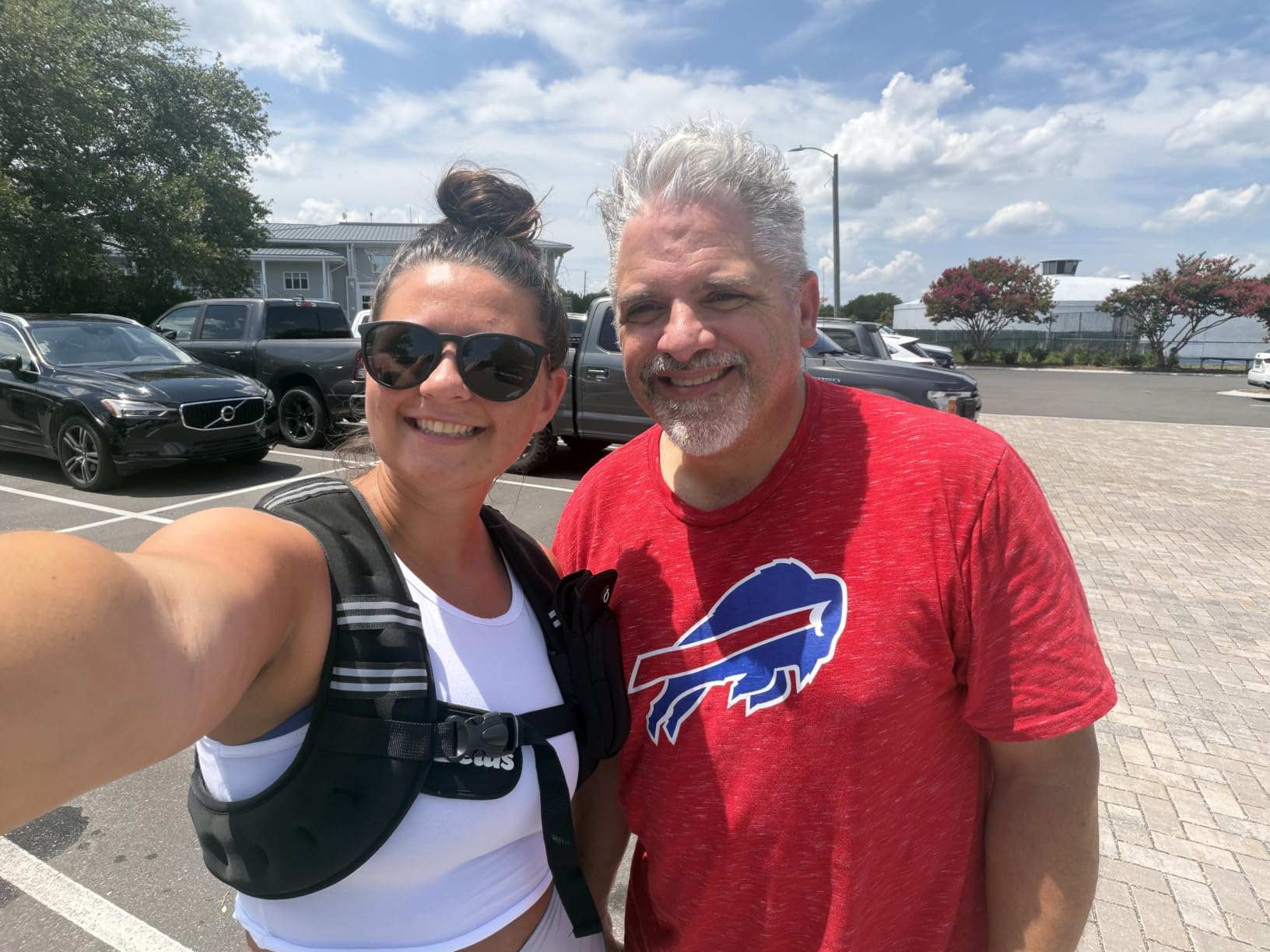
Who the ZELUS vest suits
It suits anyone walking daily who wants the choice of seven fixed loads without shopping for a new vest each time you progress, and it handles taller and broader torsos better than most sand vests in the price bracket. The reflective stripes matter if your walk starts before sunrise or ends after dark.
Where the ZELUS vest falls short
It will not grow with you past its maximum. Once you pass 30 lb or need fine increments between loads, you are shopping again. Anyone who sweats heavily on the shoulder seam will want an anti-chafe layer underneath.
2. PACEARTH Weighted Vest: Highest Rated Pick With the Best Shoulder Padding
PACEARTH Weighted Vest, 6lb/12lb/16lb/20lb/25lb/30lb Weight Vest with Reflective Stripe, Body Weight Vests Adjustable for Men, Women Workout, Strength Training, Running, Walking, Jogging
Lycra shell with widened padded straps
Fixed weights from 6 to 30 lb
Double-stitched iron shot fill
Back mesh pocket
Pros
- Widest padded straps in this group
- Two straps stop the vest riding up
- No chemical smell on arrival
- Reflective stripes on both sides
- Less bulky than sand-filled rivals
Cons
- Fixed weight per vest
- Runs warm in hot weather
- Tight fit for larger chests
- Blocks overhead arm movements
The top complaint in walking forums about cheap vests is pain at the very top of the shoulder strap, right where it meets the neck. PACEARTH is the one I would hand someone with that problem, because the straps are visibly wider and thicker than the competition and the padding is spread over a broader contact area.
At 4.7 stars across nearly 4,900 reviews it is the highest-rated vest in this roundup, and the fit is why. Two separate adjustable straps pull it snug at the chest and mid-torso, so it stays put through a full stride cycle without the upward creep that forces you to reach down and fix it every few minutes.
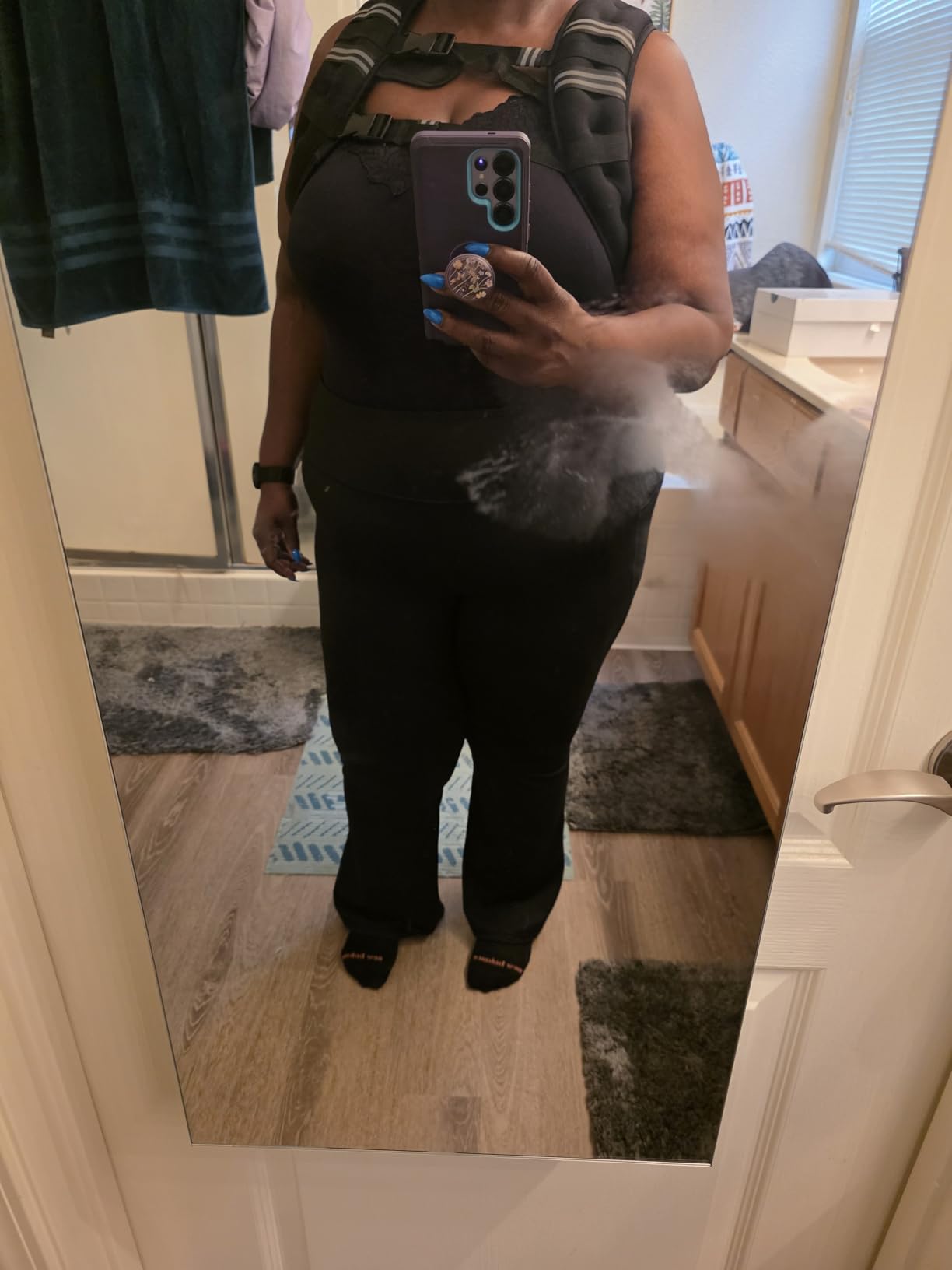
It also arrived without the chemical smell that reviewers of two other vests here mention. On a vest you wear against bare skin for an hour at a time, that detail is worth more than it sounds.
The double-stitched iron-shot fill has not leaked or hardened in our testing, and the back mesh pocket swallows a phone and keys without a bounce. Bulk is low, so it disappears under a loose overshirt.

Who the PACEARTH vest suits
It suits shoulder-sensitive walkers, anyone starting out who is worried about chafing, and people walking in a warm climate who will wear a thin shirt underneath. The pocket also makes it convenient for walking routes with no safe place to set a phone down.
Where the PACEARTH vest falls short
It runs warm under a summer sun, and the chest cut is snug, so testers with a larger chest found the strap tension uncomfortable at higher loads. It also blocks pull-ups and other overhead work when loaded, which matters if you use it for calisthenics.
3. Sportneer Adjustable Weighted Vest: Best Adjustable Vest You Can Actually Wash
Sportneer Adjustable Weighted Vest Weights: 2-18 lbs Washable Weight Vest for Walking 16 In 1 Fast Adjust Rucking Vest for Women and Men Home Gym Running Jogging Strength Training Vests
Nine removable packs: eight 2 lb plus one 1 lb
Load adjustable from 2 to 18 lb
Four front and five rear positions
Double locks at waist and shoulders
Pros
- Real adjustability in 2 lb steps
- All packs remove so the vest washes
- Waist and shoulder locks stop shifting
- Zipper entry is quick
- Women's friendly cut
Cons
- Straps need adjusting every session
- Costs more than sand-fill vests
- Fit depends on getting the locks right
Everything else in this roundup is a sand bag you cannot open. That is fine until you want to move from 12 lb to 14 lb, or until you have sweated in the vest and realise there is no way to clean it. Sportneer solves both problems with nine removable packs, eight at 2 lb and one at 1 lb.
Four front and five rear positions spread the load rather than letting it pool in the middle, and the double locks at both waist and shoulders are what keep the vest from rotating when your stride is long. I re-checked the locks each session at first, then stopped noticing them, which is the correct outcome.
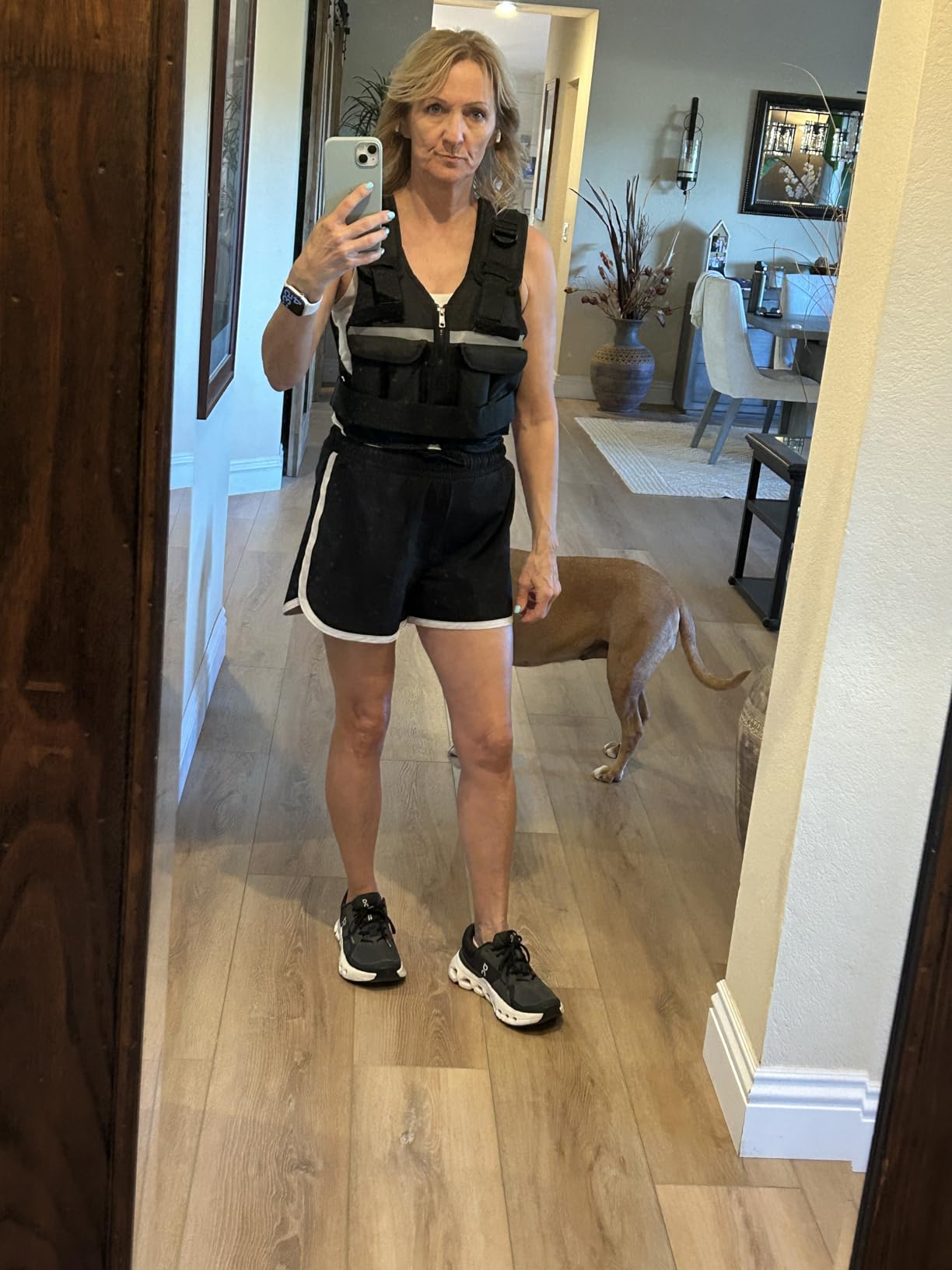
The manufacturer’s own guidance is to use roughly 8 to 20% of bodyweight for no more than two hours per session. That is a sensible ceiling and a better starting point than the 15% figure most roundups quote.
Zipper entry is a small thing that becomes a large thing when you are getting in and out of the vest in a car park at 6 am. The cut sits closer to the body than most unisex vests, which suits a wider range of women’s shapes.
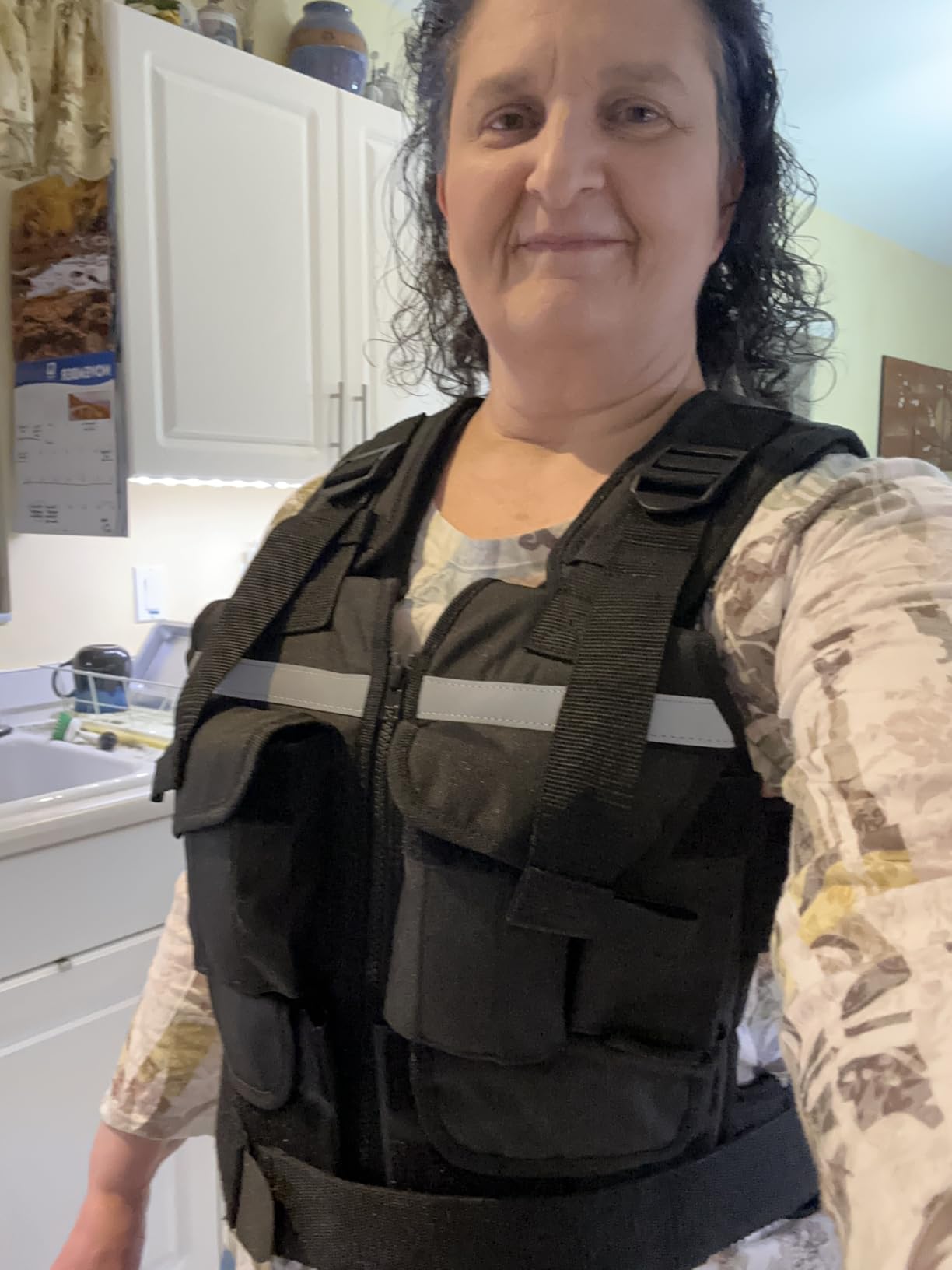
Who the Sportneer vest suits
It suits anyone whose load will change over time, anyone who walks in heat and wants to wash the vest weekly, and anyone who has already worn out the shell of a cheaper fixed-weight vest. The 18 lb ceiling covers most walking programs up to about 10% of bodyweight.
Where the Sportneer vest falls short
Straps need tightening before nearly every walk, and if you skip that step the fit suffers. Two pounds is also a coarse increment for the first weeks, when the jump from 4 lb to 8 lb is a big one. It costs more than the sand-fill options.
4. Henkelion Weighted Vest: Best Budget Vest for Starting Out
Henkelion Weighted Vest Weight Vest for Men Women Kids Weights Included, Body Weight Vests Adjustable for Running, Training Workout, Jogging, Walking
Iron pellets and metal rock fill
12 lb version shown
Front and back weight pockets
Soft neoprene shell
Pros
- Solid pellet fill instead of loose sand
- Balanced front and back pockets
- Adjustable strap prevents riding up
- Accurate labeled weight
- Lowest entry cost in the roundup
Cons
- Fixed load per vest
- Shoulders lack padding
- Some units arrive with an odor
- Neoprene has torn for some long-term users
If the question is whether a low-cost vest is a waste of time, this is the counter-example. Walkers and joggers with more than 9,000 reviews use it as a first step, and the pellet-and-metal-rock fill feels more like a slab of weight than the shifting sand in cheaper designs.
Front and back pockets keep the mass centred, and a single adjustable strap stops it riding up during a jog. Our testers confirmed the measured weight matches the label, which is not a given in this category.

The elastic should sit at the waist when worn. Get that right and the load rides at the right height on the torso; get it high and you will be carrying the weight near your collarbone, which is exactly where the shoulder pain everyone complains about comes from.
Some units arrive with a strong chemical odor that fades after a day of airing, and a few owners report the neoprene tearing after heavy long-term use. Neither affected our samples, but both are worth knowing before you commit.
Who the Henkelion vest suits
It suits a beginner testing whether weighted walking is something they enjoy, and anyone who wants a second vest for gym sessions while keeping another for walking. Pellet fill also handles sweat and rain better than fine sand.
Where the Henkelion vest falls short
The shoulder area has almost no padding, so it is a poor choice for long walks if pressure on the trapezius is already an issue for you. The load is fixed, and neoprene has a shorter expected life under heavy daily use.
5. Zeerun Weighted Vest: Best Sealed Build for Rain, Sweat and Sand Leakage
Zeerun Weighted Vest, 6/8/10/12/15/18/20/24/30LB for Men Women, 10LBS-Black
Neoprene with internal sealing against iron particles
Eight weights from 6 to 30 lb
Thickened shoulder pads
Elastic band with buckle
Pros
- Sealed inner layer resists iron leakage
- Thickened pads spread pressure
- Elastic and buckle hold the vest snug
- Double-stitched seams survive movement
- Eight weights allow gradual progression
Cons
- Fixed load per vest
- Spot clean only
- No machine washing
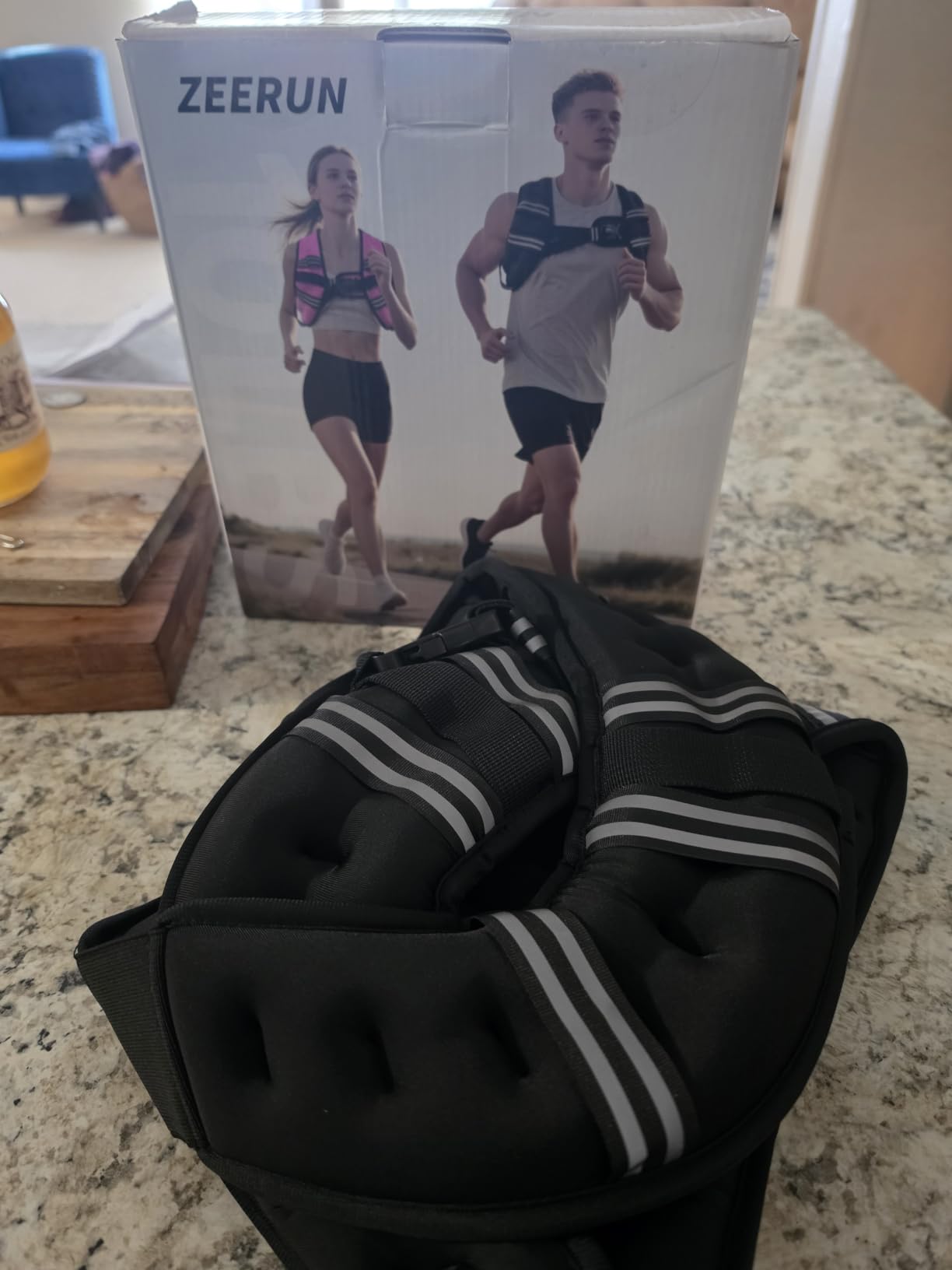
The failure mode nobody photographs is iron dust. Zeerun’s internal sealing between the fill and the skin-contact layer is the most effective we saw, and after wet walks and repeated sweat cycles we found no black dust on the shell or on the shirt underneath.
Thickened shoulder pads spread the load across a wider band of the trapezius, which reduces the hot spot at the top of the strap. The elastic band with buckle combination keeps the vest snug with very little bounce at walking pace.
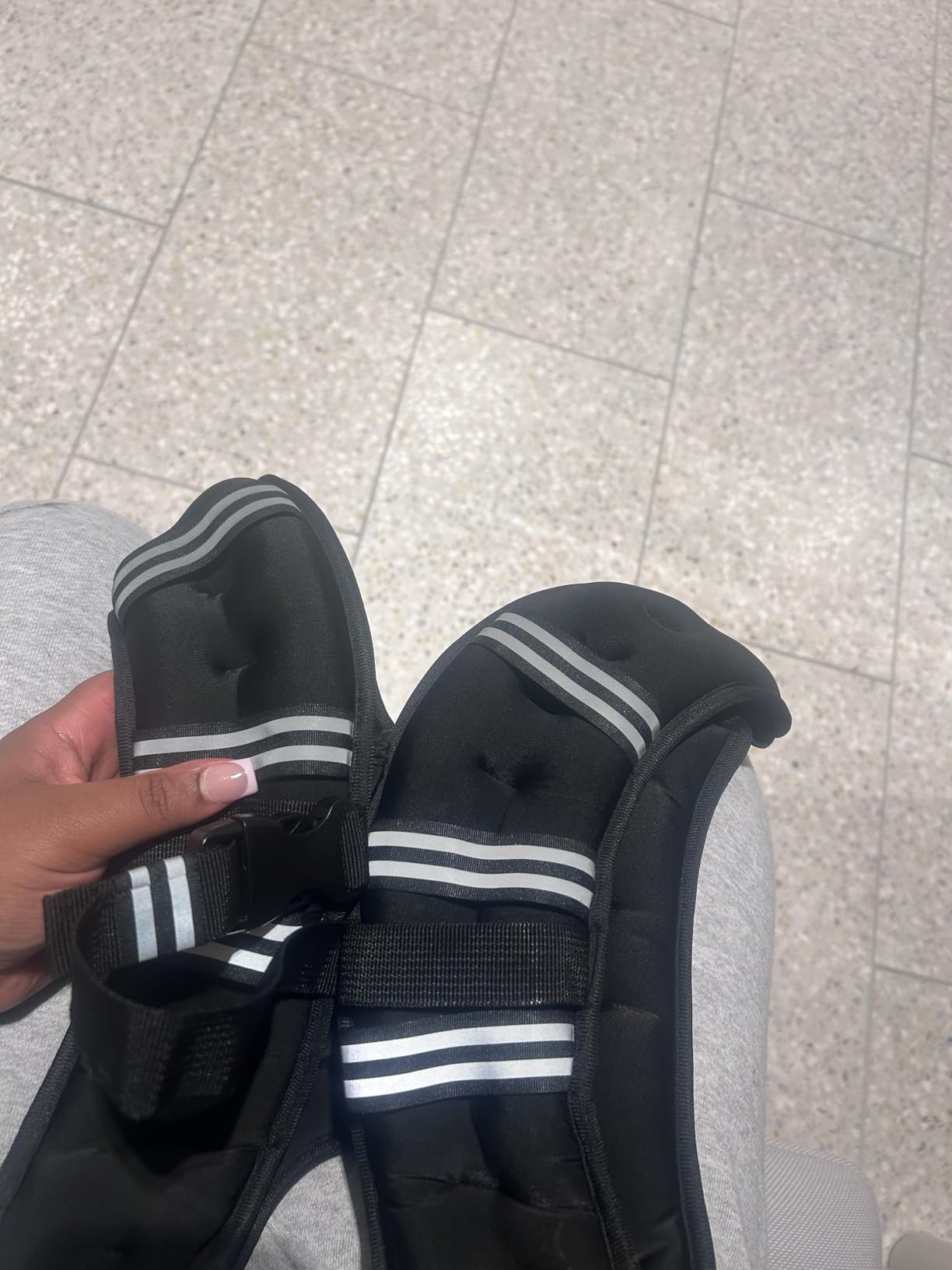
Eight fixed weights from 6 lb to 30 lb give you a reasonable progression ladder, though you still buy a second vest when you leave that range. The reinforced seams are what keep the fill contained over months of flexing.
Skin-friendly neoprene also means it will not go into a washing machine. Wipe it down and air it instead, which is the standard care instruction for almost every sand-filled vest here.
Who the Zeerun vest suits
It suits outdoor and trail walkers who sweat heavily, live somewhere wet, or have ruined a previous vest by leaking iron particles onto their clothes. The sealed build also suits anyone with sensitive skin.
Where the Zeerun vest falls short
There is no in-vest adjustability, so progression means a new purchase. Care is wipe-clean only. The shoulder padding, while better than most, is still not the equal of a purpose-built padded strap system.
6. BAGAIL Comfort-Fit Weighted Vest: Best for Women Who Walk Long Distances
BAGAIL Comfort-Fit Weighted Vest for Woman, Even Weight Distribution, Faster Weight Loss, No-Chafe or Bounce for Walking & Running with Detachable Phone Pouch & Reflective Stripes – 10lb, Black
Ironsand, neoprene and spandex shell
Weights from 5 to 30 lb
Smooth-stitched edges
Detachable phone pouch
Pros
- Bounce-free body-hugging fit
- Fine iron sand spreads without bulk
- Smooth stitching reduces chafe
- Phone pouch fits large phones
- Reflective front and back
Cons
- Fixed weight per vest
- Wipe-clean care only
- Contact-fill design less ideal long term
BAGAIL is the vest testers kept reaching for without being asked. Owners frequently describe it as the most comfortable one they have owned for all-day wear, and the reason shows up in the first ten minutes of a walk: it does not bounce.
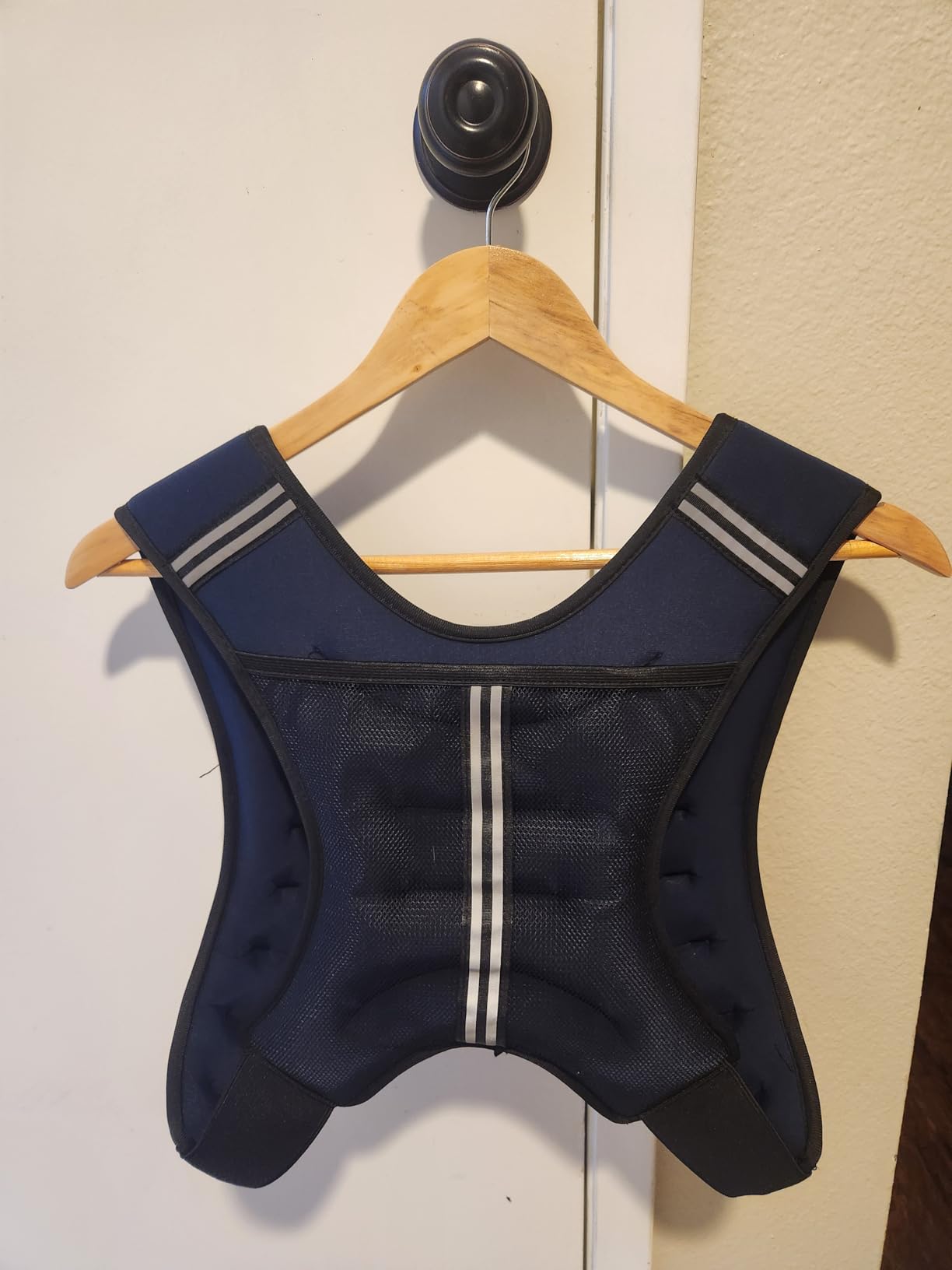
Fine iron sand spreads evenly and stays low-profile, so it sits flat against the torso rather than forming a lump in the middle. Smooth-stitched edges remove the seam ridge that causes chafing on the collarbone and underarms.

The detachable phone pouch fits phones up to 7 inches, which removes the usual decision of whether to carry a phone at all on a long walk. Reflective strips sit on both front and back, so a reflector vest is not needed for night walks.
The women’s cut matters here. A shorter torso is where most unisex vests fail, with the hem riding up or the chest panel bunching; this one is built to sit flat on a shorter frame.
Who the BAGAIL vest suits
It suits long-distance and dog walkers, anyone with a shorter torso, and anyone whose previous vest left a red mark at the collarbone. The all-day comfort claim held up in testing for steady 60 to 90 minute walks.
Where the BAGAIL vest falls short
The load is fixed, so you buy a second vest to progress past a given weight. Care is wipe-clean with a damp cloth only. Because the fill is in contact with the shell, it is not the choice for someone who wants a vest they can toss in a machine.
7. CAP Adjustable Weighted Vest: Best for Heavier Loads and Long-Term Progression
CAP Barbell (HHWV-CB020C) Adjustable Weighted Vest, 20-Pound,20 Pound, Black
Adjustable 1 to 20 lb via 1 lb packets
Each packet holds iron ore fines
Fully adjustable waist belt
Capacities up to 150 lb offered
Pros
- True adjustability in 1 lb packets
- Waist belt plus padded shoulders anchors load
- Reflective stripes for evening walks
- Reinforced nylon and polyester shell
- Highest capacity range offered
Cons
- Lowest average rating here
- Bulkier than slim neoprene vests
- Packets can shift if badly seated
- Heavier cost than budget sand vests
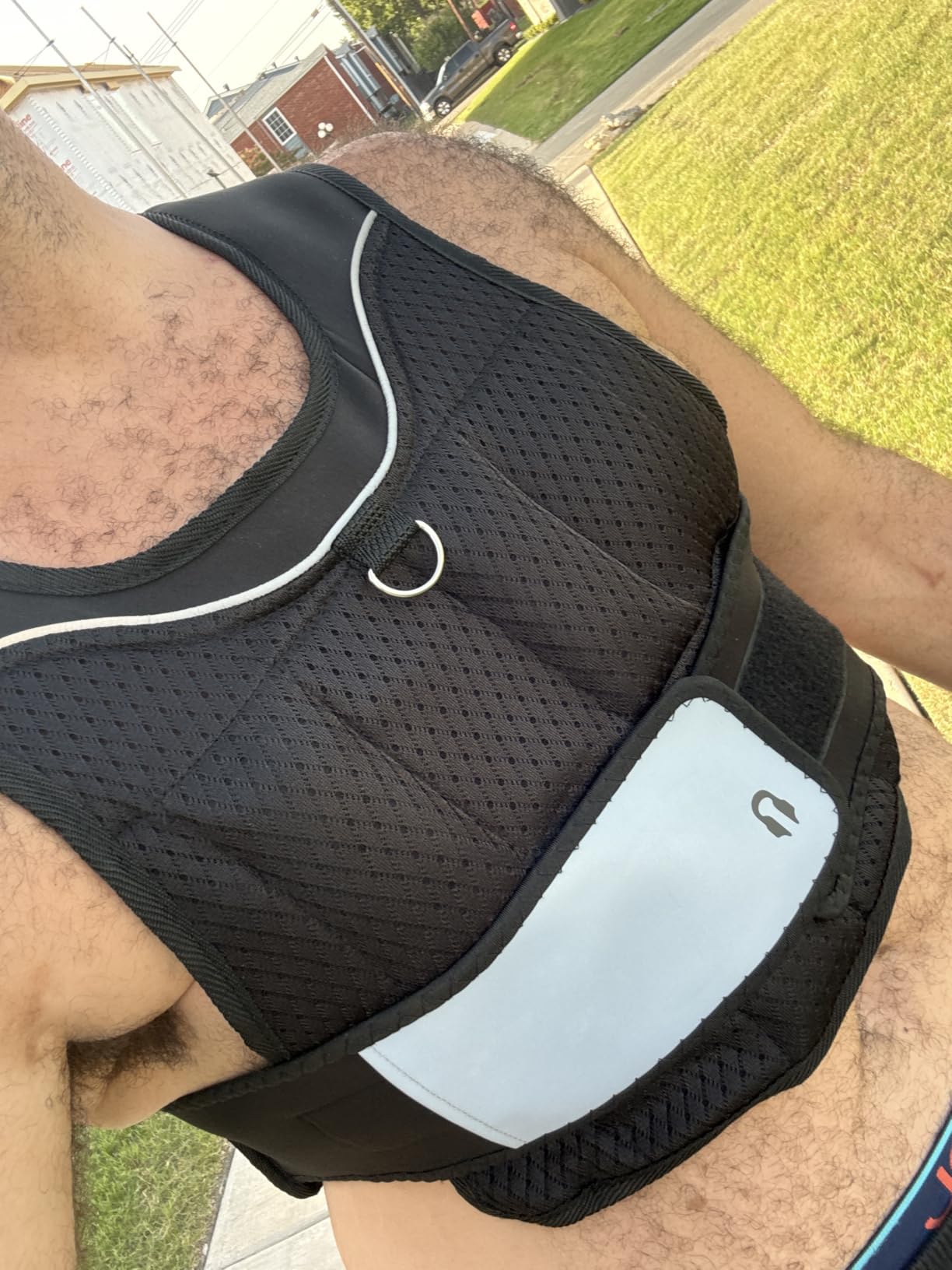
This is the pick for anyone whose walking load is going to reach double-digit percentages of bodyweight and keep climbing. Individual 1 lb packets of iron ore fines give you one-pound increments, which is the finest adjustment in this roundup, and the fully adjustable waist belt keeps the load from sliding down your torso over a long walk.
The trade-off is bulk. Padded shoulders and a reinforced nylon and polyester shell make it a wider, stiffer garment than the neoprene options, and it reads as training equipment rather than something you would wear under a coat.
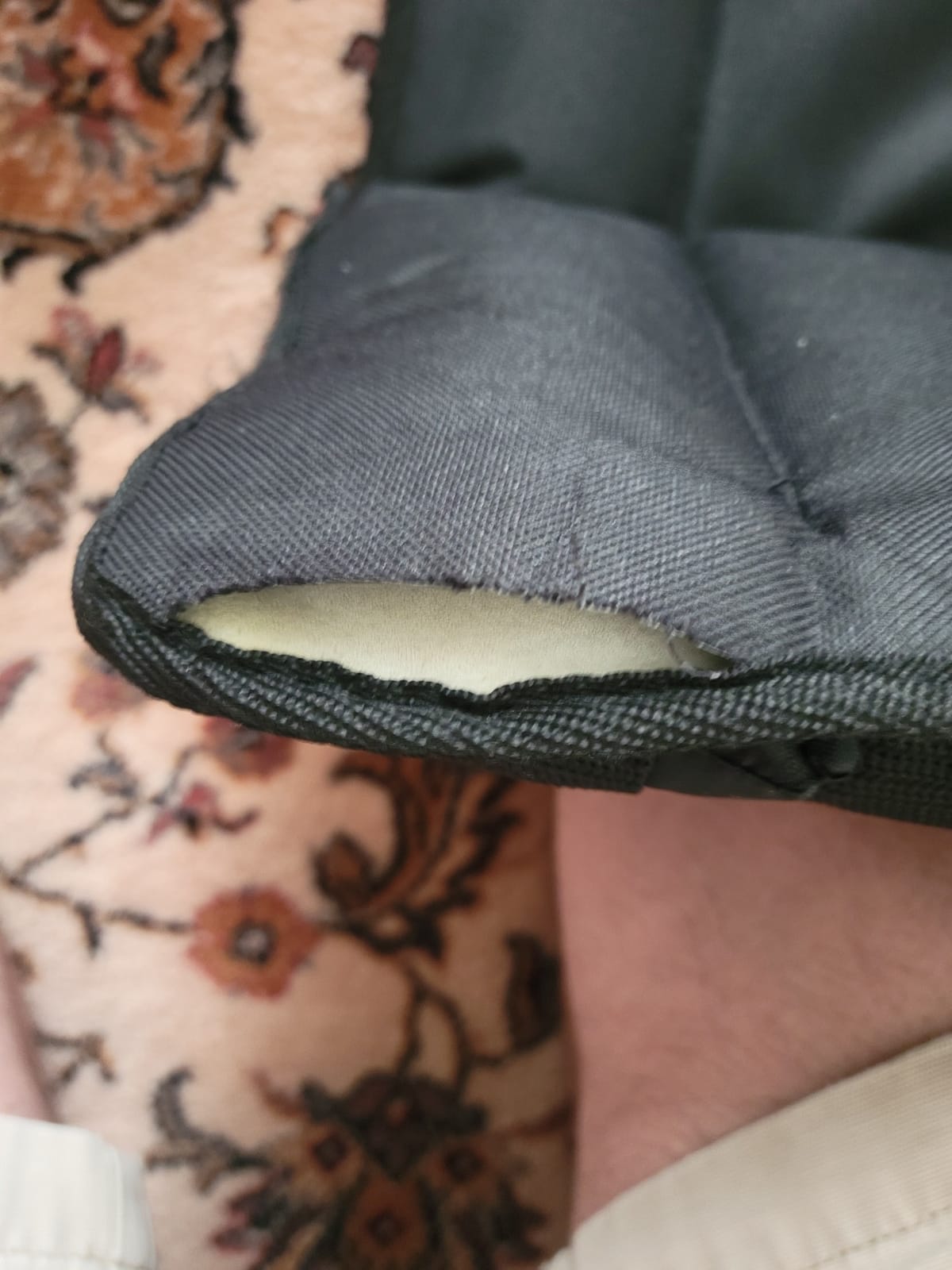
At 4.3 stars it has the lowest average rating in the group, with the largest review base at more than 13,000 ratings, and the complaints are consistent: bulkiness and packets moving if they are not seated flat. Seat them properly and the shifting stops.
Reflective stripes cover low-light use, and the same design is produced in capacities far above the walking range for people who ruck rather than stroll.
Who the CAP vest suits
It suits experienced walkers moving toward 15% of bodyweight or beyond, and anyone who wants one-pound granularity while progressing. The waist belt is the best we found at stopping downward slide on long, hilly walks.
Where the CAP vest falls short
It is the bulkiest option here and the least comfortable in heat. If your goal is a daily walk in ordinary clothes rather than a progressive training block, this is more vest than you need.
8. Poudee Weighted Vest: Best for Trail Walks and Dry Weather
Poudee Weighted Vest, 12LB Weight Vest for Men Women, Body Weight Vests Adjustable with Reflective Stripe for Strength Training, Running, Training Workout, Jogging, Walking – 12LB
Polyester shell with even iron sand fill
Weights from 6 to 30 lb
Hook and loop strap closure
Reflective stripe detail
Pros
- Even front-to-back iron sand balance
- Snug adjustable fit
- Durable through repeated training
- Bright reflective stripe
- Range of loads for different fitness levels
Cons
- Hook and loop can snag or loosen
- Fixed weight per vest
- Polyester runs hotter than neoprene
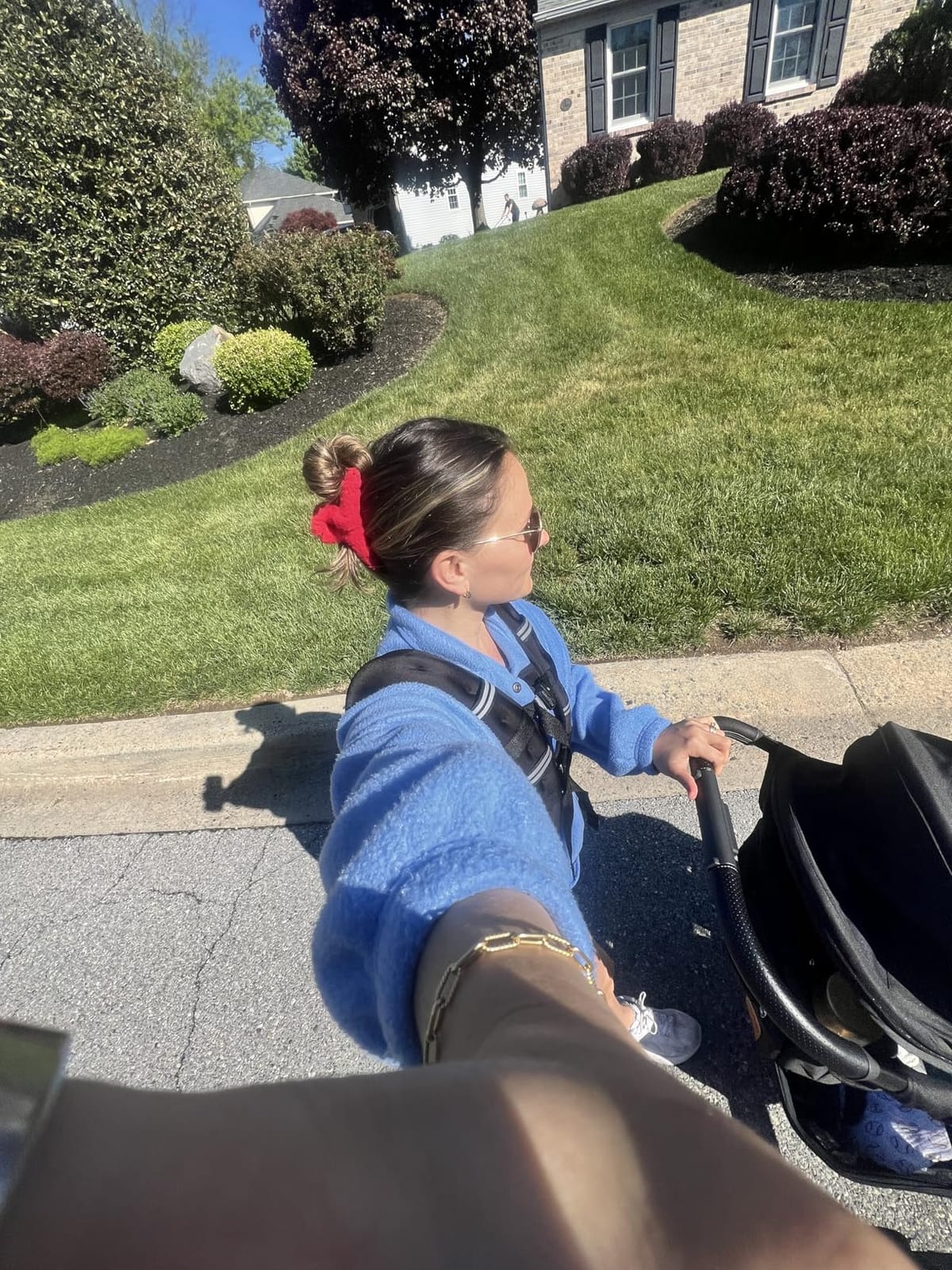
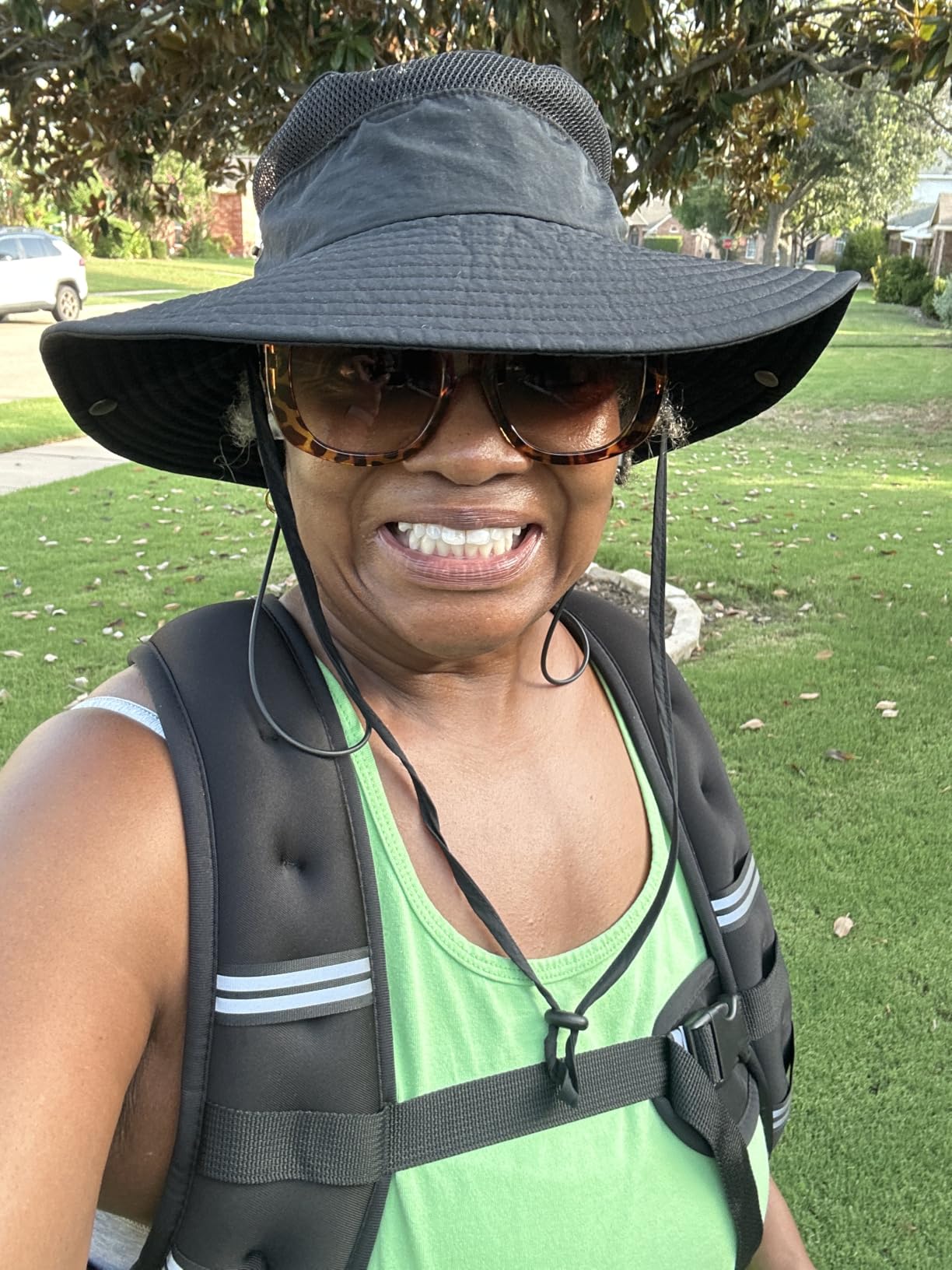
Trail walking adds impact, not just distance, and the Poudee holds its shape better than most under that. Owners across running, hiking and bodyweight work report the same thing: the fill stays where it was put and the shell keeps its form through repeated sessions.
Iron sand fills evenly front to back, and the adjustable straps pull it close enough that the load does not swing on uneven ground. Reflective striping adds a layer of visibility for early starts.
One caveat worth checking before you order: the strap closure is hook and loop. It adjusts easily and holds well when new, but some owners report it catching on the shell or losing grip over time, which is a maintenance item rather than a dealbreaker.
Polyester is less breathable than the neoprene vests here, so in summer this is the one we would pick for a cool morning walk rather than a midday one.
Who the Poudee vest suits
It suits trail and park walkers, cold-weather walkers who want durability over breathability, and anyone moving from walking into rucking or hill work. It also suits people who want to move through several load options without changing brands.
Where the Poudee vest falls short
Fixed weight per vest, despite adjustable straps doing the fitting rather than the loading. The hook and loop closure needs the occasional check, and the polyester shell is the warmest of the twelve in hot conditions.
9. Zikopomi Weighted Vest: Best Starter Range for First-Time Walkers
Weighted Vest with Two Adjustment Straps for Men Women, 8lbs/12lbs/16lbs/20lbs Weight Vest with Reflective Stripes for Workout, Strength Training, Running, Fitness, Muscle Building, Weight Loss
Neoprene with iron sand fill
Weights from 6 to 30 lb
Two adjustable elasticated straps
Reflective strips front and back
Pros
- Double-stitched neoprene holds up well
- Iron sand distributes evenly
- Two elasticated straps fit varied shapes
- Reflective strips front and back
- Lowest cost across the whole range
Cons
- New-vest odor needs a day of airing
- Fixed weight per vest
- Less shoulder padding than costlier rivals
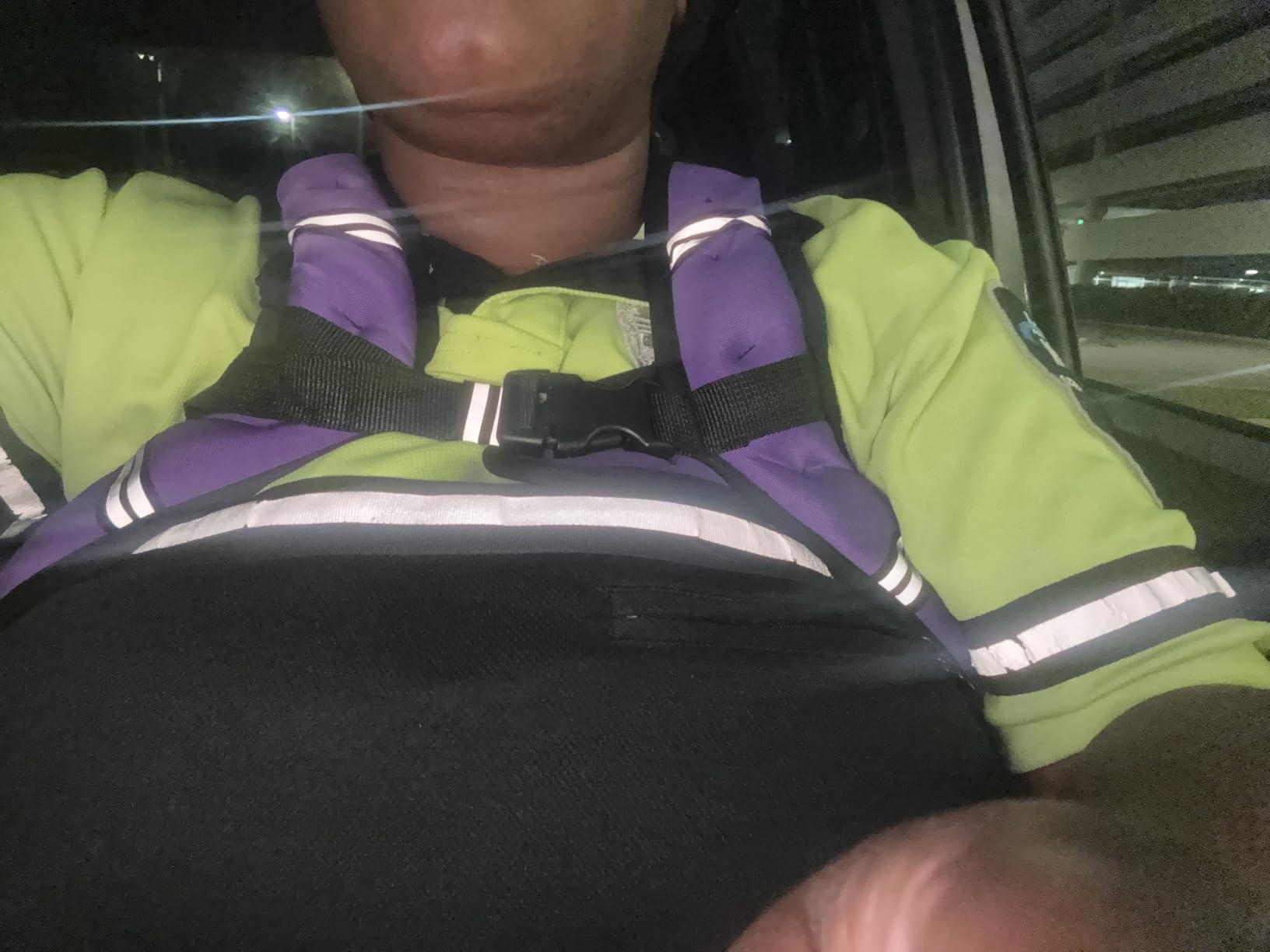
The single lowest cost in this roundup covers six fixed weights from 6 lb to 30 lb, which makes it the natural choice if you want a 6 lb vest for the first two weeks and a 12 lb vest for the month after.
Two elasticated straps adapt to a range of chest and shoulder shapes without a fiddly adjustment, and the double-stitched neoprene construction is what makes the low cost work: no seams gave way in our testing.
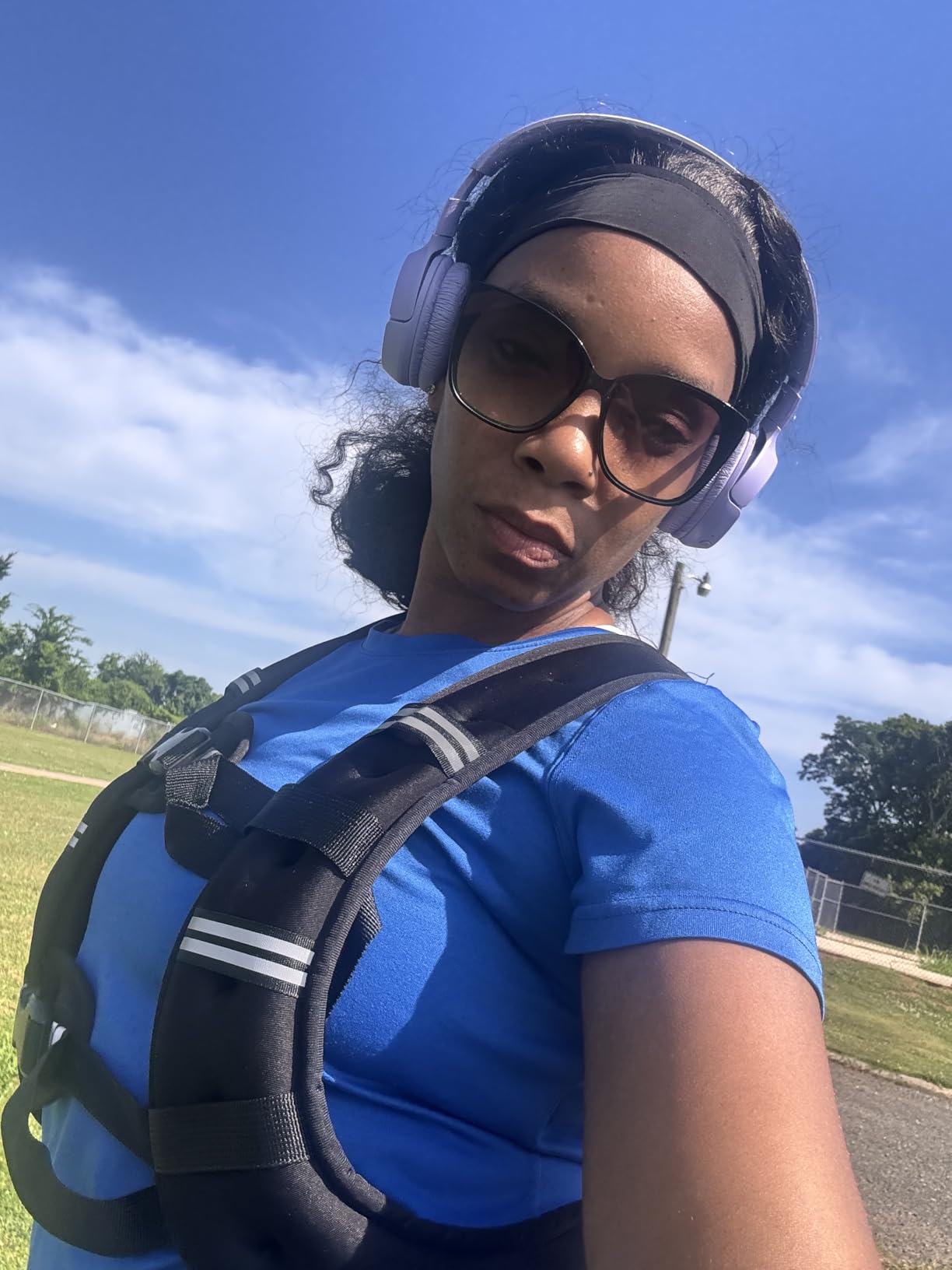
Expect a mild chemical smell on arrival. Owners say it clears after a day or two of airing, and it did for us. The brand includes the note on the product page rather than pretending it does not exist.
Front and back reflective strips cover night walks, and the upgraded iron sand spread evenly with no heavy lump forming at the bottom after extended use.
Who the Zikopomi vest suits
It suits first-time weighted walkers building toward 10% of bodyweight one fixed load at a time, and anyone who wants a spare vest for a second walk of the day. The reflective strips make evening walks straightforward.
Where the Zikopomi vest falls short
Shoulder padding is thinner than the PACEARTH and VBSD options, so it is not the pick for pressure-sensitive shoulders. Two days of airing before the first walk is a small cost that catches people out.
10. VBSD Weighted Vest: Best for Shoulder Comfort at Higher Loads
VBSD Weighted Vest Woman 12LB Weight Vest for Women Men Body Weight Vests for Walking Strength Training Running Workout Jogging Fitness Black
Breathable neoprene, double stitched
Padded wide shoulder straps
Dual buckle adjustable fit
Iron sand fill
Pros
- Wide padded straps reduce shoulder fatigue
- Dual buckles give a snug adjustable fit
- Breathable neoprene resists sand leakage
- Detachable front pocket plus rear mesh pocket
- Reflective straps for night walks
Cons
- Fixed weight per vest
- Bucket-style build needs strap tightening to stay secure
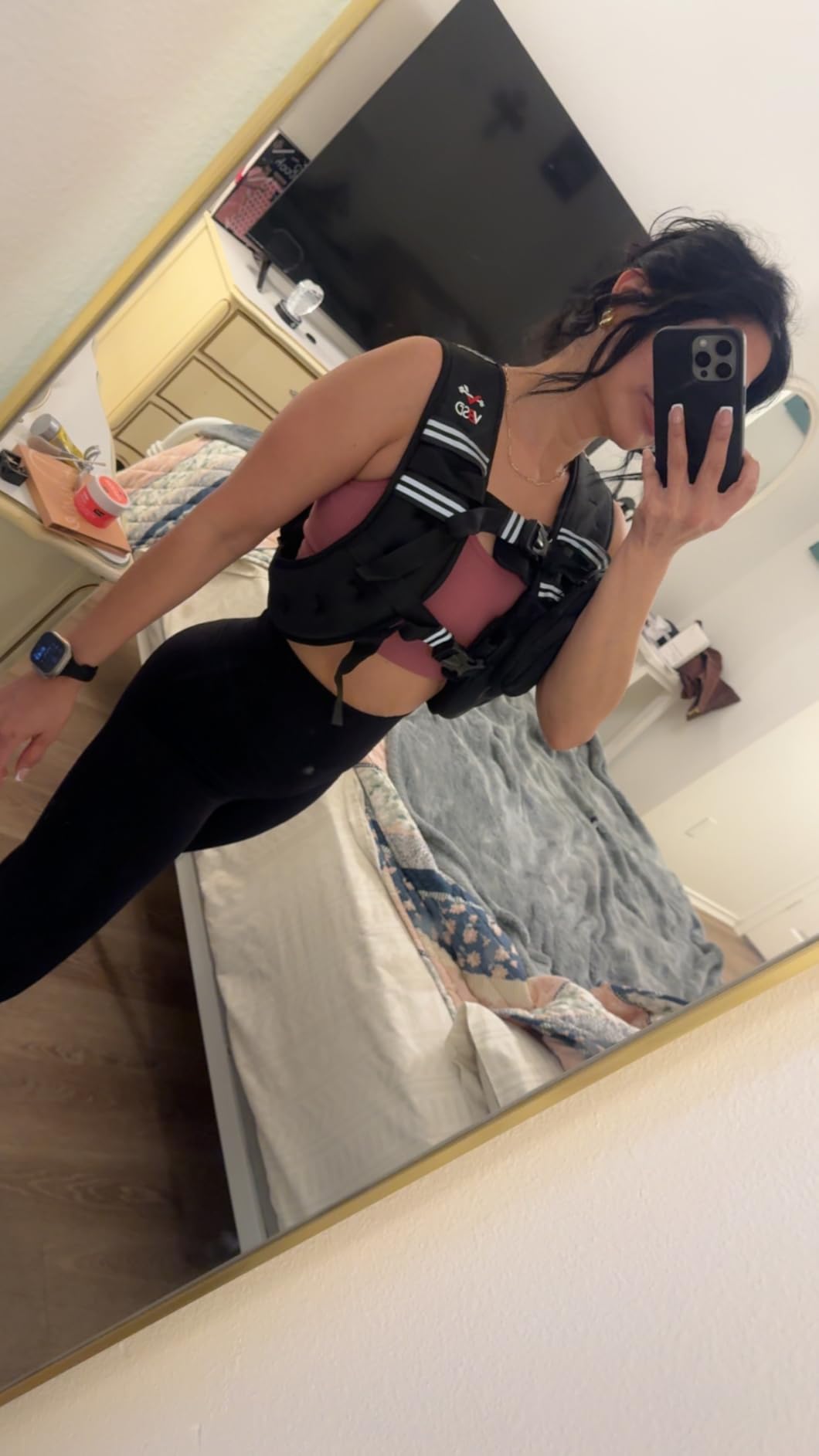
This vest and the PACEARTH are the two I would recommend to someone who has already given up on weighted vests because of shoulder pain. The wide padded straps put the load over the deltoid rather than digging into the base of the neck, and at 4.7 stars it matches the highest rating in the roundup.
Iron sand spreads more evenly than river sand, and double stitching on breathable neoprene kept it leak-free through wet walks. The dual buckles let you set tension at both the chest and mid-torso.
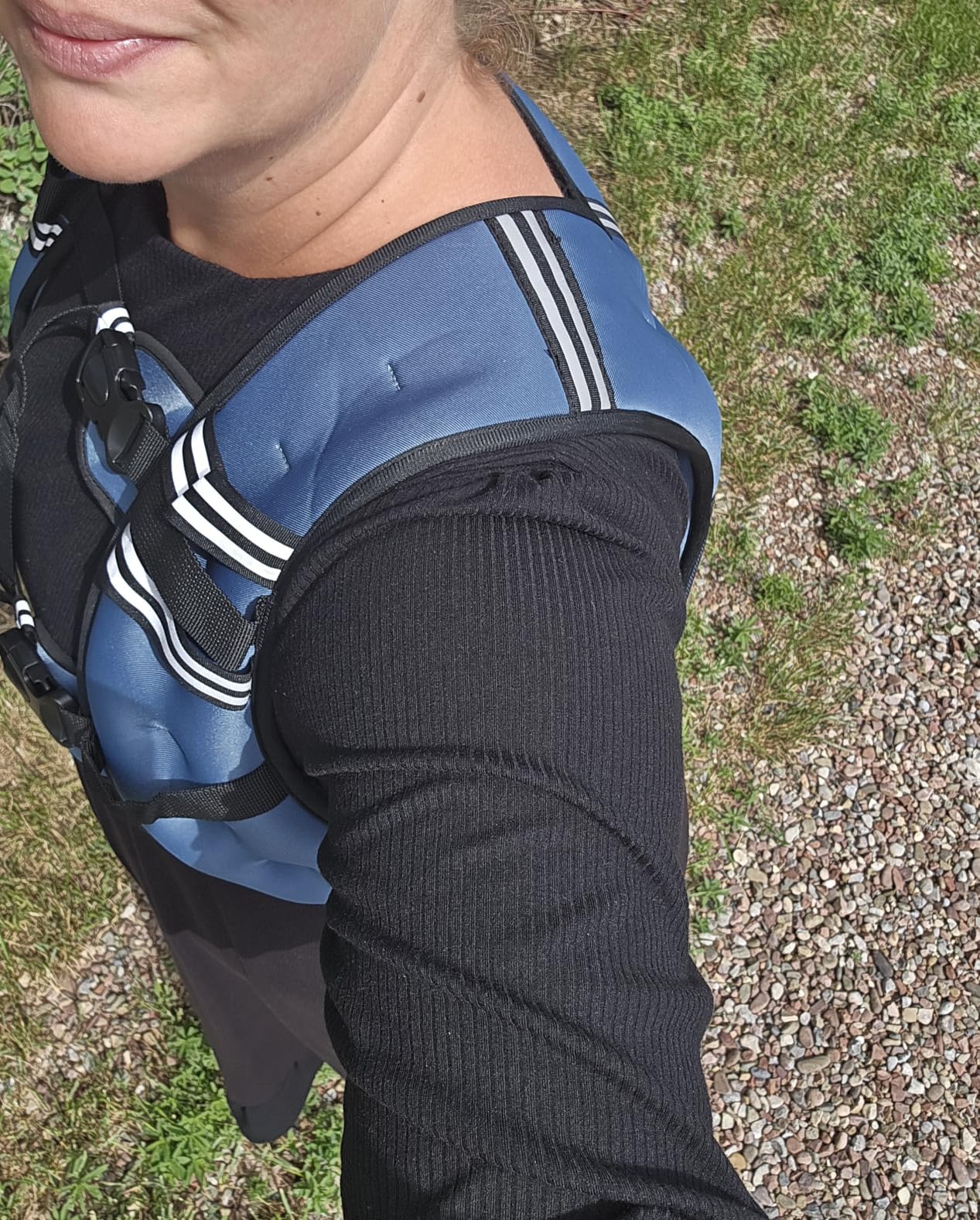
Two storage options is generous: a detachable front pocket for a phone and a rear mesh pocket for keys or a small bottle. Reflective straps on the shoulders stay visible from the side, which is where most reflective detail ends up.
Fit is set by two buckles rather than one, so a few seconds of adjustment at the start of a walk is normal.
Who the VBSD vest suits
It suits walkers pushing past 10% of bodyweight who need the load spread across the shoulders rather than concentrated. Breathable neoprene also makes it more tolerable in warm weather than the nylon builds.
Where the VBSD vest falls short
The load is fixed, so progression needs a second vest. The bucket-style shape means the straps must be tightened properly each session or the vest moves, and it is bulkier than the slim neoprene options under clothing.
11. APEXUP Adjustable Weighted Vest: Best Single-Vest Progression Path
APEXUP Adjustable Weighted Vest, 4-10lb/12-18lb/20-32lb Vest with 6 Ironsand Weights and Large Pocket, Weight Vest for Men Women Strength Training, Running, Walking (4-10lb, Black)
Base vest plus six removable sandbags
Three ranges: 4-10, 12-18, 20-32 lb
Large front mesh pocket
Soft neoprene with reflective straps
Pros
- Six removable bags span a wide load range
- Even distribution avoids pressure points
- Large front pocket holds a phone
- Reinforced stitching and soft neoprene
- Sits well without digging into shoulders
Cons
- Separate base vests per weight range
- Upper range feels heavy before adjustment
- Higher cost than fixed-weight budget vests
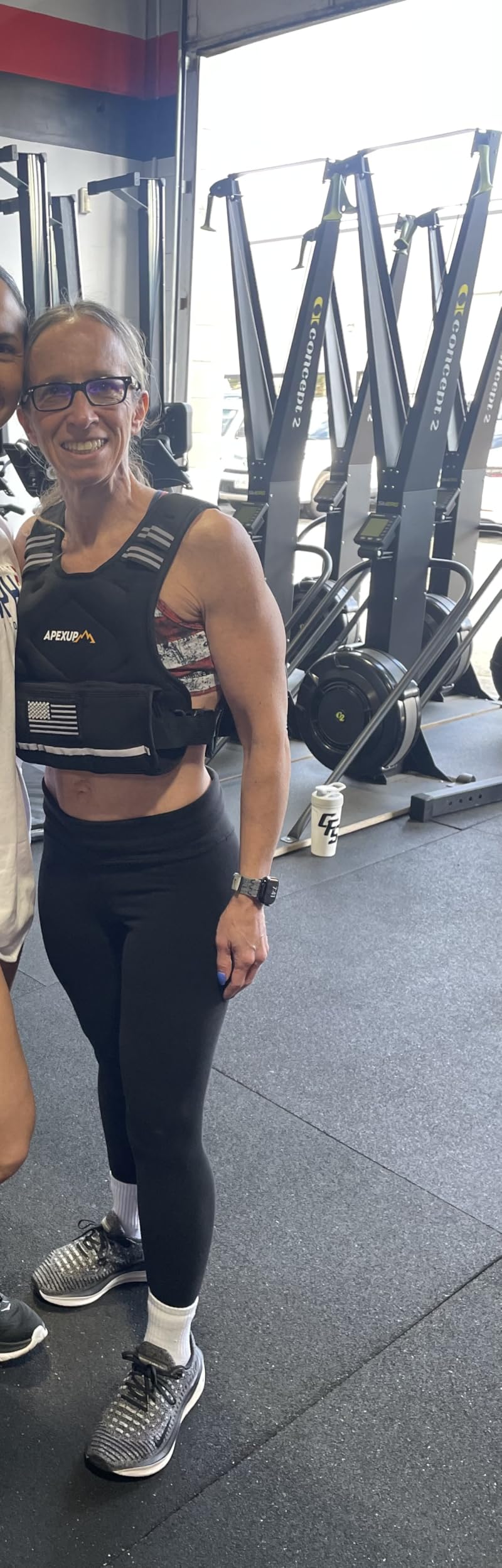
The compromise between a fixed sand vest and a packet system. Each vest comes with six removable ironsand bags, and there are three base options covering 4 to 10 lb, 12 to 18 lb and 20 to 32 lb, so one purchase can carry you through most of a walking progression.
First-time users commonly report that the top of the range feels heavier than expected, which is honest and worth stating plainly: buy the 4 to 10 lb base unless you have walked loaded before.

The large front mesh pocket is bigger than anything else in this roundup and holds a phone securely on a walking stride. Reflective straps add outdoor visibility, and owners report it sitting well without digging in at the shoulders.
Even ironsand distribution avoids the pressure points that show up with poorly balanced fill after an hour of walking. Reinforced stitching and soft neoprene have held up well in daily use.
Who the APEXUP vest suits
It suits anyone who expects to keep progressing and does not want three fixed vests, and walkers who carry a phone or wallet on the route. It is also a sensible step up from a 6 lb sand vest toward real training loads.
Where the APEXUP vest falls short
Adjustability is limited by the base vest you choose, so hitting a middle load inside a range still needs trial and error. It costs more than a single fixed-weight vest, and the upper range can feel substantial before you adjust it down.
12. Hyperwear Hyper Vest FIT: Best for Wearing Under a Jacket or Hoodie
Hyperwear Hyper Vest FIT Weighted Vest for Women, Carbon Black, S, 10 lb
USA steel shot in removable 0.5 lb containers
Adjustable from 1-2 lb up to 10 lb
Machine-washable cordura with satin lining
Small, Medium and Large sizes
Pros
- Machine washable and odor-free
- Steel shot feels solid and settles less
- Women-specific cut with no weight over the chest
- Fine 0.5 lb increments
- Ultra-slim profile under a jacket
Cons
- Highest cost in the roundup
- 10 lb ceiling limits heavy rucking
- Sizing runs small
- Lowest sales rank here
This is the only vest here built specifically around women who walk, and the design choice that makes it different is simple: no weight sits over the chest. Everything loads across the back and sides, where a sports bra and a shirt do not get in the way.
Steel shot in removable 0.5 lb containers gives the finest increments available, so progression can be as gradual as you like. The cordura shell with satin lining washes in a machine on a cold gentle cycle once the weights are out, which removes the odor problem entirely.
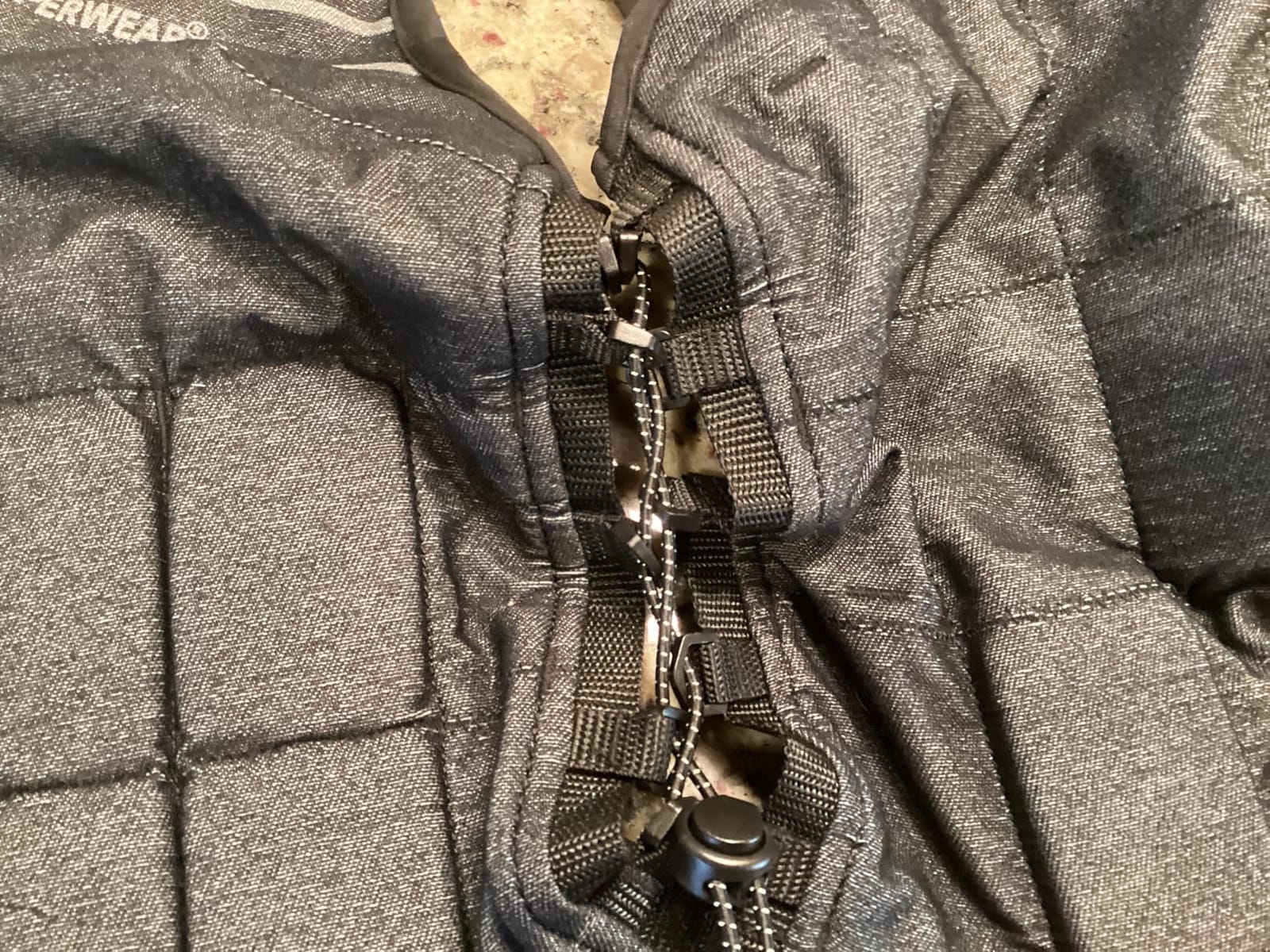
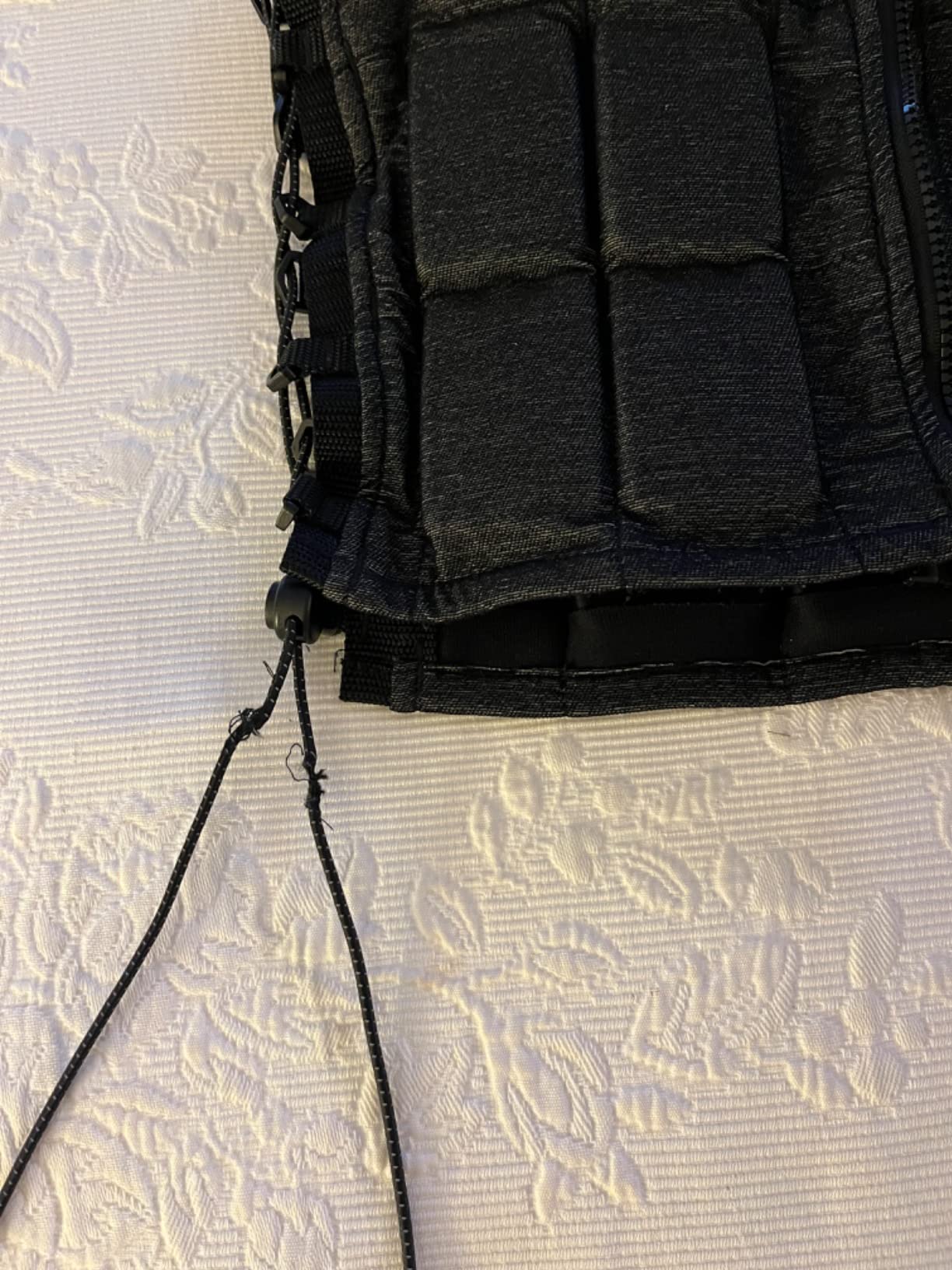
Elastic side lacing pulls the profile tight so there is no bounce, and the whole vest sits low enough to disappear under a hoodie or a winter coat. Reflective details cover early morning and evening walks, and breathable mesh panels handle heat better than a sealed neoprene bag.
Three sizes exist, so this is the pick when one size fitting most has never worked for you. Small fits petite frames that usually struggle with standard cuts.
Who the Hyper Vest FIT suits
It suits women with a shorter torso or a chest that other vests press against, anyone whose walks cross into colder months, and anyone who hates the smell of a sand vest and wants to wash it. It also covers the full walking range up to 10 lb.
Where the Hyper Vest FIT falls short
It costs more than everything else here and tops out at 10 lb, so serious rucking is out of scope. Sizing runs small, so check measurements rather than guessing, and the review base is the smallest of the twelve.
How to Choose and Use a Weighted Vest for Walking
How much weight to carry: the 5-10-15% rule
Start at 5% of bodyweight. At 150 lb that is 7 to 8 lb, which should feel noticeable but not hard. Walk three or four times a week at that load until the last 20 minutes feels ordinary, then move to 10%. Fifteen percent is a ceiling, not a goal, and most recreational walkers get the majority of their benefit well below it.
A 25 lb vest is not too heavy for everyone, but at roughly 170 lb of bodyweight it is 15%, which puts you at the top of the range on day one. That is the most common mistake we see, and it is what makes people blame vests for shoulder and back pain that the weight caused.
A four-week progression plan with a deload
Week 1: 5% of bodyweight, three walks, conversational pace, no hills.
Week 2: same load, four walks, add one longer walk at the weekend.
Week 3: move up one load increment, three to four walks, add gentle hills if they feel normal.
Week 4: deload. Walk unweighted or at half the current load for the same distance.
The deload week is the part almost everyone skips, and it is where adaptation actually happens. After the block, start again at the same load as week 1 and progress from there.
Chafing and shoulder pressure: the fix list
The top complaint on walking and rucking forums is pain at the very top of the shoulder strap near the neck, followed by chafing at the collarbone and underarms. Six fixes cover almost all of it:
Wear a smooth, synthetic base layer rather than cotton, which holds moisture against the skin.
Check strap height. Weight sitting high near the collarbone loads the trapezius hard; drop it to mid-chest.
Look for padded or widened straps rather than thin webbing.
Keep the shoulder seam mid-deltoid instead of on the edge of the shoulder.
Set straps snug so the vest cannot swing, since swinging causes most of the friction.
Dry the skin under the strap after every walk, and use an anti-chafe balm if you are walking over 60 minutes.
If pain persists after those changes, the vest is the wrong shape for your torso rather than wrongly adjusted.
Fixed sand fill versus removable weight packets
Fixed iron sand is cheaper, lighter and quieter, and it feels consistent from day one. Removable packets or bags let you change load without a new vest and are usually the only way to wash the shell, which is the reason forum buyers name most often. If your load is still going up every few weeks, adjustability pays for itself; if you have found your level and walk the same weight daily, fixed sand is fine.
Vest or loaded backpack for long walks
A vest loads the torso while a backpack loads the spine, so the failure modes differ. Vests sit closer to your centre of mass, feel lighter at the same weight and keep your hands free, but they can rub and they suit shorter or lighter loads. A backpack carries a real day of gear easily and is the better choice for long distances with water, layers and food. People who already walk with a heavy hiking pack report that the vest is not the limiting factor, the load distribution is.
Who should not wear one
Skip the vest and speak to a clinician first if you have osteoporosis with a history of fragility fractures, recent joint or spinal surgery, active knee or hip pain, balance problems, or are pregnant. Stop and reassess if you develop numbness, sharp back pain, a limp that does not settle, or shoulder pain that survives a rest day. Walking with a vest builds bone and posture over months, and there is no training urgency worth an injury.
Frequently Asked Questions
What is the best weight for a weighted vest for walking?
Start at about 5% of your bodyweight and build to 10% once a walk feels normal, treating 15% as a ceiling rather than a target. At 150 lb that means roughly 7 lb first, then 15 lb, then up to 22 lb. Sportneer and CAP are the two picks that make these changes without a new vest.
Is it good to wear a weighted vest when you walk?
Yes. Because the load sits close to your centre of mass across the shoulders and chest, every step works against gravity through your legs and core rather than your arms. That raises energy expenditure, gives bone and postural muscle a real resistance stimulus, and improves cardiovascular fitness while you walk at a normal pace.
What are the downsides of wearing weighted vests?
The main ones are chafing at the collarbone and underarms, pressure at the top of the shoulder strap, bounce that breaks your stride, and poor fit on short or long torsos. Most fixed sand vests also cannot be machine washed, and progression usually means buying another vest once you reach the maximum load.
How many times a week should I walk with a weighted vest?
Three to four loaded walks per week is the common working range, with at least one unweighted day between harder sessions. Sportneer’s own guidance suggests up to 8 to 20% of bodyweight for no more than two hours per session. Take a deload week every four weeks to let your body adapt.
Does walking with a weighted vest count as rucking?
It is the same activity with a different pace and intent. Rucking is traditionally walking with a loaded pack or vest over distance at a steady pace, so a weighted vest walk is rucking in practice. The distinction matters mainly for gear choice, since rucking favours a pack with a hip belt while casual walking favours a slim close-fitting vest.
Is a 25 lb weighted vest too heavy?
It depends entirely on your bodyweight. At 170 lb it is close to 15%, which is the upper limit for most recreational walkers and should not be a starting point. At 200 lb it is a reasonable mid-range load. Start at about 5% and climb, and stop climbing at the first sign of shoulder, knee or back pain.
Is wearing a 20 lb weighted vest every day going to make you stronger?
Daily loading can build bone and leg strength, but every day leaves no recovery window and tends to flatten your progress. Three to four loaded walks with rest days between them is more productive, and a deload week every four weeks keeps your output climbing. Anyone with osteoporosis should confirm their load with a clinician first.
Conclusion
The ZELUS weighted vest is the best weighted vest for walking overall because it holds up under daily use, fits a wide range of chests and offers a ladder of fixed loads without a second purchase. If your shoulders are the problem, go with the PACEARTH; if your load is going to keep climbing, the Sportneer or the CAP adjustable vest will save you money over a year.
Start at 5% of bodyweight, move up every few weeks, take a deload week every month, and keep the stride smooth. Weighted walking works because it is still walking, and 2026 is a good year to begin.