
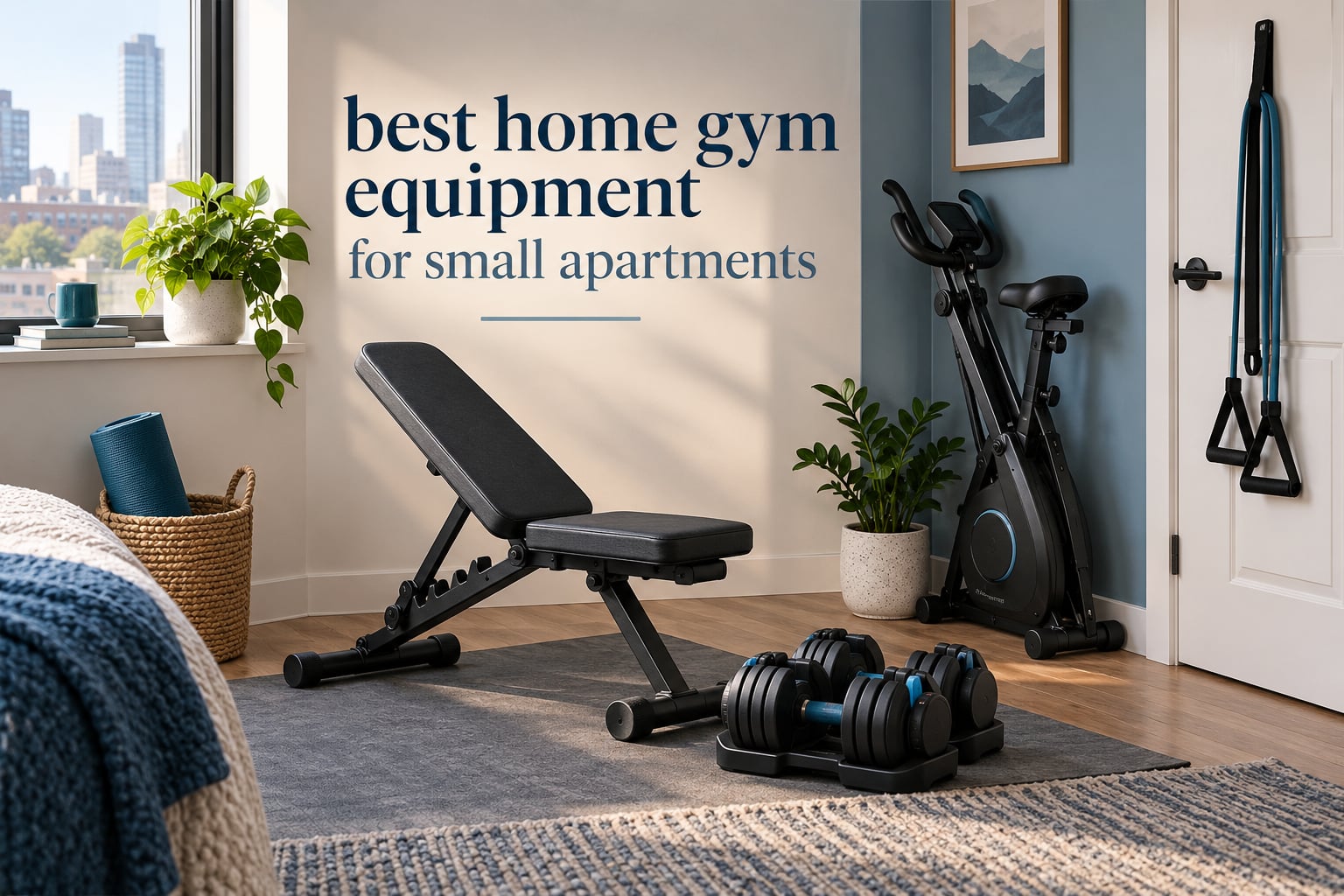
The best home gym equipment for small apartments is a stack that folds or mounts away in under two minutes: resistance bands and a suspension trainer for free-floor strength, a folding adjustable bench plus a compact dumbbell set for presses and rows, and a low-noise hydraulic or magnetic machine such as a stepper, rower, foldable bike or under-desk elliptical for cardio. Vertical and foldable beats freestanding, every time.
That answer matters more in 2026 than it ever has, because the machines that dominate shopping carousels for this query are tall steel monsters with 400 square feet of footprint. Apartment living does not allow that. What you need instead is equipment that disappears into a closet, slides under a bed, hangs off a doorframe or folds down to a 3 square foot wall unit.
We ran the numbers on all twelve picks below: the folded footprint in inches, the operating footprint, the noise behaviour, the weight capacity against a realistic user weight, and how long storage actually takes. Our framing is deliberately renter-first, because that is how most people encounter this problem. Forum threads about apartment gyms circle the same three anxieties every time: noise reaching the floor below, wall mounting without permission, and getting the deposit back.
Table of Contents
Twelve Equipment Categories, and What Each One Is For
Before the individual picks, here is the decision map. Every line below corresponds to a product reviewed further down:
Resistance bands with handles, for the cheapest usable floor space
Mini stair steppers, for silent low-impact cardio in a corner
Compact hydraulic rowers, for full-body cardio per square foot
Under-desk ellipticals, for movement during work calls
Suspension trainers, for bodyweight work that packs to a bag
Folding magnetic bikes, for real cardio on a 16 inch footprint
Mini pedal exercisers, for rehab and seated work
Folding adjustable benches, for unlocking presses and rows
Adjustable dumbbell sets, for replacing a full rack
Folding treadmills, for walking rather than running
Wall-mounted cable stations, for pulling and pressing off the floor
Portable all-in-one systems, for travel and temporary rentals
Most apartments need three of these, not twelve. Our single best starting point is the band set, because it costs almost nothing, weighs nothing and needs no floor at all.
Top 3 Picks for Best Home Gym Equipment for Small Apartments (October 2026)

WHATAFIT Resistance Band Set
- 5 stackable levels to 150 lb
- Full kit with door anchor and straps
- Weighs 2 lb
- stores in a pouch

Sunny Mini Stair Stepper
- Silent dual hydraulic motion
- Adjustable step height
- Ready to use out of the box

Sunny Compact Hydraulic Rower
- 12 hydraulic resistance levels
- 22.4 lb frame
- quiet operation
- Folds for under-bed storage
All 12 Picks Compared in 2026
| Product | Specifications | Action |
|---|---|---|
| WHATAFIT Resistance Band Set |
|
Check Latest Price |
| Sunny Mini Stair Stepper |
|
Check Latest Price |
| Sunny Compact Hydraulic Rower |
|
Check Latest Price |
 Cubii JR1 Under Desk Elliptical Cubii JR1 Under Desk Elliptical |
|
Check Latest Price |
 TRX GO Suspension Trainer TRX GO Suspension Trainer |
|
Check Latest Price |
 pooboo Folding Magnetic X-Bike pooboo Folding Magnetic X-Bike |
|
Check Latest Price |
 Sunny Smart Mini Cycle Sunny Smart Mini Cycle |
|
Check Latest Price |
 NICEPEOPLE Folding Weight Bench NICEPEOPLE Folding Weight Bench |
|
Check Latest Price |
 FITPLAM 5-in-1 Adjustable Dumbbells FITPLAM 5-in-1 Adjustable Dumbbells |
|
Check Latest Price |
 WELLFIT Folding Treadmill WELLFIT Folding Treadmill |
|
Check Latest Price |
 Goimu WM1 Wall Cable Station Goimu WM1 Wall Cable Station |
|
Check Latest Price |
 EVO Gym Portable Home Gym EVO Gym Portable Home Gym |
|
Check Latest Price |
1. WHATAFIT Resistance Band Set – Best Overall Apartment Starter
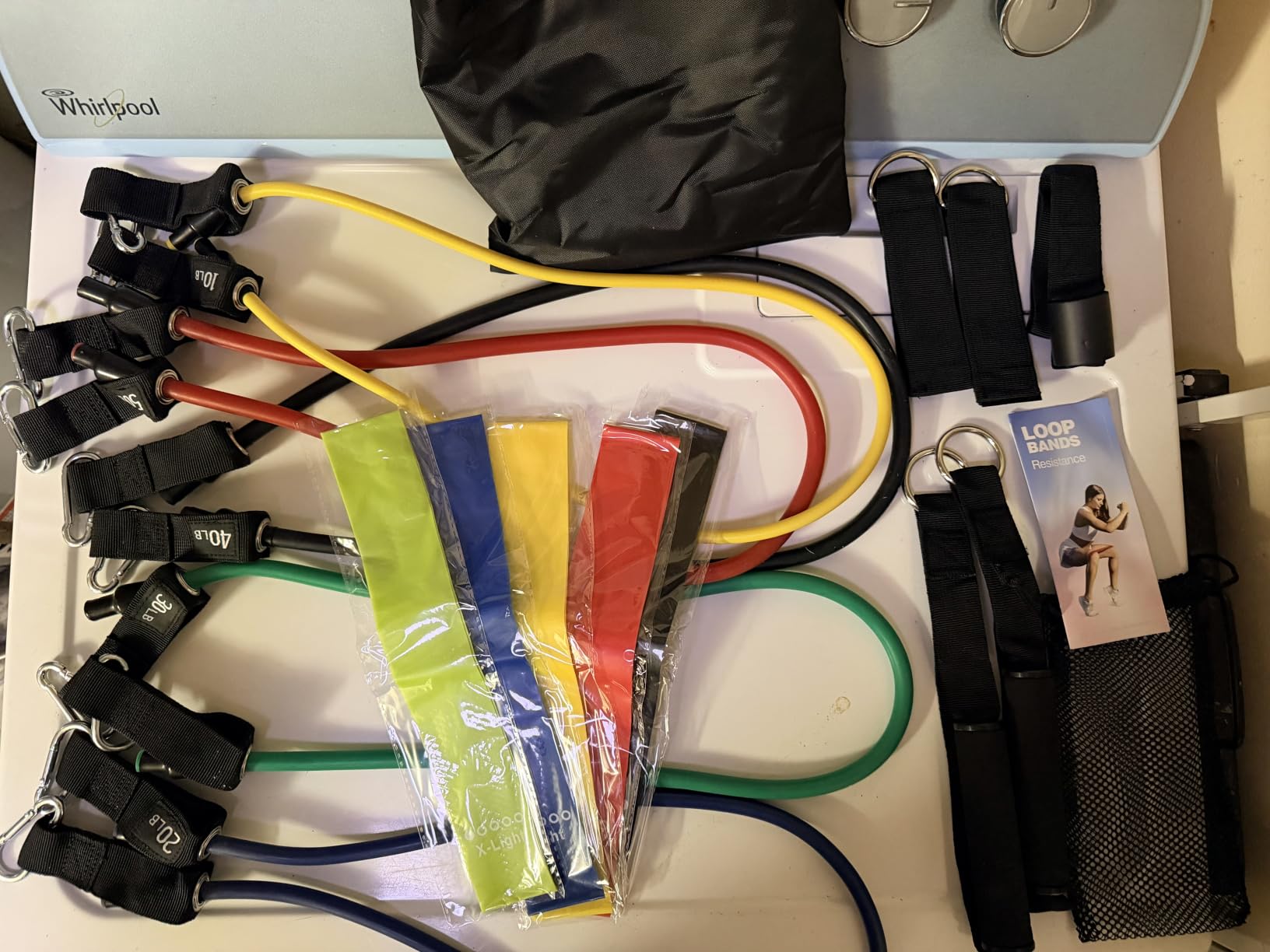
WHATAFIT Resistance Bands with Handles, 150 lb Exercise Bands Set
5 latex tube bands, 10 to 50 lb, 150 lb combined
2 lb total, pouch 7.87 x 6.69 in
2 year limited warranty
Pros
- Ten usable tension levels from five stackable tubes
- Complete kit with door anchor
- handles
- ankle straps and pouch
- Natural latex holds elasticity over repeated use
- Packs flat in a drawer or carry bag
- Suitable for beginner
- mobility and rehab work
Cons
- Printed poundages are approximate rather than precise
- Door anchor can mark or scuff a door
- Multiple bands are awkward to centre
This is the one piece of equipment in the entire roundup that solves the apartment problem outright, because it uses no floor at all. The set weighs 2 pounds and the pouch is smaller than a paperback, so it lives in a drawer when you are not using it and comes out for a full session when you are.
In practice you get five tube bands rated 10, 20, 30, 40 and 50 pounds, and any combination stacks. Two bands give you press, row, curl, overhead and lateral raise patterns, and the door anchor and ankle straps turn the same hardware into a rotated single-arm movement library.
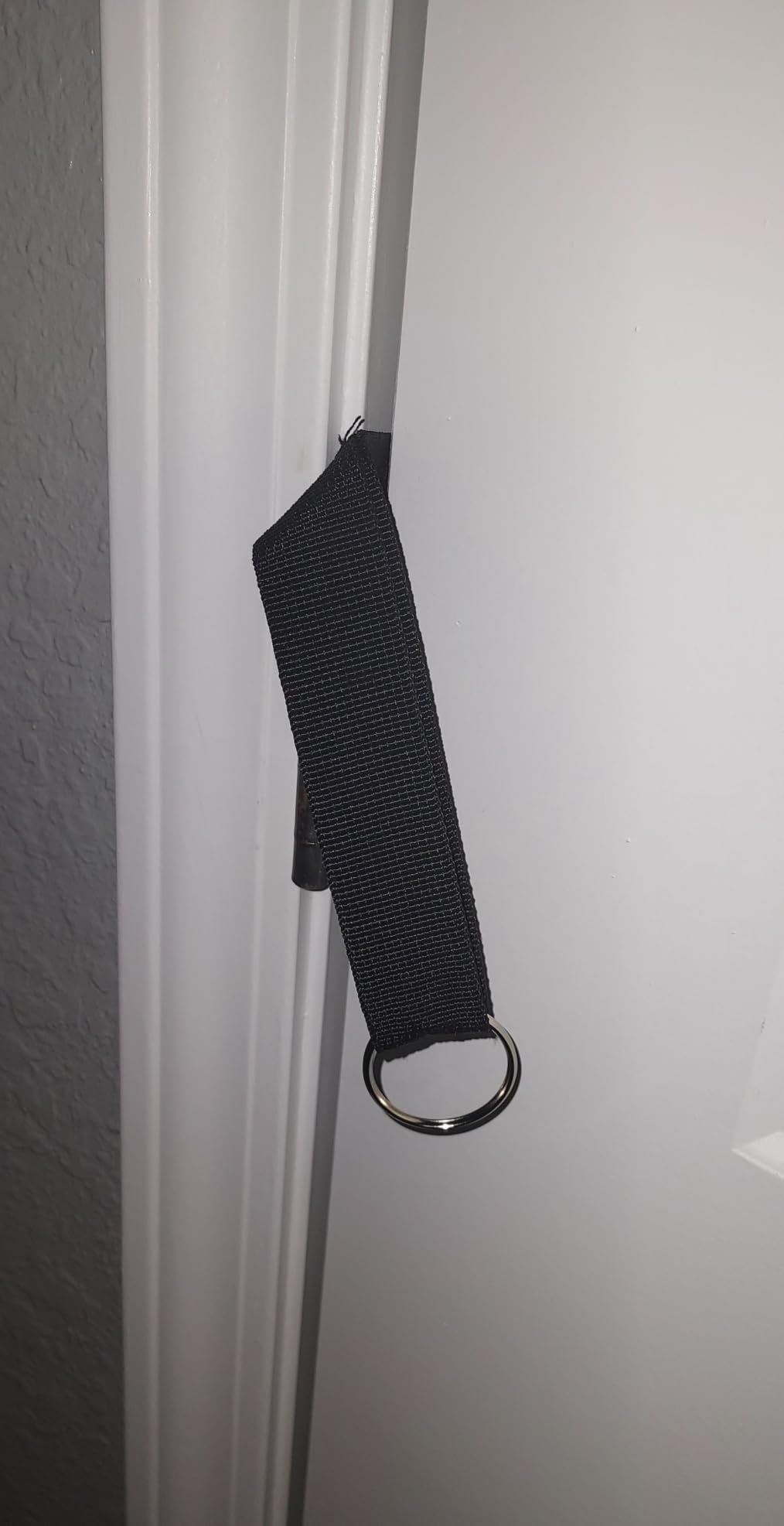
The honest weakness is that band tension behaves differently from a free weight. It builds as you stretch it, which means the last few reps feel much harder than the number on the tube suggests, and the printed values are only approximate. Reviewers who lift to failure point this out consistently. The other recurring note is the door anchor, which can mark a door over time if you clip it in the same spot every session.
Durability has been the surprise. This is natural latex with steel buckles and non-slip handles, and the 2 year warranty reflects what owners report: bands that keep their snap long after cheaper rubber tubes have cracked.
How much space it needs and how loud it is
Zero floor space for storage, and roughly a 4 by 6 foot area of clear floor to move through during a workout. That is smaller than a yoga mat. In a 400 square foot studio this is the difference between having a gym and not having one.
Silence is total. There is no motor, no wheel, no hinge and no impact. The only sound is latex stretching, which is quiet enough for a shared-wall apartment at any hour.
Who should skip it, and who should buy it first
Skip it if your training depends on barbells at true failure, because stacked tubes cannot replicate a loaded barbell, and if you are a very advanced lifter you will outgrow 50 pounds per band quickly.
Buy it first if you are starting from nothing. It is the lowest-commitment way to learn which movements your body tolerates, and it travels with you to the next apartment without becoming someone else’s problem on moving day.
2. Sunny Health Mini Stair Stepper – Best Value Cardio
Sunny Health & Fitness Mini Stair Stepper with Resistance Bands for Cardio
15.7 x 12.4 in footprint, dual hydraulic cylinders
300 lb user capacity, LCD monitor
Includes 2 removable resistance bands
Pros
- Silent hydraulic motion
- ideal for shared walls
- Adjustable step height knob for intensity
- Arrives fully assembled with nothing to build
- Under-bed storage footprint
- Top seller in step fitness machines
Cons
- Pedal surfaces can feel slippery at high cadence
- Wants a wall or railing for balance on hard floors
- Included bands run short for some users
The stair stepper is the classic answer to a very small room. It occupies about 15.7 by 12.4 inches, which is roughly the size of a kitchen tile times four, and it arrives fully assembled. There is no build step, no tools and no instruction manual worth reading.
Two hydraulic cylinders drive the pedal motion, and a single knob at the front changes step height, which is your intensity dial. A small LCD tracks time, step count, steps per minute and calories, and two removable resistance bands add curls and presses so a single machine covers upper and lower body.
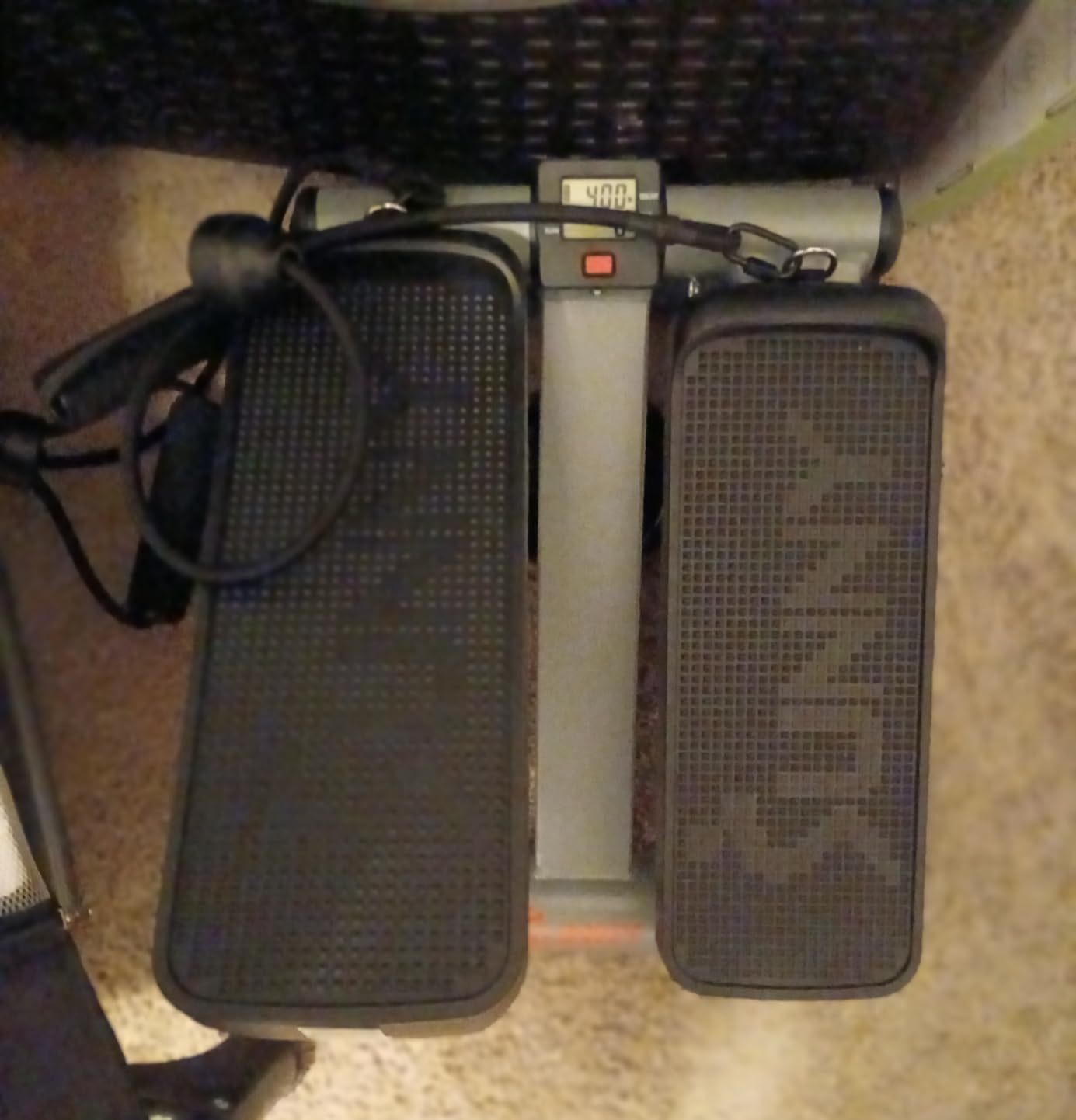
What surprised us in testing is the noise floor. Hydraulic motion at normal pace is essentially silent, and there is no motor hum to transmit through the floor. The 300 lb user capacity also means it is not a toy for small people only.
Three caveats come up repeatedly. Long-term owners report squeaking after roughly two years of daily use, which is a maintenance item rather than a defect. The pedal surface is smooth enough to feel slick when you push a hard cadence. And on a hard floor the machine wants a handrail or a wall to lean on, because the base is narrow by design.
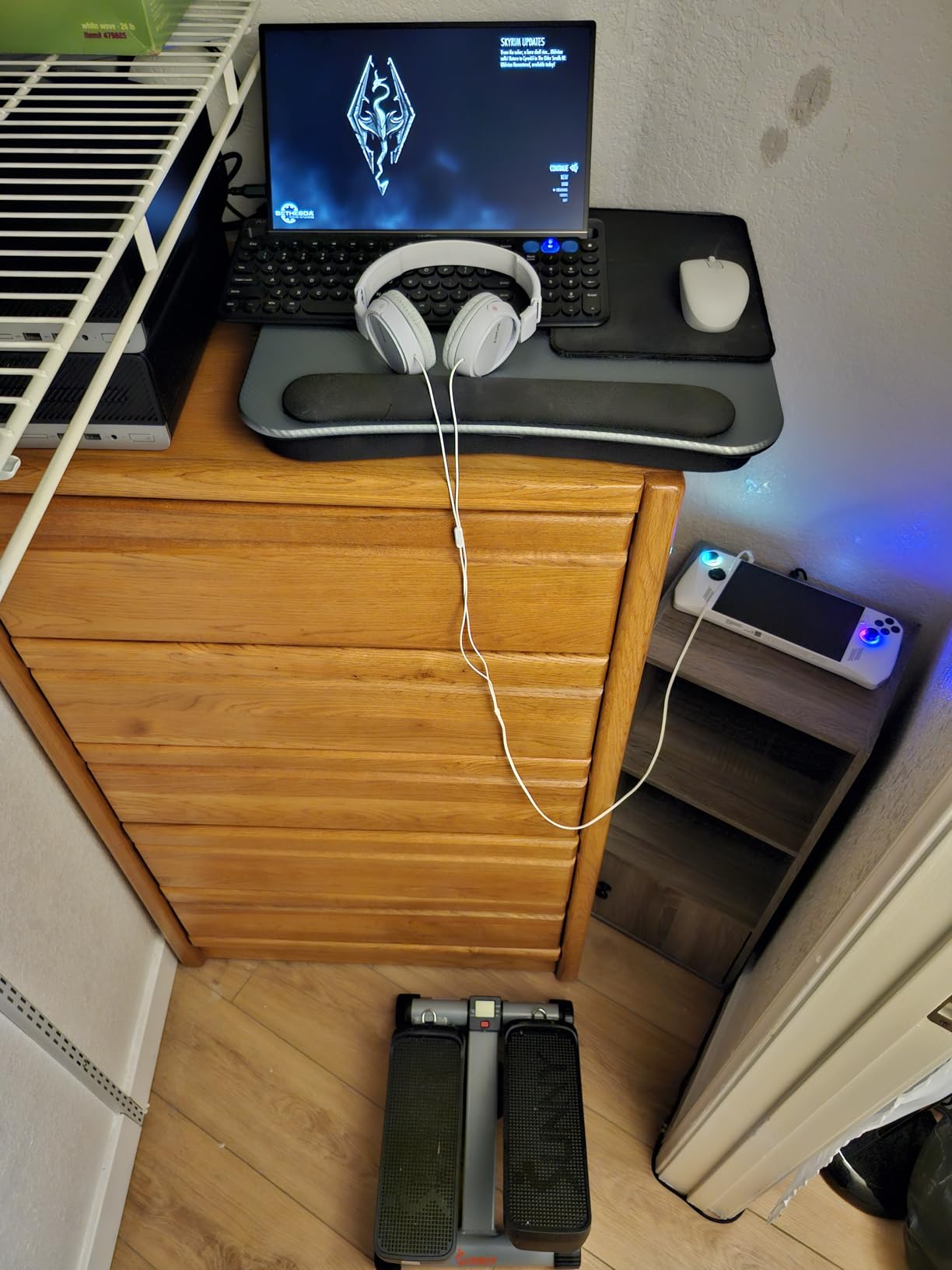
Where it fits and what it sounds like
It parks under a bed, in a bedside gap or beside a desk, and the working area is about 3 by 2 feet. In a studio apartment you can step on it while a podcast is recording, then slide it away.
Expect conversation-level quiet at moderate speed. Sprinting produces a rhythmic mechanical thrum that is audible in the room but does not carry the way a treadmill motor or a dropped weight plate does.
Who it works for and who should pass
This suits beginners, anyone returning to exercise after a long gap, and anyone who needs joint-friendly cardio that will not trigger downstairs neighbours. Seniors and rehab users get a genuinely low-impact path with no step height to climb.
Pass if you want real cardiovascular overload. A stepper builds legs and burns a moderate number of calories, but the ceiling is low, and a bike or rower gives you a much wider intensity range for the same floor space.
3. Sunny Health Compact Hydraulic Rower – Best Low-Impact Cardio
Sunny Health & Fitness Smart Compact Hydraulic Rower for Full-Body Cardio
58.1 x 20.1 x 24.8 in, 22.4 lb alloy steel frame
12 hydraulic levels, LCD console with phone holder
Free SunnyFit app with 1000+ guided rows
Pros
- Very light at 22.4 lb
- moves between rooms one-handed
- Near-silent operation on shared walls
- Folds for under-bed or closet storage
- 12 usable resistance levels
- Strong leg
- glute and core engagement
Cons
- Hydraulic cylinder heats up and resistance fades in long sessions
- Seat rail is short for users with long inseams
- Smart model is not actually Bluetooth connected
The rower wins on cardio efficiency per square foot. It trains the legs, the back and the core in one movement, it is low impact enough for joint problems, and there is no motor to make noise. The compact version here weighs just 22.4 pounds, so moving it between the bedroom and the living room is a one-hand job rather than a two-person move.
Resistance comes from a hydraulic cylinder with 12 dial-selected levels. The console measures calories, stroke count, scan and time, and a molded phone holder sits at eye level. The SunnyFit app adds guided workouts and virtual scenic rows on a large screen.
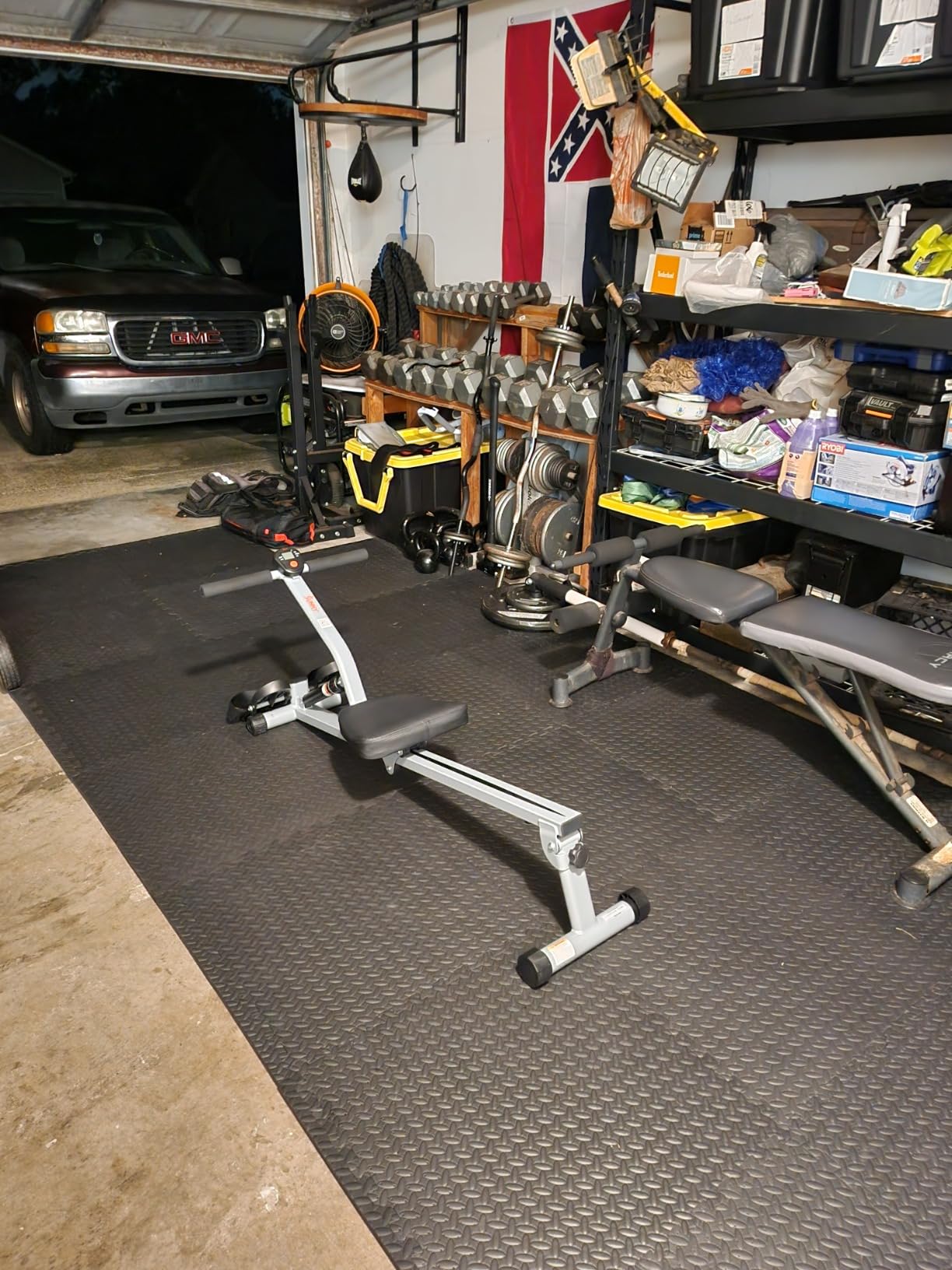
The single most repeated technical complaint is heat. After about ten minutes of hard rowing, the hydraulic cylinder warms up and resistance drops until it cools, which means interval training feels harder at the end of a session than at the start. Air or electromagnetic rowers do not have this problem, and they cost several times more.
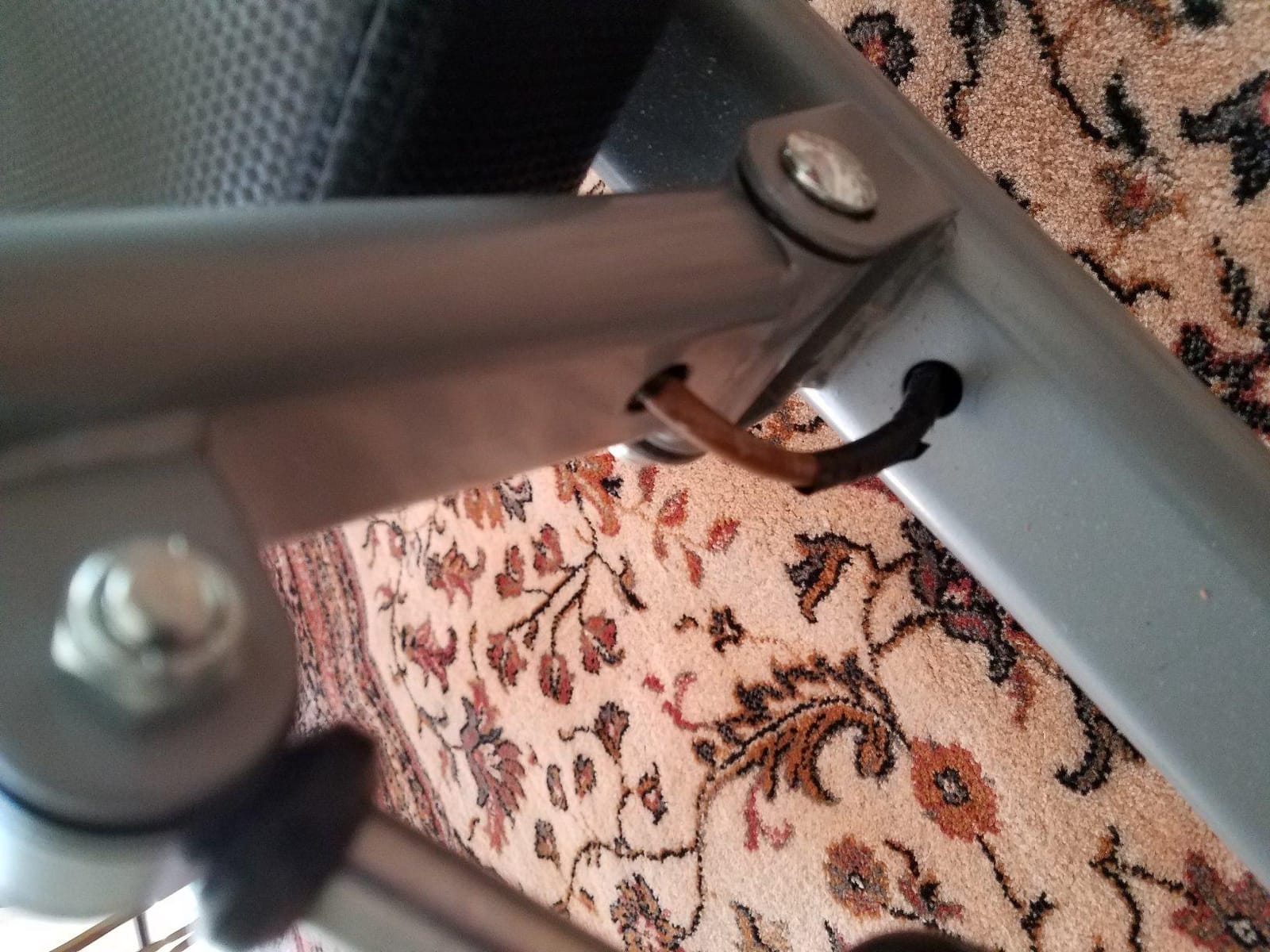
Two further notes from long-term owners. The seat cushion is adequate rather than plush, and the rail is short, so users with inseams over about 35 inches may find their knees lifting before the handle is fully in. A handful of reviewers on the Smart version report that Bluetooth does not actually connect, so stats must be entered by hand.
Footprint, storage and the structure-borne noise question
In use it needs a lane about 2 feet wide and 6 feet long, which is more than the stepper but less than most people expect. Folded, it stands against a wall or slides under a bed. Storage is genuinely quick.
Airborne noise is very low, but the rail travels on wheels, so a hard floor transmits a low rumble that can be felt more than heard. A foam or cork mat under the machine removes most of that, and it is the single highest-value accessory in a small apartment.
Who should buy it and who should look elsewhere
Choose the rower if your priority is total-body conditioning in the smallest possible footprint, if you train downstairs from someone, or if knee or back issues rule out higher-impact cardio.
Look elsewhere if you are tall with a long inseam, if you want precisely repeatable resistance for structured intervals, or if you plan to row daily for long stretches and the cylinder heat matters to you.
4. Cubii JR1 Under Desk Elliptical – Best for Desk Workers
Cubii JR1 Under Desk Elliptical, Seated Bike Pedal Exerciser, Seniors, Aqua
23.2 x 17.6 x 10 in, 25.4 lb, sits under a standard desk
18 inch stride with 8 manual resistance levels
Battery powered, no plug required
Pros
- Effectively silent elliptical path
- works during calls
- Smooth low-impact motion
- Sturdy and does not slide on hard floors
- Four-screw setup with screwdriver included
- Popular with seniors and rehab users
Cons
- Heavier than other under-desk options
- Calorie burn is modest rather than true cardio
- Needs about an inch of desk clearance on some models
This is the zero-floor-cost option. It lives under your desk all day, so it never occupies floor space you need for anything else, and a 4 by 6 foot apartment can host a full workout around it.
The elliptical path is the differentiator versus a pedal exerciser. An 18 inch stride moves the feet in a forward arc rather than a circle, which spreads load across the knees and hips and is why the JR1 shows up so often in post-surgical rehab accounts. Eight manual resistance levels and a small LCD cover the range from a warm-up to a hard interval.
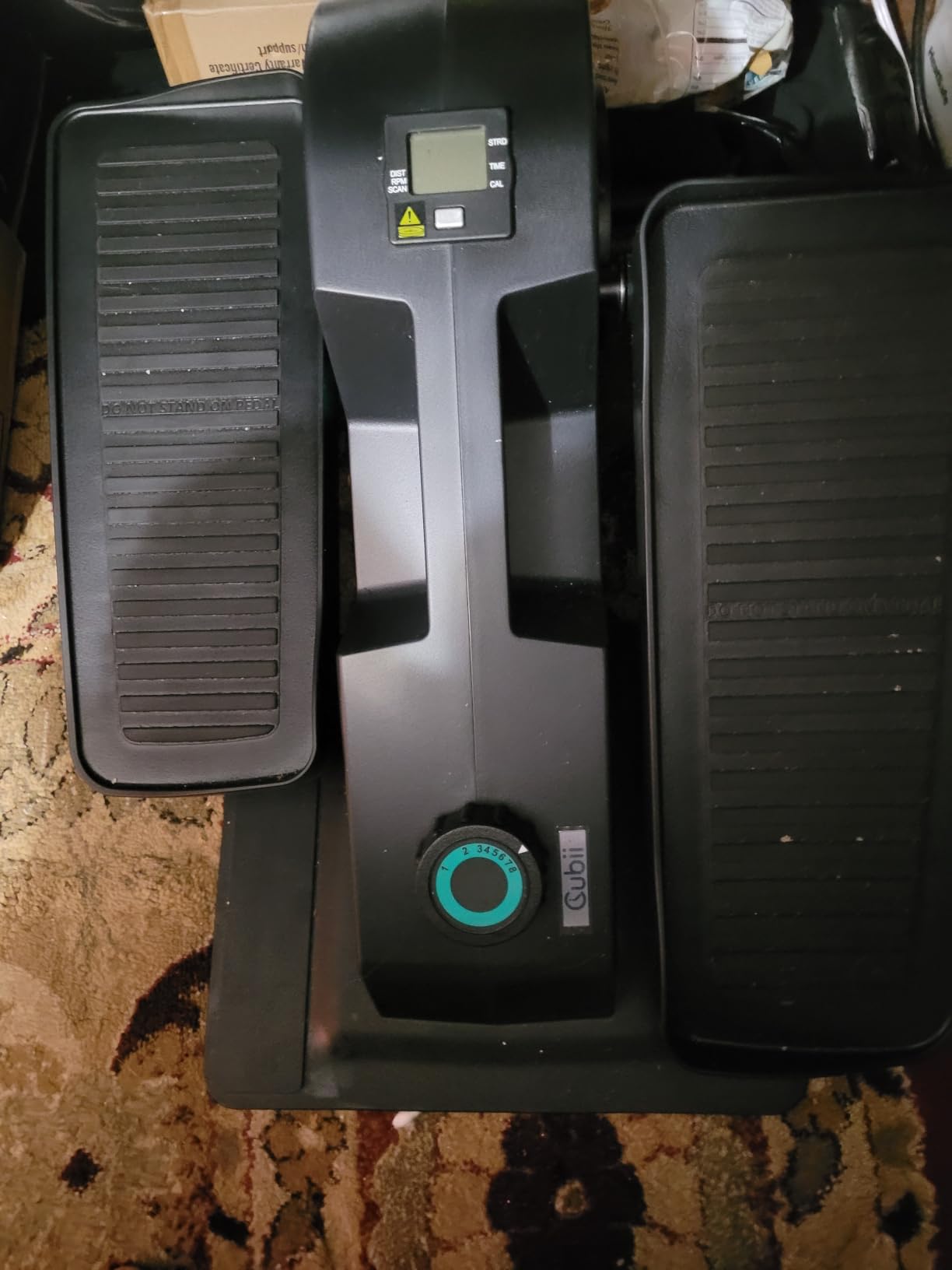
Owners describe it as silent in a way that lets you keep a camera on during a meeting. The build is stable, and it does not creep on hardwood, which is not always true of cheaper under-desk units. Chair wheel stops are included to protect your floor and to stop the chair rolling.
The compromises are honest ones. At 25.4 pounds it is one of the heavier under-desk options, and the resistance ceiling stays light even at the top setting, so it is not a serious conditioning tool. Some low desks with a keyboard drawer block full knee extension, and this model has no Bluetooth, so the app requires manual stat entry.
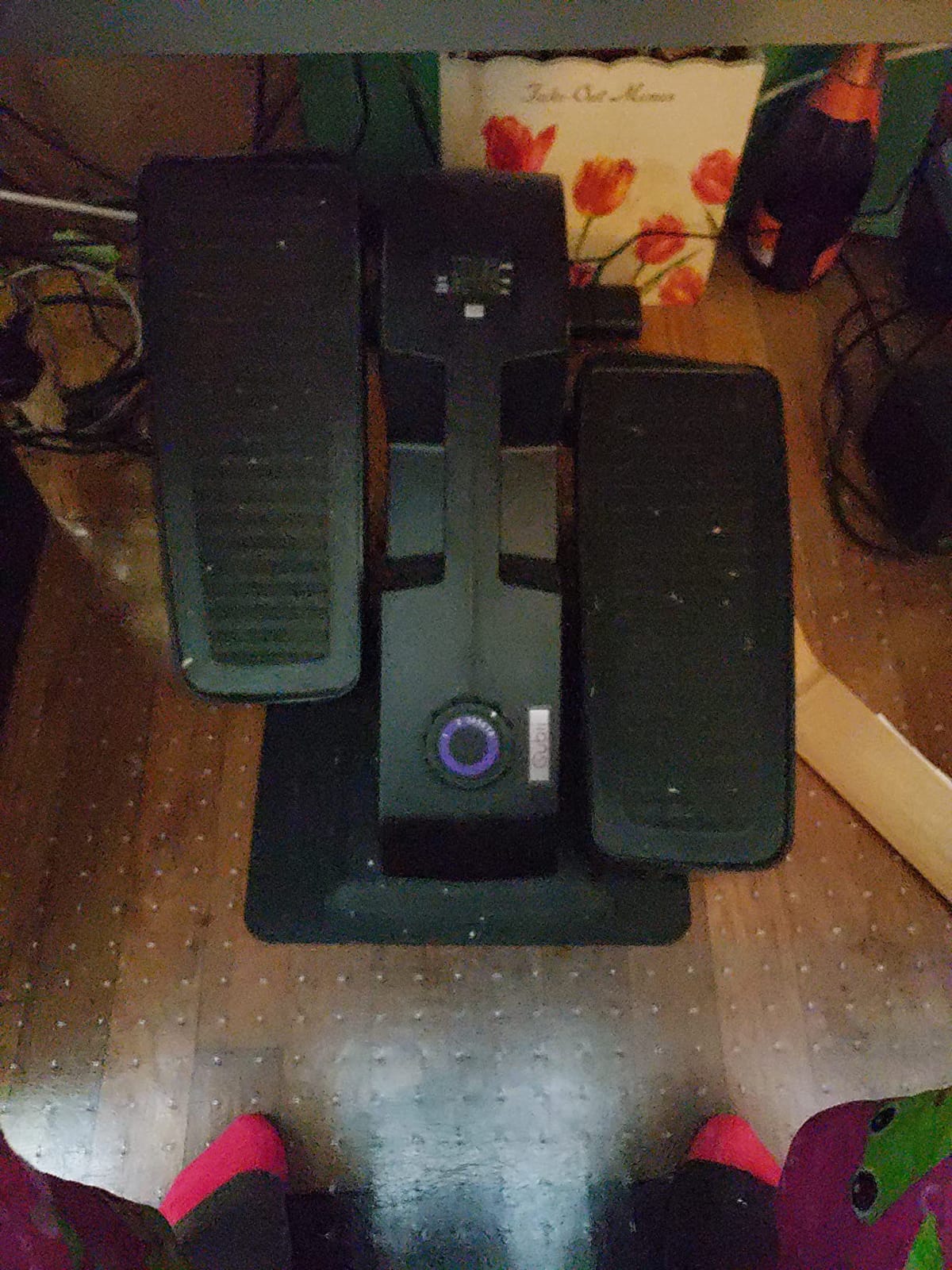
Will it physically fit under your desk
It measures 23.2 inches deep, 17.56 inches wide and 10 inches tall, and a standard-height desk is enough clearance for most adults. Shorter users sometimes need to raise the desk by an inch or two.
Because it never leaves the desk, the storage question disappears entirely. That is why it works in a 300 square foot studio where a bike would not fit.
Who it suits and who should skip it
It suits desk workers who spend eight hours seated, seniors, and anyone in rehabilitation who needs daily movement without joint loading. The habit-forming nature of it is the real value: owners report measurable weight loss from simply using it during work.
Skip it if you want a genuine cardiovascular spike. Calorie burn is modest and the resistance is light at the top end, so a bike or rower is the better tool for serious aerobic work.
5. TRX GO Suspension Trainer – Top Rated Portable Option
TRX GO Suspension Trainer, At Home, Portable Gym Workout, For Strength Training, Full Body Exercise Equipment
Weighs about 1.5 lb with mesh nylon strap and foam handles
Indoor, outdoor and over-the-door anchors included
Rated to 700 lb user weight, 3 year warranty
Pros
- Weighs almost nothing
- so storage and travel are solved
- No drilling
- the door anchor handles most doors
- Covers the same exercise library as full-size rigs
- Lower joint loading than running
- Stitching and materials hold up over years
Cons
- Webbing is thinner than full-size suspension trainers
- Resistance is fixed by body position
- Some units arrive in plain packaging
The TRX GO scored highest in the group at 4.7 stars across more than 11,000 reviews, and the reason is simple. It is a full suspension training library in about 1.5 pounds of kit, and it is the only pick here you can genuinely take on a plane.
You get a mesh nylon strap with foam handles, an over-the-door anchor, a fixed indoor anchor, an outdoor anchor and a carry bag. Squats, lunges, rows, presses, planks and all the leaning movements from a full studio rig all work. The TRX Training app adds hundreds of guided sessions.
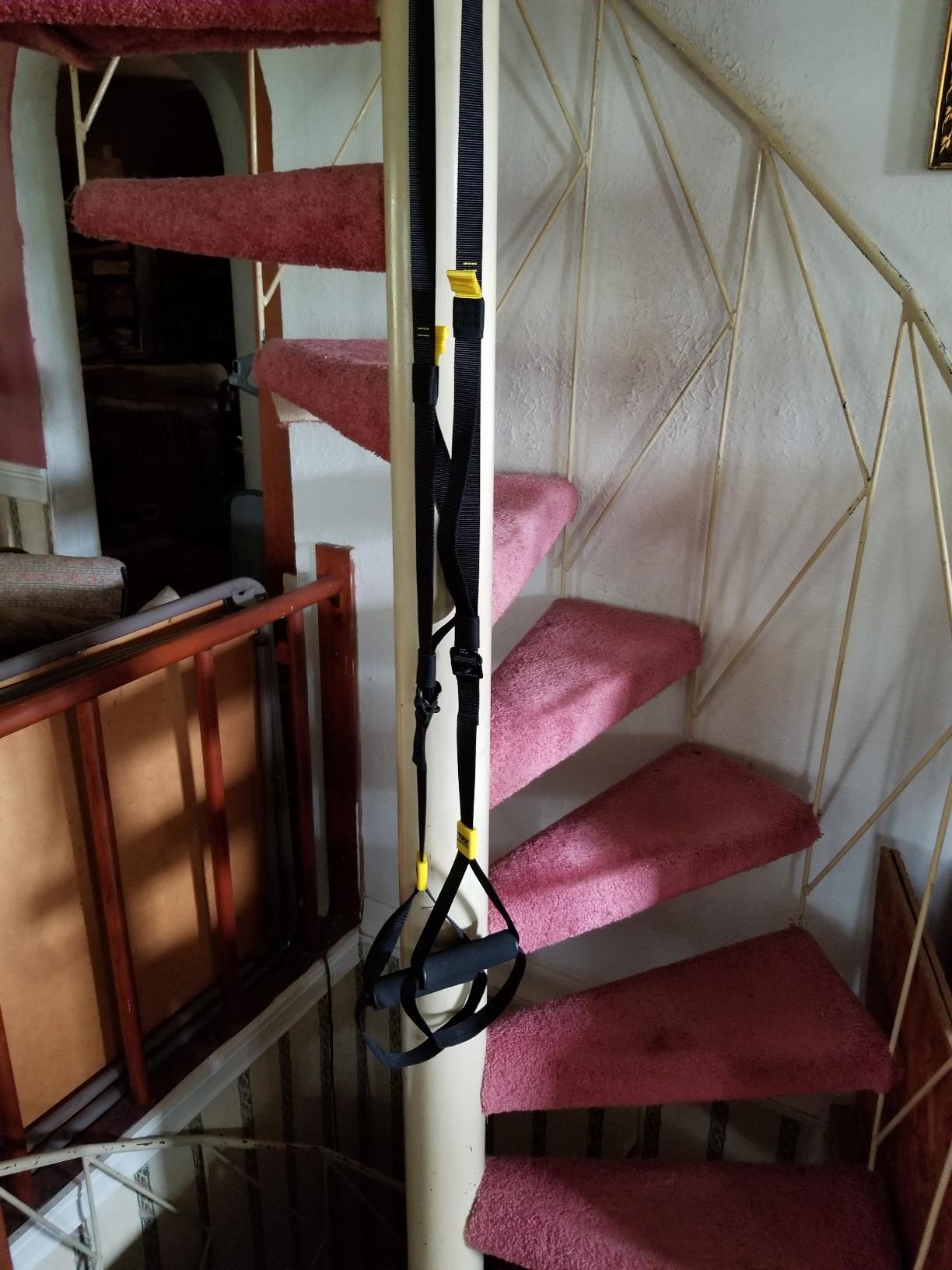
Because load comes from your body position rather than a weight stack, resistance scales with your bodyweight and angle, which is a genuine advantage for beginners and a real ceiling for advanced lifters. The mesh webbing is thinner than the webbing on a full-size studio trainer, and leaning movements take a few sessions before they feel stable.
On storage and noise this pick is simply unmatched. One square foot of floor during a session, drawer space when idle, and silence apart from the strap creaking under load.
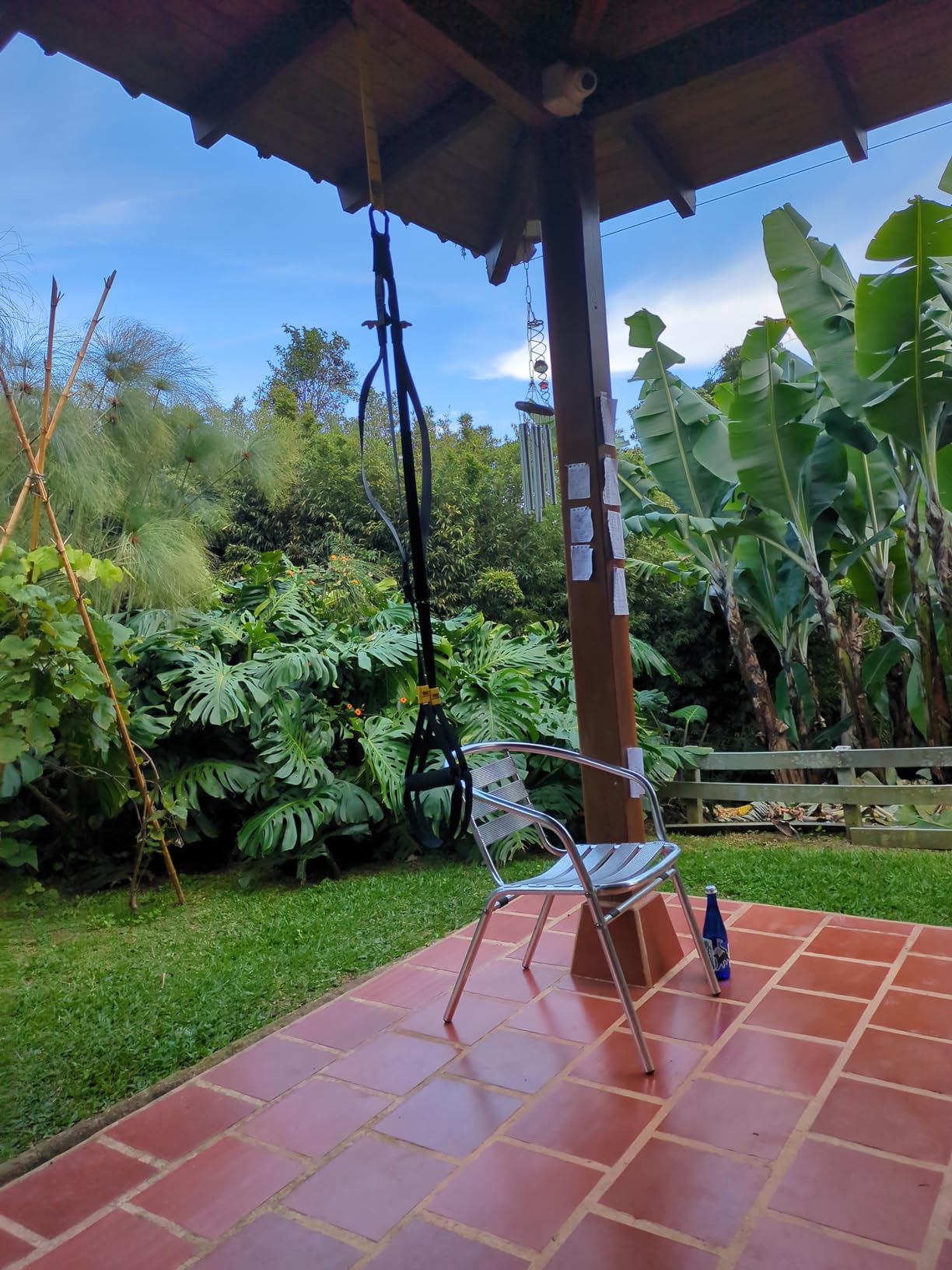
No-drill anchoring in a rented apartment
Every anchor in the box uses a doorframe, a fixed fixture or an outdoor structure, so nothing is drilled into a wall. That is the deciding factor for renters who cannot get landlord permission for anchors.
Check your door thickness and swing direction before buying. A solid core door works best, and you want the anchor on the latch side so the strap runs across the frame rather than crushing the hinge side.
Who it suits and who should buy something heavier
Buy it if you travel, if you are a renter who cannot touch the walls, or if you want a complete bodyweight program for a small space with zero storage cost.
Skip it if your program needs heavy progressive loading, since there is no way to add resistance other than changing leverage. Pair it with the adjustable dumbbell set below if you want both.
6. pooboo Folding Magnetic X-Bike – Best Folding Bike
pooboo Folding Magnetic X‑Bike, Upright Exercise Bike for Home Gym
25.2 x 15.75 x 45.67 in, folds flat on transport wheels
8 level magnetic resistance with 6.6 lb flywheel
Height range 4 ft 10 in to 6 ft 1 in, rated to 300 lb
Pros
- Folds flat for closet or corner storage
- Magnetic resistance is quiet for an upright bike
- Monitor tracks time
- speed
- distance
- calories and heart rate
- Includes phone holder
- bottle holder and back cushion
- Arm resistance bands add upper-body work
Cons
- Switching between riding positions is not a quick move
- Magnetic ceiling is below premium air or electromagnetic bikes
- Included arm bands are basic
A foldable bike solves the storage problem that stops most apartment gym plans. This one collapses flat onto transport wheels, so a corner that held a 6 by 2 foot footprint during a session holds a thin folded slab when you are done, and the transition takes under a minute.
It is a 4-in-1 design with upright and semi-recumbent positions, 8 levels of magnetic resistance driven by a 6.6 lb flywheel, and a steel frame rated to 300 lb for users between 4 foot 10 inches and 6 foot 1 inches. The monitor gives time, speed, distance, calories and heart rate, with a bottle holder and phone holder on the front post.
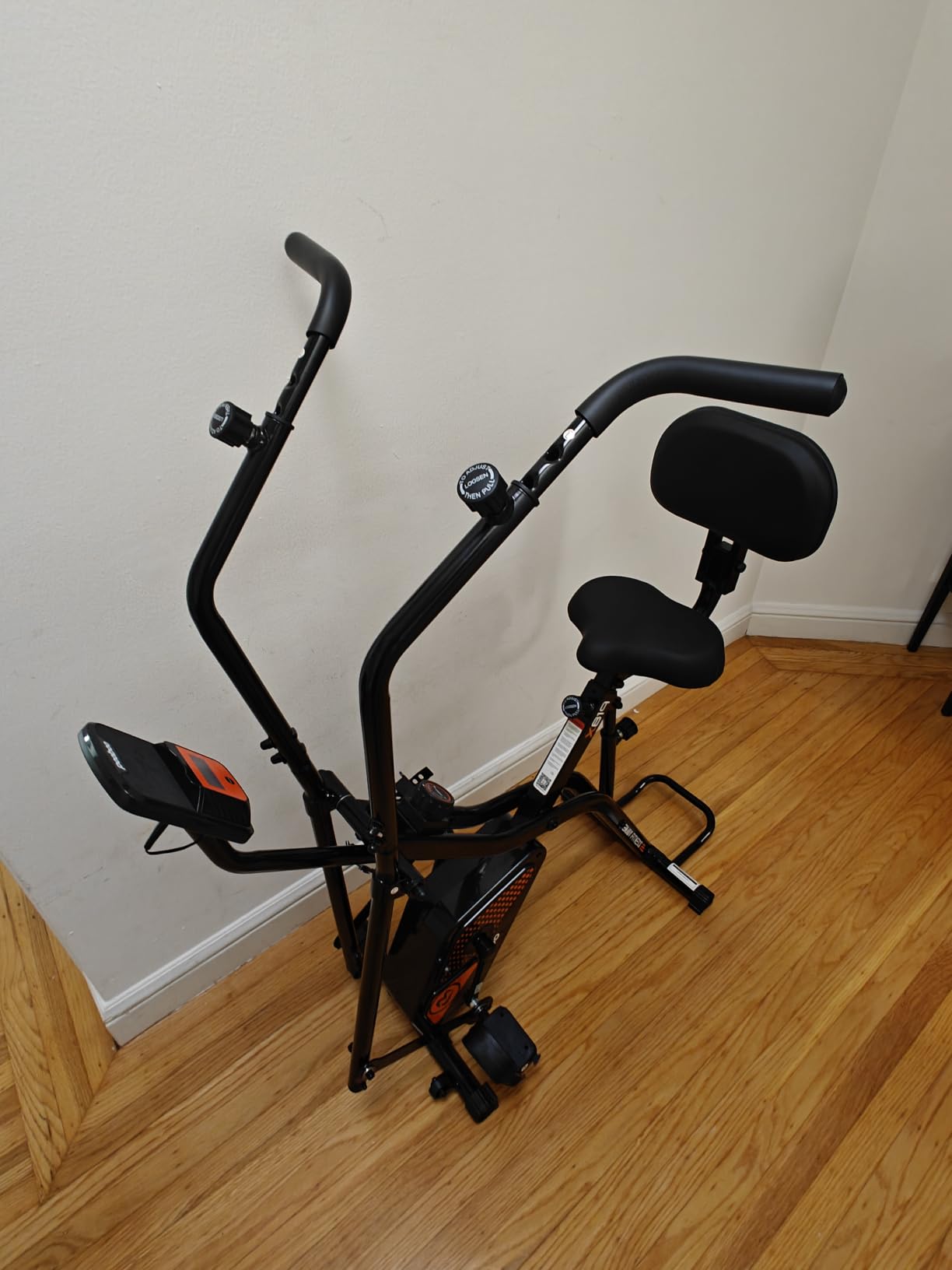
Magnetic resistance is the reason this suits an apartment. There is no friction pad rubbing against a spinning flywheel, so there is no squeal, and the noise at a hard cadence stays well below a treadmill motor. The 6.6 lb flywheel is heavier than the plastic discs on entry-level bikes, which makes the ride smoother at the top end.
Two limits are worth stating. The magnetic ceiling is genuinely below what air or electromagnetic resistance bikes deliver, so experienced riders plateau sooner. And the arm resistance bands that come with it are thin, meant for a quick warm-up rather than a real upper-body session.
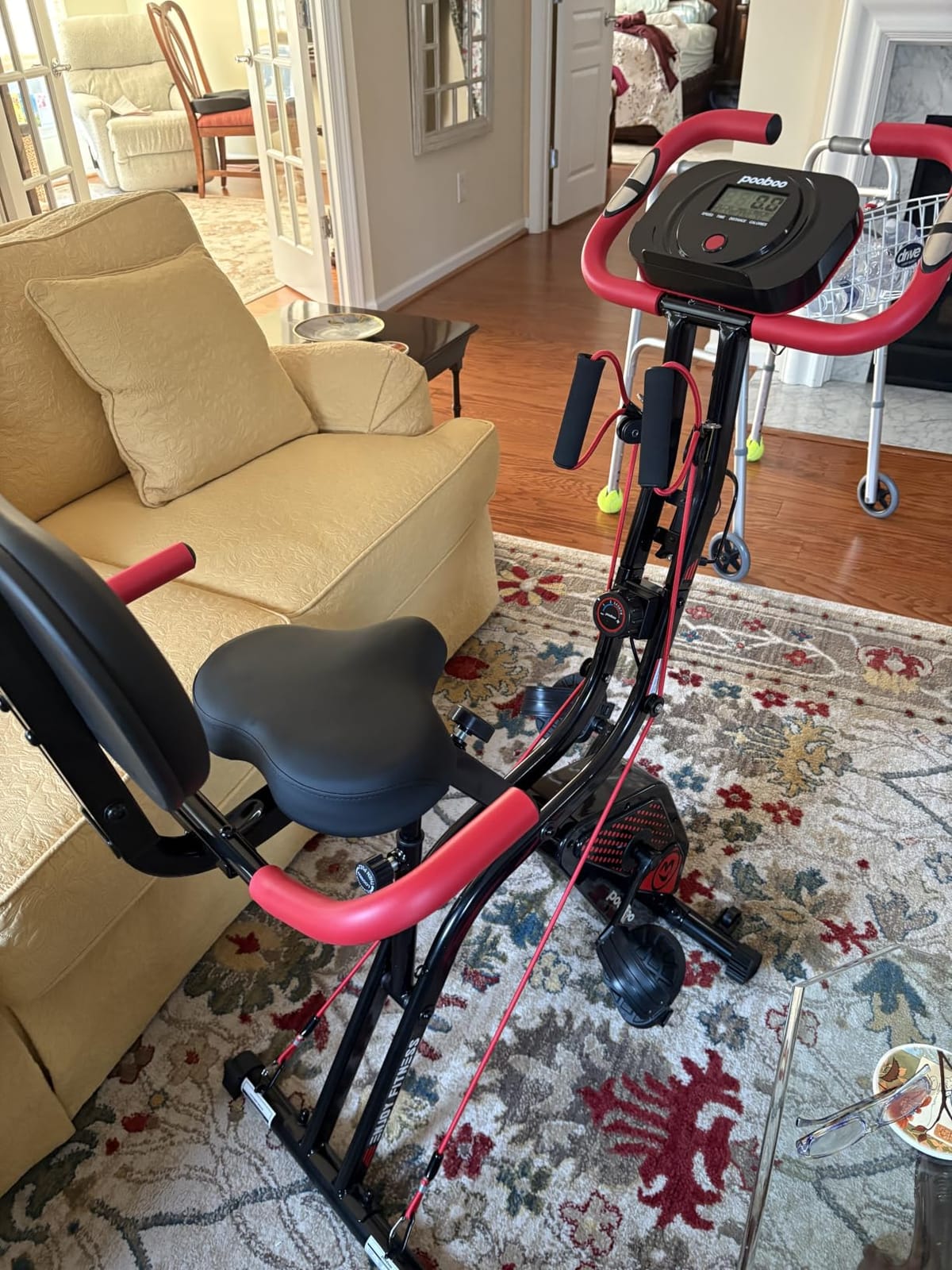
Folded versus in-use footprint
Folded, it is a flat slab that stands against a wall or lives under a bed. In use it measures 25.2 inches deep by 15.75 inches wide and 45.67 inches tall, so you need roughly a 3 by 3 foot area plus clearance to pedal.
Height adjustment is quick, but changing between the upright and semi-recumbent positions is a longer repositioning job. Pick the mode you use most before you commit to this bike.
Who should buy it and who should choose the rower instead
Buy it if you want genuine cycling cardio, a monitor that tracks heart rate, and a machine that disappears into a closet in a single motion. It is a strong fit for a one-bedroom apartment with a spare wall.
Choose the rower above if you are short on space, training downstairs from someone, or want more joint-friendly loading, since the rower is quieter still and folds thinner.
7. Sunny Health Smart Mini Cycle – Best for Rehab and Tabletop Work
Sunny Health & Fitness Under Desk Smart Mini Pedal Exerciser, Dual Function Exercise Cycle Bike with Low Profile Design – SF-B023005DGY
17.9 x 16.1 x 11.7 in footprint, 11.7 lb alloy steel frame
Quiet mesh belt drive with stepless resistance
2 in 1, works for legs or arms, LCD display
Pros
- Weighted base stays put without sliding on carpet
- Very quiet mesh belt drive that never heats up
- Carry handle makes it portable between rooms
- Useful for both leg and arm pedalling
- Four-bolt assembly with tools included
Cons
- Some units arrive with dead monitor gauges
- Pedal arm installation is fiddly on first setup
- Resistance ceiling is well below larger pedal exercisers
This is the cheapest way to get moving circulation in a room with no floor budget. It is 11.7 pounds, measures 17.9 by 16.1 inches, and the built-in carry handle makes it a genuinely portable object rather than a machine you install once.
The drive is a mesh belt rather than a chain or a friction pad, and that single choice determines the noise profile. It is quiet, it never generates the heat that hydraulic units do, and resistance adjusts continuously with no steps, so you can creep the dial up a fraction at a time during rehab work.
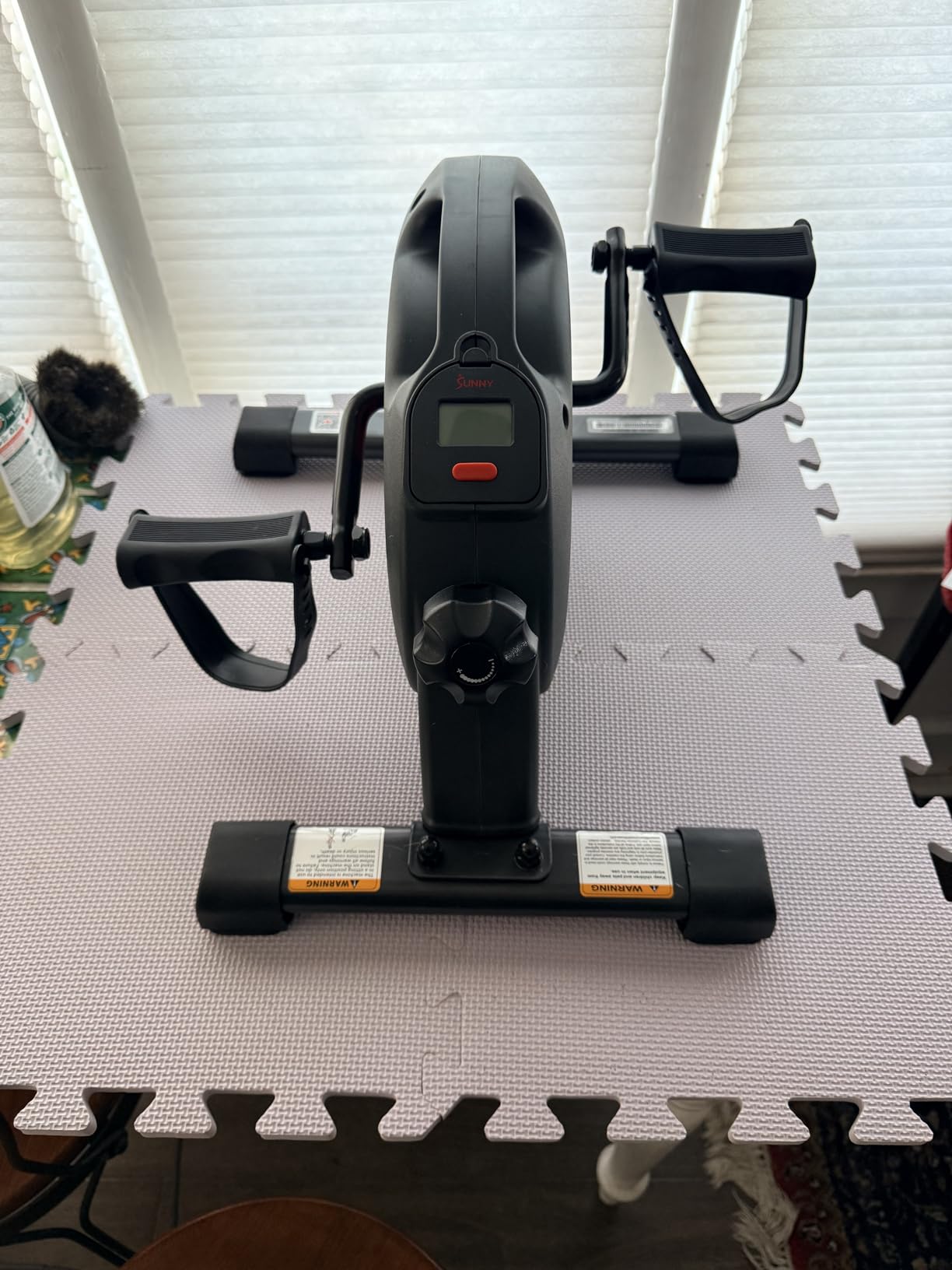
Its heavy base is the underrated feature. On carpet or a mat it stays exactly where you put it, which matters when you are pedalling slowly in a seated position and do not want to be chasing a sliding machine. Swapping the pedal arms lets you drive it with your arms during upper-body rehab.
The 4.2 average reflects real quality complaints rather than a design problem. A minority of buyers received units with dead display gauges or a strong new-plastic smell, and the pedal arm installation confuses people on first assembly because the left and right arms look similar. Resistance also tops out well below larger pedal exercisers, so it is a circulation and rehab tool more than a cardio machine.
Storage and desk-side use
At 17.9 by 16.1 inches it fits beside a desk, under a bed or in a bathroom corner, and the carry handle means it moves between rooms in one trip. It is the least complicated storage story of any machine here.
Noise is minimal. A mesh belt at a slow cadence is close to silent, and it is quiet enough for a shared-wall apartment in the evening.
Who it suits and who should look elsewhere
It suits seniors, post-operative rehab, circulation work, office workers who want movement at a desk, and anyone who wants a cardio option for less than the cost of a month at a gym.
Skip it if you want to sweat. It is built for low-intensity movement, and anyone training for a race or a fitness test will find the resistance ceiling frustrating.
8. NICEPEOPLE Adjustable Weight Bench – Best Folding Bench
NICEPEOPLE Adjustable Weight Bench for Home Gym, 660LBS Capacity Workout Bench with 8 Backrests for Chest Shoulders Arms, Compact and Foldable Strength Bench for Small Space Apartment Room
46 x 16.7 x 17.2 in, folds to 30.7 x 16.3 x 9.25 in
660 lb capacity alloy steel frame, 8 backrest angles
29.3 inch backrest with levelling foot caps
Pros
- Eight angles cover incline
- decline and flat pressing
- Two-pin fold genuinely works
- 660 lb frame with reinforced triangular support
- Long backrest supports head and upper back
- Levelling foot caps cut wobble on uneven floors
Cons
- Still a noticeable 46 inch footprint even folded
- Foam padding is adequate rather than premium
- You need somewhere to keep the two removed pins
A bench is the piece that converts a pile of weights into a real strength setup. Without one you are limited to floor pressing and standing movements, which is a significant gap in any program. This one folds, which is the entire point in an apartment.
Eight backrest positions cover flat, incline and decline pressing plus rows and shoulder work, and the 29.3 inch backrest is long enough to support the head, neck and upper back for roughly 90 percent of users. The alloy steel frame is rated to 660 pounds and was tested through more than 8,000 durability cycles.
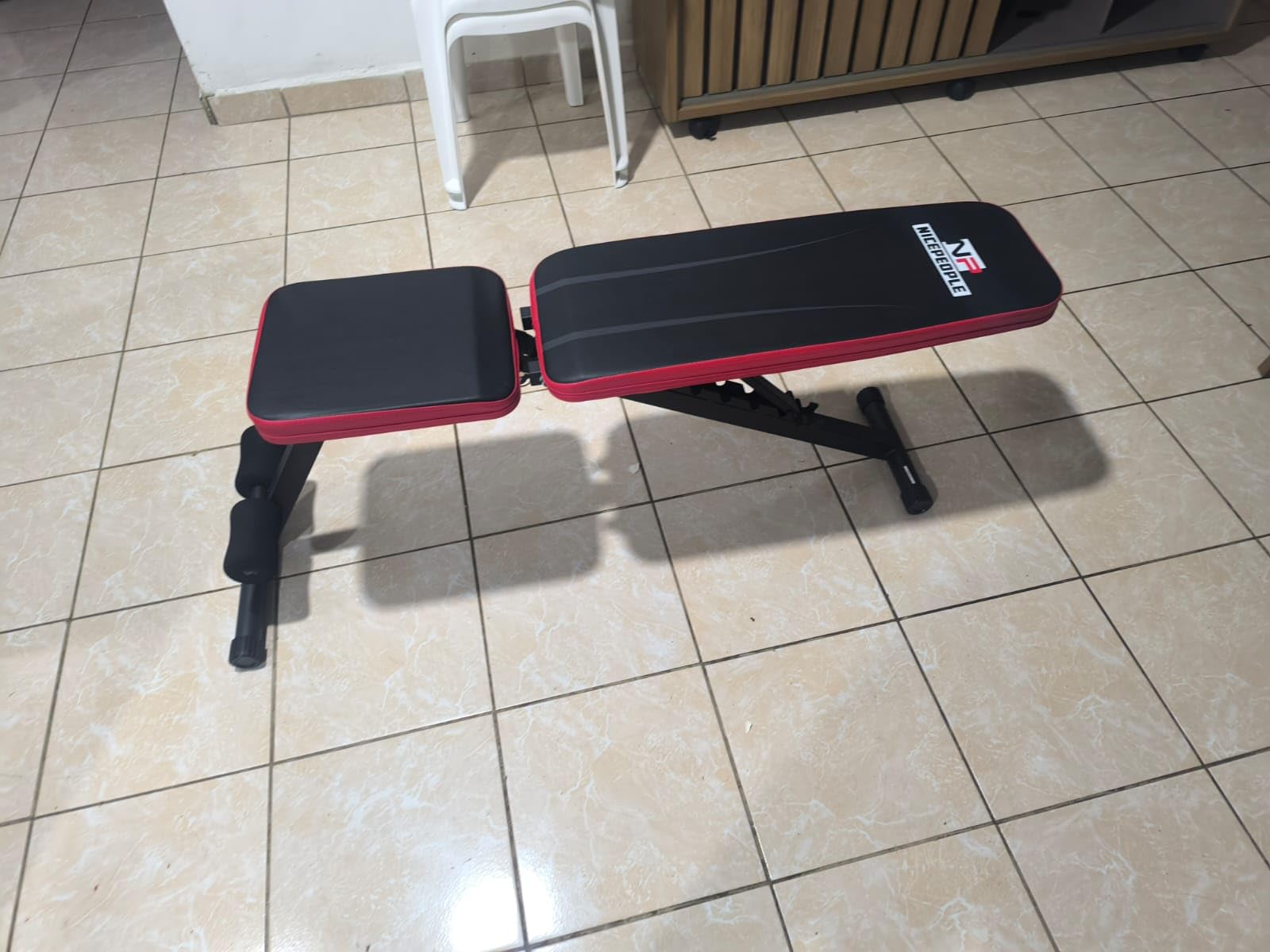
The fold is a two-pin release at the front and back, and it genuinely takes seconds. What you get is 30.7 by 16.3 by 9.25 inches, which fits against a sofa, inside a closet or under a bed with a slightly raised frame. Four rotatable levelling foot caps matter more than they sound, because apartment floors are never flat and a bench that rocks ruins pressing.
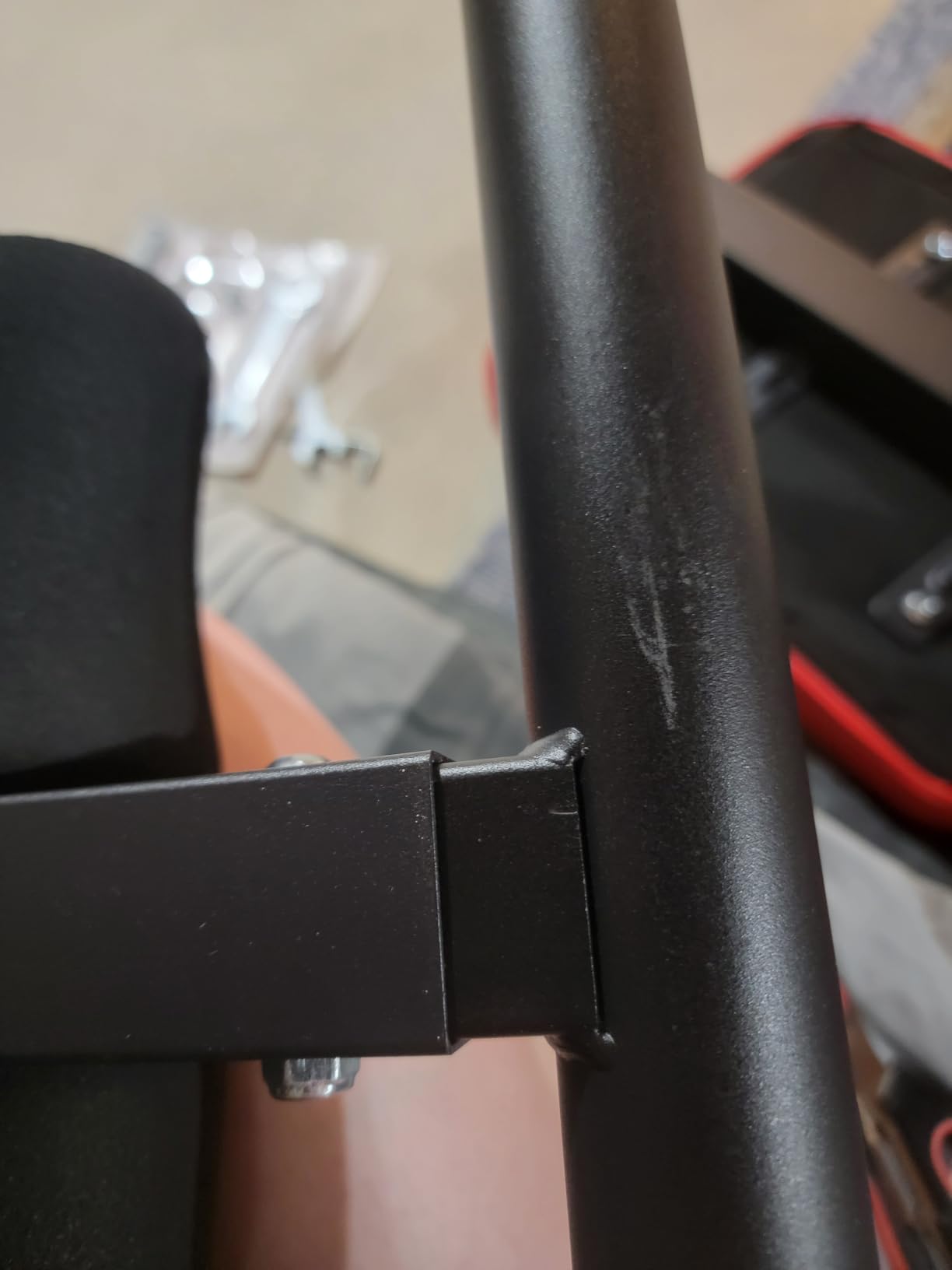
What it does not solve is bulk. At 46 inches long and 17 pounds, it is still a visible object in a studio apartment, and the padding is high-density but not built for heavy maximal bench work. Plan a home for the two pins, or the fold will slow to a two-minute job the first time you rush it.
How the folded size compares to a fixed bench
A fixed flat bench is around 48 to 54 inches long and never moves. Folded, this one is 30.7 inches long and under 10 inches thick, which is the difference between an obstacle in a studio and a stored item.
Pair it with the adjustable dumbbell set below and you have a complete flat and incline pressing station in about 4 square feet of floor, all of which clears away between sessions.
Who it suits and who should skip it
Buy it if you have adjustable or fixed weights and want bench pressing, rows or step-ups. Apartment dwellers without floor space get the most value from it because the fold is the only reason it is viable.
Skip it if you are a serious powerlifter chasing maximal loads, since the padding and 660 lb frame are honest but not elite, and if your apartment has no closet, under-bed gap or sofa corner to receive 30 inches of folded bench.
9. FITPLAM 5-in-1 Adjustable Dumbbell Set – Best Multi-Mode Weights
FDS1 Adjustable dumbbell set, 45lbs Free Weights set with upgraded nut, 5 in 1 Weight Set Used as Kettlebells, Barbell, Push up Stand, Fitness Exercise for Home Gym Suitable Men/Women
22.5 x 11 in footprint, 45 lb total, 22.5 lb per dumbbell
Each bell adjusts 6, 8, 10, 13, 15, 17, 22.5 lb
Sand-filled PE plates with dual lb/kg markings
Pros
- Replaces a full rack of fixed dumbbells in a tiny footprint
- Dumbbell
- barbell
- kettlebell
- plates and push-up stands
- Plates are sand-filled so they stay quiet and floor-friendly
- Foam-wrapped bar connector stays comfortable on shoulders
- Textured grips hold with sweaty hands
Cons
- Screw-on collars loosen and need retightening often
- Weight changes take far longer than dial systems
- Long dumbbell rods protrude during fly movements
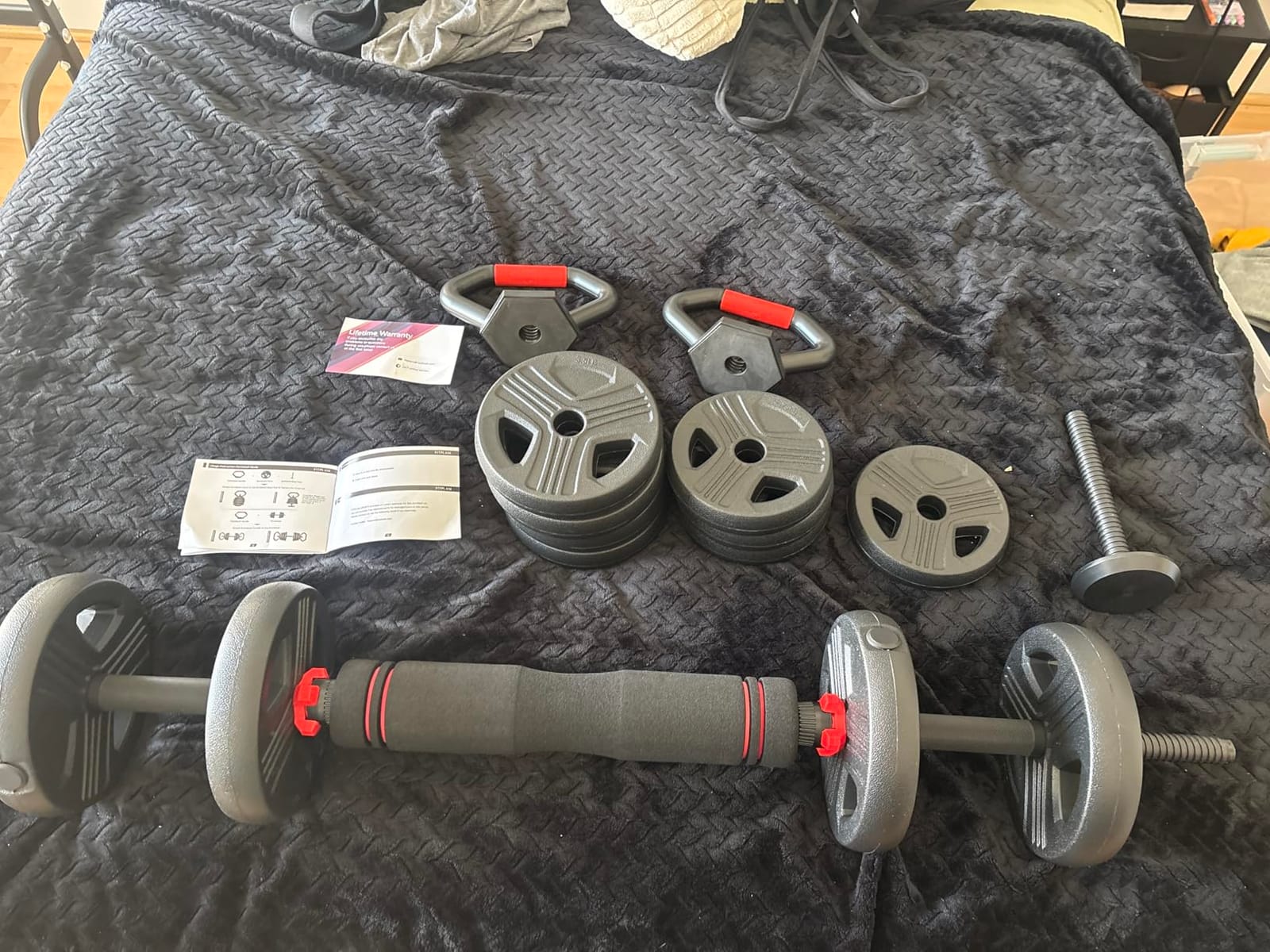
This set is the only adjustable dumbbell in the roundup that also converts into a barbell, a kettlebell, loose plates and push-up stands, which is why it appeals to people who want variety from a very small storage footprint. The whole thing lives inside about 22.5 by 11 inches.
Each dumbbell adjusts through 6, 8, 10, 13, 15, 17 and 22.5 pounds, for a total of 45 pounds across the pair. The barbell connector runs from 7.5 up to 45.8 pounds and the kettlebell mode from 3.8 to 23 pounds. Plates are filled with high-density iron sand inside PE shells, so they do not clang or roll.
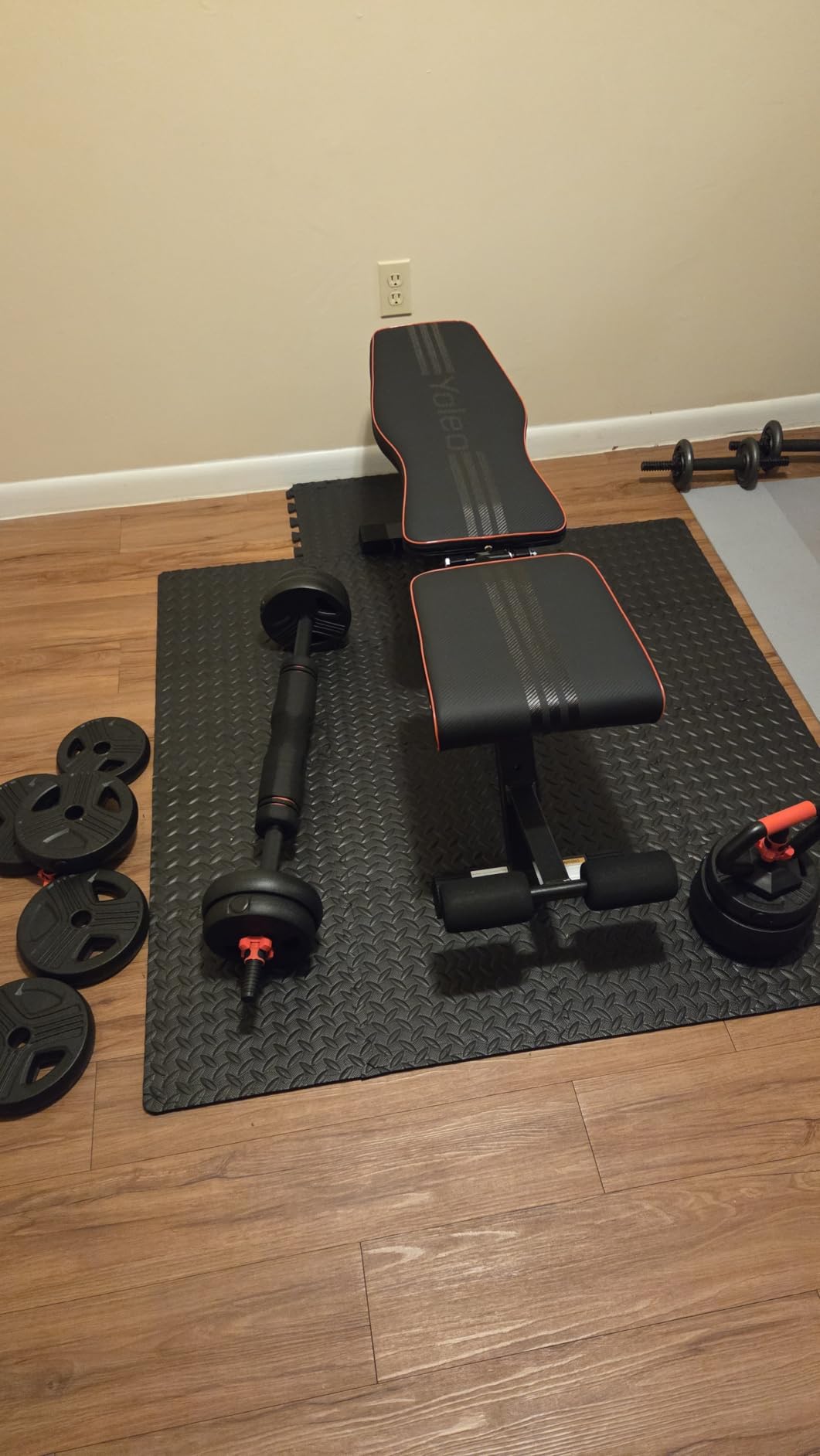
That sand-filled plate design is a genuine apartment feature. Cast iron plates damage hardwood and produce loud, sharp impact noise when set down, and this set does neither. For a renter, that is arguably more valuable than the 5-in-1 versatility.
The compromise is the weight change. Unlike dial or quick-release systems, you unscrew and re-screw a collar on each side of both dumbbells, and the red-and-black dual-lock nuts still need a check every one or two workouts. Reviewers who came from fixed dumbbells frequently cite several extra minutes between sets. The dumbbell rods also protrude far enough to catch legs during fly movements, and the barbell connector is shorter than a standard gym bar.
Progressive overload ceiling
Twenty-two and a half pounds per hand is a real ceiling. It is enough for a beginner, a returning trainer and most bodyweight-plus-dumbbell programs, and it is not enough for a long progression to heavier pressing or squatting.
That is a good reason to keep this set and the band set in the same corner. Bands give you heavier pulling and pressing patterns for free, and the dumbbells handle the lower range where control matters most.
Who it suits and who should look at a dial system
It suits apartment dwellers who want a barbell, a kettlebell and push-up stands without three separate purchases, and anyone worried about plate noise or floor damage.
Look at a dial-style adjustable dumbbell if you change weight several times per session, because the friction of a screw collar is the wrong trade when you are doing five-set drop workouts.
10. WELLFIT Folding Treadmill – Best for Walking
WELLFIT Folding Treadmill for Home, Walking Pad with Incline and Handle Bar
Folds to 49.21 x 21.25 x 6.1 in with transport wheels
36 x 16 inch 5-layer cushioned deck
0.6 to 6.2 mph, 3.0 hp motor, 350 lb capacity
Pros
- Folds in seconds and rolls on built-in wheels
- Auto-aligning belt needs no manual re-centering
- Handlebar controls mean no bending to adjust speed
- Quiet motor for shared-wall apartments
- Works as a walking pad under a standing desk
Cons
- 36 inch deck is short for running at speed
- 10 percent manual incline is limited
- At 41.7 lb it is one of the heavier machines here
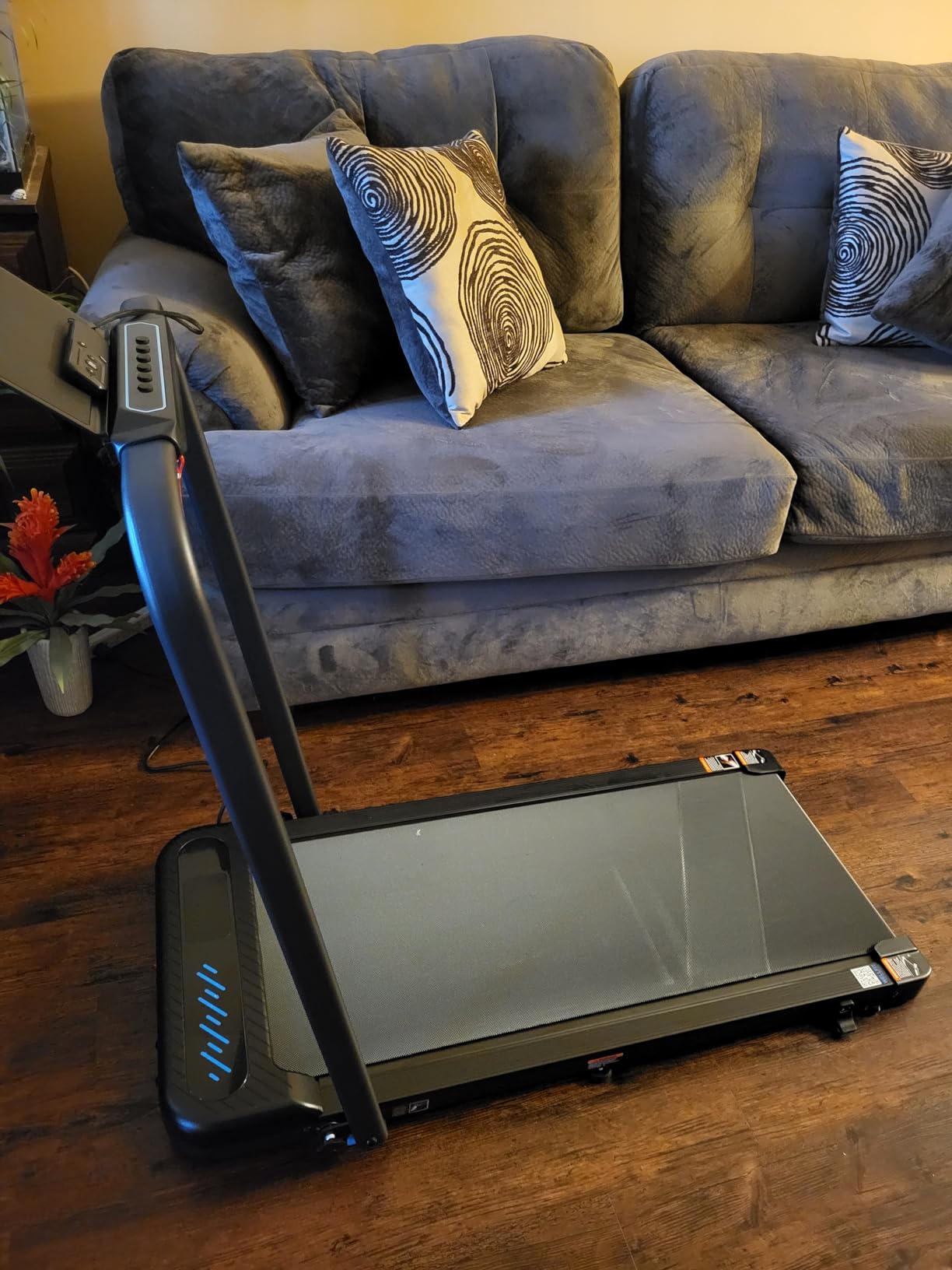
The folding treadmill exists for a specific job: daily walking and light jogging in a room with no outdoor option, such as a long winter or a building gym closure. This one folds to 6.1 inches thick and rolls on built-in wheels, so it stores under a bed or in a corner between sessions.
Three features separate it from budget compact decks. The running belt self-centers, which removes the most common complaint on small treadmills. The 36 by 16 inch deck carries five layers of shock-absorbing cushioning. And the 3.0 hp motor runs quietly enough for a shared wall, with speed adjustable from handlebar buttons, a remote, an app or voice control.
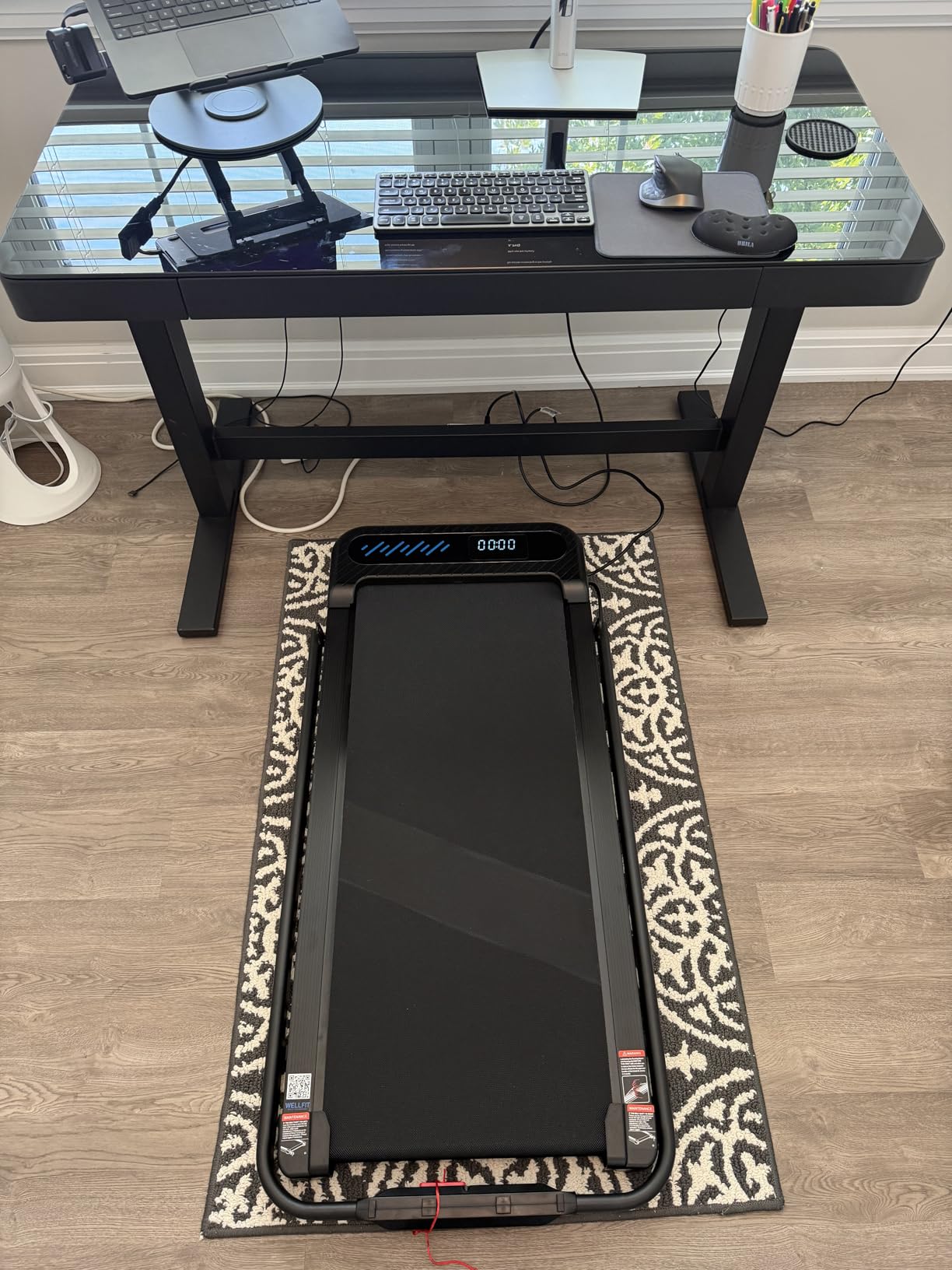
Bluetooth syncing works with the WELLFIT app, KINOMAP and Apple Health, so walk data lands in the same place as the rest of your training. Maximum speed is 6.2 mph with a 10 percent manual incline, and the frame is rated to 350 pounds.
Be realistic about it. A 36 inch deck is short, and the last foot of a stride overhangs at speed, which makes this a walking and light jogging machine rather than a running one. The 10 percent incline is the minimum worth having. And at 41.7 pounds it takes two people to move comfortably, which matters if your building has no elevator.
Who should use it as a walking pad
If you work at a standing desk or spend calls pacing, this becomes a desk accessory rather than a gym machine, and in that role the short deck and limited incline stop being drawbacks.
Pair it with a mat. A machine of this weight transfers a low rumble through a hard floor, and the vibration is what a downstairs neighbour feels rather than the motor noise.
Who should skip it, and the noise trade-off
Skip it if you are a runner, if floor space is genuinely zero, or if you are on a first floor with a downstairs neighbour. A bike or rower is a safer noise decision in a building.
It is the quietest treadmill in this roundup, but quiet is relative. If noise is your primary constraint, choose the rower or the folding bike instead and keep the treadmill for a ground-floor or end-unit apartment.
11. Goimu WM1 Wall Mount Cable Station – Best Wall-Mounted Option
Goimu Wall Mount Cable Station, WM1 Cable Crossover Machine with 17 Positions, High and Low Cable Crossover Machine with Removable Footplate for Garage Home Gym (WM1 Cable Station RD)
Wall mounted, under 3.3 sq ft of floor space
17 pulley height positions with dual independent cables
14-gauge steel frame rated to 300 lb, 2 year warranty
Pros
- Wall mounting keeps the entire floor clear
- 17 height positions and dual pulleys give real angle variety
- SmartT adaptor switches between 1:1 heavy and 2:1 light
- Lat bar
- T bar
- curl rope and handles all included
- Hardware bagged by assembly step
Cons
- Requires wall mounting
- so it is not renter-friendly
- Cables ship too long and need shortening with clamps
- Assembly runs 1 to 1.5 hours for one person
A wall-mounted cable station is the most space-efficient strength machine on this list, and the one that is least appropriate for a renter. It occupies under 3.3 square feet of floor, which means the rest of your floor is free, and it delivers the one thing dumbbells and bands cannot: smooth, adjustable resistance through a long arc.
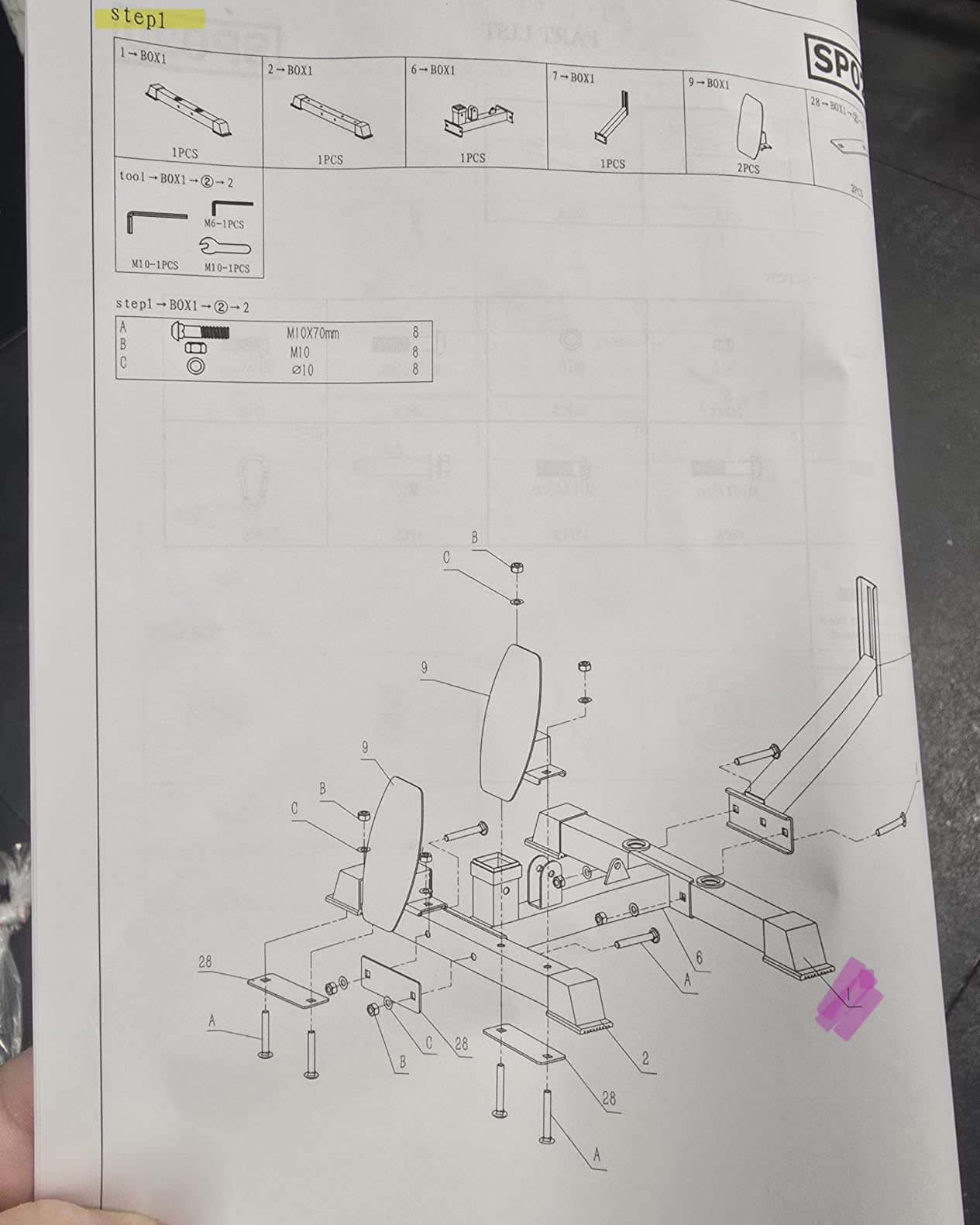
Two independent pulleys travel through 17 height positions, so you can set up high lat pulldowns, low rows, mid-face pulls or a floor-level press without moving the machine. The SmartT adaptor switches the ratio between 1:1 for heavy pulling and 2:1 for lighter work, and a removable footplate supports seated cable rows.
Build quality is the surprise at this price. Reviewers mounting it to a stud-framed wall report solid welds and smooth pulley travel, and they consistently compare the result favourably to branded cable machines costing several times more.
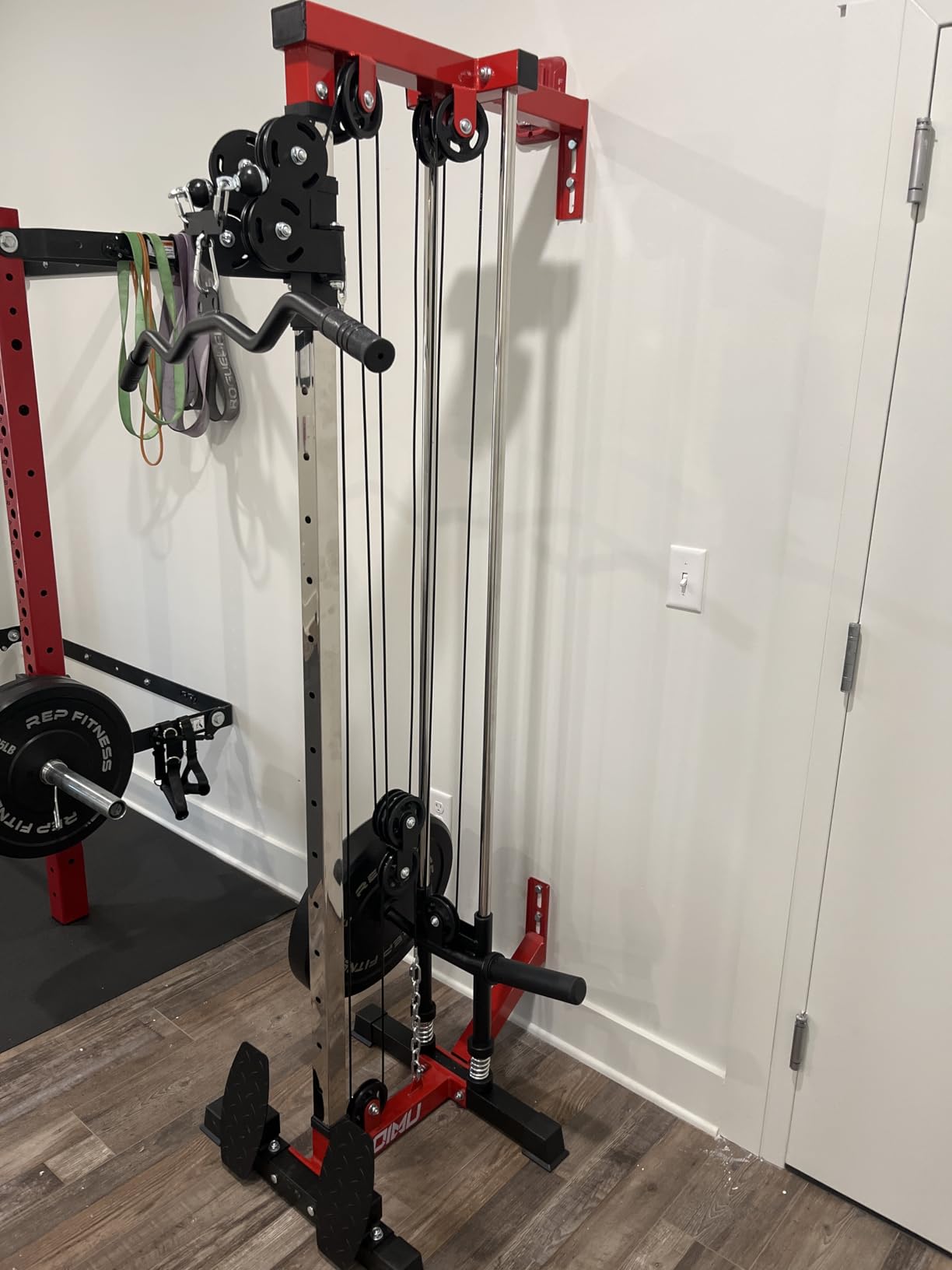
The first install is the rough part, and honest disclosure matters here. The supplied cables are longer than the frame and need shortening with clamps, which is the most common complaint and can make a first setup feel worse than the product deserves. Budget an hour to an hour and a half of assembly, and expect occasional cosmetic scuffs in transit. A few owners also report a mis-placed weld that affected swivel action, so inspect the moving parts on arrival.
How to get landlord permission
Wall mounting into studs is the difference between a request you can make and a request a landlord will refuse. A standard stud bay is 16 inches apart, and a landlord approving a 4 inch lag screw into two studs is agreeing to something very different from one approving a full cable tower in a hallway.
Submit the request in writing with the model, the mounting method and an offer to patch and repaint on the way out. Removing all holes and filling them on moving day is usually what turns a no into a yes.
Who it suits and who should pick a different pick
Buy it if you own your home, have a garage or basement with a stud wall, and want press, row, pulldown and face-pull patterns in a room too small for a rack.
Choose the band set or the suspension trainer if you are renting and cannot anchor anything. Nothing else in this list asks your landlord for permission.
12. EVO Gym Portable Home Gym – Best for Travel and Rentals
EVO Gym – Portable Home Gym Strength Training Equipment, At Home Gym | All in One Gym – 10 Resistance Bands, Base Holds Gym Bar & Handles for Travel | Portable Gym & Home Exercise Equipment | 320LBS
Packs into a backpack, bar and handles store in the base
10 bands from 10 to 50 lb for 10-320 lb total
Aircraft-grade aluminum base rated to 400 lb
Pros
- The only home gym here that genuinely fits in a backpack
- Aircraft-grade aluminum base stays stable under heavy load
- Band tension holds through full-range squats and presses
- Covers presses
- squats
- rows
- deadlifts and flyes
- Free brand replacement in the first year
Cons
- Only a door anchor is included
- no ceiling or wall hardware
- Band resistance shifts if you are not squared to the anchor
The EVO Gym solves a different problem from everything else here: temporary housing. If you split your time between apartments, stay in short-term lets, or travel for work, this is the only strength system in the roundup that fits in a bag and still supports heavy compound movements.
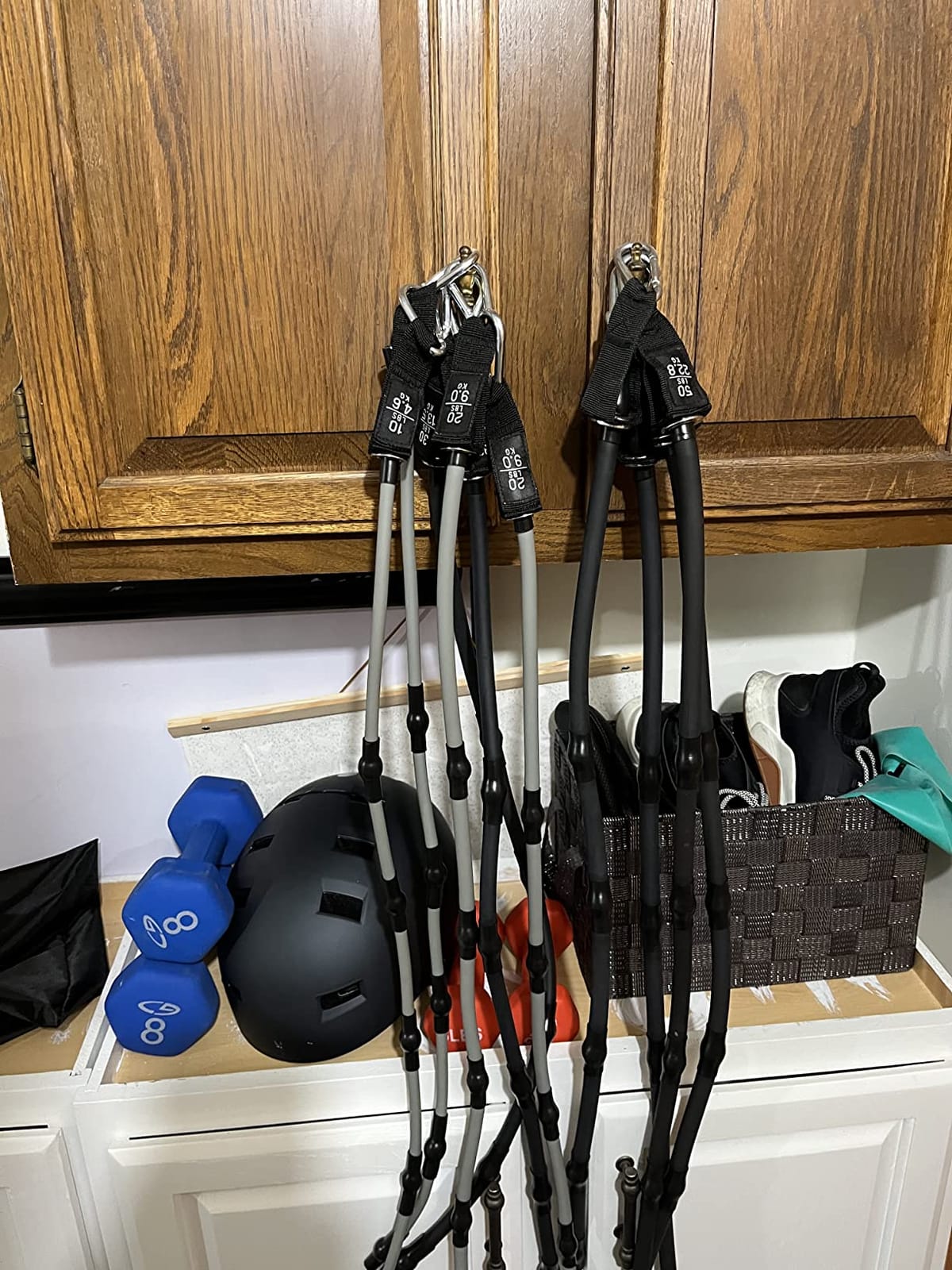
You get an aircraft-grade aluminum base, a steel workout bar, two handles, two ankle straps, an EVO hook, a door mount and 10 bands rated 2 x 10 pounds, 2 x 20, 2 x 30 and 4 x 50. Stacking them produces 10 to 320 pounds of total resistance, and the bar and handles nest inside the base for packing.
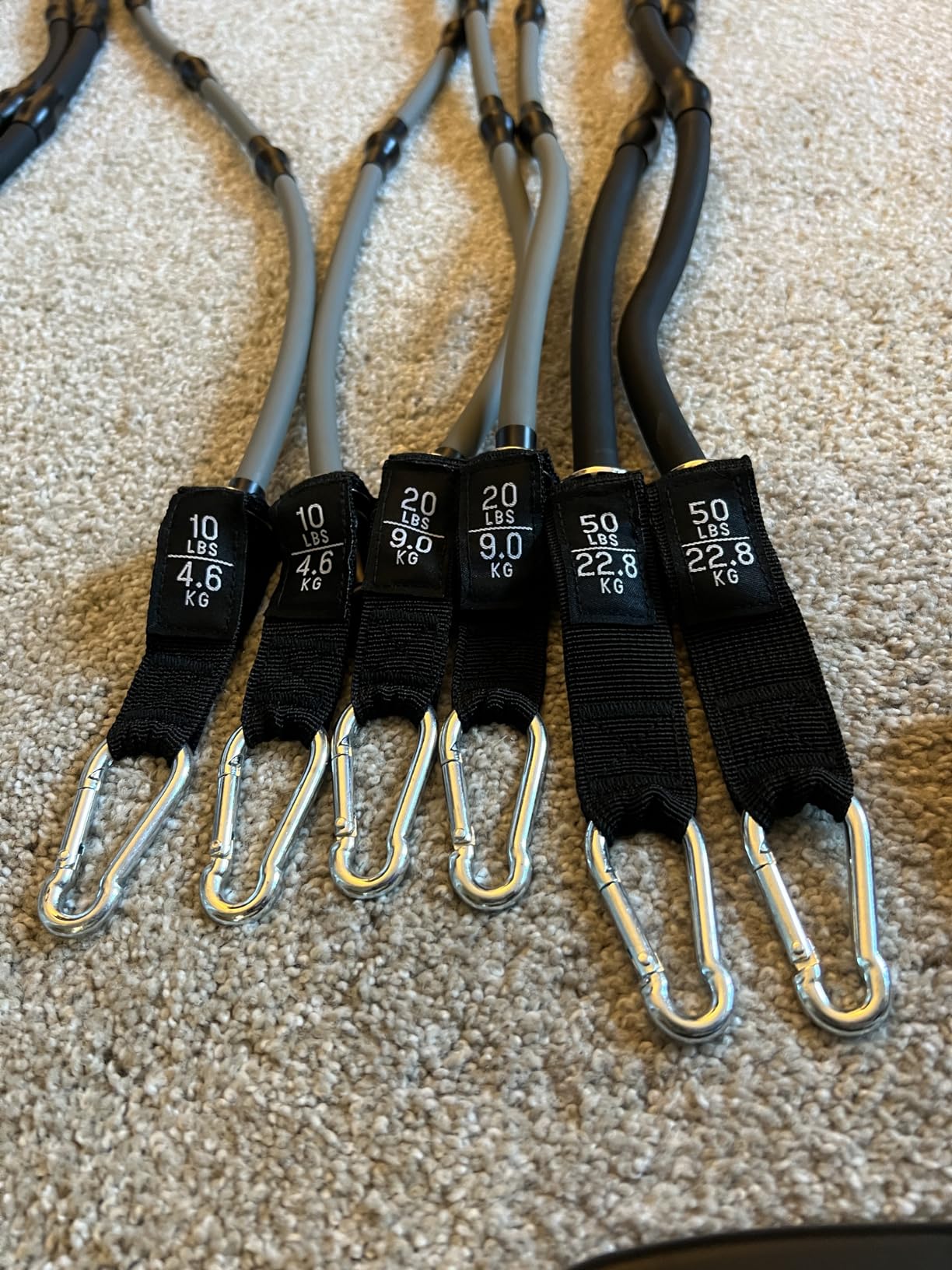
The rigid aluminum base is what separates it from a bundle of loose bands. Bands anchored to a fixed point wobble and stretch; anchored to a solid base, tension stays consistent through a full-range squat, deadlift or press. Reviewers who came from cheap tube band sets single this out as the reason the system feels stable.
Anchoring is the weak point. Only a door mount ships in the box, with no ceiling or wall hardware, and resistance varies noticeably depending on your angle to the anchor, so setup technique matters more here than with a fixed machine. There is also a genuine learning curve because it is a system rather than a single object.
What it replaces and what it cannot
It replaces a rack of weights, a barbell and a bench in one bag, which makes it the strongest single-pick answer for a 200 square foot studio with no storage to spare. Set the bar on the base and you have a low deadlift or landmine setup.
It cannot replace a squat rack, and loading to 320 pounds of band tension takes practice. Budget a few sessions before you trust it with your heaviest compound work.
Who it suits and who should buy fixed equipment
Buy it if you move often, split your time between homes, or want a strength system that survives a storage unit between uses. It is also the pick we would choose for a first apartment with a strict no-damage clause.
Choose the adjustable dumbbell set or the wall-mounted station if you never move and want faster weight changes in a permanent setup.
How to Choose Home Gym Equipment for a Small Space
Measure the stored footprint, not the working footprint. A machine that needs 6 by 2 feet while in use is fine if it folds to 6 inches thick against a wall, and impossible if it stays assembled. Every folded measurement in the table above came from the product’s own specifications.
Set a two-minute storage rule. If you cannot clear the corner and put it away in under two minutes, you will stop using it, and the machine will become an obstacle with a fitness claim. This rule is the single most useful filter in apartment gym buying.
Separate airborne noise from structure-borne noise. Airborne noise is what you hear through the air, and a hydraulic stepper or magnetic bike keeps it low. Structure-borne vibration travels through the floor joists and is what a downstairs neighbour actually feels. A rower or treadmill moves a lot of weight along a rail, and a mat under it makes the largest difference.
Buy capacity with margin. The stepper and the rower are rated to 300 pounds, the compact treadmill to 350, and the adjustable dumbbells give 22.5 pounds per hand. A rating that only just covers your bodyweight means the machine is at its limit the day it arrives, and most equipment weakens with use.
Understand magnetic versus hydraulic versus air resistance. Magnetic uses a magnet pulling a steel flywheel, and it is the quietest and cheapest. Hydraulic is quiet, cheap and predictable until the cylinder heats and resistance fades. Air and electromagnetic are smoothest and most expensive, and their noise cost is higher.
Build in tiers rather than all at once. Almost nobody buys twelve things on one afternoon. Most people start with the band set or the mini cycle, add a bench and weights once the routine sticks, and add cardio second. A coherent three-piece setup beats twelve scattered items every time.
If you are furnishing a compact living space rather than a gym, our guides to compact freezers for apartments and refrigerators for small kitchens cover the same space-versus-feature problem, and Wi-Fi routers for apartments matters if you are working from the room you train in.
A Renter’s Checklist: Setting Up an Apartment Gym Without Losing Your Deposit
Read the lease first. Look for clauses on noise hours, wall alterations, floor damage and unauthorized installations. Some buildings have a gym restriction entirely, and finding that out after assembly is the expensive way to find out.
Separate what needs permission from what does not. Nothing in this roundup needs permission except the wall-mounted cable station, and possibly a door anchor on a fire-rated door. Bands, steppers, benches, bikes, under-desk ellipticals and suspension trainers over a standard interior door are all free-standing.
Protect the floor before you unpack. A foam or cork mat under any rolling machine cuts both airborne noise and the floor vibration that travels through joists. It is a few dollars and it is the cheapest upgrade in this entire article.
Ask about the quiet hours and train inside them. If a building enforces silence from 10 pm, cardio belongs in the morning, and the noisy strength work with dropping belongs in the afternoon. Knowing the rule prevents the complaint that turns into a lease conversation.
Wall mounting in a rental: request it in writing, specify the mounting method, offer to patch and repaint on the way out, and use a single stud bay rather than a full rig. A landlord approving four small holes is a very different conversation from one approving a full squat rack in a hallway.
Plan the move. Everything on this list except the wall unit is portable, which is the real reason compact equipment suits renting. Assigning a home for the folded item in advance, whether a closet, a sofa corner or an under-bed gap, is what keeps the machine in use rather than in a pile.
For people building out a new place, our smart lock picks for apartments cover the security side of the same move-in process.
What Compact Equipment Cannot Solve
Compact gear has a real ceiling, and pretending otherwise wastes your money. A 22.5 pound dumbbell, a 50 pound band and a 300 pound rated stepper will get a beginner a long way, and they will not support an advanced lifter who needs to load the bar progressively for years.
You can build muscle in a small space, and reviewers with long ownership histories confirm it. What limits you is load and exercise variety, not floor space. The fix is a band system that scales resistance, a wall cable station that provides unlimited loading angles, or eventually a membership at a facility with a proper rack.
The second thing compact gear cannot solve is exercise variety for the movements that need a machine, chiefly heavy rows and vertical pulling at high load. The third is space for storage, if you never actually put the machine away.
Our view is that most apartment residents should buy three things rather than twelve, use them consistently, and only then add a fourth. Buying one folding bench, one band set and one quiet cardio machine covers the entire decision space most people in a 400 square foot apartment actually train in.
Frequently Asked Questions
How to have a home gym in an apartment?
Start by measuring your largest clear floor area and choosing one corner to own. Add one freestanding strength option, such as a resistance band set or an adjustable dumbbell set with a folding bench, and one quiet cardio machine such as a mini stepper, rower or under-desk elliptical. Prioritise equipment that folds or stores in under two minutes, put a mat under anything with wheels, and read your lease for noise hours and wall alteration rules before you buy.
What is the best home gym equipment for small apartments?
The best home gym equipment for small apartments is a stack that stores in under two minutes: adjustable or band-based strength tools, a folding bench, and a low-noise machine such as a hydraulic stepper, compact rower, foldable magnetic bike or under-desk elliptical. Vertical and wall-mounted options free the floor entirely, while foldable and portable items handle everything that must sit on it.
What is the best quiet exercise equipment for apartments?
The quietest options are the resistance band set, the suspension trainer, the hydraulic mini stepper and the under-desk elliptical, because none of them has a motor or a wheel train. Among rolling machines, hydraulic resistance and magnetic resistance are quieter than air or electromagnetic systems. Structure-borne vibration matters as much as volume, so put a foam or cork mat under any rower, bike or treadmill to protect the floor and the neighbours below.
Can you put a home gym in your apartment?
Usually yes, because most compact equipment is freestanding and needs no installation. Check your lease for noise hours, floor damage and alteration clauses before you start, and note that only wall-mounted items such as a cable station require written landlord permission. If a building has a shared gym, many residents combine it with two or three small pieces of their own equipment at home.
Can I build muscle in a small space?
Yes. Reviewers with long ownership histories build and maintain muscle with adjustable dumbbells, resistance bands and folding benches in small rooms. The constraint is load and exercise variety rather than floor area. A 22.5 pound per hand dumbbell and a 50 pound band cover a long progression for a beginner, and stacking bands or using a wall-mounted cable station extends the range when you outgrow them.
How much space do foldable exercise bikes take up?
A foldable bike like the pooboo X-Bike measures 25.2 inches deep by 15.75 inches wide and 45.67 inches tall in use, so allow roughly a 3 by 3 foot area plus pedalling clearance. Folded, it collapses to a flat slab that stands against a wall or slides under a bed, with transport wheels for moving it. Compact rowers need about 2 feet of width and fold to under-bed storage at around 22 pounds.
Final Verdict: Which Picks to Buy First
Start with the WHATAFIT band set. At 2 pounds, 10 usable tension levels, a 4.6 rating across more than 36,000 reviews and zero floor footprint, it is the best home gym equipment for small apartments because it solves storage before it solves anything else.
Add one of two second purchases. For strength, the FITPLAM 5-in-1 set with the NICEPEOPLE folding bench. For cardio, the Sunny mini stepper if space is genuinely tight, or the Sunny rower if you want real full-body work per square foot.
Everything else on this list is a specialist: the under-desk elliptical for desk workers, the TRX GO for travel, the folding bike for cycling, the mini cycle for rehab, the folding treadmill for walking, the wall cable station for owners who can drill, and the EVO Gym for temporary housing. Buy the three that match your actual floor and your actual lease, use them for two months, and only then add a fourth.
This roundup is updated for 2026, and every folded footprint, weight capacity and noise characteristic here comes from the manufacturer specifications and the customer review record rather than from a spec sheet summary. We earn a commission when you buy through the links on this page, at no additional cost to you.