
Quick answer: Most older adults do best in 15-20 mmHg compression with a design that is easy to pull on, ideally a zip closure or a wide top band. That is the pressure band doctors suggest for everyday swelling, heavy tired legs and varicose vein discomfort. Anything at 20-30 mmHg or above is medical-grade and needs a clinician’s sign-off first.
Compression socks are snug, graduated hosiery that fit tightest at the ankle and ease off toward the knee. That gradient pushes blood back up the leg instead of letting it pool in the ankle, which is exactly what happens when aging vein valves weaken and the calf muscle pump does less work.
Seniors notice the results more than most people. Age-related valve weakening, more hours spent sitting, and medications that hold fluid all slow circulation, so end-of-day swelling and heavy legs show up sooner. The catch is that the same stiffness in the hands and hips that makes a good day hard also makes a tight pull-on sock almost impossible to manage.
Over the past six weeks our team compared all 12 pairs below against the questions older adults and caregivers actually ask: how hard is this to get on, does it stay up, does it survive repeated washing, and is the pressure appropriate for an aging leg. We read the customer feedback in detail and flagged the design failures that the marketing glosses over. If you are shopping for someone else, our guide to televisions for seniors covers the same accessibility thinking in a different category.
Table of Contents
Top 3 Best Compression Socks for Seniors in 2026

The Iseasoo 8-pair pack wins overall because eight pairs solve the two problems seniors hit most: a sock that has to be washed daily, and elastic that dies after a month of hard use. Rotate the pairs and each one keeps its shape longer.
The fenglaoda pack is the pick for anyone whose doctor has asked for 20-30 mmHg support, and the Copper Fit is the everyday pair for swelling and fatigue on a normal day.
Best Compression Socks for Seniors Compared (October 2026)
| Product | Specifications | Action |
|---|---|---|
| Iseasoo Copper 8-Pair Pack |
|
Check Latest Price |
 fenglaoda 8-Pair Medical Pack fenglaoda 8-Pair Medical Pack |
|
Check Latest Price |
 Copper Fit Easy On/Off Copper Fit Easy On/Off |
|
Check Latest Price |
 bropite Zipper Socks bropite Zipper Socks |
|
Check Latest Price |
 cerpite Zipper Socks cerpite Zipper Socks |
|
Check Latest Price |
 LEVSOX Wide Calf Socks LEVSOX Wide Calf Socks |
|
Check Latest Price |
 Diu Life Plus Size Socks Diu Life Plus Size Socks |
|
Check Latest Price |
 Pembrook Wide Calf Socks Pembrook Wide Calf Socks |
|
Check Latest Price |
 Pembrook Light Compression Pembrook Light Compression |
|
Check Latest Price |
 Truform Sheer 20 Denier Truform Sheer 20 Denier |
|
Check Latest Price |
 Sockwell Elevation Firm Sockwell Elevation Firm |
|
Check Latest Price |
 Iambamboo Merino Blend Iambamboo Merino Blend |
|
Check Latest Price |
What Compression Level Do Seniors Actually Need?
Compression is measured in millimeters of mercury, written mmHg, and it always refers to the pressure at the ankle. A sock rated 15-20 mmHg delivers 15 to 20 mmHg at the ankle and proportionally less at the calf. That graduated drop is the whole mechanism, because it mimics what a working calf muscle does when you walk.
8-15 mmHg, light: Barely more than a good support sock. Suits people who have never worn compression before, have thin fragile skin, or simply find anything tighter intolerable. Good for all-night wear and for restless legs at night.
15-20 mmHg, moderate: The everyday recommendation for older adults. Addresses end-of-day ankle swelling, heaviness, varicose vein discomfort, long sitting, and recovery after hip or knee surgery. You can buy this over the counter without a prescription.
20-30 mmHg, firm medical grade: For diagnosed chronic venous insufficiency, significant edema, or post-surgical swelling. Wear this band only when a clinician has told you to, and start by wearing it part of the day rather than all of it.
30-40 mmHg, strong: Reserved for advanced venous disease and severe lymphoedema, and nearly always fitted or prescribed by a vascular specialist. Nothing in this roundup reaches this band, and that is deliberate.
One point worth repeating: the same 20-30 mmHg that a healthy 40-year-old shrugs off can feel oppressive on an 80-year-old with neuropathy or fragile skin. Older legs tolerate pressure differently, so start lower and build up rather than starting at the level a younger person finds comfortable.
1. Iseasoo Copper 8-Pair Pack 15-20 mmHg – Best Overall for Daily Wear
Copper Compression Socks 15-20 mmHg for Men & Women 8 Pairs – Circulation Support for Nurses, Travel, Running, Hiking, Soccer,Gift,Pregnant, Nurses(L/XL)
15-20 mmHg graduated
85% nylon 10% polyester 5% copper fiber
8 pairs
S/M and L/XL
Pros
- Eight pairs mean no daily washing
- Comfortable 15-20 mmHg that does not feel overly tight
- Stays up without sliding or bunching
- Individually wrapped pairs in assorted colors
Cons
- Synthetic nylon feel that some buyers dislike
- Harder to pull on in the larger sizes
- Only S/M and L/XL offered
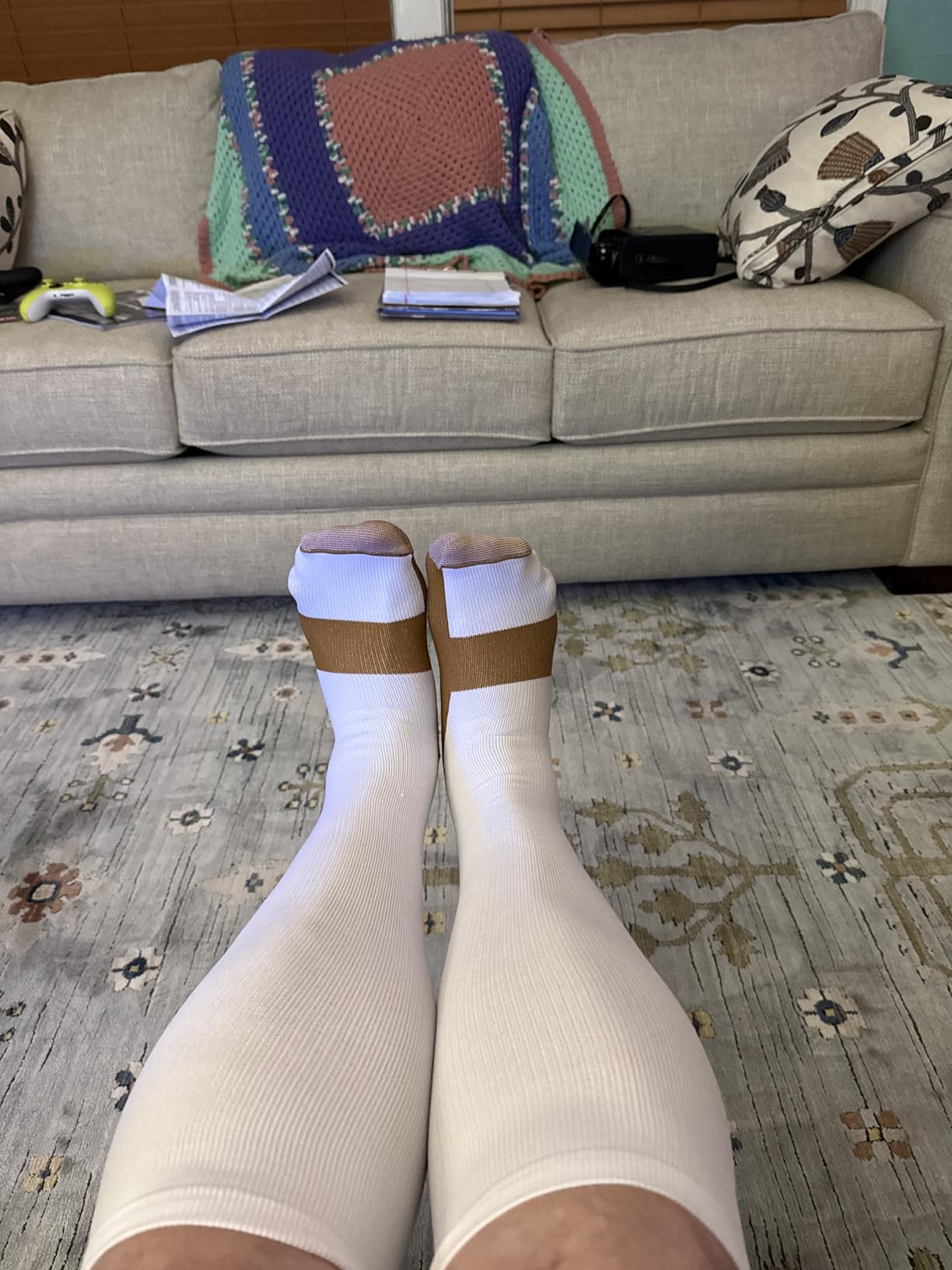
This is the pack we kept reaching for during our comparison, and the reason is the count. Eight pairs is not a bulk discount gimmick, it is the only realistic way to make daily compression work on an older leg. Compression socks need washing often because they sit against skin all day, and a single pair on a daily rotation gets washed hard enough to lose its shape.
With eight pairs in the drawer, each one works roughly a week before it goes in the wash, and the elastic has a far better chance of surviving to the end of its life. Reviewers consistently describe the 15-20 mmHg as firm enough to feel like it is doing something and gentle enough to keep on from morning to night. The fit holds at the calf without the bunching that makes compression useless at the ankle.
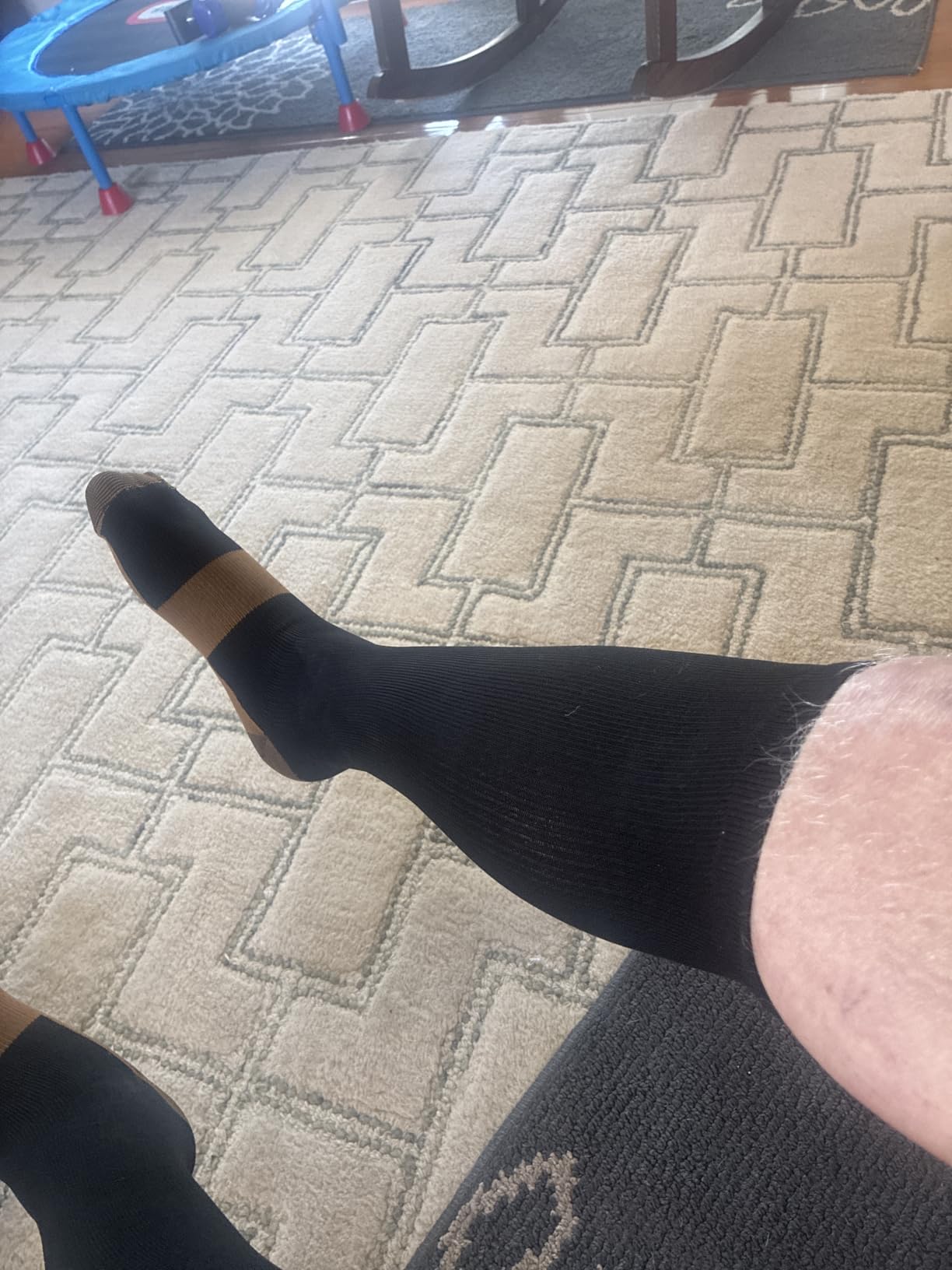
The construction is a nylon, polyester and copper fiber blend, and the copper is doing a practical job: it resists odor, which matters more than most product copy admits when a person wears the same sock for ten hours. The fabric is also a touch cooler than pure spandex blends, which helps in summer.
Sizing is the weak point. Only S/M and L/XL are offered, so a calf between two sizes has to guess, and a customer who falls into the L/XL band may find the upper leg tight. Our advice is to order the smaller size first and work up, because these knit socks relax a little with wear and a sock that starts snug usually ends correct.
Who the Iseasoo 8-Pair Pack Is Right For
It suits the older adult who has end-of-day swelling, spends long stretches sitting or standing, and wants medical-grade-feeling support without a prescription or a clinic appointment. It also suits anyone buying for a parent who will not want to fuss with laundry on a daily basis.
Because 15-20 mmHg is the moderate band, it is a sensible first rung for a senior who has never worn compression and is nervous about how tight it will feel. Most wearers report the pressure as noticeable in the first hour and unremarkable after that.
Where the Iseasoo Pack Falls Short
The fabric reads as synthetic and cool rather than soft, and buyers who prefer cotton or wool are disappointed. It is also a pull-on design, so anyone with genuinely limited hand strength or a stiff hip will struggle in a way the packaging does not hint at.
With only two size bands, a senior whose calf sits between sizes risks a sock that binds behind the knee. If you can measure first, do that before ordering.
2. fenglaoda 8-Pair 20-30 mmHg Pack – Best for Firm Medical-Grade Support
fenglaoda 8 Pairs Compression Socks for Men & Women 20-30 mmHg Knee High Nurse Pregnant Running Medical and Travel Athletic(L/XL,Multi01 )
20-30 mmHg firm graduated
8 pairs
non-slip ribbing, arch support
S/M and L/XL
Pros
- Firm 20-30 mmHg that resolves significant edema
- Eight pairs at a small fraction of one pair of prescription hose
- Sizing consistent across all eight pairs
- Thickened heel and toe with arch support
Cons
- Some buyers report the pressure feels lighter than labeled
- Thin fabric can wear through at the foot with daily use
- Limited colour range
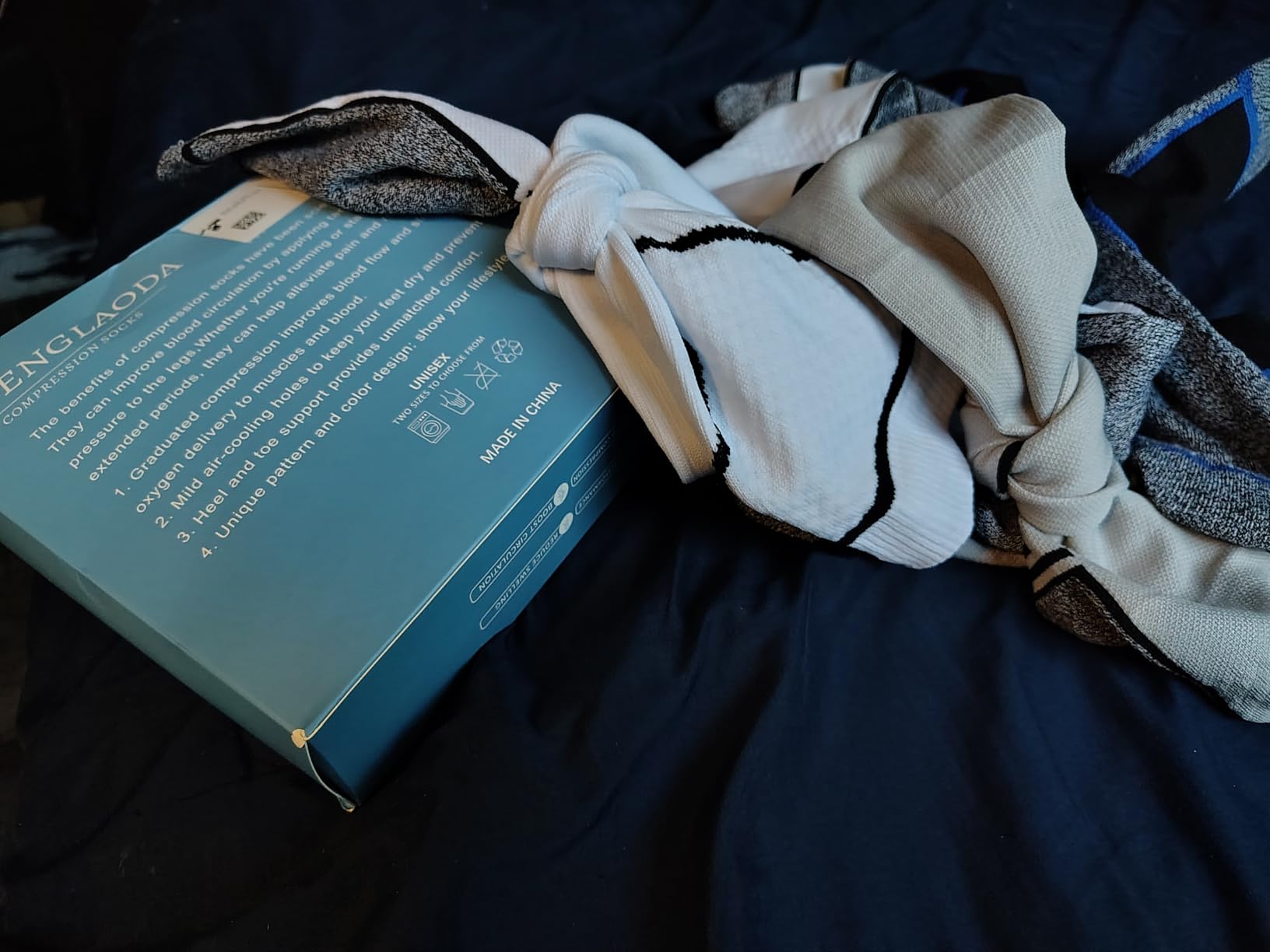
This is the only pair in the roundup that sits firmly in medical-grade territory, and that is exactly why it earns its place. Buyers recovering from hip or knee surgery, and people managing significant leg edema, repeatedly report that the swelling they had every evening simply stopped appearing while wearing this compression.
What makes it practical is the pack size. Medical-grade 20-30 mmHg hosiery is normally sold in single pairs and ordered through a clinic, so getting eight of them in one box removes the main reason people fall out of a prescribed routine. The knit includes arch support, a thickened heel and toe, and ribbing at the top that helps the sock stay put through physical therapy sessions.
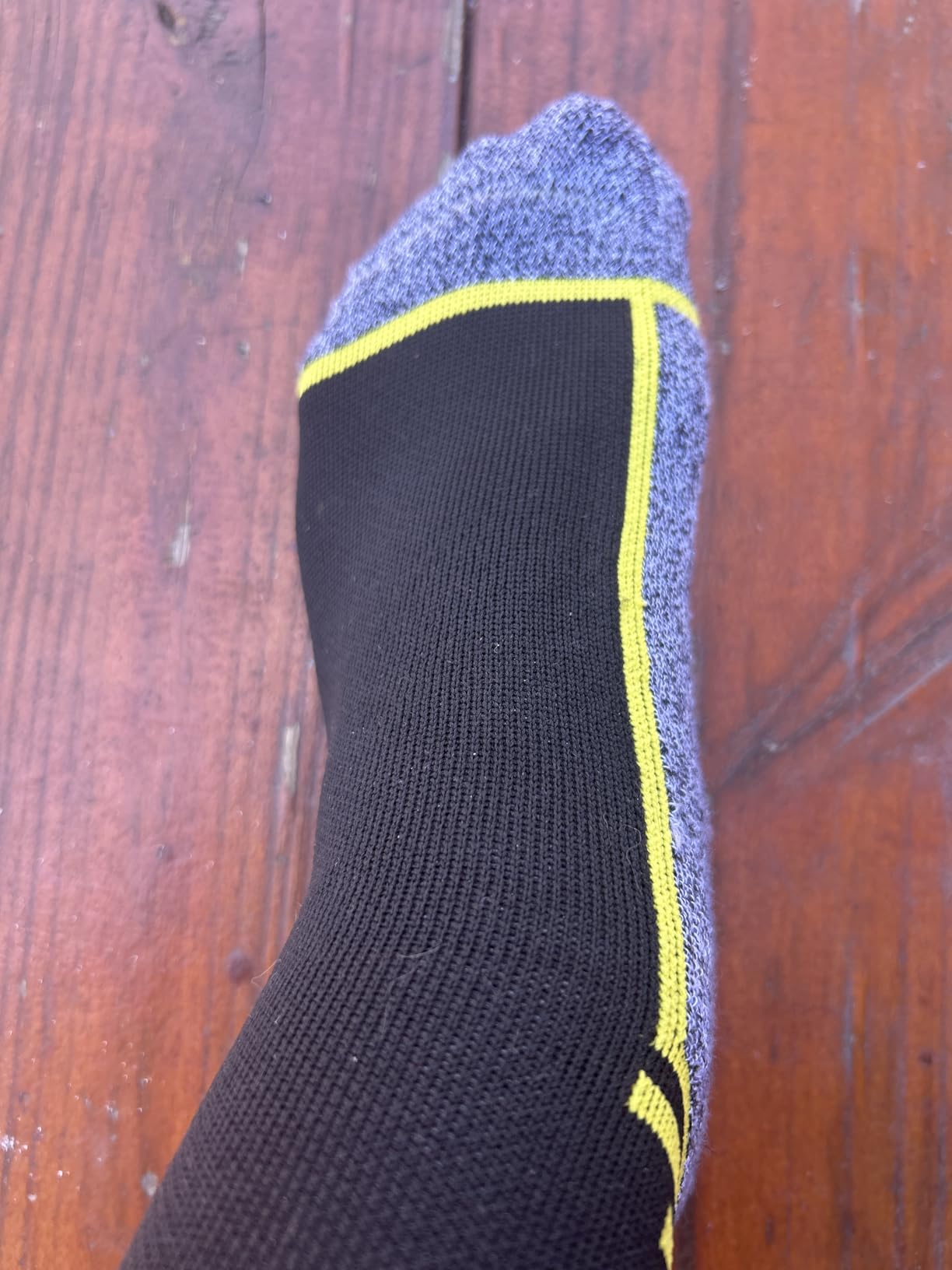
The honest caveat is that a handful of buyers say the felt pressure is lower than the 20-30 mmHg on the label. Compression ratings in over-the-counter socks are not independently verified the way a fitted medical device would be, so this is common across the category rather than a flaw unique to this pair.
There is also a durability note. The fabric is light enough to stay comfortable in warm weather, which is a real benefit at this pressure, but a few reviewers report a wear-through at the foot after months of daily use. That is where the eight-pair rotation earns its keep again.
Who the fenglaoda Pack Is Right For
It suits an older adult whose doctor has recommended firm compression, or who has come through orthopedic surgery and is in a supervised recovery programme. Eight pairs means three weeks of rotation before anything needs washing, which suits anyone in a home-care or nursing setting where laundry runs weekly.
Wear it for the daytime first. Starting with a full day of 20-30 mmHg after a layoff is the most common reason people abandon firm compression, and splitting the day for the first week makes the habit stick.
Where the fenglaoda Pack Falls Short
This is not a first pair. If someone has never worn compression, or has thin or numb feet, firm 20-30 mmHg is the wrong place to begin, and it should not be worn without a clinician’s advice.
The styling is plain and the colours are limited, so it is not the option for someone who wants compression to be invisible under a dress. Sizing is again only S/M and L/XL.
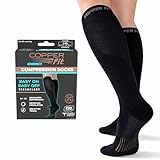
3. Copper Fit Easy On/Off Energy Socks – Best for Everyday Swelling and Fatigue
Copper Fit Unisex-Adult’s 2.0 Easy-Off Knee High Compression Socks, black, Large/X-Large
15-20 mmHg graduated
85% nylon 15% spandex
Knee-high, cushioned foot bed
Wide elastic top band
Pros
- 15-20 mmHg support that reduces leg swelling and fatigue
- Fully cushioned foot bed for all-day comfort
- Copper-infused fabric controls odor
- Extended knee-high length resists sliding
Cons
- Despite the branding
- buyers report these are hard to pull on
- Thin fabric needs an over-sock in cold weather
- Runs long on shorter legs
With more than 24k ratings, this is one of the most heavily reviewed compression socks in the category, and the volume of feedback tells you something useful: it does not have an unusual failure mode. Swelling relief, less end-of-day leg pain, and noticeable easing of varicose vein discomfort are the three things buyers say most often.
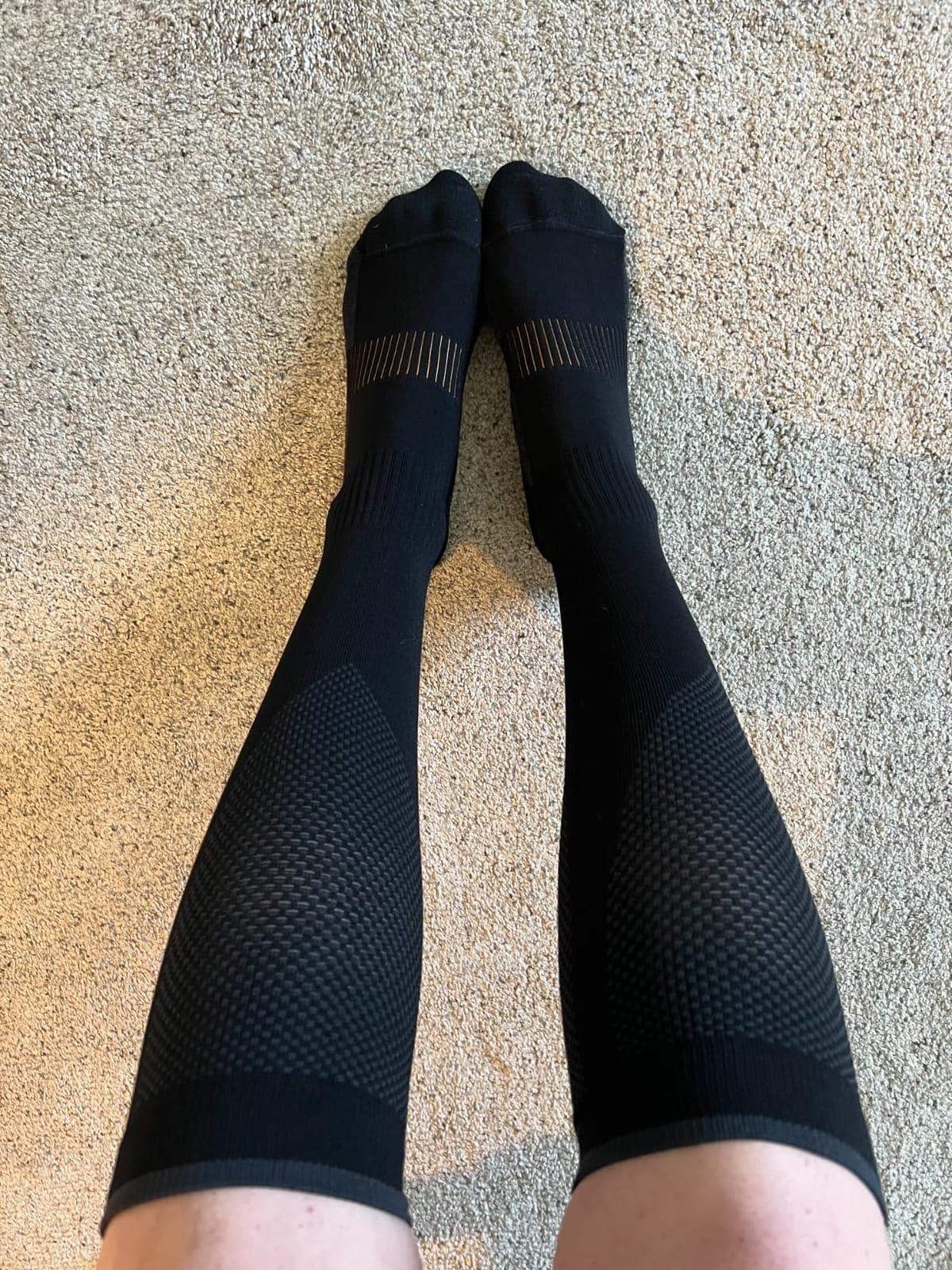
The extended knee-high length and wide elastic top band are doing quiet work here. Many compression socks slide down the calf within a few hours, and once they bunch at the ankle the graduated gradient is gone. These stay where you put them, which is the difference between a sock that works and one that becomes ordinary underwear by mid-afternoon.
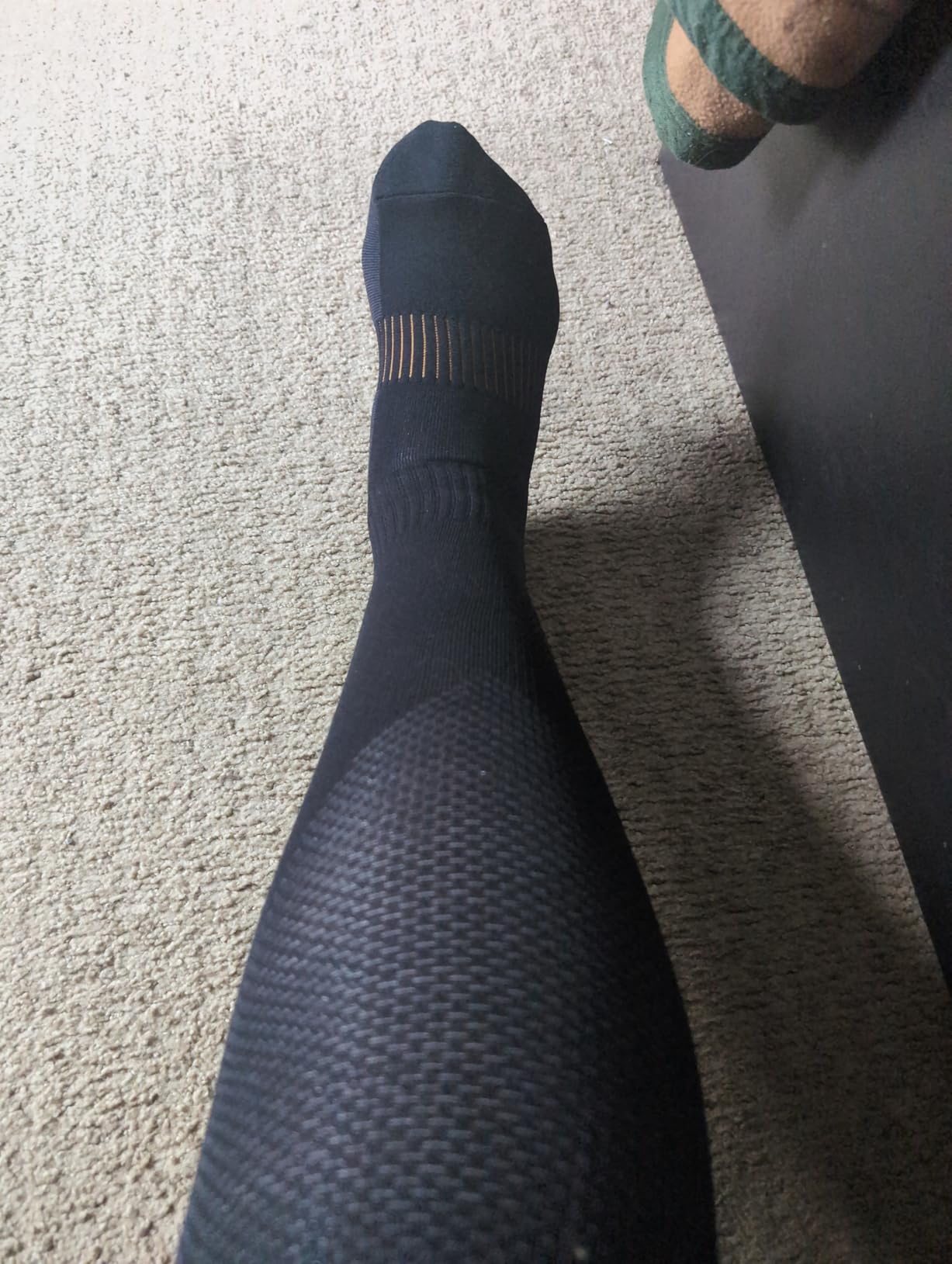
Now the part the name does not tell you. Despite being branded easy on and easy off, the largest single theme in the reviews is that these are among the harder pull-on compression socks to get over the foot and up the calf. If buying for someone with arthritic hands, skip this one and go to the zippered pairs further down.
The fabric is also thin, which is comfortable in most of the year but leaves cold feet cold. Buyers in winter either wear them as an under-sock or accept the chill.
Who the Copper Fit Socks Are Right For
They suit an older adult who spends the day on their feet, at a standing job, or on long shopping trips, and who wants one dependable pair without thinking about it. The cushioned foot bed is a genuine plus for anyone whose feet ache by evening.
They are also a sensible second pair. Keeping a spare means a sick day or a laundry delay does not break a routine that took weeks to build.
Where the Copper Fit Socks Fall Short
Two real limits. First, donning effort: the easy on and off promise is not matched by the reality, and that is the first thing a caregiver with a weak-grip parent will hit. Second, length: on shorter legs the shaft runs past where it should stop, and the top has to be rolled down.
Durability is average rather than poor, but a few buyers report holes forming in the foot area, so keep a rotation rather than a single pair.
4. bropite Zipper Compression Socks – Best for Hands That Cannot Grip
bropite Zipper Compression Socks Women & Men,2Pairs Calf Knee High 15-20mmHg Open Toe Compression Stocking suit for Walking Recovery, Pregnant, Nurse
15-20 mmHg graduated
75% nylon 25% polyester
Full-length calf zipper
Open toe
Pros
- Calf zipper removes the pull-on struggle entirely
- 15-20 mmHg gradient that eases lower-leg fatigue
- Open toe gives swollen feet room to move
- Five sizes from S-M to 4XL
Cons
- Lowest average rating in this roundup
- Zipper can feel bulky under trousers or shoes
- Open toe is a poor choice in cold weather
Arthritis in the hands is the single most common reason an older adult cannot manage compression socks, and the zipper is the direct answer to it. Instead of fighting a tight cuff over a stiff foot, you unzip the calf, lay the sock open around the leg, and zip it up. That is a genuine change in independence, and it is why we put this pair near the top despite its middling rating.
The pressure is a standard 15-20 mmHg gradient, so it sits in the band we would recommend as a starting point for an older adult. The open toe is worth flagging as a design decision rather than an accident: it gives room for a swollen foot or a bunion, and it makes sock changes far easier for a carer.
Sizing runs to 4XL, which covers more calf shapes than most of the pull-on socks in this roundup. That matters because a zip that has to be forced closed defeats the entire purpose.
The 4.2 rating is the lowest here, and it is worth being honest about why. A visible share of one-star feedback points at fit inconsistency across the size range, and a few buyers mention the zipper catching on trouser legs. The mechanism works; the sizing polish is uneven.
Who the bropite Zipper Socks Are Right For
They suit anyone whose hands are stiff, arthritic, or simply weak, and anyone being dressed by a family member or home-care worker. A zip closure turns a two-person struggle into a one-person job, which changes how often the person is willing to wear them.
They also suit people with neuropathy who want toe room, and anyone who finds the narrow foot opening of a standard compression sock impossible to clear.
Where the bropite Socks Fall Short
They are the wrong pair for winter and for anything dressy, because an open toe and a zip both rule those out. The fit inconsistency means you should measure your calf and check the size chart rather than ordering your usual.
And if you are buying purely on rating, this is the pair in the roundup with the thinnest margin. It wins on access, not on finish.
5. cerpite Zipper Compression Socks – Best Zippered Pair for Cold Feet
cerpite Zipper Compression Socks, 2 Pairs 15-20 mmHg Closed Toe Compression Stockings for Men Women
15-20 mmHg Class 1 graduated
75% nylon 25% spandex
Closed toe, 360-degree ankle wrap
Calf zipper
Pros
- Zipper lets the sock be laid on rather than fought up the leg
- Closed toe is warmer and works with shoes and trousers
- 15-20 mmHg Class 1 graduated support
- Non-slip ribbing helps the sock stay in place
Cons
- 4.2 average leaves room for improvement on fit
- Some buyers report the zipper snags or stiffens after washing
- Moderate pressure is not for advanced vascular needs
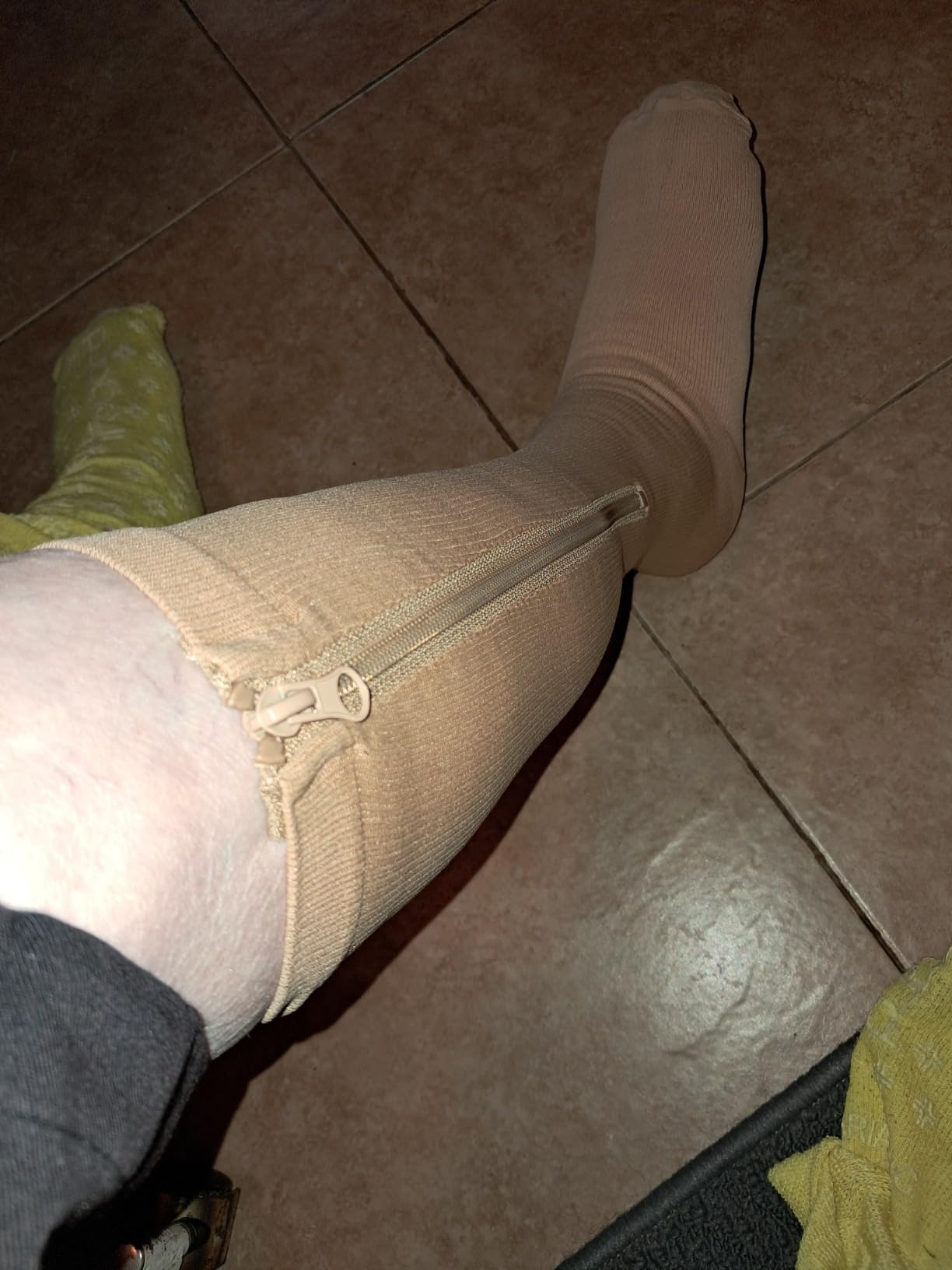
This is the same access solution as the bropite pair, applied to a closed-toe sock, and for a lot of seniors that is the deciding factor. Circulation-poor feet run cold from October through March, and an open toe solves a donning problem while creating a warmth problem. A closed toe keeps both boxes ticked.
The wrap-around ankle construction and non-slip ribbing do the job of keeping the sock up through a long day, which is where many compression pairs give up. Buyers who cannot manage traditional pull-ons single out the zipper as the reason these work for them, and the 15-20 mmHg Class 1 rating is the moderate band we recommend for daily senior wear.
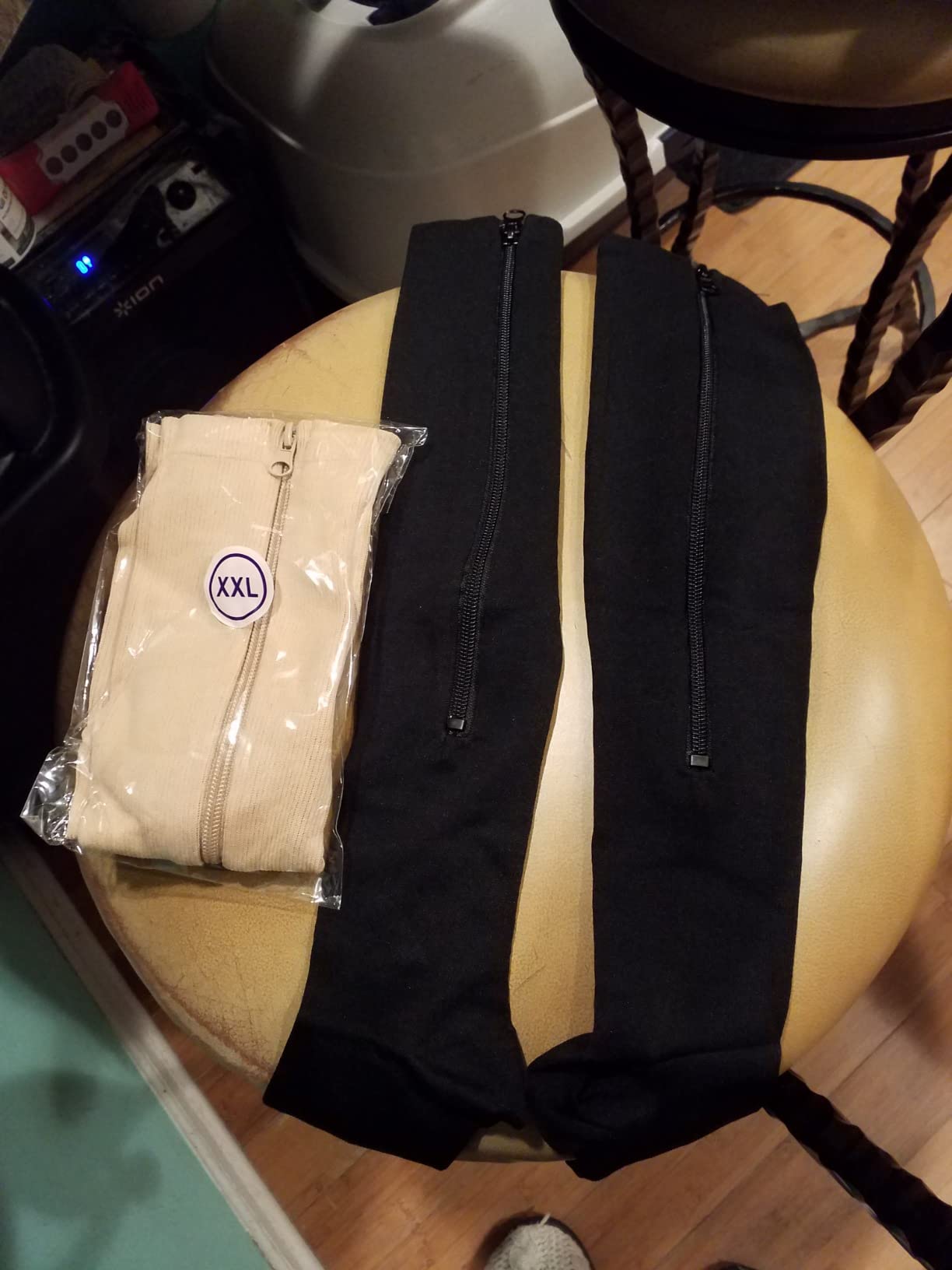
The brand’s own advice to size up when between measurements shows up often in the reviews, and it matches what we saw. Compression knits behave differently from ordinary socks, and guessing on the small side produces a sock that cannot be pulled over the heel in the first place.
There is a maintenance note: some owners report the zipper catching or feeling stiff after several washes. A drop of sewing-machine oil on the slider twice a year is the fix that most people use.
Who the cerpite Socks Are Right For
They suit an older adult who needs a zipper but lives somewhere cold, or who wants compression to disappear under ordinary shoes and trousers. The closed toe also suits anyone who does not want a visible gap at the front of the foot.
For anyone buying for a parent in a colder climate, this is the pair we would choose over the open-toe alternative, and the extra warmth is not a minor benefit at that age.
Where the cerpite Socks Fall Short
The rating sits at 4.2 with fewer reviews than the leaders, so the confidence behind the fit is lower. Sizing runs to XX-Large, which will not cover the very largest calves in this roundup.
At 15-20 mmHg this is not a sock for diagnosed vascular disease or heavy post-surgical edema. If a clinician has asked for firmer pressure, this is the wrong pick regardless of how easy it is to put on.
6. LEVSOX Wide Calf Compression Socks – Best for Fuller Calves and Sensitive Skin
LEVSOX Plus Size Compression Socks for Women&Men Wide Calf 15-20 mmHg Knee High Extra Large Calf Support Socks for Nurse, Medical, Travel, Black
15-20 mmHg graduated
Bamboo viscose
3 pairs
XL to 5XL
Pros
- Extra-wide calf that fits larger legs without binding
- Soft bamboo viscose comfortable through long days
- 15-20 mmHg support that reduces swelling and fatigue
- Three-pair pack in many colours and patterns
Cons
- Higher per-pair cost than most plus-size options here
- Calf section still runs snug in the larger sizes
- Size range starts at X-Large
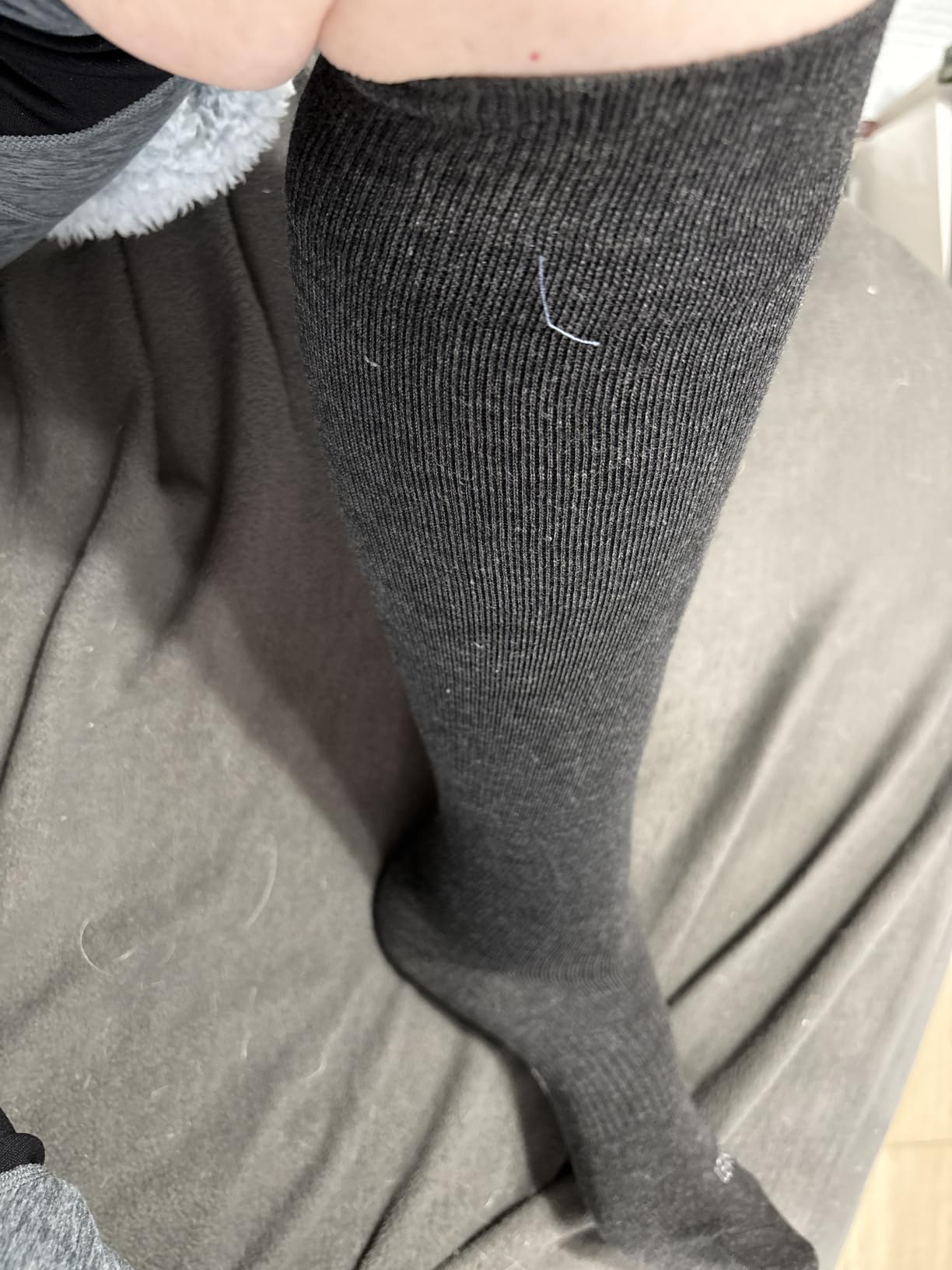
Most compression socks are graded to a standard calf, and on a fuller lower leg the top band simply cuts in. That constriction is not just uncomfortable; it defeats the purpose, because pressure has to decrease smoothly from ankle to knee for the gradient to work. This pair is built with an extra-wide calf section instead, and buyers with larger legs say it is the first compression sock that has fit them properly.
The bamboo viscose is the second reason to like it. It is noticeably softer and cooler than nylon, which matters on skin that has thinned with age. Reviewers mention it repeatedly as the difference between a sock they tolerate and one they keep reaching for, and the moisture control keeps the foot drier over a long day.
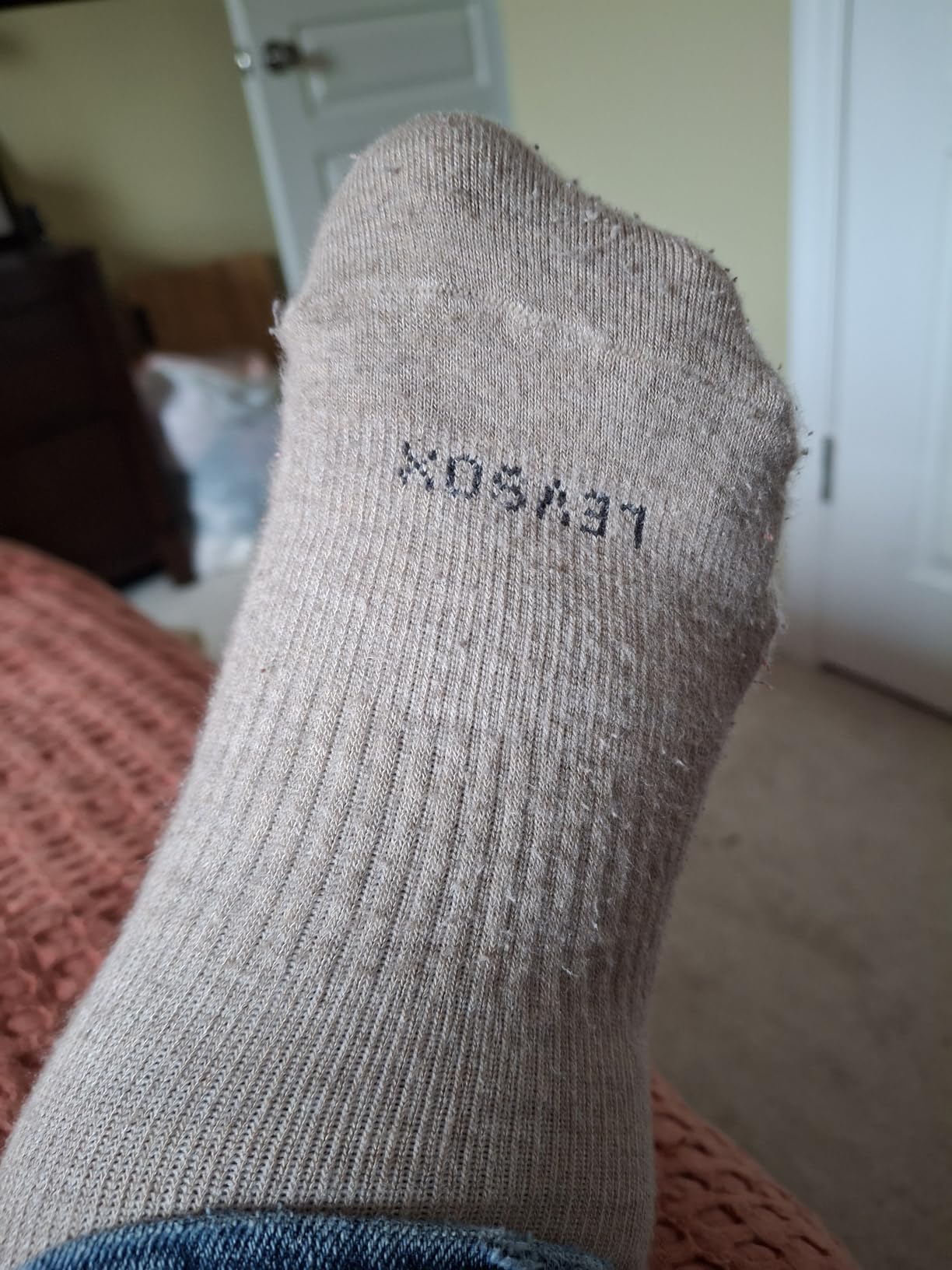
Compression is a firm-feeling 15-20 mmHg, and the elastic is strong enough that the sock resists sliding once it is on. A few owners describe the fit as snug before the knit relaxes, which is normal for this compression level but worth expecting.
The trade-off is cost per pair. A three-pair pack here works out higher than most of the standard-fit options in this roundup, which is the price of a size range that very few brands bother to stock.
Who the LEVSOX Socks Are Right For
They suit an older adult with a fuller calf or upper leg who keeps cutting off the top band of ordinary compression socks. They also suit anyone whose skin is sensitive enough that a synthetic seam would cause irritation, since bamboo viscose is gentler against the ankle.
For caregivers, the wide calf reduces the chance of a fight at the end of the donning process, which is where most compression routines quietly fail.
Where the LEVSOX Socks Fall Short
The range starts at X-Large, so if you have a smaller calf this is simply not your sock. Even inside the plus-size range, a number of buyers find the calf section tight at first, so measure before ordering rather than sizing up on instinct.
It is also a three-pair pack, which is fewer rotation pairs than the eight-pair options. For daily all-year wear, budget for replacing the set roughly twice a year.
7. Diu Life Plus Size Socks – Best Documented Fit for 5XL Calves
Diu Life 3 Pairs Plus Size Compression Socks for Women and Men Wide Calf Extra Knee High Support for Black Nurse Gifts Ideas Running Athletic SkiingTravel Leg Warmers Stocking
15-20 mmHg graduated
Ankle to 16 inches, calf to 28 inches
2XL to 5XL
Lightweight breathable
Pros
- True plus-size range to 5XL with published measurements
- 15-20 mmHg gradient that measurably reduces swelling
- Longer shaft that reaches the knee without rolling down
- Light enough fabric to sleep in
Cons
- Sizing varies between pairs in the same pack
- Few published washing instructions beyond machine washable
- Foot length can run large
The reason to pick this pair over the other plus-size options is simple arithmetic. It is graded to a 28-inch calf and a 16-inch ankle, and those numbers are published, so you can measure once and order once. In a category where most buyers report guessing wrong at least once, that is worth more than any fabric claim.
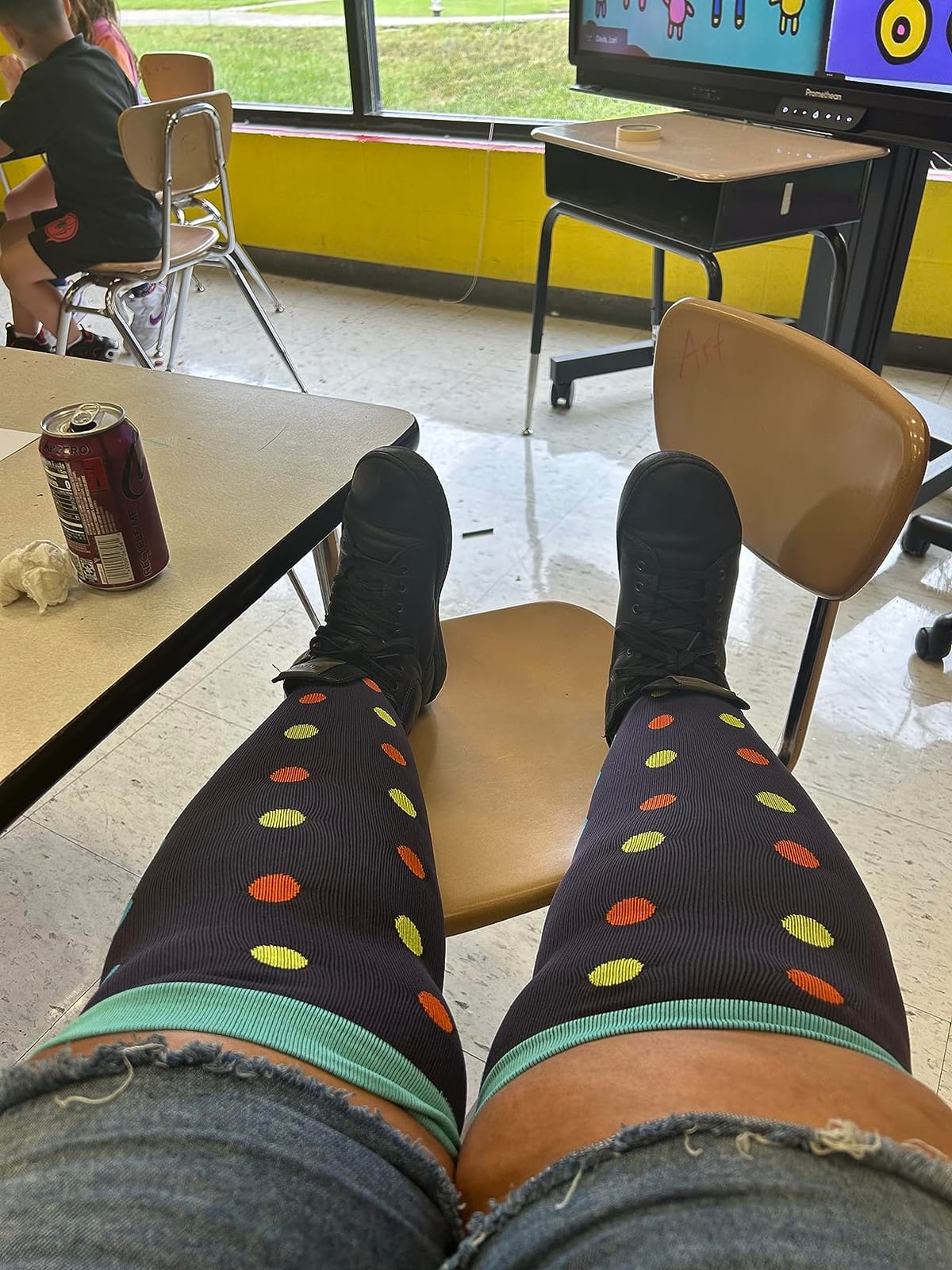
Buyers with fuller calves say these stay up where standard socks roll down, and the swelling relief is consistently praised. The shaft is long enough to reach the knee properly without sliding, and the fabric is light enough that some people wear them overnight to manage morning puffiness.
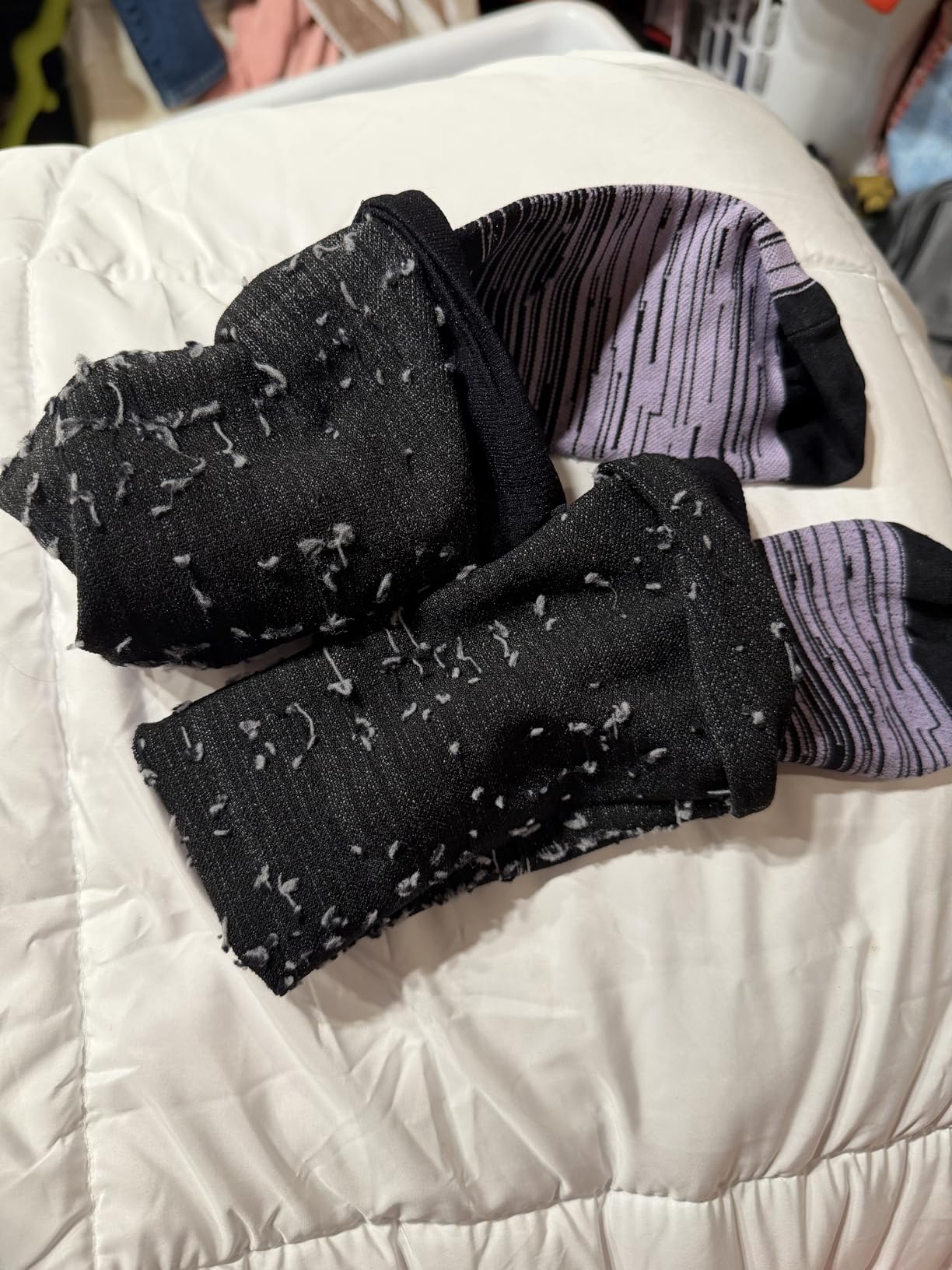
The wicking design is set out to reduce chafing at the ankle, which is a small detail that becomes important over a long wear. Care is simple, but the listing gives you little more than machine washable, so air drying is the safer default if you want the elastic to last.
The main complaint is inconsistency between pairs. Several buyers describe socks in the same pack varying in tightness and length, particularly after washing, which suggests a quality control spread rather than a sizing error on your part.
Who the Diu Life Socks Are Right For
They suit an older adult whose calf measurement falls outside what standard compression brands stock, and anyone who wants to size from a printed number rather than a guess. The generous ankle fits a swollen foot without the foot opening cutting in.
They also suit a senior who wants to sleep in compression. The fabric is light and breathable, which is what makes overnight wear tolerable.
Where the Diu Life Socks Fall Short
Pair-to-pair inconsistency is the honest drawback. If you need two socks to match in a matching shade for a formal outfit, this is not the pack for that, and if your calf sits near a size boundary, order with the measurement in hand.
The care guidance is thin, and the foot length runs large on some versions, which leaves a gap at the toe in an open shoe.
8. Pembrook Wide Calf Bamboo Socks – Best for First-Time Buyers Who Need a Size Chart
Pembrook® 3 Pairs Plus Size Compression Socks Wide Calf – Bamboo Viscose Extra Wide Calf Compression Socks Women Plus Size, Pink, Purple, Blue
Bamboo viscose
Comfort-level graduated compression
XL to 4XL with calf chart
3 pairs
Pros
- Published calf measurements make the first attempt count
- Soft bamboo viscose comfortable for all-day wear
- Moisture-wicking fabric keeps feet dry and odour-free
- Three-pair pack in a wide range of colours
Cons
- Only XL to 4XL
- so smaller calves are excluded
- Comfort-level compression is mild for significant edema
- Shorter review history than the established names
Most of the friction in buying compression socks online is sizing, and this pair removes it. The listing publishes calf measurements for every size, from XL at 15-17 inches through 4XL at 21-23 inches, so a buyer with a fuller calf can pick correctly rather than ordering three pairs and returning two.
The material is bamboo viscose with genuine moisture wicking, and reviewers describe it as soft and cool rather than merely tolerable. It is also among the better-rated pairs here at 4.5, with a strong share of five-star feedback for a relatively new listing.
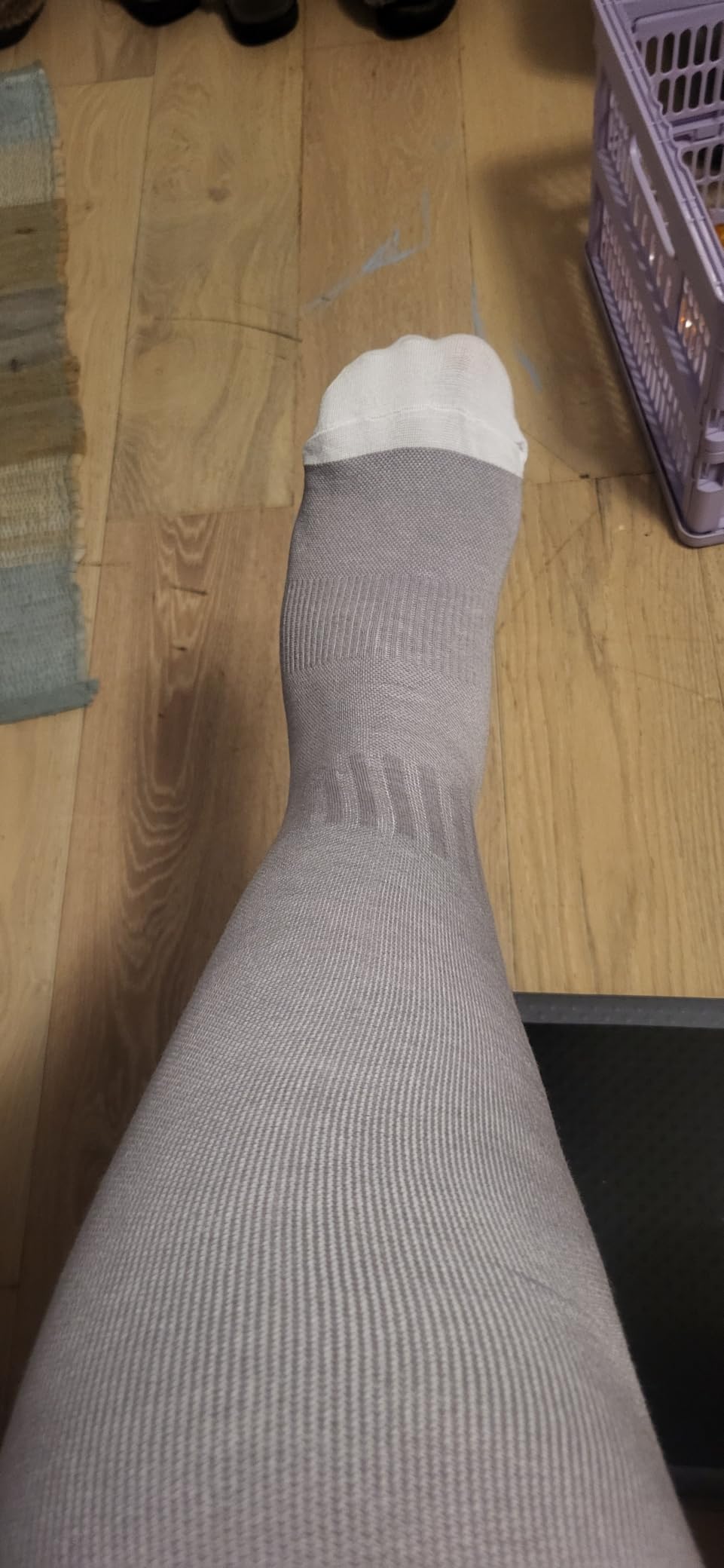
Be clear-eyed about the compression level, though. This is comfort-level graduated compression rather than a stated mmHg figure, and reviewers who need real support for significant edema say it is too light. It works for daily comfort, tired legs, and general circulation maintenance, not for a diagnosed venous condition.
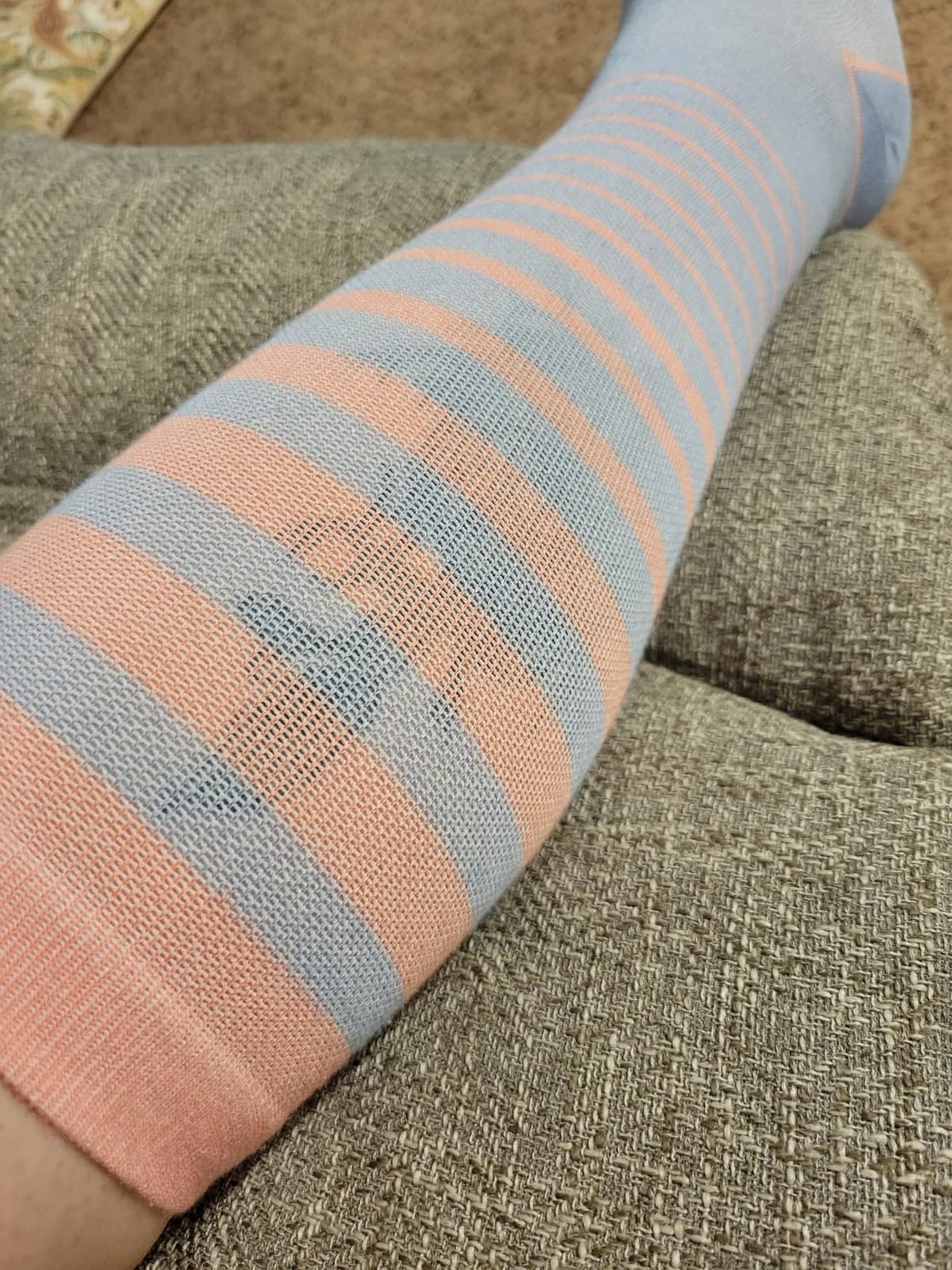
Colours are fade-resistant, which sounds minor until you wash a sock weekly for a year and end up with a grey sock. That detail shows the brand thinks about repeat wear.
Who the Pembrook Wide Calf Socks Are Right For
They suit someone buying compression for the first time who wants confidence in the fit, and anyone whose calf sits above a standard size. The sizing transparency also makes them a good choice for a caregiver ordering on someone else’s behalf from a different room.
For an older adult with sensitive skin, the bamboo softness is the reason to pick them over a nylon sock of the same size.
Where the Pembrook Wide Calf Socks Fall Short
The compression is the real limitation. Anyone managing significant swelling, recovering from surgery under clinical advice, or treating diagnosed chronic venous insufficiency needs a stated mmHg rating, and this does not offer one.
It is a three-pair pack, the review history is shorter than the long-established names, and the range starts at XL, so smaller calves need to look elsewhere.
9. Pembrook Light 8-15 mmHg Socks – Best for Seniors Who Find Compression Too Tight
Pembrook® Light Compression Socks – 3 Pairs | 8-15 mmHg Light Compression Socks for Women and Men | Light Green, Light Blue, Rose | Mens and Womens Compression Socks
8-15 mmHg light graduated
Bamboo viscose
3 pairs
M and L sizes
Pros
- Light 8-15 mmHg that avoids the squeeze of firmer socks
- Soft bamboo viscose with no itchiness for sensitive skin
- Easy to put on and remove even with limited hand strength
- Does not bunch at the ankle or cut into the skin
Cons
- Light compression is not enough for significant edema
- Contrasting white toes on some colourways
- Only M and L offered and L runs long
Some older adults have tried compression, found it unbearable, and decided the whole category was not for them. This pair exists for that person. At 8-15 mmHg it is the lightest real compression in the roundup, and reviewers describe being able to keep it on all day and even overnight, which no one says about the firmer pairs.
Donning is the other headline. A light compression sock is dramatically easier to pull over a stiff foot and up the calf, and this is one of the few pairs buyers describe as manageable with limited hand strength without needing a zip. It also does not bunch at the ankle or slide down, so the gradient keeps working across a full day.
Bamboo viscose handles the temperature side well: breathable, moisture wicking, and comfortable against skin that bruises easily. Several buyers mention restless legs specifically, using these in the evening and reporting that the urge to move settles.
The trade-offs are predictable for a light level. If your swelling is significant, light compression will not manage it, and no amount of wearing time will change that. A few people also flag the white toe on certain colourways as conspicuous in open shoes.
Who the Pembrook Light Socks Are Right For
They suit a senior who has never worn compression and wants to start at the mild end, or anyone who needs to wear a sock overnight without waking up with marks. They are also a good choice for a long-haul journey or a day of prolonged sitting, where the goal is comfort rather than treatment.
For anyone with neuropathy or fragile skin, the light pressure and soft bamboo are the two safest properties to prioritise.
Where the Pembrook Light Socks Fall Short
It is a comfort sock with a graduated profile, not a medical device, and buyers expecting it to resolve an edema problem come away disappointed. Sizing is limited to M and L, and the L runs long for smaller feet.
Anyone who needs a firm 20-30 mmHg should treat this as an introduction to the habit, not a substitute for the treatment a clinician recommended.
10. Truform Sheer 20 Denier Compression Socks – Best for Dress Shoes and Formal Wear
Truform Sheer Compression Stockings, 15-20 mmHg, Women’s Knee High Length, 20 Denier, Nude, Medium
15-20 mmHg graduated
20 denier sheer nylon
Soft non-constricting top band
Heel pocket, latex-free
Pros
- Sheer 20 denier that looks like ordinary dress hosiery
- True 15-20 mmHg graduated compression
- Soft top band that does not constrict the leg
- Knit heel pocket keeps the sock in place
Cons
- Traditional pull-on design with no zipper for limited hand strength
- Only offered up to 3X-Large
- Nylon can feel warm next to bamboo or wool blends
Compression and a church service or a wedding do not normally mix, and this is the pair that fixes that. A sheer 20 denier knit reads as ordinary dress hosiery, so an older adult can wear genuine 15-20 mmHg graduated compression under a skirt or a suit without anyone noticing it is medical support.
That rating is not decorative. Truform is a long-established medical hosiery maker, and the compression here is the moderate band we recommend for daily senior wear, which makes this the only pair in the roundup that combines a discreet appearance with a stated medical-level gradient.
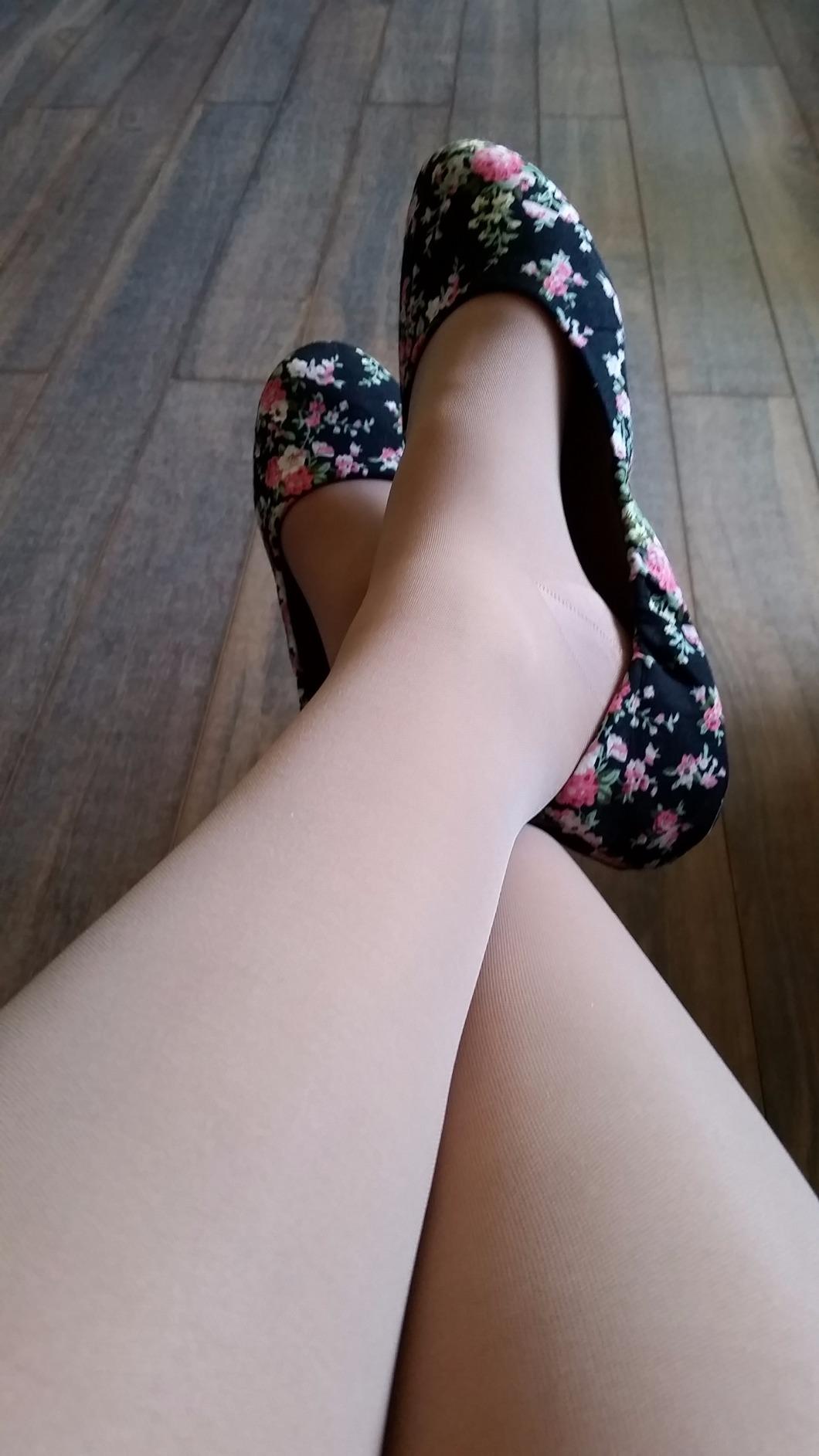
Two construction details do most of the comfort work. The top band is soft and non-constricting, so it does not leave a deep ring at the thigh after a long afternoon, and the knit heel pocket holds the stocking in place rather than letting it creep down into the shoe.
It is also latex-free and made in the USA, which matters for anyone with a latex sensitivity that nobody thinks to ask about until a rash appears.
Who the Truform Sheer Socks Are Right For
They suit an older adult who dresses formally for church, meals out, or family occasions and still wants their varicose vein support. They also suit anyone who has been put off compression because every sock they have tried looked like sportswear.
Because the profile is genuinely medical-grade, this is a reasonable pick for someone who wants support without looking like they are wearing a medical device.
Where the Truform Sheer Socks Fall Short
The pull-on design is the honest problem, and it is the same problem the zippered pairs solve. On hands with limited grip strength, expect to need a stocking aid or a second person, and the sheer fabric is unforgiving when it catches.
Warmth is the other limitation. Nylon is fine for most of the year but not for cold circulation-poor feet, and the size range stops at 3X-Large.
11. Sockwell Elevation Firm Compression Socks – Best Merino Blend for Neuropathy
Sockwell Men’s Elevation Firm Graduated Compression Socks, Black, L/XL
20-30 mmHg firm in 4 zones
Merino wool blend yarn
Seamless toe closure
Accu-fit arch support
Pros
- True 20-30 mmHg firm compression in a merino wool blend
- Natural fibres that resist sweating in warm weather
- Seamless toe closure that avoids pressure on numb toes
- Accu-fit arch support and a non-binding top band
Cons
- Highest per-pair cost in this roundup
- Some buyers find the sizing inconsistent
- Firm compression is harder to pull on
- Men's sizing only and tops out at US 16
This is the one to consider when a doctor has said 20-30 mmHg but the person cannot tolerate a synthetic sock against numb feet. The knit is a merino wool blend, and buyers report that it genuinely does not cause the sweating that makes many firm compression hosiery intolerable, even in warm weather.
The seamless toe closure is the detail that matters most for neuropathy. A sock seam sitting on a toe that cannot feel pressure is a classic source of rubbing and blisters, and eliminating it removes one of the few ways compression can cause a foot wound in someone with reduced sensation.
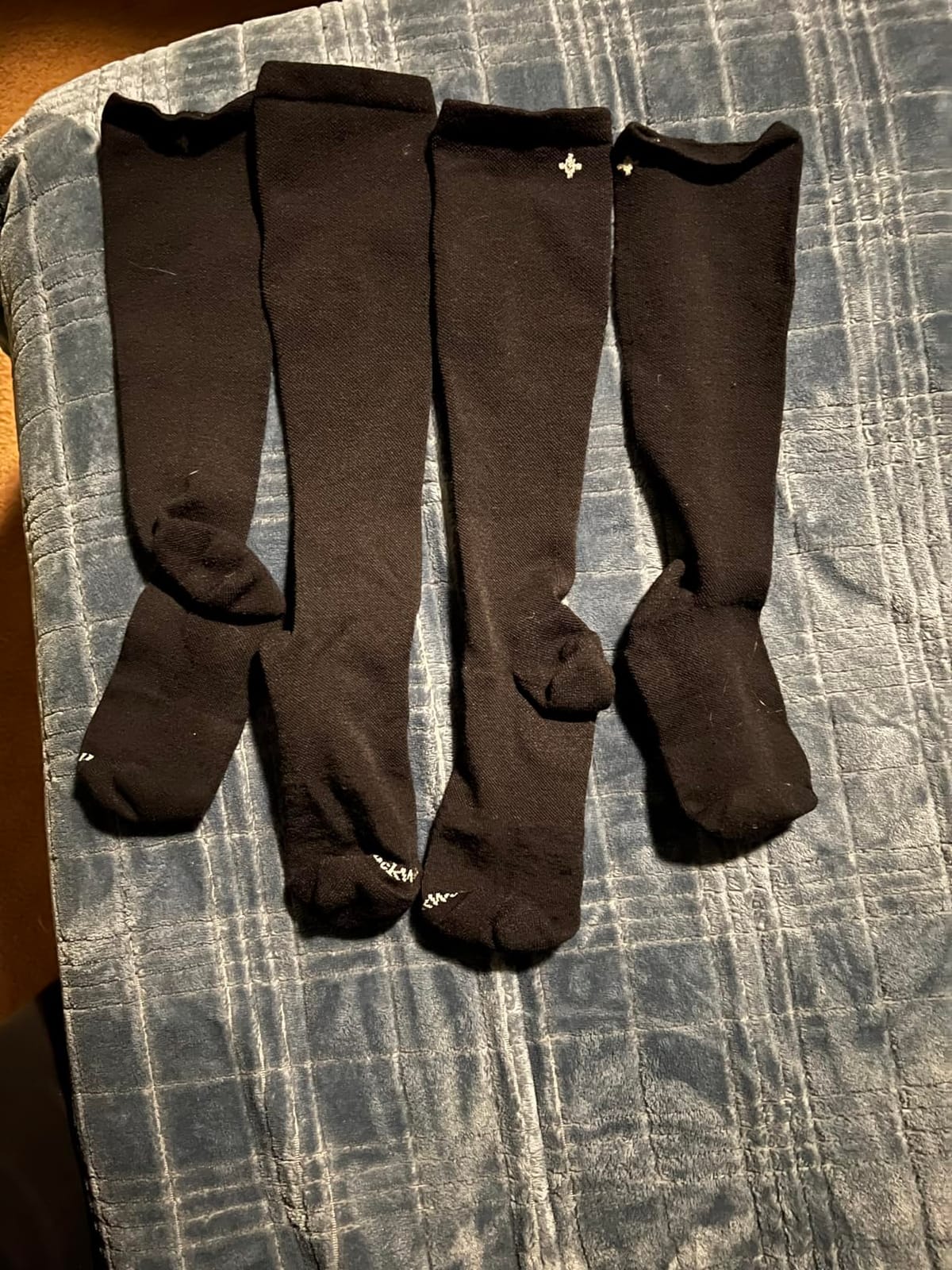
Four zones of firm graduated compression mean the pressure is real, and buyers say it delivers what the label claims, which is not something every over-the-counter pair manages. The arch support and turn welt top keep it in place without a binding band at the thigh.
Sizing is the main complaint, and it is a meaningful one. Several owners report a size fitting like an ordinary sock, so measure before ordering. The size range runs from men’s US 7 to US 16, which is the widest single range of any firm pair here but is still men’s sizing.
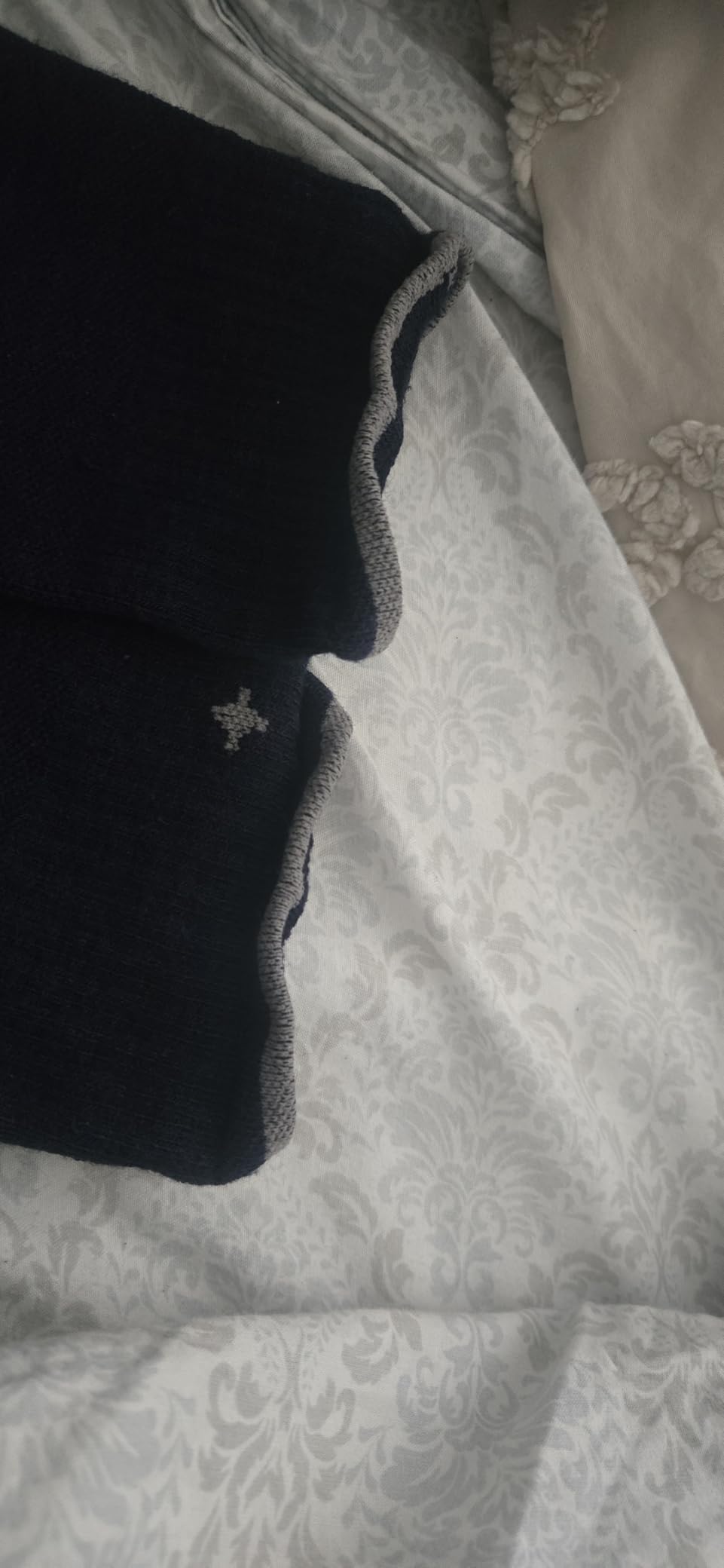
Who the Sockwell Elevation Socks Are Right For
They suit an older adult with diabetic neuropathy or reduced foot sensation who has been prescribed or advised to use firm compression, and anyone whose skin cannot tolerate synthetic fibres. The seamless toe makes them the safest firm-compression option in this roundup for a numb foot.
They also suit a senior who wants a warmer sock for autumn and winter without giving up a medical-grade gradient.
Where the Sockwell Elevation Socks Fall Short
Two clear limits. It is the most expensive pair per unit in the roundup, and firm 20-30 mmHg is genuinely difficult to pull on for anyone with hand or hip problems, so the donning problem returns for exactly the people who might benefit most from firm pressure.
And it is a men’s model. Anyone with a wider foot or a high instep should check the fit carefully before committing.
12. Iambamboo Merino Wool Compression Socks – Best for Winter Warmth and Overnight Wear
Iambamboo Merino Wool Compression Socks for Women Men 15-20 mmHg for flying
15-20 mmHg in 4 zones
Merino wool and bamboo viscose blend
Seamless toe, arch support
Reinforced footpads
Pros
- Merino and bamboo blend that is soft and resists odour
- Works for wide calves without binding behind the knee
- Warm enough for cold circulation-poor feet without overheating
- Comfortable enough to sleep in for overnight swelling relief
Cons
- Smallest review base in this roundup
- Some buyers find the fit tight through the foot and calf
- Thicker sole can feel bulky inside dress shoes
Seniors with poor circulation often describe two contradictory needs: feet that are cold all the time, and a intolerance of anything that traps heat. Merino wool solves both, which is why this pair earns its place despite having by far the fewest reviews of anything in the roundup.
Owners with wide calves report that this pair does something most 15-20 mmHg socks do not, which is stay up without digging in behind the knee. Several also wear them overnight and report visibly less puffiness in the morning, which is a genuine part of how compression gets used at that age.
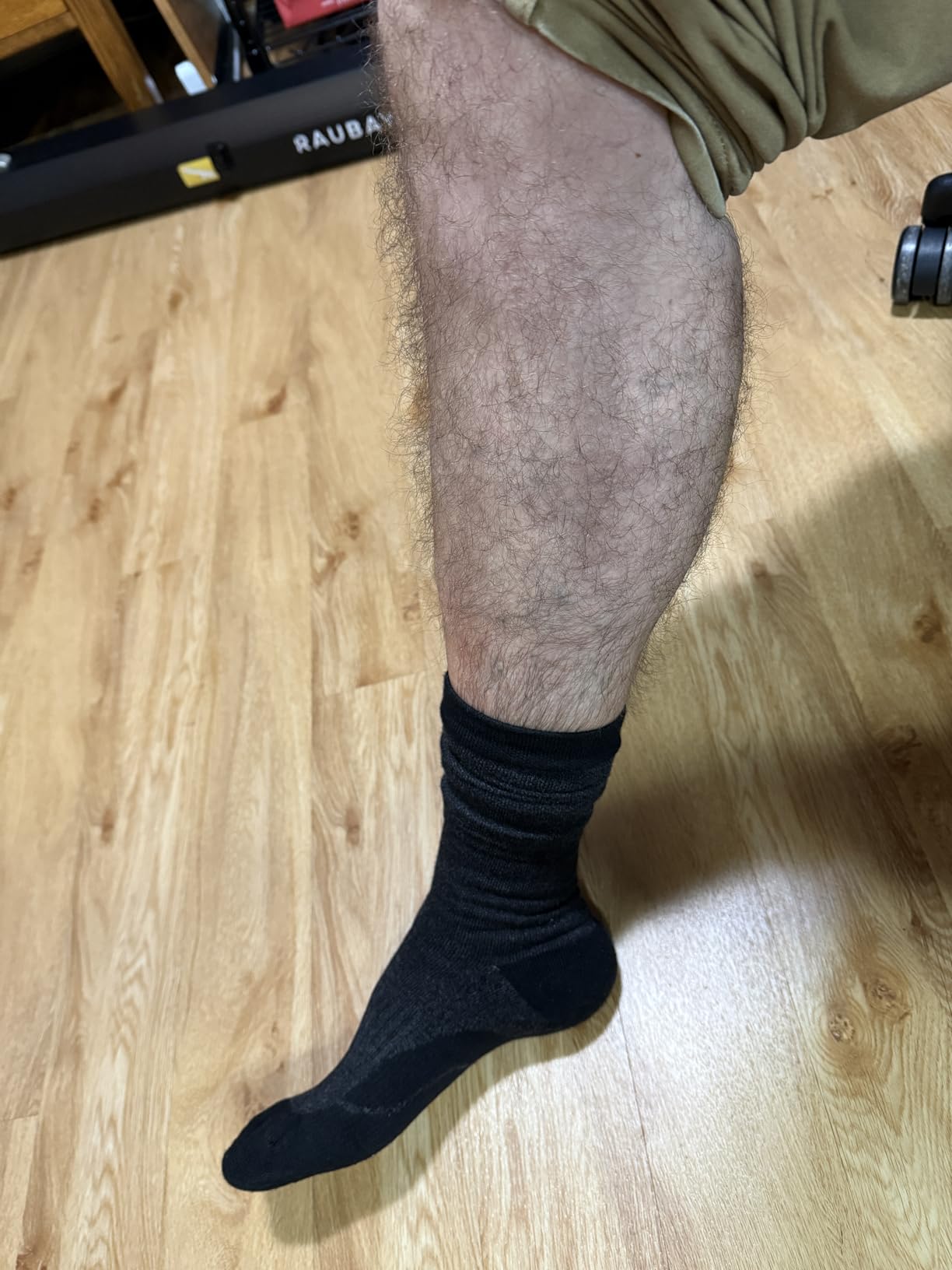
The blend is merino wool, bamboo viscose, Lycra and a recycled polyester for moisture management, and the fabric is pre-shrunk and machine washable. The four-zone gradient is a real 15-20 mmHg, strongest at the ankle, with arch support, reinforced footpads and a seamless toe.
Be aware of what the small review base means. Under 650 ratings is not enough history to know how the elastic holds up over a year of daily washing, so treat this as a promising option to test on a single pair rather than a set to commit to.
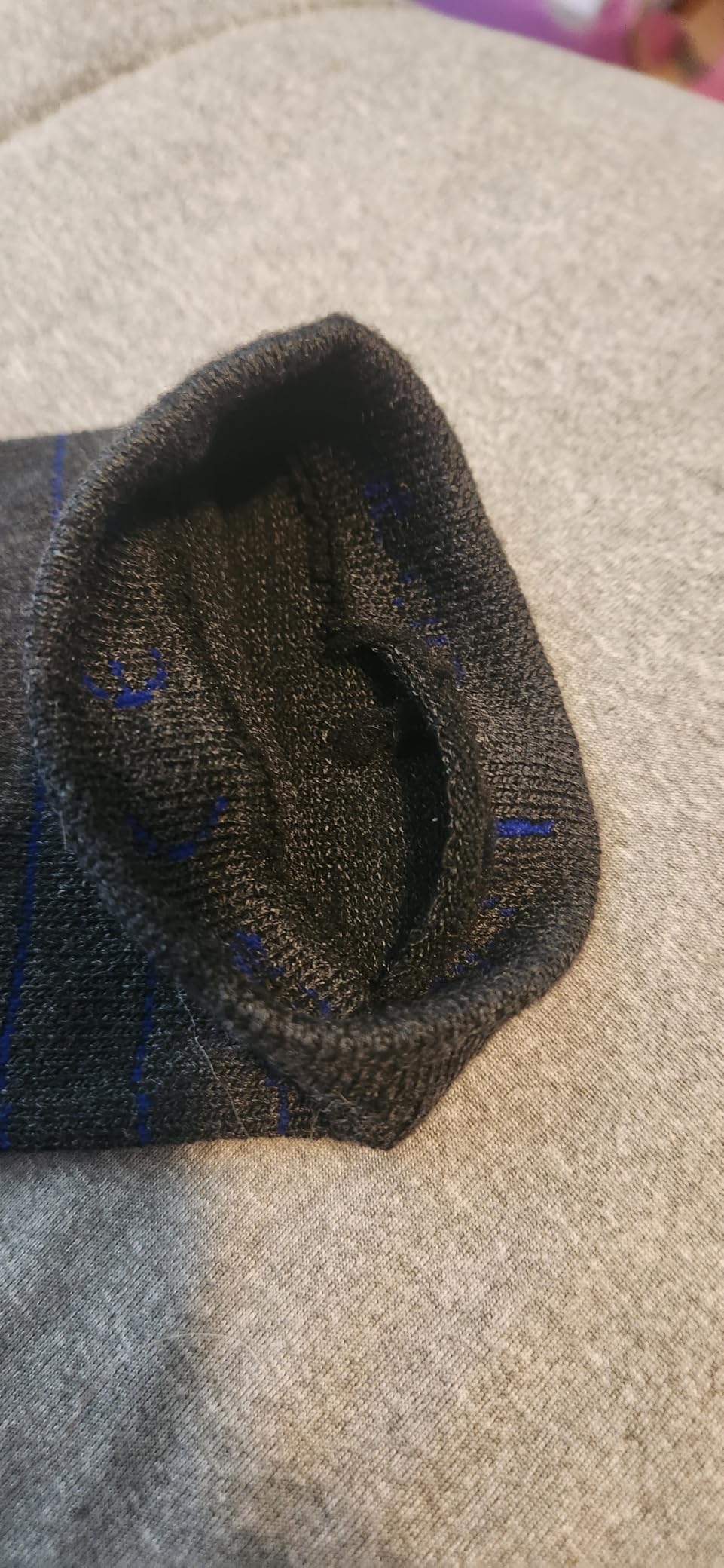
Who the Iambamboo Merino Socks Are Right For
They suit an older adult with cold feet who has been disappointed by thin synthetic socks, and anyone who wants to sleep in compression overnight. The seamless toe and soft blend are a good combination for sensitive skin.
They also suit people with fuller calves who find that most 15-20 mmHg socks dig in at the top, because the shaft here is cut to sit without binding behind the knee.
Where the Iambamboo Merino Socks Fall Short
The fit runs tight through the foot and calf for some buyers, which is the usual catch with a wool blend, and a thicker sole is a poor match for a dress shoe or a narrow slip-on.
And the honest caveat is durability evidence. The 4.5 rating is encouraging, but 639 reviews is a short history, so long-term elastic recovery is not yet established the way it is for the long-running names here.
How to Put Compression Socks On When Hands and Back Do Not Cooperate
Donning is where most senior compression routines quietly end, and no amount of willpower in the sock design fixes a person who cannot reach their toes. A few techniques solve most of it.
Sit down and work from the foot up. A chair with firm arms is much better than a bed. Sit forward, roll or gather the sock to the heel, put the foot in, and work the fabric up in small increments rather than one long pull.
Invert the sock first. Turning the sock inside out so the heel pocket is at the toe creates a pocket you can slide your foot into, which removes most of the stretch over the heel where tearing happens.
Use a sock aid or a long-handled reacher. A nylon or plastic sock aid is a trough with cord handles that you lower the sock into, drop your foot on top, and pull the handles. It costs very little and it is the single most effective aid for stiff hands.
Pick the pair that matches your strength. If steps one to three are still a struggle, the answer is a zip closure, not more determination. Four of our picks unzip along the calf.
Time it with the swelling. Put them on first thing in the morning while the leg is at its narrowest, and take them off before bed unless you are specifically wearing them overnight. Trying to pull a compression sock over a foot that has been swollen all day is the most avoidable failure there is.
For anyone buying on behalf of a parent, our approach to choosing puzzle games for seniors applies directly: pick for the ability the person has today, not the one they had last year.
When Not to Wear Compression Socks
Compression is not a benign fashion accessory, and the evidence for it is genuinely mixed outside diagnosed venous disease. A few situations mean you should speak to a clinician before adding a pair to your wardrobe.
Peripheral arterial disease or poor artery flow. Compression is a contraindication. If the arteries are narrowed, squeezing the leg harder reduces the very blood flow the leg needs, and the risk to the foot is serious.
Numb or insensitive feet. You cannot feel whether a seam is rubbing, whether a zipper is pinching, or whether the sock is too tight. Any sock, not only compression socks, needs careful inspection, and a professional should fit the compression level.
Heart failure or kidney disease with fluid retention. Swelling from a heart or kidney condition is not the same as venous swelling, and adding compression changes how fluid is managed. Ask first.
Fragile or easily torn skin. A sock that cannot be adjusted or removed easily is a risk on thin skin. Zip closures and light compression are safer starting points, and a carer should check the foot afterwards.
Immediately after a clot or without advice for heavy one-sided swelling. Sudden swelling in one leg is not a sock problem. Get it assessed.
Red flags that need a vascular specialist rather than a new pair of socks include one leg suddenly swelling more than the other, skin that turns dark or mottled, a foot that is cold to the touch or a different colour, a sore on the foot that will not heal, and chest pain or breathlessness.
How to Measure Your Calf and Pick the Right Size
Shoe size is close to useless for compression socks. What matters is the circumference of the widest part of the calf, and if a listing publishes that number, use it.
Measure with a soft tape, or a piece of string and a ruler if a tape is not to hand.
Measure at the widest point of the calf, roughly a hand’s width below the knee, with the leg relaxed and not flexed.
Measure the ankle at its narrowest point, just above the bone, because the ankle range sets the foot opening.
Match both numbers to the published chart. If you sit between two sizes, take the larger for a swollen leg that will be worse in the evening, and the smaller for a leg that swells little.
Try a pair at the start of the day, when the leg is at its smallest, and walk around the house for ten minutes. If you cannot get your foot through the opening without a struggle, the size is wrong, and no amount of determination fixes that.
Washing, Drying and the Replacement Cycle
The most common complaint we saw across customer feedback is not a fault in any product. It is wearing a pair whose elastic has quietly died. A worn-out sock looks fine, feels normal, and provides almost no compression, so the wearer never notices the loss.
Wash compression socks in warm rather than hot water, and skip the tumble dryer where you can. Heat is what breaks down spandex elastane, and air drying roughly doubles the life of a pair. Our rule of thumb is a three to six month replacement cycle at daily wear, which is why the eight-pair options above tend to stay effective longer than a single rotating pair.
A simple test tells you when to replace: if you can stretch the sock and it does not spring back, or if it no longer leaves a faint mark on your skin, the compression is gone. Buy the next pair then rather than on a schedule, because wear varies with how much you walk.
Frequently Asked Questions
Should the elderly wear compression socks?
Most older adults can wear compression socks safely, and 15-20 mmHg is the pressure band most commonly suggested for everyday swelling, heavy tired legs and varicose vein discomfort. The exception is anyone with peripheral arterial disease, numb or insensitive feet, fragile skin, or swelling linked to heart failure or kidney disease, who should ask a clinician first. Start in the morning, when the leg is at its smallest.
What compression socks do most doctors recommend?
For general daily wear in an older adult, 15-20 mmHg is the level most often recommended, and it can be bought over the counter. 20-30 mmHg is medical grade and is generally advised for diagnosed chronic venous insufficiency, significant edema or post-surgical swelling, so it needs clinical sign-off. 8-15 mm suits people new to compression, and 30-40 mmHg is reserved for advanced disease under specialist fitting.
Is there a difference between medical grade compression socks and regular compression socks?
Yes, and the difference is the pressure and the fitting. Medical grade compression is 20 mmHg and above, graded precisely and often fitted or prescribed by a clinician for a diagnosed condition. Over-the-counter socks start at 15-20 mmHg, sold in standard sizes, and are intended for comfort, travel, standing and general circulation. Ratings on over-the-counter pairs are not independently verified, so treat them as approximate.
When is the best time of day to wear compression socks?
Put them on first thing in the morning, before the leg has had a chance to swell, and wear them through the day. Overnight wear is only worth it if a clinician has recommended it or you are deliberately using a light pair for morning puffiness. Taking them off at night gives the skin a break, which matters on thinner older skin that needs checking for marks and redness.
Can compression socks cause problems for elderly?
They can, and it is almost always a sizing or suitability problem rather than the socks themselves. The common issues are numbness from a cuff that binds at the top, rubbing where a seam presses on a toe with reduced sensation, and a sock left on so long that it leaves deep marks. Anyone with poor artery circulation, heart failure or kidney-related swelling should get medical advice before starting.
Bottom Line: The Best Compression Socks for Seniors in 2026
For most older adults, the best compression socks for seniors are moderate 15-20 mmHg pairs with an easy-on design and a size range that fits the leg in front of you. Our pick is the Iseasoo 8-pair pack, because eight pairs is the difference between a routine that lasts and one that lapses after a month.
If the hands are the problem, buy a zip closure instead of trying harder. If the calf is the problem, measure it and buy a wide-calf pair. And if a doctor has prescribed firmer compression, the fenglaoda 20-30 mmHg pack is the practical version of that advice at home.
Whatever you choose, start at 15-20 mmHg, put the socks on in the morning, replace them every three to six months, and check with a clinician first if there is any artery disease, numbness, or heart or kidney swelling in the picture.