
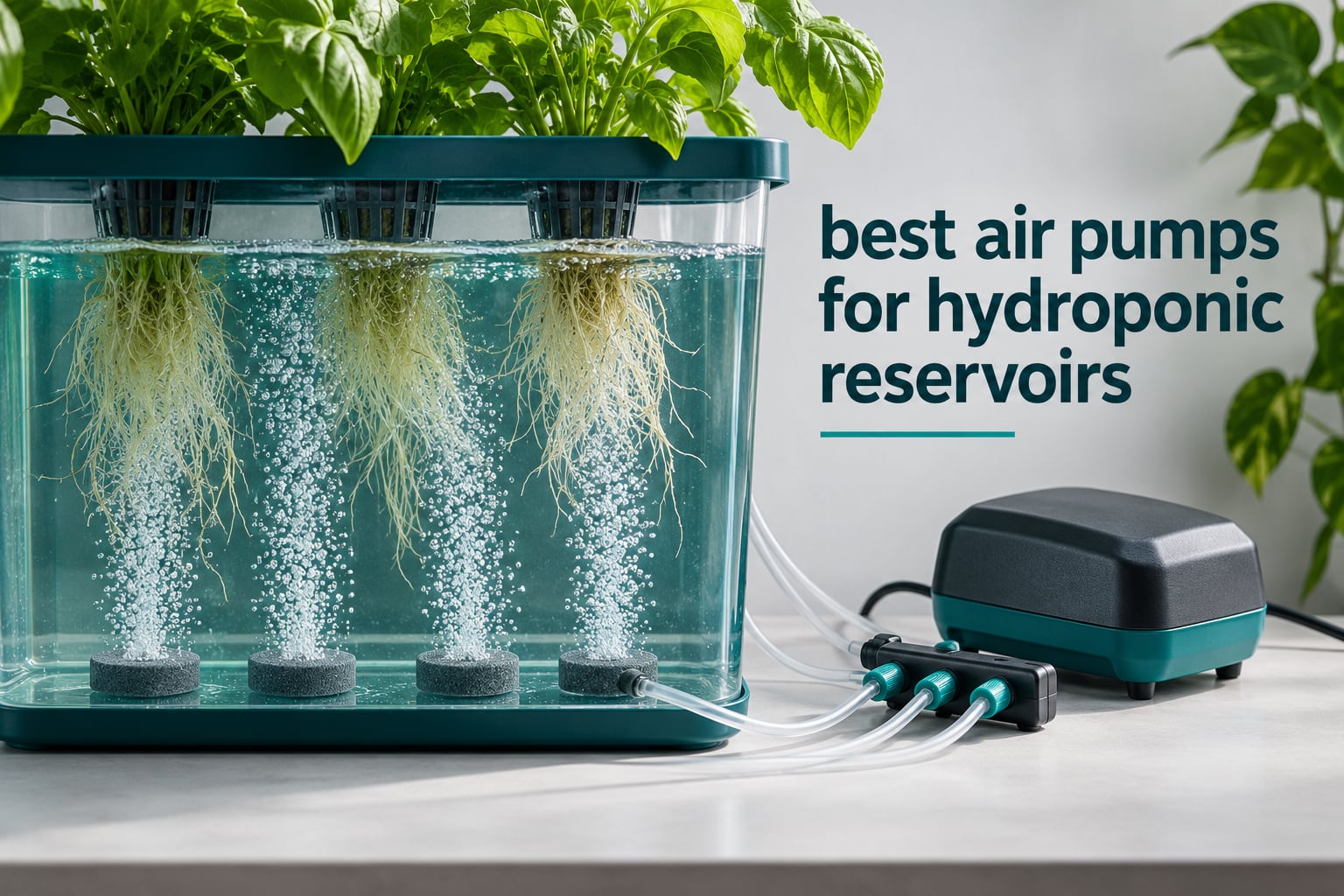
A hydroponic reservoir is a bucket of still, warm, nutrient-rich water sitting under lights for eighteen hours a day. Without air moving through it, dissolved oxygen falls within hours, roots stop respirating, and the pathogens that cause root rot get the oxygen-poor conditions they need. The pump is the cheapest part of the system and the one growers complain about most, so picking the right one matters more than the brand sticker suggests.
We compared twelve air pumps for hydroponic reservoirs across flow rate, outlet count, pressure, wattage, measured noise and real longevity reports, then sorted them by the system they actually fit. The short version: there is no single best air pump for hydroponic reservoirs, because a five-gallon tote and a 200-gallon RDWC column have almost nothing in common beyond the word air.
What follows is a full roundup of the twelve strongest options available in 2026, plus the sizing math nobody publishes, a plain-English breakdown of pump technology, and the maintenance schedule that decides whether a pump lasts two years or two months. Last reviewed and updated for 2026.
Table of Contents
Top 3 Best Air Pumps for Hydroponic Reservoirs (October 2026)

Active Aqua 4-Outlet Air Pump
- 6W with four independent outlets
- 15 L/min (240 GPH)
- Rated 45 dB or below
- Adjustable pressure dial

EcoPlus ECOair 793 GPH Pump
- 793 GPH from an 18W piston design
- 6-valve chrome manifold
- 290 psi maximum pressure
- Aluminium body

Pawfly 254 GPH Air Pump
- 254 GPH at 7W
- Four-port copper distributor
- Below 45 dB
- Low/high output switch
Every Pump at a Glance in 2026
| Product | Specifications | Action |
|---|---|---|
| Active Aqua 4-Outlet Air Pump |
|
Check Latest Price |
| EcoPlus ECOair 793 GPH Pump |
|
Check Latest Price |
| Pawfly 254 GPH Air Pump |
|
Check Latest Price |
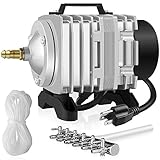 Simple Deluxe 602 GPH Pump Simple Deluxe 602 GPH Pump |
|
Check Latest Price |
 AQUANEAT Dual Outlet Kit AQUANEAT Dual Outlet Kit |
|
Check Latest Price |
 INCLY 245 GPH 4-Outlet Pump INCLY 245 GPH 4-Outlet Pump |
|
Check Latest Price |
 AQUANEAT 100 Gallon Pump AQUANEAT 100 Gallon Pump |
|
Check Latest Price |
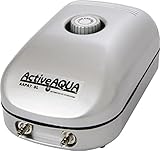 Active Aqua 7.8 L/min Pump Active Aqua 7.8 L/min Pump |
|
Check Latest Price |
 AQQA 3W Dual Outlet Pump AQQA 3W Dual Outlet Pump |
|
Check Latest Price |
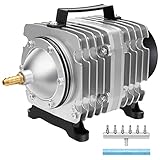 AquaMiracle 600 GPH Pump AquaMiracle 600 GPH Pump |
|
Check Latest Price |
 HITOP 6W 160 GPH Pump HITOP 6W 160 GPH Pump |
|
Check Latest Price |
 HITOP 10W 320 GPH Pump HITOP 10W 320 GPH Pump |
|
Check Latest Price |
Do You Actually Need an Air Pump in Hydroponics?
Yes, if any part of your root mass sits in water, and that includes deep water culture, RDWC columns, raft systems and aquaponics fish tanks. Submerged roots respire continuously and cannot reach the air. Aeration keeps dissolved oxygen up, mixes nutrients so salts do not settle, and holds pythium and other anaerobic pathogens at bay. Skip it and you will fight root rot instead of growing plants.
Two jobs happen when a pump runs, and they are not equally important. The obvious one is the bubble curtain rising through the reservoir, which increases gas exchange. The quieter one is circulation at the bottom of the tank, which stops warm dead zones forming in corners.
Forum growers also flag a risk that rarely appears in buying guides: an oversized stone sitting inside a net pot can create enough bubble shear to abrade fine feeder roots. On a THCFarmer hydro thread, growers repeatedly recommended sizing stones to the reservoir rather than to the plant, and keeping high-flow stones out of net pots entirely.
1. Active Aqua 4-Outlet Air Pump: Our Overall Pick for Most Reservoirs
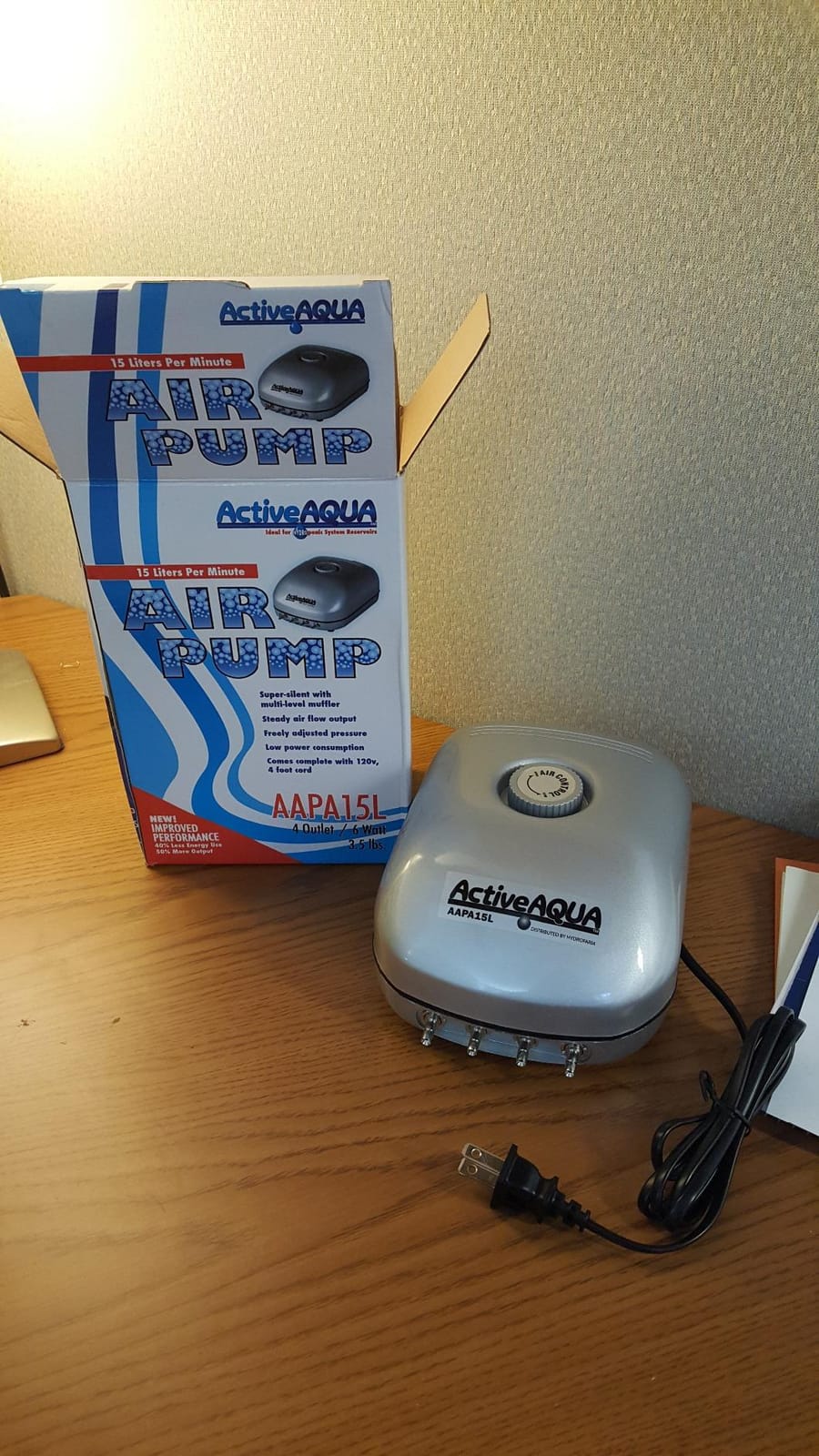
Active Aqua AAPA15L Air Pump, 4 Outlets, 6W, Silver
6W motor
15 L/min (240 GPH)
4 outlets
45 dB or below
6 x 4 x 9.4 inches
Pros
- Four outlets cover multiple net pots or multiple totes from one pump
- Synthetic rubber diaphragm with a pressure dial for true flow control
- Multi-level muffler holds noise at 45 dB or below
- Only 0.08 amps max draw at 6 watts
Cons
- 15 L/min is modest for commercial-scale reservoirs
- Single 4-foot cord limits where you can place it
This is the pump we keep coming back to for a reason that has nothing to do with peak flow. It has four separate outlets built into the body, so a two-reservoir or four-reservoir build does not need a manifold, four check valves and a stack of tees. The plumbing is already solved.
Airflow is 15 liters per minute, which the manufacturer rates at 240 GPH, and the synthetic rubber diaphragm responds to the pressure dial with a genuinely usable range. That dial matters more than raw GPH because most growers end up throttling down once the reservoir is full and the tubing is long.
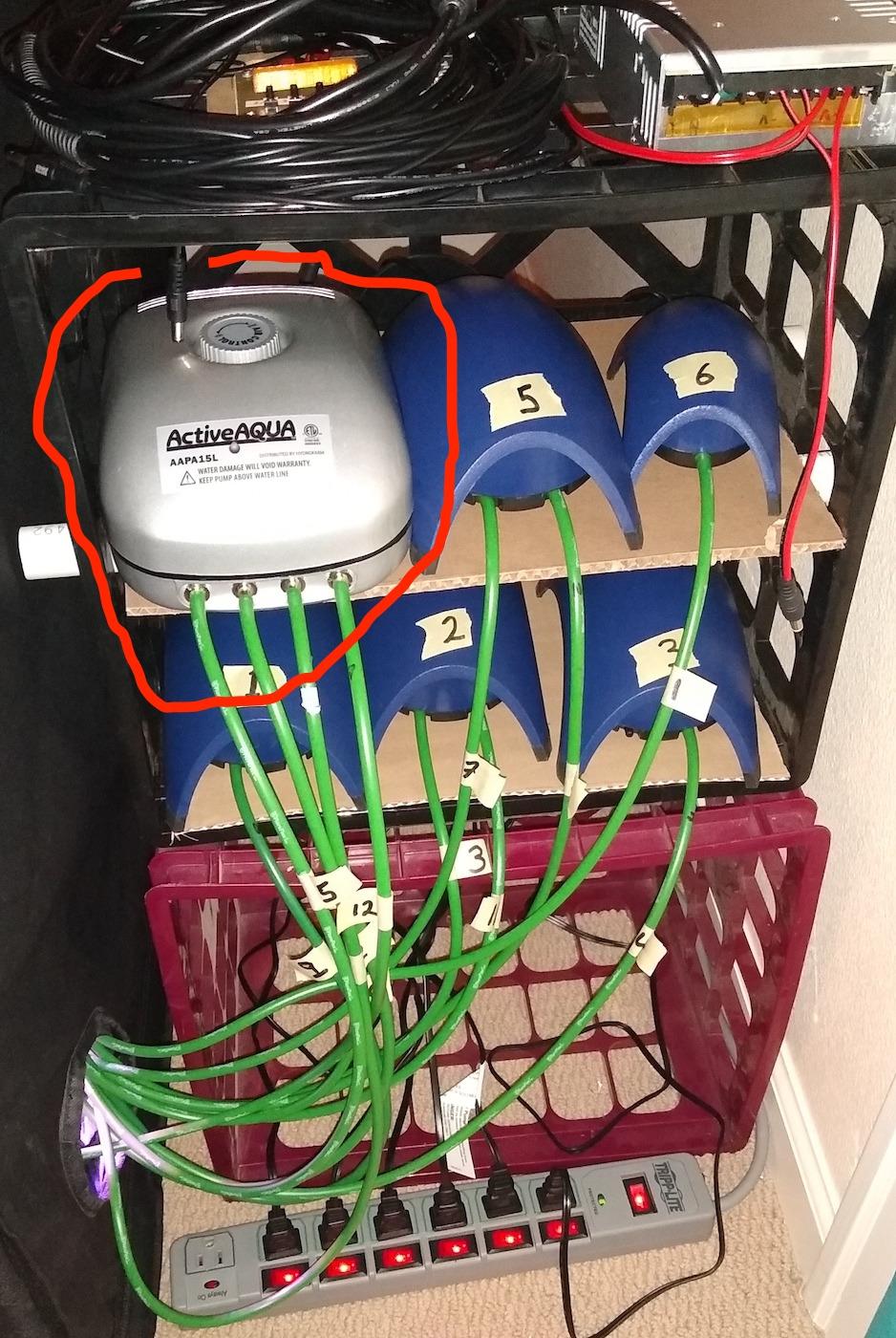
Across 2750 reviews the rating sits at 4.5, with roughly three quarters of buyers handing over five stars. The praise clusters around two words: steady and quiet. Owners running it beside a bed report that the muffler keeps it under the level where it becomes annoying in a quiet room.
GrowersNetwork and THCFarmer regulars single out adjustable multi-port pumps for a reason beyond convenience. Delivering the same dissolved oxygen through four smaller streams uses less total air than pushing everything down one oversized line, and this model does that without buying a separate manifold.
What to check before you commit
Count your outlets first, not your gallons. Four is genuinely useful for an RDWC column with a top and bottom chamber, or for two totes plus a propagation tray, and useless if you plan to run one stone in one reservoir.
Measure where the pump will sit. The cord is 4 feet, which is short for a reservoir tucked against a wall, and a cheap 6-foot extension is a reasonable fix if your outlet is far away.
Check whether you need more than 240 GPH. A THCFarmer grower reported running an EcoPlus 728450 to five 4-inch stones without trouble, so this unit is better matched to three stones or a pair of mid-size totes.
Where it falls short
The 15 L/min figure is honest and it is not a commercial number. On a large RDWC column running 30 gallons or more of solution with stones at multiple depths, this pump will leave bubbles sitting at the bottom.
Rubber-diaphragm pumps also age. They lose pressure and gain volume over a couple of years of continuous running, which is fine for a hobby setup and worth budgeting for in a commercial one.
2. EcoPlus ECOair 793 GPH: Best for Larger Multi-Reservoir Builds
EcoPlus ECOair 1 Commercial Grade Air Pump 793 GPH – 18 Watt Single Outlet with 6 Valve Manifold
793 GPH
18W piston drive
6-valve manifold
290 psi max
2.5 pounds
Pros
- Piston and cylinder design rated for continuous commercial duty
- Chrome manifold with six independently adjustable valves
- Both 1/4 inch and 3/8 inch nozzle fittings included
- ETL listed 120 volt unit
Cons
- Heaviest unit here at 2.5 pounds
- Louder under load than rubber-diaphragm or electromagnetic pumps
The 793 GPH figure sounds extreme until you put it against a real system. One grower on a THCFarmer hydro thread reported this model comfortably supplying five 4-inch air stones at once, which is a load that would choke most of the diaphragm pumps in this roundup.
Unlike a rubber diaphragm, the cylinder and piston construction here does not lose elasticity over time. That is the durability argument, and on a pump that runs twenty-four hours a day it is the argument that decides the outcome.
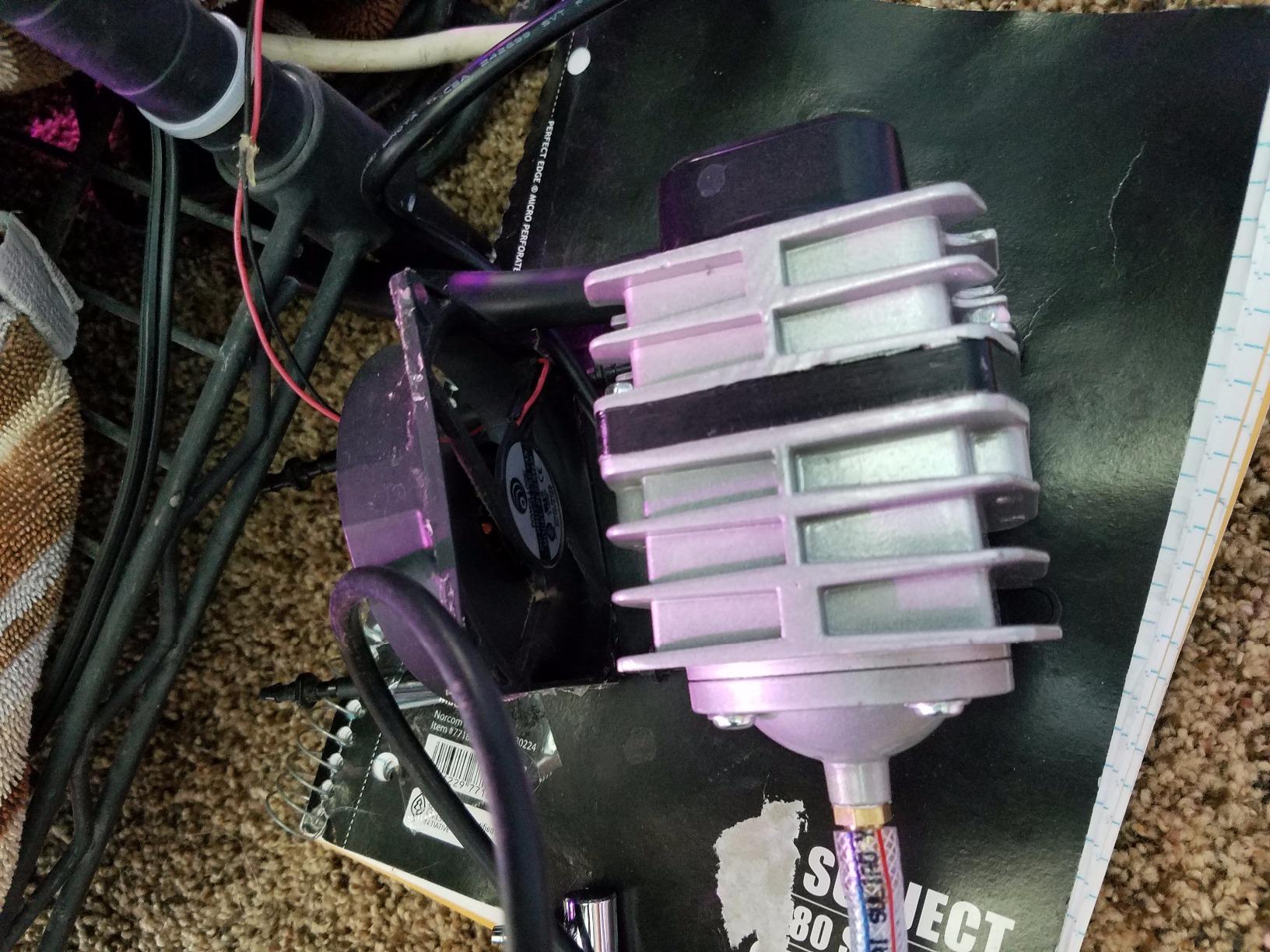
The 290 psi maximum pressure rating is the number that gets missed. High pressure is what lets a stone sit deep in a reservoir or a column chamber and still bubble, and it is also what lets this pump push through long tubing runs and multiple manifolds without starving the far end.
At 4.4 stars from 2540 reviews, the owner feedback splits along predictable lines. People in fish-farm and hydroponic settings love the pressure and the manifold. People in bedrooms complain, consistently and without much variation, about noise.
When 793 GPH is the right number
It is right when you are running several reservoirs off one pump, or one deep column where the stone sits well below the surface. High pressure and high volume together are the only real fix for depth, since volume alone just moves bubbles around.
The six valve manifold means each line gets its own flow control, which matters more than it sounds. Uneven aeration across six net pots is the most common complaint in RDWC forums, and per-valve adjustment is how you fix it.
Budget for volume you may not use. Manufacturers rate free-air output, and back pressure from stones and tubing cuts the number that reaches the water. Over-sizing is safer than under-sizing, but it costs money and decibels.
What you give up
Noise. This is the loud pump in the roundup, and users comparing it against smaller diaphragm models notice the difference immediately. In a tent or a spare room it is a real trade-off rather than a preference.
It is also the heaviest unit here at 2.5 pounds, and piston pumps need airflow around the body. If you are hiding it in a sealed cabinet, plan for that heat.
3. Pawfly 254 GPH 4-Outlet Air Pump: The One Most Growers Should Buy
Pawfly 254 GPH Aquarium Air Pump Adjustable Quiet Oxygen Aerator Pump with Multi-Port Air Flow Control Lever Valve Splitter and Airline Tubing for Fish Tanks Ponds and DWC Systems Up to 300 Gallons
254 GPH
7W
4 copper outlets
Under 45 dB
2.84 pounds
Pros
- Four-port copper distributor with per-line control levers
- Low and high output switch on the base
- Multi-level muffler and rubber feet hold noise under 45 dB
- Owners report more than two years of continuous running
Cons
- Listing promotes pond use while the booklet says indoor use only
- Balancing four lines evenly takes more adjustment work
This is the combination we would build first for most people: enough flow for a mid-size RDWC column, four outlets for multiple stones, and a switch that turns the noise problem into a dial you set once.
254 GPH at 7W is a strong ratio, and the 0.025 MPa pressure rating is the same class as pumps costing considerably more. In practice that is enough to push three large stones through back pressure, which is where cheaper units give up and start to starve.
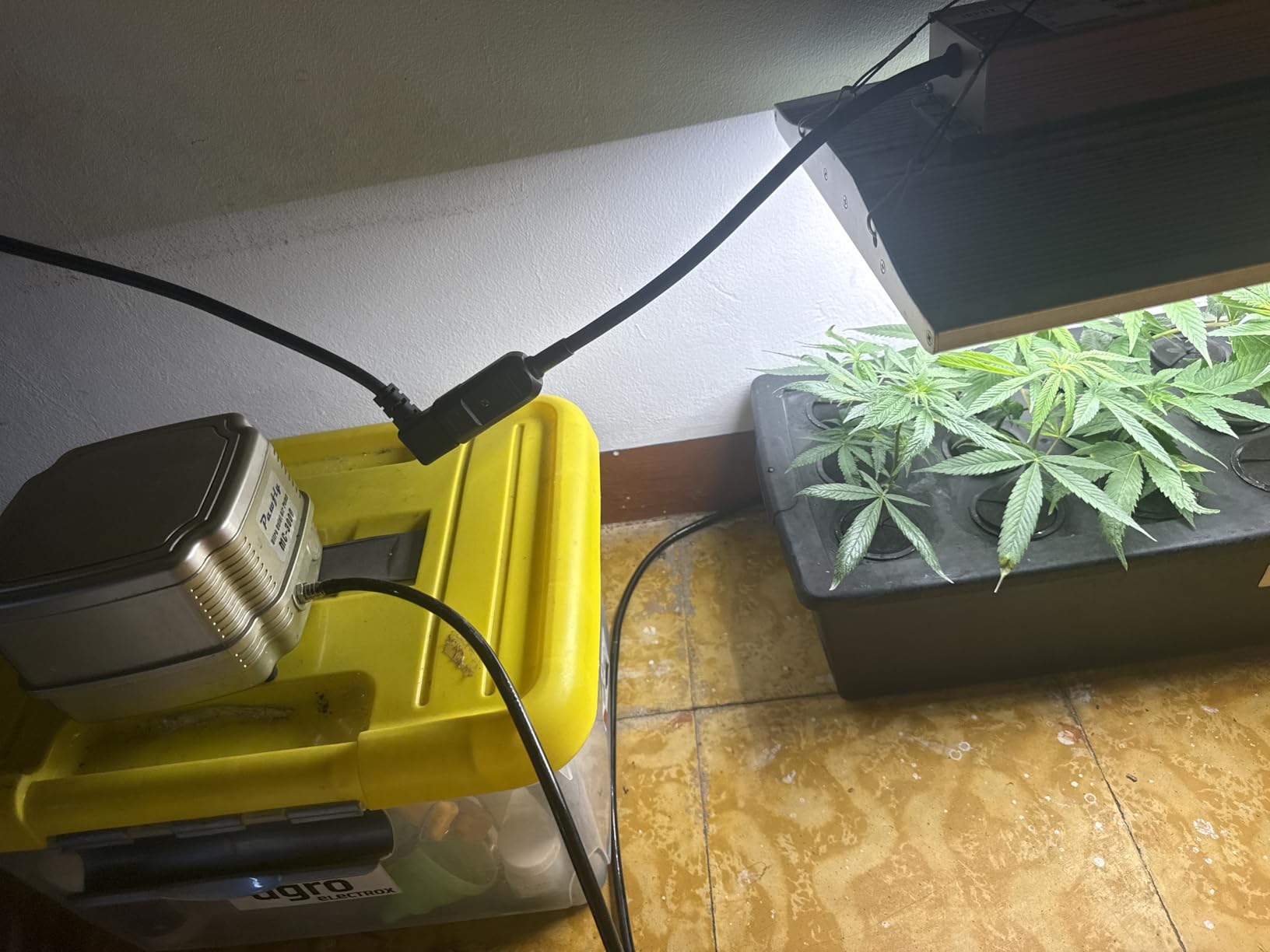
The longevity reports are the part that stands out. Owners on the review side describe two-plus years of continuous 24/7 running, which matches what forum growers say they actually care about. Whether a pump is rated 254 or 954 GPH matters far less if it dies in a season.
At 4.4 stars across 2580 reviews, roughly three quarters of ratings are five stars. The recurring complaint is not performance but a mismatch between the product listing, which mentions ponds, and the instruction booklet, which says indoor use only.
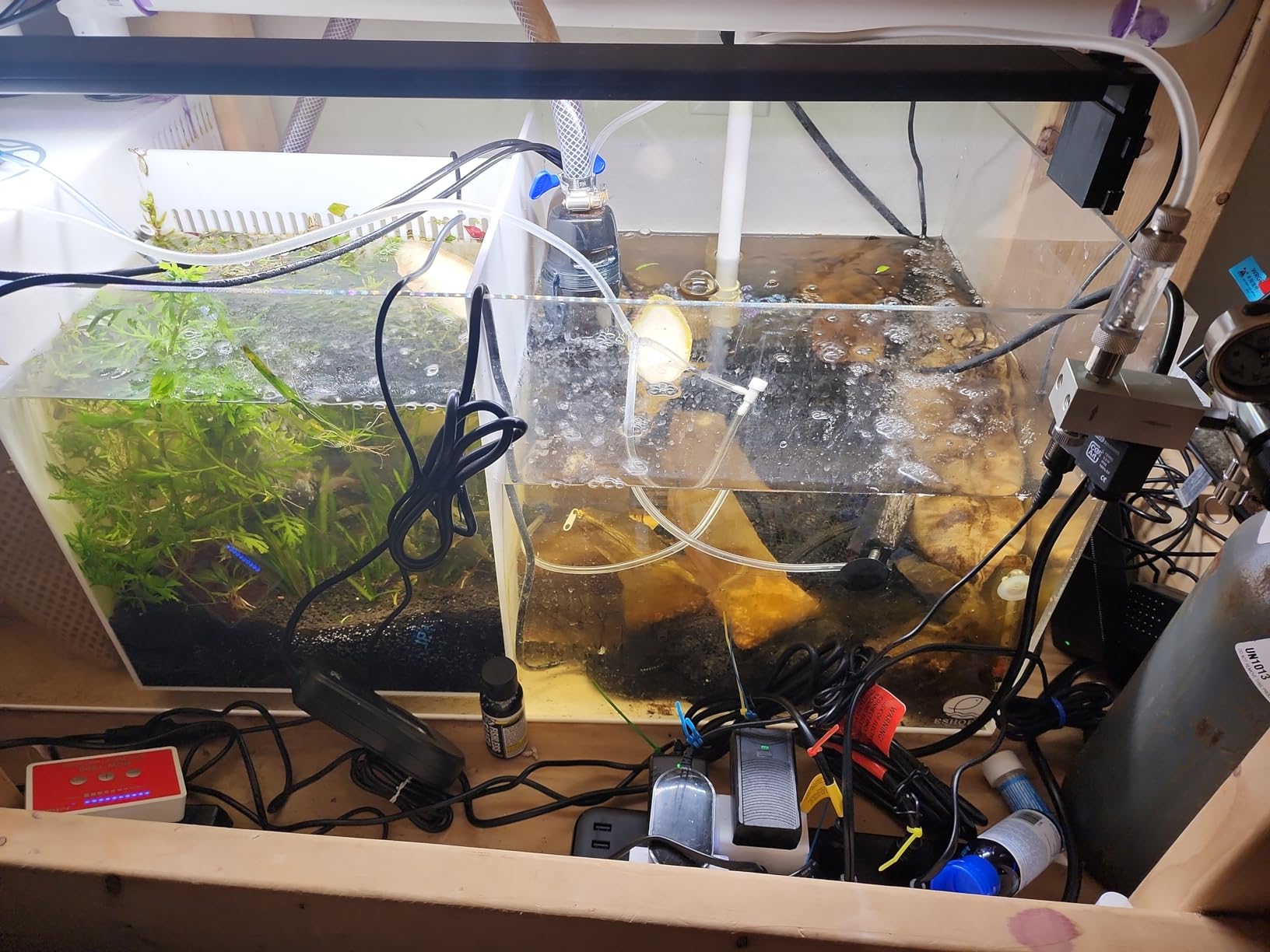
Why the outlet distributor matters
Four outlets with individual lever valves let you tune airflow per stone rather than per pump. That is how you stop one corner of a reservoir from going anaerobic while another gets over-aerated, and it is the practical version of the multi-outlet advice growers give on THCFarmer.
The copper distributor also means lines can be run to reservoirs at different heights without a T-fitting and a pair of inline valves. Inline control valves cost more than most people expect once you have eight of them.
Check the 300-gallon figure with care. It describes a tank volume, not a hydroponic system. Your actual requirement is stone count and depth, which is a much smaller number of gallons than the tank label implies.
Where it lets you down
The multi-port distributor can make even airflow harder to get than separate single-outlet pumps would. Four lines feeding four stones at slightly different distances means four adjustments, and drift happens when a stone clogs.
The indoor-use note in the manual is worth respecting regardless of what the listing says. Condensate forms in humid rooms and in grow tents, and a pump that is not rated for damp air will shorten its own life.
4. Simple Deluxe 602 GPH Pump: Most Airflow in the Box
Simple Deluxe 602GPH Air Pump 38L/min with 6 Adjustable Air Flow Outlets for Aquarium, Fish Tank and Hydroponic Systems, 18W, New
602 GPH (37.9 L/min)
18W
Six outlets
Under 60 dB
25 ft airline
Pros
- Highest rated airflow of any pump at this price point
- Lubricant-free compressor design with copper outlet nozzles
- 25 feet of 1/4 inch airline tubing included
- Rubber anti-vibration base dampens movement
Cons
- Stated noise under 60 dB is the loudest in this comparison
- Only a 6-month warranty and just 2.9 psi maximum pressure
Most of the air in this roundup comes from diaphragm pumps that trade volume for quiet. This one does the opposite, and it bundles 25 feet of airline tubing so you can plumb a reservoir without a second order.
602 GPH from an 18W electromagnetic motor with a ZL 102 aluminium alloy housing is a lot of air for the money. Six adjustable valve outlets mean it can feed multiple reservoirs or a pond without additional hardware.
The catch is pressure. At just 2.9 psi maximum, this pump loses bubble output quickly as the stone depth increases, so it works well in shallow totes and poorly in a deep RDWC column. Match it to shallow water and it is excellent.
Ratings average 4.3 across 2411 reviews, the widest spread of any pump here, with about 8 percent one-star feedback. Buyers like the volume; the complaints cluster on noise and modest pressure, exactly as the specs predict.
Who should buy this one
Anyone building a shallow, wide system. Multiple totes at one level, a propagation tray, a compost tea brewer. Six outlets at 602 GPH is a lot of air delivered horizontally, which is where this pump is comfortable.
The included 25 feet of airline is the quiet hero. Most first-time growers underestimate tubing length, and having it in the box removes the most common reason a new setup takes a week longer than planned.
The lubricant-free design is worth noting for hydroponics, since there is no oil mist carried into the nutrient solution with the air.
Why it is not our top pick
Under 60 dB makes this the loudest pump listed, and that is a hard number rather than a feeling. If your reservoir is inside a living space rather than a garage or greenhouse, that noise will follow you.
The 6-month warranty is the shortest here except for the aquarium entry-level kits, and it is the clearest hint of the intended duty cycle. Buy it for intermittent or multi-tank use, not as the sole pump in a system that never stops.
5. AQUANEAT Dual Outlet Kit: The Cheapest Complete Starting Setup
AQUANEAT Aquarium Air Pump, 100gal Fish Tank Air Bubbler, Adjustable Dual-Outlet Hydroponic Oxygen Aerator with Stones, Airline Tubing, Check Valves
Dual outlets
Up to 100 gallon tanks
4 x 2.25 x 1.75 inches
12.6 ounces
Pros
- Lowest cost in the roundup with stones tubing and check valves included
- Four rubber stabilizer feet keep vibration low
- Control knob dials bubble output to the reservoir
- Runs cool enough to tuck into a small cabinet
Cons
- Weak airflow relative to the tank sizes it is rated for
- Dual outlets work best with two small stones rather than a bubble wall
This is the kit-bundle answer. The box contains the pump, two 4-foot lengths of tubing, two 1-inch air stones and two check valves, which is everything a first system needs for the price of a takeaway meal.
It is also the most misunderstood pump in the roundup, because the up-to-100-gallon rating describes an aquarium filled with water and sand. A hydroponic tote has stones, tubing and root mass in it, all of which create back pressure.
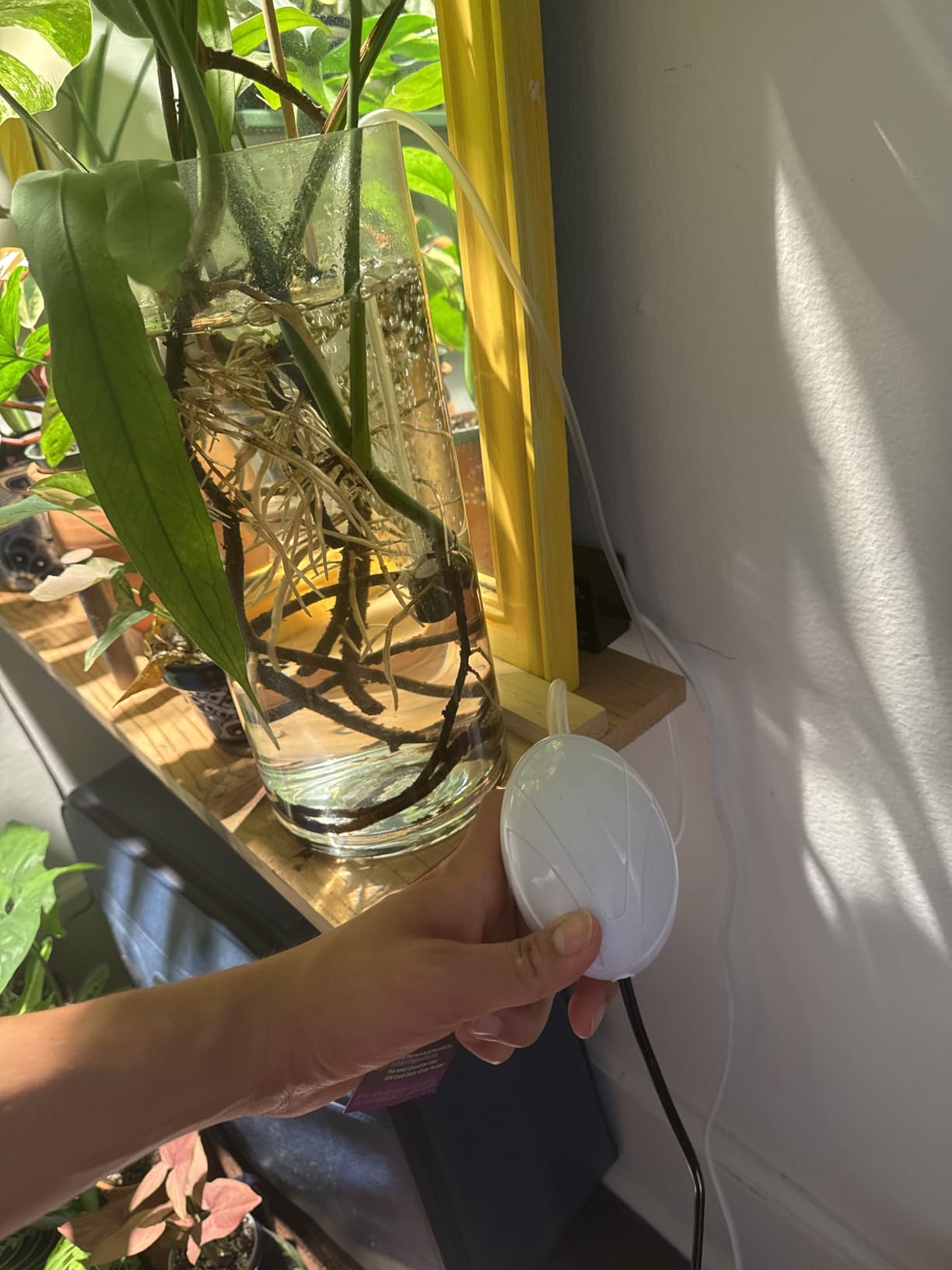
Ratings average 4.2 across 2148 reviews, with the highest one-star share in this set at roughly 9 percent. Buyers who are happy are the ones who matched the pump to a small tank and two small stones.
Treat this as a starter unit or a backup. Keeping a spare in a drawer is what forum growers recommend after a pump failure at midnight during a dark-cycle outage.
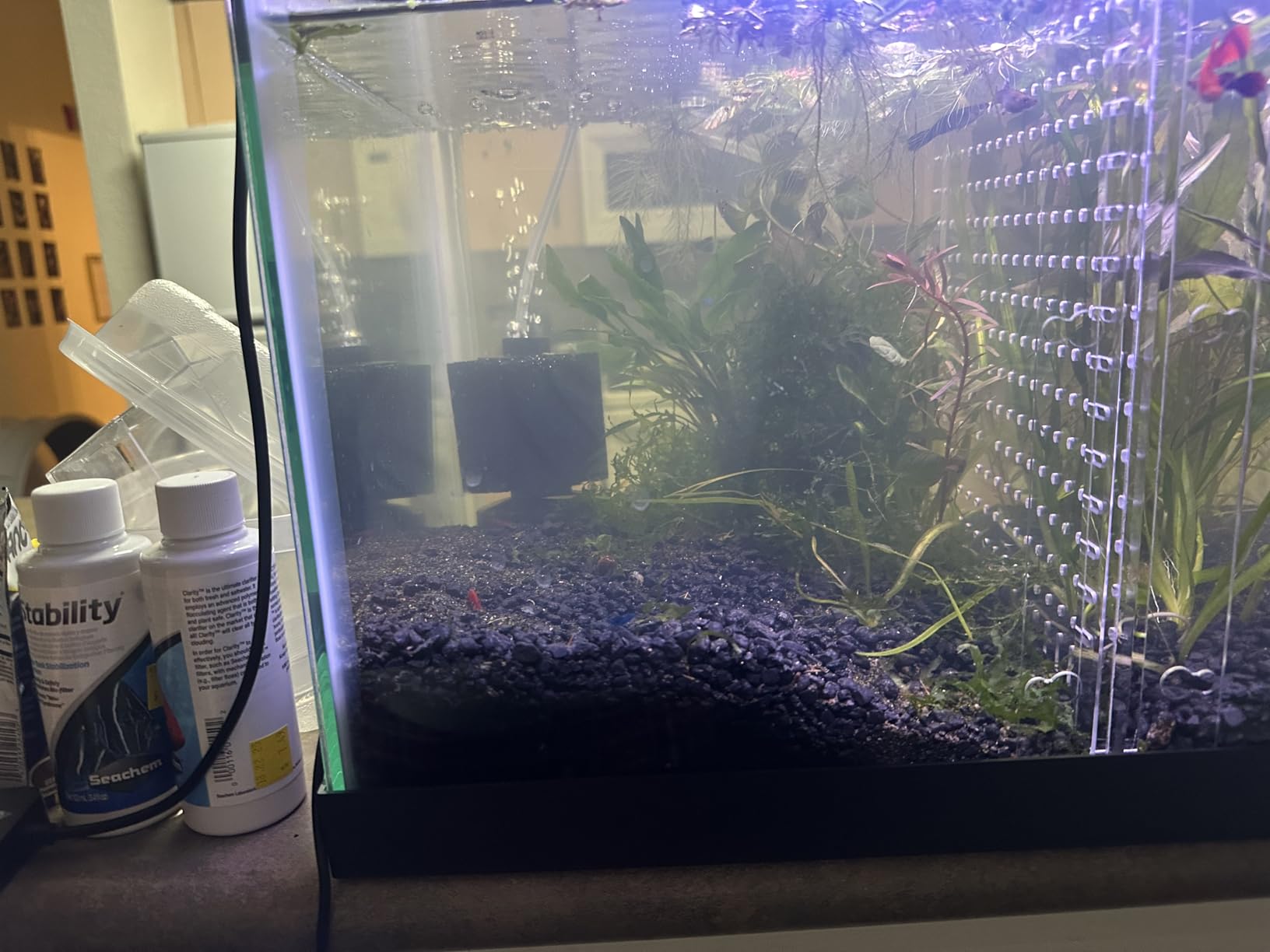
What you actually get
Four rubber feet and a control knob, in a body measuring 4 by 2.25 by 1.75 inches. That footprint is the real advantage, since it disappears into a cabinet or under a shelf where a 9-inch-tall pump will not.
The two check valves matter more than they look. They stop nutrient solution from siphoning back through the tubing into the pump when you top off a reservoir, which is the fastest way to destroy an air pump.
The control knob is coarse rather than precise, so it works best as an on, off and somewhere-in-between setting. Turn it down until the bubbles clear the surface instead of trying to trim to an exact figure.
The honest limitation
Airflow is the weak point. Push it toward a large bubble wall or a single heavy stone and the pressure collapses, which is exactly what the one-star reviews describe without naming the cause.
The listing states no warranty at all, so treat it as disposable equipment. That is not a criticism of an entry-level pump so much as a reminder not to build a system you care about around it.
6. INCLY 245 GPH 4-Outlet Pump: Best Multi-Year Multi-Reservoir Setup
INCLY 7W Ultra Silent Aquarium Air Pump – 245 Gallon/Hr, 4 Adjustable Outlets – Commercial & Hydroponics Oxygen Bubbler for Fish Tank & Pond
245 GPH (16 L/min)
7W
4 outlets
0.025 MPa
Hi/low switch
Pros
- Replaces two smaller pumps on the low setting while drawing less power
- Four-outlet divider with per-port manual flow control
- Hi/low switch allows genuinely near-silent overnight running
- Reported to run multiple airstones or sponge filters
Cons
- Low pressure limits deep placement past about 2.5 feet
- Noise and output drift upward over roughly three years of service
At 4.5 stars from 1916 reviews, this is among the best-rated multi-outlet pumps in the roundup, with roughly 78 percent of ratings at five stars. The sound-insulated housing and the hi/low switch are why.
The low setting is the interesting part. Growers report that on low it replaces two smaller pumps while consuming less power, which makes it a good fit for a system where the lights are off and the pump does not need to be at full output.
245 GPH across four outlets at 7W, with 0.025 MPa pressure, puts it in the same performance class as the Pawfly but with a different emphasis. This one is quieter at a given setting; the Pawfly pushes harder against back pressure.
For a grow tent, that trade-off usually points the right way. Nobody has ever complained about a pump being too quiet, while noise is the most common complaint in every hydroponics forum we looked at.
Read the two-year pattern
Multi-year owners describe a consistent life cycle: excellent for roughly the first two years, then rising noise and falling pressure until the unit needs replacing. That is a normal service life for an electromagnetic pump in this class, not a defect.
Plan your replacement around that timeline rather than treating the failure as a surprise. Growers who keep a spare on hand treat it as routine maintenance on the same footing as replacing an air stone.
The hi/low switch is not a full flow dial. Owners note the included manifold offers only coarse on, off and half adjustment, so fine-tuning happens at the stone or with an inline valve instead.
Know its pressure limit
At 0.025 MPa, stones placed below about 2.5 feet of water stop bubbling. In a tall RDWC column or a deep sump, that is the constraint that decides whether this pump works for you.
Its stated use cases are small to medium tanks, hydroponics and spouting decorations. Match it to a column whose stones sit high, or to a wide, shallow RDWC bed where depth is not the issue.
7. AQUANEAT 100 Gallon Pump: Quiet, Compact and Easy to Hide
AQUANEAT Aquarium Air Pump, 100 Gal Fish Tank Air Pump, Hydroponic Oxygen Aerator with Airline Tubing, Bubbler Stones, Check Valve
Dual outlets
Up to 100 gallons
8 ft tubing included
5.25 x 2.75 x 2.25 inches
Pros
- Very quiet operation
- with owners reporting it runs quieter on both outlets
- Compact enough to hide inside a cabinet
- Strong enough to drive sponge filters on two 20 gallon tanks
- Dual outlets and inline check valves keep runs tidy
Cons
- On-pump adjustment knob can produce a rattle
- Short cord and short tubing
- Only a 30-day warranty
This is the pump for the part of your system nobody looks at. At 5.25 by 2.75 by 2.25 inches it fits behind a reservoir lid or inside a cabinet, which matters more in a small indoor setup than any figure on the spec sheet.
Owners single out near-silence and low cost as the standouts, and the advice that runs through the reviews is that it sounds better running both outlets rather than one. Sponge filter loads damp the compressor resonance.
Ratings hold at 4.4 across 1547 reviews with about 70 percent five-star feedback. The two recurring problems are the flow dial and the short cord, and heat-related tubing adhesion reported within the first year.
What works well here
Dual outlets with check valves included means two clean runs to two reservoirs with no extra parts. For a two-bucket system this is the tidiest plumbing in the roundup.
Suction-based or sponge-based applications behave well, and the same core pump design gets used for aquaponics fish tanks where noise near living quarters matters.
Skip the on-pump knob if you can. Owners who fit an external control valve instead report fewer complaints about rattling and better control, which costs a few dollars and a minute of fitting.
Two things to fix before you rely on it
The 8 feet of tubing and the short cord are the practical limits here. Plan the layout before ordering, because extensions and extra airline are the accessories you will add within a week anyway.
The heat note is worth taking seriously in a closed cabinet. Airflow around the body matters, and owners report airline tubing fusing to the pump casing as heat builds. Leave clearance on all sides.
8. Active Aqua 7.8 L/min Dual Outlet: Two Buckets, Three Watts
AAPA7.8L Active Aqua, 2 Outlets, 3W, 7.8 L/min Air Pump, Silver
7.8 L/min (about 125 GPH)
3W
Two outlets
40 dB max
12.8 ounces
Pros
- Adequate output for two DWC buckets at only 3 watts
- Independent dual outlets avoid a T-fitting and two inline valves
- Runs warm to the touch without affecting water or tent temperature
- Free-adjustable airflow dial with a synthetic rubber diaphragm
Cons
- Reported noise varies widely with some owners measuring near 62 dB
- Some units grow louder after about a year of continuous use
- US-only plug with no tubing or check valves included
Two buckets, three watts, done. This is the smallest sensible pump for a home DWC setup and the lowest power draw of anything in the roundup that still produces a usable bubble curtain.
The two outlets are built in rather than added with a T-fitting, which removes the two most common leak points in a home system. That simplicity is worth more than raw flow in a two-reservoir build.
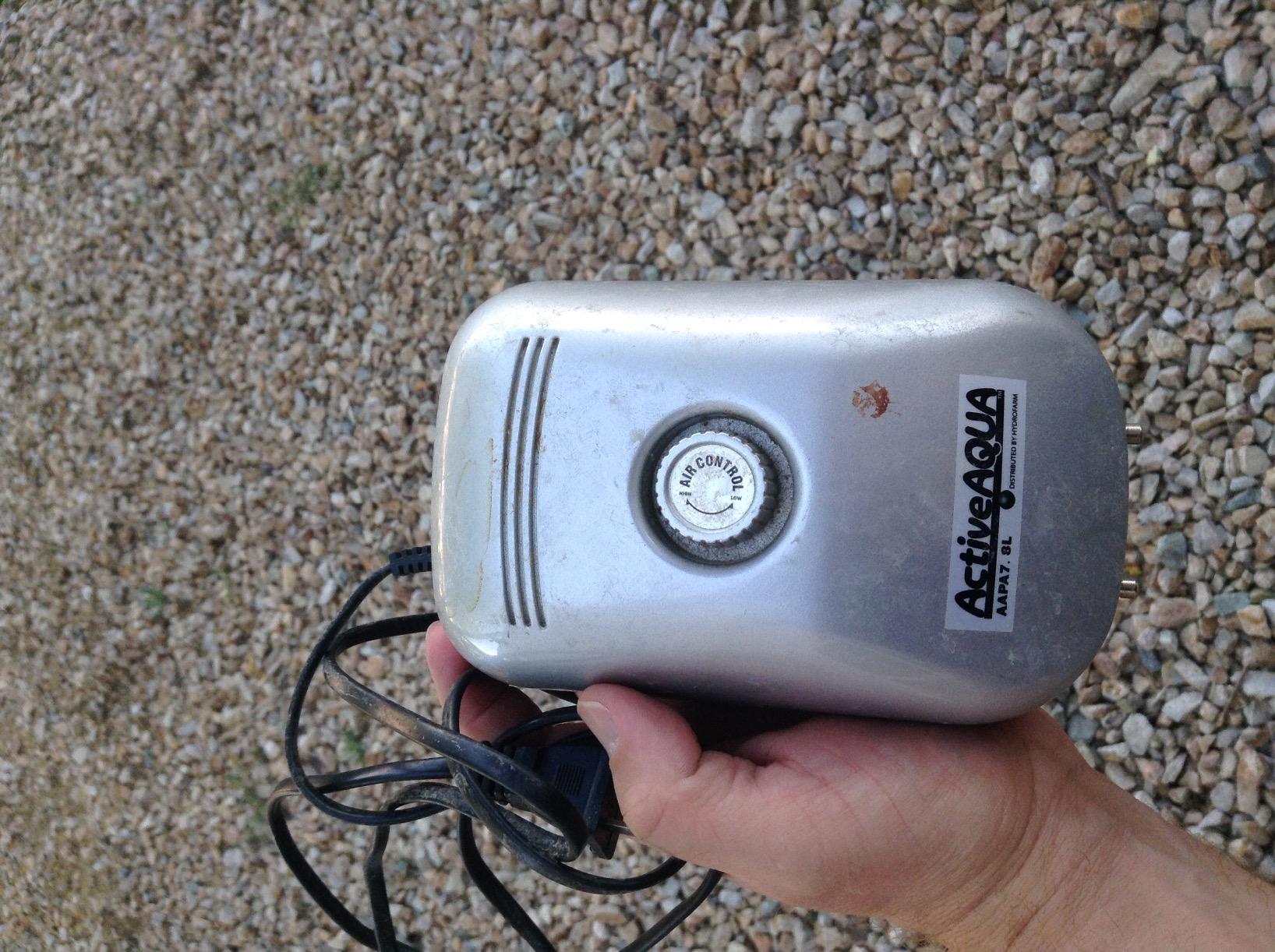
It also runs warm without pushing heat into the solution or raising tent temperature, which is a genuine consideration when the reservoir sits inside a closed space under a 600W light.
Ratings are 4.4 from 1373 reviews with 69 percent five stars. Hydroponics buyers consistently call it a starter-grade workhorse; the split ratings come down to unit-to-unit noise variance and the plug type.
Where 125 GPH is enough
Two 20 to 25 gallon totes with one stone each is the textbook fit. That is roughly one stone per 10 to 15 gallons of mixed solution, which is the working ratio we use throughout this guide.
The free-adjustable airflow dial lets you set output for the actual depth of your stones rather than for the spec sheet. Turn it down until the bubbles reach the surface and stay there, and leave it.
Start here, then upgrade only when you move to a column or a multi-reservoir RDWC. Upgrading early is the most common way people over-spend on a small system.
Noise and plug caveats
Stated maximum is 40 dB, but owners report measuring up to 62 dB depending on the unit. That variance is worth knowing if the pump sits beside a bed, and it is the main reason to keep a spare rather than a single unit.
The plug is US-only, which is a genuine annoyance for international buyers. Tubing and check valves are not in the box, so budget for a stone, airline and a pair of valves before the pump arrives.
9. AQQA 3W Dual Outlet Pump: The Highest Satisfaction Score Here
AQQA Aquarium Air Pump, 3W Powerful Dual Outlet Adjustable Oxygen Aerator
100 GPH
3W
Two stainless outlets
35 dB max
18 KPa
Pros
- Top dial gives smooth stepless airflow control
- Quietest rated output in this roundup at 35 dB or less
- Four suction-cup feet keep it fixed in a cabinet
- Dual stainless steel outlets with check valves included
Cons
- 3W output will not drive a sponge filter and an air stone at the same time
- Shipping outside 110V regions needs a step-down adapter
At 4.7 stars from 1126 reviews, this is the highest-rated pump we covered, with 85 percent of ratings at five stars. The adjustable top dial combined with genuinely low noise is what buyers are reacting to.
The dial is stepless rather than stepped. Owners compare the feel of it to a DC pump, which is a real advantage when you want to fine-tune a bubble curtain instead of choosing between full and off.
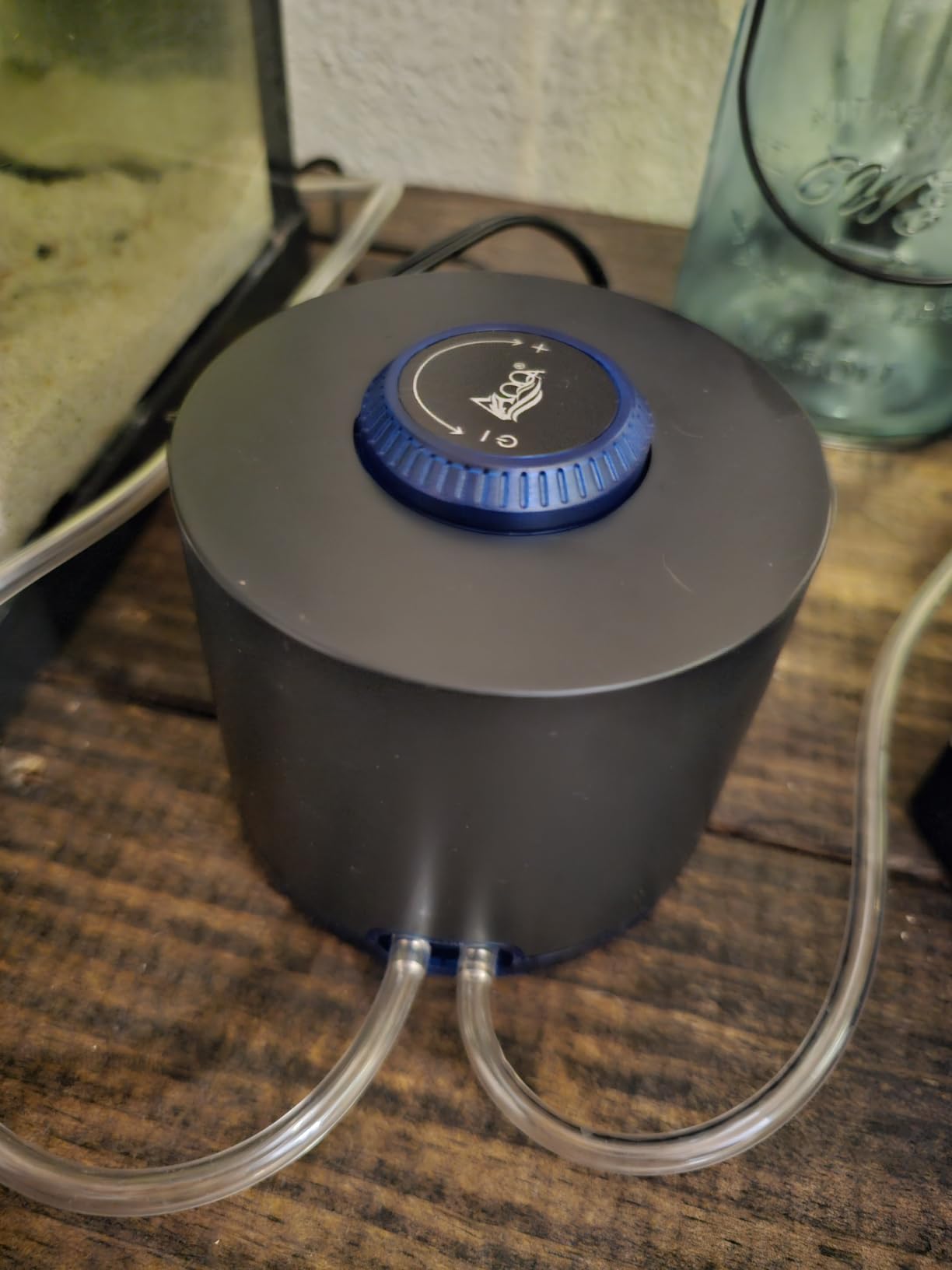
Double-layer housing and four soft rubber pads hold noise under 35 dB, the lowest stated figure in this roundup. In a bedroom or a small tent that is the difference between a system you tolerate and one you switch off at night.
The package includes the pump, two air stones, two air tubes, two check valves and a manual, so it is a complete kit rather than a bare pump. Stainless steel outlets resist the corrosion that cheap plastic fittings develop.
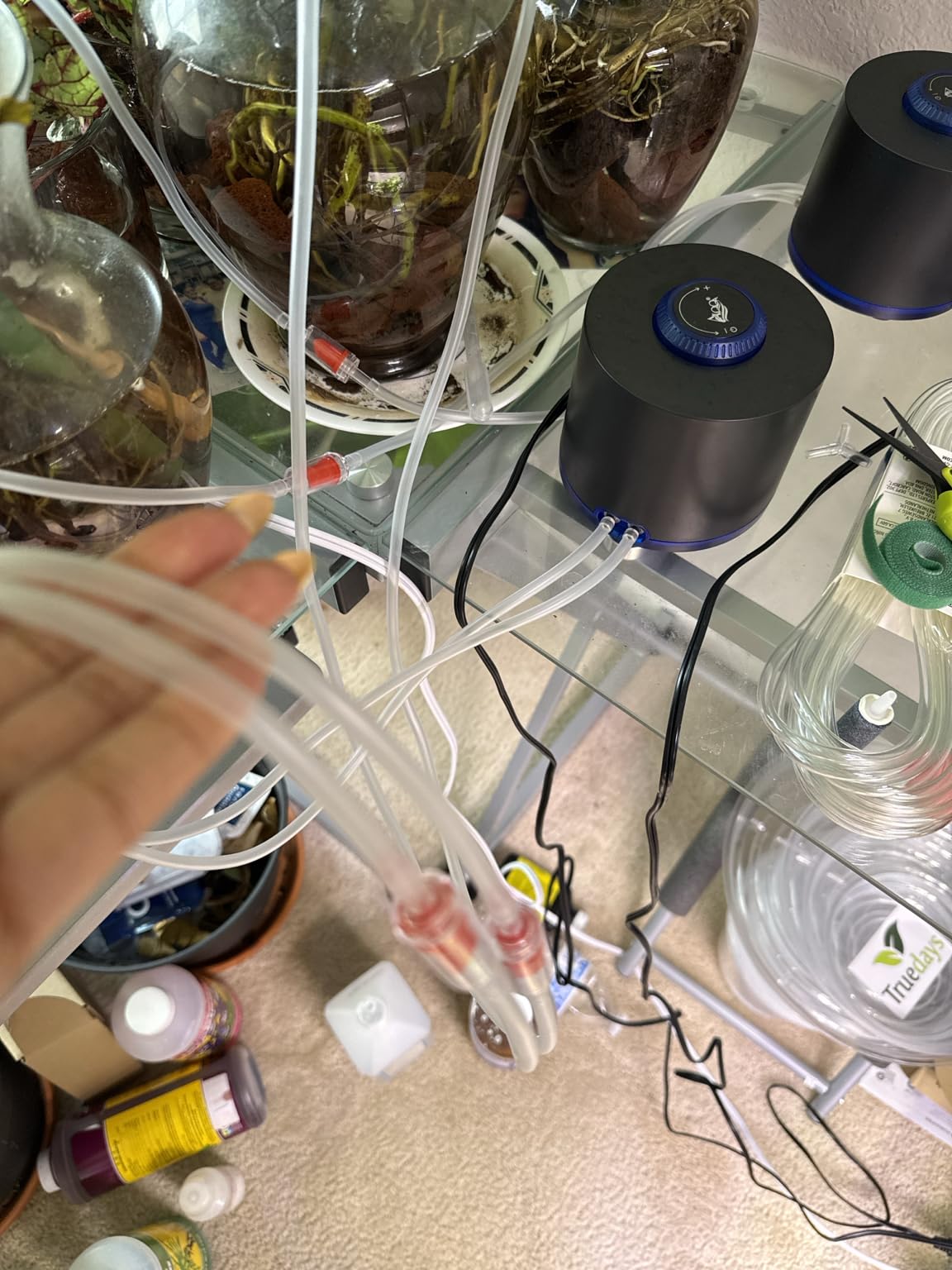
Who this rating suits
Single small reservoirs, quiet indoor rooms, aquaponics setups where a fish tank sits in the same space, and anyone who wants an aquaponic air pump that does not announce itself. At 100 GPH it covers a single tote comfortably.
The suction-cup feet are a small detail with real consequences. They hold the pump in place on glass or on a cabinet wall, and a pump that does not walk is a pump that does not transmit vibration into the reservoir lid.
Owners frequently keep a spare on hand. With a one-year after-sale service period behind it, a second one is cheap insurance against a midnight failure.
Where the output runs out
100 GPH at 3W will not drive a sponge filter and an air stone simultaneously. That is the most common complaint, and it is the reason aquaponics users step up rather than tune down.
Outside 110V regions the unit needs a step-down adapter. The pump itself is rated for tanks up to 80 gallons, and again that is an aquarium figure rather than a hydroponic one.
10. AquaMiracle 600 GPH Pump: Manifolds, Ponds and Compost Tea
AquaMiracle Aquarium Air Pump Commercial Air Pump with Aluminum Housing, 18W/600GPH Fish Tank Bubbler Pond Aerator for Aquariums, Ponds, Hydroponics
600 GPH (2270 L/h)
18W
6-outlet manifold
0.02 MPa
Aluminium body
Pros
- Aluminium alloy housing dissipates heat better than plastic bodies
- Chrome-coated 6-outlet manifold with per-outlet adjustment knobs
- Lubricant-free cylinder and piston cut power draw and maintenance
- Also suited to compost tea brewing and laser cutting air assist
Cons
- Manufacturer recommends a ventilated location and a cooling fan
- Lower share of top ratings than the compact pumps here
Six outlets with individual flow knobs is the most flexible plumbing in this roundup, and the aluminium housing is the reason it can run long. Heat dissipation decides how long a piston pump lasts.
600 GPH at 18W with 0.02 MPa covers a large RDWC bed, a fish farm tank, a pond or a compost tea brewer. Growers who do more than one of those tend to end up here because the outlet count covers all of them.
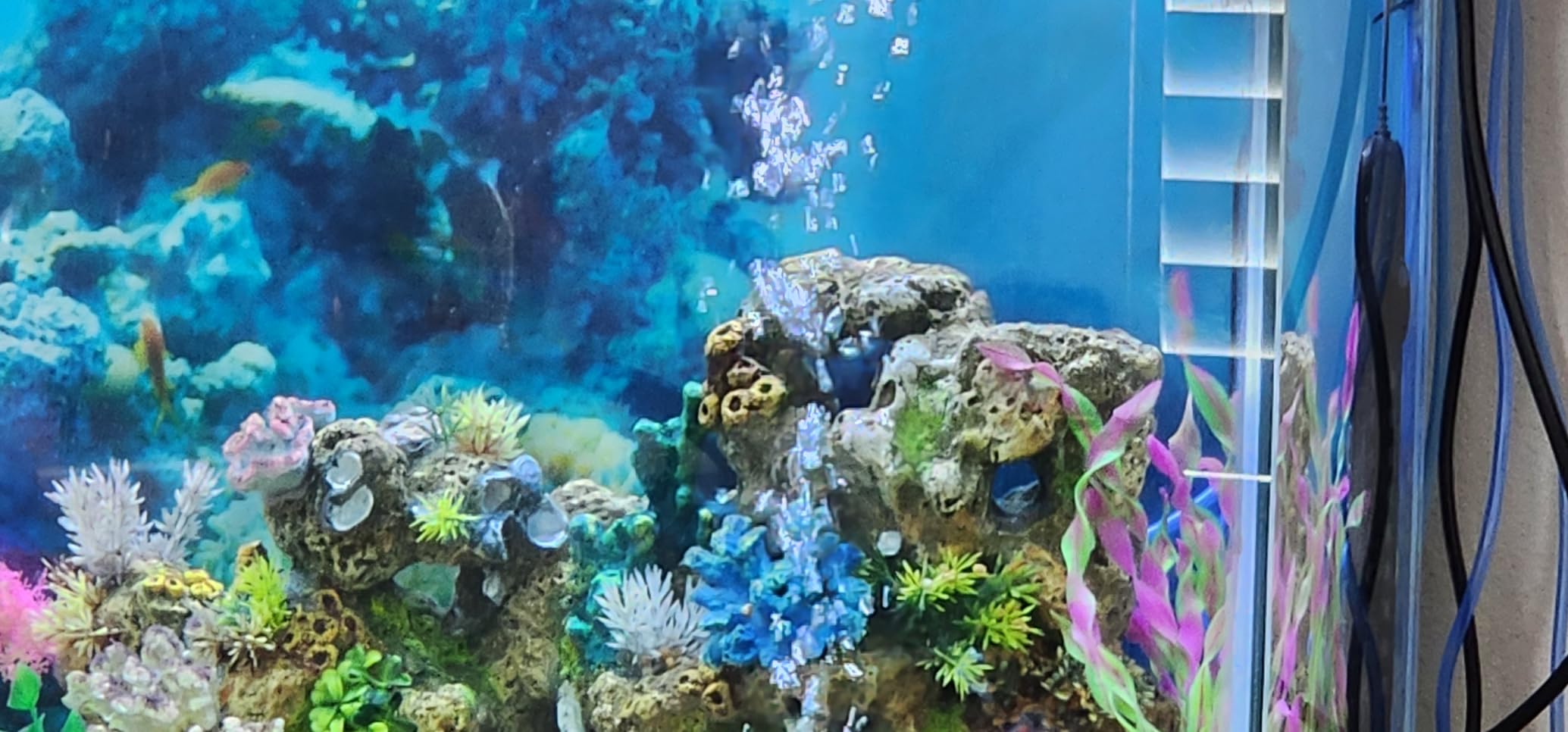
At 4.4 stars from 878 reviews with 75 percent five stars, satisfaction is high but the sample is smaller than the workhorse pumps. That is normal for a unit in this class, where buyers are building larger systems.
The lubricant-free cylinder and piston are a genuine plus in hydroponics. There is no oil carried into the nutrient solution with the air stream, and there is no oil to change or contaminate a reservoir.
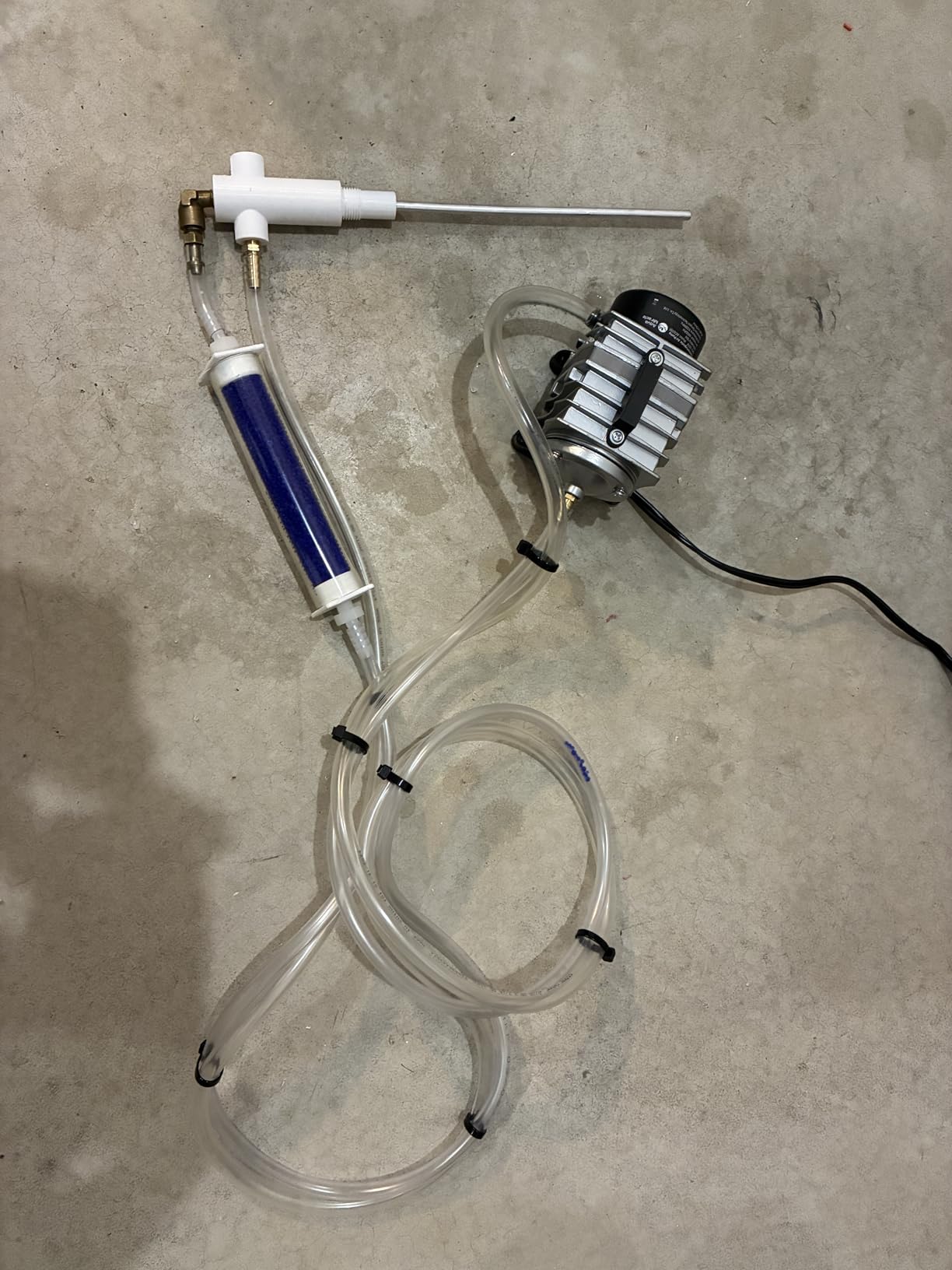
Ventilation is part of the specification
The manufacturer recommends a ventilated location, and some owners go further and add a cooling fan. A piston motor in a sealed cabinet will cook itself, and the pump is rated for the air around it, not for the temperature it creates.
Leave clearance on all sides and keep it away from light heat. In a greenhouse or a ventilated equipment room this is a non-issue. In a closed cabinet under a reservoir, it is the first thing to fix.
Six separately adjustable outlets also mean you can dedicate lines to different depths, which is useful when one part of a system needs more pressure than another.
When it is not the right choice
For a small indoor setup this is overkill on both airflow and noise. Buying a 600 GPH pump for a 20 gallon tote wastes power and space, and the price difference buys you nothing.
The airflow and motor life depend on airflow around the unit more than on the pump itself. If you cannot give it room, spend on a compact pump instead.
11. HITOP 6W 160 GPH Pump: Best Complete Kit for One Reservoir
HITOP 6W Silent Aquarium Air Pump – 160GPH Large Air Volume Fish Aerator, Adjustable Oxygen Pump for Fish Tank up to 300 Gallon
160 GPH (10 L/min)
6W
24 KPa
12-month warranty
16 ounces
Pros
- Strong 160 GPH output for a 6W draw
- Double-layer shell and rubber feet keep it among the quietest at this power
- Full kit includes stones tubes check valves regulating valves and a T-connector
- Knob-controlled airflow dials down to near-silent levels
Cons
- Full output is noticeably louder than the low setting
- Light weight lets it walk on smooth surfaces
The most complete kit in the roundup. Two large stones, two 4.9-foot tubes, two check valves, two regulating valves, two suction cups and a T-connector all ship in the box, which means one order covers the whole aeration side of a reservoir.
160 GPH at 6W is enough for one mid-size reservoir, and at 24 kPa it has more pressure than most pumps in this class. That pressure is what keeps a stone bubbling when it sits below a net pot rather than at the bottom of the tank.
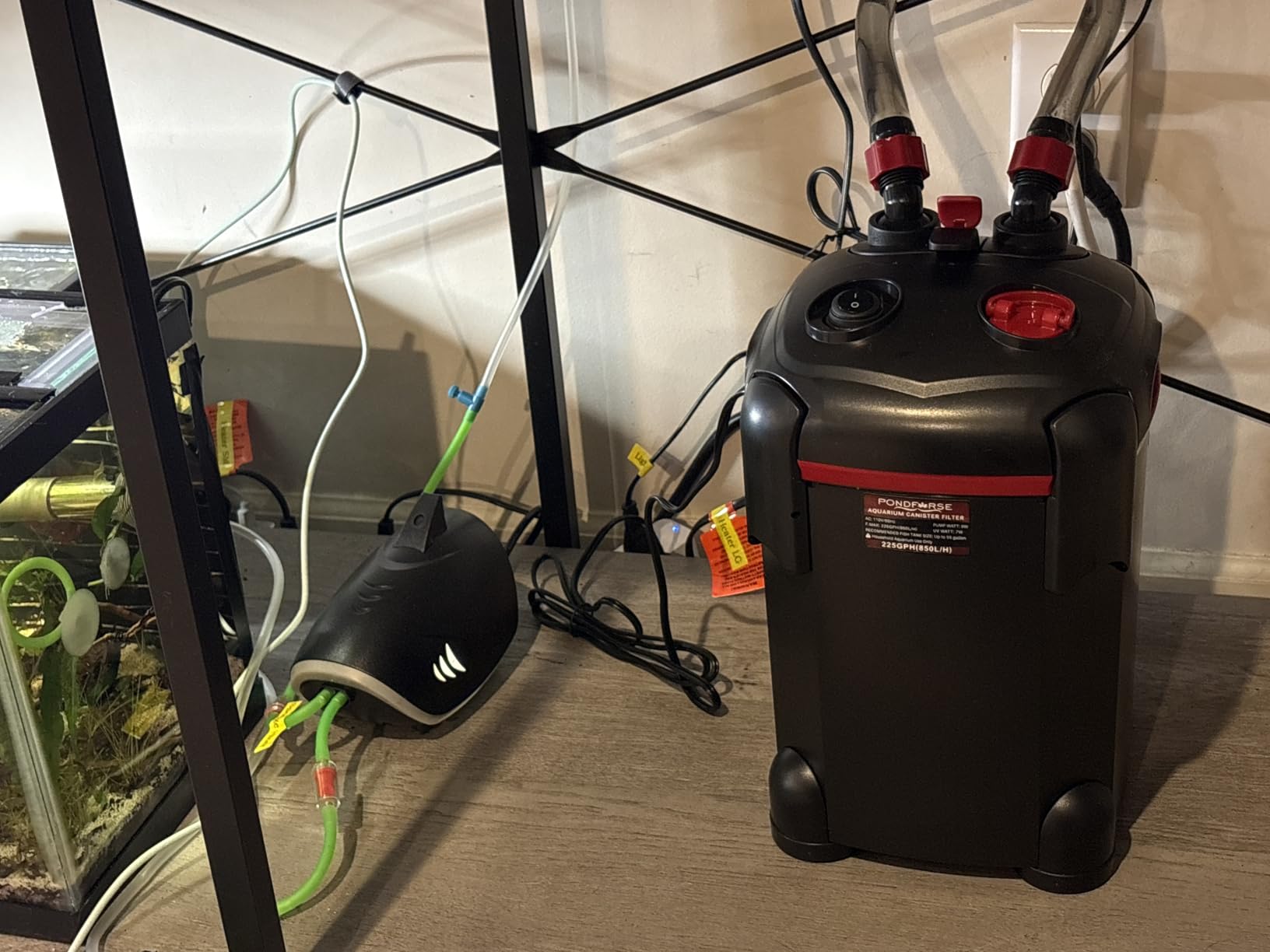
Ratings land at 4.6 from 762 reviews with 79 percent five stars. Owners frequently buy multiples, judging the combination of airflow, near-silence at reduced settings and how complete the accessory kit is.
That repeat-purchase pattern is the point. Two smaller pumps in different rooms give you redundancy and independent failure, and a spare on the shelf is the most sensible outage insurance available in hydroponics.
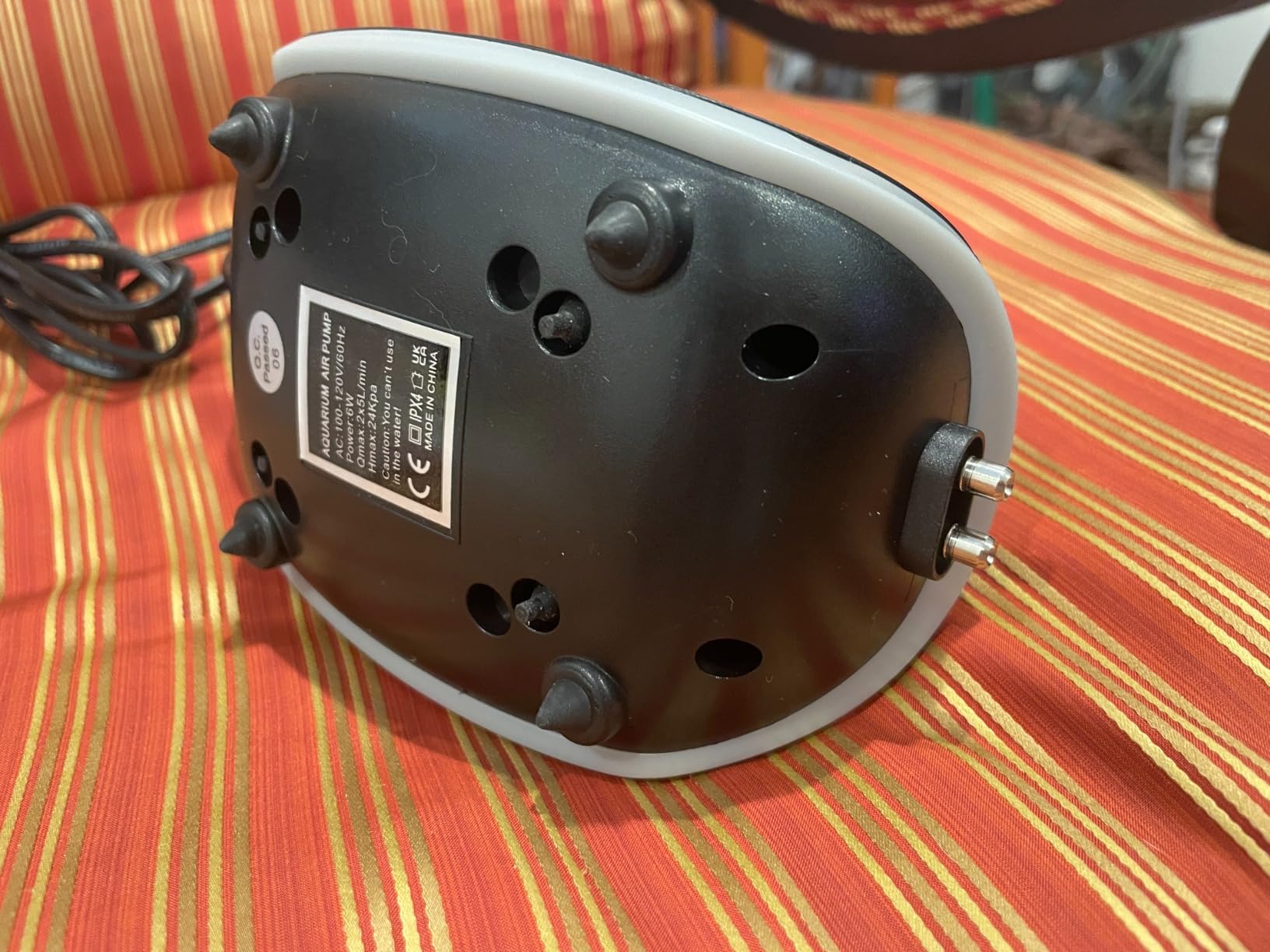
What the kit saves you
Regulating valves in the box matter more than they look. Controlling airflow at the stone rather than at the pump means one pump can feed two stones at different depths without starving either one.
The included check valves prevent solution from siphoning back into the pump. In a system where you top off reservoirs automatically, that is the difference between a five-year pump and a one-season pump.
A 12-month warranty is among the longest offered at this output level, which tells you something about the intended duty cycle.
Where it stops
Turn the output up and it gets noticeably louder. The quiet-at-low-settings claim is real; the quiet-at-full-output claim is not, and indoor growers should plan around that.
At 16 ounces it is light enough to walk across a smooth surface when the airline pulls, and the shock of a pump moving itself can crack fittings or pull a stone loose. Anchor it if your reservoir surface is glossy.
12. HITOP 10W 320 GPH Pump: Four Independent Lines for One Tank
HITOP 10W Powerful Aquarium Air Pump: 4-Outlets 320GPH Air Pump for Fish Tank, Quiet Aquarium Aerator with Completely Accessories, for Tank/Hydroponic/Pond Oxygenation
320 GPH total (80 GPH per outlet)
10W
22 KPa
Supports 7.2 ft depth
1.2 pounds
Pros
- Four independent outlets at 80 GPH each
- 22 KPa pressure supports tanks up to 7.2 feet deep
- Accessory pack covers four stones tubes check valves regulating valves suction cups and two T-connectors
- Intake filter cotton helps extend motor life
Cons
- Highest one-star share in the roundup at 12 percent
- Runs louder than the 6W HITOP model once output is opened up
This is the outlet count winner: four fully independent outlets at 80 GPH each, with a regulating valve per line. Nothing else at this output gives you four separately tuned streams without a manifold.
The 22 kPa pressure rating is the headline number, because it supports tanks up to 7.2 feet deep. That is the only pump here that reliably bubbles a stone at the bottom of a tall RDWC column, which is exactly where growers want oxygen.
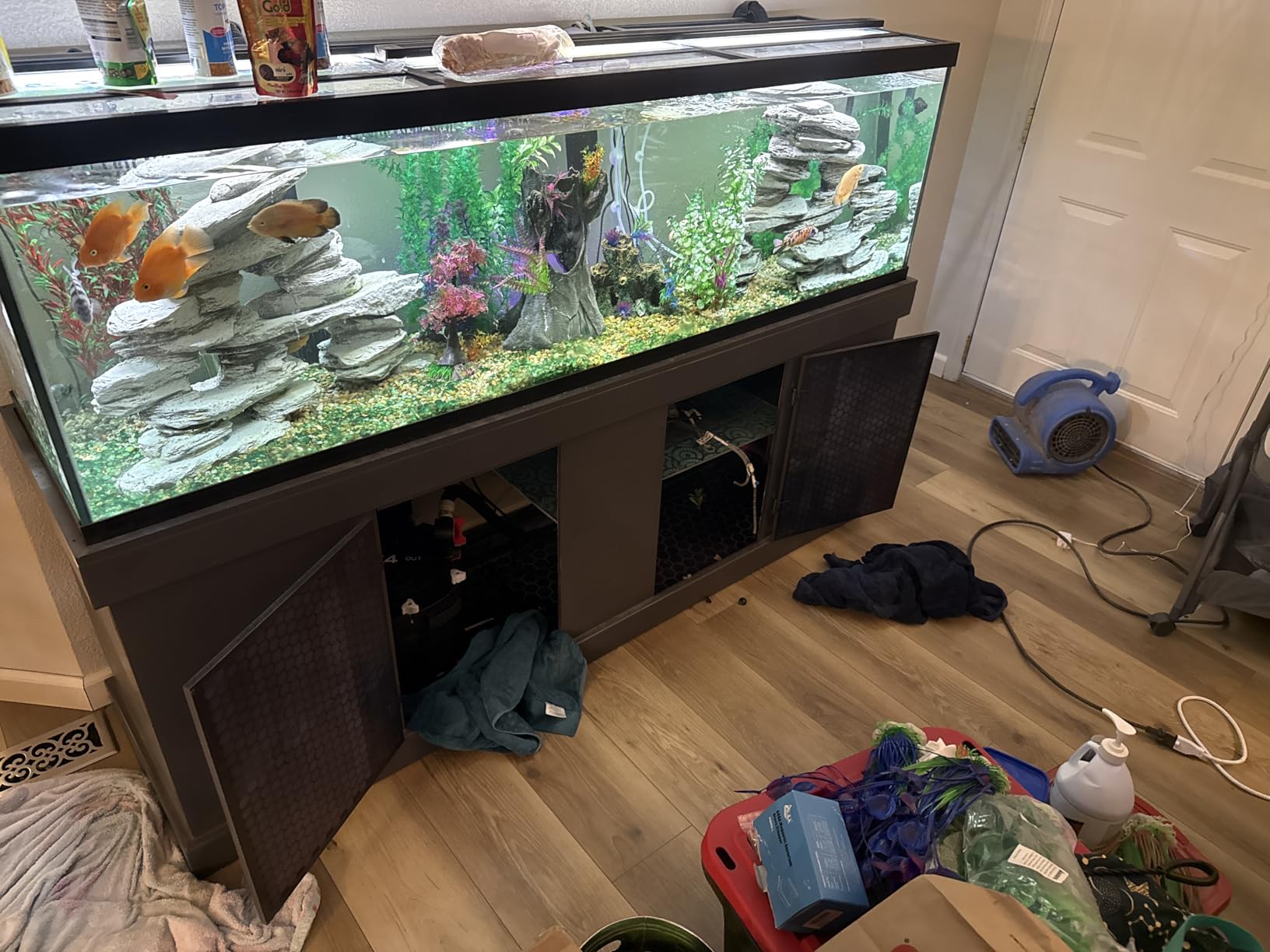
The accessory pack is unusually complete, with four tubes, four stones, four check valves, four regulating valves, four suction cups, two T-connectors and two filter pads. The intake filter cotton is the detail that extends motor life in humid rooms.
At 4.2 stars from 660 reviews, it has the joint-lowest rating in the roundup and a 12 percent one-star share, the highest here. Buyers who need four real lines at depth rate it well; the complaints point to units louder and weaker than the 320 GPH headline implies.
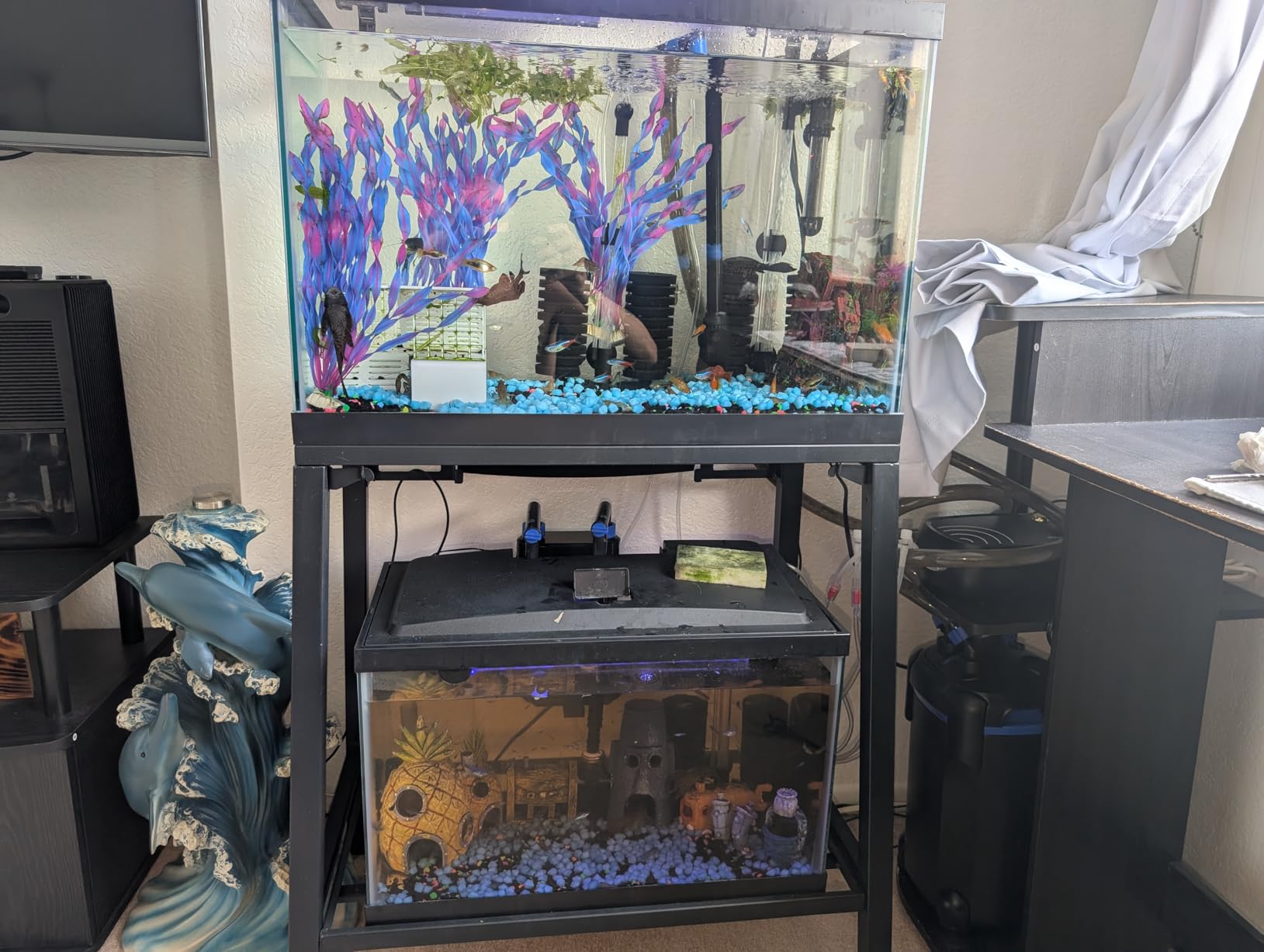
Where depth becomes the deciding factor
If your stones sit deep in a column or a sump, pressure matters more than headline GPH. This pump’s 22 kPa rating is what lets bubbles reach the surface from the bottom rather than stalling halfway up.
Four outlets at 80 GPH each is a sensible architecture for an RDWC column chamber with multiple sites. Balance each line with its own regulating valve so one site does not steal air from the rest.
The 80 GPH per outlet figure is the one to sanity-check. It is a share of the total, so four stones under full load is a genuinely different scenario from one stone with the other three valves closed.
Where it falls short
It runs louder than the smaller 6W HITOP once you open the output up. If the reservoir is in a living space, buy the quieter pump and accept less depth performance.
The 12 percent one-star share deserves attention. If you are buying this for a system that must not fail, buy a spare at the same time. A pump with the most demanding job in the roundup deserves redundancy.
How to Size an Air Pump for Your Hydroponic Reservoir
Multiply your total gallons of mixed solution by about 2 to 3 GPH per gallon, then add 30 percent headroom. A 20 gallon reservoir wants roughly 50 to 70 GPH. A 40 gallon RDWC bed wants 100 to 130 GPH. Do not size on tank volume, because stones and tubing consume head pressure.
That rule of thumb matters because the alternative advice found on grower forums is genuinely contradictory. In one thread, a grower with a fixed setup was advised to use a 951 GPH pump; in another, the same setup was told to use a 127 GPH pump. Both numbers appear in good faith, and both come from different assumptions.
The four-step calculation
Add up your solution. Count every reservoir, not every tank. A three-column RDWC system might hold 60 gallons of mixed solution spread across nine chambers, and the pumping requirement follows the solution, not the container.
Count your stones. Each stone is a load. Note the depth it will sit at, because depth is what converts flow into pressure.
Apply a per-stone target. One inch of air stone in a five gallon tote wants roughly 4 to 5 GPH. Larger stones and deeper placement want more, not less.
Add 30 percent headroom. Manufacturer flow figures are free-air ratings. Stones and tubing cut delivered airflow by a large fraction, and clogged stones cut it further.
Worked example for a common 4×4 tent with six 5-gallon totes: that is 30 gallons of solution, so 60 to 90 GPH by the ratio rule. With one 4-inch stone per tote at 12 inches depth, you land at roughly 120 to 160 GPH delivered, and we would pick a pump rated well above that.
The mapping, in plain terms: one small tote takes a 100 to 125 GPH single or dual outlet pump. Two to three totes take a 245 to 320 GPH four-outlet pump. A single RDWC column with stones at two depths takes 245 GPH and above with pressure to spare. Multiple 100 gallon reservoirs take a piston or commercial pump in the 600 to 800 GPH class with a multi-valve manifold.
For a grower moving from one pump to several, the outlet count argument from THCFarmer holds up. Adjustable multi-port pumps deliver adequate oxygen at lower total volume than a single-port pump, so a 4-port 245 GPH model can beat a 1-port 250 GPH model on a four-stone setup.
Air Pump Buying Guide: Diaphragm vs Linear vs Compressor
Almost every air pump sold for hydroponics falls into one of three designs, and the design explains the noise, the price and the lifespan before you read a single spec.
Rubber diaphragm pumps use a flexible membrane that flexes thousands of times an hour. They are quiet, cheap and compact, and they are the category most of this roundup falls into. The membrane hardens with age, so expect pressure and noise to drift over two to three years. This is the best choice for quiet indoor systems.
Piston and compressor pumps use a metal cylinder and piston driven by an electromagnetic motor. They push harder against back pressure, which is what lets a stone bubble at depth, and they last far longer because there is no rubber to perish. They are louder and draw more power. This is the right category for large reservoirs and commercial duty.
Linear diaphragm pumps push a piston along a straight path driven by a magnetic field. They combine strong pressure with lower vibration than a conventional piston, and they sit at the expensive end of the market. For a hobby reservoir the jump in cost is hard to justify; for a commercial farm it is not.
Now the features that actually change your experience. Outlet count determines how many stones you can feed without buying a manifold, and a manifold plus four inline valves costs more than the difference between two pumps. Pressure in kPa or psi determines bubble depth, and it is the specification growers most often skip. Noise matters more indoors than anything else on the list, and manufacturers quote a maximum rather than an average.
Duty cycle is the quiet differentiator. A pump built for intermittent aquarium duty will run hot and age faster under twenty-four-hour hydroponic use. Metal piston construction is the reliable indicator of continuous-duty design, along with a warranty longer than a few months.
Since noise is the top complaint from growers, it is worth reading our guides to quiet air compressors and air compressors overall for the principles that carry across to air pumps. The physics of muffling and housing is the same in both cases.
One last category note: this guide covers air pumps for aeration. The water pump that mixes your nutrient reservoir and tops it back up is a different job with different failure modes. Keeping air out of the reservoir is also a common complaint we hear, and if your room air feels stale, a purifier like the ones in our air purifier guide solves that problem rather than yours.
Air Stones, Diffusers, and Tubing You’ll Need
The pump is half the cost of a working aeration setup. The other half is the stone or diffuser, the airline, and the check valves that keep solution out of the pump.
A air stone is a bonded-silica cylinder that fractures airflow into thousands of micro-bubbles. Bigger stones move more air and need more pressure, which is why a deep stone on a weak pump simply stops bubbling. Match stone size to pump output and to the depth you plan to place it.
A diffuser is the same job in a different package: a disc or ceramic puck with a harder surface that resists the mineral scaling a soft stone picks up. Discs run quieter and last longer in hard water; stones are cheaper and disposable.
Two habits from the forums keep stone performance from quietly degrading. Never put a high-volume stone inside a net pot, because bubble shear abrades feeder roots. And keep replacement stone on hand as a seasonal item rather than a replacement item, since airflow drops before anything visibly fails.
For airline, use 1/4 inch for short runs and heavier-wall tubing for long hauls between a manifold and distant reservoirs. Check valves belong between the stone and the pump on every line, without exception. Without them, a top-off event siphons nutrient solution straight into the pump body.
Several pumps here ship with a full kit already: the AQUANEAT AP-215, the HITOP 6W and the HITOP 10W all include stones, tubing and check valves. The HITOP kits are the most complete. If you are buying a bare pump such as the Active Aqua 7.8 L/min model, add the accessories in the same order so you are not waiting on a second delivery before you can fill a reservoir.
Air Pump Placement and Maintenance Schedule
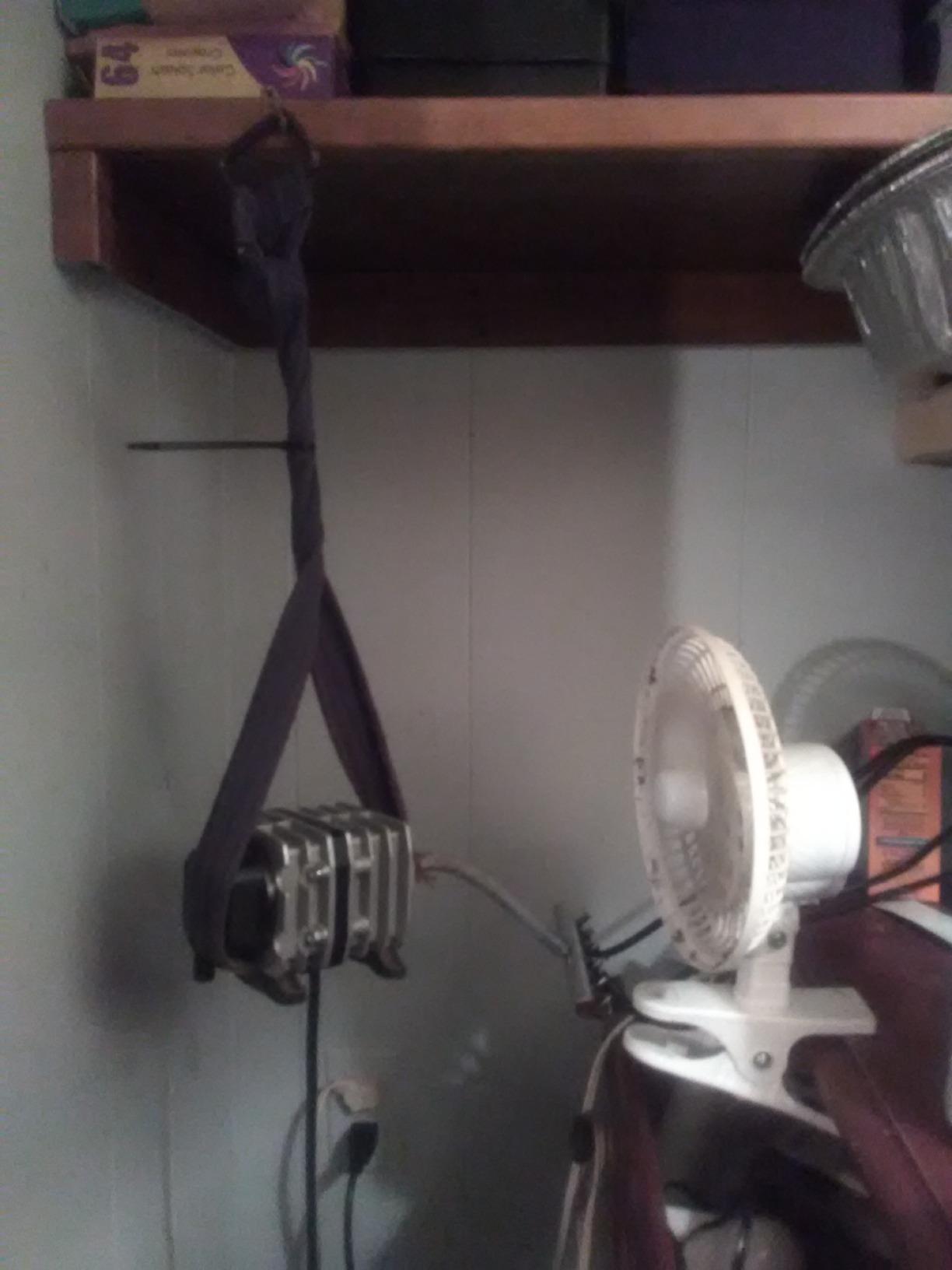
Can you hang the pump instead of sitting it flat? Yes, and growers do it constantly to cut noise, with one condition: support it so the body does not swing or drop, and never hang it by the airline. The tubing is not a mounting point, and a swinging pump is a loud pump.
Mounting above the reservoir also helps with the flow path, since air rises and you are already fighting gravity. What you must not do is seal a piston or compressor pump in an enclosed space, where it cooks itself.
Maintenance cadence
Daily: glance at the bubble curtain. A visibly weaker curtain is the earliest sign of a clogging stone.
Weekly: check that tubing is not kinked and that solution has not crept into a check valve. Wipe the intake of the pump if it is in a dusty space.
Monthly: swap or clean the air stone. Rinse a stone in hot water and descale with a mild solution; a clogged stone makes the pump work harder and run hotter.
Every six to twelve months: inspect the pump body for heat damage, check the cord at the strain relief, and confirm every check valve still seals.
Annually: expect to replace an entry-level electromagnetic pump on a two to three year cycle, based on owner reports across this roundup. Budget for it rather than treating it as failure.
Recovering a clogged stone takes five minutes. Disconnect the airline, remove the stone, pour boiling water through it and back flush with clean water, then soak it in a descale solution for an hour. If bubbles still do not return, replace it, because a stone that stays clogged keeps the pump working against a dead head.
Keep a spare pump. Every grower we read in the forums treats a second unit on the shelf as the most sensible outage insurance in the system, and the low-output models here are inexpensive enough that two is reasonable.
Frequently Asked Questions
Do I need an air pump for hydroponics?
Yes, for any system where roots sit in water, including deep water culture, RDWC columns, raft systems and aquaponics fish tanks. Submerged roots respire continuously and cannot reach surface air. Aeration keeps dissolved oxygen up, mixes nutrients so salts do not settle in one place, and starves pythium and other anaerobic root-rot pathogens of the low-oxygen conditions they need. Without it, growth stalls and root rot follows.
How big of an air pump do I need for hydroponics?
Multiply total gallons of mixed solution by 2 to 3 GPH per gallon, then add 30 percent headroom. A 20 gallon reservoir wants roughly 50 to 70 GPH, and a 40 gallon RDWC bed wants 100 to 130 GPH. Size on stone count and stone depth rather than tank volume, since stones and tubing consume pressure that reduces delivered airflow.
What is the best type of pump for hydroponic systems?
A rubber diaphragm pump is best for small to mid-size indoor systems because it is quiet and cheap. A piston or compressor pump is best for large reservoirs, deep columns and commercial duty because it holds pressure against back pressure and lasts longer. Linear diaphragm pumps combine strong pressure with lower vibration and cost considerably more, which rarely pays off outside a commercial farm.
How much GPH do I need per gallon of reservoir?
Most growers land between 2 and 3 GPH of pump rating per gallon of mixed solution, with 30 percent headroom on top of that. For six 5 gallon totes, 30 gallons of solution implies 60 to 90 GPH rated, and in practice a pump delivering 120 to 160 GPH at the stone is the right choice because manufacturer figures are free-air ratings.
Can I run one air pump for multiple reservoirs?
Yes, and growers often prefer it to several small pumps. A multi-outlet model with a valve per line gives you independent airflow control per stone and avoids the cost of a separate manifold with four inline valves. Keep an inline check valve on every line so nutrient solution cannot siphon back into the pump, and balance each line so one reservoir does not starve the others.
Final Verdict
The Active Aqua 4-Outlet Air Pump takes our Editor’s Choice for 2026. It pairs 240 GPH with four built-in outlets, a real flow dial and a 45 dB ceiling, which is the combination that solves the most systems without needing a manifold, an extension lead or a second pump.
Buy the EcoPlus ECOair 793 GPH if you are past the hobby stage and need pressure and volume for several reservoirs. Buy the Pawfly 254 GPH if you want the most capable all-round unit for a mid-size RDWC build. For pure quiet in a small indoor space, the AQQA 3W model has the lowest rated noise and the highest satisfaction score we found.
Whichever you pick, size it to your stones rather than your tank, put a check valve on every line, and keep a spare. Those three habits decide whether the best air pumps for hydroponic reservoirs actually last long enough to matter.