
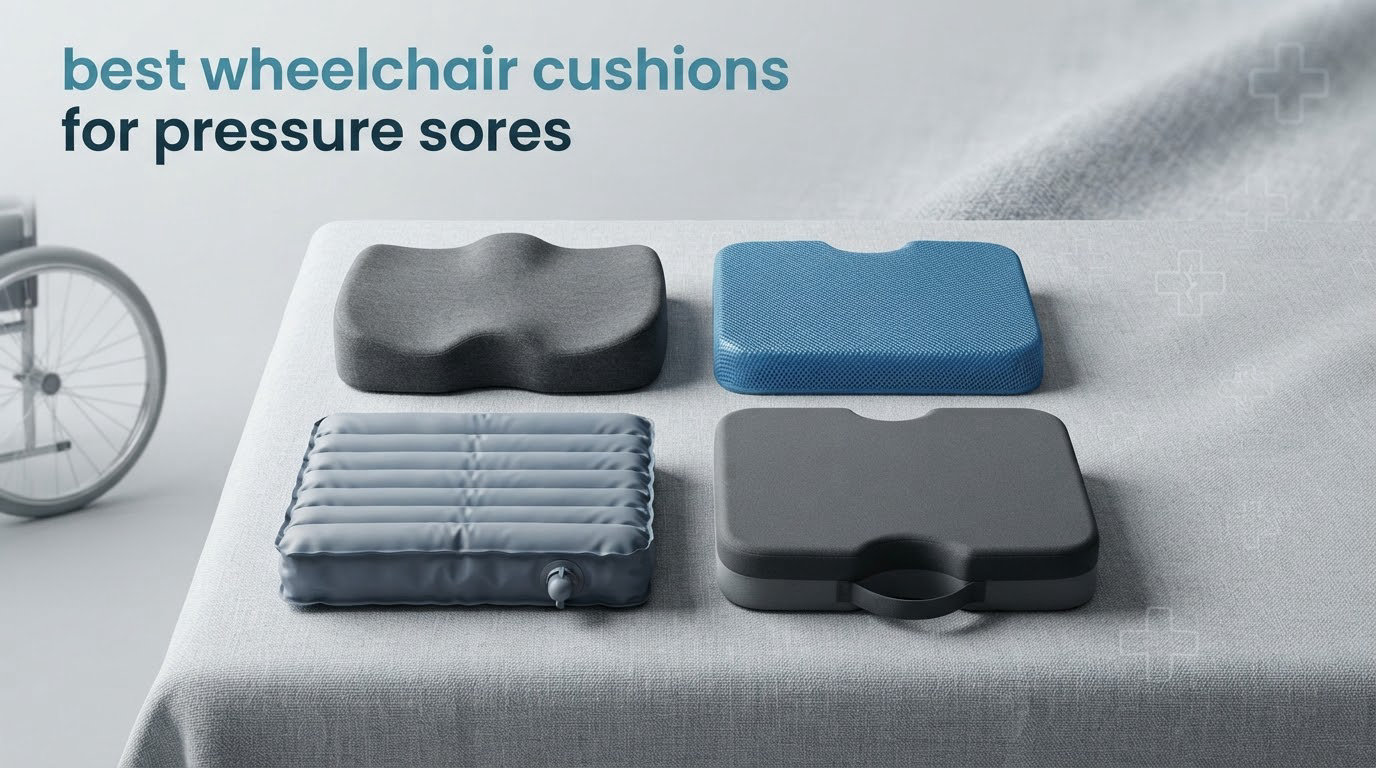
Air cell and gel-infused hybrid cushions are the most effective types for pressure sore prevention, because both let the pelvis immerse and spread weight across a wider contact area instead of loading the sitting bones. Alternating powered cushions add another layer of protection by cycling pressure so no single spot stays compressed. Foam alone buys comfort, not protection, once you are sitting for eight hours or more.
That is the short version. This guide walks through 12 named wheelchair cushions rated by the risk profile they actually suit, from a full-time wheelchair user with no skin sensation to a senior who needs a cushion that is simply easier to get on and off. We also cover how to measure your chair, why cushion height can break footplate clearance, and how Medicare treats cushions as durable medical equipment.
Medical note: this is buying guidance, not medical advice. If you already have an open sore, a wound that is enlarging, drainage, odor, fever, or skin that is breaking down, stop shopping and get clinical assessment first. A cushion supports a wound-care plan; it does not replace one. Last reviewed by our editorial team in 2026, and we review it whenever the product line-up changes.
One more thing worth saying plainly. The most common reason a good cushion fails is not the cushion, it is the number of hours. A user who moved from part-time to full-time chair use developed early skin breakdown with a cushion they already considered fine, because the sitting time changed and the cushion did not. Choose for your hours, not for your comfort on day one.
Table of Contents
Top 3 Picks for Pressure Sore Protection (October 2026)

Everlasting Comfort Ventilated Gel Cushion
- Ventilated gel with memory foam
- Rubberized non-slip base
- Machine washable cover

Roho Mosaic Air Cushion
- Interconnected 3 inch air cells
- Adjustable firmness
- Supports up to 315 lb
AUVON Memory Foam U-Cutout Cushion
- U-cutout tailbone relief
- Waterproof vented cover
- Detachable securing strap
The Best Wheelchair Cushions for Pressure Sores in 2026
Everything below is in the same order as the reviews that follow, so you can jump straight to the cushion that matches your risk level. Risk level here means how much pressure your skin can take without you feeling it.
| Product | Specifications | Action |
|---|---|---|
| Everlasting Comfort Ventilated Gel Memory Foam Cushion |
|
Check Latest Price |
| Roho Mosaic Air Cushion 18 x 16 |
|
Check Latest Price |
 AUVON Gel Cushion with U-Cutout AUVON Gel Cushion with U-Cutout |
|
Check Latest Price |
 Drive Medical 14886 Skin Protection Gel Cushion Drive Medical 14886 Skin Protection Gel Cushion |
|
Check Latest Price |
 Hvllyan Thick Large Gel Seat Cushion Hvllyan Thick Large Gel Seat Cushion |
|
Check Latest Price |
| AUVON Memory Foam U-Cutout Cushion 18 x 16 x 3 |
|
Check Latest Price |
 CYLEN Gel Infused Memory Foam Cushion CYLEN Gel Infused Memory Foam Cushion |
|
Check Latest Price |
 AUVON Front High Rear Low Wedge Cushion AUVON Front High Rear Low Wedge Cushion |
|
Check Latest Price |
 YOUFI Thick Memory Foam and Gel Cushion YOUFI Thick Memory Foam and Gel Cushion |
|
Check Latest Price |
 CUSHIO Cushion and Lumbar Pillow Set CUSHIO Cushion and Lumbar Pillow Set |
|
Check Latest Price |
 HeiWecan Gel Cushion with Backrest Pad HeiWecan Gel Cushion with Backrest Pad |
|
Check Latest Price |
 Beatvive Donut Ring Seat Cushion Beatvive Donut Ring Seat Cushion |
|
Check Latest Price |
How Pressure Sores Develop and What Actually Stops Them
A pressure injury starts when sustained pressure blocks blood flow to the skin. Stage 1 is a reddened area that does not blanch, stage 2 is broken skin or a blister, stage 3 is a deeper crater reaching into fat or muscle, and stage 4 extends to bone or tendon. Damage at stage 1 can begin within a few hours of uninterrupted pressure.
Two forces do the damage, not one. Pressure crushes tissue against the bony sitting bones (ischial tuberosities), and shear drags skin sideways against that deeper tissue. A cushion addresses pressure well. Shear is why covers matter, which is why low-shear surfaces on the Drive Medical 14886 are worth more than they first appear.
So what actually prevents sores? A cushion is one part of a five-part routine.
Reposition every 15 to 30 minutes, and lean or elevate pressure whenever you can.
Check your skin twice daily with a mirror, focusing on the sitting bones, tailbone and heels.
Keep weight stable with nutrition and hydration, because low albumin makes skin fragile.
Keep the cushion surface dry and the cover low-shear, since moisture macerates skin.
Match the cushion to your hours and your weight, then check for flattening on a schedule.
On r/wheelchairs, long-term users point to the same order of importance. Cushion type matters, but so does the repositioning habit, and several users describe a stable air cushion as the reason they have never had skin breakdown.
1. Everlasting Comfort Ventilated Gel Cushion for Everyday Cool Sitting
Everlasting Comfort Ventilated Wheelchair Cushions for Pressure Relief – Gel Memory Foam Wheel Chair Seat Cushion Pad for Seniors and Adults & Pain Relief – Soft Non-Slip Cover – Office Accessories
Ventilated gel plus memory foam
18 x 16.93 inch footprint
2.29 pounds
Washable removable cover
Pros
- Ventilated gel stays cooler over long sits
- Memory foam holds its shape over time
- Rubberized non-slip base keeps it planted
- Machine washable removable cover
- FSA and HSA eligible with OEKO-TEX fabric
Cons
- Listed dimensions do not state the cushion thickness
- Gel sits lower than a high-profile foam cushion
- Gel is infused into foam rather than a discrete bladder
This is the cushion we recommend first for most people, and the reason is unglamorous: it holds up. With 8232 reviews at a 4.5 average, it has the largest evidence base in the group, and the complaints are about expectations rather than failure. Most of them are about thickness, not support.
The construction is ventilated gel over memory foam, which is the specific answer to the sweating problem that drives people off other cushions. Heat is the complaint we hear most from long-term wheelchair users, and a design that breathes goes a long way toward keeping skin dry enough to stay intact.
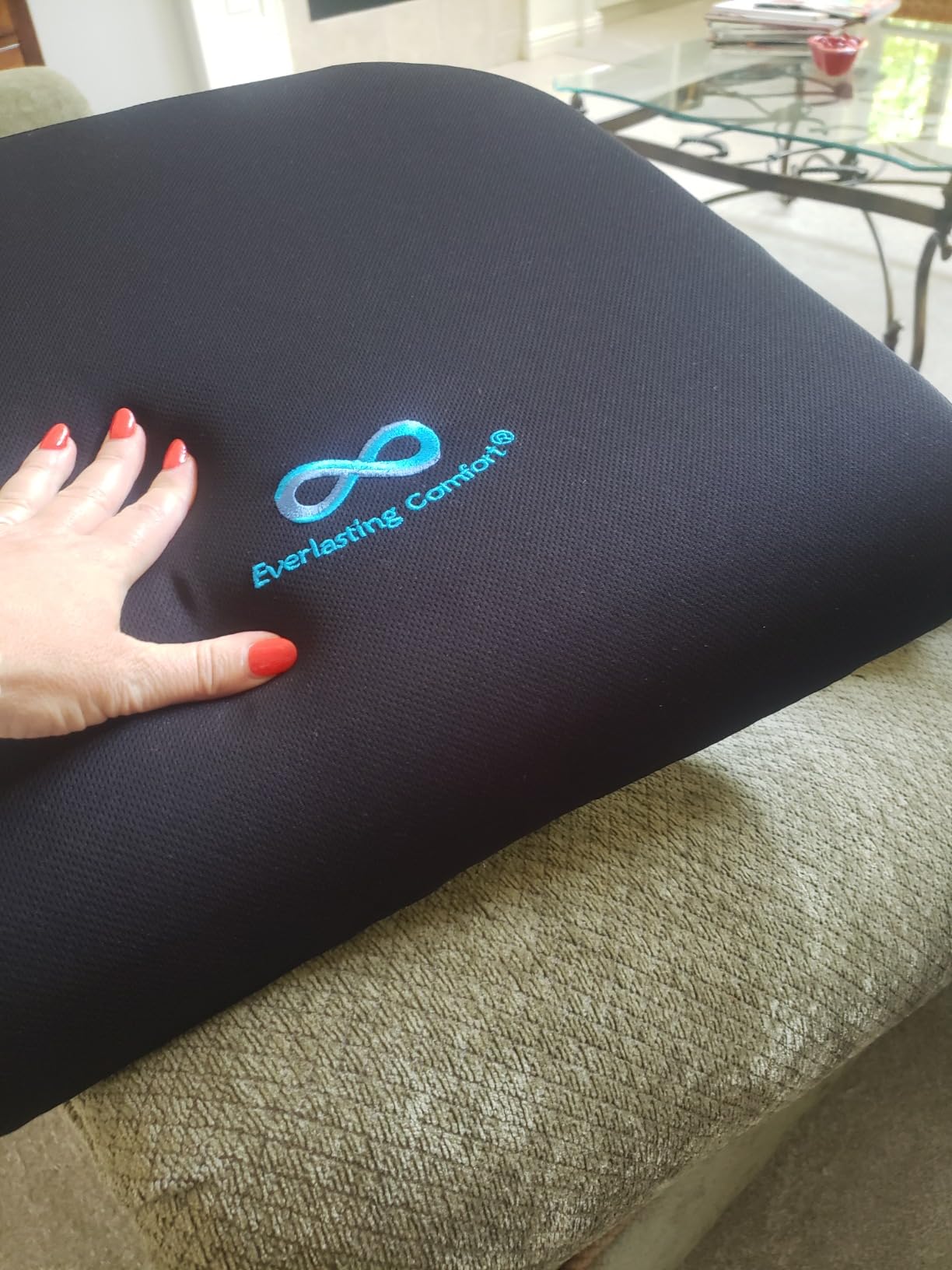
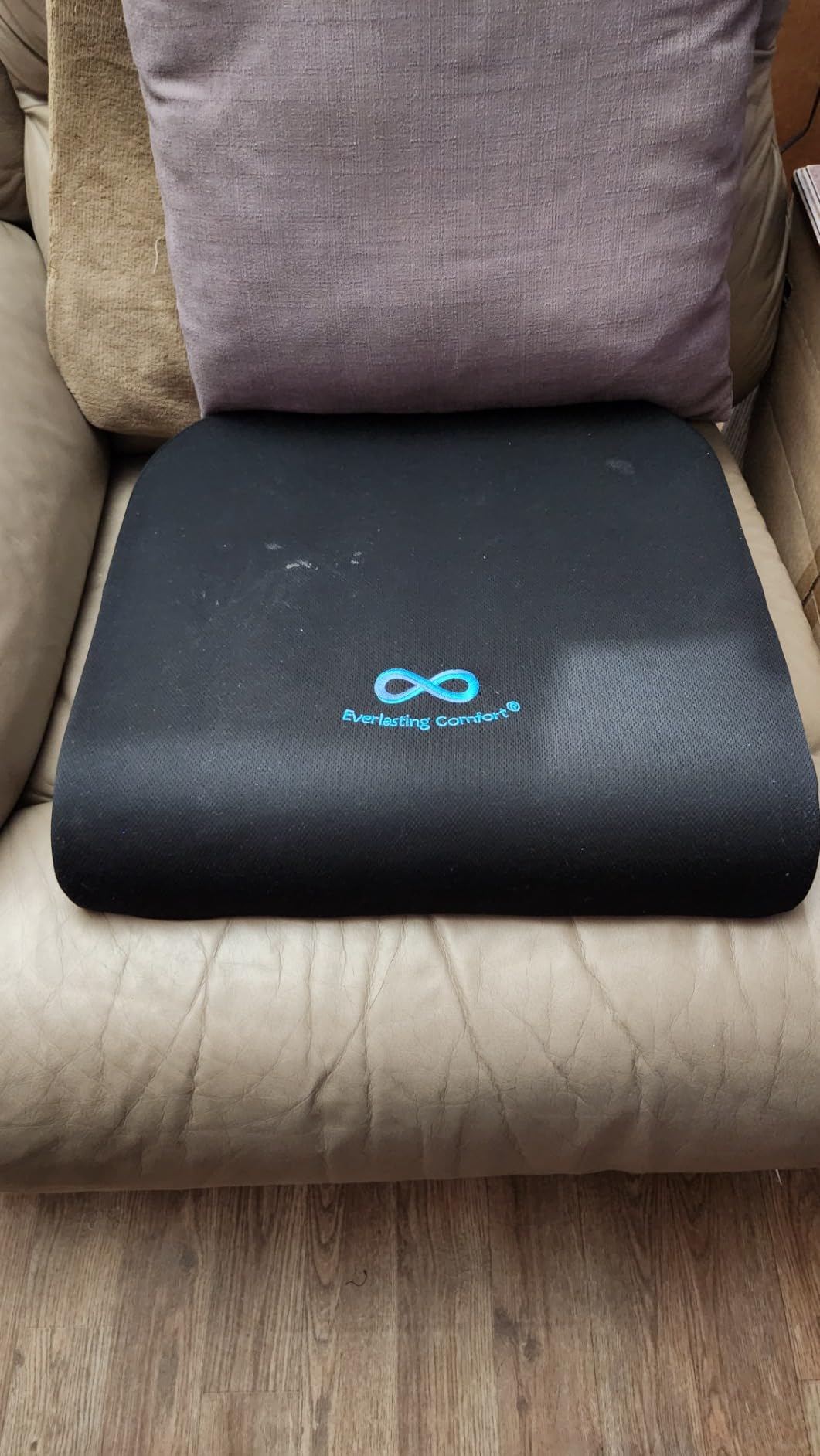
The rubberized base is doing real work here. Cushions that creep forward create shear exactly where shear does the most damage, so a base that grips is worth more than it looks. The removable cover goes into a washing machine, which matters enormously in caregiving situations.
Who it suits well
Full-time wheelchair users who also use the same cushion in a car or at a desk, because it converts between seats without losing support. It is also a sensible first upgrade for someone moving from part-time to full-time chair use, where a thin sling cushion starts showing pressure marks.
Where it falls short
It is not a discrete gel bladder or an air cell, so it will not out-perform a Roho on immersion for a user with no skin sensation. The profile also sits lower than a thick foam cushion, so if you need more seat elevation to make transfers easier, this is the wrong direction.
2. Roho Mosaic Air Cushion for Adjustable Pressure Redistribution
Roho Mosaic Wheelchair Air Cushion, Standard Cover, 18 x 16 Inches
Interconnected 3 inch air cells
18 x 16 inch
Supports up to 315 lb
2.4 pounds
Pros
- Adjustable air cell firmness you can tune
- Published 315 lb weight capacity
- Hand pump and patch kit included
- Removable washable cover
- Light enough to move between chairs
Cons
- Needs periodic inflation checks
- Standard cover is less breathable than mesh
- Lowest average rating among the top picks at 4.2
The Mosaic is the only true air cell cushion in this group, and that changes the physics. Interconnected 3-inch air cells let your pelvis sink into the cushion instead of sitting on top of it, spreading weight across a much larger contact area. When you cannot feel pressure building, that immersion is the whole point.
It is also the only cushion here with a published weight capacity above 300 lb, at 315 lb, which matters if you are close to the limit of a standard gel cushion. Firmness is adjustable with the included hand pump, so the same cushion can be set softer for a lighter user and firmer for a heavier one.
Long-term users on r/wheelchairs describe air cushions as the go-to choice for sustained seating, and a Motor Neurone Disease Association forum poster names RoHo alongside a gel and contour cushion as what works for prominent sitting bones. That matches what we see in the review data: people stay with this cushion for years.
Who it suits well
Users with spinal cord injury, reduced sensation, or a history of skin breakdown who sit for long stretches and cannot self-report pressure. The adjustable firmness also makes it a good single-cushion answer for a household where two people of different weights share one chair.
Where it falls short
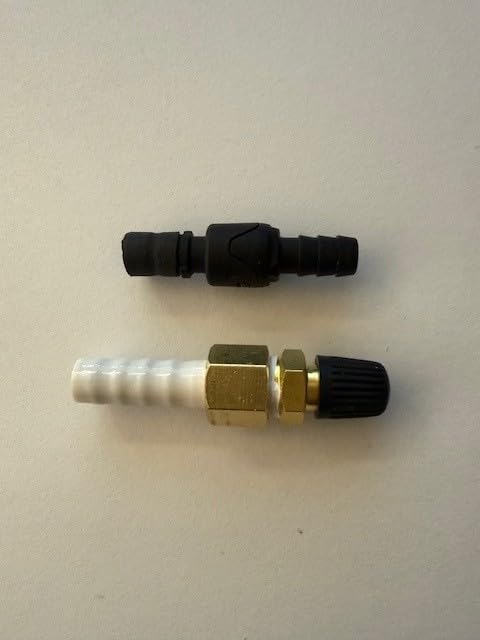
The 4.2 average is the lowest here, and the one-star share is the highest at 11%, driven by pump maintenance and slow deflation. Air also traps heat, which is the most common complaint from real users. And newer models have shipped with plastic valves that leak sooner than the older metal ones, a durability complaint that shows up repeatedly in owner reports.
3. AUVON Gel Cushion with U-Cutout for Direct Tailbone Relief
AUVON Gel Wheelchair Seat Cushion with Waterproof Cover, Ergonomic Chair Cushion with U-Cutout for Tailbone, Back Pain Relief, Memory Foam Cushion for Office, Anti-Slip, Buckle Strap
Gel memory foam with U cutout
18 x 16 x 3 inch
16.4 x 14.9 inch gel area
Waterproof washable cover
Pros
- U cutout genuinely floats the coccyx
- Thicker gel blocks over a large coverage area
- Dual anti-slip base with buckle strap
- Waterproof membrane cover
- Built-in carry handle
Cons
- Memory foam firms up in cold rooms
- Firmer than some elderly users expect
- 3 inch height can complicate transfers
This cushion is built around one decision: physically removing load from the tailbone rather than hoping foam conformity does it. The U-shaped cutout is a real channel through the foam, not a shallow decorative notch, and that is why it shows up so often in reviews from people healing a sore at the coccyx.
Gel coverage is generous, running 16.4 by 14.9 inches across an 18 by 16 inch cushion, with blocks described as three times thicker than standard. Temperature-sensitive memory foam fills the rest, so the surface adapts after a minute of contact.
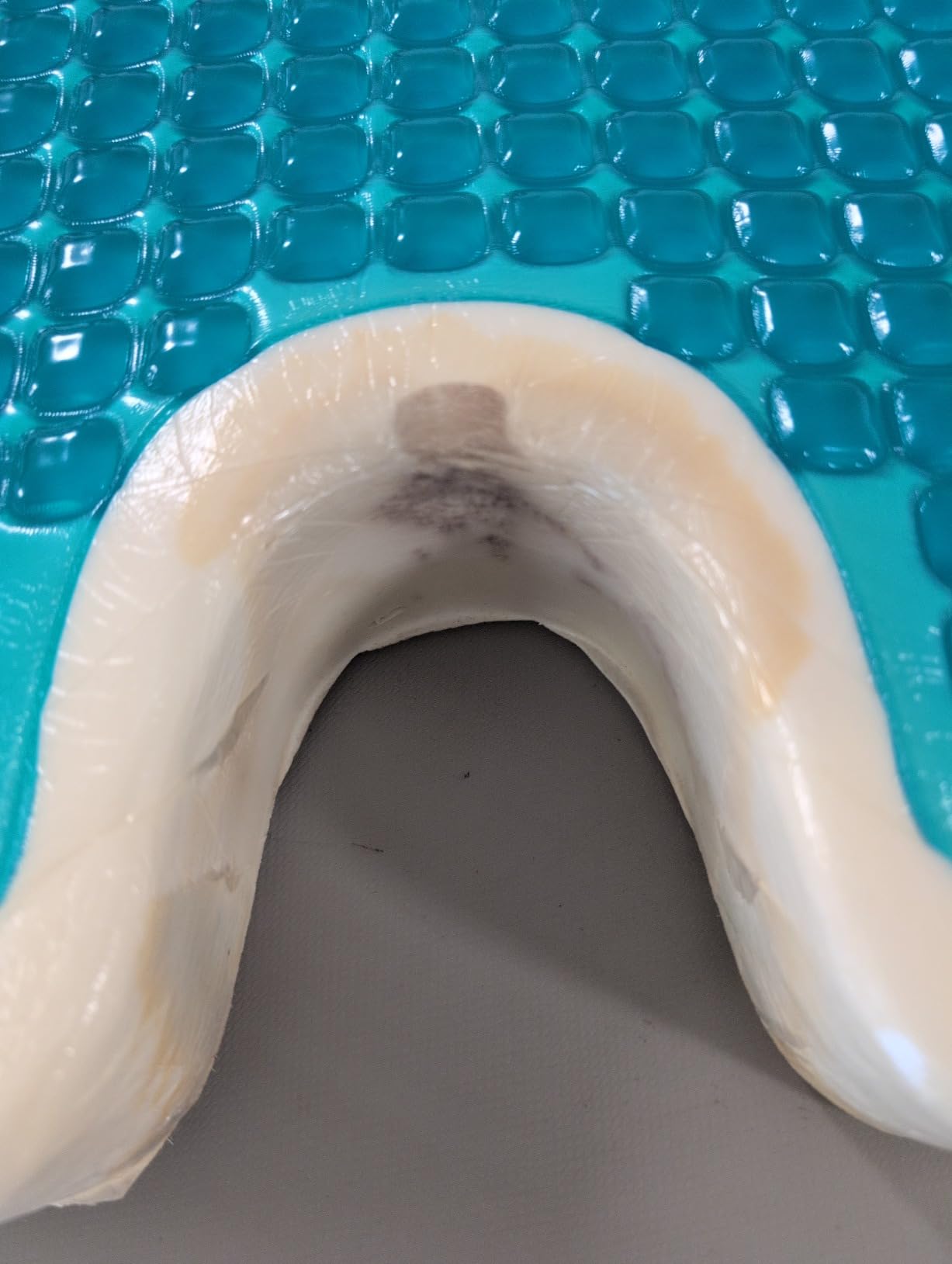
The anchoring is the other story. A dual anti-slip base plus an adjustable buckle strap means the cushion stays put during a transfer, which forum users rate as one of their top practical worries after pressure relief. A waterproof membrane means a sweat or incontinence incident does not reach the foam core.
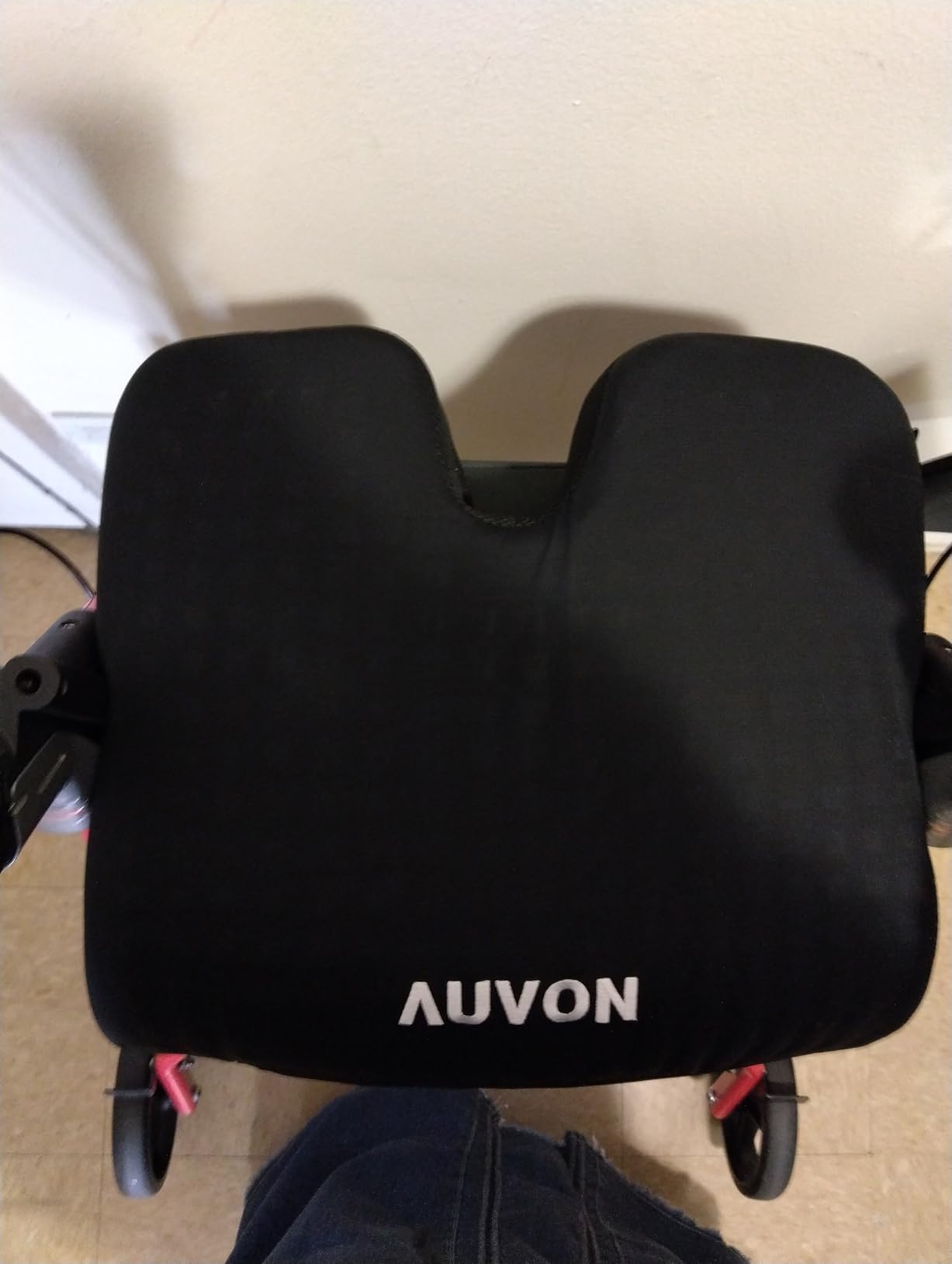
Who it suits well
Anyone whose sore or pain sits directly on the tailbone, including post-surgical recovery users. It is also a strong pick for caregivers who need a cushion that survives cleaning without the core being ruined.
Where it falls short
Firmness is the recurring theme. Frail seniors and anyone with very delicate skin often find it harder than expected, and the temperature-sensitive foam stiffens noticeably in a cold room before it warms. At 3 inches it also raises seat height, so check your footplate clearance before committing.
4. Drive Medical 14886 Skin Protection Gel Cushion for Clinical Pressure Management
Drive Medical 14886 Skin Protection Gel Wheelchair Seat Cushion
Viscous gel bladder in foam shell
18 x 16 x 3 inch
Supports up to 275 lb
6.3 pounds
Pros
- Explicitly designed for pressure ulcer prevention and management
- Viscous gel bladder resists bottoming out
- Low-shear vapor permeable cover
- Removable and replaceable cover
- Waterproof vinyl base
Cons
- Heaviest cushion here at 6.3 pounds
- Vinyl base runs hot against the skin
- 275 lb capacity is the lowest published figure here
This is the one to buy when a clinician has already told you what you need. It has been available since 2005 and its stated purpose is pressure ulcer prevention, treatment and management, so it is the most clinically framed cushion in the group. Buyers describe it as the pick an occupational therapist recommends.
The design logic is sound. A viscous liquid gel bladder inside a fire-retardant polyurethane foam shell resists migrating and redistributes load instead of bottoming out, and the urethane-coated nylon top cover is low-shear and vapor permeable. Low shear matters more than most shoppers realize, because shear is what turns pressure into a wound that will not close.
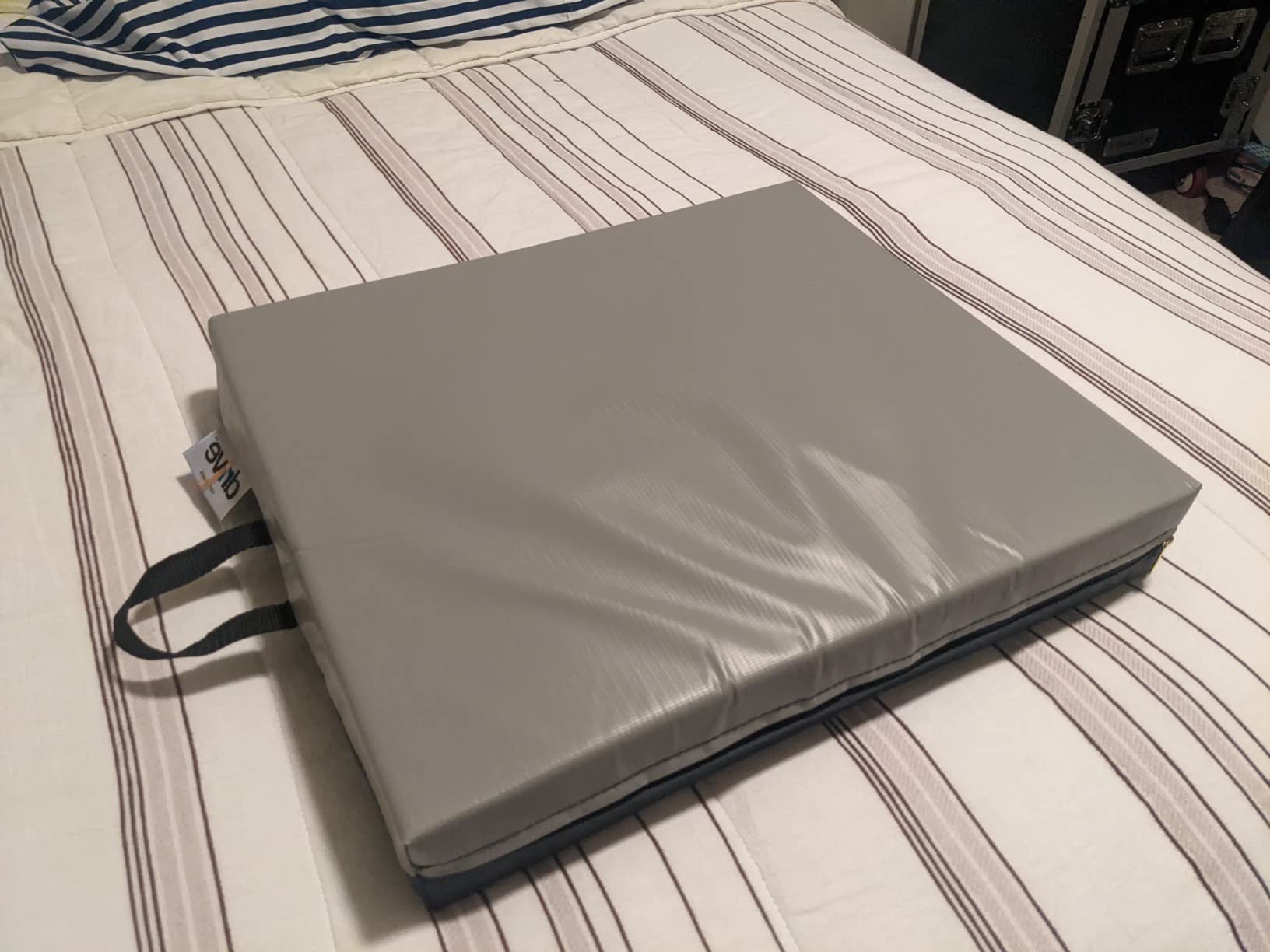
The cover can be removed and replaced, which extends the life of an otherwise expensive cushion and means a torn cover is not a total loss. The waterproof vinyl base protects the foam underneath from spills and incontinence.
Who it suits well
Users managing an existing stage 2 or worse pressure injury under clinical supervision, and anyone who needs a documented, dated cushion in a medical record. The replaceable cover also suits long-term institutional use.
Where it falls short
At 6.3 pounds it is by far the heaviest cushion here, which makes caregiver transfers harder. The vinyl base runs hot, and the 275 lb capacity is the lowest published figure in this group, so heavier users need to look elsewhere. The shape is plain, with no cutout or contour.
5. Hvllyan Thick Large Gel Cushion for Cooling on a Budget
Gel Seat Cushion for Long Sitting, (Thick & Large) Cushion for Wheelchair
1.6 inch high-elasticity gel
18.9 x 17.7 inch surface
Double layer honeycomb vents
3.1 pounds
Pros
- Oversized surface covers more of a sling seat
- Honeycomb vent layer reduces sweating
- Cooler to the touch than memory foam
- Grip bumps on the underside reduce sliding
- PVC-free gel with washable cover
Cons
- Only 1.6 inch thick so relief is modest
- Some users say support fades over a full day
- No tailbone cutout for coccyx pressure
The selling point here is ventilation. A double-layer honeycomb vent structure sits under the gel, and users consistently report it running cooler than memory foam in hot weather. Heat is the most common complaint long-term users raise about foam and air cushions alike, so a design that attacks it directly is worth a look.
It is also oversized at 18.9 by 17.7 inches, which is larger than almost every other cushion here. That extra coverage matters on a wheelchair sling, where a smaller pad leaves gaps where the sitting bones land.
Grip bumps on the underside keep it from sliding on hard car and office seats. The cover is machine washable and the gel is high-elasticity and PVC-free, which some buyers with skin sensitivities appreciate.
Who it suits well
Occasional and part-time chair users, people who sit in a hot car or outdoor seat for hours, and anyone who wants a large cool surface without a large commitment. It is a sensible second chair cushion for a vehicle or a bench.
Where it falls short
At 1.6 inches it is the thinnest profile here, and several reviewers say it stops supporting a full day of sitting. There is no tailbone cutout, so it does nothing specific for coccyx pain, and some buyers report the delivered item not matching the listed dimensions.
6. AUVON Memory Foam U-Cutout Cushion for Lightweight Tailbone Relief
AUVON Wheelchair Seat Cushions (18″x16″x3″) for Sciatica, Back, Coccyx, Pressure Sore and Ulcer Pain Relief, Memory Foam Pressure Relief Cushion with Removable Strap, Breathable & Waterproof Fabric
High density memory foam
18 x 16 x 3 inch
1.5 pounds
Waterproof vented cover
Pros
- U cutout and contoured slope offload the tailbone
- Lightest cushion here at 1.5 pounds
- Waterproof membrane with vent holes
- Detachable strap and non-slip base
- 4.5 average with only 1% one-star reviews
Cons
- Memory foam softens and loses shape in heat
- Foam core cannot be machine washed
- No gel layer so support is less structured
At 1.5 pounds this is the lightest cushion in the group, and that is not a gimmick. If you transfer independently several times a day, every pound and every inch of height you add to the seat is a pound and an inch you have to work against. Users who care most about transfers tend to care most about weight.
The rest is a well-executed version of the same idea as the bigger AUVON gel model: a U-shaped cutout that floats the tailbone, a contoured slope under the thighs, and a waterproof membrane inside a removable washable cover with vent holes for airflow.
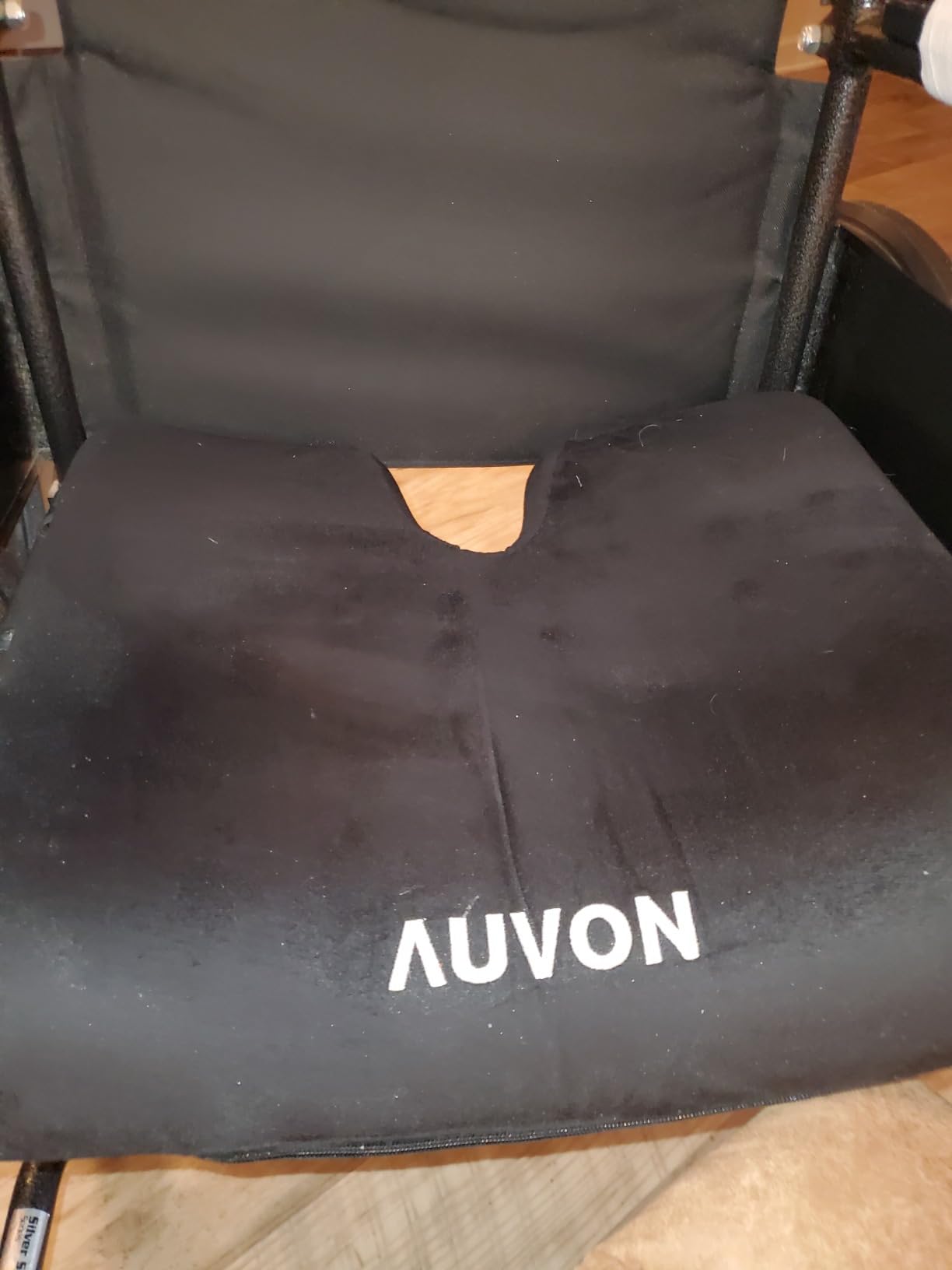
It holds a 4.5 average with only 1% one-star reviews, the cleanest rating profile in the set. The detachable strap and non-slip bottom solve the forward-slide problem that makes transfers unsafe, which is one of the most common complaints in mobility forums.
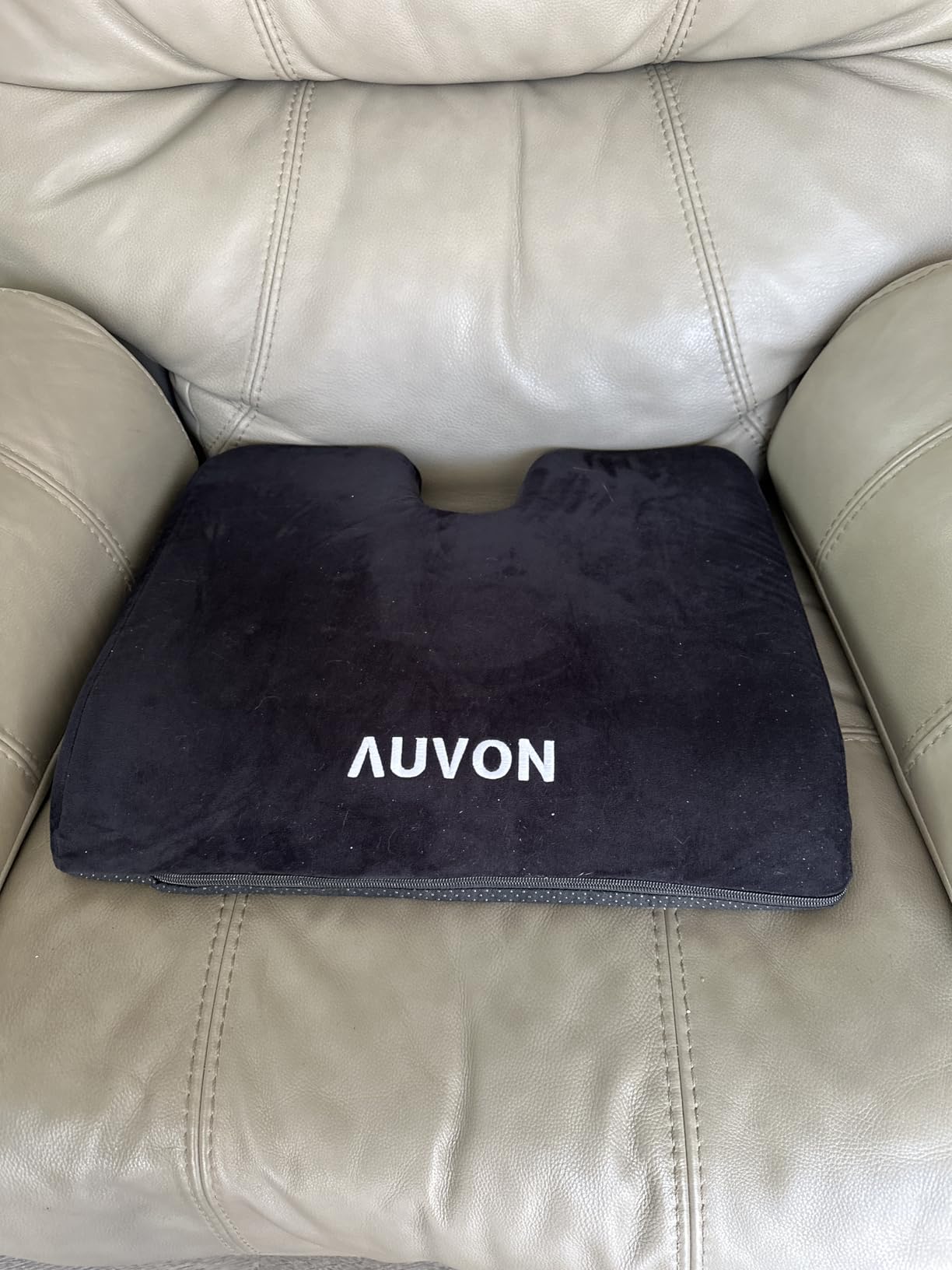
Who it suits well
Independent transfers, frequent caregiver-assisted transfers where weight matters, and users who want tailbone offloading without a heavy cushion. Because it runs cooler than gel, it suits people who sweat in foam.
Where it falls short
There is no gel layer, so the pressure redistribution is conformity-based and less structured than a gel bladder. The foam softens in heat and can shrink slightly over time, and only the cover is washable. Actual dimensions sometimes vary from the stated size.
7. CYLEN Gel Infused Memory Foam Cushion for Cool, Supported Sitting
Ifoam Gel Infused Memory Foam Layer Wheelchair Cushion – Seat Cushion for Wheelchair-OfficeChair, Kitchen Chair-Pressure Sore and Tailbone Pain Relief-High Dense Polyfoam Base (Black,18x16x3 inch)
Gel infused foam over high density core
18 x 16 x 3 inch
About 1.3 pounds
Removable mesh cover
Pros
- Two layer build resists bottoming out
- Breathable removable mesh slipcover
- Non-slip base holds during repositioning
- Lightweight and easy to move
- Size range available up to 24x24
Cons
- No tailbone cutout
- Only the slipcover is washable
- Gel infused into foam so it is less firm and less tunable
The defining feature is a two-layer build: plush memory foam over a high density medical grade foam core. That core is what keeps the cushion from bottoming out under a heavier user, and bottoming out is the quiet failure that turns a good cushion dangerous after a year of use.
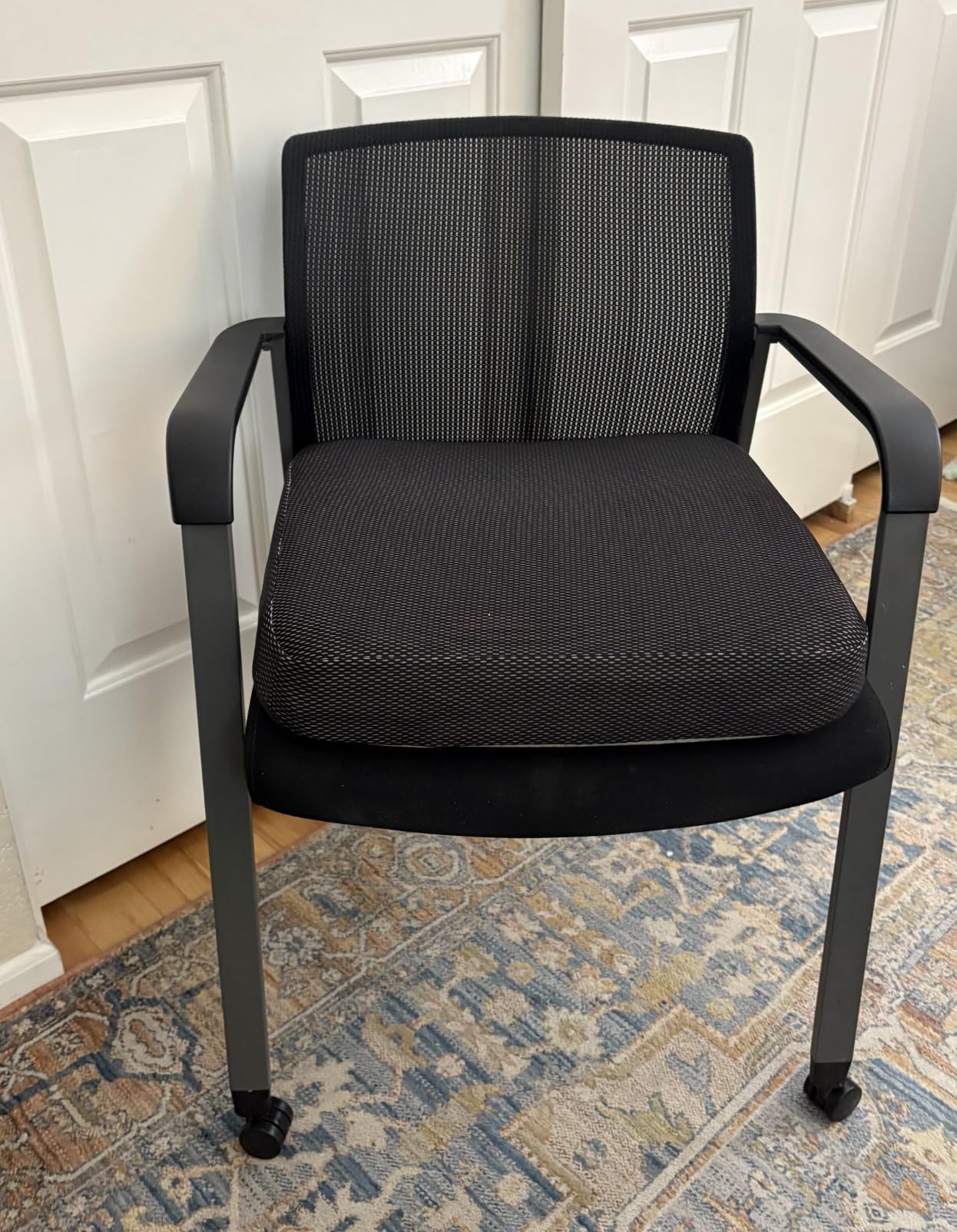
The cover is a removable breathable mesh slipcover, and mesh is cooler than the solid fabric and vinyl covers used on many rivals. That combination of cooling plus a supportive base is why this one ranks so well for users who find single-layer foam too soft after a few hours.
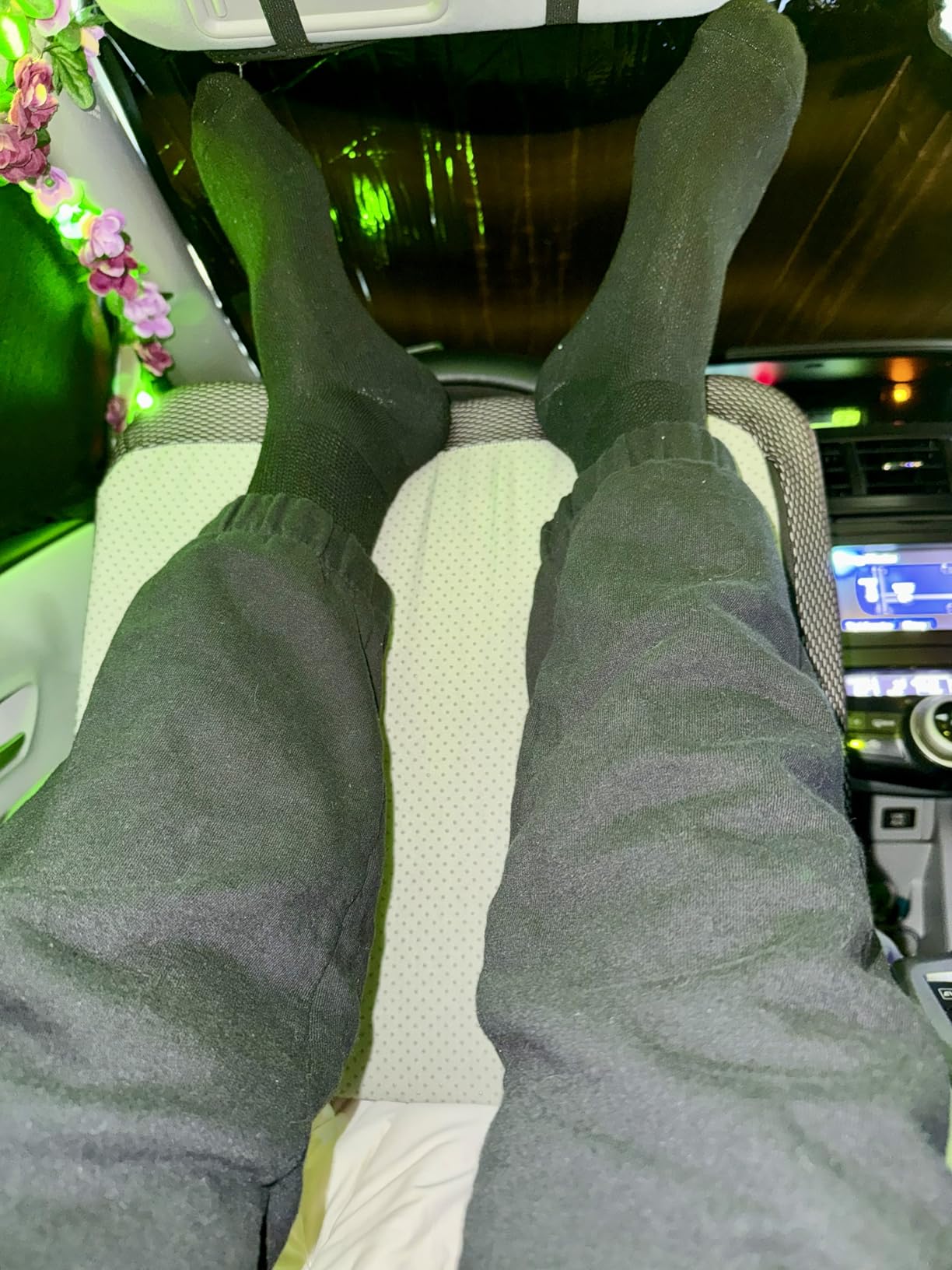
The non-slip bottom holds position while you reposition in the chair, which matters more than it sounds, because every small slide creates shear at exactly the spot you are trying to protect.
Who it suits well
Anyone who runs warm and wants a supportive rather than a soft surface. The size range is the quiet strength here, going from 16 by 16 up to 24 by 24, which covers bariatric widths that most cushions in this price bracket simply do not offer.
Where it falls short
No tailbone cutout, so coccyx relief relies entirely on foam conformity. Gel infused into the foam is less firm and less tunable than a discrete gel bladder, and only the slipcover can be washed.
8. AUVON Front High Rear Low Wedge Cushion for Sliding and Posture
AUVON Anti-Slip Wheelchair Cushions with Front High Rear Low & Hump Design, Ergonomic Seat Cushion to Optimize Sitting Posture, Chair Cushions Relieve Sciatica, Back, Pressure Sore & Ulcer Pain
Front high rear low wedge profile
18 x 16 x 3 inch
Ventilated memory foam with air holes
Triple anti-slip system
Pros
- Wedge corrects a forward slide posture
- Triple anti-slip with adjustable straps
- Air holes plus waterproof membrane
- U cutout reduces tailbone compression
- Firm feel holds the user upright
Cons
- May feel too firm for very sensitive skin
- Wedge changes seat angle and takes getting used to
- Smallest AUVON review base here at 925
Most cushions treat sliding as a nuisance. This one treats it as the mechanism. The front-high, rear-low wedge with a central hump is engineered to stop a user sliding forward and to hold the pelvis in a better position, which is the root cause of much coccyx and thigh pressure.
If you slide forward in your chair, this is the only cushion here designed around that specific problem. The triple anti-slip arrangement, combining an anti-slip base, the hump profile, and adjustable straps, is also the most secure setup in the group.
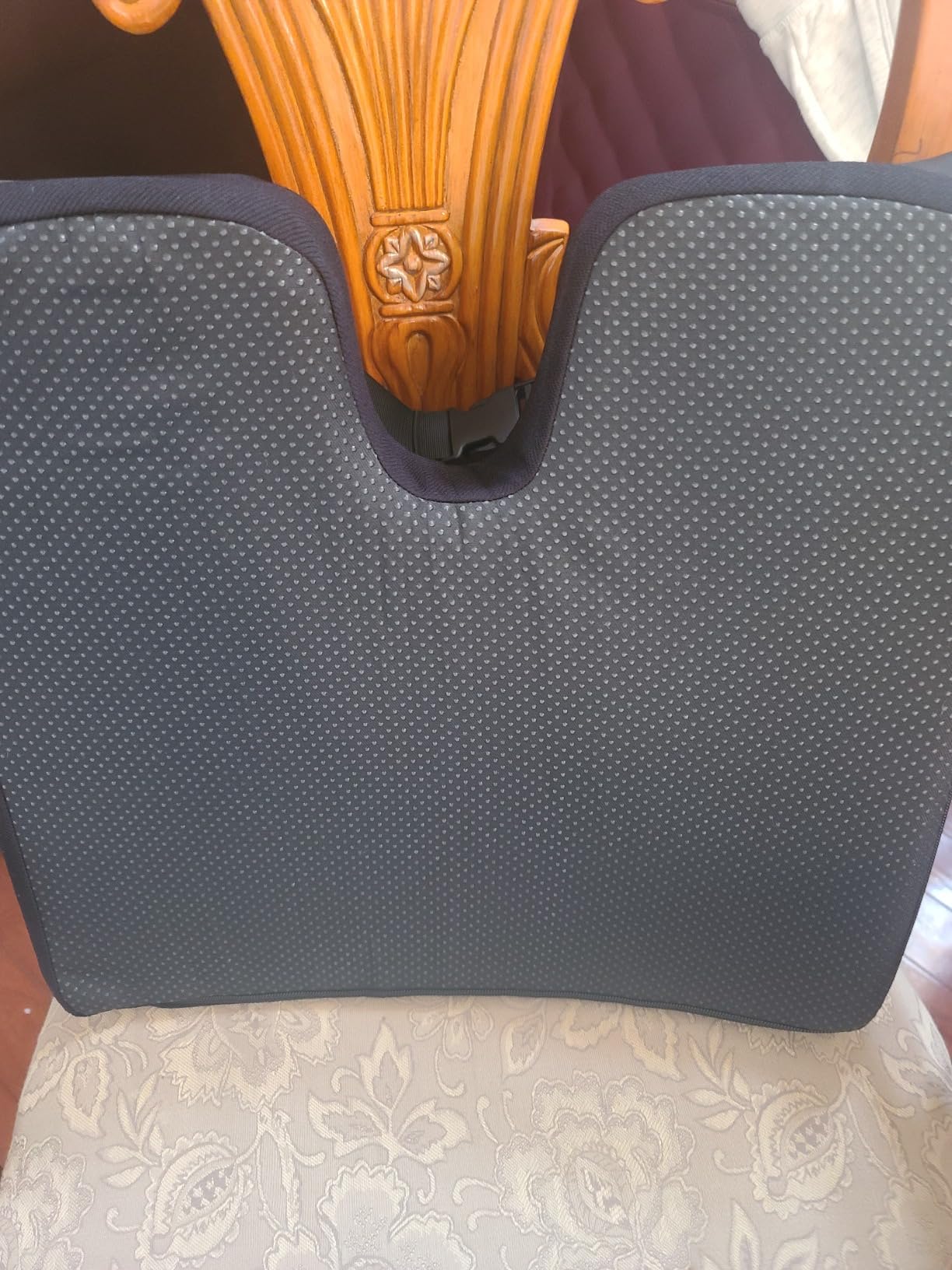
Ventilated high density memory foam with air holes and an internal waterproof membrane handles heat and moisture together. The U-shaped cutout then reduces tailbone compression and takes pressure off the sciatic nerve.
Who it suits well
Users who slump or slide forward in a sling or transport chair, and anyone whose sore keeps recurring at the back of the thighs or the tailbone despite a good cushion. Caregivers who want a cushion that will not move mid-transfer will like the strap system.
Where it falls short
Firmness is not universal. Users with sensitive or already damaged skin often prefer the softer AUVON models. The wedge also changes seat angle and effective height, which feels unfamiliar at first and can affect footplate reach, so test it before committing to all-day use.
9. YOUFI Thick Memory Foam and Gel Cushion for Heavier Users
YOUFI Thick Memory Foam & Gel Seat Cushion, 18″X16″X4″ Large Chair Cushion for Wheelchair Mobility Scooters, with Non-Slip Bottom and Carry Handle (Black)
4 inch polymer memory foam core
18 x 16 inch surface
3.1 pounds
Removable 3D mesh cover
Pros
- 4 inch solid polymer core is the thickest here
- Suits heavier users needing more elevation
- 3D mesh cover is breathable and washable
- Carry handle and non-slip bottom
- Firm enough to hold posture all day
Cons
- 4 inch height complicates transfers and leg positioning
- No tailbone cutout despite the height
- Broad health claims are not backed by testing
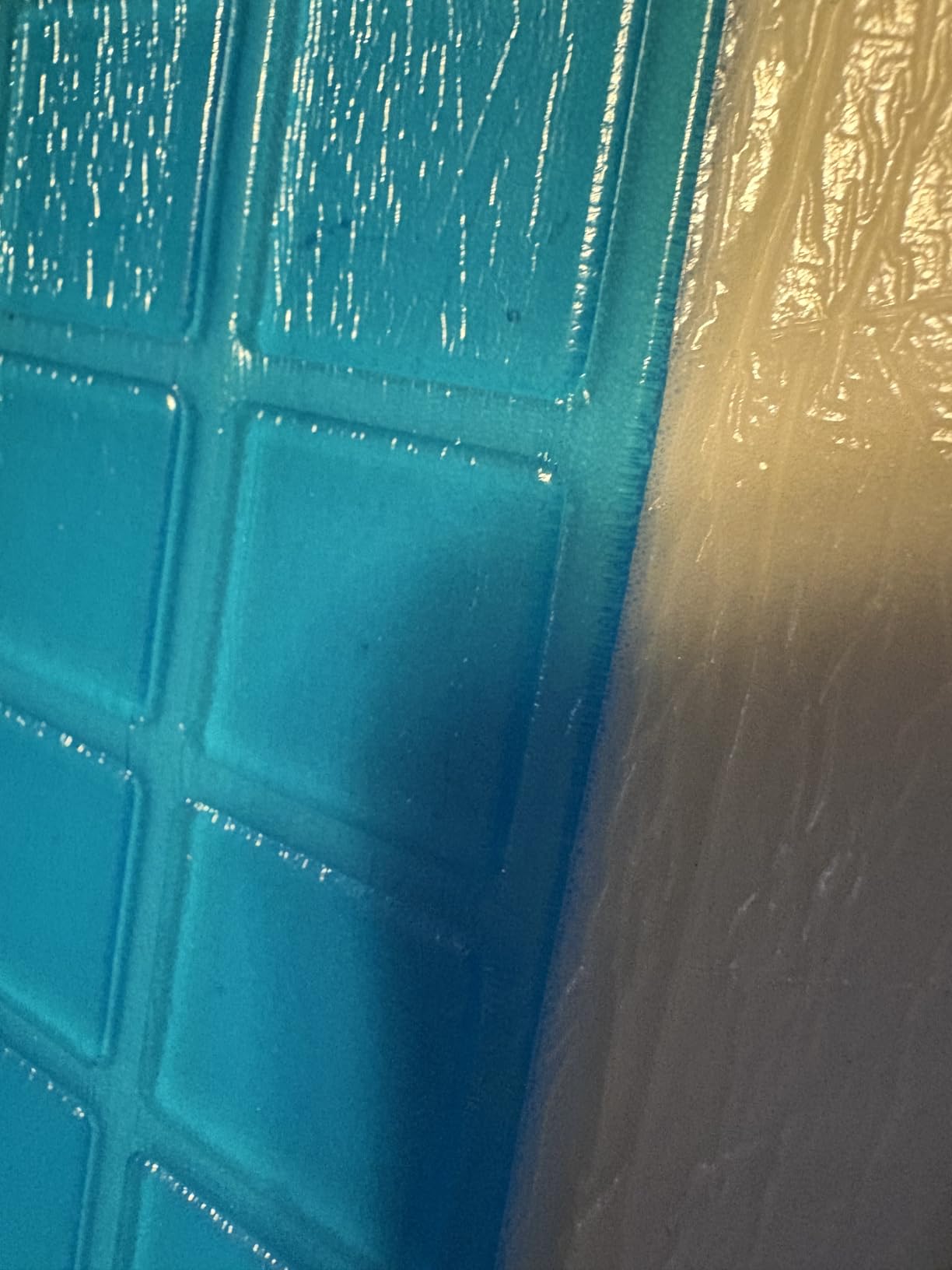
Four inches of solid polymer memory foam with a gel layer is the thickest profile in this roundup, and thickness is what a heavier user needs, because soft foam compresses under load and a compressed cushion stops redistributing anything. This is a full 4-inch core, not filler sponge that bottoms out in a year.
The zippered removable 3D mesh cover is genuinely breathable rather than just labelled that way, and it goes in a washing machine. The carry handle makes it practical to move between a wheelchair, a car and a bleacher.
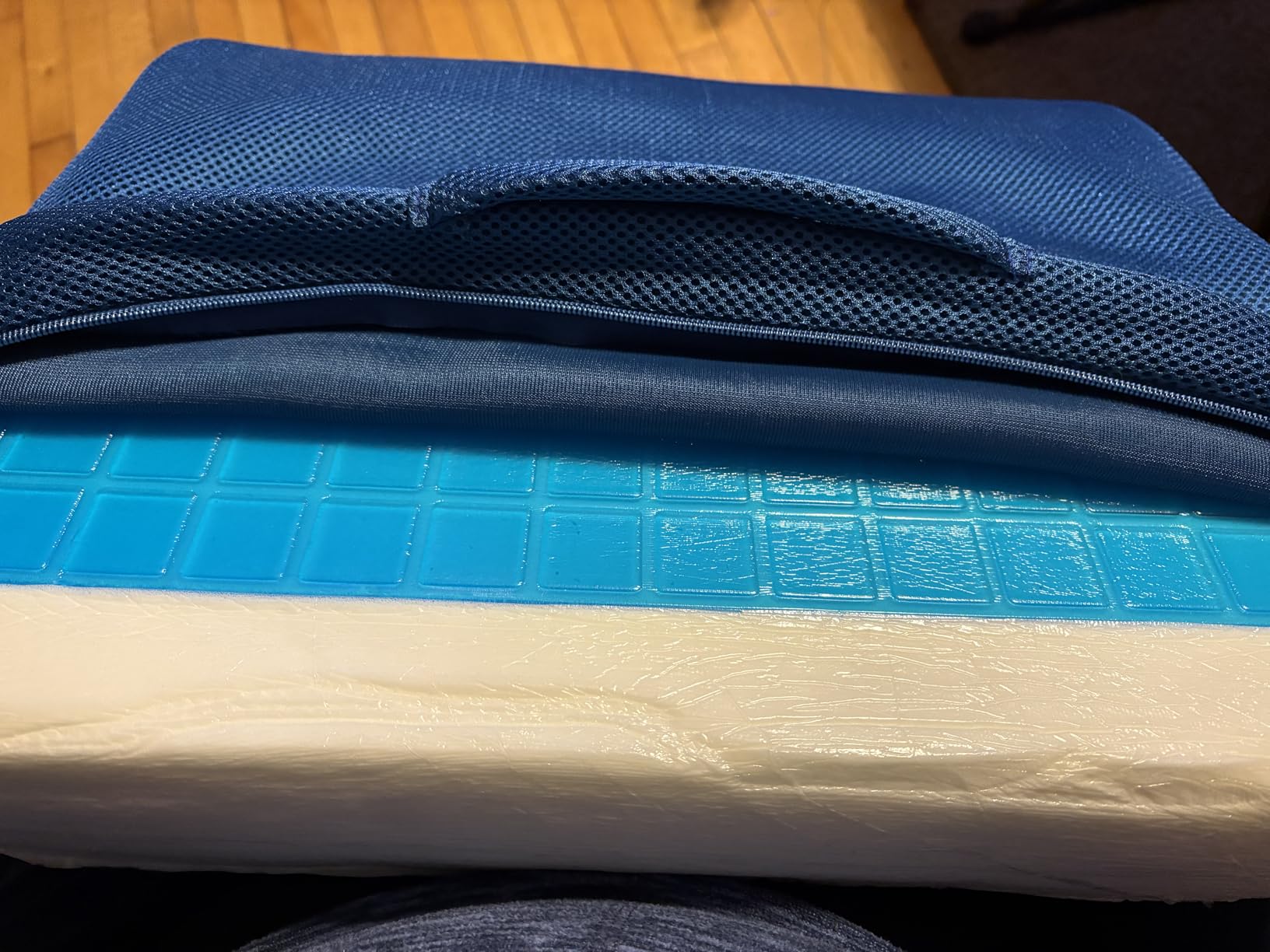
It is one of only a few cushions here without a U-cutout, which is a real gap for anyone with coccyx pain. The curved surface is aimed at lower back, hip and thigh pressure rather than the tailbone specifically.
Who it suits well
Heavier users and anyone who needs more seat elevation for transfers, plus users who want a firm surface that holds posture upright through a long day rather than a soft one that lets them sink. The washable mesh cover suits anyone who cannot manage a cold-only hand wash.
Where it falls short
Four inches of height raises the seat significantly, which can complicate transfers, leg positioning and footplate clearance on a standard chair. We would measure before buying. Marketing for this cushion references conditions such as hemorrhoids and sciatica without any specific testing behind the claims, so treat those as marketing rather than evidence.
10. CUSHIO Cushion and Lumbar Pillow Set for Back Support
Wheelchair Cushion for Pressure Relief – (2-Piece Set) 18”x16” Anti-Slip Wheelchair Seat Cushions for Adults, Seniors with Lumbar Pillow and Removable Strap, Gel Cushion for Wheelchair
Two piece set with lumbar pillow
18 x 16 x 3 inch seat cushion
Breathable memory foam
Waterproof washable cover
Pros
- Only set here that includes a lumbar pillow
- U-shaped tailbone relief cutout
- Waterproof machine washable cover
- Double anti-slip with adjustable strap
- Medium firmness suits users who find firm models hard
Cons
- Two piece set lowers the per piece value
- Listing data is sloppy with a components field reading 2 DOORS
- Only one cushion is included
The distinguishing feature is the second piece. This ships as a seat cushion plus a matching lumbar pillow, and it is the only bundle here with any back support included. Back pain and seat pressure are connected, because a pelvis that slides forward drags the lower back with it.
On the seat side you get breathable memory foam with a U-shaped tailbone cutout, a waterproof removable machine washable cover, and a double anti-slip design with an adjustable strap and built-in handles. The foam is medium firmness and is described as formaldehyde free, latex free and PBDE free.
Medium firmness is the useful part here. Users who find the firmer AUVON wedges too hard often find this one workable, which makes it a sensible middle ground between a soft gel pad and a clinical gel bladder.
Who it suits well
Users who have both a pressure concern and lower back complaints, and anyone who wants a moderate firmness they can sit on for a full day. The handles and strap make it easy to move between a wheelchair and a car seat.
Where it falls short
Judge the value carefully. At this price point you are getting one cushion plus a small add-on pillow, so the per-piece value is lower than buying a single cushion. The lumbar piece is a small pad, not a backrest, and if you run two chairs you will need a second cushion.
11. HeiWecan Gel Cushion with Backrest Pad for Rough Outdoor Ground
Wheelchair Cushions, 18”x16”x 3” Gel Wheelchair Seat Cushion with Lumbar Pillow, (2-Piece Set) for Relieve Sciatica, Back, Coccyx, Pressure Sore, Pressure Relief, with Anti-Slip Cover, Strap
Seat cushion plus backrest pad
18 x 16 x 3 inch
Extra thick vibration sponge
Waterproof breathable cover
Pros
- Seat cushion plus matching backrest pad
- Thicker gel layer over memory foam support
- Extra thick sponge dampens vibration
- U cutout with sloped thigh support
- Waterproof breathable cover with straps
Cons
- Smallest review base here at 452
- Cotton polyester cover runs warmer than ice silk
- Foam core cannot be washed
Most cushions here ignore vibration. This one builds for it, with extra-thick sponge construction under the gel and foam layers to damp the jolts that come through a manual wheelchair on rough ground or gravel. Users notice the difference on outdoor paths.
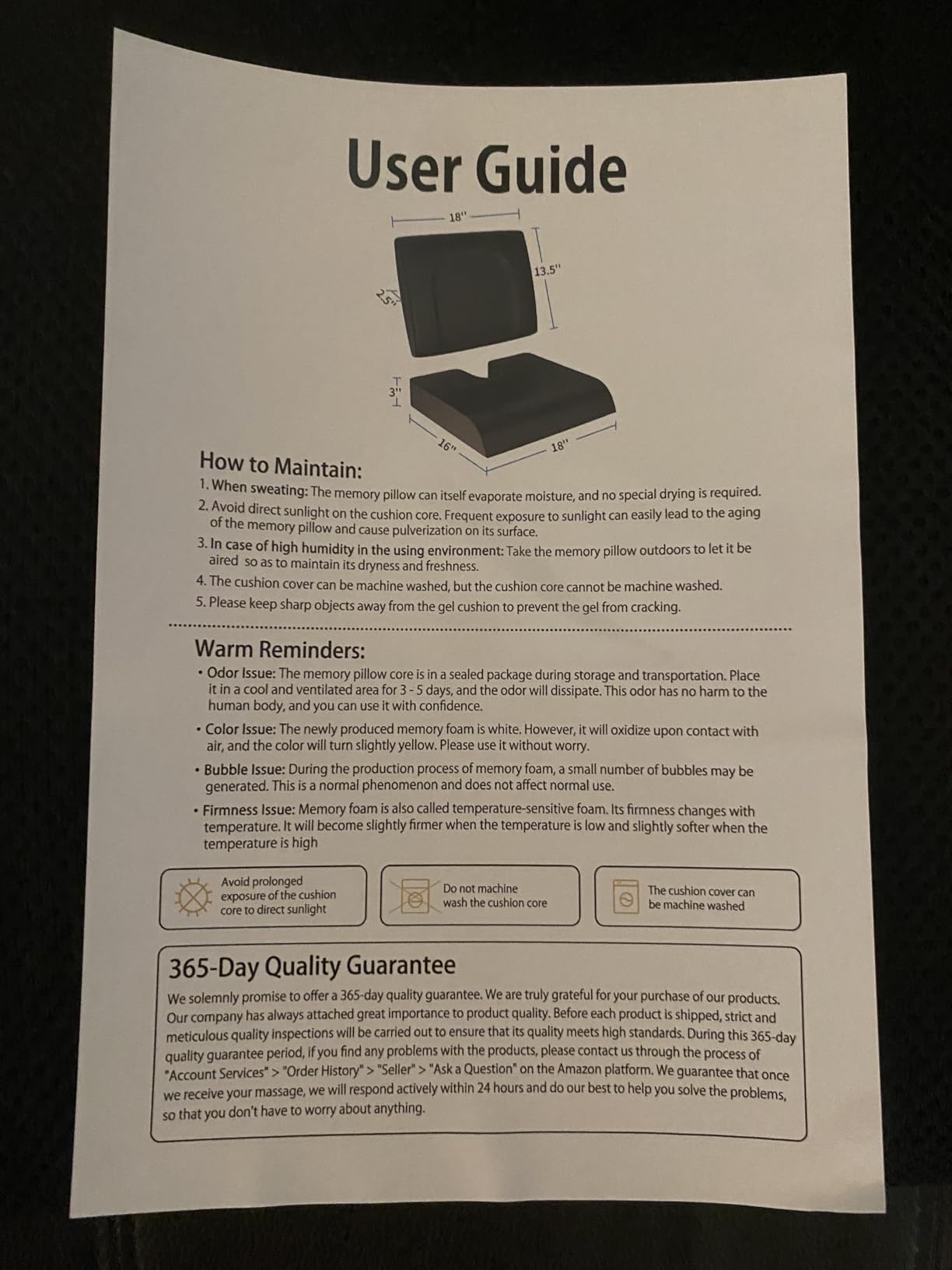
Like the CUSHIO set, it pairs an 18 by 16 by 3 inch seat cushion with a matching back pad. The seat side has a thicker, larger gel layer over a breathable memory foam support layer, a U-shaped tailbone cutout and a slope for thigh support.
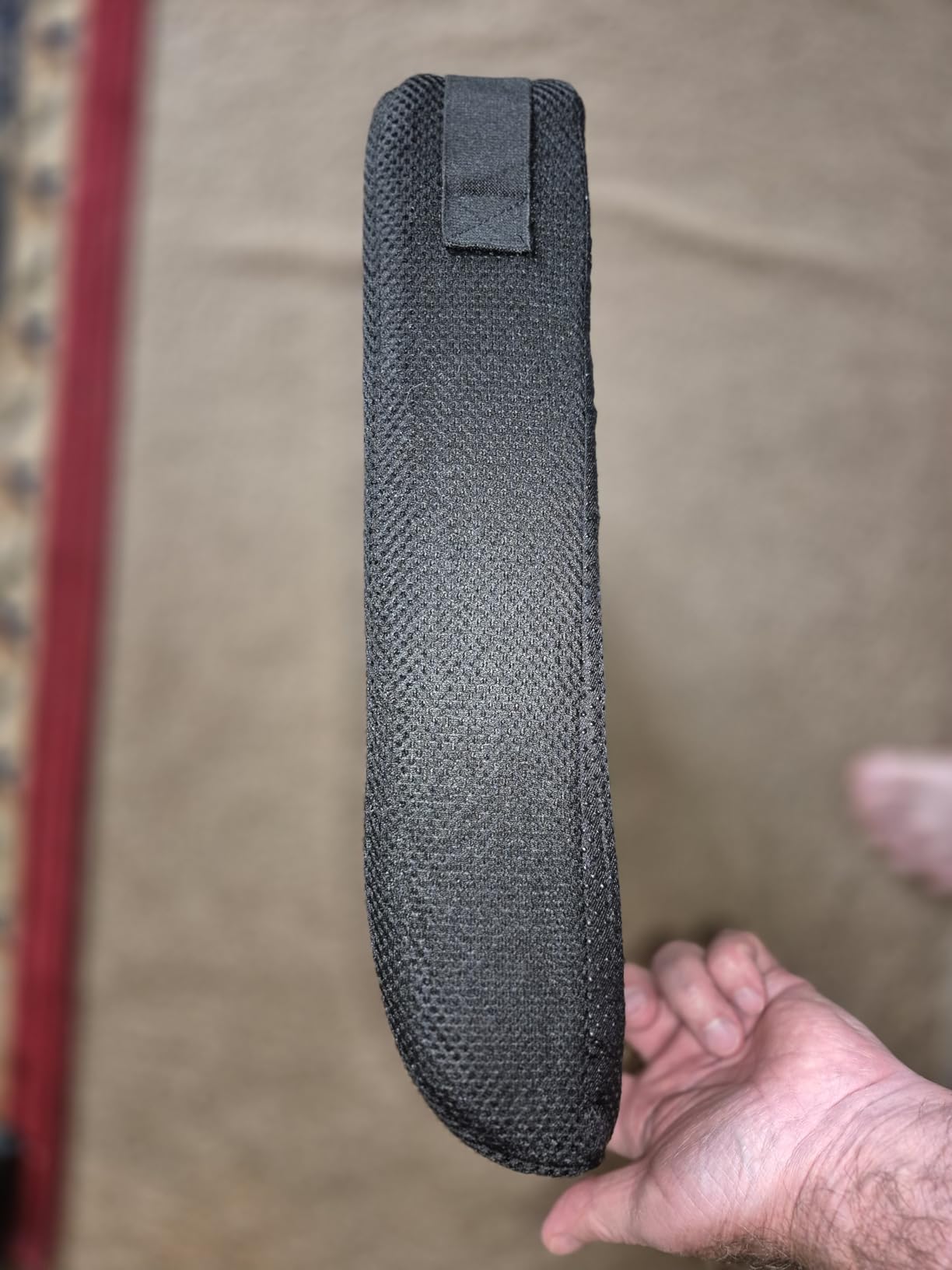
The cover is waterproof and breathable and can be hand or machine washed, with a double anti-slip bottom and adjustable straps underneath. Vibration plus a two-piece setup is a combination no other cushion in this group offers.
Who it suits well
Manual wheelchair users who spend real time outdoors, on uneven surfaces, or on paths that transmit road vibration. It also suits anyone who wants back support without buying two separate products.
Where it falls short
This is the newest listing in the group with the smallest review base, at 452 reviews, so there is limited long-term durability evidence for the foam. The cotton and polyester cover runs warmer than the ice silk covers used by the AUVON models, and the back pad is a lumbar pad rather than a full backrest.
12. Beatvive Donut Ring Cushion for Direct Coccyx Offloading
Anti-Slip Wheelchair Cushions, Bed Sore Cushions for Butt, Ergonomic Innovations Orthopedic Donut Pillow, Medical Seat Cushion for Sciatica, Back, Coccyx, Pressure Sore (Black)
Donut ring design
100 percent cotton fill
Velour surface
About 1.3 pounds
Pros
- Ring geometry fully unloads the coccyx
- Cotton fill and velour breathe better than vinyl
- Widened square profile resists flattening
- Light and portable for travel
- Widest color and pattern selection
Cons
- Ring leaves surrounding thigh area unsupported
- Cotton fill compresses over time
- Hand wash only with no machine washable cover
This is the only true donut ring cushion here, and for a very specific job it is the most direct answer available. A ring removes the central load entirely, so the coccyx hangs in space rather than being sandwiched between you and the seat. For post-surgical recovery and for a sore that sits right on the tailbone, nothing else in this group offloads that clearly.
The surface is velour over 100 percent cotton fill, which breathes considerably better than vinyl or sealed membranes. The ring has a widened, thickened square outer profile specifically so it resists flattening over prolonged daily use, which is the usual failure mode for this shape.
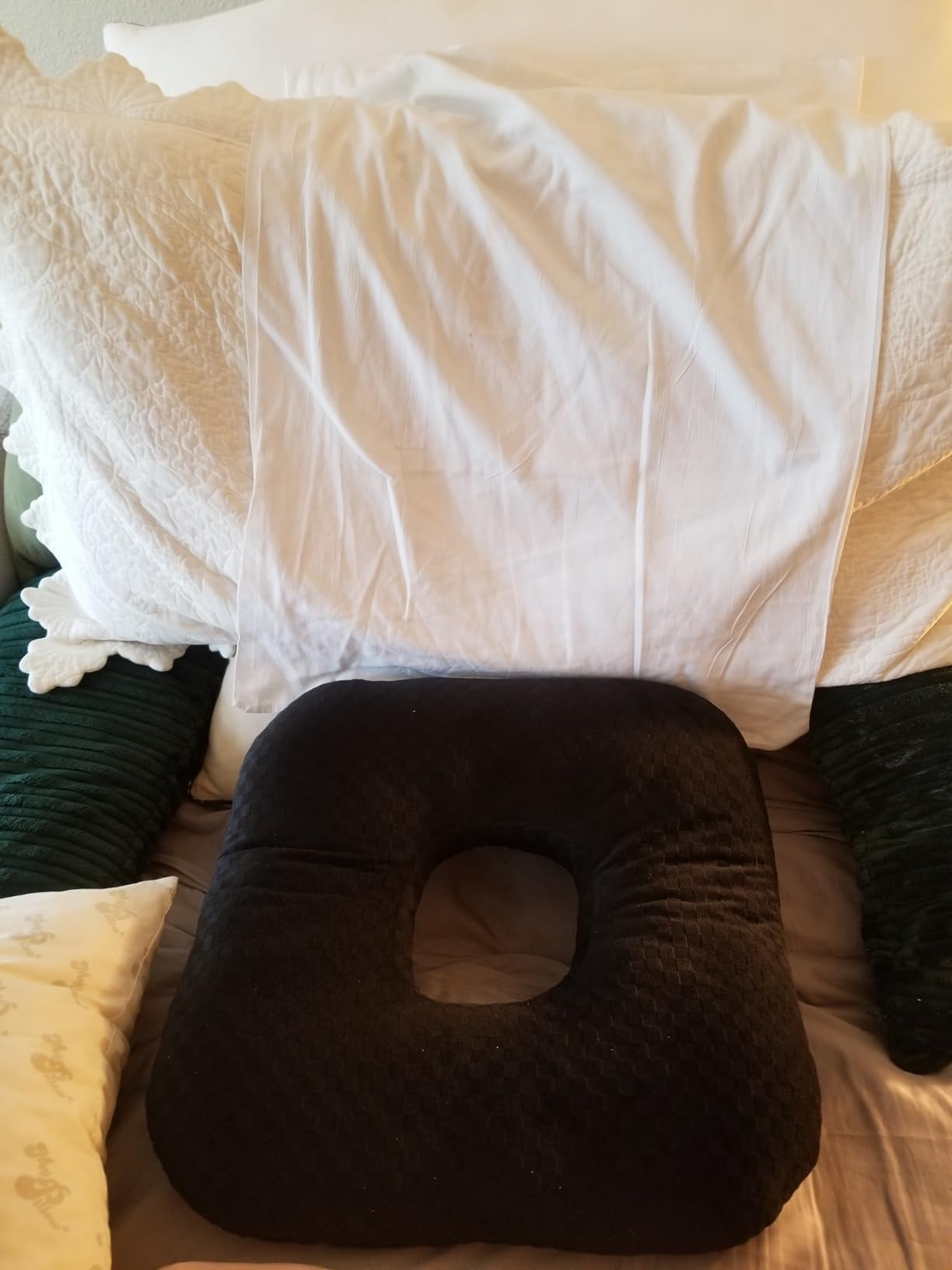
It weighs about 1.3 pounds and comes in fourteen color and pattern variants, so it is also the easiest to travel with. That portability makes it useful as a secondary cushion for a car seat, an office chair or an aircraft seat while you recover.
Who it suits well
Post-surgical recovery where sitting directly on the tailbone is painful, and anyone who needs total coccyx offloading for short or medium stretches. It also works as a secondary cushion in cars, offices and on planes.
Where it falls short
A ring unloads the center but leaves the surrounding thigh area unsupported, which is why it carries the lowest average in this group at 4.3 with a notable three-star share. Cotton fill compresses over time and offers less structured support than gel or foam, hand washing is the only care option, and this is the smallest review base here at 357 reviews.
How to Choose a Wheelchair Cushion for Pressure Sores
Start with your hours, then your sensation, then your weight. Cushion marketing is built around comfort, but comfort is the least useful input in this decision. What matters is how long you sit and whether you would know if something was going wrong under your skin.
The cushion families, and what each one actually does
Air cell flotation lets the pelvis immerse into interconnected air cells, spreading weight over a wide contact area. Tunable firmness, needs periodic inflation checks, runs warm.
Alternating powered pressure cycles air between chambers so no single area stays loaded. The strongest option for high risk, and the most equipment.
Gel and foam hybrid uses a viscous gel bladder over foam to resist bottoming out. Predictable, easy to clean, heavier than foam.
Gel-infused memory foam puts gel into the foam itself. Light, cool, less firm, less tunable, and no true cutout unless one is moulded in.
Contoured molded foam with a U-cutout takes load off the tailbone specifically. Best for coccyx pain, works poorly if you need immersion.
Honeycomb or ventilated gel sacrifices some immersion for airflow. The common compromise when heat is the main complaint.
Donut ring fully unloads the coccyx but leaves the thighs unsupported. A targeted tool, not an all-day cushion.
Match the cushion to your risk level
High risk means reduced sensation, a current or past pressure injury, or a long sitting day. That is air cell or alternating powered, and nothing softer. Medium risk means full sensation, moderate hours, and some fragility. A gel and foam hybrid handles that well. Lower risk, such as part-time chair use or occasional transport, is where a gel-infused foam or ventilated pad is enough.
Users who cannot feel pressure should assume their risk is higher than their comfort suggests. One reader on r/wheelchairs, a person paralyzed six years, called an air cushion the only thing that truly prevents skin breakdown, and that is the correct instinct: sensation is not a cushion feature.
Three details that decide the fit
Cooling. Heat is the complaint we hear most, and macerated skin breaks down faster. Ventilated gel, mesh covers, air holes and honeycomb layers all help, and a breathable cover often matters more than the core.
Transfer stability. A thicker, softer cushion makes transfers harder and can slide forward. If you transfer independently several times a day, treat a rubberized base, an adjustable strap and a low cushion weight as requirements rather than extras. Several of the lighter picks here exist for exactly that reason.
Bariatric sizing. Standard 18 by 16 cushions assume hips that fit within them. If you sit higher than 350 lb or your hips overhang the pad, look for 22 by 18 or larger. The CYLEN listing runs up to 24 by 24, and the Roho Mosaic publishes a 315 lb capacity against the Drive Medical’s 275 lb, so check the published figure against your weight rather than assuming.
When to call a clinician before you buy
If skin is already open, reddened and non-blanching, weeping, odorous, or has a border that is spreading, that is wound care, not shopping. Stage 2 or deeper injuries need assessment, and a cushion chosen by guesswork can mask a worsening problem. A seating clinic or an occupational therapist can also run pressure mapping, which tells you exactly where your pressure peaks rather than leaving you to infer it from comfort.
How to Measure Your Wheelchair for the Right Cushion
Getting the size right matters more than the brand. A cushion that is a half inch narrow lets your sitting bones hang over the edge onto the sling, which concentrates pressure exactly where you were trying to remove it.
Measure the seat width between the armrests or side guards, at the narrowest point. Buy the cushion at that width or wider, never narrower.
Measure the seat depth from the back of the backrest to the front of the footplates. The cushion should support your thighs without pushing your knees up.
Check the sling for slack. A hammock-style sling with a dip in the middle can create pressure the cushion cannot fix. A rigid or tensioned seat is better.
Measure the current height from the ground to the top of the existing cushion, then check your footplate clearance afterward.
Re-test the fit within a week. Sit for a full day before you assume it works.
The footplate warning deserves its own paragraph because roundups usually ignore it. Every extra inch of cushion raises your seat, which pushes your knees up and forward. If your legs no longer sit flat on the footplates, you are carrying weight through your tailbone instead of your feet, which is the exact problem the cushion was meant to solve. Users who self-propel also lose push efficiency at higher seat heights.
Two cushion families here are tall by design: the 4 inch YOUFI model and the 3 inch AUVON wedge. Measure before ordering either. If clearance is tight, a 1.6 inch gel pad or a 1.5 pound memory foam cushion is often the safer choice than trimming a thick one.
Inflation, Cleaning and How Often to Replace a Cushion
Air cushions need a routine, and skipping it is the main reason they disappoint. Inflate to the manufacturer’s setting with the included pump, then sit on the cushion and check that your lowest sitting bone sits roughly half an inch above the base. If you can feel the base through the cushion, add air. If you are floating with no contact, let some out. Re-check monthly and whenever the cushion looks deflated after travel.
Foam and gel hybrids need a different discipline, which is checking for bottoming out. Sit on the cushion and feel underneath. If your sitting bones press into a hard flat base, the foam has compressed past the point where it redistributes anything, and no amount of extra pressure will fix that. Memory foam commonly loses useful support within one to two years of daily use, and gel bladders can migrate or perforate.
Replacement signals are consistent across materials: a surface that no longer returns to shape, a cover that is torn or no longer waterproof, a cushion that slides and cannot be anchored, or any new redness on the skin that persists after a few minutes off the cushion. Waterproof and fluid-resistant covers are worth replacing on their own schedule rather than waiting for the core to fail, since a new cover can extend the life of a good cushion.
Cleaning is simple enough to state in one rule: wash the cover, never the core. Machine washable removable covers are a real feature, not marketing, and cold gentle cycles with air drying protect the membrane. Foam cores, gel bladders and air cells are all ruined by a washing machine.
Does Medicare Cover Wheelchair Cushions?
Yes, a wheelchair seat cushion can be covered, but only with several pieces in place and only when it is medically necessary. Under Medicare Part B, a cushion qualifies as durable medical equipment, which means you need a prescription from a clinician, the supplier must bill Medicare directly, and Medicare pays a share rather than the full amount.
The clinical documentation is the part people get stuck on. A Letter of Medical Necessity from a physician or other authorized clinician must state the diagnosis and why a cushion is required to prevent or treat a pressure ulcer, not simply that you use a wheelchair. This is where a clinician who has actually assessed your skin makes the process far easier, and it is another reason to get clinical input before you order a cushion yourself.
Two practical notes. You still owe the Part B coinsurance, which is 20 percent of the amount allowed after the deductible is met. And if Medicare does not cover a specific model, that does not mean the cushion is unavailable, since private insurers and workplace plans sometimes have broader durable medical equipment coverage, and FSA or HSA funds can often be used for a cushion the plan declines.
Beyond coverage, cushions are also a replacement item. Medicare generally covers replacement on a set schedule rather than whenever you feel like switching, so if you are comparing models now, ask your supplier what your replacement interval is before you decide.
Frequently Asked Questions
What is the best wheelchair cushion to prevent pressure sores?
Air cell cushions and alternating pressure cushions are the most effective types, because both let your pelvis immerse so weight spreads across a wider area. Air cells can be tuned to your body weight, while alternating powered cushions cycle pressure so no single spot stays loaded. Gel and foam hybrids are the practical middle ground for medium risk.
What type of cushion is best for pressure sores on the buttocks?
For sores on the buttocks, the sitting bones are the main pressure point, so an air cell cushion or a viscous gel bladder over foam gives the best redistribution. A U-shaped or donut design is better when the sore sits directly on the tailbone, because it physically removes the load instead of spreading it.
How do people in wheelchairs avoid pressure sores?
Reposition every 15 to 30 minutes, check your skin twice daily with a mirror, keep the cushion surface dry and low-shear, maintain steady nutrition and hydration, and use a cushion matched to your hours and weight. Long-term wheelchair users commonly credit a stable air cushion with preventing skin breakdown.
Will Medicare pay for a Roho cushion?
Medicare Part B can cover an air cell cushion including a Roho model, provided you have a prescription, a Letter of Medical Necessity stating the pressure ulcer diagnosis and why the cushion is required, and a supplier that bills Medicare directly. You still owe the 20 percent Part B coinsurance after the deductible.
How often will Medicare pay for a wheelchair cushion?
Medicare treats a wheelchair cushion as durable medical equipment and covers replacement on a set schedule rather than whenever you want to change models. The exact interval depends on your documentation and the supplier, so ask your supplier what your replacement timing is before choosing a model.
What is the best gel cushion for a wheelchair?
For most users the Drive Medical 14886 Skin Protection cushion is the strongest gel option, because its viscous gel bladder resists bottoming out and its low-shear cover reduces skin damage during repositioning. If weight matters more, the AUVON models give similar tailbone relief in a lighter, easier-to-transfer build.
What is the best pressure relief cushion for elderly people?
For an older adult with intact skin and moderate sitting hours, a ventilated gel and memory foam cushion such as the Everlasting Comfort is the practical choice, since it stays cool, washes easily and resists flattening. Choose a firmer cushion only if skin sensation is reduced, and measure footplate clearance first.
How thick should a wheelchair cushion be?
Most users do well with 2 to 3 inches, which spreads pressure without raising the seat excessively. Going to 4 inches helps heavier users but can break footplate clearance and make transfers harder, while anything under 1.5 inches compresses quickly and offers limited protection over a full sitting day.
Our Recommendation
The best wheelchair cushions for pressure sores are not one product, they are a match between cushion family and risk level. Start with the Everlasting Comfort ventilated gel cushion if you have sensation and moderate hours, move up to the Roho Mosaic air cell if you sit long with reduced sensation, and choose the Drive Medical 14886 if a clinician is already managing an existing sore.
Then measure your chair, check footplate clearance, and set a maintenance date for a firmness or bottoming-out check. And if your skin is already damaged, get the assessment before the order, because that is the one part of this decision no cushion can do for you.
Disclosure: we may earn a commission when you buy through links on this page. That does not change which products we recommend, and it does not change the advice to talk to a clinician before treating an existing wound.