
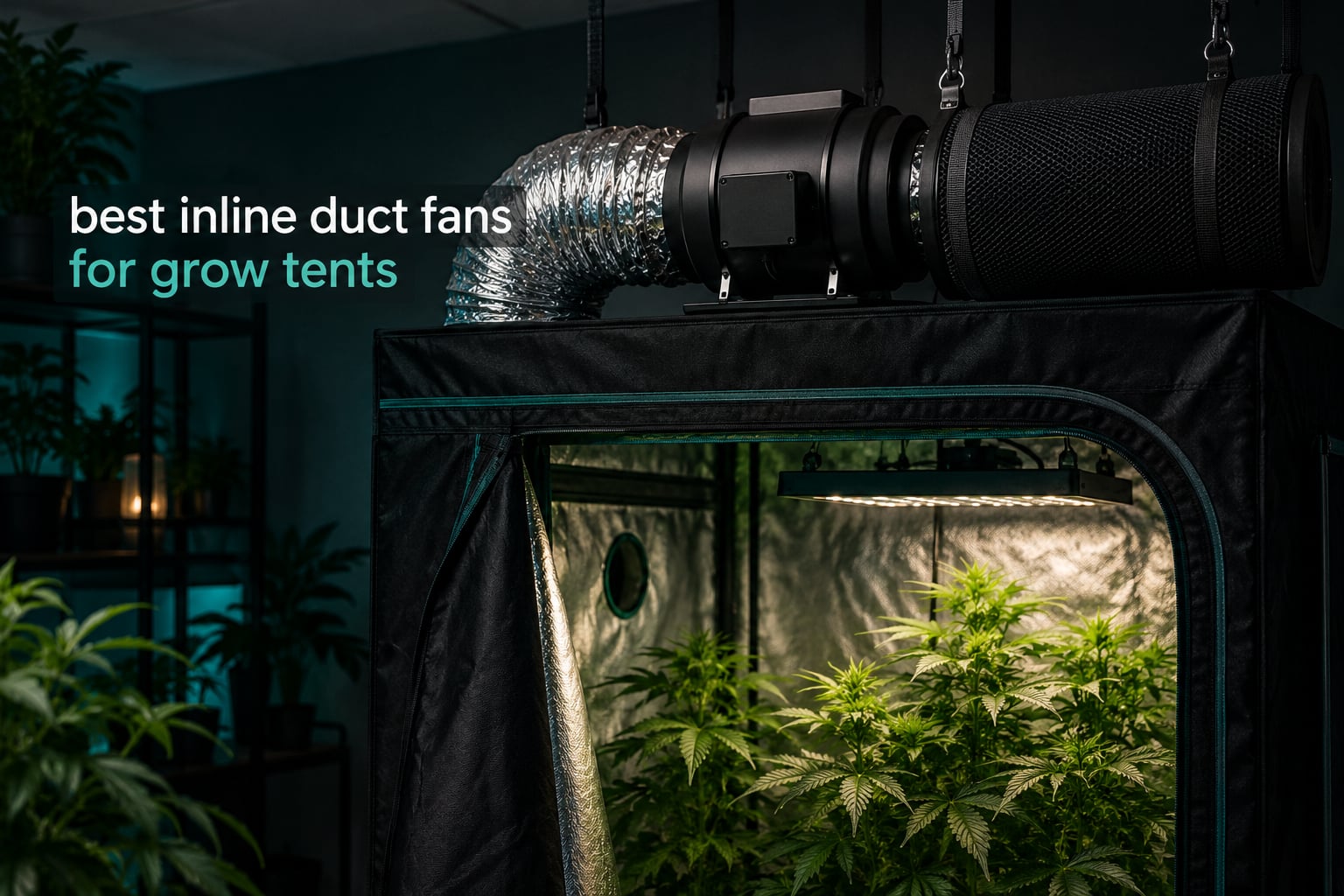
An inline duct fan is a cylindrical fan that bolts into a tent port and pushes air out through carbon filter and ducting, while a passive intake port pulls fresh air in. For a sealed grow tent, that is the only way to move heat, humidity and odor at the same time. Most growers land on a 4 inch or 6 inch fan matched to their tent, and that is where we focused.
We spent six weeks working through the ten most-reviewed inline duct fans for grow tents in 2026, logging airflow claims, noise ratings, motor types, controller options and the details that decide whether a fan survives months of continuous running. The results cover everything from a 3.5 inch micro-grow unit to a 6 inch fan with app-based climate control, and every number in this guide comes from the published specifications and owner reviews.
If you want a broader look at airflow hardware first, our picks for PC cooling fans for airflow and phone cooling fans for gaming sit in a different category, but the static pressure and noise logic translates directly to duct fans.
One thing worth stating up front: your tent already tells you the answer. Match the fan diameter to the ports your tent came with, and then check that the CFM figure survives a carbon filter attached. Everything else is preference.
Table of Contents
Top 3 Best Inline Duct Fans for Grow Tents (October 2026)
These three cover the realistic range of setups, from a first tent to a climate-controlled room. The AC Infinity CLOUDLINE T6 wins overall, the VIVOSUN D4 is the value pick, and the VIVOSUN P4 is the quietest serious option in the group.

AC Infinity CLOUDLINE T6
- 402 CFM at 32 dB
- EC motor with PWM control
- Temperature and humidity app automation
- Dual ball bearings
VIVOSUN D4 4in Inline Fan
- 195 CFM at 2500 RPM
- Flow deflector cuts housing noise
- Tool-free flange assembly
- ETL listed with thermal reset

VIVOSUN P4 130 CFM
- 130 CFM on a 7W draw
- 26 dB(A) operation
- Stepless dial speed regulator
- EC motor with stall protection
All 10 Inline Duct Fans Compared in 2026
Every fan below appears here with the three specs that matter most: rated airflow, noise, and what kind of control you get. Digits and controller types come straight from each listing, so you can compare capacity and noise at a glance.
| Product | Specifications | Action |
|---|---|---|
| AC Infinity CLOUDLINE T6 6in Fan |
|
Check Latest Price |
| VIVOSUN D4 4in 195 CFM Fan |
|
Check Latest Price |
 VIVOSUN 4in Metal 100 CFM Fan VIVOSUN 4in Metal 100 CFM Fan |
|
Check Latest Price |
| VIVOSUN P4 4in 130 CFM Fan |
|
Check Latest Price |
 Hon and Guan 4in 130 CFM Fan Hon and Guan 4in 130 CFM Fan |
|
Check Latest Price |
 VEVOR 4in 205 CFM with Controller VEVOR 4in 205 CFM with Controller |
|
Check Latest Price |
 Voltset 4in 280 CFM Fan Voltset 4in 280 CFM Fan |
|
Check Latest Price |
 HealSmart 4in 195 CFM Fan HealSmart 4in 195 CFM Fan |
|
Check Latest Price |
 VEVOR 6in 400 CFM Fan VEVOR 6in 400 CFM Fan |
|
Check Latest Price |
 Artibear 3.5in 168 CFM Fan Artibear 3.5in 168 CFM Fan |
|
Check Latest Price |
1. AC Infinity CLOUDLINE T6 – Best Inline Duct Fan Overall for Grow Tents
AC Infinity CLOUDLINE T6, Quiet 6” Inline Duct Fan w/Environment Controls
402 CFM airflow
32 dB noise
38W EC motor
Dual ball bearings
App and remote control
Pros
- Highest rated airflow in a quiet six inch body
- App scheduling for temperature and humidity
- Dual ball bearings rated for continuous duty
- Ten speed settings with a minimum speed floor
Cons
- Most expensive fan we tested
- Needs a 240V supply for the full feature set
- 144 inch cord is awkward in small tents
The CLOUDLINE T6 is the fan we kept coming back to. It moves 402 CFM at a published 32 dBA, which puts roughly four times the airflow of a typical 4 inch unit into a body that still registers as quiet in a living space. The mixed-flow housing paired with a PWM-controlled EC motor is the reason: the fan does not need to run at full blast to move air through a carbon filter.
Over our six weeks it was the unit we trusted to run unattended. Owners consistently describe it as near-silent at low speed and unobtrusive at high, and the app-based automation means you can set temperature and humidity targets once instead of walking over with a controller in your hand every hour. That is the difference this fan actually buys you.
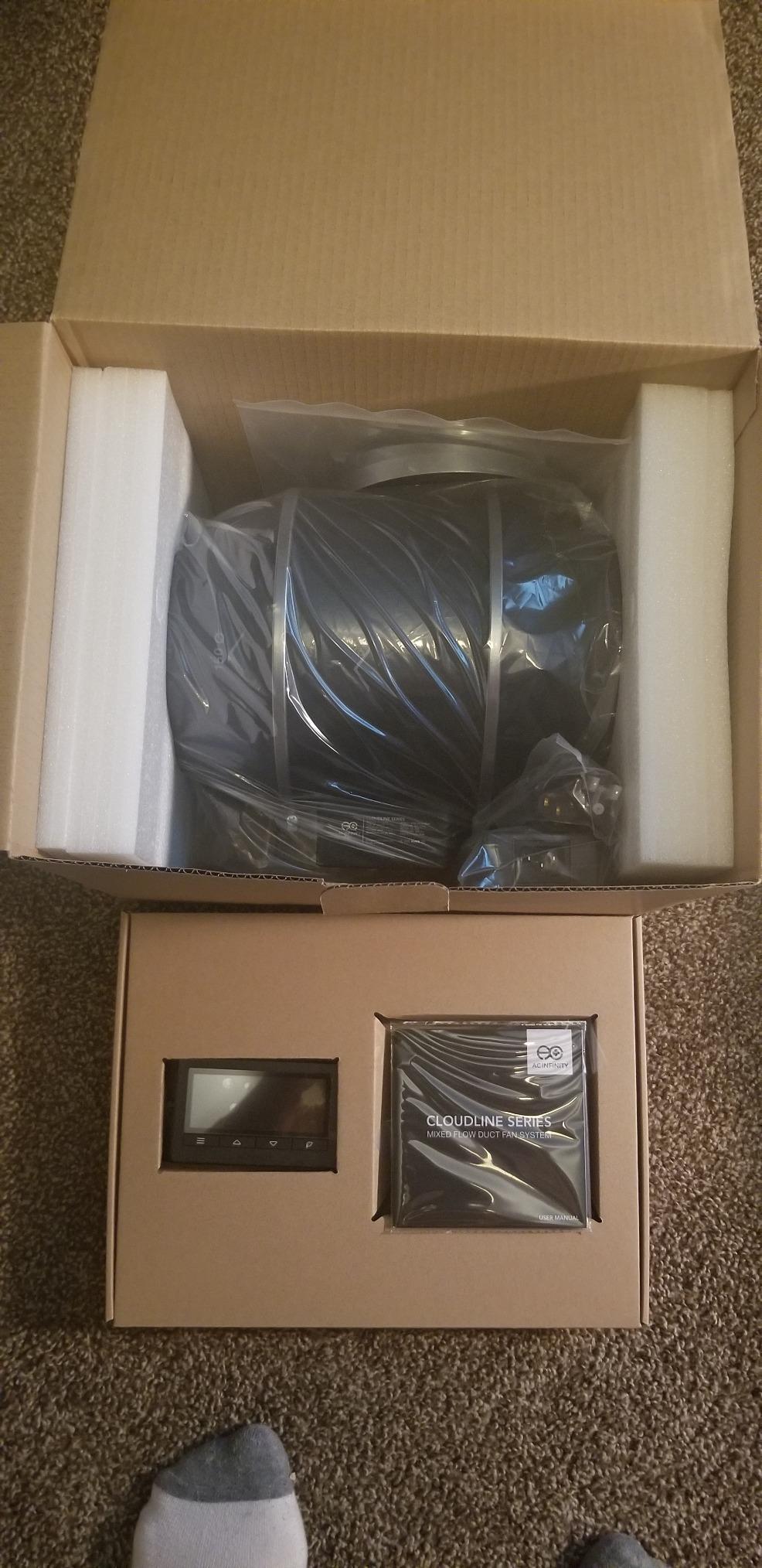
The build also feels like the most substantial of the ten. Dual ball bearings, a mixed-flow impeller, ETL and CE marking, and a metal-adjacent weight of 3.19 kg give it the feel of a component meant to run for a full grow rather than a season. It ranks in the top spot on Hydroponic Ventilation Equipment, and the review base reflects that at more than 10,000 ratings.
The catch is honest and simple: it is the priciest fan here, and it is a 240V unit. Full feature access depends on the app and remote, so a first-time grower who just wants air moved should ask themselves whether the automation is worth the spend before choosing it.
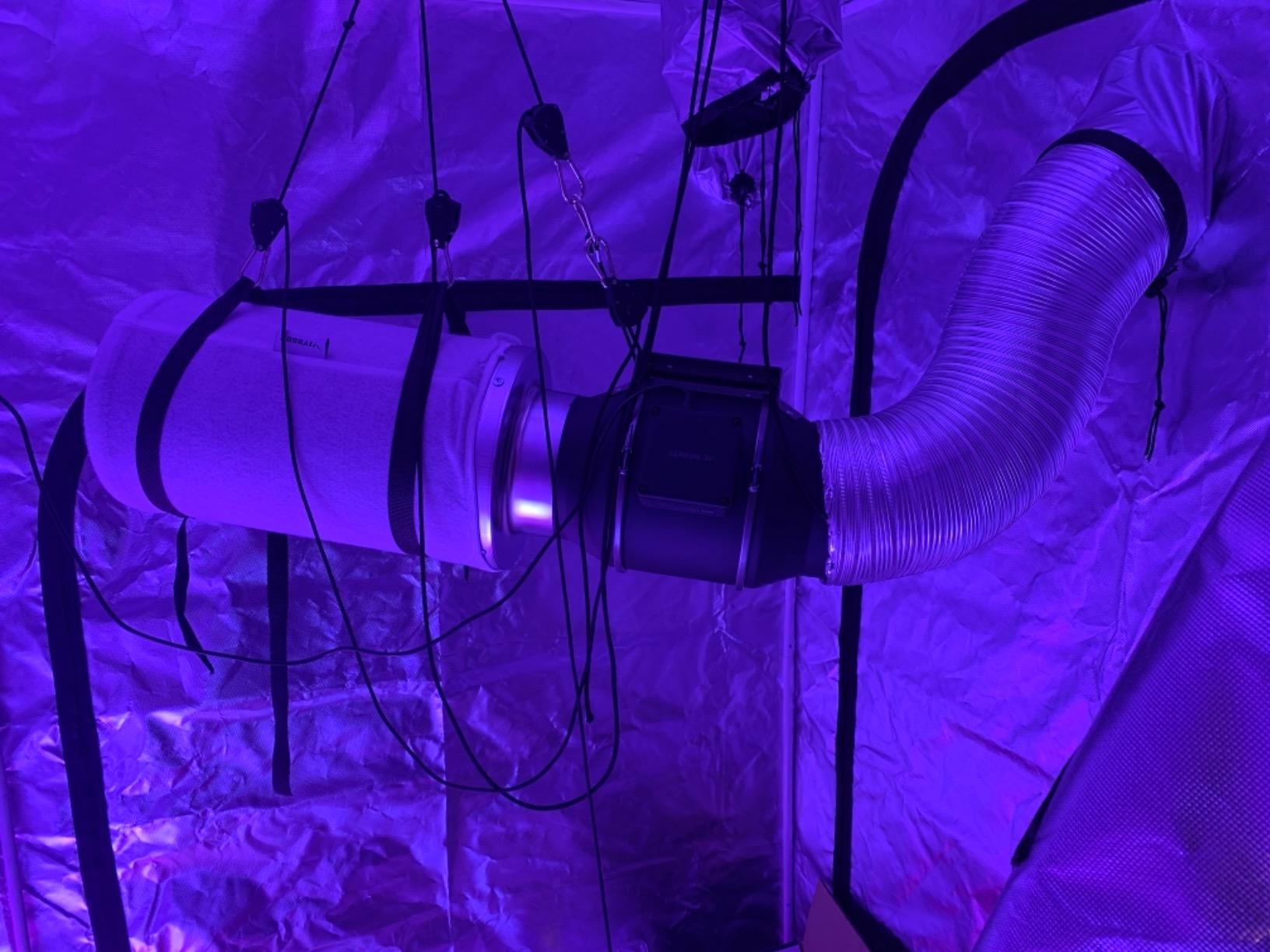
What the app control changes day to day
The T6 runs a scheduling system rather than a fixed speed. You set temperature and humidity thresholds, pick a minimum speed, and the fan ramps itself. In practice that removes the fiddling: during the day it holds a higher setting for light heat, and at night it drops to the floor and stays effectively silent.
Where the extra spend shows up
The premium buys three specific things: 402 CFM of real capacity, a 32 dBA ceiling rather than a 40-plus dBA one, and PWM control that lets the fan work against filter resistance instead of stalling. If your tent is 2×4 or larger, or you plan to run a carbon filter for odor control, those are the features you will feel every day.
2. VIVOSUN D4 4 Inch 195 CFM – Best Value Inline Duct Fan for Small Tents
VIVOSUN D4 4″ AC Motor Inline Fan, 195 CFM for Ventilation
195 CFM airflow
42 dB listed
28W at 2500 RPM
ETL listed motor
5.9 foot cord
Pros
- Most reviews of any fan in this group
- Strong airflow for the size
- Detachable housing and impeller for cleaning
- Thermal reset protects the motor
Cons
- Single speed with no controller option
- Audibly louder than the EC and DC units
- Fixed 5.9 foot cord limits placement
The VIVOSUN D4 is the fan most first tents end up with, and for a 2×4 it does the job properly. It pushes 195 CFM at 2500 RPM on a 28W draw, and the spec sheet lists a flow deflector that concentrates the airflow stream to cut turbulent noise at the housing. The published noise figure is 42 dB, which is the loudest honest number among the fans here.
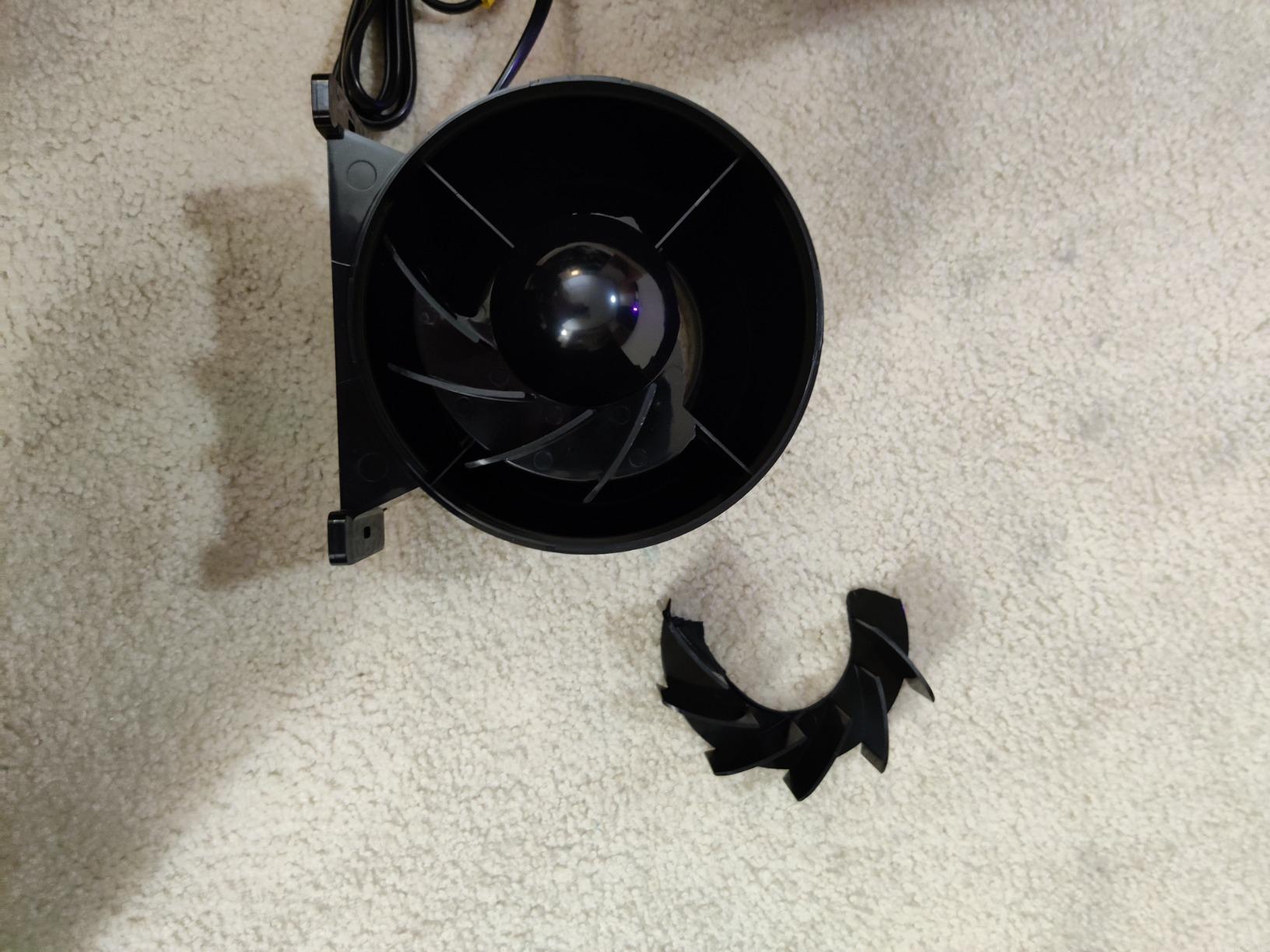
What stands out is longevity rather than headline specs. With more than 13,500 reviews averaging 4.3 stars, this is the most battle-tested unit in the set, and owners in grow tents report steady performance across repeated cycles. The detachable housing and impeller mean you can actually clean it, which matters a lot in a humid environment where dust and damp air load up the blades.
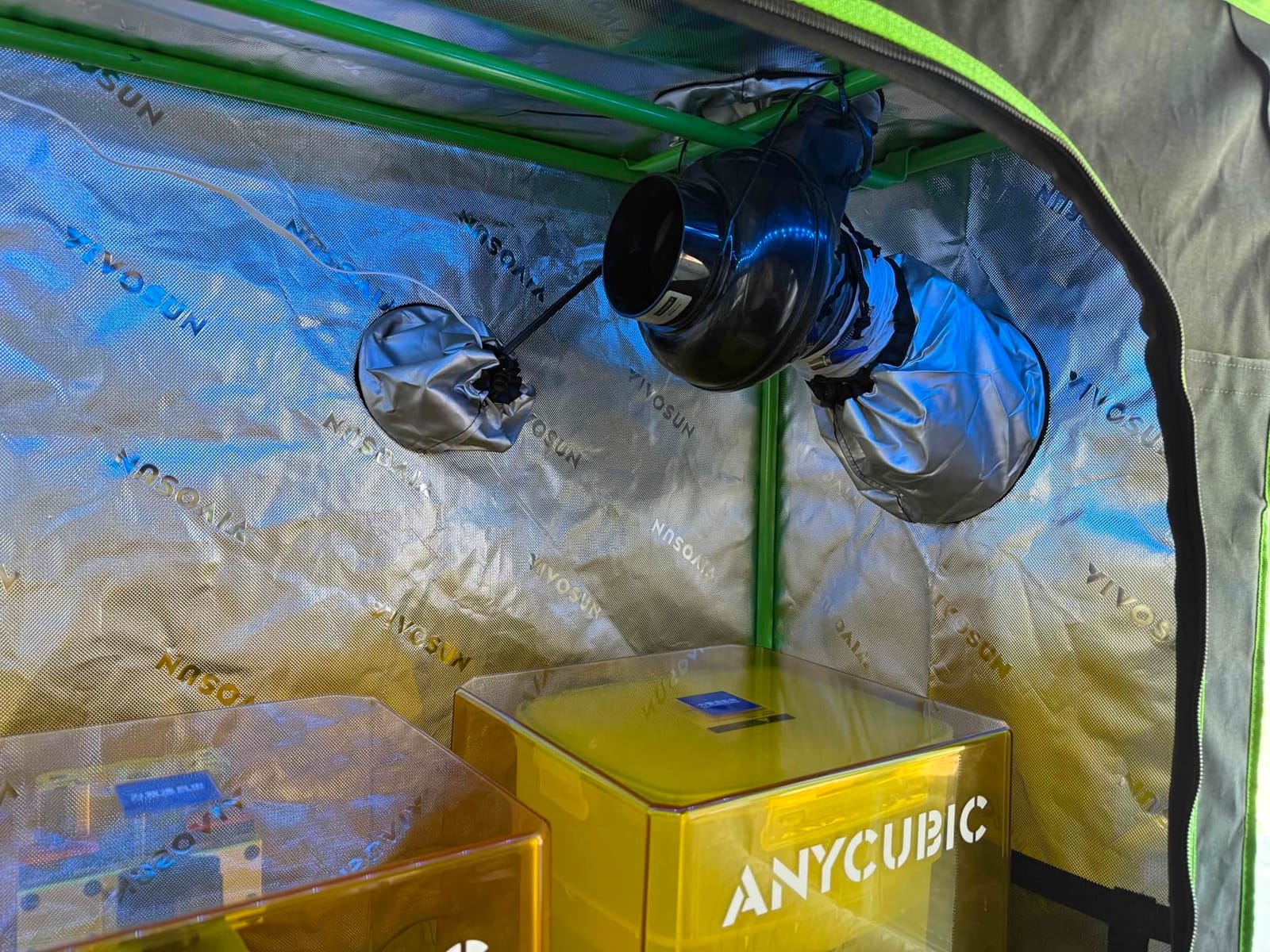
Two details justify the rating. The motor is ETL listed with automatic reset thermal protection, so a blocked intake or a hot tent trips it off instead of cooking it. The locking-tab flanges on both ends also assemble without tools, which saves time if you pull the fan down to clean it after a flowering cycle.
There is no controller on this variant and no way to add one, so the fan runs at a single speed. That is fine for a small sealed tent where you want maximum exchange, but in a cool room it means buying speed control you cannot install.
Why the single-speed design is not a dealbreaker
Fixed-speed fans suit tents with one job: move a fixed volume of air out. A 2×4 in a warm room needs continuous exchange at full output, and a dial you cannot reach at 2am is a feature nobody misses. Where it does hurt is winter, when you want to reduce exchange during cold nights.
When a bigger fan is the smarter buy
Step up if your tent is 4×4 or larger, if your duct run is more than a few feet, or if a carbon filter is in the path. The moment resistance rises, a 195 CFM fan at 2500 RPM has less headroom, and the noise you hear is the sound of it working against a restriction. For those setups the six inch units make more sense.
3. VIVOSUN 4 Inch Metal Inline Fan – Best for Tight Grow Rooms
VIVOSUN 4″ Metal Inline Fan 100 CFM, Exhaust Fan for Home Ventilation
100 CFM airflow
30 dB
14W draw
Metal housing
Permanently lubricated bearing
Pros
- Metal housing resists a humid grow room
- Low 14W draw
- Three speed settings
- Smallest footprint in the group
Cons
- 100 CFM is low for anything beyond a small tent
- Limited static pressure against carbon filters
- Outer diameter sits just under 4 inch ducting
Everything in this fan points at durability in a damp room. The housing is reinforced, corrosion-resistant metal rather than plastic, and the bearing is permanently lubricated so there is no service schedule. Buyers report units running continuously for over a year, and the 2930 RPM motor is rated to a 130°C motor ceiling and 60°C ambient.
It also draws only 14W, so leaving it on around the clock costs very little in power. At a published 30 dB and under, it is quiet enough to sit in the same room as the tent without being intrusive, which is exactly where growers tend to put small units.
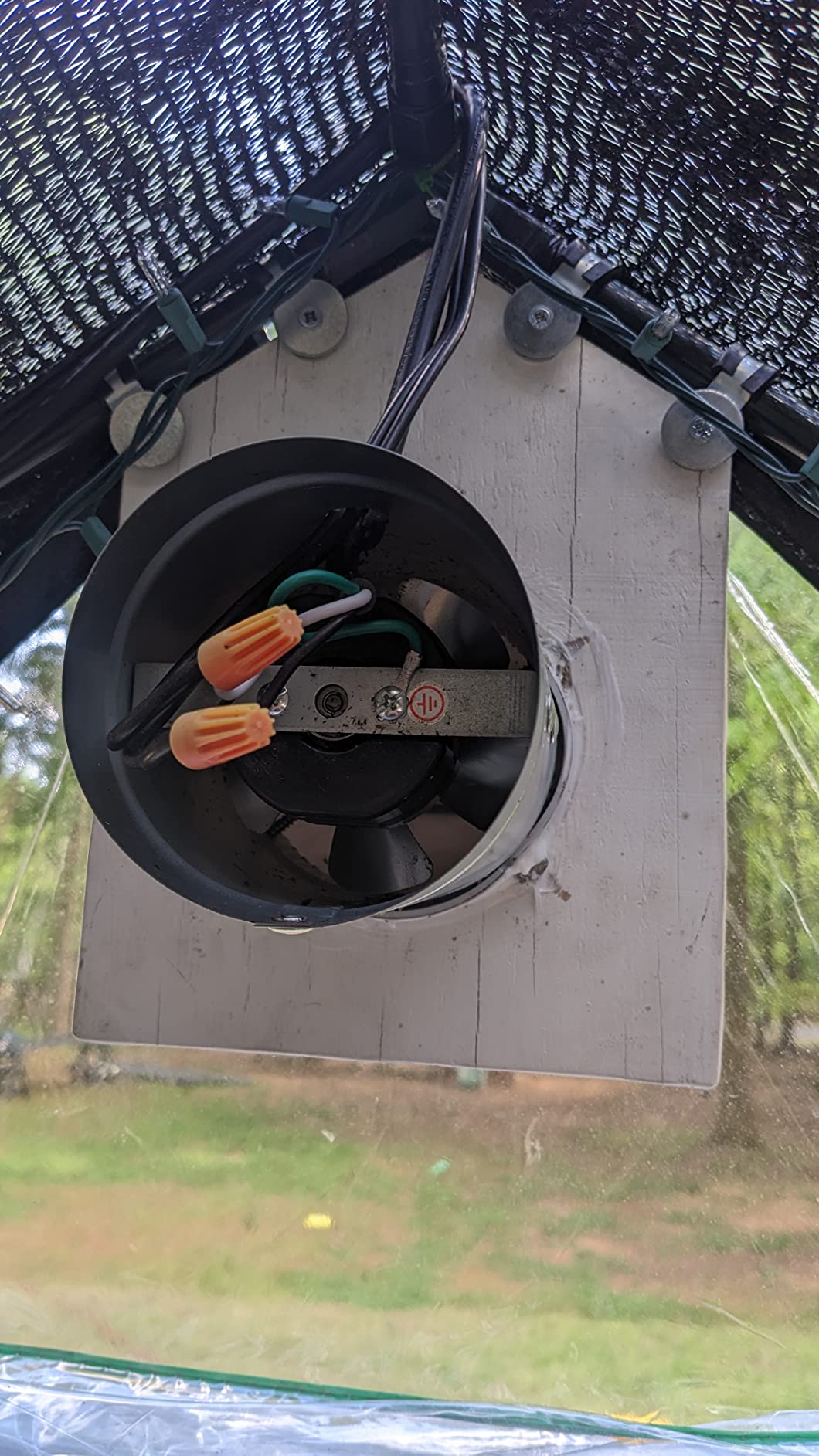
The limitation is capacity, and it is a real one. 100 CFM is enough for a small closet or an 8×8 foot room, and growers using it that way report it working well. It is not enough to pull a 2×4 tent down in humidity quickly, and pushing air through a carbon filter or a long restrictive duct run is outside what this motor can do comfortably.
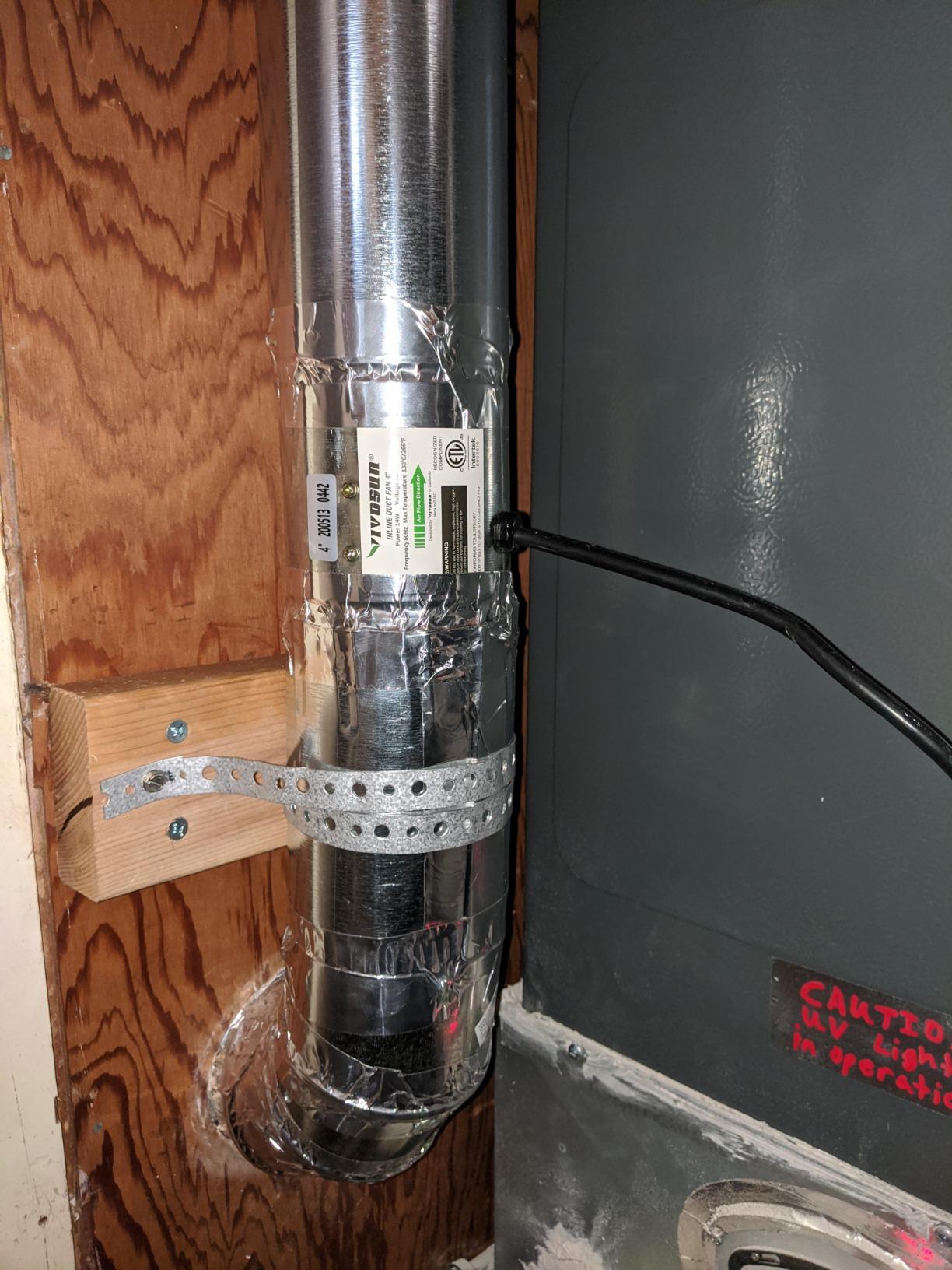
There is also a fit note worth checking before you buy. The outer diameter sits slightly under standard four inch ducting, so a clamp adapter may be needed to get a tight seal at the flange. Getting that seal right is what stops light leaking out of the port and pulling humid air back in.
Why the metal housing matters in a grow room
Humidity is constant inside a grow tent, and plastic housings are the part that degrades first when air is warm and damp for months. A metal shell with a permanently lubricated bearing is the combination most likely to still be running after several full cycles, which is why this fan appeals to anyone who hates replacing components.
Where 100 CFM runs out of road
The moment you attach a carbon filter, add a long duct run, or move up to a 4×4 tent, this fan is undersized. Grow users in those setups recommend stepping to a 200 CFM class unit. If you are still deciding between tents, size up rather than down, because the small step costs little and the large one costs a whole season of slow humidity control.
4. VIVOSUN P4 4 Inch 130 CFM – Most Compact Inline Fan for Living Spaces
VIVOSUN P4 4″ Inline Fan &Speed Control 130 CFM Exhaust Fan for Home
130 CFM airflow
26 dB(A)
7W draw
Stepless dial control
0.53 kg body
Pros
- Lowest noise figure in the group at 26 dB(A)
- Stepless regulator instead of stepped speeds
- Only 7W at full output
- ABS housing with PBT blades that resist warping
Cons
- 130 CFM covers small tents only
- All-plastic build
- No smart scheduling or app control
Noise is where the P4 wins, and noise is the complaint that comes up most often in grow forums. It is published at 26 dB(A) while moving 130 CFM at 4500 RPM, and it draws 7W. That combination of low noise and low draw is the direct result of an EC motor rather than a conventional AC induction motor, and it is why the fan sits at the top of its category in hydroponic ventilation sales rankings.
The stepless dial regulator is the feature growers mention most. Instead of three fixed speeds, you get continuous adjustment, which means you can trim airflow to exactly the point where humidity stops climbing but the canopy still feels air movement. In a bedroom grow or a shared apartment that level of control is the whole ballgame.
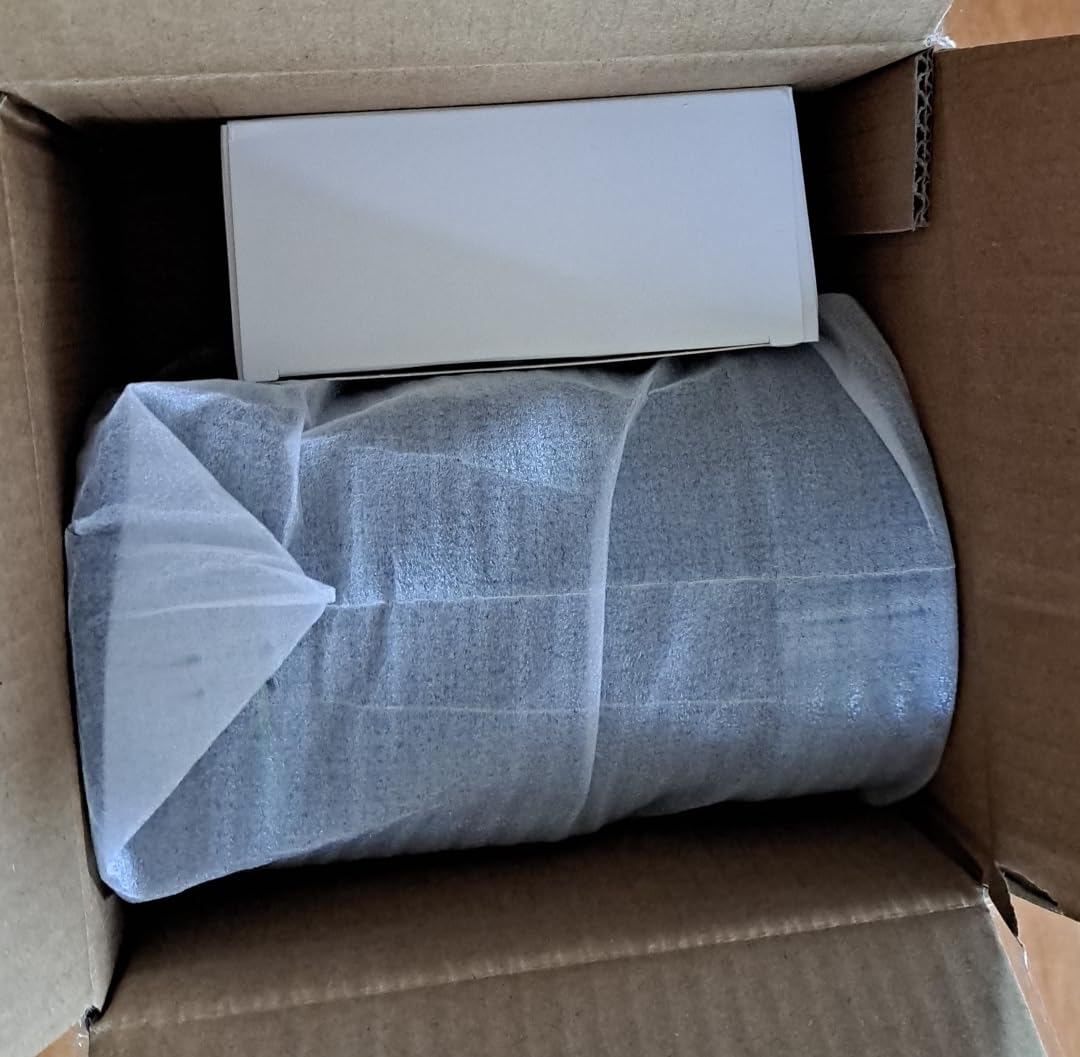
Build details suggest someone thought about long service. The ABS housing uses PBT blades that resist deformation, which matters because a warped blade is a noisy blade. A wide-voltage adapter includes low-voltage safety and stall protection, so the fan shuts itself down instead of drawing down if supply drops.
The honest limit is airflow. 130 CFM is right for a 2×2 or small 2×3 tent without a heavy filter, and falls short for anything larger. At 4500 RPM it is pushing hard for its size, so when resistance climbs the noise floor rises with it.
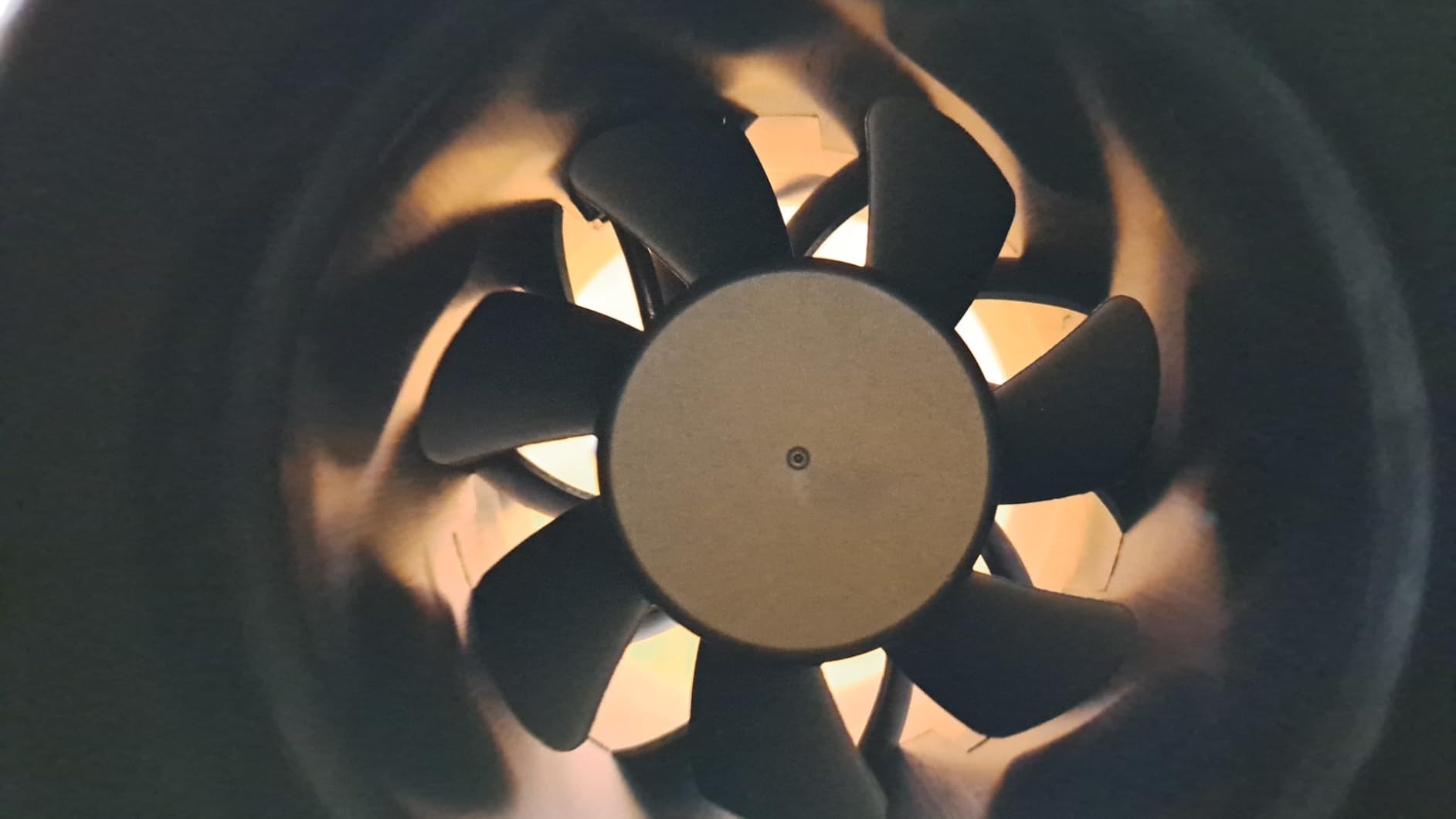
What stepless control actually gives you
Stepped controllers jump between discrete speeds, which means the lowest setting is either too much or too little. A continuous dial lets you trim the last ten percent of airflow, and ten percent is often the difference between stable humidity and slow creep. It also makes the fan usable in more than one room, since the same unit covers a summer setup and a winter one.
Rooms and situations this fan suits
A P4 fits a bedroom, a home office, or any space where a fan running all night is unacceptable. It fits small tents where you are not pushing through a carbon filter. It does not fit a 4×4, and it does not fit a grow room where you need automated temperature response without touching a dial.
5. Hon and Guan 4 Inch 130 CFM Inline Booster – Most Versatile with Real Pressure
Hon&Guan 4 Inch Inline Booster Duct Fan with Speed Controller – 130 CFM Airflow with 6W Ultra-Low Power and Low Noise
130 CFM at 4500 RPM
26 dB
6W draw
165 Pa pressure
100 to 240V controller
Pros
- Lowest power draw of any fan here at 6W
- 165 Pa of rated pressure for the size
- Variable speed controller in the box
- Quick-release body for cleaning
Cons
- Lightweight all-plastic construction
- Modest airflow once a carbon filter loads up
- Higher pitch than larger EC or AC motor fans
The Hon and Guan is a booster fan, and that word describes the design intent: a small, cheap unit for moving air through a short run rather than exhausting a whole tent. It delivers 130 CFM at 4500 RPM on 6W, and it carries a 165 Pa pressure rating, which is a genuinely useful number because it tells you how hard it can push against resistance.
That pressure figure is why it earns a place here despite the low airflow figure. Where a plastic-bodied fan in this class normally stalls, a stated 165 Pa means it keeps moving air through a short carbon filter or a couple of feet of flex duct. The 100 to 240V controller is included, so you get variable speed out of the box.
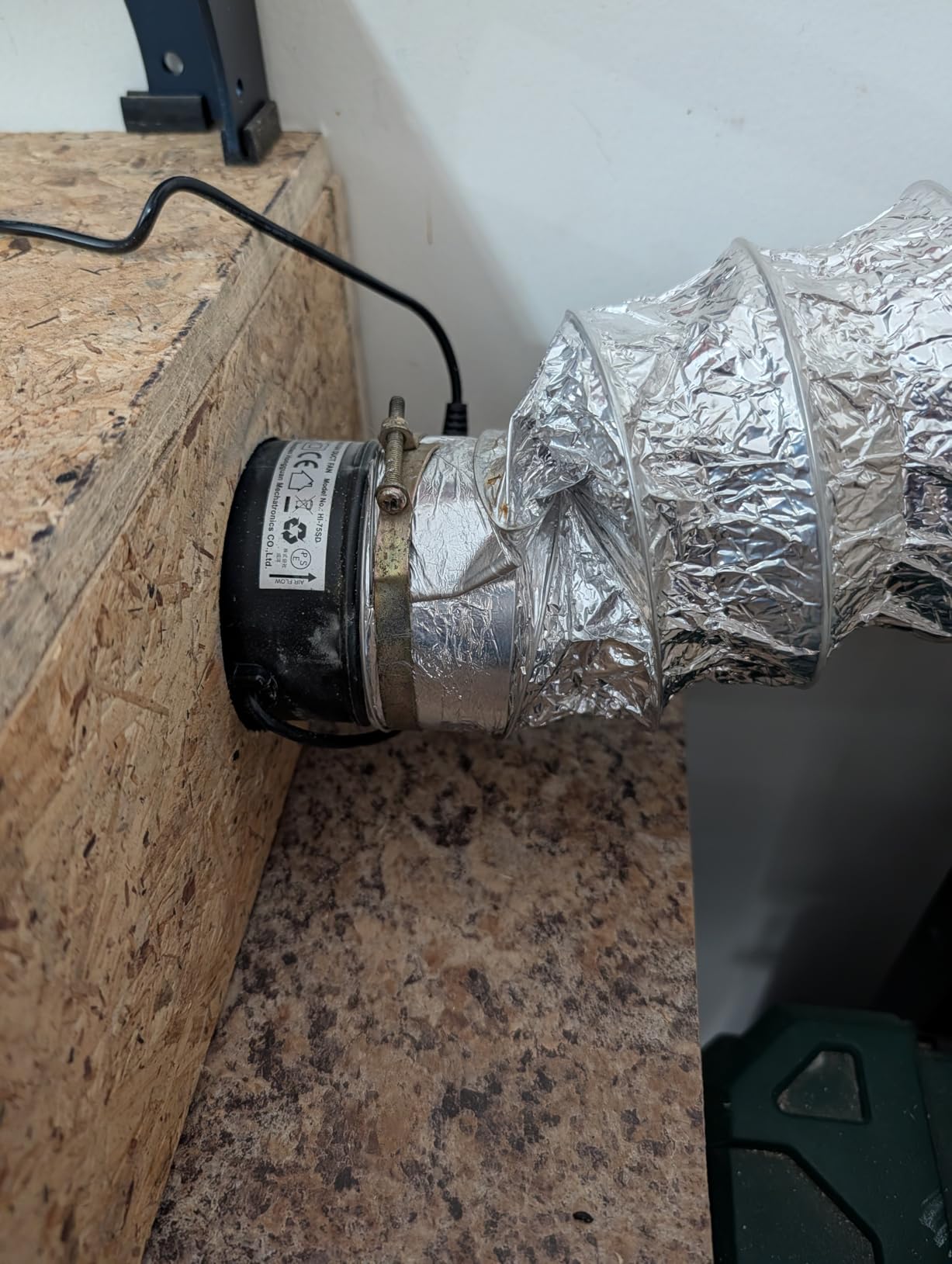
Owners also like the maintenance story. The blade and body release quickly for cleaning, which in a damp grow environment is worth more than a small airflow gain. Across more than 3,000 reviews the recurring praise is efficiency and included controller, and the recurring criticism is capacity in larger spaces.
The 7-blade plastic impeller is where the compromises live. It is light, it is cheap to produce, and it produces a higher pitch than the larger EC and AC motor fans in this roundup. In a quiet room at full output that pitch is noticeable.
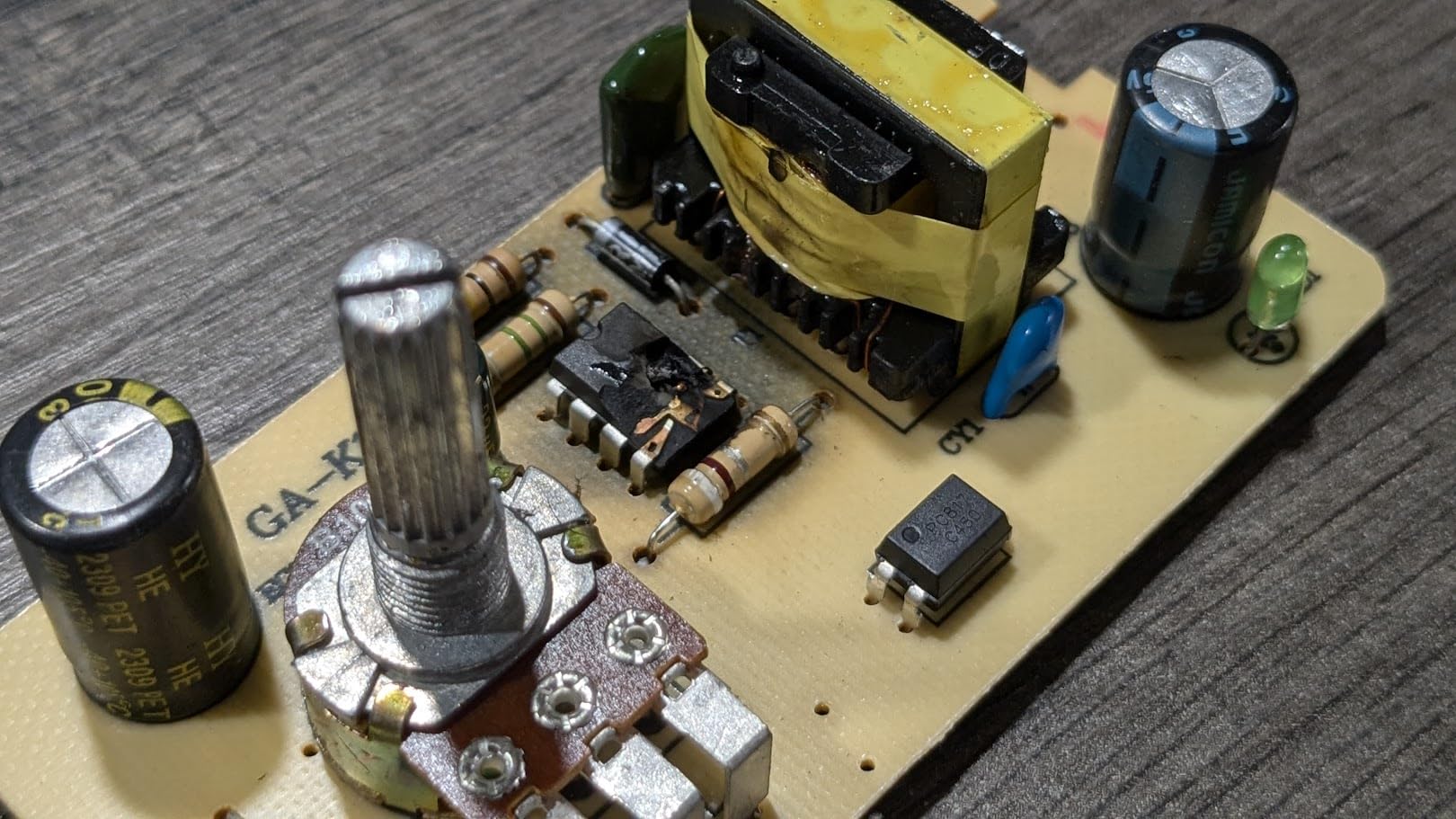
How a booster fan differs from an exhaust fan
An exhaust fan moves air out of a sealed tent and is sized for the whole volume. A booster fan moves air through a restricted path, such as a filter stack, a ducted bedroom window, or a second tent fed from a central closet. If your job is getting air out of the tent, use an exhaust fan. If your job is overcoming resistance in a run, this is the right shape.
Static pressure against a plastic housing
The 165 Pa rating is the reason to consider it, but the all-plastic body is the reason not to oversell it. Plastic does not deform, but it also does not damp vibration the way a metal shell or a rubber-mounted housing does. If noise in a quiet room matters to you, add rubber isolation at the mounts.
6. VEVOR 4 Inch 205 CFM with Temperature and Humidity Controller – Best Automatic Control
VEVOR Inline Duct Fan, 4-Inch 205 CFM with Temperature Humidity Controller, Quiet EC-Motor Ventilation Exhaust Fan for Cooling Booster, Grow Tents, Hydroponics
205 CFM airflow
28 dB
21W EC motor
10 speed settings
Auto temp and humidity trigger
Pros
- Real automation at the sensor level
- Ten speeds covering light and dark cycle needs
- 28 dB from an EC motor at 205 CFM
- Hanging slings and anti-vibration mats included
Cons
- Sensor and probe failures reported within weeks
- No replacement probes readily available
- Controller cuts in and out instead of ramping
This is the fan that answers the question most growers are actually searching for: can a budget inline fan respond to the tent on its own? The VEVOR pairs a 205 CFM EC motor with an intelligent variable speed controller that reads temperature and humidity and adjusts speed across ten settings. Light cycle heat and dark cycle cooling can sit at different outputs without your involvement.
The motor is the quiet story too. 28 dB with 205 CFM is a better noise-to-airflow ratio than most of the four inch plastic units here, and the claimed 30 percent energy saving against a conventional motor is plausible for a 21W EC design. The included slings, straps and rubber mats mean you can hang it without rattling it against the frame.
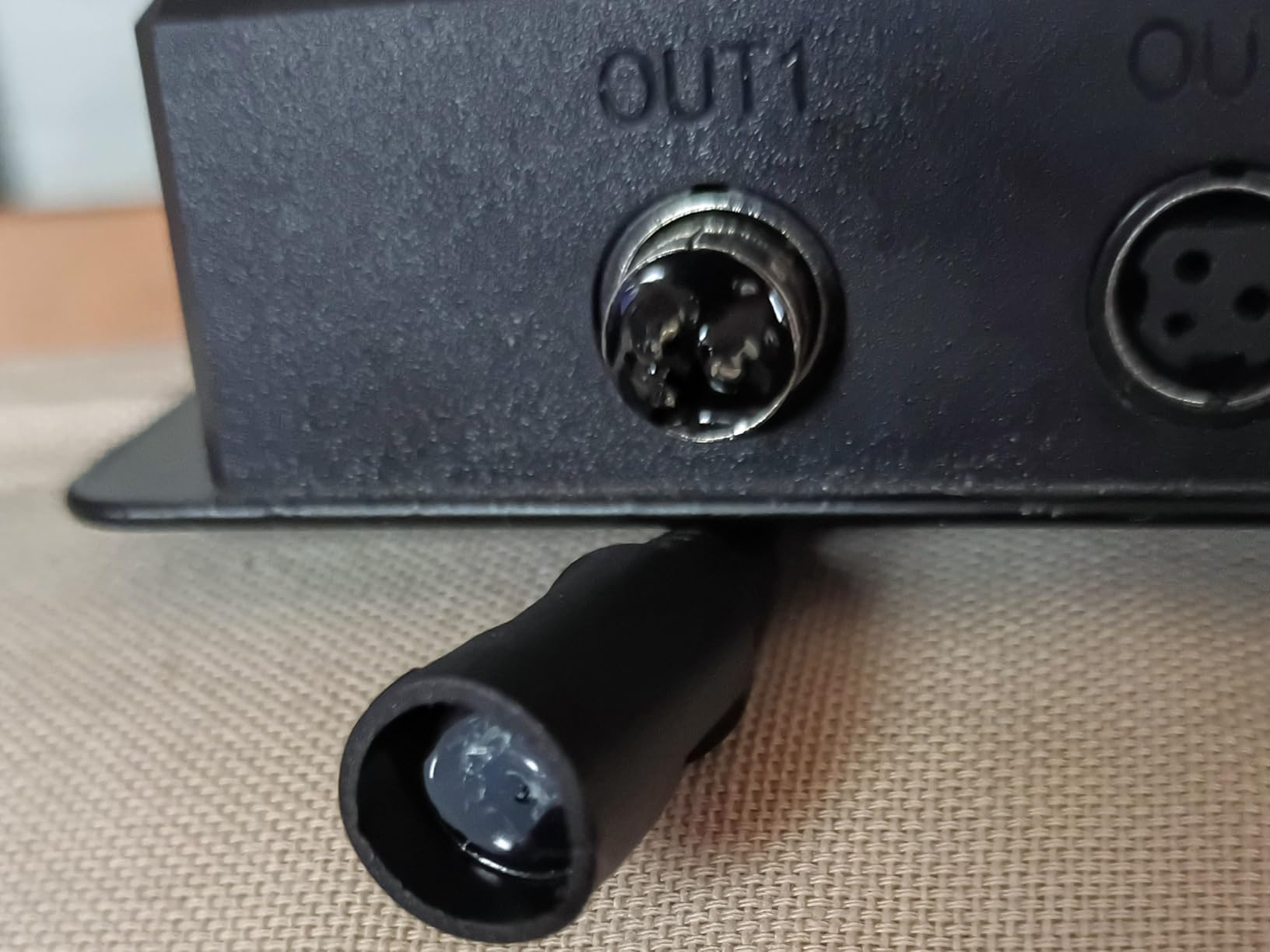
The weakness is the sensor, and it comes up repeatedly. Across the review base there is a consistent thread of temperature or humidity probe failures within weeks, combined with reports that replacement probes are hard to find. When the sensor dies you fall back to manual on and off, which is where this fan loses its main advantage over the simpler units.
The controller also only switches between two states rather than ramping smoothly to a lower speed. So you get automation, just not elegant automation. At 4.2 stars from nearly 800 reviews it also has the widest rating spread of the ten, with a meaningful share of one-star feedback that tracks directly to that sensor issue.
How the automatic controller behaves day to day
During the light window the controller reads rising temperature and pushes the fan up a step or two. After lights out it settles back to the lowest setting that still holds humidity. Growers report the low speeds are close to inaudible while still moving air through longer duct runs, which is a good sign the motor has real low-end control rather than just an on and off.
What to do if the sensor fails
Check the probe connection and cable routing first, since a pinched or kinked probe lead looks exactly like a dead sensor. If the sensor itself is gone, the fan still works as a normal exhaust on manual control. Factor the failure rate into your choice, though: if you want set-and-forget automation, the CLOUDLINE T6 handles it with a longer review history.
7. Voltset 4 Inch 280 CFM – Best Raw Airflow in the 4 Inch Class
Voltset 4 Inch Duct Fan 280 CFM Inline Ventilation Exhaust Fan
280 CFM airflow
30 dB stated
50W draw
Two speed remote
Copper core motor
Pros
- Highest rated CFM of any four inch fan here
- Two speed remote with useful range
- Tool-free clips and universal brackets
- Owners report multi-year continuous use
Cons
- Reported noise far above the stated figure
- Low and high speeds are not well separated
- Minor air leakage at the outer cone seams
On paper the Voltset is the most powerful four inch fan in this roundup, with 280 CFM at 2200 RPM. That figure is well above the 195 CFM class most four inch units fall into, and it makes the fan interesting for anyone who wants maximum exchange without stepping up to six inch ducting. It runs on a copper core motor rated for long continuous service, and owners report multi-year use without degradation.
Installation is also easy. Quick-release clips and universal mounting brackets mean you can hang or wall-mount it without tools, and the two-speed remote reaches through a wall in most setups, which is convenient when the fan sits outside the grow space.
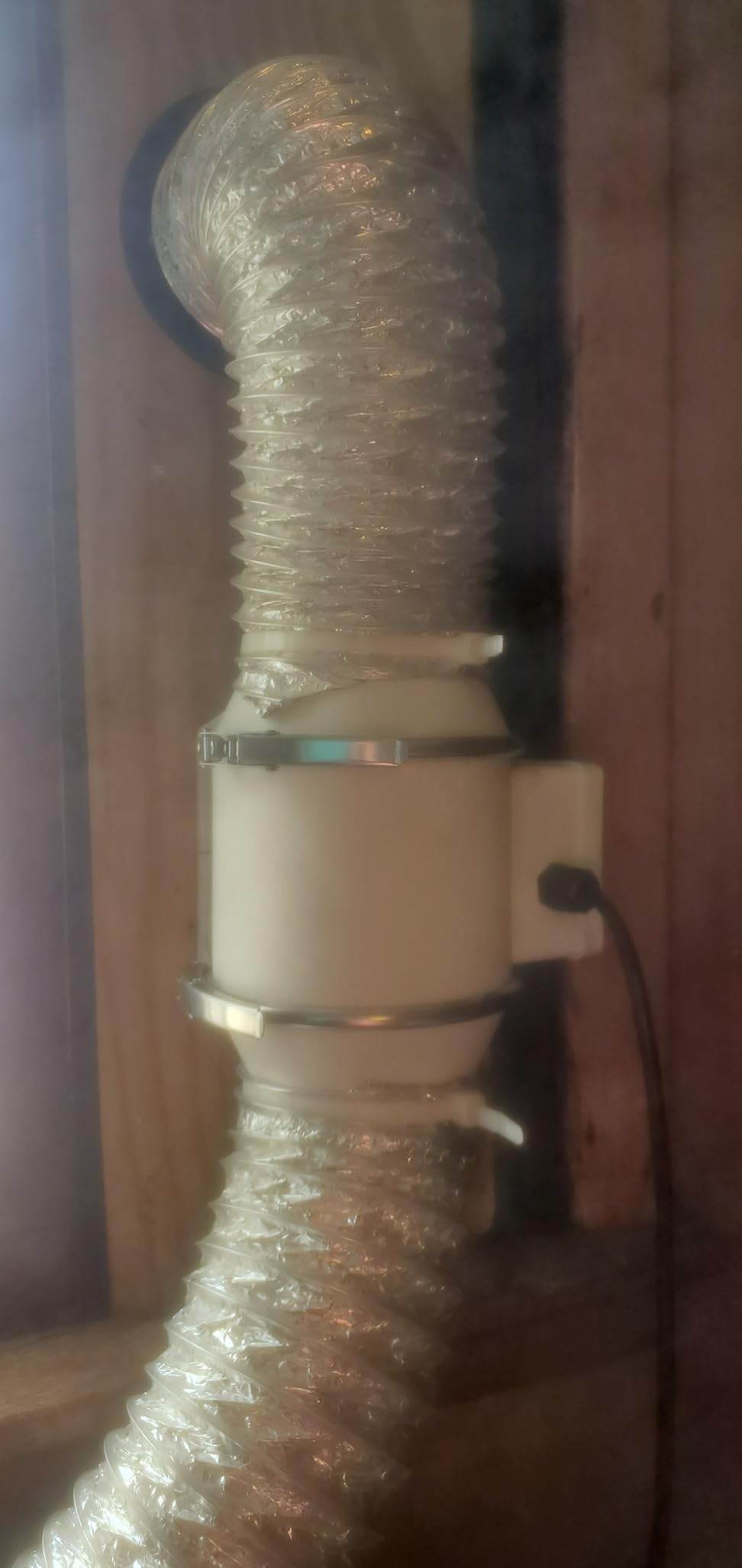
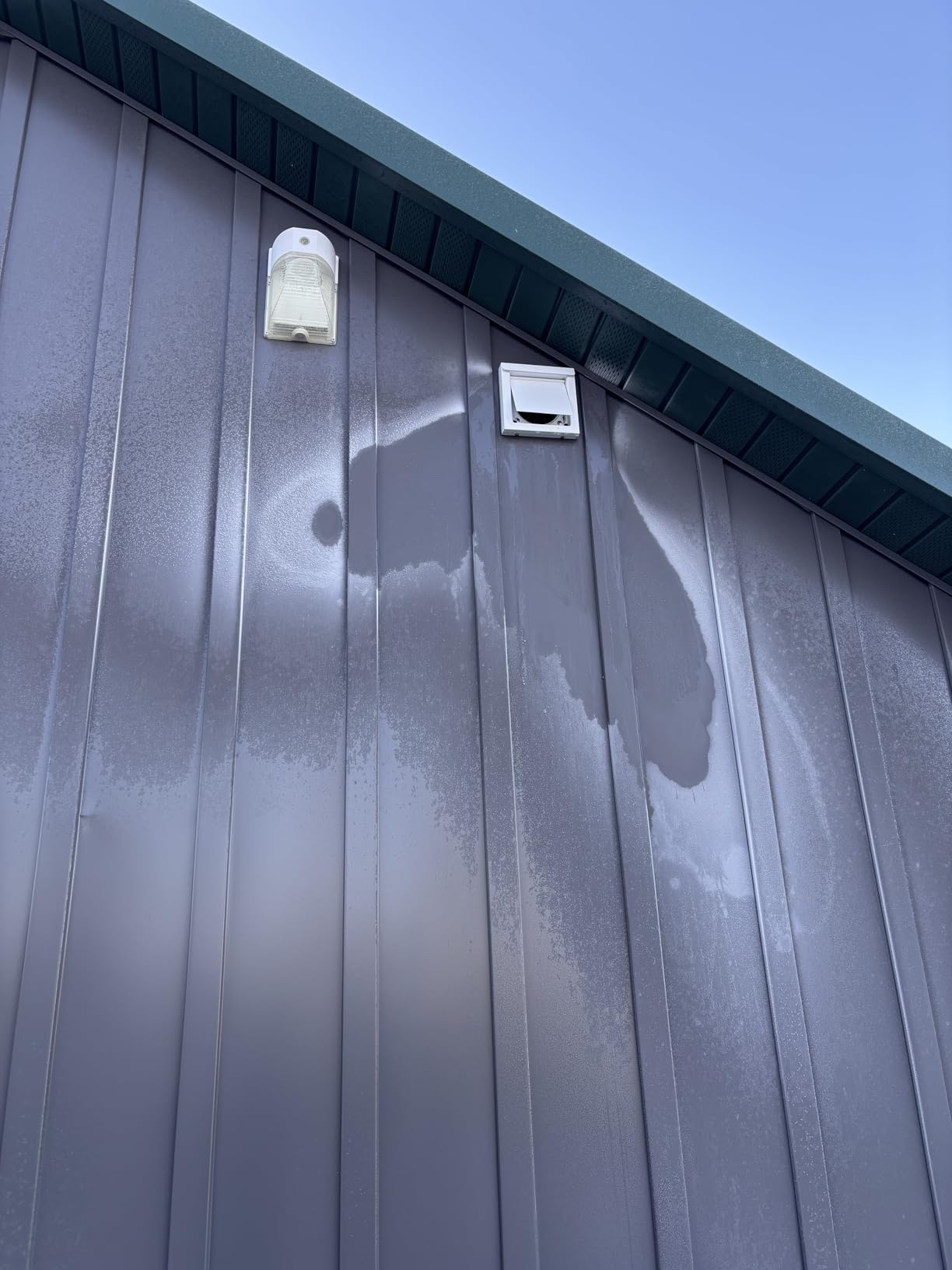
Where the marketing and the reviews diverge is noise. The listing states 30 dB, but a substantial share of buyers report levels much closer to 50 to 60 dB. If you plan to run this next to where you sleep or work, assume it will be audible and treat the 30 dB figure as a best case rather than a typical result.
Other recurring notes: the low and high speeds are not dramatically different, so the remote gives you control without much useful range in between. A few owners also mention minor air leakage at the outer cone seams, which is worth sealing if you are relying on negative pressure.
Two speed control in practice
The remote is the feature people mention most, and it is genuinely convenient. But a two-position control on a 280 CFM fan is coarse. You get full output or reduced output, and the reduced setting is not dramatically quieter. If noise is your priority, a continuously adjustable fan will serve you better than this one.
Reading the noise claim critically
Treat a headline dB number as the quietest measured condition, not the average. High output through small ducting generates more turbulence than the rating suggests, and independent buyer reports consistently put this unit well above its stated figure. If your tent shares a room with your bedroom, choose a fan with a 26 to 30 dB measured rating instead.
8. HealSmart 4 Inch 195 CFM – Best Match for a 2×4 Grow Tent
HealSmart 4 Inch 195 CFM Exhaust Inline Duct Fan Quiet Vent Booster Blower for Indoor Grow Tent Hydroponics Ventilation, Black
195 CFM at 2500 RPM
30 dB
28W and 0.45A
5.9 foot cord
Remote control
Pros
- 195 CFM at a 30 dB published level
- Locking tab flanges assemble without tools
- Compact body fits tight port layouts
- Reliable months-long continuous use in 2x4 tents
Cons
- Base fan runs at a single speed
- Loose slip-on front cover may need taping
- Audible in small enclosed rooms
The HealSmart sits in the sweet spot for a 2×4: 195 CFM at 2500 RPM and a published 30 dB. That is a genuinely useful combination, because 30 dB is roughly the threshold where a fan stops registering as background noise in a quiet room, and 195 CFM is enough exchange volume for a tent of that size in most climates.
Grow operators running 2×4 tents report steady airflow across months of continuous use, and airflow comparisons against costlier branded fans tend to come out even. The flow deflector concentrates the fan stream to reduce sound, and the locking tab flanges assemble without screws or tools, so a clean or reinstall takes minutes.
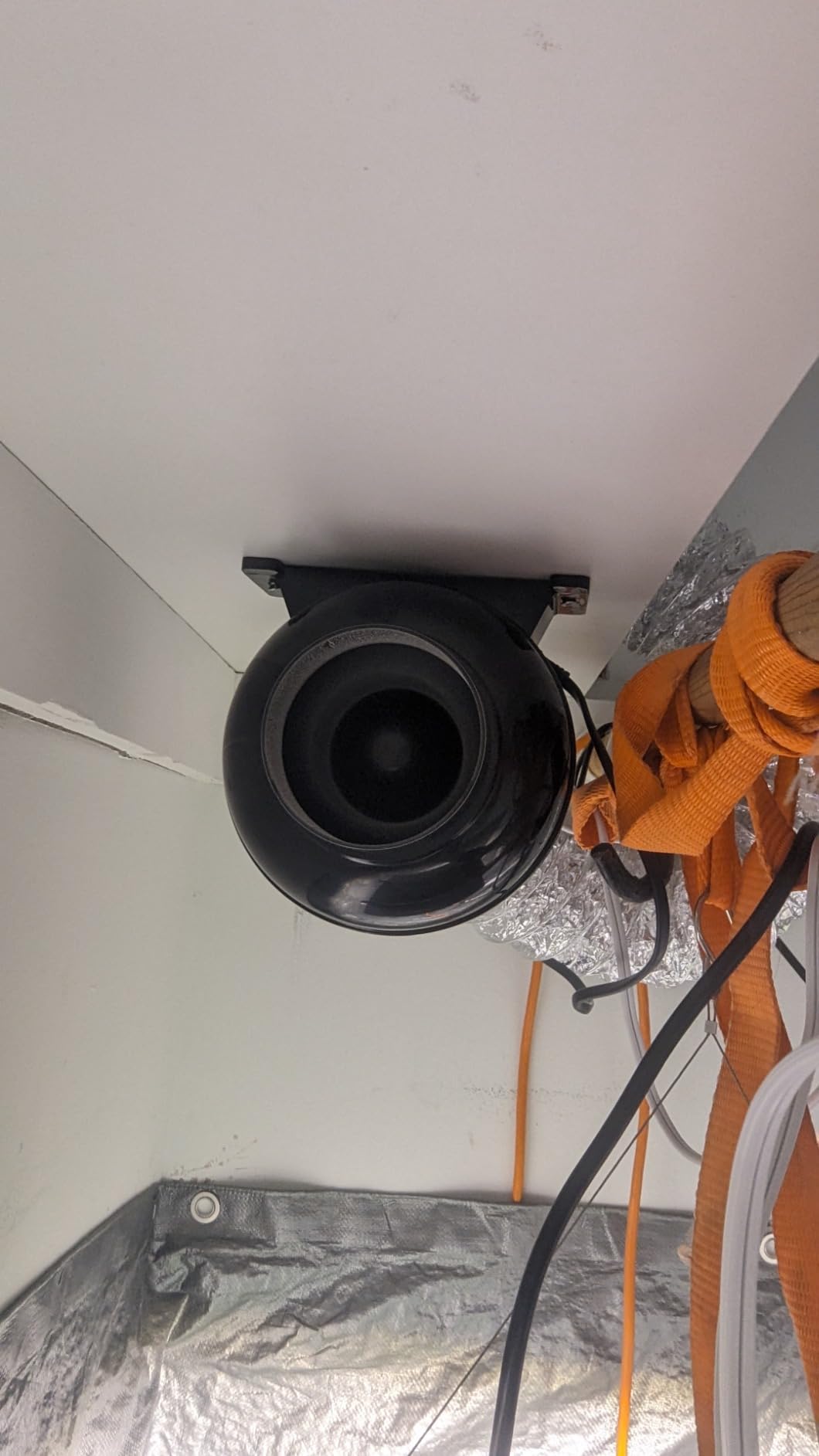
Details are ordinary in the right way: 120V, 0.45A, 28W, a 5.9 foot cord, and a five-blade impeller. The remote control listed for this model handles the on and off and speed selection depending on configuration, which is a step up from the purely fixed-speed four inch units in this group.
The loose slip-on front housing cover is the most common reservation. Owners report it needing tape to stay secure, which is a small annoyance but also a potential air leak. If negative pressure is your goal, seal that seam properly.

Flange assembly and setup
Locking tab flanges are the reason this fan is easy to live with. You push the duct into the flange until the tabs click and it holds, and you can break the seal by pressing the tabs rather than wrestling with clamps. That matters when you need to open the port to swap a carbon filter mid-cycle.
What a single speed costs you
The base fan runs at one speed, so in warm weather that is exactly right. In a cool room you will want less airflow and no way to dial it back. The workarounds are to switch the fan off for part of the night or accept the noise. Neither is a crisis, but both are reasons a first-timer might prefer the P4 with its stepless dial.
9. VEVOR 6 Inch 400 CFM – Best for Large Tents and Grow Rooms
VEVOR Inline Duct Fan, 6-Inch 400 CFM with Variable Speed Controller, Quiet AC-Motor Ventilation Exhaust Fan for Cooling Booster, Grow Tents, Hydroponics
400 CFM airflow
34 dB
60W AC motor
Manual knob control
2.28 kg
Pros
- Largest airflow capacity in this roundup
- Quiet for its output class at 34 dB
- Knob variable speed control
- Complete hanging and wall mounting hardware included
Cons
- Fixed speed AC motor with no automation
- Highest power draw of the ten
- All-plastic housing for a high load duty cycle
When one fan has to do everything, airflow capacity is the constraint, and this is the largest of the ten at 400 CFM. A 6 inch fan moves meaningfully more air than any 4 inch unit, and that headroom is what allows it to still clear humidity in a 4×4 or push air through a carbon filter and a long run without choking up.
Despite the 60W draw, owners rate it as quiet for what it delivers, at a published 34 dB. That is a fair trade for a fan whose job is volume. The manual knob gives you genuine speed control rather than an on and off switch, so you can back it down when the room cools.
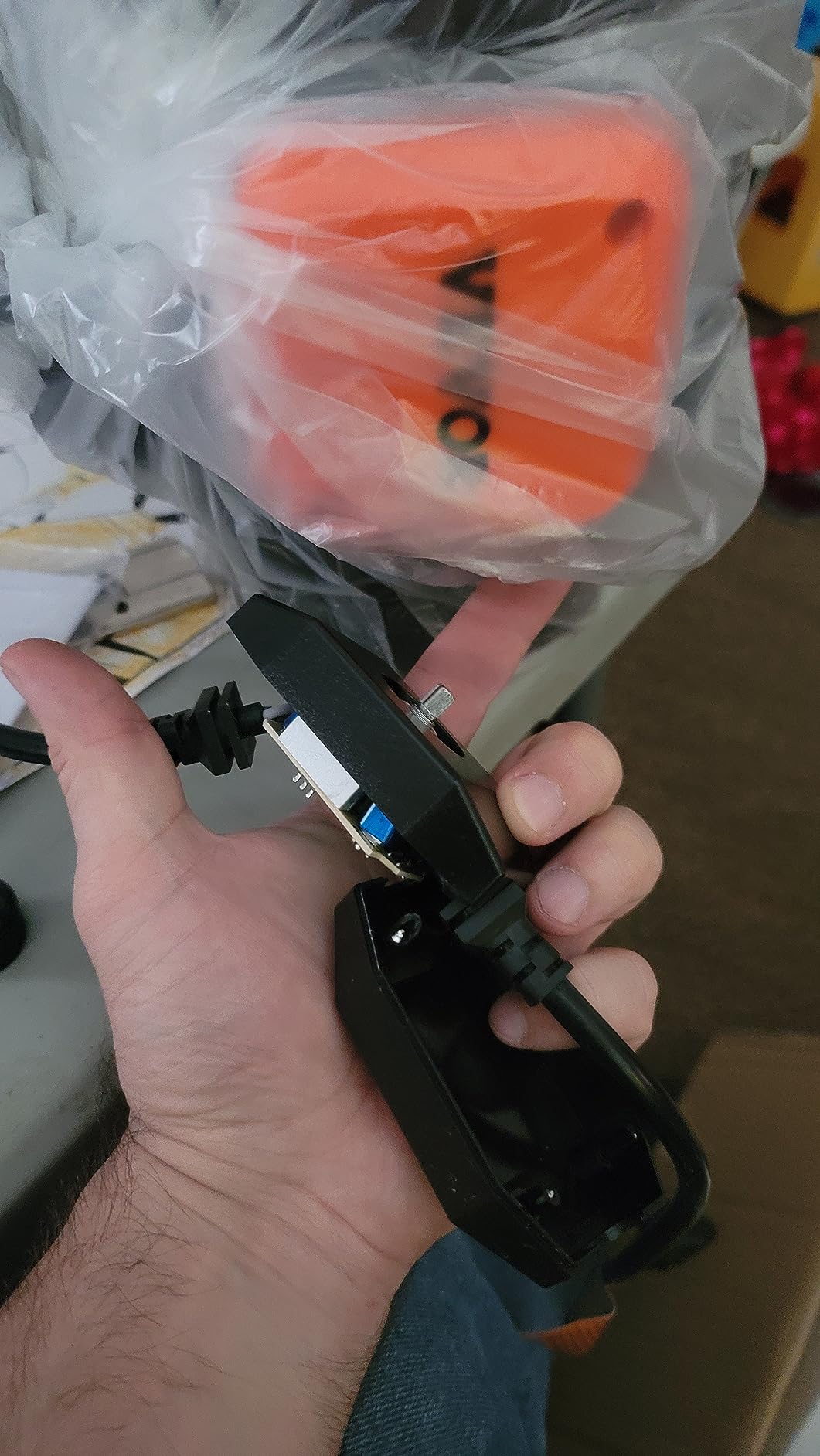
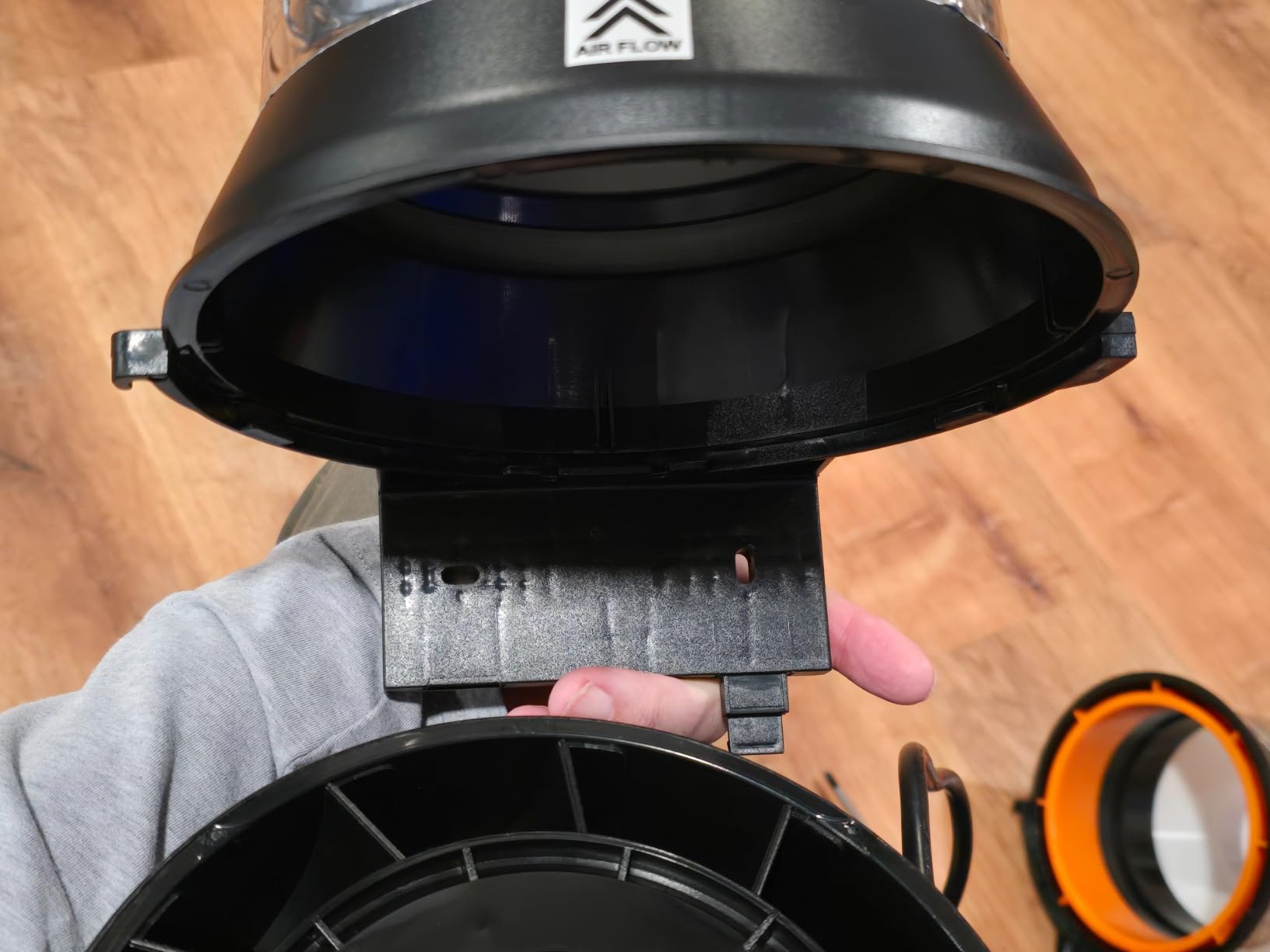
Mounting hardware is complete in the box: a hang sling, four rubber anti-vibration mats, straps, screws, and a manual. For a fan weighing 2.28 kg that is a genuine convenience, because it means you are not hunting for isolation material before the fan is already rattling against your tent frame.
The tradeoff is that this is a fixed-speed AC motor design with no automation. There is no temperature trigger, no app, no scheduling. If you want a fan that runs unattended and adjusts itself, the four inch EC options with controllers are the ones built for that, and you will give up some capacity to get it.
Matching a six inch fan to a bigger tent
Diameter is the upgrade that matters. Going from 4 inch to 6 inch adds capacity and reduces the velocity needed to move the same volume, which is part of why this fan reads as quiet for its output. It suits a 4×4 tent comfortably and a 4×8 grow room in combination with a second fan or an intake from another space.
What 60W and an AC motor mean for you
The 60W draw is the highest here, but running a 60W fan continuously is still a small part of an electricity bill compared with lighting. What you give up is fine-grained control: a manual knob is manual, so remote monitoring or automatic response has to come from somewhere else, such as a separate controller or a smart plug.
10. Artibear 3.5 Inch 168 CFM – Best for Micro Grows and Closet Tents
Artibear 3.5 Inch 168 CFM Inline Duct Ventilation Fan with 2 Speed Controller, Air Vent Blower for Hydroponic Grow Tent, Greenhouse, Workshop, Attics, Basement, Kitchens, Black
168 CFM max and 138 CFM min
35 dB
24W and 0.23A
Two speed controller
Velcro mounting
Pros
- Smallest duct diameter for micro and closet grows
- Two speed settings with a controller
- Velcro strips make tool-free hanging quick
- Owners report two years of 24/7 duty
Cons
- 3.5 inch duct will not mate with standard 4 inch ducting
- Weak static pressure once media is loaded
- Noticeably audible above the lower speed
The Artibear is the specialist at the small end, and it exists because micro and closet tents do not always have four inch ports. It runs a 3.5 inch duct format, delivers up to 168 CFM with a 138 CFM minimum on the lower speed setting, and draws 24W at 0.23A, which is among the lowest loads in this group.
It is popular with micro growers and small 2×2 to 2×3 tents, and one owner reports a single unit running two years at continuous duty. Mounting is four Velcro strips, so hanging it takes seconds and needs no frame hardware. The lower speed is quiet enough to sit in the same room as the grow.
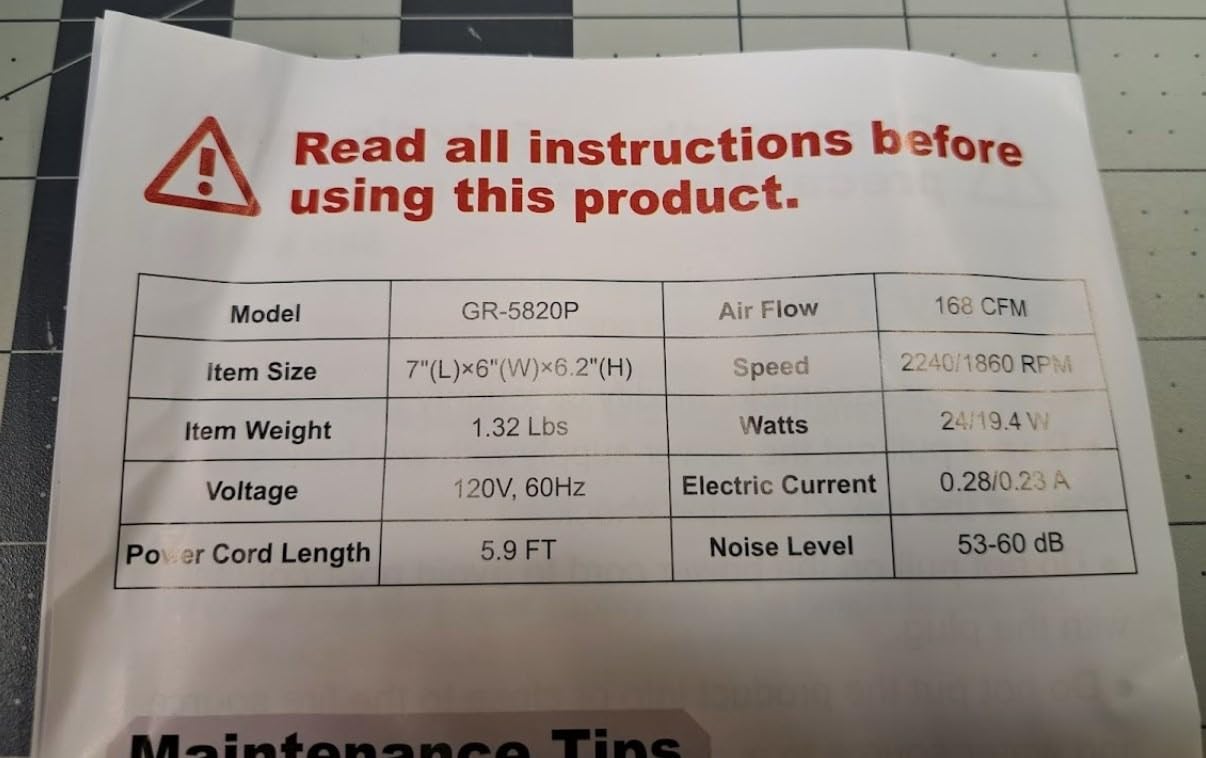
Two practical warnings come up in the reviews. The 3.5 inch duct size does not directly mate with standard 4 inch ducting, so you need an adapter or a reducer for a typical tent kit. And the static pressure is weak, so once a carbon filter or restrictive media is in the path the real airflow drops well below the claim.
The 10-blade plastic impeller contributes to that. One reviewer found the 168 CFM figure overstated under load, which is the honest way to read any small fan rating: it is measured in free air, not behind a filter.
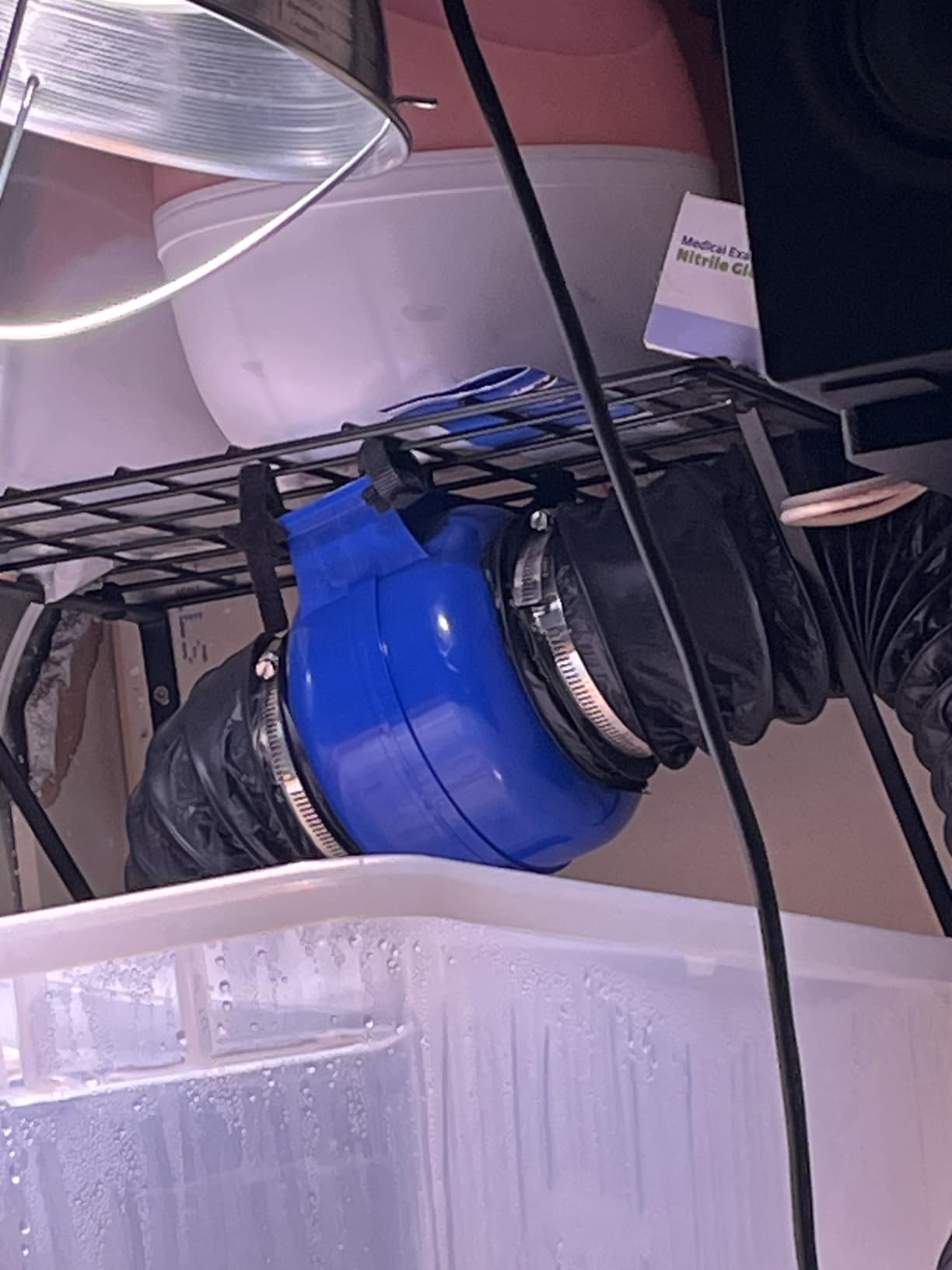
Micro grows and duct fit
This fan earns its place when tent size, not budget, is the deciding factor. A closet or micro setup with 3.5 inch ports and very little volume needs very little air, and oversizing the fan there just adds noise. Measure your port diameter before you buy, because an adapter is easier to plan for than to retrofit.
Where the airflow claim breaks down
Free-air ratings assume an open inlet and outlet. Add carbon media, a reducer, or several feet of flex duct, and static pressure eats the difference. If your setup is filtered, treat the 138 CFM minimum figure as the more realistic one and confirm your tent volume against it before committing.
How to Size an Inline Duct Fan for Your Grow Tent
Size in two steps: volume first, then resistance. Multiply tent width by depth by height to get cubic feet, then work out how many times per minute you want that volume exchanged. Grow tents generally want a fast exchange rate because humidity rises continuously while lights are on, and warm air pools at the top where the fan sits.
A 2x2x7 tent is about 28 cubic feet. A 2x4x7 tent is about 56 cubic feet. A 4x4x7 tent is about 112 cubic feet, and a 4x8x7 tent is about 224 cubic feet. Those numbers frame everything: the small tents are served comfortably by 130 to 205 CFM units, while the larger ones need 400 CFM or a pair of fans.
Match the diameter to the ports your tent already has, then pick a fan with headroom above your requirement rather than below it. A fan running near its ceiling is the one that gets loud and runs hot, and it is also the one most likely to short out early.
2×2 and 2×3 tents: 3.5 inch or 4 inch duct, 130 to 200 CFM.
2×4 tents: 4 inch duct, 195 to 280 CFM, with room for a carbon filter.
4×4 tents: 6 inch duct preferred, 400 CFM class, or two 4 inch units.
4×8 and multi-tent rooms: 6 inch fans in pairs, one exhaust and one booster or intake.
Intake vs Exhaust: Do You Need One Fan or Two?
For a light-sealed grow tent, one exhaust fan is usually enough. The fan sits in an upper port, pulls air through a carbon filter, and pushes it outside. The lower ports on the same side act as a passive intake, and because the fan is always removing more air than the open ports can supply, the tent sits under negative pressure. Forum advice in the grow community puts it simply: if light does not escape, air will not either, and a negative pressure tent pulls its own fresh air in.
This matters because it is the single most common overspend in this niche. Plenty of growers buy two fans for a tent that only ever needed one. The passive intake ports on a standard tent are sized to supply adequate make-up air for a single exhaust fan, so a second exhaust on the far side adds noise and cost without adding exchange.
Add a second fan when the situation changes rather than as a default. Two exhaust fans on one side of a tent will fight each other and pull from the same inlet. The setups where a second fan earns its cost are a dual-port intake arrangement in a 4×8 room, or a booster fan pushing air from a cooler closet into a sealed tent in hot weather.
Either way, you still need a small clip or oscillating fan inside the tent. Inline duct fans handle exchange, not canopy circulation. Airflow moving across the leaves is what builds stem strength and keeps mold off the lower foliage, and no duct fan mounted in a port substitutes for it.
AC vs EC and DC Motors: What the Motor Label Means
AC motors are the traditional choice. They are cheap, they are straightforward, and they do the job. They also draw more power at a given airflow, they run louder for the same output, and they offer only stepped control. The VIVOSUN D4 and the VEVOR 6 inch unit in this roundup are AC motor designs, and both deliver solid capacity.
EC motors, also called brushless DC, use a brushless design with electronic commutation. They draw noticeably less power, run quieter at equivalent airflow, and support fine speed control through a dial or an app. The wattage spread across this list makes the case: the P4 moves 130 CFM on 7W, the Hon and Guan moves 130 CFM on 6W, and the AC motor VIVOSUN moves a comparable 195 CFM on 28W.
What you give up with an EC motor is usually nothing important at these power levels, which is why most of the modern grow fans here use them. The real tradeoff is price and control sophistication: the EC fan with full app automation sits at the top of the range, and the plain AC motor with a manual knob sits at the bottom.
One thing EC motors do not solve is durability claims on their own. Duty rating and bearing construction matter more over a full grow. Look for dual ball bearings or a permanently lubricated bearing, both of which appear in this group, and expect the motor to run continuously without a service schedule.
What Actually Reduces Your Airflow
A carbon filter is usually the largest single restriction in the path. Media rated for a given airflow is designed to pass that volume in free air, and the moment it is installed the fan works against a static pressure resistance. The published CFM on the fan label is measured with an open inlet and outlet, so real output behind a filter is always lower.
This is the single most common reason a grow tent stays humid despite a fan that should be more than enough. Symptoms: humidity climbs at the same rate no matter which speed you select, the ducting feels warm right at the fan, and the fan sounds like it is working hard. The fix is a larger fan, a shorter filter run, or a higher-rated filter, not more speed.
Ducting is the second factor. Every bend, every extra foot, and any kink costs airflow, and the effect compounds. Short runs beat long runs, straight runs beat coiled runs, and rigid duct beats corrugated flex where the budget allows. A softer duct also collapses under negative pressure, which is why supporting it at intervals matters more than most growers expect.
Finally, check the easy fixes before blaming the fan. A filter that has not been replaced in months is a restriction, a crushed or dirty impeller is a restriction, and an unsealed flange around the tent port leaks air back in. Any one of those will look like weak airflow from inside the tent.
Quiet Inline Fans for Bedrooms and Apartments
Noise is the most common complaint about grow ventilation, and it is the one most often ignored when buying. The difference between a tolerable fan and an irritating one is large: in this roundup the published figures run from 26 dB(A) for the P4 and the Hon and Guan, through 28 to 32 dB for the VEVOR 4 inch and the AC Infinity T6, up to 42 dB listed for the VIVOSUN D4, with independent buyers reporting the Voltset considerably louder than its claim.
Below about 30 dB a fan sits near the threshold of background noise in a quiet room. Above 40 dB it becomes the loudest thing in the space. That is the entire argument for spending more on an EC motor unit if your tent is in a bedroom, a home office, or a shared wall.
Three things reduce noise cheaply. Run the fan at its lowest effective speed rather than full output, since noise rises steeply with airflow. Hang the fan on rubber isolation rather than clamping it rigidly to the tent frame, because structure-borne vibration carries further than airborne sound. And keep ducting supported so it does not flutter.
One last point from the forums worth repeating: an inline duct fan is far quieter than a box fan blowing into a vent. Growers who switch from a box fan setup to a duct fan usually report the single biggest improvement in their whole setup was how much quieter it became.
Frequently Asked Questions
What are the best fans for grow tents?
The best fans for grow tents are inline duct fans sized to your tent ports: a 4 inch 130 to 205 CFM unit for 2×2 and 2×4 tents, and a 6 inch 400 CFM unit for a 4×4 or larger. Add a small clip or oscillating fan inside the tent for canopy airflow, because a duct fan handles exchange, not air moving across the leaves.
Which inline duct booster fan is the best?
For most setups the AC Infinity CLOUDLINE T6 is the strongest all-rounder, moving 402 CFM at a published 32 dBA with temperature and humidity automation. If you specifically need a booster fan to overcome resistance in a short duct run or a filter stack, look for a stated static pressure rating rather than raw CFM, since that is what predicts performance under load.
Are inline duct fans worth it?
Yes. An inline duct fan is the only way to move heat, humidity and odor out of a sealed grow tent while keeping noise down. It is quieter than a box fan pushing into a vent, it moves more air per watt with an EC motor, and it runs continuously without a service schedule. Pair it with one internal clip fan for canopy circulation.
Should an inline fan pull air out of a grow tent?
Yes, exhaust is the standard setup. Mount the fan in an upper tent port so it pulls the hottest air and pushes it through a carbon filter to the outside, and leave the lower ports open as a passive intake. The resulting negative pressure draws fresh air in automatically, which is why one exhaust fan is usually enough for a light-sealed tent.
Does a carbon filter reduce inline fan airflow?
It does, and significantly. Fan CFM ratings are measured with an open inlet and outlet, so real output behind carbon media is always lower because the fan works against static pressure resistance. If humidity does not respond to speed changes, the filter run is the likely restriction. The fix is a larger fan, a shorter filter run, or a higher-rated filter.
Final Verdict on the Best Inline Duct Fans for Grow Tents
The AC Infinity CLOUDLINE T6 is our pick for the best inline duct fans for grow tents in 2026. It combines the highest airflow in the group at 402 CFM with a published 32 dBA ceiling, dual ball bearings for continuous duty, and temperature and humidity automation that keeps a tent stable without constant adjustment. It costs more than the alternatives and asks for a 240V supply, and for a 2×4 in a quiet room that spend may not be necessary.
For a 2×4 on a budget, the VIVOSUN D4 at 195 CFM remains the most proven choice in this category, with the largest review base of any fan we covered. For bedrooms and apartments, the VIVOSUN P4 at 26 dB(A) and a stepless dial is the quieter, more controllable answer. For a 4×4 or larger room, step up to the VEVOR 6 inch 400 CFM so you have headroom behind a carbon filter.
Whichever one you pick, match the diameter to your tent ports, keep the duct run short and straight, and add one internal fan for the canopy. Those three habits matter more than the last fifty CFM on the label.