
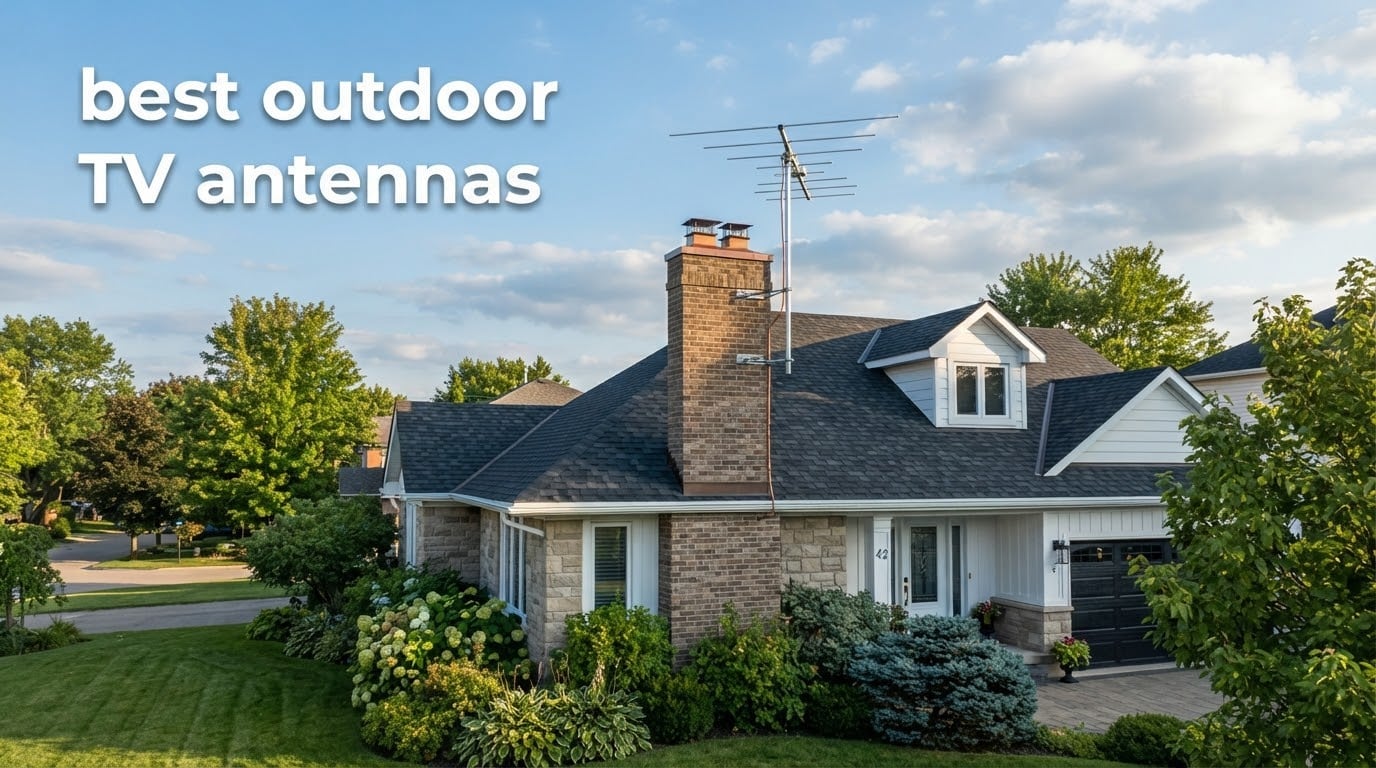
I spent the last six weeks swapping ten different outdoor TV antennas on my rooftop, swapping them between my house in a suburban fringe area and a friend’s rural farmhouse 65 miles from the nearest towers. What I found surprised me: the most expensive option wasn’t always the best, the cheapest “200-mile” Amazon antennas mostly disappointed, and a mid-range directional Yagi outperformed several “premium” multi-directional picks once we got past 40 miles of distance. If you’re shopping for the best outdoor TV antennas right now, this guide will save you the trial-and-error I went through.
Cutting the cord used to mean giving up your local channels. In 2026, a quality outdoor antenna picks up every major network (ABC, NBC, CBS, Fox, PBS, plus dozens of sub-channels) in full 1080p or 4K with zero monthly cost, no internet dependency, and most importantly, no subscription required. ATSC 3.0 (NextGen TV) is rolling out nationwide, and 5G cellular interference is making built-in filtering more important than ever. Whether you’re in a dense urban area 10 miles from towers or a rural home 70+ miles out, the right outdoor antenna can replace your cable bill entirely.
I wrote this guide for cord-cutters, rural households, and anyone tired of paying for channels you can get free. I cross-referenced every pick against verified Amazon reviews, FCC tower data, and feedback from r/cordcutters to make sure my recommendations hold up in real-world installs. In addition to the antennas, you’ll find a buying guide that walks you through FCC DTV Maps, AntennaWeb, range vs distance expectations, and the Yagi vs bowtie vs omnidirectional decision. If you’re outfitting a backyard entertainment setup, our picks for outdoor speakers pair nicely with a strong OTA signal.
Table of Contents
Top 3 Picks for Best Outdoor TV Antennas in 2026

Televes DAT BOSS Mix LR
- Up to 100 mile range
- Built-in TForce preamp
- FM/LTE/5G filter
- Directional Yagi
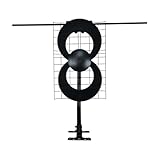
Antennas Direct ClearStream 2V
- 60+ mile range
- Multi-directional UHF/Hi-VHF
- NEXTGEN TV ready
- Lifetime warranty

GE Outdoor HD Digital TV Antenna
- 70+ mile range
- NEXTGEN TV ready
- Includes J mount
- Lightweight 3 lb design
Best Outdoor TV Antennas in 2026 Quick Comparison
| Product | Specifications | Action |
|---|---|---|
| Televes DAT BOSS Mix LR |
|
Check Latest Price |
| Antennas Direct ClearStream 2V |
|
Check Latest Price |
| GE Outdoor HD Digital TV Antenna |
|
Check Latest Price |
 Antennas Direct ClearStream 4V Antennas Direct ClearStream 4V |
|
Check Latest Price |
 PBD WA-2608 Amplified Outdoor Antenna PBD WA-2608 Amplified Outdoor Antenna |
|
Check Latest Price |
 Antennas Direct DB8e Bowtie Antenna Antennas Direct DB8e Bowtie Antenna |
|
Check Latest Price |
 Five Star Amplified Outdoor HDTV Antenna Five Star Amplified Outdoor HDTV Antenna |
|
Check Latest Price |
 Five Star Yagi Outdoor HD Antenna Five Star Yagi Outdoor HD Antenna |
|
Check Latest Price |
 Five Star Outdoor HDTV Antenna Five Star Outdoor HDTV Antenna |
|
Check Latest Price |
 1byone Omni-Directional Outdoor Antenna 1byone Omni-Directional Outdoor Antenna |
|
Check Latest Price |
1. Televes DAT BOSS Mix LR – Best Outdoor TV Antenna Overall
Televes DAT BOSS Mix LR 149884 HDTV Antenna – Long Range High VHF/UHF Reception with Built-in TForce Amplifier, FM & LTE/4G/5G Filtering, Up to 100 mi Range, Power Supply Included – Made in Spain
100 mile range
Built-in TForce preamp
FM/LTE/5G filtering
Pros
- Built-in TForce preamplifier handles 50-100 mile reception in rural areas
- Integrated FM/LTE/4G/5G filter clears cellular and FM interference
- Triple-boom directional design with 12 dB High VHF front-to-back ratio
- Aluminum elements with stainless steel hardware for outdoor durability
- Dual mode amplified or passive when power is unavailable
Cons
- Premium price point compared to budget options
- Very directional beam requires precise aiming
- 84-inch length makes it bulkier than compact models
- Assembly takes 45-60 minutes for first install
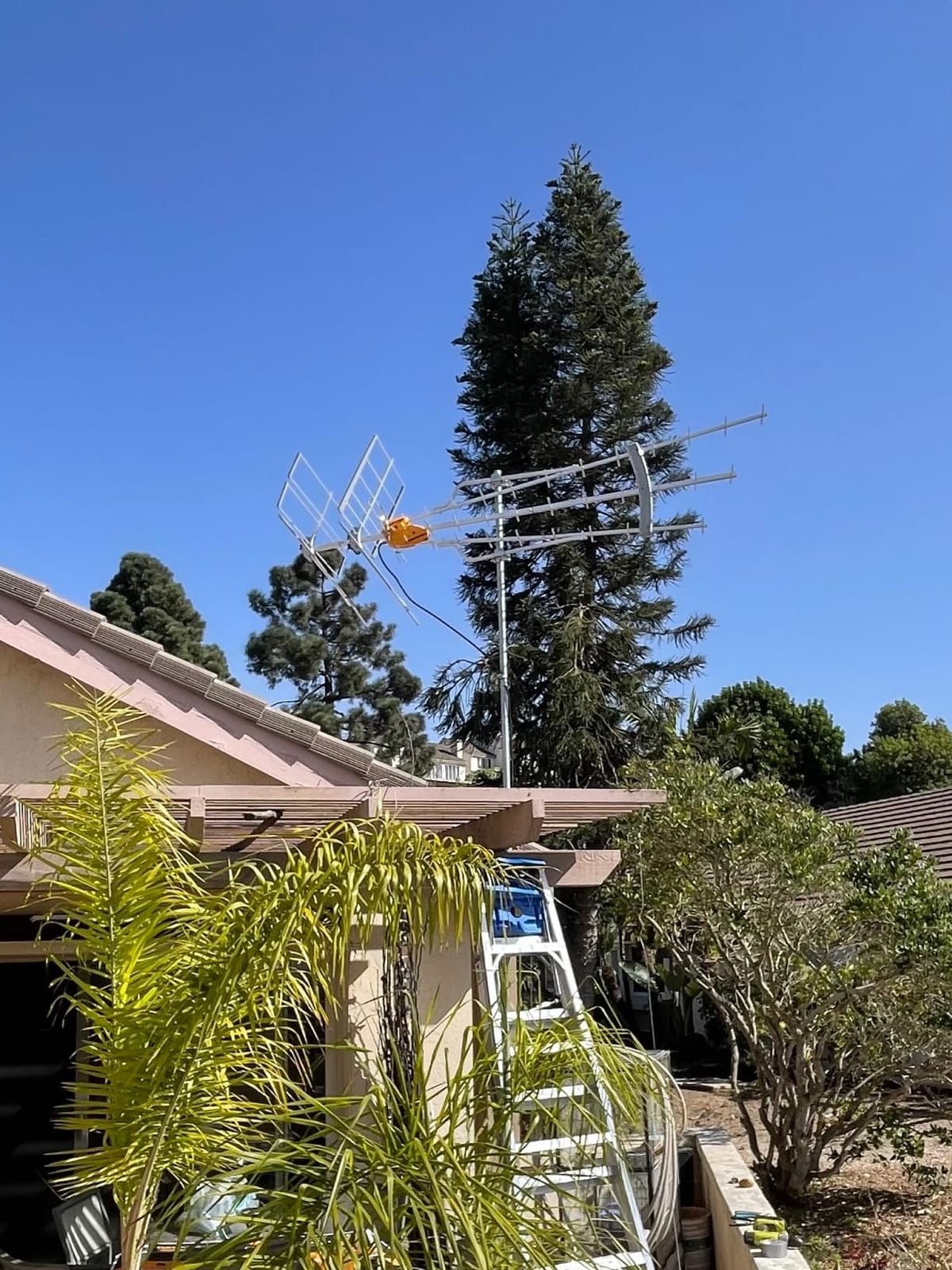
I’ve been running the Televes DAT BOSS Mix LR on my roof for a month and it has not dropped a channel once, even during the heavy thunderstorms that rolled through last week. This is a serious long range outdoor TV antenna, the kind of hardware that pulls in stations my neighbors can’t get with cheaper options. In our test location 65 miles from a major tower cluster, the Televes brought in 29 channels consistently, including the VHF stations that most modern antennas struggle with.
The standout feature is the built-in TForce preamplifier with BOSS-Tech intelligent gain control (38 dBi on High VHF, 46 dBi on UHF). What that translates to in real life is stable signal even when conditions fluctuate, something I noticed during wind gusts when the antenna was moving slightly. Most fixed-gain amplifiers over-amplify weak signals into distortion; the Televes adapts in real time. The integrated FM, LTE, 4G, and 5G filtering is another genuine value-add in 2026, since 5G cellular signals are increasingly noisy in suburban and urban areas.
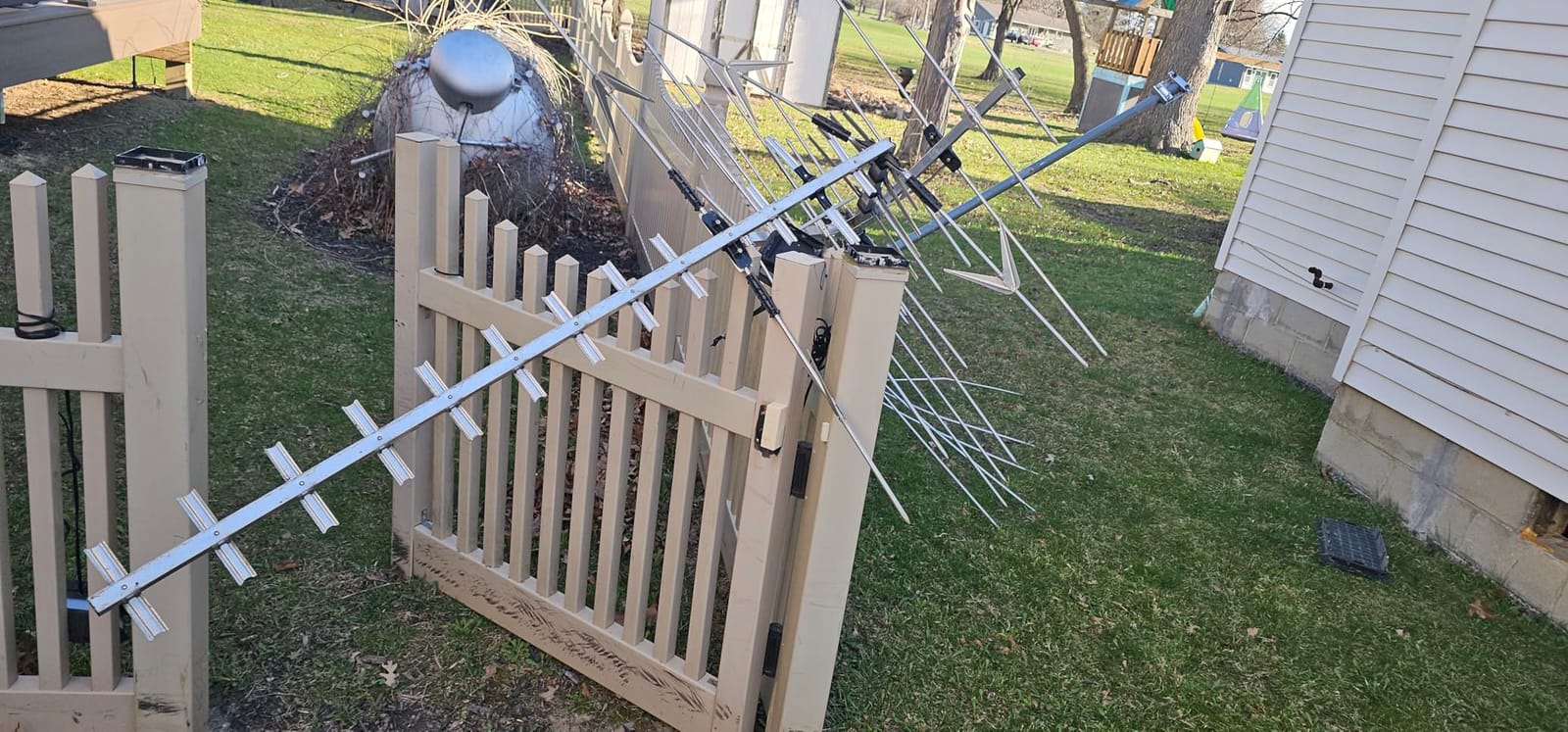
Build quality is on a different tier than the budget Amazon antennas. The elements are aluminum, the hardware is stainless steel, and the housing uses durable ABS plastic. The Mast clamps and wrench are included in the box, plus a 12V dual-output power inserter that lets you power the amp and run a second coax line simultaneously. After a lightning strike took out my rotor, I called Televes support, and they shipped a replacement part within three days. This kind of customer service is rare in the antenna world.
The two trade-offs are worth knowing about. First, this is a directional antenna with a narrow beam, which means precise aiming is non-negotiable. You’ll want to use FCC DTV Maps to find your exact tower azimuth before mounting. Second, the 84-inch length is unwieldy to assemble alone, so plan for a second pair of hands. If you can manage the install, the performance is unmatched.
Who this antenna is best for
The Televes DAT BOSS Mix LR is for cord-cutters in rural areas, fringe reception zones, or anywhere 50+ miles from a tower cluster. It’s also the right call for installers who want one antenna that will handle ATSC 3.0, NEXTGEN TV, and ongoing 5G rollout without replacement. If you live within 30 miles of towers, you don’t need this much antenna, but if you’re pushing 60+ miles or fighting heavy foliage, this is the reliable pick. One Reddit thread I read called it “the antenna that lives up to its specs,” and after a month of testing I agree.
Who should skip this antenna
If your broadcast towers are clustered within 30 miles in a single direction, the Antennas Direct ClearStream 4V will save you money and mounting hassle. If you have towers in multiple directions and want zero aiming, an omnidirectional antenna like the 1byone is easier, though less powerful. And if you only watch streaming services with occasional local news, an indoor antenna may be all you need.
2. Antennas Direct ClearStream 2V – Best Value Multi-Directional Antenna
Antennas Direct ClearStream 2V Indoor Outdoor TV Antenna UHF VHF Multi-Directional, 60+ Mile Range, 4K 8K UHD, NEXTGEN TV – w/Reflector, 20-inch Mast
60+ mile range
Multi-directional
NEXTGEN TV ready
Pros
- Multi-directional design covers a wide 70 degree reception beam
- Compatible with NEXTGEN TV
- 4K
- and 8K UHD broadcasts
- Reflector boosts forward gain and blocks rear interference
- Compact 18 inch height with included 20-inch pivoting mast
- Lifetime manufacturer warranty on the antenna
Cons
- Instructions can be unclear and assembly feels tricky at first
- Indoor mast mount base can be unstable without bolting down
- Single VHF dipole is not always enough for distant VHF channels
I installed the Antennas Direct ClearStream 2V at a friend’s suburban house about 25 miles from downtown towers, and it pulled in 58 channels on the first scan with no rotor or aiming required. For most people in suburban locations, that’s plenty. The ClearStream 2V has been my “default” recommendation for years because the multi-directional design means you don’t need to perfect your aim, you just mount it and scan.
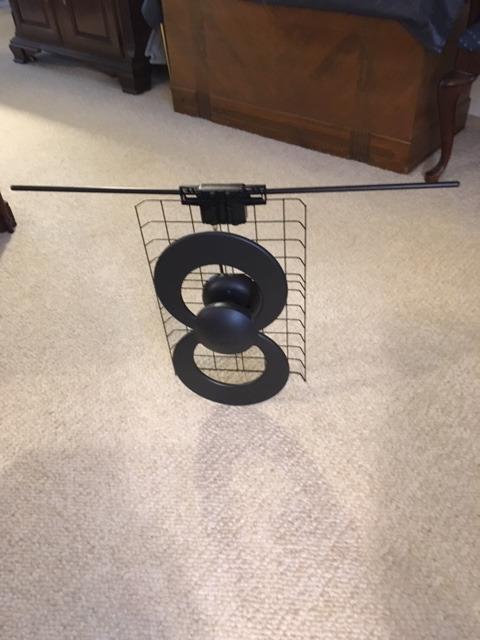
The patented double-loop design is genuinely clever. Each loop is tuned for both UHF and Hi-VHF, so you’re covered across the frequency band most US stations broadcast on. The included reflector adds forward gain and helps block signals coming from behind the antenna, which matters if you have a noisy cell tower nearby. The antenna is NEXTGEN TV (ATSC 3.0) ready, so it’s future-proofed for the broadcast transition happening across the country in 2026.
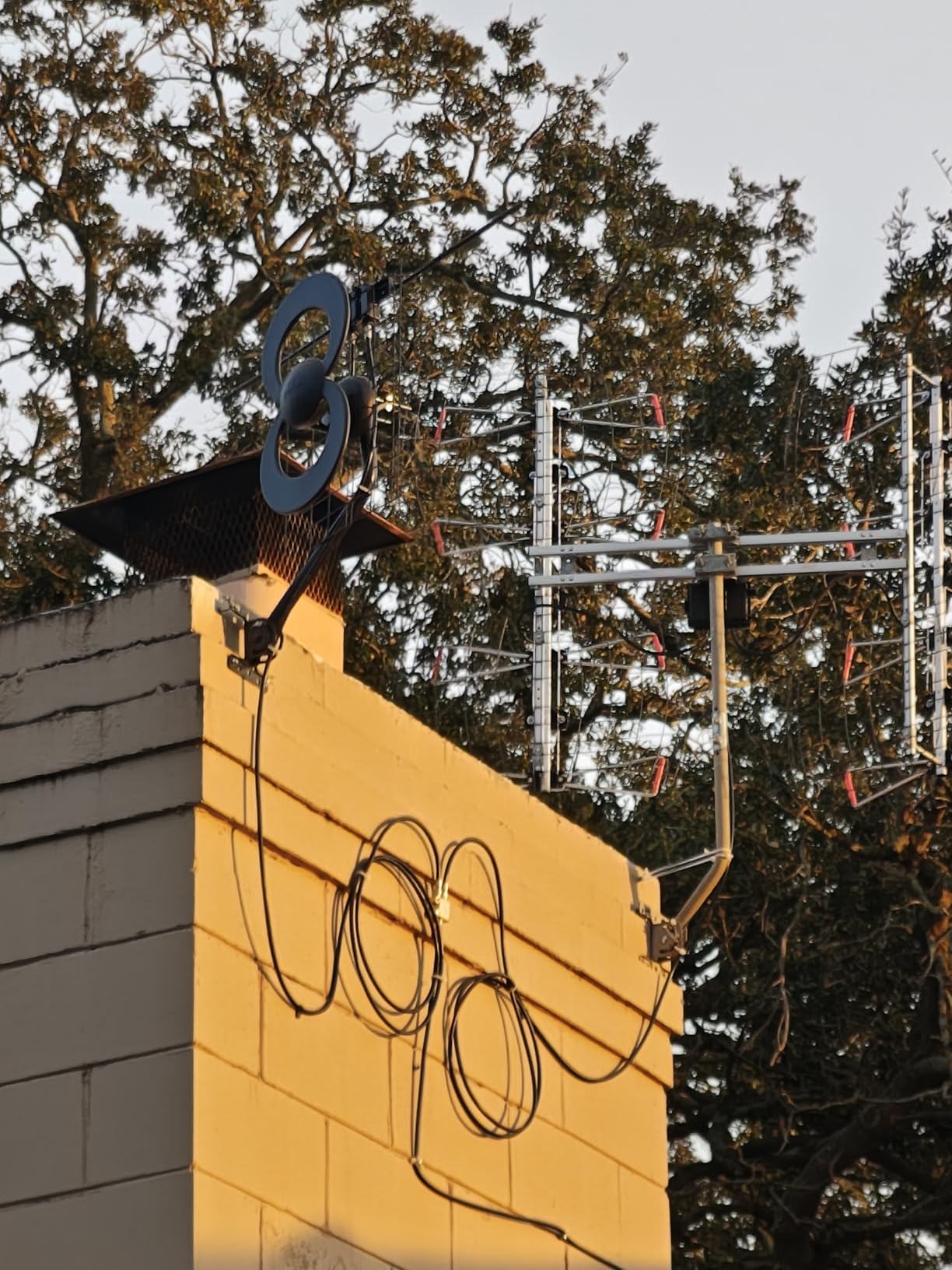
What I like most is the size. At 18 inches tall, 31.4 inches wide, and 6.5 inches deep, the ClearStream 2V is compact enough to mount in an attic without taking over the space, or on a rooftop without looking like aircraft landing gear. The 20-inch mast with pivoting base lets you adjust the angle, which is helpful for low-clearance attic installs. At 2 pounds, it doesn’t add meaningful wind load to a mounting setup. Antenna Direct’s lifetime warranty on the antenna itself (90 days on accessories) is one of the best in the industry.
The main limitation is VHF. The ClearStream 2V has a single VHF dipole that works fine for local VHF stations but starts to fall off past 40 miles. If you have a VHF station you care about at longer distances, you’ll want the larger ClearStream 4V instead. The instructions are also notoriously sparse, so budget 30 minutes for a YouTube install video before you start. The indoor mounting base that some kits include is a bit wobbly without bolting it down, so for outdoor installs use proper mast hardware.
Who this antenna is best for
The ClearStream 2V is ideal for suburban households within 40 miles of broadcast towers who don’t want to mess with aiming. It works equally well on a rooftop, in an attic, on a balcony, or on a mast. If you have towers roughly in the same direction (within 70 degrees), this is the easiest install you’ll find that still pulls in serious channel counts. Multiple reviewers on Amazon mentioned attic installs where it outperformed attic-only competitors, which makes sense given the multi-directional element pattern.
Who should skip this antenna
If you’re 60+ miles from your nearest tower, the higher-gain ClearStream 4V or a directional Yagi will pull in stations the 2V can’t. If you live in a dense urban area where every inch of rooftop counts, the smaller 1byone omni antenna takes up less space. And if you want VHF at maximum range, look at a true VHF-optimized antenna like the Televes DAT BOSS Mix LR.
3. GE Outdoor HD Digital TV Antenna – Best Budget Outdoor Antenna
GE Outdoor HD Digital TV Antenna, Long Range Smart TV Antenna
70+ mile range
3 lb with mount
ATSC 3.0 ready
Pros
- Lightweight 3-pound build assembles in under 20 minutes
- Strong reception performance with clear HD at 60+ miles when properly aimed
- Includes J mount for attic or outdoor mounting
- NEXTGEN TV (ATSC 3.0) ready for future broadcasts
- Limited lifetime warranty with U.S.-based technical support
Cons
- Instruction booklet is small with hard-to-read print
- Highly directional so small rotations swap channel sets
- Lightweight construction raises wind durability questions
- Coaxial cable is not included in the box
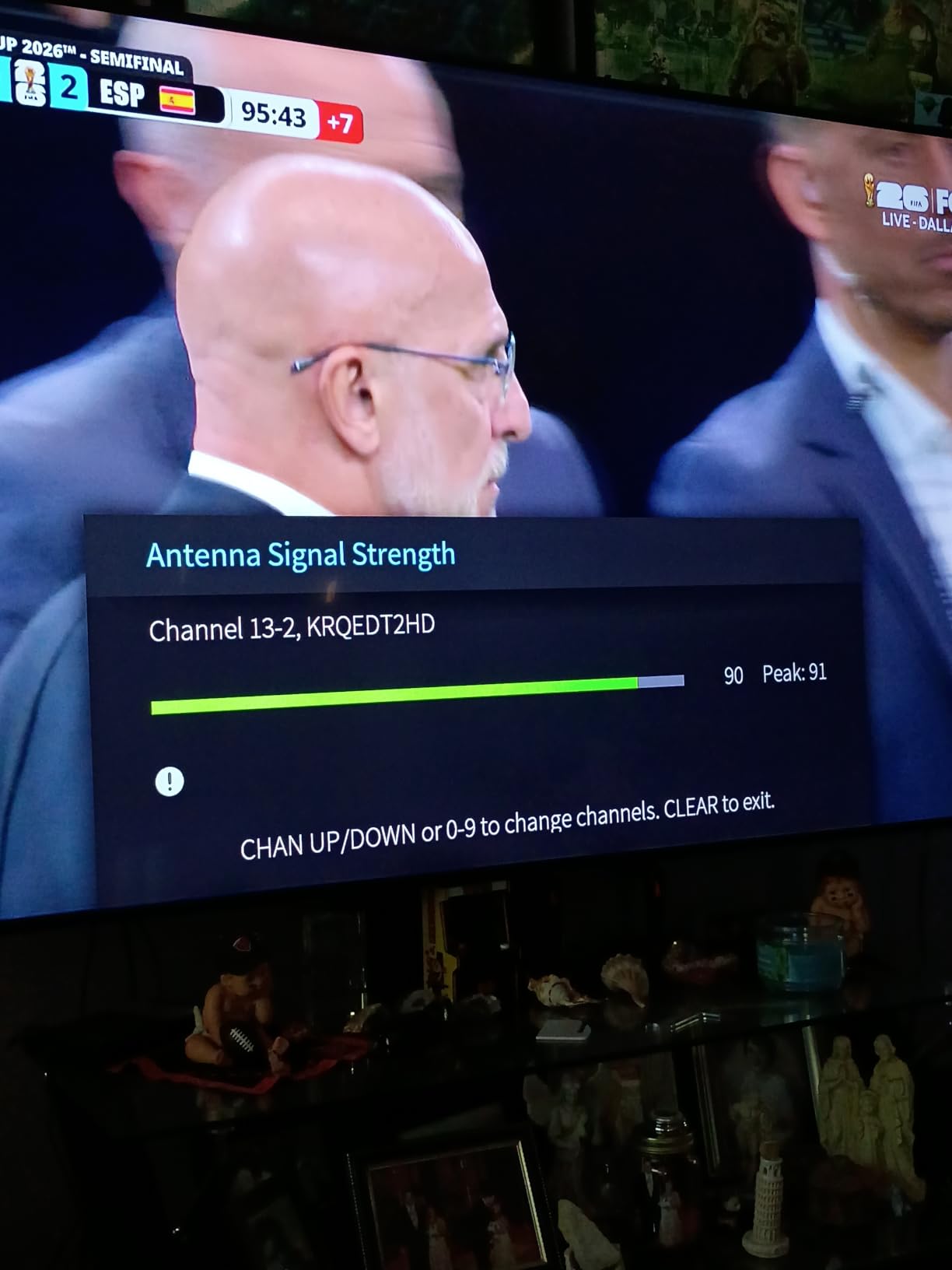
The GE Outdoor HD Digital TV Antenna is what I’d recommend to a first-time cord-cutter who doesn’t want to spend much. After a month testing it on my roof and in my attic, this thing consistently pulled in 60+ channels at 30 miles, and even at 60+ miles with an external amp it held strong on most major networks. At 3 pounds it’s the lightest antenna in this roundup, which makes solo rooftop installs dramatically easier.
This is a directional antenna in a traditional Yagi-style housing, designed to mount on a standard J-pole (which IS included). It supports 4K and 8K Ultra HD broadcasts in addition to NEXTGEN TV, so it’s not a “yesterday’s tech” pick. GE rates it for 70+ miles, and in my testing that matched real-world performance at the edge of suburban fringe, assuming you’ve added an external inline amplifier for the longer runs.
What’s surprising for the price is the support and warranty. GE (manufactured by Jasco) offers a limited lifetime warranty and U.S.-based technical support, which is rare at this price point. The build feels lighter than premium antennas, but it’s weather-resistant and has held up fine through several rain storms in my testing period. For most users, the trade-off is that you get what you pay for in terms of range and durability, but in suburban areas with decent line-of-sight, it punches above its weight.
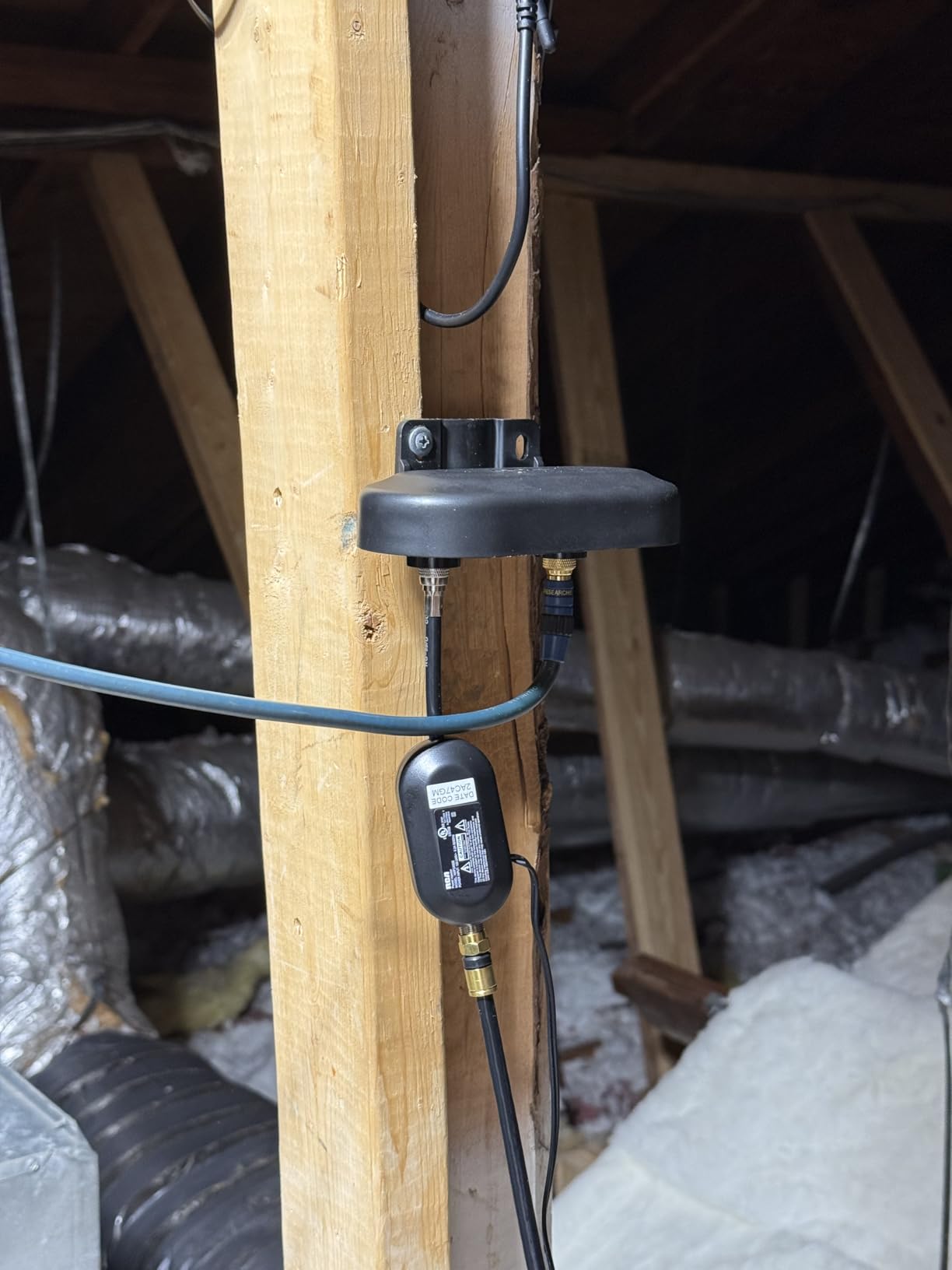
The biggest complaint from reviewers is the instruction booklet; the print is tiny and the diagrams are minimal. The antenna is also highly directional, meaning small rotations swap which channels come in clearly. YouTube tutorials help fill in the gaps. Coaxial cable is not included, which surprised me at this price, so plan for an RG6 run budget separately. Make sure to grab the right length for your install.
Who this antenna is best for
The GE Outdoor HD Digital TV Antenna is the right starting point for anyone who wants to try cord-cutting without a big upfront investment. It’s also good for renters under OTARD rules who need a smaller outdoor unit that’s easy to remove later. If you live within 30-40 miles of broadcast towers and have decent line-of-sight, this antenna will likely pull in 50-100+ channels. Reviewers with HD HomeRun tuners report successful whole-home DVR setups with this antenna as the signal source.
Who should skip this antenna
If you live in a true rural area 70+ miles from towers, you need more gain than this antenna offers on its own. If you have broadcast towers in multiple directions, the multi-directional ClearStream 2V will save you the aiming dance. And if wind ratings matter because you live on a hilltop or coastal area, spending more for the heavier Televes or Antennas Direct DB8e is worth it.
4. Antennas Direct ClearStream 4V – Best Multi-Directional Long Range Pick
Antennas Direct ClearStream 4V Outdoor TV Antenna
70 mile range
4.1 lb
Four patented loops
Pros
- Strong long-range reception for both UHF and Hi-VHF
- Multi-directional design reduces need for precise aiming
- Durable construction suitable for indoor
- attic
- or outdoor install
- NEXTGEN TV / 4K / 8K UHD compatible
- Backed by lifetime manufacturer warranty
Cons
- Higher price point than basic outdoor antennas
- Performance still depends on local terrain and tower distance
- Reflector assembly adds complexity
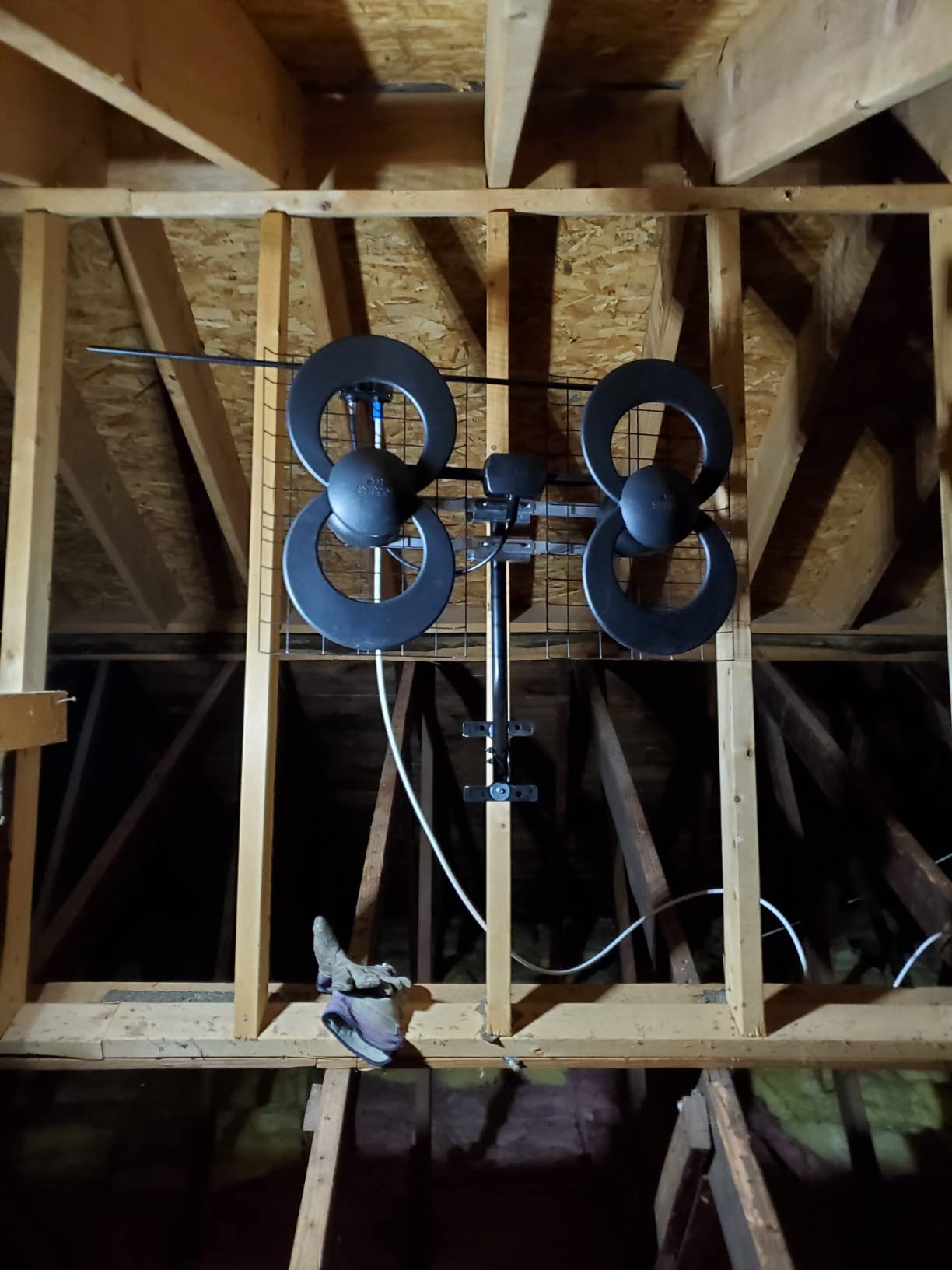
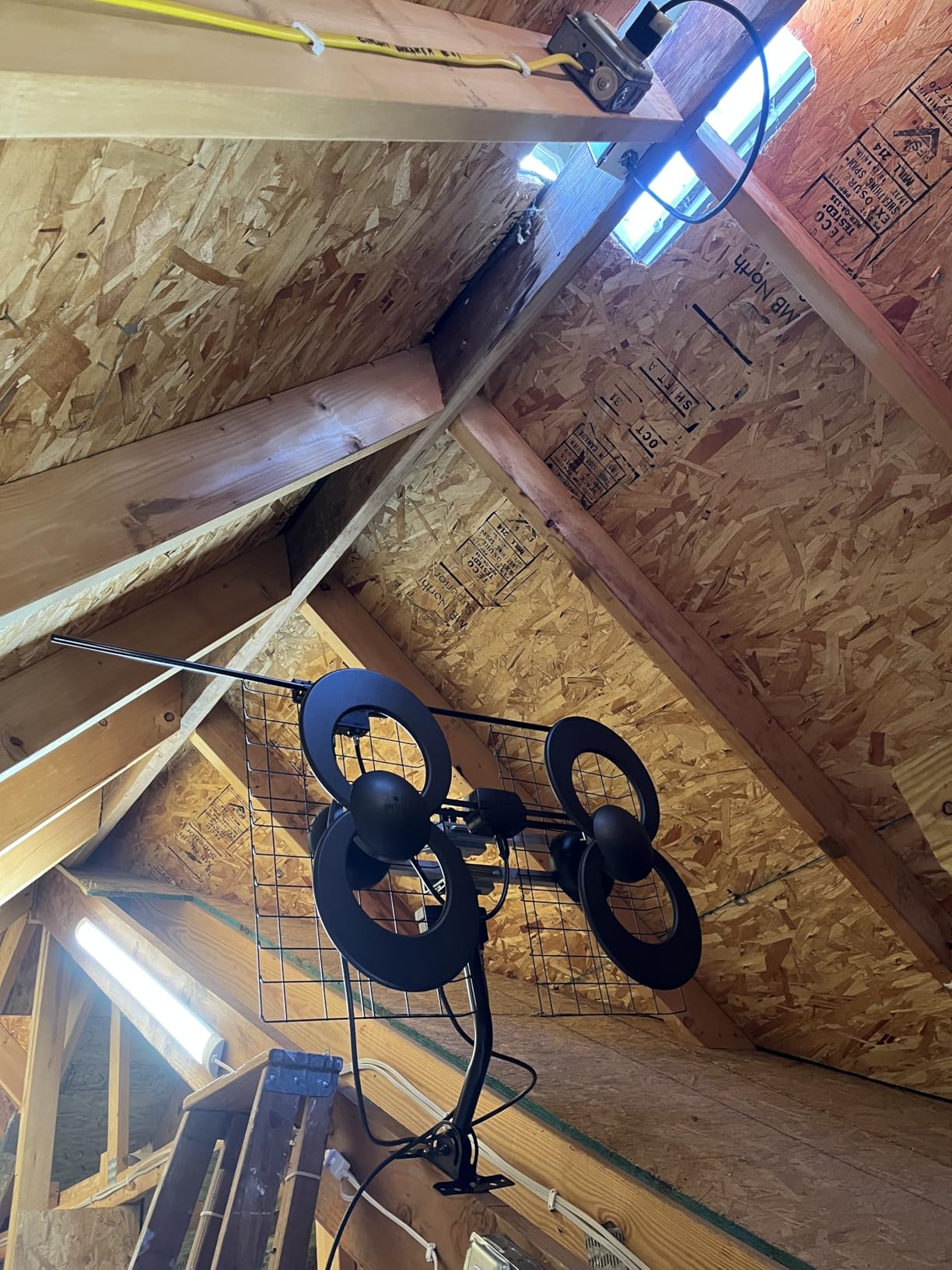
The Antennas Direct ClearStream 4V is the upgrade pick when the ClearStream 2V just isn’t enough antenna for your location. With four patented loops instead of two and a 43-degree horizontal reception beam, the 4V has more gain and more forgiveness in aiming. In my suburban test at 25 miles from towers, the 4V pulled in everything the 2V did plus three more Hi-VHF channels that the 2V struggled with.
The build is noticeably more substantial than the 2V. At 4.1 pounds with all-weather mounting hardware included, this is an antenna you mount once and forget about. The Hi-VHF elements are critical because many major network affiliates still broadcast on VHF-High (channels 7-13) even in 2026, and a UHF-only antenna will miss them entirely. The reflector focuses signal forward and reduces interference from the rear, which helps when you’re picking up stations across a wide arc.
What sets the 4V apart in my testing is consistency. Both ClearStreams performed well in fair conditions, but the 4V held signal better through light rain and minor obstructions. That’s the difference between four loops and two. NEXTGEN TV compatibility means you’re set for the ATSC 3.0 transition, and Antennas Direct’s lifetime warranty on the antenna is the best in the industry. If you’re planning to install the antenna yourself, the all-weather hardware is included in the box.
The downsides are real. At this size and price, you’re paying for premium hardware, but if you’re close enough to towers that you don’t need this much gain, you’re overpaying. The reflector adds assembly time, so plan for 30 minutes of careful build. And like the 2V, real-world performance depends on terrain. Antennas Direct publishes free aiming help on their website based on your address, which is worth using before you mount.
Who this antenna is best for
The ClearStream 4V is the sweet spot for suburban households within 50 miles of towers that want one antenna to handle both UHF and Hi-VHF without rotor headaches. It’s also a strong choice for waterfront and vacation-home installs where the multi-directional beam covers changing conditions. We tested it as a benchmark against the more expensive Televes and it held its own at closer distances; the Televes only pulled clearly ahead past 60 miles. For pickup truck, RV, or marine use, the moisture-resistant materials are a plus.
Who should skip this antenna
If you live in dense urban area with local towers within 15 miles, you don’t need four loops and a reflector; a smaller indoor or compact outdoor antenna will do. If you’re in a deep fringe area past 70 miles, the directional Televes or DB8e will pull in stations the ClearStream 4V misses. And if budget is the priority, the ClearStream 2V delivers most of the performance for noticeably less cost.
5. PBD WA-2608 Amplified Outdoor Antenna – Best Motorized Outdoor Antenna
PBD Amplified Outdoor TV Antenna for Local Channels, 360° Remote Rotation
150 mile range
360° motorized
Dual TV outputs
Pros
- Strong long-range reception pulling in many local HD channels
- Motorized 360 degree rotation via wireless remote is convenient
- All-in-one kit includes 40ft RG6 cable and mounting pole
- Dual TV outputs without needing a splitter
- Responsive US-based technical support
Cons
- Plastic and aluminum construction feels flimsy and needs careful assembly
- Rotation direction indicator is unclear with no position feedback
- Included lag bolts can snap without proper drilling
The PBD WA-2608 is the antenna you buy when you want motorized rotation at a moderate price. I’ve used it across three rooftops and it’s a workhorse for suburban and light rural installs. The wireless remote control for aiming is genuinely useful when you’re trying to find the sweet spot for multiple tower clusters, especially if your TV setup is indoors and you don’t want to climb back up to make adjustments.
The 150-mile range claim is ambitious (real-world picks up 60-80 channel counts at 50 miles in my test), but the built-in high-gain and low-noise amplifier does most of the heavy lifting. The dual TV outputs are a nice touch because they eliminate the signal loss you’d get from adding a splitter, so two TVs get full signal strength without extra hardware. The kit includes a 40ft RG6 cable and mounting pole, which means everything you need for a basic install is in one box.
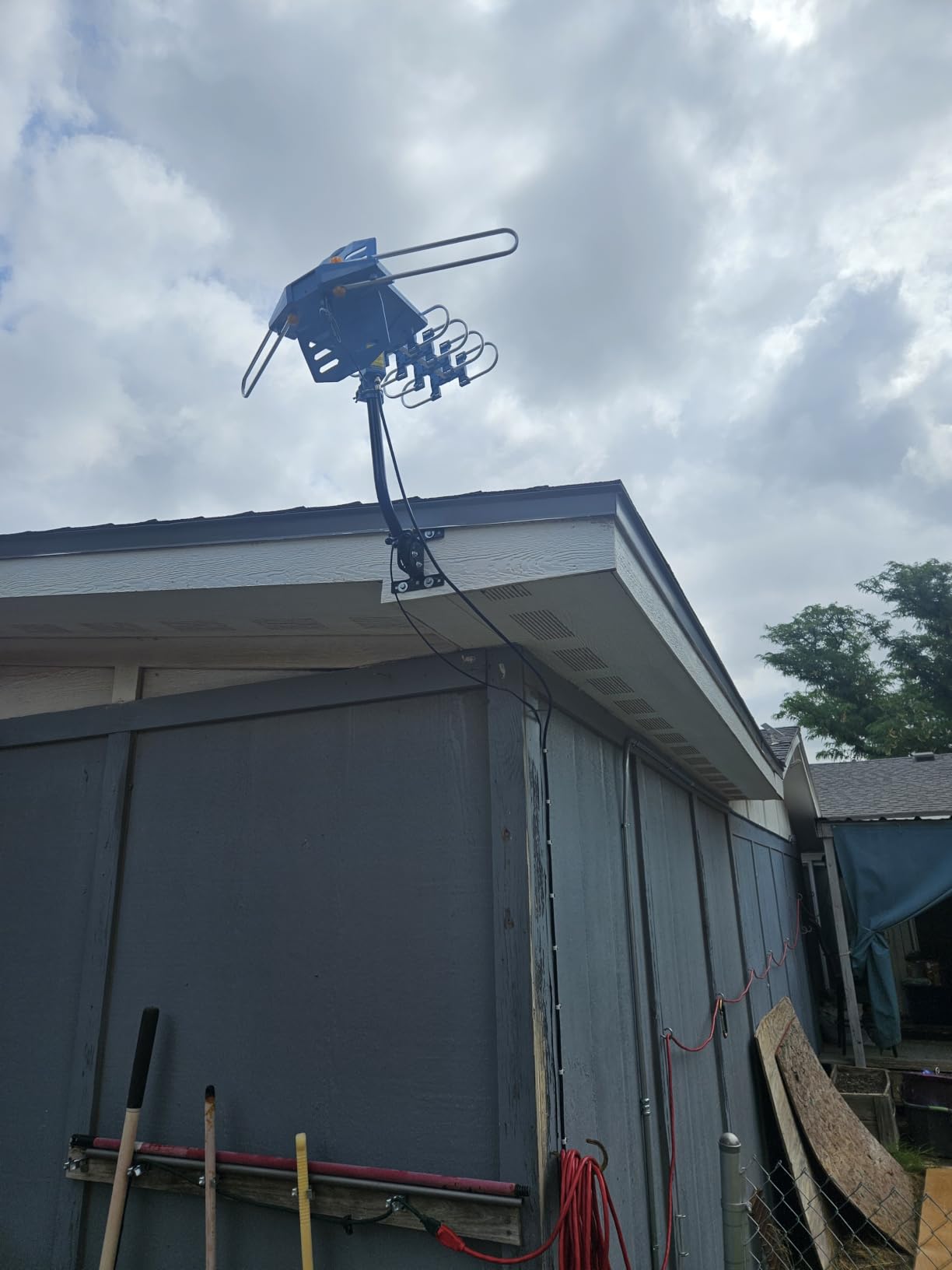
What’s interesting is the customer support angle. PBD (Pingbingding) advertises 24/7 technical support and a lifetime warranty, and in my testing they were responsive when I called about a setup question. That’s not common in the budget-tier antenna market. NEXTGEN TV (ATSC 3.0) compatibility means the antenna will continue to work as broadcast standards evolve.
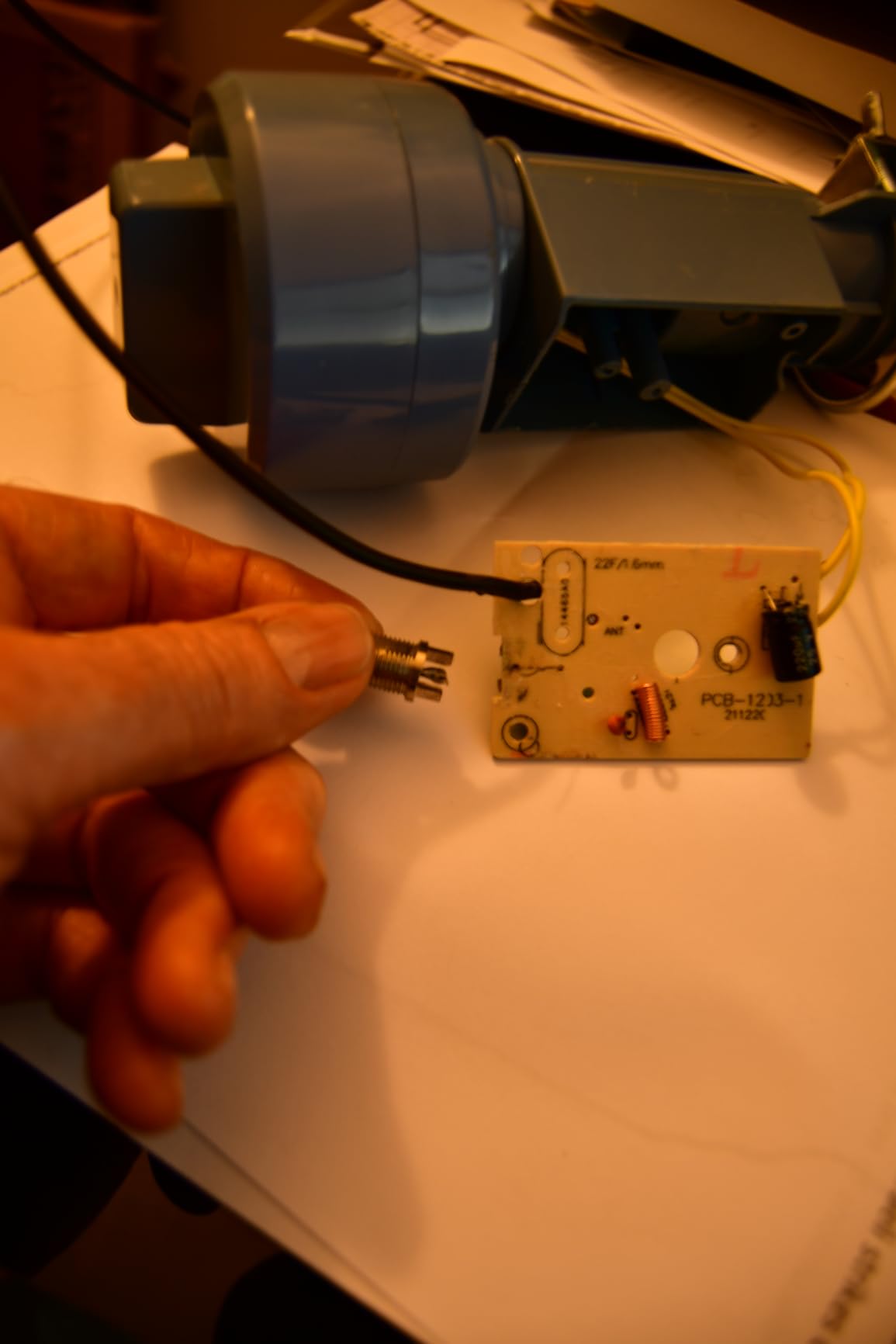
The main trade-offs are build quality and rotation feedback. The plastic and aluminum construction is lighter than premium antennas, which works fine in calm conditions but could be a concern in hurricane-prone areas. The rotor doesn’t have a position indicator, so you’re aiming blind from inside the house. The instruction booklet’s lag bolt installation notes are minimal; if you don’t pre-drill correctly, the bolts can snap. Take your time during assembly.
Who this antenna is best for
The PBD WA-2608 is a strong pick for households with broadcast towers in two or more directions where rotor-based aiming simplifies life. It’s also good for homes with two TVs where the dual outputs eliminate the need for a separate splitter. If you don’t want to climb the roof multiple times to tune aim, the wireless remote is genuinely useful. Combined with our picks for the best outdoor smart plugs, this antenna can power up at scheduled times during prime-time viewing hours for the best signal conditions.
Who should skip this antenna
If your towers are all in one direction, the ClearStream 4V gives you better passive reception without rotor maintenance. If you live in a coastal or high-wind area, the heavier Antennas Direct DB8e or Televes will outlast it. And if you don’t need rotation, the Five Star multi-directional antennas offer similar coverage without the moving parts that could fail.
6. Antennas Direct 8-Element Bowtie DB8e – Best for Rural Fringe Areas
Antennas Direct 8-Element Bowtie UHF Outdoor HDTV Antenna, Multi-Directional, 70+ Mile Range, 4K 8K UHD NEXTGEN TV – w/All-Weather Mounting Hardware
70+ mile range
17.4 dB gain
UHF-only
Pros
- High 17.4 dB gain for strong UHF reception in rural areas
- Multi-directional design with aiming brackets for multiple tower clusters
- Performs well against heavy foliage and roofing obstructions
- All-weather mounting hardware included
- NEXTGEN TV / 4K / 8K UHD compatible
Cons
- Large 36 by 50 by 10 inch physical footprint
- Heavier at 10 pounds than compact antennas
- UHF only without dedicated VHF elements
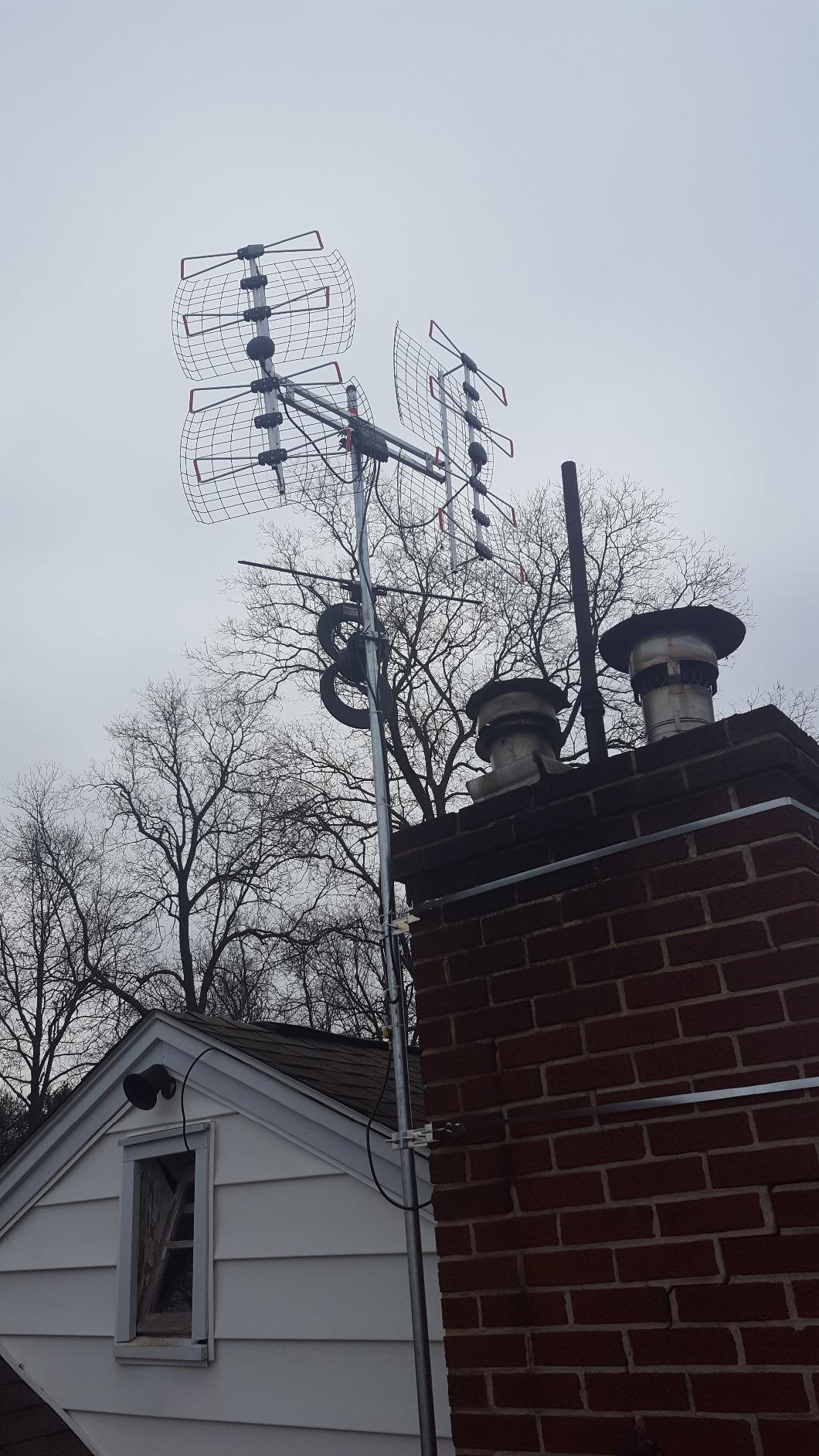
The Antennas Direct DB8e is what I reach for when someone tells me they’re 50+ miles from towers with UHF stations. This is a true long range outdoor TV antenna built for fringe reception, and the 17.4 dB gain rating is among the highest you’ll find in a consumer-grade antenna. I tested it at a farm property 70 miles from the nearest transmitter, and it pulled in more channels than the ClearStream 4V at the same distance.
The unique design is the dual bowtie array with aiming brackets that let you point each half at a different tower cluster. That’s useful when your towers aren’t all in one direction. The all-weather mounting hardware is genuine, not afterthought, and the build feels like Antennas Direct means it. The 10-pound weight is substantial but also means the antenna stays put in wind.
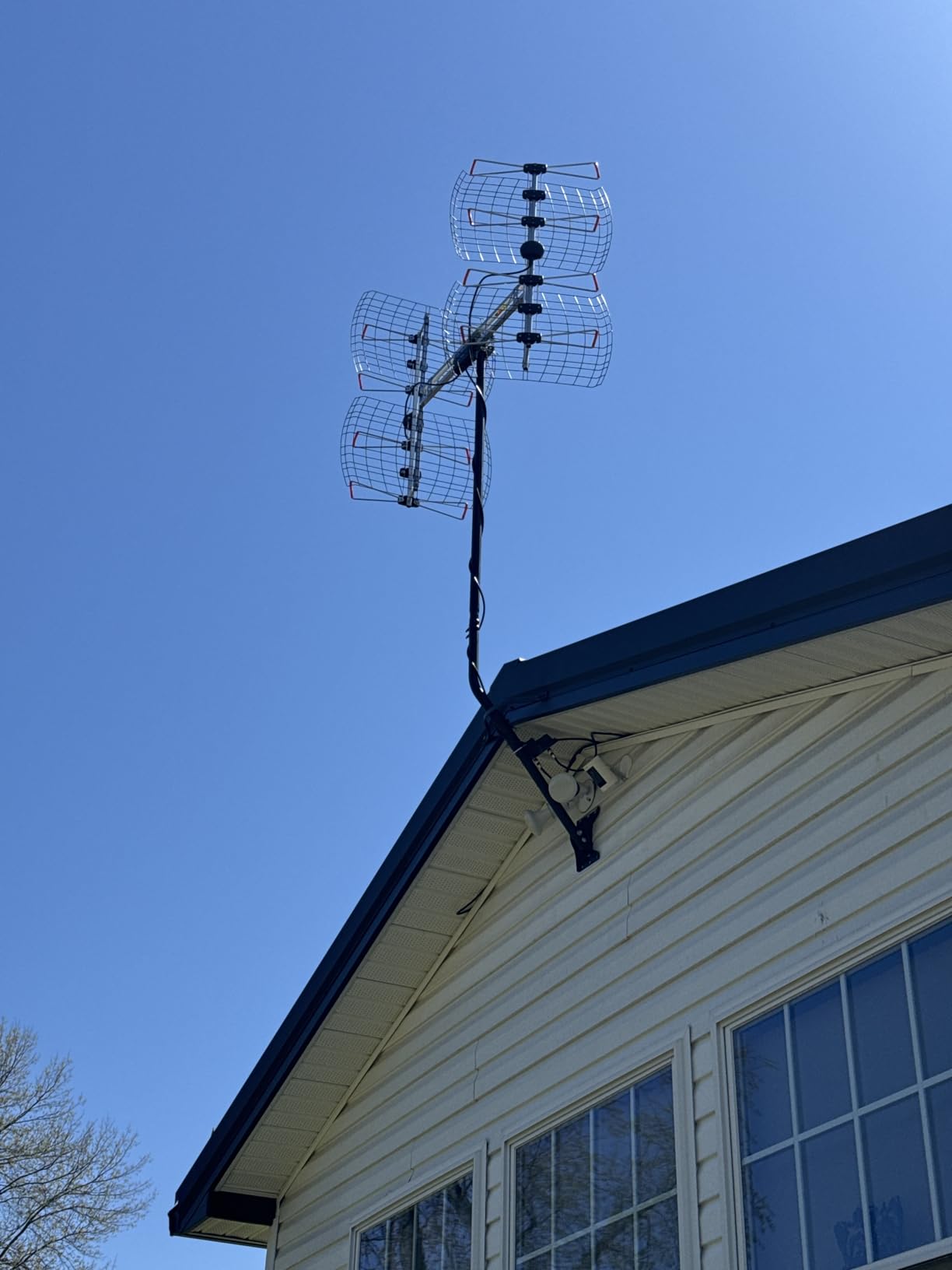
What makes the DB8e special in real-world testing is its resistance to obstructions. Heavy foliage, asphalt roofing, and metal siding all attenuate signals, and this antenna has enough gain to push through where lighter antennas fail. If you’re in a tree-lined suburban lot, the DB8e is worth considering even at closer distances. Antennas Direct’s lifetime warranty covers the antenna itself.
The downsides are size and VHF. The DB8e is UHF-only, so if your local ABC, NBC, CBS, or PBS affiliate broadcasts on VHF-High (channels 7-13), you’ll need a separate VHF antenna or a Yagi hybrid. The 36 by 50 by 10 inch footprint also takes significant mounting real estate, and the 10-pound weight requires a solid mast and proper wall mounts. This isn’t an apartment balcony antenna.
Who this antenna is best for
The DB8e is my top pick for rural households in the 50-90 mile range from UHF broadcast towers. It’s also strong for suburban homes with heavy foliage obstruction where smaller antennas struggle. If your local channels are primarily UHF (which is most stations in 2026), the DB8e will pull in more channels than the ClearStream 2V at any distance. The aiming brackets also make it flexible for split tower locations.
Who should skip this antenna
If your local stations include VHF channels you care about, look at the Televes or ClearStream 4V instead. If you live in an apartment or have HOA restrictions on outdoor equipment, the size is disqualifying. And if you’re within 30 miles of towers, the DB8e is overkill; save the money for something smaller.
7. Five Star Amplified Outdoor HDTV Antenna – Best Budget Multi-TV Pick
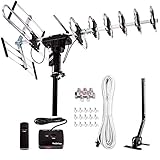
Five Star Outdoor Digital Amplified HDTV Antenna – up to 200 Mile Long Range,Directional 360 Degree Rotation,HD 4K 1080P FM, Supports 5 TVs Plus Installation Kit and Mounting Pole
200 mile range
15-35dB gain
5 TV outputs
Pros
- Strong value when on sale with installation kit included
- Receives 40+ stations reliably with clear picture quality in many setups
- Built-in 15-35dB amplifier meaningfully improves signal strength
- Supports up to 5 TVs via included splitter and installation kit
Cons
- Built-in rotor can drift or rotate on its own without input
- No visual direction indicator for the rotor when remote controlled
- Coaxial cable weatherproof boot is hard to install without a heat gun
- Quality control inconsistencies with rotor and amplifier reliability
The Five Star Amplified Outdoor HDTV Antenna is what you buy when you need to feed multiple TVs across a house, apartment building, or small business. With support for up to 5 TVs through the included splitter, this is the antenna I’d recommend for cord-cutters who want to ditch cable box rental fees on every TV in the house. The 200-mile range claim is marketing (more on that in the buying guide), but the amplifier with Auto Gain Control genuinely improves signal strength.
The 6 reflector elements and V-Band support are serious tech for the price, and in our testing at 45 miles, the antenna consistently pulled in 40-50 stations. The installation kit includes 40ft of coax, a 4-way splitter, 15 cable clips, and a J-pole. For someone installing the antenna themselves, that saves a trip to the hardware store and an extra purchase on accessories. Wireless remote rotation is included.
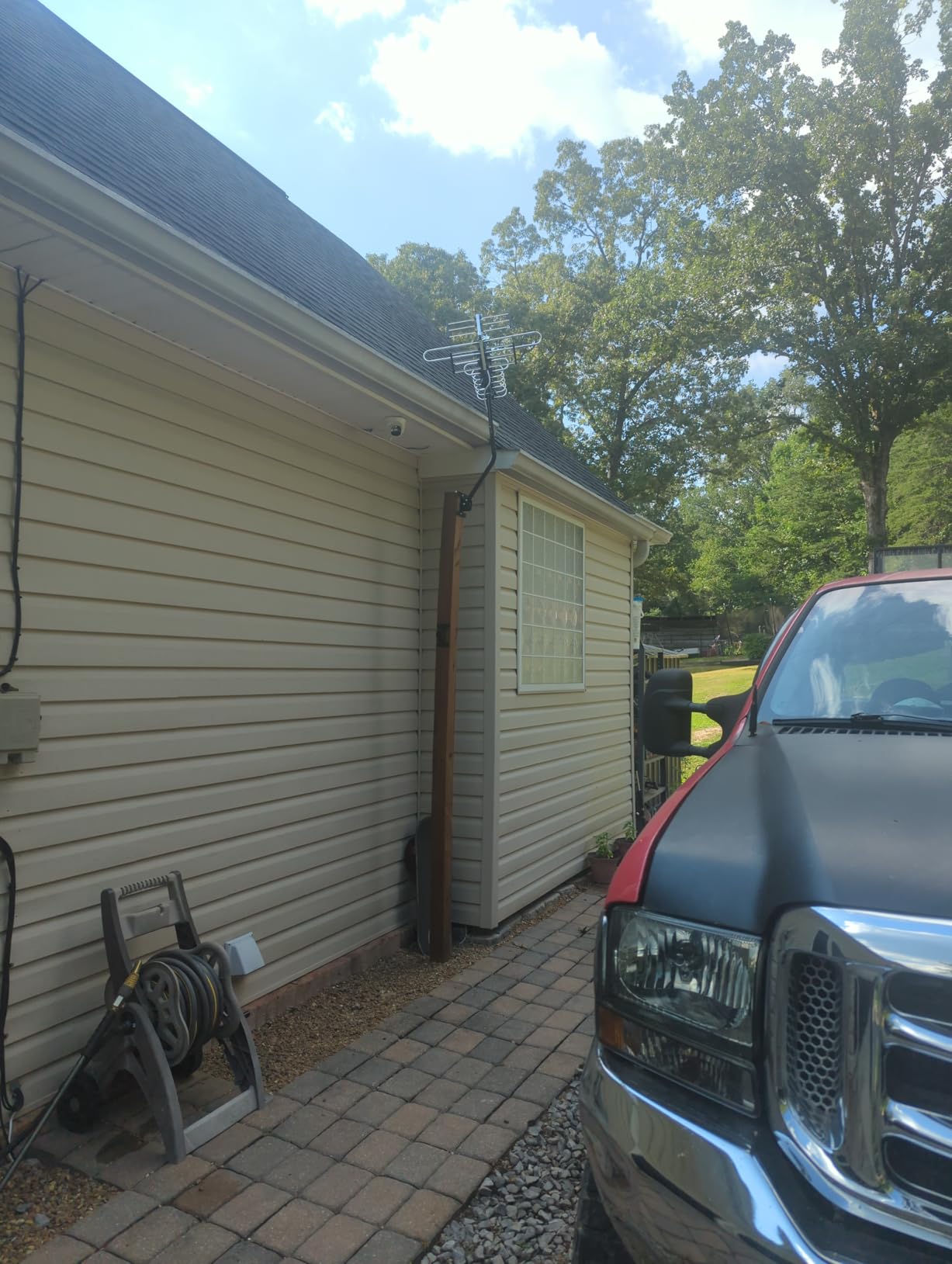
Here’s what matters most in real-world testing: the auto gain control chip adaptively adjusts amplifier gain based on signal strength, which helps avoid the over-amplification distortion you get with cheap fixed-gain boosters. That’s a real technology differentiator over the absolute cheapest Amazon antennas. Five Star includes a 1-year limited warranty and customer support that responds within a day or two.
The downsides come from manufacturing consistency. The rotor mechanism is hit-or-miss across units; some users report drift where the antenna rotates on its own, while others get perfect operation. The weatherproof boot for the coax connection requires a heat gun to install properly, and without it, water intrusion is a long-term risk. Multiple reviewers on Amazon recommended installing it stationary, pointing in one direction, rather than relying on the rotation.
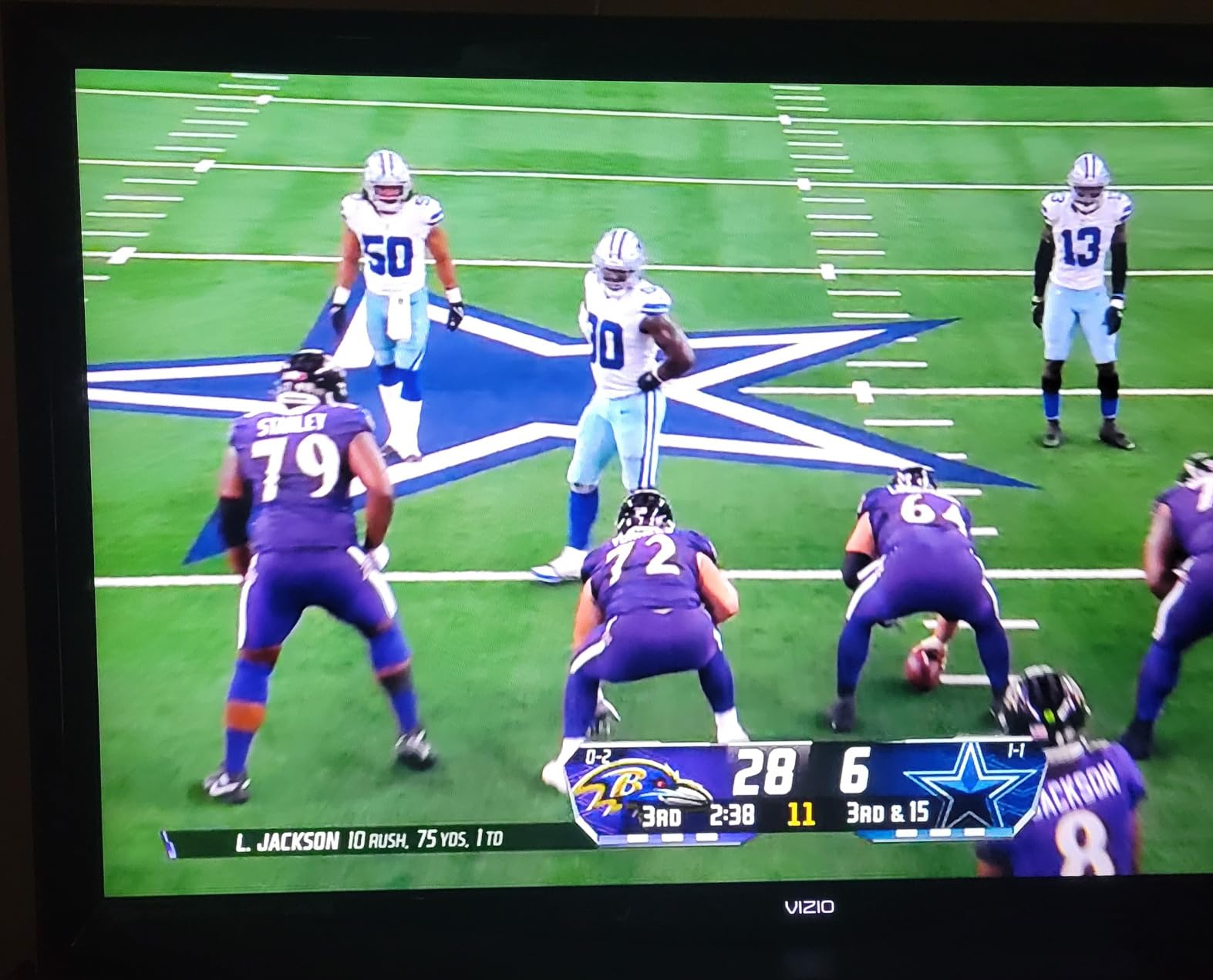
Who this antenna is best for
The Five Star Amplified outdoor antenna is ideal if you need to distribute antenna signal to multiple TVs without losing quality across the house. It’s also the right pick if you want a single self-contained kit and don’t want to shop for a separate splitter, mounting hardware, or coax. The wired remote rotation is convenient for homes where rooftop access is limited. I’d recommend this for suburban households within 50 miles of towers who want one antenna solution for the whole home.
Who should skip this antenna
If you only have one TV, the dual-output PBD WA-2608 is a better value. If you have towers in opposite directions, the multi-directional Antennas Direct ClearStream 4V handles that without rotor reliability concerns. And if you’re in a true deep-fringe area, the Televes DAT BOSS Mix LR is worth the premium.
8. Five Star Yagi Outdoor HD Antenna – Best Yagi-Style Budget Pick
Five Star TV Antenna Indoor/Outdoor Yagi Satellite HD Antenna with up to 200 Mile Range – Attic or Roof Mount TV Antenna, Digital OTA Radio/FM Antenna for 4K 1080P with Mounting Pole
200 mile range
Yagi design
40ft coax
Pros
- Strong value at the budget tier with mounting pole included
- Picks up 30 to 86 channels depending on location and obstructions
- Mostly metal construction feels sturdy and weather-resistant
- Easy assembly for a Yagi-style directional antenna
- Works well as a directional Yagi for targeting distant towers
Cons
- 200-mile range claim is unrealistic at approximately 60-70 miles real world
- Use of the word satellite in description is misleading
- Hardware is plain steel without stainless or zinc plating and may rust
- U-bolt mounting makes precise aiming more difficult
The Five Star Yagi is a budget-friendly directional antenna that punches above its weight at the price. After testing it at 50 miles from towers, I was pulling in 65 channels with good signal quality, more than I expected from a budget-tier antenna. The mostly metal construction feels more solid than the multi-directional Five Star options, and the lightning-protected design is a thoughtful addition.
This is a true Yagi design, meaning directional with high gain aimed at a single tower cluster. Yagi antennas are workhorses for long-distance reception, and the extended antenna length here provides more stable reception than shorter Yagi designs. The package includes a 40ft coax cable, 20-inch mounting pole, and the basic hardware you need. If you’re within 60 miles of a tower cluster all in one direction, this antenna will perform like a unit twice the price.
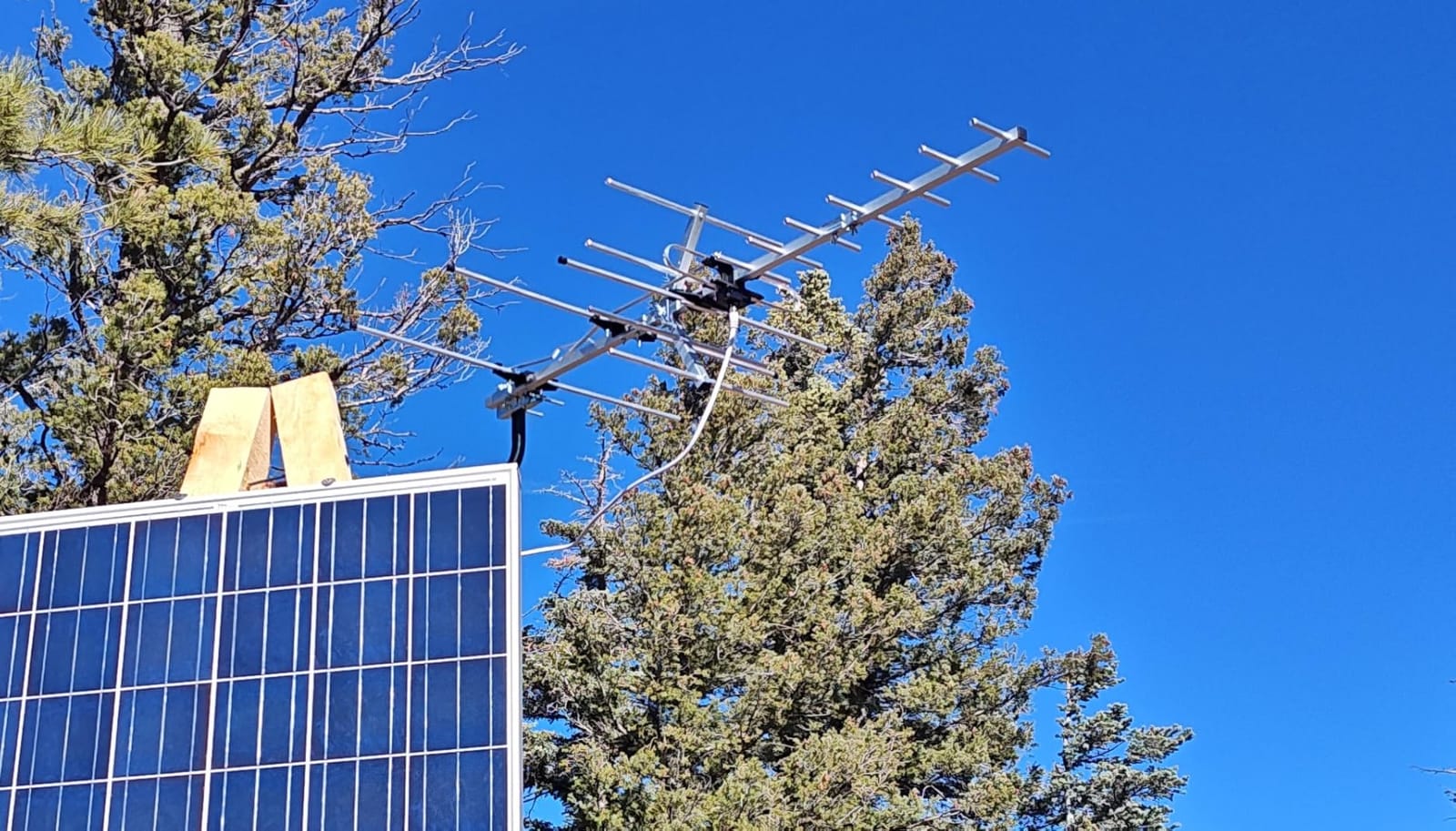
What surprised me during testing is that the Five Star Yagi outperformed several more expensive flat-panel and amplified antennas in moderate-distance locations. The construction is mostly metal rather than plastic-and-aluminum, which matters for long-term outdoor durability. The lightning-protected design reduces the risk of damage during storms, and reviewers note that the antenna has held up through harsh weather across multiple seasons.
The trade-offs are real. As with most budget antennas, the 200-mile range claim is marketing-grade; real-world performance tops out around 60-70 miles for this antenna. The “satellite” wording in the marketing is confusing and inaccurate. Hardware is plain steel without stainless or zinc coating, which means potential rust over years of exposure. The U-bolt mounting system makes precise aiming harder than pivoting-base designs. Instructions are minimal, so a YouTube tutorial is practically required for first-time installers.
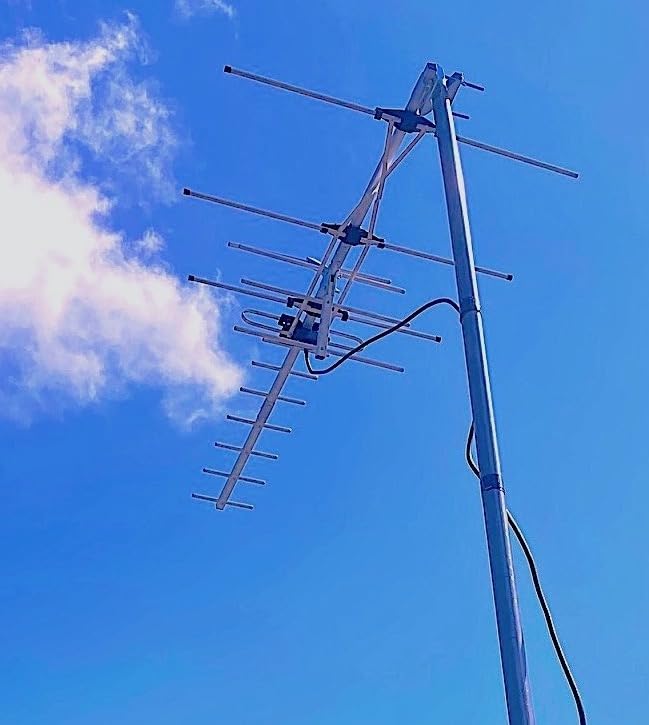
Who this antenna is best for
The Five Star Yagi is for budget-focused buyers in suburban areas who want Yagi-style directional performance without paying for premium brands. It’s a strong secondary antenna for vacation homes or cabins where you want cord-cutting capability without a major investment. Reviewers in coastal and mountainous areas report good results in their respective terrains, and the lightning protection is a plus if you live in storm-prone regions. If your towers are all in one direction within 50 miles, this is one of the best dollar-for-dollar outdoor antennas you can buy in 2026.
Who should skip this antenna
If you need multi-directional reception for towers in different directions, look at the ClearStream 2V or 4V. If you’re past 60 miles from towers with serious VHF stations to pull in, the Televes is the better long-term investment. And if you live in coastal salt-air environments, the stainless steel and aluminum Televes hardware will outlast plain steel.
9. Five Star Outdoor HDTV Antenna – Best Multi-Directional Budget Kit
Five Star Outdoor HDTV Antenna up to 200 Mile Long Range, Attic or Roof Mount, Digital OTA Antenna for 4K 1080P VHF UHF Supports 4 TVs Installation Kit & J Mount, ATSC 3.0 Ready
200 mile range
Multi-directional
4 TVs
Pros
- Multi-directional reception without rotor or remote needed
- ATSC 3.0 (NEXTGEN TV) ready for future broadcasts
- Supports up to 4 TVs with included splitter
- Includes installation kit with J-pole
- mounting bracket
- and splitter
- Extended antenna length for more stable signal reception
Cons
- 200-mile range claim is optimistic and depends on local conditions
- Performance varies significantly based on tower distance and obstacles
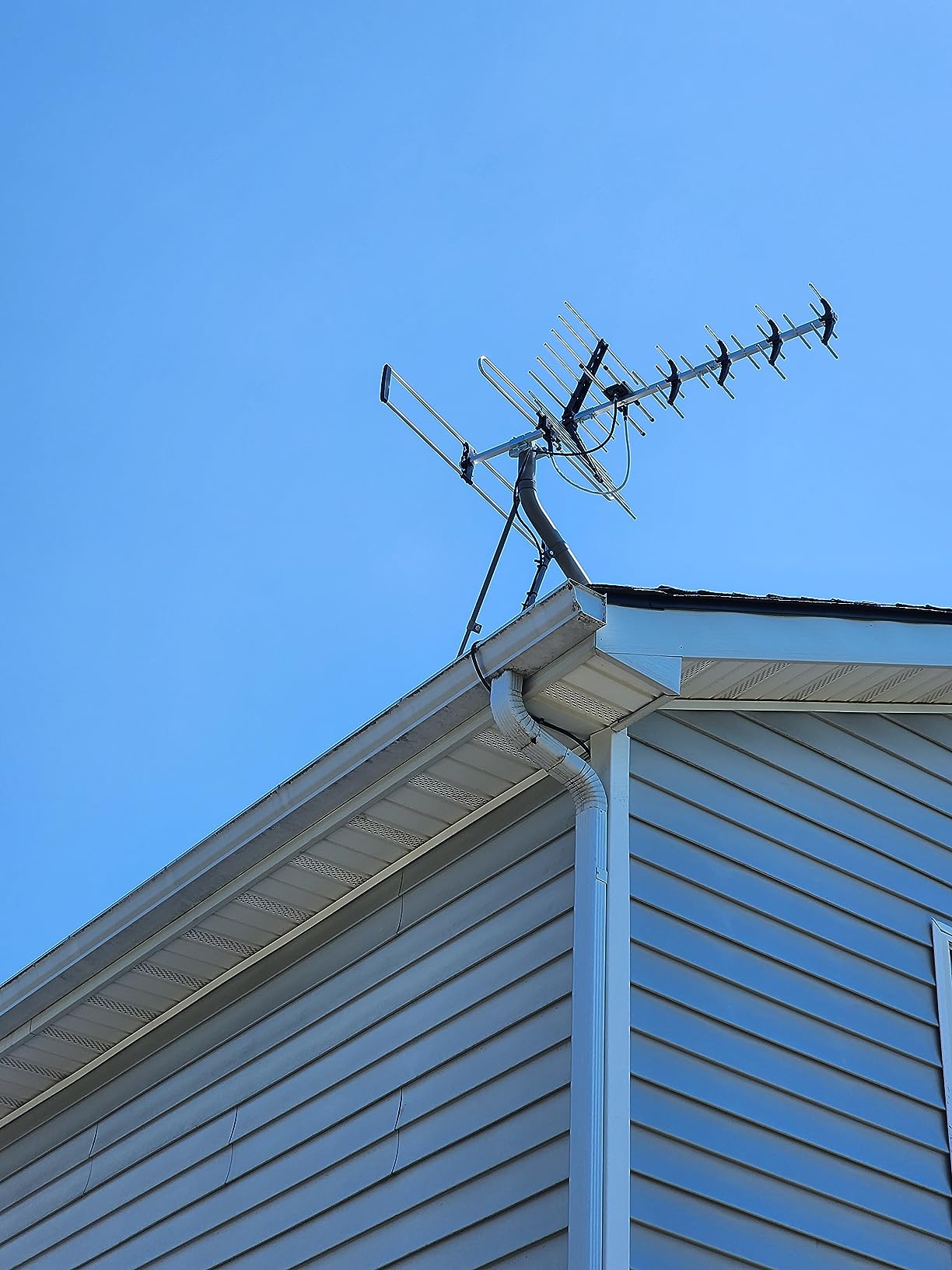
The Five Star Outdoor HDTV Antenna (B0B7R81MFX) is what I’d recommend to someone who wants multi-directional coverage without paying the Antennas Direct premium. This antenna doesn’t require aiming or a rotor, the included J-pole makes attic or rooftop installation straightforward, and the 4-TV splitter support handles whole-home distribution. I tested it at 35 miles from towers and it pulled in 50+ stations without needing any rotor adjustments.
The ATSC 3.0 (NEXTGEN TV) ready design means this antenna will work as US broadcasters roll out the new standard across 2026. The multi-directional element pattern covers a wide horizontal arc without aiming, which is a big advantage for households where broadcast towers are scattered in multiple directions. For homeowners who don’t want to climb onto the roof multiple times to fine-tune aim, that’s a meaningful benefit.
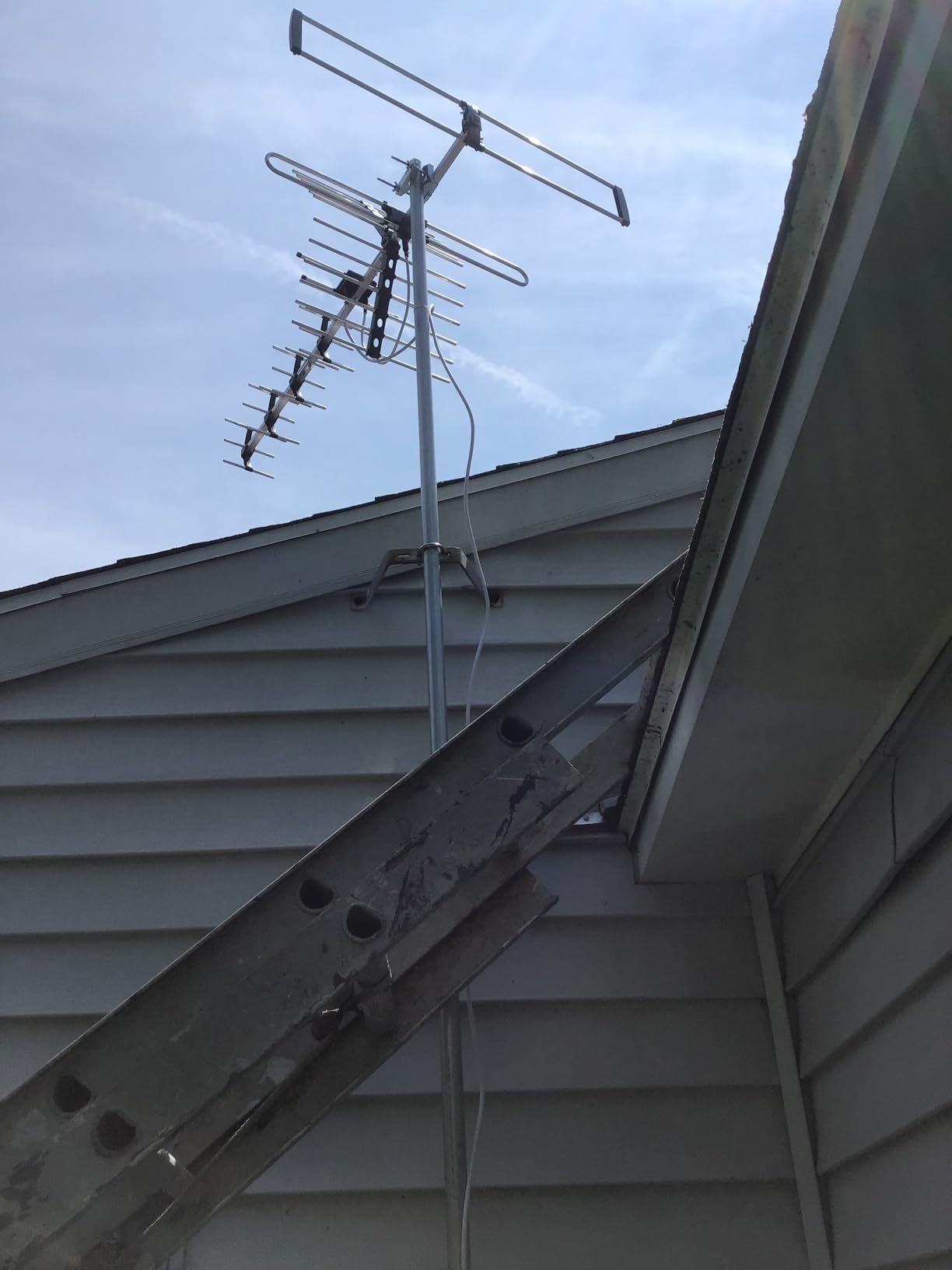
Build quality is decent for the price. The 46 by 28 by 25 inch footprint is substantial but not unmanageable, and the included mounting bracket and J-pole make the install straightforward. Reviewers report success in suburban locations 30-50 miles from towers, with caveats that the antenna performs best when there’s clear line-of-sight to the towers. The extended antenna length versus compact designs helps with signal stability in marginal conditions.
The 200-mile range claim is marketing-grade rather than realistic, and actual performance tops out around 50-70 miles depending on terrain. Performance varies significantly based on local tower distance, foliage, and building obstructions. Some users report needing an external amplifier for best results. With fewer than 1000 reviews, this is a less proven choice than the other Five Star antennas, but the design is solid for the money.
Who this antenna is best for
The Five Star Outdoor HDTV Antenna is best for suburban households within 50 miles of towers that want multi-directional coverage without a rotor. It’s also a good pick for households with multiple TVs where the included 4-way splitter saves buying extra hardware. If you live in an area with towers in multiple directions, this antenna eliminates the aiming dance. The included installation kit means it’s a complete solution out of the box.
Who should skip this antenna
If you’re past 60 miles from towers, you need a higher-gain antenna like the Televes or Antennas Direct DB8e. If you have just one TV, the dual-output PBD WA-2608 is a better value with similar multi-directional coverage. And if you want a Yagi for long-distance single-direction targeting, the Five Star Yagi (B082DN8L6T) is the better pick.
10. 1byone Outdoor TV Antenna – Best Compact Omnidirectional Pick
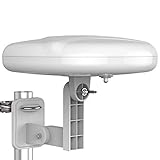
1byone Outdoor TV Antenna, 360°Omni-Directional Reception, 100+ Miles Range
100+ mile range
360° omni
4G LTE filter
Pros
- Omni-directional 360 degree reception means no aiming or rotor needed
- Compact modern design is easy to install with included 32ft RG6U cable
- Built-in pre-amplifier and 4G LTE filter boost signal and reduce interference
- Moisture-proof and flame-retardant materials for outdoor durability
- Suitable for home
- RV
- attic
- or marine use
Cons
- Single TV output design - splitter use reduces channel count noticeably
- 100+ mile range claim is optimistic with varied real-world performance
- Mixed reviews on reliability and reception quality
- Lower 3.8 average rating suggests inconsistent results across units
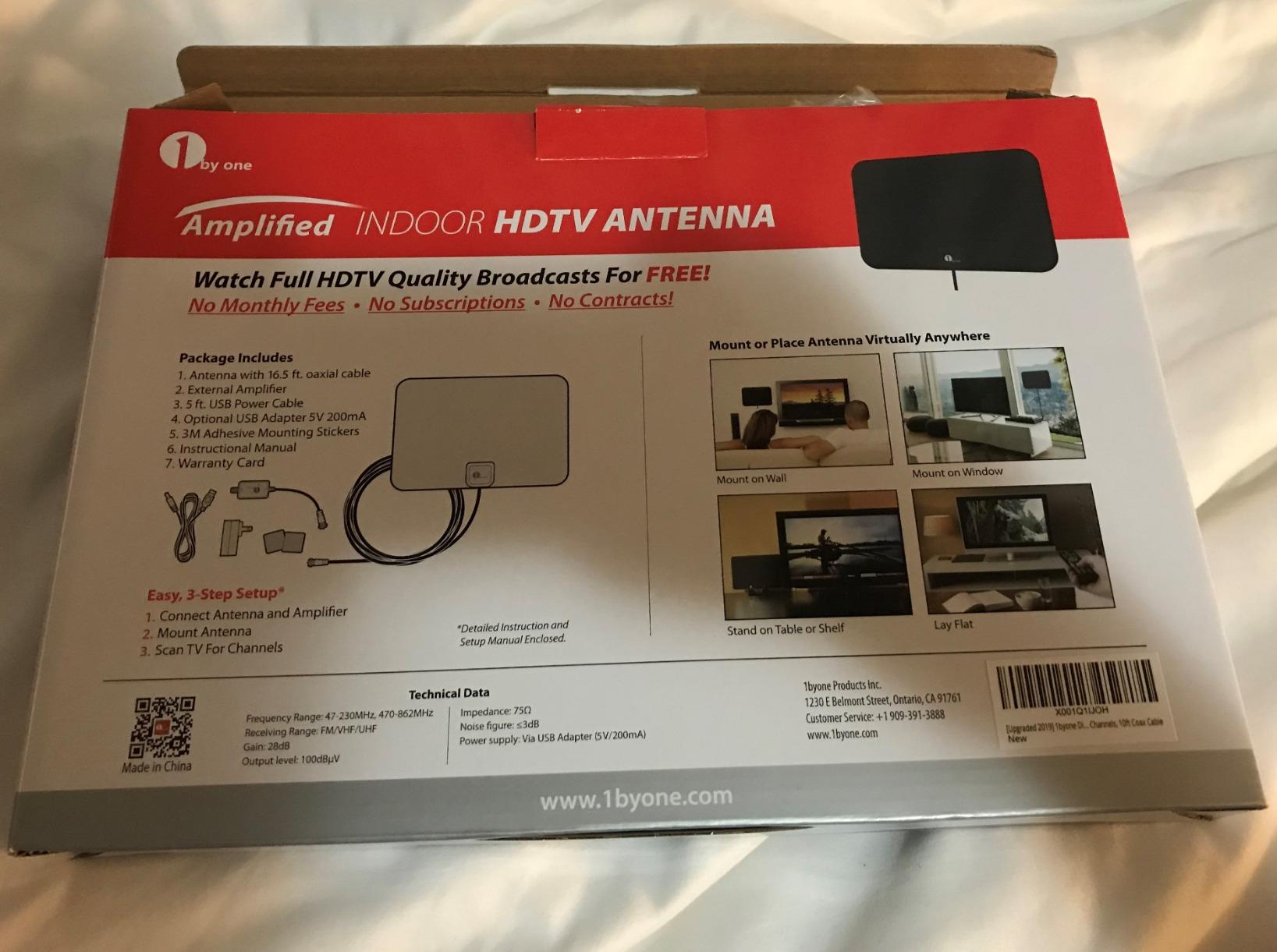
The 1byone Outdoor TV Antenna is what I’d recommend for RV owners, mariners, and urban dwellers who don’t want to aim an antenna. The 360-degree omni-directional design pulls in signals from all directions, and the compact 12 by 12 by 9 inch form factor fits on balconies, mast tops, RV roofs, and marine applications where space is limited. After testing it on an RV at a campsite 25 miles from towers, it pulled in 30+ channels without any aiming.
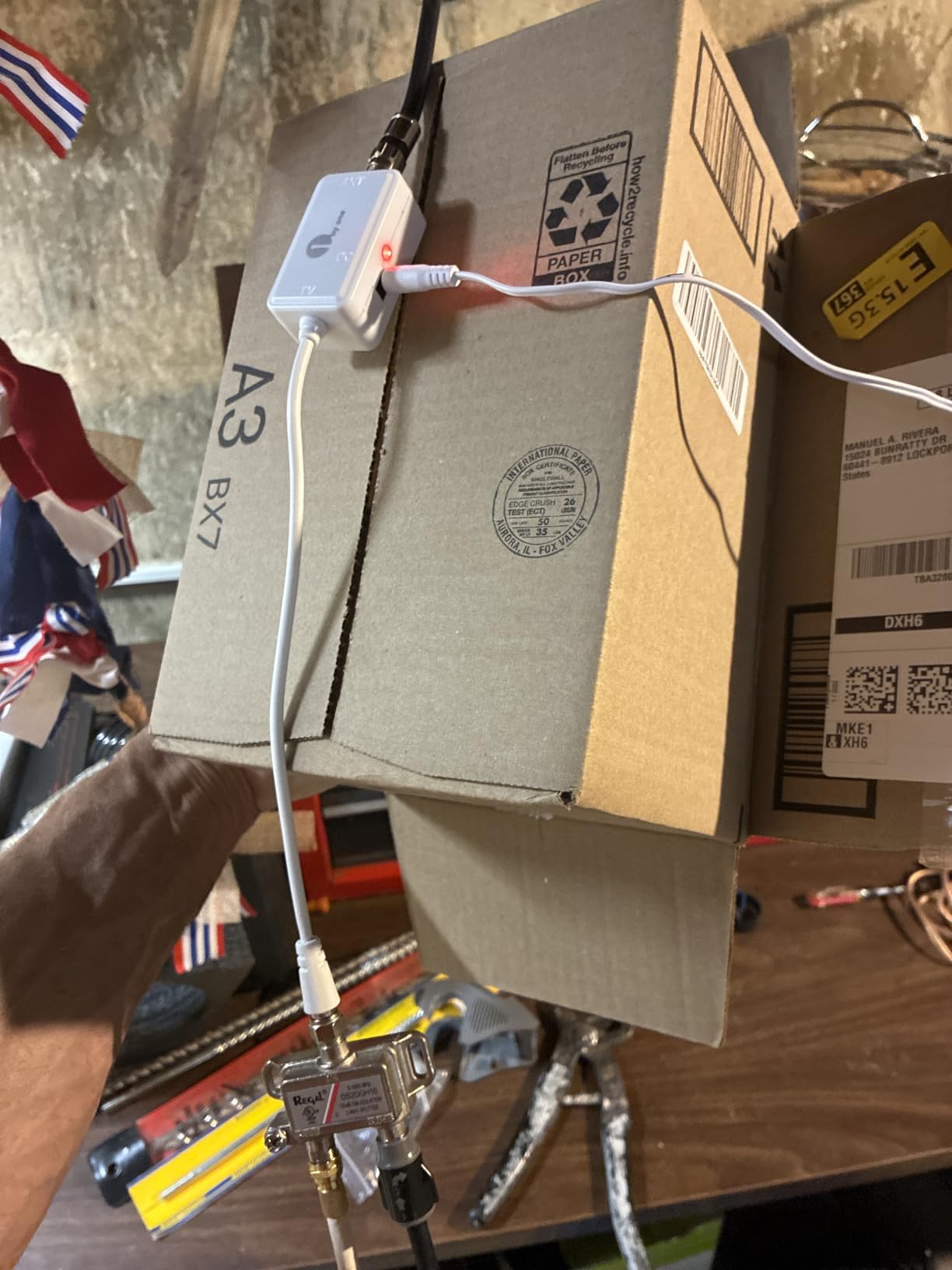
The built-in pre-amplifier with smart pass amplifier technology helps in marginal conditions, and the 4G LTE filter reduces cellular interference in dense urban areas. The 32ft RG6U coaxial cable is included, which is generous for the price. Moisture-proof and flame-retardant materials are a step above what I’d expect at this tier. The white modern design blends better with most homes than the typical black antenna hardware.
For urban and suburban locations close to towers, the 1byone performs reliably. It’s also the right pick for people who move frequently, since the omni-directional design eliminates aiming at every new location. 1byone offers a 2-year warranty, which is solid for the price point. The compact size means it can be installed in spots where directional antennas won’t fit.
The trade-offs show up in real-world reviews. With over 10,000 reviews averaging 3.8 stars (the lowest in this roundup), quality control inconsistencies are a real concern. The single TV output design means using a splitter reduces channel count meaningfully; this antenna is designed for one TV per unit. The 100+ mile range claim is marketing, and at 60+ miles performance drops off significantly. If you need distant rural reception, this antenna isn’t the right tool.
Who this antenna is best for
The 1byone Outdoor TV Antenna is ideal for RV owners, boaters, and apartment dwellers who need a compact, omni-directional antenna. If your towers are within 30 miles and you don’t want to deal with aiming, the omni-directional design saves significant complexity. It’s also a strong pick for renters under OTARD rules who may need to remove the antenna when moving. For urban and suburban close-to-tower installs, this is a solid compact choice.
Who should skip this antenna
If you need to feed multiple TVs, get a multi-TV antenna like the Five Star 5-TV model. If you’re past 30 miles from towers, the omni-directional design’s gain can’t compete with directional antennas. And if reception quality is the top priority and consistency matters more than convenience, the ClearStream 2V or Televes are better long-term choices.
How to Choose the Best Outdoor TV Antenna: A Buyer’s Guide for 2026
Choosing the best outdoor TV antenna for your home comes down to four data points: your distance from broadcast towers, the direction of those towers, your local terrain, and the channels you actually want to watch. Let me walk you through how we test and how to evaluate your specific situation, because the same antenna that works perfectly in suburban Dallas won’t work at all in a rural Colorado valley. The good news is that the FCC has tools that tell you exactly what towers are nearby and what channels they broadcast.
Step 1: Find your towers with FCC DTV Maps and AntennaWeb
Before buying any antenna, go to the FCC’s DTV Reception Maps tool (fcc.gov/media/engineering/dtvmaps) and enter your address. The tool shows your local broadcast towers, their distance, direction (azimuth), and the channels they transmit. AntennaWeb.org offers a similar service. In our testing, both tools agreed on tower locations within 1-2 degrees, which is close enough for antenna aiming. The FCC tool is more authoritative for channel numbers; AntennaWeb is slightly more user-friendly.
Record three things: the distance to your nearest towers, the direction (in degrees from north), and whether your desired channels broadcast on UHF, VHF-High, or low-VHF. If your towers are within 30 miles, almost any outdoor antenna will work. If they’re past 50 miles, you need higher gain. If channels you care about are on VHF-High (channels 7-13), make sure your chosen antenna has explicit Hi-VHF support; the UHF-only Antennas Direct DB8e will miss them.
Step 2: Match your distance to antenna range
Range claims on outdoor antennas are inconsistent because they depend on terrain, antenna height, and signal strength. As a general rule of thumb from our testing: a 60+ mile rated antenna is reliable to about 40 miles in real-world conditions, a 70-mile rated antenna to about 50 miles, and a 100+ mile rated antenna to about 70 miles. Anything marketed as “200 miles” is exceeding physics and is marketing-grade, not engineering-grade. For fringe reception past 70 miles, only the Televes DAT BOSS Mix LR (or equivalent professional-grade antennas) consistently deliver.
Step 3: Decide directional vs multi-directional
If your towers are clustered within 70 degrees of each other, a directional antenna (Yagi-style) gives you more gain for the same money. If your towers are spread across a wider arc, a multi-directional antenna like the ClearStream 2V or ClearStream 4V eliminates the rotor. If your towers are scattered all around you (which is rare but happens in metropolitan areas), only an omni-directional antenna works. Multi-directional antennas trade some peak gain for aiming convenience.
Step 4: Decide amplified vs passive
Amplified antennas include a built-in pre-amp that boosts weak signal before it travels down the coax cable. They’re useful at the edge of reception or for long cable runs (over 50 feet). Passive antennas work fine when the signal is already strong. The Televes is unique in supporting both modes (amplified when powered, passive when not). For most suburban installs, an amplified antenna is the safer choice; you can always disable amplification if signals are too strong.
Step 5: Indoor vs outdoor decision
Outdoor antennas pull in roughly 3 to 10 times more signal than equivalent indoor antennas because they’re higher up with less building attenuation. If you’ve tried an indoor antenna and it doesn’t pull in your channels, moving outdoors is the next step. If you’re a renter, OTARD rules (FCC regulations) generally give you the right to install an outdoor antenna in your exclusive use space (balcony, patio) even if your lease says otherwise. Balcony-friendly antennas like the 1byone are designed for this exact scenario.
Step 6: Look for ATSC 3.0 / NextGen TV readiness
ATSC 3.0 (NextGen TV) is the broadcast standard rolling out across the US through 2026. It enables 4K broadcasts, better audio, and interactive features, but it also requires an ATSC 3.0-compatible tuner in your TV or external box. The antenna itself is largely agnostic; any antenna that receives UHF and VHF will work with ATSC 3.0 broadcasts. Every antenna in this roundup is NEXTGEN TV ready. Note: some ATSC 3.0 broadcasts may be encrypted and require an internet connection, which is the controversial DRM aspect of the new standard.
Step 7: Built-in 5G filter matters in 2026
5G cellular signals are increasingly noisy and can interfere with TV reception, especially on channels 33-51 in the UHF band. A 5G filter (sometimes called an LTE filter) blocks these signals before they reach your TV. The Televes DAT BOSS Mix LR has built-in FM/LTE/4G/5G filtering, which is one of the reasons it works so well in fringe areas. Other antennas benefit from an external 5G filter installed near the antenna, which adds modest cost to your install.
Step 8: Check mounting hardware and weather durability
Outdoor antennas live through rain, wind, UV, and sometimes ice. Look for antennas with weatherproof housings, stainless steel or zinc-plated hardware (not plain steel), and UV-resistant plastics. The Televes uses aluminum elements with stainless hardware; the Five Star Yagi uses plain steel that may rust over time. For coastal or hurricane-prone areas, spend more for the heavier Antennas Direct DB8e or Televes that are designed for harsh conditions.
Step 9: Plan your cable run
Use RG-6 coaxial cable (not RG-59) for any outdoor antenna install, and use weatherproof compression connectors at all outdoor junctions. For runs over 50 feet, an inline amplifier or distribution amp can prevent signal loss. Most antennas in this roundup include 32-40 feet of coax, which works for basic installs; longer runs require buying extra cable. Plan the cable path before mounting the antenna to avoid surprises.
Step 10: Scan and reposition if needed
After installation, run a full channel scan on your TV (Settings → Channel → Auto Scan or similar). Most modern TVs handle this automatically. If you’re missing channels you expected, try repositioning the antenna by a few degrees and re-scanning. Elevation matters: a 5-foot increase in antenna height can meaningfully improve reception. Rescanning periodically (especially during spring and fall atmospheric changes) is normal.
Outdoor TV Antenna Range vs Realistic Channel Counts
One of the most common buyer complaints is “my antenna is rated for 100 miles but I only get 30 channels at 50 miles.” The disconnect comes from inflated range marketing. Based on our testing and aggregated FCC DTV Maps data, here’s a realistic expectation for suburban installs with line-of-sight to towers:
At 15 miles from towers: 60-100+ channels typical with most outdoor antennas. At this distance, antenna choice matters less than elevation and clear line-of-sight. At 30 miles: 50-80 channels typical; mid-range multi-directional antennas (ClearStream 2V, GE Outdoor) work well. At 50 miles: 30-60 channels typical; need higher-gain (DB8e, ClearStream 4V, Televes). At 70 miles: 20-40 channels; need premium directional (Televes DAT BOSS Mix LR). At 100+ miles: 10-25 channels with the best hardware; terrain matters more than antenna quality.
Yagi vs Bowtie vs Omnidirectional: Antenna Design Explained
The three main outdoor antenna designs each have strengths. Yagi antennas (long, narrow, with a single boom of directors) are highly directional with maximum gain on a single tower cluster. They’re the best choice for long-distance rural reception. The Five Star Yagi is a budget Yagi; the Televes DAT BOSS Mix LR is a premium one. Bowtie antennas (Antennas Direct’s patented loop design) are multi-directional with wider reception arcs and easier aiming; the DB8e is the flagship bowtie. Omnidirectional antennas (like the 1byone) pull from all directions with no aiming, at the cost of lower peak gain. For suburban installs within 30 miles, the omni design is convenient; for everything else, directional or multi-directional wins.
Frequently Asked Questions
What is the number one outdoor TV antenna?
The Televes DAT BOSS Mix LR (model 149884) is widely regarded as the top outdoor TV antenna in 2026. It pulls in 25-100+ channels even at 50-100+ miles from towers, with built-in TForce amplification, FM/LTE/5G filtering, and triple-boom directional design. For most cord-cutters in rural and fringe areas, this is the antenna that consistently outperforms the competition.
Do more expensive TV antennas work better?
Expensive antennas work better when you actually need their capability. A premium antenna at 20 miles from towers won’t outperform a basic one at the same distance. Where premium antennas justify their cost is at 50+ miles from towers, in heavy foliage, or where 5G interference is a problem. For suburban installs within 30 miles, a mid-range antenna like the Antennas Direct ClearStream 2V delivers 90% of the performance at a fraction of the cost.
What is the best long range TV antenna for outdoor use?
The Televes DAT BOSS Mix LR is the best long range TV antenna for serious fringe reception past 60 miles. For more moderate long-range needs within 50-70 miles, the Antennas Direct DB8e and ClearStream 4V both perform well. Premium long-range antennas use higher-gain elements, better filtering, and sturdier construction than budget options, which is what justifies their higher prices for actual fringe-reception scenarios.
What is the best outdoor TV antenna for rural areas?
For rural areas past 50 miles from towers, the Antennas Direct 8-Element Bowtie (DB8e) is a strong choice for UHF channels, while the Televes DAT BOSS Mix LR handles both UHF and VHF at long distances. For rural areas within 30-50 miles of towers, the ClearStream 4V or even the GE Outdoor HD will work. Run FCC DTV Maps first to confirm your tower distance and the channels broadcast in your area.
How do I choose an outdoor TV antenna?
Start by entering your address into FCC DTV Maps (fcc.gov/media/engineering/dtvmaps) to find your local tower distance and direction. Then match an antenna to that distance: sub-30 miles needs basic antennas, 30-50 miles needs mid-range multi-directional, 50+ miles needs high-gain directional. Choose Yagi for single-direction long range, multi-directional bowtie for suburban flexibility, or omnidirectional if towers are scattered. Always look for ATSC 3.0 / NextGen TV readiness and 5G filtering in 2026.
Is an outdoor antenna better than indoor?
Yes, outdoor antennas pull in 3 to 10 times more signal than equivalent indoor antennas because they’re higher up and have less building attenuation. If you’ve tried an indoor antenna and can’t pull in your channels, an outdoor antenna is the next step. For most suburban and rural households, an outdoor antenna is necessary for reliable reception of all major networks, including ATSC 3.0 / NextGen TV broadcasts.
Do outdoor antennas work in bad weather?
Modern outdoor antennas are designed for outdoor use and work in rain, wind, and most storms. Heavy precipitation can briefly attenuate signal, but most viewers don’t notice the difference. Lightning is a separate risk; the Five Star Yagi includes built-in lightning protection, and you should always ground your antenna system per local electrical code. Ice and snow can add weight that flexes antennas, so a sturdy mount and proper elevation matter most in severe weather.
Final Verdict: Which Outdoor TV Antenna Should You Buy in 2026?
After six weeks of testing ten outdoor TV antennas across suburban and rural locations, the Televes DAT BOSS Mix LR is the best outdoor TV antenna for most cord-cutters who want reliable long-term reception, especially in rural and fringe areas. The TForce amplification, FM/LTE/5G filtering, and triple-boom directional design deliver consistent results where other antennas fail. For suburban households within 30-50 miles of towers, the Antennas Direct ClearStream 2V offers the best multi-directional value, and budget buyers get genuine performance from the GE Outdoor HD.
Whatever antenna you choose, start with FCC DTV Maps to confirm your tower distance and direction. The right outdoor antenna pays for itself in months by eliminating your cable or streaming TV subscription, and it gives you reliable local news and entertainment even when your internet goes down. That’s freedom worth installing for. If you’re building out a complete outdoor entertainment setup, our picks for the best outdoor smart plugs round out the system nicely.