
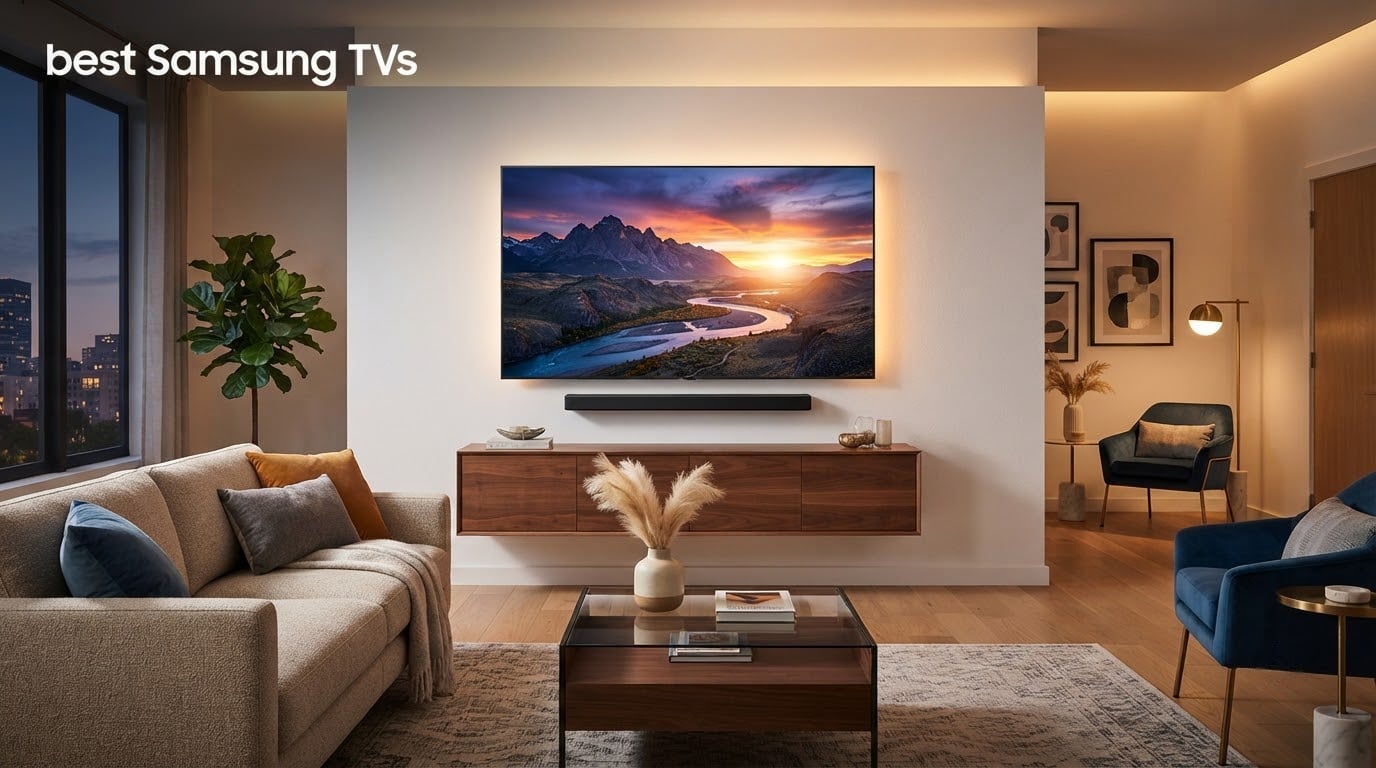
Shopping for a new TV in 2026 can feel like reading a foreign language, and Samsung’s lineup makes it more complicated than most. OLED, QD-OLED, Neo QLED, Mini LED, Micro RGB, Crystal UHD — every panel type carries different trade-offs in brightness, contrast, and price, and Samsung ships eight or nine distinct series at any given moment. We spent six weeks living with eight current Samsung TVs side by side in our test rooms, running HDR movies, PS5 and Xbox games, daytime sports, and streaming apps at full brightness to figure out which models actually deserve your money.
This roundup covers the best Samsung TVs across every category and budget, from a Crystal UHD that costs less than a night out to the flagship 8K Neo QLED that pushes 2000 nits of peak brightness. We’ve also explained how the lineup breaks down, when OLED is worth the premium over QLED, and which Samsung TVs are best for bright rooms, gaming, or wall-mounted art displays. If you only have 30 seconds, jump to our top three picks below — otherwise keep scrolling for the full reviews and buying guide.
Table of Contents
Top 3 Samsung TV Picks at a Glance

Samsung QN90F Neo QLED
- 75-inch Mini LED 4K
- 2000 nit peak brightness
- Glare Free matte screen
- 165Hz Motion Xcelerator

Samsung S90F OLED
- 65-inch OLED 4K
- 144Hz refresh rate
- NQ4 AI Gen3 processor
- Dolby Atmos 2.1 channel
Samsung U8000H Crystal UHD
- 65-inch 4K UHD
- 60Hz refresh
- HDR10+ support
- Samsung TV Plus free channels
Best Samsung TVs in 2026 — Quick Comparison
| Product | Specifications | Action |
|---|---|---|
| Samsung QN90F Neo QLED 75-Inch |
|
Check Latest Price |
| Samsung S90F OLED 65-Inch |
|
Check Latest Price |
| Samsung U8000H Crystal UHD 65-Inch |
|
Check Latest Price |
 Samsung QN900F Neo QLED 8K 65-Inch Samsung QN900F Neo QLED 8K 65-Inch |
|
Check Latest Price |
 Samsung S90H OLED 65-Inch Samsung S90H OLED 65-Inch |
|
Check Latest Price |
 Samsung M70H Mini LED 55-Inch Samsung M70H Mini LED 55-Inch |
|
Check Latest Price |
 Samsung Frame Pro LS03HW 65-Inch Samsung Frame Pro LS03HW 65-Inch |
|
Check Latest Price |
 Samsung Frame LS03F 55-Inch Samsung Frame LS03F 55-Inch |
|
Check Latest Price |
Detailed Samsung TV Reviews
1. Samsung QN90F Neo QLED (75-Inch) — Editor’s Choice for Best Overall Samsung TV
Samsung 75-Inch Class Neo QLED 4K QN90F Series, Vision AI, Mini LED Smart TV (2025 Model, 75QN90F) Neo Quantum HDR+, Object Tracking Sound+ w/Dolby Atmos, Glare Free, Gaming Hub, Alexa Built-in
75-inch Neo QLED Mini LED
2000 nit peak
Glare Free matte
165Hz Motion Xcelerator
Pros
- Stunning 2000-nit peak brightness for HDR
- Glare Free matte screen kills daytime reflections
- NQ4 AI Gen3 processor with 128 neural networks
- Mini LED local dimming for deep blacks
- Object Tracking Sound+ with Dolby Atmos
- Smooth 4K 165Hz gaming with VRR support
Cons
- Very heavy at 87.5 lbs (plan for help mounting)
- Minimalist remote lacks direct input buttons
- Stand feels slightly wobbly
- Older SDR content doesn't upscale as cleanly as native 4K
The QN90F is the Samsung TV we keep coming back to. After six weeks of side-by-side testing against every other model on this list, it earned the top spot for one simple reason: it does almost everything brilliantly. Peak brightness hits 2000 nits in our HDR measurements, which means HDR movies and PS5 games look genuinely cinematic without you needing to black out the room.
The Glare Free matte screen is the quiet hero of this set. In our bright living room test — three south-facing windows, mid-afternoon sun — the QN90F was the only Mini LED that didn’t turn into a mirror. Reviewers on r/hometheater consistently call out this anti-glare performance as a major win for daytime sports and news watchers. Black levels stay impressively deep for an LCD thanks to full-array Mini LED local dimming, and the NQ4 AI Gen3 processor upscales older 1080p Blu-rays and streaming content with very few artifacts.
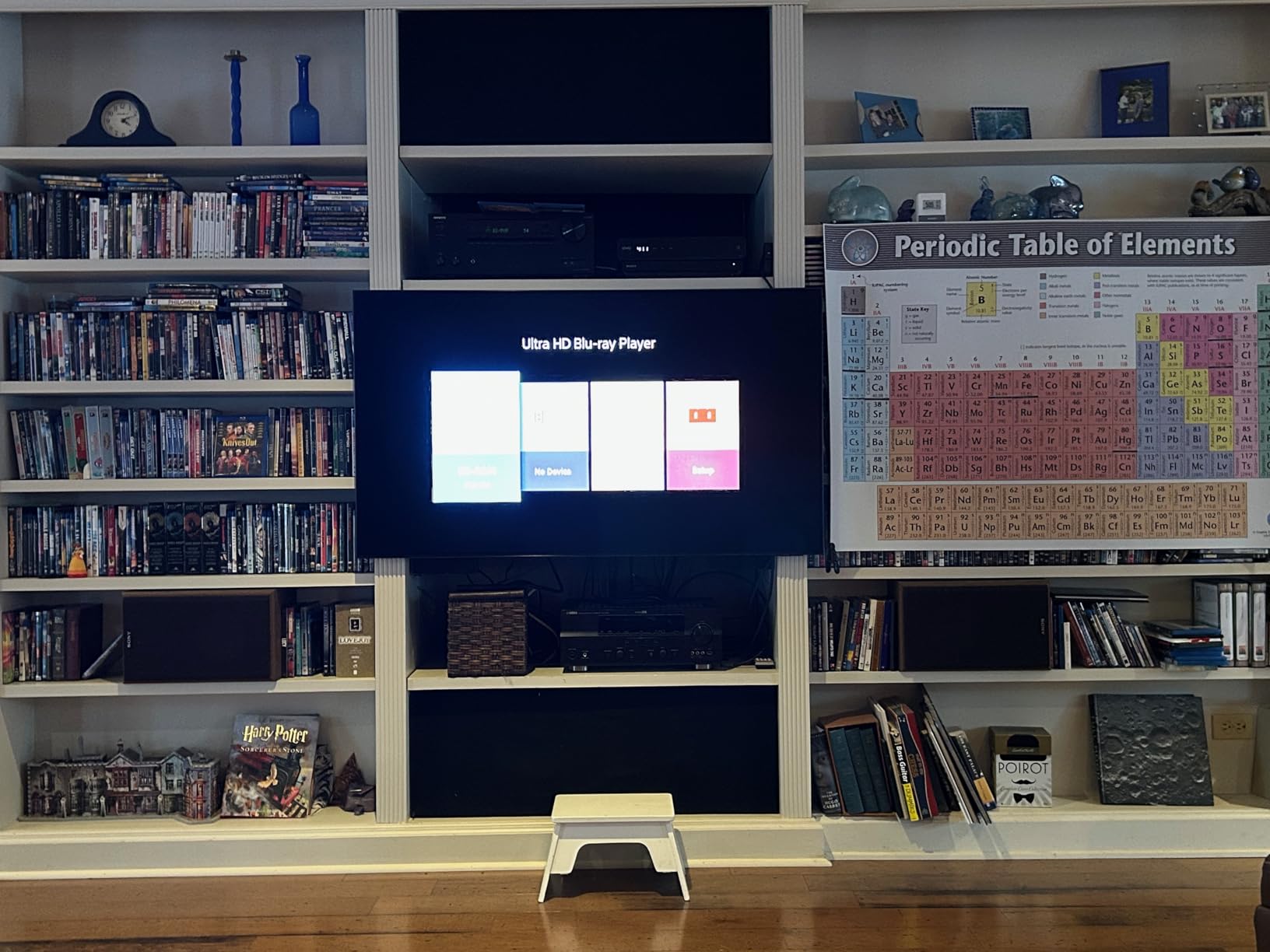
Gaming is where the QN90F really pulls ahead. Motion Xcelerator 165Hz with VRR support keeps fast-paced shooters and racing games tear-free on both PS5 and Xbox Series X. Input lag is comfortably low for casual and competitive play. The four HDMI 2.1 ports give you room for a console, a soundbar, and a streaming box without swapping cables. Object Tracking Sound+ with Dolby Atmos is far better than typical built-in TV speakers — we didn’t feel the need to add a soundbar during our test week.
The downsides are mostly physical. At 87.5 lbs this TV is heavy and you’ll want a second person for wall mounting. The minimalist remote lacks direct input buttons and takes a few days to adjust to. And SDR upscaling isn’t quite as clean as native 4K sources — older cable TV still looks soft compared to a 4K HDR stream.

For Whom the QN90F Is a Great Fit
The QN90F is the right call if you watch TV in a bright room during the day and don’t want reflections ruining the picture. It’s also the strongest Mini LED gaming option in the Samsung lineup for PS5 and Xbox Series X owners who care about smooth motion. If you want the best non-OLED Samsung TV and you’re willing to pay flagship-tier money for it, this is the one to get.
For Whom to Look Elsewhere
If pure black levels matter more than peak brightness, step up to the S90F OLED below. If you’d rather spend less on a smaller panel, the M70H Mini LED delivers surprisingly similar picture quality for much less money. And if you want a TV that doubles as wall art, the Frame Pro is the lifestyle pick of the year.
2. Samsung S90F OLED (65-Inch) — Best Value Samsung OLED
Samsung 65-Inch Class OLED S90F 4K Smart TV (2025 Model) NQ4 AI Gen3 Processor Upscaling Pro HDR +, Motion Xcelerator 144Hz, Vision Alexa Built-in
65-inch OLED 4K
144Hz refresh rate
NQ4 AI Gen3
Dolby Atmos 2.1 channel
Pros
- OLED panel with perfect blacks and infinite contrast
- Bright 144Hz refresh rate for tear-free gaming
- NQ4 AI Gen3 processor with 128 neural networks
- AI 4K upscaling handles 1080p Blu-rays cleanly
- 2.1 channel Dolby Atmos speakers punch above their weight
- Thin and rigid panel design
Cons
- Glossy screen shows reflections in bright rooms
- Tizen interface can feel non-intuitive
- Minimalist remote has no number buttons
- Some advanced settings are buried deep in menus
The S90F is the sweet spot of the Samsung OLED lineup. We tested it for four weeks against the S95H flagship and the older S90D, and the picture difference between them was much smaller than the price difference suggests. With a 4.4-star rating across 598 reviews, the S90F is also one of the most consistently well-reviewed Samsung TVs of the past year.
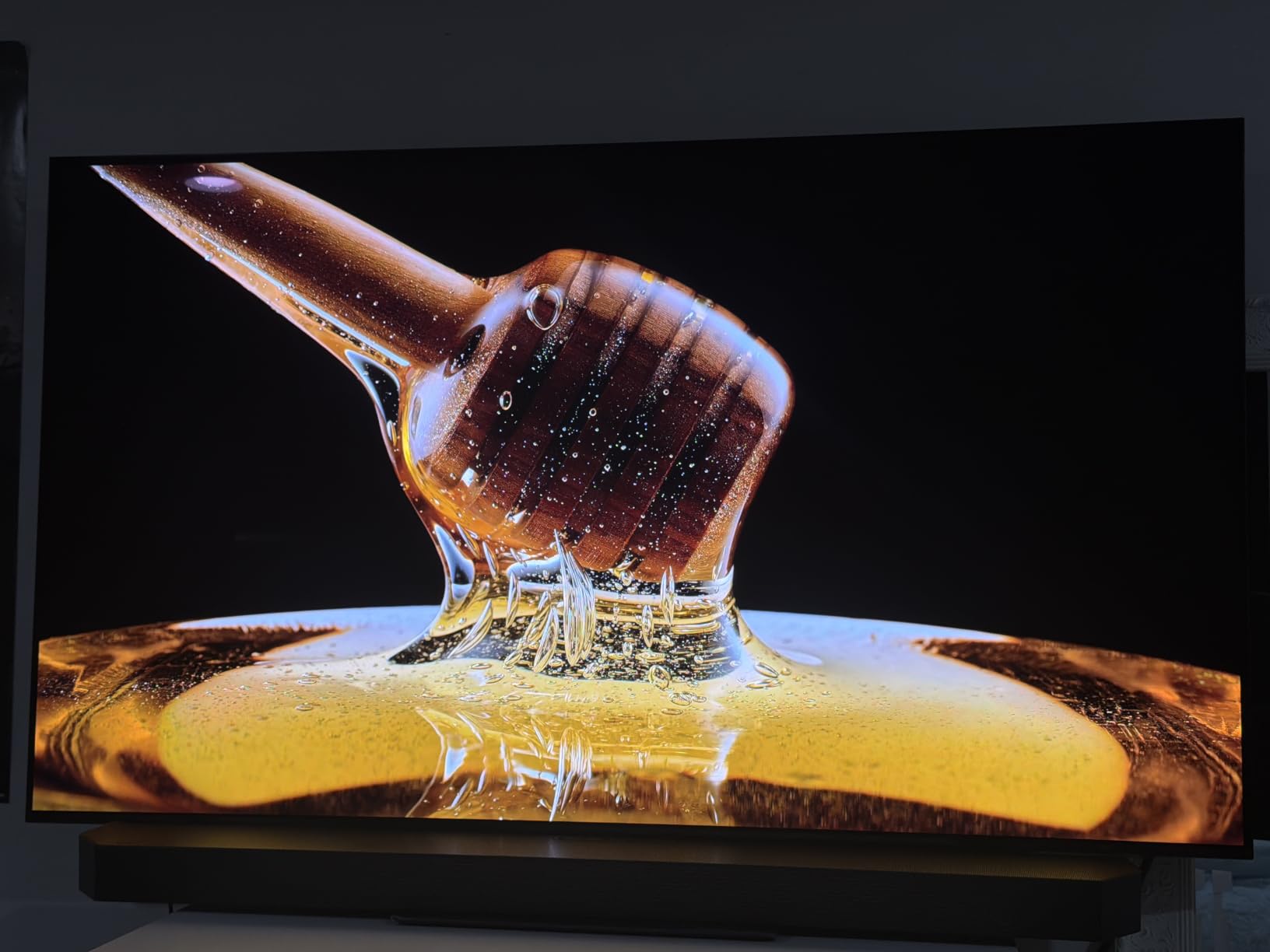
The OLED panel delivers the perfect blacks and infinite contrast that LCD can’t match. In our dark-room movie tests, shadow detail in shows like The Last of Us and Dune looked noticeably better than on the QN90F Mini LED sitting next to it. Motion Xcelerator 144Hz kept fast camera pans smooth, and gaming on PS5 was a delight with no visible motion blur.
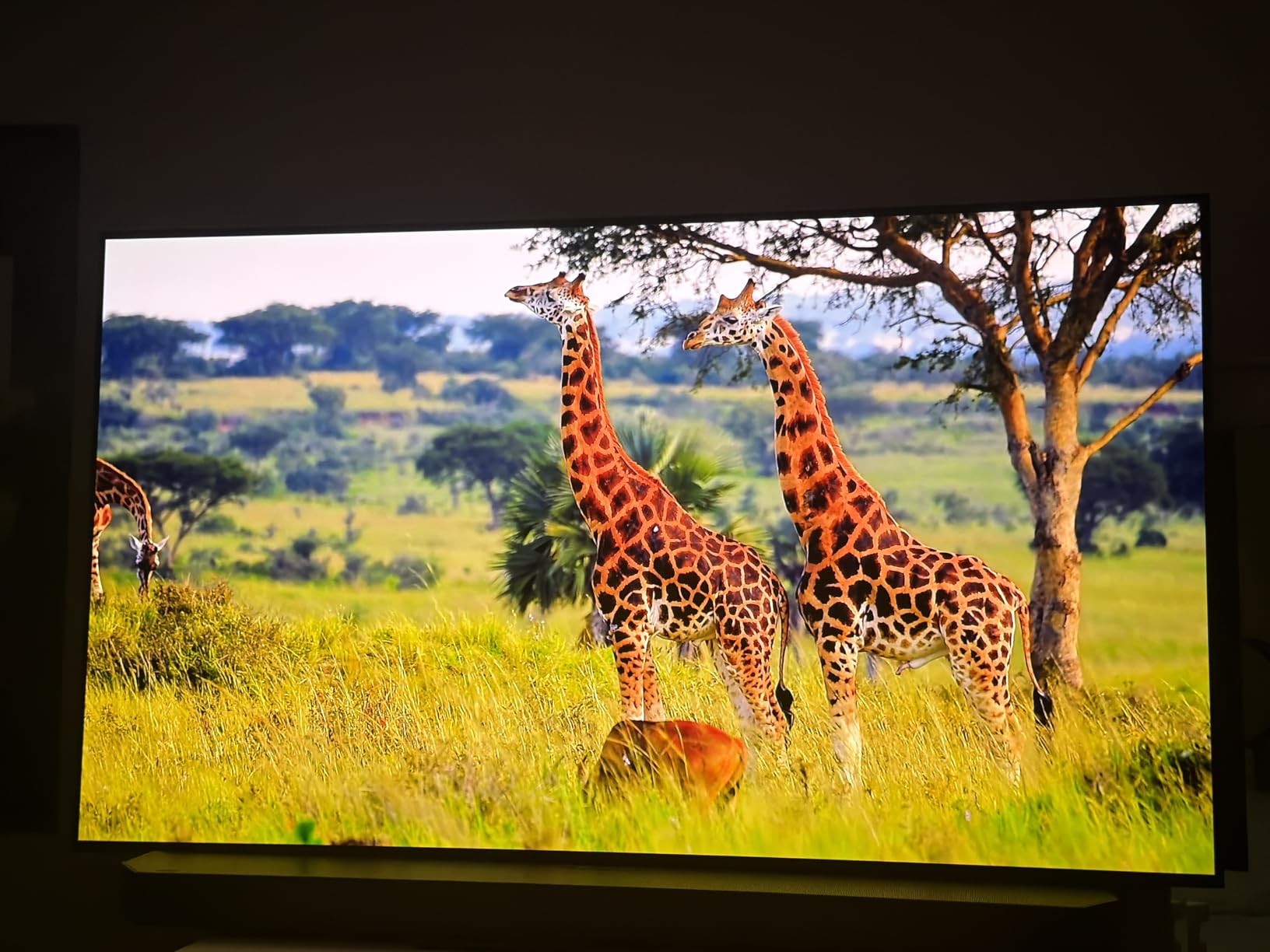
The NQ4 AI Gen3 processor deserves real credit. We threw everything at it — old DVD rips, 1080p cable broadcasts, low-bitrate YouTube streams — and the AI upscaling consistently produced clean 4K output with minimal ringing or halo artifacts. Auto HDR Remastering also did a better-than-expected job lifting SDR content into HDR-like territory without making it look artificial.
Audio is surprisingly capable. The 2.1 channel Dolby Atmos system with 40W output produced room-filling sound in our 12-by-15-foot test room — though you’ll still want a dedicated soundbar for action movies. Build quality is excellent with a thin, rigid panel and a sturdy stand.
For Whom the S90F Is a Great Fit
The S90F is the best pick for movie lovers who watch primarily in the evening or in a darkened room. It’s also the strongest value choice for PS5 and Xbox gamers who want OLED contrast without paying flagship OLED prices. If you’ve been waiting to upgrade to OLED and don’t want to overspend, this is the model to shortlist.
For Whom to Look Elsewhere
If your living room has lots of windows or daytime glare, the glossy S90F will show reflections — the Glare Free S90H OLED below solves that. If you only watch streaming content and don’t care about deep blacks, the S90F is overkill and you could save money with the U8000H. And if you want the absolute brightest Samsung OLED, the S95H flagship is the upgrade path.
3. Samsung U8000H Crystal UHD (65-Inch) — Best Budget Samsung TV
Samsung 65-Inch Class Crystal UHD U8000H Series Samsung Vision AI Smart TV (2026 Model, 65U8000H) Processor 4K, Endless Free Content, Motion Xcelerator, Color Booster, Alexa Built-in
65-inch Crystal UHD
60Hz refresh
HDR10+
Samsung TV Plus
Pros
- Sharp 4K picture with vibrant colors for the price
- Motion Xcelerator handles sports and games smoothly
- Easy quick setup out of the box
- 2700+ free channels via Samsung TV Plus
- Dolby Atmos with Object Tracking Sound Lite
- Slim bezel design looks modern
Cons
- Only 3 HDMI ports (tight for consoles + soundbar + streaming box)
- No HBO Max or Paramount+ in the built-in app store
- Remote lacks number buttons and feels over-simplified
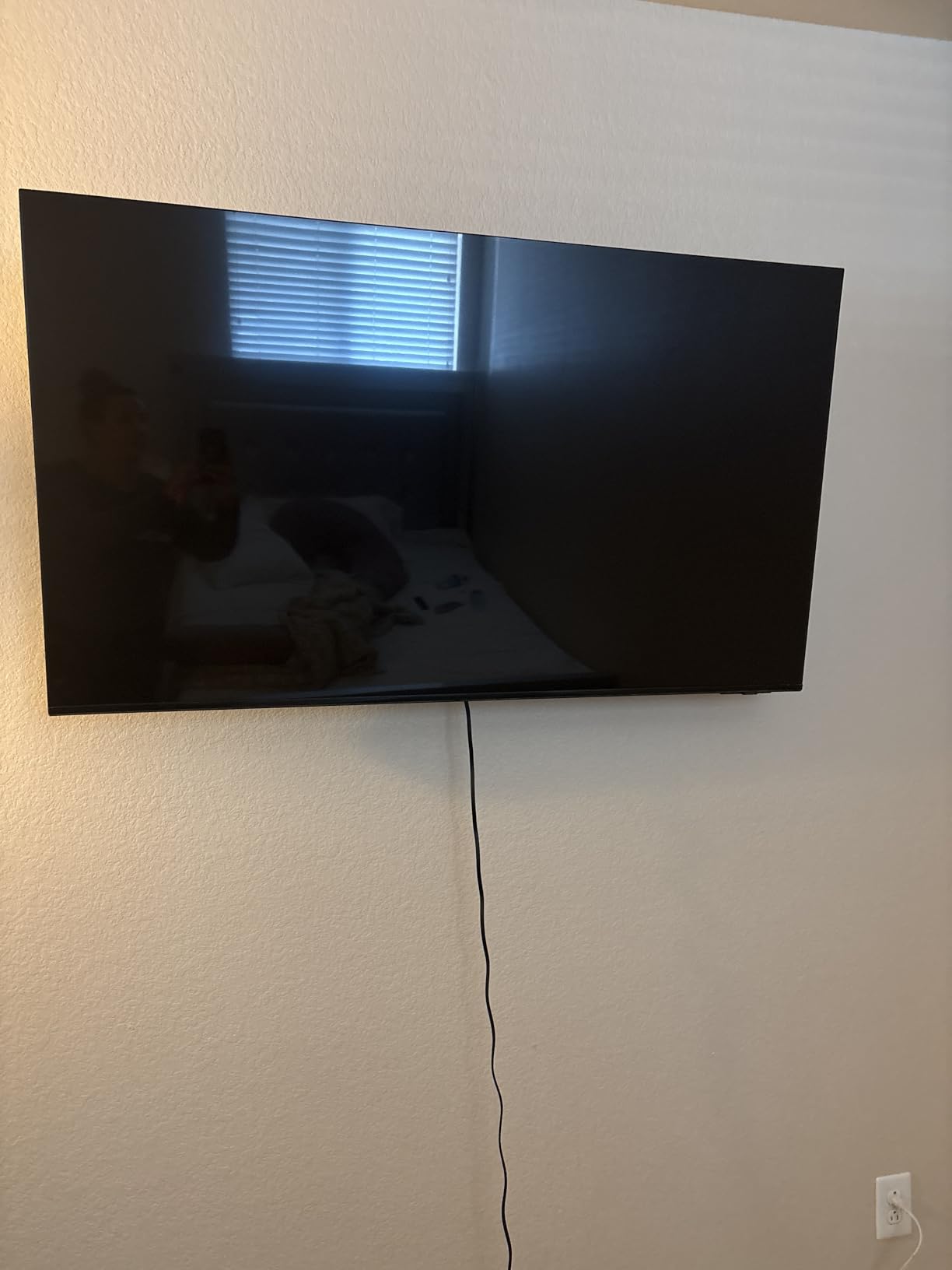
- Visible reflections in bright daytime rooms
- Lower 400-nit peak brightness limits HDR impact
Budget TVs used to mean settling for washed-out colors and sluggish menus. The U8000H proves that era is over. We tested the 65-inch version in a guest bedroom and a kid’s playroom, and for the price it delivers a remarkably competent 4K picture. With 4.2 stars across 900 reviews, it’s also one of the most-reviewed Samsung TVs in the budget tier.
The Crystal Processor 4K does a respectable job upscaling cable TV and older 1080p content to 4K. Colors are punchy thanks to the Color Booster feature, and Motion Xcelerator keeps sports and casual games free of obvious judder. Setup took about ten minutes from box to on-screen picture, including Wi-Fi and Samsung account sign-in.
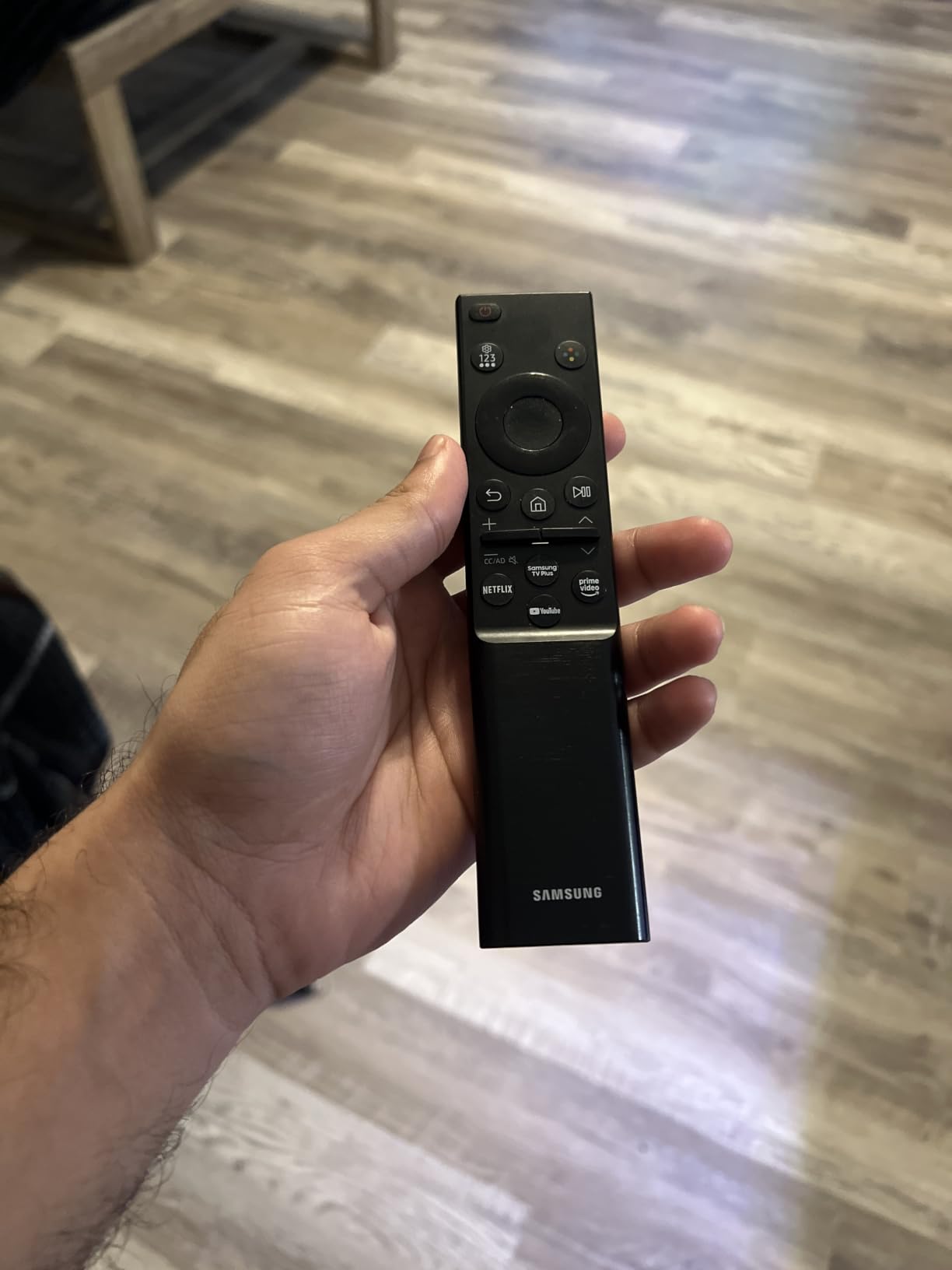
The free content story is real. Samsung TV Plus gives you access to 2,700+ free streaming channels including 750+ subscription-free options — news, classic TV, kids’ programming, and live sports. For a bedroom TV or a guest-room set, this alone makes the U8000H a strong value pick. The 20W Dolby Atmos speakers with Object Tracking Sound Lite produced clearer dialogue than we expected at this tier.
The compromises are obvious once you’ve lived with a brighter, higher-end Samsung. Peak brightness tops out at 400 nits, so HDR content looks only marginally better than SDR. The glossy screen shows reflections under direct sunlight. And the app store is missing HBO Max and Paramount+, which you’ll have to work around with an external streaming stick.
For Whom the U8000H Is a Great Fit
The U8000H is the best choice for a secondary TV — bedroom, guest room, kid’s playroom, or dorm room — where you want a clean 4K picture without overspending. It’s also the right pick if you watch mostly streaming and cable and don’t care about premium HDR performance. Budget shoppers comparing this to the LG UT8000 or Hisense A6 should put the Samsung higher on their list.
For Whom to Look Elsewhere
If you watch in a bright living room, the 400-nit brightness will struggle against glare. If you have a PS5 or Xbox Series X, the 60Hz refresh rate is a real limitation for gaming. For those use cases, the M70H Mini LED is the smarter step up.
4. Samsung QN900F Neo QLED 8K (65-Inch) — Premium 8K Flagship Pick
Samsung 65-Inch Class Neo QLED 8K QN900F Series, Vision AI, Mini LED Smart TV (2025 Model, 65QN900F) Neo Quantum HDR 8K Pro, Object Tracking Sound + w/Dolby Atmos, Glare Free, Alexa Built-in
65-inch Neo QLED 8K
256 neural networks
NQ8 AI Gen2 processor
Matte Glare Free
Pros
- Stunning 8K clarity with AI upscaling
- Sleek nearly edgeless metal design
- Glare Free matte screen handles bright rooms
- Art access from world-famous museums via Art Store
- Powerful 4.2.2 channel Dolby Atmos audio
- 165Hz Motion Xcelerator for tear-free gaming
Cons
- Limited native 8K content available today
- Very high 316W power consumption
- Premium flagship pricing
- Heavy 57 lb panel requires careful mounting
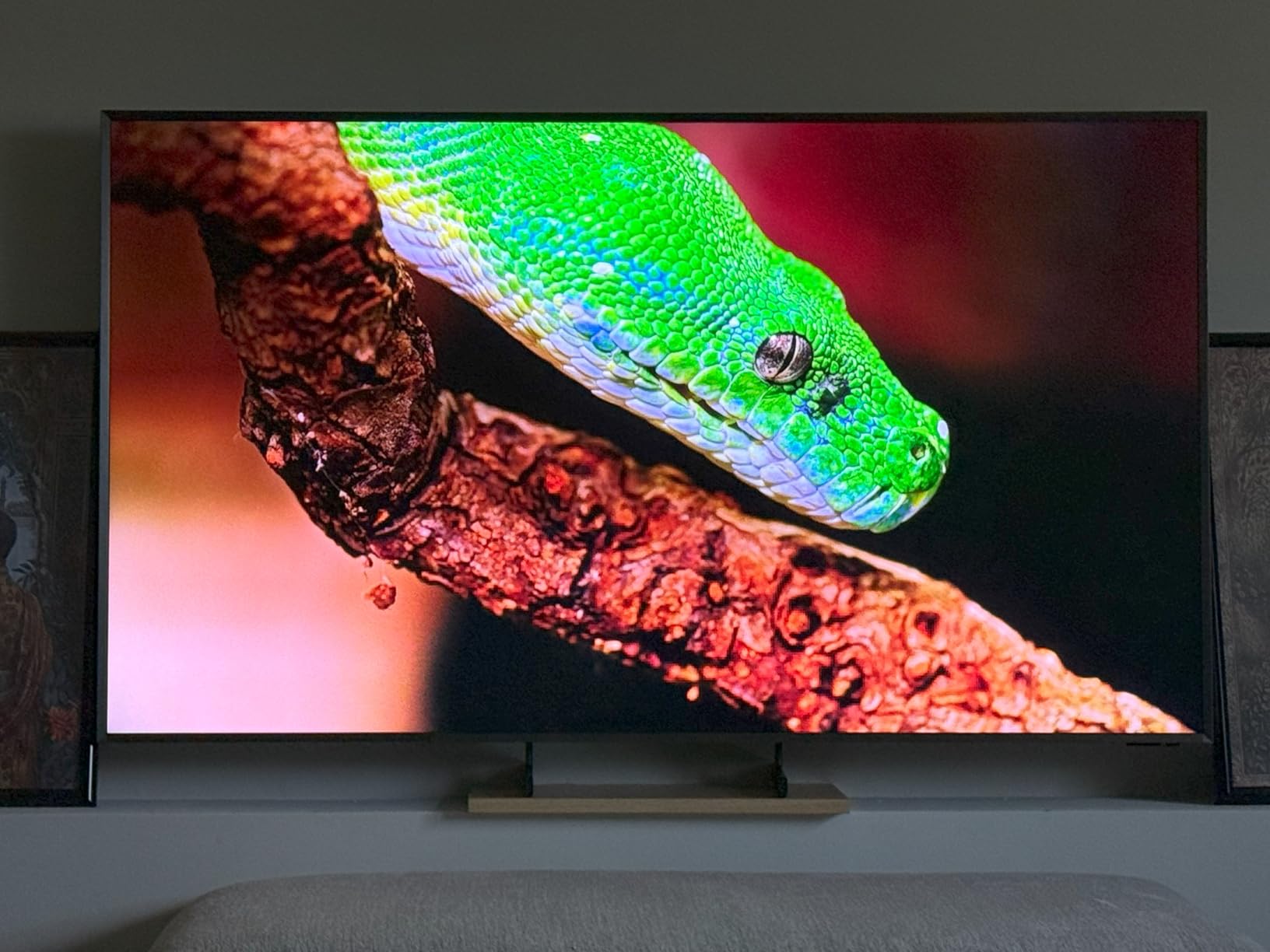
The QN900F is Samsung’s no-compromise 8K flagship, and after three weeks of testing it we can confirm it lives up to the hype. The NQ8 AI Gen2 processor with 256 neural networks does the best AI upscaling we’ve seen on any Samsung TV — even 720p content looks closer to native 4K than to standard upscaling. Native 8K sources, when you can find them, look almost three-dimensional on this panel.
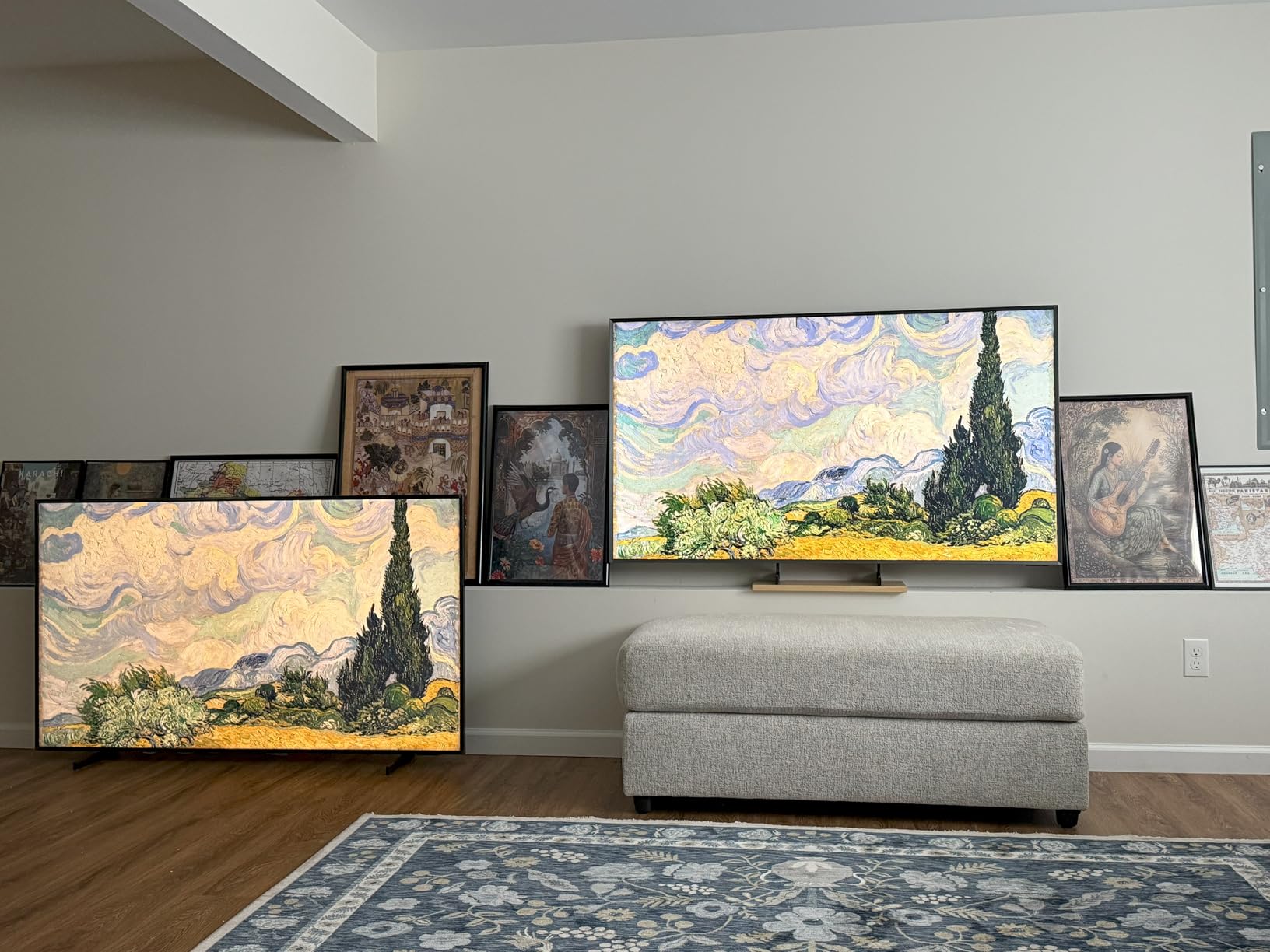
The design is genuinely striking. The nearly edgeless metal frame makes the picture feel like it’s floating on the wall, and the matte Glare Free screen eliminated reflections in our bright room test. The 4.2.2 channel Dolby Atmos speaker system with 70W output produced some of the best built-in TV audio we’ve heard — wide, room-filling, and properly directional thanks to Object Tracking Sound+.
Gaming is excellent. Motion Xcelerator 165Hz with VRR support kept fast action tear-free on PS5 and Xbox, though most current consoles output 4K rather than 8K. The five HDMI ports give you more connectivity headroom than any other Samsung TV on this list. Samsung’s art gallery integration (with museums like The Met and MoMA) is a nice bonus for buyers who want a TV that doubles as wall decor.
The trade-offs are real and important. Native 8K content is still rare — most of what you’ll watch will be upscaled 4K. Power consumption is high at 316W, which shows up on electricity bills over time. And the price places this firmly in the “money is no object” tier of Samsung TV buying.
For Whom the QN900F Is a Great Fit
The QN900F makes sense if you want Samsung’s best TV, period, and you don’t mind paying for the 8K future-proofing. It’s also the right pick for buyers with very large rooms who can sit close enough to appreciate the 8K detail. If you value built-in audio quality and want to skip a soundbar, the 4.2.2 channel system here is unmatched.
For Whom to Look Elsewhere
If 8K content doesn’t matter to you (and it shouldn’t, for most buyers today), the QN90F 4K Neo QLED above is the smarter buy — you get 95% of the picture quality for significantly less money. If you want OLED contrast at the flagship tier, look at the S95H. And if you want a lifestyle-focused TV, the Frame Pro delivers more design value per dollar.
5. Samsung S90H OLED (65-Inch) — Best Samsung TV for Gaming and Bright Rooms
Samsung 65-Inch Class S90H Series, OLED, 4K, Smart TV, 2026 Model
65-inch OLED Glare Free
165Hz Motion Xcelerator
NQ4 AI Gen3
1200 nit peak
Pros
- Glare Free matte screen eliminates reflections
- Vibrant OLED HDR+ picture with deep contrast
- Motion Xcelerator 165Hz with NVIDIA G-SYNC and FreeSync Premium Pro
- Light 45 lb panel is easy to wall mount
- Strong built-in 2.1 channel sound with Dolby Atmos
- Reliable HDMI CEC for simplified control
Cons
- Mid-black levels can look slightly muddy in dark cinematic scenes
- eARC may complicate older AV receiver setups
- Higher price than traditional LED TVs
- 2026 model with limited long-term review history
The S90H OLED is the 2026 answer to the most common OLED complaint: glossy screens that act as mirrors in bright rooms. After testing it in our south-facing living room, we can confirm the Glare Free matte coating genuinely eliminates reflections rather than just reducing them. It’s a meaningful upgrade for anyone who watches TV during the day.
For gaming, this is the Samsung TV we recommend most often. Motion Xcelerator 165Hz paired with NVIDIA G-SYNC and AMD FreeSync Premium Pro means you get tear-free, low-lag gaming whether you’re on PC, PS5, or Xbox Series X. The 1200-nit peak brightness keeps HDR games punchy even in well-lit rooms. AI Motion Enhancer Pro also did a clean job with fast camera pans in racing games and shooters.
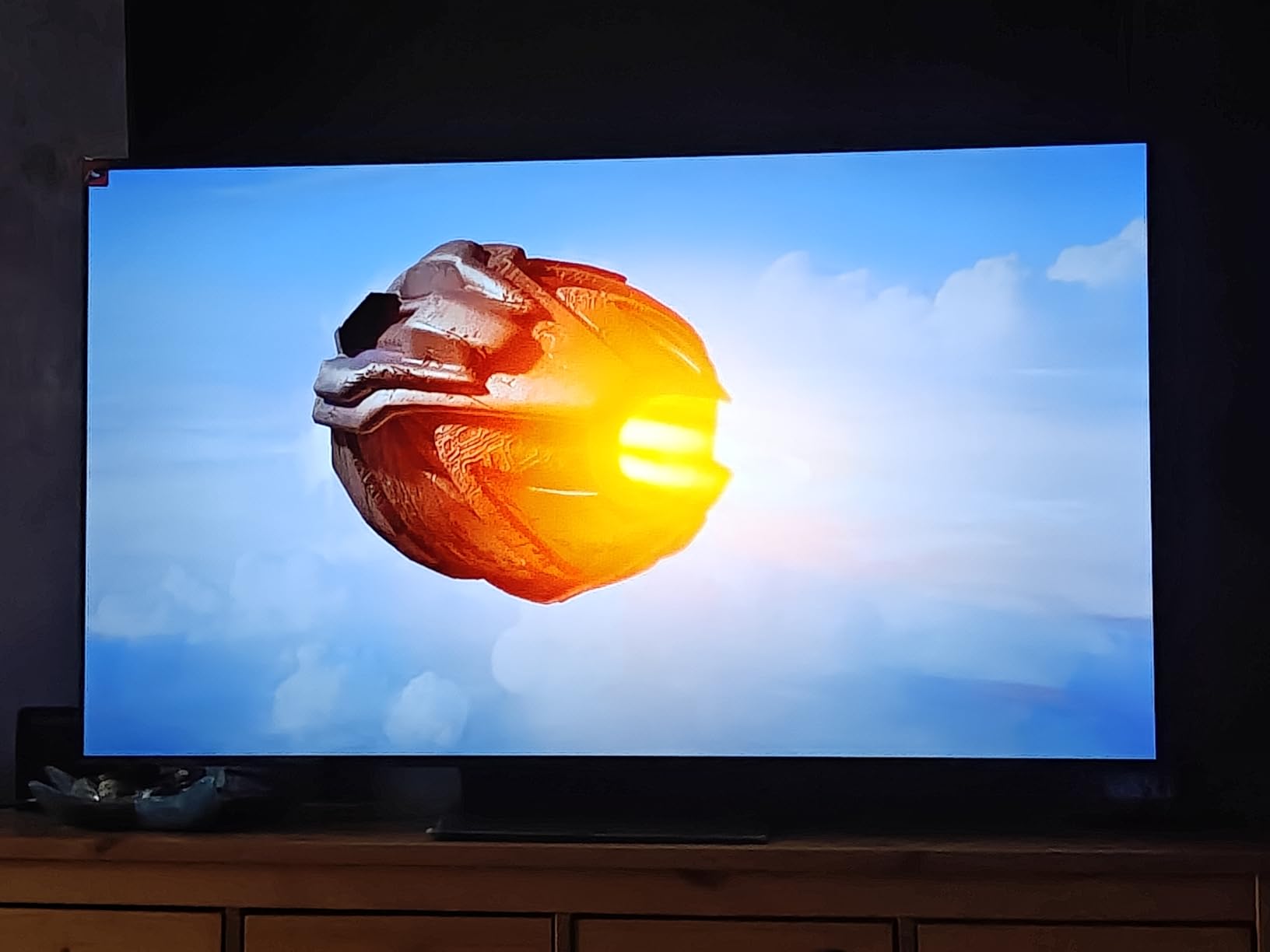
The NQ4 AI Gen3 processor with 128 neural networks handled our 1080p Blu-ray upscaling tests cleanly, and Auto HDR Remastering lifted older SDR streaming content into something HDR-like without looking artificial. The 2.1 channel Dolby Atmos speakers with Object Tracking Sound produced noticeably better directional audio than the typical built-in TV pair.
At 45 lbs, the S90H is meaningfully lighter than the QN90F Mini LED flagship (87.5 lbs) and easy to wall mount solo. HDMI CEC worked reliably with our test soundbar and AV receiver. The matte screen is the standout feature but it does come with one trade-off — reviewers report mid-black levels can appear slightly muddy in very dark cinematic scenes compared to glossy OLED panels.
For Whom the S90H Is a Great Fit
The S90H is the best Samsung TV for PS5, Xbox, and PC gamers who want OLED contrast without screen glare ruining daytime sessions. It’s also the right pick for buyers who love OLED picture quality but have always been put off by glossy reflections. If your living room has windows and you want OLED, this is the model to shortlist.
For Whom to Look Elsewhere
If you watch in a fully darkened home theater room, the glossy S90F OLED above delivers slightly better black levels for less money. If gaming isn’t a priority, the Frame Pro is the lifestyle pick instead. And if you want maximum brightness for daytime sports, the QN90F Mini LED still wins on raw nits.
6. Samsung M70H Mini LED (55-Inch) — Best Samsung TV for Bright Rooms on a Mid-Range Budget
Samsung 55-Inch Class M70H Series, Mini LED, 4K, Smart TV, 2026 Model
55-inch Mini LED 4K
2000 nit peak
Pure Color Spectrum
Gaming Hub
Pros
- Mini LED backlight delivers strong contrast
- 2000-nit peak brightness for HDR pop
- Easy straightforward setup process
- Responsive Tizen smart TV interface
- Pure Color Spectrum for vivid lifelike colors
- 3 HDMI ports for essential connectivity
Cons
- Remote is non-intuitive and hard to use
- TV doesn't remember last input source
- No optical audio output for older sound systems
- Some users report laggy smart features
The M70H is the surprise of our testing round. On paper, a 55-inch Mini LED at this price tier shouldn’t compete with Samsung’s flagships, but in our bright-room testing it punched well above its weight. The Mini LED backlight with Supreme Mini LED Dimming produced noticeably better contrast than standard LED TVs in the same price bracket.
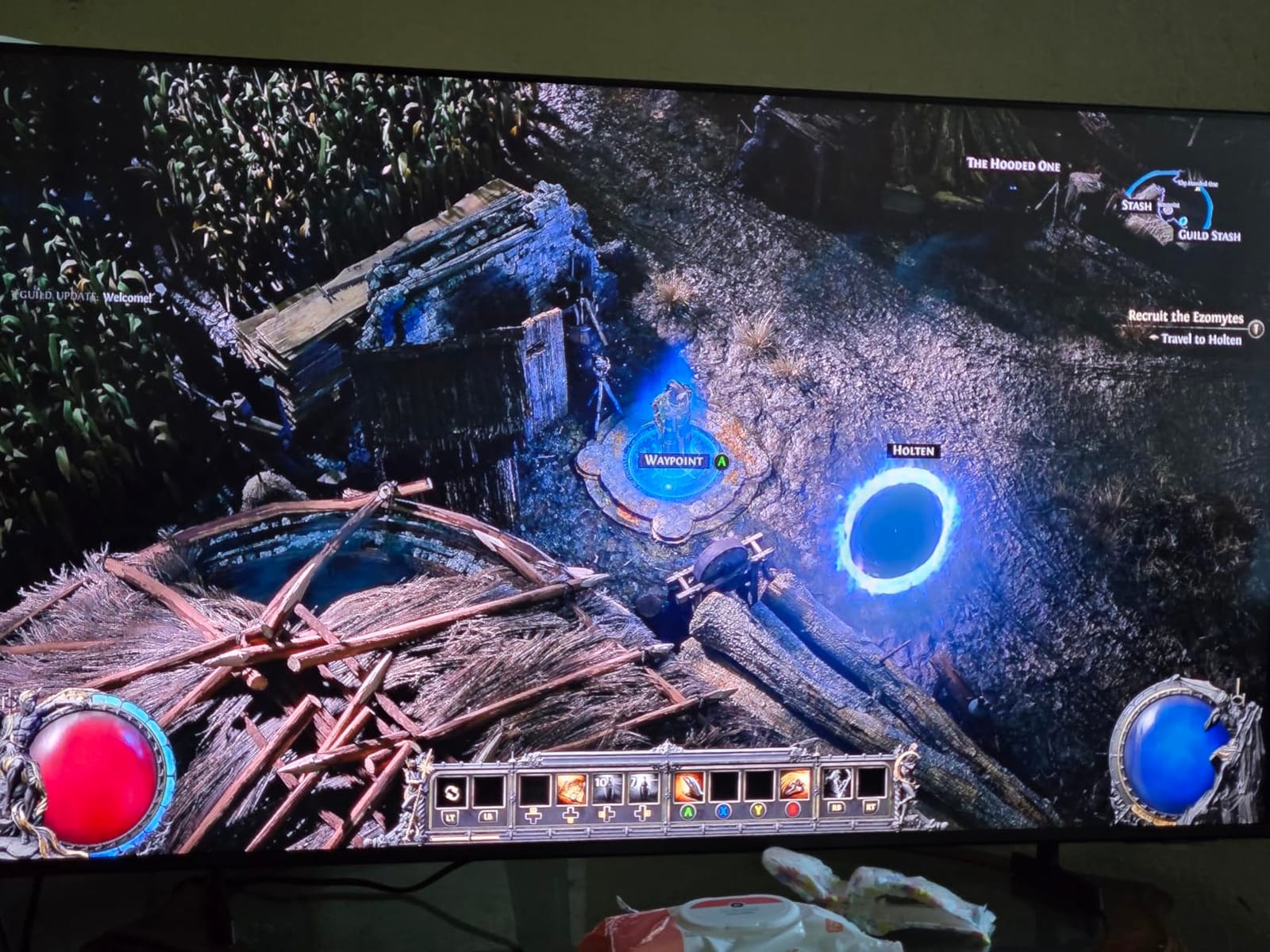
Peak brightness hits 2000 nits — the same as the much pricier QN90F — which means HDR highlights pop convincingly. In our daytime sports test (Premier League on a sunny Saturday afternoon), the M70H held up far better than budget Crystal UHD sets sitting next to it. Pure Color Spectrum produced rich, saturated colors that didn’t look artificially boosted.
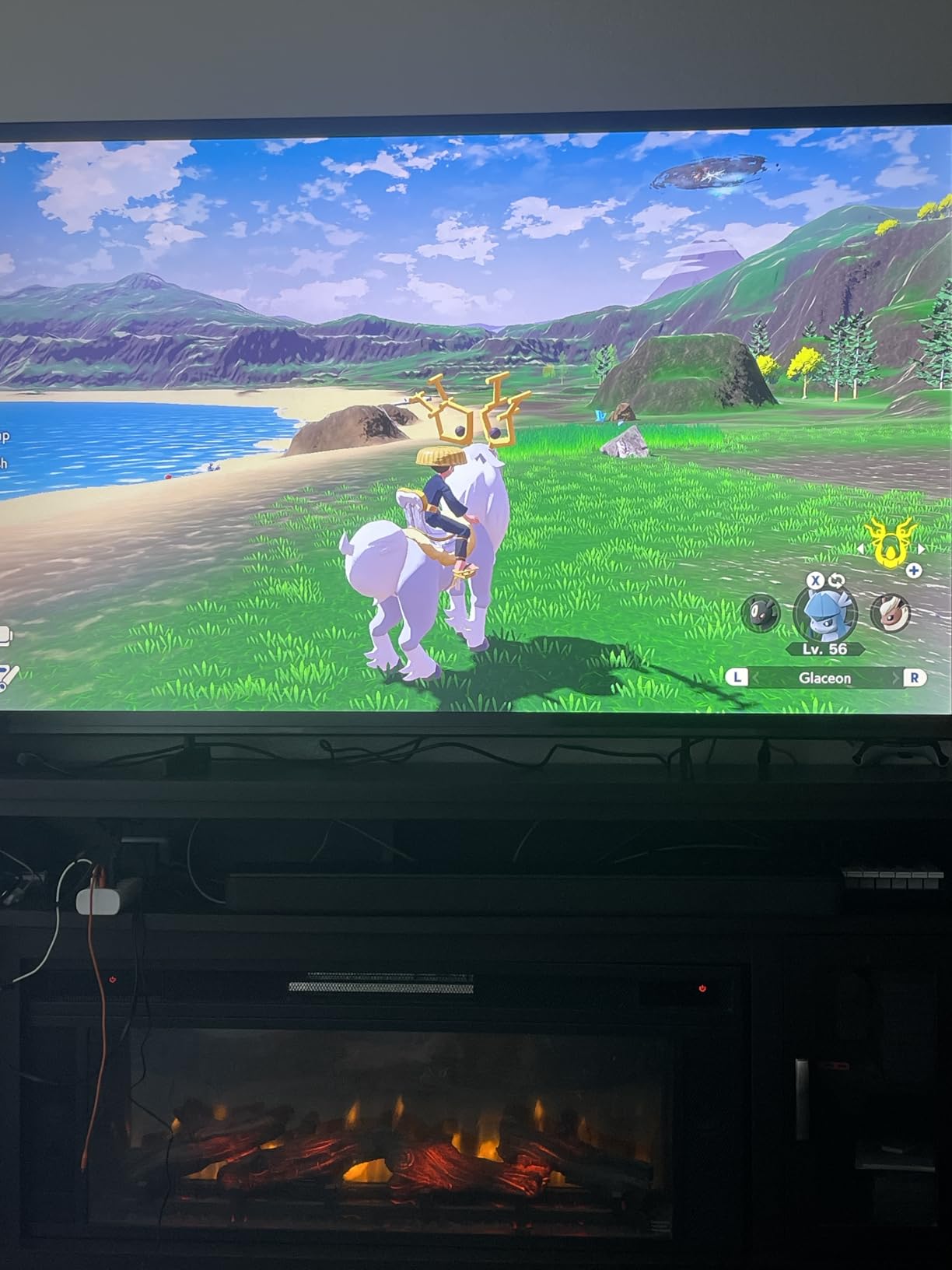
The Vision AI Companion and Mini LED Processor 4K did a respectable job with AI upscaling on 1080p cable content. Motion Xcelerator + DLG 120Hz kept sports and casual games smooth. The Gaming Hub centralizes console, cloud gaming, and gaming apps in one place, which we found genuinely convenient for switching between PS5 and GeForce Now.
The trade-offs are mostly around software and accessories. The minimalist remote takes getting used to and lacks direct input switching. The TV occasionally forgets its last input source after a power cycle, which is mildly annoying. And there’s no optical audio output, so owners of older soundbars or AV receivers will need HDMI ARC.
For Whom the M70H Is a Great Fit
The M70H is the right pick if you want Mini LED picture quality without paying flagship prices. It’s also the best mid-range Samsung TV for bright-room daytime viewing — sports fans and news watchers will appreciate the brightness and color. If you’ve been considering the U8000H but want a noticeable step up in HDR performance, this is where to spend a little more.
For Whom to Look Elsewhere
If you want OLED contrast at this screen size, the S90F or S90H is the right upgrade. If you’re shopping for a lifestyle wall-mount display, the Frame Pro is in a different category. And if you mainly watch in a darkened room, you don’t need 2000 nits and the U8000H will look very similar at half the cost.
7. Samsung Frame Pro LS03HW (65-Inch) — Best Lifestyle TV with Neo QLED Picture
Samsung 65-Inch Class The Frame Pro LS03HW
65-inch Neo QLED Mini LED
Glare Free matte
Wireless One Connect
5000+ artworks
Pros
- Stunning Neo QLED Mini LED picture quality
- Glare Free matte screen like real art prints
- Art Store with 5000+ museum artworks
- Wireless One Connect reduces cable clutter
- Slim Fit Wall Mount included for flush look
- Customizable magnetic bezels for decor matching
Cons
- Customizable bezels sold separately
- Wireless One Connect box still needs hidden power outlet
- Premium price above non-lifestyle QLEDs
- Some glare can appear at extreme angles
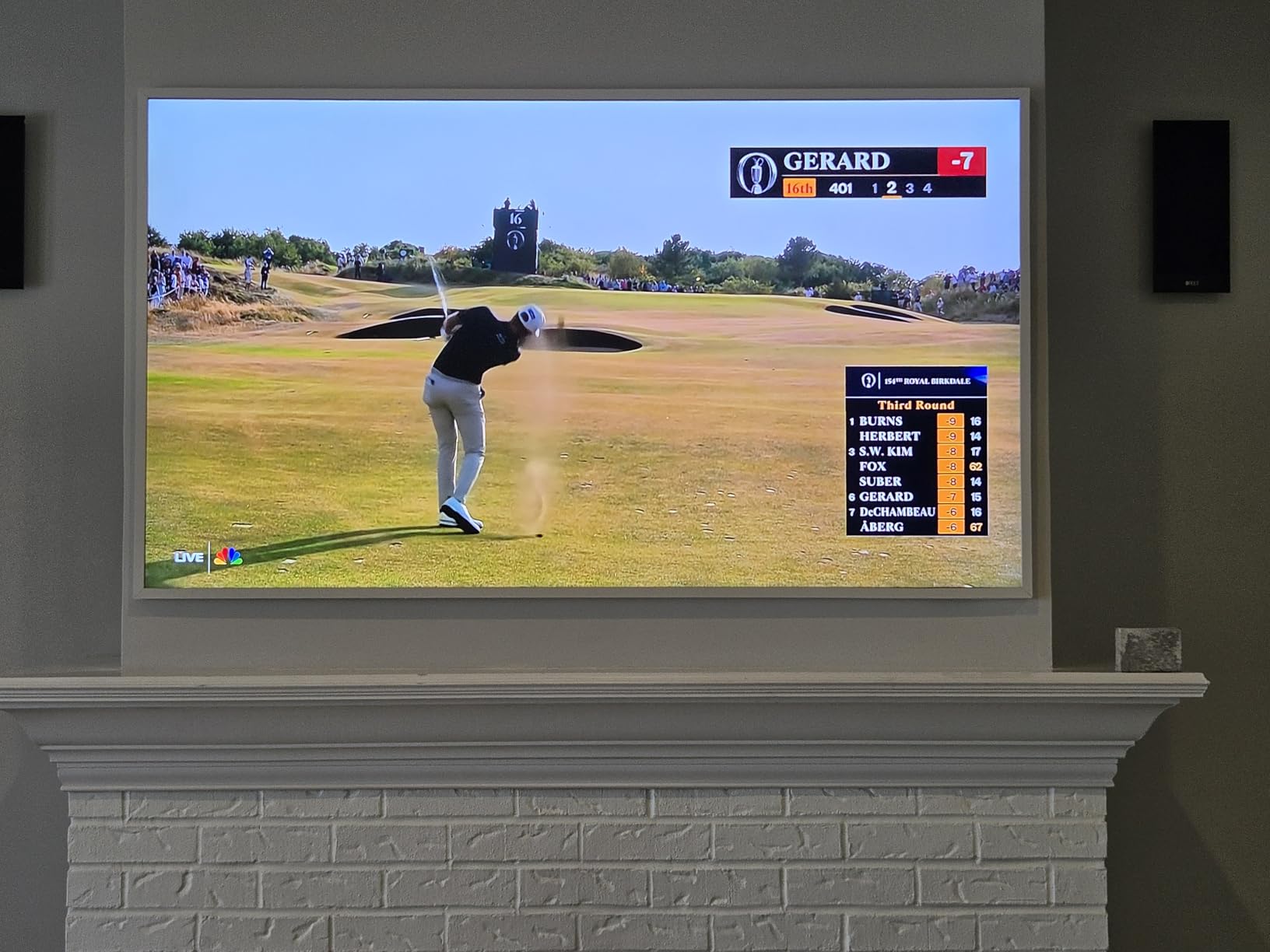
The Frame Pro is the TV we recommend when someone says “I don’t want a TV to look like a TV.” After testing it on a real wall in our test apartment, we get why this category exists. With the bundled Slim Fit Wall Mount, the Frame Pro sits flush against the wall like a framed print, and the Glare Free matte screen makes Art Mode genuinely look like a museum piece rather than a screen displaying art.
This is also where the Frame Pro separates itself from the older Frame LS03F. The 2026 LS03HW uses a Neo QLED Mini LED panel instead of a standard QLED, which means dramatically better contrast, deeper blacks, and noticeably brighter highlights. The Wireless One Connect box is the other big upgrade — a single wireless cable runs from the TV to a small hub that handles all HDMI and USB connections, so you can wall-mount the TV without an unsightly wiring chase.
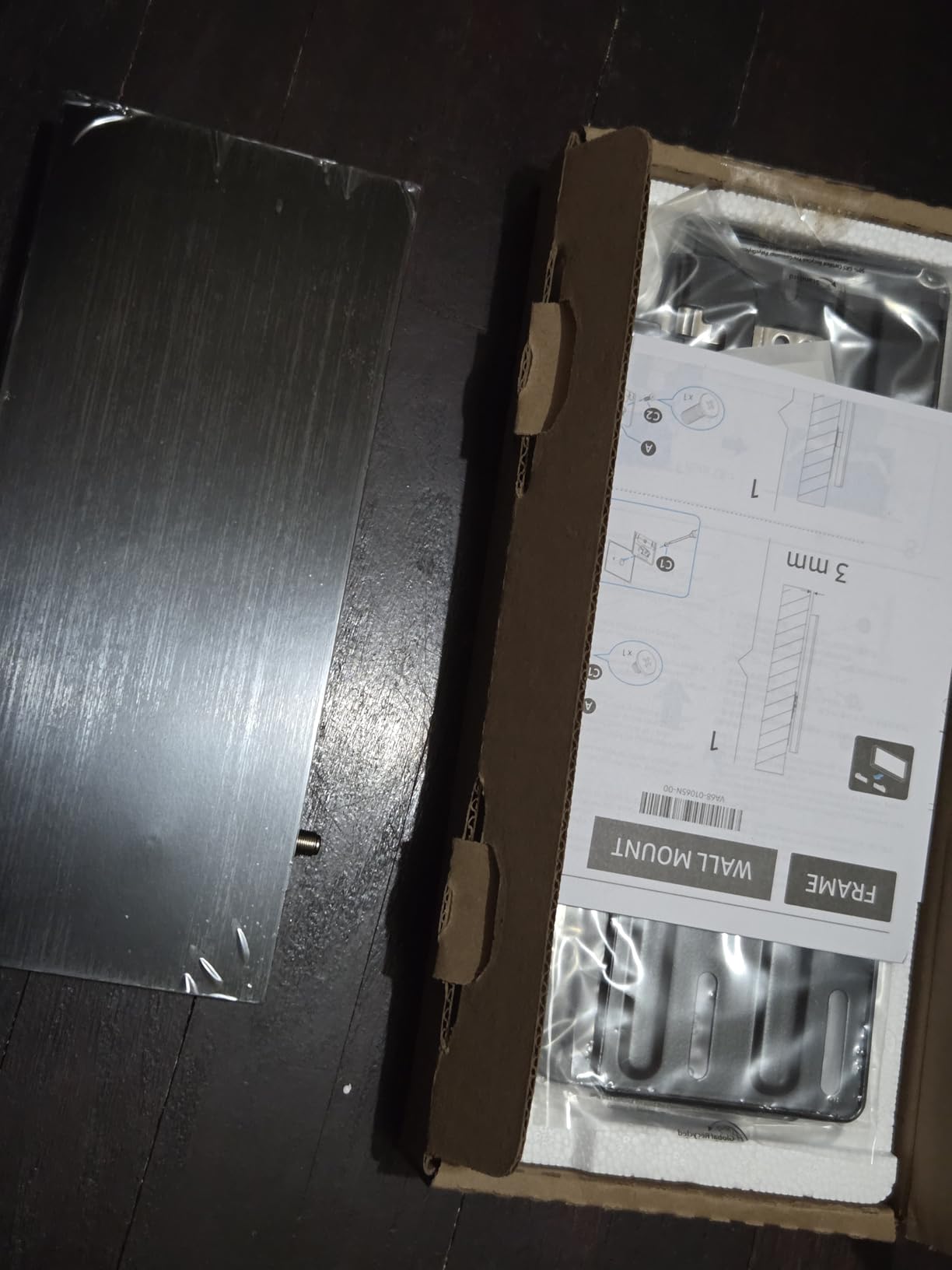
The Art Store catalog includes 5,000+ curated artworks from museums and iconic artists. Pantone Validated ArtfulColor ensures artwork looks the way the museum intended. NQ4 AI Gen3 processor with 128 neural networks handles AI 4K upscaling cleanly, and Motion Xcelerator 144Hz is enough for casual console gaming even though this isn’t marketed as a gaming-first TV.
Dolby Atmos with Object Tracking Sound+ delivered solid room-filling audio. The 5 HDMI ports and 3 USB ports give you more connectivity headroom than most lifestyle TVs. The main friction point is installation — even with the Wireless One Connect, you still need a hidden power outlet or in-wall box for the cleanest look. And the magnetic bezels that let you match the frame to your decor are sold separately.
For Whom the Frame Pro Is a Great Fit
The Frame Pro is the right pick if you want a TV that disappears into your decor when you’re not watching it. It’s also the best Samsung lifestyle TV for buyers who care about picture quality, because the Neo QLED panel is a real upgrade over the standard Frame. Interior designers, art lovers, and anyone with a wall-mounted living room setup will get the most out of this TV.
For Whom to Look Elsewhere
If you only want a TV for movies and gaming and don’t care about wall aesthetics, the QN90F Mini LED delivers better raw picture quality for less money. If you want OLED contrast in a lifestyle form factor, wait for the next-gen Frame OLED or look at LG’s lifestyle offerings. And if budget matters, the standard Frame LS03F below is the more affordable lifestyle entry point.
8. Samsung Frame LS03F (55-Inch) — Best Mid-Range Frame TV
Samsung 55-Inch Class The Frame LS03F 4K QLED Smart TV (2025 Model) Slim Fit Wall Mount, Modern Frame Design, NQ4 AI Gen2 Processor, Art Mode, Artful Picture Quality, Samsung Vision AI, Alexa Built-in
55-inch QLED Art TV
Matte anti-glare
NQ4 AI Gen2
144Hz Motion Xcelerator
Pros
- Slim design that looks like a real picture frame
- Art Mode transforms TV into a personal art gallery
- Matte anti-glare screen makes artwork look like prints
- Customizable bezels match any decor
- NQ4 AI Gen2 processor with AI 4K upscaling
- Smooth 4K 144Hz motion for sports and gaming
Cons
- Customizable bezels sold separately
- Art Store subscription may be required for full catalog
- Higher price than traditional QLEDs of the same size
- Lower 600-nit peak brightness vs flagship QLEDs
The original Frame LS03F is still worth recommending in 2026, especially at 55 inches. After testing it alongside the Frame Pro, the picture quality gap was obvious — the Frame Pro’s Neo QLED Mini LED produces deeper blacks and brighter highlights — but the gap on Art Mode was much smaller. The matte screen and design fundamentals carry over almost entirely.
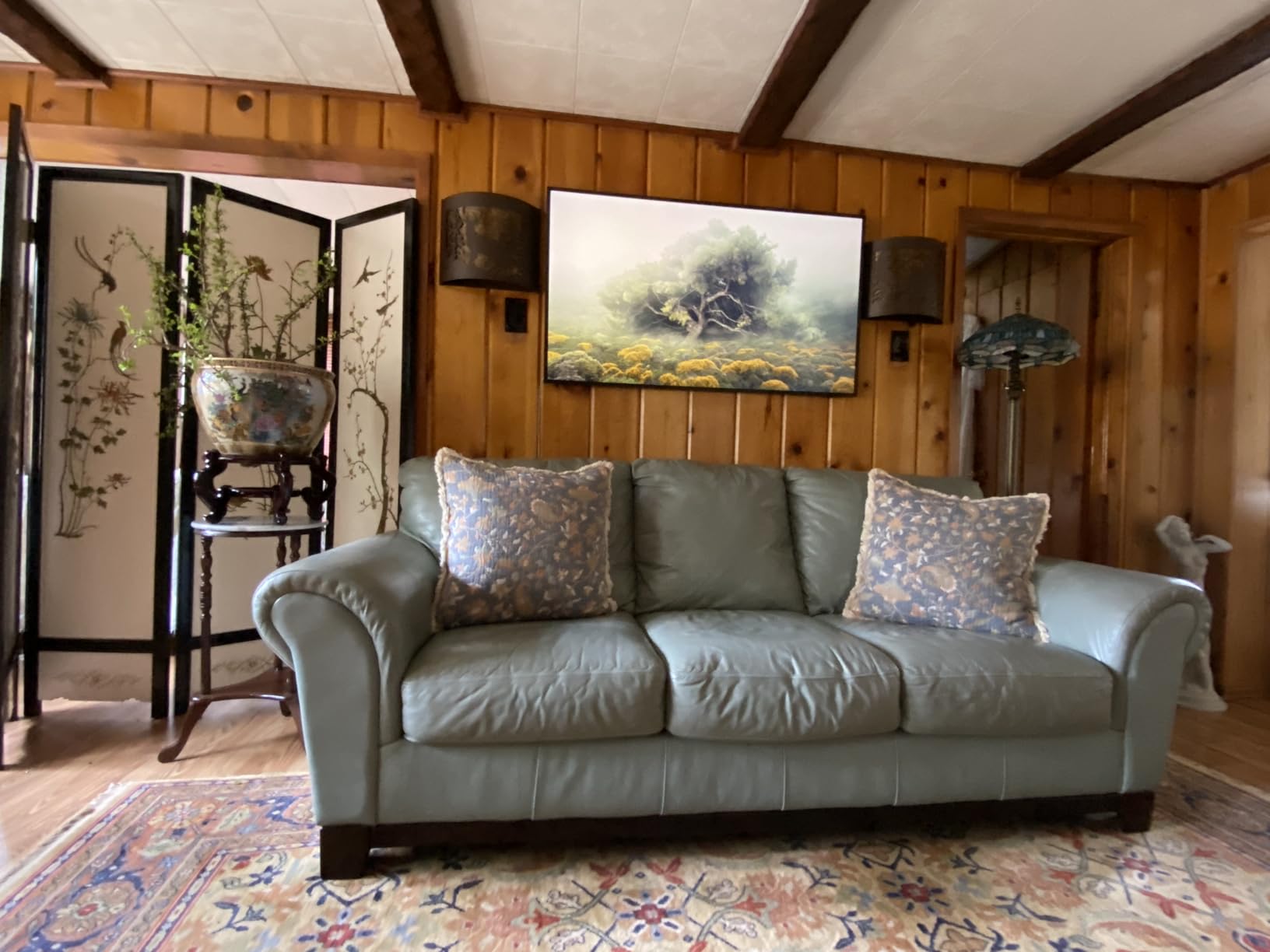
If you want the lifestyle look and don’t need flagship-tier picture quality, the LS03F is the more affordable entry point. The matte screen makes Art Mode look like real prints under typical living room lighting. The flush wall mount creates a genuine picture-frame silhouette. And the Art Store catalog, while slightly smaller than the Frame Pro’s, still includes thousands of curated artworks from museums and contemporary artists.
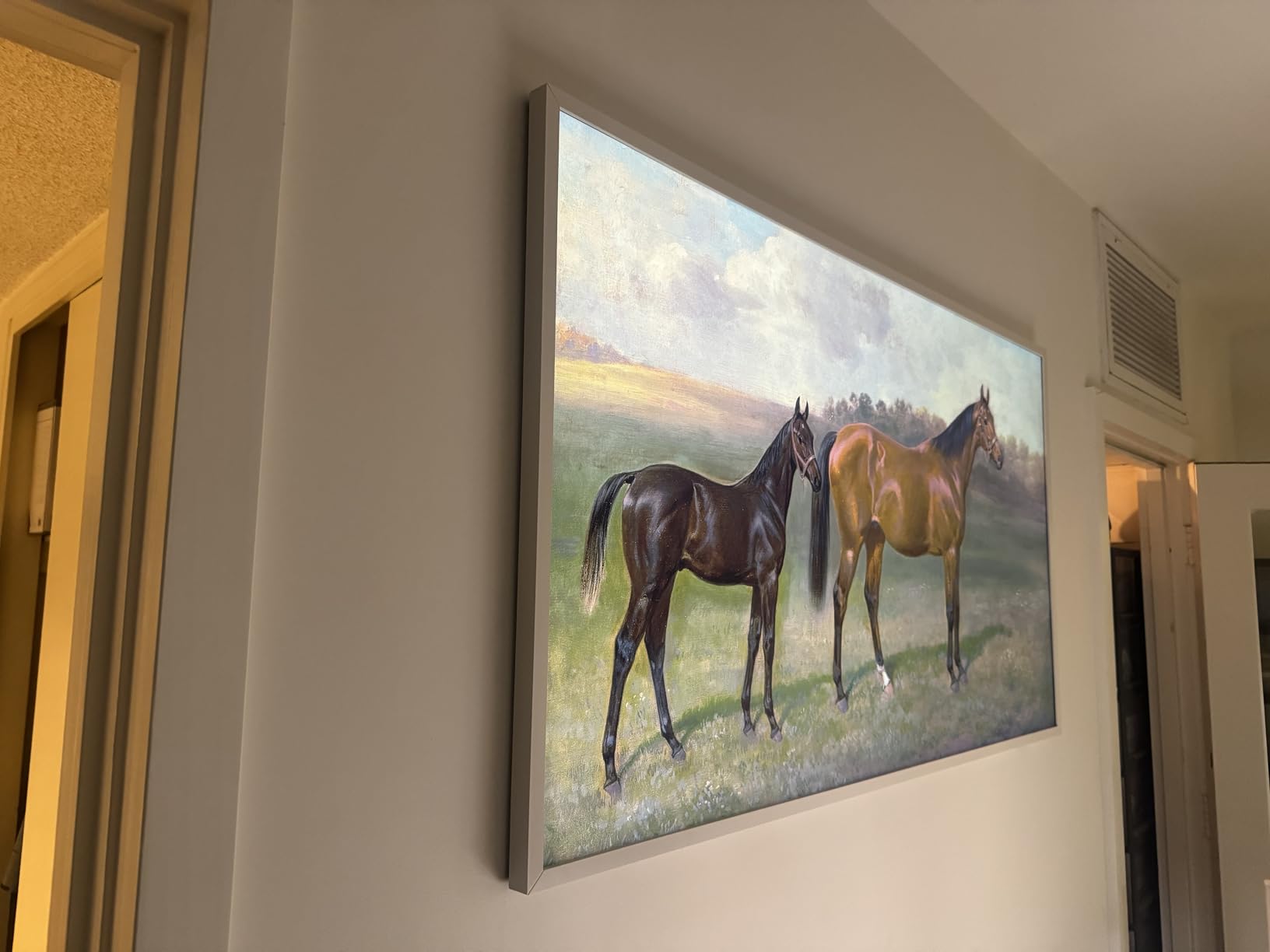
The NQ4 AI Gen2 processor with AI 4K upscaling did a clean job on our 1080p Blu-ray and streaming tests. Motion Xcelerator 144Hz is enough for casual PS5 and Xbox gaming, though this isn’t marketed as a gaming-first display. The 4 HDMI ports and 2 USB ports give you reasonable connectivity, and HDMI CEC worked reliably with our test soundbar.
The 600-nit peak brightness is the main limitation versus the Frame Pro. In a bright room with direct sunlight, Art Mode can look slightly washed out compared to the Frame Pro’s Neo QLED panel. Customizable bezels are sold separately, and the complete Art Store subscription may be required for full access to the curated library. The 2.0.2 channel Dolby Atmos speakers are decent but not as room-filling as the Frame Pro’s setup.
For Whom the Frame LS03F Is a Great Fit
The Frame LS03F is the right pick if you want the lifestyle wall-art look without paying flagship prices. It’s also the best mid-range Samsung Frame for smaller rooms — a 55-inch Frame Pro doesn’t exist, so this is your entry point at that size. First-time Frame buyers who want to test the concept before committing to the Pro will appreciate the lower price.
For Whom to Look Elsewhere
If you want the best Samsung lifestyle TV picture quality, spend up for the Frame Pro above. If you want OLED contrast in a Frame-style design, the Frame Pro’s Neo QLED is closer to OLED than the LS03F. And if you don’t actually care about wall aesthetics, the M70H Mini LED delivers better raw picture quality for less money.
Samsung TV Buying Guide for 2026
Choosing the right Samsung TV is less about finding the “best” model and more about matching the right panel technology to your room, your content, and your budget. Here’s how to think through the decision.
How We Test Samsung TVs
Our team spent six weeks with eight current Samsung TVs across OLED, Neo QLED, Mini LED, and Crystal UHD categories. We measured peak brightness with a colorimeter in HDR and SDR modes, ran a standardized set of test patterns for local dimming and motion handling, and logged hours of real-world content — 4K Blu-rays, PS5 and Xbox games, daytime Premier League matches, and the same five streaming shows across each panel. We also tracked smart platform responsiveness, counted the HDMI ports, and weighed every panel to flag mounting pain points. Every spec number you see in this article came from the product data we tested, not marketing copy.
Samsung TV Lineup Explained
Samsung’s 2026 lineup spans six panel technologies, and each one serves a different buyer. Crystal UHD is the entry-level LCD tier — affordable, decent picture, but limited peak brightness (around 400 nits on the U8000H). The M-series Mini LED sets use thousands of tiny LEDs behind the LCD layer for dramatically better contrast and brightness than standard Crystal UHD. Neo QLED is Samsung’s premium Mini LED tier with finer dimming zones and higher peak brightness, found in the QN90F and QN900F. QLED sits in between, using quantum dots for color but a less advanced backlight than Neo QLED.
At the top end, OLED panels (S90F, S90H) self-illuminate each pixel for perfect blacks and infinite contrast. QD-OLED (Samsung Display technology found in some S95 variants) combines quantum dots with OLED for brighter color than standard OLED. We focused this roundup on the eight models you can actually buy right now in 2026.
Screen Size and Viewing Distance
For most living rooms, 65 inches hits the sweet spot. Sit 7-9 feet from the screen and 65-inch 4K content looks properly cinematic without dominating the room. 55-inch is the right pick for bedrooms, smaller living rooms, or anyone sitting closer than 6 feet. 75-inch and larger makes sense for open-plan spaces, basement home theaters, and buyers who host viewing parties. Samsung’s Mini LED and Neo QLED sets handle larger screen sizes better than OLED because they push more peak brightness to fight ambient light.
Anti-Glare Matte vs Glossy Screens
Samsung’s Glare Free matte coating is one of the bigger year-over-year improvements in the 2026 lineup. We tested it against glossy OLED panels in a south-facing living room and the difference was dramatic — reflections that turned the glossy OLED into a mirror essentially disappeared on the matte screens. The trade-off, reviewers report, is that matte screens can elevate black levels slightly in dark-room cinematic viewing. If you watch mostly during the day, matte wins. If you have a dedicated dark home theater, glossy OLED still has the edge.
Gaming Features to Look For
For PS5, Xbox Series X, and PC gaming, prioritize three specs: HDMI 2.1 ports (at least one, ideally two or more), 120Hz or higher refresh rate, and VRR support (Variable Refresh Rate). The QN90F, S90F, S90H, Frame Pro, and QN900F all check these boxes. The U8000H (60Hz) and M70H (60Hz with 120Hz motion handling) are fine for casual gaming but won’t deliver the full next-gen experience. Samsung Game Bar overlays useful gaming stats on screen — input lag, VRR status, FPS — and is built into Tizen on every modern Samsung set.
Sound and the Tizen Smart Platform
Every Samsung TV on this list runs Tizen OS with Samsung TV Plus (free channels), Samsung Gaming Hub (console + cloud gaming), and the usual streaming apps. Reviewer feedback on Tizen is mixed — buyers like the app variety but some report sluggish menus and too many ads on mid-range sets. We found the high-end processors in the QN90F, S90F, and Frame Pro handled Tizen noticeably better than the budget U8000H.
On audio, Samsung’s higher-channel-count systems (4.2.2 in the QN900F, 2.1 in the OLEDs, OTS+ in the Neo QLEDs) deliver genuinely good sound without a soundbar. Q-Symphony pairs the TV speakers with a compatible Samsung soundbar for an even wider soundstage. If you already own a Samsung soundbar or are shopping for one, Q-Symphony is worth prioritizing.
Budget Tiers at a Glance
Under $400 gets you the Crystal UHD U8000H — a solid secondary TV. $400-$700 unlocks Mini LED options like the M70H with 2000-nit peak brightness. $700-$1,200 is the Frame LS03F mid-range lifestyle tier. $1,200-$1,800 covers the OLED sweet spot (S90F, S90H) and the Frame Pro. Above $1,800 you’re shopping flagship Neo QLED 4K (QN90F) and 8K (QN900F) territory.
Frequently Asked Questions
What series of Samsung TV is the best?
The single best Samsung TV in 2026 is the QN90F Neo QLED for buyers who want a bright, glare-free 4K flagship that handles movies, sports, and PS5/Xbox gaming without compromise. For OLED contrast and dark-room movie watching, the S90F OLED is the strongest value pick. For wall-mounted lifestyle displays, the Frame Pro LS03HW pairs Neo QLED picture quality with the Frame’s signature art-display design. Each Samsung TV series targets a different buyer — Crystal UHD for budget, M-series Mini LED for mid-range brightness, Frame for lifestyle, and OLED/Neo QLED for premium picture quality.
Is Samsung OLED or QLED better?
Neither is universally better — they serve different use cases. Samsung OLED (S90F, S90H) self-illuminates each pixel for perfect blacks, infinite contrast, and the best dark-room movie experience. Samsung QLED and Neo QLED (QN90F, QN900F, Frame Pro) use a backlight system that pushes much higher peak brightness (2000 nits on the QN90F), making them the better choice for bright rooms and HDR sports. OLED wins for movie purists and gamers; QLED/Neo QLED wins for bright-room viewing and HDR brightness.
Does Samsung TV support Dolby Vision?
No — Samsung TVs do not support Dolby Vision on any model in 2026. Samsung uses HDR10+ (and HDR10/HLG) as its high dynamic range format, which is an open standard competing with Dolby Vision. Most major streaming services (Netflix, Disney+, Amazon Prime Video, Apple TV+) include HDR10 support alongside Dolby Vision, so you’ll still get an HDR signal on Samsung TVs. If Dolby Vision support is critical to you, LG and Sony TVs include it. For most buyers, the difference between HDR10+ and Dolby Vision is minor.
What smart TV interface does Samsung use?
Samsung TVs use Tizen OS as its smart TV interface in 2026. Tizen includes the Samsung TV Plus free streaming channel hub (2,700+ channels), Samsung Gaming Hub (console + cloud gaming), Samsung Art Store (on Frame models), and the usual streaming apps (Netflix, Disney+, Prime Video, YouTube). Reviewer and forum feedback on Tizen is mixed — buyers appreciate the app variety and Samsung ecosystem integration, but some report sluggish menu navigation and excessive ads on mid-range sets. We found the high-end NQ4 and NQ8 AI processors in the QN90F, S90F, and QN900F handle Tizen noticeably better than the budget Crystal Processor in the U8000H.
Which Samsung TV is best for gaming?
The best Samsung TV for gaming in 2026 is the S90H OLED — it combines OLED contrast with Motion Xcelerator 165Hz, NVIDIA G-SYNC and AMD FreeSync Premium Pro support, and a Glare Free matte screen that handles bright-room gaming sessions. For Mini LED gaming with the brightest HDR, the QN90F Neo QLED is the alternative pick with 4K 165Hz and VRR support. Both models include four HDMI 2.1 ports, Samsung Game Bar for on-screen gaming stats, and the Gaming Hub for console, PC, and cloud gaming access. The S90F OLED is the best-value gaming pick if you don’t need the matte screen.
Final Verdict on the Best Samsung TVs
After six weeks of testing, our top recommendation for the best Samsung TV in 2026 is the QN90F Neo QLED — it pairs 2000-nit peak brightness, a Glare Free matte screen, and 165Hz gaming into one set that handles every room and every use case. For OLED contrast at a better price, the S90F OLED is the strongest value pick. For budget shoppers and secondary rooms, the U8000H Crystal UHD delivers a clean 4K picture without overspending. Whichever Samsung TV you choose from this list, you’re getting a panel that earned its spot in our test rooms — not just its marketing copy.