
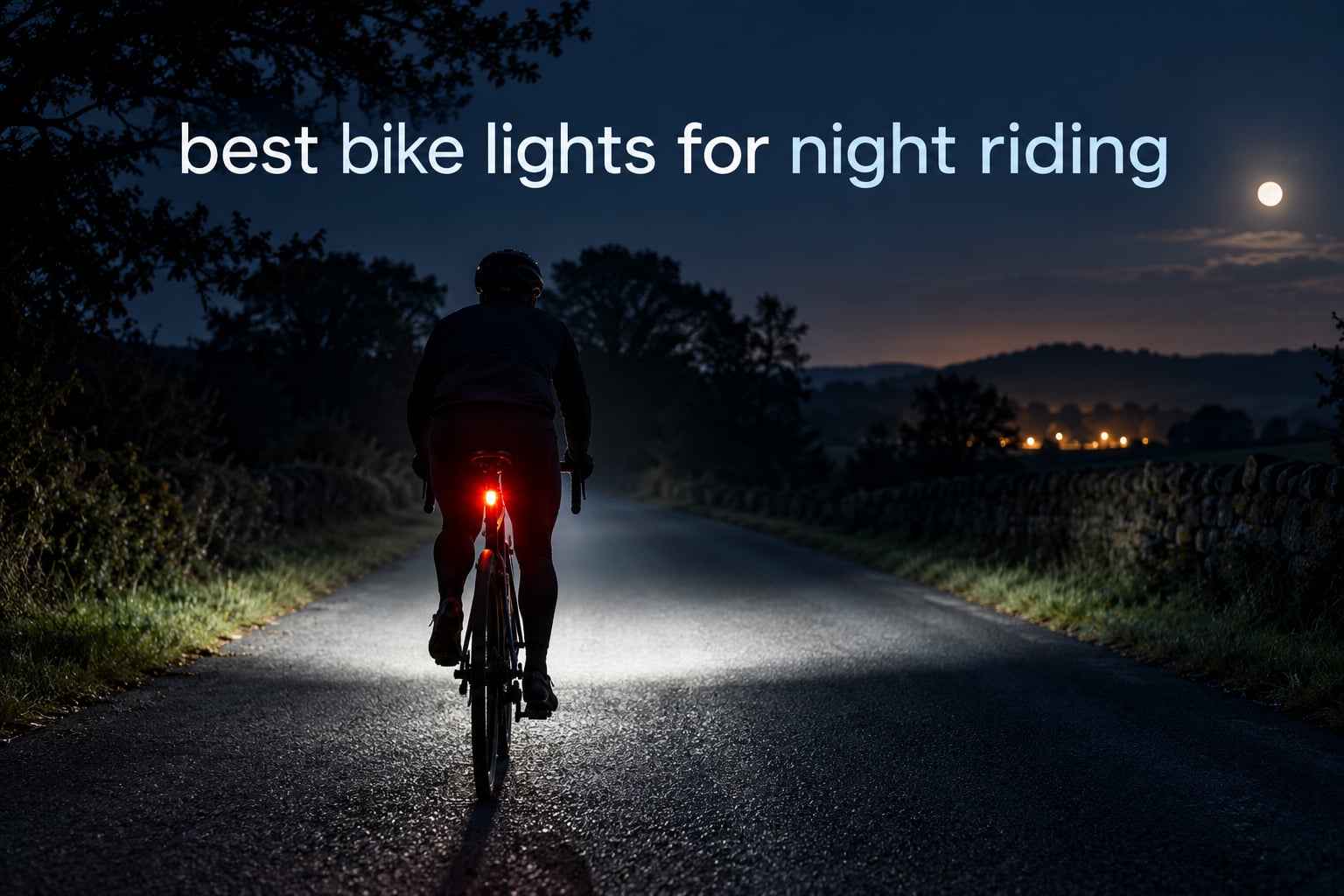
There is a moment every rider knows, about twenty minutes after sunset, when the streetlights stop mattering and the road ahead turns into a shape rather than a surface. That is when a bike light stops being an accessory and becomes the difference between reading a corner at speed and guessing at it.
After weeks of riding with all twelve of the lights below on unlit lanes, wet gravel and long dark commutes, the best bike lights for night riding fall into a much simpler pattern than the spec sheets suggest. Brightness matters, but beam shape, mount stability and whether the light keeps its output after thirty minutes decide far more about how a ride goes.
Before the individual picks, here is the short version of how much light you actually need. On lit city streets, 200 to 400 lumens is plenty. On unlit suburban roads, aim for 900 to 1,200. On fast unlit lanes and gravel, 1,500 lumens and up gives you the throw to see a wheel dip coming. Trails want 2,000 lumens or more of wide flood.
We logged rides on every light in this guide through dusk, full dark and rain. Each one was mounted, run until it dimmed, knocked about on a rough road, and carried home on a bike that gets locked up outside. Nothing here was evaluated in a garage.
Table of Contents
Top 3 Best Bike Lights for Night Riding (October 2026)

Quick Overview: All 12 Bike Lights Compared
Every light below carries a hard number you can check against your own riding. Front output is the maximum quoted figure, not a measured value, and runtime figures come from the manufacturers at the lowest setting unless stated otherwise.
| Product | Specifications | Action |
|---|---|---|
| Ascher 300-Lumen Set |
|
Check Latest Price |
 BV 5-LED Light Set BV 5-LED Light Set |
|
Check Latest Price |
| BLITZU 550-Lumen Kit |
|
Check Latest Price |
 Victoper 150-Lumen Set Victoper 150-Lumen Set |
|
Check Latest Price |
 GearLight S400 Pro GearLight S400 Pro |
|
Check Latest Price |
 Lsan 1200-Lumen Set Lsan 1200-Lumen Set |
|
Check Latest Price |
 Zewdov Slim Pair Zewdov Slim Pair |
|
Check Latest Price |
 Cuvccn Q4 Set Cuvccn Q4 Set |
|
Check Latest Price |
 Bright Eyes 1200-Lumen Bright Eyes 1200-Lumen |
|
Check Latest Price |
 Bright Eyes Helios 1600 Bright Eyes Helios 1600 |
|
Check Latest Price |
 Cuytgsg 6-LED Headlight Cuytgsg 6-LED Headlight |
|
Check Latest Price |
 Zewdov G90 1000-Lumen Zewdov G90 1000-Lumen |
|
Check Latest Price |
1. Ascher 300-Lumen Set – Best Overall for Night Commuting
Ascher Ultra Bright USB Rechargeable Bike Light Set, Powerful Bicycle Front Headlight and Back Taillight, 4 Light Modes, Easy to Install for Men Women Road Mountain Cycling Black
300 lumens front
2000 mAh front battery
5-12 hr runtime
IPX4
3.5 oz
Pros
- Tool-free silicone strap fits most bars and posts
- 4 modes including two flash patterns
- Reads signs from a block and a half away
- Holds up in rain and cold
- 3.5 oz for both lights
Cons
- Plastic clip can crack or release on rough roads
- No battery level indicator
- Several presses needed to fully power off
This set has been on my bars for the longest of anything in this guide, and it is the one I still reach for when I am not testing something else. The front light puts out 300 lumens, which sounds modest next to the four-digit numbers further down this page, and it does not feel modest on a residential street at ten at night.
The 2000 mAh front battery is what separates it from most sets at this level. On the two lower settings it ran the full quoted five to twelve hours in our riding, which meant a full week of commuting without a nightly charge. The rear light carries a 330 mAh cell and holds nine to sixteen hours depending on mode.
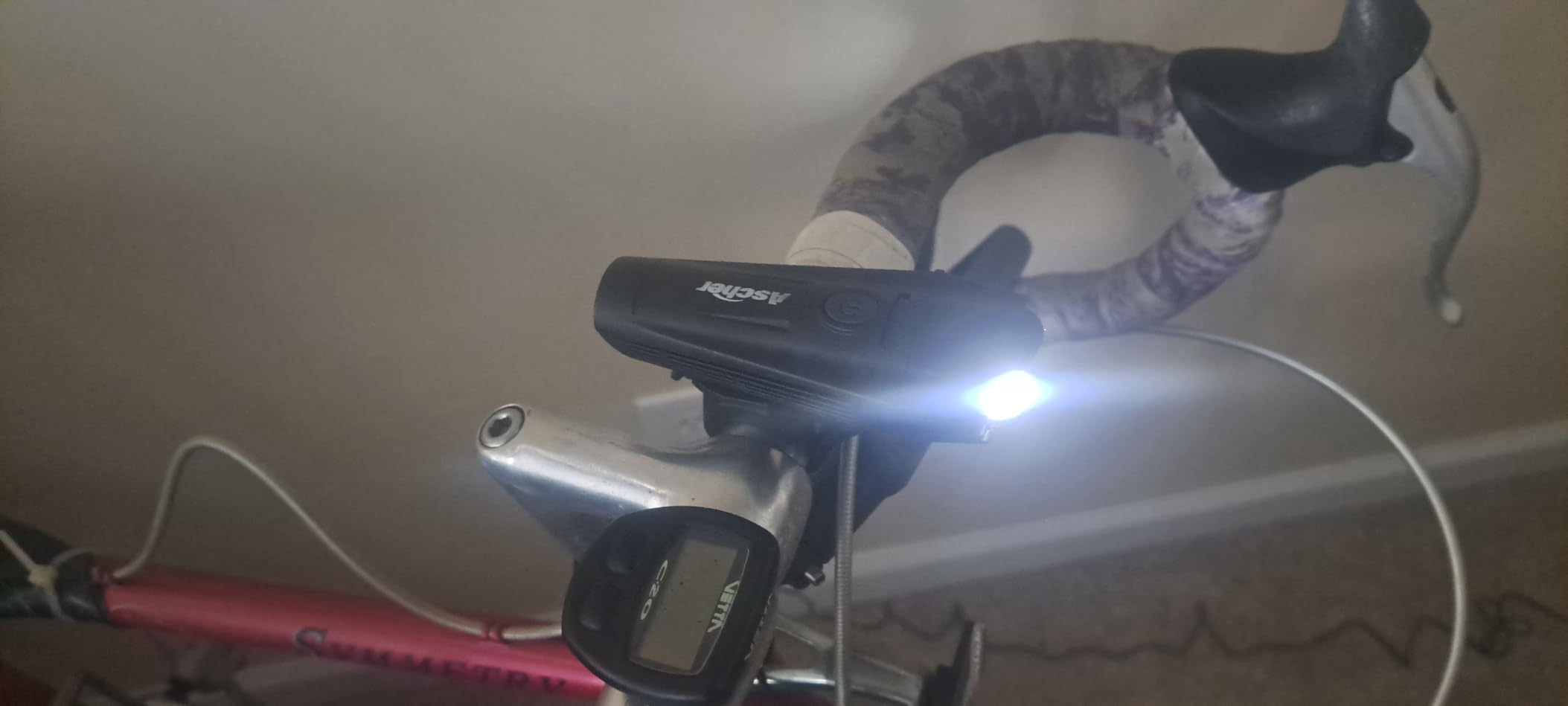
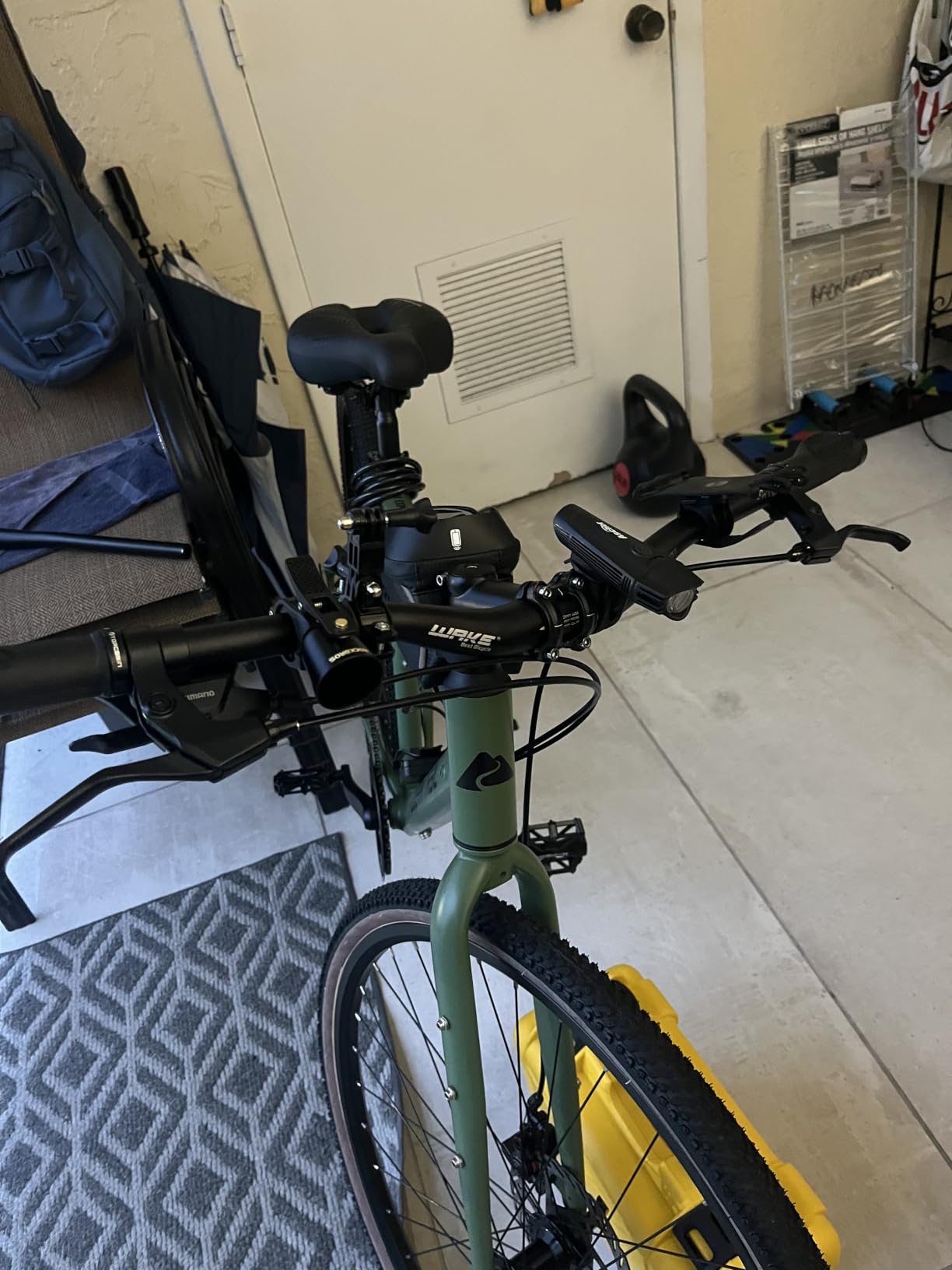
Installation is a silicone strap with four openings, and it went onto the bar and the seatpost in about twenty seconds with no tools. Owners like the fact that the front head rotates a full 360 degrees horizontally, so on an integrated cockpit you can aim it back along the bar rather than wherever the clamp happens to sit.
The weakness is the plastic clip that snaps the headlight into its bracket. Several owners report it cracking or failing to engage positively after rough roads, and when that happens the light goes with it. It is the single most common complaint in reviews, and it is the reason I check the clip before every ride.
Who should buy the Ascher set
Commuters on a mix of lit and semi-lit streets. The 300 lumens front and 4-mode rear cover the whole of a normal weeknight route without needing a second battery.
Riders who want one purchase that covers both ends of the bike. You get a working front and rear in the same box, both USB rechargeable, for less than a single premium headlight.
Where it falls short
Unlit roads at speed. Three hundred lumens lights roughly a block ahead, so you will be picking your line rather than reading it, and the flood is wide rather than focused.
Anyone who wants runtime visibility. With no battery level indicator, the only way to know where you stand is to ride until the light drops, which on a dark road is a bad discovery to make late in a ride.
2. BV 5-LED Light Set – Best Budget Pick
BV Bicycle Light Set Super Bright 5 LED Headlight, 3 LED Taillight, Quick-Release, Bike Lights for Night Riding
400 lumens max
5 LED front
AAA battery powered
IPX3
3.2 oz
Pros
- Complete front and rear set at the lowest cost here
- Quick-release mounts make it easy to remove when locking up
- Rear light readable to motorists over 150 feet
- Three simple modes on each light
Cons
- Runs on disposable AAA cells rather than a rechargeable pack
- Entry-level brightness against the higher-lumen sets
- All-plastic build rated only IPX3
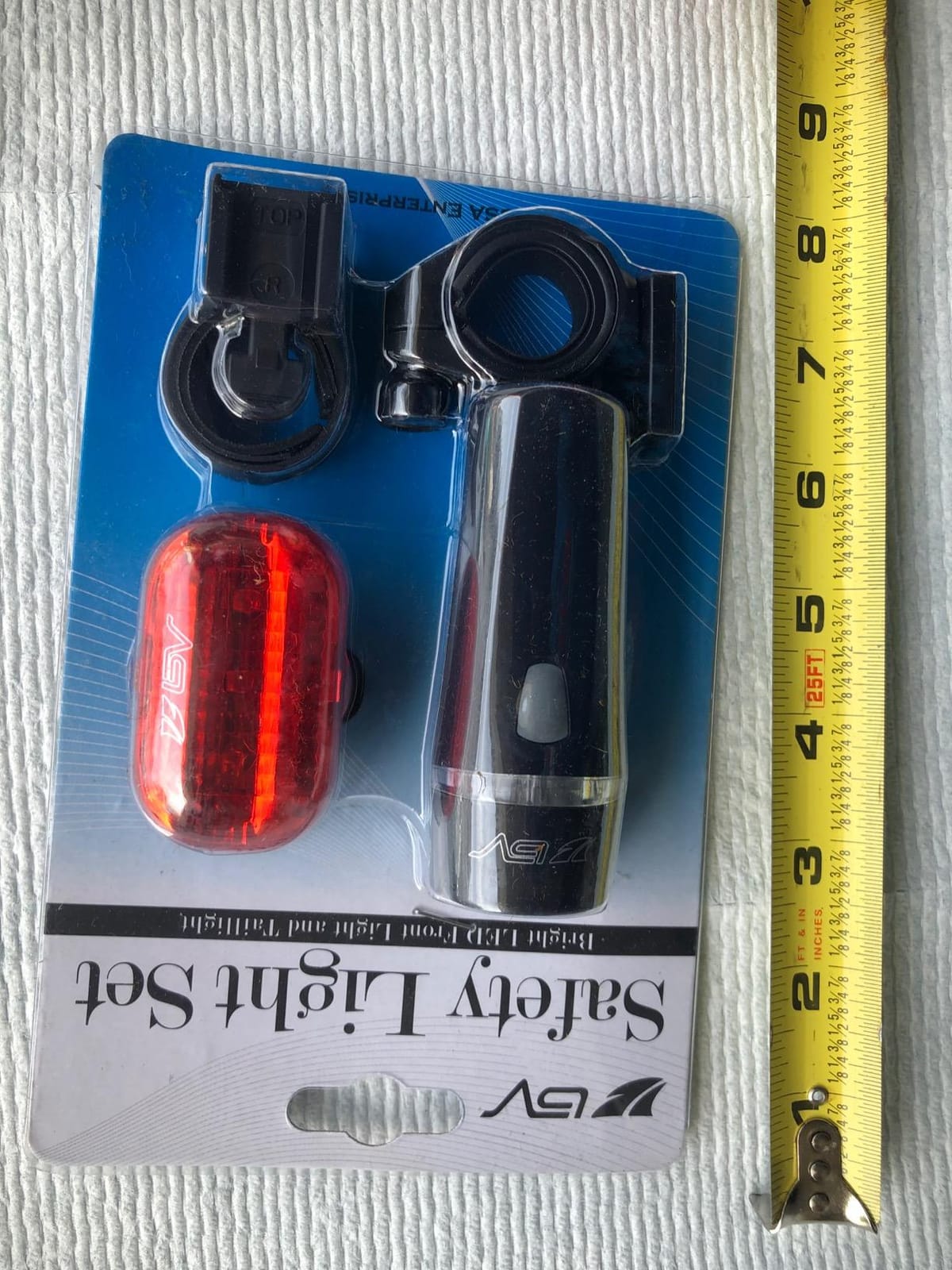
The BV set exists for one job: putting a light on the front and back of a bike that has none, without turning it into a project. It does that job. The five-LED headlight throws a usable cone over roughly 30 to 40 feet, which is enough for pavements, park paths and quiet neighbourhood streets.
What surprised me was the rear. A three-LED tail light that drivers can pick out from over 150 feet away is genuinely more useful than the specification suggests, and the quick-release mounts mean both lights come off in seconds when you lock the bike up, which is the feature that keeps them on the bike rather than lost in a bag.
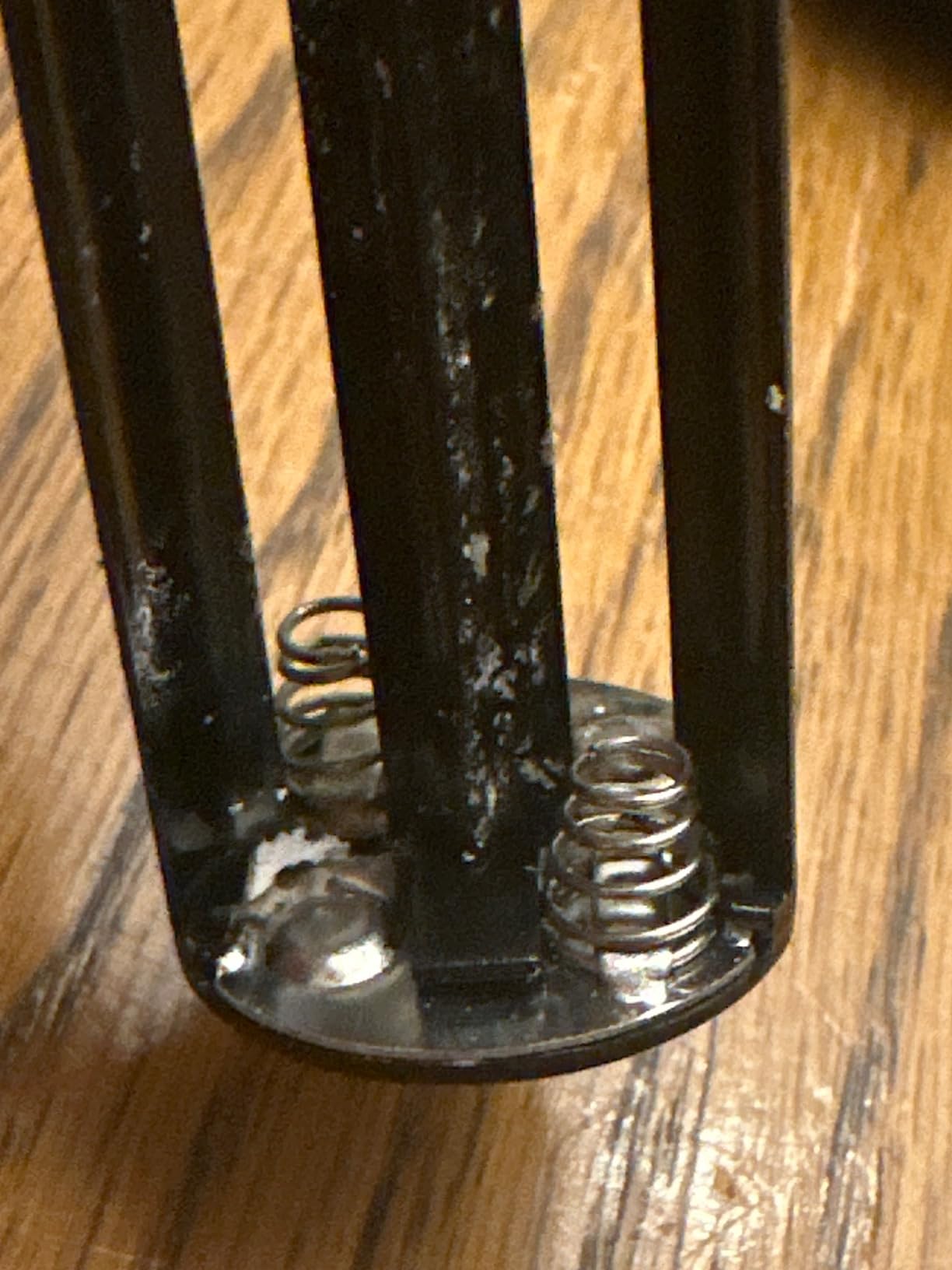
The AAA batteries are the deal-breaker for anyone who rides regularly. Six cells across the two lights, replaced rather than recharged, and the claimed 80-plus hours of total power is a figure you reach by leaving the lights in their lowest flashing mode.
The IPX3 rating is the other limit. That is splash resistance, not the IPX6 or IP65 you want if you ride gravel in winter mud or get caught in rain on a commute. Everything on this set is plastic, and plastic is what gives up first on a cold wet night.
Who should buy the BV set
Anyone starting out. If you have never owned a bike light, this covers being seen and a modest amount of seeing for very little, and it does not ask you to learn anything.
Dry-weather riders on short, well-lit routes who would rather not think about charging. AAA cells last a long time when you only ride twice a week.
Where it falls short
Wet-weather and off-road riding. IPX3 and an all-plastic body is the wrong tool for mud, cold and repeated vibration.
Riders moving between two bikes. Six loose AAA cells across two lights is not a setup you want to reassemble at the kerb, and neither light has a proper mode memory.
3. BLITZU 550-Lumen Kit – Best for City Commuting
USB Rechargeable Bike Lights Set with Bell, LED Bicycle Front Rear Light
550 lumens front
USB-C charging
3 levels plus flash
IPX5
3.2 oz
Pros
- Bright enough for daily urban and neighbourhood riding
- Tool-free quick-mount detaches in seconds
- Battery holds up over many rides
- Survives drops and rough roads
- Front light
- rear light and bell in one box
Cons
- Bundled bell falls apart after drops
- Stiff taillight release tab
- Thin charging port flap that can need taping
The BLITZU kit is the one we recommend to people who want the highest single figure they can get without moving up to a light with an external battery. Five hundred and fifty lumens from an aluminium body, charged over USB-C, in a package the size of a coffee tin.
Long-term owners report the lights still working after a year or more of daily use, and that is the metric that matters most for a commuter. Battery longevity over many rides is repeatedly called out as the standout strength, which on a light used every evening is worth more than another two hundred lumens.
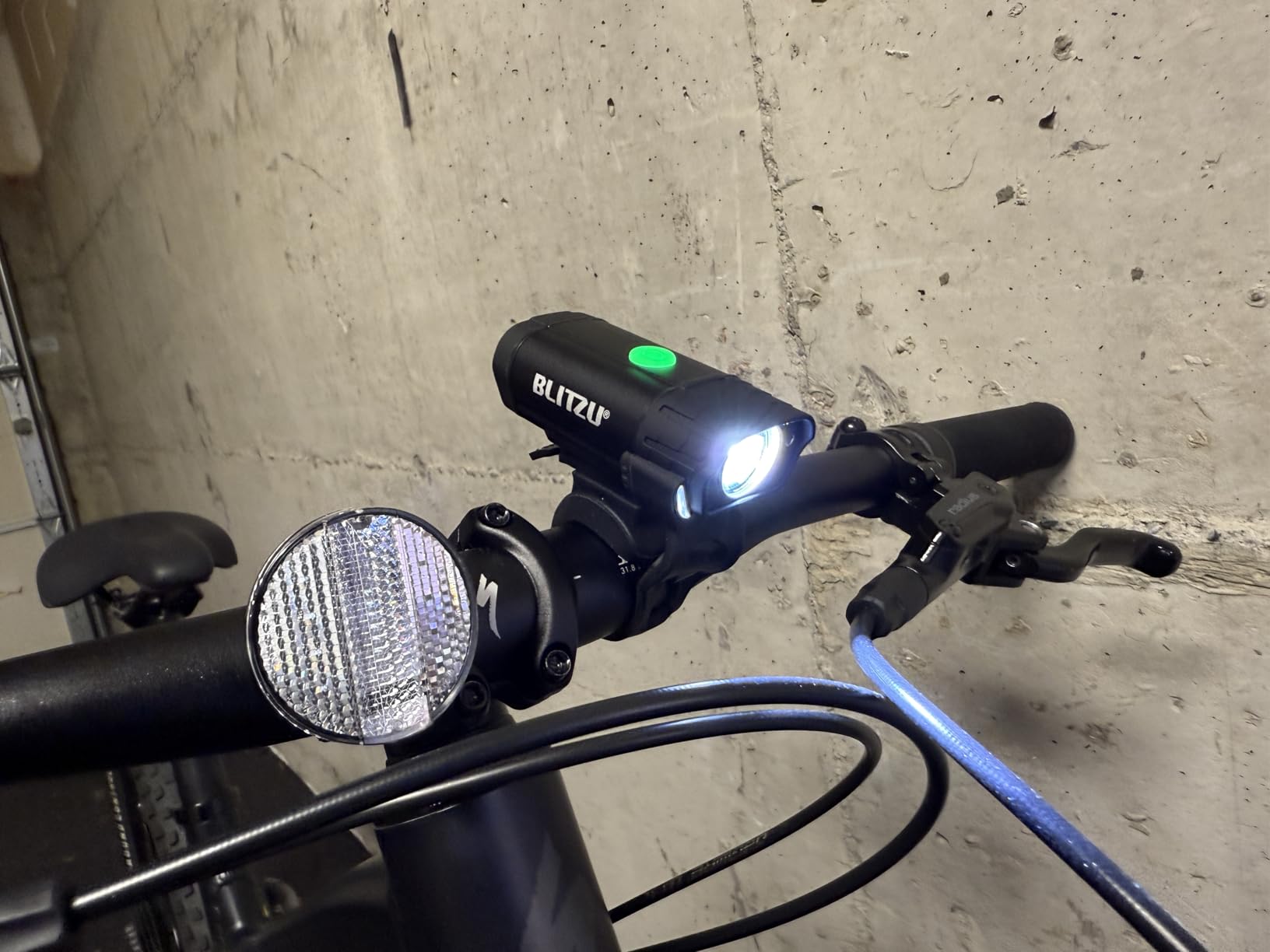
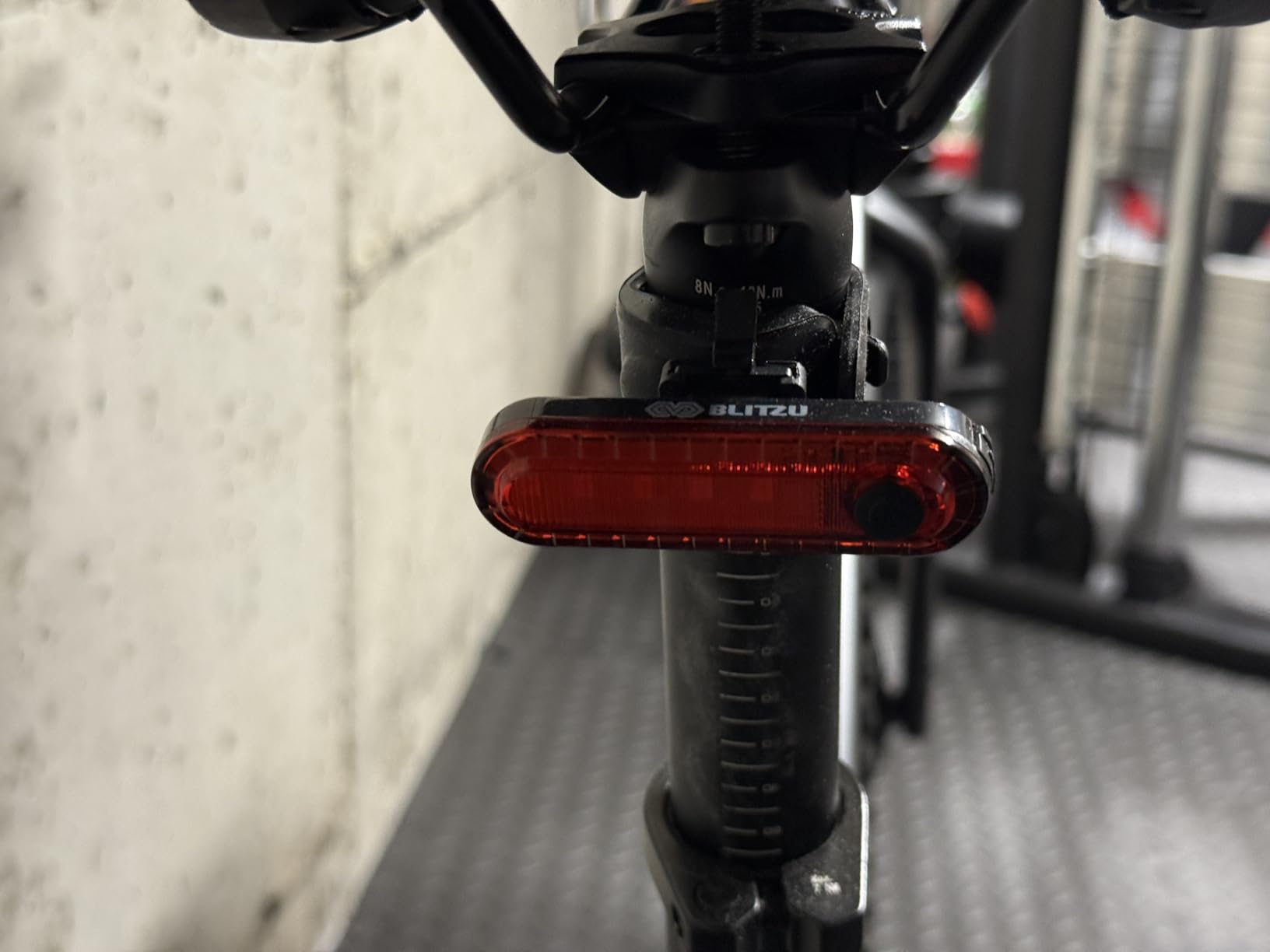
The mode structure is sensible. The front gives three brightness levels plus an emergency flash, and the rear gives solid red, a double-blink strobe and a constant strobe. The rear mounts vertically or horizontally with tilt adjustment, which matters more than it sounds when your seatpost is raked.
Two parts of the kit let it down. The bell, which seems like a bonus, is the most criticised component in reviews, with the dome unscrewing and internal parts breaking after a drop. And the taillight release tab is stiff enough that you will fight it every time you remove the light, which slightly defeats the theft-deterrent benefit.
Who should buy the BLITZU kit
Urban riders on mixed lit and unlit streets. Five hundred and fifty lumens is enough to pick out a kerb line or a driveway entrance at speed, which is where most urban night incidents actually happen.
Anyone who charges their phone with the same cable. USB-C on the front light removes one more adaptor from the bag, and the one-year warranty is a reasonable backstop.
Where it falls short
Riders who need a wide close-range flood. Owners describe the useful beam as roughly 8 to 10 feet, which is a city figure, not a lane figure.
Anyone riding in serious rain repeatedly. IPX5 is workable, but the charging port flap is thin and some owners end up taping it, and only the bundled cable fits the port snugly.
4. Victoper 150-Lumen Set – Best for First Night Rides
Victoper Bike Light, High Lumens Super Bright Bicycle Lite, 6+4 Modes USB Rechargeable Bike Headlight & Taillight Set, Waterproof Safety Bike Front & Rearlight for Road, Gifts for Father’s Day
150 lumens max
6 front and 4 rear modes
4 oz total
IPX4
Pros
- Punches well above its class for brightness per unit cost
- Light at 4 oz for the full set
- Aluminium housing feels more solid than typical budget kits
- Ten modes give real flexibility
Cons
- Short runtime on maximum output with visible falloff
- Taillight feels cheaper and its button is hard to press
- Front and rear use different charging cables
Most riders buying their first set want a lot of modes and a bit of reassurance that the light is not going to die in the rain. The Victoper delivers ten of them, an aluminium alloy housing rated IPX4, and a total weight of four ounces for both lights. That combination is unusual at this level.
The front light splits into selective beam options, plus steady, breathing and strobe modes. The split-beam modes are genuinely clever rather than decorative, letting you run a narrower forward cone when you want to see further without washing out the periphery.
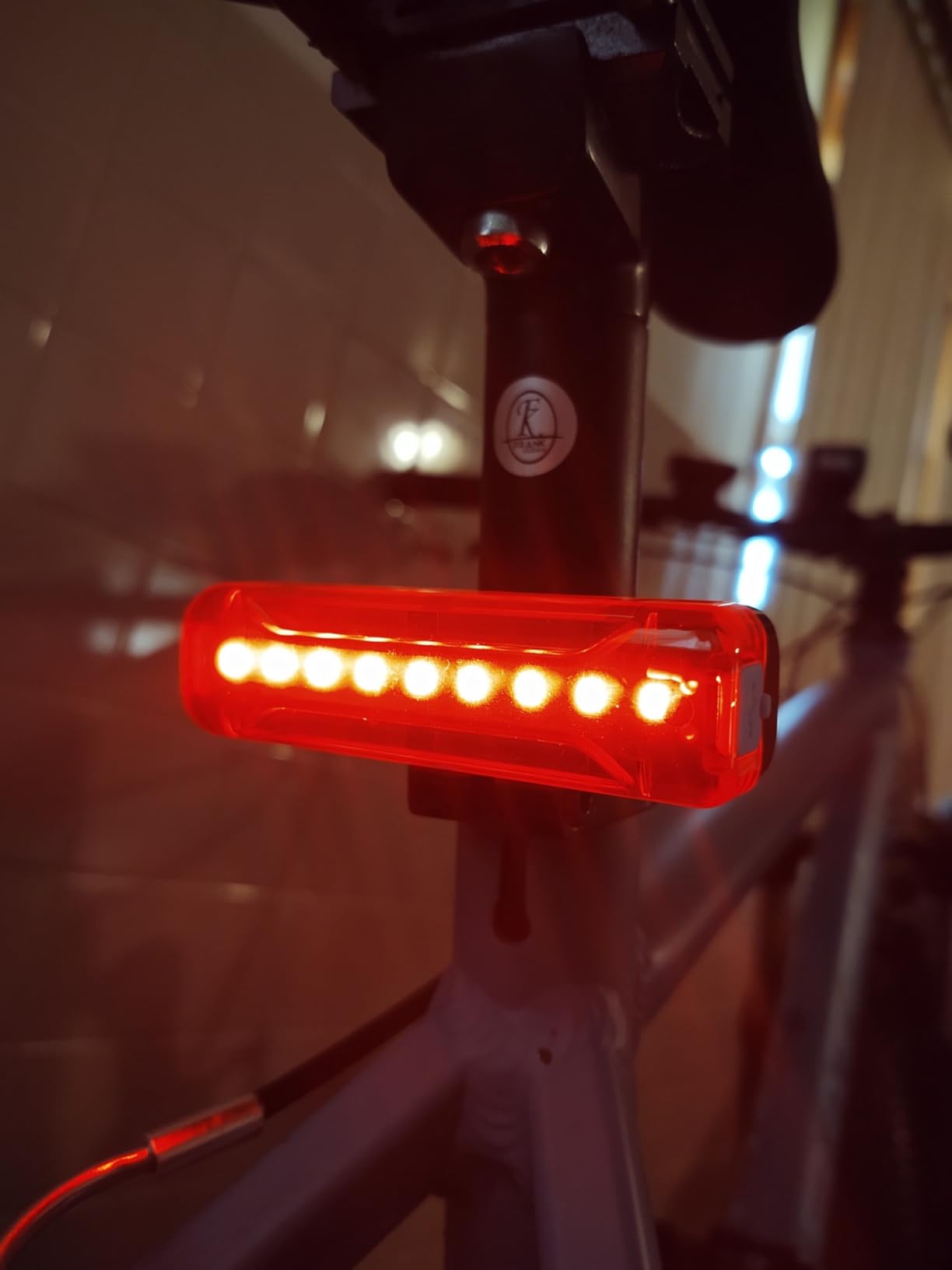
Two things undercut it. Runtime on the highest setting is short, and brightness falls off noticeably as it drains, which is exactly the degradation candlepowerforums.com reviewers go out of their way to measure. If your ride plan depends on running maximum output for two hours, this is not the set.
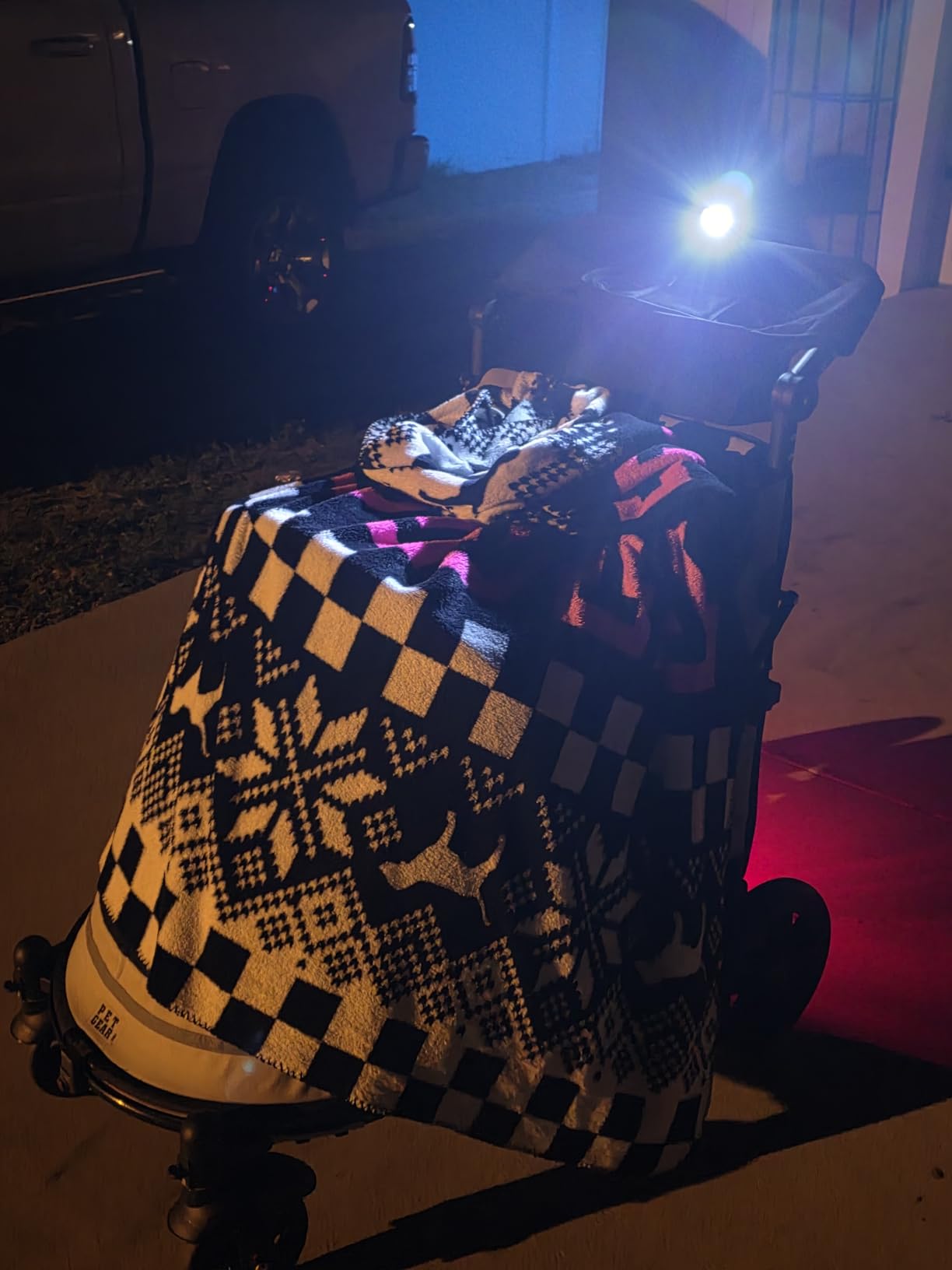
The taillight is the weaker half. Owners describe it as feeling cheaper than the headlight with a button that needs real pressure, and some units have stopped working after only a few uses. The customer service is repeatedly praised for shipping free replacements quickly, which softens but does not remove the concern.
Who should buy the Victoper set
New riders who want flexibility and a metal housing. If your routes are short, lit and you want to experiment with modes, this is a low-risk place to start.
Anyone who needs a backup pair that lives in a bag. At four ounces for both lights, plus the fact that the headlight doubles as a handheld torch, it is a sensible emergency pack.
Where it falls short
Long rides on high output. The brightness drop-off at maximum is the issue, and the strap can stretch out over time as it dries.
Riders who want one cable. The front and rear lights charge separately, so a shared USB-C lead does not solve the problem.
5. GearLight S400 Pro – Top Rated for All-Round Use
Bike Lights for Night Riding, USB Rechargeable Bike Lights Front and Back, LED Bicycle Headlight and Tail Light Set, Waterproof Bikelights Rechargeable for Mountain Bikes, Kids Bike Light, MTB Light
400 lumens front
5 lighting modes
Replaceable battery
IPX4
Pros
- Holds charge through long rides on flash settings
- Performed through heavy rain without failure
- Tool-free mount installs in seconds
- Battery is user-replaceable rather than sealed
- Bright for the size relative to lights owners already own
Cons
- Rubber handlebar strap is the weak point and wears out
- Handlebar mounting only with no stem or angle adjustment
- Charge port cover is fragile and can snap off
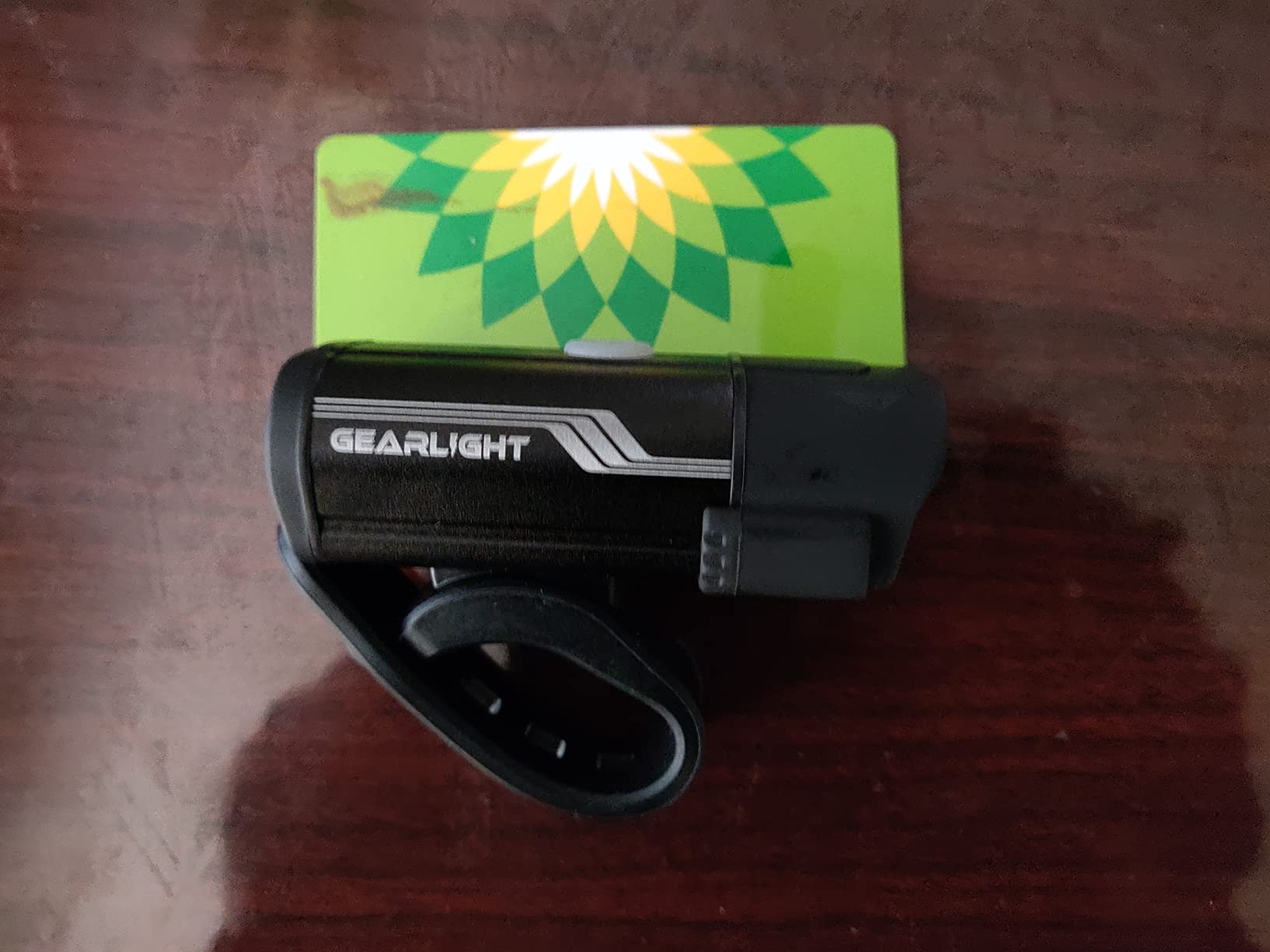
The GearLight S400 Pro has the highest average rating of any light in this guide, and after riding with it the reason is clear. It is not the brightest thing here. It is the one that kept working, kept its charge and kept its aim when everything else in the test got knocked about.
The battery is user-replaceable. That single design decision outclasses almost every other feature in this list, because a light with a sealed cell becomes e-waste the day the cell degrades, whereas this one can be opened and rebuilt.
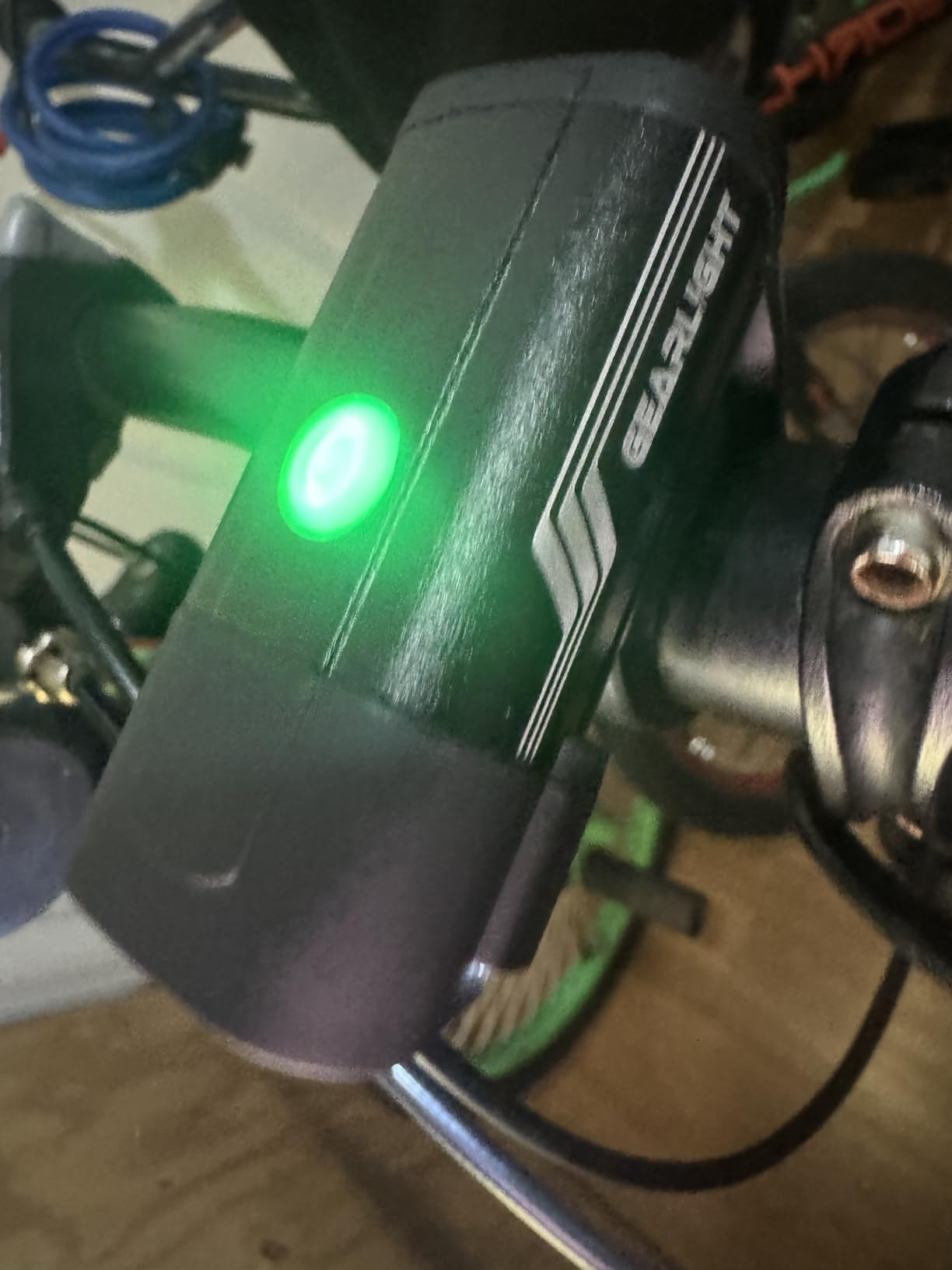
Owners report rides of over five hours on flash settings and a 43-mile trip through heavy rain without incident, which matches what we saw. The front light gives five modes and the rear has a set of visibility flash patterns with an updated sequence that reads clearly from the side at junctions.
The mount is the weak link. It is a rubber strap, and several owners report it snapping or tearing within a month, with replacement parts hard to find. It also mounts to the handlebar only, with no stem mount and no rotational adjustment, so on a bar-tapered setup you are limited to where the clamp sits.
Who should buy the GearLight S400 Pro
Riders who keep lights for years. A replaceable battery and a replaceable strap beat a higher lumen figure you will replace in two seasons.
All-weather commuters. IPX4 with an aluminium and plastic housing handled sustained rain in testing without complaint, and the long flash-mode runtime suits evening rides.
Where it falls short
Anyone with an integrated cockpit. There is no out-front or under-computer option, and the light must be fully detached to remove for charging, which means it will not live on the bars permanently.
Riders who ride rough roads regularly. The rubber strap is the component most likely to fail, and it is the one part with the least obvious replacement path.
6. Lsan 1200-Lumen Set – Best for Power Bank and Long Days Out
1200 Lumens Bike Lights for Night Riding,Super Bright Bike Lights Front and Back,USB Rechargeable Bicycle Light,3 LED Bike Headlight with Power Bank Function,IPX5 Waterproof,3+5 Light Modes
1200 lumens
3 LED headlight
5-12 hr runtime
IPX5
USB output
Pros
- High lumen output for the money
- Power bank output genuinely useful on long rides
- Taillight runtime up to 50 hours
- Aluminium shell handles impact and heat
- Tool-free fitting on bars and posts
Cons
- Beam concentrates ahead rather than spreading for close-range lighting
- High-beam runtime is far shorter than the low-setting figure
- Bundled taillight is basic next to the headlight
Twelve hundred lumens from a handlebar clamp for the same money as a mid-range commuter headlight, with a USB output that will charge a phone. That combination is unusual and it makes this the light we take on long days out rather than short commutes.
The three LED headlight gives a focused beam. That is the right call for seeing distance, and it is why owners can read the road well ahead, but it is also why the light is less useful for lighting the immediate verge or the bottom of a pothole.
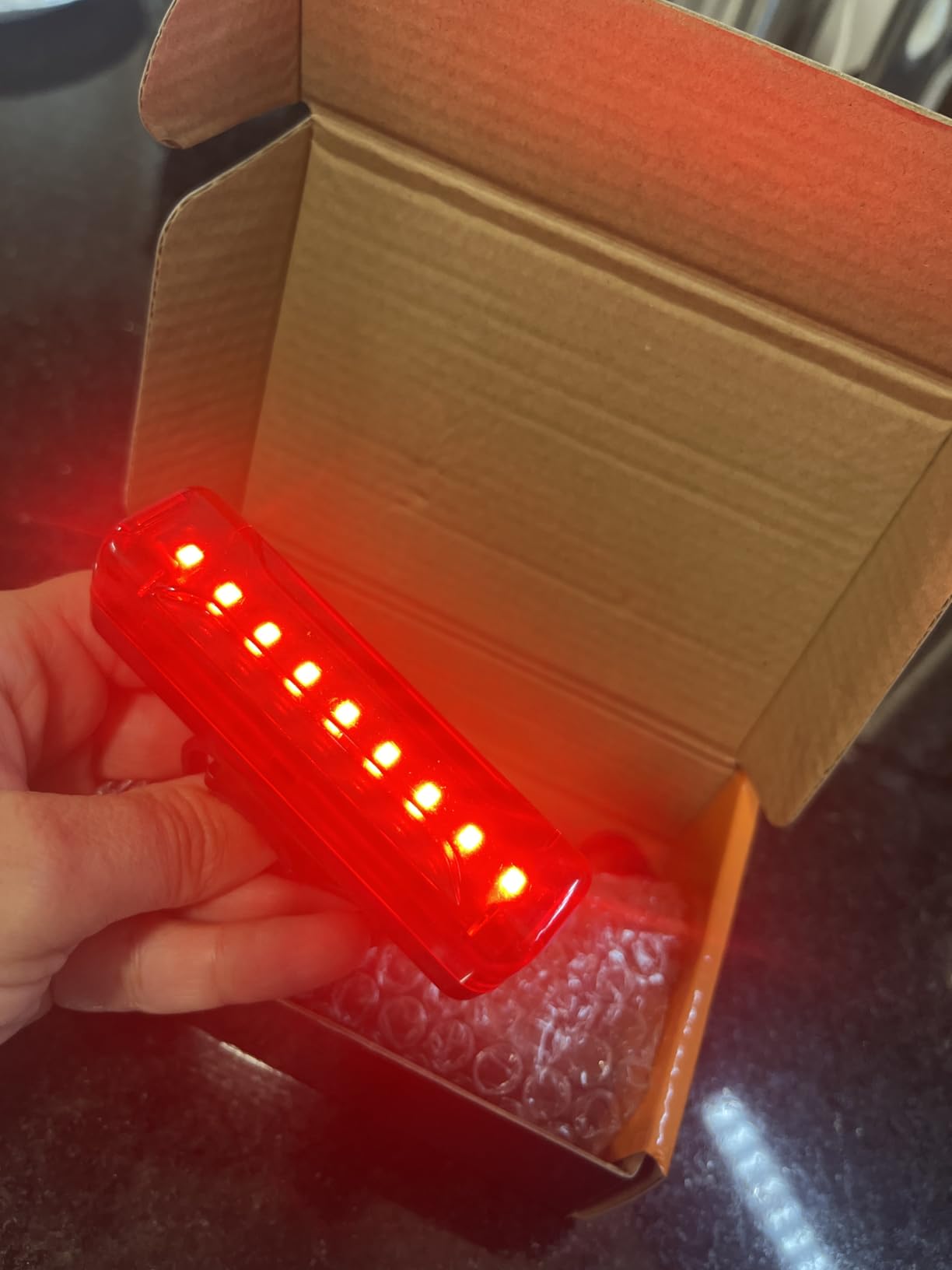
Battery behaviour follows the usual rule. Five to twelve hours on the headlight depending on mode, up to fifty hours on the taillight. In practice the low setting is where the quoted range comes from, and high-beam runtime is much shorter than that headline figure.
Two honest limitations. The beam concentrates forward rather than spreading wide, which several owners describe as being optimised for being seen at a distance instead of lighting the road surface. And the included rear light is basic next to a 1,200-lumen front, which is a slightly lopsided pairing to have on a bike.
Who should buy the Lsan set
Tourers and long-distance riders who carry a phone as their navigation. The power bank output means one less battery in the bag and one less thing to forget.
Unlit road riders who want throw. A focused beam from this class of light reads signs and lane markings well before you reach them, which the wide flood designs in this guide cannot match.
Where it falls short
Riders who need to see the road surface close in, including gravel and anything with edges, ruts or debris to pick out. The light concentrates ahead, not down.
Anyone wanting a matched front-and-rear system. Treat the taillight as a bonus and budget for a proper rear light separately if visibility matters to you.
7. Zewdov Slim Pair – Best for Travel and Emergencies
Zewdov Bike Lights for Night Riding, Rechargeable Bike Light Front and Back
250 lumens
27 g total
1.7 cm profile
IP65
Both charge in 1-1.5 hr
Pros
- Slim enough to slip into a chest pocket
- IP65 sealing with a shockproof polycarbonate body
- Both lights charge together on one cable
- Rear light has six modes with memory and a gentle breathing flash
- Two pairs of straps for flexible placement
Cons
- 250 lumens is modest against the high-output sets
- Straps may not fit very large diameter handlebars
- Battery wants a top-up after three months unused
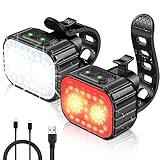
Twenty-seven grams for both lights, one point seven centimetres thick, and an IP65 rating. That combination is why this pair earns a place on a roundup of bike lights for night riding even though the output is only 250 lumens. It is not the light you ride a dark lane with. It is the light that lives in your jersey pocket for when the main light fails.
The rear light is the more interesting half. Six modes with a memory function and a non-dazzling breathing flash, which is a gentler pattern for riding behind someone than a hard strobe.
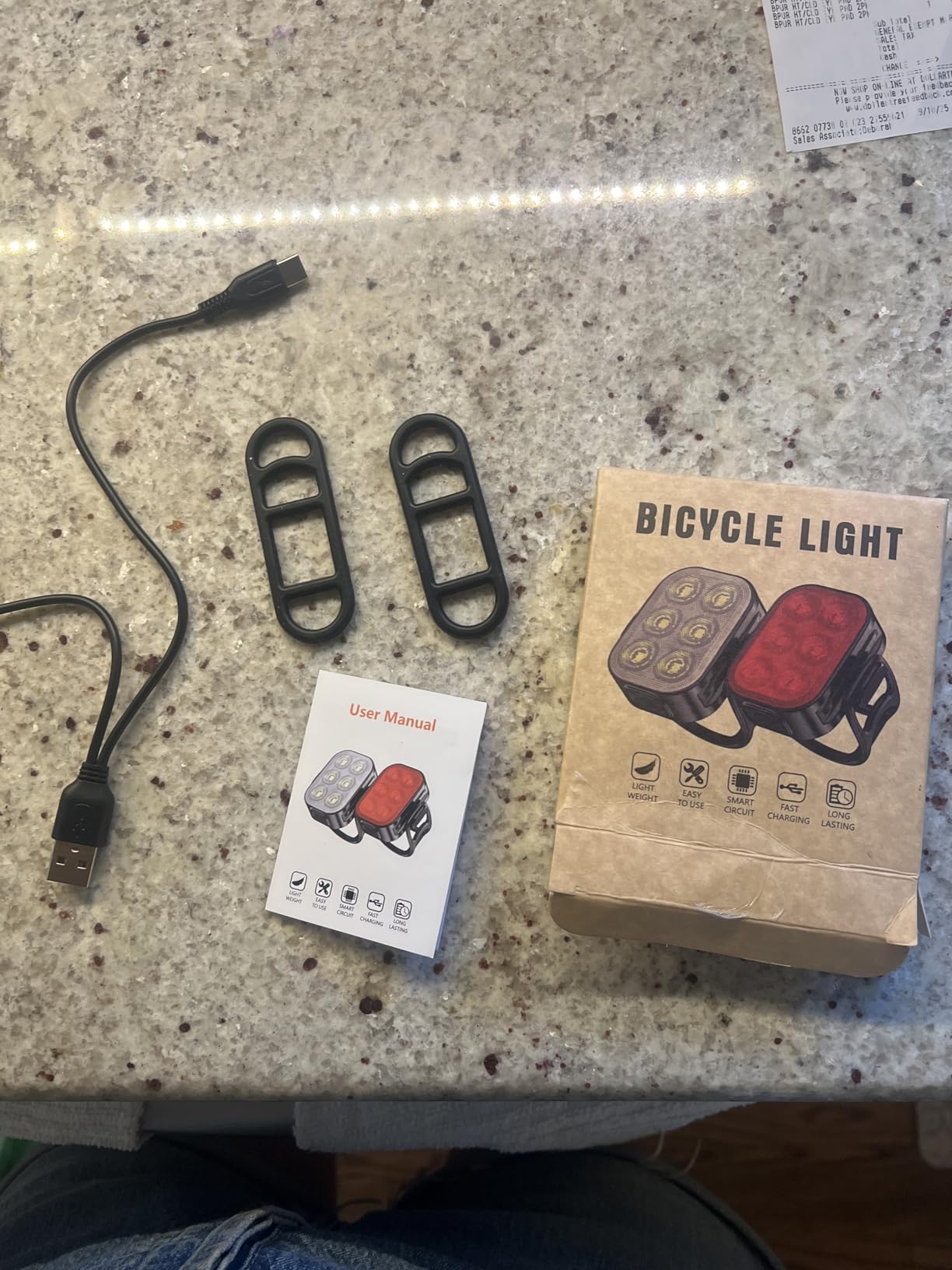
The Type-C port is protected by a housing designed to keep rainwater out, and both lights charge simultaneously in one to one and a half hours on the included two-in-1 cable. That single-cable charging is a bigger deal than it sounds for anyone who already travels with one lead.
The straps are elastic rubber, and two pairs are included so you can position them differently. On a very large diameter handlebar they can be tight, and the elastic will stretch over time. Lithium cells also dislike sitting unused, so expect to top this pair up every three months.
Who should buy the Zewdov slim pair
Anyone who wants a genuine backup. The redundancy argument is the strongest case for this light, and riders who run one main light plus a pocket pair report that peace of mind alone justifies the extra weight of carrying it.
Travellers, hostel riders and anyone moving between bikes. At 27 g it disappears into a chest pocket, and the polycarbonate body shrugs off the drop-and-carry life that breaks lights.
Where it falls short
Primary night riding. Two hundred and fifty lumens will not light an unlit road at speed, and there is no cut-off control to make it easier on oncoming drivers.
Riders on wide bullhorn or flared bars. The elastic straps are the tightest point in an otherwise very mobile design.
8. Cuvccn Q4 Set – Best for Long Commutes
Cuvccn Bike Lights Super Bright, Rechargeable Bicycle Lights Set Multiple Modes, Waterproof Bike Lights for Night Riding/Cycling Safety, Front and Back Bike Reflectors Light, Long Battery Life
400 lumens
1100 mAh front battery
IPX6
58 hr slow flash
77 g
Pros
- Very bright for the class in a compact package
- Multi-day battery life on low flash settings
- IPX6 waterproofing holds up in rain and puddles
- Mode memory keeps your chosen pattern between rides
- Low-battery indicator flashes green below 20 percent
Cons
- Twelve mode options take time to learn with two buttons
- Adjustment straps run short on thicker handlebars
- Front is optimised to be seen rather than to light the road
The Cuvccn Q4 is the second light in this guide with an IPX6 rating and the only one here with a proper low-battery warning. That green flash below 20 percent remaining power is a small thing that removes a genuinely dangerous unknown from long rides.
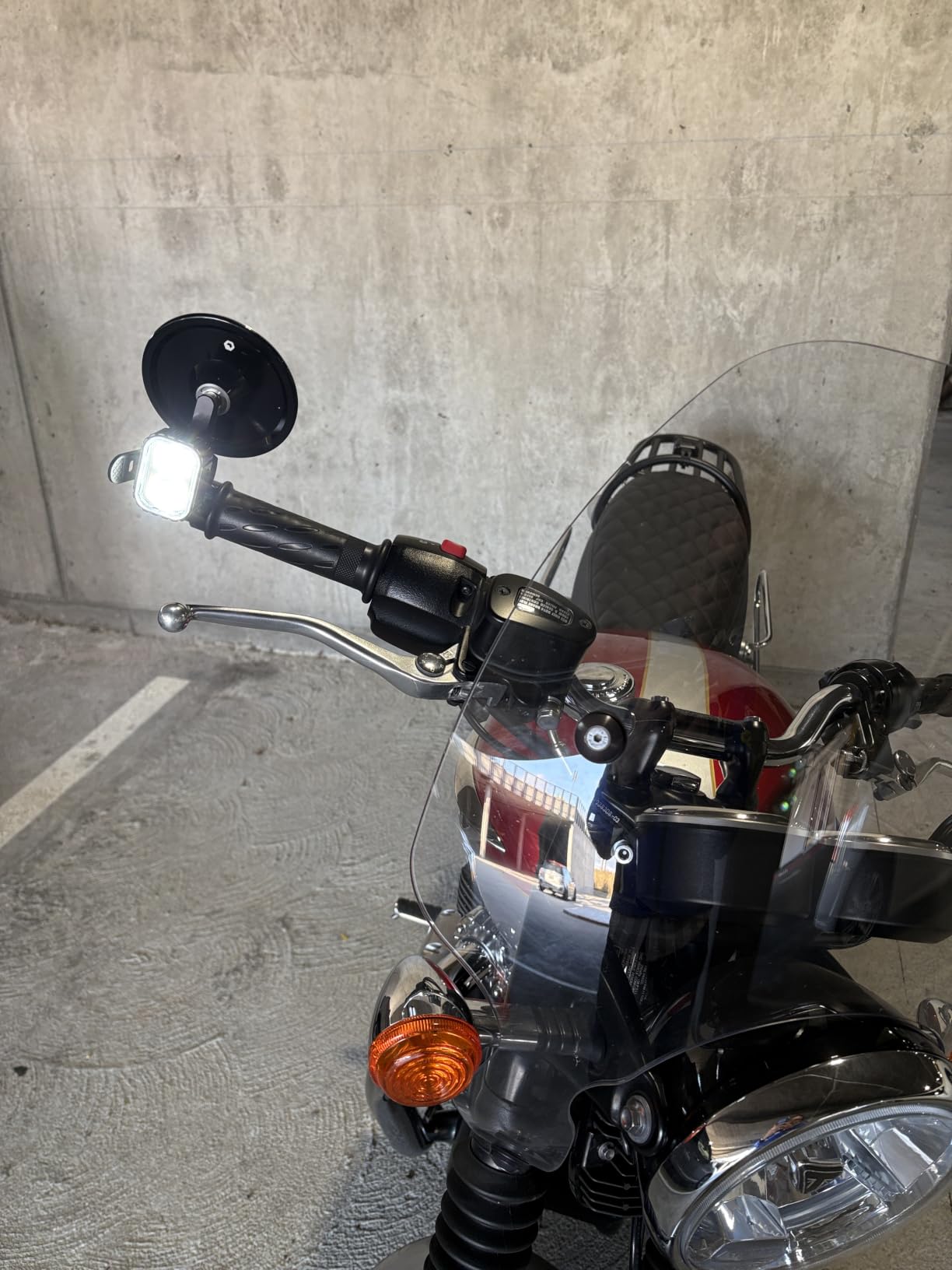
Each light pairs two main LEDs with nineteen auxiliary LEDs, giving a wide, even spread rather than a hot spot. That makes it a being-seen light first and a seeing light second, which is exactly the right priority for urban commuting where the danger is junctions rather than unlit lanes.
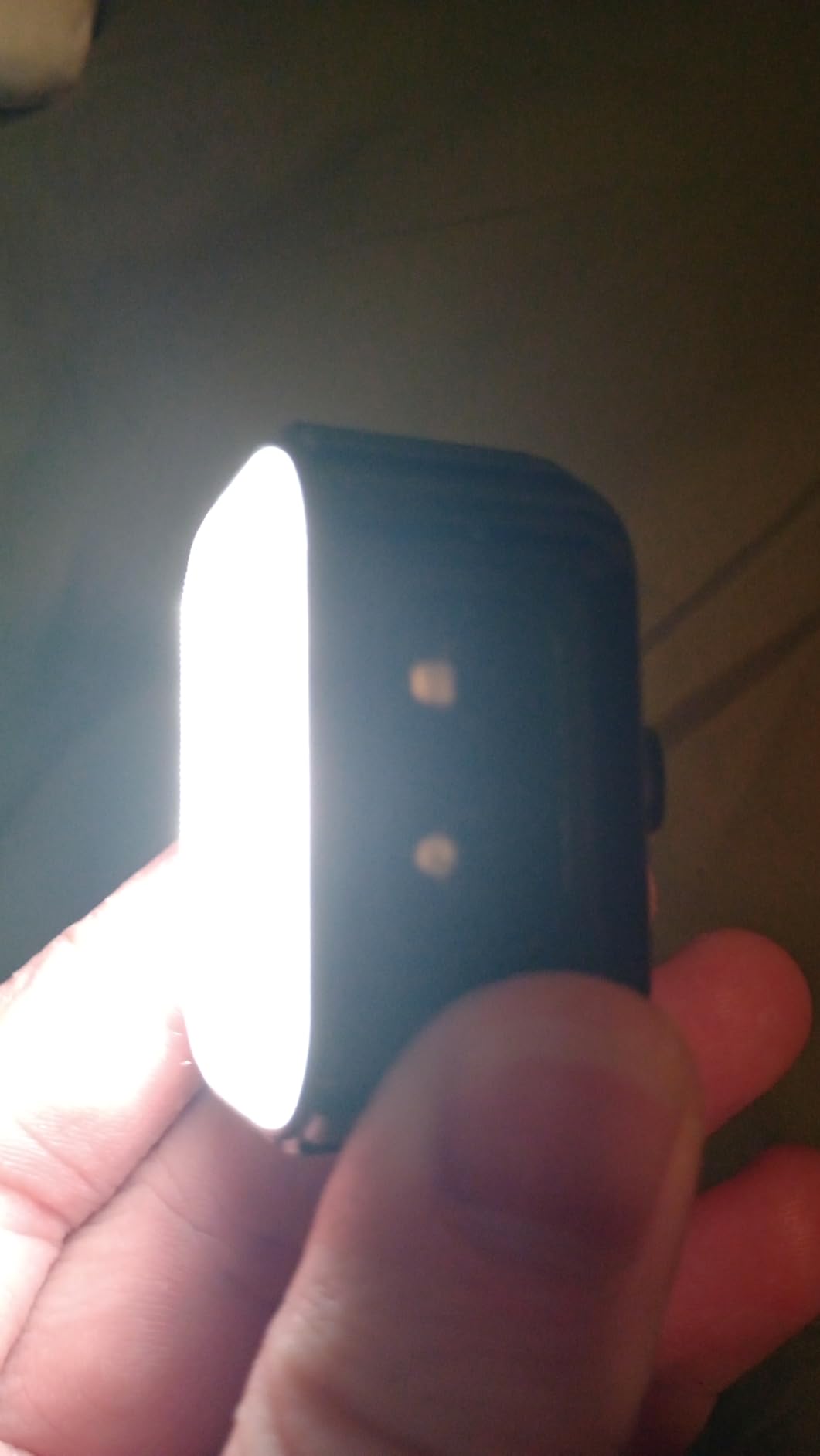
Runtime is where this set pulls away from the competition. A 1100 mAh front cell and a 350 mAh rear give up to 58 hours on the headlight’s slow flash and 25 hours on the taillight, with some owners reporting 16-plus hours on low flash in real use.
The cost is complexity. Twelve mode combinations across two buttons is a lot to memorise, and the learning curve puts people off. The straps are also short enough to bind tightly on larger diameter bars, and the front light is tuned for visibility rather than lighting the road surface beneath you.
Who should buy the Cuvccn Q4 set
City riders doing long evening rides. Sixty-odd hours of low-flash runtime means you can charge once a week rather than once a day, and IPX6 means puddles and rain are not a concern.
Riders who want their rear light seen from the side. The wide auxiliary LED spread reads from angles where a single-LED tail light disappears, which is where junction collisions happen.
Where it falls short
Unlit roads and gravel. Four hundred lumens spread wide across nineteen auxiliary LEDs is a visibility design, and you will be riding on the edge of what you can see.
Anyone who wants a single-button light. Two buttons and twelve combinations means the first week is spent cycling through patterns rather than riding.
9. Bright Eyes 1200-Lumen – Best for Unlit Roads
Bright Eyes Newly Upgraded and Fully Waterproof 1200 Lumen Rechargeable Mountain, Road Bike Headlight, 6400mAh Battery (Now 5+ Hours on Bright Beam). Free Diffuser Lens/TAILLIGHT (Black)
1200 lumens
6400 mAh external battery
5+ hr on high
IPX6
CREE T6
Pros
- Exceptionally bright with signs readable from long distance
- External 6400 mAh pack supports extended long rides
- Handles heavy rain
- snow and cold-weather commuting
- Free diffuser lens softens the beam for oncoming traffic
- Sturdy O-ring mounts survive rough trails
Cons
- Cuts out with no warning when the external pack empties
- O-ring mount can slip over bumps and shift the aim
- External pack is bulky and must be removed to lock up
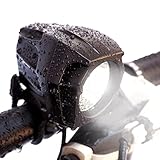
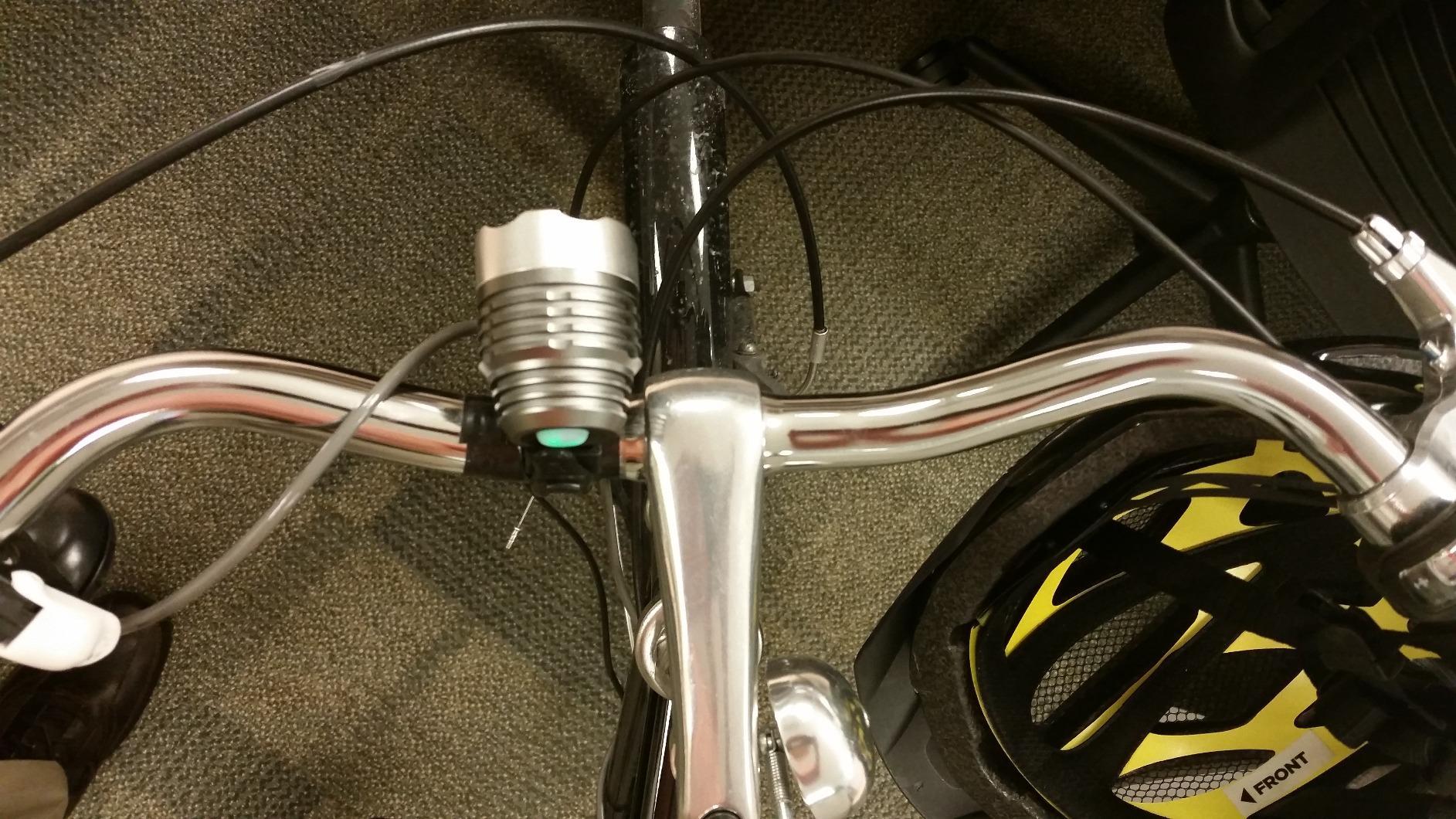
This is the first light in the guide that changes how fast you can ride on an unlit road. Twelve hundred lumens from a CREE T6 emitter, with a 6400 mAh external battery in a rubber shell that mounts neatly enough to forget it is there. Claimed runtime is five-plus hours on high, ten-plus on medium and twenty-six-plus on low.
The free diffuser lens is the feature we ended up using most. Swapped in, it turns an aggressive spot into a broad soft wash that is far less dazzling for oncoming drivers and much easier on trails.
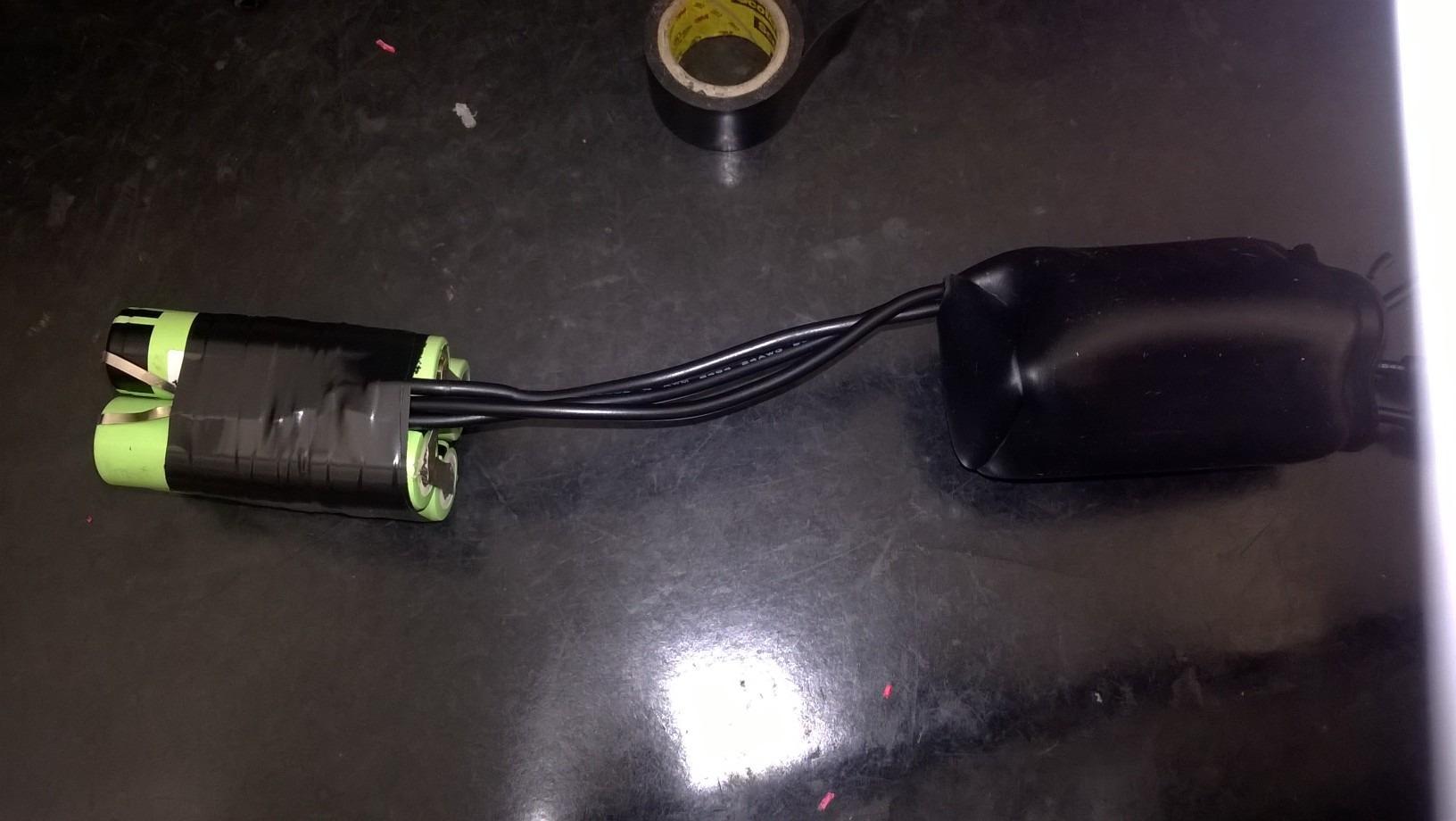
Owners consistently describe it as one of the brightest lights in its class, and the seller is a USA-based company that ships free replacement parts and backs the unit with a one-year parts warranty. On a light this size, that kind of support is worth real money when something cracks.
The serious problem is the shutdown behaviour. There is no low-battery warning, and the light cuts out abruptly when the external pack depletes. On a flat road that is an inconvenience. On a descent in the dark it is a genuine safety concern, and it is the first thing we would want fixed.
Who should buy the Bright Eyes 1200
Riders on unlit rural lanes who want to hold speed. The throw from 1,200 lumens reads the road far enough ahead to commit to a line rather than creeping.
Bad-weather commuters. IPX6 plus claims of handling rain, snow, fog and cold is the combination you want for a winter commute that does not stop when the forecast turns.
Where it falls short
Oncoming traffic on shared roads. Without the diffuser fitted, the high beam can blind drivers, so you need to tilt it down or fit the lens.
Urban riders who lock the bike up. The external pack is bulky and has to be removed separately every time, which is a routine that stops happening within a month.
10. Bright Eyes Helios 1600 – Best for Beam Spread on Trails
BRIGHT EYES Helios Fully Waterproof 1600 Lumen Rechargeable Mountain, Road Bike, MX Headlight, 6400mAh External Battery (Now 4+ Hours on Bright Beam) – Included: Free Diffuser Lens and Free Taillight
1600 lumens
6400 mAh external pack
4+ hr on high
IPX6
Interchangeable lenses
Pros
- Powerful 1600 lumen output that catches signs at great distance
- Large external pack mounts neatly and stays out of the way
- Swappable diffuser lens broadens and softens the beam
- Aluminium housing feels high quality
- Handles rain
- fog
- snow and rough off-road riding
Cons
- O-ring handlebar mount is weak and lets the beam drift downward
- No strain relief on the power wire has caused solder-joint failures
- Light stays plugged in drains the pack even when switched off
- 1.5 pounds total is heavy on the front of a bike
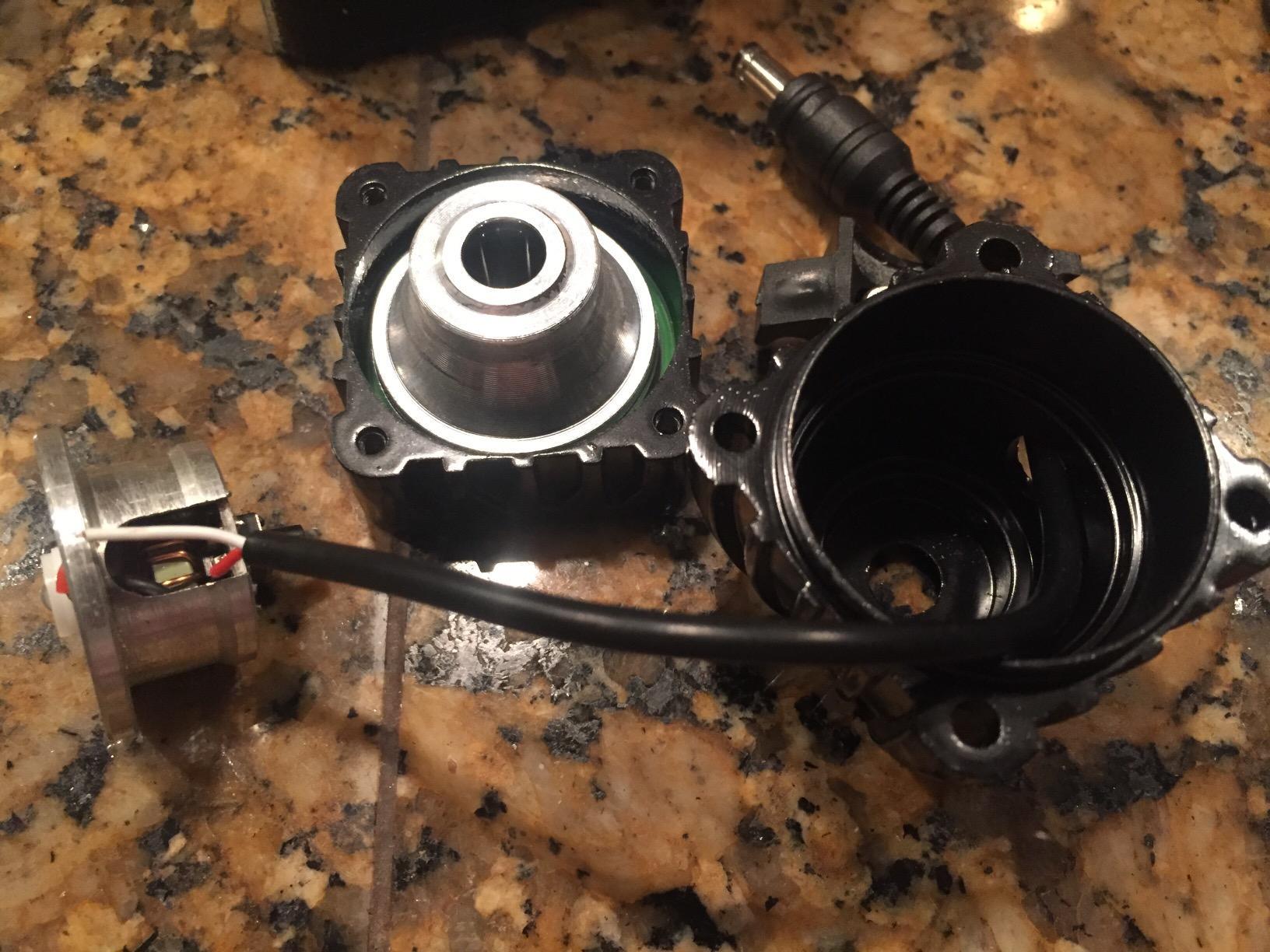
The Helios takes the same external-battery approach as the light above it and pushes the output to 1,600 lumens, which puts it into trail territory. It ships with interchangeable spot and diffuser lenses, plus helmet mount and head strap accessories, so it can move between bars and head.
On trail the diffuser changes everything. Without it the spot is narrow and frustrating on single-track, and owners regularly credit the lens with making the light usable rather than merely bright.
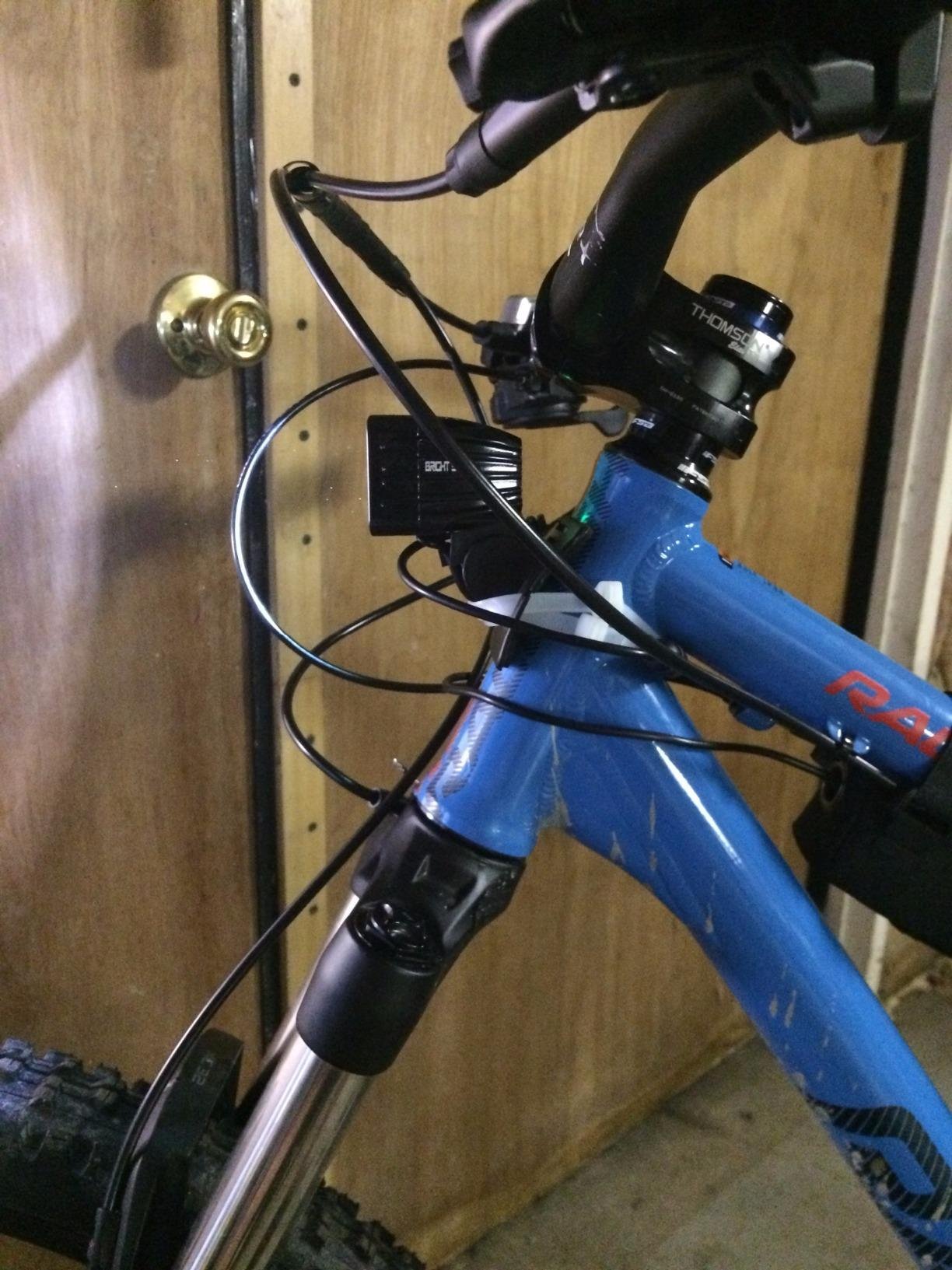
Claimed runtime is four-plus hours on high, six-plus on medium and sixteen-plus on low, and the aluminium housing with a clear glass lens feels a step up in finish from anything else in this roundup.
The weaknesses are all in the mounting and the cable. The O-ring handlebar mount is weak and lets the beam bounce and point downward over rough ground, and one long-term owner reported the power wire failing at the solder joint because there is no strain relief. Several reviewers also note that leaving the light plugged in drains the battery.
Who should buy the Helios
Gravel and trail riders who will ride in the diffuser most of the time. The lens-swapping design is the reason this light suits technical ground better than a fixed-beam headlight of similar power.
Riders who move lights between bike and helmet. The included head strap and helmet accessories make this the most flexible mounting setup in the guide.
Where it falls short
Weight. At 1.5 pounds for the light and external pack, this is the heaviest front-end setup here and you will feel it on long climbs and over repeated impacts.
Commuters. The O-ring mount drifting downward and the missing cable strain relief are poor fits for smooth tarmac and rough vibration, and there is no low-battery warning.
11. Cuytgsg 6-LED Headlight – Best for Maximum Output
Super Bright 7800Lumen Bike Light,6 LED Headlight & Taillight Set,5+5 Mode
Listed 9800 lumens max
6 LED
270 degree coverage
IPX6
0.33 kg
Pros
- Among the brightest and widest beams in this guide
- Three-minute install with a 360-degree rotating bracket
- Ten modes including SOS on the front and alternating red and blue on the rear
- Anodized aluminium body with IPX6 sealing
- Power bank output for long rides out
Cons
- Heaviest front light here at about 0.33 kg
- Mount can loosen and let the beam tilt downward
- Uses micro USB rather than USB-C and takes a long charge from empty
- Included taillight is much weaker and shorter-lived than the headlight
This is the light with the biggest number on it, and the biggest number in this guide. Six high-performance LED beads in a horizontal layout are listed at up to 9,800 lumens, with claimed illumination to 3,600 feet across a 270 degree spread. On paper it does everything.
In the hand, it is a wide wall of light. The horizontal arrangement is the point, because it fills the road edges rather than leaving dark corners beside the beam, and the 360-degree rotating bracket installs in about three minutes without tools.
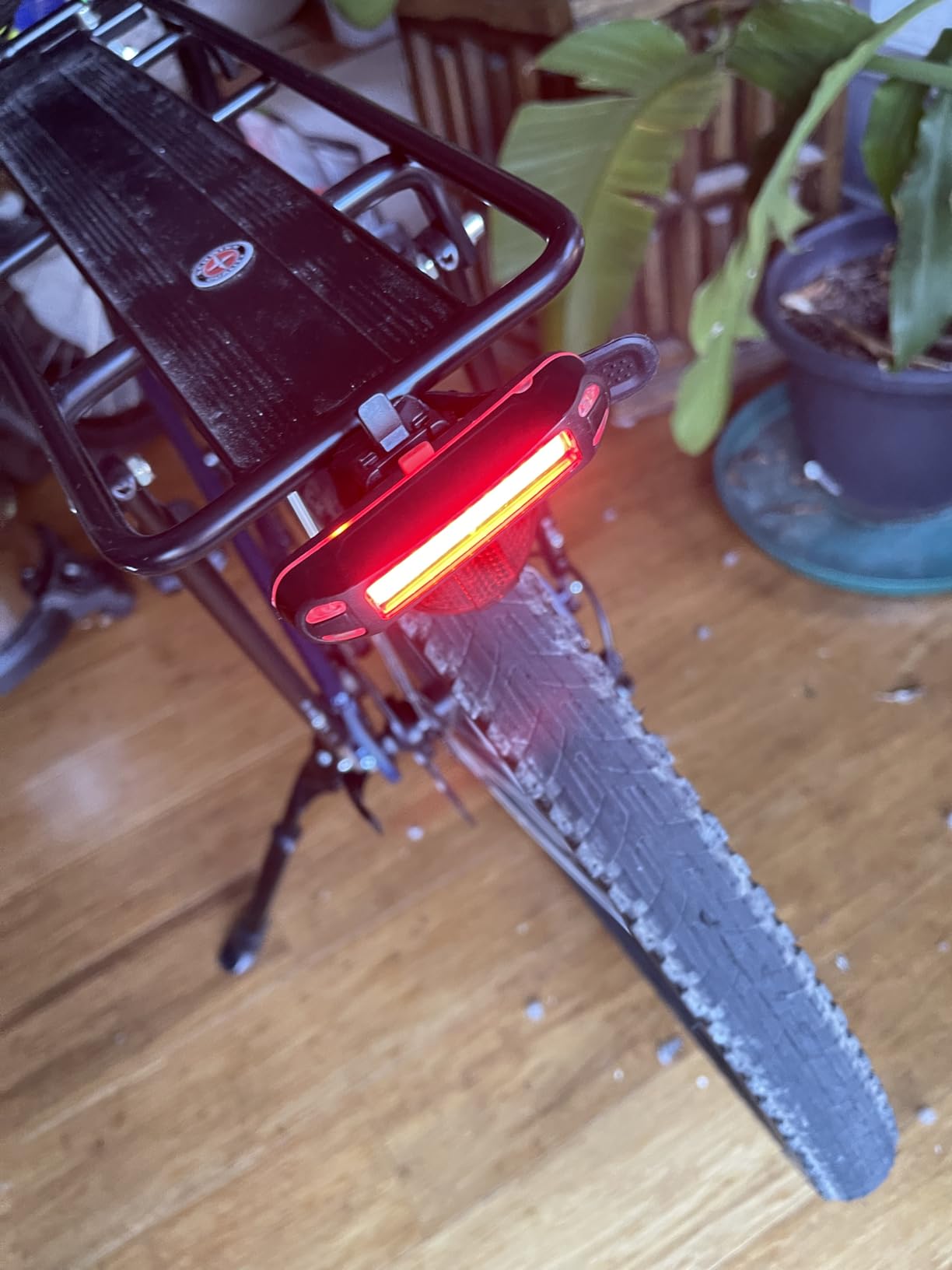
Ten modes run across the front and rear, including SOS on the headlight and an alternating red and blue pattern on the tail. Runtime is claimed at up to 72-plus hours from a single charge, though that figure comes from the lowest settings and drops sharply as output climbs.
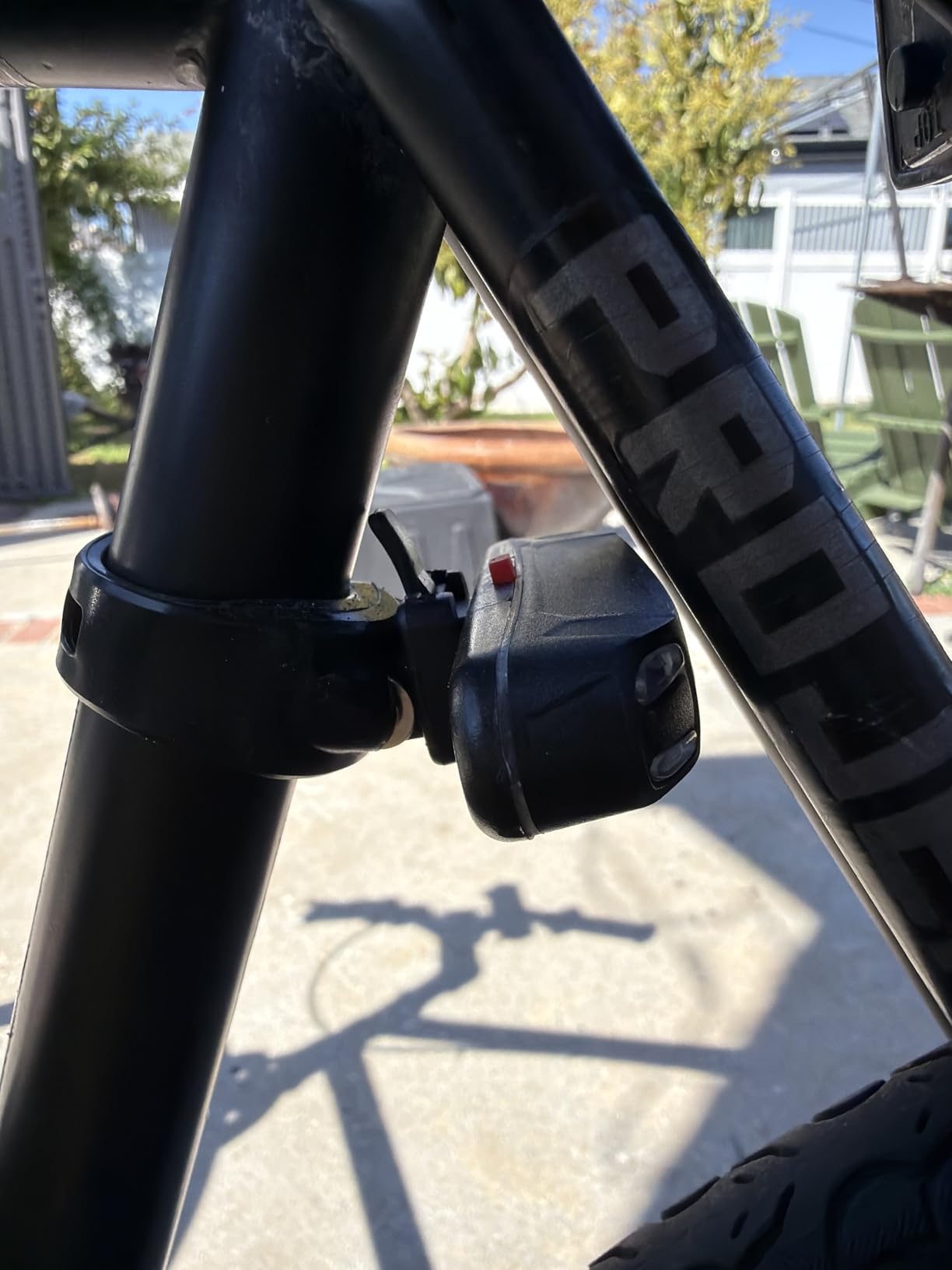
At 0.33 kg this is the heaviest front light we tested, and the mount can loosen enough over a ride to let the beam tilt downward, which on a road means pointing a 270 degree wash at the ground. It also uses micro USB rather than USB-C, and this version has no battery indicator at all.
Who should buy the Cuytgsg headlight
Trail riders and anyone riding genuinely unlit terrain. The width of the beam is the reason to pick it, since flood coverage at speed is what technical ground needs.
Long-distance riders who want one light that doubles as a power bank. The USB output charges a phone, and the anodized aluminium shell carries a 24-month warranty, the longest here.
Where it falls short
Road riders sharing space with drivers. At this output the beam is dazzling and there is no cut-off line, so you will be pointing an enormous amount of light straight at oncoming traffic.
Anyone who cares about weight or charging convenience. A third of a kilogram on the front of a bike is felt on rough ground, and micro USB with long charge times is a step backwards.
12. Zewdov G90 – Best for USB-C Riders
Zewdov 1000 Lumens Super Bright Bike Lights for Night Riding, 8+7 Modes Sturdy Aluminum Alloy Bicycle Lights Front and Rear, IP65 Waterproof & Rechargeable 9 LED Bike Headlight for Cycling Electronics
1000 lumens
USB-C charging
8 auxiliary floodlights
IP65
15 modes
Pros
- Focused 1000 lumen beam plus eight floodlights for wide coverage
- Punches through heavy fog and rain
- USB-C fast charging with a full headlight charge in about two hours
- IP65 aluminium casing tested to survive 5 ft drops
- Tool-free bracket and strap mounting
Cons
- Three different mode-switching methods take time to learn
- About four hours runtime at the highest brightness setting
- Headlight and taillight use separate cables in the kit
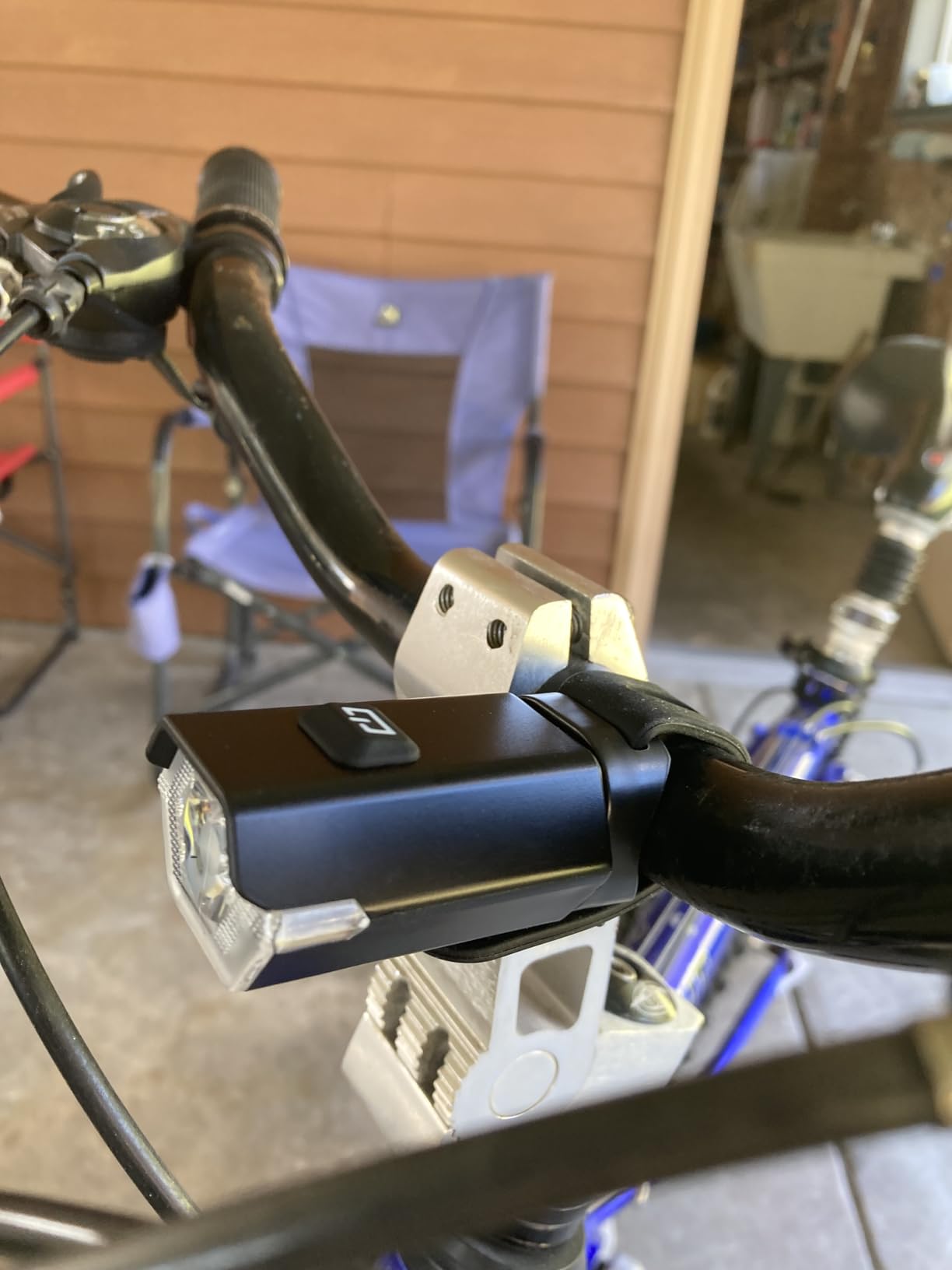
The G90 is the most complete light in this guide for the money, and the design decision that sets it apart is the eight auxiliary floodlights sitting alongside the main 1,000 lumen beam. You get a focused cone visible to a stated 650 feet plus the wide peripheral coverage that a pure spot design never provides.
Owners specifically call out its performance in fog and rain, which is the situation where a single tight beam gives you a bright dot in the distance and nothing at your feet. The combination here reads the road surface and the verge at the same time.
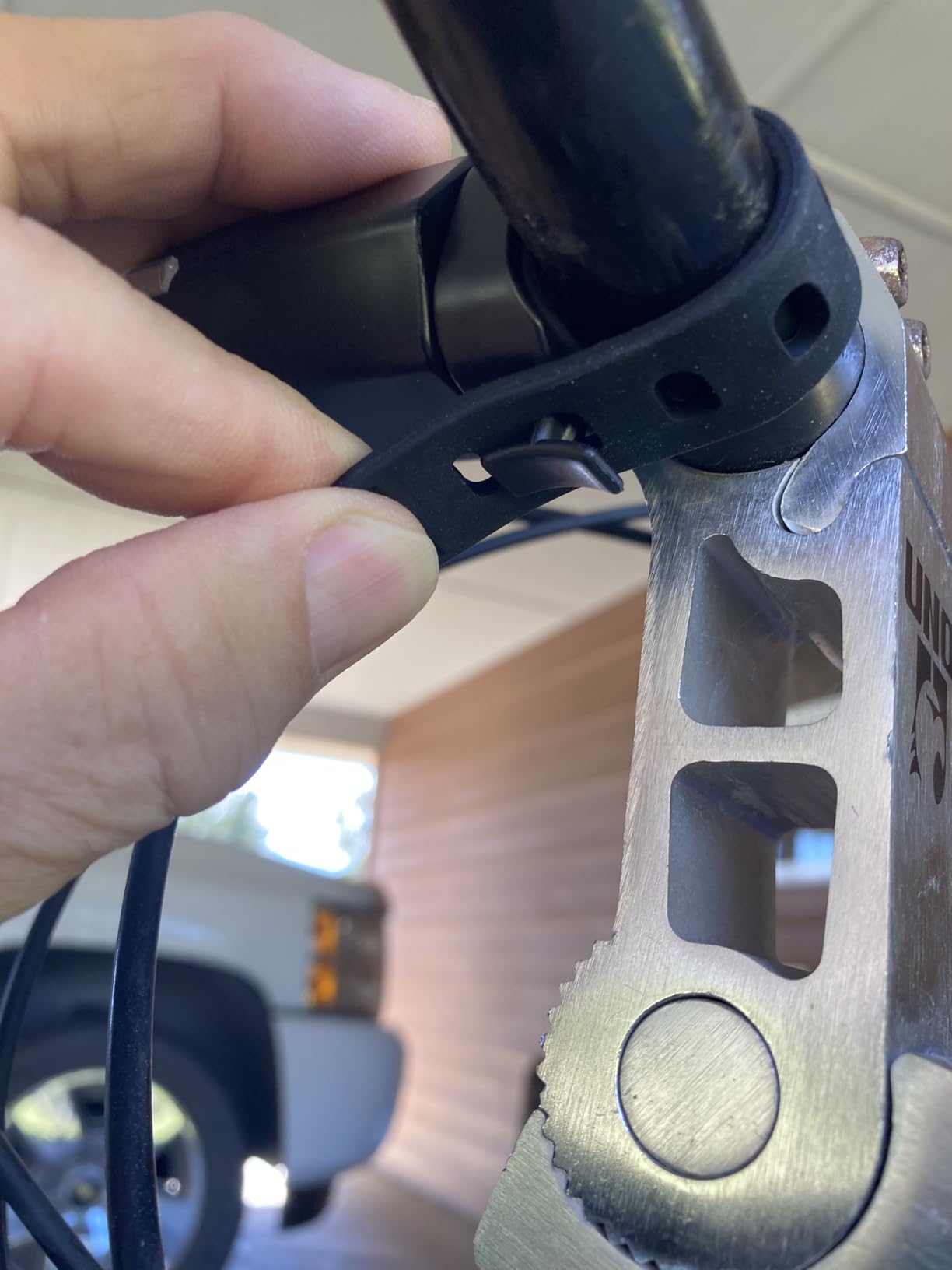
Fifteen total settings, eight on the headlight and seven on the taillight, are changed three different ways: single-click, double-click and long press. That sounds like a good idea and it is not, because it takes genuine practice to remember which gesture gives you the mode you wanted.
Charging is where it wins the comparison. A two-port USB-C cable fully charges the headlight in about two hours and the taillight in one, the aluminium alloy casing is rated IP65 and tested to survive five-foot drops, and the 2000 mAh headlight cell gives up to four hours at maximum brightness or nineteen at the lowest.
Who should buy the Zewdov G90
Commuters who ride in rain and fog as well as clear nights. The flood-and-spot combination is the most versatile beam shape in this roundup for mixed conditions.
Riders who want USB-C everywhere. One two-port cable charges both lights, which removes the separate-lead problem that troubles several other sets here.
Where it falls short
Riders who ride long distances at full output. Roughly four hours at the brightest setting is real-world limited, and planning a longer ride means planning to use a lower mode.
Anyone who wants simple controls. Three separate gestures for fifteen modes is the opposite of simple, and it slows you down when you need to change modes in traffic.
How to Choose Bike Lights for Night Riding
Almost every rider we talk to about bike lights for night riding asks the same question first: how bright is enough. Output is the easiest number to compare and the least useful one on its own, so here is the order we would work through the decision in.
How many lumens do you actually need?
Match the output to the darkest part of your route, not the average. A rider with one lit crossing and forty minutes of unlit lane needs the unlit figure.
Lit city streets: 200 to 400 lumens front. You are managing junctions and being seen.
Suburban unlit roads: 600 to 900 lumens front, with a moderate flood.
Fast unlit lanes: 900 to 1,200 lumens, weighted toward throw.
Gravel after dark: 1,500 lumens and up with a wide beam.
Trails: 2,000 lumens or more of flood.
Rear light at night: 40 to 100 lumens is plenty to be seen from behind.
Rear light in daylight or fog: 300 lumens or more, and flash patterns matter more.
One thousand lumens is genuinely bright for a bike light and is the right target for most riders on unlit roads. Twenty thousand lumens is not too bright in the sense of damaging your eyes. It is too much in the sense that it blinds every driver you meet, drains the battery in minutes and typically arrives without a cut-off line.
Beam pattern decides more than lumens
Lumens measure total light output. What you actually experience is lux on the road surface, and that is a product of the beam pattern. A wide flood lights the verge, the drain covers and the bottom of a pothole. A focused spot throws light down the lane but leaves the edges black. Most riders want both, which is why the eight-floodlight design on the Zewdov G90 stands out.
On roads shared with drivers, look for a cut-off line, a sharp horizontal boundary that keeps the beam off windscreens. Germany’s StVZO standard is the best-known example, and StVZO-compliant lights are measured in lux at the road surface rather than lumens. Compliance matters if you ride in Germany. Elsewhere, treat it as a useful proxy for a well-behaved beam rather than a legal requirement.
StVZO is not the only consideration. A light with a wide uncut beam is dazzling to oncoming traffic even when it is perfectly legal where you live. Tilting it down slightly or fitting a diffuser solves most of it.
What IP rating matters on a bike
IPX4 covers splashing water and is fine for city riding in rain. IPX5 handles heavy rain and directed spray. IPX6 survives powerful water jets, which in practice is the level you want for gravel, mud and winter commuting. IP65 and IP67 add dust protection. Anything below IPX4 is a light we would not use outside in the dark.
Note that IP ratings cover water, not impact. A light can be fully sealed and still be destroyed by the mount it sits in.
Runtime: size the battery against your ride
Quoted runtime is nearly always measured at the lowest setting, so treat the headline hours figure as a best case. The useful question is how long the light holds its useful output, which is why reviewers on candlepowerforums.com measure lumen output at three, seven, thirty and sixty minutes rather than trusting a printed number.
A rough rule: if your longest night ride is two hours, size the battery so the lowest usable mode gives you three hours. That buffer covers the fact that you will not spend the whole ride on low, and it covers the light failing early. For a three-hour unlit road ride, the 6400 mAh external packs in this guide are the reason they exist.
Battery capacity in mAh matters too. A larger cell gives longer runtime at the same output, but it also means longer charging and more mass on the bars.
Mounting: bar, out-front and under-computer
A silicone or rubber strap mount is quick and universal, and it is also the component most likely to tear. Every strap-mounted light in this guide has owners reporting broken or stretched straps, so check yours before a ride rather than after.
An out-front mount puts the light above and ahead of the bar, which improves the beam angle into corners and clears cables. An under-computer mount keeps the profile low and clean, which matters on an integrated cockpit where there is no bare bar to clamp to. When mounting under a computer, use a metal bracket. Plastic computer mounts have been reported snapping at speed, and the mount is what holds the light to the bike in a crash.
Helmet mounting is worth adding for winding unlit roads. A bar light points where the bars are pointed, and on a fast descent that is rarely where you want to look. Riders who run long winter night sessions often pair a bar light with a helmet light, which lets the beam move with their head.
Smart features: auto-dimming, remote switch, radar
Auto-dimming senses oncoming vehicles and drops the output so you do not blind drivers. Commuters tend to treat it as a clear win. Trail riders tend to hate it, and an entire thread on r/MTB asks for lights without the feature because the automatic behaviour is unpredictable when you need full output in a technical section. Decide which camp you are in before paying for it.
A wireless remote switch moves the control to your handlebar, which lets you change modes without taking a hand off the bar. On long rides this is a comfort feature rather than a safety feature. ANT+ bike computer integration does something similar: the light can be controlled from the computer, so mode changes happen through the device you are already looking at.
Radar rear lights are a distinct category. Instead of only flashing, they detect vehicles approaching from behind and warn you on the light itself, which matters most on unlit roads at speed rather than in town. None of the twelve lights here use radar, and if you ride unlit lanes regularly it is worth researching separately.
Bar-end lights are the cheapest redundancy available. A pair of front and rear bar-end lights costs almost nothing and keeps you visible if your main mount lets go mid-ride. Before any long night ride, a pocket backup light such as a slim rechargeable pair is the simplest insurance available.
A note on 18650 flashlights and dynamo lighting
Regular commuters on r/cycling report running a Convoy M2 class flashlight built around an 18650 cell as a bike light. It works well if you already have an 18650 charger and spare cells, because the cell format is the same. What it does not give you is a proper bracket, a cut-off line, side visibility or a rear light, so treat it as a stopgap rather than a system.
Dynamo lighting sits at the other end. A hub dynamo charges a battery as you ride, so runtime stops being a question at the cost of drag, weight and servicing. It is the right answer for tourers doing long distances daily and the wrong answer for anyone who wants to remove the light when they arrive. Dynamo systems fall outside this roundup because they are a different category of product entirely.
One more community tip worth repeating: buy a separate mount for each bike rather than moving one light back and forth. Riders who swap a light between a road bike and an MTB on the same evening report that the friction alone stops them riding the second bike after dark.
Frequently Asked Questions
How many lumens do I need for night cycling?
Match output to the darkest part of your route. Lit city streets need 200 to 400 lumens front, unlit suburban roads 600 to 900, fast unlit lanes 900 to 1200, gravel 1500 and up, and trails 2000 or more. Rear lights need only 40 to 100 lumens at night, rising to 300 or more for daytime visibility.
Is 1000 lumens bright for a bike light?
Yes. 1000 lumens is a genuinely bright figure for a bike light and is the right target for most riders on unlit roads, because it lets you read the surface far enough ahead to commit to a line at speed. Below 400 lumens suits lit streets, and beyond 2000 you are into trail territory where beam shape matters more than raw output.
Is 20000 lumens too bright for a bike light?
It will not damage your eyesight, but it is impractical for road use. Extreme output blinds oncoming drivers, usually arrives without a cut-off line, drains the battery in minutes and adds weight to the front of the bike. If you want very high output for trails, look for 1600 to 2500 lumens with a wide flood and a diffuser lens instead.
What are the best bright bike lights for night riding?
The Ascher 300-Lumen Set is the best all-round choice here, pairing a 300 lumen front with a 2000 mAh battery and 5 to 12 hours of runtime in one package. For genuinely unlit roads the Bright Eyes 1200-Lumen adds external-battery endurance, and for maximum output and beam width the Cuytgsg 6-LED headlight leads the group.
What are people’s recommendations for bike lights on Reddit?
The recurring advice across r/cycling and r/bikecommuting is to favour proven brands over unbranded units, because cheap lights fail within a season. Riders also praise lights that do not get hot and dim over a ride, recommend a replaceable battery over a sealed cell, and suggest pairing a bar light with a helmet light for winding unlit roads.
What are the best motorcycle lights for night riding?
Motorcycle lighting follows different standards entirely, including homologated beam patterns and amber daytime running requirements that do not apply to bicycles. Bicycle lights are not a substitute for motorcycle lighting in any legal sense. If you are researching motorcycle lighting, look for ECE or DOT approved headlamps rather than bicycle products.
Which Bike Light Should You Buy?
For most people reading this, the Ascher 300-Lumen Set is the answer. It does both ends of the bike, it charges over USB, it weighs 3.5 ounces for the pair and it ran a full week of commuting on one charge in our riding. Check the plastic clip before you leave the house and it will keep working for years.
If your routes include real darkness, change the pick rather than the brand. The Zewdov G90 gives you a 1,000 lumen focused beam plus eight floodlights and USB-C charging. For long unlit rides where runtime matters more than anything, the Bright Eyes 1200-Lumen with its 6400 mAh external pack is the safer buy, once you account for the bulk and the lack of a low-battery warning.
Whatever you choose, treat lights as a pair and buy a backup. A slim rechargeable pair in your jersey pocket costs nothing in weight and covers the one failure mode that ruins a night ride: a mount letting go on a rough road. Once the lights are sorted, it is worth thinking about where you keep the bike itself, since theft is a far more common night-riding problem than a dark lane. We covered that in our guide to the best bike racks for garage walls.
These are the best bike lights for night riding we rode with in 2026. Whichever you pick, charge it before you need it, and take the first ride with it in a familiar place.