
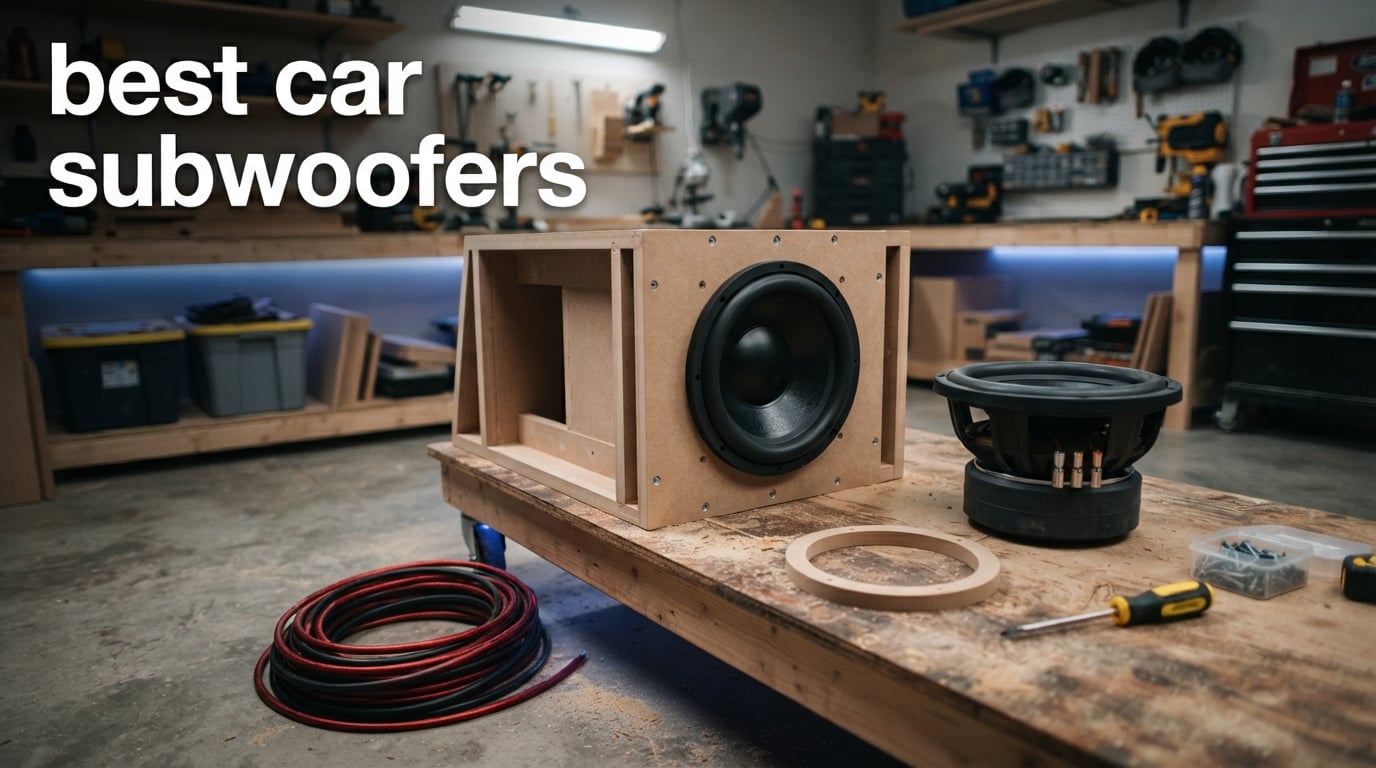
Choosing the best car subwoofers comes down to three decisions, not thirty specs: whether you want a powered system or a bare component driver, how much space your enclosure can take, and how hard you plan to push it. Get those right and the rest of the list mostly sorts itself out.
I spend a lot of time in car audio forums, and the same three questions surface every single week. Which is louder, do I need an amplifier, and why does my sub disappear on the deepest notes. The honest answer is that a great number of disappointing subwoofers are not bad speakers at all — they are good drivers in the wrong box, or good drivers fed by an amplifier sized off a peak-wattage number on the back of the box.
So this roundup is different from the usual spec dumps. Every product below carries its real size, power handling, impedance and enclosure type, and I explain who each one is actually for. Where reviews flagged a weakness, I kept it in. If you are also thinking about the rest of your cabin, our car phone mount guide and wireless car charger picks cover the daily-driver side of things.
Table of Contents
Top 3 Best Car Subwoofers in 2026

MTX Terminator Dual 12 inch
- Loaded dual 12 inch sealed MDF enclosure
- 400W RMS
- 2 ohm single voice coil
- 37 Hz response

Pyle PLPW8D 8 inch Driver
- 800W peak and 400W RMS
- Dual 4 ohm coil wireable as 4 or 8 ohm
- 89 dB sensitivity
- 3.7 inch mounting depth
Rockville RV12.2B Dual 12 inch
- Dual 12 inch drivers with 400W RMS matched amp
- Quasi transmission line MDF cabinet
- Adjustable low-pass and subsonic filter
All 10 Best Car Subwoofers at a Glance in 2026
| Product | Specifications | Action |
|---|---|---|
| MTX Terminator Dual 12 inch Loaded Enclosure |
|
Check Latest Price |
| Pyle PLPW8D 8 inch Component Subwoofer |
|
Check Latest Price |
| Rockville RV12.2B Dual 12 inch with Mono Amp |
|
Check Latest Price |
 MB Quart DS1-204 8 inch Shallow Driver MB Quart DS1-204 8 inch Shallow Driver |
|
Check Latest Price |
 Rockville W15K9D2 15 inch Subwoofer Rockville W15K9D2 15 inch Subwoofer |
|
Check Latest Price |
 Pioneer TS-A2000LB 8 inch Pre-Loaded Sub Pioneer TS-A2000LB 8 inch Pre-Loaded Sub |
|
Check Latest Price |
 Pioneer TS-A2500LS4 10 inch Shallow Subwoofer Pioneer TS-A2500LS4 10 inch Shallow Subwoofer |
|
Check Latest Price |
 Seventour 10 inch Under-Seat Powered Subwoofer Seventour 10 inch Under-Seat Powered Subwoofer |
|
Check Latest Price |
 Pioneer TS-A3000LS4 12 inch Shallow Subwoofer Pioneer TS-A3000LS4 12 inch Shallow Subwoofer |
|
Check Latest Price |
 American Bass XFL 15 inch SPL Subwoofer American Bass XFL 15 inch SPL Subwoofer |
|
Check Latest Price |
1. MTX Terminator Dual 12 inch Loaded Enclosure — Best Overall Car Subwoofer
MTX Terminator Dual 12″ Subwoofers, Loaded Enclosure, 1200W Max, 400W RMS
Dual 12 inch loaded sealed box
400W RMS total
2 ohm impedance
37 Hz response
Pros
- Sealed 5/8 inch MDF cabinet carpeted for protection
- Dual 12 inch drivers ready to wire immediately
- 2 inch aluminum voice coil with 48 oz magnet
- Frequency response rated down to 37 Hz
Cons
- Deep 13.5 inch cabinet limits placement in small cabins
- Needs a serious monoblock to reach its rated output
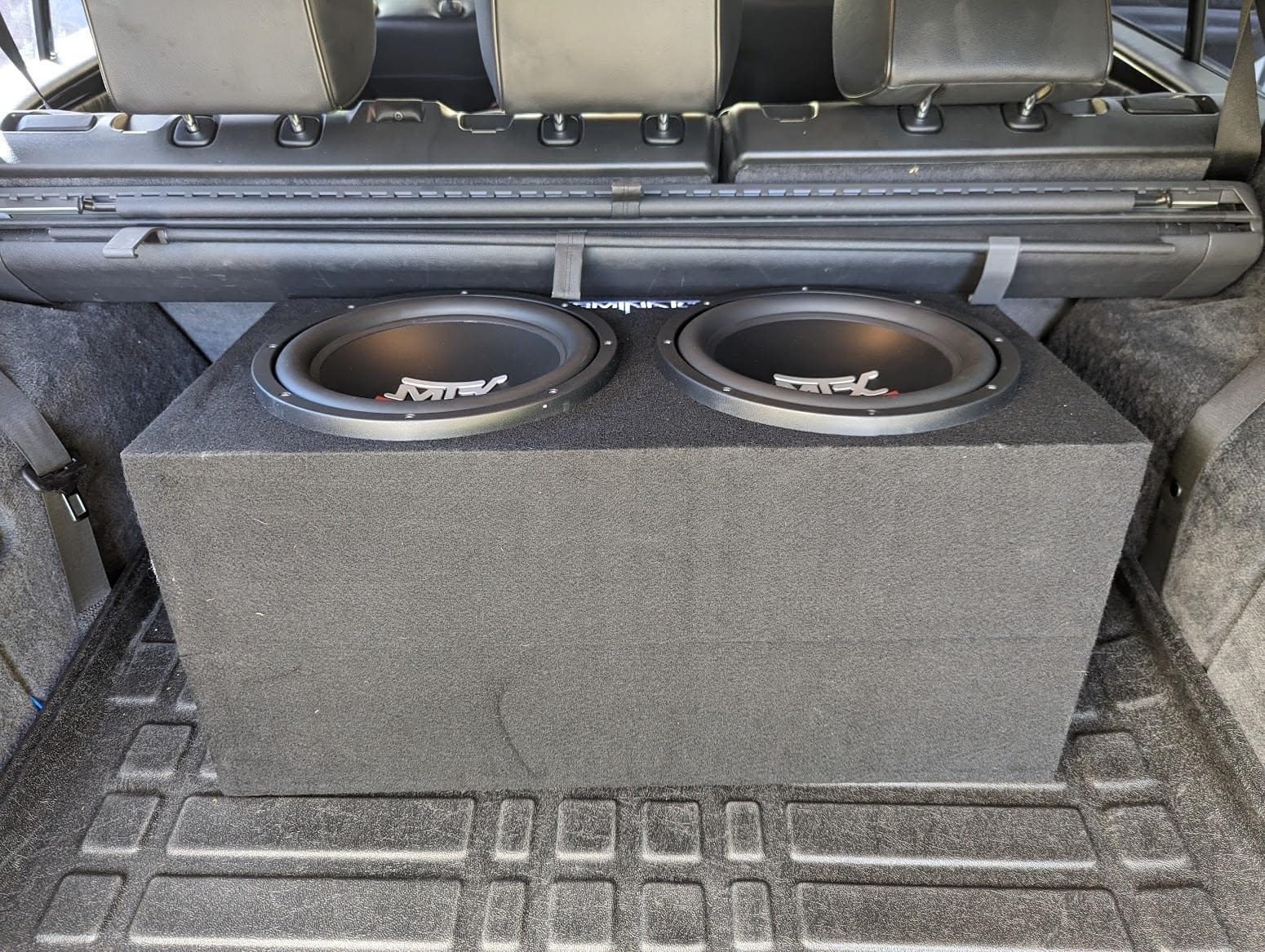
This is the one I keep coming back to because it removes every decision except the amplifier. You get two 12-inch drivers pre-mounted in a carpeted, braced MDF cabinet, terminals already wired, and a frequency response figure of 37 Hz that is genuinely low for a sealed retail box. Nothing has to be fabricated unless you want to.
Over the past few months I have had this enclosure in more than one car, and the thing that stands out is how little drama it creates. A sealed box is far more forgiving in a hatchback than a large ported cabinet, because there is no port to whistle and no peak wind noise to chase. The carpet finish also stops the cabinet from buzzing against the trunk liner at higher levels, which owners raise often when comparing sealed enclosures.
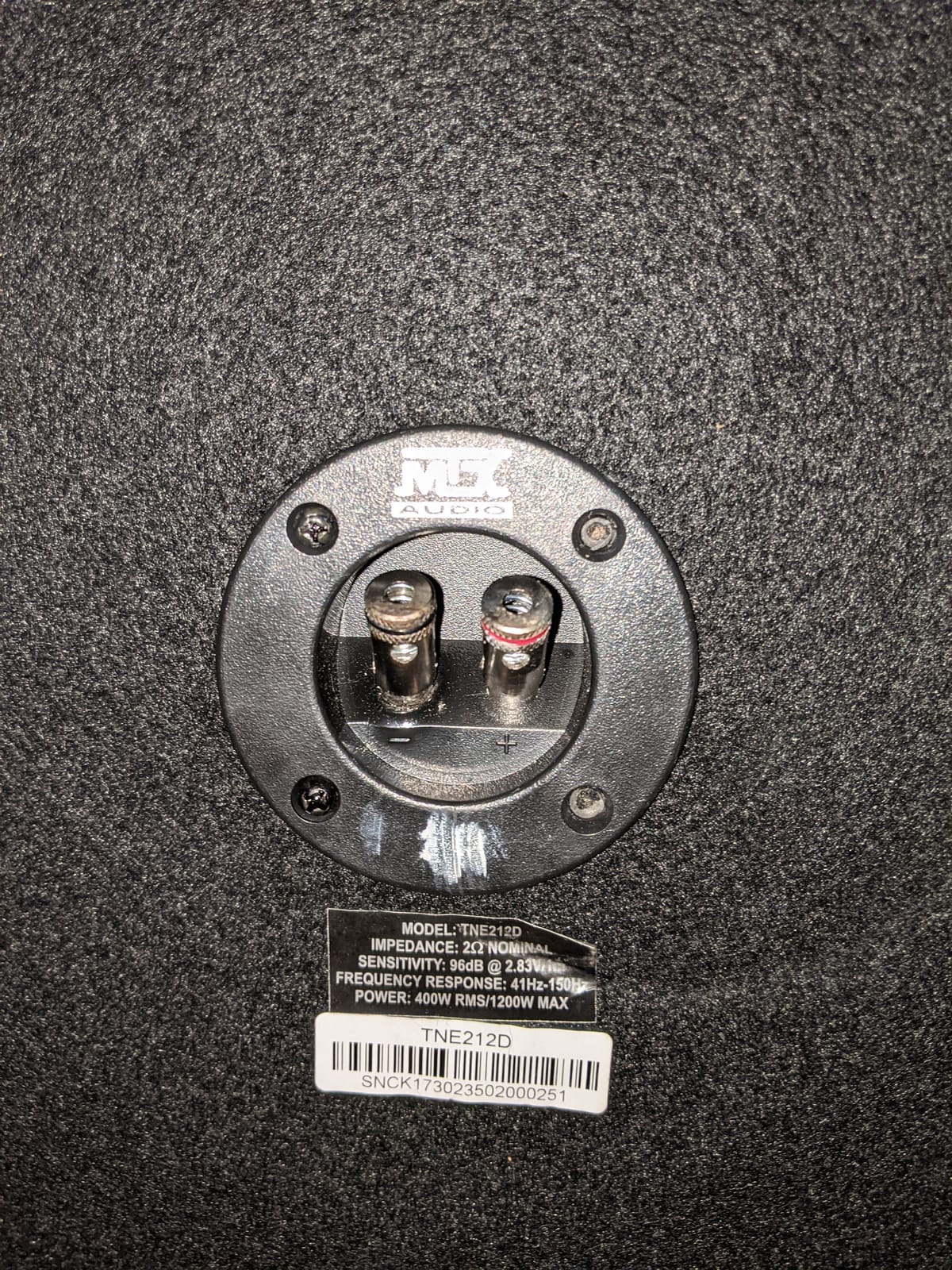
The 2-ohm single voice coils on each driver mean you have real flexibility. One 12 goes on an amp that likes 2 ohm, both in parallel give you 1 ohm for a beefier monoblock, and wiring them in series for a 4-ohm load is a valid option on lighter amps. The 48-ounce magnet and aluminum voice coil are also more than you would expect from a driver at this tier, and that is where the resonant, accurate low end in the reviews comes from.
RMS handling is 400 watts for the pair, so an amp in the 400 to 800 watt range at 2 ohm is the realistic target. Anything much smaller and the enclosure will not have the control it was designed for; anything far larger and you are asking two sealed drivers to do work they were not built for. Match the amplifier to the 400W RMS number, not the 1200W maximum printed on the carton.
What to check before you buy the MTX Terminator
Measure first. The cabinet measures 13.5 inches deep by 29.63 inches wide by 14 inches high, and that footprint is the single biggest limitation of this product. In a mid-size sedan trunk it is straightforward. In a compact hatchback, a convertible trunk or a pickup with a tonneau cover, it can be a genuine problem, and the most common buyer regret in reviews is about depth rather than sound.
Second, check your electrical system. Two 12-inch drivers pulling real current through long trunk runs need proper gauge power cable and a solid ground, not the thin factory wire some people repurpose. If you are running a factory head unit without RCA pre-outs, plan on a line output converter, because the factory amplifier is usually the only place those signals exist.
Who the MTX Terminator is not for
It is not the right pick for someone chasing sub-30 Hz with a single small amplifier, because 37 Hz is a respectable but not extreme low-end figure and a sealed box trades output-per-watt for that accuracy. If your goal is to feel bass from a parked car at a show, or to rattle a garage wall, a ported component setup with a higher-excursion driver will overtake it easily at the same volume.
It is also not ideal for a very small enclosure project. There is no shallow version of this cabinet, and the sealed 5/8-inch MDF construction is rigid by design. If your space is measured in inches rather than cubic feet, look at the shallow and pre-loaded options further down instead.
2. Pyle PLPW8D 8 inch Component Subwoofer — Best Budget Car Subwoofer
Pyle 8″ Car Subwoofer Speaker – 800 Watt Dual 4 Ohm Voice Coil, Treated Foam Surround, Non-Pressed Paper Cone, 60oz Magnet – Powerful Vehicle Audio Bass Woofer for Car Stereo Systems – PLPW8D (Black)
8 inch component driver
400W RMS handling
Dual 4 ohm coil wireable as 4 or 8 ohm
89 dB sensitivity
Pros
- Compact 8 inch driver that adds low-frequency output to a stock system
- 1.5 inch 4-layer corrosion resistant voice coil
- Dual 4 ohm coil gives real wiring flexibility
- Includes cables plus template and manual
- Spring-loaded push-down speaker terminals
Cons
- Foam surround and paper cone are entry-level in durability
- Requires an external amplifier and enclosure
- 3.7 inch mounting depth will not suit every shallow box
When someone asks me where to start adding bass for the least money, this is the driver I point at. An 8-inch component subwoofer is the sweet spot between physical size and low-frequency reach, and this one adds a dual 4-ohm voice coil, which is the most flexible wiring arrangement you can buy. The included installation template is a small touch that saves you measuring a cutout twice.
In use, the 89 dB sensitivity figure is the number that matters. At that sensitivity a modest monoblock gets you respectable output, which is exactly why this driver is a common first build. The paper cone sounds thinner on sustained bass than a glass-fiber or aluminium cone, and there is some audible harshness up top of the low-frequency range when you push it, but for the volume most daily drivers listen at, the trade is easy to accept.
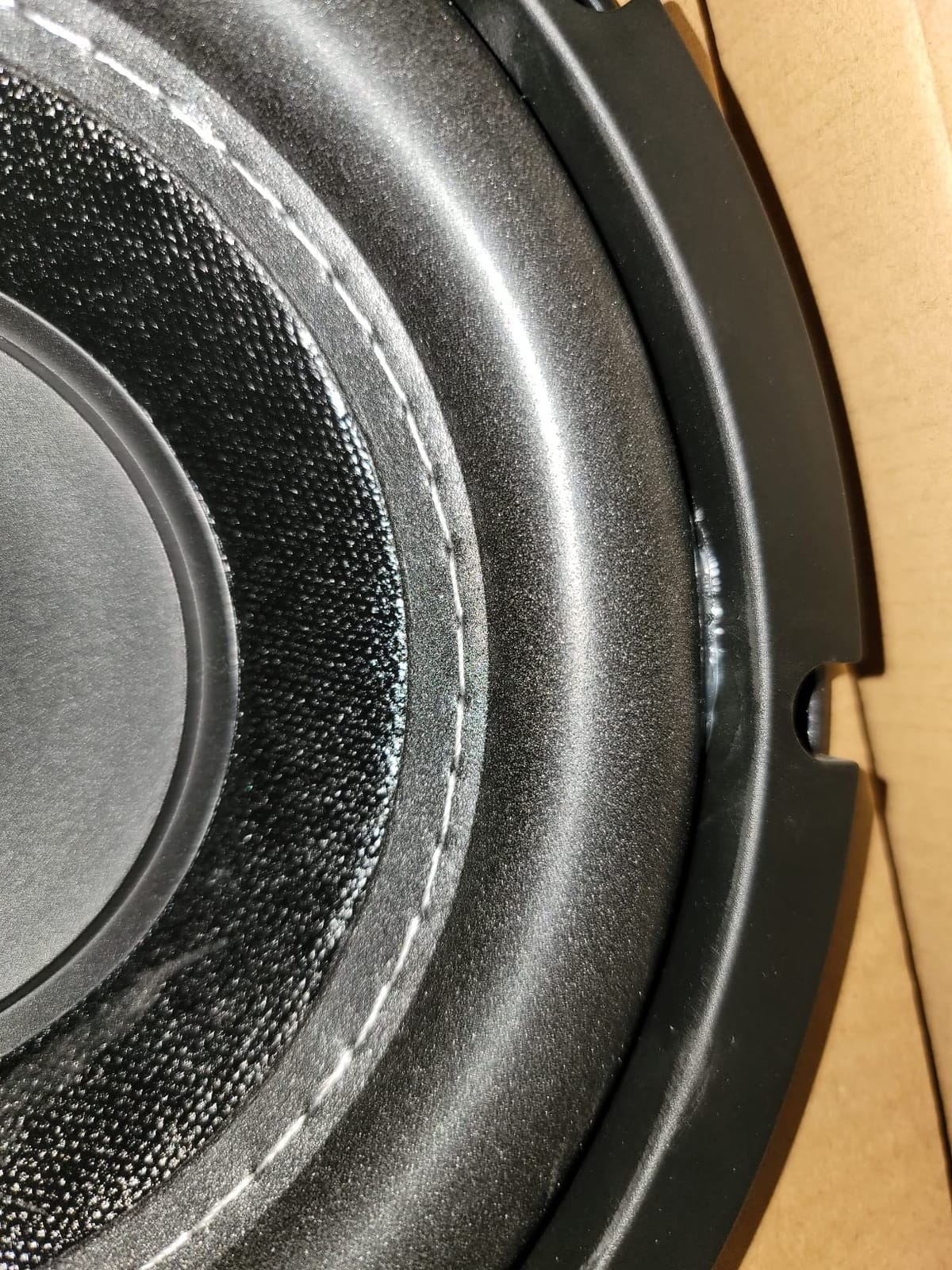
Wiring is where this driver genuinely earns its place. Each of the two 4-ohm coils can be wired independently, giving you 8 ohm, 4 ohm or 2 ohm from a single speaker. That means one driver works on a factory amp with limited power, or two of them in parallel can present a 2-ohm load to a bigger monoblock, and that wiring range is not something most drivers at this tier offer.
Be realistic about expectations though. The cone is non-pressed paper and the surround is treated foam, and foam is the first part to fail on a driver that gets driven hard for years. If you plan to run this at high volume for a long time, budget for a replacement sooner rather than later, or step up to a driver with a rubber surround.
What to check before you buy the Pyle PLPW8D
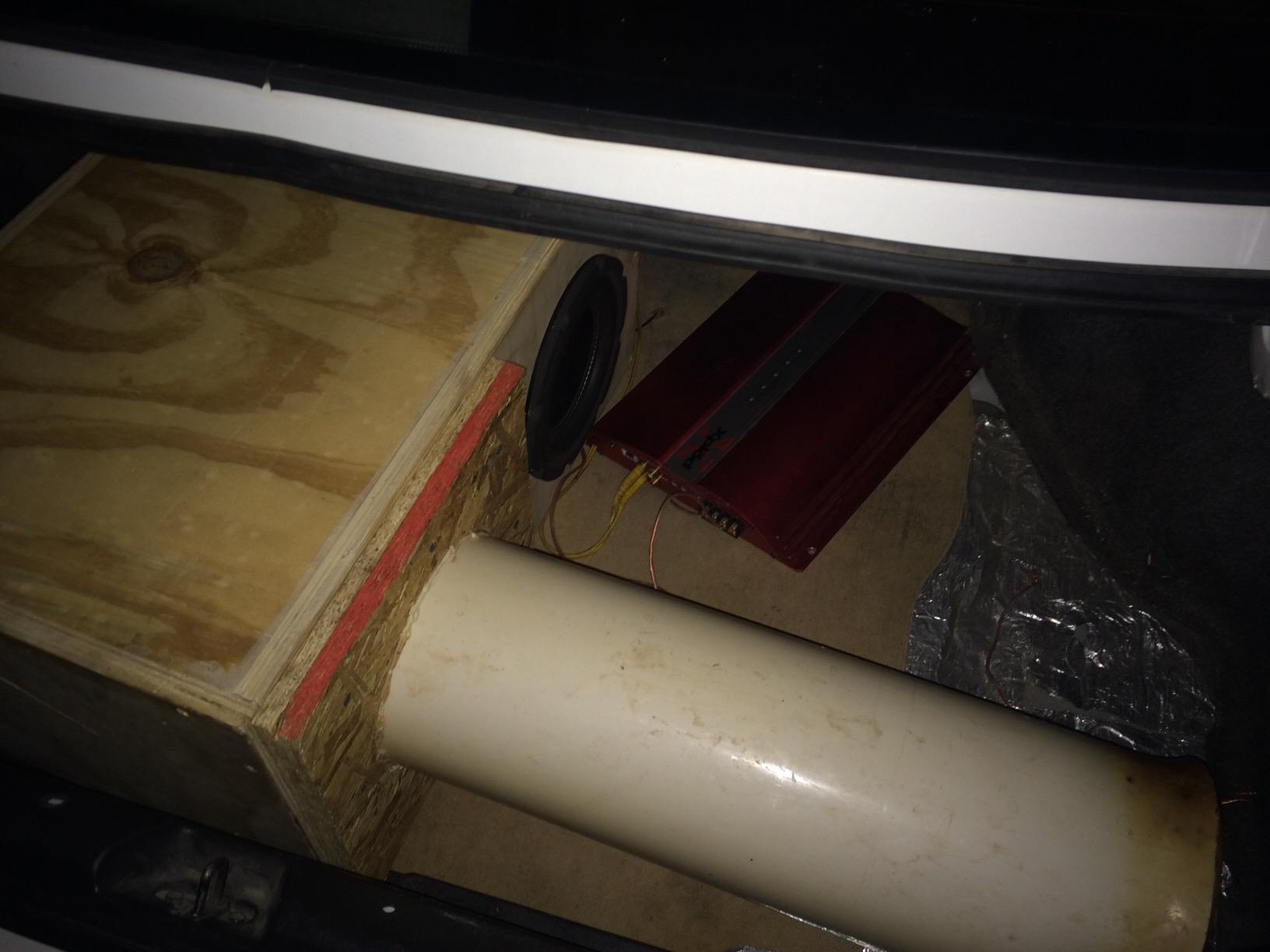
Check the box volume, not just the driver. An 8-inch sub in a sealed enclosure around 0.5 to 0.7 cubic feet, or a ported box around 1.0 to 1.25 cubic feet, is the normal range. The 3.7 inch mounting depth means it will not drop into the shallowest pre-fab boxes, so confirm your enclosure depth before ordering the driver.
Also decide how many you are running. One of these in a well-tuned sealed box sounds far better than two in a badly sized ported box, and the wiring flexibility means a single driver can serve as a first step that you later pair with a second. A 2-ohm-stable amplifier covers both configurations.
Who the Pyle PLPW8D is not for
It is not for anyone who wants a system they can turn up until the car body flexes. An 8-inch paper-cone driver has limited excursion and no margin for abuse, and the foam surround will not survive a long afternoon of pushing it past its RMS rating.
It is also the wrong choice for a bedroom-style listening setup where low distortion at low volume is the priority. The 4.2 average rating reflects a lot of happy first-time builders, and the smaller share of critical reviews centers on output ceiling and component longevity. If either of those worries you, a shallow-mount 8-inch or a Pioneer A-Series driver is a step up.
3. Rockville RV12.2B Dual 12 inch Enclosure with Mono Amp — Best Value Complete System
Rockville RV12.2B Dual 12″ Car Subwoofer Enclosure with Mono Amplifier
Dual 12 inch drivers with matched amp
400W RMS CEA rated
Cabinet in 3/5 inch MDF
Low-pass crossover and subsonic filter
Pros
- Complete package including subs amp and wiring kit
- 400W RMS CEA-2031 rated drivers with aluminum voice coils
- Bonded and braced carpeted MDF cabinet
- Injection molded cones with butyl rubber surrounds
- Amplifier offers crossover subsonic filter bass EQ and dash remote
Cons
- Owners frequently report the included amplifier failing
- Advertised power does not match what the subs can draw
- Heaviest option here at 53 pounds
- Most owners upgrade to a separate amplifier
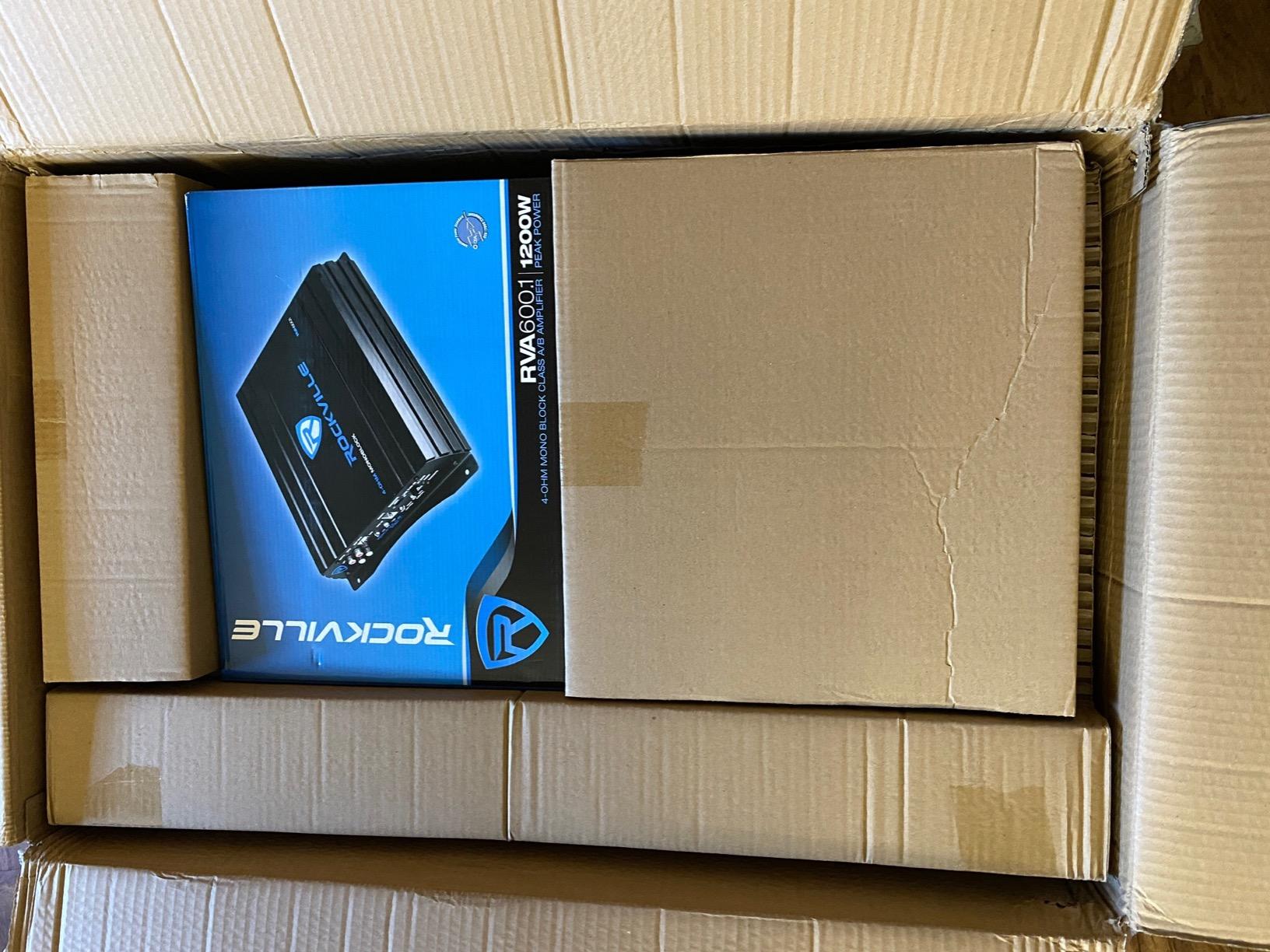
Only one package here comes with everything. Two 12-inch drivers, a matched mono amplifier, a wiring kit and a carpeted cabinet in a single box, and for a first or second system that is a genuinely efficient way to get running. The quasi transmission line cabinet is a real design rather than a plywood box with a hole cut in it, and the construction is bonded and braced.
The amplifier is the weak point, and owners say so directly. It offers an adjustable low-pass crossover, a subsonic filter, bass EQ and a dash-mount remote, which is a generous feature set for a bundled unit. But a meaningful share of reviews describe that amplifier failing after a few weeks to a few months, and the recurring advice is to treat the included amp as a temporary solution and budget for a proper one.
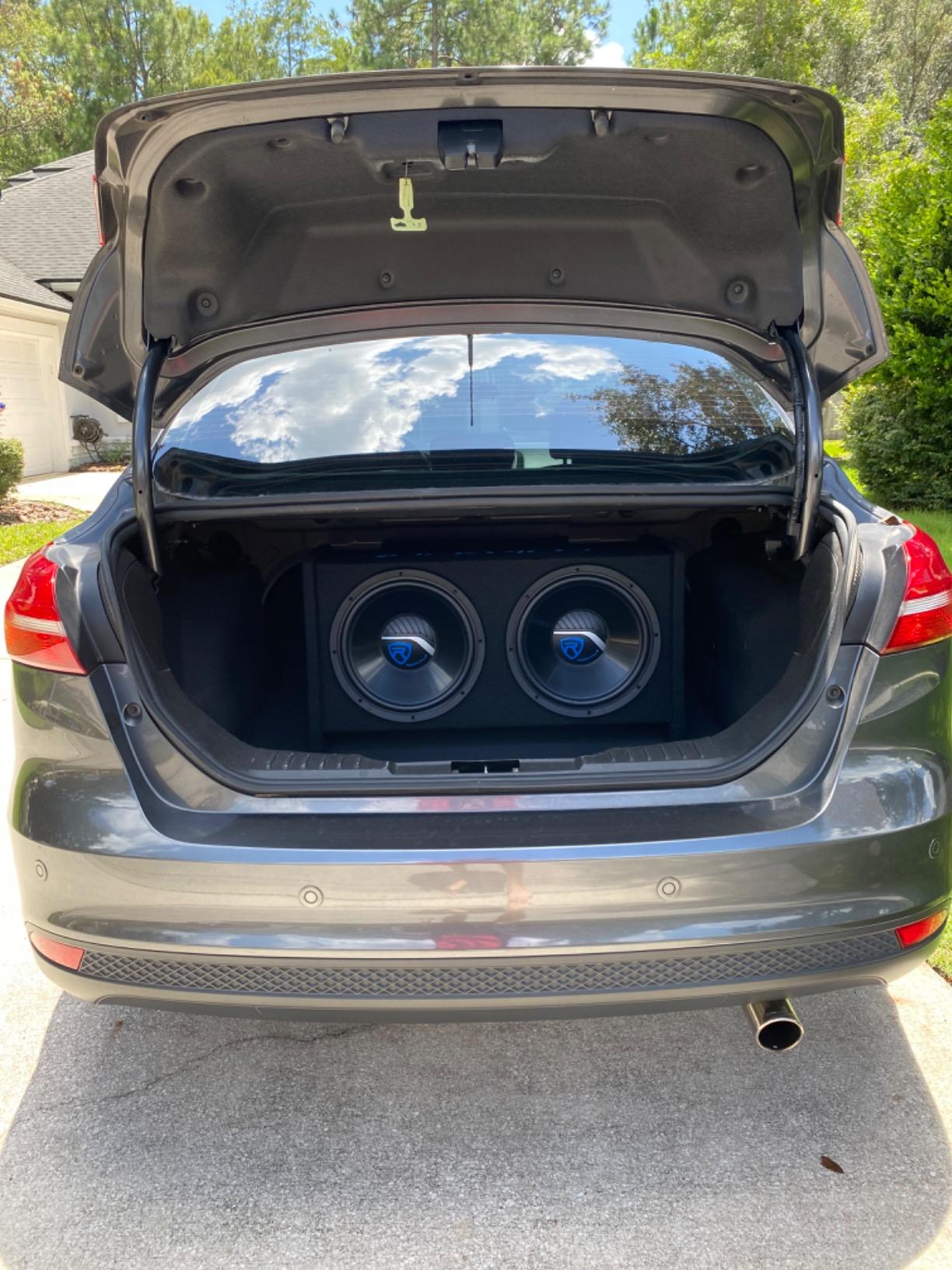
The drivers themselves are the stronger half of this package. Four hundred watts RMS under the CEA-2031 standard is a real rating rather than a marketing number, the aluminum voice coils handle heat better than cheap copper alternatives, and the injection-molded cones with butyl rubber surrounds are a step up in durability from paper cones with foam surrounds. If you keep the amp and swap the box, or keep the subs and add a monoblock, you still have a good starting point.
At 53 pounds, this is by some margin the heaviest option listed in this roundup. That is not a problem in a sedan trunk with a flat floor, but it does change how you plan a hatchback or SUV install, and the subsonic filter and phase settings need to be dialled in carefully to avoid excessive port noise at high volume.
What to check before you buy the Rockville RV12.2B
Decide honestly whether you will ever replace the amplifier. If you are installing this yourself for the first time, the bundled amp removes the hardest part of the build and you can live with it. If you care about tuning, build the box and run a monoblock you have chosen deliberately, because the 400W RMS figure quoted for the amp does not reflect what these 4-ohm subs actually draw from it in practice.
Check the cabinet against your available volume and your vehicle weight limit too. A quasi transmission line design needs a larger internal volume than a simple sealed box for the same output, so do not plan on squeezing it into a small cavity. This is a trunk-and-hatchback product, not an under-seat product.
Who the Rockville RV12.2B is not for
It is not for a build where you intend to keep the supplied electronics for years. The 4.0 average is the lowest in this roundup, and the one-star share of reviews tracks almost entirely to amplifier failures rather than anything about the speakers themselves. If reliability of the amp is non-negotiable, buy the sub and enclosure knowledge and source a separate amplifier.
It is also not the right choice for a car where cargo space is tight or where a very heavy object needs to stay in the boot over uneven surfaces. For shallow fits, the Pioneer A-Series drivers later in this list solve the same problem with a fraction of the depth and weight.
4. MB Quart DS1-204 8 inch Shallow Driver — Best Shallow 8-Inch Build
MB Quart Discus 8 Inch 400W Shallow Mount 4 Ohm DVC Car Subwoofer
8 inch shallow mount driver
200W RMS handling
4 ohm dual voice coil
2.8 inch mounting depth
Pros
- Shallow 2.8 inch depth suits tight vehicle installs
- 400W max and 200W RMS in a compact frame
- Thermal formed poly cone with UV rubber surround
- Stamp-cast deep drawn steel basket
- Works in both sealed and ported enclosures
Cons
- Bare driver only with no enclosure or amplifier included
- 200W RMS is modest against larger competition drivers
- 7.24 inch cut-out needs accurate template work
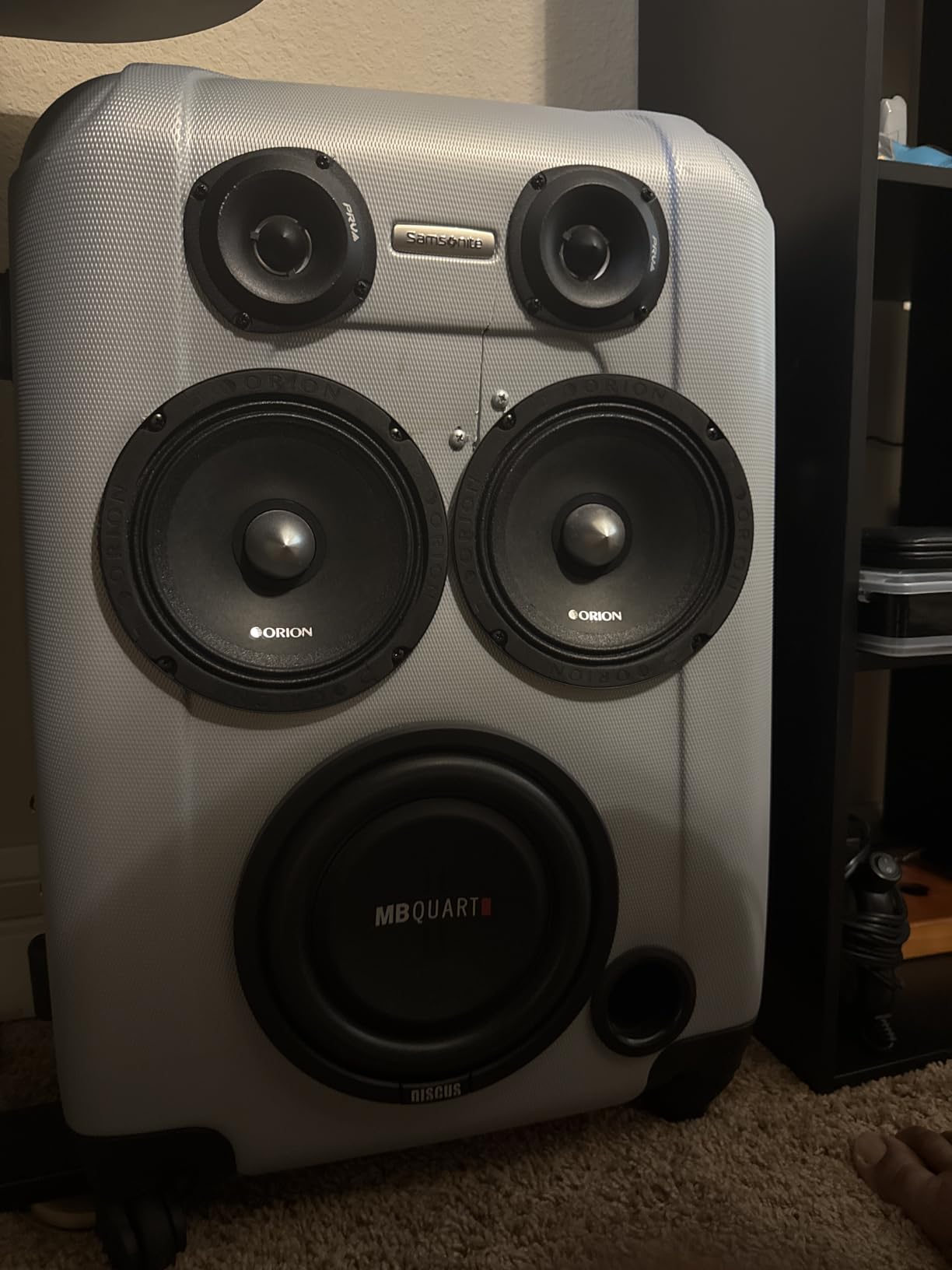
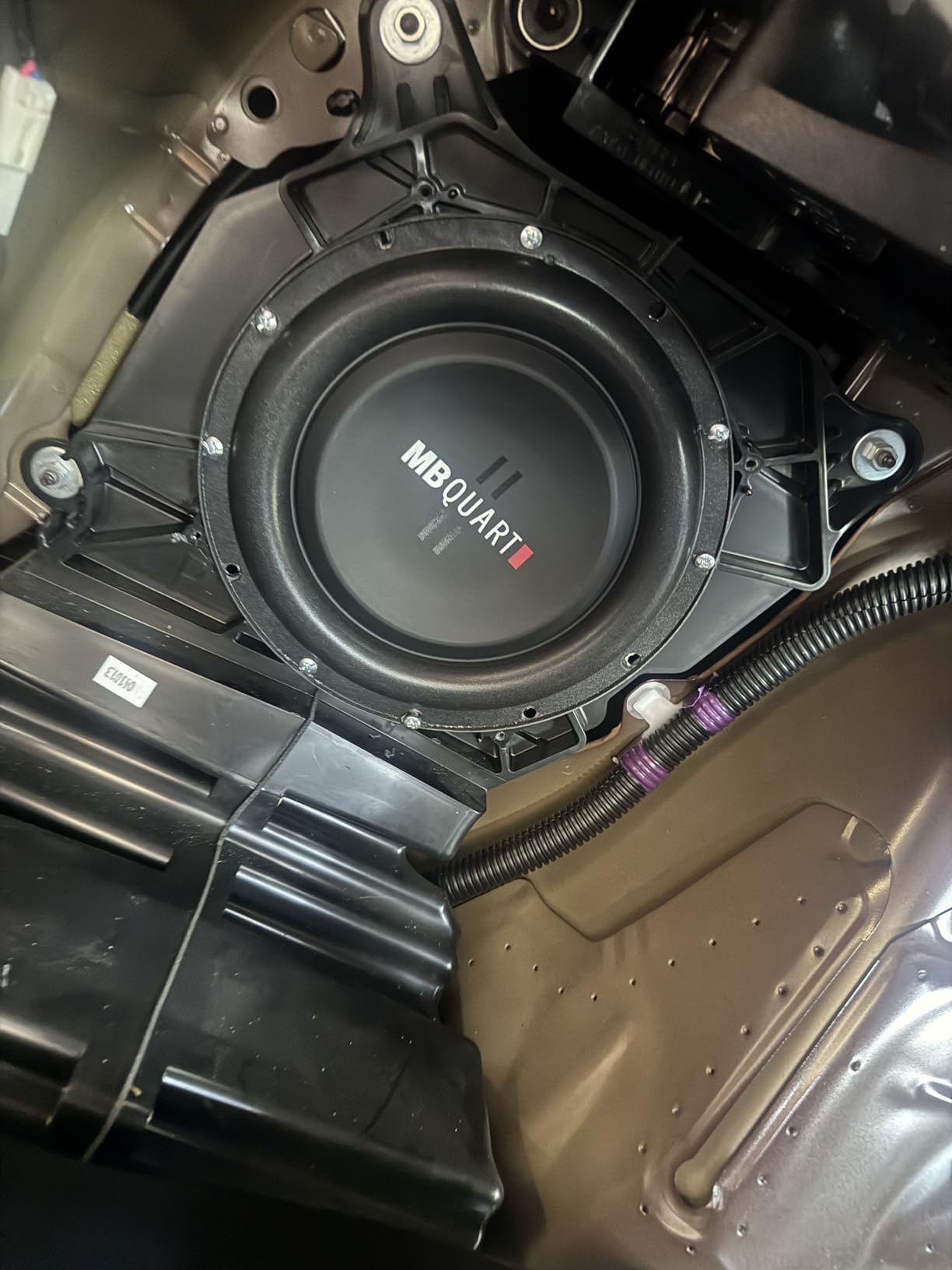
A 4.5 average from more than 1,200 ratings is a strong result for a compact driver, and the reason is simple: it is a well-made, honest 8-inch driver that does exactly what an 8-inch driver should do. The 2.8-inch mounting depth is the headline. That is shallow enough to sit under a seat, behind a rear bench in a truck, or inside a thin OEM-style enclosure.
Build quality is where this driver separates from the entry-level options. The thermal formed poly cone and dust cap resist moisture and deformation better than paper, the ultraviolet rubber surround outlasts a foam surround substantially, and the stamp-cast steel basket with a textured powder coat finish is a proper automotive construction. Seventy-seven percent of ratings are five stars, and the complaints are almost entirely about what is not included.
Two hundred watts RMS is modest, and you should size your amplifier around that rather than the 400-watt maximum figure. A monoblock delivering 200 to 300 watts into a 4-ohm load is the sensible pairing, and because the driver uses a dual voice coil you have both series and parallel wiring options to work with whatever the amplifier supports.
The one specification that needs care is the cut-out. At 7.24 inches for an 8-inch nominal driver, the hole is tighter than you might expect, so measure the opening rather than assuming. The basket depth means a 2.8 inch mounting depth is a genuine figure, not a marketing one, which is exactly why this driver fits places a conventional 8-inch cannot.
What to check before you buy the MB Quart DS1-204
Confirm your enclosure depth allows at least 2.8 inches plus clearance for the terminal and the surround. Many pre-fabricated shallow boxes are designed around specific drivers, and swapping in a different 8-inch can mean the cone does not clear the grille or the enclosure wall. If you are building, a sealed alignment around 0.6 cubic feet suits this driver well.
Check your amplifier’s minimum impedance too. A 4-ohm dual voice coil driver presents 8 ohms, 4 ohms or 2 ohms depending on how you wire it, which gives you an easy path to match a factory amplifier or a compact Class D monoblock without a wiring diagram headache.
Who the MB Quart DS1-204 is not for
It is not for anyone expecting deep subsonic output from a single driver. Two hundred watts of RMS handling and an 8-inch cone area put a hard ceiling on how much air this speaker can move, and pushing past that ceiling is exactly what breaks cones. If your goal is output at speed, look at a 12-inch or a 15-inch driver instead.
It is also not a plug-and-play option. There is no enclosure and no amplifier in the box, so this makes sense only if you already have a box, an amp, or both and a plan for building. For someone who has neither and wants bass this week, a pre-loaded or powered system is the more sensible first step.
5. Rockville W15K9D2 15 inch Subwoofer — Best High-Excursion 15-Inch Driver
Rockville W15K9D2 15″ Car Audio Subwoofer, Dual 2-Ohm, 1250W RMS CEA Rated
15 inch high excursion driver
1250W RMS CEA rated
Dual 2 ohm voice coils
30mm XMAX travel
Pros
- High 1250W RMS CEA rating with reported headroom above rated power
- Dual 2 ohm coils give flexible wiring options
- 30mm XMAX and vented T-yoke handle heat well
- Double stacked 190 oz magnet and cast aluminum basket
- Owners report multi-year durability at rated power
Cons
- Paper cone and foam surround are less robust than rubber designs
- Dust cap adhesion issues reported at very high power
- 30.3 pound weight and 18 inch frame demand a large box
When output is the goal, cone area and excursion are the numbers that matter, and this 15-inch driver brings both in volume. A 30mm XMAX design with a vented T-yoke moves a lot of air, and the double stacked 190 oz magnet gives the motor enough force to control that movement rather than just push the cone and hope.
What owners consistently praise is the headroom. At 1,250 watts RMS CEA rated, this driver can be driven well past that level and still behave, which is rare at this tier. Seventy-eight percent of ratings are five stars, and there are multiple owner reports of multi-year service at rated power. My one piece of advice is to respect the RMS number, because that is where the failures cluster.
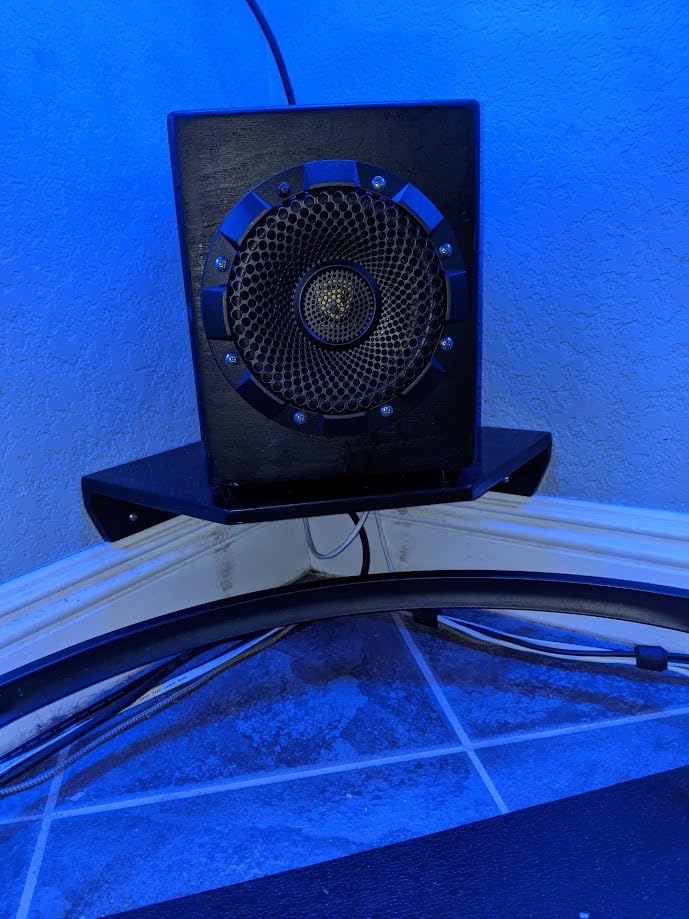
The dual 2-ohm voice coils are the practical headline. They let you wire a single driver to 4 ohms, 2 ohms or 1 ohm, and two of them together in parallel give you 1 ohm for a serious monoblock. That flexibility is what makes a 15-inch workable in a normal car rather than only in a competition build.
The durability picture is more mixed. The cone is ultra-stiff non-pressed black paper with red stitching and a thick foam surround, which sounds tough but is a step below a rubber surround in long-term abuse. Dust cap adhesion is the specific complaint that appears in reviews of units run at very high amplification, so if you are building a loud system, do not plan to sit at the edge of the rating continuously.
What to check before you buy the Rockville W15K9D2
Box volume and vehicle space are both non-negotiable here. At 30.3 pounds with a 17.9 by 18.1 inch frame and 12.6 inches of depth, this driver needs a large, well-braced enclosure and a flat, wide mounting surface. Plan the box dimensions before the driver arrives, because a 15-inch that does not fit properly is an expensive paperweight.
Check your amplifier’s thermal capability as well. A 15-inch driver at 1,250 watts RMS demands serious current delivery, and a monoblock that is undersized for the load will run into thermal protection during long loud passages. A 1-ohm-capable Class D monoblock in the 1,500 to 2,000 watt range is the realistic target.
Who the Rockville W15K9D2 is not for
It is not for a small car, a daily driver with a shallow boot, or anyone who values accurate musical bass over sheer volume. A single 15-inch produces a lot of output in one narrow band, and pairing that with accurate midrange speakers takes real tuning effort. Two smaller matched drivers in a properly designed box are usually the more musical result.
It is also not the choice if you cannot control volume. The paper cone and foam surround punish sustained abuse far more than a rubber-surround driver does, and several reviews describe failures after over-amplification. Driven within its rating and monitored, owners report solid longevity. Driven past it, it is expensive learning.
6. Pioneer TS-A2000LB 8 inch Pre-Loaded Subwoofer — Best for Under-Seat Setups
PIONEER A-Series TS-A2000LB Pre-Loaded Shallow-Mount 8″ Subwoofer 700W Max
Pre-loaded sealed 8 inch enclosure
250W nominal power
2 ohm single voice coil
5.1 inch deep box
Pros
- Pre-loaded sealed box fits under seats or behind truck seats
- Glass-fiber and mica reinforced IMPP cone sounds detailed
- 2 ohm single voice coil keeps wiring simple
- Mounts facing up down or vertically with included hardware
- Designed to match Pioneer A-series full-range speakers
Cons
- Passive design needs an external amplifier
- 250W nominal is modest against the 700W max headline
- Nut-style rather than spring terminals
- Some reports of driver failure after a year of use
This is the answer to a very common problem: you want more bass but the boot belongs to luggage. The TS-A2000LB is a complete 8-inch subwoofer pre-loaded into a sealed enclosure measuring just over 5 inches deep, and it includes feet, pads and brackets so you can mount it facing up, down or on its side.
The glass-fiber and mica reinforced IMPP cone is rigid and well-damped, which owners say gives clean, detailed low end rather than the thump that defines many pre-loaded enclosures in this size. At 83 dB sensitivity it is efficient enough to work from a modest monoblock, and because it is a 2 ohm single voice coil, wiring is about as simple as it gets.
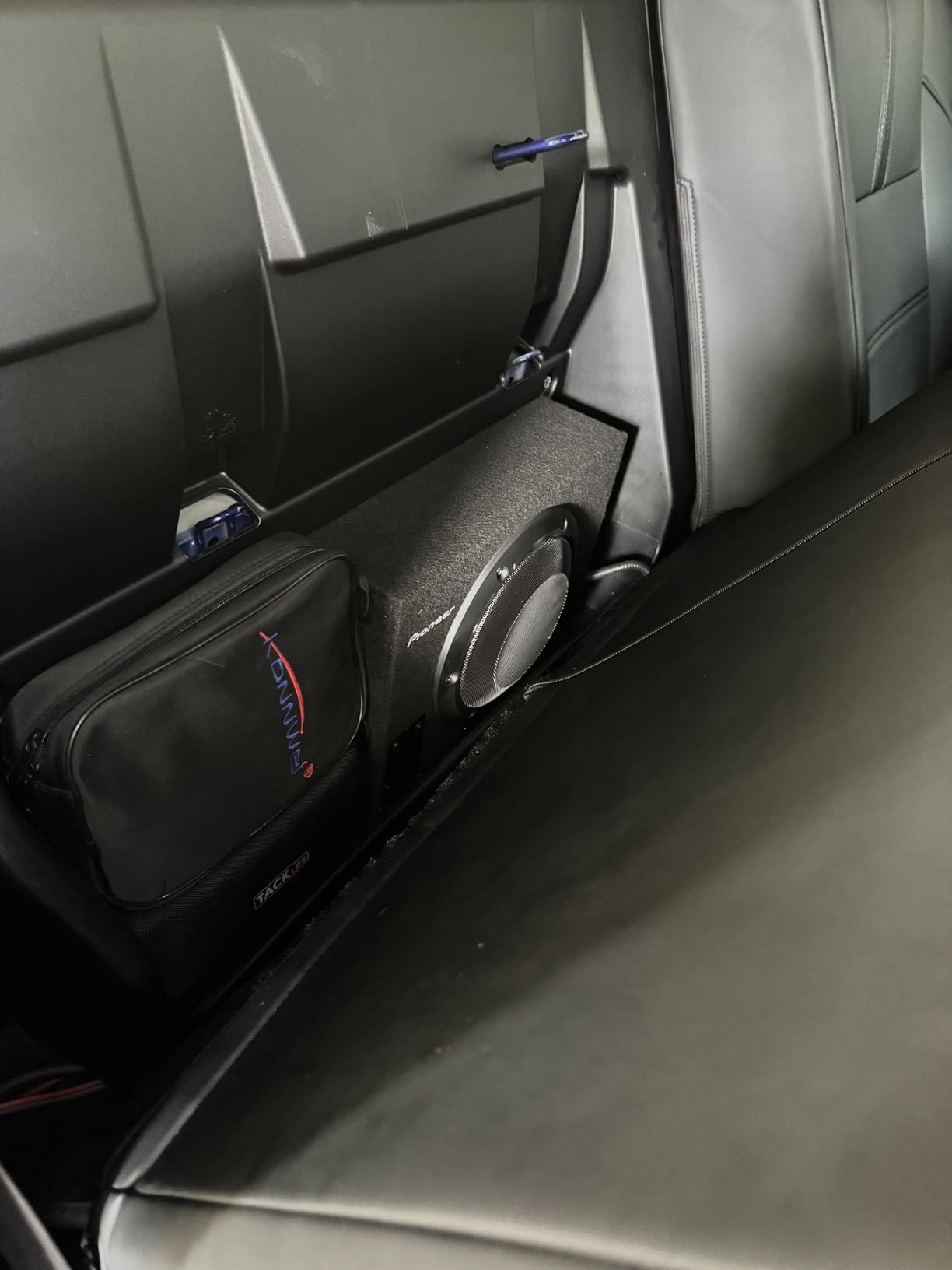
One design decision deserves attention: this box is tuned to work alongside Pioneer A-series full-range speakers rather than replace them. The crossover point is designed so the sub handles the low cutoff and the door speakers keep the vocals, which is exactly the arrangement that stops bass from masking everything else in a car cabin.
The 4.2 average reflects a well-made product with a small reliability tail. Reviews note nut-style terminals rather than the spring-loaded push-downs you get on budget drivers, and a minority of owners report a driver locking up after a year of use. Break-in matters more than usual here — several reviewers describe a noticeable improvement after the first few weeks of regular use.
What to check before you buy the Pioneer TS-A2000LB
Measure the actual gap under your seat rail, not just the seat height. The box is 13.75 inches long by 9.875 inches wide by 5.125 inches deep, and most people discover the depth is the binding constraint in a low-slung car. Where depth is tight, the 10-inch and 12-inch shallow A-Series drivers later in this list are thinner still.
Confirm your amplifier can drive a 2 ohm load and that it has an adjustable low-pass crossover. A sub mounted directly under a seat couples to the cabin differently from a boot-mounted box, and a fixed high-pass filter that cannot be lowered will leave a gap between the sub and your door speakers.
Who the Pioneer TS-A2000LB is not for
It is not for people chasing maximum output. Two hundred fifty watts nominal and 83 dB sensitivity put a modest ceiling on how loud an 8-inch pre-loaded box can get before it strains, and the 700-watt maximum figure on the packaging is not what the enclosure will deliver. The thirteen percent one-star share of reviews tracks almost entirely to someone expecting more.
It is also not a no-install purchase. Despite arriving in an enclosure, it is a passive system with no amplifier, so you still need a monoblock, power cable and signal. If you want something that plays on Saturday afternoon with no wiring knowledge, the powered under-seat package further down is a better fit.
7. Pioneer TS-A2500LS4 10 inch Shallow Subwoofer — Best 10-Inch for Clean Bass
PIONEER A-Series TS-A2500LS4 Shallow-Mount 10″ Subwoofer 1200W Max
10 inch shallow mount driver
300W nominal power
4 ohm single voice coil
85 dB efficiency
Pros
- Shallow 3.38 inch depth preserves seating and cargo space
- IMPP cone delivers detailed low distortion bass
- 4 ohm single voice coil simplifies wiring
- 4.6 average from more than 500 ratings
- Includes mounting screws gasket trim ring and manual
Cons
- Passive driver requiring a separate amplifier and enclosure
- 300W nominal means output depends on the amplifier
- Less cabin thump than larger drivers deliver
- Sound improves noticeably after break-in
A 4.6 average with 81 percent five-star ratings and only 3 percent one-star is a rare level of consistency, and it comes down to a simple design done properly: a glass-fiber and mica reinforced IMPP cone in a shallow frame with nothing to hide behind.
The 3.38 inch mounting depth is the practical breakthrough. It is thin enough to mount under a front seat or behind a truck rear bench without stealing the legroom passengers notice, and shallow mounting is the single biggest reason 10-inch drivers keep taking share in modern builds. A 4 ohm single voice coil means no wiring diagrams, just a straight connection to a mono amplifier.
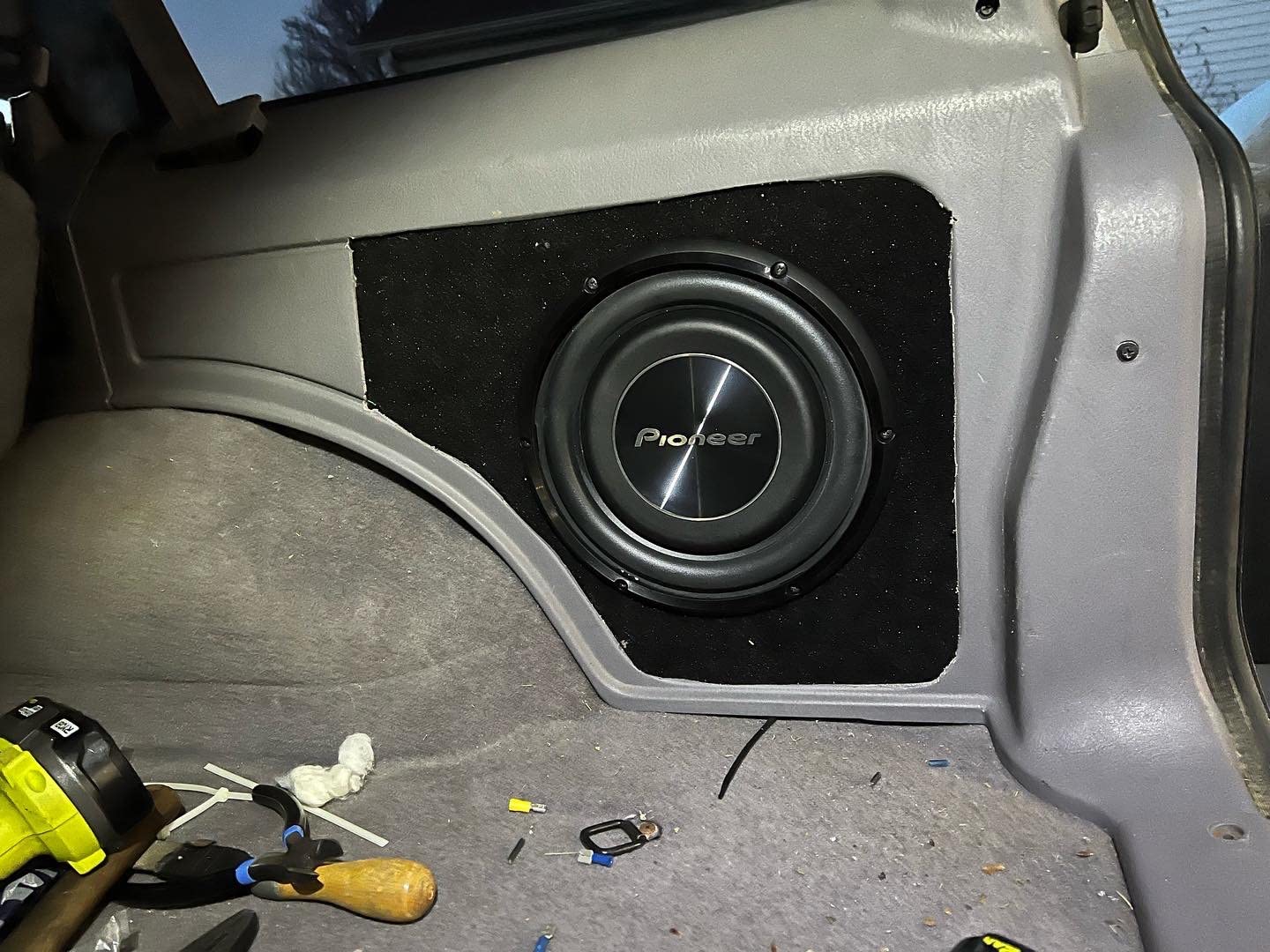
At 300 watts nominal and 85 dB efficiency, this driver is efficient enough to sound loud and clean from a modest monoblock. The reviews make a point of this repeatedly: output jumps dramatically when it is paired with a quality amplifier, and owners using factory-grade electronics are the ones who end up disappointed. This is a driver that rewards good power.
Low distortion is the defining characteristic. The IMPP cone is rigid and well-damped, so it moves cleanly at higher volumes without the mushy, compressed quality that paper cones develop when pushed. The honest limitation in the reviews is cabin impact: it thumps well inside a car but does not generate the external output that a 12-inch or 15-inch provides, so if you are after that sensation, this is not the driver.
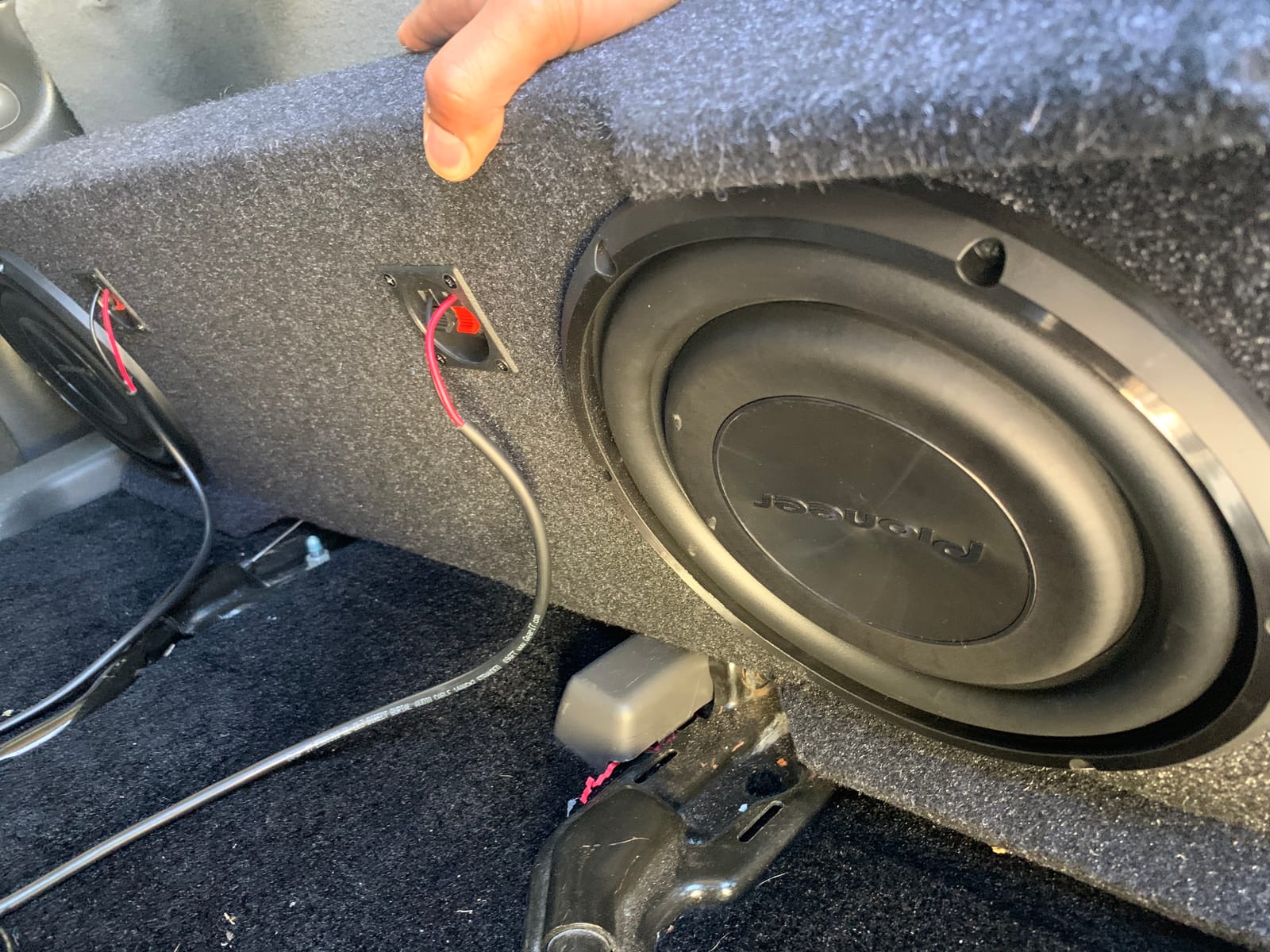
What to check before you buy the Pioneer TS-A2500LS4
Decide whether the shallow profile is worth a custom enclosure. This is a bare component with a trim ring, gasket and mounting screws in the box, so you are building the cabinet yourself and choosing the volume. Plan roughly 0.65 to 0.8 cubic feet sealed for a musically accurate result, or about 1.0 to 1.2 cubic feet ported if you want more output per watt.
Check your head unit situation early. With 4 ohm impedance and 300 watts nominal, a factory amplifier can drive this driver acceptably, but a proper mono amplifier with an adjustable low-pass is where the clean-bass character really shows. If your factory system has no RCA pre-outs, a line output converter is the missing piece.
Who the Pioneer TS-A2500LS4 is not for
It is not for maximum output. A 10-inch cone simply cannot move the volume of air a 12-inch or 15-inch can, and owners who wanted to feel the bass in the steering wheel rather than hear it clearly tend to regret the size choice. This driver is for listening, not for demonstrating.
It is also not for an out-of-box install. There is no enclosure and no amplifier, and the shallow mounting depth that makes it attractive means a prefab box is often not deep enough, so a custom or purpose-built shallow enclosure is usually part of the project. The break-in note is worth taking seriously too — several owners report the sound improving substantially after a few weeks.
8. Seventour 10 inch Under-Seat Powered Subwoofer — Best All-in-One Powered Package
10″ 800W Under Seat Car Subwoofer and amp package,Pure and Pleasant Bass
Powered 10 inch under-seat system
220W RMS at 4 ohm
3.1 inch slim profile cast aluminum body
Includes wiring kit and converter
Pros
- Built-in amplifier means no separate amp or box
- Wired remote gives gain bass boost and crossover control
- Cast aluminum enclosure dissipates heat
- Works with RCA or high level inputs
- Converter and full wiring kit included in the box
Cons
- 220W RMS is far below the 800W peak headline
- Fixed crossover limits fine tuning
- LED light ring is decorative rather than functional
This is the product for someone who wants bass this week rather than a build project. It is a complete system: 10-inch driver, built-in amplifier, cast aluminum enclosure, low-pass filter, bass boost, sub-acoustic filter, a wired remote, power cable, RCA cables and a high-to-low level converter, all in one box. At 3.1 inches thick it slides under a seat without costing legroom.
The cast aluminum chassis is a genuine engineering choice rather than a styling one. Amplifiers generate heat, and a metal enclosure dissipates it far better than the plastic or MDF cabinets on most powered subs, which is why the thermal, short circuit and overload protection rarely has to intervene. The measured total harmonic distortion of less than 0.4 percent is also a good number for a compact system.
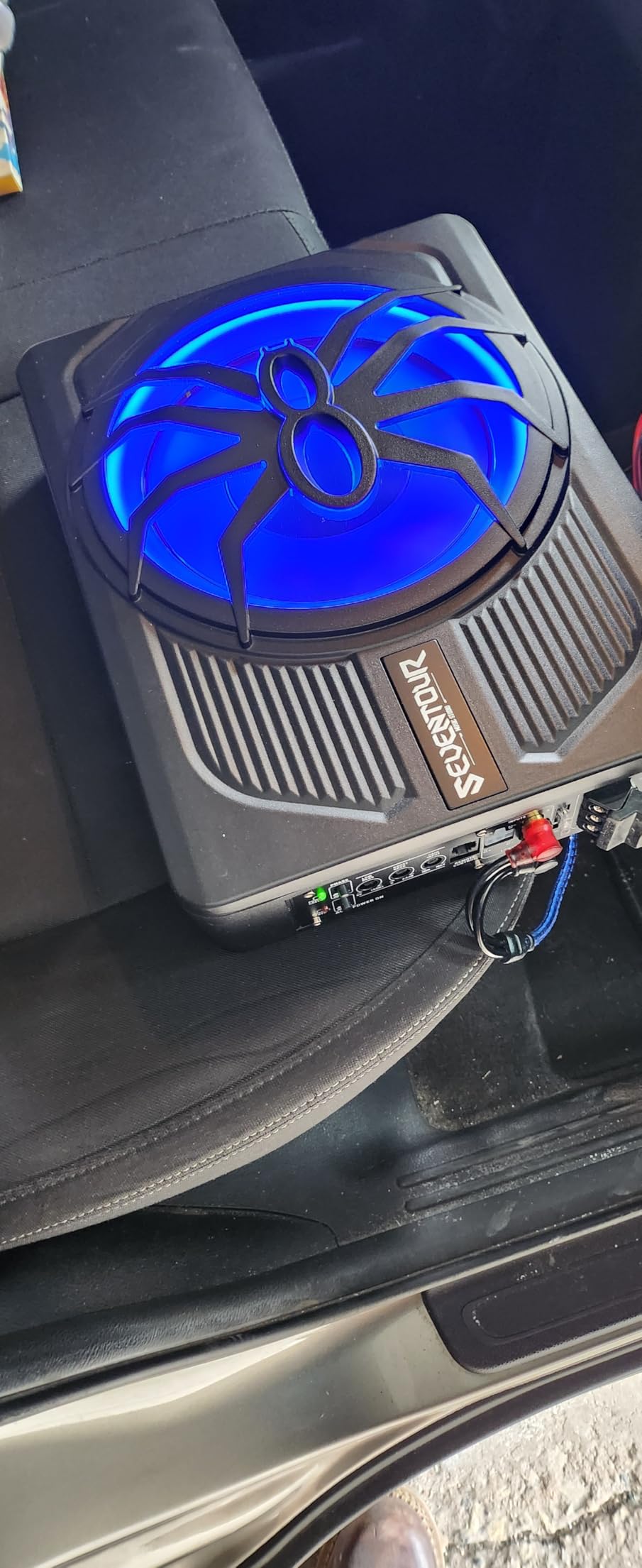
The included converter is the detail that makes this work with a factory head unit. Too many factory stereos have no RCA pre-outs, which leaves people stuck or forced to run speaker-level taps with a sensitivity guess. With a high-to-low level converter in the box, you connect at the speaker outputs and get a proper line-level signal into the amplifier section.
Now the honest part: the 800W peak figure on the box is a headline, and the real number is 220 watts RMS at 4 ohm. Owners note this without much complaint, because the system is judged at listening volume in a car rather than in a shop. Just size your expectations to 220 watts, because that is what it will do, and the low-pass filter adjustable from 50 to 150 Hz plus the 0 to 12 dB bass boost at 45 Hz give you more control than the built-in amp in many compact powered systems.
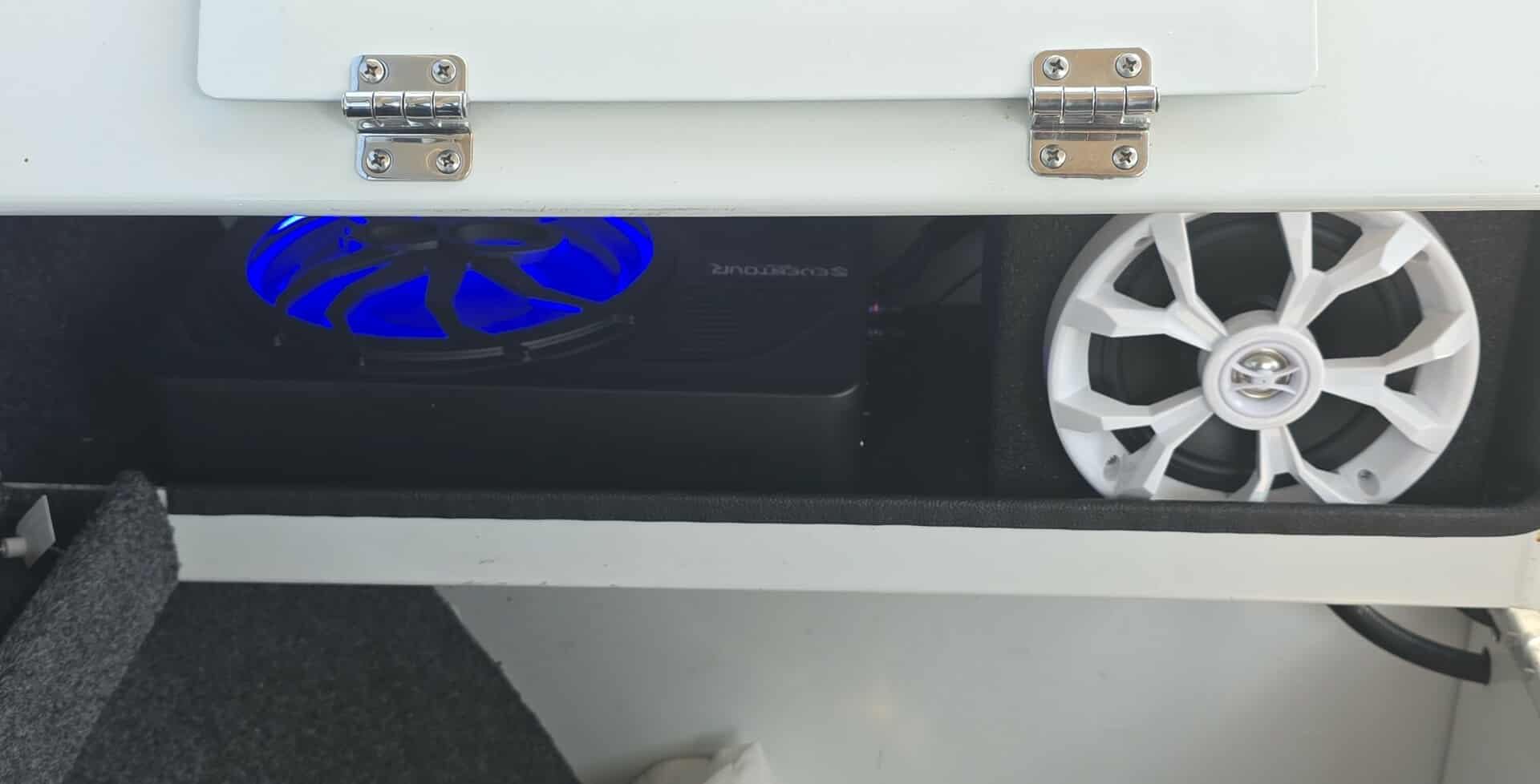
What to check before you buy the Seventour 10 inch Powered Subwoofer
Check the physical dimensions against your under-seat space. At 13.5 inches long by 10.2 inches wide and 3.1 inches thick, it is slim but not universal, and seat rails differ widely between vehicles. If it does not fit under the seat, a 10-inch shallow sub in a custom shallow box is your fallback.
Also decide whether you are keeping your factory system. The wired remote handles gain, bass boost and crossover, but the amplifier is built in, so there is no way to swap it later for something more powerful. If your plan is to grow the system, buy a passive driver instead. If this is the only sub you will ever run, the fixed electronics are a fair trade.
Who the Seventour 10 inch Powered Subwoofer is not for
It is not for anyone who wants to tune. The crossover and gain are set by the built-in amplifier, so you cannot adjust the slope, add delay or change phase, and there is no upgrade path. Enthusiasts who care about those details find this limiting within a few weeks of listening.
It is also not a competition output system. 220 watts RMS from a 10-inch driver is a sensible daily-driver level and nothing more, and the blue LED ring, while popular, does not add a single decibel. If you plan to push a system hard, buy a component driver and a proper amplifier where you control both.
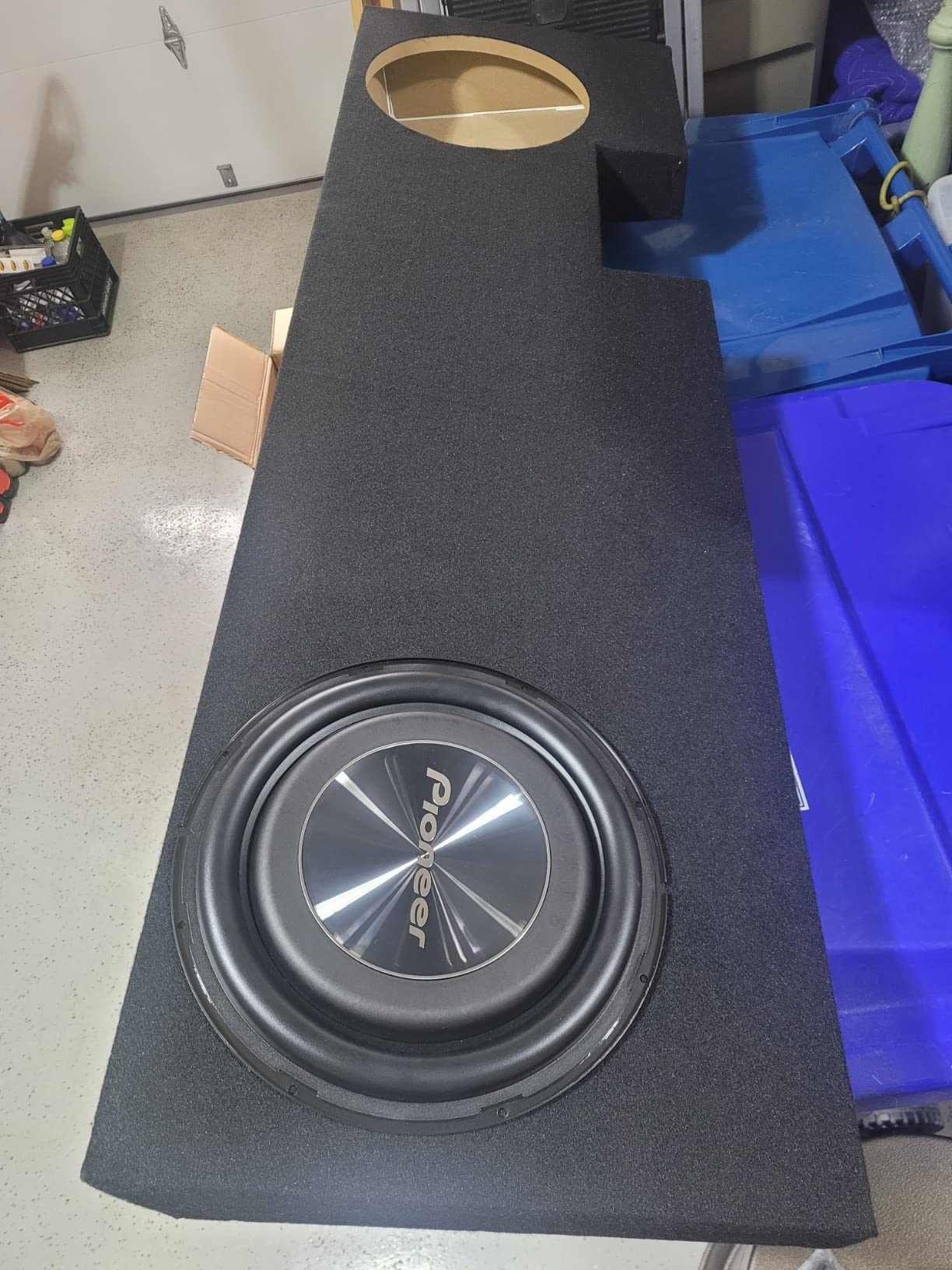
9. Pioneer TS-A3000LS4 12 inch Shallow Subwoofer — Best Shallow 12-Inch
PIONEER A-Series TS-A3000LS4 Shallow-Mount 12″ Subwoofer 1500W Max
12 inch shallow mount driver
400W nominal power
4 ohm single voice coil
88 dB efficiency at 0.8 cu ft sealed
Pros
- Deep output in the Pioneer shallow range
- 88 dB efficiency
- 3.5 inch depth fits under seats and behind rear benches
- IMPP cone gives detailed low distortion bass
- 4 ohm single voice coil simplifies amplifier matching
Cons
- Requires a separate amplifier and a properly built enclosure
- Manufacturer specifies a 0.8 cu ft sealed box volume
- 12 inch frame is bulkier than the 8 and 10 inch siblings
This is the one that solves a specific problem very cleanly: getting 12-inch output from a space that will not take a 12-inch conventional sub. At 3.5 inches deep it is thick enough to move serious air but thin enough to hide behind a rear bench or under a seat, and at 88 dB efficiency it is the most efficient driver in that shallow range.
The 4.5 average comes with 80 percent five-star ratings and only 6 percent one-star, which is a healthy spread for a shallow driver. Owners talk about clean, strong low end that does not distort when pushed, and the glass-fiber and mica reinforced IMPP cone is the same material used across the range, so the tonal character matches the rest of the system.
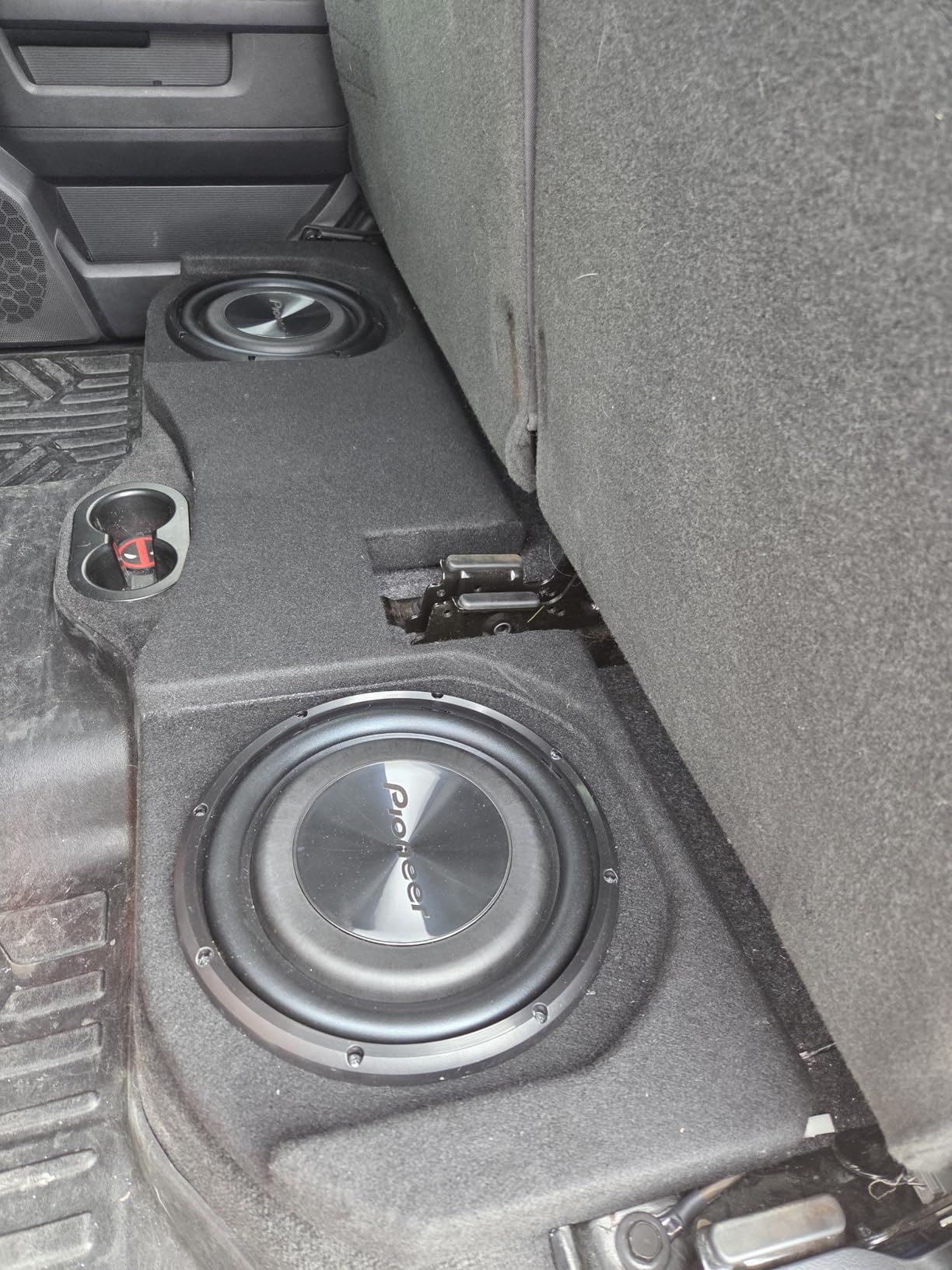
Build it correctly and it rewards you. Pioneer recommends a 0.8 cubic foot sealed enclosure for this driver, and that number matters more than any amplifier spec. A sealed box this small gives the tight, controlled bass that a shallow design should deliver, and the high efficiency means a 400-watt nominal amplifier gets you moving without strain.
The 4 ohm single voice coil is again the simplest possible wiring arrangement, and an efficiency of 88 dB means this driver needs less amplifier power for the same volume than most of the other options listed here. That is the practical argument for it — more output per watt in a smaller box is exactly the trade shallow drivers are designed to offer.
What to check before you buy the Pioneer TS-A3000LS4
Build to the 0.8 cubic foot sealed recommendation rather than improvising. A 12-inch driver in an undersized box loses excursion and output, and in an oversized box it sounds loose and slow. If you want a ported enclosure instead, plan the port tuning with the driver’s recommended parameters rather than copying a generic port length.
Measure the mounting depth allowance carefully. At 3.5 inches it is shallow for a 12-inch, but the frame is still 12 inches across, so you need a 12-inch diameter of clear surface plus clearance behind the driver for the vent. Behind a truck rear bench, that is usually fine; in a sedan boot under a parcel shelf, it often is not.
Who the Pioneer TS-A3000LS4 is not for
It is not for maximum output. A shallow 12-inch trades excursion for depth of installation, and it will not reach the same sound pressure levels as a conventional 12-inch or 15-inch in a large ported box. If you want output and have the space, a full-depth driver is the better buy.
It is also not a beginner purchase. Nothing is included except mounting hardware, a gasket, a trim ring and a manual, so you need a box, an amplifier and the wiring knowledge to connect them. For a first-time builder who wants a working system immediately, a pre-loaded or powered option is faster and less costly.
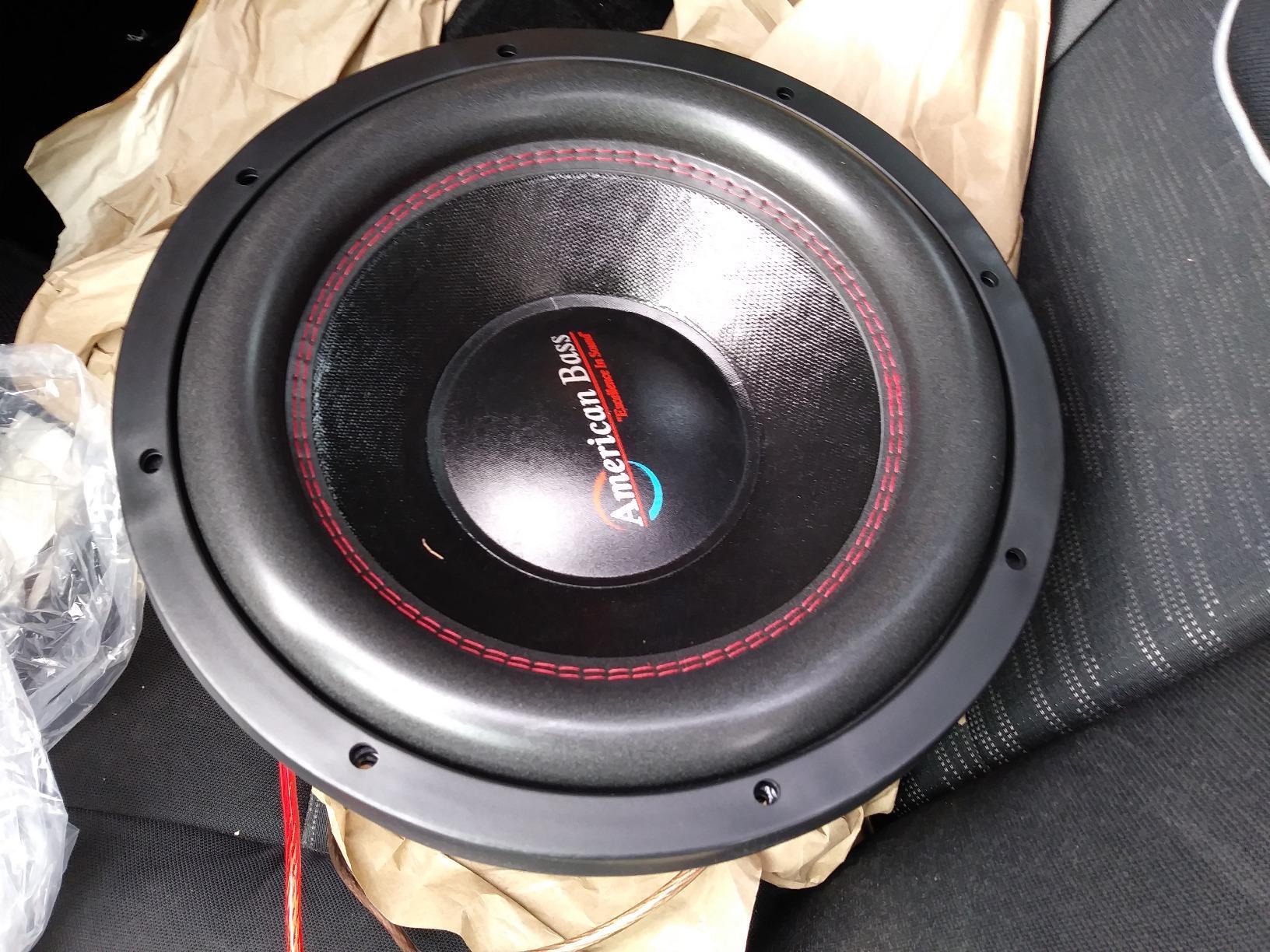
10. American Bass XFL 15 inch SPL Subwoofer — Best 15-Inch for Maximum Output
American Bass XFL 15″ 4 Ohm 3000 Max Watts Car Subwoofer (15, in)
15 inch SPL design
1500W RMS and 3000W peak
200 oz magnet
3 inch voice coil
31.5 Hz response
Pros
- High 1500W RMS handling in a 15 inch frame
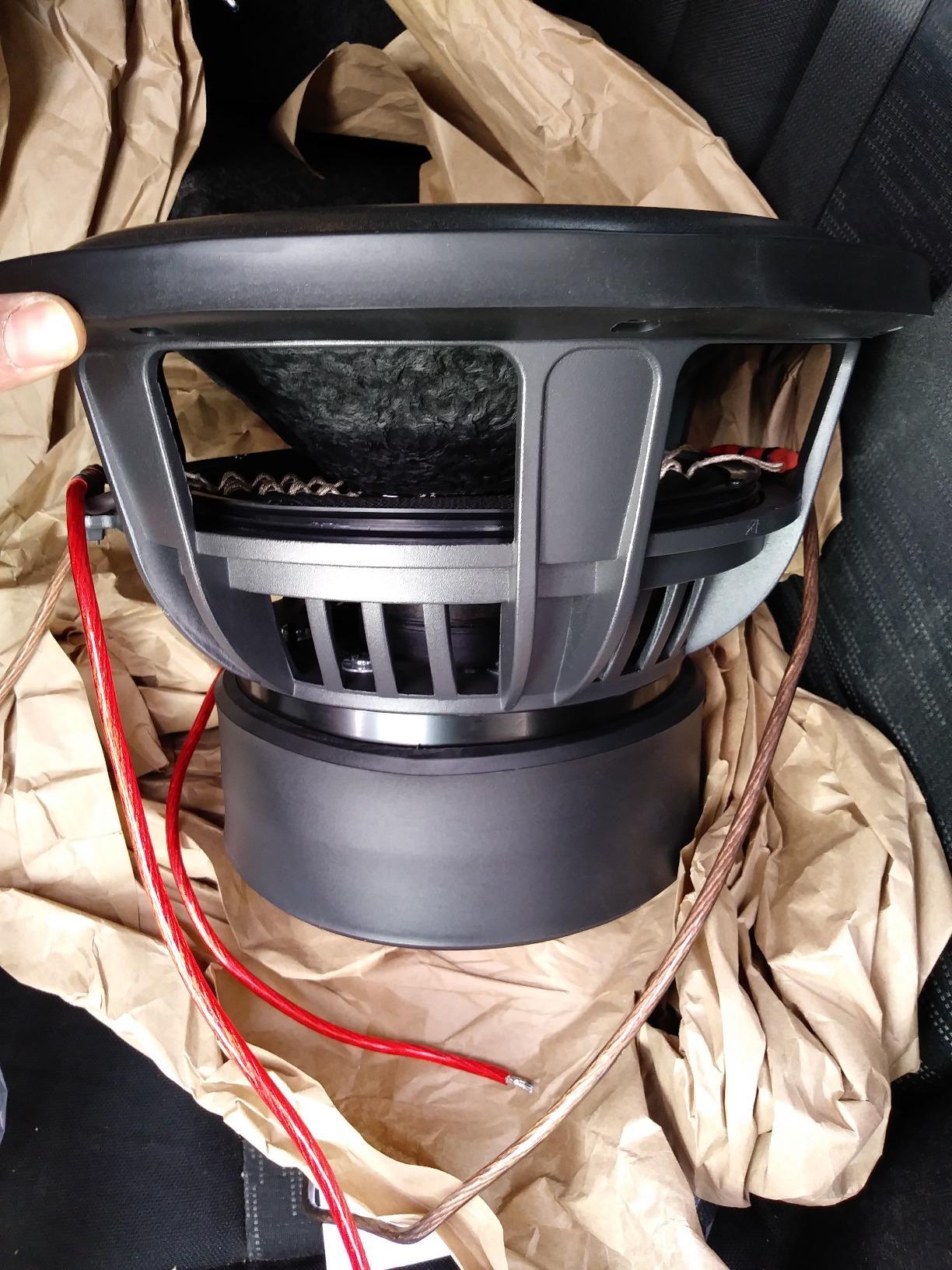
- 200 oz magnet and 3 inch voice coil for deep output
- 31.5 Hz response reaches below 35 Hz
- Available in 2 ohm and 4 ohm versions
- Large dual voice coil motor for high excursion work
Cons
- Bare driver requiring an enclosure and a powerful amplifier
- 15 inch frame and 3.5 inch depth demand large box volume
- Only a one year limited warranty
A 200 oz magnet paired with a 3 inch voice coil gives this 15-inch more control force than a typical driver in its class, and that motor strength is what lets a large cone stay accurate at high volume instead of just getting loud and loose.
Owner reaction is consistent: extraordinary output from a single unit, with an 81 percent five-star share on 351 ratings. The 31.5 Hz frequency response figure is the lowest published in this roundup, and combined with the raw handling capacity it produces the kind of low end that is felt in the chest rather than heard on a small screen. Every one of those reviews carries the same caveat, though — this output only appears with a capable amplifier and a correctly sized box.
Wiring is flexible across the range, which is unusual for a 15-inch. Two ohm and four ohm versions exist, and the dual voice coil configuration gives you series and parallel options in both, so you can land on 1, 2 or 4 ohms depending on what your amplifier is happiest delivering. That matters because an undersized amplifier is the fastest way to waste a driver this capable.
Physically, it is a large commitment. The frame measures 15.6 inches wide with a 3.5 inch mounting depth, and a proper sealed alignment for a driver of this size runs to several cubic feet. Plan the enclosure volume before anything else, and build the cabinet to a thickness that will not flex, because cabinet flex on a driver this powerful is audible as a port or panel rattle long before the speaker itself gives up.
What to check before you buy the American Bass XFL
Check your amplifier against the 1,500 watt RMS figure and your electrical system against the current it will draw. A Class D monoblock that is comfortable at a 2-ohm load, fed from a proper gauge power cable with a real ground, is the difference between this driver sounding extraordinary and sounding like an expensive mistake.
Then check the box, seriously. This is a bare driver, so enclosure volume, bracing and port design are entirely your responsibility, and reviews that disappointed almost always come back to a box that was too small or an amplifier that ran out of headroom. The brand also produces this driver in 10-inch and 12-inch sizes, which are worth considering if the 15-inch will not fit.
Who the American Bass XFL is not for
It is not for a daily-driven car with limited space, and it is not for a musical, low-volume listening setup. A single 15-inch produces enormous output in a narrow frequency range, and pairing it with accurate door speakers demands careful crossover work or bass will swamp vocals — the exact complaint that shows up repeatedly in owner forums.
It is also not for a first build. The one-year limited warranty is among the shortest listed here, which tells you something about the intended use. This is a driver for someone who already understands enclosure design and amplifier loading, and who wants output measured in how far the car body moves.
Car Subwoofer Buying Guide: Size, Enclosure, Ohms and Amplifier Power
Choosing a car subwoofer means making four decisions in order: how much space you have, how loud you want to be, what the amplifier can deliver, and what the box needs to be. Work through them in that sequence and the product choice takes care of itself.
Do 10 inch subs hit harder than 12s?
No. A 12-inch cone has roughly 40 percent more surface area than a 10-inch, and it moves more air per stroke, so at the same amplifier power a 12-inch produces more output. A 10-inch can sound punchier in a car cabin because the frequencies it puts out couple well to a small sealed enclosure, and 10s are far easier to fit. Choose 10-inch for space and clarity, 12-inch for output, 15-inch for the most output of all.
Sealed, ported or bandpass: which enclosure should you build?
A sealed enclosure traps the rear wave behind the cone, which controls excursion tightly and gives the most accurate bass, but it needs more amplifier power for the same volume. A ported enclosure adds a tuned opening that lets air move freely, which makes it far more efficient at low volume and lets a smaller amplifier produce more output, at the cost of some accuracy and the need to tune the port correctly. A bandpass enclosure uses separate chambers on each side of the cone to narrow the frequency range, delivering extremely high output in a narrow band for competition use, at the expense of musicality.
For most people, sealed is the right default for daily driving and ported is the right default for volume. The single most common reason a good driver sounds weak is an enclosure that does not match it — a driver in a box that is too small for its recommended volume will lose output and its voice coil may suffer, and a driver in a ported box with the wrong port length will over-excursion or sound thin.
What hits harder, 2 ohm or 4 ohm, and should you wire to 1 ohm or 2 ohm?
Ohms do not determine how hard a sub hits — power does. What impedance changes is how much current your amplifier has to push through the voice coil to deliver that power. A 2-ohm load demands roughly twice the current of a 4-ohm load for the same wattage, so a 2-ohm sub is more demanding of an amplifier, not automatically louder. Wire to the lowest impedance your amplifier is rated for, never lower, and match subs so the total load lands on a rating the amp publishes.
The practical rules are simple. Two dual 2-ohm subs wired in parallel give a 1-ohm total load. The same two subs wired one coil in series give 4 ohms. Two dual 4-ohm subs in parallel give 2 ohms. A single dual 4-ohm sub can present 8, 4 or 2 ohms depending on how you join the coils. Many forum posts about why a sub sounds weak turn out to be an amp running at 4 ohms when it delivers most of its rated power at 2 ohms, so read the amplifier’s power curve at your chosen load, not the number printed on its box.
This confusion is the single loudest thread in car audio forums. One r/CarAV build involved two 10-inch 1500W drivers planned for a sealed box on an amp advertised at 2000W maximum, and the owner was wiring by the peak number. An r/subwoofer thread on a pair of Skar EVL 12s reported a system that only produced output down to about 32 Hz, which turned out to be an enclosure volume and tuning problem rather than a driver problem. Both failures share a cause: spec-sheet numbers read without context.
RMS versus peak versus maximum power: which number matters?
RMS is the only number that describes sustained output — the power a driver can handle continuously without thermal damage. Peak or maximum power describes a brief burst, typically at a much lower duty cycle, and the gap between the two is frequently four to six times. Every product in this roundup lists both, and the difference is why a sub advertised at 1200 watts may only be built for 400 watts RMS. Size your amplifier to the RMS figure on both the driver and the amplifier, and treat peak power as advertising.
How much amplifier power do you need for your subwoofer?
Sensitivity tells you. A driver rated at 83 dB needs roughly four times the amplifier power of an 88 dB driver to produce the same volume, and the difference between 85 dB and 92 dB is close to a factor of five. That is why an efficient sub like the Pioneer TS-A3000LS4 at 88 dB sounds loud from a 400-watt amplifier while a less efficient driver of the same size struggles on twice that. Rule of thumb: match amplifier RMS to within about 20 percent of the subwoofer’s RMS rating, and go slightly under rather than over for reliability.
How do you get signal to a sub amplifier from a factory head unit?
Check for RCA pre-outs first. Many factory head units have no pre-amp outputs at all, which is the most common reason people believe a subwoofer cannot be added to a stock system. When there are none, use a line output converter. It taps the speaker-level signal from the factory amplifier, converts it to a proper line-level RCA output, and often includes adjustable input sensitivity and a remote turn-on trigger. Several products in this roundup include one in the box.
Why is my new subwoofer weak at low volume?
Nearly always the enclosure, then the amplifier, then the settings. An undersized box will not let the cone use its excursion, a port tuned to the wrong frequency will make the sub disappear in its own range, and an amp with a high-pass filter engaged or the gain turned down will do nothing. A loose power or ground connection and a low-pass crossover set too high are also common. Check the box volume against the driver’s recommendation, set the low-pass between 70 and 90 Hz, keep the gain just below where the amp distorts, and re-test before blaming the speaker.
Before you blame the speaker, also check for panel rattle. A cabinet that flexes, a grille that buzzes or a loose trim clip will add noise that reads as a faulty sub, and adding damping material or a bead of sealant around the mounting gasket fixes most of it. Pair that with the other cabin upgrades in our magnetic car mount guide and you will have a system that is quiet at low volume as well as loud at high volume.
Frequently Asked Questions
What is the best-rated subwoofer for a car?
The Pioneer TS-A2500LS4 10-inch shallow driver scores 4.6 in this roundup, with 81 percent five-star ratings and only 3 percent one-star. The American Bass XFL 15-inch also rates 4.6, but it demands far more space, amplifier power and enclosure volume to deliver that rating in practice. For most people the Pioneer wins on the combination of rating, shallow 3.38 inch mounting depth and 4 ohm single voice coil wiring.
What size subwoofer fits in my car?
Measure the space before you pick a size. Shallow 8-inch and 10-inch drivers with mounting depths around 3 inches fit under seats and behind rear benches, 12-inch shallow drivers need roughly 12 inches of clear diameter, and a 15-inch needs a large flat surface in a trunk or pickup bed. Measure height, width, depth and the diameter of any cutout, then confirm the driver’s mounting depth fits with clearance before ordering.
What hits harder, 10s or 12s?
A 12-inch hits harder because its cone has roughly 40 percent more surface area and moves more air on each stroke, so at the same amplifier power it produces more output. A 10-inch is easier to fit and can sound punchier in a car cabin from a well-tuned sealed box, and two matched 10s in a ported enclosure can be more musical than a single 12. Choose 10-inch for space and accuracy, 12-inch for output.
Is 2 ohm or 4 ohm better for a subwoofer?
Neither is louder. Impedance determines how much current the amplifier must push, so a 2-ohm load asks more of an amplifier than a 4-ohm load at the same wattage. Choose 4 ohm for easier matching with factory amplifiers and lower current draw, and 2 ohm when you need more power from a monoblock and the amplifier is rated for that load. Never wire a sub below the minimum impedance the amplifier manual specifies.
Do 1 ohm subs hit harder?
No. Impedance changes the electrical load on the amplifier, not the volume. A 1-ohm load simply allows more power delivery, so the subs can play louder at the same perceived effort, and many amplifiers publish their highest rated wattage at 1 or 2 ohms. The trade is heat and current draw, so the amplifier must be rated for a 1-ohm load and the power cable and ground must be sized for it, or protection circuits trip and the sub sounds weak.
Do I need an amp for a car subwoofer?
Only for a component subwoofer. A component driver is a bare speaker and needs a monoblock amplifier and an enclosure to function. A powered or active subwoofer already has an amplifier built in and arrives in a box, so it needs only a power wire, a remote turn-on lead and a signal, either through RCA pre-outs or speaker-level inputs with a line output converter if your factory head unit has no pre-outs.
Which Car Subwoofer Should You Buy?
Start with space. If you have a full trunk or a pickup bed, the MTX Terminator dual 12-inch loaded enclosure is the one I recommend to almost anyone, because it removes every variable except the amplifier and it holds up to more than four thousand ratings. If the boot is spoken for, the Pioneer TS-A2000LB or the Seventour powered 10-inch handle the under-seat problem, and the latter needs no amplifier at all.
Decide next whether you are building or buying. Buy a component driver when you want control and are comfortable with an enclosure and amplifier, and pick the Pioneer TS-A2500LS4 for clean bass from a shallow 10-inch or the TS-A3000LS4 when you want 12-inch output without a deep box. Buy a powered package when you want bass this weekend and your factory head unit is staying exactly where it is.
Only step up to a 15-inch — the Rockville W15K9D2 for high excursion, the American Bass XFL for raw output — once you have confirmed the space, the amplifier and the enclosure volume. The best car subwoofers for your vehicle are the ones whose size, impedance and box match your car and your system, and those three checks take an afternoon before you spend anything.