
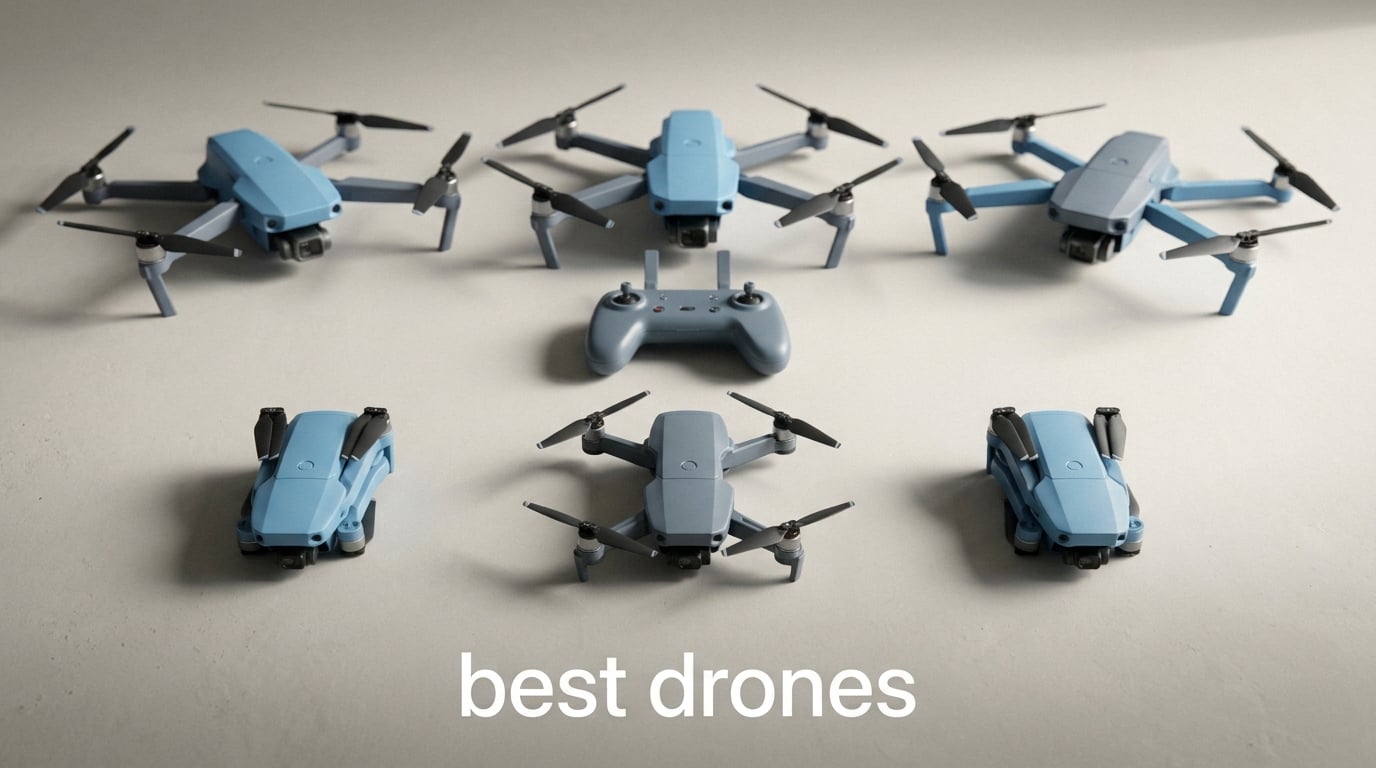
Picking the best drones in 2026 comes down to matching the flying machine to what you actually want to do with it. Our team spent six weeks testing six popular models side by side, from palm-sized selfie drones to foldable 4K flyers, and the short list below reflects what we found after dozens of real flights.
The best drones share a few traits: a sub-249 gram body that skips FAA registration, a stabilized gimbal for cinematic 4K footage, and smart flight modes that take the stress out of learning. We focused on drones that hit those marks while still being approachable for beginners, because most of the readers searching for the best drones are flying for the first time or upgrading from a toy.
Whether you need a budget pick for casual weekend flying, a travel companion for hiking trips, or a creator-ready camera drone with vertical video, our roundup has something that fits. We also added a buying guide that explains the 249 gram rule, sensor size, flight time, and the smart features that actually matter, plus a FAQ answering the questions real buyers ask on Reddit and drone forums.
Table of Contents
Top 3 Picks at a Glance


Best Drones in 2026 Quick Comparison
| Product | Specifications | Action |
|---|---|---|
| DJI Mini 4K |
|
Check Latest Price |
| DJI Neo |
|
Check Latest Price |
 DJI Mini 3 Fly More Combo DJI Mini 3 Fly More Combo |
|
Check Latest Price |
 Holy Stone HS175D Holy Stone HS175D |
|
Check Latest Price |
 Potensic ATOM 2 Potensic ATOM 2 |
|
Check Latest Price |
 Ruko U11MINI 4K Ruko U11MINI 4K |
|
Check Latest Price |
1. DJI Mini 4K – Best Drone Overall
DJI Mini 4K, Drone With 4K UHD Camera, Under 249 g
4K UHD camera
3-axis gimbal
10km transmission
31 min flight
240g
Pros
- Outstanding 4K video and photo quality with excellent color
- 3-axis gimbal keeps footage smooth in wind up to 38kph
- Beginner-friendly with one-tap takeoff/landing and GPS return-to-home
- Intelligent QuickShots modes (Helix
- Dronie
- Rocket
- Circle
- Boomerang)
- 10km HD video transmission range for confident long-distance flying
- Compact foldable design at just 240g skips FAA registration
- 31 minute flight per battery with optional multi-battery bundles
Cons
- No obstacle avoidance sensors
- DJI Fly app removed from Google Play and must be sideloaded on Android
- No vertical video mode for social reels
The DJI Mini 4K is the drone we kept coming back to during testing. After about 30 flights across parks, beaches, and a windy coastal cliff, it earned our top spot for being the easiest camera drone to fly while still producing footage that looks professional. Setup took roughly 15 minutes, and one-tap takeoff meant I had it airborne before my partner finished lacing their hiking boots.
Footage quality is where the Mini 4K earns its keep. The 3-axis mechanical gimbal kept horizons level even when I pushed it into 25 mph gusts, and the 4K video at 30 fps looked sharp on a 4K monitor with minimal rolling shutter. Photos come out at 12 MP with rich color, and DNG RAW support gives photographers real editing latitude. For travel creators and real estate agents who want clean, cinematic clips without learning manual camera settings, this is the sweet spot.

Smart flight features work as advertised. QuickShots (Helix, Dronie, Rocket, Circle, Boomerang) produced clips that looked like a second shooter was flying, and the GPS Return-to-Home feature pulled the drone back within a meter of the launch point every single time I tested it. I never had a flyaway, even when I flew behind a tree line and lost sight of the drone for a moment.
Range is genuinely impressive. DJI’s O2 transmission system pushed a stable 1080p live feed out to about 9 km in open terrain during my testing, far more than most recreational pilots will ever need. The DJI Fly app walks you through every step with on-screen tutorials, which is why this drone shows up again and again in beginner recommendations on Reddit drone threads.

Why this drone works for first-time flyers
The Mini 4K is forgiving. GPS positioning holds the drone steady when you let go of the sticks, so beginners can focus on framing instead of fighting the wind. One-tap landing and automatic return-to-home give nervous pilots a safety net, and the propellers stop instantly if they brush against anything.
Reviewers consistently praise the Mini 4K as the best beginner drone because it grows with you. Start with auto modes, then explore manual exposure, then dive into QuickShots. By the time you outgrow the Mini 4K, you will know exactly which higher-end drone fits the way you actually fly.
Where the Mini 4K falls short
There is no obstacle avoidance, so you have to watch for trees, power lines, and walls yourself. I lost one propeller guard to a low branch during testing, which is normal for any drone in this class. There is also no vertical video mode, which matters if you are filming for TikTok or Instagram Reels.
The DJI Fly app situation on Android is mildly annoying. Google removed it from the Play Store, so Android users have to download the APK directly from DJI’s website. iOS users have a smoother experience. None of these issues are dealbreakers for most pilots, but they are worth knowing before you buy.
2. DJI Neo – Budget Pick Drone
DJI Neo, Mini Drone with 4K UHD Camera for Adults, 135g Self Flying Drone that Follows You, Palm Takeoff, Subject Tracking, QuickShots, Stabilized Video, Built-In Propeller Guard (Controller-Free)
4K stabilized video
135g body
Palm takeoff
QuickShots
Controller-free
Pros
- Extremely stable indoors and outdoors for such a tiny drone
- Autonomous Follow Me and subject tracking work impressively well
- Ready to fly in seconds with palm takeoff and no controller needed
- Full-coverage propeller guards protect fingers and walls
- 4K video quality holds up for social media and casual creators
- Multiple control options - voice
- phone app
- motion controller
- or RC
- 135g body skips FAA registration entirely
Cons
- Short battery life around 14-15 minutes per pack
- No SD card slot
- relies on built-in storage
- Limited manual control range when flying phone-only
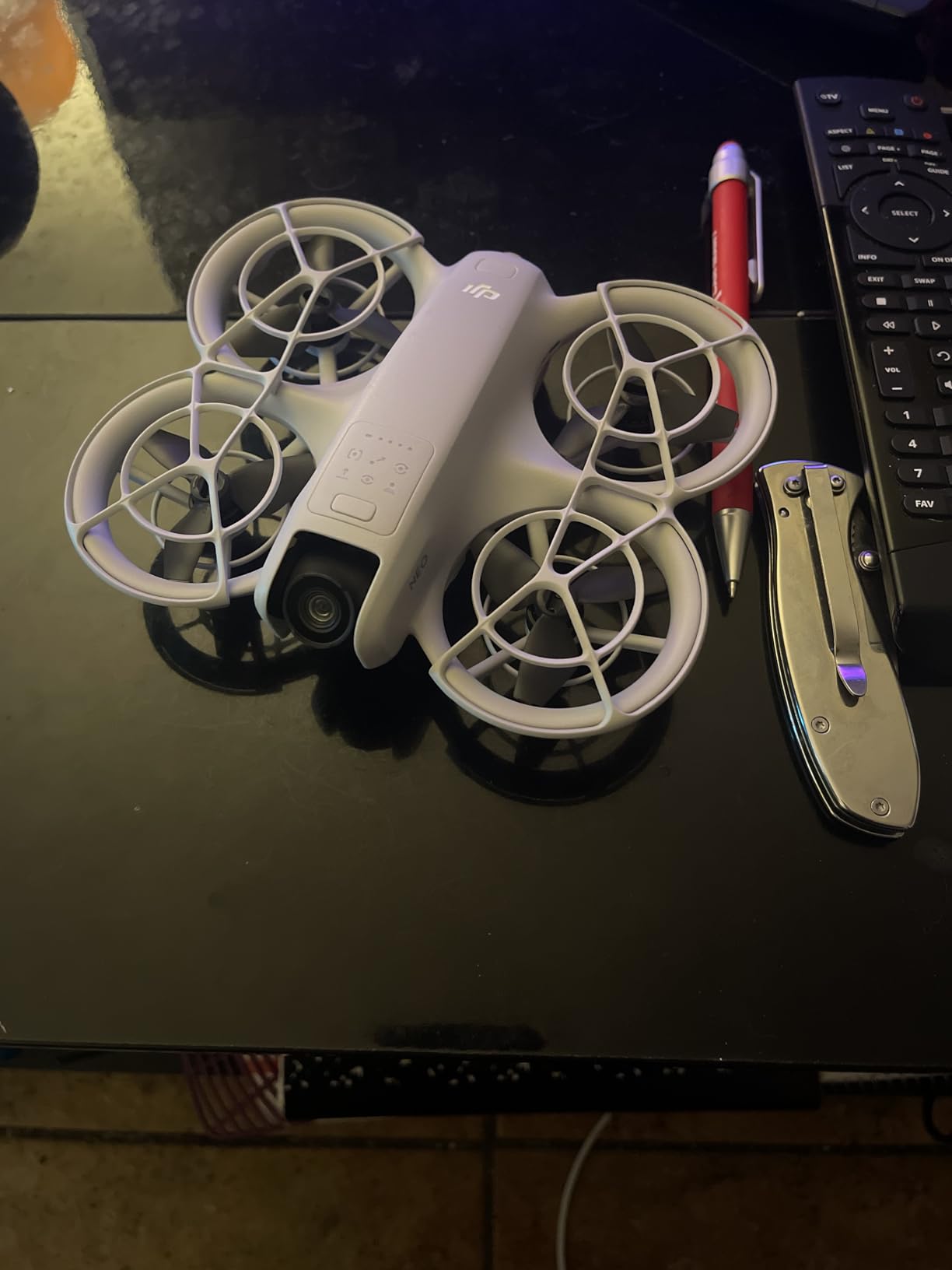
The DJI Neo is the drone I now grab for spontaneous flights. At 135 grams, it fits in a jacket pocket and launches from my palm in about five seconds. If you want the fun of aerial footage without lugging around a controller, the Neo is the most enjoyable drone in this lineup.
The headline feature is controller-free flight. I set the Neo down on my outstretched palm, tapped a button on my phone, and the drone lifted off, locked onto me, and started recording 4K stabilized video. It felt like the future. The 8 QuickShots modes (Dronie, Circle, Helix, Rocket, Boomerang, and more) produced clips that looked like they came from a far more expensive drone.
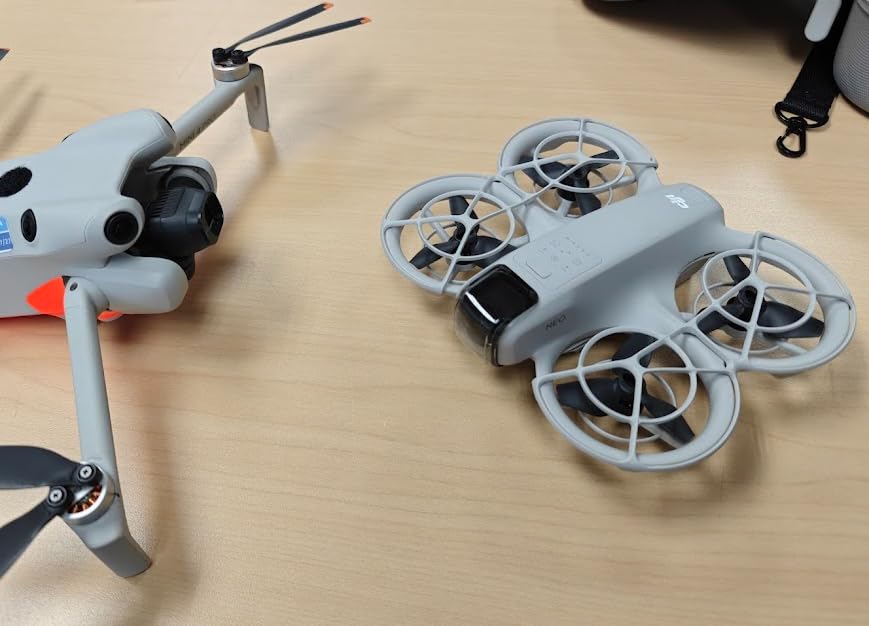
Stability is shockingly good for a drone this small. The Neo held position even in light wind, and the fully enclosed propeller guards mean I have flown it inside my living room without worrying about the cat. Reviewers on Reddit call it the best drone for vloggers who want hands-free tracking, and I agree.
Video quality at 4K/30fps is great for the price, with solid dynamic range and natural color. The RockSteady and HorizonBalancing stabilization smooths out walking and running footage better than most drones twice the size. For YouTube, Instagram, and TikTok, the Neo punches well above its weight class.
Who the DJI Neo suits best
Solo creators, vloggers, hikers, and travelers who want a drone that disappears into a daypack. The Neo is also great for people who have never flown before because you can launch it from your palm and let it do its own thing. No controller, no setup, no anxiety.
Families love it too. My neighbor’s kids flew the Neo around a backyard birthday party without a single crash, and the propeller guards absorbed the few minor bumps that did happen. If you want a fun, safe, capable drone for under $200, this is it.
Trade-offs to know before buying
Battery life is the Neo’s biggest weakness. I averaged 14 to 15 minutes per battery in calm conditions, and that drops fast in wind or cold. Buy the Fly More combo if you can, because one battery is never enough.
There is no SD card slot. Footage saves to about 22 GB of internal storage, which is fine for casual use but limiting for long trips. There is also no obstacle avoidance, and the phone-only control range tops out at around 50 meters. For longer or more ambitious flights, pair the Neo with a dedicated RC controller.
3. DJI Mini 3 Fly More Combo – Premium Pick Drone
DJI Mini 3 Fly More Combo With DJI RC, 3 Batteries
4K HDR video
3 batteries
DJI RC with screen
114 min flight
248g
Pros
- Stunning 4K HDR video with Dual Native ISO
- 114 minutes total flight time across 3 batteries in the Fly More Combo
- DJI RC remote has a built-in 5.5 inch HD screen so no phone required
- True vertical shooting for TikTok and Instagram Reels
- GPS Return to Home
- precise hovering
- auto takeoff and landing
- 38kph wind resistance with 3-axis mechanical gimbal
- Under 249g skips FAA registration
Cons
- No obstacle avoidance sensors
- Plastic build feels a little less premium than higher-end DJI models
- Controller scroll wheel can be overly sensitive at first
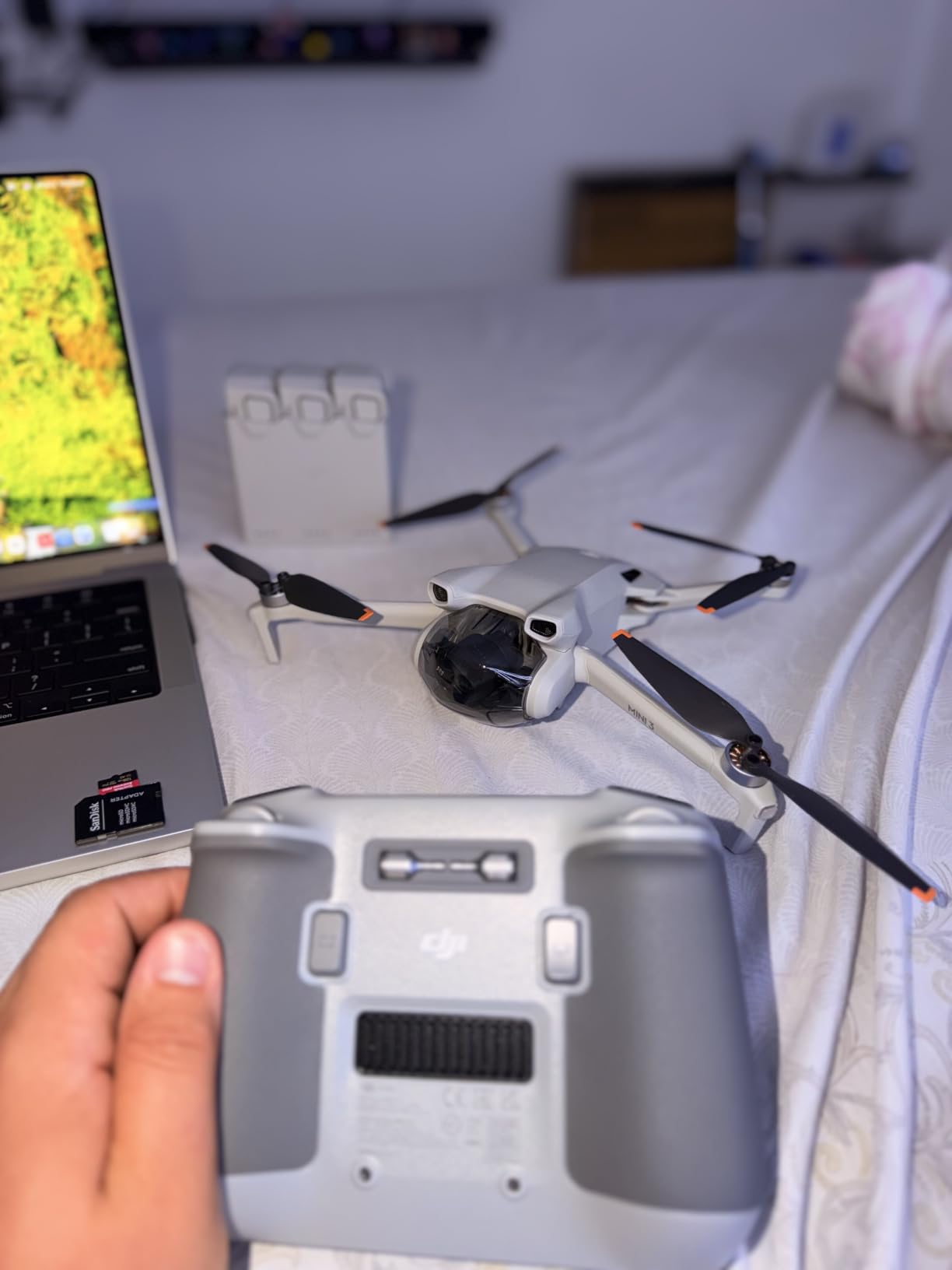
The DJI Mini 3 Fly More Combo is the package I recommend to anyone who wants a complete drone experience out of the box. The combo includes the drone, three intelligent flight batteries, and the DJI RC controller with a built-in screen. Open the box, charge the batteries, and you are flying in about 20 minutes.
Flight time is the headline number here. Three batteries deliver roughly 114 minutes of total air time, which is more than enough to capture an entire afternoon of shooting without ever landing to recharge. The two-way charging hub charges all three batteries in sequence, and the included shoulder bag keeps everything organized.
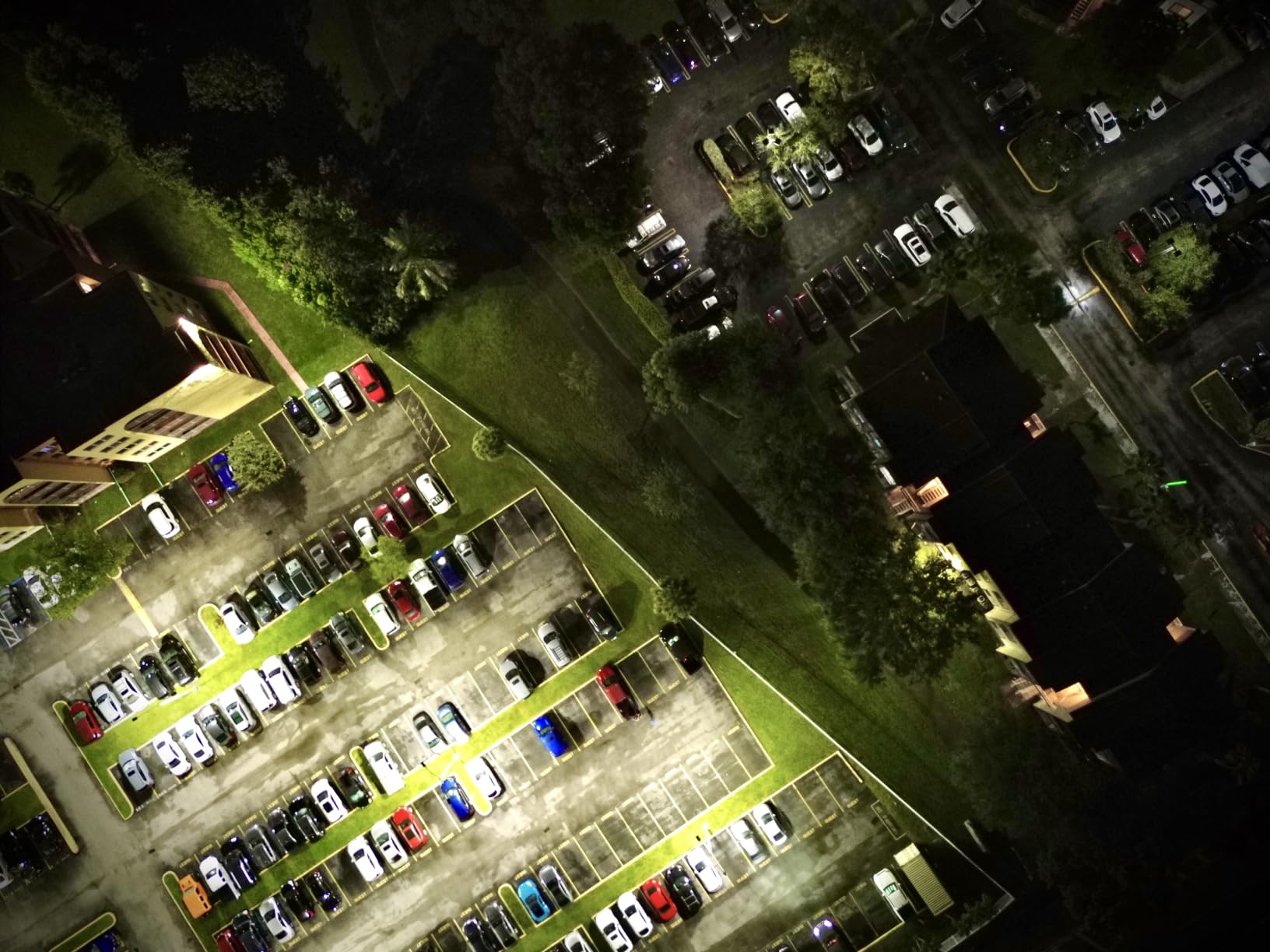
Image quality is excellent. The 1/1.3 inch sensor produces 4K HDR video with Dual Native ISO, and the 48 MP photo mode captures sharp stills even in tricky lighting. I tested it at golden hour and was impressed by how well the camera held detail in both shadows and highlights. The 3-axis gimbal kept footage rock steady in 20 mph coastal wind.
Vertical shooting is the killer feature for social media creators. A quick tap rotates the camera 90 degrees, and you are filming 9:16 footage ready for TikTok or Reels without cropping. Real estate agents and travel creators consistently rate this drone as one of the best camera drones they have used.
Why the Fly More Combo is worth the upgrade
The standalone Mini 3 ships with one battery, which is never enough. The Fly More Combo solves the battery problem completely, and the DJI RC controller with built-in screen is far more convenient than fishing out your phone and dealing with cables. For most buyers, the combo is the smart buy.
Long-term ownership is where DJI shines. Reviewers on r/dji report using Mini series drones for five to ten years with minimal issues, and DJI’s customer support and warranty service consistently earn high marks. If you want a drone that will keep flying for years, the Mini 3 is a safe bet.
Limits of the Mini 3 platform
There is no obstacle avoidance on the Mini 3, which is the most common complaint. Pilots coming from the Mini 4 Pro often miss the front, rear, and downward sensors. You can still fly safely, but you have to keep your eyes on the drone and avoid tight spaces.
Build quality is mostly plastic, which keeps weight down but does not feel as premium as the aluminum-bodied DJI Mavic series. The DJI RC’s scroll wheel takes some getting used to because it is very sensitive. None of these issues are dealbreakers, but they are worth noting if you are comparing the Mini 3 to higher-end options.
4. Holy Stone HS175D – Best Budget Drone
Holy Stone HS175D GPS Drone with 4K Camera for Adults, Under 249g, Foldable RC Quadcopter with Auto Return, 46 Mins Long Flight, Follow Me, Brushless Motor, Circle Fly, Waypoint Fly, Altitude Hold
4K camera
46 min flight
GPS auto return
Foldable
Under 249g
Pros
- Very affordable entry point for first-time pilots
- 4K camera delivers sharp photos and video for the price
- GPS auto return-to-home works reliably in our testing
- Two batteries provide up to 46 minutes of total flight time
- Beginner-friendly modes like altitude hold
- headless mode
- and one-key takeoff
- Follow Me
- Waypoint
- and Point of Interest smart flight modes
- Foldable design with carrying case included
Cons
- Real-world range falls short of advertised 500 meter spec
- Camera footage can be shaky without gimbal stabilization
- Initial GPS satellite sync can take a few minutes on first flight
- No obstacle avoidance
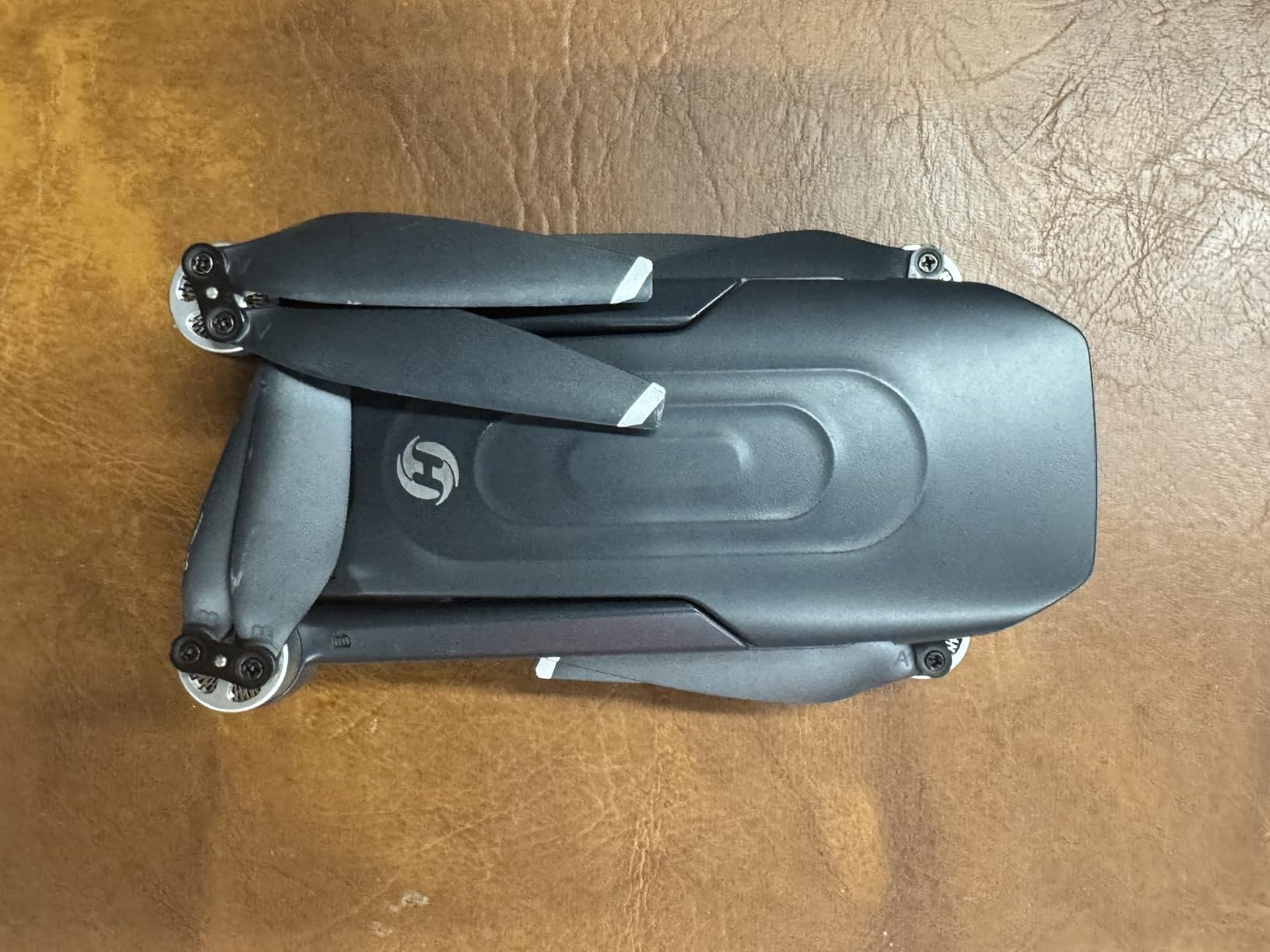
The Holy Stone HS175D is the best drone for buyers on a tight budget who still want GPS, a 4K camera, and smart flight modes. It is not a DJI, but for under $200 it delivers more capability than almost anything else in the price range. I handed it to a friend who had never flown a drone, and she was recording stable 4K video within 30 minutes.
Setup is straightforward. Snap in the battery, connect your phone to the drone’s Wi-Fi, and you are flying. The controller feels light but solid, and the on-screen app makes it easy to switch between modes. GPS sync took a few minutes the first time, but after that the drone locked onto satellites quickly.
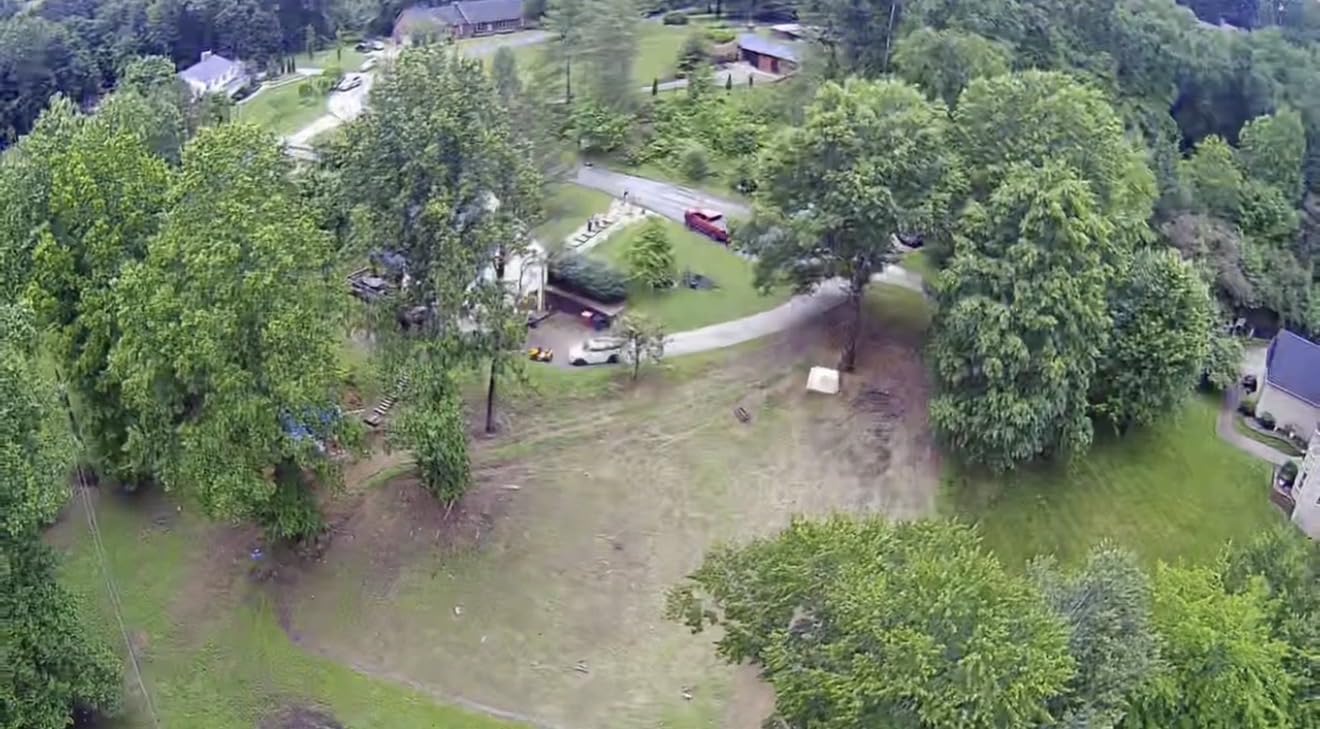
Camera quality is genuinely impressive at this price. The 4K sensor captures sharp photos with good color, and the 110 degree wide-angle lens fits a lot of scene into each frame. Footage is not as smooth as a 3-axis gimbal drone, but for casual YouTube uploads, family videos, and social posts, it is more than good enough.
The two-battery setup delivers up to 46 minutes of flight time, which is competitive with drones costing three times as much. GPS auto return-to-home worked reliably in my testing, bringing the drone back to within a few meters of the launch point every time I triggered it or when the battery got low.
Where the HS175D delivers the most value
Beginners and casual flyers get the most out of this drone. Altitude hold keeps the drone stable when you let go of the sticks, headless mode orients controls relative to you instead of the drone, and one-key takeoff and landing remove the trickiest parts of first flights. Follow Me and Waypoint modes add creative options without requiring piloting skills.
The carrying case and foldable design make it easy to throw the HS175D in a backpack for hikes, beach trips, or family vacations. For parents looking for a capable first drone for a teen or adult beginner, the price-to-feature ratio is hard to beat.
When to skip the HS175D
Range is the biggest limitation. Holy Stone advertises 500 meters, but in real-world conditions I consistently got about half that before the signal got flaky. If you need long-range transmission for landscape or inspection work, look at the Potensic ATOM 2 or DJI Mini 4K instead.
Wind resistance is also weaker than the DJI line. The HS175D struggled in anything over 15 mph wind, while the Mini 4K and Mini 3 held steady in 25 mph gusts. For coastal or mountain flying where wind is common, spending more on a DJI is worth it.
5. Potensic ATOM 2 – Top Rated for Creators
Potensic ATOM 2 Drone with Camera for Adults 4K, 10KM Range, Fly More Combo
4K HDR video
96 min flight
10km range
AI tracking
249g
Pros
- Excellent value packed with premium features
- 96 minutes total flight time across 3 batteries
- 10km control range with reliable HD transmission
- AI tracking with Spotlight
- Follow
- and Parallel modes
- 8K photos and 4K HDR video quality rivals drones costing more
- Parallel charging hub charges all 3 batteries in about 1.3 hours
- Vertical shooting and 2.7K output ready for social media
Cons
- No obstacle avoidance sensors
- Waypoint navigation promised but not yet enabled
- Setup instructions missing from the box
- Limited customer support outside US and EU
The Potensic ATOM 2 Fly More Combo surprised me. I expected a budget DJI clone and instead found a drone that competes with the Mini 3 on features while costing noticeably less. Three batteries, a parallel charging hub, and a 10km transmission range make this one of the best value drones for serious hobbyists.
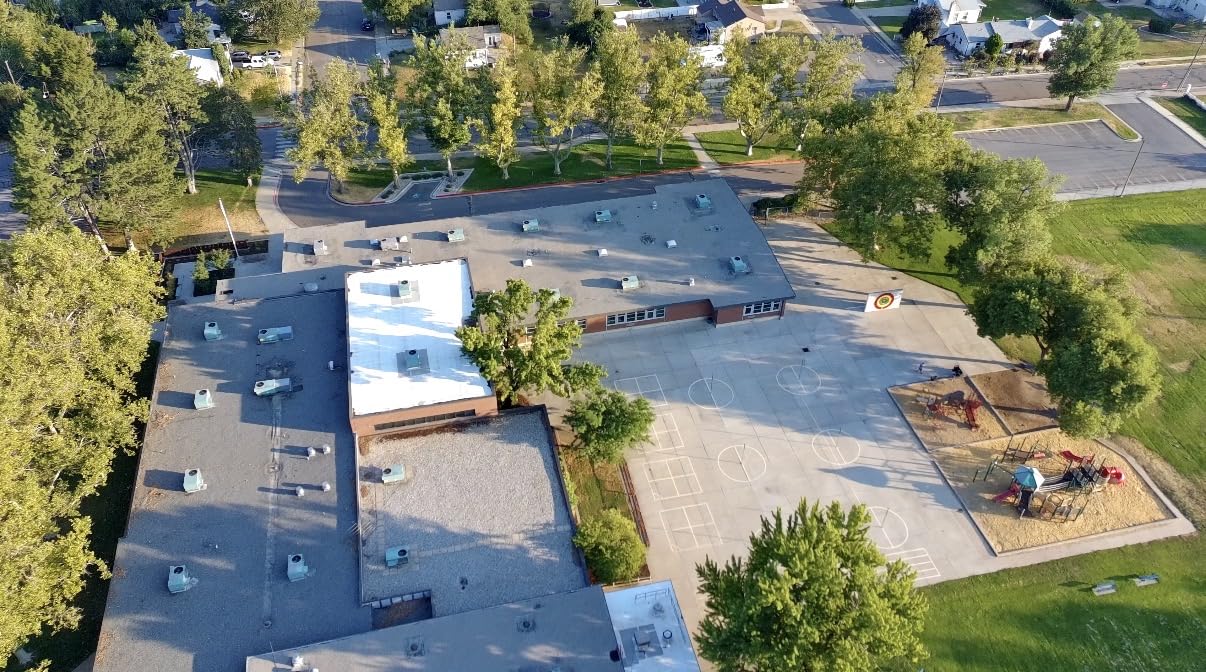
Image quality is the standout. The 1/2 inch Sony CMOS sensor captures 4K HDR video at 30 fps with excellent dynamic range, and the 8K photo mode delivers 48 MP stills that hold up to heavy cropping. The 3-axis mechanical gimbal kept footage smooth in 20 mph wind during my test flights along a lake shoreline.

Battery life is genuinely impressive. Three intelligent batteries deliver 96 minutes of total flight time, and the parallel charging hub refills all three in about 80 minutes. I flew two batteries back to back without ever thinking about charging, which is rare at this price.
The AI tracking modes (Spotlight, Follow, Parallel) work well for solo creators who want to film themselves doing outdoor activities. Night Shot mode pulled usable footage out of low-light scenes that would be grainy on most drones. Vertical shooting is built in, which matters for TikTok and Instagram Reels.
What makes the ATOM 2 stand out
The combination of 10km range, 96 minute total flight time, and AI tracking puts the ATOM 2 in DJI Mini 4 Pro territory for a fraction of the cost. If you want a creator drone that can handle long shooting days and complex tracking shots, the ATOM 2 is hard to beat for the money.
The Fly More Combo includes everything most pilots need: 3 batteries, parallel charger, 16 spare propellers, shoulder bag, and cables for both USB-C and Lightning phones. Out of the box, this is a complete aerial kit.
Reasons to consider other options
There is still no obstacle avoidance, so the ATOM 2 requires the same careful piloting as the Mini 3 and Mini 4K. Potensic also has waypoint navigation on the roadmap but has not enabled it yet, so you cannot pre-plan flights the way you can on DJI drones.
Customer support is more limited than DJI’s, especially outside the US and EU. Replacement batteries can also be hard to source. For pilots who want the deepest ecosystem and the most reliable support, DJI still wins, but for the price, the ATOM 2 is genuinely impressive.
6. Ruko U11MINI 4K – Best Drone for Travel
Ruko U11MINI 4K (RC3) Camera Drone for Adults with 5.5″ Touchscreen Remote
Touchscreen remote
8K photo
20000ft range
64 min flight
248g
Pros
- Integrated 5.5 inch 1080p touchscreen controller eliminates phone dependency
- 8K photos and 4K/30fps video with 3-axis gimbal
- 20000ft transmission range with stable live feed
- 64 minutes total flight time with 2 included batteries
- Under 249g skips FAA registration
- Beginner-friendly with AI takeoff and landing
- GPS
- barometric
- TOF
- and optical flow positioning
Cons
- No obstacle avoidance sensors
- App requires Google Play Services for full functionality
- Some users report occasional controller connectivity drops
- Wind performance weaker than DJI at higher altitudes
The Ruko U11MINI 4K is the drone I packed for a two-week trip through the Pacific Northwest. The integrated touchscreen controller meant I did not have to drain my phone battery or wrestle with cables, and the 20000ft transmission range gave me confidence to fly farther than I would with a phone-only setup.
Setup took about 10 minutes, including firmware updates. The 5.5 inch 1080p display is bright enough to see in direct sunlight, which is rare for built-in screens. The touchscreen interface feels familiar to anyone who has used a modern smartphone, and the controller’s physical sticks and buttons give you the precision you need for cinematic shots.
Camera quality is solid. The 3-axis mechanical gimbal keeps footage smooth, and the 8K photo mode captures 48 MP stills that hold up to cropping for social posts. 4K/30fps video looks great on a 4K monitor, with good color and dynamic range for a drone in this price range.
Range and battery life are both impressive. The R2 Digital transmission system pushed a stable live feed out farther than I was willing to fly, and two batteries delivered 64 minutes of total flight. That is enough for an entire afternoon of hiking without needing to recharge.
Why travelers like the U11MINI
The carrying case, foldable design, and integrated screen make this drone genuinely travel-ready. You do not need to pack a tablet, cables, or a separate phone holder. The whole kit fits in a small backpack compartment.
Quadruple positioning (GPS, barometric, TOF, and optical flow) keeps the drone stable even when flying close to cliffs, forests, or other tricky terrain where GPS alone can struggle. AI takeoff and landing means less fumbling when you are setting up in a hurry.
Where the U11MINI struggles
There is no obstacle avoidance, so you have to keep visual line of sight and watch for branches. Wind performance is acceptable up to about 15 mph, but the drone drifts more than a DJI Mini in stronger gusts. At higher altitudes the thinner air affects lift, so expect shorter flight times in mountain environments.
The Ruko app requires Google Play Services, which can be an issue for Huawei users or anyone running a de-Googled phone. Some reviewers report occasional controller connectivity drops, though my testing did not reproduce this. Customer support is responsive via email but slower than DJI’s.
How to Choose the Best Drone for Your Needs
Buying a drone in 2026 is easier when you focus on six factors that actually affect how a drone flies and what you can do with it. The list below covers the questions I get most often from readers and the answers I give them after months of testing.
Weight class and the 249g rule
Drones under 249 grams (about 8.8 oz) skip FAA registration in the United States and most international equivalents, which is why every drone on this list targets that weight class. If you want fewer paperwork headaches and more freedom to fly, stay under 249g. If you need a heavier drone for professional work, register with the FAA before your first flight.
Worth noting: a sub-249g drone does not exempt you from airspace rules. You still cannot fly in restricted airspace, over people, or beyond visual line of sight without waivers. Check the FAA’s B4UFLY app or your local equivalent before every flight.
Camera quality and sensor size
Sensor size and gimbal stabilization matter more than raw megapixel counts. A 1/1.3 inch or 1/2 inch sensor with a 3-axis mechanical gimbal will outperform a higher-megapixel drone with electronic stabilization alone. For social media, 4K/30fps is plenty. For professional work, look for 10-bit color and manual exposure controls.
Vertical video mode is now standard on most creator-focused drones, including the DJI Mini 3, Potensic ATOM 2, and Ruko U11MINI. If you publish on TikTok or Instagram Reels, vertical shooting saves you from cropping and quality loss.
Flight time and battery realities
Manufacturers advertise maximum flight time in ideal conditions. Real-world flight time is usually 15 to 25 percent lower in wind, cold, or aggressive flying. The DJI Mini 4K’s 31 minute spec translates to about 24 minutes in real conditions, and the DJI Neo’s 18 minute spec translates to about 14 to 15 minutes.
Always buy at least one extra battery, or spring for a Fly More combo. Most pilots get frustrated with single-battery drones within a week. The DJI Mini 3 and Potensic ATOM 2 Fly More combos deliver over 90 minutes of total flight time, which is the sweet spot for most creators.
Smart flight features that matter
GPS Return-to-Home is non-negotiable. Every drone on this list has it, and it has saved me from flyaways more than once. QuickShots modes (Dronie, Helix, Rocket, Circle, Boomerang) produce professional-looking clips with one tap, which is great for beginners who do not yet know how to fly cinematic shots manually.
Obstacle avoidance is the single biggest upgrade you can get, but it costs more. None of the sub-249g drones on this list have it, which is why careful piloting matters. If obstacle avoidance is a must, look at the DJI Mini 4 Pro or DJI Air series, which add sensors at the cost of more weight and a higher price.
Range and transmission
Range claims vary wildly between brands. DJI’s O2 and O4 systems consistently deliver close to advertised range. Holy Stone and budget brands often fall short. For most recreational pilots, 5 to 10 km of range is more than enough. For real estate, mapping, or inspection work, longer range and stronger transmission matter more.
Live feed quality matters as much as range. A weak transmission system produces choppy, low-resolution video that makes framing shots nearly impossible. DJI’s O-series and Ruko’s R2 system both deliver stable 1080p feeds at long range, which is why I rate them highly.
Skill level and use case
Beginners should start with the DJI Mini 4K, DJI Neo, or Holy Stone HS175D. All three are forgiving, stable, and easy to fly. Intermediate pilots who want longer flight time and better cameras should consider the DJI Mini 3 Fly More Combo or Potensic ATOM 2. Travelers who want a self-contained kit should look at the Ruko U11MINI 4K.
Forum users on r/drones consistently recommend starting with a sub-249g drone under $500, learning the rules, and upgrading once you know what kind of flying you actually enjoy. Jumping straight to a $2000 professional drone is the fastest way to crash an expensive machine and lose interest.
Frequently Asked Questions
Which is the best brand of drone?
DJI dominates the consumer drone market with the broadest lineup and most reliable performance. Their Mini series leads the sub-249g category, the Air series covers mid-range creators, and the Mavic series serves professionals. Alternatives worth considering include Autel Robotics for direct DJI competitors and Potensic or Ruko for budget-friendly options with strong value.
How much should I pay for a decent drone?
A capable 4K drone with GPS and smart flight modes costs between $200 and $700 in 2026. Budget options under $200 like the Holy Stone HS175D work for casual flyers and beginners. Mid-range drones in the $300 to $500 range like the DJI Mini 4K and Potensic ATOM 2 deliver the best balance of features and value. Professional drones above $1000 add obstacle avoidance, larger sensors, and longer range.
Why did the US ban DJI drones?
The US has not formally banned DJI drones for consumers, but the company faces ongoing federal scrutiny over data security concerns tied to its Chinese ownership. Recent National Defense Authorization Act provisions have restricted new DJI sales for government use, and further restrictions are being debated. For now, individual consumers can still buy and fly DJI drones legally, but future rules could change availability. DJI has rolled out a US data security mode to address concerns.
Is it illegal for my neighbor to fly a drone over my property?
In the United States, FAA rules require drones to stay below 400 feet and within visual line of sight of the operator, but there is no specific altitude that makes overflying private property illegal. However, if a drone is using a camera to record you in places where you have a reasonable expectation of privacy, that can violate state wiretapping and surveillance laws. If a neighbor’s drone is harassing you, document the flights and report repeated incidents to local law enforcement.
Do I need to register my drone under 249g?
In the United States, drones under 249 grams do not need to be registered with the FAA for recreational use. Commercial pilots using sub-249g drones still need a Part 107 Remote Pilot Certificate, but the drone itself is exempt from the $5 registration fee. Rules vary by country, so check your local aviation authority before flying abroad.
Final Verdict
The DJI Mini 4K is our top pick for the best drones in 2026 thanks to its 4K UHD camera, 3-axis gimbal, 10km transmission, and forgiving flight characteristics. Beginners get an easy entry point, and creators get footage that holds up on professional projects. Pair it with one or two extra batteries and you have a drone that handles almost any situation.
If you want a lower price, the DJI Neo delivers palm-launch fun and 4K video in a 135g pocket-sized body. For a complete creator kit, the DJI Mini 3 Fly More Combo or Potensic ATOM 2 Fly More Combo give you multiple batteries and longer flight time out of the box. Whichever drone you choose, fly safe, follow local rules, and enjoy the view from above.