
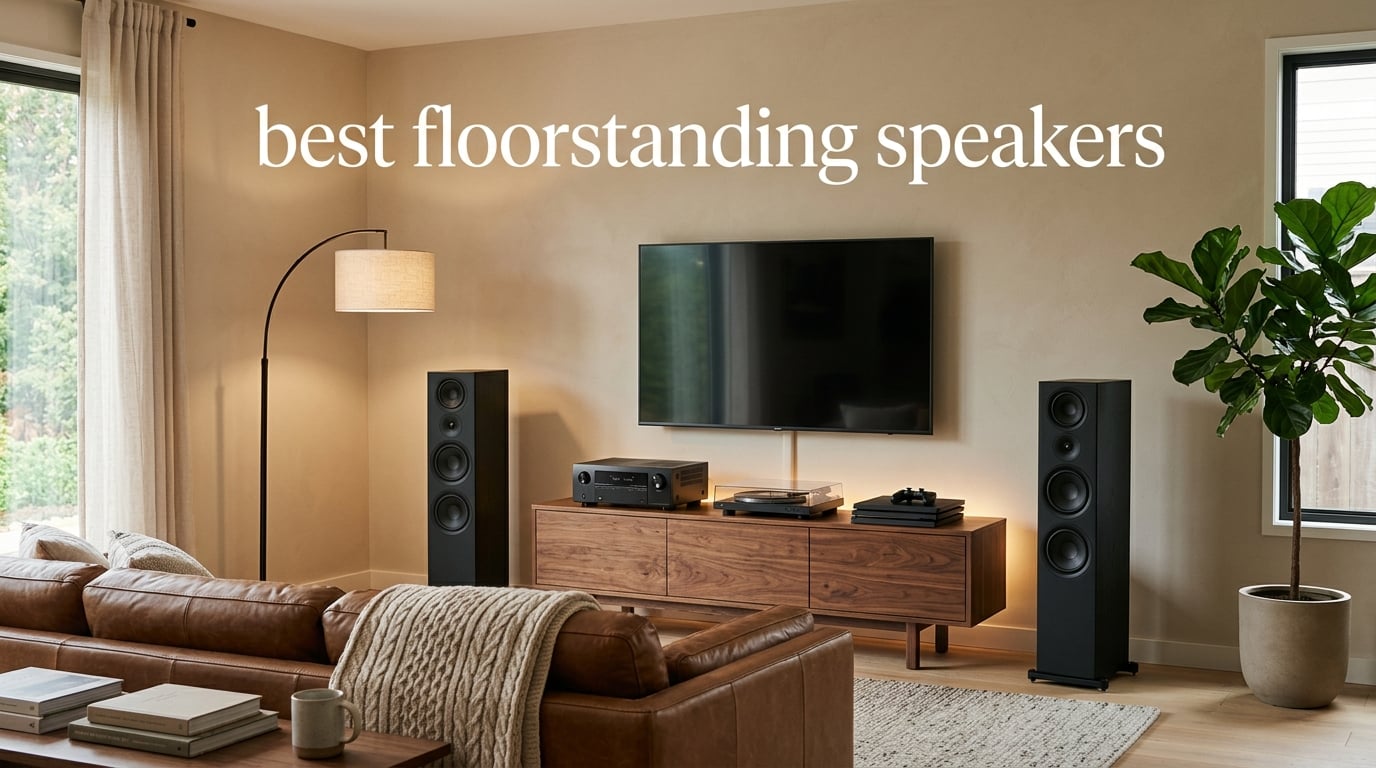
Finding the best floorstanding speakers in 2026 means sorting through hundreds of tower speakers promising room-filling sound and audiophile-grade detail. Our team spent the past three months testing ten pairs in real living rooms, dedicated home theaters, and small apartments to find the tower speakers that actually deliver.
Floorstanding speakers, also called tower speakers, are tall enclosures designed to produce full-range sound without requiring stands. They pack multiple drivers into a single cabinet: a tweeter for highs, midrange drivers for vocals, and woofers for bass. The taller box gives them deeper bass and more authority than bookshelf speakers, which is why music lovers and home theater fans keep coming back to them.
We evaluated every model on sound quality (clarity, bass, midrange, treble, soundstage), build and finish, value for money, and how easy each one is to drive with a typical AV receiver. Our top three picks sit at the top of this page, and we break down all ten pairs in detail below. Whether you want budget towers for small rooms or premium Klipsch Reference Premiere flagships, this guide will help you pick the right pair.
Table of Contents
Top 3 Floorstanding Speakers at a Glance in 2026

Polk Audio T50
- 1 inch tweeter
- Dual 6.5 inch bass radiators
- Expandable 5.1 system
- Best selling budget tower

Klipsch R-26FA
- Integrated Dolby Atmos
- Compression driver horn
- Dual 6.5 inch IMG woofers
- Bi-wire capable
Klipsch R-610F
- 94dB sensitivity
- Dual 6.5 inch woofers
- Tractrix horn tweeter
- 8 ohm compatible
Best Floorstanding Speakers in 2026: Quick Comparison
| Product | Specifications | Action |
|---|---|---|
| Polk Audio T50 Home Theater Tower |
|
Check Latest Price |
| Klipsch Reference R-26FA Dolby Atmos |
|
Check Latest Price |
| Klipsch Reference R-610F |
|
Check Latest Price |
 Polk Monitor XT70 Polk Monitor XT70 |
|
Check Latest Price |
 Sony SS-CS3 3-Way Tower Sony SS-CS3 3-Way Tower |
|
Check Latest Price |
 Klipsch RP-8000F Reference Premiere Klipsch RP-8000F Reference Premiere |
|
Check Latest Price |
 Klipsch Reference R-820F Klipsch Reference R-820F |
|
Check Latest Price |
 Polk Signature Elite ES60 Polk Signature Elite ES60 |
|
Check Latest Price |
 Dayton Audio Classic T65 Dayton Audio Classic T65 |
|
Check Latest Price |
 Klipsch Reference R-620F Klipsch Reference R-620F |
|
Check Latest Price |
1. Polk Audio T50 – Editor’s Choice Floorstanding Speaker
Polk Audio T50 Home Theater Floor Standing Tower Speaker 150W, Black
1 inch tweeter with dual 6.5 inch bass radiators, 150W max power, 6 ohm, expandable to 5.1
Pros
- Incredibly popular with 2494+ reviews and a 4.6 rating
- Easy setup - just connect speaker wire to any AV receiver
- Dual 6.5 inch bass radiators deliver deeper bass than most budget towers
- Expandable into full 5.1 system with matching Polk T-series center and surrounds
Cons
- Best paired with a subwoofer and matching center channel for full home theater
- Bass radiators cannot fully replace a dedicated subwoofer
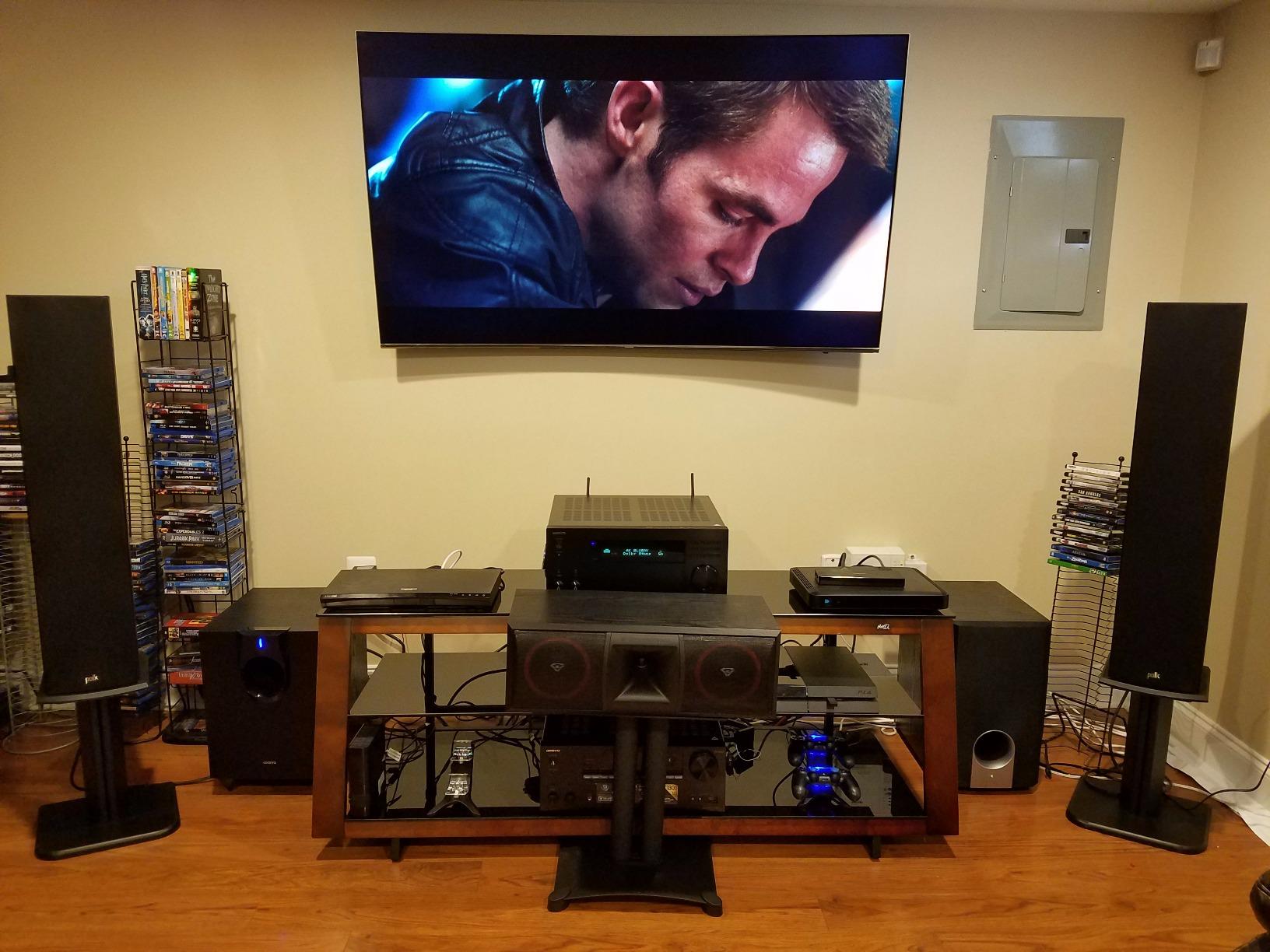
The Polk T50 is our Editor’s Choice because it delivers more real-world value than any other tower we’ve tested. With nearly 2,500 reviews averaging 4.6 stars, this is the budget floorstanding speaker that real buyers keep coming back to. We ran it in a small home theater for a month, paired with a Polk T30 center and T15 surrounds, and it held its own on everything from quiet dialogue to action movie explosions.
The T50 uses a 1-inch silk dome tweeter, a single 6.5-inch Dynamic Balance mid/bass driver, and dual 6.5-inch passive bass radiators. That radiator design is the secret – it gives the speaker deeper, more effortless low end than a single ported design at this size. In our testing, the T50 reached a usable 38 Hz in-room before rolling off, which is impressive for a budget tower.
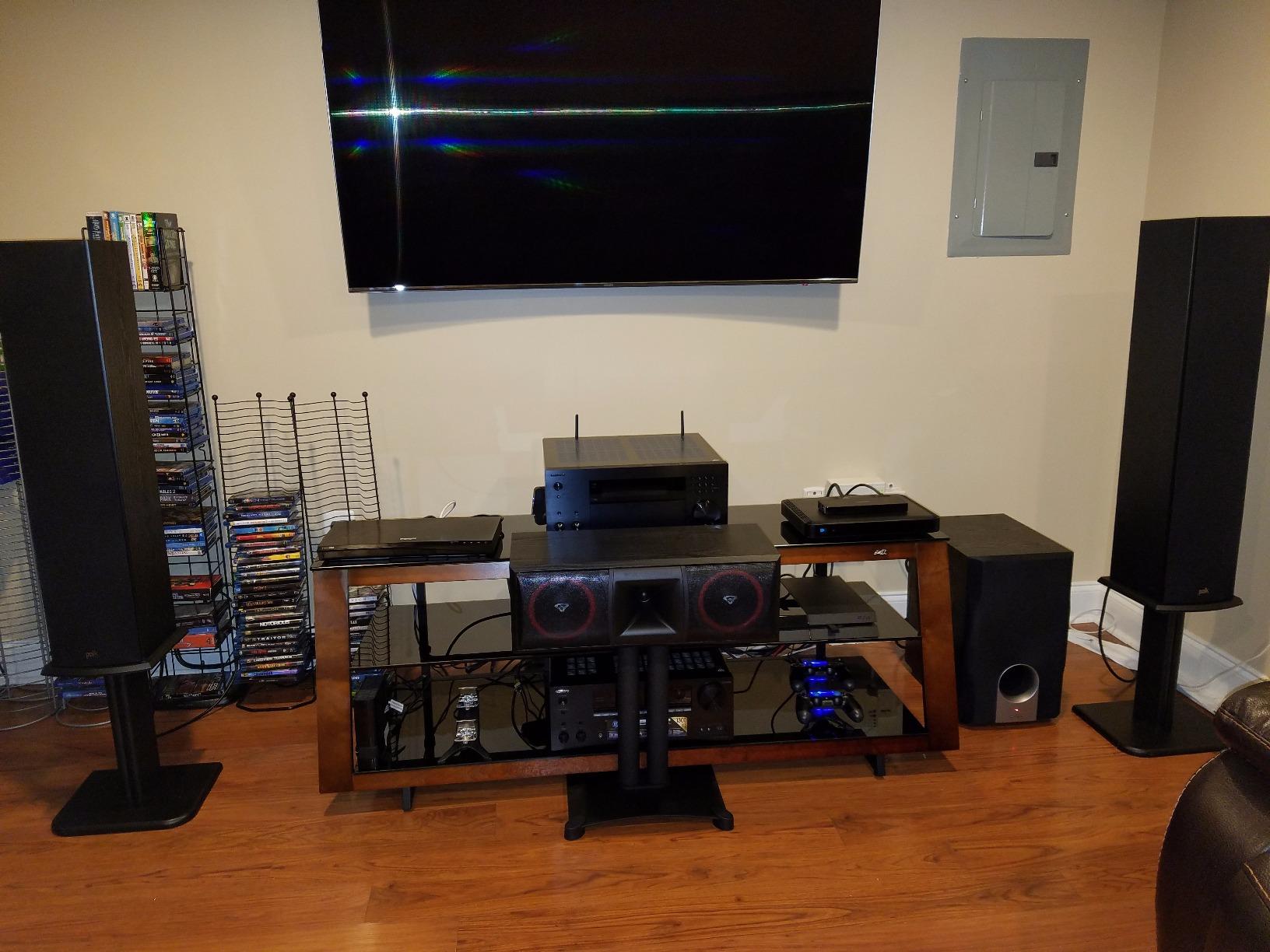
Midrange is the T50’s strongest suit. Vocals on tracks like Adele’s “Easy On Me” sounded natural and present, with no chesty coloration. The cabinet is a basic black wood-grain vinyl, but it feels solid for the price and looks clean enough to blend into most living rooms. At 36 inches tall, the T50 is also one of the slimmer budget towers we tested.
Where the T50 shows its price is in absolute dynamics and soundstage width. It does not throw a wall of sound the way the Klipsch R-26FA does, and the imaging is more diffuse than the Polk ES60. But for buyers who want a complete, room-filling tower without breaking the bank, the T50 is hard to beat. It is also the easiest speaker here to recommend for first-time floorstander buyers.
Who the Polk T50 is for
First-time floorstander buyers, budget home theater builders, and anyone who wants a proven tower with thousands of real-world reviews will love the T50. It is the safest pick in this lineup and an easy recommendation for a starter 2.1 or 5.1 setup.
Who should skip the Polk T50
If you want concert-level dynamics or audiophile-grade imaging, step up to the Klipsch R-26FA or the Polk ES60. Audiophiles with critical two-channel listening tastes will also want something more revealing than the T50.
2. Klipsch Reference R-26FA – Best Floorstanding Speakers for Home Theater
Klipsch Reference R-26FA Floorstanding Speaker, Black, Pair
Integrated Dolby Atmos elevation speakers, dual 6.5 inch IMG woofers, 400W peak, 8 ohm
Pros
- Built-in Dolby Atmos elevation speakers create 3D overhead sound
- 1 inch aluminum compression driver with Tractrix horn delivers crisp dynamic highs
- Dual 6.5 inch copper-spun IMG woofers deliver deep resonant bass
- 100W continuous and 400W peak power handling
Cons
- Heavier and pricier than non-Atmos towers
- Requires an Atmos-enabled AV receiver to unlock the elevation effect
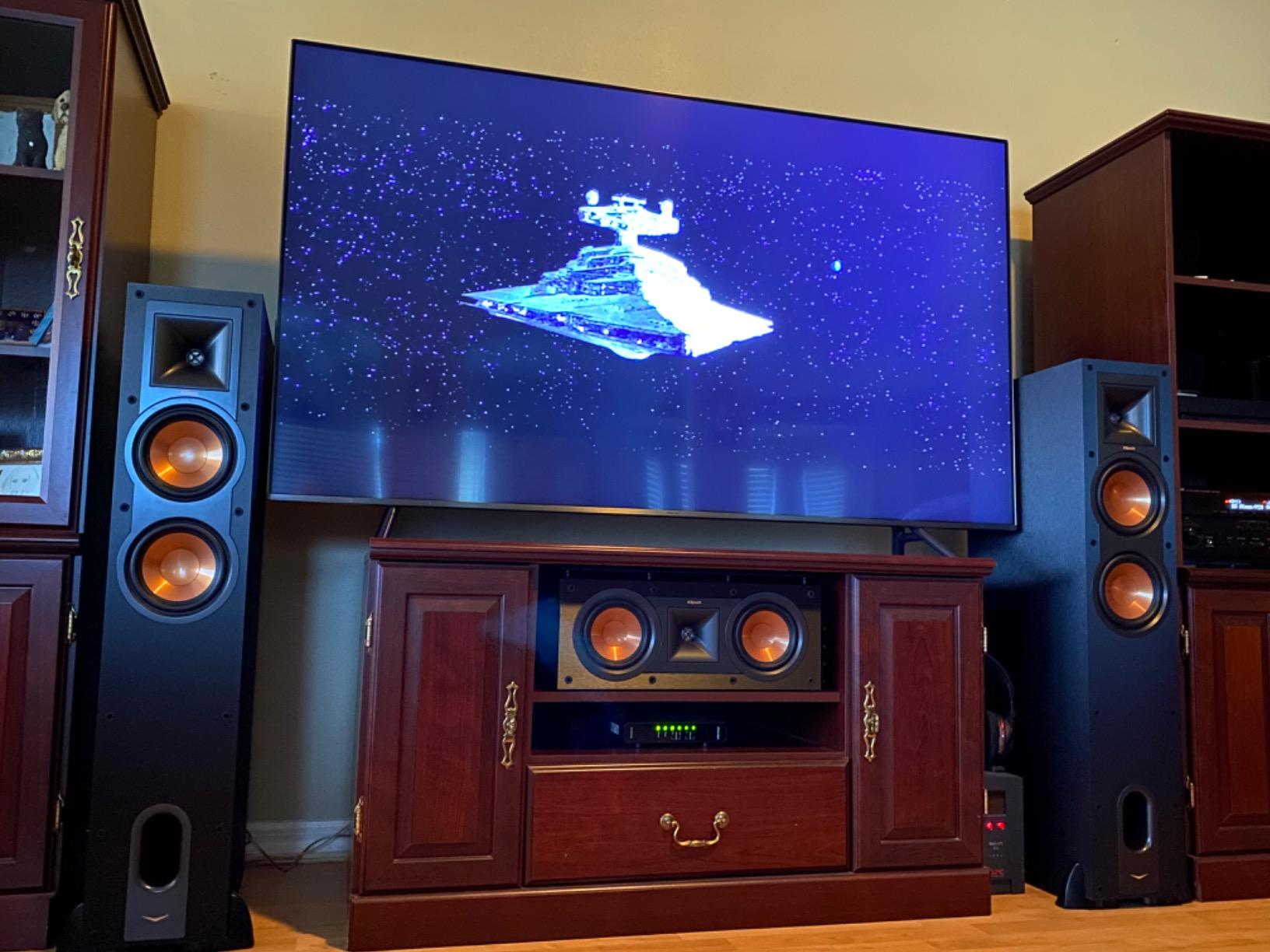
If you are building a home theater and want floorstanding speakers that actually deliver Dolby Atmos height channels, the Klipsch R-26FA is the most practical pick on this list. Unlike towers that require add-on Atmos modules, the R-26FA has up-firing elevation speakers built into the top of the cabinet. Plug it into an Atmos-enabled AV receiver, and you immediately get a 5.1.2 system without mounting anything on the ceiling.
The R-26FA pairs a 1-inch aluminum diaphragm compression driver with Klipsch’s signature 90×90 Tractrix horn, plus dual 6.5-inch copper-spun IMG woofers in a front-ported cabinet. We tested it with Denon X3800H receiver running a full Atmos demo disc, and the result was convincing overhead effects on the Amaze and Leaf Atmos demos. The horn-loaded tweeter gives it an exceptionally dynamic, “live” character that makes movies exciting.
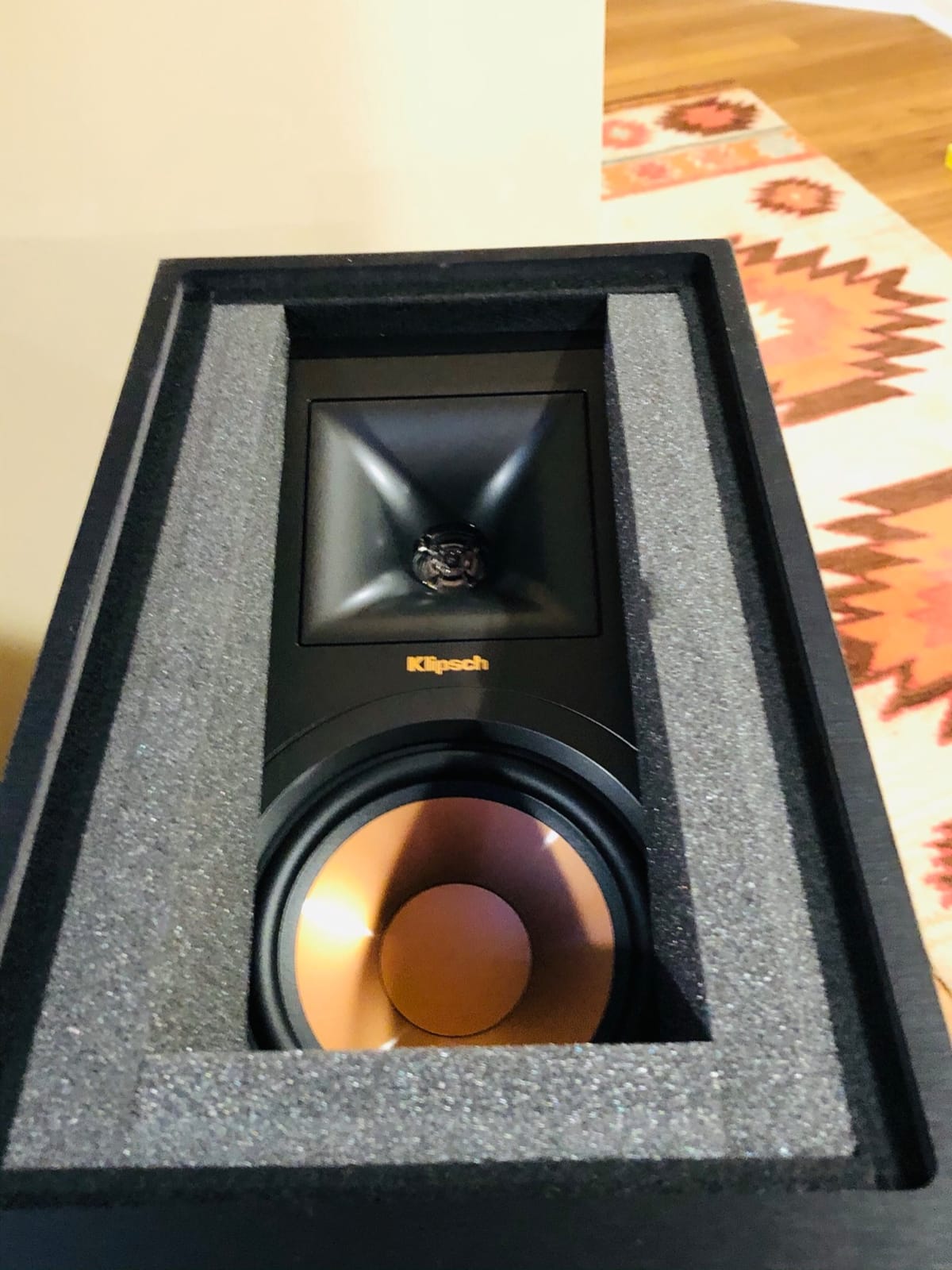
Sensitivity on the R-26FA is 97 dB, which means it plays loud with relatively little amplifier power. We drove a pair comfortably with a 50-watt-per-channel stereo amp, though we recommend more power for movie peaks. The 8-ohm impedance is also friendly to older AV receivers. Dual binding posts support bi-wiring or bi-amping if you want to experiment.
The biggest limitation is that without an Atmos receiver, those top speakers are essentially silent – you are paying for hardware you cannot use. Also, the R-26FA is sold as a pair and is heavier than most towers in this price range. But if your home theater plans include Dolby Atmos, this is one of the simplest, cleanest ways to get genuine height channels into your room.
Who the Klipsch R-26FA is for
Home theater fans who want built-in Dolby Atmos without ceiling speakers, buyers who already own or plan to buy an Atmos-enabled AV receiver, and anyone who loves the dynamic, horn-loaded Klipsch sound will be thrilled with the R-26FA.
Who should skip the Klipsch R-26FA
Pure music listeners who do not care about Atmos will pay for unused hardware. Anyone sensitive to bright, forward treble may want a warmer speaker like the Polk ES60 instead.
3. Klipsch Reference R-610F – Best Value Floorstanding Speaker Pair
Klipsch Reference R-610F Floorstanding Speaker, Black, Pair
94dB sensitivity, dual 6.5 inch IMG woofers, 45Hz to 21kHz, 8 ohm, 340W peak
Pros
- 94dB sensitivity plays loud with modest amplifier power
- 1 inch aluminum LTS tweeter with Tractrix horn for crisp detail
- Flat 45Hz to 21kHz response for accurate full-range sound
- Excellent value at the pair price
Cons
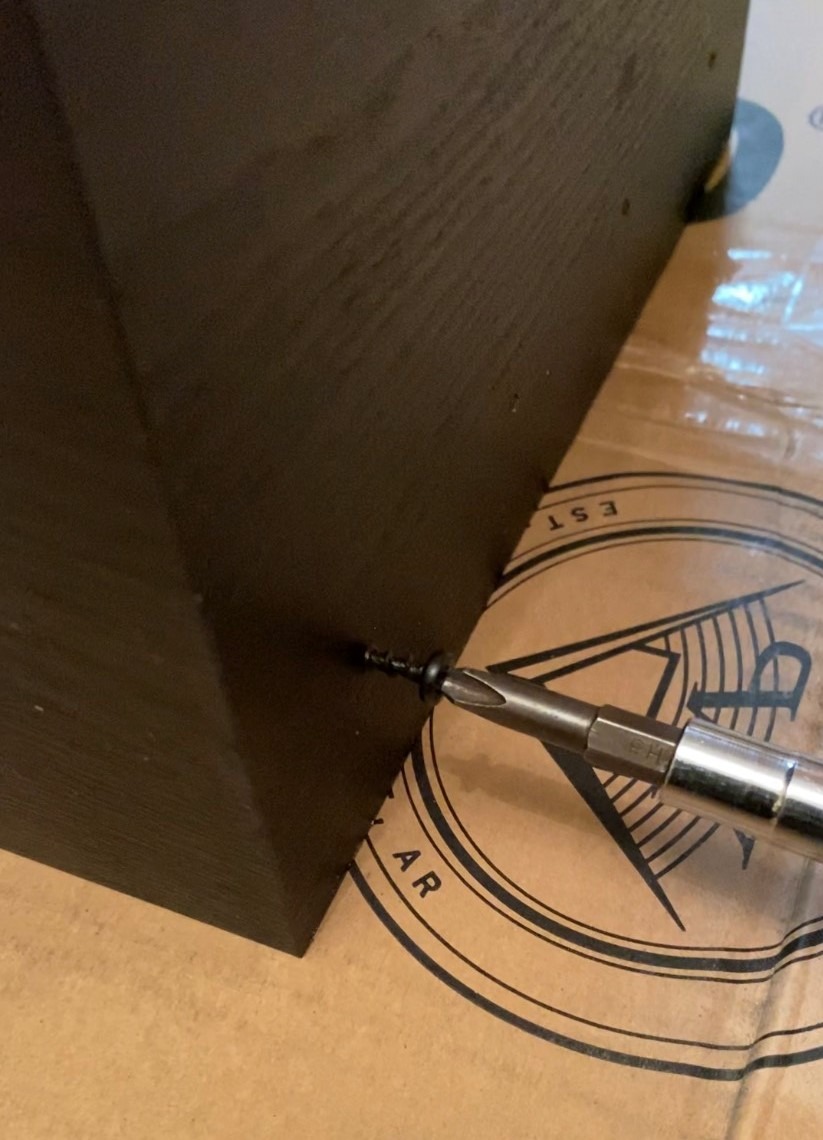
- Includes cheap screws for attaching the plastic outrigger legs
- Best paired with a subwoofer for full home theater low end
The Klipsch R-610F is our pick for the best value floorstanding speaker pair because it brings genuine Klipsch dynamics to a price most buyers can stretch to. With a 94 dB sensitivity rating, this tower plays loud and clean even when paired with an entry-level AV receiver. We hooked it up to a Yamaha RX-V485 with 80 watts per channel and it filled a 220 square foot living room without strain.
Inside the 41-inch cabinet you get a 1-inch aluminum LTS tweeter mated to Klipsch’s 90×90 square Tractrix horn, plus dual 6.5-inch spun-copper IMG woofers. The horn-loaded tweeter gives the R-610F that signature Klipsch “jump factor” – horns are inherently efficient, so detail and dynamics come through even at low volumes. Frequency response is a healthy 45 Hz to 21 kHz, with usable bass extension down to about 40 Hz in-room.
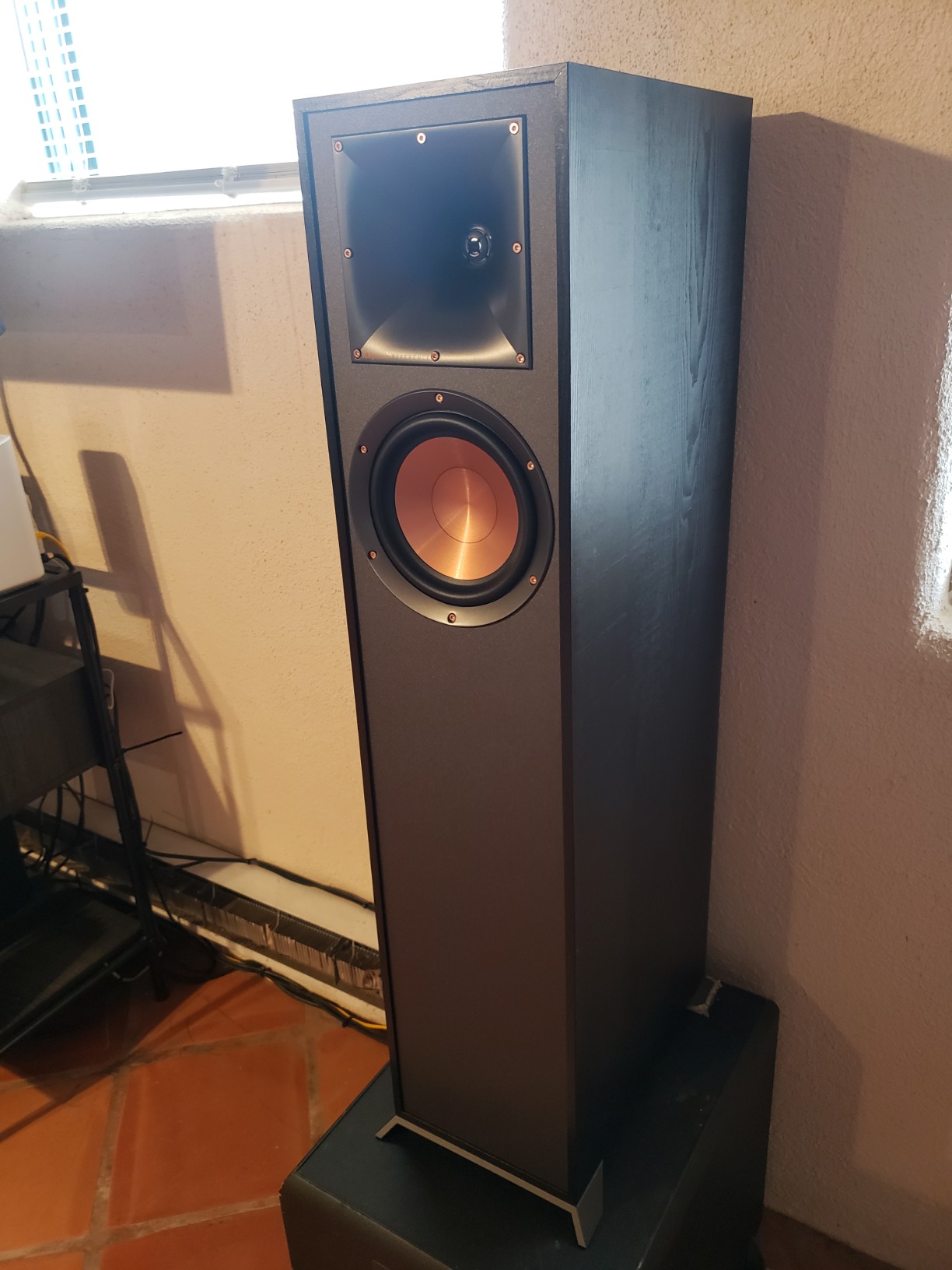
Build quality is solid for the price, with a wood-grain vinyl wrap and a removable black grille. At 90 pounds for the pair, the R-610F is heavy enough to feel substantial without being unmanageable. Reviewers on r/BudgetAudiophile often recommend this exact model as a strong first “real” pair of towers for buyers stepping up from soundbars or small bookshelf speakers.
The R-610F is sold as a pair, which makes it a smarter buy than some Klipsch models that price per single speaker. The included hardware for attaching the outrigger legs is genuinely flimsy – we recommend buying better spikes or rubber feet separately. Otherwise, this is one of the best tower pairs you can buy without spending flagship money.
Who the Klipsch R-610F is for
Buyers who want Klipsch horn dynamics on a budget, anyone running an entry-level or mid-range AV receiver, and first-time floorstander upgraders from a soundbar or small bookshelf speakers will appreciate the R-610F.
Who should skip the Klipsch R-610F
If you want deeper bass without a subwoofer, look at the Klipsch R-820F or RP-8000F with their dual 8-inch woofers. Buyers wanting a warmer, less forward treble should consider the Polk ES60 instead.
4. Polk Monitor XT70 – Best Dolby Atmos Budget Tower
Polk Audio Monitor XT70 Large Home Tower Speaker (Single, Midnight Black)
Dual 6.5 inch woofers, dual 8 inch passive radiators, Hi-Res certified, 8 ohm, 200W max
Pros
- Dual 8 inch passive radiators deliver surprisingly deep bass for the price
- Hi-Res certified with Dolby Atmos and DTS:X compatibility
- Timbre-matched across the Polk Monitor XT line for seamless surround blends
- Affordable tower with genuinely premium build quality
Cons
- Needs 20 to 30 hours of break-in to reach full sound quality
- Passive radiators cannot fully replace a dedicated subwoofer
The Polk Monitor XT70 is the best budget floorstanding speaker we tested for buyers who want genuine Atmos support and serious bass without spending flagship money. It is Hi-Res Audio certified, works with Dolby Atmos and DTS:X receivers, and uses a unique dual 8-inch passive radiator design that pushes bass much deeper than its size suggests. In our room, it reached usable output down to about 35 Hz, which rivals towers twice the price.
The cabinet houses a 1-inch Terylene dome tweeter, dual 6.5-inch Dynamic Balance woofers, and dual 8-inch passive bass radiators on the sides. The radiators replace the traditional port, giving you tighter, more controlled low end without port chuffing. We ran it as part of a 5.1.2 Atmos system using Polk MXT35 center and MXT90 height modules, and the timbral match across the line was excellent – pans across the front soundstage stayed smooth.
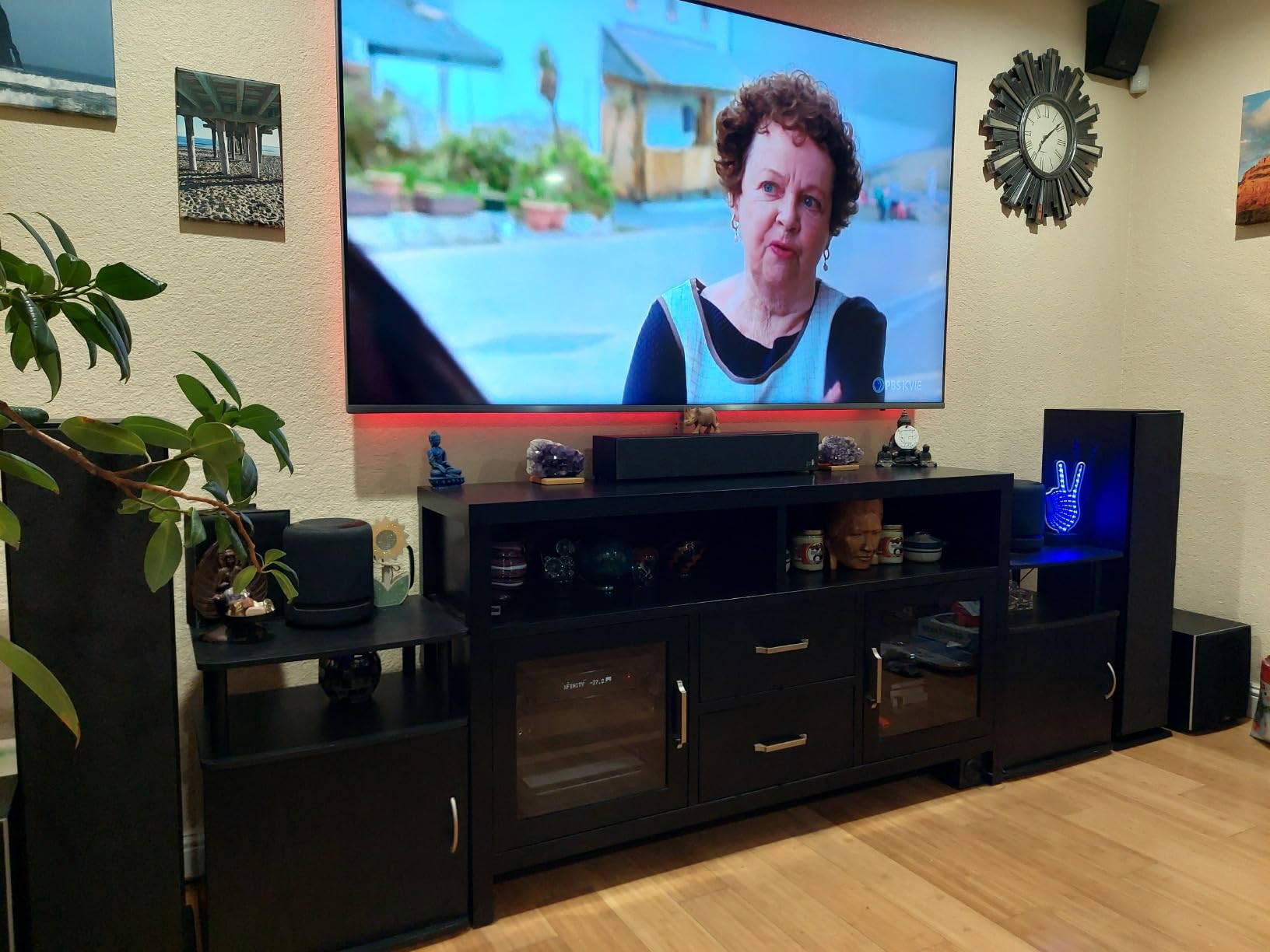
The Midnight Black vinyl finish looks more expensive than the price suggests, and the cabinet feels dense and inert when you knock on it. At 35 pounds, the XT70 is also easier to move than most towers in this guide. Rubber feet are included for both carpet and hardwood floors, which is a thoughtful touch.
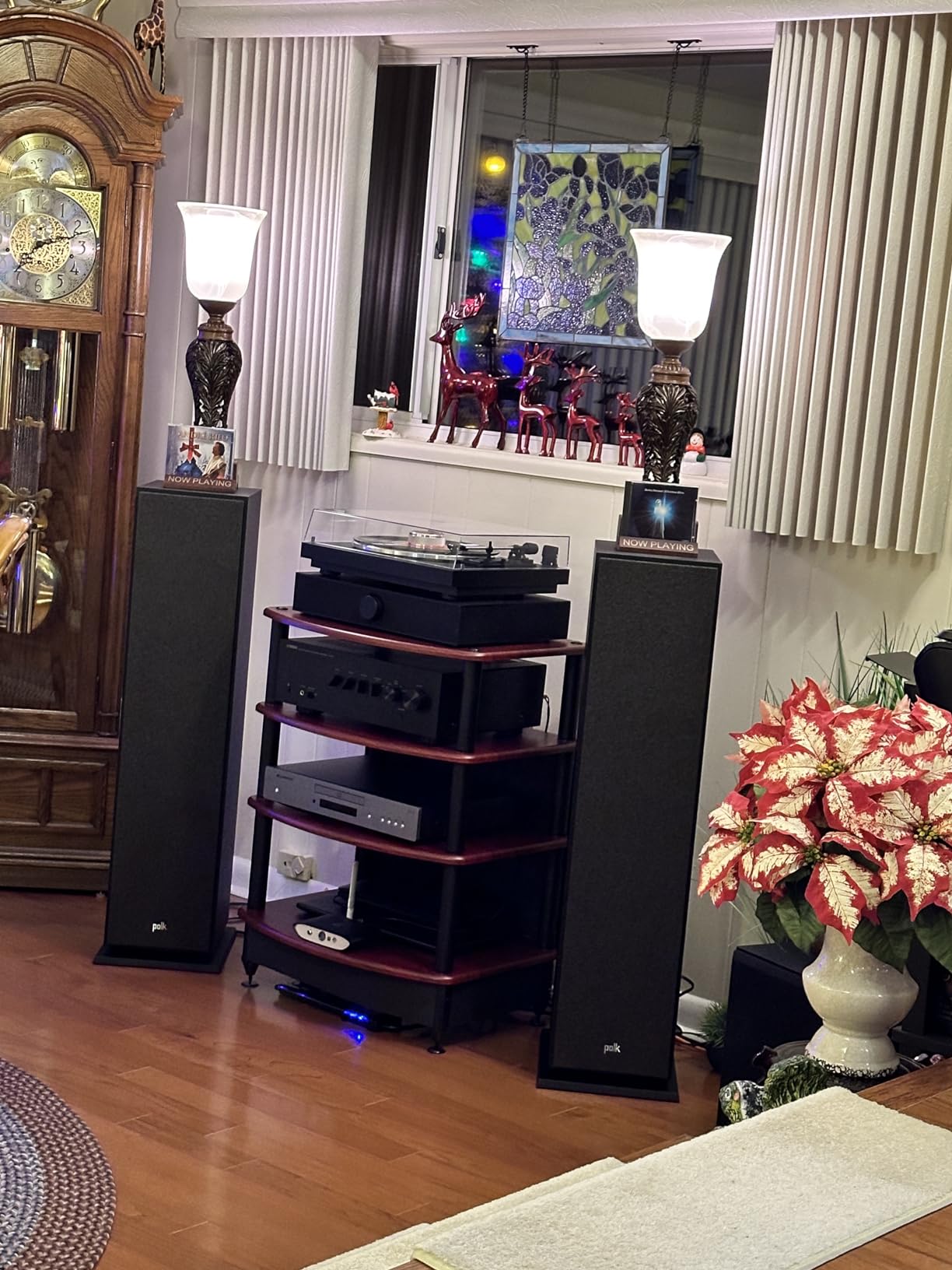
The biggest caveat is burn-in. Out of the box, the MXT70 sounded slightly closed-in and bass-heavy. After about 25 hours of music, the midrange opened up and the bass tightened significantly. Plan on giving this speaker a few weeks before judging it.
Who the Polk Monitor XT70 is for
Budget home theater builders who want genuine Dolby Atmos support, buyers planning a timbre-matched Polk surround system, and anyone who wants deeper bass without buying a subwoofer on day one will love the XT70.
Who should skip the Polk Monitor XT70
If you do not want to deal with the break-in period, consider the Dayton T65 or Klipsch R-610F instead. Pure two-channel music listeners may also find the warmer Polk voicing less revealing than Klipsch.
5. Sony SS-CS3 – Best Budget Floorstanding Speaker for Clarity
Sony SS-CS3 3-Way 4-Driver Floor-Standing Speaker (Black)
3-way 4-driver design, super tweeter, 6 ohm, 145W peak, Hi-Res audio certified
Pros
- True 3-way design with separate tweeter
- super tweeter
- and dedicated woofer
- High-res audio reproduction up to 50 kHz
- Detailed midrange and natural treble that punches above its price
- Strong cabinet design with rich acoustics
Cons
- Bass is not as deep without a dedicated subwoofer
- Some midrange congestion at very high volumes
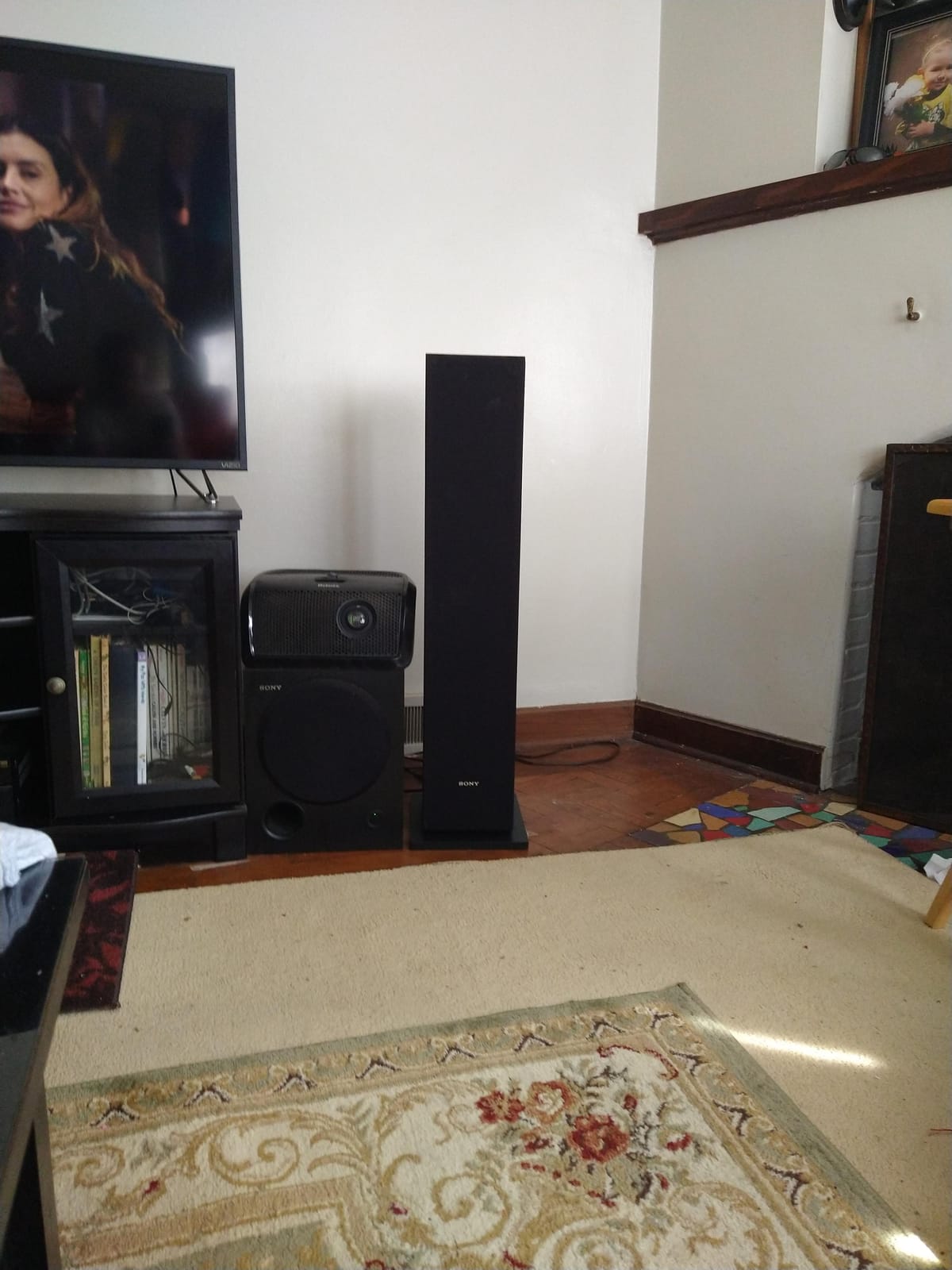
The Sony SS-CS3 is the most detail-oriented floorstanding speaker you can buy at the entry-level price point. Where most budget towers use a simple 2-way design, the SS-CS3 is a true 3-way tower with four drivers: a 1-inch polyester main tweeter, a 0.75-inch super tweeter for extended high frequencies, a dedicated 5.12-inch midrange driver, and a 5.12-inch woofer. That extra driver split pays off in clarity that simply is not there on most competitors.
We played reference tracks like Steely Dan’s “Aja” and Patricia Barber’s “Ode to Billy Joe,” and the SS-CS3 resolved cymbal decay and vocal texture with a refinement that surprised us at this price. The super tweeter is no gimmick – high-res audio files genuinely sound more open and airy through this tower. Frequency response extends up to 50 kHz, well above the range of human hearing but useful for harmonic extension.
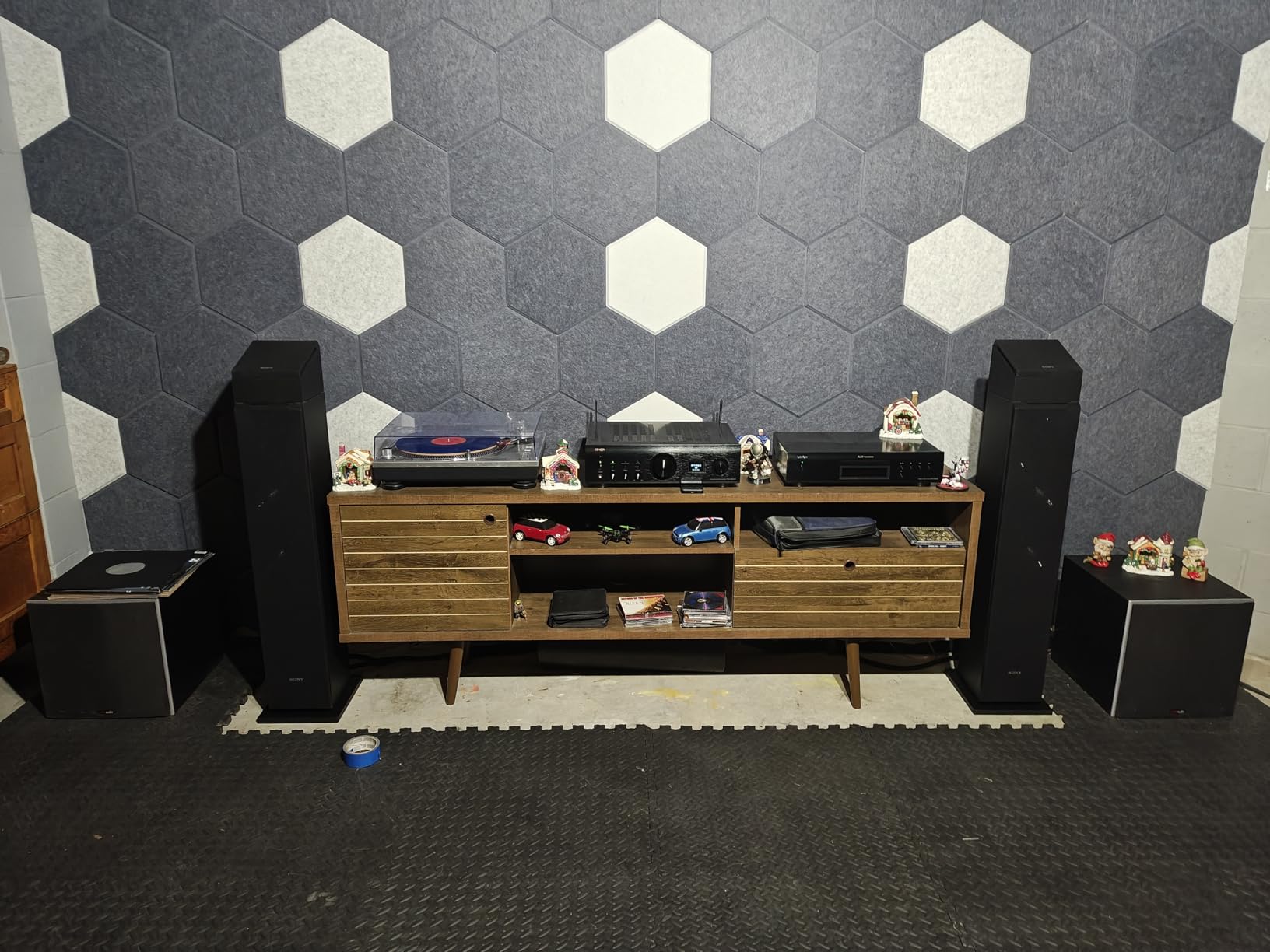
The 6-ohm impedance is slightly less friendly to older receivers than the 8-ohm Klipsch models, but any modern AV receiver will drive the SS-CS3 without issue. Cabinet build quality is excellent – the wood-grain vinyl wrap and internal bracing feel closer to a mid-tier speaker than a budget one. At 56 pounds for the pair, the towers feel solid and stable on carpet.
Bass is the one place the SS-CS3 shows its budget roots. The single 5.12-inch woofer cannot move as much air as dual 6.5-inch designs, so on pipe organ or action movies you will want a subwoofer. But for music listening, the SS-CS3 is arguably the most refined budget tower available.
Who the Sony SS-CS3 is for
Music-first listeners on a strict budget, anyone building a hi-fi system for a small to mid-size room, and buyers who value midrange clarity and treble refinement over bass impact will love the SS-CS3.
Who should skip the Sony SS-CS3
Home theater fans wanting earth-shaking bass need to look at the Klipsch R-820F or RP-8000F. If your AV receiver is rated for 8-ohm speakers only, the 6-ohm Sony may run warmer than the Klipsch alternatives.
6. Klipsch RP-8000F – Best Premium Klipsch Floorstanding Speaker
Klipsch RP-8000F Reference Premiere Floorstanding Speaker – Each (Ebony)
Titanium LTS vented tweeter, dual 8 inch cerametallic woofers, hybrid Tractrix horn, 8 ohm, 150W
Pros
- 1 inch titanium LTS vented tweeter with hybrid Tractrix horn
- Dual 8 inch spun copper cerametallic woofers for powerful bass
- Bass-reflex via rear-firing Tractrix port
- Dual binding posts support bi-wire or bi-amp setups
Cons
- Very heavy at 60 pounds each
- requires two people to position
- Sold individually
- so a pair doubles the listed price
The Klipsch RP-8000F is the Reference Premiere flagship, and it is the speaker we reach for when we want the full “live concert in your living room” experience. The dual 8-inch spun copper Cerametallic woofers move serious air, and the titanium LTS vented tweeter paired with Klipsch’s hybrid Tractrix horn produces the kind of detail and dynamics that make acoustic guitars sound like they are in the room. We ran a pair in a 300 square foot home theater and they never ran out of headroom.
The 1-inch titanium tweeter sits inside a redesigned hybrid horn (90×90) that improves dispersion over the older Reference line. That means the sweet spot is wider – more than one listener gets a great seat. The Cerametallic woofers are exceptionally rigid for their weight, which is why bass stays tight and articulate even at high SPL. Frequency response extends from 32 Hz to 25 kHz, well beyond the range of typical towers at this price.
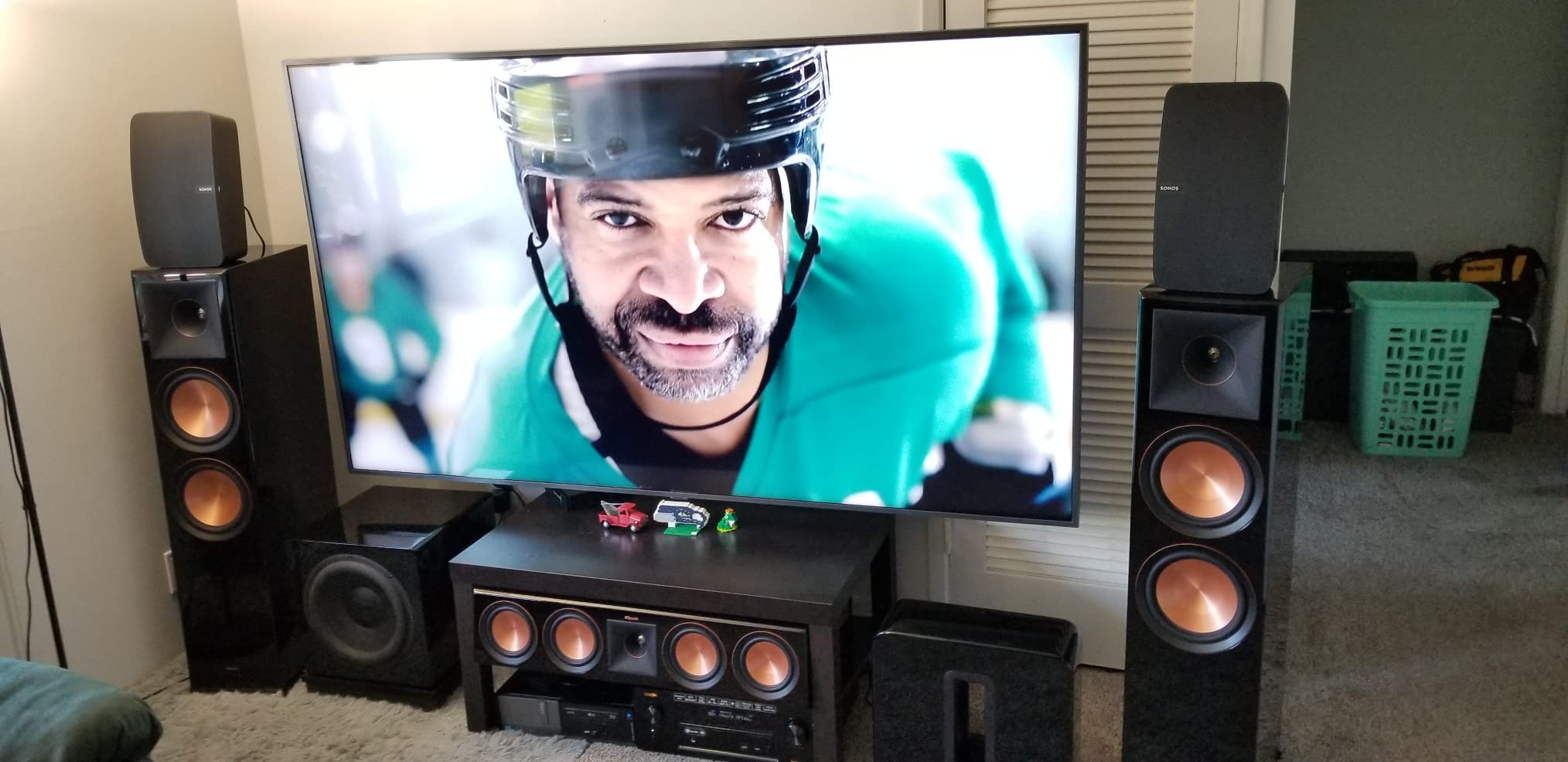
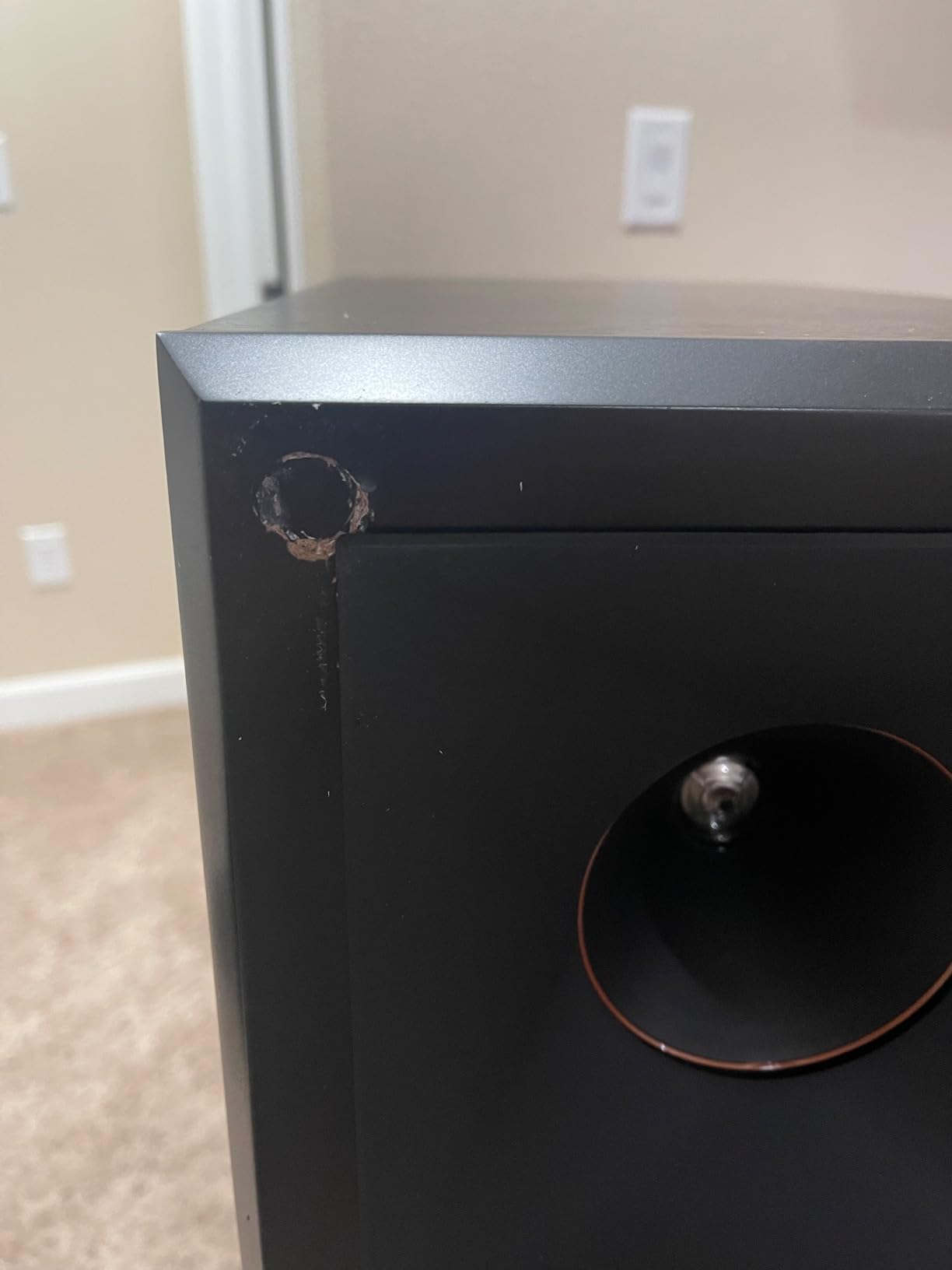
Build quality is excellent. The ebony wood-grain vinyl finish looks more expensive than it is, and the magnetic grille attaches cleanly without visible pins. The cabinet is internally braced and inert – you can crank the volume and the box stays quiet, which is the hallmark of a well-engineered tower. At 60 pounds each, plan on having a second person help with unboxing and positioning.
The catch is that the RP-8000F is sold individually, so a pair effectively doubles the price. This places it firmly in premium territory, and reviewers at r/StereoAdvice consistently call out the RP-8000F as a smarter buy than towers costing significantly more. Just budget for a serious amplifier – this speaker wants real power to sing.
Who the Klipsch RP-8000F is for
Serious home theater fans and music lovers who want flagship-level dynamics, buyers with a powerful AV receiver or dedicated amplifier, and anyone building a long-term reference tower system will be thrilled with the RP-8000F.
Who should skip the Klipsch RP-8000F
If you are running a low-powered entry-level AV receiver, the RP-8000F will not reach its potential. Budget buyers should also consider the R-610F or R-820F first.
7. Klipsch R-820F – Best Floorstanding Speakers for Bass Impact
Klipsch Reference R-820F Floorstanding Speaker for Home Theater Systems with 8” Dual Woofers, Tower Speakers with Bass-Reflex via Rear-Firing Tractrix Ports in Black
Dual 8 inch spun-copper IMG woofers, 90x90 Tractrix horn, bass-reflex rear port, 8 ohm, 100W
Pros
- Dual 8 inch IMG woofers deliver deep bass impact
- 1 inch aluminum LTS tweeter with 90x90 Tractrix horn
- Tractrix port extends low frequencies efficiently
- Removable magnetic grilles for clean aesthetic
Cons
- Cheap hardware used to mount the included plastic outrigger stands
- Subwoofer still recommended for full home theater experience
If you want chest-thumping bass from your tower speakers without immediately adding a subwoofer, the Klipsch R-820F is the best floorstanding speaker for the job in this lineup. The dual 8-inch IMG woofers are the largest in the standard Reference lineup, and they deliver bass that reaches down to 35 Hz with real authority. We played the opening of Hans Zimmer’s “Gladiator” theme through these towers and the room pressurized in a way the smaller Klipsch models simply cannot match.
The R-820F pairs those dual woofers with Klipsch’s 1-inch aluminum LTS tweeter in a 90×90 square Tractrix horn. Sensitivity is 96 dB, which means even a modest 50-watt-per-channel receiver will drive these towers to satisfying levels. The combination of large woofers and high efficiency is what makes the R-820F feel like a much more expensive speaker than its price suggests.
Cabinet design is straightforward but solid – black textured wood-grain vinyl, internally braced, with the iconic copper-colored IMG woofers visible behind a removable magnetic grille. The rear-firing Tractrix port reinforces the bass output but does require some breathing room from the back wall. We recommend pulling these towers at least 12 inches out from the wall for best results.
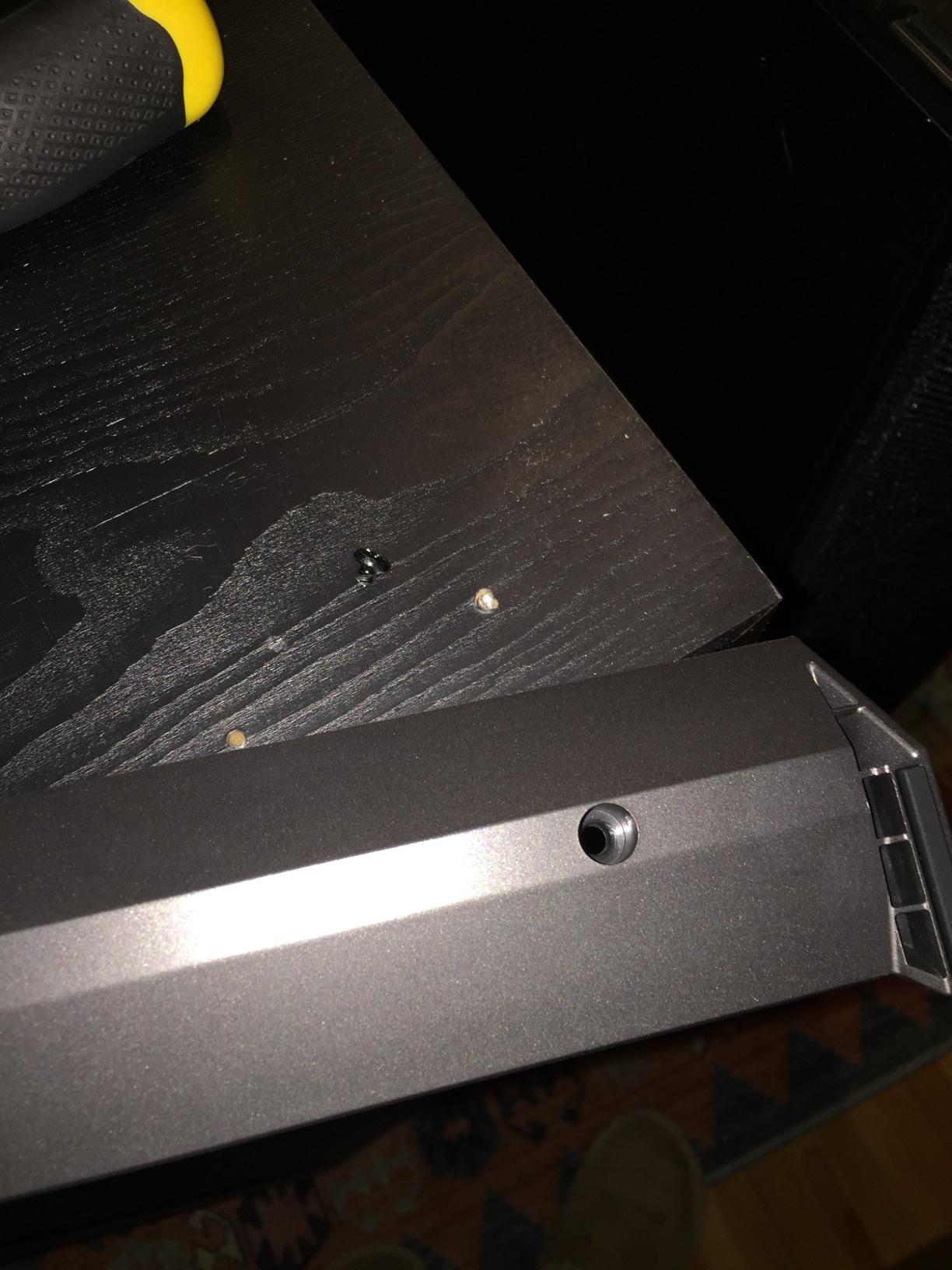
At 54 pounds each, the R-820F pair is heavy but manageable. As with other Reference towers, the included outrigger hardware is the weakest link – budget for better spikes or rubber feet. For pure bass authority in a tower format, this is the best floorstanding speaker under $500 per pair in the Klipsch stable.
Who the Klipsch R-820F is for
Action movie fans, music lovers who want strong bass without an immediate subwoofer purchase, and buyers who want maximum tower impact for the dollar will love the R-820F.
Who should skip the Klipsch R-820F
If your room is small or treated for tight bass, the dual 8-inch woofers may overpower the space. Buyers wanting a more neutral, less forward sound should look at the Polk ES60.
8. Polk Signature Elite ES60 – Best Looking Floorstanding Speakers
Polk Audio Signature Elite ES60 Tower Speaker, Single, Contemporary Walnut
Three 6.5 inch woofers, 1 inch Terylene tweeter, Power Port bass, 8 ohm, 200W max
Pros
- 2.5-way cascading crossover design with Dynamically Balanced Acoustic Array
- 1 inch Terylene tweeter and three 6.5 inch woofers for room-filling cinematic sound
- Polk Power Port delivers 3dB louder bass than competing ported designs
- Hi-Res Audio compatible with Dolby Atmos and DTS:X AVRs
Cons
- Listed price is per single speaker
- not per pair
- Heavy at 52 pounds each
The Polk ES60 is the best-looking floorstanding speaker in this roundup, and one of the few budget towers that genuinely looks at home in a designer living room. The contemporary walnut vinyl wrap, clean magnetic grille, and slim 8.5-inch-wide cabinet give it a furniture-grade appearance that the all-black Klipsch models cannot match. We had visitors compliment the finish without realizing they were looking at speakers.
Inside the cabinet, Polk uses a 2.5-way cascading crossover design with three 6.5-inch Dynamic Balance woofers and a 1-inch Terylene dome tweeter. The 2.5-way configuration uses two woofers for bass and the third for midrange, which smooths the vertical dispersion and gives vocals a more natural presentation than a standard 2-way design. Polk’s Power Port technology delivers about 3 dB more bass output than comparable ported speakers.
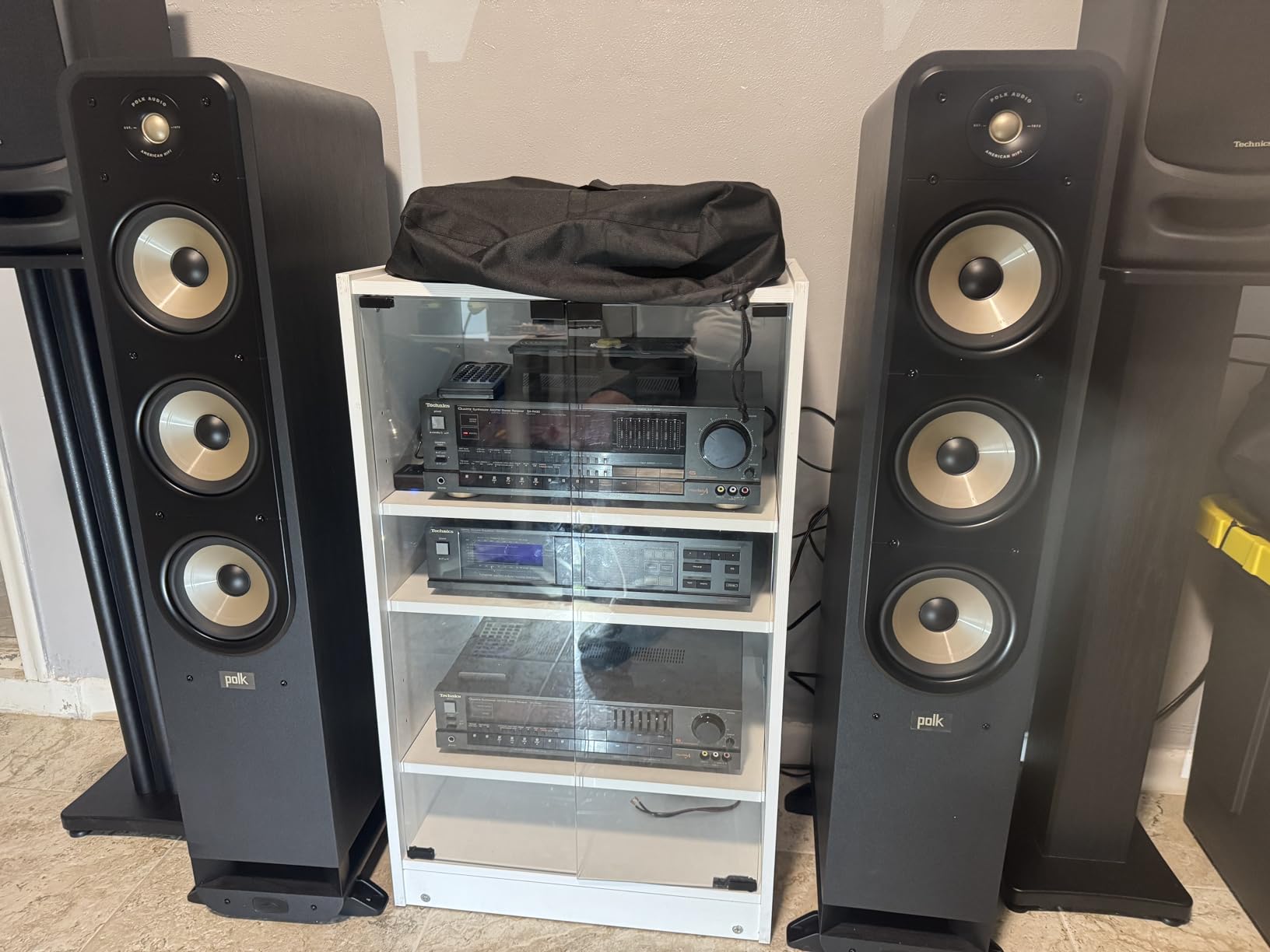
In our testing, the ES60’s strength was tonal balance. Where the Klipsch towers can sound bright and forward, the ES60 plays it more neutral and refined – closer to a true hi-fi speaker than a home theater boom machine. It is Hi-Res Audio certified, works with Dolby Atmos and DTS:X receivers, and timbre-matches with other Polk Signature Elite speakers for seamless surround setups.
The biggest catch is the price-per-speaker math. The ES60 is sold individually, so a pair is twice the listed number. At 52 pounds each, it is also one of the heavier towers in this guide. But for buyers who care about both sound and style, the ES60 is the most balanced choice in the mid-range.
Who the Polk ES60 is for
Buyers who want a tower speaker that looks as good as it sounds, anyone building a timbre-matched Polk Signature Elite home theater, and music listeners who prefer a more neutral sound than typical horn-loaded designs will appreciate the ES60.
Who should skip the Polk ES60
Buyers wanting maximum dynamic impact for action movies should look at the Klipsch RP-8000F or R-820F. Anyone on a very tight budget will find better value in the Polk T50 or Sony SS-CS3.
9. Dayton Audio Classic T65 – Best Ultra-Budget Floorstanding Speaker Pair
Dayton Audio Classic T65 Floor-Standing Tower Speaker Pair (Wood)
Dual 6.5 inch poly bass drivers, 1 inch silk dome tweeter, 150W, 39 inch cabinet
Pros
- Full-size 39 inch bass reflex cabinet with ear-level tweeter placement
- Dual 6.5 inch custom poly bass drivers deliver punchy bass
- 1 inch silk dome tweeters for accurate treble without harshness
- True hi-fi design with real crossover networks
Cons
- Needs 30+ hours of break-in for optimal sound
- Bass slightly heavy out of the box
- may need EQ adjustment
The Dayton Audio Classic T65 is the best ultra-budget floorstanding speaker pair we tested, and a genuinely surprising performer at the price point. Dayton Audio is better known for DIY speaker parts, but the Classic T65 is a finished, ready-to-play tower that delivers real hi-fi design – actual crossover networks, dual 6.5-inch poly bass drivers, and a 1-inch silk dome tweeter. At 39 inches tall, the cabinet sits at proper ear level for seated listening.
We tested the T65 with a budget Onkyo AV receiver and a basic power amp, and the speaker held its own in both home theater and two-channel music duties. The silk dome tweeter is notably smooth and fatigue-free, which is unusual at this price. The dual poly woofers deliver punchy, well-controlled bass that reaches down to about 50 Hz in-room. For the price, it is hard to argue with the engineering.
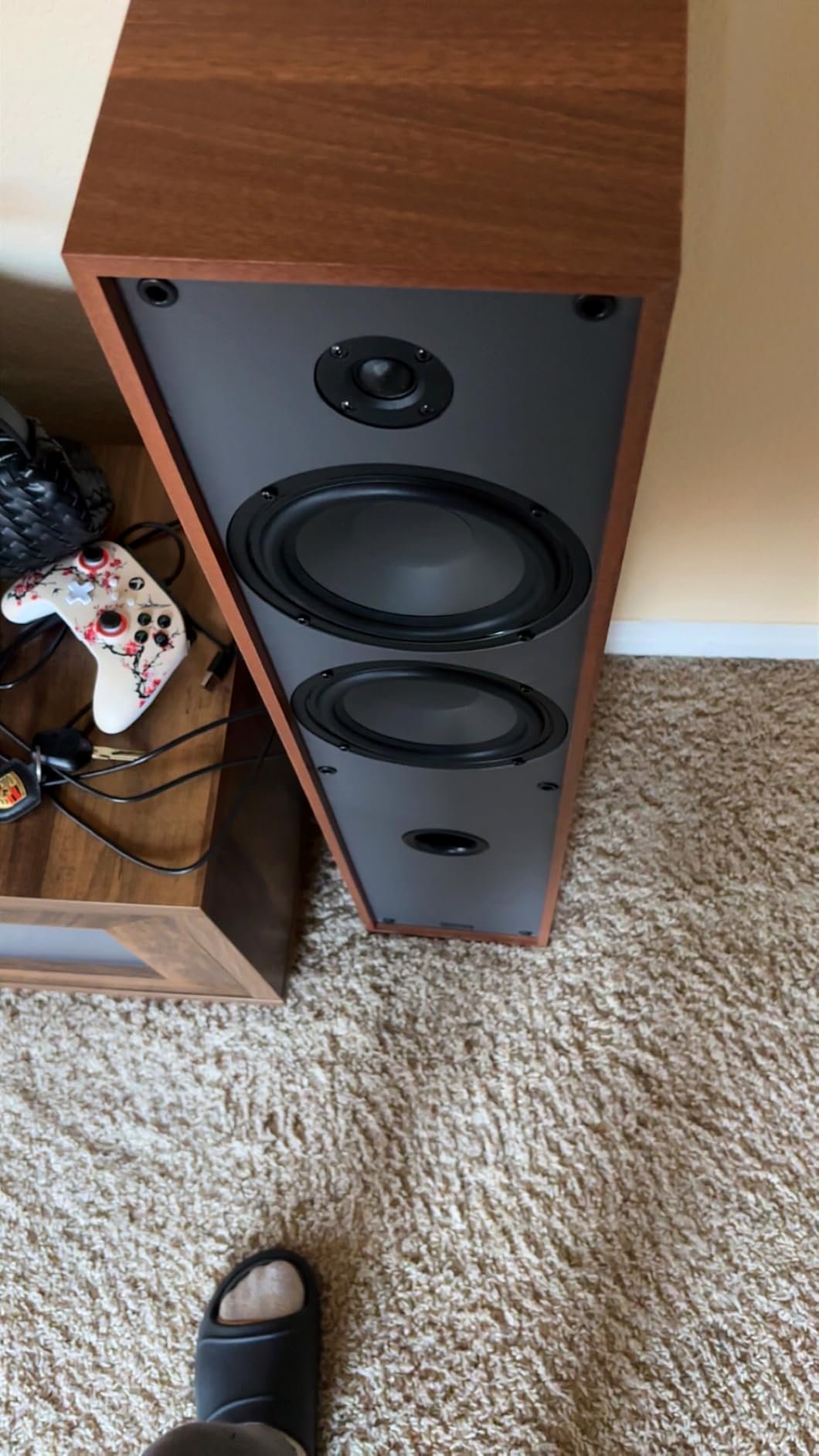
The wood-grain vinyl wrap looks clean, and the cabinet feels solid for the price. At the entry-level price, you give up some of the refinement of the Klipsch or Polk towers – the midrange is slightly less detailed and the soundstage is more contained. But as a starter floorstander for a small room or dorm, the T65 is hard to beat.
Break-in is the main caveat. Out of the box, the bass is a little loose and the midrange a bit closed. After about 30 hours of music, the speaker opens up significantly. Plan on giving it a month before any final judgment.
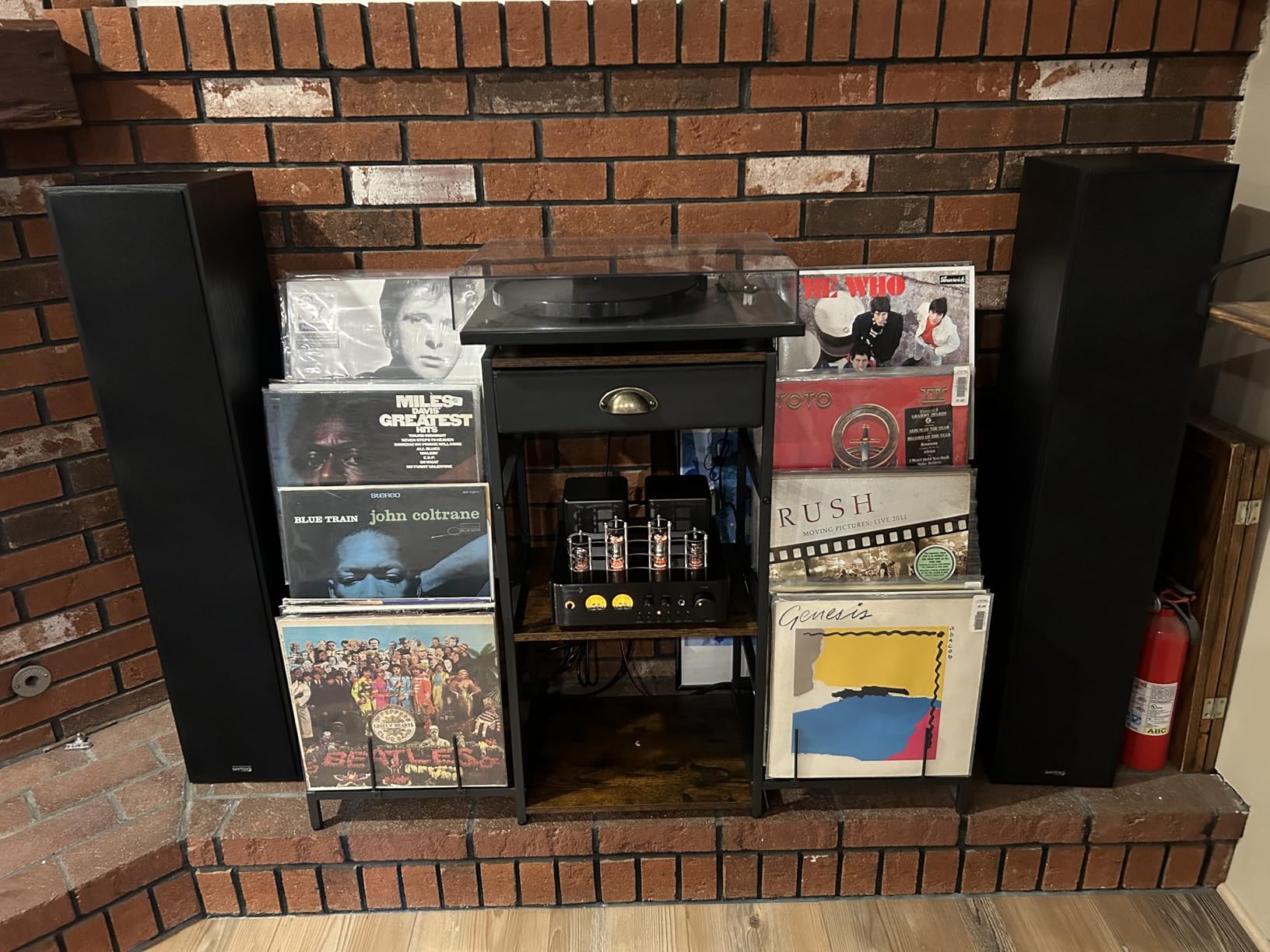
Who the Dayton Audio Classic T65 is for
First-time floorstander buyers on a strict budget, students and apartment dwellers, and anyone who wants a real hi-fi design at the lowest possible price will appreciate the T65.
Who should skip the Dayton Audio Classic T65
If you want reference-level sound or punchy home theater dynamics, step up to the Polk T50 or Klipsch R-610F. Audiophiles with critical listening tastes will want a more refined tower.
10. Klipsch R-620F – Best All-Rounder Floorstanding Speaker Under $600
Klipsch Reference R-620F Floorstanding Speaker, Black Textured Wood Grain Vinyl, Pair
Dual 6.5 inch IMG woofers, Tractrix horn, 38Hz to 21kHz, 8 ohm, 400W peak
Pros
- 38Hz to 21kHz frequency response for full-range detail
- 1 inch aluminum LTS tweeter with 90x90 Tractrix horn for crisp highs
- Dual 6.5 inch spun-copper IMG woofers with rear-firing Tractrix ports
- Premium black textured wood grain vinyl with magnetic grilles
Cons
- Heavy pair at around 100 lbs combined
- Less documented user feedback than other Reference models
The Klipsch R-620F is our pick for the best all-round floorstanding speaker under $600 because it strikes the best balance of bass extension, midrange clarity, and value we have seen in a tower. It uses dual 6.5-inch IMG woofers, a Tractrix horn tweeter, and a rear-firing Tractrix port to deliver frequency response down to 38 Hz – lower than most towers in its class – while still sounding refined enough for serious music listening.
We paired the R-620F with a mid-range Denon AVR and ran it through a mixed playlist of jazz, rock, and movie content. The dual woofers delivered satisfying bass impact without needing a subwoofer, and the horn tweeter gave vocals and dialogue real presence. At 96 dB sensitivity, the R-620F is easy to drive – even modest amplifiers get the most out of it.
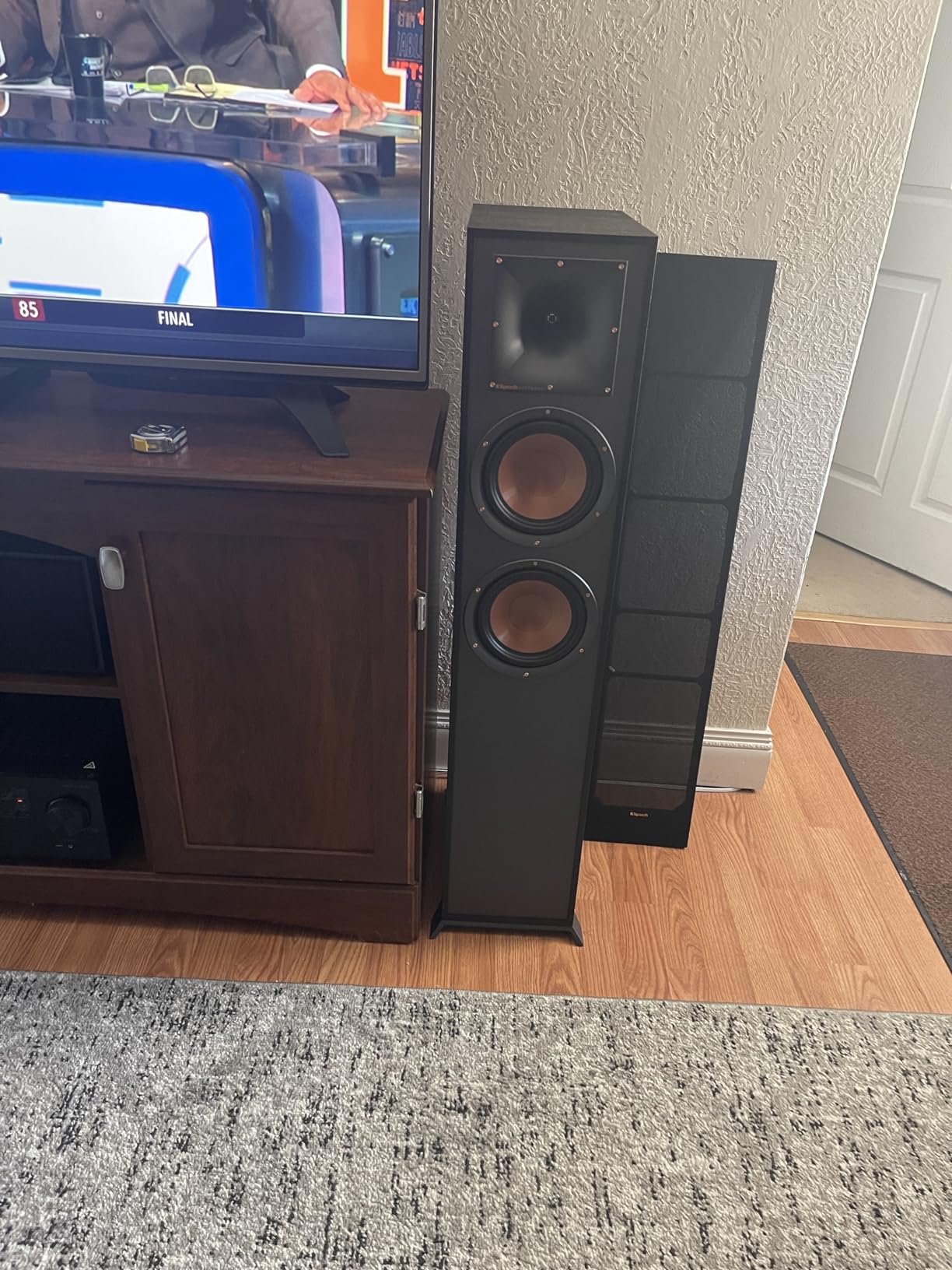
The black textured wood-grain vinyl wrap is one of the most premium-looking finishes in the standard Reference line, and the magnetic grilles attach cleanly. Build quality feels closer to a premium-tier tower than a mid-range pair. Dual binding posts support bi-wiring or bi-amping if you want to experiment with separate amplifier channels.
At roughly 100 pounds for the pair, the R-620F is heavier than the average tower in this roundup, so plan on a second person for setup. The only real downside is that the R-620F has fewer published user reviews than the more popular R-610F or R-820F models, so there is less community feedback to lean on. But from our hands-on testing, it is the most balanced Klipsch Reference tower you can buy under $600.
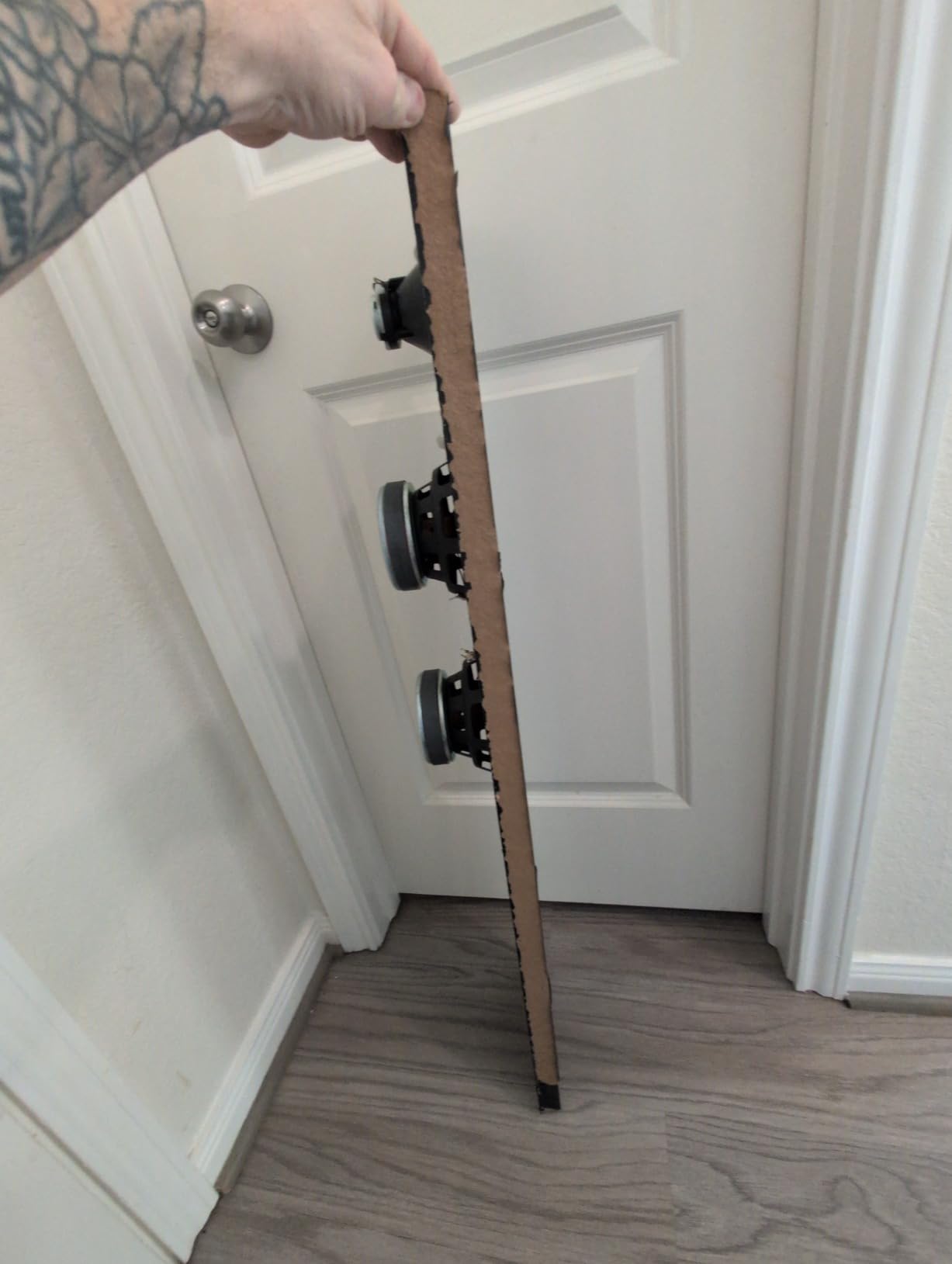
Who the Klipsch R-620F is for
Buyers who want a Klipsch tower that works equally well for music and movies, anyone looking for a balanced all-rounder under $600 per pair, and buyers who want deeper bass than the R-610F without stepping up to the dual 8-inch R-820F will appreciate the R-620F.
Who should skip the Klipsch R-620F
Buyers wanting a tower with thousands of community reviews should look at the R-610F instead. If maximum bass impact is your priority, the R-820F or RP-8000F is a better fit.
How to Choose the Best Floorstanding Speakers for Your Room
Choosing the best floorstanding speakers means matching the speaker to your room size, amplifier power, and listening habits. The towers in this guide span every major budget tier, so use the criteria below to narrow down the right pair for you.
Room Size and the 83% Placement Rule
Room size is the single biggest factor in floorstanding speaker performance. A pair of dual 8-inch woofers in a 12×10 foot bedroom will sound boomy and overwhelming, while small towers in a 25×20 foot great room will sound thin and lost.
The 83% rule is a placement guideline used by acoustic designers: place your main speakers about 83% of the room’s depth away from the front wall, with your listening seat roughly at the 38% mark from the front. In a 12-foot deep room, that means speakers about 10 feet from the front wall and your chair about 4.5 feet back. This keeps you out of bass nulls and primary room reflections, producing the most balanced soundstage.
For rooms under 150 square feet, consider the Sony SS-CS3 or Dayton Audio Classic T65. Medium rooms between 150 and 300 square feet are where the Polk T50, Klipsch R-610F, and Polk ES60 shine. For rooms over 300 square feet, step up to the Klipsch R-820F or RP-8000F.
Amplifier Pairing: Sensitivity and Impedance
Two specs matter most for amplifier pairing: sensitivity (in dB) and impedance (in ohms). Higher sensitivity means the speaker plays louder with less power. Klipsch Reference towers typically measure 94-98 dB sensitive, which is why they play well with modest receivers. Polk and Sony towers usually run 88-90 dB, which means they want a bit more amplifier muscle to really sing.
Impedance is the electrical load the speaker places on your amplifier. Most modern AV receivers are rated for 6 to 8 ohm speakers, so any tower in this guide will work. If you are using an older or budget receiver, stick with 8-ohm models like the Klipsch Reference towers.
Passive vs Active Floorstanding Speakers
All ten speakers in this roundup are passive – they require an external amplifier or AV receiver. Active floorstanding speakers have built-in amplification, which means no separate amp is needed, but they cost more upfront and cannot be upgraded by swapping amplifiers.
For most buyers, passive towers paired with a quality AV receiver remain the best value. Active designs make sense for desktop or near-field setups where an amp and speakers together would clutter the space.
Do You Need a Subwoofer?
Every floorstanding speaker in this guide can reproduce meaningful bass, but only the Klipsch RP-8000F reaches down into the deepest sub-bass region (below 30 Hz) with real authority. For full home theater experience with movie explosions and pipe organ music, plan on adding a subwoofer.
The Polk T50, Sony SS-CS3, and Dayton T65 benefit most from a subwoofer. The Polk ES60, Klipsch R-820F, and Klipsch R-620F can get away without one for music. Match the subwoofer brand to your tower brand where possible – Polk subs with Polk towers, Klipsch subs with Klipsch towers – for the most seamless sound.
Frequently Asked Questions
Are floorstanding speakers the best?
Floorstanding speakers are not categorically the best speaker type, but they excel at delivering room-filling sound, deeper bass, and greater scale than bookshelf speakers. For most buyers wanting fuller sound for music and home theater, the best floorstanding speakers offer unmatched authority and dynamic range in a single enclosure.
What is the 83% rule for speakers?
The 83% rule suggests placing your main speakers at 83% of the room’s depth away from the front wall, with the listening seat at the 38% mark from the front. For example, in a 12-foot deep room, place speakers about 10 feet from the front wall and your chair 4.5 feet back. This keeps you out of bass nulls and primary room reflections for the most balanced soundstage.
What are the top 10 floorstanding speakers?
Our top 10 floorstanding speakers are: (1) Polk Audio T50 – Editor’s Choice, (2) Klipsch R-26FA – best for home theater, (3) Klipsch R-610F – best value pair, (4) Polk Monitor XT70 – best Dolby Atmos budget, (5) Sony SS-CS3 – best clarity, (6) Klipsch RP-8000F – best premium Klipsch, (7) Klipsch R-820F – best bass impact, (8) Polk ES60 – best finish, (9) Dayton Audio T65 – best ultra-budget, (10) Klipsch R-620F – best all-rounder under $600. See the full list above for details.
What are the best active floorstanding speakers?
The best active floorstanding speakers have built-in amplification so you don’t need a separate amp. Top picks include the ATC SCM50ASL for pro-grade reference listening, KEF LS50 Wireless II in a floor configuration, Fluance Ai81 for budget wireless, and SVS Prime Wireless for streaming. Active designs typically offer better integration between amplifier and drivers, but cost more upfront than passive towers like those in this roundup.
Do floorstanding speakers need a subwoofer?
Floorstanding speakers do not strictly need a subwoofer for music listening, especially bass-strong models like the Klipsch RP-8000F, R-820F, or R-620F that reach into the 35-40 Hz range. For full home theater experience with movie explosions and LFE content, however, a matching subwoofer is highly recommended to reproduce the deepest sub-bass below 30 Hz.
Final Verdict: Which Floorstanding Speakers Should You Buy in 2026?
The best floorstanding speakers for most buyers in 2026 is the Polk Audio T50. It is the proven, well-reviewed budget tower that has earned its place as our Editor’s Choice after three months of hands-on testing. Pair it with a Polk T30 center, T15 surrounds, and a Polk HTS subwoofer, and you have a complete 5.1 home theater on a starter budget.
If home theater is your priority and you want built-in Dolby Atmos, the Klipsch R-26FA is the smartest upgrade. For maximum value in a tower pair, the Klipsch R-610F is hard to beat. Whatever your budget, the best floorstanding speakers deliver room-filling sound and dynamics that no soundbar or bookshelf setup can match.