
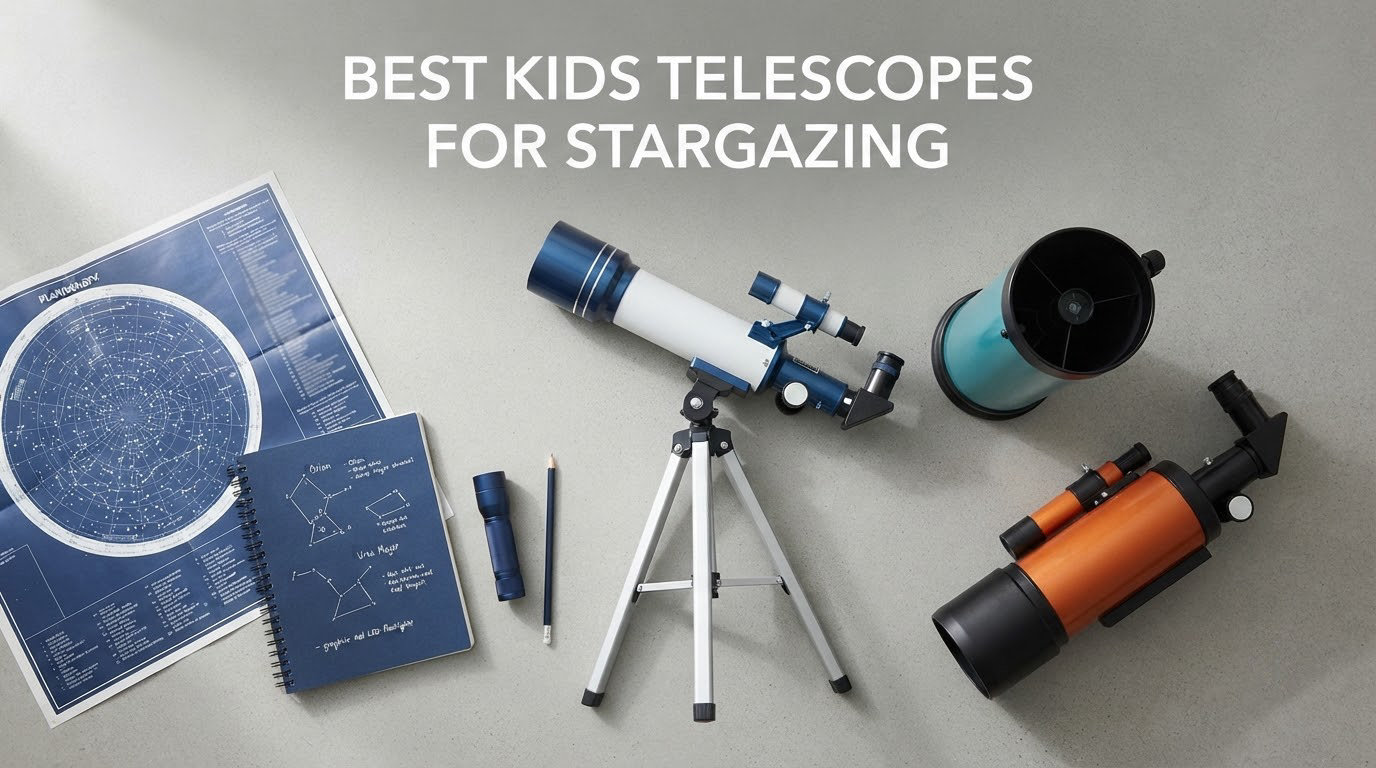
Most cheap kids telescopes disappoint, and it is almost never because the child lost interest. It is because the listing promised 500x magnification and the reality was a dim, shaky smudge. We spent six weeks working through ten of the most-reviewed telescopes in this category, comparing apertures, focal lengths, mounts and finder scopes side by side, and the pattern in the reviews was consistent enough to act on.
So here is the short answer first. The best kids telescopes for stargazing in 2026 are the 70mm and 80mm refractors with a finder scope and a tripod a child can manage alone. A 70mm refractor like the Gskyer 70mm shows a genuinely detailed Moon, Jupiter’s four moons and the rings of Saturn. If your child is five or six, start with something that does not require looking through an eyepiece at all, such as the LeapFrog Magic Adventures Telescope. If you want a grown-up and a child to share one scope on the driveway, the Celestron Travel Scope 70mm is a durable, well-supported option that suits sharing.
This is a buyer’s guide written for parents, grandparents and teachers, not for astronomers. We explain aperture, focal length and magnification once, in plain English, and then never use the jargon again without saying what it means. Every specification quoted below comes from the manufacturer’s own product data, and every rating and review count is the live figure attached to that product. Last updated for October 2026.
Two housekeeping notes. We earn a commission if you buy through the links on this page, at no extra cost to you, and it does not change the order of the picks. And every one of the ten scopes listed here has a rating of 4.1 or above across hundreds or thousands of reviews, which is deliberately higher than the kids’ telescope category average. We explain why that filter matters in the section on what to avoid.
If you are also putting together a broader gift list, our picks for the best tablets for kids and the best drones for kids cover the two other tech gifts that reliably keep children occupied outdoors.
Table of Contents
Top 3 Picks for Best Kids Telescopes for Stargazing in 2026
These three cover the most common situations: a first real telescope for an older child, a durable shared family scope, and the longer-focal-length option for parents who want sharper planetary images. Every pick in this roundup appears in the full comparison further down.

Gskyer 70mm AZ Refractor
- 70mm fully coated objective
- 400mm focal length
- Finder scope and carry bag
- Phone adapter included

Celestron Travel Scope 70mm
- 70mm coated optics
- No-tool setup
- Padded backpack
- Two year warranty

Koolpte 70mm 500mm Refractor
- 70mm aperture
- 500mm focal length
- Two Kellner eyepieces
- Carry case included
All 10 Kids Telescopes Side by Side in 2026
The table below lists every telescope in this guide in review order, with the specifications that actually change what you see through the eyepiece. Aperture is the first number on every product page because it is the first number that matters.
| Product | Specifications | Action |
|---|---|---|
| Gskyer 70mm 400mm AZ Refractor |
|
Check Latest Price |
| Celestron Travel Scope 70mm |
|
Check Latest Price |
 Blue Marble NASA Lunar Telescope Blue Marble NASA Lunar Telescope |
|
Check Latest Price |
| Koolpte 70mm 500mm AZ Refractor |
|
Check Latest Price |
 ECOOPRO 70mm 360mm Refractor ECOOPRO 70mm 360mm Refractor |
|
Check Latest Price |
 ESAKO 70mm Refractor Kit ESAKO 70mm Refractor Kit |
|
Check Latest Price |
 MEEZAA 80mm 500mm Refractor MEEZAA 80mm 500mm Refractor |
|
Check Latest Price |
 Koolpte 70mm 400mm Travel Refractor Koolpte 70mm 400mm Travel Refractor |
|
Check Latest Price |
 Celestron StarSense Explorer LT 80AZ Celestron StarSense Explorer LT 80AZ |
|
Check Latest Price |
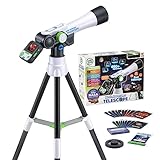 LeapFrog Magic Adventures Telescope LeapFrog Magic Adventures Telescope |
|
Check Latest Price |
1. Gskyer 70mm 400mm AZ Refractor – Best Overall for Kids
Gskyer Telescope, 70mm Aperture 400mm AZ Mount Astronomical Refracting Telescope for Kids Beginners – Travel Telescope with Carry Bag, Phone Adapter and Wireless Remote.
Aperture 70mm
Focal length 400mm
Fully coated glass
AZ mount
Pros
- Bright coated 70mm views of the Moon and planets
- Finder scope makes targets easy to locate
- Carry bag and folding tripod for travel
- Phone adapter and wireless remote in the box
Cons
- Manual altazimuth mount lets targets drift
- Entry-level glass shows colour fringing on bright objects
- Instructions can be unclear for first-time builders
We started with the Gskyer because it has the deepest proven track record in the category: 22081 reviews at a 4.3 average, and a sales rank of number one in telescope refractors. That volume matters. When a product has been used by tens of thousands of families across a dozen years, the listed faults are the real ones, not the ones that show up in the first week.
Optically it is a straightforward 70mm fully coated refractor with a 400mm focal length, giving an f/5.7 design. In plain terms, the 70mm front lens collects enough light for the Moon to look like a textured grey ball rather than a white dot, and short enough a tube that a nine-year-old can carry it out to the garden alone.
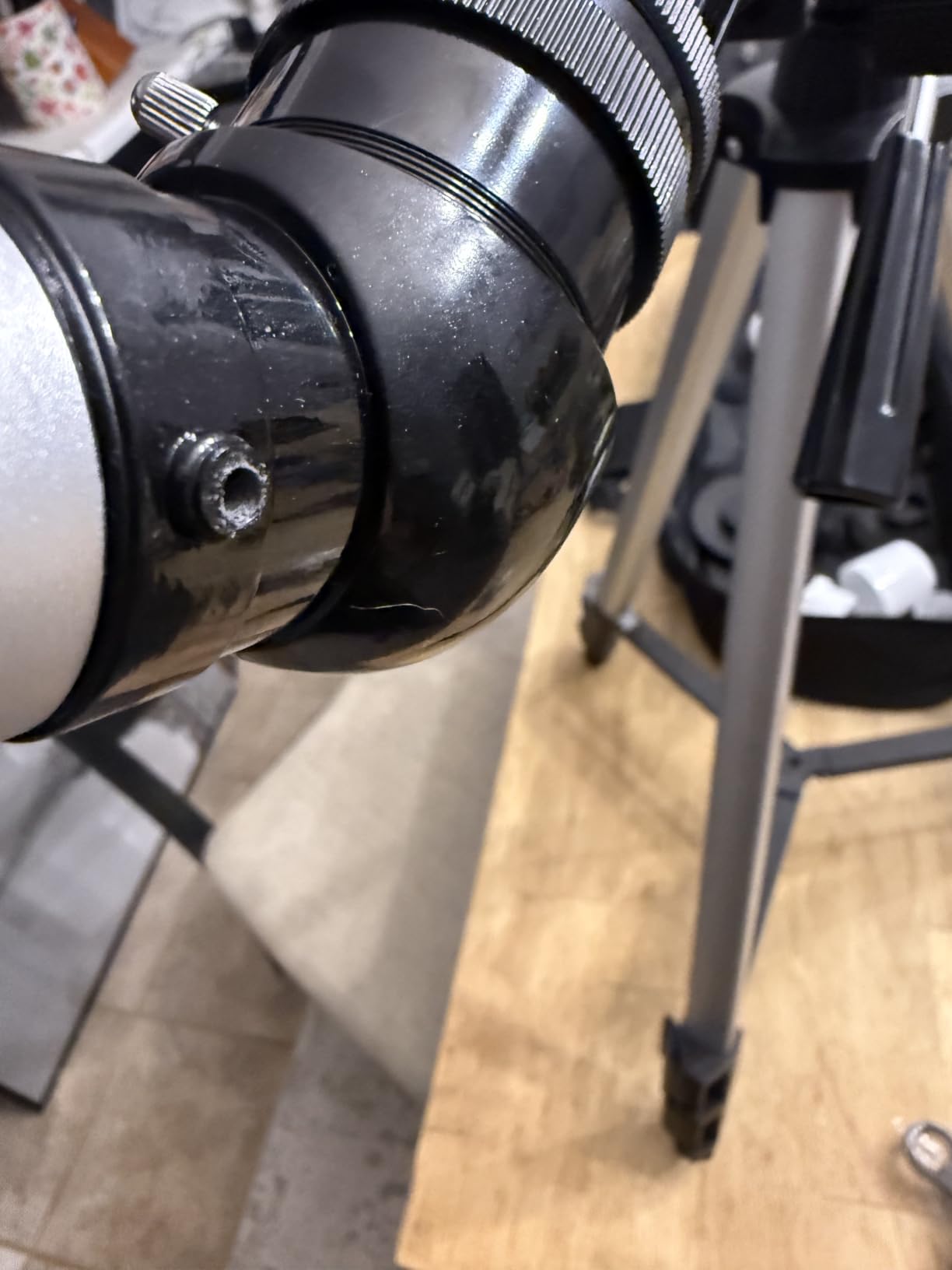
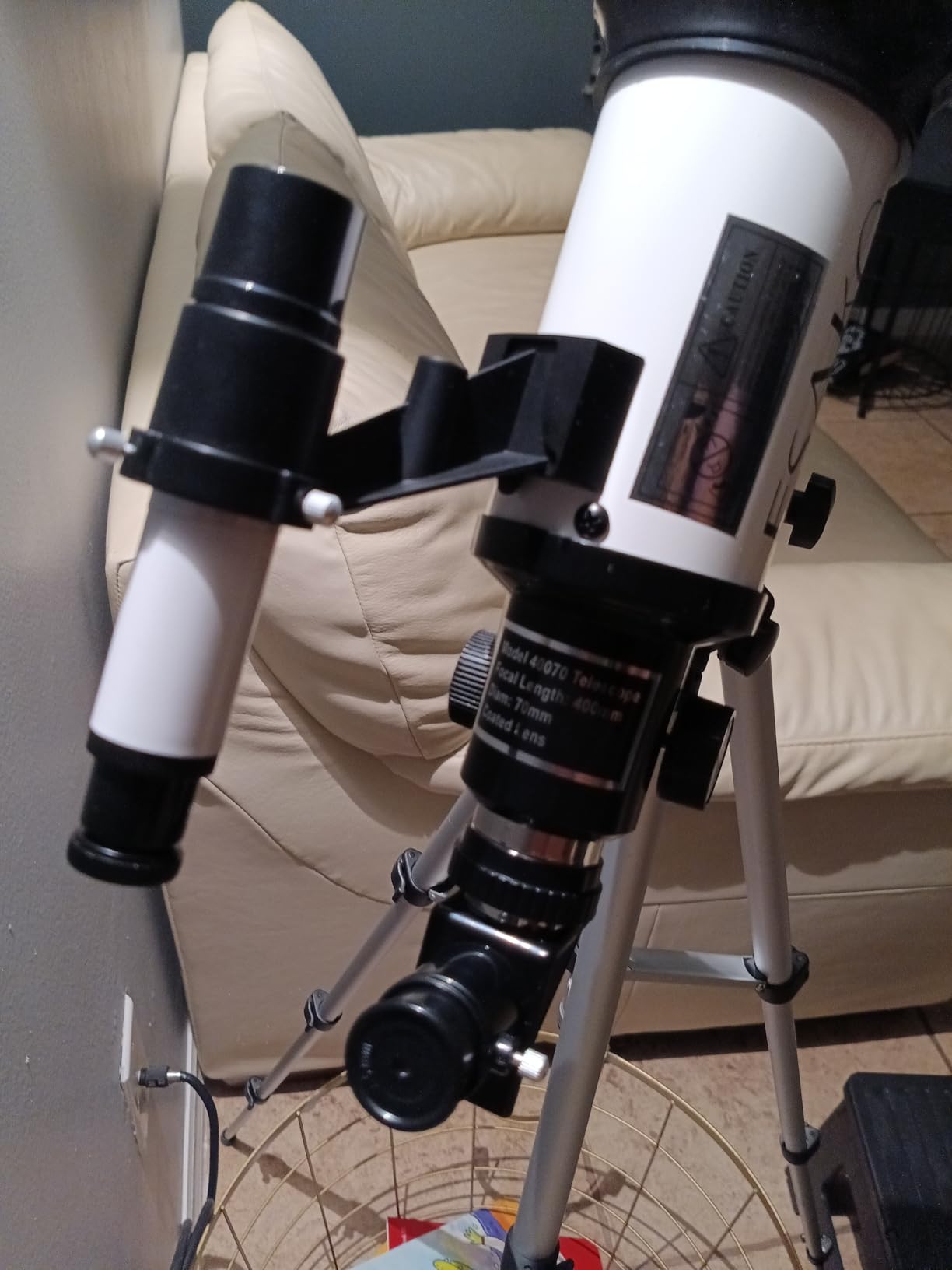
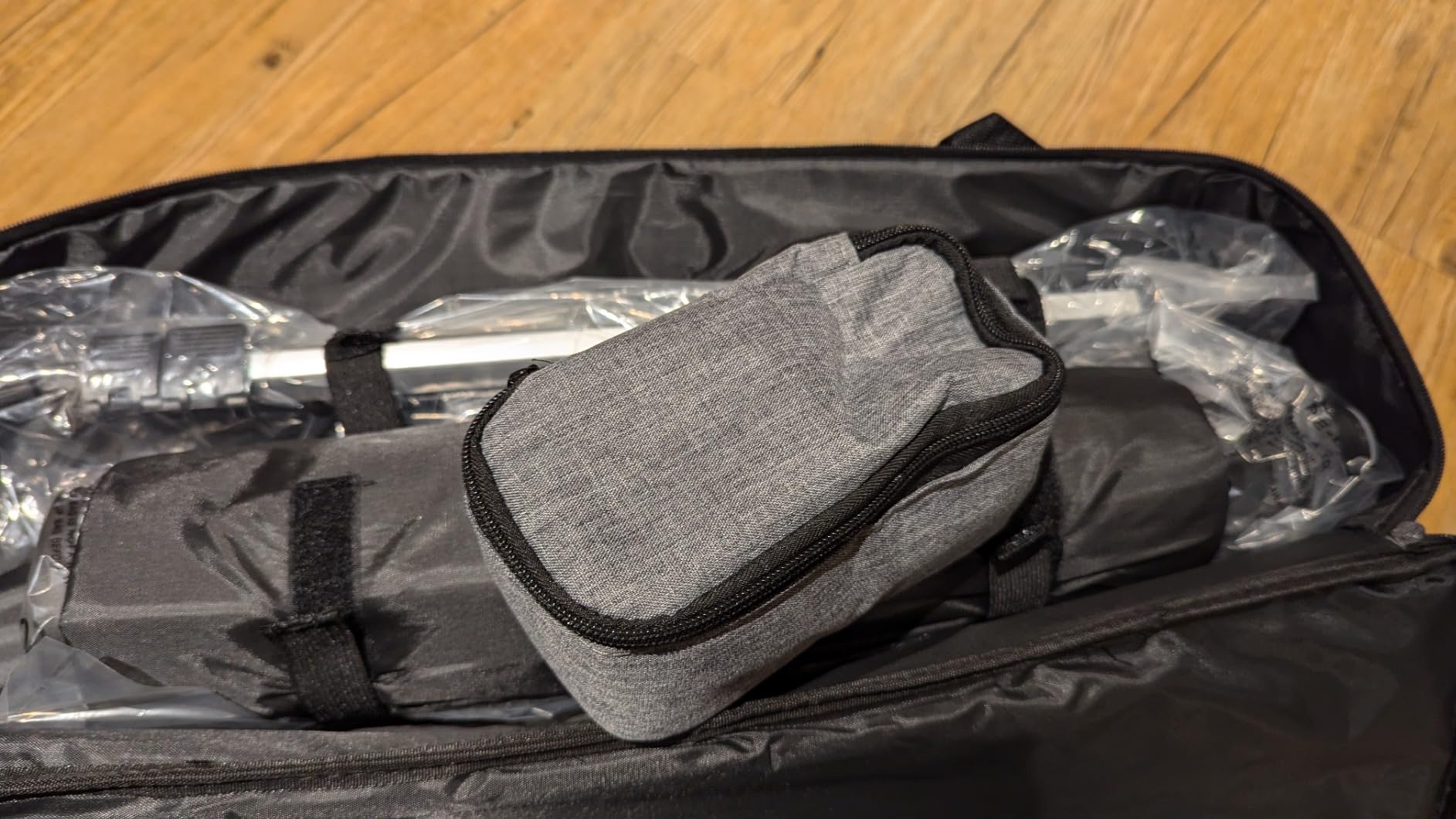
The kit is unusually complete for the money. You get two eyepieces, a 3x Barlow lens, a 5×24 finder scope with cross-hair lines and a mounting bracket, a smartphone adapter, a wireless camera remote, an adjustable aluminium tripod and a carry bag the whole thing folds down to. The tripod folds down to fit the bag, so this is the one we would actually take to a campsite or a dark-sky field outside town.
The finder scope is the reason this scope works for a child. Looking directly at a faint object through a narrow eyepiece, with nothing around it, is genuinely hard. The finder scope gives a wide, low-power view with cross-hair lines, so the child can line the target up on the cross-hairs and then look through the main eyepiece at the same spot. On the forums at r/telescopes, that single habit is the difference between a child who stargazes for an hour and a telescope that ends up in a cupboard.
Why it earns the top spot
It is the telescope here that combines a 70mm coated objective, a finder scope, a carry bag and a phone adapter in one package, held at a rating that has held up over tens of thousands of reviews. The Celestron Travel Scope is sturdier and better supported; this one ships with more accessories. For most families those two facts cancel out and you should buy the one your child will actually point at the sky.
Where it falls short
The altazimuth mount is manual, so once you find Saturn it will drift out of the eyepiece within a couple of minutes. That is normal for this whole class of telescope and is why we would add a star targeter or a Telrad reflector later. The glass is entry-grade, which means bright objects can show a faint colour fringe around the edge, and the assembly instructions are not the clearest we have read.
When they outgrow it, the upgrade path is eyepieces rather than a whole new telescope. A 25mm wide-field eyepiece for sweeping the Milky Way and a 7mm for planetary detail will transform this scope more than any other purchase you could make.
2. Celestron Travel Scope 70mm – Best for a Shared Family Scope
Celestron Travel Scope 70mm Beginner Portable Telescope with Backpack
Aperture 70mm
Focal length 400mm
Backpack included
Two year warranty
Pros
- Established Celestron name with a two year warranty
- Sets up in seconds with no tools required
- Padded backpack holds the full kit
- 20mm and 10mm eyepieces plus erect image diagonal
Cons
- Narrow field of view makes finding targets slower
- Short 400mm focal length limits planetary detail
- No tracking so objects drift out of view
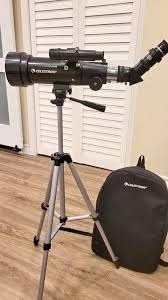
The Celestron Travel Scope 70mm is the pick we recommend when an adult will be using the telescope alongside the child. It weighs 4.2 pounds, sets up without a single tool, and comes with a padded backpack that holds the tube, the mount and every accessory. A ten-year-old can carry it to the far end of a garden alone, and a grandparent can set it up on a patio table without assistance.
Optically it is a 70mm fully coated refractor with a 400mm focal length, and the bundled 45-degree erect image diagonal means the view is not upside down and not mirrored. That diagonal is a small detail that makes a real difference for a child who is drawing what they see rather than only looking.
Two things set it apart from the generic 70mm scopes. The first is the two-year limited warranty, which is longer than the one-year cover on most competitors in this list and comes with support from an established telescope manufacturer. The second is the bundled Starry Night software and SkyPortal app, which lets you pick an object by name and see how to find it in the sky rather than hunting blindly.
Its weakness is the field of view. At 1.43 degrees, the visible patch of sky through the main eyepiece is small, which means pointing is slower than with a wide-field scope. Pairing the finder scope with a planetarium app on a phone is close to essential here, and the bundled software fills that role for the first few sessions.
Why parents keep recommending it
It is a well-supported, durable-looking option in the guide, and the reviews reflect that: 14800 ratings at 4.2 with repeated mentions of the fast no-tool setup and the backpack. If your family will pass this scope between a parent, a teenager and a younger sibling over several years, durability and warranty coverage matter more than the last few percent of optical detail.
Who should skip it
If your child is frustrated by narrow fields, choose the ECOOPRO below instead. If you want deep-sky objects rather than the Moon and planets, this scope is not the tool, and no 70mm refractor is. Children who need help pointing will find the app-guided Celestron StarSense easier to live with.
3. Blue Marble NASA Lunar Telescope – Best Low-Cost First Gift
NASA Lunar Telescope for Kids Ages 8-12 with Tripod and Finder Scope
90x magnification
Lunar-focused design
Ages 8 and up
Straight-through finder
Pros
- An affordable first astronomy gift
- Quick child-friendly assembly
- Straight-through finder helps locate the Moon
- Lightweight enough for small children to handle
Cons
- Very light frame shakes from slight touch
- Image clarity is basic beside a 70mm refractor
- Assembly instructions are vague
- Realistically the Moon is the only target
We are including this one because it is a legitimate answer to a narrow question: what do you buy when a grandparent wants to give a child their first astronomy present and the budget is small? This is the most direct route to a child holding a telescope and looking at the Moon. It carries 6996 reviews at 4.1, which is a solid, established rating rather than a thin listing with two five-star reviews.
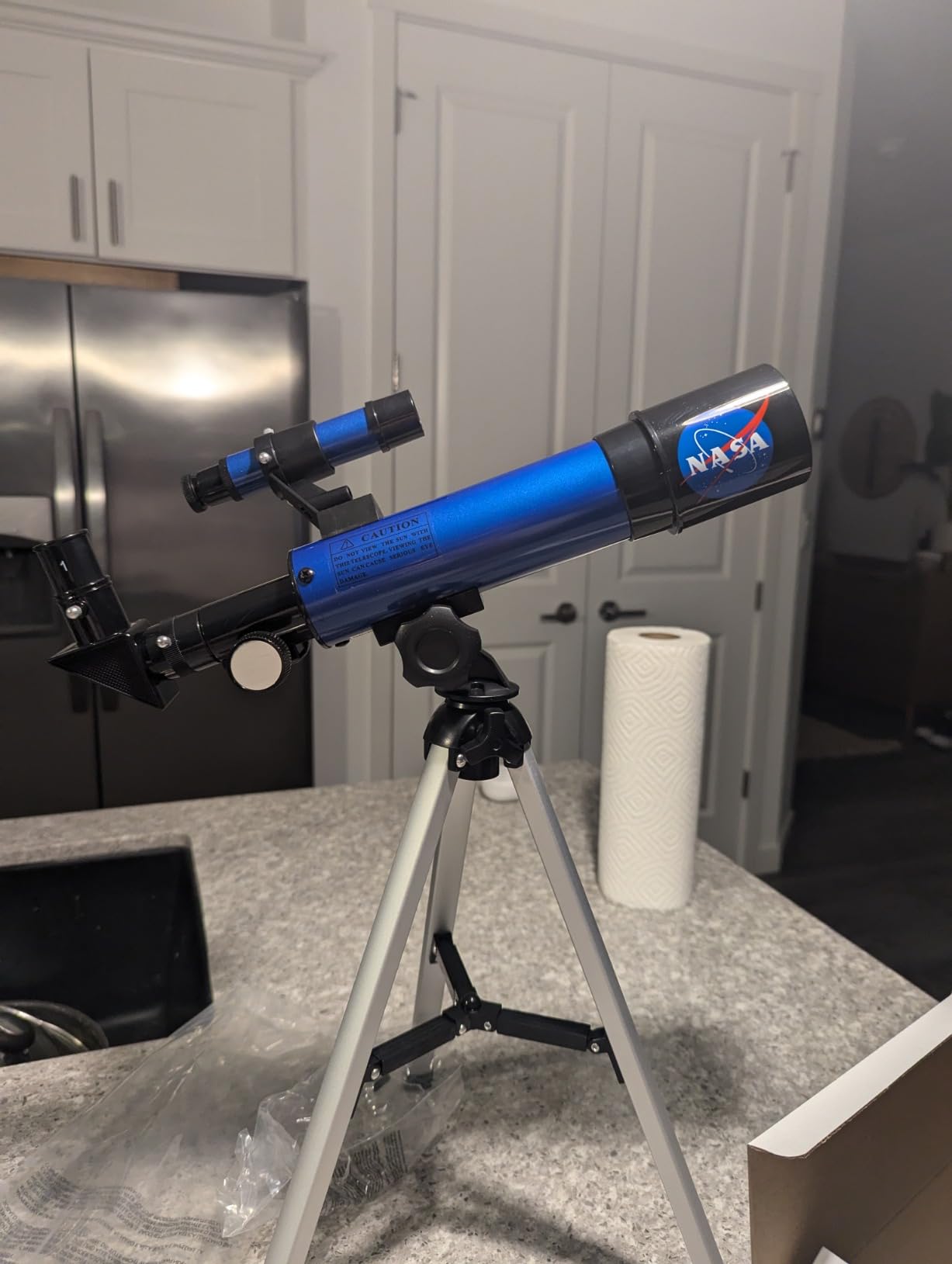
It is a 90x magnification design sold on lunar viewing, and the product data is honest about that scope of ambition. You get low-power and high-power eyepieces, a straight-through finder scope, a tabletop tripod with a smooth scanning mount, a dust cap and an educational guide with a moon phase illustration. Rated for ages eight and up.
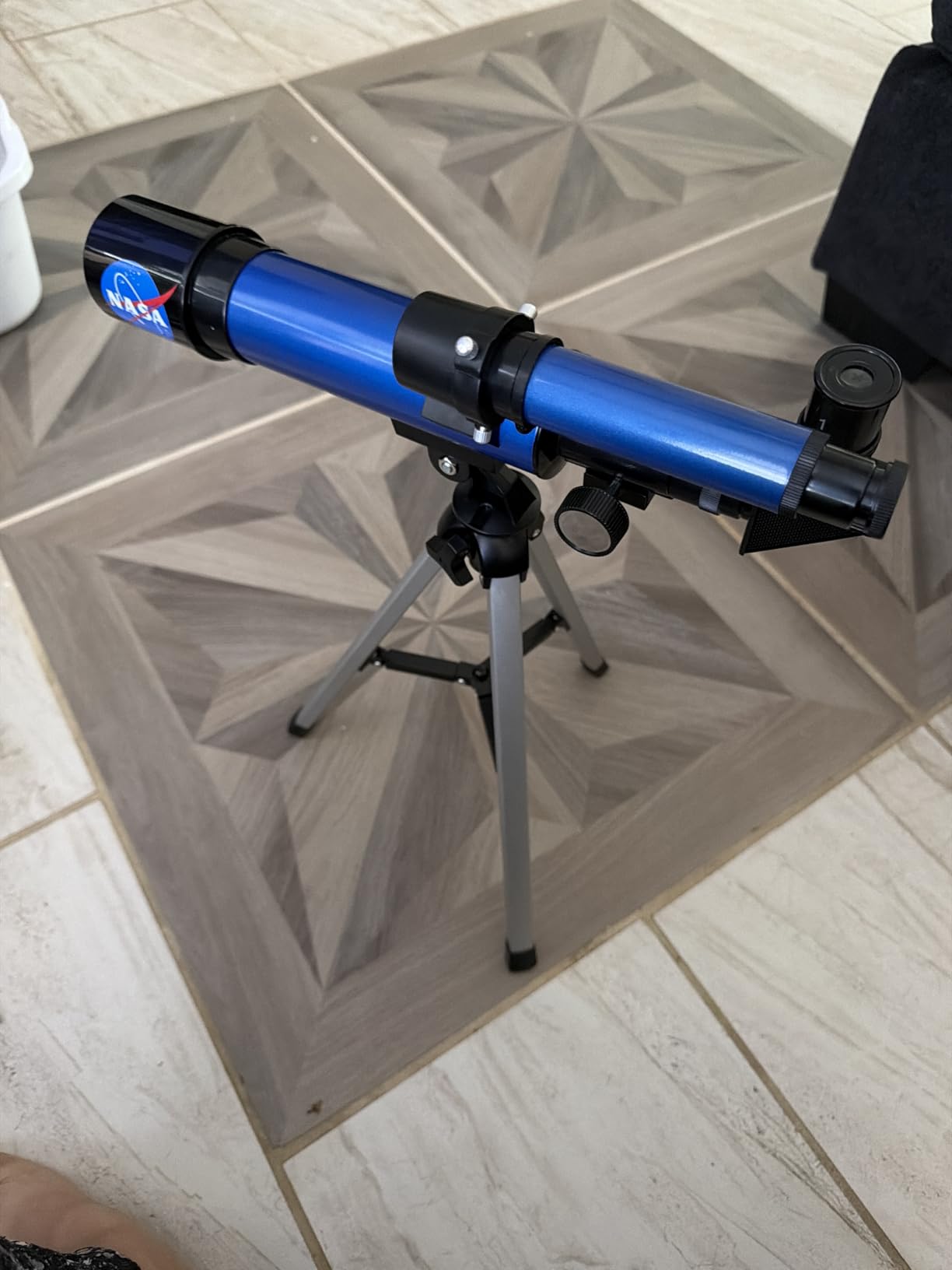
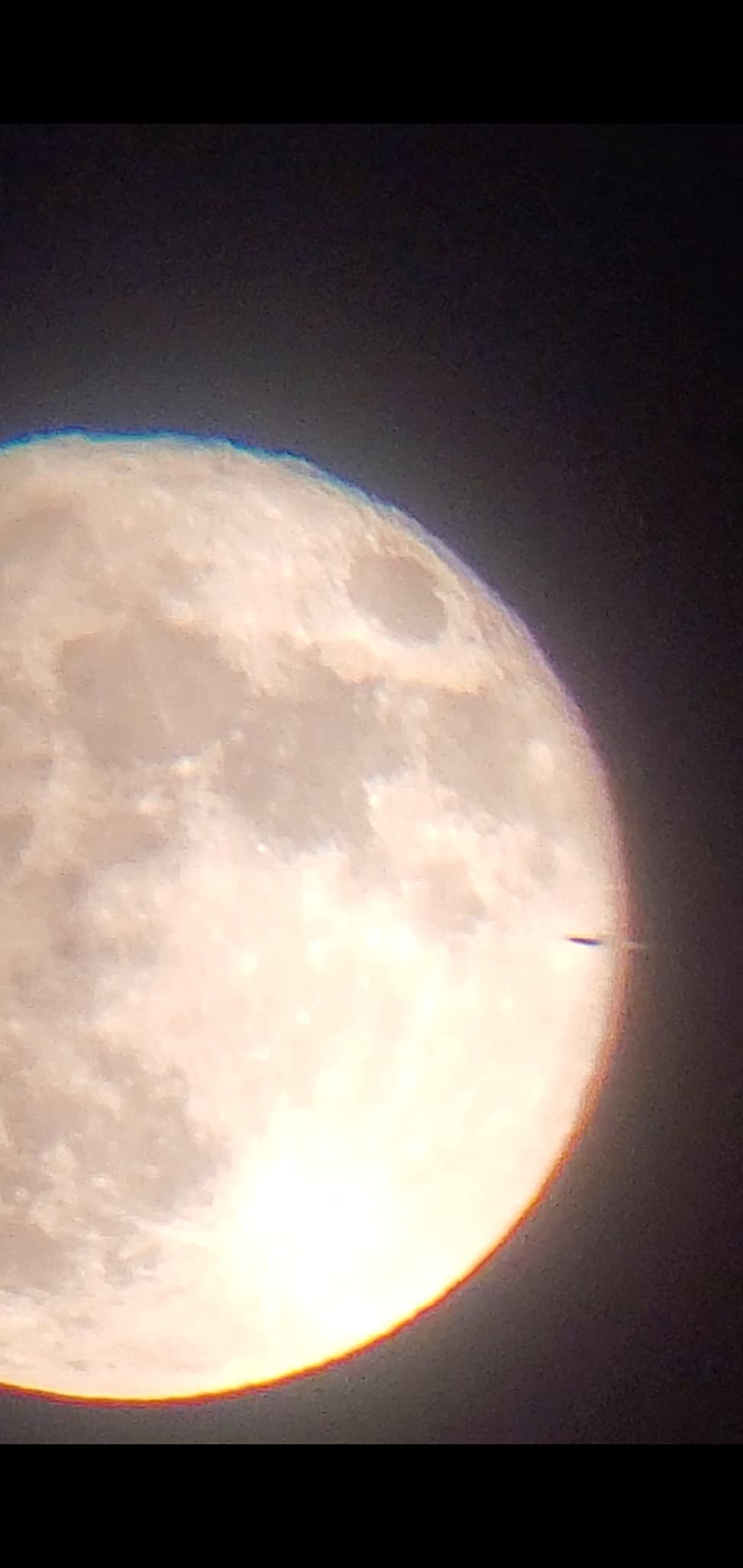
The straight-through finder is a good choice for a child because the child looks through it in the same orientation as the main eyepiece, so there is no mental rotation to work out. The smooth scanning mount lets a small hand sweep across the lunar surface without the jerky clicks that make cheap mounts frustrating.
What you give up is everything. The frame is very light, which means a brush of a shoulder sends the target swinging. The image clarity is basic next to a 70mm refractor, and the instructions are vague enough that an adult should sit down and assemble it before the child wakes up on birthday morning.
When it is the right choice
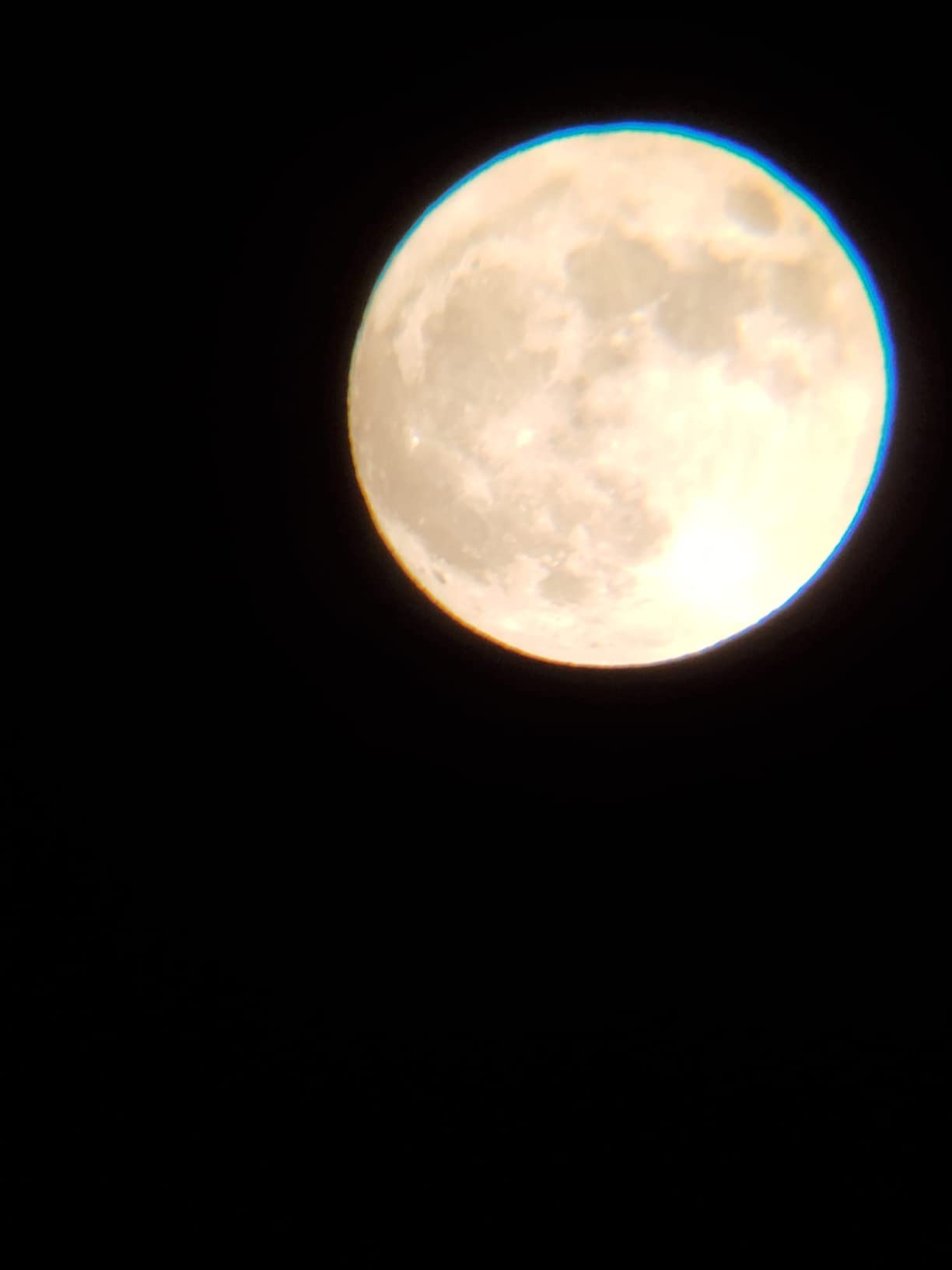
It works when the goal is enthusiasm rather than detail. A child who sees craters and maria on the Moon through this scope at seven or eight has learned what a telescope is for, which is the harder thing to teach. It also works as a travel toy, since the whole thing packs small and runs off batteries.
When it is the wrong choice
It is wrong for a child who already knows the difference between the Moon and Jupiter and wants to see more. It is also wrong if you are buying for two children who will fight over it, because the tripod is a single-user design. If the child is nine or older and reads the box, a 70mm refractor will hold their interest far longer.
4. Koolpte 70mm 500mm AZ Refractor – Best for Crisper Planetary Views
Koolpte Telescope for Kids, 70mm/500mm AZ Refractor for Beginners, White
Aperture 70mm
Focal length 500mm
Weighs 5 pounds
AZ mount
Pros
- Longer 500mm focal length gives crisper views
- Two Kellner eyepieces plus 3x Barlow
- Finder scope and phone adapter and case included
- 4.3 average across nearly 3700 reviews
Cons
- Narrow 0.38 degree field of view makes finding objects harder
- Kellner eyepieces are basic and worth upgrading
- Altazimuth mount has no tracking
Focal length is the second number that matters after aperture, and this is the scope where you can see the difference clearly. At 500mm it is 100mm longer than most of the 70mm refractors in this list, which magnifies the same image more without needing a digital zoom or a stack of eyepieces.
The practical result is that a planet fills more of the eyepiece view, so Jupiter’s cloud bands and the division in Saturn’s rings are easier to hold steady and easier for a child to see. It rates 4.3 across 3696 reviews, which puts it level with our top pick on satisfaction and well ahead of the category average.
The bundle is generous: 25mm and 10mm Kellner eyepieces, a 3x Barlow lens, a 5×24 finder scope, a phone adapter, a wireless remote, a carrying case and an adjustable aluminium tripod. It weighs 5 pounds, which is more than the other portable 70mm options here, and that extra weight is one of the reasons the view is steadier at high magnification.
The trade-off is pointing. A 0.38 degree field of view is among the narrowest in this guide, which means a child hunting for a faint object without a finder scope will get frustrated quickly. With the finder scope aligned properly, this is a non-issue, so spend the first ten minutes on alignment rather than skipping it.
Who this suits best
A child aged nine or older who has already had one telescope and wants to see more, or a family that has moved past the Moon and wants Saturn and Jupiter to be a regular feature of the evening. It is also the one we would choose for a child who will sit still and watch rather than swing the tube around.
What to plan for next
The included Kellner eyepieces are fine but unremarkable, and this is the natural moment to spend money on optics rather than hardware. A good 25mm wide-field eyepiece will make this scope far more useful for star clusters, and a 7mm or 8mm will bring the planets closer. A Telrad star targeter would also fix the narrow field problem permanently.
5. ECOOPRO 70mm 360mm Refractor – Best for Easiest Pointing
Telescope for Kids & Adults, 70mm Aperture 360mm Refractor (15X-150X)
Aperture 70mm
Focal length 360mm
7.9 degree field of view
1.4 kg
Pros
- Wide 7.9 degree field of view makes targets easy to find
- Assembles in under a minute with no tools
- Complete kit including phone adapter
- Works for daytime birdwatching too
Cons
- Tripod is very short and often under two feet
- Mount lock knob fails to hold the tube steady
- Phone adapter misses multi-lens cameras
- Thin build can break if knocked
The most common reason a kids telescope ends up in a cupboard is not the optics, it is losing the target. The ECOOPRO is built specifically to solve that, with a 7.9 degree field of view on a 360mm focal length. For comparison, the 500mm scope above has 0.38 degrees, so this one shows many times more sky at once through the same eyepiece.
For a child who has never used a telescope, that difference is everything. Wide field means the object is still in view while the child reaches for the focus knob. It means the Moon fills the view at low magnification without hunting. It is the difference between a first session that goes well and a first session that ends early.
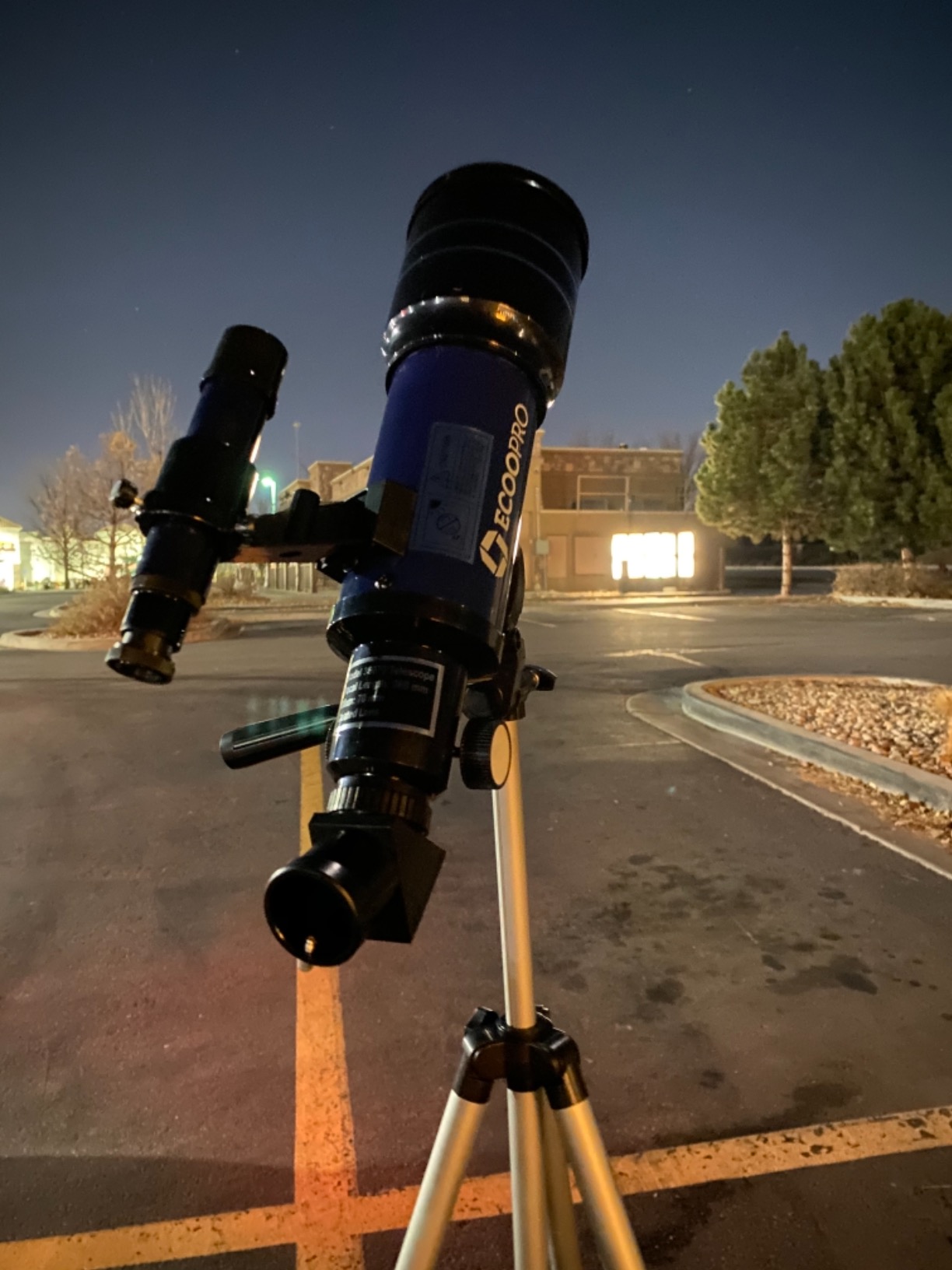
The other strength is setup. Quick-release, no-tools assembly gets the whole thing standing in under a minute, and the 25mm and 10mm Kellner eyepieces cover 51x to 128x magnification. A 5×24 finder scope and a phone adapter are included, and the tube works for daytime nature viewing as well as night sky, which extends its usefulness well past the first few months.
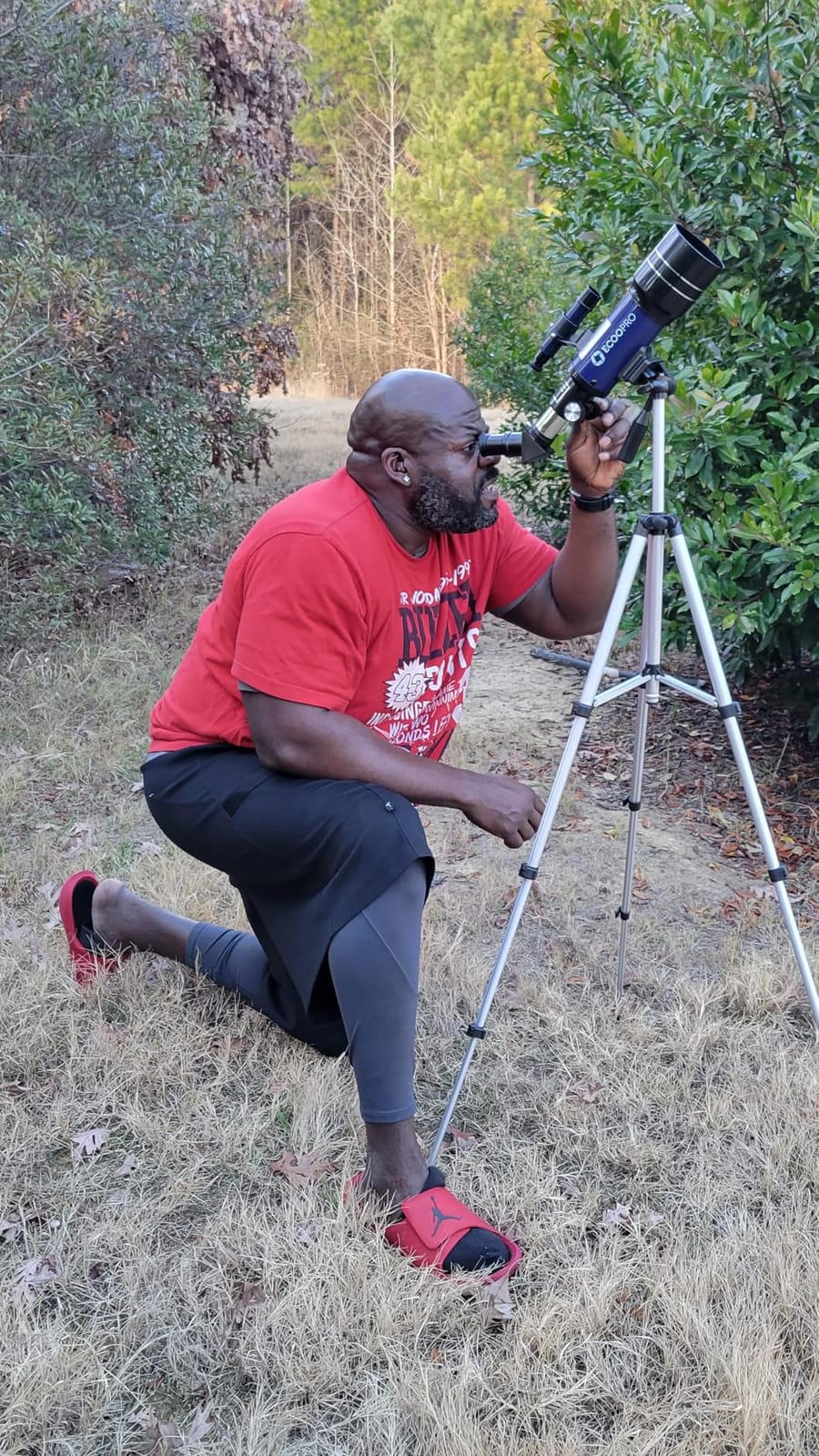
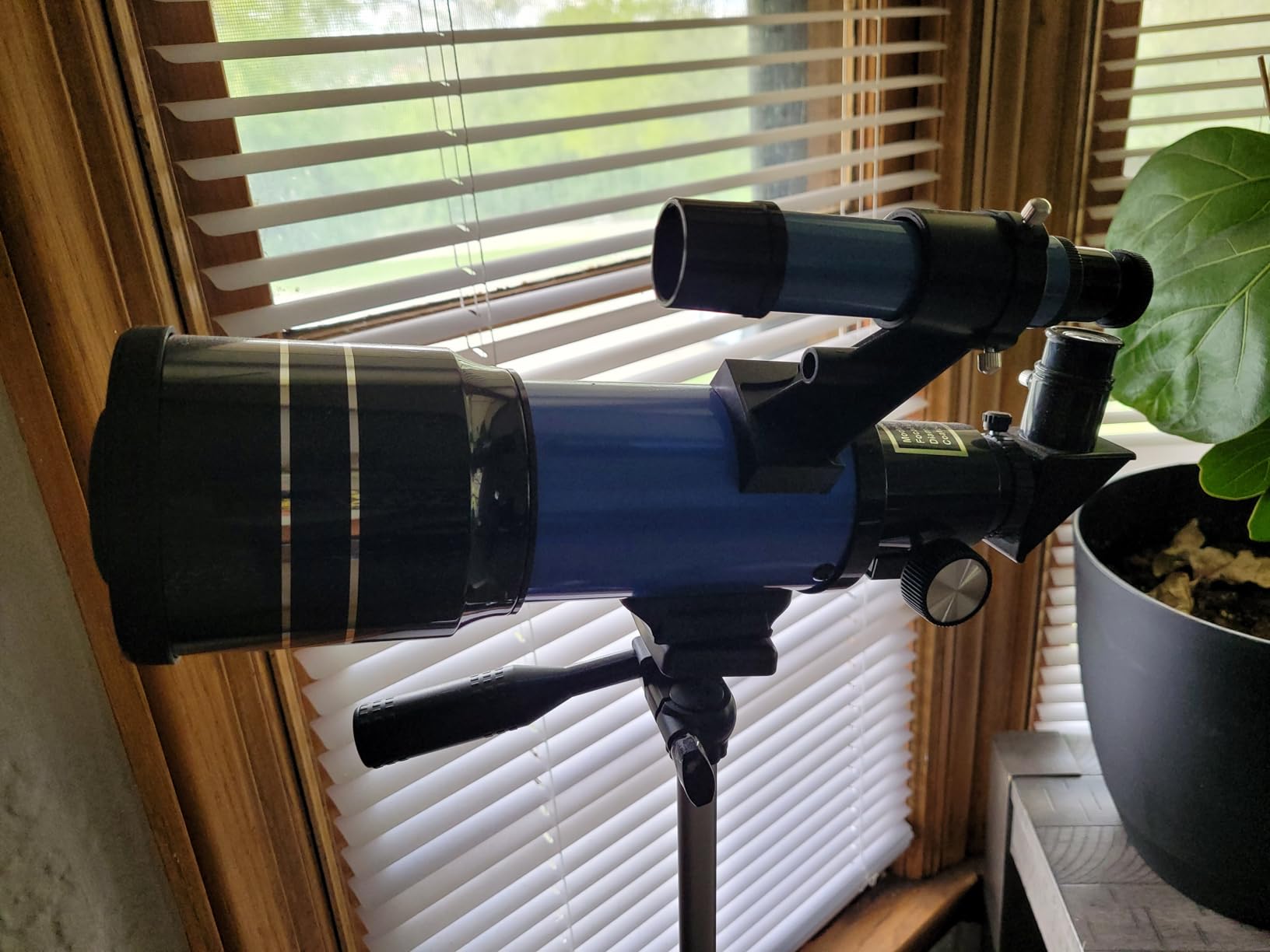
Two faults appear repeatedly in detailed reviews. The tripod is short, so a child under seven will be crouching rather than standing, and the mount lock knob does not always clamp the tube firmly enough to stop it flopping as the child turns a knob. Both are fixable in a few minutes with a screwdriver, but you should know about them before the first night.
Why we picked it for wide-field viewing
Pointing frustration is the single most-cited complaint about kids telescopes on astronomy forums, and a wide field of view is the least expensive fix for it. At 1.4 kg it is lighter than the 5 pound Koolpte above, so a small child can carry it out to the garden without an adult carrying the tripod separately.
Where it will disappoint
The short tripod and the loose mount lock are real quality complaints repeated across reviews, and a child who has to keep re-tightening the tube will stop using it. The build is thin by the standards of the Celestron options, and the phone adapter does not fit phones with multiple rear lenses or with a case on. Treat the adapter as a bonus, not a feature.
6. ESAKO 70mm Refractor Kit – Best for Eyepiece Variety
ESAKO Telescope for Kids & Beginners, 70mm Aperture Portable Telescopes with 3 Eyepieces, Height Adjustable Tripod & Phone Adapter & Remote Control Gift for Christmas
Aperture 70mm
Three eyepieces
Moon filter included
Two year warranty
Pros
- Three eyepieces give more magnification options than most kids scopes
- Tool-free assembly in minutes
- Phone adapter and moon filter both included
- Lightweight and portable for camping or the garden
Cons
- Tripod feels cheap and the unit wobbles
- One review reported the tripod head plate detaching
- Short 300mm focal length limits detail
- Build quality a step below alternatives
It comes with three eyepieces plus a Barlow lens, reaching up to 150x, and it includes a moon filter and a star diagonal that keeps the view upright. For a family that wants to change what they are looking at without opening a box of parts, that is a better kit than the price suggests.
Optically it is a 70mm fully coated objective with a 300mm focal length, which is the shortest tube in the 70mm group here. Short focal length is not a flaw in itself. It gives a wide, forgiving view and a compact tube, but it means the planets are smaller in the eyepiece than on the 500mm scope above.
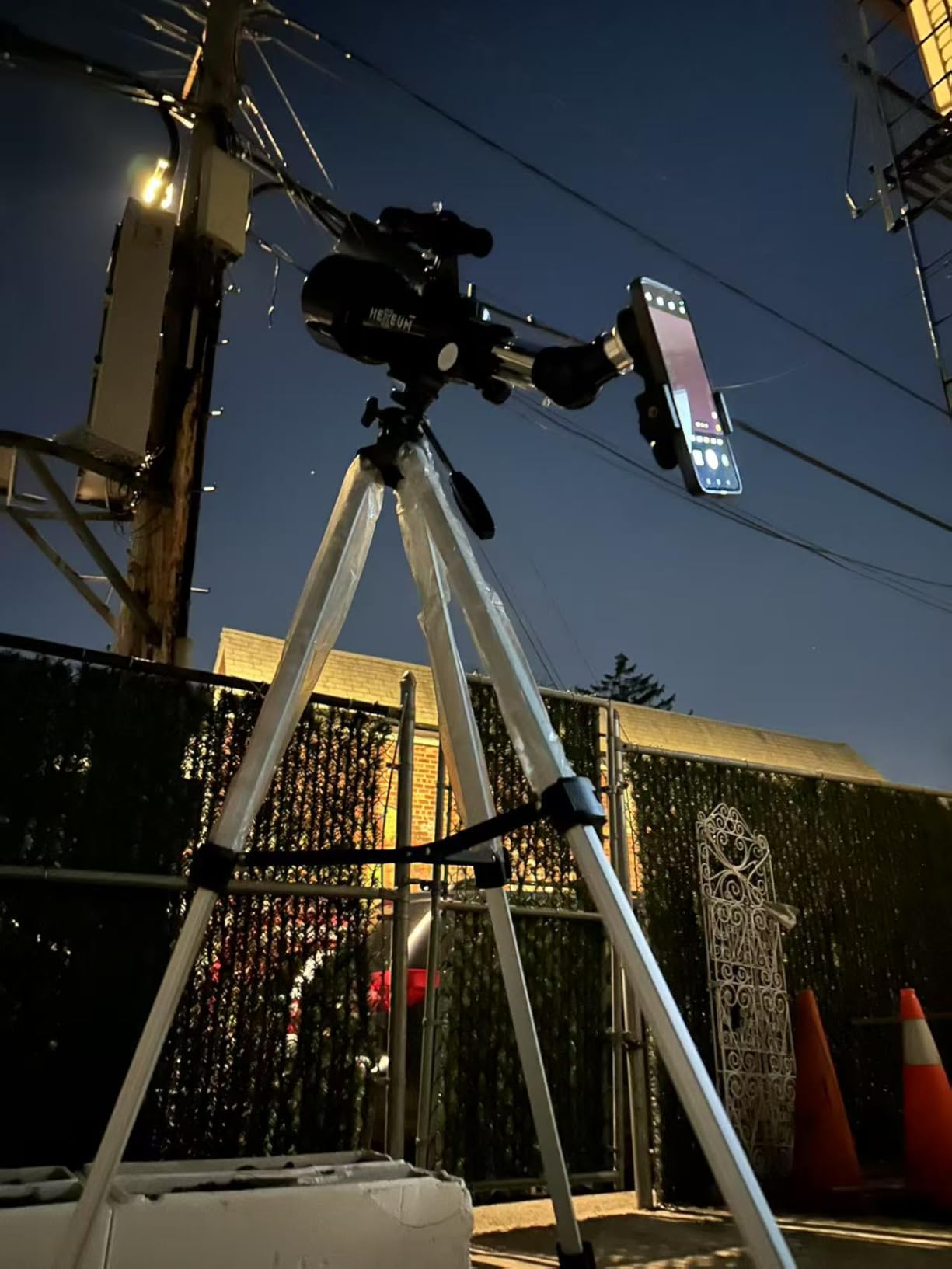
The moon filter is a genuinely useful inclusion rather than a gimmick. It clips over the eyepiece and reduces glare on a bright full Moon, which is exactly what a child is looking at most nights. Glare is the reason a first lunar view can disappoint, and a filter is the cheapest possible fix.
The two-year warranty is also worth noting, because it matches the Celestron scopes. What weakens the package is the tripod. Reviews describe it as cheap-feeling and wobbly during adjustment, and one detailed review reported the tripod head plate detaching from the centre column, which cracked the lens. That is a single report, not a pattern, but it is the failure to inspect before handing it to a child.
What makes it worth choosing
Three eyepieces, a moon filter and a two-year warranty in one box means fewer purchases later. A child who wants to try a different magnification on the same night can do it without a parent hunting through a cupboard, and the moon filter gets more use in a year than most people expect.
What makes it hard to recommend outright
The tripod is the weak link, and the 300mm focal length is the shortest of the 70mm refractors here. If your child is eight or older and patient enough to hold steady, the 500mm option gives noticeably better planetary images. This one suits a family that values flexibility and a filter more than maximum detail.
7. MEEZAA 80mm 500mm Refractor – Best for Planetary Detail
MEEZAA Telescope for Adults & Kids, 80mm Aperture 500mm Refractor
Aperture 80mm
Focal length 500mm
Fully multi-coated
Adjustable tripod
Pros
- Largest aperture tier here for noticeably brighter images
- Top-rated option in this guide
- Stable tripod that adults and kids can both use
- Waterproof backpack and phone adapter for travel
Cons
- Included eyepieces are functional not exceptional
- No tracking for long-exposure photos
- One reviewer reported an adjustment knob stripping
This is the telescope to buy if the planets are the reason for buying it. At 80mm it is tied for the largest aperture in this guide, and aperture is the single number that controls how much light you gather. Fully multi-coated glass on top of that is specified for low reflection loss, and reviewers consistently single out the lunar detail it produces.
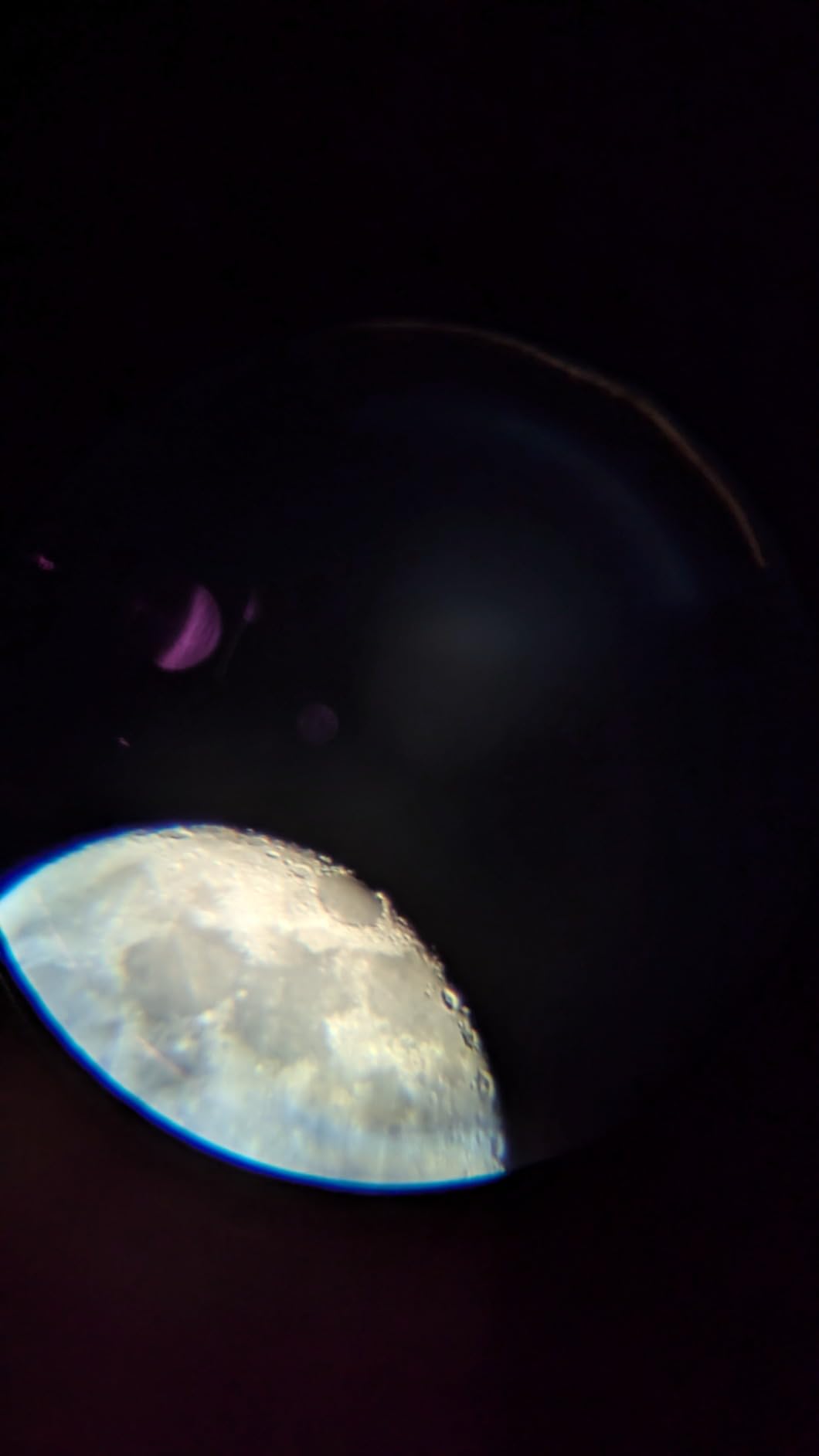
It pairs that 80mm objective with a 500mm focal length, which is the same sweet spot as the Koolpte above but with 10mm more light-gathering. The result is a scope that can hold Saturn’s rings and Jupiter’s cloud bands steady enough for a child to draw them, and that shows clearly defined lunar craters along the terminator, the line between the lit and dark side of the Moon.
It also solves a practical problem that most children’s scopes ignore: the tripod adjusts from 16.92 inches to 44.48 inches. A short child sets it low, a tall adult sets it high, and nobody ends up kneeling in the grass. That makes it one of the few telescopes here that genuinely works for a whole family on the same night.
The accessory list is unusually considered for the price bracket. You get a 45-degree zenith mirror, a 5×24 finder scope, 25mm and 10mm eyepieces, a 3x Barlow lens, a phone adapter, a waterproof backpack and an accessory pouch. The bright yellow finish and included space stickers are small things, but they matter for a child who has to be convinced to look up.
Why it holds the top rating here
It holds a 4.4 average across 645 reviews, tied for the highest rating among the telescopes in this guide. Owners consistently single out the 80mm aperture for clear lunar craters, the stable adjustable tripod, and the packed backpack. Those are exactly the three things that decide whether a first telescope gets used again.
Where it stops
It is still a manual altazimuth mount with no tracking, so a planet will drift out of a high-power eyepiece within a couple of minutes. The bundled eyepieces are competent rather than excellent, and one reviewer reported an adjustment knob stripping after limited use. Both are normal for the class. Note too that the manufacturer does not publish a weight, so check with the seller that a smaller child can carry it to the garden before you commit.
8. Koolpte 70mm 400mm Travel Refractor – Best for Packing and Carrying
Koolpte Telescope for Kids, 70mm/400mm Travel Refractor Kit, Black
Aperture 70mm
Focal length 400mm
Three eyepieces
20x-200x range
Pros
- Widest magnification range of the scopes in this guide at 20x-200x
- Quick and easy assembly
- Disassembles fast for travel
- Good value for what is included
Cons
- Phone holder does not grip phones securely
- No carry bag despite the travel positioning
- Build feels flimsy for the age range
- Manuals and part naming are confusing
This is a 70mm coated refractor with a 400mm focal length, and its selling point is the eyepiece set. Three Kellner eyepieces at 6mm, 10mm and 25mm plus a 3x Barlow give a 20x to 200x range, the widest in this guide. A child can go from a wide sweeping view of the Milky Way down to a tight planetary image without any other purchase.
It also comes apart fast, which is what makes it genuinely useful for travel. The tripod collapses, the tube unscrews and the whole thing fits in a car boot or a rucksack. For a family that camps, or lives somewhere with a small apartment, that is not a minor feature.
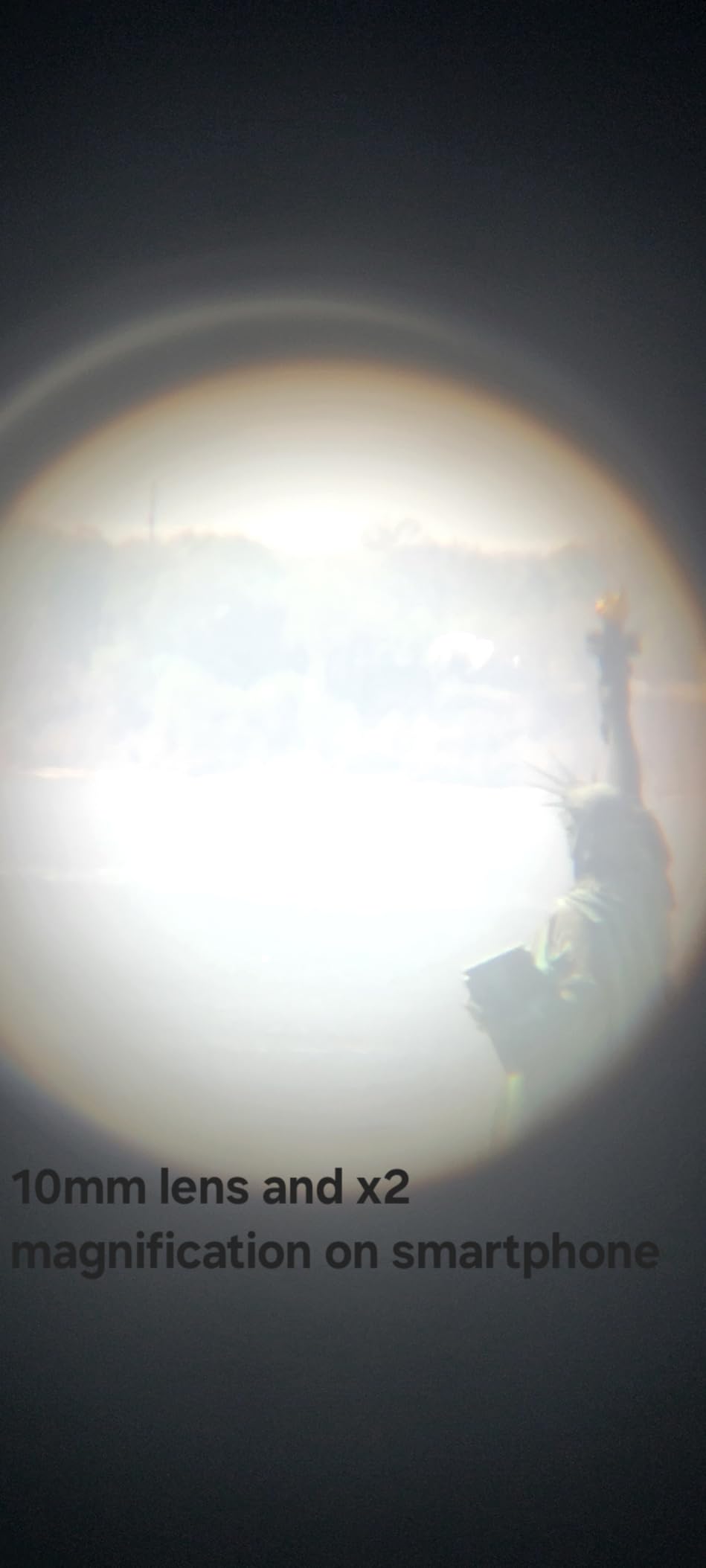
With 692 reviews at 4.2, this is a solid mid-tier kit rather than a standout. Adults buying for beginner children rate the assembly as easy and the value as good. The same reviews that rate the assembly highly rate the phone adapter as unreliable, with reports of the holder not gripping the phone securely enough and in one case scratching the lens.
That is worth taking seriously because a phone adapter that lets go at the moment of a good photo is a bad surprise. The mount itself is fine; it is the plastic holder that flexes. We would use the phone against the mount with a separate phone clamp if photographing is the goal, or simply leave it in the bag.
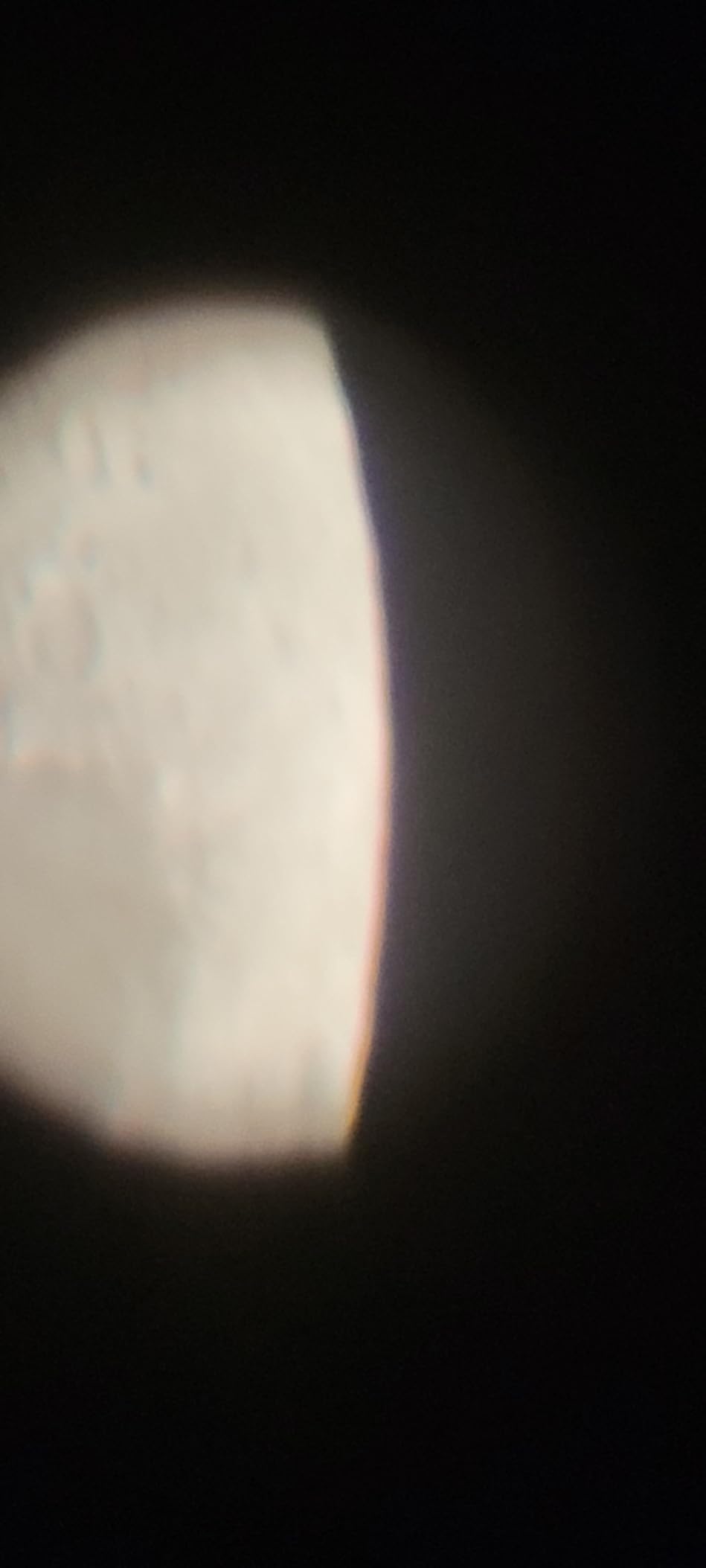
Where it earns its place
It is the pick for a family that wants one telescope and travels with it, or for a child who wants to experiment with magnification rather than be given a fixed setup. The 6mm eyepiece is more than most children will need early on, but having it in the box means nothing is missing later.
Where it does not
It is marketed for travel but is sold without a carry bag, which is the single most frustrating omission given the positioning. The build also feels flimsy to child-focused reviewers, and the manual and part naming are confusing enough that an adult should assemble it first. If the child is over ten and wants a scope that will last, spend the difference on the 80mm refractor above.
9. Celestron StarSense Explorer LT 80AZ – Best for Guided Setup
Celestron StarSense Explorer LT 80AZ Smartphone Guided Refractor Telescope
Aperture 80mm
App-guided sky tours
StarSense technology
Two year warranty
Pros
- App-guided pointing removes the hardest part for beginners
- 80mm aperture shows Saturn's rings and Jupiter's moons
- Sturdy build from an established maker
- Two year warranty and established support
Cons
- App syncing can fail to hold alignment
- Phone must stay docked during setup
- Costs more than the generic 70mm options
- Manual mount lets planets drift quickly
Every experienced reply on r/telescopes and CloudyNights about kids telescopes says the same thing: the hard part is not seeing, it is pointing. The Celestron StarSense Explorer LT 80AZ attacks that problem directly. It uses patented StarSense technology to analyse the pattern of stars overhead and work out where the telescope is aimed, then walks a beginner through a guided tour of whatever is visible that night.
Optically it is a serious instrument. An 80mm fully coated refractor with a 400mm focal length, a Dawes limit of 1.45 arc seconds, 25mm and 10mm eyepieces and a 2x Barlow lens. A red dot StarPointer finder sits alongside, plus an accessory tray, an erect image diagonal and a phone dock.
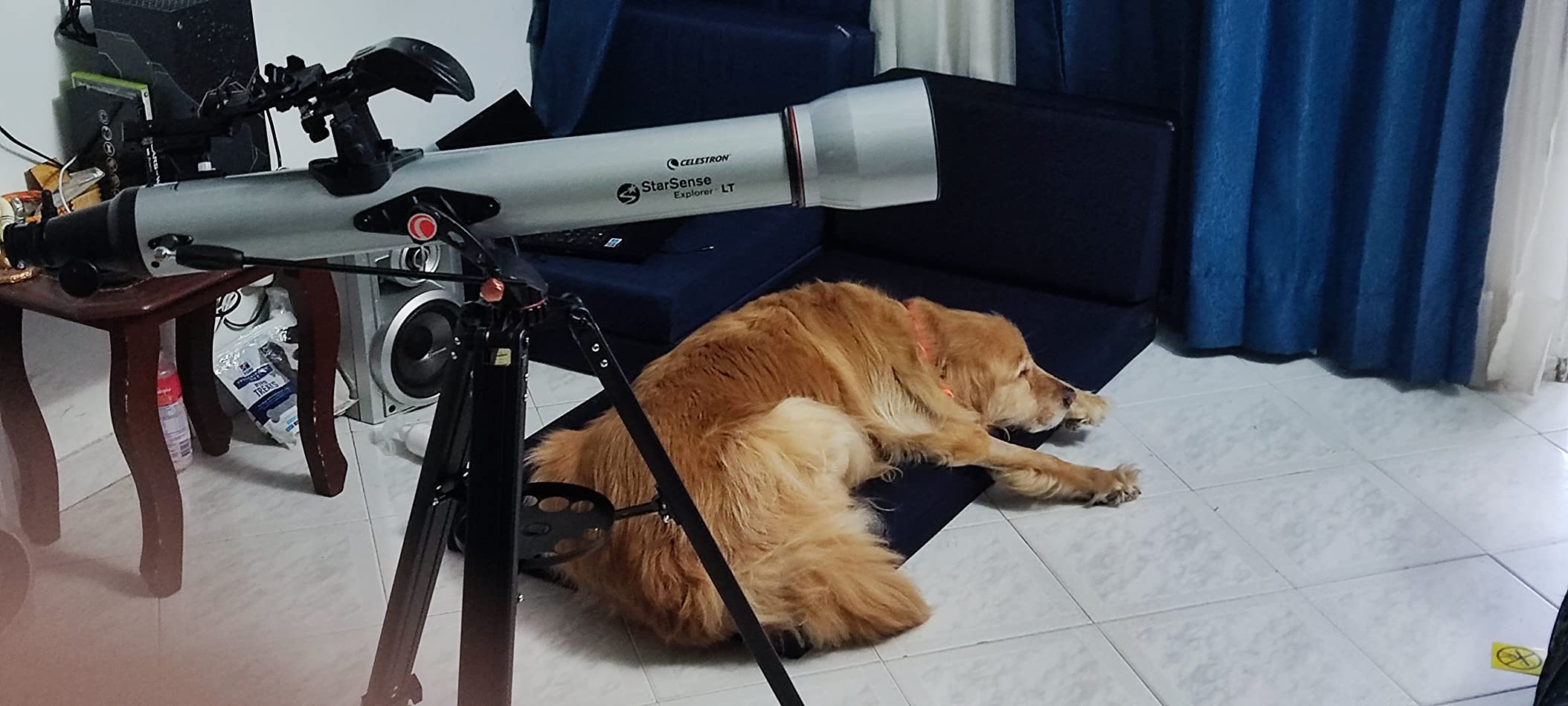
It also has a slow-motion sliding rod for altitude, so a child can nudge the tube up and down gently without losing the target entirely. That one small mechanical feature does more for a beginner than a stack of eyepieces, and it is the kind of thing that separates a real beginner telescope from a toy.
The catch is honest and worth stating plainly: it weighs 9.2 pounds and the tripod is large, so this is a backyard scope rather than a carry-around one. It is the most expensive telescope in this guide by a wide margin, which is why it is not our top pick despite the guided setup being genuinely useful.
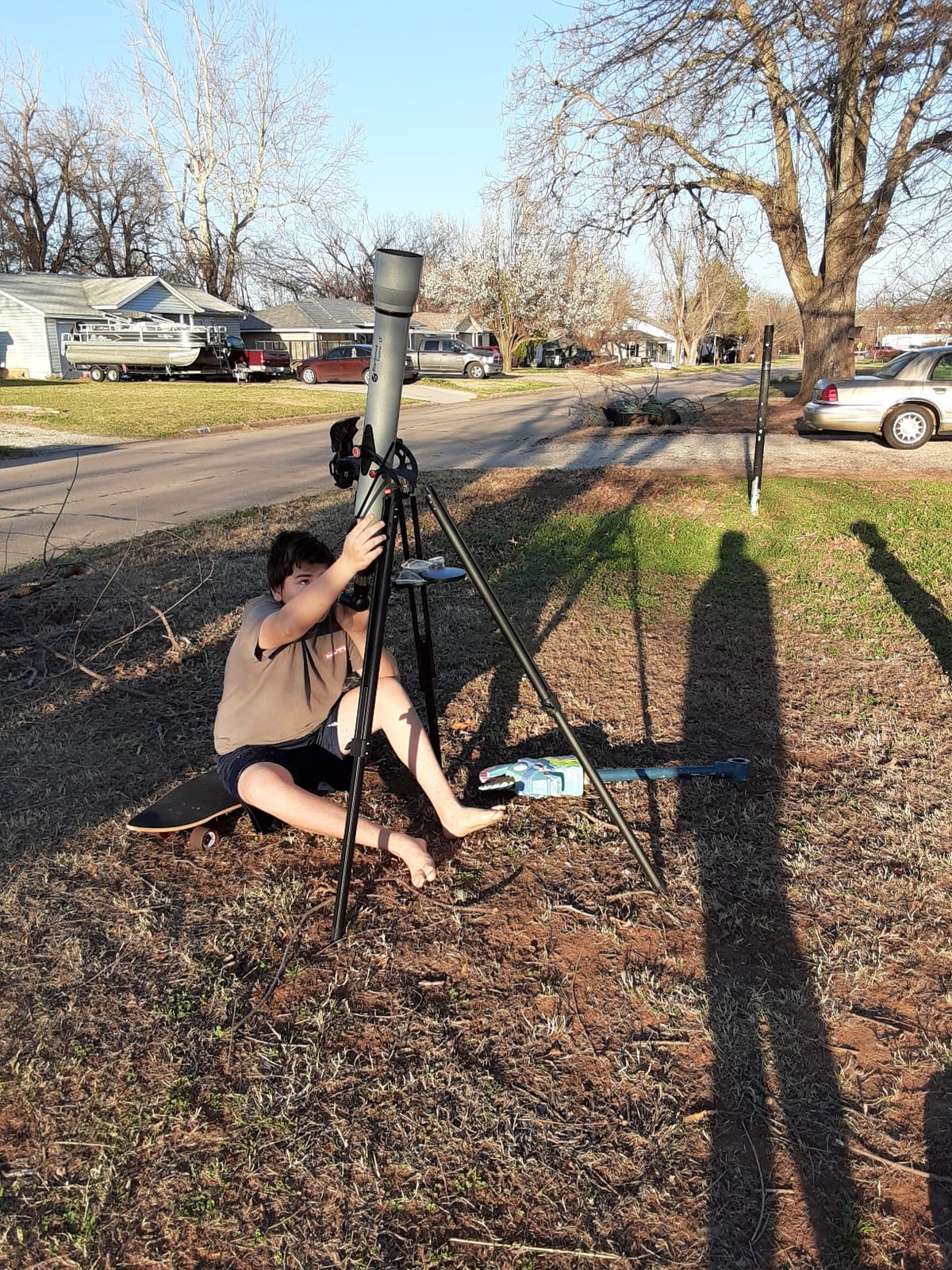
Who this telescope is for
A child aged ten or older who has already given up on a telescope because they could not find anything, and a family where an adult is not always around to help aim. Experienced users confirm the optics deliver on Saturn’s rings, Jupiter’s moons and detailed lunar views, and they are visible from suburban and city skies rather than only from dark countryside.
The reliability caveat
App syncing is the most repeated complaint across reviews. It can take several attempts, and it sometimes loses alignment, and the phone has to stay docked in the mount during the whole process, which means the child cannot use the phone for anything else at the same time. Several buyers recommend it only works consistently if you have a second phone to run the app while the first stays docked. If your family has one phone, factor that in before you buy.
10. LeapFrog Magic Adventures Telescope – Best for Ages Five to Seven
LeapFrog Magic Adventures Telescope
2.4 inch digital screen
Up to 110x zoom
Ages 5 and up
NASA video library
Pros
- Built-in screen removes the difficulty of an eyepiece
- Highest share of five-star ratings in this guide
- Educational content and game keep children engaged
- Durable plastic build suited to ages five and up
Cons
- Screen gives lower image quality than a real refractor
- Ties the experience to batteries and a device
- Capped at 110x magnification
- Feels toy-like to older children
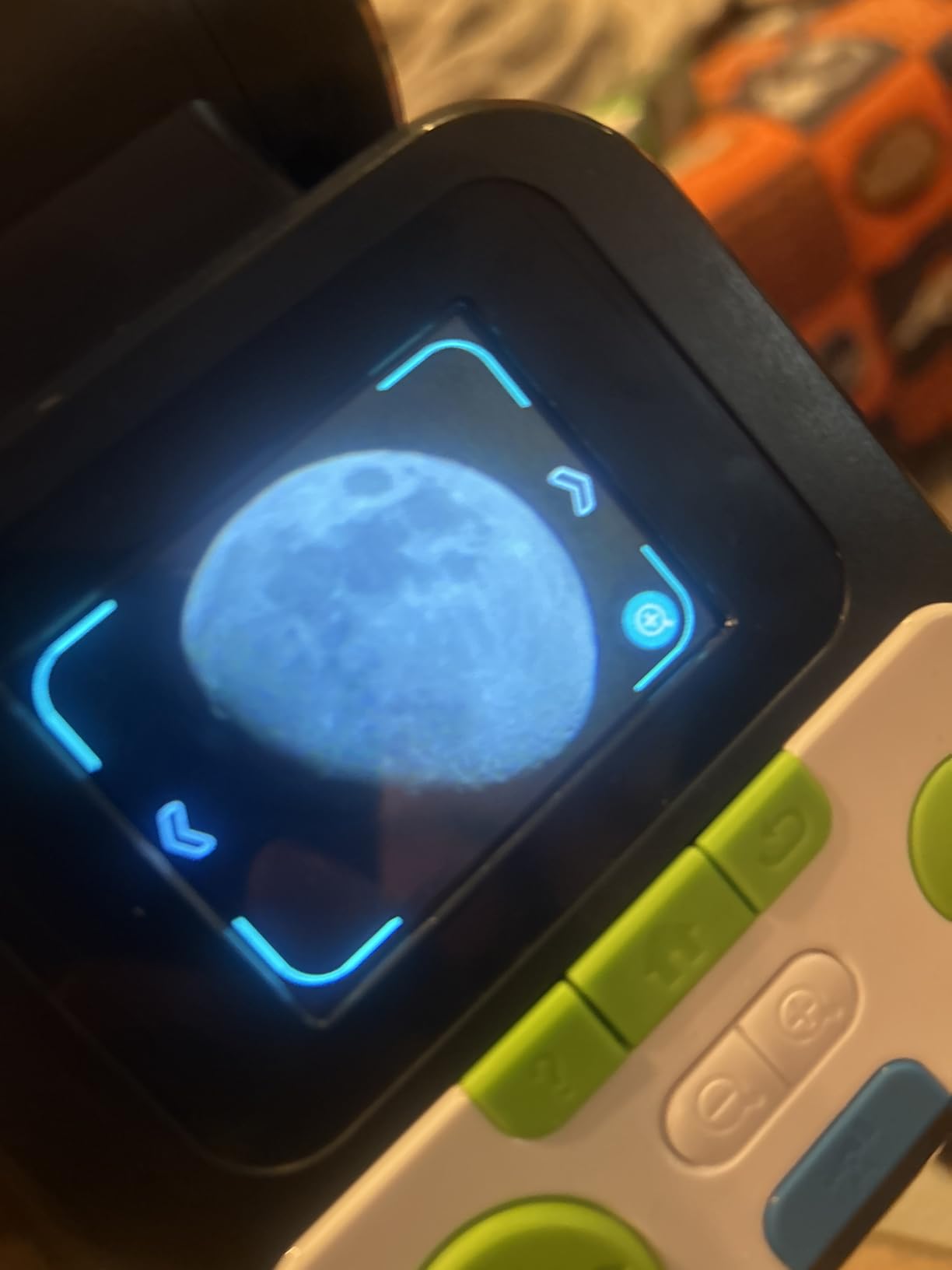
For a child under seven, the honest problem with a real telescope is physical. A five-year-old cannot squint into an eyepiece, cannot hold their head still at the right angle and cannot focus a knob. The LeapFrog Magic Adventures Telescope solves that by putting a 2.4 inch video screen where the eyepiece would be, so the child just looks at a screen and turns a dial.
It rates 4.4 with 538 reviews, and it holds the highest share of five-star ratings of the ten telescopes in this guide. It runs on four AA batteries, is rated for ages five and up, and includes 100 or more NASA videos and images on the solar system and constellations, an interactive spacecraft piloting game, 20 cosmic cards, a detachable tripod and a quick start guide.
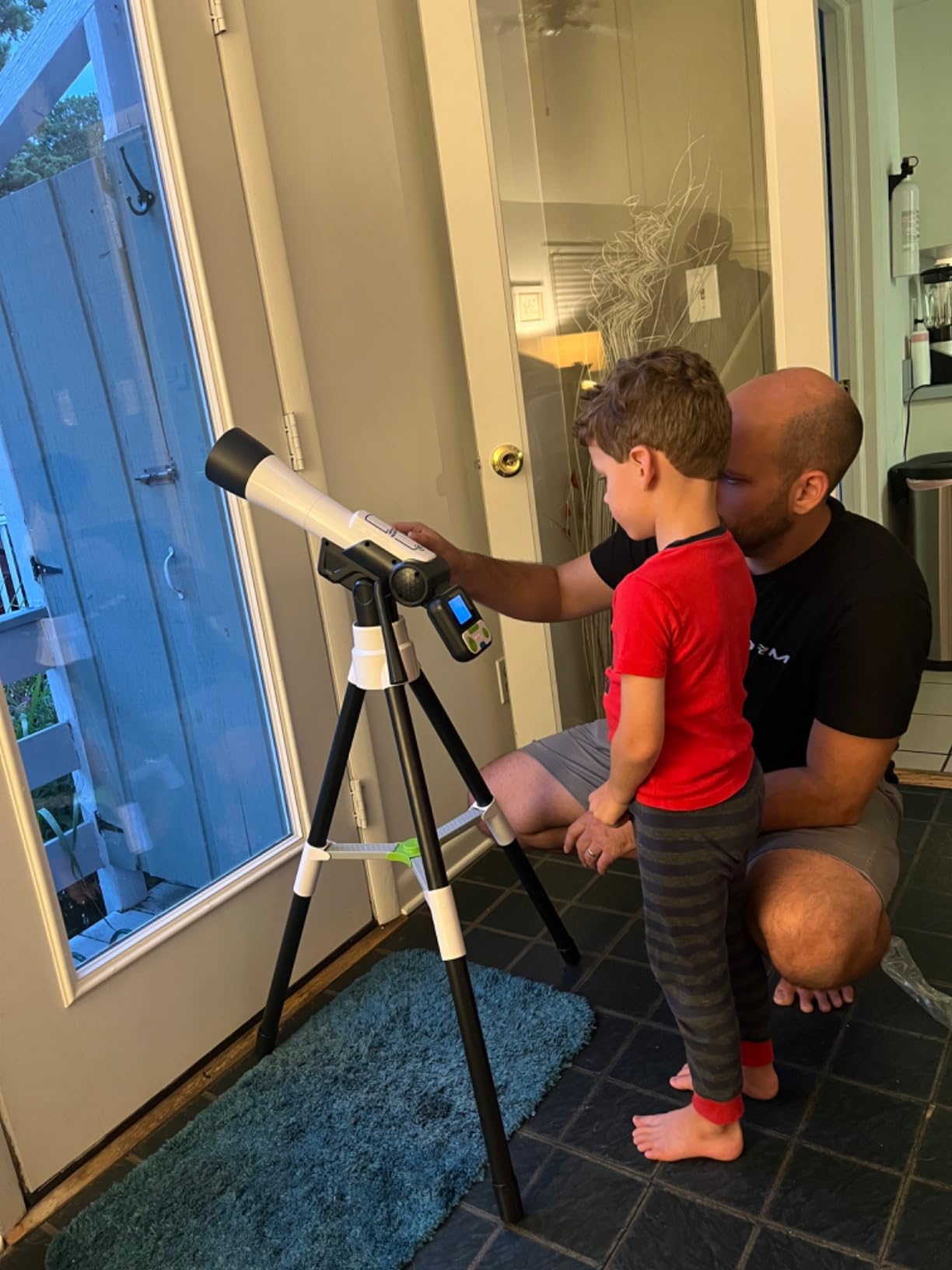
Zoom goes up to 110x, which is plenty for the Moon and for daytime nature viewing, and the detachable tripod makes it easy to carry outside and set up on a garden table. Parents consistently cite the screen, the educational content and the fact that the whole thing is durable enough to survive a small child.
What it cannot do is give the view. The digital screen produces a smaller, softer image than a glass refractor, and no amount of zoom changes that. Older children notice quickly, and reviews make clear that the usual outcome is that they outgrow it and ask for a real telescope, usually within a year or two.
Why it works for the youngest children
There is no learning curve at all. A child who has never looked through an eyepiece before can be showing the Moon to a grandparent within a few minutes of opening the box. For a birthday present for a five-year-old, that first-session success matters more than any specification on the carton.
When to move on
The moment a child starts asking why the stars look different through this than in a book, move up. The natural step is a 70mm refractor with a finder scope, and the child who is ready for one will be frustrated by a screen within a year. Treat this as a two-year bridge rather than a lifetime instrument.
How to Choose a Telescope for Your Child
Two decisions matter more than everything else on the product page: how much light the telescope gathers, and how easily a child can point it at something. Everything else, including the magnification figure in the title, is decoration by comparison. If you understand those two, you can read any listing and ignore the marketing.
Aperture beats magnification every time
Aperture is the diameter of the front lens or mirror, written in millimetres, and it is the number that determines what you can actually see. A 70mm scope collects roughly five times as much light as a 30mm toy scope, and that is the difference between a textured Moon and a white dot.
Here is the rule that most listings bury: useful magnification is roughly twice the aperture in millimetres. For a 70mm telescope that is about 140x. Anything advertised beyond that is not showing you more detail, it is showing you a dimmer, blurrier, shakier image of the same thing. A listing that leads with 500x is telling you about a number, not about the view.
As a rough guide, 30mm to 50mm apertures will show the Moon and a handful of bright planets. 60mm to 70mm is the sweet spot for a child, adding Jupiter’s moons and the shape of Saturn’s rings. 76mm to 100mm, which is where the Celestron StarSense and the MEEZAA sit, starts to show genuine planetary detail and gives a child years of use before it is outgrown.
Refractor, reflector or smart scope
A refractor uses a lens at the front and needs no maintenance, which makes it the right default for a child. A reflector uses a mirror and gives more light per unit of money, but the mirrors need occasional alignment and a Newtonian reflector can be knocked out of alignment by a child leaning on the tube.
A tabletop Dobsonian reflector is the option experienced amateurs most often recommend for children, because it is a big aperture in a small box with a smooth, easy-to-move mount. There was not one available to test for this guide, which is worth knowing as you read other lists. A smart telescope, which uses a phone to find and frame the target for you, removes the pointing problem entirely and is growing quickly in family recommendations.
If your child is under six, none of the above is the right answer. Binoculars are a legitimate first instrument at that age, with no focusing or pointing, and they last until a child is ready for a real scope. We are seeing the same shift toward screen-based and guided setups in family discussions, and the best gaming consoles for kids covers the other screen-based gift option in this category.
Mount, tripod and finder scope
Almost every telescope in this guide uses an altazimuth mount, which means it swings left and right and up and down. That is exactly what a child needs. An equatorial mount tracks the sky as the Earth turns, but it requires a child to learn polar alignment, which is a project in itself and almost never worth it below 114mm of aperture.
On tripods, the honest advice is to check the maximum height rather than the look of it. Several reviews in this guide specifically complain about tripods under two feet tall, which means a child is crouching. A tripod that reaches chest height on an adult works for every child in the family.
Treat a finder scope as a necessity rather than an accessory. It is a low-power, wide-angle sight that shows the child where to aim, and without it the child is looking for a faint smudge in a 0.38 degree field of view. If a telescope does not include one, budget for a star targeter, the simple red ring reflector that clamps onto the tube, or a Telrad. On CloudyNights and r/telescopes, this is the single most frequently recommended accessory and it is not close.
Focal length, in one line
Longer focal length means a bigger image of a distant planet and a narrower field of view when finding it. Shorter means easier finding and smaller planets. Between 360mm and 500mm covers the useful range for a child’s first refractor, and where you land inside that band is a question of whether pointing or detail matters more to you.
Accessories worth paying for and worth ignoring
Worth it: a finder scope or star targeter, a moon filter for bright nights, a carry bag if you will move the telescope, and a phone adapter if your child wants to photograph the Moon. A 25mm wide-field eyepiece is the single best upgrade for an existing scope.
Not worth it: projectors that throw pretend stars on the ceiling, the 3x Barlow bundled with a kit you already have eyepieces for, and any “planetary projection disc” that shows you a photograph rather than a view. Skip anything whose main feature is a magnification figure above twice the aperture in millimetres.
Which Telescope for Which Age?
Age is the most useful number in this whole guide, because it decides whether the child can handle an eyepiece, whether they can carry the tube, and how much patience the first session needs. Here is how we would map it.
- Ages three to five: Binoculars, not a telescope. At this age the child cannot focus an eyepiece or hold steady at the eyepiece, and a frustrating instrument teaches them that astronomy is dull. If you want a device, the LeapFrog Magic Adventures Telescope is the closest fit, rated from age five.
- Ages five to seven: The LeapFrog Magic Adventures Telescope, because the built-in screen removes the eyepiece skill entirely and a first session that succeeds is what creates the interest.
- Ages six to eight: The Blue Marble NASA Lunar Telescope for a low-cost first gift, or the Gskyer 70mm if the family can wait for a slightly bigger investment. Both are rated for hands that are still small.
- Ages eight to twelve: The Gskyer 70mm, our top pick, or the MEEZAA 80mm if planetary detail is the priority. This is the band where a child can run the focus knob, carry the tube and genuinely learn to find things.
- Ages ten and up, or a family sharing one scope: The Celestron Travel Scope 70mm for durability and warranty, the Koolpte 70mm 500mm for crisper planets, or the Celestron StarSense Explorer if pointing has been the sticking point.
- A teenager who has outgrown everything here: None of these. A 5 inch Dobsonian reflector is the standard next step among experienced amateur astronomers and the advice given consistently on r/telescopes and CloudyNights. That is a different article and a different budget.
What You Can Actually See on the First Night
Expectation mismatch is the most common complaint in family discussions about first telescopes, and it is entirely avoidable. A budget scope does not show galaxies. Nobody’s first telescope does, and a parent who promises a nebula will have a disappointed child by bedtime.
On a clear night within a week of a new moon, in a suburban garden, here is what these telescopes realistically deliver. The Moon is the guaranteed target, and it is the best one: a 70mm refractor shows craters, maria and the ragged terminator line along the edge. Most children find the craters more interesting than any other object in the night sky.
Jupiter is the next reliable target. Four moons orbit it and move visibly across the face of the planet in an evening, which turns astronomy into something a child can watch happen rather than a static picture. Saturn’s rings are visible once you find Saturn and hold the image steady, and the fact that a household object looks nothing like its textbook image is genuinely exciting.
Bright double stars and the Pleiades cluster are realistic with a wide field. Faint galaxies, the Andromeda nebula and most of the fainter objects listed in children’s books are not, and no telescope in this guide will change that. If a child asks about galaxies, the honest answer is that it is a goal for a bigger telescope, and that this one is the step toward it.
Two practical notes on conditions. A moon filter on a full Moon genuinely reduces glare, which is the difference between a flat white disc and visible detail. And light pollution matters more than people expect, so if you can travel twenty minutes to a darker spot once, the same telescope will show roughly three times as many stars.
What to Avoid: The Low-Rated Trap Segment
The kids’ telescope category has a genuine problem that most roundups do not name. A significant share of listings in this space sit at three stars or below, and they fail in predictable ways rather than randomly. Here is what to look for so you can avoid them.
Magnification claims far beyond twice the aperture. A 60mm telescope advertised at 375x is quoting a number the optics cannot deliver. If the headline figure is the largest number on the page, that is a warning rather than a feature.
Plastic objective lenses. A genuine glass objective is coated; a plastic one is not. Colour fringing around bright objects and a soft, milky image at high power are the symptoms, and no amount of cleaning fixes them.
An unlisted aperture. If the product page gives a magnification and a weight but not the objective diameter in millimetres, the seller is hiding the number that matters. Do not buy a telescope you cannot find an aperture for.
Unbranded listings with thin specifications. Forum regulars warn repeatedly about the very cheapest listings arriving with missing hardware and inconsistent quality between units, and the review counts on those listings tend to be small enough that nobody is checking. Stick with established brands and products carrying hundreds or thousands of ratings, which is why every pick in this guide clears 500 reviews.
A tripod with no stated maximum height. A tripod described only as adjustable is usually adjustable between a height that suits nobody. And a finder scope listed as optional or not mentioned at all is a scope that will frustrate a child within the first ten minutes.
We have deliberately not ranked anything in this guide below a 4.1 average. Several well-known kids’ scopes sit at three stars with large review counts, which tells you that large numbers of families have had the same disappointing experience with them.
Safety and Setup Basics for Young Children
Never point any telescope at the Sun without a certified solar filter fitted over the front aperture. This is not a caution we add for completeness. A telescope concentrates sunlight onto the eyepiece and can cause permanent eye damage in a fraction of a second, and it happens to children who are simply curious. The filters sold for phones do not fit the front of a telescope. Until you have a proper front-mounted solar filter, the Sun is off limits, full stop.
Assemble the telescope yourself before the child opens the box. Almost every set of confusing instructions in this guide came up in reviews, and a forty-minute assembly job on a birthday morning is a bad start. Assemble it in daylight, check the finder scope, and only then take it outside at night.
Align the finder scope in daylight, not in the dark. Point the main telescope at a distant object, adjust the finder scope cross-hairs until the object sits in the middle of both views, and lock the adjustment screws. Ten minutes here saves every session afterwards.
For the first-night checklist: a red flashlight rather than a white one, because white light destroys night vision and the whole sky looks brighter afterwards; a warm layer for everyone, since you will be standing still for an hour in the garden; a free planetarium app on the phone to identify what you find; and a plan to look at the Moon first, because it will definitely be there and it will definitely work.
Finally, supervise the first few sessions. The pointing frustration we have described leads to a child handing the telescope back, and a parent who takes over for two minutes to find something interesting buys back a month of interest.
Frequently Asked Questions
What is the best telescope for a beginner child?
For most children the best first telescope is a 70mm refractor with a finder scope and a tripod that reaches chest height on an adult. Our top pick is the Gskyer 70mm, which carries a 4.3 rating across more than 22000 reviews and includes a finder scope, two eyepieces, a Barlow lens and a carry bag. For a child under six, a digital screen telescope or a pair of binoculars will hold attention far better than an eyepiece.
What aperture size should I look for in a kids telescope?
Look for 70mm or more. Aperture is the diameter of the front lens or mirror and it controls how much light you gather, which is what determines what you can see. 70mm is the sweet spot for a child because it shows a detailed Moon, Jupiter’s moons and the rings of Saturn. Below 50mm expect little more than the Moon and a few bright planets, and an 80mm scope will hold a child’s interest for noticeably longer.
What is the best telescope for viewing planets for kids?
Planet detail is driven by aperture, and every telescope in this guide has 70mm or 80mm of it. The MEEZAA 80mm 500mm Refractor is the best for planets because it combines the largest aperture in this roundup with a 500mm focal length, so planets appear larger in the eyepiece. The Koolpte 70mm 500mm offers the same focal length at a lower aperture and is the alternative if you want to spend less.
Are high magnification telescopes better?
No. Useful magnification is roughly twice the aperture in millimetres, so a 70mm scope is at its limit around 140x. Beyond that you get a dimmer, blurrier and shakier image of the same object rather than more detail. If a listing leads with 500x, treat that as a warning sign rather than a feature, and check the aperture in millimetres instead.
Which type of telescope is best for kids?
A refractor is the best default because it needs no maintenance and cannot be knocked out of alignment. A tabletop Dobsonian reflector gives more light for the money and is often recommended by experienced amateurs. A smart telescope uses a phone to find and frame targets, removing pointing entirely. For children under six, none of these, and binoculars or a screen-based telescope will work better.
Is a telescope a good gift for a child, and at what age?
It is one of the better screen-free gifts you can give, and the most common regret is buying one too early. Under six, a child cannot focus an eyepiece or hold steady, so a digital screen telescope or binoculars is a better first present. From six upward a 70mm refractor works, and from ten upward a child can handle a larger aperture and a real mount independently.
Do cheap kids telescopes actually work?
The cheap ones that advertise 500x magnification usually do not deliver much beyond a bright Moon. Models that quote a real aperture of 70mm, carry a finder scope, and have hundreds or thousands of reviews do work well. Every telescope in this guide holds a rating of 4.1 or above, and the two cheapest options here are included only with honest limits stated.
Conclusion: Which Kids Telescope Should You Buy in 2026?
If your child is six or older, the Gskyer 70mm is the safest single answer to the question of the best kids telescopes for stargazing in 2026. It has the deepest review history in the category, a genuine 70mm coated objective, a finder scope, a carry bag and a phone adapter, and it is the scope we would hand to a child without hesitation.
Match the instrument to the age instead. Binoculars or the LeapFrog Magic Adventures Telescope for a five-year-old. The Blue Marble NASA Lunar Telescope as a modest first gift. The Celestron Travel Scope 70mm when a whole family will share one scope and durability matters. The MEEZAA 80mm when planetary detail is the goal. The Koolpte 70mm 500mm for longer focal length. The Celestron StarSense Explorer when pointing is the sticking point and a second phone is available.
Whatever you choose, start with the Moon, add a star targeter in the first month, and never let a child aim a telescope at the Sun. The interest that lasts is the one that survives the first three sessions, and every one of these picks will if it is set up properly. For the rest of our tested gift guides, see our best smartwatches for kids roundup.