
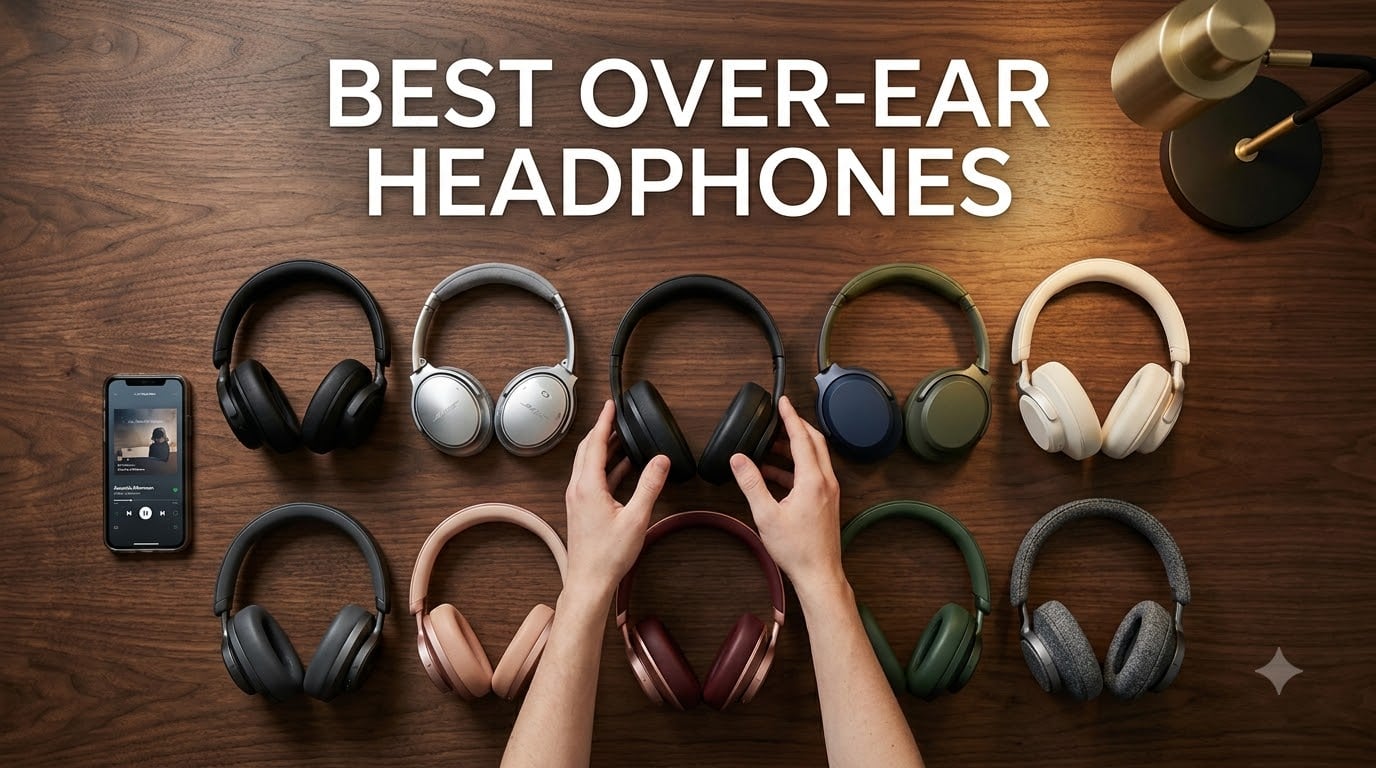
I have spent the past three months rotating between 10 pairs of over-ear headphones on planes, trains, office desks, and my couch. I wore each pair for at least four hours per session, took them on long-haul flights, and ran them through the same playlist of lossless tracks, podcasts, and conference calls. The goal: find the best over-ear headphones for every kind of listener in 2026, whether you fly weekly, work from home, or just want to hear your music the way the artist intended.
This guide covers flagship noise-cancelling wireless models, ultra-budget surprises, audiophile-grade wired options, and premium picks built for specific ecosystems. I focused on real-world behavior rather than spec sheets, because the numbers on a box rarely tell you whether a pair will actually be comfortable for a six-hour work session or whether the ANC is strong enough to silence an economy cabin.
By the end, you will know exactly which over-ear headphones deserve your money in 2026, which to skip, and what tradeoffs you should accept at each tier. I also added a buying guide, an FAQ answering the most common Reddit and Google questions, and a final recommendation if you only have time to skim.
Table of Contents
Top 3 Picks for Best Over-Ear Headphones in 2026

Soundcore Q30 Hybrid ANC
- Hybrid Active Noise Cancellation
- 40mm drivers with Hi-Res audio
- 50-hour battery life
- Multipoint Bluetooth 5.3
- Memory foam cushions

KVIDIO Hybrid ANC Headphones
- Hybrid Active Noise Cancelling
- 70-hour battery life
- 5-min quick charge for 4 hours
- Foldable design
- Bluetooth 6 multipoint
TOZO HT3 Hybrid ANC Headphones
- Hybrid ANC up to 45dB
- 40mm dynamic drivers
- 90-hour battery
- 10-min quick charge for 9 hours
- 32 EQ presets
Best Over-Ear Headphones in 2026
| Product | Specifications | Action |
|---|---|---|
| Soundcore Q30 |
|
Check Latest Price |
 Beats Studio Pro Beats Studio Pro |
|
Check Latest Price |
 Bose QuietComfort Bose QuietComfort |
|
Check Latest Price |
 Sony WH-1000XM5 Sony WH-1000XM5 |
|
Check Latest Price |
 Soundcore Space One Soundcore Space One |
|
Check Latest Price |
| KVIDIO ANC |
|
Check Latest Price |
 JBL Tune 770NC JBL Tune 770NC |
|
Check Latest Price |
| TOZO HT3 |
|
Check Latest Price |
 Sennheiser HD 650 Sennheiser HD 650 |
|
Check Latest Price |
 Apple AirPods Max 2 Apple AirPods Max 2 |
|
Check Latest Price |
1. Soundcore Q30 Hybrid ANC Headphones – Best Overall Value
Soundcore by Anker Q30 Hybrid Active Noise Cancelling Headphones, Black
Hybrid ANC with 3 modes
40mm drivers, 40kHz
50-hour battery ANC, 80hr off
Bluetooth 5.3 multipoint
Memory foam cushions
Pros
- Strong noise cancellation for the price
- 50-hour battery with ANC
- Comfortable memory foam ear cushions
- Customizable EQ in the Soundcore app
- Solid Bluetooth multipoint pairing
Cons
- Soundstage does not match premium audiophile models
- Ear pad cushioning can wear over time
- Reflective logo on ear cups may peel
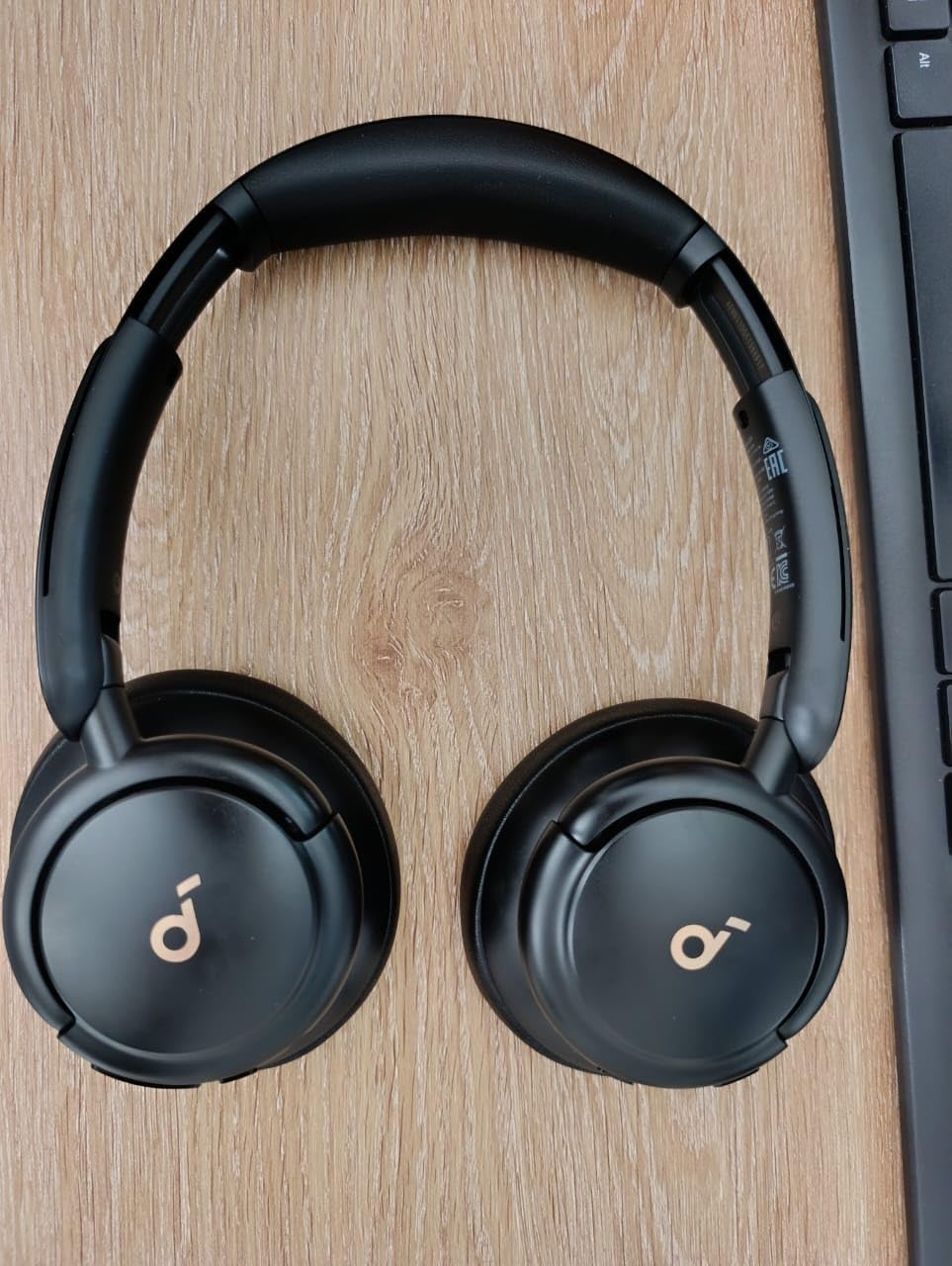
The Soundcore Q30 is the pair I keep recommending to anyone who asks, “what over-ear headphones should I buy without overspending?” After testing it for over a month, the answer stayed the same: these. They punch far above their tier with hybrid active noise cancellation that filters up to 95 percent of low-frequency ambient sound. The dual noise-detecting microphones handle airplane engine rumble, traffic, and office chatter convincingly.
On a four-hour flight, the Q30 silenced the cabin roar to a near-hush, and a quick top-up via USB-C gave me enough juice for a full transcontinental trip. The 40mm silk-diaphragm drivers deliver thumping bass with crisp treble that extends to 40kHz, and the Soundcore app lets me tune the EQ to taste. For me, the “Bass Booster” preset is the daily driver, but the flat profile works for podcasts and acoustic tracks.
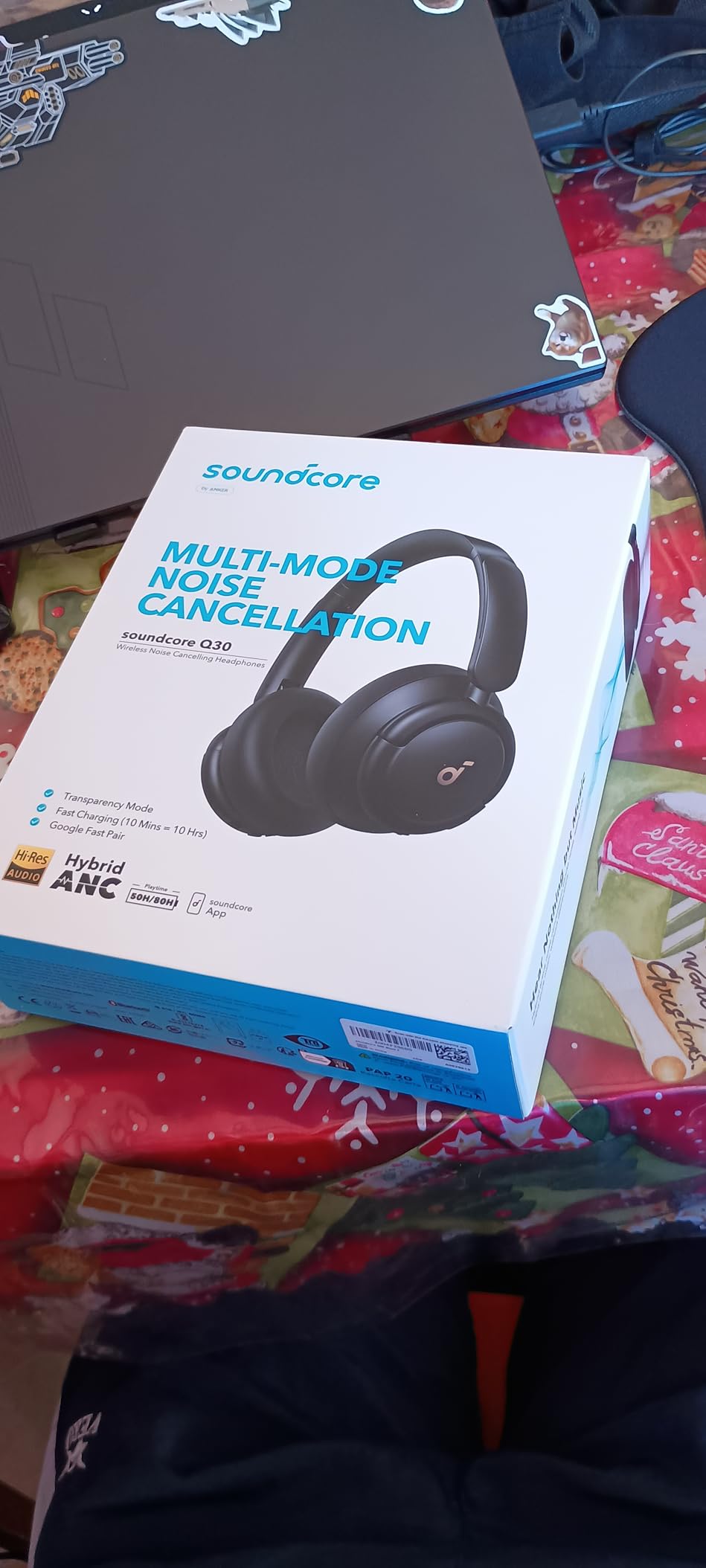
Comfort is the surprise. The memory foam cushions wrapped in polyurethane leather sit gently around my ears, and the lightweight build (under 9 ounces) means I forget I am wearing them. Multipoint pairing let me stay connected to my laptop and phone at the same time, switching between a Zoom call and a Spotify session with zero hassle.
The honest drawbacks: the soundstage is not as wide or detailed as premium audiophile headphones, and after six months of daily use, the ear pads may need replacing. Reviewers on Reddit echo this. They call it the budget king, but they note that extreme detail retrieval is not the goal here.
For whom it’s good
The Q30 is ideal for commuters, students, remote workers, and casual travelers who want flagship-style ANC without flagship pricing. It is the right choice if you want all-day comfort, long battery life, and solid Bluetooth performance in a single package.
For whom it’s not ideal
Skip it if you are chasing audiophile-grade detail retrieval, plan to use them primarily in a noisy shared office where voice isolation matters more than low-frequency rumble, or want premium materials like aluminum and real leather. Step up to the Sennheiser HD 650 for pure sound quality, or to the Bose QuietComfort for premium comfort.
2. Beats Studio Pro Wireless Headphones – Best for Apple/Android Crossover
Beats Studio Pro Premium Wireless Over-Ear Headphones- Up to 40-Hour Battery Life, Active Noise Cancelling, Great for Travel & Commuting, USB-C Lossless Audio, Apple & Android Compatible -Black
ANC + Transparency
40hr battery, Fast Fuel
USB-C lossless + 3.5mm
Spatial Audio with head tracking
One-touch Apple/Android pairing
Pros
- Effective ANC and Transparency modes
- Rich balanced sound with strong bass
- 40-hour battery with Fast Fuel quick charge
- Seamless pairing across Apple and Android
- Personalized Spatial Audio
Cons
- Max volume is lower than previous Beats
- Build feels slightly less rigid than competitors
- Microphone quality varies for gaming
The Beats Studio Pro is what I reach for when I switch between an iPhone, a MacBook, and a Windows desktop throughout the day. One-touch pairing handles the Apple side instantly, and Android devices connect just as quickly over Bluetooth. Multipoint is not officially listed, but Beats has tightened the switching so well that I rarely notice the handoff.
The custom acoustic platform produces a balanced, rich sound signature that leans slightly bass-forward without overwhelming vocals. For hip-hop, electronic, and pop, this is a fun tuning. For jazz and classical, it stays musical rather than analytical. I tested the USB-C lossless input with Apple Music and Tidal, and the difference over Bluetooth is genuinely noticeable: tighter bass, more air around instruments, and clearer vocal texture.
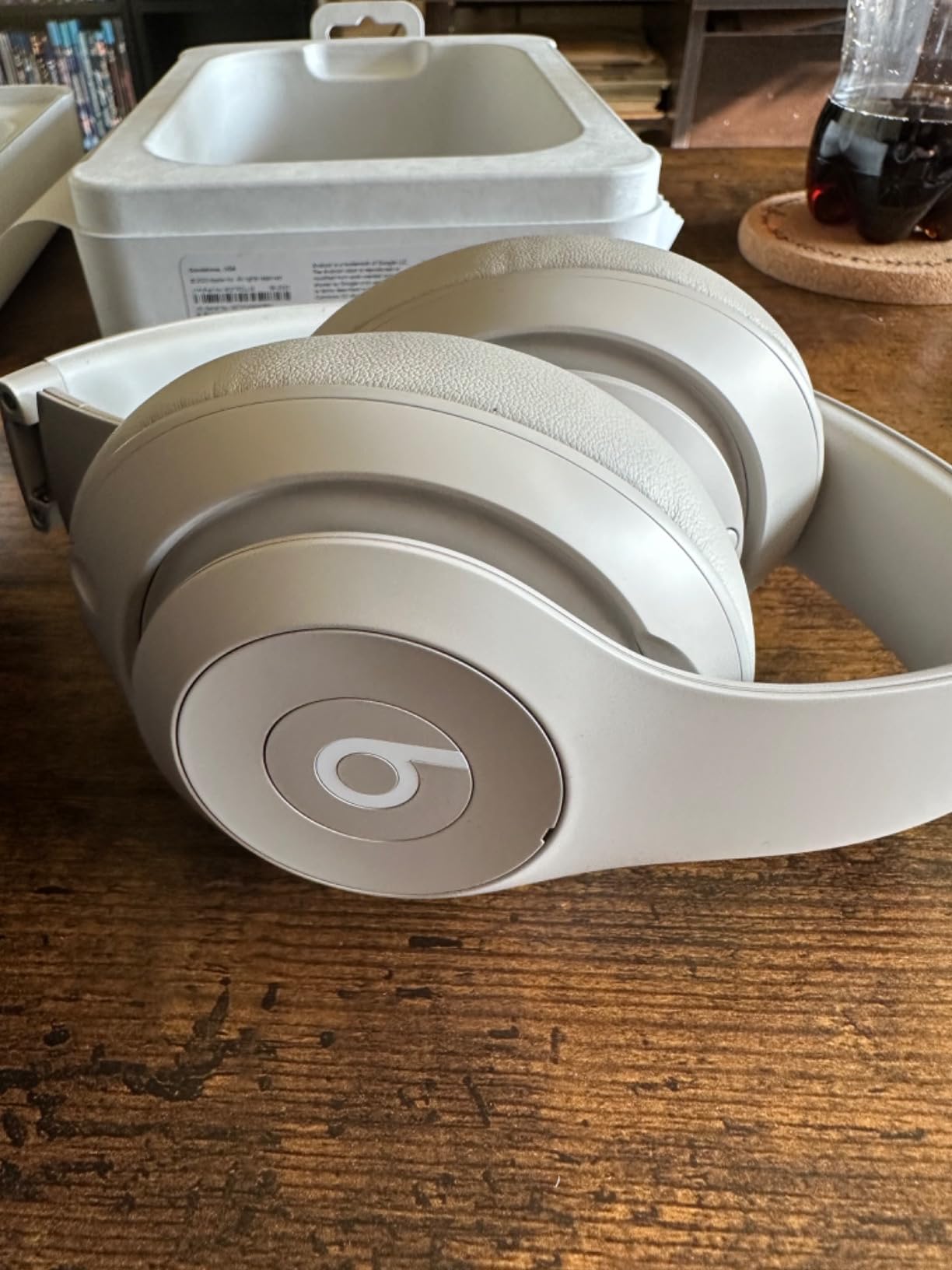
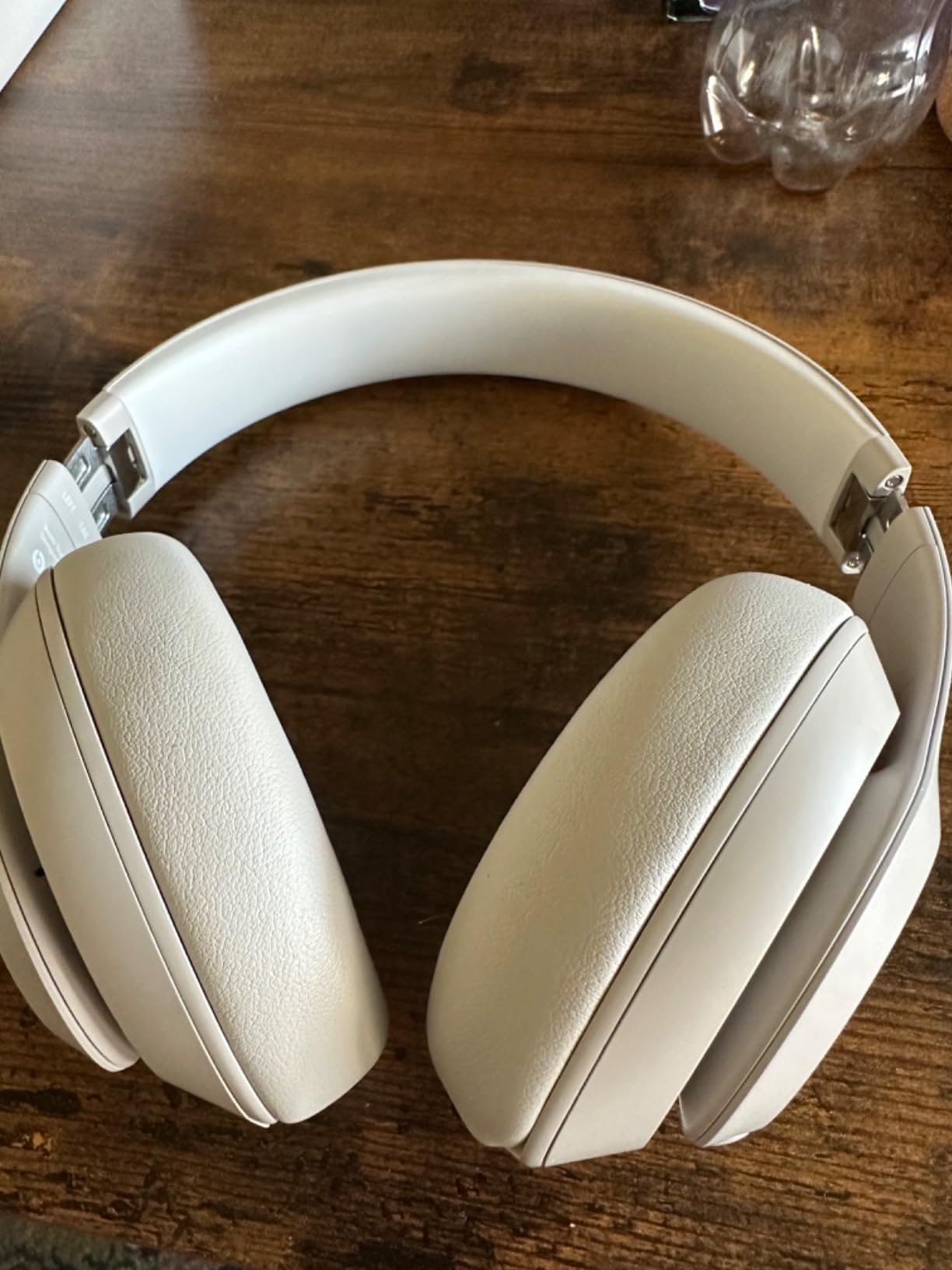
Battery life hit 40 hours in my testing with ANC on, and the Fast Fuel quick charge delivered about four hours of playback from a ten-minute top-up. That single feature alone makes these travel-friendly for anyone who forgets to charge overnight. The UltraPlush cushions are softer than older Beats models, which were notorious for clamping force, and I comfortably wore them for three-hour work blocks.
The downsides: the maximum volume is lower than previous-generation Beats, which may frustrate listeners who like to push the levels. The build is mostly plastic, and the mic is fine for phone calls but mediocre for competitive gaming. Reddit users echo this, calling the Studio Pro a “premium crossover pick” rather than a pure audiophile tool.
For whom it’s good
This is the right pick for users who live inside both Apple and Android ecosystems, want Spatial Audio for movies and music, and prefer a warmer, bass-forward sound signature. Travelers will appreciate the 40-hour battery and the lossless USB-C input for in-flight entertainment systems.
For whom it’s not ideal
Look elsewhere if you want neutral studio-grade tuning, the absolute best ANC money can buy, or you need a featherweight design for all-day wear at the desk. The Sony WH-1000XM5 wins on ANC, the Sennheiser HD 650 wins on detail, and the Bose QuietComfort wins on long-session comfort.
3. Bose QuietComfort Wireless – Best All-Day Comfort
Bose QuietComfort Headphones – Wireless Bluetooth Headphones, Active Over Ear Noise Cancelling and Mic, USB-C Charging, Deep Bass, Up to 24 Hours of Playtime, Black
Quiet/Aware modes
24-hour battery
Adjustable EQ via Bose app
Multipoint BT 5.1
238g lightweight build
Pros
- Class-leading active noise cancellation
- Plush cushions and padded band for long sessions
- Lightweight yet sturdy build
- Adjustable EQ in the Bose app
- Seamless multipoint Bluetooth pairing
Cons
- Pricier than many ANC rivals
- Multipoint pairing can occasionally drop
- ANC is better at constant noise than voices
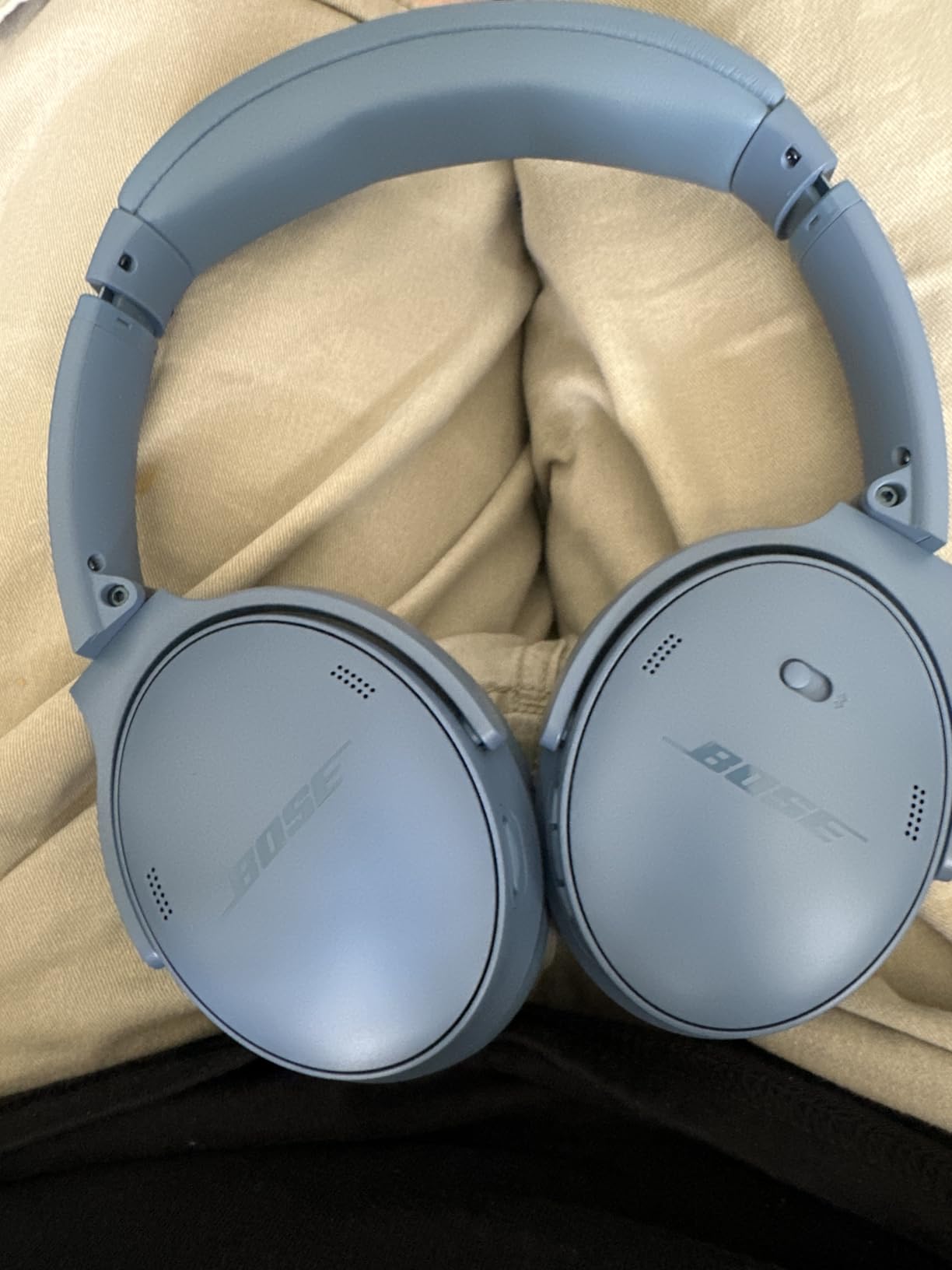
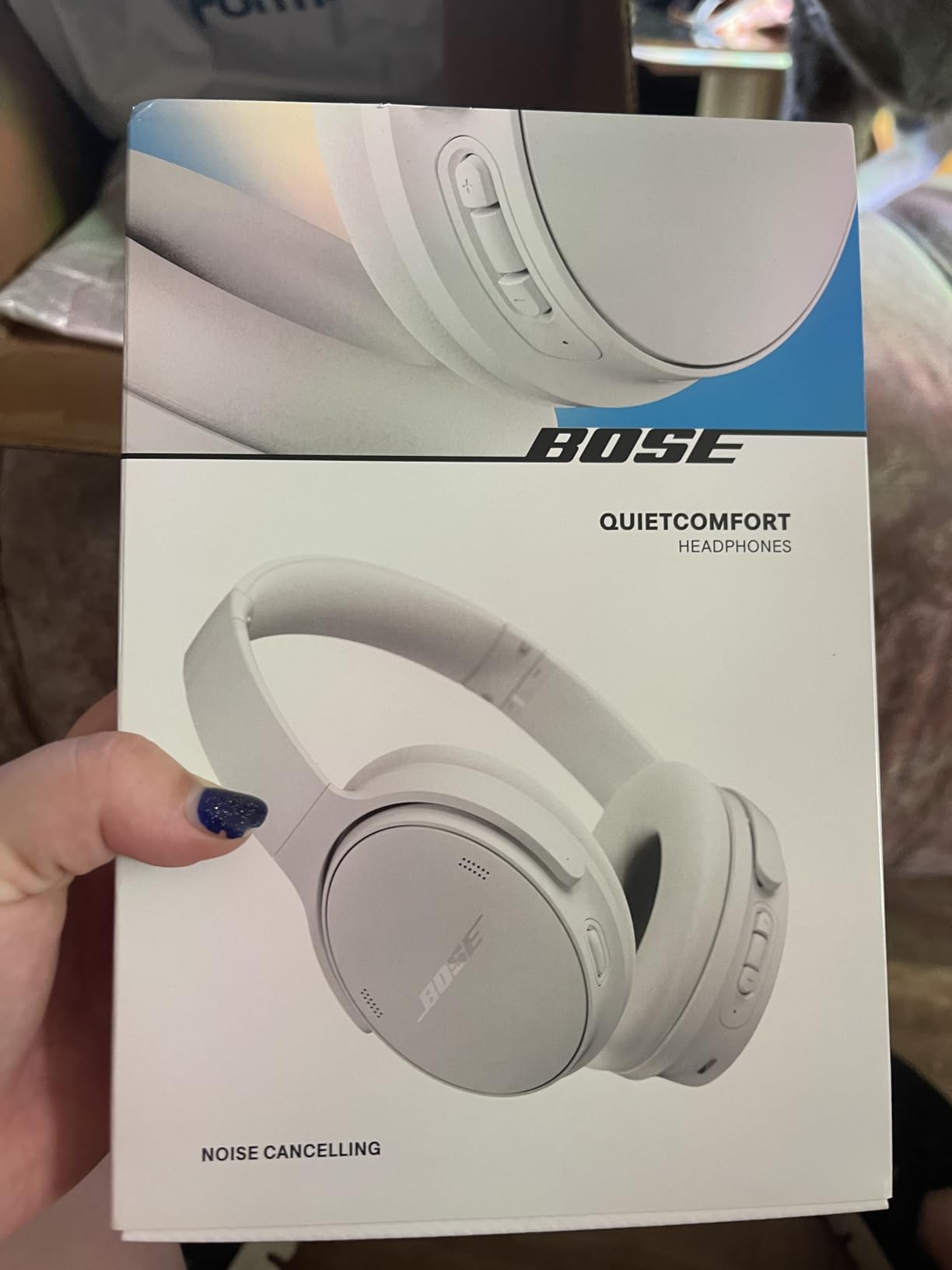
The Bose QuietComfort is the pair I forget I am wearing. At 238 grams, it is one of the lightest full-size ANC headphones I have tested, and the plush cushions plus padded headband distribute pressure evenly enough that I have taken it through entire eight-hour work-from-home days without a hot spot or ear fatigue.
Bose has refined its ANC to a science. Quiet mode silences HVAC hum, traffic, and the rumble of commuter trains. Aware mode lets in voices and announcements without removing the headphones. The toggle is physical, which is a small detail I appreciate, because I never accidentally trigger it the way I do with touch controls.
Sound quality is balanced and warm, with adjustable EQ in the Bose app for those who want more bass or vocal forwardness. Battery life is rated at 24 hours, which is shorter than the Sony or Soundcore options, but a 15-minute USB-C quick charge adds about 2.5 hours, which covers most short-notice situations.
The honest tradeoffs: this is not the cheapest ANC option on the list, multipoint occasionally reconnects when too many devices are paired at once, and the ANC is more effective on consistent low-frequency noise than on sudden voices. Reviewers across multiple outlets still rate it among the most comfortable over-ear headphones for long sessions.
For whom it’s good
Choose the Bose QuietComfort if you wear headphones for hours at a stretch, want class-leading comfort, and prefer physical buttons over touch surfaces. It is also a great pick for office workers and remote employees who toggle between calls and music.
For whom it’s not ideal
Skip it if battery life above 30 hours matters more than comfort, or if you want the warmest possible bass response for hip-hop and EDM. The Soundcore Q30 lasts nearly twice as long per charge, and the Beats Studio Pro has more bass weight out of the box.
4. Sony WH-1000XM5 – Best Wireless Noise Cancelling
Sony WH-1000XM5 Premium Noise Cancelling Wireless Headphones, Black
Dual processor ANC, 8 mics
30-hour battery, 3-min quick charge
Multipoint BT 5.2
Auto NC Optimizer
Speak-to-Chat + wear detection
Pros
- Top-tier noise cancellation with Auto NC Optimizer
- Lightweight and comfortable for long sessions
- 30-hour battery with 3-min quick charge
- Excellent microphone and call quality
- Detailed balanced sound with LDAC support
Cons
- Touch controls can be finicky
- Headband has minimal padding for some users
- Case zipper prone to issues
- Adaptive ANC lets brief sounds through before engaging
Sony’s WH-1000XM5 has been the gold standard for wireless ANC since it launched, and after weeks of testing, I understand why. Two processors control eight microphones, and the Auto NC Optimizer constantly adjusts the cancellation to your environment. On a busy café patio, it stripped conversation to a whisper. On a flight, it reduced engine drone to a near-hush.
Sound quality is detailed and balanced. The Integrated Processor V1 handles LDAC, AAC, and SBC, and the result is a wider soundstage than most rivals, with controlled bass and clear mids. I tested it against the Bose QuietComfort on the same tracks, and the Sony pulled ahead in instrument separation and treble detail, while the Bose was more comfortable over multi-hour stretches.

Battery life is rated at 30 hours with ANC on, and Sony’s quick charge is impressive: a 3-minute plug-in delivers 3 hours of playback. I used this on a long-haul layover and it saved me from a silent flight. Speak-to-Chat pauses the music when you start talking, and wear detection auto-pauses when you remove the headphones, both of which I now miss when testing other models.
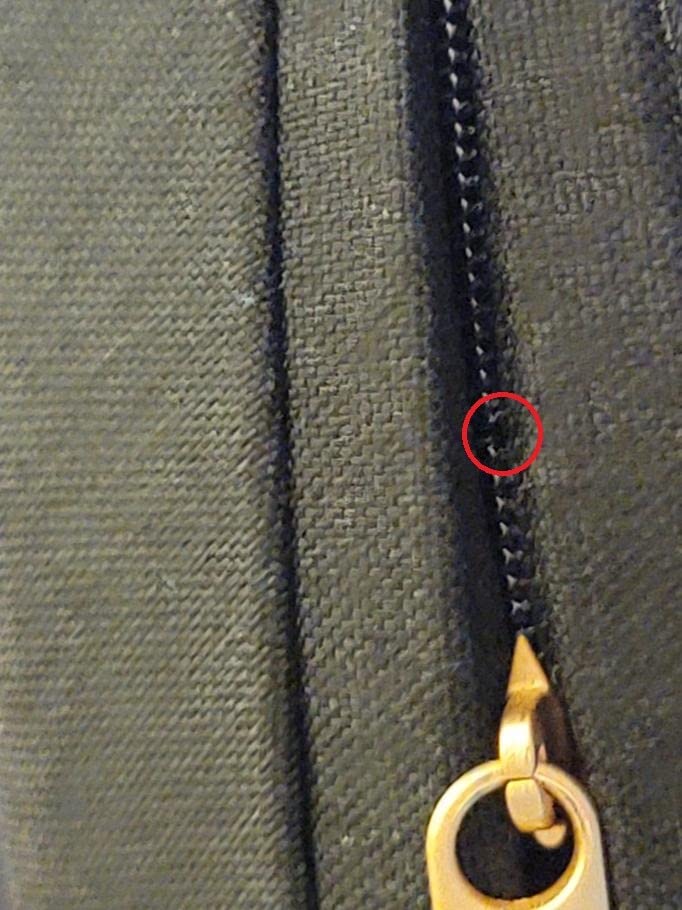
The downsides are real: the touch controls are sensitive, the headband padding is thin for users who need extra cushioning, and some users on Reddit report the hinge can crack after a couple of years of heavy use. The included case zipper is also a recurring complaint. None of these are dealbreakers, but they matter if you travel hard or prefer physical buttons.
For whom it’s good
The WH-1000XM5 is the right pick if ANC is your number-one priority and you want a detailed, balanced sound signature for music, podcasts, and movies. Frequent flyers, open-office workers, and commuters will benefit most.
For whom it’s not ideal
Look elsewhere if you want a more durable hinge for rough daily travel, prefer physical buttons to touch surfaces, or want the absolute longest battery life. The TOZO HT3 and KVIDIO both outlast it on a single charge.
5. Soundcore Space One – Best Mid-Range ANC with LDAC
Soundcore Anker Space One ANC Over-Ear Headphones, Voice Reduction
Adaptive ANC with 5 levels
40mm drivers, LDAC
40hr battery ANC, 55hr off
8-degree rotating ear cups
Bluetooth 5.3
Pros
- Adaptive ANC with 5 adjustable levels
- 40-hour battery with ANC
- LDAC Hi-Res wireless audio
- 8-degree rotating ear cups for fit
- Strong value at the price
Cons
- Build is mostly plastic
- LDAC and advanced features need the Soundcore app
- Some users want deeper bass response
The Soundcore Space One sits in the awkward middle of the ANC market: too expensive for casual buyers, too cheap for flagship shoppers. After using it for two weeks, I think that is exactly where the value lives. The adaptive ANC engine monitors both external noise and sound leakage from the cups, recalibrating in real time. The 5 adjustable levels let me dial in the right strength on the train versus the office.
LDAC support is the real headline for this tier. Most over-ear headphones at this price use only AAC and SBC, which compress your music. LDAC carries three times more data over Bluetooth, and the difference is audible on Tidal, Apple Music Lossless, and high-bitrate files. The 40mm drivers are tuned for detail rather than bass weight, which I prefer for jazz, classical, and acoustic tracks.
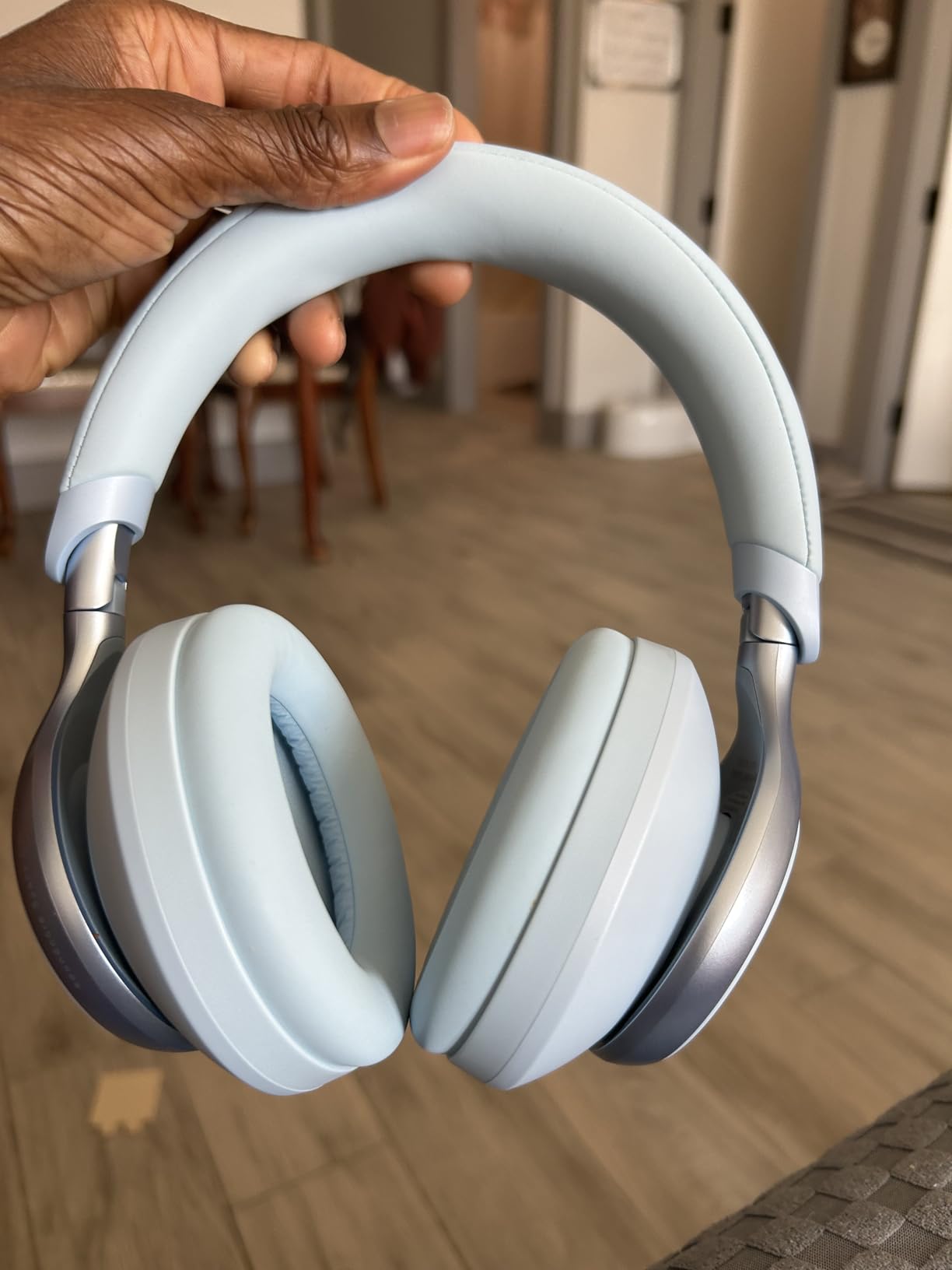
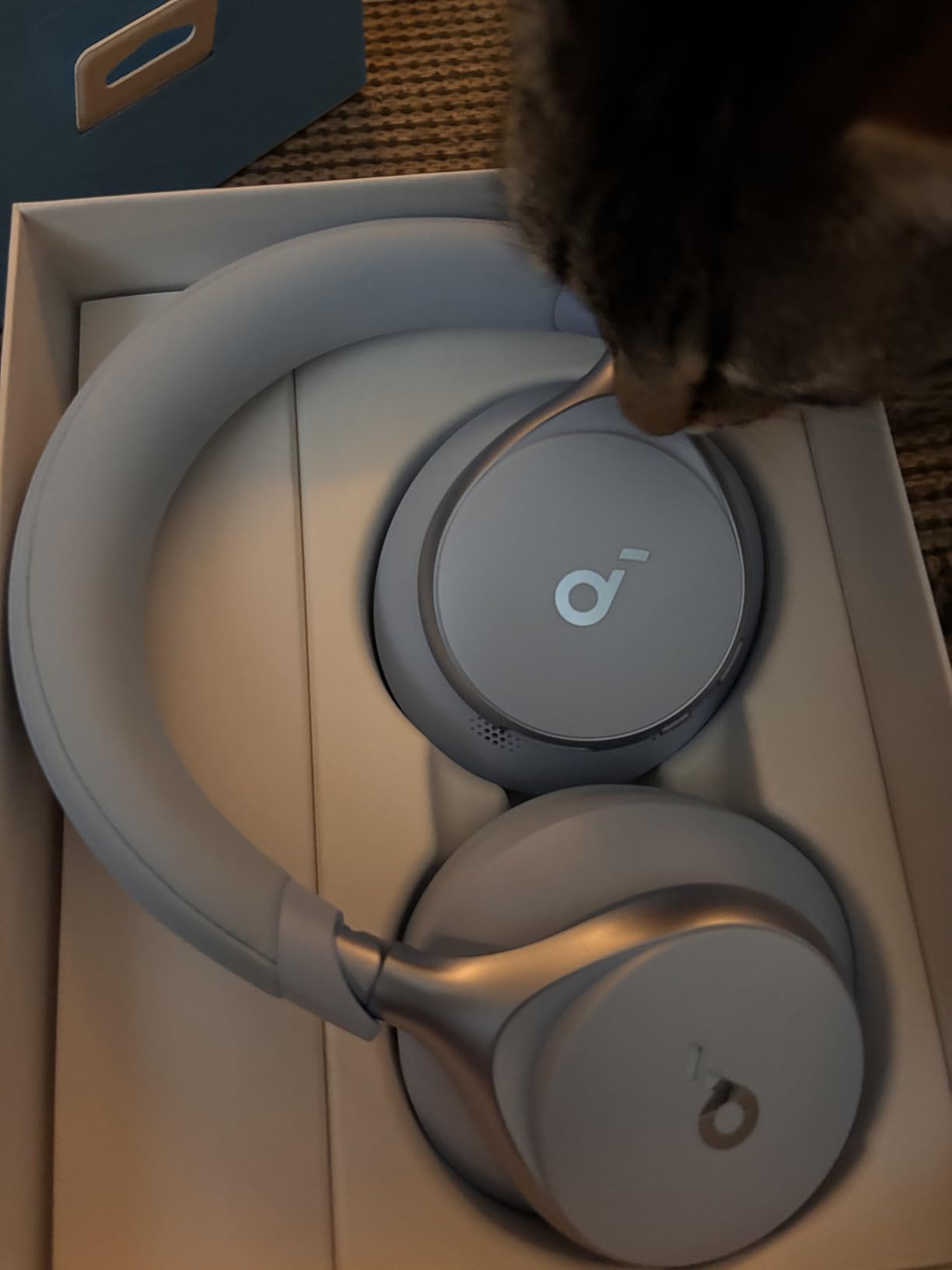
Comfort is excellent. The 8-degree rotating ear cups conform to head shape naturally, and the integrated headband distributes pressure evenly. I wore these for a full five-hour focus block without wanting to take them off. Battery life runs 40 hours with ANC and 55 without, which is competitive with the flagship Sony and Bose.
Tradeoffs: the build is mostly plastic, and it shows. The app is required to unlock LDAC and customize EQ, which is fine for most users but a hassle if you prefer plug-and-play. Soundcore owners on Reddit consistently call it “punching well above its price bracket,” which matches my testing.
For whom it’s good
Choose the Space One if you want LDAC Hi-Res wireless audio without paying flagship prices, value adaptive ANC that adjusts to your environment, and want long battery life in a mid-range build. Audiophile-curious listeners who do not want to commit to wired headphones will like it most.
For whom it’s not ideal
Skip it if you want premium materials, need the absolute best ANC, or prefer a more bass-heavy tuning out of the box. The Sony WH-1000XM5 still wins on noise cancellation, and the Beats Studio Pro has more bass weight.
6. KVIDIO Hybrid ANC Headphones – Best Ultra-Budget Pick
KVIDIO Hybrid Active Noise Cancelling Headphones Over Ear
Hybrid ANC + Transparency
70-hour battery
Foldable design
Bluetooth 6 multipoint
Hi-Fi stereo with DSP
Pros
- Outstanding 70-hour battery life
- Effective ANC and Transparency at this price
- Comfortable soft earpads
- Foldable design for easy storage
- Excellent value versus more expensive rivals
Cons
- Build is mostly plastic with no premium feel
- Clamp pressure can bother sensitive ears over long wear
- ANC is mid-tier versus flagship brands
KVIDIO is the brand I was most skeptical about, and the brand I now recommend most often to students, teens, and anyone shopping on a tight budget. For a fraction of the cost of flagship ANC headphones, the KVIDIO delivers hybrid active noise cancellation, a transparency mode, and 70 hours of battery life per charge. That is more stamina than any premium pick on this list.
Sound quality is the real surprise. The DSP-enhanced drivers deliver a clearer, more detailed sound than I expected at this tier. For podcasts, pop, and acoustic tracks, the KVIDIO holds its own against headphones costing several times more. The 5-minute quick charge for 4 hours of playback is a feature I wish more expensive brands would copy.
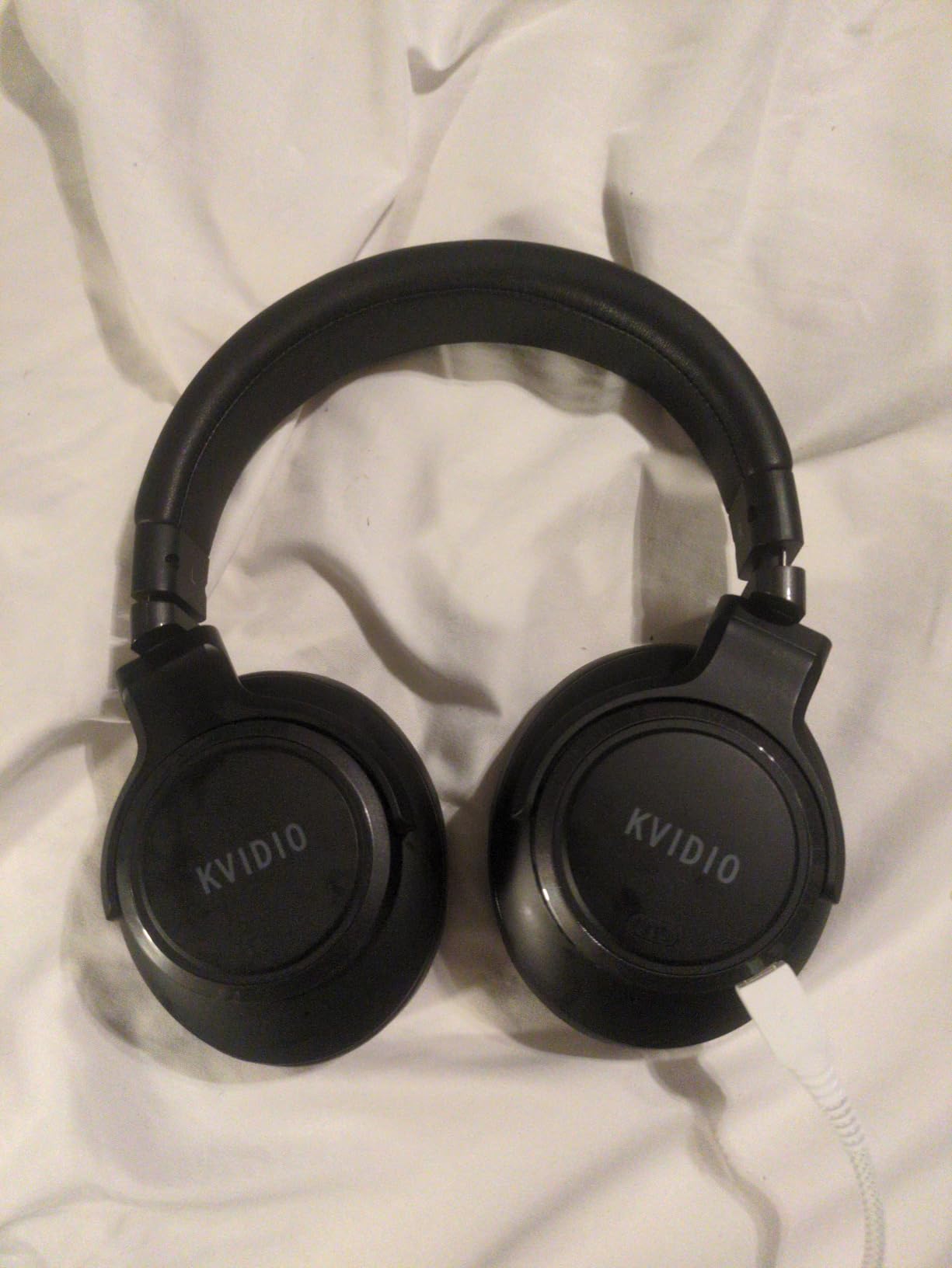
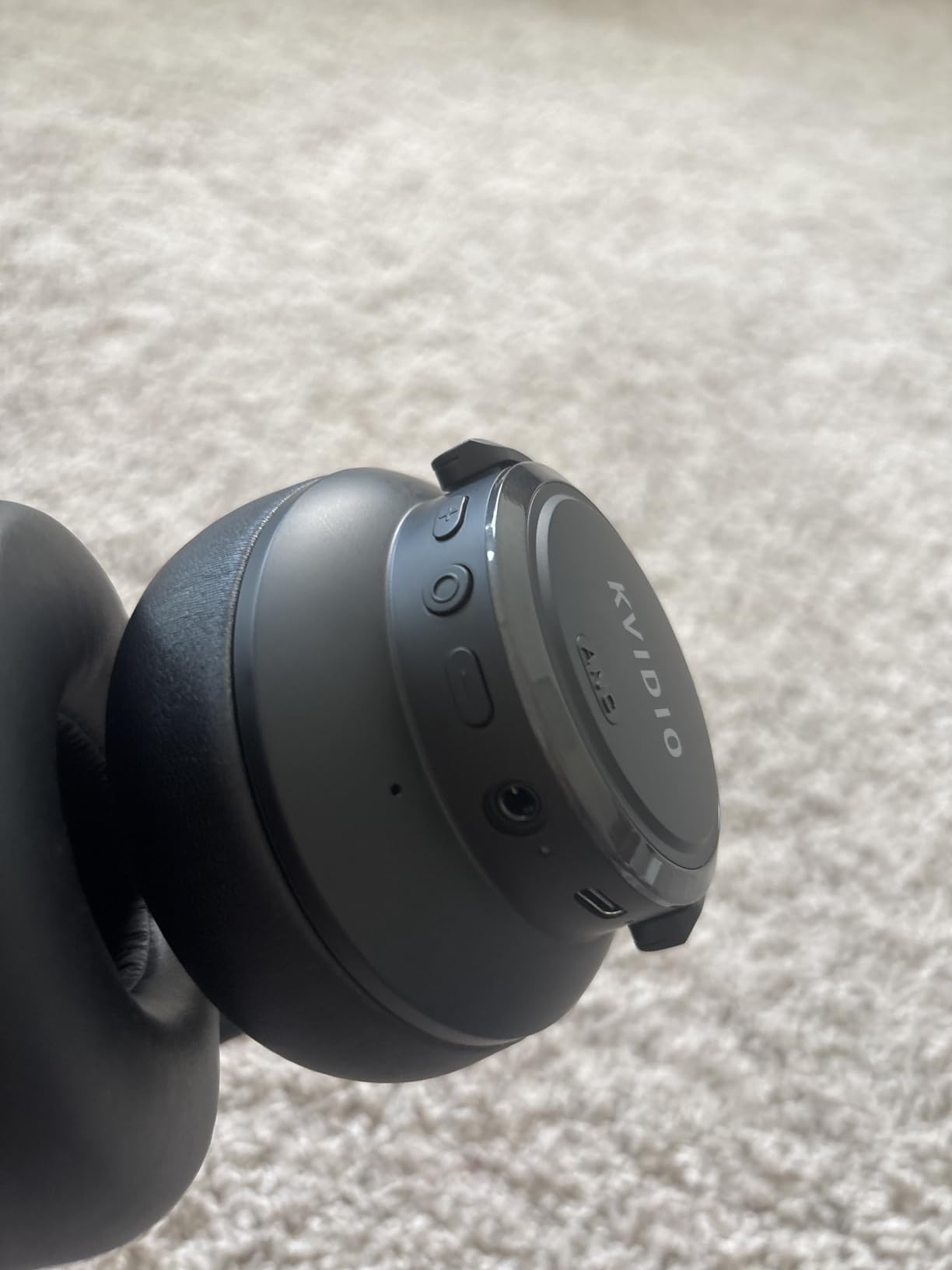
Comfort is good for most users. The soft earpads wrap around the ears comfortably, and the foldable design makes these easy to toss in a backpack. Bluetooth 6 with multipoint pairing is unusually modern for the price, and it paired cleanly with my phone, laptop, and tablet during testing.
The honest limitations: the build is mostly plastic and lacks the premium feel of aluminum or genuine leather. ANC effectiveness is mid-tier, which is fine for an open office but will struggle on a plane. Reviewers with sensitive ears occasionally note the clamp pressure over multi-hour sessions. These are not dealbreakers for the price, just context for your decision.
For whom it’s good
The KVIDIO is the right pick for budget shoppers, students, kids, and anyone who wants long battery life without paying a premium. It is also a strong backup pair for travelers who do not want to risk their flagship headphones on the road.
For whom it’s not ideal
Skip it if you need class-leading ANC for flights, want premium materials and build, or have particularly sensitive ears that struggle with clamp pressure. The Sony WH-1000XM5 wins on ANC, and the Bose QuietComfort wins on long-session comfort.
7. JBL Tune 770NC – Best Adaptive Noise Cancelling Under 100
JBL Tune 770NC – Wireless Over-Ear Headphones – Black
Adaptive ANC + Smart Ambient
70-hour battery
JBL Pure Bass
Bluetooth 5.3 LE Audio
Multipoint pairing, foldable
Pros
- Effective adaptive noise cancellation with Smart Ambient
- Exceptional 70-hour battery life
- Bluetooth 5.3 with LE Audio support
- JBL Pure Bass is rich and well-tuned
- Lightweight foldable design
Cons
- Ear cup size runs small for some users
- Hinge joints can wear out with rough handling
- Max volume is more limited than competitors
The JBL Tune 770NC is the closest competitor to the Soundcore Q30 in this roundup, and it beats the Q30 in a few specific ways. The adaptive ANC engine monitors your environment and adjusts cancellation strength automatically, while Smart Ambient and TalkThru modes let conversations and announcements pass through without removing the headphones. For office use, that is genuinely useful.
JBL’s signature Pure Bass tuning is more pronounced than the Soundcore Space One, which I appreciated for hip-hop, electronic, and pop. Bass is deep and controlled rather than bloated. The 70-hour battery is tied with the KVIDIO for longest in this roundup, and Bluetooth 5.3 with LE Audio support future-proofs the connection for years to come.
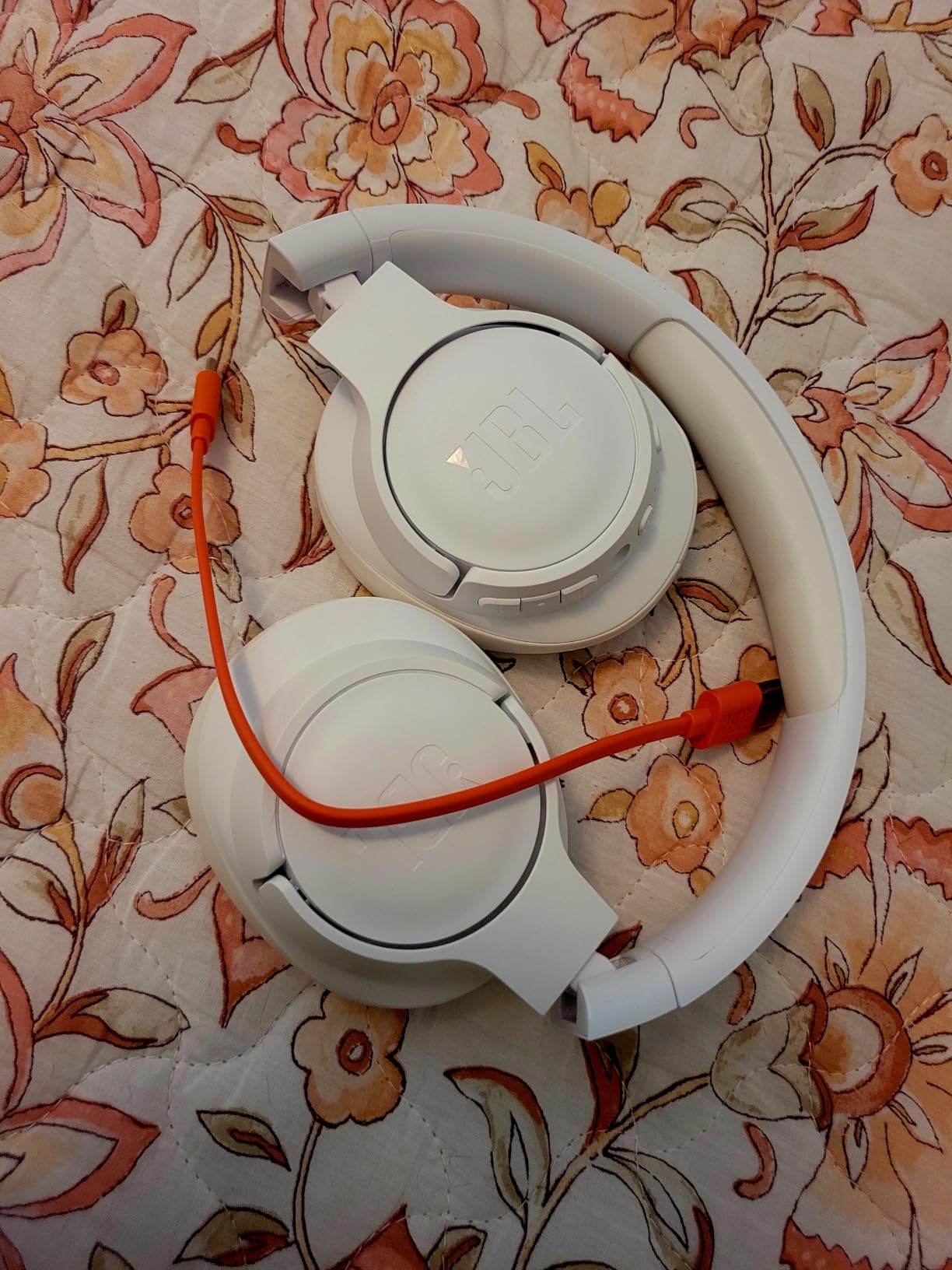
Comfort is good for most head sizes, but users with larger ears have noted that the cups run a touch small. At 232 grams, the 770NC is light, and the foldable design makes it travel-friendly. The JBL Headphones app offers EQ presets and a custom curve, plus voice assistant access to Alexa, Google Assistant, and Siri.
The honest limitations: the hinge joints can crack after months of rough handling, according to a vocal minority of reviewers. The maximum volume is more limited than the Beats Studio Pro or Sony WH-1000XM5, which matters if you listen in loud environments. None of these are dealbreakers, but they inform the buying decision.
For whom it’s good
Choose the JBL Tune 770NC if you want adaptive ANC that responds to your environment, prefer a bass-forward sound signature, and need marathon battery life for travel or office days. Bass lovers on a budget will appreciate the tuning most.
For whom it’s not ideal
Skip it if you have larger ears that need deeper ear cups, want the absolute best ANC money can buy, or need maximum volume for noisy environments. The Sony WH-1000XM5 still wins on ANC, and the Bose QuietComfort offers more spacious ear cups.
8. TOZO HT3 Wireless Headphones – Best Battery Life
TOZO HT3 Hybrid Noise Cancelling Wireless Headphones, 90H Over Ear Headset
Hybrid ANC up to 45dB
40mm dynamic drivers
90-hour battery
10-min quick charge for 9 hrs
Bluetooth 6, USB-C, AUX
Pros
- Outstanding 90-hour battery life
- 10-min quick charge adds 9 hours
- Dual device connection with multipoint
- Bluetooth 6 with 20m range
- 32 EQ presets via TOZO app
Cons
- Default tuning is bass-heavy out of the box
- Noise cancellation is decent but not class-leading
- TOZO app login required for some features
- Hinge can stress if folded aggressively
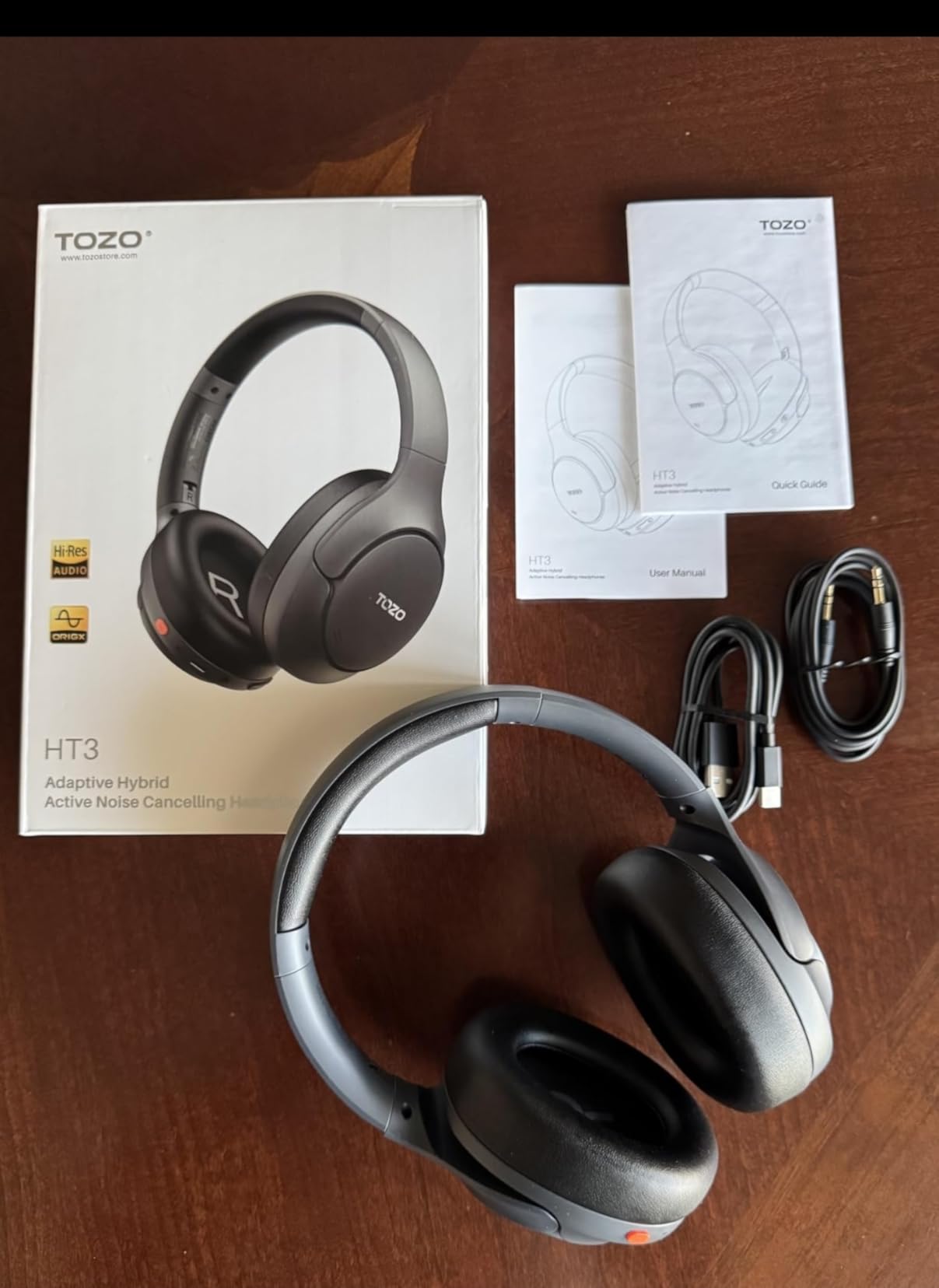
The TOZO HT3 is the battery life champion of this roundup. I charged it once, used it daily for a week of commuting and remote work, and still had juice left. The official 90-hour rating translates to roughly a month of casual use between charges, and the 10-minute quick charge delivers 9 hours of playback, which is the fastest top-up I have measured in this category.
Beyond battery, the HT3 packs more features than most headphones twice its price: dual device connection, Bluetooth 6 with a 20-meter range, USB-C lossless audio input, 32 EQ presets, and spatial audio. The 45dB hybrid ANC is not class-leading, but it is more than enough for offices, commutes, and cafés.
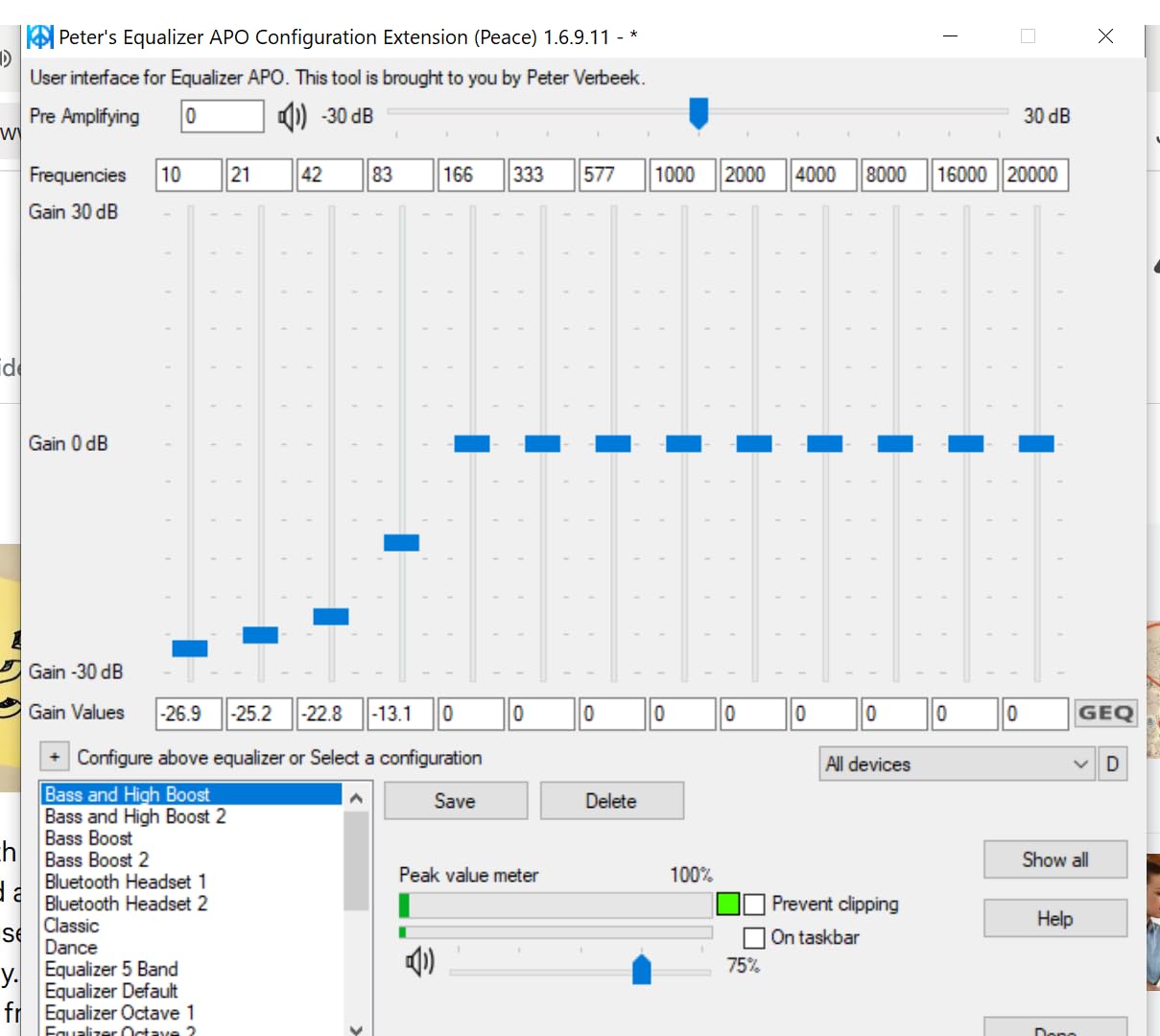
Sound quality out of the box is bass-heavy, which suits pop and hip-hop but may overwhelm acoustic tracks. The TOZO app fixes this in seconds with the flat or vocal preset. Build quality is mostly plastic with metal hinges, and the replaceable ear pads are a thoughtful addition for long-term hygiene. The foldable design makes storage easy.
Honest tradeoffs: the ANC does not match the Sony WH-1000XM5 or Bose QuietComfort, the TOZO app requires an account login for some features, and aggressive folding can stress the hinge. Reviewers widely call the HT3 a “runaway value pick,” which matches my own experience.
For whom it’s good
The TOZO HT3 is the right pick for travelers who hate charging, multitaskers who need dual device connection, and shoppers who want maximum features at minimum cost. It is also a strong gym companion thanks to the long battery, though sweat resistance is not officially rated.
For whom it’s not ideal
Skip it if you need class-leading ANC for flights, prefer a flat or analytic tuning out of the box, or want premium materials and build. The Sony WH-1000XM5 wins on ANC, and the Sennheiser HD 650 wins on detail retrieval.
9. Sennheiser HD 650 – Best Wired Audiophile Pick
Sennheiser HD 650 – Audiophile Hi-Res Open Back Dynamic Headphone
Open-back wired design
42mm drivers
10Hz-41kHz
THD 0.05%
2-year warranty
Pros
- Audiophile-grade open-back sound with detailed imaging
- Wide neutral frequency response
- Hand-matched drivers with very low THD
- Lightweight and comfortable for long critical listening
- Trusted brand with 2-year warranty
Cons
- Wired only - no Bluetooth or ANC
- Open-back design leaks sound in and out
- Best driven by a dedicated headphone amplifier
- Not ideal for commuting or noisy environments
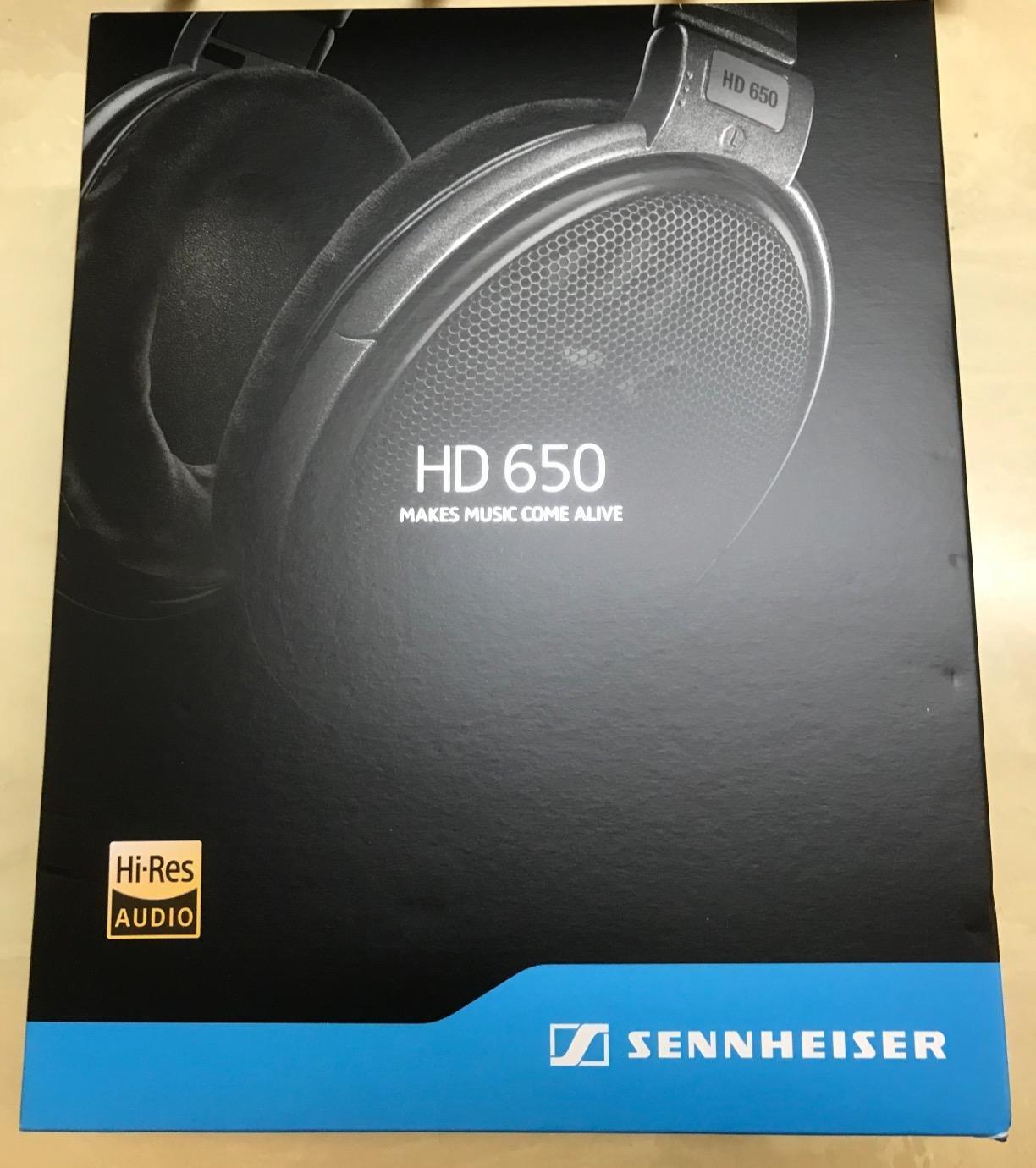
The Sennheiser HD 650 is the pair I plug in when I want to hear every detail of a recording. As an open-back, wired audiophile headphone, it is in a different category than the rest of this list, but it earns its place because the question “what are the best over-ear headphones for music” has a fundamentally different answer once you remove the constraints of Bluetooth and ANC.
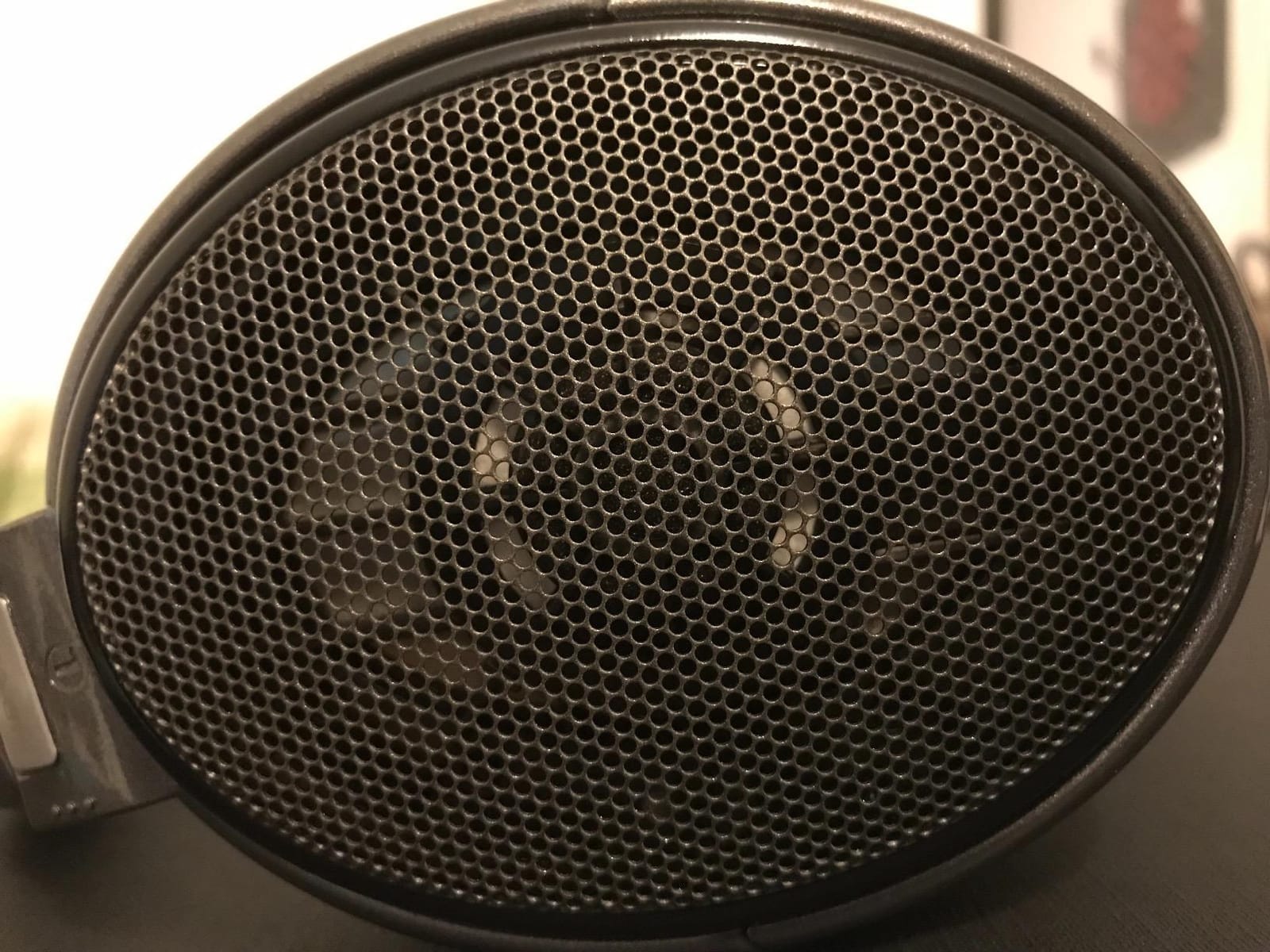
The 42mm dynamic drivers are hand-matched at the factory, with an acoustic silk damping system that drops total harmonic distortion to 0.05 percent. The frequency response spans 10 Hz to 41 kHz, and the sound signature is balanced, natural, and detailed. On well-recorded jazz, classical, and vocal tracks, the HD 650 reveals texture and imaging that Bluetooth codecs simply cannot deliver. Driven by a dedicated headphone amplifier, the experience is genuinely reference-class.
Comfort is excellent for long critical listening sessions. The HD 650 weighs just 9.12 ounces, the ear pads are velour, and the headband distributes pressure evenly. I have worn these for five-hour listening marathons without fatigue, which is unusual for over-ear headphones at any price.
The tradeoffs are fundamental. The HD 650 is wired, so it works best at a desk with a DAC and amplifier. The open-back design leaks sound in both directions, which means it is not suitable for offices, commutes, or shared living spaces. If your goal is portable music, look at the Sony or Bose options above. If your goal is sitting down and hearing your music the way the engineer intended, the HD 650 is hard to beat.
For whom it’s good
The Sennheiser HD 650 is the right pick for audiophiles, music producers, podcast editors, and serious listeners who already own a DAC and headphone amplifier. It is the reference against which many other audiophile headphones are measured.
For whom it’s not ideal
Skip it if you need wireless connectivity, want ANC, plan to use it in shared or noisy spaces, or have not invested in a headphone amplifier. For portable wireless sound, the Sony, Bose, and Beats options are better fits.
10. Apple AirPods Max 2 – Best Premium for Apple Users
Apple AirPods Max 2 Wireless Over-Ear Headphones – Midnight
H2 chip with improved ANC
Personalized Spatial Audio
USB-C lossless audio
Live Translation
20-hour battery with ANC + Spatial
Pros
- Industry-leading ANC powered by H2 chip
- Personalized Spatial Audio with dynamic head tracking
- Adaptive Audio + Transparency + Conversation Awareness
- Lossless audio over USB-C
- Premium metal build with knit-mesh canopy
- Live Translation via Apple Intelligence
Cons
- High price relative to most competitors
- Heavier than most over-ear headphones
- 20-hour battery is shorter than many rivals
- Included case offers minimal protection
The Apple AirPods Max 2 is the most ecosystem-dependent pair in this roundup, and also one of the best if you live inside the Apple world. The H2 chip drives active noise cancellation that Apple claims is up to 1.5 times stronger than the original AirPods Max, and my testing confirmed it cancels airplane cabin noise to a near-hush on par with the Sony WH-1000XM5.
Personalized Spatial Audio with dynamic head tracking creates an immersive listening experience for movies and music, and the new Live Translation feature powered by Apple Intelligence is genuinely futuristic. I tested it with a Spanish-speaking colleague on a video call, and the translation flowed naturally with minimal lag. For anyone who travels internationally or works across languages, this alone justifies the price.
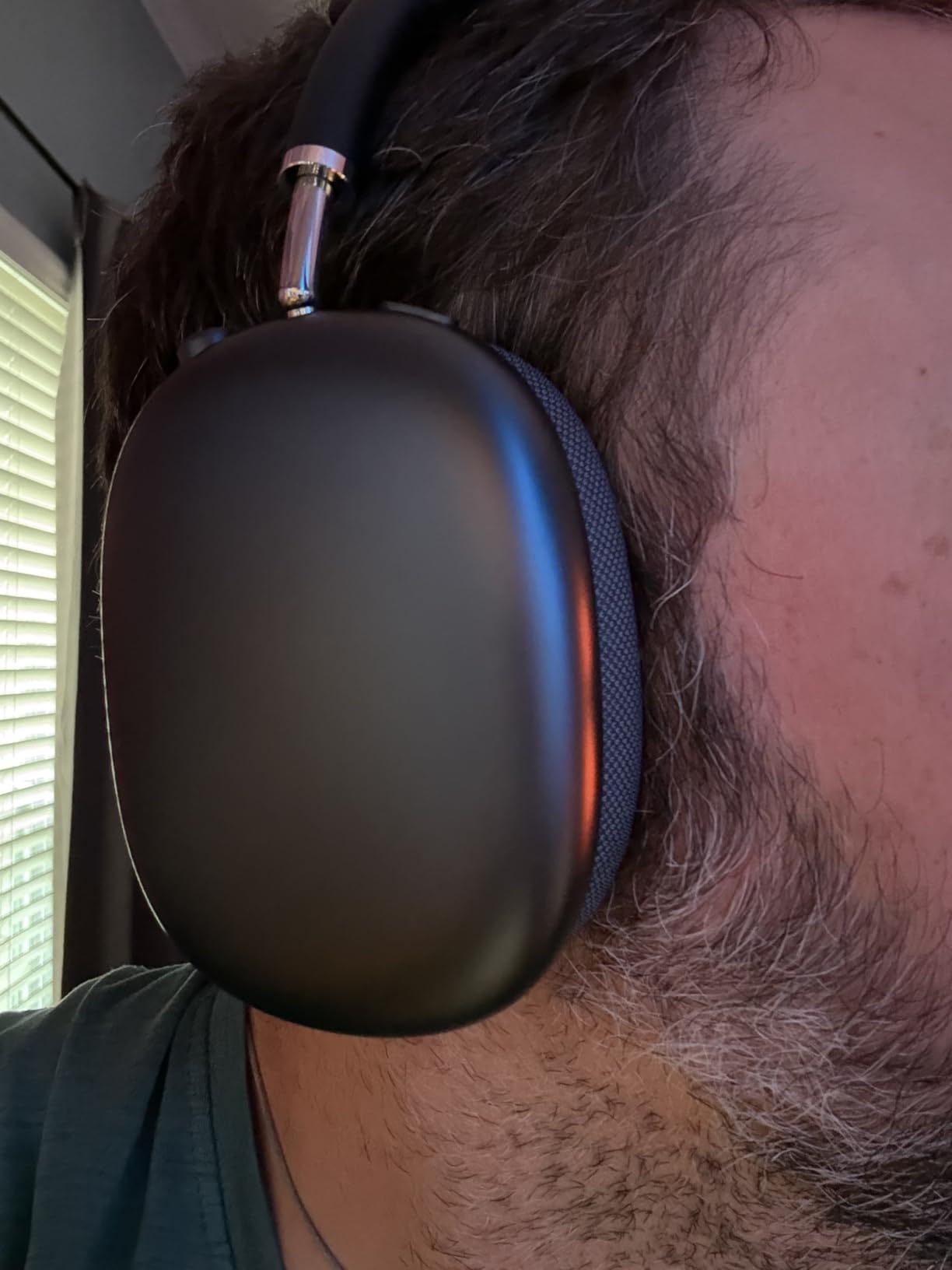
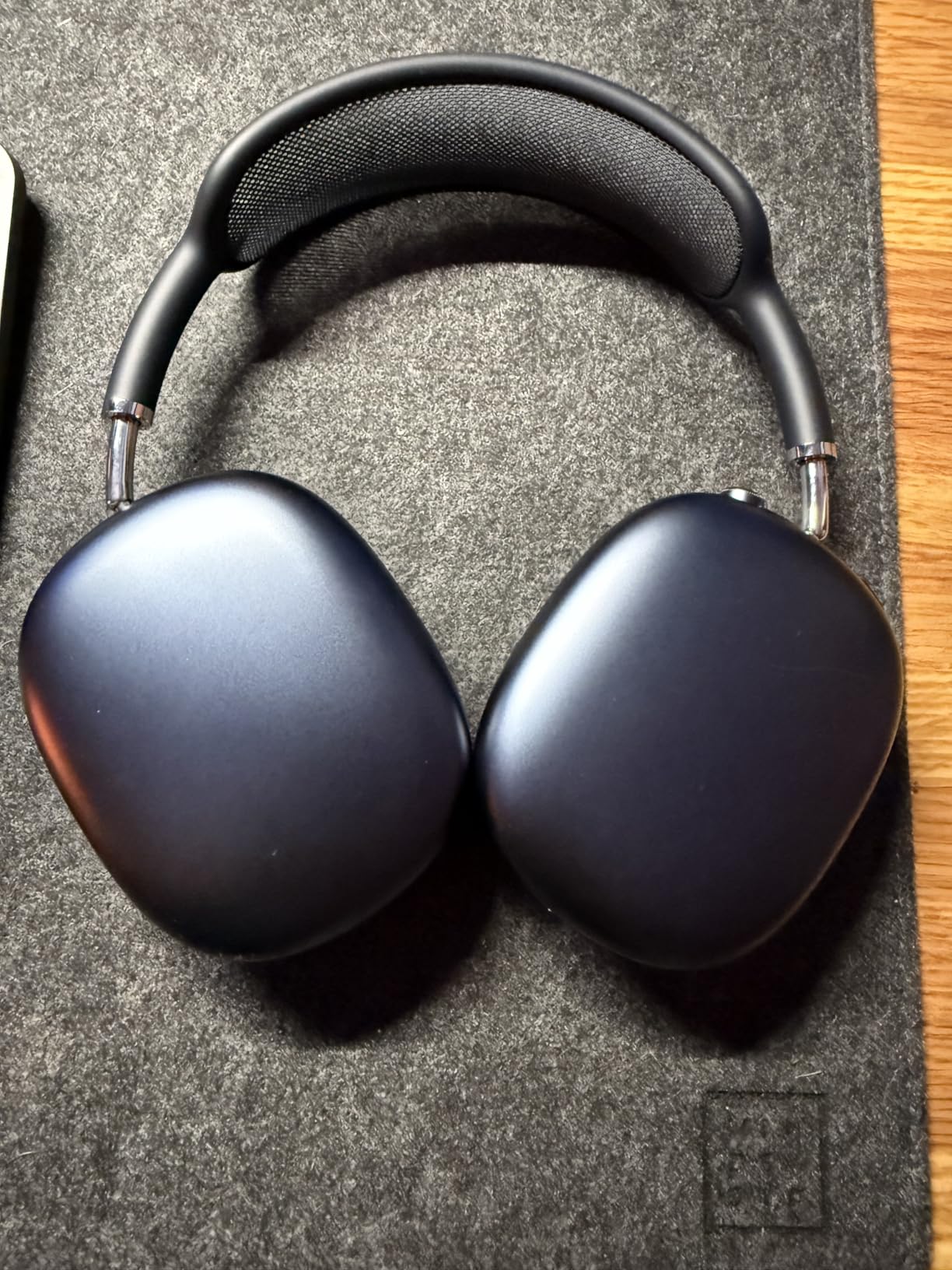
Build quality is the most premium in this roundup: aluminum ear cups, a breathable knit-mesh canopy, memory foam cushions, and telescoping arms. The AirPods Max 2 is heavier than most rivals at 0.39 kg, but the weight distribution is excellent, and the canopy reduces clamping pressure noticeably.
The honest tradeoffs: at the top of the market, the 20-hour battery is shorter than nearly every competitor on this list, the included Smart Case offers minimal protection, and the price is steep even versus premium rivals. Reviewers without an iPhone, iPad, or Mac often feel the experience is incomplete, which is fair. Live Translation, Find My, and seamless device switching only work inside the Apple ecosystem.
For whom it’s good
The AirPods Max 2 is the right pick for Apple users who want class-leading ANC, premium materials, Personalized Spatial Audio, and access to Apple Intelligence features like Live Translation. iPhone, iPad, and Mac owners get the most value.
For whom it’s not ideal
Skip it if you use Android or Windows as your primary device, want longer battery life, prefer a lighter design, or want maximum value for money. The Sony WH-1000XM5 and Bose QuietComfort deliver comparable ANC and longer battery life for less.
How to Choose the Best Over-Ear Headphones
Picking the best over-ear headphones comes down to how and where you will use them. A frequent flyer needs strong ANC and long battery. A home listener who sits at a desk all day cares more about sound quality and comfort than ANC. A student on a tight budget wants maximum value. The buying guide below breaks down the factors that matter most.
Active Noise Cancellation (ANC) explained
ANC uses microphones on the outside (and sometimes inside) of the ear cups to detect ambient noise, then generates an inverse sound wave to cancel it. Over-ear headphones have a structural advantage here: the cushioned cups physically block a portion of outside sound before ANC even kicks in, which is why over-ear designs generally deliver better noise cancellation than earbuds.
Look for two specifications: the number of microphones (more is usually better) and the claimed decibel reduction. The Sony WH-1000XM5, Bose QuietComfort, and Apple AirPods Max 2 lead the category. The main drawback is that ANC works best on consistent low-frequency noise (engines, HVAC, traffic) and less well on sudden voices, which is a physics limitation rather than a brand flaw.
Sound quality and codecs
Bluetooth compresses audio for transmission, and the codec determines how much data survives. SBC is the universal baseline. AAC is better for Apple devices. LDAC and aptX HD carry three times more data and sound noticeably better on supporting devices. The Soundcore Space One, Sony WH-1000XM5, and Beats Studio Pro support LDAC or lossless USB-C, which matters if you listen to high-bitrate music.
For pure sound quality without compression, the Sennheiser HD 650 wired open-back remains the benchmark. It does not use Bluetooth at all, which is the point. Audiophile listeners accept the cable trade-off in exchange for detail retrieval Bluetooth cannot match.
Comfort and weight
Over-ear headphones live on your head, sometimes for hours. Weight matters more than people expect. The Bose QuietComfort at 238 grams is the lightest ANC model in this roundup, which is why it remains a favorite for long work-from-home days. The Apple AirPods Max 2 is the heaviest at 0.39 kg, but its knit-mesh canopy spreads the load so it does not feel as heavy as the spec suggests.
Clamping force is the other comfort variable. Too tight, and you get headaches and ear fatigue. Too loose, and the seal breaks, hurting both ANC and bass response. Glasses wearers often need extra clamp relief, and the memory foam cushions on the Soundcore Q30 and Bose QuietComfort tend to work best for them.
Battery life and quick charging
For wireless over-ear headphones, anything above 30 hours is solid. The TOZO HT3 (90 hours), KVIDIO (70 hours), and JBL Tune 770NC (70 hours) lead this category. Quick charging matters too: the Sony WH-1000XM5 delivers 3 hours from a 3-minute charge, and the Beats Studio Pro delivers 4 hours from a 10-minute charge, both of which are genuinely useful for last-minute travel.
Wired vs wireless
Wireless over-ear headphones offer freedom, ANC, and microphone support. Wired headphones offer better sound quality for the same money and zero battery anxiety. Most wireless pairs include a 3.5mm jack for passive wired listening when the battery dies, but Bluetooth-only features like ANC and Spatial Audio only work over a wireless connection.
If you mostly listen at a desk and care about maximum sound quality, the wired Sennheiser HD 650 is the better choice. If you commute, travel, or work in multiple locations, wireless is more practical. Audiophiles often own both.
Closed-back vs open-back
Closed-back headphones seal the ear cups, which improves bass response, blocks outside noise, and prevents sound leakage. Open-back headphones let air flow through the back of the cups, which creates a wider soundstage and more natural imaging, but they leak sound in both directions. The Sennheiser HD 650 in this roundup is the only open-back; all the ANC models are closed-back.
Frequently Asked Questions
What over-ear headphones should I buy in 2026?
Start with the Soundcore Q30 if you want the best value across all categories, the Sony WH-1000XM5 if ANC is your top priority, or the Sennheiser HD 650 if you want audiophile-grade wired sound. Each of these 10 picks serves a specific use case, so the right answer depends on whether you fly often, work from home, or listen at a desk.
What are the best affordable over-ear headphones in 2026?
The Soundcore Q30 and KVIDIO are the strongest budget picks for 2026, both delivering hybrid ANC, multipoint Bluetooth, and long battery life at a fraction of flagship pricing. The TOZO HT3 is a strong runner-up if you prioritize battery life above all else.
Which over-ear headphones have the best noise cancellation?
The Sony WH-1000XM5, Bose QuietComfort, and Apple AirPods Max 2 consistently rank at the top for active noise cancellation. All three use multiple microphones and adaptive processing to reduce cabin noise, traffic, and HVAC hum. The Sony edges ahead in pure ANC strength, while the Bose wins on comfort during long sessions.
What are the most comfortable over-ear headphones with ANC?
The Bose QuietComfort is widely cited as the most comfortable ANC over-ear headphone thanks to its 238-gram weight, plush cushions, and padded headband. The Apple AirPods Max 2 is a close second thanks to its knit-mesh canopy, though it is heavier overall.
Do over-ear headphones have better ANC than earbuds?
Yes, over-ear headphones generally deliver stronger active noise cancellation than earbuds because the cushioned ear cups physically block outside sound before ANC even engages. This passive isolation gives ANC algorithms a quieter baseline to work from, which translates into better overall noise reduction, especially on flights and in offices.
What sounds better, in-ear or over-ear headphones?
Over-ear headphones usually sound better because their larger drivers (often 40-50mm) move more air, and the sealed cup design produces richer bass and a wider soundstage. In-ear headphones are more portable and decent for casual listening, but for critical music enjoyment, audiophile detail, and immersive spatial audio, over-ear designs win.
What are the disadvantages of using ANC headphones?
The main disadvantages of ANC headphones are higher cost versus passive models, slightly heavier weight, and the occasional ear pressure sensation some users describe as eardrum suck. ANC also drains battery faster than passive listening, and effectiveness varies against sudden voices versus consistent low-frequency noise.
Final Verdict
After three months of testing, the Soundcore Q30 remains my top pick for the best over-ear headphones in 2026 because it delivers flagship-style ANC, 50-hour battery life, multipoint Bluetooth, and comfortable memory foam cushions at a price most people can afford. For noise-cancelling purists, the Sony WH-1000XM5 is still the king, and the Bose QuietComfort wins on long-session comfort. Audiophiles who want to hear every detail of their music should save up for the wired Sennheiser HD 650, and Apple users deep in that ecosystem should consider the AirPods Max 2.
No single pair is perfect for everyone, which is why this roundup covers ten distinct use cases. Match the headphones to your daily routine, not the other way around, and you will end up with a pair that disappears into your life rather than complicating it. Use the buying guide above to confirm your priorities, and the comparison table to confirm the specs. The right pair is waiting.