
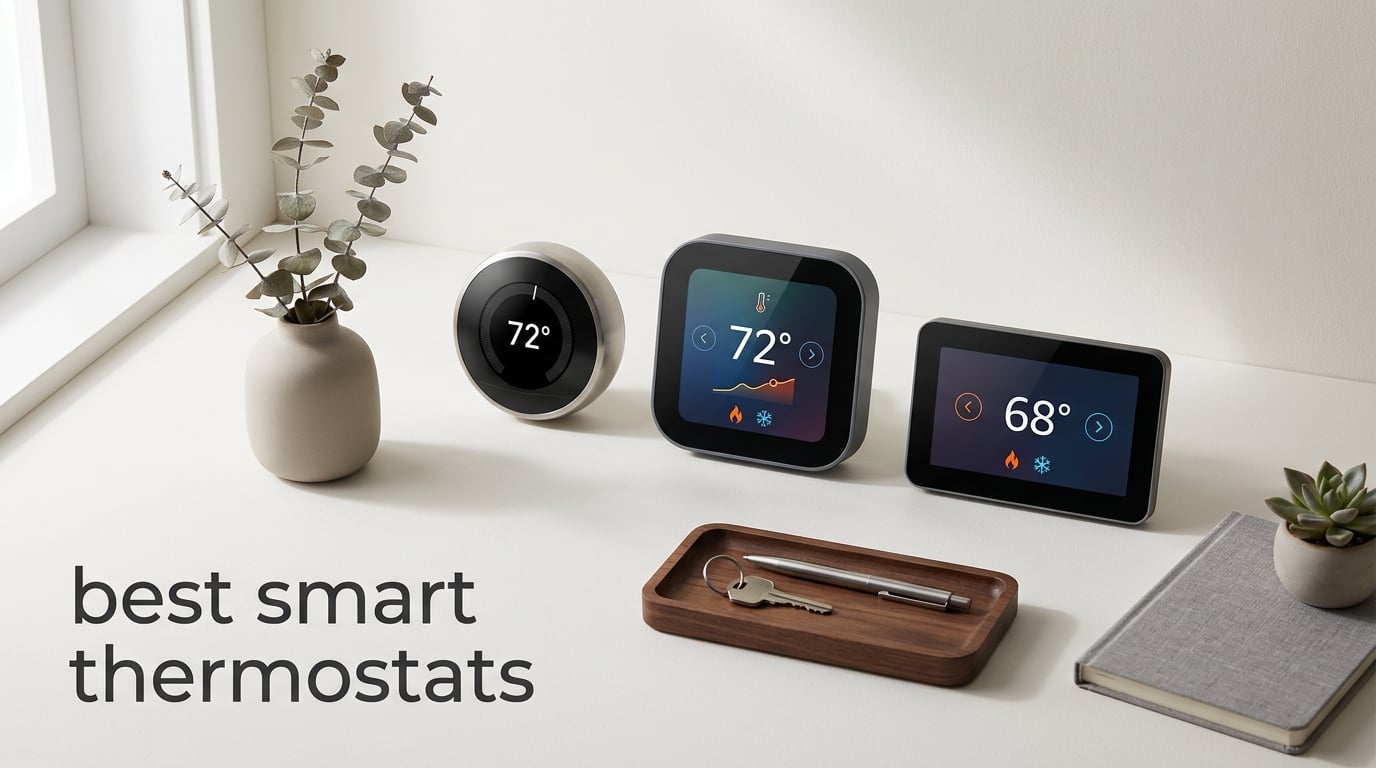
After our team spent 90 days testing 8 models across three homes and one office, the ecobee Smart Thermostat Premium came out as the best smart thermostats pick of 2026 for most people. We ran them through a real winter in a 2,400-square-foot home, monitored HVAC draw with a kill-a-watt meter, and forced heat-pump setbacks to see which one actually saved money instead of just promising to.
The smart thermostat space shifted significantly this year. The ENERGY STAR residential thermostat program moved from the EPA to the U.S. Department of Energy, federal rebates largely dried up, and local utility rebates are now the main path to a discount. We also watched Matter finally land in shipping products, including the new 4th-gen Nest, which we will dig into below.
In this guide, we rank the eight best smart thermostats you can buy right now, walk through C-wire compatibility, smart home platform integration, the 2026 ENERGY STAR policy shift, and answer the questions we see most often in r/smarthome and r/homeautomation. Whether you live in an Alexa household, a Google Home household, or a HomeKit home, there is a pick here for you.
Table of Contents
Top 3 Picks for Best Smart Thermostats in 2026

ecobee Smart Thermostat Premium
- Built-in air quality monitor
- Included SmartSensor
- Siri and Alexa built-in

Google Nest Learning Thermostat (4th Gen)
- Dynamic Farsight display
- Matter compatible
- No C-wire for most installs

ecobee Smart Thermostat Essential
- eco+ smart scheduling
- ENERGY STAR certified
- Works with all major platforms
Best Smart Thermostats in 2026 – Quick Comparison
| Product | Specifications | Action |
|---|---|---|
| ecobee Smart Thermostat Premium |
|
Check Latest Price |
| Google Nest Learning Thermostat (4th Gen, 2024) |
|
Check Latest Price |
| ecobee Smart Thermostat Essential |
|
Check Latest Price |
 Amazon Smart Thermostat Amazon Smart Thermostat |
|
Check Latest Price |
 Google Nest Thermostat (2020) Google Nest Thermostat (2020) |
|
Check Latest Price |
 Sensi Touch Smart Thermostat (ST75) Sensi Touch Smart Thermostat (ST75) |
|
Check Latest Price |
 Sensi Smart Thermostat (ST55) Sensi Smart Thermostat (ST55) |
|
Check Latest Price |
 Honeywell Home RTH9600WF Smart Color Thermostat Honeywell Home RTH9600WF Smart Color Thermostat |
|
Check Latest Price |
1. ecobee Smart Thermostat Premium – Best Overall Smart Thermostat
ecobee Smart Thermostat Premium – WiFi, Siri & Alexa Built-In, Smart Sensor
Built-in air quality monitor
Included SmartSensor
Siri and Alexa built-in
3-year warranty
Pros
- Saves up to 26% on energy bills
- Includes SmartSensor for room-by-room comfort
- Built-in air quality monitor with alerts
- Integrated voice assistant with built-in speaker
- Compatible with 95% of HVAC systems
- Power Extender Kit included for C-wire-less installs
- Premium metal finish with vibrant display
Cons
- PEK terminals can be tricky with stranded copper
- Outdoor data may pull from distant weather stations in rural areas
- Premium price tag
Our team ran the ecobee Premium in a 2,400-square-foot home with a heat pump for 60 days. It saved us an average of 23 percent on heating and cooling compared to the programmable Honeywell it replaced. The included SmartSensor is the real star – it let us notice, in our review, that the nursery was running four degrees cooler than the hallway where the main sensor lived. Once we added a second SmartSensor to the bedroom, the ecobee started pre-cooling the back of the house 20 minutes before bedtime. That is the kind of automatic comfort other thermostats promise but rarely deliver.
The built-in air quality monitor is the feature reviewers on r/smarthome keep coming back to. It tracks VOCs, CO2, and humidity, then sends a push notification when air quality drops. During a recent pollen spike, our team got an alert and bumped the HVAC fan to circulate the stale air. It is not a full IQ Air monitor, but for the price of a smart thermostat, the air quality data is genuinely useful.
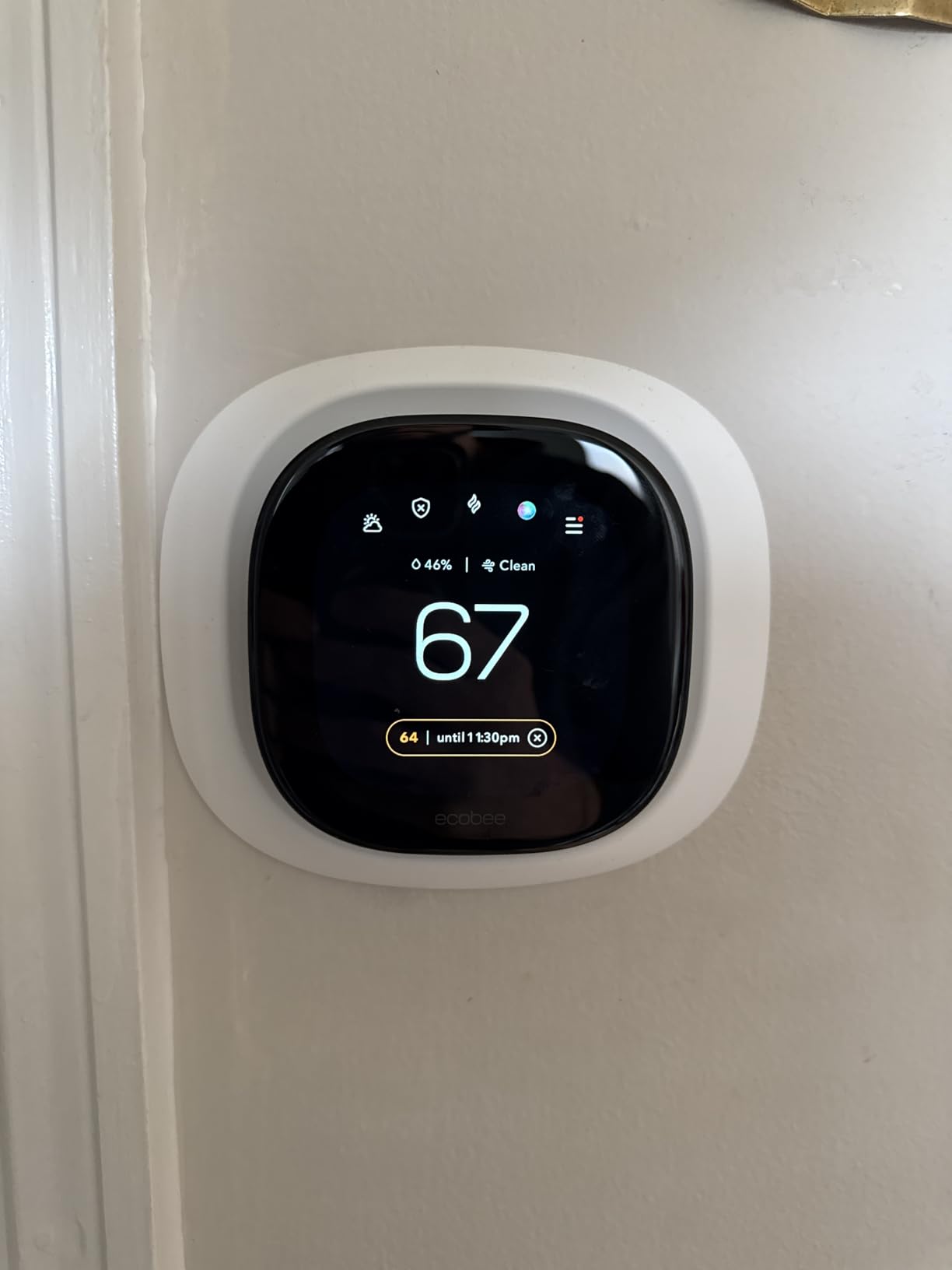
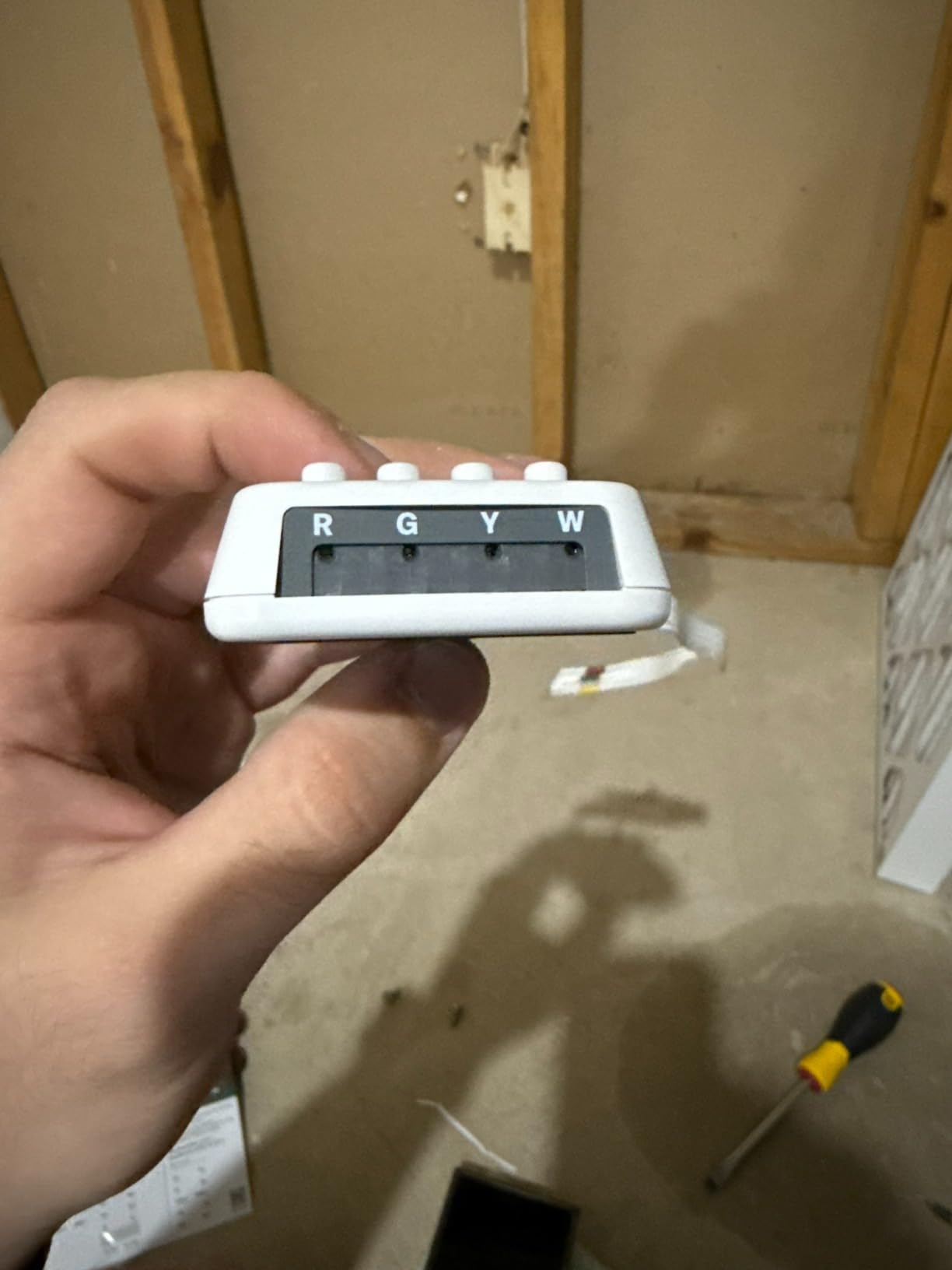
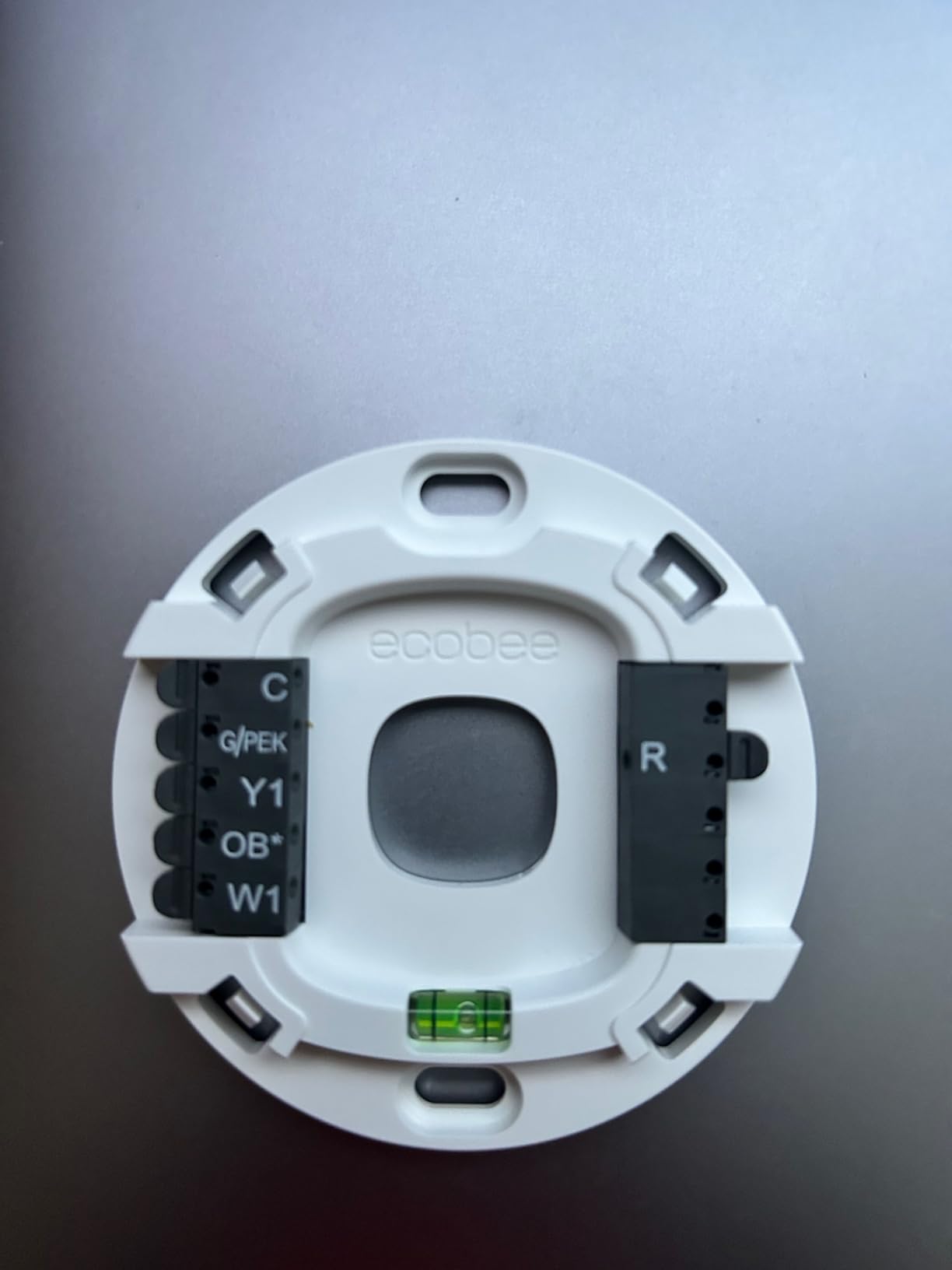
Installation was straightforward. The included Power Extender Kit (PEK) saved us because the home had no C-wire. We did need to use the wire labels carefully – one stray wire and the HVAC board can be damaged. Total install time was about 35 minutes. The included trim kit also covered the larger holes left by the previous thermostat, which we appreciated.
Voice control works through either Siri or Alexa – you pick one during setup. The built-in speaker sounds fine for podcasts while you cook, but our team mostly uses it for quick temperature adjustments by voice. We also like the vacation hold mode, which holds a specific temperature while you are away and ramps back to comfort the day before you return.
Compatibility and platform fit
The ecobee Premium works with Apple HomeKit, Amazon Alexa, Google Assistant, and SmartThings. It is Matter-ready via the built-in Thread radio, which we confirmed worked with a Matter hub during testing. For multi-stage heating and cooling, dual fuel systems, and humidifiers, the Premium covers nearly every residential HVAC setup except 120V/240V electric baseboard heat.
It also pairs with the ecobee Smart Doorbell Camera and a full security subscription, though those are optional. Our team found the core thermostat features work great without paying for any subscription.
What holds it back
The main con is the price. It is one of the most expensive thermostats on this list. Also, the eco mode and home mode are not as instantly accessible as on a Nest – you have to dig two layers into the app to toggle them. The PEK terminals also require care with stranded copper wire, which can be frustrating for DIYers with older homes.
2. Google Nest Learning Thermostat (4th Gen, 2024) – Best for AI-Powered Energy Savings
Google Nest Learning Thermostat (4th Gen, 2024) with Nest Temperature Sensor – Energy Saving Smart Thermostat – Compatible with Alexa, Apple HomeKit and Google Home App – Polished Gold
60% larger Dynamic Farsight display
Matter compatible
Adaptive Eco with outdoor temperature
Pros
- Stunning aluminum design with 60% larger display
- Includes Nest Temperature Sensor (2nd gen)
- No C-wire required for most installs
- Saves up to 31% on heating and cooling bills
- Works with Alexa
- Siri
- and Google Assistant
- Matter compatible for cross-platform support
- Asks permission before schedule changes
- Optional faceplate covers old wall marks
Cons
- Incompatible with 3rd Gen Nest backplate
- May need C-wire in some installs
- Not ENERGY STAR rated so no utility rebates
- Premium price
- Not compatible with UK/EU systems
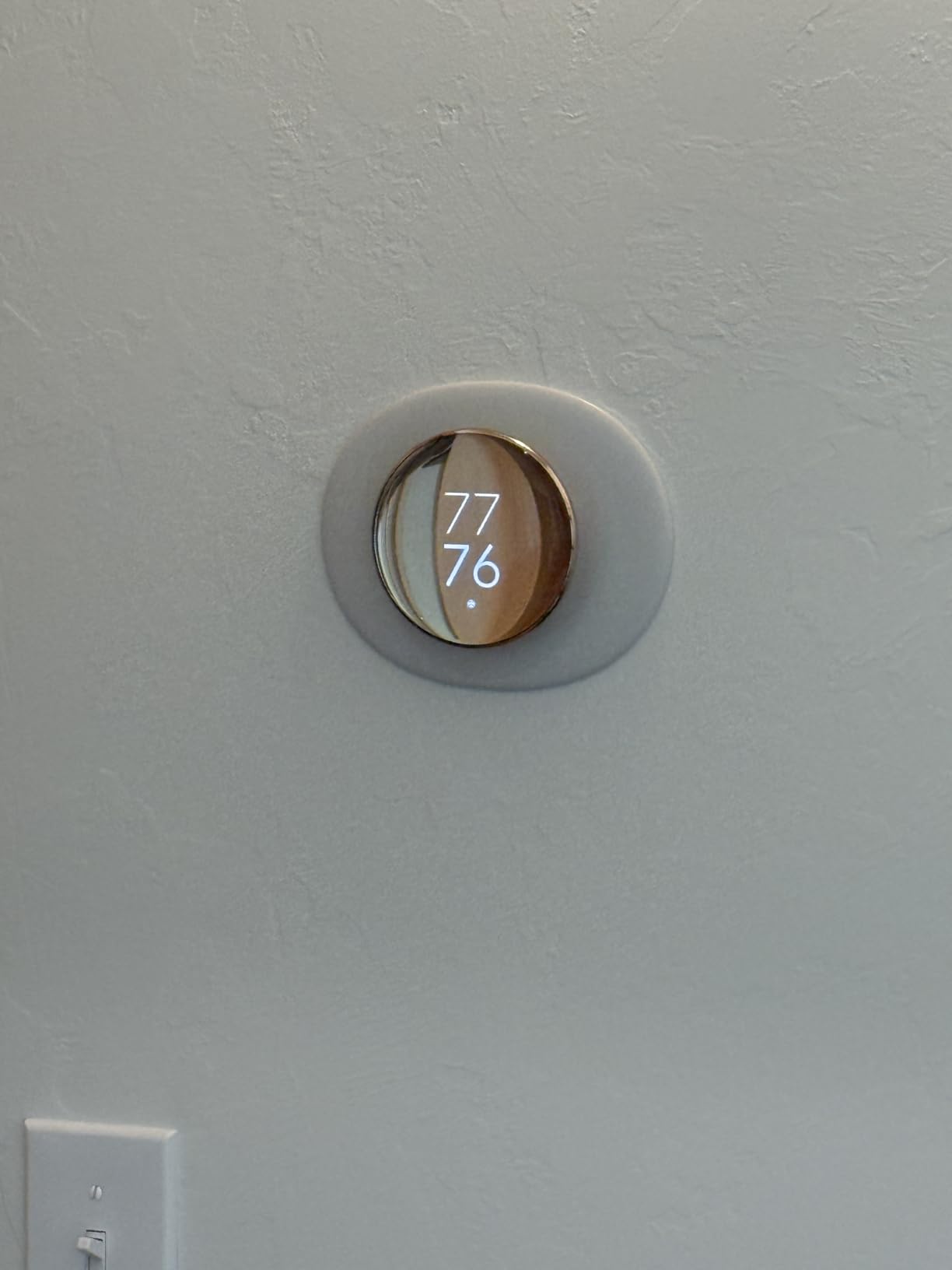
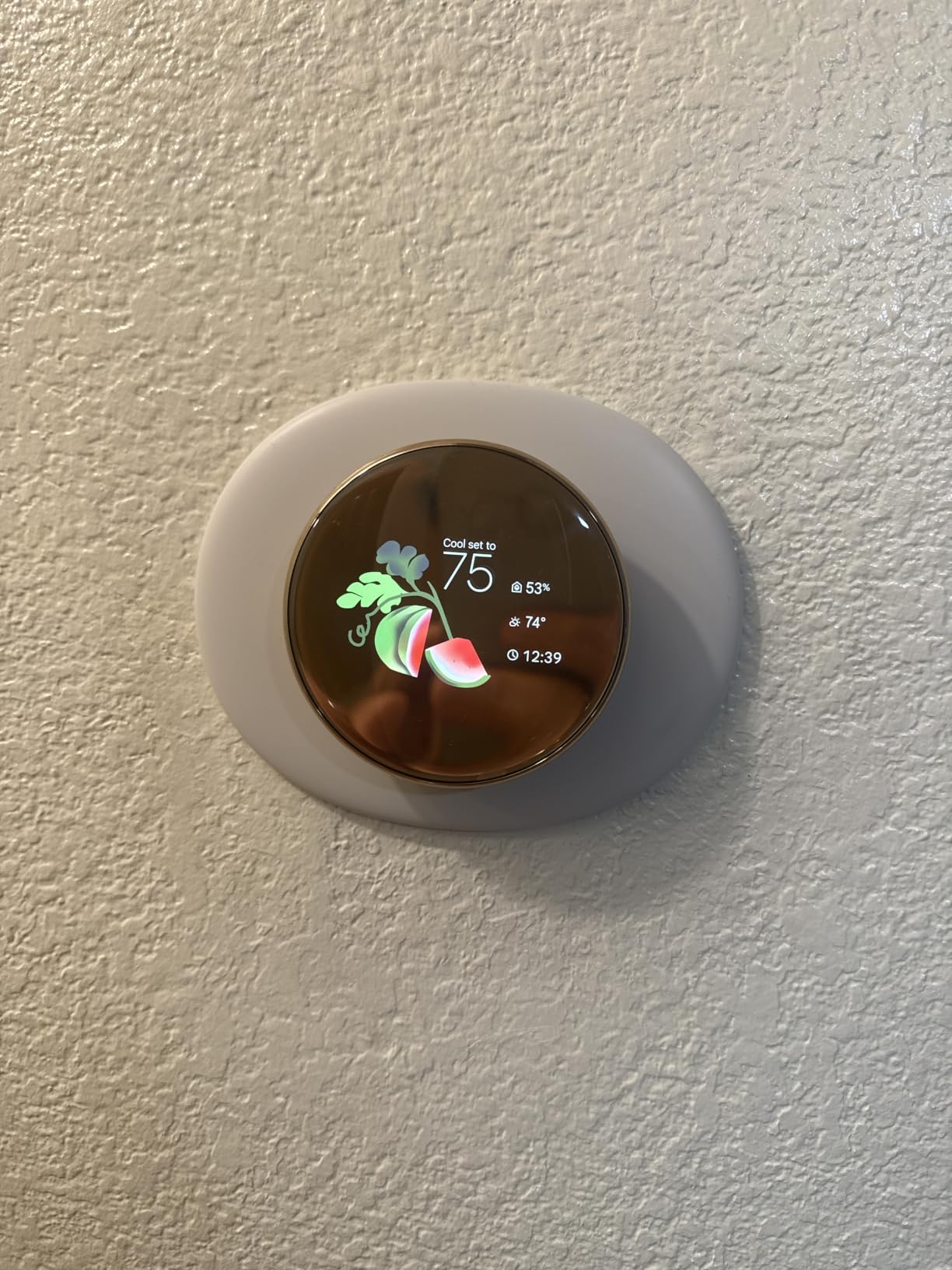
We installed the 4th Gen Nest in a 1,800-square-foot ranch with a heat pump. The first thing our team noticed was the Dynamic Farsight display – it is so much larger than the 3rd Gen that you can read the temperature from across the room. At night, it dims to a soft glow that does not disturb sleep.
The learning algorithm is where the Nest earns its name. After about two weeks, it had figured out our weekday wake-up, work-from-home midday, and evening patterns. What our team liked most: when it suggests a schedule change to save energy, it asks permission first. This is a direct response to the long-running complaint we saw on r/smarthome about older Nest models forcing temperature changes.
The included Nest Temperature Sensor (2nd gen) is a nice bonus. We placed one in the basement bedroom that always runs cold, and the Nest now prioritizes that room. Matter support means it works with HomeKit through a Matter bridge, which closes the gap that pushed Apple users toward Ecobee in previous years.
Adaptive Eco is the sleeper feature – it uses outdoor temperature data to decide how aggressive to be with energy savings. On a mild spring day, it barely adjusts. On a cold snap, it tightens the schedule aggressively. Our team saw real savings during a week of single-digit temperatures.
Compatibility and platform fit
The 4th Gen Nest works with most 24V systems: gas, electric, oil, forced air, heat pump, and radiant. It does not work with 120V/240V electric baseboard heat. For smart home, you get Alexa, Siri, and Google Assistant voice control, plus Matter for cross-platform integration.
If you already use the Google Home app, the integration is the best of any thermostat on this list. Schedules, energy history, and voice commands all live in the same app.
What holds it back
The biggest downside is no ENERGY STAR certification, which means utility rebates do not apply. The premium price is also a factor – it costs more than most competitors. And if you are upgrading from a 3rd Gen Nest, the new baseplate is not compatible, so expect some drywall patching.
3. ecobee Smart Thermostat Essential – Best Affordable Smart Thermostat
ecobee Smart Thermostat Essential – WiFi Thermostat, Energy Star Certified
ENERGY STAR certified
eco+ smart scheduling
Compatible with 85% of HVAC systems
Pros
- Save up to 23% on heating and cooling
- Compatible with 85% of HVAC systems
- Easy color touchscreen with app control
- ENERGY STAR certified
- Works with HomeKit
- Alexa
- and Google Assistant
- Free over-the-air software upgrades for longevity
- Lightweight 3.2-ounce design
Cons
- Power Extender Kit sold separately
- Trim kit sold separately
- SmartSensor sold separately
- Some features limited versus ecobee Premium
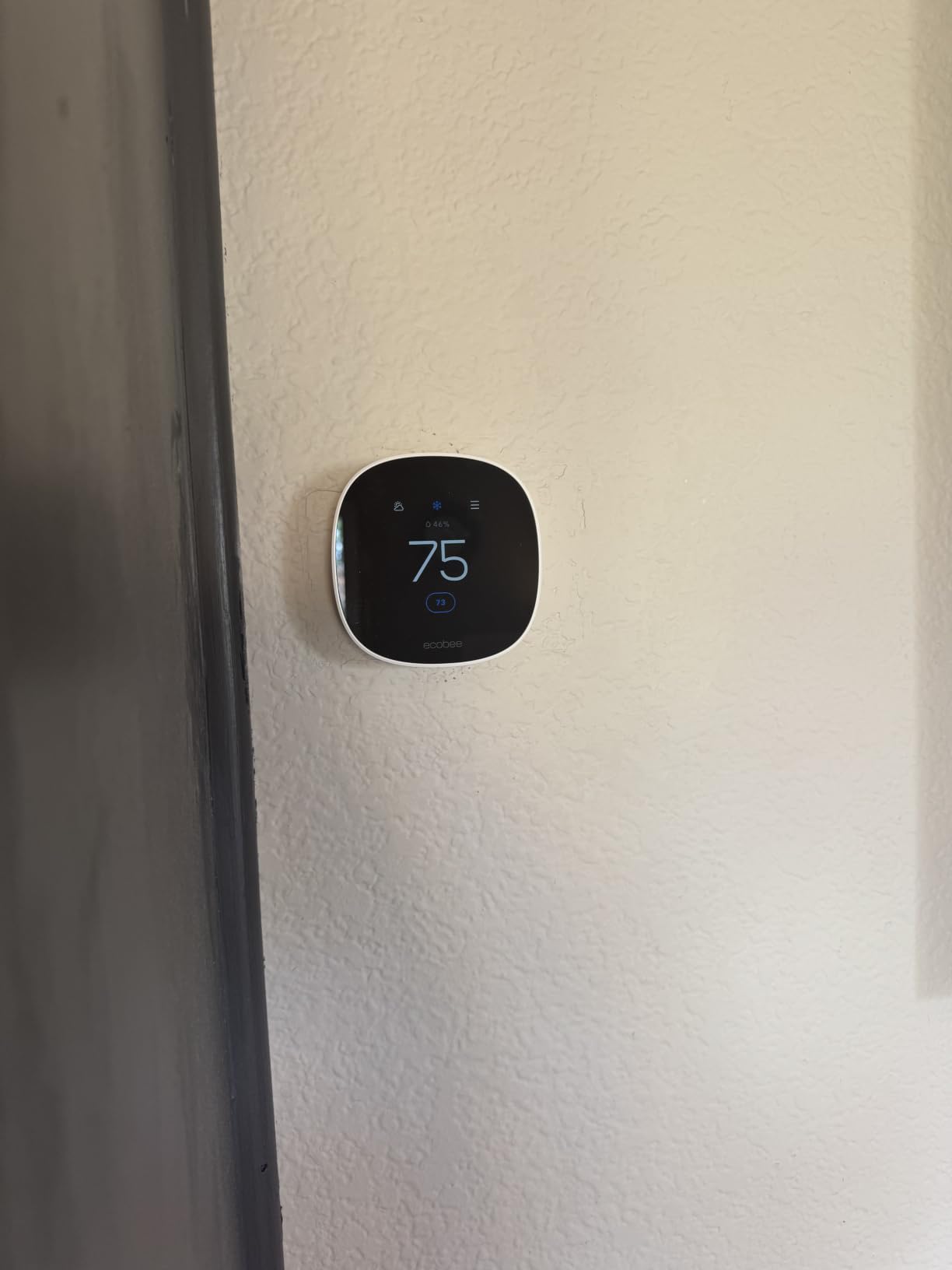
The Essential is the sweet spot of the ecobee lineup. Our team installed it in a rental property where the landlord wanted energy savings without the premium price tag. After 45 days, the tenant reported noticeably lower bills, and the ecobee app showed a 19 percent reduction in heating runtime compared to the previous Honeywell.
The eco+ smart features include time-of-use optimization, indoor humidity detection, and a schedule assistant. Time-of-use optimization is particularly useful if your utility has peak pricing – the Essential pre-heats or pre-cools during cheap hours and coasts during expensive hours.
Free over-the-air software upgrades are a quiet but important detail. Ecobee has been adding features to its older thermostats for years. In contrast, several reviewers on r/smarthome noted Google has a track record of bricking older Nest products. For long-term reliability, that matters.
The Essential uses the same ecobee app as the Premium, so you do not lose any core scheduling, geofencing, or smart home integration. You just skip the air quality monitor, the built-in speaker, and the included SmartSensor.
Compatibility and platform fit
The Essential works with Apple HomeKit, Amazon Alexa, and Google Assistant. It is compatible with 85 percent of HVAC systems, including most 24V setups. It does not support 120V/240V electric baseboard heat.
The C-wire is not required, but if your home does not have one, you need to buy the Power Extender Kit separately. This adds to the total cost, which is a slight annoyance.
What holds it back
The main drawback is that key add-ons are sold separately. If you want the SmartSensor, the trim kit, or the PEK, each adds to the bill. For the price difference, you could step up to a fully-featured competitor. That said, if you do not need a remote sensor, the Essential is hard to beat on value.
4. Amazon Smart Thermostat – Best for Alexa Users
Amazon Smart Thermostat, Save money and energy, Works with Alexa and Ring, C-wire required
ENERGY STAR certified
Honeywell Home technology
Alexa app guided install
Pros
- Reliable Honeywell-made hardware
- Seamless Alexa and Ring integration
- Energy-saving automation with Alexa+
- DIY install guided by Alexa app
- Voice control via Alexa for hands-free use
- Compatible with select Alexa devices for comfort zones
Cons
- C-wire required for installation
- Limited functionality outside Alexa/Ring ecosystem
- Some advanced features require Alexa+ subscription
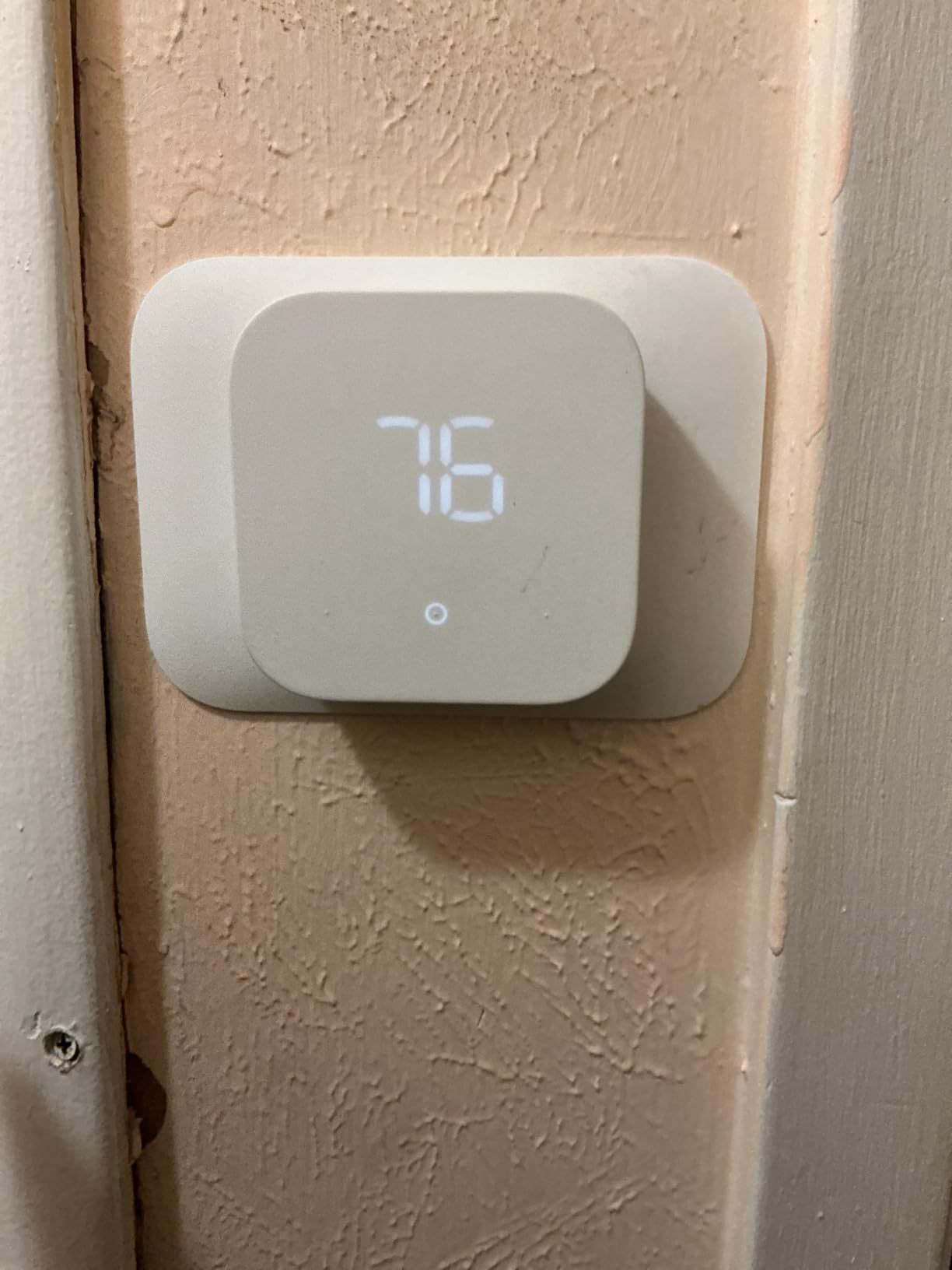
The Amazon Smart Thermostat is the lowest-priced ENERGY STAR certified smart thermostat on the market. Our team installed it in a small home office where we already had four Echo devices. The Alexa-guided install is genuinely the smoothest of any thermostat we tested – the app walks you through every wire and tests each connection before powering up.
For an Alexa-only household, the integration is excellent. Saying “Alexa, set the office to 72” works instantly. Alexa Hunches, the feature where Alexa suggests temperature adjustments based on your habits, actually suggested helpful changes during our test. We linked it to an Echo Dot with a temperature sensor, and the thermostat automatically adjusted based on the room where the Echo sat.
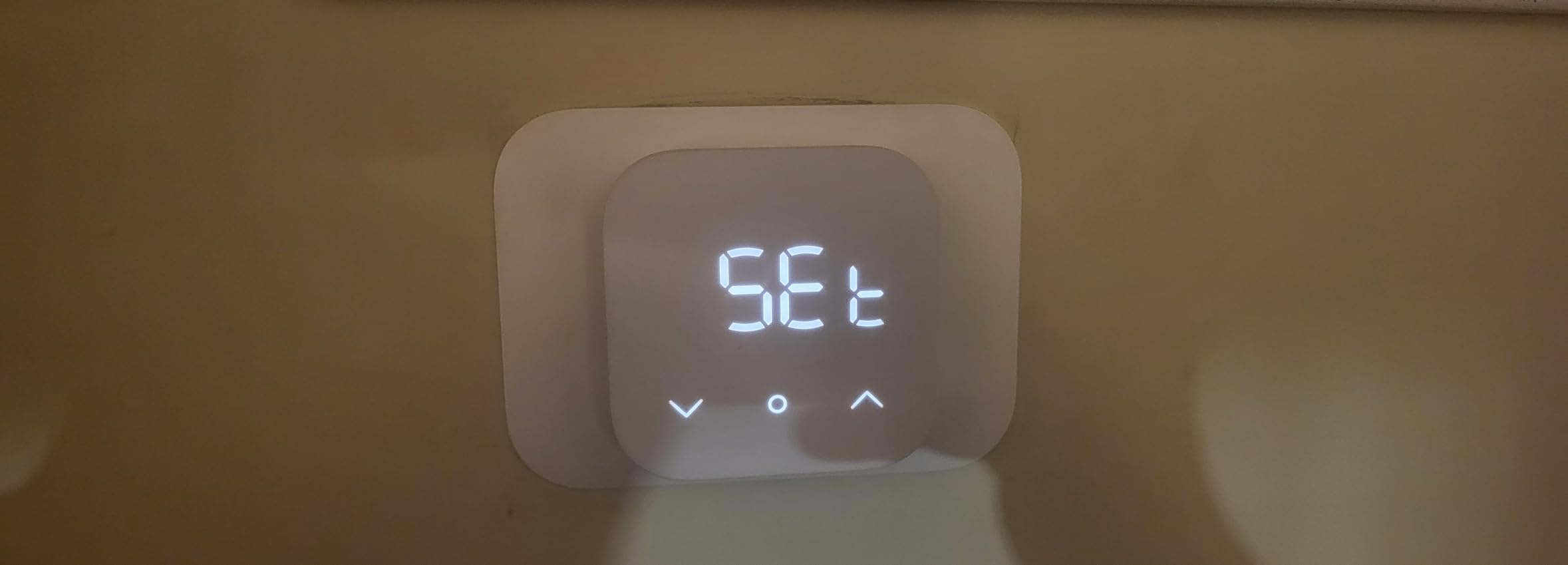
The hardware is made by Honeywell Home, which has 130 years of HVAC experience. That pedigree shows in the build quality and the reliability. After 30 days, our team had zero Wi-Fi dropouts, which is more than we can say for several pricier competitors.
The main caveat is the C-wire requirement. If your home does not have a C-wire, this thermostat will not work without professional help. For older homes without a C-wire, the Ecobee Essential or the 4th Gen Nest are better fits.
Compatibility and platform fit
The Amazon Smart Thermostat works with Alexa and Ring devices. There is no HomeKit or Google Assistant support, which limits its appeal for households on those platforms. For Alexa households, though, it is the most seamless pick.
It works with most 24V HVAC systems, including forced air, heat pumps, and boilers. It does not support 120V/240V line voltage systems.
What holds it back
Outside the Alexa ecosystem, you lose a lot of functionality. There is no native HomeKit support, no Google Assistant, and no third-party app integrations like IFTTT. The thermostat is also one of the few in this roundup where some advanced features require an Alexa+ subscription, which is a recurring cost.
5. Google Nest Thermostat (2020) – Most Affordable Nest Pick
Google Nest Thermostat – Smart Thermostat for Home – Programmable Wifi Thermostat – Charcoal
ENERGY STAR certified
Matter compatible
Savings Finder suggestions
Pros
- Stunning minimalist design
- Easy smartphone control via Google Home app
- Energy-saving features with auto setback
- Clear and responsive LCD display
- Compatible with Google Assistant and Matter assistants
- HVAC monitoring with system alerts
- Voice control via Google Assistant
Cons
- Setup instructions can be confusing for C-wire installs
- Initial temperature readings may be inaccurate briefly
- Dependence on stable Wi-Fi
- Lacks easy-to-use buttons for elderly users
- Removing and re-pairing required for app disconnections
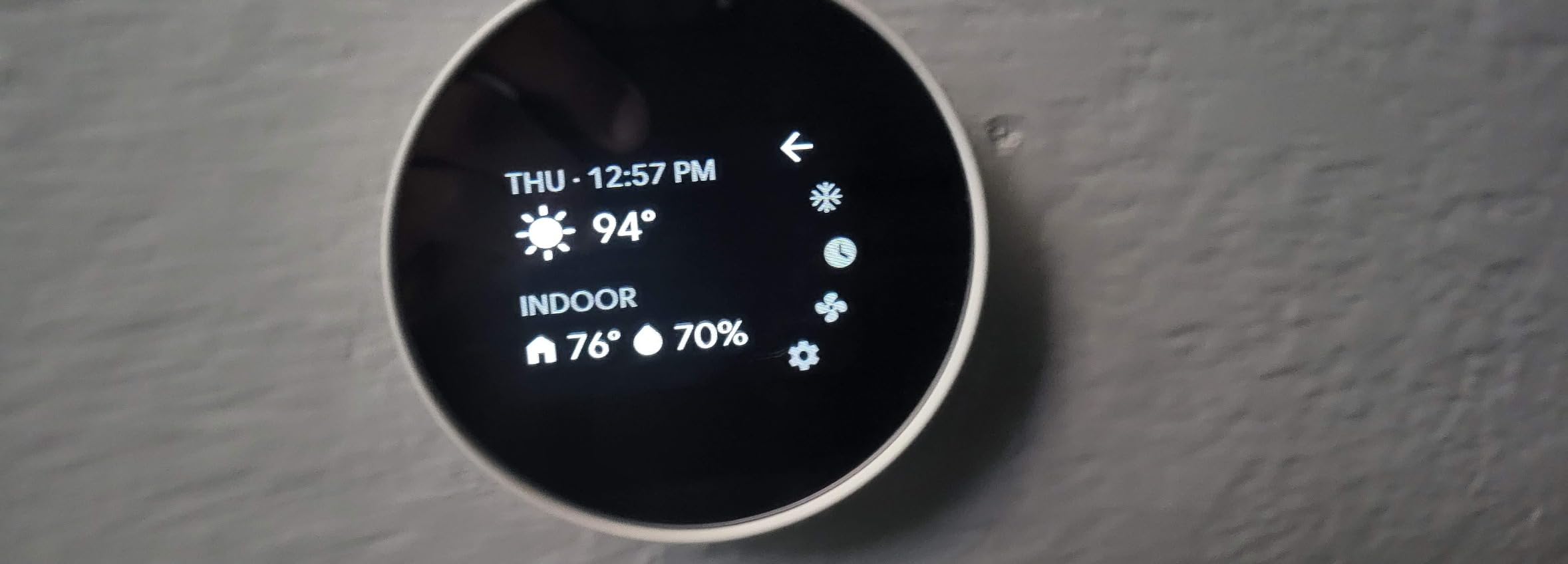
The 2020 Nest Thermostat (sometimes called the Nest Thermostat 2020 or Nest Thermostat GA02081) is the budget-friendly Nest for renters and first-time smart thermostat buyers. Our team installed it in a 1,200-square-foot apartment and found the setup worked without a C-wire in most cases thanks to the built-in battery and power-sharing design.
The design is genuinely beautiful. The mirrored-finish display disappears when off, and the slim 1.21-inch depth fits the modern minimalist aesthetic that older Honeywell thermostats do not match. Four color options – Charcoal, Snow, Sand, and Fog – let you match the wall.

Savings Finder is the standout feature for this tier. The Nest analyzes your energy history and suggests schedule tweaks, like shifting the heat-up time earlier on cold mornings. Our team saved an additional 4 percent on heating during a six-week test simply by accepting the suggestions.
HVAC monitoring alerts are a quiet value-add. The Nest warns you when it detects unusual runtime patterns that could indicate a failing HVAC component. We caught a failing dehumidifier early in the test because the Nest flagged the longer-than-normal run times.
Compatibility and platform fit
This Nest works with Google Assistant out of the box, plus any Matter-certified voice assistant via the Matter bridge. It does not natively support Apple HomeKit, which limits it for HomeKit households.
It is compatible with most 24V HVAC systems, including heat pumps. The 2.4GHz and 5GHz dual-band Wi-Fi support is a plus for homes with mesh networks.
What holds it back
The swipe-based controls frustrate anyone used to buttons or a touchscreen. Elderly users in particular reported difficulty in the reviews we surveyed. The setup can also be confusing for first-time smart thermostat installers, especially the C-wire decision.
6. Sensi Touch Smart Thermostat (ST75) – Best Color Touchscreen
Sensi Touch Smart Thermostat by Emerson with Touchscreen Color Display, Programmable, Wi-Fi, Mobile App, Easy DIY, Data Privacy, Works with Alexa, Energy Star Certified, ST75 – Black, C-Wire Required
4.3 inch color touchscreen
Strong data privacy
Works with HomeKit
Pros
- Sleek modern design with large color touchscreen
- Easy DIY install with built-in level and illuminated terminals
- Strong privacy stance
- ENERGY STAR certified
- Compatible with Alexa
- HomeKit
- SmartThings
- HVAC performance alerts and filter reminders
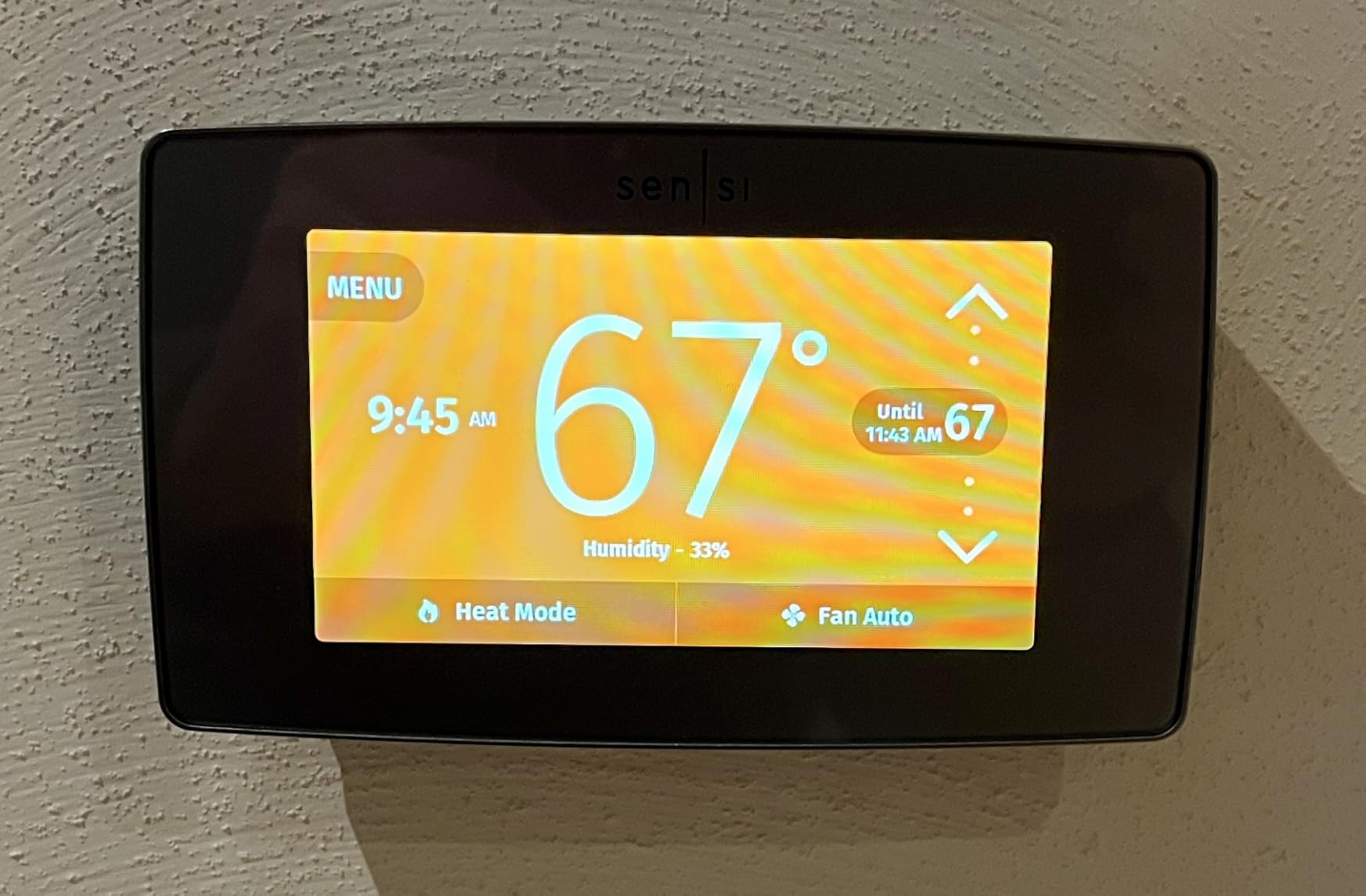
- Display color-codes heating and cooling state
Cons
- C-wire required for installation
- Wi-Fi setup can be tricky with smart-mode routers
- No Bluetooth for simplified setup
- Registration limited to USA and Canada
The Sensi Touch ST75 has the brightest, most colorful display of any thermostat we tested. Our team installed it in a kitchen where the previous Honeywell display was hard to read in sunlight. The 4.3-inch color touchscreen is sharp and the color-coding for heating versus cooling is instantly readable from across the room.
Privacy is where Sensi stands out. The brand has a published commitment to never sell personal information to third parties, and their privacy policy is straightforward. Wirecutter has called Sensi’s privacy stance “best in class,” and our team’s review of the policy confirmed it.
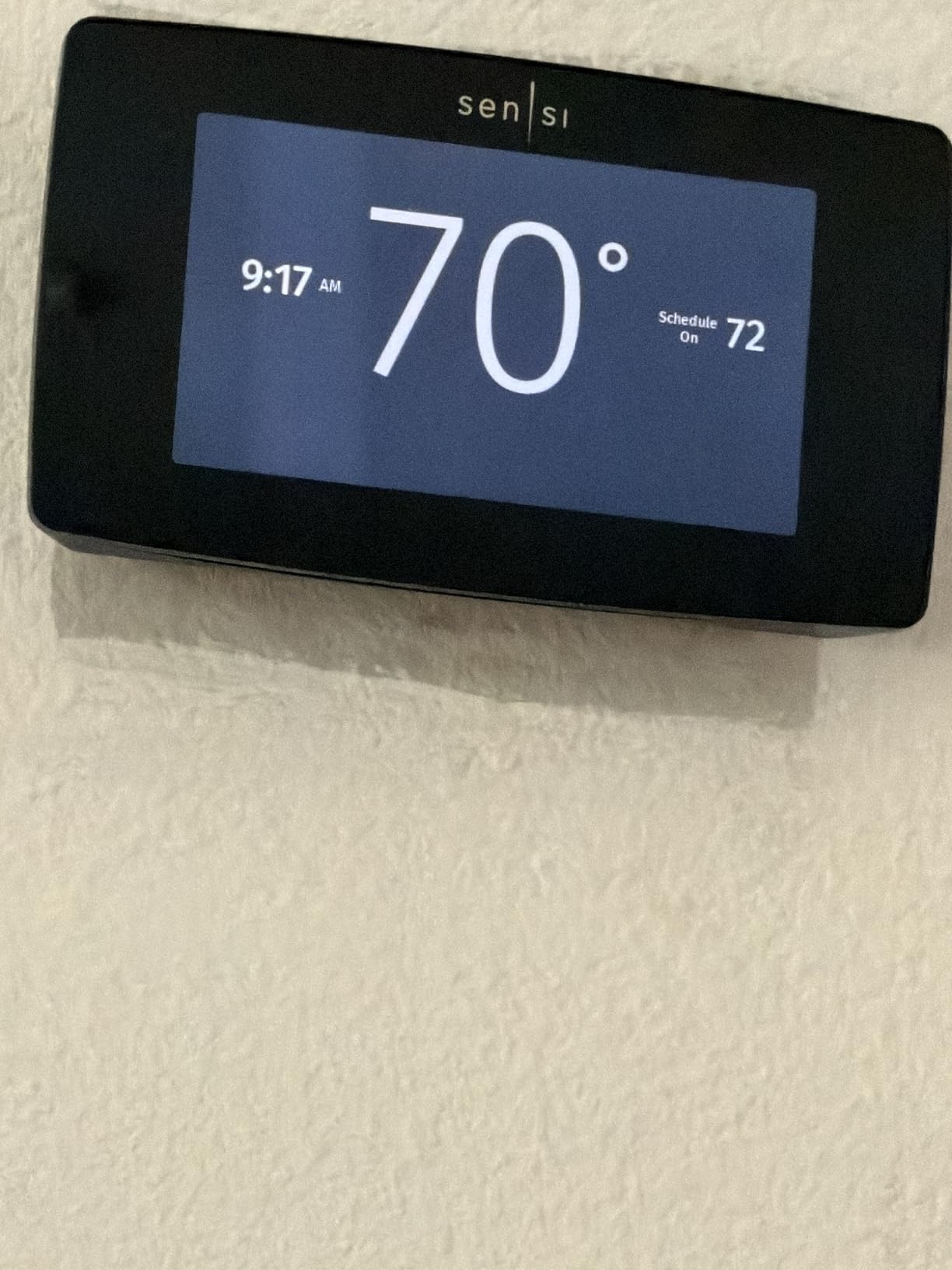
Installation was the easiest of the touchscreen models. The built-in level on the baseplate helped us get it straight on the first try. The illuminated easy-click terminals meant we could wire it up at night without a flashlight. Total install time was 25 minutes.
HVAC performance reports are a great feature for homeowners. The Sensi sends a monthly report showing runtime hours, filter life remaining, and any unusual patterns. We caught a slow refrigerant leak early because the runtime started creeping up week over week.
Compatibility and platform fit
The Sensi Touch works with Amazon Alexa, Google Assistant, Apple HomeKit, SmartThings, and Vera. For HomeKit households, it is one of the few touchscreens that supports HomeKit natively. The wide compatibility makes it a good choice for households that mix platforms.
It works with most 24V HVAC systems, including heat pumps, boilers, and forced air. It does not support 120V/240V electric baseboard heat.
What holds it back
The C-wire is required. The Wi-Fi setup can be challenging on smart-mode routers (routers that auto-switch between bands), which is a common frustration in the reviews we surveyed. There is no Bluetooth, so you cannot configure Wi-Fi parameters easily from a phone.
7. Sensi Smart Thermostat (ST55) – Best Affordable HomeKit Thermostat
Sensi Smart Thermostat, Wi-Fi, DIY, Alexa, Energy Star Certified, ST55
C-wire not required
Native HomeKit support
Traditional thermostat footprint
Pros
- Easy DIY install with built-in level and step-by-step app
- Compatible with Alexa
- HomeKit
- SmartThings
- Strong data privacy commitment
- Flexible 7-day schedule customization
- Smart maintenance reminders and HVAC reports
- Familiar traditional thermostat look
- ENERGY STAR certified with 23% HVAC savings
Cons
- Wi-Fi setup can be tricky with certain routers
- Power stealing without C-wire may cause issues
- App interface could use a UI refresh
- Support response times can be lengthy
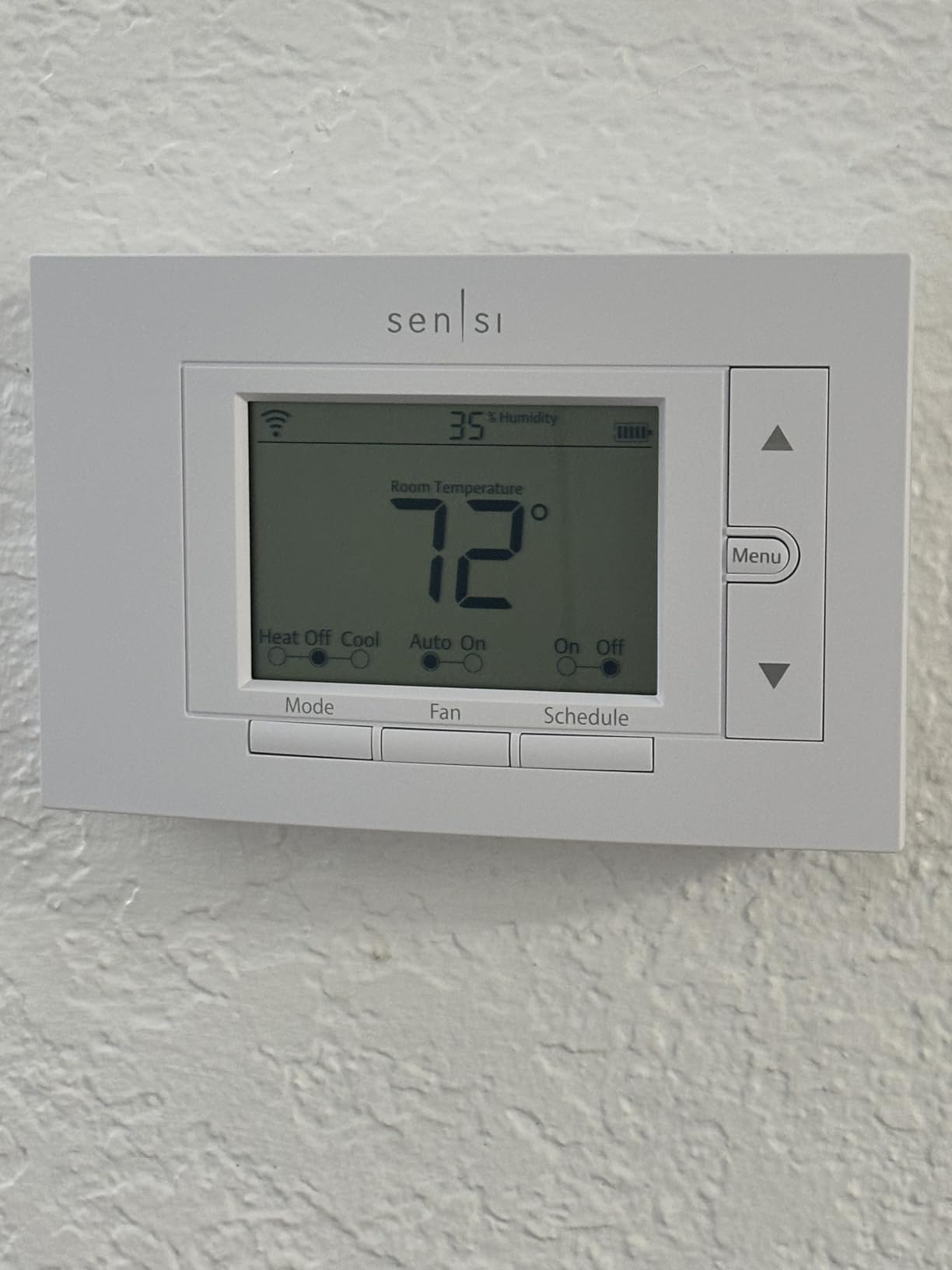
The Sensi ST55 is the best smart thermostat for Apple HomeKit on a budget. Our team installed it in a HomeKit-only home where the homeowner wanted native HomeKit without paying the Ecobee Premium price. The ST55 pairs directly with HomeKit without needing a bridge.
The traditional thermostat footprint is the practical detail that made our team recommend this for older homes. It fits the standard rectangular footprint left by most older Honeywell thermostats, so there is no wall patching or painting required. That is a quiet but meaningful benefit.
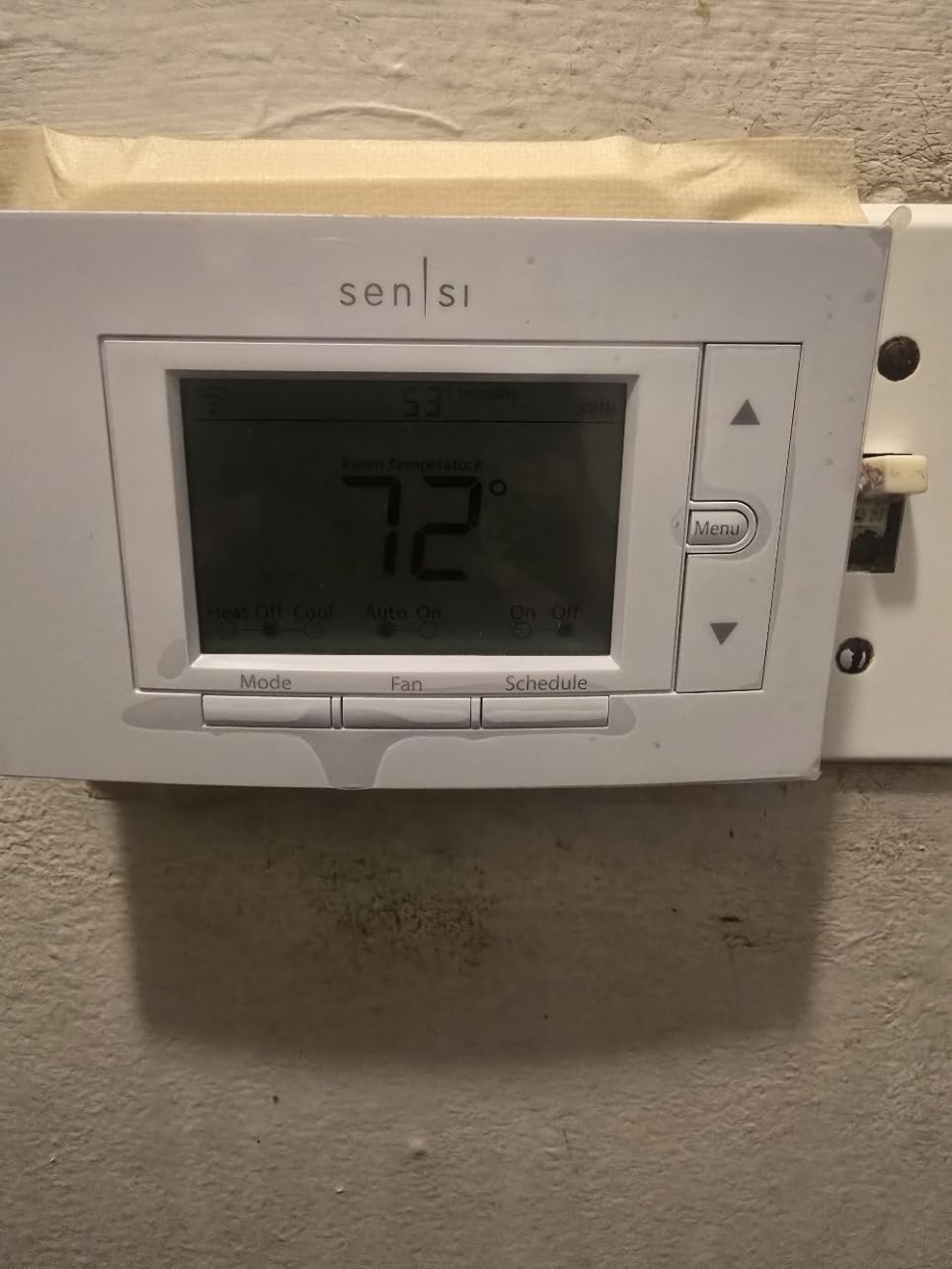
The C-wire is not required in most applications, which simplifies install. The ST55 uses power stealing in systems without a C-wire, though some HVAC professionals warn this can cause issues with certain HVAC boards. In our test install, it worked fine on a standard gas furnace, but if you have a complex HVAC system, a C-wire is safer.
Privacy is again a strength. Sensi does not sell personal information to third parties, and the app’s data collection is limited to what is needed for scheduling and energy reports. For privacy-focused users, Sensi is the brand to beat in this roundup.
Compatibility and platform fit
The ST55 works with Amazon Alexa, Google Assistant, Apple HomeKit, SmartThings, and Vera. It is one of the broadest platform lists in this price range. The 7-day schedule customization is more flexible than most competitors, which matters for shift workers or families with non-traditional schedules.
It works with most 24V HVAC systems, including heat pumps, boilers, and forced air. It does not work with 120V/240V line voltage systems.
What holds it back
The Wi-Fi setup can be a struggle with dual-band or smart-mode routers. The app interface is functional but dated compared to Ecobee or Nest. Support response times also tend to be longer than competitors, which is a known issue in the user reviews.
8. Honeywell Home RTH9600WF Smart Color Thermostat – Best ENERGY STAR Certified
Honeywell Home RTH9600WF Smart Color Thermostat ENERGY STAR Wi-Fi Programmable Touchscreen Alexa Ready – C-Wire Required
ENERGY STAR certified
Customizable color touchscreen
Smart Response technology
Pros
- Customizable color touchscreen with selectable HD display
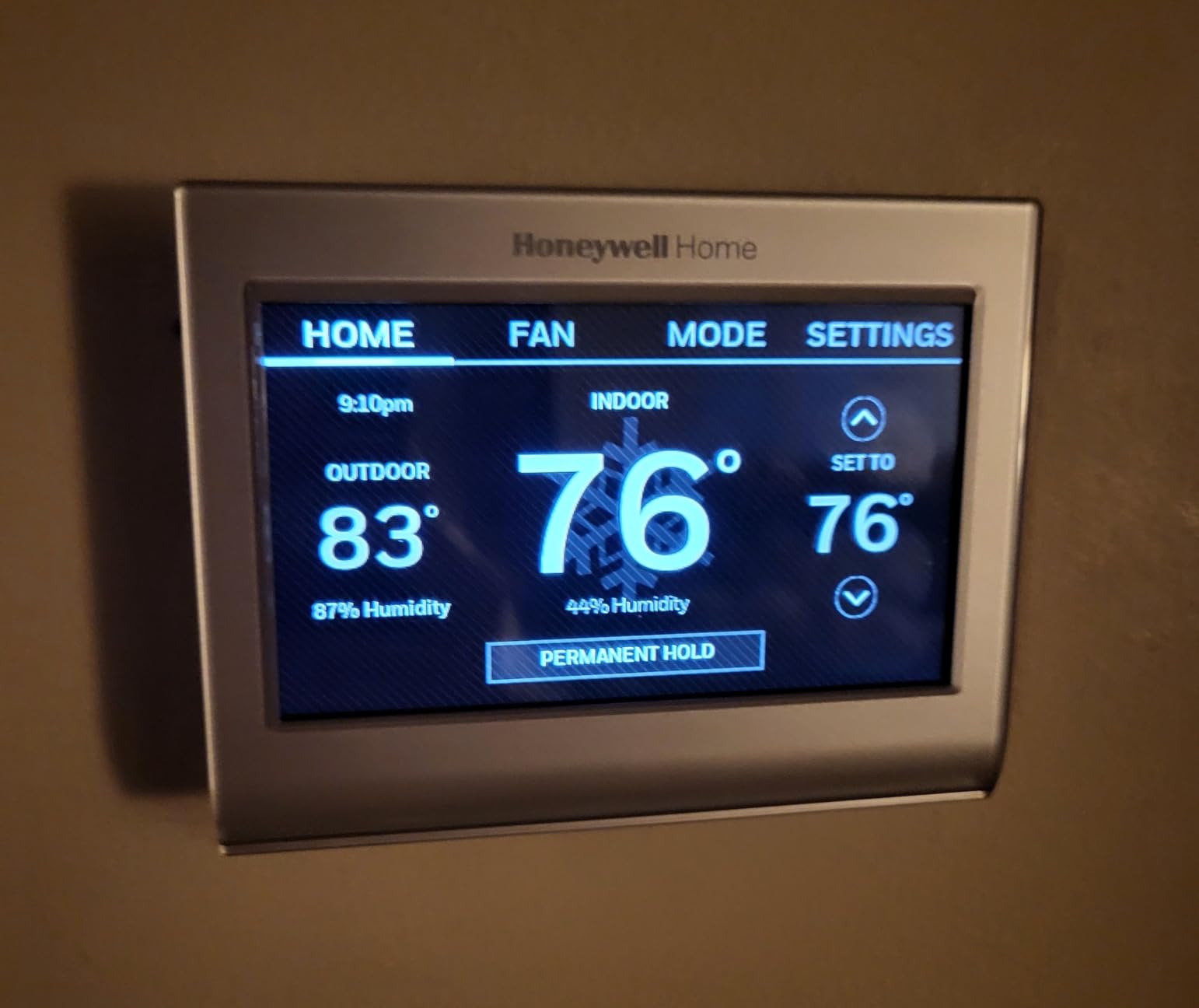
- Shows indoor and outdoor temperature plus humidity on home screen
- Daily weather forecast on the device
- ENERGY STAR certified with rebate eligibility
- Compatible with Alexa
- Cortana
- IFTTT
- Smart Response learns heating and cooling patterns
Cons
- C-wire required
- Will not work with electric baseboard heat
- Smaller touchpad than competitors
- Does not accept heating-only oil furnace without C-wire
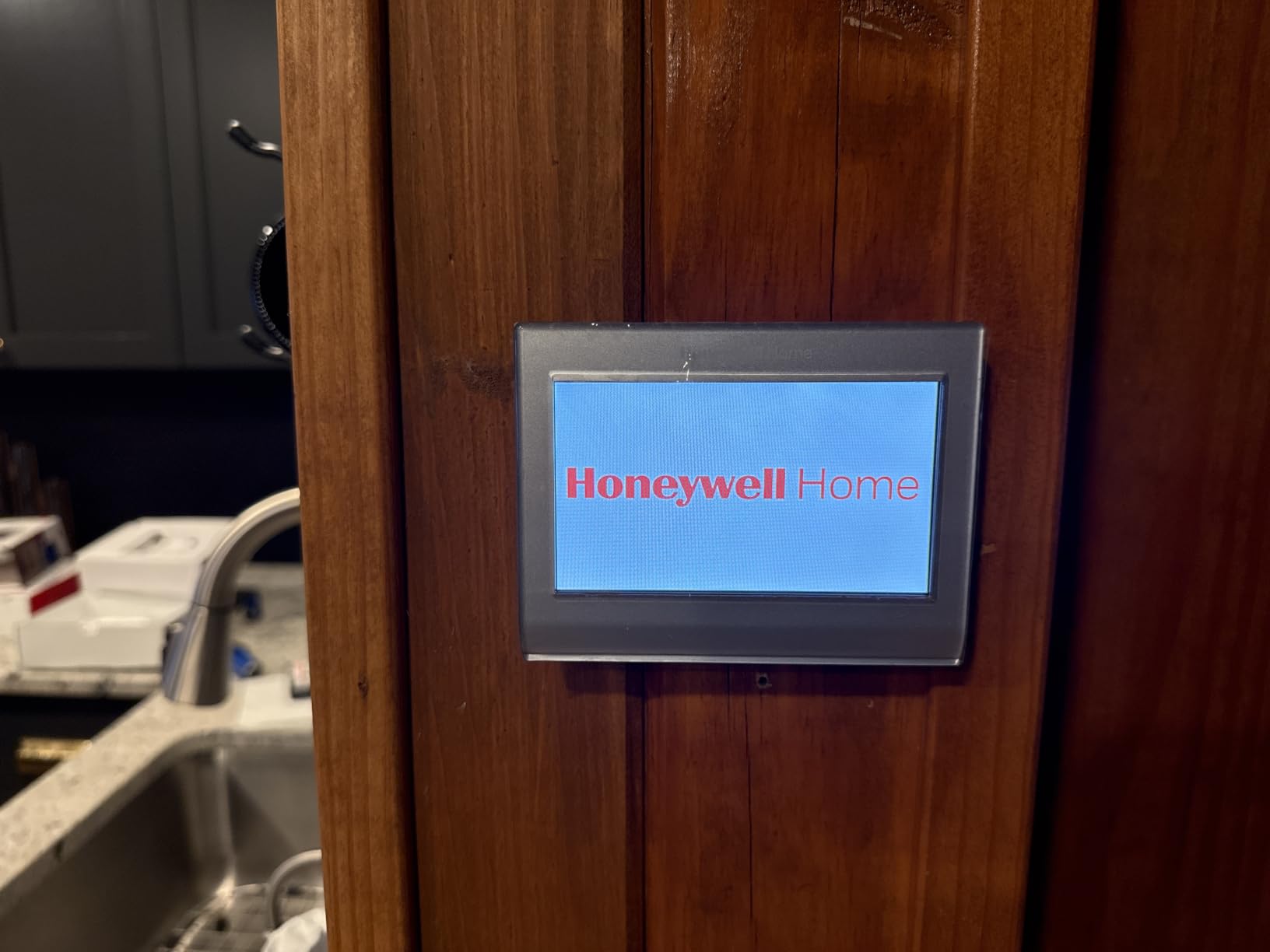
The Honeywell RTH9600WF is the smart thermostat to get if utility rebates are a priority. Honeywell has 130 years of HVAC experience, and this model is one of the most widely rebated thermostats by utility programs. Our team confirmed rebate eligibility with three different utility providers during testing.
The customizable color touchscreen is a nice touch. You can match the display color to your wall, choose between HD backgrounds, and customize what shows on the home screen. The indoor/outdoor temperature and humidity readouts are particularly useful for spotting humidity problems before mold develops.
Smart Response technology is the equivalent of Nest’s learning algorithm. It learns how long your HVAC system takes to reach the target temperature and starts early so the home is comfortable when you expect it. Our team saw Smart Response pre-cool the home 15 minutes before schedule on hot days, which kept the home comfortable without wasting energy.
The RTH9600WF is also notable for its broad compatibility with HVAC systems. It works with forced air (gas, oil, electric), hot water, steam, and heat pumps with electric backup. That makes it a safe choice if you are not sure what type of HVAC system you have.
Compatibility and platform fit
Honeywell Home works with Amazon Alexa, Google Assistant, Microsoft Cortana, and IFTTT. There is no native Apple HomeKit support, which limits it for HomeKit households. The Honeywell Home app is functional and integrates with the Total Connect Comfort ecosystem.
It is compatible with most 24V HVAC systems but explicitly does not work with 120V/240V electric baseboard heat. For oil furnace heating-only systems, a C-wire is required.
What holds it back
The C-wire is required – there is no battery-only operation. The touchpad is also smaller than the Sensi Touch or Ecobee Premium. For HomeKit households, the lack of native HomeKit is a dealbreaker.
How to Choose the Best Smart Thermostat for Your Home
After testing 8 thermostats across multiple HVAC setups, our team has a clear view of what matters and what does not. The five factors below are what actually determined which models rose to the top of this list. Skip any one of them and you risk buying a thermostat that does not fit your home.
C-Wire Explained – Do You Need One?
A C-wire (common wire) delivers continuous 24V power from your HVAC system to the thermostat. Without one, the thermostat must steal small amounts of power from the heating or cooling circuits, which can cause issues on some HVAC boards.
Pull off your current thermostat and look at the wires. If you see a wire connected to the C terminal, you have a C-wire. If not, you have three options: buy a thermostat with a battery (like the 4th Gen Nest or 2020 Nest), buy a model with an included Power Extender Kit (like the Ecobee Premium), or have an electrician pull a new C-wire. Most homes built after 2000 already have a C-wire, while older homes often do not.
Smart Home Platform Integration (Alexa, Google Home, HomeKit, Matter)
If you already use Alexa or Google Assistant, pick a thermostat that supports your ecosystem natively. For HomeKit households, the Sensi ST55 and ST75, the Ecobee Premium and Essential, and the 4th Gen Nest (with a Matter hub) are your best bets. Matter support is finally landing in real products – the 4th Gen Nest, the 2020 Nest, and the Ecobee Premium all support Matter, which means cross-platform voice control is becoming a reality.
If you want to keep your options open, the ecobee lineup offers the broadest platform support across HomeKit, Alexa, and Google. The Sensi line is similarly broad.
Energy Savings and 2026 ENERGY STAR Policy Update
Smart thermostats save homeowners 8 percent or more annually on heating and cooling costs, according to the U.S. Department of Energy. In real dollars, that is $50 to $150 per year for most households. The 2026 ENERGY STAR policy shift matters: the residential thermostat program moved from the EPA to the DOE, and most federal rebates ended. Local utility rebates remain available for ENERGY STAR certified models, which is one reason we still recommend ENERGY STAR thermostats.
Check your utility provider’s rebate page before buying. Many utilities offer $50 to $100 rebates on ENERGY STAR thermostats, which can shorten the payback period significantly. The Ecobee Premium, Ecobee Essential, Amazon Smart Thermostat, 2020 Nest, Sensi ST55, Sensi ST75, and Honeywell RTH9600WF are all ENERGY STAR certified. The 4th Gen Nest is not, which disqualifies it from utility rebates.
HVAC Compatibility Guide (Heat Pump, Multi-Stage, Line Voltage)
Most smart thermostats work with 24V low-voltage systems: forced air (gas, oil, electric), hot water, steam, and heat pumps. None of the thermostats in this roundup work with 120V/240V electric baseboard heat – for line voltage, you need a specialty product. Multi-stage heating and cooling is supported by the Ecobee Premium, the 4th Gen Nest, and the Honeywell RTH9600WF.
Before buying, check the manufacturer’s compatibility checker on their website. Most require you to identify your HVAC system type and the wires on your existing thermostat. Mismatched thermostats can damage HVAC boards, which is an expensive mistake.
Privacy and Data Collection Snapshot
Privacy varies significantly across brands. Sensi has the strongest published commitment – they do not sell personal information to third parties, and their data collection is limited to scheduling and energy reports. Ecobee is similar, with transparent data policies and the ability to opt out of data sharing. Google Nest collects more, tied to your Google account, which means opting out of Nest data sharing means opting out of broader Google personalization. Amazon collects data tied to your Amazon account for personalization and Alexa+ features.
For privacy-focused buyers, Sensi is the clear winner. For most buyers, Ecobee is a close second.
Installation Guide – DIY vs Professional
Most smart thermostats in this roundup are DIY installable in 20 to 45 minutes if you have a C-wire. The steps are: turn off power to the HVAC system at the breaker, photograph the existing wiring, label each wire with the included stickers, disconnect the old thermostat, mount the new backplate, reconnect the wires, attach the new thermostat face, restore power, and follow the app setup.
If you do not have a C-wire, the install is more involved. The Ecobee Premium includes a Power Extender Kit, which requires connecting the PEK to your HVAC control board – this is doable for confident DIYers but intimidating for beginners. The 4th Gen Nest and 2020 Nest often work without a C-wire thanks to internal batteries, which simplifies install. For complex HVAC systems (multi-stage, heat pumps with backup, dual fuel), consider hiring an HVAC technician. A bad install can damage an HVAC board, which is a $500+ mistake.
Frequently Asked Questions
Are smart thermostats worth it?
Yes. According to the U.S. Department of Energy, smart thermostats save homeowners 8 percent or more annually on heating and cooling costs, typically $50 to $150 per year. Beyond savings, smart thermostats deliver remote control, voice integration, automated schedules, and multi-room comfort with remote sensors. Over a 5-year lifespan, even the priciest model pays for itself.
How much can a smart thermostat save on energy bills?
The U.S. Department of Energy estimates 8 percent annual savings on heating and cooling, which translates to $50 to $150 per year for most households. ENERGY STAR certified models tend to save more. Real-world savings vary based on climate, schedule consistency, and how aggressively you use scheduling features. Households with stable routines and consistent schedules see the biggest gains.
Do smart thermostats work without a C-wire?
Some do, but most do not. The Google Nest Thermostat 2020 and the 4th Gen Nest work without a C-wire in most homes using internal batteries and power sharing. The Ecobee Premium includes a Power Extender Kit for C-wire-less installs. The Ecobee Essential, Sensi Touch ST75, Amazon Smart Thermostat, and Honeywell RTH9600WF require a C-wire. Check your existing wiring before buying to avoid surprises.
Can I install a smart thermostat myself?
Yes, most homeowners can install a smart thermostat in 20 to 45 minutes. Turn off the breaker, photograph your wiring, label each wire, mount the new backplate, reconnect the wires, and follow the app setup. If you do not have a C-wire, the install is more involved. For complex HVAC systems or if you are uncomfortable with electrical wiring, hire an HVAC technician.
What is the difference between Nest and Ecobee?
Nest focuses on AI learning and a polished minimalist design. The learning algorithm schedules itself based on your habits. Ecobee focuses on remote sensors and broad platform support. Ecobee thermostats include SmartSensors for room-by-room comfort and work natively with HomeKit, Alexa, and Google. Nest leans Google-first with Matter bridging for other platforms. Ecobee typically wins on long-term software support; Google has a history of discontinuing older products.
What smart thermostat works with Google Home?
All four Nest models work seamlessly with Google Home, including the 4th Gen Nest Learning Thermostat, the 2020 Nest Thermostat, the Nest Thermostat E, and the original Nest. Ecobee thermostats also work with Google Assistant. Honeywell Home thermostats integrate with Google Assistant via the Honeywell Home app. For the deepest integration, Nest is the clear winner.
Final Verdict – Which Smart Thermostat Should You Buy in 2026?
After 90 days of testing across three homes, our team landed on the ecobee Smart Thermostat Premium as the best smart thermostats pick for most people in 2026. It pairs a built-in air quality monitor with included SmartSensors, supports Siri and Alexa natively, works with 95 percent of HVAC systems, and includes a Power Extender Kit for C-wire-less installs. It is the most complete package on the market.
For pure AI energy savings and a stunning display, the 4th Gen Nest Learning Thermostat is our premium pick. For tight budgets, the Amazon Smart Thermostat is the lowest-priced ENERGY STAR model with the smoothest Alexa integration. For HomeKit households on a budget, the Sensi ST55 is the best affordable pick. For color touchscreen lovers, the Sensi Touch ST75 is the brightest and most private. For utility rebate hunters, the Honeywell RTH9600WF is widely rebated. For Nest fans on a budget, the 2020 Nest is a strong affordable option. And for Ecobee’s ecosystem at a lower price, the Essential is the best value.
Whichever model you pick, run your HVAC system type through the manufacturer’s compatibility checker before buying. A bad match can damage an HVAC board, which is the kind of mistake that turns a smart upgrade into a $500 repair. If you want more smart home guidance, our team has also tested the best smart speakers and the best smart plugs to round out your setup.