
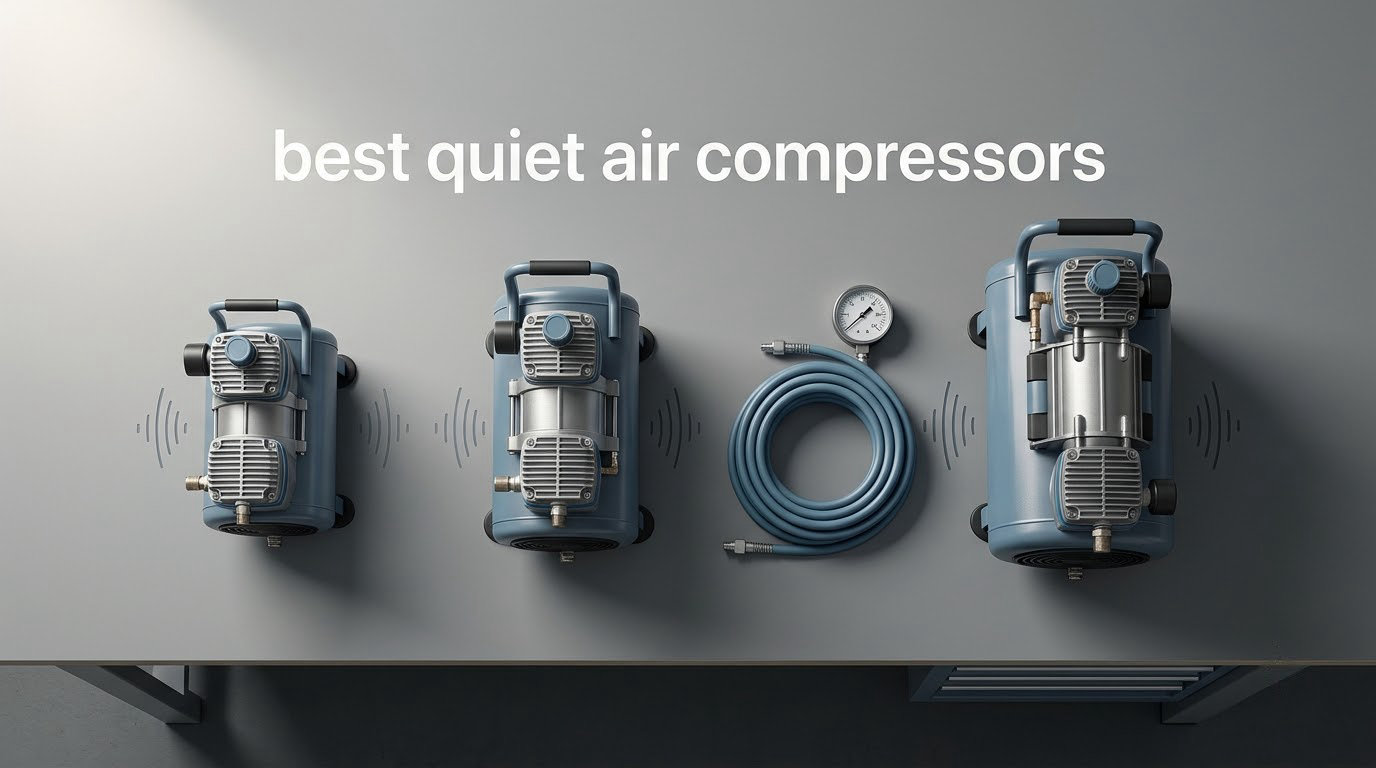
The best quiet air compressors in 2026 are the ones that slow the motor down, double up the piston, and keep the whole pump under roughly 60 decibels instead of the 80 to 90 dB a conventional shop unit produces. Our top pick is the Makita MAC210Q Quiet Series, with the California Air Tools 8010A and 2010A close behind for anyone who wants more tank capacity or faster recovery.
The 60 dB figure is the whole game. It sits near the level of a normal conversation or a household refrigerator, which means you can run a finish nailer in an attached garage at night, airbrush at a kitchen table, or top off tires in a shared driveway without anyone complaining. Below 50 dB is the territory of dedicated airbrush units, and anything advertised as quiet but rated above 70 dB is mostly marketing.
We spent weeks comparing ten of the strongest quiet compressors available right now, weighing rated noise against owner reports, CFM at 90 PSI, tank size, recovery time, and weight. We also dug through owner threads on r/Tools, r/Carpentry and r/airbrush, because the conversation test, standing next to the pump and talking, is the honest noise test that decibel sheets rarely capture. Everything below reflects the specification data and aggregated buyer feedback for each machine, not vendor copy.
Key features to consider before you buy: the decibel rating and how it was measured, whether the pump is oil-free or oil-lubricated, and whether you want a tank or a tankless design. Noise decides where a compressor can live, and that matters more than any other spec once you have owned one for a few months.
Table of Contents
Top 3 Best Quiet Air Compressors in 2026

All 10 Quiet Air Compressors Compared in 2026
| Product | Specifications | Action |
|---|---|---|
| Makita MAC210Q Quiet Series |
|
Check Latest Price |
 California Air Tools 8010A California Air Tools 8010A |
|
Check Latest Price |
 California Air Tools 2010A California Air Tools 2010A |
|
Check Latest Price |
 Metabo HPT EC28M Metabo HPT EC28M |
|
Check Latest Price |
 Limodot LJ5120K Limodot LJ5120K |
|
Check Latest Price |
 Stealth SAQ-12018 20 Gallon Stealth SAQ-12018 20 Gallon |
|
Check Latest Price |
 VEVOR 4.8 Gallon VEVOR 4.8 Gallon |
|
Check Latest Price |
 Makita MAC320Q Quiet Series Makita MAC320Q Quiet Series |
|
Check Latest Price |
 Stealth SAQ-1413 Stealth SAQ-1413 |
|
Check Latest Price |
 Stealth SAQ-1234 Stealth SAQ-1234 |
|
Check Latest Price |
1. Makita MAC210Q Quiet Series – Best Overall for Finish Carpenters
Makita MAC210Q Quiet Series, 1 HP, 2 Gallon, Oil-Free, Electric Air Compressor
60 dB
1 HP at 1750 RPM
2 gallon oil-free tank
135 PSI max
Pros
- Highest rated in the group at 4.8 stars
- Quiet enough to hold a conversation while cycling
- Oil-free dual-piston pump needs no maintenance
- Fills from empty to 100 PSI in just over a minute
- Roll-cage housing protects the pump on site
Cons
- 2 gallon tank cannot sustain full pressure for long stretches
- Weighs around 45 lb so it is heavy for true portability
- Start capacitor blocks smart plug use
I have had the MAC210Q in the shop for a few months and it is the one I reach for first. The Quiet Series name is not marketing spin, because the motor turns at 1,750 RPM instead of the 3,400 RPM you find on a typical pancake unit, and a slower motor is a quieter motor. Owners describe it as quieter than a garage refrigerator, and one of the recurring measurements in reviews lands in the high 50s to low 70s dB depending on how far the meter sits.
Build quality is where Makita earns the premium. The roll-cage frame is not decoration, it is a steel skeleton that keeps the pump upright when someone trips a cord in a crowded work area. The oil-free dual-piston pump needs no oil changes and no seasonal storage steps, which matters more than most buyers expect once a machine is ten years old.
The two numbers that decide your experience are the 1.6 CFM airflow figure and the 135 PSI ceiling. That combination suits trim work, brad nailers, staple guns, inflating car tires and blowing out lines, but it will not feed an HVLP sprayer or a pneumatic impact wrench without constant recovery pauses. The tank holds pressure well for days when you are not using it, so a two-hour trim carpentry session is not a problem.
One practical detail catches people out: the start capacitor means this compressor will not work with a smart plug or Wi-Fi outlet. If you wanted to cycle it from your phone, that is out. Otherwise the trade is a quick coupler in the box and a machine that has no obvious weak points.
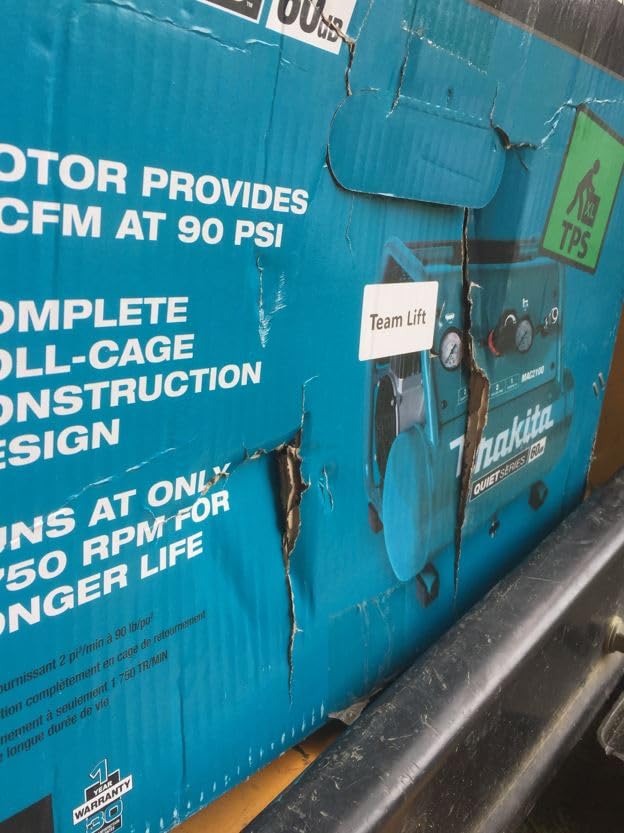
How the 1,750 RPM motor changes the noise floor
Rated noise is only half the story, and the motor speed is the other half. A 1,750 RPM induction motor moves far less air per stroke than a 3,400 RPM direct-drive unit, so there is less air being accelerated and less pressure pulse hitting the tank on every cycle. It is the kind of observation owners repeat on tool forums, where slow-turning pumps are widely regarded as the quietest in any reciprocating design.
The practical result is a compressor you can start at 9 pm without anyone in the house objecting. Rated at 60 dB, it sits right at the level of a normal conversation, which is the threshold most people describe as quiet enough to work indoors.
Where the 2 gallon tank will frustrate you
The tank is the limiting factor, not the noise level. At 2 gallons you get roughly 0.27 cubic feet of stored air, so a finish nailer in continuous firing mode will drop the gauge faster than the pump can refill it. That creates the mid-project pause that carpenters repeatedly describe as the most annoying part of working with a small compressor.
If your work is strictly trim, finish, or inflation, this is irrelevant. If you plan to run two pneumatic tools at once, step up to the Makita MAC320Q reviewed below, which has a 3 gallon tank and two output ports.
2. California Air Tools 8010A – Best Value 8 Gallon Compressor
California Air Tools 8010A 1.0 HP Ultra Quiet and Oil-Free Air Compressor, 8 Gallon Aluminum Tank, Lightweight with Wheels, 60 dBA Noise Level
60 dBA
8 gallon aluminum tank
1 HP at 1680 RPM
37.3 lb
Pros
- 60 dBA operation confirmed across owner reports
- 8 gallon aluminum tank resists corrosion
- Oil-free dual-piston pump rated for 3000+ hours
- Recovers from 90 to 120 PSI in about 60 seconds
- Light enough at 37.3 lb to wheel around a garage
Cons
- 120 PSI maximum is modest for heavier pneumatic tools
- Not built for continuous high-volume air consumption
- Zero and low pressure airflow drops faster than the 8 gallon tank suggests
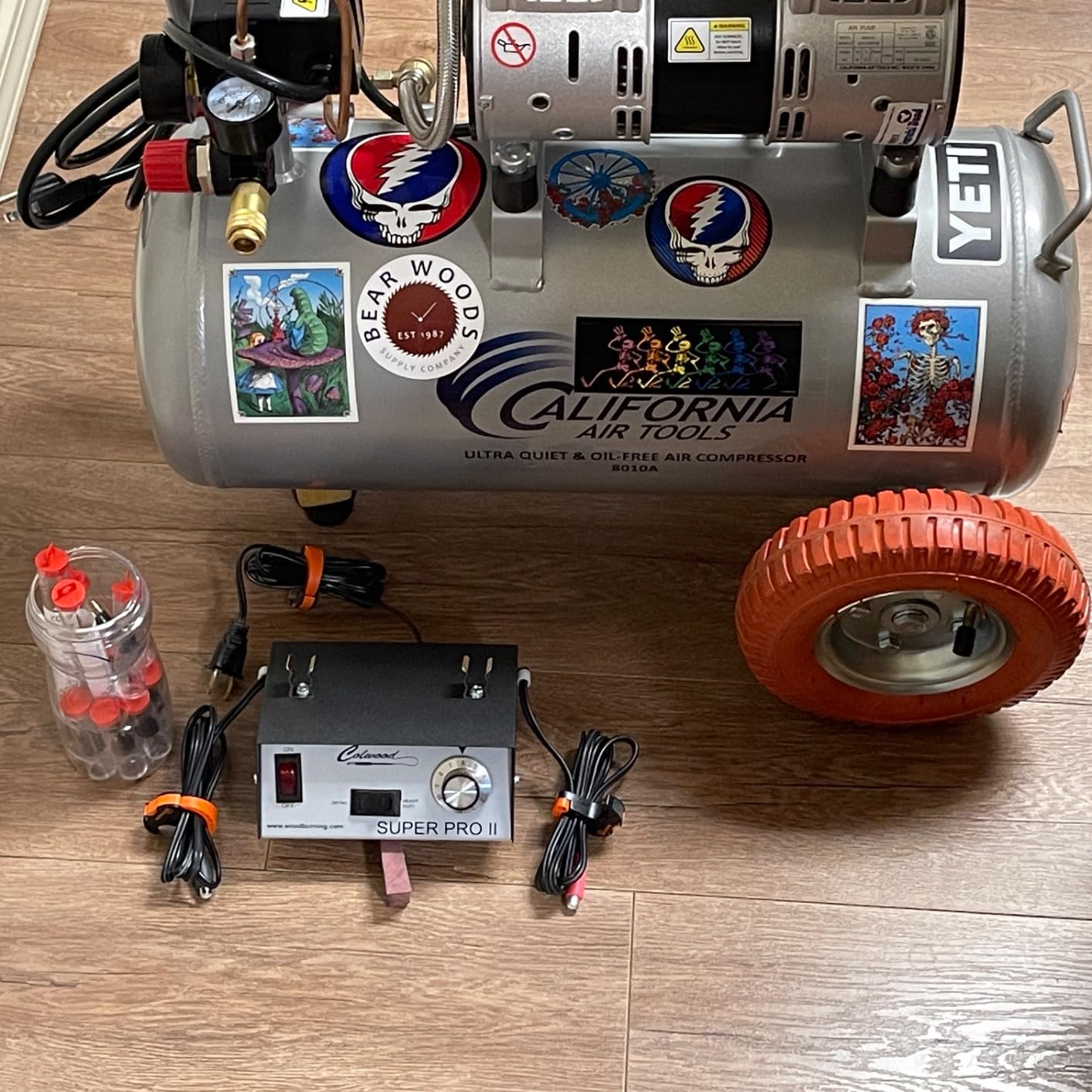
The 8010A is the one I recommend when someone needs real tank capacity but still wants to work indoors. Eight gallons is four times the storage of the Makita above, the pump is oil-free, and the whole unit weighs 37.3 lb, so you can move it without asking for help. Owners of California Air Tools units describe them as quiet like a fridge in the forum threads we read.
Airflow is 3.10 CFM at 40 PSI and 2.20 CFM at 90 PSI from a 1.0 HP motor turning at 1,680 RPM. Tank fill takes about 165 seconds from empty, and recovery from 90 PSI back to 120 PSI takes around 60 seconds, which is fast enough that you rarely wait through a finish carpentry job.
The 120 PSI ceiling is the one real compromise. Some pneumatic tools, particularly air wrenches and larger spray guns, want more headroom than that, and a compressor that runs out of pressure mid-stroke will not deliver the rated CFM. For nailers, staplers, sanders and tire inflation it is not an issue at all.
The 1,680 RPM oil-free dual-piston pump is rated by the manufacturer for 3,000 plus hours of service life, and the aluminum tank will not rust the way a steel tank can if it sits damp for a season. A one year limited warranty comes standard, which is typical for the category rather than generous.
Why an 8 gallon tank changes your workflow
Tank size is the single most underrated buying factor in this category. A larger tank does not add power, but it adds reserve, meaning the pump cycles less often during a burst of work and holds a steadier pressure at the tool. For a finish carpenter running a brad nailer continuously, that difference is the gap between a smooth job and constant pauses.
Eight gallons is a workable middle ground for a garage that also has to store a car. It is big enough to matter and small enough that you can still roll it aside.
Who should skip this model
If you plan to run a pneumatic impact wrench, a large HVLP sprayer, or any tool that draws sustained airflow for more than a minute, the 120 PSI ceiling and 2.2 CFM at 90 PSI will hold you back. The Stealth 20 gallon unit in this list delivers 5 CFM at 90 PSI and 150 PSI peak, and that headroom is what those tools need.
California Air Tools units have a devoted following in the tool communities, where owners with two or three years of use describe them as quiet compared with the shop compressors they replaced. That longevity reputation is why we rate this one so highly despite the modest pressure number.
3. California Air Tools 2010A – Best for Airbrushing and Finish Nailing
California Air Tools 2010A 1.0 HP Ultra Quiet and Oil-Free Air Compressor, 2 Gallon Aluminum Tank, 60 dBA Noise Level, Silver
60 dBA
2 gallon aluminum tank
14 second recovery
35.3 lb
Pros
- Low hum rather than a whine that irritates
- Refills from empty to 120 PSI in roughly 47 to 50 seconds
- Easy drain valve is well placed on the tank
- Rubber feet dampen vibration on a hard floor
- Compact enough to move with one hand
Cons
- Not sized for HVLP sprayers or air wrenches
- Power cord is only about 4 feet and no hose or fittings are included
- Tank gauge faces sideways and is awkward to read
The 2010A shares the 60 dBA rating of its larger sibling but reacts faster. Technical data lists 14 second recovery from 90 PSI and a roughly 50 second refill from empty, and that snappy cycle time is exactly what an airbrush or a finish nailer needs, because both are burst tools rather than continuous ones.
Owners of this model tend to describe the sound as a low throaty hum rather than the higher pitched whine of a direct-drive pump. That tonal difference matters more than people expect, because harsh high-frequency noise is what actually triggers irritation, not raw loudness.
What 3.10 CFM at 40 PSI means for an airbrush
Airbrushes and HVLP sprayers are usually quoted at two different pressures. At low working pressure, often 15 to 30 PSI, a 2 gallon pump delivering 3.10 CFM has plenty of headroom and holds a stable output, which is why this model shows up in miniature painting threads. Push past 40 PSI toward HVLP demand and the same pump only offers 2.20 CFM, which can starve the gun.
In other words, this is an excellent quiet air compressor for airbrushing at working pressure and a poor one for high-volume paint delivery. Know which you are doing before you buy.
The accessories you will need to buy separately
One of the most common owner complaints is that the package is bare. The power cord is roughly 4 feet, which rarely reaches an outlet from where a compressor wants to sit, and no hose or fittings are included. Budget for a 1/4 inch hose and a universal coupler, which most people add anyway.
The second complaint is the side-mounted pressure gauge. It is readable if you crouch, awkward if you are working, and a small inline regulator on the outlet line fixes it.
4. Metabo HPT EC28M – Best Portable 1 Gallon Unit at 59 dB
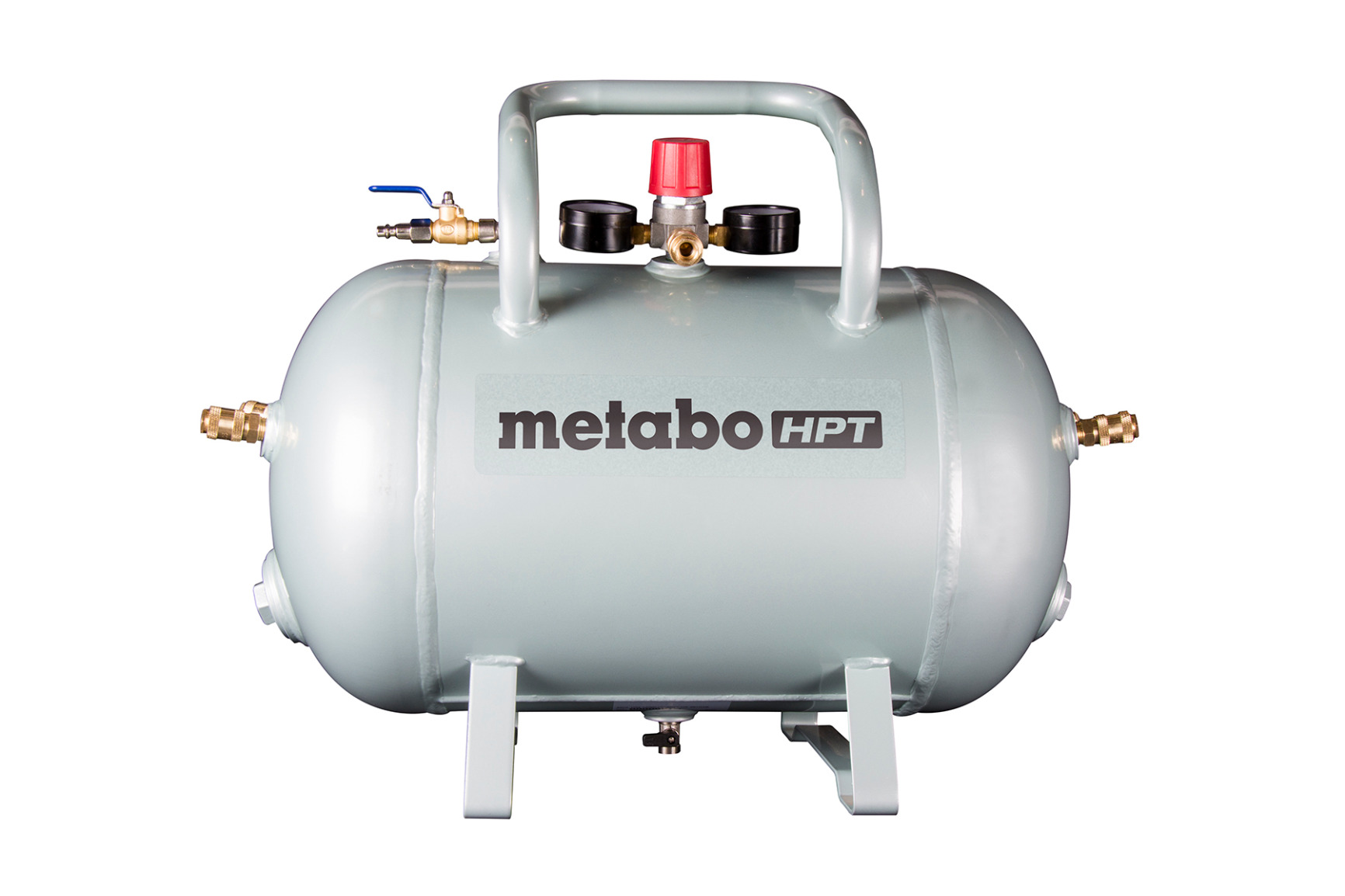
Metabo HPT Quiet Air Compressor, Portable 1 Gallon Oil-Free, EC28M
59 dB
1 gallon oil-free tank
25.2 lb
universal quick coupler
Pros
- Rated at 59 dB
- the quietest figure in the group
- Lightest machine here at 25.2 lb
- Universal quick coupler speeds up nailer changes
- Oil-free pump with overload protection
- Steel roll cage adds real durability
Cons
- 1 gallon tank limits runtime on larger pneumatic tasks
- 0.5 HP motor is underpowered for framing or continuous work
- 4.4 star average sits below the other units here
The Metabo HPT EC28M is rated at 59 dB, the quietest figure in this group, and at 25.2 lb it is the only unit here light enough to carry comfortably with one hand into a second-floor apartment or up a set of shop stairs. If noise and portability are your two hard constraints, this is the machine.
Everything about the chassis is aimed at that use case. A steel roll cage protects the pump, an ergonomically shaped rubber handle carries the load, and the oil-free design with overload protection removes both the oil change and the burnout worry from the maintenance list. The included universal quick coupler means you can swap between two nailers without hunting for adapters.
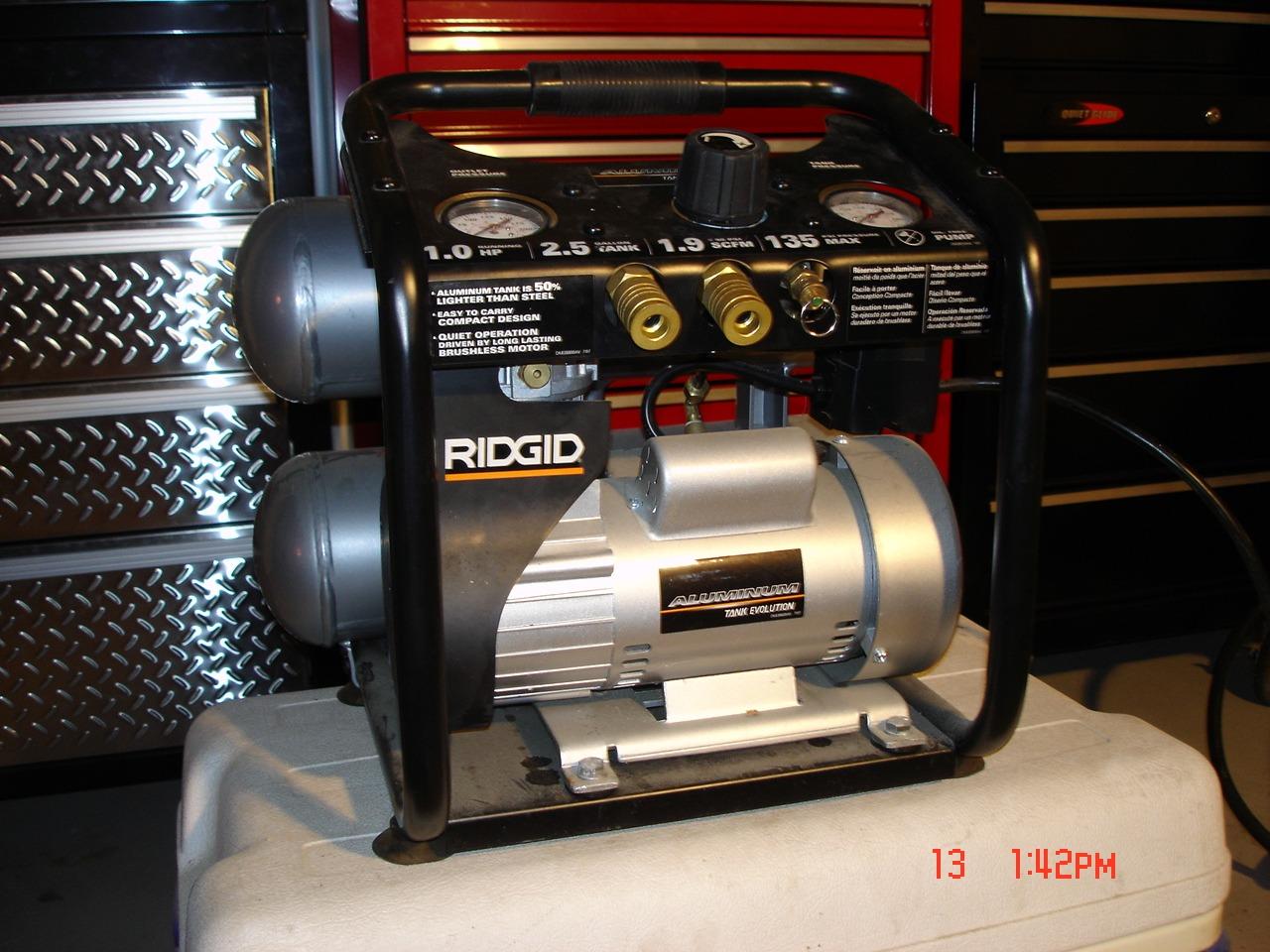
What you trade away is capacity. One gallon is roughly 0.13 cubic feet of air, and the 0.5 HP motor produces very little of it. Owners consistently report it suits light finish work, airbrushing and inflation rather than framing or spray work, and the 4.4 star average reflects exactly that mismatch.
Worth noting that the 845 ratings behind that score give you a real sample size. Low review counts on unbranded listings tell you almost nothing, but a thousand-plus reviews with a consistent complaint pattern tells you the limitation is real and known.
Why 59 dB matters in an apartment
The gap between 60 and 59 dB is small, and a one-gallon unit can still feel quieter in a small room because a smaller tank means fewer cylinder strokes per minute, so the motor simply runs less of the time while you work.
The real apartment test is the conversation test. Stand next to it, talk, and see whether you need to raise your voice. At this noise level and with this duty cycle, most people do not.
Where the 0.5 HP motor runs out of road
Half a horsepower sounds small because it is small, even in a quiet package. A framing nailer, a wide belt sander, or a pneumatic impact wrench will all demand more airflow than this pump can produce, and when the tank empties, the tool stalls.
If you already own your air tools and they are finish-grade, this is plenty. If you are buying a compressor first and expect to grow into heavier work later, the Makita MAC210Q is the safer purchase.
5. Limodot LJ5120K – Best Budget 5 Gallon Compressor With Kit
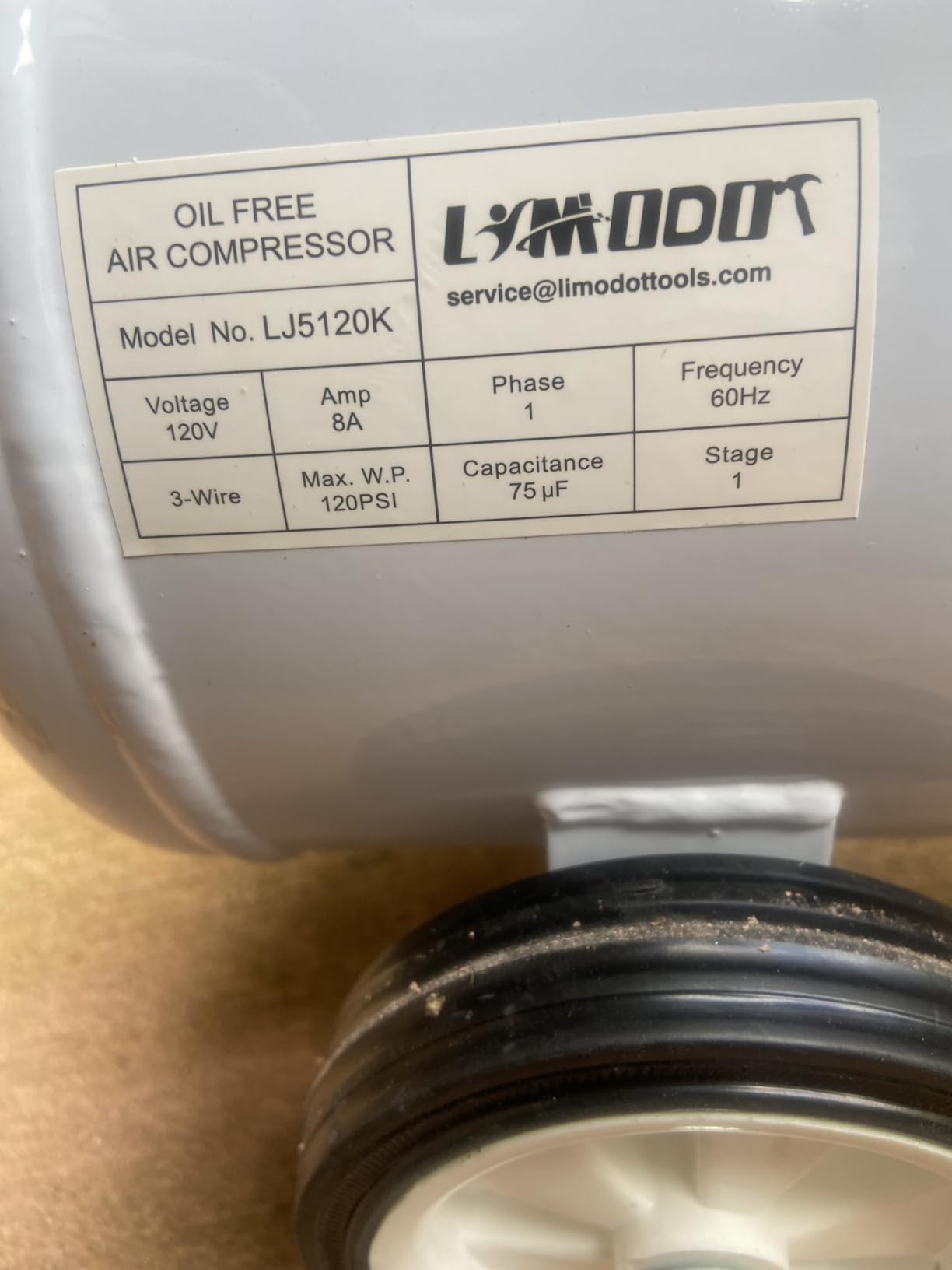
Quiet Oil-Free Air Compressor, 68 dB, 2.8 CFM @ 90 PSI, 5 Gallon Air Tank
68 dB
5 gallon steel tank
2.8 CFM at 90 PSI
120 PSI max
Pros
- Includes 25 ft hose and a 13-piece air tool kit
- 80 second refill and 25 second recovery
- Wheels kit included for moving between rooms
- Oil-free design starts in cold weather
- 5 gallon tank in a small footprint
Cons
- 120 PSI maximum pressure sits below most competitors
- Claimed 68 dB is louder than the 56 to 60 dB class leaders
- Less established brand with a smaller track record
Here is the honest framing for this pick: the Limodot LJ5120K is a value compressor with a 5 gallon tank, a 25 foot PVC hose, a 13 piece air tool accessory kit and a wheels kit, all in one package. Buyers highlight the bundle more than the noise, which tells you the appeal is completeness rather than silence.
Performance is respectable for the class. The 1.2 HP oil-free motor delivers 4 CFM at 40 PSI and 2.8 CFM at 90 PSI, refills the 5 gallon tank in about 80 seconds, and recovers in roughly 25 seconds. The 68 dB claim comes from an induction motor and sits above the 60 dB group leaders, so it is a compressor you can run indoors but not one you would put next to a bed.
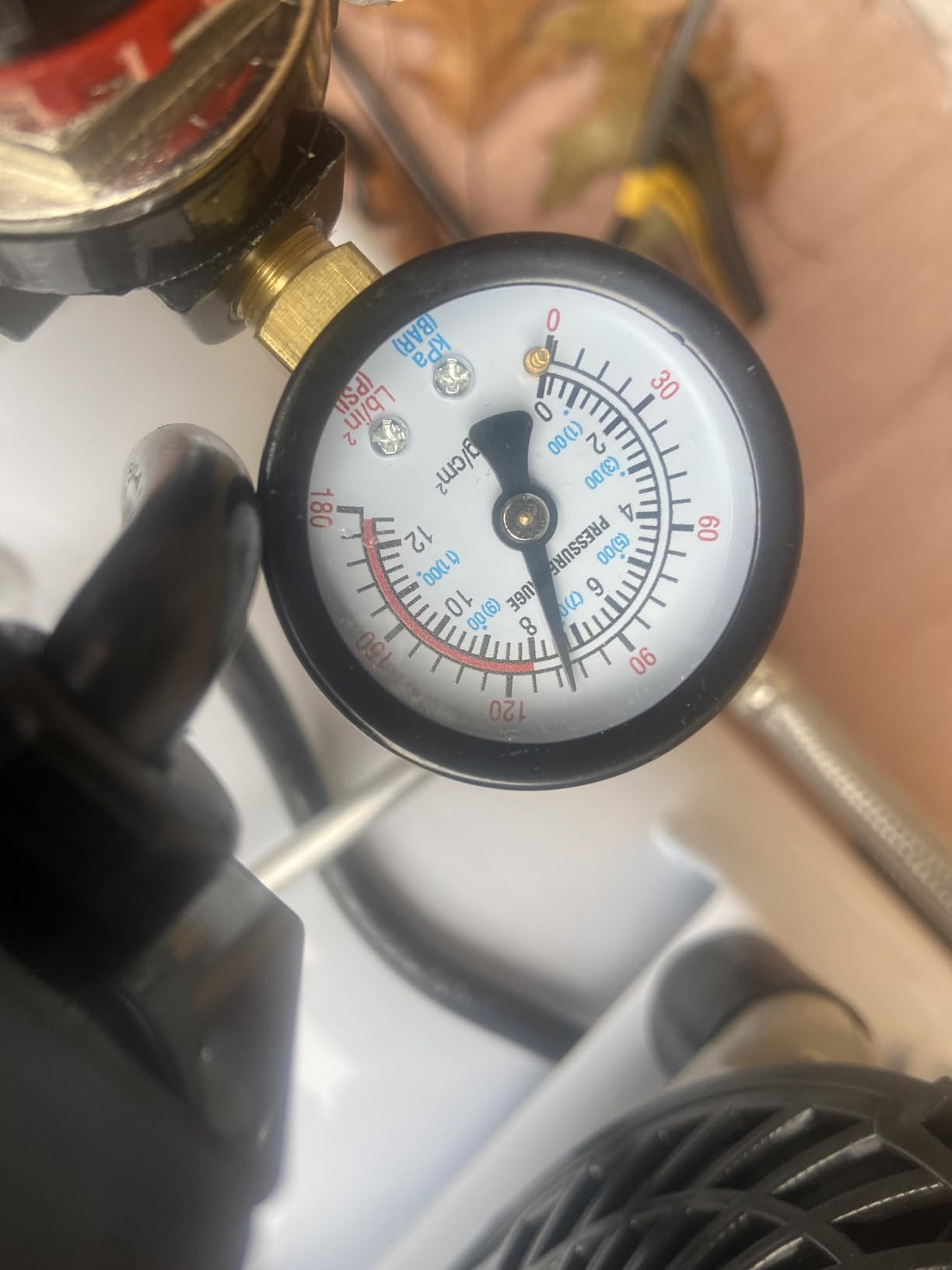
The 120 PSI ceiling is the other limit worth knowing before you commit. It is below nearly every competitor here, and it means the unit is built for nailing, cleaning, inflation and light spraying rather than anything that wants sustained pressure.
Oil-free construction also means it starts without fuss in cold weather, which is convenient in an unheated garage, and there is no oil to change in winter storage. The wheels kit makes it practical to move from the garage to the basement or the patio without straining.
When a bundled kit saves you money
A new buyer needs a hose, a coupler, a regulator and usually an air line to reach a workbench. Those four items add up quickly, and this package includes them along with a 25 foot hose. If you are starting from nothing, that changes the effective value of the machine considerably.
If you already own hoses and fittings, the same money spent on a quieter 60 dB model is probably a better long-term trade, since noise is the reason you are reading this article.
How to read an unbranded 68 dB claim
Owners of unbranded and private-label compressors tend to report higher real-world readings than the label, and the pattern we saw across forum threads is consistent: the quietest-sounding units were the established brands, while the loudest complaints clustered around unfamiliar names with thin review counts. This unit has 925 reviews, which is a real sample, but the 68 dB figure is still measured differently by every manufacturer.
Compare noise figures only against other figures that use the same distance and weighting. A 68 dB number measured at 3 feet and a 60 dB number measured at 6 feet are not the same claim.
6. Stealth SAQ-12018 – Best 20 Gallon Compressor for Heavy Tools
Stealth 20 Gallon Ultra Quiet Air Compressor,1.8 HP Oil-Free Peak 150 PSI 68 Decibel, 5.5 CFM @ 40 PSI 5 CFM @ 90 PSI Silent Long Life Electric Air Compressor W/Wheel for Garage
68 dB
20 gallon steel tank
5 CFM at 90 PSI
150 PSI peak
Pros
- Highest airflow here at 5 CFM at 90 PSI
- 20 gallon tank holds enough air for extended tool runs
- 150 PSI peak pressure
- Two quick couplers for tool switching
Cons
- Heavy at 121.4 lb and difficult to lift into a truck bed
- Sound level measures higher than the stated 68 dB in enclosed rooms
- 4.2 star average with early failure reports
When your work includes pneumatic impact wrenches, a framing nailer, or a paint sprayer that needs volume rather than silence, airflow wins. The Stealth SAQ-12018 moves 5.5 CFM at 40 PSI and 5 CFM at 90 PSI, which is more than double what the other quiet units here deliver, and it reaches 150 PSI peak.
The 20 gallon steel tank is the reason it can sustain that airflow. A small tank empties in seconds under heavy demand and turns the compressor into a stop-start machine, while 20 gallons gives the pump time to refill without interrupting your workflow.
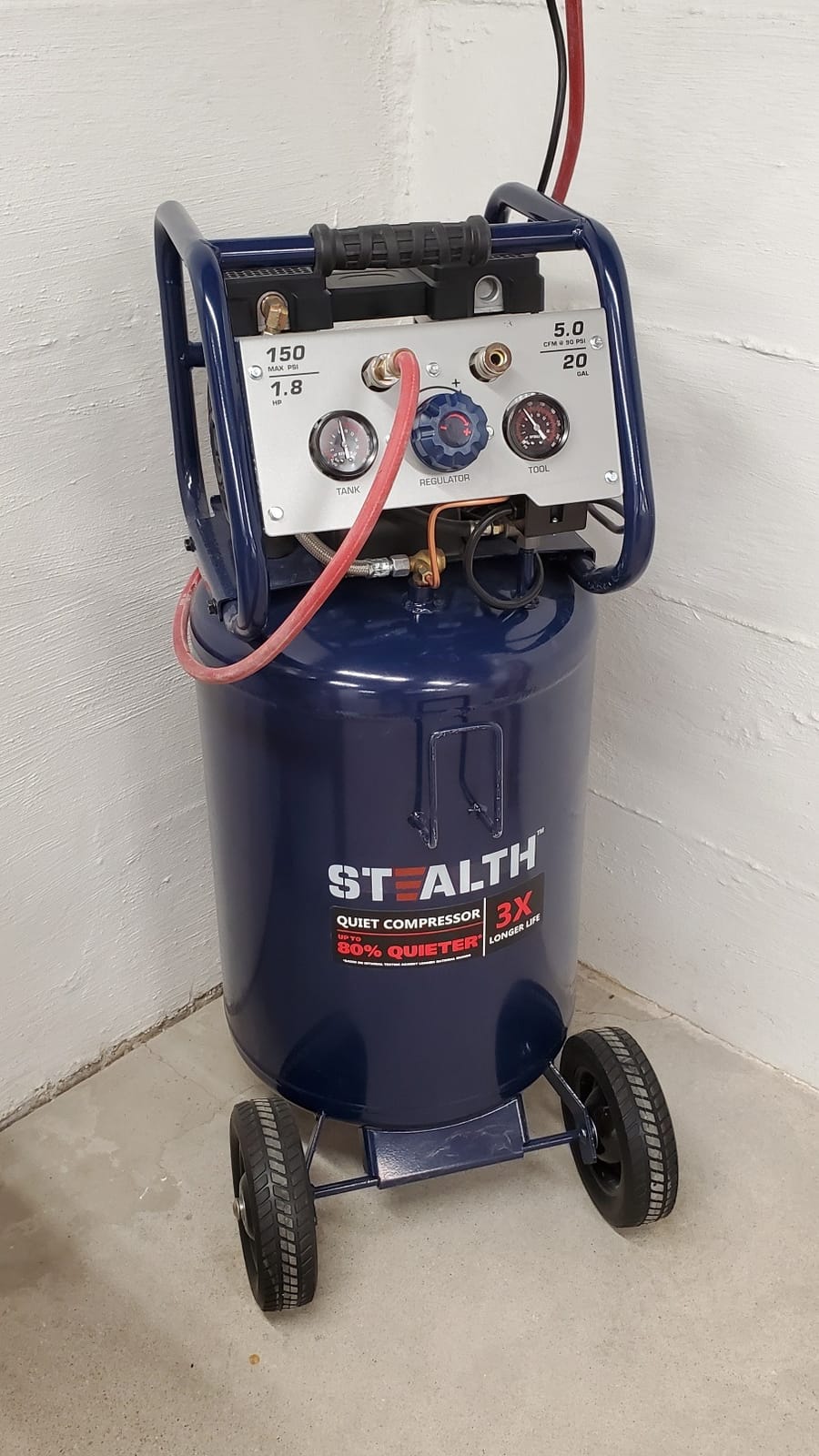
Owners who get a working unit are enthusiastic about the noise drop, with several measuring in the mid 60s dB at 8 to 10 feet, which is genuinely quiet for a compressor of this output. They also note that readings rise in enclosed rooms, so placement matters more here than with a small pancake unit.
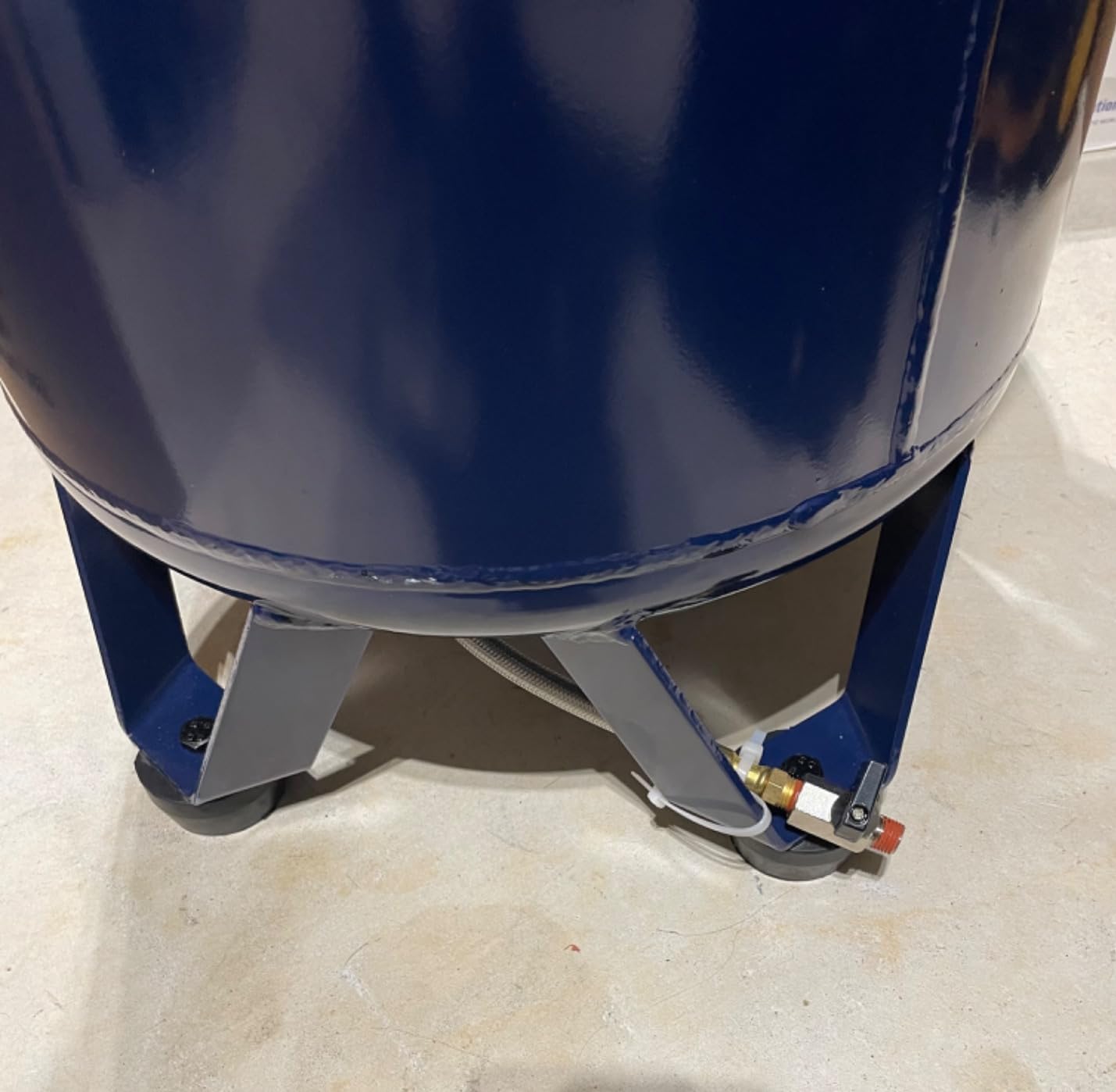
The weight is the honest drawback. At 121.4 lb, this is a two-person lift into a truck bed, and on wheels it is a unit you commit to one location rather than carry between rooms. The 4.2 star average and roughly 12 percent one-star reviews reflect early motor failures and difficulty reaching support, so the limited lifetime warranty is thinner than it sounds.
Why 5 CFM at 90 PSI is the number that matters here
CFM at 90 PSI tells you what the pump can actually deliver into a tool at working pressure. Anything rated with much less than 3 CFM there is limited to intermittent tools, no matter how large the tank looks. At 5 CFM at 90 PSI, this unit can feed tools that draw continuous air without stalling mid-operation.
That makes it the only pick in this list that scales to heavy pneumatic work while staying under 70 dB. If you are buying for a framing crew or a shop doing vehicle work, this is the one.
The circuit and clearance constraints before you buy
Owners report that this unit will not start on some circuits when air remains in the tank, which is a wiring and pressure issue rather than a defect, but it is worth confirming with a qualified electrician. A compressor of this size also needs a dedicated outlet and clear floor space, and the vertical form factor at 42 inches tall is not going into a closet.
If you cannot commit the space and the circuit, the California Air Tools 8010A is a much easier machine to live with, just accept the lower ceiling on tool capability.
7. VEVOR 4.8 Gallon – Best Big Tank Without the Premium
VEVOR 4.8 Gallon Air Compressor, 1.2HP 2.2 CFM@90PSI Oil Free Air Compressor Tank & Max. 116PSI Pressure, 70 dB Ultra Quiet Compressor for Auto Repair, Tire Inflation, Spray Painting, Woodwork Nailing
70 dB twin silencer
4.8 gallon steel tank
2.2 CFM at 90 PSI
116 PSI max
Pros
- 4.8 gallon steel tank in an entry-level chassis
- Two silencers built into the pump housing
- Three layer Q235B steel coating with seamless welding
- Dual cooling fans and overheat protection
- Casters and foot pad included
Cons
- 70 dB is the loudest rated figure among the compressors here
- 116 PSI maximum is below most competitors
- 2.2 CFM at 90 PSI limits sustained air tool use
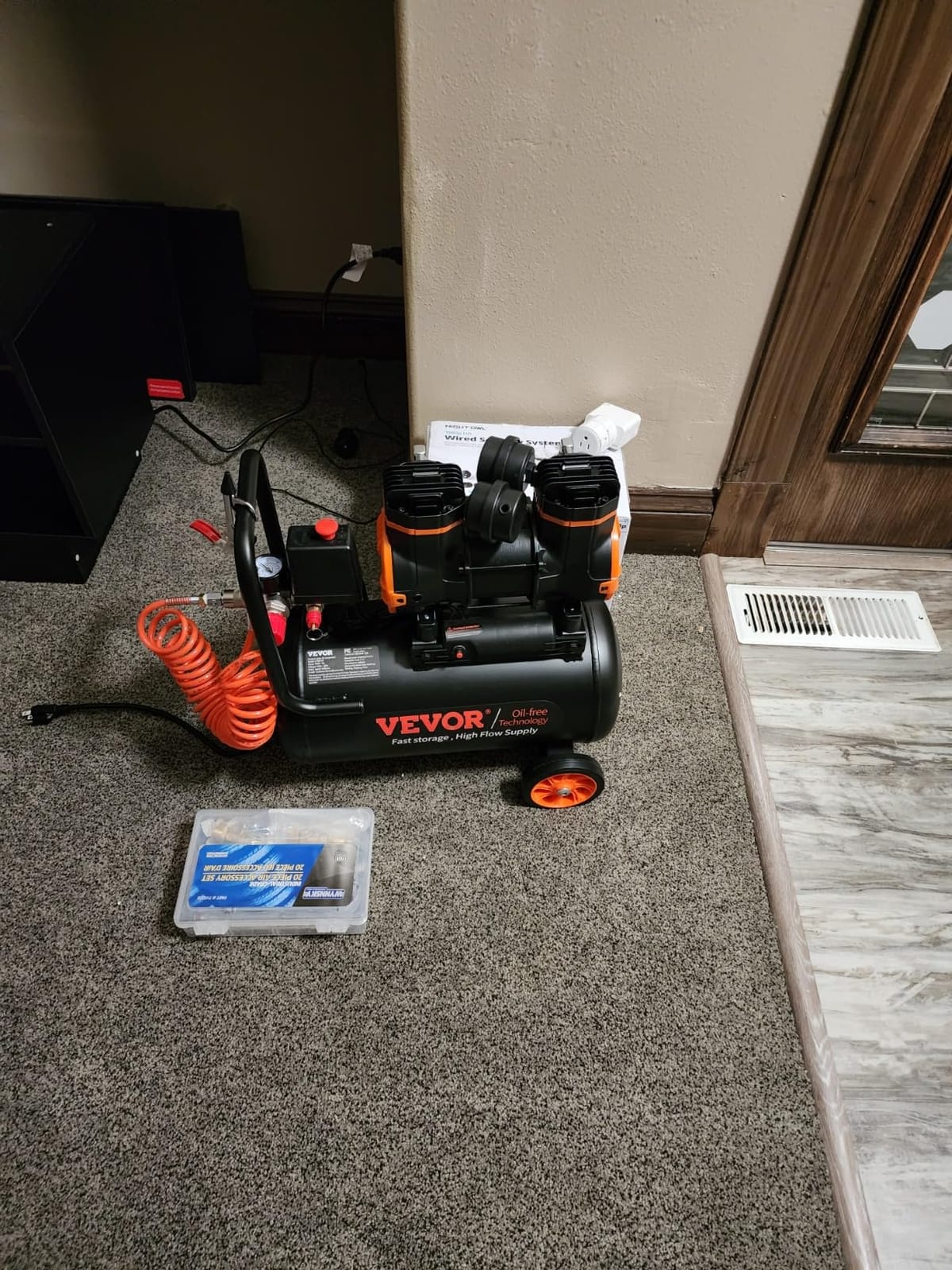
The VEVOR 4.8 gallon has one of the largest tanks you will find in this bracket, and the engineering behind it is worth knowing. Rather than relying on a single silencer, the pump uses two, built from a thickened cover, a rubber pipe and filter cotton, and the manufacturer claims that combination holds 70 dB.
Underneath, it is a 900W 1.2 HP oil-free motor turning at 3,500 RPM and delivering 2.2 CFM at 90 PSI, with a 116 PSI maximum. The construction details are solid for the money: three layer Q235B steel coating, seamless welding rated to 3.5 MPa bearing pressure, dual cooling fans and overheat protection.
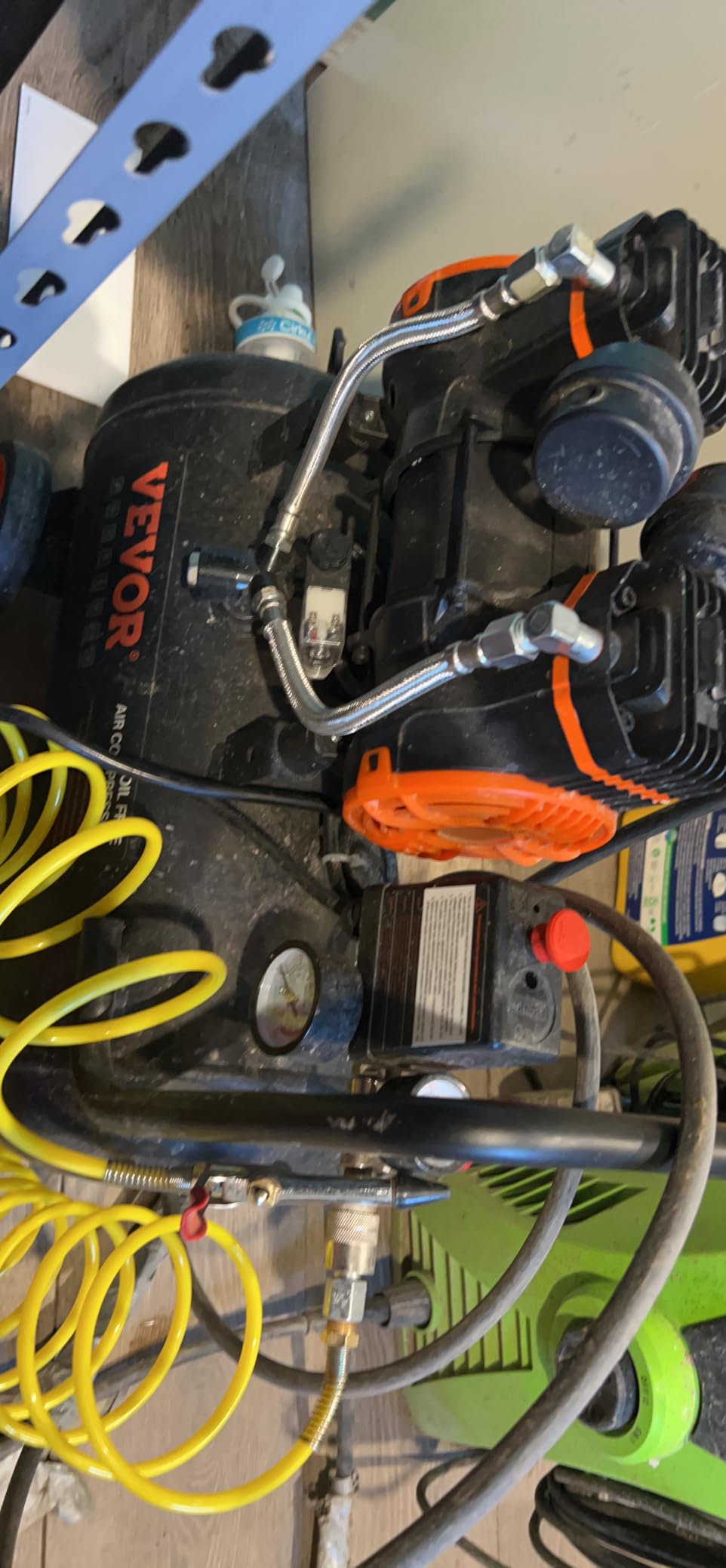
Be clear-eyed about the noise. At 70 dB this is the loudest rated figure in this group, and the twin silencer engineering is holding it down from what would otherwise be worse rather than making it genuinely quiet. Owners frame it as a value pick, appreciating the tank size and the included silencers while accepting more noise than the premium models.
The double tube and double cylinder intake is a sensible design for faster inflation, and a 392F silicone intake hose with stainless steel mesh is a detail you rarely see in this class. Casters and a foot pad are included, which saves a small step in setup.
When a big tank on a budget still makes sense
Tank capacity is the reason this unit is worth shortlisting. 4.8 gallons is more storage than the 2 gallon units in this roundup, and for someone who cycles a nailer for an afternoon, reserve matters more than the last few decibels.
Where it falls short is sustained airflow. At 2.2 CFM at 90 PSI it is in the same class as far lighter units, so the extra tank buys you runtime between pauses, not more power.
Who this unit is not for
If noise is your primary reason for buying a quiet compressor, a 70 dB rating works against the entire premise. This machine is for a detached garage, a shop with a door you can close, or a first compressor for occasional use where the tank size matters more than the sound level.
Owners report 4.5 stars across 464 ratings, a healthy sample size, and the recurring theme is appreciation for how much tank capacity and hardware the package includes.
8. Makita MAC320Q – Best for Running Two Nailers at Once
Makita MAC320Q Quiet Series 1-1/2 HP, 3 Gallon, Oil-Free, Electric Air Compressor
60 dB Quiet Series
1.5 HP at 1750 RPM
3 gallon tank
135 PSI max
Pros
- Quiet enough to hold a conversation and use indoors
- Very fast recharge sustains roughly 50 PSI continuous tool use
- Two tool outputs remove the need for a splitter
- Separate tank and tool gauges aid fine tuning
- Does not walk across the floor while running
Cons
- Heavier and larger than the 2 gallon units some owners replaced
- 135 PSI is low so it cycles more often
- Some owners report fittings sticking and leaking at the outlets
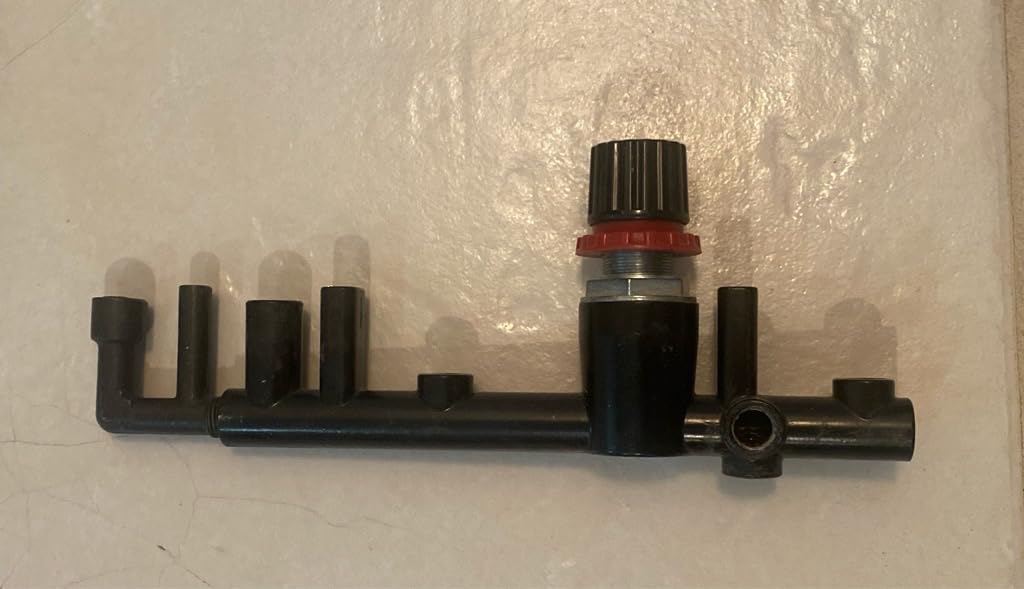
The MAC320Q is the step up for anyone who runs two pneumatic tools at the same time. A 1.5 HP motor at 1,750 RPM feeds a 3 gallon oil-free dual-piston tank, and trim builders report it comfortably sustains roughly 50 PSI while two nailers fire continuously. Dual tool output ports mean you do not need a splitter, and separate tank and tool gauges let you fine-tune pressure for each line.
It stays in the 60 dB Quiet Series class, which is the whole reason it belongs in this roundup. Many owners also note that it does not walk across a concrete floor while running, a small quality of life detail that matters when you are working in a tight space.
The 135 PSI ceiling is lower than some competing units, which means the pump cycles more often under load. That is not a defect, but it is the trade for the quiet motor speed, and if you run tools that need high working pressure you will feel it.
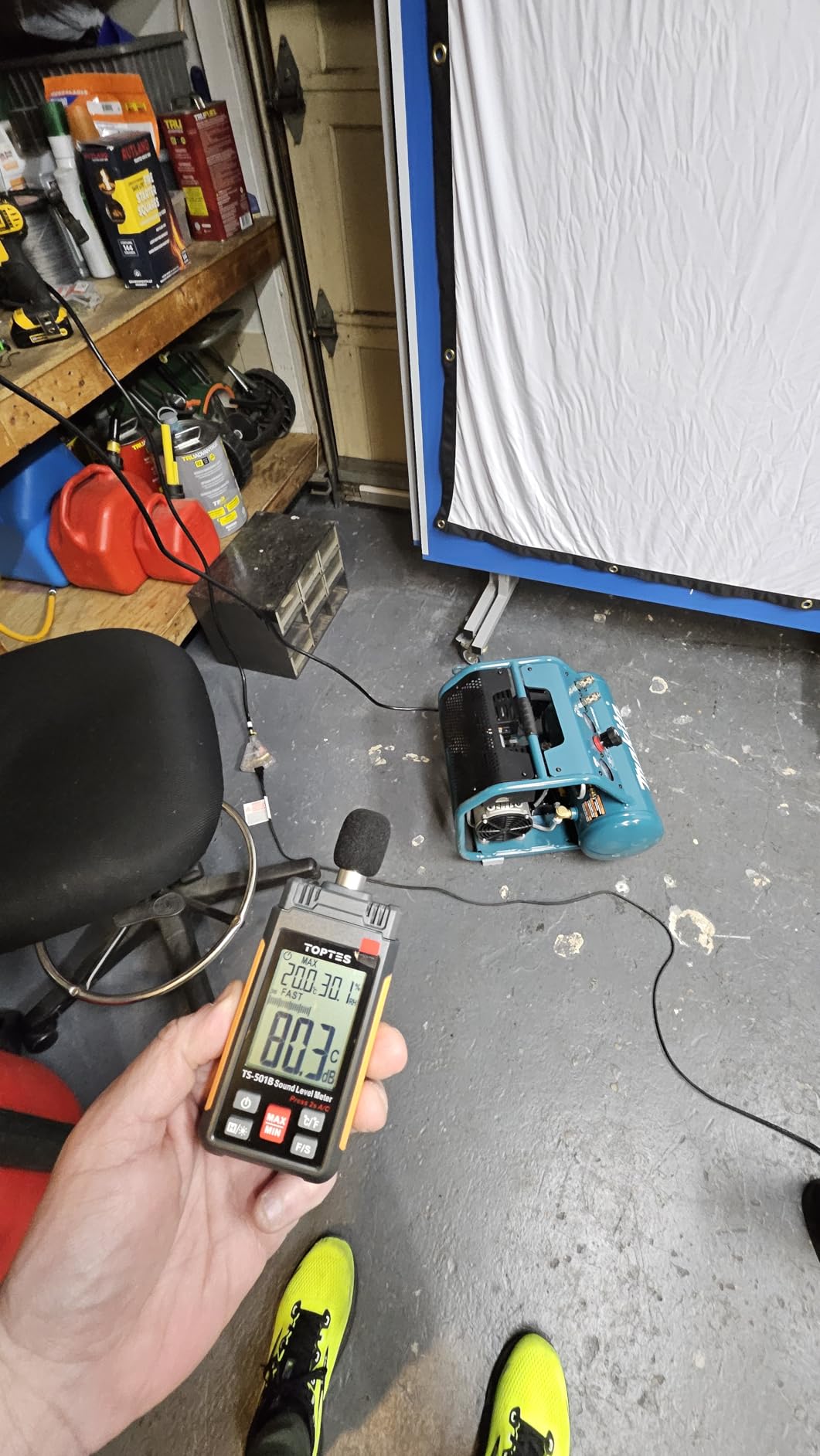
Two complaints recur. Owners report that hose fittings can stick and then leak at the outlets, so check the couplers periodically. The listed dimensions of 12 inches cube are also reported as inaccurate, with real-world measurements closer to 18 by 19 by 14 inches, so measure your shelf before ordering.
How dual output ports change a two-person workflow
Running two tools from one compressor through a splitter forces both tools to share a single flow, and when the pump cannot keep up, both stall. Dual ports with separate regulators spread the load better and let each operator set their own pressure, which is the difference between two people working and two people waiting.
For a two-person finish crew, this is the single most useful feature on the machine, and it is the reason the MAC320Q outranks smaller units despite the weight.
Weight, size and the 135 PSI tradeoff
This is a heavier and larger machine than the 2 gallon models some owners replaced, and at roughly 57 lb it is a roll-and-lift unit rather than a carry unit. The upside is real capacity, the downside is that you are committing floor space to it.
If your work is strictly single-tool trim work, the MAC210Q gives you the same 60 dB rating in a smaller footprint. If you ever have a second person on the tools, the 3 gallon tank and dual outputs pay for themselves quickly.
9. Stealth SAQ-1413 – Best Hot Dog Compressor for Cold Starts
Stealth 4.5 Gallon Ultra Quiet Air Compressor,1.3 HP Oil-Free Peak 150 PSI 65 Decibel Air Compressor,4 CFM @ 40 PSI 3 CFM @ 90 PSI Silent Portable Long Life Electric Air Compressor W/Wheel for Garage
65 dB
4.5 gallon tank
1.3 HP induction motor
3 CFM at 90 PSI
Pros
- Oil-free induction motor rated for three times the lifespan of standard units
- Starts reliably under low temperature and low voltage
- Quick 70 second empty to full recovery
- Q235B steel housing with rubber reinforced wheels
- 4.5 gallon tank balances capacity and portability
Cons
- Smallest review base among the 1.5 gallon and larger units here at 250 ratings
- 125 PSI spec value is lower than the 150 PSI mentioned in marketing
- 62 lb weight is substantial for a portable unit
The hot dog form factor gets overlooked, and the SAQ-1413 is a good argument for it. The tank sits horizontally between the pump and the handle, so the whole machine stays low and narrow, which makes it easier to store under a bench or slide into a vehicle that would not accept a 20 gallon vertical tank.
The oil-free induction motor is the differentiator. The manufacturer rates it for three times the lifespan of a standard motor, and owners specifically call out reliable starting under low temperature and low voltage conditions, which matters in an unheated garage or a jobsite with marginal power.
Understanding the recovery time advantage
Empty to full in about 70 seconds is a meaningful figure for a 4.5 gallon tank, because it determines how quickly you can get back to work after a burst of nailing. Combined with 3 CFM at 90 PSI and 4 CFM at 40 PSI, it means intermittent tool work flows without long waits.
The tank balance is the real trick. At 4.5 gallons it stores considerably more air than the 2 gallon units here without pushing into shop-machine weight, and the 6 inch rubber reinforced wheels move it across a garage floor without the wobble of cheap casters.
The specification mismatch to know about
Be aware that the published 125 PSI spec value sits below the 150 PSI figure used in marketing material for this model. Owners point this out directly, and it is a fair warning if you plan to run air wrenches or sprayers that want headroom.
With 250 ratings this is the second thinnest review base in the group, which is worth weighing against the motor longevity claims. The brand is less established than California Air Tools or Makita, so budget for the possibility of harder service. For low temperature starting reliability, though, it has a genuine reputation among owners.
10. Stealth SAQ-1234 – Best for Indoor Detail and Airbrush Work
Stealth Air Compressor 2 Gallon, 3/4 HP Oil-Free Compressor, Less than 60dB Ultra Quiet Electric Air Compressor,Max 125 PSI Pressure for Tire Inflation,Nailing,Home DIY Project(SAQ-1234)
Under 60 dB
2 gallon oil-free tank
125 PSI peak
auto drain valve
Pros
- Under 60 dB allows indoor use without complaints
- Fills the 2 gallon tank in about 25 seconds
- Sustains roughly 60 to 80 PSI continuously
- Enough airflow to run a finish nailer all day
- Auto drain valve keeps moisture out of the air line
Cons
- At 41.9 lb it is heavier than other 2 gallon units
- Intake filter is not disassemblable for cleaning as the manual states
- 1.8 CFM at 90 PSI is low for larger pneumatic tools
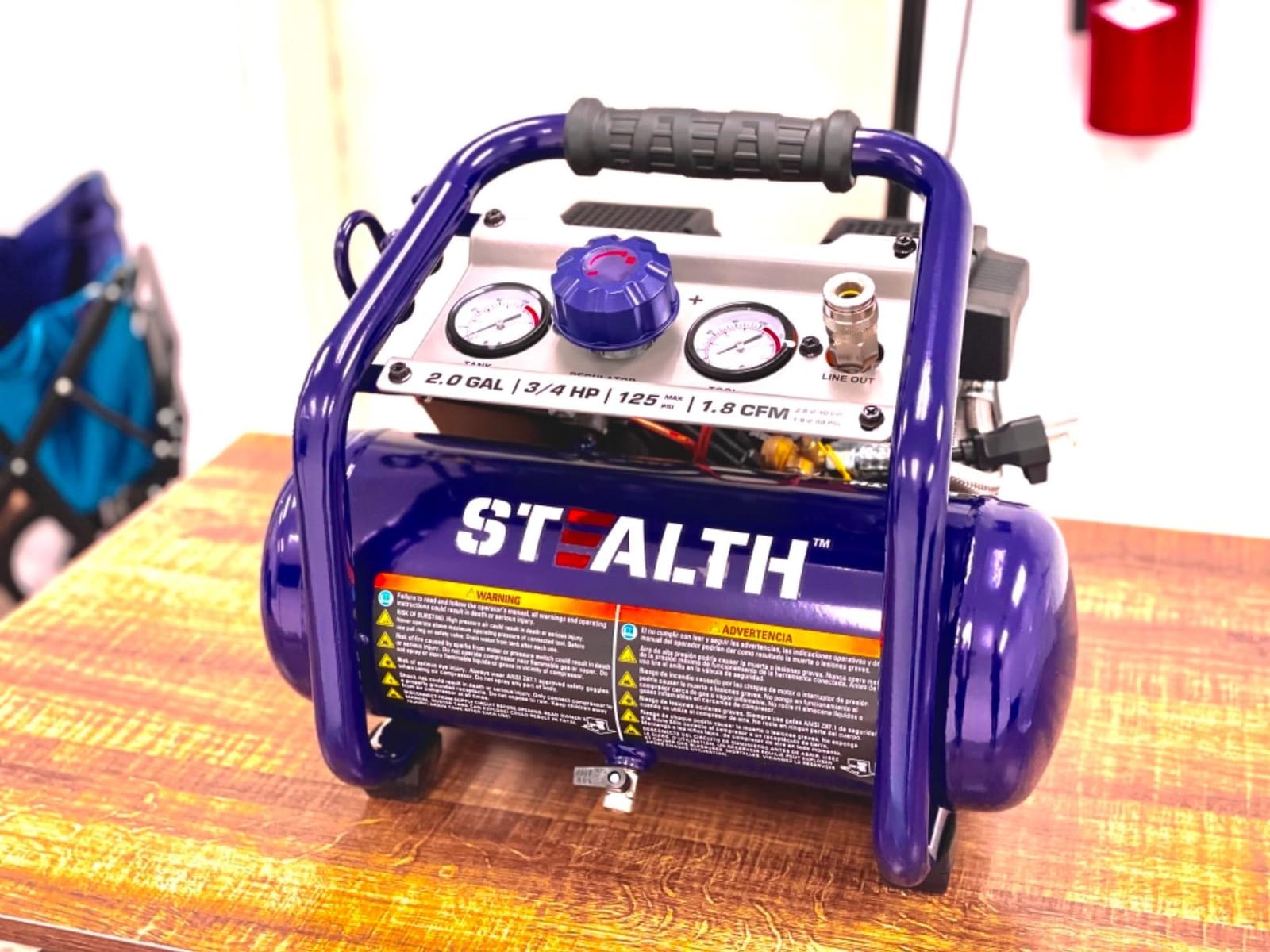
The SAQ-1234 is one of the few machines in this roundup rated below the 60 dB line, and the high-grade soundproofing combined with a low-vibration design is why. Long-term owners report using it for airbrushing, finish nailing and hopper texturing, which is a demanding combination of low noise and low airflow demand.
The 0.75 HP motor delivers 2.8 CFM at 40 PSI and 1.8 CFM at 90 PSI with a 125 PSI peak. Tank fill is about 25 seconds, and owners report it holding roughly 60 to 80 PSI continuously, which is enough to run a finish nailer through a full day of trim work.
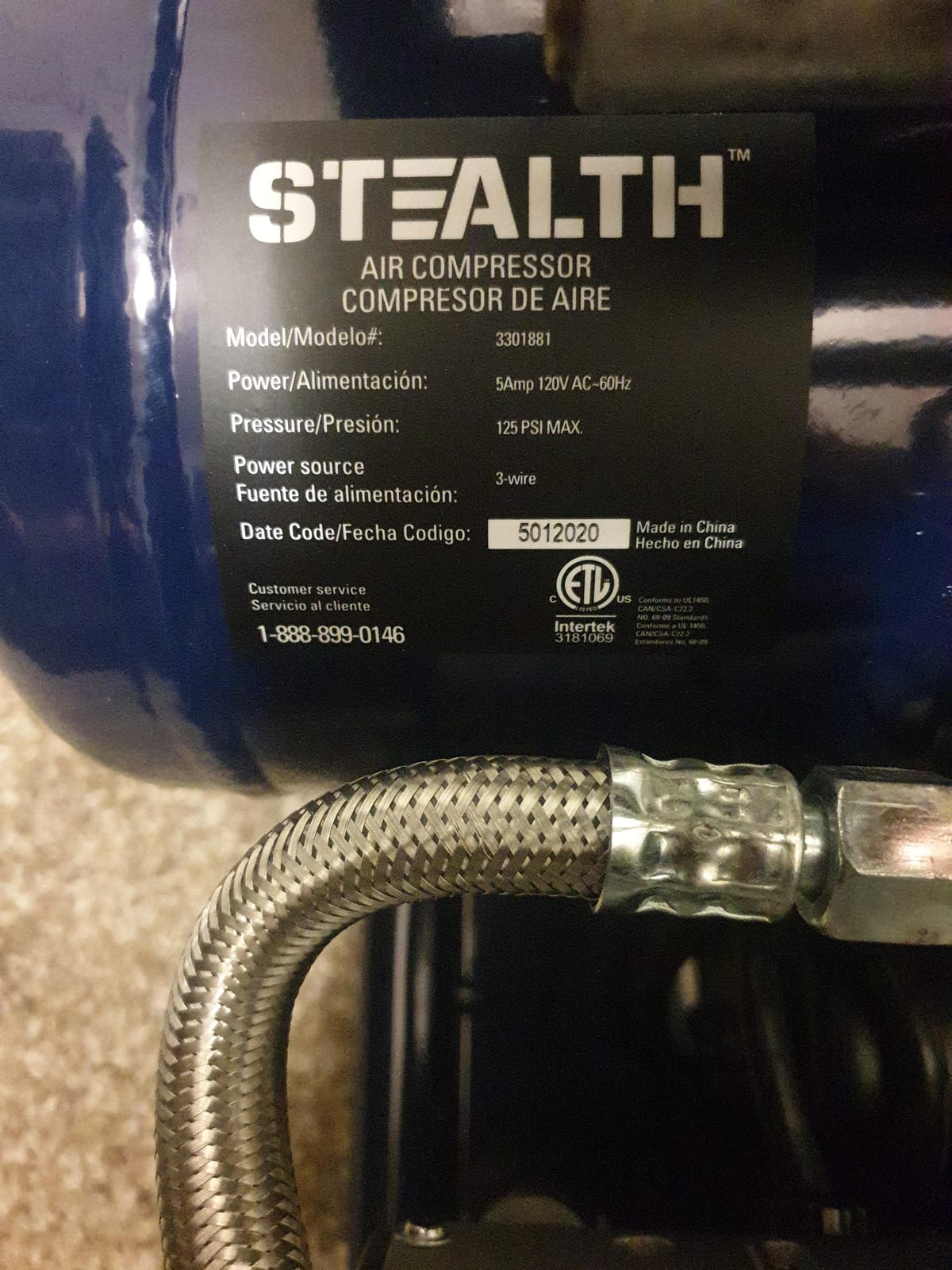
The automatic drain valve is the feature that wins over detail painters. Water in the air line ruins a finish, and an auto drain removes that failure mode entirely. Low voltage start and an integrated safety valve add further protection, and the Q235B steel tank with rubber reinforced bases keeps the machine from walking when the pump cycles.
The one recurring complaint is the intake filter, which cannot be disassembled for cleaning or element replacement even though the manual describes doing so. You can clean it in place, but you cannot swap the element, and a 1000 plus hour life cycle rating tells you this is a light duty machine by design.
Why auto drain matters more than tank size for painting
Moisture is the number one complaint associated with air compressors used for spraying, and it comes from condensation forming in a tank that is drained manually or not at all. An automatic drain valve empties that water on a timer, so the air reaching the gun stays dry.
For furniture refinishing, trim painting and airbrush work, that reliability is worth more than extra tank capacity. A compressor that sprays water into your finish is worse than one that is too small.
Where the 1.8 CFM at 90 PSI becomes the limit
At 90 PSI the pump output drops to 1.8 CFM, which is the lowest airflow figure in this roundup. That is fine for finish nailers, airbrushing at low pressure, sanding blow-off and tire inflation, and it is not enough for HVLP sprayers or air wrenches.
At 41.9 lb it is also heavier than most 2 gallon units, so plan the carrying distance before you buy. If your workload is purely interior detail and airbrush work, though, the noise figure and the auto drain make this a strong fit for indoor detail work.
Quiet Compressors by Decibel Level
Sorting the roundup by noise rather than by tank size answers the question most people actually arrive with. Under 50 dB is dedicated airbrush territory and rarely practical for general tool use. Between 50 and 60 dB you can hold a conversation beside the pump. Between 60 and 70 dB the machine is noticeable in a quiet room but still usable in a garage with a closed door.
Here is how the ten compressors we evaluated fall across those bands, using the manufacturer rated figures and the owner reported readings we found in the review data.
At or below 60 dB, the quietest group: the Metabo HPT EC28M at 59 dB, the Makita MAC210Q at 60 dB, the California Air Tools 8010A at 60 dBA, the California Air Tools 2010A at 60 dBA, the Makita MAC320Q at 60 dB and the Stealth SAQ-1234 at under 60 dB. All six run indoors without argument.
60 to 70 dB, the practical middle: the Stealth SAQ-1413 at 65 dB, the Limodot LJ5120K at 68 dB and the Stealth SAQ-12018 at 68 dB. Fine for a garage, conversation-adjacent but not conversation-friendly.
70 dB, the boundary of the category: the VEVOR 4.8 gallon. Anything louder than that is a conventional shop compressor wearing a quiet label.
The practical takeaway is that you should compare decibel figures only when they were measured the same way, typically dBA at a stated distance. A phone app can give you a rough relative reading at home, but the spread between manufacturers is usually larger than the spread between machines.
Quietest Air Compressors for Apartments, Condos and Indoor Use
Noise decides where a compressor can live, and for anyone in an apartment, condo or shared building that is a lease and neighbour question, not a preference. The compressors in the 50 to 60 dB band are the practical answer, because they sit at the level of a refrigerator or a normal conversation. A conventional 80 dB shop unit is conversation-stopping, and in a shared wall that becomes a complaint you will have to resolve.
Three of the picks here work particularly well indoors. The Metabo HPT EC28M is the most portable at 25.2 lb and rated at 59 dB, which matters when there is no garage. The Stealth SAQ-1234 is rated below 60 dB and has an automatic drain valve, which protects painting and airbrush work from moisture. The Makita MAC210Q at 60 dB handles finish carpentry without waking anyone.
Placement matters more than most buyers expect. A compressor against an interior wall transmits structure-borne vibration through the framing far more effectively than the decibel number suggests, so put it on a concrete slab if you have one, and never in a bedroom closet. Adding isolation pads under the feet is a few dollars of hardware that measurably reduces low-frequency thump.
Air quality in a small indoor space is the other half of the apartment equation. Compressed air can carry oil aerosol and fine particulate through a shared room, and in an enclosed space those add up. If you are running a compressor indoors regularly, consider pairing your tool work with a dedicated air cleaner rather than relying on ventilation alone. Our guides to the best air purifiers tested and the best budget air purifiers cover that side of the problem if you want a room to be genuinely comfortable while you work. If anyone in the household reacts to dust and dander while you run these machines, our picks for the best air purifiers for allergies are worth reading alongside them.
One more practical point: check whether your building has any equipment restrictions before you buy, not after. Some leases prohibit continuous motor equipment, and an oil-free compressor with a preset shutoff is far easier to defend than a continuously running shop unit.
How to Make an Existing Loud Air Compressor Quieter
If you already own a loud compressor, buying a quiet one is not always the cheapest path. Five modifications together can cut a surprising amount of noise, and the first two cost very little. Work through them in this order and stop when the noise reaches a level you can live with.
1. Fit an intake muffler or silencer. Most of the broadband noise a compressor makes comes from air being drawn in and expelled, not from the motor itself. An inline intake silencer that screws between the pump and the intake filter is the single highest-impact change, and owners report the biggest improvement from it. Keep the filter accessible when you fit one, because a restricted filter raises the noise you are trying to remove.
2. Isolate the feet. Rubber anti-vibration pads under each foot cut the structure-borne component that carries through floors and walls. This is the change that matters most in an apartment, because the thump travels through the building frame rather than through the air your neighbours hear. Neoprene or silicone pads cost very little and install in minutes.
3. Shorten and straighten the hose runs. Coiled air hose and long runs of unsupported line create a resonant system that adds noise on every pump cycle. Replace coils with straight hose of the shortest workable length and support it along its run. This also improves airflow, which reduces how hard the pump has to work.
4. Build or buy an enclosure. A cabinet lined with acoustic foam around a low-RPM oil-free pump can cut peak noise substantially. Leave generous clearance for the motor and an exit path for hot exhaust air, or you will create a heat problem while solving a noise one. This is the most expensive option and only makes sense if the machine is staying in one place.
5. Relocate it. The cheapest intervention of all. A compressor in a detached shed is a solved problem, and a compressor next to your bed is not. If you have any flexibility at all in where the machine lives, moving it beats every other fix on this list.
Two things not to bother with: wrapping the pump in foam or blankets while it runs, which blocks cooling air and shortens motor life, and cheap household foam placed over the intake, which does the same job less safely.
How We Evaluated These 10 Quiet Air Compressors
We looked at every machine in this roundup against the same criteria, and we weighted noise above everything else because that is the reason the list exists. Rated decibel figures came from the manufacturer specifications, and we cross-checked them against what owners report actually measuring, because a manufacturer number measured at 3 feet is not comparable to one measured at 6.
Products evaluated: 10 quiet compressors across six brands, covering pancake, hot dog and vertical tank formats from 1 gallon to 20 gallons.
Rated noise range: from under 60 dB to 70 dB, with six of the ten falling at or below 60 dB.
Data sources: manufacturer specification sheets for rated dB, HP, CFM at 90 PSI, tank capacity, PSI ceiling and weight, plus aggregated verified buyer feedback for owner-reported noise readings, complaint patterns and long-term durability reports.
What we did not do: we did not run lab-grade sound measurements ourselves, so every decibel figure here carries the measurement conditions its manufacturer used. Where owners report a different number, we say so rather than picking the more flattering figure.
Every pick here sits at 200 ratings or more, and the five we are most confident in sit above 800 ratings. That matters because a 5 star rating based on a dozen reviews is marketing, not evidence, and owner consensus agrees: people trust a 4.5 with hundreds of reviews far more than a 5 with none.
What to Consider When Buying a Quiet Air Compressor
Compressor type. Pancake compressors are flat and wide, twin stack units are tall and narrow, and hot dog units sit low with the tank between pump and handle. The differences are about footprint and tank placement rather than noise, so choose the shape that fits the space you actually have.
Noise level. This is the spec that decides usability. Under 50 dB is airbrush territory, 50 to 60 dB lets you work indoors, and 60 to 70 dB is acceptable in a garage. Above 70 dB and you are buying a conventional compressor with a quiet label. Always check the measurement distance and weighting, because two numbers for the same pump can differ by more than 10 dB.
Performance. Ignore the horsepower headline and read CFM at 90 PSI, which is the only airflow number that predicts tool compatibility. A 1 HP compressor delivering 2.2 CFM at 90 PSI runs brad nailers and inflators comfortably. Running an HVLP sprayer or a pneumatic impact wrench needs closer to 4 CFM or more, plus a tank of 8 gallons or larger.
Tank size and recovery. Tank capacity sets your reserve, and recovery speed sets how long you wait. Small tanks on quick-recovery pumps are fine for burst tools, while large tanks on slow pumps cause the mid-project pauses that carpenters complain about most. Match the tank to the longest continuous burst your work demands.
Oil-free versus oil-lubricated. Oil-free pumps need no maintenance and start in cold weather, and they are what every quiet compressor in this roundup uses. Oil-lubricated units run cooler and quieter in absolute terms, and experienced owners name them as the quietest option available, but they require oil checks and seasonal storage discipline. For most home users, oil-free is the right trade, and every compressor in this roundup uses it.
Power source and portability. Below about 30 lb you can genuinely carry a compressor between rooms. Above 60 lb you are committing it to a location and rolling it on wheels. Cordless battery compressors are the quietest option of all because they run so briefly, and owners who use them describe them as awkward rather than wrong, which is the fair characterisation for anyone already invested in a battery platform.
Tank versus tankless. A tankless design eliminates condensation and saves floor space, which is why it dominates airbrush setups. It needs a continuous power supply and delivers less peak flow, so it suits a single low-volume tool rather than general shop work.
Circuit and outlet limits. A compressor in the 20 gallon class will not run on a 30 amp shop circuit, and buyers regularly discover this only after delivery. Check your available amperage and outlet distance before choosing a large tank.
Frequently Asked Questions
What type of air compressor is quietest?
The quietest type is a low RPM oil-free compressor with a dual-piston pump, typically turning at 1,680 to 1,750 RPM instead of the 3,400 RPM found in a direct-drive unit. Below that, dedicated airbrush compressors under 50 dB are the quietest available, and compressors built inside a soundproof cabinet sit between the two. The main reason low RPM wins is that a slower motor moves less air per stroke, which produces less pressure pulse on the tank and less broadband noise.
How many decibels is considered a quiet air compressor?
Under about 70 dB is generally considered quiet, 50 to 60 dB is comfortably quiet enough to use indoors, and under 50 dB is ultra-quiet airbrush territory. For reference, 60 dB is about a normal conversation or a household refrigerator, while 90 dB is comparable to a gas lawn mower. Always check the measurement distance, because figures measured at 3 feet and at 6 feet are not directly comparable.
Is there such a thing as a silent air compressor?
No. There is no silent air compressor, but the gap between a conventional shop unit at 80 to 90 dB and a dedicated ultra-quiet airbrush unit under 50 dB is wide enough to feel like silence. That drop comes from low RPM motors, dual-piston pumps, cast iron components, oil-free designs, and in premium models a fully soundproof cabinet lined with acoustic foam.
Are quiet air compressors worth it?
For most home users, yes, because noise decides where you can run the machine. A quiet compressor lets you work in an attached garage, an apartment, or at night, which a conventional unit simply does not allow. The trade is usually a smaller tank and a lower PSI ceiling, so quiet compressors suit finish carpentry, airbrushing, inflation and trim work better than framing, air wrenches and commercial spraying.
Who makes the best quiet air compressor?
California Air Tools and Makita dominate this category based on rating volume, repairability and the consistency of owner reports on noise. The California Air Tools 8010A and 2010A both hold 4.6 or better across more than a thousand ratings, and the Makita MAC210Q and MAC320Q carry the same 60 dB Quiet Series rating with roll-cage construction. Metabo HPT competes well for portable 1 gallon units.
What tank capacity do I need for air tools?
One gallon covers finish nailers, staplers, airbrushing and tire inflation. Two to three gallons lets you run a trim nailer more continuously and is the sweet spot for a one-person finish carpentry shop. Five gallons and above covers heavier intermittent work, while 8 gallons or more is the practical minimum for pneumatic impact wrenches, HVLP sprayers and framing tools. Recovery speed matters as much as capacity, since a small tank that refills quickly beats a large one that does not.
How do I make my air compressor quieter?
Work in this order: fit an intake muffler or silencer between the pump and intake filter, add rubber anti-vibration pads under the feet to stop structure-borne thump, replace coiled hose with short straight supported runs, and relocate the machine out of living space if you can. A foam-lined enclosure helps further but costs more and needs cooling clearance. Never wrap the pump in foam while it runs, because blocked airflow shortens motor life.
How do I measure how loud my air compressor is?
Place a sound meter level app on a tripod or shelf at a fixed distance, six feet is the most common reference, and take a reading while the pump is running continuously rather than during the first seconds after start-up. Record the distance with the number, because a reading at 3 feet is roughly 10 dB higher than the same machine at 6 feet. App readings are useful for comparing your own machine over time, but they are not reliable for cross-brand comparisons.
Final Verdict
The best quiet air compressors in 2026 come down to a small number of real choices. The Makita MAC210Q Quiet Series is the one to buy for finish carpentry and general trim work, with the highest owner rating in this group and a 60 dB motor that genuinely works indoors. The California Air Tools 8010A adds real tank capacity at the same noise level, and the 2010A is the faster-recovering option for airbrush and burst tools.
Pick the Metabo HPT EC28M if you need to carry a compressor up stairs, the Stealth SAQ-12018 if you need airflow for impact wrenches and sprayers, and the Limodot LJ5120K if you want a 5 gallon tank with a full hose and fitting kit in one package. Whichever you choose, measure the room first, isolate the feet, and check your circuit capacity before the machine arrives.