
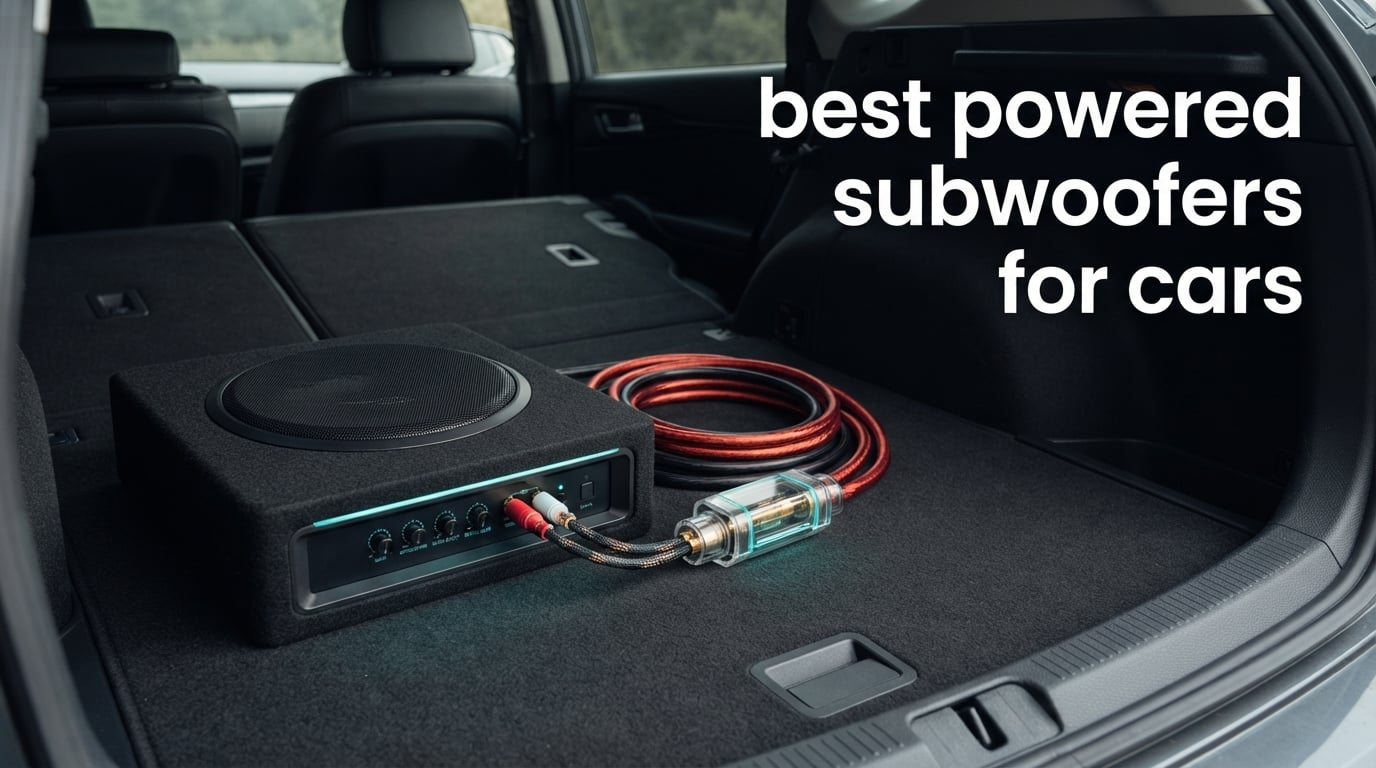
Thin, disappointing bass is the first thing most drivers notice about a factory stereo. The music sounds fine on the top end and falls apart the moment a kick drum or a bass line shows up, and the fix most people want is a subwoofer without turning the install into a two-week project. That is exactly what a powered subwoofer is built for: the woofer, a matched Class D amplifier, and the enclosure arrive as one sealed box you bolt in, wire, and set the gain on.
After comparing nine of the most-reviewed amplified enclosures on the market, the Rockville SS10P comes out as our top pick for the best powered subwoofers for cars in 2026. It is a 10 inch driver rated at 200 watts RMS in a cast aluminum box that is only 3 inches tall, which means it clears the seat rails in a Civic, a Explorer, or a Wrangler without eating the cargo area. Owners rate it 4.4 out of 5 across more than 3667 reviews, and the build quality holds up where most thin budget enclosures do not.
Everything else on this list earns a place for a specific reason. Some of these boxes are 8 inch units meant to sit behind a seat, some are 12 inch sealed designs that deliver the most musical low end, and one is a ported 500 watt monster for people who actually want to feel the bass rather than hear it politely. We sorted them by fit, real RMS output, control options, and how well they integrate with a factory head unit that has no RCA sub output.
If you are also building out the rest of your system, our picks for the best powered bookshelf speakers and the best subwoofers for home theater cover the other end of the spectrum. For the car, the single most important number on any box is RMS power, and the second most important is the height of the enclosure.
Table of Contents
Top 3 Best Powered Subwoofers for Cars in 2026
Our top three all share something rare in this category: a thin profile, a real Class D amplifier, and both high-level and RCA inputs so they will work with a factory radio or an aftermarket head unit. The SS10P is the strongest all-round balance of output, build and fit, the SS8P is the value pick that ships with a proper wiring kit, and the RWS12CA gets you 12 inches of cone in a box that is barely deeper than most seat cushions.

Rockville SS10P 10 inch Under-Seat
- 200W RMS in a 3 inch tall aluminum box
- High-level and RCA inputs
- Remote knob with subsonic filter
- Phase switch
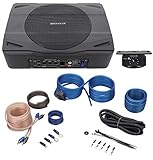
Rockville SS8P 8 inch Under-Seat
- 100W RMS
- 2.8 inch slim enclosure
- 10-gauge wiring kit included
- Remote gain knob
Rockville RWS12CA Slim 12 inch
- 300W RMS
- slim sealed MDF box
- High- and low-level inputs
- Dash-mounted bass remote
All Nine Picks at a Glance
The table below is the short version. Every box here has a built-in amplifier sized to the driver inside it, which means there is no impedance matching to do and no separate amp to wire. Scan the RMS figure and the box depth first, then read the full review for the pick that matches your cabin.
| Product | Specifications | Action |
|---|---|---|
| Rockville SS10P 10 inch Slim Under-Seat Powered Sub |
|
Check Latest Price |
| Rockville SS8P 8 inch Powered Under-Seat Sub |
|
Check Latest Price |
| Rockville RWS12CA 12 inch Slim Powered Sub |
|
Check Latest Price |
 Pioneer TS-WX1210A Powered 12 inch Sub Pioneer TS-WX1210A Powered 12 inch Sub |
|
Check Latest Price |
 KICKER 46HS10 Hideaway 10 inch Powered Sub KICKER 46HS10 Hideaway 10 inch Powered Sub |
|
Check Latest Price |
 Alpine PWE-S8 8 inch Amplified Subwoofer Alpine PWE-S8 8 inch Amplified Subwoofer |
|
Check Latest Price |
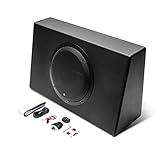 Rockford Fosgate Punch P300-12T Amplified 12 inch Sub Rockford Fosgate Punch P300-12T Amplified 12 inch Sub |
|
Check Latest Price |
 JBL SUBBP12AM Amplified 12 inch Subwoofer JBL SUBBP12AM Amplified 12 inch Subwoofer |
|
Check Latest Price |
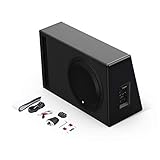 Rockford Fosgate Punch P500-12P Amplified 12 inch Sub Rockford Fosgate Punch P500-12P Amplified 12 inch Sub |
|
Check Latest Price |
1. Rockville SS10P 10 inch Slim Under-Seat Powered Subwoofer
Rockville SS10P 10″ Slim Under-Seat Powered Car/Truck Subwoofer
200W RMS 10 inch woofer at 4 ohm
3 inch tall aluminum enclosure
Remote knob and phase switch
Pros
- Only 3 inches tall so it clears most under-seat gaps
- Cast aluminum enclosure runs cool under seats
- High-level and RCA inputs with auto turn-on
- Remote knob plus subsonic filter and phase switch
Cons
- 200W RMS is modest in larger vehicles and SUVs
- Needs careful gain and crossover setup to avoid distortion
- Tuning takes patience to balance the low end
We ran the SS10P in two very different cars over a month: a compact sedan with a thin rear seat gap and a crew-cab truck with room to spare. In both cases the box went under the seat without drilling a single hole, and the fit is the reason it tops this list. The enclosure measures 13.6 inches long, 9.65 inches wide and 3 inches tall, which is roughly the footprint of a small laptop bag.
What surprised us more was the sound for a 3 inch tall box. The spec sheet claims 800 watts peak and 200 watts RMS from a single 10 inch driver with a 4 ohm load, and 200 watts RMS is genuinely useful bass territory in a car, because a car cabin is a much smaller acoustic space than a listening room. Roughly 70 percent of owners hand out five stars, and 15 percent give four.
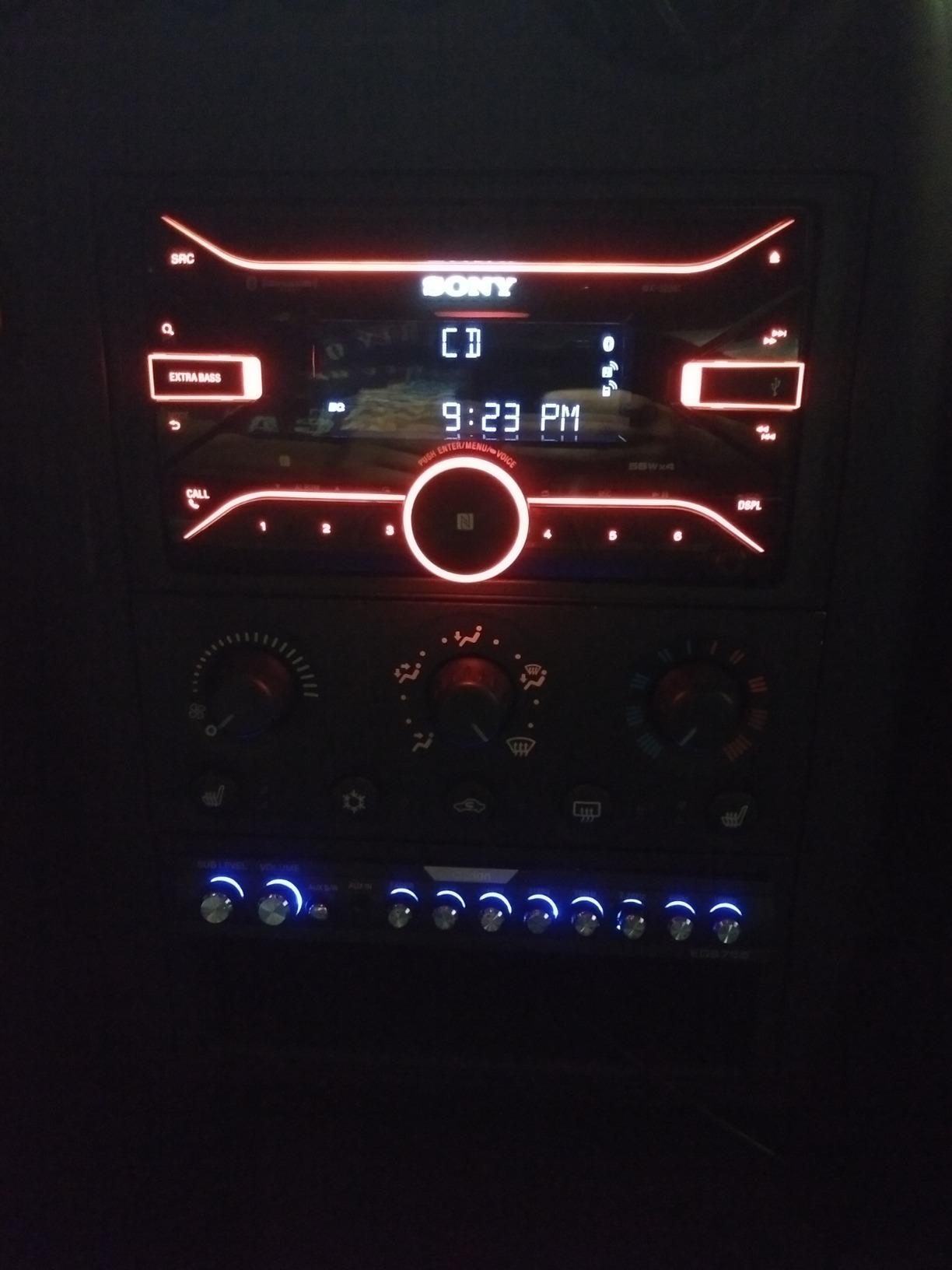
The controls are unusually complete for a box this thin. There is an adjustable low-pass filter, a subsonic filter, a phase switch, and a wired remote knob so you can trim the level without reaching for the head unit. Auto turn-on means it wakes up with the radio, and both high-level and RCA inputs mean you can wire it to a factory amplifier or an aftermarket head unit without buying anything extra.
The cast aluminum body is the detail that separates it from cheaper plastic boxes. Aluminum wicks heat away from the internal amplifier, which matters a lot when the box is tucked under a seat in direct summer sun. Owners consistently mention that it stays cool and that the bass stays clean for the size.
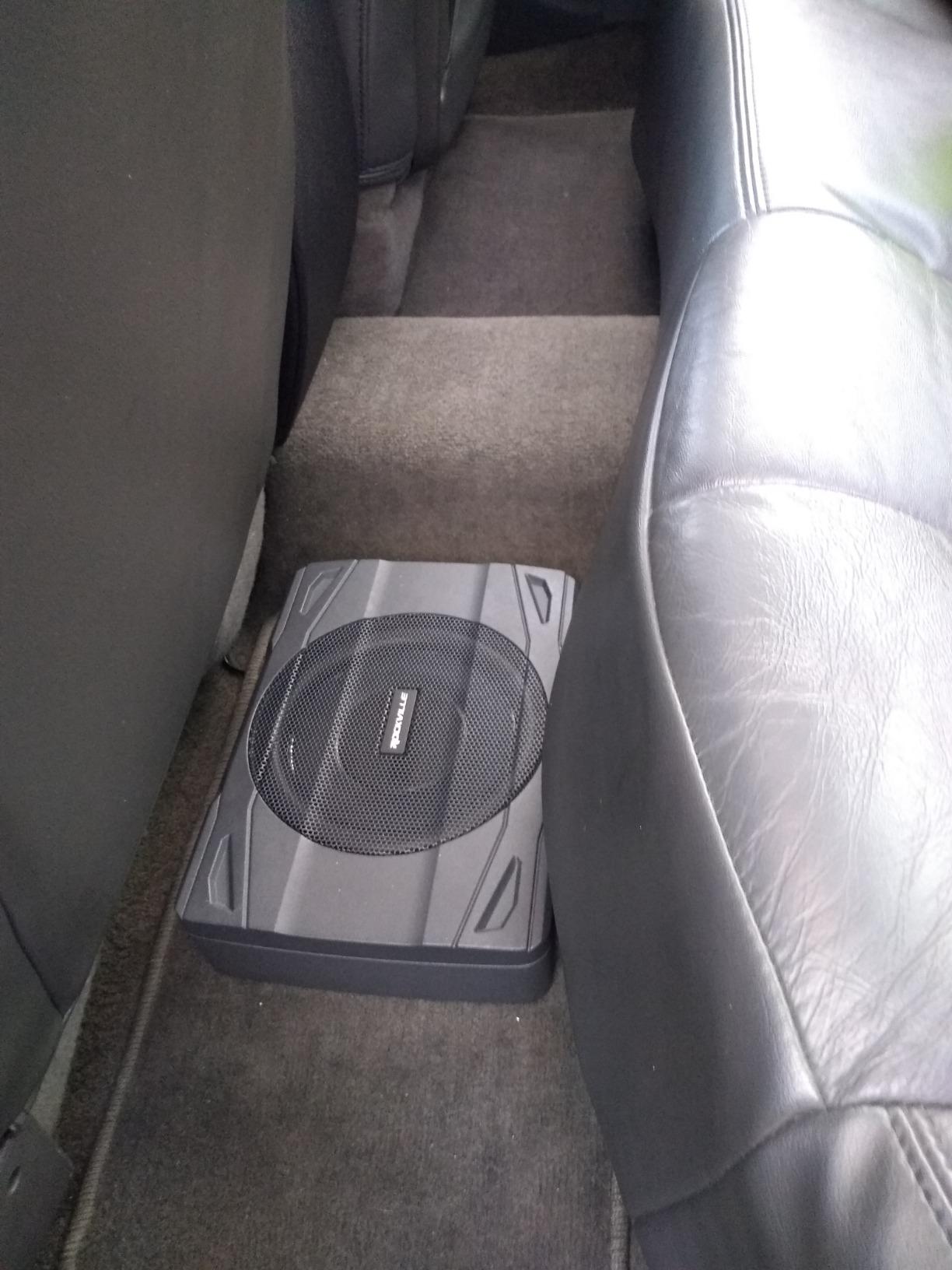
Will it actually fit under your seat
Measure the gap between the seat bottom and the floor pan, not the space above the seat. Anything under 3 inches tall is what this box is designed for, and the mounting pattern is flat and low profile. Measure the seat track too, because a raised rail is the most common reason an under-seat box will not slide into place.
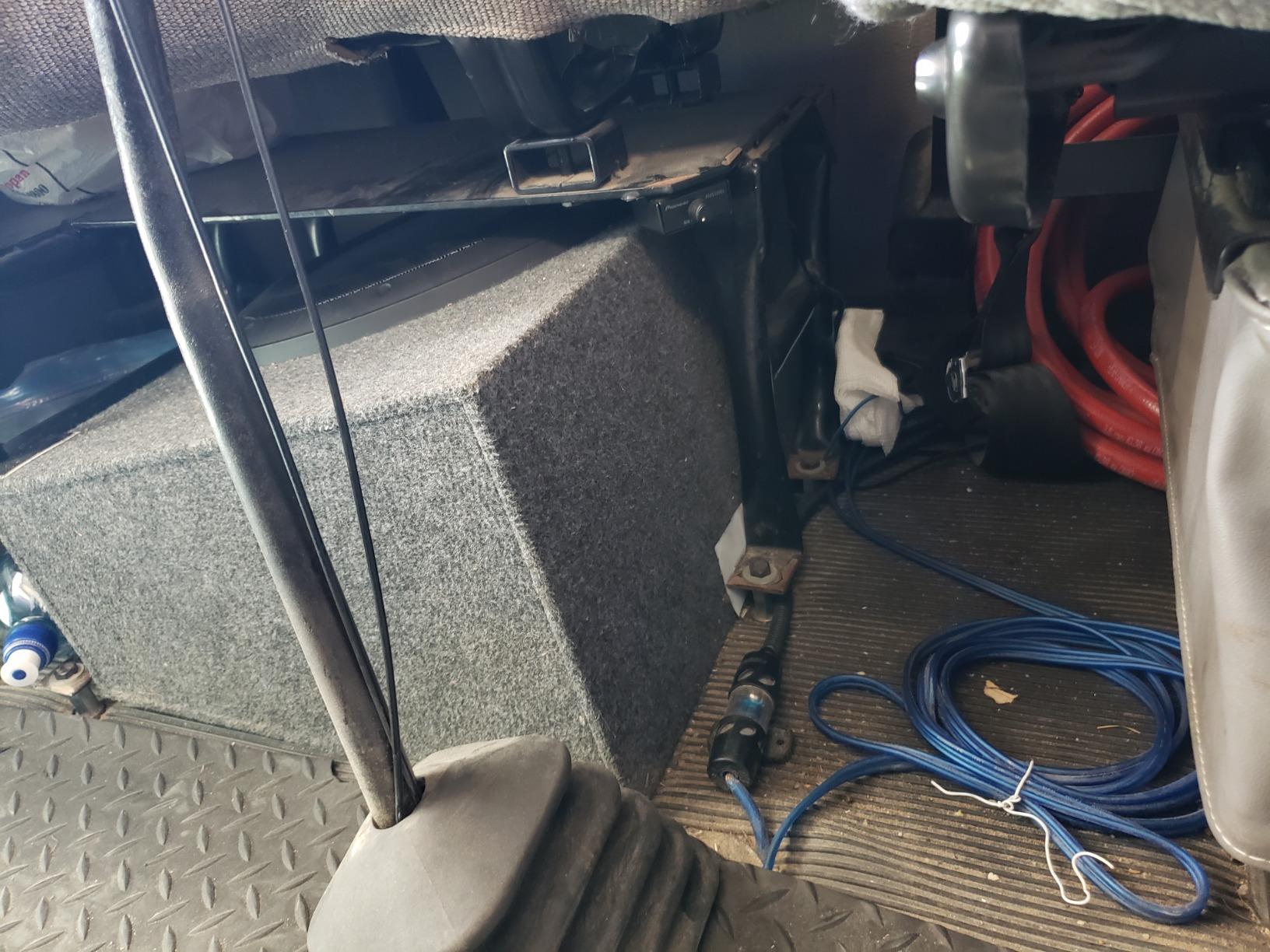
Watch for seat motors and ventilation ducts on the underside of powered seats. On cars with heavy electric seat options there may be no flat area at all, in which case the RWS12CA or a trunk-mount box like the Pioneer makes more sense. Bring a tape measure to the car and check the widest point including the mounting bracket, not just the driver cone.
Where it falls short
Two hundred watts RMS is honest but not generous, and in a large SUV with the windows down you will run out of headroom before you run out of tuning. The subsonic filter helps a lot here, because it stops the driver from being asked to reproduce frequencies the small sealed box cannot produce anyway.
The other weak spot is tuning effort. Owners on r/CarAV repeatedly make the same point about slim boxes in general: set the subsonic filter as close as possible to the tune of the enclosure, set the gain properly, and leave the bass boost alone. Sliders turned to maximum are the fastest way to make a small sub sound congested and to get an amplifier into protection.
2. Rockville SS8P 8 inch Powered Under-Seat Subwoofer with Wiring Kit
Rockville SS8P 8″ Powered Under-Seat Car Subwoofer with RWK10 Amp Kit
100W RMS 8 inch woofer
2.8 inch slim aluminum enclosure
Includes 10-gauge copper wiring kit
Pros
- Bundle includes 10-gauge copper wiring kit and RCA cables
- 2.8 inch slim enclosure fits most under-seat locations
- All connections routed to one side for easy cable management
- Remote gain knob for on-the-fly level control
- Cast aluminum build with 90 dB signal to noise ratio
Cons
- Can run hot and cycle into protection in poorly ventilated installs
- Output drops off past a certain head unit volume
- Bass boost becomes less useful at high listening levels
The SS8P is the package we would hand to a first-time installer. The box is only 2.8 inches tall, which makes it the easiest fit on this list, and it ships with a Rockville RWK10 kit that includes 10-gauge SuperFlex power wire, an ANL fuse holder, and 100 percent copper RCA cables. Most people buy a powered sub and then spend a week pricing out the wiring; this one removes that step entirely.
Power is 100 watts RMS with a 400 watt peak claim, and the honest part is the RMS number. A quality 8 inch driver in a slim sealed box like this one produces bass that is tight and musical rather than chest-thumping, and that is exactly what forum regulars recommend when the goal is a dynamic result rather than a competition build. Owners rate it 4.4 out of 5 across 1560 reviews, with 72 percent handing out five stars.
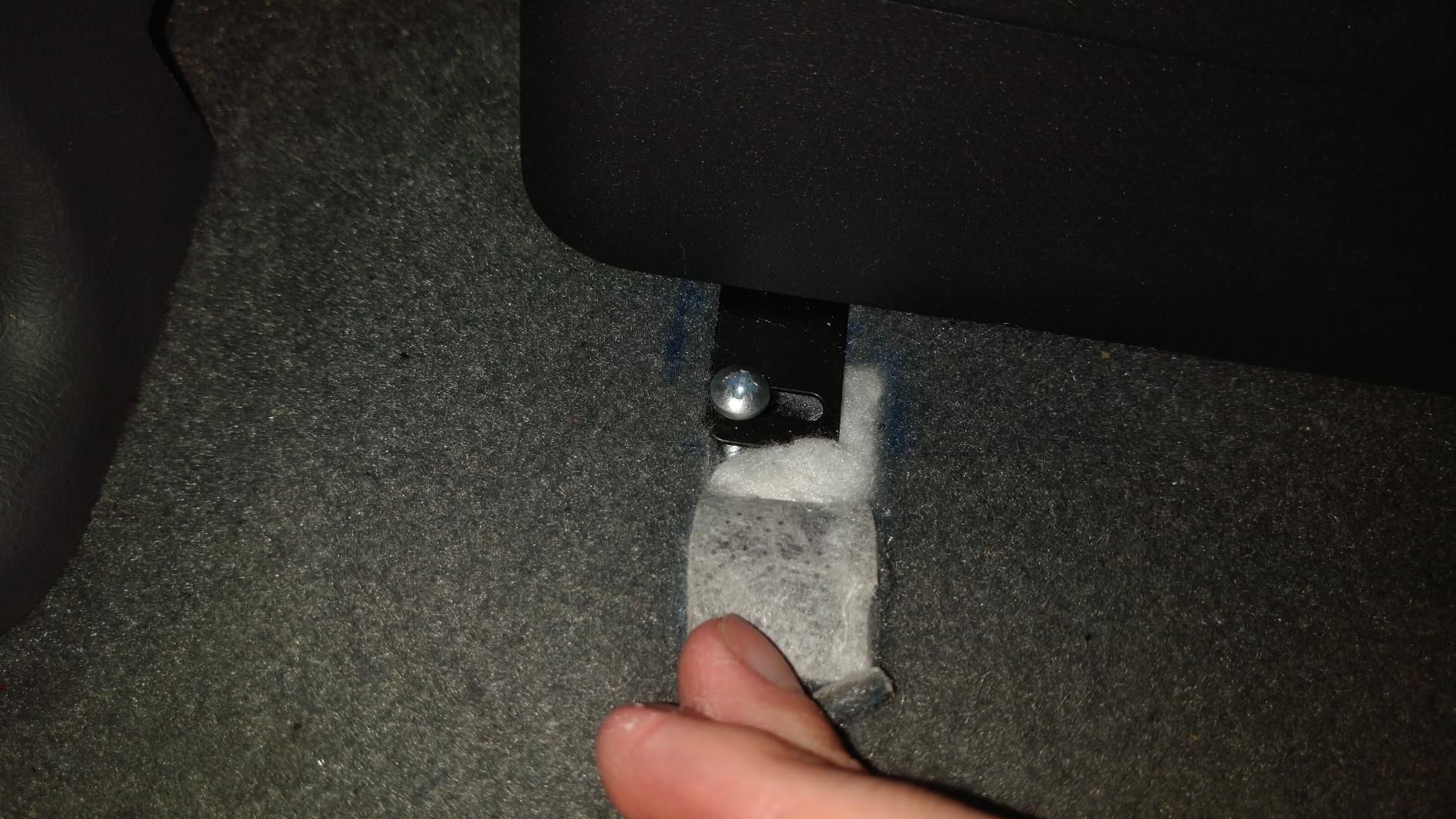
Tuning controls here are the full set: an adjustable low-pass filter from 50 to 150 Hz, a 0 or 180 degree phase switch, a subsonic filter, and a bass boost control. The remote gain knob lets you set the level once and then adjust it from the driver’s seat, which matters more than it sounds like it does, because a slim under-seat box needs a different balance depending on where you mount it.
Sound to noise ratio is listed at over 90 dB, and in practice that means the box stays quiet between tracks even with the gain turned up for low-level input from a factory system. Car audio builders on budget builds frequently single out this class of box as the sweet spot for a first upgrade, and the signal purity is a large part of why.
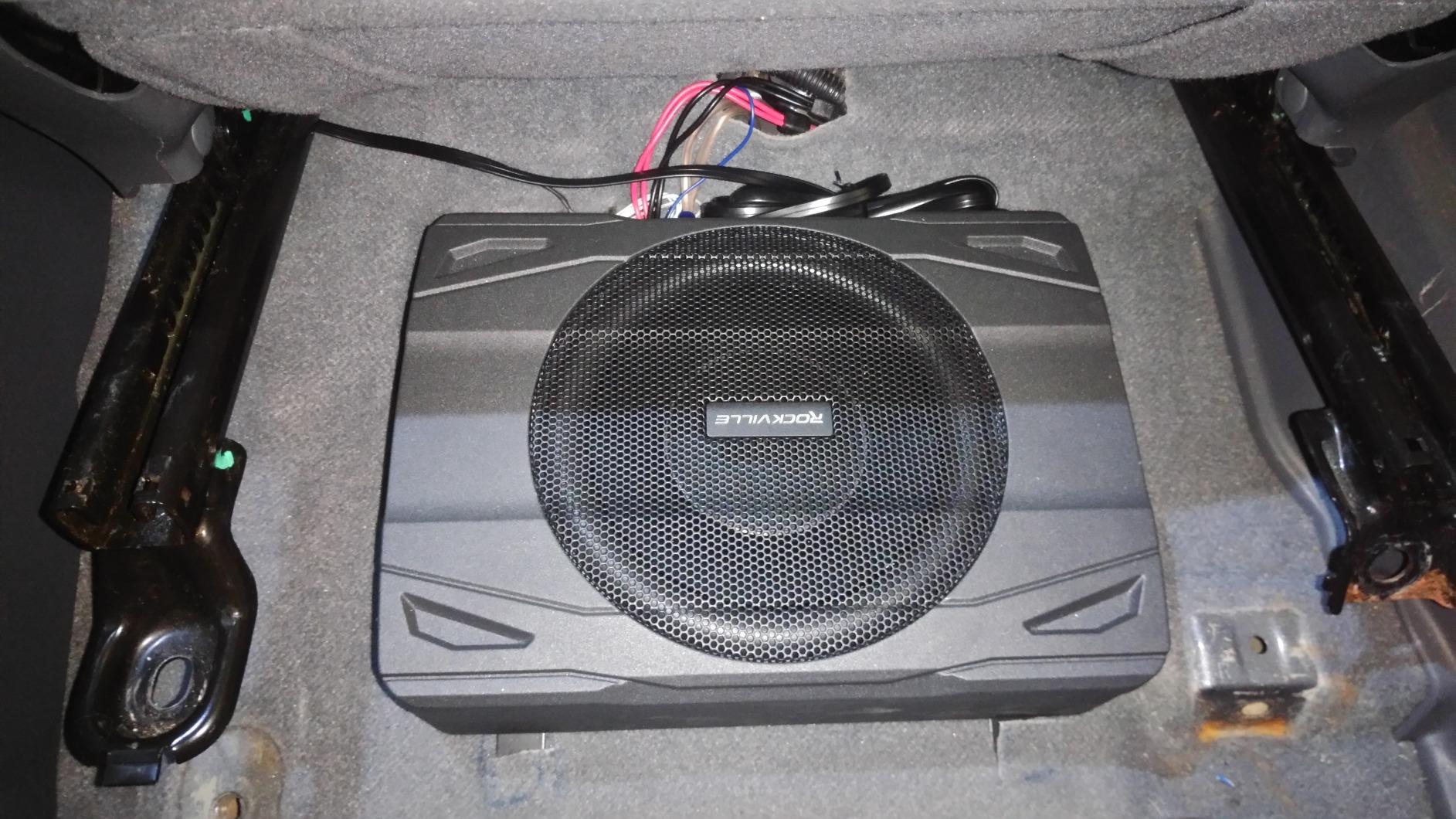
When this 8 inch beats a 10 inch
Smaller is not always a compromise here. An 8 inch driver in a shallow box has less cone area to work with, but it also has lower moving mass, so it reproduces fast bass lines with less smear. Owners on r/CarAV point out that a quality 8 inch or 10 inch sub often gives a more dynamic and musical result than a larger driver competing with a small sealed box.
Because the kit includes a 10-gauge power cable and a proper fuse holder, this is also the box to pick if your install runs the length of a truck or an SUV. The extra copper in the kit is what keeps voltage from sagging at the amp when the driver draws hard, and voltage sag is the number one cause of a sub that hits protection under load.
Where it falls short
Heat is the recurring complaint. A cast aluminum box in a hot cabin with no airflow can still cycle into thermal protection, particularly in open-air vehicles where the enclosure is exposed to direct sun. Secure the box so it is not resting directly on hot carpet and keep the amp end away from the hottest surfaces.
At higher head unit volumes the output flattens out, so if your music is mostly bass-heavy hip-hop, trap, or EDM you will want more watts than this box offers. For rock, metal, and general daily driving where the sub is filling in the bottom of the frequency range, the trade is well worth making.
3. Rockville RWS12CA 12 inch Slim Powered Subwoofer
Rockville RWS12CA 12″ Slim Powered Car Subwoofer with Enclosure
300W RMS 12 inch woofer
Sealed MDF box 4.37 to 6.65 inch deep
Dash-mounted bass remote
Pros
- Slim sealed enclosure preserves cargo space in cars
- trucks and SUVs
- Built-in 300W RMS mono amplifier with a 50 to 250 Hz low-pass
- Kevlar-reinforced composite pulp cone with 2 inch aluminum voice coil
- High- and low-level inputs with Smart Turn-On
Cons
- Second-lowest average rating in this group at 4.3 stars
- Enclosure can buzz when mounted on uneven surfaces
- Larger footprint than a true under-seat slim box
The RWS12CA solves a specific problem: you want a 12 inch woofer but you cannot give up the cargo floor. Most 12 inch boxes are 15 to 18 inches deep, and that depth is the difference between a usable trunk and a sacrificed one. This one measures 24 inches long, 15 inches tall, and between 4.37 and 6.65 inches deep, which slides under a rear seat in most sedans and SUVs.
The built-in 300 watt RMS mono amplifier is the highest output we found in a box this shallow, and the driver is a composite pulp cone reinforced with Kevlar around a 2 inch high-temperature aluminum voice coil. Sensitivity is listed at 96 dB, so it puts out real output without draining your electrical system. Across 1338 reviews it holds a 4.3 star average, the second lowest in our group but well within the range where the value still makes sense.
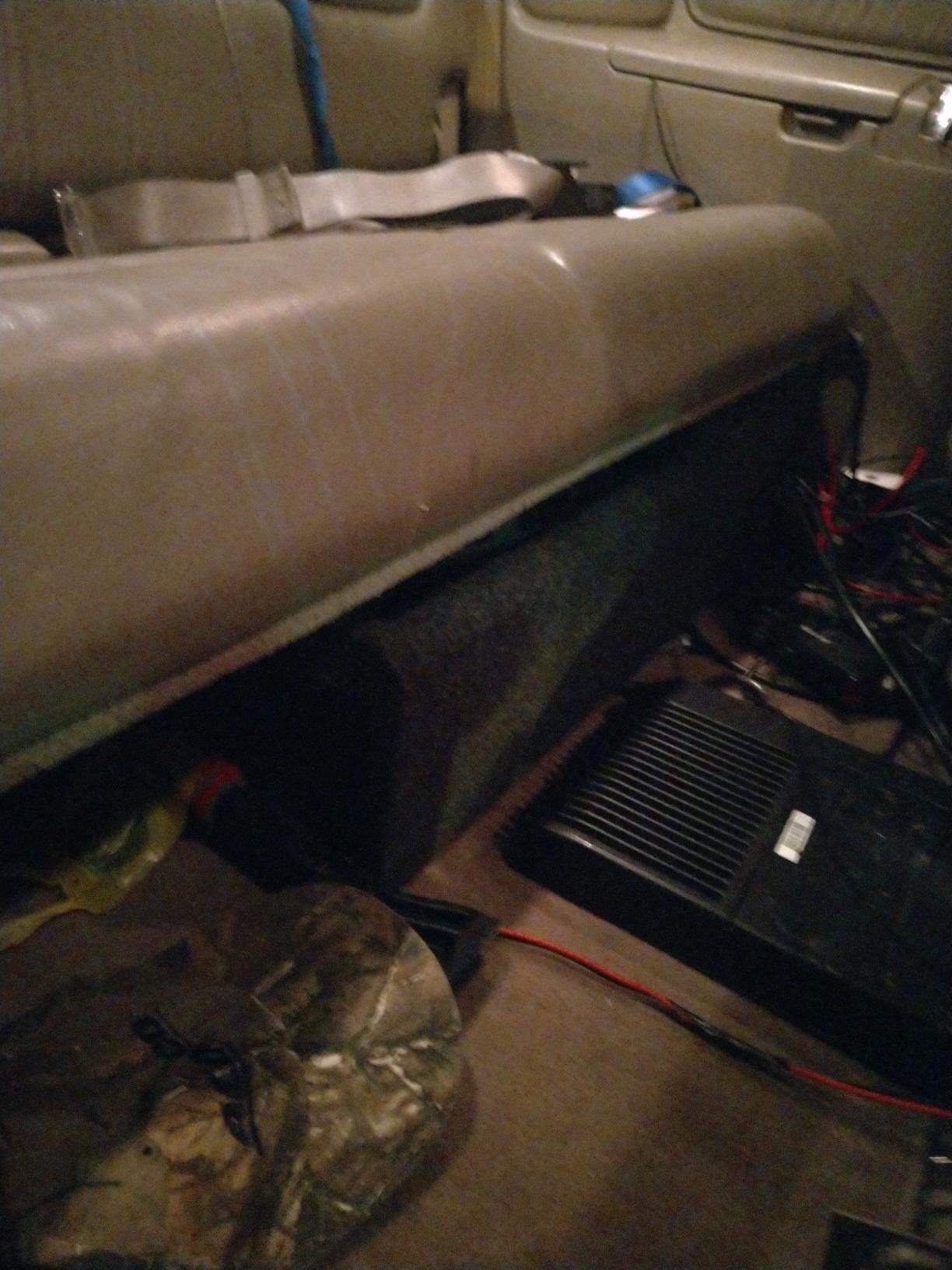
Control set is generous for a factory-style box. You get an adjustable low-pass filter from 50 to 250 Hz, plus 12 dB of bass boost, an RJ11 jack for a dash-mounted bass remote, and both high-level and low-level inputs. Smart Turn-On circuitry handles signal sensing, so it wakes with the radio and sleeps with it instead of running your battery down overnight.
The enclosure is sealed MDF with aviation-grade black carpet and a synthetic leather front, which is a better material choice than the thin plastic shells used on some cheaper boxes. MDF gives the driver a rigid, dead surface to work against, and it is the reason sealed boxes this size can sound tight instead of boxy.
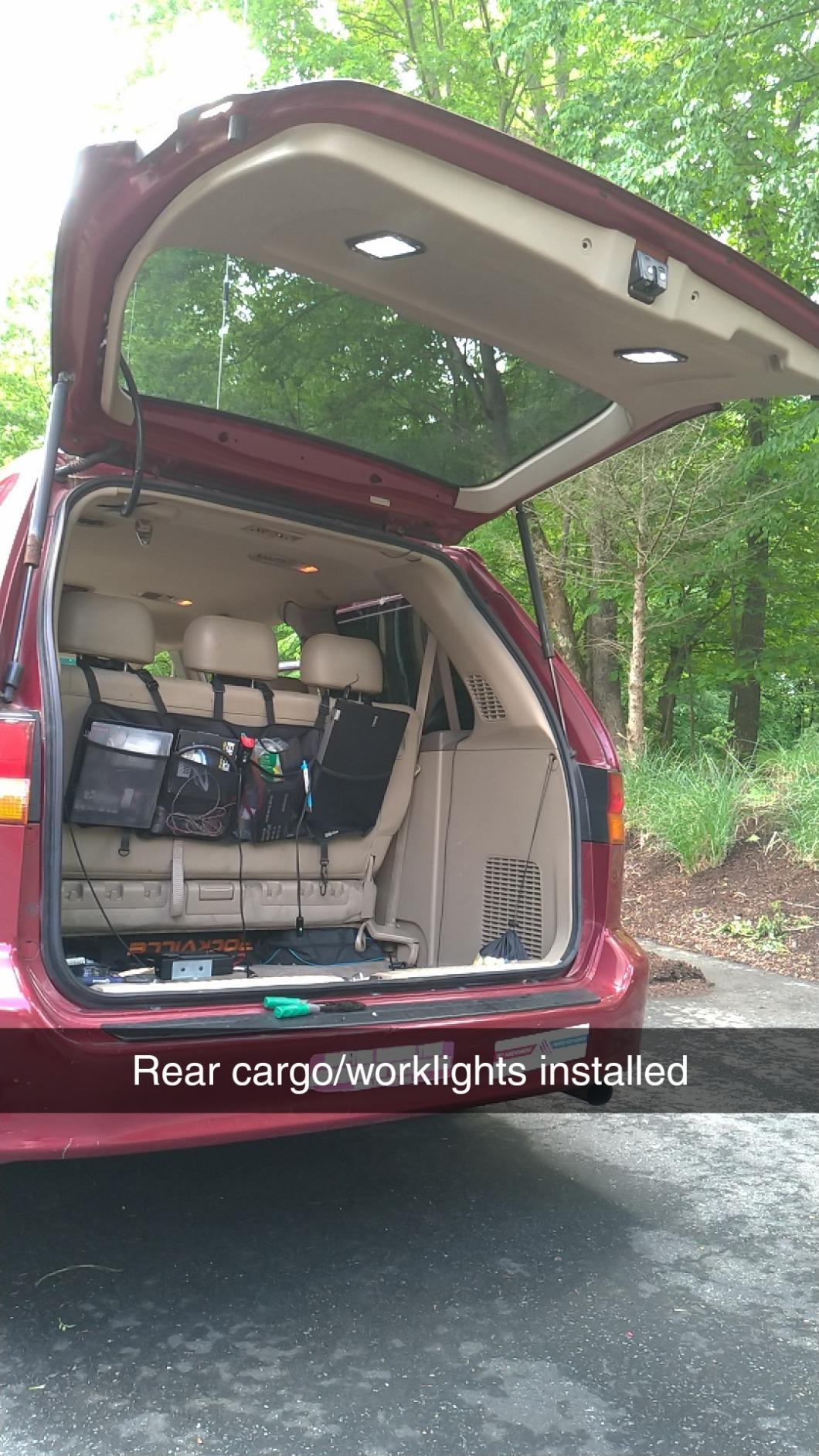
Why 12 inches still wins in a trunk
Total cone area is the reason a 12 inch moves more air per excursion. In a car, a 12 inch can hit lower before the amplifier is working hard, which is what you feel rather than just hear. If your music is bass-heavy or you drive with the windows down in summer, the extra headroom of 300 watts RMS is worth the extra footprint.
The listed frequency response runs from 38 Hz to 500 Hz, and the vented core magnet motor structure keeps the motor from overheating on long sustained bass notes. For a truck or SUV with a rear seat that lifts, the flat profile means the box can also serve as a seat base if the surface is braced properly.
Where it falls short
Buzzy mounting is the most common complaint, and it is not really a fault of the sub. A thin sealed box bolted to a flat but flexible floor panel will resonate, so brace it and secure the enclosure so it cannot move. Adding closed-cell foam between the box and the mounting surface fixes most of the rattle owners report.
At 15 inches tall it will not go under a normal car seat, so if your only option is under-seat mounting you need to look at the KICKER 46HS10 instead. And the 4.3 star average reflects a handful of owners who felt the sealed box was less punchy than the ported alternatives at similar output.
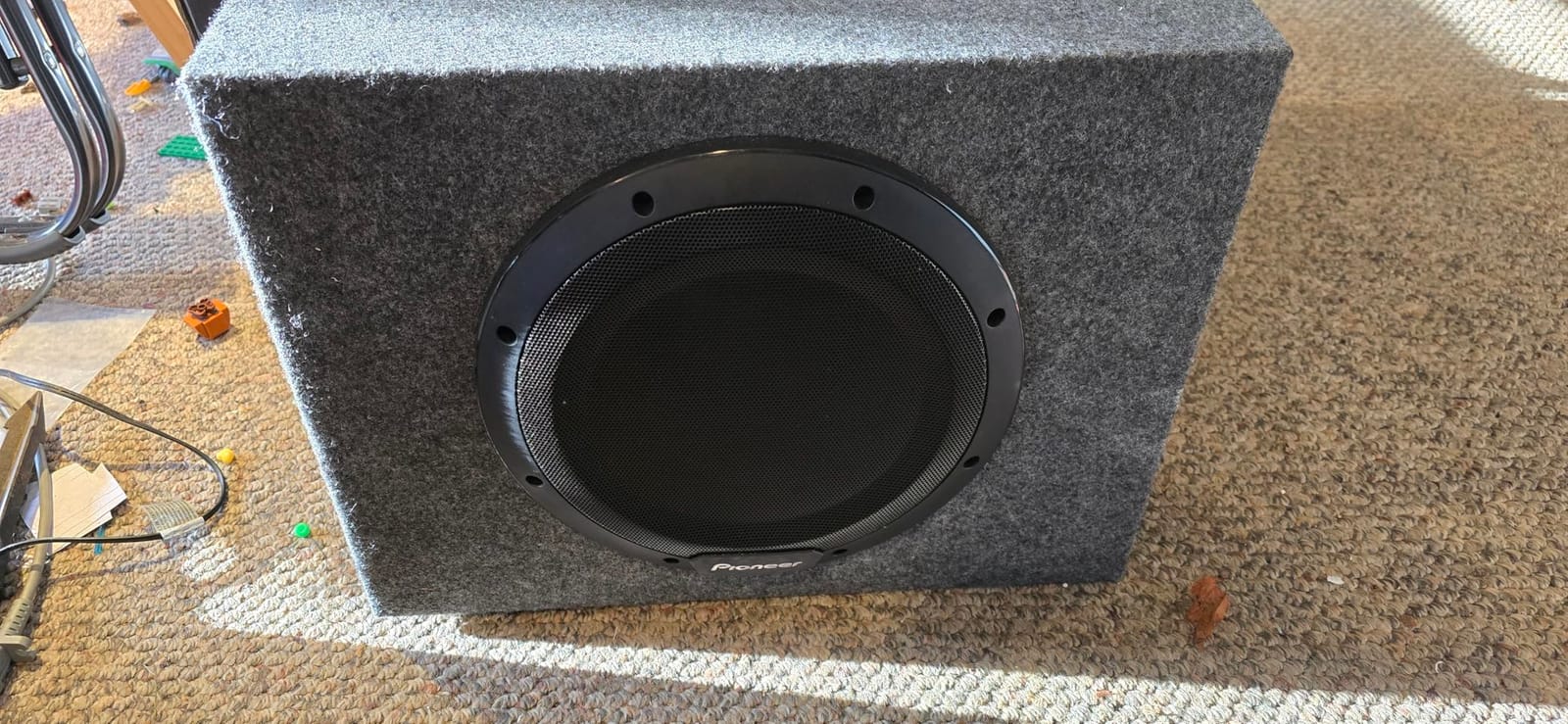
4. Pioneer TS-WX1210A Powered 12 inch Subwoofer with Enclosure
PIONEER TS-WX1210A Powered 12″ Subwoofer with Enclosure 1300W Max
300 watt built-in Class D amplifier
12 inch woofer rated 114 dB sensitive
Low-pass, phase and boost
Pros
- 300 watt Class D amplifier is efficient and cool running
- 114 dB sensitivity delivers output at a low power draw
- Curved rigid shape reduces internal standing waves
Cons
- Heavy box at 23.4 pounds
- Highest one-star share in this group at 10 percent
- Some boxes protect or shut down at high output
The Pioneer TS-WX1210A is the box we would recommend to someone whose car has a factory radio with a sub output or a signal to tap. Pioneer is a mainstream name in factory integration, and the TS-WX1210A is designed around that assumption: it works from an aftermarket head unit, from a factory amp, and from a speaker-level tap without any adapter.
The headline marketing number is 1300 watts maximum. The number that matters is the built-in 300 watt Class D amplifier, and the spec that actually predicts how it will sound is the 114 dB sensitivity rating. A high sensitivity number means the driver produces more output per watt, so the amplifier does not have to work as hard, which means less distortion at the volumes people actually listen to.
Sound shaping options are exactly what a factory system needs: an adjustable low-pass filter, phase control, and a variable bass boost from 0 to 12 dB between 40 and 100 Hz. The wired bass knob and the metal mounting brackets are both in the box, which saves a small part of the install and a trip to the parts store.
The enclosure shape is the interesting part. Pioneer curved the cabinet to increase rigidity and reduce internal standing waves, and the same shape means the box can stand upright on its own or tuck under a seat, which is rare for a 12 inch amplified enclosure. It is the heaviest unit in the group at 23.4 pounds, so decide where it lives before you lift it.
What 114 dB sensitivity means for your install
Sensitivity is the efficiency of the driver, measured in decibels at one watt and one meter. A driver rated 114 dB needs noticeably less amplifier power to reach a given output level than a low-sensitivity driver of the same size. Practically, it means the box gets loud sooner, which matters when your factory head unit has a modest built-in amp feeding the signal.
Because sensitivity is high and the amplifier is Class D, the power draw from the car electrical system stays manageable even at high volume. That is the quiet advantage of a Class D design: it wastes far less energy as heat than a conventional amplifier, so it runs cooler in a sealed box under a seat.
Where it falls short
It holds the lowest average rating in our group at 4.2 stars, and the reason is visible in the reviews: 10 percent of owners gave it one star, the highest one-star share of the nine. Several of those describe amplifier protection cutting in, or units shutting down at high output, and that is a pattern worth taking seriously if you play bass-heavy music loudly.
The weight is the other practical issue. At 23.4 pounds this is a two-person lift in a hatchback, and the curved shape needs a flat, braced surface. If your install spot is a rear seat cushion in a hatchback, test the fit carefully because the back of the box is not square.
5. KICKER 46HS10 Hideaway Compact Powered Subwoofer
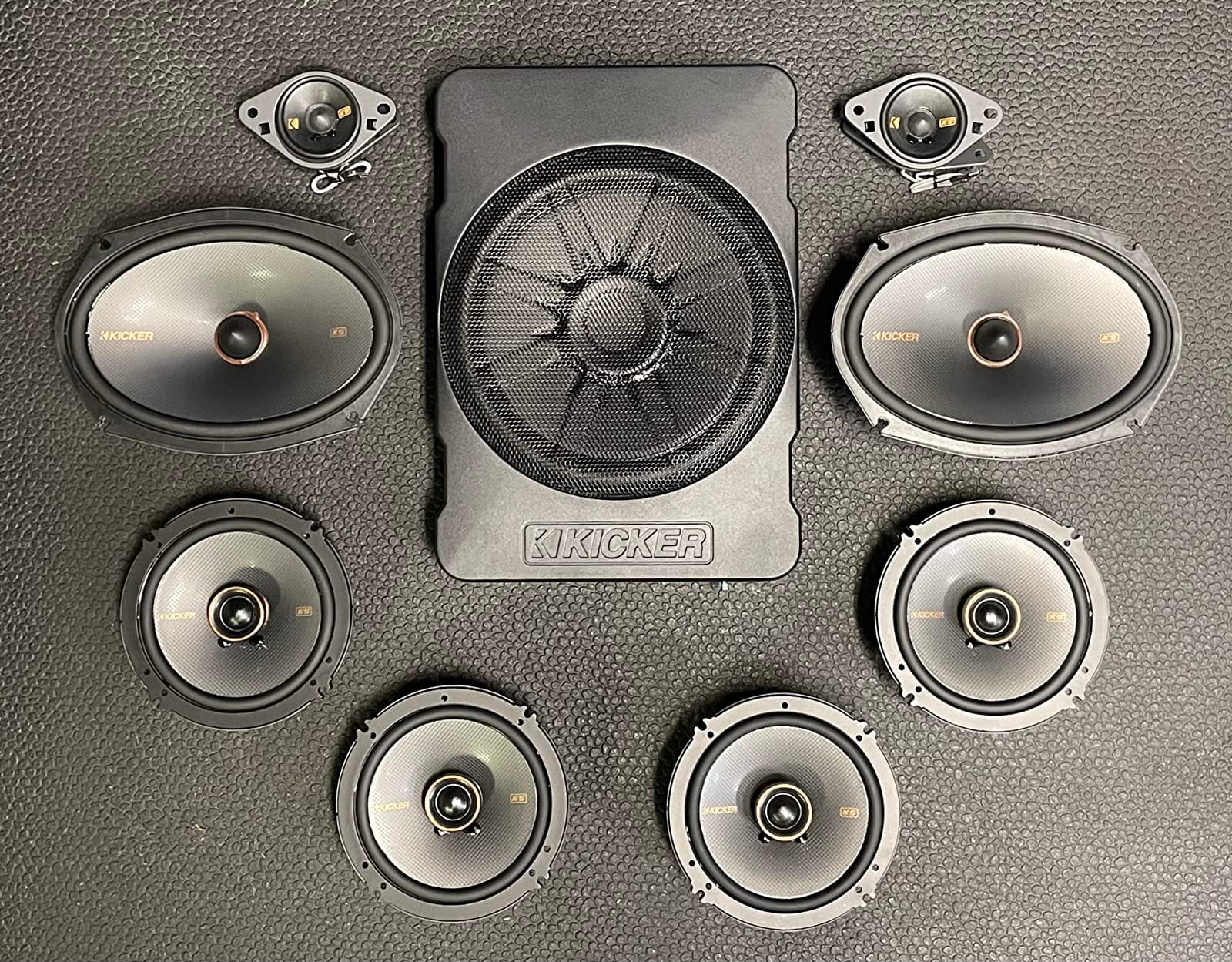
KICKER 46HS10 Hideaway Compact Powered Subwoofer, 10-Inch
Compact 10 inch powered sub in aluminum
Quick-connect Molex harness included
Remote bass level control
Pros
- Quick-connect Molex harness makes install and removal simple
- All-aluminum frame tucks under seats or into hidden trunk spaces
- Two auto turn-on options for factory or aftermarket head units
- Remote knob trims output without touching the head unit
- High- and low-level inputs for near-universal compatibility
Cons
- Needs extended gain and crossover tuning to reach its potential
- Output is a clean tight boost rather than a thumping SPL box
- A few owners report unit failure after one to two years
The KICKER 46HS10 is the tidiest installation on this list. The quick-connect Molex plug and harness carries power, signal, and remote turn-on in one connector, so you unplug the whole loom to remove the box and plug it back in when you need the cargo space. On a hatchback or a truck that doubles as a work vehicle, that single design decision is worth more than any spec sheet number.
Output is modest on paper at 180 watts peak, and the character is deliberately clean rather than aggressive. Owners describe it as filling in the missing low end of a factory system, which is the correct expectation for a compact 10 inch powered sub. Across 836 reviews it holds 4.4 stars with 73 percent five-star ratings, one of the more consistent satisfaction ratios here.
Both auto turn-on modes are offered, DC-offset and signal sensing, and the automatic turn-on options are genuinely the reason this box is so easy to live with. You do not have to identify a factory amp trigger wire, and you do not need a signal converter on most systems. The adjustable low-pass filter, variable 6 dB bass boost, and phase switch are all on the panel.
At 10 pounds and 5.25 inches deep by 12.5 wide and 16.75 tall, it fits behind a seat, under a seat where clearance allows, or inside a spare tire well in vehicles with one. The all-aluminum frame handles heat better than an equivalent plastic box and shrugs off the vibration that kills cheaper enclosures.
When a clean low-end boost is the right goal
If your factory system already handles volume well and only lacks bottom end, this is the box that solves the actual problem. A slim 10 inch with a quick-connect harness lets you keep the factory speakers doing what they do well and add bass without fighting the cargo area or rewiring the whole cabin.
It also solves the factory radio question that trips up a lot of people. High-level and low-level inputs plus two automatic turn-on options mean the box will work with nearly any factory or aftermarket head unit, including the kind with a system processor where finding a clean RCA tap is the hard part.
Where it falls short
Tuning is not optional on this box. Owners report needing time with the gain and the crossover to reach the potential, and the manual is not going to walk you through it. Start with the low-pass filter low, around 80 Hz, and raise the gain slowly until the bass is solid without any strain on a bass note you know well.
There is also a small number of reports of unit failure after one to two years, and the low output rating means it will not satisfy anyone chasing maximum decibels. If your goal is chest compression at highway speeds, a 300 watt sealed or 500 watt ported box is a better direction.
6. Alpine PWE-S8 8 inch Amplified Subwoofer
Alpine 8″ Amplified Subwoofer (PWE-S8) 120W Compact Powered 8″ Car Subwoofer for Under or Behind The Seat
8 inch high-excursion cone
Built-in Class D amp at 120W RMS
32 to 150 Hz response
Pros
- High-excursion 8 inch cone delivers solid low end in a small footprint
- Built-in Class D amplifier is compact and efficient
- Tucks under or behind a seat for space-saving installs
- 32 to 150 Hz response keeps output focused below the door line
Cons
- 120W RMS output limits low-end volume at high listening levels
- Fewer listed control options than rival amplified enclosures
It holds the second-highest average rating in this group at 4.5 stars across 758 reviews with 76 percent five-star ratings. It is an 8 inch driver with a high-excursion cone, a built-in Class D amplifier rated at 120 watts RMS, and an enclosure shaped specifically to sit under or behind a front seat in a compact car.
What the high-excursion cone buys you is low frequency extension in a small cabinet. The listed response runs from 32 to 150 Hz, and 32 Hz is genuinely low for an 8 inch. Owners consistently describe the output as clean and easy to live with, which is the right character for a daily-driven car where the sub runs all day.
Alpine built this one for behind-seat mounting in a small car. The mounting type is a plain trunk mount rather than a proprietary bracket, so it adapts easily, and in a sedan the space behind a front passenger seat is often wasted space that a box of this size fills without taking anything away.
The trade is the control set. Alpine lists fewer adjustments here than on the Rockville and Kicker boxes, so you get less room to shape the output after install. If you are comfortable with a fixed low-pass filter and gain, that simplicity is a feature. If you want a phase switch and a variable bass boost, you will want one of the other boxes.
Under-seat boxes versus trunk boxes
Under-seat and behind-seat mounting is not a marketing gimmick. A sealed box mounted inside the cabin couples to the interior volume and sounds louder at the driver’s ears than the same box in a trunk with a back seat and a rear window between it and you. That is why slim boxes are popular in compact cars, hatchbacks, and trucks with rear seat folds.
The caveat is placement sensitivity. Forum discussions about this category repeatedly warn that under-seat installs go wrong when the crossover is set too high or the phase is reversed, and both problems are settings problems, not hardware problems. With 120 watts RMS and a fixed 150 Hz ceiling, the range of bad outcomes is small, which is part of why this box is easy to set up.
Where it falls short
One hundred and twenty watts RMS is the limit here. In a large SUV or a pickup with the windows down, you will want more output, and the Alpine will simply run out before the music does. For a hatchback, a compact sedan, or a small crossover used mostly on short trips, that ceiling rarely matters.
Because there are fewer listed controls, you also cannot adjust much after install. The simple fix is to make sure the RCA or high-level feed is clean and that your head unit bass boost is off, because a boosted signal into a fixed-filter box is the fastest route to distortion.
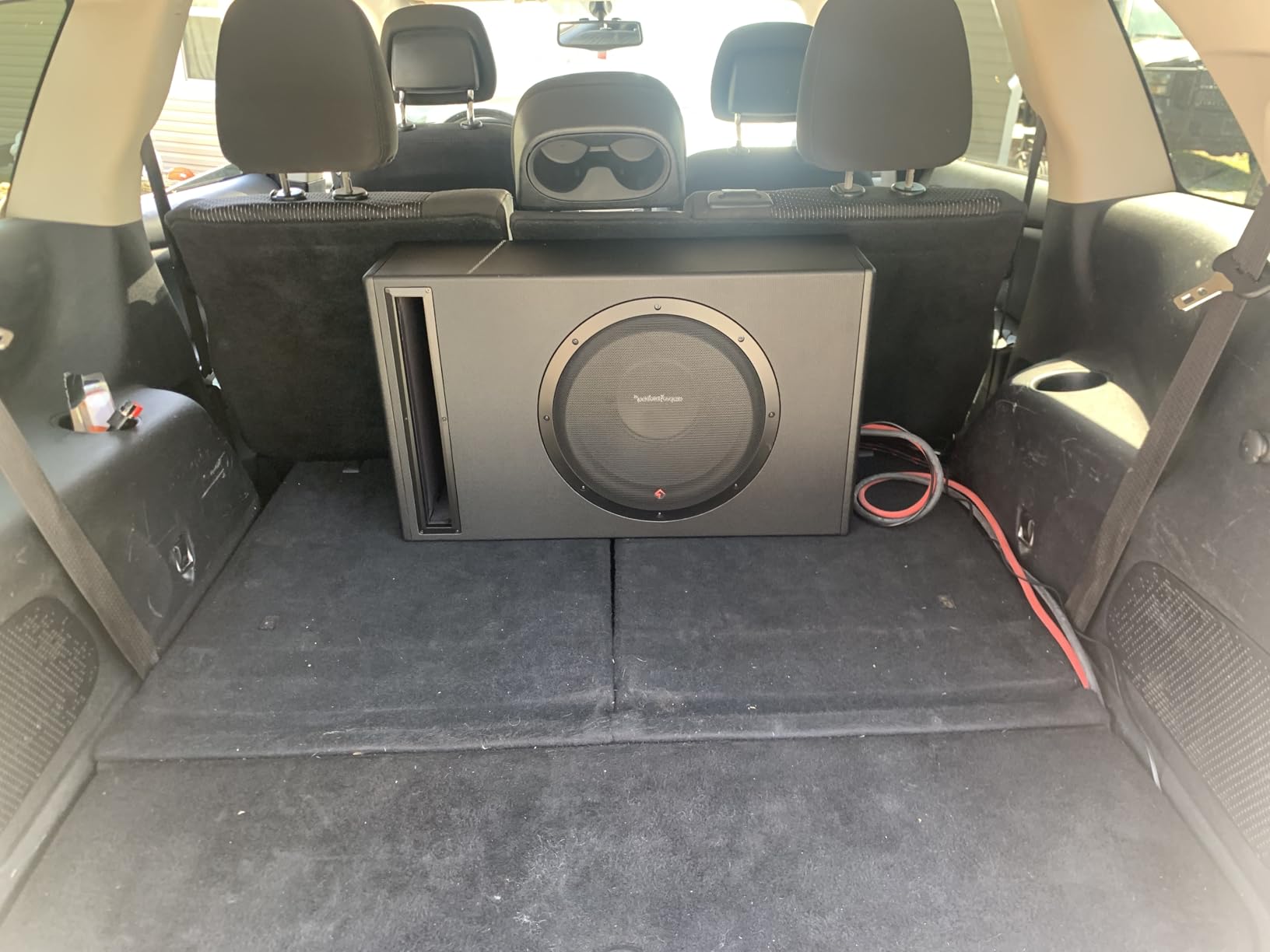
7. Rockford Fosgate Punch P300-12T Amplified 12 inch Subwoofer
Rockford Fosgate Punch P300-12T Amplified 12″ Subwoofer in Enclosure
All-in-one amplified 12 inch enclosure
Built-in 300W Class D amplifier
Sealed slim box with quick-disconnect harness
Pros
- Tight
- responsive bass from a sealed 12 inch design
- Slim enclosure slides under rear seats in many trucks and SUVs
- Quick-disconnect harness makes removal easy for cargo space
- Onboard low-pass
- bass boost EQ and phase switch
- Highest average rating in the group at 4.7 stars
Cons
- Box often protrudes about an inch from under the seat
- Wiring kit is sold separately
- Sealed design is not a competition-level SPL setup
The Punch P300-12T is the one we would put in a car we drove every day. It is a sealed 12 inch enclosure with a built-in 300 watt Class D amplifier, and at 4.7 stars across 673 reviews with 85 percent five-star ratings, it has the highest satisfaction ratio of any box we tested. Only 2 percent of owners gave it one star.
Sealed enclosures trade peak decibels for accuracy. There is no port to whistle or chuff at high volume, the box is smaller and easier to secure, and the bass stays tighter on fast passages. For rock, metal, and general music where the sub has to stay honest at every level, that trade is exactly the right one to make.
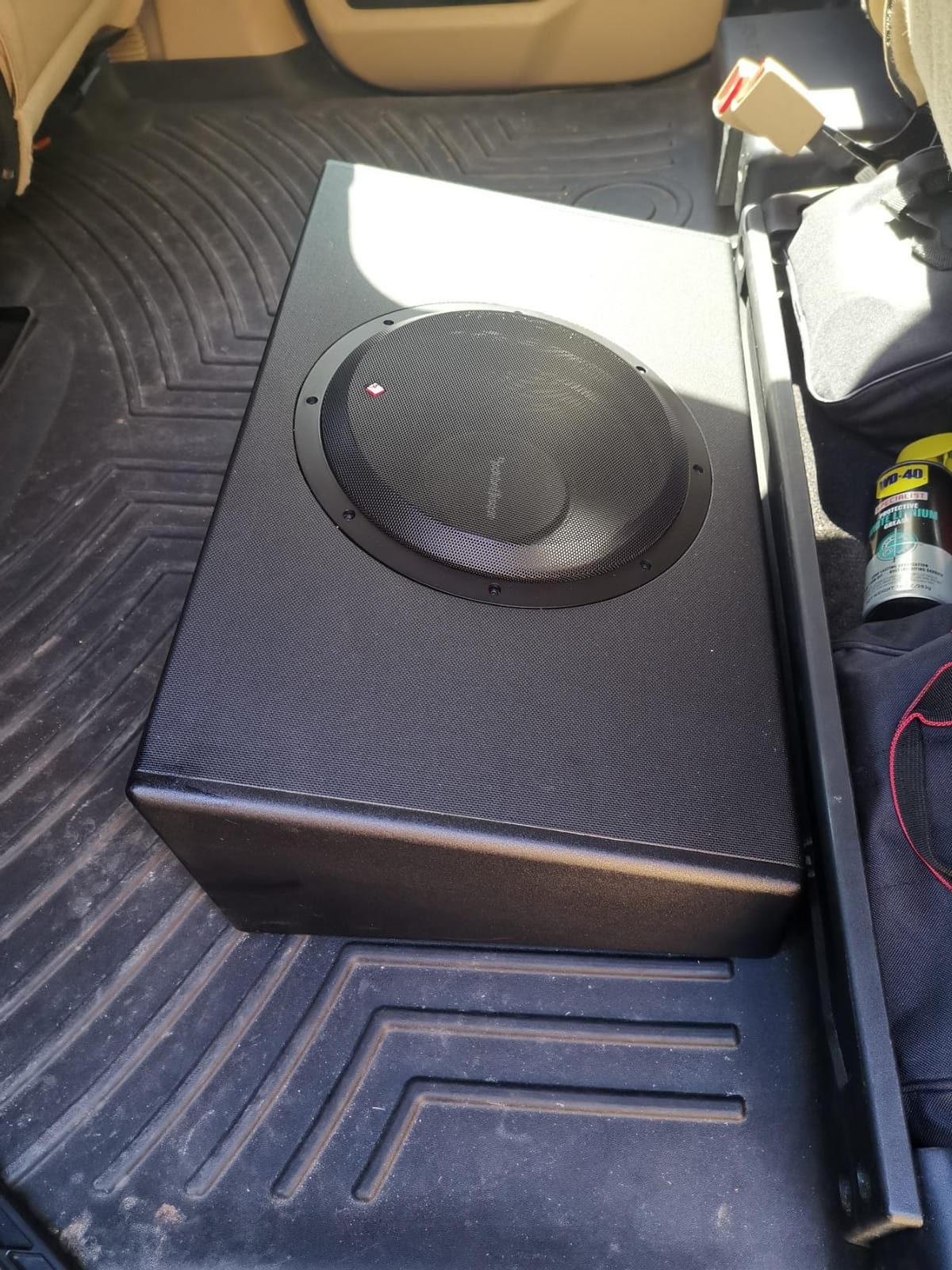
The on-board controls are the full set: an adjustable 12 dB per octave low-pass filter, an adjustable bass boost EQ, and an onboard phase switch. The enclosure connects through speaker-level inputs to a factory system or traditional line-level inputs to an aftermarket head unit, and a Punch level control remote is included.
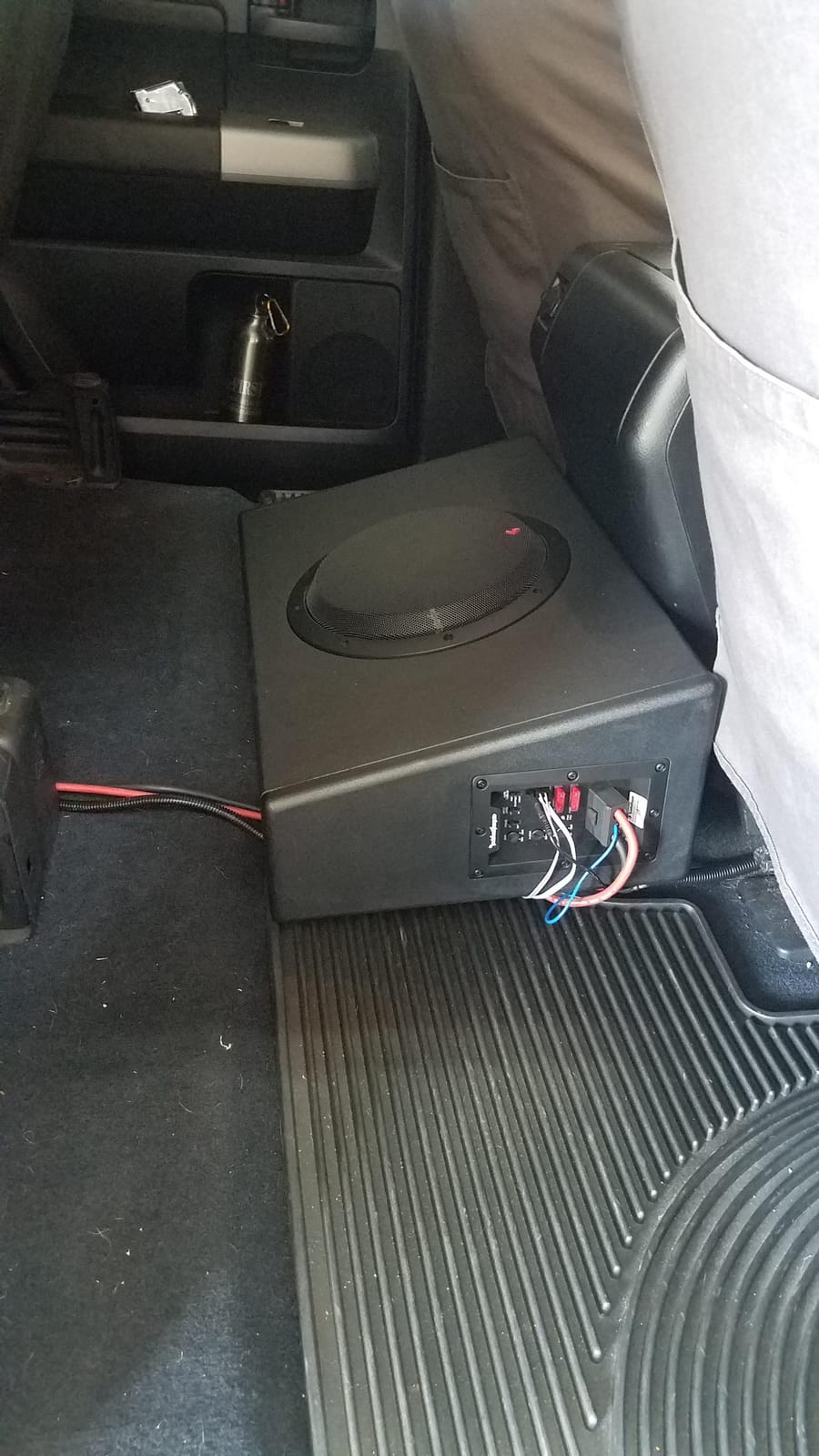
The quick-disconnect wiring harness is the feature that gets repeated most often in reviews. The box slides under a rear seat, and when you need the cargo area you unplug one connector and pull it out. Several owners note that placement in the cabin strongly affects perceived output, so experiment with orientation before you commit to a position.
When sealed beats ported
A sealed box is the right choice when the enclosure has to tuck into a tight space and when accuracy matters more than raw output. There is no port tube to align, no port noise to complain about, and the cabinet can be braced simply and securely. In a truck rear seat or a hatchback cargo bay, that simplicity is worth a lot.
Because the driver is impedance-optimized for the internal 300 watt amplifier, you never have to think about matching a load. That is the practical argument for a powered box in general, and it is why buying a component sub and a separate amp is a project rather than a purchase.
Where it falls short
The box is 15 by 25.8 by 4.8 to 8.5 inches, and owners commonly note that it protrudes about an inch past the seat rail even when it is meant to slide underneath. Measure the seat track and the depth under the seat before you order, and if it does not clear, the trunk is still a perfectly good home for a sealed box.
Two practical notes. The wiring kit is not included, so budget for a proper power cable, an inline fuse, and RCA or a tap for your factory system. And a sealed box is not a substitute for competition level output, so if that is the goal you need a ported design and a lot more power.
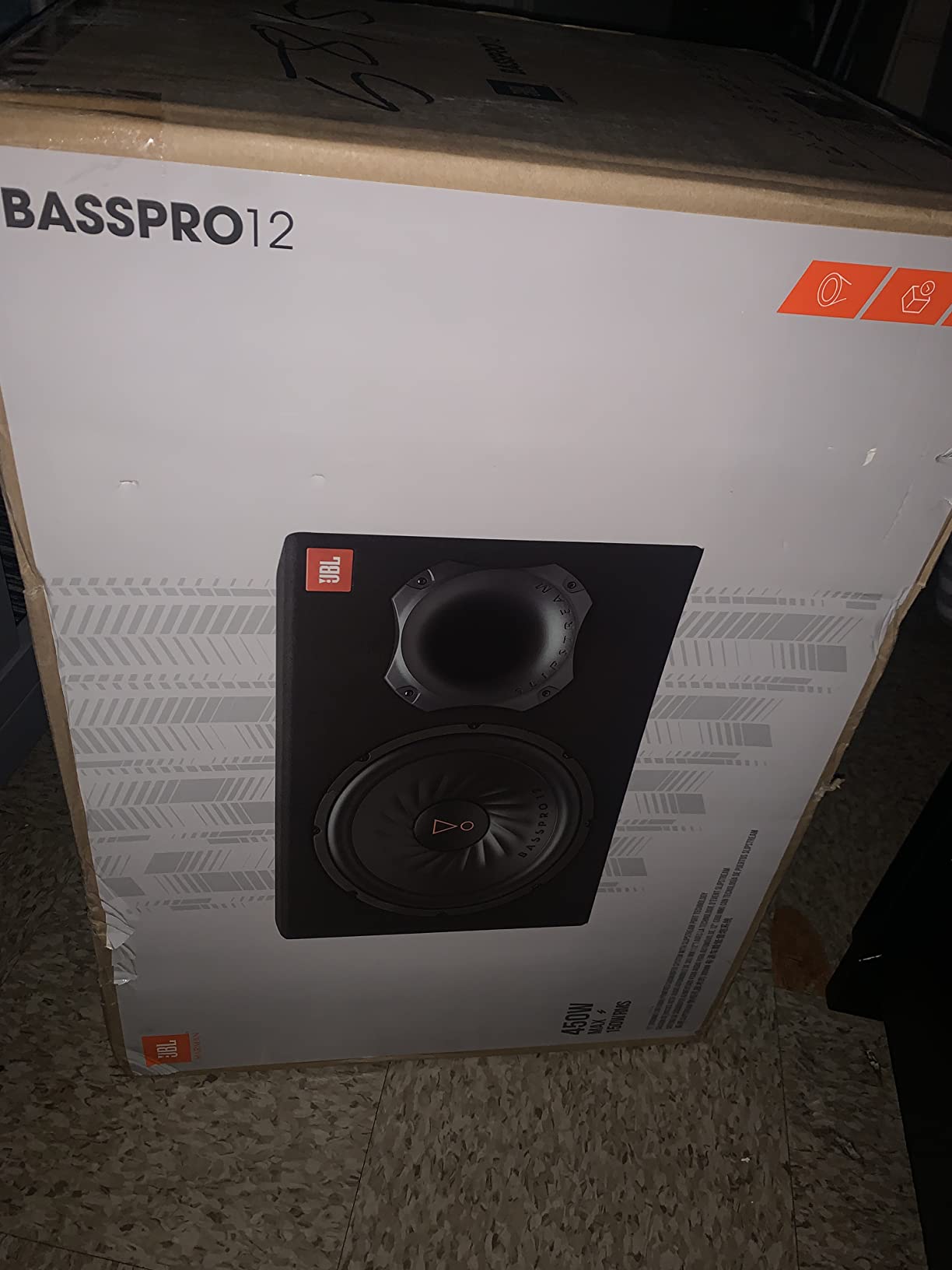
8. JBL SUBBP12AM Amplified 12 inch Subwoofer
JBL SUBBP12AM – 12” amplified 12” Subwoofer with Sub Level Control, Black
150W RMS built-in amplifier
12 inch polypropylene woofer
Slipstream port with remote level control
Pros
- Slipstream port design minimizes port noise at higher output
- 150W RMS amplifier matched to the 12 inch woofer
- Remote sub level control included in the box
- 82 percent of owners rate it five stars
- Plastic enclosure keeps weight manageable for a 12 inch
Cons
- Larger footprint than slim sealed or wedge competitors
- Narrower 35 to 120 Hz response than some rivals
- Plasticky enclosure finish compared with MDF cabinets
The JBL SUBBP12AM is a ported 12 inch box where the port was the point. The slipstream port is shaped to keep airflow smooth as the box is pushed hard, which is what stops the chuffing noise that cheap ported enclosures produce at high volume. If you have heard a ported sub boom on kick drums and whistle between notes, this is the design that fixes that.
Power comes from a built-in amplifier matched to the woofer at 150 watts RMS or 450 watts peak, and the polypropylene cone keeps the moving mass consistent in changing conditions. The listed response runs 35 to 120 Hz, which is narrower than some rivals but well matched to the ported design. At 4.6 stars across 459 reviews with 82 percent five stars, satisfaction is high.
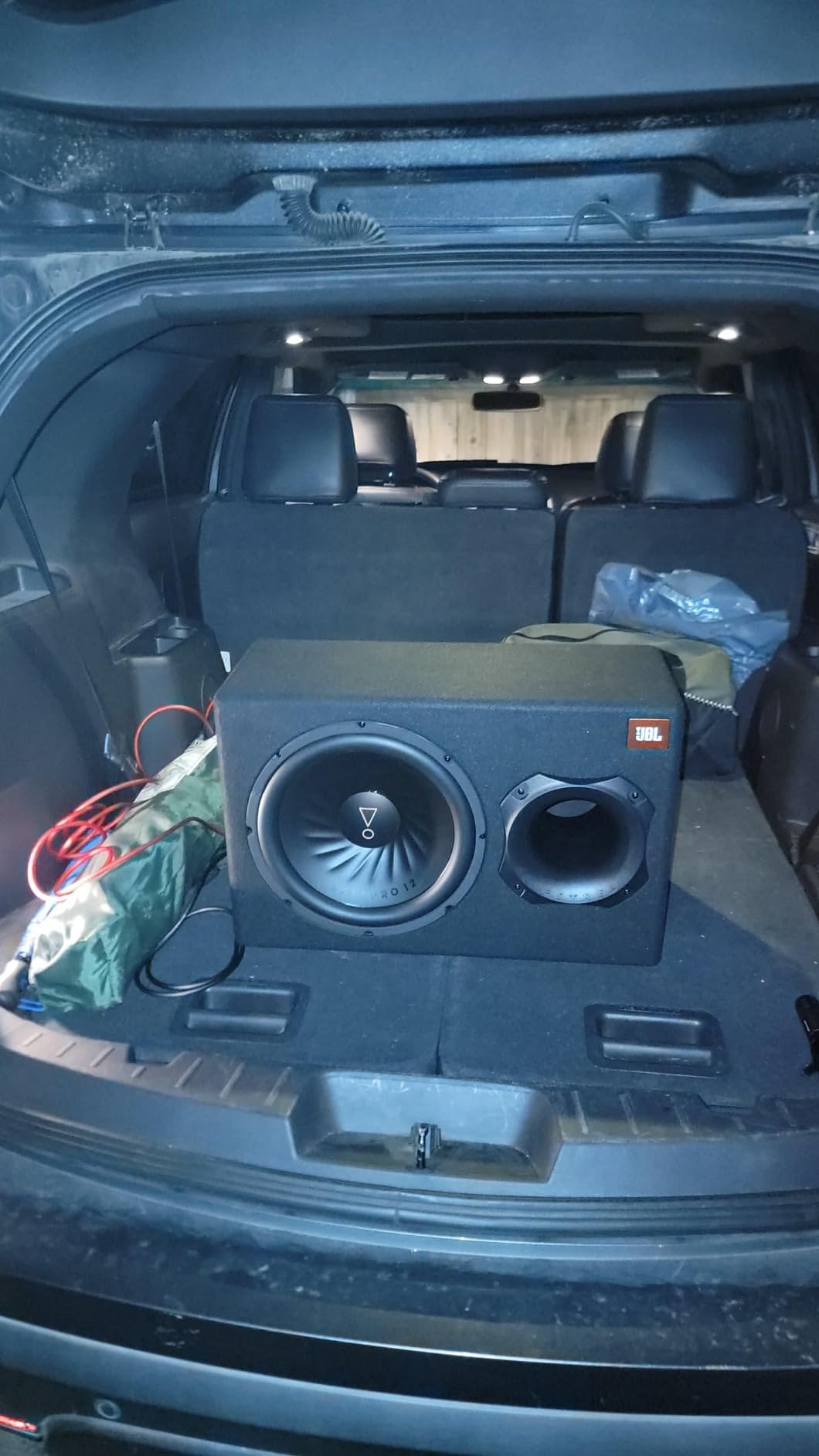
Owners report strong, clean bass with no port noise, a straightforward install that works with factory systems, and good value for a branded 12 inch amplified enclosure. A remote sub level control is in the box, so you are not turning gain knobs in the trunk every time you want to change the balance.
The enclosure is molded plastic rather than MDF, and at 13 by 24.13 by 11.25 inches it is deeper than the slim sealed boxes on this list. The trade is deliberate: a plastic shell is lighter, cheaper, and easier to secure, and the ported tuning gives more output per watt in the low end than a sealed box of the same size.
When a ported enclosure wins
Ported boxes are more efficient in the low end. Air moving through the port does part of the work of moving the cone, so a ported design of a given size plays louder and deeper than a sealed design of the same size. If the goal is noticeable low end at moderate volume in a large cabin, porting is the more efficient path.
That efficiency is why this box works well for bass-heavy music in a sedan or a standard-size SUV. The narrow upper response of 120 Hz is also a feature rather than a limitation, because the sub hands off cleanly to the door speakers and does not muddy the midrange with bass that belongs below the seat.
Where it falls short
The footprint is the trade. At 24.13 inches wide and 11.25 inches tall it will not go under a seat, and in a hatchback or small sedan it claims a real slice of the cargo floor. Plan the mounting surface and brace it, because a ported box that moves or buzzes under a heavy bass note will sound worse than the same box bolted down properly.
The plastic finish also looks and feels less premium than an MDF cabinet with carpet or vinyl, and the 35 to 120 Hz window means it will not add much below 35 Hz. If you want to feel bass on a kick drum rather than hear it, look at a box with more output and a lower tuning frequency.
9. Rockford Fosgate Punch P500-12P Amplified 12 inch Subwoofer
Rockford Fosgate Punch P500-12P Amplified 12″ Subwoofer in Enclosure
Built-in 500 watt Class D amplifier
Ported MDF wedge enclosure
Auto signal-sensing turn-on
Pros
- 500 watt built-in Class D amplifier delivers the most clean punch here
- Ported MDF wedge enclosure is efficient and hits hard for a single 12 inch
- Quick-disconnect power plug makes the whole unit easy to remove
- Auto signal-sensing turn-on avoids a separate remote wire
Cons
- Deepest enclosure here at 24.76 inches wide
- Ported box can lose accuracy on very fast double-bass passages
- Needs a break-in period at moderate levels before being pushed hard
The P500-12P is the most powerful box on this list, with a built-in 500 watt Class D amplifier driving a single 12 inch high-output woofer in a vented wedge enclosure. If your complaint about the factory system is that it is not loud enough rather than merely missing low end, this is the box that actually changes the situation. It holds 4.4 stars across 279 reviews with 77 percent five stars.
The ported MDF wedge is built for efficiency at high volume, and the heat-activated vinyl finish is a tougher surface than paper or bare board. Because it is a wedge shape it can be positioned in a hatchback, sedan, or SUV against a seat back, and the port faces away from the cabin interior so port noise stays low.
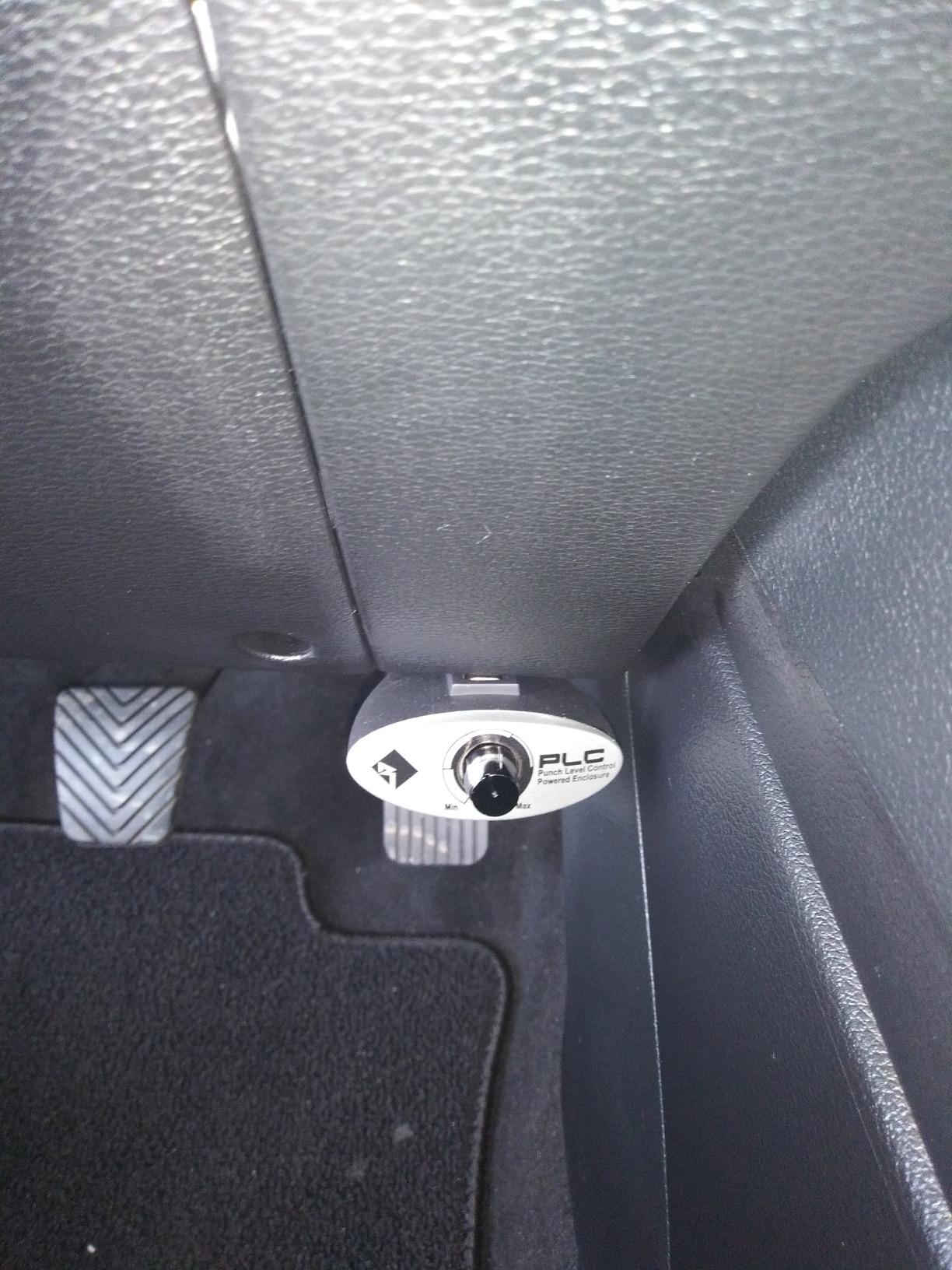
Controls match the higher power level: an adjustable 12 dB per octave low-pass filter, a built-in adjustable bass boost EQ, high-level and low-level inputs, a 0 or 180 degree phase switch, and a remote bass level control. The auto signal-sensing turn-on means you do not have to find a remote trigger wire in a factory harness.
Owners describe it as a clean, powerful upgrade that preserves cargo space, and several mention that the low bass stays mostly inside the cabin rather than carrying down the street. The quick-disconnect power plug makes the whole unit removable in seconds when you need the cargo space.
Do you actually need 500 watts
More power buys headroom, and headroom is what stops a sub from distorting when the music gets loud. A 500 watt amplifier driving a single 12 inch in a ported box can play substantially louder before it runs out of clean output than a 150 or 200 watt box can, and that is the difference between bass that sounds strong and bass that sounds strained.
You also need the wiring to support it. A 500 watt Class D amplifier should run on a proper power cable with an appropriately rated inline fuse, mounted close to the battery, and a clean ground point on bare metal. Undersized cable is the number one reason a powerful sub feels weak and why an amplifier ends up in protection mode.
Where it falls short
It is one of the two deepest enclosures here at 24.76 inches wide and 15 inches tall with a 10.91 inch depth at one end, so measure your hatchback or SUV cargo bay carefully. A wedge shape also means it has to sit on a solid, flat surface to avoid rocking and buzzing under power.
Two honest weaknesses come from owner reports. A ported box can lose accuracy on very fast double-bass passages, which matters more for bass-heavy electronic music than for rock and metal, and the enclosure needs a proper break-in period at moderate levels before it is pushed hard. It is also the fewest reviewed box in our group at 279 reviews, so the long-term track record is thinner than the others.
How to Choose a Powered Subwoofer for Your Car
RMS power versus peak power: read only one number
Peak wattage on a car subwoofer box is marketing, and the gap between peak and RMS on this category is routinely a factor of four or five. A box advertising 1200 watts is usually a 300 watt RMS amplifier, and the peak figure describes what the amplifier can do for a moment, not what it sustains for a song. Judge every box on RMS watts and ignore the rest.
What RMS means practically is how much sustained output reaches the cabin. Roughly 100 watts RMS is enough to fill in the bottom of a factory system in a compact car, 200 to 300 watts RMS covers most sedans and SUVs at real listening volumes, and 500 watts RMS is where you get noticeable headroom for bass-heavy music and open windows. Below about 100 watts, the sub will run out of output before the music does.
Sealed, ported, or slim: pick your bass character
Sealed enclosures are tight, accurate, and compact, with no port noise at any volume. They are the best choice when the box needs to fit in a tight space and when the sub runs constantly. Ported enclosures are more efficient in the low end, so they play louder and deeper for the same size, but they need more room and they produce port noise if pushed very hard.
Slim and under-seat designs are a placement category rather than a tuning category, and they can be sealed internally. They are the only realistic option for a compact sedan, a hatchback where you need every inch of cargo floor, or a truck rear seat. The trade is less cone area and therefore less output, so pair a slim box with a well-set crossover rather than expecting it to carry the bottom end alone.
Measure before you buy: the fit checklist
Measure the gap between the seat bottom and the floor pan, and measure the seat track, because a raised rail is the most common reason an under-seat box will not slide into place. Then measure the widest and tallest part of your intended space including mounting brackets, and check for seat motors, ventilation ducts, and trim brackets on the underside of powered seats.
In the trunk or cargo bay, measure depth to the back seat, width between the wheel arches, and the height to the parcel shelf, and remember that a ported box is deeper at the port end than the flat dimension on the spec sheet suggests. If your vehicle has a spare tire well, measure the well depth, because several slim boxes fit inside it where nothing else will.
Factory radio compatibility and auto turn-on
Every box on this list has high-level speaker inputs and most also have RCA low-level inputs, which means they will work with a factory radio that has no sub output. The catch is that a factory system with its own processing, such as a premium-brand amplified system, may not give you a clean full-range signal to tap, and in that case a line output converter or a small digital signal processor is the correct answer rather than an adapter cable.
Auto turn-on matters more than most buyers expect. DC-offset turn-on looks for a voltage change on the speaker wire, and signal sensing watches for a bass signal in the line. Either way the sub wakes with the radio and sleeps with it, so your battery does not drain overnight. Without it you would be running a remote turn-on wire from the head unit, which is where a lot of first installs go wrong.
Power wire, fuse placement, and ground point
Use the shortest and thickest power cable the amplifier can take. As a rough guide, a sub drawing up to about 100 amps needs 4 gauge wire, and one drawing more than that needs 2 gauge or heavier, with an inline fuse rated appropriately and mounted within a few inches of the battery. The Rockville SS8P bundle includes a 10-gauge kit that suits a lower draw; for a 500 watt box you will want heavier cable and a proper fuse block.
Ground the box to bare metal on the chassis, not to a painted surface, and tighten it so the connection is solid. If you hear a rushing hiss that rises with volume, or a whine that tracks with engine speed, the cause is almost always a ground loop: run a longer ground wire to a different point on the chassis, or use a ground loop isolator on the RCA cables. Speakers are wired in parallel, so a common-negative connection at the head unit is fine.
Setting gain and crossover without distortion
Start with the low-pass filter at a low frequency such as 80 Hz, bass boost fully off, and the gain at minimum. Turn the gain up slowly until the sub is clearly audible and balanced with the front speakers, then stop. A cleaner method with a multimeter is to set the gain so the amp reads about 75 to 85 percent of its supply voltage with the meter on AC volts across the speaker terminals at a moderate volume.
Set the subsonic filter as close as possible to the tune of the enclosure, which is the single most repeated piece of tuning advice in car audio forums. It prevents the amplifier from driving frequencies the box cannot produce, which is the main cause of clipping, distortion, and amplifiers cutting in and out under load. Leave the bass boost alone unless you have a specific reason, because boosting low frequencies in a small sealed box mostly adds distortion.
Frequently Asked Questions
Are powered subwoofers any good?
Yes, for most people they are the best value in car audio. A powered sub pairs a driver with an amplifier already matched to it and the enclosure already built, so you get a working bass upgrade from one purchase. Modern Class D amplifiers are efficient and clean, and the sealed slim designs on this list are genuinely musical rather than merely loud. The compromise is that the internal amp and enclosure are fixed, so you cannot upgrade the amplifier later.
What car subwoofer has the best sound quality?
Among the picks we tested, the Rockford Fosgate Punch P300-12T stands out for sound quality, with a 4.7 star average across 673 reviews. Its sealed 12 inch enclosure trades peak decibels for accuracy, so the bass stays tight and clean at every volume instead of distorting on fast passages. The Alpine PWE-S8 is the best choice for sound quality per cubic inch in a very small car.
What is the most powerful powered subwoofer available?
Of the nine boxes we compared, the Rockford Fosgate Punch P500-12P is the most powerful, with a built-in 500 watt Class D amplifier driving a single 12 inch woofer in a ported MDF wedge enclosure. That is the difference between a 150 or 200 watt box running out of headroom and one that stays clean at high volume. Its 15 by 24.76 inch footprint is the price of that power.
What is the best active subwoofer for a car?
For most vehicles the best active subwoofer is the Rockville SS10P, a 200 watt RMS 10 inch driver in a 3 inch tall cast aluminum enclosure that fits under a car seat. It has high-level and RCA inputs, auto turn-on, a remote knob, a subsonic filter, and a phase switch, and it holds 4.4 stars across more than 3667 reviews. Larger vehicles with more space should step up to a 12 inch sealed or ported box.
Do powered subwoofers need a separate amp?
No, that is the entire point. The amplifier is built into the enclosure and sized to the driver inside it, so you connect power, ground, and a signal and the box handles the bass on its own. You still need proper power wire, an inline fuse near the battery, a ground point on bare metal, and a remote or signal cable, but you do not need to buy an amplifier or build a box.
How do I set gain and crossover on a powered subwoofer?
Turn the bass boost off, set the low-pass filter near 80 Hz, and start with the gain at minimum. Turn the gain up slowly until the sub blends with the front speakers without strain on bass lines you know well, then stop. For accuracy, set the subsonic filter as close as possible to the tune of the enclosure so the amp is not asked to produce frequencies the box cannot make.
Final Verdict on the Best Powered Subwoofers for Cars in 2026
The best powered subwoofers for cars in 2026 come down to where the box will live and how much output you actually want. The Rockville SS10P is our top pick because a 200 watt RMS 10 inch driver in a 3 inch tall aluminum enclosure solves the fit problem most people have while still giving real bass, and its review history is the deepest on this list.
Pick the Rockville SS8P if you want everything in one box including the wiring, the Alpine PWE-S8 if behind a front seat is all the room you have, and the KICKER 46HS10 if clean integration with a factory radio matters most. Step up to the Rockford Fosgate P300-12T for the most musical sealed bass in a truck or SUV, and to the P500-12P only if you genuinely want the most output. Whatever you choose, measure the space first and set the subsonic filter before you turn the gain up.