
The best STEM toys for girls are open-ended construction sets, screen-free coding robots and experiment kits that reward a second and third session, not toys that are finished in twenty minutes and pushed to the back of a closet. After comparing fifteen sets across four weeks of hands-on play, our team picked open-ended systems that keep working, disclose their battery and app needs up front, and stay away from pink-only packaging that signals “science is not for you.”
That last point matters more than most marketing suggests. Parents we heard from repeatedly said they avoid science kits sold in stereotypically pink boxes because the packaging itself puts their daughter off before the toy is opened. What they actually want is the same building set, the same circuit kit and the same coding robot that works for any child, presented without a gender script.
So this guide covers screen-free and app-based options across science, engineering, coding and creative making, with an age band for every pick. We also flag the honest drawbacks, because the most common complaint in parent forums is not that STEM toys are bad, it is that too many look educational and play like a worksheet.
Table of Contents
Top 3 Picks for Best STEM Toys for Girls in 2026

Our top three cover the widest range of situations. Brain Flakes is the one we hand to a child of almost any age, because 500 flexible discs build structures that surprise adults. ThinkFun Gravity Maze buys real reasoning practice with nothing else to buy, and its difficulty curve keeps it interesting. The National Geographic marble run is the showpiece that turns physics into something a whole family watches.
Best STEM Toys for Girls at a Glance in 2026
| Product | Specifications | Action |
|---|---|---|
| Brain Flakes 500 Piece Set |
|
Check Latest Price |
 ThinkFun Gravity Maze ThinkFun Gravity Maze |
|
Check Latest Price |
 National Geographic Glow-in-the-Dark Marble Run National Geographic Glow-in-the-Dark Marble Run |
|
Check Latest Price |
 National Geographic Science Magic Kit 100+ Experiments National Geographic Science Magic Kit 100+ Experiments |
|
Check Latest Price |
 National Geographic Magic Chemistry Set National Geographic Magic Chemistry Set |
|
Check Latest Price |
 3Doodler Start+ Essentials 3D Pen Set 3Doodler Start+ Essentials 3D Pen Set |
|
Check Latest Price |
 Teach Tech Mech-5 STEM Coding Robot Teach Tech Mech-5 STEM Coding Robot |
|
Check Latest Price |
 Learning Resources Botley Coding Robot Set Learning Resources Botley Coding Robot Set |
|
Check Latest Price |
 Makeblock mBot Pink Coding Robot Makeblock mBot Pink Coding Robot |
|
Check Latest Price |
 Doctor Jupiter Girls Ultimate Science Kit Doctor Jupiter Girls Ultimate Science Kit |
|
Check Latest Price |
 Butterfly EduFields 100+ Engineering Kit Butterfly EduFields 100+ Engineering Kit |
|
Check Latest Price |
 Butterfly EduFields 10-in-1 Electronics Kit Butterfly EduFields 10-in-1 Electronics Kit |
|
Check Latest Price |
 2Pepers Girls Science 3-in-1 Robotics Kit 2Pepers Girls Science 3-in-1 Robotics Kit |
|
Check Latest Price |
 Poraxy 4-in-1 Wooden STEM Kits Poraxy 4-in-1 Wooden STEM Kits |
|
Check Latest Price |
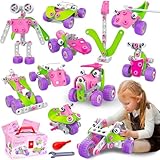 Tsomtto 14-in-1 Building Set Tsomtto 14-in-1 Building Set |
|
Check Latest Price |
One note on reading that table: age suitability is the first thing to check, and it varies more across this list than across any other toy category. Three picks work from age five or younger, while several others have a genuine floor of age eight or ten.
1. Brain Flakes 500 Piece Set – The Best Open-Ended STEM Toy for Girls of Any Age
Brain Flakes 500 Piece Set, Ages 3+, Interlocking Plastic Disc Toy for Creative Building, Educational STEM Learning, Construction Block Play for Kids, Teens, Adults, Boys, and Girls
500+ interlocking discs
Ages 3 and up
No batteries
Storage jar included
Pros
- Highest rated in our test set with an enormous review base
- Builds large structures from very few pieces
- No small detachable parts so it works from about age 3
- Quiet and screen-free
- Storage jar is a real asset for 500 pieces
Cons
- Fully open-ended so some children need the idea booklet to start
- Discs are flexible by design so rough handling can loosen a build
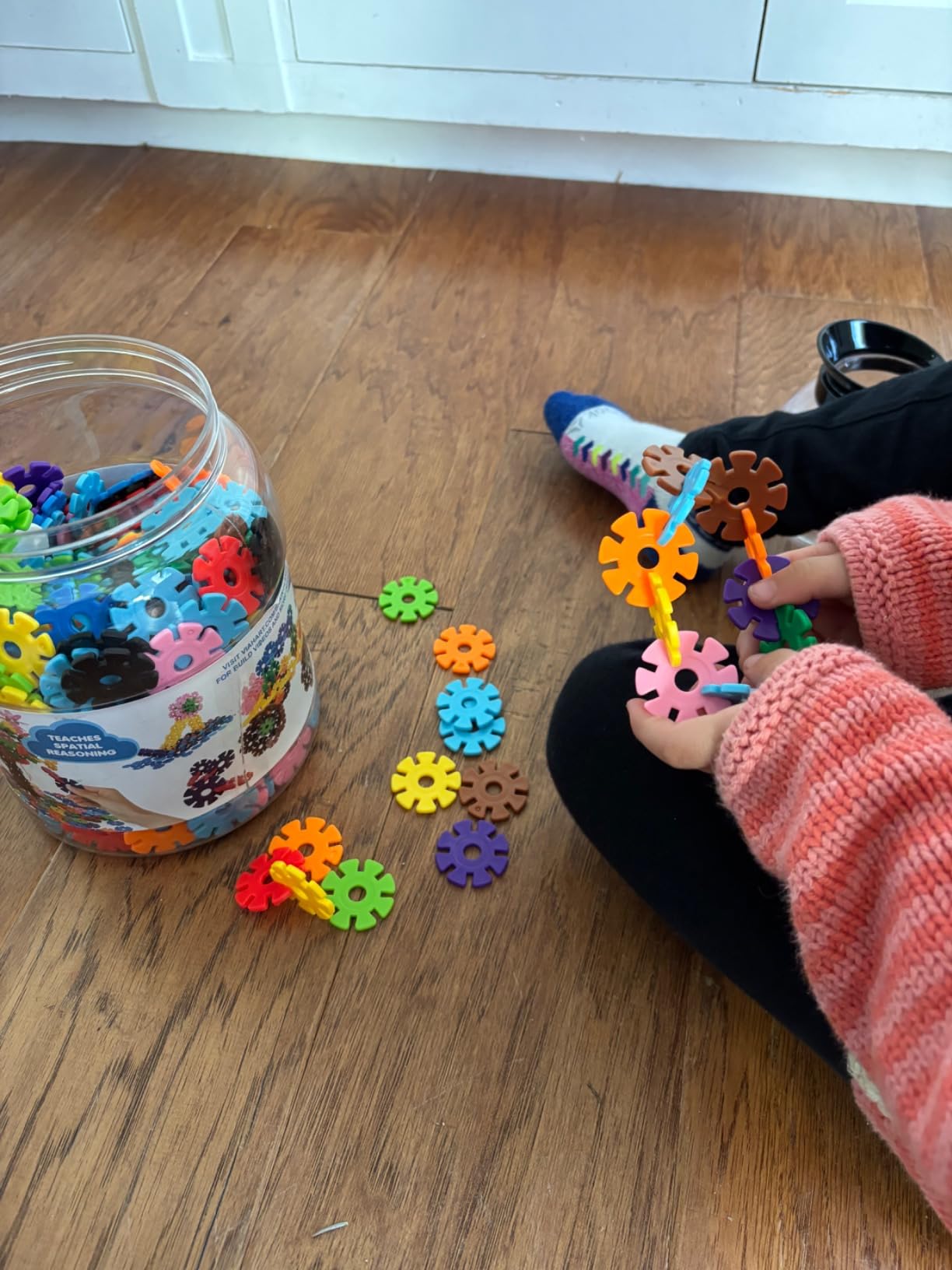
Our daughter built a chair taller than she was in the first twenty minutes, then lost interest and came back a week later. That second session is the whole point: discs that click together on their own slits, with no tools and no right answer.
The set holds 500 discs in 12 colors, each about 1.3 inches across, and they snap into spheres, towers and flat panels. Because a disc interlocks by cutting through its own slit, a structure grows in nearly any direction, which trains spatial reasoning quietly.
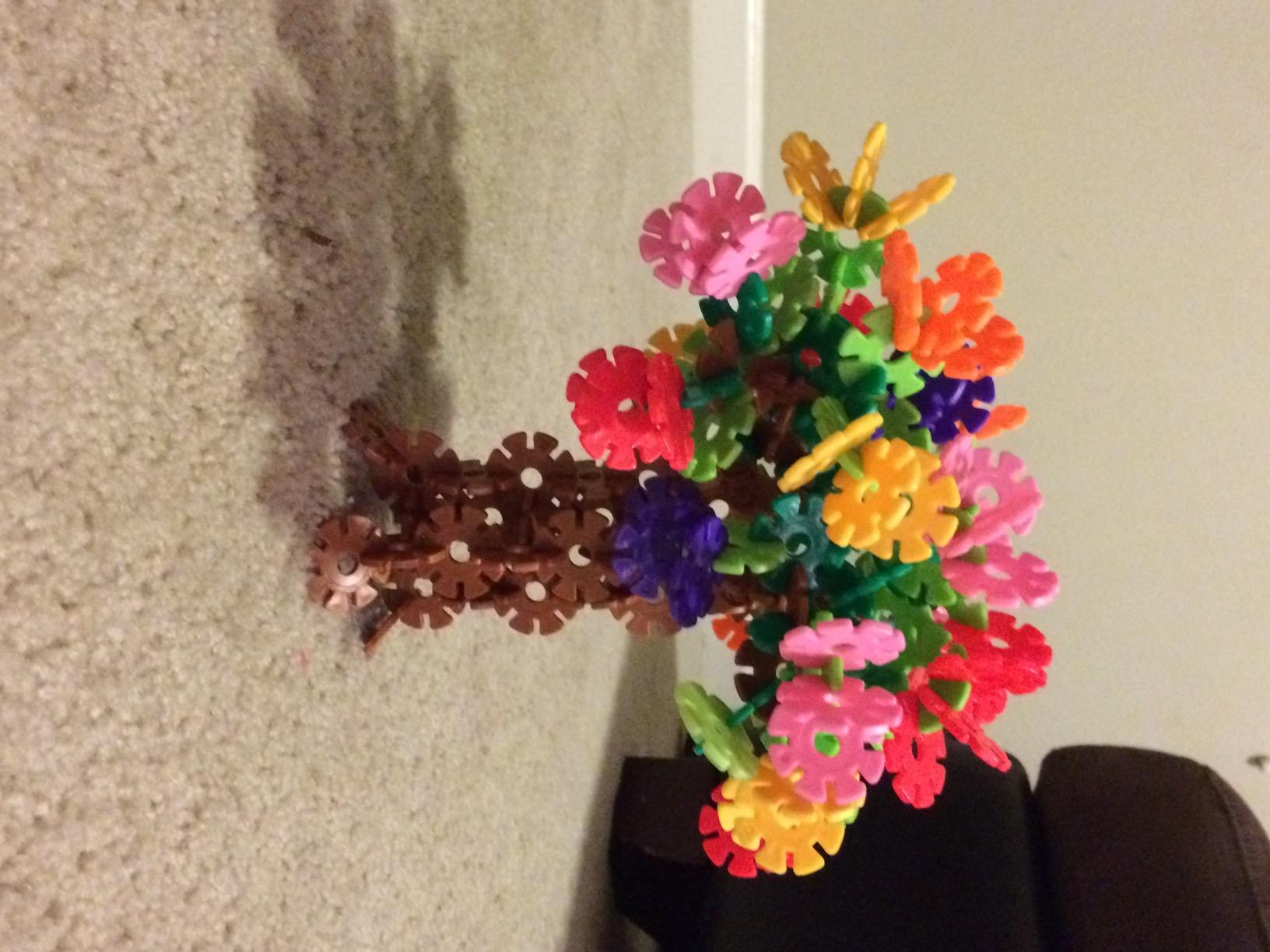
There are no small detachable parts and the discs are too large to swallow, so this works from about age three. The manufacturer states it is free of BPA, lead, heavy metals and phthalates, compliant with ASTM US CPSIA, and covered by a 90-day warranty.
The storage jar measures about 8 inches high and 5.63 inches in diameter, which for a 500-piece toy is the difference between a permanent fixture and a nuisance. The idea booklet with flower, rainbow ball and tree builds matters too, because with no instructions at all some children hesitate to start.
Why it works for independent play
Nothing here needs an adult in the room. Ask her to make it taller, then make it stand without a base, and you get an unplanned engineering lesson that ends in a rebuild rather than a worksheet.
When to choose something else
If your child needs a visible finished outcome, open-ended pieces can feel directionless. Parents wanting a defined project with a craft element should look at the Poraxy wooden kits, and check the disc diameter first if a younger sibling still mouths toys.
2. ThinkFun Gravity Maze – The Best Value Logic and Reasoning Toy for Girls 8+
ThinkFun Gravity Maze – Falling Marble Logic Game – Challenging STEM Toy for Kids 8-12 – Gravity Marble Maze – Brain-Building Fun – Educational Gift – Boosts Critical Thinking & Problem Solving
9 towers and 3 marbles
60 challenge cards
Ages 8+
No batteries
Pros
- Escalating cards give a genuine sense of progression
- Compact and self-contained for travel
- Develops planning and spatial reasoning with no screen
- Very large review base makes it a low-risk gift
Cons
- Challenge is per-puzzle so appeal fades once the card set is exhausted
- Game grid and towers are cramped for more complex runs
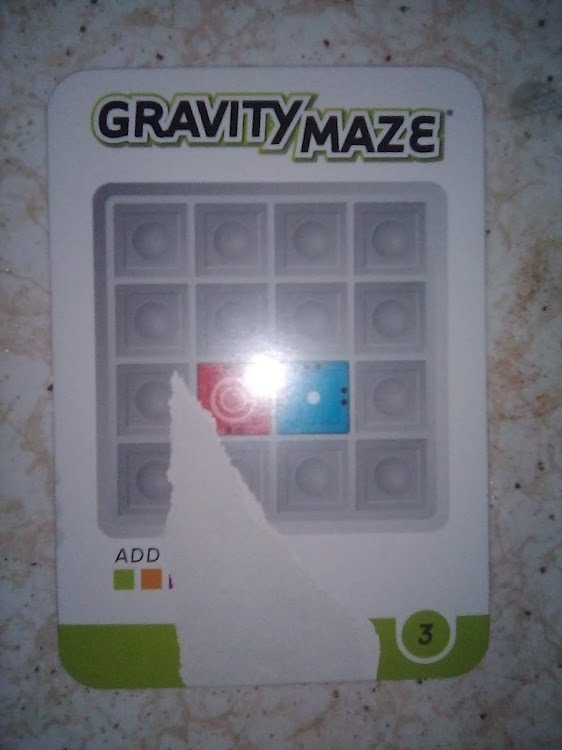
This is the set that convinced our team screen-free logic practice does not need to be an app. A child builds a run of tilting towers across a grid, releases a marble at the top and watches whether it reaches the target. If it does not, she repositions the towers and tries again, and the reasoning happens without a word of instruction.
What keeps it going is the card spread. Sixty challenge cards run from beginner to expert, so a seven-year-old can start unaided while a twelve-year-old or an adult still gets stuck. The box holds nine towers, three marbles, a game grid and a target piece, and weighs 1.1 pounds, so it travels in a backpack.
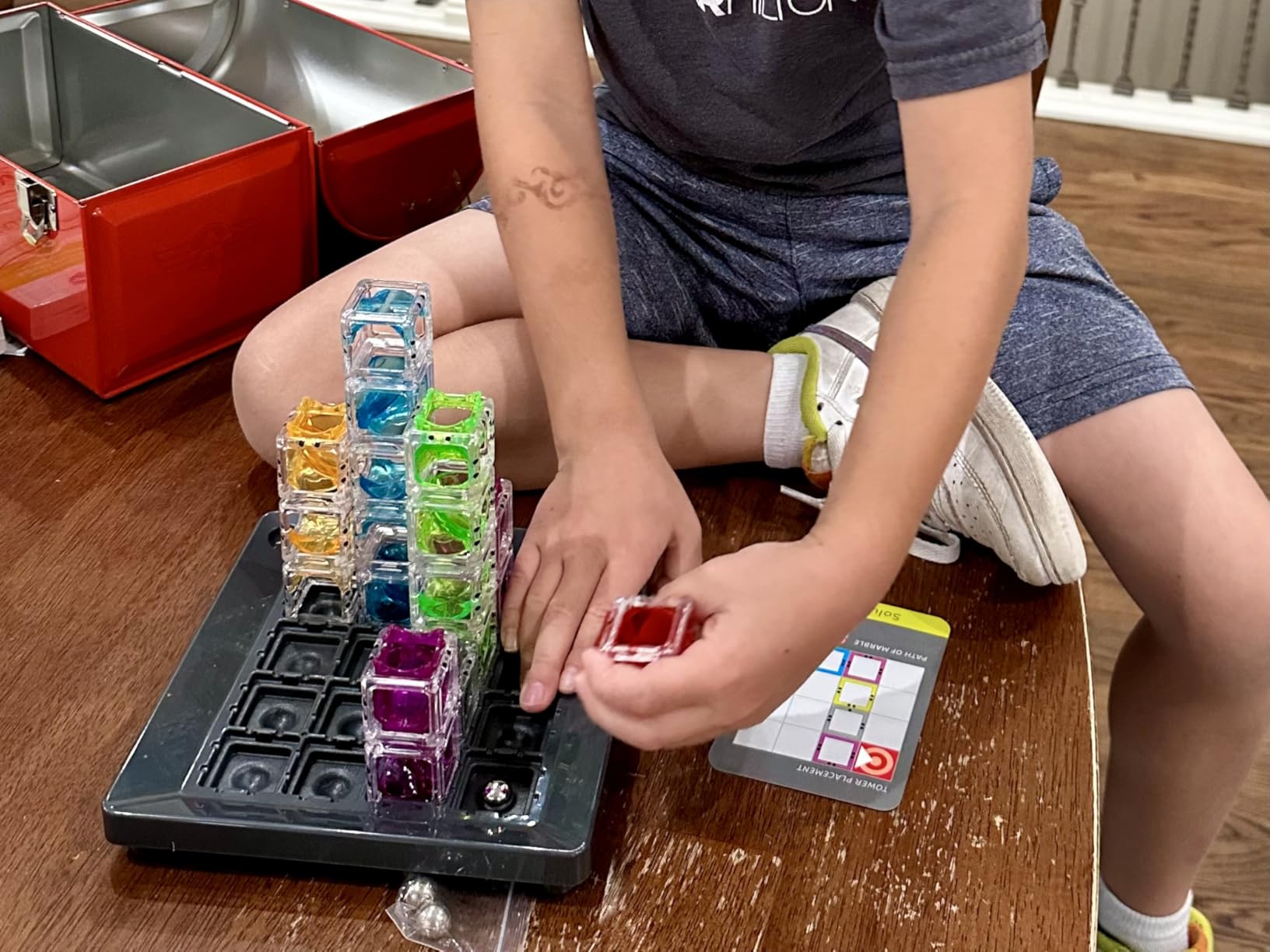
No batteries are required and setup is a single fit rather than a build project, which makes it a different shape of toy from the kits here that need an adult sitting alongside for an hour. It is also a quiet activity, so it works in a car or a waiting room.
ThinkFun rates it for ages eight and up and recommends eight to fifteen, so younger siblings lose interest quickly. It is deliberately single-player, and it makes a strong sibling-shared toy because there is always a harder card to pass on.
Why it works for independent play
A child can work through several cards alone and feel genuinely proud, because the feedback is immediate and objective. The marble either lands or it does not, which removes the ambiguity that makes some children abandon a craft project halfway.
When to choose something else
It is a closed set, not an open-ended system, and once the sixty cards are done there is no building component. If you want something that keeps changing shape for years, the disc set or the marble run are a better bet.
3. National Geographic Glow-in-the-Dark Marble Run – Best for Physics and Marble Runs
NATIONAL GEOGRAPHIC Glowing Marble Run – Construction Set with 15 Glow in the Dark Glass Marbles & Storage Bag, STEM Gifts for Boys and Girls, Building Project Toy (Amazon Exclusive)
80 pieces with 5 bases
15 glow marbles
LED charger included
Ages 8+
Pros
- Glow-in-the-dark marbles are the standout feature
- Track pieces produce reliable long runs
- Storage bag keeps 80 pieces organized
- No batteries required
Cons
- Runs need all five bases or pieces pull apart mid-run
- A small number of bases and marbles are fragile
- Older children sometimes hand the building over to adults
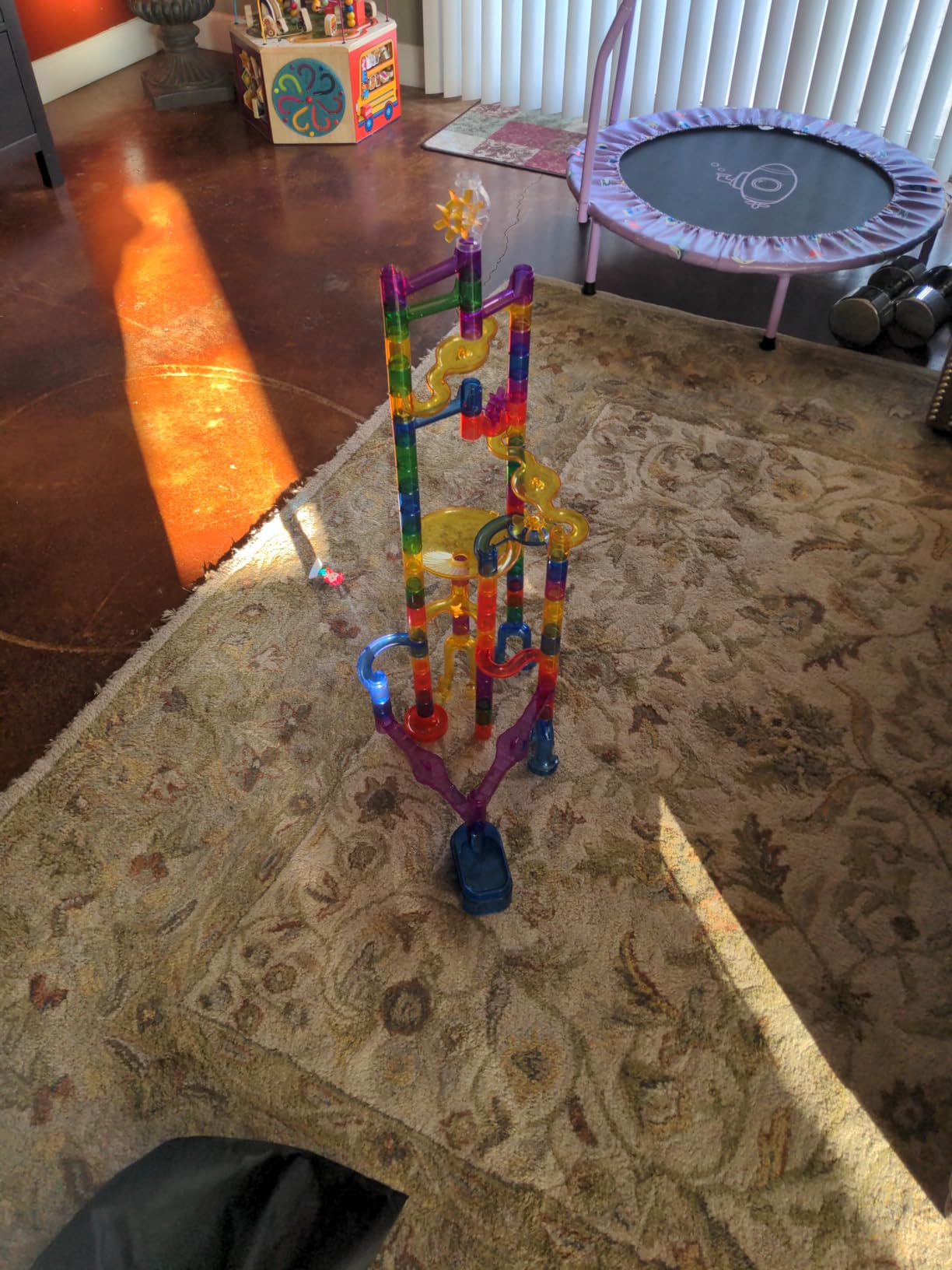
The glow factor is what turns this from a marble run into an event. Our tester built a run, switched off the lights and lined up the glowing glass marbles, and the toy delivered well past the point where plastic kits fade. Reviewers report it holding the attention of children from three to nine.
The set is 80 pieces split into five sturdy bases, 15 action pieces and 45 smooth-run track pieces, plus 15 glow-in-the-dark glass marbles in six colors and an LED marble charger. The learning guide covers the physics of motion and aerodynamics.
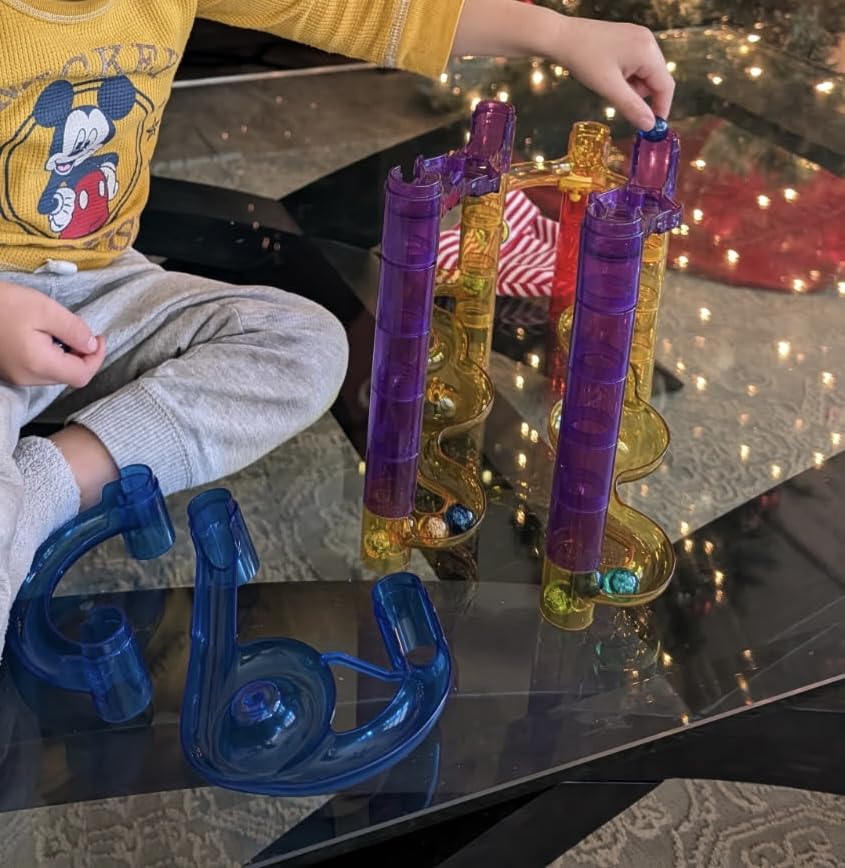
No batteries are required, and a large storage bag keeps every piece and marble together, which matters at this piece count. The set weighs 2.8 pounds, so it is substantial enough to stay put on a play surface and light enough to move between rooms.
Two practical warnings from our own play. A run needs all five bases under it, and on an uneven floor marbles will fly out or stall. And 80 pieces will not build two parallel racing lanes, so a friend race means improvising.
Why it works for independent play
Redesigning a run is a self-directed experiment. Change one track angle, predict what happens, then test it, and the child owns the process without being told what to discover. Adding action pieces raises the difficulty once the first layout works.
When to choose something else
It is a less tidy activity than a disc set, and glass marbles plus tight-fitting parts mean it belong with children who can handle small components. Families wanting zero cleanup should pair it with the included bag, and anyone wanting a single-sitting activity should look at Gravity Maze.
4. National Geographic Science Magic Kit – Best for 100+ Chemistry Experiments
National Geographic Science Magic Kit with 100+ Experiments for Kids 8-12
20 in-kit plus 85+ bonus experiments
Two instruction books
No batteries
Ages 8+
Pros
- Over 100 experiments across two books
- Clear illustrated instructions a 6-year-old can follow with help
- Materials can usually be reused
- Bonus booklet extends to household items
Cons
- Adult supervision expected and powders are messy in quantity
- Some ingredient pouches are discard after opening not resealable
- Larger experiments need a cleanup plan
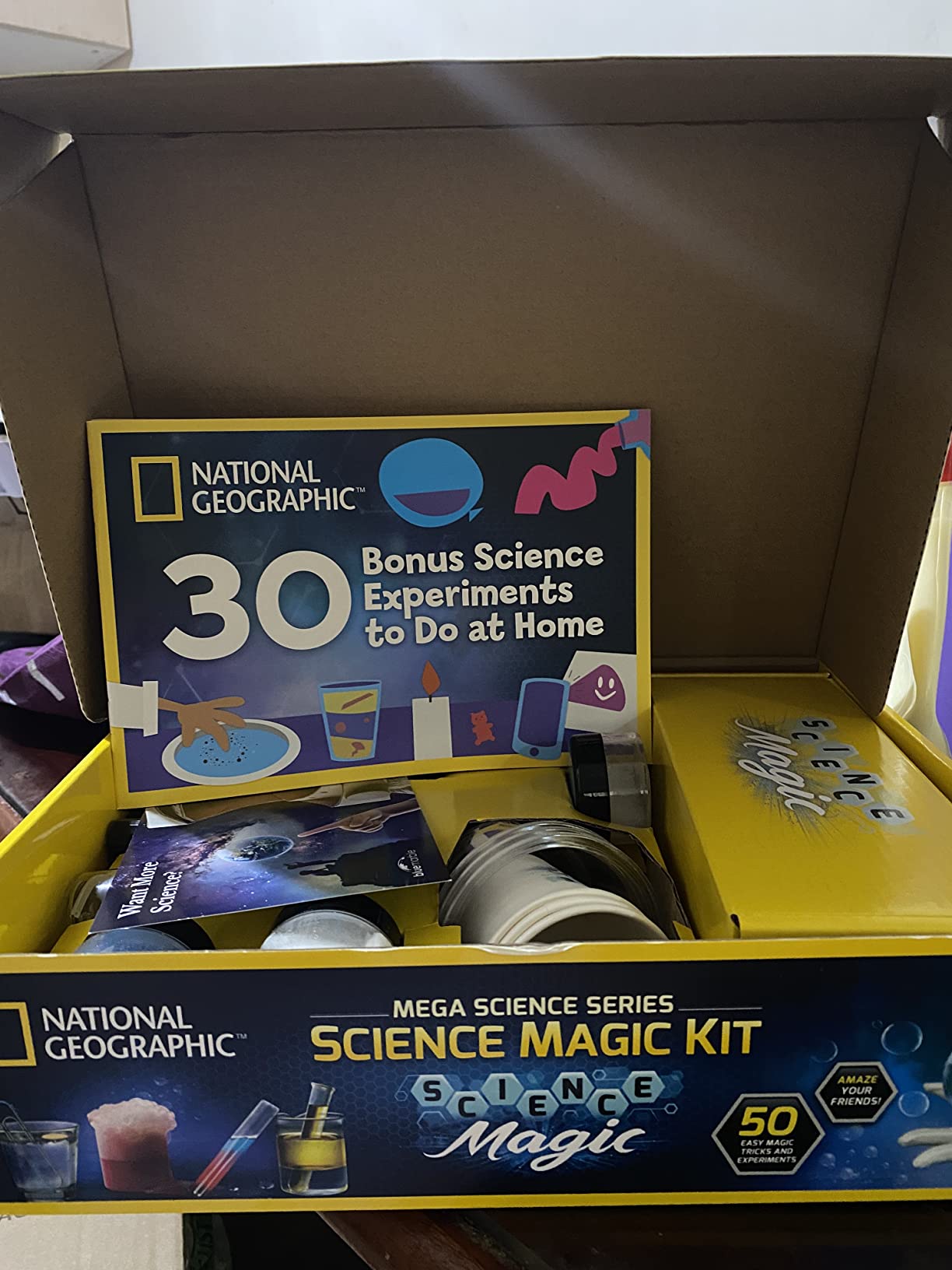
The two-book structure is what makes this the pick that does not end after an hour. Twenty experiments use materials supplied in the box, and a second booklet adds 85 or more using common household items, which is what kept our tester going on a rainy weekend. The activities cover fizzy reactions, slime, invisible ink and trick-style science.
Instructions are colourful and clear, and the main materials can usually be reused, so a second round does not need a fresh purchase. Parents describe it as a solid screen-free rain-day activity and a real introduction to science rather than a party trick.
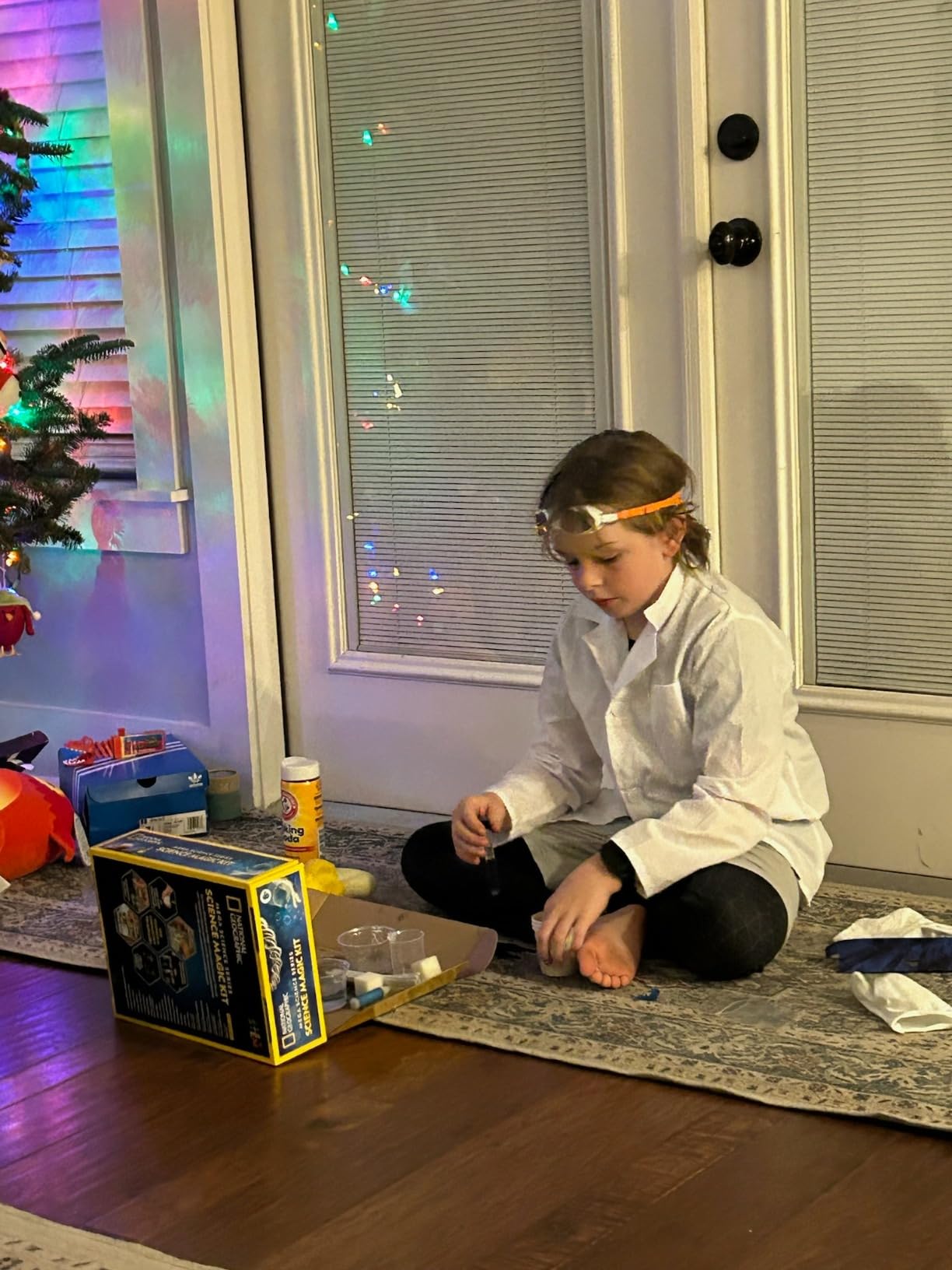
The honest caveat is mess and supervision. Adults should be present because of the chemicals involved, and a few experiments use enough powder and liquid to need a cleanup plan. This is not a toy for a child left alone for an afternoon.
One detail worth knowing before you open it: some ingredient pouches are marked discard after opening rather than resealable, which pushes you toward using a full pouch at once. Zip bags are a good workaround. The range is made by Blue Marble, a Toy Association Toy of the Year winner with a US support team.
Why it works for independent play
With a familiar kitchen ingredient list, a child picks the next experiment herself, and choosing between 100 options is a decision-making win in itself. The trick and slime formats also let her put on a show, which keeps engagement going.
When to choose something else
If your household cannot supervise a chemistry session regularly, or cleanup is a real constraint, pick a solid-piece set instead. It suits an eight-year-old far better than a three-year-old, and works alongside a sibling rather than with a child who wants to touch the powders.
5. National Geographic Magic Chemistry Set – Best Ready-to-Give Science Gift
National Geographic Magic Chemistry Set with 10 Tricks for Kids Ages 8-12
10 trick experiments
Wand and gloves included
All tools supplied
Ages 8+
Pros
- Everything needed is in the box with no extra sourcing
- The trick framing becomes a show the child performs
- Guide explains the real science behind each trick
- Keeps children engaged for hours
Cons
- Adult supervision is expected and reviewers say so explicitly
- Ten experiments is a shorter session than the larger kits
This is the one we recommend when you have never met the child. The most praised feature across its reviews is completeness: all tools and materials for all ten experiments are included, and only water and dish soap need supplying. That removes the most common frustration with a budget science kit, where a child opens it and finds a missing ingredient.
The framing matters as much as the contents. These are staged as ten magic tricks, including making a coin float, changing water colour, making instant snow and catching bubbles in your hand, and a wand and white gloves are included so she can perform them. That performative element is what turns a science kit into something she will show off.
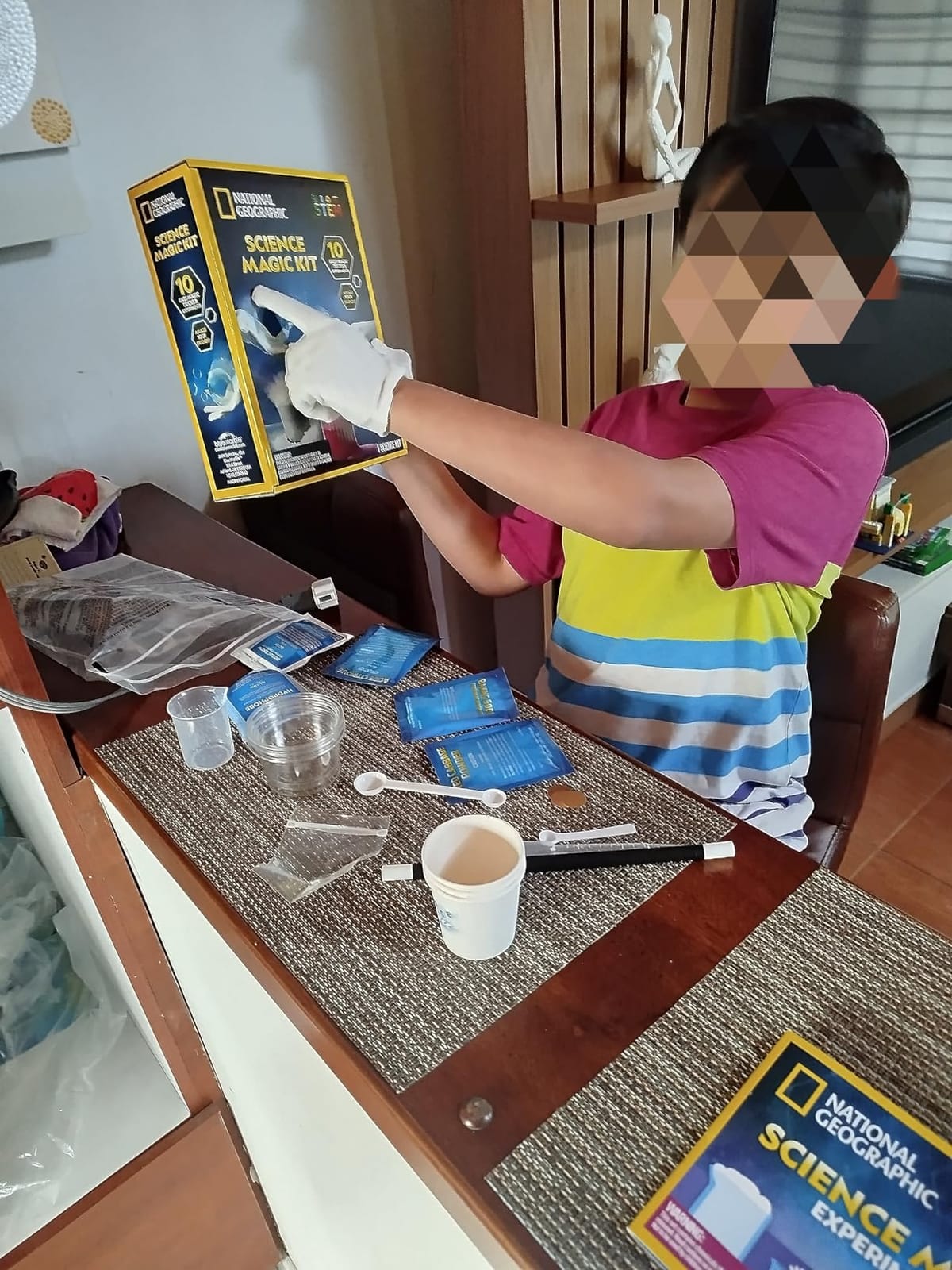
The full-colour guide explains the science behind each trick and adds real-scientist techniques, so it reads as an educational book with experiments attached. It needs no batteries, and the box measures 7.28 by 3.03 by 10.07 inches, which is an easy size to wrap and post.
Be clear about the trade. Ten experiments is a shorter session than the 100-plus kits, and adult supervision is expected. Parents have also used it as a week-long activity rather than a single afternoon, which is how we would stretch it.

Why it works for independent play
Each trick is short and self-contained, so a child can run one after school rather than needing a long session. The performance element also gives a natural reason to do it alone, since she is rehearsing for an audience of one.
When to choose something else
Ten tricks is a finite list, so a child who works through it quickly will want more depth. If you want a year of experiments, go to the larger Science Magic Kit. Under age eight, plan to run it with her rather than leaving it out.
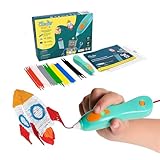
6. 3Doodler Start+ Essentials – Best for Creative Makers and Screen-Free Art
3Doodler Start+ Essentials 3D Pen Set for Kids, Easy to Use, Learn from Home Art, Educational STEM Toy for Boys & Girls Ages 6+
Child-safe 3D pen with no hot parts
72 strands included
Safe standby mode
Ages 6+
Pros
- Genuinely child-safe since the pen runs cool with no burn risk
- Charges 50 percent faster with 50 percent more filament than the original
- Customer service replaces faulty units including out-of-warranty swaps
- Open-ended and children invent projects beyond the guide
Cons
- About one project per full charge and it cannot run while plugged in
- Several units stopped working or had short-lived batteries
- Extruded plastic does not come off clothing
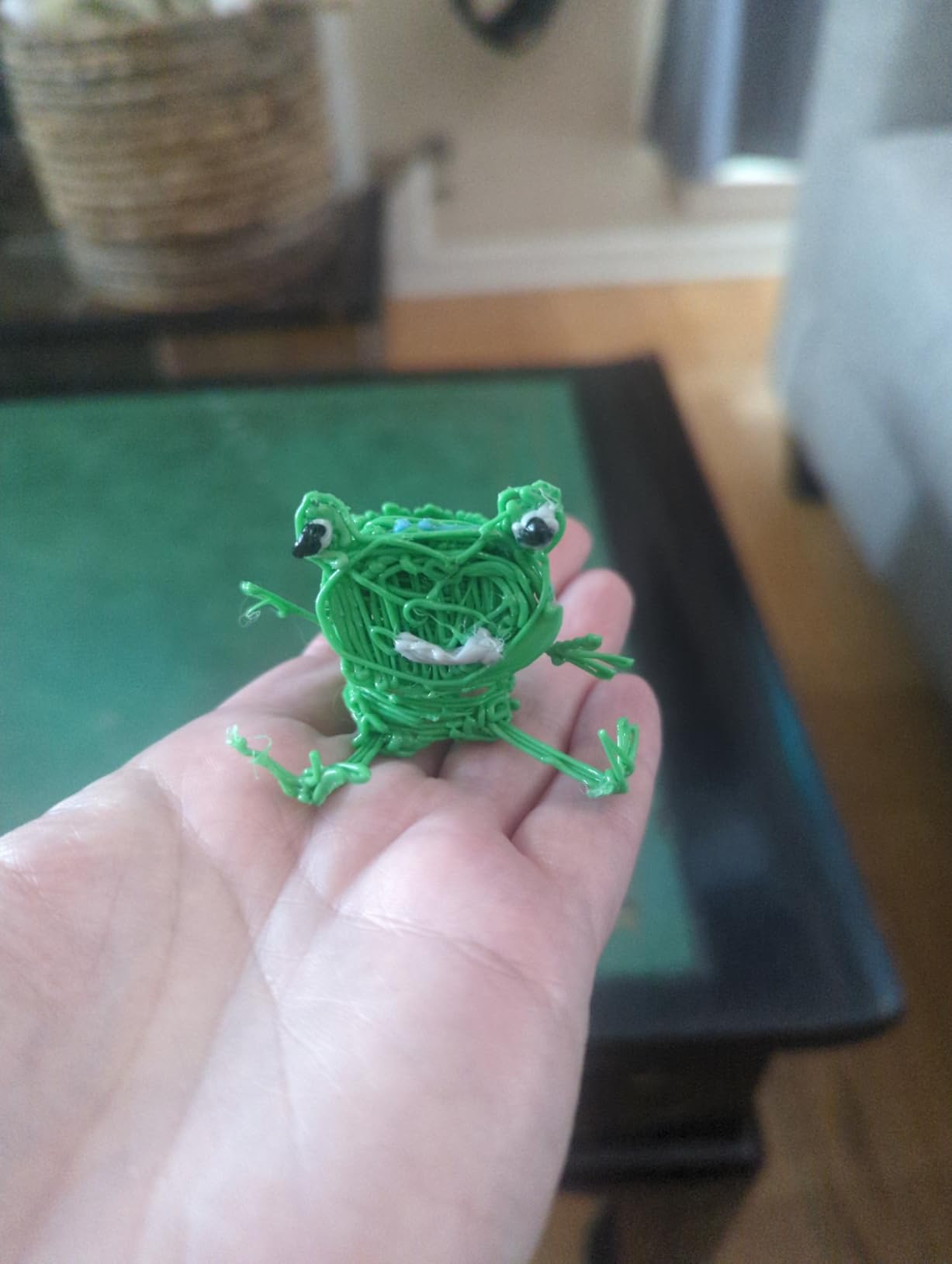
This is the art angle on STEM, and for a creative child it may be the most valuable pick here. The pen melts Start plastic strands and lays them down in three dimensions, so a flat drawing becomes a raised structure. There is no correct answer and no single finished project, which is exactly what keeps children at it after the guide ends.
Safety is the headline. Unlike a hot glue gun or an adult 3D pen, the Start pen has no hot parts and runs cool enough that a child can touch the nozzle and the extruded plastic with no burn risk. It has a slimmer grip, a safety standby mode, 100 percent recyclable packaging and a 1-year manufacturer warranty, and it is marked for ages six and up.

The box holds the pen, a DoodlePad, 72 mixed-color strands, a USB-C cable, an activity guide and 10 new stencils. Compared with the original Start it charges 50 percent faster and ships with 50 percent more filament, which matters because filament is a consumable.
Now the drawback, and it is the same one that splits the reviews. Battery life is roughly one project per full charge, and the pen cannot run while plugged in. Some pens have stopped working entirely and the battery is not user-replaceable, which is the design flaw detractors point at. Keep spare filament as a running extra.
Why it works for independent play
Children invent their own projects within about a week, and the stencils give a beginner something to copy before improvising. It is also a strong screen-time swap, because the reward loop is immediate and physical and a quiet child can work at it for a long stretch.
When to choose something else
It is not a shared family computer toy, and one project per charge makes it a poor choice for a long session or a group. Extruded plastic does not come out of clothing, so young children should wear something wipeable. For structures that survive being dropped, choose a plastic building set instead.
7. Teach Tech Mech-5 Coding Robot – Best for Screen-Free Coding Ages 10+
TEACH TECH Mech-5 STEM Coding Robot Building Kit for Kids Ages 10+
Physical coding wheel
Throw lift kick and draw
Ages 10+
2 AAA required
Pros
- A genuinely different way to teach programming with no screen
- A real multi-hour build producing a working mechanism
- Engaging for kids not ready for electronics
- Clear step-by-step assembly instructions
Cons
- The long assembly is a commitment and some children lose interest
- Age 10 is a genuine floor for younger siblings
- Needs patience to align parts accurately
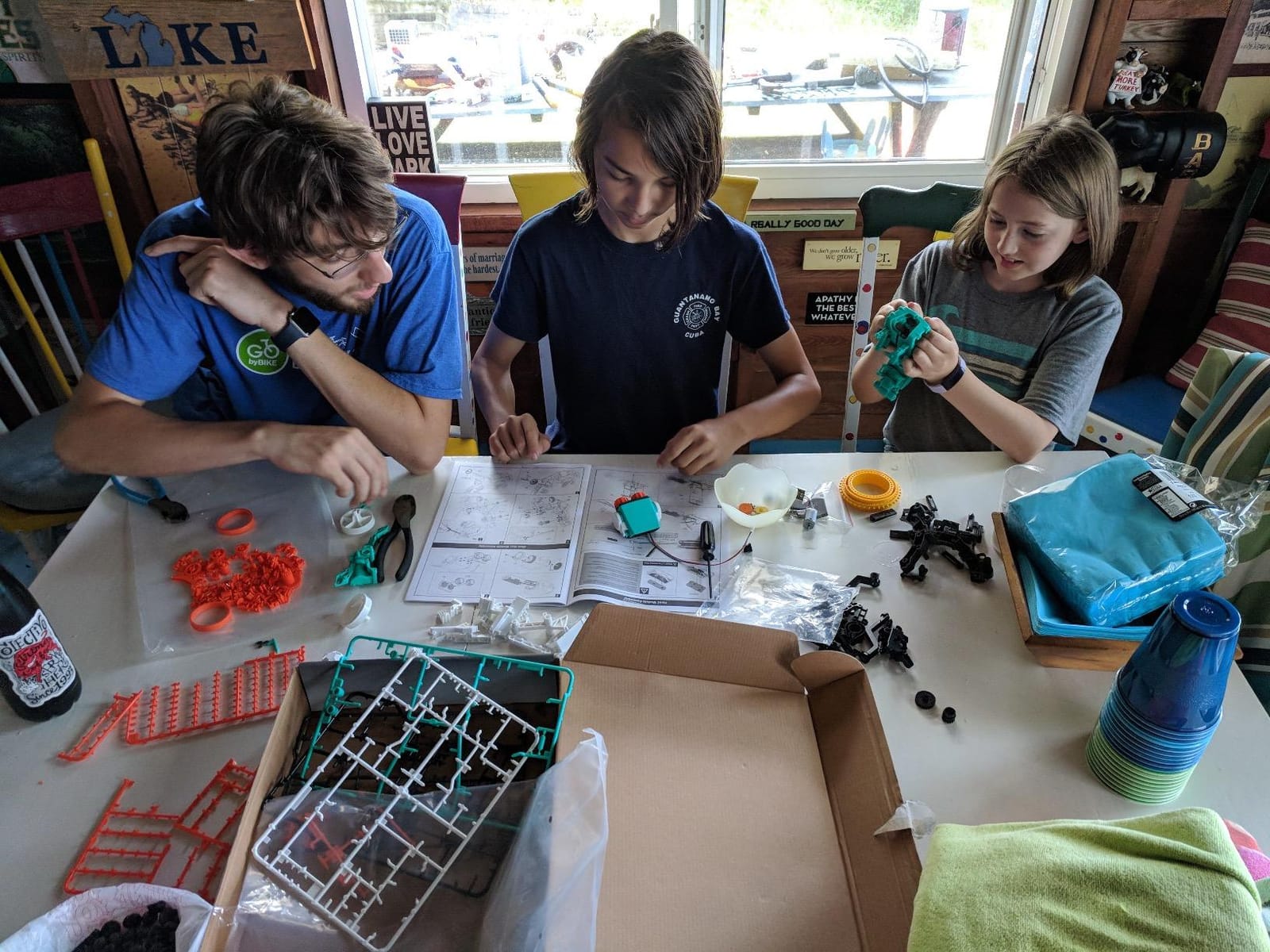
The idea here is genuinely clever. Instead of an app, the robot is programmed by snapping physical coding buttons onto a wheel, so the logic of a program is something a child arranges with their hands and then watches execute. Parents describe it as a clever way to learn programming logic without a tablet.
It is a build, not a snap-together toy. Expect multiple hours of assembly with detailed step-by-step instructions, and the payoff is a working mechanical mechanism rather than a plastic shell. Once finished, the robot can throw, lift, kick and draw based on the button sequence, and that range of actions keeps it interesting after the build.
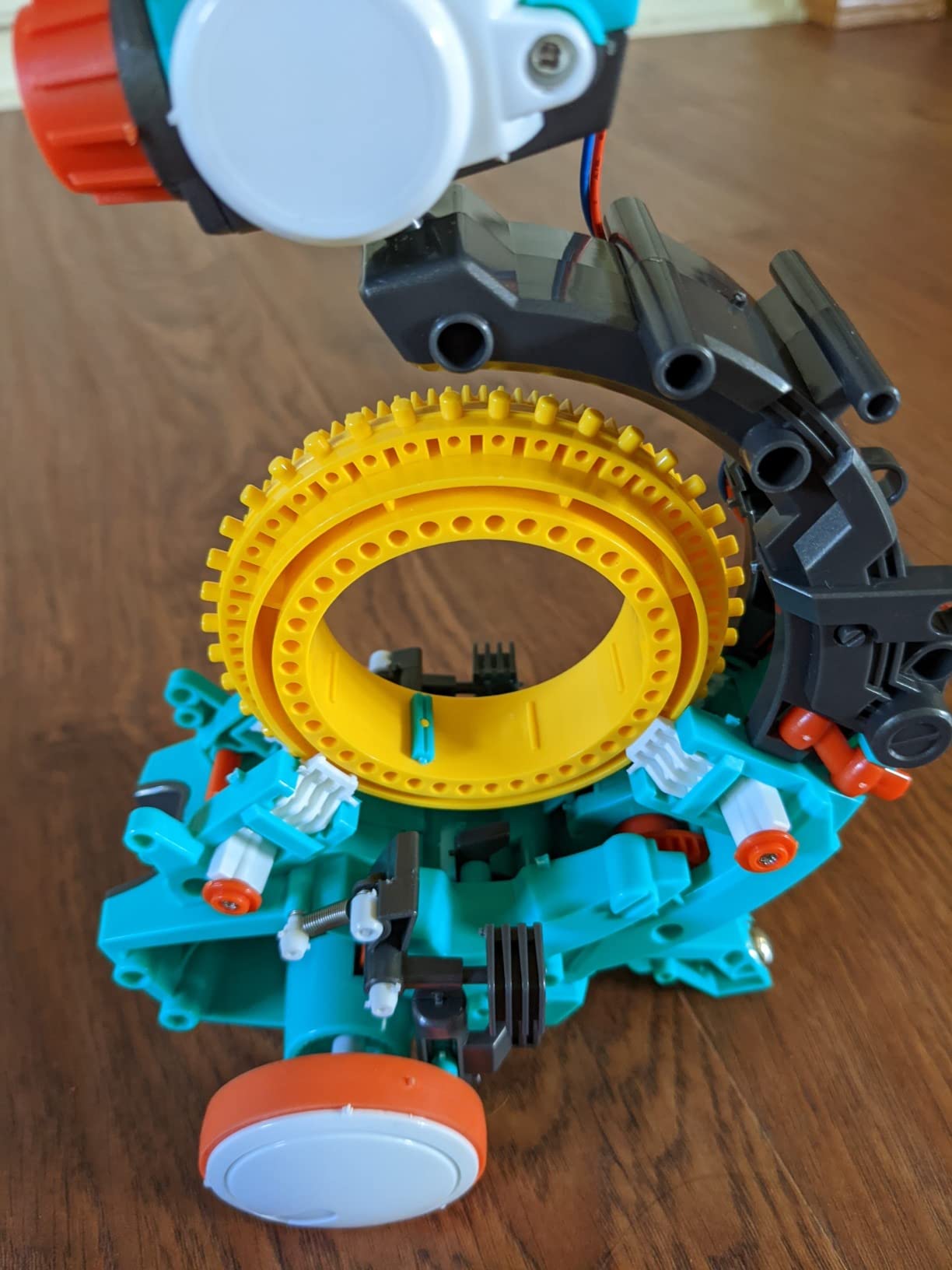
The set runs on 2 AAA batteries, which are not included, and the unit measures 12.4 by 2.5 by 9.1 inches once built. It is listed under the Snap Circuits brand family, worth knowing if you already buy from that range, and it carries a 1-year manufacturer warranty.
Plan the build honestly. Age ten is a real floor, younger siblings usually need an adult alongside for most of it, and some children lose interest before the build is done. We would treat the assembly as a shared parent-child project rather than a surprise.
Why it works for independent play
Once built, programming happens physically and instantly, so the loop from idea to result takes seconds rather than minutes. There is no account to create and no app to update, which also means it will not break when a developer changes software.
When to choose something else
Skip it as a birthday gift, because an unopened Mech-5 does nothing on its own. Younger children struggle with the fine alignment the coding wheel needs. If you want a robot that works within ten minutes of opening, the Makeblock mBot is the right choice.
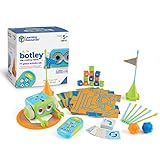
8. Learning Resources Botley Coding Robot – Best Screen-Free Coding for Ages 5 and Up
Learning Resources Botley The Coding Robot Activity Set – 77 Pieces, Ages 5+, Screen-Free Coding Robots for Kids, STEM Toys for Kids, Programming for Kids, for Kids
77 pieces with remote programmer
Object detection and looping
Screen-free from age 5
Pros
- Screen-free coding that works from about age five
- Object detection looping and line-following teach real concepts
- 40 coding cards and obstacle pieces extend play well past first use
- Good build quality and clear challenge progression
Cons
- Requires 5 AAA batteries not included plus a Phillips screwdriver
- Remote buttons become slow for longer multi-step programs
- At the higher end compared with simpler coding toys
Botley is the coding toy we recommend for the youngest coder on a list full of age eight floors. Commands are sent from a handheld remote programmer, so there is no screen anywhere in the loop, and it is ready to code out of the box. That combination is rare, and it is why this set works from about age five.
The programming concepts are real rather than decorative. Botley detects objects and avoids them, follows looping commands, navigates obstacle courses and follows black-line paths, so a child learns sequencing, repetition and sensor logic without knowing the words for them. Hidden features to unlock and detachable arms extend play well past the first session.
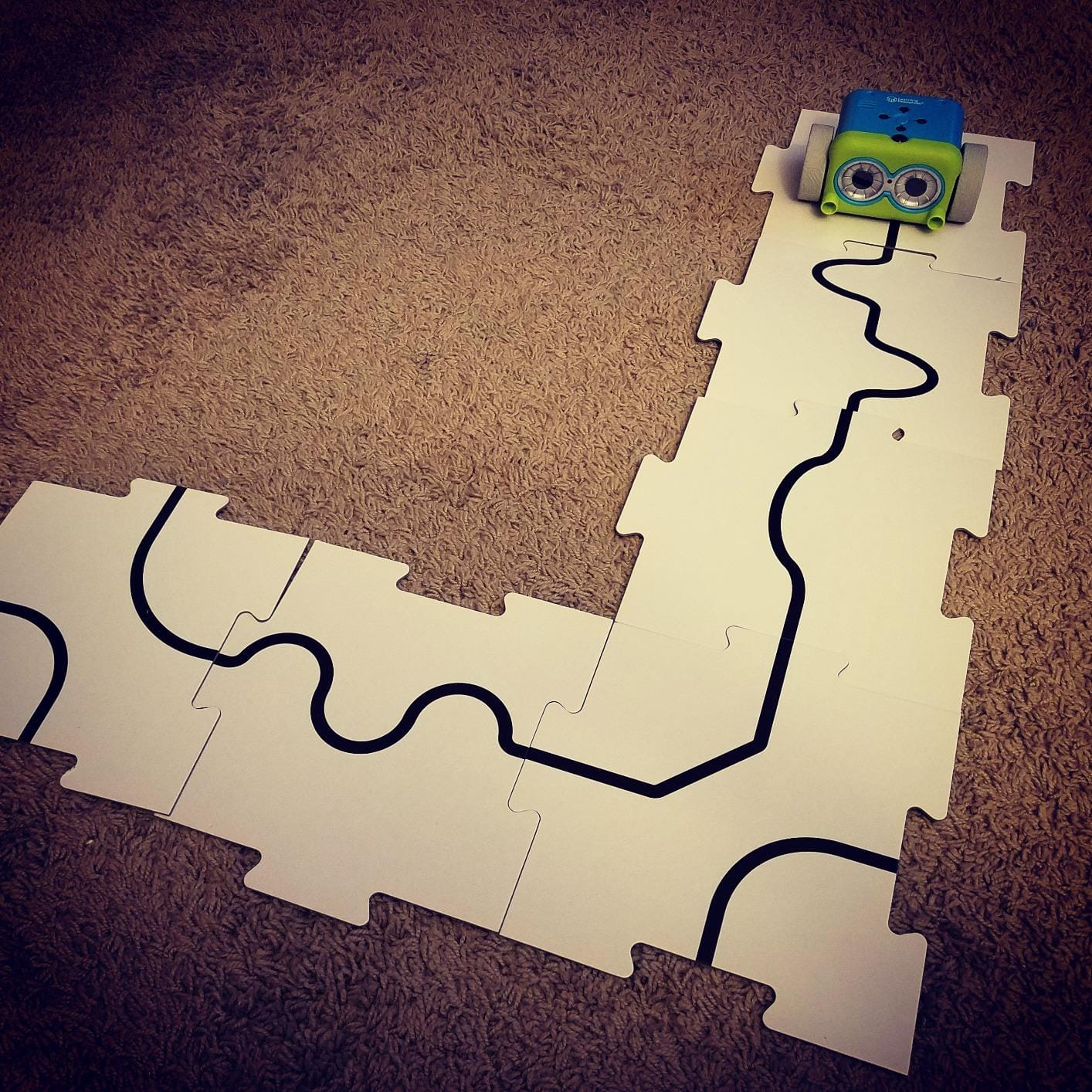
The box holds 77 pieces: the robot, the remote programmer, detachable arms, 40 coding cards, 6 double-sided tiles and 27 obstacle pieces, plus a starter guide with coding challenges. It is rated for ages five to sixteen, so it genuinely bridges a preschooler and a much older sibling.
Setup is the part to know. It takes 3 AAA for the robot and 2 AAA for the remote, none included, and a Phillips screwdriver is needed. The remote buttons also get slow for longer multi-step programs, which is why most families end up using the 40 coding cards instead.
Why it works for independent play
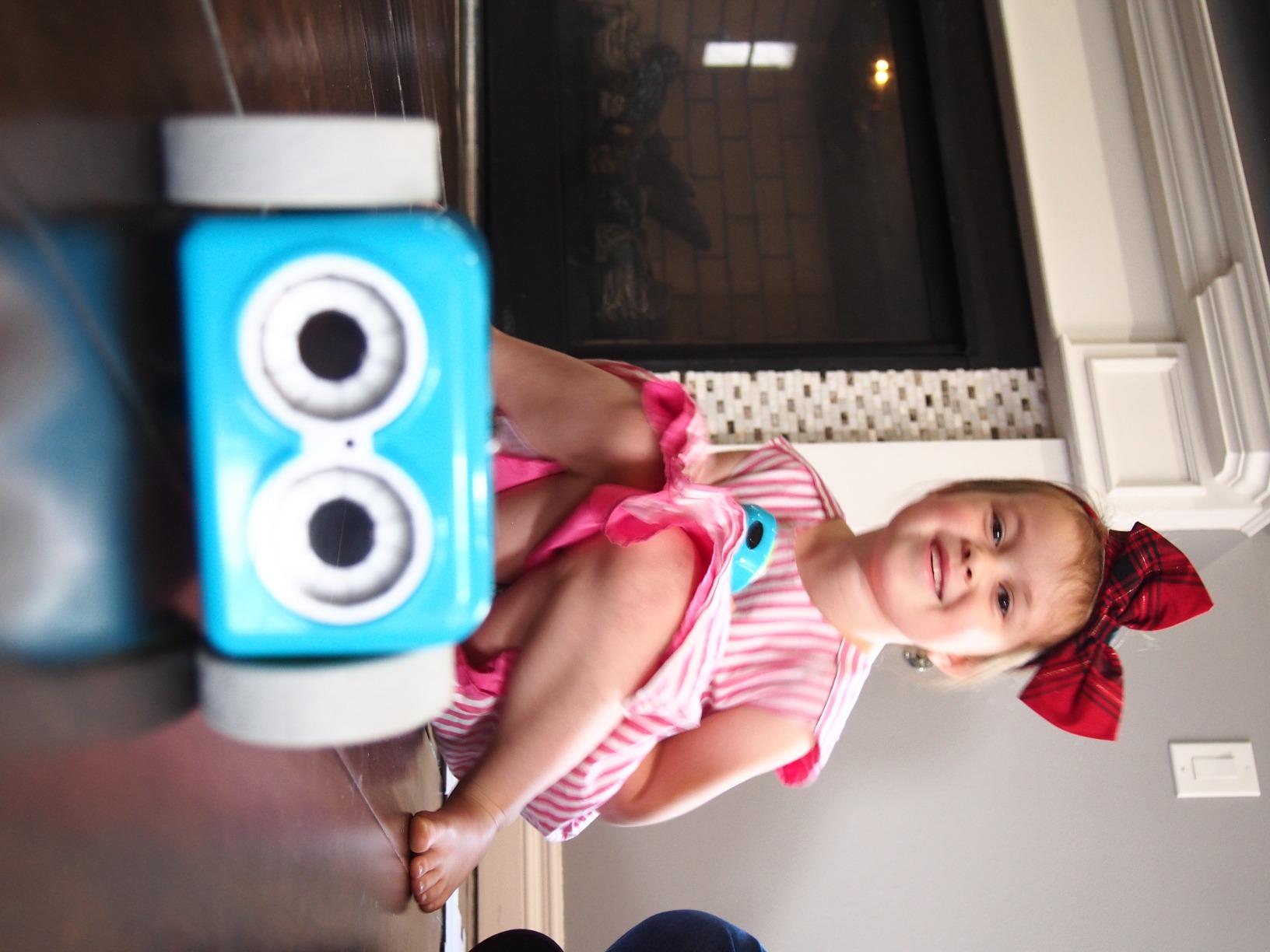
The cards give a child something to do without an adult narrating, and the challenge progression in the starter guide is clear enough to follow alone. Because the robot is visible and moves immediately, a five-year-old gets a real cause-and-effect lesson within minutes of opening the box.
When to choose something else
It sits at the higher end compared with simpler coding toys, and the screwdriver step is a real barrier for a gift. If your child already codes on a tablet, the screen-free format may feel like a step back. For programming with no electronics at all, the Mech-5 is the alternative.
9. Makeblock mBot Pink – Best for Coding and Robotics Growth Path
Makeblock mBot Pink STEM Coding Robotics Toy Kit for Girls & Kids Ages 8-12
Builds in about 15 minutes
Scratch to Arduino
Metal body
Ages 8-12
Pros
- Clear instructions with a 20 to 60 minute build a young child can manage
- Free mBlock app with guided levels then free Scratch mode
- Durable aluminum body and a lithium-ion battery
- Works as a remote-control car before any coding
Cons
- Batteries for the kit and remote are not included
- Infrared remotes share one frequency so two kits interfere
- App levels are finite before free-play Scratch mode
mBot is the platform we recommend when a child is likely to outgrow a single toy in a year. It teaches electronics, robotics and programming from Scratch through to Arduino, so the robot that runs a guided game in month one is still a legitimate microcontroller in year two. Owners consistently call it an ideal first robotics kit.
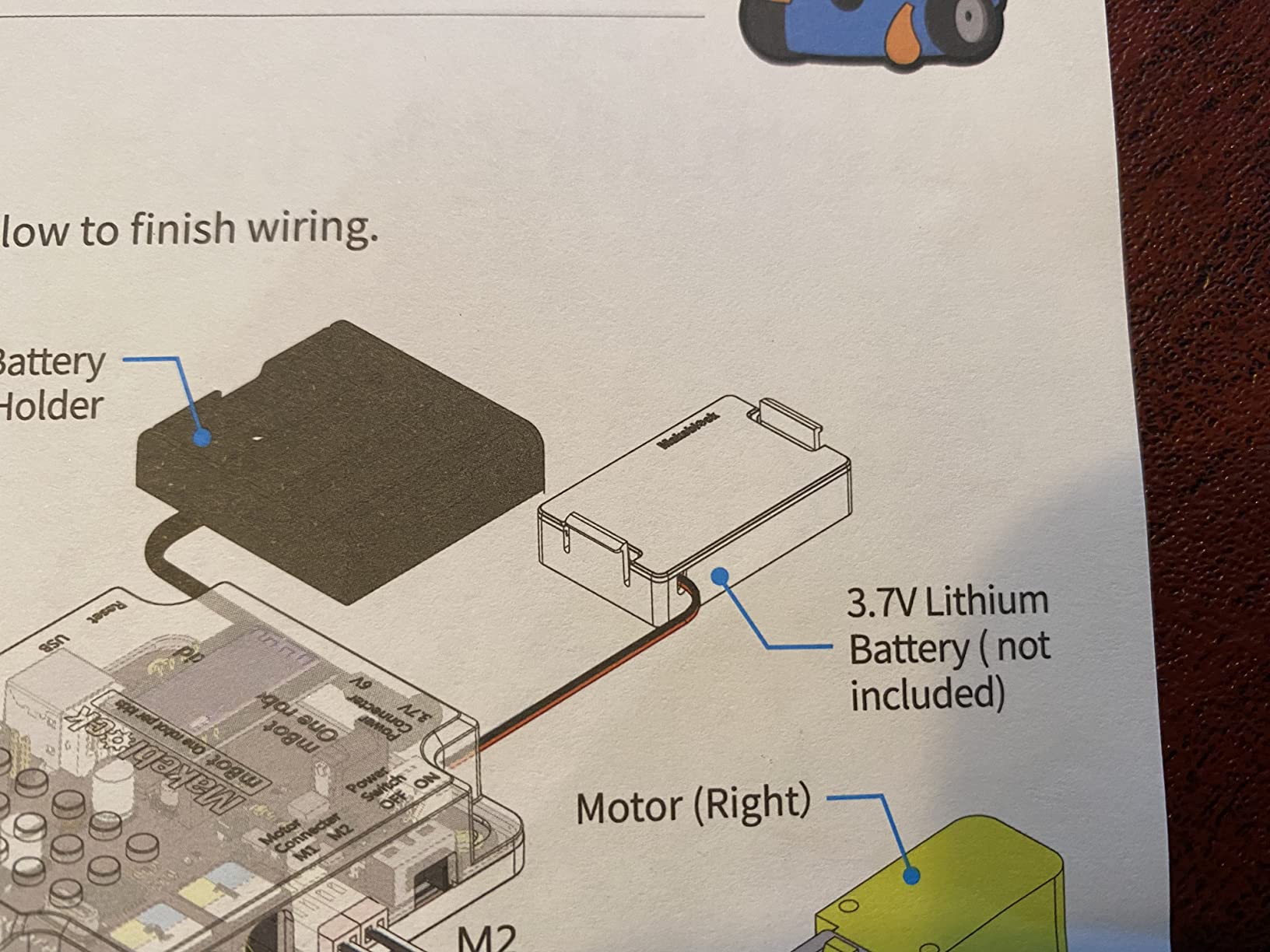
The build is genuinely short. It assembles in about fifteen minutes with clear instructions, and reviewers report a 20 to 60 minute build that children as young as six or seven can manage. It then works immediately as a remote-control car with line-following and obstacle-avoidance, so there is a fun toy on day one and a coding lesson from day two.
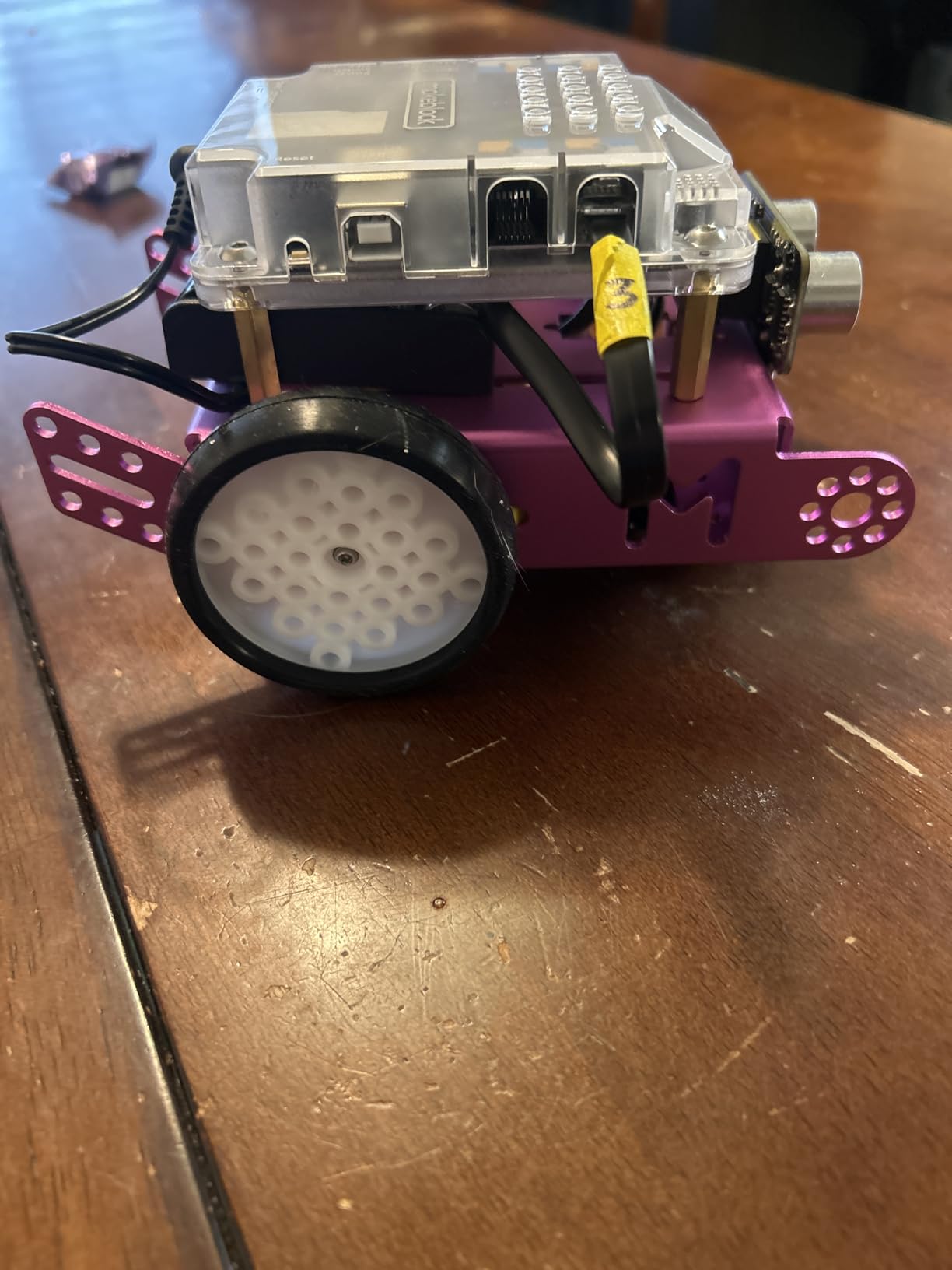
The body is aluminum rather than thin plastic and it runs on a lithium-ion battery, both of which show up in how it holds up. It works with mBlock software, three free Makeblock apps and the included coding cards, and reviewers note localized app versions.
Two practical notes. Batteries are not included, needing 4 AA plus a CR2025 for the remote, and the listing mentions this only in passing. And all infrared remotes share one frequency, so two kits in the same room interfere with each other, which matters for a family with two children.
Why it works for independent play
The free mBlock app has a guided mode that teaches code structure progressively before handing over to free-play Scratch, so a child can start alone and still feel taught.
When to choose something else
If you want a screen-free toy, this is the wrong choice, since mBlock needs a device. It also needs an adult for the first build, and the guided app levels are finite. For younger ages, Botley starts coding five years earlier.
10. Doctor Jupiter Girls Ultimate Science Experiments Kit – Best for Experiment Volume
Doctor Jupiter Girls’ Ultimate Science Experiments Kit for Kids Ages 8+
135+ experiments
Meets ASTM F963-17
Labware included
Ages 8+
Pros
- Very large experiment count for the money
- Manual written so a child can work through activities independently
- Meets ASTM F963-17 safety standards
- Includes enough consumable ingredients for many repeats
Cons
- Several experiments need common household materials added on top
- Some sets from this line run large and bulky for younger siblings to store
The dominant signal in reviews for this kit is volume. Buyers are impressed by how many distinct experiments are included for the money, and by a manual clear enough that a child can work through activities without an adult reading over her shoulder. That independence separates it from a lot of kits at this level.
Over 135 experiments span volcano, explosive, water, crystal growing, colour and food science, and a bonus experiment booklet sits alongside the detailed manual. Enough consumable ingredients are included for many repeats, so a child is not stuck waiting for a refill.
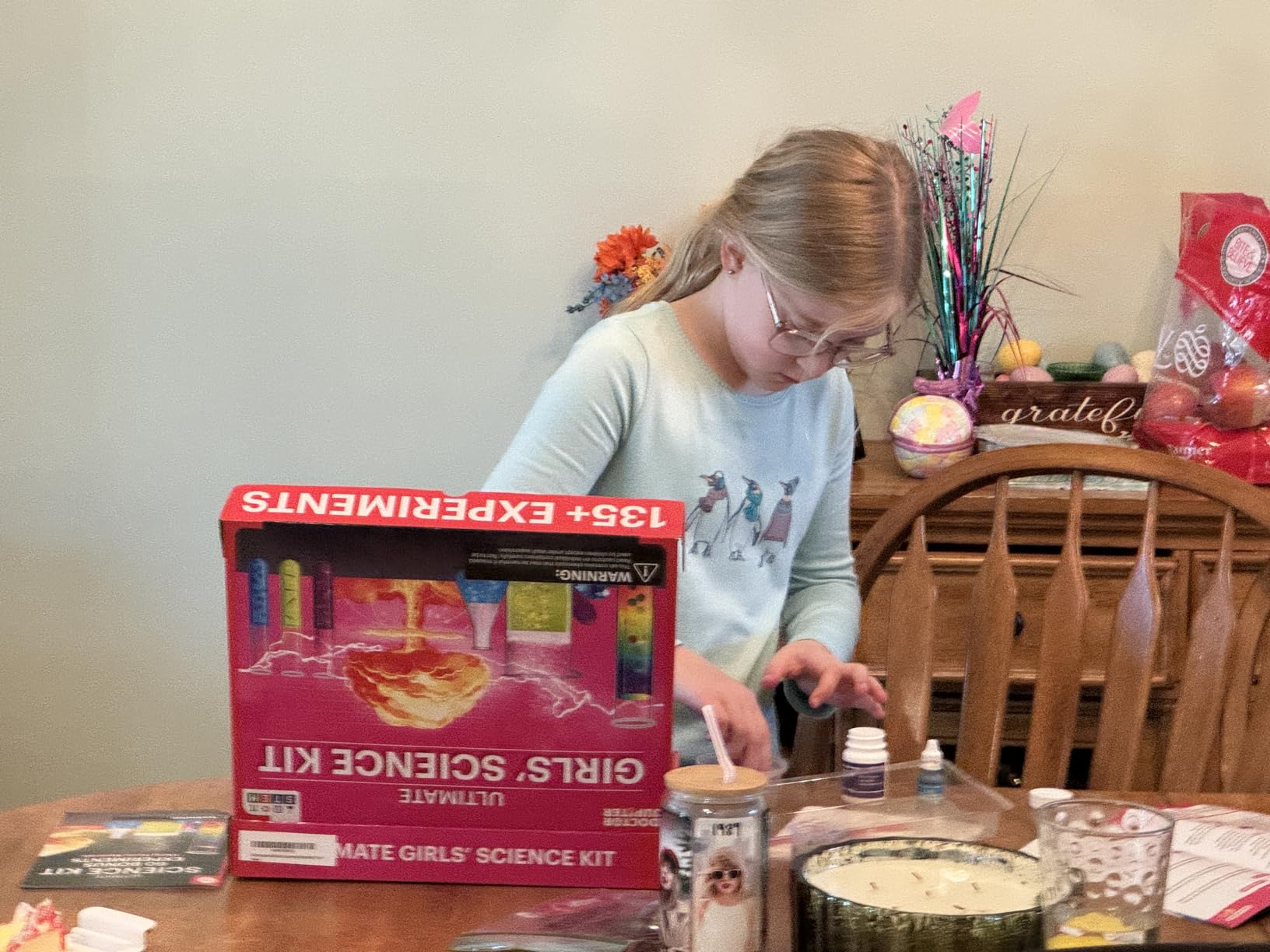
The box includes a measuring cylinder, conical flask, test tube stand, funnel, cups, soap moulds, food essences, food colours and six experiment ingredients, and the set meets U.S. safety standard ASTM F963-17. It measures 11.42 by 9.84 by 1.77 inches and weighs 650 g.
The real-world catch is that several experiments need common household materials such as water, food colouring or citric acid on top of what is supplied, so read the manual before opening the box. Some sets from this line also run large and bulky, a storage problem in a small room with younger siblings around.

Why it works for independent play
With 135-plus experiments, a child always picks the next one herself, and choosing is part of the fun. Gift buyers rate it highly across birthdays, holidays and sleepovers, and several mention the bonding of doing experiments together rather than beside her.
When to choose something else
It is aimed at girls 8 to 12, so younger children will need you for nearly every step. If your home cannot tolerate regular mess, or you want something that lives entirely in a box, a marble run or disc set is cleaner. Read the ingredient list first.
11. Butterfly EduFields 100+ Engineering Kit – Best Wooden Engineering Builds
Butterfly EduFields 100+ Girls Engineering Science Kit for Kids Age 8-12
100+ projects
Gears levers and circuits
Wood parts
Ages 8-12
Pros
- Huge project count with genuinely different mechanisms
- Wood parts feel durable and projects can be rebuilt and reshuffled
- Illustrated guides readable enough to work through largely unsupervised
Cons
- Some pieces need glue or double-sided tape that is not always included
- Many of the 100+ projects are variations on the same base build
- The manufacturer is rated 4.2 so some buyers hit missing or damaged parts
This is the kit we would pick for a child who prefers building things to doing tricks. The projects are genuine engineering mechanisms covering gears, levers, circuits and working machines, and the wood parts feel substantially better than thin plastic. Parts are reusable across rebuilds, so the same kit produces a different machine next week.
It was designed by IIT engineers with more than 20 years in hands-on STEM education, and each project has illustrated guides readable enough for a child to work through largely unsupervised. The materials are described as durable and child-safe with no harmful chemicals.
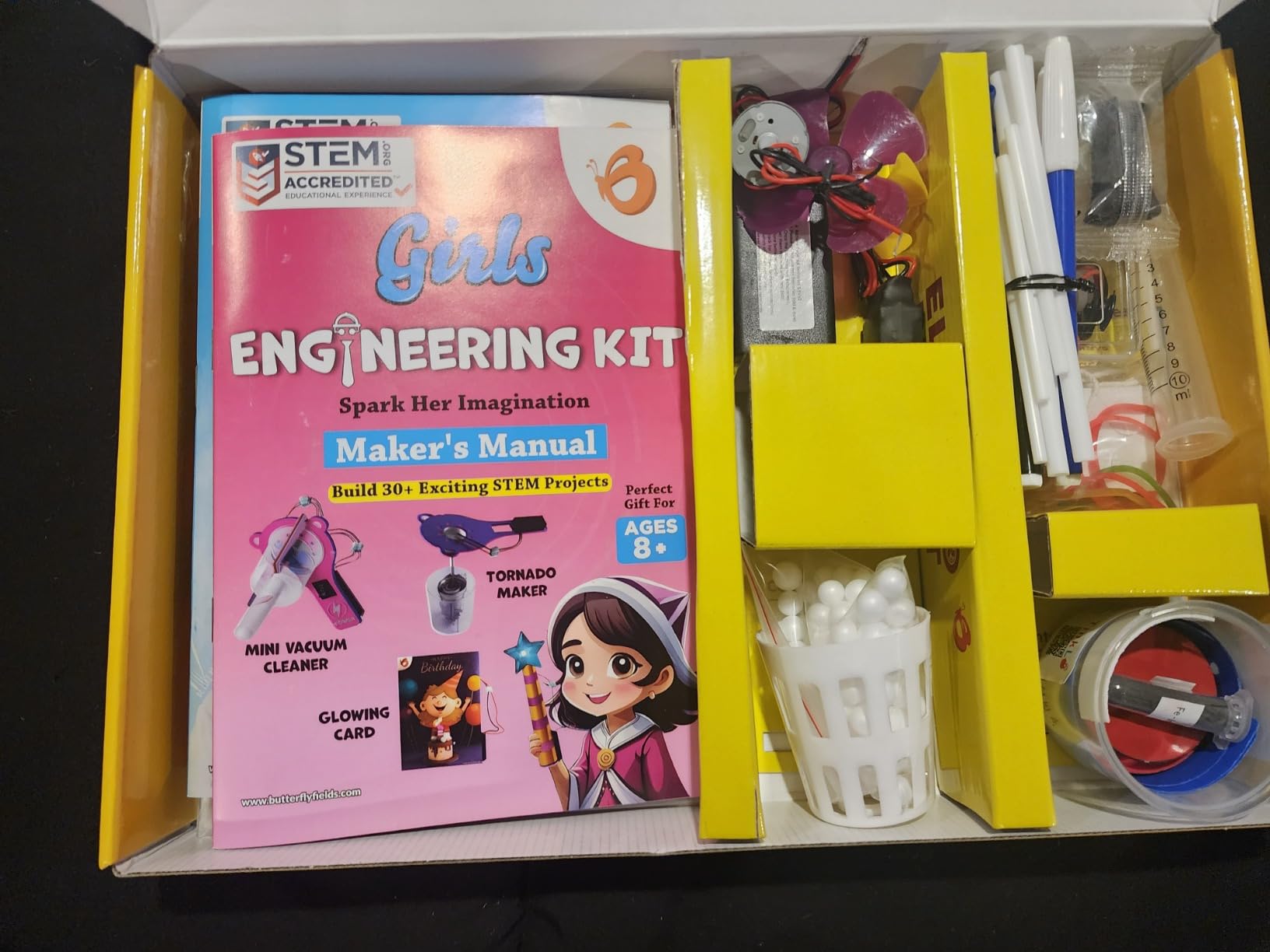
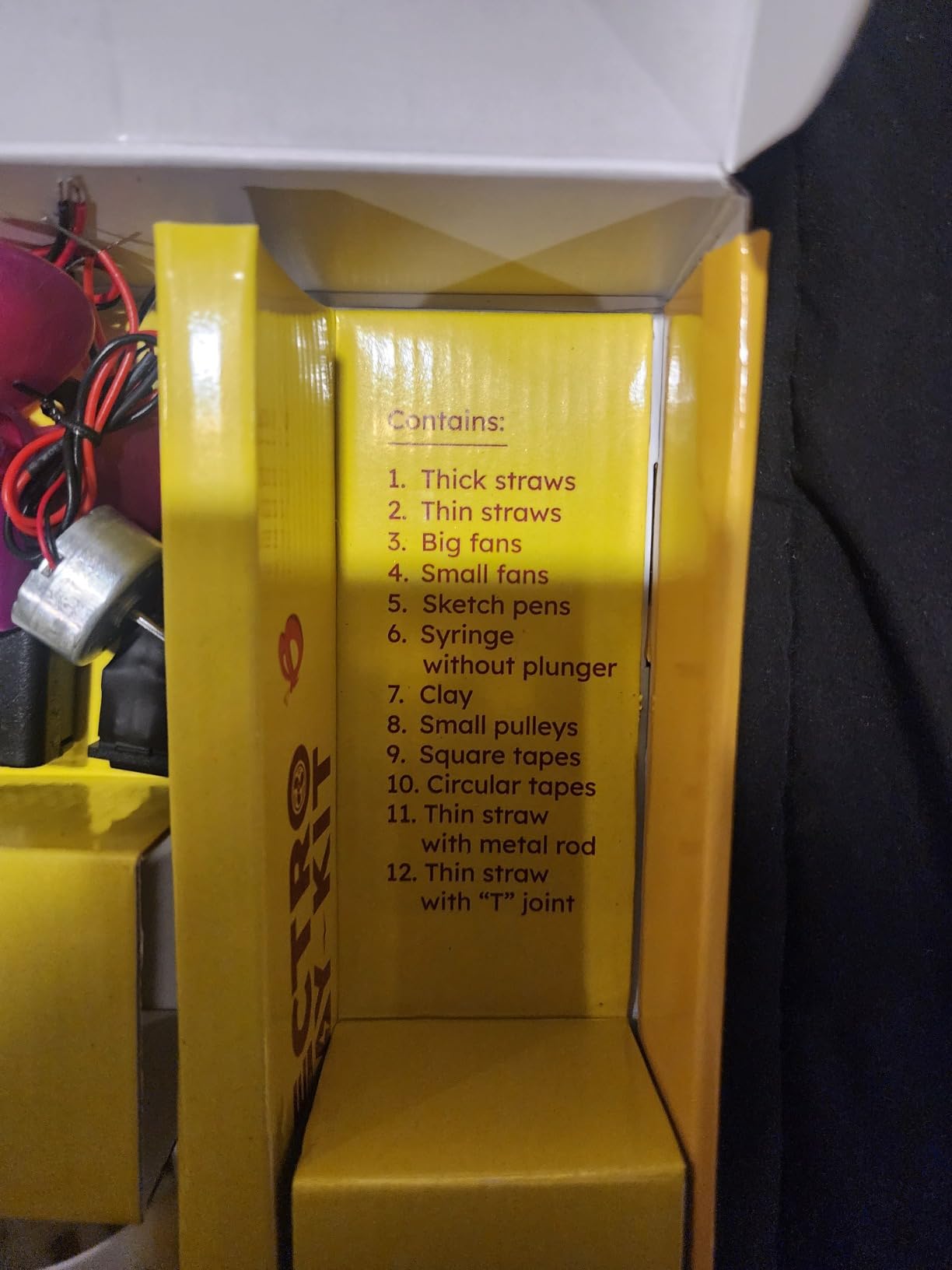
Screen-free and manual-driven, the set is 100 pieces in a 10 by 5 by 1 inch wooden box and weighs 600 g, so it stores flat. Buyers like that it is explicitly designed for girls 8 to 12 rather than a generic engineering set in a pink box.
Two honest caveats. Some pieces need glue or double-sided tape that is not always included and is fiddly for small hands, so buy a tape roll with it. And a number of the advertised 100-plus projects are variations on the same base build rather than 100 distinct models, the most common disappointment in reviews.
Why it works for independent play
Wood mechanisms have a satisfying resistance that plastic snaps do not, and repairing a collapsed gear tower teaches more than the first successful build. Because parts are reusable, a child can invent a hybrid machine from two sets of instructions unaided.
When to choose something else
It is rated for ages 8 to 12, so younger builders need a lot of help. The tape and glue dependency annoys a child who wants to finish quickly, and if you want real electrical function rather than mechanical simulation, the 10-in-1 electronics kit is the better fit.
12. Butterfly EduFields 10-in-1 Electronics and Robotics Kit – Best for Real Electronic Builds
Butterfly EduFields 10in1 STEM Electronics Robotics Kit for Kids Ages 8-12
10-in-1 build
100+ components
Sensor projects
Ages 8-17
Pros
- Genuinely engaging for older kids with multiple working models
- Illustrated manual clear enough for an 8 to 12 year old to build independently
- Good value for the number of functional electronics projects
Cons
- The sensor board is the weak point with dead modules reported
- Wheel axle shafts sometimes need trimming by about 1mm
- Supplied mirror and LDR components are fiddly and one arrived broken
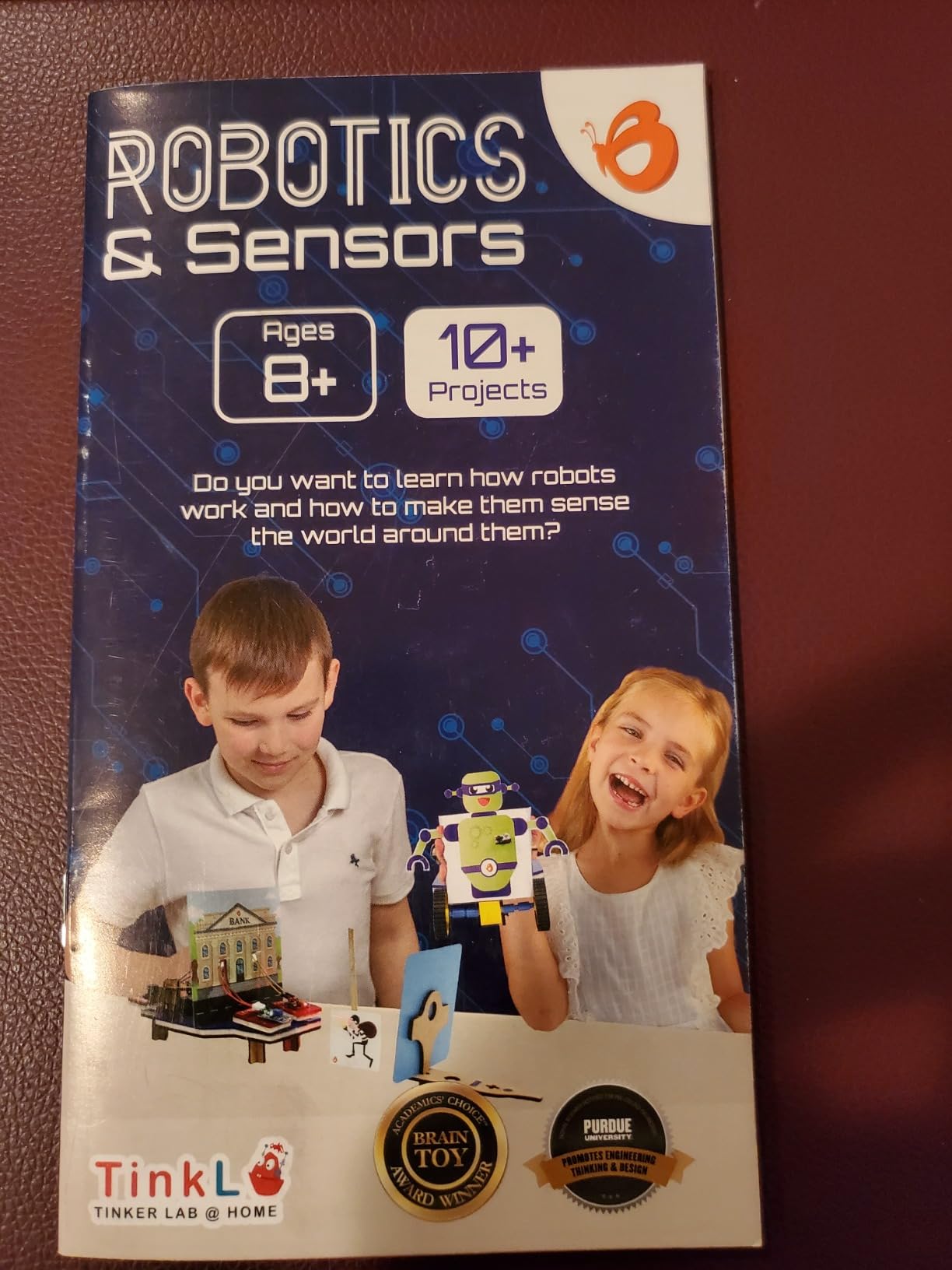
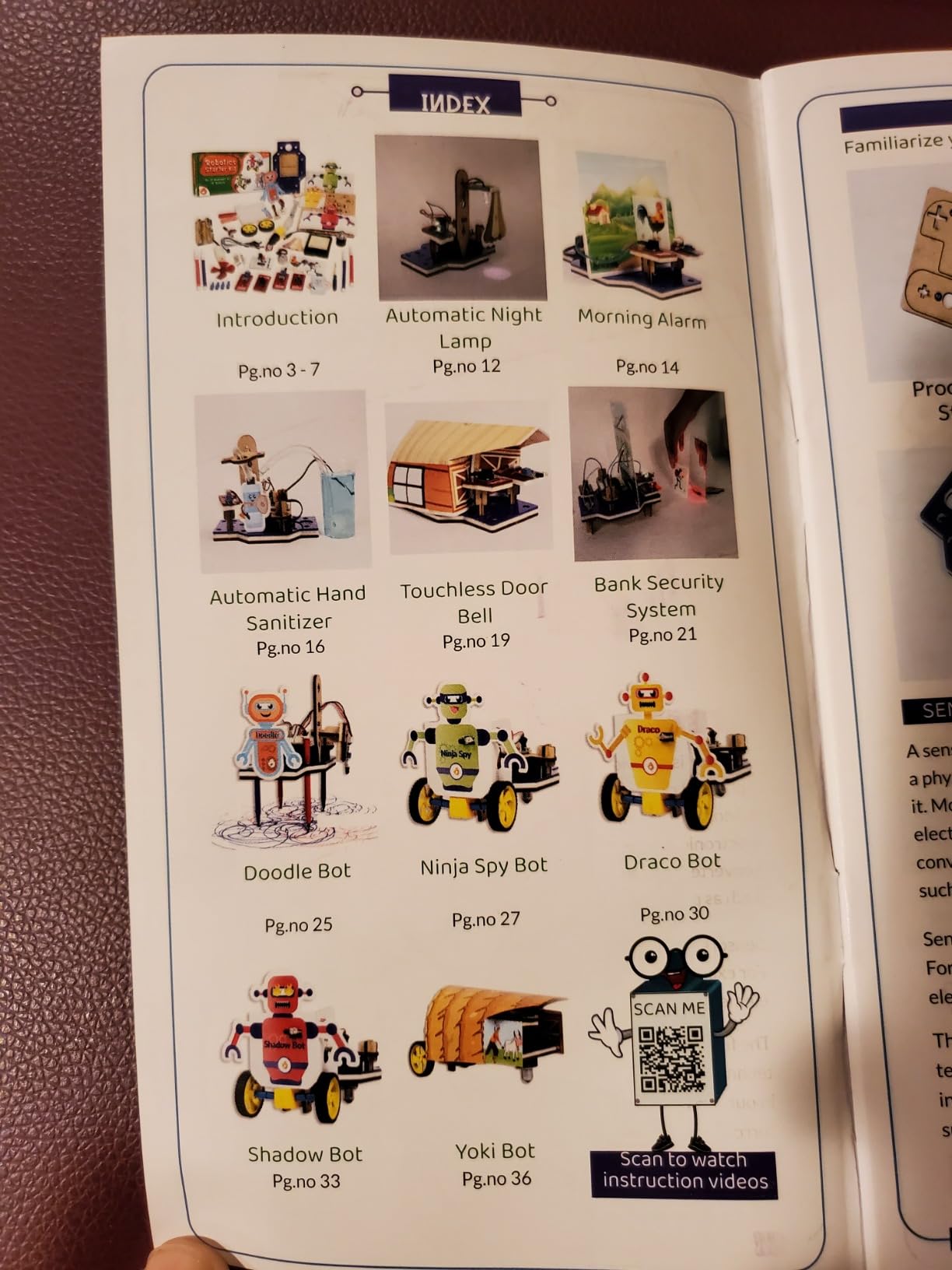
Where the wooden kit simulates, this one operates. It is a 10-in-1 electronics and robotics build with 100 or more components including wires, switches, connectors and LED lights, and it supports sensor-control builds such as line-following and obstacle-avoidance. Those are real circuits doing real work, and older children notice.
Each project assembles in about 15 minutes, and the well-illustrated manual is clear enough that an eight-to-twelve-year-old can build independently. The set is rated for ages 8 to 17, so it also extends into the teenage years.
The low-star reviews cluster on one issue rather than the design, and it is worth knowing before you buy. The sensor board is the weak point: several owners report a non-working output pin and dead sensor modules, and one reviewer found customer service effectively unreachable by email.
Smaller frictions too. Wheel axle shafts sometimes need trimming by about 1mm to fit the oversized wheels, and the supplied mirror and light-dependent resistor components are fiddly, with one reviewer reporting an LDR that arrived broken and needed soldering.
Why it works for independent play
Ten working models means a child is never finished, and the sensor projects reward tuning rather than simple assembly. Because the electronics behave predictably once built, a parent does not have to sit alongside every session.
When to choose something else
Avoid it if you cannot troubleshoot a dead sensor board or trim axle shafts, because a child who cannot fix it loses interest fast. There is no wood glue dependency here, but no reassurance of solid wooden parts either. For a gentler first electronics project, the 3-in-1 kit is better.
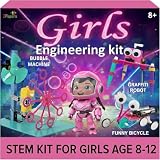
13. 2Pepers Girls Science 3-in-1 Robotics Kit – Best First Robot Build
Girls Science Kit for Kids Age 8-12, STEM Engineering Educational Toy
3 buildable robots
60 pieces
No soldering
Ages 8+
Pros
- Three distinct buildable robots in one box
- No soldering or sewing so it works safely for younger builders
- Doodling robot produces visible output that motivates repeat builds
Cons
- Wires and motors are light-duty and fail first with rough handling
- The three models share parts so switching means partial disassembly
- Less variety than kits that ship with a larger project book
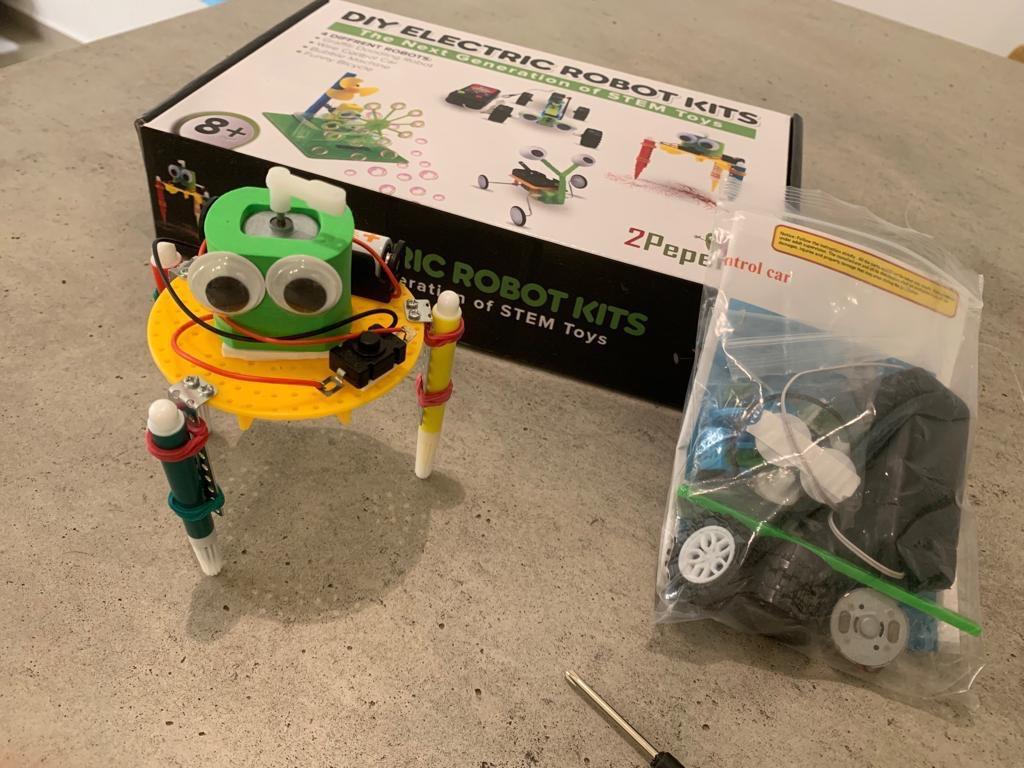
This is the entry point we would suggest for a child who wants to build robots but is not ready for a coding platform. It builds into three models: a doodling robot, a bubble-making robot and a motion robot, and each demonstrates a different principle from basic circuitry and motors to mechanical motion and airflow. The doodling robot gets singled out for producing satisfying visible output.
There is no sewing and no soldering, which is the practical reason it suits younger builders, and the box includes instruction manuals and screwdrivers alongside 60 pieces. It is listed for girls 8 to 12 and teens, and the pink presentation is cited as a hit with girls in reviews.
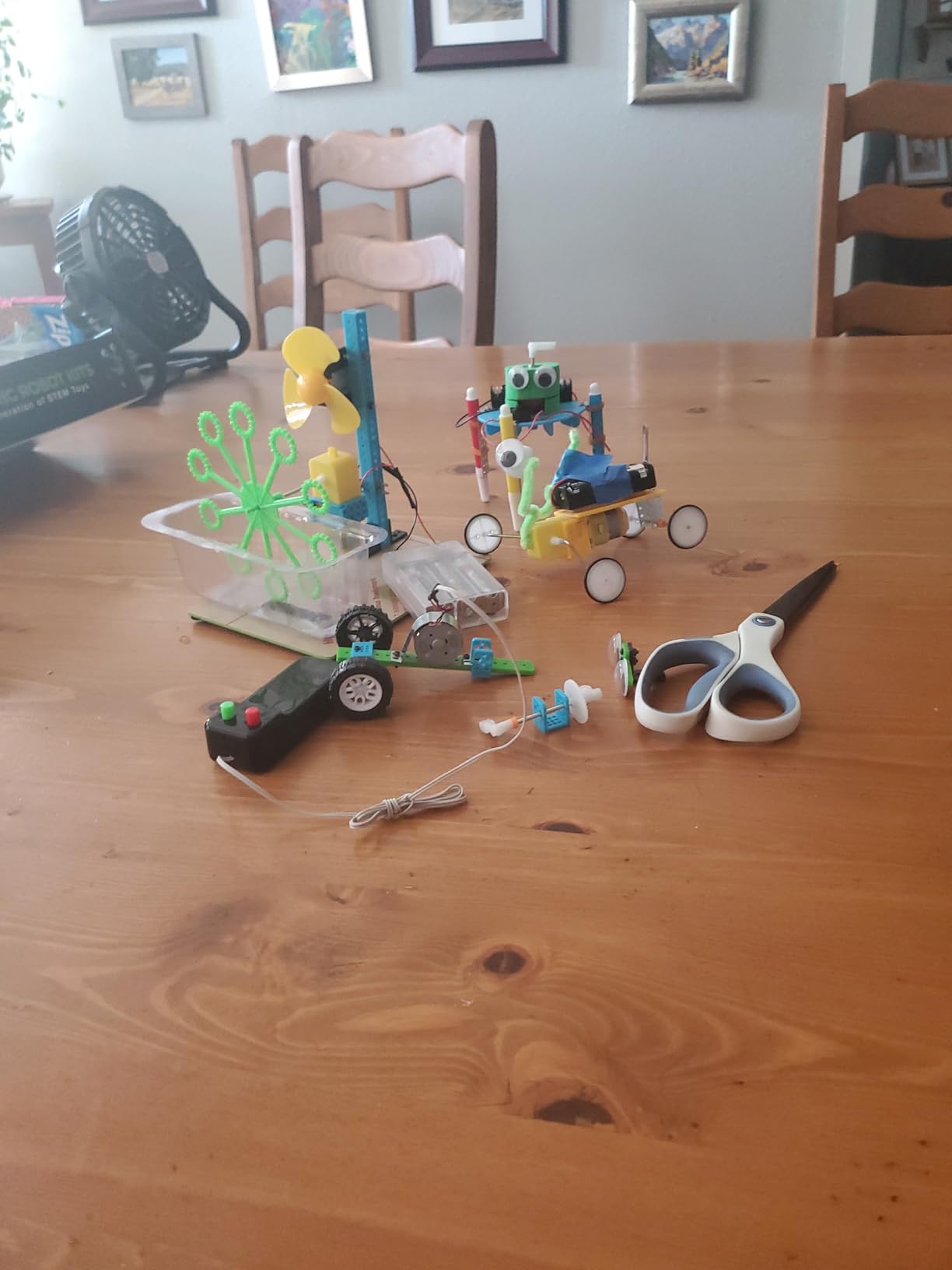
At 4.3 stars this sits near the bottom of our set, and the reviews explain why. The small motor and wire components feel cheap to a number of owners, and projects can break after limited use, so it needs a careful child rather than a rough one.
One structural note: the three models use overlapping parts, so moving between them means partial disassembly each time. The box measures 5.9 by 5.9 by 2.69 inches, small enough to lose on a shelf, so keep it somewhere specific.
Why it works for independent play
Three robots in one box means three separate finished outcomes, a lot of replay value from a small kit. The bubble-making model in particular is a social toy, so it works well with a friend or sibling rather than as a solo activity.
When to choose something else
Skip it for a child who treats toys roughly, because the motor and wiring fail first. There is less variety than a kit with a large project book, and no coding element at all. If you want a robot that grows with her, mBot or Mech-5 lasts longer.
14. Poraxy 4-in-1 Wooden STEM Kits – Best for Building and Decorating Together
Poraxy 4 in 1 STEM Kits for Kids Ages 5-7 8-10 8-12,3D Wooden Puzzles, Science Project Model Craft Building Engineering Kit,STEM Toys for Ages 8-13,Birthday Gifts for Girls 6 7 8 9 10 11 12 Year Old
4 laser-cut models
Paint and brushes included
Colours change
Ages 6-14
Pros
- Four genuinely different finished models in one box
- Paint and decorate step excites children as much as the build
- Ferris wheel and carousel physically move
- Instructions readable by a 6 or 7 year old with light help
Cons
- Thin laser-cut wood so younger children need an adult throughout
- One reviewer described the construction as not long lasting for rough play
- Not a true electronics kit since the STEM content is structural
This is the pick for a child who wants a finished object to keep. The box contains four laser pre-cut 3D wooden models: a mini ferris wheel, a carousel, a fiber optic lamp and a star night light, and the ferris wheel and carousel actually rotate. Our tester’s finished models went straight onto a display shelf rather than back into the box.
Twelve colors of paint and two brushes are included for decorating finished models, and reviewers report the painting stage being as exciting to children as the build. That combination of construction and craft is what makes it a genuine STEAM pick.
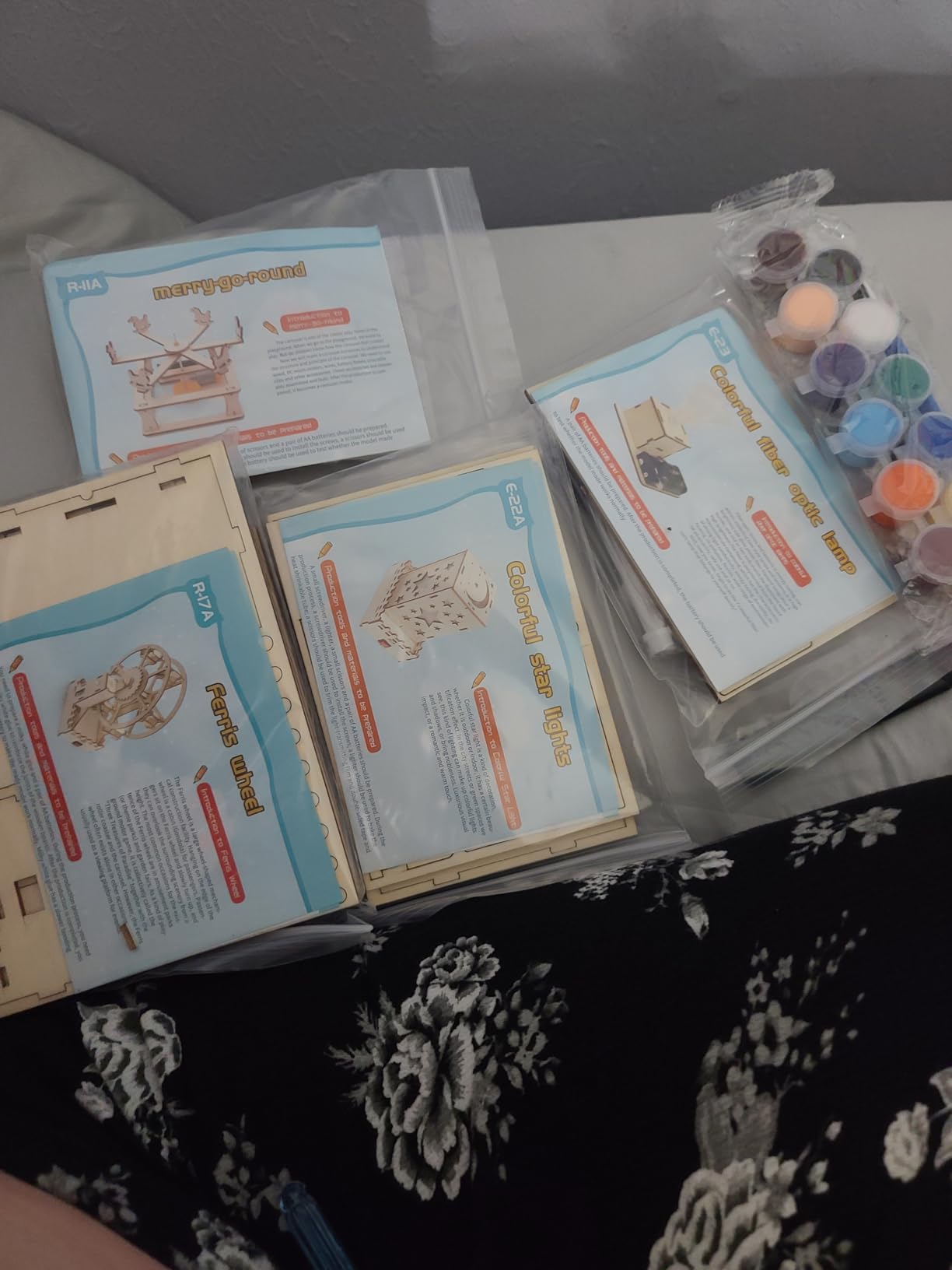
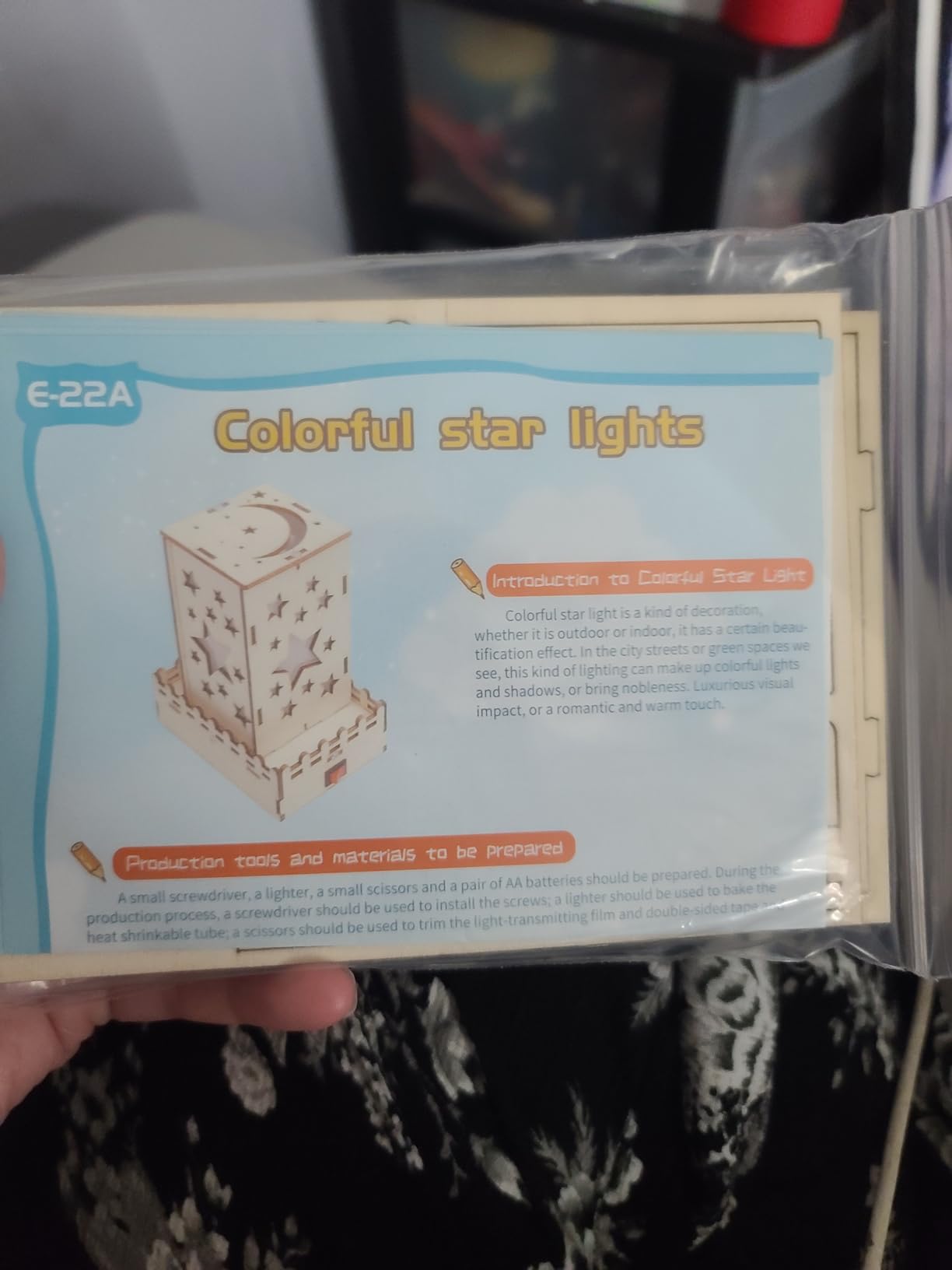
The LED lights in the star and fiber optic lamps change between 7 colors, adding a payoff for a build that otherwise stands still. The set is listed for ages 6 to 14, measures 8 by 6 by 3 inches, and ships with smooth-edged laser pre-cut parts.
The honest limitation is the material. Assembly is thin laser-cut wood, so younger children generally need an adult alongside them, and one reviewer described the construction as not long lasting for rough play. It is also not a true electronics kit, since the STEM content is structural rather than scientific.
Why it works for independent play
Finishing one model in a session gives a child a clear endpoint, which open-ended sets do not, and the painting stage is genuinely independent creative time. Once the two lamps are built they stay on as decoration, so the toy stays visible rather than boxed away.
When to choose something else
It suits ages six and up with an adult nearby, so a three- or four-year-old needs constant help. Thin wood will not survive a younger sibling who throws toys, and if you want actual circuits or sensors in the box, choose the electronics kit instead.
15. Tsomtto 14-in-1 Building Set – Best for Preschool and Early Elementary Builders
Tsomtto Educational STEM Toys for 4 5 6 7 8+ Year Old Girl Birthday Gifts
14 buildable models
Storage box included
No batteries
Ages 3 and up
Pros
- Classic brick and plate format children 4 to 8 can manage
- Storage box included which matters for this type of set
- 14 buildable models give good replay value for a younger age band
Cons
- Only one model fits at a time so the set is disassembled between sessions
- Not a true electronics or robotics set
- Small parts matter at the youngest end of the stated age range
Our youngest tester could use this one, and it is the most straightforward pick here for a preschooler. The set is listed from three years and up and uses a classic brick-and-plate format that children in the four-to-eight range can figure out with minimal help, which is the hardest thing to achieve with a construction toy at this age.
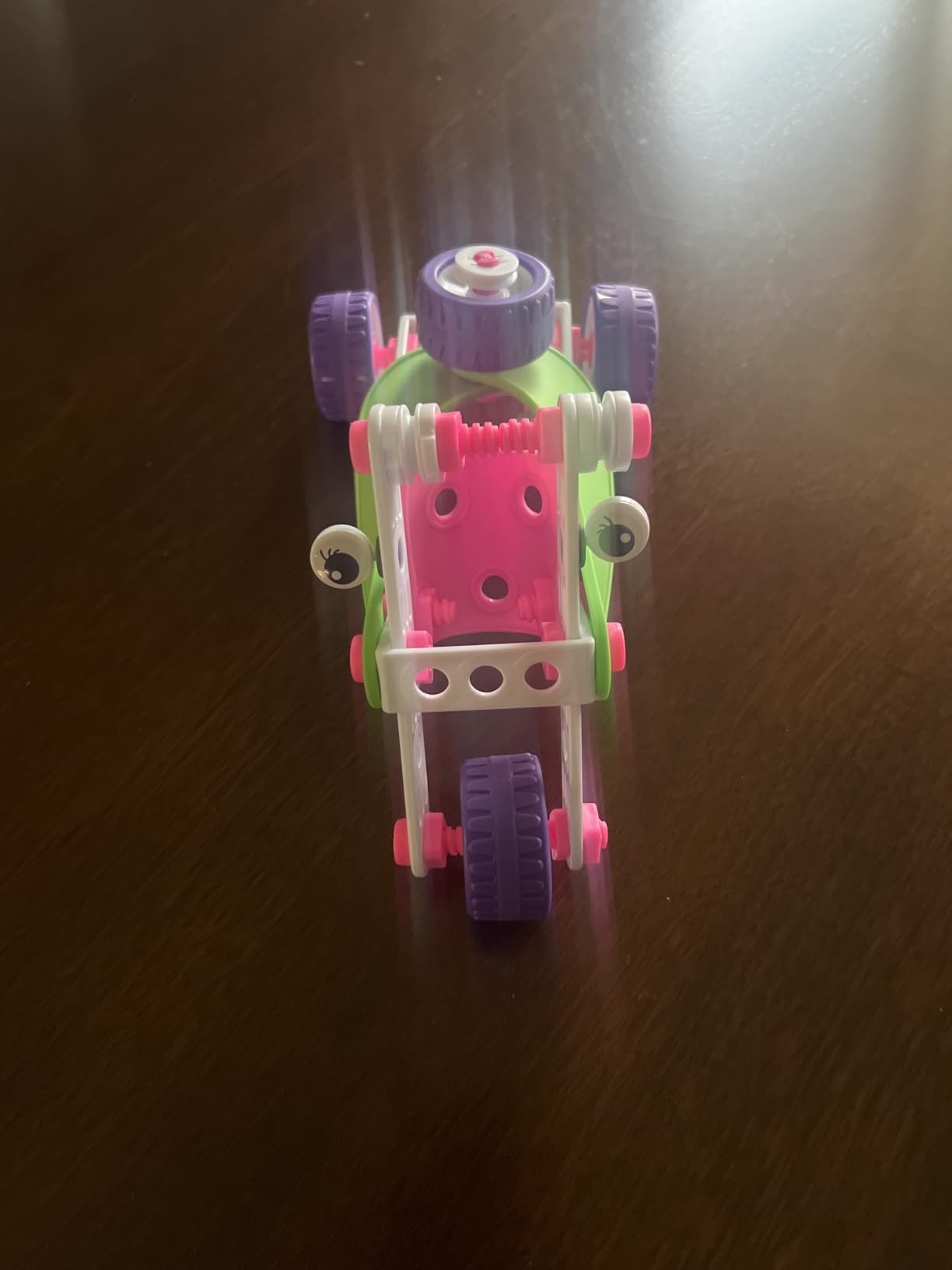
It builds into 14 different models including a cart, plane, racing car, train, robot, flower, chair and bed, and a step-by-step guide booklet covers the patterns. The blocks are colorful, non-toxic and washable, which sounds minor until you have cleaned plastic bricks.
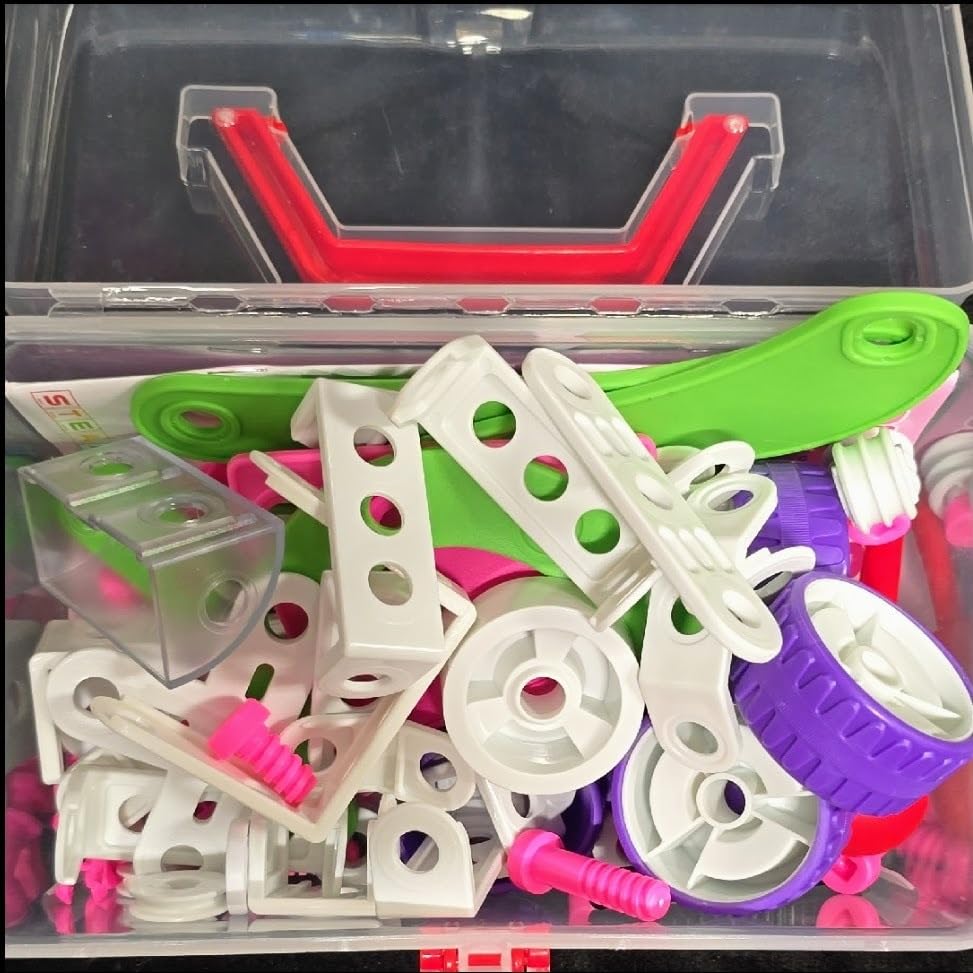
The storage box is the detail that makes this set work in a real home. Parents name the box and the range of 14 models as the main reasons it holds up, and the set weighs 0.74 kg. No batteries are required, and it suits a single player, which suits independent play.
Understand the shape of it before buying. Only one model can be assembled at a time, so the set is disassembled between sessions rather than offering a shelf of options. It is not a true electronics or robotics set, since the STEM claim rests on generic construction play, and small parts need attention at the youngest end of the age range.
Why it works for independent play
It works well as a collaborative activity with an adult, and parents note the fine motor practice that comes from pressing small bricks together and aligning plates. The 14 models give a young child genuine choice without needing to read instructions alone.
When to choose something else
If your child is four or younger, the small pieces are a supervision question, and the disc set we recommend first is safer at that age. It is not the pick if you want electronics, sensors or coding in the box, and older children quickly outgrow plastic bricks.
How to Choose the Right STEM Toy for Your Girl
Start with age, because the spread across this list is wider than in any other toy category. Below age five, choose solid-piece construction such as the Brain Flakes discs or a washable brick set, and treat any small component as a supervision question. Between five and seven, screen-free coding such as Botley opens up, and paint-and-build kits work well. From eight to ten, electronics and mechanical builds become realistic.
Second, decide how much adult time you actually have. This is the question parents most often skip and most often regret. A marble run or disc set needs no adult at all, a chemistry kit needs an adult every session, and a robotics build needs one for the first afternoon.
Third, check the screen question honestly. Every pick here is either screen-free or app-based, and nothing sits in between. Screen-free options like Botley, Mech-5, Gravity Maze and the disc sets have no failure mode when software changes. App-based options like the Makeblock mBot teach more over time but depend on a device and on a developer keeping the app alive.
Fourth, look at the weakest component, not the best one. Light-duty motors, sensor boards and thin laser-cut wood are the parts that end the play, and they are the parts listings mention least. Buy a spare pack of filament for a 3D pen and a roll of tape for a wooden kit.
Fifth, buy open-ended over closed. A closed toy with a defined end point gives a satisfying finish but stops, while an open-ended system gives less immediate satisfaction and keeps going. A good compromise is a closed kit for a birthday and an open-ended set for the rest of the year.
One last point on packaging. Parents told us repeatedly that they avoid science kits sold in stereotypically pink boxes because the packaging itself puts their daughter off, and the reviews across this list back that up, with the pink-specific picks appealing to some children and deterring others.
Frequently Asked Questions
What are the best STEM toy brands?
The most proven names in this category are National Geographic, whose science kits carry a 4.7 rating across tens of thousands of reviews, ThinkFun for screen-free logic puzzles, Learning Resources for coding robots suited to younger children, Makeblock for programmable robotics, and 3Doodler for creative art-integrated making. Choose based on the age and the supervision time you have rather than the brand alone.
What are some good STEM kits for girls?
Good STEM kits for girls deliver more than one session of play and state their supervision needs plainly. Our strongest science picks cover crystal growing, food science and invisible ink in sets with over 100 experiments, while the best engineering kits cover gears, levers and circuits with reusable wooden parts. Avoid kits that need an app with no screen-free fallback.
What is the best STEM gift for a 10-year-old?
For a 10-year-old, a mechanism-based kit beats a simple craft set because the challenge level matches her problem-solving ability. A physical coding wheel robot that performs mechanical actions without a screen suits a child who is not ready for app-based coding, and a wooden engineering kit with 100-plus projects works well if she prefers building to performing tricks.
Are STEM kits worth the money?
A STEM kit is worth it when it is open-ended, works without constant adult supervision, and the parts are reusable so the same kit produces something new next week. Kits that deliver one finished outcome or that need glue, tape or household ingredients you do not have are worth less. Check the weakest component before buying, because that part ends the play.
What are the best STEM construction toys for kids?
The best construction toys are open-ended and screen-free. Interlocking disc sets support large structures from very few pieces and are safe from about age three, marble run sets teach physics through redesigning a run, and wooden gear and lever kits produce mechanisms a child can rebuild repeatedly. Brick-and-plate sets suit ages four and up but hold only one model at a time.
Final Verdict: Our Top STEM Toys for Girls in 2026
Buy the Brain Flakes 500 Piece Set if you want one answer that works for almost any age and any amount of free time. It is open-ended, quiet, screen-free, the highest-rated pick in our set, and it needs nothing from you. Pair it with the ThinkFun Gravity Maze and you have screen-free reasoning practice that travels.
For a first real electronics or programming project, go with the Teach Tech Mech-5 for a screen-free physical coding wheel, or the Learning Resources Botley if she is closer to five and you want a robot that works out of the box. For chemistry, the National Geographic Science Magic Kit with more than 100 experiments outlasts everything else we tested.
Check the age band before anything else, then buy the open-ended option. That single decision is what separates a toy she still wants next spring from one that ends in a closet.