
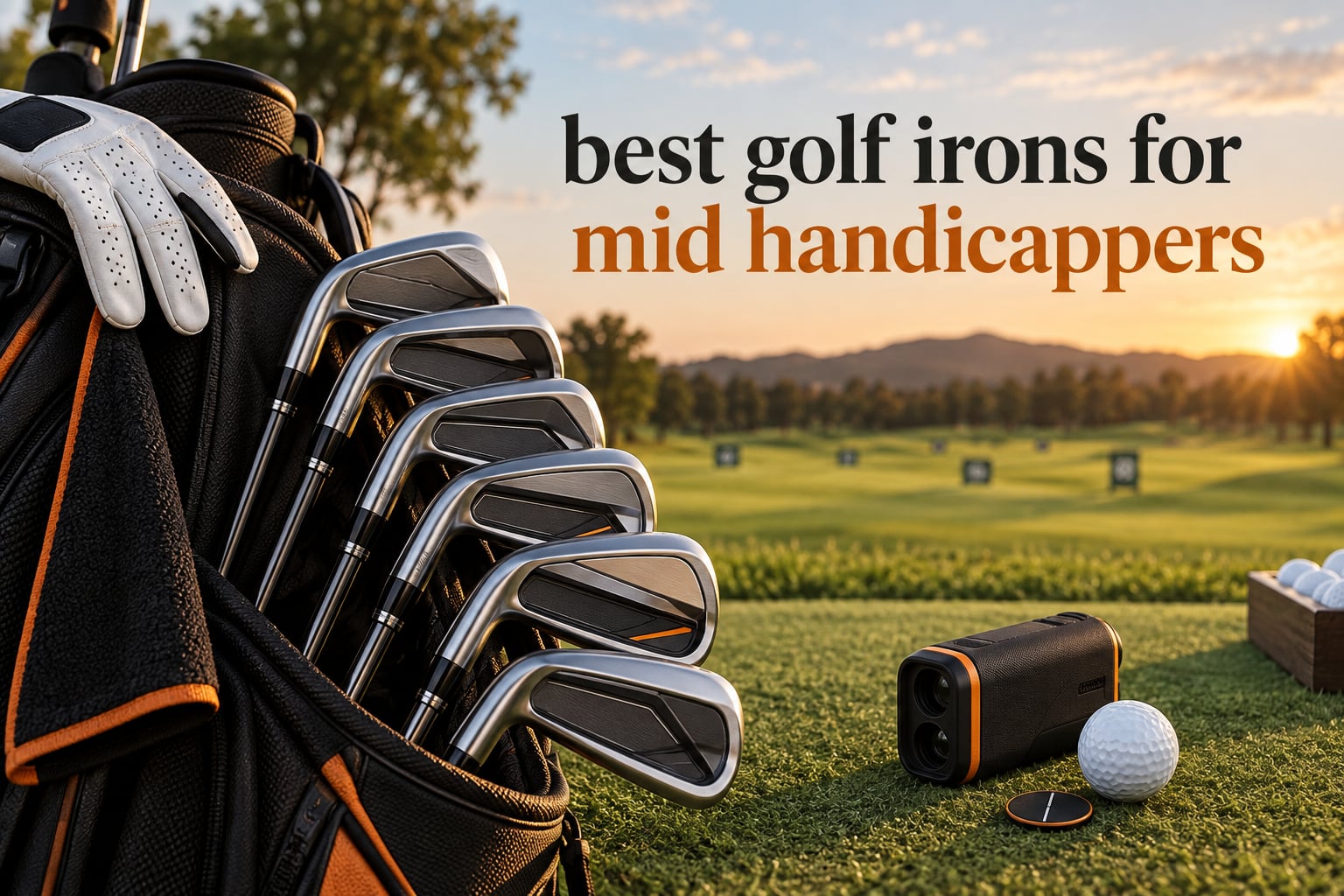
A mid handicapper sits roughly between a 10 and 20 USGA handicap index, with 12 to 18 being the core of the band. That is the group that breaks par regularly but still gives away a stroke or two on every bad contact. The right iron set for that golfer is not a super game improvement iron, which is built for 25-plus players, and it is not a players iron either, which punishes the same bad contact twice. Our pick for most of you in the band is the TaylorMade SIM2 Max, and it is the set we would hand to a friend who breaks par and wants more distance without losing forgiveness.
Weigh the specifications of 10 iron sets, pull the owner review patterns off each listing, and compare head construction, shaft options, set configuration and handicap fit. All ten of them are offered in right hand only, so if you play the other way you will need to confirm availability before anything else. We also weighed the category question honestly: a compact cavity back with a low center of gravity is the right starting point, and we tell you where each set breaks down rather than pretending every mid handicapper wants the same head.
Reviewers report a 7 iron carry somewhere around 150 to 175 yards for most golfers in the 10 to 20 range, and that is the number to calibrate against. Set a launch monitor or a rangefinder to your current 7 iron before you shop, then recheck the number once the new set is in the bag. The forgiveness and launch numbers below are what move that figure, not the tour pedigree printed on the head.
Table of Contents
Top 3 Best Golf Irons for Mid Handicappers in 2026

TaylorMade SIM2 Max
- Cap Back multi-material design
- ECHO vibration damping
- Thru-Slot Speed Pocket
- 5-PW plus AW steel shafts
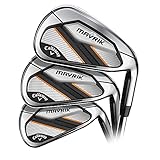
Callaway Mavrik 22
- Flash Face Cup technology
- Urethane microsphere inserts
- Very forgiving cavity back
- 6-PW plus AW steel shafts
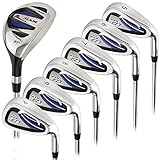
Ram Golf EZ3
- 5-PW plus free number 4 hybrid
- Cavity back forgiveness
- Steel shafts
- Standard length right hand
All 10 Iron Sets Compared Side by Side in 2026
Every set below was checked against the same criteria: how much the head helps on a mishit, how easily it launches, and whether the set covers the clubs a mid handicapper actually hits.
| Product | Specifications | Action |
|---|---|---|
| TaylorMade SIM2 Max |
|
Check Latest Price |
| Callaway Mavrik 22 |
|
Check Latest Price |
| Ram Golf EZ3 |
|
Check Latest Price |
 BombTech Golf 4.0 BombTech Golf 4.0 |
|
Check Latest Price |
 Orlimar Intercept SL Orlimar Intercept SL |
|
Check Latest Price |
 MAZEL 9 Piece Set MAZEL 9 Piece Set |
|
Check Latest Price |
 Callaway Paradym Ai Smoke Callaway Paradym Ai Smoke |
|
Check Latest Price |
 Wilson Dynapower Wilson Dynapower |
|
Check Latest Price |
 Precise A9 Precise A9 |
|
Check Latest Price |
 Roxor RXR Roxor RXR |
|
Check Latest Price |
1. TaylorMade SIM2 Max Iron Set – Editor’s Choice for Distance and Forgiveness
TaylorMade Golf SIM 2 MAX IRON SET MENS RIGHT HAND STEEL REGULAR 5-PW, AW
5-PW plus AW
Regular flex steel shaft
Cap Back design
2 year warranty
Pros
- Very low center of gravity for easy launch
- Thru-Slot Speed Pocket saves ball speed on low-face mishits
- ECHO damping gives a forged-like feel
- Best selling rank in Golf Iron Sets
Cons
- Thru-Slot cavity can sound higher and more muted than a forged iron
- Supplied in regular flex only
- 5-PW plus AW leaves the gap and sand wedge to buy separately
This is the set we kept returning to. The Cap Back design puts stainless steel and light polymers low and deep in the head, and the result is a launch you get without thinking about it, which is exactly what a 12 to 18 handicap golfer needs from an iron. Across 228 owner reviews the recurring theme is distance that arrives without giving up forgiveness, and the ranking in the Golf Iron Sets category is the strongest demand signal on the list.
The Thru-Slot Speed Pocket is the part most likely to save you strokes. It is engineered to keep the lower face flexible, so a strike out of the grass in the middle of the club still leaves with ball speed instead of dying. For a player who mishits a fairway iron two or three times a round, that pocket does more for the scorecard than a nicer topline ever would.
Feel is the quiet strength. The ECHO damping system uses a softer polymer blend with multiple contact points to channel vibration away, and owner reviews describe it as closer to a forged iron than a hollow body. If you have been playing a light cast set and you find the sound harsh, the difference is immediate on the first few shots.
Progressive Inverted Cone Technology is positioned differently on each face to counter the right miss most golfers give, which is a small detail that shows up in the shape of your misses rather than in a spec sheet. Reviewers also report consistent ball flight across the set with no visible gapping surprises in the middle irons.
Who the SIM2 Max suits
This suits the 10 to 18 handicapper who breaks par, wants more distance, and has decided super game improvement heads look too much like a beginner set. It also fits anyone moving out of a chunky cavity back who wants a more compact address view without losing mishit help. If you are in that transition zone this is the safest place to land.
It is also good for a 12 to 14 handicapper who is starting to miss too much on mishits but does not want a blade profile yet. Golfers who already strike the ball consistently and want to shape a tour-level draw should look further down this list, because workability is not the headline here.
Where the SIM2 Max falls short
The honest weakness is sound. Reviewers report the Thru-Slot cavity can feel a little higher and more muted than a solid forged head, and if sound quality is the thing that keeps you from playing, that matters to you more than the numbers suggest. The included set is 5 iron through pitching wedge plus an approach wedge, so you still need a gap wedge and a sand wedge.
Regular flex is the only listed option, so golfers with a genuinely slow swing or a fast transition should have the shaft weighed rather than buying off the rack. A launch monitor session is the cheapest way to settle that question before the set leaves your bag.
2. Callaway Mavrik 22 Iron Set – Best for 16-20 Handicap Golfers
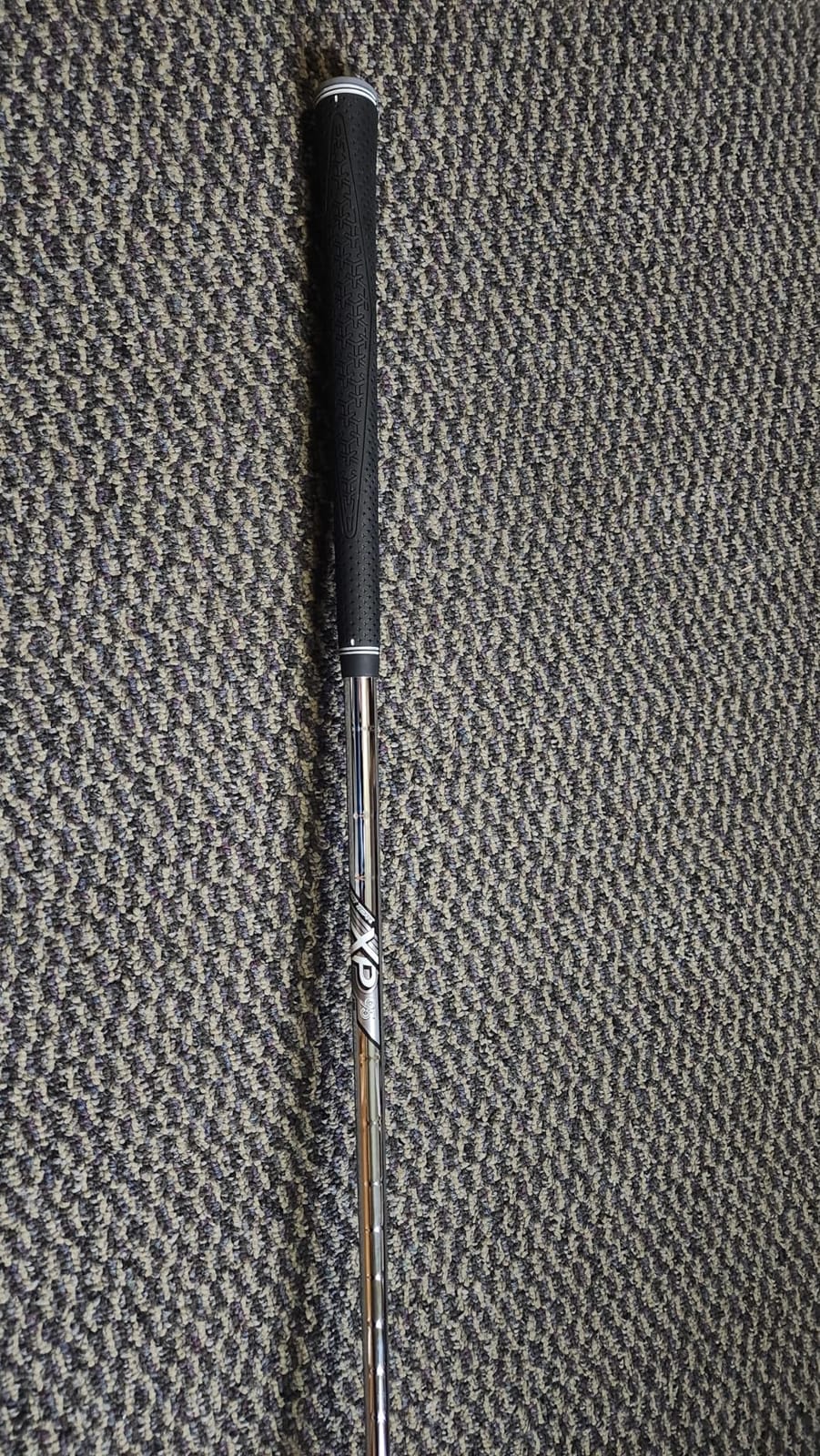
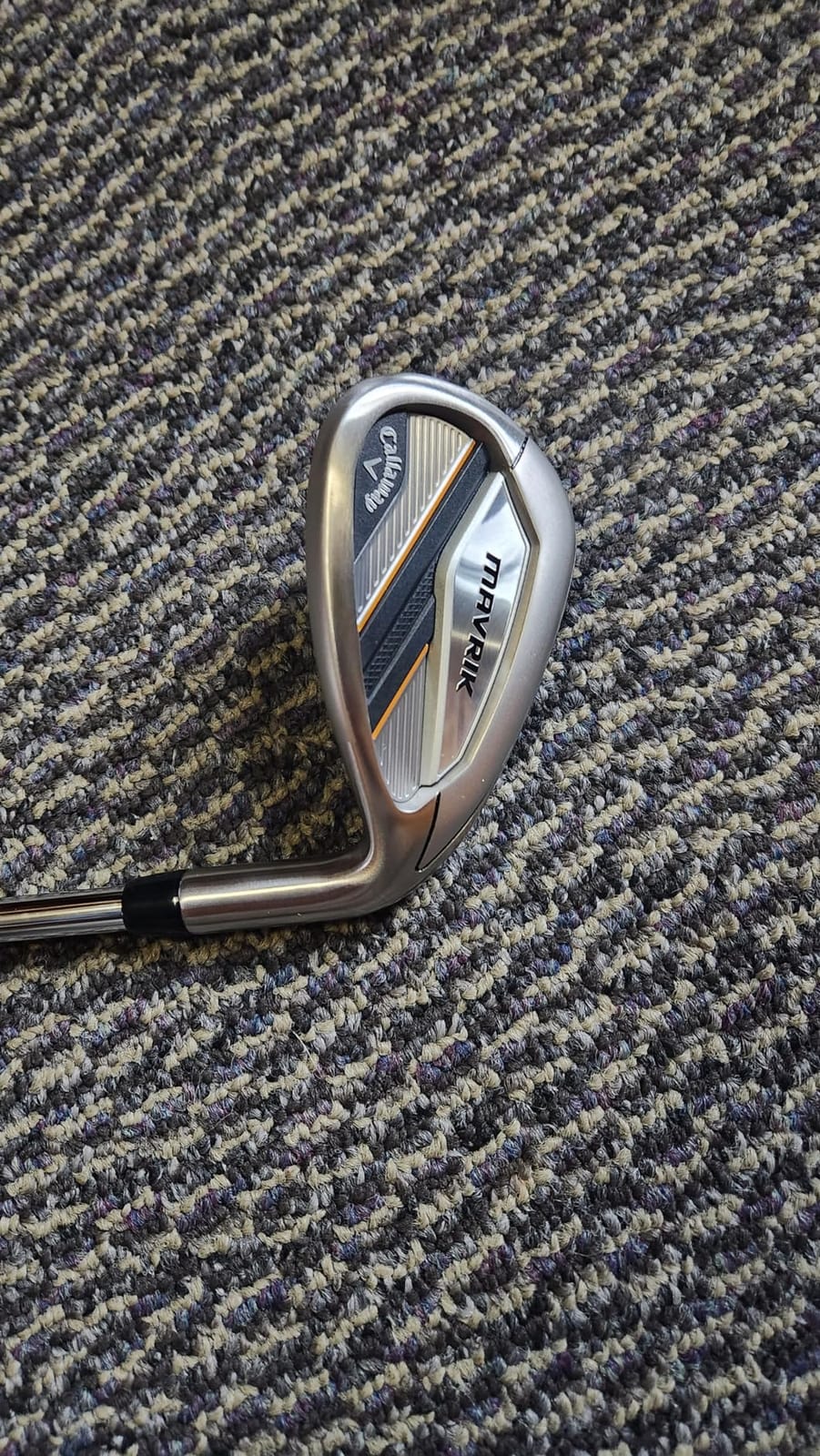
Callaway IR RH MAVRIK 22 6PA ST REG
6-PW plus AW
Regular flex steel shaft
Cavity back head
2 year warranty
Pros
- Very forgiving cavity back that high handicappers rate as a multi-stroke gain
- Flash Face Cup adds ball speed
- Soft feel from urethane microspheres
- Reviewers report roughly 20 yards gained over older sets
Cons
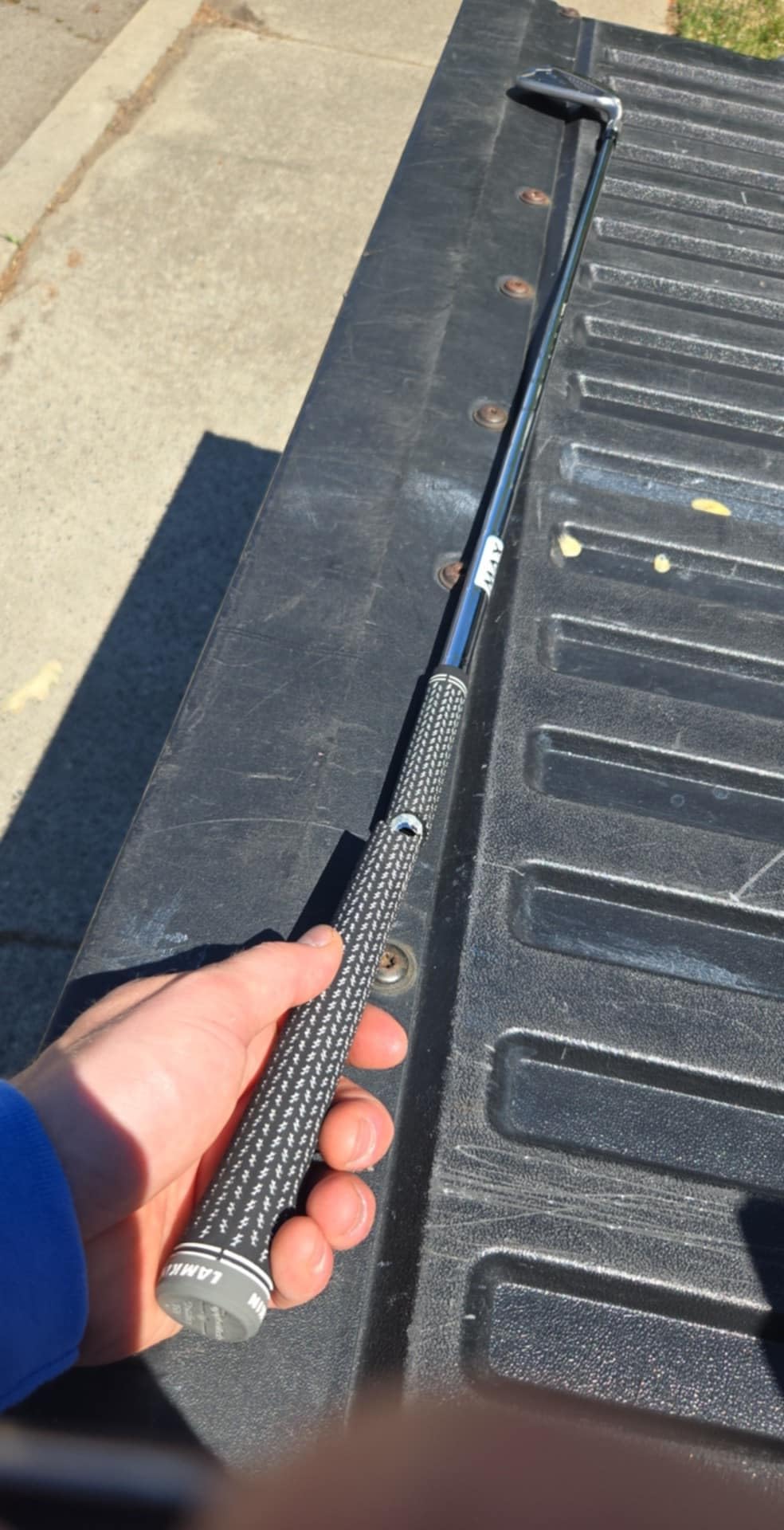
- Some reports of heads loosening at the hosel after mishits
- Lower lofts make the clubs feel lighter than a forged iron
- A few reports of grip and club mismatches versus the listing
The Mavrik 22 is the set we point 18 handicappers toward. Across 200 reviews the dominant comment is forgiveness, and several owners describe it as adding several strokes to their score rather than one. The cavity back is generous to the eye and to the strike, and it does not demand a good contact to fly a reasonable distance.
Flash Face Cup Technology is doing the work on speed. Owners comparing against older sets report somewhere around 20 yards of added distance, which is a large figure that probably includes both the club and the effect of better contact, but even discounted it points to a head that rewards effort.
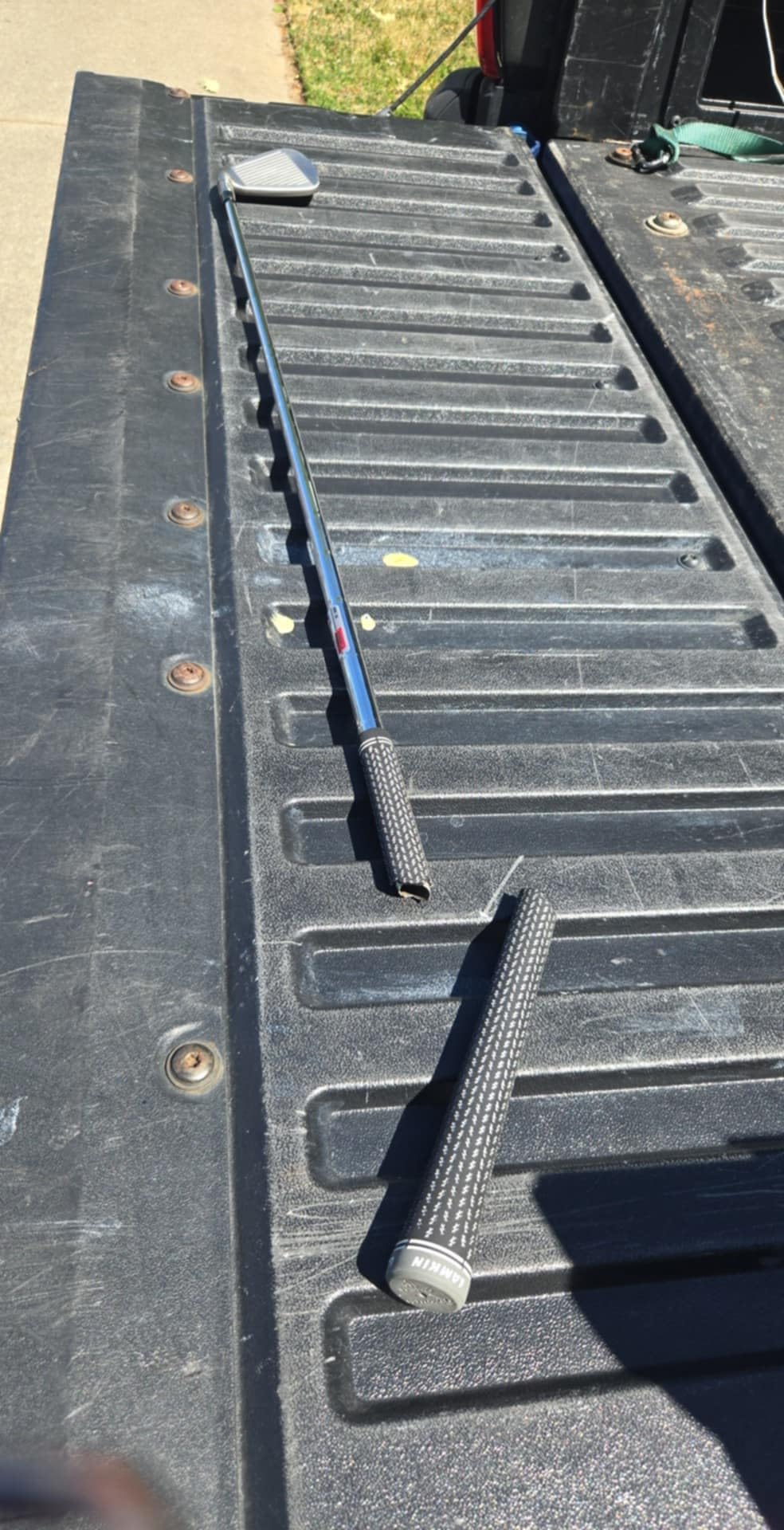
Feel is handled by urethane microspheres, and reviews repeatedly describe the impact as soft and clean for a cast cavity back. That combination of a forgiving head and a quiet, damped face is why this set keeps appearing in mid-handicap recommendations.
One practical note: the listed configuration is 6 iron through pitching wedge plus an approach wedge, six clubs in total. That is a sensible mid-to-short set, but if you have been playing 5 irons you will be losing the longest scoring iron in the bag, so plan a hybrid or a 5 iron from another source.
Who the Mavrik 22 suits
This is the pick for the 16 to 20 end of the band, the golfer who loses more to contact than to technique and wants the most help the short and middle irons can give. It also works well for a mid handicapper who prefers a larger head and a more obvious cavity than a compact players-distance design.
Players who want to work the ball deliberately should pass. The lofts run slightly lower than a traditional forged set, which contributes to the distance but also means less control on a deliberate knockdown shot.
Where the Mavrik 22 falls short
Durability is the recurring complaint in a small cluster of reviews, with some owners reporting heads loosening at the hosel after a mishit. A few buyers also received grip or club combinations that did not match the listing description, which is a fulfilment issue rather than a design flaw, but it is worth checking the set on arrival.
Because the lofts sit lower and the clubs feel lighter than a forged set, some golfers report an adjustment period. Practise the change of clubs rather than judging the set on the first round.
3. Ram Golf EZ3 Iron Set – Best Value with a Free Number 4 Hybrid
Ram Golf EZ3 Mens Right Hand Iron Set 5-6-7-8-9-PW – Free Hybrid Included
5-PW plus free 4 hybrid
Steel shafts
Standard length right hand
Cavity back
Pros
- Includes a free number 4 hybrid that replaces the hardest long irons
- Forgiving cavity back owners rate level with premium sets
- Steel shafts give precision for slower swing speeds
- Largest review base in Golf Iron Sets at 269 ratings
Cons
- Minimal vibration damping compared with higher priced sets
- Included 4 hybrid sits close to the 6 iron and needs de-lofting
- Heavier than modern graphite alternatives
- One report of a shaft snapping at the clubhead
The Ram EZ3 is the value answer and it is a better one than most mid handicappers expect. At 269 ratings it carries the largest review base of any set we examined, and budget buyers consistently describe the irons as playing level with much more expensive sets. That is the pattern in the reviews, not a marketing line.
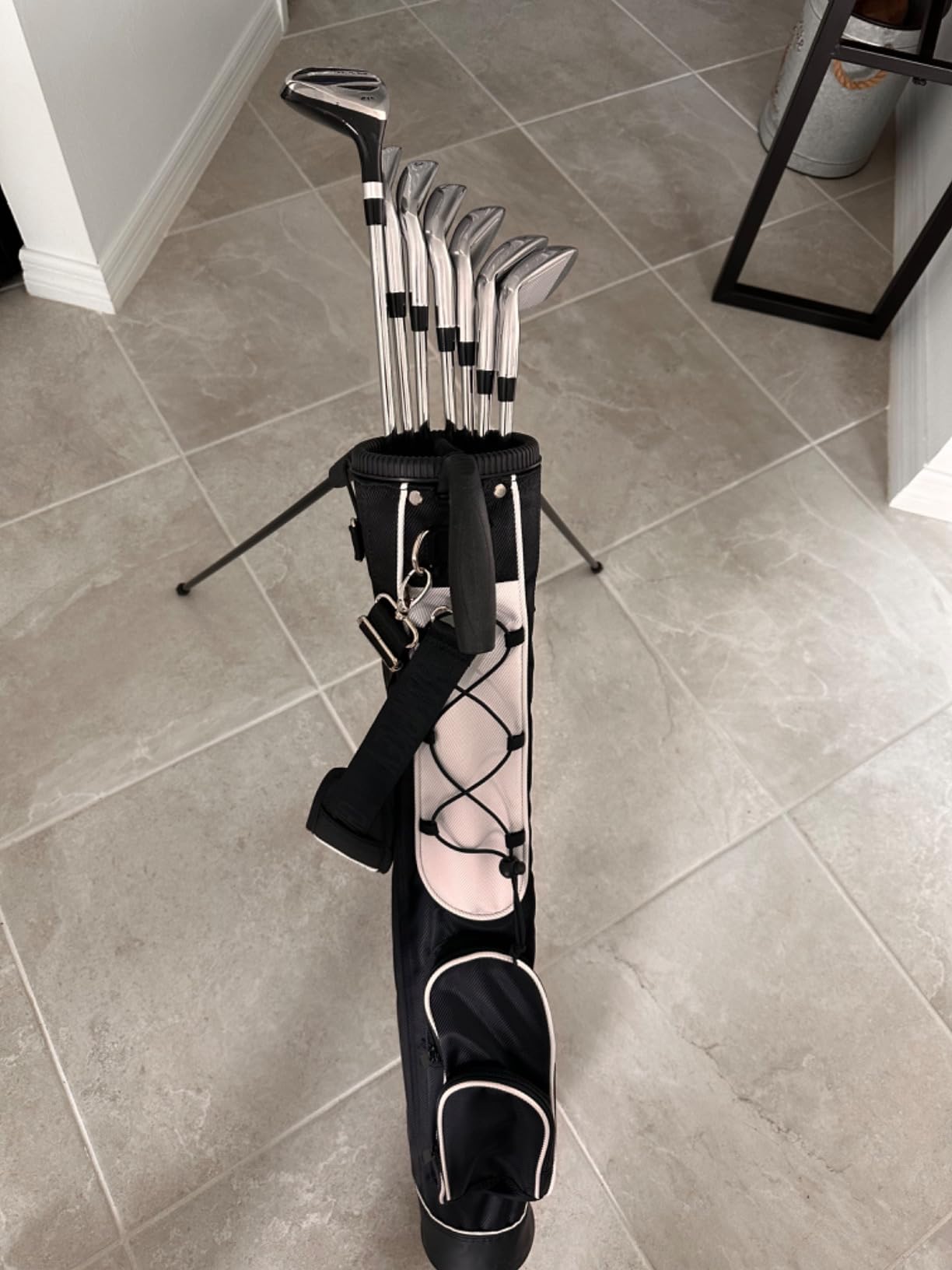
The free number 4 hybrid is the practical star of the package. It replaces the long iron nobody in the 10 to 18 band should be swinging, becomes a favourite mid-distance club, and removes the single biggest gap in a short iron set without a separate purchase.
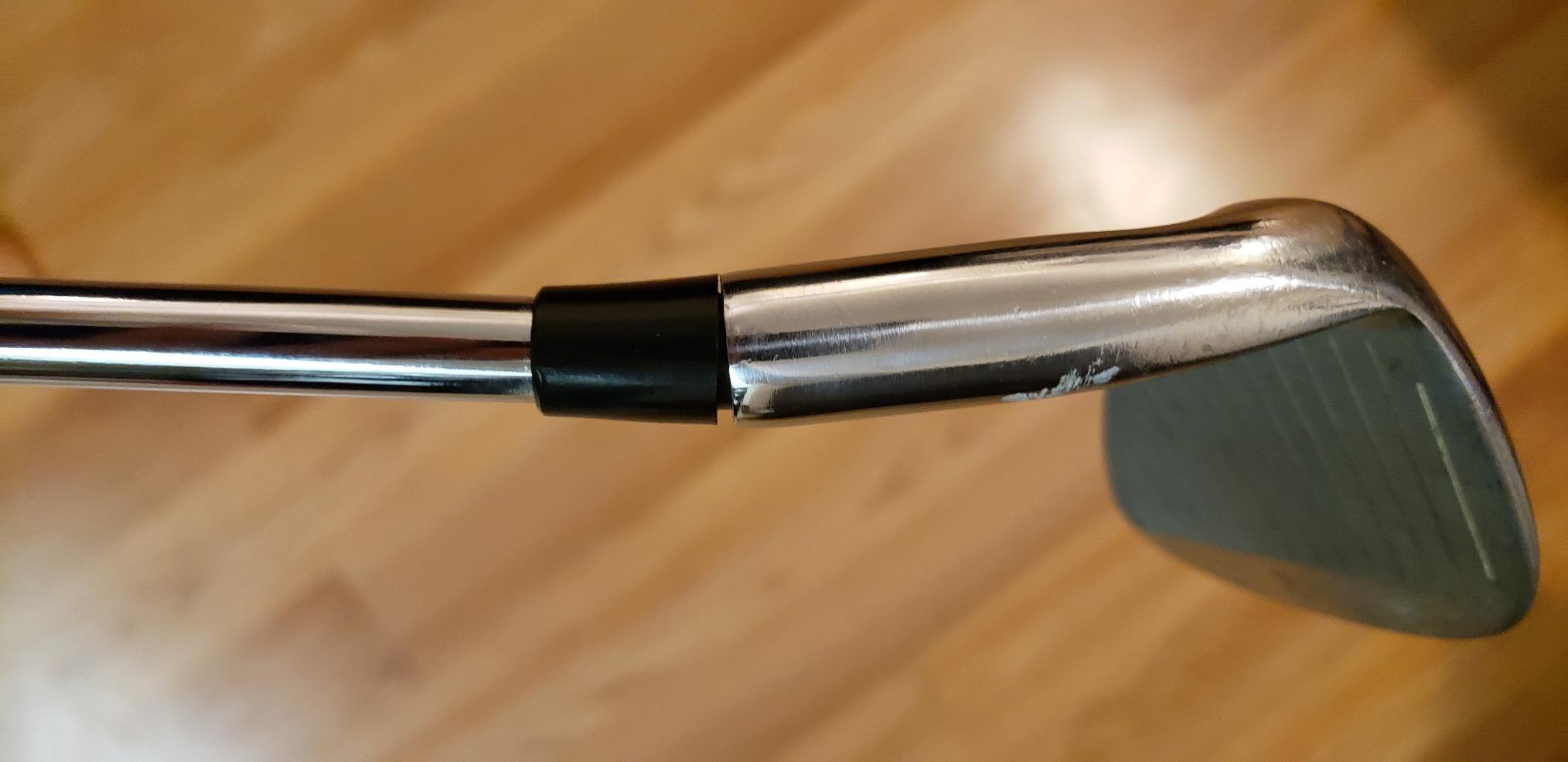
Steel shafts are the right call for a mid handicapper with a moderate swing speed. Reviewers report good precision and balance from them, and the weight at impact makes the ball flight easier to read. The cavity back design means off-center strikes feel better and go better, which is the whole point at this handicap.
The set runs 5 through 9 iron, pitching wedge and the hybrid, in standard length for right hand. It is a straightforward, no-fuss configuration that covers the scoring clubs and leaves you to add a gap wedge and sand wedge to finish the bag.
Who the EZ3 suits
This is the set for a mid handicapper who has outgrown a beginner bag and does not want to spend premium money on the transition. It is a strong first deliberate iron purchase, and the most common story in the reviews is exactly that, moving from hand-me-downs to a set that fits.
It also suits anyone who is tired of long irons. Swapping the 3 and 4 irons for a hybrid is the single most useful bag change most mid handicappers can make, and this set arrives with one already in it.
Where the EZ3 falls short
Feel is the honest trade. Reviewers report minimal vibration damping next to higher priced sets, so the impact is more pronounced and solid than soft. Golfers who are sensitive to sound may find that tiring over 18 holes.
The included 4 hybrid sits close to the 6 iron, so it needs de-lofting for some shots until you learn its window. It is also heavier than modern graphite alternatives, and one owner reported a shaft snapping at the clubhead on a first round, which is rare but worth weighing.
4. BombTech Golf 4.0 Iron Set – Best for Easy Launch
BombTech Golf 4.0 Iron Set – Black (Regular Flex)
4 through PW
Alloy steel shafts
Regular flex right hand
22 degree loft
Pros
- Exceptionally large sweet spot that works on heel and toe mishits
- Easy launch and consistent ball flight across all seven irons
- Reviewers report 10-12 or more yards of added distance
- Distinctive green and black finish
Cons
- A small amount of distance lost versus some previous sets
- Fitted grips wear before the clubheads do
- Regular flex right hand is the only listed configuration
The BombTech 4.0 is built around one idea: make the ball leave the face easily. Owner reviews put it among the most forgiving sets here, and the recurring description is a very large sweet spot that holds up on both heel and toe contacts. For a 12 to 18 handicapper that is a meaningful upgrade in contact rate.
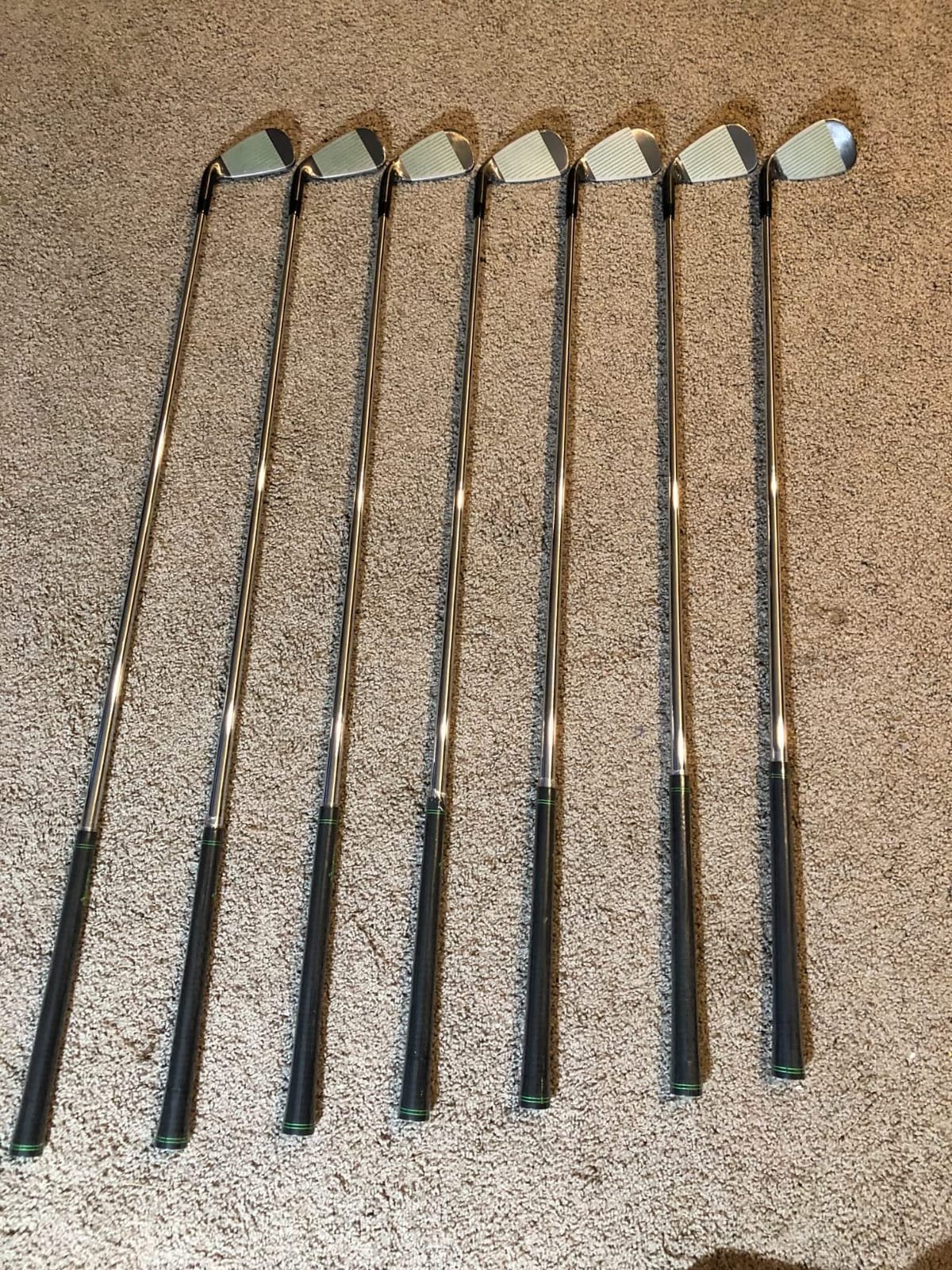
Easy launch is the theme across every club. Reviewers report consistent ball flight through all seven irons, including the long 4 and 5, and numbers in the 10 to 12 yard range of added distance over previous sets. A low, deep weighting plus a cavity back head is doing exactly what it is designed to do here.
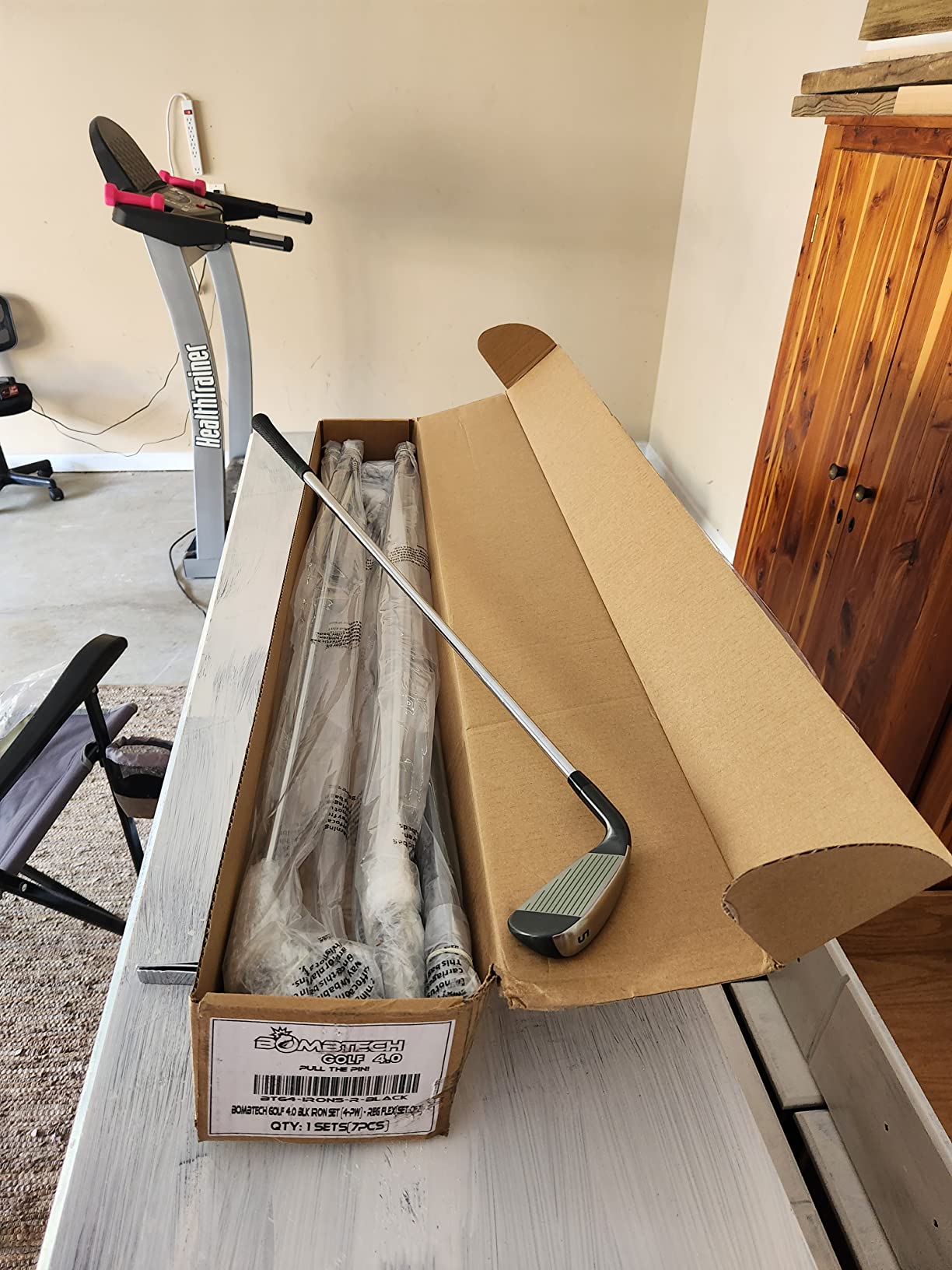
The set is 4 through pitching wedge, which is one club more than most mid-iron sets in this roundup. That extra 4 iron is useful before you add a hybrid, and it means the scoring clubs are all covered from the start.
Build weight is substantial at 3.3 kilograms for the set, and the green and black finish gives it a distinct look in the bag. Alloy steel shafts in regular flex keep the profile classic rather than ultra-light, which suits most players in this band.
Who the BombTech 4.0 suits
This suits golfers at the higher end of the mid band who generate less clubhead speed and want help getting the ball up and airborne. If your miss is a weak slice that never gets off the ground, the launch profile here is the most useful thing in the head.
It also works for anyone who prefers a more assertive look than a thin-topped players-distance iron but wants to stay inside the mid-handicap conversation. The address view is bold without being cartoonish.
Where the BombTech 4.0 falls short
A minority of owners report giving back a small amount of distance compared with their previous set, so it is not automatically the longest option in the group. Check the loft against a set you know before you commit.
The most-cited limitation is the fitted grips, which owners describe as the weakest link and likely to wear before the heads do. Budget for a regrip, which is normal on any set and easy to do yourself. Regular flex right hand is the only listed configuration.
5. Orlimar Intercept Single Length Iron Set – Best for Repeatable Swings
Orlimar Intercept Single Length Iron Set for Men Steel Regular Flex
5 through gap wedge
Single 37 inch length
Steel shaft
1 year warranty
Pros
- Single length gives identical length lie and head weight through the set
- Undercut cavity moves weight to the perimeter and rear
- Ultra-thin face on the 5 and 6 irons for distance
- Includes a gap wedge so the set reaches 50 degrees
Cons
- Only a one year warranty against manufacturer defects
- Uniform single length is less familiar than a stepped set
- Highest share of one-star ratings in this group
The Orlimar Intercept does something none of the other sets here do. Every club is the same 37 inch length with the same lie and head weight, so the 5 iron and the 9 iron feel identical in the bag. Reviewers who like that format describe the repeatable feel it gives a mid handicapper trying to build one swing rather than eight.
Undercut cavity technology redistributes weight to the perimeter and rear, raising moment of inertia for accuracy on off-center hits. The 5 and 6 irons use an ultra-thin face to add distance and hold the gaps through the middle of the set, which is where most players lose the ability to attack a par 5.
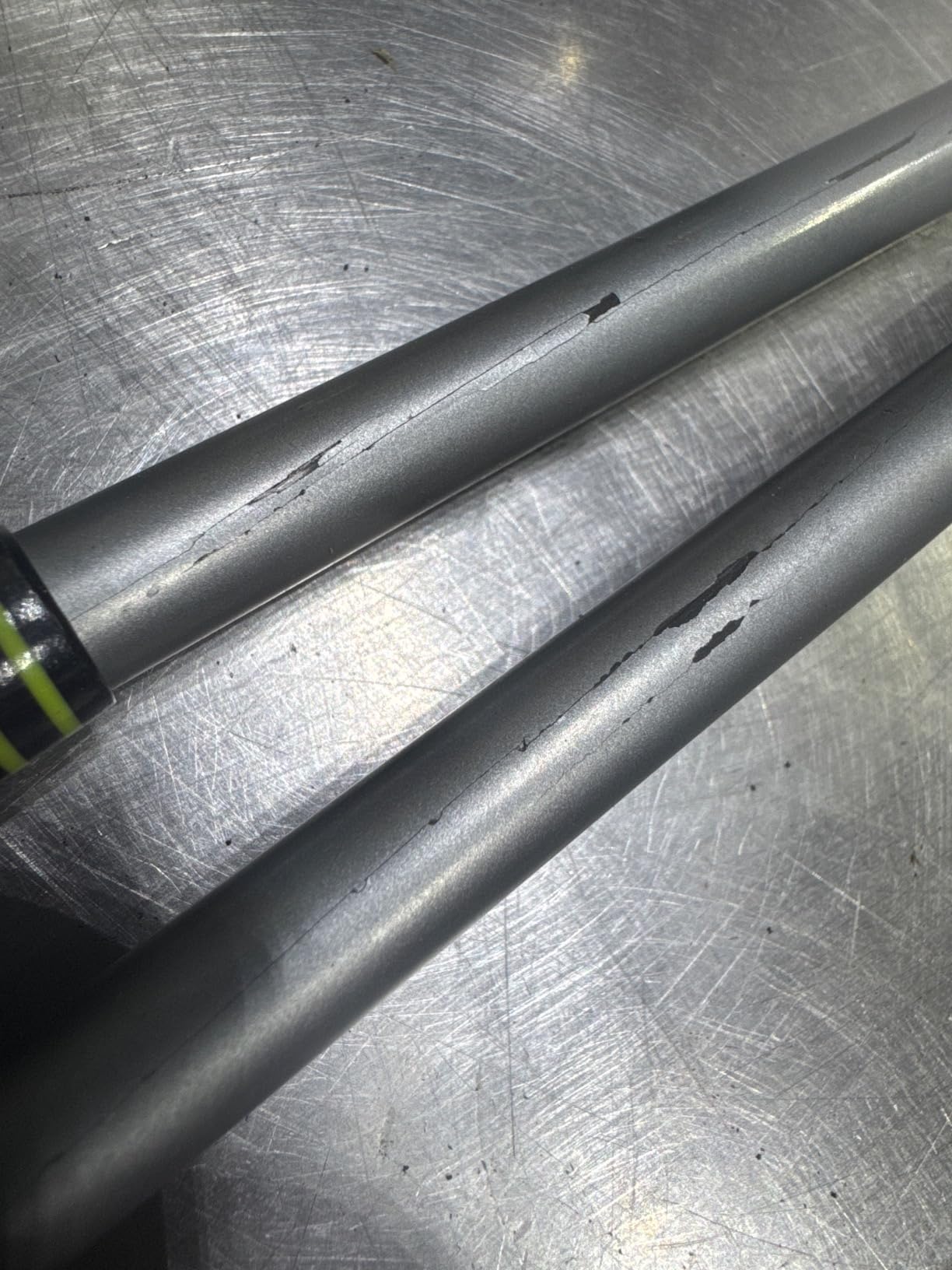
The set configuration is 5 iron through pitching wedge plus a gap wedge at 50 degrees, seven clubs total. Lofting runs 23.5 degrees in the 5 iron up to 50 in the gap wedge, with a 45 degree pitching wedge in between, which gives you a full complement of scoring clubs.
Precision cast stainless steel heads, Orlimar 95 steel shafts and a custom velvet grip round out a build closer to a traditional forged construction than the spec sheet implies. The 4.2 rating across 134 reviews sits mid-group, with 57 percent five-star and 28 percent four-star.
Who the Intercept SL suits
This is for the mid handicapper who is actively trying to make one swing and wants every club to feel the same. If you miss the clubface on the 7 iron and the 5 iron and feel the difference, a single-length set is a genuine answer rather than a gimmick.
It also suits shorter golfers who are tired of a short 5 iron and a long 9 iron in the same set. Standard 37 inch length suits a good share of the mid range, and a taller player would need to look elsewhere.
Where the Intercept SL falls short
The warranty is one year against manufacturer defects, which is among the shortest covers in this group. Check the clubheads and shafts carefully on arrival, and photograph the set before you put it away.
Uniform single length is genuinely less familiar than a stepped set, and some buyers report needing time to adjust to the feel. This set also carries the highest share of one-star ratings among the sets with a meaningful review base, so expect a small tail of durability complaints.
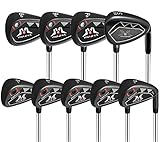
6. MAZEL 9 Piece Iron Set – Best for Ball Speed
MAZEL Men Golf Iron Set (9PCS) or 1,2,3,4,5,6,7,8,9,Pitching Wedge,Sand Wedge with Steel Shafts for Right Handed Golfers (3-SW (9PCS))
9 clubs 3 through sand wedge
Stiff flex steel shaft
Hollow body 3-7 irons
2 month warranty
Pros
- Hollow body 3-7 irons deliver high ball speed and forgiveness
- Large face with deep CNC grooves improves accuracy
- Screw in the back drops the center of gravity for easy launch
- Loft angle printed on every clubhead
Cons
- Long irons feel heavy for slower swing speeds
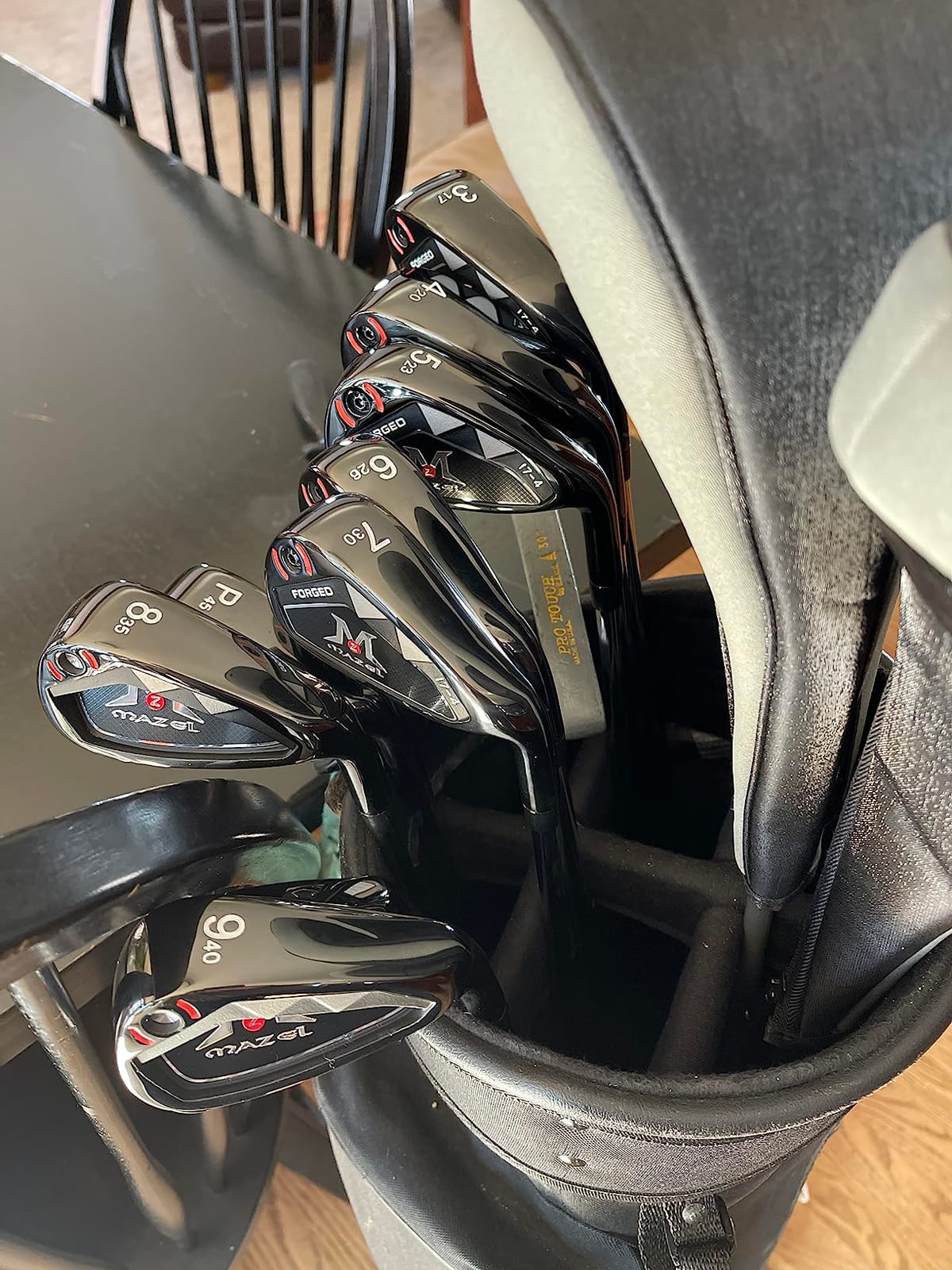
- Black coating scratches easily
- Only a two month warranty
- Set ends in a 56 degree sand wedge rather than a true gap wedge
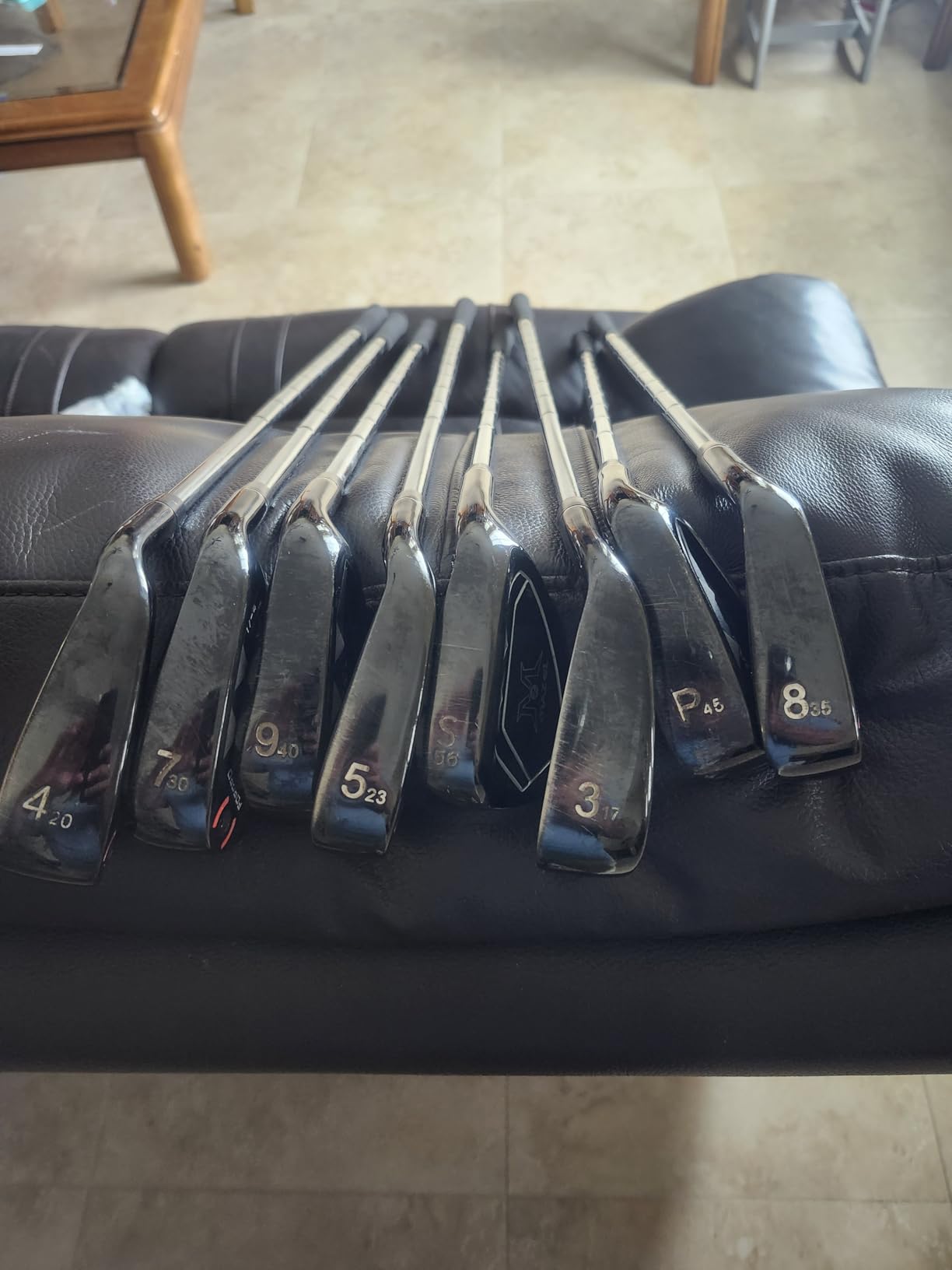
The MAZEL set is the speed play in this roundup. The 3 through 7 irons use hollow body construction, which is the design language premium manufacturers use to squeeze ball speed out of a small face, and at this level of build it is unusual. Owners upgrading from beginner clubs describe the jump in ball speed as the first thing they notice.
Deep CNC grooves across a larger hitting face improve both accuracy and distance. An extra screw in the back cavity lowers the center of gravity for high launch with control, which is a sensible combination for a golfer who struggles to get height.
Feedback is handled with a rubber grip and stainless steel construction that absorbs vibration. The loft angle is printed on every clubhead, and multiple configuration options are offered, so you can pick the set length that matches your current bag rather than taking what comes.
At 4.92 kilograms the set is heavy, and 64 percent of reviews are five-star with a clear cluster of criticism aimed at weight rather than performance. For scale, the BombTech 4.0 in this roundup is listed at 3.3 kilograms, so the difference in feel at address is obvious.
Who the MAZEL set suits
This suits a mid handicapper with enough clubhead speed to drive a hollow body head who wants a 3 iron and a 4 iron in the bag. The full 3 through 9 plus pitching wedge and sand wedge configuration is the broadest scoring coverage here without a hybrid.
It also works for anyone moving up from a beginner set who is excited by a more advanced look and wants the aggressive hollow body aesthetic. Just be honest about your swing speed first.
Where the MAZEL set falls short
Weight is the clear issue. Reviewers report the long irons feel heavy for slower swing speeds, and that feedback is exactly the right signal. A mid handicapper in the 16 to 20 range may be better served by a set that starts at 5 iron.
The black coating scratches easily at the club bottom, the warranty runs two months, and the set finishes at a 56 degree sand wedge rather than a true gap wedge. Treat this as a set to add to, not a complete bag on its own.
7. Callaway Paradym Ai Smoke Iron Set – Best for a Tour-Style Look
Callaway Golf Paradym AI Smoke Iron Set (Right Hand, 5-PW, Steel, Regular)
5-PW
Regular flex steel shaft
Hollow body chrome head
2 year warranty
Pros
- AI Smart Face tuned to balance distance control and precision
- Hollow body construction in a modern chrome design
- Reviewers praise the soft feel and the look in the bag
- 12 degree bounce suits a normal attack angle
Cons
- Several reports of arriving sets with missing clubs or used condition
- Some reports of shafts or heads breaking easily
- Weak brand-level support response on defective sets
The Paradym Ai Smoke is the one to buy when the look at address matters as much as the numbers. Reviewers single out the contemporary chrome finish and hollow body profile as the reason they picked it, and the AI Smart Face is tuned to balance distance, control and precision rather than chasing raw speed.
Feel is another point owners mention positively, and the 12 degree bounce is a sensible default for a mid handicapper with a normal downward attack angle. The stepped shaft lengths run from 39 inches in the 5 iron down to 35.5 inches in the pitching wedge, a 5-PW configuration.
We want to be straight about the evidence here. At 25 ratings this is the thinnest sample in the roundup, and the distribution is wider than the rest: 69 percent five-star but also 12 percent one-star and 11 percent two-star. Almost all of the criticism is about fulfilment and durability rather than how the clubs play.
Who the Paradym Ai Smoke suits
This suits the mid handicapper who wants a modern tour-style address without moving into a pure players iron. It is a sensible bridge option for a 10 to 14 player who is tired of chunky cavity backs and is not yet ready for a blade.
Which is the most generous cover in this roundup, matched only by the TaylorMade and Callaway sets that also run two years.
Where the Paradym Ai Smoke falls short
The fulfilment complaints are the thing to plan around. Several owners reported sets arriving with missing clubs or in used condition, and some reported shafts or heads breaking easily. Customer support response on defective sets is described as weak, so document any problem on arrival.
With 25 ratings there is not enough long-term feedback to judge durability, and the rating is the lowest in this group. If you want the Callaway forgiveness story with more evidence behind it, the Mavrik 22 is the safer version of the same idea.
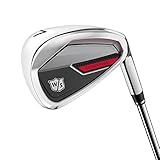
8. Wilson Dynapower Iron Set – Best for 10-14 Handicap Golfers
Wilson Dynapower Men’s Steel Golf Irons – Right Hand, Regular, 5-PW, GW
5 through gap wedge
Regular flex steel shaft
Cavity back head
1 year warranty
Pros
- Face engineered for ball speed where 10 plus handicap golfers actually strike
- High MOI and low CG head for forgiveness and launch
- Pleasing top line with optimal offset and smooth hosel
- Includes a gap wedge for full 5-GW coverage
Cons
- Small review base of 21 ratings limits long term feedback
- Only a one year limited warranty
The Wilson Dynapower is aimed at a specific number, and that number is you. The face engineering is built around where golfers above a 10 handicap actually make contact, across the center and toe, which is where most of the ball is struck in a normal round. A 4.6 rating on a small sample suggests the design lands.
High moment of inertia with a low center of gravity gives forgiveness on off-center hits and a higher launch with steeper descent angles. For a 10 to 14 handicap that is the exact trade you want, more height on the approach and more stability when the contact drifts.
The head shape is the surprise, because it is player-inspired with a pleasing top line, sensible offset and a smooth hosel. Sets in this category usually look like medical equipment, and this one does not. The set runs 5 iron through gap wedge, seven clubs.
Who the Dynapower suits
This suits the lower end of the mid band, the 10 to 14 handicap who wants a fuller players-distance look and real forgiveness numbers. It is also a good transition set for a single digit player who is starting to miss too much on mishits.
The full 5 through gap wedge coverage is a genuine advantage, and if you play a lot of short approaches you will not need to add a wedge immediately. Steel shafts in regular flex suit a moderate swing speed.
Where the Dynapower falls short
The sample is small at 21 ratings, so there is limited long-term owner feedback to draw on. It is the lowest review base of any set with a 4.6 rating, and that combination deserves a little caution from a buyer.
You will still need a gap wedge and a sand wedge to complete the bag, and you will be replacing grips on a regular schedule whichever set you buy.
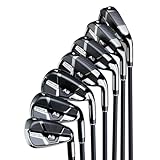
9. Precise A9 Iron Set – Best for Graphite Shafts
Precise A9 – Men’s Golf Iron Set – Regular Size, Regular
5 through sand wedge
Project X Cypher graphite
Regular flex and size
1 year warranty
Pros
- Project X Cypher graphite shafts promote faster swing speed and higher launch
- Dual-compound grips with a firm top section and softer bottom
- 5-SW configuration covers scoring clubs to a sand wedge
- Regular flex and size suits a wide range of golfers
Cons
- Small review base of 19 ratings
- Graphite is not for golfers who prefer the feel of steel
- Only a one year warranty against defects and breakage
The Precise A9 is here for one reason, and that reason is shaft weight. Project X Cypher graphite shafts are light enough to help a slower swing generate clubhead speed and launch higher, and a mid handicapper who struggles to get the ball airborne is exactly who that suits. The lightweight build also reduces fatigue over 18 holes.
Dual-compound grips split the job, with a firmer upper section for control and torque resistance and a softer lower section for feedback. The configuration is 5 iron through sand wedge, seven clubs, so you have a full complement of scoring clubs without adding anything.
At 4.2 across 19 ratings, with 59 percent five-star and 27 percent four-star, the feedback is positive but young. This is a recent listing and the performance data has not had time to build up, which is worth factoring into how much weight you give any single review.
Who the A9 suits
This suits a mid handicapper with a below-average swing speed who normally avoids graphite because of the sound, and it is one of the few sets here offered in regular flex and regular size without further options to sort through.
It also works for a player who wants a full 5 through sand wedge set in a lighter overall package. Golfers with a fast tempo and a preference for steel feedback should pass.
Where the A9 falls short
The review base is 19 ratings, which is not enough to make confident long-term claims about durability. Treat the specification as the reason to buy and the reviews as early rather than settled evidence.
Graphite itself is the main limitation for some golfers, who simply do not like the feel. The warranty also runs one year against defects and breakage, which is shorter than the two year terms offered by the TaylorMade and Callaway sets in this roundup.
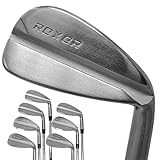
10. Roxor RXR Blade Iron Set – Best for Shot Shaping
Roxor Golf RXR – Golf Full Iron Sets for Men – Regular Flex – 4,5,6,7,8,9 Pitching Wedge – Right Handed – Steel Shaft – New Superior Golf Club Iron Set Blades – Standard Length
4 through PW
Blade construction
Alloy steel shafts
1.5 year warranty
Pros
- Blade construction allows draws and fades on demand
- 431 stainless steel heads with vibration dampening inserts
- Thin to medium top line and minimal offset
- Owners report longer and straighter distance than cavity back sets
Cons
- Blades are less forgiving than cavity backs
- Set stops at pitching wedge with no gap or sand wedge
- Distance gaps in the 8 9 and PW for some players
- Generic supplied grips that most owners replace
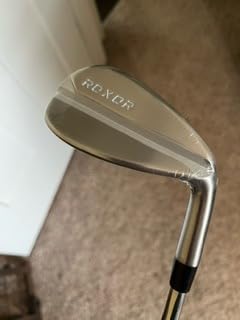
We put a blade in the roundup deliberately, and this is the one to look at. The Roxor RXR carries the highest owner rating of the ten sets we examined at 4.8, with 89 percent five-star and no one or two-star ratings, and owners comparing it against TaylorMade and Ping blades report equal or better performance. All of that on a 19 rating base, which is the qualification that goes with it.
Blade construction is the point. Direct feedback and the ability to hit a draw or a fade on command are the reason a mid handicapper moves to a blade, and this is the only set here that gives you that. The 431 stainless steel heads carry vibration dampening inserts for a solid, well-damped feel rather than a harsh one.
The look is players-correct, with a thin to medium top line and minimal offset. Owners report longer and straighter distance than the cavity back game improvement sets they came from, which fits the profile of a player striking it well. The set runs 4 iron through pitching wedge in alloy steel.
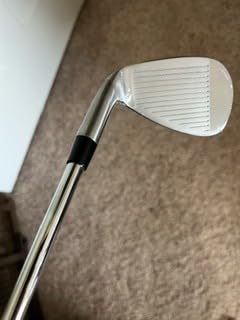
Blades suit a mid handicapper who is already making contact, and this is the set that rewards a good strike with control rather than distance. It is a real look change and a real behaviour change, so treat the first month as an adjustment.
Who the RXR suits
This suits a mid handicapper at the sharp end, around 8 to 12, who already makes contact and wants to shape the ball. If you are chasing consistency, this is the wrong end of the spectrum. If you are chasing control and a tour shape at address, it is the right one.
It also suits a player moving from forgiving irons to something with more feedback, provided you are prepared for less help on a poor strike. The build is hand assembled and the reviews repeatedly praise the feel at impact.
Where the RXR falls short
Blades are simply less forgiving than game improvement cavity backs, and a mid handicapper above 14 will lose more than gain. The 4 iron in this set is also a demanding club for most players in the band.
The set stops at pitching wedge with no gap or sand wedge, some players report distance gaps through the 8, 9 and PW, and the supplied grips are generic ones most owners plan to replace. The warranty runs one and a half years.
How to Choose Irons for Your Handicap in 2026
Category language is what trips most buyers up, so start there rather than with a brand. Three categories cover almost every mid handicapper, and choosing between them takes less thought than the marketing suggests.
Super game improvement irons are built for 25-plus handicappers. They have wide soles, high lofts and very low center of gravity, and they will help you make contact, but the head is large and the shape is not what a 12 to 18 player usually wants to look at. Golfers who resent being handed an obviously beginner set consistently say so in their reviews, and that reaction is the reason this category sits lower on the list.
Game improvement irons are the right call for the 16 to 20 end of the band. A moderate cavity back with a low center of gravity gives you height and stability on every club in the bag without shouting about it at address. The Callaway Mavrik 22 is the clearest example in this roundup.
Players distance irons are the sweet spot for 10 to 18. A compact head, a thin but flexible face, and enough perimeter weighting to keep the mishit from leaving the pattern. The TaylorMade SIM2 Max and the Wilson Dynapower both sit here, and this is the category we would point most of you toward.
Players irons are blades and muscle-back shapes. They reward a strike and give you control, but forgiveness drops away sharply. Only consider one if you are at 12 or better and already consistent, which is why the Roxor RXR sits at number 10 here despite the highest rating in the group.
Shaft selection: steel, graphite and weight
Shaft fit decides whether a set works, and it is the part of a purchase that most buyers skip. Steel shafts in regular flex are the safe default for a mid handicapper with a moderate tempo, and nine of the ten sets here are steel. That is not a coincidence, it is the average swing speed of the band.
Graphite suits a slower tempo or a player who needs help getting the ball airborne. The Precise A9 is the only graphite set in this roundup, which is itself a signal that most mid handicappers do not need it. If your flight is already high and you want more control, graphite will not help.
Length matters more than flex. Golfers are routinely fitted longer and heavier than they think they need, and any set that lists regular flex as the only option should be weighed before you commit. A golf simulator session or a launch monitor fitting will settle length, weight and lie in one visit, and it costs far less than a set you regret.
How many irons should a mid handicapper carry
Most mid handicappers should carry a 5 iron through pitching wedge, a 4 or 3 hybrid for the long range, and a gap wedge and sand wedge to finish. That is the setup that suits a 10 to 18 player better than almost anything else on the market.
Take the 3 and 4 irons out. Almost no mid handicapper contacts them well enough to score with them, and the hybrid gives the same yardage with a much easier strike. A full 14 club bag then looks like this: driver, 3 wood or hybrid, 5 through 9 iron, pitching wedge, two more wedges, putter, and a chipper or hybrid you actually use.
Add a lofted hybrid at 18 to 21 degrees to reach the distance a 4 iron used to cover, and a gap wedge in the 50 to 54 degree range so you are not using a pitching wedge for every mid-range shot. Four wedges is generous for this band, and two plus the pitching wedge is a workable three.
Used irons: what to inspect before you buy
Used is where most of the value sits, and it is the top question in this niche. The condition of a used set matters far more to performance than buyers expect, and a cheap set with worn grooves will not hold a green.
Check groove depth first. Worn grooves cost you greenside spin, and a cheap set with shallow grooves will not hold a green. Then check the face for grooves worn to the toe or heel, which is the single clearest sign of a set that has been hit into a hard range surface for years.
Look at shaft bend by holding the club at the hosel and sighting down the shaft. A kink anywhere means the shaft is dead and will not track properly. Check the grips, the face condition around the toe, and whether the set is full length, because half sets and missing clubs are the most common disappointment.
Also check lead and trail set consistency. A set with a mismatched gap between clubs is the reason some used sets feel unpredictable, and it is the one flaw a fitter can fix but a buyer can easily miss. If you can, hit a few shots from a range before committing.
Pairing wedges with your irons
Wedges are where a mid-to-high handicap gains the most, and most players underweight them. A gap wedge in the 50 to 54 degree range plus a sand wedge is the minimum pairing, and it stops you using your pitching wedge for shots it was not built for.
Match the loft gap to your set rather than the brand. If your 9 iron is 40 degrees, a pitching wedge at 45 and a gap wedge at 50 leaves a clean five degree step, which is what keeps the ball from flying too far. Loft the gap wedge weaker than that and you will be playing a wedge that has to hop, which is a stroke you do not need to give away.
Pick one wedge you trust and leave the other at home. A mid handicapper with two wedges plays them far better than one with four, because the shots come up more often and get practised.
Should a mid handicapper get fitted
Yes, and this is the least argued point in the whole category. Fitting is the one piece of equipment advice that buyers in this handicap band consistently converge on, and the reason is simple: shaft length and weight change the strike far more than the head model does.
Expect to spend a session and leave with a swing that is a little more consistent than the one you walked in with. Bring your current set and your gapping, and ask what the fitter changed and why. The number that matters most is not the head, it is the length and the weight you leave with.
Other tools help you narrow things before you get there. A rangefinder tells you how far you actually carry each club, which is the number every carry figure in this article is built on, and a GPS watch helps you track the same clubs on the course while you adjust.
Frequently Asked Questions
How far should a mid handicap golfer hit a 7 iron?
Most golfers between a 10 and 20 handicap carry a 7 iron between 150 and 175 yards, with 10 to 15 handicap players usually sitting at the top of that range and 15 to 20 players at the bottom. Reviewers of modern game improvement and players distance irons commonly report 10 to 20 yards more carry than older sets. Measure your own number with a rangefinder rather than guessing, then recalibrate after your new set.
What irons are easiest to hit for mid handicappers?
The easiest irons in this roundup are the Callaway Mavrik 22, the Ram Golf EZ3 and the BombTech Golf 4.0. All three use a cavity back head with weight pushed to the perimeter, so off-center strikes stay closer to the intended line. Reviewers of each set specifically describe heel and toe mishits as less costly than with their previous irons.
What irons should a 20 handicap play?
A 20 handicap should play a forgiving game improvement iron with a moderate cavity back head and a low center of gravity, such as the Callaway Mavrik 22. Skip the 3 and 4 irons and use a lofted hybrid for the long shots. Prioritize launch and a large sweet spot over workability, and pair the set with a gap wedge so you have a proper mid-range option.
What are the best used irons for a mid handicapper?
Look for a set with deep grooves, an unworn toe and heel, straight shafts and a consistent loft pattern. Ping G30, TaylorMade Burner 2.0 and TaylorMade R7 sets come up most often as value picks in the 20 handicap range. Check the shaft for kinks by sighting down it, confirm the set is full length, and regrip before you play a full round.
Should mid handicappers get fitted for irons?
Yes, and it is the one step most buyers skip. Shaft length and weight change your strike more than the head model, and a fitting settles length, weight and lie in a single session. Bring your current irons and your gapping so the fitter can see what you are trying to fix, and expect to leave with a more consistent strike even if the set you buy is similar to your current one.
The Best Golf Irons for Mid Handicappers in 2026
The best golf irons for mid handicappers come down to one question: how much forgiveness do you need before workability becomes the priority. If you are between 10 and 18, the TaylorMade SIM2 Max is our pick, because the low center of gravity launches the ball and the Thru-Slot Speed Pocket keeps a mishit from becoming a lost stroke.
At the forgiving end of the band, the Callaway Mavrik 22 is the stronger buy, and the Ram Golf EZ3 covers the same ground while handing you a free 4 hybrid. Higher handicappers get the most from that cavity back forgiveness. Lower ones should look at the Wilson Dynapower for shape and launch, and only consider the Roxor RXR blade once your contact is genuinely consistent.
Whatever you choose, get the shaft weighed before you order and check the fit. That single hour will do more for your score than the model name on the sole. Updated for 2026, with current model years only.