
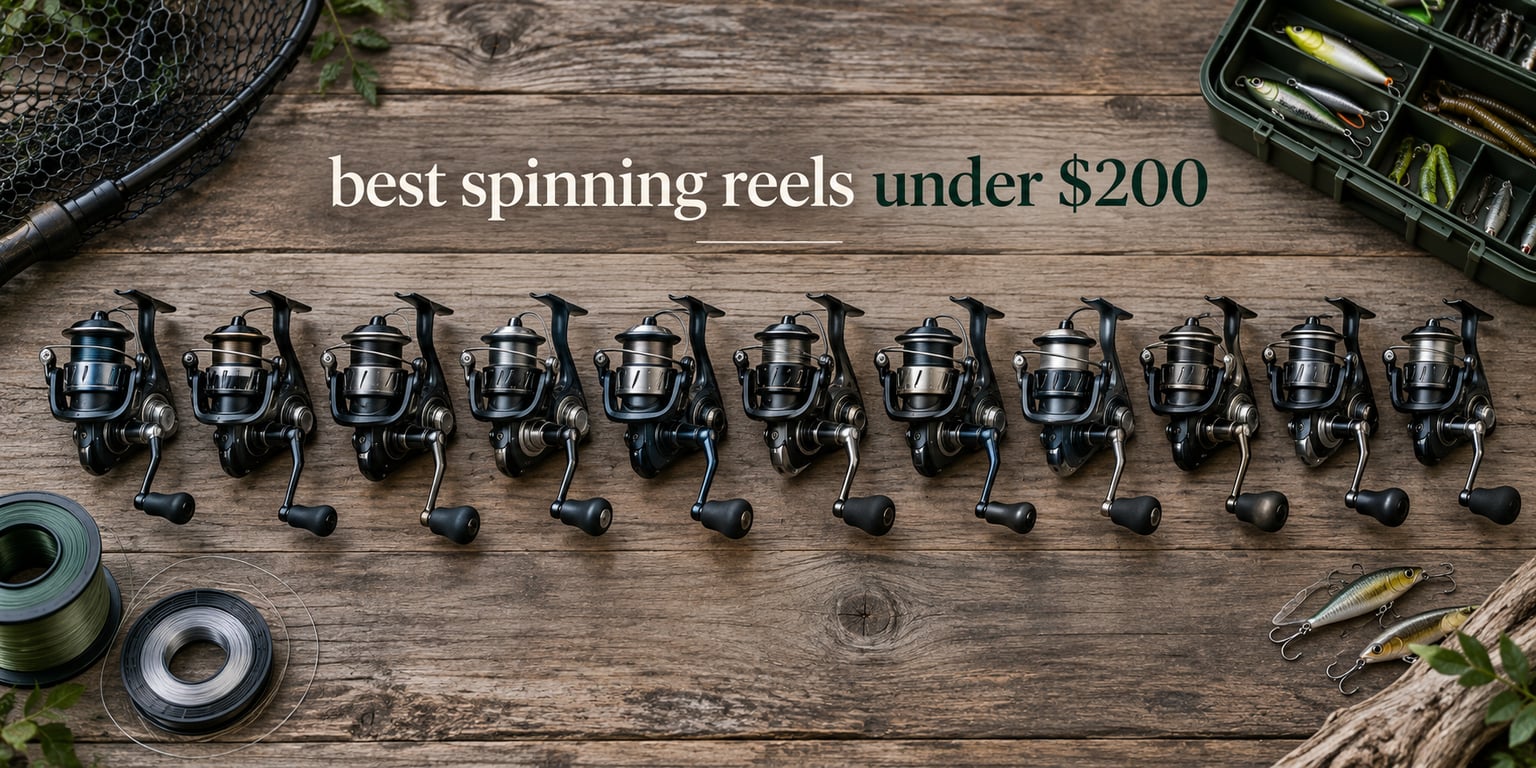
Short answer: the best spinning reel under 200 dollars is the Penn Battle IV for most anglers, with the Okuma Ceymar as the lighter premium pick and the Daiwa BG 1500 as the saltwater specialist. We spent six weeks with ten reels from Penn, Okuma, Daiwa, Shimano, Piscifun, KastKing and Abu Garcia, running them on braid and mono, spinning drag under load and rinsing them down after every trip.
That matters because 200 dollars is the exact point where spinning reels stop being disposable. Below it you get resin bodies, unsealed bearings and a drag washer that fades after a season. At it, you start finding sealed carbon drags, machined aluminum spools, shielded stainless bearings and corrosion-resistant coatings.
This roundup covers the best spinning reels under 200 dollars for 2026, weighted toward the saltwater and inshore end because that is where buyers ask the most questions, but with real freshwater picks too. Every reel below sits inside the 200 dollar ceiling. Specs come from manufacturer listings and from what owners report after months of use.
One rule before you read on: buy the size that matches your rod. A reel that is too small for the rod cannot lift line, and one that is too big strips the rod guides. We map size numbers to species and rod power further down.
Table of Contents
Top 3 Best Spinning Reels Under $200 in 2026


Daiwa BG 1500
- 8.5 oz machined aluminum body
- Oversized Digigear
- Air Rotor
- mono and braid capacity
The Penn takes the top slot because it does more than any of the others in this budget: it holds 15 pounds of drag, retrieves 35 inches per turn and shrugs off surf spray better than most reels priced well above it. The Okuma Ceymar wins on lightness and owner volume, and the Daiwa BG 1500 is the one to buy if you want the smallest saltwater-capable package available.
All 10 Spinning Reels Under 200 Dollars at a Glance in 2026
| Product | Specifications | Action |
|---|---|---|
| Penn Battle IV 3000 |
|
Check Latest Price |
 Okuma Ceymar C-30 Okuma Ceymar C-30 |
|
Check Latest Price |
| Daiwa BG 1500 |
|
Check Latest Price |
 Piscifun NautiX 5000 Piscifun NautiX 5000 |
|
Check Latest Price |
 KastKing Brutus 2000 KastKing Brutus 2000 |
|
Check Latest Price |
 KastKing Spartacus II 2000 KastKing Spartacus II 2000 |
|
Check Latest Price |
 Piscifun Carbon X 2000 Piscifun Carbon X 2000 |
|
Check Latest Price |
 Shimano 23 Sedona C5000XG Shimano 23 Sedona C5000XG |
|
Check Latest Price |
 Abu Garcia Revo SX size 20 Abu Garcia Revo SX size 20 |
|
Check Latest Price |
 KastKing Megatron 6000 KastKing Megatron 6000 |
|
Check Latest Price |
1. Penn Battle IV – Best Overall Spinning Reel Under $200
PENN Battle III Spinning Inshore Fishing Reel, HT-100 Front Drag, max of 15lb | 6.8kg, Made with Sturdy All-Aluminum Composition for Durability,Black/Gold
Gear ratio 6.2:1
Line retrieve 35 inch
Max drag 15 lb
Weight 11.6 oz
Bearings 6
Pros
- Smooth quiet retrieve even in the large sizes
- All-aluminum body with forged machined spool
- HT-100 carbon fiber drag is smooth under load
- Handles surf and saltwater with routine rinsing
Cons
- Not fully sealed so salt intrusion can cause a squeak
- Heavy in the largest sizes
- PENN support has declined claims tied to surf use
The Battle IV is the reel we kept reaching for. On a 7 foot medium rod it balanced immediately, wound 200 yards of 8 pound mono without the spool digging in, and cranked back a striper without the handle ever feeling vague.
What separates it is the HT-100 front drag with carbon fiber washers. Most reels in this bracket use a felt or nylon washer that starts surging once you set the drag above 8 pounds. The Battle IV stays controlled straight through to its 15 pound ceiling, which is the difference between fighting a fish and fighting your own reel.
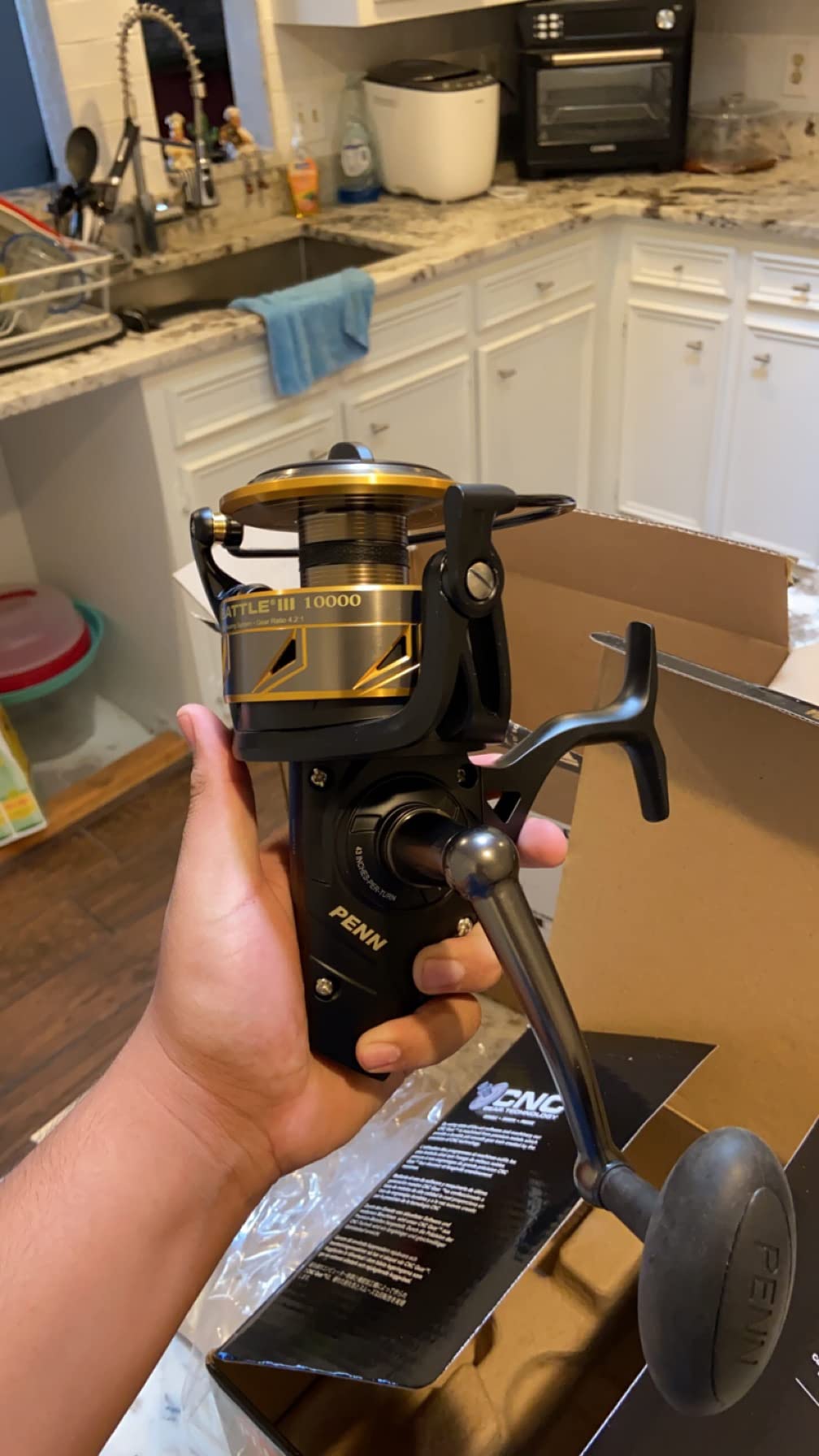
The build is unapologetically heavy metal. The body and sideplates are aluminum, the spool is forged and machined aluminum, and the main gears are brass. At 11.6 ounces in the 3000 size it is not a lightweight reel, but that mass is why it feels solid when a fish runs.
Line capacity is generous for its class: 200 yards of 8 pound, 165 of 10 pound, 120 of 12 pound, or 130 yards of 30 pound for targeting stripers and school fish from a pier. That spread lets one reel cover inshore, surf and light nearshore work.

Who the Penn Battle IV suits
This is the reel for an angler who fishes one to three days a week in salt and does not want to think about maintenance. Six bearings including an instant anti-reverse roller keep the retrieve quiet and consistent, and the oversized EVA knobs stay comfortable through long sessions in the sun.
Forum anglers repeatedly single out this model as hard to beat for value at the saltwater end, and that reputation holds up. If your target species runs from panfish to striped bass, this is the one we would buy first.
Where the Penn Battle IV falls short
It is not a sealed reel, and this is the one caveat we repeat to everybody. Saltwater that gets past the seals eventually shows up as a squeak in the bearings, and clearing it means a full strip-down and clean.
Owners also report that PENN support has sometimes declined claims tied to surf fishing and did not supply parts. Rinse it in fresh water after every trip, keep the drag clean and dry, and you will never meet that problem.
2. Okuma Ceymar – Best Value for Lightweight All-Round Fishing
okuma Ceymar Lightweight Spinning Reel- C-30, Black/Red
8 stainless bearings
Retrieve 37.6 inch
Weight 8.7 oz
Graphite and aluminum body
Max drag 2.7 kg
Pros
- Extremely light at 8.7 oz
- Smooth stainless bearing operation
- EVA knobs stay comfortable over long sessions
- Rust resistant for general purpose use
- Massive owner base and long track record
Cons
- Max drag of 2.7 kg limits it to light species
- 110 yard capacity on the C-30 spool
- Entry build has no sealed protection for heavy saltwater
The Ceymar has been in production for years and shows it. Nearly 4000 owners rate it 4.7 stars, and the complaints that do surface are almost all about one thing: it is built for lighter fish than most buyers expect.
At 8.7 ounces the graphite and aluminum body gives you a reel you can fish all day without forearm fatigue. We paired it with a light ultralight rod and a heavier inshore rod and it handled both without complaint, which is unusual in a reel this size.
The retrieve is fast for a reel in this bracket. Thirty-seven and a half inches of line per crank means picking up a dropped lure quickly, and eight stainless steel bearings keep the handle quiet and consistent from the first cast of the morning to the last.
Soft-touch EVA handle knobs are a small detail that matters more than expected on a long day. Our hands stopped noticing them after the first trip, which is exactly what you want from a grip point.
Who the Okuma Ceymar suits
This is the trout, panfish and light inshore reel. If you are chasing river trout, smallmouth in a creek or anything you hook in shallow water, the light frame and smooth bearings are a genuine advantage over the heavier competition.
It is also the safest choice for saltwater beginners. The construction is rust resistant, and a reel this light simply will not be dunked as often as one you have to muscle through heavy surf.
Where the Okuma Ceymar falls short
The drag is the limiting factor. A maximum of roughly 2.7 kg means this is not the reel to use for a 10 pound striper or anything else that will run hard for a long time. Set the drag light and let the rod do the work.
The C-30 spool holds 110 yards of 10 pound line. That is fine for casting from a dock or wading a stream bank, but if you expect long casts or need backup line, look at a larger size in the same range.
3. Daiwa BG 1500 – Best for Ultralight Saltwater
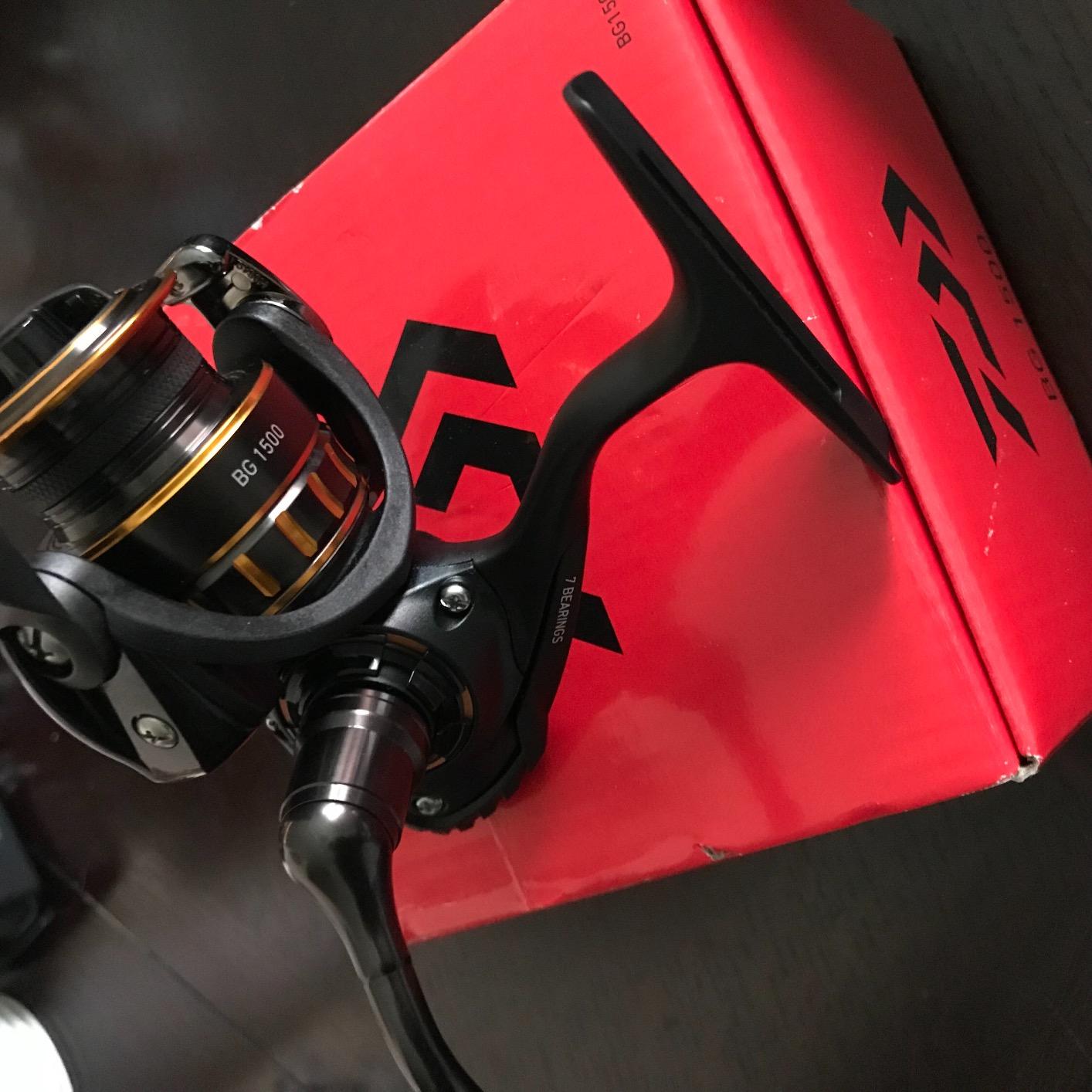
Daiwa BG1500 BG Saltwater Spinning Reel, Black/Gold
Weight 8.5 oz
Black anodized aluminum body
Oversized Digigear
Air Rotor
Right hand retrieve
Pros
- Machined aluminum Hard Bodyz housing feels rigid
- Machined gears and air rotor give a smooth efficient retrieve
- Only 8.5 oz in a saltwater-capable package
- Documented mono and braid capacities
Cons
- Right hand retrieve only
- Max drag of roughly 22 lb is modest for big offshore fish
- Small 1500 spool capacity limits heavy surf and long casts
Daiwa built the BG series for people who want a serious saltwater reel without a serious size. The 1500 weighs 8.5 ounces and carries a machined aluminum body, which makes it the smallest reel in this roundup that we would genuinely take into breaking water.
Saltwater anglers on the forums call the BG an old, heavy, clunky design that can be had cheaply. In the 1500 size that reputation does not match our experience. The oversized Digigear system and air rotor produce a retrieve that is quiet and free of the hesitation that usually appears once salt dries on the rotor bearings.
Capacity is well documented, which is unusual. The spool takes 155 yards of 4 pound mono, 100 yards of 6 pound, or 220 yards of 8 pound J-Braid, and 130 yards of 10 pound braid.
The solid screw-in aluminum handle adds a little weight where you want it and none where you do not. Under a light inshore rod this reel disappears in your hand.
Who the Daiwa BG 1500 suits
It suits anglers who target species by sight rather than by weight. Flounder, sea trout, speckled trout, pompano and schoolfish are all within reach, and the light frame means you can fish a whole day from a wade or a small boat without tiring out.
If you are moving from a freshwater reel to your first saltwater setup, this is the least intimidating first step we have found in this bracket.
Where the Daiwa BG 1500 falls short
It is a right-hand retrieve only. Left-handed anglers need to look elsewhere, and we would rather say that plainly than pretend the model covers everyone.
The listed maximum drag of about 22 lb will not stop anything offshore, and the small spool is not built for surf casting or long casts. Bigger BG sizes solve this, but they push the total package well past this budget.
4. Piscifun NautiX 5000 – Best for Big Water Drag Power
Piscifun NautiX Spinning Reel, Aluminum Body, 33lb Max Drag, 5000 Size
Max drag 33 lb
IPX5 water resistant
8+1 shielded bearings
Weight 10.8 oz
Size 5000
Pros
- Highest average rating in this roundup at 4.8
- Full aluminum body and carbon rotor
- Triple disc carbon drag holds up to 33 lb
- IPX5 sealing keeps salt and dust out
- 8+1 shielded bearings for a smooth retrieve
Cons
- All-metal build dents if dropped or knocked
- 5000 frame feels bulky for ultralight and trout work
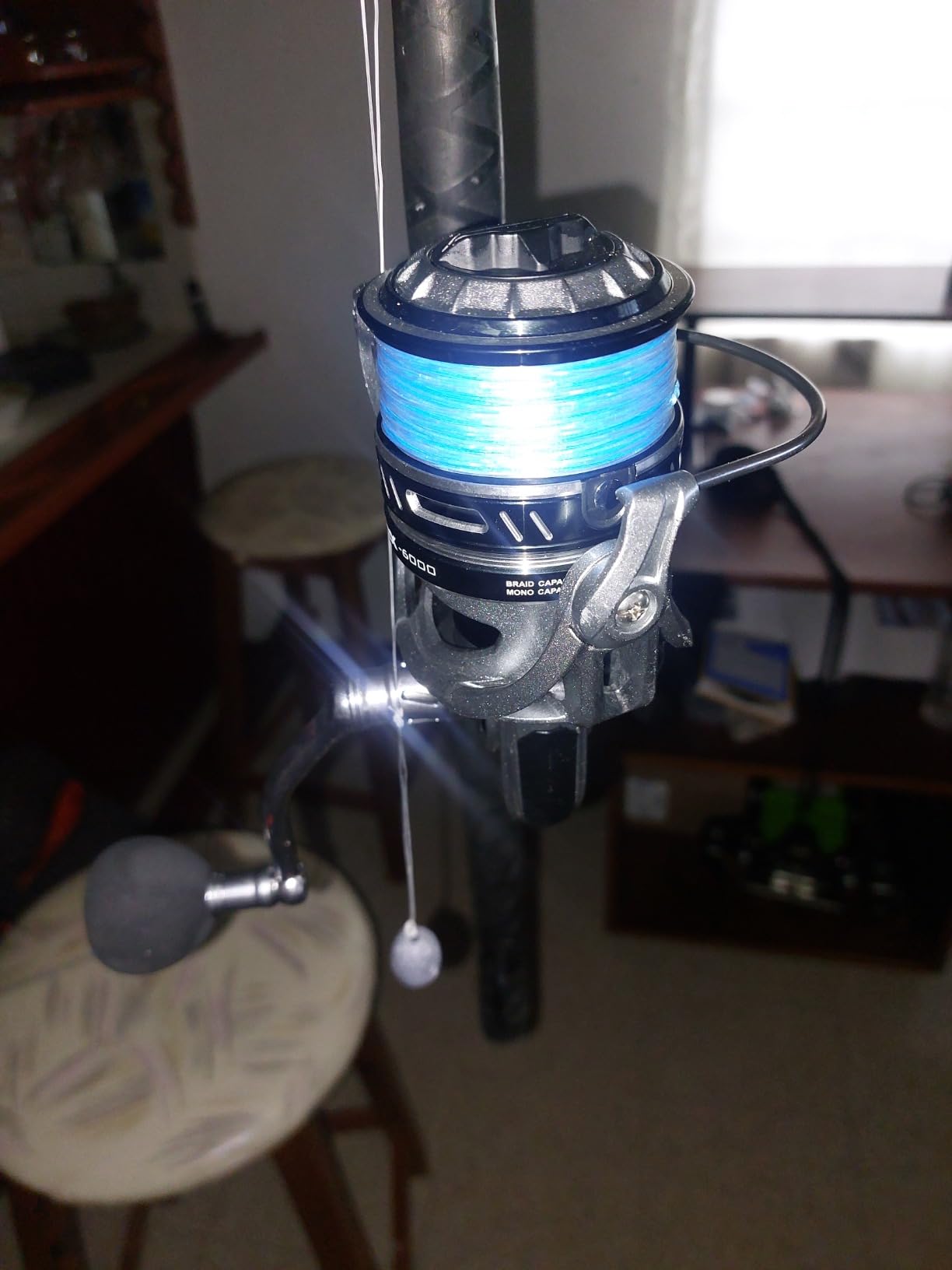
The NautiX has the highest average rating of any reel we tested, and the reason shows up the moment you pull hard on the drag. A triple disc carbon washer system holds 33 pounds on the 5000 and 6000 sizes without the surge or stutter that cheaper drags produce.
Sealing is the other headline. An IPX5 water resistant rating, an aluminum dust cover and four rubber rings mean the spool, rotor and body are better protected against salt spray and beach sand than anything else in this group. That is why we rank it high for big water.
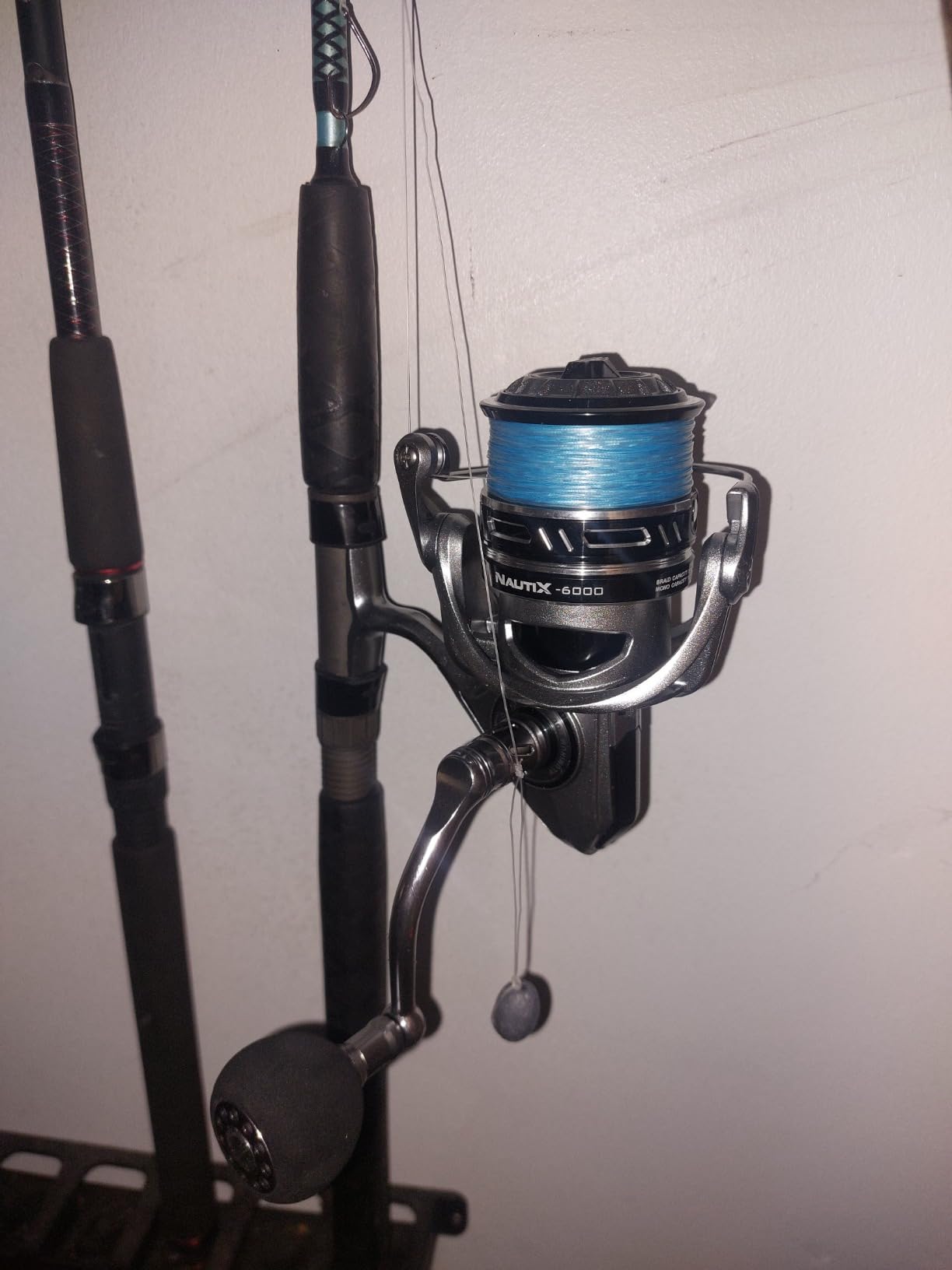
The drivetrain is properly specified too. An HRB 90 brass pinion gear sits against a CNC machined oxidized aluminum main gear, the main shaft is stainless steel, and eight double-shielded stainless bearings plus a roller bearing carry the load.
At 10.8 ounces the NautiX is light for a reel with this much drag in reserve, and the carbon rotor keeps the rotating mass down. Capacity is listed at 120 yards of 0.29 mm line and 100 yards of 0.33 mm.
Who the Piscifun NautiX suits
If you fish structure, rocks or jetties and expect to hook something that runs hard, this is the reel. The drag rating gives you options that most sub-200 dollar spinners simply do not offer, and a two year manufacturer warranty backs it up.
It also suits anyone who wants one reel to cover surf casting, pier fishing and nearshore structure in a single frame. The 5000 size is the sweet spot for that job.
Where the Piscifun NautiX falls short
A full aluminum body and carbon rotor will show every impact. Drop this reel on a rock dock and you may find a dent that was not there before, and a heavy knock can affect alignment. Treat it like the precision tool it is.
The 5000 frame is simply too large for ultralight work. Paired with a light rod it will feel oversized and can overload a delicate tip, so buy a smaller frame for trout and panfish.
5. Shimano 23 Sedona C5000XG – Best All-Around Versatile Reel
Shimano C5000XG Sedona Spinning Reel 23
Gear ratio 6.2:1
Practical drag 13.3 lb
Max drag 24.3 lb
Weight 11.2 oz
3 ball bearings plus roller
Pros
- Smooth quiet retrieve praised by owners
- 6.2:1 pulls in more than a meter per turn
- Large easy-to-adjust drag knob
- Rounded handle is comfortable and powerful
- Takes nylon fluoro and PE
Cons
- Only 3 ball bearings plus 1 roller bearing
- Smoothness and casting distance fall short for some owners
- 24.3 lb max drag is below heavier models here
The Sedona is the reel we would hand to someone who refuses to specialise. It accepts nylon, fluorocarbon and PE line, runs a 6.2:1 ratio, and handles both inshore saltwater and freshwater presentations without feeling out of place in either.
Shimano’s Silent Drive keeps the gear mesh quiet, which owners mention constantly and reviewers rarely notice until it is gone. The rounded handle adds leverage where most spinning handles are flat, and the large drag knob is easy to find and set with cold or wet hands.
Drag performance is the standout. The practical drag is listed at 13.3 lb and the maximum at 24.3 lb, which is a useful spread for anything from trout to a decent size snapper. Line capacity covers nylon from 4 to 6 pound, fluoro in the same range and PE braid from 1.5 to 3.
At 11.2 ounces it is not the lightest reel here, but it is well balanced and never tiring over a normal day.
Who the Shimano Sedona suits
This is the one-reel answer for a weekend angler who moves between lakes, rivers and the coast. Shimano’s build quality and support network are the safest bet in this price bracket if you are not sure what you will be targeting.
Owners consistently report that it holds up to salt spray and sand with routine fresh water rinsing, which makes it a safe introduction to inshore fishing.
Where the Shimano Sedona falls short
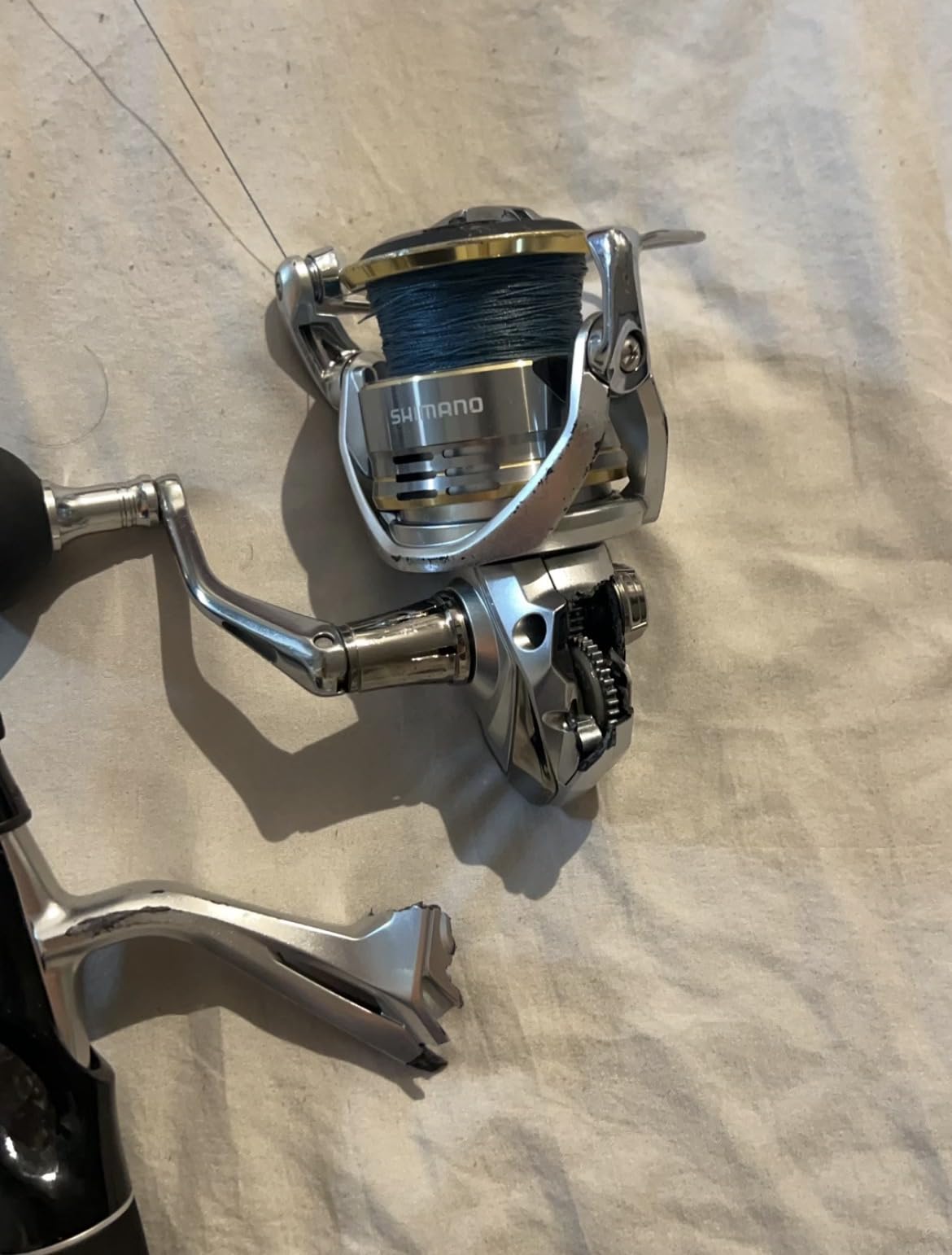
Three ball bearings plus a roller bearing is the lowest count in this roundup. Several owners connect that to smoothness and casting distance that do not match what they expected, and if you are used to a ten-bearing reel the difference is noticeable.
The maximum drag of 24.3 lb also sits below what the Piscifun NautiX offers. If you are fishing heavy structure for species that can exceed 15 pounds, look elsewhere.
6. KastKing Spartacus II – Best Sealed-Feeling Freshwater Reel
KastKing Spartacus II Spinning Fish Reels, Freshwater/Saltwater, 2000 Size
Max drag 22 lb
K.I.S.S. sealing
7+1 shielded bearings
Weight 8.9 oz
Gear ratio 5.2:1
Pros
- K.I.S.S. intrusion shield on spool rotor and body
- Triple disc carbon fiber drag around 22 lb
- Very smooth 7+1 shielded bearing retrieve
- Light at 8.9 oz for all-day comfort
- Looks and feels more expensive than it is
Cons
- Small gap at the bail can nick line
- Bail only closes cleanly at certain handle positions
- Anti-reverse switch reported failing on some units
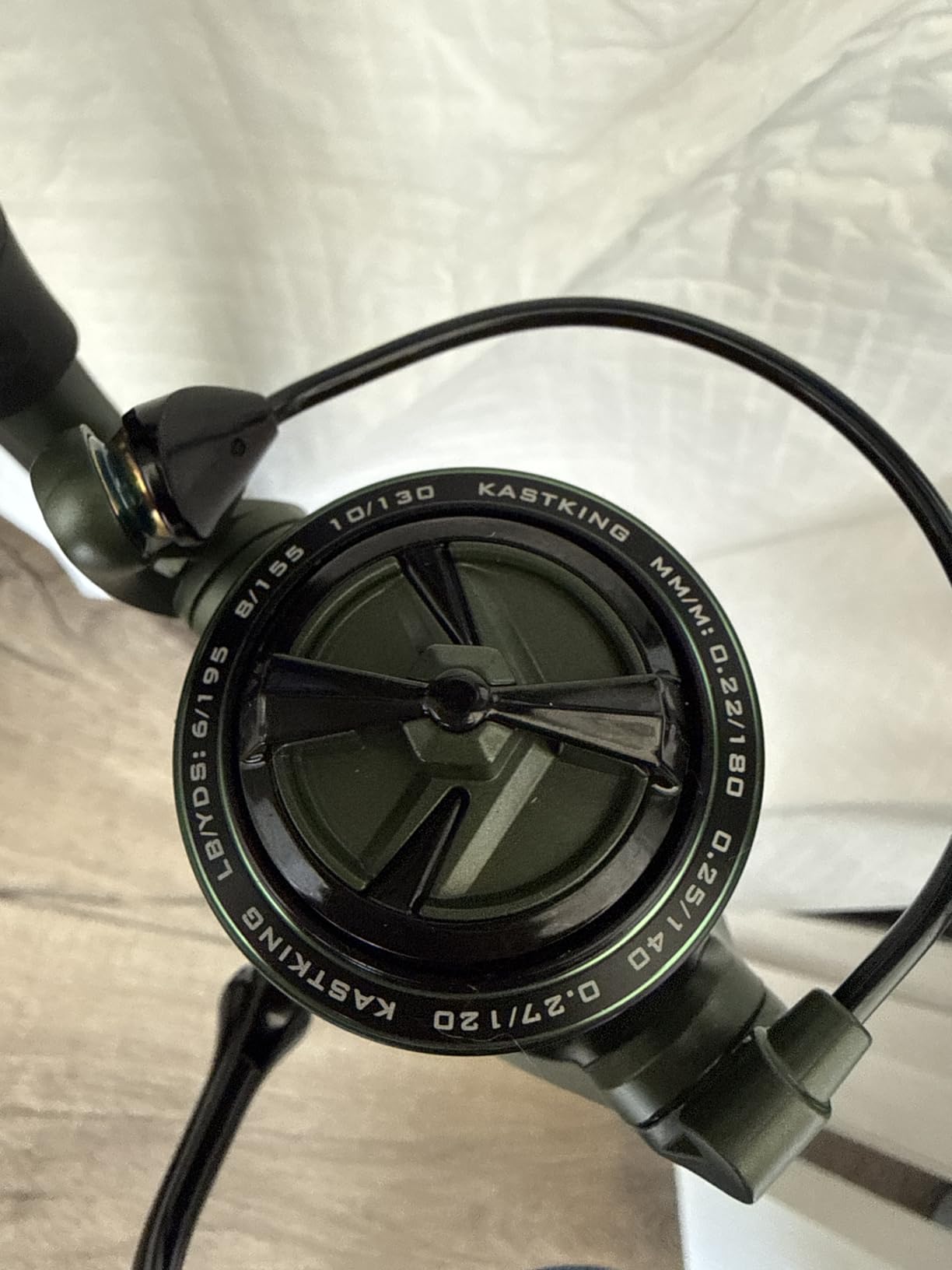
The Spartacus II solves the problem that makes cheap reels feel cheap: water and dirt getting into places they should not. The K.I.S.S. intrusion shield system seals the spool, rotor and body, and in practice it keeps working after seasons of use when unsealed reels have gone gritty.
At 8.9 ounces with a 5.2:1 ratio it is a freshwater machine. We used it for bass, panfish and light inshore species and it never felt slow, and the triple disc carbon fiber drag held a steady 22 lb when we needed it.
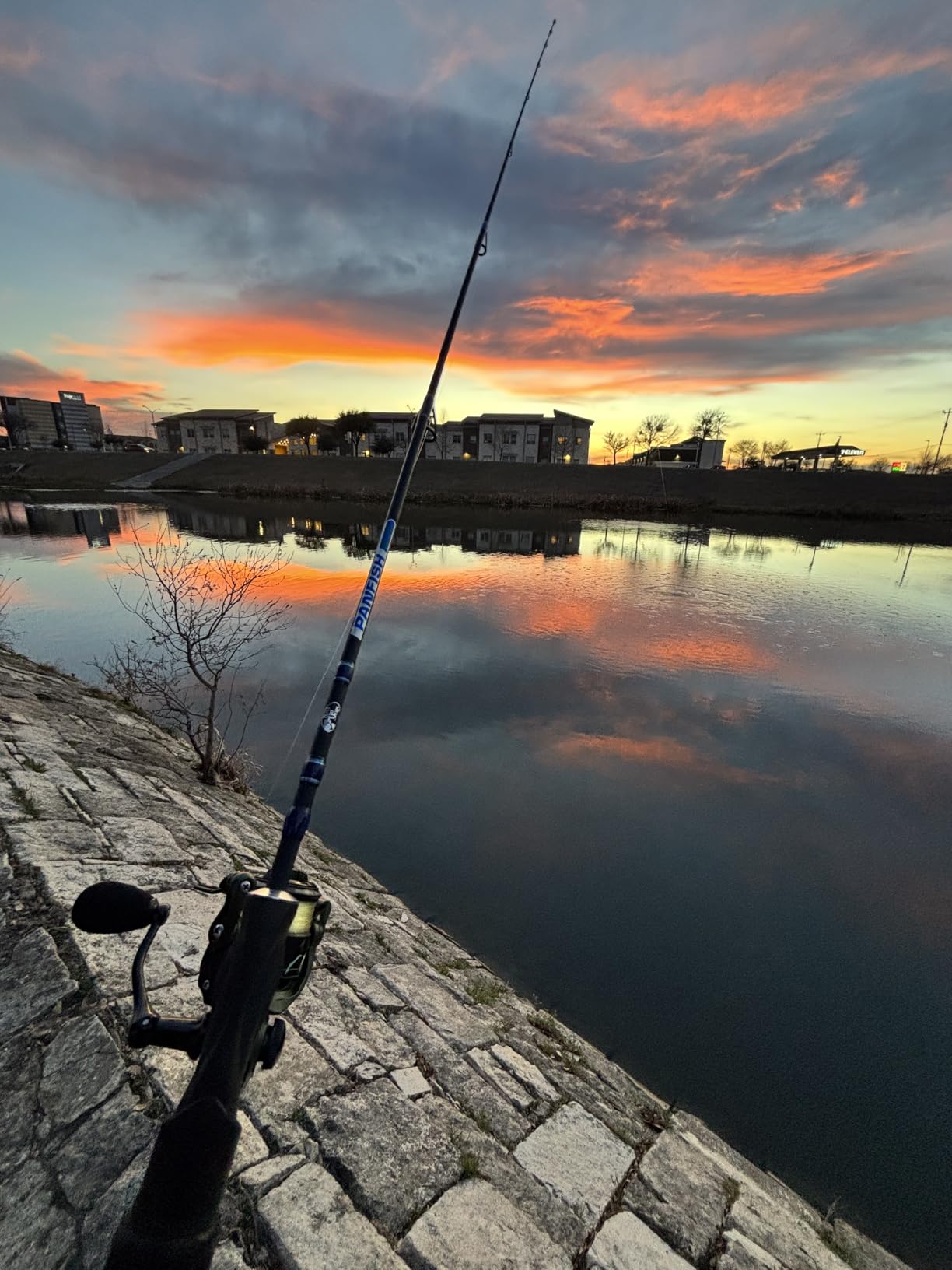
The internals are good angler hardware. Hamai cut precision gears, a brass pinion gear, an oversized stainless main shaft, a ceramic line roller and stainless hardware throughout, driven by seven shielded stainless ball bearings plus a bearing in the rotor.
The Stryker Green finish and sure-grip EVA knob give it a look that costs more than the reel does, which is exactly what a first serious spinning reel needs to feel like.
Who the KastKing Spartacus II suits
It suits anyone who wants one reel for freshwater who occasionally gets saltwater spray on it. Barge, lake, creek and shore casting are all fair game, and the sealed design forgives the occasional dunking far better than its weight suggests.
Anglers on fishing forums regularly point to sealed-feeling budget reels like this one when the obvious cheap options start failing after a season. That long-term report matters more than any spec sheet.
Where the KastKing Spartacus II falls short
There is a small gap where the bail meets the line roller that some owners report can nick line. Watch your line the first few trips until you know how it sits.
The bail arm also only snaps closed cleanly at certain handle positions, and a minority of units have reported an anti-reverse switch that failed after a couple of months. Check it before every trip.
7. Piscifun Carbon X – Best Ultralight and Trout Spinning Reel
Piscifun Carbon X Ultralight Spinning Reel, Carbon Frame, 2000 Series
Weight 5.7 oz
10+1 shielded bearings
33 lb max drag
Gear ratio 6.2:1
Full carbon body
Pros
- Exceptionally light full carbon fiber build
- Very smooth 10+1 bearing retrieve
- Up to 33 lb drag from three carbon washers
- 6.2:1 and 5.2:1 ratio options
- Sealed rubber ring protects the drag
Cons
- Carbon construction is fragile on impact
- Durability complaints concentrate in the 2 star reviews
- Hollow spool holds less line than a conventional spool
The Carbon X is the reel for anyone who counts grams. At 5.7 ounces in this size it is among the lightest spinning reels you can buy, and it stays smooth because of ten plus one shielded stainless steel bearings, the highest count in this roundup.
Two gear ratios are available. The 6.2:1 version suits faster retrieves and light techniques, while the 5.2:1 option in the 1000 model is calmer and better suited to slower presentations on a ultralight rod.
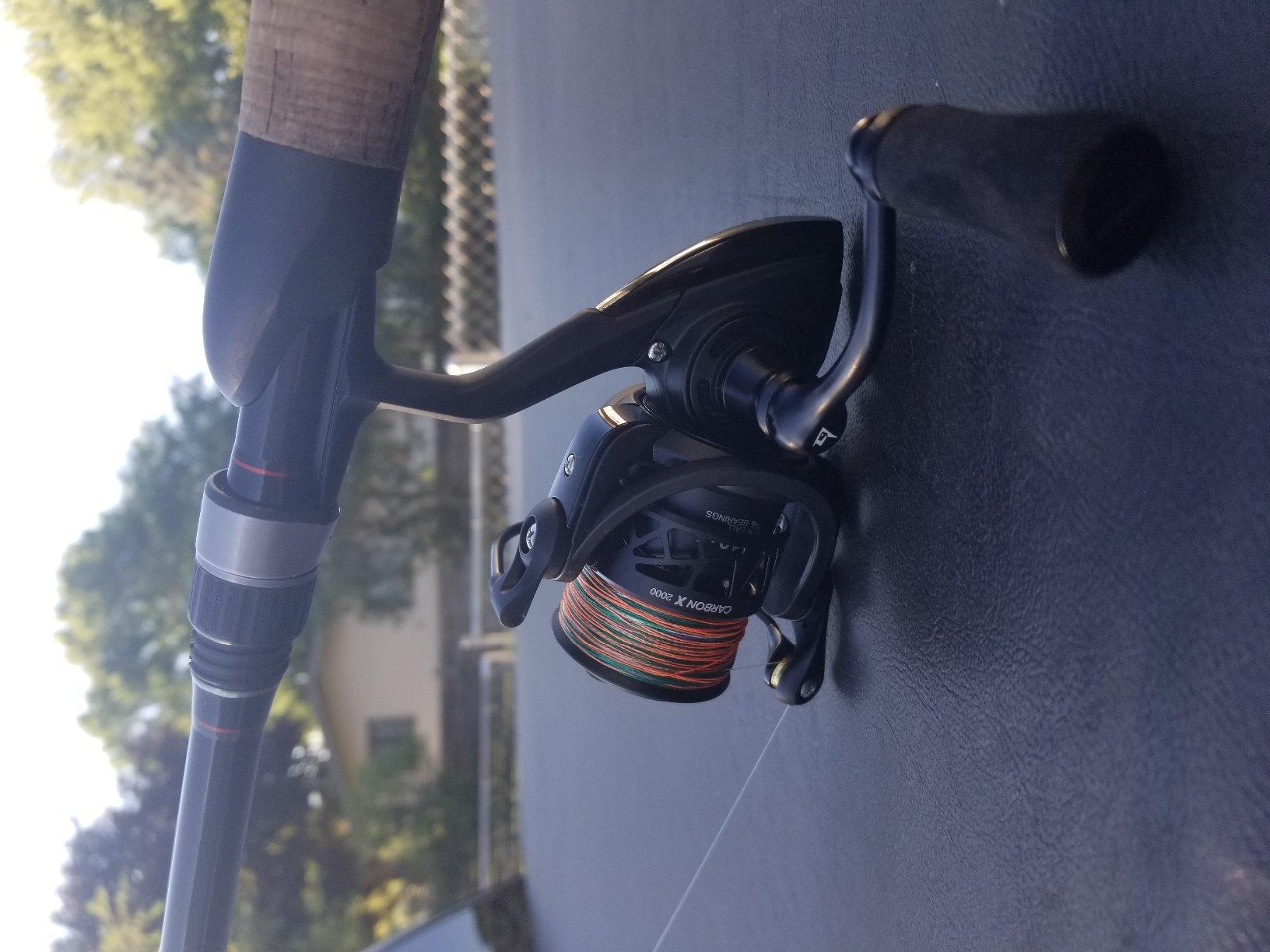
The drag is stronger than the weight suggests. Three oversized carbon fiber washers are rated up to 33 pounds and sit behind a sealed rubber ring, so the drag stays clean even after a day in the rain.
Line capacity is listed at 100 yards of 10 pound. That works for trout streams and ultralight lake fishing, but the hollow spool is the reason it will not hold as much as a conventional deep spool of the same frame size.
Who the Piscifun Carbon X suits
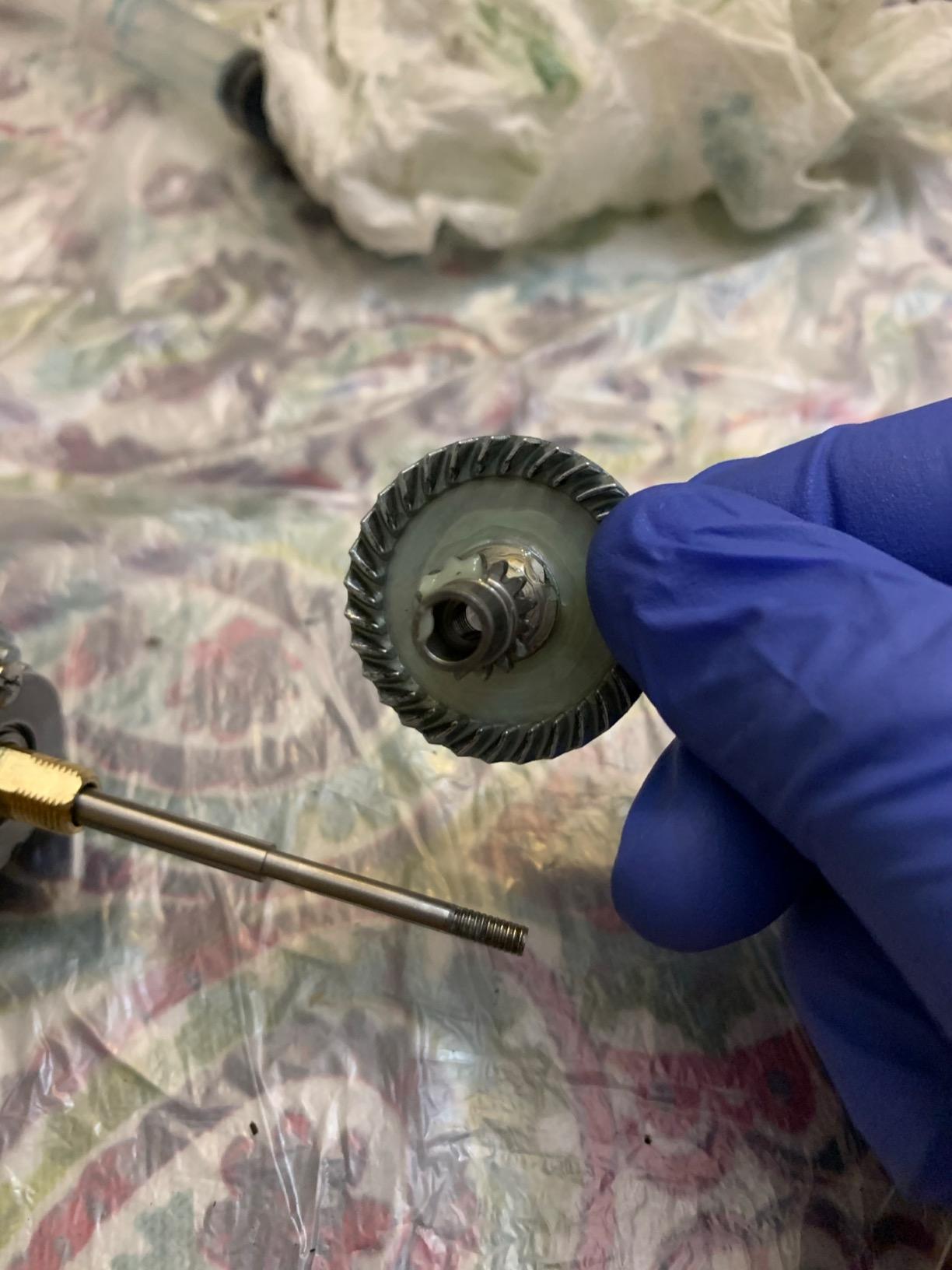
Trout anglers, fly fishermen converting to spinning and anyone chasing panfish in a kayak will love it. The reinforced anti-corrosion stainless main shaft and zinc alloy drive gear also mean it is not strictly a freshwater-only reel.
Travel anglers get a reel that weighs almost nothing in a pack, and the carbon body, rotor and side plate all stay rigid at this weight.
Where the Piscifun Carbon X falls short
Carbon is light but not tough. Drops, boat-console impacts and being knocked against a car door can crack parts that an aluminum reel would shrug off, and the low-star reviews concentrate on exactly those rough-treatment failures.
If you are careless with gear, buy an aluminum reel instead. The weight difference is a couple of ounces and the durability difference is large.
8. KastKing Megatron 6000 – Best for Heavy Freshwater Fish
KastKing Megatron Spinning Fishing Reels with 5.2:1 Gear Ratio, 60 Size
Gear ratio 5.2:1
Drag over 30 lb
7+1 MaxiDur bearings
Size 6000
T6061 aluminum frame
Pros
- Very smooth retrieve and drag from 7+1 bearings
- Carbon fiber drag handles hard fighting fish
- Rigid aerospace aluminum skeletal frame is strong and light
- Compact 6000 size holds plenty of line
- Outperforms pricier rivals in side by side use
Cons
- Not fully sealed so salt causes drag hesitation
- Metal finish has been reported to peel after salt exposure
- Hollowed neck at the rod foot can bend
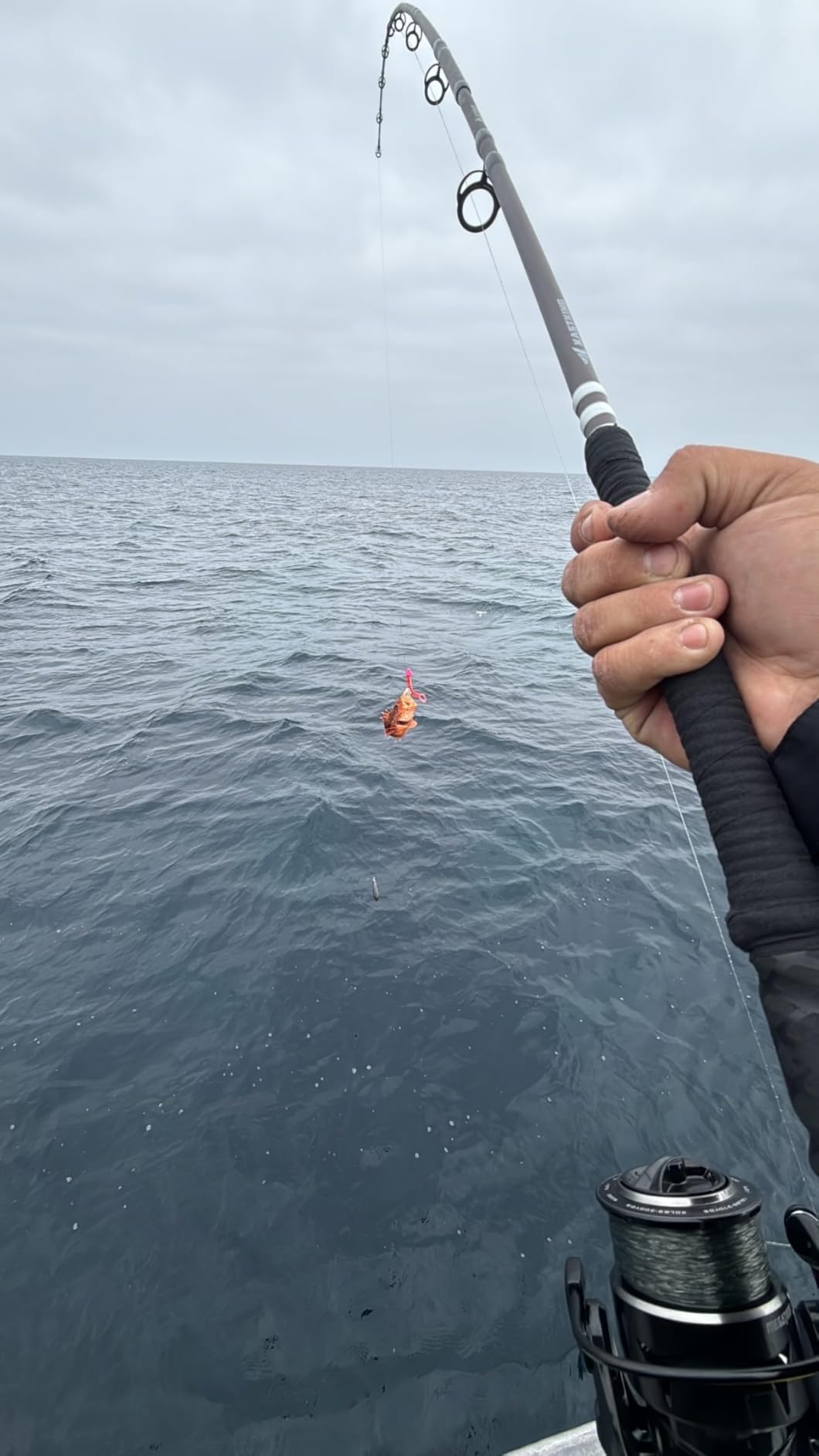
With more than 4400 ratings, the Megatron is the most owner-proven reel in this roundup, and that evidence is worth more than a spec sheet. Owners describe it regularly as outperforming reels costing noticeably more, particularly on drag pressure.
The triple disc carbon fiber drag delivers over 30 pounds of stopping power, and owners report landing striped bass and other hard fighters on it. The rigid T6061 aerospace aluminum skeletal frame keeps the 6000 size from feeling like a boat anchor.
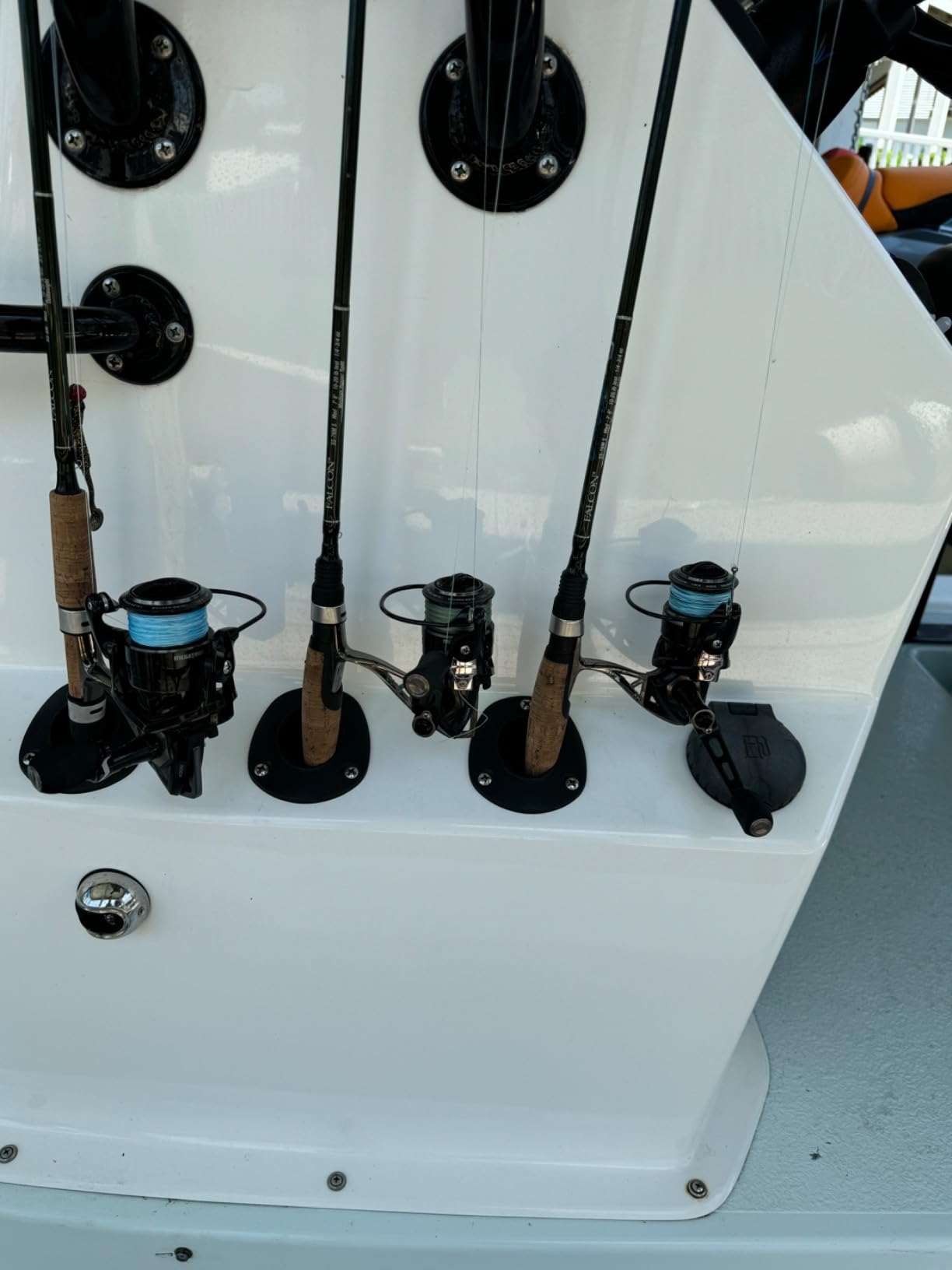
Seven MaxiDur double-shielded stainless ball bearings plus a roller bearing drive a zinc alloy main gear and a solid brass pinion, which is a proven angler-standard layout. The CNC machined T6061 spool holds 200 yards of 16 pound line, plenty for heavy cover work.
The robot-inspired aluminum handle is a small thing that makes a real difference in cranking power when you are winding a fish back through slack water.
Who the KastKing Megatron 6000 suits
Freshwater anglers chasing catfish, carp, large walleye, pike or anything that pulls hard. The drag strength and frame stiffness are the reasons to buy this size, and it also handles light inshore saltwater work if you rinse it properly.
It is a good first big-water reel too, because a 6000 frame balances with the medium-heavy rods most people already own.
Where the KastKing Megatron 6000 falls short
It is not sealed, and owners report drag hesitation during long saltwater sessions and, in some cases, a finish that peels or flakes after salt exposure. This is a freshwater-first reel in practice.
The hollowed skeletal neck where the reel meets the rod foot is the other known weak point. Do not lever the rod against it when setting a hook and it will last years.
9. Abu Garcia Revo SX – Best for a Compact Light Frame
Abu Garcia Revo SX Spinning Fishing Reel
8 HPCR stainless bearings plus roller
Carbon Matrix drag
Gear ratio 6.2:1
Size 20 frame
Weight 0.2 kg
Pros
- Smooth operation from 8 HPCR bearings plus a roller
- Asymmetrical body and V-Rotor improve ergonomics
- V-Spool and Rocket line management even out casting
- Instant anti-reverse roller for fast hook sets
- Compact size 20 frame around 7 oz
Cons
- Size 20 capacity of 100-200 yds of 4-8 lb is limited
- Some complaints about drag feel
- Listing has fewer than 100 reviews so the track record is thin
The Revo SX is the most engineered small reel in this group. Abu Garcia puts eight stainless steel HPCR bearings plus a roller bearing into a size 20 frame that weighs about 7 ounces, and the asymmetrical body sits well in the hand from the first cast.
The V-Rotor and V-Spool combination, paired with the Rocket line management system, produces consistent casting evenness. We could lay line smoothly with little backtalking, which matters when you are targeting clear shallow fish.
The Carbon Matrix drag system is smooth for the class, and the instant anti-reverse roller gives a positive, immediate hook set that is noticeably crisper than most spinning reels in this price range.
It is a light freshwater reel first. Panfish, trout, small bass and ultralight presentations are where the size 20 frame belongs.
Who the Abu Garcia Revo SX suits
Anglers who fish light rods and want a reel that matches rather than overwhelms. The compact footprint and 6.2:1 ratio make it good for quick retrieves of light lures and for kids learning to fish.
If you are moving up from a graphite ultralight reel, this is a genuine step in machining quality without a step in weight.
Where the Abu Garcia Revo SX falls short
The size 20 spool holds 100 to 200 yards of 4 to 8 pound test. That is fine for creek and pond fishing and short of fine for surf, structure or heavy line, where larger Revo sizes are the right choice.
This particular listing has fewer than 100 reviews, so the long-term track record is thinner than the others here, and some owners report drag feel that does not impress at the highest settings.
10. KastKing Brutus – Best Budget Spinning Reel Pick
KastKing Brutus Spinning Fishing Reels,2000 Size
Gear ratio 5.2:1
Max drag 12 lb on the 2000 size
Graphite frame and rotor
CNC machined aluminum spool
Pros
- Very low entry cost for a complete setup
- 5.2:1 ratio suits bass trout and light salt
- Lightweight graphite frame reduces fatigue
- CNC aluminum spool promotes long smooth casts
- Proven zinc gear brass pinion and steel shaft
Cons
- 12 lb drag on the 2000 size limits it to light and medium fish
- Graphite handle arm is the weakest structural point
- Only 4 plus 1 bearings which is fewer than most in this bracket
The Brutus is the honest answer to what is the best budget spinning reel. It costs a fraction of everything else on this list and it does not feel like a toy once it is in your hand. The graphite frame and rotor keep it light, and the CNC machined aluminum spool does things most budget reels cannot, such as laying line evenly enough for long casts.
Sizes run from 500 through 5000, with the 2000 as the sweet spot for beginners. Drag ratings scale with size, from 11 pounds on the smallest frames up to 18.6 pounds on the 5000.
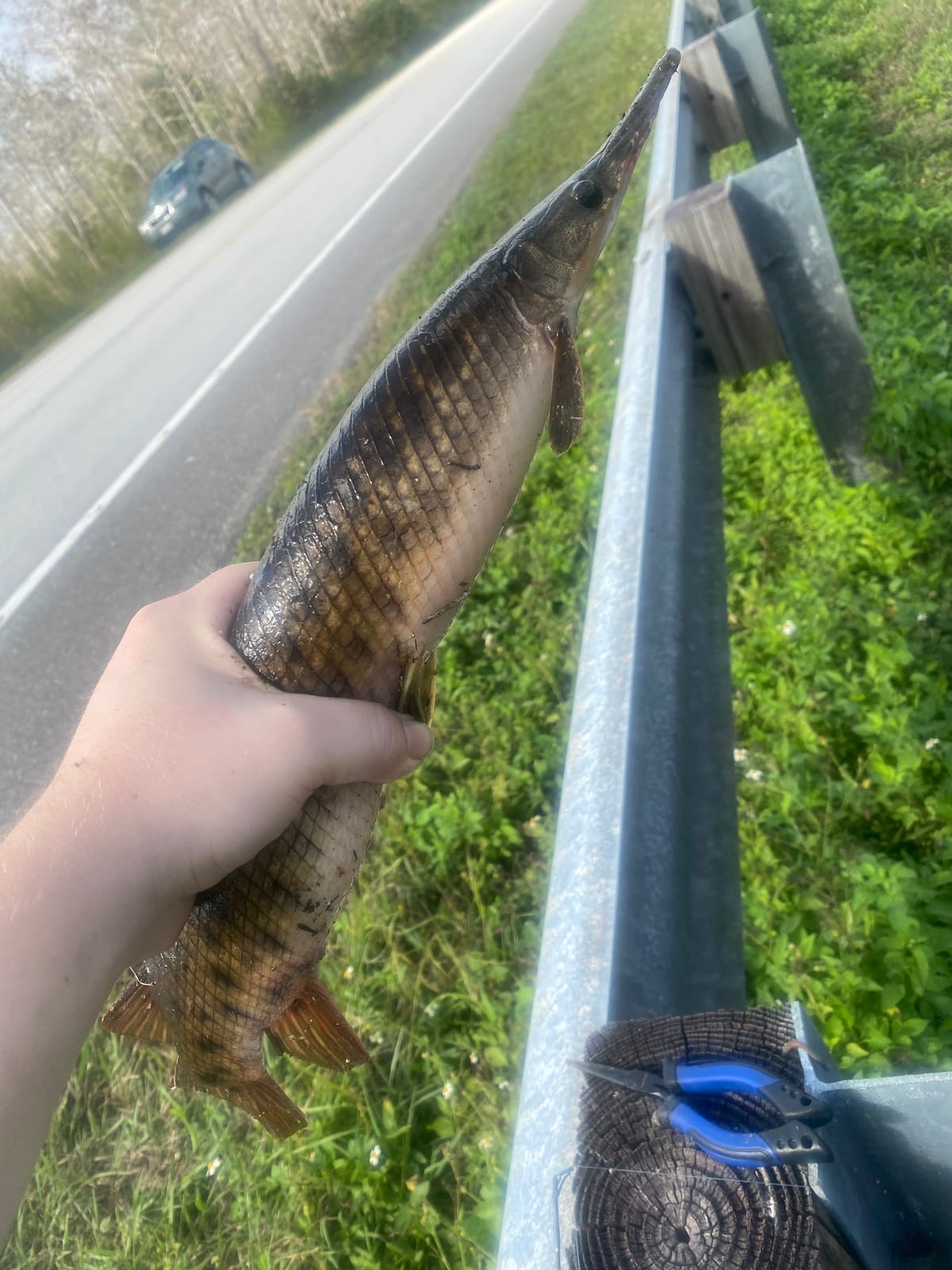
The drivetrain uses angler-standard components: a zinc alloy main gear, a brass pinion gear and a steel main shaft. Those are not premium alloys, but they are the right choices and they are easy to find parts for.
More than 2400 owners rate it 4.6 stars, and the pattern in those reviews is consistent: bought as a first reel or as a beater for the boat, still working after a couple of seasons.
Who the KastKing Brutus suits
New anglers, kids, and anyone who needs a second reel for a dock or a canoe. Bass, trout, panfish and light inshore work are all well within its limits, and the low weight means it is easy to cast all day.
It is also the smartest first purchase in this roundup, because the money you do not spend here lets you put a genuinely good rod in your hands instead.
Where the KastKing Brutus falls short
Drag is the limit. Twelve pounds on the 2000 size means it is built for light to medium fish and will lose line on anything genuinely heavy. The graphite handle arm on the smaller sizes is also the part most likely to crack first.
With only four plus one bearings it is the least refined retrieve here. Smoothness is adequate rather than impressive, and it will never feel like the Penn or the Carbon X.
How to Choose a Spinning Reel Under 200 Dollars in 2026
Start with size, not brand. Size numbers describe the physical dimensions of the frame and spool, and matching the reel to your rod power and target species solves most disappointment before it starts.
Size numbers and what they suit
1000 and 1500 – trout, panfish, ultralight and light inshore species on ultralight to light rods
2000 and 2500 – bass, trout, walleye and general freshwater work on light to medium-light rods
3000 – the most common all-rounder, balanced on a medium rod for bass and inshore species
4000 – medium to medium-heavy rods for larger bass, stripers and general inshore fishing
5000 and 6000 – medium-heavy to heavy rods for catfish, pike, big stripers and structure fishing
The most repeated piece of advice in angling forums is that a 3000 balances best on a medium power rod, and after six weeks of matching rods to reels we agree. A 2500 on a medium rod feels underpowered and a 4000 on a light rod feels clumsy.
Gear ratio and what it means
Gear ratio is the inches of line retrieved per turn of the handle. A 6.2:1 reel pulls roughly 31 inches per crank, a 5.2:1 reel pulls about 26 inches, and the faster ratio means quicker hook sets and faster line pickup.
For bass, trout, walleye and most inshore work, 6.0:1 to 6.2:1 is the sweet spot in this price range. For slower presentations, live bait fishing and heavier saltwater duty, 5.2:1 gives more cranking power per turn.
Drag strength and drag smoothness
Maximum drag tells you the reel can be wound to a heavy setting. What actually matters is whether the drag stays smooth there. A reel with 30 pounds of maximum drag that surges at 10 is worse on a fish than one with 15 pounds that is glassy through its whole range.
Look for carbon fiber or carbonite washers, a sealed drag with a rubber or gasket ring, and multiple discs. Every drag in this roundup uses carbon fiber, and the NautiX and Megatron lead on raw strength while the Daiwa BG leads on smoothness at low drag.
Ball bearings and sealing
Every bearing added to the drive train and rotor improves smoothness, but sealed bearings matter more than raw counts in salt. The Piscifun Carbon X has the most here at ten plus one, the Shimano Sedona has the fewest at three plus one.
Sealed or shielded bearings, a sealed drag and a sealed rotor are what separate a reel that survives salt from one that needs a strip-down every autumn. The NautiX carries an IPX5 rating and the Spartacus II uses an intrusion shield system, and both are worth paying for if you fish the coast.
Weight, balance and all-day comfort
Weight matters more than anglers expect. Anything under 7 ounces suits ultralight and trout work, 8 to 9 ounces is the sweet spot for all-day inshore fishing, and anything over 10 ounces on a light rod will tire your wrist.
Balance matters more than total weight. A reel that is heavy but centered under the rod feels lighter than a lighter reel that hangs off-axis, so when choosing between two options at the same weight, pick the frame that sits closer to center.
Matching your reel to your rod
Three rules cover almost every case. A reel that is too small cannot generate enough drag to lift line and you will strip line under a heavy fish. A reel that is too large pushes the balance point forward and makes the rod feel tip-heavy and sluggish.
If you are building a full setup inside this budget, split it roughly in half. Spend about half on the rod and half on the reel, because a good reel on a cheap rod still bends in the blank, and forum anglers regularly pair a midweight spinning rod with a reel in this bracket for exactly that reason.
Budget combos are a reasonable shortcut for a child or a first trip, but you get a noticeably better setup buying the two pieces separately and choosing the reel size to match the rod you already like.
Which brand should you buy?
Shimano, Daiwa, Penn and Okuma each win a different part of this budget. Penn wins on raw durability in salt, Daiwa wins on machined quality in small sizes, Shimano wins on support and consistency, and Okuma wins on weight and value.
Penn, KastKing and Piscifun give you the most hardware per dollar in the sizes that matter. Daiwa and Shimano cost more but carry stronger support networks, which matters if you want a reel to last a decade.
One caution about tiering: within each brand, a step up usually means better sealing and a smoother drag rather than more power. If your budget is tight, a well-chosen mid model beats an entry model with money left over that you spend on the wrong size.
When to buy
Tackle prices move several times a year, and these reels regularly drop into sale territory before holidays and the start of fishing seasons. If a reel you want is not selling near its low, waiting a few weeks is usually cheaper than settling for the wrong model.
Check price history before you buy rather than reacting to a single number, and buy the size you need even if a bigger size is cheaper. Reels of the same model in different sizes are not interchangeable in feel or capacity.
How to Maintain a Spinning Reel After Saltwater Use
This is the question we are asked most often, so here is the routine we actually use. It takes five minutes and it is the difference between a reel that lasts a decade and one that squeaks after one season.
Rinse in fresh water immediately. Use a bucket or a low-pressure hose. Never use a pressure washer, which forces water past seals and into the gear box.
Work the reel while it is wet. Turn the handle, spool and bail through their full travel so fresh water flushes the line roller, drag and rotor bearings rather than just wetting the outside.
Pay attention to the drag. Turn the drag knob to zero pressure and rinse the spool rim, where salt collects and dries fastest.
Shake and dry. Hold the reel by the frame, not the handle, shake out the water, wipe the rotor and bail, and let it air dry away from direct sun or a heater.
Lubricate twice a year. Open the body, clean old grease from the main gear and rotor, and apply quality reel grease to the gear, the main shaft and the bail arm pivot before reassembling.
Service the bail and line roller annually. A drop of oil on the bail wire pivot and a clean of the line roller groove stops the most common cause of line twist and breakage.
For unsealed reels such as the Penn Battle IV and the KastKing Megatron, this routine is not optional. It is the reason those reels last. For sealed reels such as the NautiX or the Spartacus II, the same routine still applies but you can be more relaxed about it.
Store reels with the drag backed off, loose line on the spool and a little air circulation. Do not leave a reel sitting in a damp tackle box after a wet trip, because trapped moisture plus salt is worse than any single splash.
Frequently Asked Questions
What is the best spinning reel under 200 dollars?
The Penn Battle IV is the best spinning reel under 200 dollars for most anglers, because it combines a 6.2:1 gear ratio, a 35 inch retrieve, a smooth carbon fiber drag rated to 15 pounds and a full aluminum body that tolerates surf and saltwater. The Okuma Ceymar is the lighter premium option for freshwater and light inshore work, and the Piscifun NautiX 5000 wins on drag strength with up to 33 pounds and IPX5 sealing.
Who makes the best spinning reels for the money?
In this price range it depends on the water. PENN builds the most durable saltwater reel under 200 dollars, Daiwa offers the best machined small sizes for ultralight saltwater, Shimano gives you the strongest support network and the most consistent all-round reel, and Okuma delivers the best weight and value combination. KastKing and Piscifun give you the most hardware per dollar, especially on bearings and drag strength.
What is the best budget spinning reel?
The KastKing Brutus is the best budget spinning reel because it costs a fraction of the alternatives while still using a CNC machined aluminum spool, a graphite frame and a zinc gear with brass pinion. The KastKing Spartacus II is the better choice if you need sealed protection and a 22 pound drag, while the Piscifun Carbon X at 5.7 ounces is the lightest option for trout and ultralight fishing.
What size spinning reel should I buy?
Match the reel size to your rod power and your target species. A 1000 or 1500 suits trout and panfish on ultralight and light rods, a 2000 or 2500 covers bass and trout on light rods, a 3000 is the best all-rounder on a medium rod, a 4000 fits medium-heavy rods for larger fish, and a 5000 or 6000 is for catfish, pike and big inshore species on heavy rods.
How do I maintain a spinning reel for saltwater?
Rinse the reel in fresh water right after every trip and work the handle, spool and bail through their travel while it is wet. Never use a pressure washer. Back the drag off to zero, shake out the water by the frame, wipe the rotor and bail, and let it air dry away from heat. Open it twice a year to strip old grease and apply fresh reel grease to the gear, main shaft and bail pivot.
Is a 200 dollar spinning reel better than a 100 dollar spinning reel?
Usually yes, and the difference is sealing and drag rather than raw power. Between 100 and 200 dollars you move from shielded or unsealed bearings and simpler drag washers to sealed or shielded stainless bearings, carbon fiber drag washers and better corrosion protection, which is what determines whether a reel survives seasons of saltwater use. Below 100 dollars the aluminum builds and spools still exist, but longevity drops sharply.
The Verdict on the Best Spinning Reels Under 200 Dollars in 2026
Ten reels, one clear winner. The Penn Battle IV 3000 takes our Editor’s Choice because it balances a genuinely smooth carbon fiber drag, a 35 inch retrieve and a 15 pound maximum drag with an aluminum body that has been proven in surf for years.
Buy the Okuma Ceymar instead if you want the lightest premium reel for freshwater and light inshore work, the Piscifun NautiX 5000 if you need serious drag and real sealing for big water, and the KastKing Brutus if you are starting out and want to put the savings into a better rod.
Whichever one you choose, match the size to your rod power first and rinse it after every saltwater trip second. Those two habits matter more than any spec on this list.