
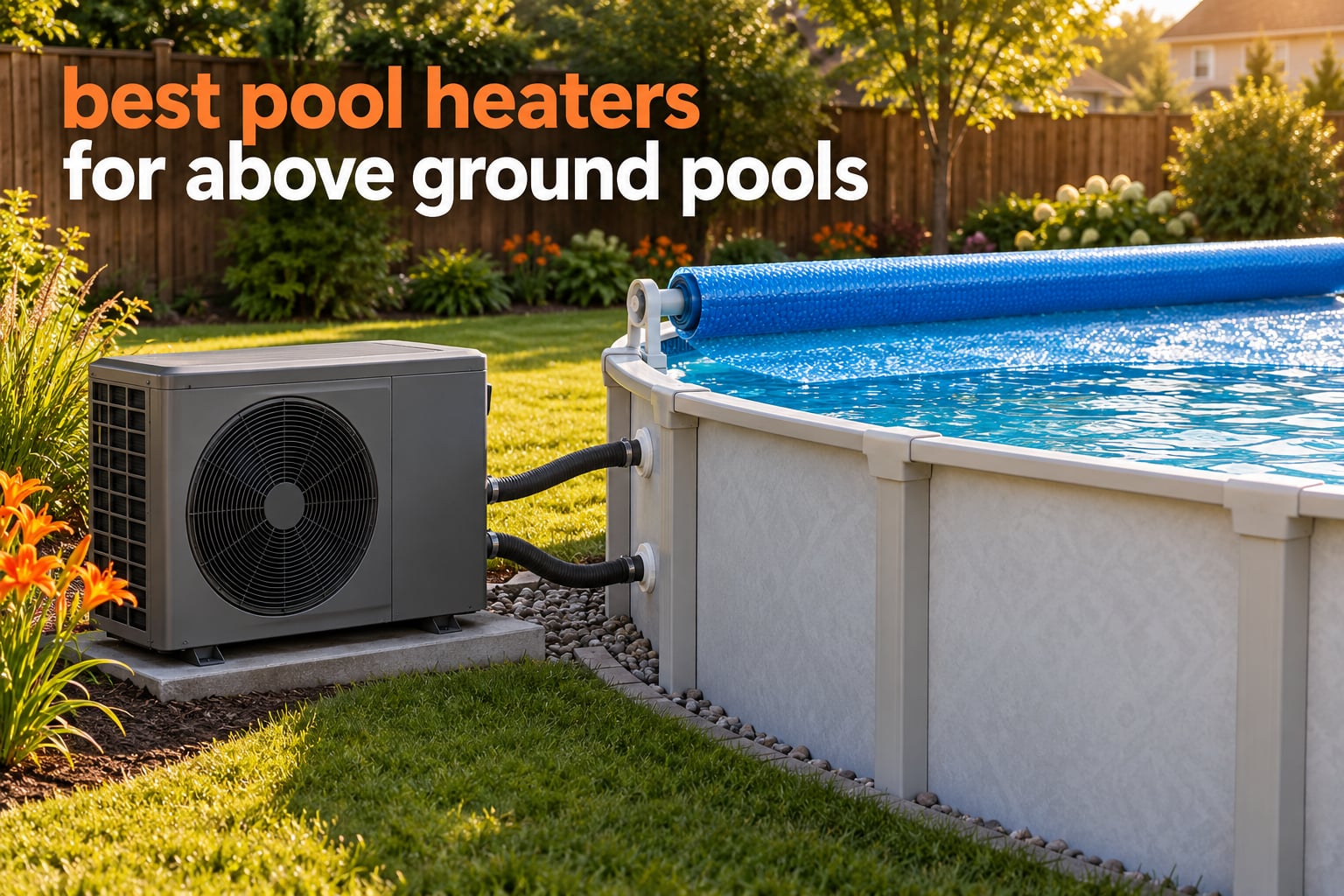
An above ground pool gives you summer on your terms, but it also gives you summer on a clock. The vinyl walls are thin, the water sits in open air, and what was 82F in July is 68F by late August. That is why the search for the best pool heaters for above ground pools has become one of the most active threads in pool owner communities. Nobody is trying to turn a frame pool into a resort. They just want a few extra weeks of comfortable water, and a heater that does not triple the power bill.
We spent October 2026 reading the spec sheets, the review histories and the owner forum threads behind the 12 heaters below. Nine of the 12 are electric heat pumps, one is a natural gas burner, and two are solar units. That mix is deliberate, because it mirrors what above ground pool owners actually buy: solar for the sunny months, a 110V plug-in heat pump for shoulder season, and gas only when you want hot water fast.
Three things separated the good units from the disappointing ones. The first is voltage, because most above ground pool pads have a 120V outlet and no electrician on standby. The second is whether the unit is sized to your gallons rather than to a marketing number. The third is the one nobody mentions until it ruins an evening: your filter pump has to be running, or the heater is just an expensive box sitting next to the pool.
If you are still working out the basics, our backyard equipment roundup covers the other half of what an above ground yard has to hold.
Table of Contents
Top 3 Picks for Best Pool Heaters for Above Ground Pools (October 2026)
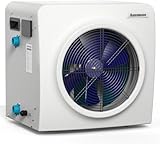
AQUASTRONG 5.5 COP Heat Pump
- 5.5 COP efficiency
- 38 dB operation
- Heats and cools
- 1.25 and 1.5 inch adapters

WARMBLU 10,000 Gallon Heat Pump
- COP 16 rating
- Pure titanium exchanger
- 110V residential power
- Up to 10000 gallons

Bestway Solar Heating Pad
- Runs on sunlight alone
- Raises water 5-9F
- 13.5 lb portable design
- 1.25 and 1.5 inch adapters
Quick Comparison of All 12 Above Ground Pool Heaters in 2026
The table below is the fast version. Every model is listed with the two or three specs that actually decide whether it fits your setup.
| Product | Specifications | Action |
|---|---|---|
| AQUASTRONG Heat Pump for 12x14x48 inch Pool |
|
Check Latest Price |
 Varpoolfaye 40000 BTU 220V Heat Pump Varpoolfaye 40000 BTU 220V Heat Pump |
|
Check Latest Price |
| WARMBLU 10000 Gallon 110V Heat Pump |
|
Check Latest Price |
| Bestway Solar Heating Pad |
|
Check Latest Price |
 MICOE 35000 BTU Inverter Heat Pump MICOE 35000 BTU Inverter Heat Pump |
|
Check Latest Price |
 Varpoolfaye 16000 BTU 110V Heat Pump Varpoolfaye 16000 BTU 110V Heat Pump |
|
Check Latest Price |
 AQUASTRONG Heat Pump for 16x16x48 inch Pool AQUASTRONG Heat Pump for 16x16x48 inch Pool |
|
Check Latest Price |
 TURBRO 50000 BTU Inverter Heat Pump TURBRO 50000 BTU Inverter Heat Pump |
|
Check Latest Price |
 NATURAQUELL 18000 BTU 5200 Gallon Heat Pump NATURAQUELL 18000 BTU 5200 Gallon Heat Pump |
|
Check Latest Price |
 Raypak PR106AENC 105000 BTU Natural Gas Heater Raypak PR106AENC 105000 BTU Natural Gas Heater |
|
Check Latest Price |
 Vidapool 21000 Gallon Air Source Heat Pump Vidapool 21000 Gallon Air Source Heat Pump |
|
Check Latest Price |
 FAFCO 4×20 ft Solar Bear Solar Pool Heater FAFCO 4×20 ft Solar Bear Solar Pool Heater |
|
Check Latest Price |
1. AQUASTRONG 5.5 COP Heat Pump for 12x14x48 inch Pools
Swimming Pool Heater for Above Ground and Inground Pool 12’*14’*48″
Dual heat and cool 41-104F
5.5 COP
38 dB
1.25 and 1.5 inch adapters
3-year warranty
Pros
- 5.5 COP cuts energy use sharply
- 38 dB quieter than most conversation
- Heats 41-104F and cools 41-83F
- Adapters for 1.25 and 1.5 inch hose
- Auto-defrost clears ice automatically
- Installation under 10 minutes
Cons
- 72 lb unit needs clear space
- Output softens in very cold air
- Larger pools need more BTU
This is the unit we keep coming back to for most owners, and 534 reviews is the deepest owner history in the whole roundup. The model number is HEX016, and it is aimed squarely at 12 foot by 14 foot frame pools, which is the most common size sold in the United States. At 5.5 COP it moves roughly five and a half times as much heat as the electricity it draws, which is the number that decides your monthly bill.
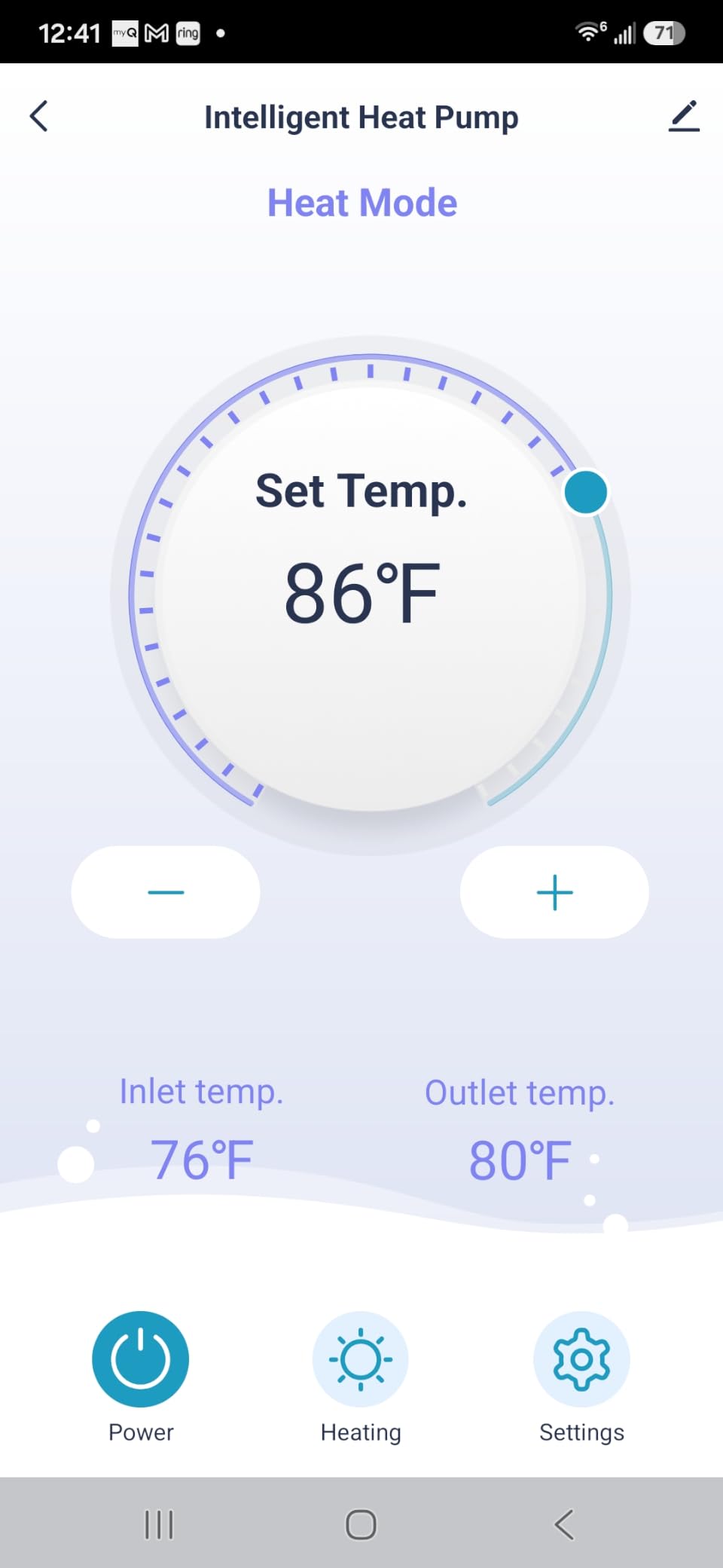
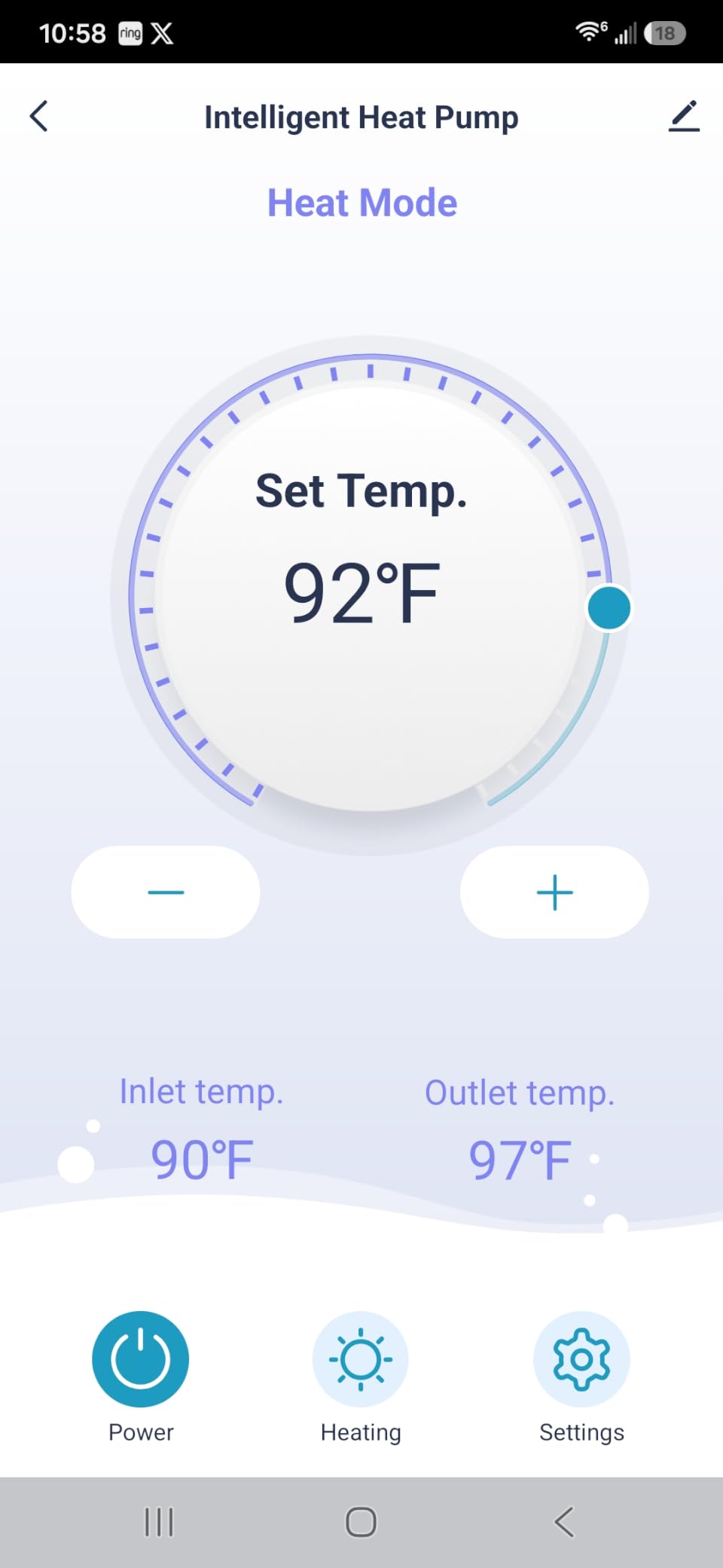
What surprised us was the 38 dB rating. That is quieter than a refrigerator hum, and it matters more than raw output for a pool sitting ten feet from a deck chair. The dual-mode control heats between 41F and 104F and cools between 41F and 83F, so the same box handles a warm August afternoon and a cold May morning.
Owners also report the auto-defrost cycle doing its job quietly in the background, which is the feature that separates units designed for real cold mornings from units that simply freeze up. The included 1.25 inch and 1.5 inch hose adapters matter more than they sound, because above ground plumbing is flexible hose rather than rigid PVC and mismatched fittings are the most common install headache.
Reviewers consistently point out the same two limitations. It weighs 72 pounds, so you are not carrying it across the yard alone, and performance drops once ambient air gets very cold, which is physics rather than a defect. For most shoulder-season use in a temperate climate, neither issue changes the recommendation.
Will it fit your pool pad and plumbing?
Package dimensions are 21 by 19.5 by 19.5 inches, so it needs roughly a two foot square of level, ventilated space away from the pool wall. Because the electrical draw is handled through a standard residential supply rather than a hardwired 240V line, it can sit on an existing 120V circuit, which is why so many owners install it without calling an electrician.
The adapter set covers the two hose diameters you will actually meet on a frame pool, and the manufacturer claims a sub-ten-minute assembly once the hoses are cut to length. The three-year warranty with lifetime technical support is longer than the twelve-month coverage common on imports in this category.
When to skip this model
Skip it if your pool is 24 foot or larger and you want the water hot the same afternoon you fill it. A 5.5 COP heat pump moves air heat into water slowly by design, and on a large pool the numbers simply do not line up. It is also the wrong choice as your only heat source in a climate where evening temperatures regularly sit near freezing.
It is also the wrong fit if you plan to run it through deep winter with no cover on the pool. An uncovered heat pump in cold air is fighting evaporation and compressor loss at the same time, and owners who pair it with a solar cover report noticeably better results through the shoulder season.
2. Varpoolfaye 40000 BTU 220V Heat Pump for Pools up to 12000 Gallons
Varpoolfaye 40000 BTU Pool Heater for Above Ground and Inground Pools 220v
40000 BTU
COP 6.2
220V
Titanium exchanger
WiFi app control
53 dB
Pros
- 40000 BTU covers 12000 gallon pools
- COP 6.2 is among the higher ratings here
- Titanium exchanger suits saltwater pools
- WiFi app control with scheduling
- Heating and cooling in one unit
Cons
- Needs a 220V circuit
- Professional electrical work recommended
- Plumbing hardware not included
Most above ground pool heat pumps top out around 35000 BTU because most above ground pools are small. This one is the exception at 40000 BTU with a COP of 6.2, aimed at owners of 24 foot round pools or the larger rectangular frame pools now common on suburban patios.
The efficiency figure is the headline. A COP of 6.2 means it delivers roughly six times as much heat as the electricity it draws, and the manufacturer claims about 45 percent savings against gas or conventional electric resistance heating. Operating noise is listed at 53 dB, which is louder than the AQUASTRONG above but still in the range most owners describe as background hum.
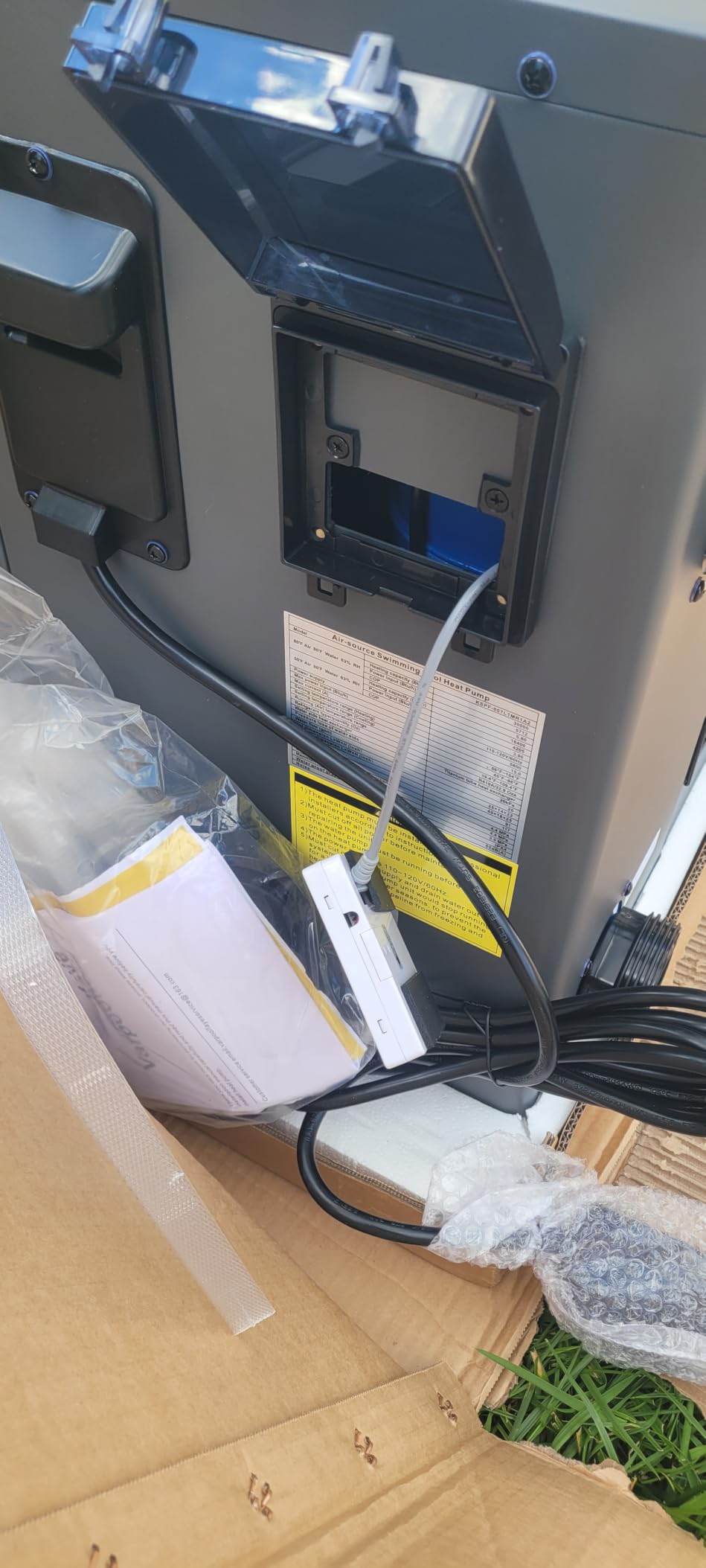
Owners like the WiFi app, which lets you set schedules and check water temperature from a phone, and several reviewers single out the titanium heat exchanger when running a saltwater system. The water and electrical components are fully separated, which is the safety detail that matters most in a wet environment next to a pool.
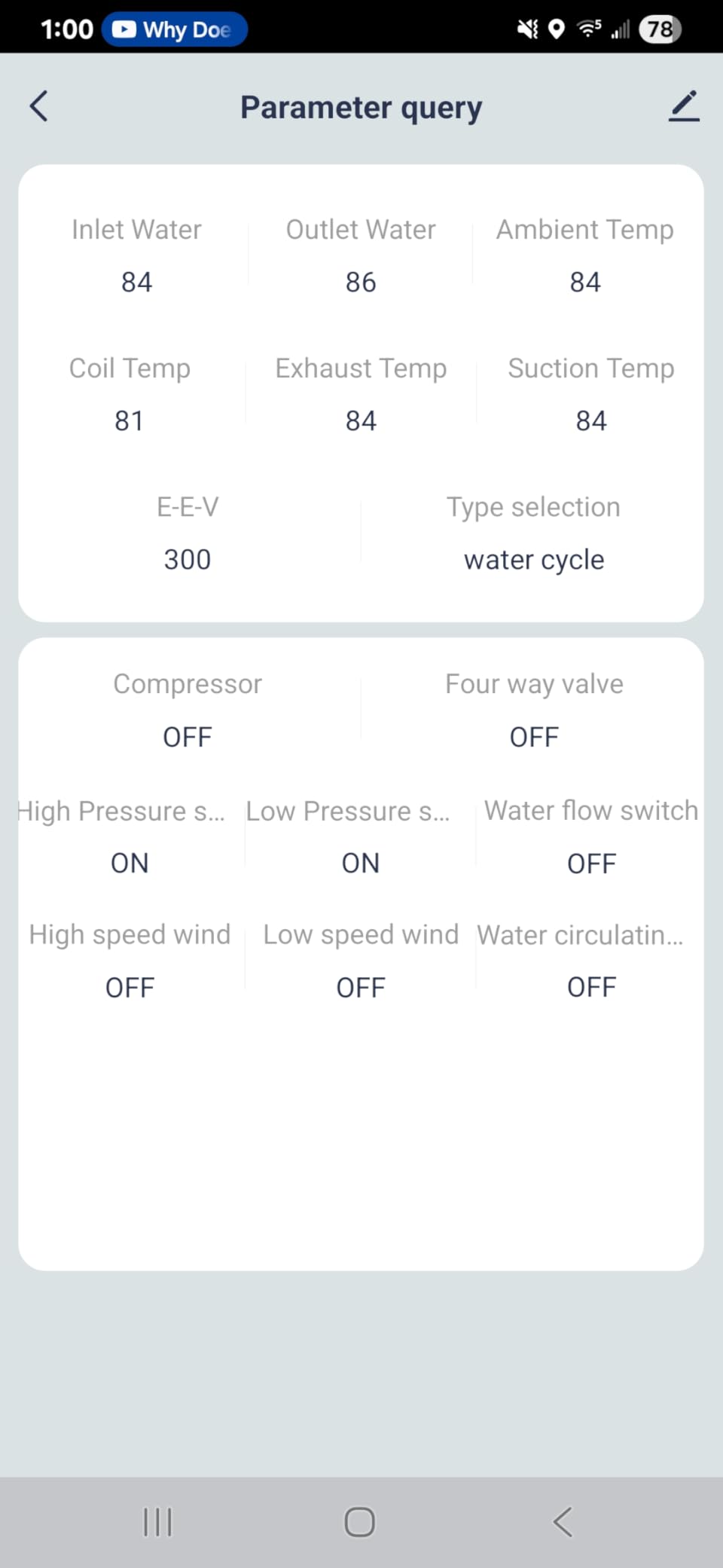
The honest trade is the power. This is a 220V unit, and the 126 inch power cord means you still need a proper 220V supply available at the pad. On a setup that only has a 120V outlet, this is a non-starter without an electrician, and that single fact disqualifies it for a lot of frame pool owners.
What the 220V requirement really means for your yard
A 220V circuit is a dedicated line with its own breaker, not an adapter off a regular wall outlet. If your pool pad has only the standard 120V receptacles that come with most filter pump kits, installing this unit means hiring a licensed electrician to run a new circuit, which is the single largest cost difference between this and the plug-in models.
Owners who already have the circuit describe the install as unremarkable. The 1.5 inch connectors on the unit mean you can plumb it into existing flexible hose, and reviewers report the titanium exchanger holding up without corrosion even in saltwater systems. Just budget for a dedicated circuit and a little more planning than a plug-in model needs.
Who gets the most out of it
This is the pick for a large yard with a 24 foot round pool where daily swimming is the goal rather than an occasional weekend dip. The 40000 BTU output holds temperature steadily against overnight losses that a 16000 BTU unit would spend all night chasing.
It is a poor fit for a 12 foot kiddie pool, where you would be paying for capacity you will never use and a 220V circuit you do not need. If your pool is under 8000 gallons, step down to one of the 110V models in this roundup and put the difference toward a solar cover instead.
3. WARMBLU 10,000 Gallon 110V Heat Pump with a Pure Titanium Exchanger
WARMBLU 10,000 Gallons Above Ground Pool Heater 110V
COP 16
Pure titanium exchanger
110V power
Up to 10000 gallons
Sub-50 dB
Pros
- COP 16 is among the highest efficiency figures here
- Pure titanium exchanger resists corrosion
- 110V residential power
- WiFi app and touch panel control
- Handles pools up to 10000 gallons
Cons
- 112 lb unit is heavy to position
- Large footprint needs clear space
- Only a 12-month warranty
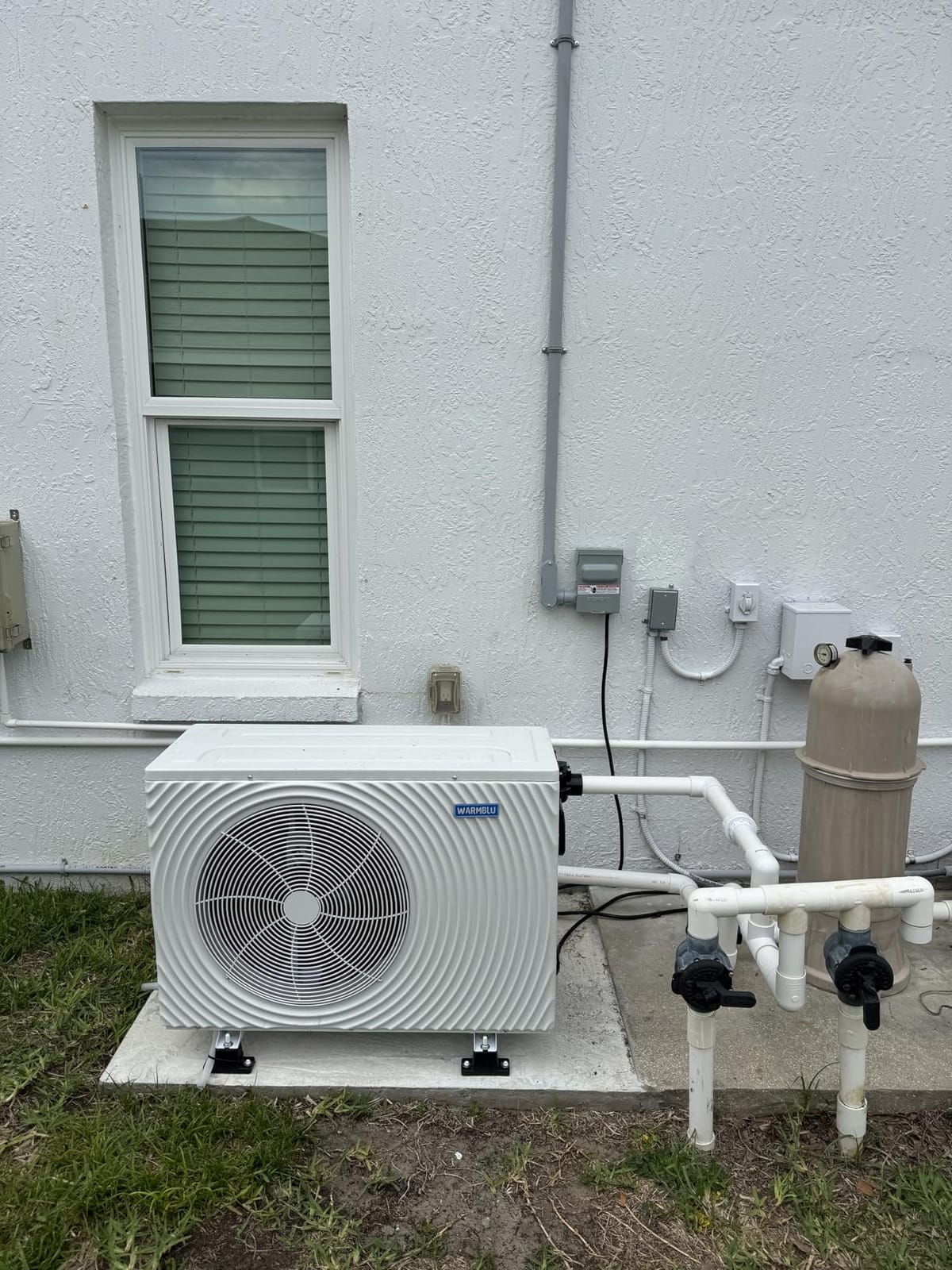
The WARMBLU SpringBreath 1.0 is the efficiency standout of the group. It carries a claimed COP of 16, among the highest figures we saw, and the manufacturer pairs that with an inverter control and a dynamic algorithm that modulates output instead of cycling on and off. For an owner trying to add shoulder-season heat without watching the meter spin, that specification is the reason to keep reading.
It is rated for pools up to 10000 gallons and runs on 110V residential power, which puts it in the same install category as a plug-in space heater. The pure titanium heat exchanger handles both freshwater and saltwater, and the full water and electrical separation is a genuine safety feature rather than a marketing line.
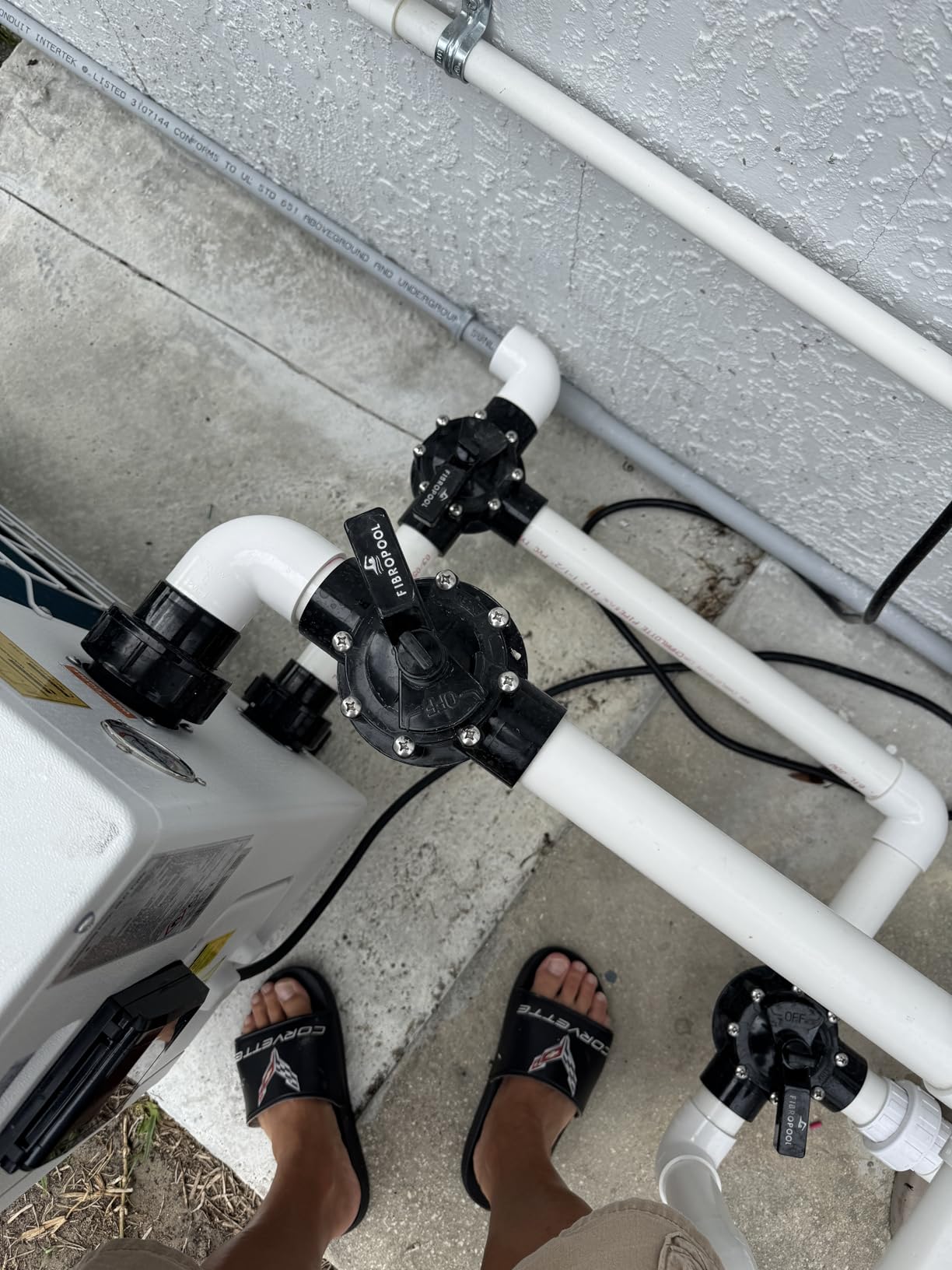
Owners highlight the sub-50 dB operation, describing it as quieter than the fridge. Control is available through a mobile app or a touch panel on the unit itself, so you can run a schedule without walking over to the pad. Reviewers also appreciate the lifetime customer service that sits behind the warranty.
The complaints cluster around handling and footprint. At 112.4 pounds with dimensions of 27 by 17 by 40 inches, this is not a unit you slide into place casually, and reviewers repeatedly say to plan the spot before the box arrives. The 12-month warranty is also the shortest in this roundup, which is worth weighing against the efficiency gain.
Reading the COP 16 claim in context
COP describes how much heat a unit delivers for each unit of electrical input under rated conditions, so a higher number is better for running costs. But COP falls as ambient air cools, and it only reaches its peak in mild conditions. Owners who report the biggest savings are the ones running it on mild spring and fall days with a cover on the pool overnight.
The practical takeaway is that the efficiency advantage shows up in the months when you are topping up warmth rather than chasing it. In deep cold, the titanium exchanger and inverter control still help, but no heat pump magic replaces ambient heat, and reviewers are candid that a cold day means a long run.
Where the setup gets awkward
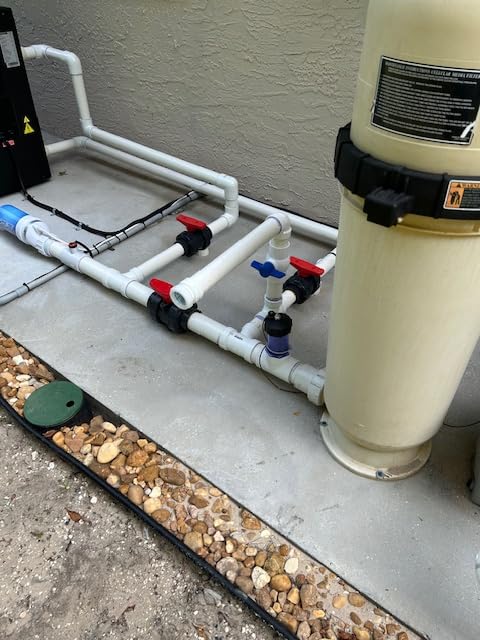
Owners say the water flow requirement is the part that catches people out. This unit needs a proper pump flow rate to move heat through the exchanger, and an undersized filter pump will quietly deliver less than the advertised capacity. Check your pump horsepower and gallons per hour before you commit, and use a bypass if your plumbing layout does not give you a straight run.
It is best suited to a mid-size pool in a temperate climate, on a dedicated circuit, with room beside the pad for a unit this tall. Skip it if your pool is inflatable or soft-sided without a proper skimmer return, since the plumbing needs a real inlet and outlet rather than a simple hose connection.
4. Bestway Solar Heating Pad for Frame Pools
Bestway | Solar-Powered Pool Heating Pad
Solar powered
Raises water 5-9F
Fits cartridge and sand pumps
13.5 lbs
Adapters included
Pros
- No electricity or fuel cost
- Adds 5-9F in good sun
- Works with common cartridge filter pumps
- Lightweight at 13.5 lbs
- Adapters for 1.25 and 1.5 inch hose
Cons
- Only works in direct sunlight
- Slower in cool or cloudy weather
- Slows pump flow rate
The Bestway pad is the simplest thing in this roundup and the easiest to live with. Water runs from your filter pump through a black solar surface and back into the pool, picking up heat on the way. The manufacturer puts the realistic gain at 3 to 5C, or 5 to 9F, in good conditions.
What makes it work on above ground pools specifically is the plumbing. Two hose outlets, one to the pump and one to the pool, plus included 1.25 inch and 1.5 inch adapters, mean it lines up with the fittings that come with most frame pools. It is compatible with cartridge filter pumps rated 2500 gallons per hour or more and sand filter pumps rated 2200 gallons per hour or more.
Owners report pairing it with a solar cover, and that combination is where the value shows up. The cover holds heat overnight, the pad puts heat in during the day, and together they extend the season without any fuel bill. Reviewers with more than 300 ratings describe it as the piece of kit that made their pool usable in the shoulder weeks.
Will it slow my filter pump down?
This is the most common complaint and it is a fair one. Adding a solar pad to the loop introduces extra head pressure, so flow rate drops and filtration can suffer. Owners who keep the loop short, keep the pad level, and clean the fittings report no meaningful loss, while those with a long tangled hose run notice a difference.
The fix is plumbing layout rather than a different product. Keep the run from pump to pad and back as short and straight as the yard allows, use both supplied adapters, and check that your pump still clears its rated flow after the pad is in the circuit. A pump that is already marginal will feel the difference more than a solid one.
When solar alone is enough and when it is not
In a sunny southern climate with a 12 foot pool, the pad on its own can keep water comfortable for spring and fall afternoons. In a northern climate, reviewers describe the same product as useful only in peak summer, and owners in cooler regions generally pair it with a small electric heat pump rather than relying on it alone.
It also does nothing in a shaded yard, which is a limitation shared by every passive solar device. If your pool sits under trees or a house shadow for most of the afternoon, budget for an active heater and treat the pad as a bonus rather than the plan.
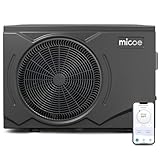
5. MICOE 35000 BTU Inverter Heat Pump for Cold Climates
MICOE 35000 BTU Pool Heat Pump, Inverter Pool Heater for Above Ground Pools
35000 BTU
Operates to 32F ambient
Titanium exchanger
50 dB
TFT panel and app
Pros
- Keeps producing heat down to 32F ambient
- 35000 BTU covers 24 ft and 12000 gallon pools
- Inverter compressor for steady output
- Titanium exchanger works in saltwater
- TFT touch panel plus app control
Cons
- Higher upfront cost than entry models
- Needs a dedicated electrical circuit
- Output falls as ambient air drops
Most heat pumps start losing meaningful output as ambient air approaches 50F, which is inconvenient because that is exactly when you want one. The MICOE is rated to keep operating down to 32F, and the 35000 BTU capacity is sized for 24 foot round pools up to about 12000 gallons. That combination is why it earns the cold climate slot in this roundup.
Inverter technology is the other part of the story. Instead of switching fully off once the set temperature is reached, the compressor modulates output, which tends to mean steadier water temperature and less on-off noise. The manufacturer claims heating costs around 69 percent below gas and electric resistance heaters.
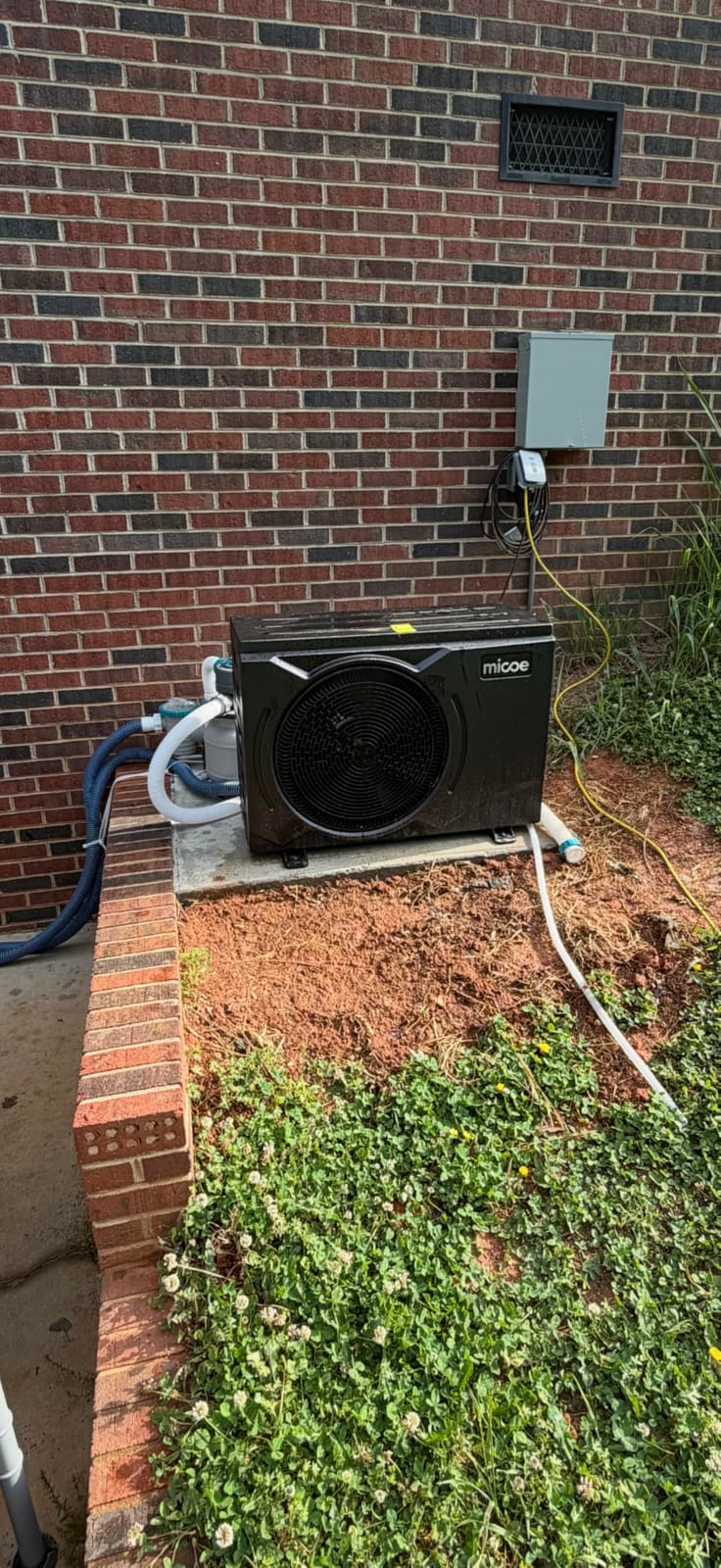
Control is a TFT touch panel plus a smart app, so scheduling and temperature changes are available from a phone or from the unit. The titanium heat exchanger is safe for saltwater, and the fade-resistant ABS housing is a sensible choice for a unit that sits in full sun all summer.
At 50 dB it is not among the quietest units here, and at 36.6 by 14.6 by 25.2 inches it wants a real footprint beside the pool. Reviewers also note that professional installation is recommended, which is mostly about the electrical side rather than the plumbing.
What low ambient operation actually buys you
Being able to run at 32F is not the same as heating quickly at 32F. Capacity falls as air temperature falls, so a low ambient unit extends the usable season and prevents a cold shock, but it does not turn a 24 foot pool into a hot tub overnight. Owners using it in northern climates describe it as a season extender that avoids a sudden late-season drop.
Plan the schedule around that. Running the unit overnight with a solar cover on, then switching it off when the cover comes off in the morning, is the routine that shows up over and over in owner discussions because it captures heat when the water is hottest and the air is coldest relative to it.
Is 35000 BTU overkill for your pool?
For a 24 foot round pool, no. For a 12 foot frame pool, considerably. Above ground pools hold far less water than inground pools of the same diameter, so the BTU per gallon number is what tells you whether a unit is oversized, and a 35000 BTU heater on a 3000 gallon pool will cycle almost constantly without ever improving recovery speed.
Match the figure to gallons, not to pool width. As a rough guide, 3 BTU per gallon works for gas units rated on input, while heat pumps follow a different rule because their COP changes the picture. If your pool is under 5000 gallons, an 18000 BTU unit is the more sensible ceiling.
6. Varpoolfaye 16000 BTU 110V Heat Pump for Pools up to 5000 Gallons
Varpoolfaye 16000BTU Swimming Pool Heat Pump Up to 5000 Gallons 110v
16000 BTU
110V plug-in
COP 4.3
Up to 5000 gallons
50 dB
118 inch cord
Pros
- Plugs into a standard 120V outlet
- 4.7 star rating from owners
- COP 4.3 efficiency
- Works in freshwater and saltwater
- 118 inch cord gives placement freedom
- Includes 1.25 and 1.5 inch adapters
Cons
- Capped at 5000 gallon pools
- Needs 700-1000 GPH pump flow
- Condensation needs a drainage plan
This is the small-pool answer. At 16000 BTU with a COP of 4.3, it is rated for pools up to 5000 gallons, which covers most 12 foot and small 14 foot frame pools. Owners rate it 4.7 out of 5, and the reason is simple: it plugs into a 120V outlet and works.
The 118 inch power cord is a small detail that changes installation. You are not tied to a socket right next to the pad, so you can position the unit for airflow and shade rather than for cable length. Adapters for 1.25 inch and 1.5 inch hose are in the box, which covers the fittings on virtually every frame pool.
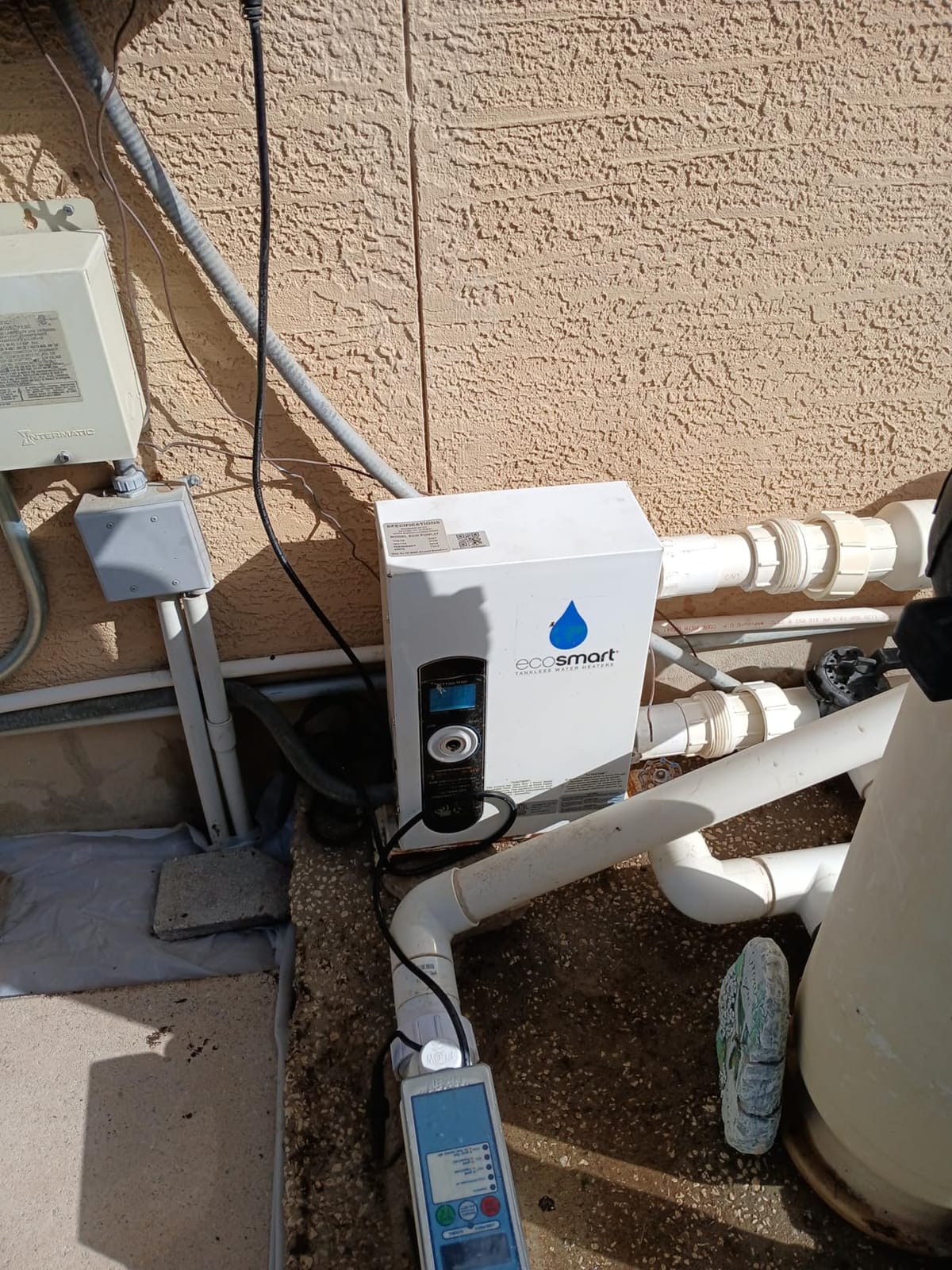
At 50 dB with extra soundproofing, it stays background quiet. Auto-defrost runs automatically, and the titanium exchanger handles both freshwater and saltwater. Owners also mention responsive customer service, which matters for a brand without a large service network.
The limits are straightforward. It will not heat a pool larger than 5000 gallons, it wants 700 to 1000 gallons per hour of pump flow to perform properly, and the manufacturer’s own guidance notes that condensation draining from the unit is normal operation rather than a fault.
Why we tell people not to fear the condensation
A heat pump pulls moisture out of the air as it works, and on a humid morning that water has to go somewhere. On a large unit it may run into a drain, and on a small one it drips out of the housing onto the ground. Owners frequently mistake this for a leak and return the unit.
It is not a leak. In fact the manufacturer lists condensation leakage as normal, which is unusual candor for this category. If the drip bothers you, put the unit on a small pad with a shallow gravel bed or run a short line to a drain, and leave airflow space on all sides so the moisture can dissipate.
Is 16000 BTU right for your gallons?
For a 12 foot round pool in the 3000 to 3500 gallon range, it is a good match and the 4.7 owner rating reflects that. For a 16 foot pool around 5000 gallons, it will hold temperature but recovery will be slow, so plan on starting it early rather than expecting a quick change.
It is not the right pick if your pool is 20 foot or larger. A dedicated 15 to 20 amp circuit is still recommended even though it runs on 110V, and if your pump cannot deliver 700 to 1000 gallons per hour, fix the flow before blaming the heater.
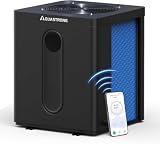
7. AQUASTRONG Heat Pump for 16x16x48 inch Above Ground Pools
Swimming Pool Heat Pump for Above Ground Inground Pool 16’*16’*48″
Top air flow design
20x20x20 inch footprint
114.6 lbs
Heats and cools
Model HEX035TOP
Pros
- Compact 20 inch cube footprint
- Upgraded top air flow for heat exchange
- Handles both above ground and inground pools
- Strong early owner ratings
- Fourteen pound lighter than the largest unit
Cons
- Limited published specifications
- 114.6 lb unit is heavy
- Only 41 reviews so far
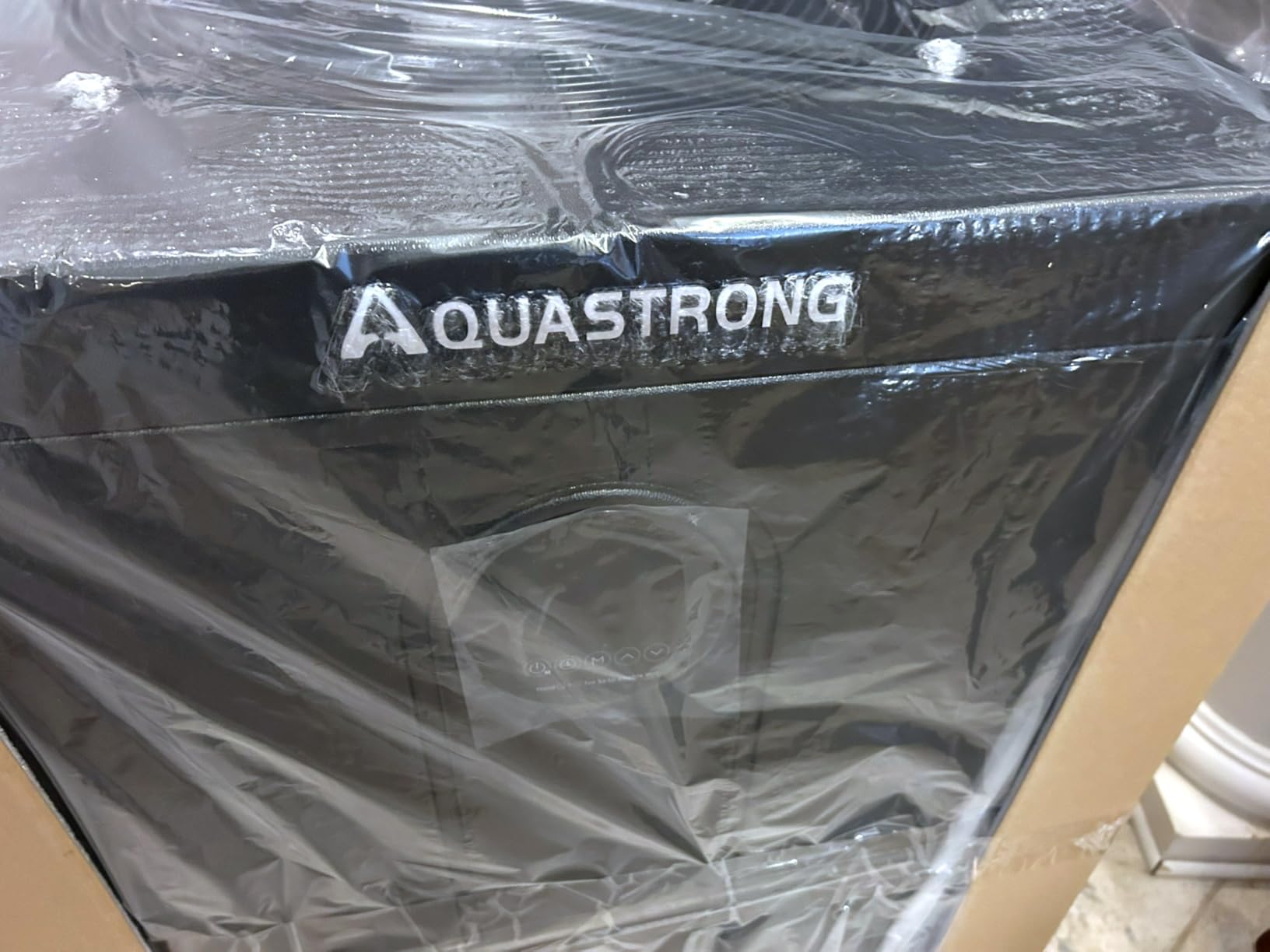
The reason this model exists is footprint. At 20 by 20 by 20 inches it is a cube, which makes it far easier to place beside a pool squeezed between a fence and a patio than a tall rectangular unit. The HEX035TOP targets 16 foot by 16 foot pools, the next step up from the 12 foot size covered by its sibling model.
The specific engineering claim is an upgraded top air flow design intended to improve heat exchange. That matters on a small unit because the intake area determines how much ambient heat the coil can capture, and a restricted intake shows up directly as slower heating.
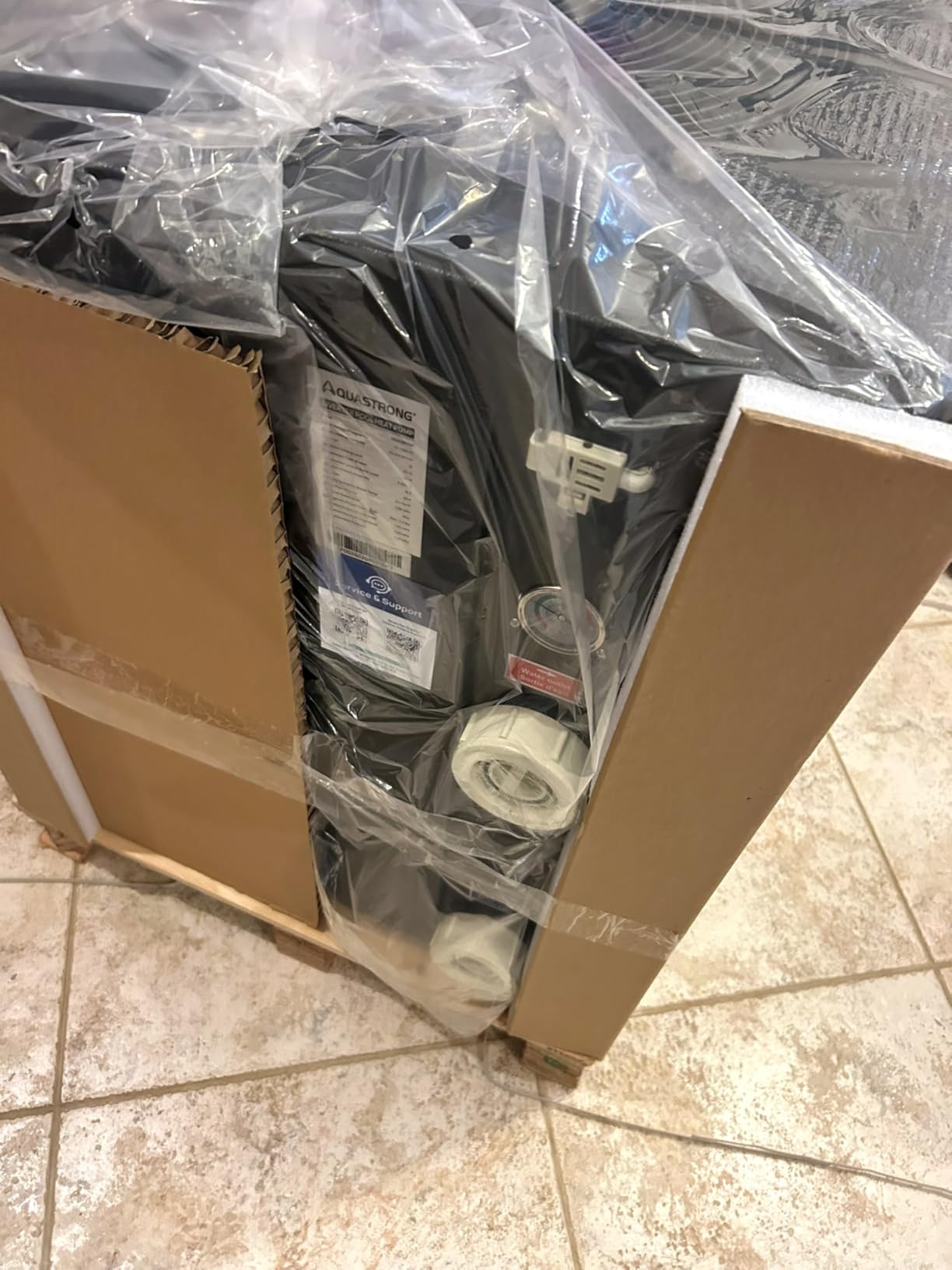
Owners give it 4.7 out of 5 across 41 reviews, which is a strong start. The listing is newer than most in this roundup, so long-term durability data is thinner than we would like, and the published specification detail is more limited than the AQUASTRONG model at number one.
At 114.6 pounds it is one of the heavier units here and needs two people or a hand truck. Because the listing carries fewer published specs, we would confirm BTU rating, COP, and voltage with the manufacturer before ordering rather than after.
What to confirm before you buy
Ask for the heating capacity in BTU, the COP figure, the electrical voltage, and the maximum rated pool size in gallons. Those four numbers determine whether the unit fits your pool, and on a newer listing they are not all in the same place. Also confirm the warranty length in writing, because a short warranty changes the long-term math considerably.
Then check the placement rules. Any air-source heat pump needs clearance for intake and exhaust, and a compact box does not mean clearance is optional. Leave room on the intake side or the top air flow design cannot do its job.
Is a cube-shaped unit better than a tall one?
Not in performance terms, but often in practical terms. A cube is easier to level, easier to move, and easier to hide from view than a 40 inch tall tower, and for above ground pools the install location is often the constraint that decides the purchase. If your yard is tight, footprint frequently beats raw output.
The trade is capacity per pound of unit. Tall designs pack more coil into a given footprint, so a compact model will usually have a lower ceiling on pool size. Verify the gallon rating matches your pool before you settle on it for a larger installation.
8. TURBRO 50,000 BTU Inverter Heat Pump for Pools up to 21100 Gallons
TURBRO 50,000 BTU Inverter Pool Heater, Up to 15,000 Gallons, 220-240 V
50000 BTU up to 75000
COP up to 16.2
220-240V hardwired
Up to 21100 gallons
Pros
- Handles pools up to 21100 gallons or 28.3 ft round
- COP up to 16.2
- Full DC inverter compressor
- Titanium exchanger handles seawater
- Panel and app control with dual timers
- Multi-sensor safety with auto-shutdown
Cons
- 220-240V hardwired and needs a certified electrician
- 146.7 lb unit
- Not intended for inflatable pools
- Excludes hoses valves filters and pumps
This is the top-end unit, rated at 50,000 BTU with capacity up to 75,000 BTU and a COP up to 16.2. It covers pools up to 21100 gallons, which includes 28.3 foot round and 20 by 40 foot oval shapes. If you have the largest frame pool on the market and want it heated daily, this is the only unit in the roundup built for the job.
The full DC inverter compressor adjusts heating power based on ambient temperature, water flow, and your set temperature rather than running flat out. Smart control comes through a panel or a mobile app with two separate timer periods, which makes it easy to run one schedule overnight and another during the day.
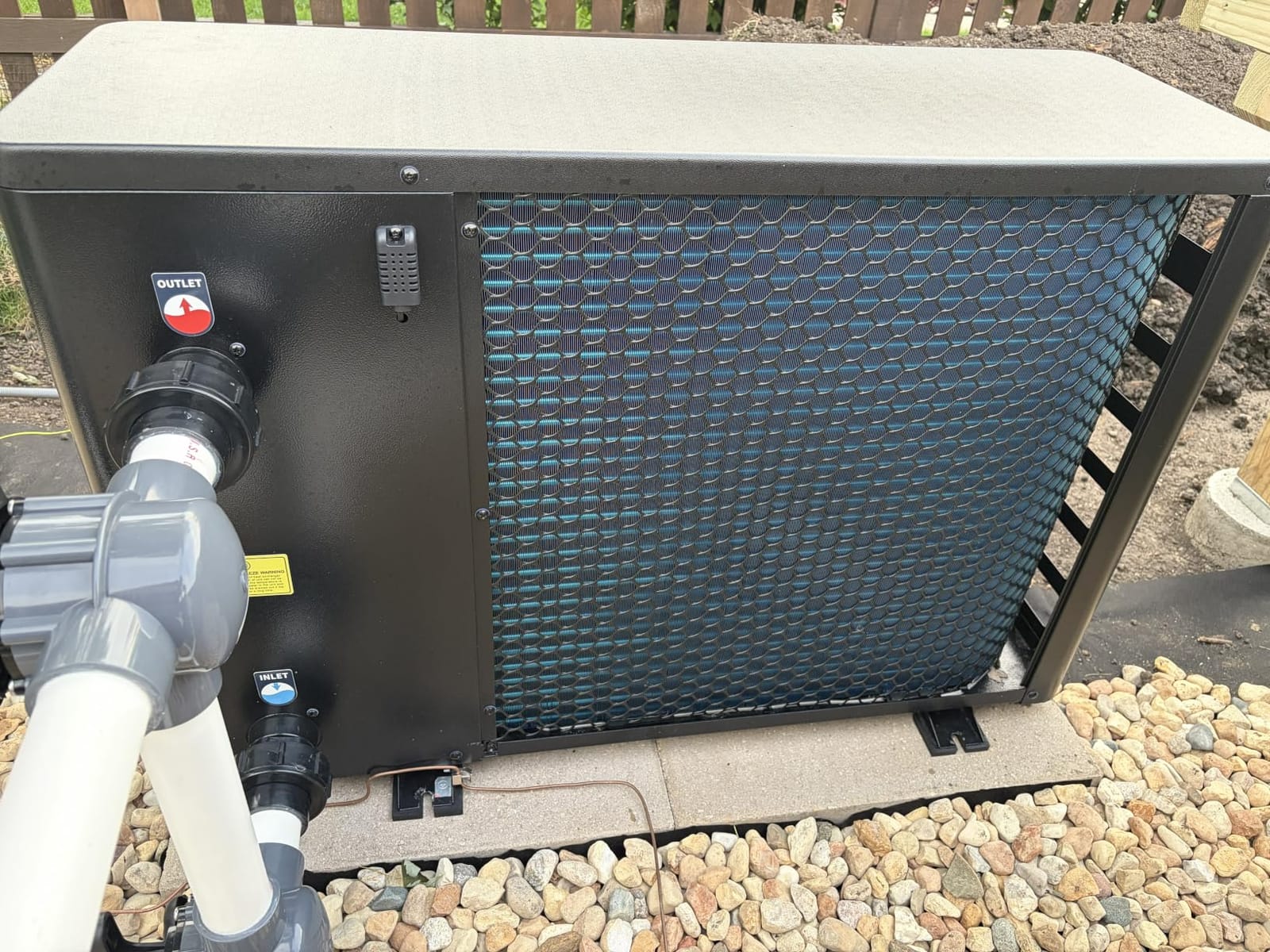
Safety is thorough: multiple built-in sensors monitor critical parameters, error codes display on the panel, and the unit shuts itself down on a fault. The titanium exchanger is compatible with seawater as well as freshwater, and the package includes rubber blankets, drain connectors, pipe joints, and an installation guide.
Be clear-eyed about the barriers though. It needs a 220-240V hardwired connection installed by a certified electrician, it weighs 146.7 pounds, and it is explicitly not for inflatable pools. The manufacturer also recommends a pool cover in cold weather and notes the unit is most efficient above 60F ambient.
What the 220-240V hardwired requirement involves
This is the most serious electrical step in the roundup. A hardwired 220-240V connection means a new dedicated circuit run from your panel to the pool pad by a licensed electrician, not a plug and not an extension. On a yard where the nearest panel is on the opposite side of the house, that is the dominant cost of the whole project.
Owners who have the circuit in place describe the install as straightforward from that point. The included fittings cover the connection hardware, and the drain connectors handle condensate, which matters on a unit this size. Plan the electrical work before you buy, not after.
Is a large pool worth a dedicated circuit?
If you already swim daily from April to October, yes. Holding a 20000 gallon pool at temperature costs real money with any system, and the efficiency figures here suggest you spend substantially less per month than running a gas burner for the same schedule. The circuit is a one-time cost that the running costs then amortise.
If you swim a few weekends a season, the numbers do not work. A 20000 gallon pool holds an enormous amount of energy, and heating it for occasional use with an electric heat pump is slow and inefficient. A solar cover and a solar panel will serve occasional swimmers far more cheaply than any active heater at this capacity.
9. NATURAQUELL 18,000 BTU Heat Pump for 5200 Gallon Pools
NATURAQUELL Swimming Pool Heat Pump, 18,000 BTU, 5,200 Gal
18000 BTU
Up to 5200 gallons
COP 4.1
110-120V
8-year after-sales support
Pros
- 4.8 star rating from early owners
- Compact 16.65 x 15.35 x 17.21 inch size
- 110-120V residential power
- Inverter system with 45 percent energy savings
- 8-year after-sales warranty support
Cons
- Capped at 5200 gallon pools
- Only 16 reviews so far
- Water lines sold separately
- Dedicated 15 to 20 amp circuit advised
The NATURAQUELL is the most compact unit in the roundup, at just over 16 inches in each direction, and it carries the highest owner rating we found at 4.8 out of 5. It is built for small to mid-size above ground pools up to 5200 gallons and runs on ordinary 110-120V residential power.
The inverter system delivers a COP of 4.1 with claimed energy savings around 45 percent, and it adjusts output as the pool approaches its target temperature rather than running at full blast. Control is available from a mobile app or a touch panel, and the titanium exchanger handles corrosion in both freshwater and saltwater.
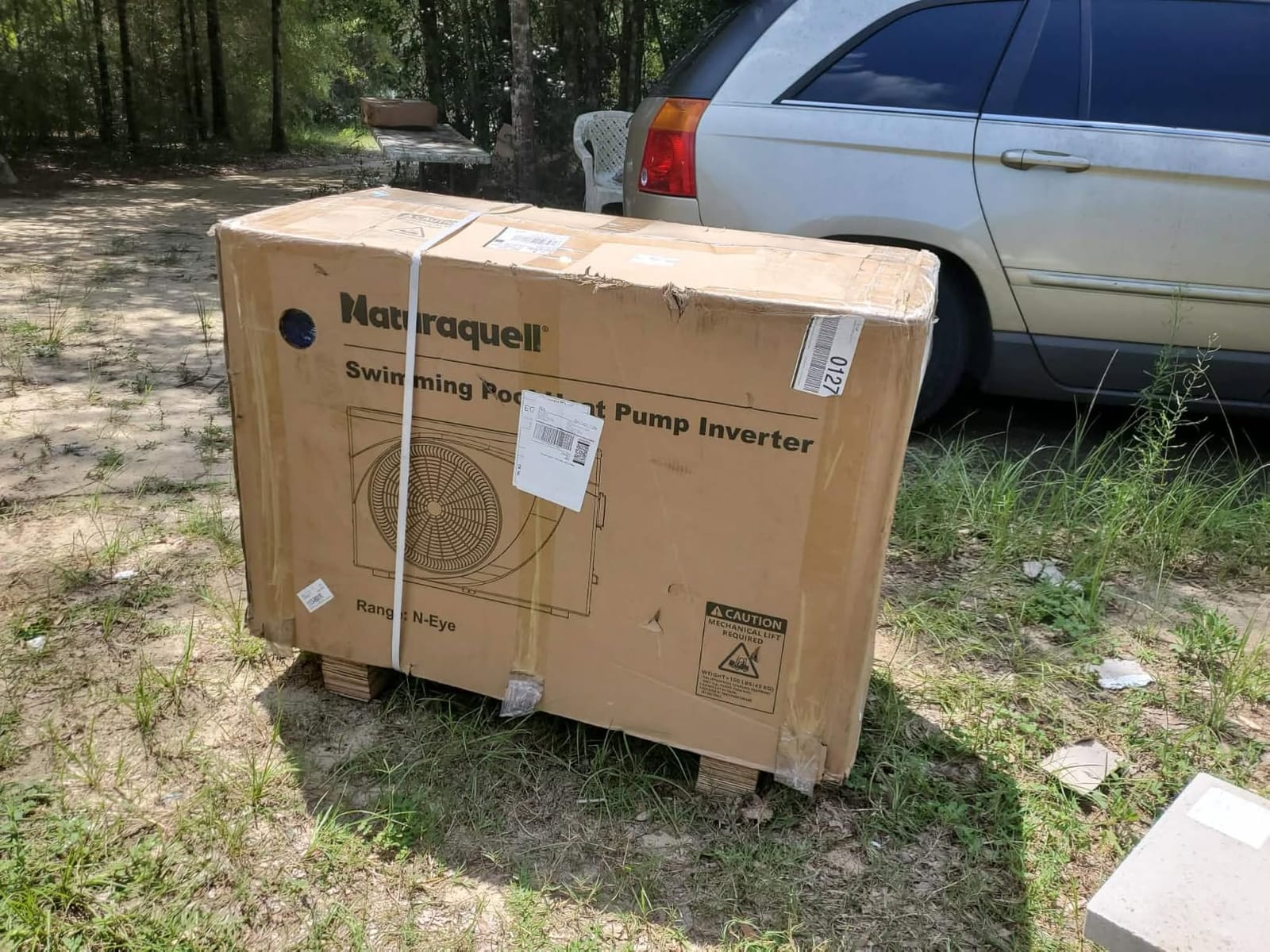
Two details stand out for owners. The 8-year after-sales warranty support runs well past the three-year coverage typical of this category, and the quiet operation suits pools near a bedroom wall. Reviewers who have installed it point to straightforward setup once the circuit is available.
The caveats are real but ordinary for a newer listing. Sixteen reviews is a small sample, so treat the 4.8 as encouraging rather than proven. Water lines are not included, a dedicated 15 to 20 amp circuit is advised, and the condensate line fitting can be awkward in a tight plumbing layout.
How to weigh an 8-year warranty on a new listing
Long warranty support on a young product is a statement of intent from the manufacturer, and it is worth something. But a warranty is only as good as the company behind it, so the practical question is whether the seller has a track record of honouring claims and whether the terms are written down clearly before you buy.
Our advice is to photograph the serial number, keep the packaging, and register the unit on day one. If the after-sales support is genuinely local and responsive, that materially reduces the risk of a listing with only 16 reviews, and it is one of the reasons this unit made our shortlist despite the small review count.
Does it heat a saltwater pool?
Yes. The titanium heat exchanger is the corrosion-resistant component that makes this possible, and it is the same material used by several larger units in this roundup. If you run a saltwater system, a titanium exchanger removes one of the usual worries about pool equipment, though you should still confirm the manufacturer rating covers your salinity level.
For a 12 foot pool around 3500 gallons, 18,000 BTU with a 4.1 COP is a sensible pairing. For anything over 5200 gallons, move up to a larger unit, because an undersized heater simply runs continuously without ever catching up.
10. Raypak PR106AENC 105,000 BTU Natural Gas Pool Heater
Raypak PR106AENC 105,000 BTU Natural Gas Pool Heater for Above Ground Pool and Spa Elevations 0–4,999 ft (014779)
105000 BTU natural gas
Copper fin-tube exchanger
Polymer headers
No fan needed
0-4999 ft elevation
Pros
- Heats water far faster than any heat pump
- All-copper fin-tube heat exchanger
- Polymer headers prevent rust staining
- No fan needed so wind does not hurt output
- Works in rain snow and cold wind
- Established Raypak brand
Cons
- Requires a natural gas line and professional install
- Highest running cost of the three fuel types
- Some owners report early leaking or rusting
- Venting must meet local code
The Raypak is the fastest way to get an above ground pool hot, and no heat pump in this roundup comes close. At 105,000 BTU of natural gas input, it can take a pool from cool to comfortable in a fraction of the time an electric unit needs. If you have a party tomorrow and the pool is cold, that is the entire argument.
The engineering details are old-school and durable. The heat exchanger is a single piece of extruded copper in a fin-tube design, which is the part that does the actual work and the part that most often fails in cheaper heaters. Polymer headers prevent rust staining on pool and spa surfaces, which is a real problem with conventional copper headers.
There is no fan on this design, which means wind, leaves, and debris cannot cut off airflow the way they can on fan-cooled heaters. Raypak rates it for elevations from 0 to 4,999 feet, and it is built for above ground pools and spas.
What a gas line at your pool pad involves
This is the part that rules out gas for a lot of above ground pool owners. A gas heater needs a properly installed gas supply line, approved venting, and a professional who will pull permits. If your property has no gas service near the pool area, running a new line can cost more than the heater itself and involves trenching.
Propane is the alternative for yards without natural gas, and the same installation rules apply, using a propane tank or line instead. Either way, budget for a licensed gas fitter and check local venting codes, since the required vent diameter differs between model generations.
What reviewers say about the running cost reality
Pool owner communities consistently report gas running costs of 150 to 300 per month when a heater is left running constantly, against roughly 50 to 150 for a heat pump. Those are owner reports rather than measured averages, but the direction is consistent and it is the single most useful number for anyone deciding between fuel types.
Reliability feedback is mixed. Raypak is repeatedly recommended by name on pool forums, which speaks well of the brand, but this particular listing includes some reports of leaking or rusting within the first year and criticism of customer service response. That is why the warranty terms are worth reading closely before you commit.
11. Vidapool 21,000 Gallon Air Source Heat Pump
Vidapool Swimming Pool Heater Electric Pool Heat Pump 21000 Gallons
Up to 75000 BTU
Up to 21000 gallons
36 dB
Inverter control
ETL certified
App control
Pros
- 36 dB sits at the quiet end of this roundup
- Inverter control reduces power instead of stopping
- Up to 70 percent cost savings versus natural gas
- Works as heater and cooler
- ETL certified
- App control with scheduling
Cons
- Installation needs plumbing work and fittings
- Output drops in cold air without a cover
- Heating speed depends on ambient temperature
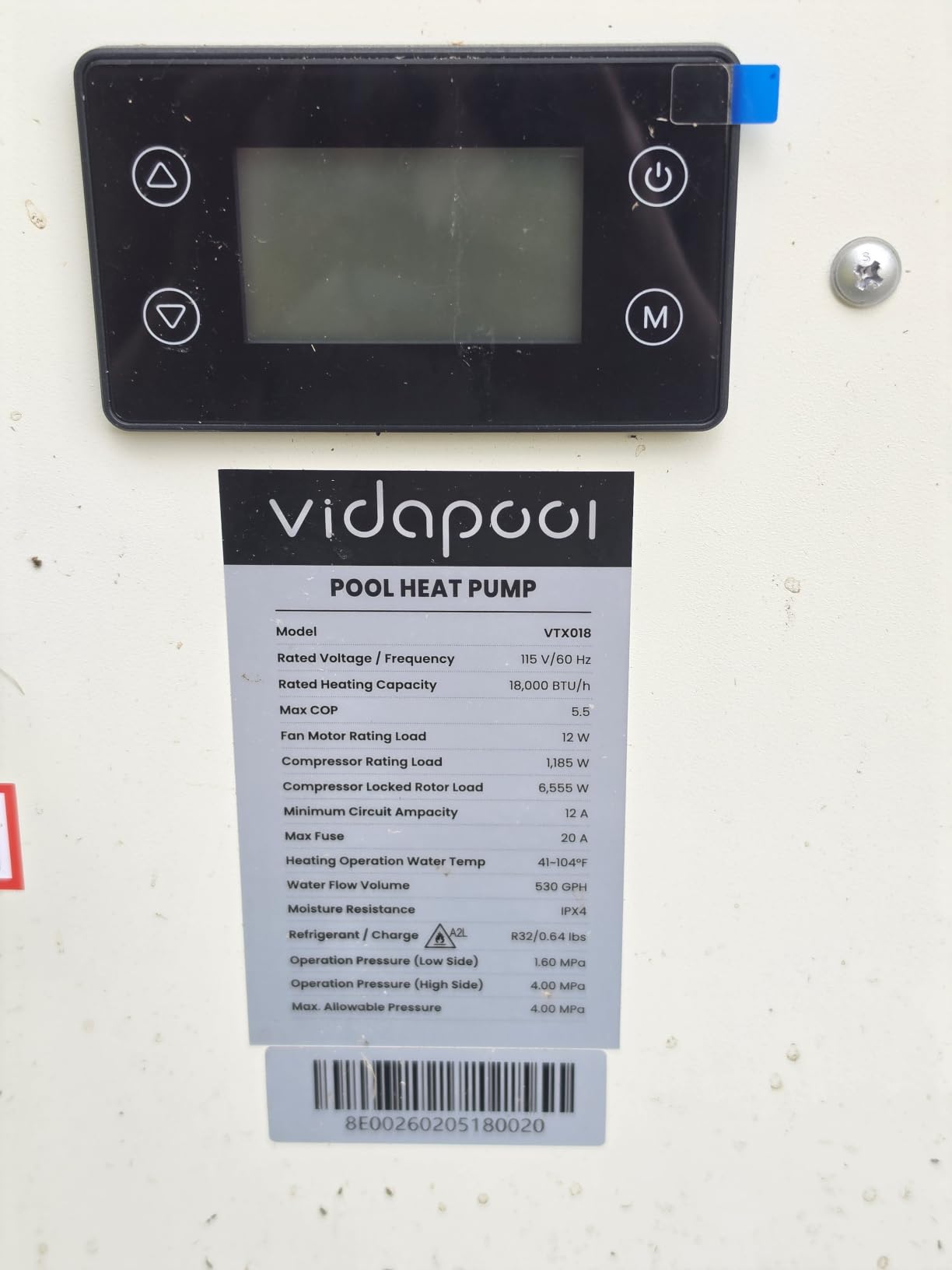
The Vidapool is defined by two numbers: 36 dB and up to 75,000 BTU. That noise figure sits at the quiet end of the roundup, low enough to sit beside a patio without intruding on conversation, and the output covers pools up to 21000 gallons. Owners with large frame pools rate it 4.3 out of 5.
Inverter control is the mechanism behind the quiet operation. Rather than cutting out entirely at the set temperature, the compressor reduces power, which is why owners describe a smoother, steadier water temperature and less start-stop noise than a conventional on-off heat pump produces.
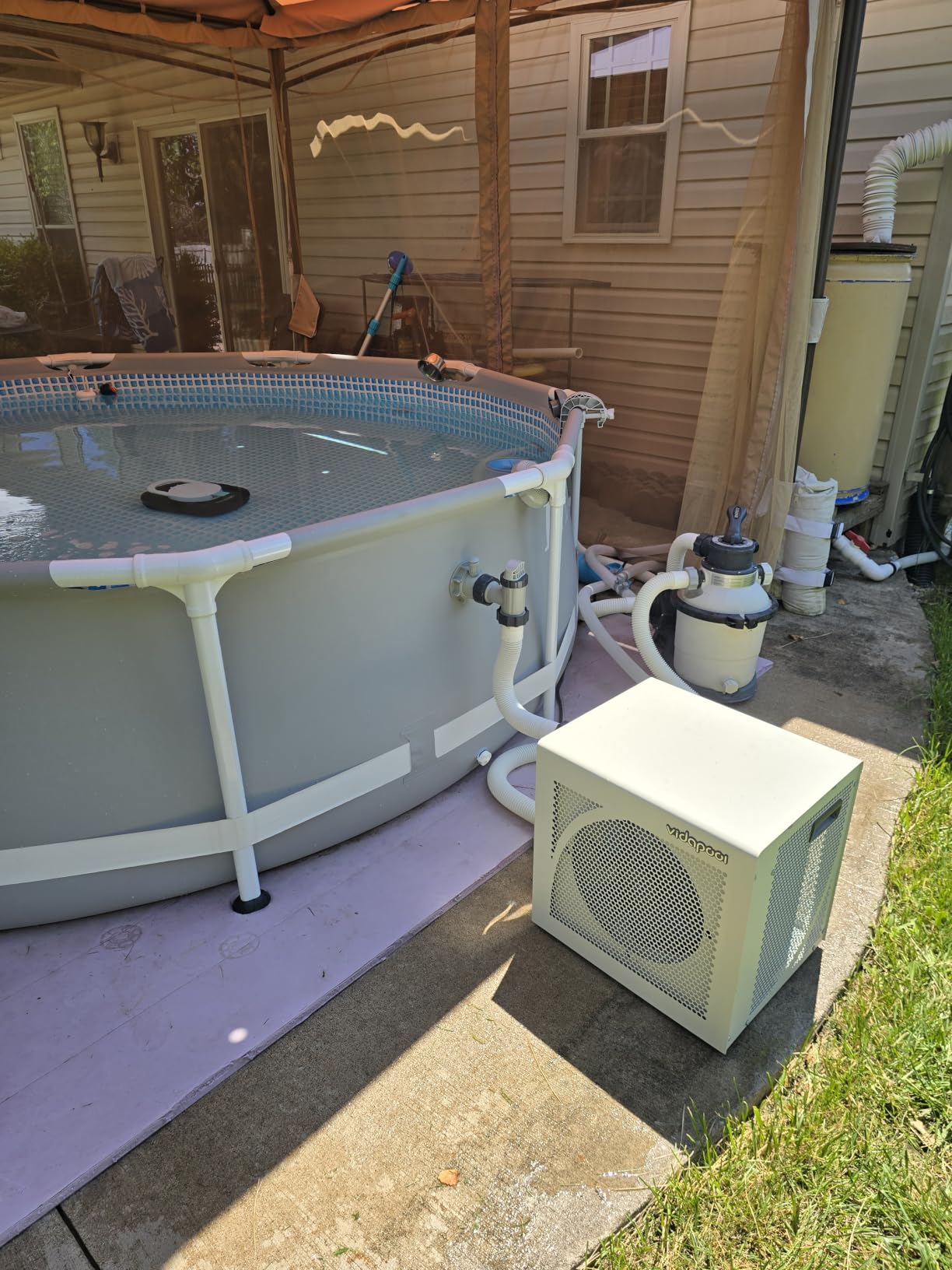
Connection options are unusually flexible, with a 1.25 inch and 1.5 inch hose adapter, a 1.5 inch adapter conversion kit, and a 1.5 inch PVC pipe converter. That range matters on above ground setups where you may be connecting flex hose on one side and rigid pipe on the other. The unit is ETL certified and runs app control with scheduling.
The rating distribution shows 67 percent five-star and 5 percent one-star reviews, which is a healthy spread. The recurring criticisms are about installation complexity and reduced efficiency in cold weather when no cover is on the pool, both of which are manageable with planning.
Is a 36 dB heat pump worth the extra cost?
If your pool sits near where you sit, it is worth a lot. The difference between 36 dB and 53 dB is not a subtle acoustic preference, it is the difference between background presence and something you notice. Owners who run heaters overnight also benefit, because a quieter unit is easier to live with beside a bedroom wall.
If your pool is at the far end of a large yard and you only heat during the day, the difference matters much less. In that case, prioritise BTU capacity, COP, and gallons rated over the noise figure, since those determine whether the unit can actually do the job.
Why the pool cover changes the efficiency number
Evaporation is the largest single source of heat loss in an uncovered pool, and an air-source heat pump is already fighting for every unit of heat it captures from the air. With a cover on, the unit stops replacing energy that simply evaporated, so the same compressor does noticeably more useful work.
Reviewers who report cold-weather shortfalls nearly always describe an uncovered pool. The fix is not a bigger heater, it is a cover. If you are buying a large inverter unit like this one, budget for a solar cover in the same project and you will get materially more out of the purchase.
12. FAFCO 4×20 ft Solar Bear Solar Pool Heater Panel
FAFCO Original 4 x 20 Feet Solar Bear Solar Pool Heater for Above-Ground Pools Universal with Connected Tube Design & Starter Kit
4x20 ft solar panel
Connected tube design
Starter kit included
Universal above ground fit
Pros
- Zero fuel or electricity running cost
- Connected tube design moves water across the full panel
- Starter kit included for setup
- Lightweight at 20.3 lbs
- Universal fit for above ground pools
Cons
- Only works when sunlight and air are warm
- Weather and orientation dependent
- Supplements rather than replaces an active heater
The Solar Bear is a collector panel rather than a pump-integrated pad, and the difference shows in the connected tube design that moves water across the entire surface of the panel. At 4 by 20 feet it is a substantial collector, and the universal mounting is designed specifically for above ground pools.
A starter kit is included, which matters because solar plumbing is the part that goes wrong. Owners report that the supplied fittings cover the connection to a standard filter pump loop and that the panel is light enough at 20.3 pounds to reposition as the sun moves through the season.
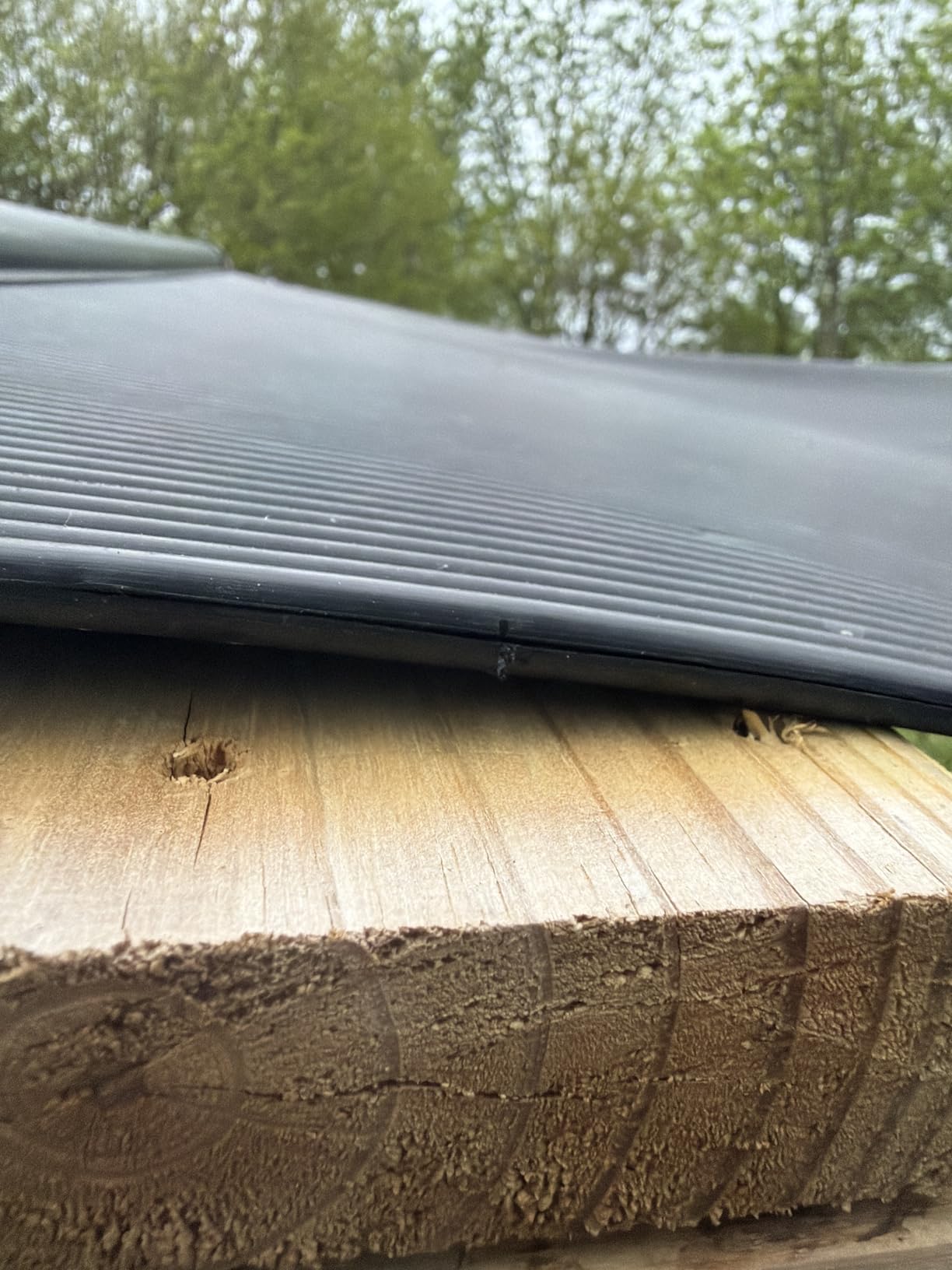
The rating spread is worth noting: 72 percent five-star against 11 percent one-star. The five-star owners are sunny-climate users who treat it as free supplemental heat, and the one-star reviews come from people who expected it to replace an active heater in cool weather. Both positions are reasonable, and the mismatch between them is the entire learning curve of solar heating.
How much panel do you actually need?
The common rule of thumb is to cover roughly 50 to 75 percent of the pool surface area with collector panels, which is why a single 4 by 20 foot panel suits a 12 to 16 foot round pool and looks undersized on a 24 footer. If you have a large pool and want solar to carry the shoulder season, multiple connected panels are the way to go.
Orientation matters as much as area. A panel angled toward the midday sun collects meaningfully more heat than one lying flat, and moving the panel between morning and afternoon on short days can add useful hours. Owners in the northern half of the country report the biggest gains from repositioning rather than from adding area.
Where a solar panel earns its place
It earns its place as a companion to a heat pump rather than a replacement for one. Run the heat pump overnight with a cover on to bring the water up to temperature, then let the panel hold or push that temperature during the day when the sun is out and the heat pump can rest.
It is a poor standalone choice in a shaded yard or a northern climate, where cool ambient air limits the panel regardless of sunlight. It is an excellent standalone choice in a sunny southern climate on a small pool, where the running cost of the system is essentially nothing after the purchase.
How to Choose a Pool Heater for an Above Ground Pool
Start with the three heater types, not the brand
There are only three practical options for an above ground pool. An electric heat pump pulls warmth from ambient air and moves it into the water, using roughly a quarter to a fifth of the energy a resistance heater would, at the cost of being slow. A gas or propane heater burns fuel directly and heats water several times faster, at a much higher monthly running cost and with installation requirements that are the most involved of the three. A solar cover or panel uses free sunlight and either traps heat or circulates sun-warmed water, doing nothing at all when the weather is not cooperating.
Most owners end up with a combination. A solar cover retains heat overnight, a modest electric heat pump handles shoulder weeks, and gas is reserved for the rare occasion when you want the pool hot fast. Choosing one of these in isolation is usually the mistake that leads to disappointment.
Size to gallons, and read COP correctly
Above ground pools hold much less water than inground pools of the same diameter, so the familiar 3 BTU per gallon rule under-sizes them badly. The same 12 foot pool that would need 30000 BTU as an inground shell typically holds 3000 to 3500 gallons, and a heater in the 16000 to 18000 BTU range handles it well. A 24 foot round pool above ground lands around 12000 gallons, which puts it in the 35000 to 40000 BTU bracket.
COP needs a different reading for each fuel type. A gas heater’s number is rated input, so all of it becomes heat at roughly high efficiency and the rest is the fuel cost. A heat pump’s COP is how many units of heat it delivers per unit of electricity, and it falls as outdoor air temperature falls, which is why a COP of 4.3 measured in mild weather tells you little about January performance.
Set that against the efficiency of electric resistance heating, where a kilowatt-hour becomes one unit of heat at best. That gap is the entire economic argument for a heat pump, and it is why every heat pump in this roundup advertises a percentage saving against conventional electric heating.
Check the voltage at your pool pad before anything else
This single check eliminates half the shortlist and prevents the most expensive mistake in this whole category. Most above ground pool pads are supplied with 120V receptacles for the filter pump and nothing else. Models described as 110V or 120V in this roundup, including the AQUASTRONG, the WARMBLU, the small Varpoolfaye, and the NATURAQUELL, can use that supply. Models listed at 220V or 220-240V, including the 40000 BTU Varpoolfaye, the TURBRO, and anything described as hardwired, need a new dedicated circuit installed by an electrician.
Because above ground plumbing is flexible hose rather than rigid PVC, check the adapter diameter too. Units that include both 1.25 inch and 1.5 inch adapters, such as the AQUASTRONG at number one, the Bestway pad, and the small Varpoolfaye, will connect to almost any frame pool without a trip to the hardware store.
Remember that the pump must be running
This is the most repeated question in pool owner forums and the least mentioned in most buying guides. A pool heater is a heat exchanger, not a water heater. It needs water flowing through it, which means your filter pump has to run for as long as the heater runs. Owners who run the heater without the pump get warm exhaust air and a cold pool.
Flow rate matters too. Solar setups need a pump of at least 0.75 HP moving roughly 500 gallons per hour to move meaningful water through the collectors, and small heat pumps commonly specify a range such as 700 to 1000 gallons per hour. If your pump cannot deliver that, fix the flow with a bypass or a stronger pump before you decide the heater is faulty.
Pair any active heater with a cover
Evaporation is the largest heat loss in any outdoor pool, and it is the reason an uncovered pool can drop 6 to 8F overnight while a covered one loses 1 to 2F. That single comparison decides whether a heater is affordable, because a heat pump running against evaporation is spending most of its capacity replacing energy that simply left.
The routine that shows up most often in owner discussions is simple. Run the heat pump overnight with the cover on, then switch it off in the morning when the cover comes off and let the sun do the daytime work. A solar cover is the highest-return accessory in this entire category, and it is the one piece of equipment we would buy before any heater.
Match the heater to your climate
In a sunny southern climate, a solar panel plus a cover may be all you need for spring and autumn, and a modest heat pump handles the rest. In a cold northern climate, low ambient operation becomes the deciding spec, which is why the MICOE with its 32F rating earns its place in this roundup. A heat pump that stops producing useful heat at 50F is useless in the exact weather you bought it for.
In a shaded backyard, solar is close to worthless and an active heater is essential. In a yard where you only swim on weekends, a cover and a small heat pump is the sensible pairing, because nobody should pay to heat 12000 gallons for two afternoons a month. Match the system to how often you actually swim, not to how large the pool is.
Weigh brand reputation and warranty length
Owners consistently trust the brands with an established field service network, and the pool forum consensus names Hayward, Raypak, Pentair, and AquaPro most often for reliability. The Raypak at number ten is the clearest example here, and the repeated brand-name recommendations on pool forums are the reason it stayed in the roundup despite mixed individual reviews.
The warranty range here runs from 12 months on the WARMBLU to 8 years of after-sales support on the NATURAQUELL, with three years being common for the better-known brands. Longer coverage matters most on units with few reviews, because a manufacturer that honours an eight-year warranty on a young product is telling you something about its own confidence.
Understand what the condensation means
A heat pump removes moisture from the air as part of making heat, and that moisture leaves the unit as water. On a humid morning near the water, you may find a puddle beside the unit that has nothing to do with a leak. One manufacturer in this roundup states outright that condensation leakage is normal, and it is a frequent reason buyers return working heaters unnecessarily.
Give the unit clearance on all sides so damp air can dissipate, and put it on a pad where drainage does not matter. If you would rather route the water away, a short drain line to a gravel bed or a floor drain takes minutes and ends the question permanently.
Are pool heaters worth it for an above ground pool?
They are worth it for a specific goal: extending the season by a few weeks and keeping evening water swimmable. Above ground pools lose heat quickly through thin, uninsulated walls, so water that is comfortable at midday can be uncomfortable by dinner. A heater plus a solar cover is the combination that changes that, and for owners of larger 24 foot pools it is the difference between a season and a summer.
They are not worth it for everyone. If you swim at midday in July and nowhere else, a cover alone will do. If your pool is inflatable, most of the heat pumps here are unsuitable because there is no proper plumbing loop. And if you expect a heater to make a cold pool hot in an afternoon, only gas will deliver that, at a running cost most owners find hard to justify year round.
Frequently Asked Questions
What is the cheapest way to heat an above-ground swimming pool?
A solar cover is the cheapest upgrade by far, because it costs nothing to run and stops most overnight heat loss. After that, a solar panel connected to your existing filter pump adds free daytime heat with no fuel or electricity cost. If you need an active heater, a 110V heat pump such as the Varpoolfaye 16000 BTU model costs far less to run than a gas burner, since a heat pump moves heat from the air rather than burning fuel.
What is the most reliable pool heater brand?
Owners most often name Raypak, Hayward, Pentair and AquaPro as the brands with a proven field service network, which matters more than any single spec sheet. Among the heat pumps reviewed here, AQUASTRONG and Varpoolfaye have the deepest owner review histories. Reliability also depends on installation, so a correctly plumbed unit with proper pump flow will outlast a premium brand installed badly.
Are pool heaters worth it for an above-ground pool?
They are worth it if your goal is a few extra weeks of season and comfortable evening swims, because above ground pools lose heat quickly through thin walls. They are not worth it if you swim at midday in summer only, since a solar cover alone will handle that. The strongest case is a solar cover paired with a modest heat pump, which together cost far less per month than running a gas heater constantly.
What is the best way to heat an above-ground pool in the winter?
First, understand that most heat pumps lose meaningful output as ambient air drops toward 50F, so pick a low ambient unit rated to operate well below that if you plan to heat in deep cold. Second, run the heater overnight with a solar cover on, then switch it off in the morning when the cover comes off. Third, keep the heater running only while your pool pump circulates water, and cover the pool whenever it is not in use.
Does the pool pump need to be on for the heater to work?
Yes. A pool heater is a heat exchanger rather than a water heater, so it needs water flowing through it to transfer heat. If you run the heater without the pump you will get warm exhaust air and a pool that barely changes temperature. Most heat pumps also specify a minimum flow rate, commonly 700 to 1000 gallons per hour, and solar panels need at least a 0.75 HP pump to move enough water through the collectors.
How long does it take to heat a pool from 60 to 80 degrees?
It depends almost entirely on heater size relative to gallons and on ambient air temperature. A 16000 BTU heat pump on a 3500 gallon pool can take roughly a day of continuous running in mild weather, while a 40000 BTU unit on a 12000 gallon pool moves much faster. A 105,000 BTU gas heater is the only option in this roundup that can raise a large pool 20 degrees in a few hours, and it costs far more per hour to run.
Final Verdict on the Best Pool Heaters for Above Ground Pools in 2026
After working through 12 heaters and the owner threads behind them, the best pool heaters for above ground pools come down to two decisions. The first is voltage, because a 110V plug-in model installs in an afternoon while a 220V model needs an electrician. The second is size, because a heat pump matched to your gallons holds temperature cheaply and an oversized one just runs constantly.
For most frame pool owners, the AQUASTRONG 5.5 COP heat pump at number one is the pick, with 534 owner reviews, a 38 dB rating, and adapters that fit the fittings you already have. Small pools should look at the Varpoolfaye 16000 BTU or the compact NATURAQUELL. Large 24 foot pools need the Varpoolfaye 40000 BTU or the TURBRO, and a sunny yard should add the Bestway pad or the FAFCO panel before anything else.
Whatever you choose, buy a solar cover first, run the heater only while the pump runs, and you will get more usable swimming days out of 2026 season than almost any other yard investment.