
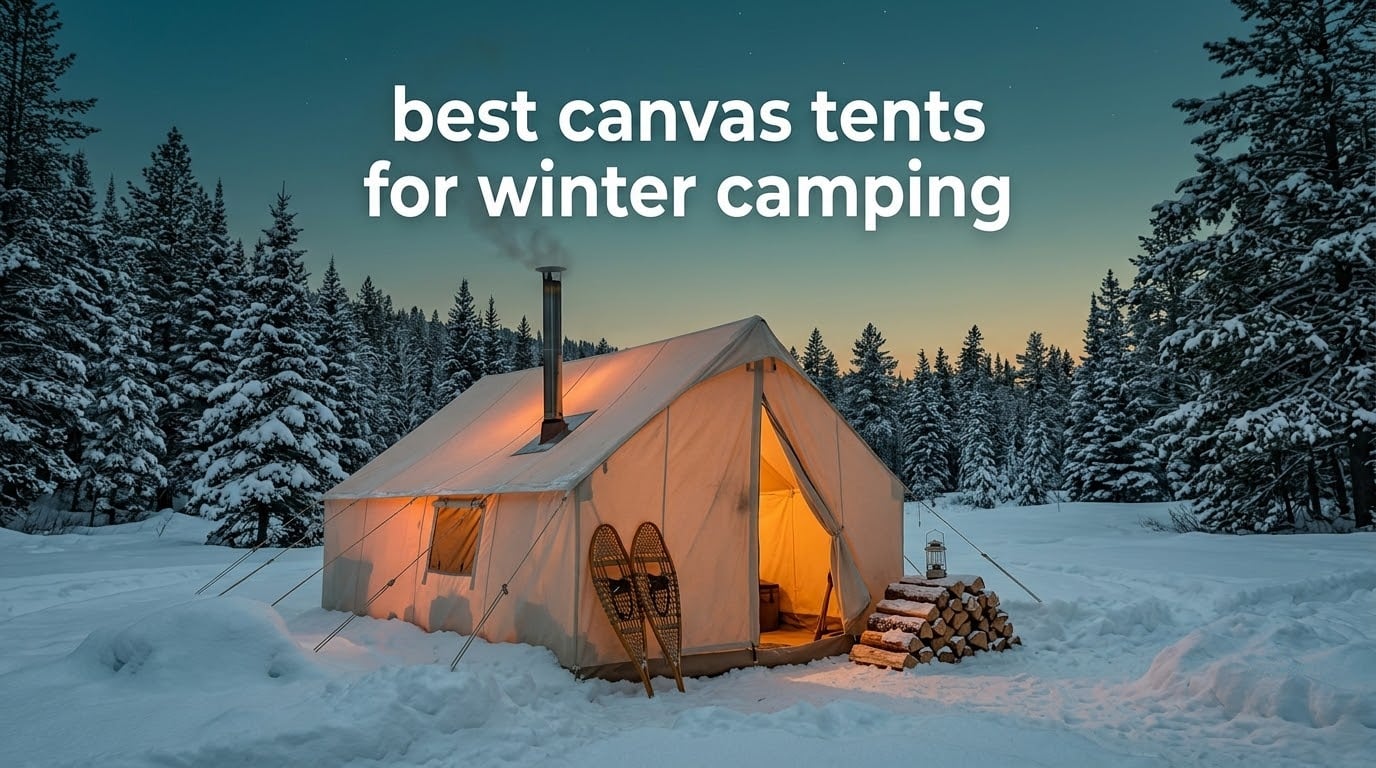
Canvas tents come back into favor every time the temperature drops, and the reason is simple physics. The fabric breathes, which means the moisture you generate by breathing, cooking and drying wet clothing passes through the walls instead of pooling on the inside. Synthetic tents do not do that. I have spent the last few seasons comparing the big names in this category — Kodiak Canvas, White Duck Outdoors, TETON Sports, Springbar, Snowtrekker, VEVOR, KingCamp, Ellis Canvas Tents and Canvas Cutter all show up repeatedly in winter trip planning threads — alongside budget bell tents that never get mentioned outside summer. This roundup covers the ten canvas tents worth a winter night, sorted by what you are actually trying to do: stay warm in a basecamp, haul a shelter on a sled, or set up once and live in it.
Last updated October 2026. I have read the owner reviews closely, cross-checked them against the field reports on the Boundary Waters and winter camping forums, and pulled out the details that decide whether a canvas tent survives a January night: canvas weight, whether there is a sewn-in floor, whether the stove jack is actually fireproof, and how the tent handles static snow load. Where the owners disagree, I tell you. If you are outfitting kids for a weekend trip, our kids walkie talkies for camping guide pairs well with a family-sized canvas shelter.
Table of Contents
Are Canvas Tents Good for Winter? The Direct Answer
Yes — for wall-tent and hot-tent designs, canvas is genuinely better for sustained sub-freezing use because the fabric breathes and lets condensation escape instead of freezing and dripping inside overnight. The tradeoffs are weight and cost, not warmth. A canvas tent breathes; a synthetic tent traps vapour that freezes on the inner surface and rains down on you when you light the stove in the morning. If you camp near a vehicle, canvas wins. If you are hauling everything on a sled, the weight may tell you otherwise.
That single failure mode, condensation freezing overnight, is the reason experienced winter campers keep coming back to duck canvas despite the weight. Everything else in this article is downstream of it.
Top 3 Best Canvas Tents for Winter Camping (October 2026)
The three below are the strongest combination of cold-weather reports, build quality and review depth in the whole set. The Kodiak leads on durability evidence, the White Duck leads on documented sub-zero stove use, and the ShinHye leads on weight per pound of shelter.
Kodiak Flex-Bow Deluxe Canvas
- Hydra-Shield cotton duck canvas
- 6 ft 6 in ceiling
- Pack weight 68 lbs

White Duck Regatta Bell Tent
- Pre-cut fire-retardant stove jack
- 13 ft diameter
- 132 sq ft floor area

All 10 Canvas Tents Compared for Winter in 2026
Every tent below is a canvas or poly-cotton shelter with a stove jack or the capacity for one. Weights are the manufacturer-listed figures. Ratings and review counts are copied exactly as shown on the product pages.
| Product | Specifications | Action |
|---|---|---|
| Kodiak Flex-Bow Deluxe Canvas Camping Tent |
|
Check Latest Price |
| WHITEDUCK Regatta Canvas Bell Tent with Stove Jack |
|
Check Latest Price |
 DANCHEL OUTDOOR B5PRO Canvas Bell Tent DANCHEL OUTDOOR B5PRO Canvas Bell Tent |
|
Check Latest Price |
 WaldZimmer Canvas Bell Tent with Stove Jack and Removable Floor WaldZimmer Canvas Bell Tent with Stove Jack and Removable Floor |
|
Check Latest Price |
 TETON Sports Mesa 14 Canvas Base Camp Tent TETON Sports Mesa 14 Canvas Base Camp Tent |
|
Check Latest Price |
 MC TOMOUNT Canvas Bell Tent 16.4 ft MC TOMOUNT Canvas Bell Tent 16.4 ft |
|
Check Latest Price |
 VEVOR Canvas Bell Tent Yurt with Stove Jack VEVOR Canvas Bell Tent Yurt with Stove Jack |
|
Check Latest Price |
 VANFOND Canvas Bell Tent with Stove Jack VANFOND Canvas Bell Tent with Stove Jack |
|
Check Latest Price |
| ShinHye Canvas Bell Tent Yurt |
|
Check Latest Price |
 Dream House Large Cotton Canvas 10-Person Tent Dream House Large Cotton Canvas 10-Person Tent |
|
Check Latest Price |
The 10 Best Canvas Tents for Winter Camping, Reviewed
1. Kodiak Flex-Bow Deluxe Canvas Camping Tent — Best All-Round Winter Wall Tent
Kodiak Canvas Flex-Bow Canvas Tent Deluxe 10×10 ft (6-Person)
Hydra-Shield cotton duck canvas
6 ft 6 in ceiling
68 lbs pack weight
Two funnel-flow vents
Pros
- Genuinely waterproof over multiple seasons of storms
- Sets up in about 10 minutes once learned
- Standing height beats every dome tent
- Steel stakes that do not bend
- Taught long-term owners on durability
Cons
- 68 lb pack weight rules out backpacking
- Long pole bag is hard to fit in a small vehicle
- Side poles need real strength to raise
This is the one I would put at a winter basecamp and leave there. The 10×10 footprint gives 72 square feet of floor and a 6 ft 6 in ceiling, which is the difference between crouching and standing. Owners across many seasons describe it holding through heavy rain, high wind, freezing rain and snow, and the review volume — 839 ratings at 4.7 — is by far the deepest evidence base in this roundup.
Owners also report pairing it with a heater and finding that the canvas retains heat better than nylon, which matches everything in the Boundary Waters discussions about breathability. The Hydra-Shield cotton duck has been described as genuinely waterproof over nine nights and multiple storms, which is a far better test than a spec sheet.
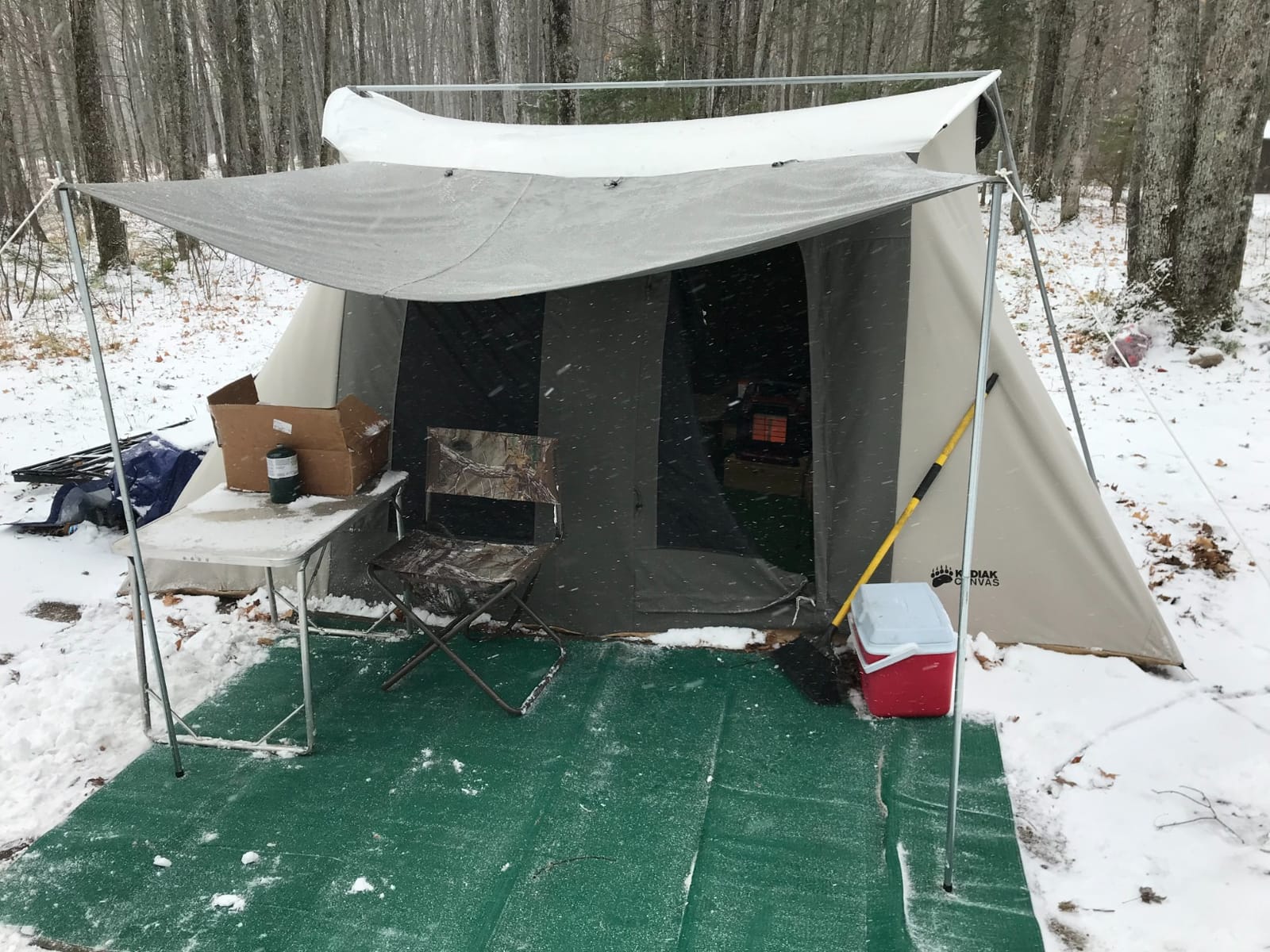
The Flex-Bow frame is 3/8-inch solid spring steel, and two D-shaped doors with #10 YKK zippers face opposite ways, so you can drive a stove in one side and sleep with the draft on the other. Two funnel-flow vents high on the tent handle the moisture load, and a 72 by 78 inch awning gives you a dry place to cook in March.
Being honest about the weak points: this is a 68 lb package, 6.5 lb of which is stakes. The pole bag is genuinely awkward in a small vehicle, and the side poles take real effort to raise solo. The awning poles do not telescope and pool rainwater. The attic netting snap rings are reported by some owners not to reach the corner loops. None of that matters if the tent lives at a basecamp.
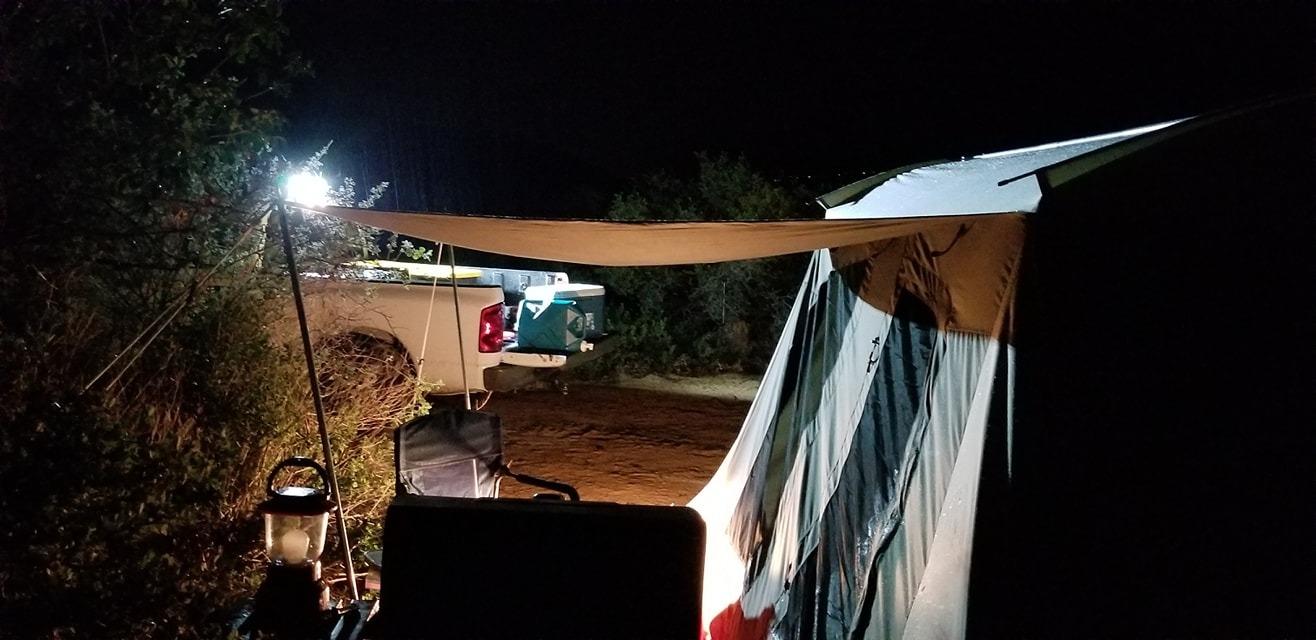
What a stove inside actually looks like
At 72 square feet with standing walls, this is one of the few shelters in the roundup where a wood stove and two cots coexist without a fight. The rule is a short vertical stovepipe run and a spark arrestor that sits below the canvas rather than above it. Owners using a propane heater report the same effect: heat stays low and even rather than pooling at the peak.
If you are running a stove, fireproof the stove jack area yourself before the first burn. Nobody in the reviews mentions the jack on this model as a problem, but the pattern across this entire category is that the jack is the weakest link.
Who should skip it
Anyone hauling their shelter on a sled or a pulk. At 68 lbs this is a car-camping and basecamp tent, full stop. It is also overkill for a single weekend of three-season use if you never light a stove — the heavy canvas is a winter asset, not a general-purpose one.
The other group that should pass: anyone pitching on a site where a 10×10 footprint plus awning will not fit. The awning is not optional in practice, and you need clear space around the tent for the Flex-Bow poles to be raised.
2. WHITEDUCK Regatta Canvas Bell Tent with Stove Jack — Best Documented Sub-Zero Stove Use
WHITEDUCK Regatta Canvas Bell Tent w/Stove Jack, Water Repellent, Yurt
Pre-cut fire-retardant stove jack
132.67 sq ft floor
60.6 lbs weight
10 ft peak height
Pros
- Verified owner use at -28F with a wood stove
- Stove jack plus roof vents run a heater well
- Seam and zipper quality praised repeatedly
- Shed a 13-hour rainstorm with no drips
Cons
- Stove jack flap is not the same fireproof material as the opening
- Canvas dries slowly and collects mud
- Needs a level site
This is the tent with the clearest cold-weather field evidence in the whole set. One verified owner reports using it at -28F with a wood stove and holding heat effectively, and the general review pattern is four-season performance with a well-heated interior. At 757 ratings and 4.6, the owner history here is deep and consistent.
Physically it is a 13 ft diameter bell tent at 132.67 square feet, with a 10 ft peak and a 2 ft 7 in wall height — taller than the average bell tent wall, which matters more than the peak number for cots and a stove. The build is 100% cotton canvas with a PFC-free water-resistant treatment, and owners report that finish shed a 13-hour rainstorm with no drips.
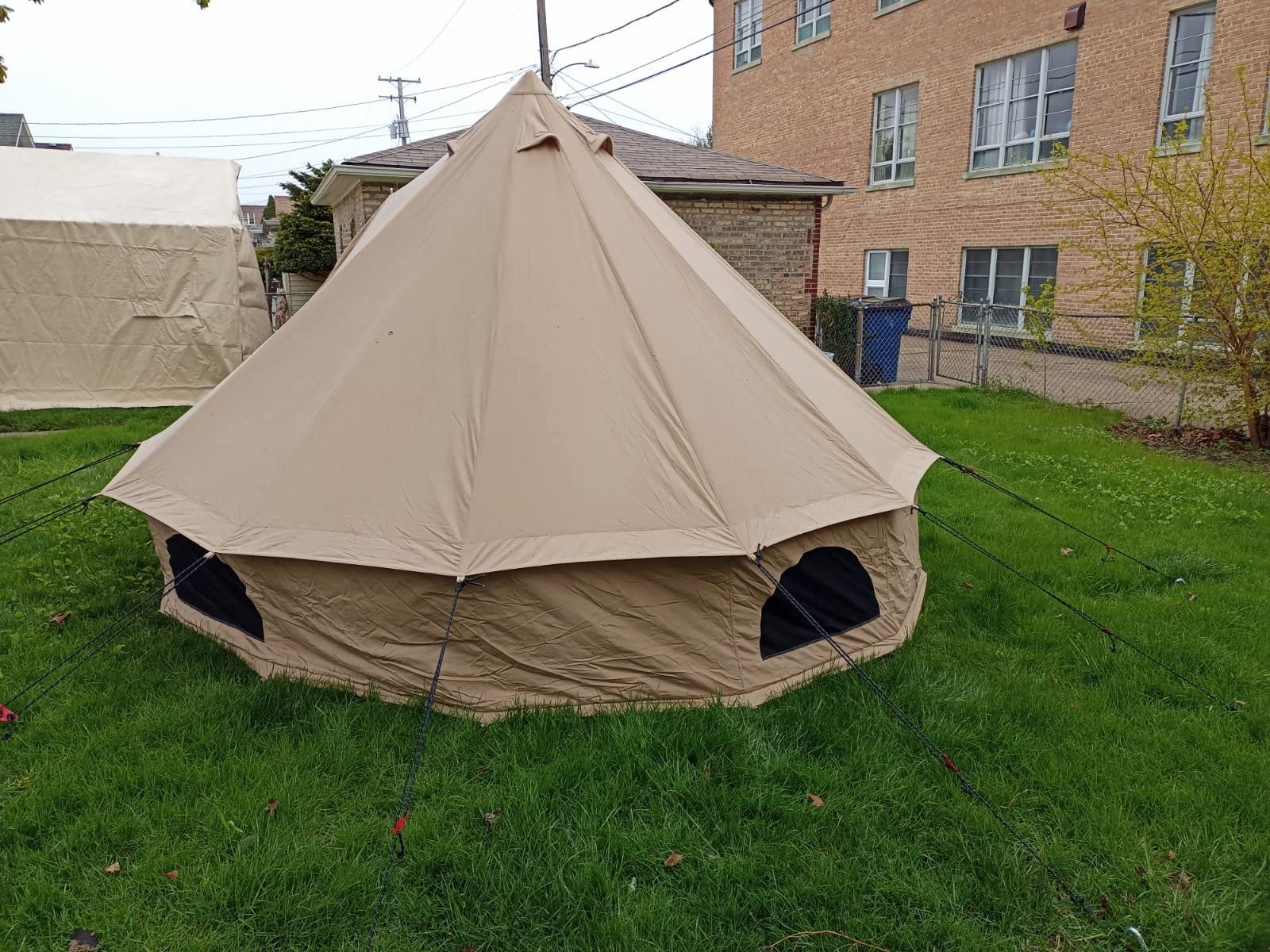
The roof vents matter as much as the stove jack here. With a heater running, a sealed canvas tent becomes an oven with poor air exchange, and the combination of a pre-cut fire-retardant jack plus roof vents is what owners credit for the heater working well. Setup is about 10 to 20 minutes solo once the routine is known, and the package includes a sewn-in groundsheet, poles, a tool kit and a weatherproof bag.
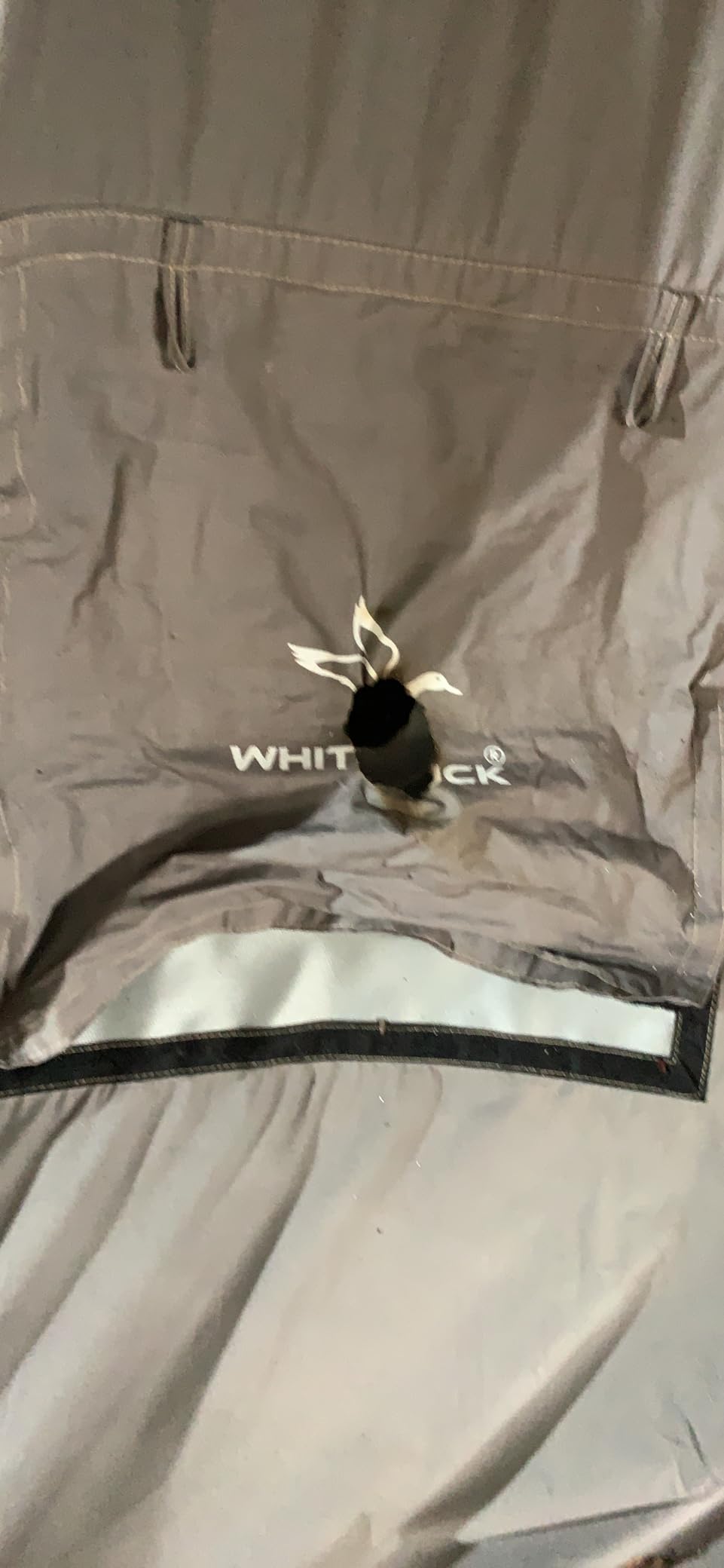
Two details deserve attention before you commit. First, the stove jack flap is not made of the same fireproof material as the jack opening itself, and it can scorch. That is the single most repeated caveat across these reviews, and it is fixable with a heat guard. Second, this is a bell tent, so the center pole constrains your cot and furniture layout more than a wall tent would.
Sizing and site selection for a bell tent
Staking this into sloped ground is genuinely difficult, and owners say so directly. If your winter site has any slope, level it before you pitch or plan on a different shelter. The 13 ft diameter is a comfortable four-person-plus footprint once the stove footprint is accounted for.
On a related note, canvas of this weight takes a long time to dry and picks up mud, which turns a wet-weekend cleanup into a real chore. Bring a tarp footprint even though a groundsheet is included.
Who should skip it
Sled haulers, and campers who move their camp. At 60.6 lb as a bundled bag, this is a permanent-structure tent. It is also a poor fit under heavy static snow load, because a single center pole and a curved roof are the weakest combination in the category when a foot of wet snow settles on it.
Glamping hosts will like it, though — the 2 ft 7 in wall height and electrical cable outlet make it easy to furnish, and it is one of the few tents here that owners treat as a room rather than a shelter.
3. DANCHEL OUTDOOR B5PRO Canvas Bell Tent — Best for Sleet and Heavy Rain
DANCHEL OUTDOOR B5PRO 4 Season Canvas Bell Tent with Stove Jack 13ft/4M
8.8 oz per sq yd cotton canvas
3000mm PU coating
5.9 inch stove jack
129.19 sq ft floor
Pros
- Held an inch of rain and gusty wind with zero interior water
- Under 30 minutes from box for one person
- Winter camping with a stove reported to work
- Galvanized hardware holds on rock and gravel
- Fits two full-size beds plus a cot
Cons
- Stove-pipe flap material is highly flammable and scorches
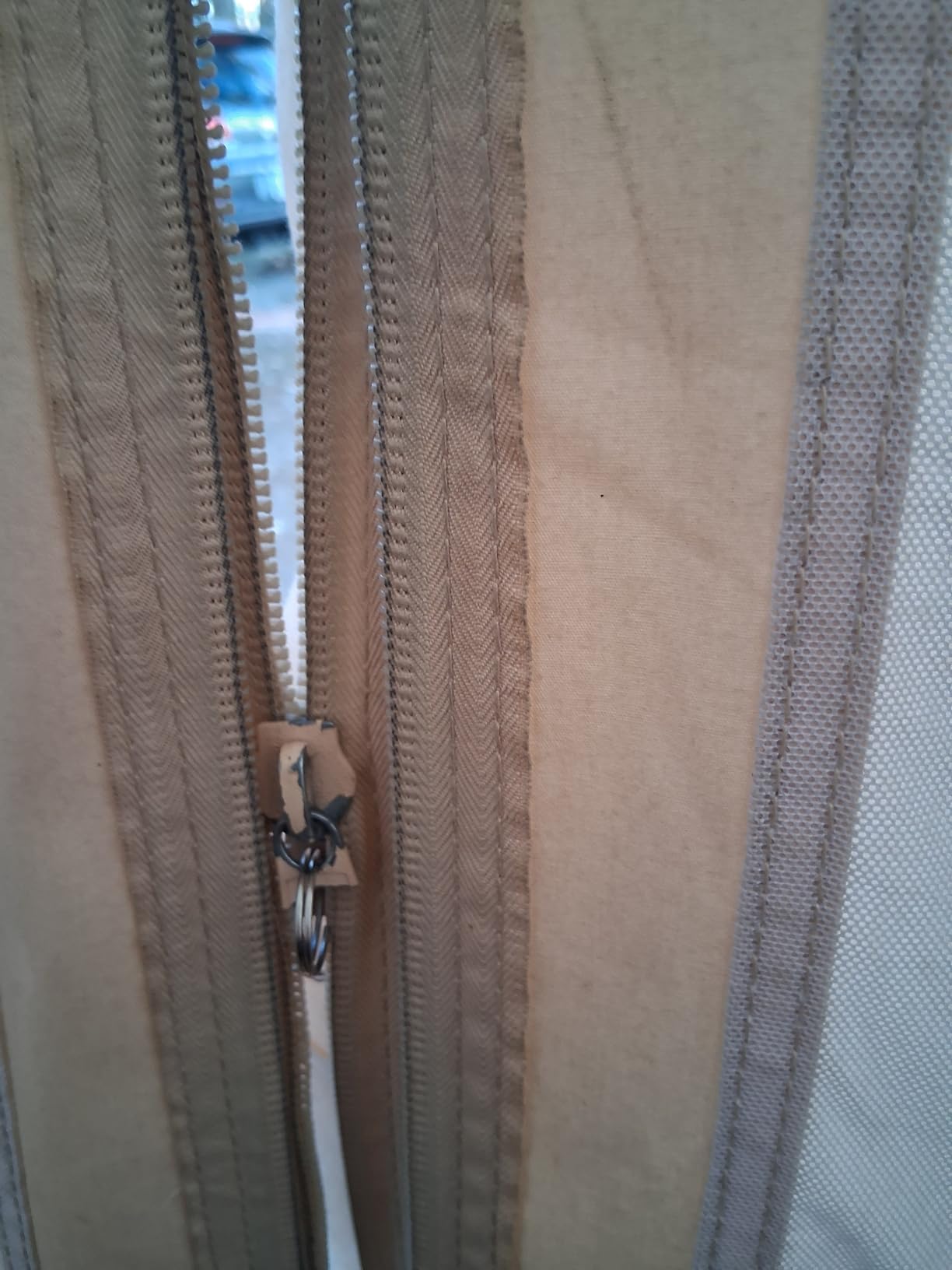
- Interior and lower window zippers are stiff
- Larger sizes rely on a single center pole
This is the most explicitly specified canvas in the roundup: 300GSM, which is 8.8 oz per square yard, with a 3000mm PU coating. That coating is the reason owners report it holding an inch of rain and gusty wind with zero interior water, and it is the difference between a breathable shelter and a genuinely wet-weather one.
One reviewer winter-camped in the 20 ft version with a wood stove and reported it kept the family warm and dry. That is a single report on a large size, so read it as an existence proof rather than a specification. The 13.2 ft version listed here is a four-person tent with 129.19 square feet of floor and a 540GSM bathtub-style PVC floor.
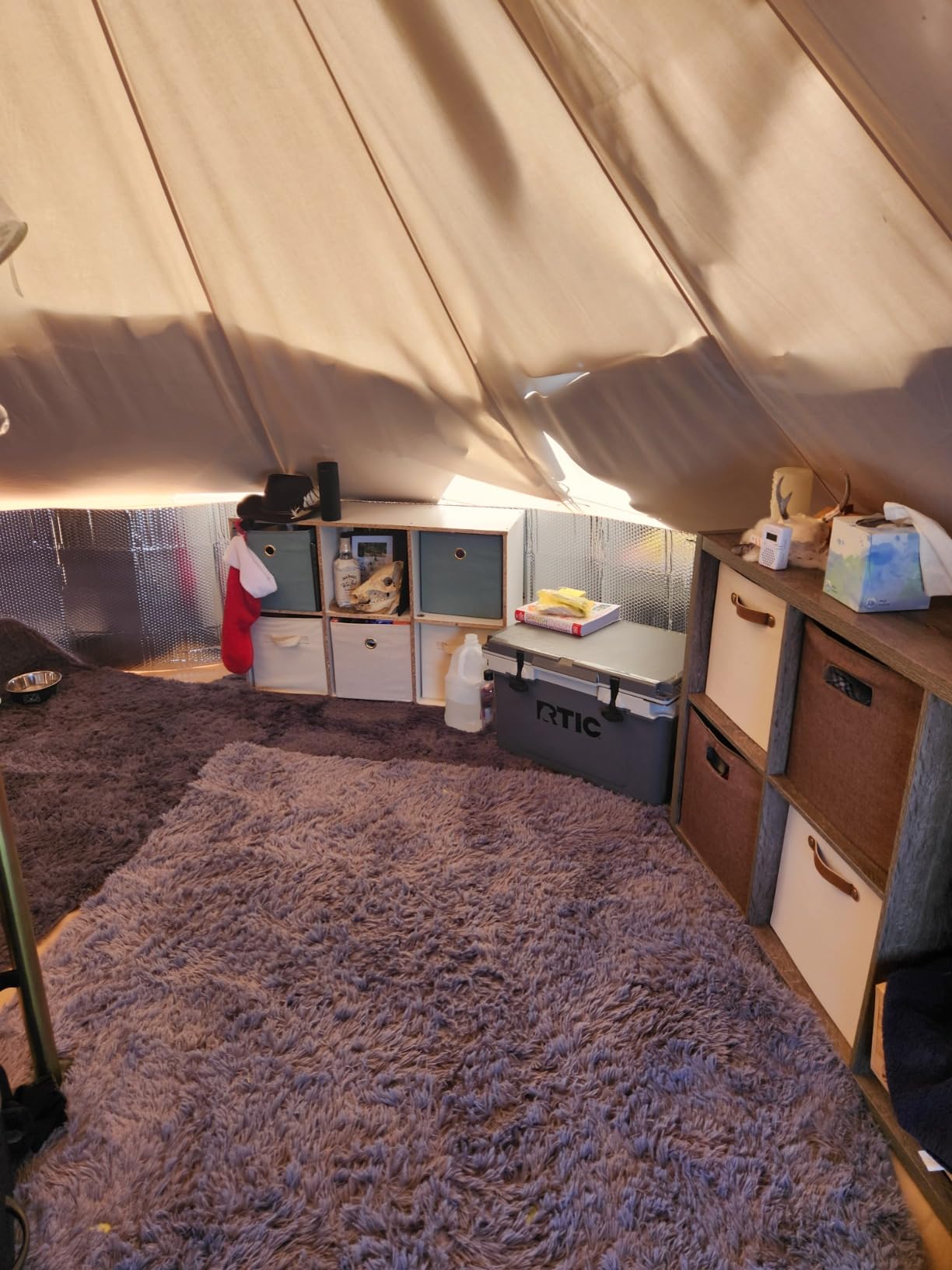
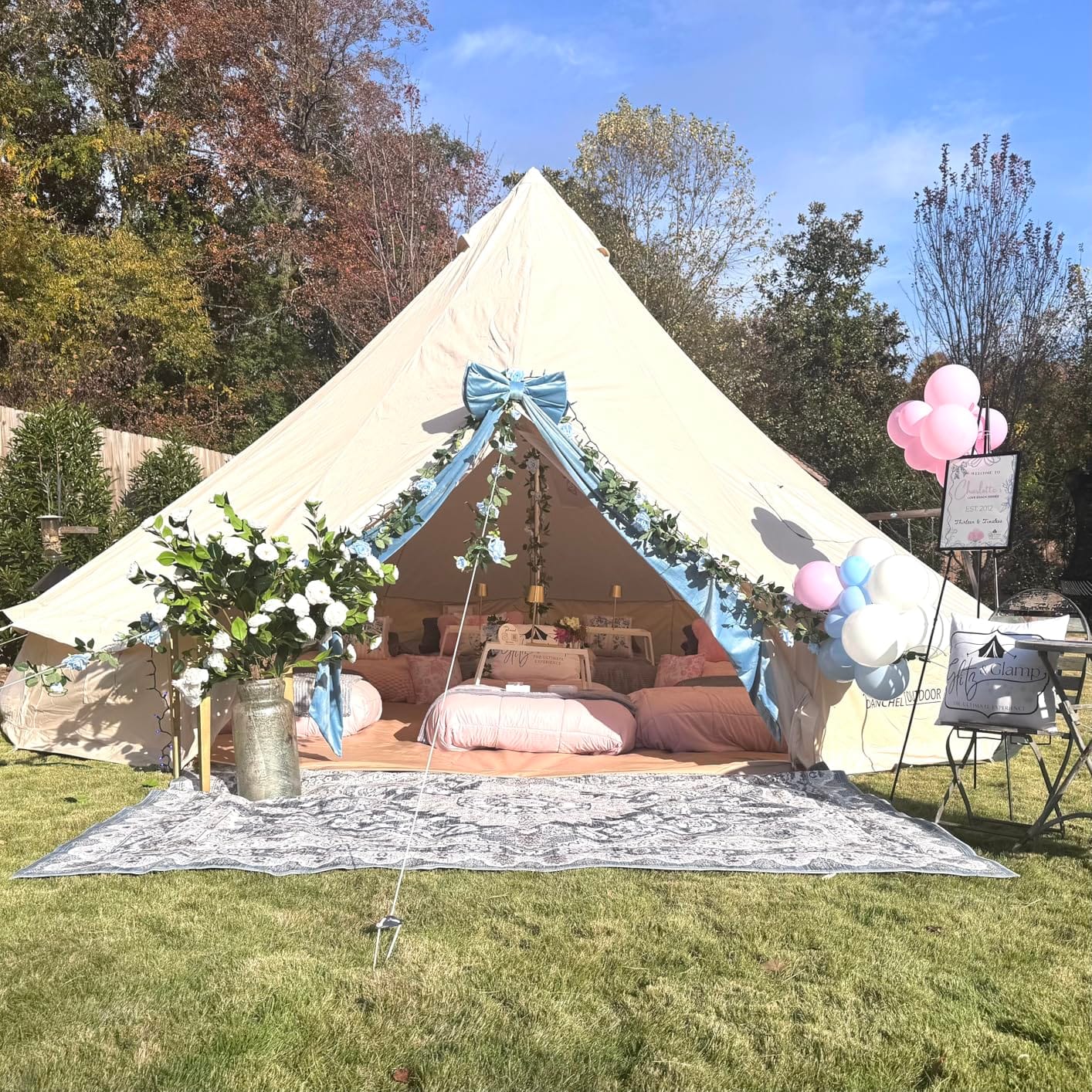
Setup is easy for a canvas bell tent — under 30 minutes from the box — and the roll-up detachable sidewalls convert it to an open-air canopy, which is useful if your winter site is mild enough to cook outside. There is a 6 inch side vent port for A/C hoses or electrical cable, and a center D-ring for a hanging light.
It is also the lowest-rated tent in the set at 4.0, and the reviews explain why. The roof stove-pipe flap material is described as highly flammable and capable of scorching even against a heat-wrapped pipe. The zippers, especially the interior and lower window ones, are stiff. And in the largest sizes a single center pole plus door poles gives limited structural support under load.
Running a stove in a coated canvas bell tent
This is the one product in the roundup where the stove-pipe flap is the decisive safety question, and the owner reports are direct about it: the flap can scorch. If you plan to run a wood stove here, replace or shield that flap before the first burn, keep the first fire small, and never leave it unattended. The 5.9 inch jack is generous, which helps the pipe run vertical without a tight elbow.
It also runs hot in full sun even with doors and windows open, which sounds like a summer complaint but tells you something useful about ventilation: you have plenty of it, and in winter you will want it.
Who should skip it
Anyone whose winter is primarily snow rather than rain. Snow load is the weak point — a single center pole on a curved profile is the geometry most likely to deform, and this tent’s advantage is rain, not snow. It is also bulky and heavy to move, and the included carry bag zipper is reported as poor.
Bottom edges along the floor and stake loops can leak, and several owners add a separate rain fly. Budget for that.
4. WaldZimmer Canvas Bell Tent with Stove Jack — Best for Breathability
WaldZimmer 13ft Green Canvas Bell Tent with Stove Jack & Removable Floor
Uncoated polycotton canvas
500gsm PVC floor
52 lbs weight
Pre-cut 10cm stove jack
Pros
- Survived thunderstorms and 35 mph winds on guylines
- Holds heat well with a heater in the upper 20s
- Four-step setup is genuinely solo
- Thick PVC floor removes the need for a groundsheet
Cons
- No PU coating
- so the maker advises against rain
- Canvas is thinner than premium rivals
- Some seams use single running stitches
This tent makes a deliberate choice: no PU coating on the polycotton, specifically so the fabric stays breathable. In a category where condensation is the top winter complaint, that is a real design decision rather than a cost saving, and owners report the tent holding heat well with a portable heater in the upper 20s.
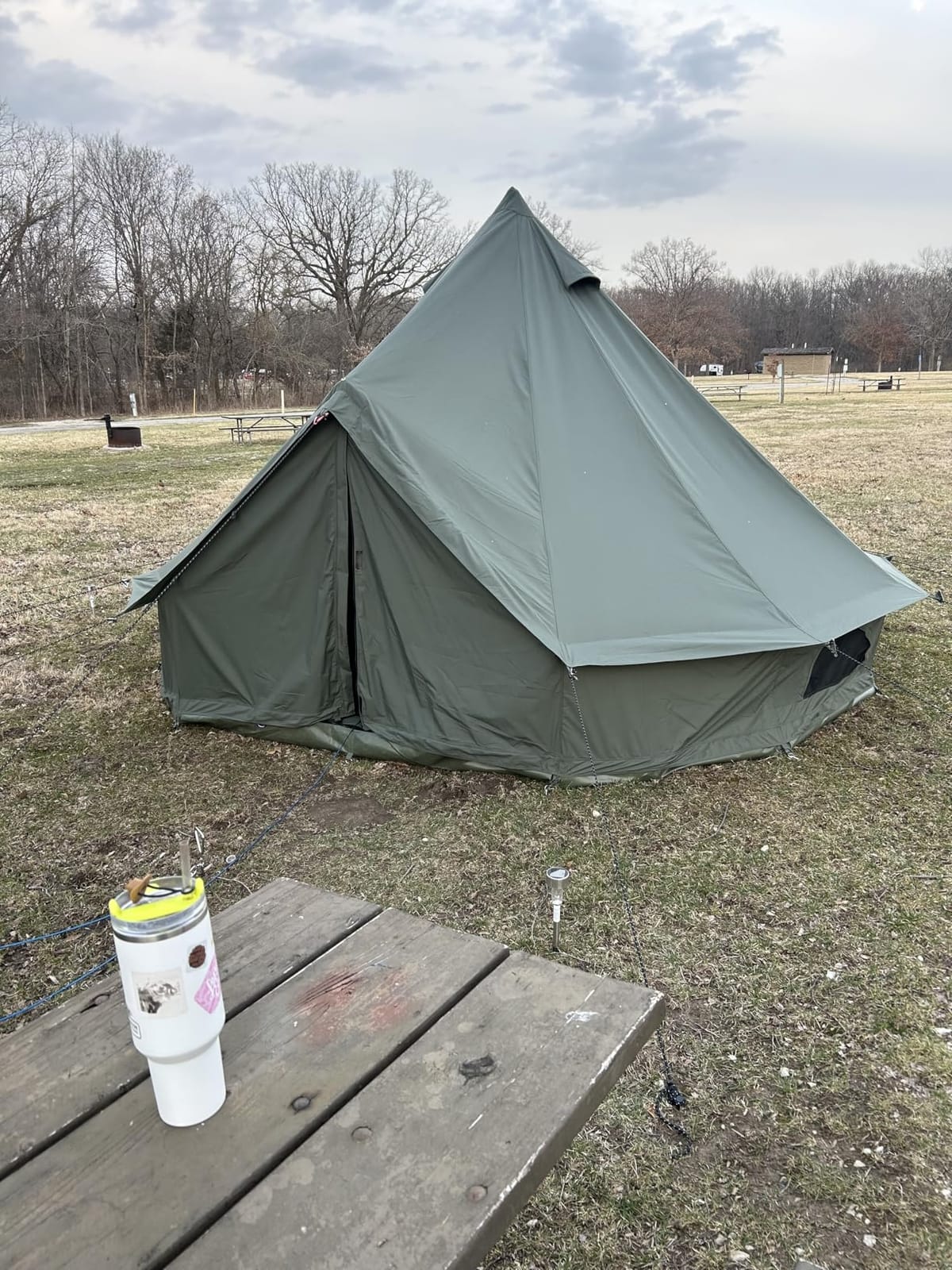
At 4.5 stars across 150 ratings, the owner reports are consistent. People like that it survived severe thunderstorms and 35 mph winds on its guy lines, that a 5 ft 0 in solo user can manage the four-step setup, and that the heavy-duty PVC floor is thick enough to skip a separate ground sheet. The 13 ft version gives a 4-meter diameter with an 8.2 ft top height and a 5 ft door height.
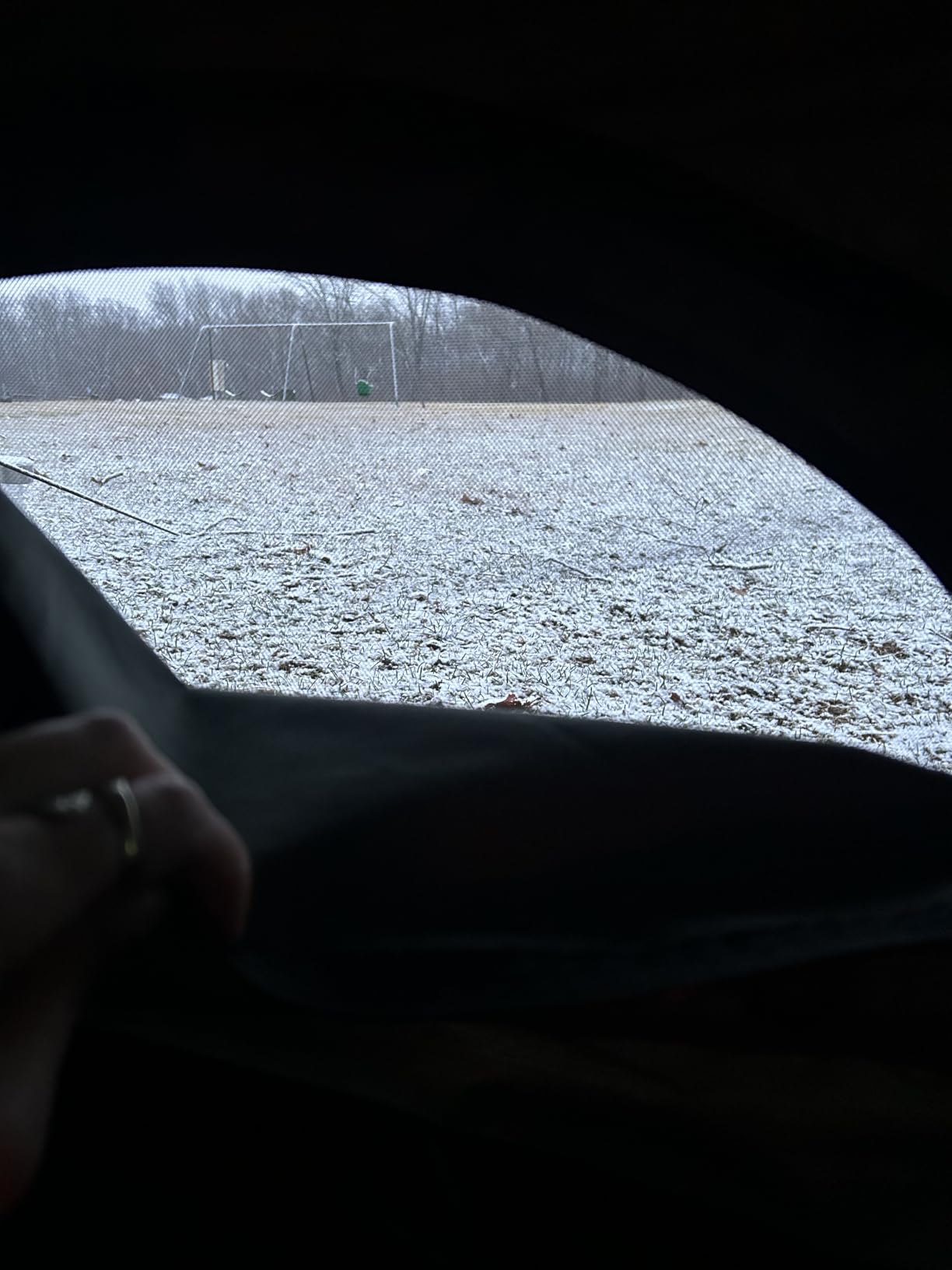
The pre-cut 10 cm stove jack is a real opening rather than a decorative grommet, and there are four double-layered roll-up windows plus four roof vents — the ventilation count on this tent is unusually high for a bell tent of this size, which supports the breathability story.
Be clear-eyed about the trade. No PU coating means the maker advises against leaving it in rain, and that is a direct conflict with winter. Owners also describe the canvas as thinner than premium competitors, and some single running stitches in the seams as a longevity risk. Zippers at the outer edges leave gaps that let insects in — an autumn problem, not a winter one.
Is breathability enough to carry a winter?
It can be, in a dry cold climate with a stove running. In a wet maritime winter, I would not ask an uncoated polycotton bell tent to be the primary shelter. The breathability is what stops interior condensation, which is the number one failure mode, but it is not a substitute for water resistance when the rain is horizontal.
One practical note: some owners report 73 to 80 lb in the carry bag rather than the listed 52 lbs, and sizing runs a little smaller than the listed diameter. Measure your gear before you assume it fits.
Who should skip it
Anyone in a wet winter, and anyone hauling weight. This is a 52 lb tent that has to be moved twice — once in, once out — and the listed weight may be optimistic. The plastic rain cap over the door pole is also described as flimsy, which is a small failure that becomes a big one in a storm.
If your winters are cold and dry and you camp from a vehicle, the heat retention and solo setup make this a genuinely good fit.
5. TETON Sports Mesa 14 Canvas Base Camp Tent — Best for Family Car Camps
Teton Mesa 14 Canvas Tent; Tent for Family Camping in All Seasons; The Right Shelter for Your Base Camp; Waterproof
20160 sq in floor area
1500mm waterproof rating
76 lbs weight
Easy push-up-and-pin setup
Pros
- Held position in gusts where dome tents collapsed
- About 5 minutes to set up solo
- Thick rubberized floor takes foot traffic
- Stitching and heavy-duty zippers inspected as flawless
Cons
- 76 lb and the box is a two-person lift
- Canvas and poles must be stored bone dry
- One reviewer reported the roof slipping in 20 mph gusts
The Mesa 14 is the biggest family canvas shelter in this roundup, at 20,160 square inches of floor in a 168 by 120 inch footprint with extra-high ceilings. TETON positions it as a base camp shelter, and that is the honest use case: families with a vehicle, a generator mentality, and no intention of moving it more than fifty feet.
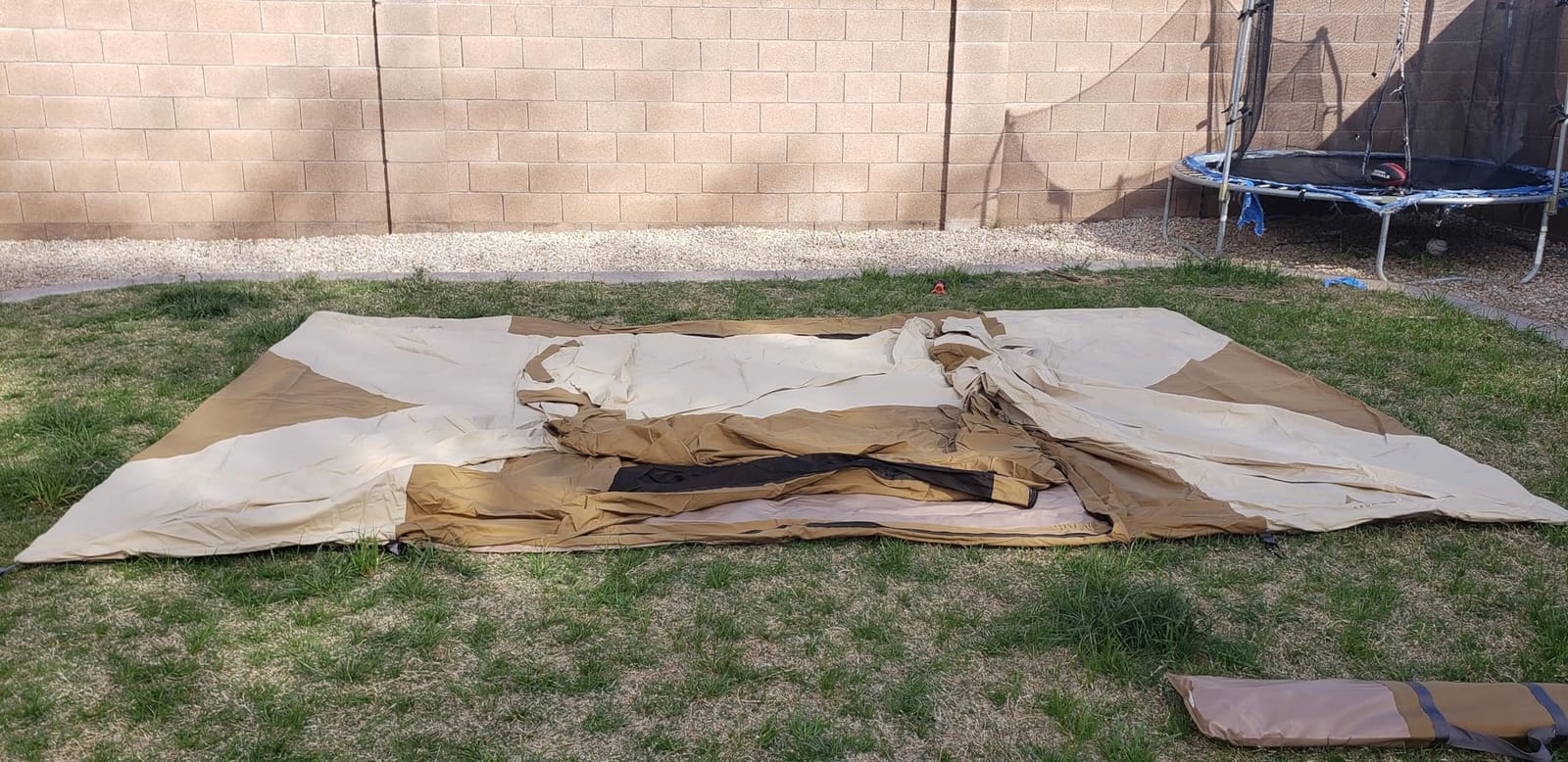
Setup is the standout. It is a push-the-top-bar-up-and-pin-it design that owners report taking about five minutes solo, and the thick rubberized floor holds up to foot traffic without a footprint. A large entry awning, power access ports, two lofts and two pocket organizers are all included, and TETON covers it with a lifetime warranty against defects.
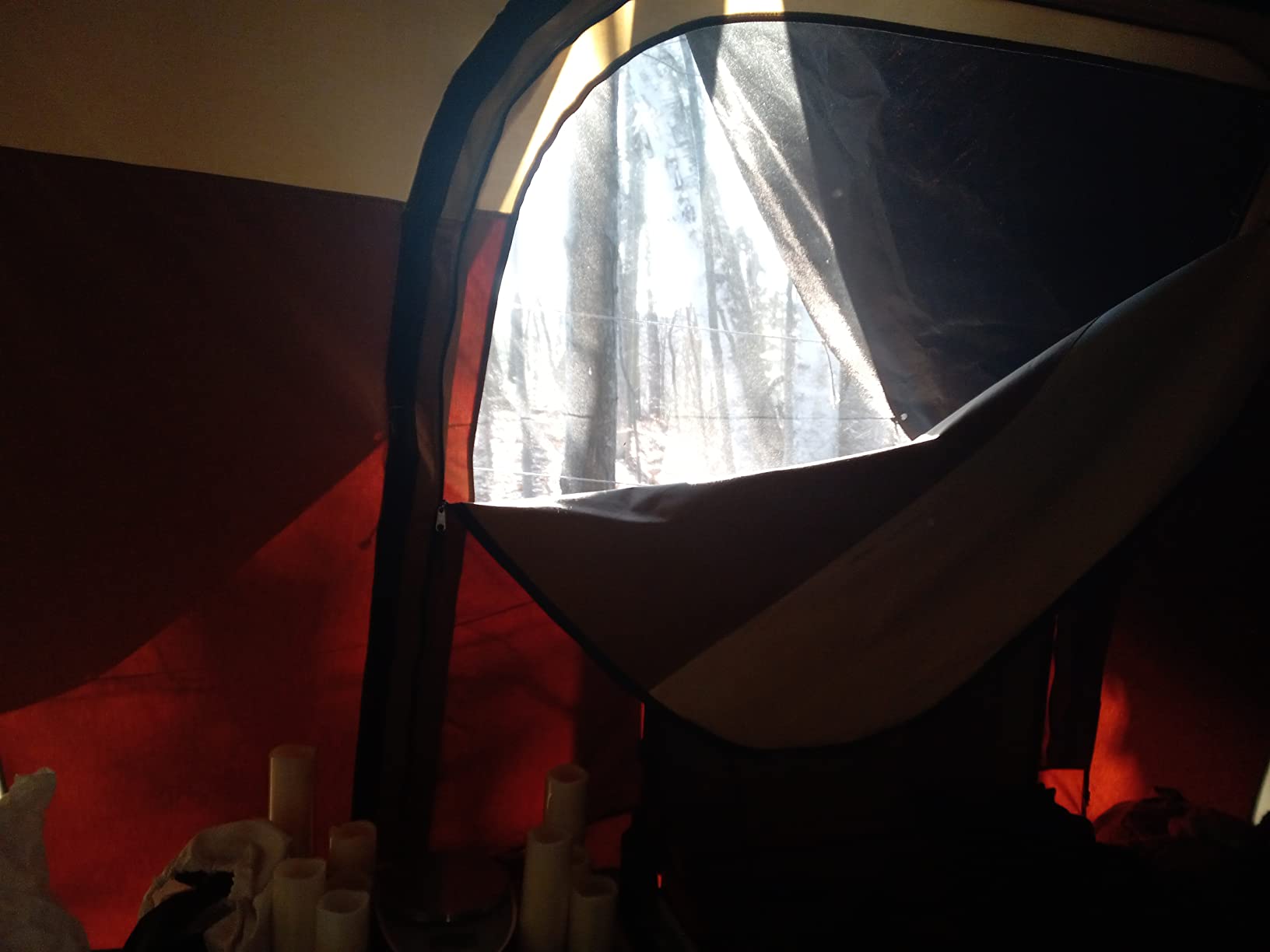
Owners report it stayed put in significant wind gusts where lighter dome tents collapsed, and held back heavy rain and wind with no leaks, only condensation. Sixteen heavy-duty carbon steel stakes are included, and the alloy steel poles drove through rough terrain in testing.
There is one strongly negative review about behavior in 20 to 40 mph gusts, where the roof was reported slipping on the poles, because the center bar rests on the canvas roof rather than floating above it. The bulk of owners report everyday wind handling without drama. Treat the gust case as a known limit rather than a defect, and stake it hard.
Keeping a family warm in a big canvas tent
Two large doors on opposite sides mean the stove end and the sleeping end never share the same air. The power access ports let you run a heater or a battery bank inside, which is how most owners use it. A PVC rainfly is included for additional weather protection, though the footprint is sold separately.
There is no stove jack listed on this tent, which is the single biggest limitation for winter use. Plan on a propane or kerosene heater rather than a wood stove, and check the heater’s clearances from the canvas carefully.
Who should skip it
Anyone who wants to run a wood stove — there is no jack, and drilling one into a 10-year tent is a mistake you will regret. Also skip it if you cannot handle 76 lb and a shipping box that is effectively a two-person lift.
Storage discipline is not optional here. Owners are clear that the canvas and steel poles must be stored completely dry to avoid mold, and the doors are snug at first before they work in.
6. MC TOMOUNT Canvas Bell Tent 16.4 ft — Best for Tall Walls and Real Headroom
MC TOMOUNT Canvas Bell Tent with Stove Jack, 16.4ft*High9.2ft Glamping Tent
55 inch side walls
268.9 sq ft floor area
8 doors
55.1 lbs weight
Pros
- Very steep roof sheds rain and snow instead of pooling
- Wood stove use reported in the low 20s
- 55 inch walls fit beds tables and a stove
- Solo setup in 15 to 30 minutes
- Steep pitch handles snow better than most bell tents
Cons
- TC cotton roof has no PU coating and handles light-to-medium rain
- Included stakes pull out of sandy ground
- One owner reported fabric degrading after three seasons
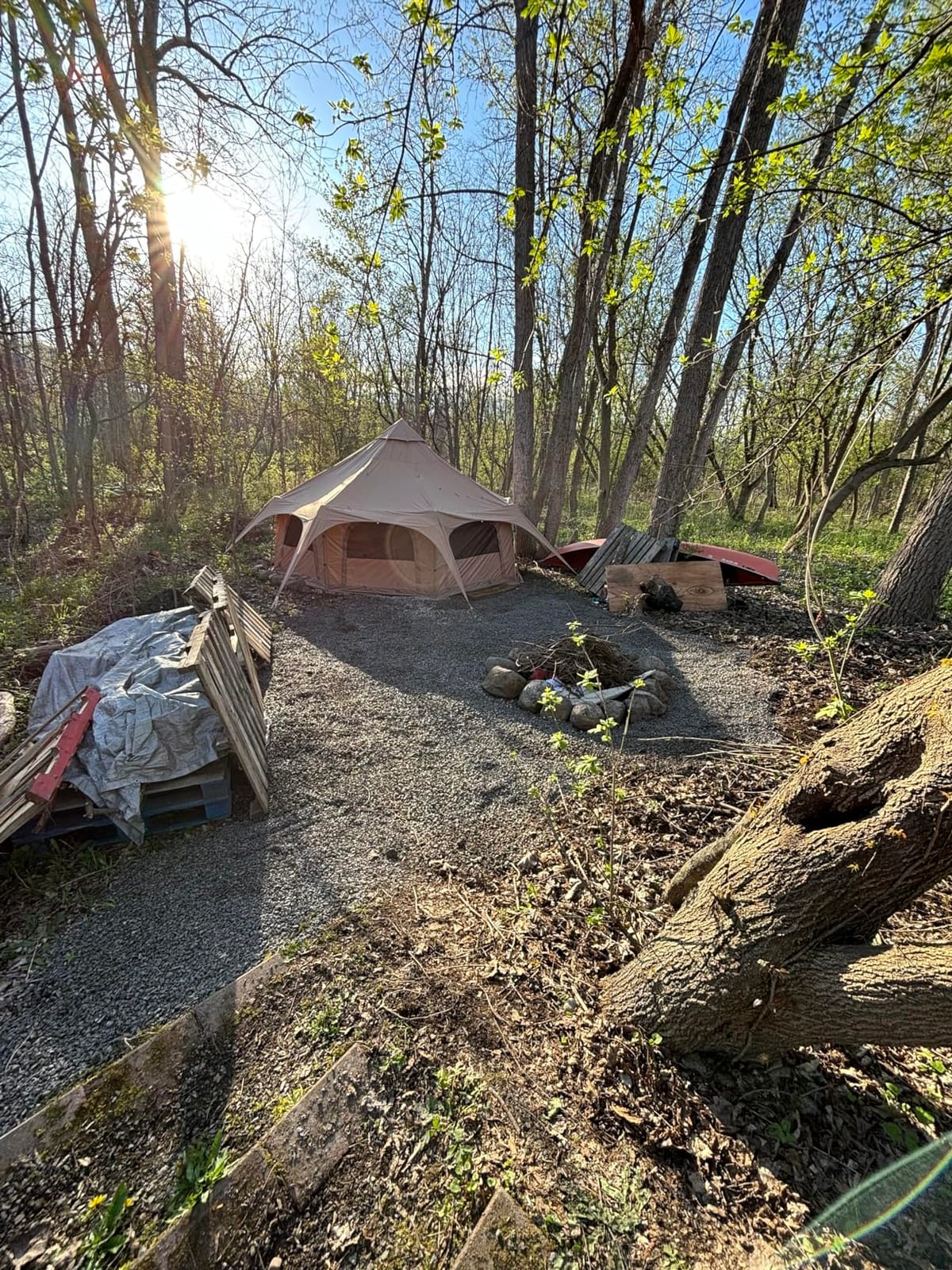
Wall height is the reason to look at this one. Most bell tents give you a low perimeter and a lot of unusable air overhead; this one has 55 inch side walls inside a 16.4 ft diameter with a 9.18 ft top height, across 268.9 square feet of floor. That is the largest usable volume in the roundup short of the Dream House, and owners specifically call out that it fits beds, tables and a stove without everything feeling cramped.
Snow performance is the other strength. The roof pitch is very steep, and owners report it shedding rain and snow rather than pooling, with no leaks over repeated storms. Heat retention is confirmed in cold use — a wood stove in the low 20s, and a kerosene heater at 20F.

The build is unusual: a TC cotton roof at 65 percent polyester and 35 percent cotton with no PU coating, 210D Oxford walls, and a detachable 600D Oxford floor rated to PU 3000mm. Eight poles support the side walls, and there are eight doors with mesh windows, which means ventilation from almost any direction. Seams are double stitched with reinforced corners, and the top vent apparatus works well.
Setup is 15 to 30 minutes solo, and the sidewalls and bottom panels roll up to convert the whole thing into a canopy — genuinely useful for a summer yard or as an open-air cooking area. The pack-down fits a 13.4 by 31.5 by 13.4 inch duffel.
Heating a 16-foot bell tent in winter
With 268.9 square feet of floor and 55 inch walls, this is a tent you can genuinely heat and move around in, which is unusual at this diameter. The volume means a stove is not fighting a tiny air mass. The TC roof being uncoated limits what you can leave it in during rain, so this is a cold-and-dry shelter, not a wet-weather one.
Replace the included stakes before you rely on them. Owners describe them as cheap-feeling and pulling out of sandy ground, and with a 16.4 ft diameter in wind, stake quality is not a detail.
Who should skip it
Anyone in a wet winter, for the same uncoated-roof reason. Also anyone who is honest about long-term expectations: one long-term owner reported the fabric degrading after roughly three seasons of use, which is the shortest service-life report in the roundup. Buy it for seasonal use, not as an heirloom.
At 55.1 lb it is not a portable tent either, and one buyer could not raise the center pole alone. Bring a second person to the first pitch.
7. VEVOR Canvas Bell Tent Yurt with Stove Jack — Best Starter Kit
VEVOR Canvas Tent Bell Tent, 4 Seasons 4 m/13.12 ft, for Camping with Stove Jack, Family Camping Outdoor Hunting Party
3 inch flame-resistant stove hole
13.12 ft diameter
50 lbs weight
4 m floor area
Pros
- Breathable TC fabric reduces interior condensation
- 4 m diameter holds a family with room to move
- Flame-resistant 3 inch stove hole with a proper flap
- Reflective lines and tensioners included
- Package includes a stake hammer and repair kit
Cons
- No PU coating
- so the maker advises against heavy rain
- TC cotton gives limited insulation at temperature extremes
- Thinnest review base in the roundup
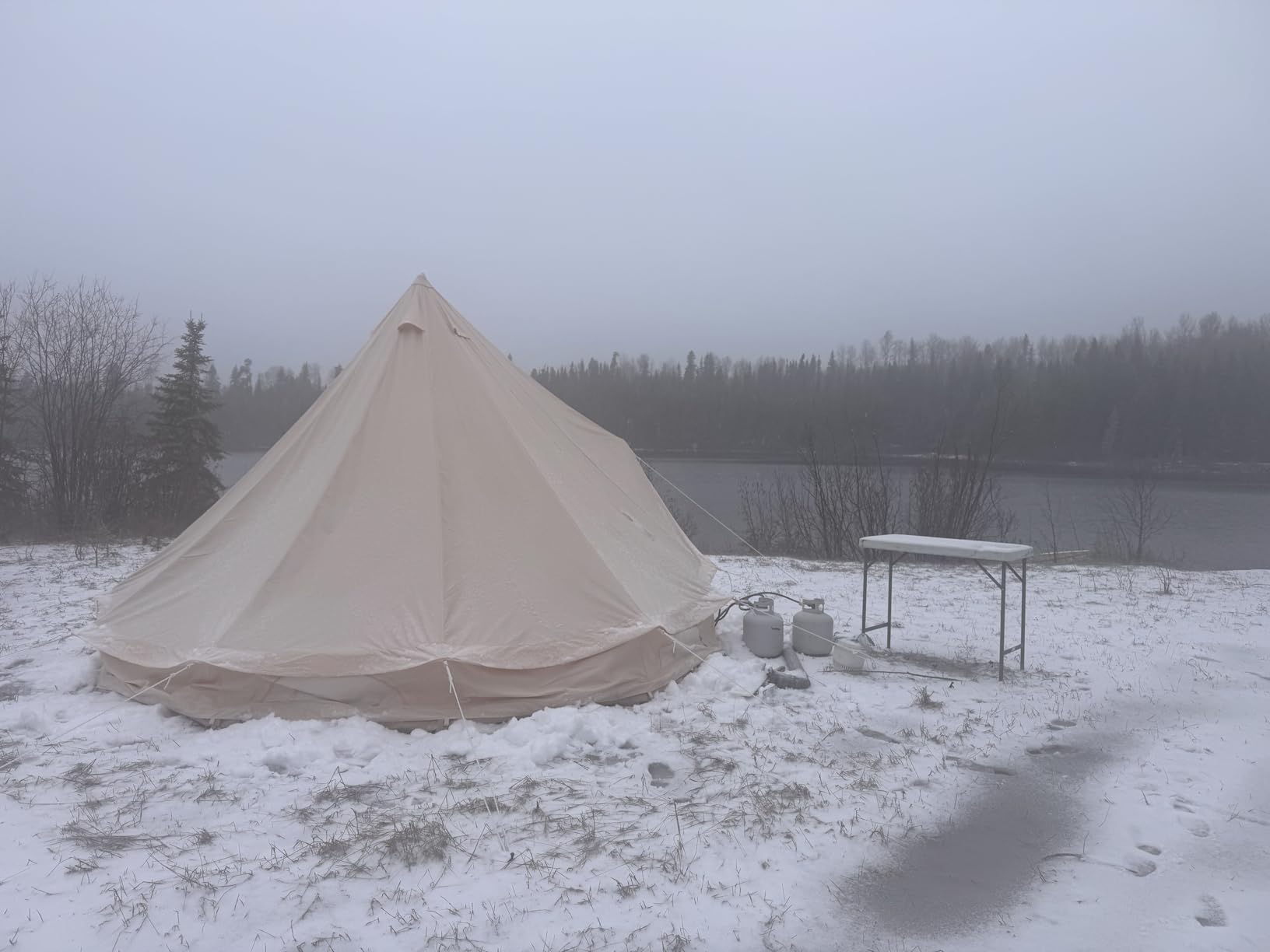
What separates this from a bare tent is the hardware. The package includes 12 nylon reflective guy lines, 12 aluminum alloy tensioners, 24 stakes, a stake hammer, a tent bag, storage bags and a repair kit. Reflective guy lines matter at night in snow, and having a stake hammer included removes the most annoying small problem in cold-weather pitching.
At 4 m — 13.12 ft — diameter with an 8.2 ft peak height and 12.56 square meters of floor, it is listed for up to six people. The stove provision is a 3 inch flame-resistant stove hole with a 43 by 43 cm flap and a rain cap, and the four mesh-covered windows plus roll-up canvas panels give good ventilation.
The TC fabric — 65 percent polyester, 35 percent cotton — is deliberately breathable, and owners note it cuts down on interior condensation, which lines up with everything in this article about canvas and vapour. Setup is a four-step process on galvanized iron center and door poles. It carries a 2 year warranty.
Be realistic about the envelope. No PU coating, and the maker advises against heavy rain. The TC cotton provides limited insulation at temperature extremes, so this is a three-and-a-half-season shelter in a four-season package. The review base is also the second thinnest here, so long-term durability is less well documented than for the leaders.
Can a budget bell tent run a heater all winter?
It can run a heater, and the flame-resistant stove hole is a real one. Whether it can hold a tent warm through a long cold night is a different question, because TC cotton’s insulation is modest. Treat it as a shelter you heat and sit in rather than one you sleep in at temperature — which is exactly the reframe experienced hot tenters use, and it changes how big a tent you need to buy.
The 3 inch hole also limits you to a small stove, and the flap plus rain cap is the assembly that has to be right. Test the fit in a backyard before you are relying on it in the cold.
Who should skip it
Anyone whose winter is wet, and anyone planning to sleep at temperature inside it. It is also the kind of tent most people buy once and use for summer weekends, so if you are reading this to buy a winter shelter specifically, a heavier fabric is the better spend.
On the other hand, if you want to try canvas without a large commitment, this is a reasonable first step — the included hardware list is genuinely better than buying the same tent elsewhere.
8. VANFOND Canvas Bell Tent with Stove Jack — Best for a First Canvas Tent
Canvas Bell Tent with Stove Jack – Waterproof and Breathable Yurt, Glamping Tent with Detachable Groundsheet for Camping Party
5 inch fire-retardant stove jack
Sewn-in PVC groundsheet
43 lbs weight
6.6 ft peak height
Pros
- 4.8 ft door height lets you move without stooping
- Waterproof coating plus seam sealing
- 5 inch fire-retardant jack fits a small wood stove
- Complete tool kit with mallet pegs and rain cap
Cons
- Thinnest review base in the set at 66 ratings
- 10 ft is the smallest option offered
- No warranty beyond standard coverage
At 43 lbs, a 10 ft diameter, a 6.6 ft peak and a 4.8 ft door height, this is the most manageable canvas bell tent in the roundup. The door height is worth more than the peak number: owners specifically note that they can move around without stooping, which is rare at this diameter and makes a real difference when you are dressed for winter.
The stove provision is a 5 inch wide jack made from fire-retardant material, and the floor is a sewn-in high-quality PVC groundsheet on a detachable design. The galvanized steel center pole and A-frame pole form the structure, and there are four windows plus roof vents. Setup takes about 25 minutes.
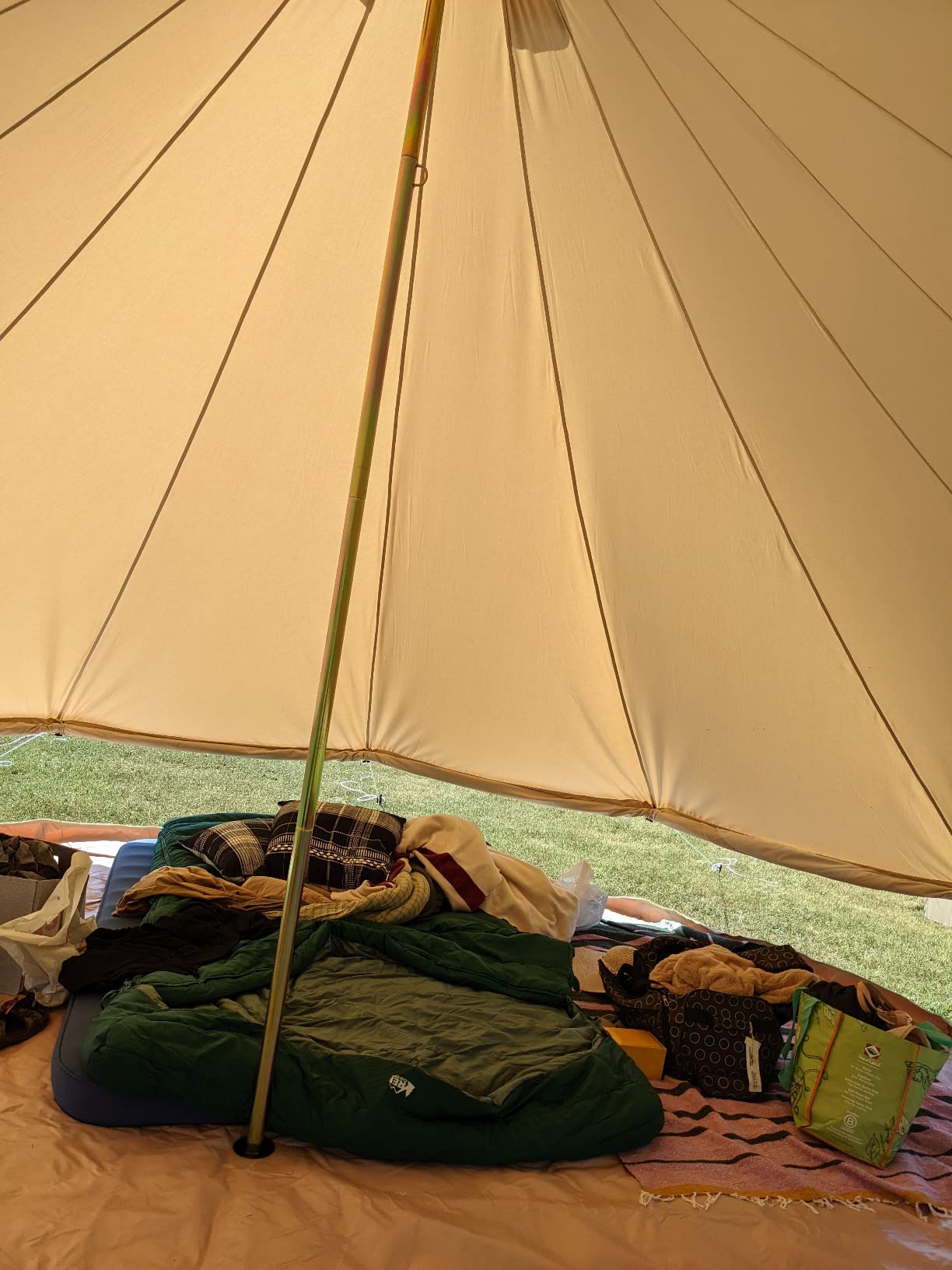
The tool kit is unusually complete for the class: stakes, pegs, a rain cap and a rubber mallet, with 16 stakes included. Roll-up walls give 360-degree visibility and airflow, and the whole thing converts to a canopy in warm weather. The waterproof coating plus seam sealing is the part that makes it more than a summer tent.
The honest weakness is the evidence, not the product. At 66 ratings this is the smallest review sample in the set, so you are buying on the spec sheet and the build rather than on a long history of owner reports. There is no warranty beyond standard coverage, and the 10 ft is the smallest of the sizes offered.
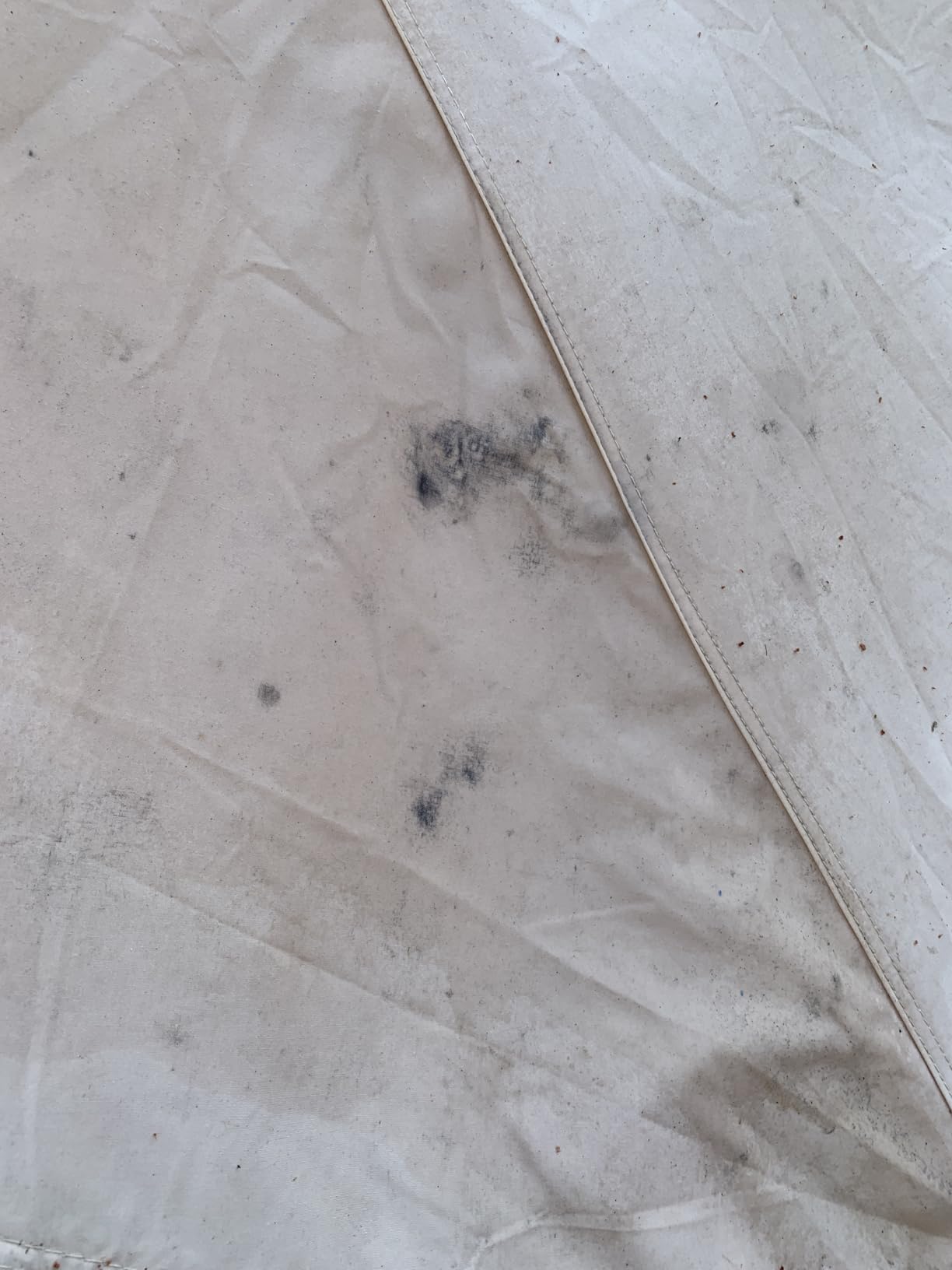
Is 10 ft enough for two people in winter?
For two people with sleeping bags, or one person with a cot and a small stove, yes. It is tight for three with a stove running, because the stove footprint plus gear is a real constraint at this diameter. If you are planning a longer season, budget for the 13.1 ft version of the same design rather than trying to make 10 ft work.
The 5 inch fire-retardant jack is the spec to verify before you commit — it takes a small wood stove comfortably, and the fire-retardant material is specified rather than implied, which is not true of every tent here.
Who should skip it
Anyone buying a tent to live in for months. A 10 ft diameter with a 6.6 ft peak is a weekend shelter, and the 23.6 inch side wall height makes the stove footprint even more of a squeeze. It is also not the tent to take to a summit or anywhere with serious wind.
For a first canvas tent to learn on, or a two-person winter weekend near the car, the 43 lb weight and complete kit make this the least intimidating way in.
9. ShinHye Canvas Bell Tent Yurt — Best Value for Weight and Waterproofing
ShinHye Canvas Bell Tent Yurt Tent 4 Seasons for Camping 100% Cotton Glamping Tents with Stove Jack, Family Camping Outdoor Hunting Party (3M- 9.8FT)
PU 5000mm waterproof rating
28 lbs packed size
PE bottom fabric
7.22 ft top height
Pros
- Best value per pound in the roundup
- PU 5000mm and a PE bottom kept it bone dry
- Withstood a week of rain and 30-50 mph winds
- Compact 27 x 13 x 11 inch packed size
- Thick canvas holds temperature better than nylon
Cons
- Pre-cut stove pipe opening is too large and lets weather in
- Stove jack can scorch with a hot pipe
- Actual diameter runs about a foot under the listed size
This is the standout on weight. At 28 lbs with a packed size of 27 by 13 by 11 inches, it is the only tent in the roundup light enough to consider moving between camps, and the waterproofing is the highest rating here at PU 5000mm on breathable canvas with a PE bottom fabric that stops ground moisture wicking in.
Owners report the interior staying bone dry in a hard downpour, and the tent holding up through a week of rain and several nights of 30 to 50 mph winds. The thick canvas is also reported to hold temperature far better than nylon, which is the core claim of this entire article showing up in a real product.
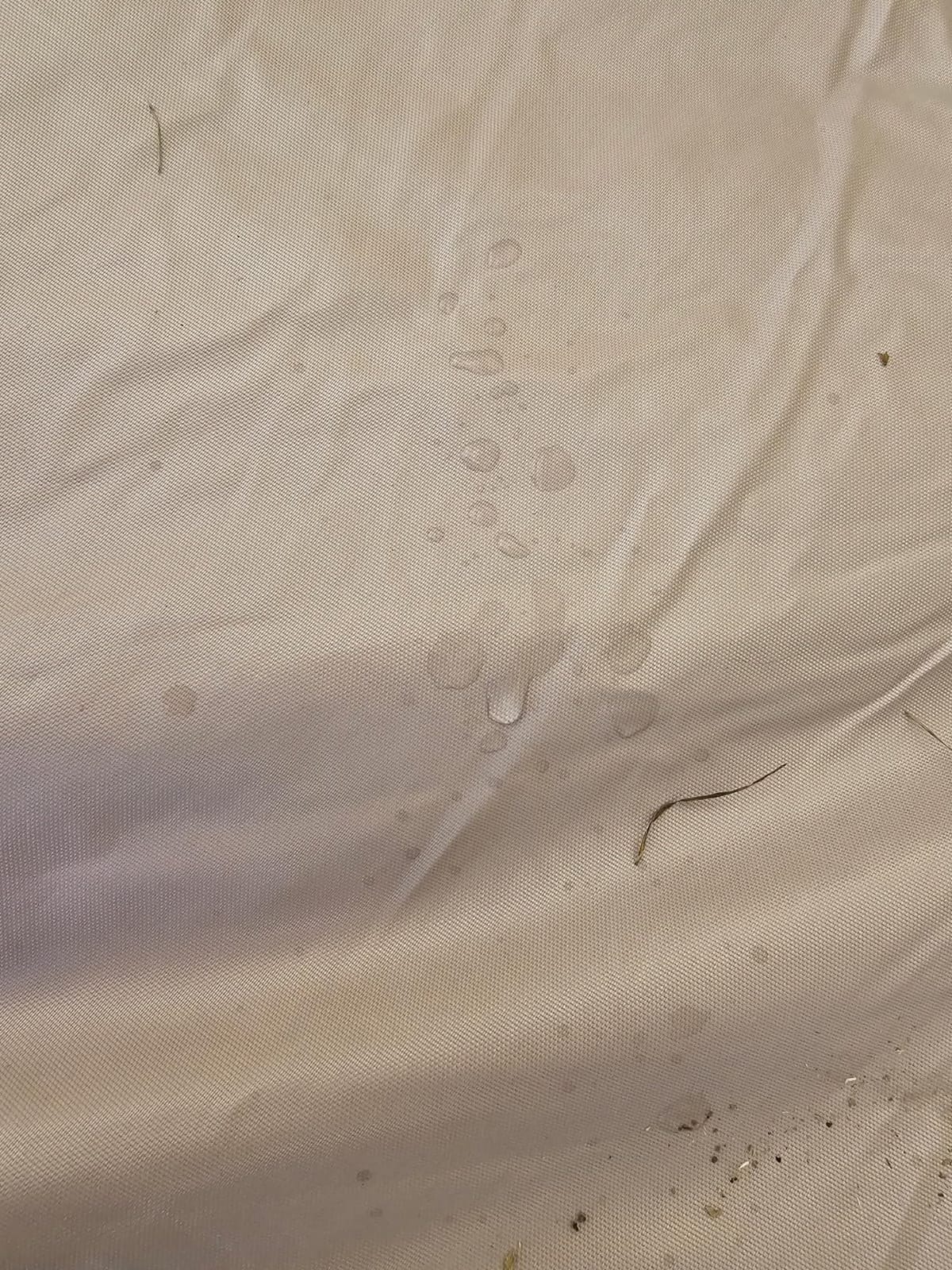
It comes with a sewn-in groundsheet, stove jack, mesh windows, roof vents, poles, a tool kit and a weatherproof bag, plus 13 guylines and a 365 day warranty. Setup is about 15 minutes and one person can manage it. The 3M model is 9.85 ft in diameter with a 7.22 ft top height and a 1.9 ft side wall, listed for 2 to 4 people.
The stove jack is the problem, and it is worth being blunt about. The pre-cut pipe opening is too large, so rain and snow come straight in through it, and the jack itself can scorch against a hot pipe — owners recommend a heat guard. The actual diameter also measures about a foot smaller than listed, which matters if you are planning two adults and a stove. One water resistance test showed parts of the tent wicking.
Running a stove through an oversized jack
You can make this work, but you have to modify it. An oversized opening is a cold-air leak and a direct path for precipitation into the tent, so seal the gap around the pipe with a heat-rated collar or a close-fitting sleeve, and fit a heat guard between the pipe and the jack material. The stove jack sits about 3.3 ft above the ground, which is a sensible height for a small stove.
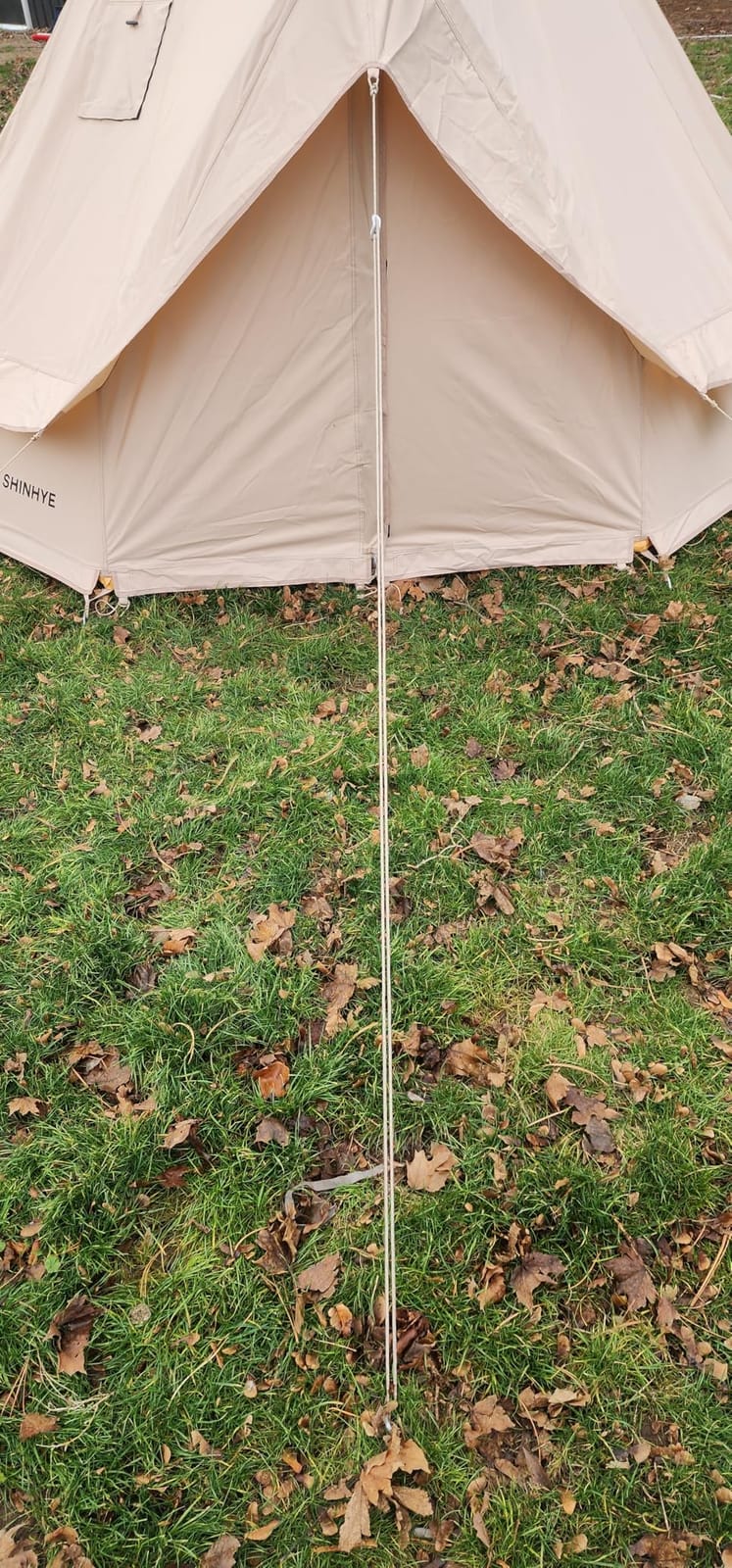
The other quirk to plan around is the guyline running across the entrance — you have to duck in and out. It is a small thing that annoys you every single day of a long stay.
Who should skip it
Anyone wanting more than two people. This is the smallest capacity tent in the roundup, and it is tight for three with a stove running. Also skip it if your site is not perfectly level, because the guyline layout leaves little room to work around uneven ground.
What it is genuinely good for: a solo or pair who wants a waterproof canvas shelter light enough to actually carry, and a manufacturer who resolved a stove-jack complaint directly with a buyer. For that use case, 28 lbs and 5000mm is hard to argue with.
10. Dream House Large Cotton Canvas 4 Season Tent — Best for Big Groups
Dream House Large Spacious Outdoor Waterproof Cotton Canvas 4 Season Camping Tent for 10 Persons
215.2 sq ft floor area
10 ft peak height
94 lbs weight
1500mm rainfly rating
Pros
- Largest footprint in the roundup at 215.2 sq ft
- 3000mm PU cotton canvas rainfly
- Two large doors plus four mesh windows
- Double stitching with reinforced key points
- 28 stakes and 14 wind ropes included
Cons
- Heaviest unit in the roundup at 94 lb
- Non-removable PVC floor limits cleaning and use
- Needs a 26 x 23 ft clear area to pitch
- Lowest waterproof rating of the coated options
When a group is bigger than six, the options narrow fast, and this is the volume play: 215.2 square feet of floor, a 157 by 196 inch footprint, and a maximum height of 300 cm. Owners accept the weight as the price of that floor space. Two large doors and four triangle-shaped mesh windows give strong ventilation, which is what makes a tent this size livable.
Weather protection is layered: waterproof cotton canvas with a 1500mm PU rainfly on top, double stitching all around with reinforced key points, and a non-removable PVC ground sheet zipped to the upper canvas cover. The hardware pack is generous — 14 small stakes, 14 large stakes, 14 wind ropes, a center pole, four door poles and four rainproof caps.
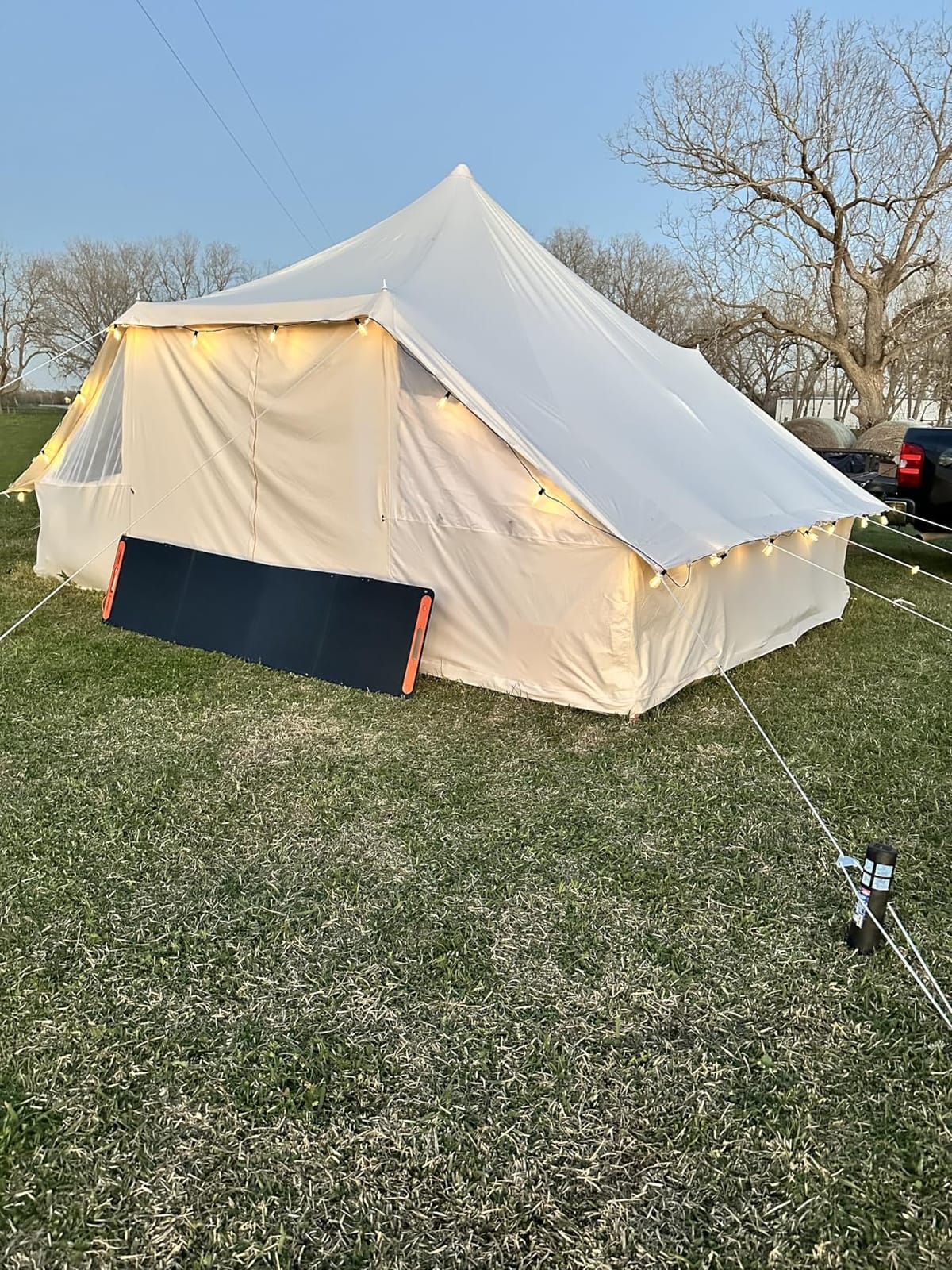
It is listed as a 10 person four-season tent, and the practical question is whether your winter is cooperative. The rain resistance rating of 1500mm is the lowest among the coated tents in this roundup, and the floor is not removable, which is the one design choice that most limits long-term use — you cannot dry the floor separately, and you cannot reconfigure the tent.
The footprint requirement is the other practical hurdle. You need at least a 26 by 23 foot clear area to pitch it, which rules out a lot of wooded sites and tight lake campsites. At 94 lbs it requires a vehicle, with no ambiguity.
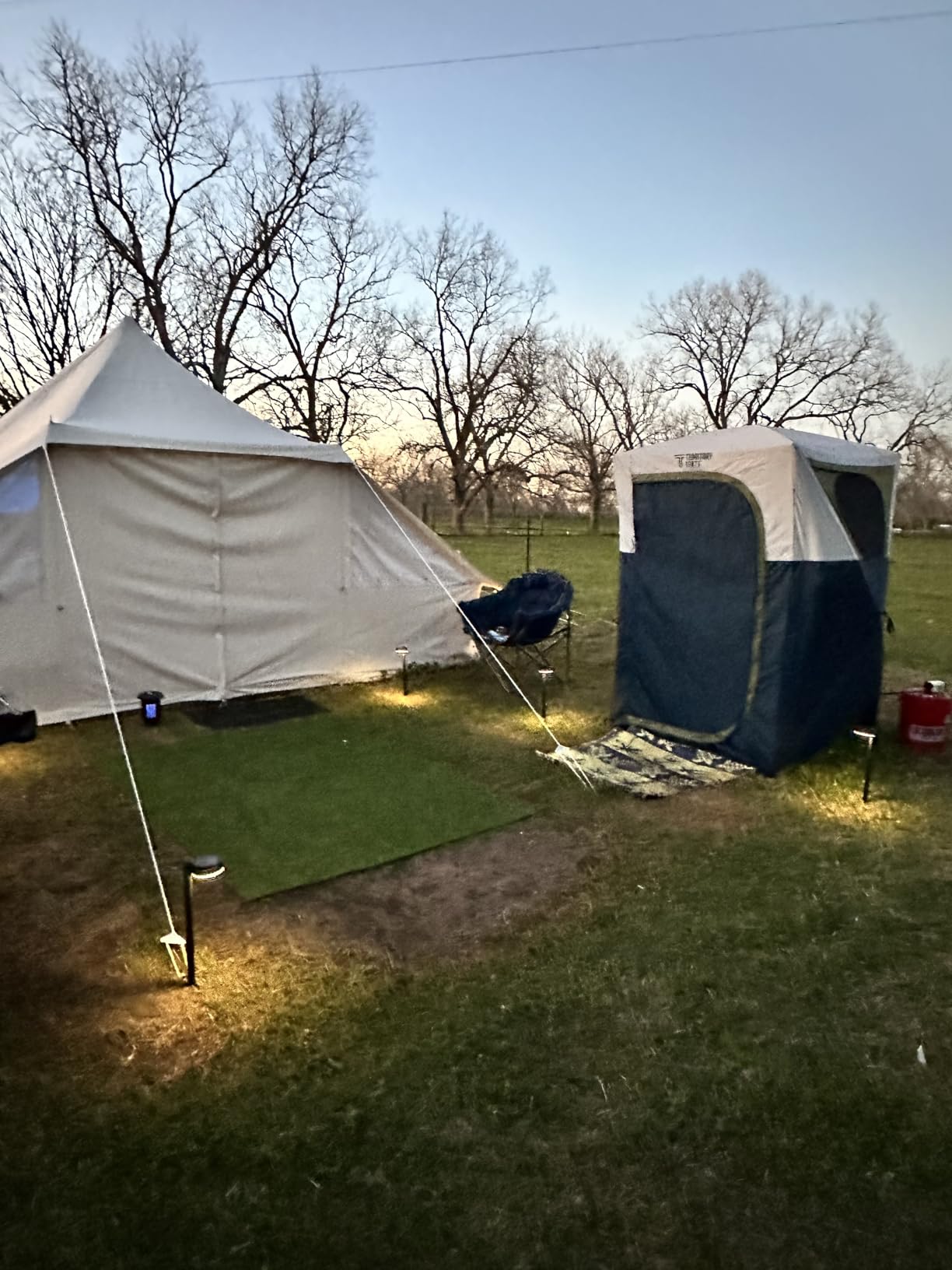
Heating a ten-person canvas tent
With 215 square feet and a 10 ft peak, a single stove will not heat this evenly, and that is the honest limit. In practice a group this size needs a second heat source, carefully placed, or an acceptance that the warm end of the tent is where people sleep. The two large doors are the feature that makes that layout work — they let you zone the space rather than heating one undifferentiated box.
Ventilation is the other lever. Four mesh-screened triangle windows plus two doors means you can move a surprising amount of air, which is what keeps a tent this large from becoming a humid box.
Who should skip it
Anyone camping alone or in a pair — you will be swimming in it. Anyone in a sustained wet winter, given the 1500mm rating. And anyone whose site is small, because the required clear area is larger than most of the campsites people actually use.
With 61 ratings, the owner history is the thinnest in the roundup, so this is a spec-sheet purchase. That is acceptable when the spec sheet is the differentiator, and here it is.
Wall Tent, Hot Tent or Bell Tent: Which Archetype Fits Your Winter Trip
Pick by whether you will move the tent, not by brand. A wall tent has vertical walls on a pole frame and is sized in feet, like a 10×12. A hot tent is a lightweight shelter built to run a wood stove and be hauled. A bell tent, sometimes called a yurt tent, is a single center-pole design with curved walls. Every tent in the roundup above is a bell tent or a large canvas wall-style shelter, because that is what the market actually sells in volume — but the distinction still matters for sizing and stove choice.
Wall tent. The traditional basecamp and live-in form. Vertical walls give you standing headroom and usable floor area, steep sides shed snow, and the shape tolerates a wood stove without the roof feeling like it might slump. A Washington Fly Fishing thread settles the sizing question bluntly: for base camp use, a canvas wall tent in the 10×12 or 12×14 range is the choice, because they are built for wood stoves and handle snow and wind well. The cost is weight — these are 68 to 94 lb units that never leave the truck bed.
Hot tent. Built for sled trips. The Boundary Waters community treats the Snowtrekker as the design benchmark: aluminum internal frame, no center pole, sewn-in snow flaps, vertical walls, and a stove position near the door. One owner reports 100-plus nights in a 9×11.5 model without regret, and a 10×13 that weighs a bit over 20 lb and sleeps four. The tradeoff is real, though. A camper who lived a full December-to-April season in one wrote that the light 7 oz canvas was too thin to hold heat, and that the no-floor design with snow flaps froze in and shredded when torn out. Thin canvas hauls well and burns wood faster. Thick canvas holds heat and rides on a sled in a way you will notice.
Bell tent. The center pole is the whole story. It is fast to pitch, roomy at the floor, and increasingly sold with a stove jack — but the curved profile is the least snow-shedding shape in the category, and a single center pole does not love a heavy static load. Bell tents are a stationary answer: a yard, a hunting basecamp, a glamping site, or a field you will not leave for a month.
One more axis worth naming, because it is the honest alternative for many people: Arctic Oven and Eskimo pop-up shelters. Forum users describe them as heavier than a hot tent but holding heat much better, setting up in a fraction of the time, and laughing off winter wind. If you are not attached to canvas, that is a legitimate axis to shop instead.
Canvas vs Nylon in Winter: The Condensation Failure Mode
Canvas wins in winter for one physical reason: it is porous. Water vapour passes through duck canvas instead of condensing on the inner surface of the fabric. In a synthetic tent, that vapour hits cold fabric, condenses, freezes overnight, and then releases as a slow indoor rain the moment you light the stove in the morning. The description that circulates in the Boundary Waters winter threads is blunt: moisture that builds up inside has a tendency to freeze up over night, and then it rains on you when you fire up the stove in the morning.
That is not a comfort complaint. On a long trip, a wet sleeping bag at dawn is a safety problem, and it is the failure mode that synthetic four-season tents share with each other. Canvas tents push that moisture out through the walls. A related winter effect matters too: canvas that is dry stays dry, while condensation that never escapes keeps the fabric wet from the inside, and wet canvas loses insulating performance and eventually rots.
Where nylon keeps the advantage is weight. A canvas wall tent at 68 lb and a bell tent at 94 lb are not backpacking tools. The question is whether you are near a vehicle. For basecamp, hunting and live-in winter use, breathability is worth far more than the pounds.
One warning about ratings: a temperature rating on a synthetic tent is a rating of the fabric system, not a promise about you. A tent rated for extreme cold paired with a sleeping bag rated for mild cold still produces a cold night. Your sleeping system has to be matched to the shelter, and that is true of canvas too.
How to Choose a Canvas Winter Tent in 5 Steps
Step 1: Decide whether you will move it. This single question eliminates most of the category. If the tent stays at one site, weight stops mattering and you can buy volume. If you will move it weekly or haul it on a sled, weight becomes the first filter and you are probably looking at the lighter end of the range. Experienced sled haulers put a floor of roughly 50 lbs on a solo hot tent plus stove, and a Boundary Waters owner with a 12×12 describes it as “really heavy and kind of a bear to get on the sled.”
Step 2: Pick the geometry, not the brand. Steep walls shed snow. A flat or curved profile collects it, and a single center pole is the least able to carry a static load. This is the one variable that outperforms everything else in cold and snow, and it applies regardless of what brand is on the label.
Step 3: Check canvas weight in ounces per square yard. This is the number experienced winter campers actually argue about, and it is the one no product page organises. Use ounces per square yard consistently, because the units matter. The DANCHEL B5PRO is the most transparent in this roundup at 8.8 oz per square yard. A user who lived a full December-to-April season reported that light 7 oz canvas was too thin to hold heat, and that thicker canvas cut wood consumption roughly in half compared with thin canvas over a full winter. Thin canvas hauls; thick canvas heats. Most people need thick, because most people are near a vehicle.
Step 4: Confirm the floor and the stove jack before anything else. A sewn-in floor stops snow being blown under the walls and melting on your gear. On stove jacks, read carefully, because this is where the category fails: the White Duck’s jack flap is not the same fireproof material as the opening and can scorch; the DANCHEL’s roof stove-pipe flap is described as highly flammable; the ShinHye’s opening is oversized. A pre-cut fire-retardant jack with a specified material — the White Duck, the VANFOND, the VEVOR — is a meaningfully better starting point than a generic reinforced hole.
Step 5: Size to the team plus the stove footprint. The community heuristic is a 10×12 or 12×14 canvas wall tent for base camp, and a Washington Fly Fishing thread gives the same range for the same reason. For bell tents, count the stove’s footprint as a person. Two adults plus a stove in a 10 ft diameter is a squeeze, as the VANFOND sizing shows. Add roughly 20 percent for gear, and if kids are coming, add more — a walkie talkie for each one does not compensate for a crowded tent.
Two pieces of advice the forums give repeatedly are worth repeating. Rent before you buy if you can, but know that rental fleets come back worn — renters report tents and stoves returning beat up, which defeats the purpose. And do not overbuy. People routinely spend thousands on a setup they use once or twice a year, and the used market for these tents is bleak precisely because owners keep gear for decades.
Wood Stove Pairing: Matching Stove Size and Stovepipe to Your Tent
Match the stove to the tent volume, not the other way round. A small stove in a large tent produces a comfortable stove-side bubble and a cold far side, which is fine if that is how you will use it. A large stove in a small tent is a carbon monoxide problem. The community names that recur are Kni-co, Four Dog Ti, Arctic Oven and Eskimo, and the sizing logic behind them is simple: match stove output to floor area, then match pipe diameter to the stove collar.
The pipe technique is where most winter setups go wrong. Hot smoke rises. It does not travel horizontally. A stovepipe run that leaves the tent horizontally has almost no draw, and a spark arrestor in that position makes it worse by knocking sparks out of the moving air and dropping them onto the fabric. Run the pipe vertical or near-vertical through the stove jack for as much of its length as the tent allows, and place the spark arrestor where it does not sit directly above canvas.
Burn control matters as much as sizing. Many hot tenters report letting the fire die down overnight and still sleeping comfortably, which points to the reframe that changed how these tents are used: the greatest benefit of a heated canvas tent is not necessarily sleeping in it. It is having a place to go in and warm up, and a place to dry your gear. With a group of four, two people sleep in cold tents and everyone uses the hot tent for cooking and drying. That reframe lets you size down and overbuy less.
On drying, canvas is genuinely better than nylon for the reason this whole article is built around. Wet boot liners, snow gear and sleeping bags hung on interior hang points in a breathable canvas tent lose their moisture overnight. In a synthetic tent, that moisture stays in the fabric. If your winter is wet, this is the single most useful thing a canvas shelter does for you.
Fire Safety Inside a Canvas Tent: A Practical Checklist
A wood stove inside a fabric shelter has real stakes, and none of the sources for this topic are written by professionals. The following are general precautions drawn from owner reports, not professional advice. Read your stove manual, follow local regulations, and never leave a fire unattended.
1. Install a battery-operated carbon monoxide detector inside the tent, near the sleeping level rather than near the stove. This is the one item that costs almost nothing and prevents the worst outcome.
2. Run the stovepipe vertical or near-vertical for its whole run inside the tent. Horizontal runs kill draw and, combined with a spark arrestor, drop sparks onto fabric.
3. Position the spark arrestor so it is not directly above canvas. One owner reported five to six burn marks in a tent after switching to a stove with a spark arrestor, because the arrestor knocked sparks out of the upward flow and dropped them onto the fabric. It also clogged and degraded the draw.
4. Fireproof the stove jack yourself. The category’s most repeated complaint is a jack or flap that scorches. Add a heat guard between the pipe and the jack material, and use a heat-rated collar to close any gap around the pipe — several oversized openings here also let rain and snow straight in.
5. Keep the stove near the door. Experienced setups consistently place the stove toward the entrance so it can be reached and fed from outside the sleeping area.
6. Burn small and often rather than one large fire. A heavy stove burns hot, accelerates creosote buildup in the pipe, and can overheat the canvas.
7. Keep combustibles off the walls. Bedding, packs, a kettle and a drying rack all belong at a deliberate distance from the stove, not convenient to it.
8. Do your first burn in daylight, outside, before you rely on it in the cold. Testing in a backyard is the practice that experienced owners describe, and it is how you learn your stove’s draw before you need it.
9. Understand the creosote tradeoff. A spark arrestor is a fire-safety device, and the burn marks it causes are a fabric cost of the same device. Do not remove it. Reduce the problem instead by burning cleanly and keeping the pipe short and vertical.
10. Have a water source and a shovel inside the tent. Wet canvas is the fastest way to put out a small fire, and a loaded bucket is worth its weight on a long stay.
Durability and Maintenance: Dry Rot, Snow Flaps and Years of Service
The honest answer on longevity is that these tents last a long time, and the failure point is predictable. The most commonly reported failure is dry rot at the bottom seam, developing after roughly nine years of continuous occupation on flame-retardant-treated canvas. Users are genuinely unsure whether marine-grade canvas is worth the premium, and the honest position is that the fabric class affects the timeline but does not remove the risk.
Fabric choice splits into two camps in practice. Cotton duck is what most of the premium wall tents use, and it breathes best. Poly-cotton and technical cotton blends trade some breathability for water resistance, and PU coatings add a lot of wet-weather performance at the cost of some vapour escape. The ShinHye at PU 5000mm and the DANCHEL at 3000mm are the coated end; the White Duck and Kodiak are untreated cotton duck with water-repellent finishes.
Snow flaps are the other known weak point. A user who wintered in a no-floor hot tent reported that the flaps froze in and shredded when torn out. On a floored bell tent, the equivalent problem is water tracking along the floor edge and stake loops, which is why the leak complaints on the DANCHEL cluster along the bottom perimeter. Bring a separate footprint or a tarp, and clear snow from the base before it compacts.
Three maintenance habits cover most of it. Store the tent and poles completely dry, which owners across this roundup mention as the single mold and rot prevention step. Wash dirt off rather than letting it sit, because mud holds moisture against the fabric. And treat the canvas with a waterproofing treatment before each winter season, which is the routine that keeps a five-year-old tent performing like a new one.
Service life expectations across this roundup range widely. One long-term owner of the MC TOMOUNT reported fabric degrading after roughly three seasons. Elsewhere, wall tent owners describe surviving blizzards and living in the same tent through a month-long crew deployment. The difference is fabric class, use intensity and how carefully it was dried.
Is a 4-Season Canvas Tent Worth It? The Cost-of-Ownership Case
Yes, if you will use it more than a handful of winter nights, because these tents hold value for decades and amortize fast. No, if you camp cold two or three times a year — a quality three-season synthetic tent plus a sleeping bag will serve you for a fraction of the cost. That is the honest split, and it is the one most people never make explicitly.
The argument that actually persuades is the one that reframes the purchase as nights, not dollars. The framing that circulates in the forums is that if you bought a cheap flight anywhere in the US, stayed at a decent hotel for a week, and paid for transportation and food, you would probably spend more than the tent cost — and at the end of the week, the tent is still there. Over ten seasons of a week each, that is a different purchase than a single weekend purchase, and no used-market discount applies because owners keep this equipment for decades.
Wood consumption is the only real operating cost metric in this category, and it is rarely quantified. The one direct comparison in the forums concluded that a thicker-canvas tent cut wood consumption roughly in half compared with a thin-canvas hot tent over a full winter. That is a meaningful operating difference, and it is the strongest financial argument for buying heavier canvas rather than lighter — reinforcing the step 3 guidance in the buying guide.
The correction to all of this is the overbuying problem. Multiple people report spending heavily on setups they use once or twice a year, and the used market for these tents is poor precisely because owners do not let go. Buy the tent your trip type requires, not the largest one you can move with a dolly.
Frequently Asked Questions
Are canvas tents good for winter?
Yes – for wall-tent and hot-tent designs, canvas is genuinely better for sustained sub-freezing use because the fabric breathes and lets condensation escape instead of freezing and dripping inside overnight. The tradeoffs are weight and cost, not warmth. Canvas wins near a vehicle; the weight may argue against it if you are hauling everything on a sled.
Which canvas tent is best for winter camping?
For most winter campers the best canvas tent is the one matching their trip type: a steep-walled wall tent for vehicle or basecamp use, a lightweight hot tent for sled-hauling trips, and a bell tent for stationary use. Within each, check canvas weight in ounces per square yard, whether there is a sewn-in floor, and whether the stove jack material is specified as fire-retardant.
What is the best tent to stay warm in the winter?
Steep-walled canvas tents with a wood stove hold warmth best because they shed snow, give you standing headroom and let moisture escape rather than trapping it. Synthetic tents are lighter but condense vapour that freezes overnight. Your sleeping system matters as much as the shelter – a cold-rated tent paired with a mild-rated bag is still a cold night.
How warm is a 4-season tent?
A four-season rating only holds if your sleeping system is matched to it. With a wood stove running, canvas bell and wall tents are routinely reported holding comfortable interior temperatures well below freezing outside, with one verified owner report of use at -28F. Outside of a heated tent, the bag and pad set the temperature you actually sleep at, not the fabric.
Is a 4-season tent worth it?
Yes if you will use it more than a handful of winter nights, since these tents hold value for decades and the purchase amortizes over seasons of use. No if you camp cold two or three times a year, when a quality three-season synthetic tent plus a good sleeping bag serves you for a fraction of the cost. Also weigh that thick canvas burns roughly half the wood of thin canvas over a full winter.
Can you put a wood stove in any canvas tent?
No. You need a stove jack that is specified as fire-retardant, and you need to close the gap around the pipe with a heat-rated collar. Several canvas tents here ship with non-fireproof flaps that scorch, and one has an oversized pre-cut opening that lets rain and snow straight in. Add a heat guard, run the pipe vertical, and test-burn in a backyard before you rely on it in the cold.
Which canvas tent is best for long-term camping?
For multi-month occupation choose thicker canvas with a sewn-in floor, because thin treated canvas fails first at the bottom seam and snow flaps freeze in and tear when pulled. Users report dry rot developing at bottom seams after roughly nine years of continuous use on flame-retardant canvas. Storing the tent completely dry between uses is the single most effective prevention.
What is the best tent for 4-season camping?
The best four-season tent has steep sidewalls that shed snow, structure that handles static load, and a floor that will not let blown snow melt onto your gear. For sub-zero static loads, prioritize tent geometry over brand – a single center pole on a curved bell profile is the weakest combination in the category. Add a fireproofed stove jack if you plan to heat it.
The Best Canvas Tents for Winter Camping in 2026: Final Verdict
The short version: if your winter camp does not move, the Kodiak Flex-Bow Deluxe is the tent to buy, with the most durable build and the deepest owner history in the category. If you want documented cold-weather stove use in a large, well-ventilated space, the White Duck Regatta is the pick, and its stove jack needs a heat guard before the first burn. If weight is your binding constraint, the ShinHye at 28 lbs and a 5000mm waterproof rating is the most capable tent you can actually carry.
Match the archetype to the trip before you match the tent to a budget. A steep-walled shelter for snow load, a floor that stops blown snow melting on your gear, and a fireproofed stove jack will each do more for your night than any feature in the specification list. Everything else is preference.
And buy the tent your winter actually requires, not the largest one you can move with a dolly. These tents hold up for decades, so the size you choose today is the size you will be pitching in five years.