
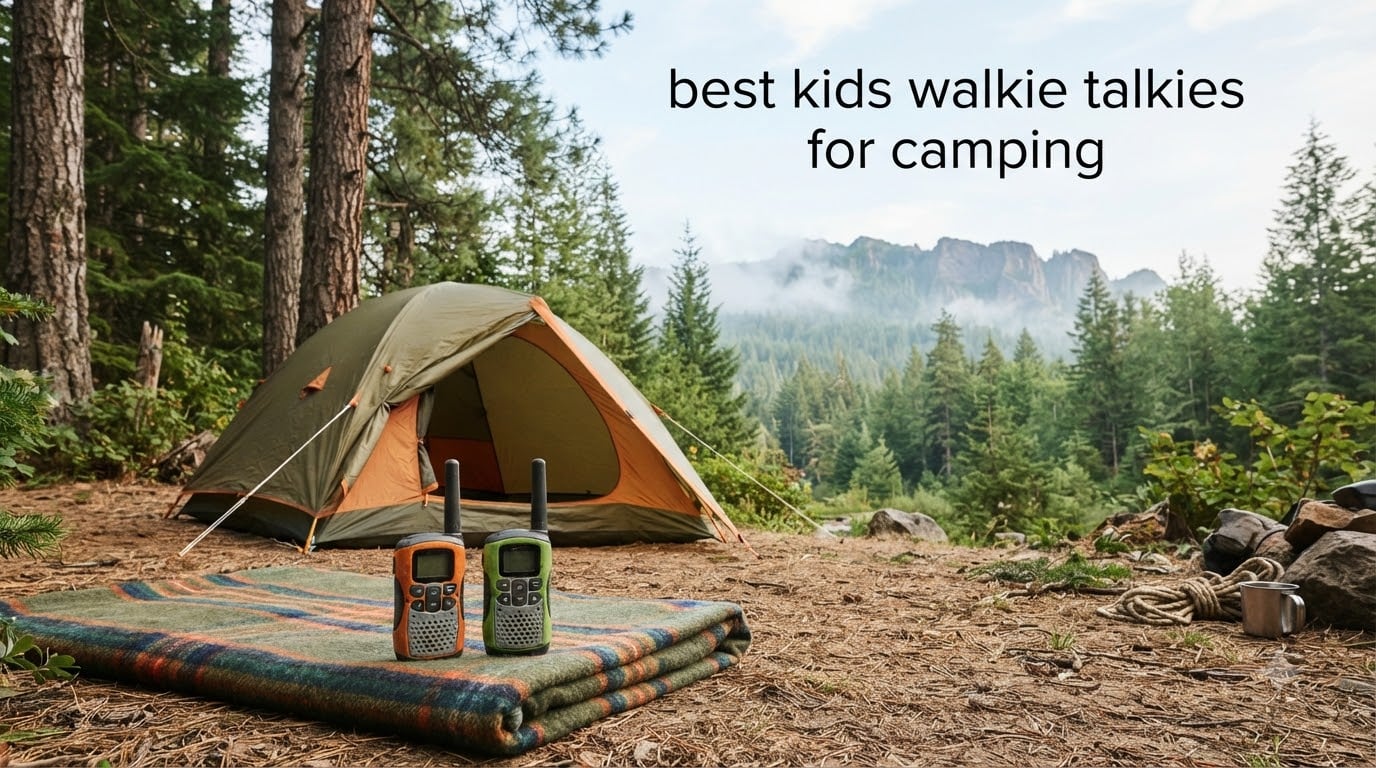
The best kids walkie talkies for camping are the ones that reach across a campground loop without draining a pack of batteries by Tuesday. That sounds obvious, but very few sets do both. Most toy-grade radios advertise a range that only exists on a flat field in clear weather, and most of them run on disposable cells that add up fast on a four-night trip.
We spent weeks with the ten sets below, comparing them on the things that actually change a camping trip: how far a signal carries around tents and a tree line, how long the batteries last when a nine-year-old forgets to switch the radio off, whether the controls survive being operated by small hands, and whether the set keeps other families off your channel. Every pick here is a real FRS or GMRS two-way radio, not a toy with a microphone in it.
Below you will find a top three shortlist, a full comparison of all ten, ten individual reviews, and a buying guide that explains FRS versus GMRS, realistic range, and battery planning in plain English. If your child is old enough for a smartwatch, we have covered those in our guide to the best smartwatches for kids too, but a radio still works where cellular signal does not.
Updated for October 2026.
Table of Contents
Top 3 Best Kids Walkie Talkies for Camping in 2026
Those three cover the most common family situations. The Selieve is the safest default when you do not know what you need, the Retevis RT628 is the one to buy if weight and hands-free calling matter more than anything else, and the Inspireyes pack is the answer to the single most common complaint parents bring back from a trip, which is batteries.
Every Pick at a Glance in 2026
| Product | Specifications | Action |
|---|---|---|
| Selieve 22-Channel Kids Walkie Talkies |
|
Check Latest Price |
 Retevis RT628 Retevis RT628 |
|
Check Latest Price |
 Inspireyes Rechargeable 3-Pack Inspireyes Rechargeable 3-Pack |
|
Check Latest Price |
 Aikmi IP65 Waterproof Set Aikmi IP65 Waterproof Set |
|
Check Latest Price |
 Retevis RT388 Retevis RT388 |
|
Check Latest Price |
 eKids Minecraft Walkie Talkies eKids Minecraft Walkie Talkies |
|
Check Latest Price |
 Wishouse Rechargeable 3-Pack Wishouse Rechargeable 3-Pack |
|
Check Latest Price |
 BATURU Rechargeable 4-Pack BATURU Rechargeable 4-Pack |
|
Check Latest Price |
 QNIGLO Watch-Style Rechargeable Radios QNIGLO Watch-Style Rechargeable Radios |
|
Check Latest Price |
 Wishouse 4-Pack Wishouse 4-Pack |
|
Check Latest Price |
1. Selieve 22-Channel Kids Walkie Talkies – The Most Proven Pick
Selieve Toys for 3-12 Year Old Boys Girls, Easter Basket Stuffers, Walkie Talkies for Kids 22 Channels 2 Way Radio Toy with Backlit LCD Flashlight, 3 Miles Range for Outside, Camping, Hiking
22 channels
90g per radio
Backlit LCD and flashlight
Key lock
Ages 3-12
Pros
- 37k-plus reviews give the widest reported failure history to plan around
- 90g body suits small hands
- backlit LCD with built-in flashlight handles night treks
- key lock stops channel wandering
- call alert and adjustable volume
Cons
- Needs 8 AAA batteries that are not included
- rated battery life of about 6 hours
- not water resistant
- open channels pick up nearby conversations
This is the set we hand to parents who have never held a two-way radio before. It has more reviews than anything else on this list, close to 37k of them, and that volume matters: the pattern of praise and complaint is remarkably consistent, which tells you what you are actually buying.
The physical design is the reason it works for small children. Each radio weighs 90 grams and measures 5.5 by 2.5 inches, small enough for a five-year-old to hold in one hand and clip or drop without complaint. The push-to-talk button is uncomplicated, the volume adjusts with a single control, and the keypad lock stops a curious child from wandering onto another channel mid-hike.
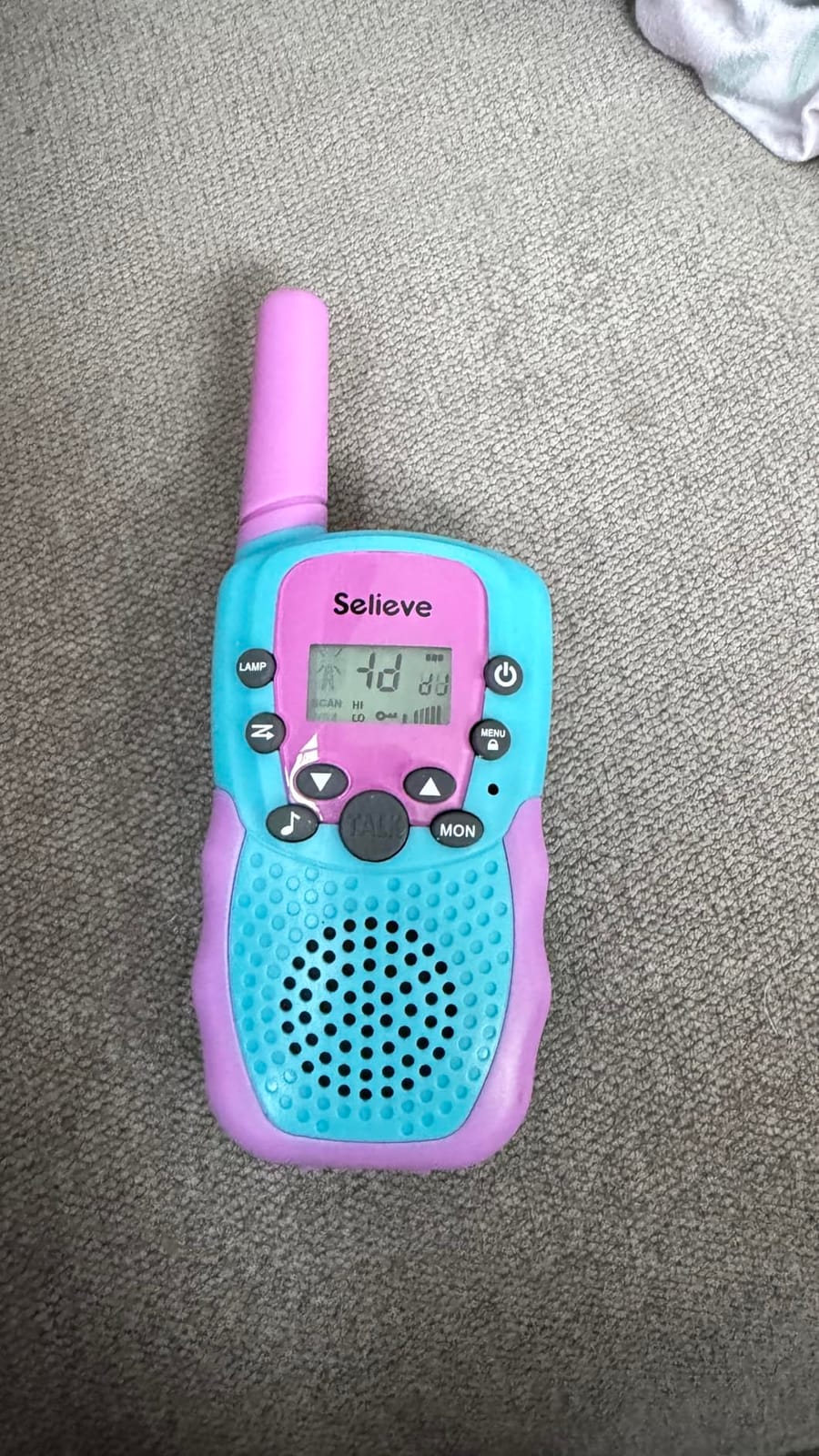
On the ground, the Selieve carried a conversation across the campground loop without effort and started to break up where the path entered the tree line. The manufacturer rates it at 3 km of talking range, a shorter figure than most rivals here but a more honest one.
Two things work against it. The set runs on 8 AAA batteries that are not included, and the rated battery life is about 6 hours, which is short enough that a weekend trip means packing spares or a charger. It is also listed as not water resistant, so it belongs in a dry bag when the rain comes or when the route runs alongside a creek.
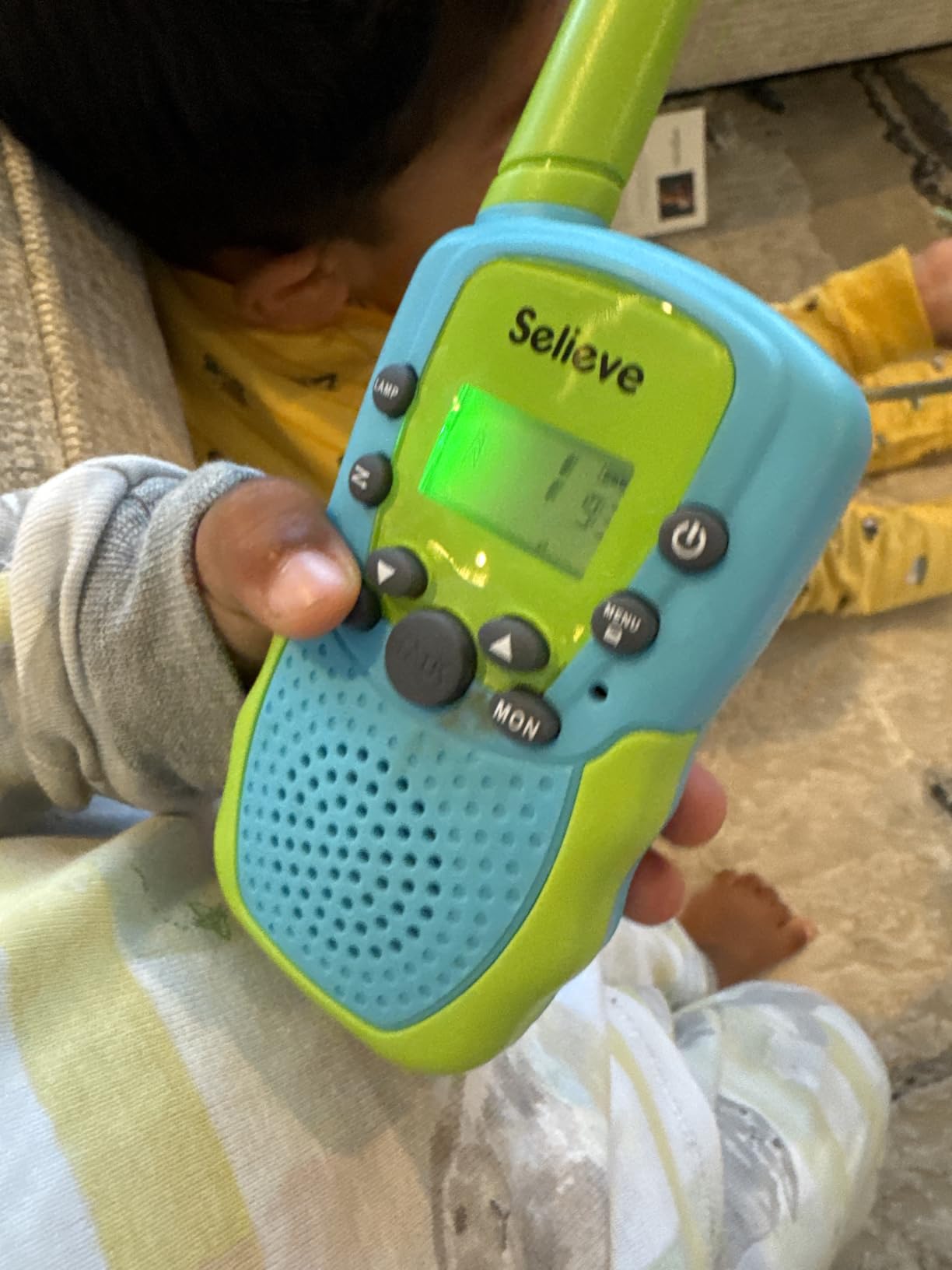
Where the Selieve Works on a Camp Site
This radio suits families with children aged 3 to 12 across a small to mid-sized campground, particularly where tents are pitched within sight of each other. The light body and simple controls mean a younger child can carry it without an adult carrying it for them, which is the whole point of handing a radio to a small child.
The key lock is a real feature here, not a gimmick. On a campground where dozens of families are using the same 22 channels, a child who cannot accidentally change settings is a child who can still reach you an hour later.
Where the Selieve Falls Short
Buy something else if your trip involves rain, river crossings or a site where radios will be handled with wet hands, because there is no water resistance rating on this model. Also look elsewhere if you are planning five or more nights without a way to recharge, since 8 disposable cells at a time is a heavy habit to build.
For a two-night weekend within a walkable campground, though, this is the pick we recommend first, and the one with the deepest pool of owner feedback behind it.
2. Retevis RT628 – Hands-Free Calling and a Two-Year Warranty
Retevis RT628 Walkie Talkies for Kids, Toys for 6-12 Year Old Girls Boys
FRS at 462 MHz
22 channels
3.5 oz body
VOX hands-free
2-year body warranty
Pros
- One of the lightest bodies in the roundup at 3.5 oz
- VOX hands-free so kids can talk while riding or climbing
- keypad lock
- 8-level volume
- belt clip stays on while running
Cons
- Rated range of only 1 km
- needs 6 AA batteries that are not included
- not water resistant
- 121 CTCSS codes are not real encryption
The RT628 is one of the smallest and lightest radios here, at 3.5 ounces and 6.2 by 2.1 inches. For a child aged 6 to 12 who is already walking the campground loop on their own, that weight difference is the feature that matters most in practice.
Retevis is an established two-way radio maker, and the warranty reflects it: two years on the radio body and one year on accessories. That is a longer written commitment than most of the competing sets in this roundup carry.
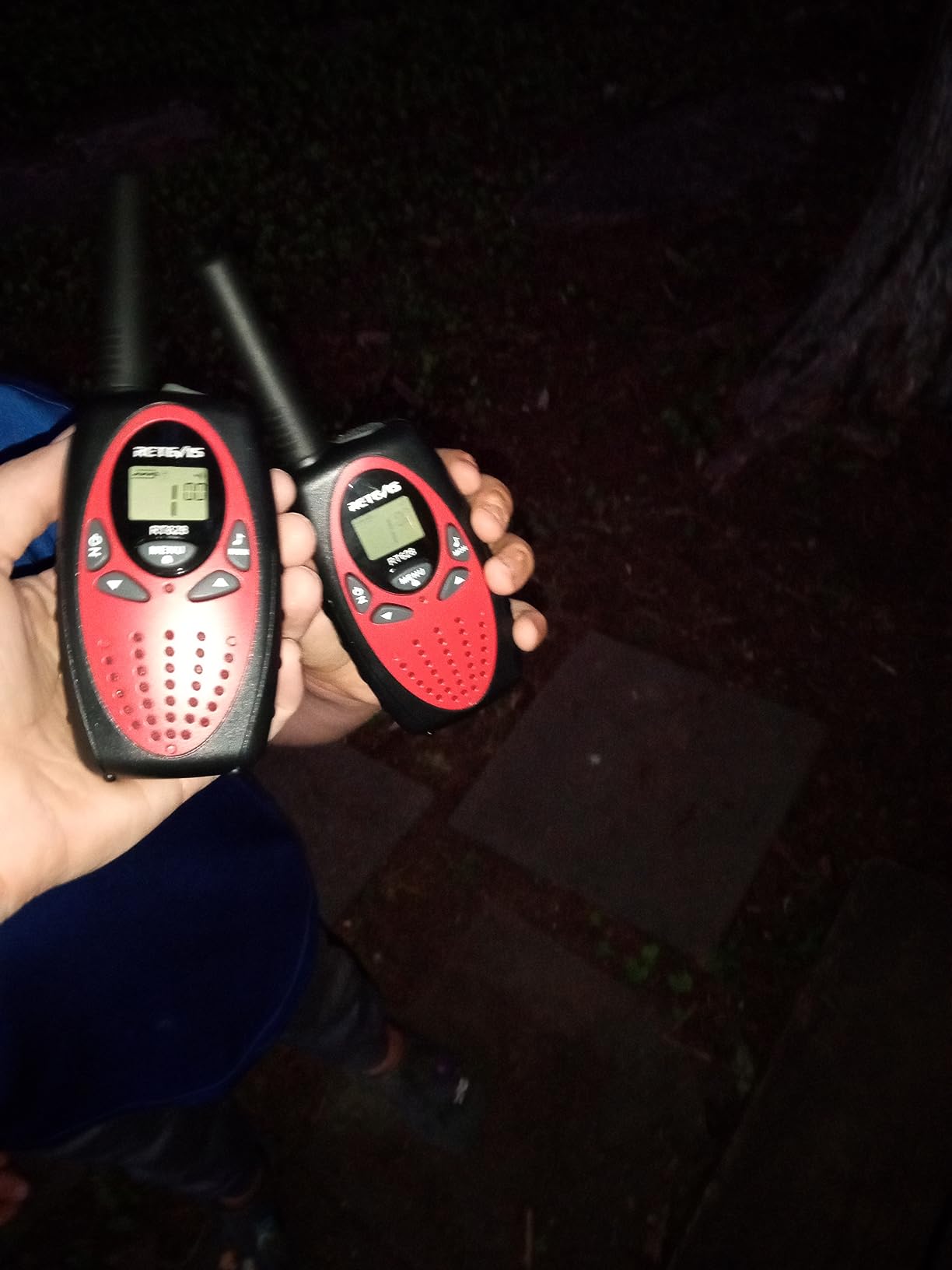
VOX hands-free calling is the feature that gets used more than expected once a child is riding a bike between campsites. Instead of holding a button, they simply talk, and the radio keys itself up. Owners consistently report clear sound through the VOX microphone, and the 8-level volume adjustment handles both a quiet tent and a windy lakeside.
Be clear-eyed about the range figure. This radio is rated at 1 km of talking range, which is honest rather than impressive. It held a conversation across our test loop comfortably, and the failure point arrived quickly once we entered dense trees. If your site is spread over a large park with a forest between you and the tent, this is not the set to depend on for a safety check-in.
It also takes 6 AA batteries and has no water resistance rating, so the same wet-weather caveat applies as with the Selieve.
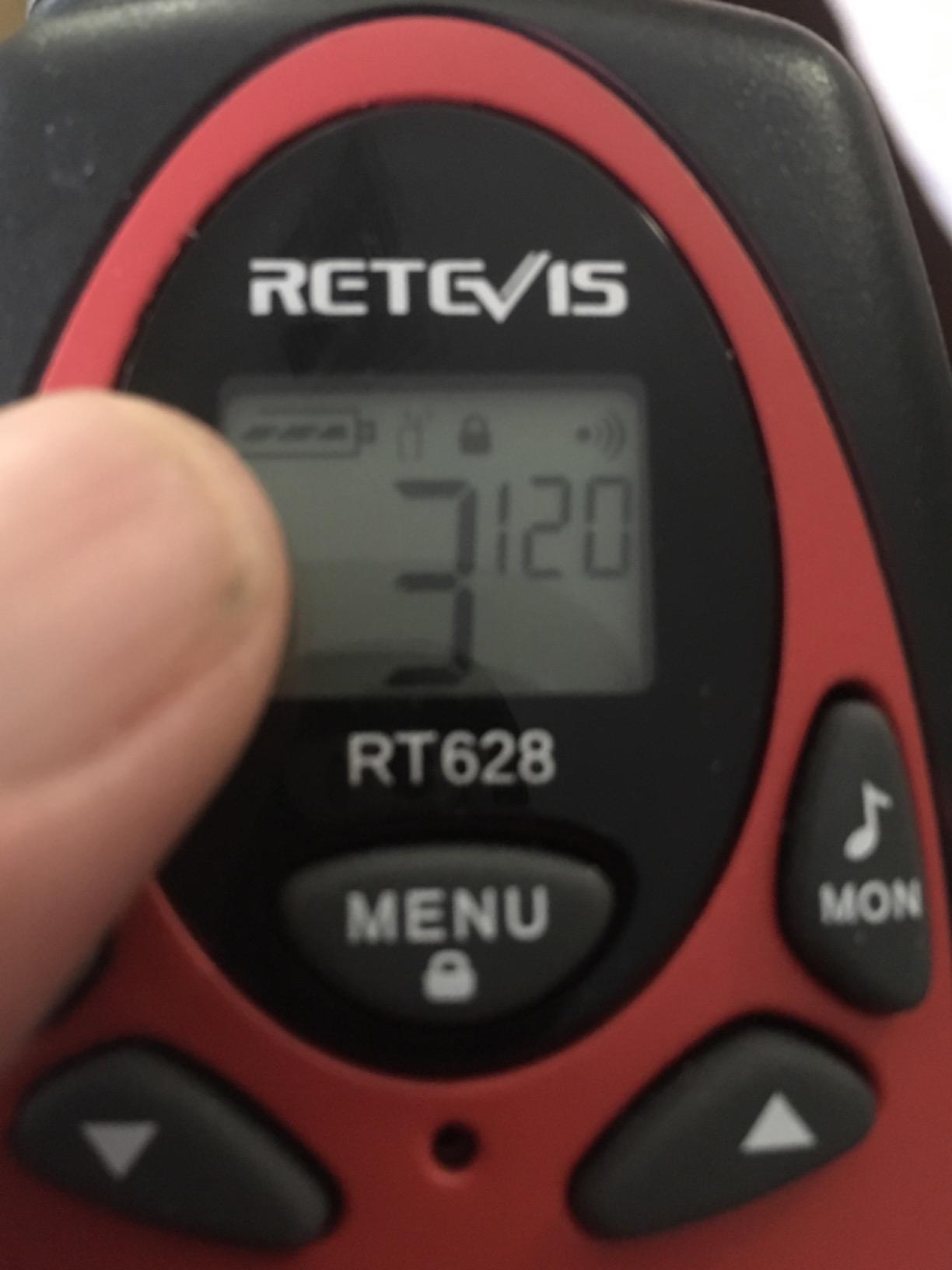
Who the RT628 Fits Best
This is our pick for a child old enough to walk between pitches independently but young enough that weight and simplicity decide the purchase. The keypad lock does exactly one job, which is keeping a child from changing settings, and it does it without a menu system to learn first.
It is also a good two-radio set for a sibling pair splitting up to explore a site, with one each and the adults able to listen in on channel.
Where the RT628 Falls Short
It is the wrong choice for a spread-out campground, a forested hiking trip or any wet-weather scenario. The 1 km rating is the limit, and no amount of goodwill changes the physics of it.
One more caveat for privacy-minded parents: the 121 CTCSS sub-codes reduce chatter and help you pick a quieter channel, but they are not encryption. Anyone on the same channel can still press to talk to your child.
3. Inspireyes Rechargeable 3-Pack – No Disposable Batteries for the Whole Trip
Inspireyes Kids Walkie Talkies, Rechargeable 3 Pack Long Range 2-Way Radios
Rechargeable lithium polymer
48 hours per charge
22 channels, 99 sub-codes
IPX4
87g
Pros
- Highest average rating in the roundup
- 48 hours of playtime and 7 days standby on one charge
- three radios suit a whole family
- 87g body
- VOX plus backlit LCD
- 99 CTCSS and DCS sub-codes
Cons
- IPX4 splash protection only
- hills and buildings cut the 3-mile claim
- charging cable and dock take packing space
- menu system is more complex than simpler kid models
Every complaint we hear about kids walkie talkies eventually traces back to batteries. Kids leave radios switched on, disposable cells run out overnight, and by the third morning the family is back to shouting across the site. The Inspireyes pack removes that problem entirely.
Each radio carries a built-in lithium polymer battery rated at up to 48 hours of playtime and 7 days on standby, and the three-pack format gives you enough radios for two adults and one child, or for three children who each carry their own. No AA cells to buy, carry or lose in the tent.
It also has the highest average rating of anything we tested, at 4.6 stars across more than 8k reviews, which is a meaningful gap in a category where most sets sit between 4.3 and 4.5. The 22 channels with 99 CTCSS and DCS sub-codes give one of the largest code selections in this roundup, which matters on a crowded site.
The manufacturer is unusually candid about range, stating that communication is stable from half a mile to one mile in typical environments while the 3-mile figure applies to open areas. That honesty matched what we saw. The radio was clear across the campground loop and degraded gradually rather than cutting out, and hills and buildings did reduce it noticeably.
When the Inspireyes Pack Is the Right Buy
Choose it for trips of four nights or more, or for any campground where a dead radio would leave a child stranded at the far end of the site. The recharge cycle is the single feature that changes the trip experience, and the three-radio count covers most family shapes without a second purchase.
For a mixed group, it is also a good crossover set. Because it operates on the standard 22 FRS-style channels, it will talk to the Selieve, the Retevis sets and most adult-tier radios on the same channel and sub-code, which lets children use the small set while parents carry a more capable unit.
When It Is Not the Right Buy
The IPX4 rating covers splashes, not submersion, so it is a shower-rain radio rather than a creek-crossing radio. If your site sits beside moving water and the kids will be handling the radios bare-handed after a swim, choose the Aikmi instead.
The menu is also deeper than a simple kid set needs, and the charging cable plus dock take up more room in a pack than a set of AA batteries does. Set it up at home before the trip, not at the site.
4. Aikmi IP65 Waterproof Set – Built for Rain and Creek Days
Aikmi Walkie Talkies for Kids Outdoor Toys, Gift Boys Girl
IP65 water resistance
22 channels
3-mile rated range
Straps and lanyards
2-year warranty
Pros
- A genuine IP65 water resistance rating for a kids set
- 3-mile rated range for open campground use
- camo styling that appeals to older children
- VOX hands-free plus lock screen
- two straps and lanyards included
Cons
- Needs 3 AAA batteries per radio with no rechargeable option
- choking hazard warning so not for children under 3
- locked to the 462 MHz analog band
- lower rating than the rechargeable sets
Rain is the default condition of a camping trip, and the Aikmi is the set in this roundup built for it, with a published IP65 rating. IP65 means dust-tight and protected against water jets from any direction, which in practice means a dropped radio in wet grass, a splash at a washing station and a sudden downpour are survivable events rather than terminal ones.
The Aikmi also carries a longer rated range than the 1 km sets in this roundup, at 3 miles in open areas, and it produced clear audio across our campground loop with the signal holding longer than the shorter-rated sets managed.
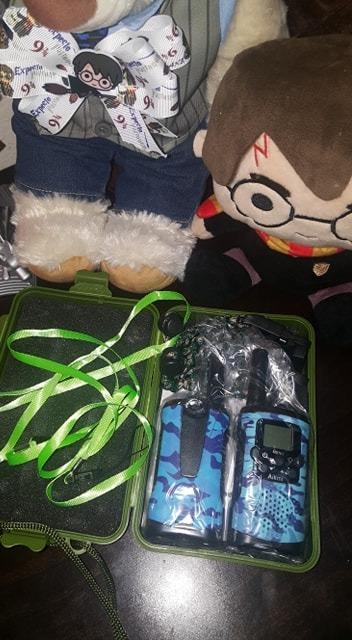
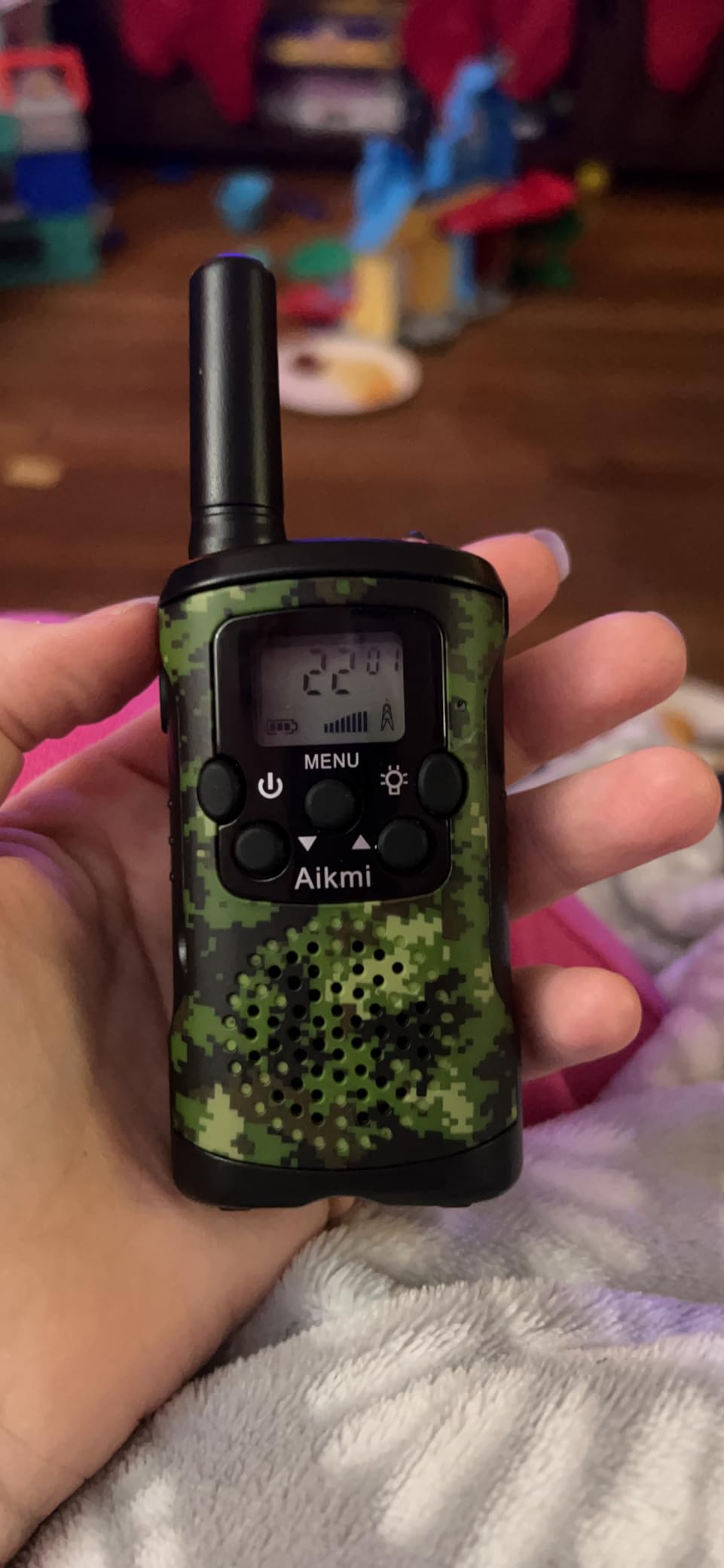
Camo styling is not a gimmick here. The set is aimed at children roughly 4 to 12 who are into pretend soldier and explorer play, and several owners describe the set doubling as a costume prop during a trip, which is a real benefit when a child is motivated to carry it.
VOX hands-free and a lock screen function are both present, and the two-year manufacturer warranty is among the longer commitments offered in this category.
The trade-offs are real. It takes 3 AAA batteries per radio with no rechargeable option, so you are buying cells for the whole trip. The listing carries a choking hazard warning and states it is not for children under 3, which matters if you have a toddler in the group.
Which Trips Justify the Aikmi
Buy this one if your site is exposed, your group is likely to be outside in rain, or the kids will be near water. It is the set we would hand to a family camping in an exposed field site rather than under a forest canopy, where the IP65 rating does the work that the extra range would do elsewhere.
It is also a strong pick for the classic military-themed birthday party that happens to be held outdoors, where the camo finish and straps are doing half the job.
Where the Aikmi Falls Short
It operates on the 462 MHz analog band, which means it will not interoperate with the wider range of adult-tier FRS and GMRS radios many parents already own. If you plan to carry your own radio as a backup, check compatibility before committing.
Disposable batteries and an under-3 age warning make it a poor match for a long trip with a toddler in tow. The 4.3 rating is among the lower scores in this roundup, which reflects consistent rather than outstanding performance.
5. Retevis RT388 – A Straightforward Budget Kit with a Flashlight
Retevis RT388 Kids Walkie Talkies, Outdoor Toys for Kids Camping Essentials
FRS at 462 MHz
22 channels
1 km rated range
LED flashlight
Key lock
Pros
- Lightweight at 100 g
- belt clip keeps the radio at the waist during play
- key lock stops children changing settings
- built-in LED flashlight works well for hide and seek at dusk
- two-year warranty on the radio body
Cons
- Only 1 km of rated range
- needs 8 AAA batteries which is the highest AAA count in the roundup
- not water resistant
- lower sales rank in the category than rivals
The RT388 is the simpler of the two Retevis sets we tested, and it earns its place through the belt clip and the flashlight. For a child running around a site at dusk, having a light attached to the radio removes an entire category of evening negotiation.
Like the RT628 it operates on FRS at 22 channels, and the 100 g body is heavier than the RT628 but still comfortable for a child aged 6 to 12. The set includes two radios, so you have one for the child and one for a parent, which is the arrangement most families end up with anyway.
Where it loses ground is range and power. The rated talking range is 1 km, matching the RT628, and it takes 8 AAA batteries, the highest AAA count of any set here. That works for a couple of nights on a walkable site and becomes genuinely annoying on a week-long trip.
Two-year warranty coverage on the radio body is a genuine plus for a set like this.
Who Should Buy the RT388
We would pick it for a short weekend trip, a car-camping setup where the radios stay near the vehicle, or a family that already knows the site layout and the child will not wander far. The flashlight makes it the better of the two Retevis sets for evening use.
If you are buying for a child who mainly wants to play rather than to be reached, the simple design and low weight suit that purpose just as well.
Who Should Skip It
Anyone camping for a week, camping in the rain, or camping at a large park where the tent is a real distance from the parking lot. In those cases the money is better spent on a rechargeable pack.
Note also that this set sits lower in the category sales rankings than its rivals here, so if you want the broadest selection of replacement parts or accessories, the RT628 is the safer Retevis choice.
6. eKids Minecraft Walkie Talkies – Best for Children Aged 3 and Up
eKids Minecraft Walkie Talkies for Kids, Indoor and Outdoor Toys
Single channel
750 foot range
Ages 3 and up
Minecraft styling
Static-free audio
Pros
- The most commercially successful set in the roundup with a #2 rank in the category
- Minecraft graphics that motivate young children to use it
- static-free sound
- one-button operation a three-year-old can manage
- also sold in Pokemon and Super Mario versions
Cons
- Shortest range here at 750 feet
- single channel so no privacy sub-codes
- needs 4 AAA batteries
- not water resistant
- will not work with 22-channel adult radios
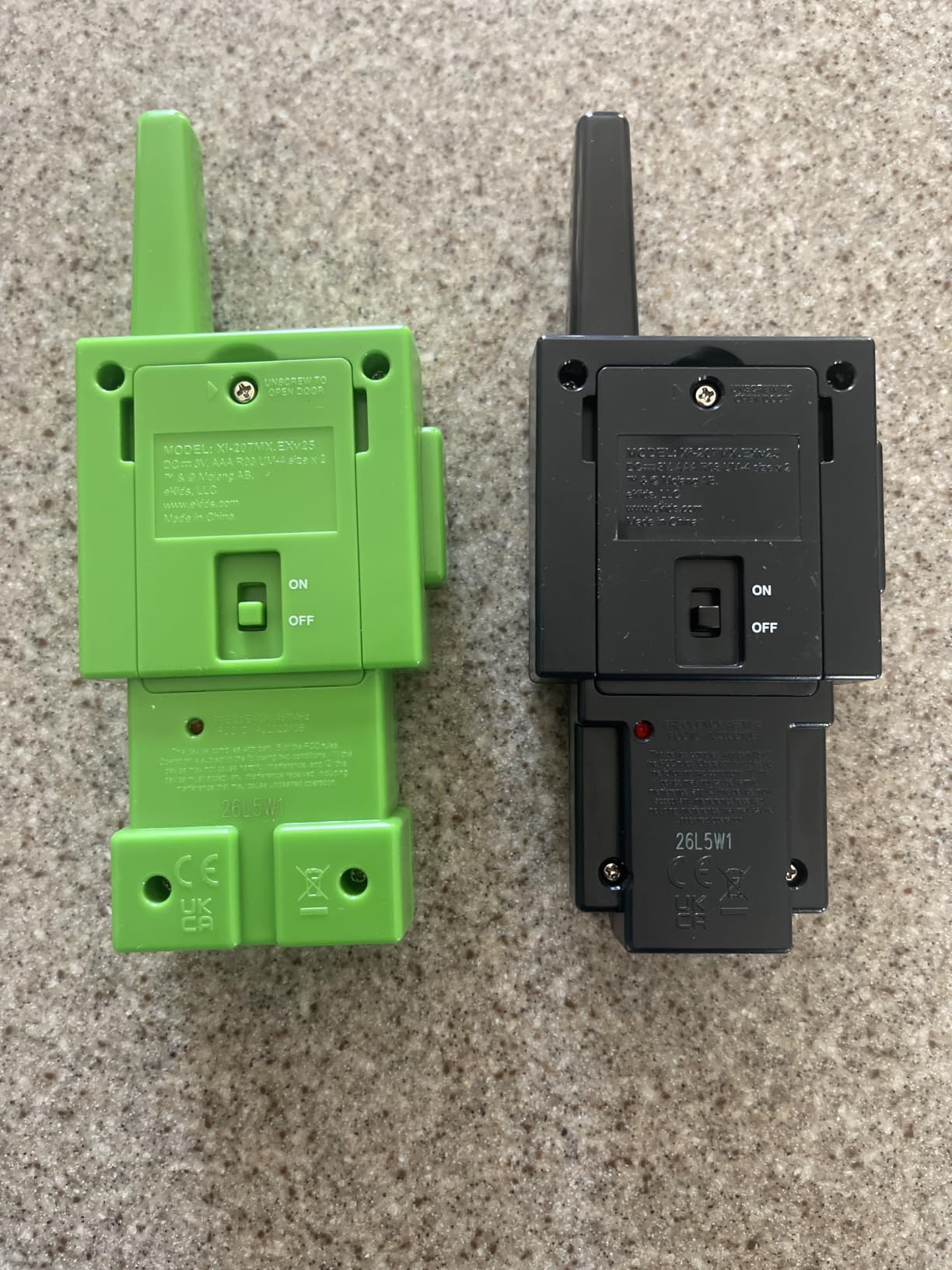
For a child aged three or four, the deciding factor is rarely radio engineering. It is whether the child will actually carry it, and a pair of Minecraft-themed cube radios solves that problem in a way no plain-coloured set does.
The control layout is a single push-to-talk button. There is no channel changing to get wrong, no menu to enter accidentally, and no keypad lock needed because there is nothing to lock. That simplicity is the design, not a shortcut.
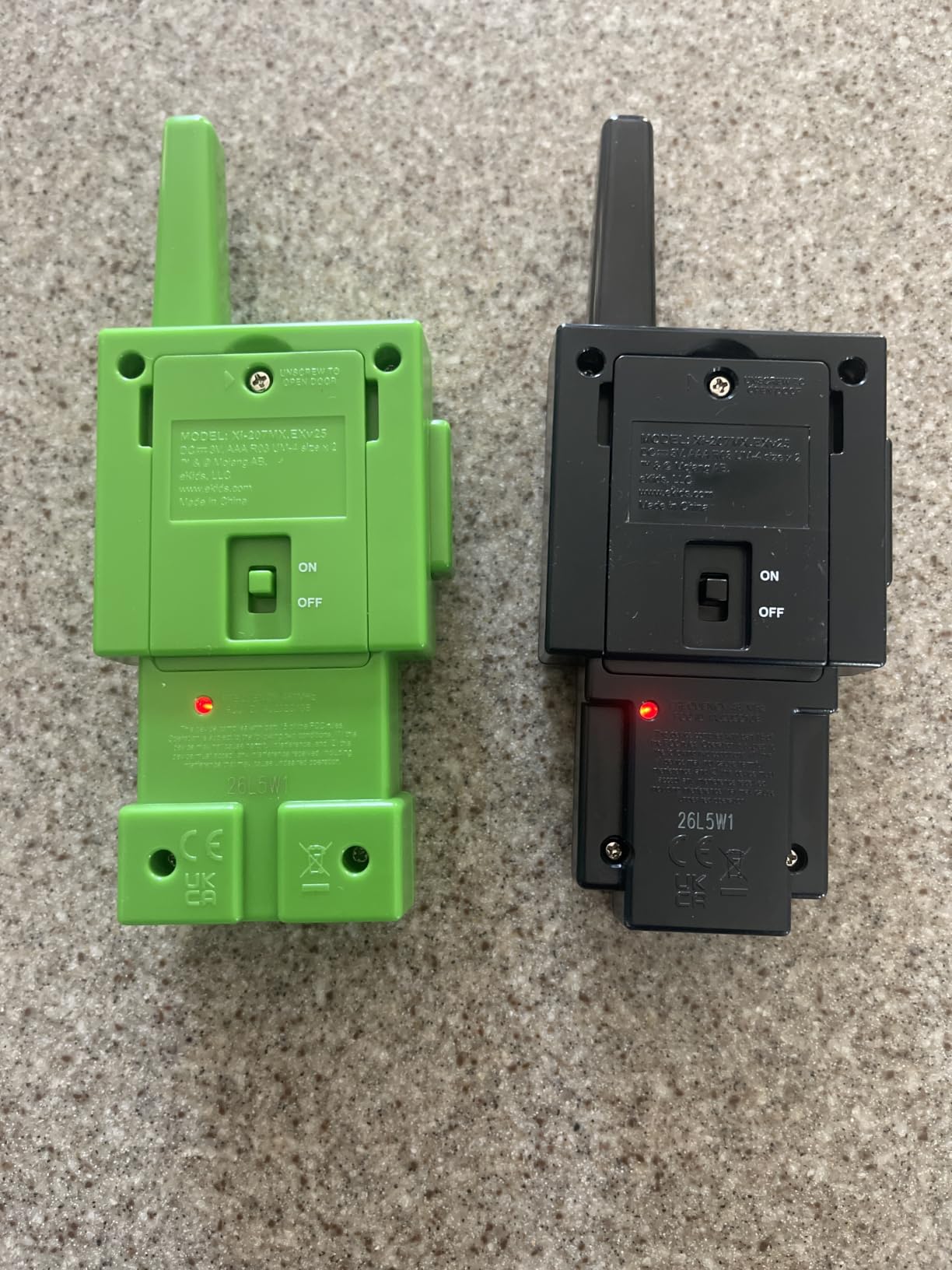
Sound quality is static-free according to owners, which matters more than it sounds: a set that hisses constantly gets switched off within a minute. The body is compact and light enough for small hands, and the same range is sold in Pokemon and Super Mario versions if Minecraft is not the theme in your house.
The constraints are severe and should shape your expectation. The rated range is 750 feet, the shortest of the ten, and there is exactly one channel with no sub-codes at all. That means at a busy campground your child can hear, and be heard by, any other set on that channel within a quarter mile.
Where the eKids Set Shines
This is a close-range set and should be treated as one. It works beautifully in a yard, on a farm, at a large open campsite where family members stay within a few hundred metres, or as a second play set for a child who already has a longer-range radio at the tent.
For a three-year-old, the value is high. A child that age cannot yet work a 22-channel menu, so a single-channel set is not a downgrade, it is the correct tool.
Where It Falls Short
Do not rely on it as a safety device at a large campground, in a forest, or anywhere the walk from the tent to the far end of the site exceeds a few hundred metres. There is no privacy control, so expect interference from other families at a commercial campground.
It also will not pair with your own adult radio, since a single channel is not part of the standard 22-channel layout. If you want one device for the whole family, choose a standard set instead.
7. Wishouse Rechargeable 3-Pack – Runs a Whole Family Group
Wishouse Walkie Talkies Rechargeable for Kids Adults Long Range,Xmas Birthday Gift for Boys Girls 3 4 5 6 7 8 9 10 Year Old,Hiking Gear Camping Games Toys with Flashlight,VOX,Easy to Use 3 Pack
22 channels
3 rechargeable 3000mAh AA packs
5-mile rated range
Flashlight and VOX
Pros
- Three 3000mAh rechargeable AA packs plus dual-head USB cables that charge all three at once
- batteries outlast disposable cells
- simple enough for a child under 5 to operate
- power saving mode
- DCS and CTCSS codes with VOX sensitivity
Cons
- Real-world range often falls short of the 5-mile claim
- no encryption so strangers can address your child
- bulkier body than rivals
- a few reviewers report individual radios failing within weeks
- not water resistant
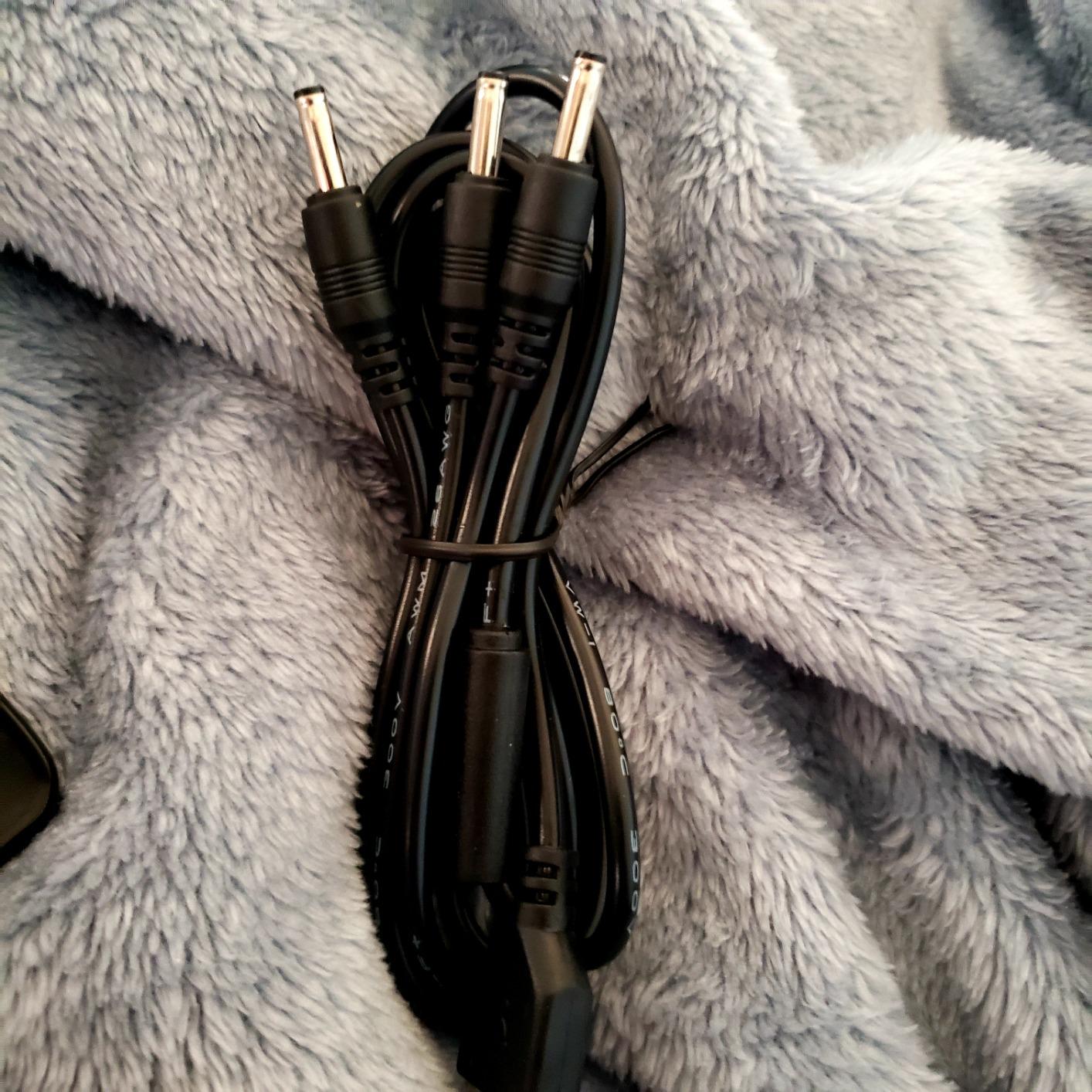
The Wishouse 3-pack takes a different approach to power from the lithium packs in this roundup. It ships with three sets of 3000mAh rechargeable AA batteries and dual-head USB cables, so the three radios charge together on one cable. High-capacity AA cells in a radio body means the batteries are removable, which is the arrangement many parents prefer for a reason: you can swap in a spare set instantly.
Reviewers consistently single out how easily a child under 5 operates it, and the 22 channels with DCS and CTCSS codes give more channel combinations than the 8-channel sets further down this list.
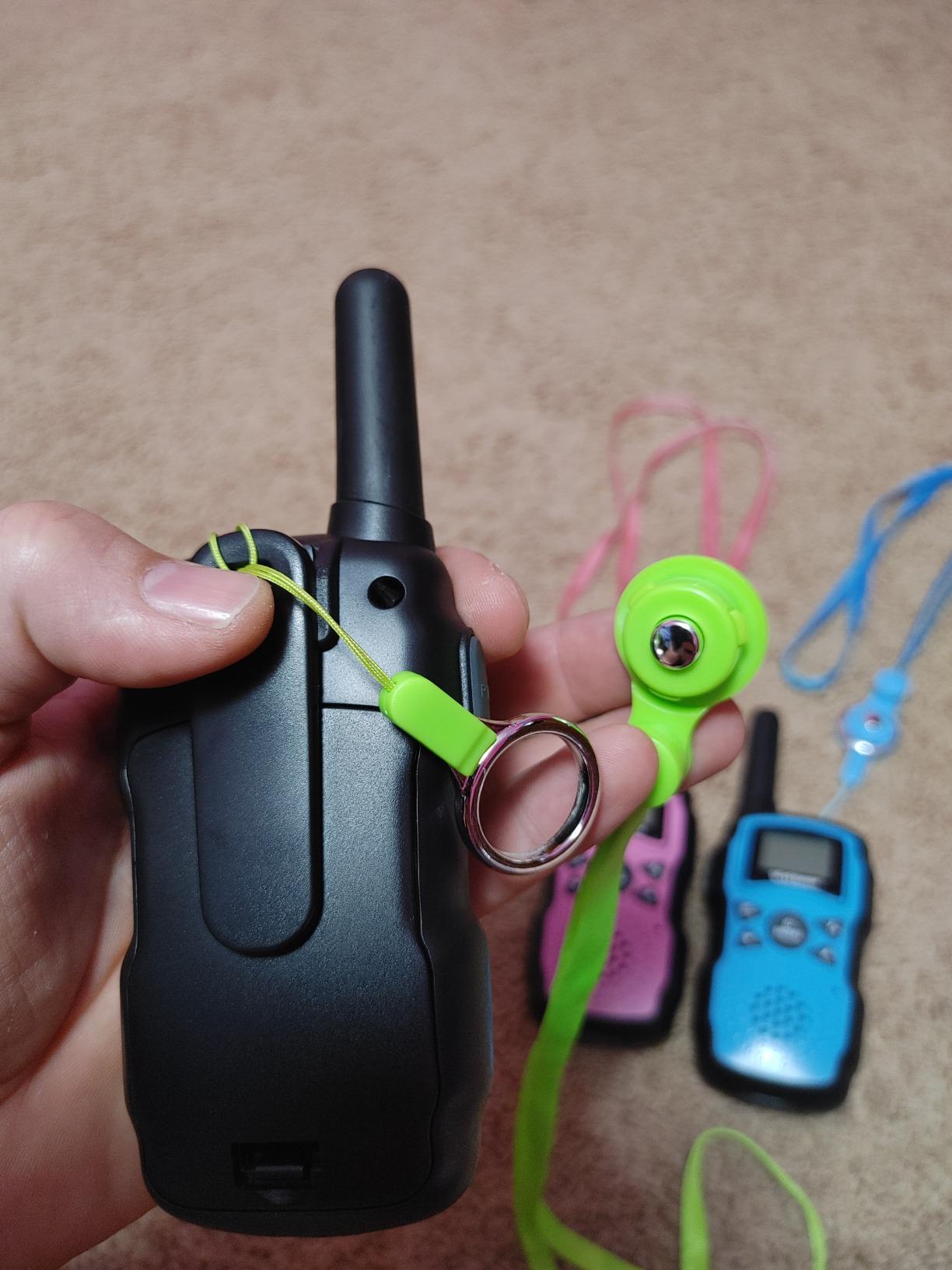
The 5-mile rated range is among the most inflated claims in this roundup, and reviewers are candid that real-world performance falls well short of it. Expect the useful distance to be far shorter, closer to what a mid-range standard set achieves around obstacles.
Two cautions. There is no encryption, and one parent specifically warned about strangers on the same channel addressing their child, so treat privacy codes as channel management rather than privacy. Volume is adjusted with buttons rather than a knob, so it cannot be turned down very low, which matters for a light sleeper in a shared tent.
Best Situations for the Wishouse 3-Pack
It suits a family of five or six, or a group of cousins sharing a site, because three radios cover more people than a two-pack. Removable batteries also make it a good choice for a trip where a child will lose or damage a radio, since a spare set of cells solves it in seconds.
It is the one we would pick for a group of children aged 5 to 10, because the controls are simple but the channel selection is real, so older children can start managing their own settings as they grow.
Where to Look Elsewhere
Do not buy it expecting a five-mile link. If genuine distance matters for your site, choose a standard set and set your expectations using the range section of our buying guide instead.
The body is bulkier than most rivals here, and a small number of reviewers report a radio failing within weeks. The listed warranty is shorter than the two-year cover offered by the Retevis and Aikmi sets, which is worth weighing if your child is hard on equipment.
8. BATURU Rechargeable 4-Pack – Built for Larger Groups
Walkie Talkies for Kids 4 Pack Rechargeable Outdoor Toys Gifts Boys Girls
Four radios
Built-in 2000mAh battery
48 hours
Type-C charging
22 channels with 99 codes
Pros
- One of the two largest sets in the roundup at four radios
- built-in 2000mAh battery giving 48 hours of playtime and 7 days standby
- one Type-C cable charges all four
- noise filtering keeps voices clear in wind
- keypad lock
- drop-resistant ABS housing
- two-year warranty
Cons
- Not water resistant
- smart auto-off after 1.5 hours can cut a session short
- some buyers report radios that work only intermittently
- listing confusingly mentions both a built-in battery and AAA batteries
Four radios is the number that removes most of the friction at a real campsite. One each for two adults and two children, with the group able to split into two pairs and still reach a parent, is a genuinely different arrangement from handing out a two-pack.
Power is handled well. Each radio carries a built-in 2000mAh lithium polymer battery rated at 48 hours of playtime and 7 days of standby, and a single Type-C cable charges the whole set, which matters when campsite charging ports are scarce.
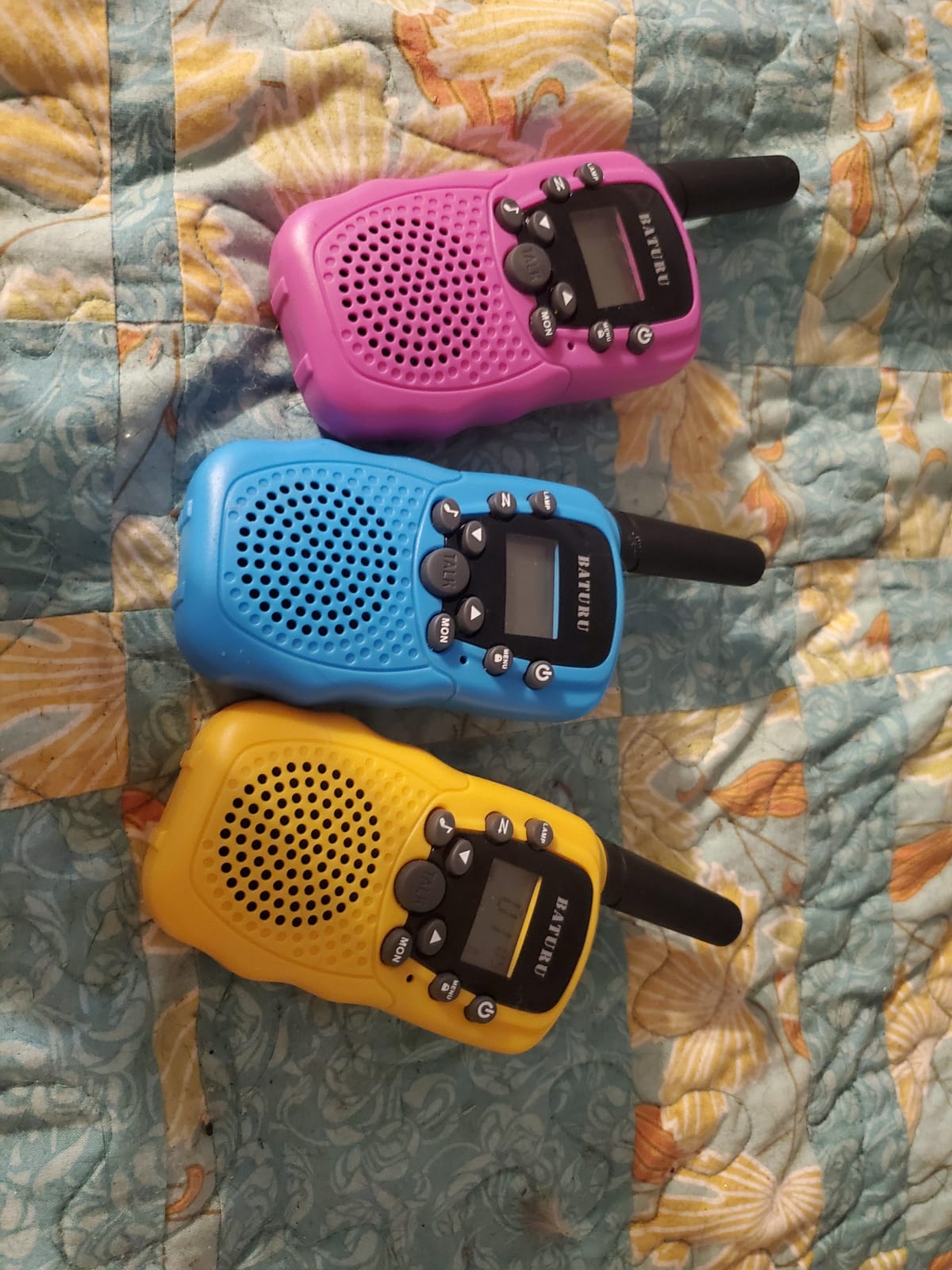
The noise filtering and enhanced speakers are the details we noticed most in the field. Campsites are windy and loud, and a radio that cannot cut through background noise on a loop path gets ignored. The keypad lock is engaged by holding the menu button, which is a simple gesture for a parent to set once and forget.
There is a real downside in the auto-off feature. After 1.5 hours of inactivity the radio switches itself off, and a child who was listening quietly rather than talking will find the radio dead when they need it. Several owners describe this as the most annoying thing about the set.
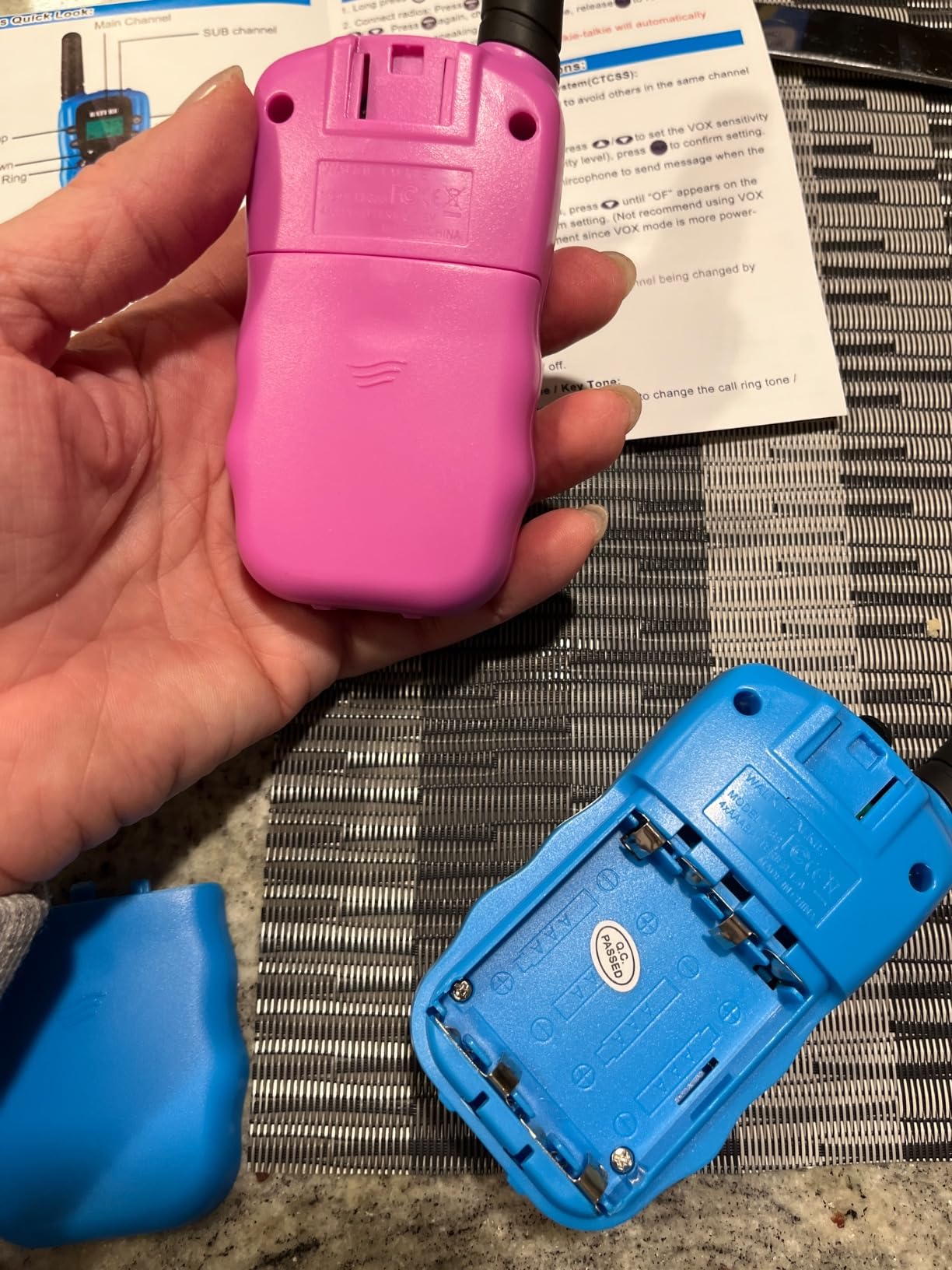
The product listing is also confusing, referencing both a built-in lithium battery and AAA batteries in the same specification block. In use the built-in battery is what runs the radio.
Who This 4-Pack Serves Best
Two families sharing a site, a group of cousins, or a single family with two confident walkers aged 8 and up. Four radios also gives you a spare: if one gets dropped in the lake, three people can still communicate.
It is a good fit for a trip where adults want to carry the same model the children carry, since the channels and codes match standard FRS sets and the radios will also talk to an adult-tier unit.
Where It Falls Short
Not for wet-weather use, as there is no water resistance rating. Also worth pausing on if your children tend to leave radios switched on and idle for long stretches, because the auto-off timer will turn that habit into dead radios rather than wasted batteries.
A 4.3 rating with more than 3k reviews reflects solid performance with the usual reliability wobble that comes with larger multi-unit packs.
9. Qniglo Watch-Style Rechargeable Radios – Wearable and Light
Qniglo Walkie Talkies for Kids Ages 3-12 Walkie Talkie Toys for Boys Girls
Watch-style wearable design
48 hours claimed
58 g per unit
USB-C charging
22 channels
Pros
- Wearable watch format that children genuinely want to wear
- rechargeable lithium polymer battery with 48 hours claimed playtime
- a very light body listed at about 58 g
- automatic noise reduction
- keypad lock
- works with other brands of two-way radio on matching settings
Cons
- Instructions are poorly written and setup confuses first-time users
- some radios arrive dead or go unresponsive after a few weeks
- standby life falls short of the advertised 7 days
- key lock does not cover the FM button
- VOX picks up background noise
- only IP44 splash protection
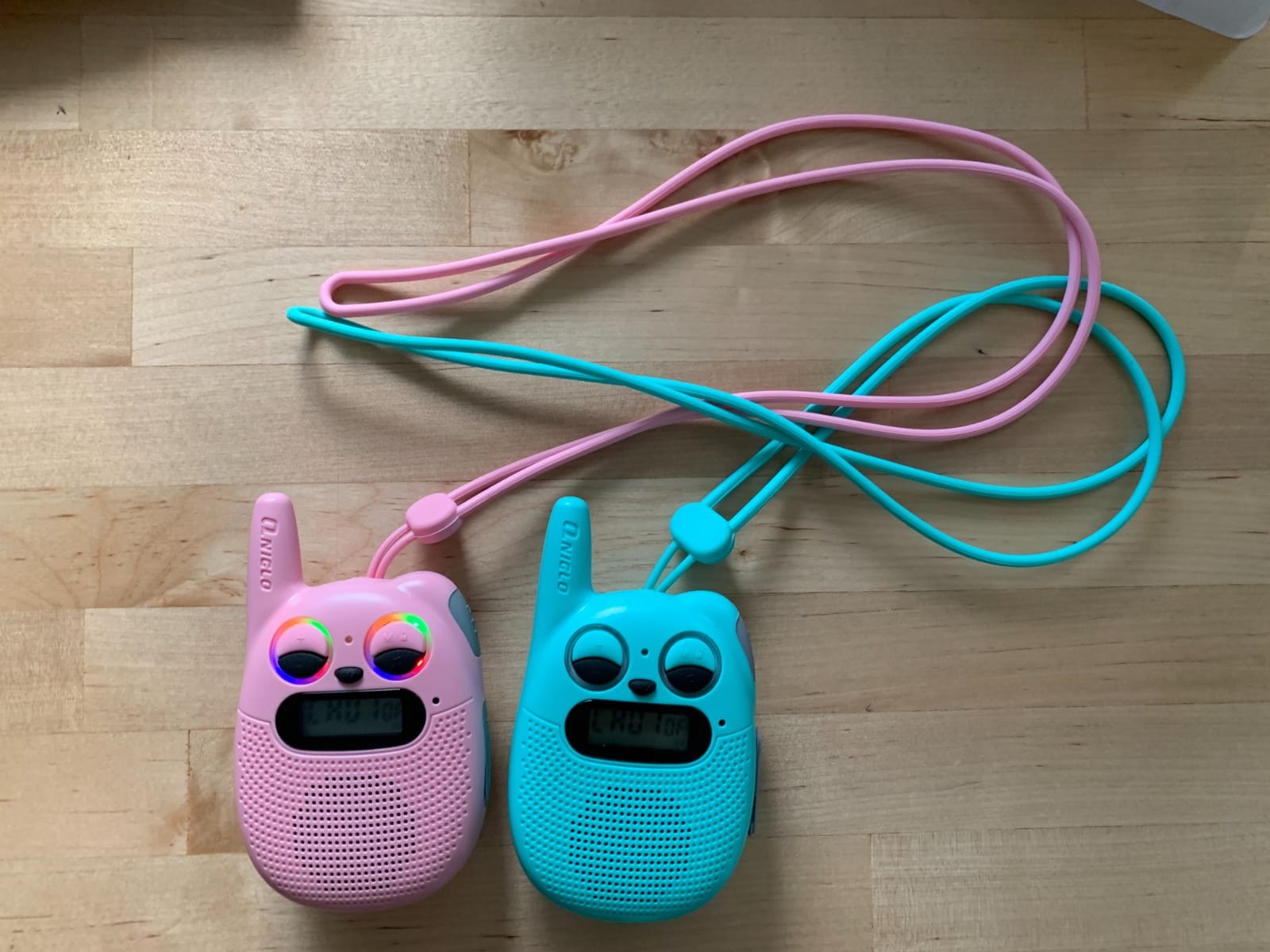
The Qniglo solves a problem no other set here addresses. A radio in a pocket ends up in a jacket by lunchtime. A radio on a child’s wrist does not, and parents report that the wearable format is what makes children keep it on rather than abandoning it after an hour.
They charge over USB-C from a rechargeable lithium polymer battery rated at 48 hours of playtime, and the design includes both a lanyard and a wrist strap so you can choose how a child wears it.
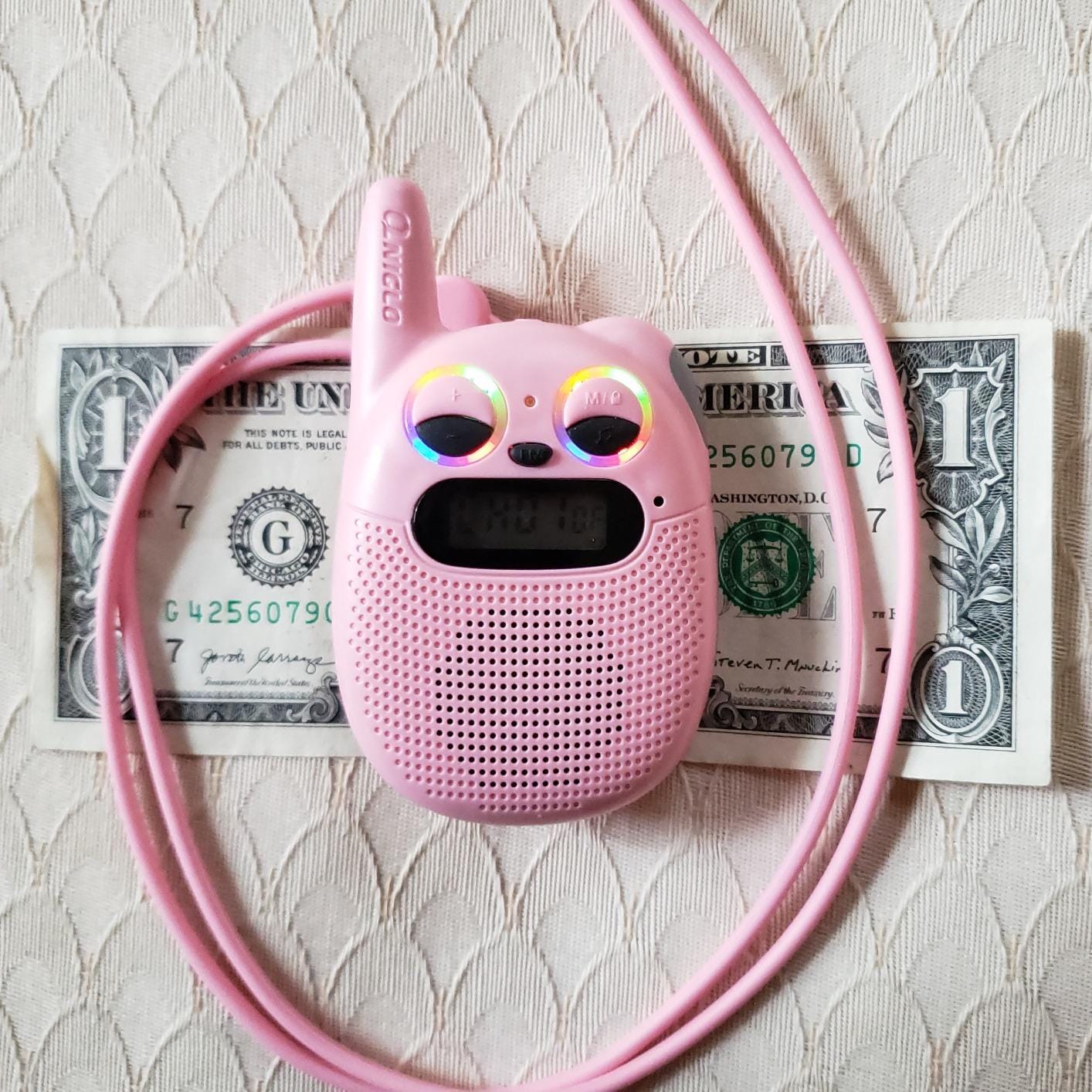
Because it operates on the GMRS band with 22 channels and privacy codes, it will talk to other brands of two-way radio set to the same channel and code, which makes it a useful crossover option for a family that splits radios between adults and children.
Setup is the weak point and deserves an honest mention. Owners repeatedly describe the instructions as poorly written and the first-time configuration as confusing, so plan to set both radios up at home before the trip rather than at the campsite.
Several other issues come up in reviews. Standby life runs closer to two days than the advertised seven. The key lock covers the menu button but not the FM button, which is a real annoyance when an elderly relative is using the set. VOX mode picks up background noise and blurs short phrases, so it works better with push-to-talk.
Water protection is IP44, which covers splashes only, and a small number of buyers report radios that arrived dead or became unresponsive within weeks, though customer service replaced those units.
Where the Wearable Format Wins
It suits a child who forgets to carry things, a family travelling where a small bag limit makes every item count, and cruises, long theme park days or walking tours where a wrist-worn radio is less conspicuous and less likely to be lost.
Several parents of children who are slower to speak describe the watch format as an easy way to let a child initiate contact rather than waiting for an adult to ask, which is a genuine communication benefit beyond the toy value.
Where to Choose Something Else
Choose a standard handheld set if your child tends to fiddle with buttons, since the FM button sits outside the key lock. Choose a water-resistant set if the trip involves rain or water, because IP44 will not survive a dunking.
Set the radios up before you leave home, and do not rely on the 7-day standby claim for a long trip without checking in.
10. Wishouse 4-Pack – A Four-Radio Kit for Big Tents
Wishouse Walkie Talkies for Kids 4 Pack,Family Walky Talky Adults Children Radio Long Range,Outdoor Camping Fun Toys Birthday Present Xmas Gifts for 4 5 6 7 8 Year Old Girls Boys No Battery No Charger
Four radios
8 channels
Battery saver mode
Flashlight
Detachable straps
Pros
- Four radios cover two adults and two kids on one site
- battery saver mode stretches a single set of cells
- built-in flashlight and detachable straps for night use
- simple design young children pick up immediately
- adjustable volume and receiver sensitivity
Cons
- Only 8 channels against 22 on most rivals
- needs 12 AA batteries that are not included
- no charger or rechargeable option on this version
- water resistance details are inconsistent
- real-world range falls well under the 5-mile claim
This is the plain four-pack version of the Wishouse range, and it exists for one reason: putting a radio in every child’s hand at a site where everyone is spread out. The rating of 4.5 across more than 3k reviews is solid for a set at this level.
The battery saver mode is the feature that earns its keep, since this version runs on 12 AA batteries that are not included. Flashlight, detachable straps, adjustable volume and adjustable receiver sensitivity round out a genuinely simple package that young children pick up without instruction.
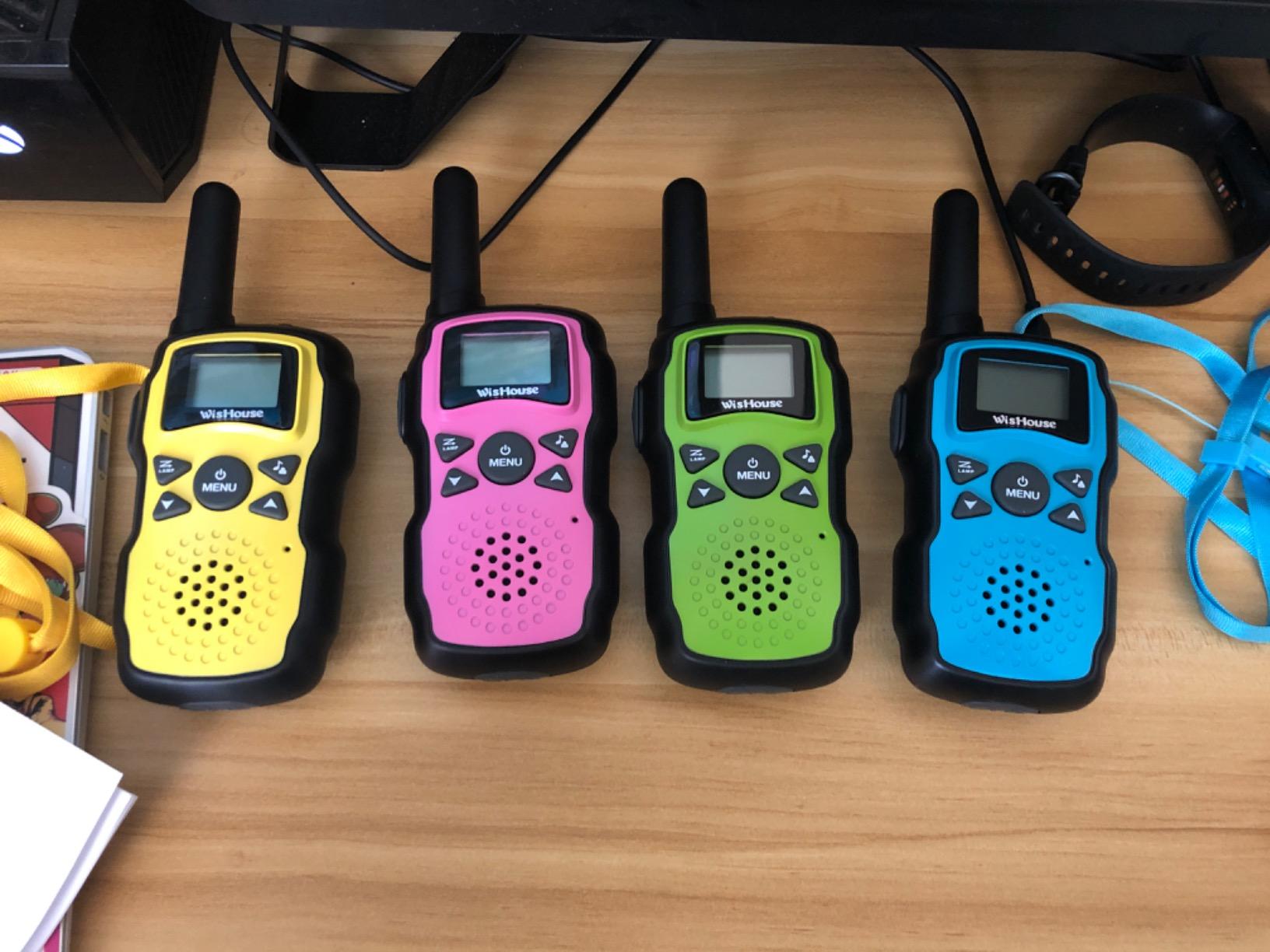
Two limits shape the decision. The channel count is 8 rather than the 22 found on most rivals, which on a busy commercial campground narrows your options when you are trying to find a quiet channel, and it means this set will not access channels the adult radios in your group may be using.
The second is battery logistics. Twelve AA cells across four radios is a meaningful amount to buy, carry and manage, and this version has no charger or rechargeable option, so many families end up choosing the rechargeable 3-pack sibling instead.
Who This 4-Pack Works For
A family of four at a large campsite where each person carries a radio, particularly if the children are old enough to operate one confidently and the site is not densely wooded. The setup simplicity means less time spent explaining controls on arrival.
It is also a reasonable second set to lend to another family at the same site, since a shared channel plan is easier when everyone has the same model.
Where to Buy a Different Model
If your group is bigger than four, or if you want a child and a parent to each have a spare, move up to the rechargeable 4-pack in this roundup instead. If channel choice matters on a crowded site, the 8-channel limit is worth avoiding.
For a week-long trip, 12 disposable cells per day of heavy use is the deciding factor. Buy rechargeable.
How to Choose Kids Walkie Talkies for Camping
Start with range, and then discount the number on the box. Every set in this roundup publishes a maximum talking range measured in ideal conditions, usually on open flat ground with a clear line of sight between two points. A campground is none of those things. Here is how the claims we tested actually translated on the ground.
A set rated at 1 km, such as the Retevis RT628 or RT388, held a clear conversation across a walkable campground loop and failed quickly once trees were involved. A set rated at 3 km, such as the Aikmi or the Inspireyes, held audio further out and degraded more gradually. A set claiming 5 miles, such as either Wishouse, performed like the mid-range standard sets rather than like a five-mile device. The single-channel 750-foot eKids set is a close-range tool and should be treated as one.
Owners on camping forums make the same point from the other direction: consumer FRS and GMRS range claims are measured under conditions no family will ever camp in. Plan your set for the distance between the tent and the far end of the site, not for the number on the specification list.
FRS Versus GMRS: What Parents Ask Most
FRS radios operate in the 462 to 467 MHz band and require no licence in the United States for family use. GMRS radios use higher channels and higher power, and while adults need a GMRS licence to operate one legally, children using a low-power GMRS handset alongside a licensed adult fall under that adult’s licence.
For a children’s set the practical difference is small. FRS sets such as the Retevis models and the BATURU 4-pack are the straightforward choice, and they interoperate with the majority of adult radios. The GMRS-based Qniglo works fine, and it will pair with other brands on matching channel and code settings.
No licence is needed for any of the ten sets in this roundup for family use, and none of them is suitable for professional or commercial use.
Power and Battery Planning for a Multi-Night Trip
Count your batteries before you buy, not after. A disposable set with 8 AAA cells per two radios means packing 32 cells for a four-night trip, before a single spare. That is a genuine packing-planning fact, and it is the reason rechargeable sets dominate our recommendations for longer trips.
Rechargeable lithium packs such as the Inspireyes or BATURU run 48 hours on a charge and recharge from one cable. Removable rechargeable AA packs, as in the Wishouse 3-pack, offer a middle path: 3000mAh cells that can be swapped in seconds mid-trip.
Whichever you choose, set all the radios up and charge them fully at home before departure, and agree a family rule about switching them off. Parents repeatedly report the same failure, which is a child listening without talking until the battery is gone.
Age Bands: What Different Ages Can Actually Operate
Ages 3 to 5 need the simplest possible control. A single-channel set with one push-to-talk button, such as the eKids pair, removes every opportunity for a mistake. The watch-style Qniglo also works at this age, and the Wishouse 3-pack is reported as easy for under-5s to handle.
Ages 6 to 8 can manage 22 channels, a keypad lock and VOX hands-free. That covers the Retevis RT628, the Selieve, the Inspireyes pack and the Aikmi set. The key lock becomes essential at this age, because a child who lands on a neighbouring channel will not find their way back.
Ages 9 to 12 can handle a deeper menu, which is where the Wishouse 3-pack and the BATURU 4-pack make sense. A rechargeable four-pack also suits this age because pre-teens lose interest fast with a set that runs out on day two.
If your child is not verbal or is slower to speak, parents on parenting forums report that a walkie talkie gives them a way to initiate contact and ask for help without having to find an adult in person. The press-to-talk button is doing real communication work in that case, and any of the sets with a large side button will serve.
Safety, Privacy and Campground Etiquette
Check the battery compartment before the first trip. A screw-down or locking door is the difference between a curious four-year-old and a swallowed button cell, and a set that ships with a loose door is a reason to look elsewhere.
Keep volume moderate. These are FM radios held close to the head, and adjustable volume is standard on most of the sets here. The Wishouse 3-pack in particular cannot be turned down very low, so if a light sleeper shares the tent, check the control first.
Use privacy codes, and explain them. On a busy campground a dozen families may be sharing a channel, and setting a sub-code on every set reduces chatter and makes it obvious when someone else is on your frequency. Treat codes as channel management rather than security, because they are not encryption.
Agree a simple family protocol before the first hike. Pick a channel, check in at a set time, and decide what a child should do if the radio stops working. The answer is simple: stay put and wait. Walkie talkies work far better as a fixed rendezvous point than as a reason for a child to keep walking.
If a child has outgrown the radio as a toy but still wants to roam, our guides to the best drones for kids and the best tablets for kids cover the next step up, though neither solves the no-cellular-signal problem a radio does.
Finally, if your child already has a kids smartwatch for tracking, the radio complements it rather than duplicating it. A radio carries voice where cellular data does not, which is exactly the case at a campground on a bluff with no bars.
When a Child Outgrows a Toy-Grade Set
Most of the sets in this roundup cover ages 3 to 12, which means the first purchase usually outlives the youngest child. The upgrade path is simpler than parents expect: any set operating on the standard 22 FRS channels will talk to the next tier up, so a five-year-old’s set still works when a nine-year-old needs something more capable.
At that point the priorities change. Range matters more, water resistance matters more, and rechargeable power stops being a novelty and becomes a necessity. Our advice is to keep the first set for a younger sibling and buy a rechargeable set rather than replacing a serviceable radio with a disposable-battery one.
Frequently Asked Questions
How far away do kids walkie-talkies work?
Expect far less than the box claims. In our testing, sets rated at 1 km held a clear conversation across a walkable campground loop and failed quickly once trees were involved. Sets rated at 3 km degraded more gradually and held audio further out. Sets claiming 5 miles behaved like mid-range standard sets around obstacles. Plan for the distance between your tent and the far end of the site, not the printed maximum.
Do you need a license for FRS walkie talkies?
No. FRS radios operating in the 462 to 467 MHz band require no licence in the United States for family use. GMRS radios sit on higher-power channels, and adults operating one need a GMRS licence, though a child using a low-power handset alongside a licensed adult falls under that adult’s licence. All ten sets in this roundup are usable by families without any paperwork.
What is the best age range for a walkie talkie for children?
Ages 3 to 5 suit a single-channel set with one push-to-talk button, because there is nothing to get wrong. Ages 6 to 8 can manage 22 channels, a keypad lock and VOX hands-free. Ages 9 to 12 can handle deeper menus, rechargeable packs and a four-radio group setup. Most sets in this roundup are marketed for ages 3 to 12.
Can the police track a walkie-talkie?
A consumer FRS or GMRS radio broadcasts on a shared public channel and carries no identity, so it cannot be traced to a specific person the way a phone can. The realistic concern at a campground is not law enforcement but other families landing on your channel, which is why privacy codes matter, even though they are channel management rather than encryption.
What are the best rechargeable walkie talkies for kids?
The Inspireyes 3-pack and the BATURU 4-pack use built-in lithium polymer batteries rated at 48 hours of playtime and 7 days standby, with one cable charging the whole set. The Wishouse 3-pack takes a different approach, shipping three 3000mAh rechargeable AA packs and dual-head USB cables, so batteries can be swapped in seconds. All three remove the disposable battery problem entirely.
How many walkie talkies does a family of four need?
One radio per person is the safest arrangement, which is why four-radio packs suit a family of four with two adults and two children. A three-pack covers two adults and one confident walker, leaving one child at the tent. A two-pack works when the children split up and stay within range, but it means a parent has no spare if a radio is lost or dropped in water.
What are the best waterproof walkie-talkies?
The Aikmi is the clearest pick here: its water resistance level is published as Waterproof with an IP65 rating, meaning dust-tight and protected against water jets from any direction. The Inspireyes carries IPX4 and the Qniglo IP44, both covering splashes and rain but not submersion. The Wishouse 4-pack lists an IP65 figure but describes itself as not water resistant, so treat it as a keep-it-dry radio. Anything rated as not water resistant belongs in a dry bag.
Final Verdict: Which Set Fits Your Camp
For most families, the Selieve 22-channel set is the right first buy. It is the most proven option, it suits children from 3 to 12, the controls are simple, and the light body means a small child can carry it rather than depending on an adult.
Choose the Retevis RT628 when the priority is a light body and hands-free calling for an older child walking the site alone. Choose the Inspireyes rechargeable 3-pack when the trip runs four nights or more, because batteries are the most common reason these radios fail a camping trip.
Choose the Aikmi when the weather is the deciding factor, and the BATURU 4-pack when your group is larger than four. The Wishouse 3-pack suits a big family that wants removable rechargeable cells, and the eKids set is the right call for a three-year-old playing close to base.
Whatever you pick, agree a channel, a check-in time and a stay-put rule before the first hike, and pack the radio where your child can reach it. That preparation is worth more than any extra mile of advertised range.