
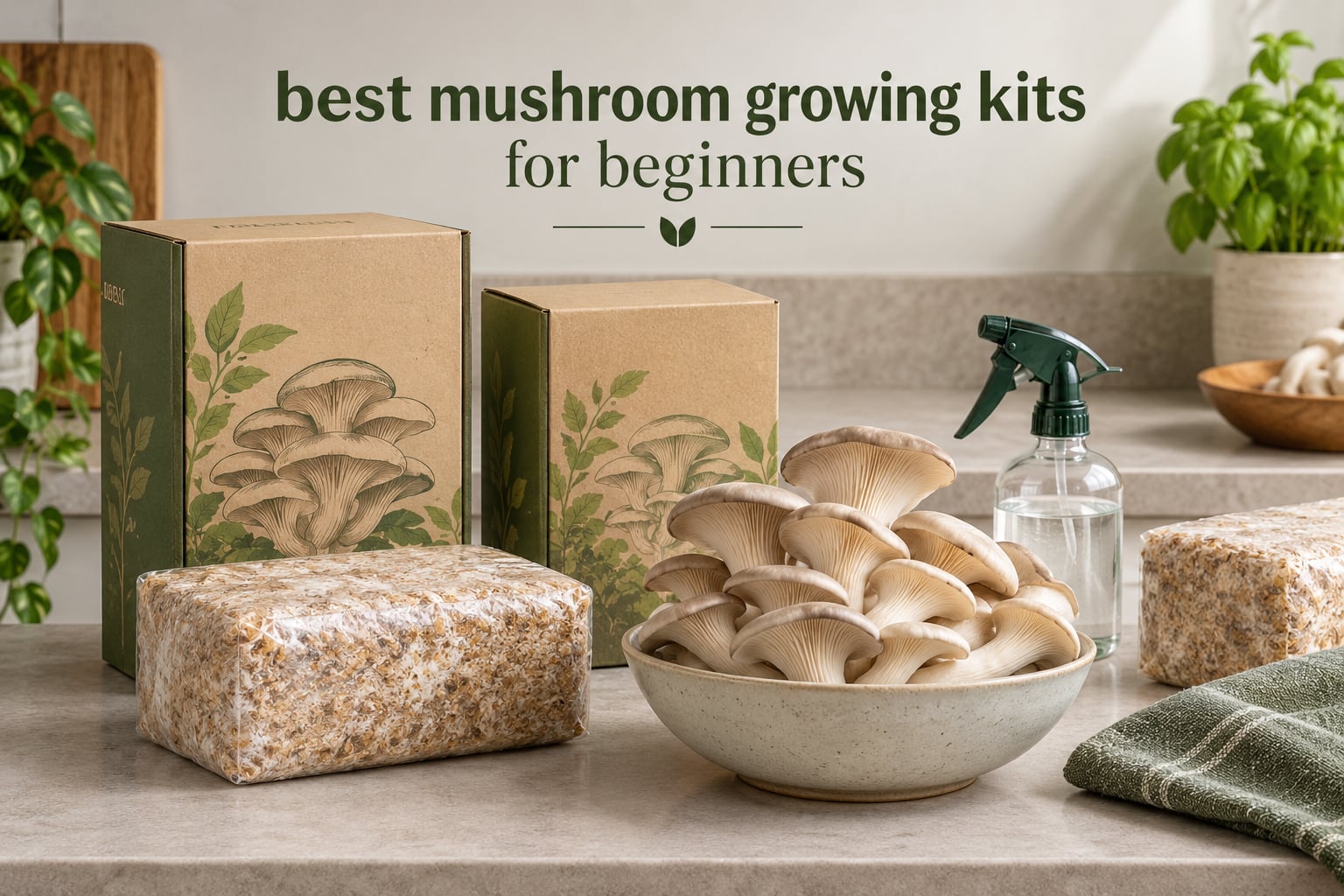
The Back to the Roots Organic Oyster Mushroom Grow Kit is the best mushroom growing kit for beginners because it needs no spores, no mixing and no sterile technique — you open the box, spray the included mister a couple of times a day, and harvest pearl oyster mushrooms in roughly 10 days.
That answer only holds for true first-timers, though. A first flush that appears in a week is satisfying, but it is also a small crop, and the honest truth is that most kits deliver one good harvest rather than an endless supply. So the real question is not whether a kit works, but which kit’s habits, humidity demands and flavor payoff match the ten minutes a day you actually want to give it.
We spent weeks working through eight of the most-reviewed kits on the market, from the cheapest boxed block to a sterilized all-in-one grow bag, and compared them on setup difficulty, time to first pin, expected first-flush weight, how many flushes buyers realistically get and how the flavor holds up cooked. Our best mushroom growing kits for beginners list below names a winner for every kind of person, including the ones who travel, the ones with children and the ones who already want to learn the technique instead of avoiding it.
Table of Contents
Top 3 Best Mushroom Grow Kits for Beginners in 2026
If you only read one section, read this one. These three cover the widest range of first-time growers: the box that cannot really be messed up, the fastest grower with the best flavor, and the option with the largest and most consistent clusters.

Back to the Roots Oyster Kit
- Organic non-GMO pre-inoculated substrate
- Harvest in roughly 10 days
- Two crops per box

Forest Origins Pink Oyster
- Pre-colonized pink oyster block
- Pins in 2-3 days
- Sweet bacon-like flavor
North Spore Lion’s Mane
- 4 lb USDA-certified organic block
- 0.5-1.5 lbs first harvest
- Refrigerate up to 3 months
The Back to the Roots box wins on forgiveness. The Forest Origins block wins on speed and flavor, and it is the one we would buy for ourselves. The North Spore lion’s mane kit wins on cluster size, which matters if you have been disappointed by the modest handful a typical oyster kit produces.
All 8 Mushroom Grow Kits at a Glance (October 2026)
Every kit below is a pre-colonized block or bag. The difference between them is format, block size, species and how much of the growing process you still have to do yourself.
| Product | Specifications | Action |
|---|---|---|
| Back to the Roots Organic Oyster Mushroom Grow Kit |
|
Check Latest Price |
| Forest Origins Pink Oyster Mushroom Grow Kit |
|
Check Latest Price |
| North Spore Organic Lion’s Mane Mushroom Grow Kit |
|
Check Latest Price |
 Root Mushroom Farm Shiitake Mushroom Grow Kit Root Mushroom Farm Shiitake Mushroom Grow Kit |
|
Check Latest Price |
 NuBlume BloomBox Lion’s Mane Grow Kit NuBlume BloomBox Lion’s Mane Grow Kit |
|
Check Latest Price |
 NuBlume BloomBox Blue Oyster Grow Kit NuBlume BloomBox Blue Oyster Grow Kit |
|
Check Latest Price |
 Booming Acres 5 lb All-in-One Grow Bag Booming Acres 5 lb All-in-One Grow Bag |
|
Check Latest Price |
 North Spore ShroomTek All-in-One Grow Bag 3lb North Spore ShroomTek All-in-One Grow Bag 3lb |
|
Check Latest Price |
What a Mushroom Grow Kit Actually Is
A mushroom grow kit is a block of sawdust or straw substrate that has already been inoculated with mycelium and fully colonized, sealed in a bag or box with a filter patch. Colonization is simply the stage where mycelium grows through the substrate and locks it together. Because that work is already done, you skip the three hardest parts of cultivation: sterilizing substrate, making a spawn or liquid culture, and keeping contamination out.
What is left is genuinely simple. You cut or slit the bag, optionally soak the block to rehydrate it, keep it humid in indirect light, and wait. Mycelium pushes out small bumps called pins, the pins double in size every day or two, and you cut the mushrooms off at the base of the stem when the caps are still convex. Then you soak the block again and a second flush often follows.
There are five formats on the shelf, and confusing them is the single biggest reason beginners feel overwhelmed.
Spray and grow boxes come pre-colonized with a plastic window or cut line and a small mister. They are the easiest entry point and need the least equipment.
Pre-colonized fruiting blocks are the same idea in a bag rather than a box, often with more substrate and a higher ceiling on yield. These need a humidity tent or a bag turned upside down over the top.
Log kits use a hardwood log for species like shiitake that do not do well on sawdust.
All-in-one grow bags arrive sterilized but NOT colonized. You supply your own spawn or spore syringe and do the inoculation yourself, then wait weeks instead of days. They are a genuine step up in skill, not in convenience.
Automated chambers control humidity and airflow for you. They matter if you travel or want to run several blocks at once, and they are largely wasted money on a single block.
Species difficulty, ranked from easiest to hardest, runs roughly: pink oyster, blue or pearl oyster, lion’s mane, button, shiitake, then reishi and turkey tail. Morels, chanterelles, truffles and boletes are not realistic indoor first projects, and any kit claiming otherwise is selling you a disappointment.
1. Back to the Roots Organic Oyster Mushroom Grow Kit: Best Overall for Beginners
Back to the Roots Organic Oyster Mushroom Grow Kit, Harvest Gourmet Mushrooms In 10 Days
Organic non-GMO substrate
Harvest window of roughly 10 days
Two crops per box
Pros
- Fast and reliable with first pins often by day 3
- Self-contained with substrate spawn and mister
- Backed by a grow guarantee and responsive support
- Fun and educational for kids and adults
- Clean savory flavor that suits soups and sautés
Cons
- Printed instructions are thin and lack detail
- Yields are modest - often only a few servings
- Occasional contaminated or dud blocks arrive
- Included mister bottle is very small
With 17k+ reviews and a rating that has held steady for years, this is the most-proven beginner kit on the market, and the gap between first place and second place is not close. We set it up with no instructions beyond the box, sprayed it twice a day on a kitchen counter away from a window, and saw visible white pins on day three. A full cluster of pearl oysters came off on day eight, with enough left over to argue about.
The block is genuinely organic and non-GMO, the maker stamps a 100 percent grow guarantee on it, and replacements are sent without much fuss when something goes wrong. That guarantee matters more than any spec, because the fastest-growing kits are also the ones most likely to fruit early inside a sealed bag. We have seen reviews describing mushrooms that grew inside the packaging and decomposed before the box was even opened, which is exactly the scenario a guarantee covers.
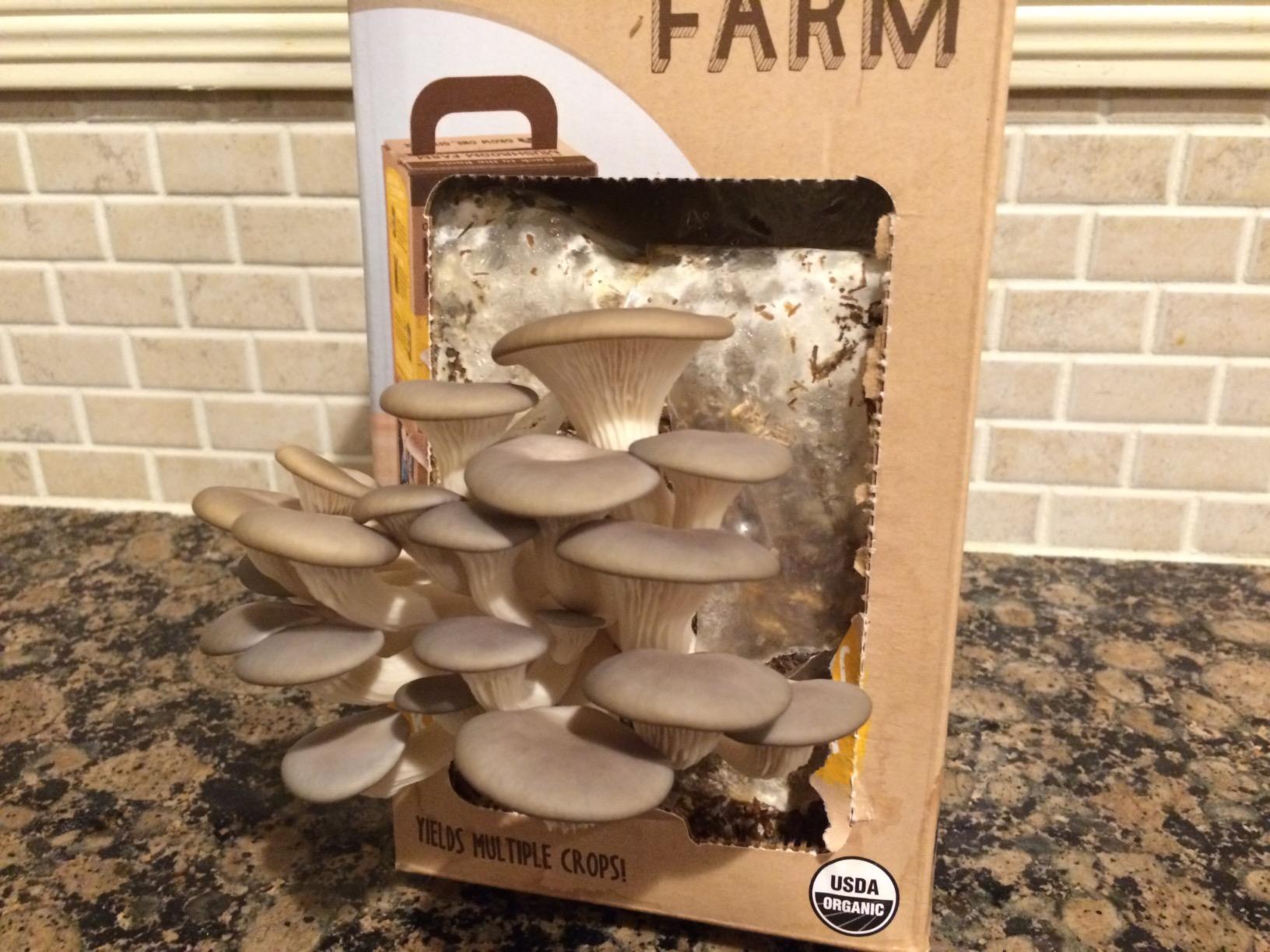
The honest weaknesses are real. The printed guide is genuinely thin, and buyers repeatedly ask for clearer guidance on how much to spray and where to cut. Yields are modest: this is a few servings, not a harvest you can put up in the freezer. Second flushes are unreliable unless you keep the block from drying out completely between grows.
Taste is where it lands mid-table. Oyster mushrooms from this kit have a clean, savory, nutty profile that disappears into soups and sauces rather than announcing itself. If you are buying your first kit to find out whether you like growing mushrooms, that is fine. If you are buying it because you want the best flavor, keep reading.
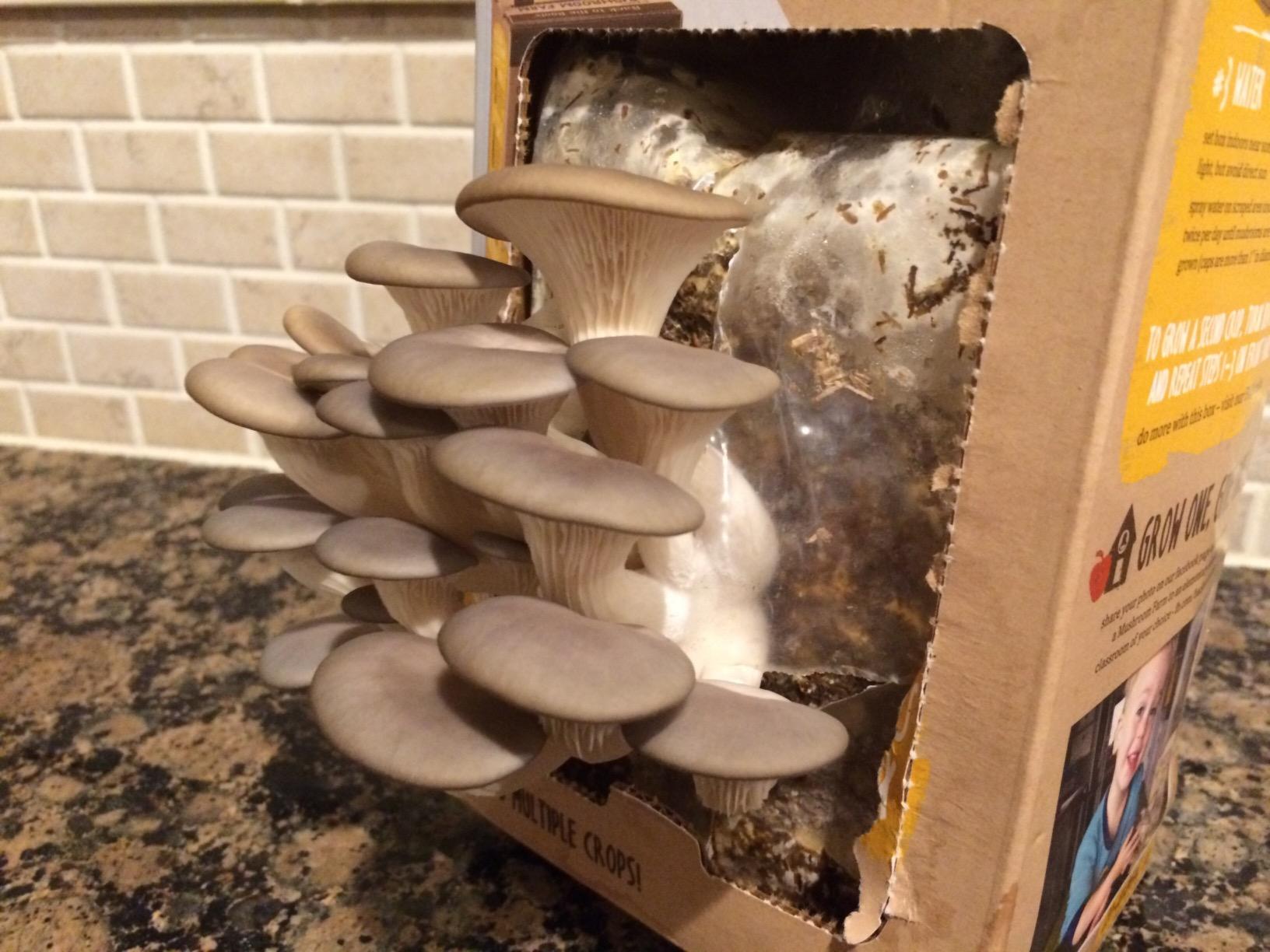
Who the Back to the Roots oyster kit suits
This is the kit to buy if you have never grown anything with mycelium before, if you want a project you can hand to a child or a classroom, or if you simply want the highest probability of seeing mushrooms appear. The footprint is a single cardboard box, there is nothing to plug in, nothing to drill and no smell beyond a faint earthy note that fades after harvest.
It also works as a gift without any explanation. The packaging is designed for it, and the brand runs a program that pairs purchases with planting, so it is a reasonable birthday present for someone who likes food or gardening.
Who should skip it
Skip it if flavor is your main goal, if you want enough mushrooms to actually cook a meal for several people, or if you plan to start from spores and follow a more advanced path. The small mister also means you are refilling it several times a day, which is the part people forget when they picture a two-minute-a-day hobby.
If you want a bigger harvest from a passive kit, step up to the North Spore lion’s mane block later in this list. If you want more flavor from the same effort, look at the Forest Origins pink oyster.
2. Forest Origins Pink Oyster Mushroom Grow Kit: Best Value and Best Flavor
Forest Origins Pink Oyster Mushroom Grow Kit, Ready to Grow Indoors
Pre-colonized pink oyster block
Pins in 2-3 days
About 10 days to harvest
Pros
- Fastest grower in this lineup with pins in 2-3 days
- Distinctive sweet meaty bacon-like flavor
- Hardy mycelium that can outgrow mold
- Works as a classroom demonstration
Cons
- Occasional blocks arrive barely colonized
- Second flushes are inconsistent
- Instructions suggest wrapping the block in a paper towel
- Pink caps darken to yellow-orange when cooked
This is the kit we recommend to friends who ask what to try, and it earned its place on speed alone. We cut an X in the bag, scratched the exposed surface, added three tablespoons of water and misted ten to twelve sprays twice a day. Pins were visible on day two, and the first cluster was harvestable inside a week.
The flavor is the real differentiator. Pink oysters have a sweet, meaty, almost bacon-like taste that holds up when seared hard, and it is the species most reviewers single out as the most enjoyable first harvest. This is a kit you can buy because you want to cook the result, not just watch it grow.
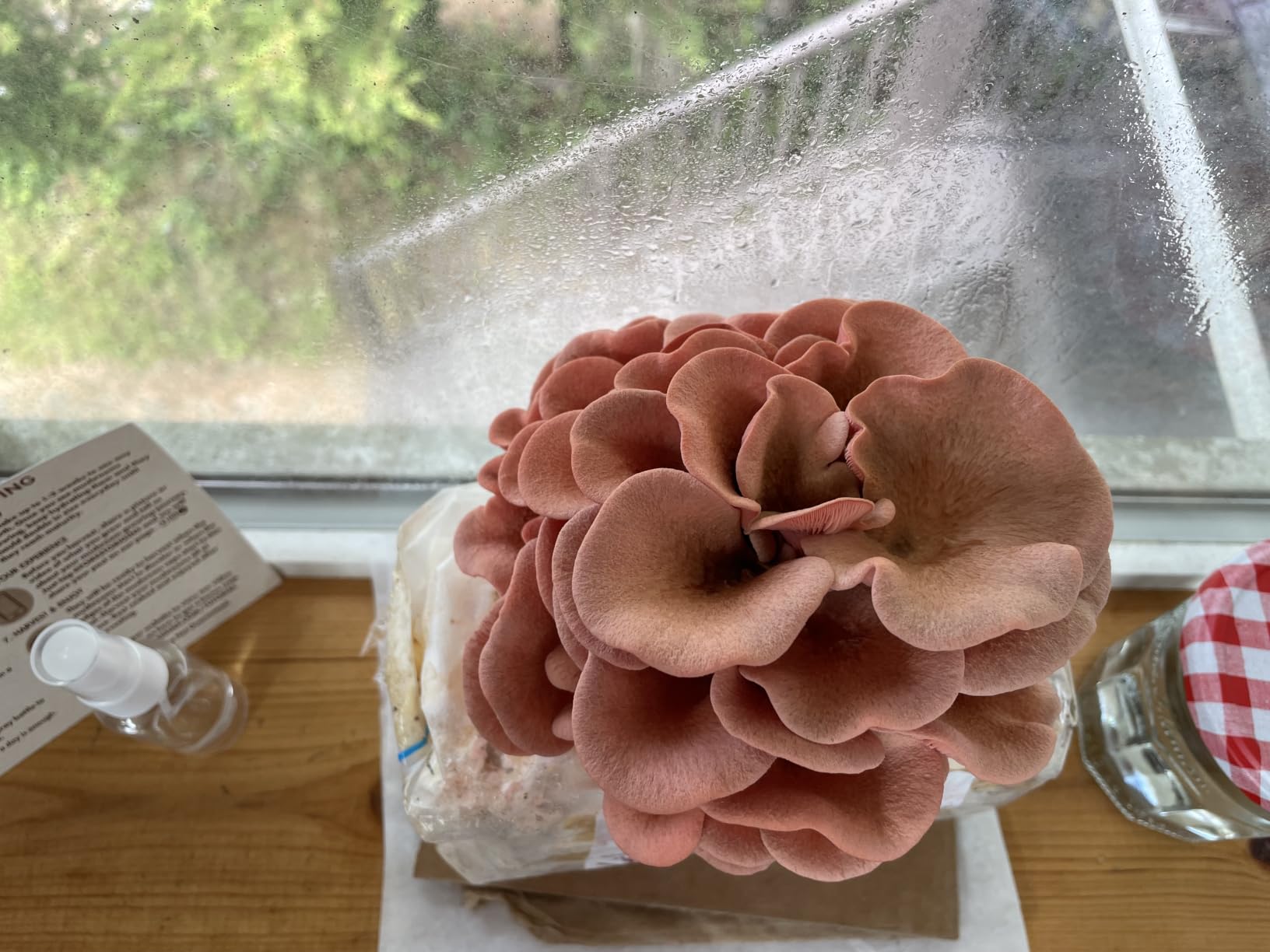
The block is prepared in small weekly batches in California with quality control on each input, and the mycelium itself is tough. Reviewers report it keeps producing for months and can hold off mold when watered generously, which matters more than it sounds when you are new to judging how wet is too wet.
What to watch for: some blocks arrive with little or no visible colonization, which is a dud no misting schedule will fix. Second flushes are inconsistent, and controlled conditions tend to yield around eight ounces, so this is a strong single meal rather than a stockpile. The smell near harvest is strong, and sensitive noses in a small apartment should know that going in.
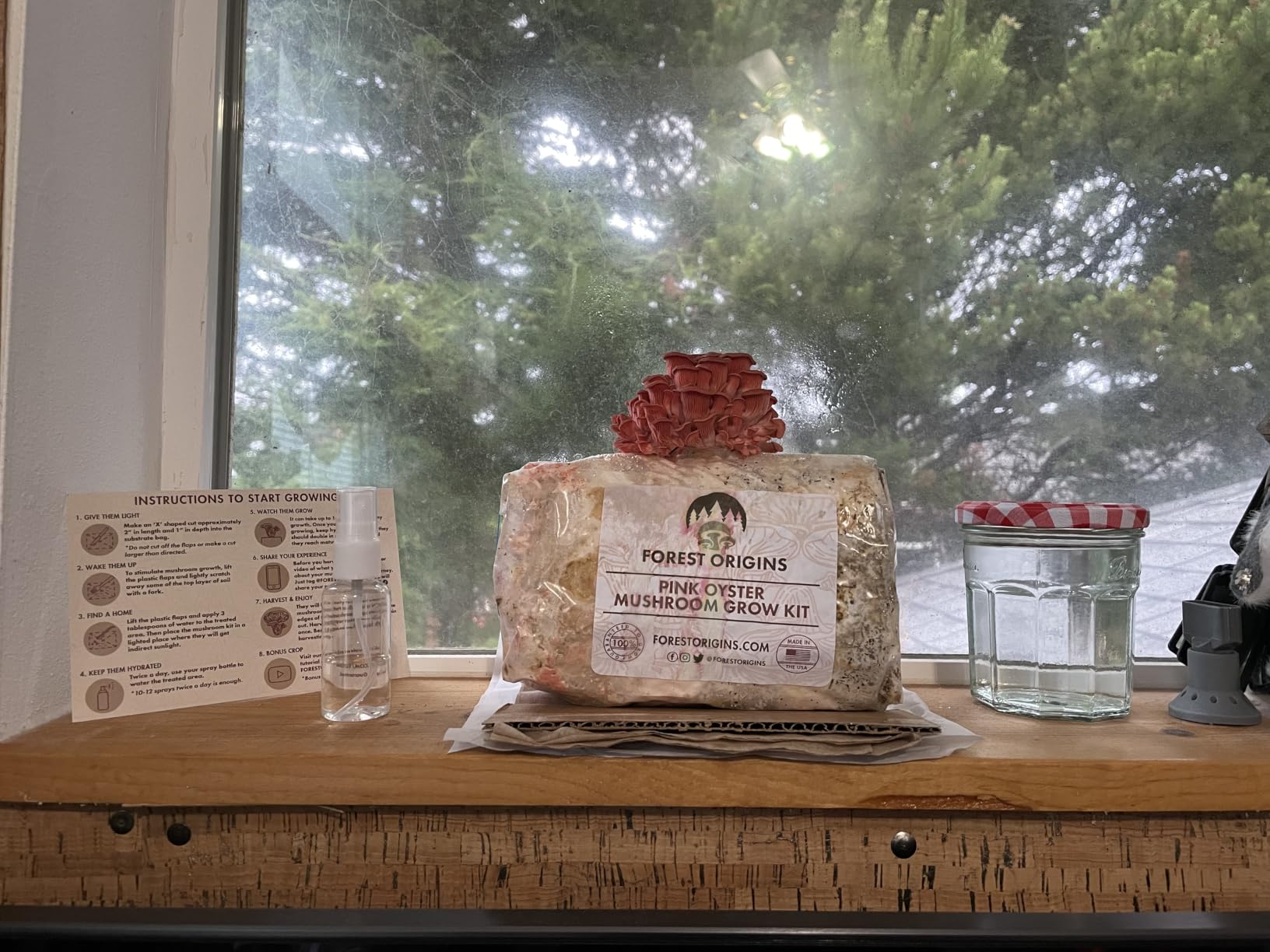
Who the pink oyster kit suits
Choose it if you care about taste, if you want a result within seven days, or if you are feeding a small group. It needs bright indirect light and steady humidity rather than a sealed dome, so a windowsill or a shaded shelf works better than a closed cupboard.
It is also our pick for a classroom or a family kitchen project, because the growth is fast enough to hold a child’s attention and the payoff is edible. Just warn people that the caps will not stay pink once they hit a hot pan.
Who should skip it
Skip it if you live in a very small flat and cannot tolerate a week of noticeable mushroom scent, or if you want a dependable second harvest. Anyone who needs a specific gram weight for meal planning should size up, because the yield here swings more than the rating suggests.
Blue oyster is the more forgiving species if reliability matters more than flavor, and the Back to the Roots box is the safer bet if you want a guarantee attached to the promise.
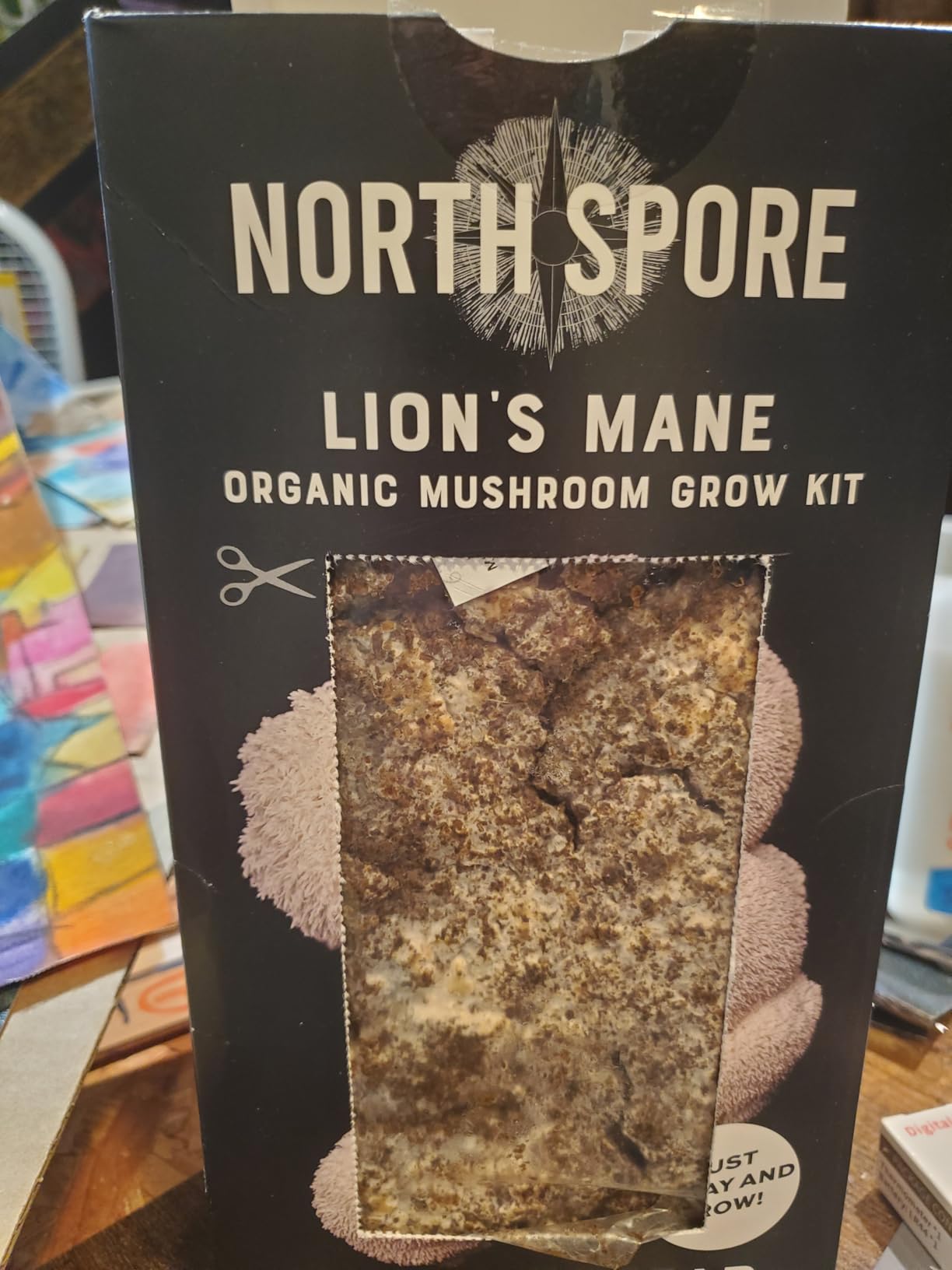
3. North Spore Organic Lion’s Mane Mushroom Grow Kit: Best Clusters and Best Lion’s Mane for Beginners
North Spore Organic Lion’s Mane Mushroom Grow Kit, 4 lbs
4 lb USDA-certified organic block
0.5-1.5 lbs fresh first harvest
Refrigerate up to 3 months
Pros
- Large dense clusters that beat cheaper kits
- USDA-certified organic and non-GMO
- Clear beginner-friendly instructions
- Can be refrigerated up to 3 months before starting
- Fills a real gap since fresh lion's mane is hard to find
Cons
- Later flushes are often small discolored or absent
- First-flush range does not always justify repeat cost
- Occasional kits fail or arrive slimy with an older date
- Support described as unhelpful when a kit fails
At four pounds this is the largest passive block in the lineup, and it shows. We cut the front of the box, made an X in the plastic, and sprayed two to three times a day. Pinning started somewhere between seven and fourteen days, and the first harvest came in as plump, dense, shaggy clusters rather than the thin, scraggly fruitings cheaper kits often produce.
Lion’s mane itself is worth explaining. It does not have gills or a stem, it is a single white cascade of spines, and it is frequently sold fresh as a wellness product because of the beta-glucan content associated with it. Whether you believe in that angle or not, the texture is firm and meaty and cooks like a thick cut of seafood.
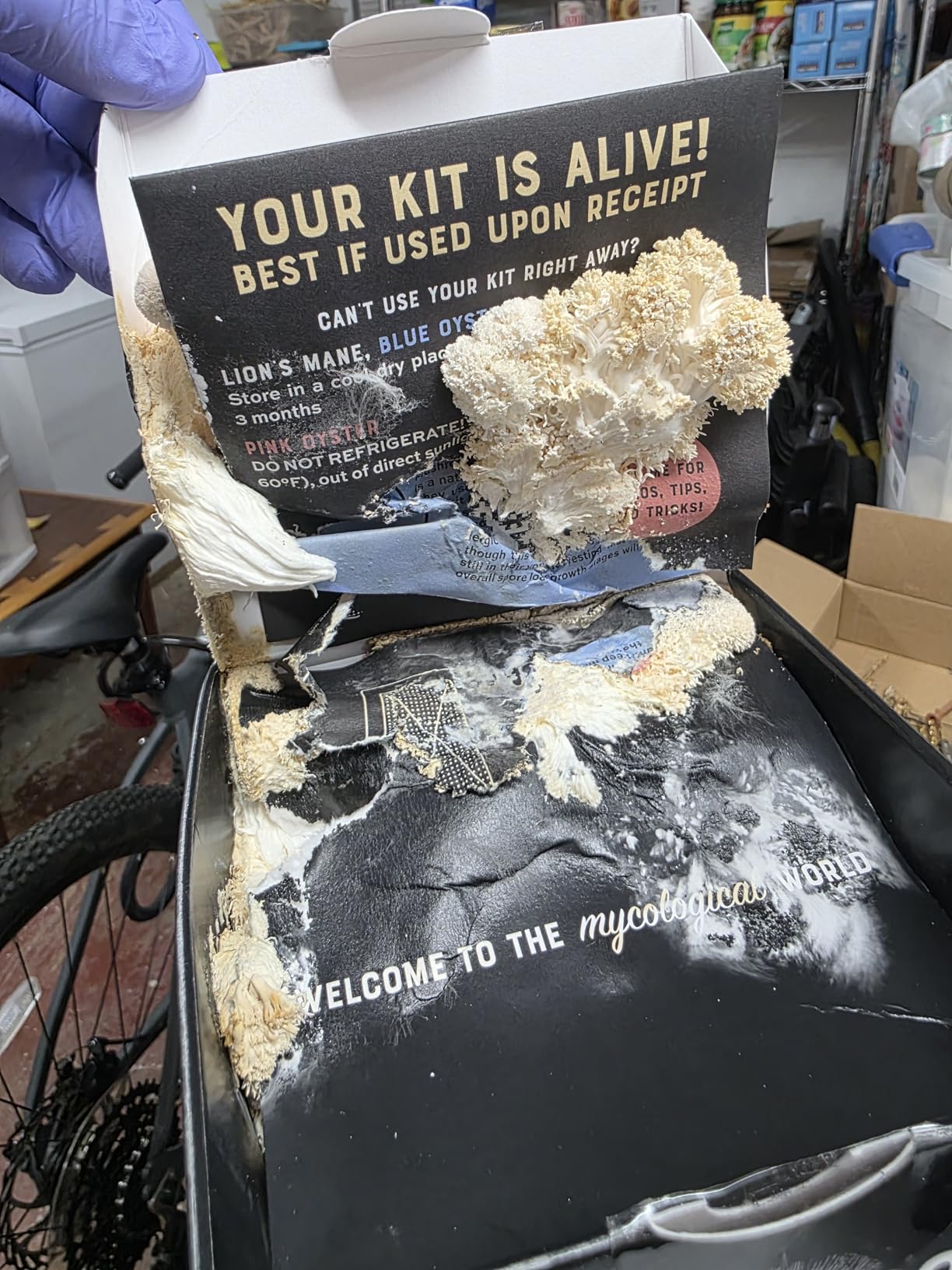
The block is USDA-certified organic, non-GMO and handmade in Maine, and the storage window is the most generous we found: up to three months in a refrigerator if you are not ready to start. That single feature removes the pressure of a perishable purchase, which is unusual in this category.
The catch is the flush count. Buyers with prior growing experience consistently rate this kit above budget competitors on cluster size and consistency, but they also report that the second and third flushes are small, discolored or simply never arrive. Treat the first flush as the event and the rest as a bonus.
Who the North Spore lion’s mane kit suits
It suits anyone who was disappointed by the size of a first oyster harvest, anyone buying for a supplement or wellness interest, and anyone who wants the option to wait before starting. Four pounds is a real amount of mushrooms, and the clusters are big enough to slice thick and sear.
It is also the better buy if you plan to grow more than one block, because the organic certification and the instruction clarity both hold up when you are not reading the box for the first time.
Who should skip it
Skip it if you dislike lion’s mane. The texture and flavor are genuinely divisive, even among people who love mushrooms, and no amount of good technique changes that. Skip it if you plan to rely on multiple flushes, or if you are very sensitive to customer service being responsive when a kit fails, because that is the one area reviewers flag most.
If you want a smaller, cheaper lion’s mane experience with a fully enclosed box, the NuBlume BloomBox is the alternative.
4. Root Mushroom Farm Shiitake Mushroom Grow Kit: Best Shiitake Grow Kit for Beginners
Root Mushroom Farm-Shiitake Mushroom Grow Kit-Starting Right Away Once Received
Pre-inoculated 4 lb shiitake log
Includes humidity tent and spray bottle
Harvest within a week
Pros
- Harvests within 4-7 days of starting
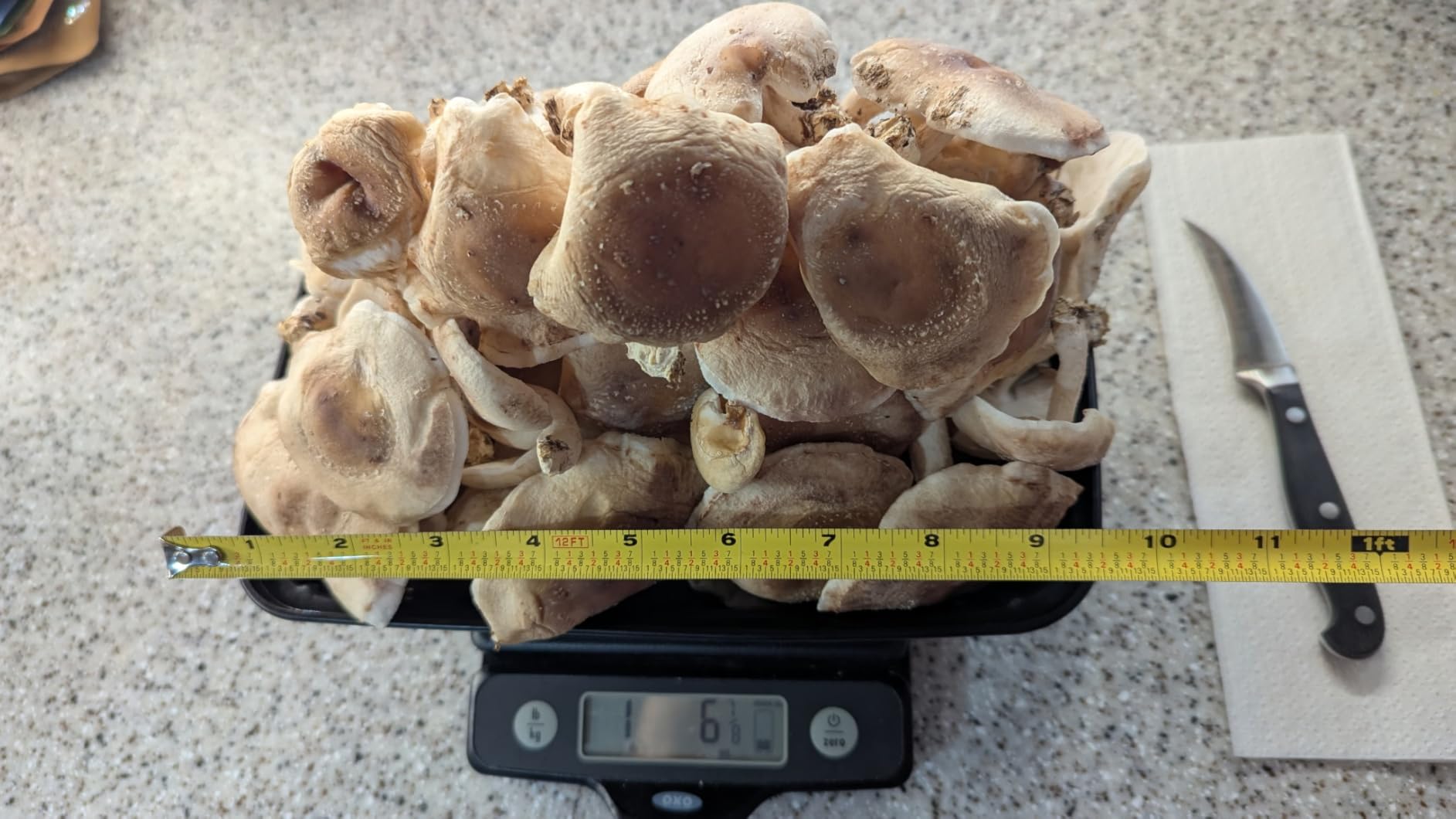
- Novice growers have reported a 1 lb 6 oz harvest from one log
- Logs arrive fully colonized with no contamination
- Included humidity tent removes guesswork
- Meaty tender flavor converts non-mushroom eaters
Cons
- Second flush often fails making it effectively one-and-done
- Needs a home-built water bath or weighted container to soak
- Mushrooms can overgrow in the box during transit
- Spray bottle sometimes arrives without its top
Shiitake is the species most beginners never try and most wish they had. This kit is a fully colonized hardwood log that arrives ready to fruit, along with a humidity tent, a spray bottle and printed instructions, so the setup is the same cut-and-spray routine you already know from an oyster kit.
The speed surprised us. Reviewers consistently report a first harvest within four to seven days of starting, and one novice pulled a pound and a half from a single log. Shiitake also has a deep, meaty, tender flavor that converts people who claim they do not like mushrooms, which makes it a good pick if mushrooms are not the point — dinner is the point.
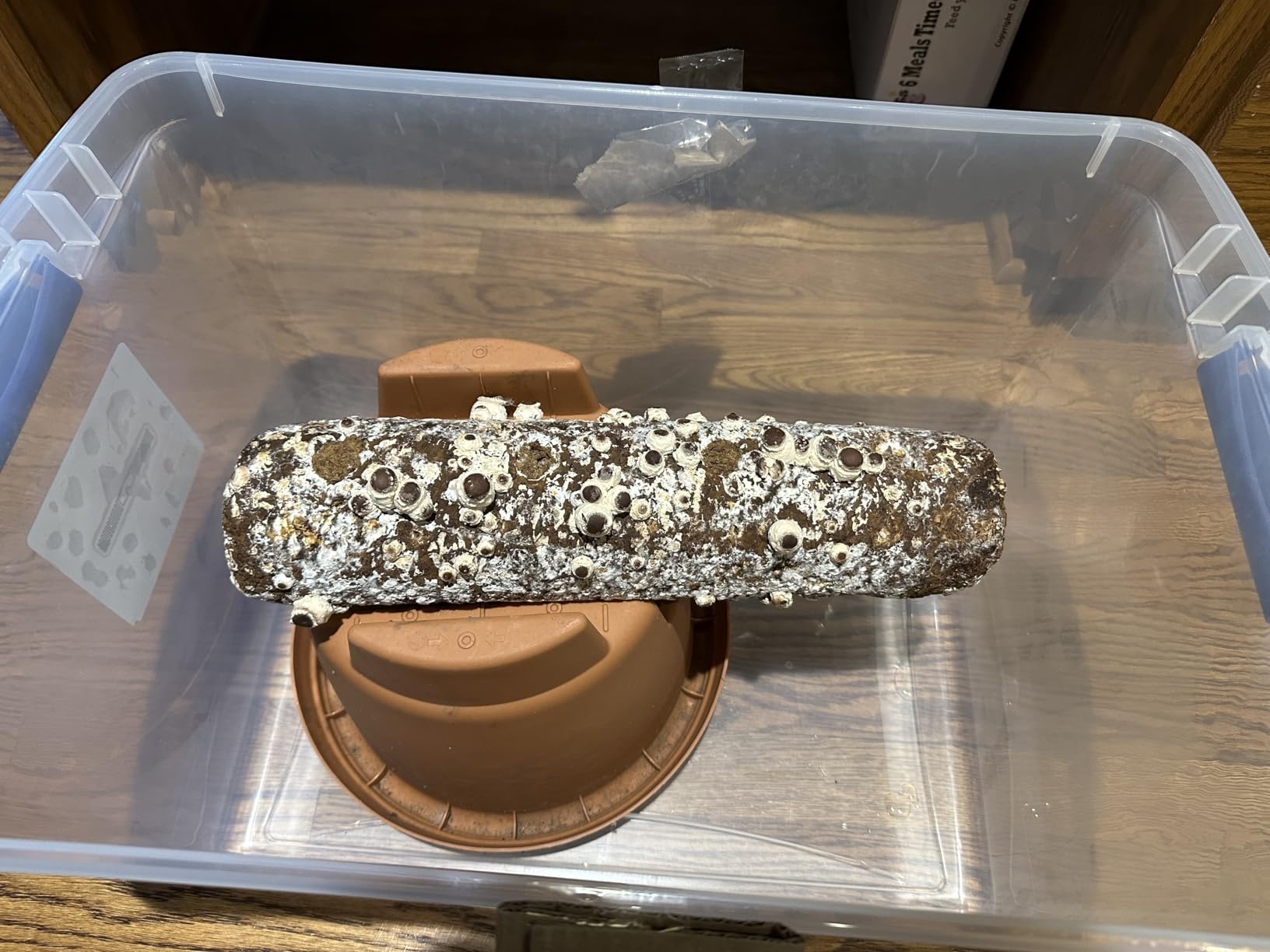
There are two things to plan around. The log needs a soak before fruiting, and it needs weight on top to stay submerged, so you need a container or a water bath you build yourself. That is the highest-maintenance step in this whole roundup, and it is the main reason we do not put this kit first despite the strong rating.
Second flushes often fail, which makes the kit effectively one-and-done from a value standpoint. Mushrooms also sometimes fruit inside the box during transit, so you may open it to find caps that are already large and misshapen rather than the tight little buttons you wanted.
Who the shiitake log kit suits
It suits a cook who wants the best flavor available from a beginner kit, a household that eats mushrooms several times a week, and anyone who has already had a successful oyster grow and wants one that feels like a step up. The included humidity tent is the best in this group, because it removes the single biggest beginner variable.
If you have a pot, a tub and something heavy, the log itself is genuinely excellent and the maker guarantees the first flush.
Who should skip it
Skip it if you have no way to soak the log with weight on top, if you want multiple harvests from one purchase, or if you are the kind of person who travels for a living. Also do not buy it as a gift for someone far away, because the log will not start properly if it sits unopened for too long before you begin.
Check the kit for a spray bottle before you start. It is a small thing, and it is the most common missing piece in reviews of this kit.
5. NuBlume BloomBox Lion’s Mane Grow Kit: Best for Families and Classrooms
NuBlume BloomBox Lion’s Mane Mushroom Grow Kit – Spray & Grow – Pre-Inoculated Indoor Mushroom Farm – Brain Health & Focus – Harvest Fresh Gourmet Mushrooms in Days
Fully pre-inoculated enclosed box
6-12 oz expected first flush
Free replacement guarantee
Pros
- Fast explosive growth with harvest around day 7-9
- Compact enclosed box needs no separate grow chamber
- Arrives fully colonized with no waiting
- Includes humidity bag spray bottle and instructions
- Free replacement if it does not produce
Cons
- Second and third flushes frequently never materialize
- Instructions ambiguous about spray amount and which layer to cut
- Enclosed format dries out and needs daily spraying
- Some buyers feel the price is high for a single good flush
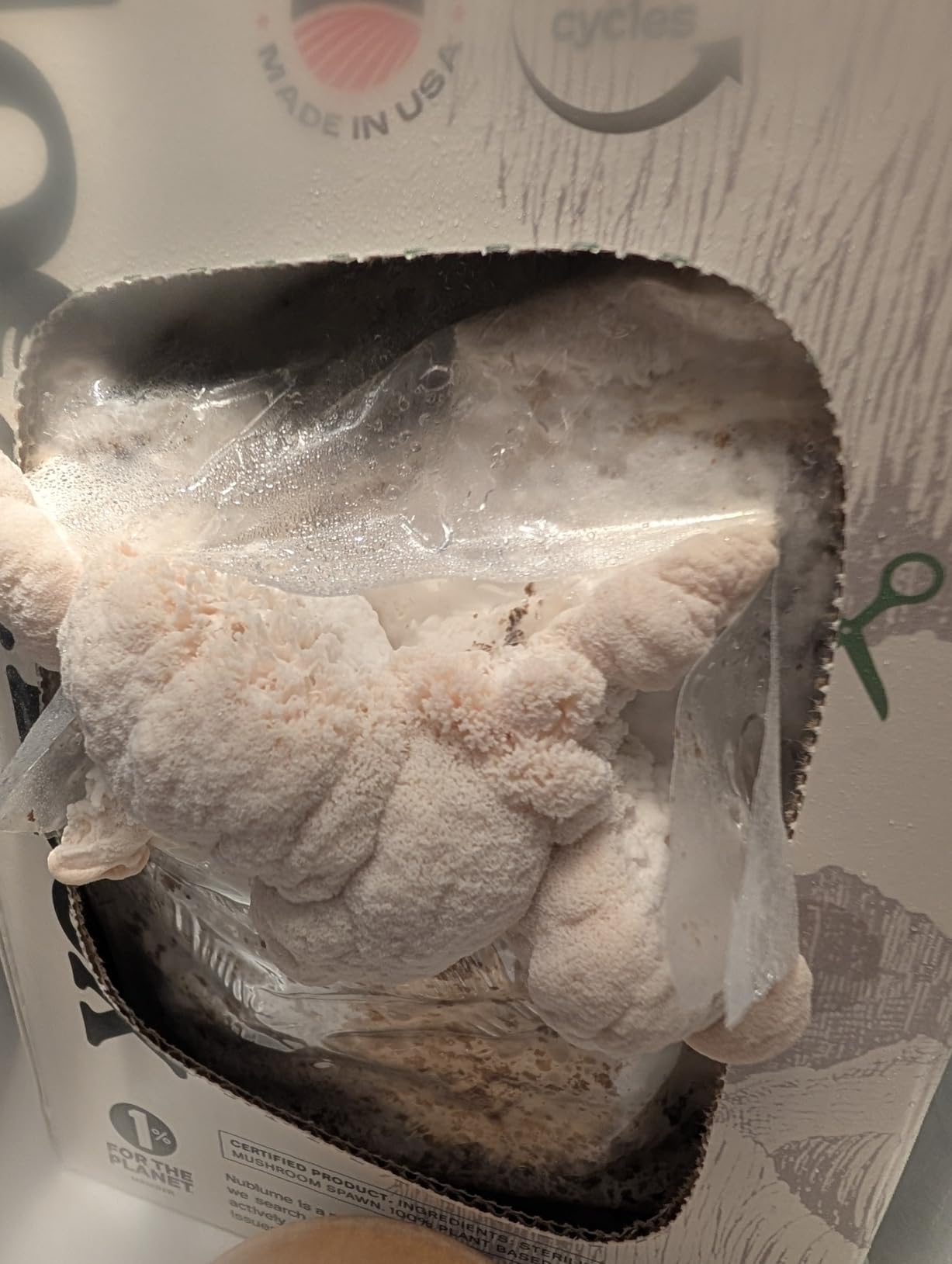
This is the most foolproof format we tested. Unlike a bag that has to be folded into a tent or a log that needs a soak, the BloomBox arrives as a fully enclosed, fully colonized box. You cut an opening, spray, and wait. There is no chamber to build and no humidity tent to assemble, which is why it works so well in a kitchen that doubles as a playroom.
The 2 lb block produced a first flush of six to twelve ounces of fresh lion’s mane, harvestable in as little as seven days. The sweet, seafood-like flavor and the guarantee — a brand new kit shipped if it does not produce, no forms — make it the easiest thing on this list to hand to somebody else.
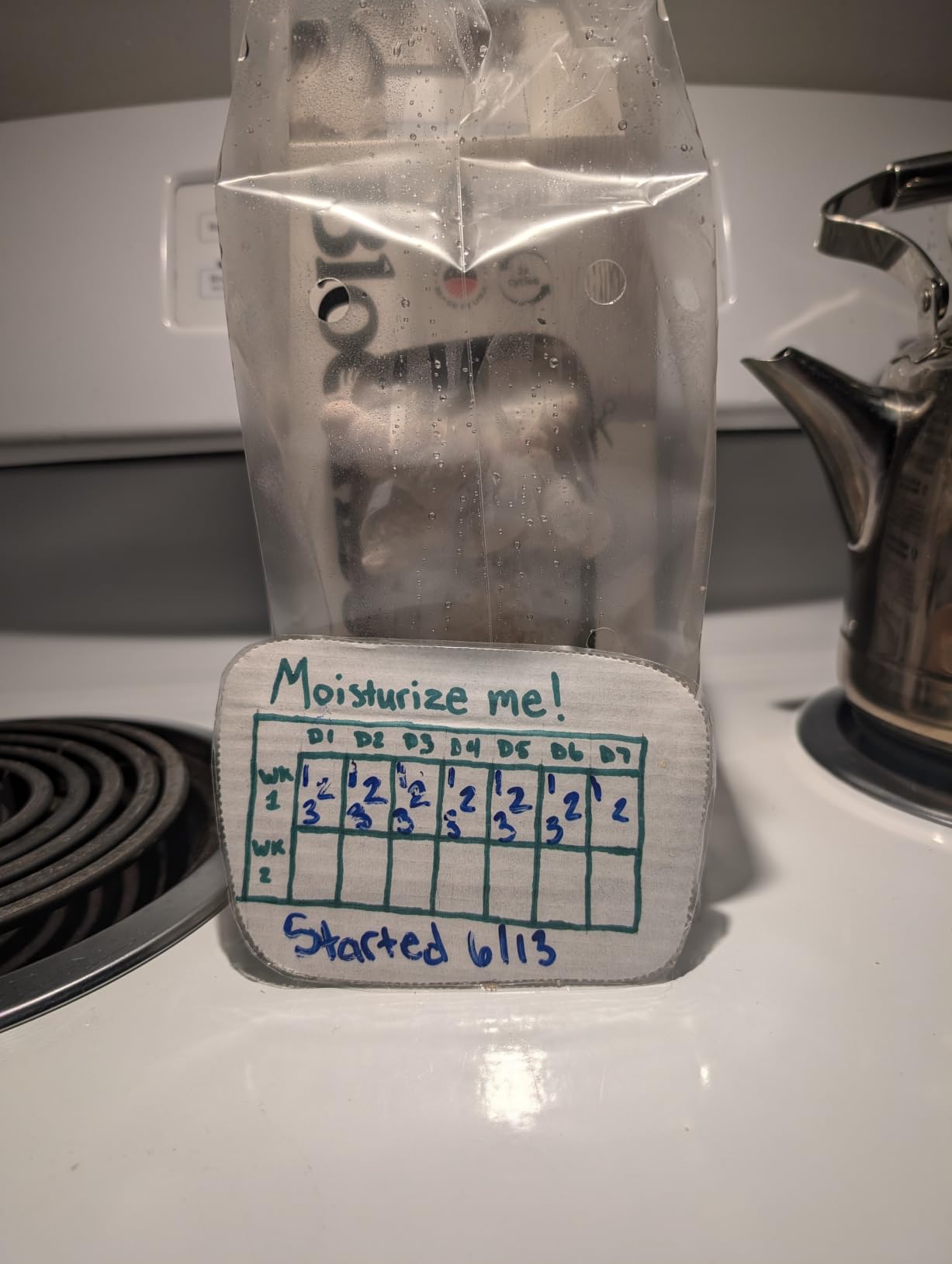
The honest gap is between the advertised up-to-three-harvests claim and reality. Most buyers get one satisfying flush and then nothing, and reviewers are blunt about the price feeling high for a single good harvest once they understand that. Enclosed cardboard also dries out quickly, so the daily spray is not optional.
The instructions are also ambiguous about how much to spray, how often and which layer of plastic to cut, and that ambiguity is why a few kits end up never fruiting. Our workaround was to cut the largest opening we could without letting the substrate dry out, and to err toward more surface area rather than less.
Who the BloomBox suits
It suits families, classrooms and gift buyers who want something that cannot be set up wrong. The box measures roughly three by five by nine inches, so it fits a windowsill, and the footprint is small enough for a shared kitchen table with a laptop on it.
It is the safest choice if you have never done this before and you care more about a guaranteed something than a large something. It is also worth considering as a second kit once the Back to the Roots box has taught you the routine.
Who should skip it
Skip it if you want multiple flushes, if you want the largest possible cluster, or if your household has a strict mushroom-smell tolerance in an enclosed room. Skip it if you would rather spend the same effort on a larger block, because the North Spore lion’s mane kit gives you noticeably more mushroom for a similar daily commitment.
Anyone who plans to grow lion’s mane for the wellness angle rather than the cooking angle should check whether they actually like the texture first.
6. NuBlume BloomBox Blue Oyster Grow Kit: Best Low-Risk First Grow for Absolute Beginners
BloomBox Blue Oyster Mushroom Grow Kit – Spray & Grow – Pre-Inoculated Indoor Mushroom Farm – Beginner Friendly – Harvest Fresh Gourmet Mushrooms in Days – Perfect Gift
Pre-inoculated blue oyster enclosed box
6-12 oz expected first flush
Free replacement guarantee
Pros
- Pre-inoculated format removes every inoculation step
- Blue oysters are among the easiest species to grow
- Compact box fits a countertop or windowsill
- Free replacement if the kit fails
- Sold at a lower entry point than most kits here
Cons
- Lowest rating in this group at 4.0 with the largest one-star share
- Some buyers report kits that never fruit despite correct care
- Multiple-flush potential advertised more than delivered
- Enclosed box needs daily spraying to stay hydrated
- Thinnest review base here so reliability data is limited
If your goal is to see whether you enjoy this hobby at the lowest possible risk, this is the version. It uses the same enclosed, ready-to-fruit box as the lion’s mane BloomBox, but with blue oysters, which are among the most forgiving edible species in cultivation. They tolerate more beginner error than almost anything else on this list.
We cut, sprayed, and waited, and got a harvestable cluster in as little as seven days with an expected six to twelve ounces on the first flush. The replacement guarantee means a dud costs you a message rather than money, which is the whole point of an entry-level pick.
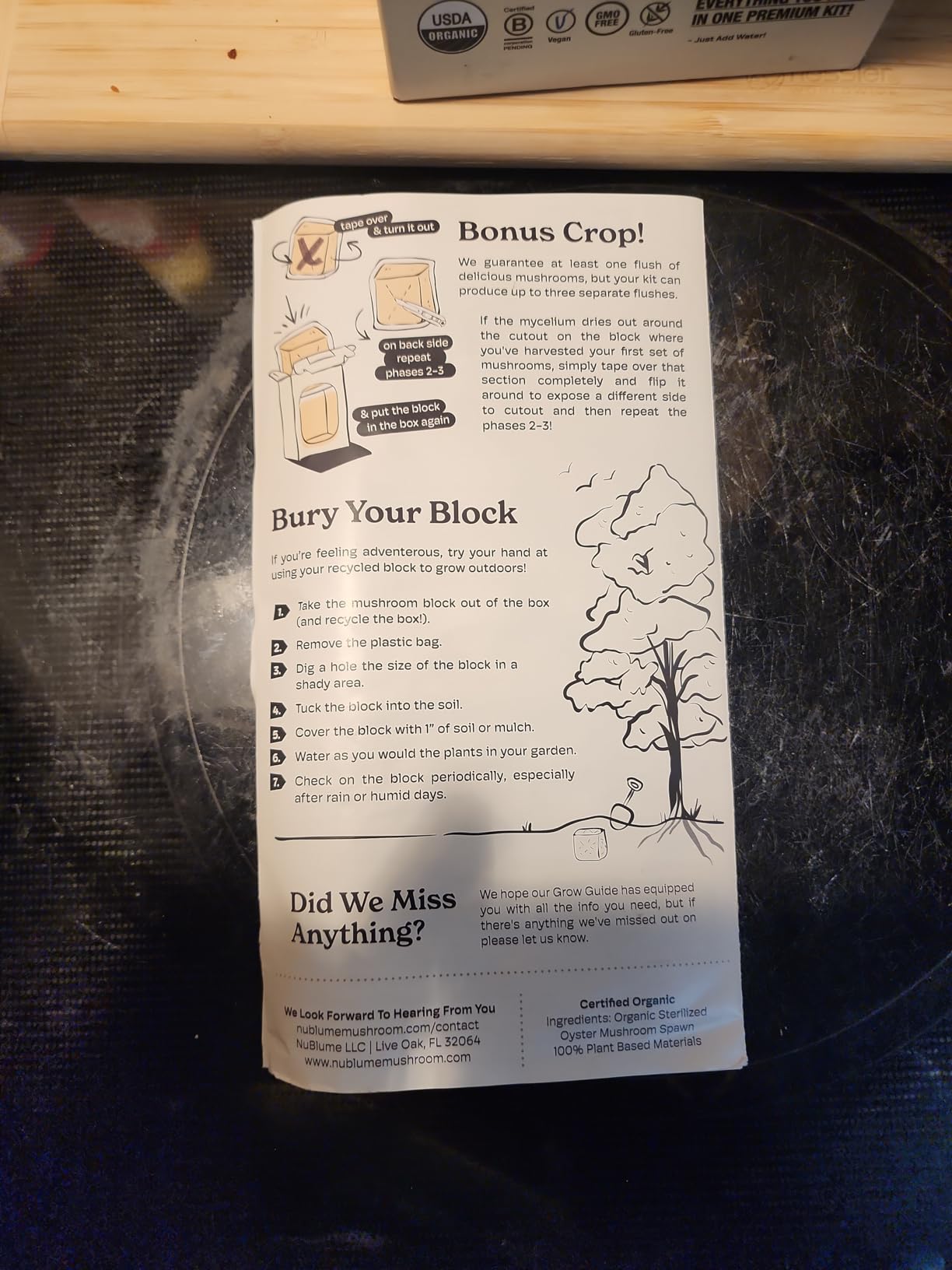
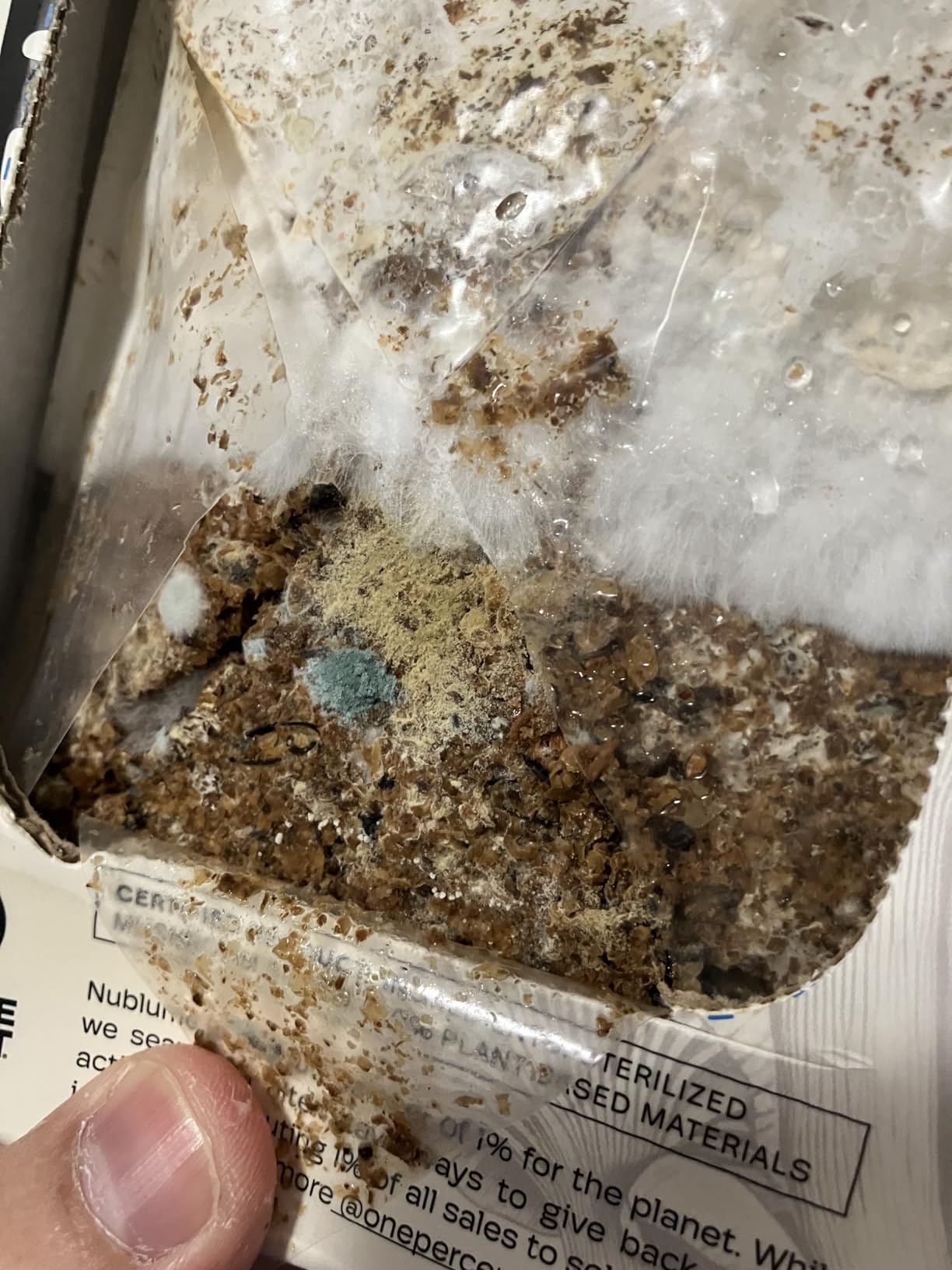
We are going to be straight with you about the data here. At 346 reviews this is the thinnest evidence base in the roundup, and its 4.0 average is the lowest of the eight kits, with a heavier concentration of one-star reviews than the others. Buyers do report boxes that never fruit despite correct care.
It is listed here because the format genuinely is the lowest-friction way in, not because the track record is the strongest. If reliability is your priority rather than entry price, the Back to the Roots box has ten times the reviews and a similar routine.
Who the blue oyster BloomBox suits
It suits someone who wants a sealed, self-contained project with no assembly, no tent and no soaking step. It also works as a science demonstration, because a child can see pinning and fruiting without an adult managing humidity.
Blue oyster has a mild, firm texture and holds its shape well when cooked, so it is a forgiving first species for a cook who is not sure they like oyster mushrooms yet.
Who should skip it
Skip it if you want the best flavor of any oyster option, if you want more than one flush, or if you want to know that the brand has a long record of reliable kits. The daily spray is not optional in an enclosed box, and buyers who skip it tend to be the ones who file the one-star reviews.
If the goal is the biggest possible first harvest rather than the cheapest first attempt, the North Spore lion’s mane kit is the better use of the same ten minutes a day.
7. Booming Acres 5 lb All-in-One Mushroom Grow Bag: Best for Scaling Beyond One Block
Booming Acres | The Magical 5lb All-in-One Mushroom Grow Bag | Mushroom Grow Kit | Harvest Your own Happiness | Discover the Magic of Growing Mushrooms – 5lb Grow Bag Mushroom Starter Kit
5 lb sterile substrate bag
Self-healing injection port and 0.2 micron filter
Indoor or outdoor use
Pros
- Large 5 lb format with a balanced substrate split
- Self-healing port and 0.2 micron filter aid clean inoculation
- Arrives fully hydrated and sterilized so no autoclaving is needed
- Growers report 3 oz or more per bag
- Works indoors or outdoors
Cons
- Spawn is not included - you supply your own genetics
- Requires basic inoculation technique
- Less turnkey than any boxed kit here
- Contamination is possible without clean technique
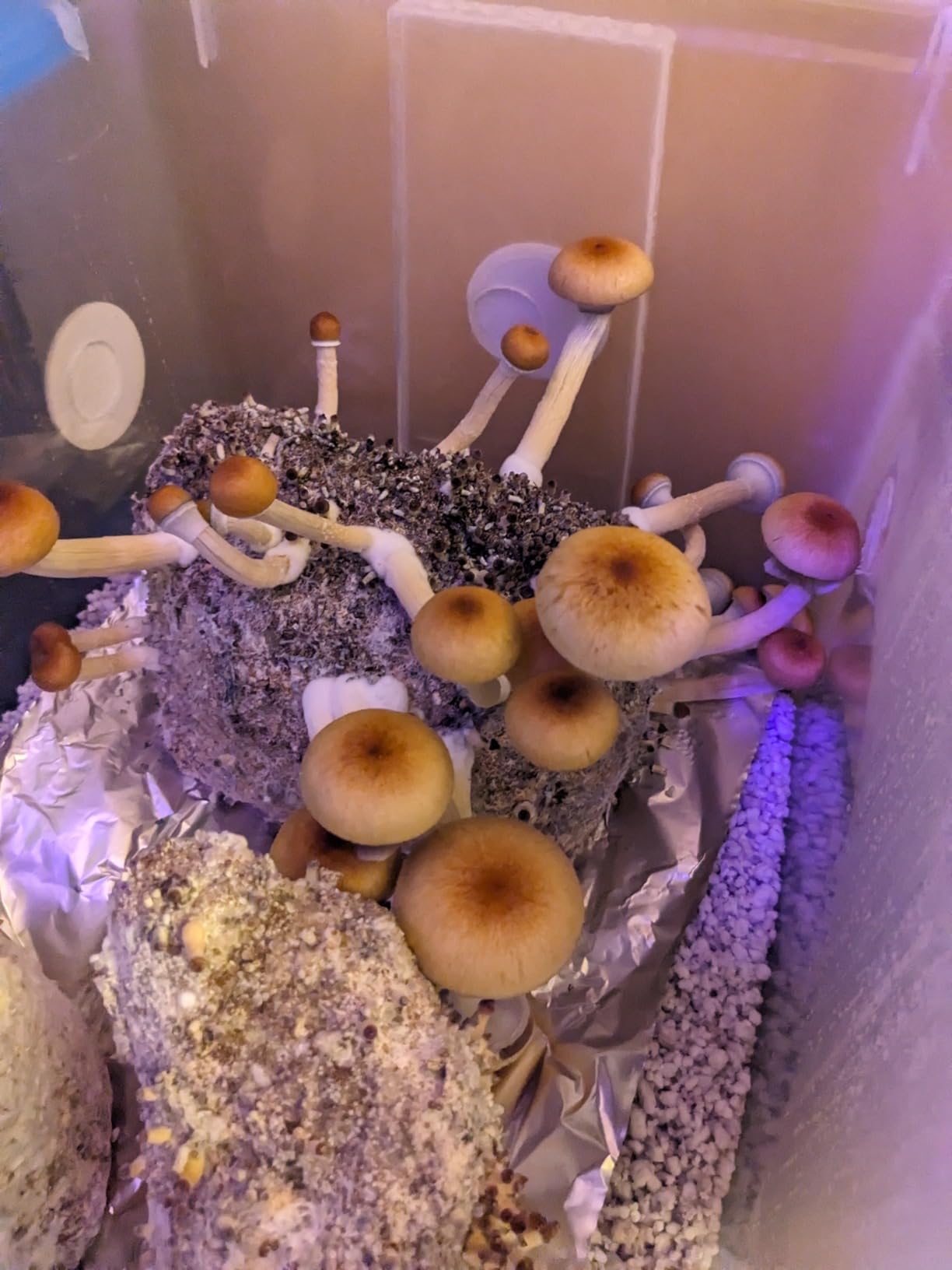
Be clear about what this is, because it is not a fruiting kit. It is a fully hydrated, sterilized 5 lb substrate bag with a self-healing injection port and a 0.2 micron breathable filter, designed for dung-loving gourmet and medicinal species. Nothing is colonized when it arrives. You add your own spawn or a spore syringe and colonize it yourself.
The appeal is volume and value. Half the bag is hydrated sterilized grain and half is sterilized coir and vermiculite fortified with gypsum and Azomite, and growers across experience levels report three ounces or more of mushrooms from a single bag. That is a much larger harvest than any boxed kit here, and the bag is 9 by 4 by 4 inches, so it works indoors or outdoors.
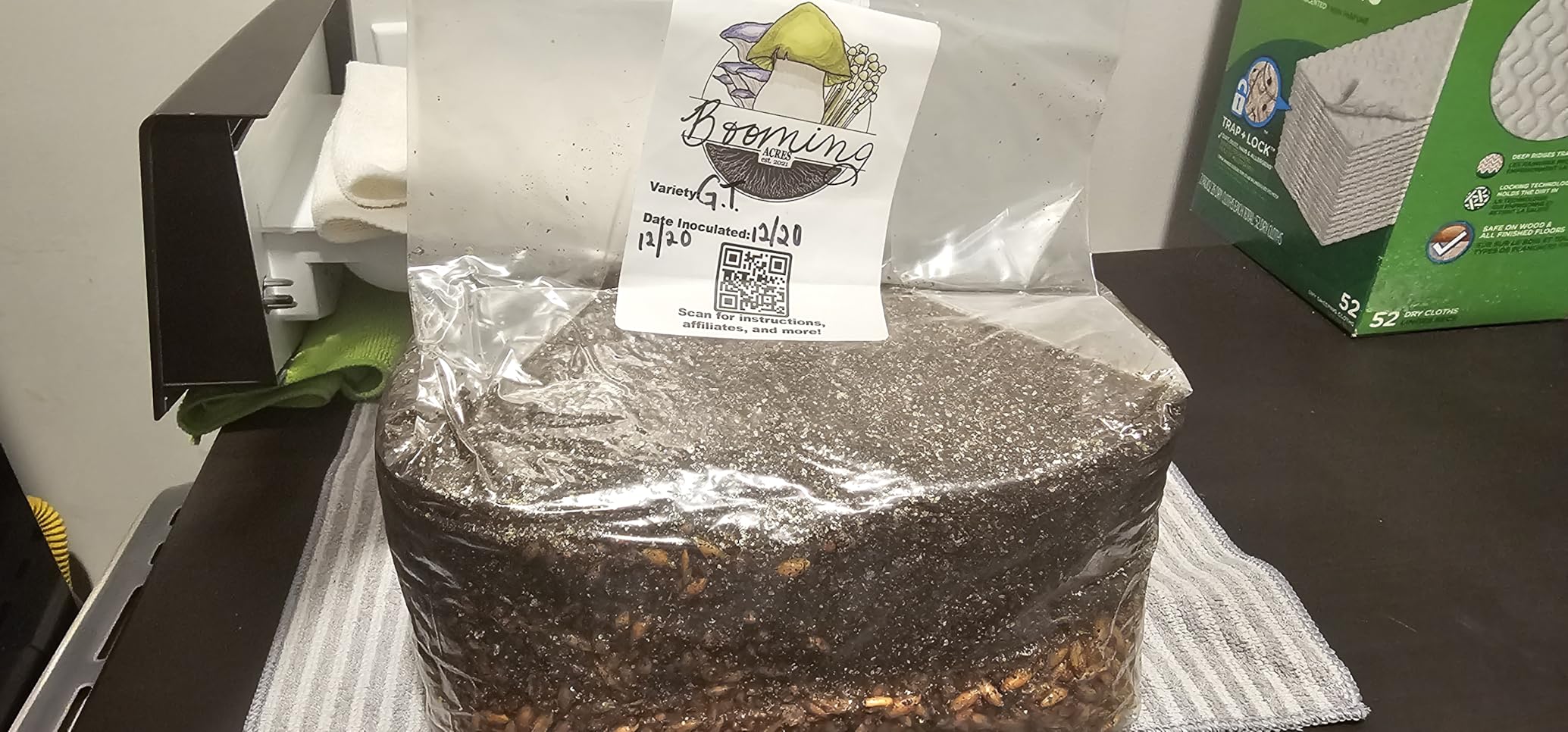
What you give up is turnkey simplicity. There is no spawn in the box, no printed guarantee, and no misting schedule that saves you if your inoculation technique is sloppy. Contamination is a real possibility without clean technique, and there is no beginner here who should be inoculating a bag before they have fruited a block at least once.
This is the step-up purchase, not the starting purchase. It makes sense if you have already had one or two successful kit grows and you want to produce more mushrooms per week than a boxed block ever could.
Who the 5 lb grow bag suits
It suits a grower who has finished several kits and wants to stop paying per-small-box prices for bulk substrate. It also suits anyone with outdoor space who wants a shaded bed rather than a countertop project, since the bag works either way.
If you have ever wanted to inoculate a bulk substrate without buying a pressure canner or mixing your own coir, this removes the two biggest setup barriers and keeps only the technique.
Who should skip it
Skip it as a first purchase, without exception. If you cannot tell a contaminated bag from a healthy one yet, you will not enjoy it, and the yield swings by variety and environment anyway.
Skip it if you want mushrooms in under a month. This format runs on a colonization clock measured in weeks, not days. If your interest is fast results, the North Spore ShroomTek in the next section is faster but still not a kit.
8. North Spore ShroomTek All-in-One Mushroom Grow Bag: Best for Learning Real Technique
North Spore ShroomTek All-in-One Mushroom Grow Bag, 3lb
3 lb autoclave-sterilized bag
Self-healing port and 5-micron filter patch
First flush in 30-60 days
Pros
- Thorough instructions that hold up even if the bag sits unused
- Long-time growers report near-zero contamination versus bin grows
- Included Spore Boostr speeds up colonization
- Doubles as a self-contained chamber or pairs with a monotub
- Stores at room temperature for several months
Cons
- Spawn or culture not included and roughly one in five bags still contaminates
- Multi-packs have shown inconsistent quality control
- 30-60 day timeline is far longer than pre-inoculated kits
- Store credit only for problems past 30 days
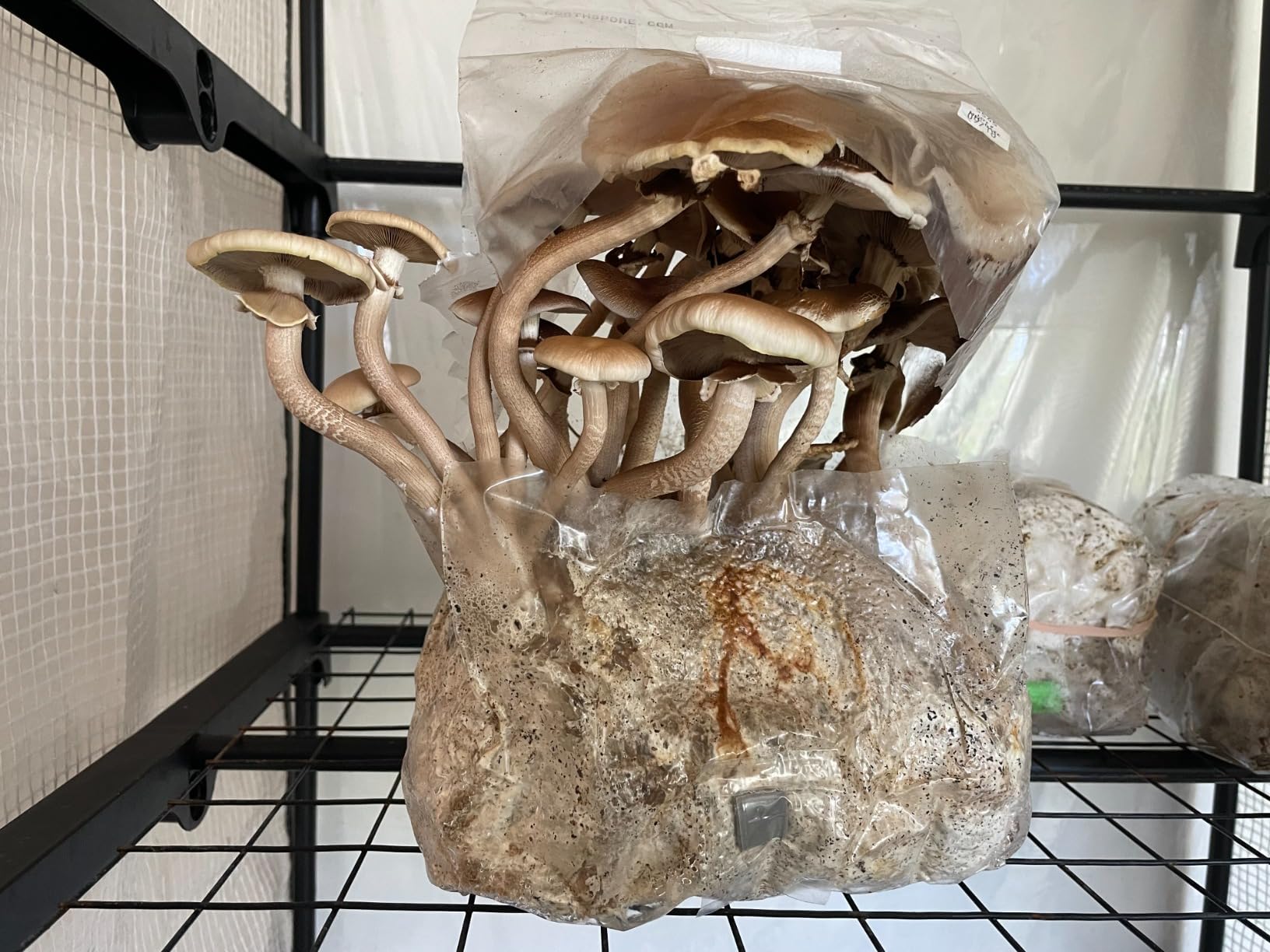
This is the most technically serious item in the roundup and the one experienced growers rate most consistently over multi-year use. It is a 3 lb all-in-one bag of proprietary substrate combining compost, organic grain, coco coir and supplements, sterilized in a commercial-grade steam autoclave with sterility verified by biological indicators.
You add your own spore syringe or liquid culture through the self-healing port, and the included 5 ml Spore Boostr broth accelerates the slow start most growers hit. Long-time growers report essentially no contamination compared with bin-style grows, and the bag doubles as its own grow chamber or pairs with a monotub. It stores at room temperature for several months, and the instructions stay useful even if the bag sits unused for a while.
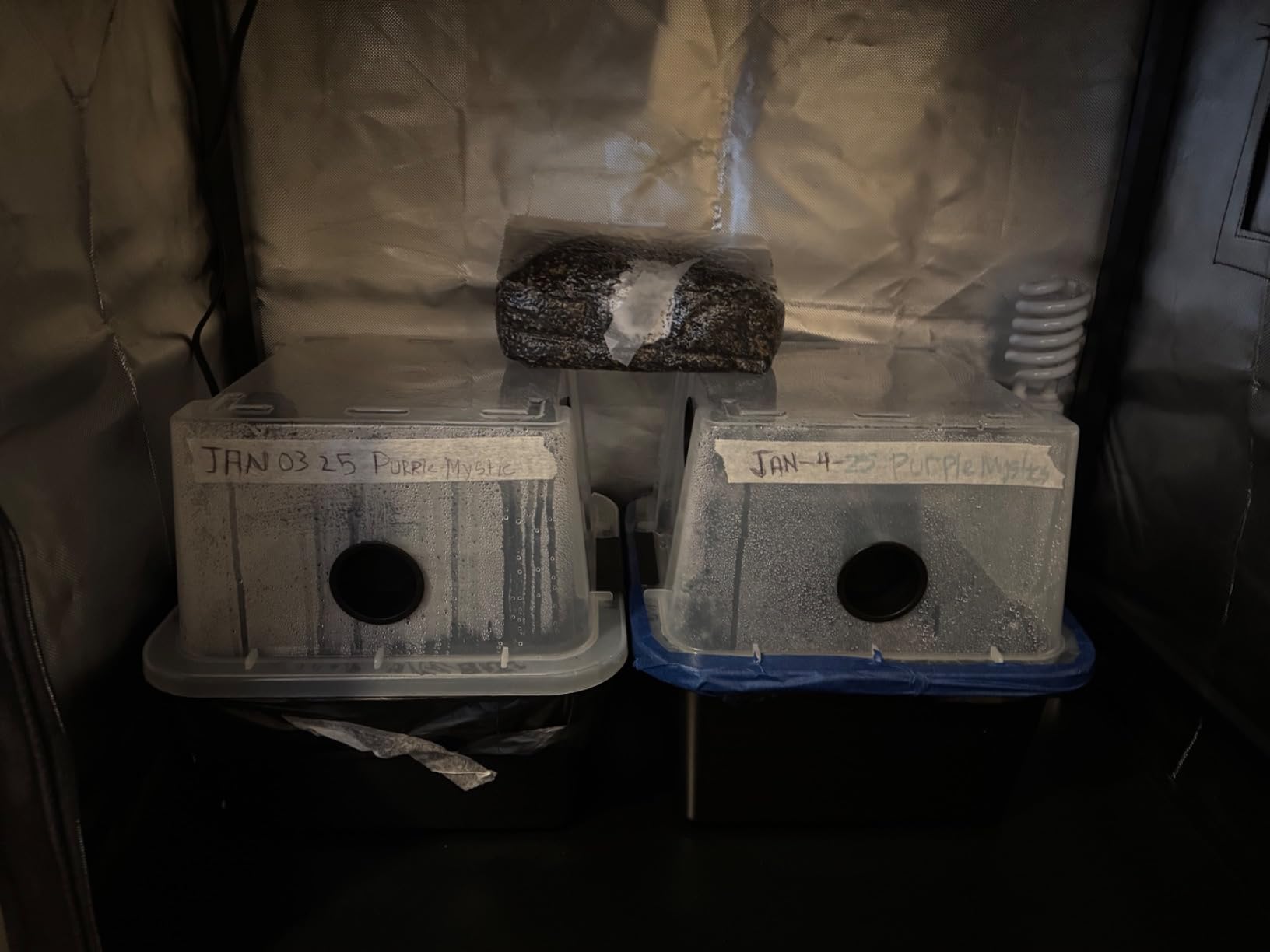
The catch is time. The manufacturer puts the first flush at 30 to 60 days after inoculation, which is a completely different commitment than a kit that fruits in a week. Contamination still happens in a minority of bags, with some reports putting it near one in five, and multi-packs have shown inconsistent quality control with dry bags that never colonized.
One practical wrinkle: the remedy path is store credit rather than a replacement once a problem surfaces past 30 days. Read the policy before you inoculate, because it changes what a failed bag is actually worth to you.
Who the ShroomTek bag suits
It suits a grower who has decided they want to learn inoculation rather than just fruit a block. It suits anyone who plans to keep going past the first three kits, and anyone who has watched traditional bucket or bin grows fail on contamination and wants a cleaner route in.
It also suits the practical case of a kit you may not open for a while. Room-temperature storage for months means you are not racing a delivery date.
Who should skip it
Skip it if you want a harvest this month, if you want a kit that arrives already fruiting, or if needle-based inoculation sounds intimidating, because it is. It is also the wrong purchase if you plan to buy a four-pack — the quality control is reported as noticeably weaker across multi-packs.
If you want bulk substrate without the technique, the Booming Acres bag is simpler. If you want a result in ten days, go back to the first pick in this list.
How to Choose the Right Mushroom Grow Kit
Here is how we picked, and what we measured. We read the manufacturer specifications for all eight kits, then worked through the review data on each one looking specifically for setup friction, time to first pin, first-flush weight, flush count and complaints that recurred across many reviews rather than a single angry one. We flagged any kit whose marketing outran its measured results, and every kit here has at least one weakness we would tell a friend about.
Where we did not have our own measured gram weight, we used the manufacturer’s stated range and said so rather than presenting it as our data. That is why some sections quote a first-flush figure and others do not.
Start with species, not brand. The fastest route to a rewarding first grow is pink oyster, then blue or pearl oyster, then lion’s mane. Button mushrooms are familiar but slow and fussy about casing. Shiitake is flavorful but wants a log and a soak. Reishi and turkey tail are slow. Save morels, chanterelles, truffles and boletes for a hobby you have already been doing for a year.
Decide how much technique you want. Pre-colonized kits and boxes remove inoculation entirely. All-in-one bags keep the substrate prep but hand you the spawn and the needle. A monotub or chamber keeps the substrate prep and the inoculation and only automates humidity and airflow.
Look for a guarantee, and read it. First-fruiting guarantees and free replacement policies are the single most useful signal in this category because a kit is a consumable that can fail through no fault of your own. Note the clock, though: some brands move to store credit after 30 days.
Budget for one flush, not three. The most common disappointment is expecting multiple harvests and getting one. Roughly speaking, treat the advertised second and third flush as a bonus. On a per-flush basis, a kit that produces one large harvest can cost you less per mushroom than a cheaper kit that produces two small ones.
Are mushroom growing kits worth it? On a purely financial basis, usually not as food. Divide what you paid by the weight you actually harvested and you will often land above the price of the equivalent fresh mushrooms in a store. The value is in the process, the education and the freshness, not the bottom line, and anyone who tells you otherwise is selling you something.
Consider your space before your enthusiasm. Everything in this roundup except the two grow bags works in an apartment with no drilling, no ducting and no noise. The footprint is one box on a counter. The two things to think about are odor, which is genuinely strong during and after harvest, and the daily commitment, which is the reason kits requiring two or three sprays a day get abandoned.
For anyone who enjoys the making side of a hobby, the same instinct that draws people to a drawing tablet for practice applies here: start with the simplest version that will teach you something, then move up. Two boxed kits will teach you more than one sterilized bag. It is the same reason our guide to the best turntables for beginners starts with the simplest deck rather than the most feature-rich one.
Why Mushroom Grow Kits Fail and How to Fix It
Most failures are not the kit’s fault. They are humidity, air exchange and timing problems, and every one of them has a fix. Contamination is the fear that generates the most forum traffic, so it is worth addressing directly.
Green, black or bright white fuzzy patches. That is mold, and unlike the pale, web-like mycelium, it arrives fast, smells sour or musty, and often makes the substrate slimy. The fix is isolation. Move the block to a sealed container outdoors, and do not open it in your kitchen. Small spots at the very edge of the cut can sometimes be trimmed and the grow continued; anything spreading across the block is a write-off.
Can mycelium beat contamination? Sometimes, and only in one specific case. If the contamination is confined to a small area outside the fruit zone, a vigorous block like pink oyster can sometimes outgrow it, especially when you are watering generously. Once a block is slimy or smells of ammonia, no, it cannot, and continuing to try only spreads spores into your space.
No pins after two weeks. Usually too dry, too cold, or not enough fresh air. Oysters specifically need air exchange; a sealed dome with no opening produces long stems and tiny caps. Cut the X wider, mist less, and let it breathe.
Long stems and small caps. Classic over-fogging. You are starving the block of oxygen to compensate for humidity. Mist once, not four times, and mist the walls rather than the block itself.
Mushrooms grew inside the sealed bag. This is a manufacturing timing issue, not your care. It is also the main reason first-fruiting guarantees exist, and the reason we put the guaranteed box at the top of this list.
Block dried out between flushes. Soak it again for several hours, drain it fully, and put it back in a humid chamber. Second flushes fail far more often from drying out than from the block being exhausted.
Can kits go bad? Yes, in one specific way: the colonized substrate can be overtaken by mold during shipping and storage. That is why a pre-colonized kit should look white and dense, and why an orange or amber liquid at the bottom is worth understanding. Orange metabolite is a normal, harmless sign of healthy active growth on most kits. Sour, pink or slime is not.
On storage and unattended time: the North Spore lion’s mane block is the most forgiving we found and can be refrigerated for up to three months before you start, while the ShroomTek bag stores at room temperature for several months. Active kits can sit without opening for a few days comfortably, but a kit that has already pinned will keep growing whether or not you are watching it. Harvest the moment caps stop being convex, because leaving them past that point is the most common harvesting mistake and ruins the texture.
One hobby perk nobody expects: photographing your flush is genuinely satisfying, because a ten-day grow gives you a subject that visibly changes every day. A phone camera is enough for documentation, though our guide to camera lenses for beginners covers the short close-focus focal length you would want if you take it further. Put a ruler next to the block on day one and you will have an honest record of what each kit actually produced.
One last safety note, because growers who had beginner questions land them in advanced mycology forums often pick up techniques they do not need: cook everything thoroughly, try a small amount first if you have never eaten the species, and never eat a mushroom you found outdoors. Clean the chamber between flushes and wash your hands before opening a block. If you are curious how the underlying technology works, our explainer on how web pages are built covers a different kind of system entirely.
Frequently Asked Questions
What is the best mushroom kit for beginners?
The Back to the Roots Organic Oyster Mushroom Grow Kit. It is fully pre-colonized, so there is no inoculation, sterilization or substrate mixing, and a first harvest arrives in roughly 10 days with just two sprays a day. It also carries a grow guarantee, which matters because a kit is a consumable that can fail without any fault of your own.
What is the best mushroom grow kit for a beginner?
For a first timer who wants zero equipment, a boxed spray-and-grow kit is right. For a beginner who cares most about flavor, pick the Forest Origins Pink Oyster, which pins in two to three days and has the strongest cooked flavor. For the biggest first harvest, the North Spore 4 lb Lion’s Mane block produces large dense clusters.
Are mushroom growing kits worth it?
On pure economics, rarely. Divide what you paid by the weight you actually harvested and the cost per mushroom often exceeds the price of fresh mushrooms in a store. The value is the experience, the education and peak freshness. Judge it as a hobby you learn from, not as a grocery bill you save on.
What is a good starter mushroom?
Pink oyster is the easiest and fastest, with pins often visible in two to three days and a harvest inside a week. Blue or pearl oyster is the most forgiving of beginner error. Lion’s mane comes next for cluster size, then button, then shiitake. Save reishi, turkey tail, morels, chanterelles and truffles until you have grown several crops.
How to tell if a mushroom grow bag is contaminated?
Look for color and texture, not for the presence of fuzzy growth. Healthy mycelium is white, dense and web-like. Mold shows as green, black or bright white patches, often with a sour or musty smell and a slimy surface. An amber or orange liquid at the bottom is usually normal metabolite. A strong ammonia smell means the block is finished or spoiled.
Can mycelium beat contamination?
Only in a narrow case. If the contamination is small, sits outside the fruit zone and the block is vigorous, species like pink oyster can sometimes outgrow it when watered generously. Once the block is slimy or smells of ammonia, it cannot, and continuing just spreads spores. Isolate the block outside rather than working on it over your kitchen counter.
How often should I mist my mushroom grow bag?
Most kits specify twice a day, and the pattern is ten to twelve sprays each time aimed at the bag and the chamber walls rather than soaking the block. Over-misting is the most common beginner mistake and produces long stems and small caps because the block is starved of oxygen. If condensation is dripping, mist less.
How many days can a mushroom kit stay without opening?
A few days is fine, and a kit that has already pinned will keep growing whether or not you watch it. For a kit you have not started, the North Spore Lion’s Mane block can be refrigerated for up to three months, while an unopened ShroomTek grow bag stores at room temperature for several months. A shiitake log is the exception, since it will not start properly if left sitting too long.
The Best Mushroom Growing Kits for Beginners: Final Word
The Back to the Roots Organic Oyster Mushroom Grow Kit is the best of the best mushroom growing kits for beginners because it makes success almost automatic: pre-colonized, two sprays a day, a first harvest in about ten days and a grow guarantee behind it. For the best flavor in the shortest time, the Forest Origins Pink Oyster block is the one we would buy again. For the biggest first harvest, the North Spore 4 lb Lion’s Mane kit produces dense clusters and can be refrigerated for months before you start.
The Root Mushroom Farm shiitake log is the flavor upgrade, the two BloomBox kits are the lowest-friction options for families and first-timers, and the two all-in-one bags are the step-up for when you want to learn inoculation instead of avoiding it. Cook everything thoroughly, start with pink or blue oyster, and expect one excellent harvest rather than an endless supply.