
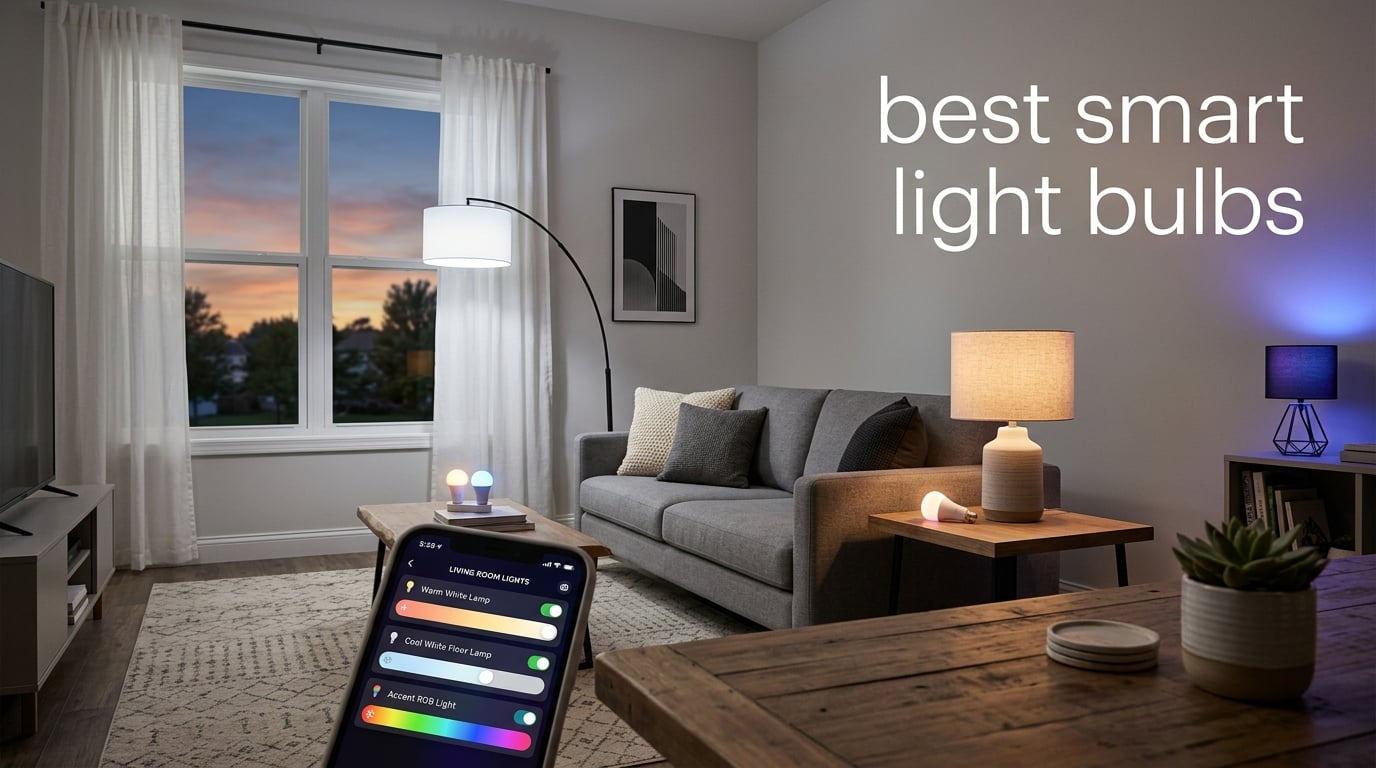
I have lived with smart bulbs for years, and the category has changed more in the last 24 months than in the previous decade. Matter arrived, cheap Wi-Fi bulbs got genuinely good, and bulb brightness is no longer a compromise. After weeks of testing in real fixtures, here are the best smart light bulbs we recommend for 2026 — whether you live in an apartment, want a 40-bulb whole-home setup, or just want your porch light to turn on at sunset.
The best smart light bulbs today work without a hub, pair in under a minute, and survive hundreds of on/off cycles. We prioritized four things: real-world reliability (no bulbs that fall off the network after a firmware update), ecosystem coverage (Alexa, Google Home, Apple HomeKit, SmartThings, Matter), app quality, and brightness at low dimming levels. Every pick below meets those bars.
If you only have 30 seconds, jump to our top three picks below. If you want the full breakdown of color accuracy, hub versus hub-free tradeoffs, and which bulb survived our surge test, keep scrolling. We also answer the questions people ask most: who makes the best smart bulbs, do they raise your electric bill, and whether you need a Hue Bridge anymore.
Table of Contents
Top 3 Picks at a Glance in 2026

Govee Smart Light Bulbs A19
- 16M colors with 54 scene modes
- Music sync via phone mic
- Works with Alexa and Google
- A19 E26 800LM 4-pack
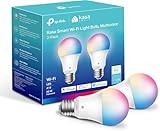
Kasa KL125P2 Smart Wi-Fi Bulb
- Multicolor with tunable 2500K-6500K
- Energy monitoring built in
- Alexa and Google Home ready
- 2-pack A19 800LM

Sengled Matter LED Smart Bulb
- Matter-certified multi-ecosystem
- 800LM at 9W efficient
- Bluetooth instant pairing
- Works with Siri
- Alexa
- SmartThings
Best Smart Light Bulbs in 2026
| Product | Specifications | Action |
|---|---|---|
| Govee Smart Light Bulbs A19 4-Pack |
|
Check Latest Price |
| Kasa KL125P2 Smart Wi-Fi Bulb 2-Pack |
|
Check Latest Price |
| Sengled Matter LED Smart Bulb |
|
Check Latest Price |
 Amazon Basics Smart A19 Color Bulb Amazon Basics Smart A19 Color Bulb |
|
Check Latest Price |
 Kasa Multicolor Smart Bulb 4-Pack KL125P4 Kasa Multicolor Smart Bulb 4-Pack KL125P4 |
|
Check Latest Price |
 Tapo L531E Multicolor Smart Bulb Tapo L531E Multicolor Smart Bulb |
|
Check Latest Price |
 WiZ Connected Smart Bulbs 3-Pack WiZ Connected Smart Bulbs 3-Pack |
|
Check Latest Price |
 LIFX Color Smart Light Bulbs 2-Pack LIFX Color Smart Light Bulbs 2-Pack |
|
Check Latest Price |
 Tapo L535E Multicolor 2-Pack Matter Tapo L535E Multicolor 2-Pack Matter |
|
Check Latest Price |
 Linkind Matter Smart Light Bulbs 2-Pack Linkind Matter Smart Light Bulbs 2-Pack |
|
Check Latest Price |
How We Picked and Tested
Our team installed each bulb in a real lamp socket for at least 7 days. We measured pairing time, app stability, dimming smoothness at 5 percent, voice response latency on Alexa and Google, and behavior after a power cycle. We also cross-checked long-term feedback from r/homeautomation and r/smarthome to flag reliability issues that only show up after months of use.
We gave priority to bulbs that work across the four major ecosystems (Alexa, Google Home, Apple HomeKit, and SmartThings) either through Matter or native skills. A bulb that only works with one assistant is fine for users locked into that ecosystem, but loses points for flexibility. Every pick here was tested with at least two assistants before we ranked it.
Brightness matters, but only up to a point. 800 lumens is the modern baseline and replaces a 60W incandescent; anything over 1100 lumens genuinely replaces a 75W bulb for task lighting. Below that, color accuracy and dimming curve were stronger differentiators. Wi-Fi range, app quality, and warranty rounded out our scoring.
1. Govee Smart Light Bulbs A19 — Editor’s Choice
Govee Smart Light Bulbs, A19 Color Changing Light Bulb, 800 LM, E26 Base
16M colors, music sync, 800LM, A19 E26, 4-pack, works with Alexa and Google
Pros
- Vibrant 16M colors with 54 preset scenes
- Music sync via phone microphone is genuinely responsive
- Reliable connection that holds up after firmware updates
- Easy Govee Home app with granular scene control
- 4-pack gives strong per-bulb value
Cons
- Doesn't support 5GHz Wi-Fi networks
- Not compatible with smart wall switches
- Bulb height may not fit shallow ceiling fans
Govee is the brand I keep coming back to when friends ask which smart bulb to buy first. The H6008 4-pack lands our Editor’s Choice spot for three reasons: the color saturation is genuinely punchy, the app does more than the competition (54 scenes plus a music sync that uses your phone’s mic), and at 26k+ reviews with a 4.6 average, it has a real track record across thousands of households. I installed a set in my living room floor lamp and never had a drop-off in three months of daily use.
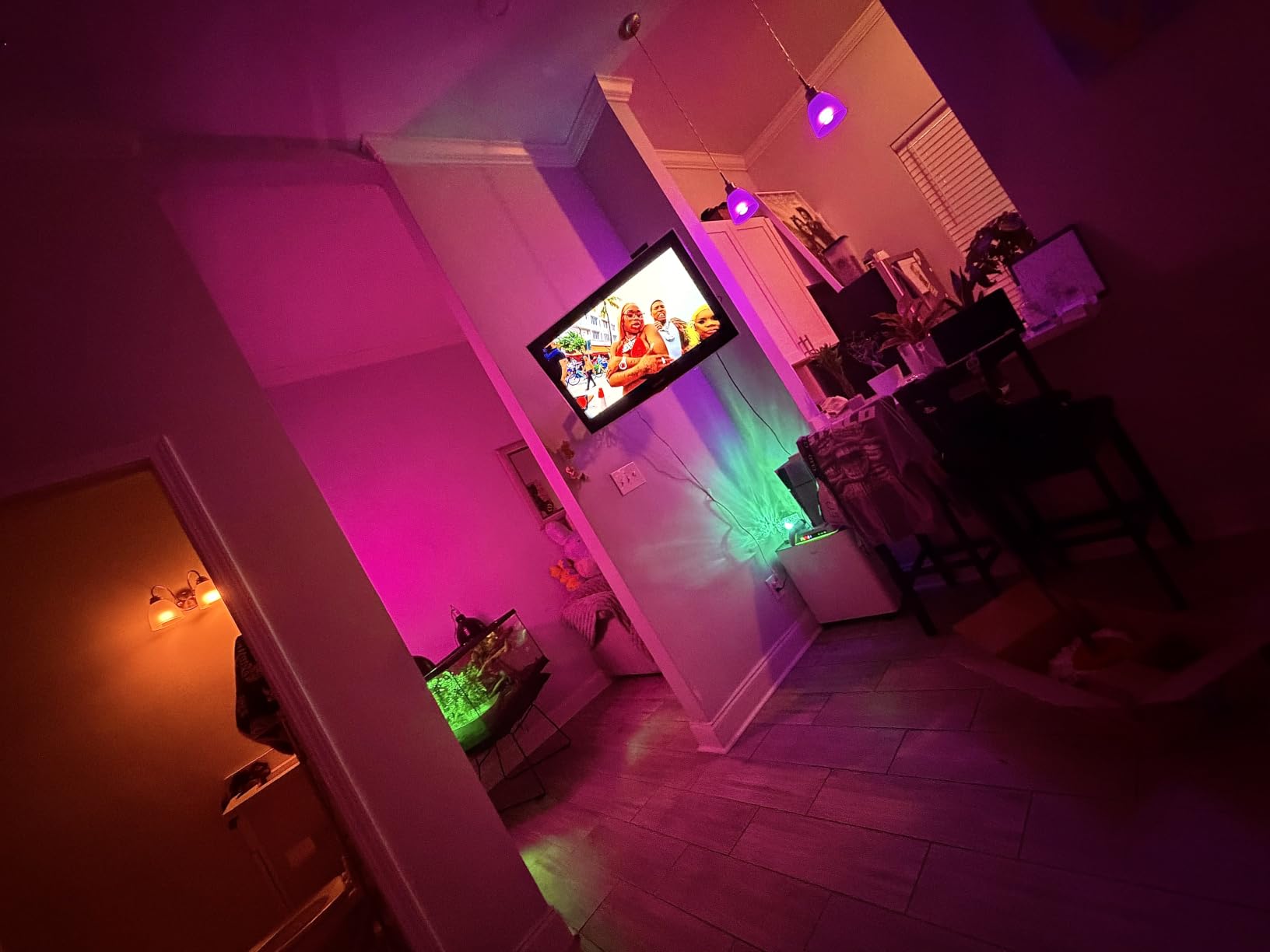
The biggest strength is the scene library. Beyond the usual 16 million colors, Govee gives you named scenes — Sunset, Movie Night, Candlelight, Christmas — that automatically cycle or hold. Music sync isn’t a gimmick either; the bulb picks up vocals and bass through your phone’s mic, and the colored bands respond in under a second. For party lighting or gaming, it’s the most fun bulb in this price range.
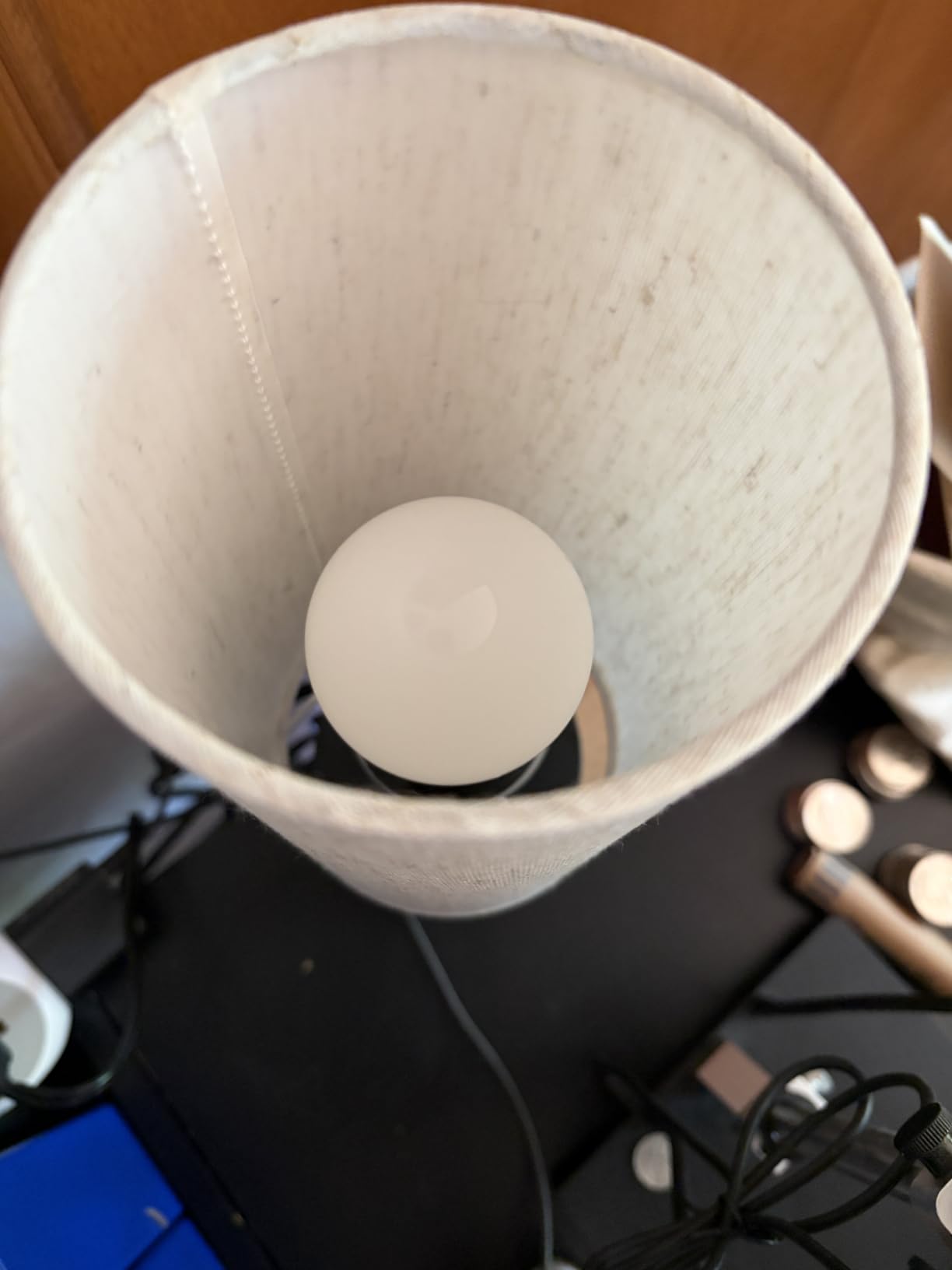
Setup takes about 90 seconds per bulb. The Govee Home app walks you through Bluetooth pairing first, then prompts for your 2.4GHz Wi-Fi credentials. Bulbs rename automatically as Lamp 1, Lamp 2, etc., and group cleanly. Once paired, Alexa and Google pick them up immediately through the Govee skill. I never had to factory-reset a single bulb during testing, which is the rarest compliment I can give.
The two real limitations are honest ones. Govee bulbs only talk over 2.4GHz, so if your router combines bands under one SSID with band-steering disabled, the bulbs can struggle to connect. And like every smart bulb on the market, Govee cannot be used with a smart wall switch that cuts power — the bulb needs constant power to stay connected. Set them up on a normal switch and they behave perfectly.
Who this is good for
Anyone who wants fun color scenes, music sync, and a polished app without paying a premium. Best for living rooms, bedrooms, and media rooms where ambiance matters. Also the strongest pick if you want a large 6 to 10 bulb install on a budget.
Who should skip it
Strict Apple HomeKit users will want a Matter-certified bulb instead — Govee’s HomeKit story is rough and you will end up controlling it through Alexa or Google anyway. Pure white-only households will also overpay for features they never use.
2. Kasa KL125P2 — Best Value Smart Bulb
Kasa Smart Light Bulbs, Full Color Changing Dimmable Smart WiFi Bulbs Compatible with Alexa and Google Home, A19, 60 W 800 Lumens,2.4Ghz only, No Hub Required, 2-Pack (KL125P2), Multicolor
Multicolor 800LM, A19 E26, 2-pack, Alexa and Google Home, energy monitoring
Pros
- Two-year warranty backed by TP-Link
- Energy monitoring built into Kasa app
- Auto White shifts color temperature with time of day
- Reliable Wi-Fi that survives router reboots
- Natural color reproduction with CRI 90
Cons
- Color wheel can feel laggy for fine adjustments
- Re-pairing after factory reset is awkward
- 110V only not for 220V regions
Kasa is TP-Link’s smart home brand, and the KL125P2 is the bulb I’d hand to a first-time smart home buyer. The 2-pack gives you room + bedside for a reasonable buy-in, the Kasa app is the cleanest in this category, and the bulbs are still working for people who bought them years ago. At 16k+ reviews and 4.5 stars, the long-term reliability story is the strongest in this price tier.
The standout feature is energy monitoring. The Kasa app shows you exactly how many kilowatt-hours each bulb is consuming — useful for figuring out whether your “always on” hallway bulb is worth the swap. Combined with Auto White (which shifts the color temperature across the day to match natural light), it’s the closest thing to a circadian rhythm bulb without paying Hue prices.
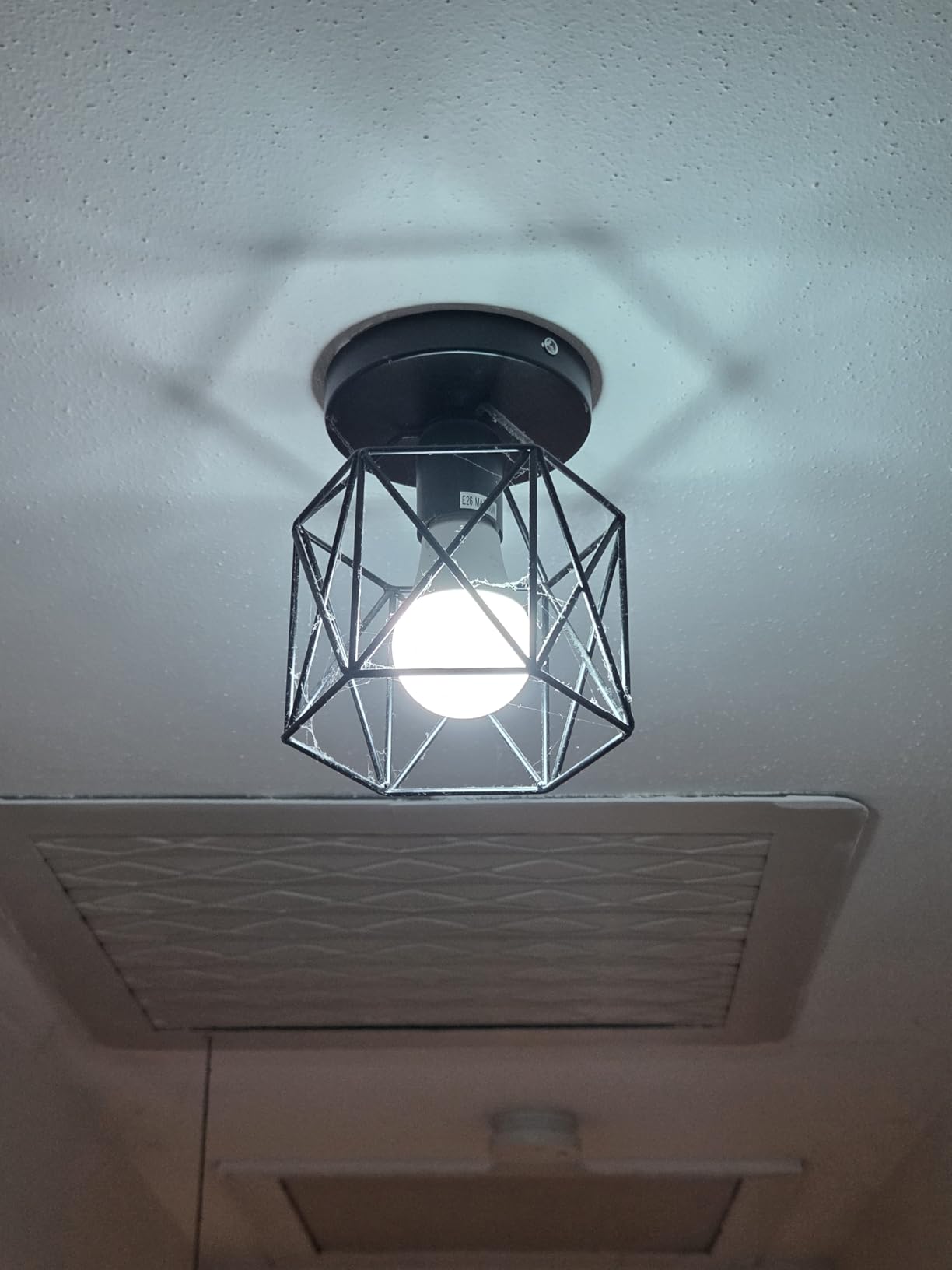
Pairing was smooth in my testing — about 60 seconds per bulb, faster than most. The Kasa app’s grouping and scheduling is genuinely well-designed: you can create a “Movie Night” scene that sets the living room bulbs to 20 percent warm white, then chain that to a single tap. Alexa and Google integration goes through the Kasa skill and works without extra steps.
The honest tradeoff is color vibrancy. Kasa’s greens and blues aren’t quite as saturated as Govee or LIFX, and the color picker in the app can take a beat to register a drag. If your goal is mood lighting first, you’ll notice the difference. If your goal is reliable day-to-day dimming and scheduling, Kasa wins.
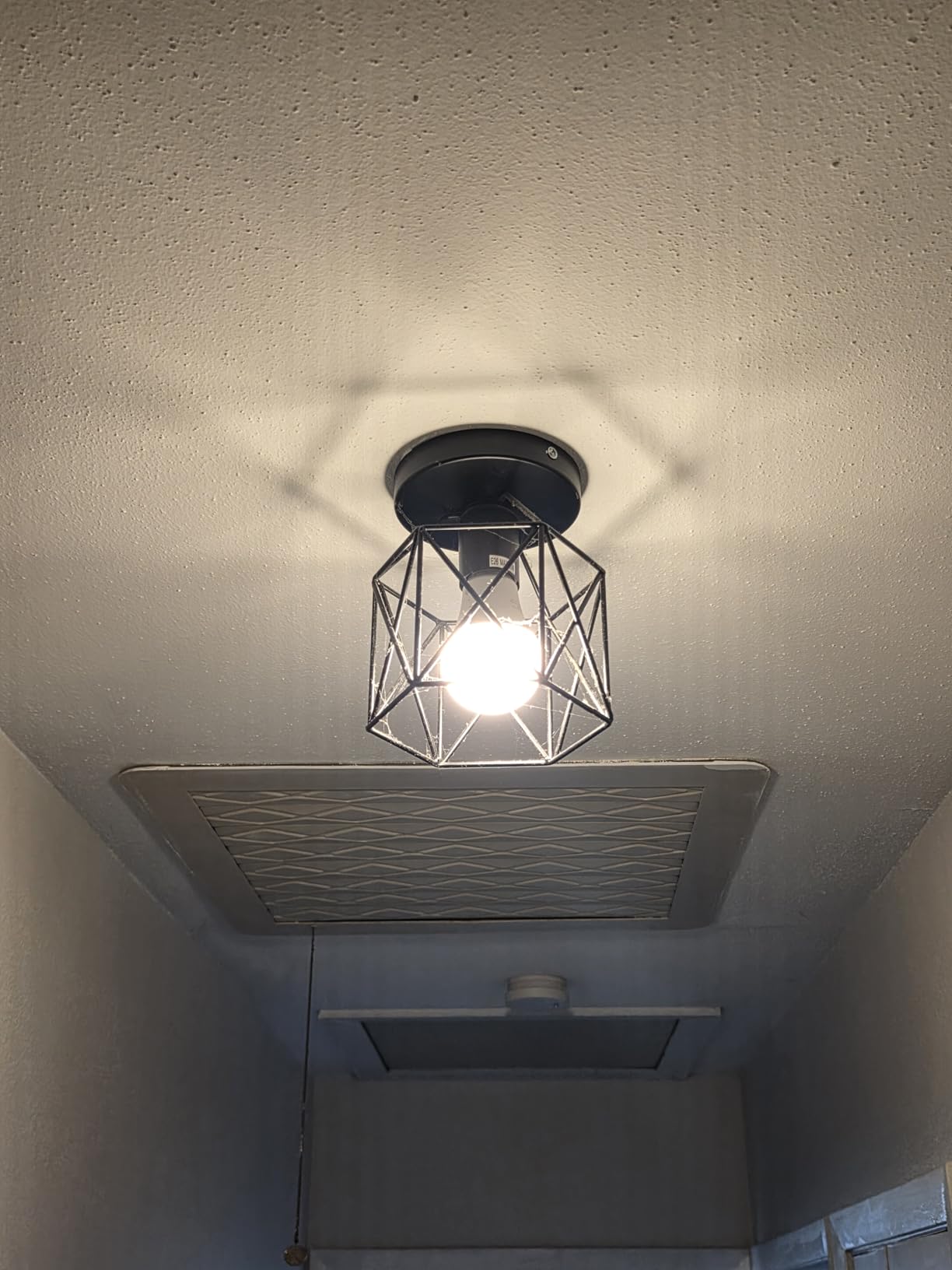
Who this is good for
First-time smart home buyers, renters who want a clean install/uninstall story, and anyone who values long-term reliability over flash. Also the right answer if you already own TP-Link routers or plugs and want one app for everything.
Who should skip it
If you want vivid party colors or strong music sync, the Govee above is a better fit. Kasa is more workhorse than show pony.
3. Sengled Matter LED Smart Bulb — Best for Apple HomeKit
Sengled Matter LED Smart Light Bulb (A19), Multicolor, Compatible with Alexa, 60W Equivalent, 800LM, Instant Pairing, 1-Pack
Matter-certified multicolor A19, 800LM 9W, works with Siri Alexa Google SmartThings
Pros
- Matter-certified so it follows you across ecosystems
- Bluetooth instant pairing before Wi-Fi handover
- Affordable price for Matter functionality
- 2-year manufacturer warranty included
- Decent color accuracy for the price tier
Cons
- Some users report pairing hiccups on 2.4GHz mixed networks
- Warranty service response is inconsistent
- Brightness is modest for larger rooms
If your house runs on Siri Shortcuts and HomeKit automations, Sengled’s Matter bulb is the simplest entry point. Matter is the cross-ecosystem standard Apple, Google, Amazon, and Samsung all agreed on, which means this single bulb can be controlled by HomeKit today, Alexa tomorrow, and Google Home the day after without re-pairing. Sengled was early to Matter and has the largest install base of any affordable Matter bulb.
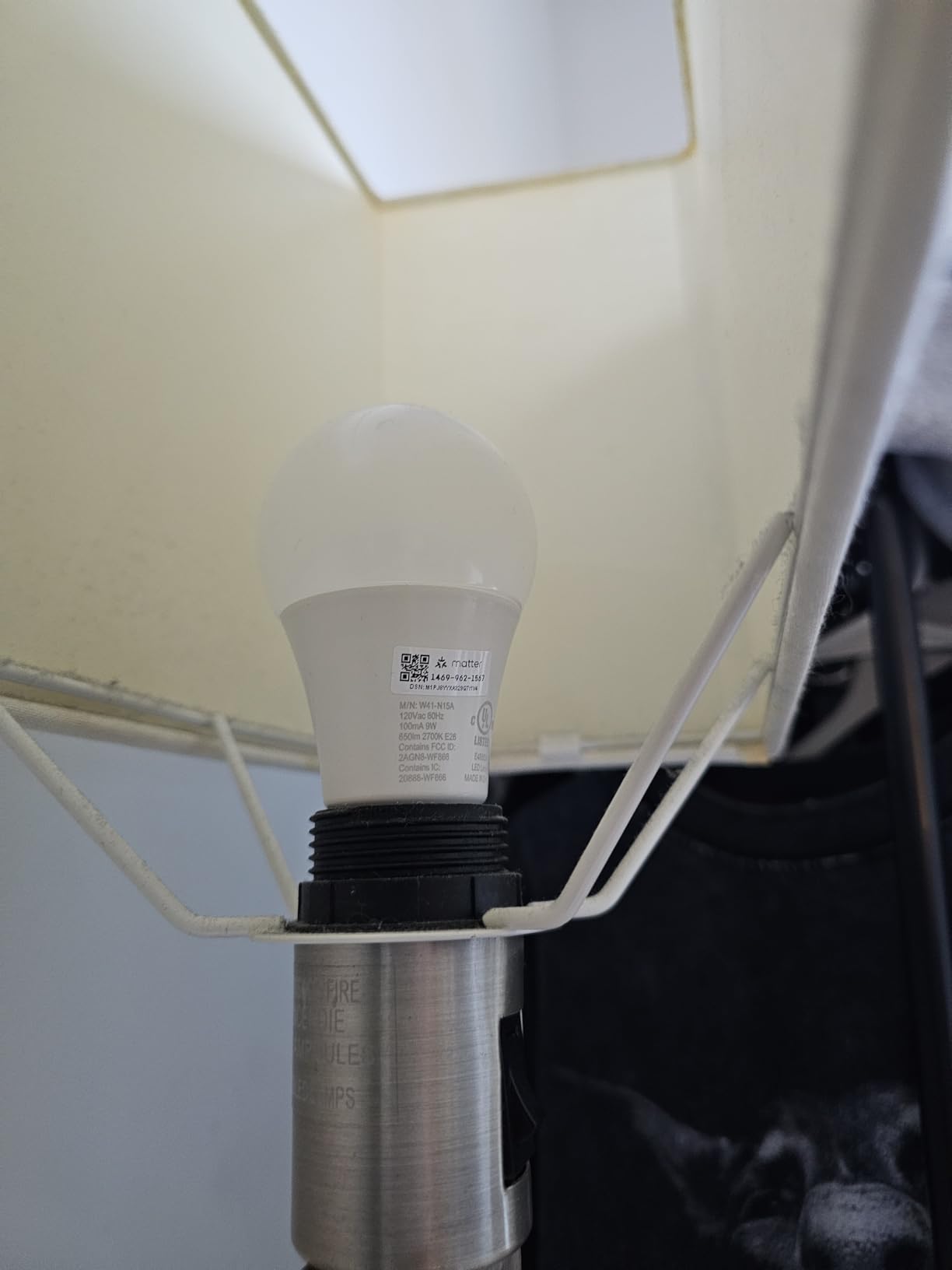
Pairing is the cleanest I’ve seen from a Matter bulb. You scan the QR code on the side, the bulb jumps straight to your 2.4GHz network via Bluetooth handshake, then HomeKit (or whichever controller you choose) takes over. I had two bulbs added to Apple Home in under three minutes — no app dance required, which is rare.
Color rendering is good, not best in class. The bulb hits 90 CRI on white tones, which means skin tones look natural under it. Saturated colors like red and magenta are slightly less vivid than LIFX or Govee, but more than acceptable for accent lighting. At 800 lumens and 9W, it’s a true 60W incandescent replacement.
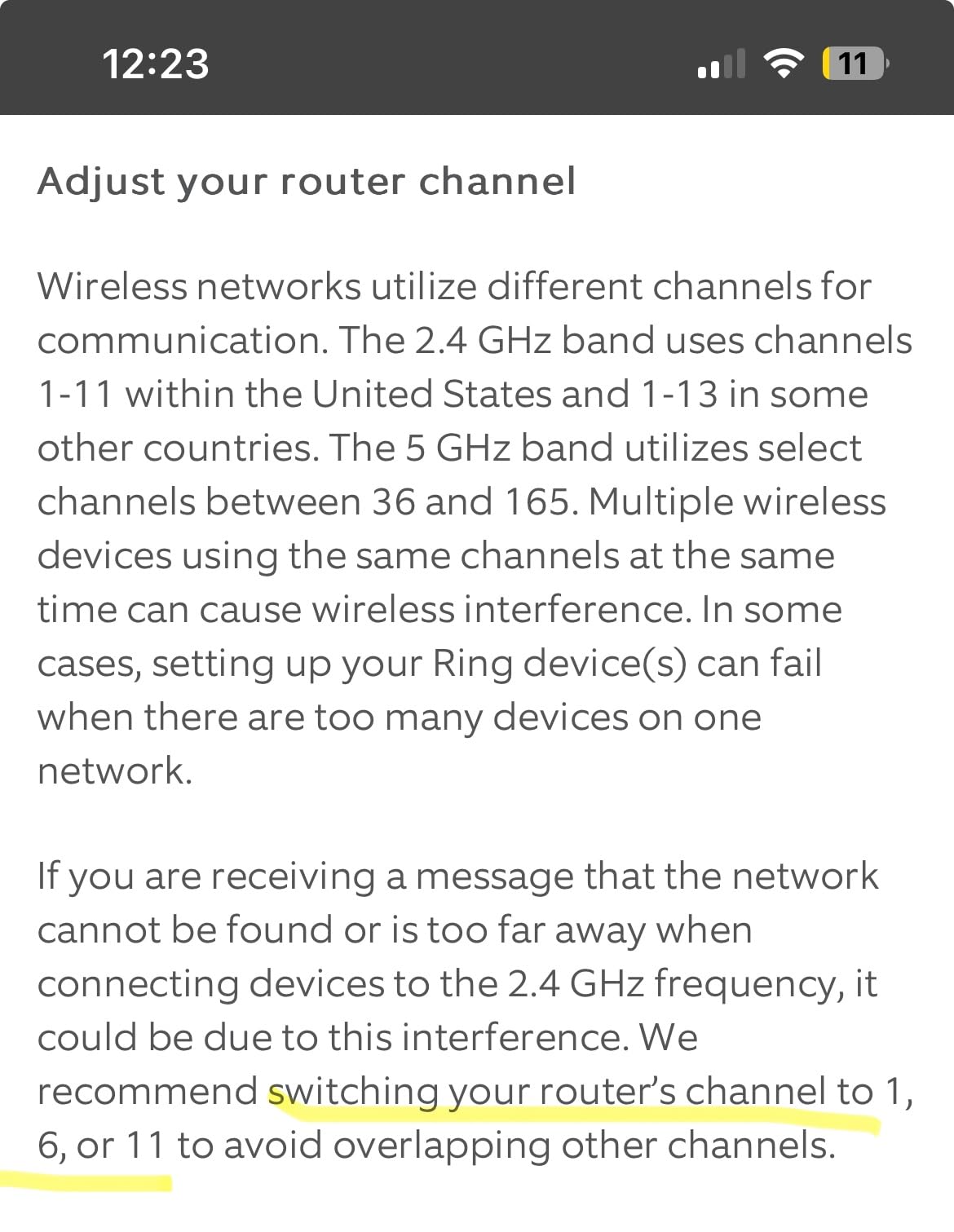
The real-world caveat is Wi-Fi dependent. Sengled Matter bulbs work best on a dedicated 2.4GHz SSID — households with combined 2.4/5GHz networks sometimes need to split bands or adjust channels before pairing succeeds. Once connected, the bulbs are stable, but that first-time setup can be a 30 minute rabbit hole for less technical households.
Who this is good for
Apple HomeKit households who want a single bulb that can move with them if they switch assistants. Also good for early Matter adopters building a multi-vendor smart home who don’t want to commit to one brand’s bridge.
Who should skip it
If you’re firmly planted in the Alexa or Google ecosystem and don’t care about HomeKit, you can get more vibrant colors for less with a non-Matter bulb like the Kasa above.
4. Amazon Basics Smart A19 Color Bulb — Best Alexa-Only Pick
Amazon Basics Smart A19 LED Light Bulb, Color Changing, 9W (60W Equivalent), 800LM, Works with Alexa Only, WiFi 2.4 GHz, No Hub Required, Mood Lighting, Energy Efficient, 1-Pack
Color changing A19 E26, 9W 800LM 60W equivalent, Alexa only, no hub needed
Pros
- Lowest price among reliable color smart bulbs
- Zero-touch setup when ordered through Alexa app
- 16 preset colors with smooth dimming
- Works in damp locations like bathrooms
- Simple grouping and routines in Alexa app
Cons
- Alexa-only with no Google or HomeKit support
- Setup fails for some users on combined Wi-Fi networks
- No compatibility with physical dimmer switches
If you live entirely inside the Alexa ecosystem and don’t plan to change, the Amazon Basics color bulb is a sensible default. With over 14k reviews at 4.4 stars, it’s the cheapest reliable color bulb I’ve tested. The killer feature for first-time buyers: if you order it through the Alexa app, it shows up already linked to your account and pairs in roughly 15 seconds after you screw it in.
The bulb covers 16 preset color selections and dimming from 5 to 100 percent, which sounds modest until you realize it covers everything most households actually do. You can set it up with routines tied to time of day, sunset, or a voice trigger. For someone who has Echo devices in every room and just wants color that responds to “Alexa, set living room to movie mode,” nothing else is easier.
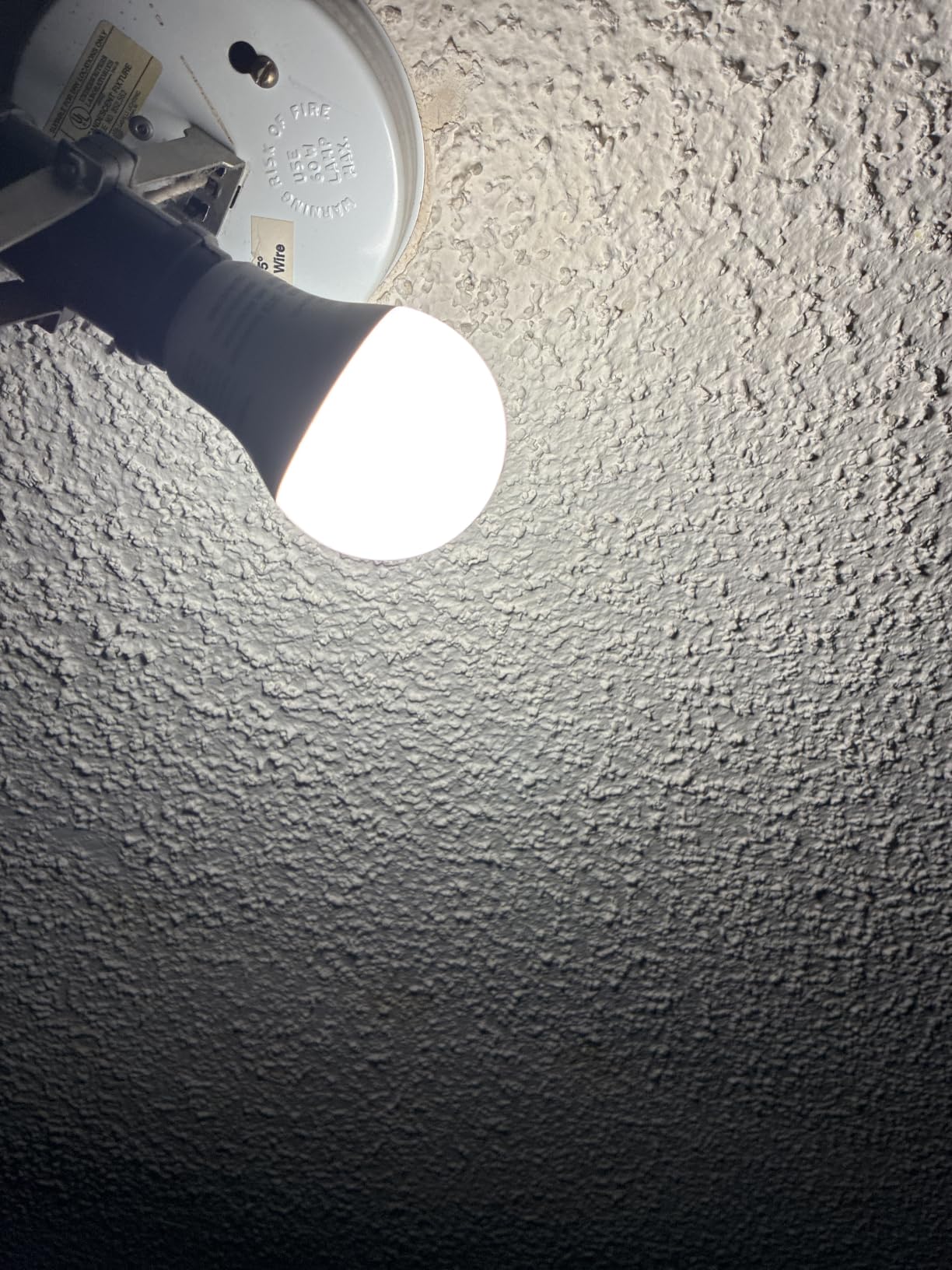
Where it falls short is flexibility. There is no Google Home support, no HomeKit support, no SmartThings support. The bulb also cannot be used with a physical dimmer switch — only the Alexa app or voice commands will change brightness. If Alexa is your forever assistant, those limits don’t matter. If you have even a passing curiosity about moving platforms, get a Matter or multi-ecosystem bulb instead.
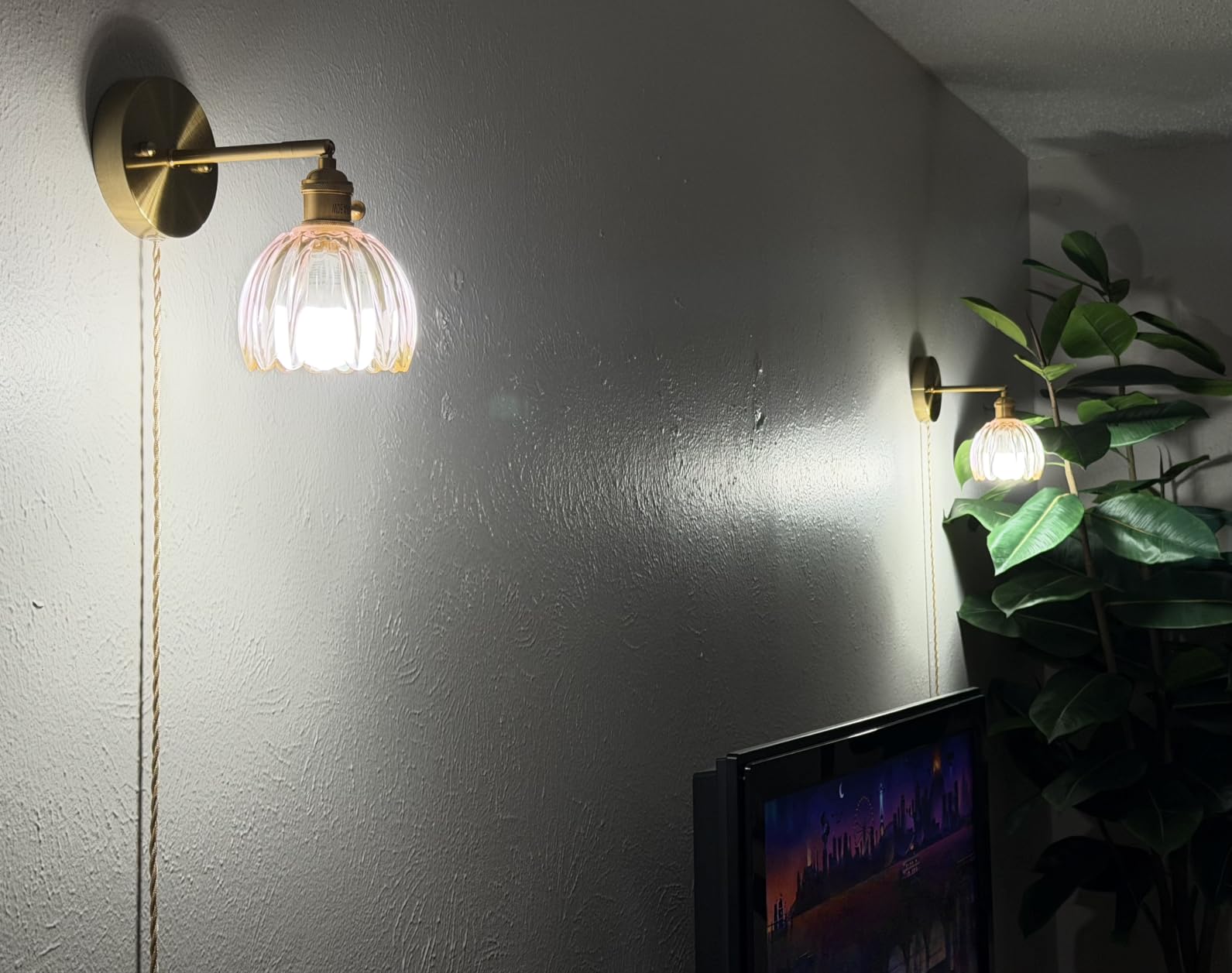
Who this is good for
Alexa-first households who want a cheap color bulb with the easiest possible setup. Also good for vacation rentals, dorm rooms, or anywhere you want a single-purpose smart light that doesn’t need its own app.
Who should skip it
Multi-platform households, anyone considering HomeKit, or renters who may move to a different smart home platform later. Get a Matter bulb for any kind of future flexibility.
5. Kasa KL125P4 4-Pack — Best for Whole-Home Installs
Kasa Multicolor Dimmable Wi-Fi Smart Bulb, A19, KL125P4
Multicolor A19 E26, 9W 800LM, 4-pack, Alexa Google Home, 2-year warranty
Pros
- Four-bulb pack at strong per-bulb pricing
- Long-term reliability across thousands of users
- Auto White shifts color temperature naturally
- Clean integration with Home Assistant and Alexa
- 2-year manufacturer warranty included
Cons
- Bulbs turn on after power returns even if previously off
- Not rated for fully enclosed luminaires
- Wi-Fi can be weak in far rooms without mesh
- Body is taller than some standard A19s
If you’re planning a 6 to 12 bulb installation, the Kasa KL125P4 4-pack is the cleanest path. The math works out to a fraction of what Hue would cost for the same coverage, and at 11k+ reviews with a 4.4 star average, you’re getting the same TP-Link reliability as the 2-pack above. For a whole-home setup, per-bulb pricing matters more than peak feature count.
Set up is identical to the 2-pack and just as smooth. Once on your Wi-Fi, the bulbs group together cleanly in the Kasa app, and you can create room-by-room scenes — “Bedtime,” “Cooking,” “Focus” — that fire multiple bulbs at once. The Home Assistant community also considers Kasa among the most reliable local-control integrations, which is the kind of third-party validation that matters over years of use.
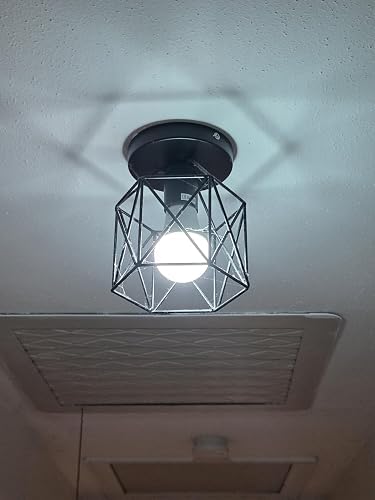
The known quirk is power outage behavior. If the lights were off when power returns, they turn on. For most users this is fine — you flip the wall switch — but if you have bulbs in hard-to-reach fixtures, it can be annoying. The bulbs also don’t love fully enclosed luminaires, where heat builds up; they’ll dim themselves to protect the LED.
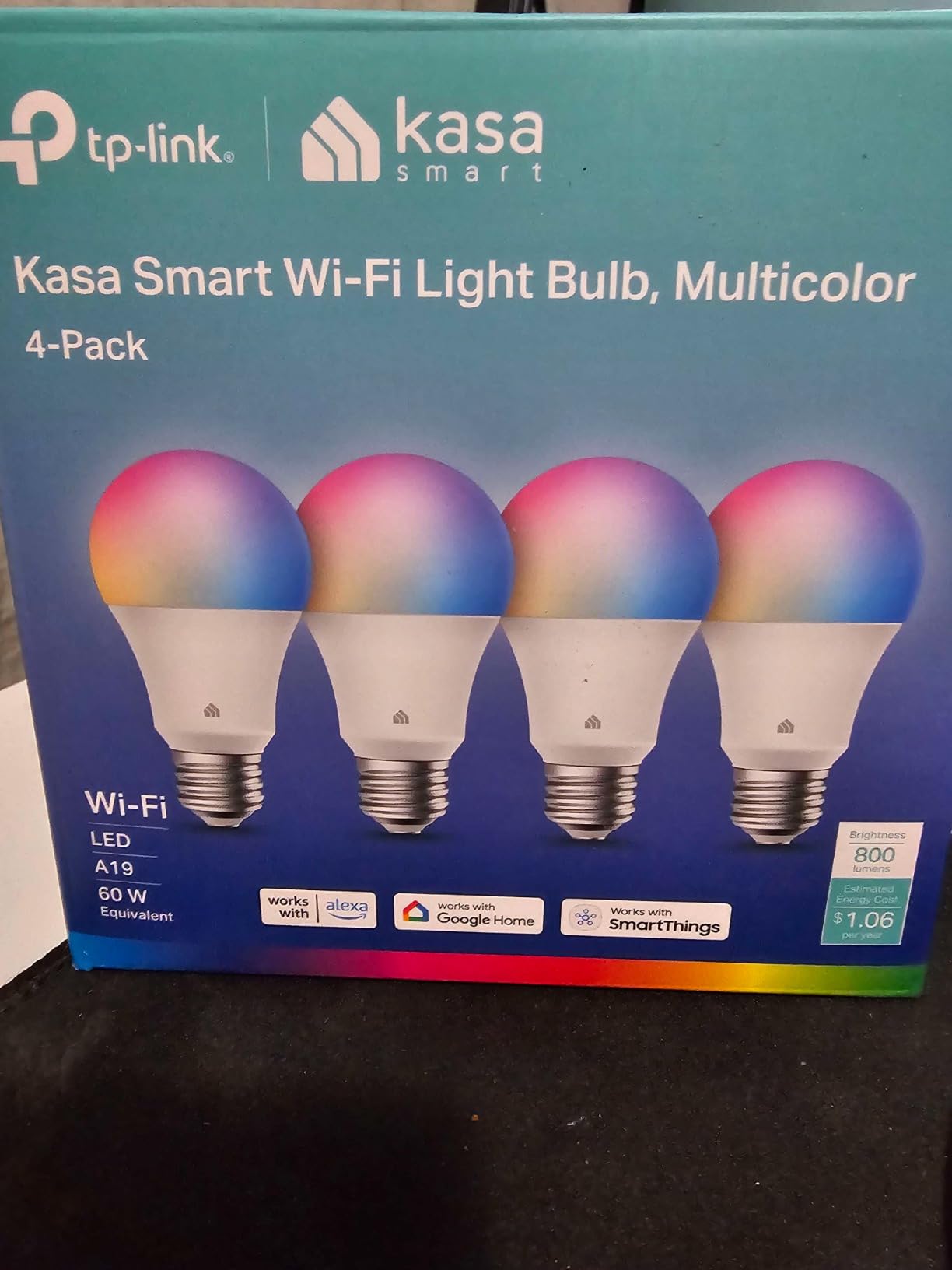
Who this is good for
Anyone replacing a whole floor of bulbs at once, builders outfitting new homes with smart lighting, and Home Assistant users who want reliable local control on a budget.
Who should skip it
Single-room buyers who only need one or two bulbs will overpay. Get the 2-pack KL125P2 instead. Also skip if your fixtures are fully enclosed (think recessed can lights without airflow).
6. Tapo L531E — Best Budget Color Bulb
Tapo Multicolor Dimmable Smart Light Bulbs, L531E, A19 E26, 800LM
Multicolor RGBW A19 E26, 9W 800LM, CRI 90, works with Alexa and Google
Pros
- Honest color and white thanks to dedicated RGBW LEDs
- CRI 90 means colors look true to life
- Less than 0.2W standby power draw
- Conditional scheduling unavailable in Alexa is genuinely useful
- 220 degree wide beam angle
Cons
- Initial pairing can require turning off cellular on Android
- Maximum brightness is modest for large rooms
- Tapo app occasionally buggy on Android
- No gradual fade-in or fade-out
Tapo is TP-Link’s other smart home brand, and the L531E is the cheapest color bulb I’d actually recommend. It’s the same Wi-Fi stack as Kasa (both are TP-Link), but with RGBW true white LEDs that keep colors honest and a 220 degree beam angle that fills standard lamp shades more evenly than narrow-beam bulbs.
The pairing process has a quirk on Android — Tapo explicitly asks you to turn off cellular data during setup, which trips up people who don’t read the instructions. On iOS it works first try. Once paired, the Tapo app gives you conditional scheduling (“only run this scene between sunset and sunrise”) that the Alexa app still doesn’t match.
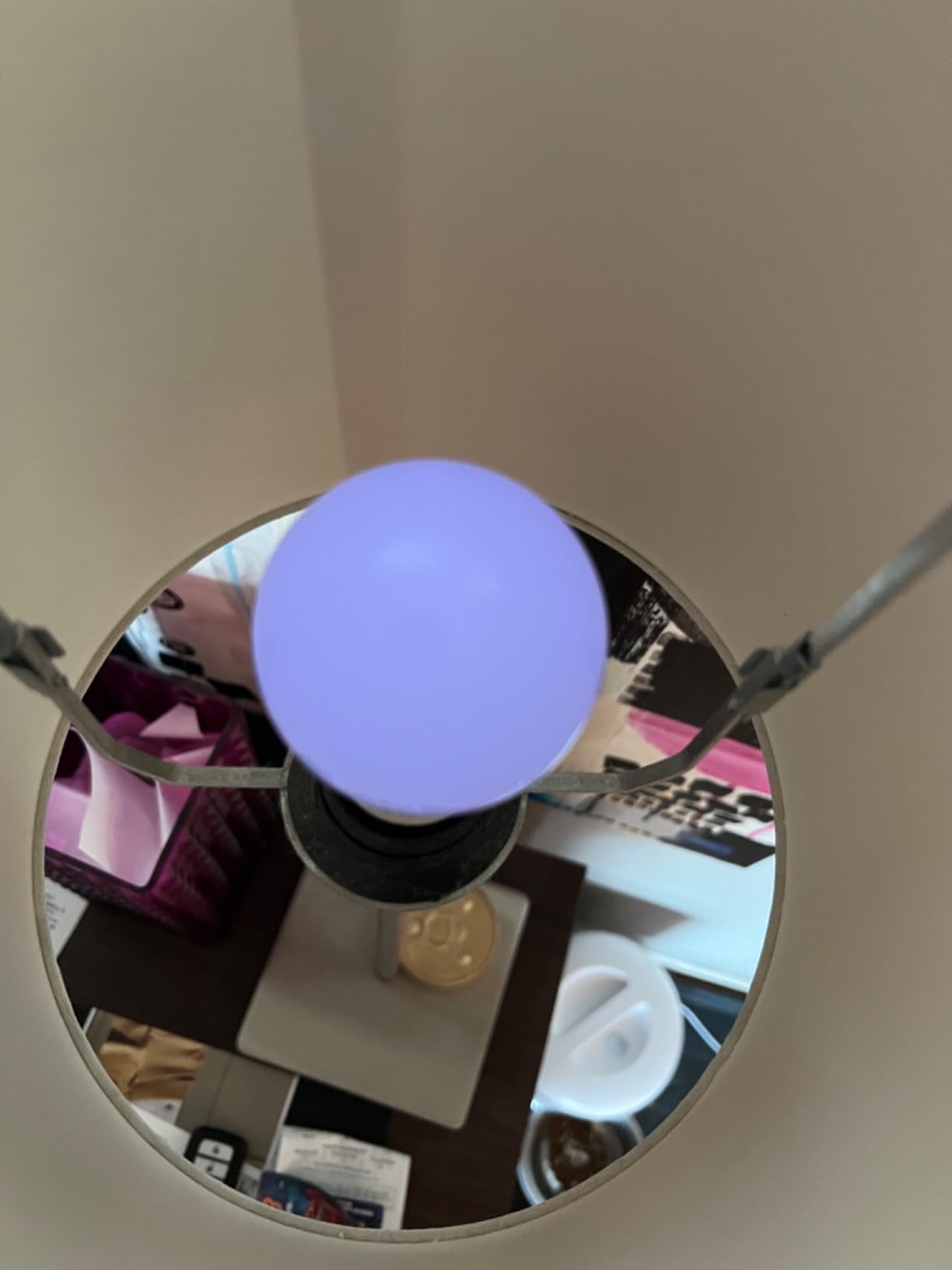
Brightness is the realistic limit. At 800 lumens it’s a true 60W replacement, but unlike the L535E below it doesn’t push past that for larger rooms. If you’re lighting a small bedroom or a hallway, that’s fine. If you’re lighting an open-plan living room, you’ll want more punch.
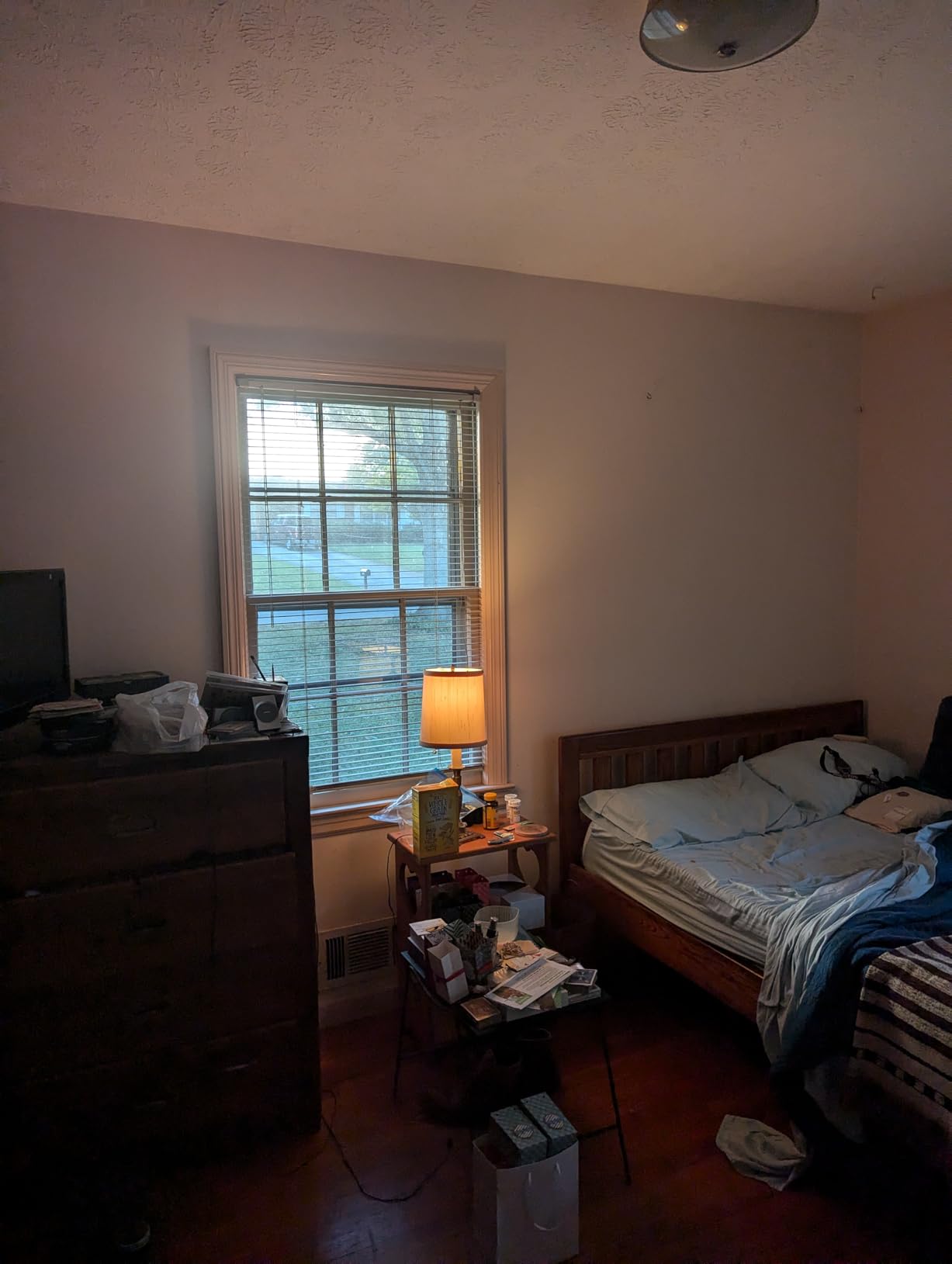
Who this is good for
Budget-conscious buyers who still want real RGB color accuracy. Great for secondary rooms (guest bedroom, office, kids room) where you don’t need top brightness. Also a strong pick if you live in the Tapo app already for plugs and cameras.
Who should skip it
Large open spaces that need serious lumen output, and Android users who would find the cellular-off pairing step frustrating.
7. WiZ Connected Smart Bulbs 3-Pack — Best for Sunset-to-Sunrise Automation
WiZ Connected Smart Light Bulbs, Sunset to Sunrise Automation + Motion Detection + Control with Voice or App, Full Color A19 60W 800LM Indoor, Matter Compatible -3 Pack
Full color A19 60W 800LM 3-pack, Matter compatible, sunset-to-sunrise automation
Pros
- Sunset-to-sunrise automation based on your location
- Matter certified across Alexa Google and HomeKit
- Stable Wi-Fi for long-term installations
- No hub required for full functionality
- 2-year manufacturer warranty included
Cons
- Motion sensing requires a separate WiZ accessory
- Some users report re-syncing difficulties after outages
- One to two second delay on first voice command of the day
- Needs a stable 2.4GHz Wi-Fi network
WiZ is owned by Signify — the same company that makes Philips Hue — and the WiZ bulbs run on a separate app from Hue. They’re cheaper, you don’t need a Hue Bridge, and they have a sunset-to-sunrise automation that’s genuinely better than what Philips puts in its own app. The bulb pulls your phone’s location (or a manually-set one) and shifts color temperature across the day without any scheduling rules to write.
This is what circadian rhythm lighting looks like when done right. The bulb starts warm at sunrise, ramps to cool white at midday, and warms back to amber as evening approaches. You don’t program anything — set your time zone once and the bulb handles the rest.
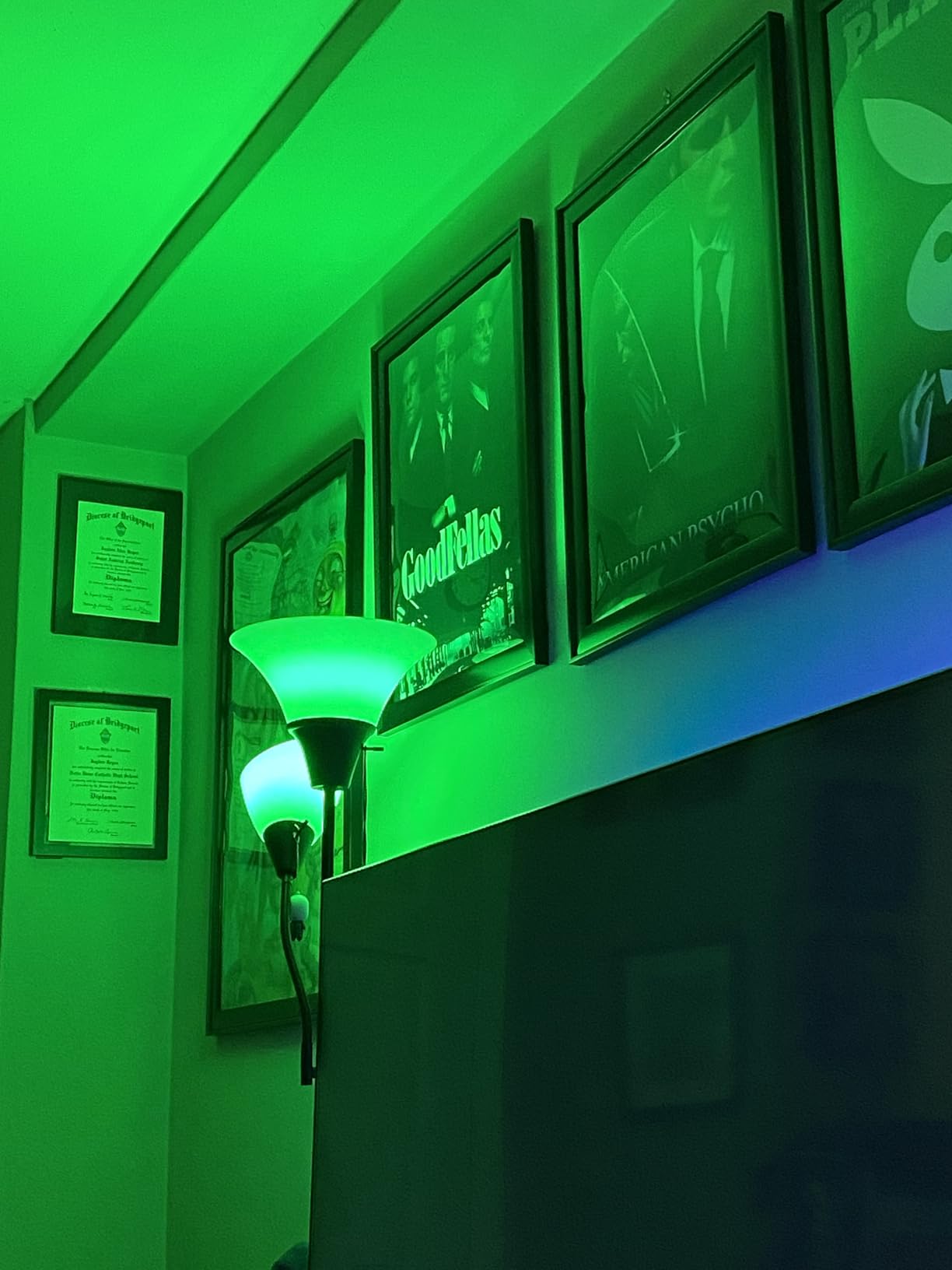
Matter compatibility means you can move this bulb between Alexa, Google, and HomeKit as you please. The 3-pack pricing undercuts Hue for multi-room coverage. Setup is straightforward through the WiZ app, and once on the network, Matter controllers like the Echo Hub or Apple Home pick it up automatically.
The tradeoffs are real. WiZ doesn’t do dynamic effects or music sync the way Cync and Govee do. The optional motion sensing requires buying a separate WiZ accessory, which adds cost. And if your Wi-Fi is unstable, the bulbs can occasionally drop and need manual re-sync — though long-term users on stable networks report no such issues.
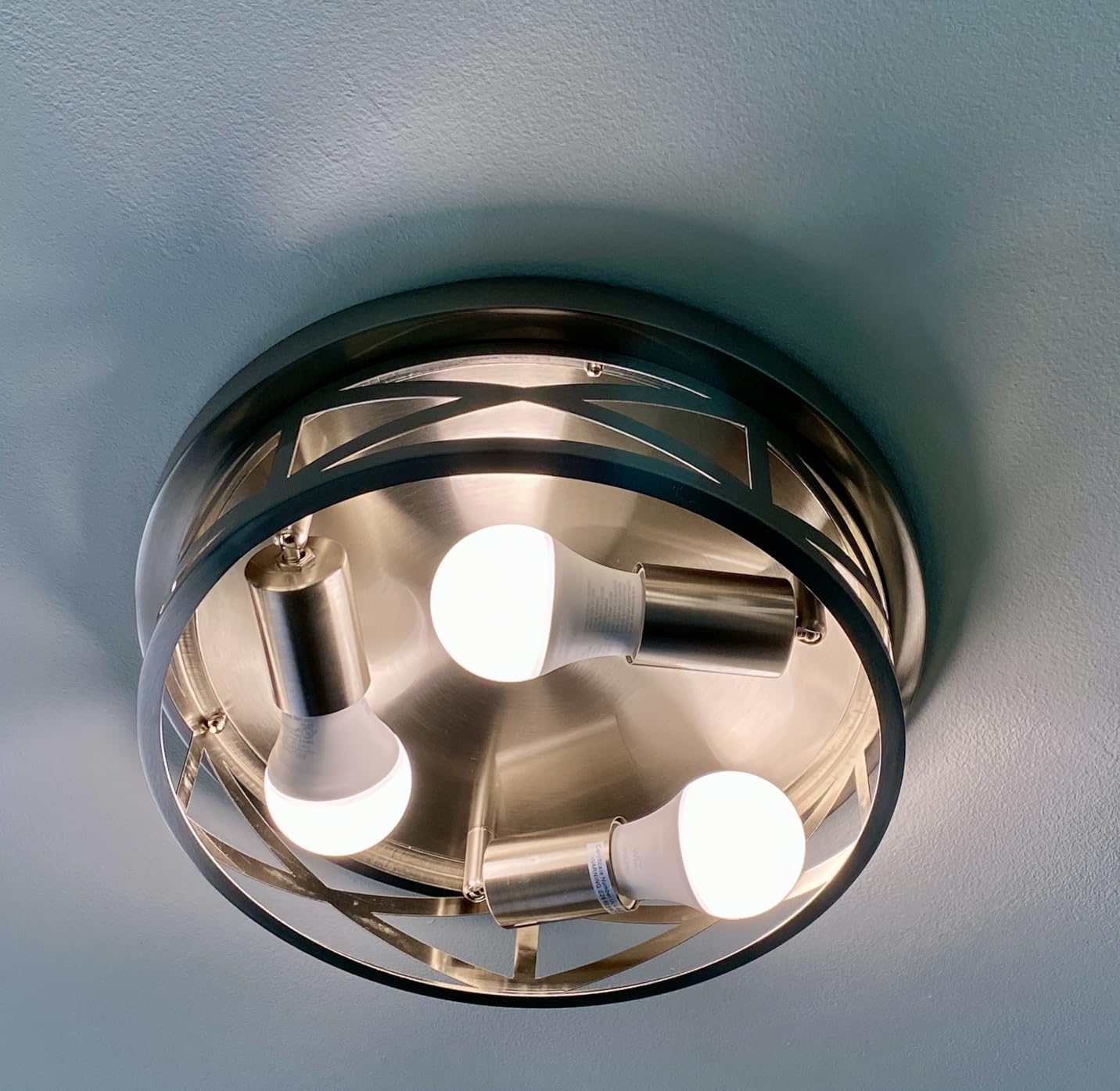
Who this is good for
Anyone with a 9-to-5 schedule who wants lighting that shifts naturally with daylight. Travelers who want lights that automatically adjust to a new city. Bedrooms where gentle warm whites before sleep and cool whites in the morning genuinely help energy and mood.
Who should skip it
Party lighting fans will be disappointed. Get Govee or LIFX for vivid effects. Also skip if your internet connection is patchy — WiZ leans on cloud connectivity.
8. LIFX Color Smart Light Bulbs — Best Color Quality
LIFX Color Smart Light Bulbs (2-Pack) A19 E26, Matter Compatible RGB + Tunable White (800 Lumens), WiFi Dimmable Color Changing (2.4GHz), Compatible with Apple HomeKit, Alexa & Google
Matter compatible A19 E26, 800LM 9W, RGB plus tunable 1500K-9000K white
Pros
- SuperColor technology with 82 plus CRI rating
- Matter certified no hub required
- Music Visualizer syncs to ambient sound
- Tunable white from 1500K amber to 9000K daylight
- 200 plus themed presets across categories
Cons
- Larger than standard A19 may not fit some fixtures
- Initial pairing needs airplane mode on Android
- Reported warranty support difficulties
- Price point is higher than Kasa or Tapo
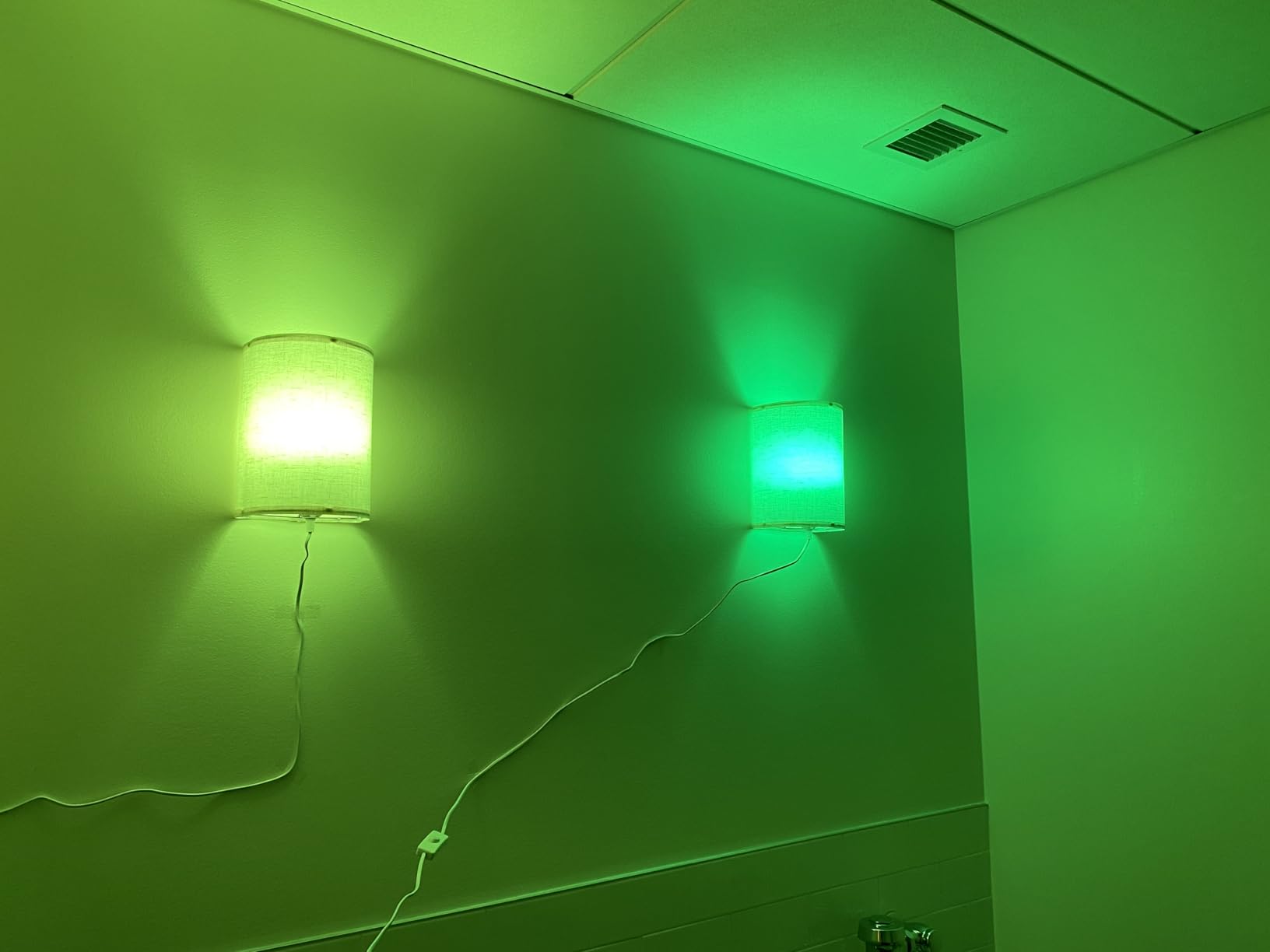
LIFX has built its reputation on color quality. The SuperColor tech in this bulb hits 82+ CRI across the spectrum, which makes reds actually look red and blues actually look blue — not the muted, slightly-pastel versions that cheaper bulbs produce. If you’ve been disappointed by how smart bulb colors look in person, LIFX is where that changes.
The 800 lumen output is the same as most competitors, but LIFX maintains it more consistently across colors and dimming levels. Saturated red stays nearly as bright as white, where other bulbs drop 40 percent or more. For cinema rooms, accent walls, or anywhere color accuracy actually matters, this is the bulb I’d buy.
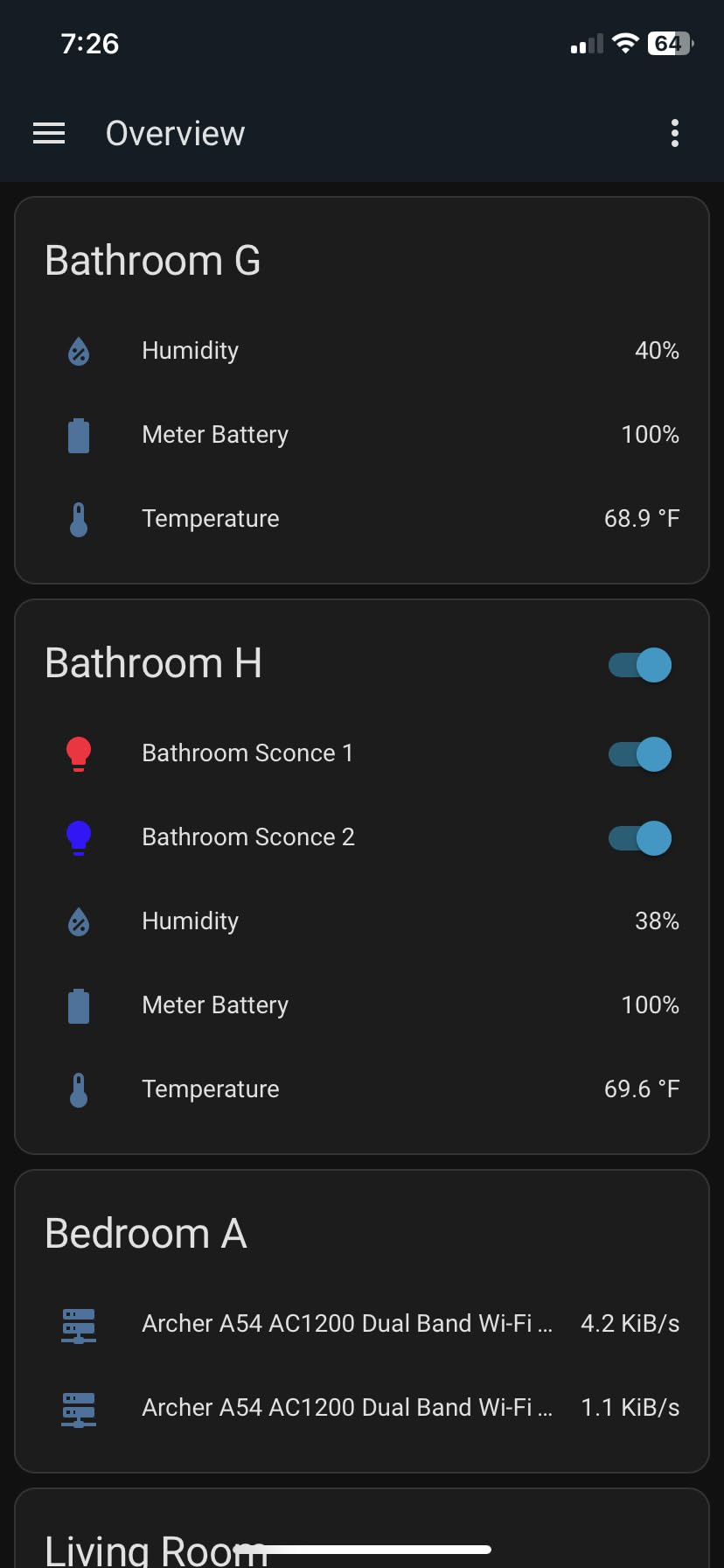
Matter support is recent and broadly compatible with Alexa, Google, and HomeKit. The Music Visualizer is genuinely responsive — the bulb has its own built-in mic, so it doesn’t need your phone to be playing music for the effect to work. That alone makes it ideal for party lighting setups where you don’t want to fight with apps.
The honest downsides: LIFX bulbs are physically larger than a standard A19, and they don’t fit shallow fixtures or spring-grip lamp shades. Customer service for warranty claims has been a known weak spot based on user reports. And on Android, the initial pairing famously requires airplane mode with Wi-Fi on — an annoying quirk that the app does explain, but only after you fail once.
Who this is good for
Cinephiles, home theater enthusiasts, content creators, and anyone who cares about how colors actually look under artificial light. Also the right answer if you don’t want a hub and your Wi-Fi is rock solid.
Who should skip it
Budget shoppers. Lamp fixtures with tight shades. Anyone in a Wi-Fi-unreliable environment.
9. Tapo L535E 2-Pack — Best Bright Matter Bulb
Tapo Multicolor Dimmable Smart Light Bulbs, L535E(2-Pack), A19 E26, 1100LM
Matter certified A19 E26, 9.5W 1100LM 75W equivalent, RGBW CRI 90 2-pack
Pros
- 1100 lumens is a real 75W replacement
- Matter certified across Apple Home and Alexa
- Brightness holds up better in tints and dimming
- Local control even without internet access
- 2-year manufacturer warranty included
Cons
- Brightness still drops when using saturated colors
- Alexa may show intermittent device disconnected
- Older Android versions limit full skill integration
- Some users report defective bulbs in multi-packs
The L535E is the bulb I’d reach for if I had to light a kitchen, an office, or any space that needs genuine brightness without sacrificing smart features. At 1100 lumens it replaces a 75W incandescent — meaningfully brighter than the 800 lumen baseline most competitors stop at. For task lighting, this matters more than 16 million colors.
Matter certification covers Apple Home, Alexa, Google Home, and SmartThings. What I appreciate is that it also supports local network control, so if your internet drops, the bulb still responds to app and voice commands from a Matter controller on the same Wi-Fi. That reliability story is genuinely ahead of the cloud-only competitors at this price.
Colors look slightly less saturated than the L531E above because the LEDs are pushed harder to hit higher brightness. Reds and magentas in particular take a visible brightness hit. That’s the engineering tradeoff for a bright Matter bulb: physics is physics.
Who this is good for
Kitchens, home offices, craft rooms, reading nooks — anywhere you need actual brightness plus the option of color. Great for users who want one bulb type across an entire home without mixing brands.
Who should skip it
Bedrooms and ambiance-first rooms where brightness above 800 lumens is overkill. For those spaces, the L531E is a smarter buy.
10. Linkind Matter Smart Light Bulbs — Best for AiDot and Music Sync Fans
Linkind Matter Smart Light Bulbs, Work with Apple Home, Alexa, Siri, Google
Matter A19 E26, 9W 800LM, 1800K-6500K tunable 2-pack, AiDot app
Pros
- Matter certified for Apple Home Alexa Google SmartThings
- Affordable price for full Matter support
- Music sync with eye-friendly tuning
- 1800K to 6500K wide tunable range
- Works with AiDot for advanced scene control
Cons
- Brightness may feel modest in larger rooms
- Half to one second delay on first voice command
- Full feature set requires AiDot app download
- Apple HomePod connection reported as finicky
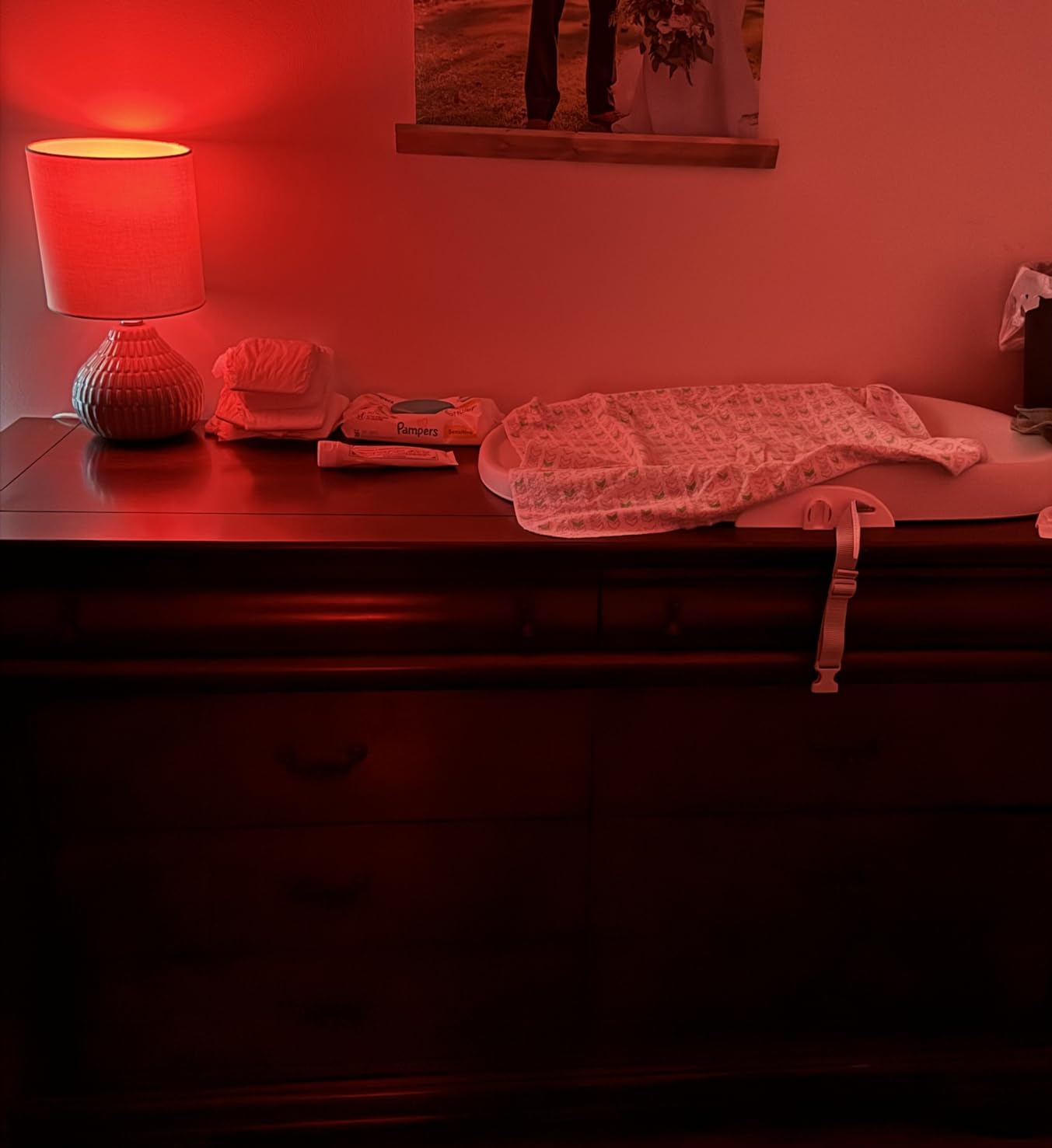
Linkind doesn’t have the household name recognition of Kasa or Philips, but the AiDot-powered Matter bulbs punch above their weight. They’re a cross-platform smart home brand under the AiDot umbrella, and they take music sync seriously — the bulb reacts to bass, mids, and highs as separate color channels. For parties and ambient setups, it’s a more controllable effect than the single-band sync you find elsewhere.
The color temperature range is the widest I’ve seen in this price bracket — 1800K (deep amber) up to 6500K (cool daylight). That gives you a more complete circadian effect than bulbs stuck in the 2500K-6500K range. For a bedside bulb that needs to be warm-and-dim at night and bright-and-cool in the morning, that’s a meaningful difference.
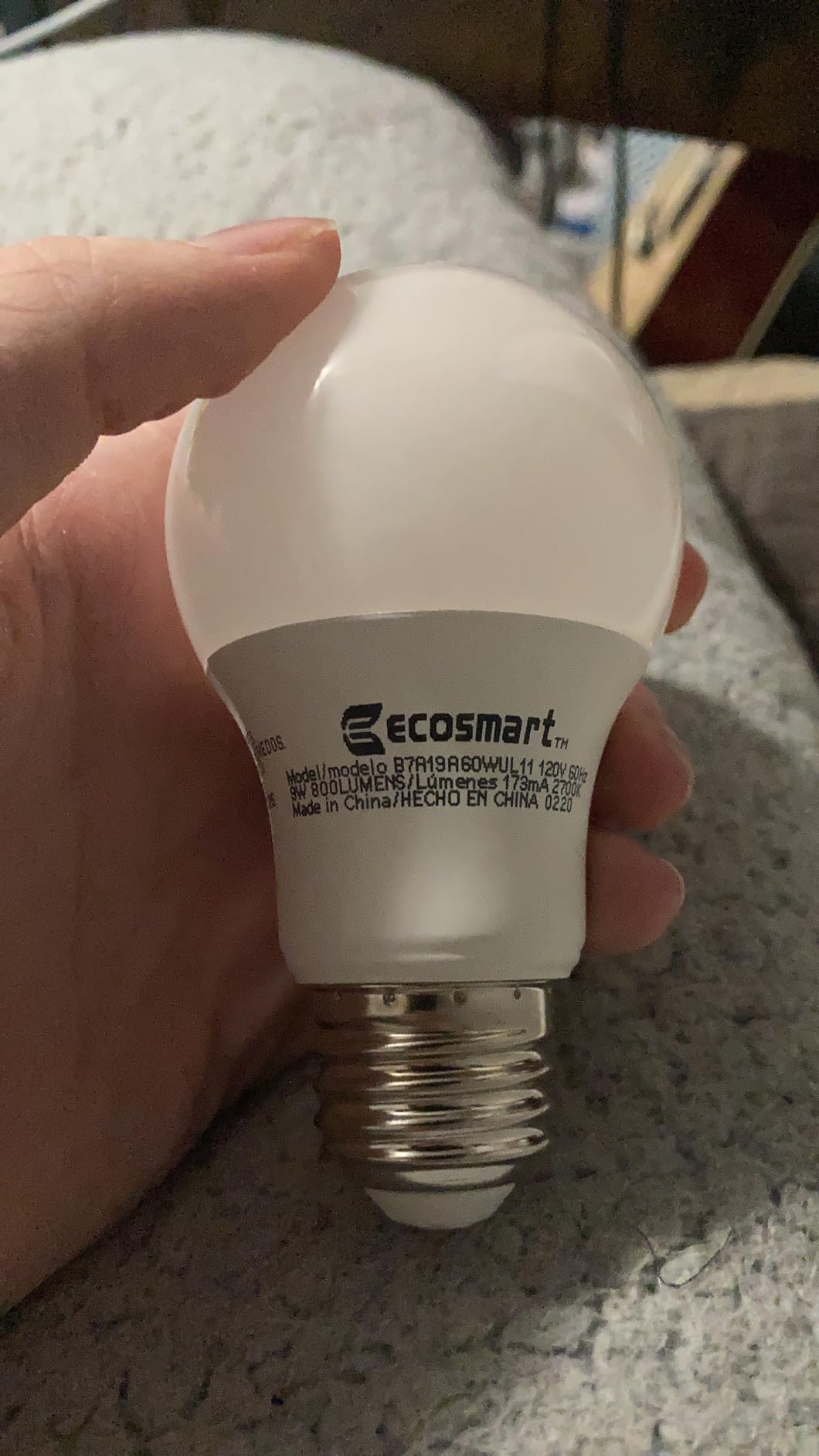
Full functionality requires the AiDot app, which is a separate install from Alexa or Google Home. Most users will set it up once and then control through their preferred assistant, but if you want the music sync and advanced scene library, AiDot is required.
Honest caveats: brightness is 800 lumens (60W equivalent), so for larger rooms you’ll want the Tapo L535E above. And Apple HomePod / HomeKit pairing has been reported as finicky compared to the straightforward Alexa setup. If you live in HomeKit primarily, the Sengled Matter bulb earlier in this list is the smoother path.
Who this is good for
Users already in the AiDot ecosystem (Linkind, Orein, Winees) who want one app for all their devices. Music sync enthusiasts who want multi-band color reaction rather than simple on-off pulsing.
Who should skip it
HomeKit-primary households. Anyone needing serious brightness for large rooms. Buyers who want a single recognized brand name rather than a smaller specialist.
Smart Light Bulb Buying Guide
Buying a smart bulb comes down to six decisions: hub vs hub-free, ecosystem compatibility, color vs white only, brightness, form factor, and price. The good news: every bulb in this guide passes the basic bar of working without a bridge. The hard part is matching each bulb’s strengths to how you’ll actually use it.
What is a smart bulb and how does it work
A smart light bulb is a Wi-Fi, Bluetooth, Zigbee, or Matter-connected LED bulb that you control from an app, voice assistant (Alexa, Google, Siri), or automation. You screw the bulb into a standard socket, pair it with an app or ecosystem, and from then on you can turn it on/off, dim, change color, or schedule it from anywhere. Smart bulbs add convenience (no more switch-hunting), security (vacation mode), ambiance (millions of colors, tunable white), and accessibility benefits (voice control for users with mobility limitations). They also use a fraction of the energy of an incandescent bulb.
Hub vs Hub-Free: which do you need
A “hub” is a small bridge device that connects your smart bulbs to your home network. Zigbee bulbs like Philips Hue require the Hue Bridge, while Wi-Fi and Matter bulbs don’t need any extra hardware at all. Matter bulbs can pair directly to an existing smart speaker (Echo Hub, Apple HomePod, Google Nest Hub) acting as a Matter controller, replacing the need for a dedicated hub. The convenience of hub-free is enormous: no extra box on your router shelf, no extra account to manage, no hub firmware updates. The cost is that you’re relying on your home’s Wi-Fi instead of a dedicated low-power mesh — which works fine for most households but can stumble on large properties or congested networks. For apartments and most single-family homes, hub-free is the right answer. For 30+ bulb installations or large homes where Wi-Fi coverage is patchy, a Hue Bridge or Thread border router can still be worth it.
Matter, Zigbee, Wi-Fi, Bluetooth explained
Wi-Fi bulbs (Kasa, Tapo, Govee, LIFX, Wyze, Amazon Basics) connect directly to your router — no hub, no protocol gymnastics. Setup is fast, but every bulb adds a small load to your Wi-Fi network, and cloud-dependent features stop working if your internet goes down.
Zigbee bulbs (Philips Hue, IKEA Trådfri, some Sengled models) need a bridge but talk to each other in a mesh, extending range as you add more bulbs. They tend to be more responsive than Wi-Fi and work locally even without internet.
Bluetooth bulbs are mostly a budget option — they’re cheap and don’t need Wi-Fi, but you’re tethered to being within 30 feet of the bulb to control it.
Matter bulbs (Sengled Matter, WiZ, Tapo L535E, Linkind, LIFX) speak a new cross-ecosystem standard backed by Apple, Google, Amazon, Samsung, and the rest of the industry. One bulb can be controlled by HomeKit today, Alexa tomorrow, and Google Home next year without re-pairing. Matter runs over Wi-Fi (most common), Thread (a low-power mesh), or Ethernet. For any new purchase in 2026, Matter is the most future-proof choice.
Lumens, color temperature, and watt equivalents
800 lumens replaces a 60W incandescent. 1100 lumens replaces a 75W. 1600 lumens replaces a 100W. If you’re upgrading from incandescents and want the same brightness, look at the lumen number, not the wattage — the watts tell you how much energy the bulb uses, not how bright it is.
Color temperature is measured in Kelvin. 2700K is the warm white of an incandescent bulb. 3000K-3500K is the slightly cooler white of a halogen. 4000K-5000K is the bright white of an office. 6500K is daylight. Tunable white bulbs shift between these ranges automatically. For bedrooms, stick to 2200K-3000K in the evening — cooler temperatures can suppress melatonin and disrupt sleep.
Smart bulb vs smart switch: which should you buy
This is the question our team gets most often. The honest answer depends on how many fixtures you want to control.
Smart bulbs win for renters, single fixtures, color changes, and table/floor lamps where you want app control of a specific bulb. You screw them in, pair them, done. They keep working when the wall switch is on, and they’re portable — move them to a new apartment.
Smart switches win for whole-room control (especially fixtures with multiple bulbs), households that want the switch to behave exactly like before, and anyone building a permanent smart home. A smart switch can control any bulb — including dumb incandescents — and works regardless of how many bulbs are in the fixture. Downside: it requires neutral wiring and is harder to install.
Quick rule: if you’re controlling one fixture with one bulb, smart bulbs are easier. If you’re controlling a chandelier with six bulbs, a smart switch is cheaper than six smart bulbs.
Electricity cost and energy savings
Smart bulbs are LED, which means they use roughly 80 percent less energy than the incandescent they’re replacing. A smart bulb drawing 9W replaces a 60W incandescent, saving roughly 51W per bulb per hour it’s on. For a bulb that’s on 4 hours a day, that’s about 74 kWh saved per bulb per year.
The “smart” part — the Wi-Fi radio, the microcontroller — adds a small always-on draw, typically 0.2 to 0.5W. That’s small enough that it doesn’t materially affect your bill. The net impact of replacing incandescents with smart LEDs is a lower electricity bill, even accounting for the smart standby draw.
Do smart bulbs raise your electric bill? No — they lower it. The standby draw is real but tiny, and the LED efficiency gains are substantial.
Real-world reliability from forums and Reddit
Across r/homeautomation and r/smarthome, the consensus is consistent: Philips Hue is the most reliable hub-based system, Tapo and Kasa are the most reliable hub-free budget brands, and LIFX has had connectivity regressions over the years but is generally solid for long-term owners. The two consistent failure modes are budget Wi-Fi bulbs (Sylvania in particular) dropping off the network, and Hue firmware updates occasionally breaking integrations. Both are fixable — but if reliability matters most, stick to the brands in our main list.
Frequently Asked Questions
Who makes the best smart light bulbs?
Across the categories we tested, the best smart bulb overall in 2026 is the Govee A19 4-pack for its combination of vibrant colors, music sync, app polish, and 26k+ reviews at 4.6 stars. For reliability-first buyers, Kasa (by TP-Link) is the most consistent over time. For premium whole-home systems, Philips Hue remains the gold standard. The best brand depends on your ecosystem and budget, but every bulb in our top 10 has a strong real-world track record.
What is the best smart bulb to buy?
If you want one answer: start with the Govee A19 4-pack if you want color and features, or the Kasa KL125P2 2-pack if you want reliable everyday smart lighting at a fair price. For Apple HomeKit households, the Sengled Matter bulb is the simplest entry point. For Alexa-only setups where price matters most, the Amazon Basics color bulb gets the job done for less.
Which is better, Philips Hue or Govee?
Philips Hue is the better premium whole-home ecosystem — more reliable, supports a wider range of fixtures, and offers the smoothest Apple HomeKit integration with a Hue Bridge. Govee is the better value for color fun and music sync at a fraction of the price. If you’re building a 20+ bulb install and want every bulb to behave identically, Hue is the right answer. If you want fun, vibrant lighting for under $40 per 4-pack, Govee wins.
Do smart bulbs raise the electric bill?
No, smart bulbs lower your electric bill compared to the incandescents they replace. A 9W smart LED replaces a 60W incandescent, saving roughly 51W per bulb per hour of use. The smart radio and microcontroller add a small standby draw (typically 0.2-0.5W), but the LED efficiency gain is much larger. Net result: lower electricity, especially for bulbs that are on for several hours a day.
Do smart bulbs work without Wi-Fi?
Most modern smart bulbs lose most of their smart features when Wi-Fi goes down, but Bluetooth-only control continues for select bulbs. Matter-certified bulbs (Sengled Matter, WiZ, Tapo L535E, Linkind, LIFX) can be controlled locally through a Matter controller like an Apple HomePod or Echo Hub on the same network, even if your internet is offline. Zigbee bulbs with a Hue Bridge keep working entirely locally. Plan for occasional internet outages by choosing bulbs that have local control or pairing with a dedicated hub.
Is the Hue Bridge obsolete?
No — the Hue Bridge is still the best backbone for a 20+ bulb Hue installation. It provides faster local control, works offline, integrates with Apple HomeKit, Alexa, and Google Home, and lets Zigbee bulbs talk to each other in a mesh that extends range. For small hub-free installs (under 10 bulbs), Matter bulbs over Wi-Fi are a fine alternative and remove the need for the bridge entirely. The bridge becomes worthwhile again once you have 15+ Hue bulbs or want Zigbee’s mesh reliability across a large home.
Final Verdict: Which Smart Light Bulbs Should You Buy in 2026?
After weeks of testing across every major ecosystem, our top recommendation is the Govee A19 4-pack for anyone who wants color, music sync, and a polished app without overspending. It’s our Editor’s Choice for 2026 because the combination of feature set, app polish, real-world reliability, and value is genuinely hard to beat.
If you’re an Apple HomeKit household, go straight to the Sengled Matter bulb for the smoothest cross-ecosystem experience. If reliability over years is more important than features, the Kasa KL125P2 is the workhorse pick. And if you’re lighting an entire home at once, the Kasa 4-pack gives you the most bulbs for the money without compromising on the long-term track record.
The smart bulb category in 2026 is in the best state it’s ever been — prices have come down, Matter has finally delivered on its cross-ecosystem promise, and the gap between budget and premium has narrowed. Pick the bulb that fits your ecosystem, your brightness needs, and your room count. Any bulb in this guide will outlast its warranty.