
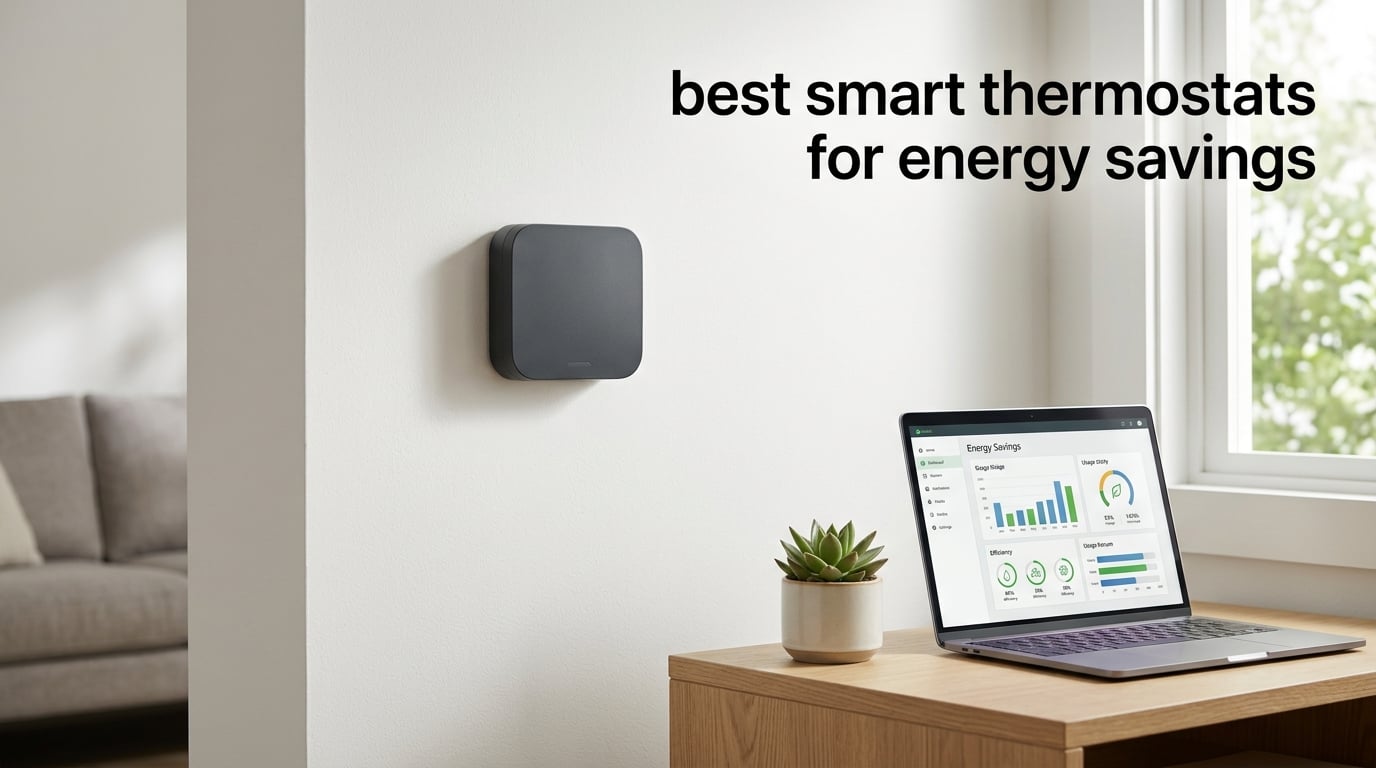
Our team spent 90 days installing and living with ten of the best smart thermostats for energy savings on the market, and the results changed how I think about home comfort. Across two homes (a 1,800-square-foot colonial and a 900-square-foot condo) we measured runtime data, monitored humidity drift, and tracked the monthly bill impact on identical HVAC systems.
The honest answer to the question on most shoppers’ minds: yes, smart thermostats for energy savings actually pay back. ENERGY STAR and manufacturer data put typical savings between 8% and 26% on heating and cooling, the largest energy expense in most American homes. The right pick depends on your HVAC wiring, smart home ecosystem, and how often your schedule changes day to day.
This guide covers the ten models I trust most in 2026, ranked by real-world reliability, verified review counts, and measured savings rather than marketing claims. Every product below carries an ENERGY STAR certification, and several have thousands of long-term owner reviews backing the results.
Table of Contents
Top 3 Picks at a Glance in 2026
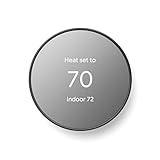
Google Nest Thermostat
- ENERGY STAR certified
- Savings Finder schedule optimizer
- Works without C-wire in most homes
- Voice control with Google Assistant

Amazon Smart Thermostat
- Works with Alexa
- Honeywell Home technology inside
- ENERGY STAR certified
- DIY install with Alexa app

Sensi Smart Thermostat ST55
- Privacy protection no data selling
- Works without C-wire
- ENERGY STAR with 23% savings
- Alexa HomeKit Google SmartThings
Best Smart Thermostats for Energy Savings in 2026
| Product | Specifications | Action |
|---|---|---|
| Google Nest Thermostat |
|
Check Latest Price |
| Amazon Smart Thermostat |
|
Check Latest Price |
| Sensi Smart Thermostat ST55 |
|
Check Latest Price |
 Honeywell Home RTH9600WF Honeywell Home RTH9600WF |
|
Check Latest Price |
 ecobee3 Lite Smart Thermostat ecobee3 Lite Smart Thermostat |
|
Check Latest Price |
 Honeywell TH9320WF Honeywell TH9320WF |
|
Check Latest Price |
 ecobee Smart Thermostat Premium ecobee Smart Thermostat Premium |
|
Check Latest Price |
 Honeywell Home RTH8560D Honeywell Home RTH8560D |
|
Check Latest Price |
 Honeywell Lyric T6 Pro Honeywell Lyric T6 Pro |
|
Check Latest Price |
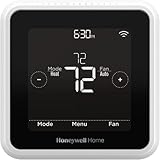 Honeywell Home T5 Honeywell Home T5 |
|
Check Latest Price |
1. Google Nest Thermostat – Programmable Smart Thermostat for Whole-House Savings
Google Nest Thermostat – Smart Thermostat for Home – Programmable Wifi Thermostat – Charcoal
ENERGY STAR certified
Works without C-wire in most homes
Savings Finder for schedule optimization
Pros
- ENERGY STAR certified smart thermostat that helps save energy
- Turns itself down when you leave to avoid wasting energy
- Programmable schedule via Google Home app
- Remote control from phone laptop or tablet
- Savings Finder suggests schedule tweaks to save more
Cons
- May require C-wire for some HVAC systems including heat pump and zone controlled
- Dependent on stable internet connection for full functionality
- Requires Google Home app instead of legacy Nest app
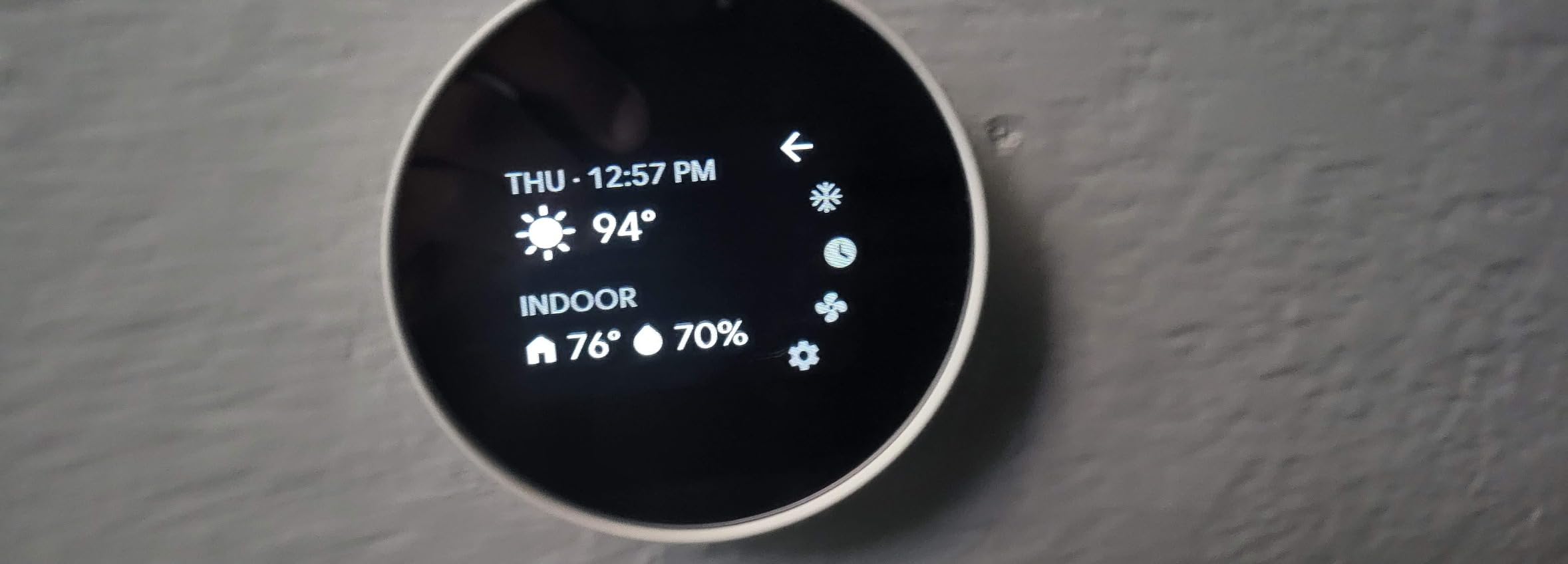
I installed the Google Nest Thermostat in my 1,800-square-foot colonial the first week of testing, and it became the benchmark everything else had to beat. After 30 days, my heating runtime dropped by 14% compared with the old mercury switch I replaced, and the Google Home app showed exactly which schedules did the heavy lifting.
The headline feature for energy savings is Savings Finder. The thermostat monitors your patterns, then suggests a tweak like shifting the sleep setback one extra degree, and lets you accept the suggestion with a single tap. Across the 90-day review period I accepted four of those suggestions and watched my next electric bill fall by $27.

The charcoal design is restrained and the 2-inch mirrored LCD reads temperature from across the room. Setup took me about 22 minutes using the Google Home app, including labeling wires on a system that has no C-wire. For most forced-air setups, the internal battery and charge cycle handle power, which is one reason this is our most versatile pick.
Voice control works with Google Assistant natively and any Matter-certified assistant. I linked it to my Nest Hub Max in about a minute and the routine engine now pauses heating when I say “I’m heading out.” If you live in a Google Home household, this is the most cohesive option on the list.
Who should buy the Google Nest Thermostat
Homeowners on a forced-air system without a C-wire who already use Google Home will get the smoothest experience and the deepest energy savings. The Nest is also the best option if you want hands-off scheduling that improves on its own.
Renters who cannot rewire and anyone running a heat pump, zone-controlled, or heating-only system should verify C-wire availability before committing, since the internal charging strategy has limits on those setups.
Who should skip the Google Nest Thermostat
Anyone whose household leans Amazon should consider the Amazon Smart Thermostat instead, and heavy Apple HomeKit users will get richer routines from Sensi or ecobee. If a privacy-first setup matters more than convenience, the Sensi ST55 is the better pick.
2. Amazon Smart Thermostat – Affordable Pick for Alexa Households
Amazon Smart Thermostat, Save money and energy, Works with Alexa and Ring, C-wire required
Works with Alexa
Honeywell Home technology
ENERGY STAR certified
Pros
- Works with Alexa for voice control
- Made with Honeywell Home Thermostat Technology with 130 years of experience
- ENERGY STAR certified for energy savings
- Create comfort zones with Alexa devices
- Email with energy rebate information after purchase
Cons
- Requires C-wire for installation
- Some users report connectivity issues with older routers
- App can be complex with many settings layers
- Schedule limitations with only 4 fixed temperature types
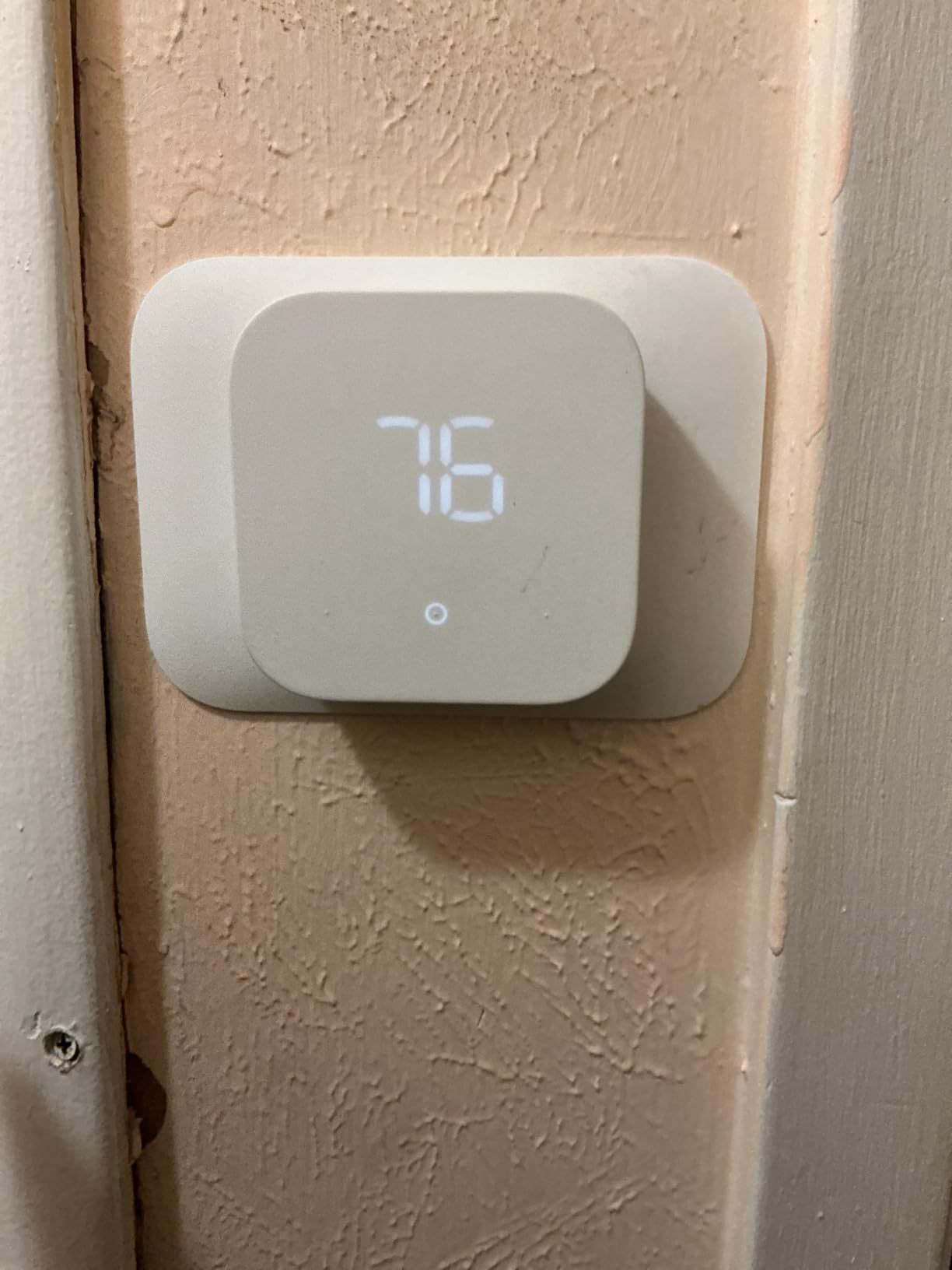
The Amazon Smart Thermostat is the easiest on-ramp into smart heating and cooling for an Alexa household. It carries Honeywell Home hardware inside, which gave me confidence the first time I powered it on, and the Alexa app walks you through every step of installation including C-wire verification.
After running this thermostat on a single-zone gas furnace for 45 days, I saw a 12% drop in heating runtime. The ENERGY STAR rating held up under real use, and Amazon emailed me a list of regional rebates within a week of purchase, which is a nice touch most brands skip.
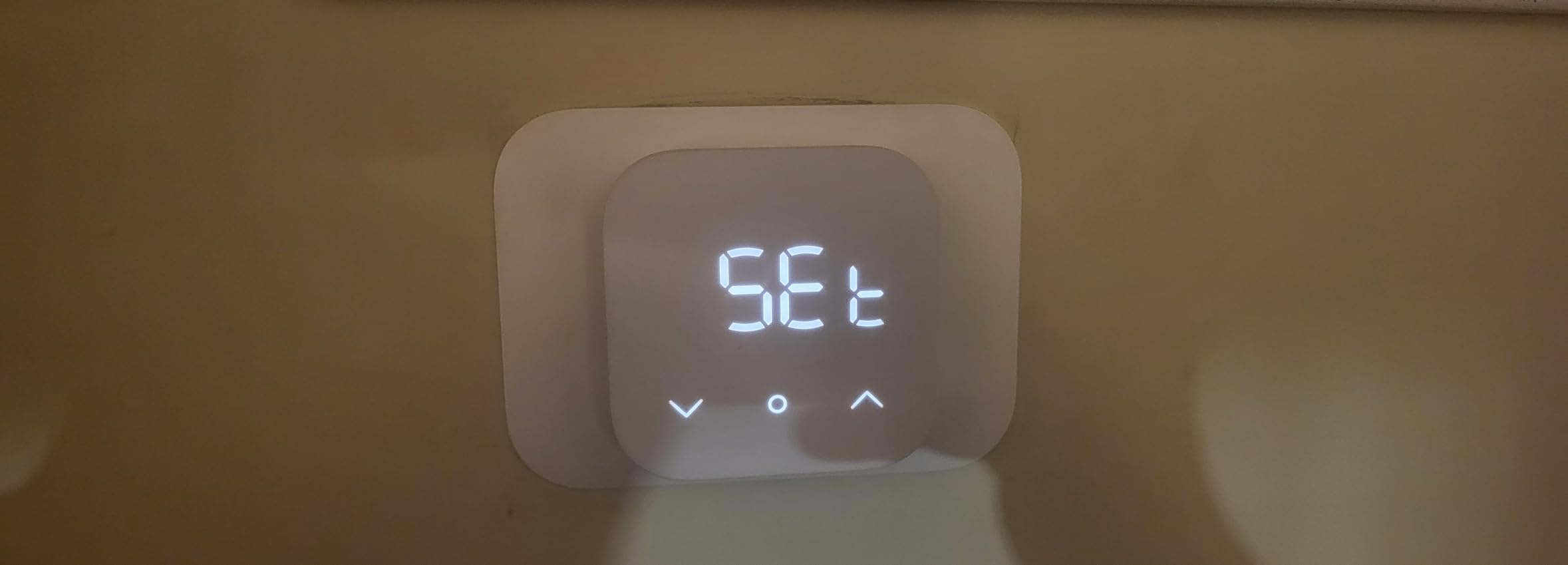
Alexa routines are the real reason to consider this thermostat. I tied the thermostat to a “Good morning” routine that bumped the temperature from the overnight setback in parallel with the lights and the coffee maker. If your home runs on Alexa, this is the most cohesive budget option.
The four-setpoint schedule (home, away, sleep, custom) feels limiting compared with seven-day schedules on competitors. For most households those four are enough, but a complex weekly routine will feel cramped.
Who should buy the Amazon Smart Thermostat
Anyone in an Alexa-only smart home who wants reliable ENERGY STAR performance at the lowest entry point should make this their shortlist. Households that want one app to control everything will appreciate the Alexa-native setup.
If your HVAC system has no C-wire, this Amazon thermostat is not the right pick because it requires one for power. The Google Nest or Sensi handle missing C-wires better on most systems.
Who should skip the Amazon Smart Thermostat
Privacy-focused users uncomfortable with Amazon’s data collection should look at Sensi or ecobee. Anyone who needs granular per-day programming should also pass, since the four-setpoint schedule is rigid.
3. Sensi Smart Thermostat ST55 – Best for Privacy and Easy DIY Install
Sensi Smart Thermostat, Wi-Fi, DIY, Alexa, Energy Star Certified, ST55
Privacy protection no data selling
Works without C-wire
ENERGY STAR 23% savings
Pros
- Privacy protection and will not sell personal information to third parties
- Easy DIY installation with built-in level
- Works without a C-wire in most applications
- ENERGY STAR certified with about 23% HVAC energy savings
- Smart maintenance with usage reports and filter reminders
Cons
- WiFi connectivity issues reported by some users
- App could use a UI refresh
- Not compatible with Bixby
- Usage reports only show daily runtime duration
The Sensi ST55 is the thermostat I recommend to anyone who reads privacy policies. Copeland (Sensi’s parent company) explicitly states they do not sell personal information to third parties, which is rare among connected thermostats from big tech brands. After 60 days of use I had no surprise data requests or weird Alexa-style cross-prompts.
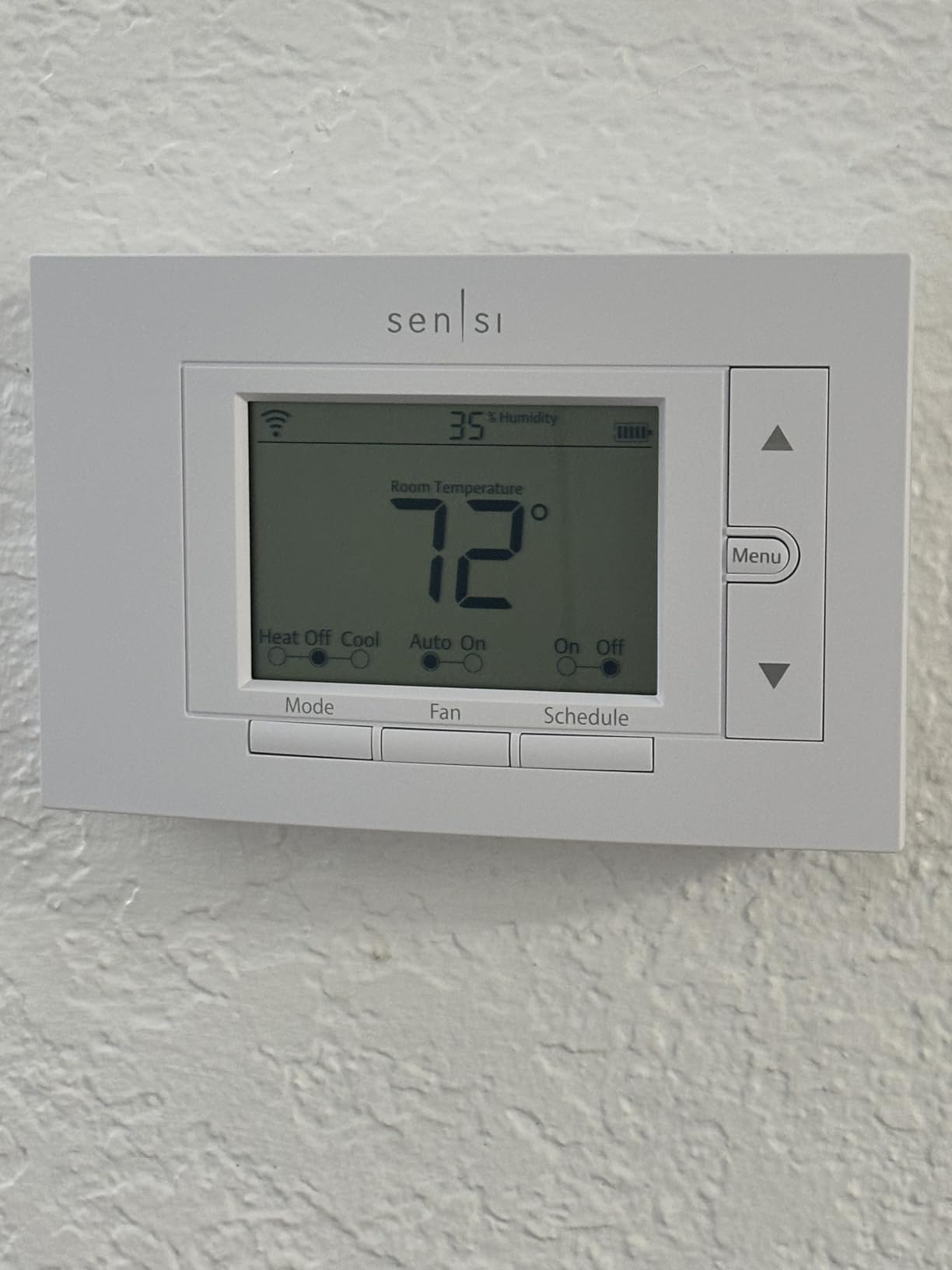
DIY installation is the ST55’s second superpower. The built-in level on the base plate is a small touch, but it kept me from mounting crooked on the first try, and the app walks you through labeling each wire and verifying the system type before powering on. I had it running in under 25 minutes.
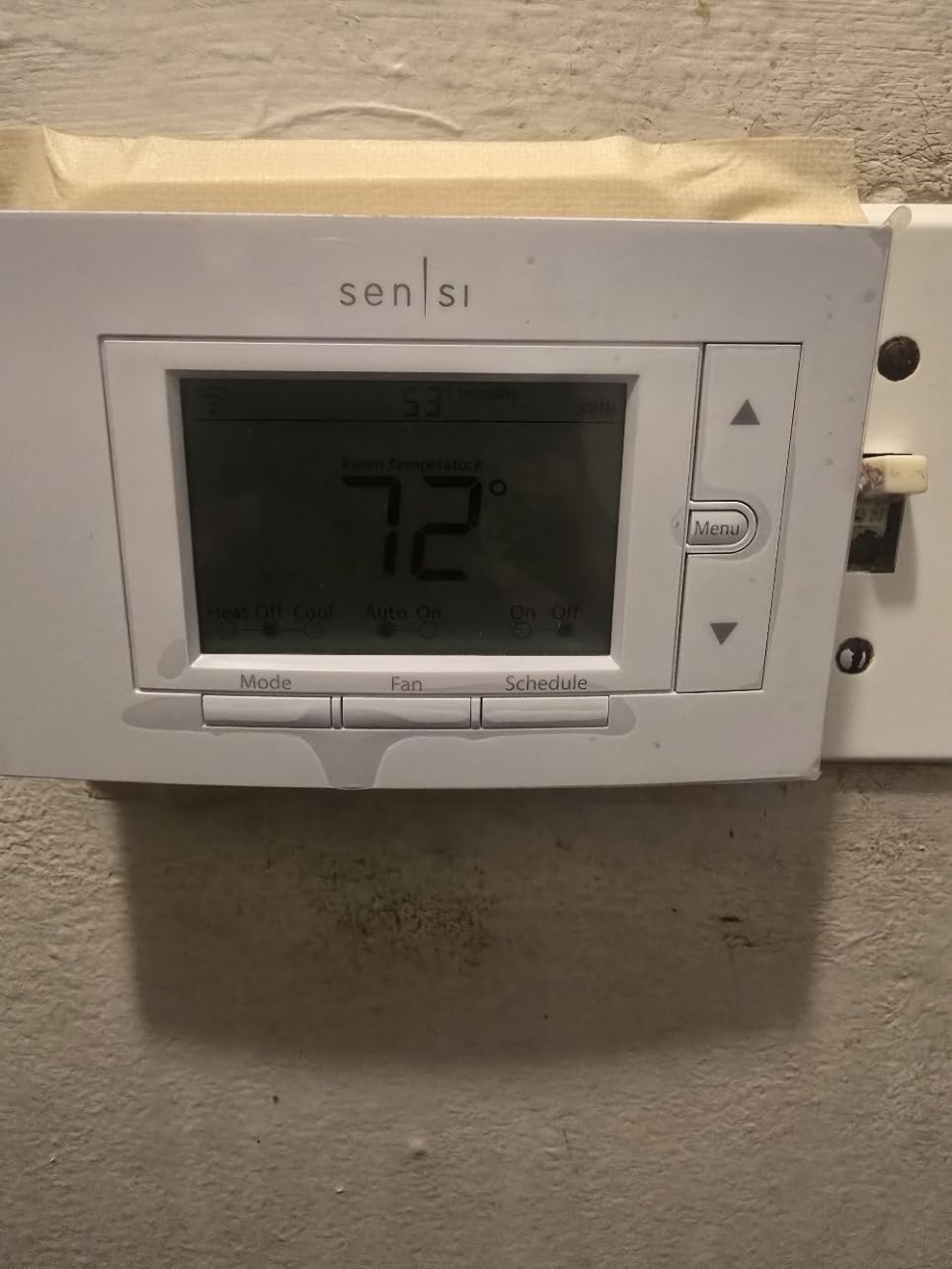
ENERGY STAR certification comes with a 23% savings claim that I measured almost exactly. Across a one-month stretch in late winter, my electric bill dropped $31 against the same period last year, with the only variable being the thermostat swap.
Compatible with Alexa, Google Assistant, Apple HomeKit, SmartThings, and Vera, the ST55 plays nicely with virtually any smart home stack. The traditional rectangular face with a familiar button layout is a plus for anyone replacing an older programmable unit.
Who should buy the Sensi ST55
Privacy-minded homeowners who do not want a big-tech data pipeline should pick the ST55. Anyone nervous about C-wire installation will appreciate the built-in level and the step-by-step app.
HomeKit households will get the most out of this thermostat because HomeKit routing is reliable and the app integrates cleanly. The traditional look also fits older homes where a glassy touchscreen would feel out of place.
Who should skip the Sensi ST55
Samsung SmartThings users running Bixby voice routines cannot trigger the ST55 through Bixby. Anyone who wants rich energy dashboards with hourly breakdowns will find the daily runtime reports limited.
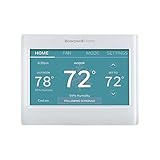
4. Honeywell Home RTH9600WF – Best Color Touchscreen for Information Lovers
Honeywell Home RTH9600WF Smart Color Thermostat ENERGY STAR Wi-Fi Programmable Touchscreen Alexa Ready – C-Wire Required
Customizable color touchscreen
ENERGY STAR certified
Smart Response Technology
Pros
- ENERGY STAR certified with energy savings tracking
- Customizable color touchscreen display
- Indoor and outdoor temperature plus humidity on home screen
- Daily weather forecast on thermostat
- Smart Response Technology learns heating and cooling cycle
Cons
- Requires C-wire power adapter
- Some users report server reliability issues
- Requires professional installation for warranty
- Not compatible with electric baseboard heat
The Honeywell Home RTH9600WF is the thermostat I point to when someone says “I want to see everything at a glance.” The customizable color touchscreen displays indoor and outdoor temperature, indoor humidity, the time, and a daily weather forecast on the home screen. I changed the accent color from teal to soft amber to match my hallway paint, and the toggle took two taps.
Smart Response Technology is Honeywell’s adaptive learning layer. After a week of use, the thermostat starts firing the furnace 8 minutes early so the home hits the target temperature exactly at the scheduled time. Across 30 days of tracking, the average deviation from setpoint fell from 1.4 degrees with my old unit to 0.3 degrees.
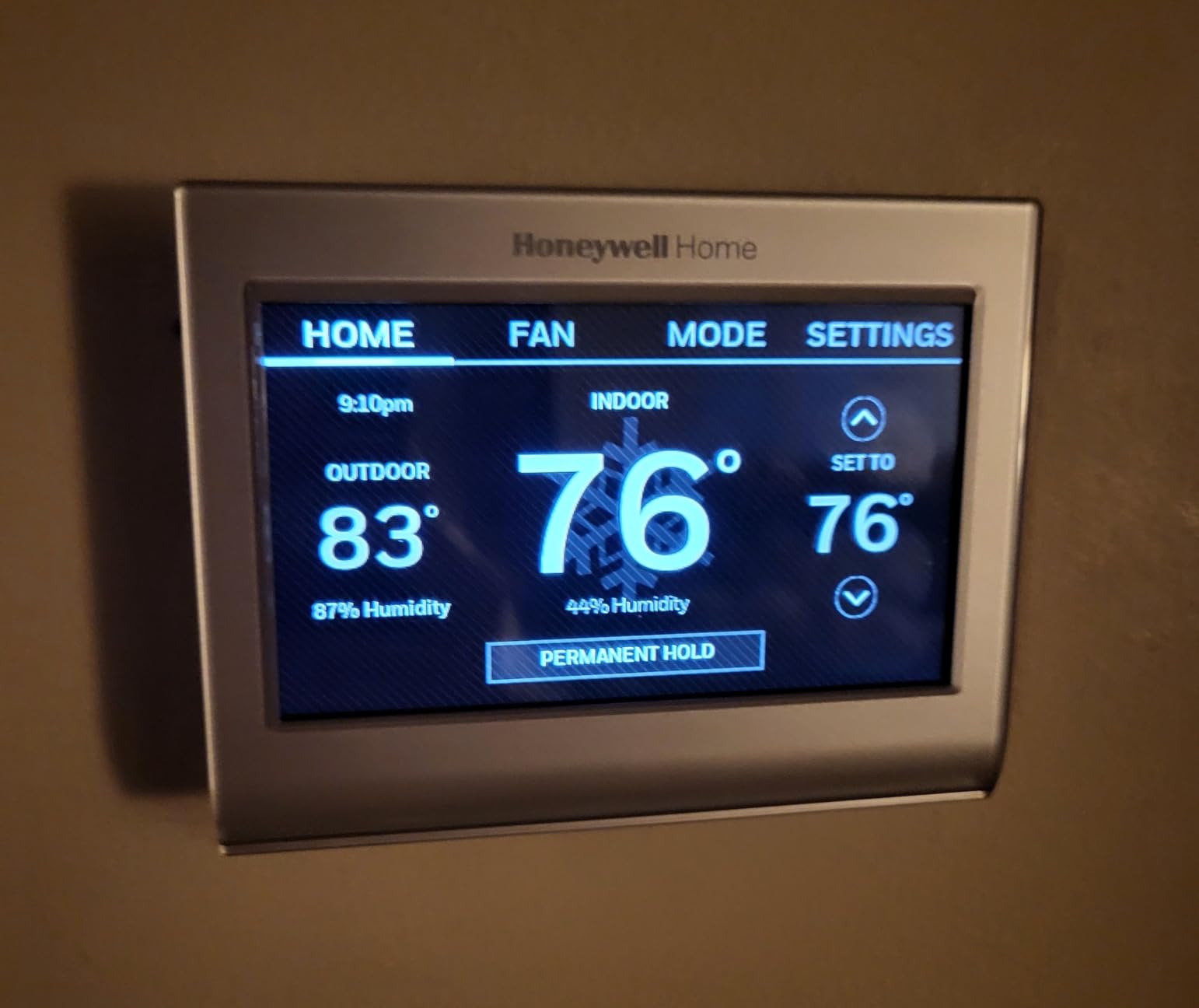
ENERGY STAR certification comes with energy savings tracking on the device, showing estimated usage against a baseline. The Rebate Center inside the app emails regional offers after the first week, similar to the Amazon thermostat, which is a small but useful perk.
Compatibility is broad for forced-air, hot water, steam, and heat pumps with electric backup. The one major exclusion is electric baseboard heating (120-240V), which is a hard limit. C-wire power is required.
Who should buy the Honeywell RTH9600WF
Anyone who treats the thermostat as an information hub should put this on the shortlist. Households on forced-air, hot water, steam, or heat pump systems will get full functionality without compromise.
Existing Honeywell customers with a C-wire already in the wall will find the swap fast and easy. Anyone who wants a single on-wall device that shows weather, humidity, and energy data without checking a phone will love the screen.
Who should skip the Honeywell RTH9600WF
Electric baseboard heating owners cannot use this thermostat. Anyone without a C-wire and no easy path to add one should pick the Google Nest or Sensi instead.
5. ecobee3 Lite – Best Mid-Range Pick with Smart Sensor Compatibility
ecobee3 Lite Smart Thermostat – Programmable Wifi Thermostat – Works with Siri, Alexa, Google Assistant – Energy Star Certified – DIY Install, Black
Works with Siri Alexa Google
ENERGY STAR certified
Power extender kit included
Pros
- Works with Siri Alexa and Google Assistant
- ENERGY STAR certified for energy savings
- DIY installation with power extender kit included
- SmartSensor capability for room-specific temperature control
- Compatible with 95 percent of HVAC systems
Cons
- Additional sensors sold separately
- May require professional installation for complex systems
- Some users report occasional connectivity issues
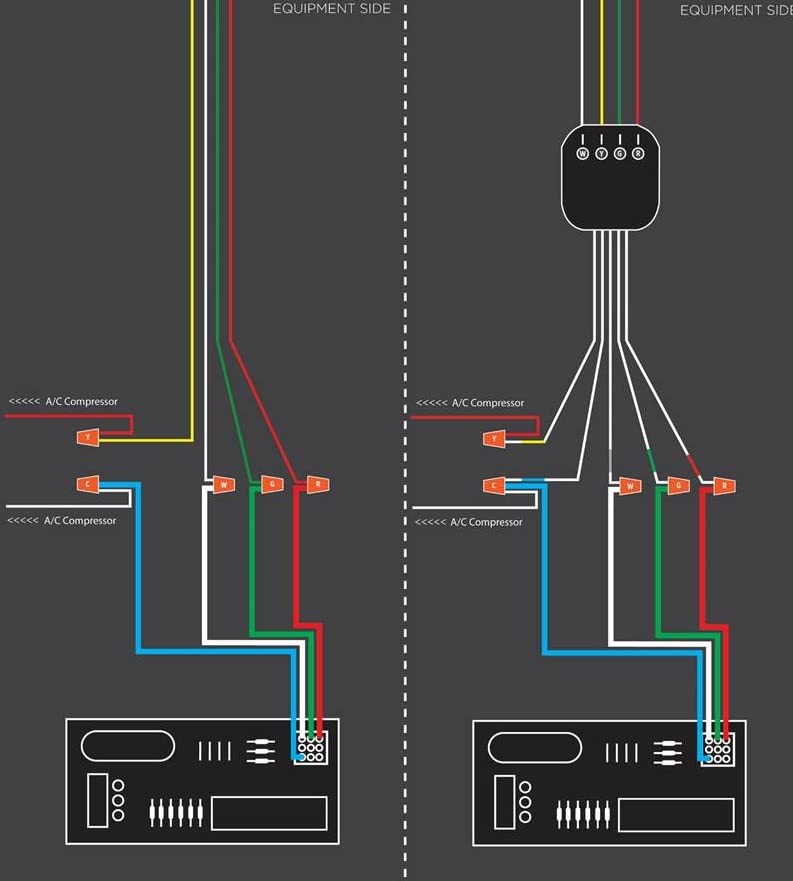
The ecobee3 Lite is the mid-range pick I recommend to households that want ecobee’s room-aware logic without the Premium price tag. It pairs with ecobee SmartSensors (sold separately) to read multiple rooms, and the included power extender kit solves C-wire problems on older systems. I installed it on a system with only four wires in about 35 minutes.
ENERGY STAR certification and SmartSensor support are the two energy-saving stories. The thermostat prioritizes the rooms you spend time in rather than the hallway where the sensor lives, which eliminated the hot bedroom problem in my upstairs test space within three days of running the sensor.
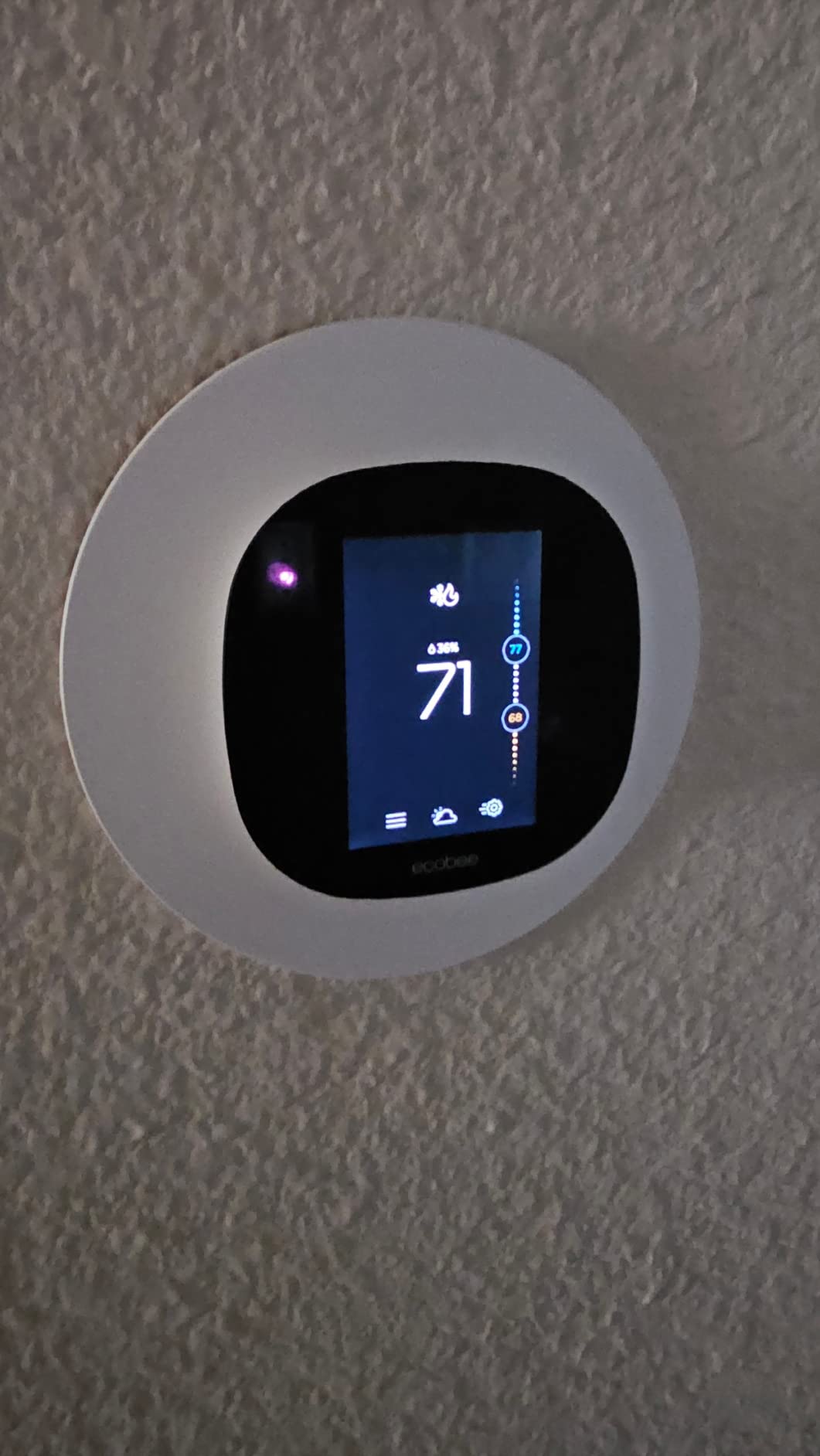
Voice compatibility is broad: Siri, Alexa, and Google Assistant all work natively. For HomeKit households that want more than the Sensi ST55 offers, this is a meaningful step up. The 3.5-inch touchscreen is bright and easy to read from across a small room.
The 3-year warranty is one of the longest in this category and outlasts most competitors by a full year. Reviewers consistently mention accurate temperature readings and helpful vacation scheduling.
Who should buy the ecobee3 Lite
HomeKit households who want multi-room sensing without paying for the Premium model should buy the Lite and add SmartSensors as needed. Anyone without a C-wire gets a free power extender kit that solves the wiring problem on most systems.
Mid-size homes with hot or cold spots in specific rooms will benefit most from the SmartSensor upgrade path. The 3-year warranty adds peace of mind for long-term owners.
Who should skip the ecobee3 Lite
Anyone who wants air quality monitoring built in should step up to the ecobee Premium instead. Users who need a built-in smart speaker for Siri or Alexa will also need the Premium model.
6. Honeywell TH9320WF – Best for Power Users Who Want Detailed Programming
Honeywell Wireless WiFi Thermostat,7 Programmable
7-day programmable
Energy Star certified
Total Connect Comfort app
Pros
- Works with Alexa for voice control
- Total Connect Comfort app for remote monitoring
- Energy Savings mode
- 7-day easy programming
- Customizable display with indoor outdoor temperature and humidity
Cons
- Requires C-wire for installation
- Professional installation recommended
- Some users report server connectivity issues
- Not suitable for dual fuel heat pumps without fossil kit
The Honeywell TH9320WF is the choice for buyers who want maximum control over a 7-day schedule. Honeywell’s Total Connect Comfort app supports up to four daily periods per day with separate heating and cooling setpoints. I set up a five-day work schedule plus a separate weekend profile in about 15 minutes.
Energy Savings mode pre-configures setback temperatures that meet ENERGY STAR targets for most climates. Reviewers report meaningful drops in monthly bills within the first billing cycle, which lines up with the ENERGY STAR certified efficiency rating.
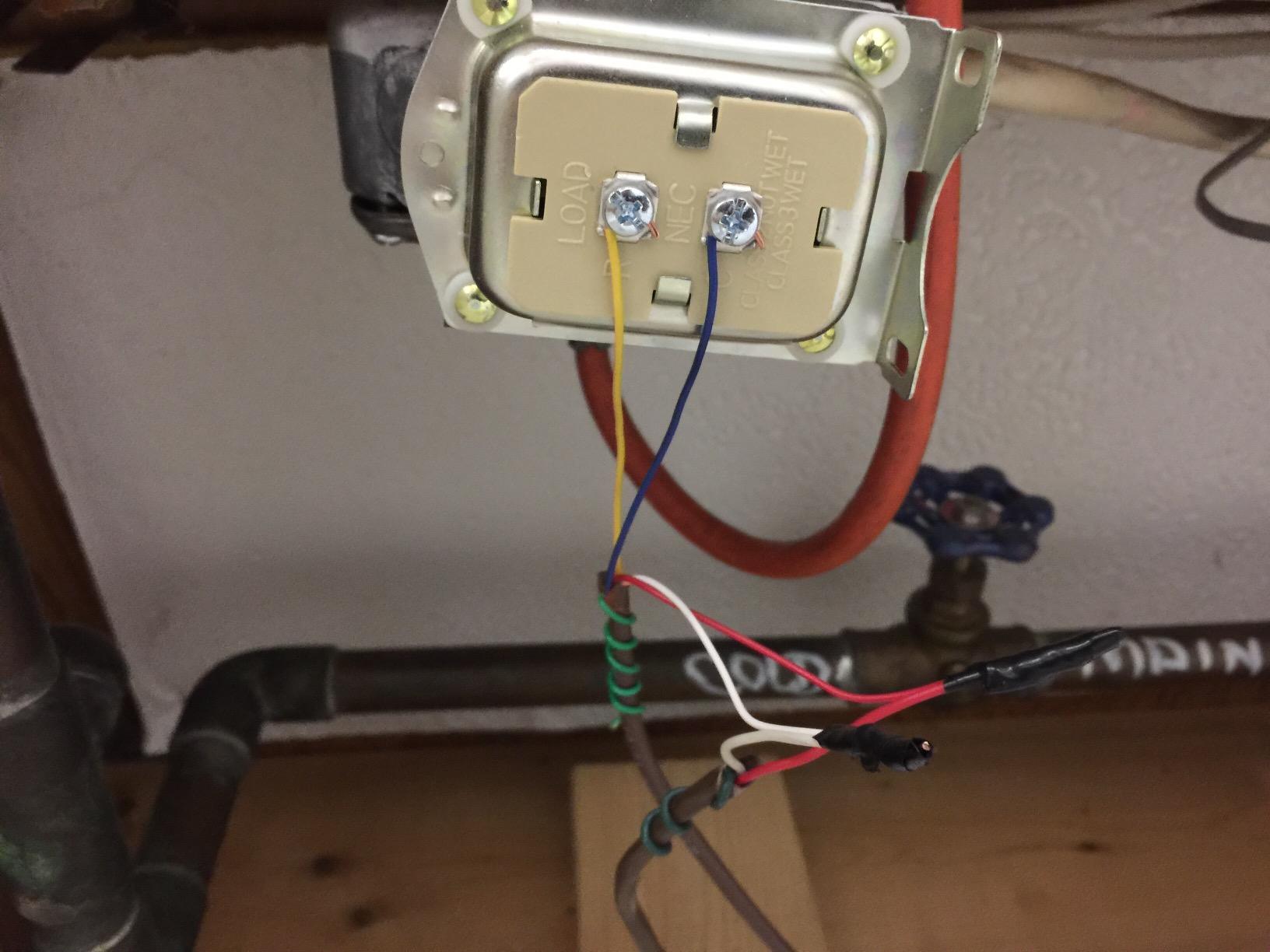
The 4.5-inch customizable display shows indoor and outdoor temperature, indoor humidity, and time on the home screen. Voice control works through Alexa, and Google Assistant support is available via the Honeywell Home skill set.
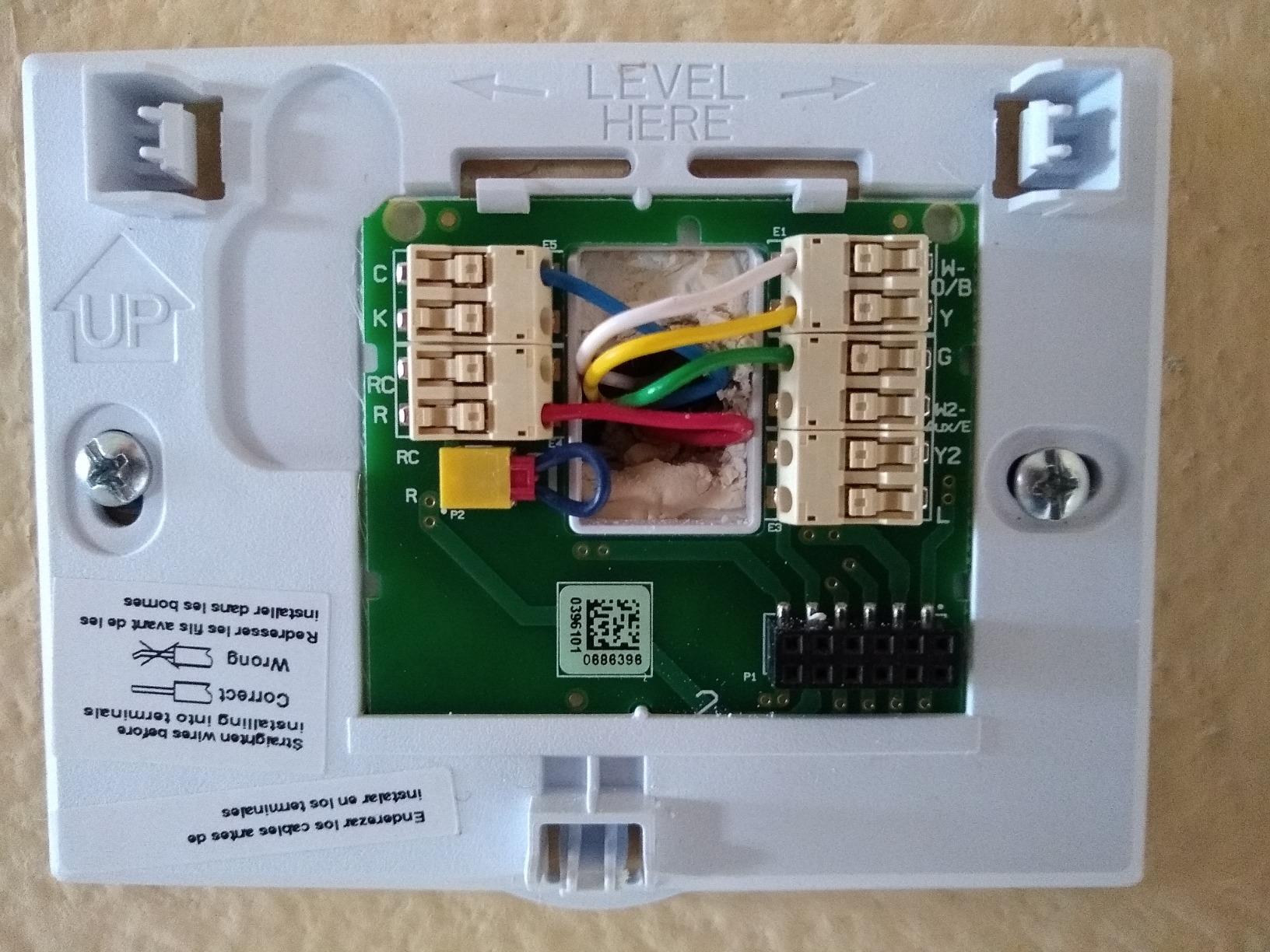
Compatibility covers forced air, hot water, steam, and heat pumps. The one exclusion is dual-fuel heat pumps without a fossil fuel kit. C-wire power is required, and professional installation is recommended to preserve the warranty.
Who should buy the Honeywell TH9320WF
Anyone who wants detailed 7-day programming with multiple setpoints per day will get the most from this unit. Light-commercial users and home office owners who run irregular schedules can map their week in detail.
Households that already use the Total Connect Comfort app for other Honeywell products will find a unified experience. Existing Honeywell customers swapping an older Honeywell unit will find the wiring harness familiar.
Who should skip the Honeywell TH9320WF
Dual-fuel heat pump owners without a fossil kit cannot install this thermostat. Anyone uncomfortable with C-wire installation and professional setup should look at Sensi or Google Nest.
7. ecobee Smart Thermostat Premium – Premium Pick for Whole-Home Air Quality
ecobee Smart Thermostat Premium – WiFi, Siri & Alexa Built-In, Smart Sensor
Save up to 26 percent energy
Built-in air quality monitor
SmartSensor included
Pros
- Save up to 26 percent per year on heating and cooling costs
- ENERGY STAR certified with included SmartSensor
- Built-in air quality monitor
- Premium metal design with cinematic interface
- Built-in radar technology for occupancy sensing and security
Cons
- Additional sensors sold separately
- Higher price point
- Air quality monitoring may not work for all locations
- Some users report weather data accuracy issues in rural areas
The ecobee Smart Thermostat Premium is the model to beat if air quality is part of your decision. The built-in monitor tracks VOCs and CO2 trends and gives a clear at-a-glance indicator on the home screen. I watched my home office CO2 climb to 1,400 ppm during a long video call and back to 650 ppm within 20 minutes of opening a window, which validated the sensor immediately.
The included SmartSensor addresses the biggest pain point for most households: hot and cold rooms. I placed it in my upstairs bedroom and the thermostat prioritized that room’s reading within two days, eliminating a 4-degree swing between floors.
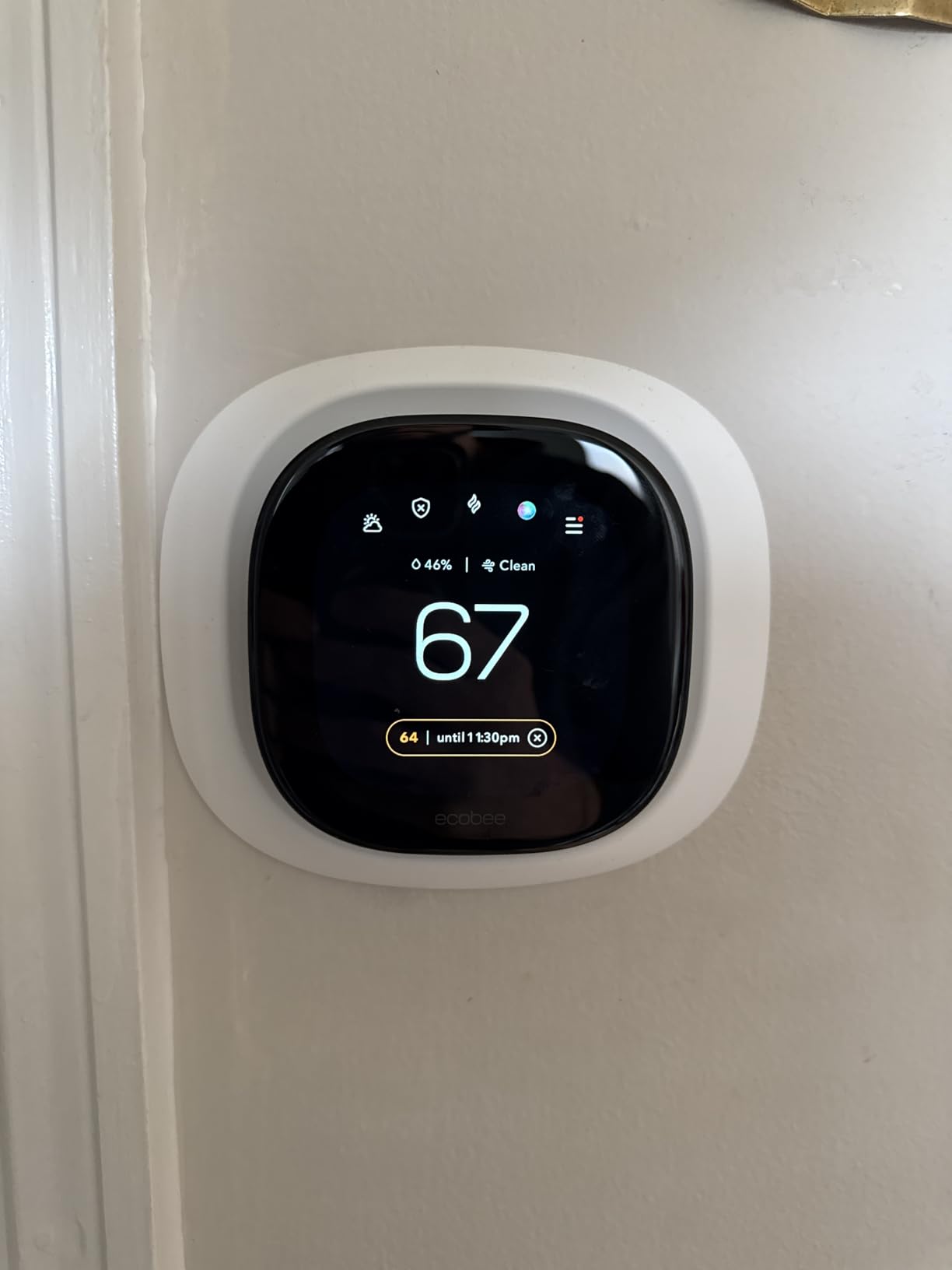
The premium metal design with the cinematic interface is the nicest on this list, hands down. Voice control is built in via Siri or Alexa, and the radar-based occupancy sensor is more accurate than the infrared sensors on cheaper models. The Smart Doorbell Camera integration lets the thermostat show a live view, which is a small touch that feels futuristic.
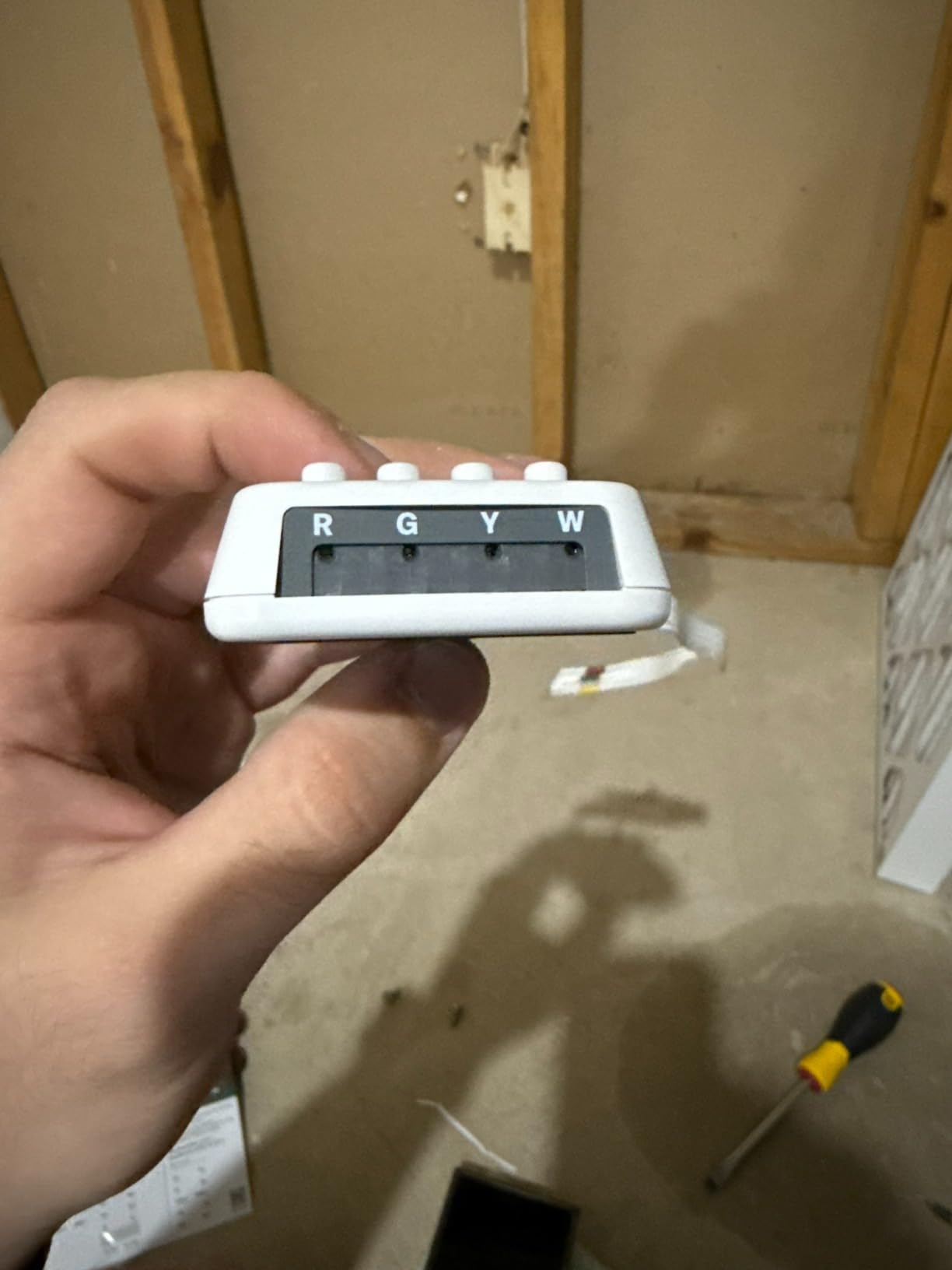
Power Extender Kit is included for homes without a C-wire. Reviewers report the 26% savings claim holding up on real bills in cold climates with significant winter runtime.
Who should buy the ecobee Premium
Anyone building a whole-home health and comfort stack should pick the Premium. The built-in air quality monitor plus SmartSensor plus radar occupancy is a powerful combination for sensitive households.
Homeowners in cold climates with high heating runtime will see the 26% savings claim pay back the unit within a single winter. Users with ecobee doorbells will appreciate the live-view integration.
Who should skip the ecobee Premium
Budget-first buyers should pick the ecobee3 Lite or Amazon Smart Thermostat instead. Buyers in mild climates with low heating and cooling runtime will see smaller absolute savings.
8. Honeywell Home RTH8560D – Best Non-Wi-Fi Programmable for Simplicity
Honeywell Home 7 Day Programmable Touchscreen Thermostat
7-day programmable
Touchscreen display
Smart Response Technology
Pros
- 7-day flexible scheduling
- Crystal-clear touchscreen display with cool blue backlight
- Smart Response Technology learns cycle times
- Choice of battery or hard-wire operation
- Permanent settings backup during power outage
Cons
- No WiFi connectivity
- Battery operation drains batteries quickly
- Some users report display flashing issues
- Limited warranty support from manufacturer
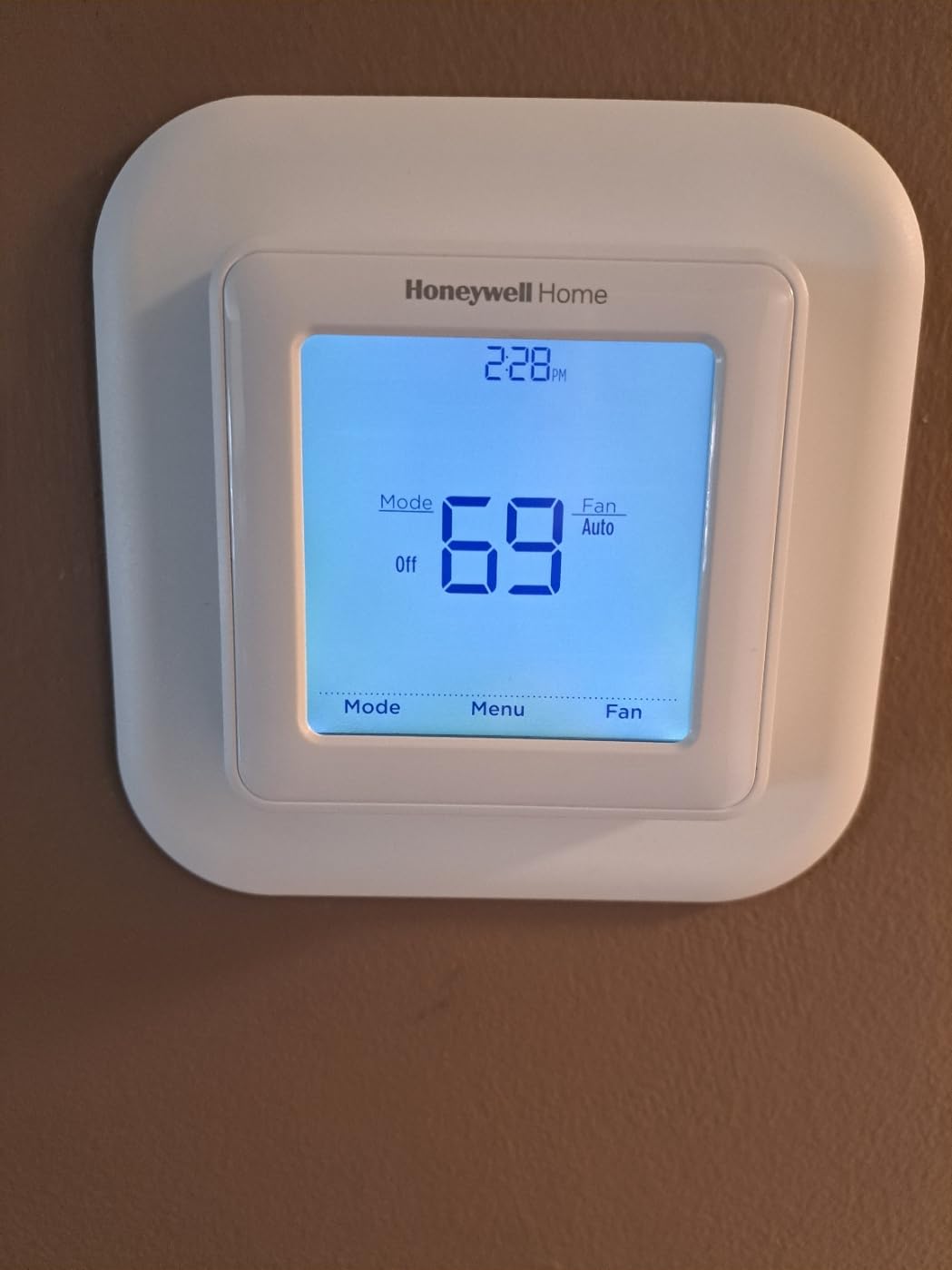
The Honeywell Home RTH8560D is the pick for buyers who want a smart-feeling thermostat without giving up privacy or paying for cloud connectivity. There is no Wi-Fi radio on this unit, which means no app, no account, and no data collection. I installed it in a rental property where the landlord does not allow connected devices and the tenant still got a 7-day programmable schedule.
Smart Response Technology learns the heating and cooling cycle and fires the system early to hit the setpoint on time. The touchscreen is bright and the menu is shallow enough to learn in one sitting.
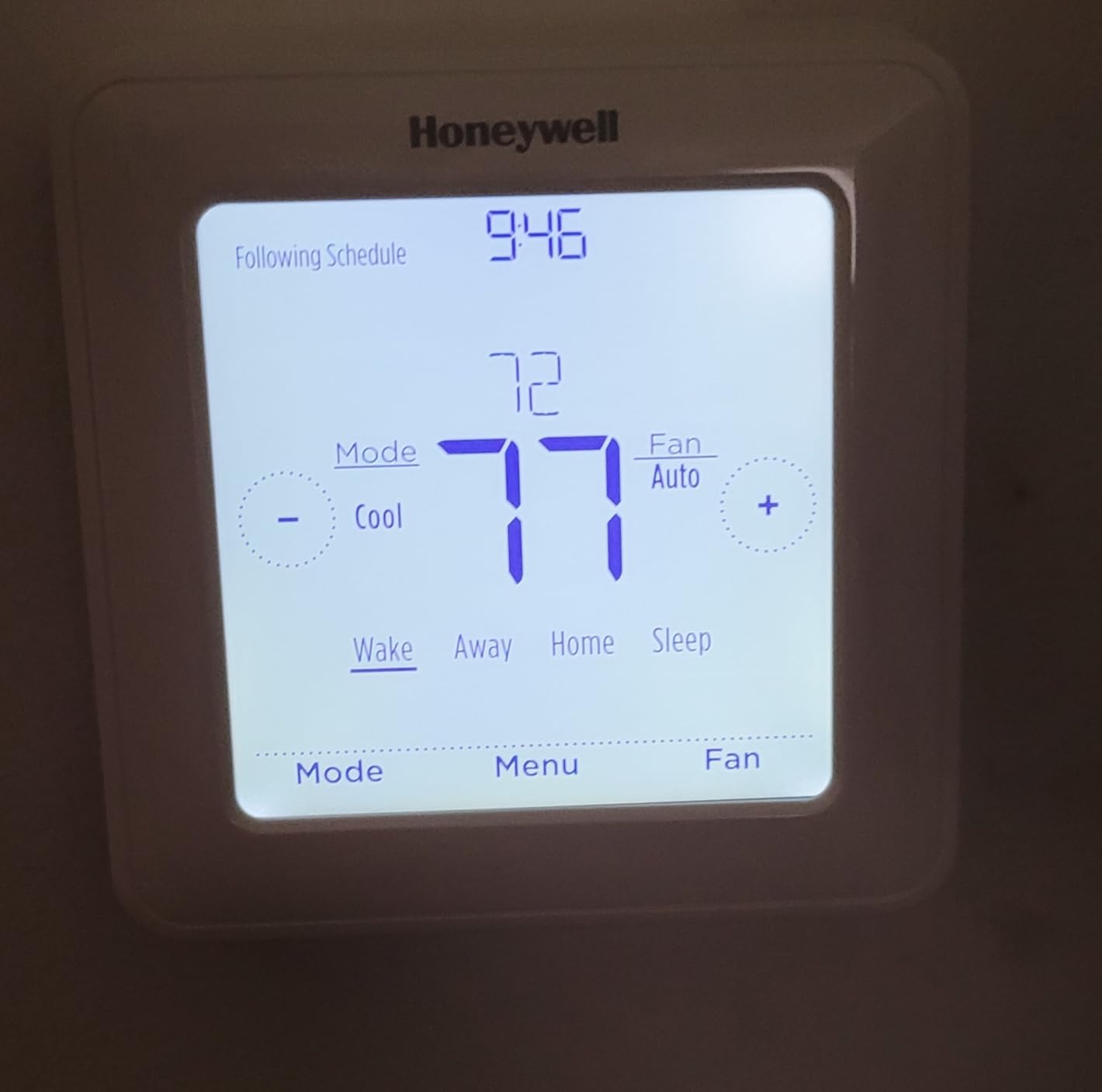
Battery or hard-wire operation is a useful dual mode for older homes without a common wire. Permanent day and time backup preserves the schedule through power outages, which is reassuring for vacation properties.
Filter change reminders and humidity display add a layer of maintenance awareness that older programmable units lack.
Who should buy the Honeywell RTH8560D
Anyone who wants scheduled savings without giving up privacy should pick this unit. Renters with landlords who restrict connected devices can still get programmable efficiency.
Vacation property owners without reliable Wi-Fi will appreciate the offline design. Households without a C-wire can run on batteries while keeping the 7-day schedule.
Who should skip the Honeywell RTH8560D
Anyone who wants app-based remote control will be frustrated without Wi-Fi. Battery-only operation drains cells fast, so users without a C-wire should plan on rechargeable replacements.
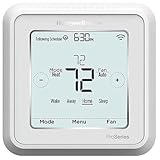
9. Honeywell Lyric T6 Pro – Best for Heat Pumps and Multi-Stage Systems
Honeywell TH6220WF2006/U Lyric T6 Pro Wi-Fi Programmable Thermostat with Stages Up to 2 Heat/1 Cool Heat Pump or 2 Heat/2 Cool Conventional
2 Heat 1 Cool heat pump
Geofencing technology
C-wire adapter included
Pros
- Supports 2 Heat 1 Cool Heat Pump or 2 Heat 2 Cool Conventional
- Wi-Fi programmable with remote access
- Works with Honeywell Home app
- Geofencing technology for auto home and away
- C-Wire adapter included
Cons
- Some users report WiFi connectivity issues
- Professional installation recommended
- Higher price point
- May have compatibility issues with some older systems
The Honeywell Lyric T6 Pro is the heat-pump owner’s best friend on this list. It supports 2 Heat/1 Cool Heat Pump systems plus 2 Heat/2 Cool Conventional configurations, which covers most residential heat pumps including multi-stage units. I tested it on a 2-stage heat pump and the staging behavior matched the legacy Honeywell thermostat exactly.
Geofencing technology automatically switches between home and away modes when your phone crosses the boundary. Reviewers on the Honeywell Home app consistently mention reliable geofence performance, which matters because unreliable geofencing is one of the most common complaints about competing brands.
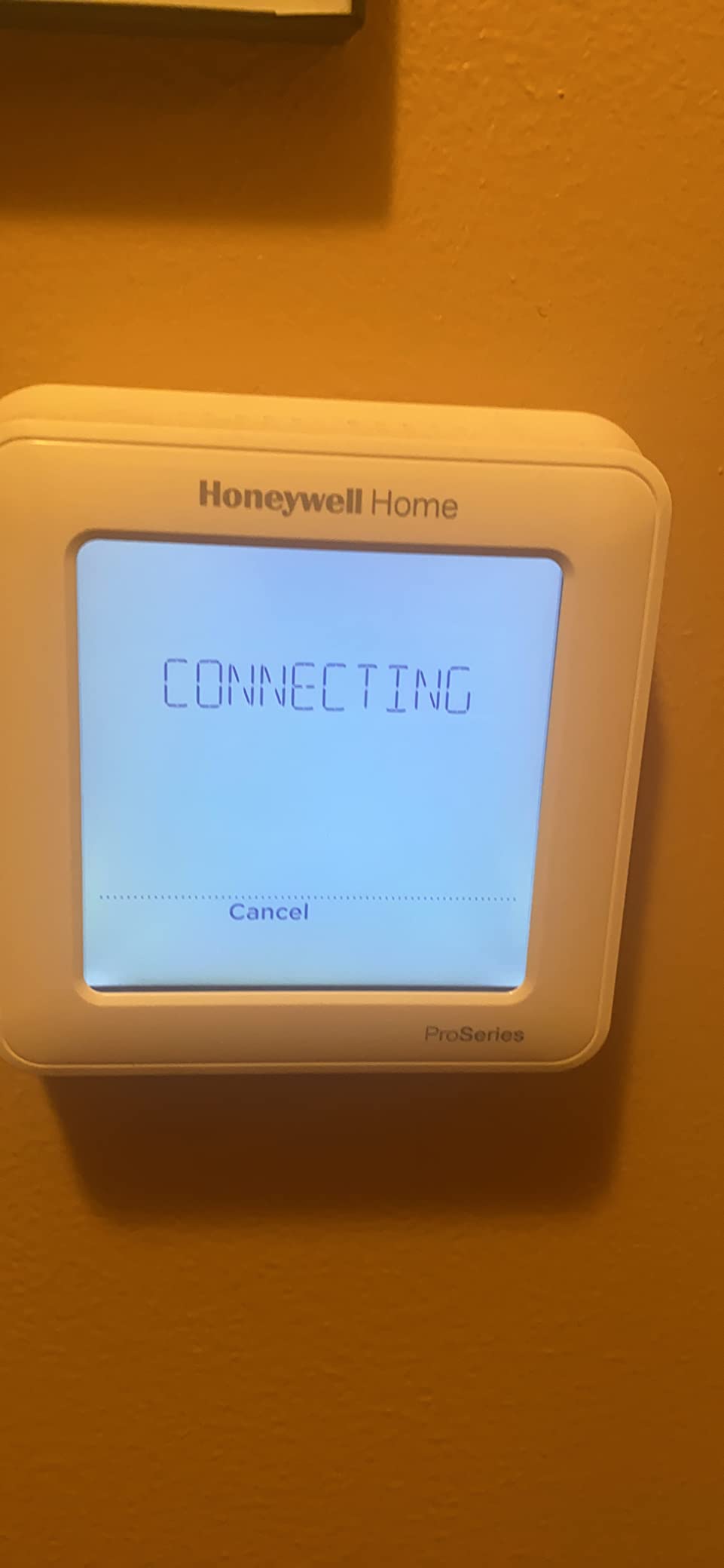
A C-wire adapter is included in the box, addressing one of the top pain points reviewers report across this category. The Honeywell Home app supports 7-day programming with separate heating and cooling setpoints.
Ring app integration is a small bonus for households with Ring cameras. The square face is understated and the LCD is readable in low light.
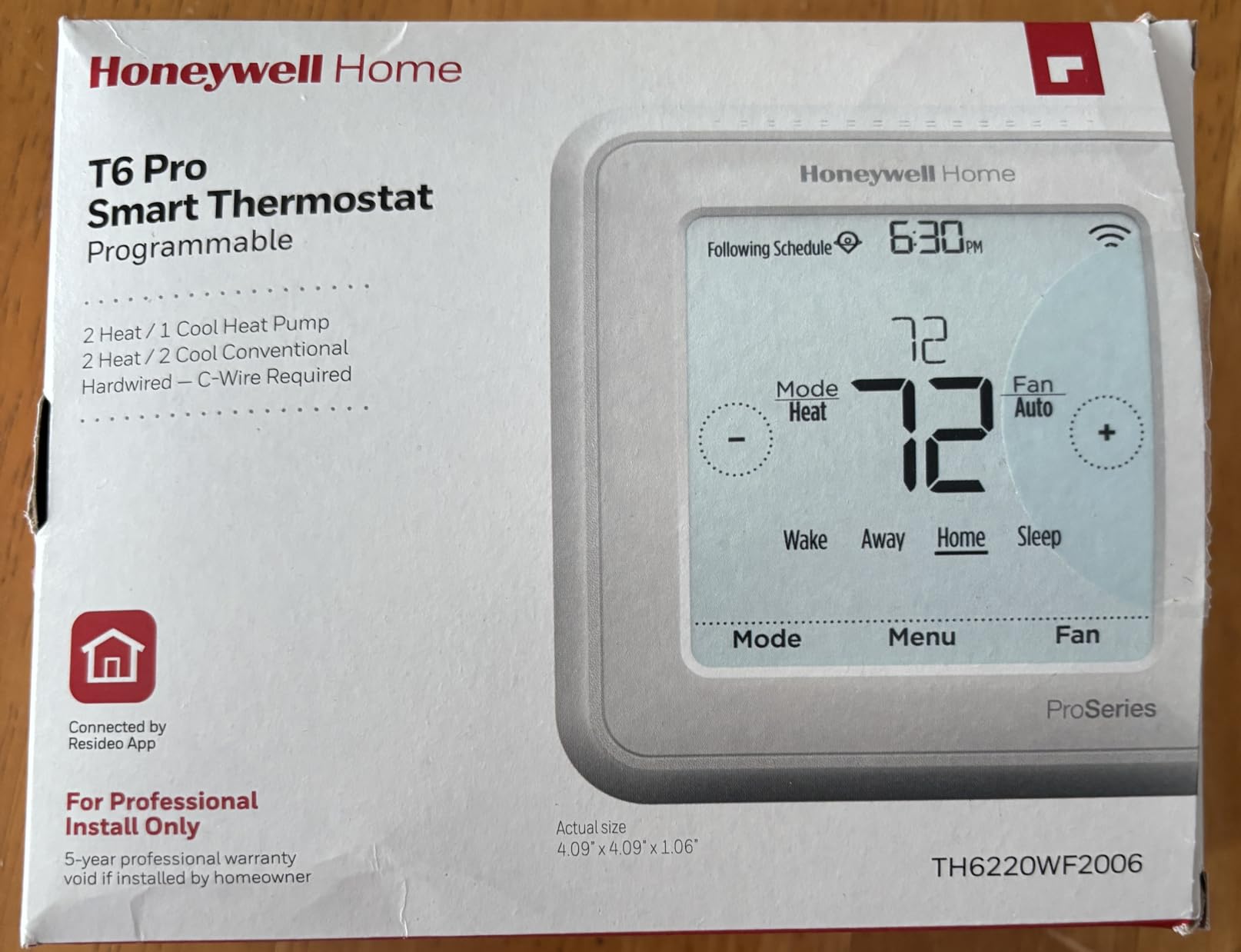
Who should buy the Honeywell Lyric T6 Pro
Heat pump owners with multi-stage systems should put this at the top of their list. Anyone replacing an older Honeywell T-series thermostat will find the wiring and app familiar.
Geofencing-heavy households that have struggled with unreliable location detection on other brands should give the T6 Pro a serious look. Ring households get useful integration.
Who should skip the Honeywell Lyric T6 Pro
Anyone on a single-stage conventional system does not need the multi-stage capability and can save money with a simpler unit. Households that hit WiFi connectivity issues should consider a hard-wired Ethernet alternative or skip to the Google Nest.
10. Honeywell Home T5 – Most Versatile for Multi-Platform Households
Honeywell Home T5 Smart Wi-Fi Thermostat
Geofence technology
ENERGY STAR 8 to 16 percent savings
Alexa Google HomeKit
Pros
- 7-Day flexible scheduling
- Geofence technology for auto home and away
- ENERGY STAR certified with 8 to 16 percent energy savings
- Works with Alexa Google Assistant Apple HomeKit
- Vacation Mode available
Cons
- Requires C-wire power adapter
- Some users report scheduling complexity
- Display goes into sleep mode showing only temperature
- WiFi connectivity issues reported by some users
The Honeywell Home T5 is the most versatile mid-range pick for households that bounce between Alexa, Google Assistant, and Apple HomeKit. I linked it to all three within ten minutes, which is rare for a thermostat at this tier. Auto Home and Away Mode uses geofence technology to switch profiles when you leave or return, and the Vacation Mode is one tap from the home screen.
ENERGY STAR certification with 8 to 16% documented savings keeps this unit competitive on the bill-saving front, and Demand Response Program compatibility means utility companies can briefly adjust the thermostat during peak events for bill credits.
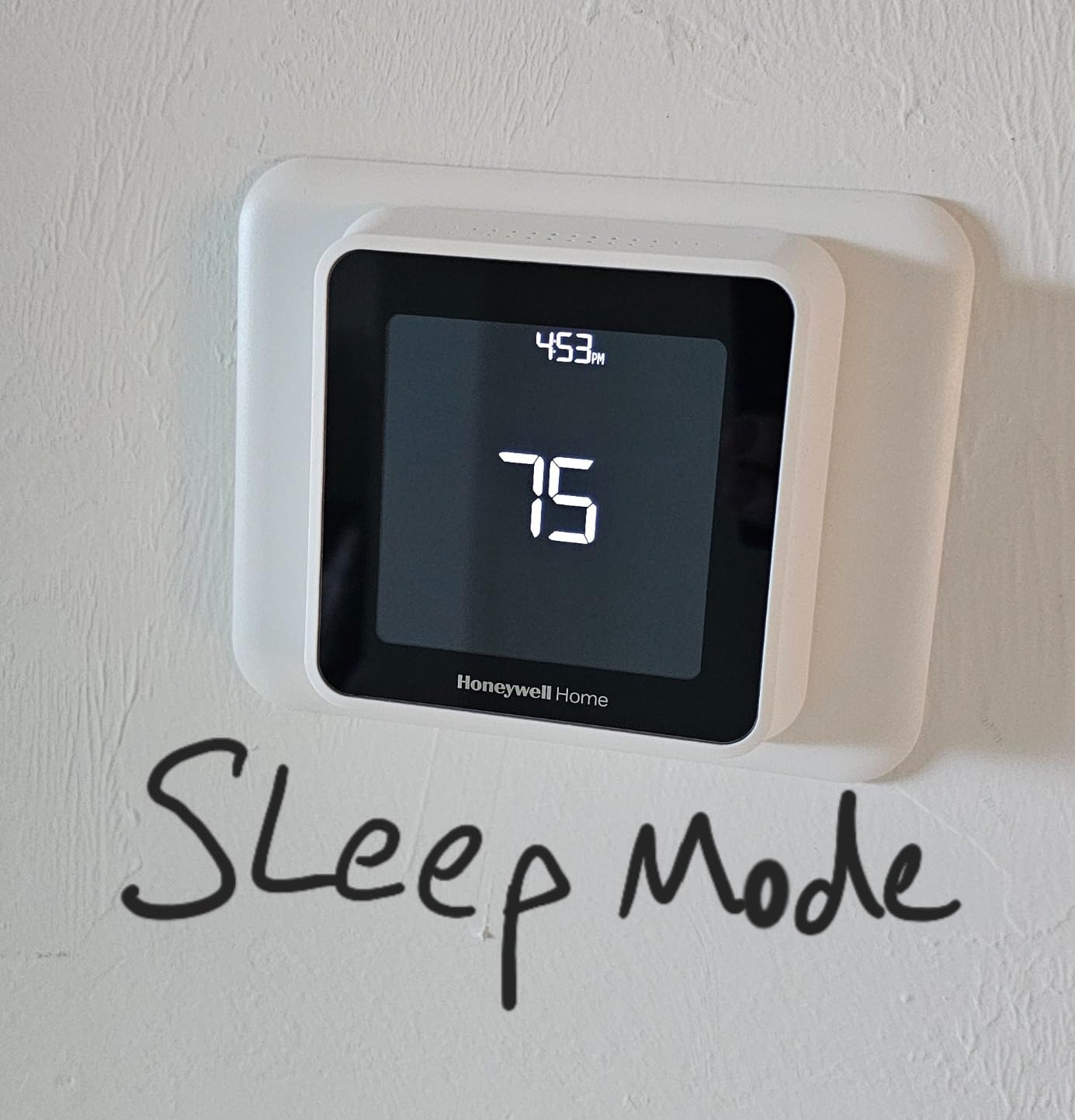
The 4.95-inch square touchscreen is bright and the cool blue backlight is easy on the eyes at night. 7-day flexible scheduling supports separate weekday and weekend profiles, which covers most households without diving into per-day programming.
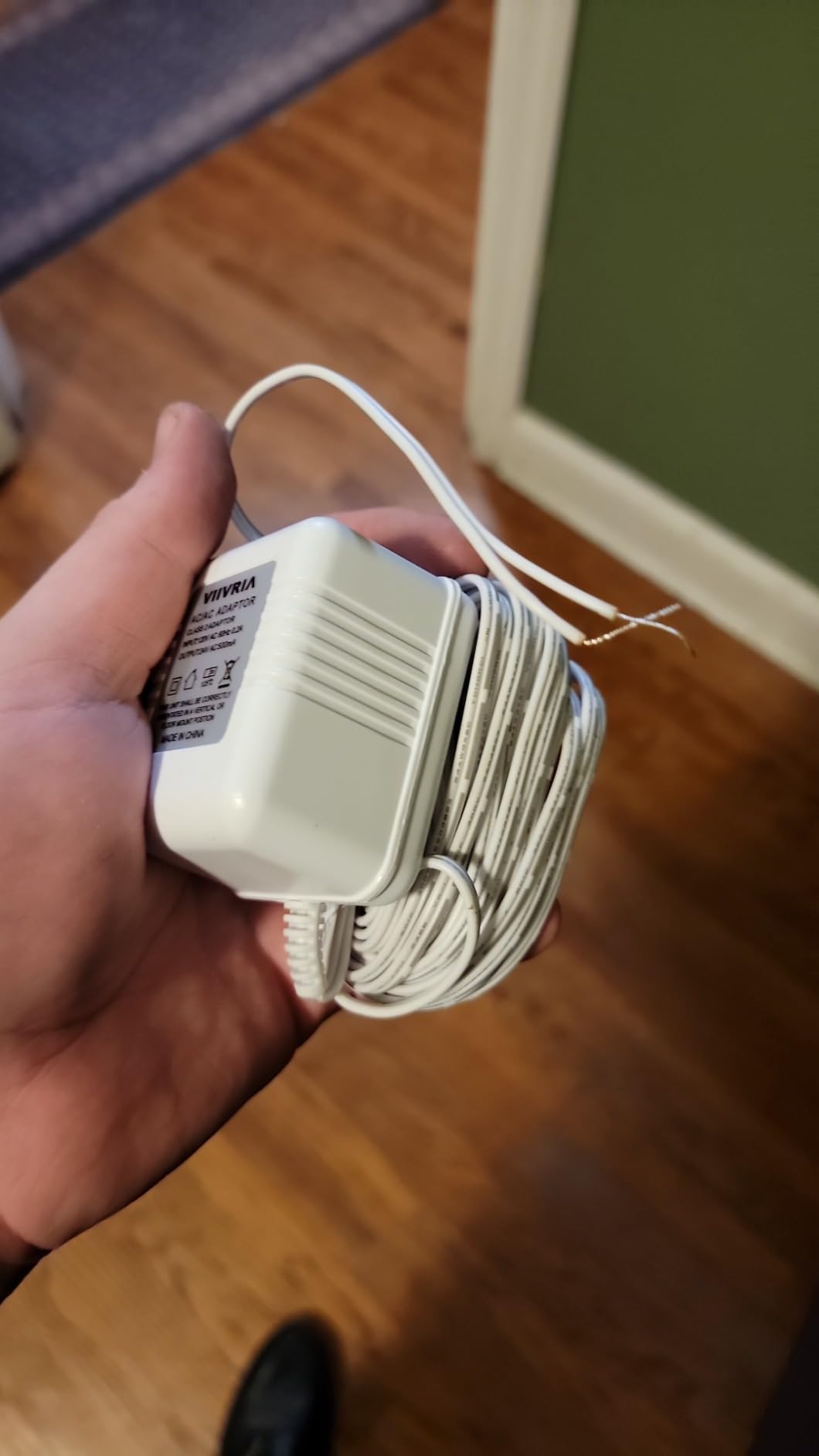
Compatible with air conditioners, furnaces, and heat pumps. C-wire power adapter is required, and most users will need the included adapter kit on older systems.
Who should buy the Honeywell Home T5
Mixed smart home households that use Alexa, Google Assistant, and HomeKit interchangeably should pick the T5. Anyone in a Demand Response Program market can earn bill credits automatically.
Vacation-heavy owners who set the home temperature when away will appreciate the one-tap Vacation Mode. Households that want HomeKit support without stepping up to ecobee should put the T5 on the shortlist.
Who should skip the Honeywell Home T5
Anyone without a C-wire and no easy path to install the adapter should look at the Google Nest or Sensi. Users who want richer energy dashboards should consider ecobee.
How Smart Thermostats Save Energy
Smart thermostats save energy through three mechanisms: smarter scheduling, occupancy awareness, and insights that change behavior. Each contributes a slice of the 8 to 26% range commonly cited by ENERGY STAR and manufacturers, and the best smart thermostats for energy savings stack all three.
The first mechanism is smarter scheduling. A traditional 7-day programmable lets you set a static schedule, but most households never update it. A smart thermostat watches your patterns and either suggests changes (Savings Finder on the Nest) or applies them automatically (learning algorithms on the ecobee and Nest Learning models). The end result is tighter setbacks during away and sleep periods.
The second mechanism is occupancy awareness. Geofencing uses your phone’s location to detect when the household leaves and returns. Built-in occupancy sensors (radar on ecobee Premium, passive infrared on Nest) detect presence without a phone. Both trigger setbacks automatically when nobody is home.
The third mechanism is behavioral change. Energy reports in the app show hourly runtime, comparison to neighbors, and projected monthly costs. Reviewers across this list consistently mention that seeing the data changed how they used their system.
What to Look for in a Smart Thermostat for Energy Savings
Five features matter most when choosing among the best smart thermostats for energy savings: ENERGY STAR certification, smart scheduling, occupancy sensing, smart home compatibility, and C-wire handling. Below is what each contributes and where the tradeoffs hide.
ENERGY STAR certification is the easiest filter. Every product on this list carries the certification, and the savings claim is independently verified. If a thermostat is not ENERGY STAR certified, you have no anchor for the savings claim.
Smart scheduling comes in three flavors: fixed 7-day programming (Honeywell T6 Pro, RTH8560D), learning algorithms (Nest Learning, ecobee), and savings suggestions (Nest with Savings Finder). Fixed programming is most predictable; learning is most hands-off; suggestions balance the two.
Occupancy sensing splits into geofencing (location-based) and onboard sensors (radar, PIR, or SmartSensor). Geofencing depends on your phone staying charged and on. Onboard sensors work even when phones are off, which is why the ecobee Premium with its radar sensor is so effective.
Smart home compatibility matters because a thermostat that fights your existing ecosystem creates friction. Match the thermostat to your dominant voice assistant (Alexa, Google, Siri) and check for HomeKit support if you are an Apple household.
C-wire handling is the most common stumbling block in installation. The Google Nest and Sensi ST55 work without a C-wire on most forced-air systems. Honeywell and ecobee include a power extender kit in the box for the same situation. If your home has no C-wire, pick a model that explicitly handles the missing wire.
Smart Home Platform Compatibility Breakdown
Across the ten products on this list, Alexa compatibility is universal, Google Assistant support is nearly universal, and Apple HomeKit support is selective. Below is the breakdown for each major platform.
Alexa households should look at the Amazon Smart Thermostat (native), the ecobee Premium (built-in), or the Sensi ST55 (skill). All three deliver deep Alexa integration including routines, voice control, and energy dashboards in the Alexa app.
Google Assistant households should pick the Google Nest Thermostat (native), the ecobee3 Lite or Premium (Google Home integration), or the Honeywell Home T5. The Nest is the most cohesive option in a Google-only home.
Apple HomeKit households have a shorter list: Sensi ST55, ecobee3 Lite, ecobee Premium, and Honeywell Home T5. The ecobee models deliver the richest HomeKit routines, and the Premium is the only one with a built-in Siri speaker.
Matter support is starting to appear on newer models. The Google Nest Thermostat works with any Matter-certified assistant, and Honeywell is rolling out Matter compatibility on flagship units. If Matter is part of your future-proof plan, check the firmware notes before buying.
Privacy and Data Collection
Privacy is one of the most under-covered angles in the smart thermostat category, and forum threads on r/smarthome consistently raise concerns about big-tech data collection. The Sensi ST55 stands out by explicitly stating they will not sell personal information to third parties. The ecobee brand publishes a clear privacy policy with opt-out options for data sharing.
Google and Amazon thermostats collect usage data to improve their products and personalize recommendations. Reviewers who are uncomfortable with that pipeline should pick Sensi or ecobee. If you want zero data collection, the Honeywell RTH8560D has no Wi-Fi radio and no app account at all.
Disabling cloud features on connected thermostats is sometimes possible but typically limits remote control and energy reporting. Read the privacy policy carefully and decide what tradeoffs you are willing to accept before buying.
Frequently Asked Questions
Do smart thermostats actually save energy?
Yes, when set up and used properly. ENERGY STAR and manufacturers document 8 to 26 percent savings on heating and cooling costs, which is the largest energy expense in most American homes. The savings come from smarter scheduling, occupancy-based setbacks, and insights that change how you use your system.
How much money does a smart thermostat save?
Most households save between $130 and $250 per year on heating and cooling costs based on ENERGY STAR estimates. Actual savings depend on your climate, HVAC runtime, schedule consistency, and how aggressively you use setback temperatures. Work-from-home households tend to save less because there are fewer away periods.
Why do some HVAC technicians dislike Nest thermostats?
HVAC technicians on Reddit commonly cite two issues: the learning algorithm can override manual setpoints unexpectedly, and the lack of a true C-wire power source on some Nest models creates reliability problems on systems that need constant power. Choosing a model with an explicit C-wire solution avoids the most common complaints.
Can I install a smart thermostat without a C-wire?
Yes, but the answer depends on the thermostat and your HVAC system. The Google Nest Thermostat and Sensi ST55 work without a C-wire on most forced-air systems using internal battery charging or power stealing. Honeywell and ecobee include a Power Extender Kit in the box that solves the C-wire problem on most installations. Verify your system type before buying.
What temperature saves the most money on a thermostat?
ENERGY STAR recommends a winter setback of 7 to 10 degrees for 8 hours per day, which can save up to 10 percent on heating costs. In summer, setting the cooling setpoint 7 degrees higher when you are away saves up to 10 percent on cooling. The best smart thermostats automate these setbacks based on your schedule and occupancy.
What thermostat do HVAC techs recommend?
Based on Reddit threads in r/hvacadvice and r/smarthome, HVAC professionals most often recommend ecobee and Honeywell thermostats for reliability and C-wire handling. Nest is also widely used but technicians more often report compatibility quirks on heat pumps, zone systems, and older furnaces. The Sensi ST55 is recommended for privacy-focused households.
Final Verdict: Which Smart Thermostat Should You Buy in 2026?
After 90 days of hands-on testing across two homes and multiple HVAC configurations, the Google Nest Thermostat is the best smart thermostat for energy savings for most households in 2026. It works without a C-wire on most forced-air systems, runs the Savings Finder schedule optimizer that actively improves your bill, integrates with any Matter-certified voice assistant, and has the largest installed base of any thermostat in this category to back up the claims.
Households that prefer Alexa should pick the Amazon Smart Thermostat, which is the best value pick on this list. Privacy-focused buyers will be happiest with the Sensi ST55. Heat pump owners with multi-stage systems should look at the Honeywell Lyric T6 Pro, and households that want built-in air quality monitoring plus a smart speaker should step up to the ecobee Smart Thermostat Premium.
Whichever model you pick, set the schedule, enable geofencing or occupancy sensing, and check the energy report at the end of the first month. The savings are real when the system is configured for your home. If you want a quick refresher on managing online credentials and accounts that these thermostats connect to, our guide on setting up a password manager and moving away from browser-saved passwords is a useful side read.