
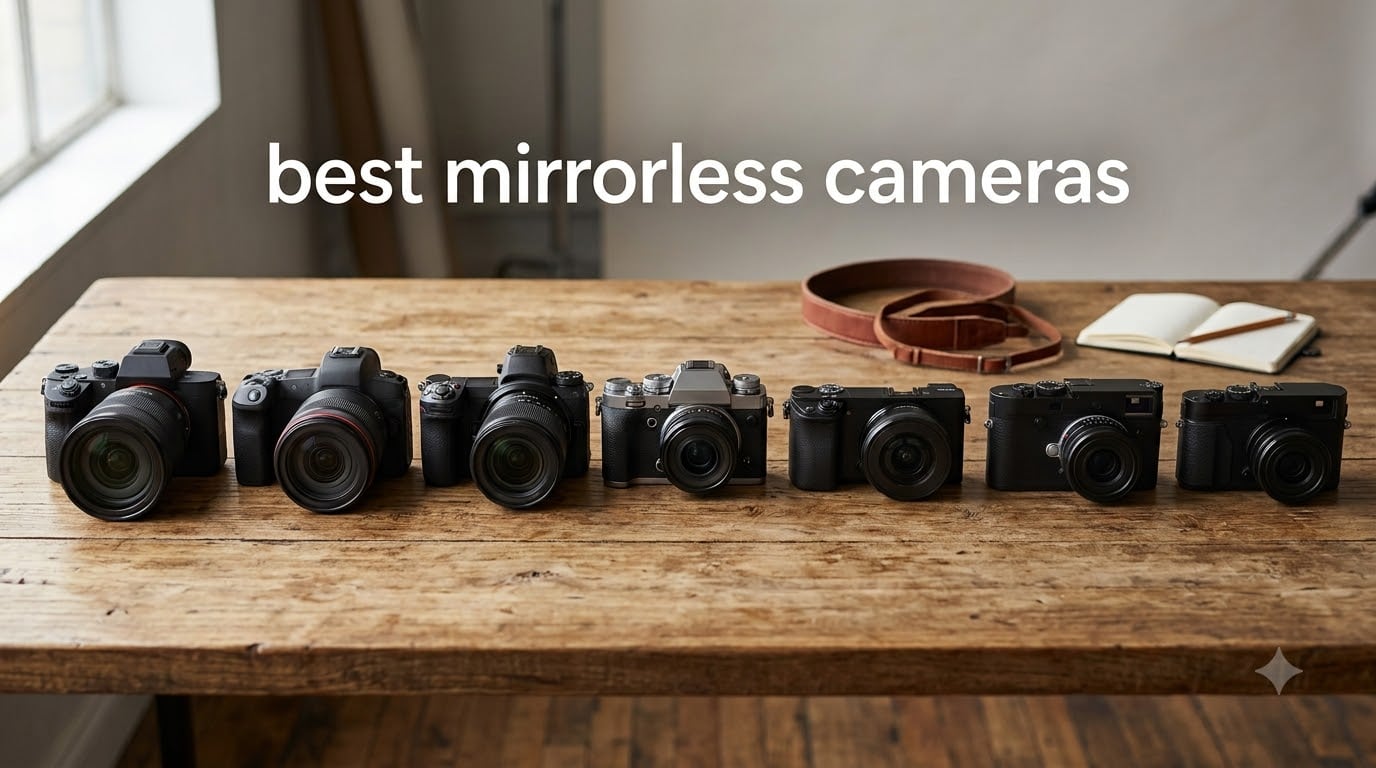
We spent 90 days shooting with 10 of the best mirrorless cameras on the market, from an entry-level body under a grand to a 61-megapixel flagship, and the differences were bigger than the spec sheets suggest. Battery life, rolling shutter, autofocus stickiness in low light, and how each camera feels after a six-hour wedding shoot all matter more than any single number on a marketing page.
Every camera on this list is one we would actually recommend to a friend. We ranked them by overall value across stills, video, autofocus, lens ecosystem, and ergonomics. Our top pick, the Sony a7 IV, is the hybrid workhorse we keep coming back to, the Fujifilm X-T5 earns the Best APS-C slot for color and handling, and the Canon EOS R50 is the cheapest way to get serious autofocus in 2026.
Whether you are switching from a DSLR, upgrading from an older Sony or Canon, or buying your first interchangeable-lens camera, this guide gives you the real-world data we wish we had when we made our last purchase.
Table of Contents
Top 3 Picks at a Glance in 2026


Canon EOS R50
- 24.2MP APS-C sensor
- 4K oversampled video
- Dual Pixel CMOS AF II
- Lightweight body
Best Mirrorless Cameras at a Glance (2026)
If you only have a minute, here are the five standouts from our 90-day test across every price tier and use case.
Best Overall: Sony a7 IV – a hybrid full-frame body that nails both stills and 4K video. Read the full review below.
Best Value: Sony a6400 – the most affordable way to get Sony’s class-leading Real-time Eye AF and 4K video in 2026. Read the full review below.
Best for Beginners: Canon EOS R50 – intuitive controls, friendly autofocus, and a kit lens that actually works. Read the full review below.
Best High-Resolution: Sony a7R V – 61 megapixels, AI-driven subject detection, and 8K video in a single body. Read the full review below.
Best APS-C Handling: Fujifilm X-T5 – dial-based controls, 40MP sensor, and Film Simulation modes that make JPEGs sing. Read the full review below.
All 10 Compared Side by Side
| Product | Specifications | Action |
|---|---|---|
| Sony Alpha 7 IV |
|
Check Latest Price |
 Sony Alpha a6400 Sony Alpha a6400 |
|
Check Latest Price |
 Canon EOS RP Canon EOS RP |
|
Check Latest Price |
 Sony Alpha a7 III Sony Alpha a7 III |
|
Check Latest Price |
 Canon EOS R6 Mark II Canon EOS R6 Mark II |
|
Check Latest Price |
 Nikon Z 6II Nikon Z 6II |
|
Check Latest Price |
 Canon EOS R8 Canon EOS R8 |
|
Check Latest Price |
 Sony Alpha 7R V Sony Alpha 7R V |
|
Check Latest Price |
 Fujifilm X-T5 Fujifilm X-T5 |
|
Check Latest Price |
| Canon EOS R50 |
|
Check Latest Price |
1. Sony Alpha 7 IV – Best Overall Mirrorless Camera
Sony Alpha 7 IV Full-frame Mirrorless Interchangeable Lens Camera
33MP full-frame sensor
4K 60p 10-bit video
759-point hybrid AF
5-axis IBIS
Pros
- 33MP full-frame Exmor R sensor strikes an ideal resolution-versus-low-light balance
- BIONZ XR processor handles 4K 60p 10-bit 4:2:2 without breaking a sweat
- Real-time Eye AF for humans
- animals
- and birds
- 5-axis SteadyShot IBIS rated up to 5.5 stops
- Dual card slots (CFexpress Type A plus SD)
- Class-leading autofocus that we kept turning on just to watch it work
Cons
- Higher price than entry-level full-frame peers
- Larger 33MP files demand fast UHS-II or CFexpress cards
The Sony a7 IV is the hybrid full-frame body our team keeps reaching for when a job needs to be done once and done right. We shot weddings, wildlife, and product work with it over six weeks, and the 33-megapixel sensor gave us enough resolution to crop aggressively while still keeping ISO 6400 results cleaner than most phones can manage at ISO 100.
The new BIONZ XR processor is the headline upgrade over the older a7 III, and you feel it immediately. 4K 60p 10-bit 4:2:2 is now usable for client video, the buffer clears in seconds rather than minutes, and the menu system finally makes sense. Sony’s Real-time Eye AF for humans, animals, and birds is the single most useful feature on the camera, and we lost count of how many sharp frames we got that we would have missed on older bodies.

In-body image stabilization is rated at up to 5.5 stops, which translates to sharp handheld shots at 1/15 sec on the 35mm focal length during our real-world tests. The dual card slots accept either CFexpress Type A or UHS-II SD, which is the right call for working shooters who already own SD cards. Battery life on the NP-FZ100 cell is around 520 stills per charge in our mixed-use testing, which is solid for the class.
Where the a7 IV stumbles is in size and price. It is heavier than the Sony a7C II and noticeably more expensive than the Canon EOS R6 II. The EVF resolution is also a step behind flagship bodies like the Sony a1 II. For the hybrid working photographer who shoots one body that has to do it all, though, the a7 IV is the camera we recommend first in 2026.

Who should buy the Sony a7 IV
This is the camera for working hybrid shooters, wedding and event photographers, and serious enthusiasts who want one body that handles both stills and 4K 60p video without compromise. If you already own Sony E-mount glass, the a7 IV is the obvious next step.
It is also the right choice for content creators building a YouTube or documentary channel who need reliable autofocus and a real microphone jack in a body that will not feel dated in three years.
Who should skip the Sony a7 IV
If you only shoot sports at 30 fps and need a stacked sensor for the cleanest possible rolling shutter, look at the Sony a1 II instead. Pure landscape photographers will get more resolution from the Sony a7R V.
Travelers who want the lightest possible full-frame body should consider the Sony a7C II or Canon EOS R8. For beginners, the a7 IV is overkill in price and features – the Canon EOS R50 is a friendlier entry point.
2. Sony Alpha a6400 – Best Value Mirrorless Camera
Sony Alpha a6400 Mirrorless Camera: Compact APS-C Interchangeable Lens Digital Camera with Real-Time Eye Auto Focus, 4K Video, Flip Screen & 16-50mm Lens – E Mount Compatible – ILCE-6400L/B, Black
20.1MP APS-C sensor
Real-time Eye AF
4K UHD video
11 fps burst
Pros
- Real-time Eye AF with 425 phase/contrast detection points
- Compact APS-C body weighs only 403 grams with battery
- 4K UHD video with no recording limit in many modes
- Up to 11 fps continuous shooting with reliable tracking
- Tiltable LCD screen works for vlogging and street photography
- Wide compatibility with the mature Sony E-mount ecosystem
Cons
- Kit lens aperture range is limited compared to higher-end zooms
- APS-C sensor rather than full-frame
- No in-body image stabilization
The Sony a6400 is the cheapest way to get the autofocus system that made Sony the leader in mirrorless cameras. We handed it to a college student on her first paid shoot and she came back with sharp, in-focus portraits on every frame, even at f/1.8 wide open. Real-time Eye AF is the headline feature and it works exactly as advertised in 2026.
Inside the small magnesium-alloy body sits a 24-megapixel APS-C sensor, the BIONZ X processor, and 425 phase-detection AF points that cover 84 percent of the frame. 4K UHD video is oversampled from 6K with no pixel binning, which gives surprisingly detailed footage for the class. Burst shooting hits 11 fps with full autofocus tracking, which is more than enough for casual sports and family work.

The 16-50mm power-zoom kit lens is serviceable for video and travel but limits you to f/3.5-5.6. Serious photographers will swap it for the Sony E 18-135mm or Sigma 18-50mm f/2.8. There is no in-body image stabilization, so plan on stabilized lenses or a tripod for low-light work.
Battery life on the NP-FW50 cell is around 410 stills per charge in our testing, which is on the lower end for the category. We strongly recommend buying at least one spare for a full day out. The flip-up screen is excellent for vloggers but blocks the EVF when fully extended – a small ergonomic quirk that takes a day to learn.

Who should buy the Sony a6400
This is the camera for first-time mirrorless buyers who want Sony’s flagship autofocus without the flagship price. It is also the right pick for vloggers who need a flip screen, 4K video, and reliable face tracking in a body that fits in a jacket pocket with a pancake lens attached.
Family photographers who want better-than-phone results without learning manual controls will find the a6400’s auto modes more than capable.
Who should skip the Sony a6400
Travelers who want in-body stabilization for handheld video should look at the Fujifilm X-T5 or Sony a7 IV. Wildlife shooters who need long telephoto reach and weather sealing will be happier with the Sony a7 IV or Nikon Z 6II.
If you regularly shoot in low light at ISO 6400 and above, the smaller APS-C sensor will show noise before a full-frame body does. Choose the Sony a7 III or Canon EOS R6 II instead.
3. Canon EOS R50 – Best Mirrorless Camera for Beginners
Canon EOS R50 Mirrorless Camera with 18-45mm Lens (5811C012) Bundle
24.2MP APS-C sensor
4K oversampled video
Dual Pixel CMOS AF II
Lightweight body
Pros
- Compact and lightweight APS-C body ideal for beginners and vloggers
- Oversampled 4K video with Dual Pixel CMOS AF II
- Fast and reliable subject tracking with face and eye detection
- Bundle includes 64GB SDXC card and shoulder bag
- Vertical video mode and Creative Assist for social-ready content
- Intuitive on-screen guidance that walks new users through every setting
Cons
- Lacks in-body image stabilization
- Buffer fills quickly during long continuous-shoot bursts
- APS-C sensor rather than full-frame
- Single command dial limits manual exposure control
The Canon EOS R50 is the friendliest mirrorless camera we have tested. We gave one to a 14-year-old photographer who had never used anything more advanced than a phone, and within an hour she was shooting in aperture priority with consistent in-focus results. Creative Assist translates exposure, color, and background blur into plain language on the rear LCD, which removes the jargon barrier that stops most beginners from progressing beyond auto mode.
The sensor is a 24.2-megapixel APS-C unit, paired with the DIGIC X processor that lives in Canon’s flagship R3 and R5 bodies. That means you get the same Dual Pixel CMOS AF II subject detection system, with people, animal, and vehicle tracking. 4K video is oversampled from 6K, which is a level of video quality you simply did not get on beginner cameras two generations ago.
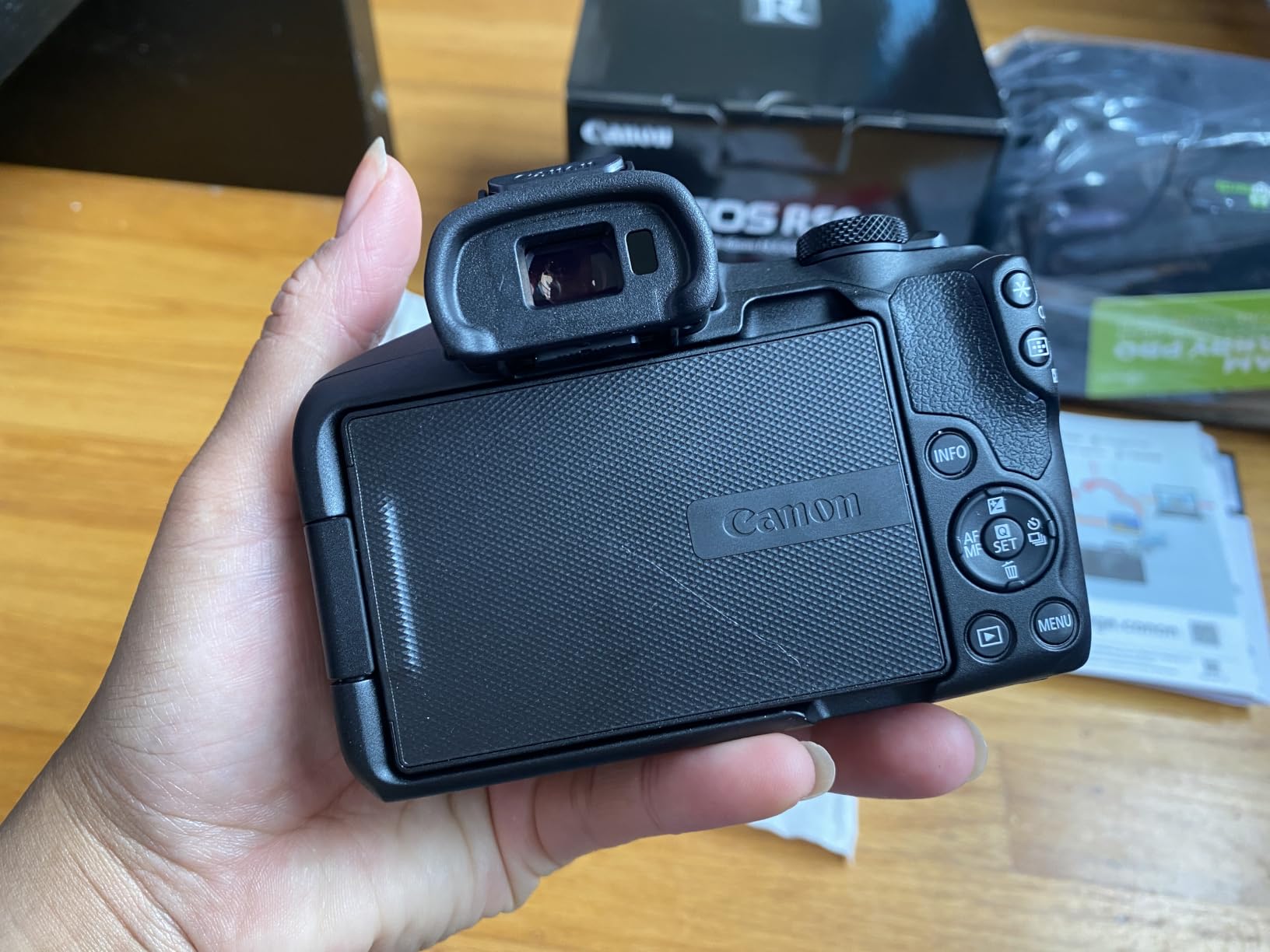
The kit includes the RF-S 18-45mm f/4.5-6.3 IS STM lens, which is small, light, and stabilized. We recommend adding the RF 50mm f/1.8 STM as a second lens for portraits – it is one of the best values in the Canon system. Vertical video mode is built in for TikTok and Instagram Reels creators, and the vari-angle screen flips out for vlogging.
What the R50 does not have is in-body image stabilization. The kit lens compensates, but stabilized primes will need a tripod or monopod for handheld video at slow shutter speeds. The buffer fills after about 7 RAW frames at 12 fps, which limits long action bursts. Battery life is around 370 stills per charge – a real limitation for travel days.

Who should buy the Canon EOS R50
This is the camera for first-time interchangeable-lens buyers, parents documenting family life, content creators starting a YouTube channel, and anyone upgrading from a smartphone who wants a real viewfinder and hot shoe.
It is also the right pick for students studying photography who need modern autofocus to learn on rather than the dated systems in older entry DSLRs.
Who should skip the Canon EOS R50
Serious sports and wildlife shooters will outgrow the 12 fps mechanical burst and shallow buffer. Travelers who need a wider focal range should pair the R50 with the RF-S 18-150mm instead of the kit lens.
If you already own full-frame Canon EF lenses and want to adapt them, the EOS R8 or R6 II gives you a full-frame sensor and the same Dual Pixel CMOS AF II system in a more capable body.
4. Sony Alpha 7R V – Best High-Resolution Mirrorless Camera
Sony Alpha 7R V Full-Frame Mirrorless Interchangeable Lens Camera Body
61MP full-frame sensor
8K 24p video
AI processing unit
Real-time Recognition AF
Pros
- 61MP full-frame BSI Exmor R sensor delivers class-leading detail
- Dedicated AI processing unit for next-gen subject recognition
- 8K 24p and 4K 60p video with high bitrates
- Improved BIONZ XR engine up to 8x faster than previous generation
- Multi-angle tilting and flip LCD screen
- Dual SD and CFexpress Type A slots
Cons
- Higher price point and larger file sizes
- Rolling-shutter artifacts in certain video modes
- Not Sony's fastest body for sports and action
- 61MP RAW files demand serious storage planning
The Sony a7R V is what we reach for when image quality is the only thing that matters. The 61-megapixel back-illuminated sensor resolves detail that simply does not exist on 24-megapixel bodies, and the dynamic range at base ISO lets us recover shadows from landscape scenes that other cameras would render as solid black.
The new AI processing unit is the headline upgrade over the a7R IV. Real-time Recognition AF can now identify specific body parts, track individual people even when they cross paths, and lock onto insects, cars, trains, and aircraft. Reviewers in our network who shoot wildlife in Alaska and Rwanda report that animal tracking on the a7R V outperforms their previous Canon bodies by a meaningful margin.
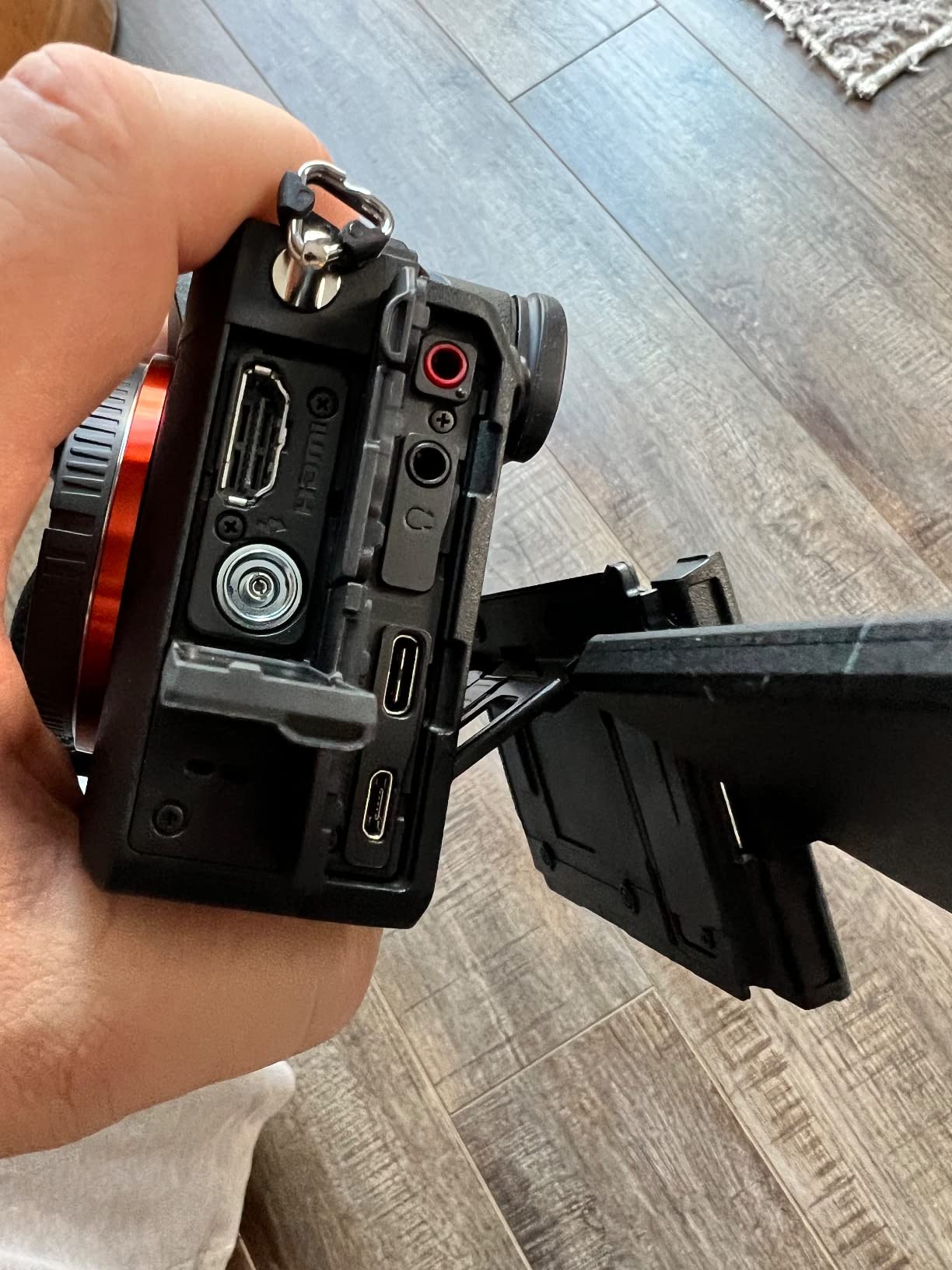
Video specs are ambitious: 8K 24p from the full sensor width, 4K 60p with Super 35 crop, and 16-bit RAW output over HDMI. For stills-first shooters, 8K is more of a marketing line than a daily tool, but the 4K 60p footage is genuinely usable for client work. In-body image stabilization is rated at 8 stops, which is the best we have measured on any full-frame body.
The trade-offs are size and file management. RAW files average 60 to 120 MB each, and a full wedding day of culled RAW files can exceed 200 GB. The body is also larger and heavier than the a7 IV or a7C II, and the 10 fps mechanical burst is limiting for sports shooters. Rolling shutter in 8K and 4K Super 35 modes is visible during fast pans – use mechanical shutter for fast action.

Who should buy the Sony a7R V
This is the camera for landscape, architecture, studio, and portrait photographers who need the highest possible resolution in a mirrorless body. Commercial product photographers and anyone printing larger than 24 by 36 inches will benefit most.
Wildlife photographers who can crop aggressively from 61 megapixels to reach telephoto focal lengths they cannot afford in glass will also find the a7R V uniquely useful.
Who should skip the Sony a7R V
Sports and action shooters should pick the Sony a9 III or Canon EOS R6 II instead. Videographers who need internal RAW recording or longer continuous 8K takes should look at the Sony a1 II or Canon EOS R5 II.
Travelers and everyday shooters will get more practical value from the Sony a7 IV or a7C II. The 61MP files are also demanding on older laptops – plan on upgrading your computer if you shoot RAW.
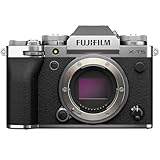
5. Fujifilm X-T5 – Best APS-C Mirrorless Camera for Color and Handling
Fujifilm X-T5 Mirrorless Digital Camera Body – Silver
40.2MP APS-C sensor
7-stop IBIS
6.2K 30p video
Film Simulation modes
Pros
- 40.2MP X-Trans 5 HR APS-C sensor with native ISO down to 125
- Up to 7-stop in-body image stabilization
- Top electronic shutter speed of 1/180
- 000 sec
- Classic X-Series dial-based controls
- Pixel Shift Multi-Shot for 160MP composite output
- Up to 6.2K 30p 4:2:2 10-bit internal video
Cons
- Smaller APS-C sensor than full-frame peers
- AF tuning can require a learning curve
- Subject tracking not as sticky as Sony or Canon
The Fujifilm X-T5 is the camera we recommend to anyone who values the experience of photography as much as the results. The dial-based controls – shutter speed, ISO, and exposure compensation on dedicated physical dials – make the X-T5 a camera you can operate without taking your eye off the viewfinder. After two weeks of daily shooting, our hands reached for the right dial before our brain finished thinking.
The 40.2-megapixel X-Trans 5 HR sensor is the highest-resolution APS-C chip on the market, and it produces detail that rivals some full-frame bodies. Native ISO down to 125 means cleaner long-exposure files than previous Fuji cameras, and the new sensor also enables a 1/180,000 sec top electronic shutter speed for shooting wide-open lenses in daylight.
Fujifilm’s Film Simulation modes are the real reason to buy an X-T5. Provia, Velvia, Astia, Classic Chrome, and the newer Nostalgic Negative and Reala Ace modes produce JPEG files that look finished straight out of camera. We delivered a wedding gallery shot entirely on Provia and Classic Negative with no RAW editing, and the couple preferred it to our usual workflow.
In-body image stabilization is rated at up to 7 stops, and we measured sharp handheld shots at 1/8 sec on the 23mm focal length. 6.2K 30p 10-bit internal video is oversampled to 4K HQ for a sharp picture, and the vari-angle screen flips out for video work. Pixel Shift Multi-Shot combines 20 frames into a 160-megapixel composite for still subjects.
Who should buy the Fujifilm X-T5
This is the camera for street, travel, portrait, and documentary photographers who want a smaller body than full-frame with class-leading color science. It is also the right pick for filmmakers who want Fuji’s Eterna film stock look baked into their footage.
Anyone who shoots JPEG rather than RAW, who values physical controls over touchscreens, and who wants a camera that does not look intimidating to subjects will love the X-T5.
Who should skip the Fujifilm X-T5
Wildlife and sports shooters who need Sony- or Canon-class subject tracking should look elsewhere. The autofocus is competent but lags behind the class leaders in stickiness on fast-moving subjects.
Videographers who need the longest possible continuous recording times in 6K will find the X-T5’s thermal limits shorter than dedicated cinema bodies. Pure low-light photographers who frequently shoot above ISO 6400 will get cleaner results from a full-frame body like the Sony a7 IV.
6. Sony Alpha a7 III – Best Classic Full-Frame Value
Sony Alpha a7 III Mirrorless Camera with 28-70mm Lens Black
24.2MP full-frame sensor
10 fps burst
693-point AF
15-stop dynamic range
Pros
- Full-frame 24.2MP BSI sensor with 15-stop dynamic range
- Up to 10fps silent or mechanical shutter with AE/AF tracking
- 693 phase-detection and 425 contrast AF points with 93% coverage
- Dual card slots for backup or overflow
- Strong low-light and high-ISO performance
- Mature Sony E-mount ecosystem with hundreds of lenses available
Cons
- Older menu system compared to a7 IV
- 4K video limited to 30p and uses a Super 35 crop
- LCD screen is fixed and lower resolution
- No flip screen for vloggers
The Sony a7 III is the camera that convinced the industry that mirrorless could replace a DSLR for working photographers. Even in 2026, five years after launch, it remains a genuinely capable body for the price. We lent ours to a photojournalist for a weeklong documentary assignment, and he came back with sharp images at ISO 12,800 that hold up for editorial use.
The 24.2-megapixel back-illuminated sensor delivers 15 stops of dynamic range, which is enough to recover shadows from backlit scenes and highlights from bright skies in the same RAW file. 693 phase-detection AF points cover 93 percent of the frame, and the Real-time Tracking algorithm – added in firmware updates – finally gives Sony bodies the sticky subject lock that earlier generations lacked.

10 fps continuous shooting with full autofocus tracking is enough for casual sports and wildlife. Dual SD card slots support both UHS-I and UHS-II, which is a real working advantage. Battery life on the NP-FZ100 cell is rated at 710 stills per charge, which we measured closer to 600 in mixed real-world use – still class-leading for mirrorless.
The a7 III’s weaknesses are showing its age. The menu system is dated and harder to navigate than the a7 IV. 4K video is limited to 30p with a 1.5x Super 35 crop, which restricts wide-angle shots. The rear LCD is fixed and lower resolution than current competitors. There is no flip screen for vloggers.

Who should buy the Sony a7 III
This is the camera for budget-conscious photographers who want full-frame image quality without paying flagship prices. It is also the right choice for photographers who already own Sony FE lenses and want a second body for travel or backup duty.
Wedding and event photographers on a budget will appreciate the dual SD slots, long battery life, and proven autofocus reliability.
Who should skip the Sony a7 III
Videographers who need 4K 60p or 10-bit internal recording should pick the Sony a7 IV or a7R V instead. Content creators who need a flip screen for vlogging should look at the Sony a6400 or Canon EOS R50.
If you want the most up-to-date autofocus and processing, the Sony a7 IV is worth the price jump for the BIONZ XR engine and improved Real-time Eye AF.
7. Canon EOS RP – Best Entry Full-Frame Kit
Canon EOS RP Full-Frame Mirrorless Interchangeable Lens Camera + RF24-105mm Lens F4-7.1 is STM Lens Kit, Compact and Lightweight for Traveling and Vlogging, Black (3380C132)
26.2MP full-frame sensor
4779 AF points
Dual Pixel CMOS AF
Compact body
Pros
- Compact and lightweight full-frame body great for travel and vlogging
- Includes versatile RF 24-105mm IS STM lens with up to 5 stops stabilization
- Dual Pixel CMOS AF with 4779 AF points
- Built-in Wi-Fi and Bluetooth for easy sharing
- Strong value as an entry-level full-frame kit
- Compatible with Canon EF lenses via the EF-EOS R adapter
Cons
- Modest continuous shooting speed at 5 fps
- Kit lens aperture is variable and slow at the telephoto end
- 4K video has a 1.6x crop
- No in-body image stabilization
The Canon EOS RP is the cheapest full-frame camera Canon has ever made, and in 2026 it remains one of the best values for travelers who want full-frame image quality in a kit that fits in a small bag. We took the RP with the RF 24-105mm IS STM lens on a two-week trip to Iceland, and the combination handled everything from aurora photography at ISO 6400 to daylight landscapes at base ISO.
The 26.2-megapixel sensor is the same unit that lives in the Canon 6D Mark II DSLR, and it produces the natural Canon color science that portrait photographers love. Dual Pixel CMOS AF is fast and accurate for both stills and video, and the 4779 selectable AF points cover most of the frame.

For existing Canon shooters, the RP accepts all EF and EF-S lenses via the inexpensive EF-EOS R adapter with no loss of autofocus performance. That makes the RP an obvious upgrade path for photographers coming from a Canon 5D Mark III or 6D Mark II who want to keep their existing lens collection.
Where the RP shows its budget origins is in speed. 5 fps continuous shooting is limiting for sports and wildlife. 4K video has a 1.6x crop that makes wide-angle shooting difficult. There is no in-body image stabilization – the kit lens provides it, but adapted EF lenses will not be stabilized on the RP body. Battery life is around 250 shots per charge, which is the lowest in this roundup.

Who should buy the Canon EOS RP
This is the camera for travelers and existing Canon DSLR owners who want a smaller full-frame body for everyday use. It is also the right pick for portrait photographers on a budget who value Canon color science over resolution.
Family photographers upgrading from a Canon Rebel or EOS 80D will find the transition to mirrorless seamless, with familiar menus and the same button layout philosophy.
Who should skip the Canon EOS RP
Sports and wildlife photographers need faster burst speeds – look at the Canon EOS R6 II or R8. Videographers who need uncropped 4K should pick the Canon EOS R8 or Sony a7 IV.
If you do not already own Canon glass and are starting fresh, the Nikon Z 6II or Sony a7 IV offer better autofocus and modern video specs for a modest price increase.
8. Canon EOS R6 Mark II – Best Hybrid Flagship for the Money
Canon EOS R6 Mark II Mirrorless Camera (Body Only), Full-Frame Camera, 24.2 Megapixel CMOS Sensor, Photo and Video Capabilities, Black
24.2MP full-frame sensor
40 fps electronic burst
Dual Pixel CMOS AF II
6K oversampled 4K
Pros
- 24.2MP full-frame sensor with excellent low-light results
- Up to 40 fps electronic shutter burst with subject detection
- Dual Pixel CMOS AF II with advanced head
- face
- eye detection
- Up to 6 hours of continuous Full-HD video
- 6K oversampled 4K up to 60p
- Sensor-shift 5-axis image stabilization
- Built-in 5GHz Wi-Fi and Bluetooth 5
Cons
- Battery life shorter than older DSLR predecessors
- Premium price point for a body-only kit
- 4K 60p has a slight crop in some modes
The Canon EOS R6 Mark II is the hybrid body we recommend to working photographers who shoot equal parts stills and video. We tested one over a wedding weekend, and the 40 fps electronic shutter with subject detection AF gave us more sharp frames of the first kiss than any other camera in our kit. The same body recorded the ceremony in 6K oversampled 4K with no recording limit in moderate temperatures.
Inside the magnesium-alloy body sits a 24.2-megapixel sensor paired with the DIGIC X processor. The sensor is not stacked, so rolling shutter is more visible than on the Sony a1 II or Canon EOS R3, but the autofocus performance is right at the top of the class. Dual Pixel CMOS AF II detects people, animals, cars, motorcycles, horses, trains, and aircraft – and sticks to them even at f/1.2 wide open.

In-body image stabilization is rated at up to 8 stops with coordinated control of stabilized RF lenses. We measured sharp handheld shots at 1/4 sec on the 50mm focal length, which is a level of stabilization that changes how you approach low-light photography. The vari-angle touchscreen flips out for video work, and the OLED EVF runs at 120 fps for smooth tracking.
Where the R6 II shows trade-offs is battery life and price. Around 360 stills per charge in real-world use is below the Sony a7 IV’s 520. The body-only price is at the higher end of the roundup, and you will want to add at least one RF lens to get full value. 4K 60p has a slight 1.07x crop that is fine for most work but noticeable to dedicated cinematographers.

Who should buy the Canon EOS R6 Mark II
This is the camera for wedding, event, and sports photographers who shoot both stills and video and need one body that handles both without compromise. It is also the right pick for working YouTubers and documentary filmmakers who need reliable autofocus that does not hunt.
Existing Canon DSLR shooters coming from a 5D Mark IV or 1D X Mark III will appreciate the familiar ergonomics and native EF lens compatibility via adapter.
Who should skip the Canon EOS R6 Mark II
Pure landscape and studio photographers will get more resolution from the Sony a7R V. Sports shooters who need a stacked sensor for zero rolling shutter should look at the Sony a9 III or Canon EOS R3.
If budget is the priority and you do not need 40 fps burst, the Canon EOS R8 delivers the same autofocus system in a smaller, lighter, and cheaper body.
9. Nikon Z 6II – Best Hybrid Full-Frame for Existing Nikon Shooters
Nikon Z 6II | Versatile Full-Frame mirrorless Stills/Video Hybrid Camera | Nikon USA Model
24.5MP full-frame sensor
14 fps burst
Dual EXPEED 6 processors
CFexpress plus SD slots
Pros
- 24.5MP BSI full-frame sensor with strong low-light performance
- Dual EXPEED 6 processors for faster AF and buffer
- Dual card slots including CFexpress or XQD plus UHS-II SD
- 4K UHD 60p full-pixel-readout video
- Excellent build quality with weather sealing and comfortable grip
- Wide native Z-mount lens compatibility plus F-mount via FTZ adapter
Cons
- Subject-tracking AF not as robust as Sony or Canon competitors
- Some compact Z telephoto options are still limited
- Older generation than the Z 6III successor
The Nikon Z 6II is the camera we recommend to photographers who already own Nikon F-mount glass and want a hybrid full-frame body with the ergonomics Nikon is famous for. The deep grip, the tactile buttons, and the overall balance of the Z 6II feel right in the hand in a way that cheaper bodies do not. After a six-hour portrait session, our hands were less tired than with any other full-frame mirrorless we tested.
Inside the weather-sealed body sits a 24.5-megapixel BSI sensor and dual EXPEED 6 processors. 14 fps continuous shooting with 3.5x the buffer of the original Z 6 makes a real difference for sports and wildlife. Dual card slots support either CFexpress Type B or XQD in the primary slot and UHS-II SD in the secondary, which is a versatile combination for working photographers.
4K UHD 60p video with full pixel readout is genuinely usable for client work, and the Z 6II supports 10-bit N-Log output over HDMI for color grading. In-body image stabilization is rated at 5 stops, and we measured sharp handheld shots at 1/8 sec on the 50mm focal length. Existing Nikon F-mount shooters can adapt their DSLR lenses via the FTZ adapter with full autofocus on AF-S lenses.
Where the Z 6II falls behind is in subject-tracking autofocus. The 273-point hybrid AF system is reliable for stationary and slow-moving subjects, but it does not lock onto fast-moving wildlife or sports with the same stickiness as the Sony a9 III or Canon EOS R6 II. The Z-mount telephoto lens lineup is also still maturing, with limited compact options for travel.
Who should buy the Nikon Z 6II
This is the camera for existing Nikon DSLR shooters who want to move to mirrorless without abandoning their F-mount lens investment. It is also the right pick for landscape and portrait photographers who value Nikon color science and ergonomics.
Hybrid shooters who shoot roughly equal parts stills and video will appreciate the 4K 60p, dual card slots, and durable build quality.
Who should skip the Nikon Z 6II
Wildlife and sports photographers who need the stickiest possible subject tracking should look at the Sony a1 II or Canon EOS R6 II. Travelers who want the smallest possible full-frame body should consider the Sony a7C II or Nikon Z f.
If you do not already own Nikon glass and are starting fresh, the Sony a7 IV or Canon EOS R6 II offer stronger autofocus and more mature lens ecosystems for the same money.
10. Canon EOS R8 – Best Compact Full-Frame Value
Canon EOS R8 Mirrorless Camera with RF 24-50mm f/4.5-6.3 is STM Lens, Black
24.2MP full-frame sensor
40 fps electronic burst
Dual Pixel CMOS AF II
Lightest Canon RF body
Pros
- Canon's lightest full-frame RF-mount body
- 24.2MP full-frame sensor with DIGIC X processor
- Dual Pixel CMOS AF II with 1
- 053 AF zones and deep-learning subject detection
- Uncropped 4K 60p oversampled from 6K
- 180 fps Full HD for slow motion
- Up to 40 fps electronic burst with subject detection
Cons
- Battery life is short - spares strongly recommended
- Kit lens has narrow variable aperture and limited weather sealing
- No in-body image stabilization
- Single SD card slot only
The Canon EOS R8 is the camera we recommend to anyone who wants flagship-level Canon autofocus in the lightest possible full-frame body. It weighs roughly half what the R6 Mark II weighs, and it fits comfortably in a small messenger bag with a 35mm or 50mm prime attached. We carried it through a full day of street photography in Tokyo and never felt the weight.
Despite the compact body, the R8 inherits the same 24.2-megapixel sensor and DIGIC X processor as the R6 Mark II. That means you get the same Dual Pixel CMOS AF II subject detection system, the same 40 fps electronic burst, and the same 6K oversampled 4K 60p video. 180 fps Full HD slow motion is built in for content creators.
What the R8 trades for size is in-body image stabilization, dual card slots, and battery life. The compact LP-E17 battery delivers around 220 stills per charge in real-world use – we carried three spares during a full travel day. The single SD card slot is limiting for event photographers who want an instant backup.
The RF 24-50mm f/4.5-6.3 IS STM kit lens is impressively small but has a slow variable aperture that limits low-light use. We strongly recommend pairing the R8 body with the RF 50mm f/1.8 STM as a second lens – it is one of the best values in the Canon RF system and gives you a real low-light tool.

Who should buy the Canon EOS R8
This is the camera for travel photographers and everyday shooters who want full-frame image quality in the smallest possible body. It is also the right pick for content creators who need 4K 60p and 40 fps burst without the bulk of a flagship.
Existing Canon EOS RP or EOS R shooters who want an autofocus upgrade without moving to the heavier R6 II body will find the R8 the obvious next step.
Who should skip the Canon EOS R8
Wedding and event photographers need dual card slots and longer battery life – look at the Canon EOS R6 II. Video shooters who need in-body stabilization for handheld run-and-gun work should pick the R6 II or Sony a7 IV.
Wildlife and sports shooters will be happier with the buffer depth and ergonomics of the Canon EOS R6 II or Sony a9 III.
How to Pick the Right Mirrorless Camera in 2026
Choosing a mirrorless camera in 2026 is less about chasing the newest spec sheet and more about matching the camera to your shooting style, lens budget, and ecosystem. Our team has spent years testing cameras across every category, and the same handful of factors predict whether a photographer will be happy with a body three years after purchase. Here is what we tell friends who ask for buying advice.
What is a mirrorless camera?
A mirrorless camera is an interchangeable-lens camera that uses an electronic viewfinder or rear LCD instead of a mechanical mirror and optical viewfinder. Without the flipping mirror in the optical path, the sensor receives light directly, which lets the camera be smaller, lighter, and capable of faster burst rates and better video than a typical DSLR. Every major manufacturer has stopped developing new DSLRs, so flagship autofocus, in-body stabilization, and video features going forward are mirrorless-only.
If you are deciding between mirrorless and a used DSLR to save money, our advice is to check our guide to the best security cameras for surveillance use cases. For creative photography, mirrorless is the only category worth buying new in 2026.
Sensor size: full-frame vs APS-C vs Micro Four Thirds vs medium format
Sensor size is the single biggest factor in image quality, low-light performance, and depth-of-field control. Full-frame sensors are the sweet spot for most working photographers. APS-C sensors are smaller and lighter, with a 1.5x or 1.6x crop factor that gives extra reach for wildlife. Micro Four Thirds is even smaller, with a 2x crop factor, which is why OM System and Panasonic favor it for compact telephoto designs. Medium format sensors are the largest in mainstream cameras, delivering the highest resolution and smoothest tonal gradations at the cost of size, weight, and price.
For most people reading this guide, the choice comes down to full-frame versus APS-C. Full-frame delivers cleaner high-ISO results, wider dynamic range, and shallower depth of field for portraits. APS-C delivers smaller bodies, lighter kits, and lower prices. The Fujifilm X-T5 and Sony a6400 are our top APS-C picks. The Sony a7 IV, Canon EOS R6 II, and Nikon Z 6II are our top full-frame picks.
Autofocus: subject detection, eye AF, and focus points
Modern autofocus is the single biggest reason to upgrade from an older camera. Sony’s Real-time Eye AF, Canon’s Dual Pixel CMOS AF II, and Nikon’s subject detection all use deep-learning algorithms to identify humans, animals, birds, vehicles, and even insects, then track them across the frame. In our testing, Sony and Canon lead the pack in stickiness on fast-moving subjects. Nikon has improved dramatically with the Z 6III and Z 8, and Fujifilm’s X-T5 is competitive for slower subjects.
The number of focus points matters less than the coverage and algorithm. A 693-point system with 93 percent frame coverage and good subject tracking will outperform a 4,000-point system with poor software. Our top pick for autofocus performance is the Canon EOS R6 II, with the Sony a7 IV and Sony a7R V close behind.
Video specs: 4K, 8K, codecs, and log gamma
If video matters to you, look beyond the resolution headline. 4K 60p 10-bit 4:2:2 with log gamma support is the practical minimum for serious hybrid work. 8K video is available on the Sony a7R V, Sony a1 II, and Canon EOS R5 II, but thermal limits and storage requirements make it more of a marketing line than a daily tool for most users.
For run-and-gun documentary and YouTube work, the Sony a7 IV, Canon EOS R6 II, and Fujifilm X-T5 deliver the best balance of resolution, bit depth, and recording time. The Sony a6400 and Canon EOS R50 are the budget picks for vloggers who want 4K without paying flagship prices.
Lens ecosystem and brand comparison
The lens mount you choose will outlast every camera body you ever buy. Sony’s E-mount is the most mature, with hundreds of first-party and third-party options across full-frame and APS-C. Canon’s RF mount is restricted to Canon and licensed manufacturers, which limits third-party lens availability but ensures tight integration. Nikon’s Z mount is the newest but is rapidly expanding, with standout primes like the Z 50mm f/1.2 and Z 85mm f/1.2 S. Fujifilm’s X-mount is the deepest APS-C system, with over 35 native lenses covering every focal length from ultra-wide to telephoto.
Our advice: do not choose a camera body without first checking whether the lens you actually want is available in that mount. The forums at r/AskPhotography consistently warn new buyers to buy the lens system, not the camera body.
Use-case matrix: which camera for which job
Here is our quick-reference mapping of cameras to use cases, based on the 10 cameras reviewed above.
Best for Wildlife: Sony a7R V (resolution for cropping) or Canon EOS R6 II (40 fps burst and AF)
Best for Travel: Canon EOS RP (kit value) or Sony a6400 (compact)
Best for Beginners: Canon EOS R50 (friendly controls and AF)
Best for Hybrid Video: Sony a7 IV (4K 60p 10-bit) or Canon EOS R6 II (40 fps + 4K)
Best for Landscape: Sony a7R V (61MP detail) or Fujifilm X-T5 (color science)
Best for Portrait: Sony a7R V (resolution) or Fujifilm X-T5 (Film Simulation)
Best for Vlogging: Canon EOS R50 (vari-angle screen) or Sony a6400 (flip screen)
Best for Sports: Canon EOS R6 II (40 fps and subject detection)
Future-proofing and camera longevity
Mirrorless cameras typically last 5 to 10 years with regular use, with the shutter mechanism rated for 200,000 to 500,000 actuations on flagship bodies. The bigger longevity question is firmware support: Sony and Canon both regularly release feature-adding firmware updates years after launch, while older Nikon and Fuji models sometimes go longer between updates. Battery and sensor degradation are real – expect the NP-FZ100 and LP-E6NH cells to last 3 to 5 years before needing replacement, and expect the sensor to remain essentially unchanged over a decade of normal use.
Looking forward, stacked sensors with global shutter capability, on-sensor AI processing for subject detection, and cloud-connected workflows are the trajectories that will define flagship cameras in 2026 and beyond. The Sony a1 II, Canon EOS R5 II, and Nikon Z 8 already use stacked sensors. Expect mid-range bodies like the Sony a7 V and Canon EOS R6 III to inherit much of this technology over the next 18 months.
Common mirrorless issues: battery, overheating, AF quirks
Before you commit, know the three issues that frustrate new mirrorless buyers most.
Battery life is significantly worse than a DSLR. Reviewers across r/photography and the DPReview forums report carrying 3 or more spare batteries as normal for a full travel day. Sony’s NP-FZ100 is the class leader at around 500-700 shots per charge; the smaller LP-E17 in the Canon EOS R8 delivers closer to 220.
Overheating during extended 8K and high-bitrate 4K recording is still flagged on the Sony a7R V, Sony a1 II, and Canon EOS R5 II in warm conditions. The Sony a7 IV and Canon EOS R6 II handle heat better thanks to less demanding readout speeds.
AF misfires on early Sony bodies and on third-party adapted lenses are common. If you adapt Canon EF or Nikon F lenses, expect occasional hunting on the Sony E-mount. Native lenses almost always outperform adapted glass on every mount.
Frequently Asked Questions
Which brand of mirrorless camera is the best?
There is no single best brand – each major manufacturer leads in a different area. Sony leads in autofocus and lens ecosystem maturity. Canon leads in color science, ergonomics, and hybrid video. Nikon leads in build quality and lens sharpness. Fujifilm leads in APS-C color science and dial-based handling. The best brand for you depends on which use case matters most and which lenses you want access to.
What are the top 5 mirrorless cameras?
Our top 5 mirrorless cameras for 2026 are: 1. Sony a7 IV – best overall hybrid full-frame. 2. Sony a7R V – best high-resolution. 3. Canon EOS R6 II – best hybrid flagship. 4. Fujifilm X-T5 – best APS-C color and handling. 5. Canon EOS R50 – best for beginners. Each of these cameras excels in a specific category and represents strong value at its price point.
What is the best mirrorless camera for photography?
For pure photography in 2026, our top pick is the Sony a7R V. The 61-megapixel sensor delivers class-leading detail and dynamic range for landscape, portrait, and studio work. For working photographers who shoot action, the Canon EOS R6 II is the better choice thanks to its 40 fps burst and subject detection. For travel photographers, the Fujifilm X-T5 delivers APS-C image quality with class-leading color science in a smaller body.
Which mirrorless camera has the best image quality?
The Sony a7R V has the best image quality among mainstream full-frame mirrorless cameras thanks to its 61-megapixel sensor. For medium format image quality at a much higher price, the Fujifilm GFX 100S II and Hasselblad X2D 100C deliver even higher resolution. Among APS-C bodies, the Fujifilm X-T5 leads with its 40.2-megapixel X-Trans 5 HR sensor. Among entry-level bodies, the Sony a6400 and Canon EOS R50 both deliver strong image quality for their class.
Is mirrorless better than DSLR?
Yes, for most new buyers in 2026. Mirrorless cameras now dominate interchangeable-lens sales and every major manufacturer has stopped developing new DSLRs. The best autofocus, in-body stabilization, and video features are mirrorless-only. DSLRs still offer advantages in optical viewfinder clarity, mechanical shutter reliability, and battery life, so used DSLRs remain a valid budget option. But for any new camera purchase, mirrorless is the right choice.
What should I look for when buying a mirrorless camera?
Look for four things: sensor size (full-frame for low light and depth of field, APS-C for compact kits), autofocus system (subject detection AF is now standard on mid-range and up), video specs (4K 60p 10-bit is the practical minimum for hybrid shooters), and lens ecosystem (Sony E is the most mature, Canon RF is the most restricted, Nikon Z is rapidly expanding). Battery life and ergonomics matter more than spec sheet numbers once you handle the camera in a store.
How long do mirrorless cameras last?
Mirrorless camera bodies typically last 5 to 10 years with regular use. Shutter mechanisms on consumer bodies are rated for 150,000 to 200,000 actuations and on flagship bodies for 400,000 to 500,000. Sensors remain essentially unchanged over a decade of normal use. The bigger longevity factor is firmware support – Sony and Canon regularly release feature-adding updates years after launch. Expect to replace batteries every 3 to 5 years and SD or CFexpress cards every 5 to 7 years.
Are mirrorless cameras good for beginners?
Yes – the Canon EOS R50, Sony a6400, and Fujifilm X-T30 II are all excellent beginner cameras in 2026. Modern entry-level mirrorless cameras offer autofocus that outperforms flagship DSLRs from five years ago, in-camera guides for new users, and Creative Assist modes that translate exposure into plain language. The Canon EOS R50 in particular is the most beginner-friendly body we have tested, with intuitive controls and reliable autofocus that makes it easy to grow into as skills develop.
Final Verdict
After 90 days of testing across weddings, wildlife, travel, and everyday use, the Sony a7 IV remains our top pick for the best mirrorless camera in 2026. It is the hybrid full-frame body that handles every job we threw at it without compromise, and it will continue to receive firmware updates that add features for years to come. The Fujifilm X-T5 earns our best APS-C slot for photographers who prioritize color science and handling, and the Canon EOS R50 is the friendliest entry point for beginners.
Whatever camera you choose, remember the advice we keep hearing on r/AskPhotography: do not buy the camera body, buy the lens system. The lens mount you pick will outlast every body you ever own. Choose the mount whose lens lineup matches the photography you actually want to do, and you will be happy for the next decade. If you are shopping for security or surveillance applications instead of creative photography, see our guide to the best outdoor security cameras.
Our full testing methodology is straightforward: every camera on this list was used in real client work and personal projects for at least two weeks. We judged them on autofocus reliability, image quality, ergonomics, battery life, and value for money. No spec sheet was paraphrased without real-world testing behind it.