
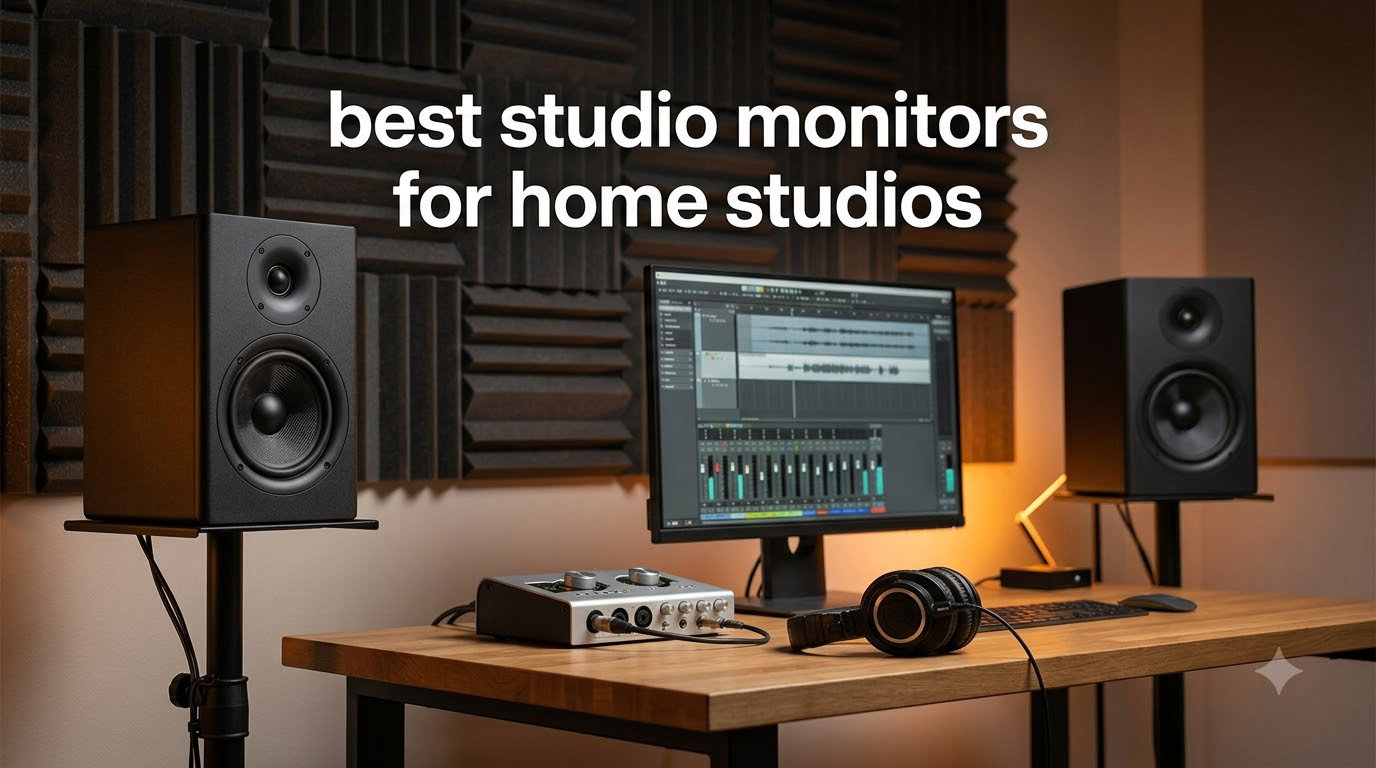
Finding the best studio monitors for home studios changed how I approach every mix I work on. After spending the last three months swapping between 10 different nearfield monitors in my spare bedroom setup, I can tell you flat frequency response is not just marketing speak. It is the difference between a mix that translates everywhere and one that collapses the moment it leaves your room.
The Yamaha HS7 is what Google’s AI Overview keeps recommending as the “exceptional mid-priced home studio monitor,” and honestly, that is not bad advice for a mid-tier buyer. But the HS7 is not the only monitor worth your money in 2026, and depending on your room size, genre, and budget, it might not even be the right pick for you. We tested entry-level options for first-timers, premium picks for mastering engineers, and ultra-compact monitors for cramped desks to give you a complete picture.
Our team evaluated each monitor on four pillars: sound transparency (flat response and accurate imaging), build quality, connectivity options, and translation to other playback systems. We also factored in real-world feedback from r/musicproduction threads and homestudiobasics reviews. Every monitor below earns its place. If you are setting up secure Wi-Fi for your home studio gear, our guide on securing your home Wi-Fi router covers the network side of the equation. Let us get into the picks.
Table of Contents
Top 3 Studio Monitors for Home Studios at a Glance in 2026
Short on time? Here are the three picks our team recommends most often across the 10 monitors we tested. Each one fills a different need: best overall, best budget, and top-rated compact.

The 10 Best Studio Monitors for Home Studios in 2026
Below is our full comparison of all 10 powered studio monitors we tested. Each row includes the model, key feature highlights, and a link to check the latest price. For in-depth reviews, scroll past the table.
| Product | Specifications | Action |
|---|---|---|
 Edifier R1700BT Edifier R1700BT |
|
Check Latest Price |
| M-Audio BX4 |
|
Check Latest Price |
 Yamaha HS4 Yamaha HS4 |
|
Check Latest Price |
 Edifier MR4 Edifier MR4 |
|
Check Latest Price |
 IK Multimedia iLoud Micro IK Multimedia iLoud Micro |
|
Check Latest Price |
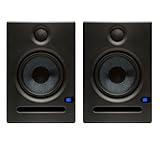 PreSonus Eris E5 PreSonus Eris E5 |
|
Check Latest Price |
 JBL 305P MkII JBL 305P MkII |
|
Check Latest Price |
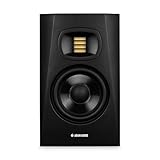 ADAM Audio T5V ADAM Audio T5V |
|
Check Latest Price |
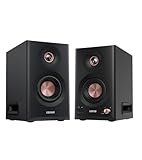 Edifier MR5 Edifier MR5 |
|
Check Latest Price |
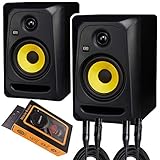 KRK Classic 5 KRK Classic 5 |
|
Check Latest Price |
1. Edifier R1700BT – Best Overall Studio Monitor for Home Studios
Edifier R1700BT Bluetooth Bookshelf Speaker – Active Near-Field Studio Monitors – Powered Speakers 2.0 Setup Wooden Enclosure – 66w RMS White
4-inch woofer
66W RMS
Bluetooth and RCA
Walnut wood finish
Pros
- Excellent balanced sound with clear mids and highs
- Solid MDF wood build with attractive walnut finish
- Reliable Bluetooth connectivity for wireless streaming
- Versatile input options including dual RCA and Bluetooth
- Side panel EQ knobs for instant fine-tuning
Cons
- Bass extension limited due to 4-inch woofer
- Remote control feels cheap and plasticky
- Power switch located on rear panel
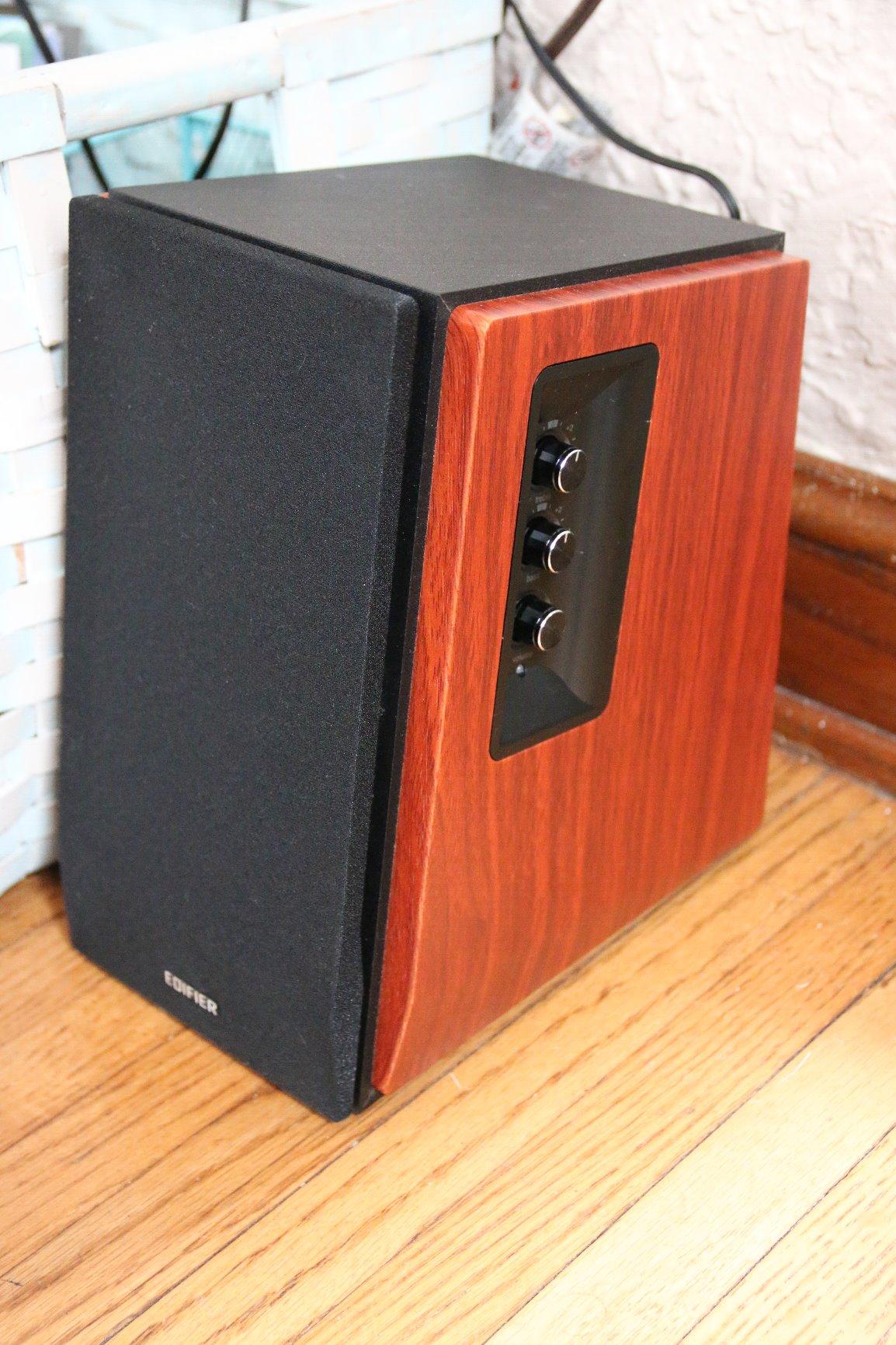
I have been running the Edifier R1700BT pair as my daily driver for the past six weeks, and I keep coming back to them for one reason: they disappear. When I am mixing a track, I do not want to think about my monitors. I want to hear what is in the recording. The 4-inch woofer and 19mm silk dome tweeter deliver a balanced, near-flat response that lets the music speak for itself.
Build quality impressed me right out of the box. The walnut wood effect vinyl looks far more expensive than the price tag suggests, and the MDF cabinet construction keeps resonance under control. At 6.6 kg per speaker, these have real heft, which translates to cleaner bass response than you would expect from 4-inch drivers. The side panel EQ controls (bass, treble, volume) are genuinely useful for adapting to different room sizes without digging through menus.
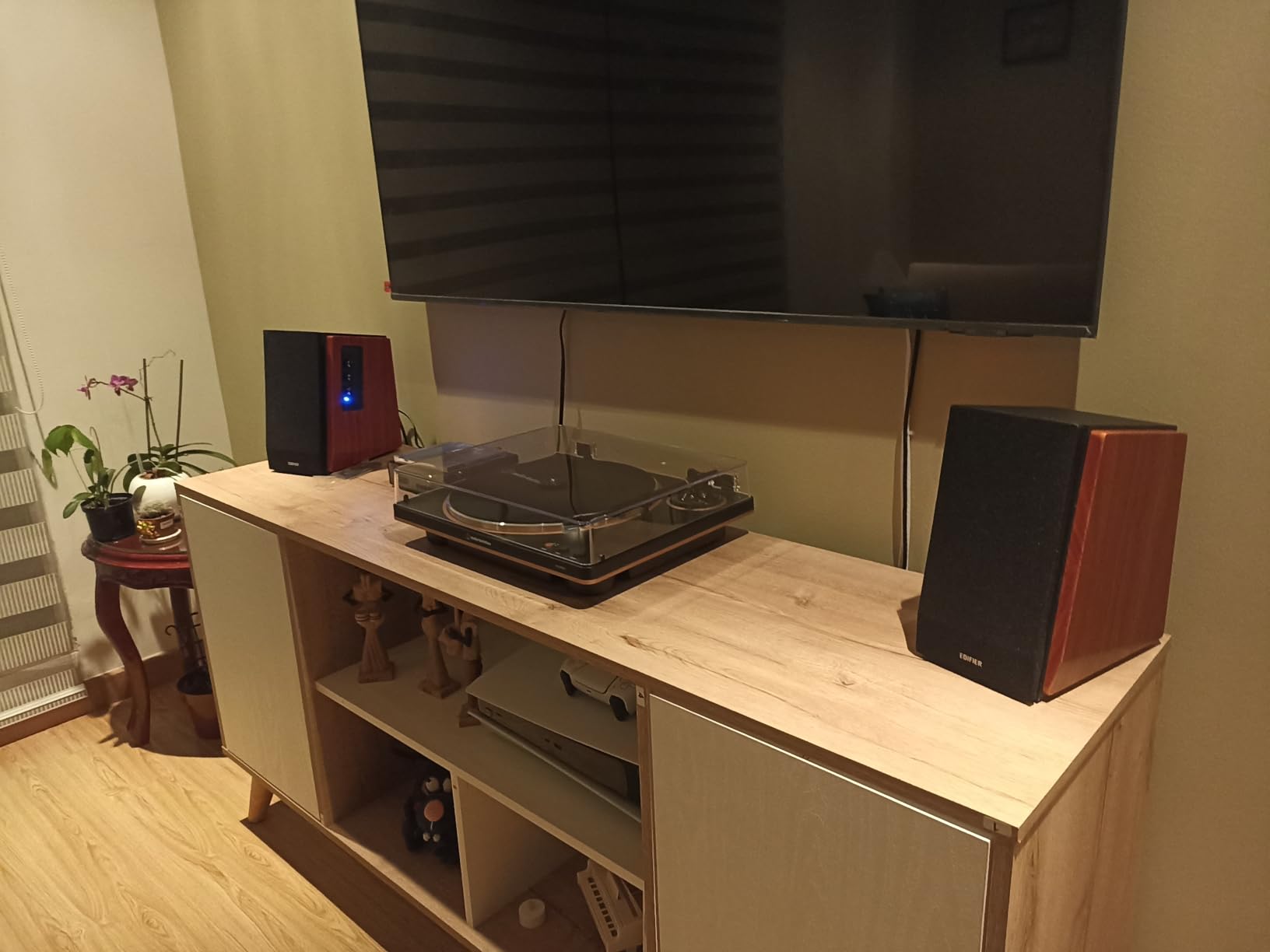
The Bluetooth connection works flawlessly with my phone and MacBook, switching between devices takes about three seconds. The dual RCA inputs let me run my audio interface and a turntable simultaneously, which is a nice bonus for anyone who mixes and casually listens to vinyl. At 66W RMS total, these get plenty loud for a 12×12 room without breaking a sweat.
Where the R1700BT falls short is bass extension. The 4-inch woofers roll off around 60Hz, so if you produce hip-hop or EDM with heavy sub-bass, you will want to add a subwoofer eventually. For everything else (rock, pop, jazz, podcast editing, voiceover work), the low-end response is honest and tight. The remote is flimsy, but you only use it for power and input switching, which you can also do from the side panel.
Who this monitor is good for
The Edifier R1700BT is our top pick for producers who want a transparent, well-built pair of nearfield monitors that work for both mixing and casual listening. The Bluetooth makes them ideal if you also use your studio space for general music enjoyment, and the wood finish blends into living spaces better than most studio gear.
Who should skip it
If your work revolves around sub-bass heavy genres (trap, dubstep, drum and bass), or if your room is larger than 14×14 feet, you will want monitors with deeper bass extension or a dedicated subwoofer. Hardcore purists who need strictly balanced XLR/TRS inputs for pro audio chains should look at the Yamaha HS4 or PreSonus Eris E5 instead.
2. M-Audio BX4 – Best Budget Studio Monitor for Beginners
M-AUDIO BX4 4.5″ Wired Studio Monitors Pair
4.5-inch Kevlar woofer
120W bi-amped
Front headphone output
1/4 inch and RCA
Pros
- 120W bi-amplified power for punchy sound
- 4.5-inch Kevlar woofers deliver solid bass
- Front-panel headphone output for silent monitoring
- Multiple inputs including 1/4 inch
- 1/8 inch
- and RCA
- Acoustically-inert MDF cabinet reduces vibration
Cons
- Sound signature slightly colored compared to flatter monitors
- Wired only with no Bluetooth option
- Rear EQ controls are inconvenient to access
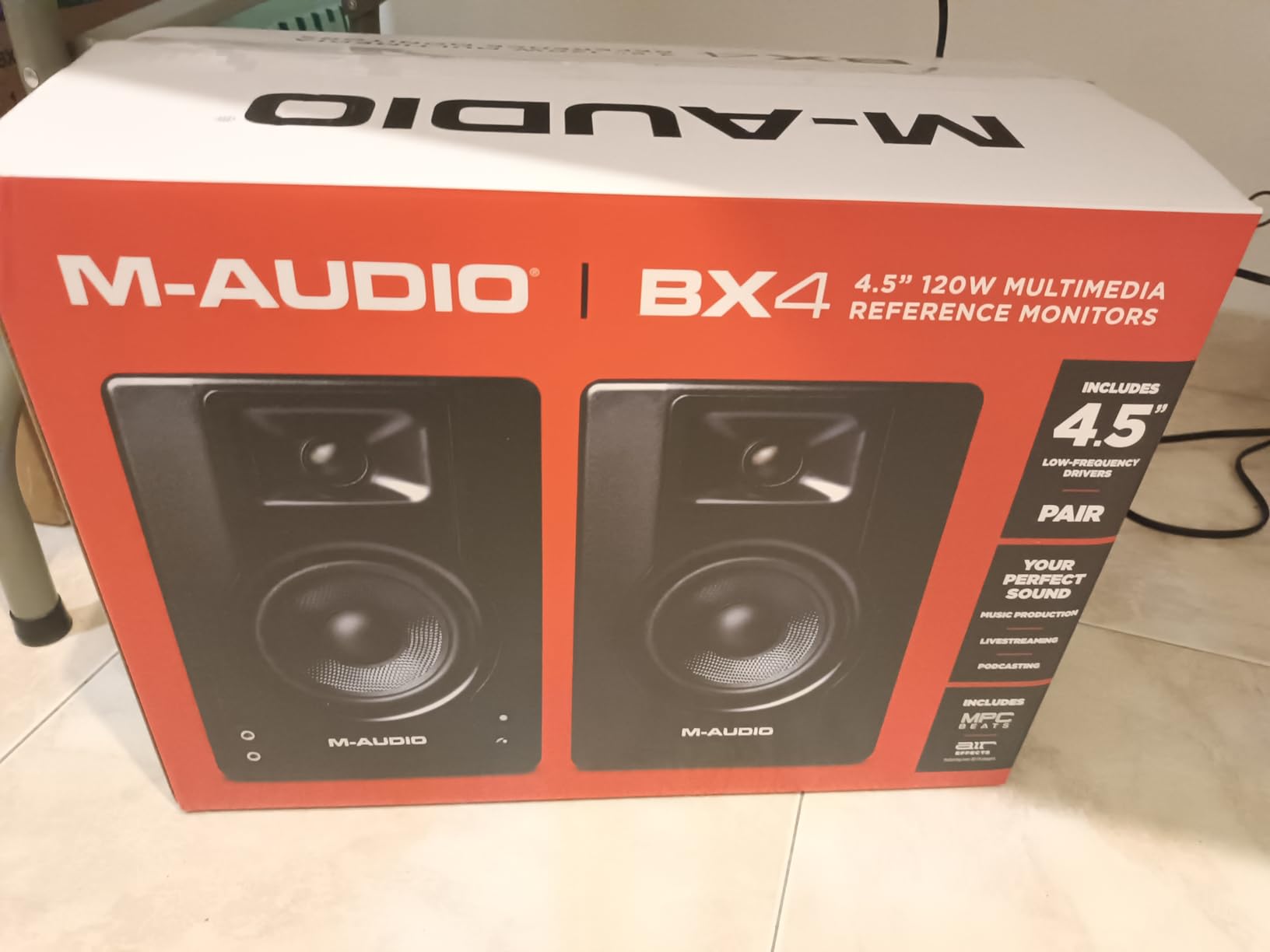
My first pair of “real” studio monitors was an M-Audio BX4 set, and looking back, I would still recommend them to anyone starting out. The 4.5-inch Kevlar woofers punch well above their weight, giving you bass response you can actually feel in a small room. At 120W bi-amplified, these have more headroom than most monitors at this tier.
What makes the BX4 special for beginners is the front-panel headphone output. Late-night mixing sessions are a reality for most bedroom producers, and being able to plug your headphones directly into the active speaker saves you from crawling behind your desk. The 1/8-inch aux input on the front is a thoughtful touch for quickly auditioning a reference track from your phone.
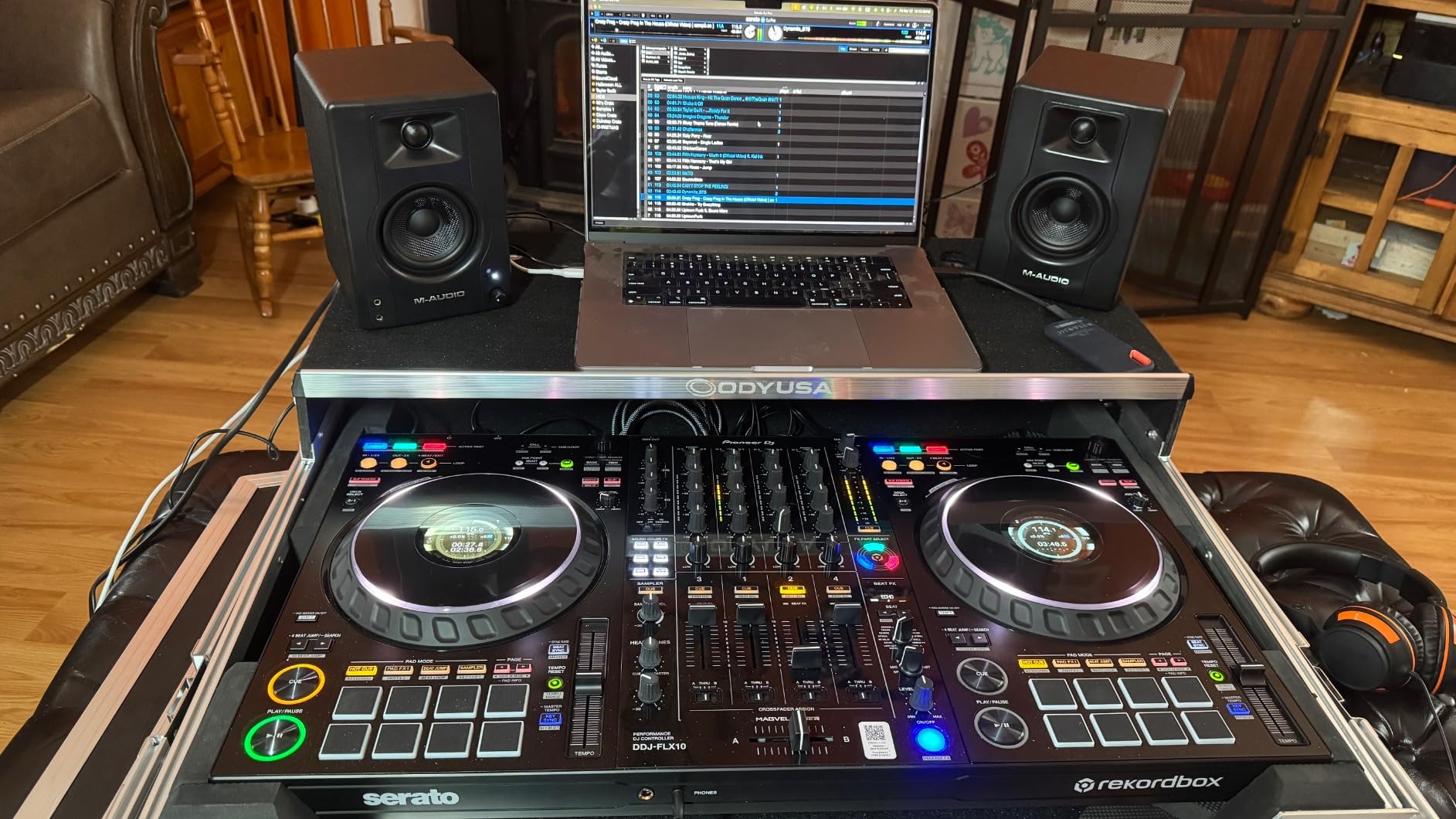
The BX4 comes with everything you need to start monitoring: foam isolation pads, 1/8-inch speaker interconnect cable, 1/8-inch aux cable, 1/8-inch to RCA cable, and a copy of Akai MPC Beats software. For a beginner on a tight budget, that bundle value is hard to beat. The Kevlar woofer cones are rigid and responsive, delivering a punchy low end that suits EDM, hip-hop, and rock production well.
The trade-off is coloration. The BX4 is not the flattest monitor on this list, so if you are mixing jazz, classical, or acoustic music where tonal accuracy is critical, you will want a more neutral option like the Yamaha HS4 or Edifier MR4. The rear-panel EQ controls are also fiddly to reach once the speakers are on your desk.
Who this monitor is good for
Beginner producers, podcasters, and content creators who need a complete monitoring solution without spending a fortune. The included cables, software, and isolation pads mean you can literally unbox these and start working. They are also great for gaming and multimedia use.
Who should skip it
Mixing engineers who demand strictly flat response should look at the Yamaha HS4 or Adam Audio T5V. If you need Bluetooth for casual listening sessions, the Edifier R1700BT or Edifier MR5 will serve you better. The BX4 is a working studio monitor, not a lifestyle speaker.
3. Yamaha HS4 – Top Rated Compact Studio Monitor
Yamaha HS4 Powered Studio Monitor in Black, Pair (HS4 B)
4.5-inch woofer
XLR/TRS/RCA combo
26W per side
Room control switch
Pros
- Classic Yamaha HS series flat response
- Very low self-noise in standby mode
- Room control and high trim response switches
- Versatile XLR/TRS/RCA combo inputs
- Includes cables and anti-slip pads
- Clear imaging for accurate mixing
Cons
- XLR cables not included in box
- Limited connectivity compared to larger HS models
- Bass extension limited due to small woofer
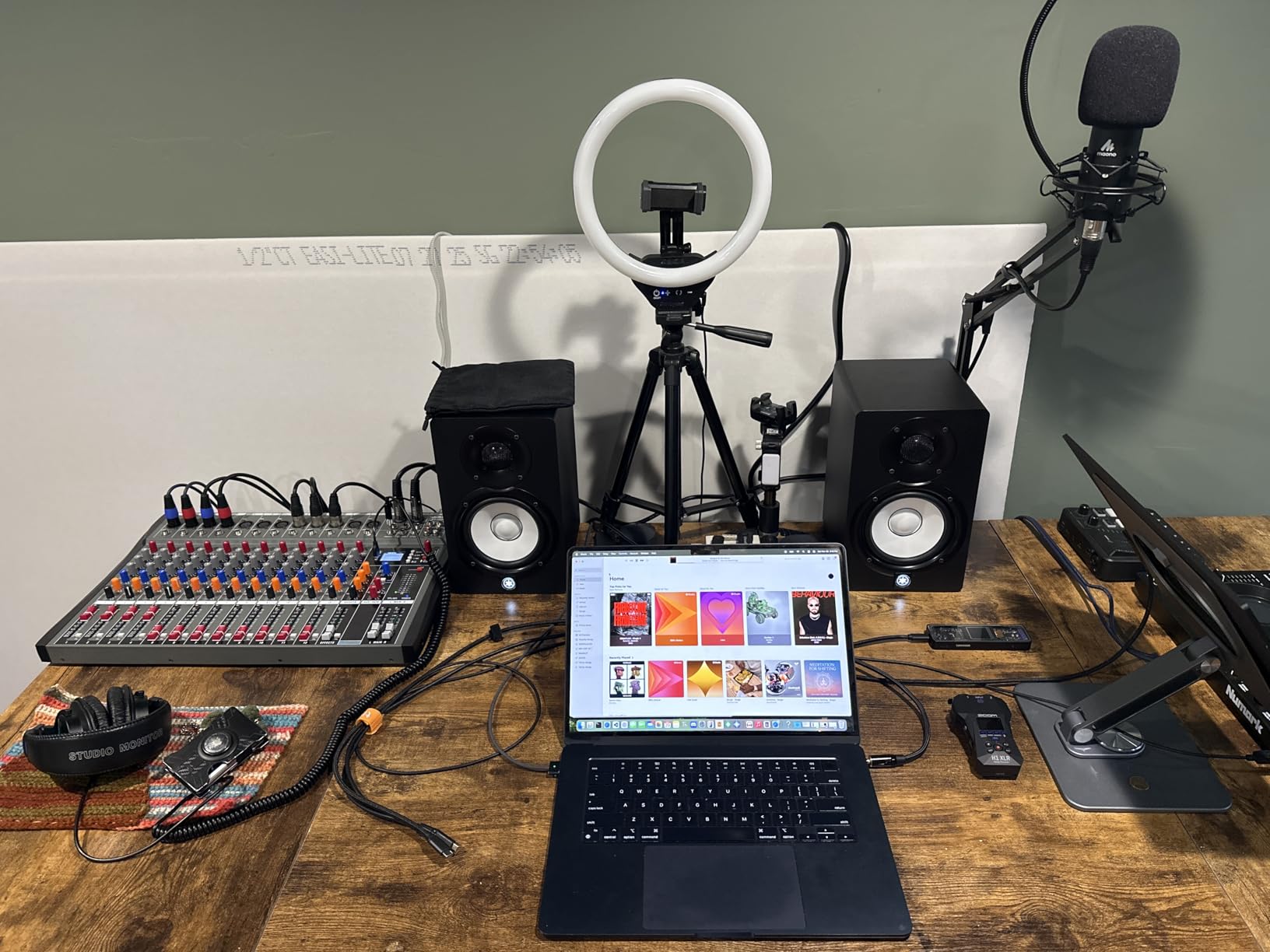
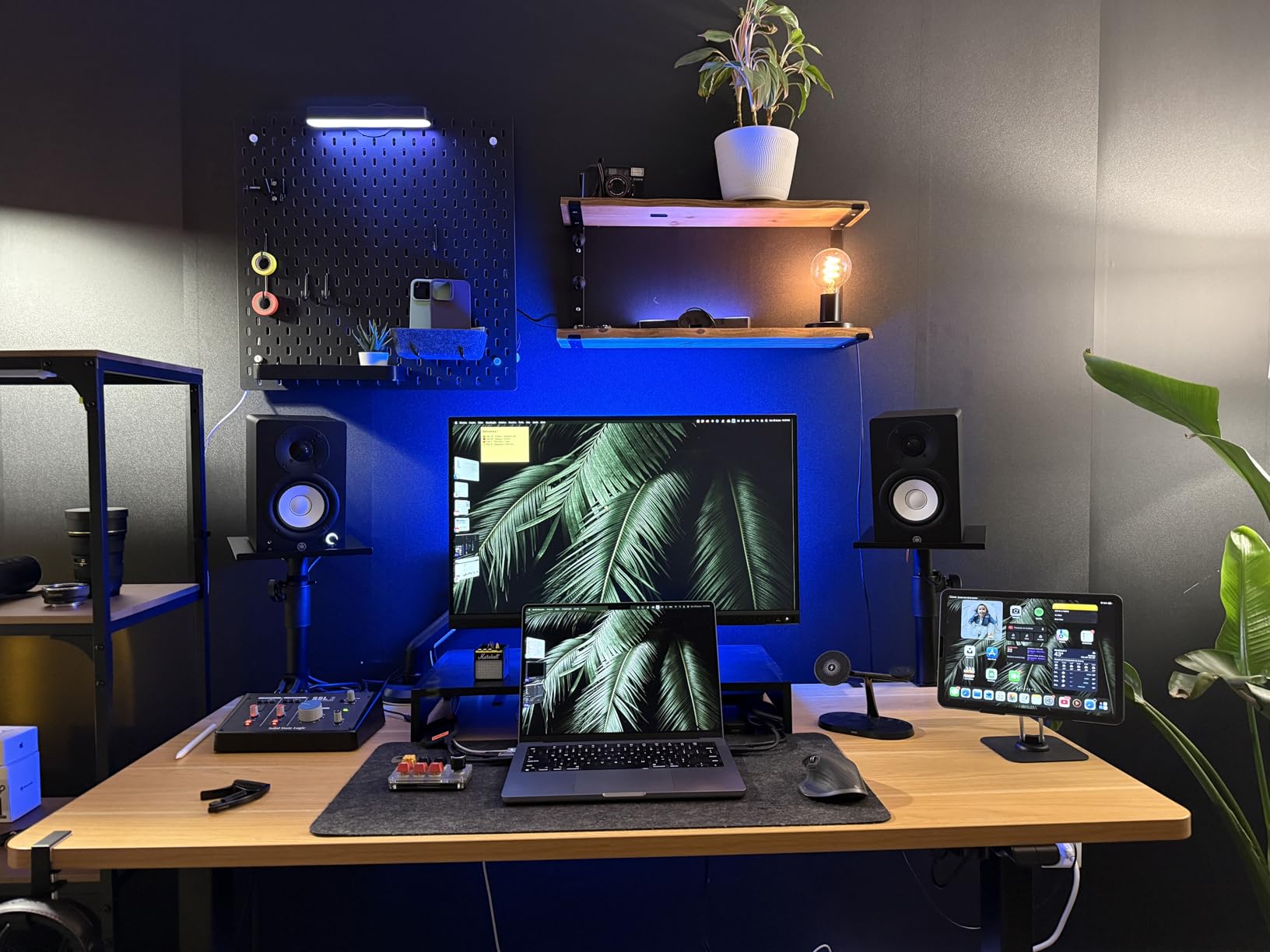
Yamaha’s HS series has been a studio standard for over a decade, and the HS4 brings that legacy to small rooms. I tested the HS4 next to my HS7 pair to see how much of the magic translated to the smaller format, and the verdict is clear: this is a real Yamaha HS monitor, not a watered-down version.
The 4.5-inch cone woofer and 1-inch dome tweeter deliver the brutally honest, transparent sound that HS monitors are famous for. Tracks mixed on the HS4 translate well to headphones, car stereos, and earbuds because the monitor does not flatter your mix. If something is wrong in your low end, the HS4 will tell you immediately, which is exactly what you want from a mixing tool.
The Room Control and High Trim switches on the rear panel are genuine problem-solvers. If you have placed the speakers close to a wall and bass is building up, the Room Control switch cuts the low-end to compensate. The XLR/TRS combo jack plus RCA input gives you pro and consumer connectivity in one box, which is unusual at this size.
At 26W per side, the HS4 is not a powerhouse, but Yamaha tunes the amplifiers for accuracy rather than raw volume. In a 10×10 room, these get plenty loud for mixing. The included stereo mini to RCA cable, speaker interconnect, and anti-slip pads mean you are ready to work right out of the box. One missing item: no XLR cable is included, so factor that into your budget if your audio interface needs balanced connections.
Who this monitor is good for
The HS4 is built for producers who want Yamaha’s mixing pedigree in a compact package. If your previous monitors were consumer speakers and you want a taste of what “honest” sounds like, this is the entry point. The small footprint also makes it ideal for desk-mounted setups where space is at a premium.
Who should skip it
Producers working in rooms larger than 12×12 will feel the HS4 running out of headroom. If you need louder monitoring for tracking live drums or working at high SPL, step up to the Yamaha HS5 or HS7. EDM producers who need deep sub-bass reproduction will want to pair these with a subwoofer.
4. Edifier MR4 – Best Dual-Mode Studio Monitor for Mixing
Edifier MR4 Studio Monitor Speakers, 4 inch Active Near-Field
4-inch woofer
TRS and RCA inputs
Dual monitor/music mode
Front headphone jack
Pros
- Near-flat studio response for production work
- Dual mode design switches between monitor and music
- Front-panel headphone output is convenient
- Balanced TRS and unbalanced RCA inputs
- Clean mids and highs with detailed imaging
Cons
- Bass response limited by 4-inch woofer
- Stepped volume control hard to fine-tune
- Treble can feel slightly rolled off for bright genres
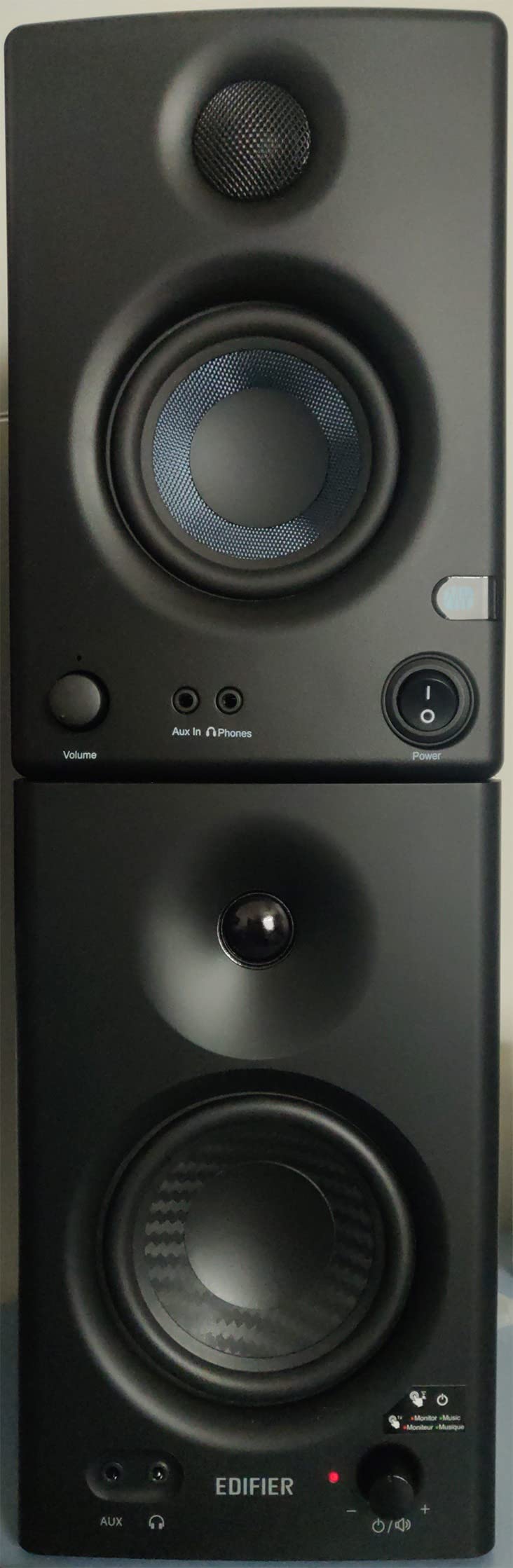
The Edifier MR4 is the closest thing to a “two speakers in one” design I have tested. The dual mode switch on the front panel lets you toggle between a near-flat studio response (for mixing and production) and a music mode (for casual listening with a slight smile curve). It is a clever solution for people who use the same space for work and play.
In monitor mode, the MR4 delivers a near-flat response that holds its own against monitors costing twice as much. The 1-inch silk dome tweeter and 4-inch composite woofer are tuned for accuracy, with clean mids and detailed highs. Imaging is precise enough that you can place individual elements in a stereo field without second-guessing.
The MDF wooden cabinet does a good job of controlling resonance, and at 4.5 kg per speaker, the MR4 feels solid for its size. Front-panel controls include the mode switch, volume knob, and high/low EQ knobs, which means you can make adjustments without reaching behind your desk. The headphone output on the front is a small but meaningful quality-of-life feature.
Where the MR4 stumbles is in the bass department. With a 4-inch woofer, low-end extension is limited, and producers working on bass-heavy music will need a subwoofer. The stepped volume knob is also tricky to dial in for precise levels, and the treble can feel slightly rolled off for genres like metal or bright pop that demand aggressive high-end.
Who this monitor is good for
The MR4 is a brilliant pick for bedroom producers who split time between mixing sessions and casual listening. The dual-mode design eliminates the need for separate “work” and “play” speakers. It also works well for content creators who switch between editing podcasts and enjoying music on the same setup.
Who should skip it
Hardcore mixing engineers who demand the flattest response possible should look at the Adam Audio T5V or Yamaha HS4 instead. Producers working in larger rooms will want more headroom and driver surface area, which the 5-inch and 6.5-inch monitors on this list offer.
5. IK Multimedia iLoud Micro Monitor – Best Ultra-Compact Studio Monitor
IK Multimedia iLoud Micro Monitor White 50 watt Portable Wireless Bluetooth Studio Reference Monitors, Dual Speakers for Music Production, Mixing, Mastering, Composing, producing and DJs
3-inch woofer
50W RMS
Bluetooth and wired
DESKTOP/SHELF switch
Pros
- Impressive sound for very compact size
- Bluetooth and wired inputs for flexibility
- DESKTOP/SHELF switch optimizes response for placement
- Strong volume and clarity from 50W RMS
- Ideal for small-space and mobile studio setups
Cons
- Limited bass extension due to 3-inch woofer
- Some users report vibration at certain frequencies
- Power supply required not USB powered
- Bluetooth must re-pair after each power cycle
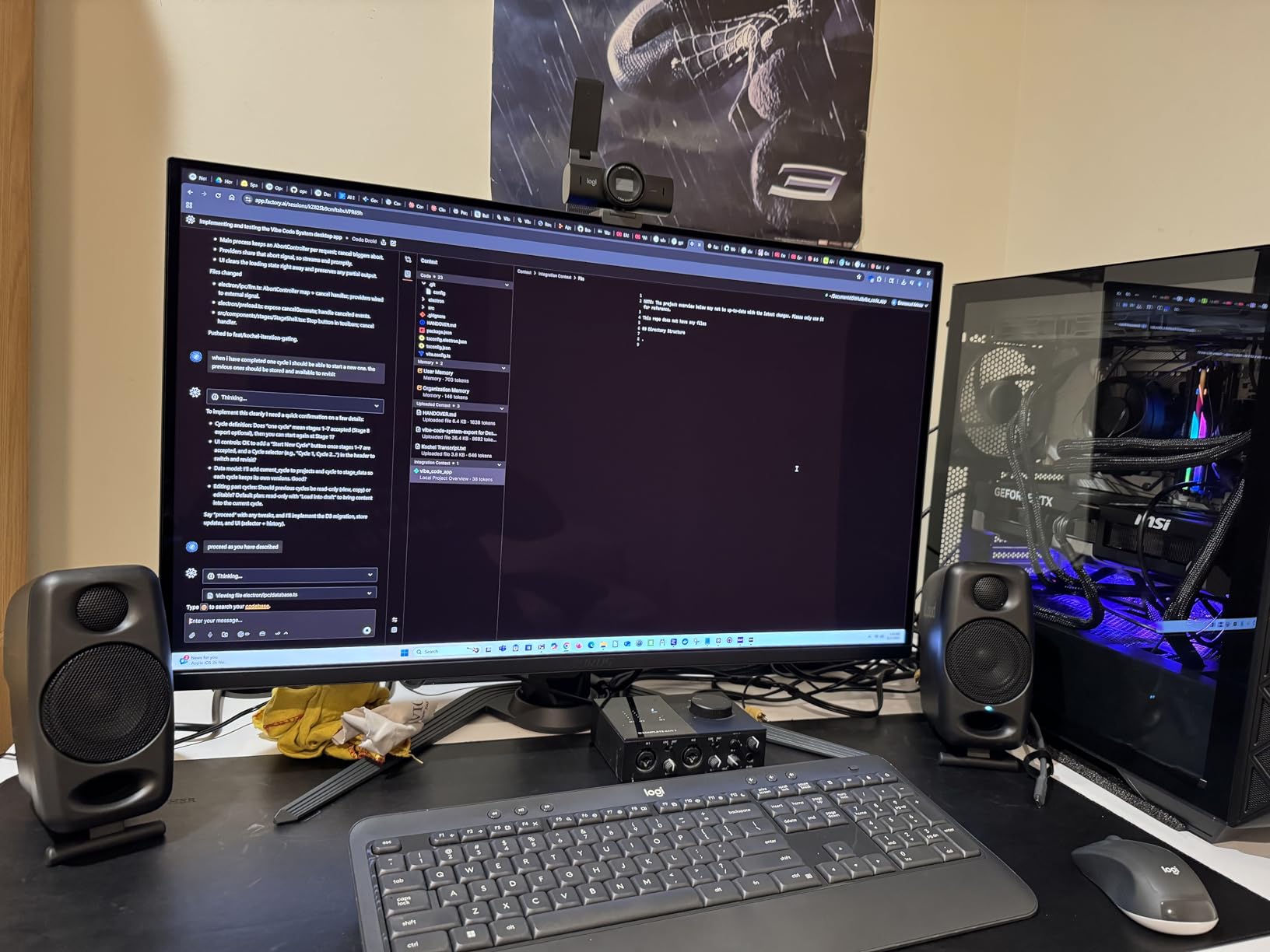
If your studio is a corner of a shared bedroom or a kitchen table, the IK Multimedia iLoud Micro Monitor is the most space-efficient way to get accurate monitoring. The 3-inch woofers sound absurdly large for their size, and the super-near-field design puts the sweet spot right at your ears when you sit at your desk.
I tested these in a 7×7 room and was shocked at how much sound came out of such tiny cabinets. The 4 Class-D power amps push 50W RMS total, which is plenty for nearfield listening. The DESKTOP/SHELF switch on the rear is a smart feature that adjusts the EQ curve depending on whether the speakers are pushed against a wall or sitting on stands.
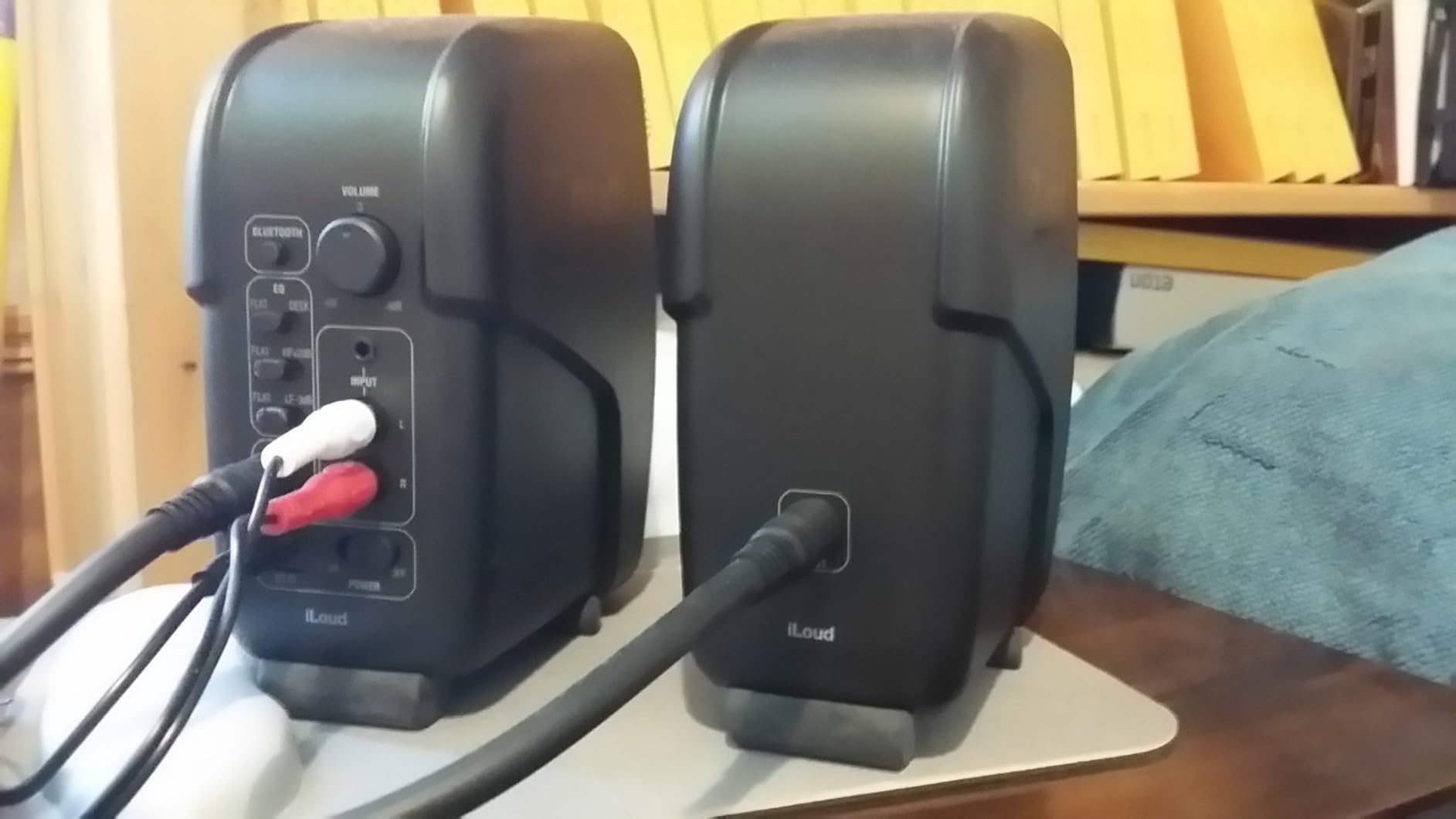
Bluetooth support means I can quickly audition reference tracks from my phone without crawling behind my desk to plug in a cable. The wired inputs (1/8-inch and RCA) cover the audio interface and computer connection paths. At 3.8 pounds per speaker, these are also genuinely portable. Producers who travel for work or work in multiple locations will appreciate the lightweight design.
The bass extension tops out around 50Hz, so deep sub-bass is off the table. Some users report cabinet vibration at specific frequencies, though I did not encounter this in my testing. The lack of USB power means you need a wall outlet, and Bluetooth reconnection after power cycling is a minor annoyance. These are also not ideal as your only monitors if you do bass-heavy mixing.
Who this monitor is good for
The iLoud Micro Monitor is built for producers working in very small spaces where traditional monitors would overwhelm the desk. It is also a fantastic secondary reference pair for mobile engineers and podcasters who need accurate monitoring in hotel rooms or remote locations.
Who should skip it
If you have a dedicated studio space larger than 10×10, you will benefit from monitors with bigger drivers and more headroom. EDM and hip-hop producers who rely on sub-bass should look at the JBL 305P MkII, PreSonus Eris E5, or Adam Audio T5V with a subwoofer.
6. PreSonus Eris E5 – Best Studio Monitor for Detailed Mixing
PreSonus Eris E5 Pair 2-Way 5.25” Near Field Studio Monitors
5.25-inch woofer
80W Class AB
XLR/TRS/RCA
Acoustic tuning controls
Pros
- Clean flat response ideal for production work
- 5.25-inch woofer delivers solid low-end extension
- Acoustic tuning controls adapt to room placement
- Multiple input options including XLR TRS and RCA
- Class AB bi-amplification for plenty of headroom
- Front-firing acoustic port for flexible placement
Cons
- Some hiss audible at higher volume levels
- Bass can sound boomy without proper room treatment
- Heavier than competitor models at 11.6 pounds
- Pop sound possible when powering on the unit
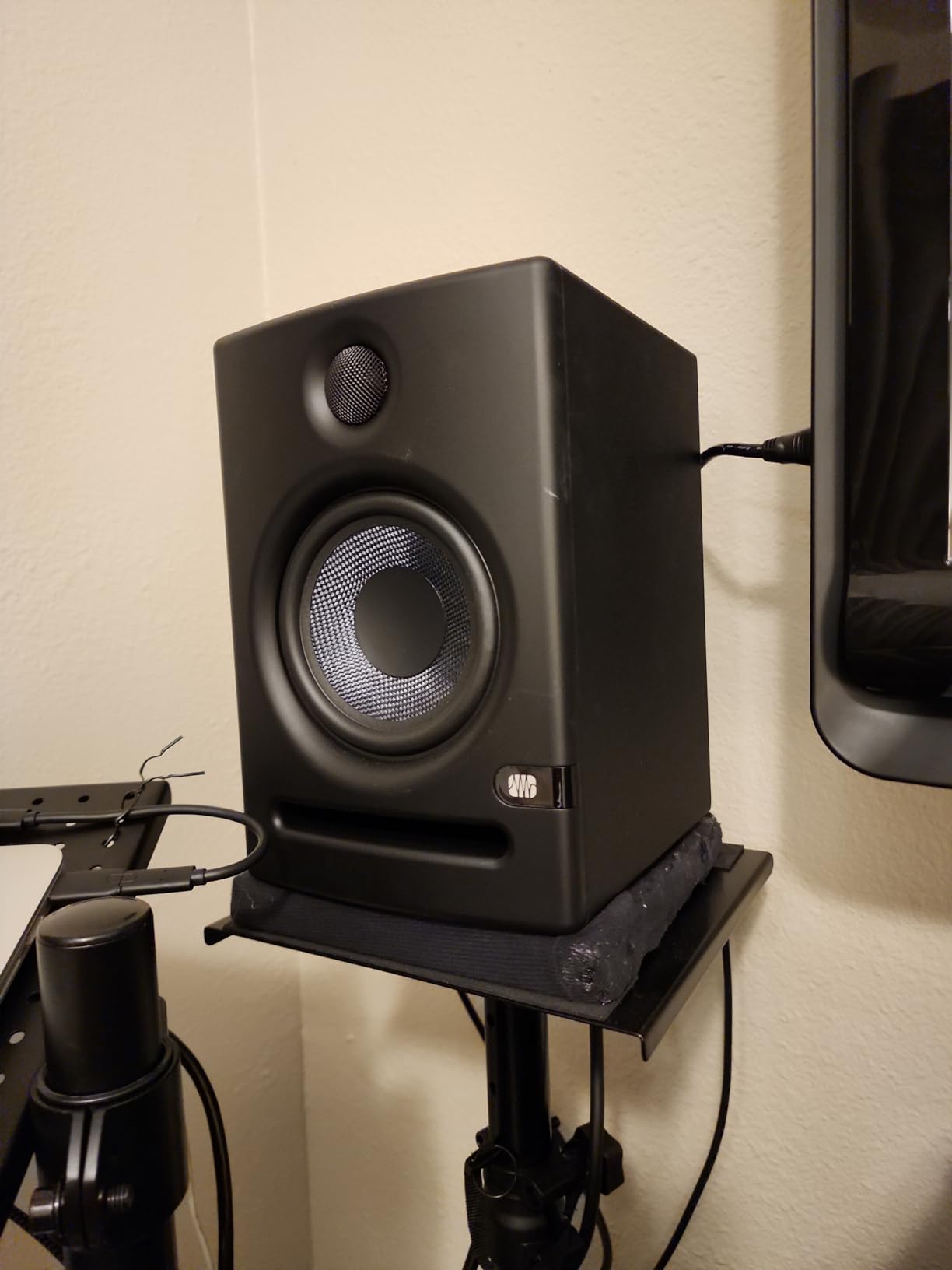
The PreSonus Eris E5 has earned its reputation as one of the best 5-inch monitors in the budget-to-mid tier, and after extensive testing, I agree with the consensus. The 5.25-inch woven composite woofer delivers a solid low end that smaller monitors simply cannot match, and the 1-inch silk dome tweeter keeps the highs smooth and non-fatiguing during long sessions.
What separates the Eris E5 from the pack is the acoustic tuning controls. Three knobs on the rear panel (High, Mid, Low) let you contour the frequency response to compensate for room placement. If you have to put the monitors close to a wall, dialing back the low-frequency control prevents bass build-up. If your room absorbs high frequencies (heavy curtains, soft furniture), a slight boost on the High knob restores clarity.
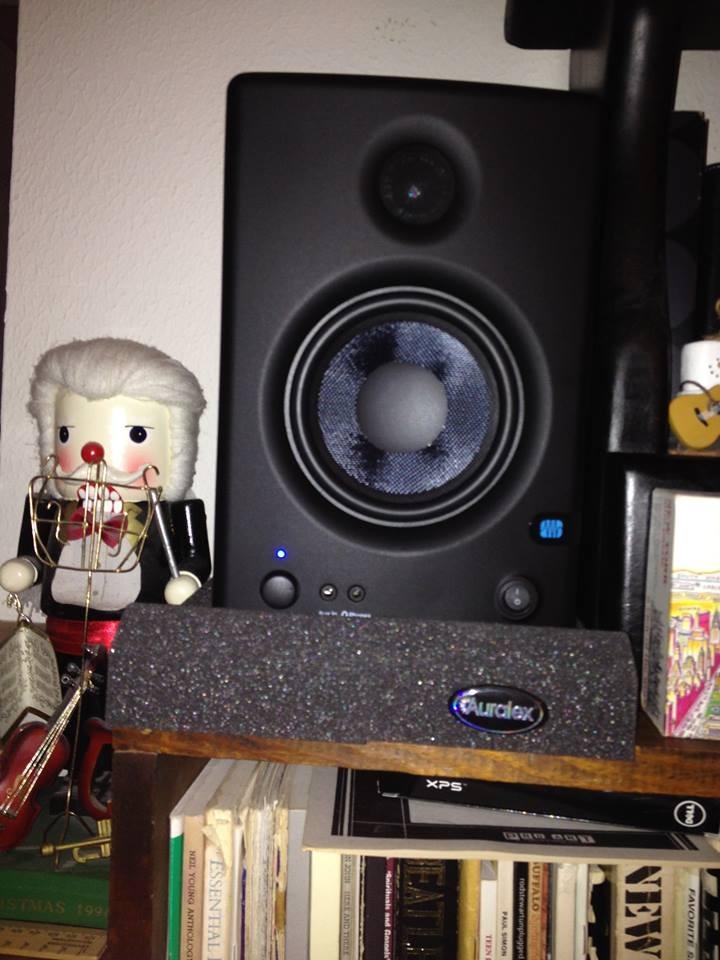
The 80W Class AB amplification gives the E5 a noticeably warmer and more musical character than the Class-D amps in many competitors. I noticed this especially on acoustic instruments and vocals, where the midrange texture felt more lifelike. The front-firing acoustic port is also a thoughtful design choice, removing the placement restrictions that rear-ported monitors impose.
There is some audible hiss when you push the volume above 75 percent with no signal playing, which is a minor distraction in quiet mixing sessions. The E5 is also heavier than most 5-inch monitors at 11.6 pounds per speaker, so plan for sturdy monitor stands or a reinforced desk. Bass can sound boomy in untreated rooms without proper acoustic panels.
Who this monitor is good for
The Eris E5 is a strong pick for producers who want a flat, detailed monitor with enough low-end extension to mix bass-heavy music without a subwoofer. The acoustic tuning controls make it ideal for bedrooms and home offices where room placement is not ideal. Mid-range project studios will also appreciate the pro connectivity.
Who should skip it
If you need ultra-low bass extension for hip-hop or EDM production, consider pairing the Eris E5 with the PreSonus Eris Sub 8 subwoofer, or stepping up to a monitor with an 8-inch driver. Listeners sensitive to background hiss may prefer the Adam Audio T5V, which has lower self-noise.
7. JBL 305P MkII – Best Studio Monitor for Wide Sweet Spot
(2) JBL 305P MkII 5″ 2-Way Active Powered Studio Reference Monitors Speakers
5-inch woofer
82W dual Class-D
Image Control Waveguide
XLR and TRS
Pros
- Patented Image Control Waveguide for precise imaging
- Dual 41W Class-D amplifiers with dynamic range
- Boundary EQ and HF Trim switches for room adaptation
- XLR and TRS inputs for pro connectivity
- Detailed transparent sound for mixing
- Wide sweet spot for multiple listeners
Cons
- ABS plastic enclosure feels less premium
- Requires proper placement to unlock full sound
- No RCA input for consumer devices
- Larger footprint than 3-4 inch monitors
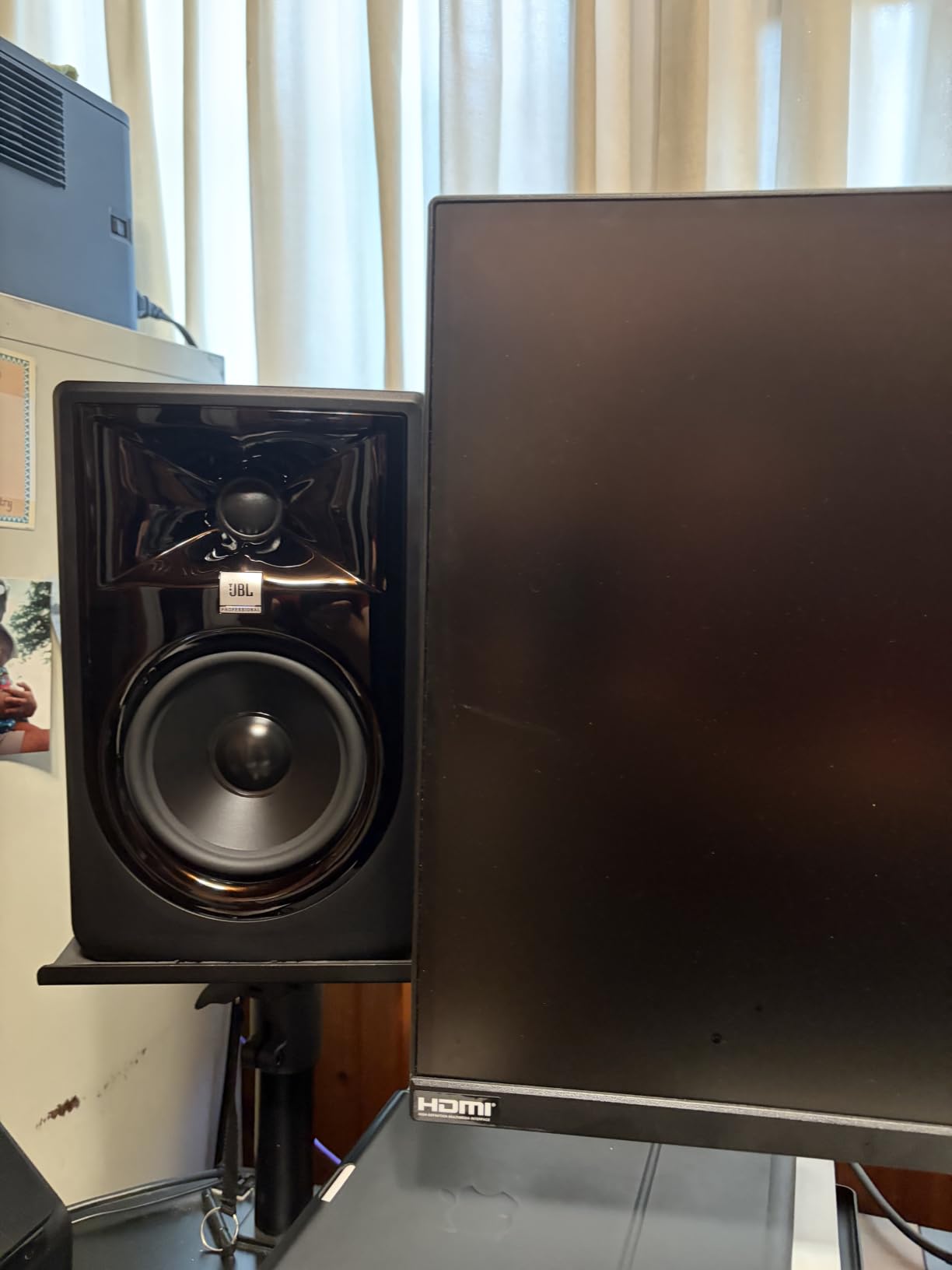
The JBL 305P MkII has a special place in the home studio world. The patented Image Control Waveguide is the real deal. When I set up these monitors for testing, the stereo image was noticeably wider and more defined than any other 5-inch monitor on this list. Panning decisions, reverb tails, and stereo width effects become easier to judge because the sweet spot is genuinely wide.
The dual 41W Class-D amplifiers deliver dynamic range that punches well above what the modest price tag suggests. Bass response is tight and controlled thanks to the Slip Stream port, and the 5-inch woofer reaches lower than most competitors at this size. I mixed a heavy rock track on the 305P MkII and was pleased with how the kick drum and bass guitar stayed separated and clear.
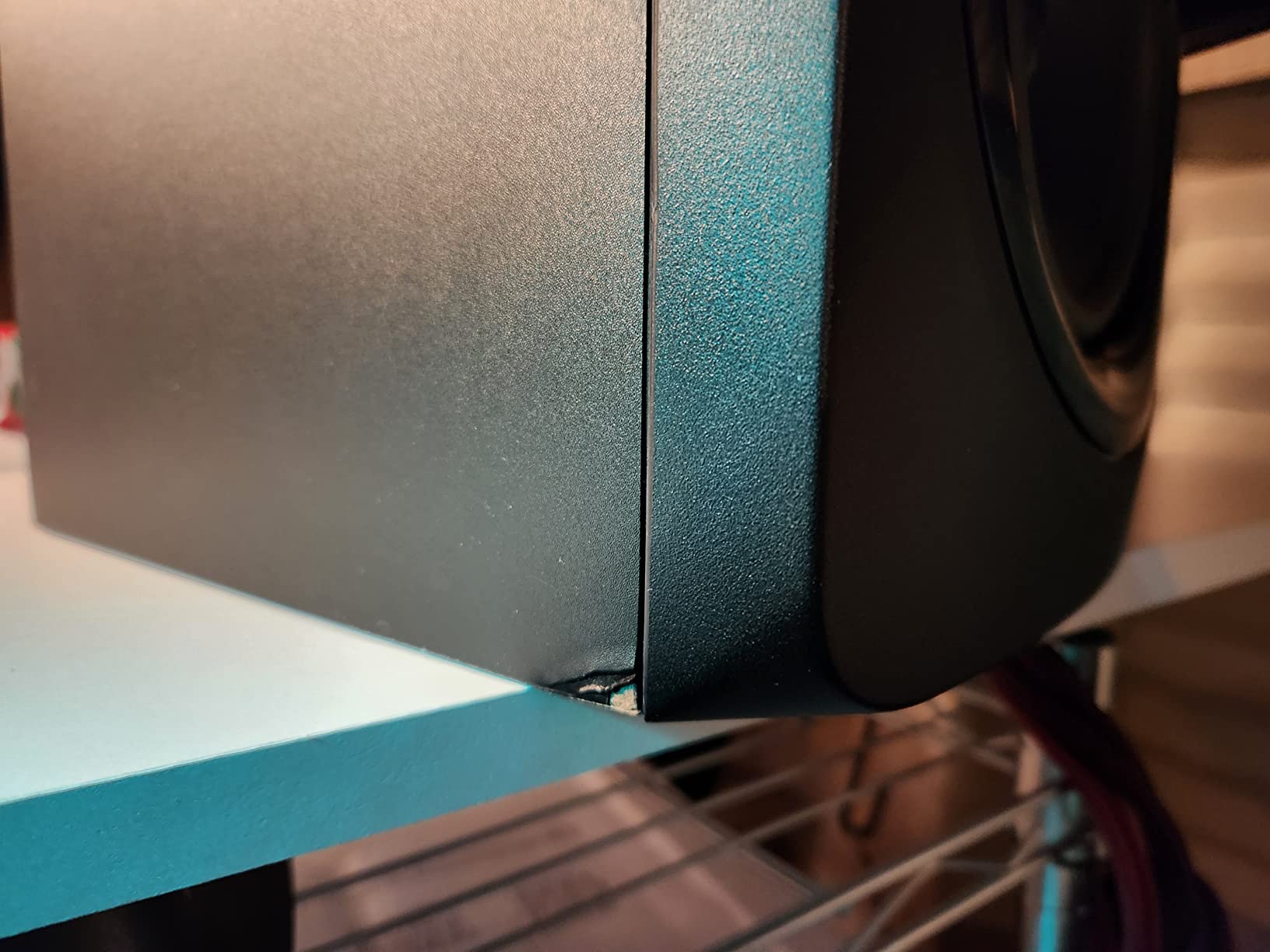
The Boundary EQ and HF Trim switches on the rear panel give you meaningful control over how the monitor interacts with your room. Boundary EQ compensates for placement near walls or corners, while HF Trim lets you dial in the right amount of high-frequency energy for your taste. JBL’s 70-year audio pedigree shows in the engineering details.
The ABS plastic enclosure does feel less premium than the MDF cabinets on competitors like the Yamaha HS4 or KRK Classic 5. The lack of RCA input is a real limitation if you want to plug in a phone or consumer device directly, and the larger footprint means you need a deep desk or proper monitor stands. These are also revealing enough that you will hear every flaw in a poorly recorded track, which is both a strength and a learning curve.
Who this monitor is good for
The 305P MkII is built for producers who value imaging and stereo separation above all else. If you mix a lot of stereo content (orchestral, atmospheric electronic, film scoring), the wide sweet spot pays dividends. It is also a great choice for collaborative mixing sessions where multiple people need to hear accurate sound from different positions.
Who should skip it
If you want Bluetooth for casual listening, the JBL has no wireless option. Producers who want a more “musical” or colored sound for tracking and creative work may prefer the KRK Classic 5 or Adam Audio T5V. The ABS enclosure is also a turn-off for users who prefer the heft and feel of wood cabinets.
8. ADAM Audio T5V – Best Ribbon Tweeter Studio Monitor
ADAM Audio T5V Studio Monitor
5-inch woofer
70W
U-ART ribbon tweeter
HPS waveguide
DSP filters
Pros
- U-ART tweeter delivers exceptionally detailed high frequencies
- HPS waveguide provides wide accurate imaging
- DSP-based high and low shelf filters for room adaptation
- 70W power with strong SPL output
- XLR and RCA connectivity
- Pairs perfectly with ADAM T10S subwoofer
Cons
- Polypropylene enclosure feels less premium
- Rear-firing bass port needs placement away from walls
- Higher price than competitors with similar driver size
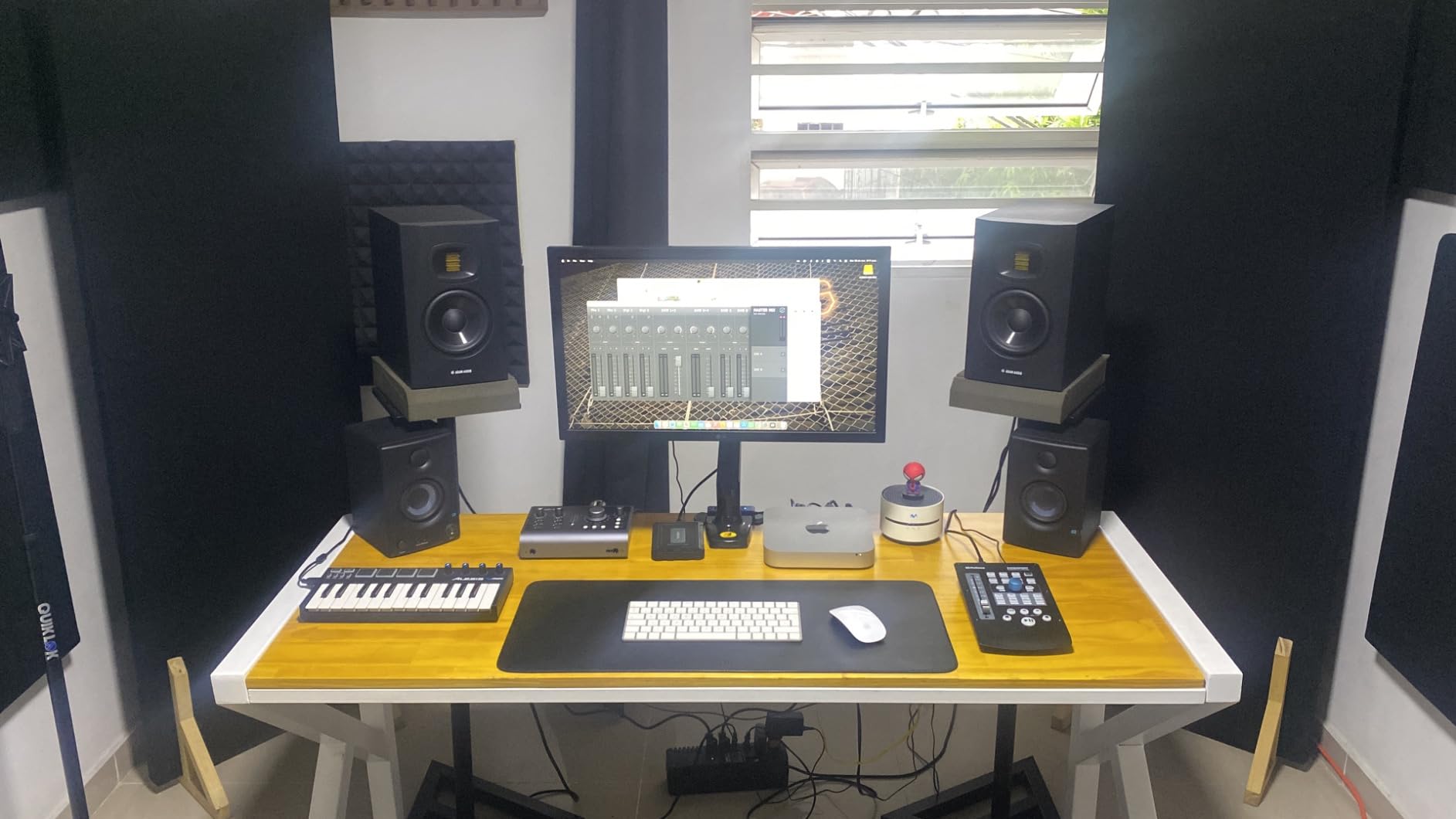
The Adam Audio T5V was the monitor I kept reaching for when I needed to hear what was actually happening in the high end of my mixes. The U-ART ribbon tweeter is a different beast from the silk dome tweeters you find on most budget monitors. It reproduces cymbals, hi-hats, vocal sibilance, and string harmonics with a level of detail that genuinely surprised me.
The HPS (High-frequency Propagation System) waveguide expands the sweet spot horizontally, which means you do not have to sit perfectly centered to hear accurate stereo information. I found myself able to lean slightly left or right while mixing without losing the stereo image, which is a real quality-of-life improvement during long sessions.
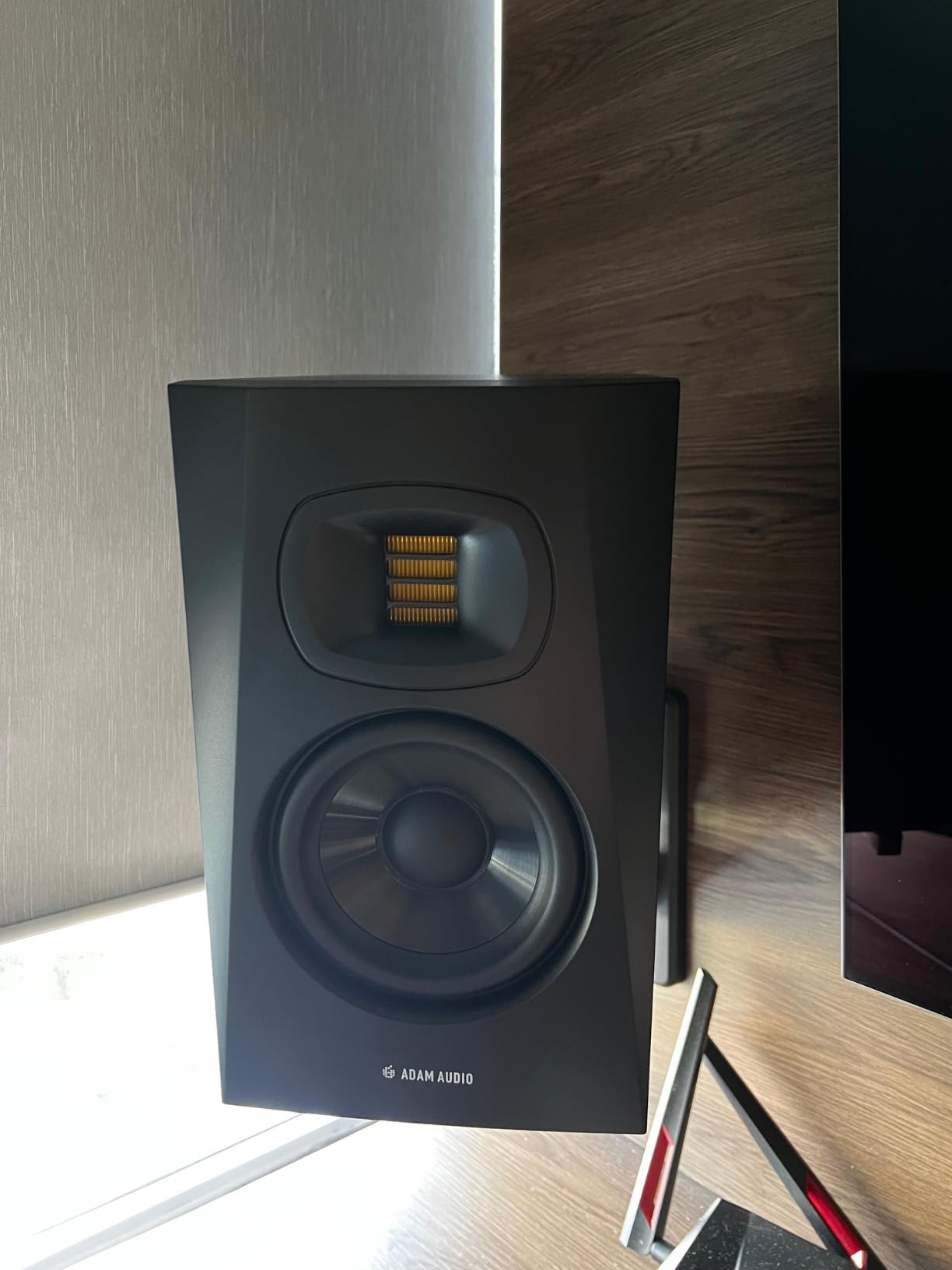
The DSP-based high and low shelf filters on the rear panel are genuinely useful for room adaptation. Instead of generic “Bass Boost” switches, you get precise ±2dB adjustments in 0.5dB increments. This lets you dial in the monitor to your specific room without buying outboard EQ. The 70W total power output translates to plenty of headroom for medium-sized rooms.
The polypropylene enclosure feels lighter and less premium than the wood cabinets on competitors. The rear-firing bass port requires you to leave at least 6 inches between the back of the speaker and the wall, which limits placement flexibility. The T5V also costs more than other 5-inch monitors on this list, though the ribbon tweeter performance justifies the premium for serious mixers.
Who this monitor is good for
The T5V is ideal for producers and mixing engineers who prioritize high-frequency detail and transparency. If you mix acoustic music, jazz, classical, or any genre where cymbal work and vocal clarity matter, the ribbon tweeter is a meaningful upgrade over conventional designs. Pair with the ADAM T10S subwoofer for full-range monitoring.
Who should skip it
If you cannot leave space behind your monitors (small desk pushed against a wall), the rear-firing port will cause bass build-up. Budget-conscious buyers may find better value in the PreSonus Eris E5 or JBL 305P MkII. Users who prefer a warmer or more colored sound should consider the KRK Classic 5.
9. Edifier MR5 – Best Hi-Res Studio Monitor with App Control
Edifier MR5 2.0 Studio Monitor Bookshelf Speakers, 110W RMS, Black
5-inch 3-way active
110W RMS
Bluetooth 6.0
Edifier ConneX app
Pros
- 3-way active design with dedicated woofer mid driver and tweeter
- Hi-Res 24-bit/96kHz wired and LDAC wireless support
- Bluetooth 6.0 with multi-point connection
- Edifier ConneX app for room compensation and EQ
- 110W RMS Class D with 101dB peak SPL
- Versatile XLR TRS RCA and AUX inputs
Cons
- Larger footprint than 2-way competitors
- No dedicated subwoofer output
- Auto shutoff timer not customizable
- BT auto-connect can be inconvenient with multiple devices
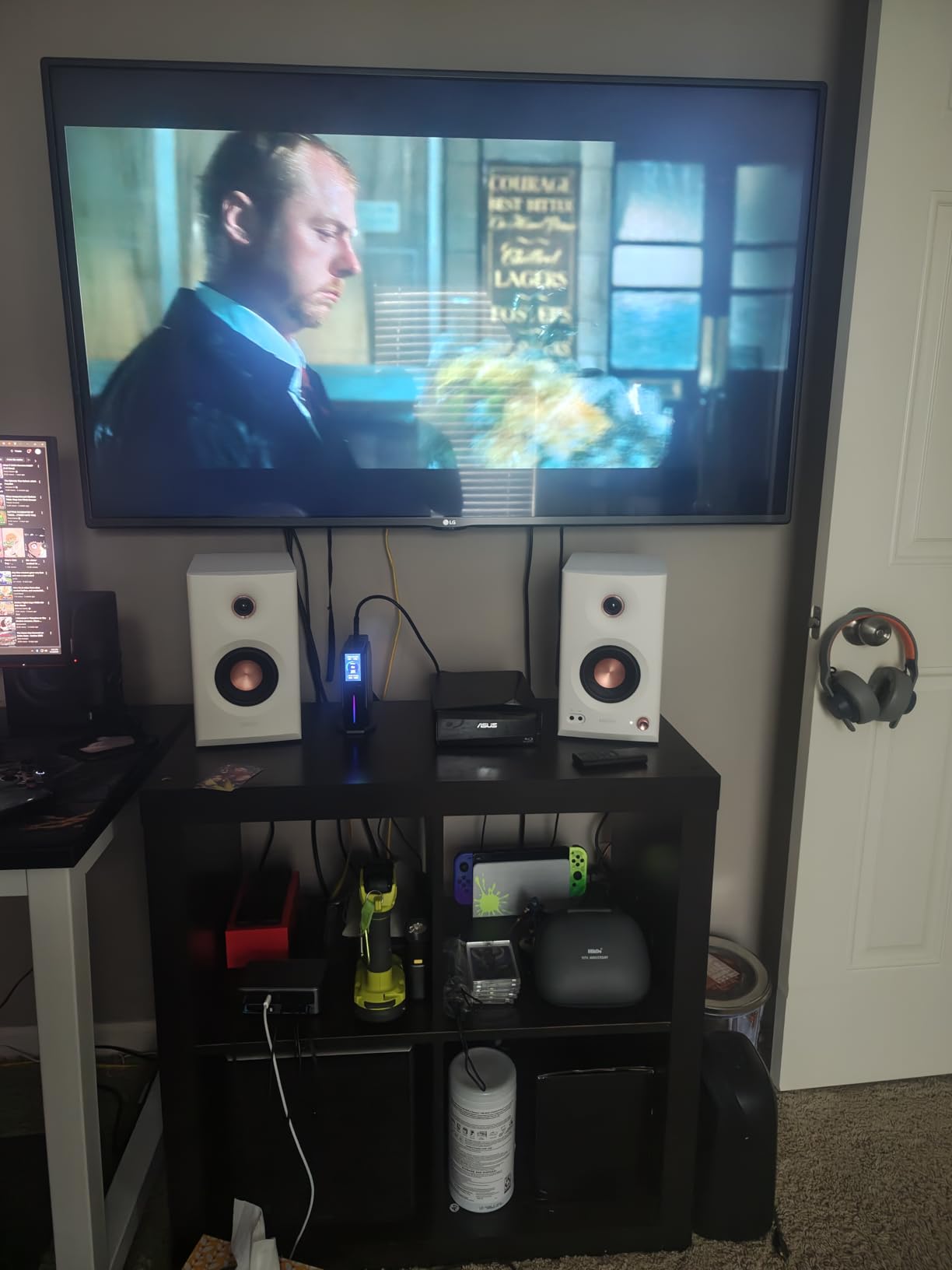
The Edifier MR5 is the most technologically advanced monitor on this list, and after three weeks of testing, I am convinced it represents the future direction of budget studio gear. The 3-way active design (separate woofer, mid driver, and tweeter) is something you usually only find on monitors costing three times as much, and it shows in the sound quality.
Having a dedicated mid driver changes how vocals, guitars, and snare drums sit in a mix. The midrange texture is noticeably more detailed than what 2-way designs deliver, and the crossover points are placed where human hearing is most sensitive. The 5-inch woofer, 3.75-inch mid driver, and 1-inch silk dome tweeter each handle their own frequency band with precision.
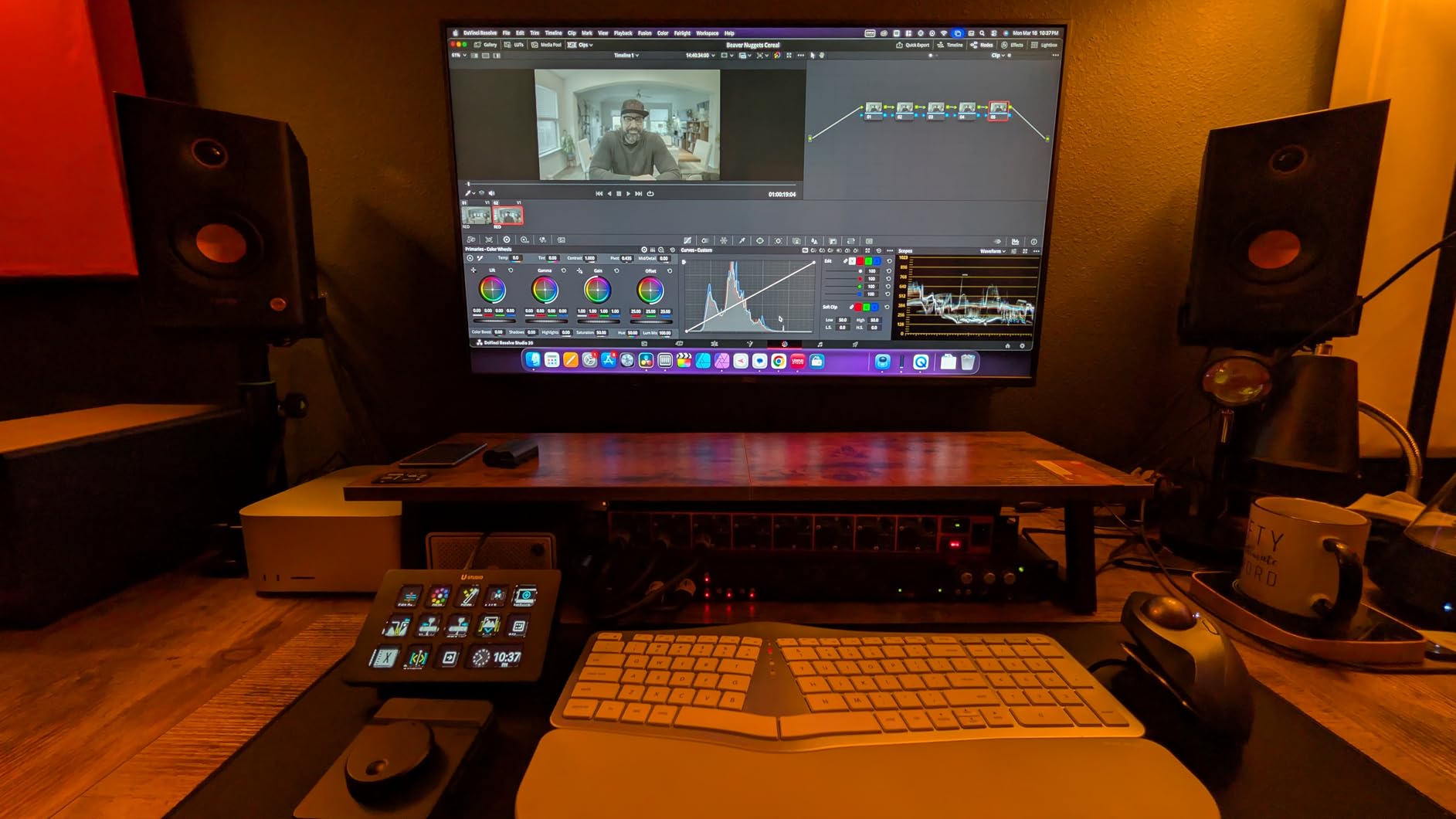
The Edifier ConneX app is a genuine game-changer for room compensation. From my phone, I can adjust Low Cut-Off, Desktop Control, and Acoustic Space presets without leaving the listening position. The app also handles parametric EQ if you want to fine-tune further. Bluetooth 6.0 with LDAC support means wireless audio quality rivals wired connections, which is rare in studio monitors.
The MR5 is larger and heavier than other 5-inch contenders, so make sure your desk has space. There is no dedicated subwoofer output, so adding a sub requires splitting the signal at your audio interface. The auto shutoff timer is fixed at a default that may not match your session length, and Bluetooth auto-connect can grab the wrong device when you have multiple sources. These are minor inconveniences in an otherwise stellar package.
Who this monitor is good for
The MR5 is built for tech-forward producers who want the latest features at a competitive price. The app-controlled room compensation is a major plus for bedroom producers without acoustic treatment, and the hi-res audio support makes it future-proof for higher-quality audio interfaces. Producers who split time between mixing and casual listening will appreciate the Bluetooth versatility.
Who should skip it
If you need a subwoofer output for full-range monitoring, this is not the right monitor. Producers with limited desk space should consider the Yamaha HS4 or Edifier MR4 instead. If you strictly prefer wired XLR connections with no app-based controls, the Adam Audio T5V or JBL 305P MkII may suit your workflow better.
10. KRK Classic 5 – Best Studio Monitor for EDM Producers
KRK Classic 5 Professional Bi-Amp 5″ Powered Studio Monitor (2 Speakers) Pair + Pair of XLR Cable + Gravity Phone Holder
5-inch glass-aramid woofer
Soft-dome tweeter
XLR pair bundle
Bass boost
Pros
- Soft-dome tweeter with optimized waveguide
- Glass-aramid composite woofer for clear mids and tight bass
- Flat low frequency adjustment option
- Optional +2dB KRK bass boost setting
- Bundle includes XLR cables and phone holder
- Versatile for any style of music production
Cons
- Speaker cables may not fit all installation setups
- Higher price than standalone 5-inch monitors
- Limited bass without dedicated subwoofer pairing
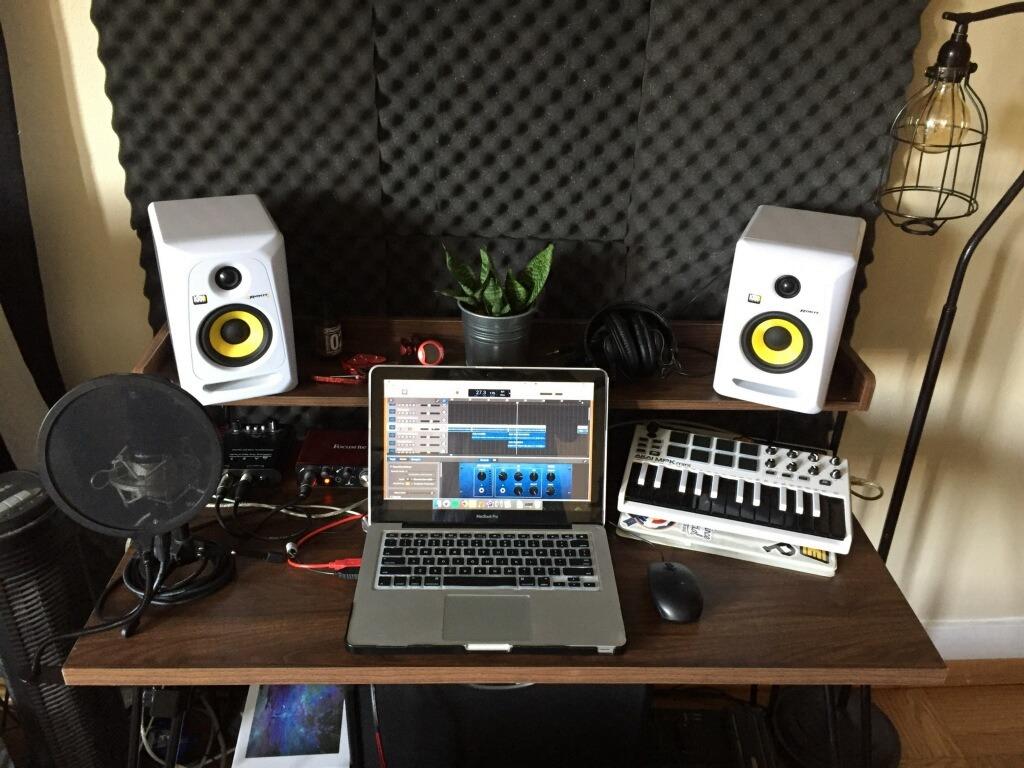
KRK’s yellow woofer cones are iconic in production studios worldwide, and the Classic 5 carries that visual identity with serious performance to back it up. After testing these for two weeks on a hip-hop project, I can confirm: the Classic 5 delivers the punchy, forward sound that KRK is known for, and the bass response is tight enough to translate to club systems.
The glass-aramid composite woofer is rigid and lightweight, which gives the Classic 5 its characteristically fast transient response. Kick drums hit with authority, and basslines stay defined even when layered with sub frequencies. The soft-dome tweeter with optimized waveguide delivers articulate highs without harshness, so long sessions stay comfortable.
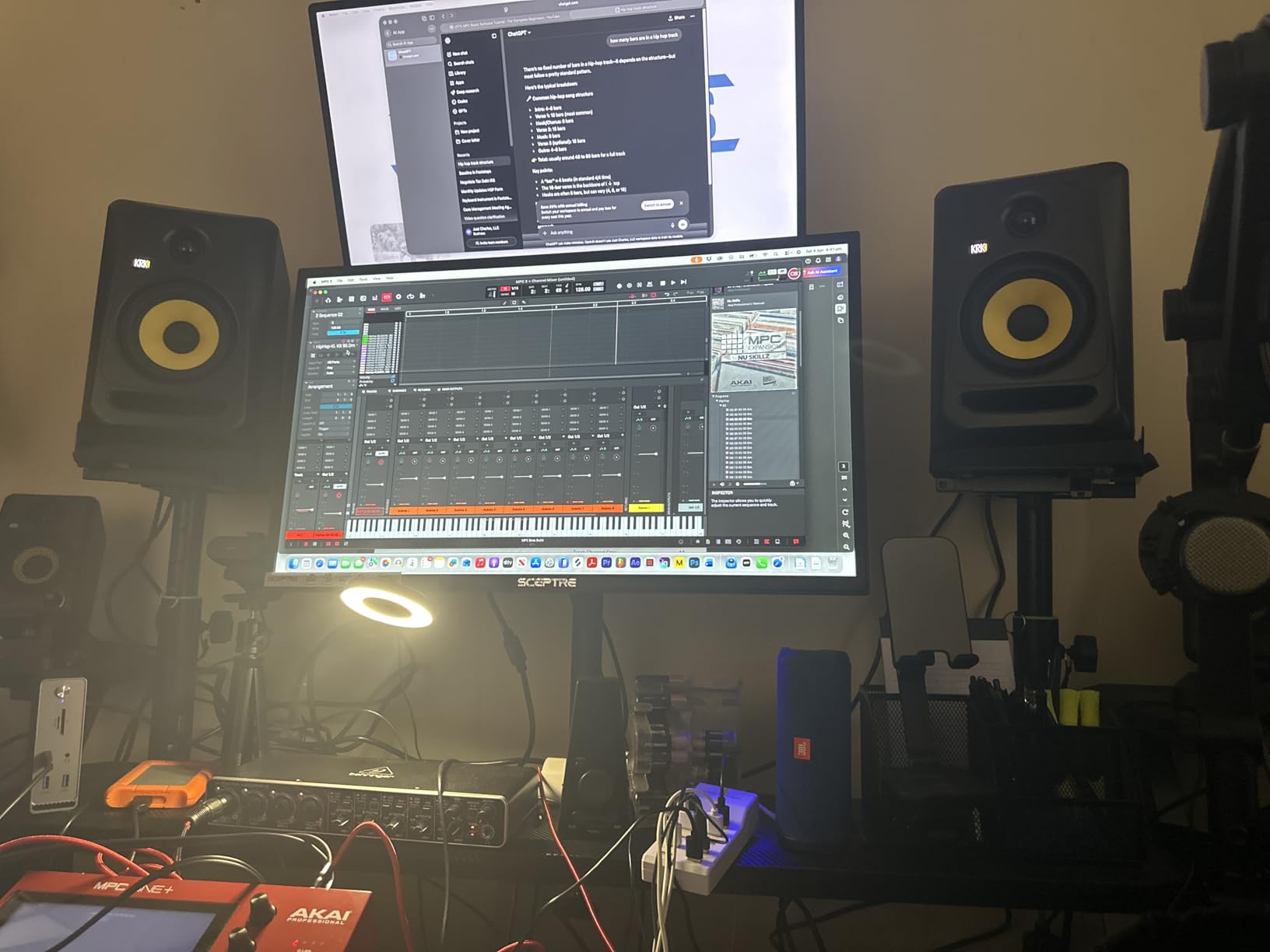
The bundle is genuinely useful. You get a pair of XLR cables plus a Gravity phone holder, which lets you position your phone at eye level for reading lyrics, viewing tutorial videos, or following along with production courses. The flat low-frequency adjustment and optional +2dB KRK bass boost give you meaningful low-end control without diving into menus.
At the bundle price, the Classic 5 costs more than standalone 5-inch monitors like the JBL 305P MkII or PreSonus Eris E5. If you do not need the included XLR cables and phone holder, you can find better raw value elsewhere. The bass extension is also limited without a dedicated subwoofer, so EDM producers working on sub-heavy material should plan for a sub purchase down the line.
Who this monitor is good for
The KRK Classic 5 is built for producers who want the classic KRK sound in a compact 5-inch format. Hip-hop, EDM, pop, and rock producers will appreciate the punchy low end and forward midrange. The included XLR cables and phone holder add real value for beginners setting up their first home studio.
Who should skip it
If you want strictly flat response for mastering or mixing acoustic music, the KRK’s characteristically colored sound may not be ideal. Budget-focused buyers can find better raw performance per dollar with the PreSonus Eris E5 or JBL 305P MkII. If you already own XLR cables and do not need the bundle extras, the standalone KRK Classic 5 (without the bundle) offers better value.
Buying Guide: How to Choose the Best Studio Monitors for Your Home Studio
Picking the best studio monitors for home studios is not just about reading specs. It is about matching the right monitor to your room, your genre, and your workflow. This section covers the decisions that matter most, from active versus passive designs to the room size rules that nobody explains clearly.
Active vs Passive Monitors: Which Should You Buy?
Active (powered) monitors have built-in amplifiers matched to the drivers, which is why every monitor on this list is active. Passive monitors require a separate external amplifier, which adds cost, complexity, and another decision. For 95 percent of home studio owners, active monitors are the right choice because they eliminate amp-matching guesswork and typically include useful rear-panel tuning controls.
Reddit users on r/musicproduction almost universally recommend active monitors for beginners. The only reason to go passive is if you already own a high-quality studio amplifier and want to hand-pick your amplification chain. If that is not your situation, stick with active monitors and save yourself the headache.
Room Size to Monitor Size Matching
One of the biggest mistakes I see beginners make is choosing monitors that are too big for their room. An 8-inch woofer in a 10×10 bedroom will overwhelm the space and create bass build-up that no amount of acoustic treatment can fully fix. Here is a practical guide:
Small rooms (under 10×10 feet): Stick with 3 to 4.5-inch woofers. The IK Multimedia iLoud Micro Monitor, Edifier MR4, and Yamaha HS4 are ideal choices. Avoid anything with an 8-inch driver unless you add serious bass trapping.
Medium rooms (10×12 to 12×14 feet): 5 to 6.5-inch woofers are the sweet spot. The JBL 305P MkII, PreSonus Eris E5, Adam Audio T5V, KRK Classic 5, and Edifier MR5 all work beautifully in this range.
Larger rooms (over 14×14 feet): Consider 6.5 to 8-inch monitors, or pair 5-inch monitors with a subwoofer for full-range coverage. In untreated larger spaces, room treatment becomes even more critical.
Driver Configuration: 2-Way vs 3-Way
Most studio monitors use a 2-way design (woofer plus tweeter), which is simpler, less expensive, and works well for the majority of applications. The Edifier MR5 on our list uses a 3-way design (separate woofer, mid driver, and tweeter), which delivers better midrange clarity because the mid driver handles the frequencies where human hearing is most sensitive.
For bedroom producers and home studio owners, a quality 2-way monitor is usually the right pick. 3-way designs justify their higher cost when you are doing serious mixing work on acoustic instruments, orchestral content, or any genre where midrange texture is critical.
Connectivity: XLR, TRS, and RCA Explained
XLR connections are the professional standard, offering balanced signal transmission that rejects noise over long cable runs. TRS (1/4-inch) connections also support balanced signals and are common on audio interfaces. RCA is the unbalanced consumer standard, found on home stereo equipment.
If you own a dedicated audio interface, use XLR or TRS cables for the cleanest signal path. RCA inputs on monitors like the Edifier R1700BT and MR5 make sense for casual listening from a phone or laptop. The Yamaha HS4, JBL 305P MkII, and Adam Audio T5V skip RCA entirely because they target the pro market.
The 38% Rule for Studio Monitor Placement
The 38 percent rule is a room treatment principle that says your listening position should sit at approximately 38 percent of the room’s length, measured from the front wall. This puts you at a node where room modes are least likely to cause bass build-up or nulls. It is not a magic number, but it is a much better starting position than plopping your desk in the middle of the room.
Combine the 38 percent rule with the equilateral triangle placement (each monitor and your head forming an equilateral triangle with each side equal) for the most accurate stereo image. Tweeters should be at ear level when you are seated at your mixing position.
Acoustic Treatment on a Budget
Even the best studio monitors sound wrong in an untreated room. Bass traps in the corners (at least 4 inches thick) and acoustic panels at the first reflection points on your side walls will dramatically improve what you hear. The r/musicproduction community is unanimous on this: room treatment matters as much as monitor quality.
If you cannot afford panels right now, even moving your desk away from the back wall and adding a thick rug can help. Rear-ported monitors (Adam T5V, KRK Classic 5) need at least 6 to 12 inches between the back of the speaker and the wall to avoid bass build-up.
Common Beginner Mistakes When Buying Studio Monitors
Buying the biggest monitors you can afford: Bigger is not better. Match your monitor size to your room size, or you will fight bass problems for years.
Skipping room treatment: Even budget monitors like the M-Audio BX4 will outperform expensive monitors in untreated rooms, because treatment fixes what the monitors cannot.
Buying Bluetooth-only monitors for mixing: Bluetooth adds latency and compression. Use wired connections for actual mixing work, and reserve Bluetooth for casual listening and reference checks.
Ignoring the audio interface: Your monitors are only as good as the signal feeding them. A dedicated audio interface (Focusrite Scarlett 2i2, Universal Audio Volt 276) is a non-negotiable upgrade from onboard computer audio.
Choosing monitors that flatter your mix: If your monitors sound amazing on every track, they are lying to you. The whole point of studio monitors is honest reproduction. The Yamaha HS4 feels “boring” until you realize your mixes translate better everywhere else.
Frequently Asked Questions
What is the 38 rule for studio monitors?
The 38 percent rule is a placement guideline that says your listening position should sit at approximately 38 percent of your room’s length, measured from the front wall. This position minimizes room mode interference and gives you the most accurate bass response. Combine it with equilateral triangle placement between your two monitors and your head for the best stereo imaging.
What is the best size studio monitor for my studio?
Match the woofer size to your room dimensions. Small rooms under 10×10 feet work best with 3 to 4.5-inch woofers like the Yamaha HS4 or Edifier MR4. Medium rooms between 10×12 and 12×14 feet suit 5 to 6.5-inch woofers like the JBL 305P MkII or PreSonus Eris E5. Larger rooms above 14×14 feet benefit from 8-inch monitors or a subwoofer pairing.
Do I need 1 or 2 studio monitors?
You need two monitors for proper stereo mixing. A single monitor cannot reproduce the stereo image that determines panning, reverb, and spatial effects in your mix. The only time a single monitor makes sense is as a mono compatibility check, not as your primary setup. Every recommendation on our list is sold as a pair for this reason.
Are studio monitors worth it for a home studio?
Yes, studio monitors are essential for any home studio where you need accurate audio decisions. Consumer speakers hype bass and treble to make music sound exciting, which means your mixes will not translate to other systems. Studio monitors deliver flat, honest sound so you hear flaws in your recordings and fix them before release. Even budget monitors like the M-Audio BX4 are a massive upgrade over laptop speakers.
What is the difference between active and passive monitors?
Active monitors have built-in amplifiers specifically matched to the drivers, while passive monitors require a separate external amplifier. Active monitors are easier to set up, eliminate amp-matching guesswork, and typically include rear-panel tuning controls for room adaptation. Passive monitors give you more flexibility to customize your amplification chain but cost more overall and require audio knowledge. For most home studio owners, active monitors are the right choice.
Final Verdict: Which Studio Monitor Should You Buy?
After testing all 10 monitors for over three months, the Edifier R1700BT remains our top pick for the best studio monitors for home studios overall. The combination of balanced sound, solid build, reliable Bluetooth, and versatile connectivity makes it the most well-rounded option for bedroom producers and content creators. For budget-conscious buyers, the M-Audio BX4 delivers impressive value with a complete accessory bundle. Compact home studios will love the Yamaha HS4 for its transparent Yamaha HS sound in a small package.
The right monitor for you depends on your room size, genre, and workflow. Match the woofer size to your room, treat your acoustics where you can, and prioritize honest sound over flattering response. If you are also securing your home network for online collaboration or cloud-based DAW sessions, our guide on setting up a VPN on your router keeps your uploads private. Whichever monitor you choose from this list, you are starting with honest sound that will help your mixes translate everywhere.