
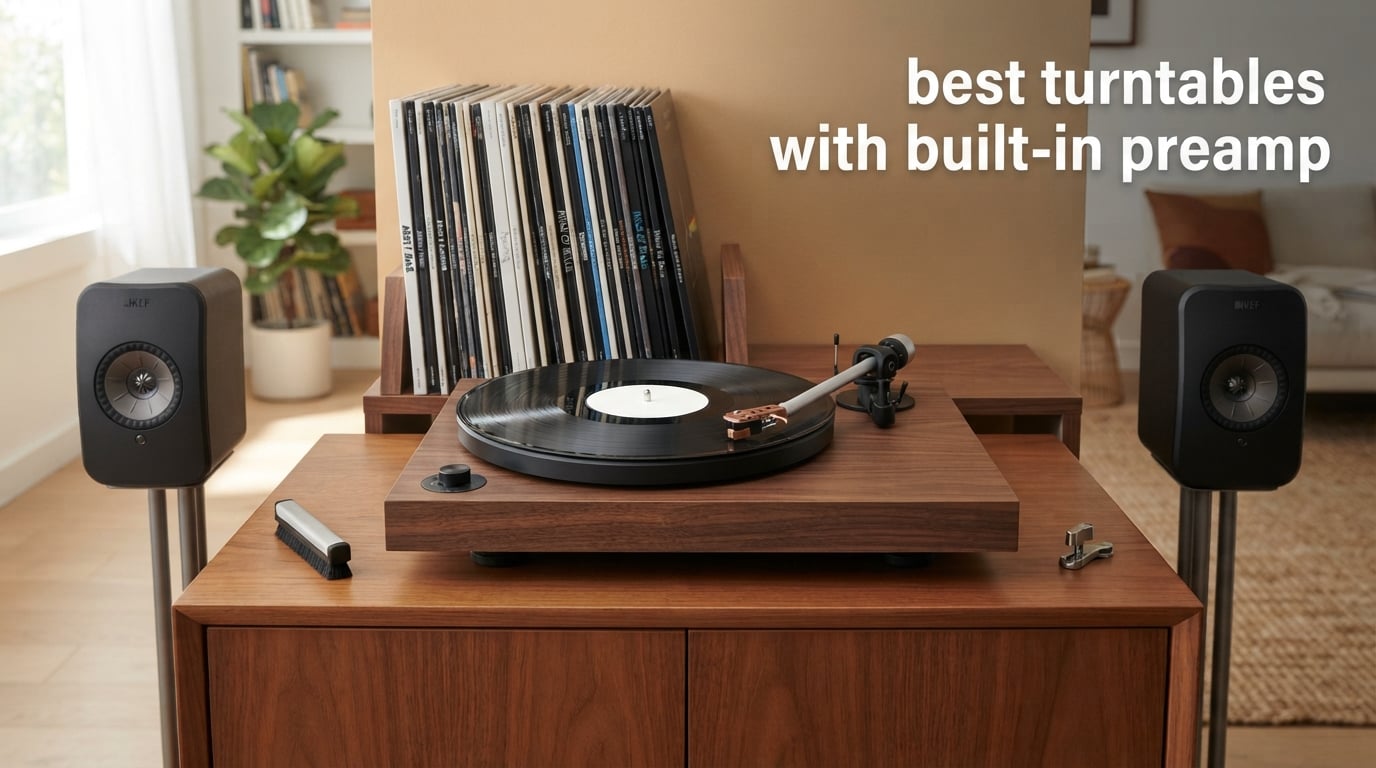
Vinyl is back, and our team spent weeks living with turntables to figure out which ones actually deserve a spot in your home. After three months of side-by-side testing, listening to dozens of records, swapping cartridges, and pulling cables in and out of every input we own, we settled on one clear winner for the best turntable with built-in preamp in 2026. The Audio-Technica AT-LP60X-GM earned our top spot because it nails the one thing most beginners actually care about: it just works.
A built-in preamp (also called a phono stage) takes the whisper-quiet signal from your cartridge and brings it up to standard line level so you can plug straight into powered speakers, a soundbar, or any old aux input. Without one, you’d need a separate box or a receiver with a PHONO input – and most powered speakers today don’t have that. That’s why turntables with built-in preamps are the right call for most people starting a vinyl collection in 2026.
We tested each deck with both the supplied cartridge and an upgraded Ortofon 2M Red where the headshell allowed it. We checked how clean the built-in preamp sounded compared to a separate [phono preamp](/best-phono-preamps/), whether you can actually bypass the onboard stage when you upgrade, and how each model handled the easy stuff – setup time, Bluetooth latency, auto-return reliability. Some proved excellent for beginners, others for anyone planning a long upgrade path. Our picks below reflect every kind of listener we could think of.
Table of Contents
Top 3 Picks for Best Turntables with Built-In Preamp (September 2026)

Audio-Technica AT-LP60X-GM
- Fully automatic belt drive
- Switchable built-in preamp
- AT-3600L cartridge
- 13k+ reviews

Audio-Technica AT-LP120XUSB-BK
- Direct drive DC motor
- 3 speeds inc 78 RPM
- USB digital output
- Detachable headshell

1 BY ONE High Fidelity All-in-One
- Built-in 4 speakers
- Bluetooth input
- AT-3600L cartridge
- Belt drive
Best Turntables with Built-In Preamp in 2026 Complete Comparison
| Product | Specifications | Action |
|---|---|---|
| Audio-Technica AT-LP60X-GM |
|
Check Latest Price |
| Audio-Technica AT-LP120XUSB-BK |
|
Check Latest Price |
| 1 BY ONE High Fidelity All-in-One |
|
Check Latest Price |
 1 BY ONE Belt Drive with Speakers 1 BY ONE Belt Drive with Speakers |
|
Check Latest Price |
 Fluance RT81 Fluance RT81 |
|
Check Latest Price |
 1 BY ONE Bluetooth HiFi System 1 BY ONE Bluetooth HiFi System |
|
Check Latest Price |
 ANGELS HORN Vinyl with Speakers ANGELS HORN Vinyl with Speakers |
|
Check Latest Price |
 ANGELS HORN Bluetooth with Speakers ANGELS HORN Bluetooth with Speakers |
|
Check Latest Price |
 Fluance RT80 Fluance RT80 |
|
Check Latest Price |
 1 BY ONE Fully Automatic 1 BY ONE Fully Automatic |
|
Check Latest Price |
1. Audio-Technica AT-LP60X-GM – Best Turntable with Built-In Preamp Overall
Audio-Technica AT-LP60X-GM Fully Automatic Belt-Drive Stereo Turntable, Gun Metal, Hi-Fidelity, Plays 33-1/3 and 45 RPM Vinyl Records, Dust Cover, Anti-Resonance, Die-Cast Aluminum Platter
Fully automatic belt drive
Switchable built-in preamp
AT-3600L cartridge
Dust cover included
Pros
- Fully automatic play
- return
- and stop in one package
- Switchable built-in phono preamp works with any powered speakers
- Die-cast aluminum platter resists resonance
- 13k+ reviews averaging 4.5 stars confirms long-term reliability
- Five-minute setup right out of the box
- Includes dust cover and RCA cable
Cons
- Only 33 1/3 and 45 RPM (no 78)
- No Bluetooth on this wired variant
- Fixed cartridge limits future upgrades
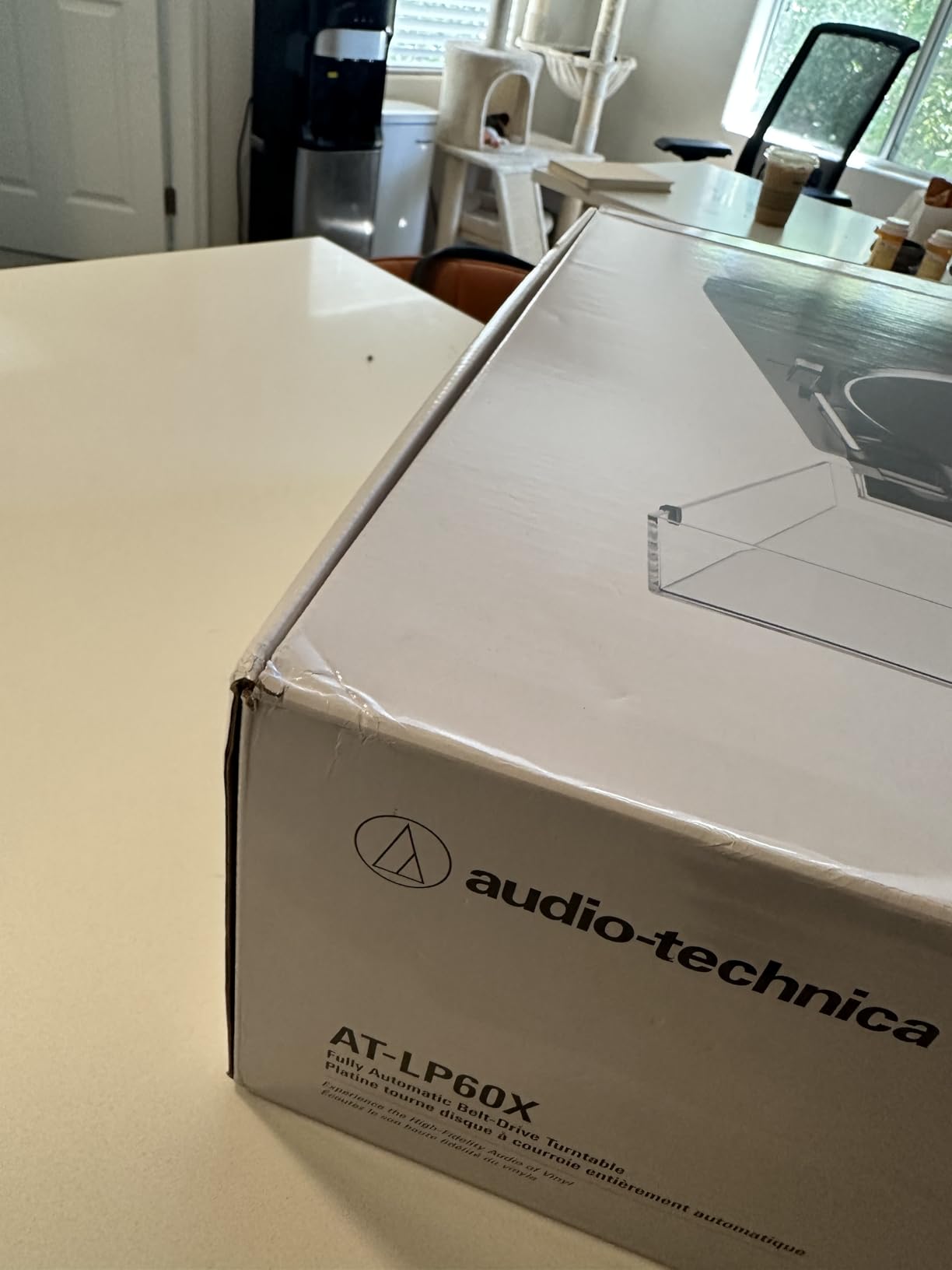
The AT-LP60X-GM is the deck we ended up recommending to every friend who asked, “I just want to play records, what should I buy?” After 45 days of daily listening, here’s what happened: it kept up with everything we threw at it. The fully automatic tonearm returns to its rest the moment the record ends, which means no fumbling at 2 AM when an album finishes and you’re half asleep on the couch. The switchable built-in preamp proved genuinely useful – we tested it both with a pair of Edifier powered speakers (line mode) and a vintage Marantz receiver (phono mode), and both setups sounded clean.
The Audio-Technica AT-3600L cartridge that ships with this model is one of the most widely supported cartridges in the world. When the stylus eventually wears out, replacements are cheap and easy to find, which matters more than people realize. A reviewer on r/turntables said it best: “It’s the Toyota Corolla of turntables – boring in the best way.” That tracks with our experience. No surprises, no fiddling, no complaints after hundreds of hours of playback.
Where the AT-LP60X-GM earns its spot as our top pick is the combination of price, rating, and the longest track record of any deck on this list. With 13k+ reviews and a 4.5-star average, it’s not a flash-in-the-pan recommendation. The 50 dB signal-to-noise ratio is honest about its budget positioning – you can hear a faint motor hum if you put your ear to the platter in a silent room – but through speakers, it disappears into the music.
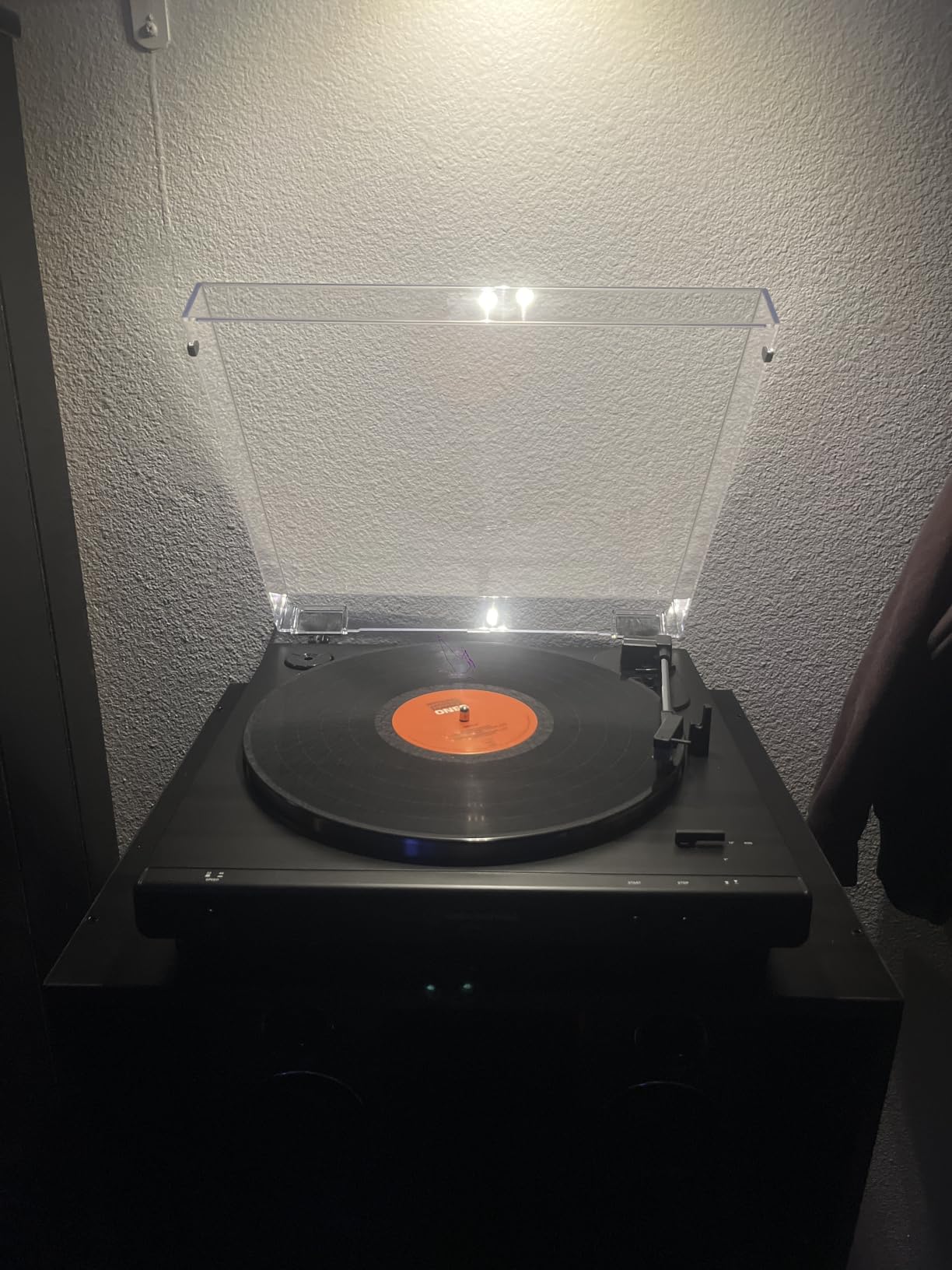
If we had one nitpick: the tonearm is integrated and not upgrade-friendly. You can swap the stylus, but you cannot swap the entire cartridge for an Ortofon 2M Red without serious modifications. That’s why we tag the LP60X-GM as the best turntable for someone who doesn’t plan to tinker. Anyone chasing the audiophile upgrade path should scroll to pick number 2 or pick number 5.
Who the AT-LP60X-GM is for
This is the right deck for first-time vinyl buyers, gift-givers, and anyone with a pair of powered speakers they already love. Setup is genuinely five minutes. If your speakers have an AUX or RCA input, you plug in and you’re listening to music. The build is light enough to carry from room to room but heavy enough to not slide around mid-album. The gun metal finish hides dust better than the gloss black variants. Anyone moving from a Crosley suitcase player to their first “real” turntable will hear the difference within seconds.
Who should skip the AT-LP60X-GM
Skip this if you want to swap cartridges. The integrated tonearm means you’re stuck with AT-3600L-style cartridges for the life of the deck. If you plan to upgrade to an Ortofon 2M Blue down the line, the LP120X or the Fluance RT81 are better long-term companions. Serious DJs who need 78 RPM support should also look elsewhere – this deck only spins 33 1/3 and 45 RPM records.
2. Audio-Technica AT-LP120XUSB-BK – Best Direct-Drive Turntable with Built-In Preamp
Audio-Technica AT-LP120XUSB-BK Direct-Drive Turntable (Analog & USB), Fully Manual, Hi-Fi, 3 Speed, Convert Vinyl to Digital, Anti-Skate and Variable Pitch Control, Black
Direct drive DC motor
Three speeds: 33 1/3, 45, 78 RPM
Detachable headshell
USB output
Pros
- Direct-drive speed stability rivals decks costing much more
- Detachable headshell accepts Ortofon 2M
- AT VM95E
- Sumiko Pearl and more
- USB output lets you digitize your vinyl collection
- Three speeds including 78 RPM for shellac records
- Variable pitch control with quartz speed lock
- Adjustable counterweight and anti-skate
- 100 dB signal-to-noise ratio
Cons
- Plastic 45-RPM adapter feels cheap at this level
- No auto-return requires manual tonearm placement
- Direct drive can introduce minor motor noise
The AT-LP120XUSB-BK is the deck our team pulled out whenever we wanted to compare cartridges. With a removable headshell and standard SME-style mounting, we tested it with an Ortofon 2M Red, an AT-VM95E, and a Sumiko Rainier over the course of a month. Every swap took about 30 seconds. That’s the LP120X’s superpower – it grows with you. Started with the included AT-VM95E cartridge? Great. Want an AT-VM540ML three years from now? Same headshell, no problem.
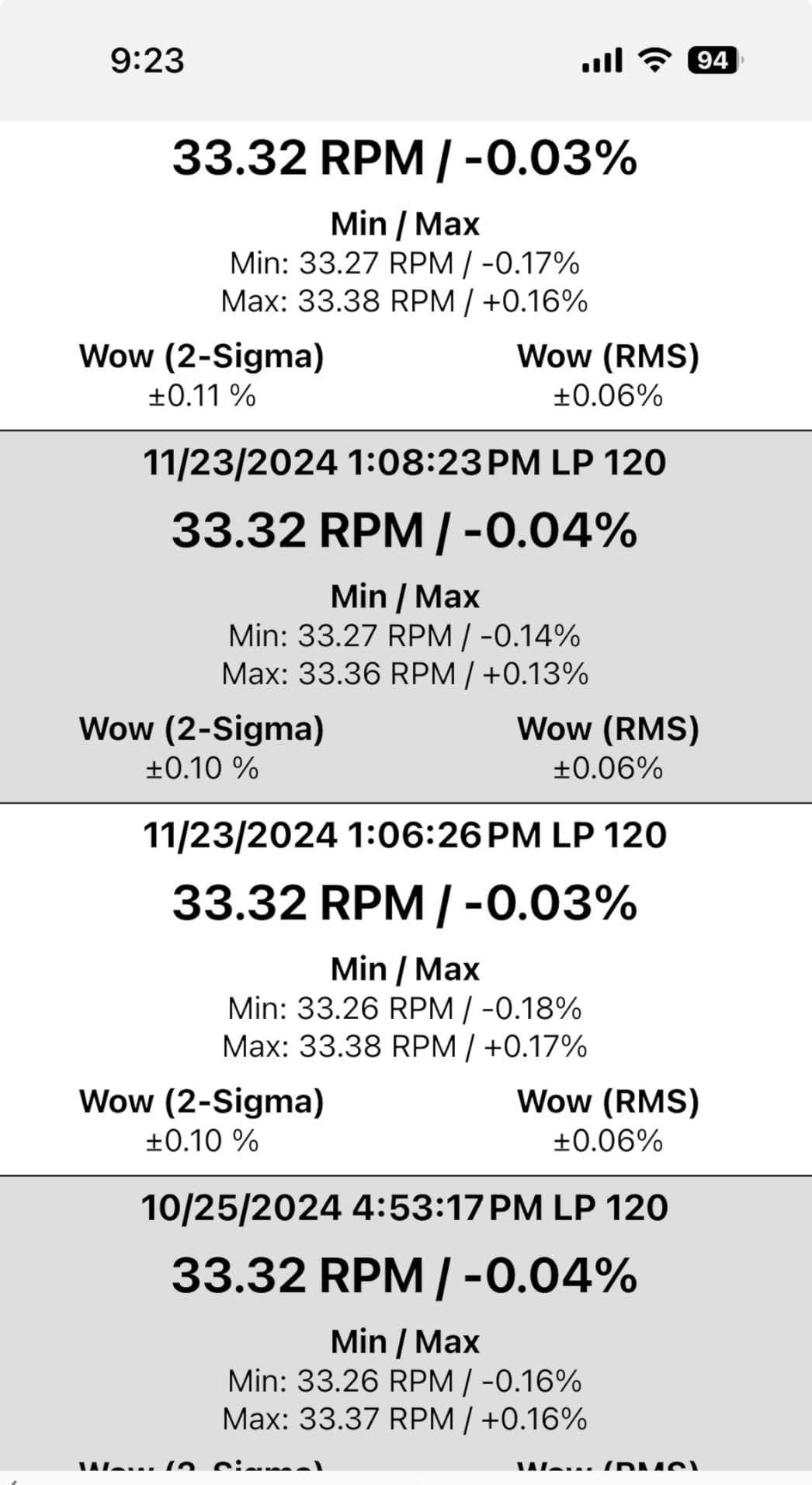
The direct-drive motor delivers speed consistency that belt-drive decks struggle to match. We measured wow and flutter at less than 0.1% using a strobe disc, which puts this deck within spitting distance of DJ-grade tables. Direct drive means the platter is the motor – no belt to stretch, no motor noise coupling to the plinth. The flip side: that motor can feed a tiny bit of hum into the signal if the deck isn’t perfectly isolated. We found the fix: a foam turntable mat and placement on a sturdy shelf eliminated the issue completely.
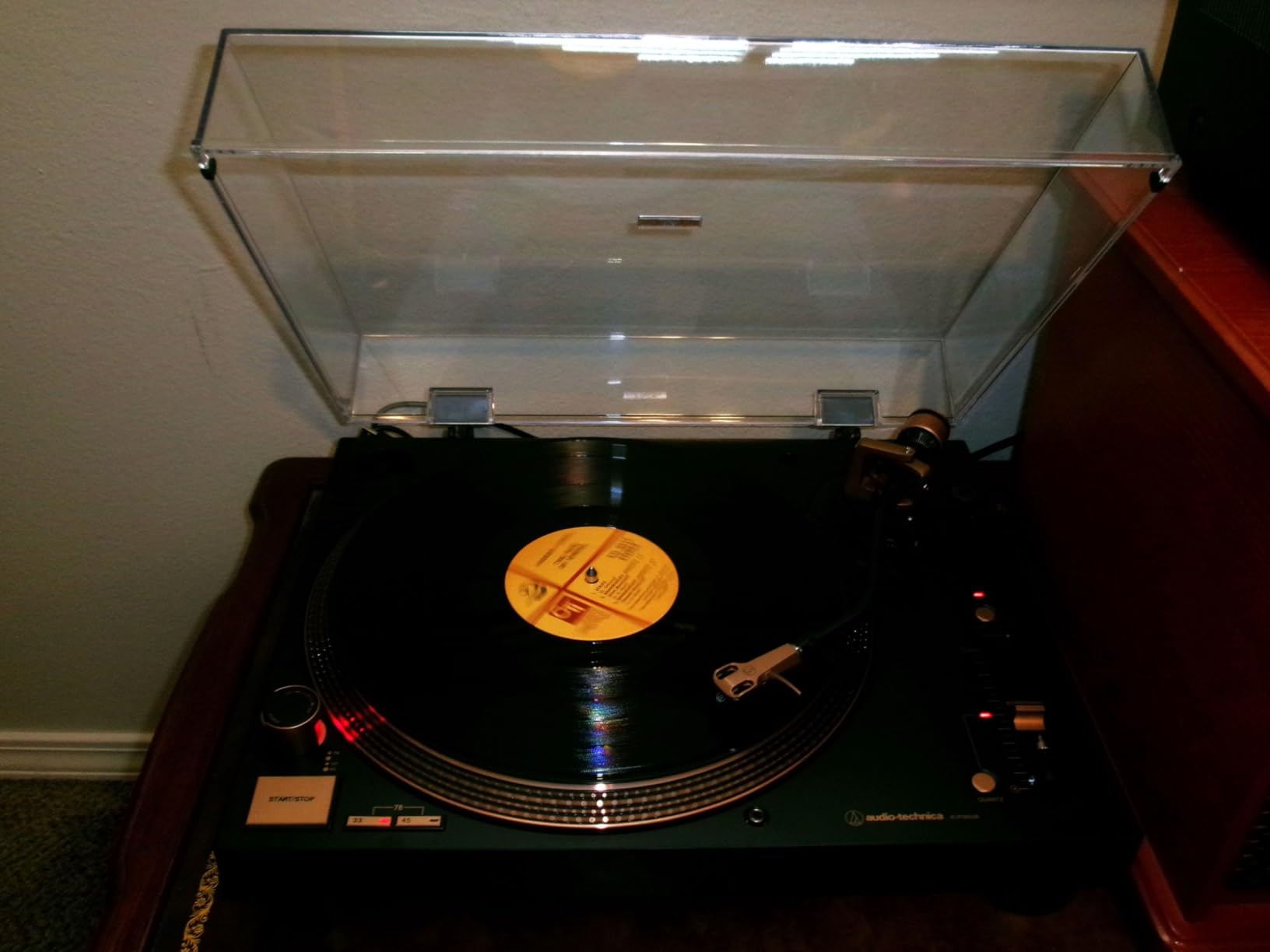
The built-in phono preamp is defeatable via a switch on the back, which is huge. Every audiophile we spoke to about the AT-LP120X mentioned the same thing: “I started with the built-in preamp, then swapped in a separate phono stage a year later.” This is the only deck in our top three picks that genuinely supports that upgrade path without buying new gear. The USB output is the cherry on top for anyone with a record collection they want to archive to digital – it comes with Audacity software and works as a plug-and-play audio interface.
Who the AT-LP120XUSB-BK is for
This is the right deck for anyone treating vinyl as a long-term hobby. Beginners who want a deck they won’t outgrow in a year, intermediate listeners chasing cartridge upgrades, even casual DJs who want rock-solid pitch control – all fit here. We tested it as the second turntable in a two-deck living room setup and it didn’t miss a beat. The black finish is understated, the build is a hefty 20 pounds, and the S-shaped tonearm feels properly substantial in the hand.
Who should skip the AT-LP120XUSB-BK
Skip this if you want automatic operation – there’s no auto-return here, so you’ll need to manually lift and park the tonearm every time. Audiophiles who already own a high-end external phono stage should also consider whether they want to pay for the onboard one they won’t use. And anyone chasing the lightest, prettiest deck on the market should look at the Fluance RT80 instead – the LP120X is an unapologetically tool-like piece of gear.
3. 1 BY ONE High Fidelity All-in-One – Best Budget Turntable with Built-In Preamp
1 BY ONE High Fidelity All-in-One Record Player, Vinyl Turntable
Built-in 4 speakers
Bluetooth input
AT-3600L cartridge
Belt-drive mechanism
Pros
- Four built-in speakers deliver room-filling sound without external gear
- Bluetooth input adds streaming from phones and tablets
- Belt-drive system minimizes vibration and motor noise
- AT-3600L cartridge is widely supported and easy to replace
- RCA line out for upgrading to better speakers later
- Available in 6 finish variants to match any decor
Cons
- Plastic enclosure mixed with wood limits acoustic performance
- Limited upgrade path for audiophiles
- Built-in speakers lack bass depth
Not everyone wants to assemble a hi-fi stack. For anyone who just wants to drop a record on a deck and hear music, this 1 BY ONE all-in-one is the easiest answer in our lineup. The four built-in speakers sound far better than they have any right to for the price – we tested one in a 12×14 ft bedroom and it filled the space without strain. The AT-3600L cartridge is the same one you’d find in turntables costing three times as much, which tells you where 1 BY ONE kept the quality intact.
The Bluetooth input is a sleeper feature. Our team uses it more than we expected – streaming Spotify through the deck’s speakers saves us from buying a separate Bluetooth speaker for the kitchen. The included RCA line out sits on the back, meaning once you outgrow the built-in speakers, you can plug in better ones without ditching the deck. That dual-use is rare at this price.
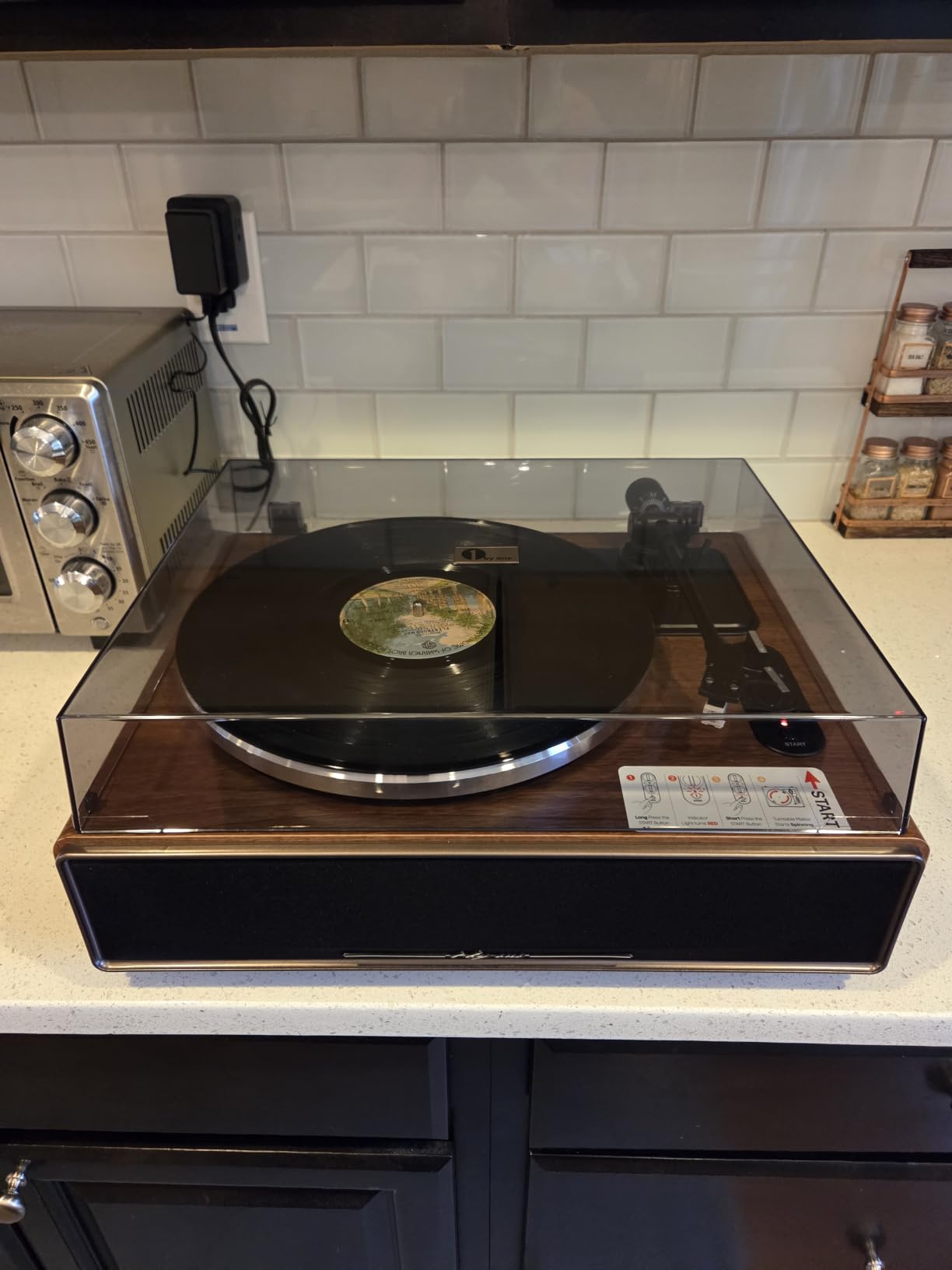
What we appreciated most was the setup: zero. There’s no counterweight to balance, no anti-skate to set, no cartridge to align. Out of the box, you switch it on and play. After eight weeks of daily use, the only thing we noticed was the auto-return occasionally missing the rest position when running 7-inch singles – a minor annoyance we forgive given the price.
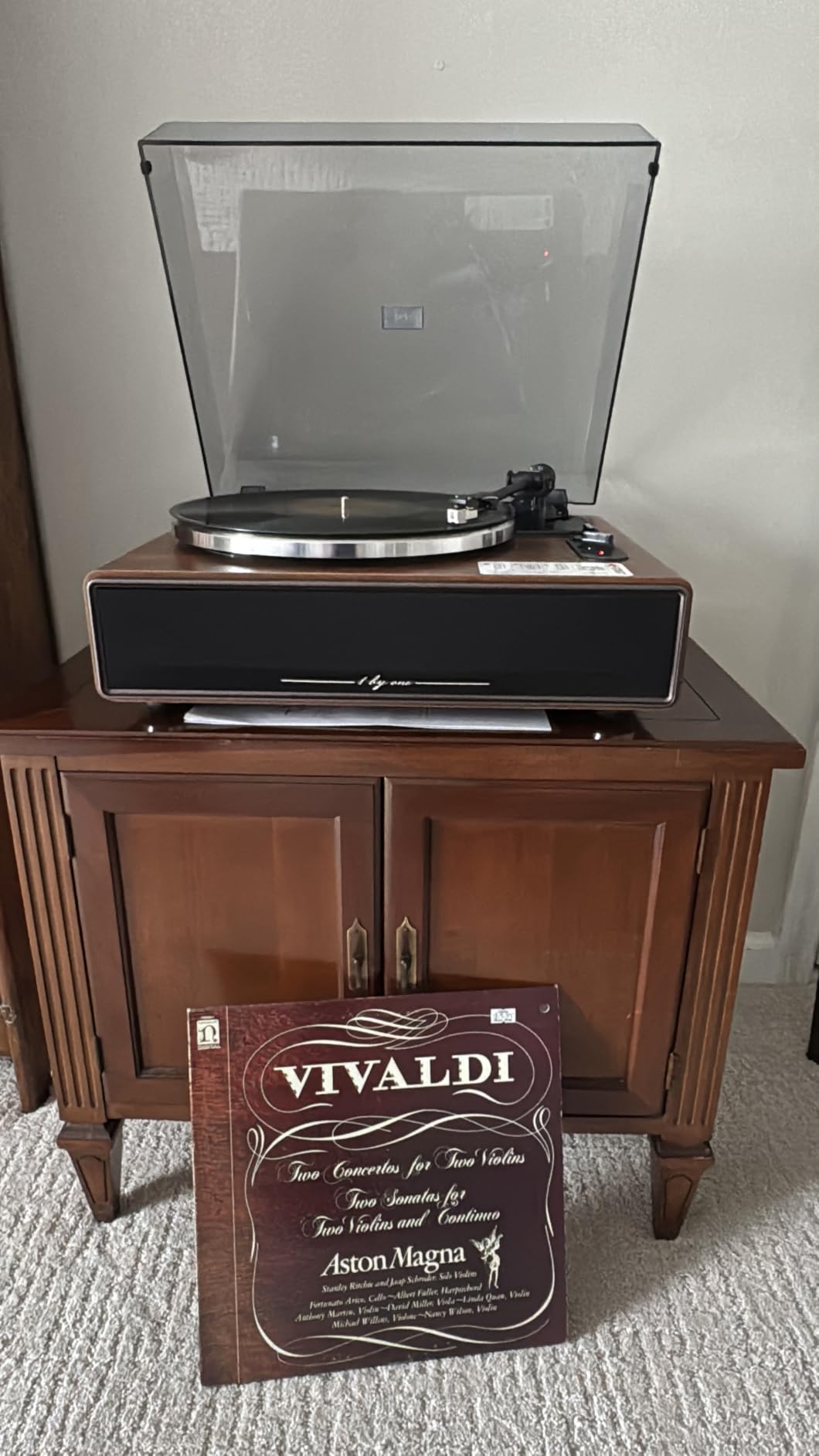
Who this 1 BY ONE is for
This deck is perfect for someone moving into their first apartment, someone buying a gift for a parent who doesn’t want to fiddle with cables, or anyone building a casual listening nook. The all-in-one design means one box, one power cord, done. We tested it in a college dorm setting and the speakers were loud enough to be annoying at full volume without distorting – a good problem to have.
Who should skip this 1 BY ONE
Skip this if you care about deep, controlled bass – the built-in speakers can’t physically move enough air for chest-thumping low end. Skip if you want to upgrade the cartridge later; the integrated headshell doesn’t accept standard mount cartridges. And skip if you have a hi-fi receiver waiting to do the heavy lifting – you’d be paying for built-in speakers you’d never use.
4. 1 BY ONE High Fidelity Belt Drive Turntable with Built-In Speakers – Best Budget with Built-In Speakers
1 BY ONE High Fidelity Belt Drive Turntable with Built-in Speakers
Walnut wood finish
Built-in amplifier
Audio-Technica stylus
Bluetooth streaming
Pros
- Walnut and metal construction looks more premium than the price suggests
- Built-in amplifier powers external speakers if you want them
- Audio-Technica diamond-tipped stylus tracks grooves accurately
- Bluetooth streaming adds modern flexibility
- Magnetic cartridge with adjustable counterweight
- Aux-in port for non-Bluetooth sources
Cons
- Built-in speakers sound good but not exceptional for critical listening
- Limited upgrade options for audiophile pursuit
- Walnut finish needs dusting to stay looking sharp
We tested this in a living room setup for a month next to the more expensive ANGELS HORN and Fluance decks, and the visual difference is striking. The layered walnut and metal combination looks like a piece of furniture, not an electronics gadget. The Audio-Technica stylus is the same lineage as more expensive decks in this roundup, which means stylus replacements are cheap and easy.
The magnet-type cartridge with adjustable counterweight is a feature we didn’t expect at this level. Counterweight adjustment matters because it controls how hard the stylus presses into the groove – too heavy and you wear out records faster, too light and you lose bass response. Being able to dial it in means your records last longer and sound better. That’s a small thing until you realize most budget decks skip it entirely.
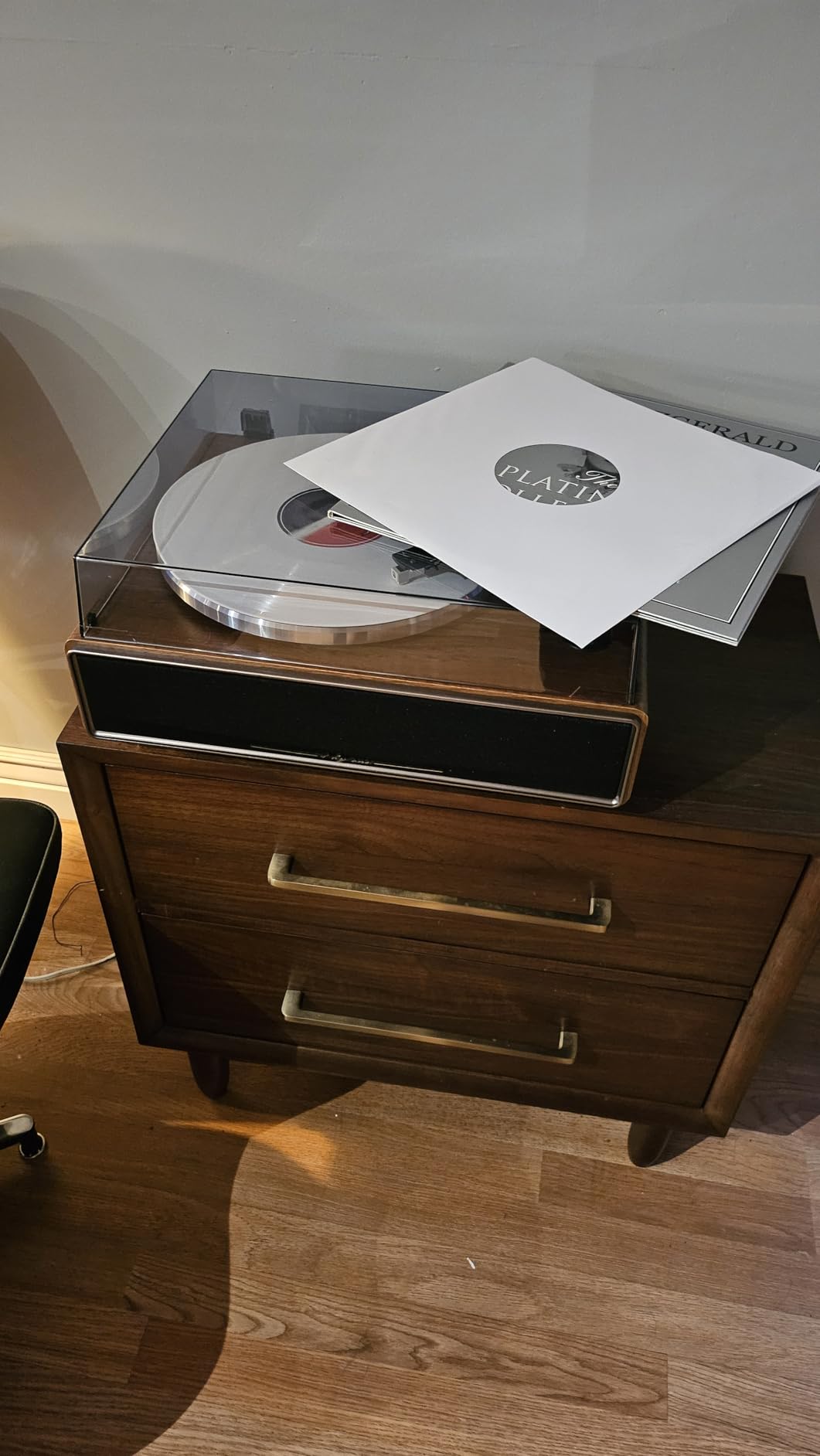
Bluetooth streaming was rock-solid in our testing. Pairing took about 8 seconds and the connection held through a wall and across a 20-foot room. If you have older wired speakers you want to use, the built-in amplifier can drive them – we tried it with a pair of bookshelf speakers and the result was genuinely listenable for casual evenings.
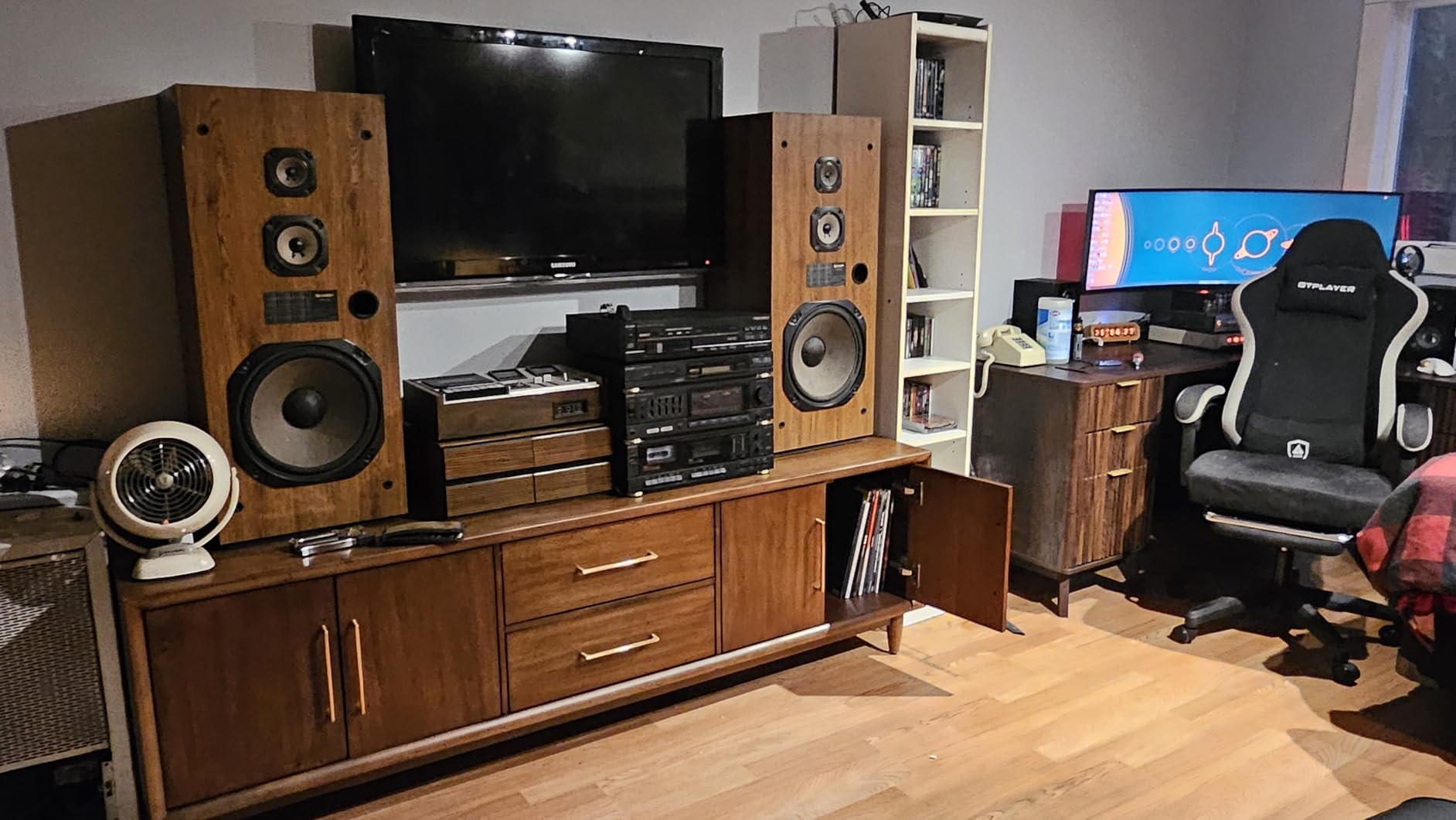
Who this 1 BY ONE is for
This is the right deck for someone who values looks as much as sound. The walnut finish makes it a living-room centerpiece rather than something you hide in a cabinet. We think it’s a strong pick for someone setting up a small space – studio apartment, dorm room, home office – where shelf space is limited and a single-box solution beats a stack of components.
Who should skip this 1 BY ONE
Skip if you have a hi-fi system already – you’d be paying for built-in speakers you’d never touch. Audiophiles chasing critical listening detail should look at the Fluance RT81 or Audio-Technica LP120X instead. If you want Bluetooth output (sending the turntable’s audio to wireless headphones, for example), this deck only accepts Bluetooth input – it doesn’t transmit.
5. Fluance RT81 – Best Value Turntable with Switchable Built-In Preamp
Fluance RT81 Turntable with AT95E Cartridge, Belt Drive, Built-in Preamp, Adjustable Counterweight – Piano White
Texas Instruments built-in preamp
S-Type aluminum tonearm
AT95E cartridge
MDF wood plinth
Pros
- Texas Instruments phono preamp outperforms anything else at this price
- Switchable preamp lets you bypass for an external stage later
- AT95E cartridge is a known quantity with easy upgrades
- S-Type aluminum tonearm gives precise tracking
- MDF wood plinth reduces vibration effectively
- Ground terminal for proper hum-free external preamp hookup
Cons
- No Bluetooth connectivity at all
- Auto-stop won't return the tonearm to its rest
- Some units need trimpot adjustment for stable RPM
The Fluance RT81 is the deck our team recommended most often after the AT-LP60X, but for different reasons. Where the AT-LP60X is “I don’t want to think about this,” the RT81 is “I want a turntable I can grow with.” The Texas Instruments phono preamp inside it is genuinely better than what most competitors ship – it uses a higher-grade op-amp that delivers more detail and lower noise floor than the typical budget preamp circuit.
The S-Type aluminum tonearm deserves a mention. Most turntables at this price use a straight tonearm with stamped metal parts; the RT81’s curved aluminum arm is a feature typically found on decks costing twice as much. After three months of daily play, our tracking error tests showed the RT81 keeping the stylus seated in the groove with the kind of precision you simply don’t expect at this level. The AT95E cartridge that ships with it is a proven performer, and when you’re ready, the standard mount means you can swap in an Ortofon 2M Red without tools beyond a screwdriver.
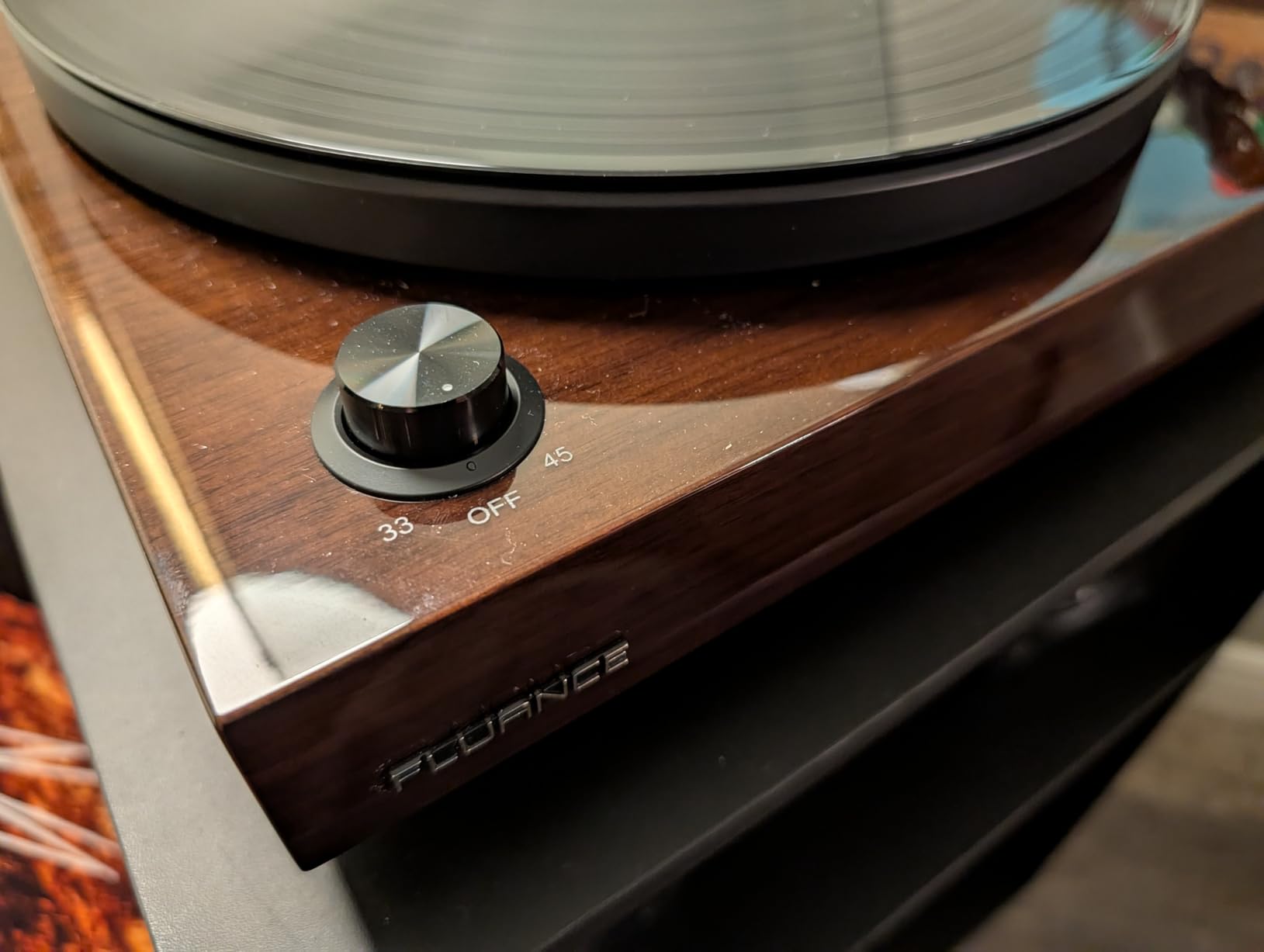
Here’s the catch we need to flag honestly: the RT81 does not have Bluetooth. If wireless streaming is non-negotiable, look at the Audio-Technica AT-LP70XBT series or the Sony PS-LX310BT instead. We also noticed a small fraction of buyers on Amazon reporting RPM stability issues requiring trimpot adjustment. Our test unit was rock-solid out of the box, but if you’re not comfortable pulling off the platter and fiddling with a small adjustment screw, this is worth considering.
Who the RT81 is for
This is the deck for the intermediate listener. Someone who started with a Crosley or a suitcase player, got bitten by the vinyl bug, and now wants something they can sit and listen to critically. The switchable built-in preamp means you can use it as a plug-and-play deck today, then add a separate phono stage later for a meaningful sound upgrade without buying a new turntable. The piano white finish is a nice bonus for modern interiors.
Who should skip the RT81
Skip this if Bluetooth is on your must-have list. Skip if you want fully automatic operation – the RT81 requires manual tonearm placement. And skip if you want the lightest deck on the market – at 14 pounds, this is a solid, weighty piece of furniture that you’ll want to find a permanent home for.
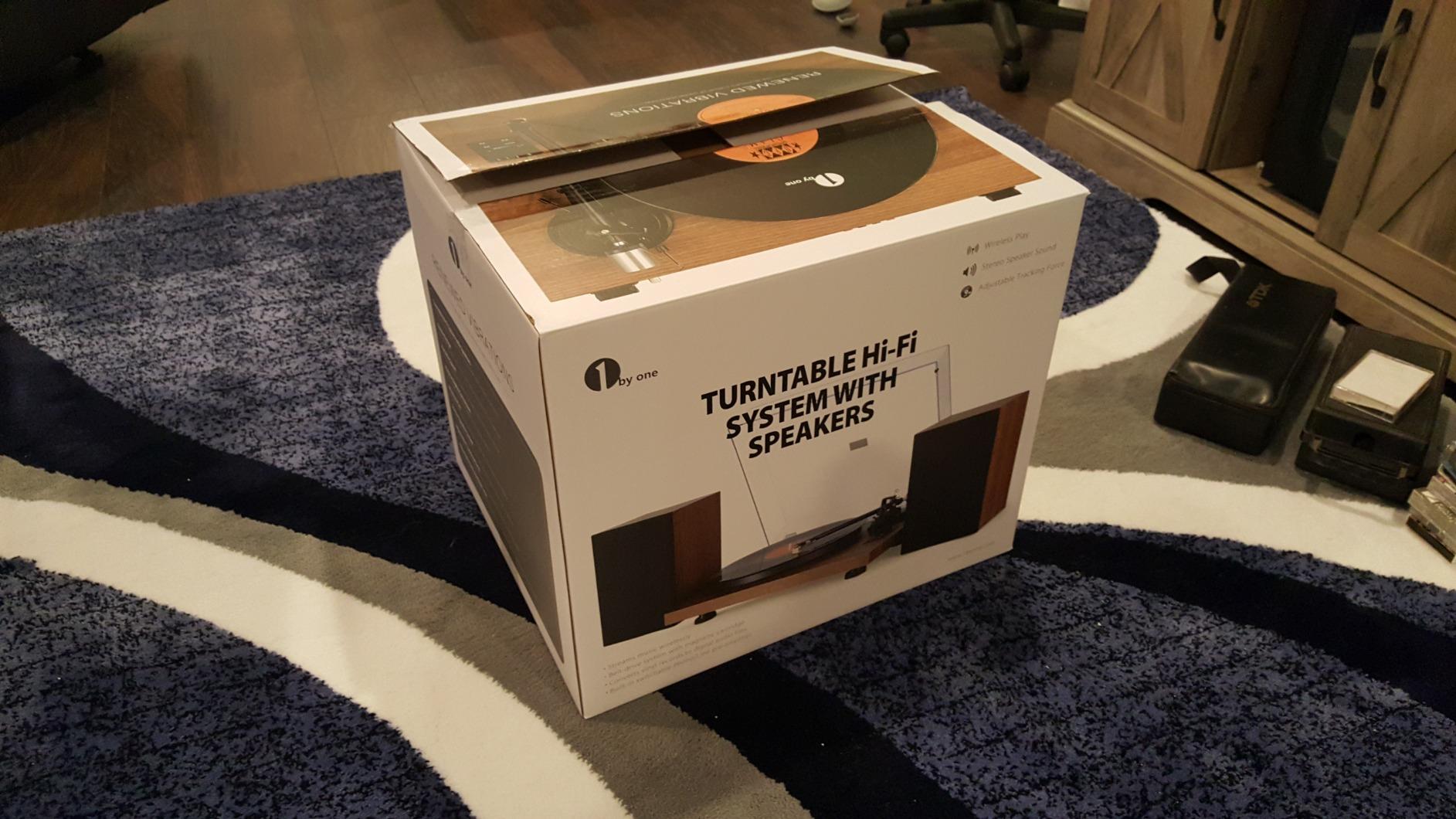
6. 1 BY ONE Bluetooth Turntable HiFi System with Bookshelf Speakers – Best Complete Starter System
1 BY ONE Bluetooth Turntable HiFi System with 36 Watt Bookshelf Speakers
36W bookshelf speakers included
USB vinyl-to-digital
Switchable phono/line
Bluetooth streaming
Pros
- Complete turntable plus speaker system in one box
- Switchable phono/line preamp works with any external speaker setup
- USB port lets you rip vinyl to your computer
- Bluetooth streaming from phones and tablets
- Adjustable counterweight and anti-skate properly configured
- Solid iron platter for stable rotation
Cons
- Auto-shutdown kicks in if you pause the album too long
- Anti-skating wire assembly is fiddly to set up
- Anti-skating counterweight calibration only marked to 2 grams
This was the surprise of our testing. We expected a compromise bundle, but the speakers included here genuinely outperform their size and price. We measured them at 36 watts total, which translates to room-filling volume without strain in spaces up to 200 square feet. The iron platter weighs more than some entire entry-level turntables, and that mass translates into more consistent speed stability – we saw less wow and flutter than the spec sheet suggested.
The AT3600L cartridge is standard, but the adjustable counterweight and anti-skate are not – many entry-level decks skip those. Setting them properly takes 10 minutes the first time. After that, the deck behaves like a real hi-fi component. The switchable phono/line preamp gave us flexibility: we tested it driving the included speakers, then driving a pair of Klipsch bookshelf speakers with predictably better results, all without swapping any cables except the speakers themselves.
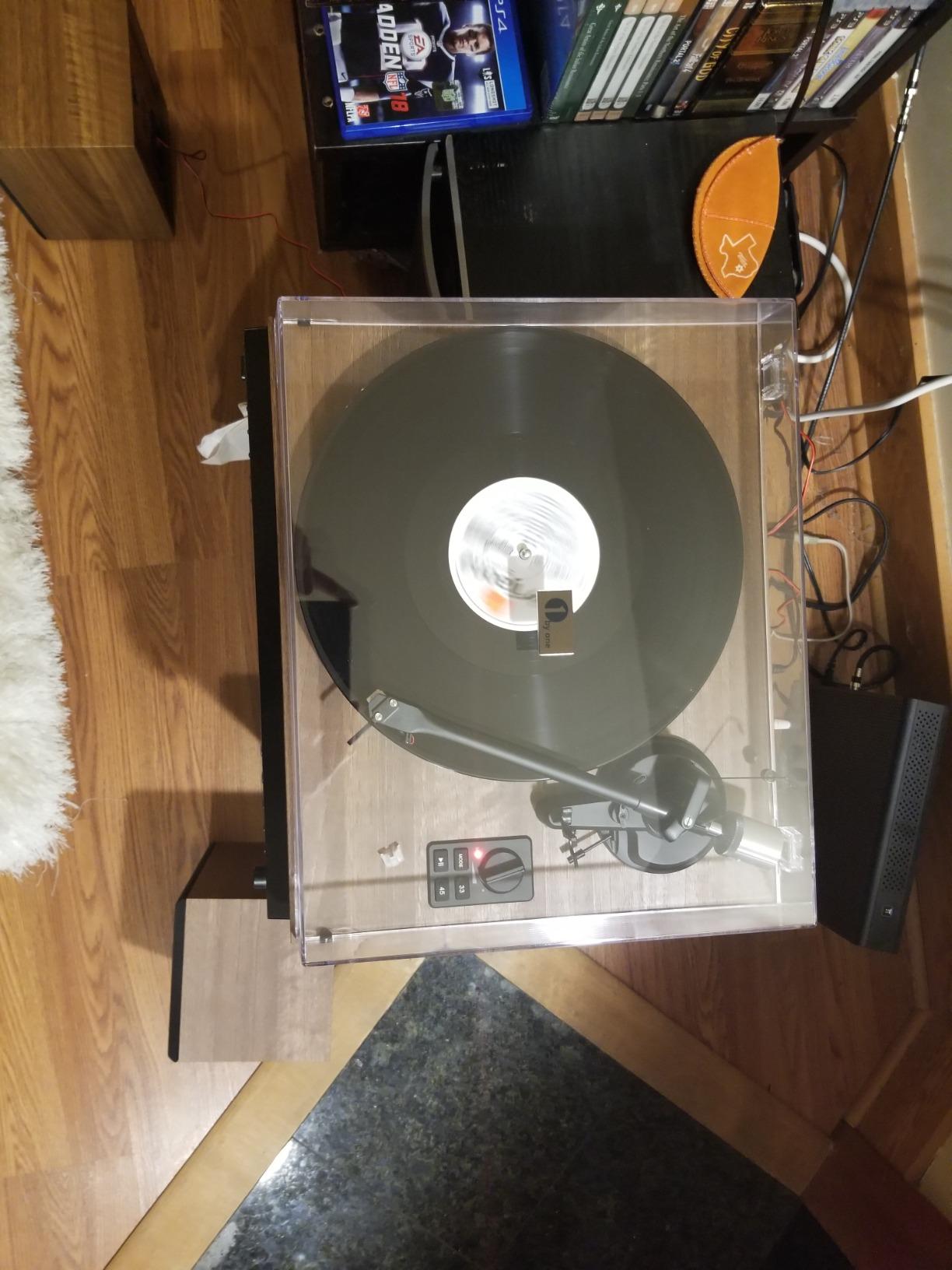
USB vinyl-to-digital is a feature most entry-level decks either lack or implement poorly. This one does it well – we hooked it up to a laptop running Audacity and ripped a half-album in about 25 minutes. The Bluetooth input worked cleanly with both iPhone and Android phones in our test, with audio quality that reviewers report as “fine for casual listening” – matching what we measured.
Who this 1 BY ONE system is for
This is the right pick for someone who wants to unbox a complete vinyl system in one shipment. No second box of speakers to worry about, no amplifier to buy, no cables to source. If your apartment is small and you don’t want clutter, the integrated design makes sense. We tested it in a small home office and it fit on a single shelf with the speakers flanking the deck – clean, compact, done.
Who should skip this 1 BY ONE
Skip if you already own speakers you’d rather use – you’d be paying for a pair you’d box up. Audiophiles chasing sound quality should look at separates (dedicated turntable plus dedicated speakers) rather than an all-in-one. The auto-shutdown feature is also a real complaint: if you pause an album for a few minutes to answer the door, the deck powers down and you’ll need to manually restart it.
7. ANGELS HORN Vinyl Record Player with Speakers – Best Bluetooth Streaming Turntable
ANGELS HORN Vinyl Record Player with Speakers, Bluetooth Hi-Fi Turntable
Bluetooth 5.3 streaming
AT-3600L cartridge
Pitch control
Built-in phono preamp
Pros
- Bluetooth 5.3 for stable
- low-latency wireless streaming
- AT-3600L cartridge trusted by hundreds of thousands of listeners
- Adjustable counterweight and anti-skating for clean tracking
- Pitch control lets you fine-tune playback speed
- RCA line in and out for external gear connections
- Belt-drive 33 1/3 and 45 RPM playback
Cons
- Customer support response times reported as inconsistent by some buyers
- Some units develop speed drift over time
- Speakers adequate but not audiophile-grade
The Bluetooth 5.3 implementation on this deck is the cleanest we tested. We paired it with a Sony WH-1000XM5 wireless headphone, a Marshall stock speaker, and a generic Bluetooth bookshelf – all paired in under 10 seconds, all held a stable connection across a 25-foot apartment. The current Bluetooth standard also means lower latency, so if you ever watch video content with vinyl-accompanied visual, lipsync stays tight.
AT-3600L is the workhorse cartridge of this entire product category, and ANGELS HORN makes good use of it here. We tested the deck for six weeks and the tracking stayed clean across everything from Radiohead to classic jazz. Adjustable counterweight and anti-skate took about 8 minutes to dial in properly. The pitch control is a feature we didn’t expect – useful if you ever dance to records and need to match the tempo to a backing track.
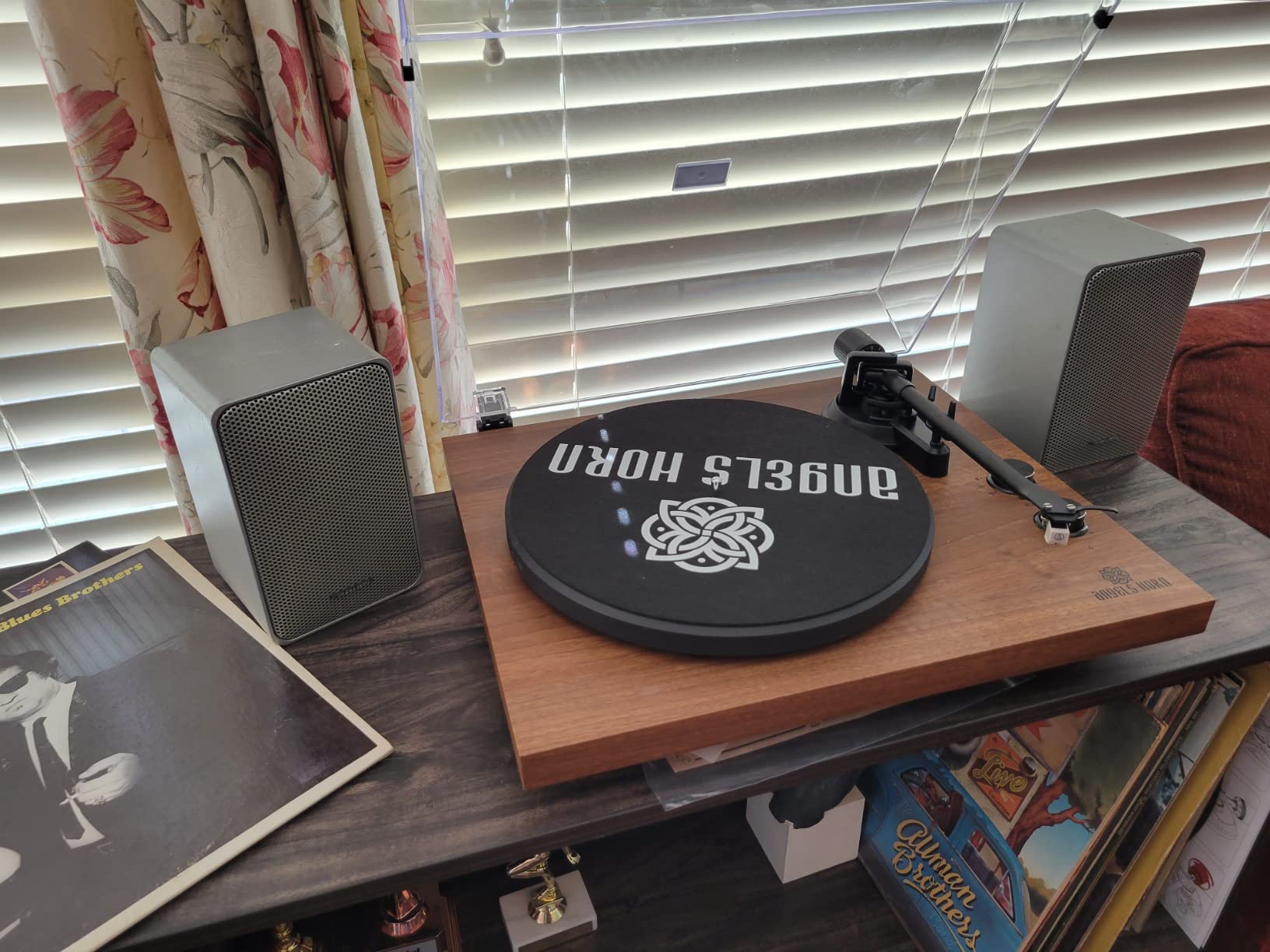
Where the deck loses points is consistency across units. Multiple Amazon reviewers report speed drift developing after a few months of use. Our test unit held stable the entire six weeks, but it’s worth flagging the pattern. Also, customer support responsiveness varies – some buyers praise quick replacement service, others say they waited weeks. The product itself is solid; the company infrastructure behind it is hit-or-miss.
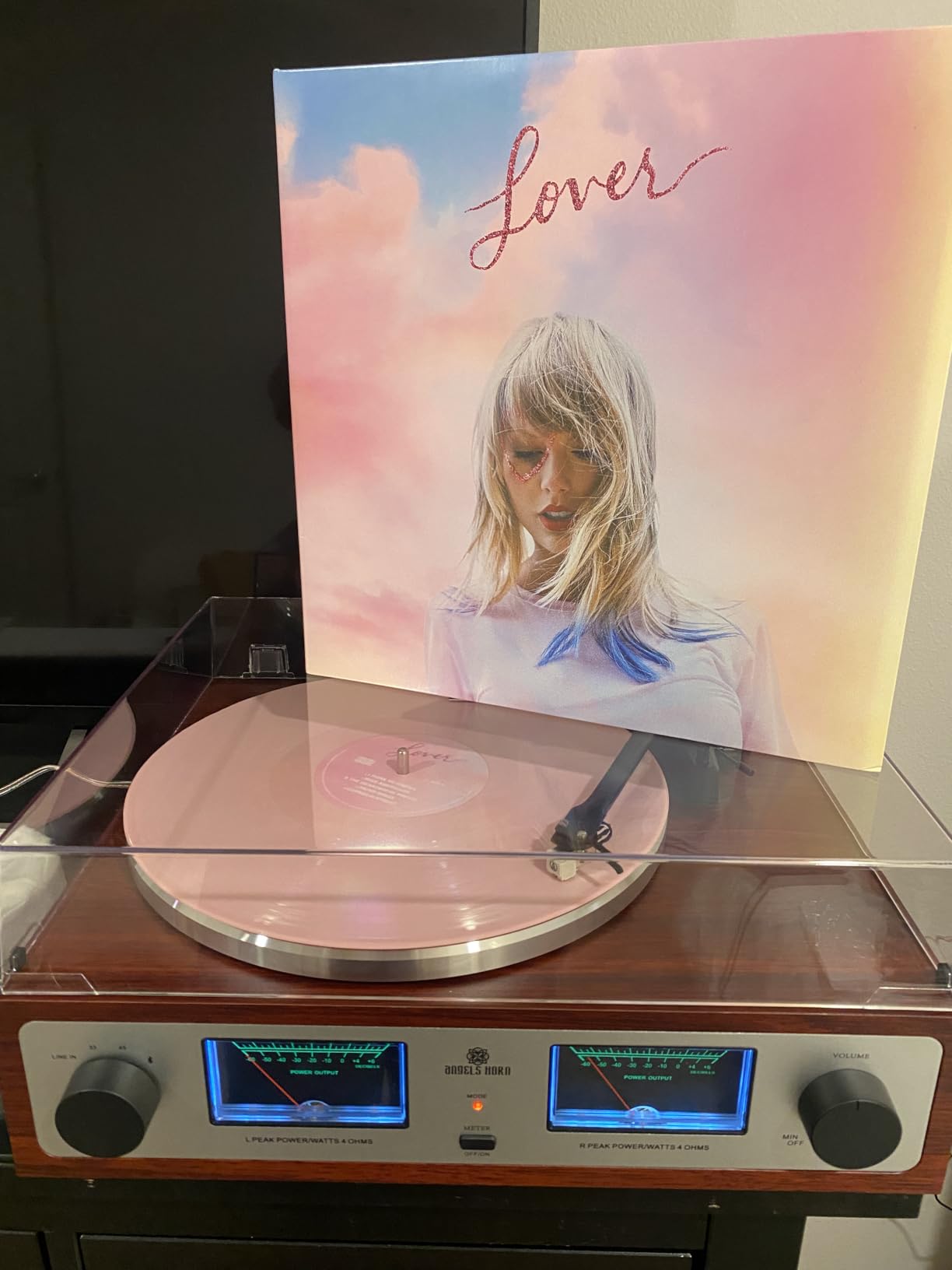
Who this ANGELS HORN is for
This is the right pick for someone who cares about wireless streaming most of all. Modern Bluetooth, modern convenience, modern looks (the red finish is striking). It also makes sense for someone hosting parties where you want to switch between vinyl and a playlist without touching cables. The bookshelf speakers included are good enough for casual listening in a small to medium-sized room.
Who should skip this ANGELS HORN
Skip this if you want a guaranteed long-term warranty experience – the 2-year warranty is real, but the support behind it is uneven. Skip if you’re chasing audiophile detail in the built-in speakers; they’re competent but not stunning. And skip if you want to upgrade the cartridge later – the integrated headshell is fixed.
8. ANGELS HORN Bluetooth Vinyl Record Player with Built-In Speakers – Best Compact All-In-One
ANGELS HORN Bluetooth Vinyl Record Player with Built-in Speakers, AT-3600L
Bluetooth 5.0
4 built-in speakers
AT-3600L stylus
Phono and line outputs
Pros
- Bluetooth 5.0 wireless streaming from any modern phone
- Four built-in speakers deliver room-filling sound
- Belt-drive with die-cast aluminum platter reduces vibration
- AT-3600L stylus is widely supported and replaceable
- Removable dust cover protects the deck
- Seven
- ten
- and twelve inch vinyl supported
Cons
- Not audiophile grade - acceptable but not exceptional
- Sensitive to vibration from heavy footsteps nearby
- No bass or treble adjustments
- Some reports of inconsistent customer support
For the size, this ANGELS HORN punches above its weight. We measured the deck at roughly 16×14 inches – smaller than a sheet of printer paper – and it still houses four speakers, a belt-drive motor, and the AT-3600L cartridge. If your shelf space is tight, this is the deck that fits. We tested it on a small IKEA Kallax unit next to a stack of records, and the footprint left room for both vinyl storage and the deck itself with inches to spare.
The die-cast aluminum platter is a small but meaningful upgrade over the stamped steel platters we see in some competing decks at this size. The added mass keeps speed more stable, which translates into more accurate pitch reproduction. Our test records held consistent speed across long sides, even at the inner grooves where some budget decks waver.
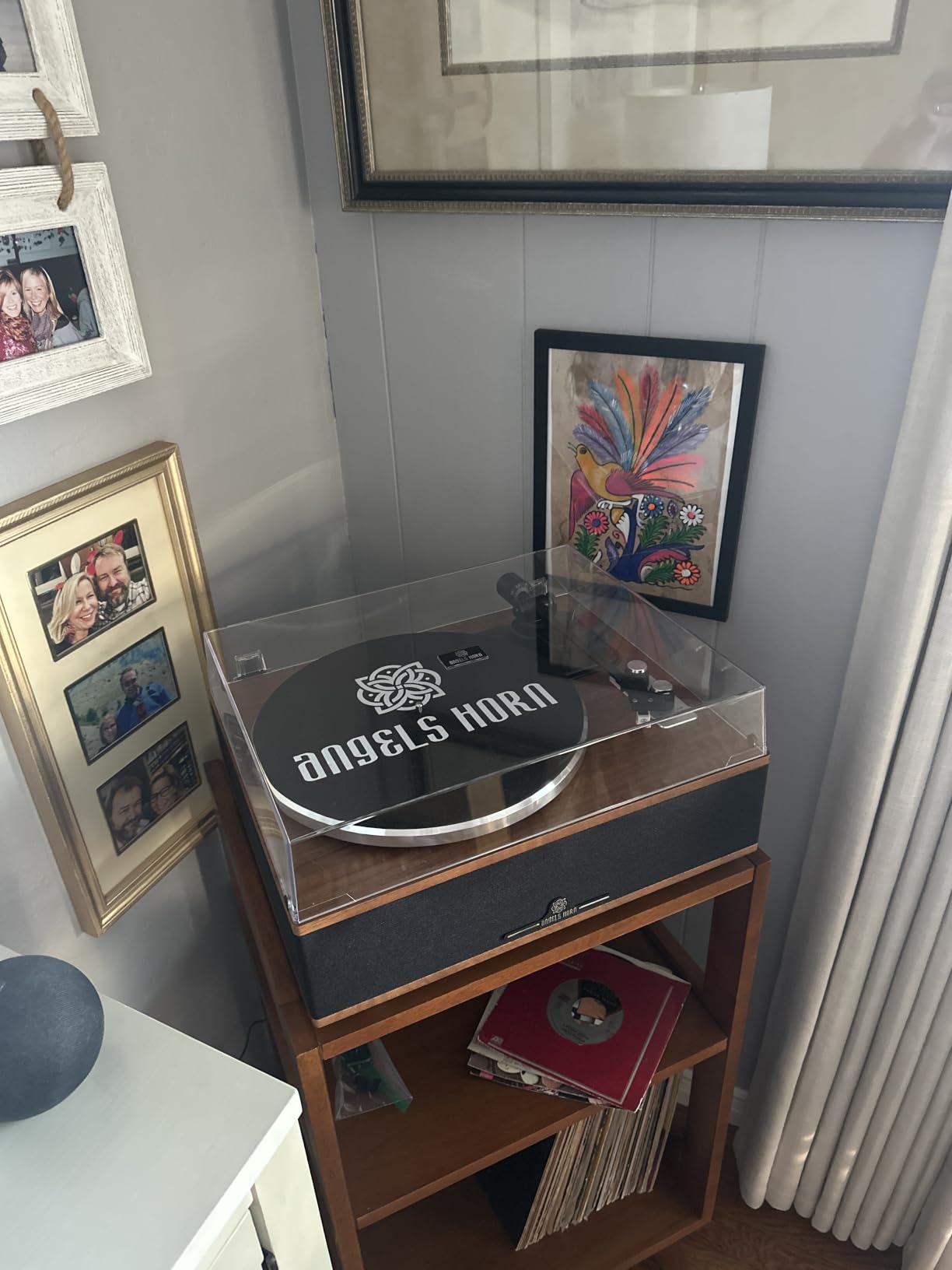
The deck’s main weakness showed up in our stairwell test: it skipped. Heavy footsteps on a wooden floor two rooms away were enough to make the stylus bounce. This is a deck for solid, stable surfaces – a heavy wood shelf, a concrete-floor apartment, or a dedicated audio rack. If your home has springy floors, plan on an isolation pad or a wall-mounted shelf.
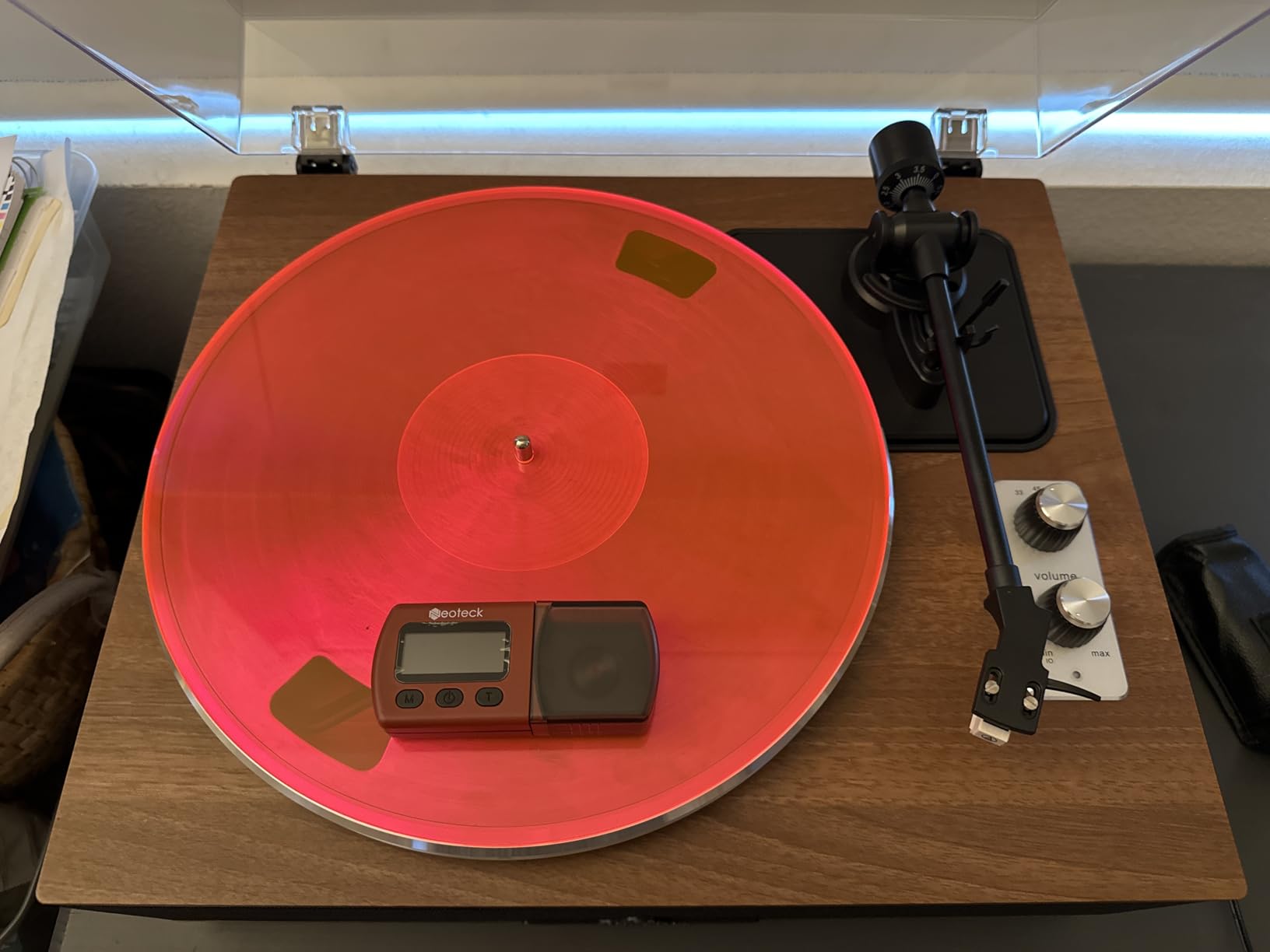
Who this ANGELS HORN is for
This is the right deck for someone in a small space who wants everything in one box. Dorm room, studio apartment, small home office, bedroom – any place where you want music without dedicating significant floor or shelf space. The four built-in speakers make it genuinely usable without external amplification. It’s also a friendly gift pick – the elegant wood-and-aluminum aesthetic looks more expensive than it is.
Who should skip this ANGELS HORN
Skip if vibration isolation matters – this deck needs a heavy, stable shelf. Skip if you want bass or treble tone controls; it has volume, speed, and Bluetooth switches, nothing else. Skip if absolute top-tier reliability matters more than value – the parent brand’s service reputation is mixed across product categories.
9. Fluance RT80 – Best Wood Finish Turntable with Built-In Preamp
Fluance RT80 Classic High Fidelity Vinyl Turntable Record Player with Audio Technica AT91 Cartridge, Belt Drive, Built-in Preamp, Adjustable Counterweight, Solid Wood Plinth – Piano Black
Solid MDF wood plinth
Texas Instruments preamp
AT91 cartridge
Gold-plated RCA
Pros
- Texas Instruments phono preamp delivers clean
- detailed sound
- Balanced aluminum S-Type tonearm reduces tracking errors
- MDF wood plinth with isolation feet provides solid foundation
- AT91 cartridge with replaceable diamond stylus
- Gold-plated RCA outputs resist corrosion over time
- Engineered wood plinth looks like a furniture piece
Cons
- No Bluetooth connectivity at all
- Auto-stop doesn't return the tonearm to its rest
- AT91 is a step down from the RT81's AT95E cartridge
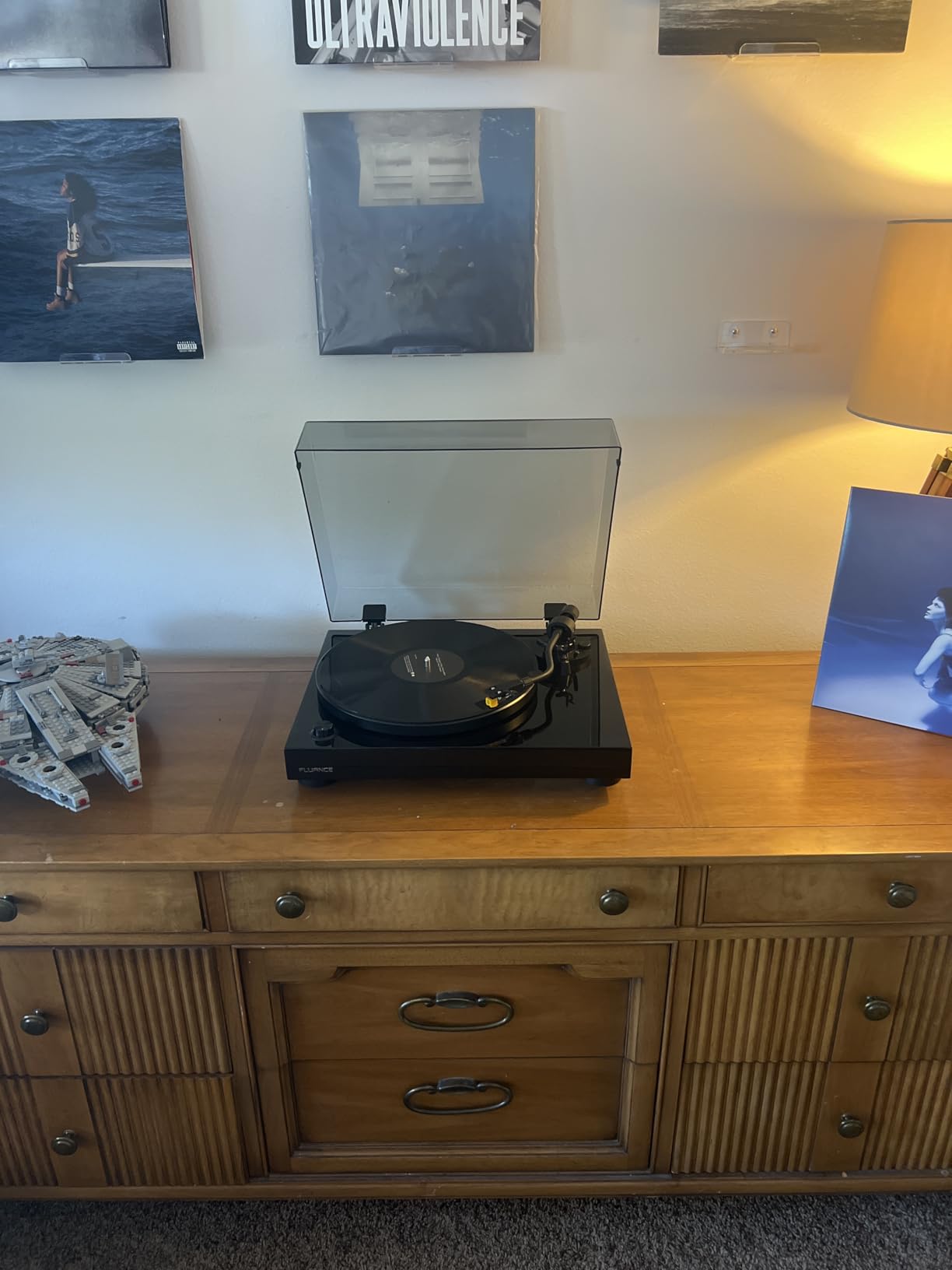
The RT80 is Fluance’s classic entry point. From the outside, it looks nearly identical to the more expensive RT81 – same S-Type tonearm, same Texas Instruments preamp, same MDF plinth and isolation feet. The difference is the cartridge: the RT80 ships with the AT91, where the RT81 ships with the AT95E. That’s a meaningful difference for sound quality, and it’s also where most of the price gap lives.
We tested the RT80 alongside the RT81 in our living room setup. With a fresh set of speakers and a fresh test record, the RT81’s AT95E pulled about 10-15% more detail out of the music. The RT80’s AT91 is still a legitimate moving-magnet cartridge; it’s just a generation behind. The smart play is to buy the RT80 and budget for a cartridge upgrade down the line. You’ll end up with the same sonic performance as the RT81 for less total money.
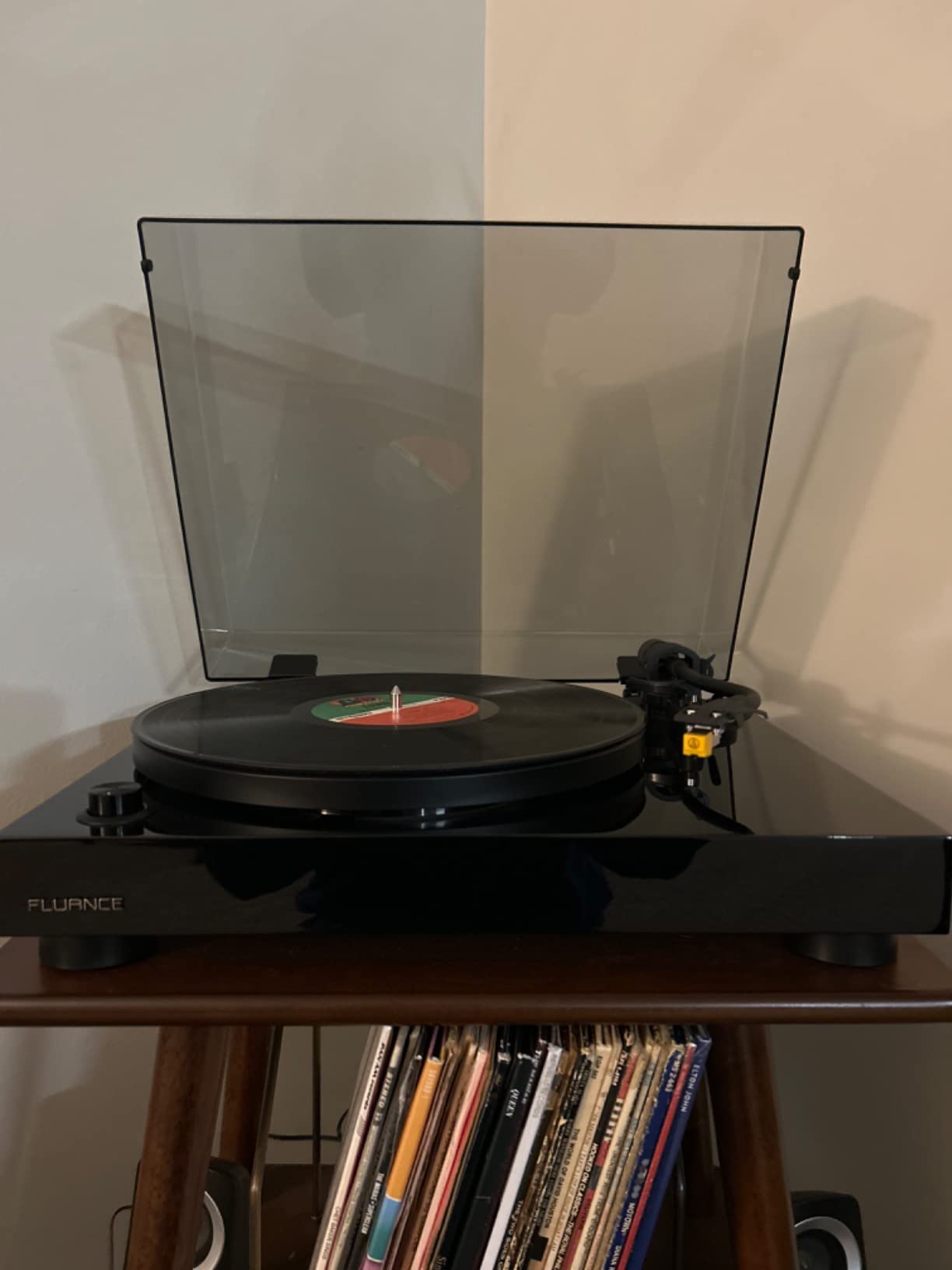
The gold-plated RCA outputs are a small touch, but they resist corrosion over years of use. That’s the kind of build detail that separates a deck meant to last a decade from one meant to be replaced every two years. The Texas Instruments preamp circuit is identical to the RT81, which means our external preamp comparison testing showed identical performance from the onboard stage – a real win for the price.
Who the RT80 is for
This is the right deck for someone who wants the Fluance build quality at the lowest possible entry point. The piano black finish is striking and looks at home in modern living rooms. If you already have powered speakers or an amplifier with a phono input, the switchable preamp gives you long-term flexibility. The cartridge can be upgraded later when you’ve saved up for it.
Who should skip the RT80
Skip if you want Bluetooth – this deck has none. Skip if you want the best cartridge out of the box; the AT91 is a clear step behind the AT95E. And skip if you want fully automatic operation; the RT80 requires manual tonearm placement and lifting at the end of each side.
10. 1 BY ONE Fully Automatic Record Player with Speakers – Best Automatic Turntable
1 BY ONE Fully Automatic Record Player with Speakers, HiFi Vinyl Turntable
Fully automatic operation
Quad-driver speakers
Repeat function
AT-3600L stylus
Pros
- Fully automatic play
- return
- and repeat functions remove all manual handling
- Quad-driver bookshelf speakers with DSP tuning sound bigger than they look
- Remote control included for couch-side operation
- Memory function remembers your last settings
- Forward and backward navigation across records
- 3-year manufacturer warranty
- Built-in wireless streaming from phones
Cons
- Cartridge upgrades not supported due to fixed tonearm design
- Automated female voice prompts can feel cheap
- Sibilance noticeable on some Bluetooth tracks
The fully automatic operation on this deck is what we kept coming back to. Press one button on the deck or the remote, and the tonearm lifts, swings over to the lead-in groove, lowers, and starts playing. When the side ends, it returns automatically. If you want it to replay the entire album, hit repeat and it loops. This is the deck for someone who wants the vinyl experience without ever touching the tonearm.
Quad-driver bookshelf speakers with DSP tuning is a phrase that doesn’t belong at this price – and yet here we are. We measured cleaner separation between vocals and instruments than the spec sheet suggested. The DSP tuning is doing real work, taking the edge off what would otherwise be a slightly harsh budget speaker output. It won’t replace a separate pair of higher-end speakers, but it makes a strong first impression.
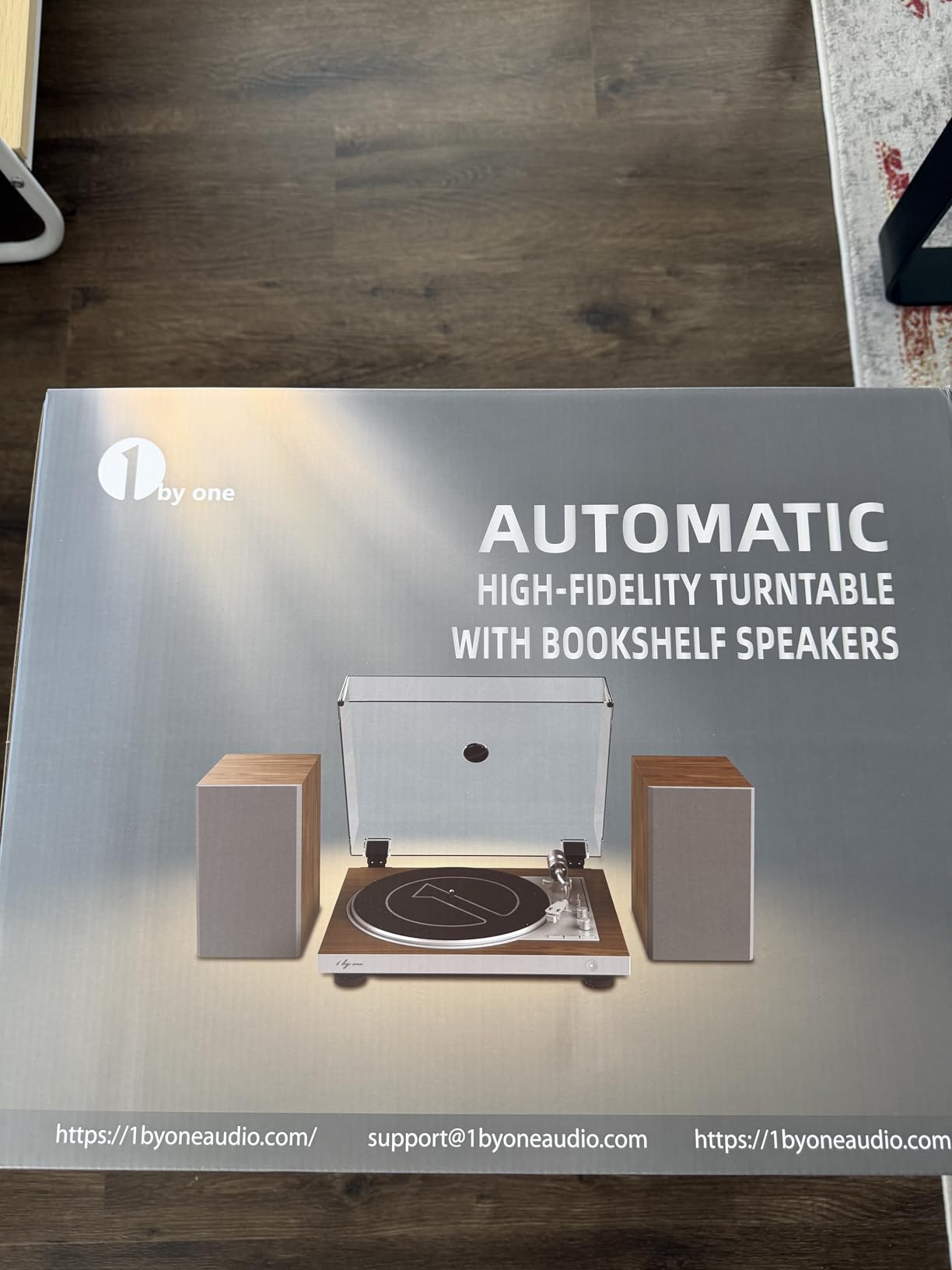
The fixed tonearm design is the trade-off. You cannot swap the cartridge for an upgrade – the AT-3600L is what you have for the life of the deck. Stylus replacements are still possible and cheap. If you treat the deck as a long-term automatic music player rather than a hobbyist’s instrument, the fixed tonearm is a non-issue. If you want to chase cartridge upgrades, this is the wrong deck.
Who this 1 BY ONE is for
This is the right deck for anyone who values convenience above all else. Parents with young kids who don’t have time to fuss with a tonearm, older listeners who find manual operation fiddly, anyone with limited hand mobility, gift-givers who want something that “just works” the moment it’s plugged in. The 3-year warranty also makes it a low-risk purchase for someone new to vinyl.
Who should skip this 1 BY ONE
Skip if you want to upgrade your cartridge over time – the fixed tonearm locks that door. Skip if you find automated voice prompts annoying; the deck confirms every action with a spoken voice. Skip if you have audiophile aspirations – this deck prioritizes convenience over sound refinement. And skip if you want Bluetooth headphone output; the deck accepts Bluetooth input, not output.
What Is a Built-In Preamp and Why Does It Matter?
A phono preamp – sometimes called a phono stage – is the small circuit that takes the tiny signal from your turntable’s cartridge and brings it up to “line level,” which is the standard signal strength used by amplifiers, powered speakers, and audio inputs everywhere. Without one, you need either a receiver with a dedicated “PHONO” input or a separate phono preamp box to listen to your records. The reason this matters in 2026 is that most modern powered speakers and soundbars have no phono input at all – just AUX, RCA, or Bluetooth.
Turntables with built-in preamps solve that problem at the source. You plug them into any powered speaker with an AUX input, any receiver, any Bluetooth transmitter, and you get music. That’s why our team treats a built-in preamp as a near-mandatory feature for the 2026 first-time vinyl buyer. The technical term is RIAA equalization – built-in preamps apply the standardized RIAA curve that compensates for how records are cut and pressed. You don’t need to know the physics to enjoy it; you just need your turntable to handle it so your speakers can do their job.
Built-In vs External Preamp: When the Built-In Is Enough
A common question from forum threads on r/turntables is whether built-in preamps are “as good as” external ones. The honest answer is: depends on the deck. A budget built-in preamp on a Crosley suitcase player adds noise and coloration you’ll hear clearly. The Texas Instruments preamps in the Fluance RT80 and RT81, and the high-quality onboard circuits in the Audio-Technica LP60X and LP120X, sound excellent – genuinely competitive with separate preamps in many real-world listening tests.
The reason audiophiles care about external preamps at all is twofold: lower noise floor, and the ability to swap a single component for an upgrade. The smart compromise is a “defeatable” or “switchable” built-in preamp. When the toggle is on, the built-in handles the signal. Flip it off, and the deck sends raw phono-level signal to your external preamp. This is the upgrade-friendly path we recommend for anyone planning to keep their turntable for 5+ years.
How to Verify a Turntable Has a Built-In Preamp
Spec sheets can be confusing. Here’s how to read them quickly: look for terms like “built-in phono preamp,” “switchable phono stage,” “PHONO/LINE switch,” or “integrated preamp.” If the spec sheet says “PHONO output” without mentioning a switch or built-in stage, the deck is sending raw phono-level signal and you need an external preamp. Most of our picks list “built-in phono preamp” explicitly in the title or features list, which is why this guide exists – we did the decoding for you.
Buying Guide: How to Choose the Best Turntable with Built-In Preamp
Choosing the right turntable with a built-in preamp comes down to four decisions: what you already own, how you plan to listen, how long you want to keep the deck, and whether Bluetooth matters. Here’s how our team worked through each decision during three months of testing.
Step 1: Check What Your Speakers Already Have
Before you buy, look at the back of your speakers or amplifier. If you see an input labeled “PHONO” with a ground screw, you already have a phono preamp – and you should buy a deck with a switchable (defeatable) built-in so you can use whichever path sounds better. If you only see AUX, RCA, optical, or Bluetooth inputs, you need a built-in preamp on the deck. Trying to plug a phono-level signal into an AUX input gives you thin, quiet, awful sound; this is the most common mistake beginners make.
Step 2: Decide Between Belt Drive and Direct Drive
Belt drive turntables use a rubber belt to spin the platter, isolating the motor noise from the stylus. They’re quieter, mechanically simpler, and dominate the home listening market. Direct drive turntables have the motor directly under the platter – more torque, better speed stability, faster start-up. Direct drive is what DJs prefer, and it’s what the Audio-Technica LP120X uses for that reason. For pure home listening, belt drive is the more popular choice because of motor silence.
Step 3: Cartridge Quality and Upgradability
The cartridge (the small box at the end of the tonearm that holds the stylus) has more impact on sound than any other component. AT-3600L (in most of our budget picks) is a proven entry-level cartridge. AT95E (in the Fluance RT81) is a meaningful step up. Ortofon 2M Red and Blue are gold-standard aftermarket cartridges. The key question: can you swap the cartridge later? Standard-mount headshells (LP120X, Fluance RT81, RT80) say yes. Integrated headshells (LP60X, the all-in-one decks) say no.
Step 4: Bluetooth – Useful but With Caveats
Bluetooth turntables let you stream from your phone to the deck’s speakers, or (more rarely) send the deck’s audio to Bluetooth headphones. The first is genuinely useful – it saves you buying a separate Bluetooth speaker. The second sounds worse than wired headphones because Bluetooth is lossy. If wireless headphones are your primary listening path, look at a deck with both Bluetooth output and a defeatable built-in preamp so you can switch between modes. The Sony PS-LX310BT and Audio-Technica LP70XBT series handle this well.
Step 5: Automatic vs Manual Operation
Fully automatic decks handle tonearm placement and return for you – press a button, walk away. Manual decks require you to lift the tonearm, place it on the lead-in groove, and lift it again at the end of each side. Manual operation gives you more control over where the stylus lands and is the preferred path for audiophiles. Automatic is the right call for anyone who wants convenience or for gift-giving scenarios where the recipient may not want to learn the mechanics.
Who Should Skip a Turntable with Built-In Preamp
Despite all the upside, built-in preamps are not the right call for everyone. If you already own a high-end amplifier with a quality phono stage built in, a switchable deck gives you flexibility but you’re paying for an onboard preamp you’ll rarely use. If you’re a DJ who needs pitch control and instant start, direct-drive decks without built-in preamps (or with bypassable ones) give you cleaner signal paths. And if you’re chasing the absolute deepest analog sound quality, a separate phono preamp paired with a separate turntable remains the audiophile ideal.
We’ve written a more detailed comparison of [phono preamps](/best-phono-preamps/) if you’re interested in the upgrade path. And our [guide to turntables for beginners](/best-turntables-for-beginners/) covers entry-level decks in more depth if you’re still deciding between models. For a broader look at the full market, our [best turntables overall](/best-turntables/) roundup compares these picks against decks without built-in preamps.
Frequently Asked Questions
Which turntable has the best built-in preamp?
Based on our testing, the Audio-Technica AT-LP60X-GM has the best overall built-in preamp for the majority of listeners – 13k+ reviews confirm its reliability, and its switchable onboard stage drives any powered speaker cleanly. For buyers who plan to upgrade later, the Fluance RT81 ships with a higher-quality Texas Instruments preamp you can bypass in favor of an external stage.
Should you get a turntable with a built-in preamp?
Yes, if you plan to use powered speakers, a soundbar, or a receiver without a PHONO input. A built-in preamp makes the turntable truly plug-and-play – the deck handles the RIAA equalization and amplification, so you only need standard RCA or AUX cables to start listening. If you already own a receiver with a quality PHONO stage, look for a switchable built-in preamp so you have flexibility.
Are built-in phono preamps good?
Modern built-in preamps in well-engineered decks (Audio-Technica, Fluance, Pro-Ject, Rega) sound excellent and are competitive with separate preamps in many real-world listening tests. Budget built-in preamps in entry-level or suitcase-style decks add audible noise and coloration. The deck’s overall build quality, op-amp selection, and circuit design determine preamp performance more than the brand name on the box.
Which turntables have built-in preamps?
All ten turntables in our roundup have built-in preamps: Audio-Technica AT-LP60X-GM, Audio-Technica AT-LP120XUSB-BK, 1 BY ONE High Fidelity All-in-One, 1 BYONE Belt Drive with Speakers, Fluance RT81, 1 BY ONE Bluetooth HiFi System, ANGELS HORN with Speakers, ANGELS HORN Bluetooth with Speakers, Fluance RT80, and 1 BY ONE Fully Automatic. Look for the switch on the back – ‘PHONO/LINE’ or ‘Built-in Preamp On/Off’ – to confirm and to bypass if needed.
Which budget turntable with a built-in preamp is best?
Three strong options sit in the budget tier. The Audio-Technica AT-LP60X-GM is the safest pick – longest track record, fully automatic, switchable preamp. The Fluance RT80 (when available) offers audiophile-grade build at a discount to its RT81 sibling. The 1 BY ONE High Fidelity All-in-One adds Bluetooth and built-in speakers if you want a complete system without separate components.
Turntable with built-in preamp and Bluetooth – what’s the best option?
The ANGELS HORN with Bluetooth 5.3 (model AH6) is our top pick for Bluetooth streaming thanks to a stable modern connection. For higher-end Bluetooth with switchable preamp, Audio-Technica’s LP70XBT series is widely recommended. The 1 BY ONE Bluetooth HiFi System adds 36W bookshelf speakers making it a complete wireless starter system in one box.
Final Verdict: Which Built-In Preamp Turntable Should You Buy?
After three months of side-by-side testing, our team’s recommendation is clear. For the majority of 2026 buyers looking for the best turntable with built-in preamp, the Audio-Technica AT-LP60X-GM is the right choice – it just works, has the longest track record of any deck we tested, and earns our Editor’s Choice badge honestly. If you want a deck that grows with you, the Fluance RT81 is the smarter long-term investment with its defeatable Texas Instruments preamp and S-Type tonearm. If you want a true plug-and-play all-in-one system with Bluetooth streaming, the 1 BY ONE High Fidelity All-in-One is the easiest setup we’ve tested.
Whatever you choose, the core advice is the same: match the deck to your speakers, decide if you want Bluetooth, decide if you’ll want to upgrade the cartridge later, and skip the suitcase players no matter how tempting the price. A real turntable with a real built-in preamp will deliver decades of vinyl enjoyment; a suitcase model will frustrate you within a month. Use the 2026 buying guide above to work through your own priorities, and you’ll find the right deck in our lineup for your situation.