
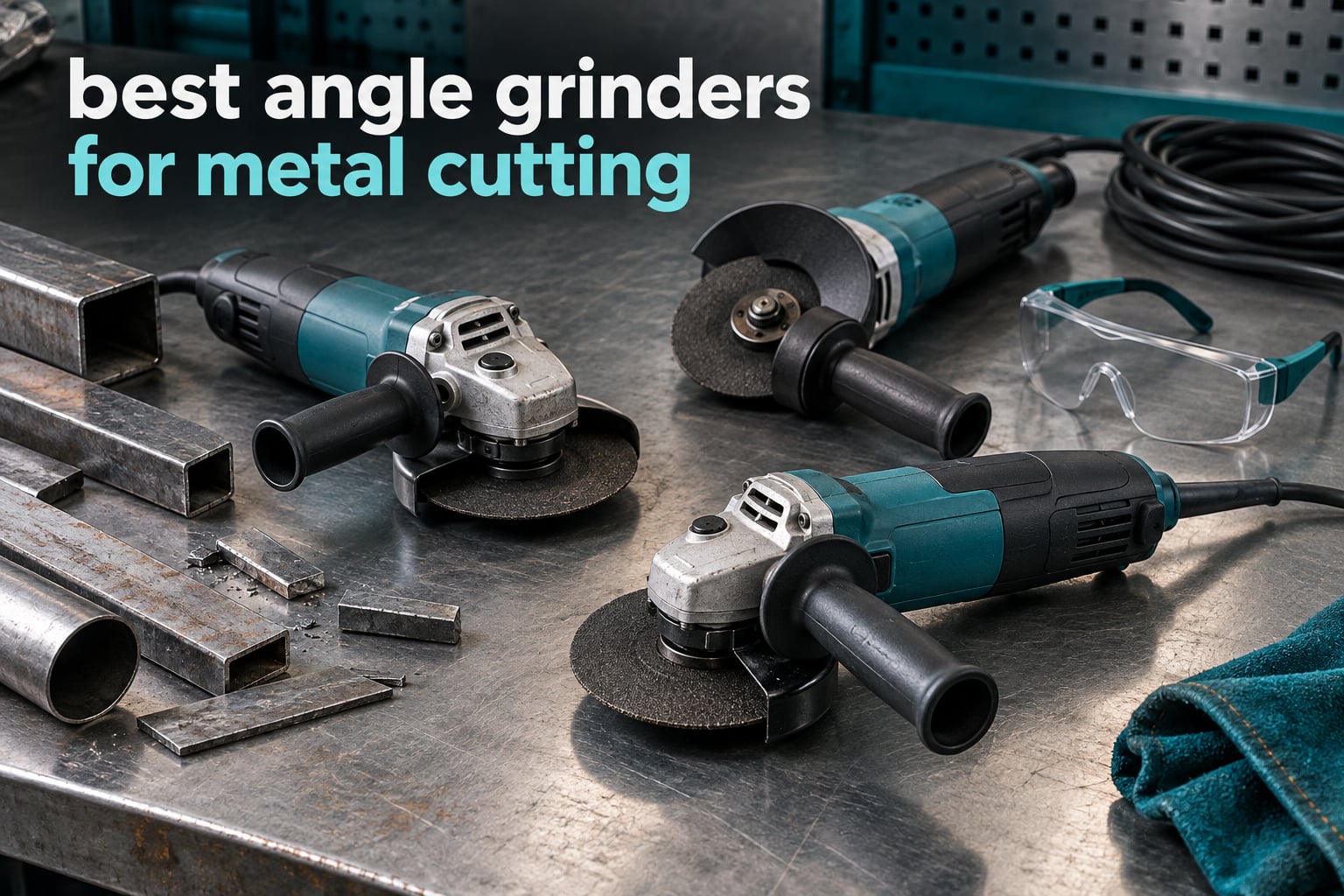
An angle grinder is a handheld power tool whose abrasive or diamond wheel spins at roughly 8000 to 12000 RPM to cut, grind, deburr and polish metal. For steel, rebar and angle iron, the machine matters less than most people think: torque under load and wheel compatibility decide whether a cut finishes in thirty seconds or stalls halfway through a section of pipe.
That is why most of the lists we read fell short for us. They ranked grinders by headline RPM and amperage numbers, which tell you very little about how a tool behaves when the wheel bites into solid metal. Over the past season we put ten of the most-reviewed angle grinders through real metal work: rebar, angle iron, plate, rusted steel and weld cleanup.
What follows is our shortlist of the best angle grinders for metal cutting in 2026. We grouped them by what they are actually good at, from a cordless grinder with a genuine kickback brake down to a simple corded tool for a first cut. Every grinder here uses the standard threaded arbor, so your existing pile of cut-off discs will fit.
If you are still working out what an angle grinder does with metal at all, the short answer is this: bring the edge of a spinning cut-off wheel to the metal at a shallow angle, let the abrasive or diamond segments shear the material away, and keep the wheel moving. Push the wheel straight in instead and you will stall it or kick it back at you.
Table of Contents
Top 3 Best Angle Grinders For Metal Cutting (October 2026)
The three picks below cover the widest range of metal work we tested. One is cordless with the strongest safety package, one is corded with a complete accessory kit, and one is the pick for shops that already run a battery platform.

DEWALT DCG413B 20V Cordless 4-1/2 Inch
- Brushless motor needs no brush changes
- Kickback brake stops the wheel in 2 seconds or less
- Weighs 3.8 lb with a two-stage paddle trigger

Makita 9557PBX1 Corded 4-1/2 Inch
- 7.5 amp 900W motor at 11000 rpm
- Aluminum case with 5 wheels and a diamond blade
- Labyrinth seals protect the motor from dust and debris

Milwaukee 2880-20 M18 Fuel
- Electronic clutch for kickback protection
- Overload protection to extend motor life
- Anti-vibration side handle and 5/8-11 spindle
Quick Overview: All Ten Grinders Compared in 2026
Every model below sits in the 4-1/2 inch class, which is the sweet spot for metal: big enough to cut rebar and angle iron, small enough to control one-handed on thin gauge material. The table gives you the short version before the individual reviews.
| Product | Specifications | Action |
|---|---|---|
| DEWALT DCG413B 20V Cordless 4-1/2 Inch Brushless |
|
Check Latest Price |
| Makita 9557PBX1 Corded 4-1/2 Inch Paddle Switch |
|
Check Latest Price |
| Milwaukee 2880-20 M18 Fuel 4-1/2 / 5 Inch |
|
Check Latest Price |
 BLACK+DECKER BDEG400 4-1/2 Inch 6.5 Amp BLACK+DECKER BDEG400 4-1/2 Inch 6.5 Amp |
|
Check Latest Price |
 AVID POWER AAG589 7.5 Amp 4-1/2 Inch AVID POWER AAG589 7.5 Amp 4-1/2 Inch |
|
Check Latest Price |
 Metabo HPT G12SR4 4-1/2 Inch 6.2 Amp Metabo HPT G12SR4 4-1/2 Inch 6.2 Amp |
|
Check Latest Price |
 CRAFTSMAN CMCG400B V20 4-1/2 Inch Cordless CRAFTSMAN CMCG400B V20 4-1/2 Inch Cordless |
|
Check Latest Price |
 DEWALT DWE4011 4-1/2 Inch 7 Amp One-Touch Guard DEWALT DWE4011 4-1/2 Inch 7 Amp One-Touch Guard |
|
Check Latest Price |
 Bosch GWS8-45 4-1/2 Inch 7.5 Amp Bosch GWS8-45 4-1/2 Inch 7.5 Amp |
|
Check Latest Price |
 SKIL 9295-01 4-1/2 Inch 6 Amp Corded SKIL 9295-01 4-1/2 Inch 6 Amp Corded |
|
Check Latest Price |
Two quick notes before the reviews. First, six of these ten are corded, and that is deliberate: for repeated metal cutting in a shop, an unlimited runtime and consistent torque still beat convenience. Second, every cordless model here is sold as a bare tool, so the battery and charger come out of your existing platform budget.
1. DEWALT DCG413B – Cordless Grinder With a Real Kickback Brake
DEWALT 20V MAX* Angle Grinder Tool Cordless Brushless, 4 1/2 Inch, with Paddle Switch and Kickback Brake, Tool Only (DCG413B)
20V brushless motor
Electronic kickback brake
E-Switch no-volt release
3.8 lb bare tool weight
Pros
- Brushless motor needs no brush changes
- Kickback brake stops the wheel in 2 seconds or less
- Light 3.8 lb body that suits extended use
- Standard spindle accepts common 4-1/2 inch wheels
- 3 year limited warranty
Cons
- Roughly 20-30 minutes per 4Ah pack on heavy grinding
- Battery and charger sold separately
- Less sustained power than a comparable corded grinder
This is the grinder we reach for first on site jobs and anywhere a cord would be in the way. The brushless motor needs no brush changes, which means no downtime mid-project and no motor parts to carry as spares.
What sets it apart from most other grinders in this group is the kickback brake. When the wheel pinches, stalls or binds up, the electronic brake engages with full force and stops the wheel in two seconds or less. On thin gauge material, where a spinning disc can grab and throw the tool, that difference is the whole ballgame.
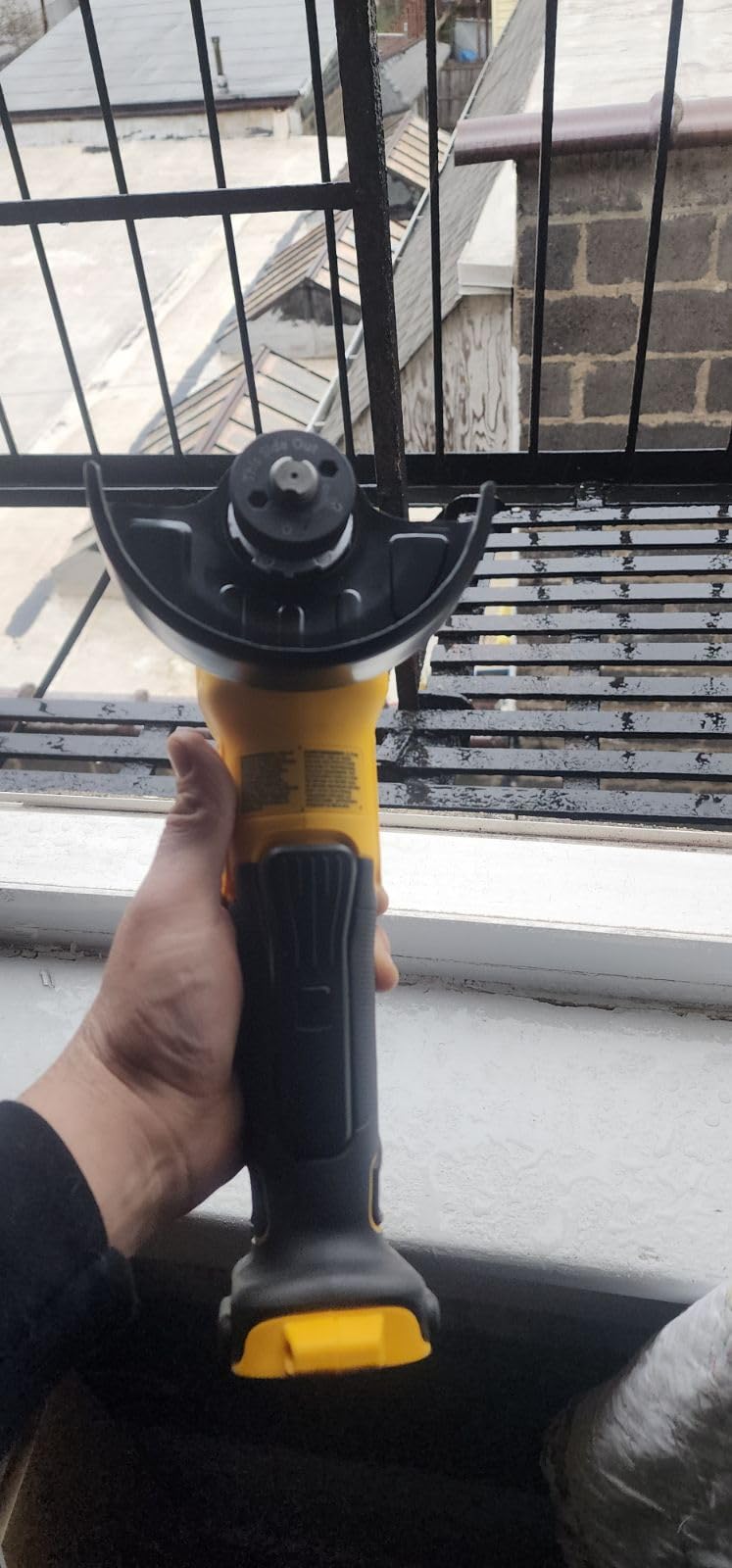
The paddle switch needs a deliberate two-stage press before the tool runs, and the on-off trigger has a no-volt release, so the grinder will not restart on its own after a shutdown. In practice I stopped noticing those features after the first few jobs, which is exactly what safety hardware should feel like.
At 3.8 lb bare, this is one of the lighter tools we tested and it stayed comfortable through a full afternoon of weld cleanup and rebar notching. Owners consistently single out the balance and the brake as the two reasons to pick it, and the 9588 reviews at a 4.8 average reflect how settled the design is.
Where the DCG413B earns its place in a metal shop?
This is the grinder for anyone already invested in the 20V platform, or anyone who cuts metal away from a wall outlet. A second battery solves the only real complaint: on sustained grinding you get roughly 20 to 30 minutes of runtime per 4Ah pack, so keep a spare on the charger while you work.
The single-speed design also means no dial to think about. You fit the right wheel for the material and press the trigger. For someone who cuts a bit of everything rather than grinding the same weld bead all day, that simplicity is worth more than variable speed.
Where it falls short?
On long production runs through thick section material, a corded grinder with a 7.5 amp motor keeps working while this one asks for a battery change. If your metal work is measured in hours per day rather than minutes, factor that in before choosing.
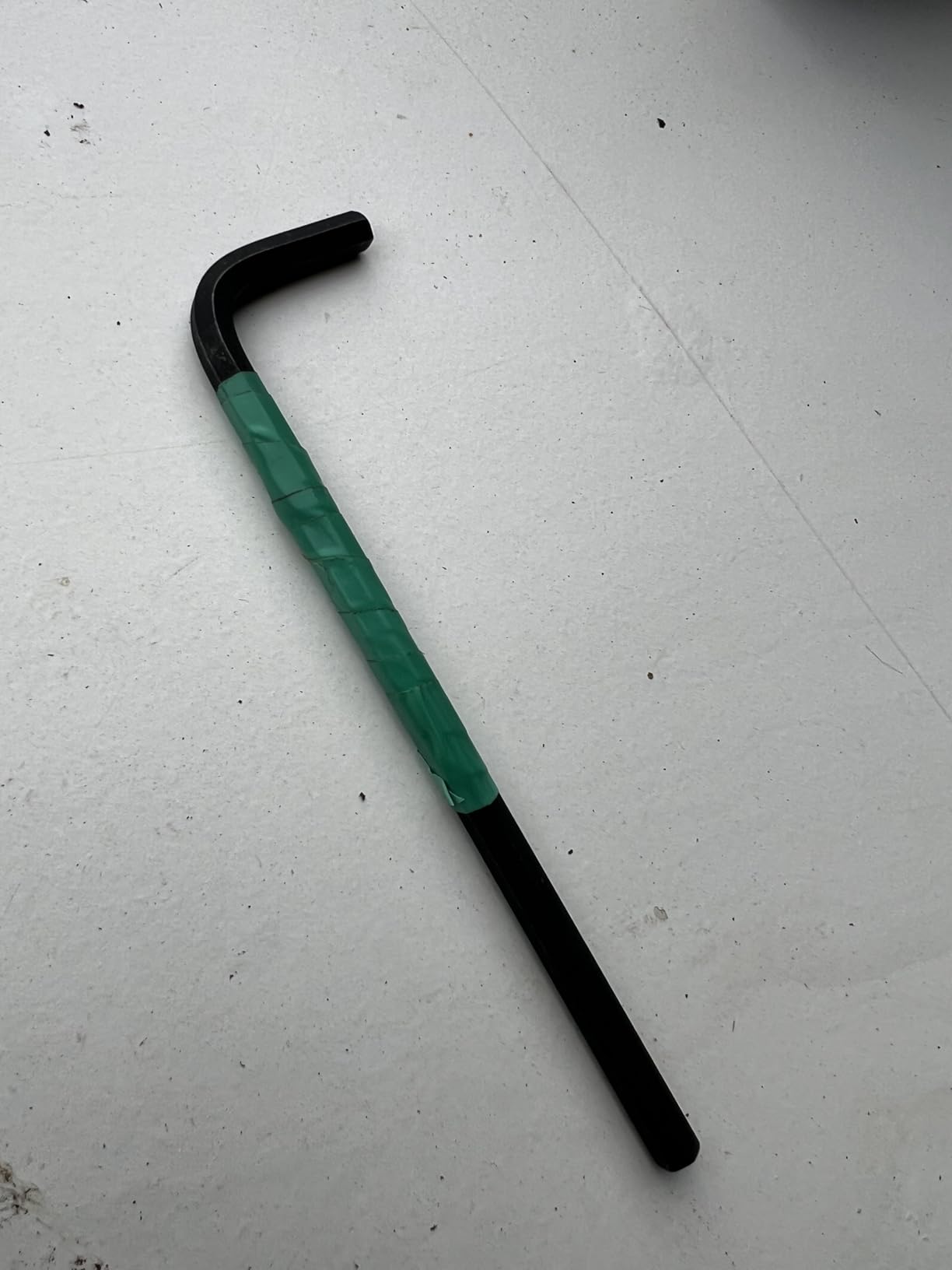
The wheel changes still need a standard Allen wrench. Nothing proprietary, nothing exotic, but you do need a tool in your pocket where some competitors let you release the flange by hand.
2. Makita 9557PBX1 – Corded 4-1/2 Inch With a Full Accessories Case
Makita 9557PBX1 4-1/2″ Paddle Switch Cut-Off/Angle Grinder
7.5 amp 900W corded motor
11000 rpm
4.5 lb with 2-1/2 inch grip
Aluminum hard case
Pros
- Runs smooth with strong torque for the class
- Compact 4.5 lb body fits tight spots
- Paddle switch with lock-on for continuous work
- Aluminum case holds the tool and every disc
- Bundle includes 5 grinding wheels and a turbo diamond blade
Cons
- Tool does not fit the case with the side handle fitted
- Case slots leave no room for extra wheels
- Guard changes need a Phillips screwdriver not included
- Arbor support is confusingly documented
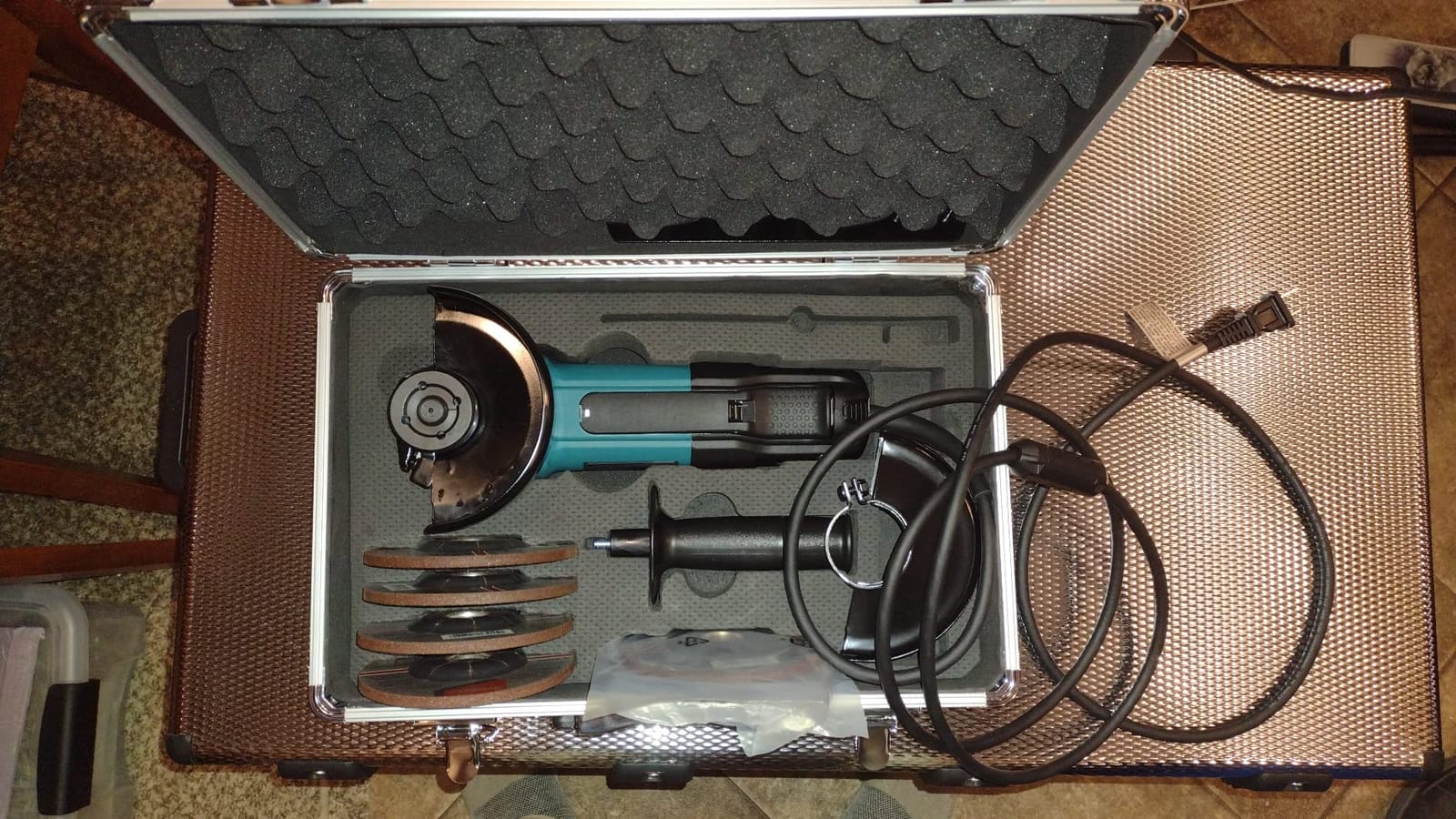
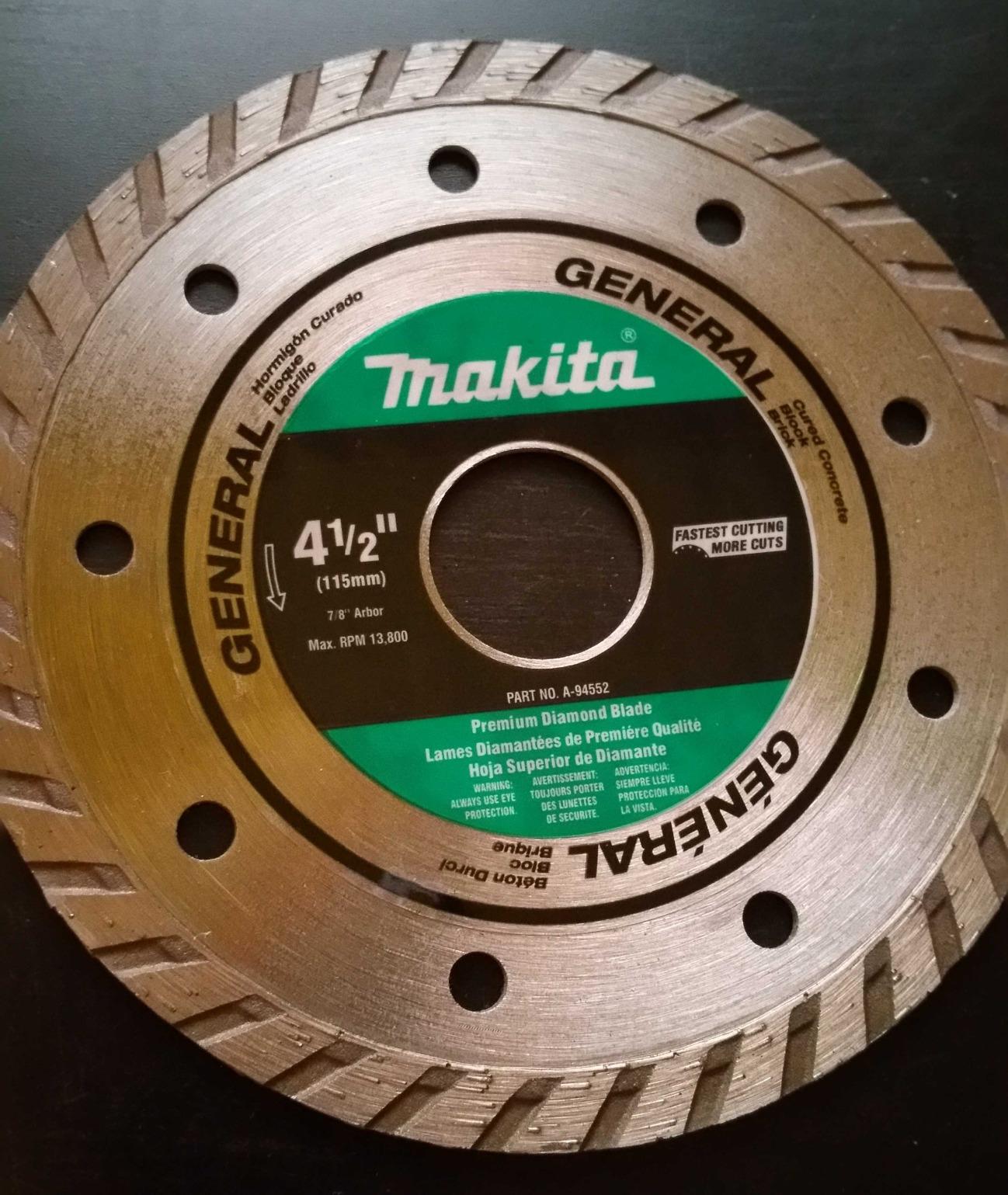
Out of the box this is one of the most complete metal cutting packages in our group, and that matters more than most spec sheets suggest. You get five grinding wheels, a turbo diamond blade, both guards, a lock nut wrench, a side handle and an aluminum case with cut-out foam.
The 7.5 amp, 900 watt motor runs at 11000 rpm and feels like it has more behind it than the number suggests. On angle iron and rebar it held speed through cuts that made lighter 6 amp machines hesitate, and the paddle switch with lock-on means you can settle into a long cut without holding your thumb down.
At 4.5 lb with a 2-1/2 inch barrel grip, this is a grinder you can genuinely hold in one hand in a tight spot, which is not true of most corded tools in this class. Reviewers repeatedly describe the small grip as the feature they did not expect to like as much as they do.
Construction details point toward longevity: labyrinth seals and protective varnish keep grinding dust out of the motor, and the all-ball-bearing design sits in a metal gear housing. That is the same basic architecture Makita has used on this grinder for years, and long-term owners report units still going strong.
Best fit for metalworkers who want everything in one purchase
If you are starting a shop or a garage kit from scratch, this removes the follow-up purchases most people forget: guards, extra wheels, a case. The 4-1/2 inch size handles everything from 16 gauge sheet to rebar and light structural angle.
The paddle switch is also worth noting for anyone working overhead. Holding a spinning wheel above your head with a slide switch is a bad combination, and the paddle gives you a faster, cleaner release.
Where the kit frustrates people?
The case is the weak point. The tool does not fit back into it with the side handle attached, and the foam slots are completely full, so you have nowhere to put the wheels you buy next. Budget for a separate tray or a second case.
Guard changes require a Phillips screwdriver, which is not in the box. And the documentation on which wheels fit which guards is confusing enough that a few owners assume an accessory is incompatible when it actually works fine.
3. Milwaukee 2880-20 – M18 Fuel With an Electronic Clutch
Milwaukee 2880-20 M18 Fuel Brushless Lithium-Ion 4-1/2 in. / 5 in. Cordless Small Angle Grinder with No-Lock Paddle Switch (Tool Only)
M18 Fuel brushless motor
Electronic clutch kickback protection
8500 rpm
5 lb bare tool weight
Pros
- Electronic clutch adds a real layer of kickback protection
- Overload protection extends motor life under load
- Anti-vibration side handle improves control
- Standard 5/8-11 spindle takes common accessories
Cons
- Heavier at 5 lb than lighter cordless grinders such as the 3.8 lb DCG413B
- Tool-only package with battery and charger sold separately
This grinder handles both 4-1/2 inch and 5 inch wheels, which gives you more cutting depth per pass than most of the group when you fit the larger disc. On structural material that difference shows up in how many passes a cut takes.
The electronic clutch is the headline feature. Rather than relying on friction alone, the clutch detects a bind-up and disengages the drive before the wheel can grab and throw the tool. Users doing fabrication work treat that as the reason to pick this over a lighter cordless option.
Overload protection is the quieter benefit. It monitors the load and backs off before the motor cooks itself, which matters on repeated deep cuts where a lesser tool would simply stall and heat up until it stopped being enjoyable to hold.
The anti-vibration side handle is a genuine comfort feature for long weld cleanup sessions. At 5 lb the bare tool is heavier than most 4-1/2 inch cordless grinders here, but the vibration damping takes the edge off the kind of fatigue that shows up in your hands after an hour of fine grinding.

Who should own the 2880-20?
If your shop already runs M18 batteries, this is an easy addition. It needs no new platform investment, and the standard 5/8-11 spindle means your existing cut-off discs, flap discs and wire wheels all fit without an adapter.
Fabricators who move between job sites without reliable power will appreciate having both wheel sizes available. The 5 inch option is the one to reach for when you are slicing through heavier section material or need more depth of cut in one pass.
Where it is not the right tool?
Five pounds is real weight for overhead work or for anyone working above shoulder height all day. If your metal cutting is mostly delicate work at close range, one of the lighter cordless options will strain your arms less.
And it is a bare tool. The battery and charger are additional purchases, which changes the true entry cost considerably if you are not already in the M18 ecosystem.
4. BLACK+DECKER BDEG400 – Best Value Corded Grinder
BLACK+DECKER Angle Grinder Tool, 4-1/2-Inch, 6.5-Amp (BDEG400)
6.5 amp 800W corded motor
10000 rpm
Metal gear case
2 kg tool weight
Pros
- Strong power for the money in this class
- Metal gear case holds up over years of hobby use
- Spindle lock speeds up accessory changes
- 3 position side handle and adjustable guard
- Backed by a 2 year limited warranty
Cons
- Noticeable vibration compared with premium grinders
- Slide switch can jump out of the lock groove once worn
- Suited to light to medium duty rather than continuous shop use
This is the grinder most people should look at first, because it does the fundamentals well and costs very little. The 6.5 amp motor cuts thin gauge metal easily and handles light structural work without complaint.
The metal gear case is the detail that separates it from cheap plastic-bodied grinders. On a tool that spends its life absorbing the shock of cutting, an aluminium or cast gear housing is the part that decides whether it is still running in three years.
A spindle lock means you can change discs without wrestling the flange, and the three position side handle lets you pick the grip angle that suits the job. It came with a grinding wheel, a spanner wrench and a guard, which covers the basics out of the box.
With 7385 reviews averaging 4.5, the pattern of feedback is remarkably consistent. Owners describe years of reliable service on garage projects, cutting hardware for repairs and general shop work, which is a fair description of where this tool belongs.
When a budget grinder is genuinely the right answer?
Plenty of people ask whether a cheap grinder is worth buying. For occasional work, yes: cutting hardware, trimming angle brackets, cleaning up rust on a gate, this tool does the job without any real drama. Nobody needs a brushless motor to shorten a piece of flat bar.
It is also the practical first grinder for a teenager learning metalwork, or a second tool for a household that already owns something premium. Just keep a spare cut-off disc and a grinding wheel on hand, because that is what you will wear out.
Where the cost cutting shows?
Vibration is the most reported complaint, and it is noticeable next to the Bosch or Makita. On long grinding runs that translates into more fatigue in your hands and forearms, and hand-arm vibration is a real occupational concern rather than a matter of comfort.
The slide switch can also creep out of the lock groove once the switch wears, and this is not a tool for continuous production work day after day. Treat it as a capable hobby and light shop tool rather than a fabrication machine.
5. AVID POWER AAG589 – Disc Bundle and Spares Out of the Box
AVID POWER Angle Grinder, 7.5-Amp 4-1/2 inch Electric Grinder Power Tools with Grinding Wheels, Cutting Wheels and Auxiliary Handle for Cutting, Grinding, Polishing and Rust Removal – Red
900W 7.5 amp motor
Up to 12000 rpm
Standard 5/8-11 spindle
Tool-free adjustable guard
Pros
- Plenty of cutting power for the money
- Standard spindle takes wheels from major brands
- Light 3.64 lb tool body is easy to control
- Tool-free guard plus spindle lock for quick changes
- Bundle includes cutting wheels and grinding wheels plus a flap disc and spare brushes
Cons
- On/off switch is stiff and feels fragile
- Guard has limited adjustment positions and a simplistic lock
- Some examples arrive with stripped outer flange holes
- Not intended for daily professional use
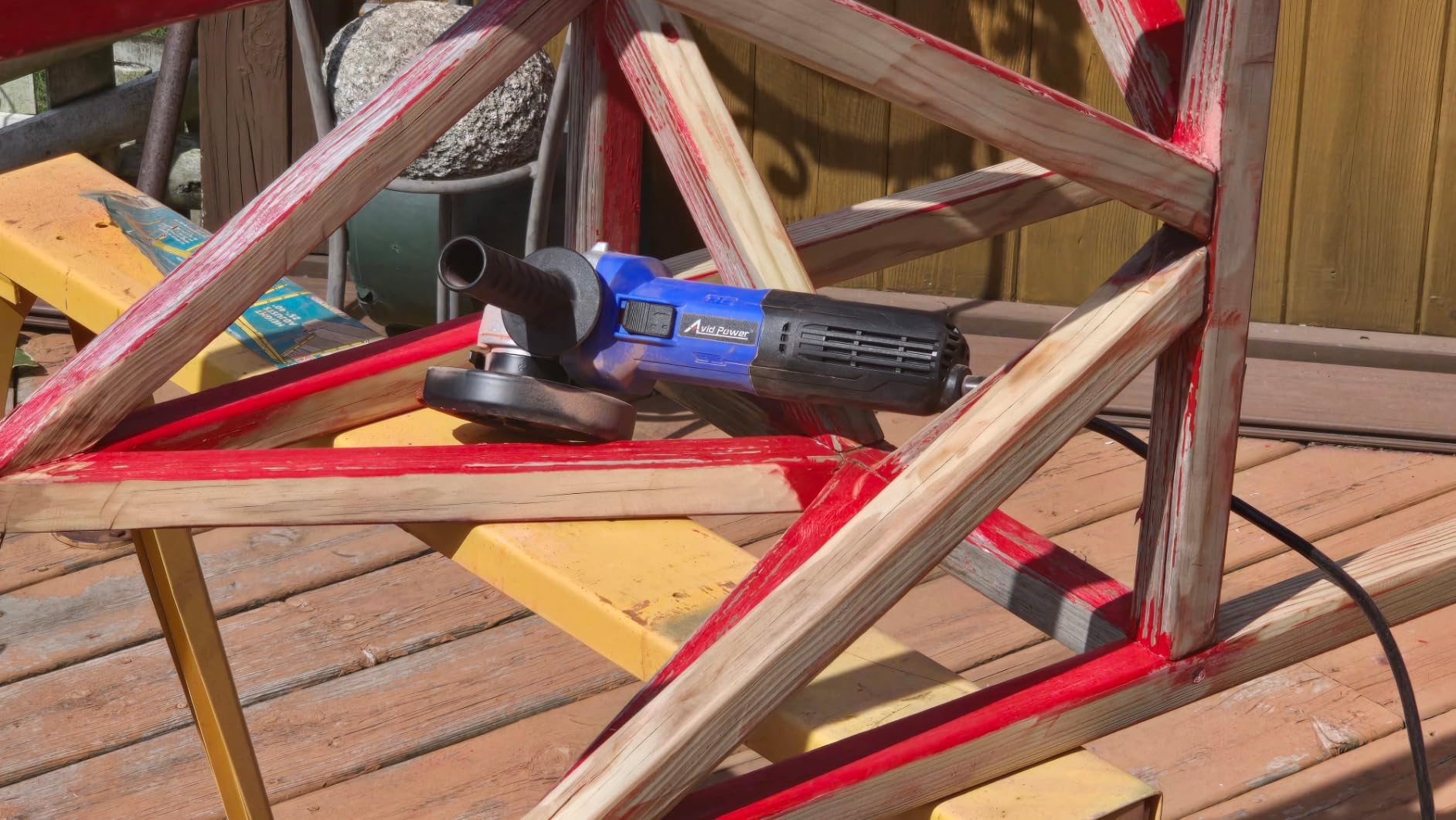
On paper this is one of the most generously equipped grinders in the group, and the specification is genuinely good. A 900 watt, 7.5 amp motor running up to 12000 rpm is real cutting power, and at 3.64 lb it is one of the lighter bodies here.
The compatibility is the sleeper feature. The standard 7/8 inch arbor with a 5/8-11 threaded spindle means cut-off wheels, grinding wheels, flap discs and wire brushes from any major brand will fit. The spindle lock and the tool-free guard together make disc changes unusually quick for this price.
The bundle is remarkable for the money: two metal cutting wheels, two grinding wheels, a flap disc, a side handle, a guard, a spanner and spare carbon brushes. For someone who has just discovered angle grinders, that is a complete starter shelf without buying every disc separately.
It also handles more than metal. Fitted with a diamond disc, the same tool takes on concrete and masonry, which makes it genuinely versatile for a homeowner working on a property rather than a dedicated workshop.
Best for weekend projects and getting started
If you cut a bit of metal here and there, this covers cutting, grinding, polishing and rust removal without another purchase. Owners consistently describe it as capable for weekend work, and the wide accessory compatibility means you are never waiting on a brand-specific wheel.
It is also a reasonable second grinder for a busy household. Two lighter tools on separate tasks beats fighting over one, and this one is easy to carry to a job without thinking about it.
Where it is too light for the work?
The on/off switch is the part to watch. It is stiff, feels fragile and is the component most likely to fail with heavy use. Some buyers also report arriving with stripped threads on the outer flange, which makes wheel removal frustrating until you fit a replacement flange.
The guard has few adjustment positions and a basic locking mechanism, so you will reposition it less often than you should on different cuts. None of this matters for occasional use. All of it matters if you plan to grind weld beads for a living.
6. Metabo HPT G12SR4 – Compact and Light for Tight Work
Metabo HPT 4-1/2-Inch Angle Grinder, Includes 5 Grinding Wheels & Hard Case, 6.2-Amp Motor, Compact & Lightweight, G12SR4
6.2 amp 980W motor
Up to 12000 rpm
4.0 lb tool weight
Low-profile gear case
Pros
- Compact and light at 4.0 lb for low fatigue
- Low-profile gear case reaches tight areas
- Spindle lock for quick disc changes
- Includes 5 grinding wheels and a hard case
- Slide switch with quick-off adds safety
Cons
- 6.2 amp motor is modest against the 7.5 amp rivals here
- 1 year base warranty is shorter than some competitors
This is the grinder we recommend when the work happens in awkward places. The low-profile gear case is noticeably shorter than most 4-1/2 inch grinders, which is what lets you get a cut-off wheel into the corner of a frame or between two structural members.
At 4.0 lb it stays comfortable for a long session, and the smaller grip diameter gives you real control with a spinning wheel. Control is the limiting factor on thin gauge metal far more often than power is, and that is where a compact body pays off.
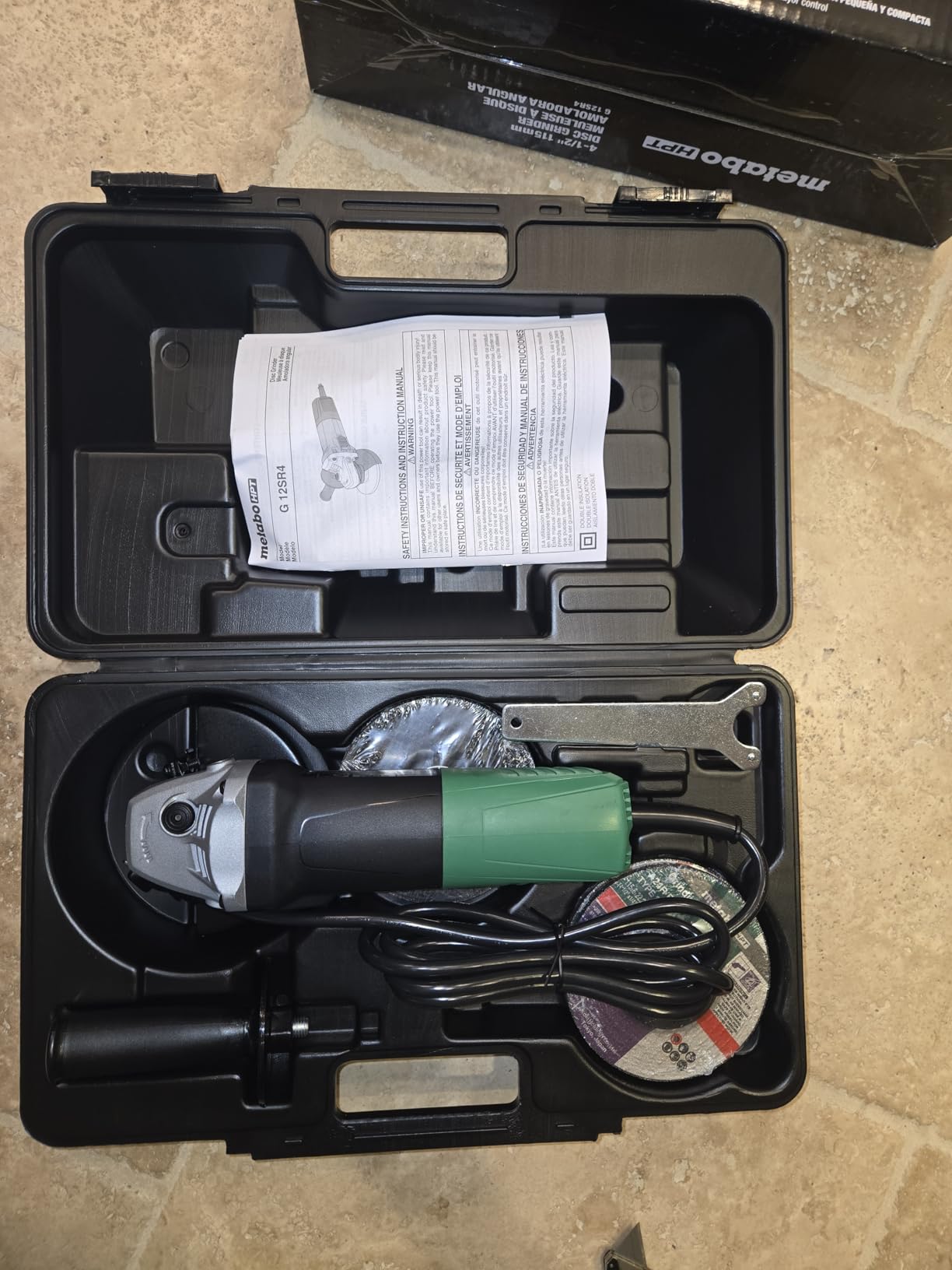
The side handle is removable and forward-canted, so it works for either grip orientation and fits into tight spaces where a straight handle would foul the work. The slide switch has a quick-off feature that stops the wheel fast, which is the behaviour you want when the wheel catches.
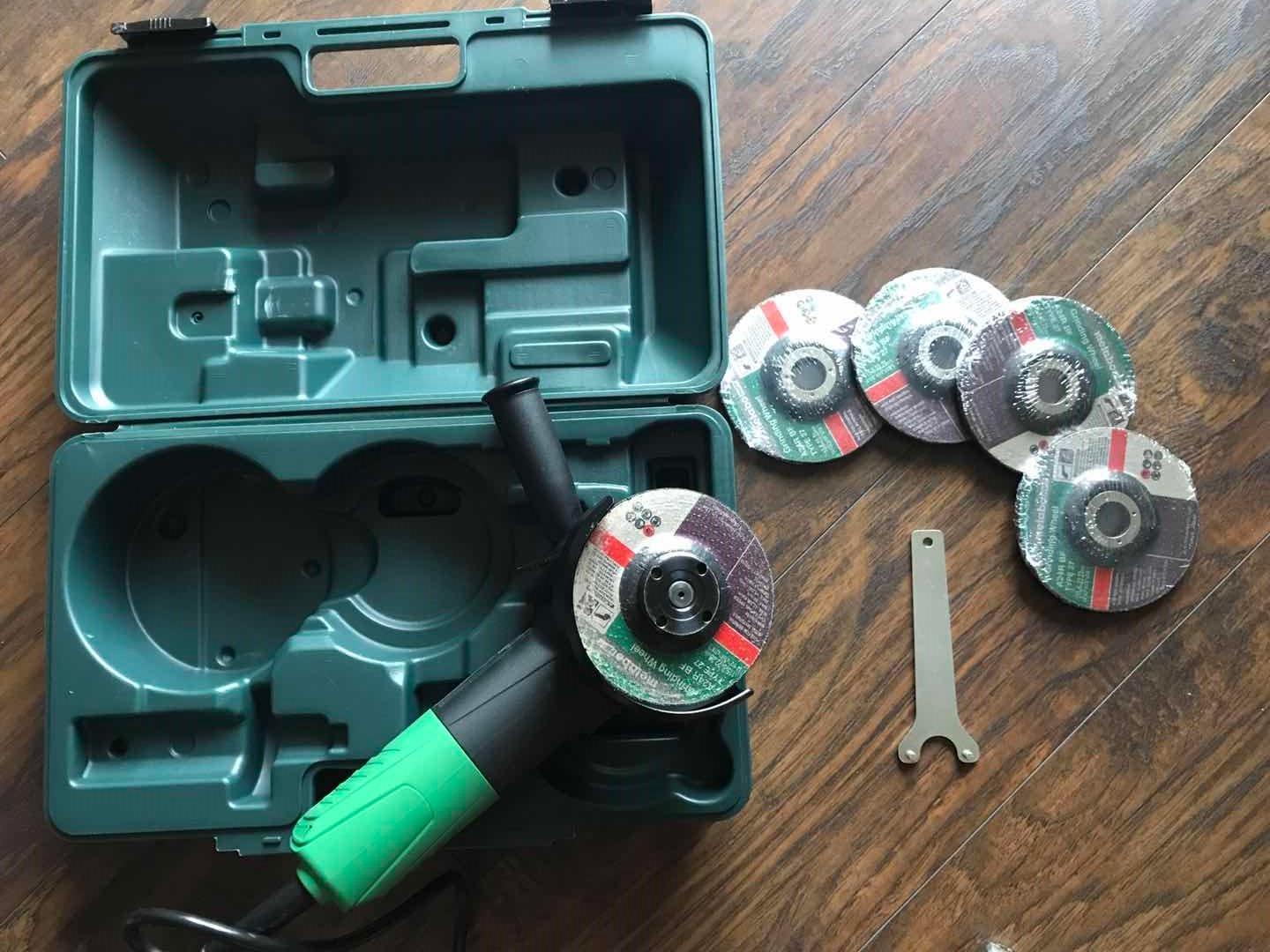
It arrived with five grinding wheels and a hard carrying case, and the labyrinth-sealed design keeps dust and debris out of the motor. Owners consistently describe it as easy to control, which is the main thing you notice after an hour of cutting.
Where this grinder fits best?
Vehicle repair, restoration and any job where you are working in a confined space. The short gear case and light body make it easy to maneuver one-handed, which is exactly what you want on sheet metal and trim.
For someone with smaller hands or a grip that tires quickly, this is a genuinely better tool than a heavy 7.5 amp machine. The difference in control is worth more than the difference in power at typical workshop cutting depths.
Where the power ceiling shows?
A 6.2 amp motor producing 980 watts is fine for angle iron, rebar, hardware and general grinding. On thick plate steel with a deep cut, you will feel it slow down compared with the 7.5 amp models in this list, and you may have to work in more passes.
The one year base warranty is also shorter than several rivals offer, so keep the receipt and check the terms if you are buying for long-term shop use.
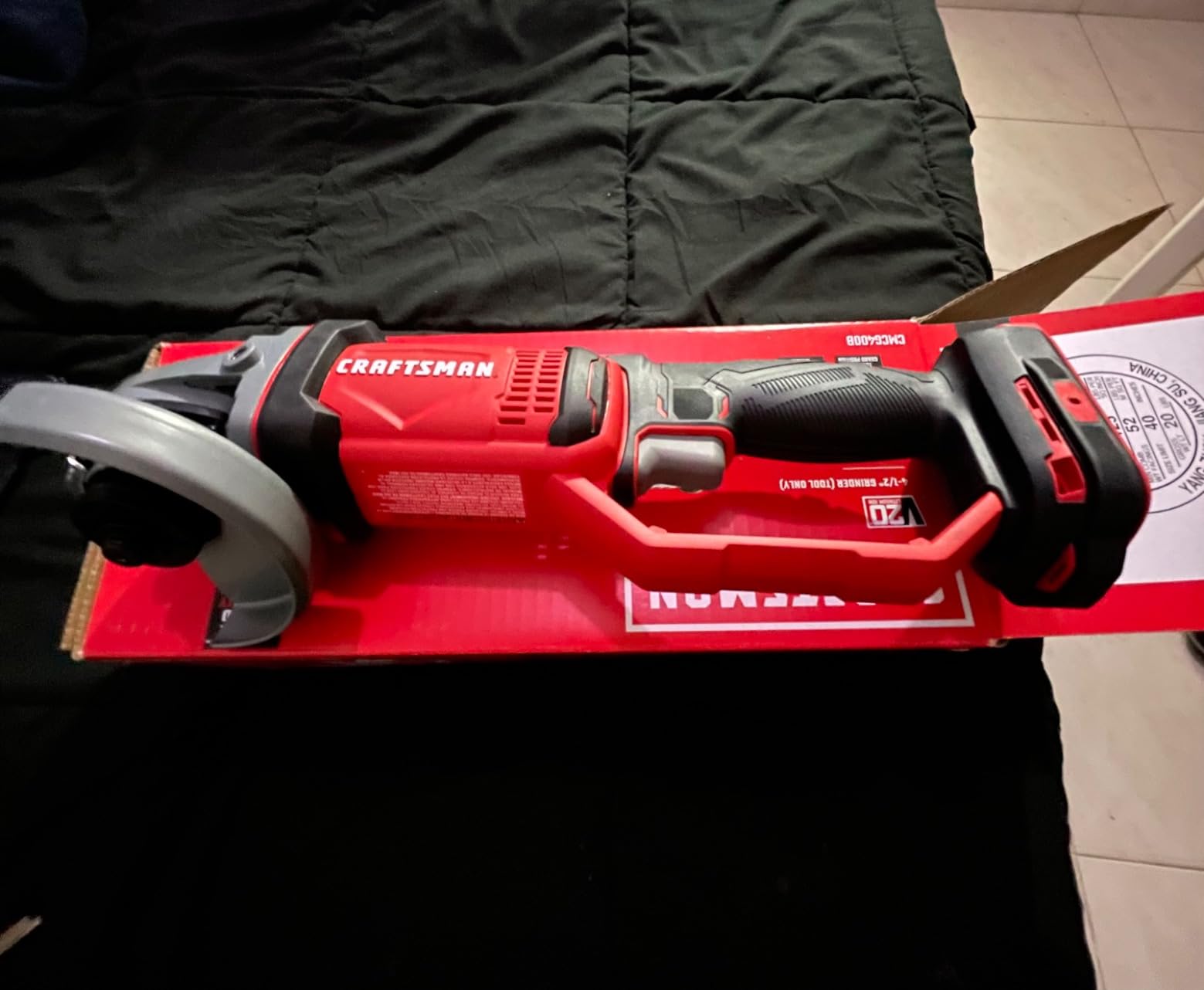
7. CRAFTSMAN CMCG400B – Cordless With a Cast Metal Gear Housing
CRAFTSMAN V20* Angle Grinder, Small, 4-1/2-Inch, Tool Only (CMCG400B)
20V cordless motor
8500 rpm grinding speed
Cast metal gear housing
2.59 kg tool weight
Pros
- Cordless platform avoids cord management on site
- Cast metal gear housing dissipates heat in long cuts
- Tool-free guard positioning is quick
- Contoured over-molded 3 position handle
- Broad limited lifetime warranty
Cons
- Battery and charger sold separately
- Lower peak speed than 10000 to 12000 rpm corded rivals
The cast metal gear housing is what separates this from other budget cordless grinders. Metal gear cases move heat away from the bearings far better than the plastic housings used on cheaper tools, and heat is what kills bearings during long cuts on thick material.
That matters because the common complaint about cordless grinders is heat build-up during extended plate cuts. Owners of this tool point to the housing as the reason it keeps running when lighter designs start to smell.
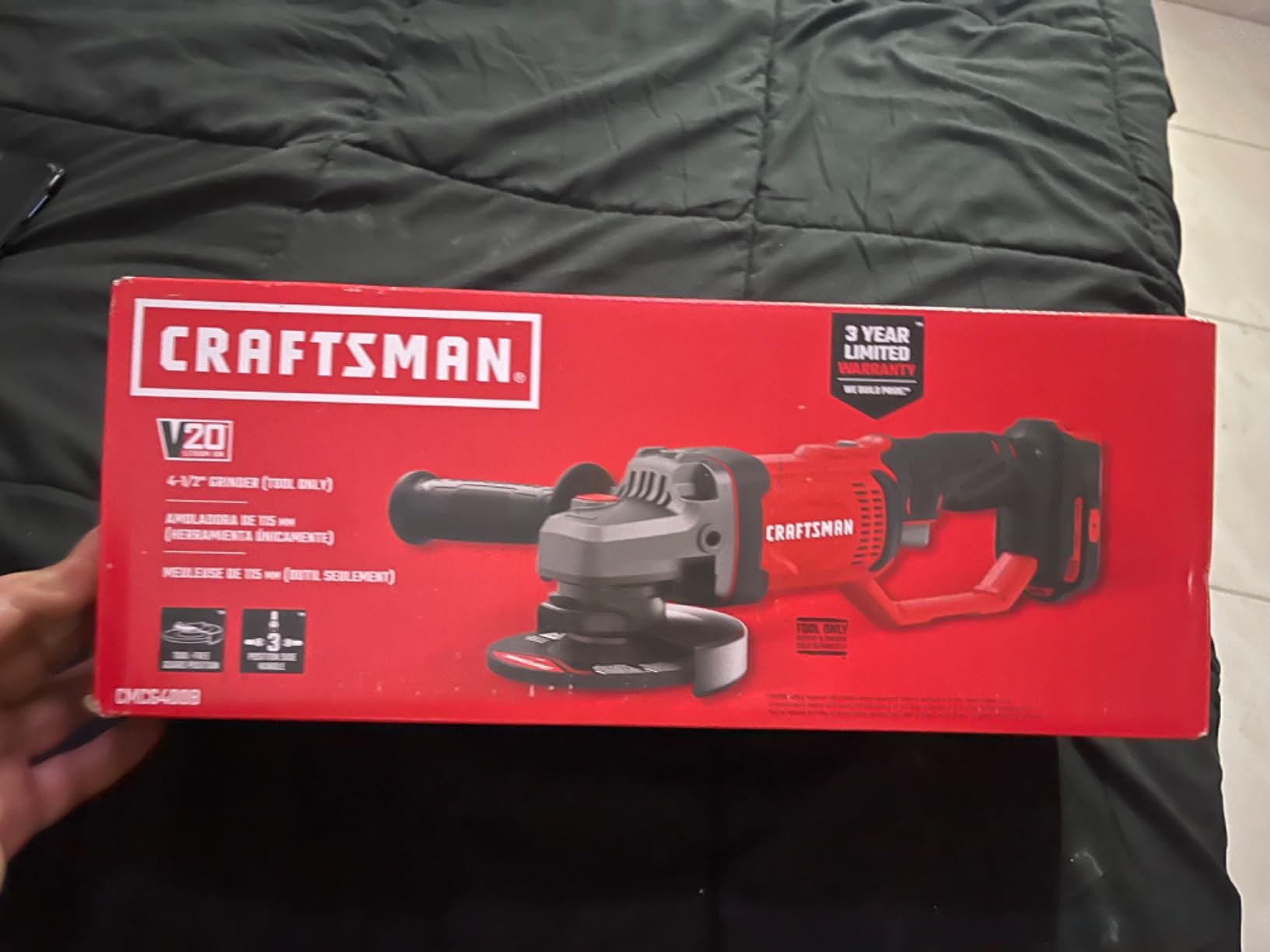
Tool-free guard positioning means you can reposition the guard between a grinding cut and a cut-off cut without hunting for a spanner. The contoured over-molded handle is offered in three positions, and at 2.59 kg it is a manageable weight for a cordless grinder.
The limited lifetime warranty is a meaningful difference from the one year terms on several corded competitors here. If a tool is going to sit in a garage and get used for a decade, that coverage carries real weight.
Who should buy this one?
Anyone already on the V20 battery platform. The grinder is sold as a bare tool, so if you have packs and a charger you are a single purchase away from having a cordless metal grinder, and if you do not, the total cost of entry is worth working out before you buy.
It suits property maintenance work, gate repairs and any job without a nearby outlet. The cordless format also removes the trip hazard that a trailing cable creates around steel offcuts and stacked material.
Where the speed trade-off bites?
The 8500 rpm grinding speed is below the 10000 to 12000 rpm of the corded models here, and no-load speed tops out lower still. For aggressive grinding on thick material you will work a little harder than you would with a corded machine.
Buying the battery and charger separately is the other thing to plan for. That is normal across this category, but it catches out first-time buyers who assumed a cordless grinder was a complete package.
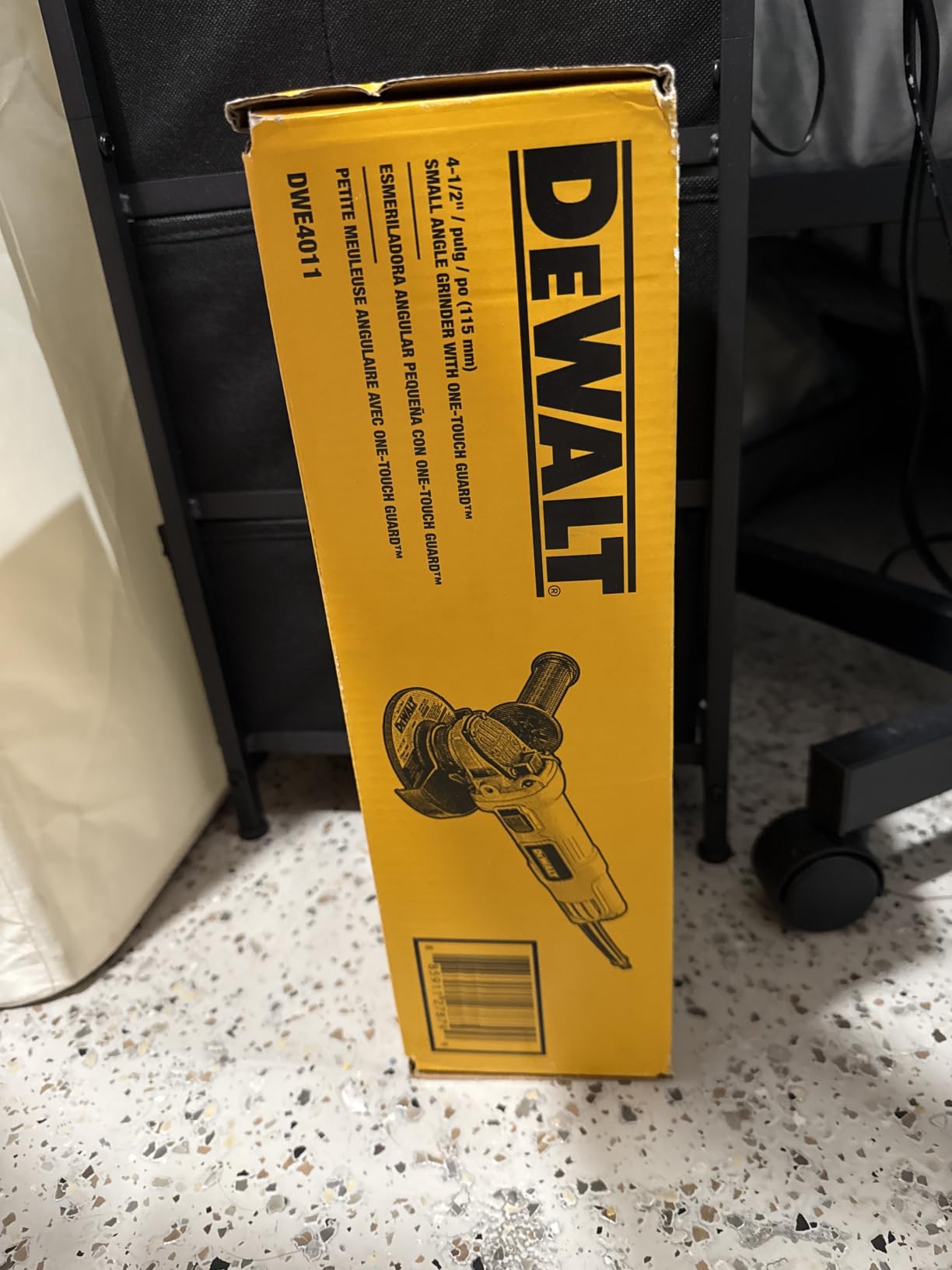
8. DEWALT DWE4011 – One-Touch Guard and Quick Wheel Release
DEWALT Angle Grinder, One-Touch Guard, 4-1/2 -Inch (DWE4011)
7 amp AC/DC motor
12000 rpm
One-Touch guard
3.9 lb tool weight
Pros
- One-Touch guard repositions without a tool
- Quick-Change wheel release removes discs by hand
- 7 amp 12000 rpm motor handles metal cutting
- Accepts a 5/8-11 spindle thread
- Includes a depressed center wheel
Cons
- Ships with a hex wrench instead of a spanner wrench
- Slide switch is small and easy to miss
- Noticeable noise and elevated vibration
The One-Touch guard is the reason this tool stands apart. On most grinders you need a spanner or hex key to reposition the guard between a grinding cut and a cut-off cut. On this one you release it by hand and swing it around, which you notice constantly during mixed work.
The Quick-Change wheel release goes further and lets you swap discs without a tool at all. For anyone changing between a flap disc, a wire wheel and a cut-off wheel all day, that removes the single most annoying part of using an angle grinder.
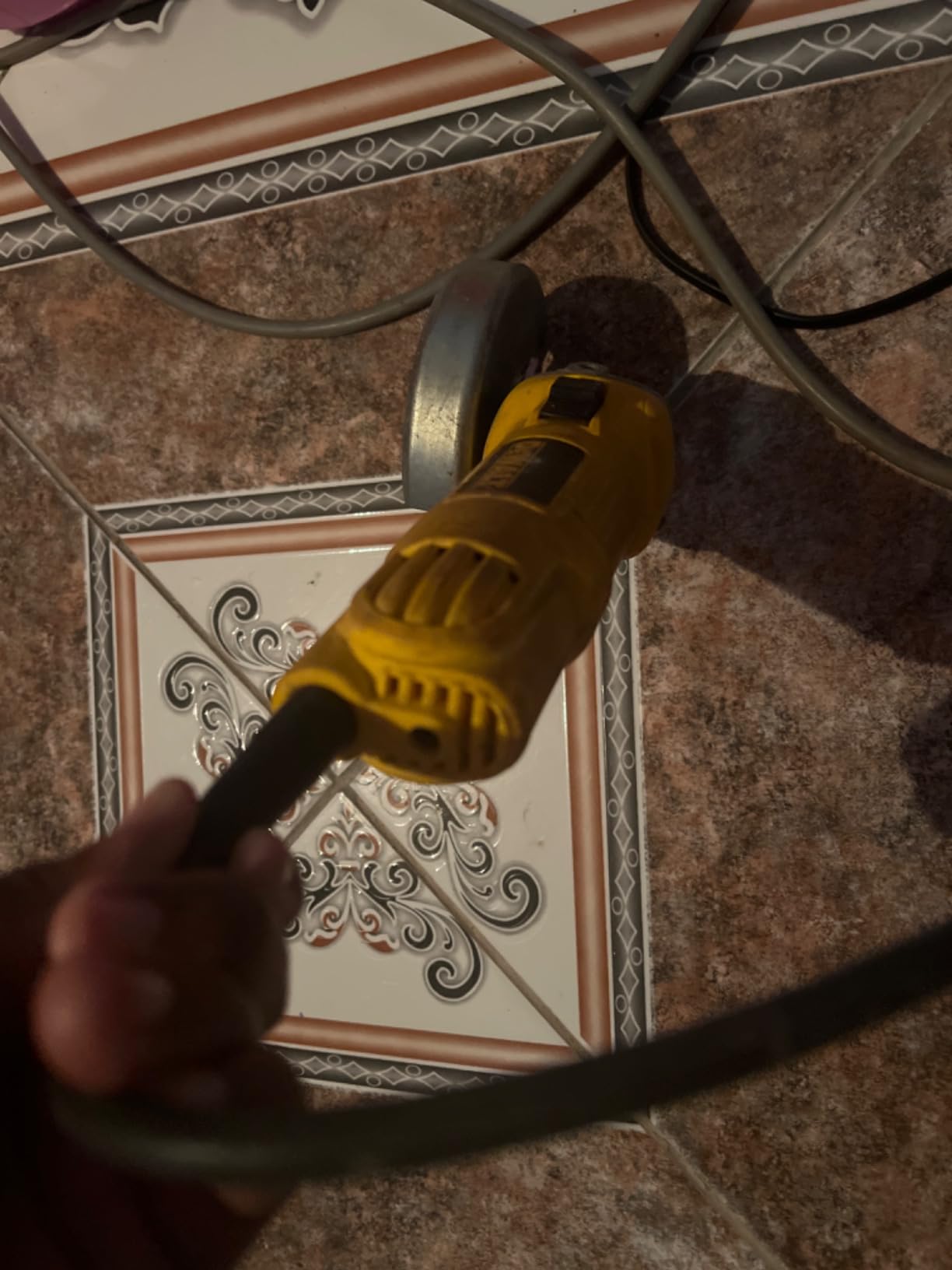
The 7 amp AC/DC motor spins at 12000 rpm, matching the highest no-load figure among the corded tools in this group. It accepts a 5/8-11 spindle thread, so the entire universe of standard 4-1/2 inch accessories fits.
Long-term owners describe it as a near drop-in replacement for older DEWALT grinders, which tells you how settled the platform is. The AC/DC capability also means it can run from a DC source in a setup where mains power is not an option.
Best for mixed cutting and grinding work
Anyone who alternates between cutting and grinding gets the most from this design. You can move the guard and the wheel without tools, so the tool adapts to the job rather than the job adapting to the tool.
It is also a sensible choice if you already own DEWALT grinders and want one that feels identical to the tools you know. Slim body at 3.9 lb, straightforward slide switch, nothing surprising.
Where the shortcuts show?
The switch is small and easy to miss with a thumb, which is a minor ergonomic complaint repeated often by owners. The guard also only locks into a limited number of positions, so you may need to check the spark direction on each new setup.
Noise and vibration run on the high side compared with the Bosch and Makita here, and the tool comes with a hex wrench rather than the spanner wrench many buyers expect to find for the spindle nut.
9. Bosch GWS8-45 – Cool Running Corded Grinder for Weld Cleanup
Bosch GWS8-45 4-1/2 In. Angle Grinder
7.5 amp professional motor
11000 no-load rpm
4.2 lb slim-grip body
Service Minder carbon brushes
Pros
- Delivers real torque for a 4.2 lb tool
- Runs cool and steady in long sessions
- Service Minder brushes flag maintenance needs
- Directed air flow keeps dust off components
- Large spindle lock and two position side handle
Cons
- Allen-key guard adjustment locks into fixed positions
- Forward-canted handle feels awkward above waist height
- Printed manual muddles its guidance on cut-off use
- Some build inconsistency reported across samples
This is the grinder we would pick for weld cleanup, which means grinding rather than cutting for long stretches. The 7.5 amp professional motor and the directed air flow design keep it running cool and steady instead of getting hot and unpleasant after an hour.
Service Minder brushes are the detail that matters for a shop tool. Instead of the brushes quietly wearing until the motor starts arcing and frying, the grinder stops itself when service is due, which turns a motor failure into a scheduled brush change.
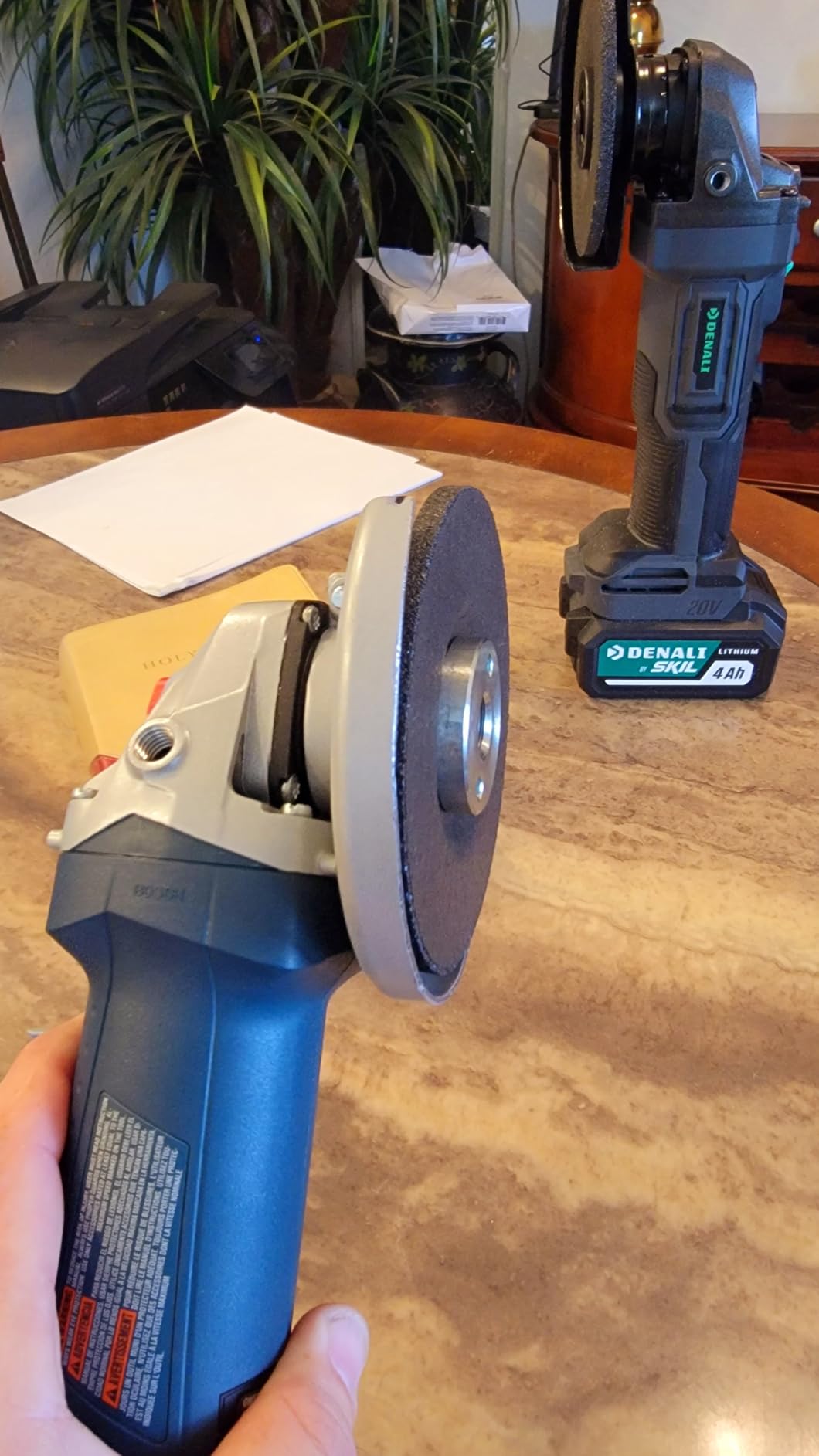
At 4.2 lb with a slim grip, it delivers more torque than the weight suggests and can be run one-handed when you need to. Owners using it for steel grinding and paint stripping consistently describe it as cool running even in long sessions.
The large spindle lock makes disc changes straightforward, and the burst-protection guard is designed to contain a wheel that binds. That guard matters when the cut catches.
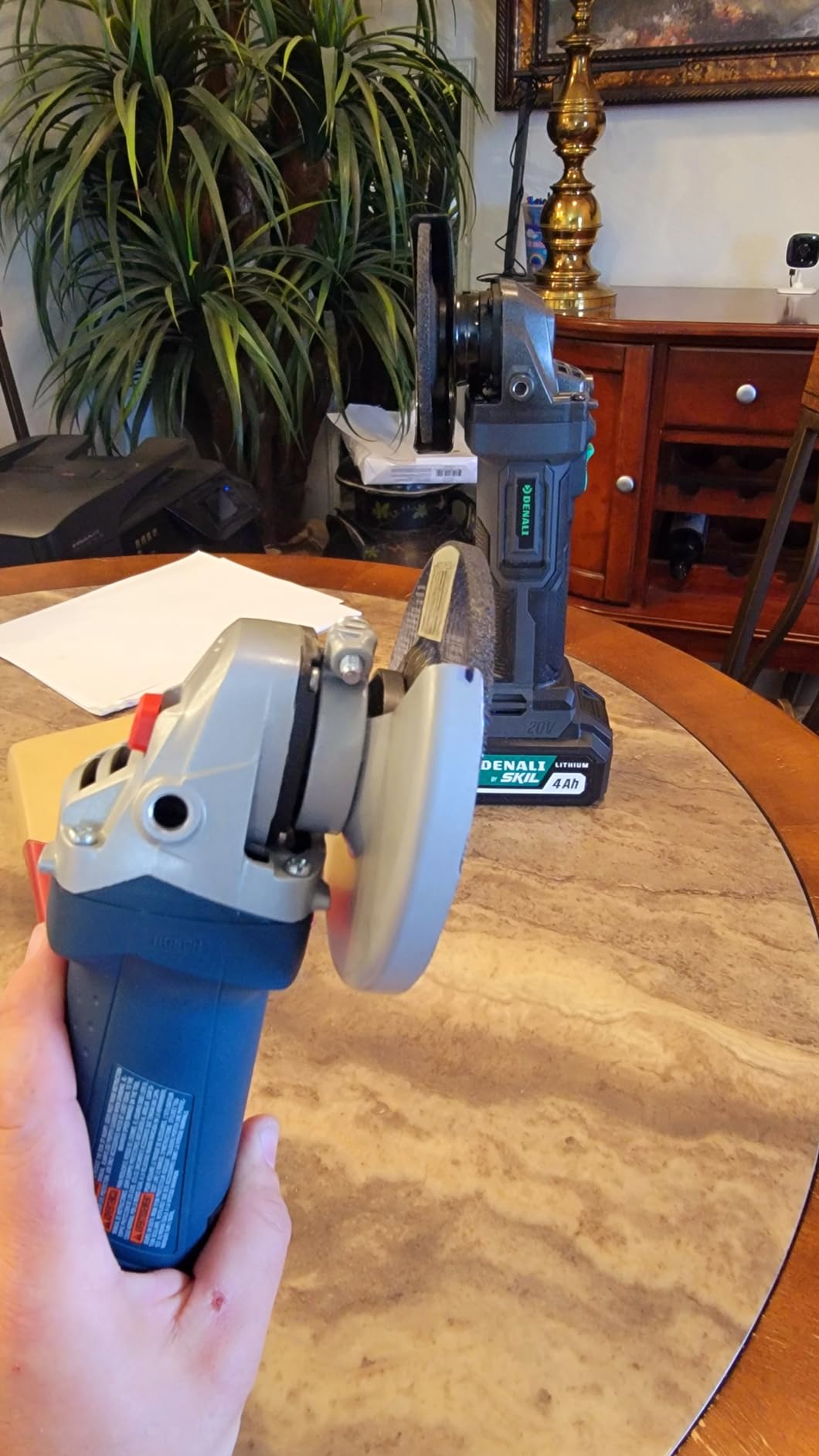
Best for grinders who spend hours cleaning welds
If metal work for you means taking a bead down, blending a joint and then moving to the next one, this is the tool. The cooling behaviour and the brush service warning are built for that specific kind of repetitive use.
It is also a strong choice for a professional shop that wants one dependable corded grinder that does not need constant attention. The metal components and the serviceable motor design point in the same direction.
Where the ergonomics disappoint?
The guard is adjusted with an Allen key and locks into fixed positions, so repeatedly repositioning it for overhead work is tedious. Combine that with the forward-canted handle placement and you have a tool that is clearly designed for work at bench height rather than above your head.
The printed manual also gives guidance that confuses buyers, since it reads as if the tool is not for cut-off applications despite widespread cutting use. Check your local rules on guard type for cut-off work and fit the correct guard for the job.
10. SKIL 9295-01 – Simple Corded Grinder for First-Time Buyers
SKIL 6 Amp 4-1/2-Inch Corded Angle Grinder – 9295-01
6.0 amp 720W motor
11000 rpm
4 lb metal gear housing
Tool-less guard
Pros
- Cuts thin gauge metal and handles thicker material
- Heavy duty metal gear housing feels long lived
- Compact 4 lb body is easy to grip
- Tool-less guard adjusts quickly
- Vibration-reducing handle stores the disc wrench inside
Cons
- Body shape can feel awkward for some users
- Power button takes getting used to
- Wheel lock can stick when engaged
- Power suits light to medium duty rather than heavy production
Nothing about this grinder is clever, and that is exactly why it works. A 6 amp motor at 11000 rpm, a metal gear housing, a tool-less guard and a vibration-reducing handle add up to a tool that does the basic metal cutting jobs without any drama.
The handle stores the disc change wrench inside it, which is a small thing that saves you hunting for a spanner every time you need it. At 4 lb it is light enough for extended use and easy to control on thin material.
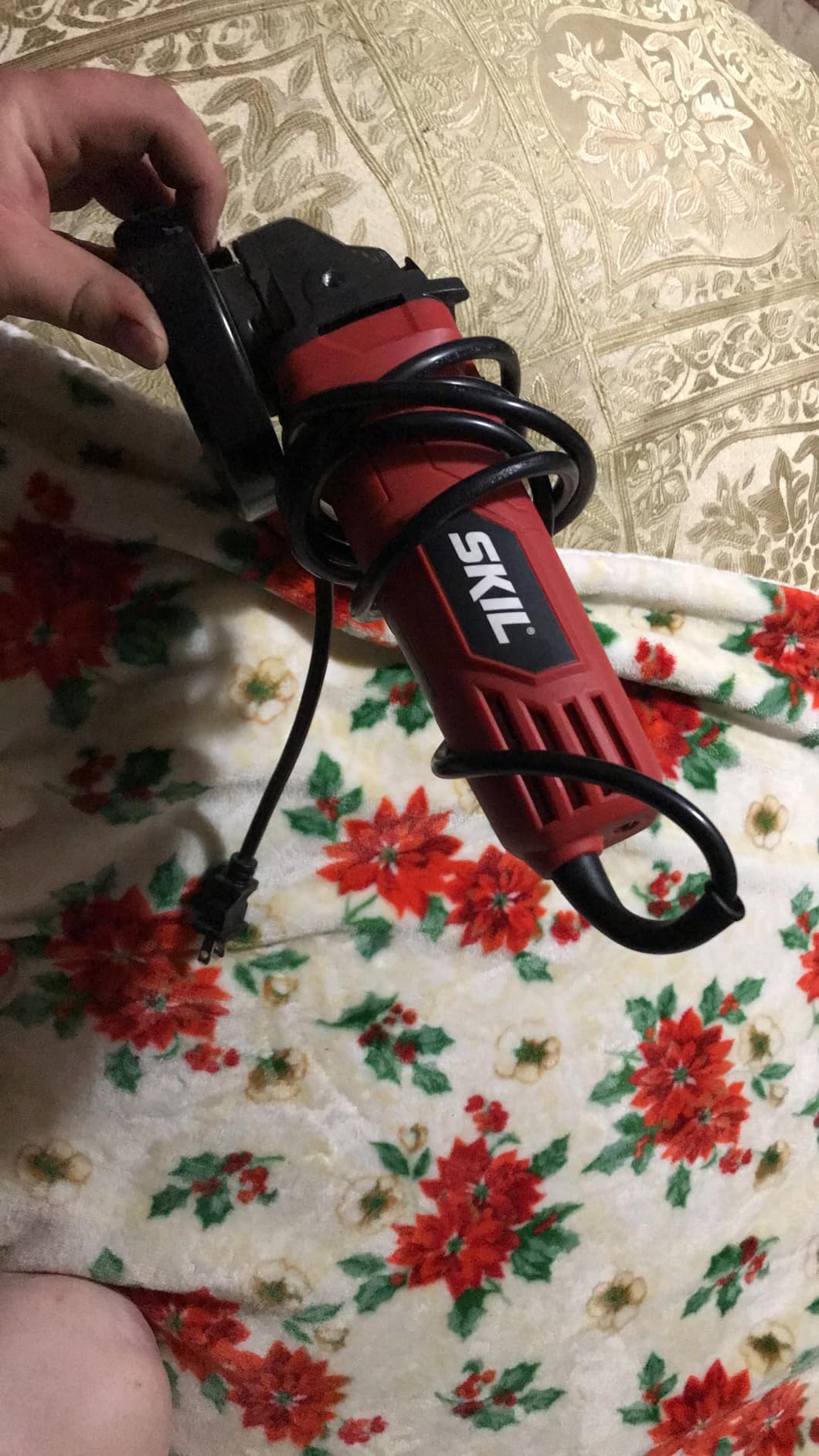
Owners report units that have lasted decades, and with 1928 reviews averaging 4.6 that is not marketing language, it is the most common description in the feedback. It also comes with a cut-off wheel already fitted, so you can start cutting metal the day it arrives.
Because it is corded with no battery ecosystem, there is nothing to buy after the fact except more discs. For a household that will cut metal occasionally, that simplicity is worth paying for.
Best as a first angle grinder or a shop backup
This is the grinder to hand someone learning. There is no mode to select, no battery to charge and no variable speed to misunderstand. You pull the trigger and the wheel turns, which is the fastest way to build good technique with a cut-off wheel.
It also works well as a second tool for a workshop, because a second 4 lb grinder for light trimming and deburring stops you from constantly swapping discs on your main machine.
Where the compromises are?
Power is adequate for light to medium duty rather than heavy production work. The compact body shape is not universally comfortable, and the power button takes some getting used to, though it is quick to shut off once you know how it works.
The wheel lock can also stick and refuse to release cleanly, which is a minor irritation rather than a fault. If you expect to grind weld beads for hours every day, buy one of the higher torque models instead.
Corded vs Cordless for Metal Cutting: Torque Under Load Wins
Choose corded when you are cutting metal for hours and choose cordless when you need to move around a site without a cable. That is the rule most experienced fabricators land on, and the reason is torque under load rather than raw power figures.
A corded 7.5 amp grinder draws a steady current from the outlet, so it holds speed on a deep cut through plate steel without dropping into its thermal limits. A cordless grinder has a finite window before the pack is depleted, and heavy cutting is exactly the situation that drains it fastest.
The trade runs the other way in specific cases. Cordless wins on scaffolding, roofs and anywhere a trailing cord is a trip hazard, and it wins for anyone already committed to one battery platform, since the packs and chargers are already on hand. Users who own both tend to reach for the battery tool by default and switch to corded when the cut gets serious.
Material thickness is the cleanest dividing line. Light gauge sheet, thin tube, hardware and structural angle under about a quarter inch are comfortable on any of the cordless grinders above. Rebar, heavy plate and thick structural section are where the corded models pull ahead and stay ahead.
Which Cutting Disc to Use for Which Metal?
A resin-bonded abrasive cut-off wheel is the right answer for most metal work, and the wheel choice affects cut quality more than the grinder brand does. Match the wheel to the material and you will get a clean cut, less heat and far fewer shattered discs.
Carbon steel, rebar, angle iron, galvanized pipe and structural section all take a standard abrasive cut-off wheel. Use a coarser grit for faster removal on thick material and a finer grit for a cleaner edge on thin or visible work.
Stainless steel needs a dedicated stainless-rated wheel, because ordinary wheels load up and glaze quickly on the harder alloy. The same applies to thin stainless sheet, where a glazed wheel is also the main cause of kickback.
Cast iron pipe takes an abrasive wheel but benefits from a slower, steadier pass because it chips rather than shearing cleanly. Aluminium and other soft non-ferrous metals want a wheel with a cutting agent added, since a plain abrasive wheel gums up and smears immediately.
For very hard or non-metallic material, a diamond blade changes the picture entirely. Diamond wheels are the right tool for concrete, tile, brick and hardened steel, and they are far more expensive per disc but cut considerably longer on abrasive-resistant material. If you also work outdoors with metal frames, our related metal equipment picks cover the hardware side of a weekend project.
How to Choose an Angle Grinder for Steel Work?
Wheel size sets the cutting depth and the balance you can hold. A 4-1/2 inch grinder handles nearly all hand work from sheet metal to rebar, while 6 inch and larger grinders cut deeper in one pass but are harder to control on thin or small material. Every grinder in our list is 4-1/2 inch for that reason.
Power and torque matter more than headline RPM. Look for 6.5 amps or more for general steel work, and 7.5 amps if you expect to cut rebar or plate regularly. RPM matters less than most spec sheets imply; what you want to know is whether the tool bogs down under load.
Motor type changes the maintenance story. A brushed motor is cheaper and can be repaired when the brushes wear, while a brushless motor runs cooler, needs no brush changes and holds efficiency better over its life.
Safety features deserve real weight in the decision. A kickback brake or electronic clutch, an electronic brake, restart protection and a two-stage trigger are the ones that matter on metal, because the most common accident with this tool is a bind-up that spins the wheel backwards.
Weight and balance determine whether you can work all day. Anything above 5 lb gets tiring overhead, and a slim grip gives you more control than raw power does when the wheel is biting.
Finally, check the wheel interface. The standard 5/8-11 threaded arbor accepts discs from every major brand, while proprietary quick-change systems save you a minute per change but tie your disc buying to one manufacturer. For most metalworkers, the open standard wins over the long term.
Kickback and Kick-In: Why Metal Grinders Bite Back?
Kickback is the violent rotation that happens when a cut-off wheel binds in the material. The wheel stops, the motor keeps turning, and the tool twists out of your hands and throws sparks in whatever direction it was pointing. It is the failure mode that causes the most serious injuries on this tool.
A kick-in is a smaller, faster version of the same event. It happens on thin sheet metal when the wheel catches the far edge of the material and the disc pulls sideways into your hand. Both events share one cause: the wheel being forced into the work instead of shearing across it.
The prevention rules are simple and they are not optional. Position the guard so it deflects sparks away from your hands and legs, keep the wheel edge at a shallow angle to the work rather than driving the face of the disc in, let the wheel do the cutting instead of pressing down, and never look down the cut line to check progress.
Hold the tool with two hands, keep a firm grip on the rear of the body, and wear eye protection that is rated for grinding. Hot discs need to cool on a non-combustible surface before you set them down, and a disc that has been used should never go back on the tool if it is chipped or worn unevenly.
Kickback control systems do not make these rules unnecessary. They are a second layer of protection that buys you a fraction of a second when something goes wrong, and on metal that fraction is sometimes the difference between a lost tool and an injury.
Frequently Asked Questions
What is the best angle grinder for cutting metal?
For most people, the DEWALT DCG413B is the best angle grinder for cutting metal because its electronic kickback brake stops the wheel in 2 seconds or less and the brushless motor needs no brush changes. For long shop sessions on rebar and plate, a corded 7.5 amp model such as the Makita 9557PBX1 holds speed better.
What type of grinder is best for grinding metal?
A corded grinder with at least 6.5 amps is the best choice for grinding metal, because grinding is sustained work and you want steady torque plus unlimited runtime. A brushless motor runs cooler and needs no maintenance, and a metal gear housing dissipates heat so bearings survive long passes over weld beads.
What type of angle grinder blade is best for cutting steel?
A resin-bonded abrasive cut-off wheel is the correct blade for cutting steel. Use a coarser grit for thick structural material and a finer grit for cleaner edges on thin work. Stainless steel needs a wheel rated for stainless, and concrete or hardened material needs a diamond blade instead.
Are angle grinders good for cutting metal?
Yes, angle grinders are the standard tool for cutting metal, and they are far quicker and cheaper than a chop saw or plasma cutter for rebar, angle iron, pipe and plate sections up to roughly half an inch thick. Above that thickness, a larger grinder or a different saw is more efficient.
Should I get a corded or cordless angle grinder?
Get corded if you will cut metal for hours at a time, since it gives unlimited runtime and steady torque under load. Get cordless for site work, overhead jobs and anywhere a trailing cable is a hazard, especially if you already own batteries from that platform. Light gauge material suits either.
What is the best angle grinder for metalworking?
The Bosch GWS8-45 is a strong choice for metalworking because it runs cool in long sessions and its Service Minder brushes stop the tool when maintenance is due. For welding cleanup specifically the Makita 9557PBX1 is equally capable, and both use the standard 5/8-11 arbor so discs are interchangeable.
Final Verdict: The Best Angle Grinders for Metal Cutting in 2026
After working through all ten, the DEWALT DCG413B takes our top slot for the strongest combination of a real kickback brake, a brushless motor and a 3.8 lb body that stays comfortable through long sessions. The Makita 9557PBX1 is the pick when you want a corded tool with every wheel and case included, and the Milwaukee 2880-20 wins for shops already invested in M18 batteries.
Whichever one you choose, buy the correct cut-off wheel for the metal in front of you, position the guard before you start, and let the wheel shear the material rather than being forced into it. That single habit separates a clean cut from a trip to the emergency room.
Whatever you choose, run a short cut on a scrap offcut of the same material first so you can confirm the wheel is cutting freely before you touch the actual work.