
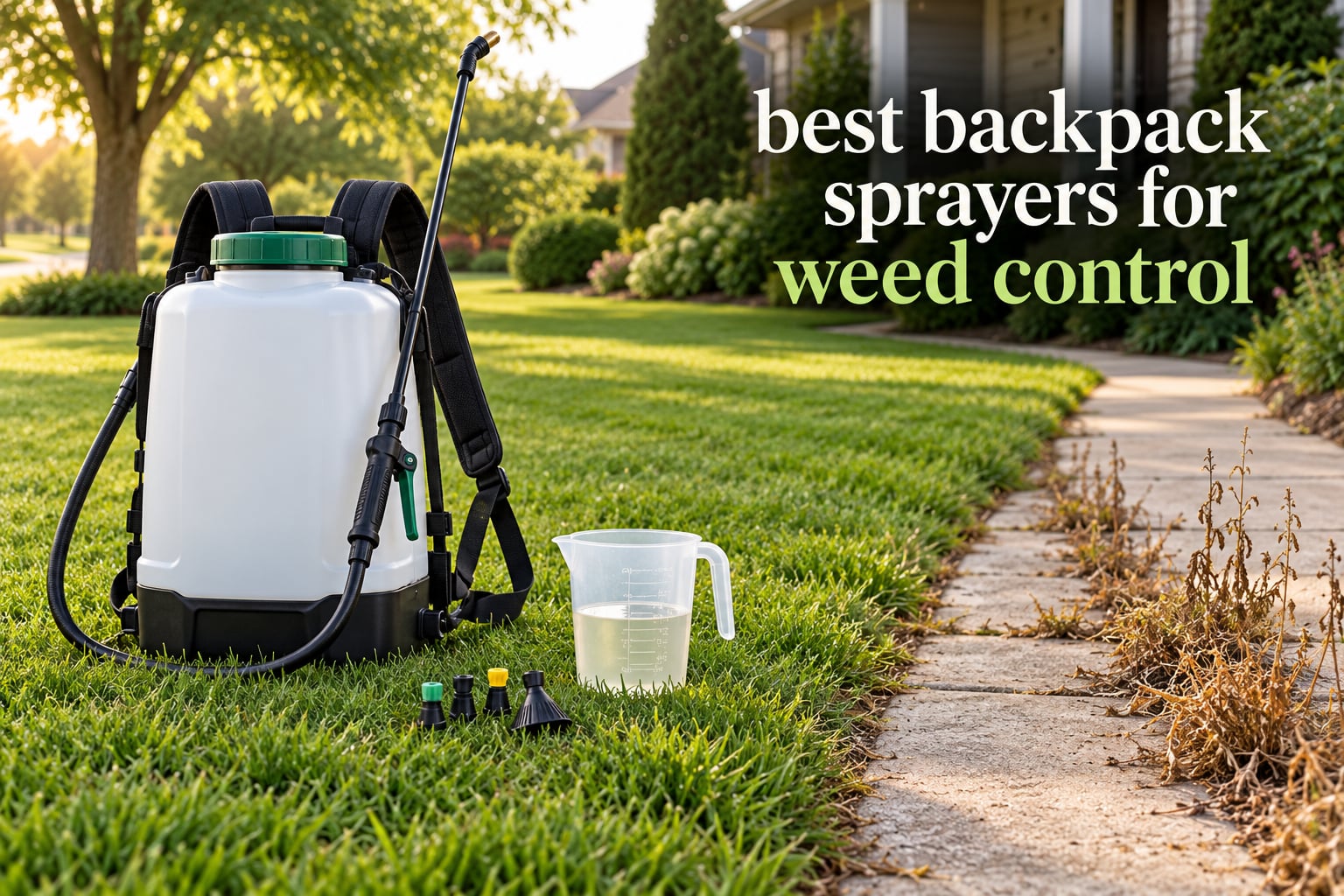
A sprayer that suits a fertilizer job is not automatically a good herbicide sprayer. Weed control puts two extra demands on the tank: precise pressure so a selective product stays on the leaf and off the roots, and chemical-resistant seals so a wettable powder mix does not eat the pump. We spent weeks working through twelve backpack sprayers built for exactly that job to find the best backpack sprayers for weed control in 2026.
Our top pick is the PetraTools HD4000, a battery-powered 4-gallon unit that adjusts from 40 to 90 PSI, carries six nozzles, and pumps more than 200 gallons on one charge. It rated 4.6 stars across 3740 reviews, the strongest combination of rating and review volume in this group. The CHAPIN 61500 is the runner-up for anyone who wants a manual sprayer that will not leak chemical down their back, and the Field King Max 190348 takes the professional slot with brass hardware and tool-free seal changes.
What follows is a breakdown of all twelve, ranked for weed work rather than general spraying, plus a buying guide on pump type, pressure, nozzle pattern, and tank math, and a troubleshooting section since almost every forum thread we read was really a leaking question in disguise. If you are new to this, start with the table, then jump to the buying guide. The label on your herbicide is the law, so read it first and treat everything here as guidance on hardware.
Table of Contents
Top 3 Best Backpack Sprayers for Weed Control in 2026
All 12 Backpack Sprayers for Weed Control at a Glance
| Product | Specifications | Action |
|---|---|---|
| PetraTools HD4000 |
|
Check Latest Price |
 Oregon 16 Litre Oregon 16 Litre |
|
Check Latest Price |
 CHAPIN 61500 CHAPIN 61500 |
|
Check Latest Price |
 Roundup 190314 Roundup 190314 |
|
Check Latest Price |
 Field King Max 190348 Field King Max 190348 |
|
Check Latest Price |
 REALWORK 4-Gallon REALWORK 4-Gallon |
|
Check Latest Price |
 SOLO 425 SOLO 425 |
|
Check Latest Price |
 NPGLOBAL 100 PSI NPGLOBAL 100 PSI |
|
Check Latest Price |
 SideKing SK4000B SideKing SK4000B |
|
Check Latest Price |
 VAXMAY 4-Gallon VAXMAY 4-Gallon |
|
Check Latest Price |
 Husqvarna 4-Gallon Husqvarna 4-Gallon |
|
Check Latest Price |
 DEWALT 20V DEWALT 20V |
|
Check Latest Price |
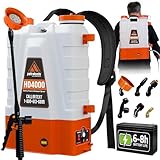
1. PetraTools HD4000 Battery Sprayer – Best Overall for Weed Control
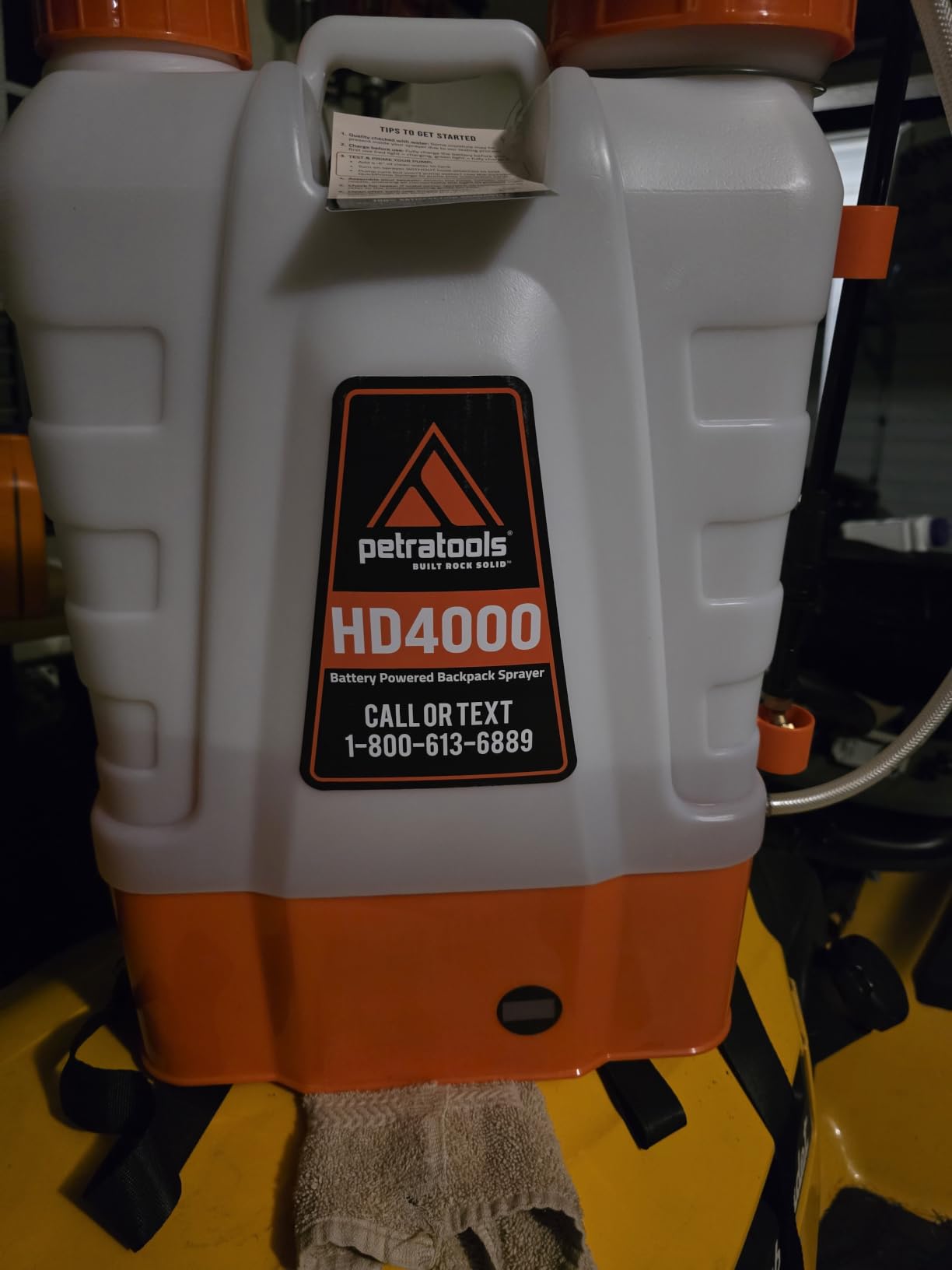
PetraTools HD4000 Battery Powered Backpack Sprayer, 6 Hr Runtime, 6 Nozzles
40-90 PSI adjustable
Battery powered 6-8 hr runtime
4 gallon tank,6 nozzles
Pros
- 6-8 hours of runtime per charge pumping 200+ gallons
- Adjustable 40-90 PSI with six nozzles
- Double-padded straps and back pad for long jobs
- Translucent tank with gallon markers and wide-mouth lid
- Screen filter reduces nozzle clogs
Cons
- Electric pump needs charging downtime between heavy days
- Screen filter needs periodic cleaning
This is the sprayer I put on first for any broadcast herbicide job over half an acre. The 12V 8Ah battery delivers 6 to 8 hours of runtime and moves more than 200 gallons per charge, which means one charge covers roughly four full 4-gallon fills without a break.
Pressure adjusts between 40 and 90 PSI, and that range is the reason it wins for weed control. A broadleaf selective at the low end gives you a slower, denser curtain that settles onto leaf tissue instead of drifting. A non-selective for a driveway edge can run near the top of the range and still stay within the drift limits most labels ask for.
Reviewers consistently single out the harness rather than the pump. Double-padded shoulder straps and a padded back panel spread a full 4-gallon load across your shoulders, which matters more than raw PSI once you are three passes into a large lawn. The locking squeeze handle means you are not holding the trigger down with a bent finger for an hour.
The 34.5-inch extendable HD wand and 48-inch hose give you reach under shrubs and around fence lines without crouching. Six nozzles cover flat fan, cone, and stream work, and the translucent tank with gallon markers lets you see how much solution is left without pulling the pack off.
What to check before you buy the HD4000
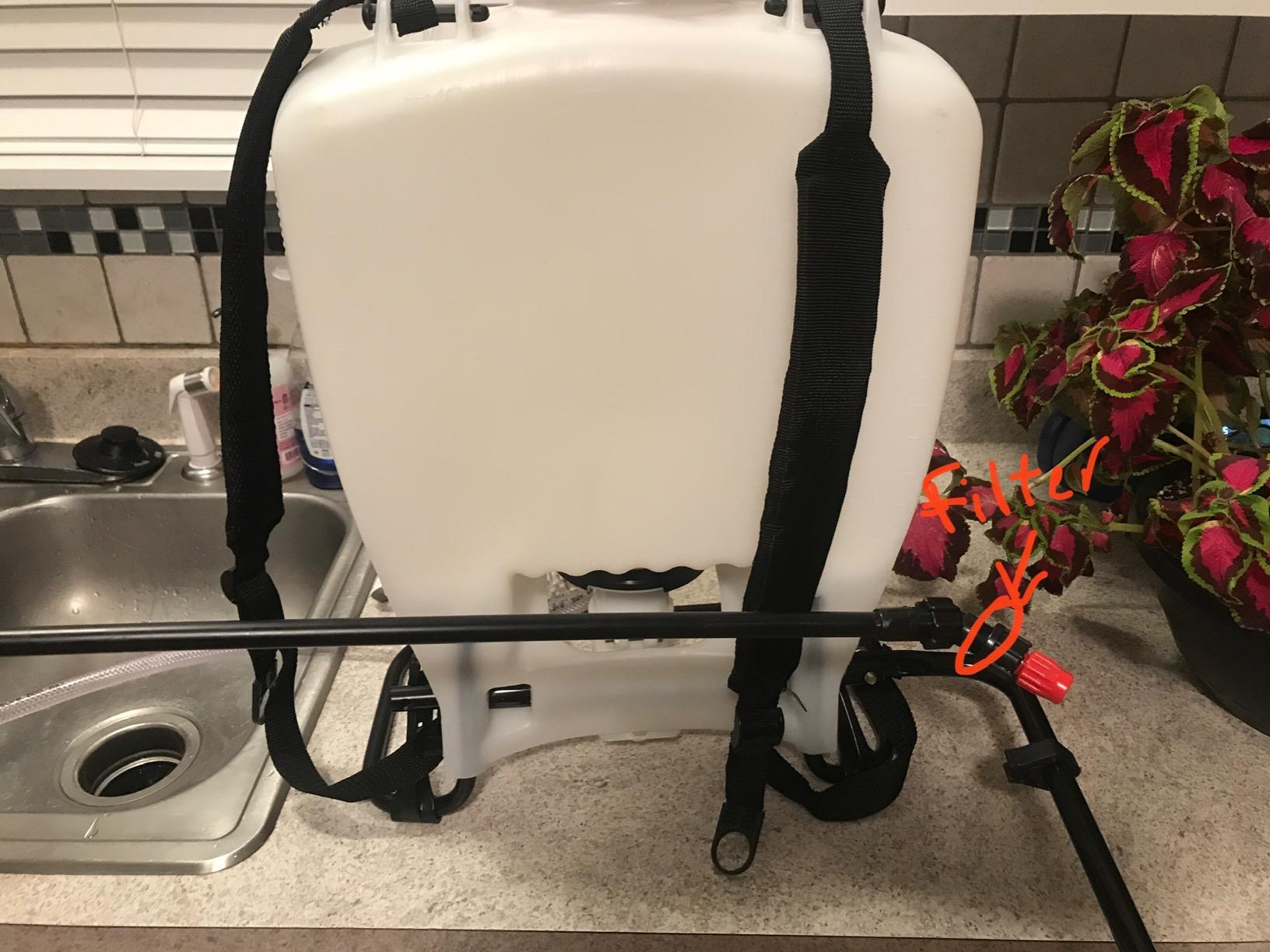
Confirm the screen filter gets cleaned on a schedule. It sits between the tank and the wand, and a wettable powder that settles for a week will clog it and drop your pressure without any obvious leak. Rinsing it after every job is the habit that keeps this sprayer alive.
Also weigh your charging rhythm against your spraying rhythm. A battery sprayer loses all advantage if your sessions are short and scattered. This one suits consecutive days of work more than it suits a weekend sprayer who treats one bed a month.
Where it falls short
If your property is under a quarter acre and you spray twice a season, the battery is overkill and a manual pump will serve you fine. Pros on r/lawncare say this repeatedly: a manual pump is an effectiveness question solved, and battery is a labor upgrade.
The other limitation is downtime. Between heavy days you are waiting on a charger rather than pumping. For a two-day commercial job that means scheduling around it.
2. Oregon 16 Litre Backpack Sprayer – Best for Large Single Fills
Oregon Backpack Garden Pressure Sprayer, 16 Litre
16 litre chamber
Manual pressurization
4 nozzle choices
Pros
- 16-litre chamber cuts down refill stops on bigger jobs
- Ergonomic contoured tank back for long wear
- Includes hose strap and spare seal kit
- Flat fan and adjustable cone nozzles included
Cons
- Manual pumping required between refills
- Slower than battery units on large properties
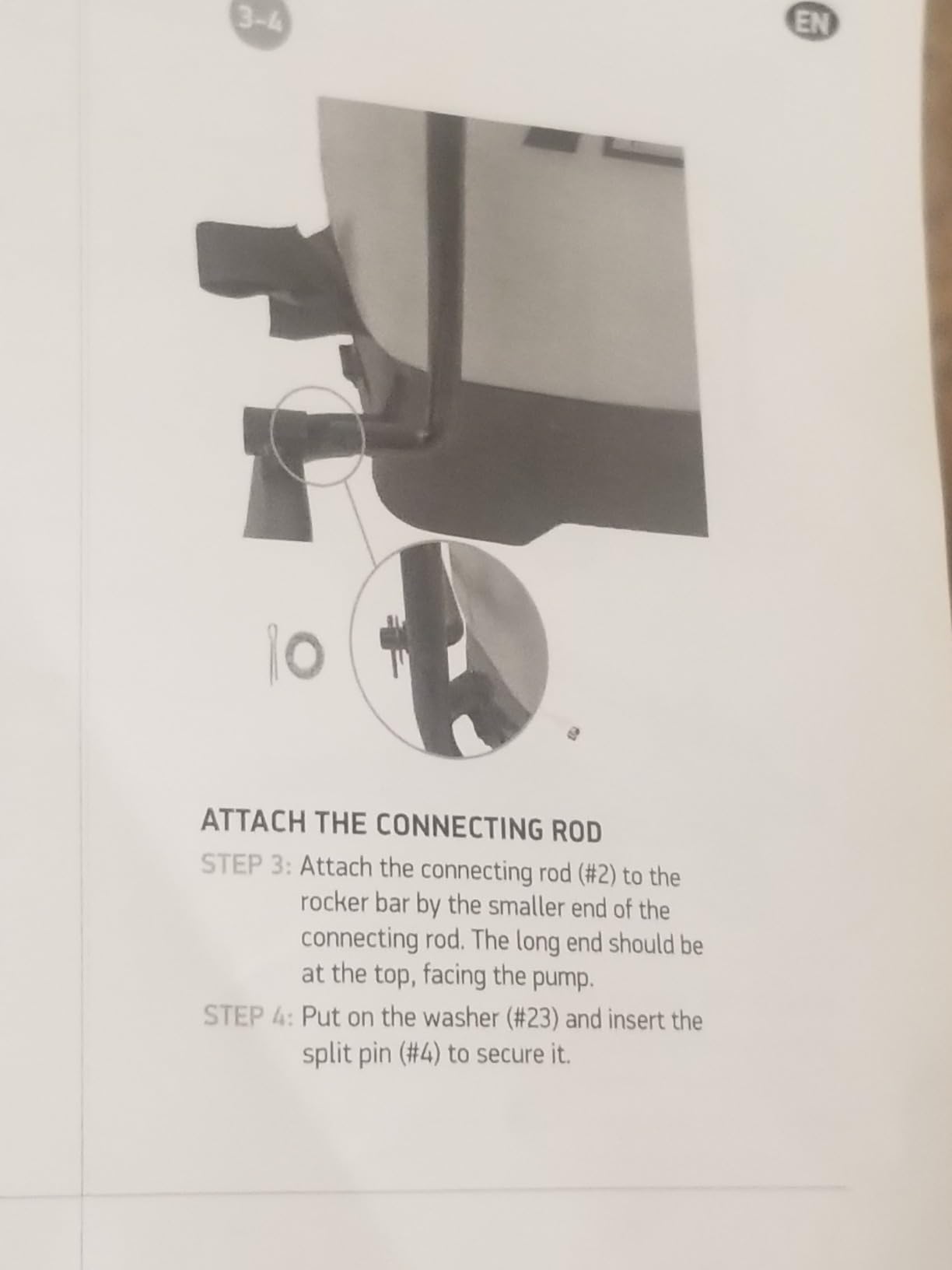
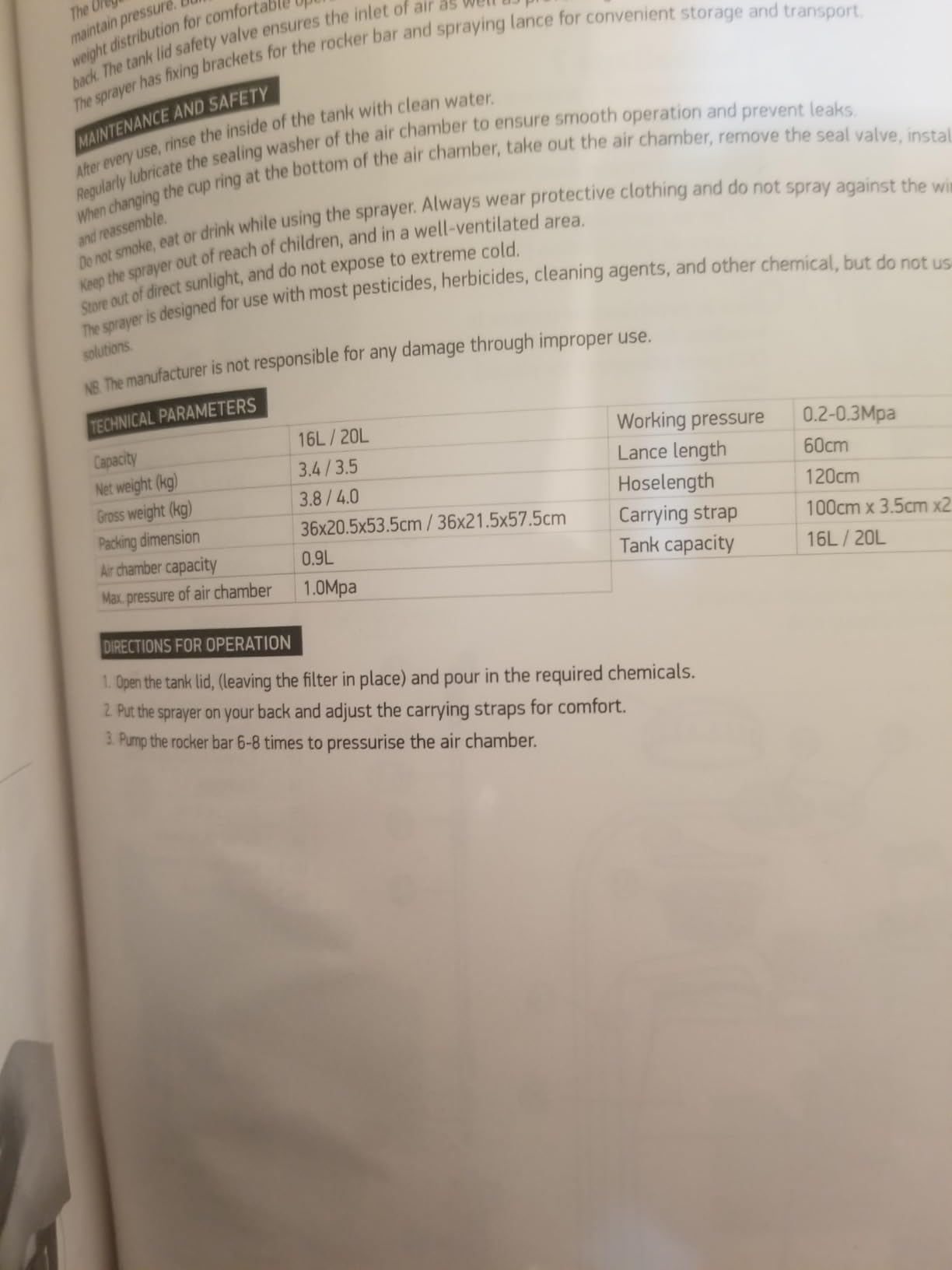
This is a pressurized-chamber design rather than a pump-and-tank design, so you pressurize once and spray until the chamber empties. The 16-litre chamber works out to roughly a 4-gallon class tank, which keeps the load manageable while cutting the number of refill stops.
The included nozzles cover flat fan and adjustable cone, which are the two patterns you want for weed work. Flat fan gives you a predictable band for a broadcast pass, and adjustable cone handles fence lines and edge cleanup where you want a narrower stream.
At 4.1 stars across 3290 reviews, this one sits mid-pack on satisfaction and near the top on volume. Reviewers like the contoured back for extended wear and the fact that a spare seal kit is in the box, which matters when you are maintaining a sprayer over multiple seasons.
It is rated for insecticides, herbicides, and environmental disinfection, so it can rotate between jobs if you clean it properly between chemical classes.
Is the 16-litre chamber worth it for a lawn under a quarter acre?
Probably not. A 4-gallon tank already handles most single-lawn herbicide passes with one or two fills. The larger chamber earns its place on bigger properties where refill stops start adding real time to the job.
If you do buy it, budget for manual pumping. This is a press-and-spray design, so your arm does the work every time you refill.
What to watch after the first season
The seal kit that ships with it is the first thing to buy again when needed. Keep the part on hand rather than searching for it in spring, because a sprayer down for two weeks is a missed application window.
The flexible tube and spray lance together run about 2.0 meters, which is long enough to reach into planting beds without stepping into them. That length helps you avoid walking through treated ground.
3. CHAPIN 61500 4-Gallon Sprayer – Best Value for Most Home Lawns
CHAPIN 61500 4-Gallon Backpack Sprayer for Lawn, Garden & Weed Control
4-gallon poly tank
60 PSI maximum
Two-stage filtration
Pros
- Two-stage filtration catches debris before it reaches the nozzle
- Translucent tank with 4-inch filtered opening
- Padded adjustable straps with lock-on shut-off
- Nitrile seals work with common weed killers and pesticides
Cons
- Manual pumping required to hold pressure
- 60 PSI ceiling is lower than premium and electric models
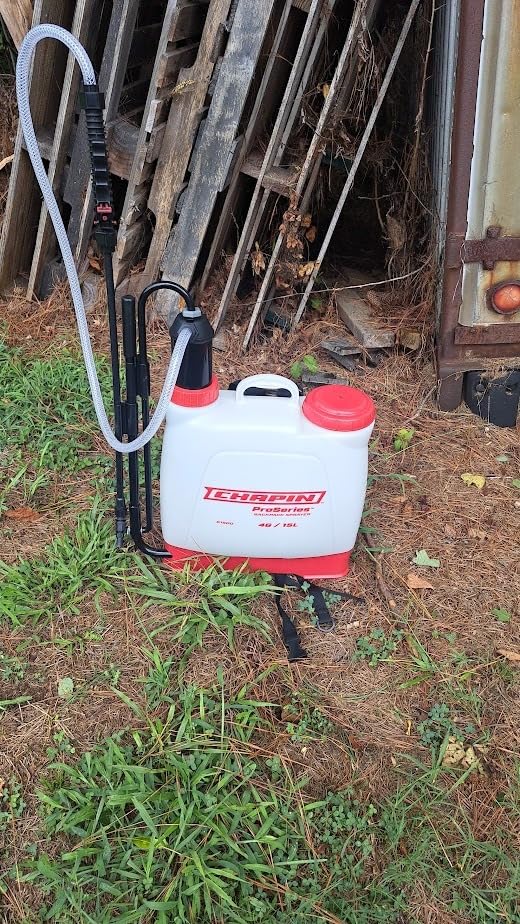
The 61500 is the sprayer I recommend to someone treating a suburban lawn a few times a year. It rated 4.5 stars across 3168 reviews with 72 percent of those at five stars, and it has held a top-30 category rank for a long time for a reason.
Sixty PSI is modest next to the 150 PSI units, and for weed control that is not a real drawback. Labels for selective broadleaf products rarely need high pressure, and lower pressure means less drift and less chance of the spray bouncing off a leaf onto a neighbour’s bed.
The two-stage filtration is the feature I would not trade. A shut-off filter plus a tank cap basket filter catches debris before it reaches the adjustable poly cone nozzle, which is what keeps a wettable powder mix from clogging mid-pass.
The translucent tank and 4-inch filtered opening make filling faster and cleaner, and the nitrile seals are compatible with common fertilizers, pesticides, and weed killers. A lock-on cushion grip shut-off valve means you stop squeezing after the trigger is on.
Is 60 PSI enough for a post-emergent herbicide pass?
Yes for selective broadleaf products on turf, which is what most people are buying a 4-gallon manual sprayer for. Pressure matters most when you are pushing a dense curtain into thick brush or treating hardscape cracks where you need penetration rather than coverage.
If you plan to spray dense weed growth in gravel or along a fence line, look at the 90 PSI and 150 PSI models instead.
How long does the 61500 take to refill?
The 4-inch filtered opening with a funnel-style top is faster than a narrow neck, and you can top up partway rather than dumping four gallons at once. Reviewers repeatedly call out both the tank visibility and the refill speed as reasons the sprayer stays in rotation.
Budget for the manual pumping itself. Twenty minutes of spraying on a quarter acre means a fair amount of handle strokes.
4. Roundup 190314 Backpack Sprayer – Best for Fast Large-Area Coverage
Roundup 190314 Backpack Sprayer for Fertilizers, Herbicides, Weed Killers & Insecticides, 4 Gallon
150 PSI maximum
Viton seals throughout
4-gallon polyethylene tank
Pros
- 150 PSI covers large properties far faster than hand pump sprayers
- Viton seals hold pressure and resist chemical breakdown
- Angled wand head allows spraying while standing upright
- In-line filter plus secondary filters reduce clogs
- Padded straps with waist belt and lumbar support
Cons
- Some owners report tank seepage when filled near capacity
- Remaining liquid level is hard to check while wearing the pack
- Occasional reports of waist strap detaching over time
The 190314 does one thing that most of this list does not: it covers ground quickly. At 150 PSI with a heavy-duty poly wand, a full 4-gallon tank goes across a large lawn in a fraction of the time a 60 PSI unit would need.
Viton seals sit in the pump and at the shut-off, and that is the material r/lawncare users check first when judging whether a sprayer will survive a year of chemical duty. Nitrile gets soft. Viton does not.
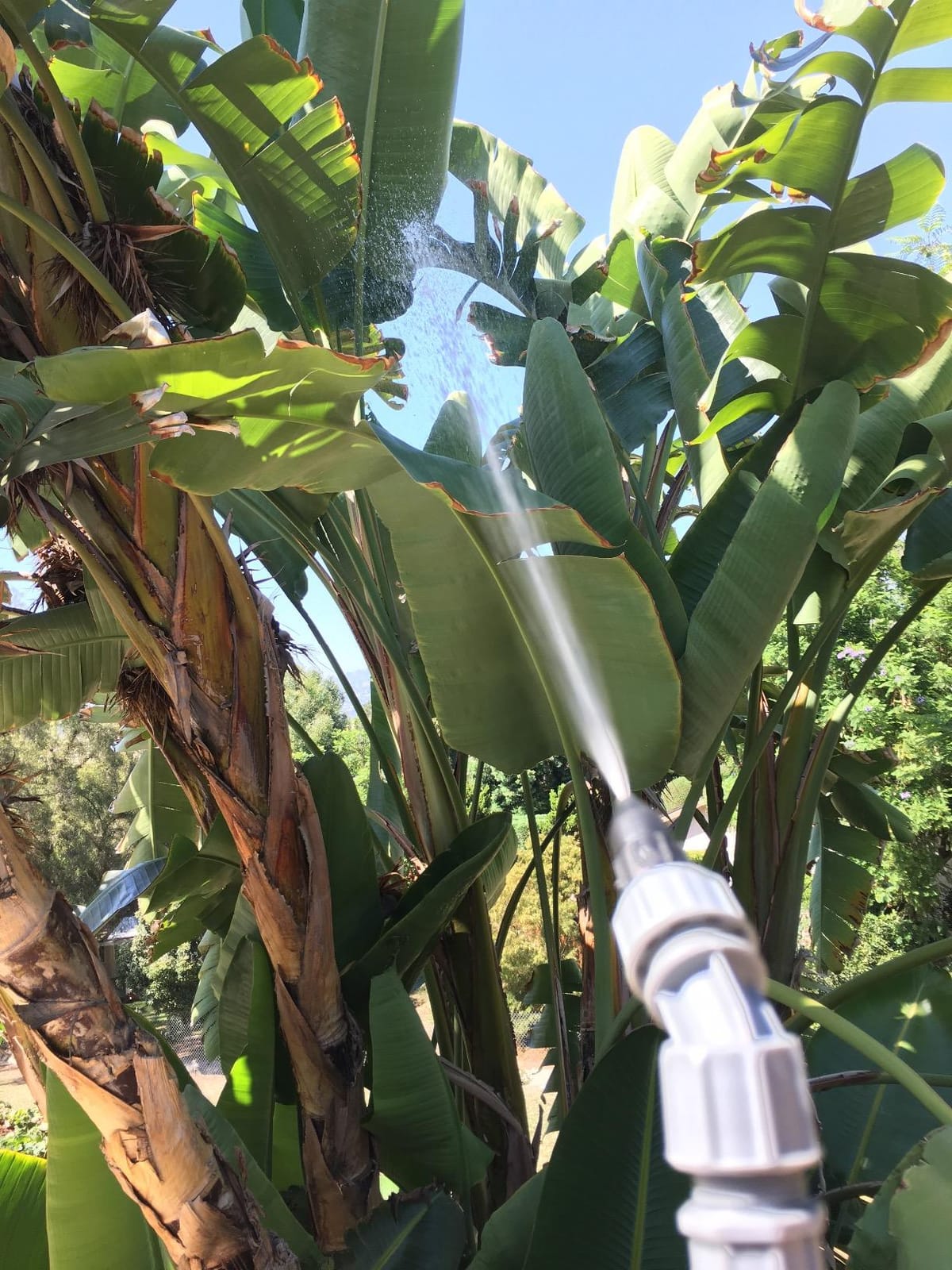
The angled wand head is a quiet upgrade. You can spray under a shrub or along a foundation while standing upright instead of bending over, which reduces back strain on a long job.
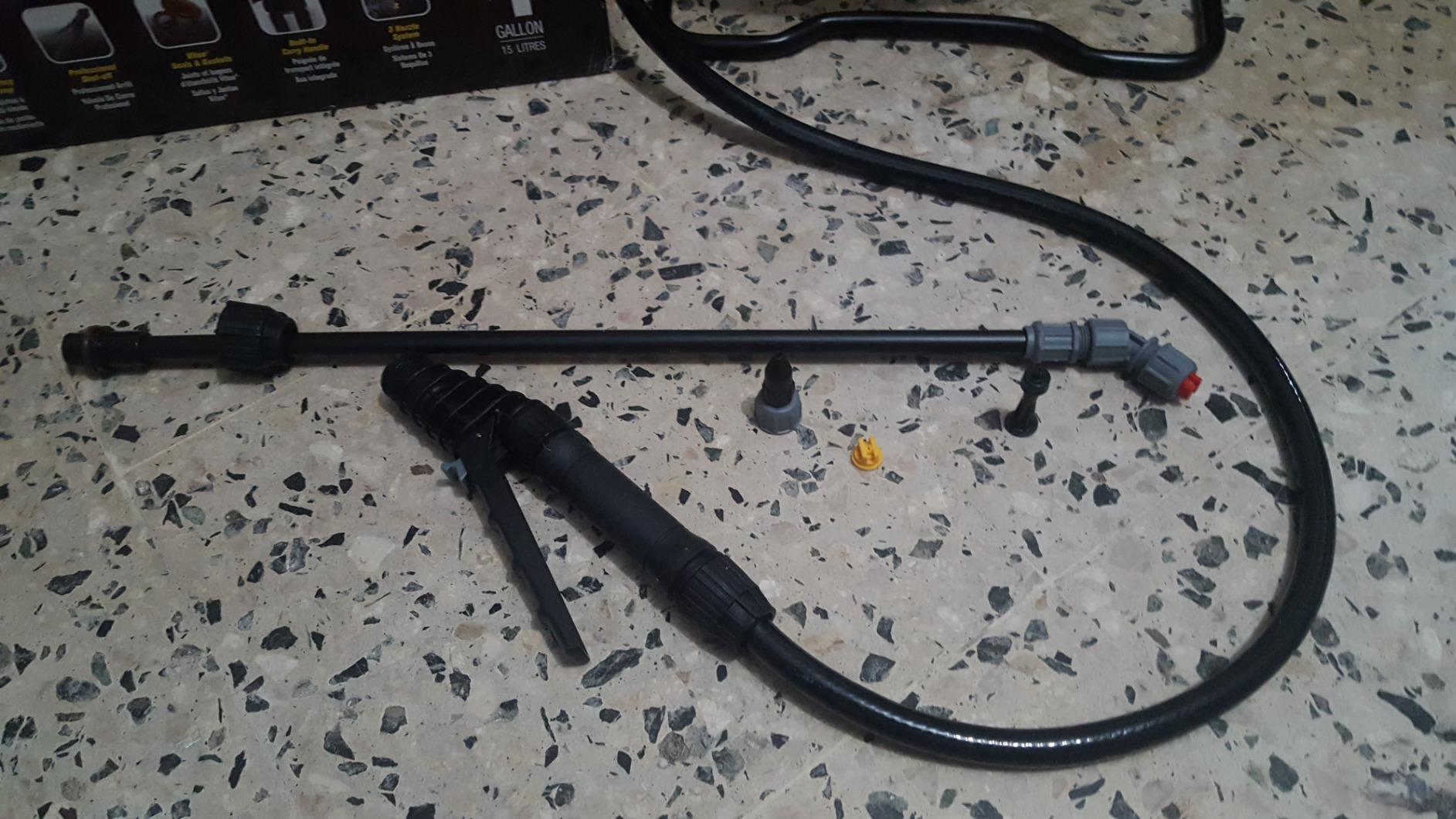
Three interchangeable nozzles ship in the box: a poly adjustable cone, a high-volume fan, and a low-volume fan. The low-volume fan is the one you want for a selective treatment because it puts more product on the target and less in the air.
What should you check for on a used or older 190314?
Tank seepage near capacity is the most reported complaint, so inspect the seams and the hose-to-tank connection before a big application. A small drip that is invisible on an empty tank becomes obvious at four gallons.
Check the waist belt hardware too. Owners report the strap detaching after extended use, and the lumbar support is a big comfort difference when it is attached.
Is 150 PSI overkill for weed control?
It is a real advantage for broadcast work on open ground and for treating thick, established growth. It is a liability near a boundary, where high pressure and fine droplets mean drift. Dial the wand to a coarser setting near sensitive plantings and read the drift buffer on your label.
Reviewers describe this sprayer as a major time saver compared with hand pump sprayers, which is the whole argument for it.
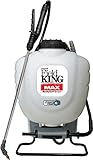
5. Field King Max 190348 – Most Versatile for Professional Applicators
Field King Max 190348 Backpack Sprayer for Professionals Applying Herbicides
150 PSI maximum
21 inch stainless steel wand
Internal no-leak pump
Pros
- Internal no-leak pump stops chemical dripping down the back
- Stainless wand and Viton seals handle harsh chemical duty
- Tool-free seal changes in minutes in the field
- Lockable brass shut-off with in-line filter
Cons
- Manual pumping demands real effort on large acreage
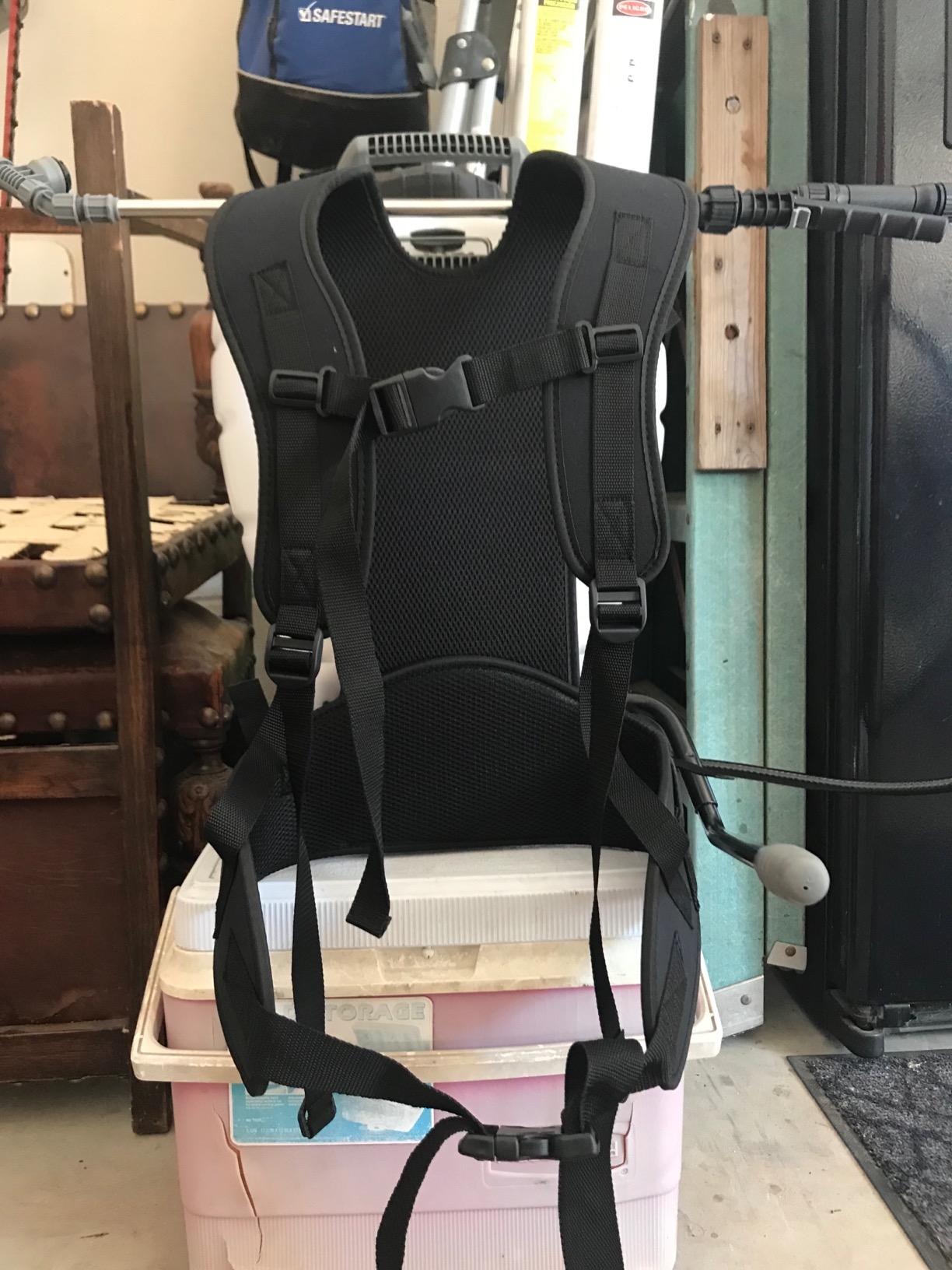
- Heaviest empty weight in this group at 12.8 pounds
The Max 190348 is built by Fountainhead and aimed squarely at professional herbicide work. It rated 4.5 stars across 2024 reviews with 74 percent at five stars, and the design decisions all point at durability rather than price.
The internal no-leak pump design keeps solution from dripping down the user’s back when you squeeze the handle. On a hot afternoon in a 4-gallon pack, that difference between a dry back and a wet one is not cosmetic.
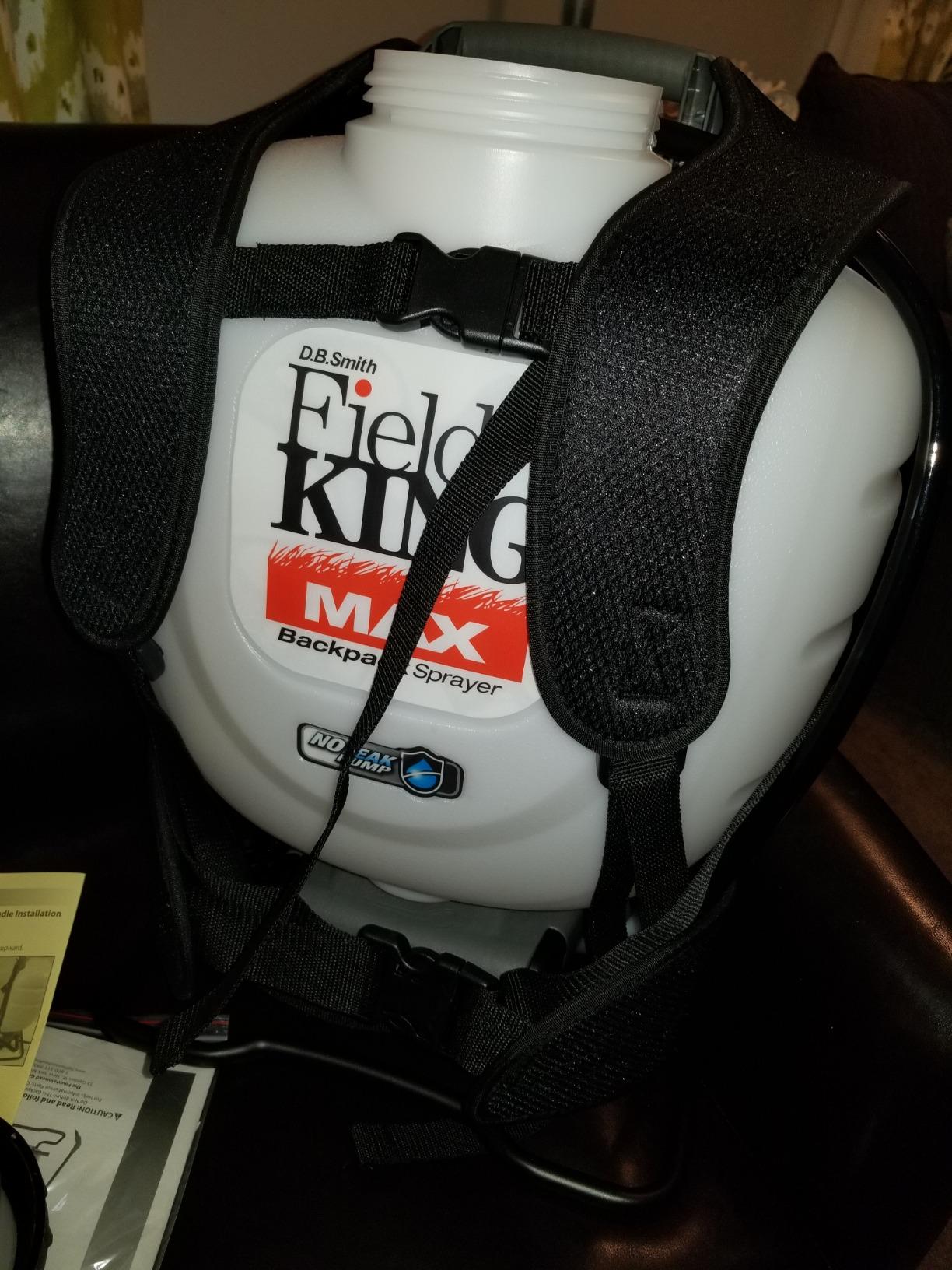
Tool-free seal changes are the feature that matters most over a long ownership life. You can swap a failed seal in minutes without a wrench and without ordering a whole pump assembly. Forum users weight rebuildability heavily, and this is the clearest version of that in the group.
The wand is 21 inches of stainless steel with Viton seals, the shut-off is lockable brass with an in-line filter, and six nozzles are included with TeeJet compatibility for anyone who wants a specific spray tip.
Is 12.8 pounds empty too heavy for occasional use?
Loaded, a 4-gallon tank puts this near 45 pounds on your back. If you spray a few times a year, that is a lot of weight for a short job and a lighter manual unit will serve you better.
If you spray weekly, the stainless wand, brass hardware, and no-leak pump earn their weight because you will still be using this sprayer years from now.
Why do professionals pick a piston-style build?
Pros on r/PestControlIndustry recommend SOLO and Field King piston designs over diaphragm variants specifically because they last. A piston pump puts the wear on a seal you can replace, while a diaphragm unit is often sealed as a single throwaway assembly.
Six included nozzles plus TeeJet compatibility means you can match a spray tip to a specific weed job rather than settling for whatever came in the box.
6. REALWORK 4-Gallon Backpack Sprayer – Budget Pick for Light Duty
REALWORK 4-Gallon Backpack Sprayer with Padded Shoulder Strap for Pests & Weeds, Watering Garden, and Spraying Plants, in Translucent White
4-gallon HDPE tank
Funnel top
Locking trigger
Pros
- Pump handle mounts for either dominant hand
- Locking hold button allows continuous spray
- Funnel top and semi-transparent tank for easy filling
- Ships with spare seals and rings
Cons
- Low pump pressure slows larger volumes
- Awkward to shoulder when full as liquid sloshes
- Plastic collars and lid can crack if overtightened
The REALWORK is the cheapest route into a full 4-gallon backpack, and for spot treatment on a small yard it does the job. It rated 4.0 stars across 1842 reviews, the widest spread in this group, with 64 percent at five stars and 13 percent at one star.
That spread tells the story. Owners like the price, the interchangeable pump handle, and the comfort. Complaints center on pressure, handling a full tank, and plastic fitting durability.
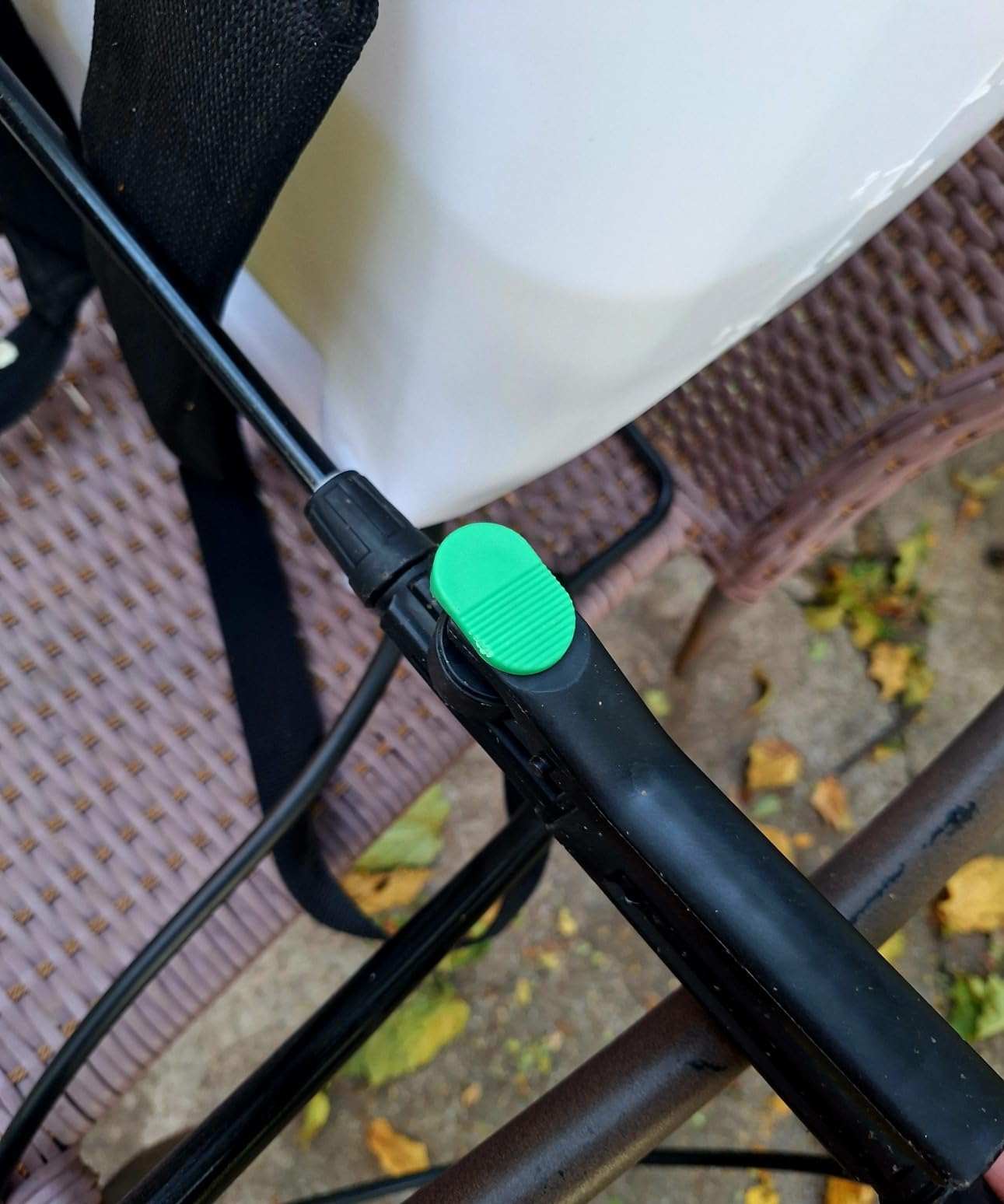
The locking green hold button gives you continuous spray without a bent trigger finger, which most budget units skip. The funnel top and semi-transparent HDPE tank make filling simple and let you see the fluid level without opening the lid.
Spare seals and rings ship in the box, so a first-season leak is a five-minute fix rather than a reason to buy again.
Is this sprayer good enough for a broadcast herbicide job?
For small areas and spot treatment, yes. The low pump pressure makes it slow when you need to move a lot of liquid, and that is where it falls down on anything bigger than a few thousand square feet.
If your plan is a spring pre-emergent pass across the whole lawn, spend more. The time you lose to low pressure over a full property is larger than the difference in purchase price.
What tends to break first?
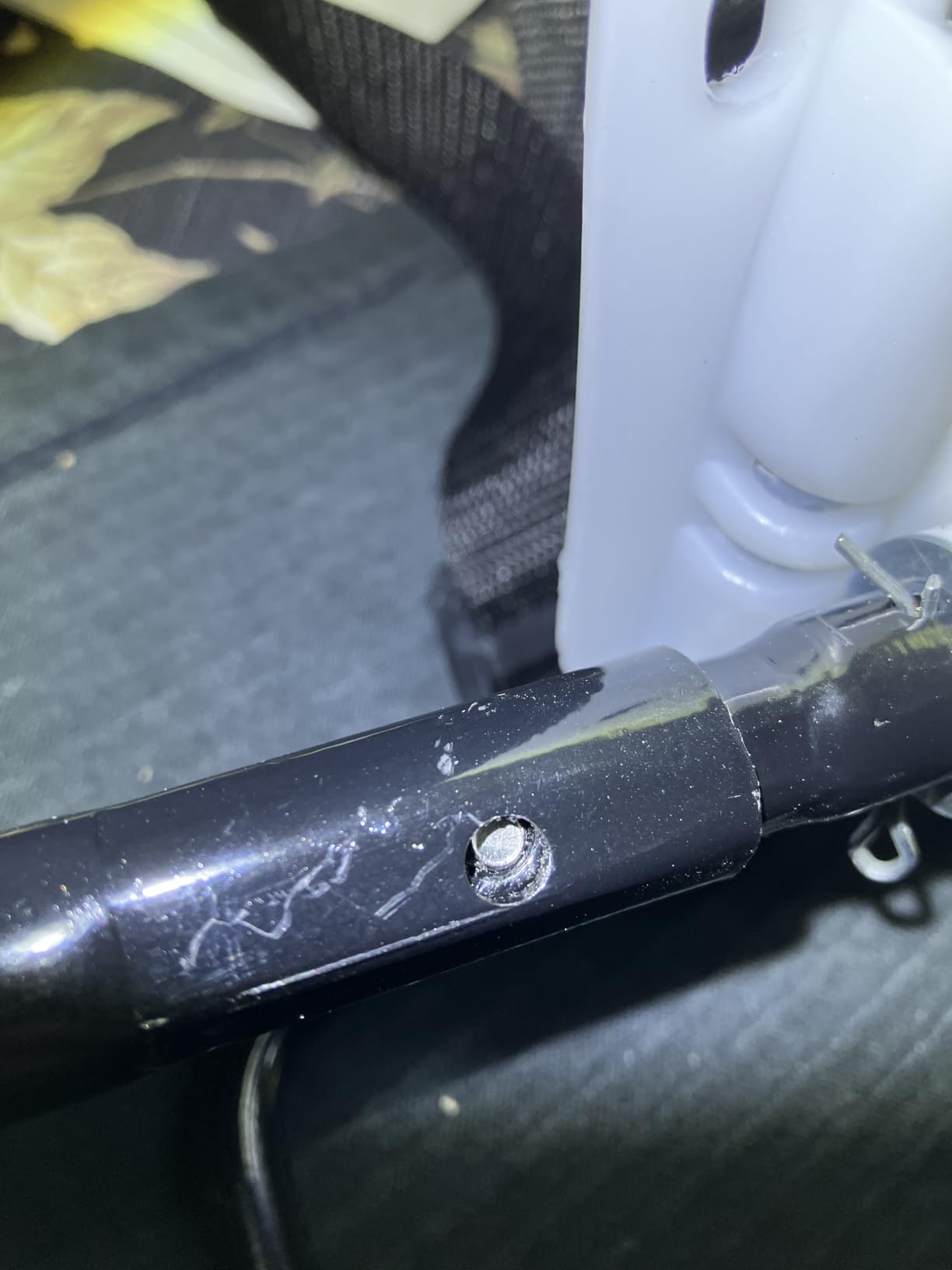
The plastic threaded collars and the lid. Owners report cracking on the fittings and difficulty opening a lid that was overtightened. Snug them firmly, not hard.
Some buyers also received a pump lever that would not fit the tank shaft. Check that fit before you fill the tank with solution.
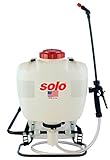
7. SOLO 425 Piston Backpack Sprayer – Pro Pick Under 100 PSI
SOLO 425 4-Gallon Piston Backpack Sprayer, Wide Pressure Range up to 90 psi
90 PSI piston pump
20 inch wand
Four commercial nozzles
Pros
- German-engineered piston pump delivers consistent pressure
- Interchangeable pump handle works for either dominant hand
- Four commercial-grade nozzles plus TeeJet compatibility
- Locking shut-off valve reduces hand fatigue
- Extra-large tank opening simplifies filling and cleaning
Cons
- Manual pumping requires effort on long jobs
- Only a 1-year limited warranty
The SOLO 425 is the sprayer professional applicators name most often in forum threads, and the piston pump is the reason. Piston designs put wear on a replaceable seal rather than on a sealed diaphragm, which is why they outlast cheaper units.
Ninety PSI sits in a useful middle. It is well above what a selective broadleaf pass needs and well below the drift potential of a 150 PSI unit, so it works for lawn work and for spot treatment on hardscape.
Four commercial-grade nozzles come in the box: plastic adjustable, fan spray, hollow cone, and jet stream. That set covers broadcast selective treatment, targeted spot work, and fence-line cleanup without buying anything else, and the unit is TeeJet compatible.
The 20-inch unbreakable wand, 48-inch nylon-reinforced high-pressure hose, and lockable commercial shut-off valve are built for daily use. The pump handle swaps for either dominant hand.
How many square feet does a 4-gallon tank cover?
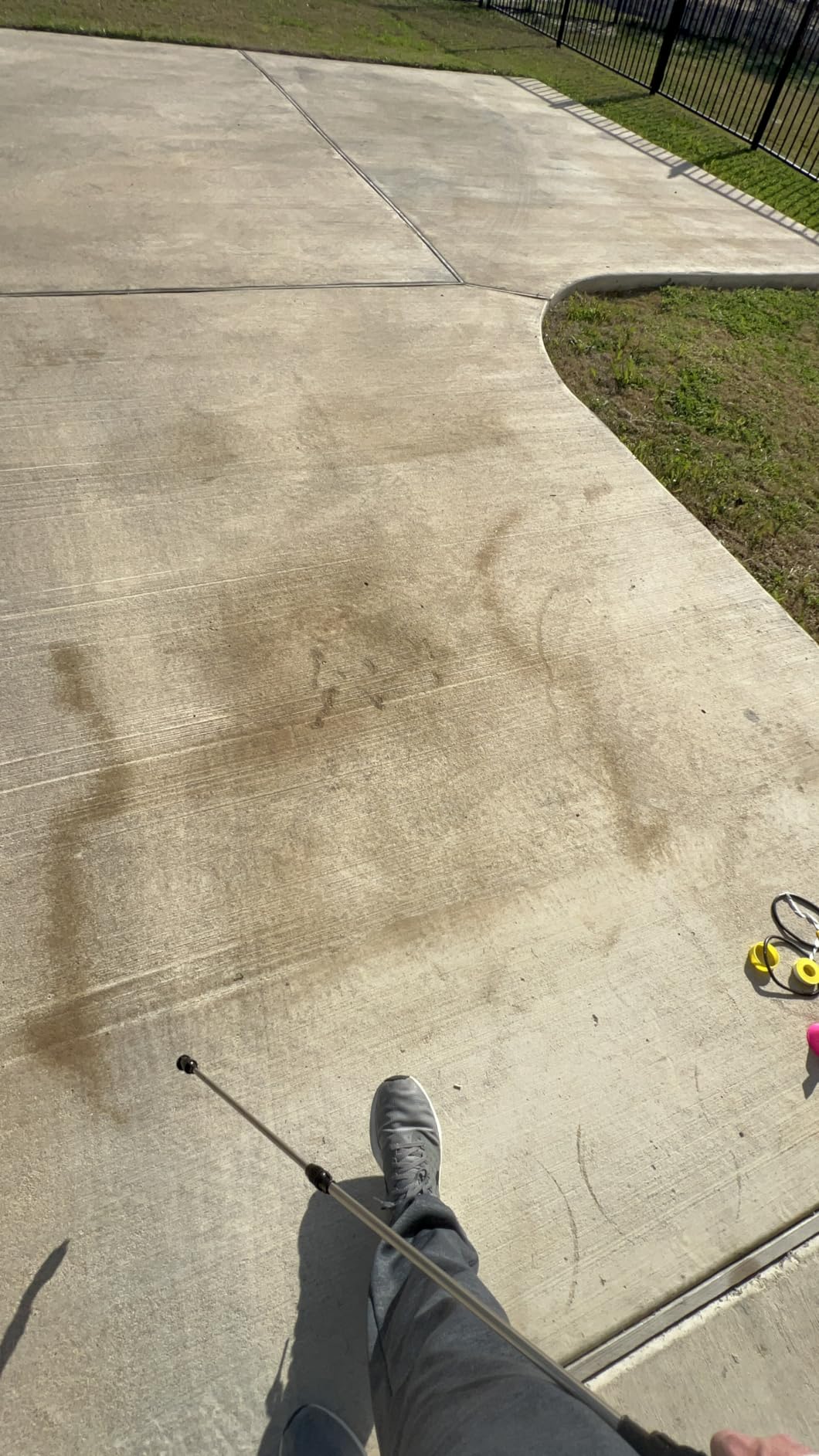
At the common carrier rate of roughly one gallon per 1000 square feet, a full tank covers about 4000 square feet. That is one fill for a small lawn and two or three for a typical half acre.
Knowing that number in advance saves you from the most common beginner mistake: underestimating refills and running out mid-lawn.
Is a piston pump a problem for wettable powder herbicides?
Powders are abrasive and they accelerate seal wear on a piston pump faster than a diaphragm unit. It is not a reason to avoid the SOLO 425, but it is a reason to rinse the tank thoroughly after every application and to keep replacement seals on hand.
The 1-year limited warranty is short by professional standards. Treat it as a maintenance signal rather than a dealbreaker.
8. NPGLOBAL Battery Sprayer – Best Pressure Control for the Money
Battery Powered Backpack Sprayer – 4.2 Gallon, 8 Nozzles, 100PSI Cutoff, Long Battery Life, Wide Mouth, High-Pressure Spray Hose, Trigger Lock, Pressure Knob Controller
21.8 to 100 PSI adjustable
4.2-gallon tank
8 nozzles
Pros
- Battery power gives even pressure across long jobs
- Some owners complete two or three full tanks per charge
- Eight nozzles plus adjustable pressure dial
- Stainless telescopic lance reaches distant targets
Cons
- Shoulder straps are unpadded and lower connectors can slip
- Trigger pump has failed for some owners
- Some leaking at fittings
- Battery indicator can give false readings
This is the battery sprayer that lands closest to the HD4000 on pressure range per dollar, with a dial that goes from 21.8 PSI up to 100 PSI. That low end matters more than it sounds for herbicide work, because it lets you run a dense, slow curtain on a selective treatment.
At 4.4 stars across 850 reviews with 73 percent at five stars, buyers routinely compare it favourably to professional units costing several times more. Flow rate is listed at 4.0 litres per minute, which keeps a pass moving without a pump you have to stroke.
Eight nozzles, a stainless telescopic lance, a wide mouth lid with an integrated strainer, and a 240ml measuring bottle are all in the box. That measuring bottle is a small thing that makes mixing a partial tank far more accurate than eyeballing.
Customer service has replaced sprayers and shipped parts at no cost for some buyers, which softens the hardware complaints considerably.
Should you buy a battery sprayer with no brand battery ecosystem?
If you already own a Makita or DEWALT platform, buy the sprayer that uses that battery. If you do not, compare the bundled battery and charger against the runtime you actually need before deciding.
This one ships its own battery and does not lock you into a tool platform, which makes it flexible but means no shared packs across your equipment.
What is the first thing to inspect after a few jobs?
The lower strap connectors. Owners report them slipping out of the tank body, and an unpadded strap that shifts mid-pass is uncomfortable and can spill. Check them at the start of each session.
The battery indicator can also give false readings and shut the unit down mid-job. Keep a partially charged second battery in your truck rather than planning around a full charge every time.
9. SideKing 4 Gallon Battery Sprayer – Best for Makita Battery Owners
SideKing 4 Gallon Battery Powered Backpack Sprayer, 100 PSI Adjustable Electric Weed Sprayer for Lawn & Garden, Compatible with Makita 18V Battery, 5 Nozzles, Battery & Charger Included
Makita 18V battery compatible
100 PSI adjustable
2 hours spray time
Pros
- Runs on widely owned Makita 18V packs
- Digital voltage display with auto shut-off below 14V
- Stainless telescopic spray gun with pressure knob
- Double-layer padded straps and translucent tank
Cons
- Requires owning or buying a Makita 18V platform
- Battery needs about three hours to recharge between sessions
SideKing makes the simplest argument in the whole group: if you already own Makita 18V packs, you already own the battery this sprayer needs. That single fact removes the largest cost in any electric sprayer setup.
Pressure goes up to 100 PSI with an adjustable knob on the stainless telescopic spray gun, and the reported spray range is over 20 feet. That is enough reach for a fence line or a shrub line without a ladder.
Owners report roughly three to four times the throughput of a manual sprayer, which tracks with the 100 PSI output and the electric pump holding pressure instead of decaying between strokes. The digital voltage display and auto shut-off below 14V protect the pack from being run flat.
Double-layer padded straps and a semi-transparent tank with gallon markings round out a comfort package that is unusual at this level.
One note on the listing itself: there are no matching customer images for this model, so treat the owner feedback here as thinner than the models with hundreds of photo reviews. The included kit is five nozzles, telescopic wand, hose, a 2.6Ah battery, backpack strap, 4.2-gallon tank, and charger, with a one-year warranty.
Is Makita compatibility worth buying a less-known brand for?
If you own the packs, yes. That is the deciding factor for most buyers, and it turns a sprayer purchase into a battery you already have three of.
If you do not own Makita 18V tools, this sprayer makes far more sense as a general purchase elsewhere on this list.
How long does one charge last?
The 2.6Ah lithium battery gives up to about two hours of continuous spraying and takes roughly three hours to recharge. Two packs means a full day of spraying with no gap if you keep one charging while the other runs.
The waterproof design and one-year warranty are both reasonable for a sprayer that will sit in a truck between jobs.
10. VAXMAY 4-Gallon Battery Sprayer – Best for Long Spray Days
Battery Powered Backpack Sprayer 4 Gallon, VAXMAY 100 PSI Electric Garden Sprayer Works with Makita 18V Battery, Weed Yard Sprayer with Telescopic Wand, 5 Nozzles, 2.6 Ah Battery & Charger Included
Makita 18V compatible
100 PSI from 3800 rpm motor
16 tanks claimed per charge
Pros
- Claimed 16 tank loads of solution per charge
- Runs on Makita 18V packs with voltage monitoring
- 100 PSI motor with adjustable PSI knob
- Waist support and thickened cushioning reduce fatigue
- Five nozzles plus battery and charger included
Cons
- Battery platform dependency adds cost if you lack Makita 18V packs
- 21V pack and charger are proprietary despite compatibility claims
The VAXMAY claims 16 tank loads of solution per single charge, and that is the number to test against your own property size. At 4 gallons per load that is a full acre broadcast without a recharge break.
The 3800 rpm motor delivers up to 100 PSI with an adjustable knob, so you can move from misting to a directed stream on the same wand. It also runs on Makita 18V packs with a digital voltage display and discharge protection below 14V.
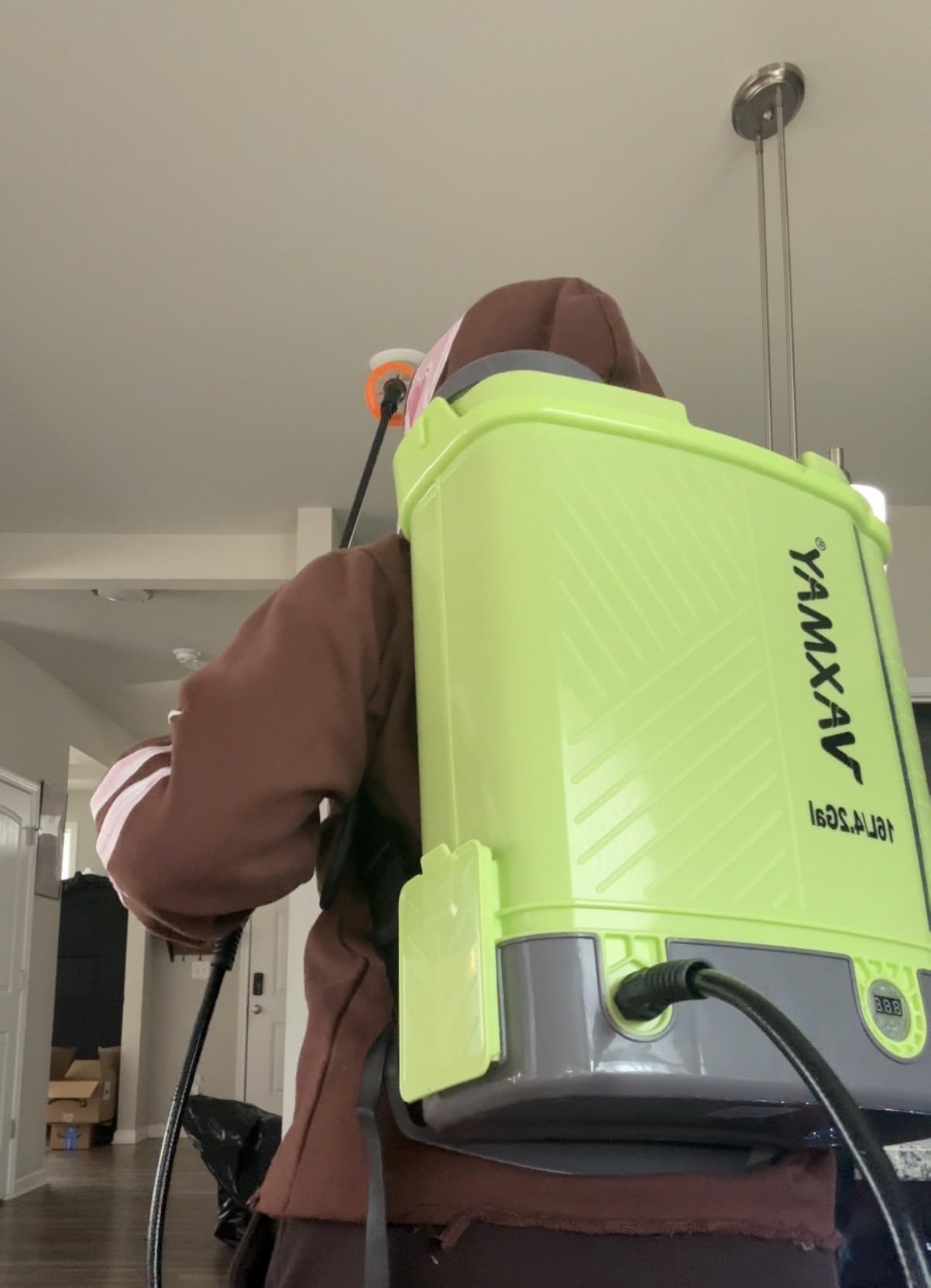
At 4.3 stars across 1331 reviews with 70 percent at five stars, and a top-30 category rank, this is a well-regarded option in the Makita-compatible electric group. Owners value the single-charge runtime and the adjustable pressure.
Comfort gets attention here too. A waist support and thickened cushioning spread the load, and the translucent tank shows the remaining level with a scale on the side.
Does a 16-tank runtime change how you should spray?
Yes. Long battery runtime tempts you to spray larger areas in one sitting, which increases the chance of overlap errors. Set a walking pace and stick to it, and treat the battery as permission to finish the property, not to hurry it.
Long runs also mean a fuller tank on your back for longer. Test the harness fit with a full load before a long day.
Is the Makita compatibility claim accurate?
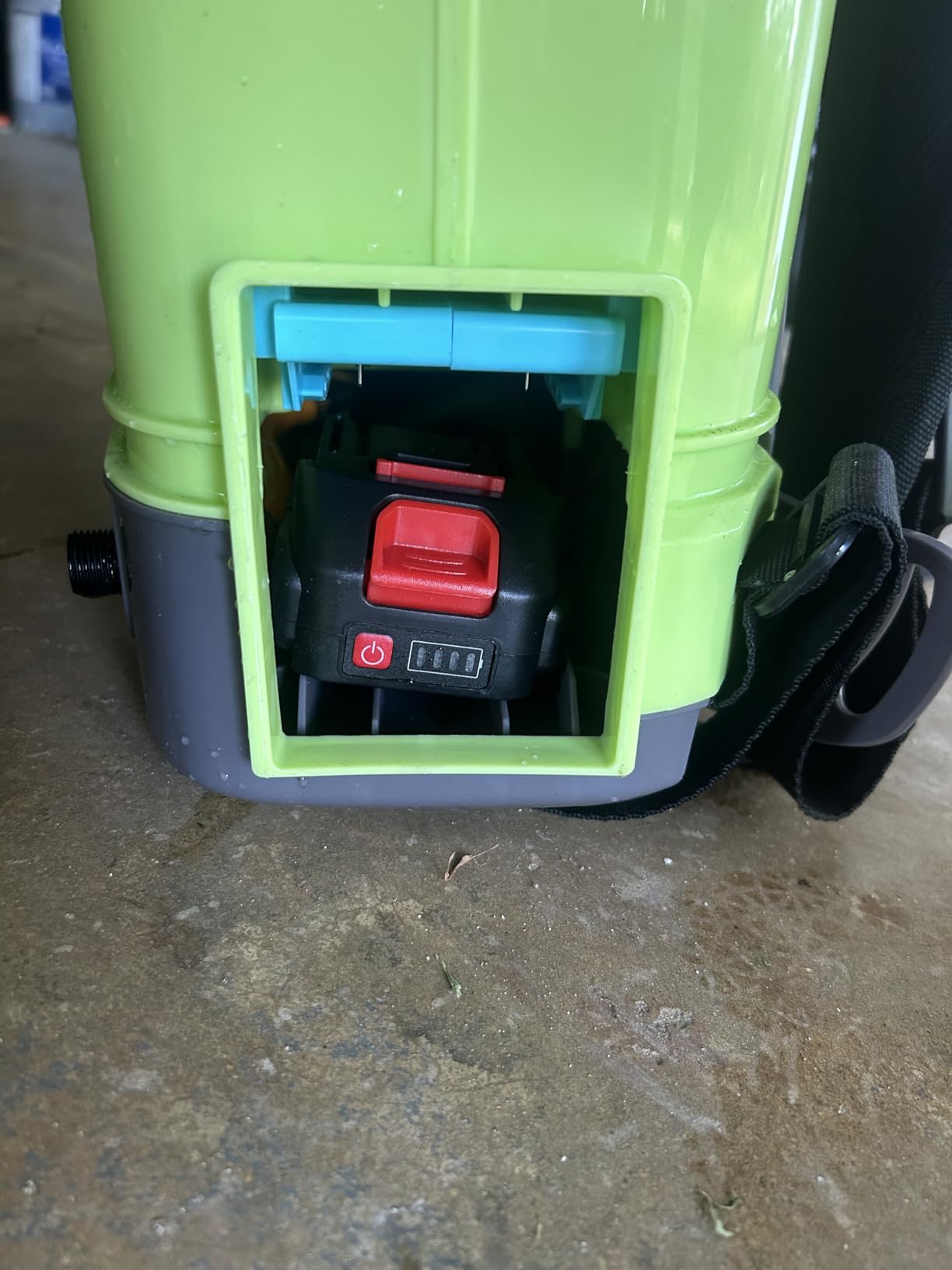
It runs on Makita 18V batteries, but the included 2.6Ah pack and 110-240V charger are proprietary rather than standard Makita packs. If you already own Makita batteries, that is a win. If you would be buying the proprietary pack anyway, the platform argument is weaker.
The telescopic wand extends to 39.3 inches, and five nozzles plus a one-year warranty come in the box.
11. Husqvarna 4-Gallon 150 PSI Backpack Sprayer – Simple High-Pressure Pick
Husqvarna 4 Gallon Backpack Sprayer, Lawn Sprayer, Garden Sprayer, 150 PSI
4-gallon tank
150 PSI maximum
Manual pump,12 pounds
Pros
- Backed by a recognized professional equipment brand
- 150 PSI supports faster coverage on larger lawns
- Compact 4-gallon capacity balances coverage and carried weight
Cons
- Fewer published specs with no nozzle or wand detail
- Manual pumping required
The Husqvarna pairs a 4-gallon tank with 150 PSI in a manual body, which puts it with the Roundup 190314 and the Field King Max for open-ground speed without the stainless wand hardware.
It rated 4.5 stars across 452 reviews with 77 percent at five stars, among the highest satisfaction scores in this group, though on the smallest review base. Buyers clearly like owning a brand name associated with professional outdoor equipment.
Twelve pounds empty is mid-range for this class. Loaded, a 4-gallon fill pushes the carried weight into the high thirties, which is manageable for a full property and tiring for a single small bed.
Unlike most of the group, the listing publishes very little detail. There is no wand length, no nozzle count, and no seal material listed, so ask the seller before you buy if nozzle pattern matters to your application.
Is the Husqvarna a good first backpack sprayer?
For someone who wants high pressure and a recognized brand without researching seals, yes. The main gap is information: with no published nozzle or wand specification, you are buying on brand trust rather than on a documented feature set.
If you already own a full-featured sprayer, the thin listing detail is worth weighing against the Field King Max, which publishes everything.
When is 150 PSI too much for weed control?
Near a property boundary, next to a planted bed, or anywhere with a sensitive crop buffer on the label. Coarse droplets at lower pressure stay where you put them, and most herbicide labels ask for a specific droplet size for a reason.
On open turf with no adjacent plantings, the higher pressure pays off in speed.
12. DEWALT 20V Lithium-Ion Backpack Sprayer – Best Warranty Cover
DEWALT Lithium-Ion Powered Battery Backpack Sprayer DXSP190681
DEWALT 20V platform
4-gallon tank
3-year limited warranty
Pros
- Shares battery packs with existing DEWALT 20V tools
- Steady pressure with no hand pumping
- Triple filtration reduced clogging across repeated 20-gallon jobs
- Nylon-reinforced hose resists kinking
- Three-year limited warranty
Cons
- Heaviest at 17.8 pounds empty and roughly 40 pounds loaded
- May need priming on first use
- Tank can arrive with residual water from factory testing
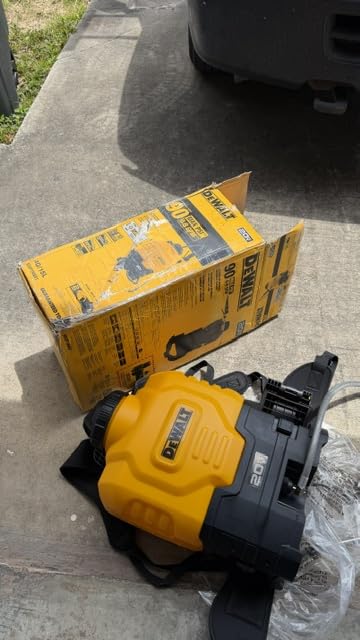
The DEWALT is the one to buy if you want warranty cover beyond a single year. It carries a three-year limited warranty, the longest in this group, and it shares battery packs with the DEWALT 20V tool platform.
Variflo technology adjusts the spray flow, and a triple-filtration system cuts clogging. Reviewers report the filtration held up across repeated 20-gallon jobs without a nozzle blockage, which matters when you are mixing wettable powder.
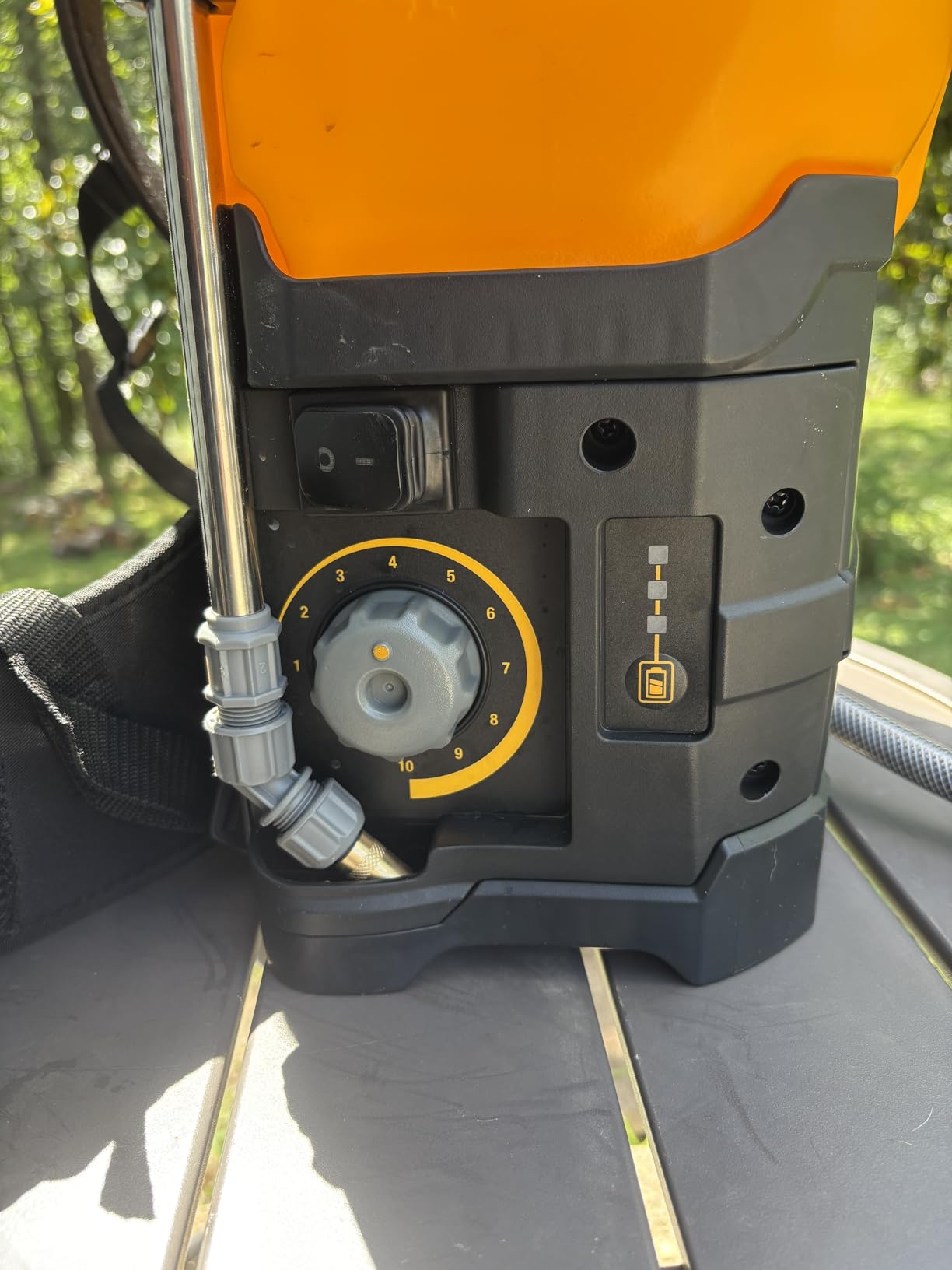
Users report a single 8Ah battery covering 21 gallons of herbicide. The 50-inch nylon-reinforced hose is built to resist kinking, which is a real problem when you are spraying along a ladder or around a roof edge.
Waist straps help distribute the full 4-gallon load, which is the right approach on a tank this heavy.
Is the DEWALT too heavy to carry all day?
At 17.8 pounds empty and roughly 40 pounds loaded, it is the heaviest sprayer here. That is fine if your sessions are short. For a full day of broadcast work, the PetraTools HD4000 carries a lighter frame and gives you similar pressure control.
Check it fully loaded before you commit. Weight only becomes obvious after a few passes.
What should you do before the first use?
Run water through the vent to prime it. Some owners report needing that first prime cycle before the pump begins working, and mistaking it for a fault.
Also expect a small amount of residual water in the tank from factory testing. Drain it, run the spray out, and then mix your first real load.
How to Choose a Backpack Sprayer for Weed Control
Most sprayer roundups rank these for general lawn and garden use. Weed control is a narrower job, and the hardware decisions that matter are pump type, pressure range, nozzle pattern, and seal material. Here is how to think through each one.
Manual, battery, or gas: which pump type fits herbicide work
A manual pump gives you complete control and no battery to manage, and for most homeowners spraying a few times a year it is the sensible answer. Forum consensus is consistent on this: a manual pump is an effectiveness upgrade already solved, and battery buys comfort, not better kill rates.
A battery pump makes sense when the labour is the bottleneck, which is usually acreage rather than application count. It holds pressure steady instead of letting it sag between strokes, and that steady pressure keeps your droplet size consistent across a pass.
Gas engines add weight and noise without improving weed control on residential-sized properties. We would skip them unless you are treating commercial acreage every day.
Piston versus diaphragm pumps
Piston pumps put wear on a seal you can replace, which is why professionals on r/PestControlIndustry name piston designs such as the SOLO 425 and Field King Max when durability is the priority. If a part wears out, you replace a seal instead of the pump.
Diaphragm pumps are simpler and cheaper, and they tolerate abrasive mixes better in the short term, but many are sold as a sealed unit that you replace rather than repair. That is fine for a light-duty homeowner sprayer and poor value for someone applying weekly.
The catch with either type: wettable powder is abrasive and accelerates seal wear. Rinse thoroughly after every application and keep spare seals on hand.
How much PSI do you actually need for herbicide?
More pressure is not automatically better. Most selective broadleaf products on turf work well in the 40 to 90 PSI range, where the spray lands on leaf tissue with less bounce. Low pressure produces a coarser droplet that drifts less.
Higher pressure earns its place on open ground, for broadcast coverage speed, and for penetrating thick established growth. Between 100 and 150 PSI, watch your droplet size and keep well inside the drift buffer on the label.
If your sprayer holds a wand pressure gauge, use it. Checking that you are at the labelled pressure is a ten-second habit that improves dosage accuracy.
Nozzle pattern matched to the weed job
A flat fan nozzle gives a predictable band for a broadcast selective pass and is the default choice for turf work. A low-volume fan concentrates more product on the target and less in the air.
A hollow cone produces a coarser, wider pattern that suits spot treatment and knockdowns where you want coverage on leaf surfaces from several angles. An adjustable cone narrows from a spray to a stream, which handles fence lines, cracks in hardscape, and individual plants.
A jet stream is for distance, not coverage. Use it where you need to reach without stepping into treated ground.
How big a tank do you need: the coverage math
Most liquid herbicide labels specify roughly one gallon of spray solution per 1000 square feet. At that carrier rate, a 4-gallon tank covers about 4000 square feet per fill. A half acre, at 21780 square feet, takes roughly six fills.
Work the numbers before you buy: total lawn area divided by 1000 gives you gallons of solution, and that divided by tank capacity gives you fills. If your property needs six fills with a manual pump, that is a meaningful amount of pumping and a good argument for a battery unit.
Comfort, loaded weight, and refill design
Ignore empty weight and think about loaded weight. A 4-gallon tank of solution adds about 34 pounds to whatever the empty figure says. Anything over 45 pounds loaded needs a real hip belt, not just shoulder straps.
Padded straps, a waist belt, and lumbar support are what separate a sprayer you can wear for an hour from one you cannot. The DEWALT needs the waist straps specifically because of its 40-pound loaded weight.
A wide-mouth lid speeds refills and reduces spills. Reviewers consistently mention slow refills from narrow tank openings as a hidden time cost, so treat opening diameter as a real feature rather than a detail.
Seals and rebuildability: the longevity question
Viton and nitrile seals are the two materials you will see named. r/lawncare users check seal material first when judging whether a sprayer will outlast a season, and they are right to.
Ask a harder question: can you buy a replacement seal, valve, or pump assembly separately? A sprayer whose parts have orderable numbers is one you repair. A sprayer sold as a sealed unit is one you replace. That difference decides the cost of your second, third, and fourth season.
Dedicate one sprayer to herbicides
Professionals run one sprayer per chemical class to avoid cross-contamination, and it is the most-skipped advice in consumer roundups. Herbicide residue left in a tank can damage the crops or ornamentals you spray next, and some products leave traces that a single rinse will not clear.
Buy one sprayer for fertilizer and pest work and a second for herbicides, or accept a triple rinse after every herbicide job. The Field King Max, SOLO 425, and Roundup 190314 all use Viton seals, which is a good reason to consider them as your dedicated herbicide tank.
Our general buying guides, like the roundup of top-rated remote control cars, follow the same principle: narrow the use case first, then compare hardware on what that use case actually demands.
Working safely with herbicides
Read the label before anything else, and treat it as the legal requirement rather than a suggestion. It specifies the target weeds, the carrier rate, the droplet size, the drift buffer, and the personal protective equipment.
Wear the gloves, eye protection, long sleeves, and any respiratory protection the label calls for. Spray downwind, avoid the middle of the day when wind picks up, and keep people and pets out of the treated area until the label says it is safe.
Our guide to controlling composition in image prompts is unrelated to spraying, but the principle carries over to application: decide the frame before you pull the trigger.
Cleaning, Storage, and Winterizing a Herbicide Sprayer
Three things kill backpack sprayers: chemical left in the tank, grit through the pump, and a hard freeze. Every failure mode below traces back to one of those three, which is why maintenance is where you protect your investment.
The triple rinse procedure
Fill the tank with clean water and a label-approved rinse aid, run the wand until the spray runs clear, and drain. Repeat that cycle three times. The third rinse is the one that separates a clean sprayer from one that will contaminate your next application.
Then run plain water through the pump and seals for several minutes to clear the hose and nozzle. Filter screens come out and get rinsed by hand, and the nozzle tip gets a soft brush rather than a pin, because a sharp object opens the orifice permanently.
Between applications
Leave the tank open and upside down so it dries completely. A tank with a film of dried solution in it is where gaskets crack and threads seize. Check the O-rings at the shut-off and the hose-to-tank connection while you are in there.
Keep spare seals with the sprayer rather than in a drawer. A small O-ring replaces in minutes and gets you back to work the same day.
Winterizing
Drain every last drop of solution and rinse the pump until nothing comes out. Protect the seals and pump from freeze damage by running antifreeze through the system exactly as you would water, then empty the tank again.
Store the sprayer where it cannot freeze, with the pump handle relaxed and no pressure in the tank. Relaxing the handle matters because a pump left fully compressed holds stress on the seals all winter.
Fixing a Leaking or Weak Backpack Sprayer
Most sprayer complaints come down to four symptoms. Here is what each one usually means.
Leaking at the wand trigger or shut-off: this is nearly always the O-ring at the shut-off valve rather than the valve body. Replace the O-ring and check that the spring-loaded sealing face is clean of grit before you reassemble it.
Dripping from the hose connection at the tank: the hose barb or its fitting has loosened or the seal has taken a set. Tighten the collar hand-tight, then add a washer if the thread reaches the fitting before it seals.
Leaking down your back while pumping: an external-pump design is dripping at the pack itself. An internal-pump design like the Field King Max routes this into the tank instead, which is why that design is popular with professionals.
Pressure builds but the spray is weak and dribbling: a partially blocked nozzle or a clogged in-line filter is starving the flow. Remove the nozzle tip and the filter and rinse both. If the pattern is still wrong, the wand tip may be worn, and a worn flat fan orifice has to be replaced rather than cleaned.
The pump will not pressurize at all: on a manual unit, check that the pump handle is seated on the shaft, that the tank cap vent is clear so air can escape, and that the seals were reassembled correctly. A tank that cannot vent will never hold pressure, and this is the first thing to rule out.
Pressure holds for a minute then falls: air is getting in behind the solution, usually through a loose hose barb or a worn shut-off seal. Pressurize with the wand open and watch the wand end for bubbles, which points straight at the suction side.
An electric pump cuts out mid-job: on battery units this is usually voltage protection doing its job. Charge the pack fully and check the terminal contacts for herbicide residue and corrosion.
Sprays fine for water but clogs on herbicide: you are running a wettable powder through a suspension that was not fully agitated, or your filter screen needs cleaning. Rinse the screen after every application rather than waiting for a blockage.
Frequently Asked Questions
What is the best pressure sprayer for weed killer?
For most lawn herbicide jobs, a backpack sprayer adjustable between 40 and 90 PSI handles selective broadleaf products well while keeping drift low. Higher pressure up to 150 PSI pays off for fast broadcast coverage on open ground. Match the sprayer to the label’s stated application rate, and pick a model with a wand pressure gauge so you can confirm the setting.
Which is better, piston or diaphragm for herbicide spraying?
A piston pump wears on a seal you can replace, so a piston model such as the SOLO 425 or Field King Max usually outlasts a diaphragm unit sold as a sealed assembly. Piston pumps do wear faster with abrasive wettable powder mixes, so rinse the tank fully after each application and keep spare seals on hand.
What size backpack sprayer do I need for my lawn?
Most liquid herbicide labels call for about one gallon of solution per 1000 square feet, so a 4-gallon tank covers roughly 4000 square feet per fill. Measure your treated area, divide by 1000 for gallons, then divide by tank capacity for the number of refills you should expect on a broadcast application.
Should I have a separate sprayer for herbicide?
Professionals typically run one sprayer per chemical class, and it is the most-skipped recommendation in consumer roundups. Herbicide residue can damage ornamentals or sensitive plants in a later application and often survives a single rinse. A second dedicated tank, or a strict triple rinse after every herbicide job, prevents the problem.
My sprayer is leaking. What can I check first?
Start at the shut-off valve O-ring, which is the most common leak point and the cheapest to replace. Then check the hose-to-tank fitting for a loose collar or a set seal. A drip while pumping on an external pump design points to the pack, and a pressure drop with a weak spray usually means a clogged filter or a worn nozzle orifice.
Why does my backpack sprayer not pressurize?
On a manual unit, check that the pump handle is fully seated on the shaft and that the tank cap vent is clear, since a tank that cannot vent will never hold pressure. Reassembled or misaligned seals are the other common cause. On a battery unit, a unit that stops mid-job is usually voltage protection cutting out, so charge the pack fully and clean the terminals.
How do I clean a backpack sprayer after herbicide?
Triple rinse: fill with clean water and a label-approved rinse aid, run the wand until the spray runs clear, drain, and repeat three times. Finish by running plain water through the pump and hose, then hand-rinse the filter screens and brush the nozzle tip. Leave the tank open and upside down to dry fully before storage.
Are battery backpack sprayers worth it for weed control?
Battery sprayers do not kill weeds better than manual pumps; the benefit is labour and consistency. They hold steady pressure across a long pass instead of sagging between strokes, and they remove the pumping effort on larger properties. For a quarter acre treated a few times a year, a manual pump is the better value.
The Bottom Line on Backpack Sprayers for Weed Control
The PetraTools HD4000 is our pick for the best backpack sprayers for weed control in 2026. Adjustable 40 to 90 PSI pressure, six nozzles, and a battery that runs 6 to 8 hours give you the widest control over droplet behaviour without the pumping effort, and it carries the strongest rating and review volume we found.
If you want a manual sprayer, the CHAPIN 61500 is the sensible buy for a lawn under a quarter acre, and the Field King Max 190348 is the one to own for years of professional work. Whichever you choose, pick the nozzle pattern to match the weed job, dedicate the tank to herbicides if you can, and triple rinse it after every job.
Read the label, then check the latest price and reviews before you buy.